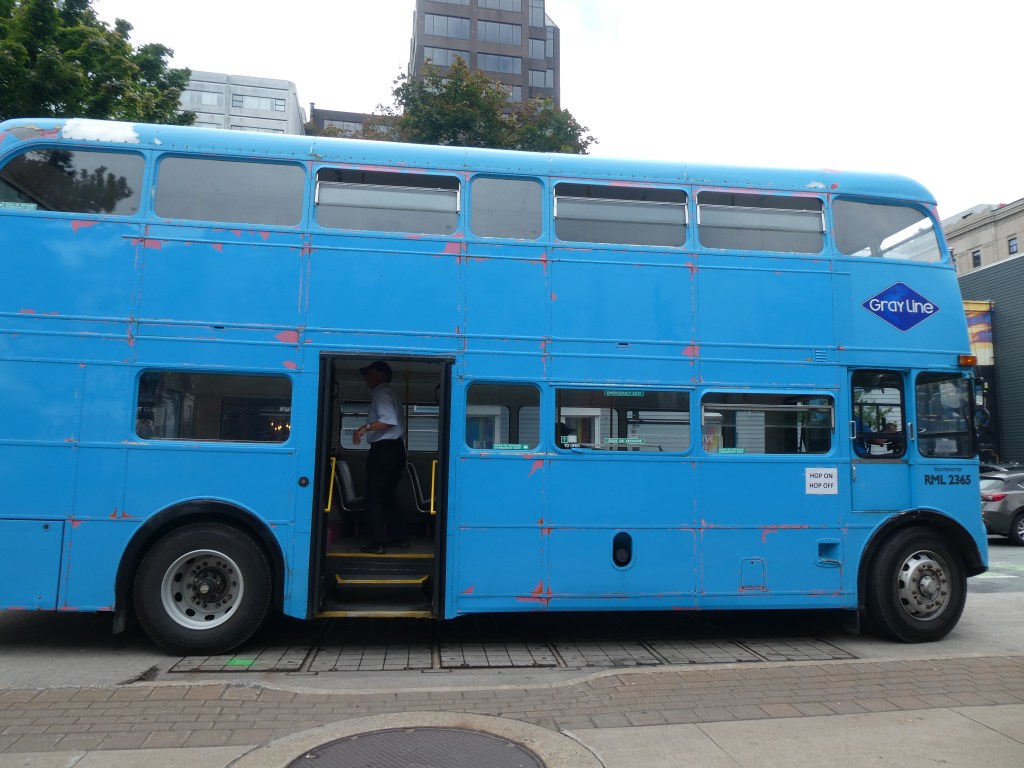
For our Halifax excursion, we opted for the Hop-On Hop-Off Bus.
Our ride had narration along the way and we learned that Halifax is the fastest growing city in Canada. It was developed along the second largest ice free harbor in the world, second only to Sydney Harbor in Australia.
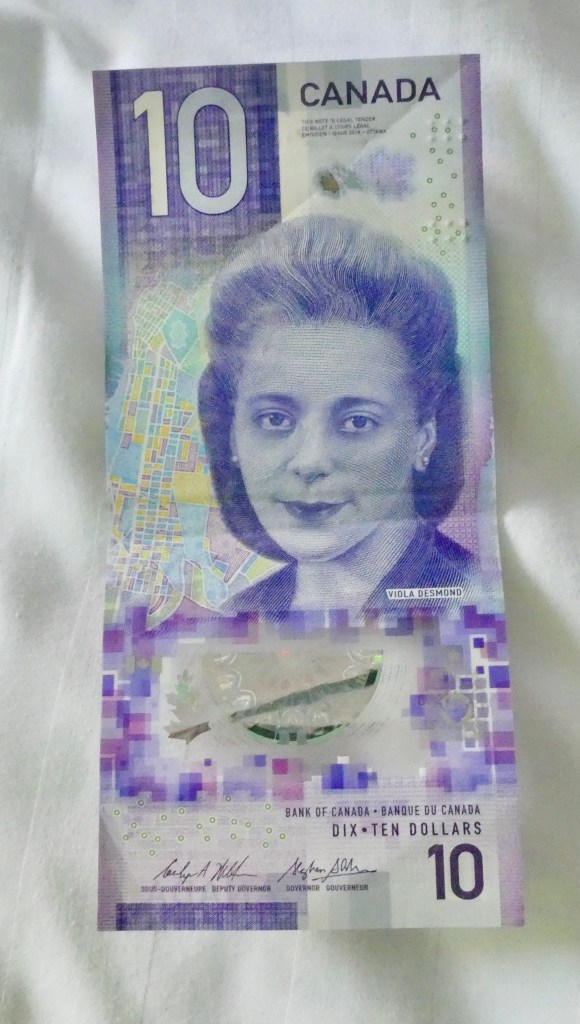
We were asked to take out and look at a $10 bill. This bill is the first Canadian bill positioned vertically. The woman is the Viola Desmond. She played an important role in Canada’s civil rights movement. On Nov. 8, 1946, she went to see a movie in New Glasgow, Nova Scotia. Desmond, 32, was dragged out of the theatre by police and jailed for sitting in the “whites only” section of the theater. Although often compared to Rosa Parks, Desmond did her act of disobedience years earlier. Viola Desmond is buried in Halifax.
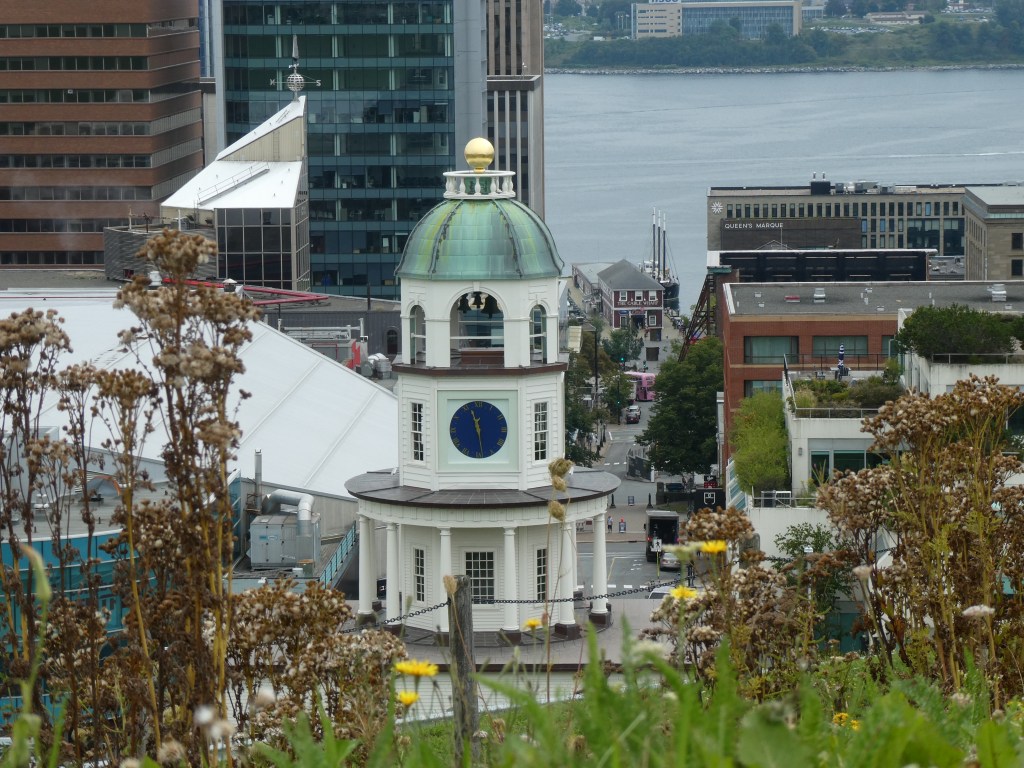
We passed by the Old Town Clock. It was a gift of Prince Edward, father of Queen Victoria. He sent the clock to the people of Halifax to remind them about the importance of punctuality.
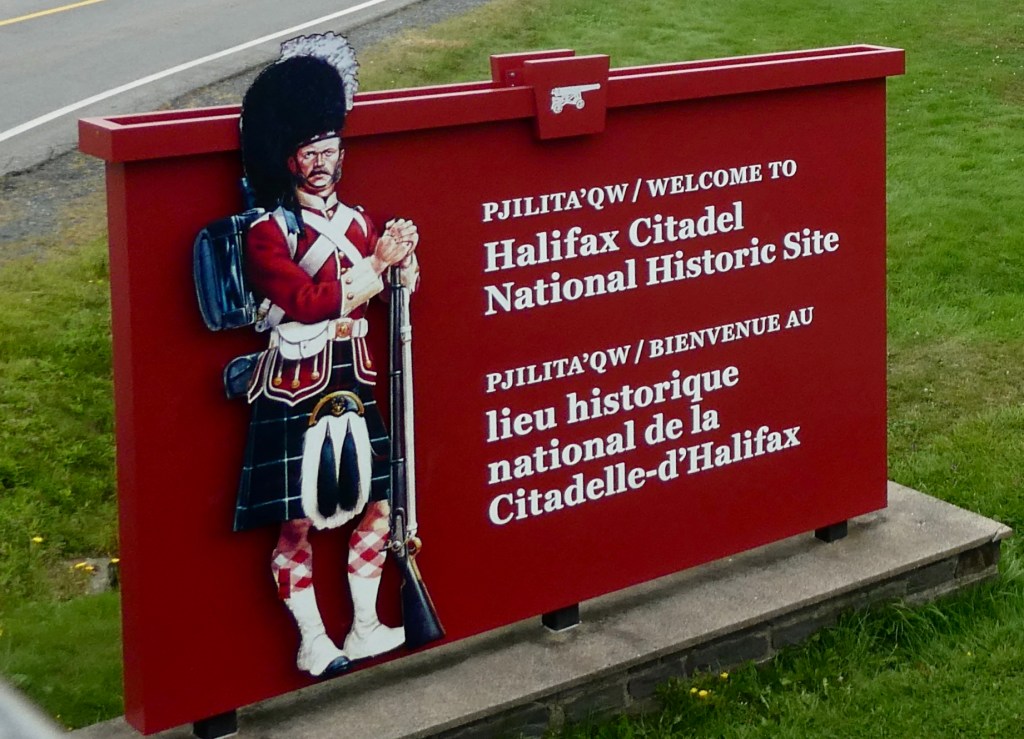
We didn’t have time for all of the stops on the Hop-On Hop-Off bus. We had identified a few we wanted to see. One of those was the Halifax Citadel, a National Historic site. Halifax was established in 1749, and although close to sites of war, no battles were ever fought there.
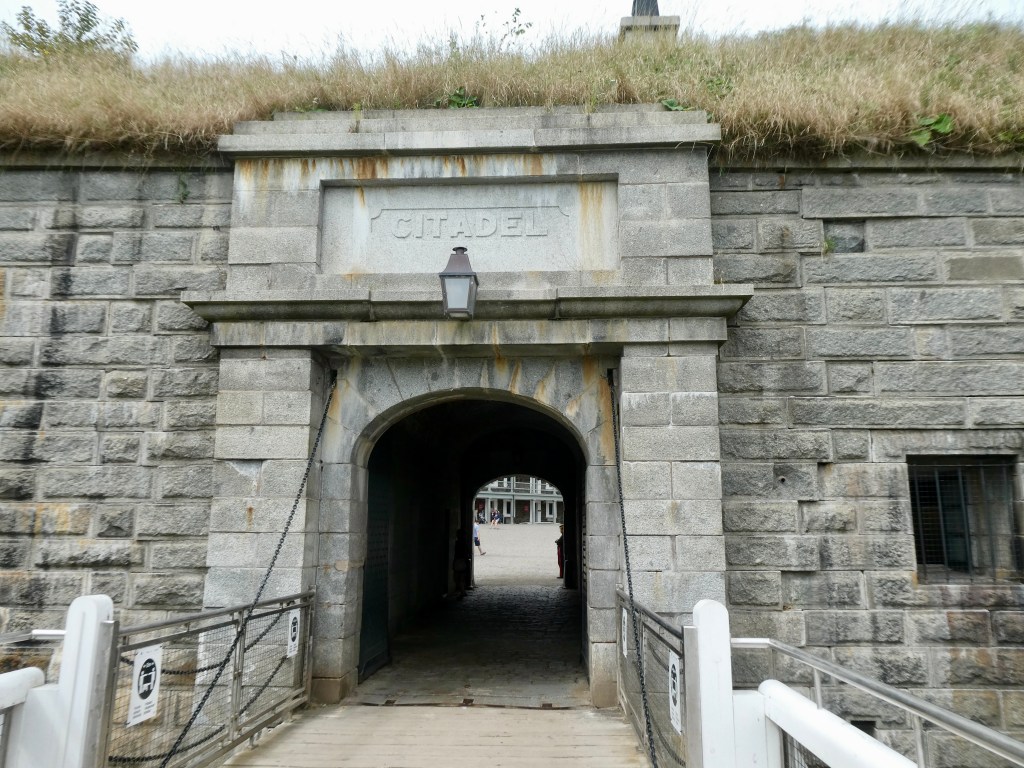
The Citadel was never fired on in anger – not even by those pesky Americans!.
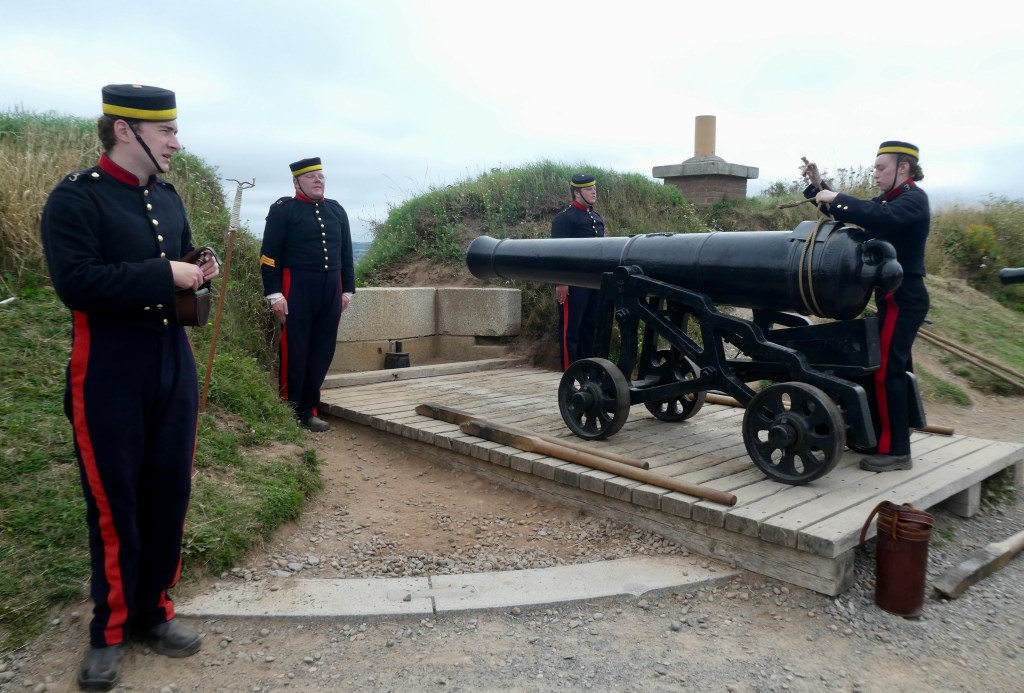
On Citadel Hill we watched preparation for the Noon Gun.
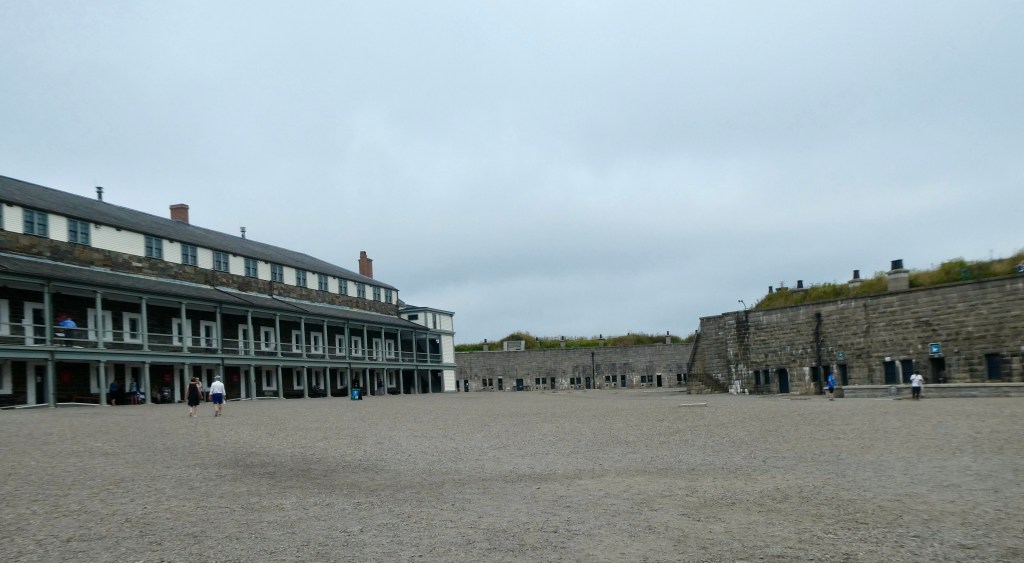

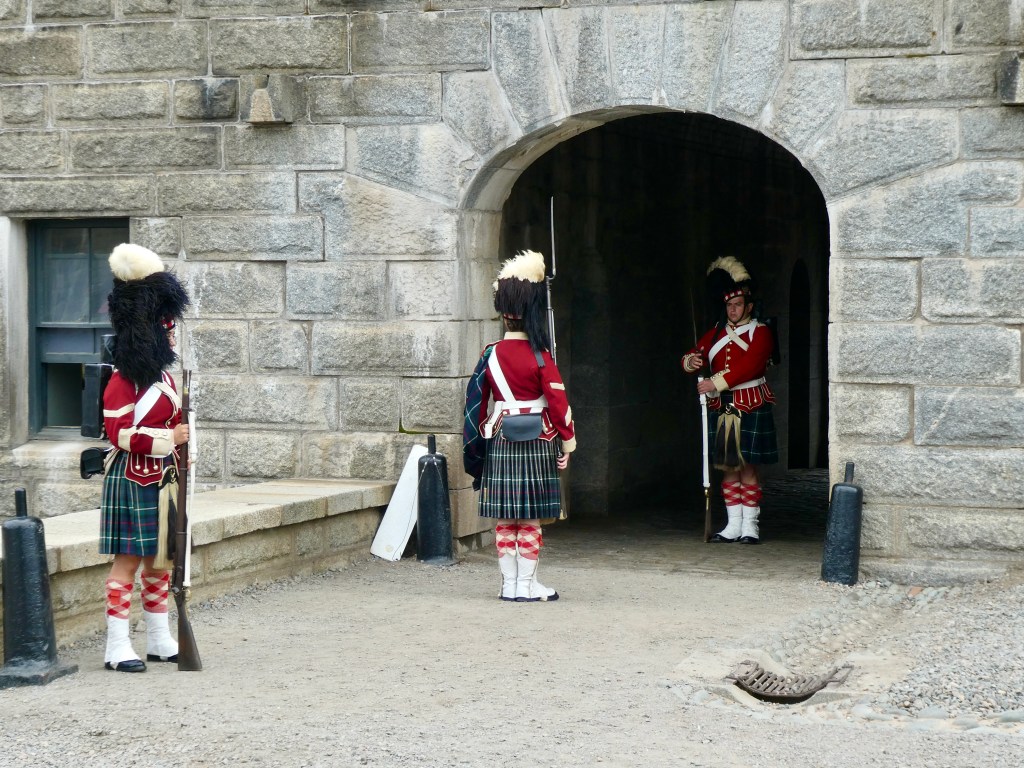
We saw the the hourly changing of the guard.
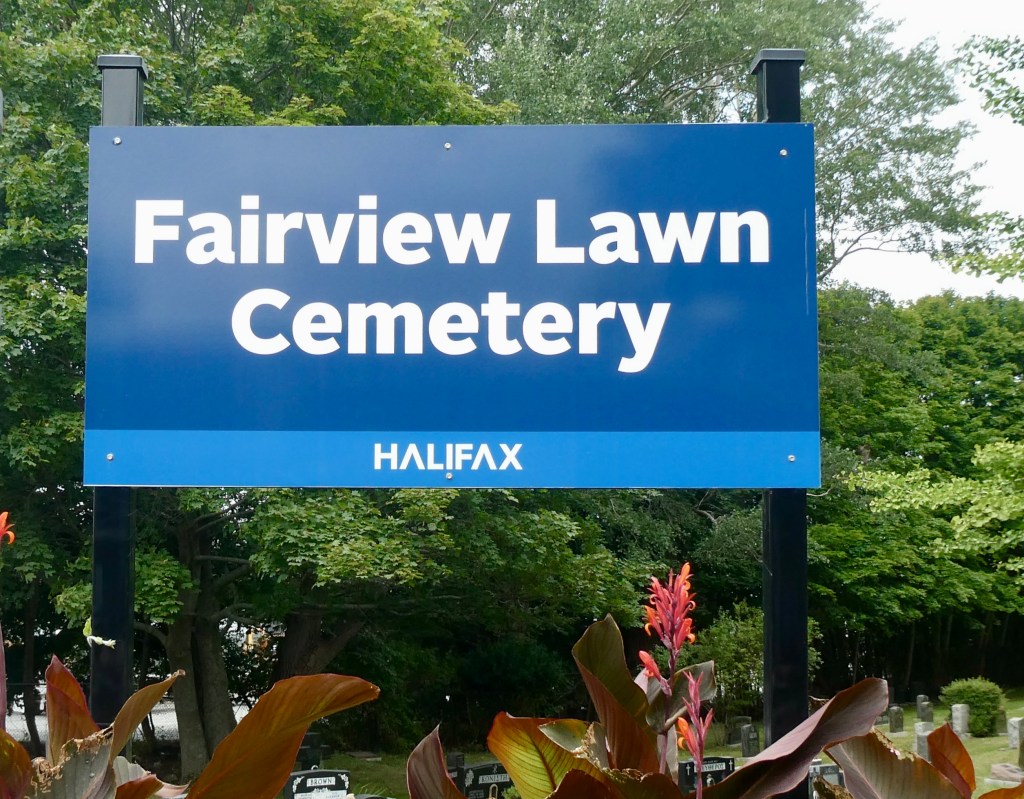
Our next stop was the Fairview Lawn Cemetery.
When the Titanic sank on the night of April 14-15, 1912, Halifax was the closest major port. The Titanic response operations centered in Halifax. The decision was made that Carpathia would take the survivors to New York City. The dead would go to Halifax. Reportedly, the White Star Line didn’t want Americans to see the bodies.
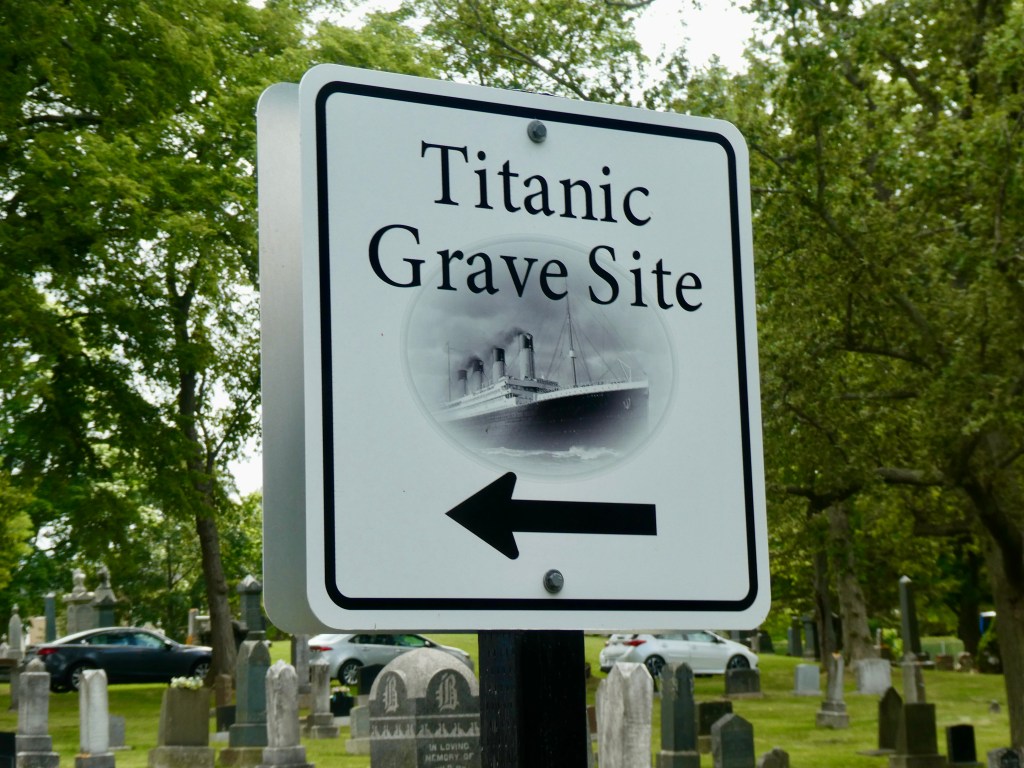
There were originally 209 bodies from Titanic buried in Halifax. Fifty nine were claimed by families or communities and taken away. The remaining 150 stayed in Halifax, most at Fairview but some also at the Jewish and Catholic cemeteries.
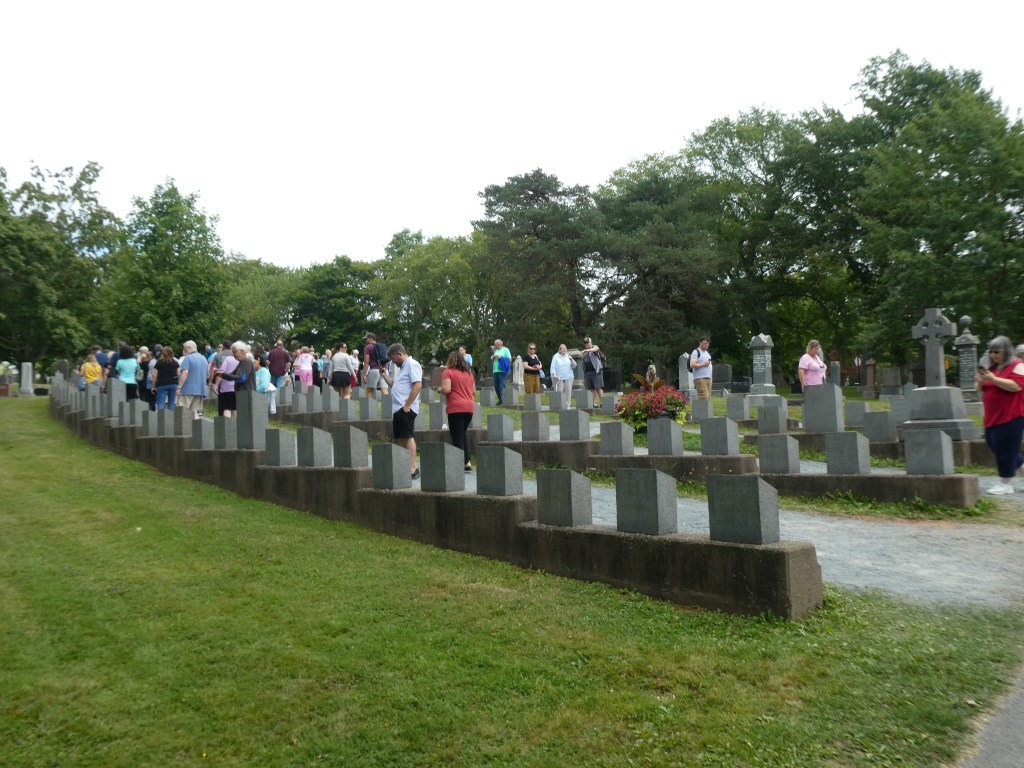
There are four rows of graves placed in the shape of ship’s keel.
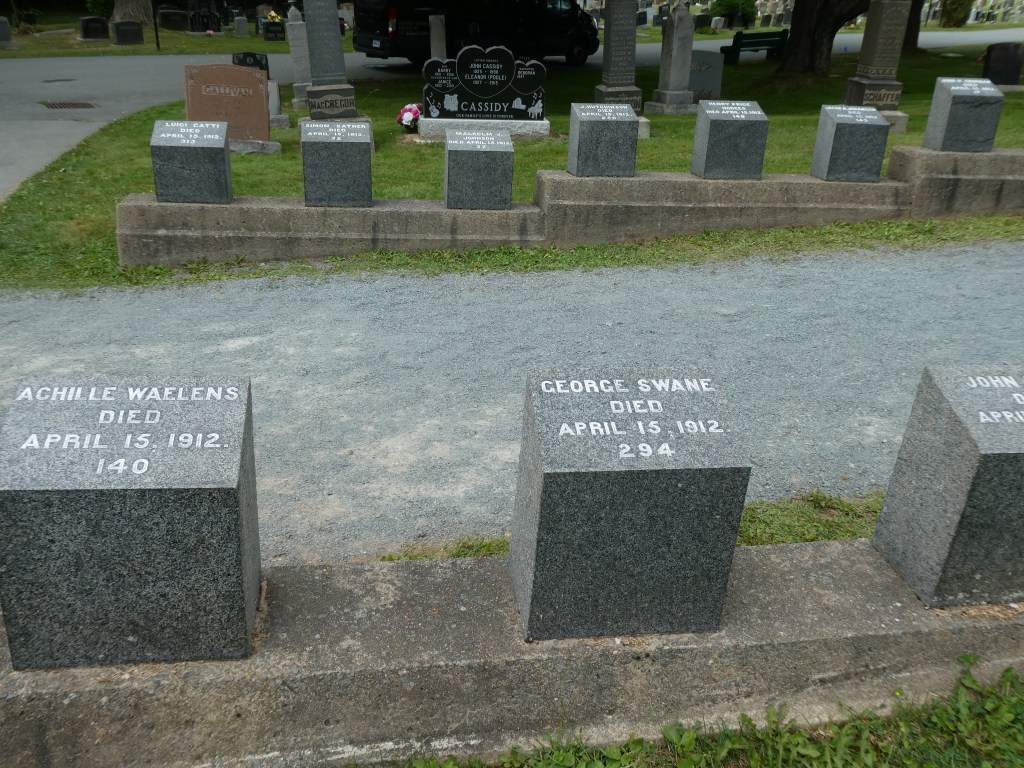
The White Star line paid for simple headstones. Each includes a number representing the order in which the bodies were recovered.
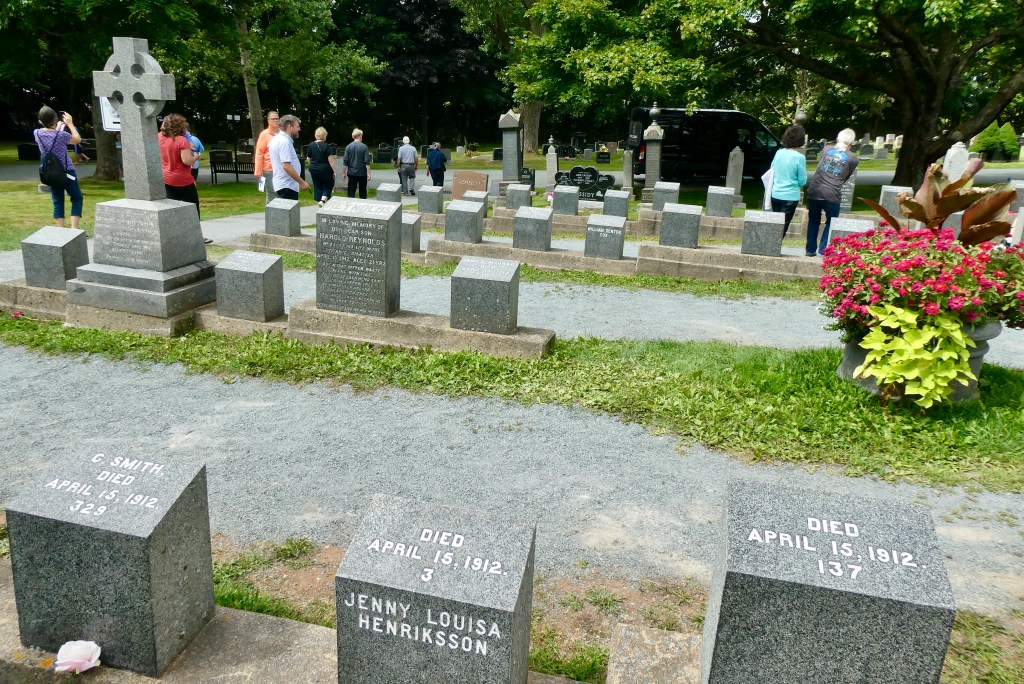
Families were able to pay extra for larger or more elaborate headstones. All show a death date of April 15 because there was no way to know if the death was very late April 14 or early on the 15th.
Although families and authorities tried to identify victims, there are still fifty that remain unnamed. Three were identified later by DNA research.
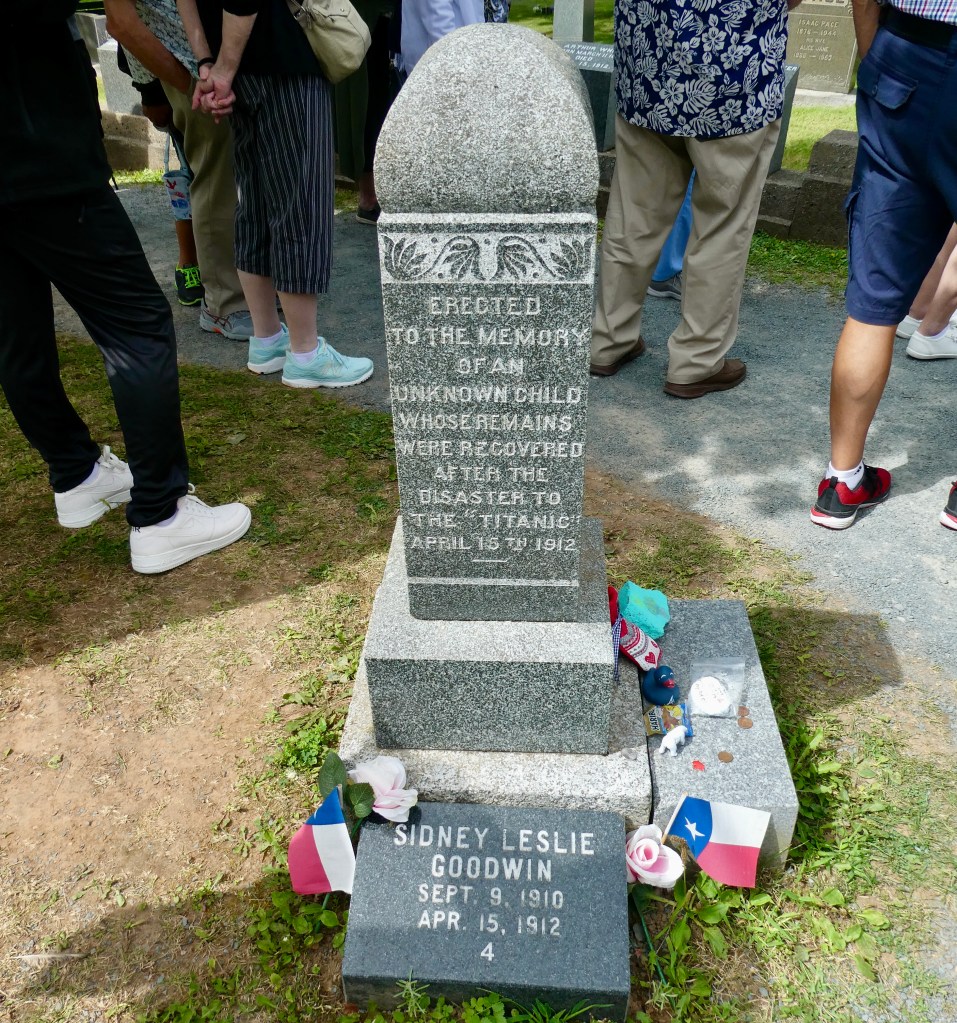
This child’s stone was more elaborate because the Mackay-Bennett rescue boat crew paid for it to be so. The small child was the fourth victim recovered.
In 2007 the child was identified by DNA as third class toddler Sidney Leslie Goodwin. He was the only member of his large family to be identified.
At the Maritime Museum of the Atlantic we saw more exhibits about Titanic.
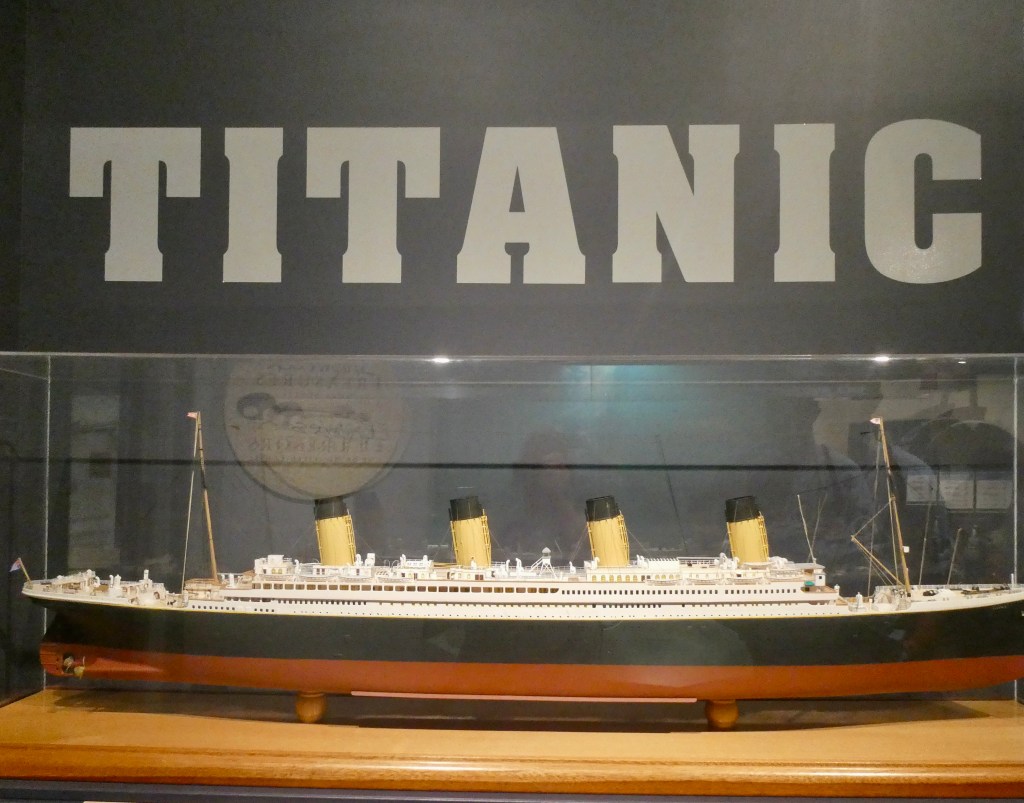
Halifax crews picked up bodies for weeks after the sinking. It was hard, grim work. Crews received double pay and extra rum rations.
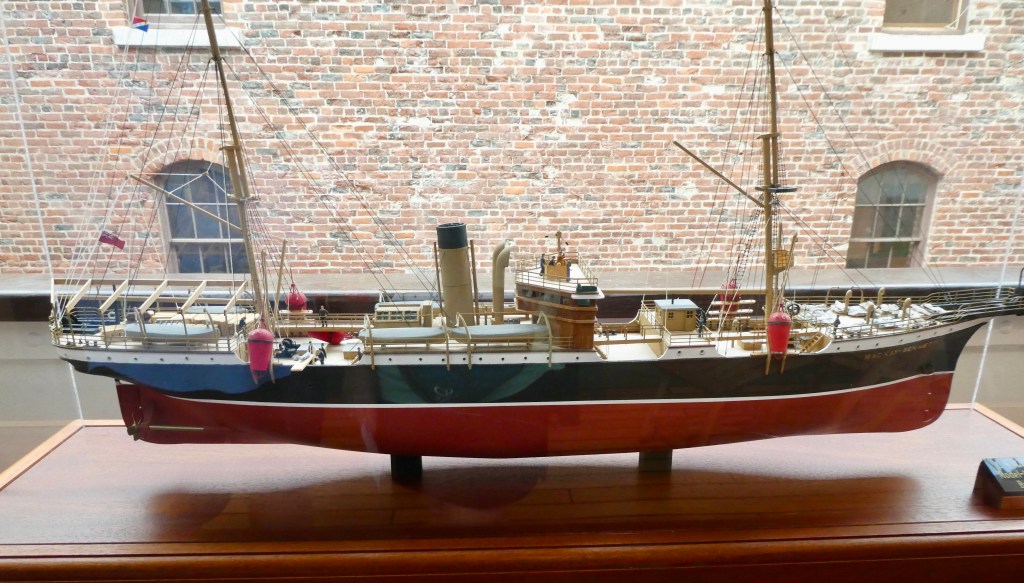
This crew of the Mackay-Bennett. found so many bodies in the first few days that they ran low on embalming supplies. Health laws required preservation to return a body to port. The captain made the decision to begin preserving only the bodies of first class passengers reasoning that identifying wealthy men might be important in resolving estates. Other bodies were buried at sea after being documented.
When additional supplies reached the Mackay-Bennett all bodies were once again preserved. On April 30, the Mackay-Bennett was the first ship to return to Halifax and had coffins stacked on deck This crew had found 306 bodies during their time at sea, including child number four.
Two other Halifax ships and crews spent time in the area after the Mackay-Bennett left.. Weeks after the sinking, the crew of the Minia found 17 bodies and the crew of the Montmagny followed with four more.
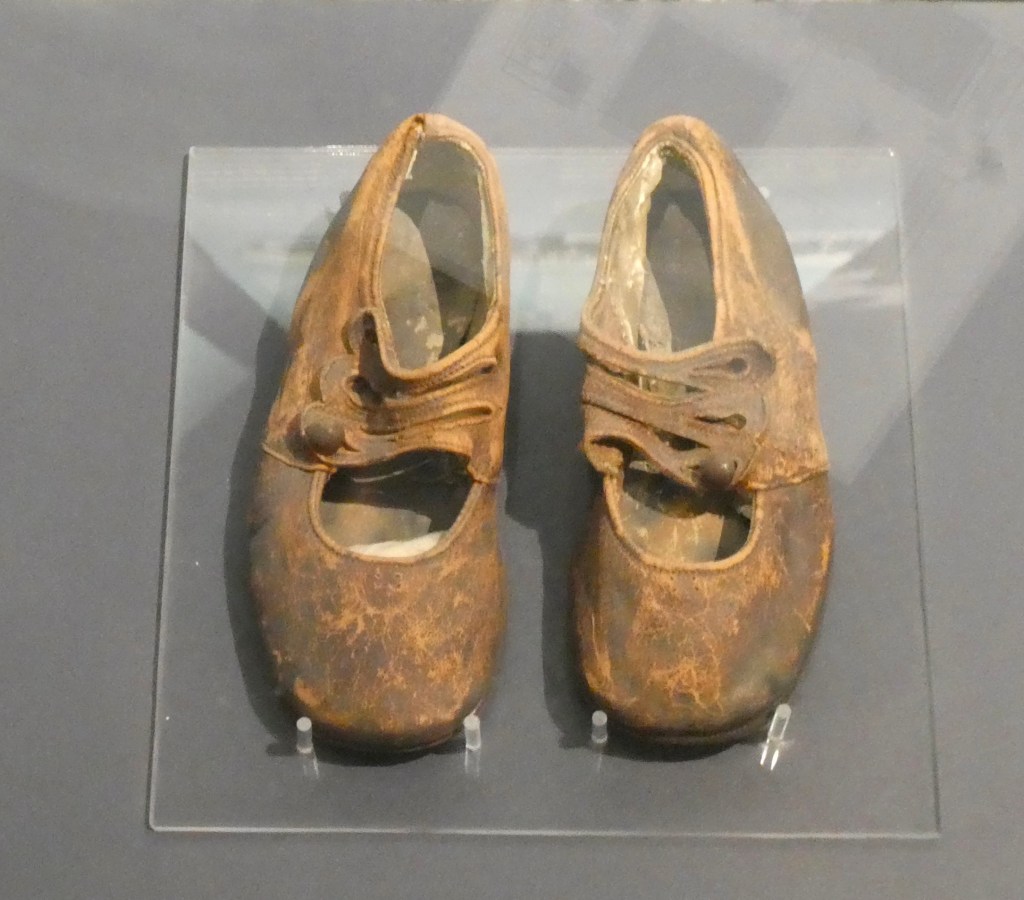
These shoes are believed to be from child #4, The shoes, like the other victims’ clothing, should have been burned. An official just couldn’t burn these. He took the shoes home and privately kept them for decades. Years later, the shoes were returned to Halifax and are on display at the museum.
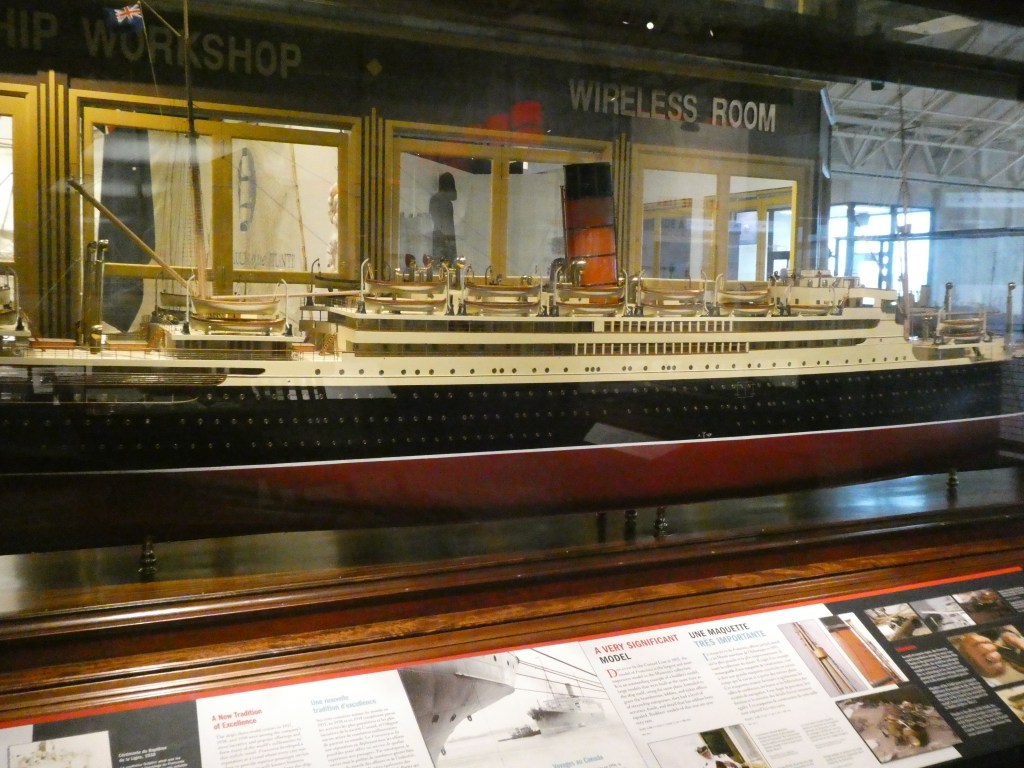
There were also displays about the Cunard ships Lusitania, Mauritania and Franconia. Samual Cunard was raised in Halifax. He began the Cunard line and was in competition with the White Star Line.
On the bus we heard about the Halifax Explosion but the museum filled in far more detail.
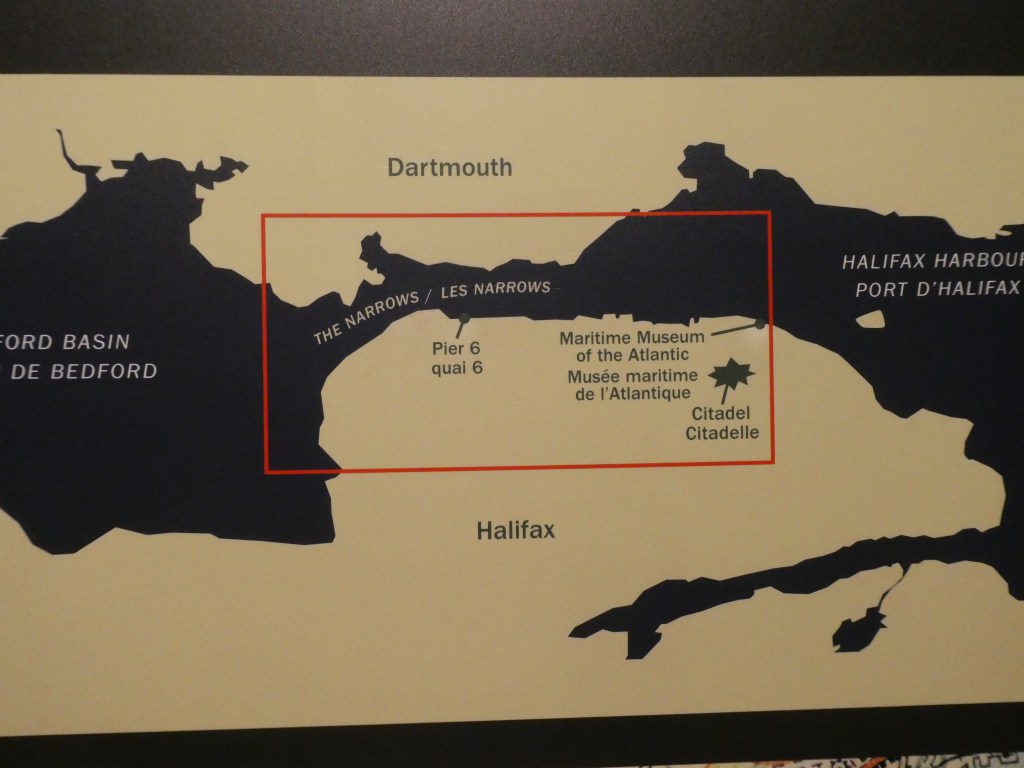
The Halifax Harbor has a section called the Narrows and that was the site of the largest man-made explosion ever known, the Halifax Explosion.
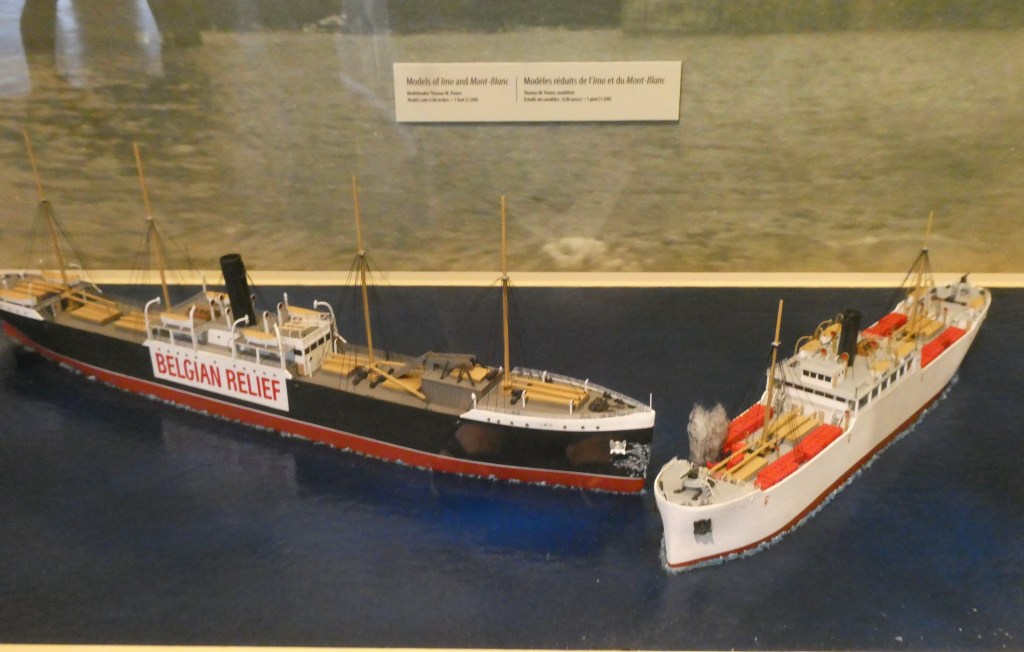
The explosion happened on December 6, 1917 when the Norwegian vessel IMO, with a relief mission to Belgium, collided with the French munitions ship SS Mont-Blanc.
The Mont-Blanc exploded and an area one mile square was totally destroyed. Serious damage extended much farther. Nearly two thousand people died immediately and 9000 were injured.
There were 1639 buildings destroyed and 12000 buildings damaged. Windows shattered 62 miles away. A deck gun landed 3.5 miles away and part of the Mont Blanc anchor was found two miles away.
That level of blast was not felt again until the atomic bombs were dropped in Japan.
People all over the world responded with assistance. Boston helped and Halifax still sends a tree each Christmas to display in Boston Common.
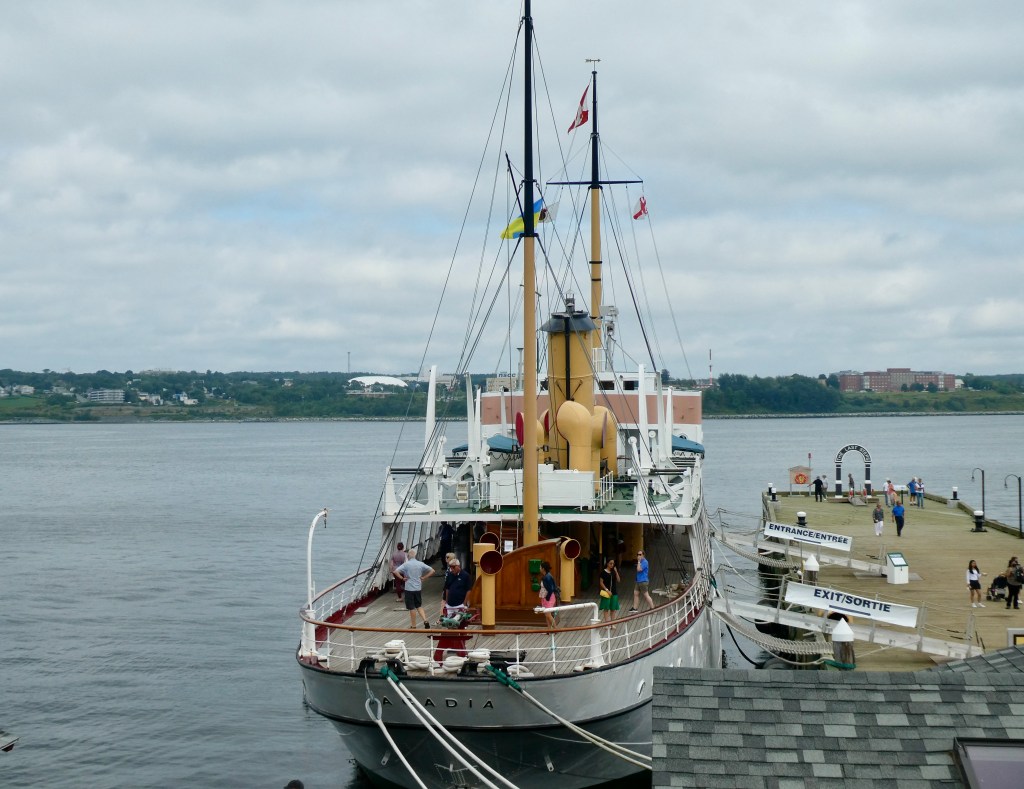
The CSS Acadia, a riveted steel hulled vessel, was available for touring outside the museum. It is the only vessel still remaining that survived the Dec 6,1917 explosion.
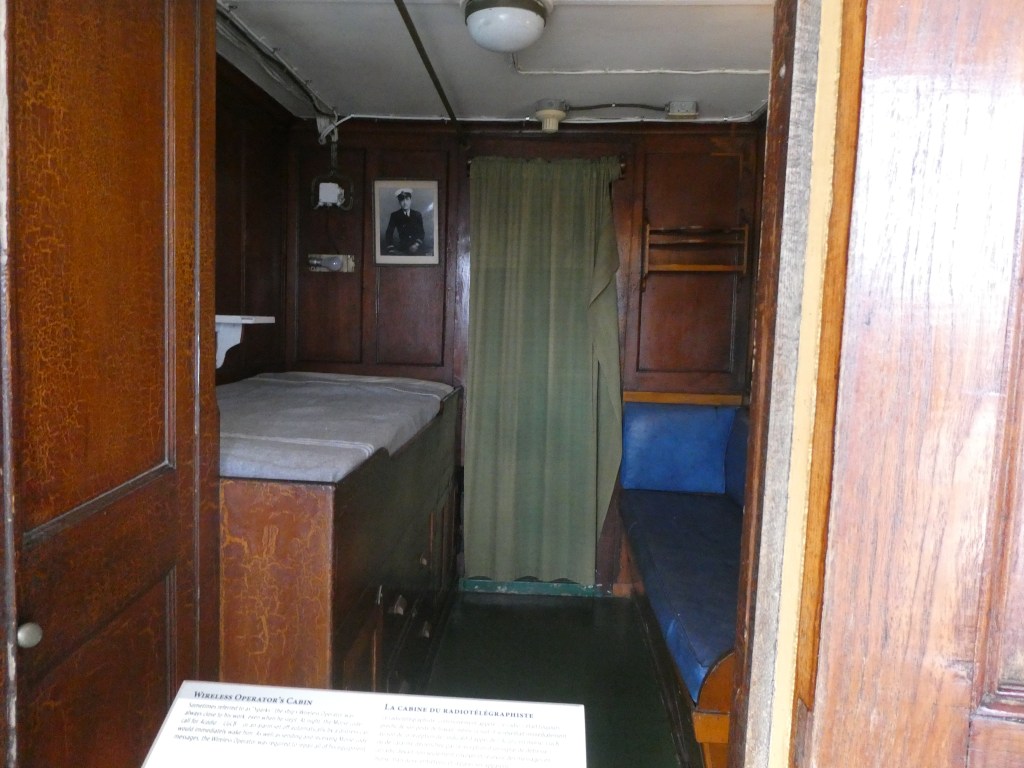
She was a research vessel in the Arctic but was assigned to the Royal Canadian Navy during both world wars.
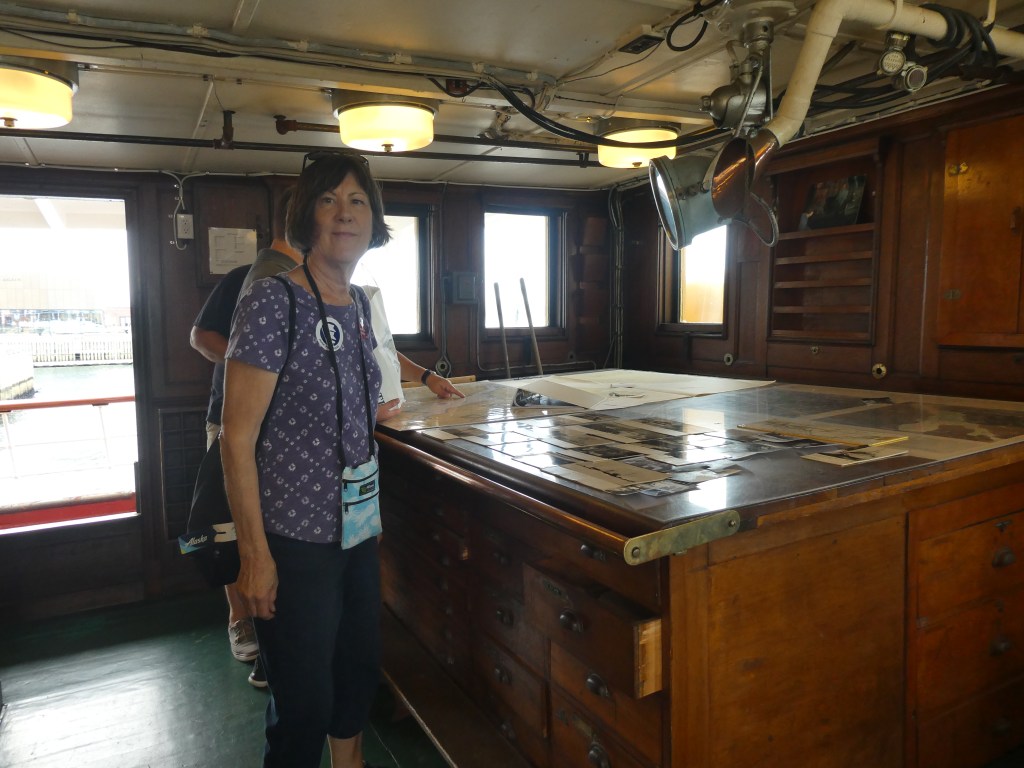
CSS Acadia was decommissioned in 1969 and designated a National Historic Site.
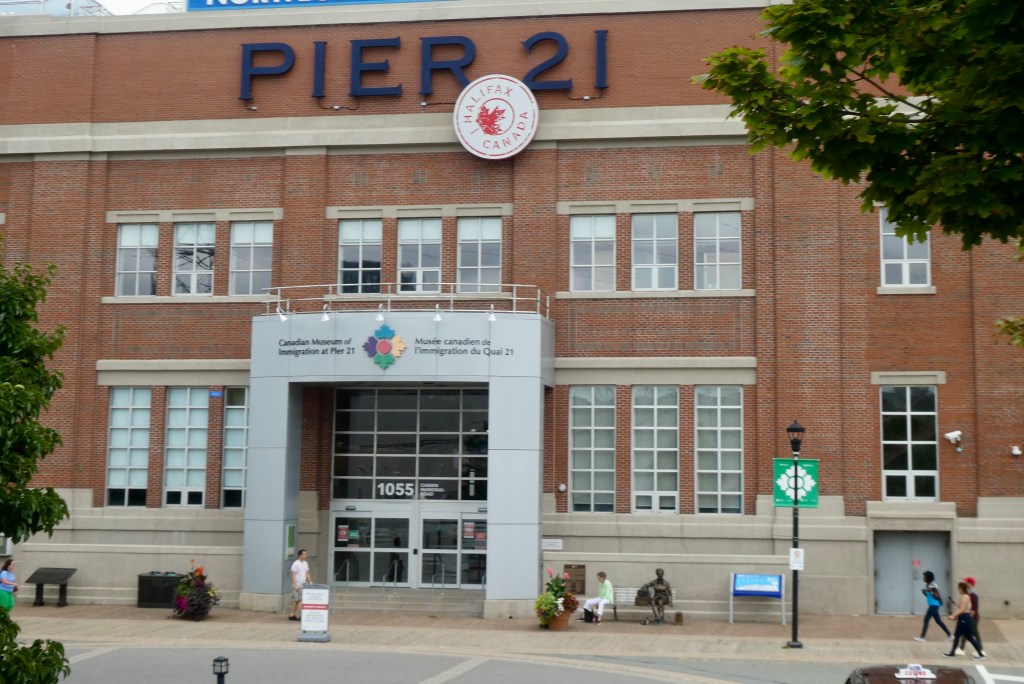
While on the tour bus, we passed Pier 21, Halifax’ version of Ellis Island. Many people from Scotland came through Pier 21. Nova Scotia means New Scotland.
Next up: A Sea Day and Corner Brook, Newfoundland


 Serene Wandering
This is interesting information about the Titanic. Very sad.
Really enjoying your posts!
Loved doing the cruise so we could visit so many places there. Have fun!! 😃
Sent from my iPhone
<
div dir=”ltr”>
<
blockquote type=”cite”>