Bookending Boise

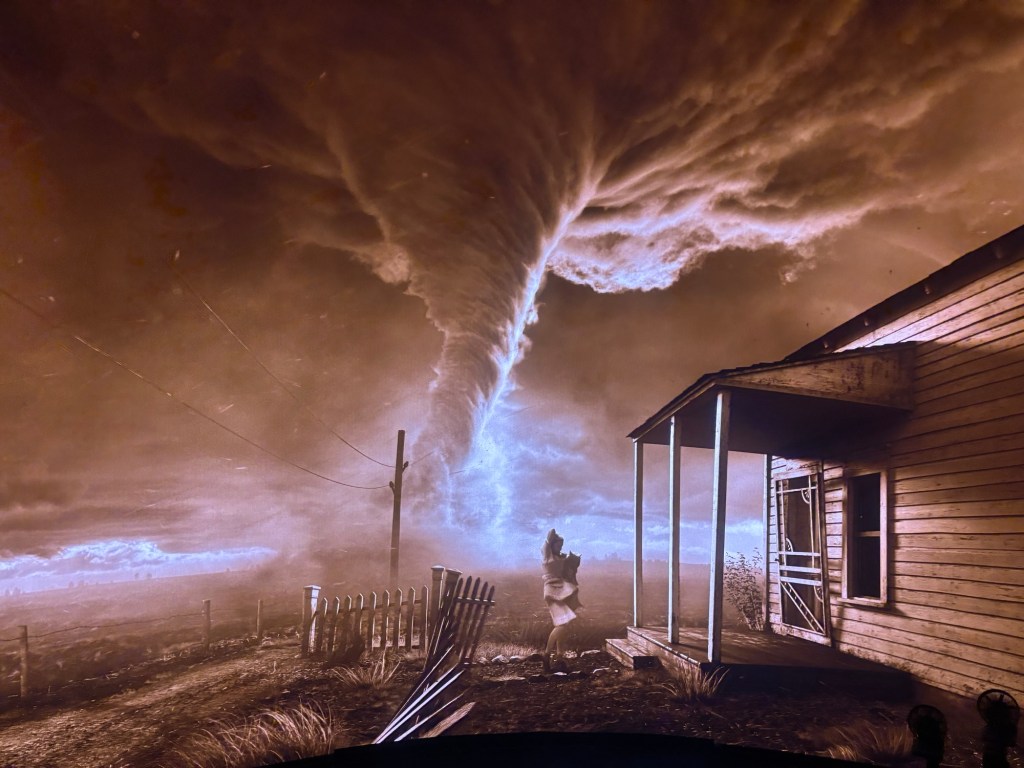
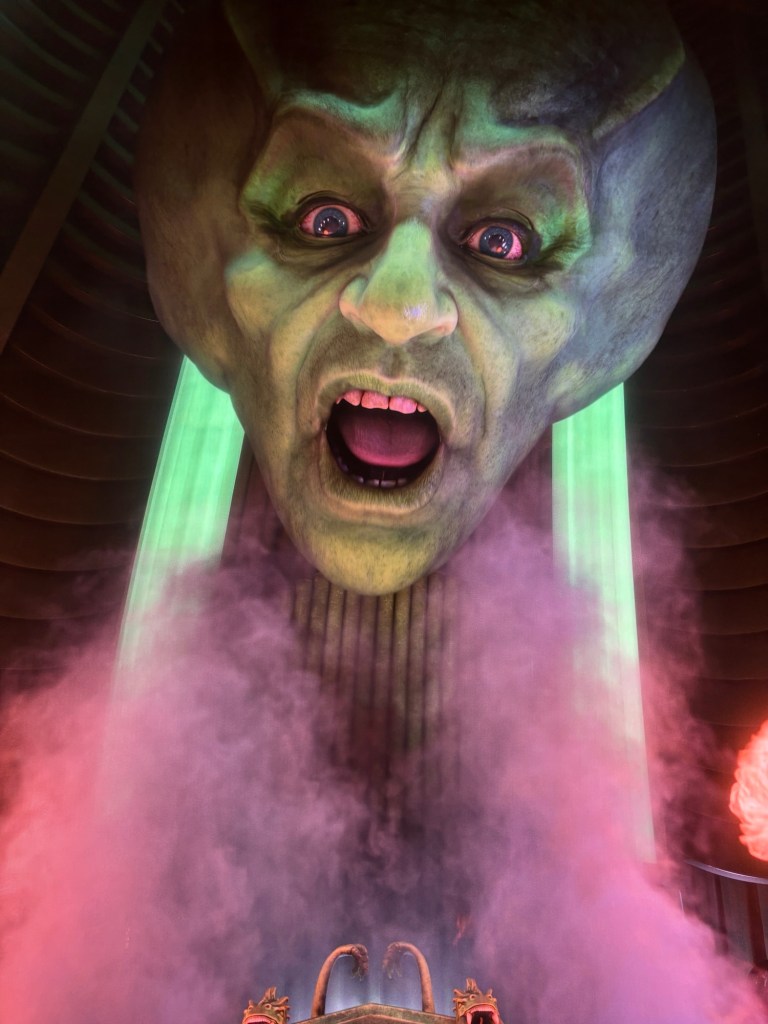
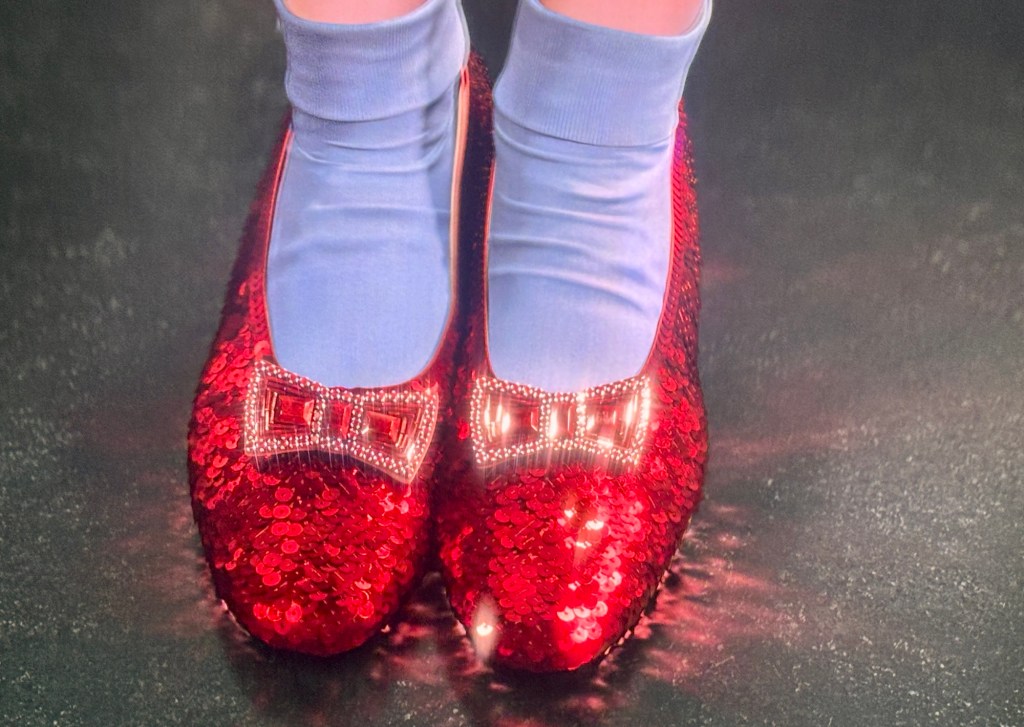
We always drive through Las Vegas on our way to Boise. We occasionally stop to see a show and this time it was The Wizard of Oz at The Sphere.

People seated around us were from California, Utah, North Carolina, Alaska, Oregon and, of course, we are from Arizona.  Randy has been reading that tourism in Las Vegas is way down, but the Sphere is doing well.
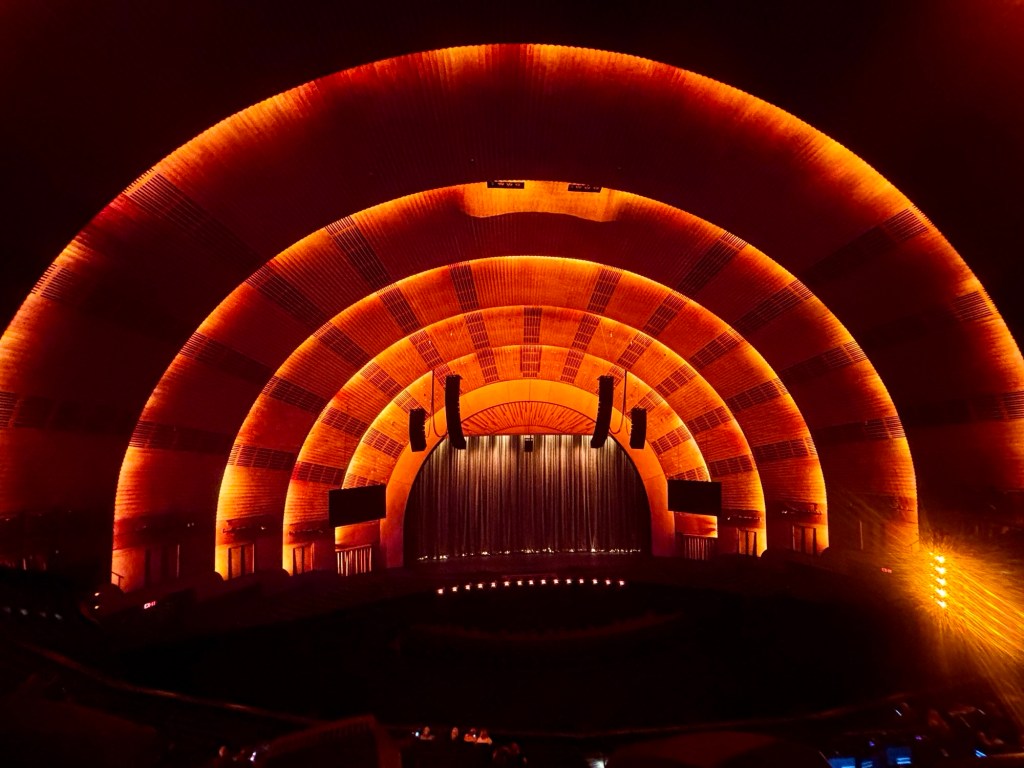
This looks like an elegant stage and drapery but it was all just an illusion.

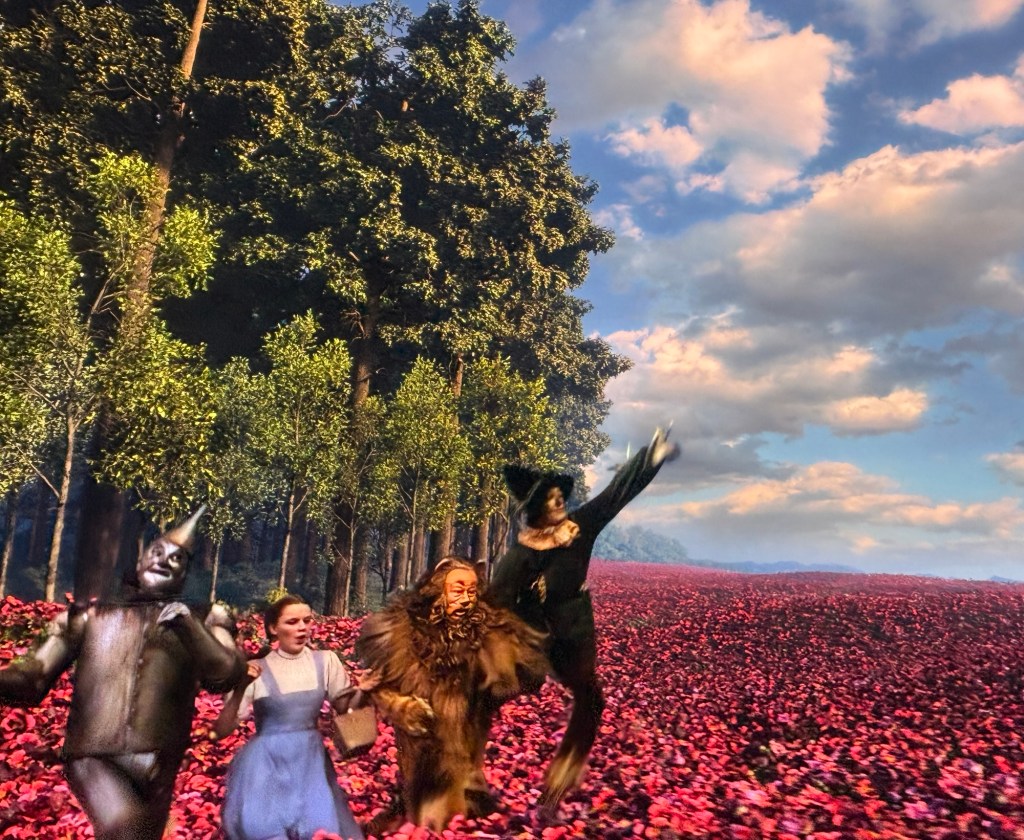
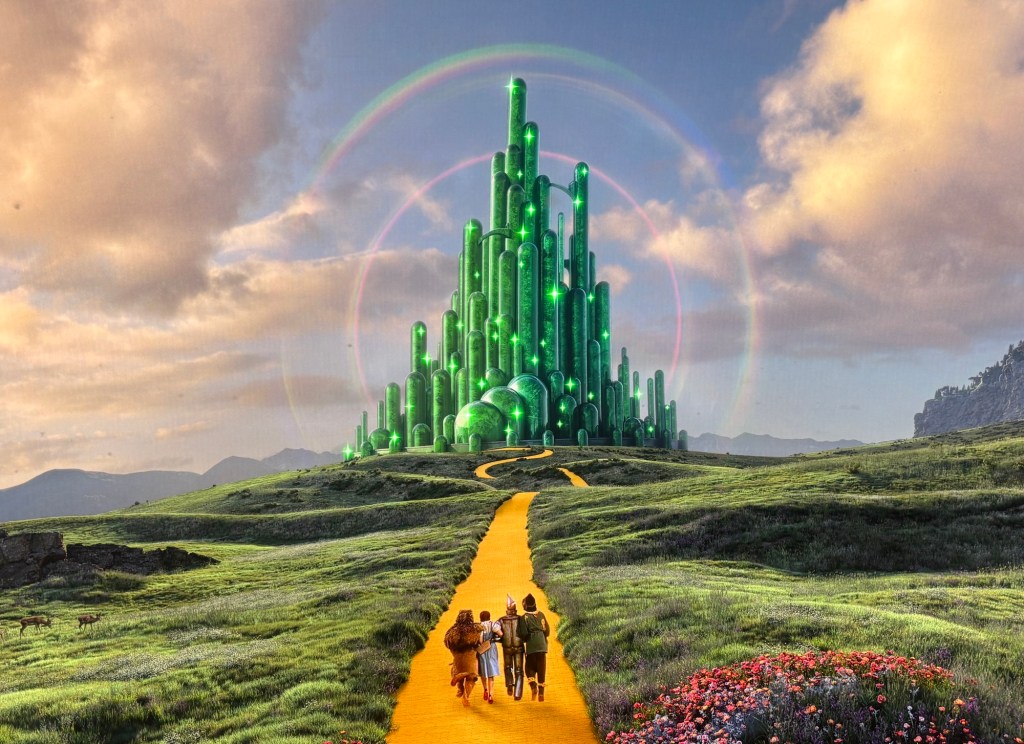
We watched The Wizard of OZ, but it was enhanced exponentially with far more size and clarity than any IMAX you’ve ever been to.

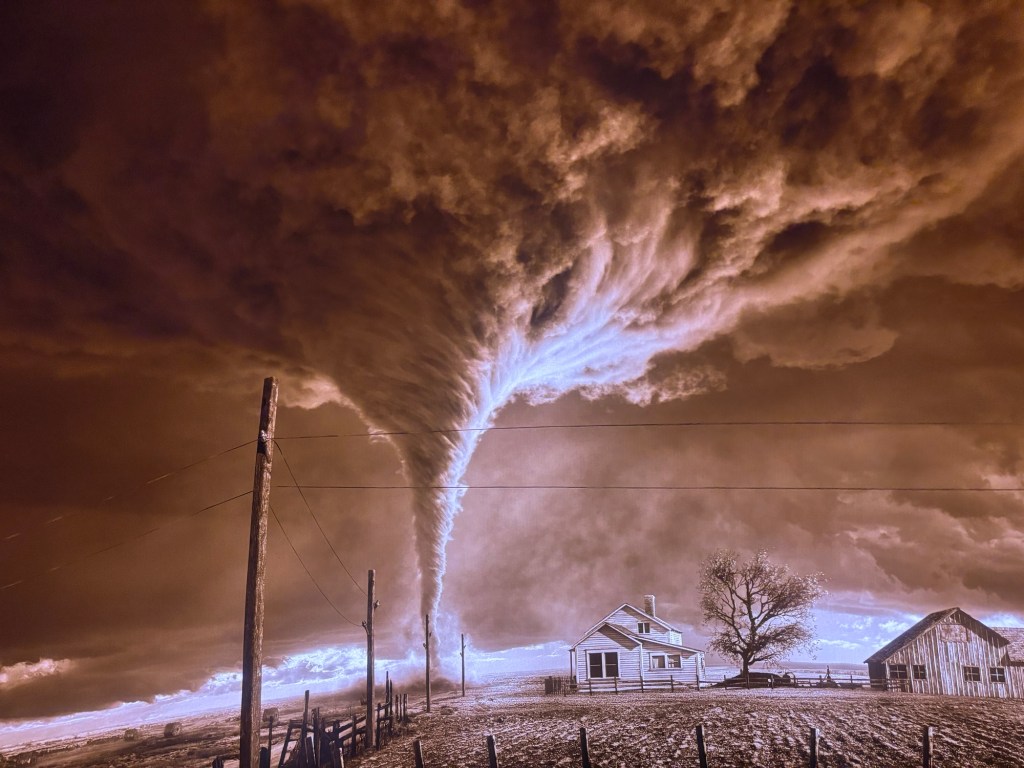
We had wind and leaves blowing around us during the tornado!

The “screen” was so big!
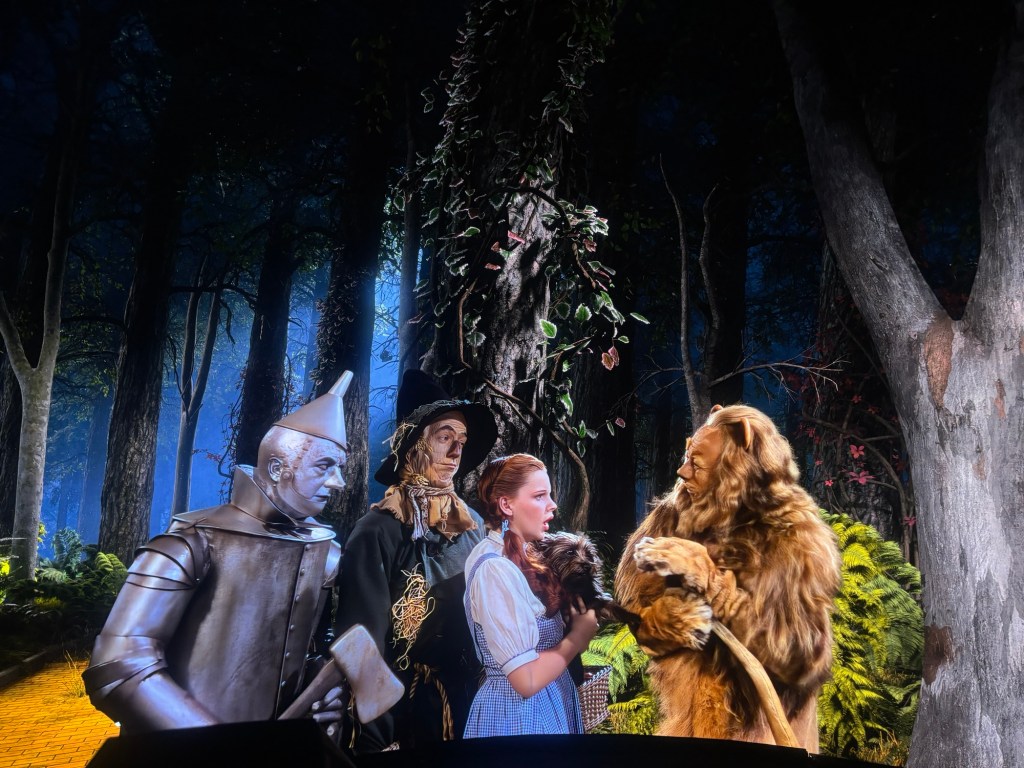
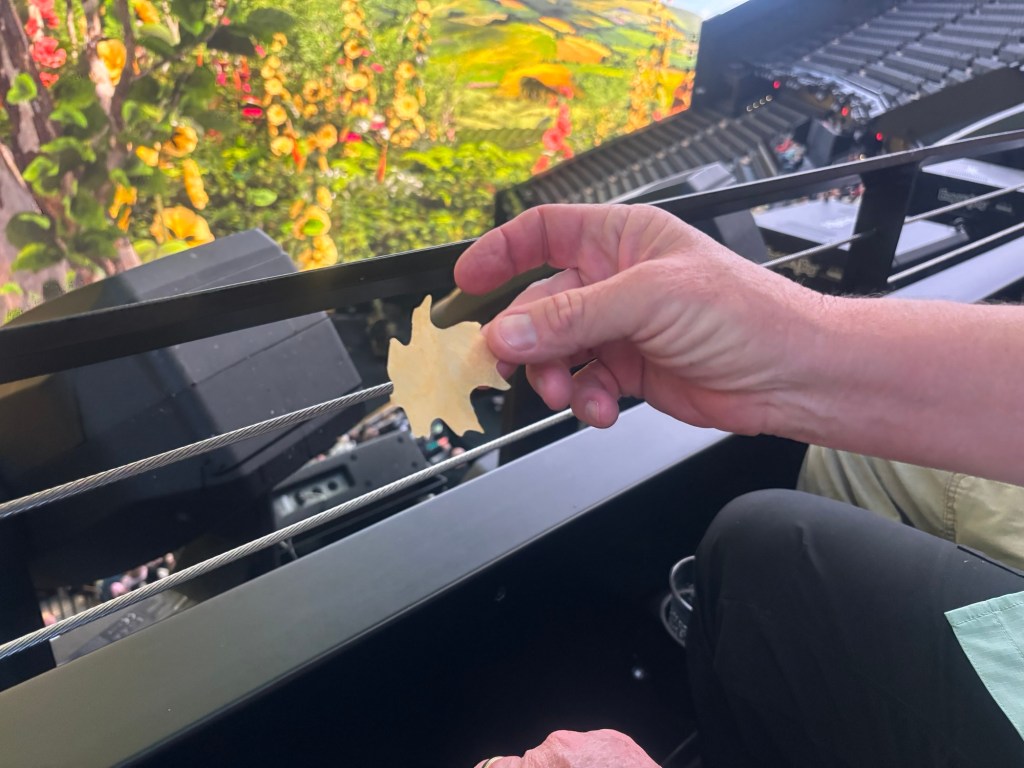
We had stuffed apples flying throughout theater when the trees were angry as Dorothy picked one.
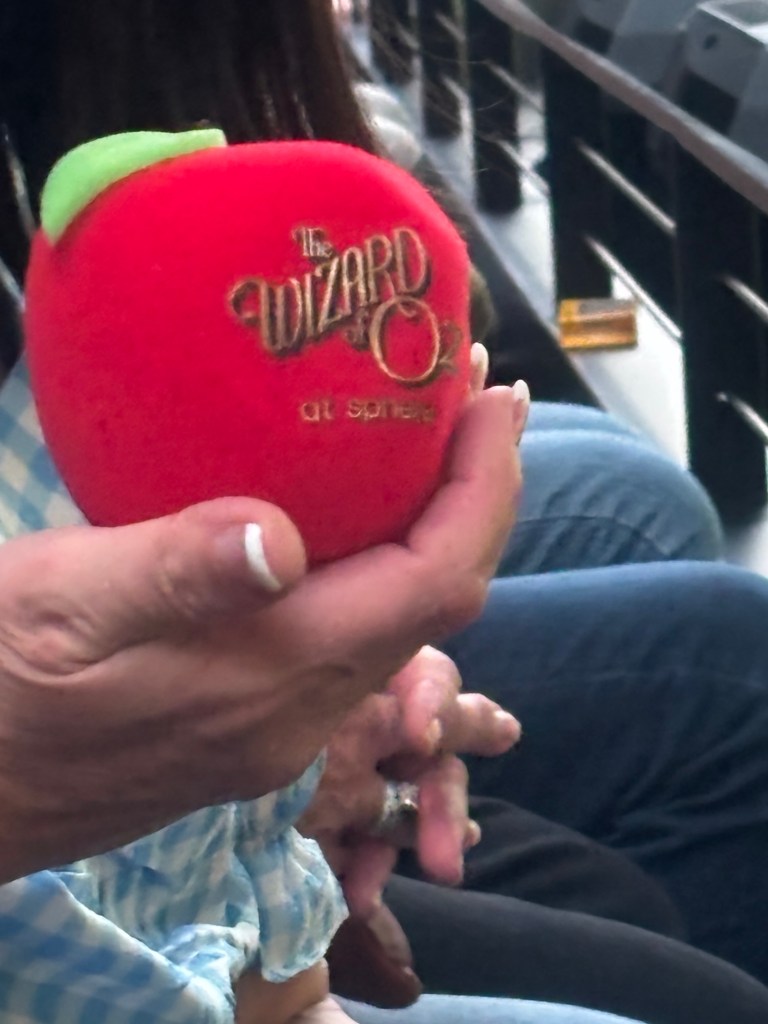
Quite a few people got one to take home!  (I bought one from the Sphere website to use as a Christmas ornament.)

When the monkeys were flying- we had monkeys!

This experience was great!

The credits showed just how many people it took to get this done. 

When the Sphere highlights another show, we’ll go again!

In a piece of serendipity for me, one of my book clubs had just read Finding Dorothy. It is the story of how Maud Baum, wife of author, Frank Baum, inserted herself into the making of the Wizard of Oz movie.

Maud, age 78, befriended Judy Garland, age 16.  Maud tried to protect Judy from all sorts of tribulations when Garland’s mother wouldn’t.

The book also described how the song Somewhere Over the Rainbow was almost cut due to the film’s length.

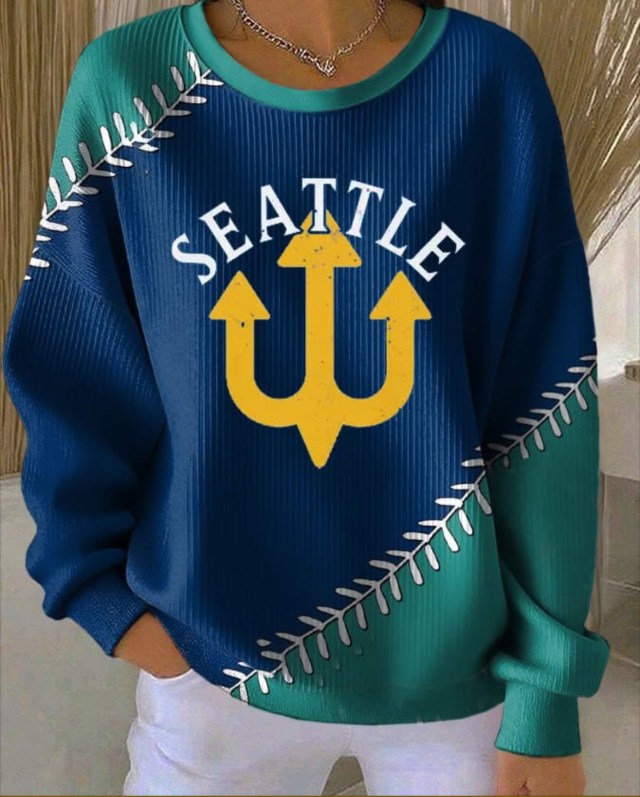
We listened to Game 5 of the World Series as we left Las Vegas.  That  reminded me that I had once seen a picture online of the sphere projecting a Mariners tribute.  Or someone did it with AI.  Who even knows anymore?

We were heading to Boise for two reasons.  

First, we were picking up a cedar hope chest that had belonged to my paternal grandmother when she married in the 1930s.  She gave it to me (full of course) when Randy and I married in 1980.  
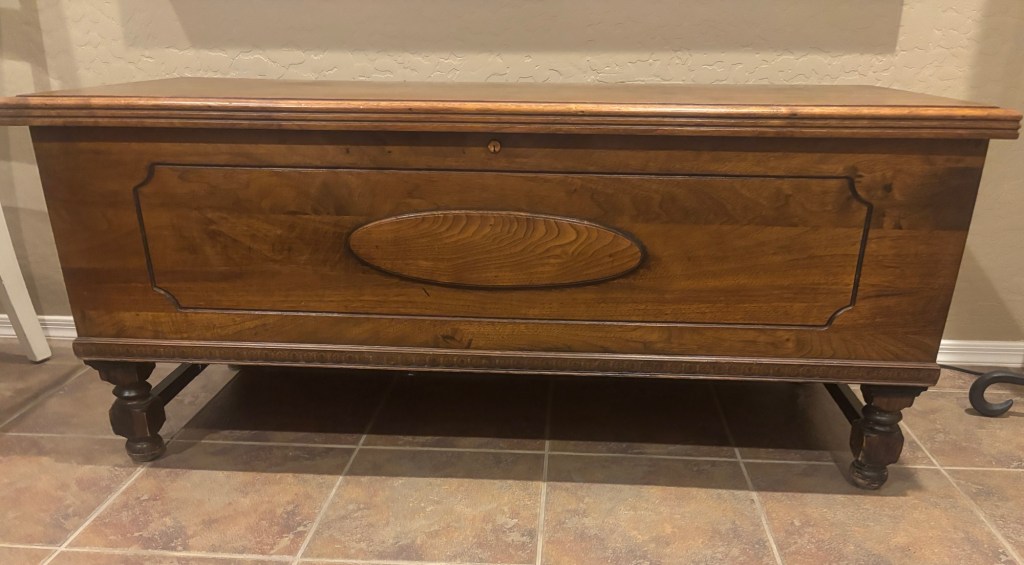
Natasha took it when we gave everything away to go full time RVing in 2014.  Recently, she wanted to clear some space in her apartment and asked if I wanted a few of those family things back.  The cedar chest was the one I chose to take back.

We scheduled our trip to Boise to pick it up in early November.

In the meantime, Natasha’s old Mazda was crunched by a hit and run driver in a parking lot.  It was still drivable but the event convinced her it was time for a new car.  She wanted Randy’s help with research and the purchase process.

For Boise friends reading this, we made very few advance plans because we just didn’t know how long the car purchase would take.  We had a week and hoped she could find something she liked and we could get through the rest in that week.

In the end, the car purchase took about six hours.  She and Randy had narrowed down the initial choices to a Hyundai Palisade and a Kia Telluride.  All of us expected to like the Telluride best, so we started with the Palisade.
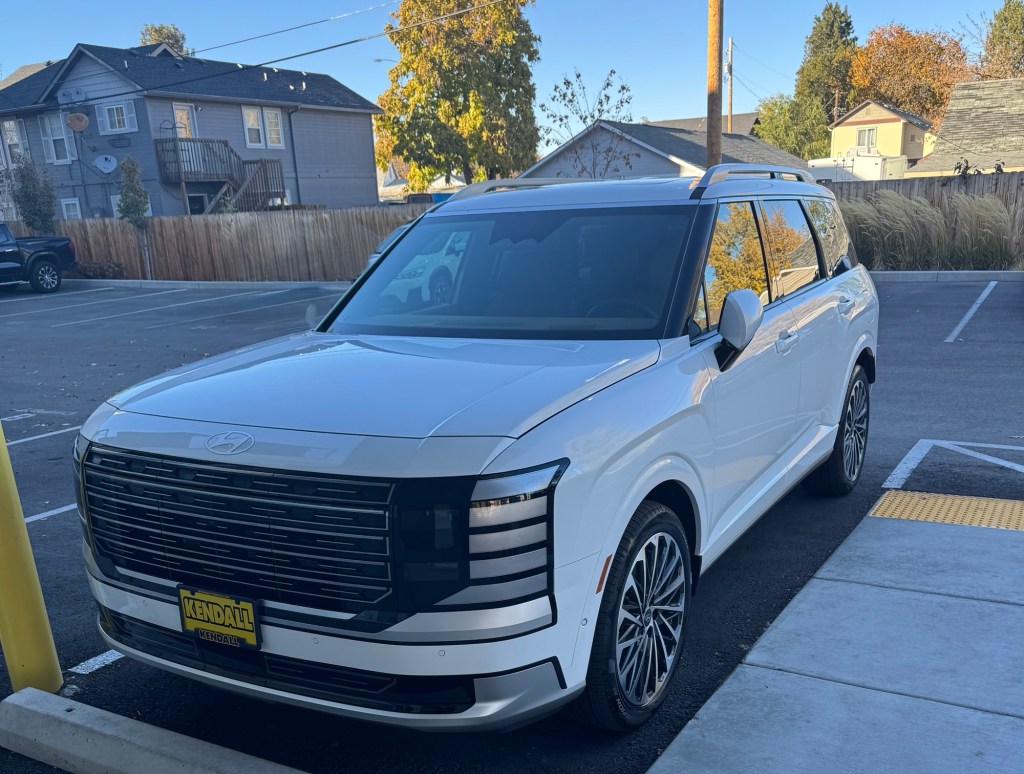
We were all blown away by the features on the Palisade and when we looked at, and drove, the Telluride, it no longer felt like the choice.

The Hyundai Palisade Calligraphy is her very first brand new car.  Whoohoo!

Car purchase accomplished, we enjoyed just hanging out with our daughter and grandson.

We watched him play hockey. We also took him to see a Boise State University basketball game.  That was a fun step back in time.
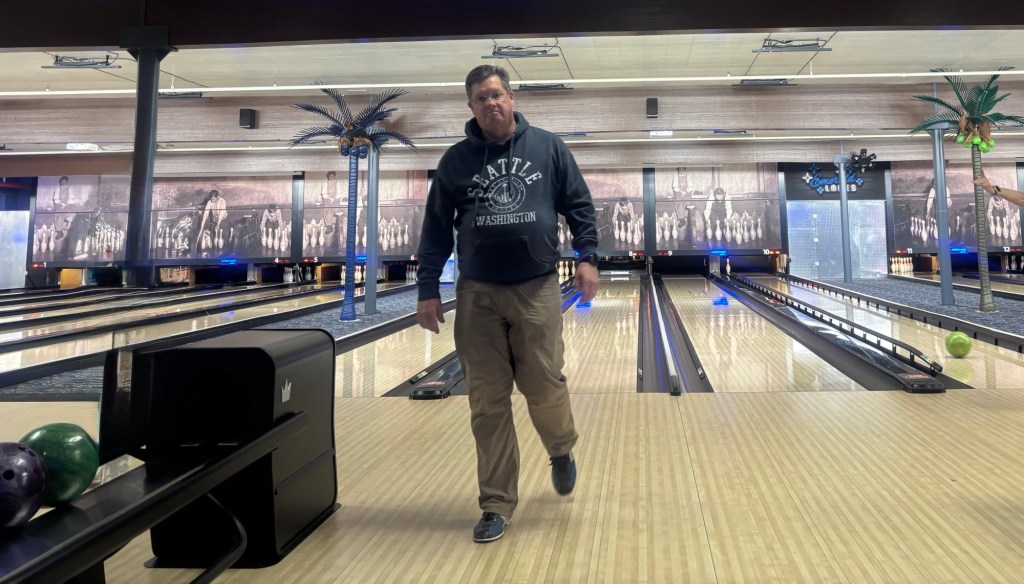
We took him bowling!  Randy and I were pretty disgusted with our scores considering we were once pretty good bowlers.  We were also disgusted that we were sore the next day.  

We started watching the original Star Trek series with Natasha. She had never watched the original series. 

It was very fun for us since we had been to the Star Trek set museum a few weeks earlier and could tell her how they did things. For those that missed it – that post was Ticonderoga: Stardate 1312.4 

We ate at two of our favorite Boise restaurants, the first a Vietnamese restaurant where we always have spicy beef.

We actually ate there twice in one week!

We also ate at our favorite, family owned, local Mexican restaurant chain – Chapala.  Twenty five-ish years ago I had a kindergarten student whose family owned the restaurants.  Marco was still memorable because he was so cute when he’d come to school in his dress clothes. He wore a lot of cologne and I couldn’t help but smile when he’d pull out his wallet.  I’d send him all over the school on errands so everyone got a chance to see, and smell, him.

When we were at Chapala, I asked our waitress if the same family still owned the restaurants.  They did.  So I asked if there was a Marco working in the restaurants that was about 30 years old.  Yes, and he was there!

We met Marco and he was polite but not really that interested in meeting his former kindergarten teacher. It was fine.

Overall, it was a productive and relaxing week in Boise.

We began the drive back to Phoenix with another special event to bookend the back of the trip.  
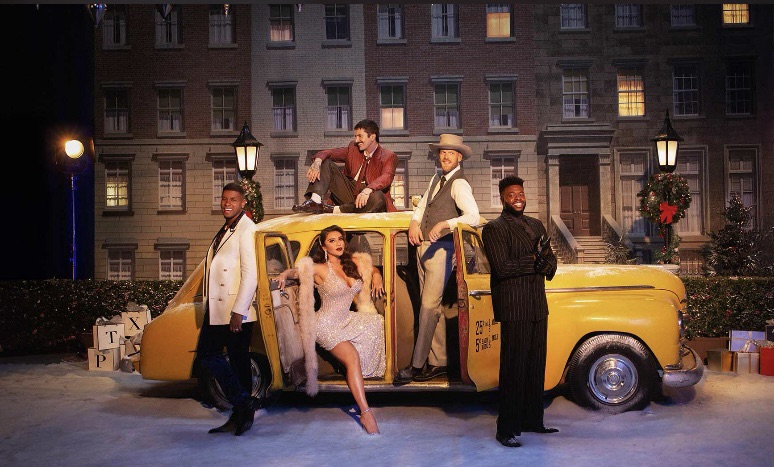
We were going to opening night of the Pentatonix Christmas in the City Tour in the Salt Lake City area.

We checked into our hotel and found that our destination, the Maverick Center, was an easy seven minute walk.  So much for prepaying parking!
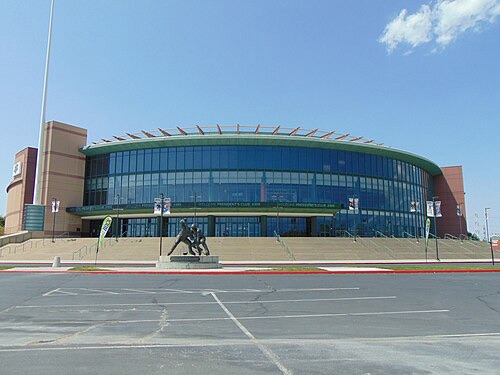
During the 2002, Winter Olympics the Maverick Center served as the main venue for the ice hockey events.  
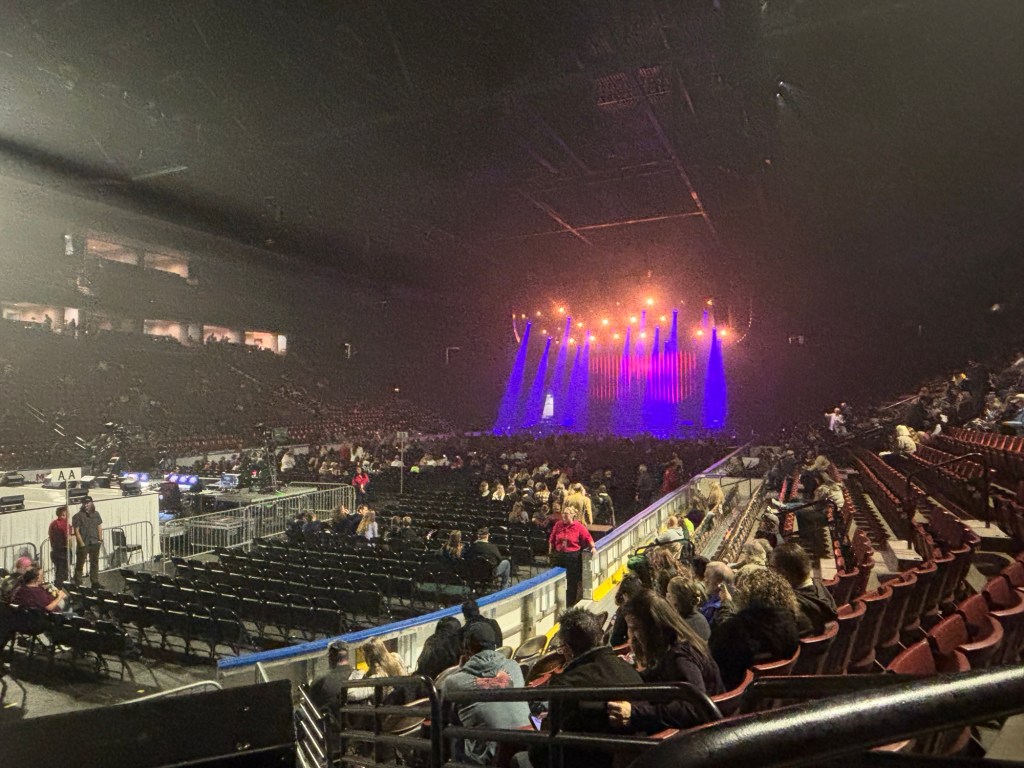
The Utah Grizzleys of the ECHL still play hockey there. No ice tonight!

I would say the concert was good, not great.  Part of what made Pentatonix unique was that they use vocal percussion and, at one time, no instruments.  
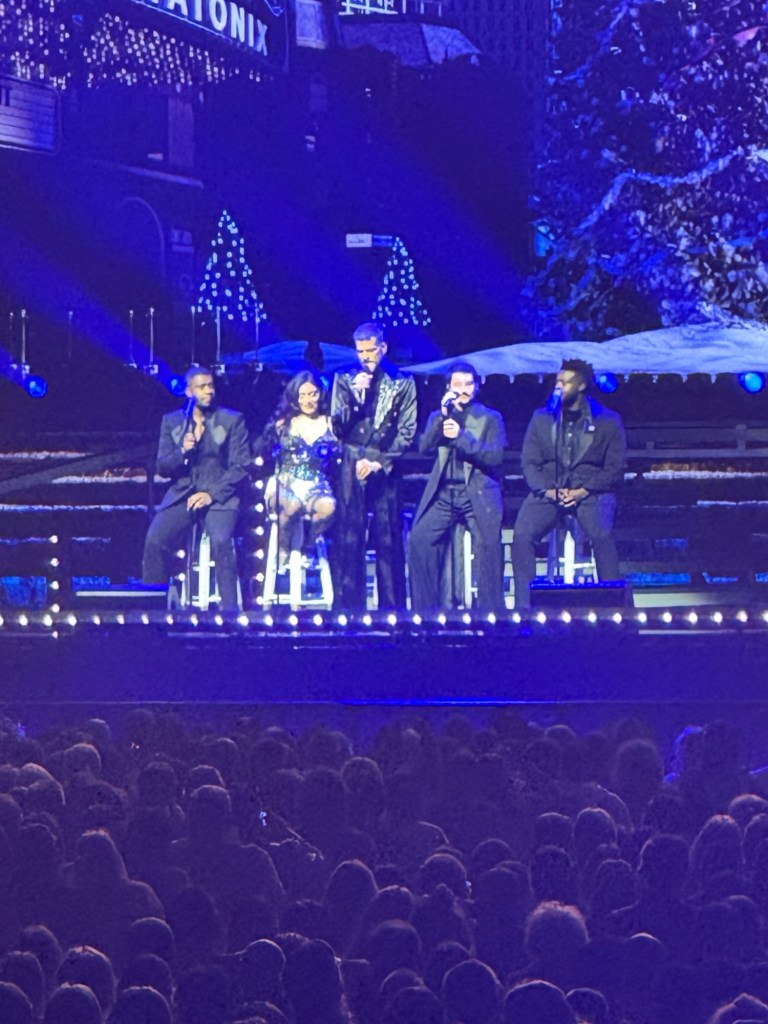
In this concert they used instrumental enhancement on most songs.  Nice, but not what I was expecting.

The woman sitting next to me was a wealth of information about the group and she definitely added to my experience.  She knew a lot about Scott Hoying’s time on Dancing With the Stars.  His dance partner was from Salt Lake City and she went up for a cameo dance.  The crowd went wild!  
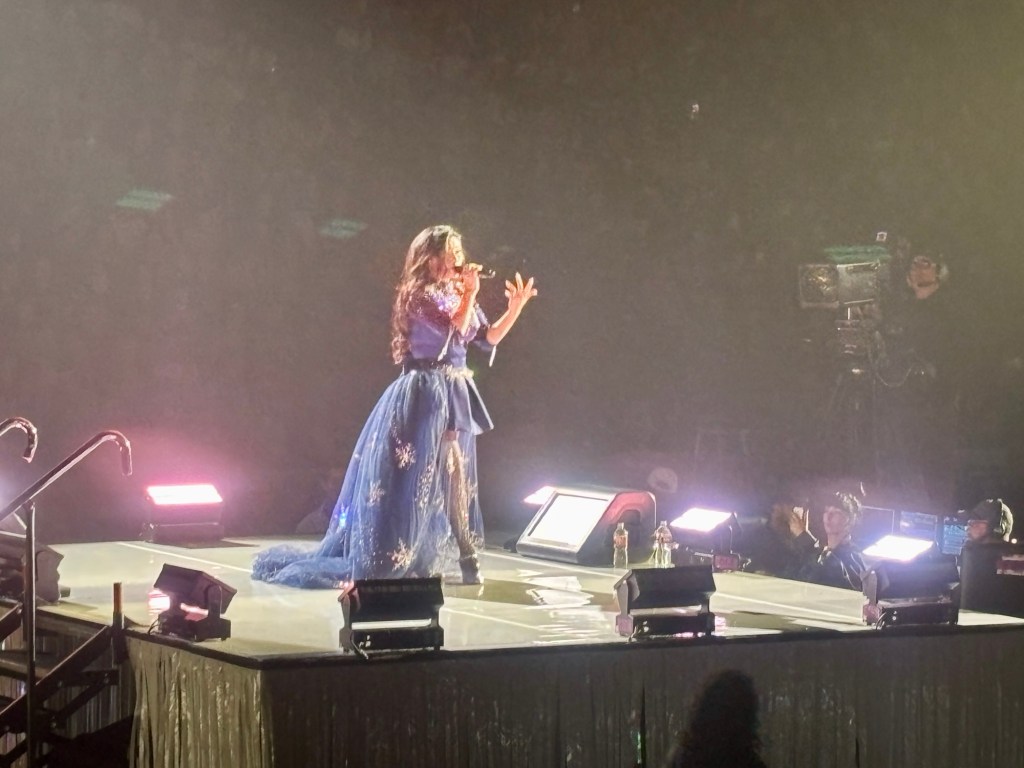
Towards the end of the concert, the group came down to our end of the arena.  That was nice.

We probably won’t go to one of their concerts again so I was glad they sang my two favorite Pentatonix songs acapella: Mary, Did You Know? and Hallelujah!

I am now caught up with our travel blogs. Happy Holidays everyone.

See you in February !
Posted in Uncategorized | 1 Comment

The End of the Road (Trip)

We were getting to the end of our New England road trip, arriving in Hartford, Connecticut.

We originally had one night in Hartford, but with the change in itinerary, we had two.

While driving to get breakfast, we saw the Hartford Building,  It would make sense that The Hartford company is headquartered in Hartford.  

That led me to look at what other companies have headquarters in Hartford.

There is definitely a health insurance and finance emphasis.   Pratt & Whitney, highlighted in the last blog, is in East Hartford.

On the way back to the hotel, we looked closer at a mural on the building next to our hotel.  We certainly knew Michelle Obama, Sonia Sotomayor, Ruth Bader Ginsberg and Kamala Harris.  We did not know the fourth woman.  A little research revealed she was Governor Ella Grasso, the first woman to be elected governor of Connecticut.  She served from 1970-1975.  The artist said each woman was chosen for their groundbreaking contributions to women’s rights, justice and leadership. The mural is on the Ruth Bader Ginsburg Empowerment Center, and was completed by artist Micaela Levesque, pictured below.

She has dozens of works ranging from food trucks to additional building murals.  All are very colorful and beautifully done.

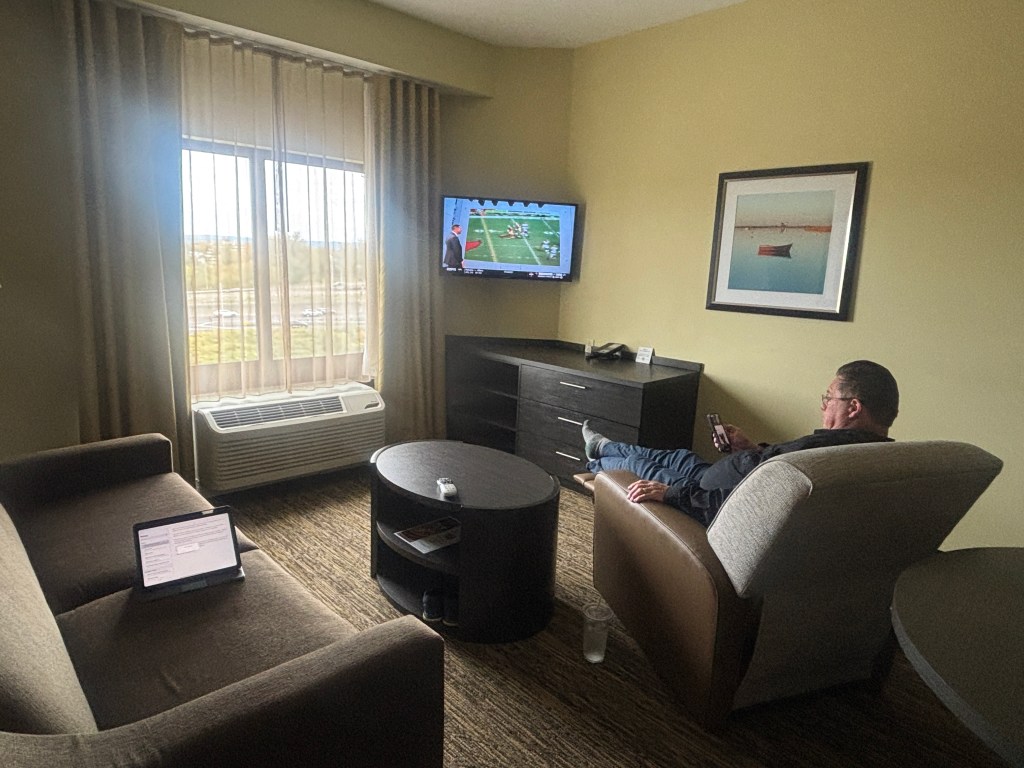
It was a Sunday (October 19) and the weather was iffy. We had done a lot over the previous week, and were ready for a down day.  We read, scrolled, and watched football.

The next morning we were ready for our Hartford activity and then on to Boston for a late afternoon flight to Phoenix.

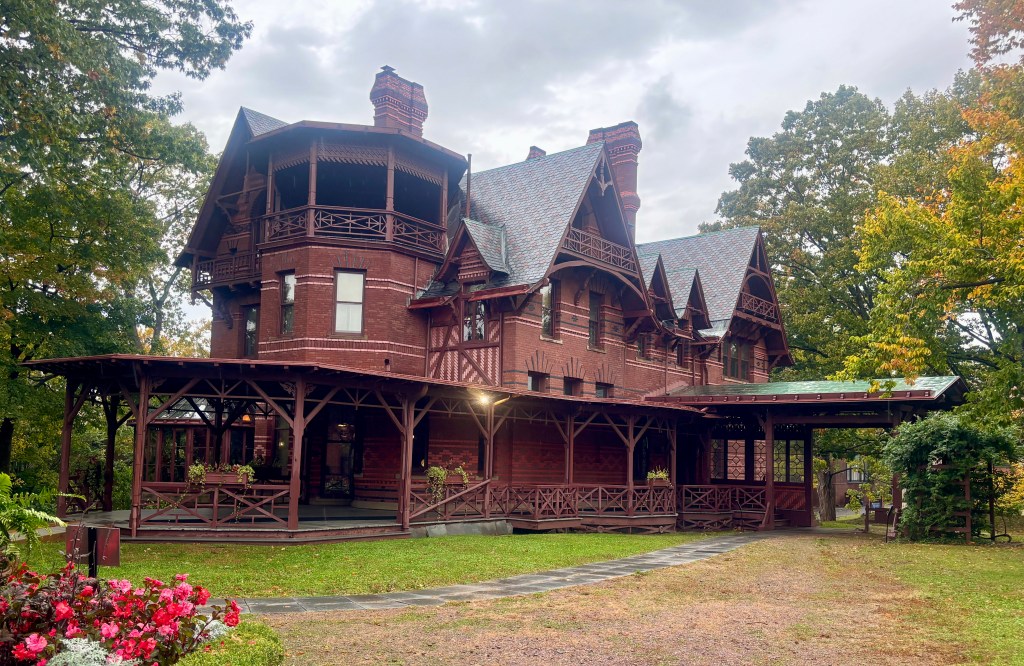
We headed to the Mark Twain House – one of the premier tourist activities in Hartford. Yet, the first house we came to was the Harriet Beecher Stowe House. 

Built in 1871 for a lawyer in Hartford’s Nook Farm neighborhood, Harriet Beecher Stowe, the author of Uncle Tom’s Cabin, purchased the house two years later. She lived here with her husband, and twin daughters. After Stowe died in 1896, the twins sold the house.  In 1927, it came into the family again when purchased by Katherine Seymour Day.  Katherine was Stowe’s great-niece. She facilitated the house being used as a museum. The Harriet Beecher Stowe house, a national historic landmark, was restored in the 1960s and is open to the public.

Unfortunately, we didn’t have time to visit the Stowe House because we were in the first tour of the day at the Mark Twain House.

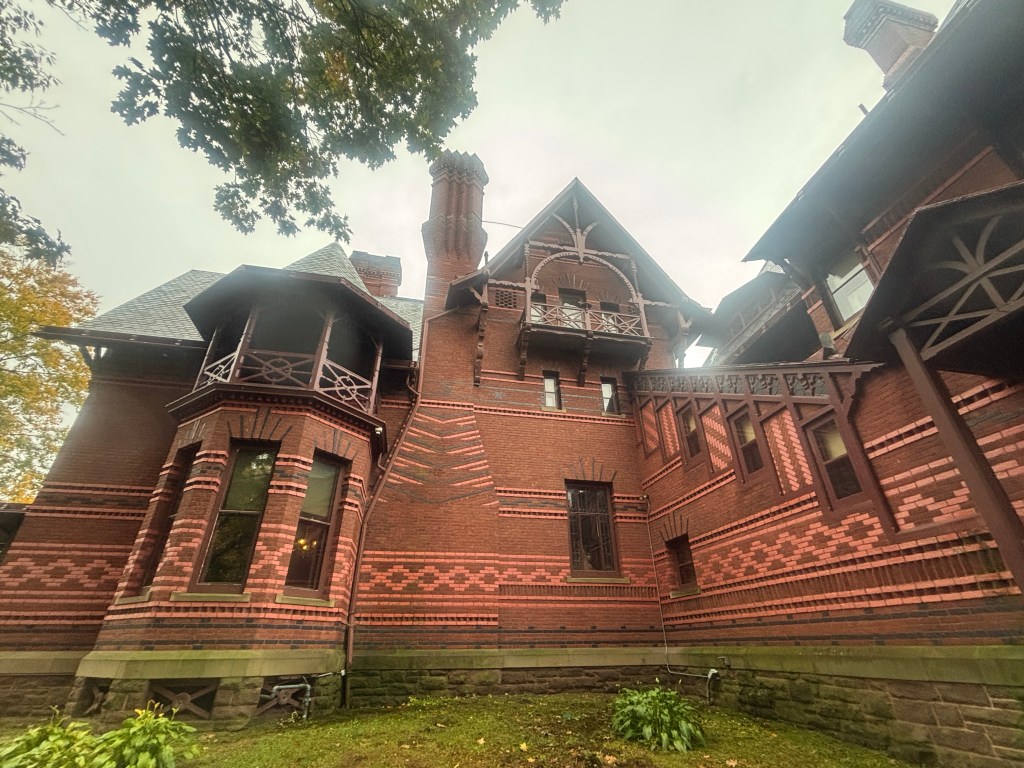
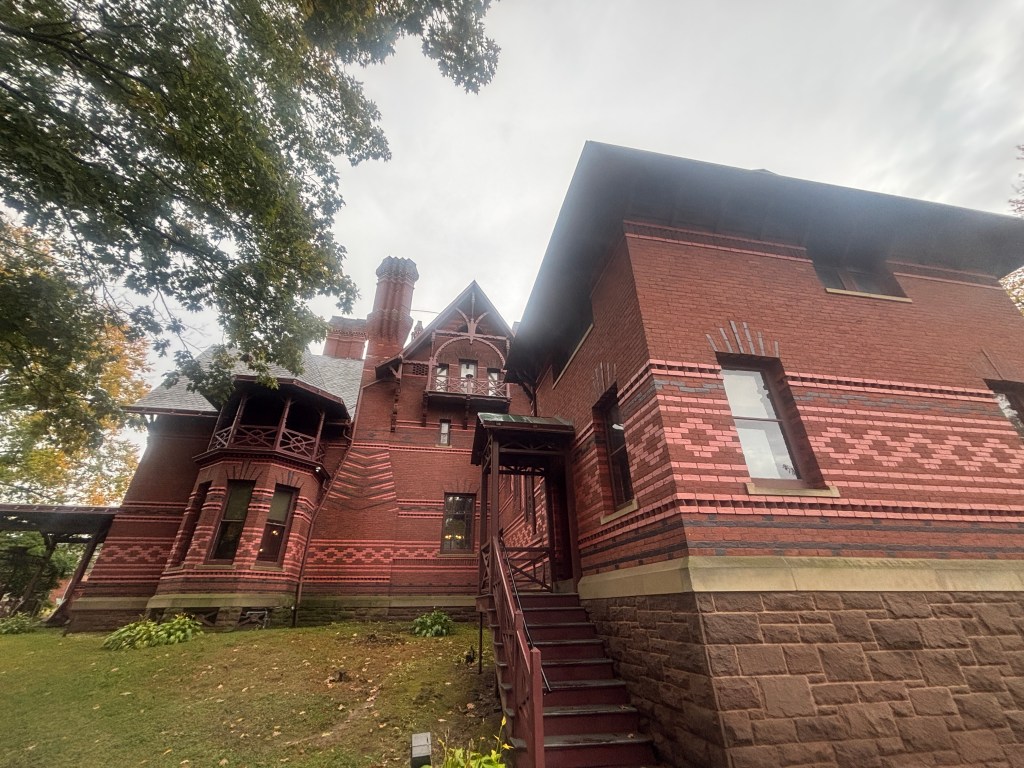
We didn’t know exactly where to go for our tour but enjoyed some views all around the house while searching!

We later learned “No two elevations are alike; generally symmetrical gables are, upon closer inspection, subtly different in their decorative treatments.”

“Various chimneys and towers rise spontaneously.” The outside was beautifully done.

We found the adjacent museum, and tour desk.  We didn’t have much time but we enjoyed learning what we could.

Samuel Clemens was born in 1835 in Missouri‚ the sixth of seven children. At age 4‚ they moved to Hannibal‚ Missouri‚ on the banks of the Mississippi River. Missouri, a new “slave state”  acquainted Samuel with the lives of slaves, forming opinions that influenced his later writings.

Samuel’s father died when he was 11 and he left school to work as a printer’s apprentice for a local newspaper. This was the first of many newspaper jobs he held around the country throughout his life.

In 1857‚ Samuel returned home to become a riverboat pilot on the Mississippi River. The Civil War interfered and he joined a volunteer Confederate unit but quit after two weeks.

Samuel headed west in July 1861‚ in hopes of striking it rich in the silver fields of Nevada.  Failing at that, he began writing for a Virginia City‚ Nevada newspaper.  This is where he first used the name Mark Twain, In fact, mark twain is a measurement term used on the Mississippi riverboats.

Clemens continued west writing for San Francisco and Sacramento papers. The latter sent him to the Sandwich Islands (Hawaii). The popularity of his writings led to a lecture tour which honed his skills as a stage performer.   

Samuel continued travel writing in Europe and the holy land. These writings were later compiled into his first book, The Innocents Abroad.   He met his future brother-in-law on that trip, who showed him a picture of his sister, Olivia.

After courting for two years‚ Samuel and Olivia married in 1870. They settled in Buffalo‚ New York‚ where Samuel was a partner, editor and writer for a local newspaper.  Their first child‚ a son, was born but died at age two.

In 1871, the Clemens family moved to Hartford‚ Connecticut.  They later had three daughters, Susy, Clara and Jean.

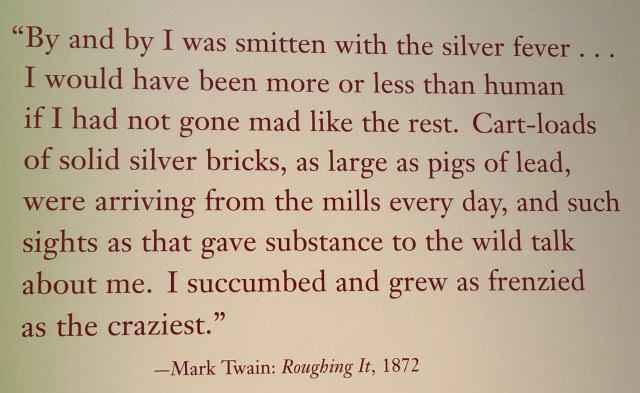
In 1872, Samuel’s stories from his western adventures were published in his book Roughing It.  

In 1873 Samuel co-wrote The Gilded Age, a novel that highlighted political corruption‚ big business, and the American obsession with wealth.  

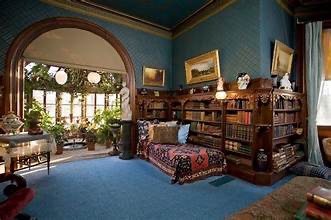
The financial success of his writing allowed the family to build a 25 room house, costing a lofty $40,000.  

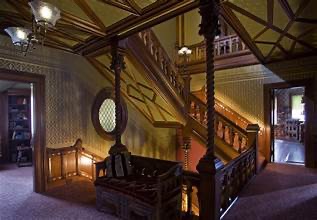
The museum did not allow pictures but I found a few on their website and Connecticut tourism sites.

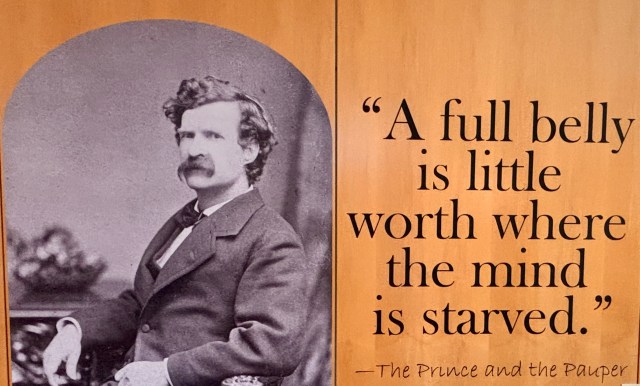
For 17 years (1874-1891) the family lived in their Hartford home. Samuel completed his most famous books there, including The Adventures of Tom Sawyer, The Prince and the Pauper and A Connecticut Yankee in King Arthur’s Court.  

He wrote against slavery in his most famous work, Adventures of Huckleberry Finn.  It was also the first book published by his own publishing company.  

Samuel Clemens had financial success writing but made bad investments in other ways, specifically the Paige automatic typesetting machine.  The Paige Compositor was six times faster than the most skilled human, but often broke down.  It used 18,000 movable parts.  Another machine was slower but more reliable, so captured the market.  

Clemens eventually declared bankruptcy and was forced to move to Europe and do speaking engagements to support the family and pay his debts. During their time in Europe, Susy Clemens‚ age 24‚ came back to the Hartford home for a visit and died from meningitis in 1896.  The family chose to never return after that.

In his later years‚ Samuel’s writings reflected his disillusionment with colonial powers, including the United States. He was a vocal critic of the government.  

Samuel Clemens died in 1910 at age 74. He outlived his wife and three of his four children.

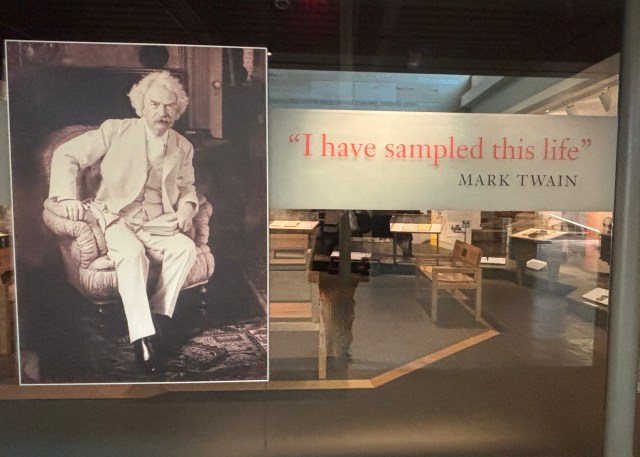
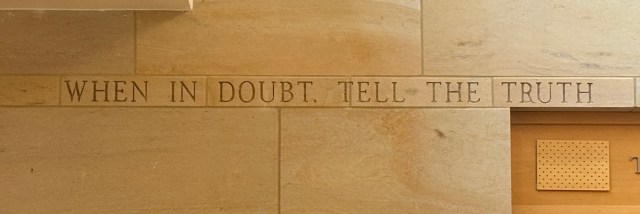
We enjoyed several of the Twain quotes highlighted in the museum.

The abbreviated version of the quote above was predominate in gift shop products and we bought new luggage tags using it. The quote is our new mantra!

We would have enjoyed more time at the Mark Twain House and Museum, but we needed to get to Boston.

We had more fall foliage along the way.

We arrived at Boston’s Logan Airport at a very busy time for the car rental company.  We were told “leave the keys, you’re fine.” 

We were fine until the car did not register as being returned as we were waiting for our flight, or when we got off our flight, or even the next day.  For three days I received car overdue notices and spent time and angst trying to figure out how we were going to prove that we had returned the car.  Finally I talked to the right person, could give them the time we returned the car, and the issue was resolved.  We’ll never walk away from a rental car again without it officially being accepted or at least having pictures showing the return!

I haven’t said much lately about the Mariners contest against the Blue Jays in the American League Championship Series.  After taking the first two games from the Blue Jays in Toronto, the Mariners gave up their huge statistical advantage, losing two of three in Seattle.  They went back to Toronto needing to win one of the last two games.  After losing the first game, the series was tied three to three.   Game seven was going to happen while we on a plane between Boston and Phoenix! 

Immediately after boarding our flight to Phoenix, I paid $29 for inflight wifi so I could watch, or listen, to the game.  As it turned out, the game was on in-flight TV so I used the wifi to listen to the Mariners announcers on their radio broadcast.

At one point the in-flight TV gave out so the man in the window seat got the game for me on his computer using his T-Mobile capability.  He was a Boston Red Sox fan but got into the spirit of rooting for the Mariners to get into their first world series.

I thought it was fun that, at one time, all three of us had the game on our devices.  The Red Sox fan eventually went back to his own interests but looked over at my iPad regularly.

Alas….the Mariners, ahead for most of the game, lost. Ugh…gut punch.  Even the Red Sox fan was a little sad.  The only thing good about that was that Randy and I were able to enjoy a fun world series without stress.

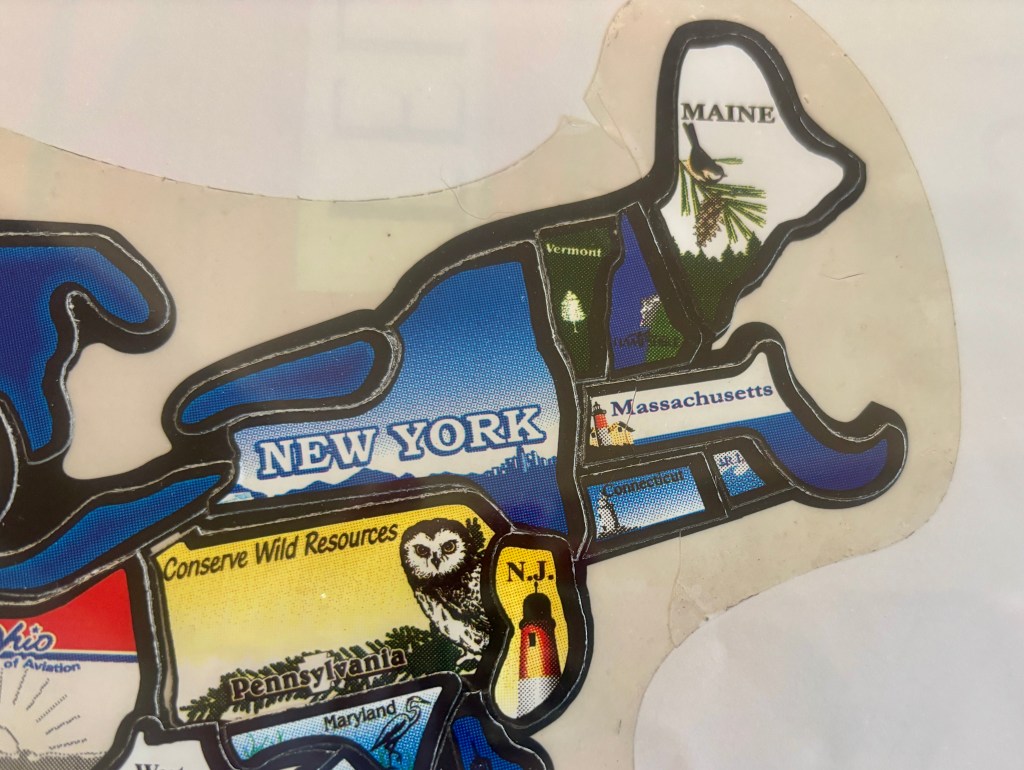
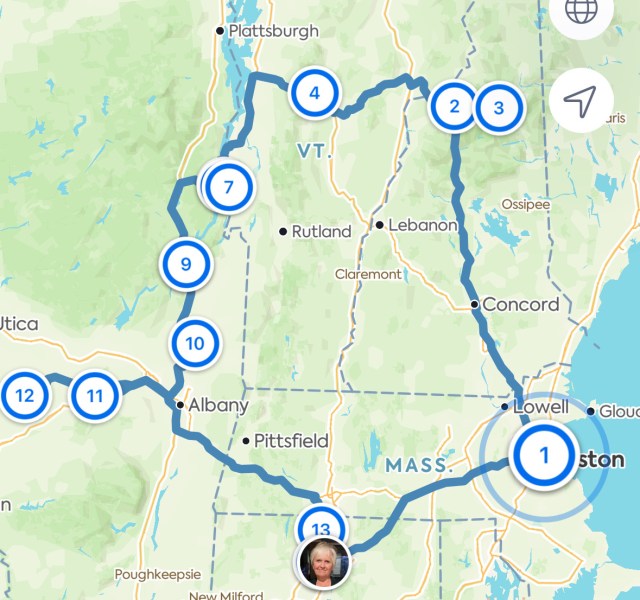
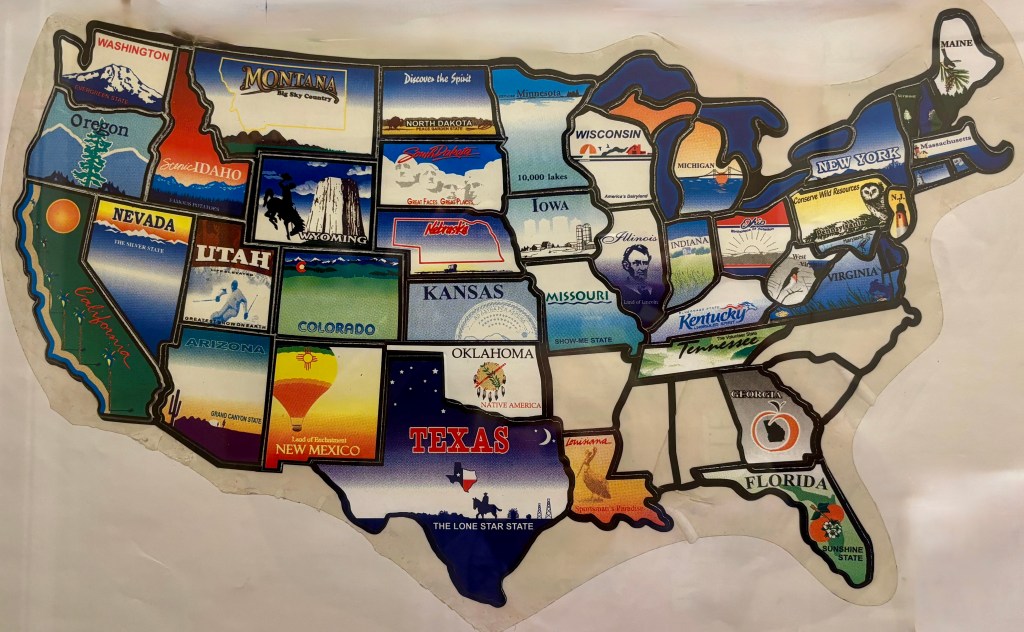
When we returned home, we applied the Connecticut sticker to our states map. It was the only New England state remaining. Yes, I already have a trip reserved to pick up Mississippi, Alabama and Arkansas.

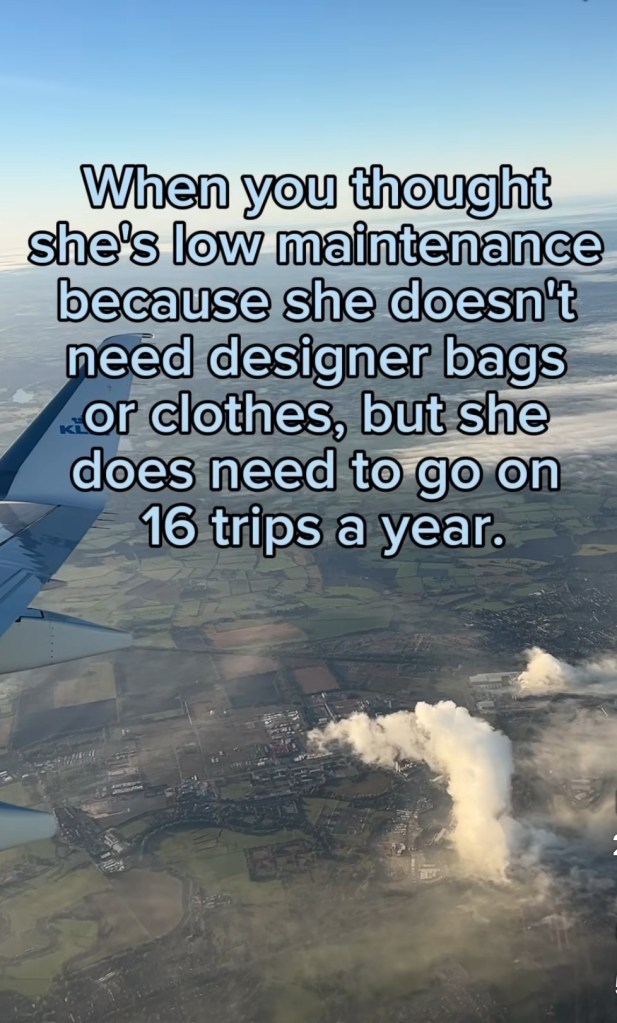
This is our final post about our fall New England road trip.  At the end of our last trip, I finished with this meme on Randy – which he didn’t mind.

This time, I’m leaving this one on me.

Posted in Uncategorized | 2 Comments

October 18 Reworked

The plan for three national parks near Hyde Park, New York wasn’t happening on October 18 and 19th due to the government shutdown. So, I reworked the last few days of our trip.

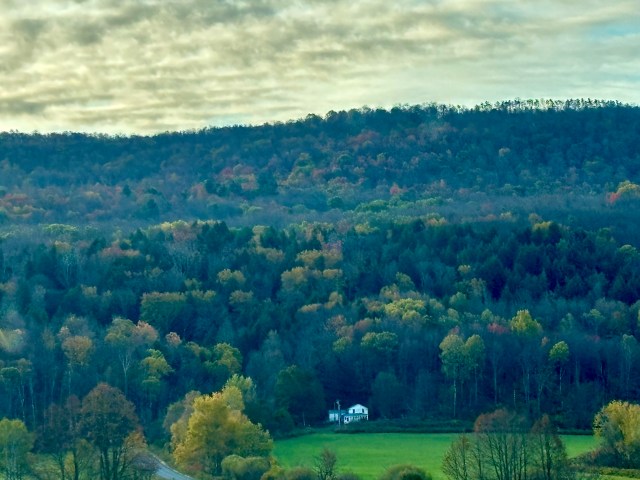
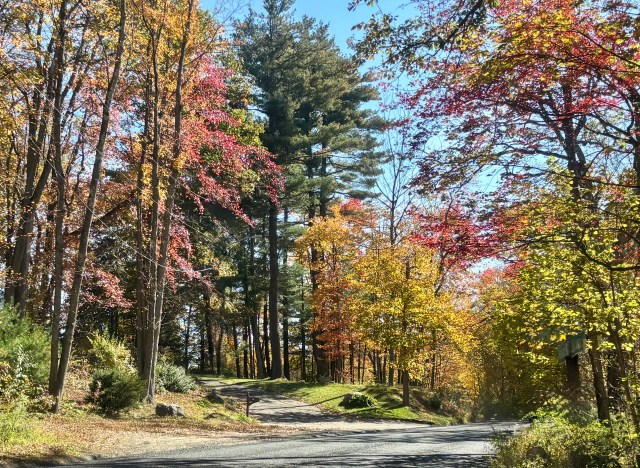
While driving, we came across this scene – New York in mid October really was this beautiful.

We left New York and traveled briefly across the southwest corner of Massachusetts. 

There seemed to be endless photo opportunities around every bend of the county roads. 

Traveling the backroads was a delight on this roadtrip! 

There were villages, with historical markers, every few miles.  It seemed we were in the middle of one of the villages when Apple Maps told us “Welcome to Connecticut.”  There was no sign, just neighbors on either side of the border between Massachusetts and Connecticut.    Randy has told people many times that this was his favorite thing on the trip .

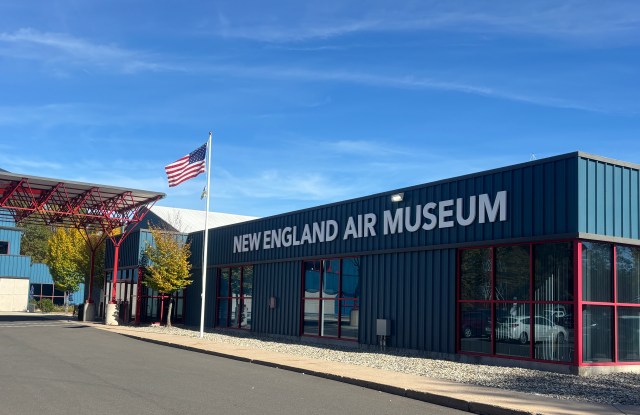
In our rework, we decided to go to the New England Air Museum. 

Randy really enjoys aviation museums and we’ve been to quite a few.  I like them well enough as long as the airplanes have stories and are not just engines, wings and fuselages.  

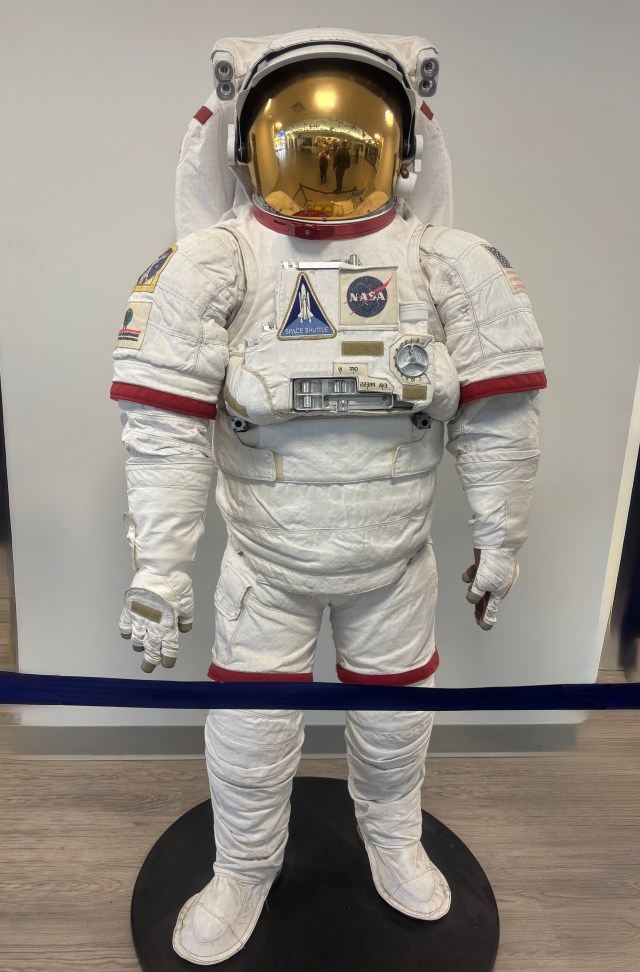
In the entry, we saw an astronaut space suit.  These suits are sometimes considered the world’s smallest spacecraft.  They have more than 18,000 parts working together to provide life support, environmental protection mobility and communications.  Collins Aerospace,  the primary contractor for these suits, is based in this part of Connecticut.

We thought this video board was interesting showing all of the airplanes in and around Hartford at the moment.  This was during the shutdown but before air travel was significantly impacted.

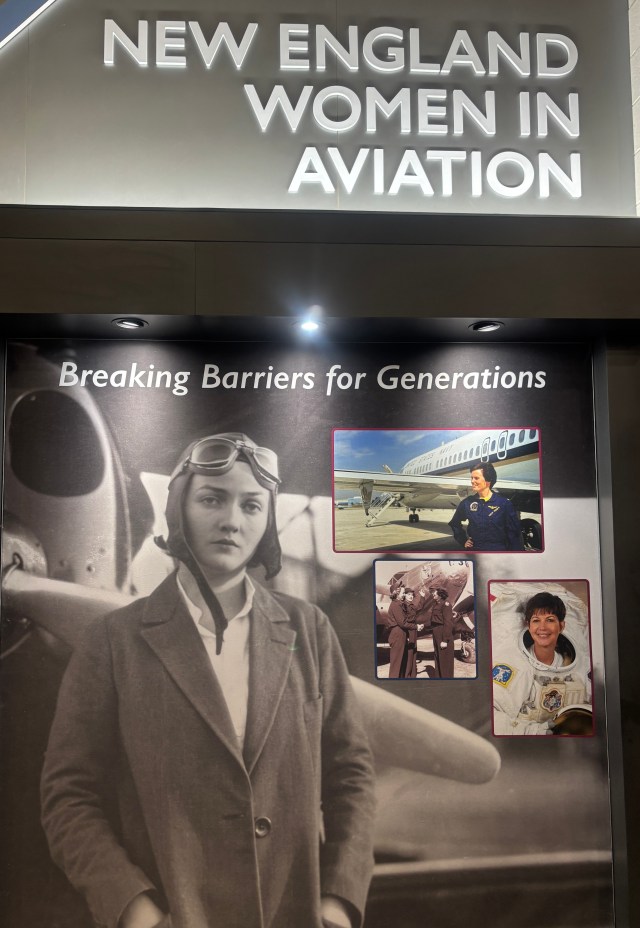
We went into a display about New England Women in Aviation.  There were a dozen or more women highlighted, but two caught my eye.

MIT graduate Dava Newman has degrees in aerospace engineering and biomedical engineering.  Her research has focused on developing a BioSuit allowing astronauts to move around more freely.  She also served as the deputy administrator of NASA and was awarded the NASA Distinguished Medal.

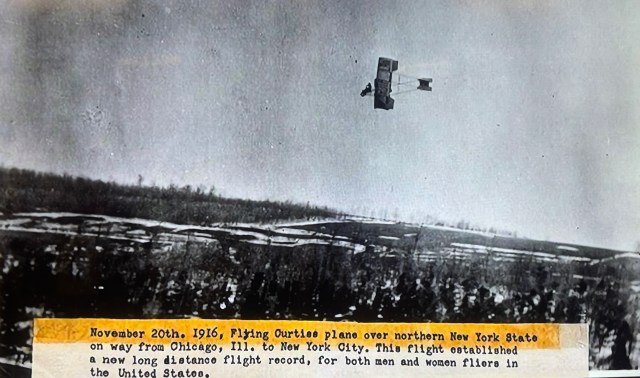
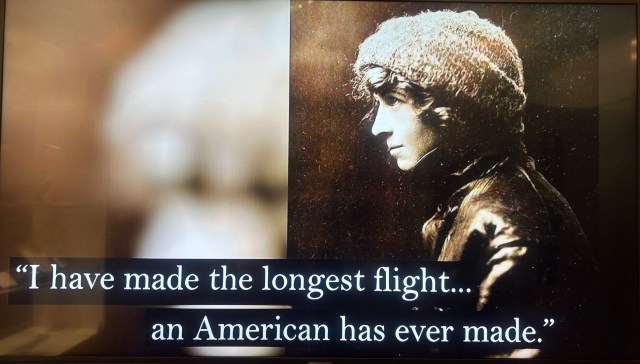
Ruth Law, born in 1887, bought her first airplane directly from Orville Wright but he refused to give her flying lessons. He believed that women were not mechanically inclined.

She learned to fly and eventually flew from Chicago to New York City, a distance of 593 miles.

The above photo shows what she said when asked if she had made the longest flight a woman had ever made.

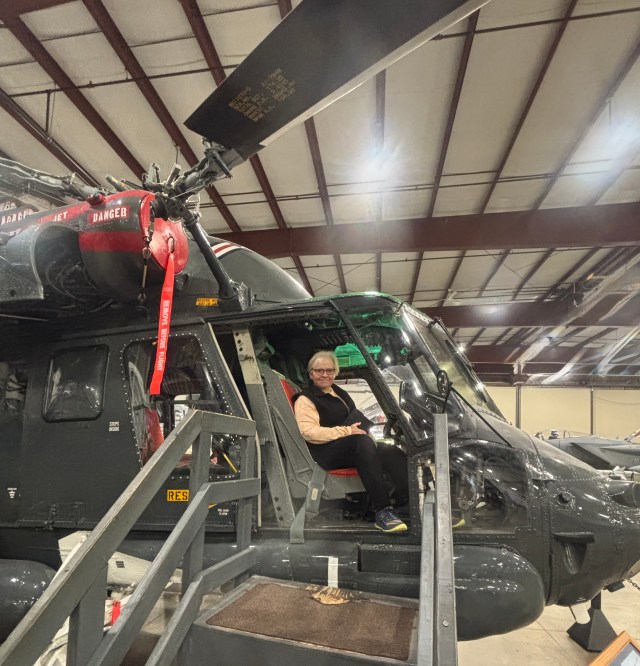
I might resemble the women who are not mechanically inclined, but played along sitting in a Seasprite helicopter. It was designed and built by the Kaman Corporation in Connecticut.

Randy sat in an F-100 Super Sabre.  This type of plane was the first production supersonic fighter in 1954.  Randy always enjoys talking with the docents.

The docent, Jim, had flown the F-100 in Europe. Then, he trained on the F-4 in Tucson where Randy grew up.  After 67 hours on the F-4, he was sent to Vietnam to fly combat missions.  Jim said his short training time was possible because all US aircraft, at that time, had very similar control positioning.

This picture shows how the F-100 looked prior to restoration.

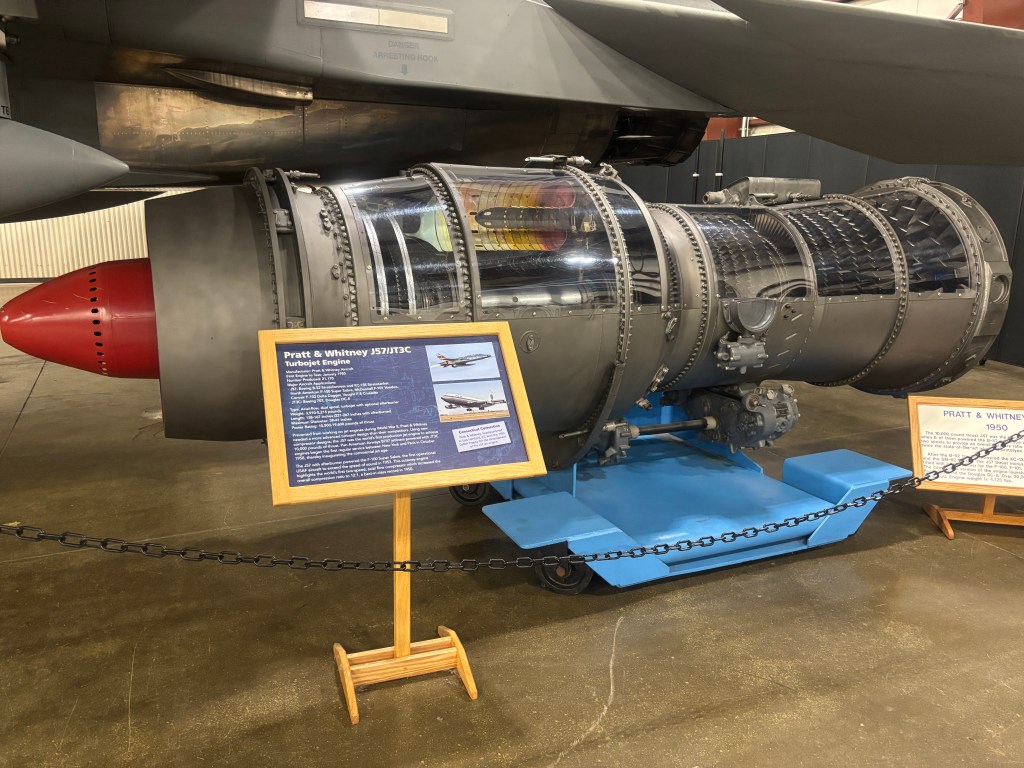
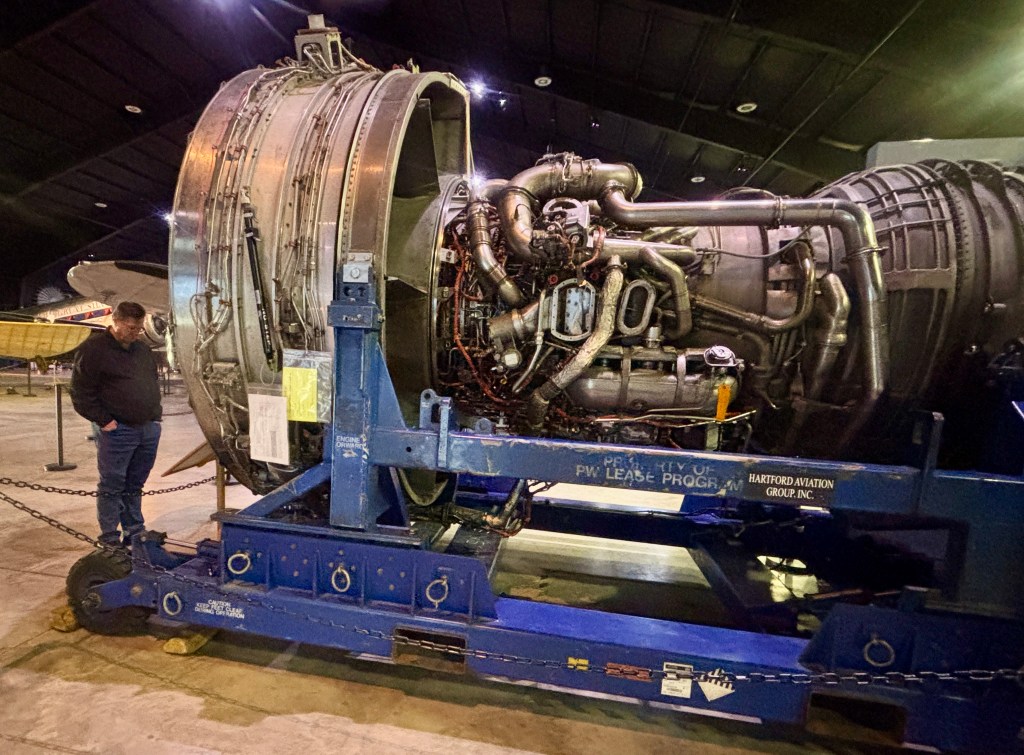
This plane, and many others had Pratt & Whitney engines.  The company was, and still is, headquartered in East Hartford, Connecticut.

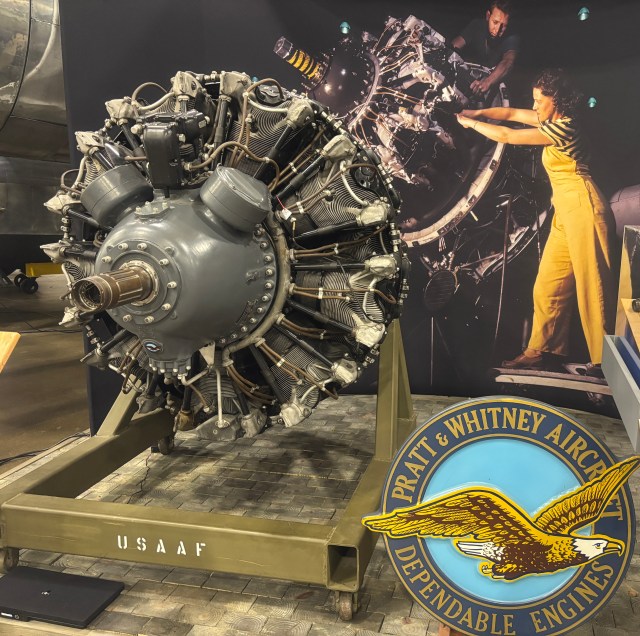
When Roosevelt needed mobilization during WWII, Pratt & Whitney developed a wartime engine. The whole process required transforming the automobile industry into a wartime industry. 

Pratt & Whitney engineers worked 50 hour weeks for years without a shutdown or vacation.  Their initial workforce of 3000 grew to 40,000 men and women in 1944. Most of them had never built anything complicated but ultimately produced 363,619 engines.  Pratt & Whitney provided half the horsepower used by all American air forces in World War II.

This steel mat is called the Marston Mat named after Marston, North Carolina where it was first used. The interlocking perforated steel matting material was used during WWII for temporary runways and landing strips.

This airplane is a P-47 Thunderbolt, the largest,  heaviest, and most destructive single engine aircraft used in World War II.

When the war ended, military aircraft were given to friendly foreign governments. This plane went to Peru and served in their Air Force for 20 years. It was deemed obsolete in 1970 and was given back to the United States.  Considered a possible museum exhibit,  it was eventually offered to the New England Air Museum.  It arrived in 1972, completely disassembled and badly deteriorated.

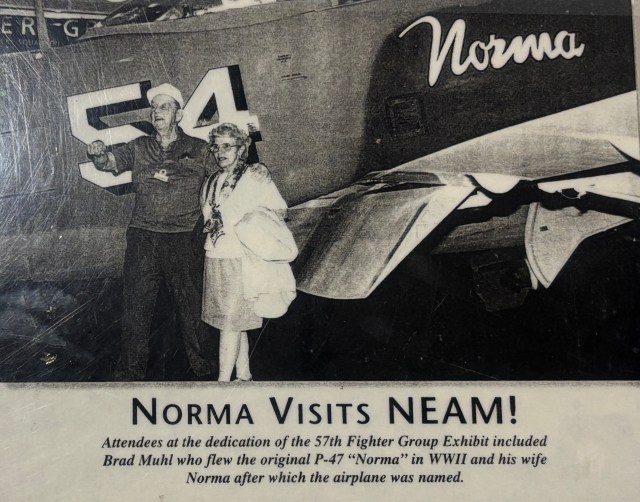
The museum was able to track down information about this particular plane by its insignia and number.   They knew the pilot was Lieutenant Bradley Muhl but, at that time, had no way to find him.

In 1996, an amateur sleuth museum volunteer found a listing for Muhl and confirmed that he had been the pilot.

Muhl explained how he had met a pretty nurse by the name of Lieutenant Norma Holler at a party in Italy.  Pilots sometimes named their planes after wives or sweethearts, in this case Norma.  

The couple had settled in Los Angeles. He didn’t know that his old plane was being restored to the condition it was when it was Norma. They visited the exhibit after restoration.

Randy remembers making a model of this plane when he was a boy. I guess he’s always liked this stuff.

This is a Goodyear ZNPK Blimp Control car from 1942. The 10 person crew piloted a blimp, aloft above them, that measured 252 feet long and 63 feet wide.  It was filled with 425,000 ft.³ of helium.   Two Pratt & Whitney engines powered this craft to a top speed of 78 mph.

This aircraft served during World War II as an anti-submarine escort.  It was also used for search and rescue, photography, and mine sweeping. This air craft, named Puritan, was retired in 1948.

A video told how this airship, with only 10 percent of original equipment, was restored between 1993 and 2014.  A man named Russ oversaw it all.  They used old pictures to determine what was needed. Few actual replacement parts could be obtained. Most items were specially manufactured with a few gathered from sources around the country, even eBay.  Russ was 87 when the project was done!  What a joy the project, and its completion must have been! It is the only remaining air ship of its kind in the world.

A museum visitor from New Zealand had experience building vintage engines. A docent mentioned that the attached engines were approximations because they were all that was available, The visitor made them replicas of the aircraft’s engines from scrap materials.  He received the ones the restoration team had used in exchange. 

Igor Sikorsky was designing aircraft in Russia In 1913. Tsar Nicholas II took notice and commended Sikorsky.  After the Bolshevik Revolution, Sikorsky believed his life was in danger and fled, He ended up in the United States.

One of his designs was for flying boats. They were built for commercial transatlantic passenger service prior to World War II.   They were roomy and luxurious and allowed for docking at a pier before land infrastructure existed.

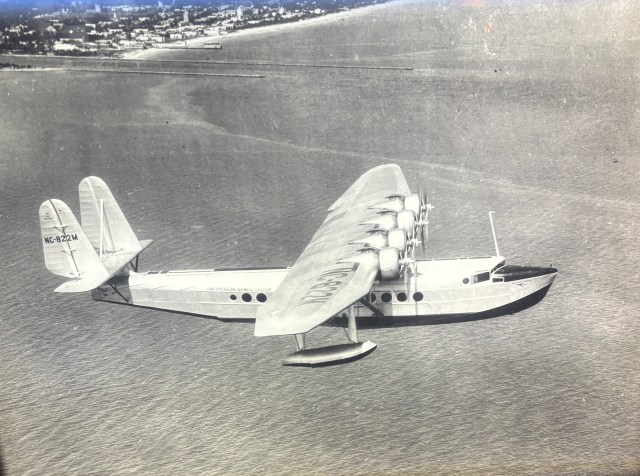
This Sikorsky designed VS 44 was completed in 1942 and flew priority passengers for the US Navy. This is only one of three VS44s ever built. 

It was named Excambrian and, after the war, was operated  by American Export Airline between New York and Ireland.

This craft was purchased in 1967 by former Sikorsky test pilot Charlie Blair and his wife actress Maureen O’Hara. They later donated it back to the Navy who donated it to New England Air Museum.

It was restored by museum volunteers and former Sikorsky employees between 1987 and 1999. It is the only surviving four engine flying boat ever built in the United States. 

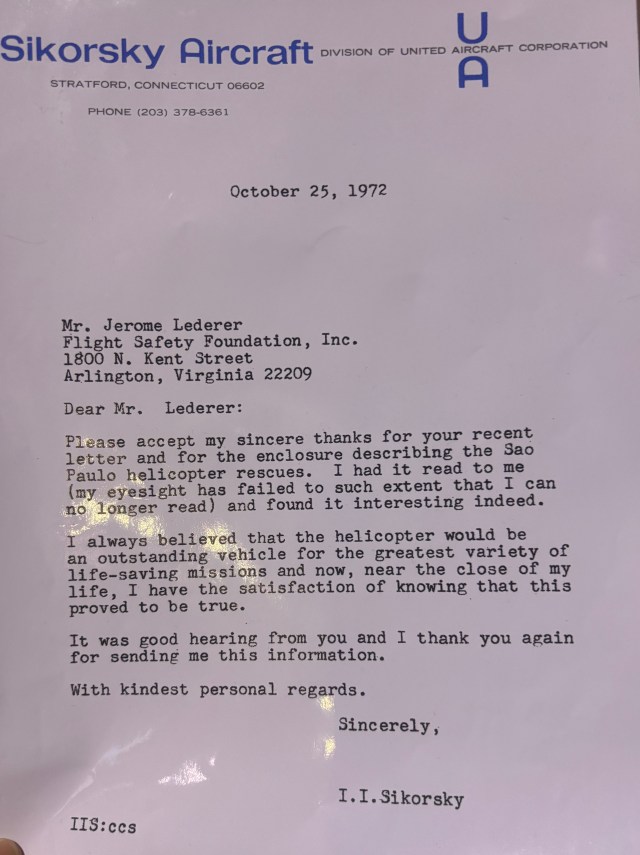
Igor Sikorsky felt helicopters could be used as life-saving machines and designed them with that in mind. In February 1972,  a fire in a São Paulo Brazil residence left 400 people at risk.  Twenty helicopters and crews saved 400 lives.  Sigorsky  received a letter describing this miracle operation.

Igor Sikorsky wrote a letter in response the evening before he passed away, in his sleep, at age 84.  The letter remained on his desk.

Marine One helicopters are Sikorsky helicopters .

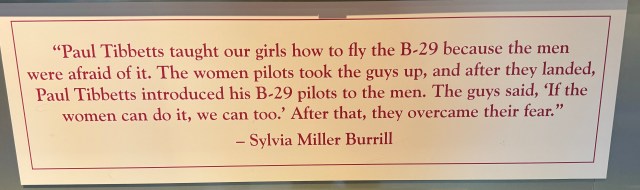
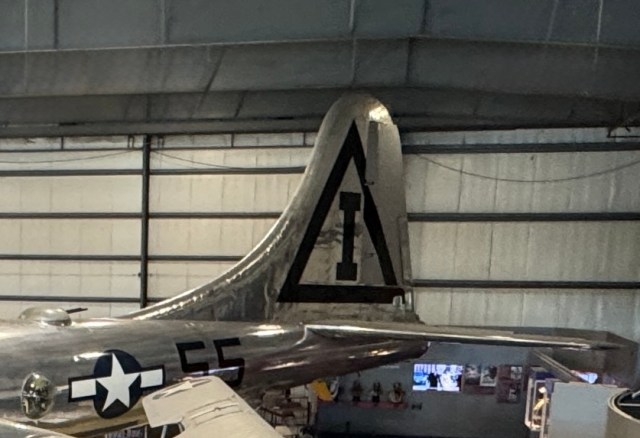
While we were looking at the B29, a docent was talking about how problematic the planes were when they were coming off the assembly lines. They basically had to strip down the electronics and have them rebuilt before being given to pilots.   Unfortunately, and probably understandably, pilots didn’t want to fly them.

There had been a note about this in the Women of New England section.

I asked the docent about “the story” of this particular plane – specifically how it got from WWII to this museum.

He said it had never served in Europe but was used as a training plane stateside. After the war, it ended up in a California proving ground as a target for drone and ground attacks. When the Air Force cleaned up the bombing site, this plane was determined to be intact enough that it might be of interest to a museum.  It was loaded onto a transport and made its way to this museum.

The B-29 sat outside the Bradley Air Museum, the predecessor of the New England Air Museum..  

The plane survived a severe tornado in 1979, likely because it hadn’t been restored enough to have the wings attached.  Most of the museum’s other planes were destroyed.

Overtime, the museum moved to its current site.

An air museum in Washington state was trying to restore their B29 to be able to fly.   Their plane’s tail section wasn’t in good enough condition and they asked other museums if anyone had a good tail.  This museum responded and the tail swap was accomplished! 

So, this plane survived test pilots, drone and ground attacks, a trip across country, a tornado and a tail lift.  That is a pretty good airplane story!

The docent also made sure we knew that the Millennium Falcon in Star Wars was based on a B29!

We didn’t go into The Tuskegee Airmen exhibit but saw this quote at the entrance. It seemed poignant.

Next Up:  We spend time in Hartford, and why.

If you enjoyed these airplane stories, here are a few links to posts from other aviation museums we have enjoyed.

Chapter 5: Yours, Mine and Ours

Cape May: Aviation Museum

Airplane Stories

Flying Boat and Flying Fortress

Posted in Uncategorized | 1 Comment

Cooperstown: Hall of Fame and Bat Factory Tour

We typically go on a baseball trip each year to watch the Mariners or the Diamondbacks play in a location we want to explore.  This year our baseball trip was a little different with the choice of Cooperstown and the Baseball Hall of Fame. 

The Hall of Fame was developed in Cooperstown because, in 1908, a commission determined that Abner Doubleday had developed the game of baseball in Cooperstown, New York in 1839. Cooperstown resident, Stephen C. Clark, decided, in 1935, that he would capitalize on the findings with a baseball museum.  

The finding that Doubleday was responsible for baseball’s origins has been debunked by historians.  However, the Cooperstown Hall of Fame remains.  

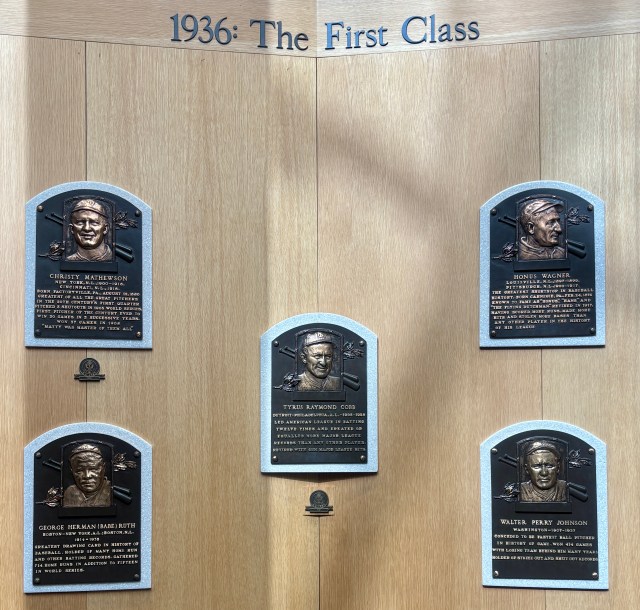
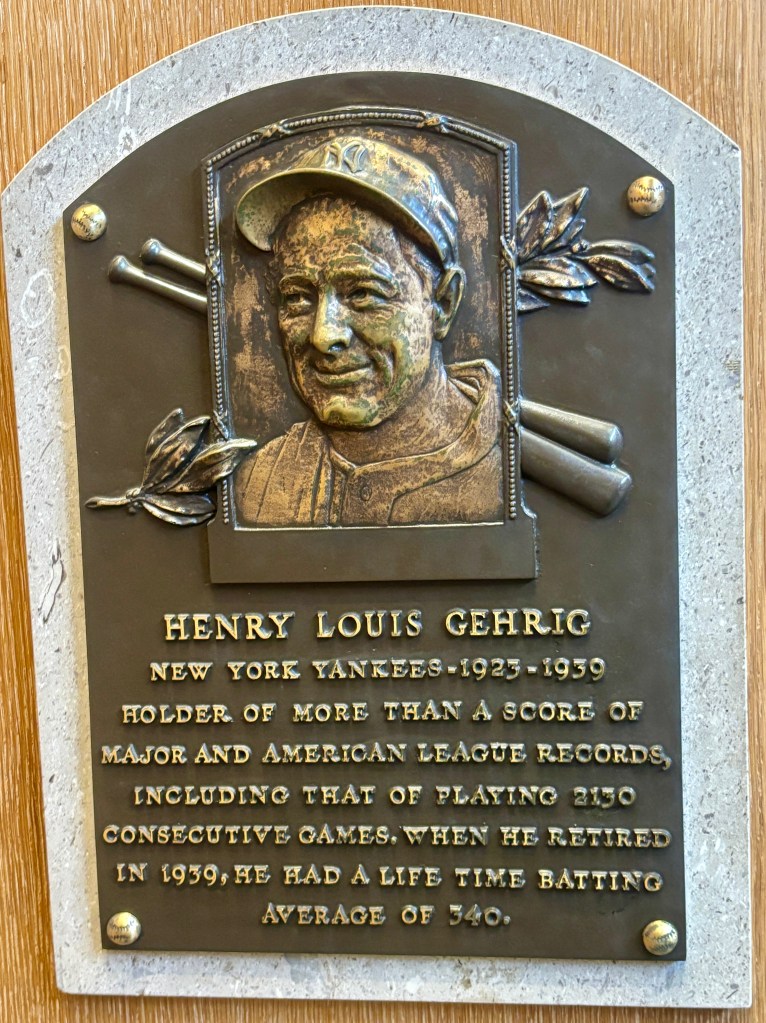
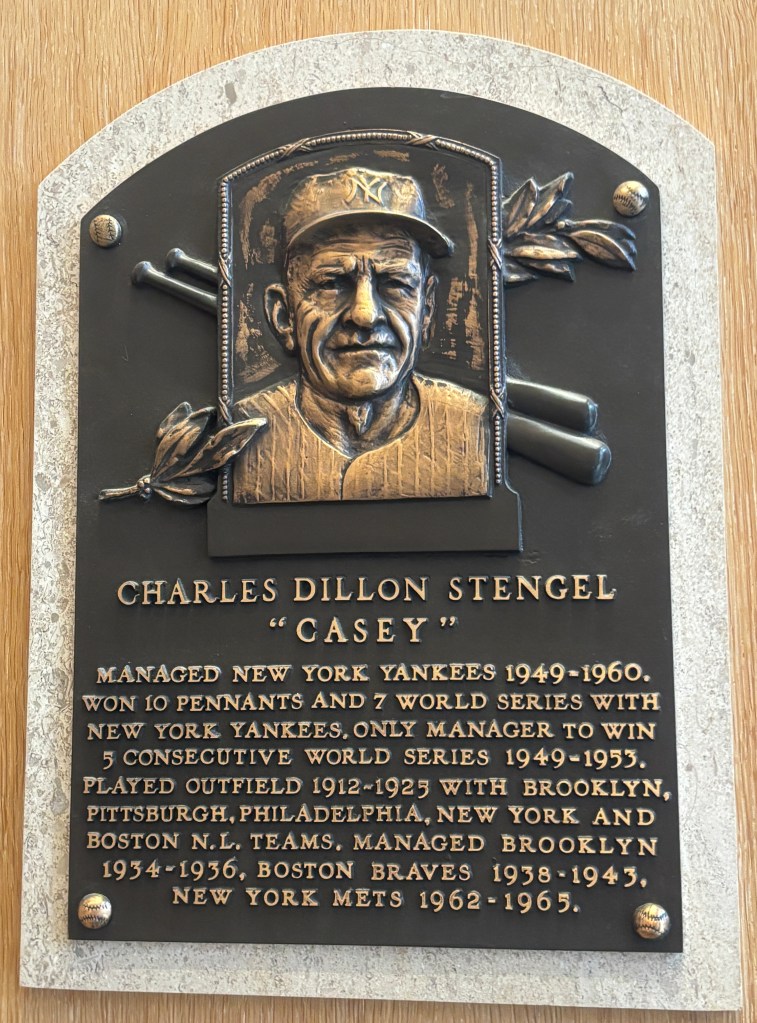
In 1936, the Baseball Writers’ Association of America elected the first class of baseball legends to the newly formed Baseball Hall of Fame: Ty Cobb, Walter Johnson, Christy Mathewson, Babe Ruth, and Honus Wagner.

These are the five bronze plaques representing that first class. 

Hall of Famers have been selected in two ways. Players who played at least 10 major league seasons, and have been retired for at least five years, are eligible to be considered by the Baseball Writers’ Association. If a player receives seventy-five percent of votes, he is elected to the Hall of Fame. A player may be on the ballot for ten years as long as he receives votes from at least five percent of the writers.   There are alternate ways for the selection of Negro League players,  MLB  managers, umpires, and executives.

When we entered the Hall, we were given a check list showing items to look for if one had a favorite team.

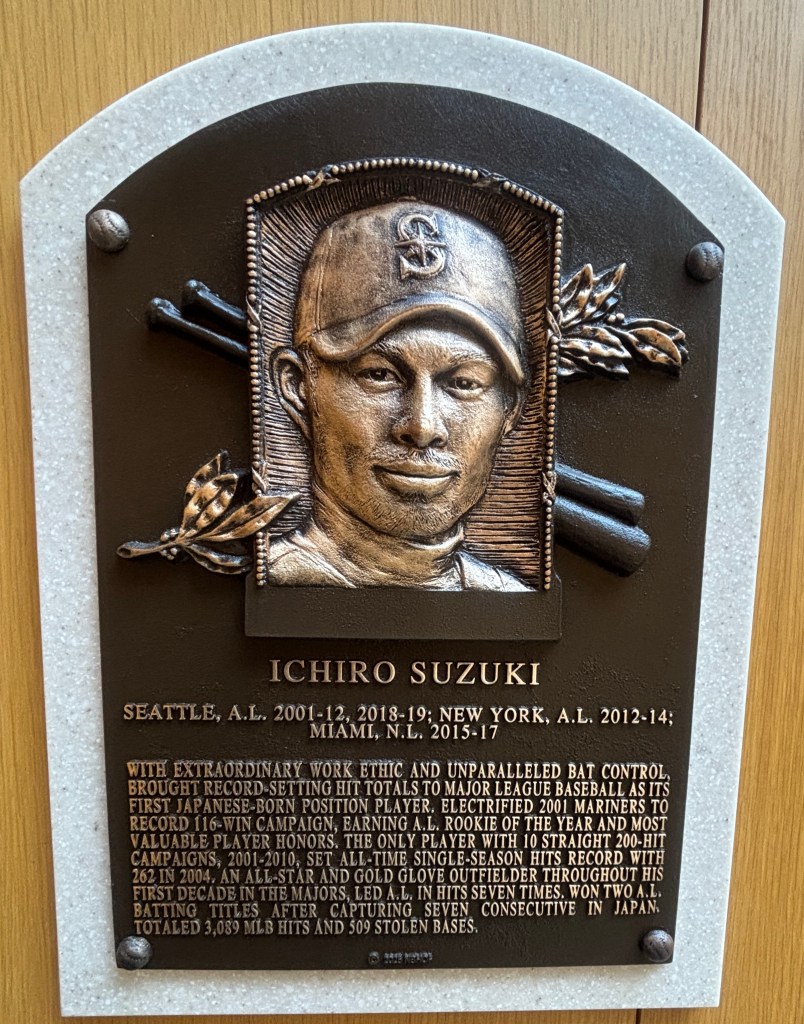
There was a suggested order in which to explore the museum and we began in a large room dedicated to the 2025 Hall of Fame inductees:  Dick Allen, CC Sabathia, Ichiro Suzuki, Billy Wagner and Dave Parker.

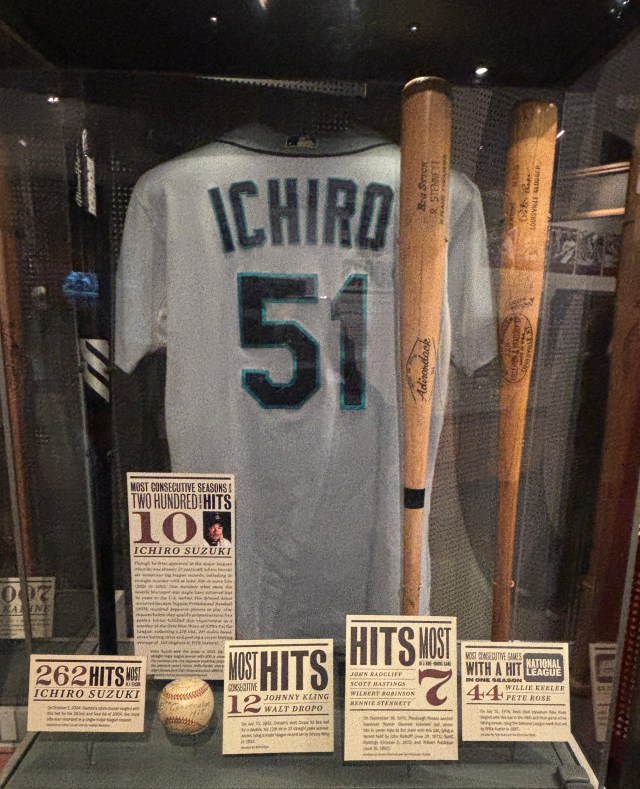
Of most interest to us was Mariner legend Ichiro Suzuki.

The Hall of Fame does not purchase artifacts, but relies on the generosity of players, teams and fans.  

A League of Their Own is among our favorite movies so the exhibit of women in baseball was interesting.

These were two of the Mariner items to watch for – a jersey worn by Edgar Martinez in his last game and a bat he used in 2000.  He became a full time Designated Hitter in 1995 and baseball’s annual DH award is named after him.

The Seattle Pilots cap was from 1969, the only year the team existed,  The team moved to Milwaukee, becoming the Brewers the following year.

The San Diego Chicken was the first furry mascot, debuting in 1974.

There was a display about work stoppages in major league baseball and whether it was a strike event by the players or a lockout by the owners.

We enjoyed watching some of the best baseball replays of all time on a huge screen.  The one above happened in an Atlanta Braves game and we remember seeing it live when we watched all the Braves games on cable.  Those were pre Mariner and pre Diamondback days in our lives.  We used to do baseball trips to watch the Braves play in the 1990s.

There was a display about the steroid era including references to Canseco, Sosa and McGwire.  There was another about Pete Rose and betting that resulted in his suspension.  I found it interesting that these two things were addressed but Houston’s 2017-18 cheating scandal was not.

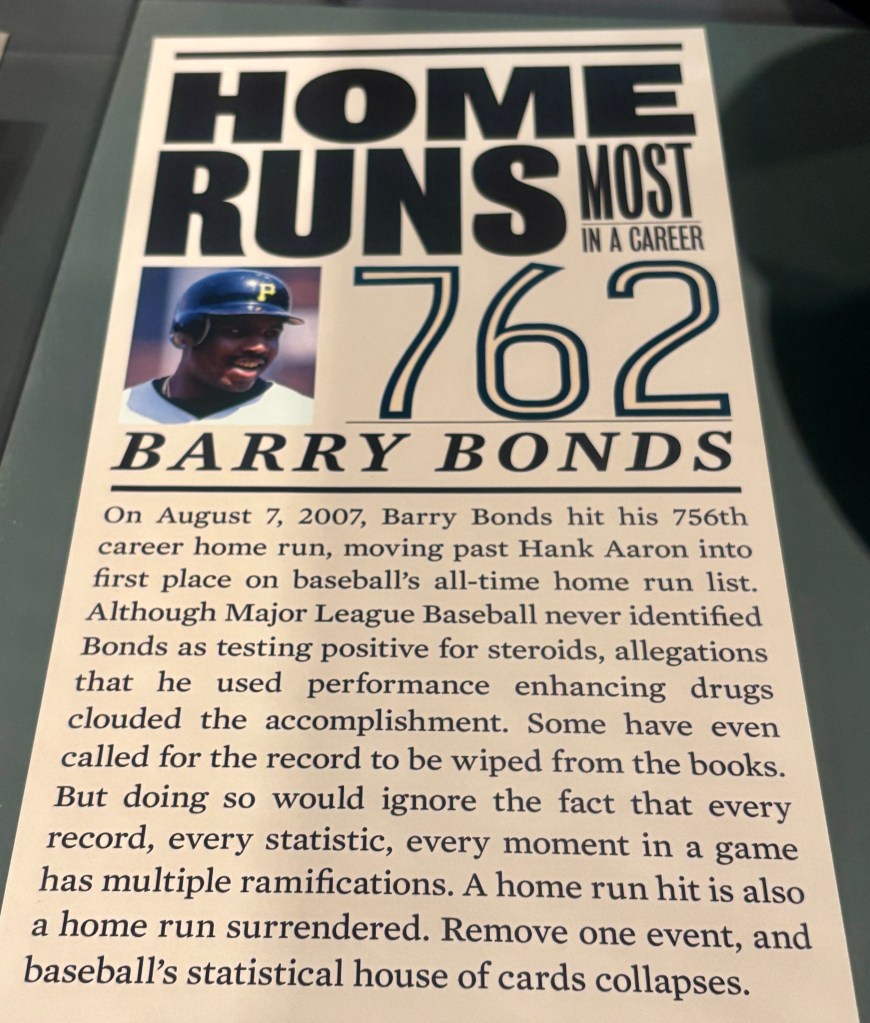
A display about Barry Bonds explained that he was suspected of steroid use, but it was never proven.  His record breaking 756th home run (ultimately 762) is considered tarnished by some.  However, scrubbing the achievement would create havoc with all kinds of statistics!

We really enjoyed this display that allowed you to learn about rule changes in baseball in a fun way.

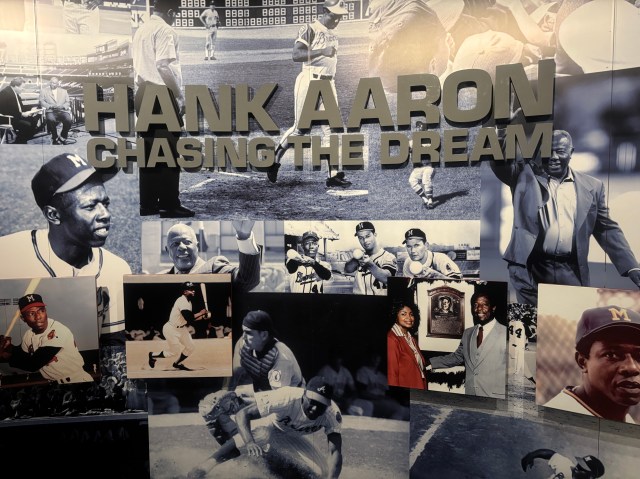
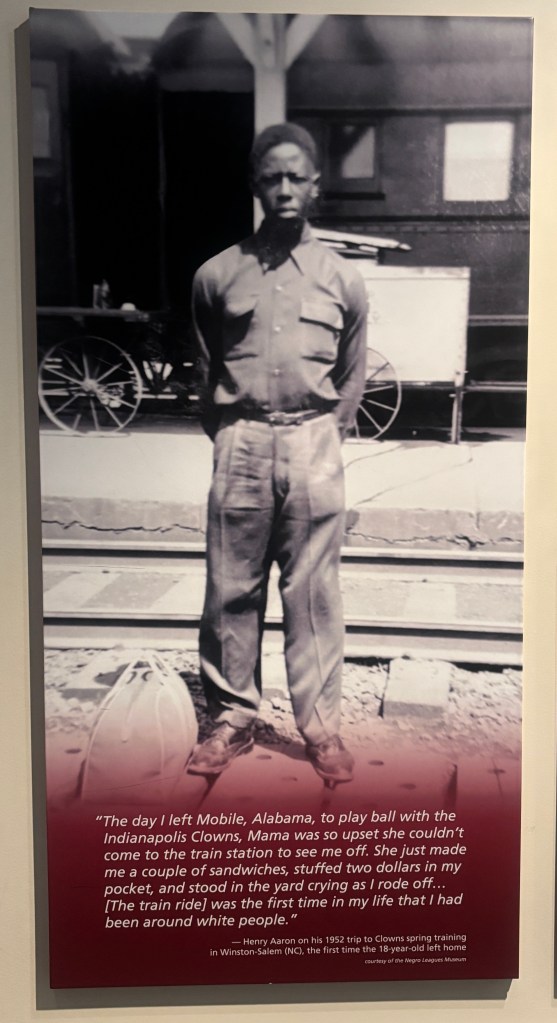
There was a wonderful display about Hank Aaron.

It traces his origins as a teen in Alabama to being considered one of the greatest baseball players of all time with 3,771 hits and 755 home runs. 

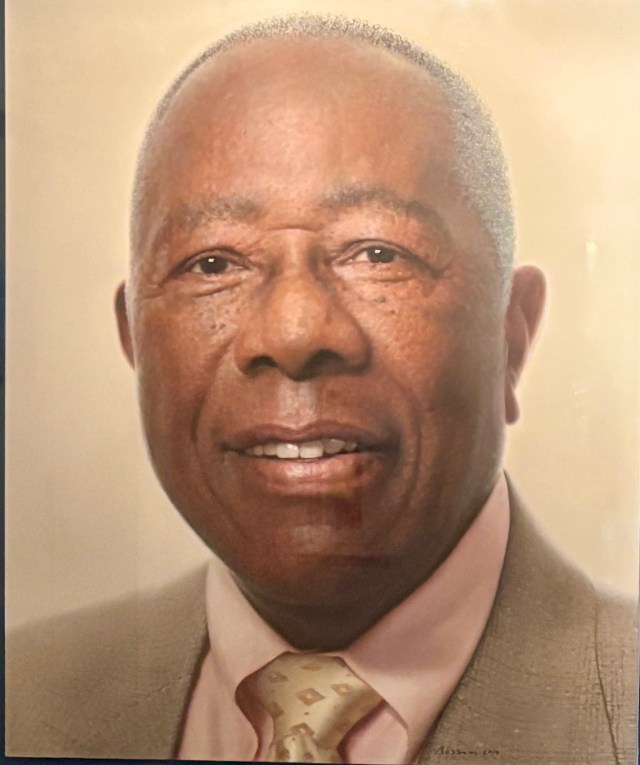
This portrait of Hank Aaron was painted in 2014 by Ross Rossin.  It is an oil on canvas and was so perfect (also really large) that we thought it was a photograph. 

There was more Ichiro gear and records.  He was a major star in Japan before becoming a major star in the US for major league baseball.

We were impressed with displays that were staying up to date with current baseball happenings.  Mariners catcher Cal Raleigh went on a record setting home run tear during the 2025 season.  He should have been the American League MVP and I will die on that hill.

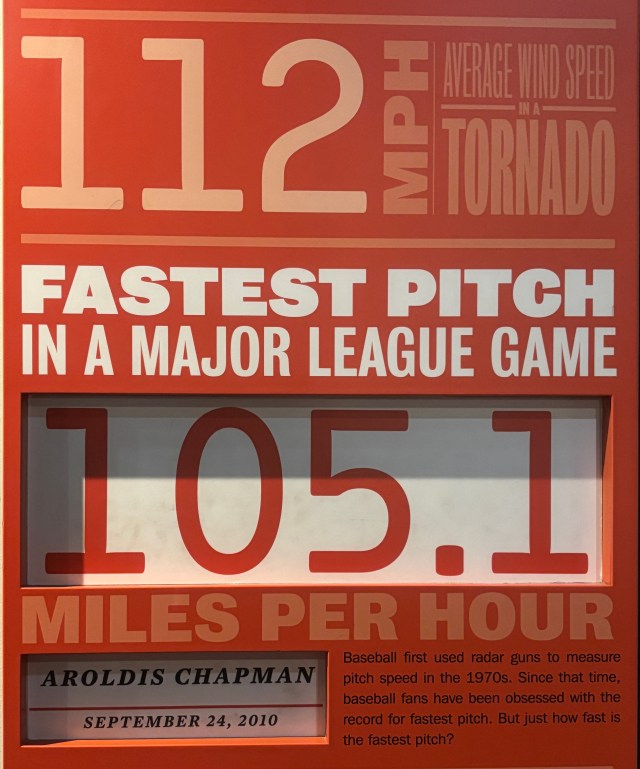
That is some pretty fast pitching!

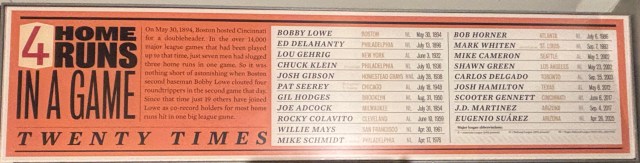
The thing we loved about this display is the reference to Eugenio Suarez being only the 20th player ever to hit four home runs in a game.  We were at that game in Phoenix on April 26, 2025!!  Did I mention he was my favorite player?  Former Mariner, then Diamondback, and then Mariner again.

There was a room dedicated to the World Series.  The case with the rings was interesting but a good picture was impossible with the lights and glare.  This is only one part of the case.  The rings just keep getting bigger and gaudier.

The locker room was great with more donations from each team.

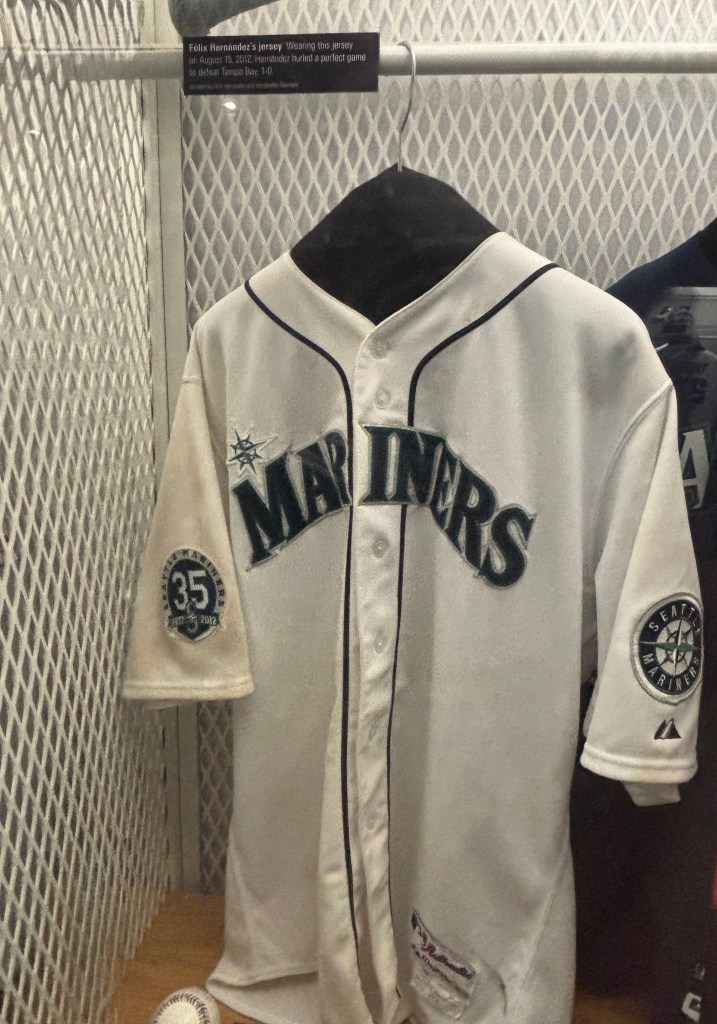
Two more Mariner items show Cal Raleigh’s record breaking homer bat and a Felix Hernandez jersey worn when he pitched a perfect game.

There was also a Pride Ball sewn with rainbow colored string initiated by the Mariners. 

Nearby was an exhibit of baseball bobbleheads! 

There was movement as part of the display so they were all bobbing!

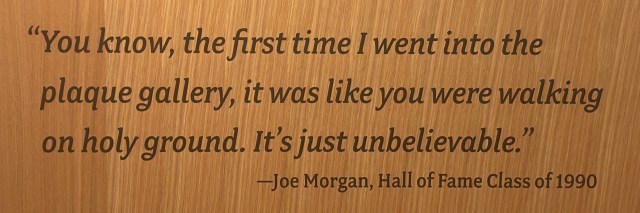
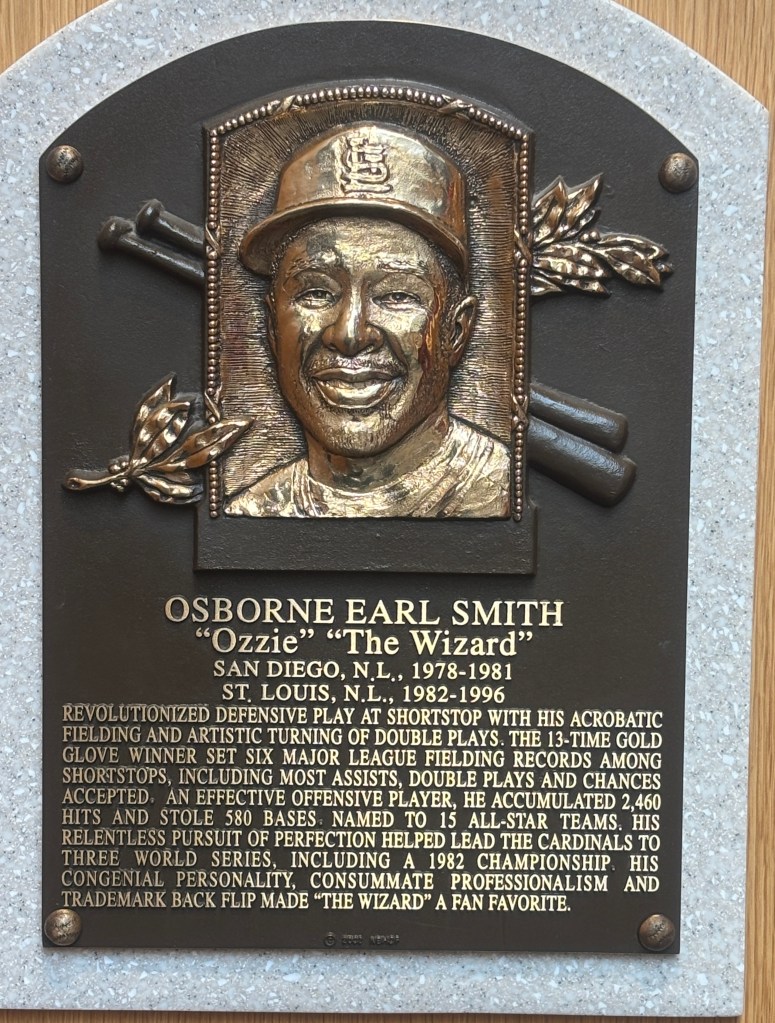
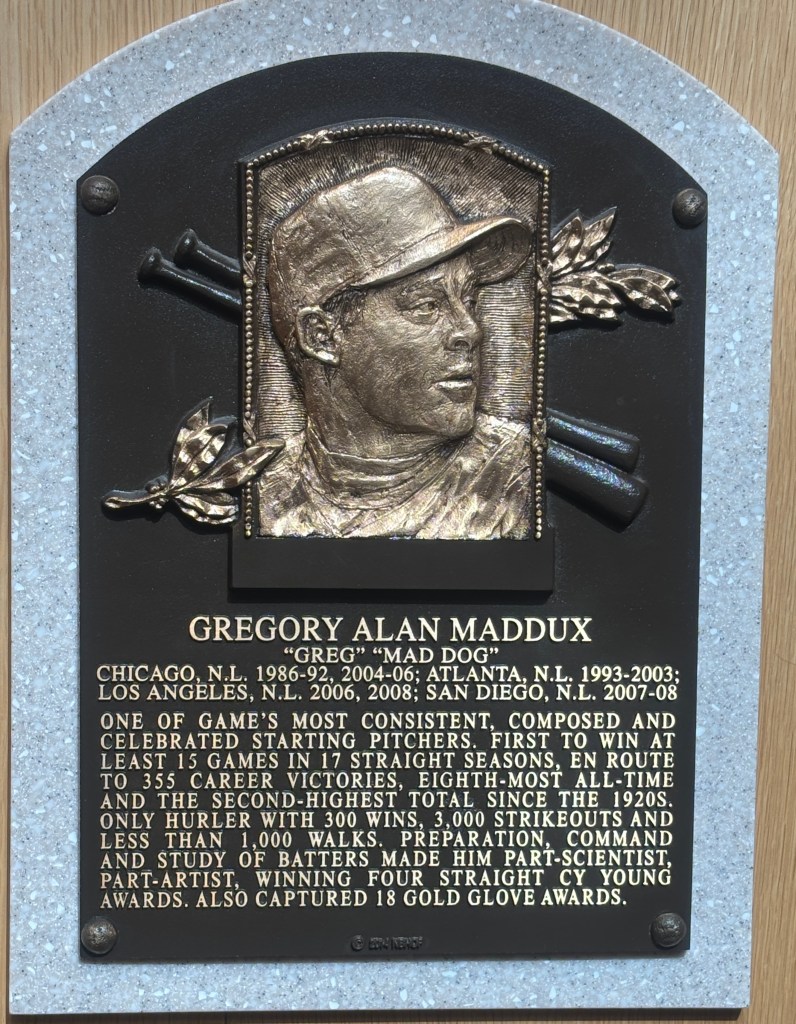
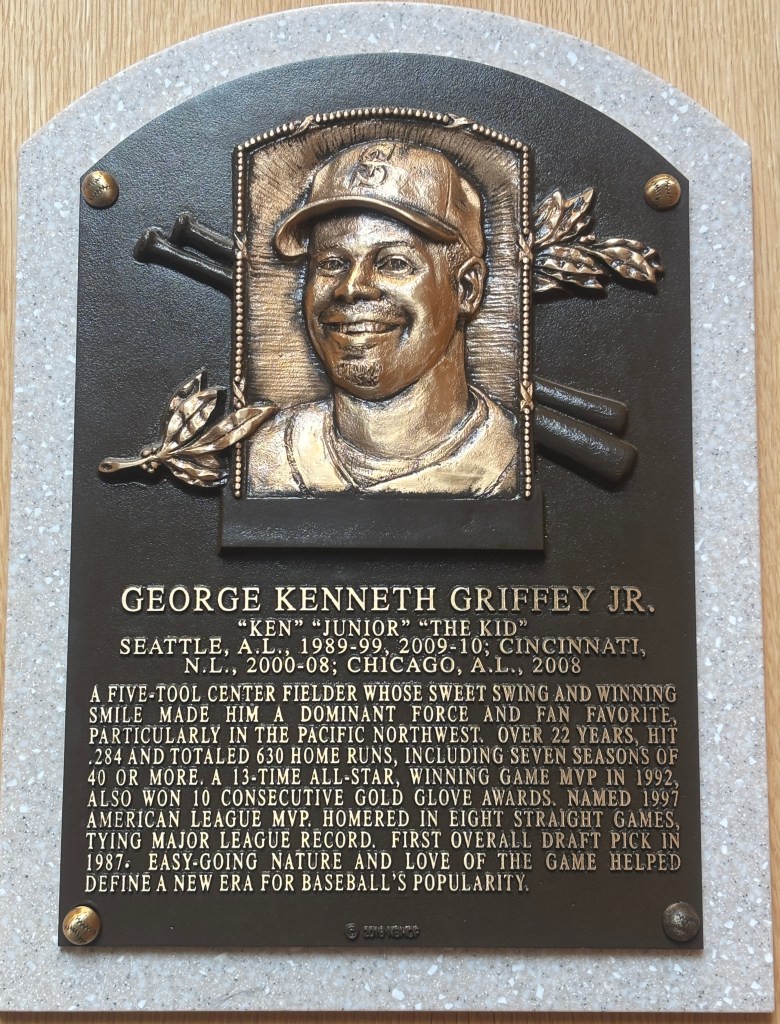
We entered the Plaque Gallery.

Plaques are placed by time grouping.

There were a lot of names that were recognizable from before and while we have been baseball fans.

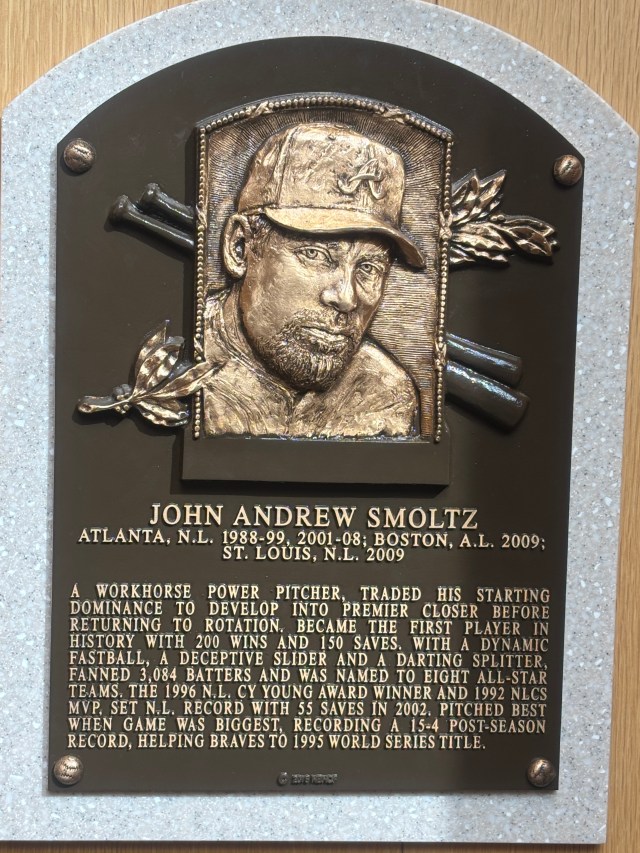
There are some that we valued from our Atlanta Braves days. 

Tom Glavine was once my favorite player.

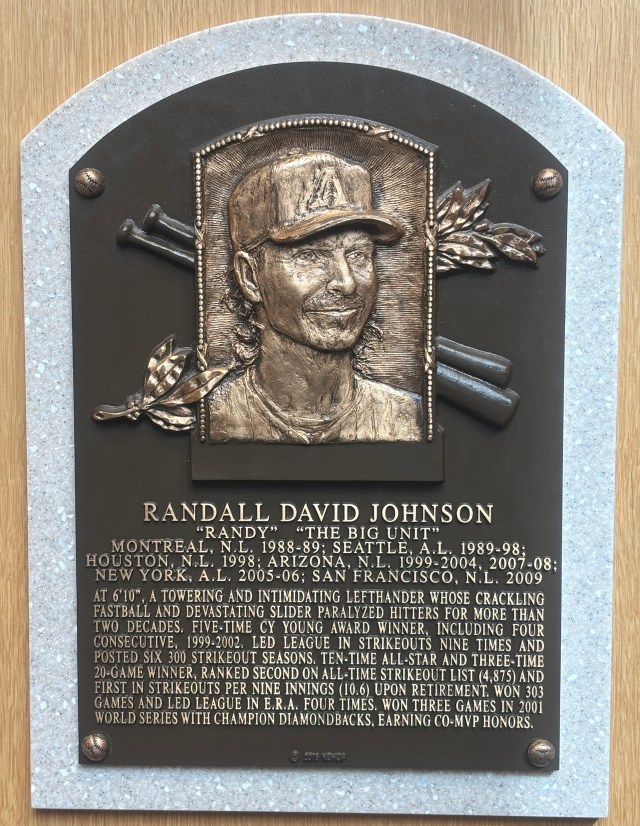
Of course, there are players from the Mariners! 

Randy Johnson was a player for the Mariners and others before playing as a Diamondback.  He “went in” as a Diamondback.  Players with multi-team histories, choose the team they want to be identified with. 

The “On the Air” display was interesting !  
When radio coverage started, owners objected, thinking descriptive plays of the game would reduce ticket sales. Radio commentary was banned in New York in the 1920s.   Other teams did not allow broadcasts of their home games.  Radio won out with every major league team having radio play by play for their games.  

I had originally allowed two days on our itinerary for the Baseball Hall of Fame but we found that three hours was enough.  We could have spent far more time looking carefully at every exhibit and display, or looked for every tidbit from our Braves and Diamondback fandom, but we were satisfied.

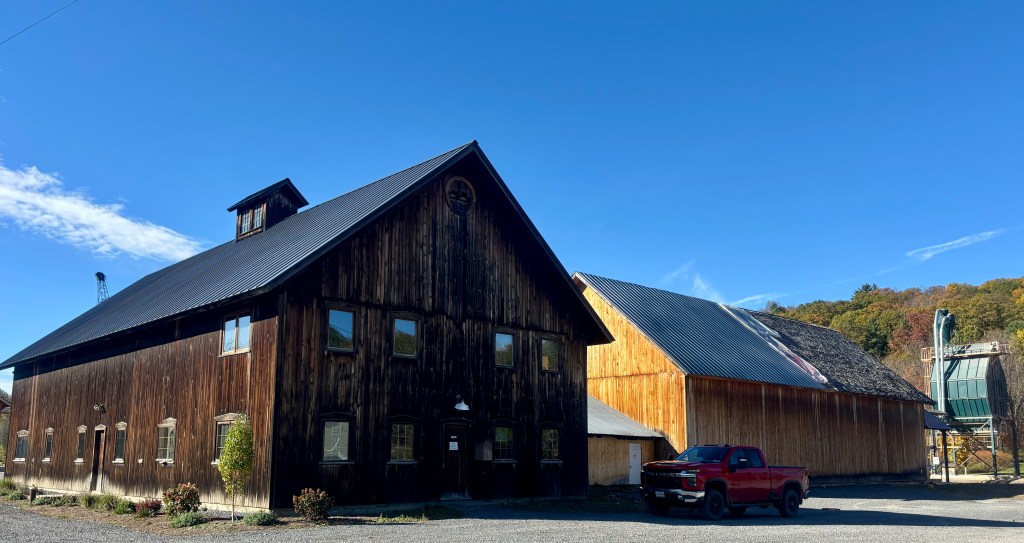
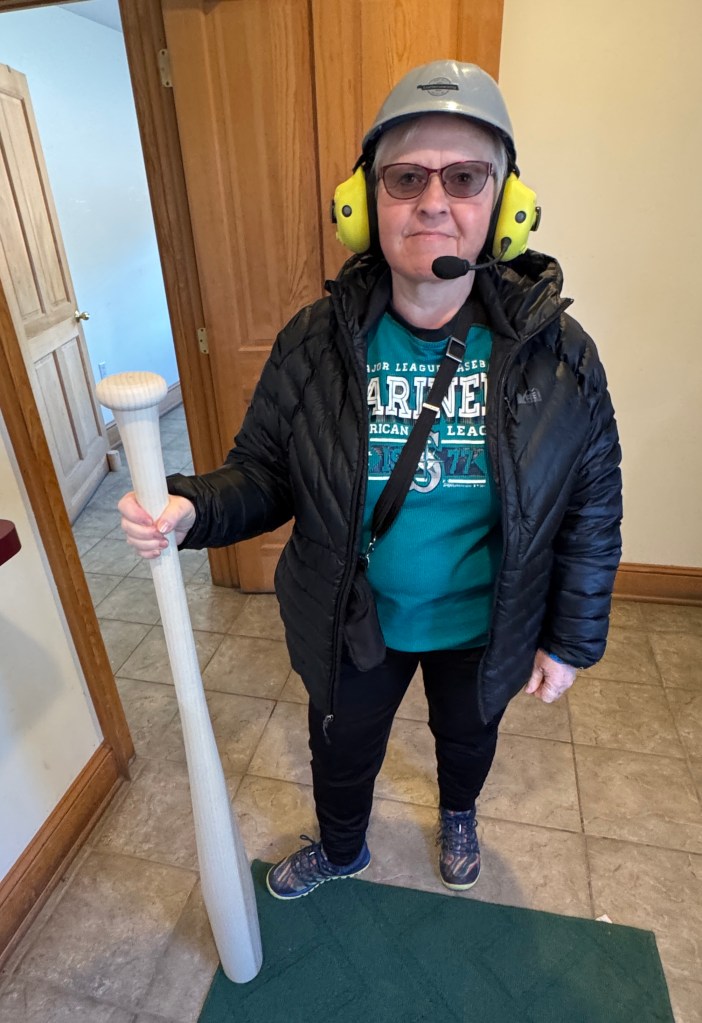
So, that left us an afternoon to find something else to do.  We stayed with the baseball theme going to a “bat factory” about a half hour from Cooperstown.

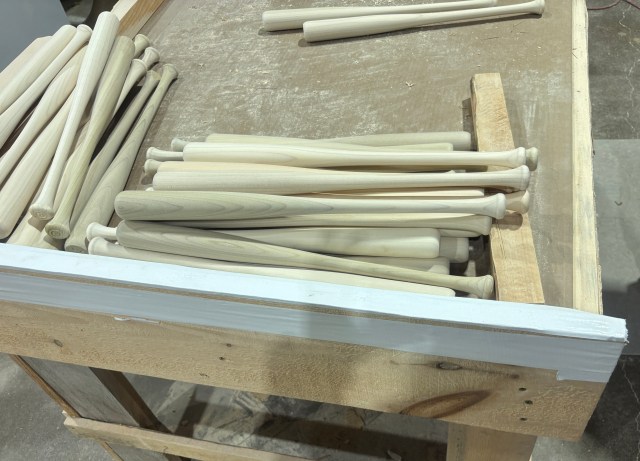
This company sources trees within a 250 mile radius to make their bat “blanks” –  mostly hard maple with some birch.

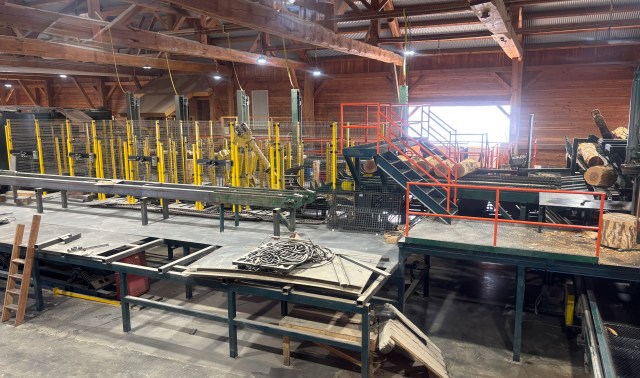
Logs are debarked and pass through a metal detector. 

Next the logs are hand split. They consider hand- splitting to be the most critical step in the entire process. By splitting the wood, they follow the tree’s natural grain, resulting in the straightest grain and strongest bats.  

 In 2008, MLB recorded 2,232 broken bats in just three months with 1,476 being shattered into multiple pieces. Considered a safety risk to players and fans, MLB  found that poor grain alignment from billets that were sawn instead of hand split was a factor.  They are trying to make the best bats, not the most bats per log. 

The next step is vacuum kiln drying which allows them to extract moisture quickly – getting to about 8 percent in less than a week.

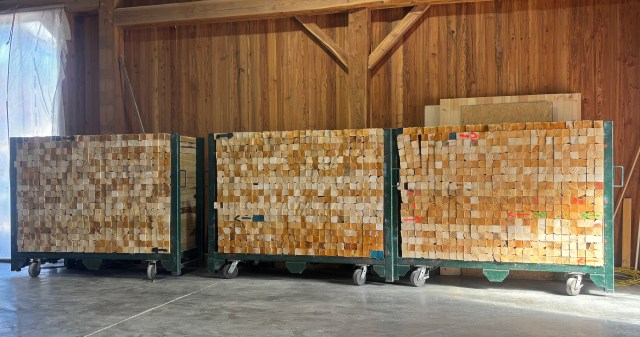
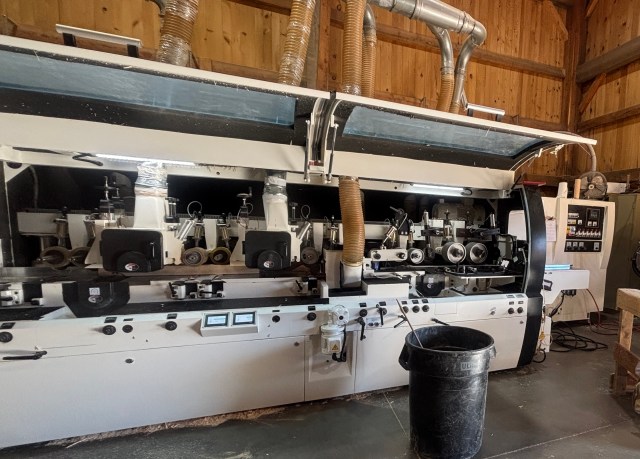
The billets are made into dowels. Each one passes through a molder that has 6 cutting heads.

Each billet is inspected individually and graded.

Bats are turned on state-of-the-art lathes.

The factory also produces axe handles and other products such as miniature bats.

They even make small hickory dowels for drumsticks and golf shafts. The tour was fascinating and a nice completion to our baseball day.

Next Up: We have to change up our plans again because of closed national parks – but end up very happy with our change!

Posted in Uncategorized | 2 Comments

National Park Closed – We went to Howe Caverns

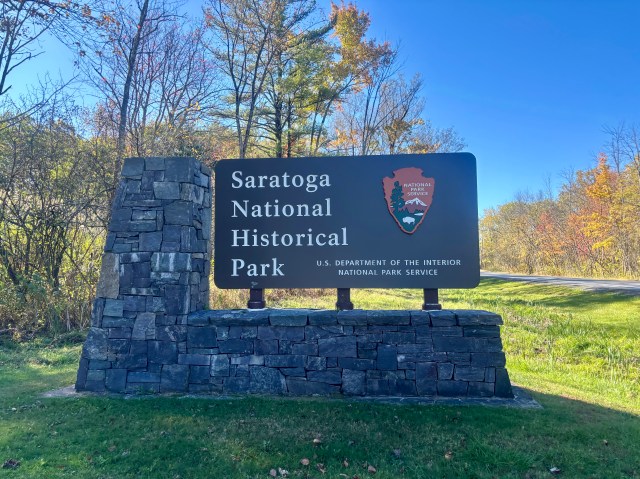
On October 16, we left Lake George enroute to Cooperstown, New York.  Our plan was to go to Saratoga National Historical Park on the way.  Having visited  Fort Ticonderoga and Fort William Henry, we were in the early American history mindset.  

Saratoga was where large British and American forces met in 1777.  Information from the National Park website states: “After two intense battles, an eight-mile retreat, and a three-day siege, British General John Burgoyne surrendered his entire force. This first ever surrender of a British Army is one of the pivotal moments in determining the outcome of the Revolutionary War.”  It was the victory that tipped France into recognizing the fledgling country and assist with funds and force against the British, their long time foes.

With the government shutdown, we knew the Visitor Center and Schuyler Home would be closed but I believed the Tour Road of the battlefield might be open.   I downloaded the audio tour on the National Park Service app in preparation.  

Alas, all was closed.

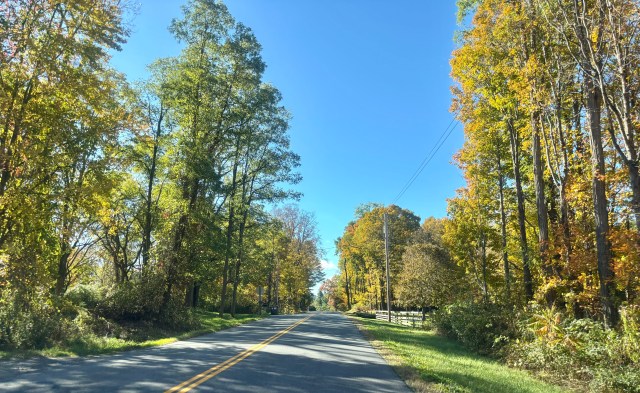
However, our drive to and from Saratoga was lovely along county roads rich with colorful leaves.  

As we passed through Schenectady, it appeared that General Electric had some significant history here.

Sure enough!  The General Electric Research Laboratory was the first industrial research facility in the US.  Established in 1900, most of the early technological breakthroughs happened here.  The campus was declared a National Historic Landmark in 1975 and is still home to GE Global Research.

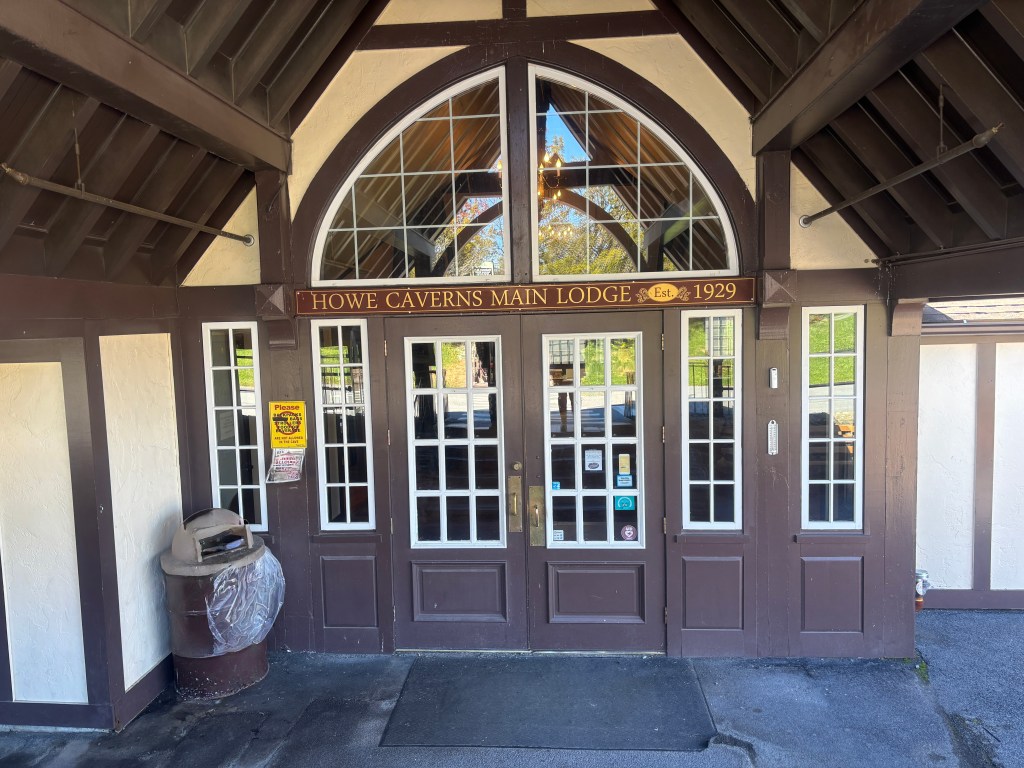
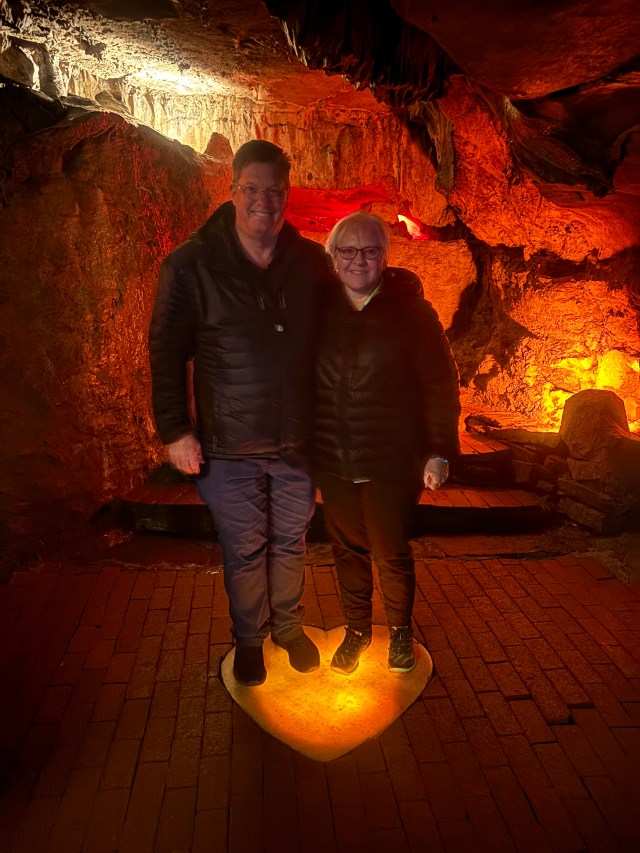
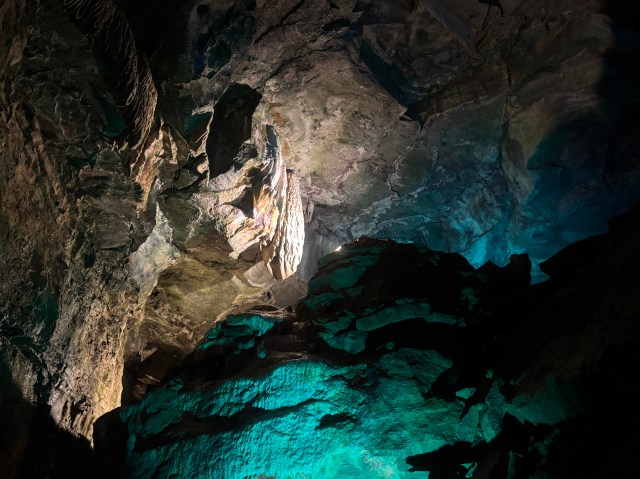
Because Saratoga wasn’t available, we went to Howe Caverns.  This was a recommendation from our friend, Mark, who heard we were going to travel in this area.  He remembered visiting Howe Caverns when he was a kid.

We began with a multi-media history of the caverns and their development for tourism.

There is inconsistent information as to whether the indigenous peoples in the area explored the cave or knew about it and stayed away due to superstition.  There is also mention of a white man hiding from the Indians just inside the cave in the 1770s.

In more current history,  farmer Lester Howe, noticed his cows were attracted to a particular area on his neighbor’s land.  He discovered cool air coming from underground in May, 1842.  He and his neighbor explored the cave, going a little farther each time.  Howe eventually bought the land from Henry Wetzel for $100 with intent to develop tours.  

When Howe’s Cave opened for tours in 1843, it was the country’s third commercial cave venture. Howe charged 50 cents for an 8-10 hour tour climbing through the mud with torches.  Box lunches were provided.

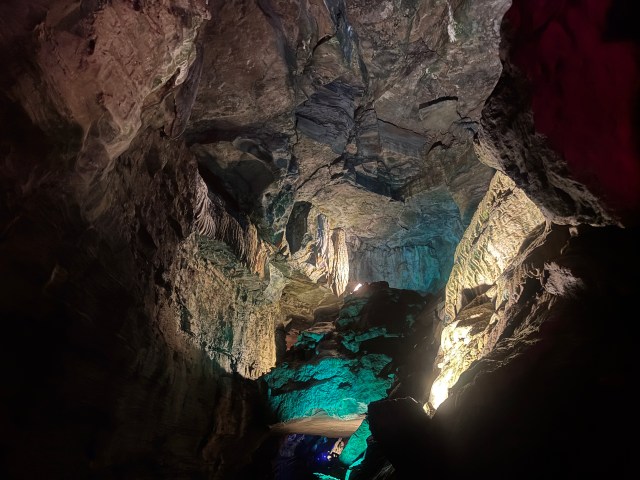
Our tour was much more civilized!   We took an elevator down 156 feet.

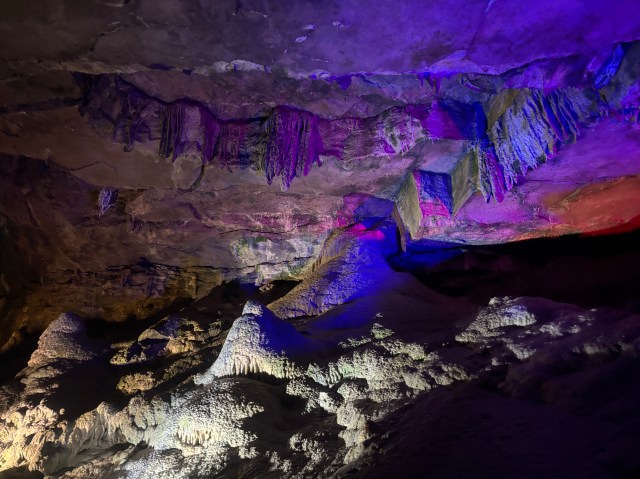
We saw a site they call the Chinese Pagoda.  

These had fallen over time and were moved for easy viewing.  We could also touch these because they were no longer growing.

This is called Titan’s Temple.

Our guide called this a snake flow – and it sure looked like a snake from some angles.

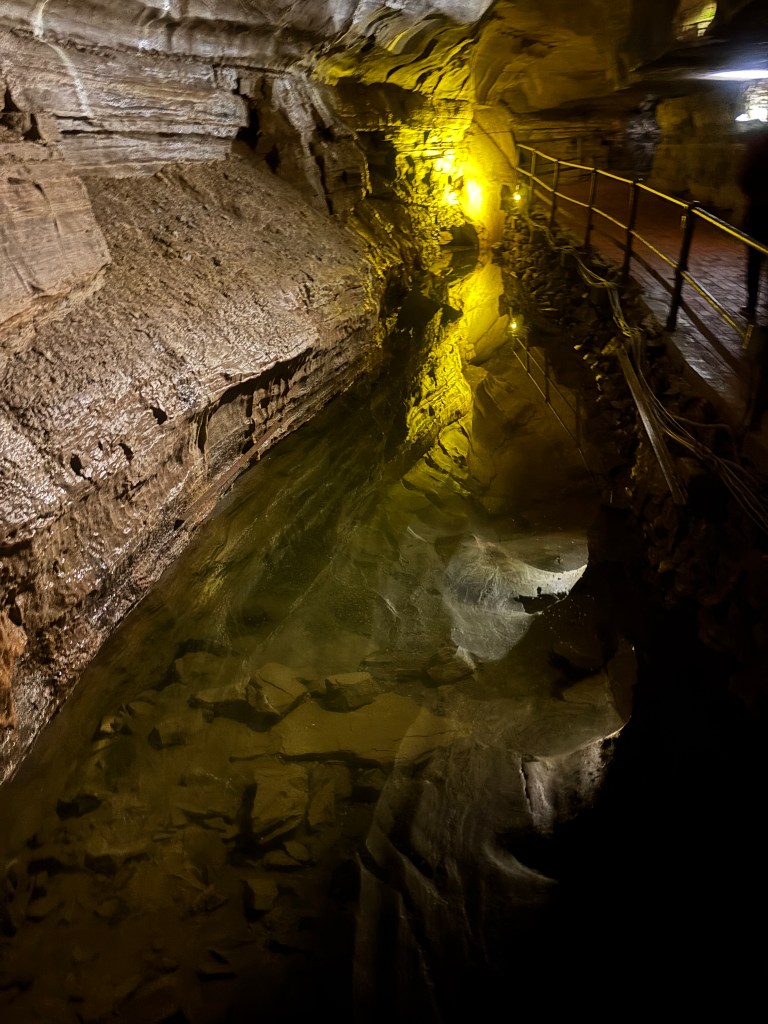
There is water in the river bed along the path but is too clear to be seen!

We went to the Mysterious Lake of Venus for our boat ride.

On the way back towards the cave entrance, we saw the Bridal Altar. 

There have been 749 recorded weddings at Bridal Altar.

We went through an area called Winding Way.  It was like a slot canyon – underground!

Howe Cave went through periods of attention (enter a railroad and hotel) and lack of attention when Lester Howe relinquished ownership.  The caves were closed and then damaged by a nearby quarry.

The successful commercial re-opening and development of Howe Caverns happened between the years of 1927-1929, coordinated by John Mosner of Syracuse and Walter H. Sagendorf of Saranac Lake. The company they founded improved the visitor experience. 

It was during this period that the elevator was installed at a cost of $100,000 per foot.  Path installation used 88,000 bricks, laid over 30 years,  from the 1930s to 1960s.

We really enjoyed our trek through Howe Caverns. 

Next Up:  Cooperstown!

Posted in Uncategorized | Leave a comment

Fort Ticonderoga

We left the futuristic past of Star Trek and went to the real past on Lake Champlain.

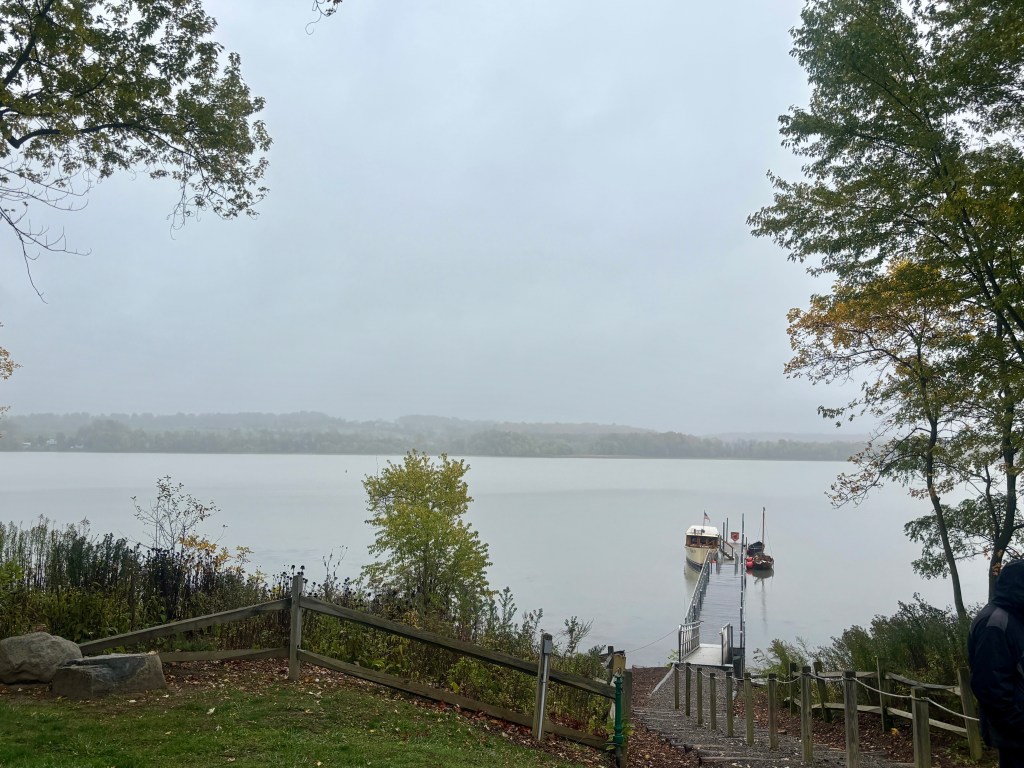
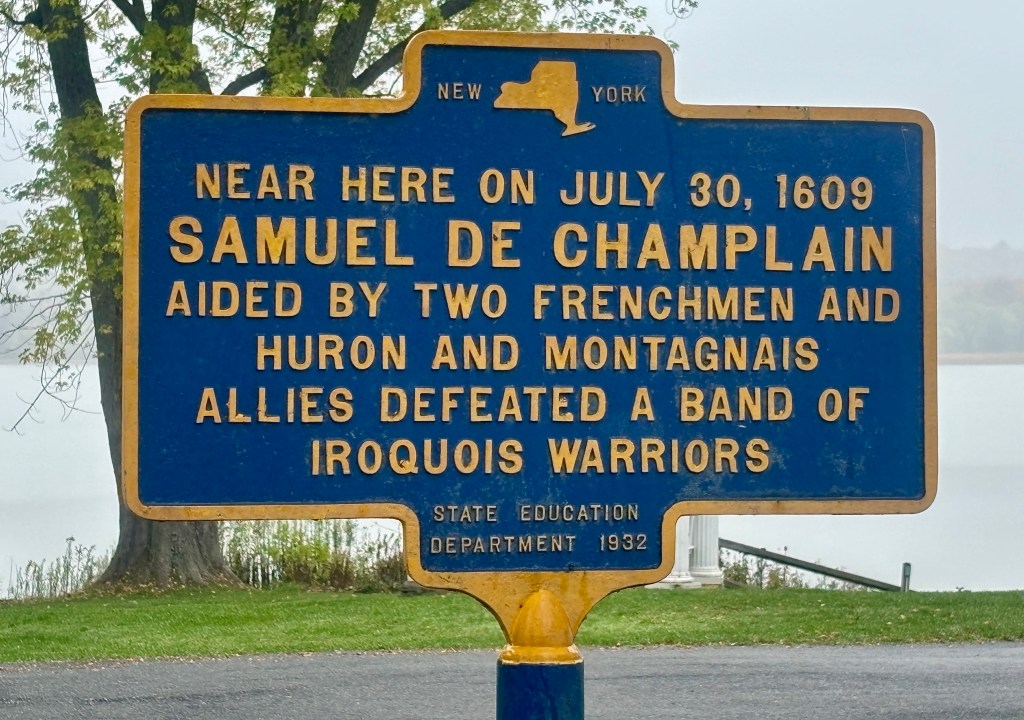
It was near here that Frenchman Samuel de Champlain arrived in 1609.

Of course, there were already indigenous people living their lives when the Europeans, be it French or English, arrived to disrupt them.

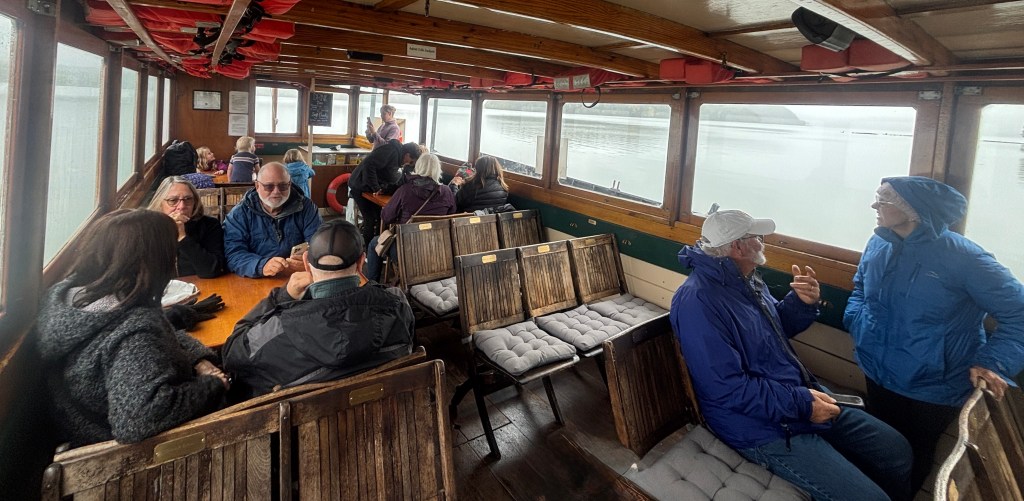
Our activity was a boat ride aboard the Carillon.

From the water we could see Fort Ticonderoga. It was also the site of the French fort Carillon commissioned in 1755.  The builder was to “choose the most favorable site for entrenchments or other fortifications to prevent the British from taking Carillon.”

This fort has an interesting history.  It belonged to the French and then fell to the British (and American colonists) in 1759.  It was then named Fort Ticonderoga.

There were 395 warriors assisting the British in their battle with the French.  The French had some indigenous groups aligned on their side as well. 

Americans, no longer happy to be British subjects, captured the fort in 1775.  Those included Benedict Arnold, Ethan Allen and the Green Mountain Boys.  

It went back to British control under General Burgoyne in 1777.  They blew up much of what was left of the fort before retreating to Canada.

The fort, first called Carillon and then Fort Ticonderoga, was ruins by 1781.

This painting of Fort Ticonderoga by John Henry Hill was made in 1878.

Area people carried off materials from the fort for building projects.  It is local belief that this house was built with old fort resources. Private ownership has not allowed for testing verification.

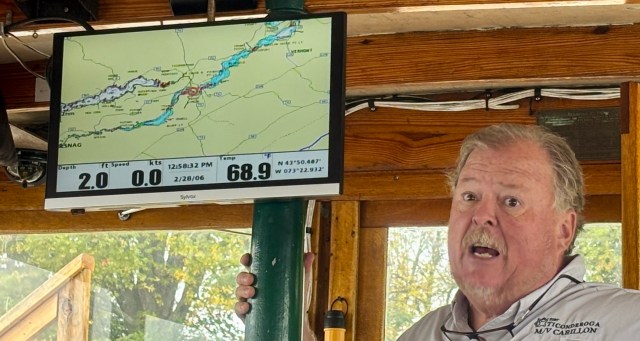
Our boat captain did a great job of explaining the geography of the area around Lake Champlain and nearby Lake George. The British once rowed up Lake George, portaged across the seven mile separation, and entered Lake Champlain for battle.

He also showed us some sonar pictures of what was underneath the surface.  This picture shows caissons for a bridge that the Americans tried to build during their occupation of the fort from 1775-77. It was intended to bridge from Vermont to Fort Ticonderoga. They didn’t get it done before the British took back the fort.

The site was purchased in 1820 by William Ferris Pell when little remained.  However, the old fort was interesting because of its part in early American history.

Members of the Pell family began reconstructing Fort Ticonderoga in 1909.  They chose to approximate 1759 when it was a British Fort.

The venture was one of the first historical reconstructions in the United States. 

The fort has operated as a non-profit museum ever since.  (If it was a national historic site we wouldn’t have been able to visit as it would have been closed due to the government shutdown.)

We learned some interesting things there.

This was the site of the first American offensive victory of the American Revolution.  It happened without battle or bloodshed and 42 British prisoners were taken.

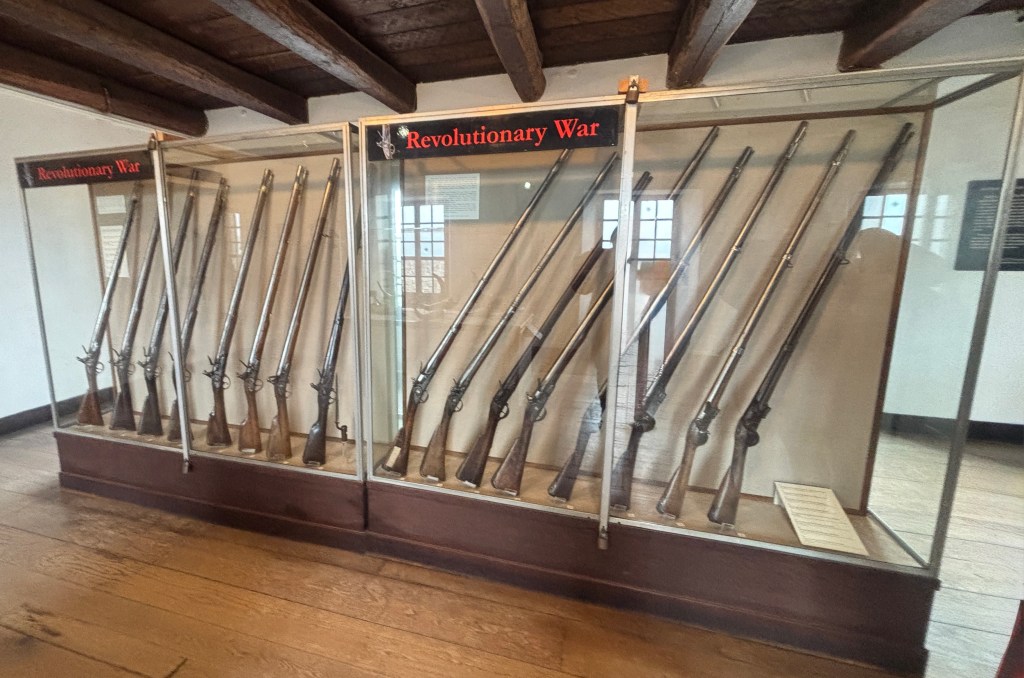
The largest private military collection in the country is the collection at Fort Ticonderoga.

There was this interesting display about how the troops were fed and what were in their rations.  Notice that they were required to cook communally and definitely not fry their food or they would be punished.

It was also interesting that Lieutenants got two times the regular rations increasing by rank until it was six times the rations for a Colonel.  Excuse me…who is doing the physical work here! 

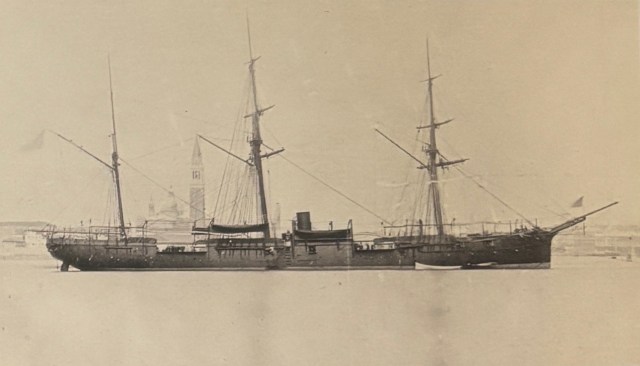
We also learned about various ships that were named Ticonderoga, the first being a two masted vessel used to fight against the British in 1814.  It is shown in the picture on the middle left.

The second Ticonderoga was built during the Civil War in New York.  After the war, the ship served in European, African, and South American waters.  She circumnavigated the globe, over 36,000 miles, in 1878 to develop commercial relationships across the world. 

The third Ticonderoga became a US Navy vessel when it was seized by US Customs Officials in 1917.  She was originally a German freighter named Kamilla Rickmers. She made three voyages across the Atlantic successfully transporting horses, vehicles, troops, and other supplies to France. In the fall of 1918, she was attacked by a German submarine.  After a two hour battle, Ticonderoga was done.  Only 24 crew, out of 237, survived.

The fourth Ticonderoga was an aircraft carrier in 1944. She was launched by Stephanie Pell, the grand-daughter of Stephen and Sarah Pell who founded the Fort Ticonderoga Museum.  She was also the great-great-great-granddaughter of William Ferris Pell who bought the site in 1820.

In 1983, the US Navy guided missile cruiser USS Ticonderoga was launched.  She was the first cruiser designed to track and engage multiple enemy targets through radar and computers.

As we left the fort, we saw that restoration work continues.

We drove through the now lovely battle grounds. There were a number of hikes designated and several historical markers.

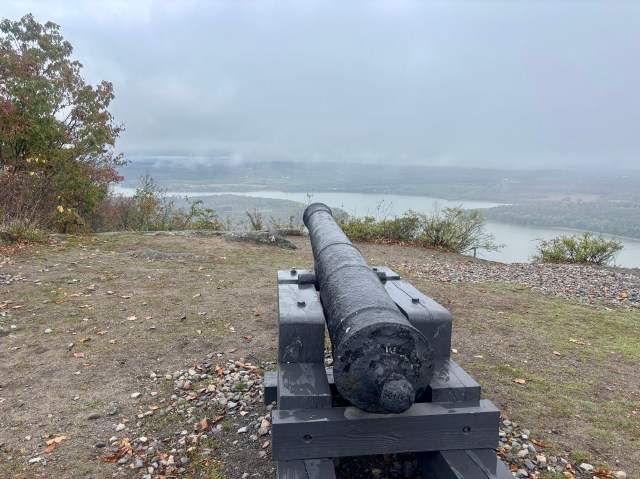
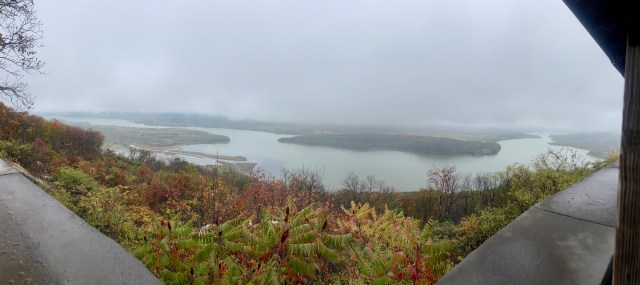
We went to Mount Defiance and it was clear why this was a strategic point for battle.  Fort Ticonderoga sits on the promontory on the left.  The lands at the bottom are New York.  Across the lake is Vermont.

I spent some time playing with my phone trying to get a panoramic shot of Lake Champlain from Mount Defiance. I was happy with my effort.

Then I walked a few paces and saw this one!

Next Up: We go to Fort William Henry on Lake George.

Posted in Uncategorized | 1 Comment

Ticonderoga: Stardate 1312.4 

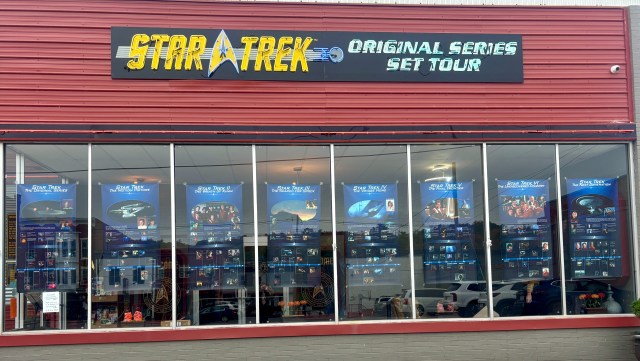
We moved into Ticonderoga, New York and were enthusiastic for our first event of the day – The Star Trek Original Series Set Tour. It was Star Date 1312.4 or October 14, 2025.

The following excerpts are from their website:  
When the STAR TREK television series was canceled in 1969, the original sets were dismantled and largely destroyed. 

Trek superfan James Cawley began the process of rebuilding the sets just as they would have been seen 50 years ago when the series was being filmed!

Our sets are complete recreations built using the original blueprints, hundreds of hours of serious research and thousands of photographs.

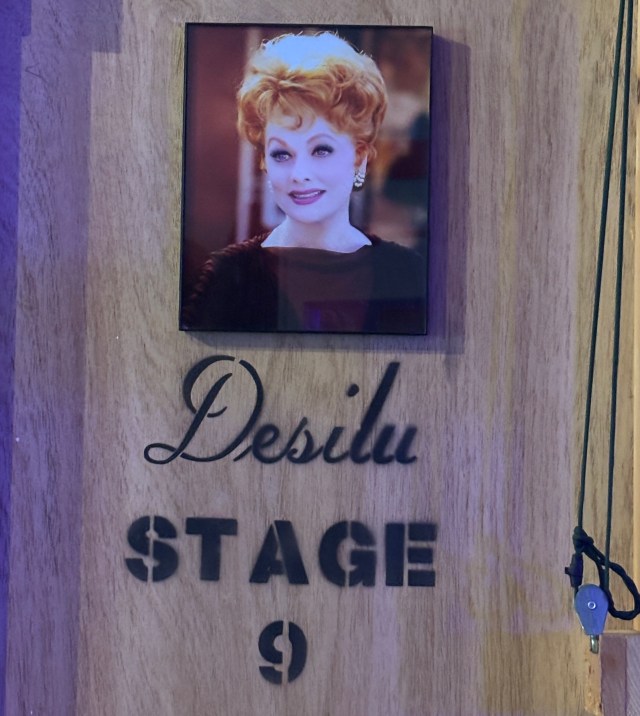
The Star Trek: Original Series Set Tour Invites you to come see the Desilu Studio as it looked during the years between 1966-1969.

We believe we have seen every episode of the original Star Trek series at least once and likely several times so we were quite enthusiastic.

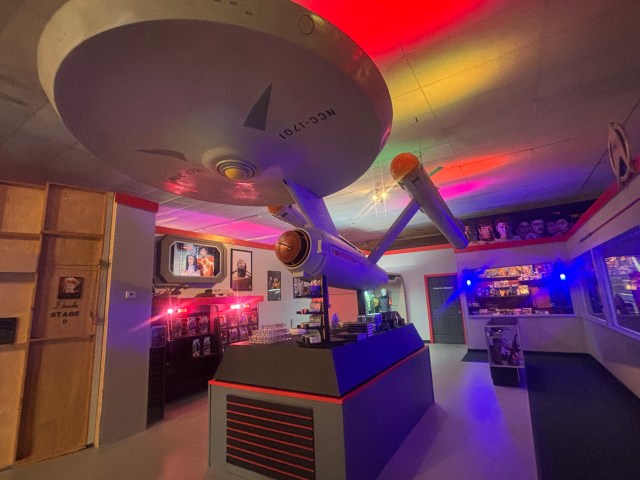
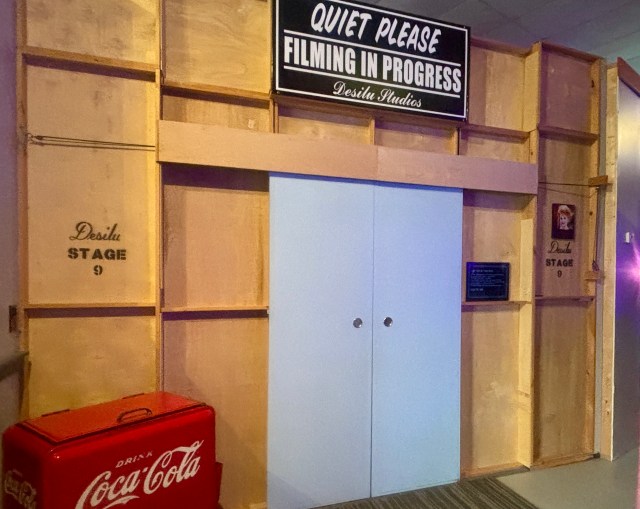
We walked into the recreated Desilu studio.

Our first lesson was how the doors worked that slid open simultaneously as a member of the crew approached.  Workers pulled them apart as needed using a pulley system.  Sound effects were added in post -production.    Something as simple as doors opening as we approach them is routine now, but not in the 1960s!

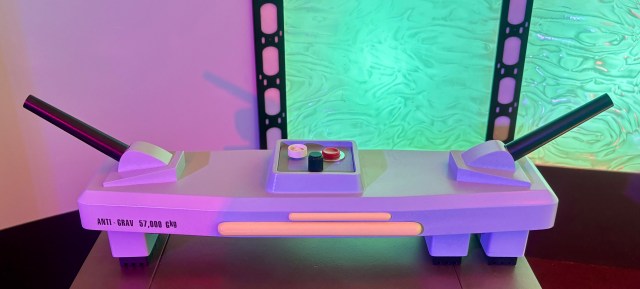
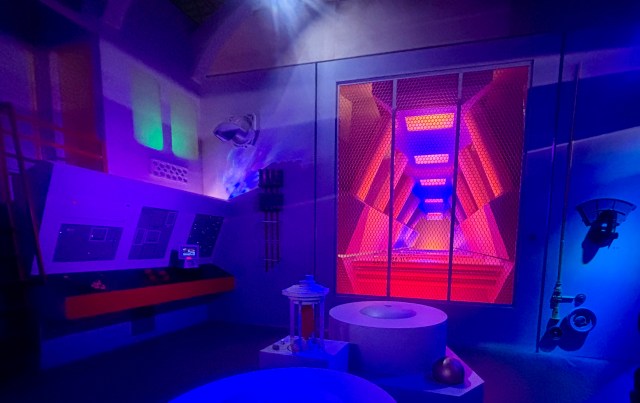
Our first set was the Transporter room!  We learned how glitter water, Alka Seltzer, and masking techniques were used to create the body shaped illusion that someone was being transported. 

We also got to pretend we were operating the transporter – but no touching the sets.

We had five on our tour – a delightful number.  The couple dressed in uniforms did not really consider themselves Trekkies – they were just opting for more fun for the day.   Their favorite Star Trek version was The Next Generation.  Ours is the original series and then Voyager.  

This gadget, used to transport a canister in an episode, is one of a few authentic set items that the museum owns.  

We went into the Medical Bay and learned that the diagnostic screens were painted black with lights shining through cut-outs behind it. 

A person behind the screen moved the arrows up and down.

The ancient medical tools were displayed in Dr. McCoy’s office.  They were standard items in the 1960s.

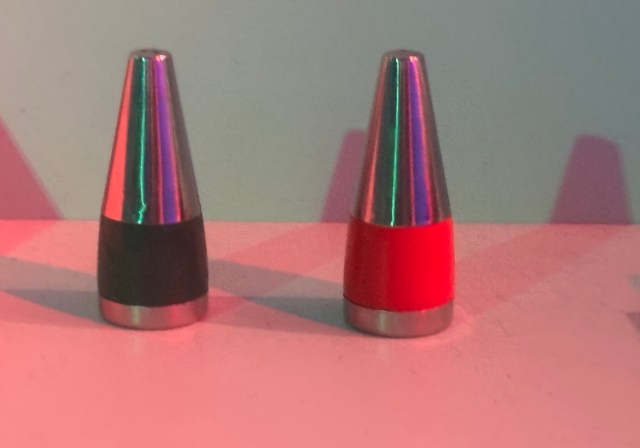
Dr. McCoy used these instruments to help his patients.  In reality they were salt and pepper shakers from Finland or Denmark.  

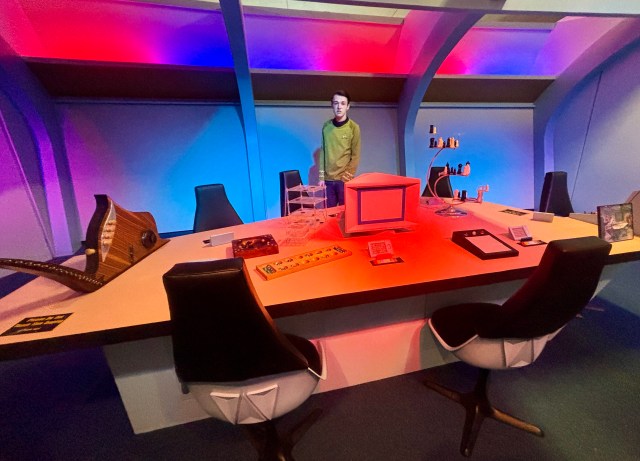
This multi purpose conference room appeared in many episodes.  

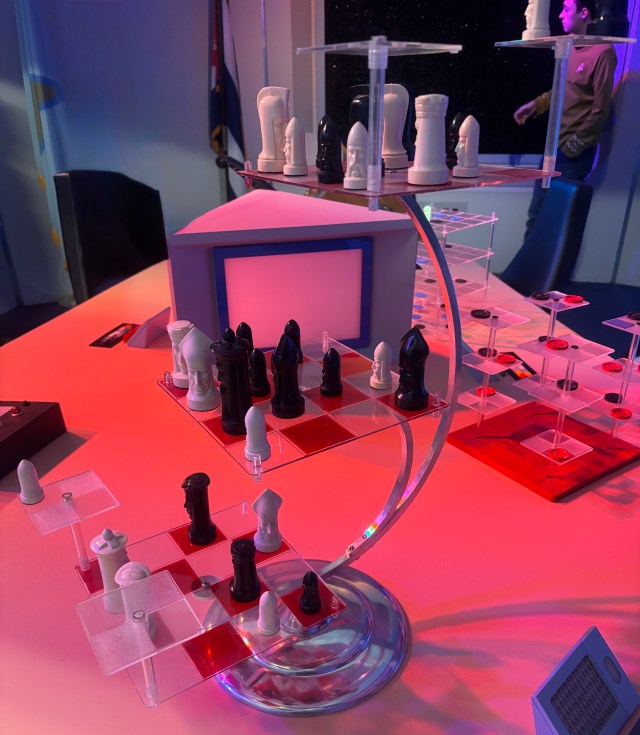
There were a variety of items displayed including Spock’s 3D chess game.  It was made with a regular game board, a cake stand base and a shoe display from a department store. 

This device was a modified slate board like some of us played with as children.

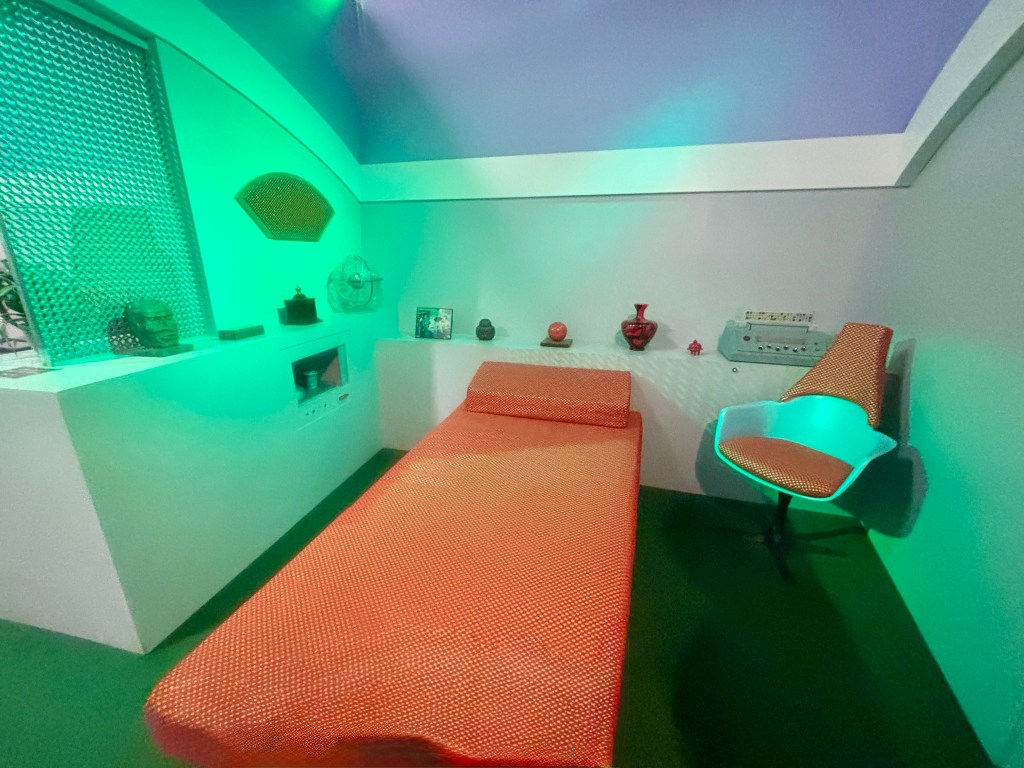
Our next room was Captain Kirk’s quarters.   Our tour guide is in the picture. 

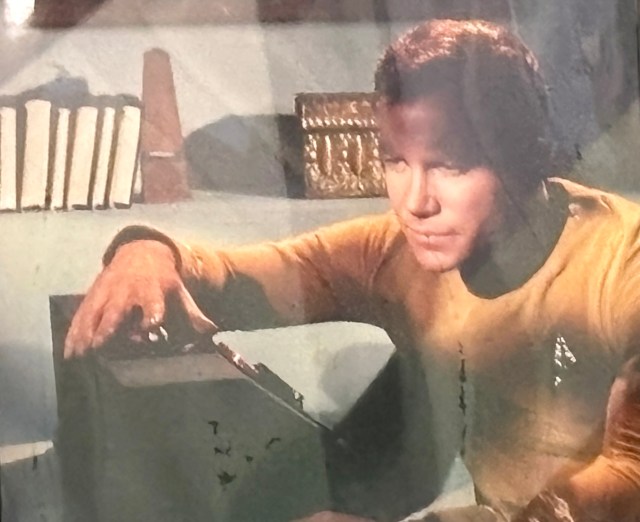
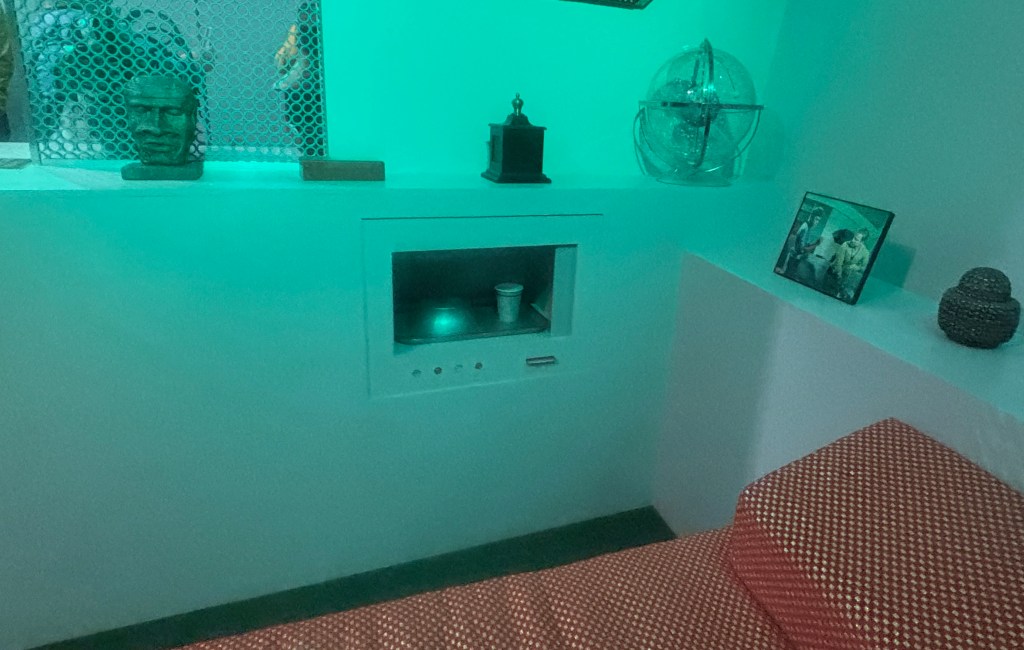
The gold box on the shelf in Kirk’s quarters is the second original item that actually appeared on the show.  

William Shatner, and a few other surviving cast members, take part in events at the museum fairly regularly.

At some point William Shatner took it off set and gave it to one of his fan club presidents.  Years later, the box ended up on eBay and the museum developer/owner bought it.

Adjacent were his sleeping quarters.  Notice the food replicator.

These medals and insignias were also original to the series.

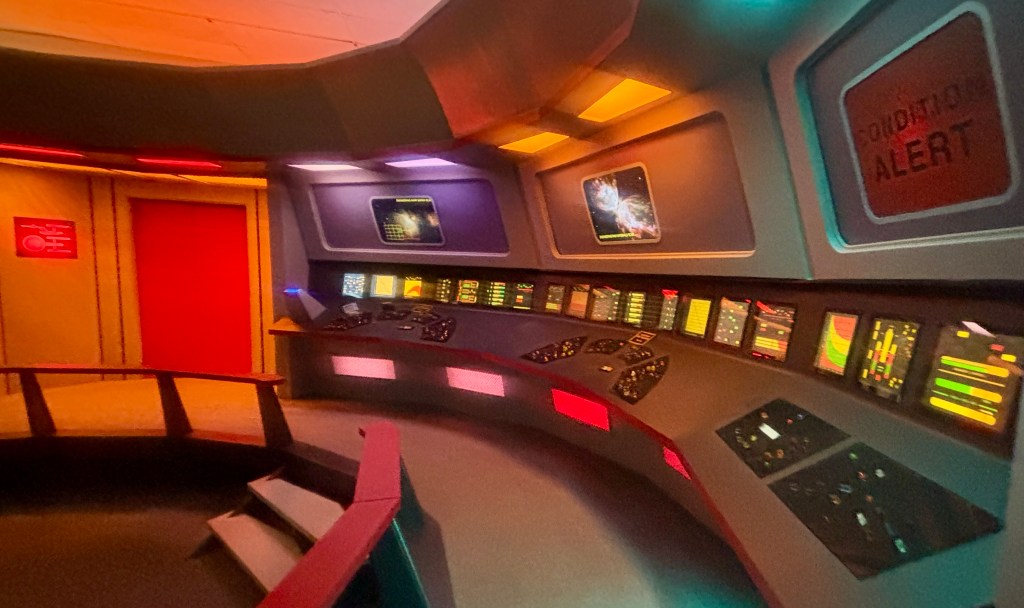
We were on the Enterprise bridge!

To seek out strange new worlds where no one has gone before!!

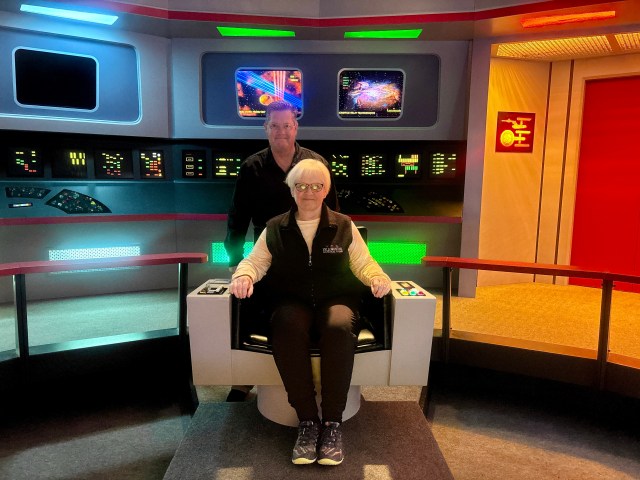
With a new captain!

And her science officer!

Randy in the perfect Kirk pose!

Scotty was down there somewhere keeping the Enterprise moving.

One of the things we learned was that there really wasn’t any order to the star dates at the beginning of the series.  The numbers were random – just like the one I used in the title – until the second year.

I hope it looks like we had a great time at the Star Trek Original Series Set Museum because we did!   It was a fun, fun morning. We are now inspired to watch The Next Generation!

In Ticonderoga we learned that a New Jersey company manufactures Ticonderoga pencils.  The wood used isn’t even from the area, someone just liked the name.

Next Up:  Fort Ticonderoga.

Posted in Uncategorized | 1 Comment

NH: Mount Washington Cog Railway

This sign indicates that the White Mountains of New Hampshire are famous for America’s worst weather!  Our guide for the Mount Washington Cog Railway on October 13 said that we won!  We get the experience of really bad weather!

Our train ride was scheduled to be an hour up the mountain, an hour at the summit, and an hour back down.  We were told the weather at the summit was so bad, we’d likely just go up and back. 

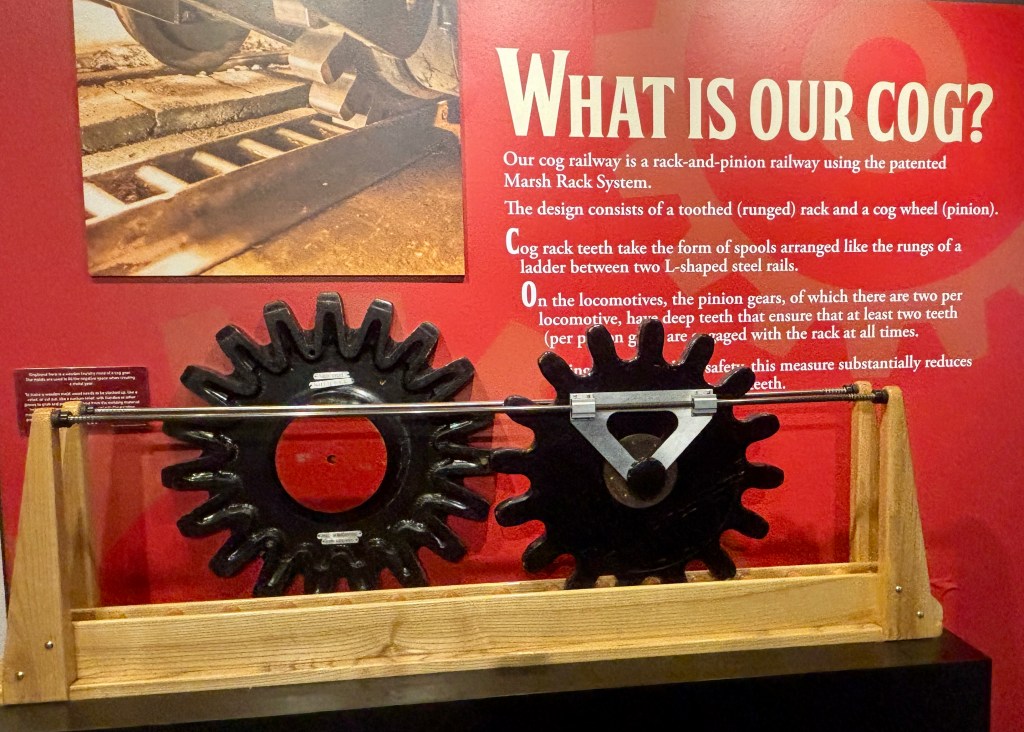
Before we left we had the opportunity to learn a bit about the World’s First Cog Railway. It was developed in 1869 with a maximum grade of 37.41 percent.

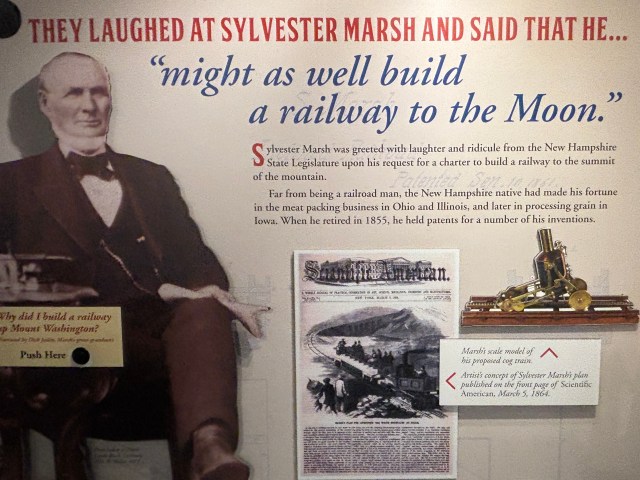
As you can see, Switzerland developed a cog railway two years later, in 1871, with a maximum grade of 25 percent. Mount Washington Cog Railway developer, Sylvester Marsh, was born nearby in 1803.  He didn’t want to be a farmer. He chose a life in business, did well, and eventually thought to build a railway.

He found that the Swiss had developed a rack and pinion design which he modified.

It wasn’t an easy process to get the railway built, but he accomplished it.

We boarded the train and started up the hill at 5 mph.

We weren’t up very high when we could see the trees blowing in the wind. There were a couple hikers heading up. That seemed unwise.

Four trains can be on the mountain because of switch areas. The was important on our day because the schedule was modified as trains wouldn’t spend much time at the summit.

Standing “up” was really leaning at a 30 percent grade.

We traversed four climate zones on our way up the mountain.

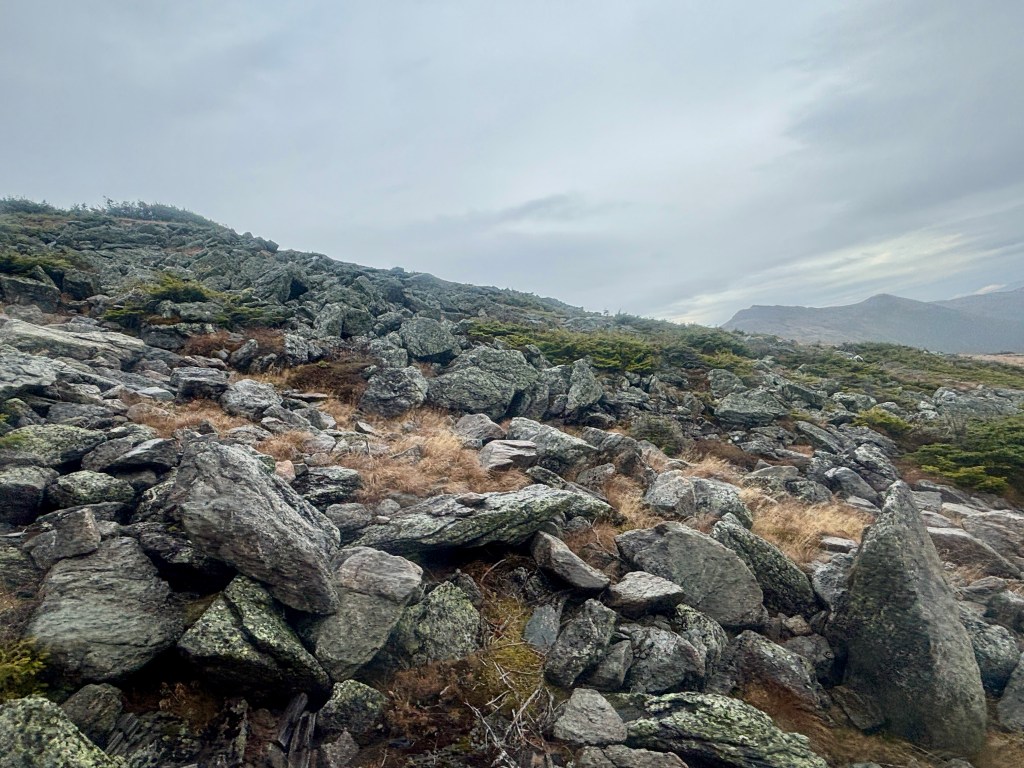
The alpine tundra zone is at the summit.

These are markers for the northern region of the Appalachian Trail.

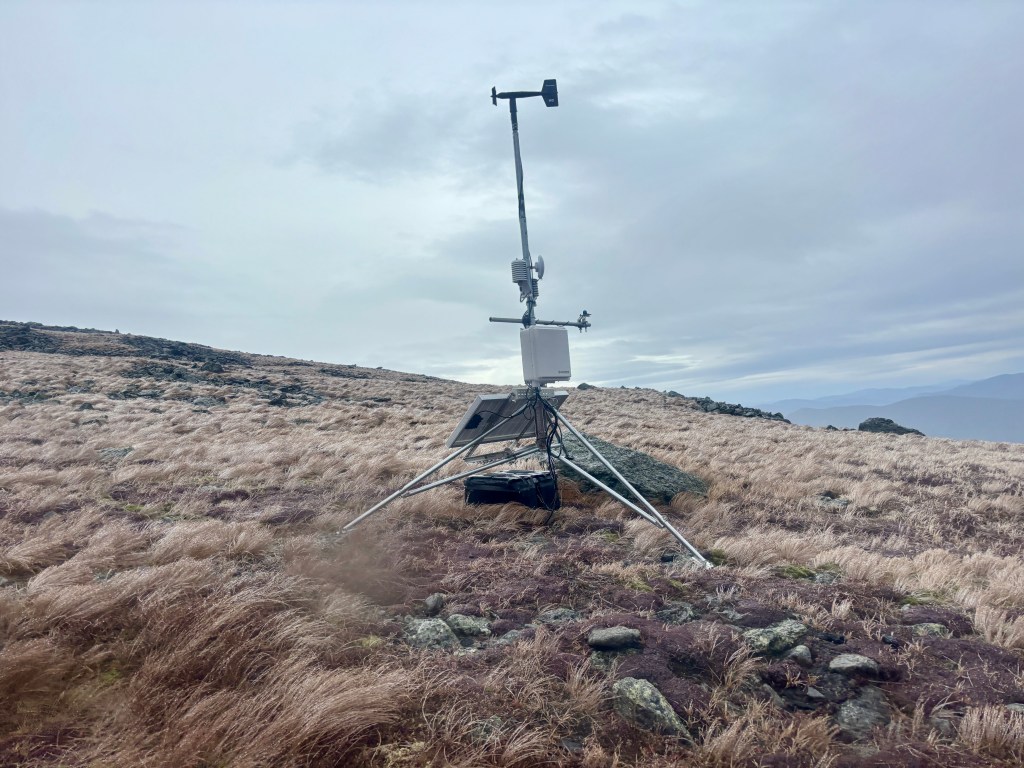
The weather station near the summit gives current information. We learned that they don’t go to the summit when there are sustained winds of 71 mph. 

We approached the summit. Ahead was the first of the three trains in our time group.

Our guide confirmed that conditions at the summit were not going to allow us to get off the train safely. The windows on the east side of the train promptly froze over because of moisture from the nor’easter.

Wind gusts blew part of the engine’s smokestack off when we arrived at the top and our guide went to retrieve it.

She told us that one of their engines has a snowblower when snow is on the tracks.  The summit gets an average of 42 feet of snow. The coldest temperature ever recorded at the summit is 59 degrees below zero, -109 windchill. They don’t take passengers all the way to the summit in the winter. 

While at the top, we were told there were eight hikers “desperate” for a ride down. Fortunately, the trains weren’t completely full so they were able to accommodate them.  That isn’t always true so hikers go up at their own peril.

Over 160 people have died on Mount Washington over the past 200 years.  It is known for being one of the world’s deadliest mountains. 

We passed a memorial to Miss Lizzie Bourne, the first recorded female to die on the mountain. In September 1855, 23-year-old Lizzie set out to climb Mount Washington with her aunt, uncle and cousin.  They wanted to watch the sunrise from the Tip-Top House. Stormy weather and darkness overtook them.  Lizzie perished in the cold.  The next morning they realized how close they had been to safety in the Tip-Top House.  

We headed back down the mountain. The picture shows the third train in our time group, behind us on the way up and in the lead on the way down.

We crossed paths with this steam engine that was built in 1875. It burns coal and was the second steam engine they acquired. 

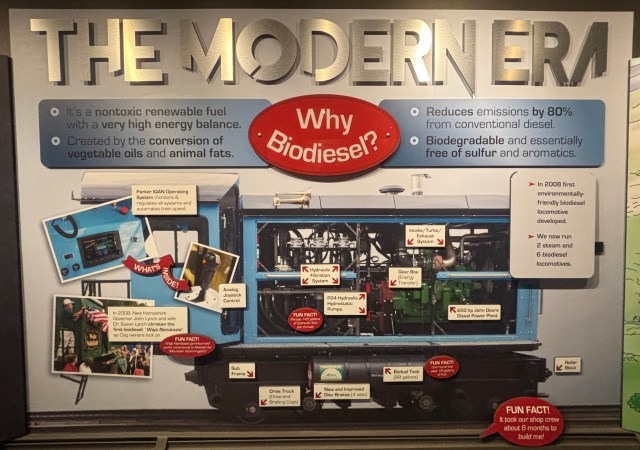
The train we were on was being pulled/pushed by a biodiesel engine.  Most of their fleet is run on biodiesel due to environmental concerns.

Our guide was explaining about her safety training, specifically about how to stop the car if it becomes unhooked from the engine.

It was a very interesting train ride, even if we did miss out on time at the summit.

The leaves in the Mount Washington area of New Hampshire were past the prime season.

We had our box lunch when we returned to the lower station. Normally, we would have had it at the summit.

We made our way into Vermont!

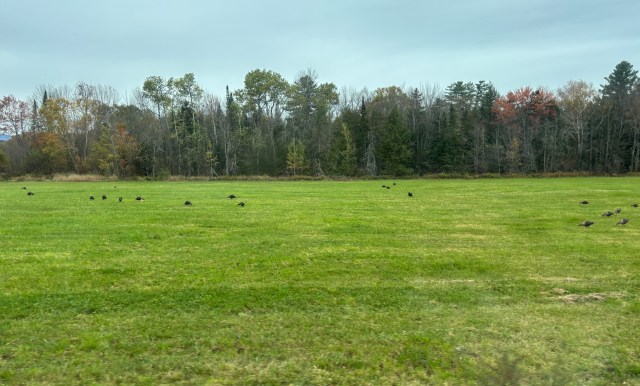
We saw wild turkeys in a field.  Shortly after we saw trees with lines of tubing for gathering sap for maple syrup. Unfortunately, I didn’t get a good picture.

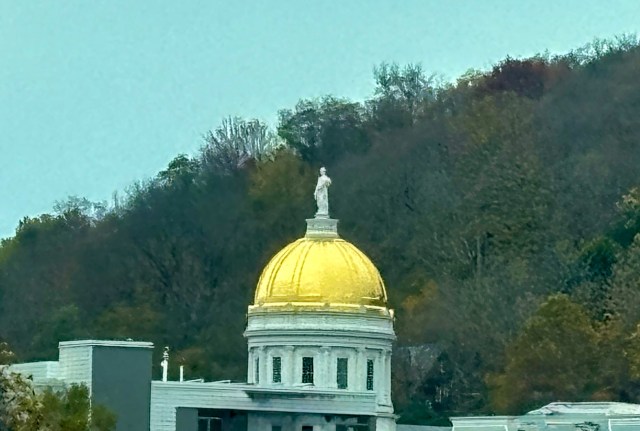
We passed the state capital in Montpellier.

We went to Ben and Jerry’s and it was very busy.  We were here in July 2016 and it had been very busy but that was summer!  This day was Indigenous People’s Day – so it was holiday busy. 

We parked near the flavor graveyard so popped back in for a picture – with people removed.  We spent more time at the graveyard in our previous visit.

The tours were sold out but we had also done that on our earlier visit so it was no problem.  We were at Ben & Jerry’s for a purpose!  We made our way to the gift shop to look for a shirt for Randy.  

He bought this shirt last time and wanted a replacement.  

We got in line for ice cream. At least 150 people were in front of us but it went quickly. 

Everyone got ice cream – even labs got pup-cups 🙂

I chose my flavor easily and Randy agonized over his until the last moment.

When ordering, we saw this note.  We learned on our first visit, in 2016, that Ben & Jerry had sold the company with stipulation that their company values were maintained. They both continued to be involved.

Earlier in October (2025) we heard that Jerry Greenfield quit the company, “accusing parent company Unilever of curtailing Ben & Jerry’s ability to speak out on social and political causes, which is synonymous with the brand’s identity.”

Although we prefer an unfettered Ben & Jerry’s, we still had our ice cream. I had chocolate chip cookie dough and Randy had a scoop of Cherry Garcia and another of strawberry. It’s what’s for dinner!

We made it to our hotel in time to watch game two of the  American League Championship Series.  It was another Mariners Win 10-3!  

I got (ordered) a new shirt too!

Next up:  Ticonderoga: Stardate 1312.4

Posted in Uncategorized | Leave a comment

PHX to BOS and Beyond

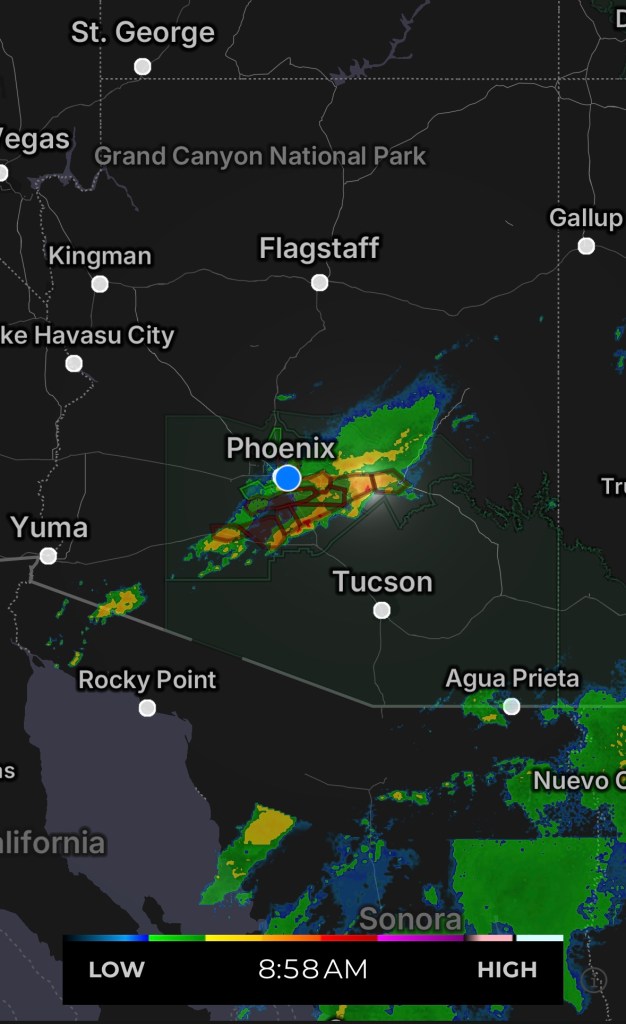
Our morning flight from PHX to BOS on October 12 was delayed.  The pilot said it wasn’t just the ramifications of Hurricane Priscilla approaching Phoenix but also a nor’easter heading into Boston.  

Logan Airport in Boston put a hold on us leaving even after we were good to go in Phoenix.

This may be our first flight ever that had weather issues on both ends.  Our flight was delayed twice as we sat on the plane.

We also had potential air traffic control issues due to the government shutdown.  Yet, there we were ready to make the best of it.

This trip was originally scheduled to visit Randy’s cousin in Vermont and see New England’s fall colors. Ultimately, his cousin’s health didn’t allow for our visit but we had already built the trip so decided to go ahead.

This trip was a modification of our annual baseball trip – when we go see the Seattle Mariners or Arizona Diamondbacks play games in a city or area we want to visit.  We’ve been to Baltimore and Detroit in recent years. This year, instead of seeing games, we were going to Cooperstown to the Baseball Hall of Fame.  That will come up in a future post.

Finally, this trip would pick up Connecticut, the only state that is missing on our state map that isn’t in the south.

There were lots of interesting things on this trip itinerary, including four national parks which probably wouldn’t be open in the shutdown.  I am a believer in “all you can do is all you can do.”

The pilot made up our delay going cross country but then we spent part of what he’d gained in a holding pattern over Boston.  In the end, we got there safely, just a little delayed, and all was well.  

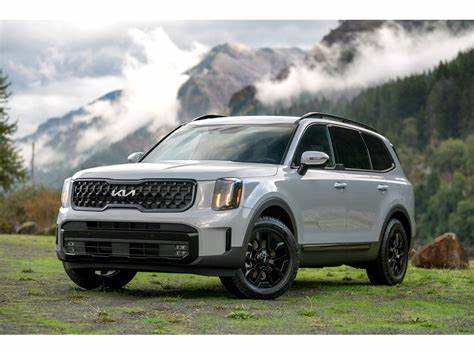
While waiting for our rental car to be delivered to us, Randy saw a Kia Telluride.  He asked a very helpful agent if it was possible to change our reserved car to a Telluride.  She was able to do that for us!  Our daughter is considering getting a Telluride so we would be able to give her feedback from our experience.

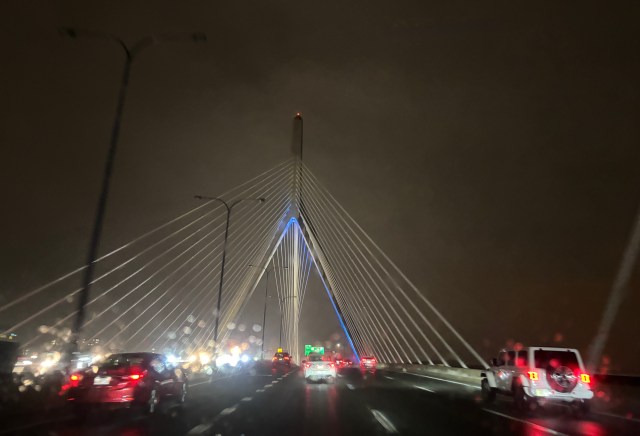
It was dark, rainy, and fast moving as we made our way out of Boston.  We wondered if the tunnels were part of the infamous Big Dig from decades ago. We only missed one exit and considered that a win.

On the way to our hotel in the White Mountains of New Hampshire, we listened to the first game in the Mariners – Blue Jays American League Championship Series.

Congratulations to my favorite team, the Seattle Mariners, who won a winner take all fifth game in the American League Division Series (against Detroit) to get to this Championship Series!  That game went 15 innings. They did the seventh inning stretch TWICE!

Their success made me feel validated for listening to games in the middle of the night while we were a month in Europe and Iceland!  

We checked into our hotel a little after 10:00 pm and were able to watch the Mariners finish out game 1 with the win!

Next up: A train ride and game 2!

Posted in Uncategorized | Leave a comment

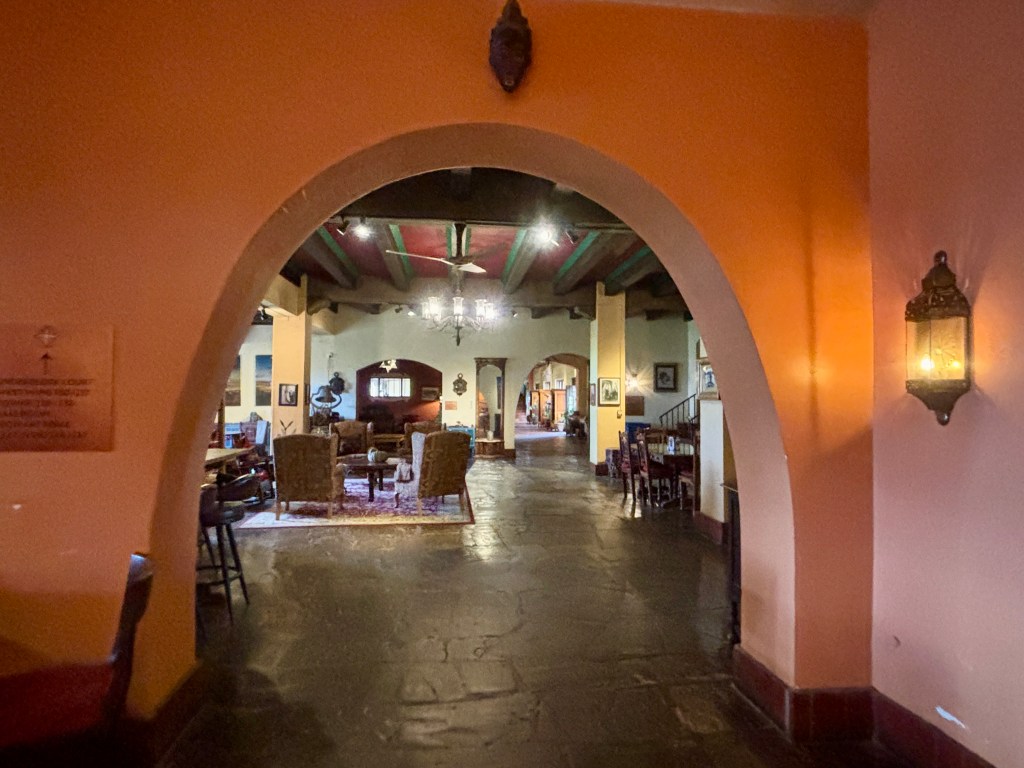
Historic Hotel Series: La Posada

My birthday was in late September and I wanted to spend it at the La Posada Hotel in Winslow, Arizona.

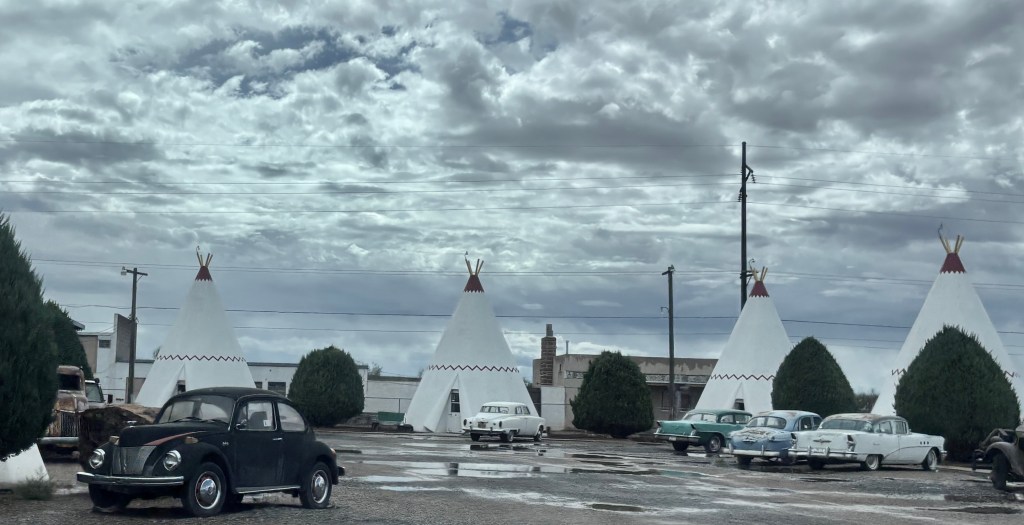
I could have selected the Wigwam Hotel in Holbrook but at this point in life (my 66th birthday) I was looking for something a bit more refined!

Both Holbrook and Winslow are on Route 66 in northern Arizona.  

Winslow is famous for “the corner” mentioned in the Eagles’ song Take it Easy.

Standing on the corner in Winslow, Arizona

Such a fine sight to see

It’s a girl, my Lord, in a flatbed Ford

Slowin’ down to take a look at me

We were at the corner in 2019 and Randy bought a T-shirt that he enjoyed wearing for many years.  He was glad to go back to Winslow and buy another. In fact, he got two!

On our last visit, we walked through the La Posada Hotel but didn’t stay because we were in our RV.  I have always had a love for historic hotels so the memory stayed with me. 

Our friends, Jo and Flynn, enjoy staying at La Posada so we invited them along.

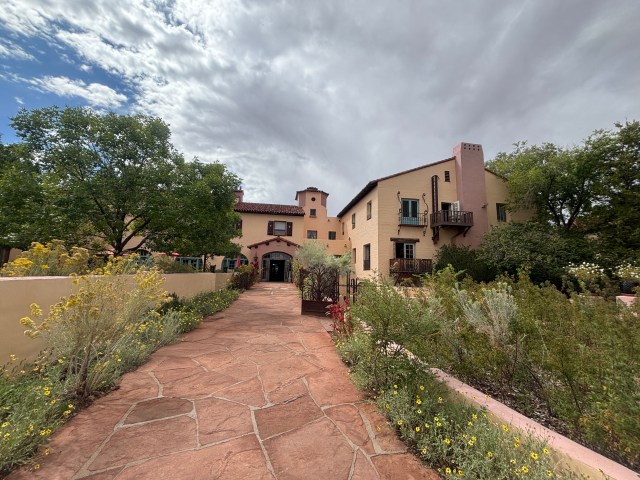
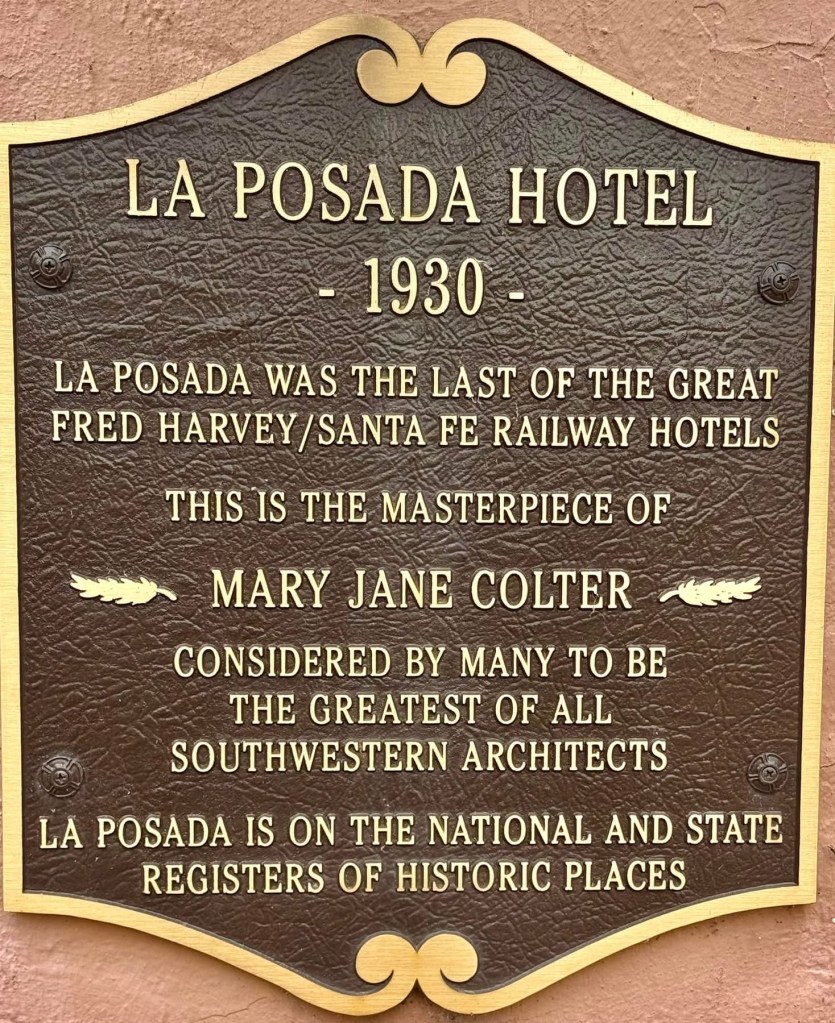
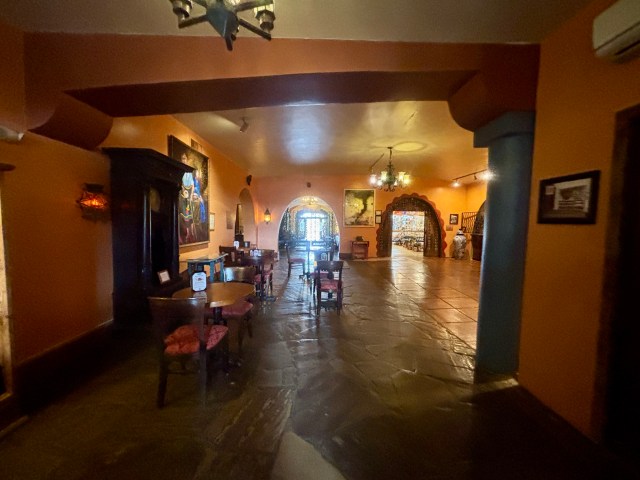
The hotel was designed by Mary Colter who considered La Posada her finest work. 

She designed it to feel like the ranch home of a wealthy Spanish Colonial family.  She wanted guests to feel like they were coming home.

Colter also designed a number of buildings at the Grand Canyon including Hopi House (1905),  Lookout Studio (1914), and Desert View Watchtower (1933).

Her El Navajo Hotel in Gallup, NM was designed in 1923 but torn down in 1957 to widen Route 66.

La Posada Hotel, opened in 1930, was the last of the Fred Harvey Company hotels.  Harvey’s hotels and restaurants followed railway lines throughout the west.  Rail travel declined due to the great depression and then because of increased automobile use. Those factors caused the La Posada to close after just twenty-seven years.  

The Santa Fe Railroad gutted La Posada in 1961 and turned  the building into their regional offices.  

Allan Affeldt and Tina Mion acquired La Posada from the Santa Fe Railway in 1997.  It was their goal to reopen the hotel and offer fine dining in a restaurant they called The Turquoise Room.

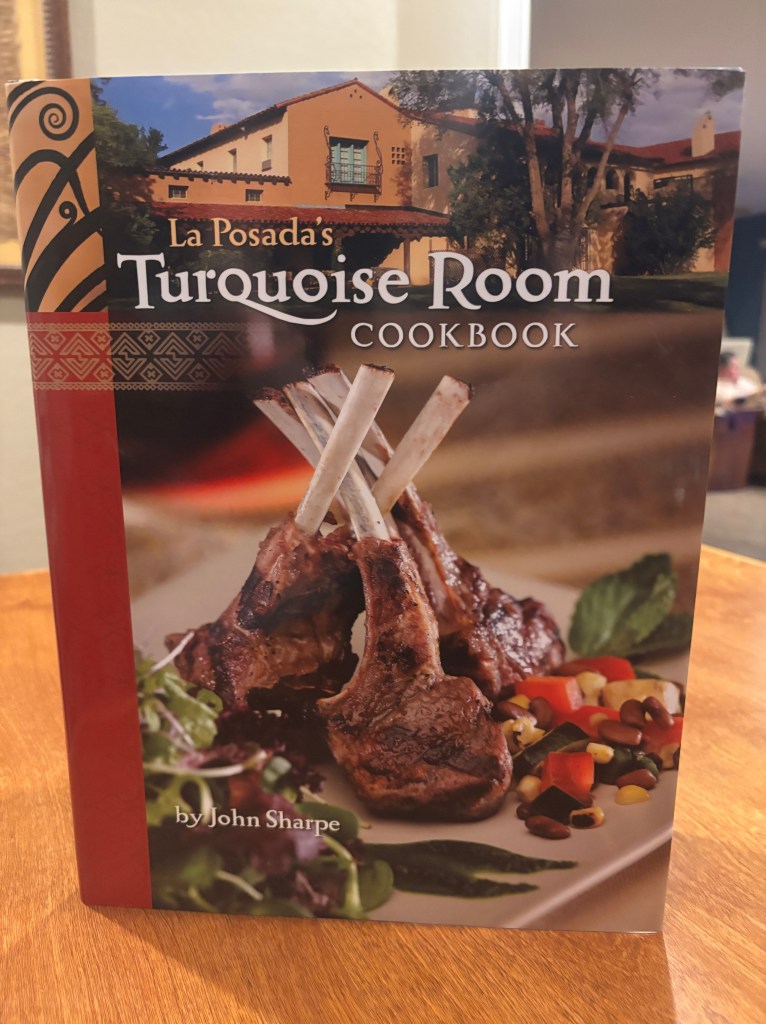
We had my birthday dinner at the Turquoise Room and our meals were unusual, artistic and delicious.  During our dinner conversation, Jo said she had once bought a Turquoise Room cookbook that she had never used.  

Jo gave me the cookbook a few weeks later and I took a picture of their signature soup that Flynn and I enjoyed!  It is sweet corn and black bean with red chili cream!

The next morning we had a delicious breakfast and set about exploring more of the hotel. We had experienced guides in Jo and Flynn.

Tina Mion, one of the pair that set out to reopen the hotel, is an artist and the hotel has a gallery that is full of her interesting works.

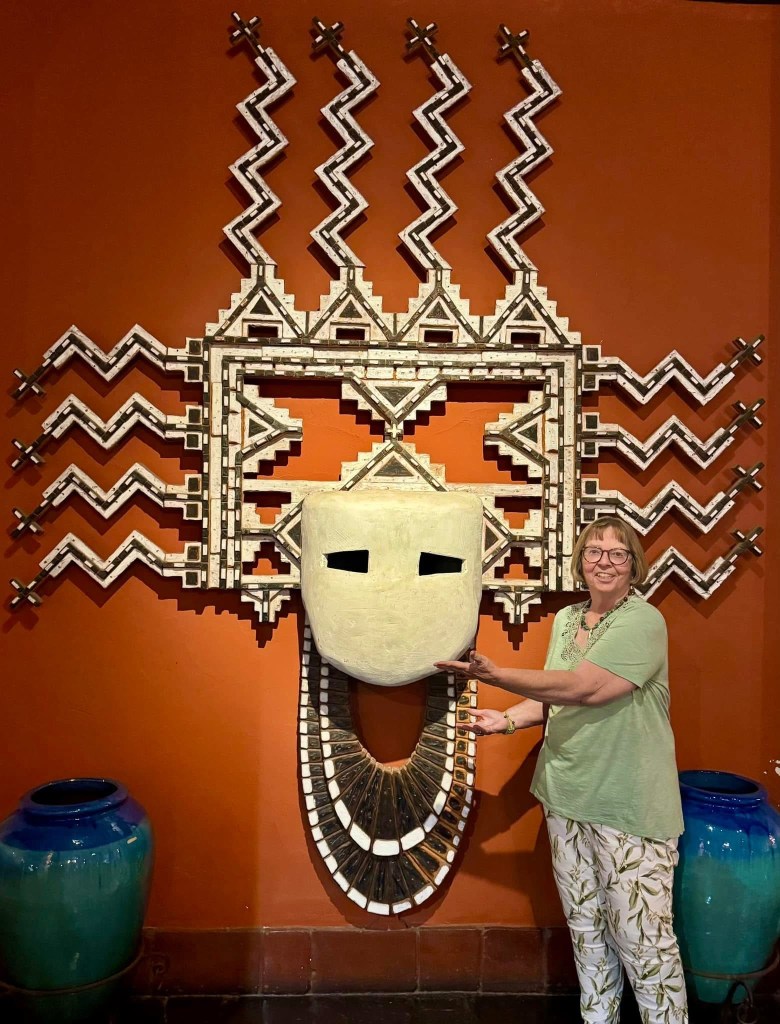
The public areas have more traditional southwest and Native American art. Photo with Jo by Flynn!

One of the things I most enjoyed about La Posada were the bookcases in each guest room and many common areas.  Our room had a case of at least 60 previously read books and that was a small collection compared to other rooms we saw.  There were no provisions to check them out, or buy them. I assume if you were in the middle of a book you could take it with you.

La Posada also has a museum in the old train depot.  We spent an hour or so checking things out.  

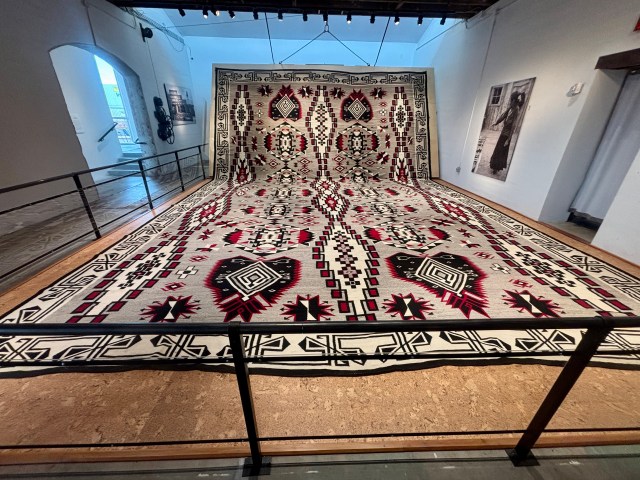
Most interesting was the display of the Largest Navajo Rug in the World.  It was commissioned in 1932 and completed in 1937.

Julia Joe was the master weaver.  She wove on a custom loom fit inside a custom building sized 40′ x 30′ x 10’. 

In a community effort, the Red Clan sheared about 200 Navajo Churro sheep.  They, including Julia’s daughters, spent two years washing, carding, dying, and spinning the wool. 

Julia and her daughter, Lillie, sat at the loom during most daylight hours for a little more than three years weaving the 21’4″ x 32’7″ masterpiece.

The rug used natural colors and had a universe theme including protective talismans.  The rug’s border included Puebloan potshards. 

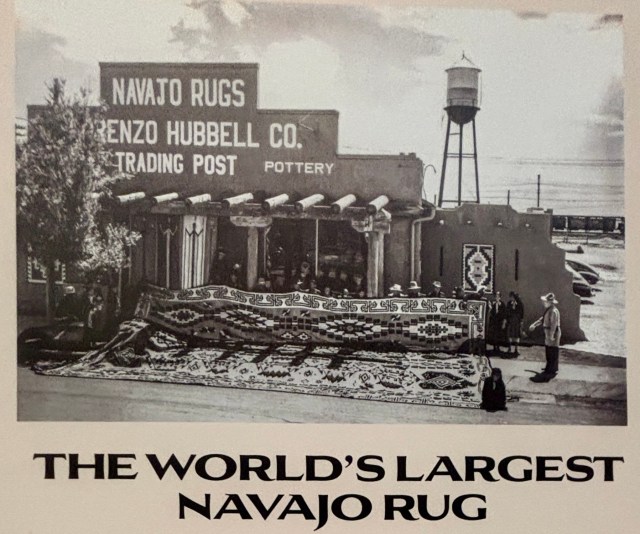
The rug had been commissioned by Lorenzo Hubbell Jr. to use in marketing his Winslow Trading Post. The weaving traveled to museums throughout the country and to the U.S. Senate Chambers.  It was displayed at Marshall Field ‘s New York department store in 1943 and was used as a backdrop for Hubbell’s Winslow Motor Company display of the 1946 DeSoto.

In 1949, the Winslow Trading Post with all the inventory, including the famous rug, was purchased by businessman Kyle Bales. The rug was shown occasionally through the 1950s-1970s. Sites include the Los Angeles County Fair, the World’s Fair in New York,  the Heard Museum in Phoenix and the Arizona State Fair.

Bales’ daughter eventually donated the former Hubbell Trading Post in Winslow (and the rug) to the Arizona Historical Society as a potential museum.  The museum was not developed so the “World’s Largest Navajo Rug,” disappeared into storage for more than forty years.

La Posada’s renovator, Allan Affledt, understood the rug’s significance.  He was able to purchase the rug from the Bales family and developed a permanent space for it in the old baggage room of the train station at La Posada.   

One of Julia’s daughters, Emma Joe Lee, who assisted in carding the wool as a child, was photographed on the rug in 2012 at age 94.

To reflect the person who originally commissioned the rug and the master weaver, it is referred to as the Hubbell-Joe Rug.

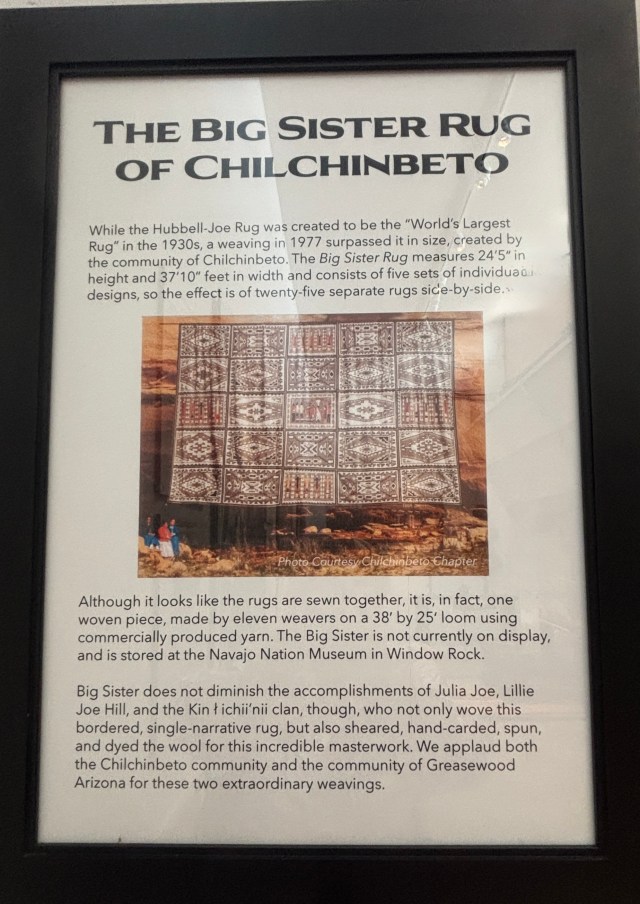
An even larger rug was woven in 1977 called The Big Sister Rug.  It is in Window Rock, Arizona at the Navajo Nation Museum but not currently on display.

I hadn’t intended to write about my birthday and our stay at La Posada even though the hotel was wonderful and I thought the rug was a great story.   It wasn’t until I was looking at our blog for something else that I saw I had once started a Historic Hotels series.

That hotel was The Gadsden Hotel in Douglas, Arizona.  We stayed at the Gadsden in 2021.  So, if you too like historic hotels, ghosts, or travel in southern Arizona, that post is Historic Hotel Series: The Gadsden

Posted in Uncategorized | 1 Comment