In 1298, silver was discovered at Kutna Hora. Kutna Hora means “mountain to dig.”
In 1300, King Wenceslaus organized area mining into a royal monopoly and issued a mining code. He specified administrative and working conditions for mine operation. He developed new positions such as guards and coin makers.
Children less than 15 were not able to work underground. Miners had to contribute to a fund for families and widows because miners only lived 30-35 years due to working conditions and arsenic in the drinking water.
The miners went down 600 meters, taking 1.5 hours down, and two hours to get back up to the surface.
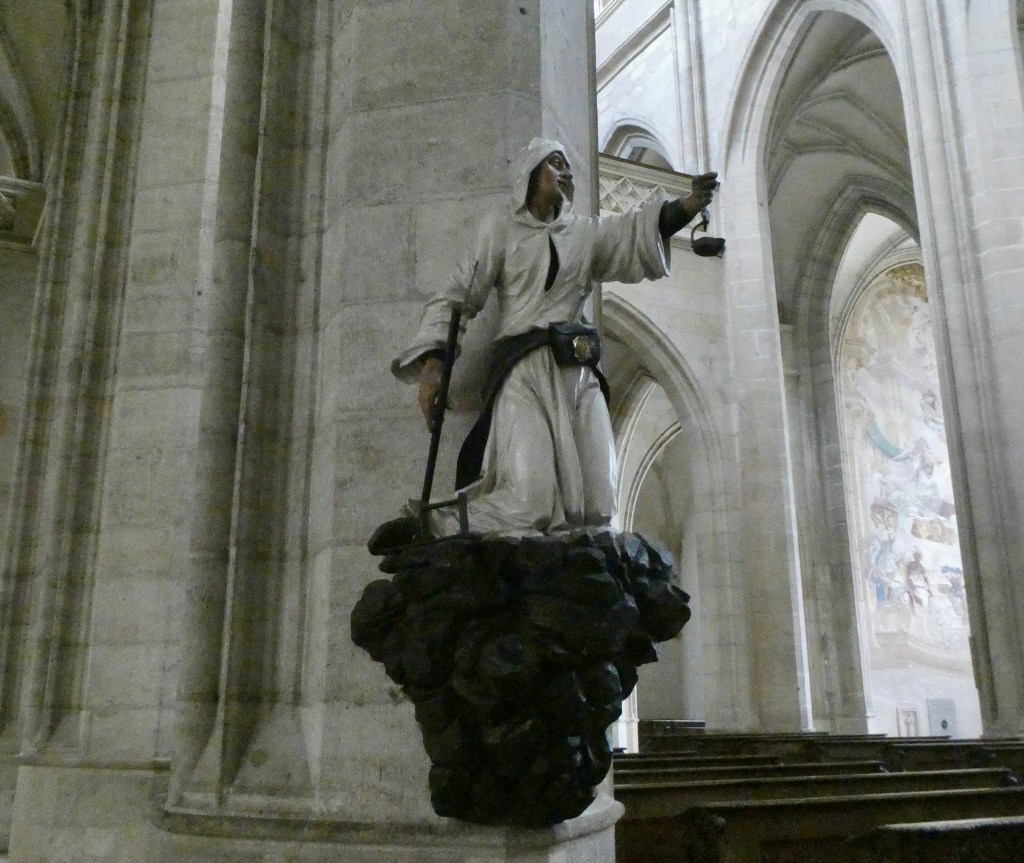
They were required to wear hooded robe jackets with no pockets.
(Duke Wenceslaus I was the monarch referenced in the Christmas carol Good King Wenceslaus He served Bohemia in the tenth century and was martyred. The carol was written in 1853.)
The silver strike at Kutná Hora was one of the richest in Europe ever, producing 20 tons of silver a year between 1300 and 1340.
During its prime mining, Kutna Hora had a population of 80,000 and was a rival to Prague in importance and wealth.
At the beginning of 15th century mining at Kutna Hora was disrupted. It resumed, but stopped again. In the 18th century, the mine was destroyed by fire and never rebuilt.
There is no mining in Kutna Hora anymore. The major employer is Phillip Morris as they supply cigarettes to Eastern Europe “since you Americans don’t smoke any more.” They source tobacco from Bulgaria.
There is also a Lego factory and increased tourism due to UNESCO designations.

The Cathedral of Saint Barbara is one of central Europe’s most impressive gothic buildings and is one of those Unesco World Heritage Sites.

Construction began in the 13th century but, given the ups and downs of the city’s economy, it took 500 years to build. (This is from the center looking back.)

The cathedral is one third the size it was originally planned because silver mining discontinued. (This is the center looking front.)
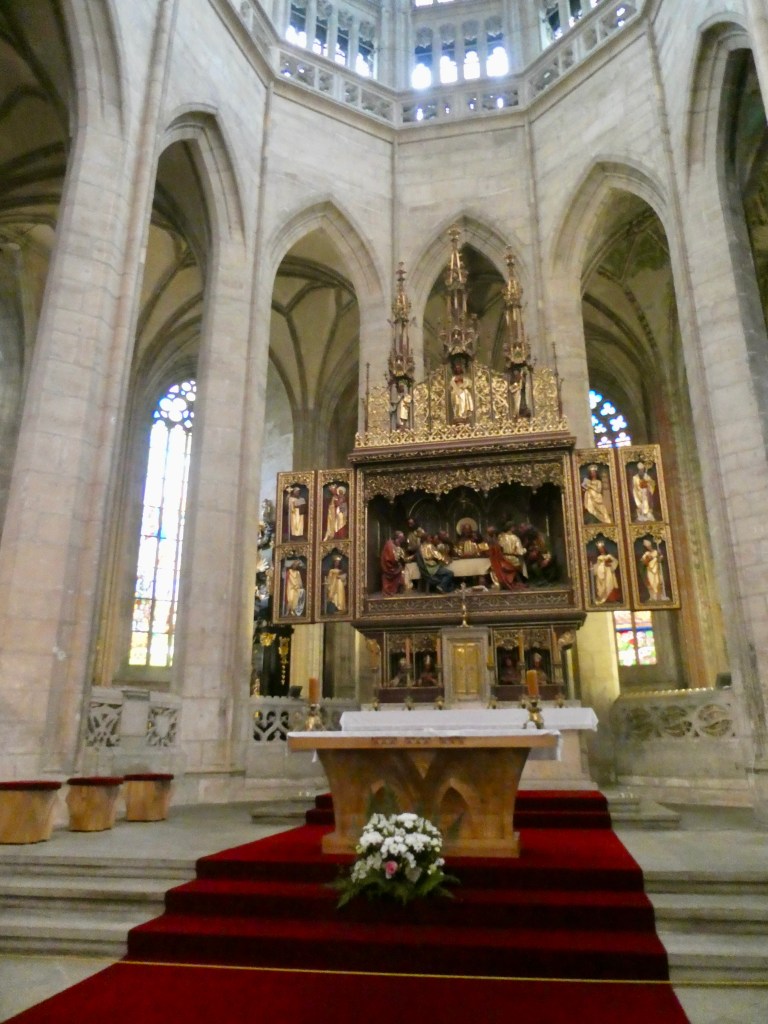
The cathedral is dedicated to Saint Barbara, the patron saint of miners. Barbara was the daughter of a rich pagan who kept her protected and frequently locked up in a tower.

She secretly became a Christian and declined a marriage arranged by her father. She acknowledged her Christian faith and was cruelly tortured. Each morning her wounds were healed. Her father himself carried out a sentence of death by beheading. He was struck by lightning after committing the act.
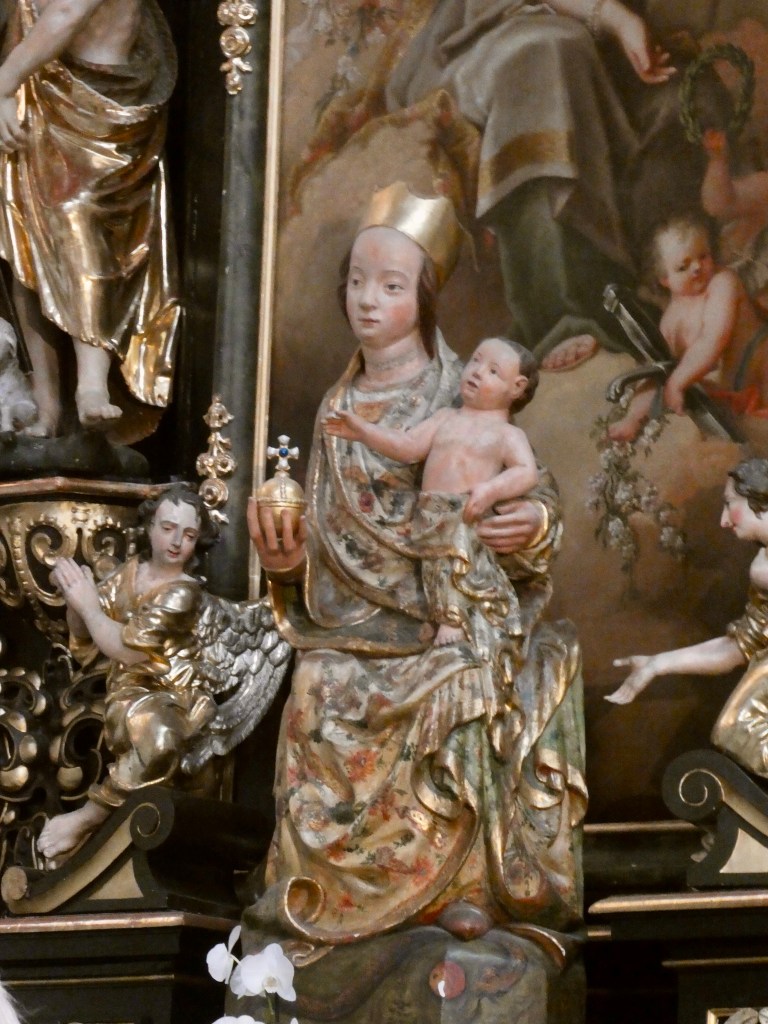
The Madonna with Jesus statue is from the 14th century, and is the oldest item in the church.

The former monastery, for 60 monks, is now an art gallery. Patron saints line the walkway on the side overlooking the city.
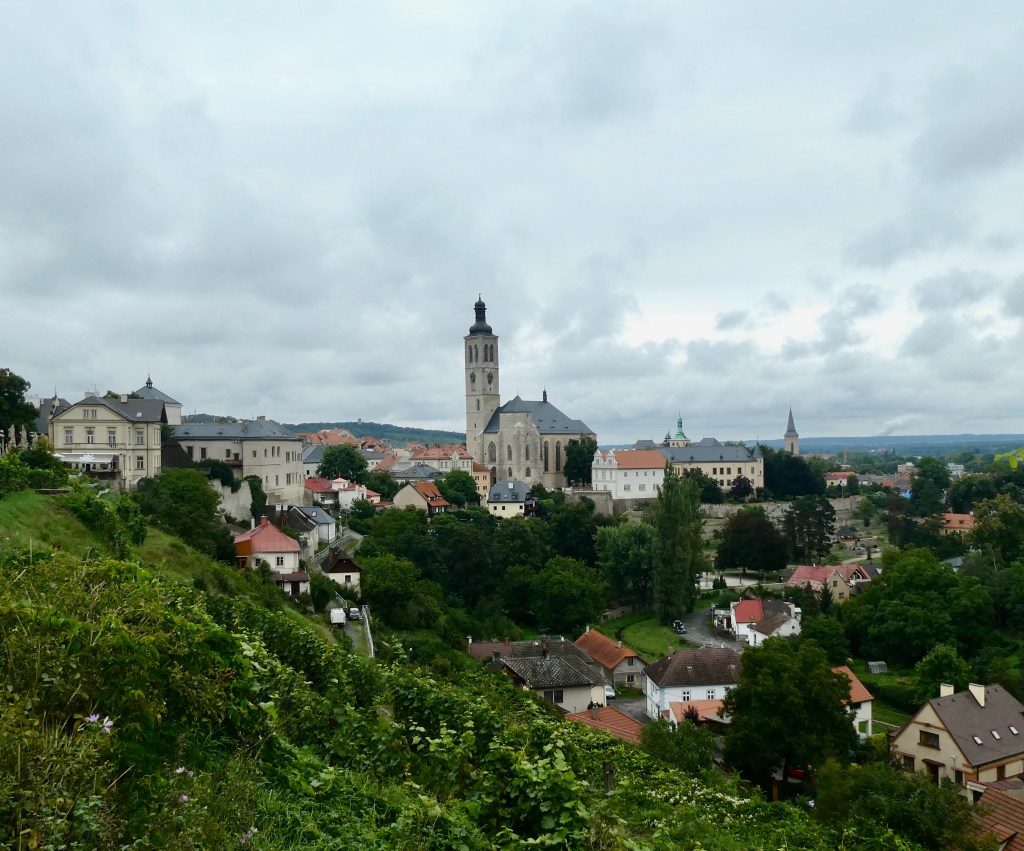
The church in the center of town is older than Saint Barbara’s.

Dutchiski Restaurant was our lunch destination. The family established a local brewery in the 1600s. For 200 years, the restaurant has featured central European cuisine including pork and chicken, potatoes and dumplings and lots of beer! My choices were:
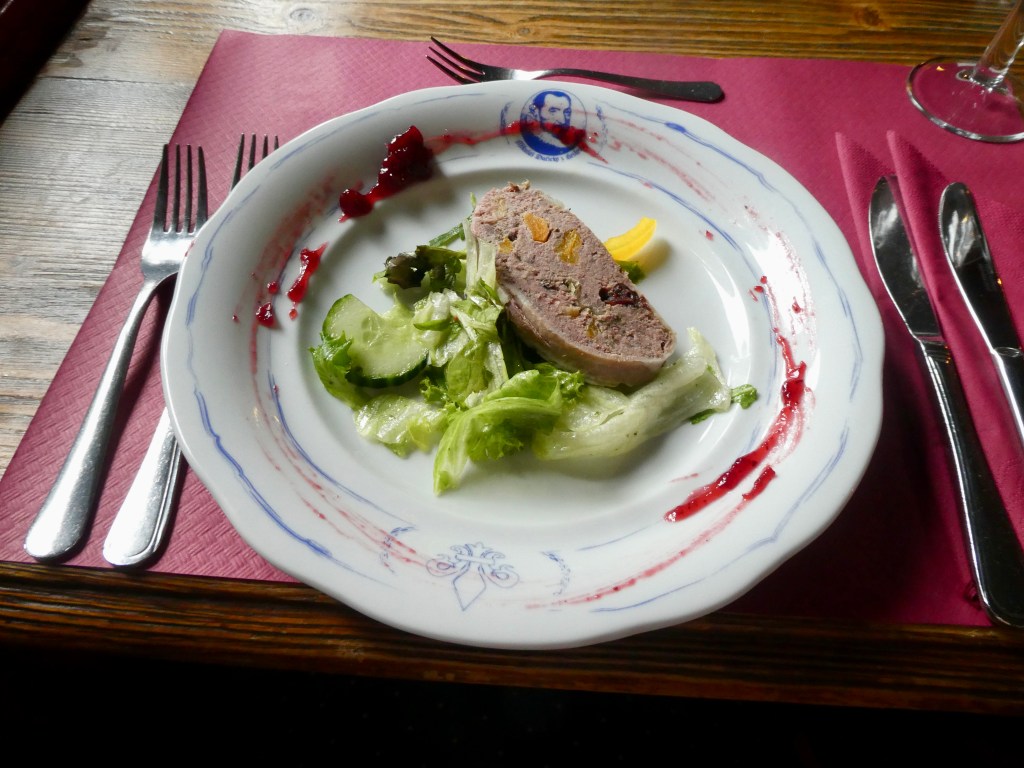
Wild boar pate appetizer
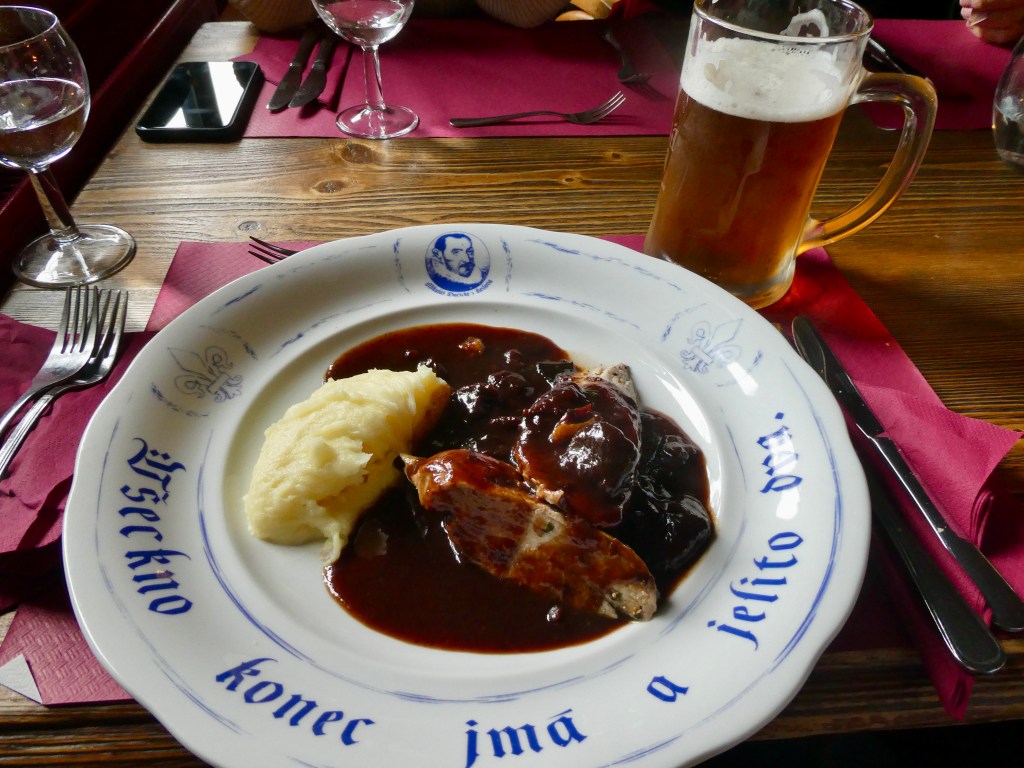
Pork with plum sauce and mashed potatoes

Apple strudel
Our guide pointed out some interesting things on our walk back to our tour bus.
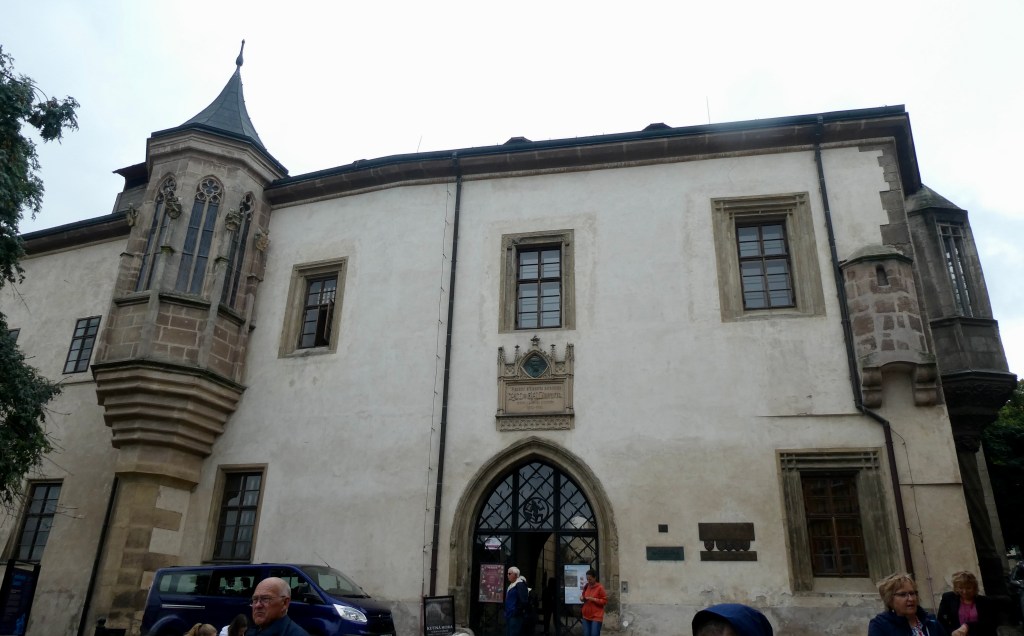
The small bump out to the right on this side of this building was a toilet, allowing the waste to drop down outside.
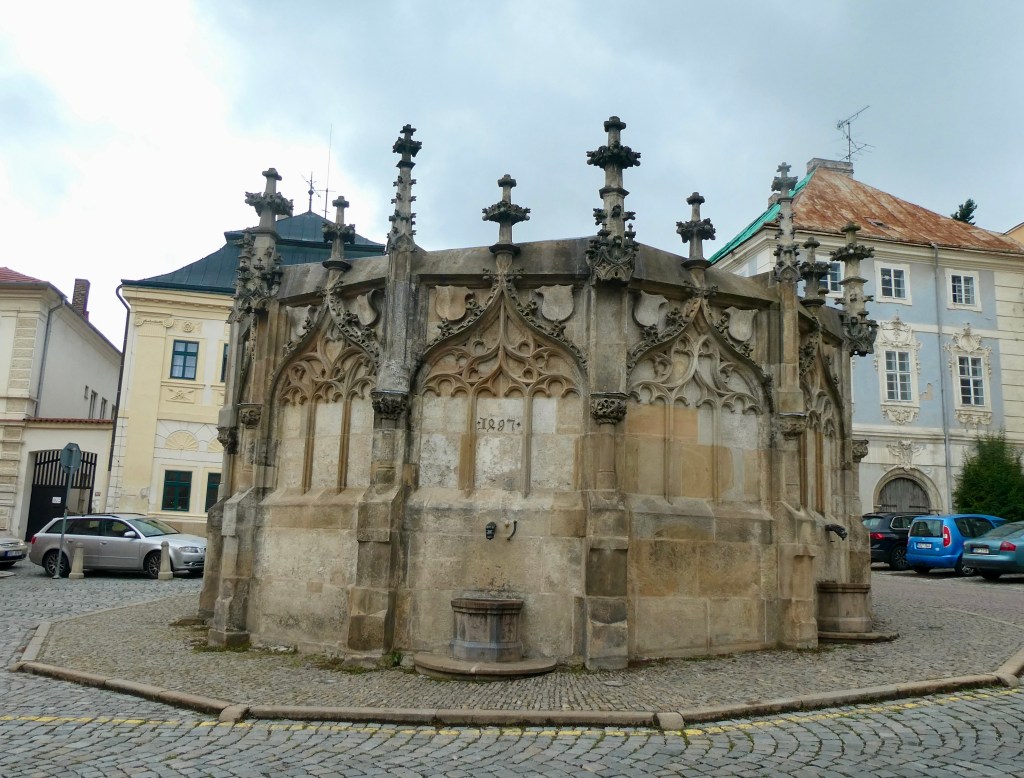
This gothic water tower was built in 1497. If that date isn’t obvious to you, it wasn’t to me either! The second digit shows the top half of an 8 – so it is a 4. Residents could not build wells because of the arsenic present underground.

This brass square commemorates a Jewish family that died here at the hands of the Nazis.
Next up: Back to Prague!


 Serene Wandering