We began our Prague City tour in the Jewish quarter. It was once a ghetto for Jews and the poor. In the late 1800s it got so bad that the city of Prague cleaned it up and provided new sanitation measures. The area then became highly desirable to all Prague residents.
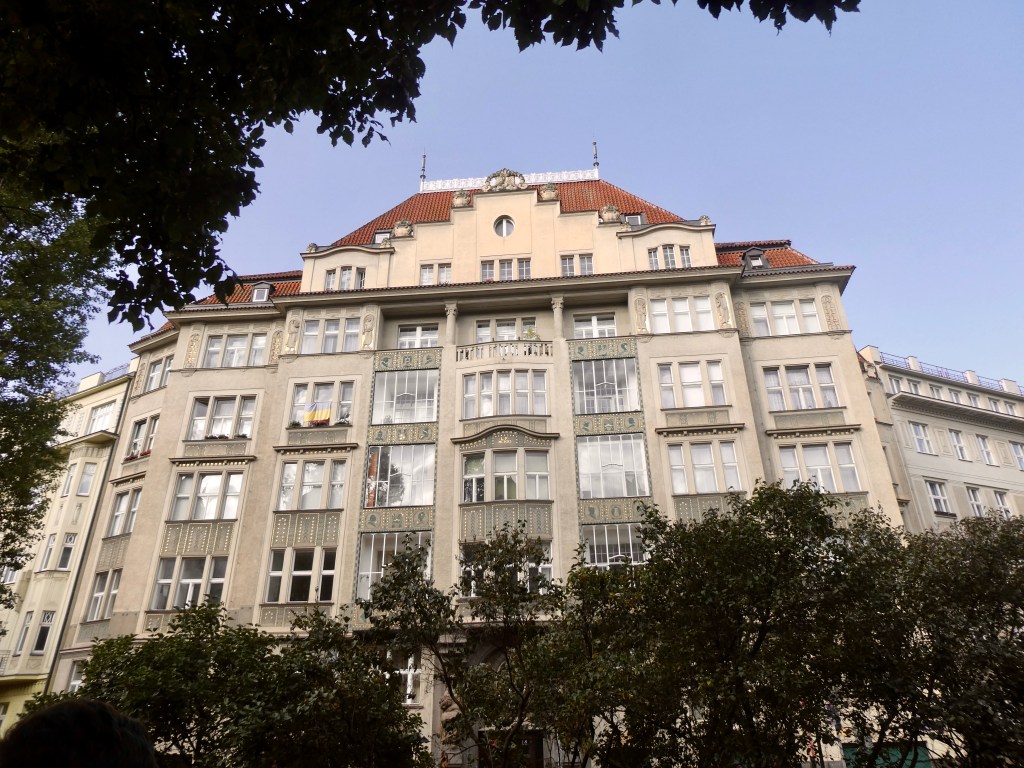
This 1911 building, trimmed in gold, has Jewish artistic features.
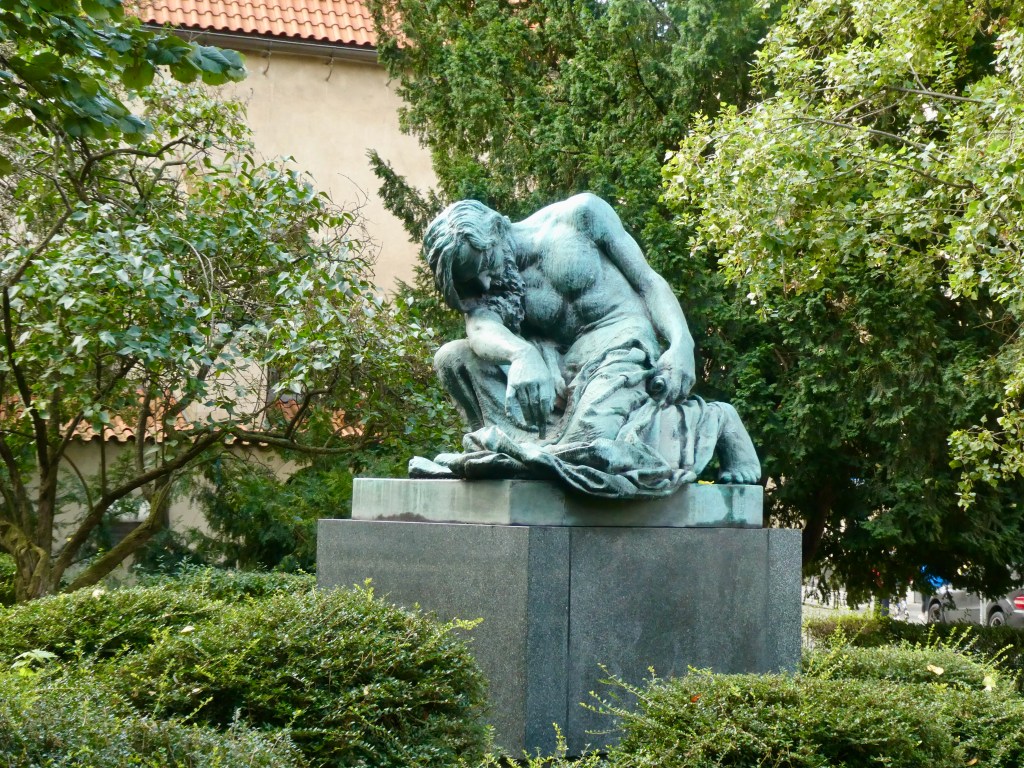
This statue of Moses was melted down by the Nazis during WWII. After the war, the artist’s wife still had the original mold so it was remade.
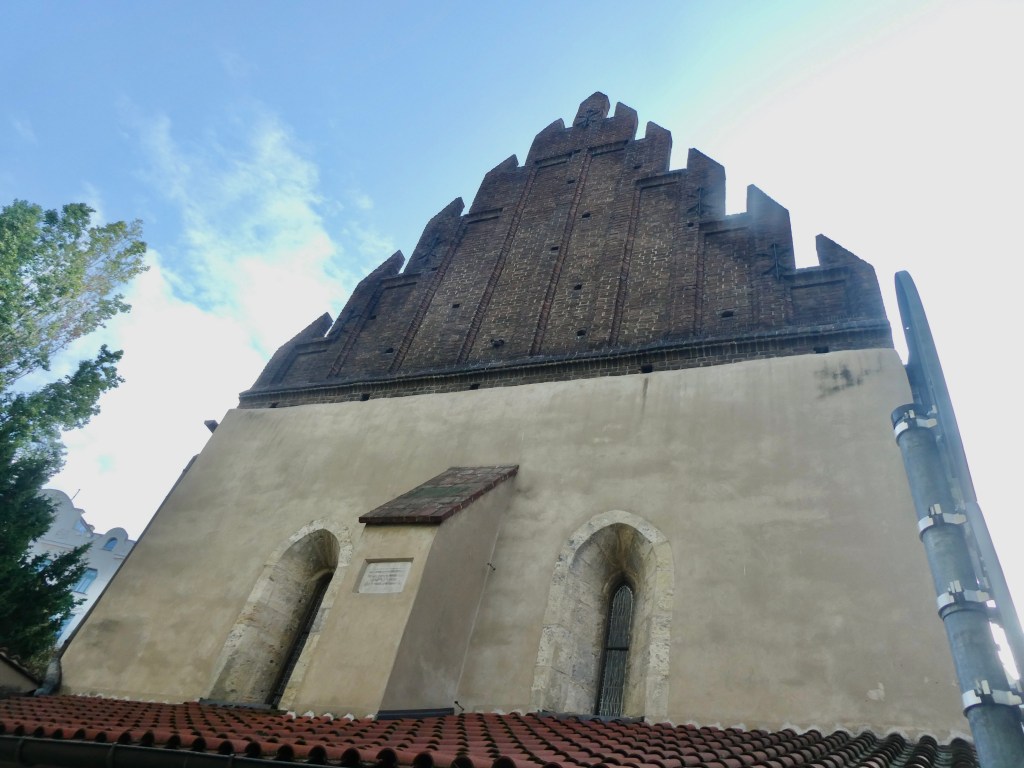
This is the oldest Jewish temple in central Europe.
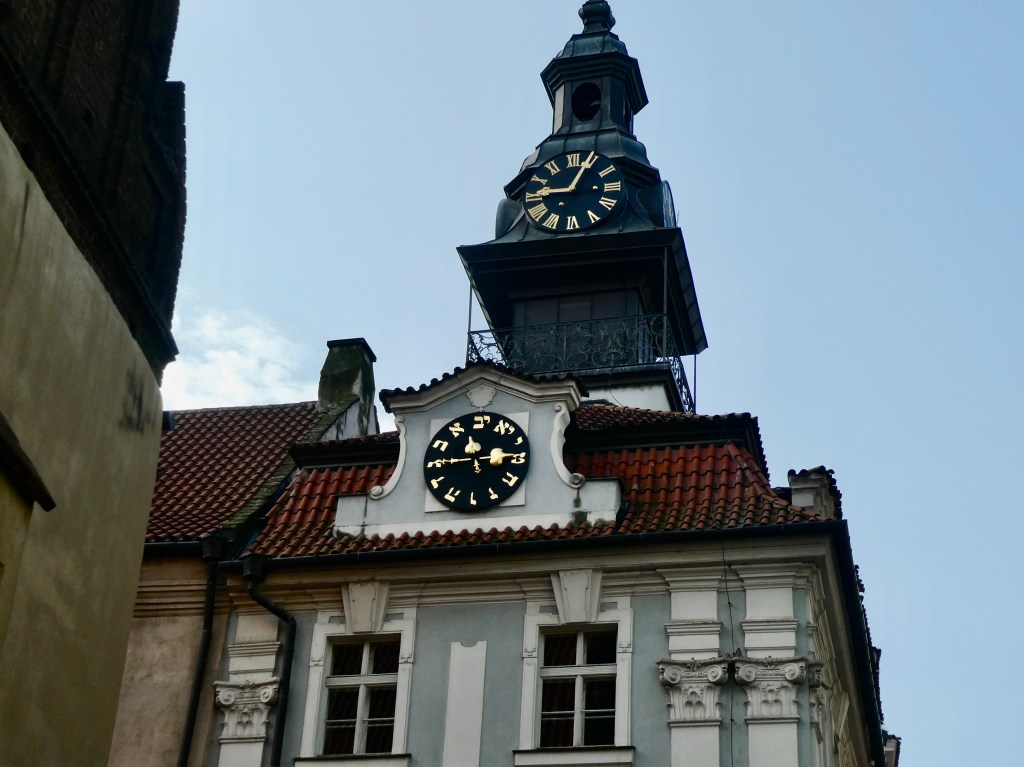
The temple has two clocks – one Christian and one Hebrew. They go in different directions!
Czech, German and Jewish people lived peacefully together here for centuries. One hundred and thirty thousand Jews lived in Prague prior to World War II. Thirty thousand of them left just before, or at the beginning of the war. About 90,000 Prague Jews were murdered so only 10,000 returned.
After the war, the remaining Germans were expelled so the population was overwhelmingly Czech. The country was not very diverse. (Recently, the Czech Republic has taken in more Ukrainian refugees than any other country in the world.)
At the end of the World War II, the Americans stopped at Pilson – only one day away from Prague. In the end, Stalin got the Czech Republic in the world re-sorting. The Czech people suffered for decades under Stalin and Communism.

We visited the 11th century Old Town square.

There are interesting buildings all around the square.
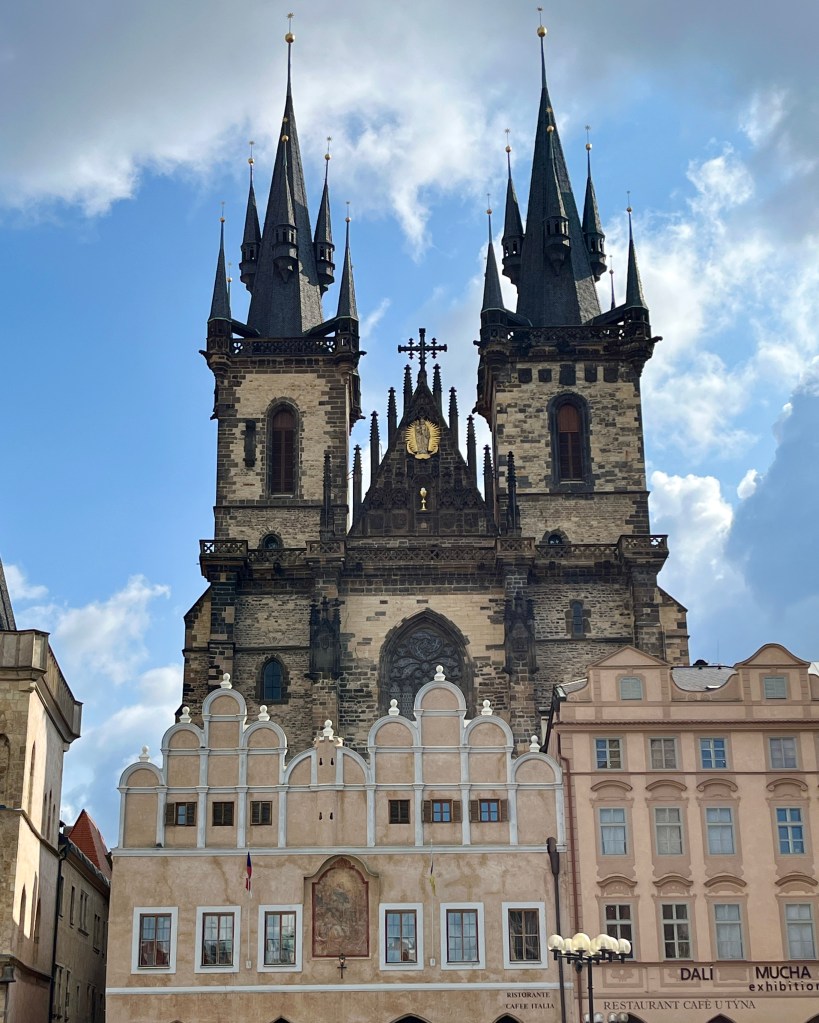
The Church of Our Lady Before Tyn is gothic style. Construction began in the 13th century but was not completed until 1511 when the south tower was finished. We did not go inside.
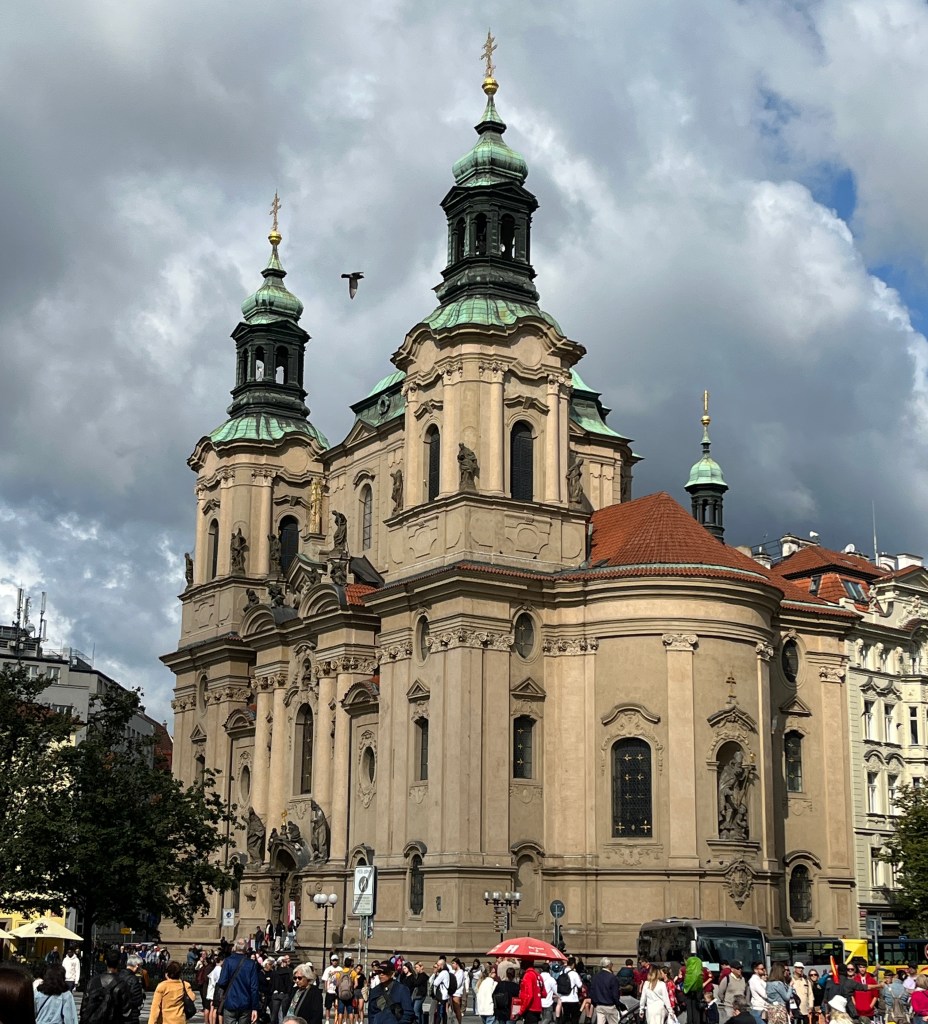
Our guide explained that, despite the number of churches in Prague, the Czech Republic is 90 percent agnostic. Over centuries, and for lots of reasons, faith just isn’t a thing in the Czech Republic. It cannot be accounted for solely by decades under communism because faith levels in other countries experiencing the same have rebounded. But, she did say they have the highest library density in the world!

Very nearby the square is the famous Prague Astronomical Clock. Built in 1411, it is the oldest astronomical clock in the world. Many people were gathered to see all the things that would happen at the top of the hour. Fortunately our guide told us what to watch for and where.
The clock shows time passing in several ways.

The outer ring tells the Prague local, or Central European Time, using gold Roman numerals. Another dial separates into 12 parts for the unequal hours between sunrise and sunset, and vary as the days grow longer or shorter during the year. The large black outer circle has another movable circle marked with the signs of the Zodiac.
The clock suffered burn damage during WWII, but the components survived and the clock was reconstructed.

As we walked around nearby, the goal became to take a picture of the clock without people in the view. Randy got it!

Then we could enjoy some souvenir shopping in the area.

VJ Rott was a hardware store from 1840 – 1990. It continued through communism but did not make it through the exodus of people actually living in the historic district.
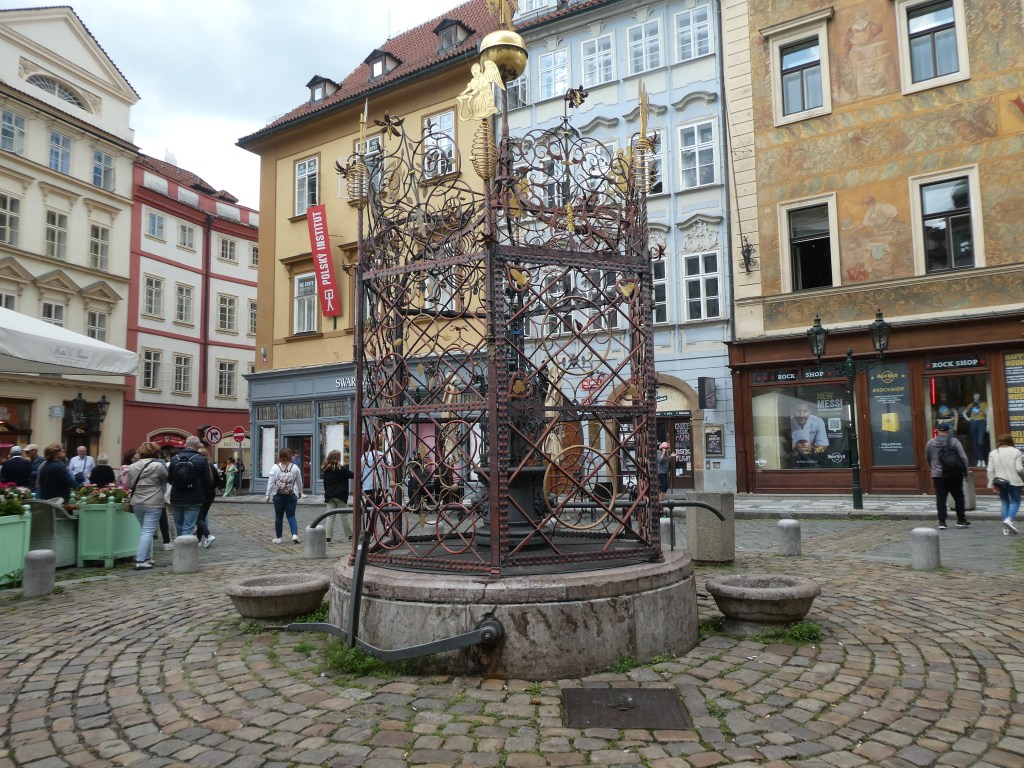
The water fountain worked for centuries, but did not survive the flood of 2002.
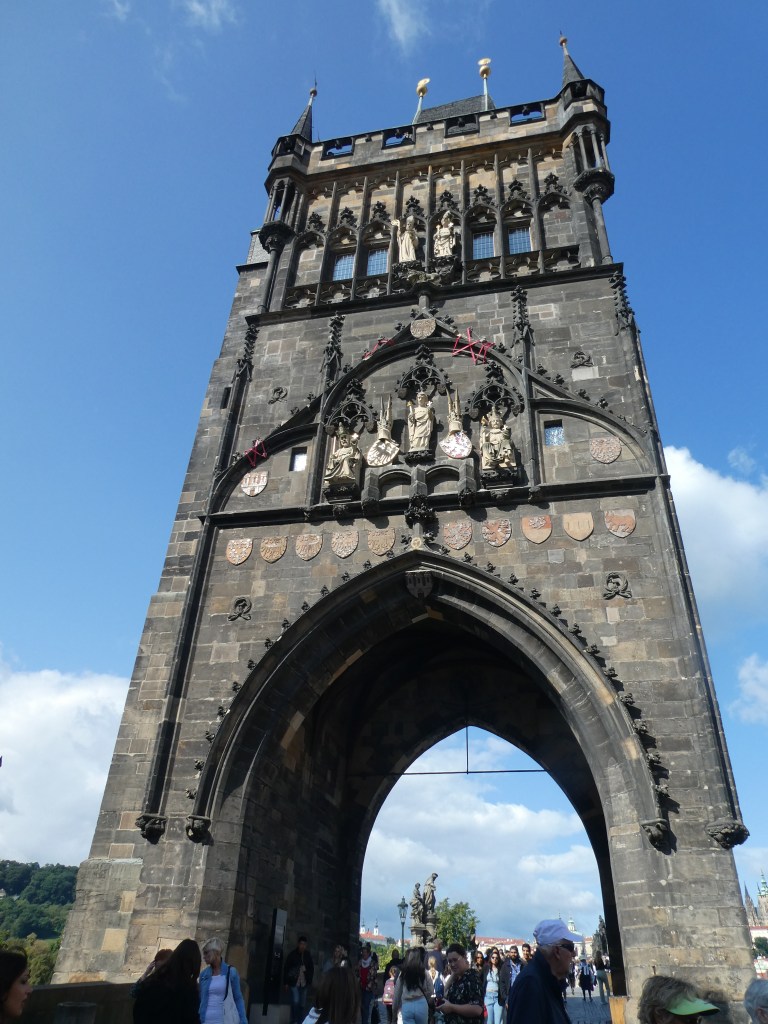
As we moved towards the Charles Bridge, we crossed under the tower where Czech students stopped the Swedish Army when they were trying to invade in 1648. (I don’t know about you but I had to reset my mind around Sweden being European aggressors. There was a real thing called the Thirty Years War.)
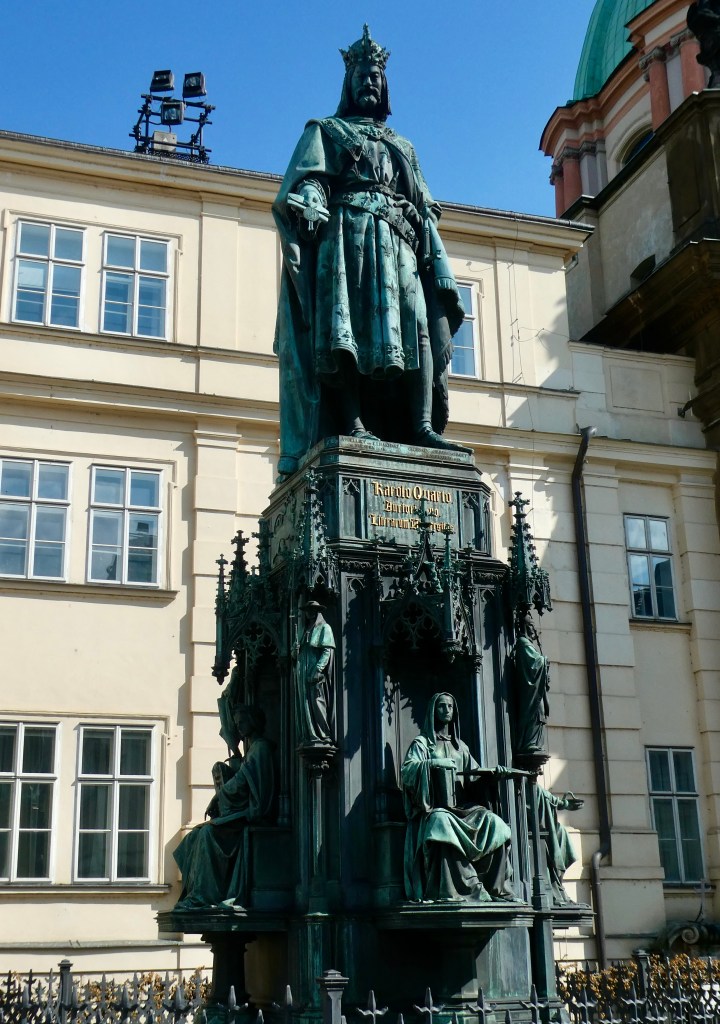
This is King Charles IV, the most important ruler in the history of the Czech people. His reign allowed them to flourish.
There were many artisans along the bridge and a festive atmosphere.

We had a lovely view of the medieval city and Prague Castle.

The view from the Charles Bridge to another.

There is an Eiffel Tower replica visible from the bridge. It is 1/5 the size of the original in Paris.

This is a famous Prague photo-op with many centuries available in one photo. The lower bridge tower is from the 12th century while the other tower is from the 15th century. In between is 16th century architecture with 18th century architecture to the right.
These type of architectural opportunities are unique to Prague with architects and students coming from all over the world to study. This is because the city did not suffer the damage that other European cities did during WWII as the Allies concentrated on the industrial outskirts of the city.
(Prague is still primarily an industrial city. They make more cars per capita than any other country. Skoda was the traditional Czech brand, later purchased by Volkswagen. They also make buses and supply automotive parts, primarily to Germany. They also have an industry to make hand guns.)
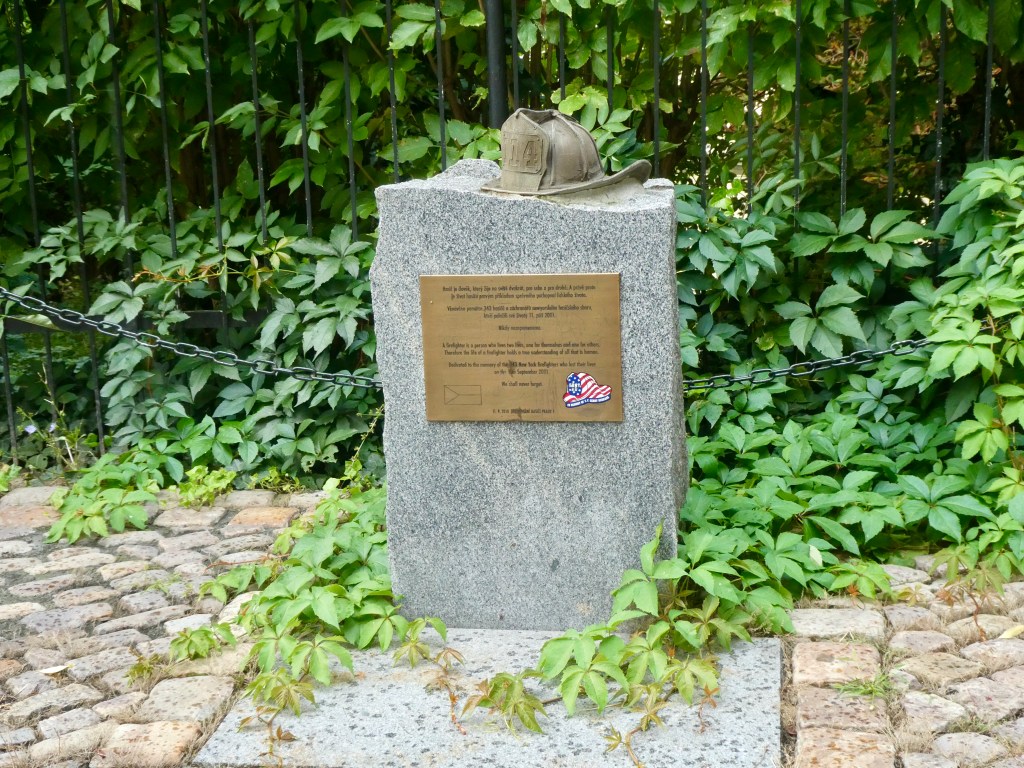
On the other side of the Charles Bridge was the Prague Firefighters Memorial to New York City firefighters after the attacks on 9/11.

We walked through Little Venice.
We walked through the Lesser Quarter, meaning the quarter is smaller – not less important. A massive fire in 1541 destroyed much of Lesser Quarter so the architecture remaining is mostly Baroque style.
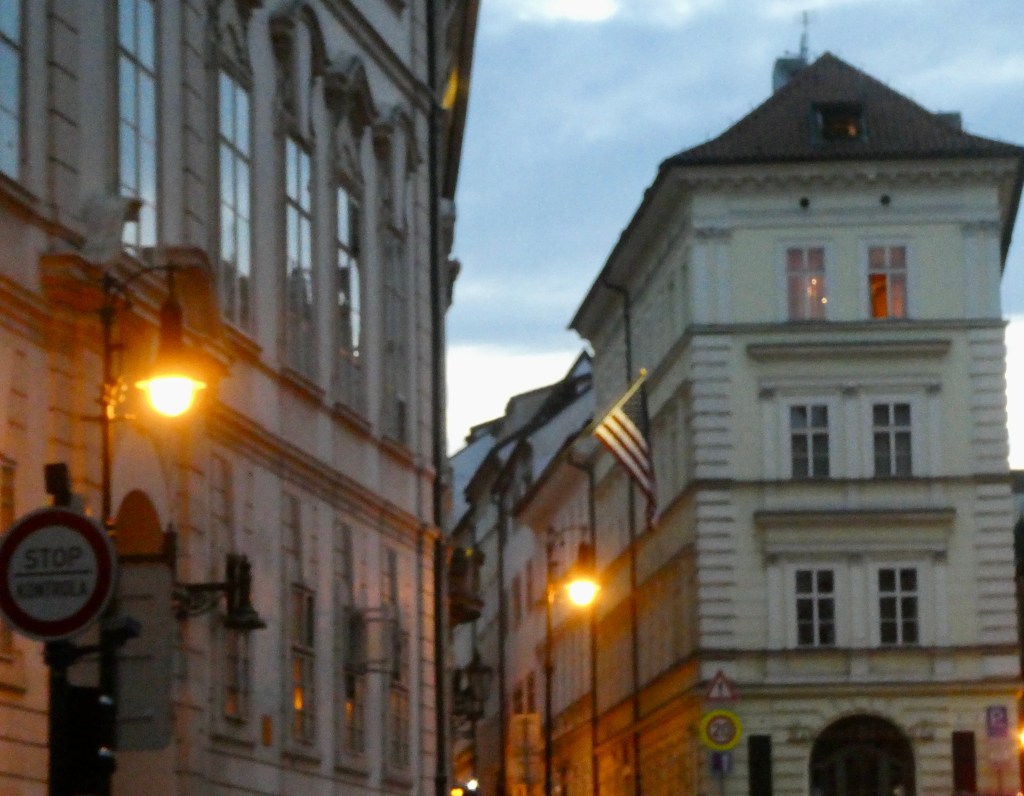
Over time personal castles became government buildings and embassies. This one is the US Embassy.
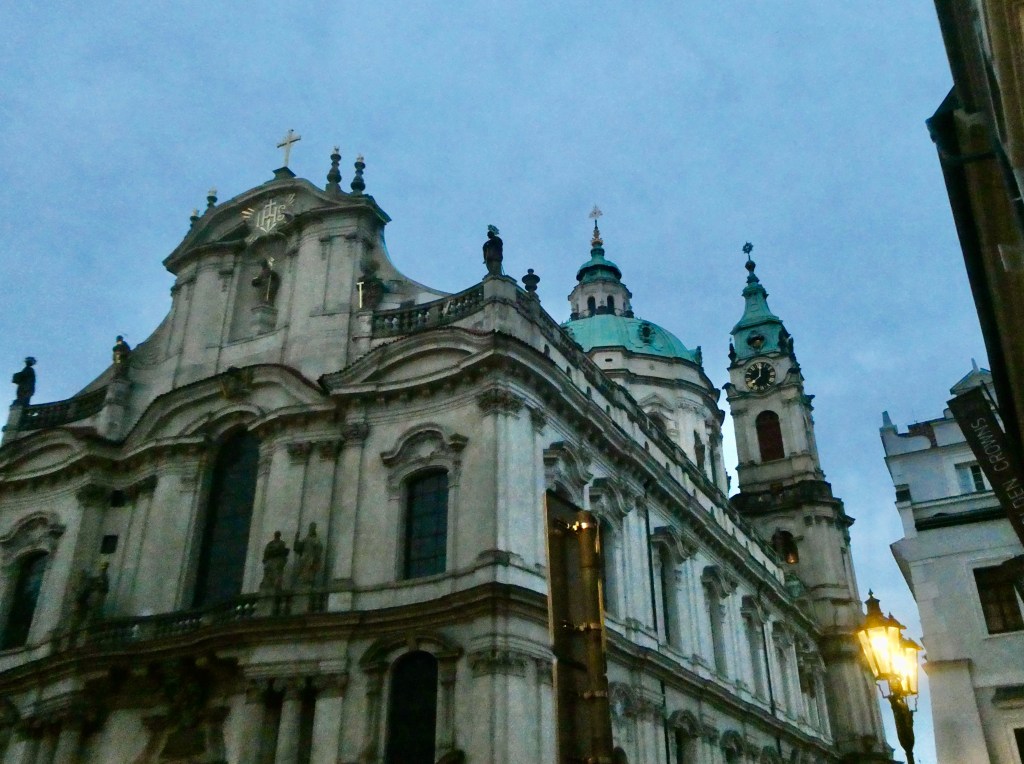
The church of St. Nicholas was known as the spy church as the secret police used the high points to spy on embassies in the area.
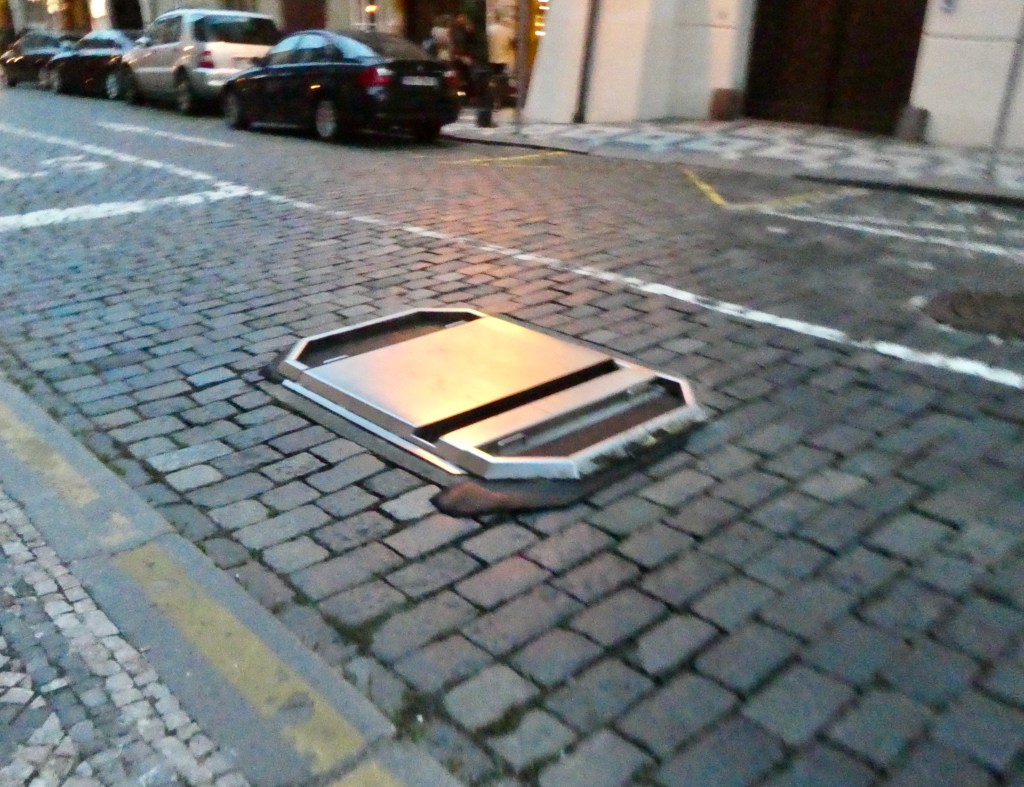
This was, maybe is, a surveillance tool to look under cars in this government area.

This Memorial is to Czechoslovak Resistance during WWII. The group was able to assassinate the highest ranking German officer assigned to their country.
Art is often used as a social provoker.

This is a very small section of the Lennon Wall – a symbol of non-violent resistance to oppression that began right after John Lennon’s death in 1980. The communist government would direct that the wall be painted over and the students would paint on it again. This went back and forth until the government changed in 1989. There is constantly changing art on the Lennon Wall. When it is occasionally painted it over, it is only to provide a fresh canvas.
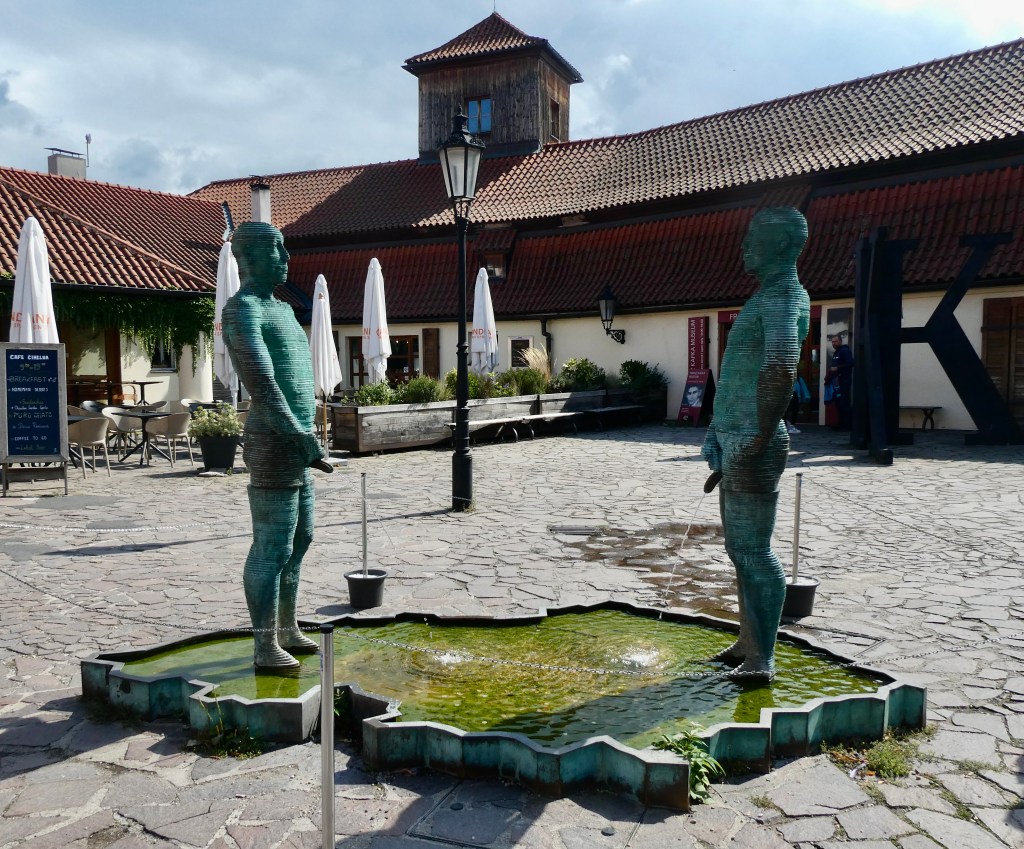
We saw additional social provoking art. These two men urinating on the Czech Republic is social commentary by David Cerny.
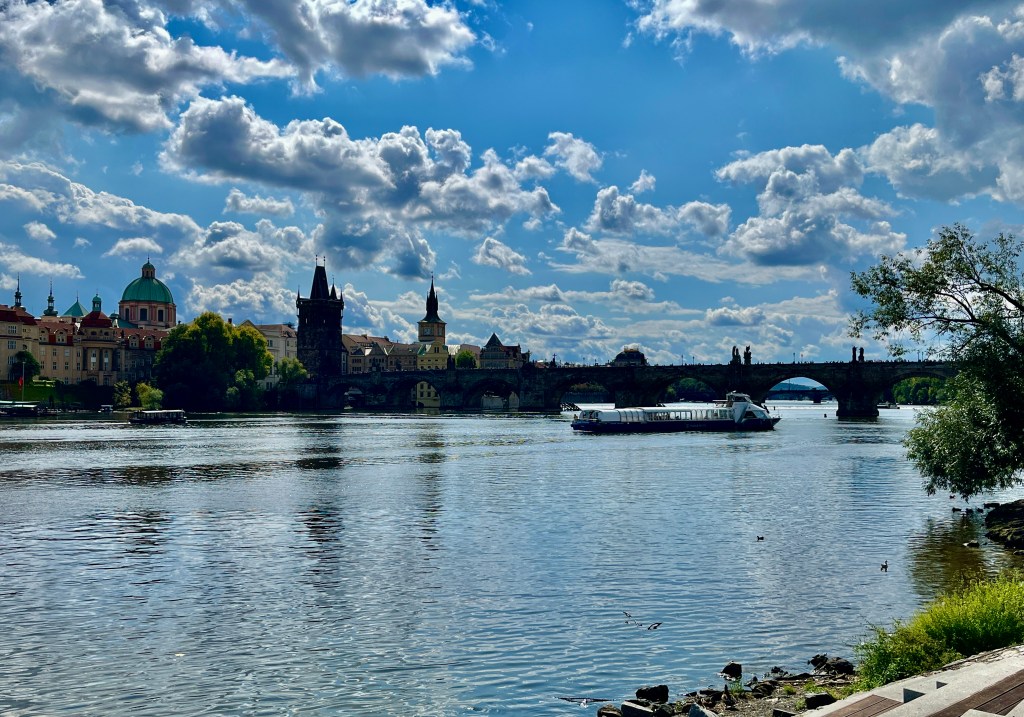
This photo looks back at the Charles Bridge, built in 1347.
Next time: The Prague Castle


 Serene Wandering
Who knew that there were so many different types of clocks? It is hard to imagine the length of time that those cities, buildings, bridges, etc. have existed!
There was actually one more way the astronomical clock told time, or some segment of some kind of time but I couldn’t understand it easily so just didn’t include it.