
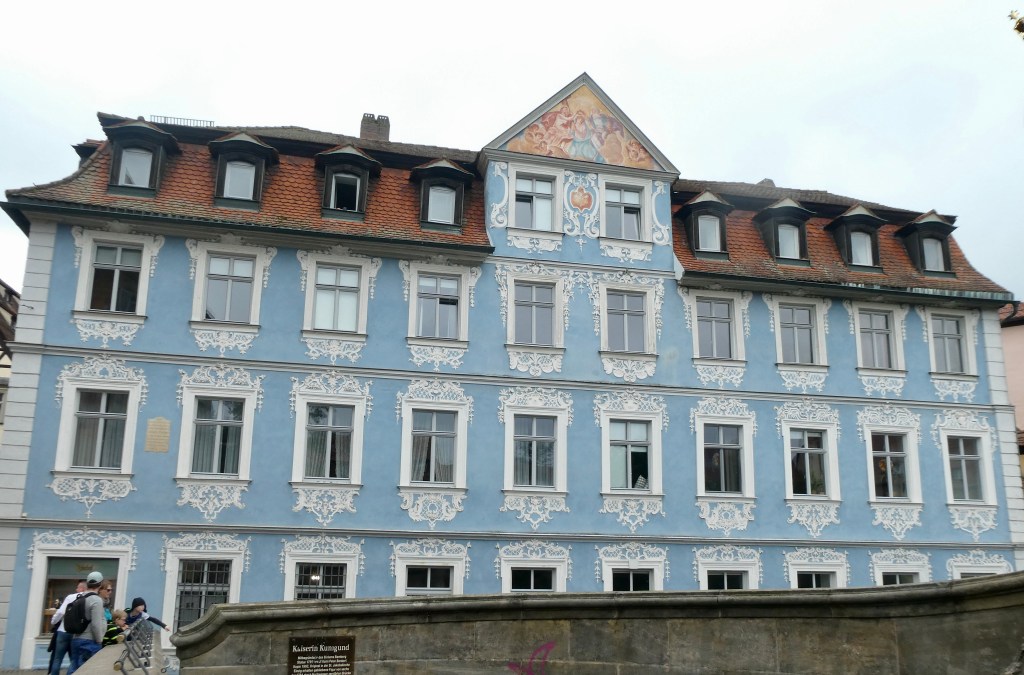
Bamberg is a “Medieval city wrapped in a baroque wrapper.”
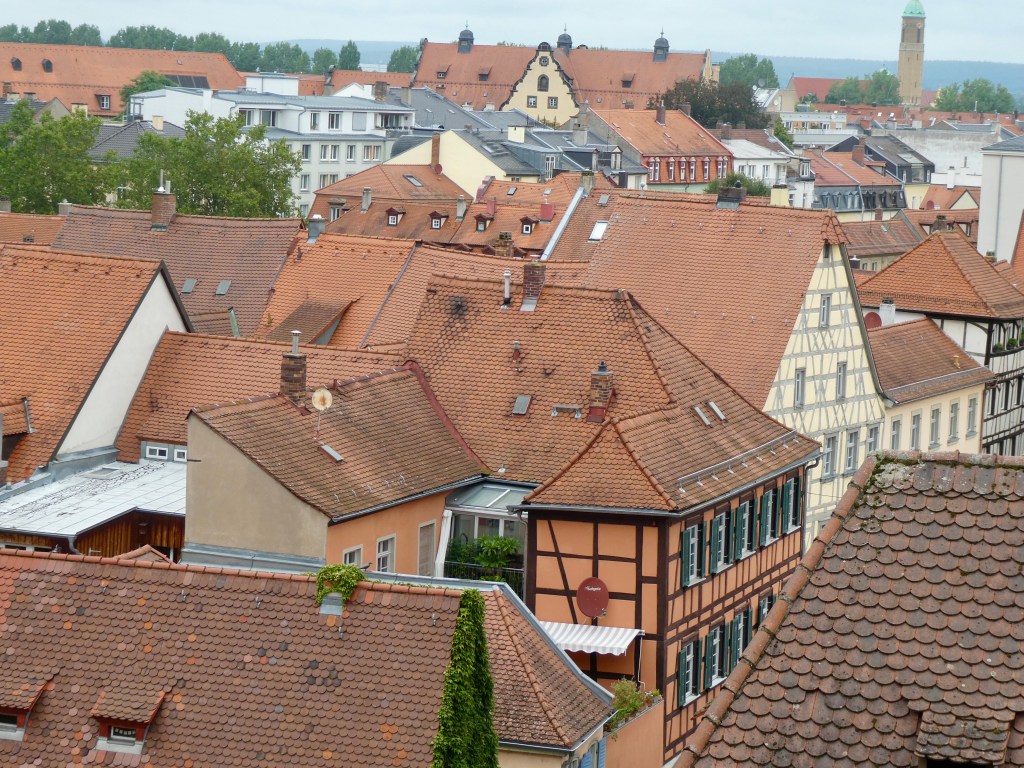
Because of this uniqueness, and a treasure of medieval structures, Bamberg was named a UNESCO World Heritage Site in 1993.

Fortunately, only four percent of Bamberg was damaged during World War II instead of 91 percent destruction for nearby Nuremberg.

Sometimes it is beneficial to be less “important.”
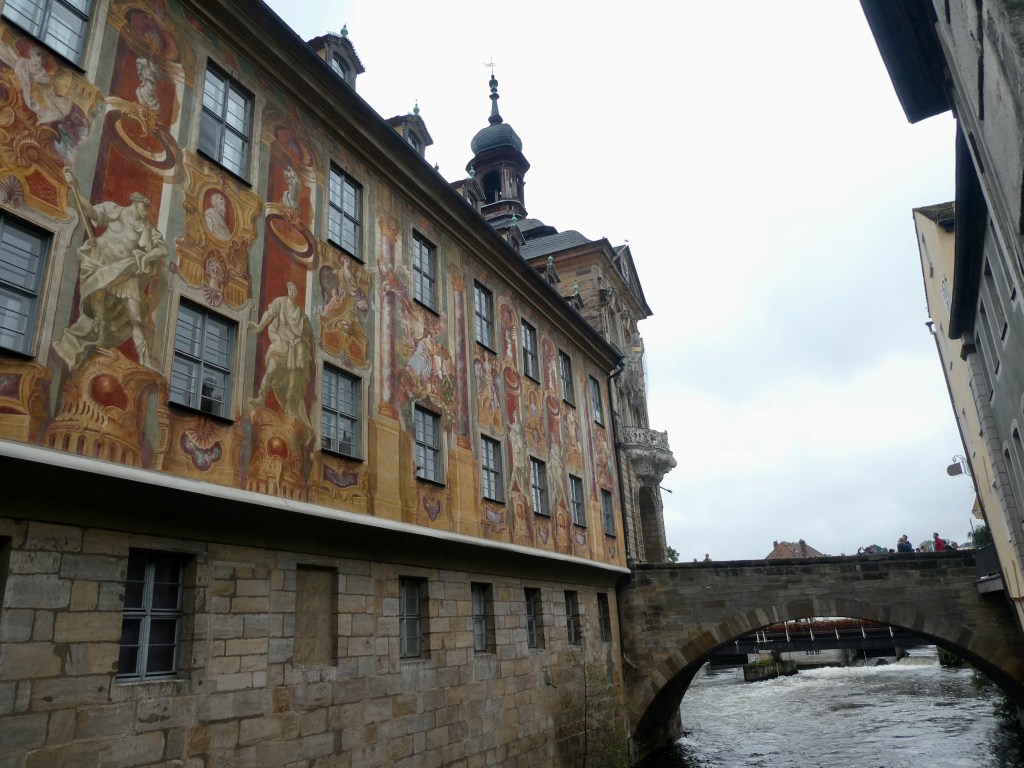

Our guide explained that the houses on the Regnitz River were for poor fishermen during medieval times. The water was filthy because of the nearby slaughterhouse (the building on the right) where waste was dumped into the river.
Times have changed because the ability to buy one of these houses now is very rare. The last one (the black house) sold for 1.5 million Euros.

Bamberg is famous for its smokey beer – said to be like liquid salami. It is made from malt dried processed over an open flame. By Bamberg law, the beer can’t be served before 4:00 pm so we weren’t able to try it and I’m not sorry.

Schlenkeria Brewery is one of only two breweries left on this street. There were once 14 breweries that were in business on this street alone. The man in the wreath is symbolic because the owner broke his legs when wine barrels fell on him.
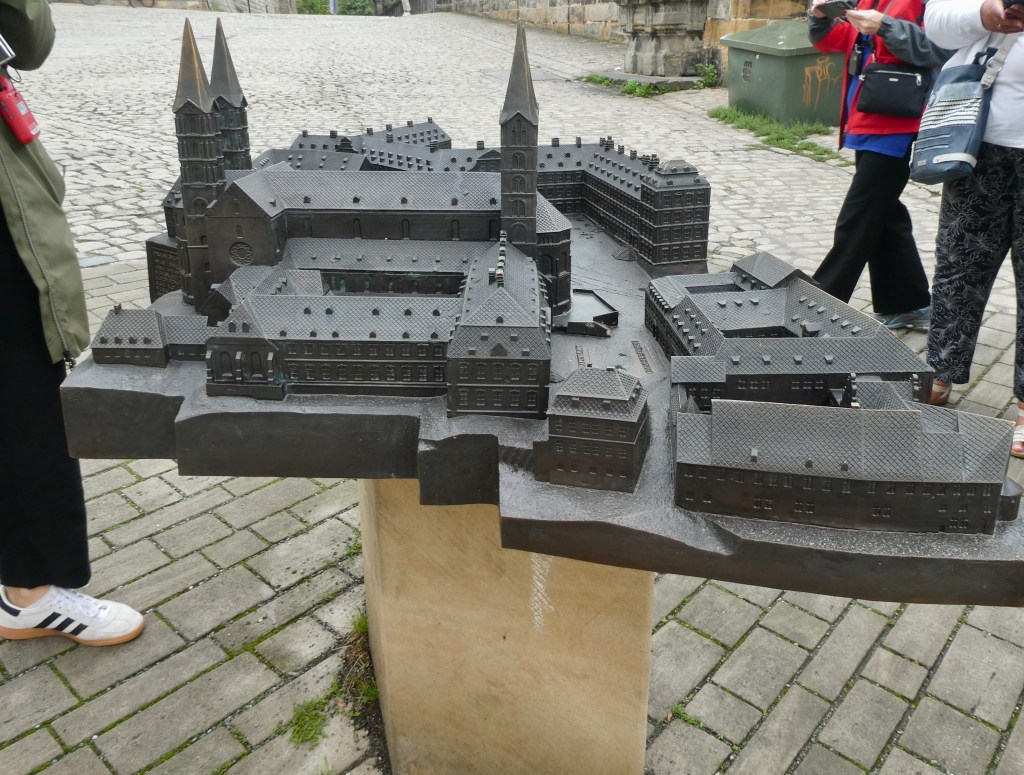
In 1007 Bamberg was the center of the Holy Roman Empire. A braille map of the cathedral area is available.

This 11th century cathedral is the third Cathedral of Bamberg. The first two burned down.
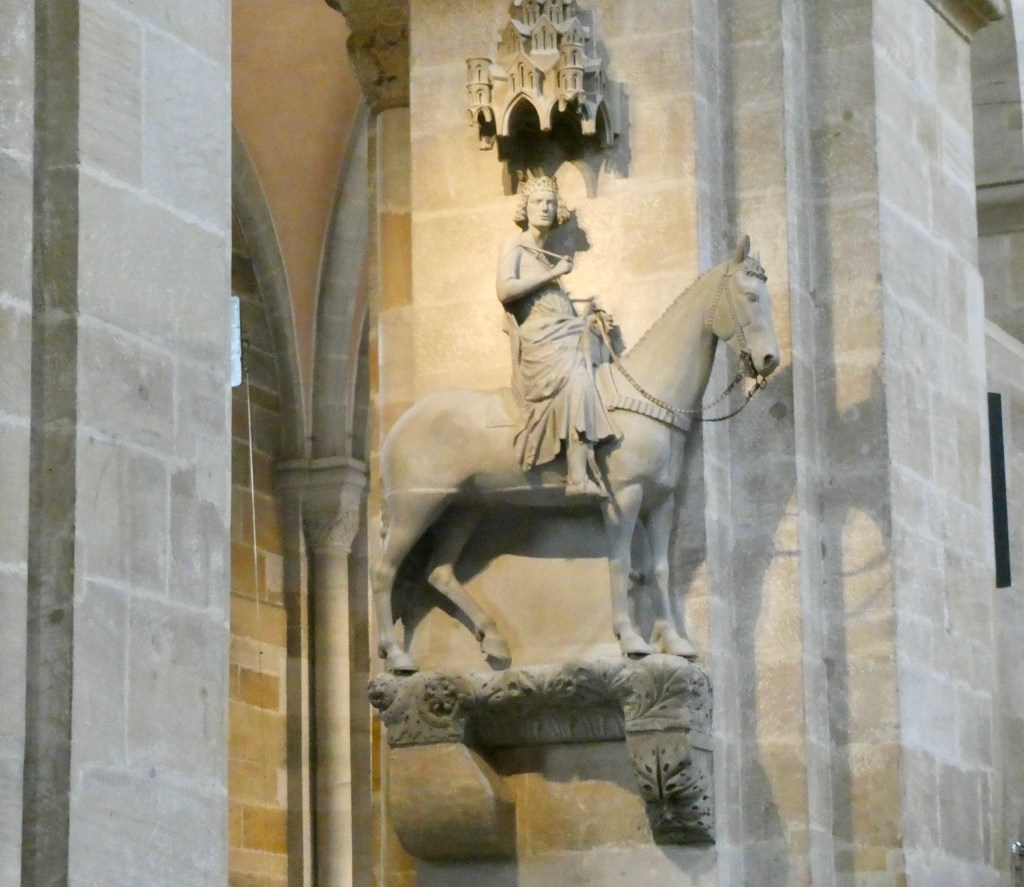
Inside the cathedral, we were able to see The Bamberg horseman. The horsemen is visible on a variety of Bamberg products. The city residents don’t know who he was but celebrate him anyway. He is wearing a king’s crown – not an emperor’s crown.
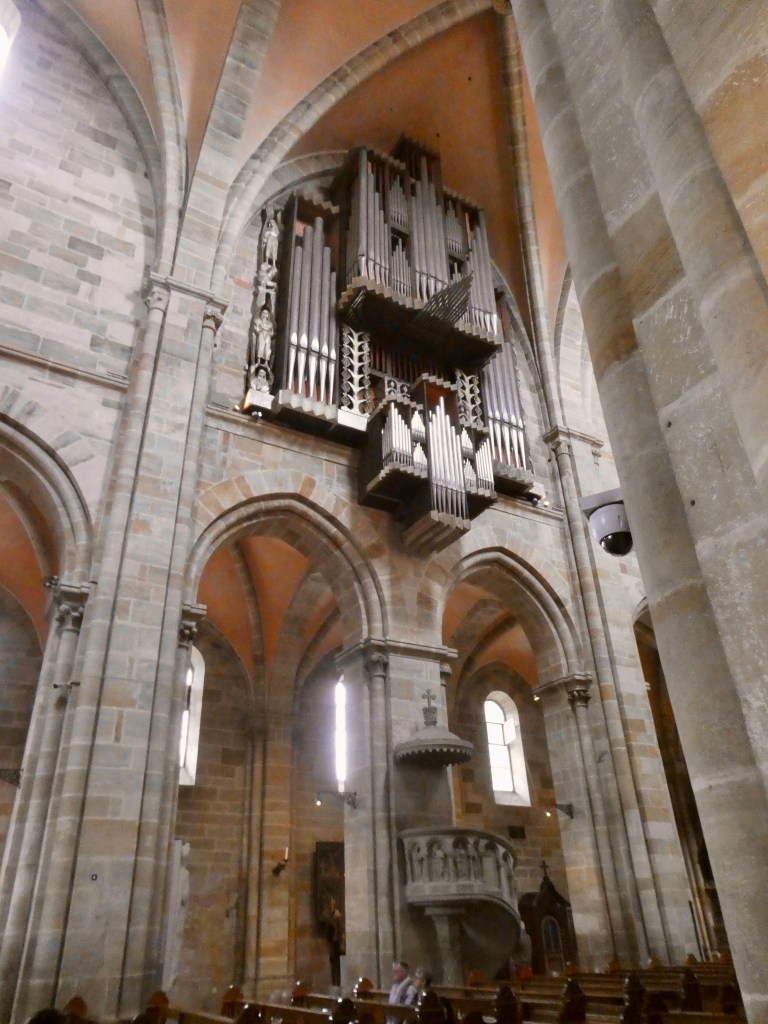
The cathedral used to be very colorful inside.
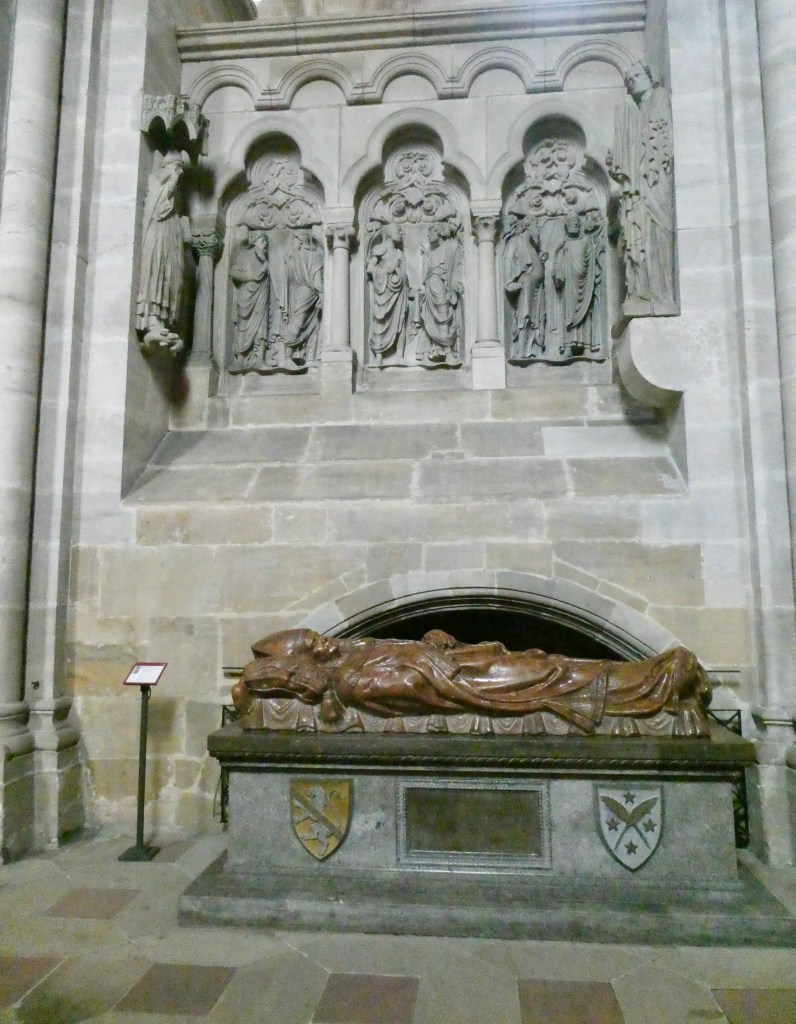
Pope Clement II is buried here after serving only one year as pope from 1046-1047. This is the only papal grave in Germany.
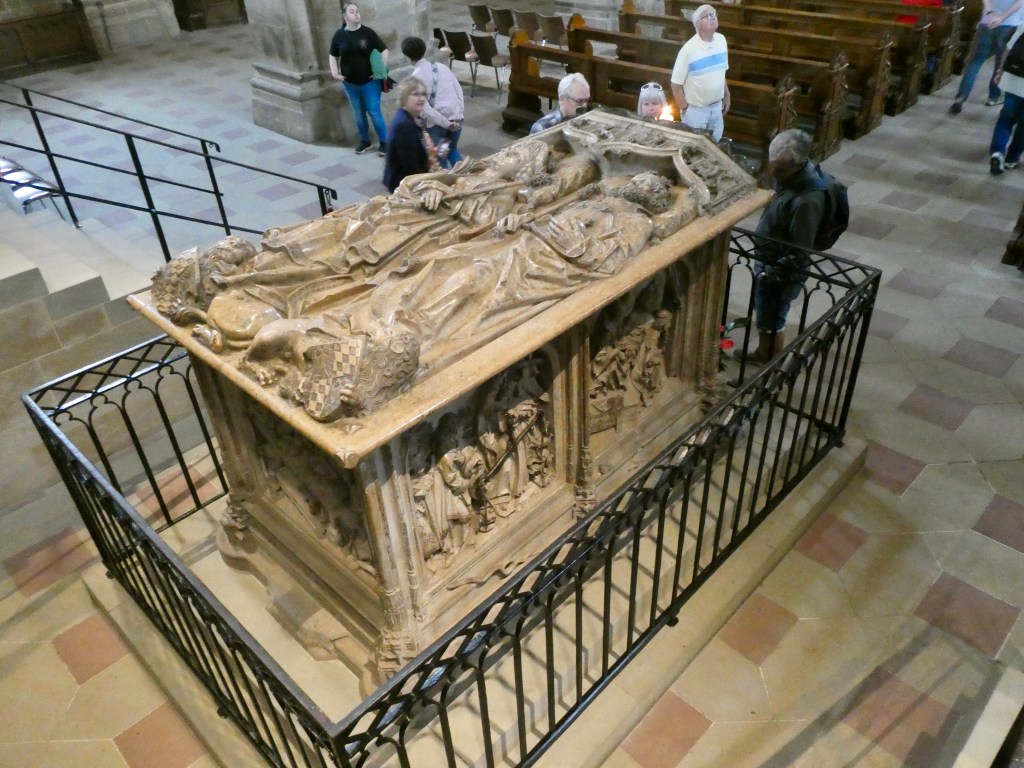
The shared tomb is for Henry II and his wife Cunigunde. They were an imperial couple who shared power. She is on the side typically saved for the king.
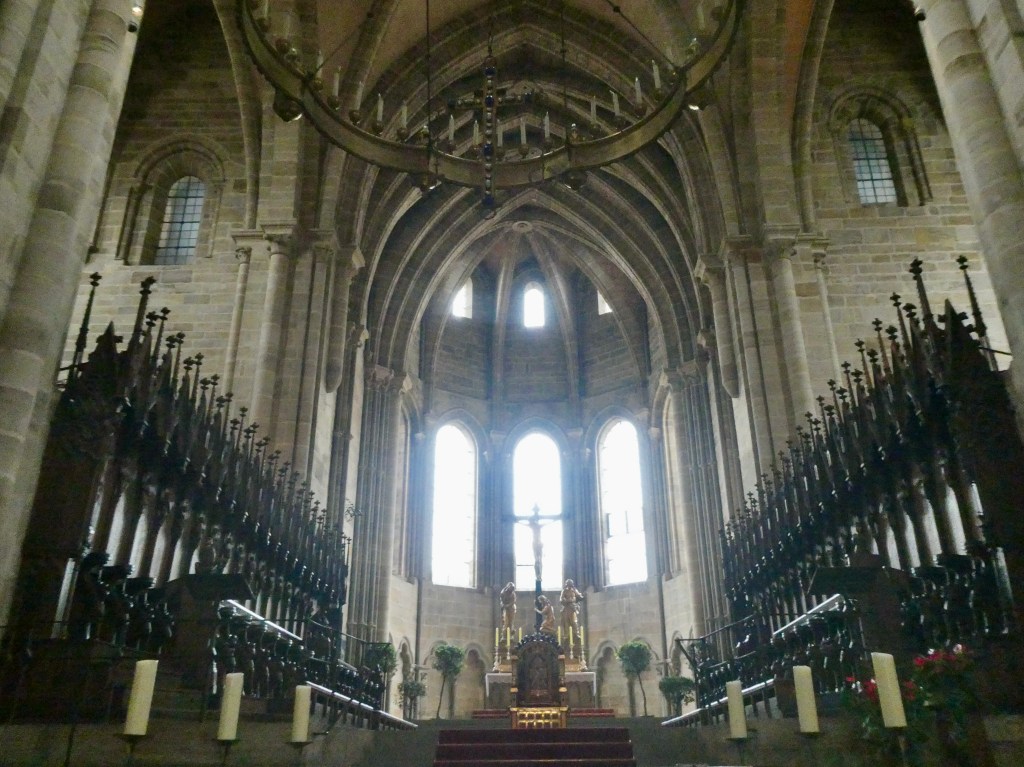
The cathedral exhibits a combination of architecture styles. These windows have romanesque round arches under gothic arches.
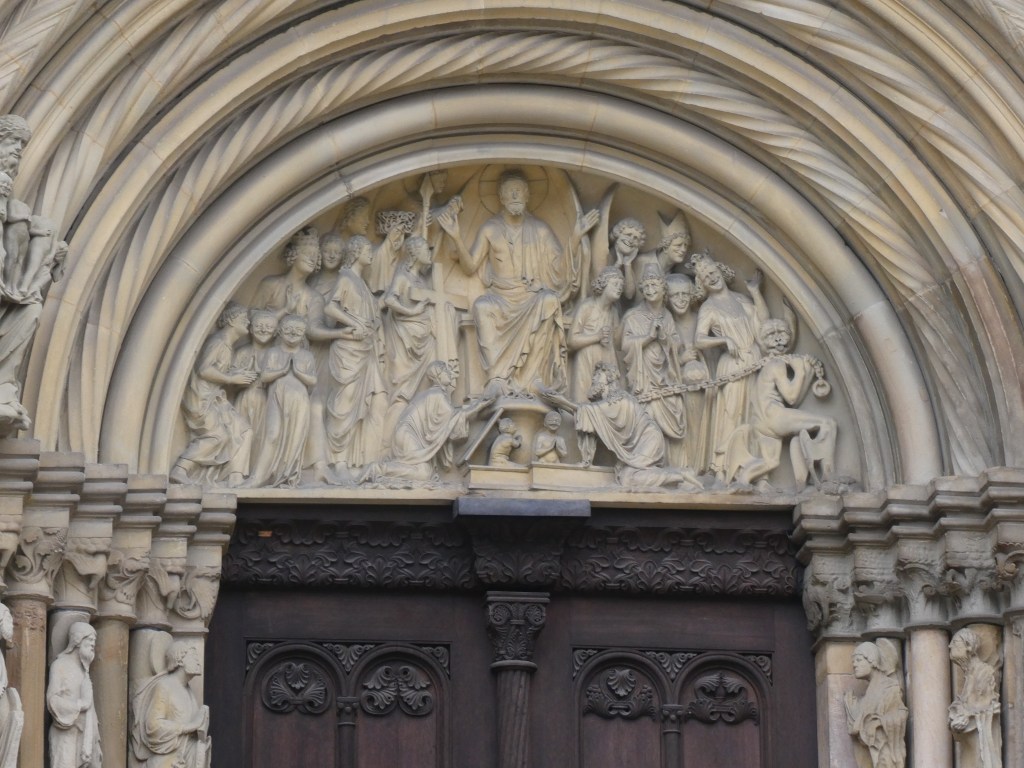
The side entrance of cathedral is the one used, historically, by bishops. Above the entrance, Jesus is shown on the day of the last judgment. Those on the right are depicted going to hell and those on the left are going to heaven. It is thought to be significant that the artist shows representation of all socioeconomic levels on both sides.
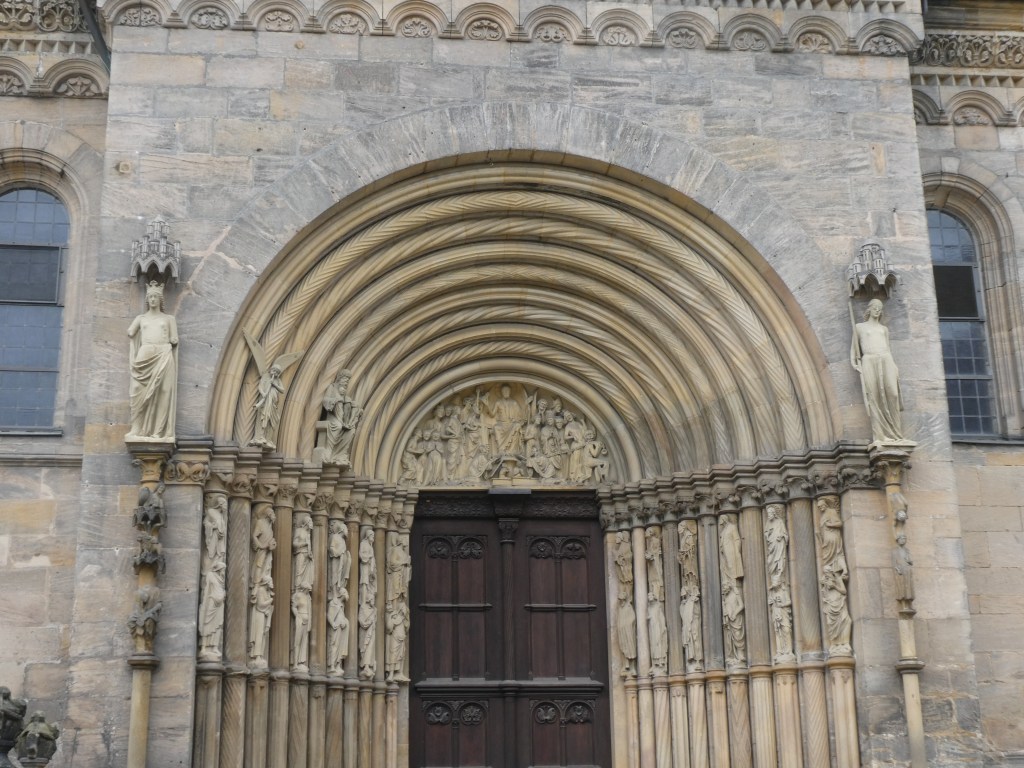
To the left of the entrance is a woman who used to hold the baby Jesus representing Christians. It is unknown what happened to her hands and the baby Jesus. On the right side is a Jewish woman with a mask and broken staff. This is a depiction of being unwilling or unable to see Jesus as Messiah. This statue is evidence of very early (11th century) discrimination of the Jews.
In 1910 a Jewish synagogue opened 150 meters from the cathedral. In November 1938, on the Night of Broken Glass, 500 Jews escaped while 500 were stolen away. Currently Bamberg has a Jewish population of about 1000 again, and they have a new synagogue
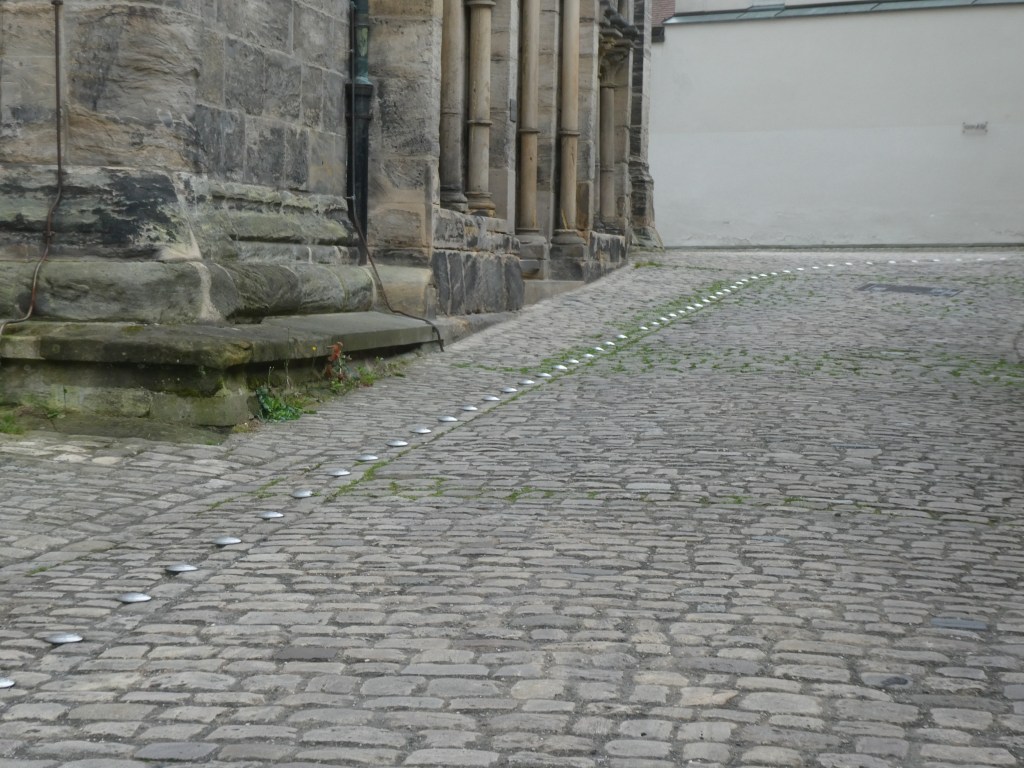
To keep the cathedral area more scenic, metal dots show vehicle lanes.

The Prince Bishops once lived in this home with 300 support people. The two doors at the top center were used for grain storage. The inside is not yet refurbished for public viewing. Our guide told us that the flowers are always blooming – although she doesn’t know how.

American movie makers shot scenes for The Three Mouseketeers in this courtyard.
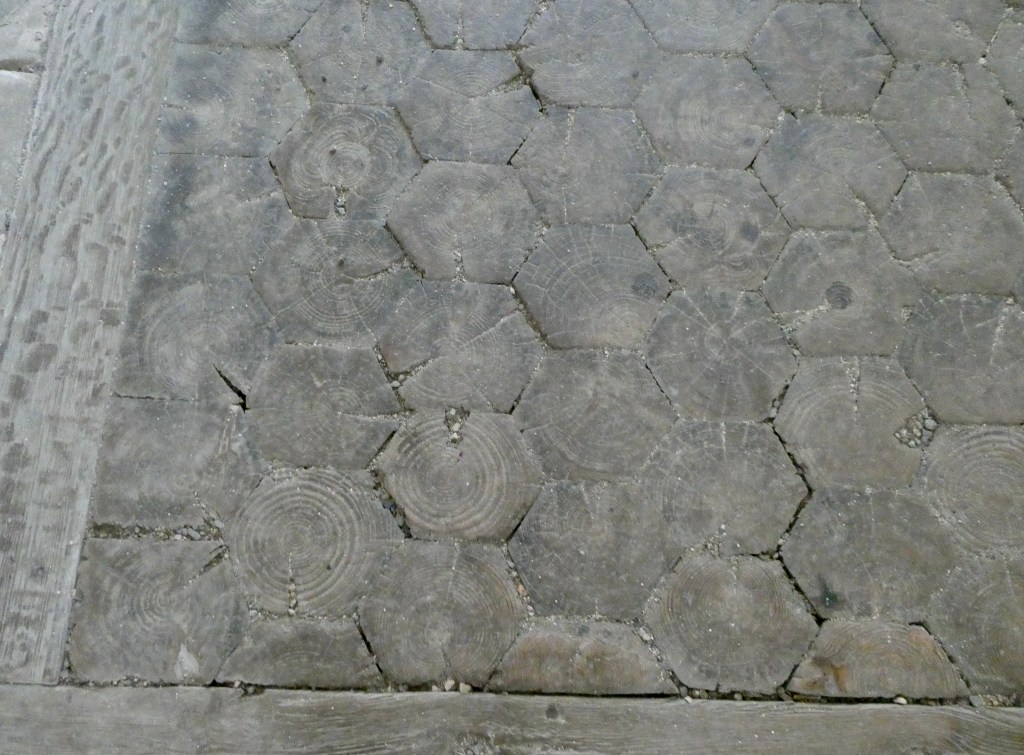
There are some wooden “cobblestones.”
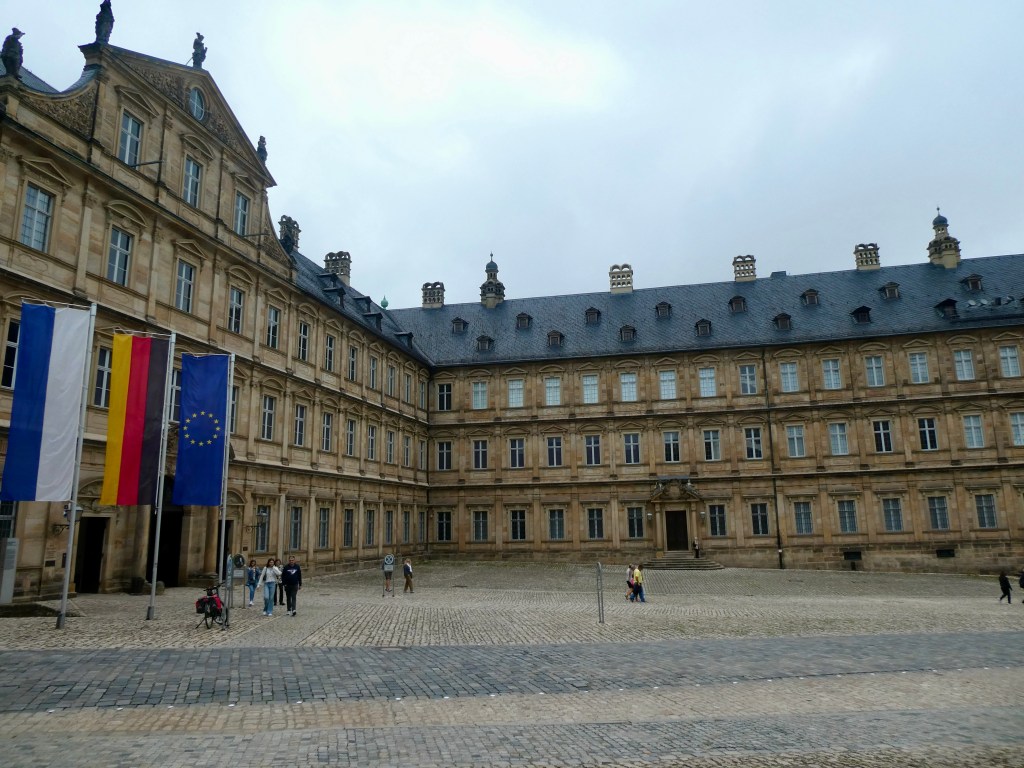
This government building was built in the baroque style. That style is usually symmetrical but this building is in an L shape. It was intended to be a U shape.
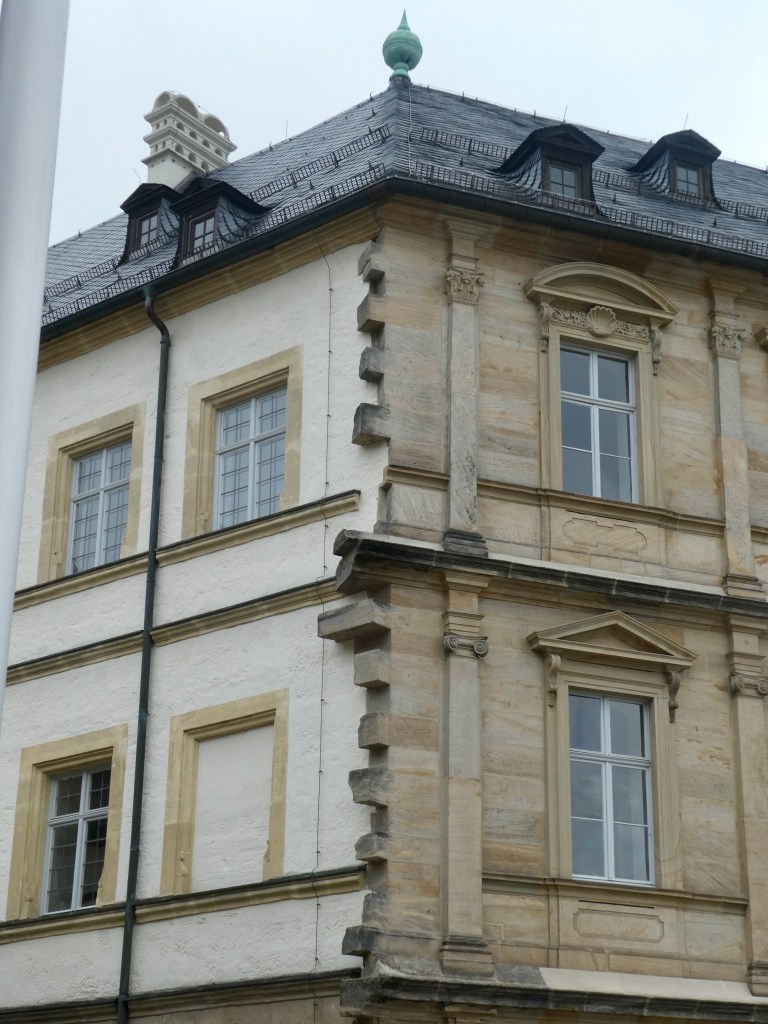
These waiting stones at the end indicate the building was not finished.
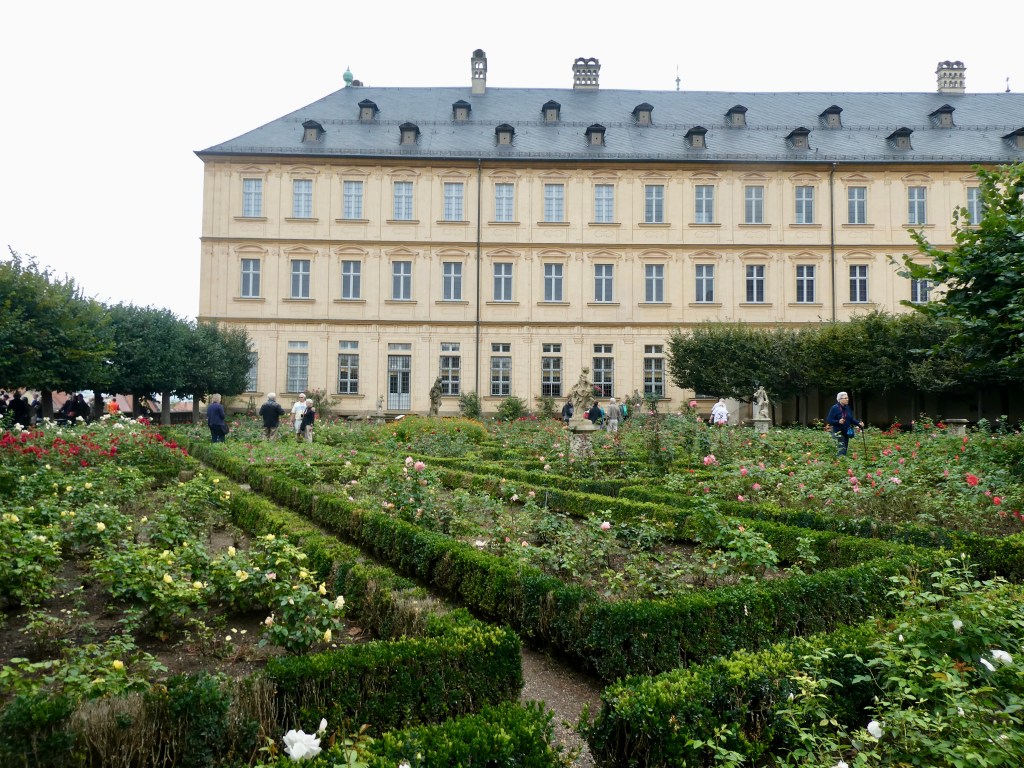
While visiting the building’s gardens, we saw that the windows in the back were painted with a 3D technique developed during the Italian Renaissance. Most of these “windows” are not real!
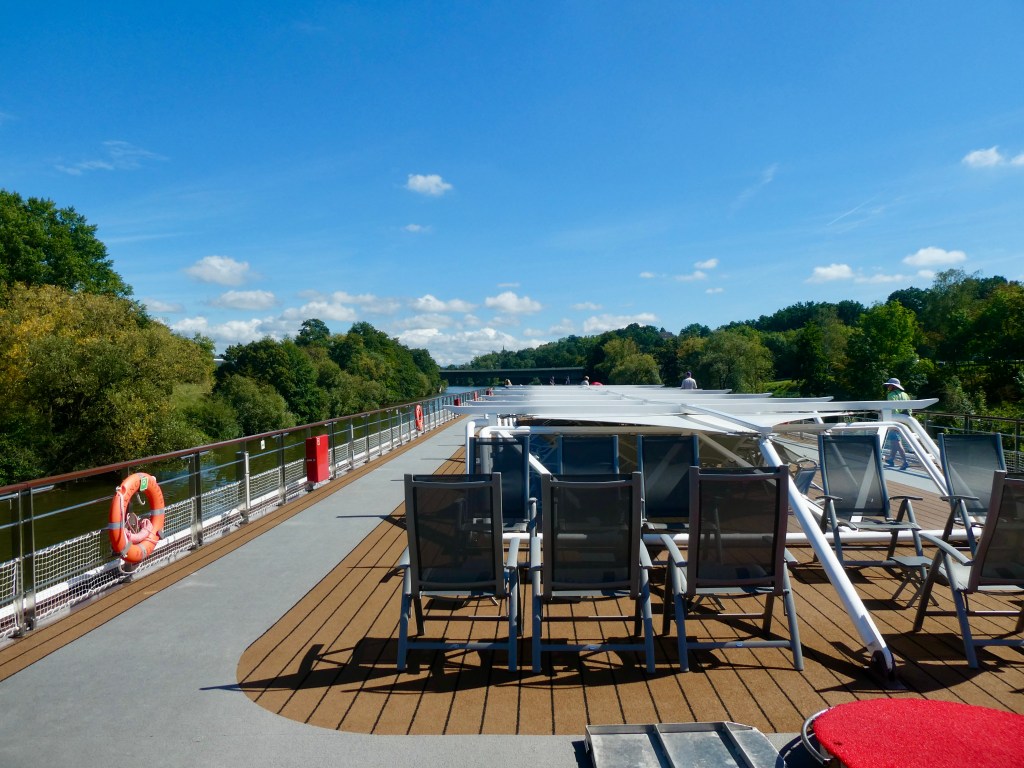
After our tour we were able to go back and spend some time on our ship while it traversed along the river. When a bridge was too low, the observation room went down into the deck.

This was the first of 43 locks.
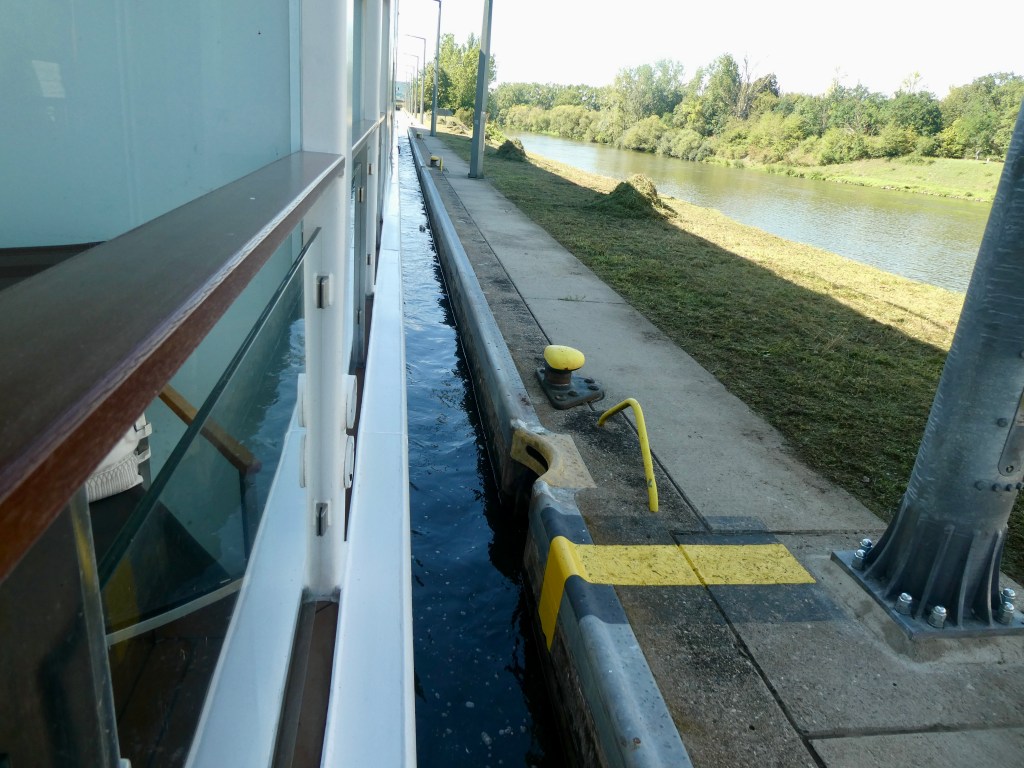
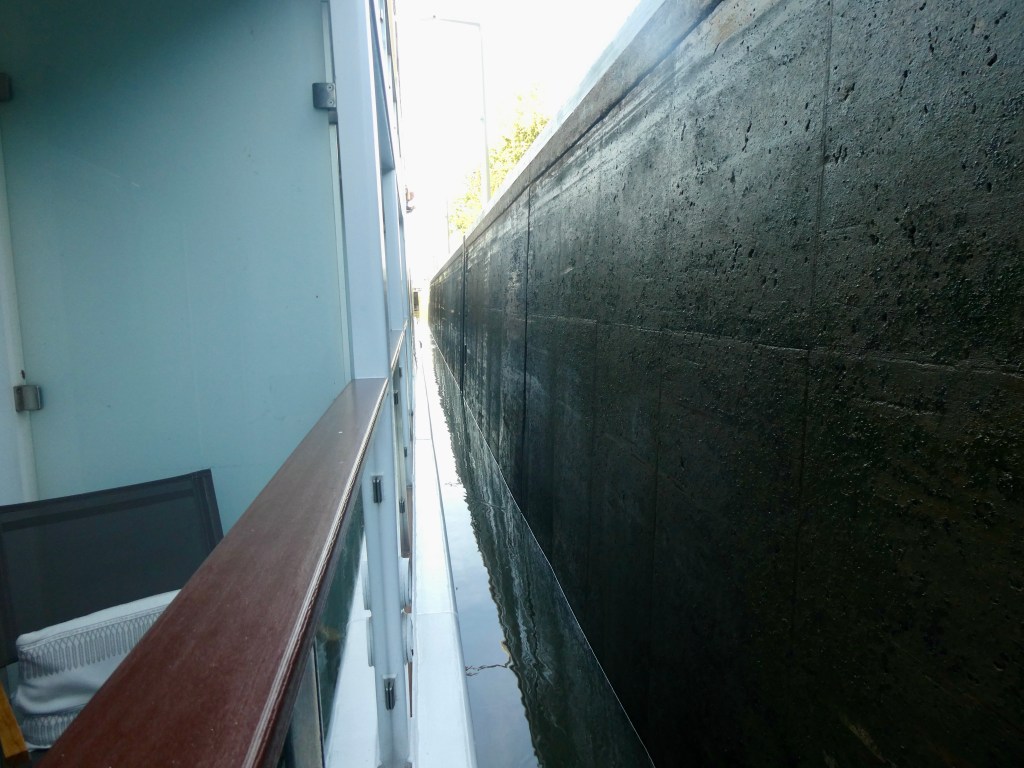
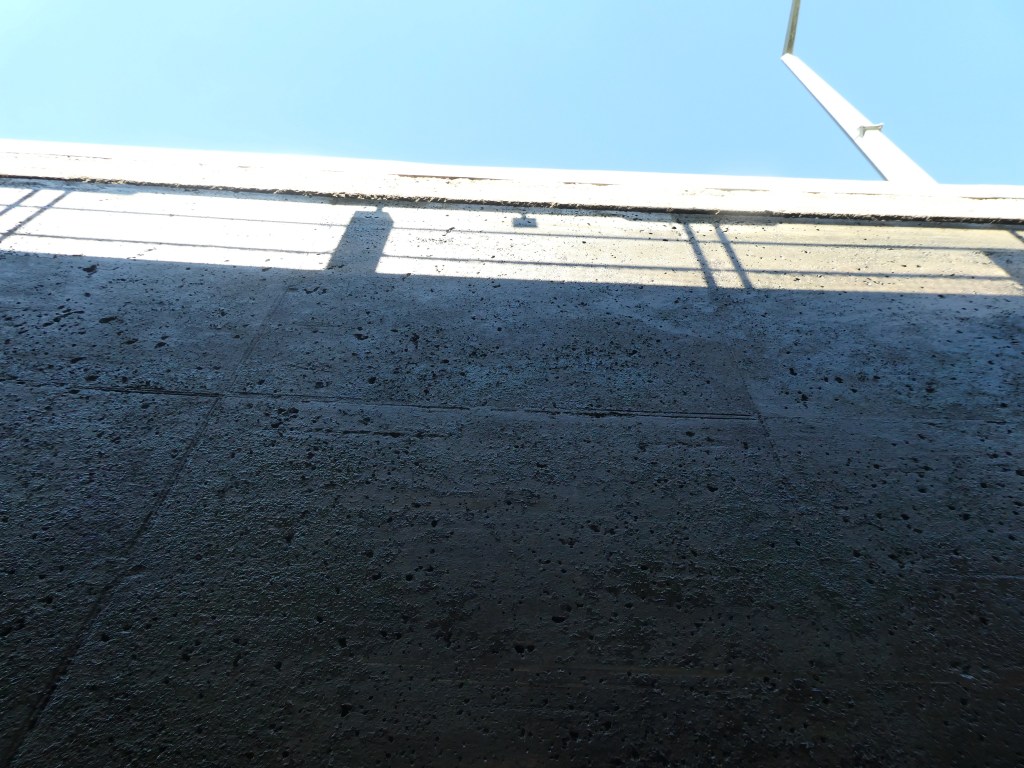
The best place to be, in my opinion, was our balcony. I could reach out and touch the concrete as we went down about 18 feet in that first lock!
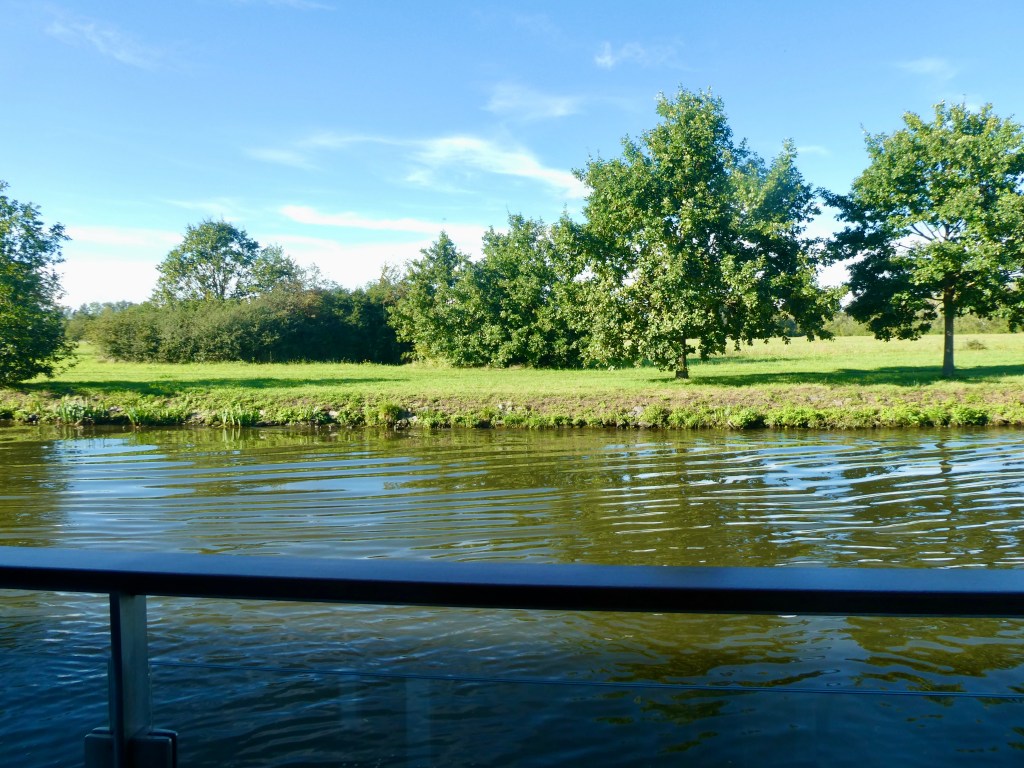
Afterwards it was nice to sit on the balcony and watch the water, just two to three feet below, with land about 25 feet away.
We went through several locks that day with more days of locks to come!
We visited Bamberg on September 2, 2023.
Next up: Wurzburg


 Serene Wandering
What an interesting ship! You can tell that it was specifically built for those rivers with its low profile and collapsible observation deck. I wonder how many bridges you’ll pass under on your cruise? Also very cool that your balcony is just above the level of the water. Thanks for sharing your journey.