

We had a morning sail down the Main River, and eventually moved into the Rhine.
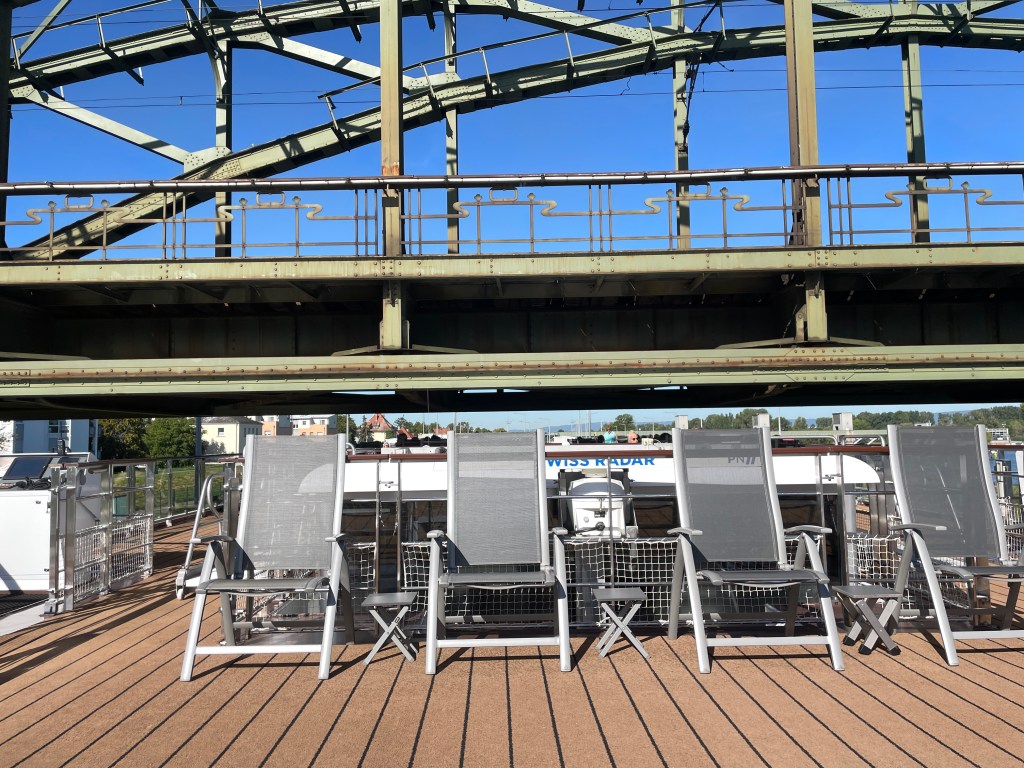
Sometimes we weren’t allowed to sit on top because of low bridge clearance but this day we were able to.
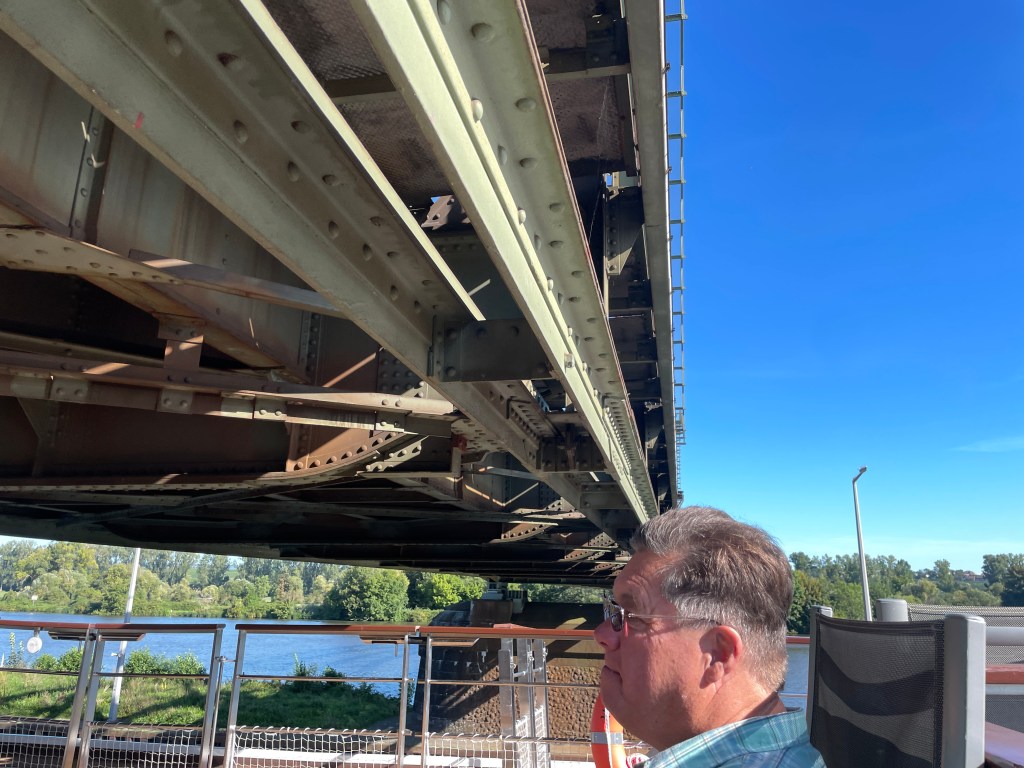
But just barely!

When we disembarked in Mainz we saw this monument to Germany. The side panel lists the cities of former East Germany.

In this block there is a missing building. It was destroyed during WWII and never replaced. Eighty five percent of Germany was damaged during the war and much was rebuilt it 10 years under the Marshall plan

In Mainz there are blue and red street signs attached to buildings. They are from the Napoleon era because his soldiers couldn’t read. Roads named in red go toward the river while roads named in blue parallel the river.
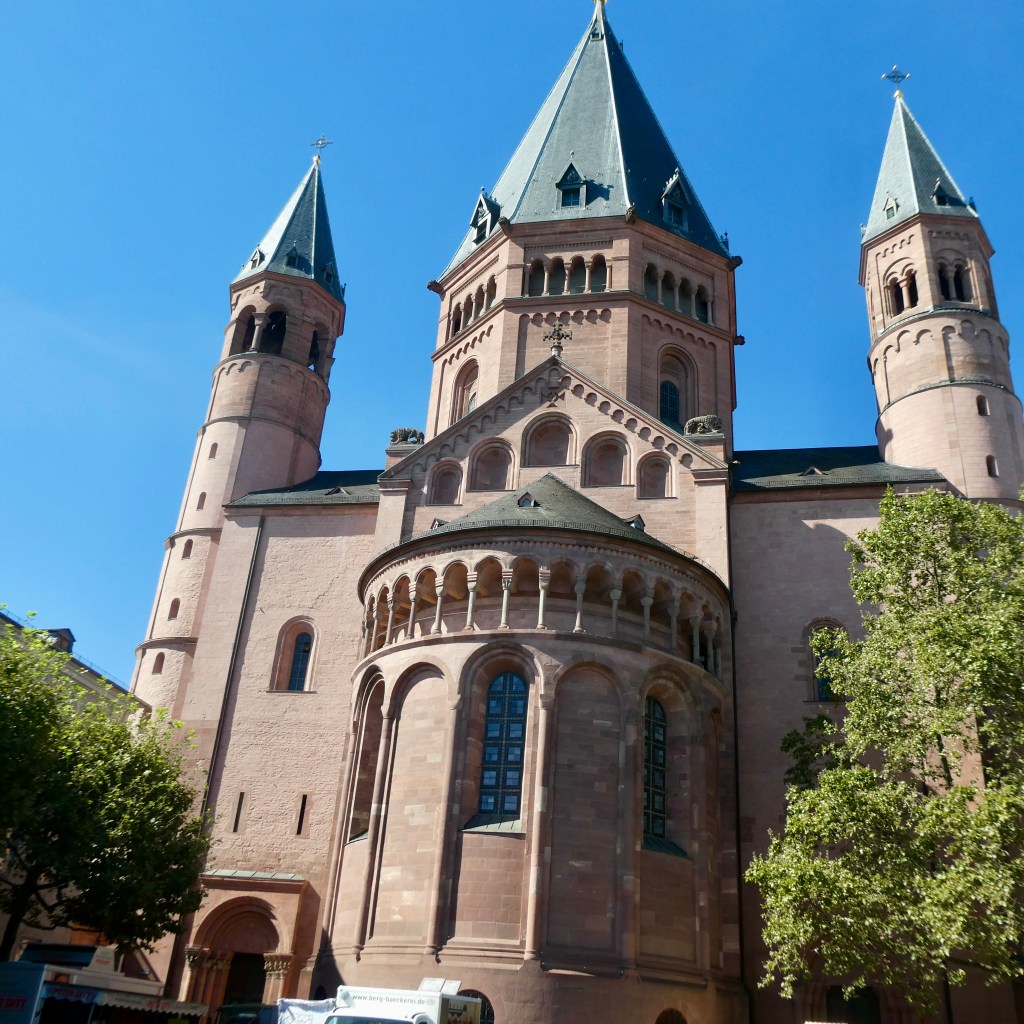
The Mainz Cathedral is over 1000 years old.

Building the center section began in 975. The sides were added later.
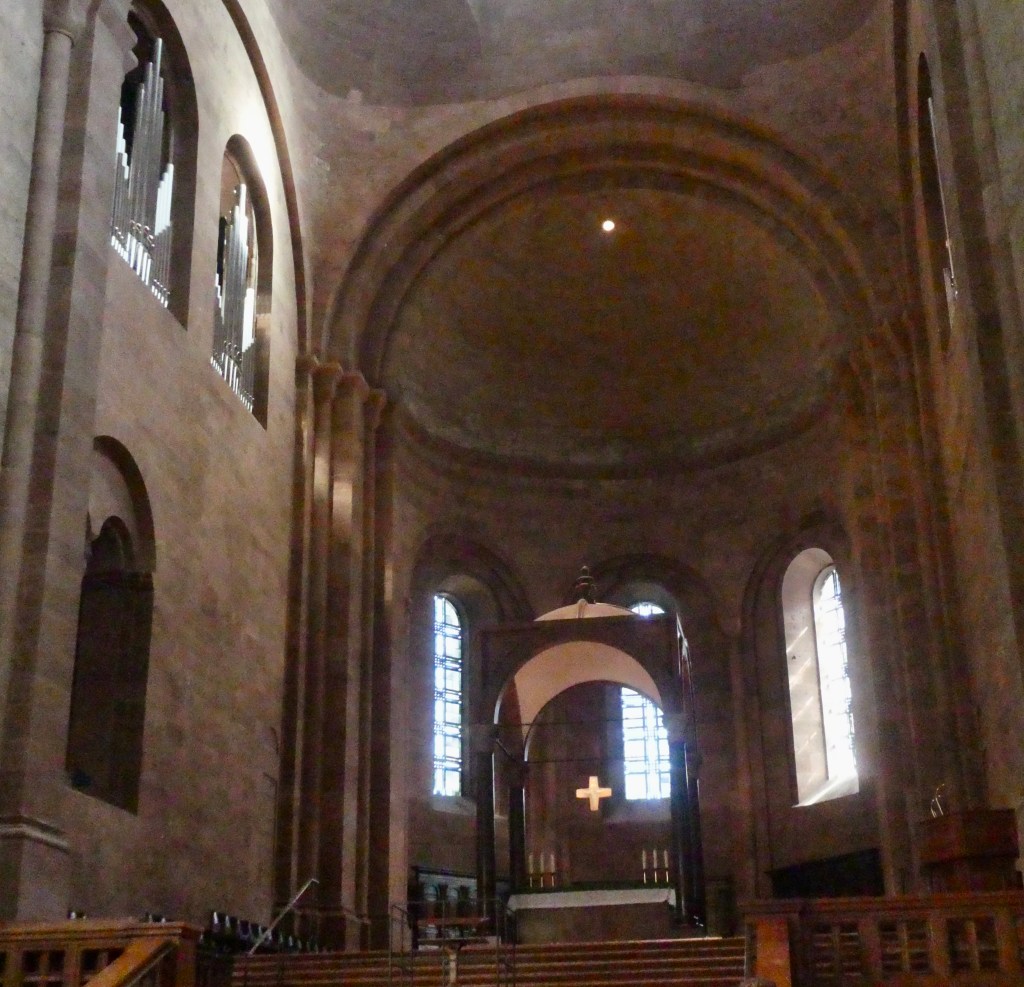
There are tombs of Mainz powerful prince bishops in the cathedral.
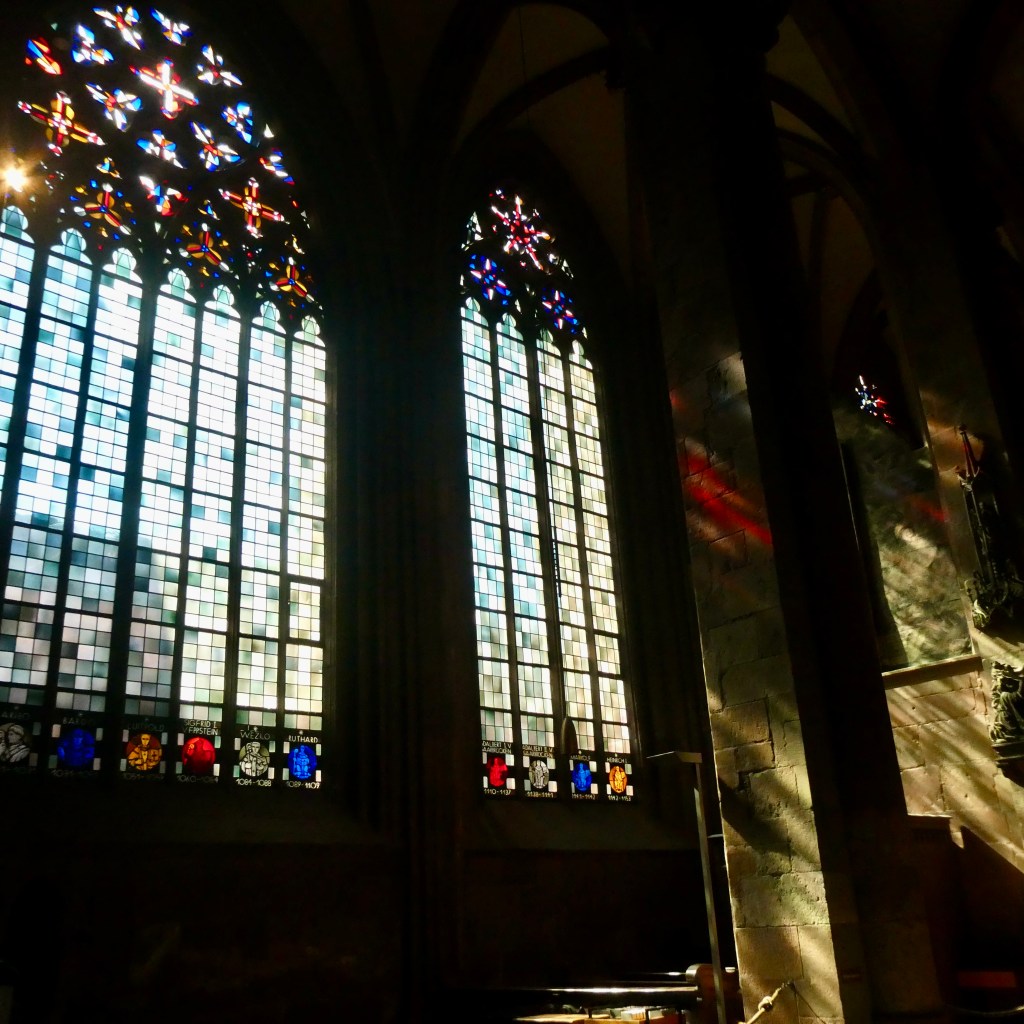
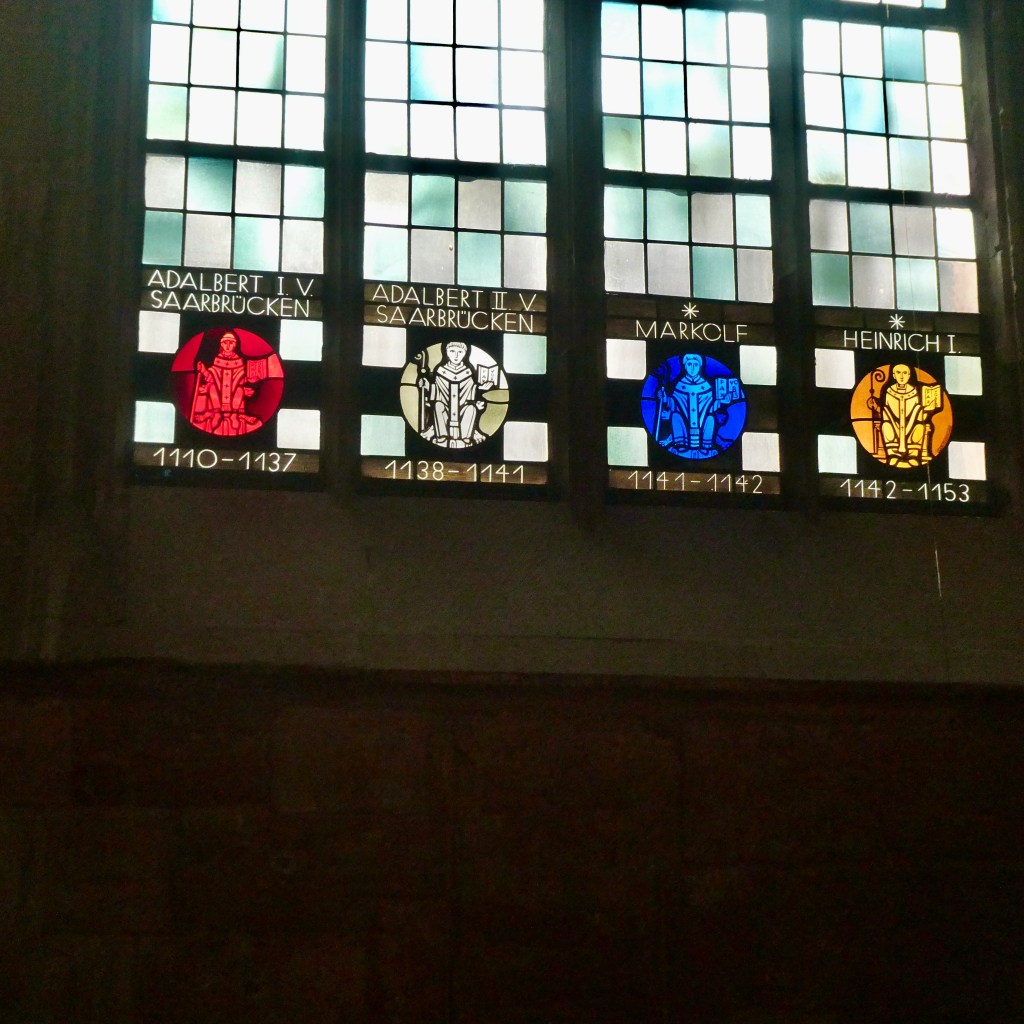
The stained glass is lovely with the bishops shown sequentially.
Germany is half catholic and half protestant – mostly Lutheran. Even if churches have an active congregation, they can’t possibly maintain these buildings. Our guide told us that eight percent of income tax serves as a church tax to keep the churches going. They are also used for cultural events. The churches were not heated in the winter. It was thought that people could bundle up for services once a week
Allies tried not to bomb churches whenever possible during WWII.

This is a fountain from 1526!

Mainz has purposefully established a market atmosphere with no loud voices or sounds and no hawking of products. They want shopping in the market to be a quiet pleasant experience.
The Gutenberg Museum was developed in a building that started as a hotel in 1664. Mark Twain once stayed there. ( building with white van in front)

Gutenberg was born in Mainz in the 1390s. He became a goldsmith around age 30 and eventually made his way to Strasbourg, France. The goldsmith experience gave him the knowledge to work with metals.
He convinced contacts in both Strasburg and Mainz to help him with a secret project that he kept secret.

The Invention of the movable type printing press is widely regarded as the most important event of the post renaissance era.
He made it possible to mass produce books instead of individually by hand.

Colors elements were from nature so they lasted.
We were able to enter a special part of the museum, a vault specific the Gutenberg Bible, but we were not allowed to take pictures.
Gutenberg’s Bible was printed in the 1450s as a three volume set. It was written in Latin and printed in 42 line columns. It was 500 pages, without numbers. The pages of the Bible were first printed in black and then over printed with red.
Gutenberg printed 180 bibles and 49 copies remain. We were told the Gutenberg Museum owns three.
The cost of one of a bible when printed was an equal to a year’s salary for an average man. One of those remaining bibles recently sold for 14 million dollars.
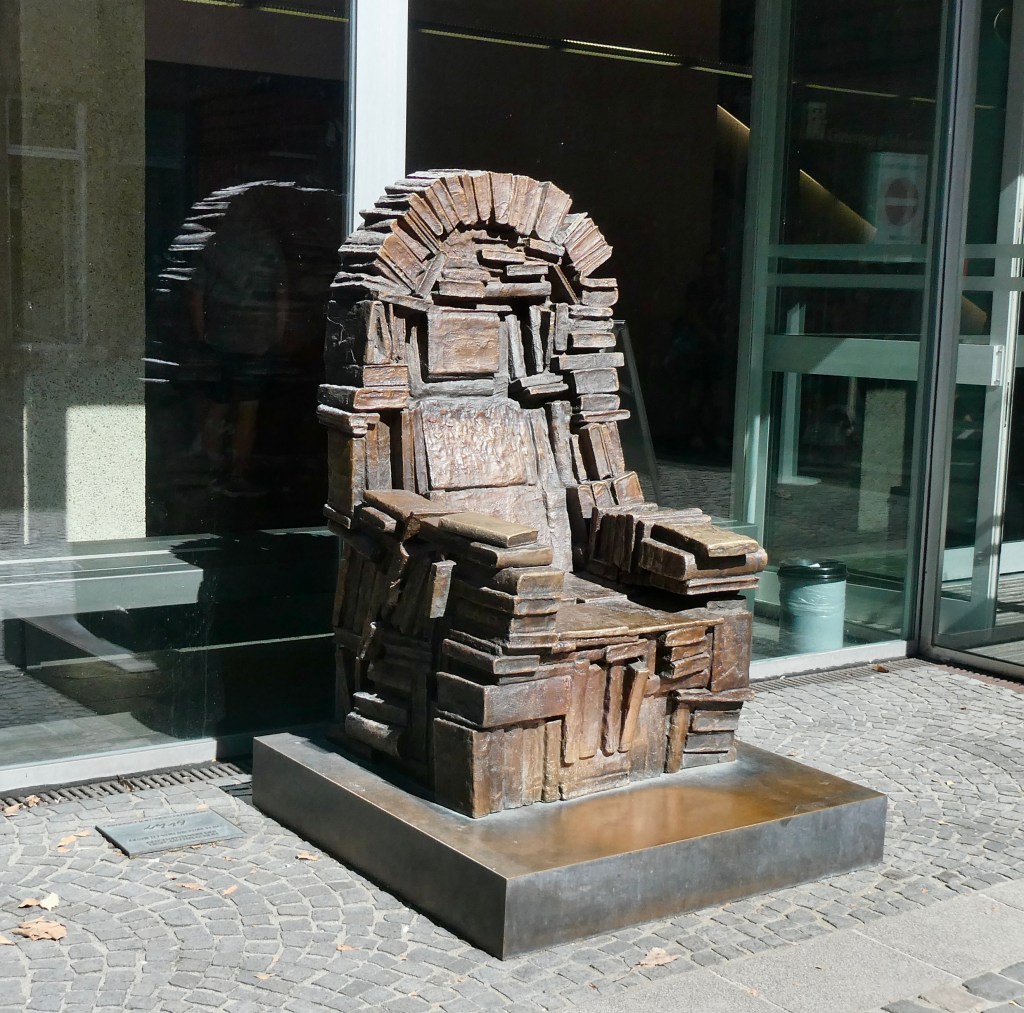
The technological development of Gutenberg’s printing press and its impact on world history cannot be overstated.
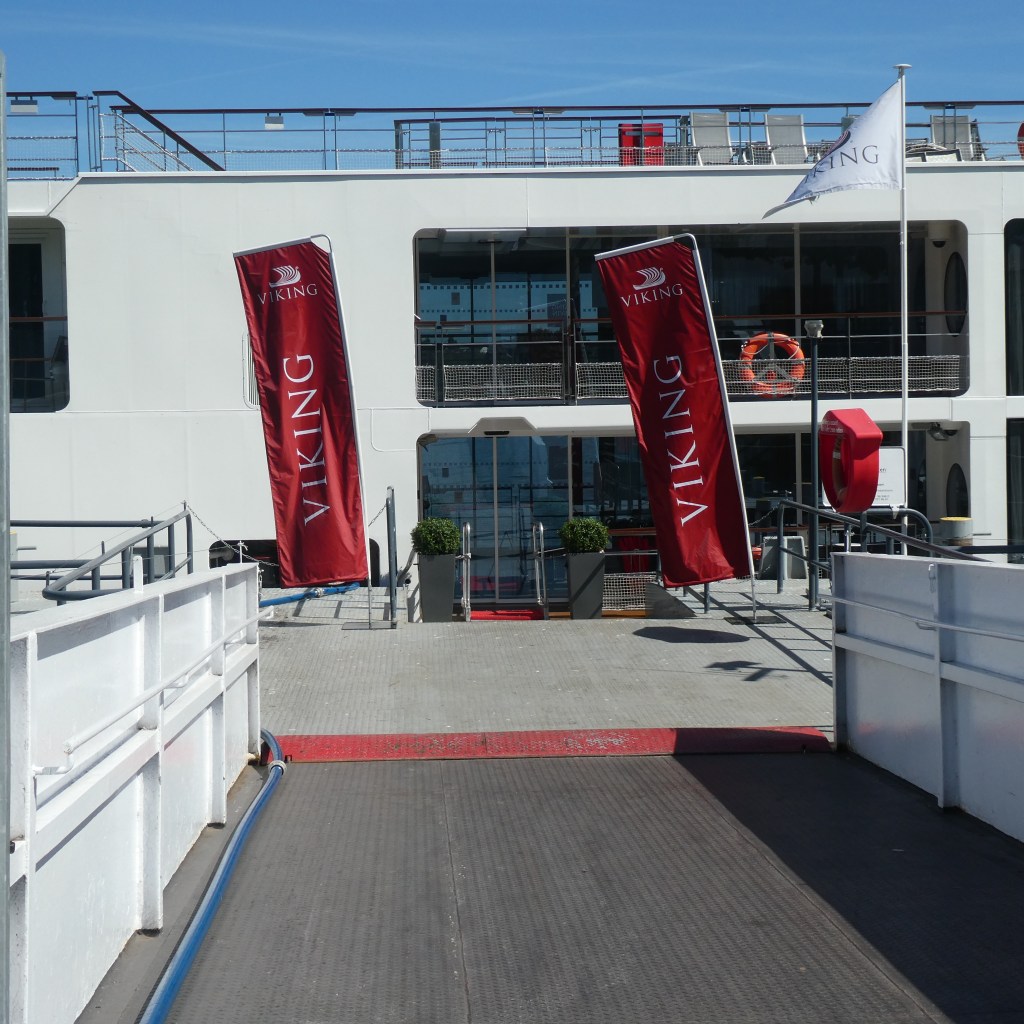
After touring Mainz, we returned to our ship, the Viking Alsvin.

We enjoyed a cooking demonstration for Rüdeshei Coffee.
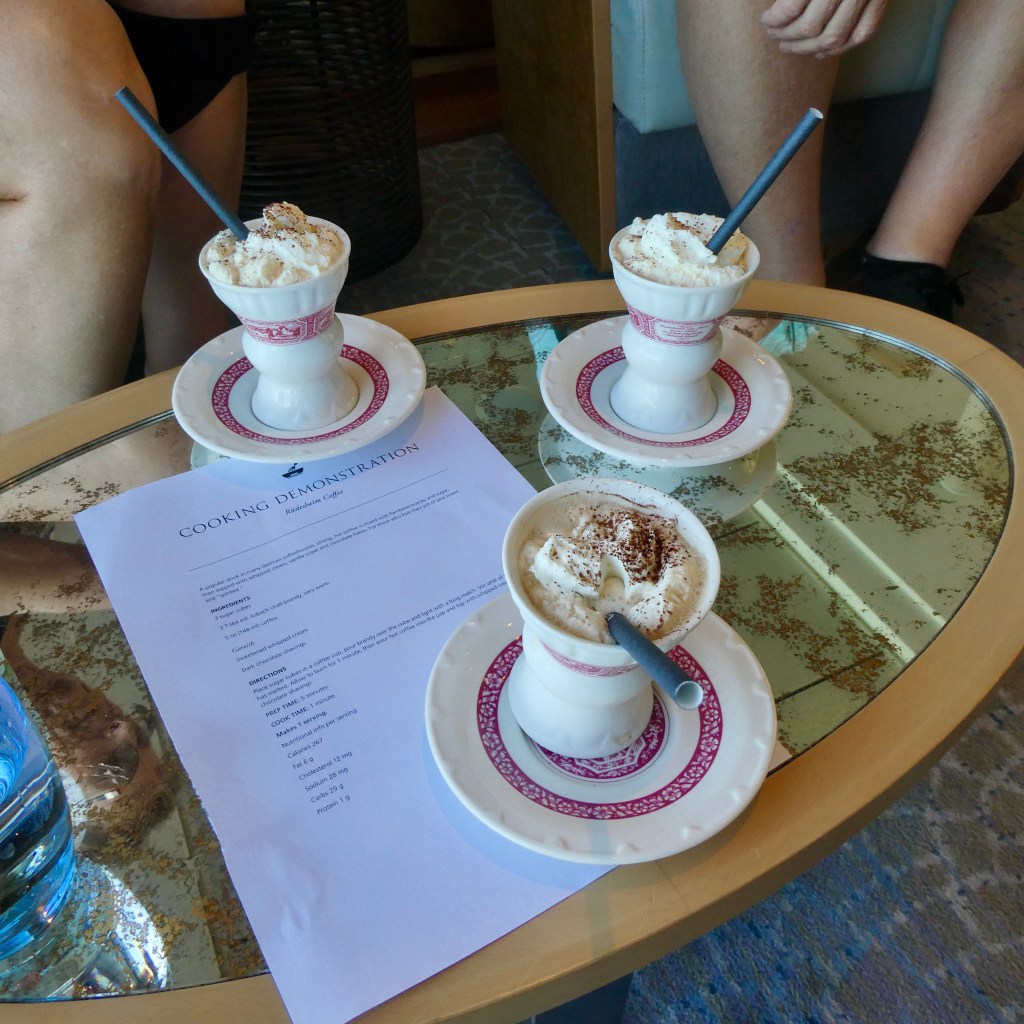
The recipe adds sugar and Asbach Uralic brandy to the coffee, then tops it with whipped cream and dark chocolate shavings.
We sailed through the Rüdesheim region, first mentioned in 1074.

The Romans started making wines in this region of the Rhine River 2000 years ago.
(We were in Mainz on September 5, 2023.)
Next up: Sailing down the Rhine looking at castles!


 Serene Wandering