When you see an advertisement for Viking River Cruises with castles along a river, you are probably seeing the castles along the Rhine River in Germany. This was the day I was most excited for when we booked this cruise!
As a short person, I am very purposeful about where I sit for events and my strategies were employed for this day. I wanted an unobstructed view of both banks. That meant I needed to be at the front or the back of the boat and I wanted a table to sit at because I expected to be there most of the day.
I was up very early and was the first passenger above deck. I chose my place and sat down to wait. A bit later our friend Jeannie joined me on deck.
Jeannie and her husband went to the same church as we did near Phoenix. We had not booked the same cruise on purpose but it was a very nice happening.
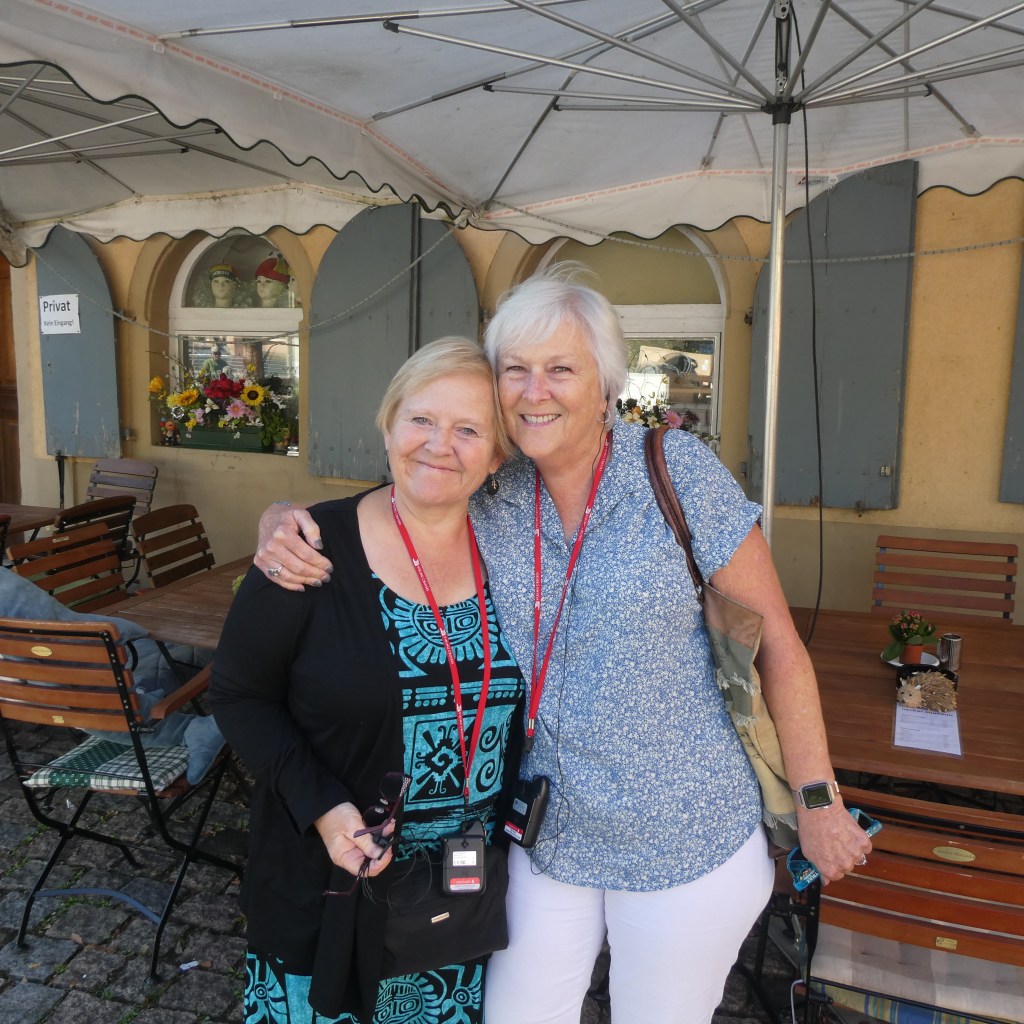
This is a picture of Jeannie and me on the cruise but it was not taken that morning. That morning was very chilly, especially on deck with the boat moving.
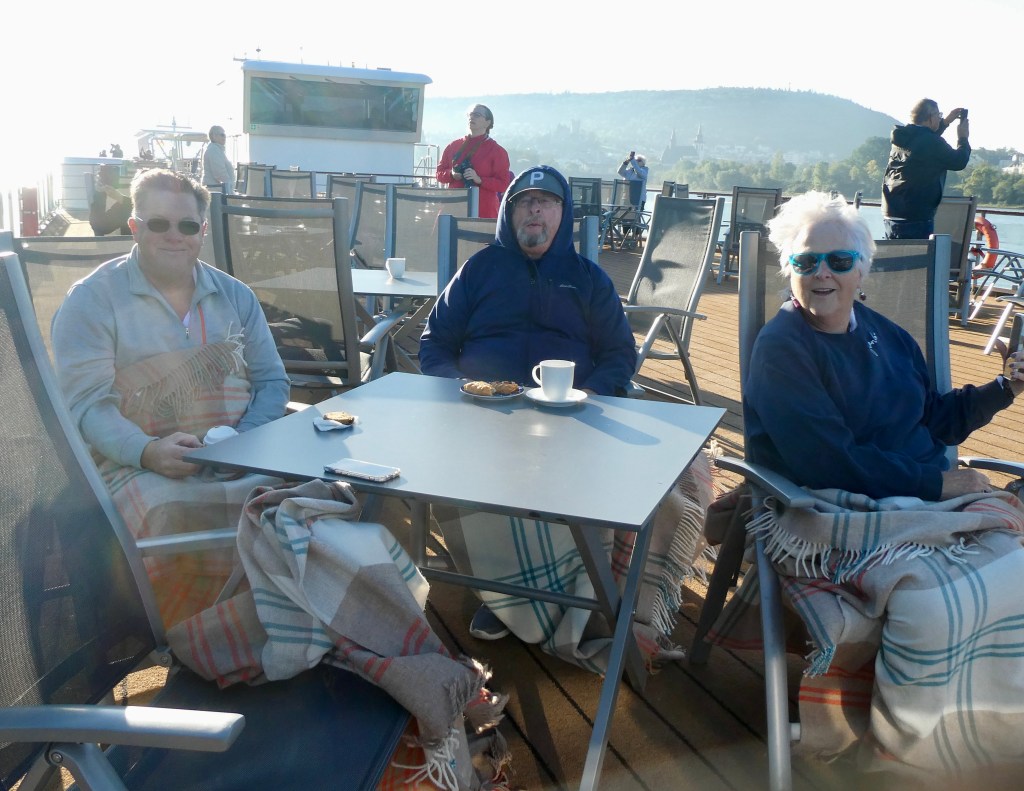
Overtime more people (including our husbands) came above and the crew made blankets available.

They also brought hot chocolate, and later Baileys.
At some point they also gave us a brochure of the castles we would see and provided narration by the cruise director. Do you sense perfection? Viking is very good at this.
The 35 mile stretch we were sailing has more castle density than anywhere else in the world and has been a UNESCO World Heritage site since 2002.
Napoleon left most of the castles in ruin while he was here in 1689. The first American tourist to “leave a trace” here was Mark Twain with his book A Tramp Abroad.
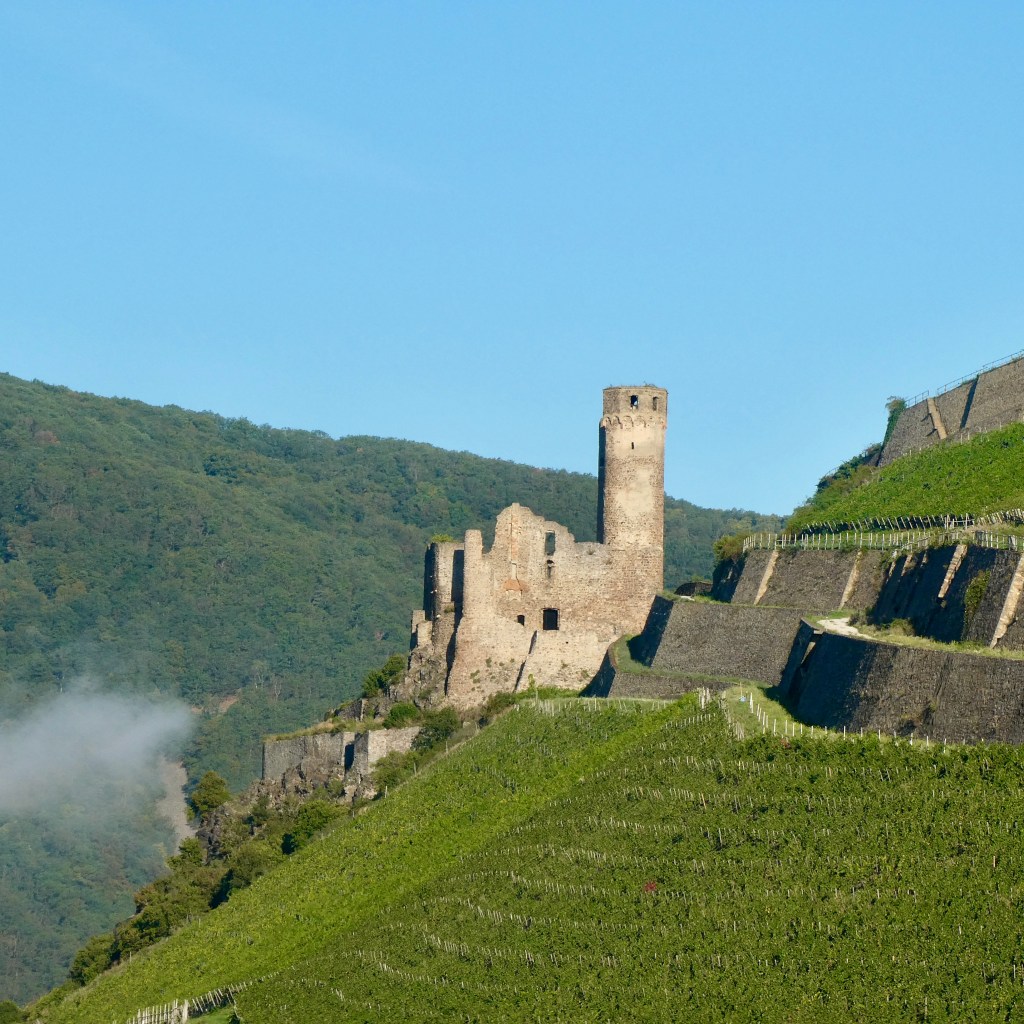
Ehrenfels Castle was built in the 13th century and is surrounded by ancient vineyards. There are miles and miles of vineyards along the Rhine. Some areas look quite steep.
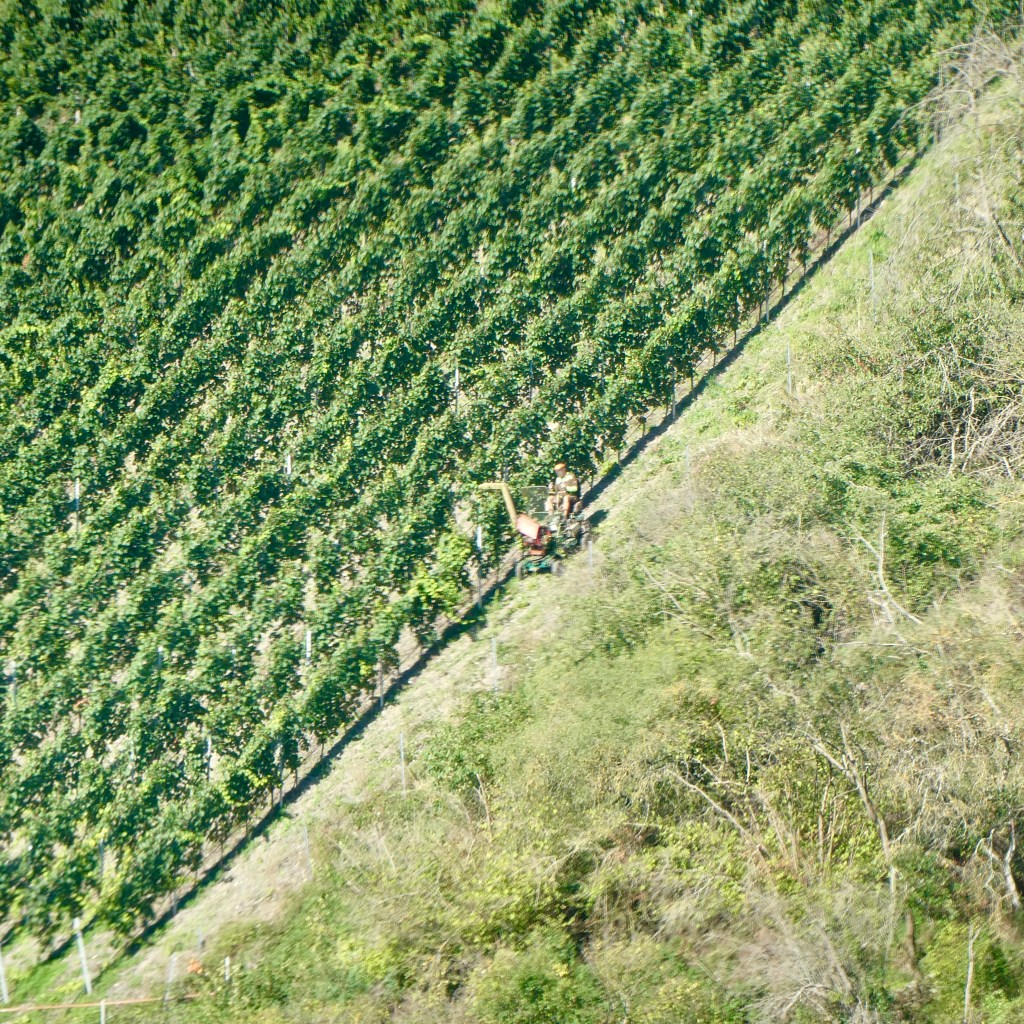
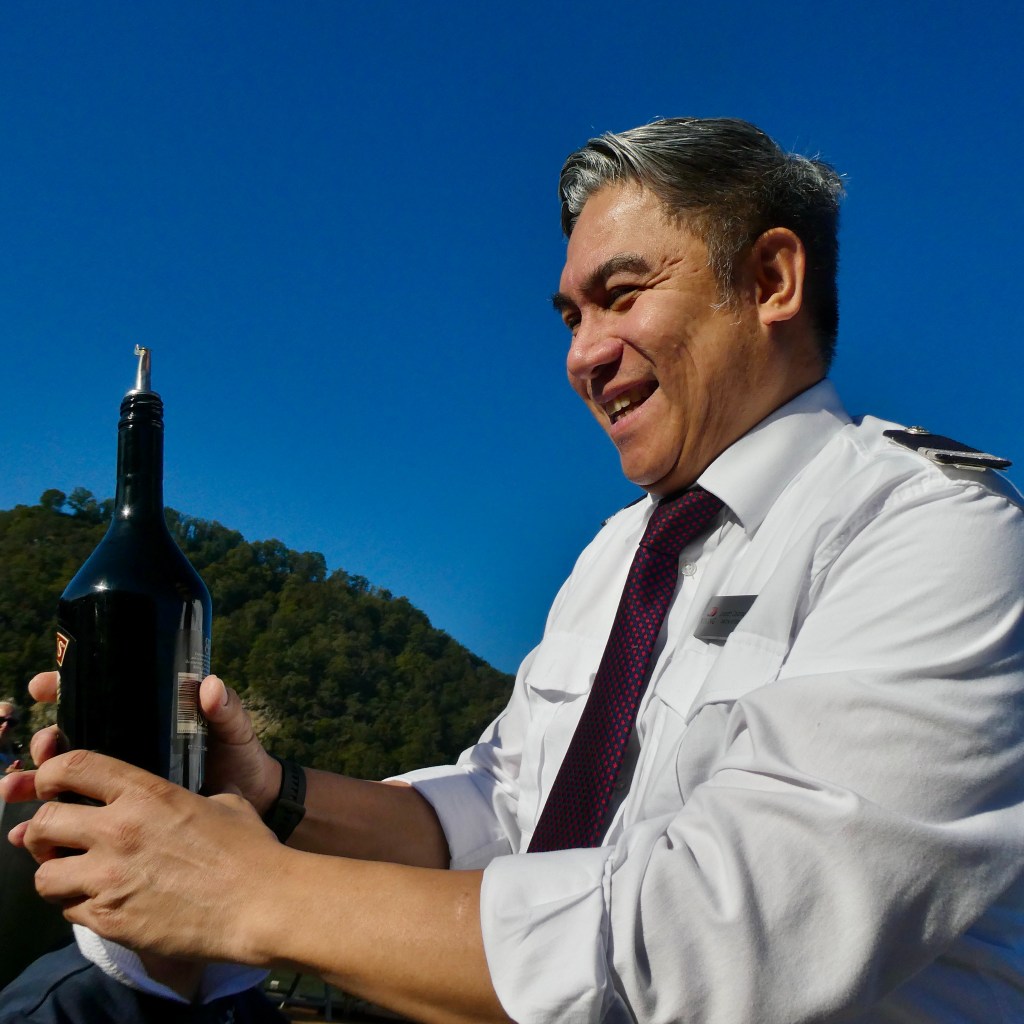
This guy has an interesting job!
We learned that for 2000 years the Rhine River was a primary trade route. At times, 300 ships a day sailed through. Land owners charged tolls to go by their castles. There were so many tolls required that an emperor in the Hapsburg dynasty destroyed some toll sites to fix the abuse.

Mouse Tower was a former toll tower. It also served as a signal shipping station until 1974. Its name is because legend serves that mice ate an archbishop imprisoned in the tower.

Rheinstein Castle was built by a Prussian and is now a museum where you can also stay the night. Several castles now have hotel accommodations. That could be a new bucket list trip!
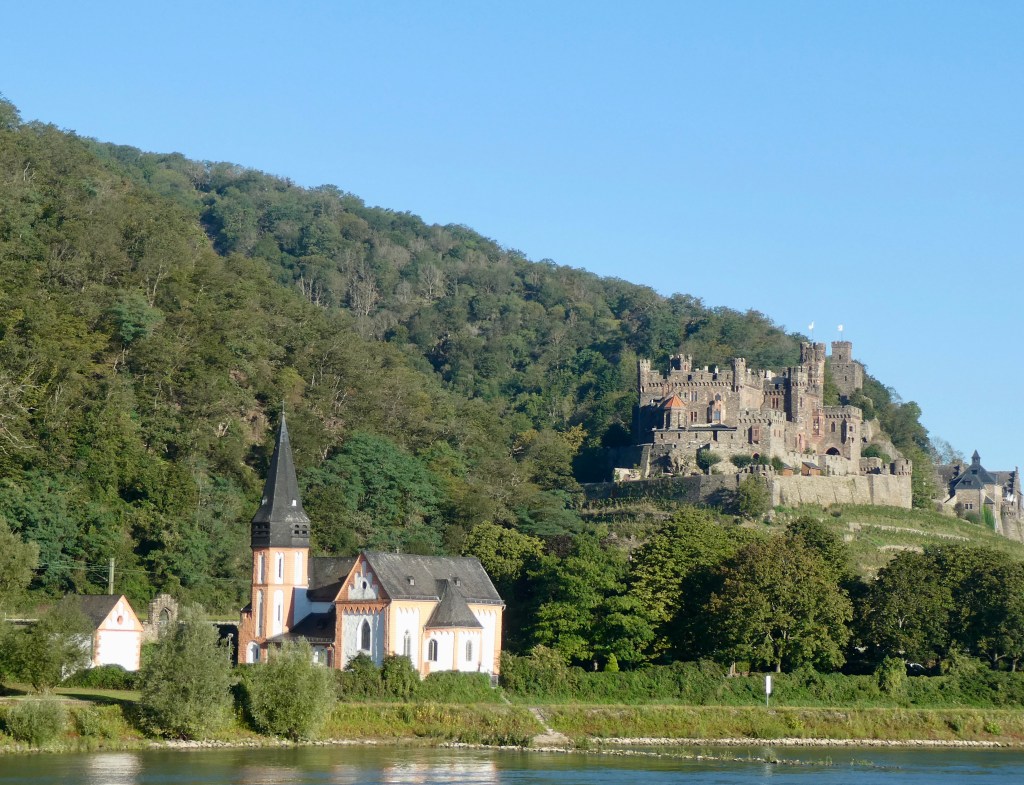
This chapel is from the 13th century and is the oldest on the Rhine. The Reichenstein Castle is in the background and both of these are just around the river’s bend from the earlier Rheinstein Castle.

The 12th century Stahlach Castle is often used in Viking advertising. It was attacked repeatedly in the 17th century and was in ruins until it was rebuilt in 1909 as a youth hostel.

The Sterrenberg castle is likely the oldest on the Rhine River and was built in the 12th century. It was built by a quarry and that quarry is now owned by a Dutch company as part of reparations after WWII.

This ship shape building was used for collecting tolls. It is currently used to monitor water levels.
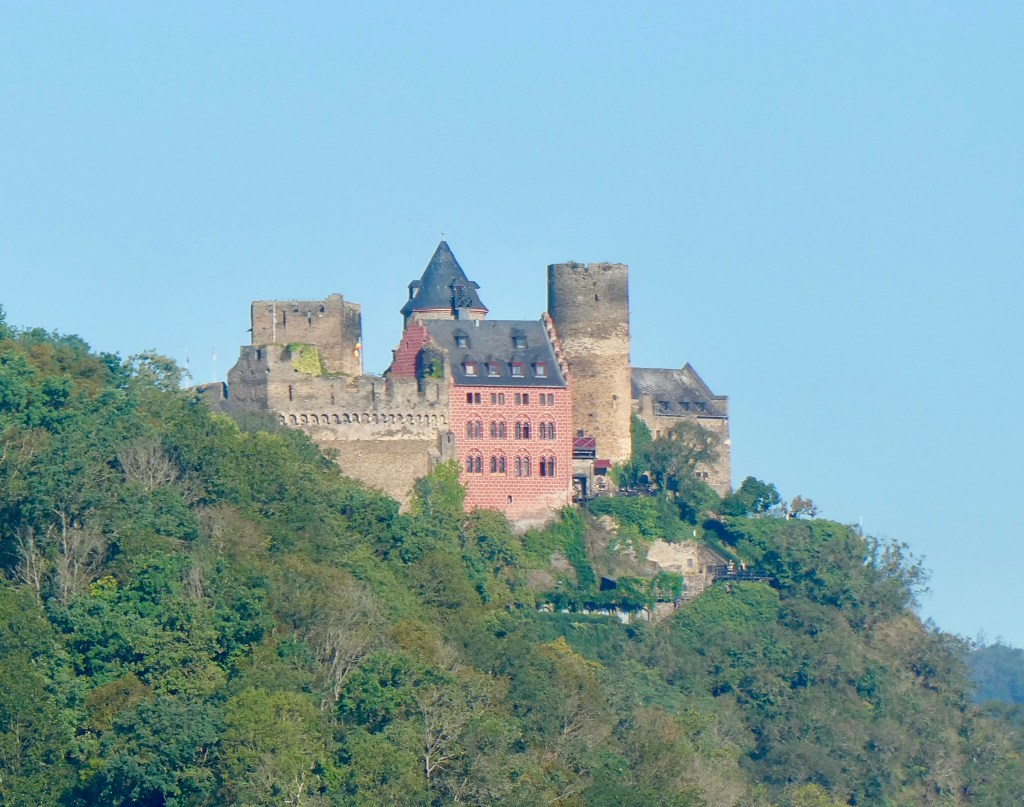
The original Schönberg Castle was built in 966 and burned by the French in 1689. This reconstructed castle combines three fortresses and towers into a renowned hotel and restaurant.

This isn’t really a castle at all. The allies had decided not to bomb the castles so Hitler often disguised tunnels as castles.
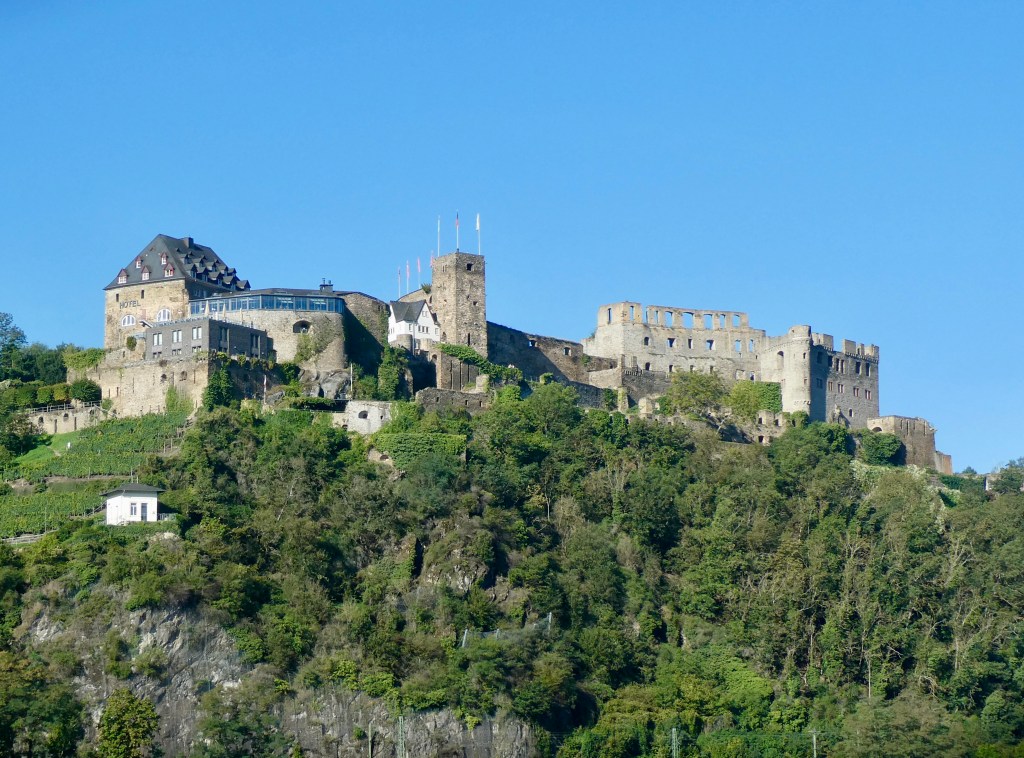
Rheinfels Castle sits high above the river and is one of largest castles on the Rhine.

This is the smallest town on the Rhine. The pub is attached to the church and one must enter the church through the pub.
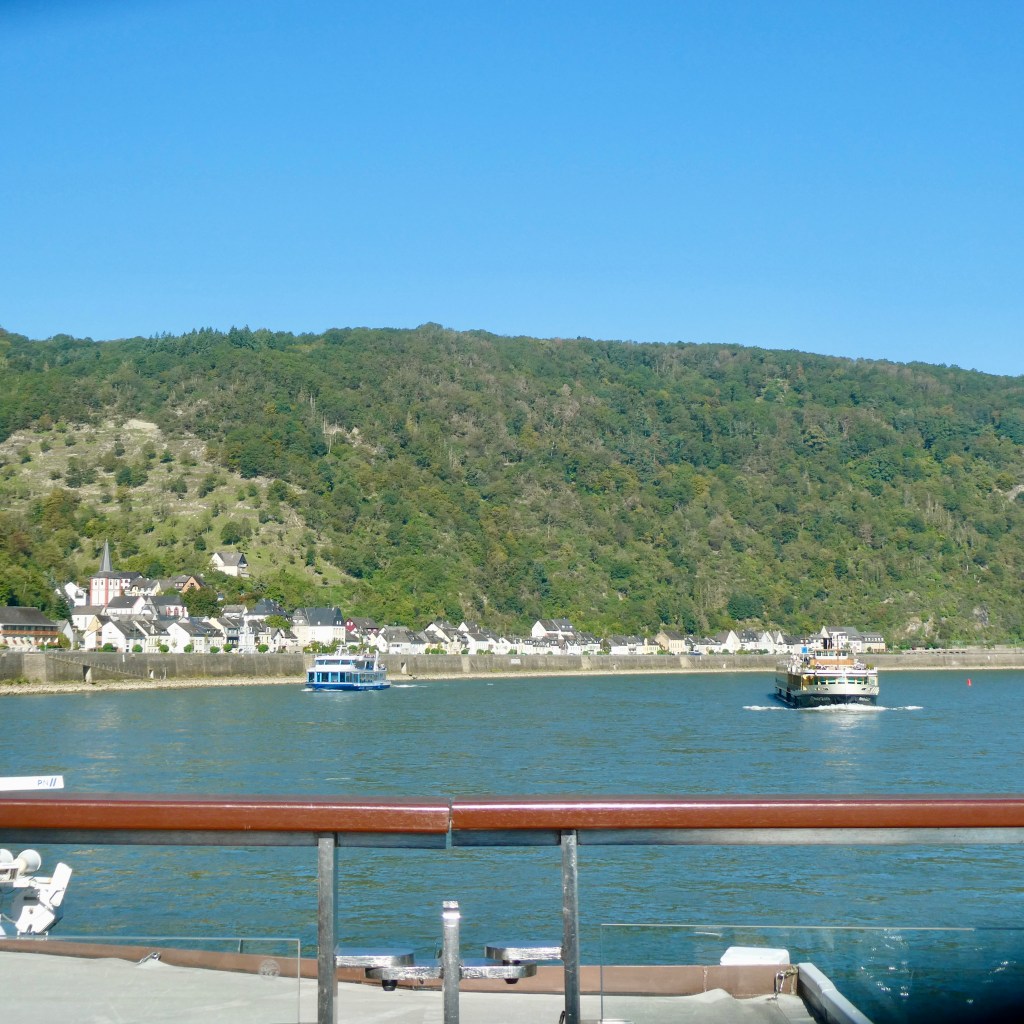
We used to own a boat and have some knowledge of the “rules of the road” on US waters. Along the Rhine we met other boats while sailing on the left, right, and sometimes through the middle. The ship captains seemed to know what they were doing even if we did not!

Two brothers in dispute either built, or separated, the family castle into two. There is a wall of dispute between them.
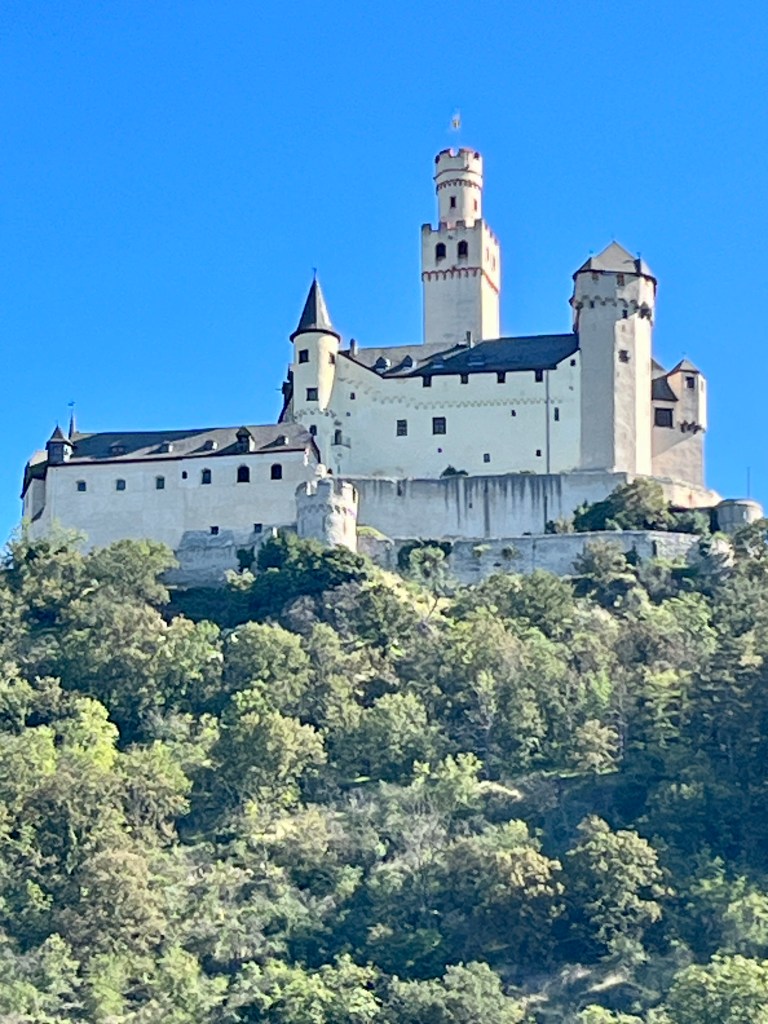
Marksburg castle sits above Braubach, Germany. Of all the castles in the region, Marksburg is the only one to have never fallen into disrepair or been destroyed.

I think this is Lahnstein Castle. It wasn’t one of the ones highlighted by Viking. I like that you see the old and the new together.
This seems a good spot for a castle identification disclaimer. I did not take good notes along the Rhine because I just wanted to enjoy the experience. Viking had given us the guide so I thought I would be able go back to it for research. The problem was that we took pictures from different angles than the guide showed, and sometimes we took more than one picture of the same castle as we approached and as we passed by. It was quite the puzzle to match the order and timestamps on our pictures to the kilometer markers along the river guide, bracketing the castles I wasn’t as sure about between the castles I was very sure about. I did my best.
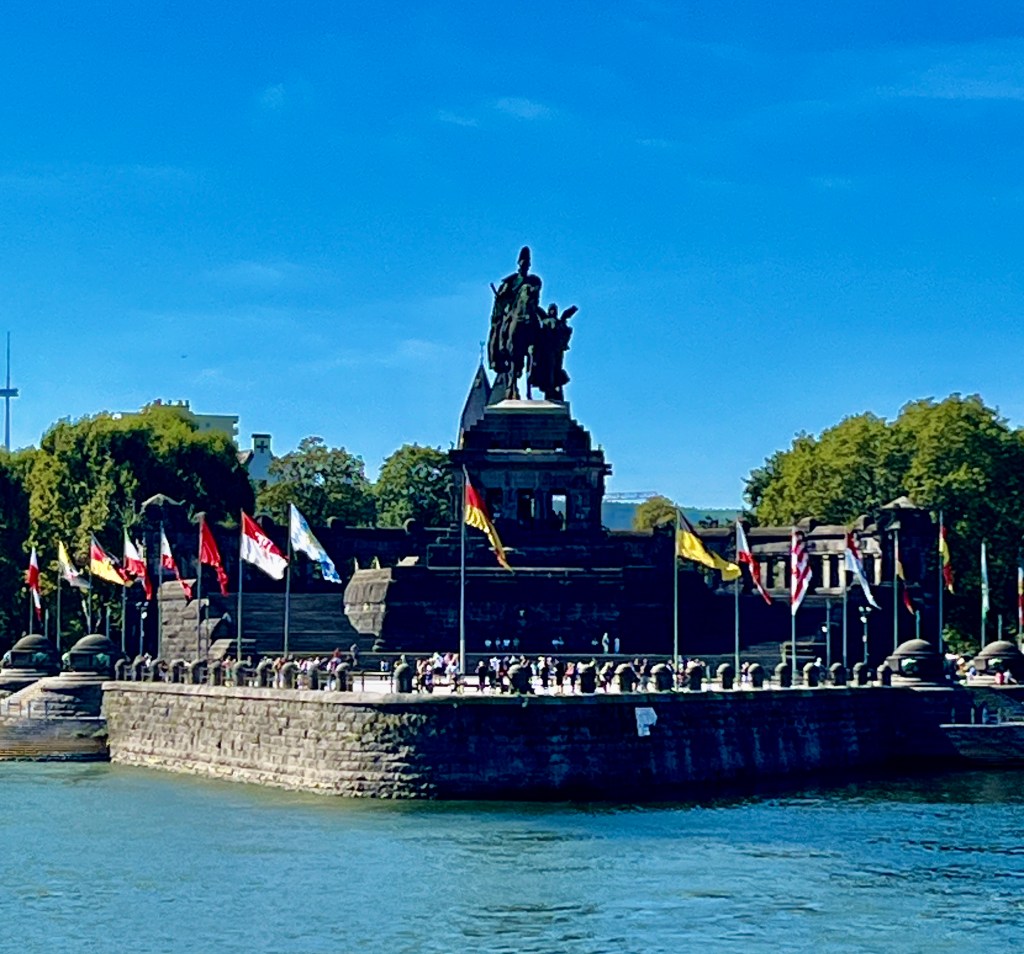
The Deutsches Eck is a promontory in Koblenz, Germany where the Rhine River meets the Mosel River. The statue is a monument to William I who unified Germany. Destroyed in World War II, a replica was placed in 1993.
We sailed the Rhine on September 6, 2023.
Next up: Cochem and Reichsburg Castle


 Serene Wandering