
Today was the day we left the Viking Alsvin. Our room steward, Jovan , thanked us for being his tidiest guests.
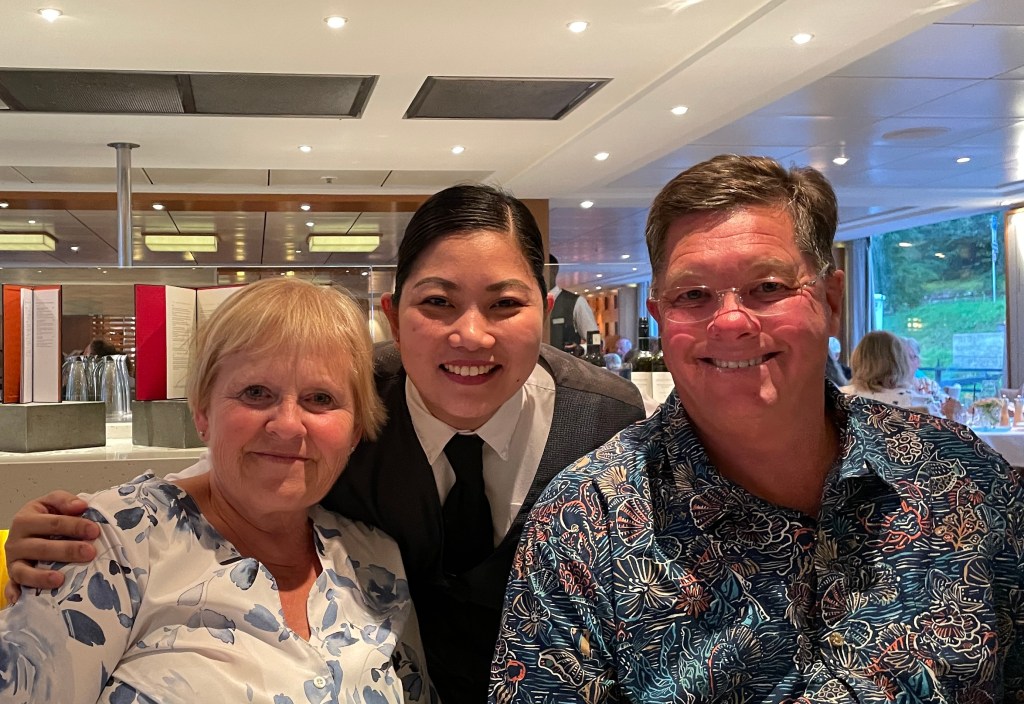
We said goodbye to the sweetest wait person Kristhina. We had connected with her several times and learned about her two year old son at home in Manila with her mother. Her husband is working on the Celebrity cruise line.
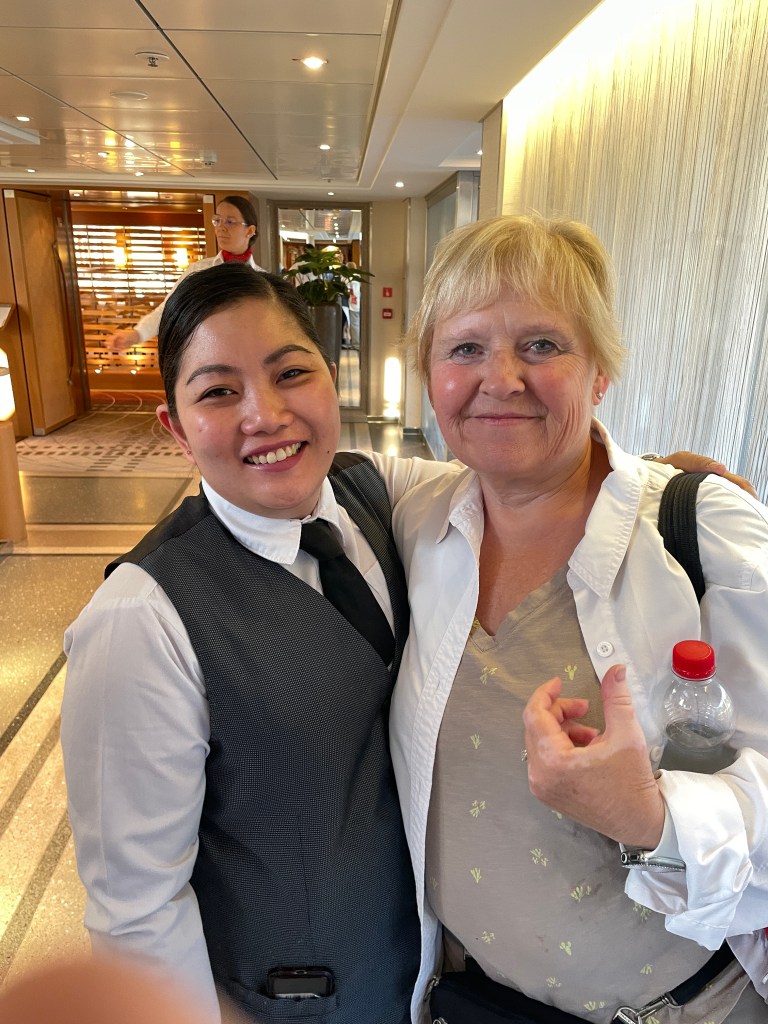
On our last morning we talked again and said goodbye. She came out for one more hug. We have heard from her a couple times.
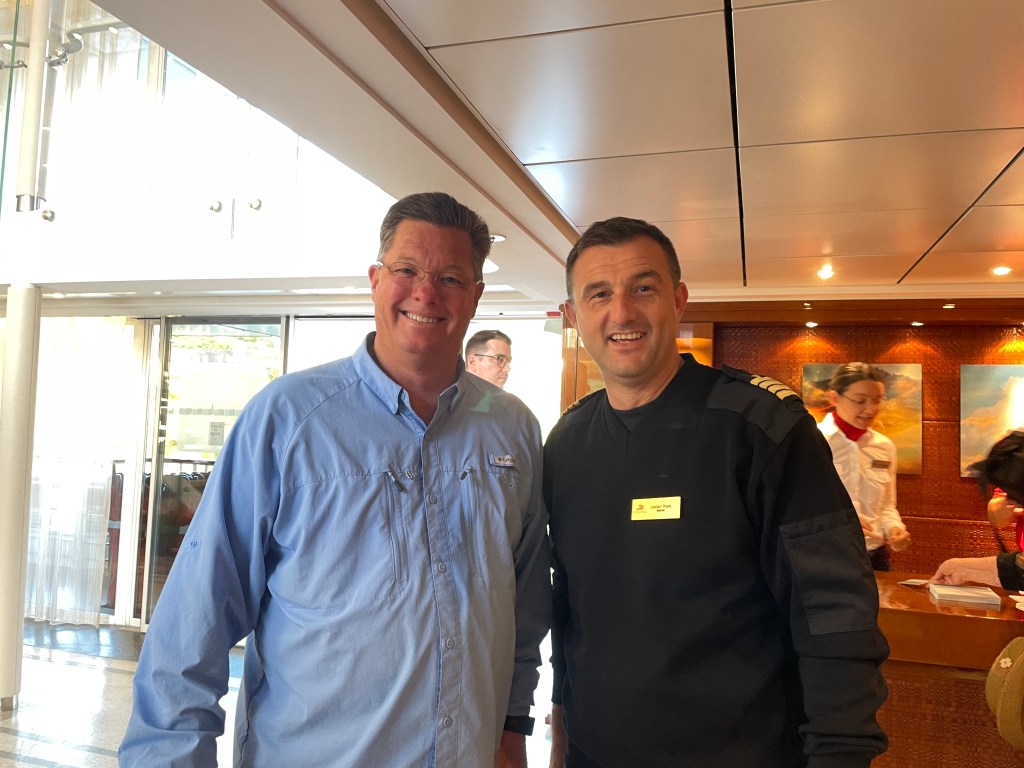
Randy said goodbye to Captain Lucian. He had been very present with guests on the cruise. Connie even danced with him one evening when Randy and I were already sleeping.
We boarded the bus for a full day road trip to Paris via Luxembourg and Reims, France. The front seat on the bus was open so we took it.
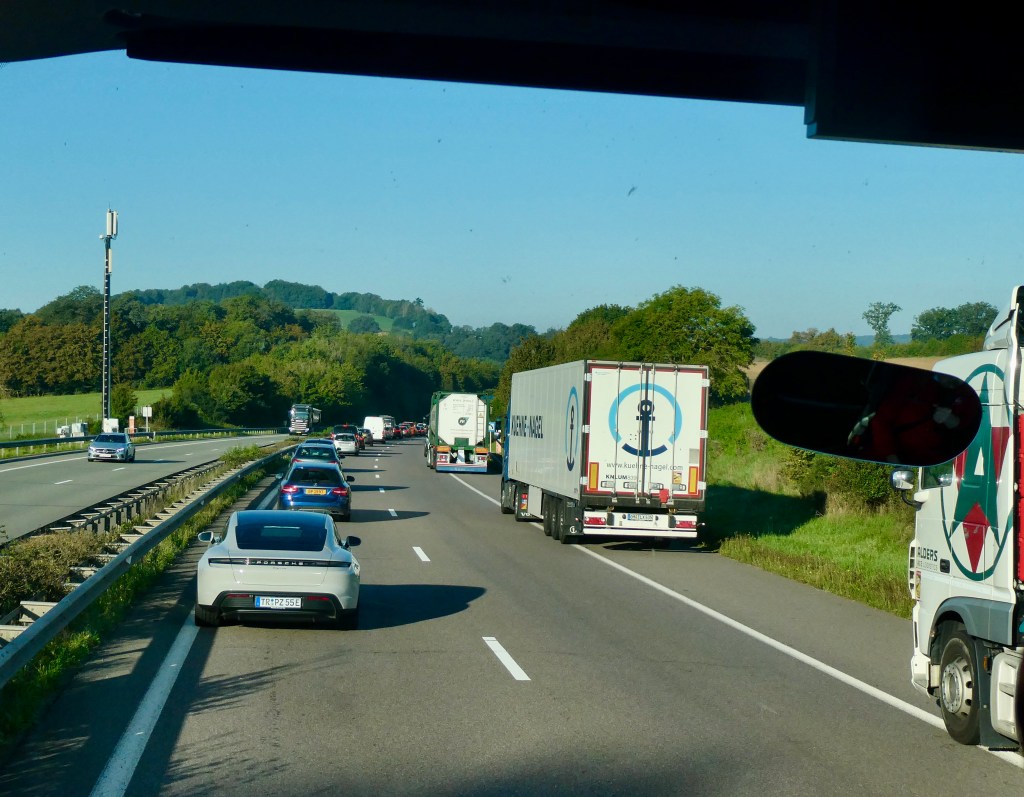
Highway traffic along our route was dense because a lot of workers from France and Germany work in Luxembourg as the salaries are higher. The general rule of the road is to leave the center open for emergency vehicles.
Our guide for the day told us that Luxembourg is the second wealthiest country (assume it is per capita) in the world and has 600,000 inhabitants.
Luxembourg became wealthy due to their iron ore industry. Most beams for construction projects worldwide are still from Luxembourg. (Qatar is now wealthiest.)
The influx of ore industry money supported development of a banking industry which is another source of wealth.
The Translation Office for the European Union is also here. That was a logical placement as people in Luxembourg speak four to five languages fluently. School grades are taught in successive immersion languages sequencing Luxembourgish, French and German. People usually learn English as well.
The country is officially the Grand Duchey of Luxembourg, a United Parliamentary Constitutional Monarchy. It is currently ruled by Duke Henri and a Prime Minister.

Luxembourg American Cemetery was the temporary cemetery after the Battle of the Bulge. It was later made permanent and was dedicated on July 4, 1960.

The cemetery is on Luxembourg land, but given for this use in perpetuity. Paid staff are employed by the US embassy. The cemetery covers 50.5 acres.
If soldiers had stated that they wanted to be buried with their comrades, they are here. A soldier’s family could also choose to have them buried here or have their deceased returned to the US.
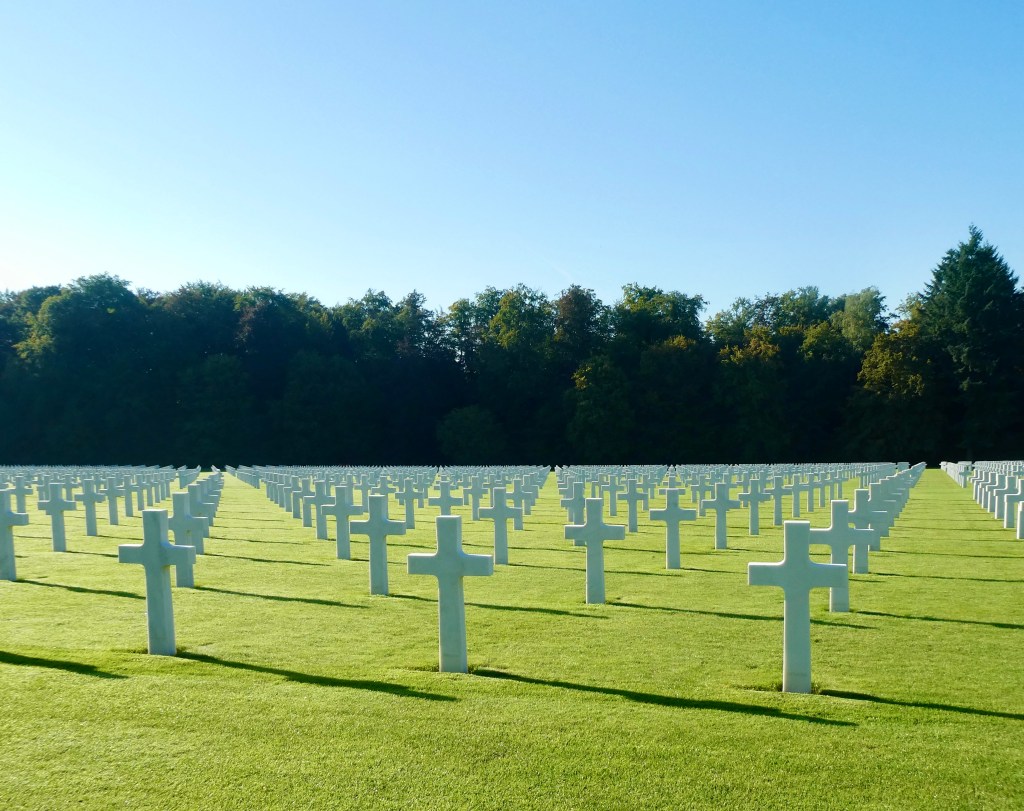
There are 5076 graves, including General Patton, one female army nurse, and 22 sets of brothers.
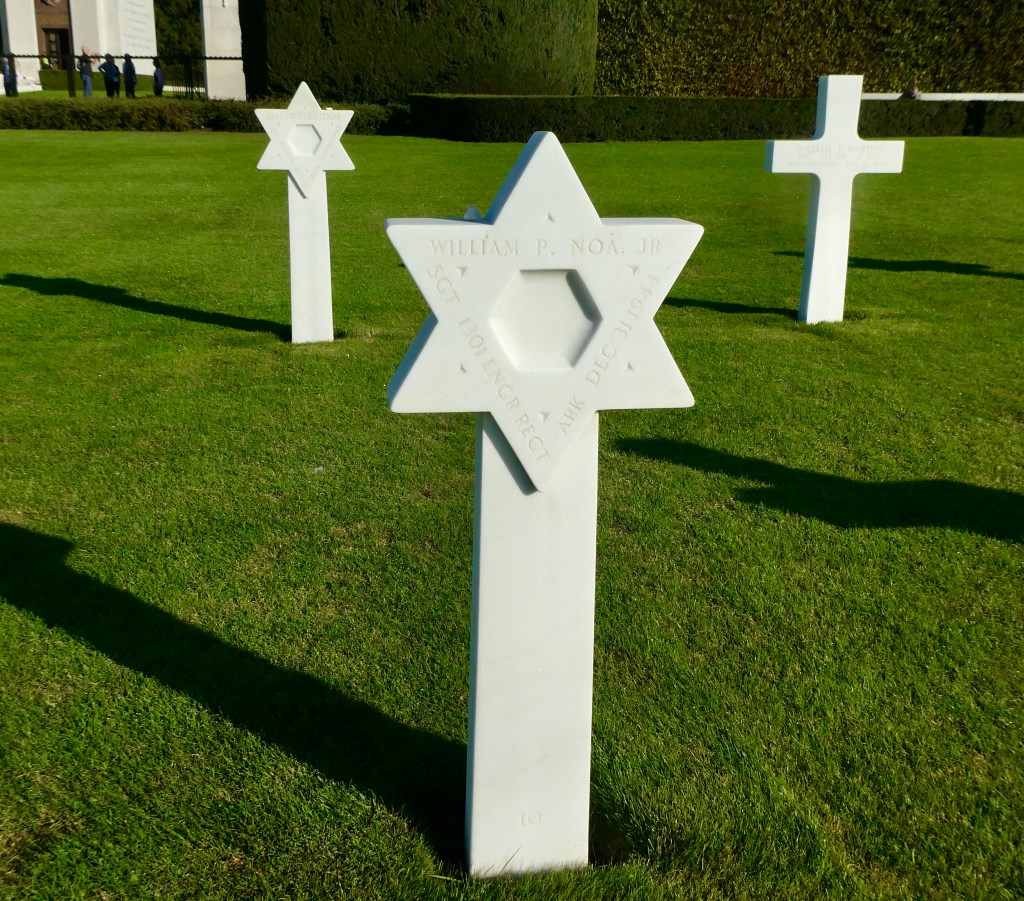
There are 4958 crosses and 119 stars of David.
Names and information were engraved on tombstones but not darkened, except for General Patton.

General Patton died after a car accident. When his body was brought to the cemetery there were lines of people along the road because they knew what Patton had done for them.
European Law generally states that there are no burials by rank or status. However, for practical reasons it was a good idea to separate General Patton because so many people would be visiting his grave that the graves nearby would be disturbed. Mrs Patton sought special permission from the Duchess for her husband to have a place of honor and the Luxembourg Duchess agreed.
(My father, who was career US military, is also in a military cemetery that does not place remains by rank, or even by conflict. We like that idea.)
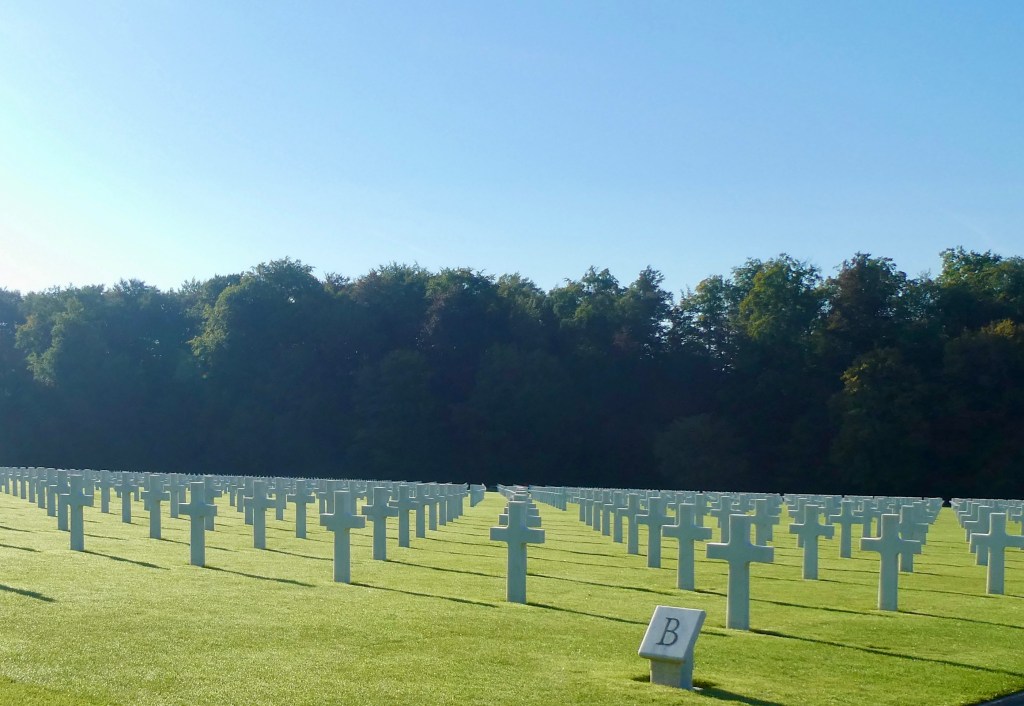
The Band of Brothers are buried together in section B. That is another grouping that many people visit. The Band of Brothers (book and movie) tells the story of Easy Company, 506th Regiment of the 101st Airborne Division, U.S. Army.
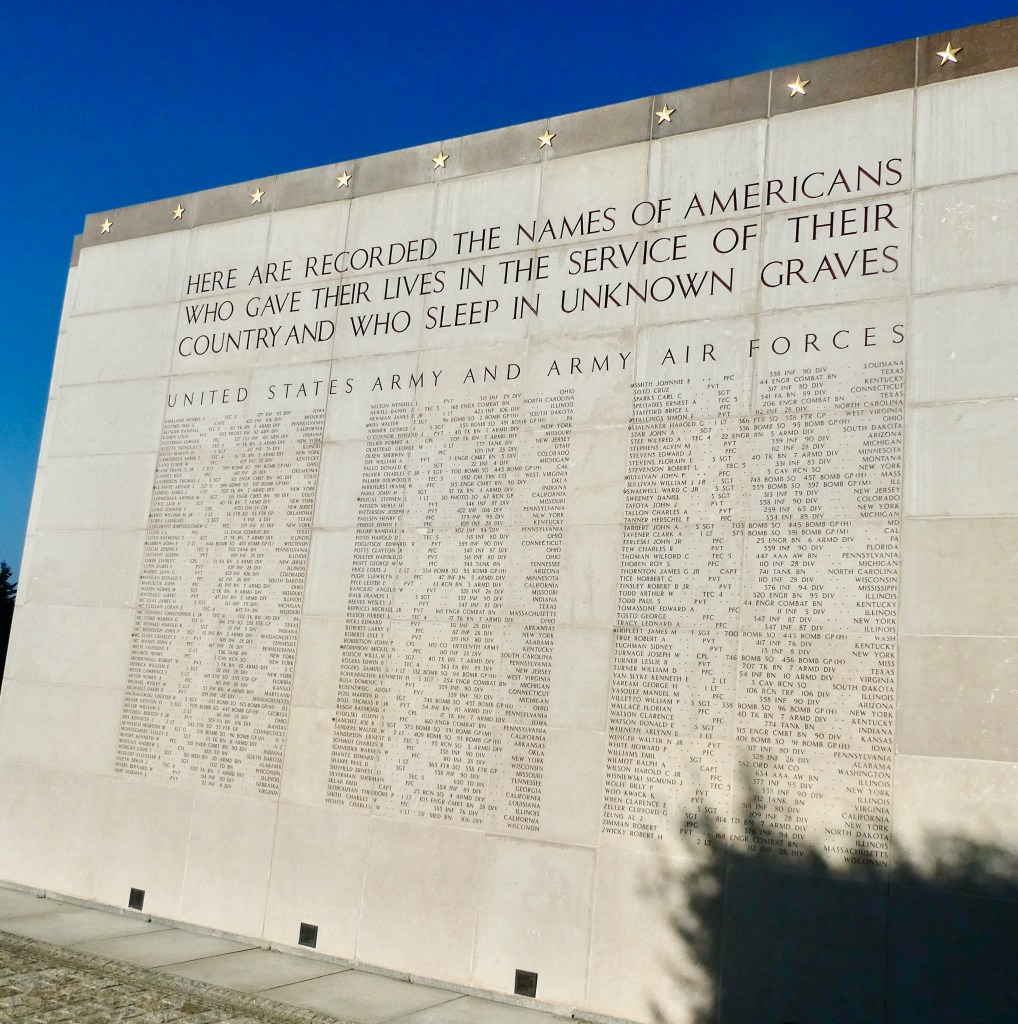
These large tablets show the names of 371 soldiers Missing in Action who were never recovered or who rest in unknown graves.
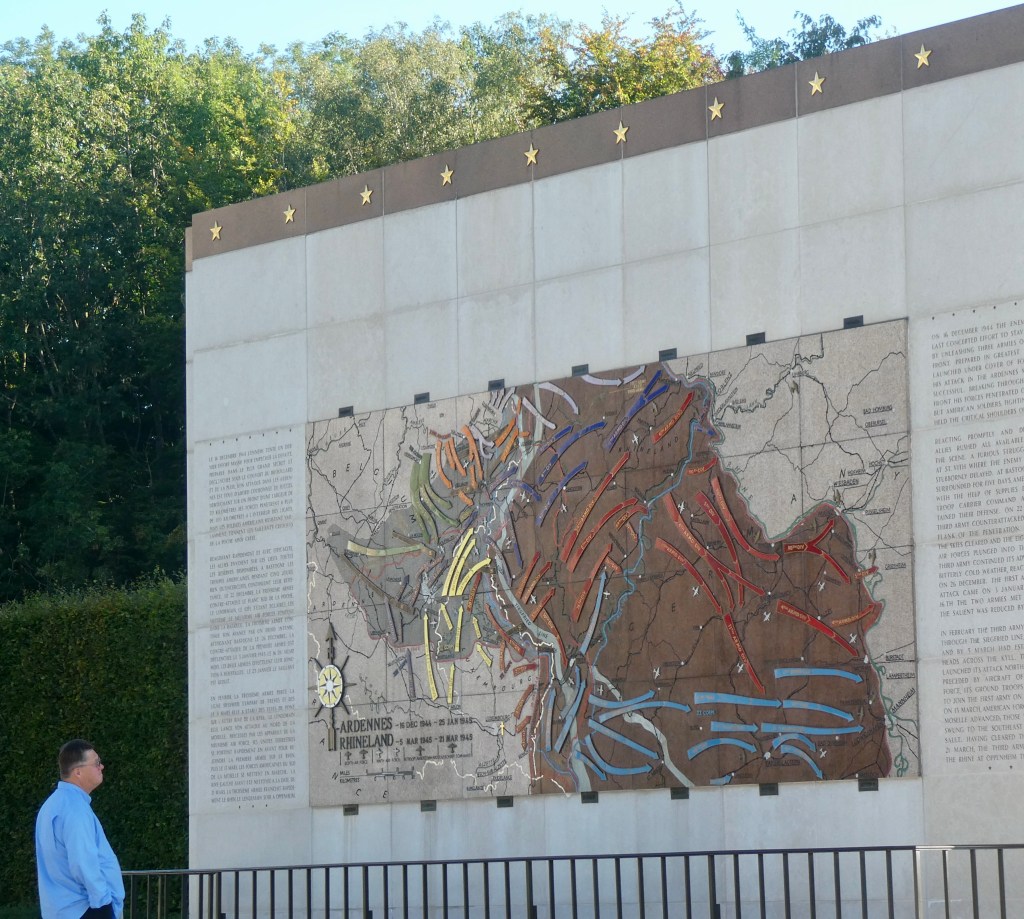
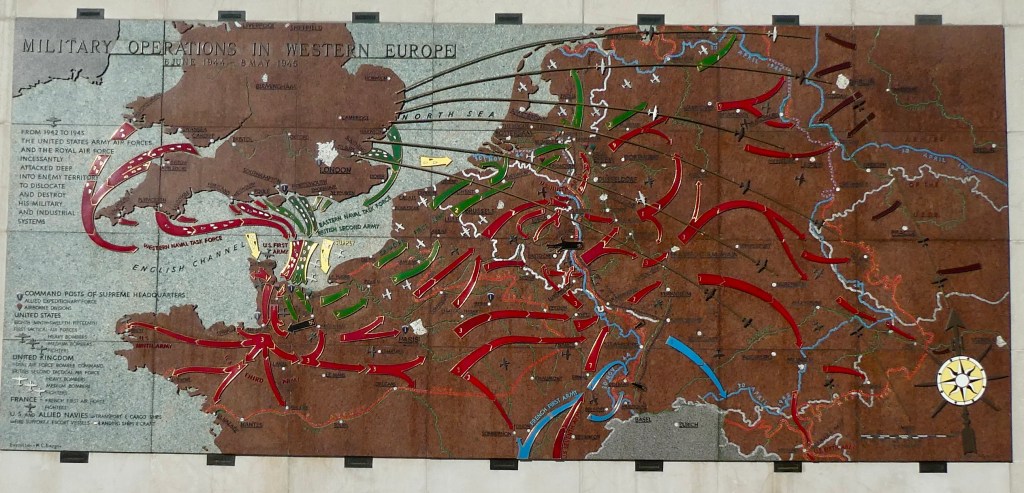
There are two large display maps detailing military operations in Germany and also in the entire European Theater..
A couple of people on our bus, including our friend Warren, had fathers who fought in the Battle of the Bulge, perhaps wounded, but made it home.
When we were at the American Military Cemetery near Florence, Italy last year we understood that there were two such cemeteries, that one and a second in Luxembourg. In fact, there are 26 American Cemeteries and 32 memorials, monuments and markers in 17 countries.
Leaving the cemetery we passed through an agricultural area of France that were battlefields during WWI. The vast number of trenches caused the equivalent of 30,000 years of erosion. To help the land recover, the French government planted pine trees. After a few years the forest floor turned blue with blooms of a flower that had never grown there before. The blue flower seeds were on the boots of US soldiers who fought and died in France. Our guide said it is nice to think that the forest continues to bloom each year in tribute.
She also told us that students in France are required to study history for many years beginning at age six. From age 11 on the study gets very serious about WWI and WWII. Our guide said that French people know what America did for them.
We were in Luxembourg on September 8, 2023.
Next up: We continue toward Paris and stop in Reims.


 Serene Wandering