Epidaurus is a UNESCO site known for unique medical facilities and healing treatments with curative baths and spas. It is dedicated to the ancient Greek God of Healing, Asclepius.

Asclepius was the son of Apollo. His rod, with the snake entwined, is the genesis of the modern symbol of medicine. This is a plaster reproduction of a classical statue from AD 160.

The ancient Theatre of Epidaurus was constructed in 4th century BC. The theatre was restored in 1954 and is considered to be the most perfect ancient Greek theatre with regard to acoustics and aesthetics.

I am standing at the center of the circle area. Randy was seated in the highest row taking the picture. He could hear me speak at a normal volume.
The theater is still is a working venue for modern concerts and recitals.
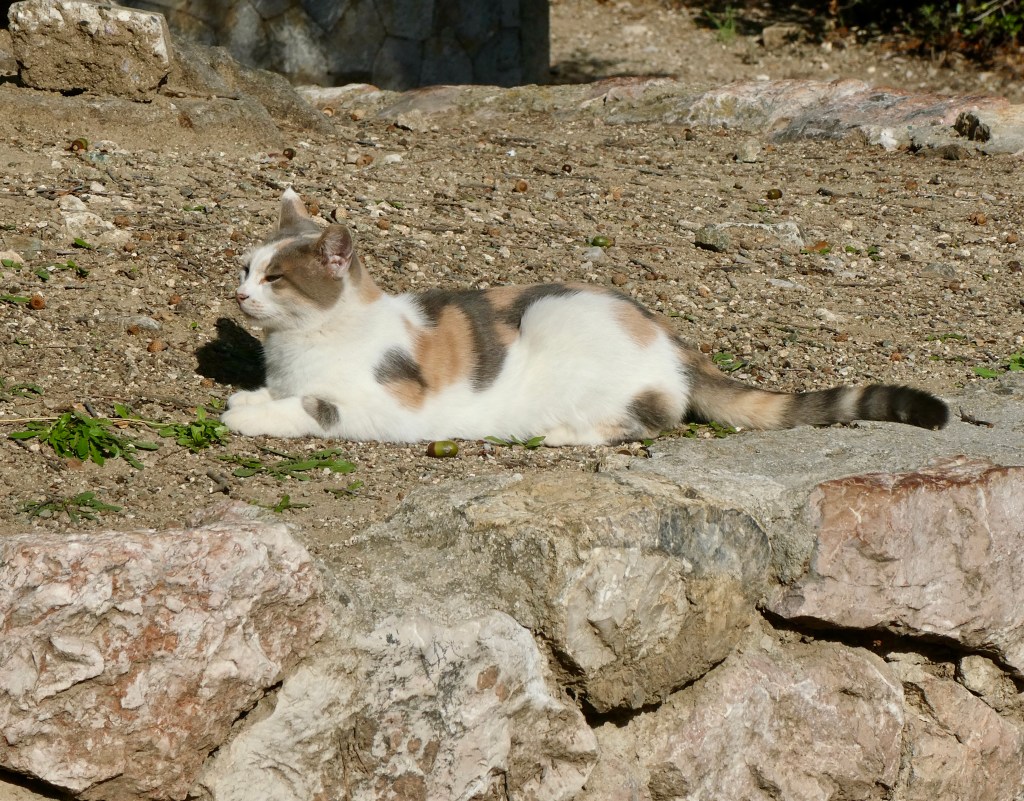
This theater cat is one of many we saw in Greece. They are well cared for strays that often have veterinary care. We saw hundreds throughout our Greek ports and never saw one that seemed to be under stress.
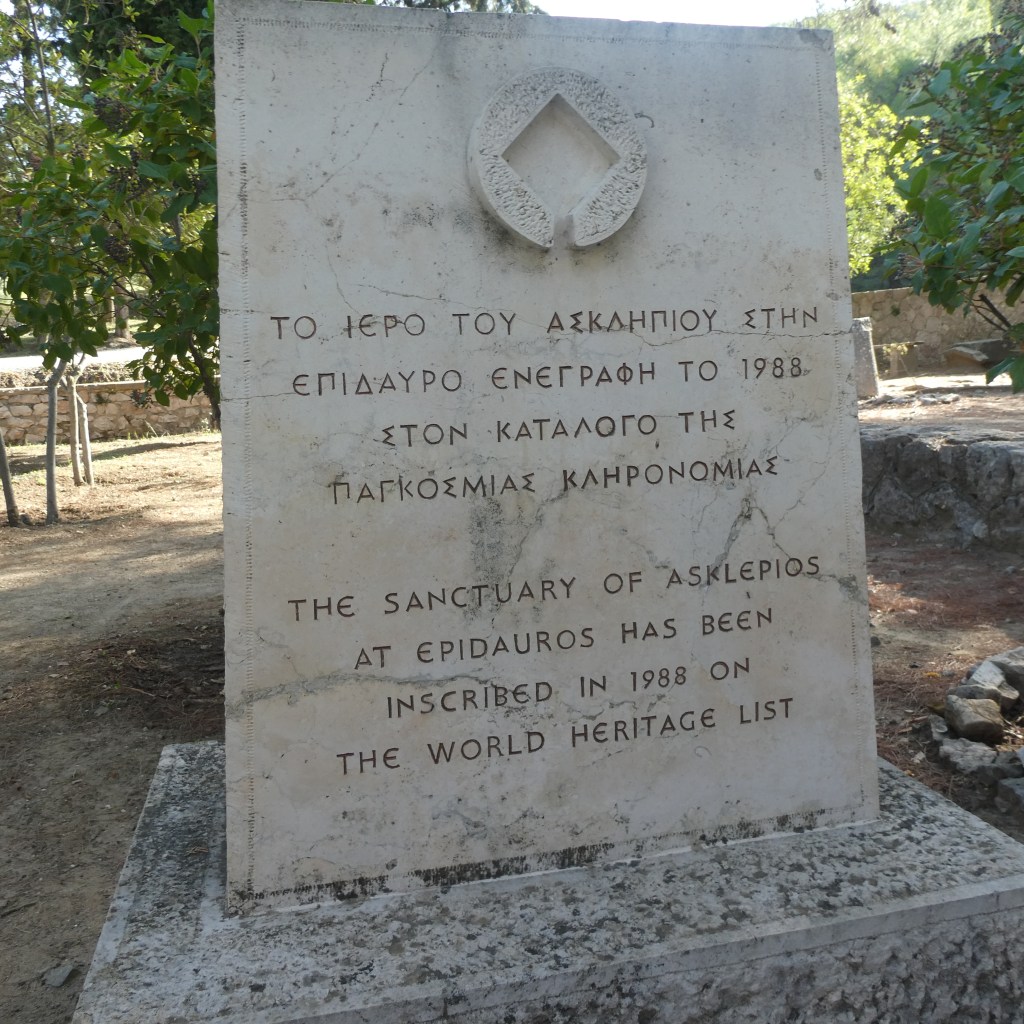
Because of its exceptional architecture and aesthetics, the theatre was declared a UNESCO site in 1988 along with the Sanctuary of Asclepius.
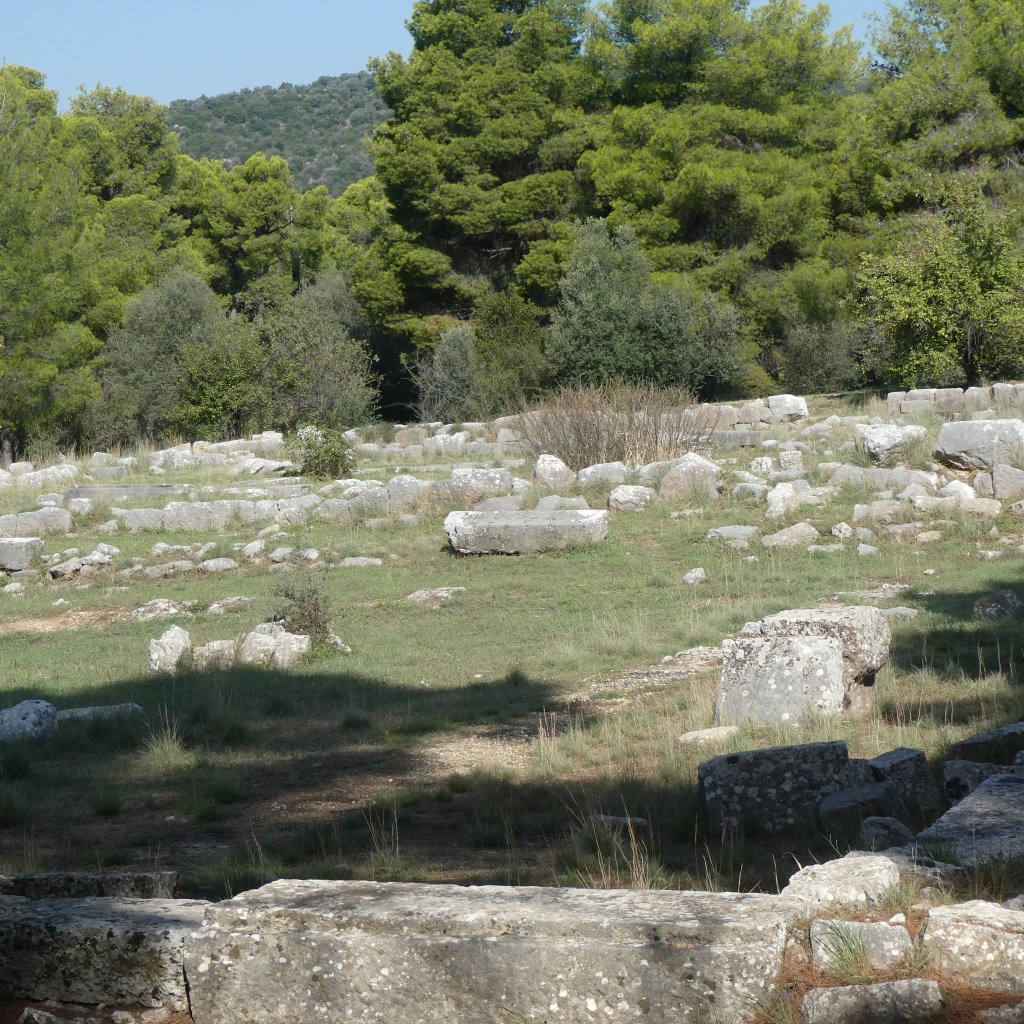
The sanctuary was built in the 4th century BC and provided accommodations for patients and their companions.
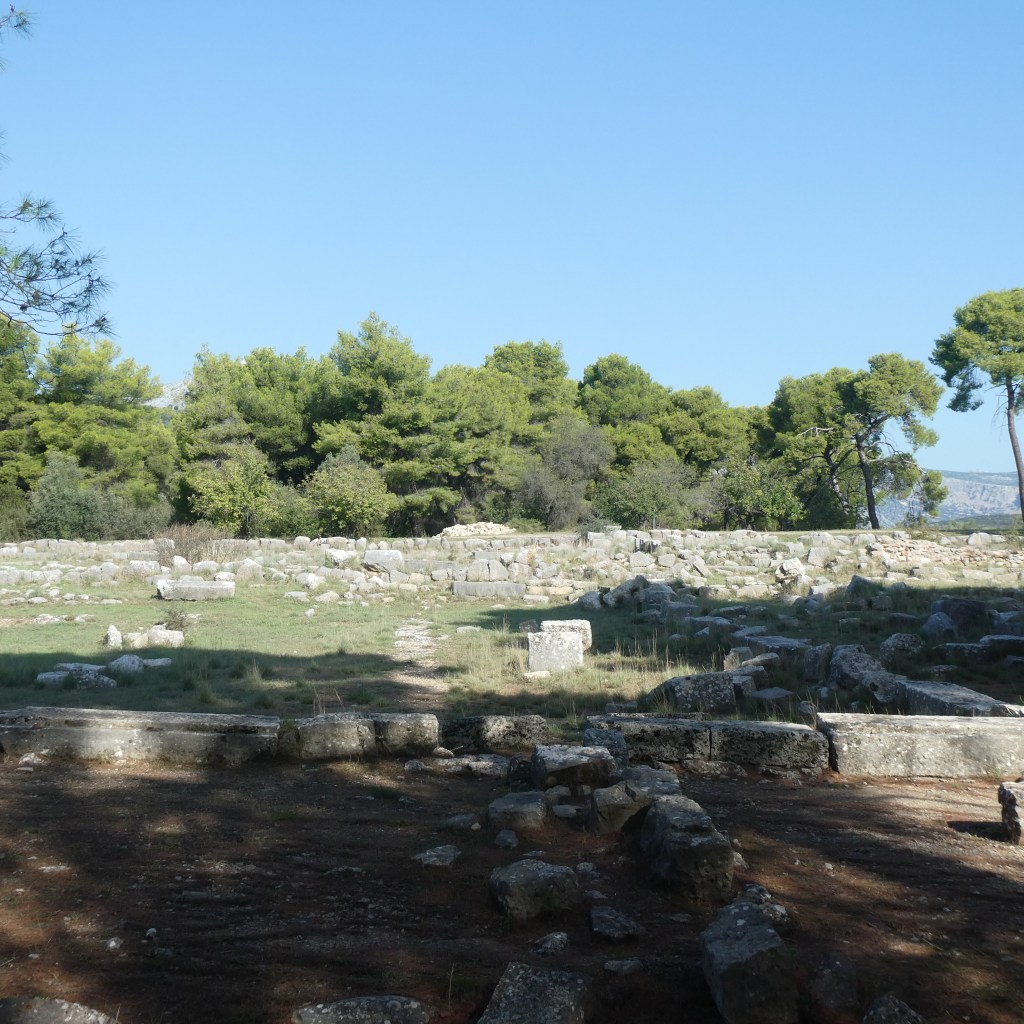
It is estimated that the sanctuary had 160 rooms and a restaurant for 5000.
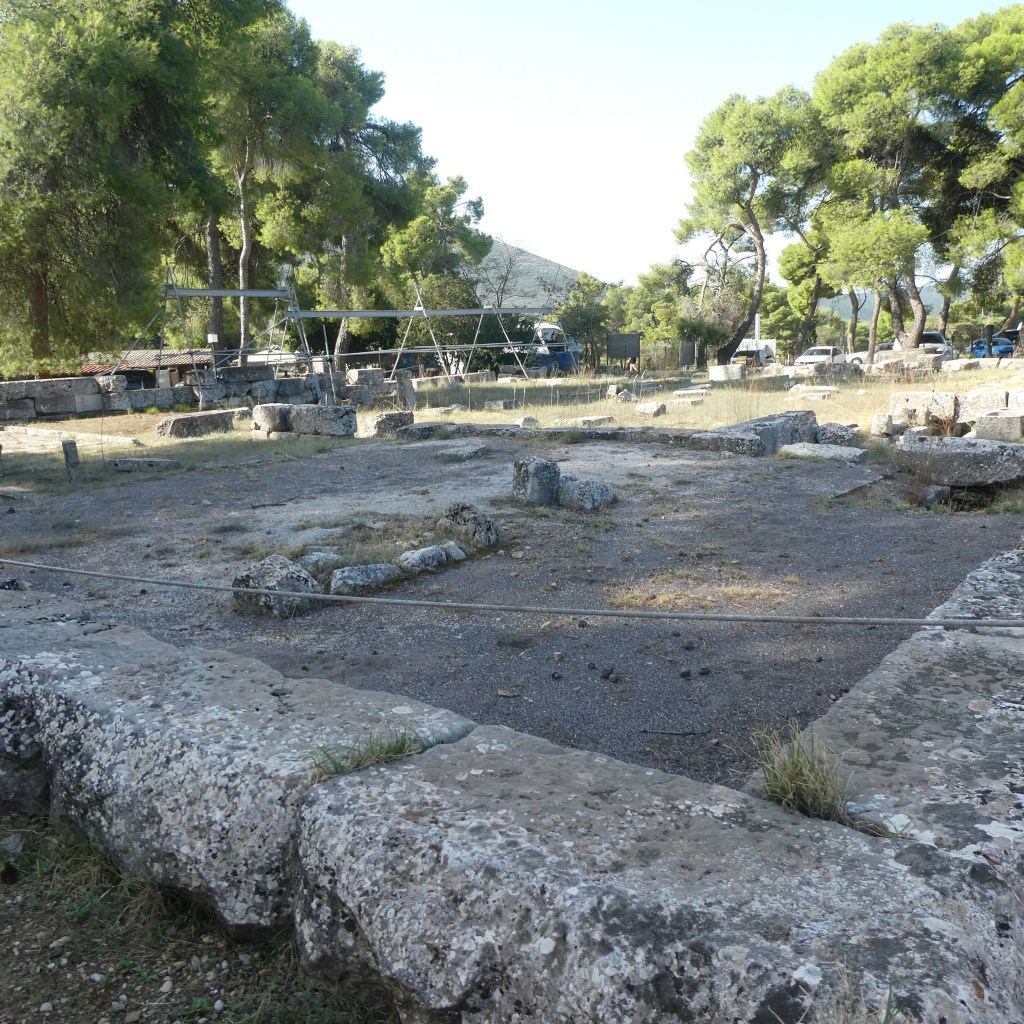
Greek baths made spring water part of the healing process. The healing waters and soil characteristics were thought to contribute to an exceptional olive oil chemistry to assist with healing.

A Sacred Geometry used for the sanctuary temple.

Only free citizens could visit the Epidaurus Stadium.
Health care considerations in modern Greece are that everyone who lives in Greece is eligible for care under the country’s health program. A person must work 50 days per year (after age 18) to be eligible. Students can be covered under parents for an additional eight years. New mothers must go back to work after four months.

The second half of our tour took us to the Castle of Palamidi overlooking the town of Nafplion.
Greece was geopolitically very important between Asia, Europe and Africa and had several rulers and occupiers.
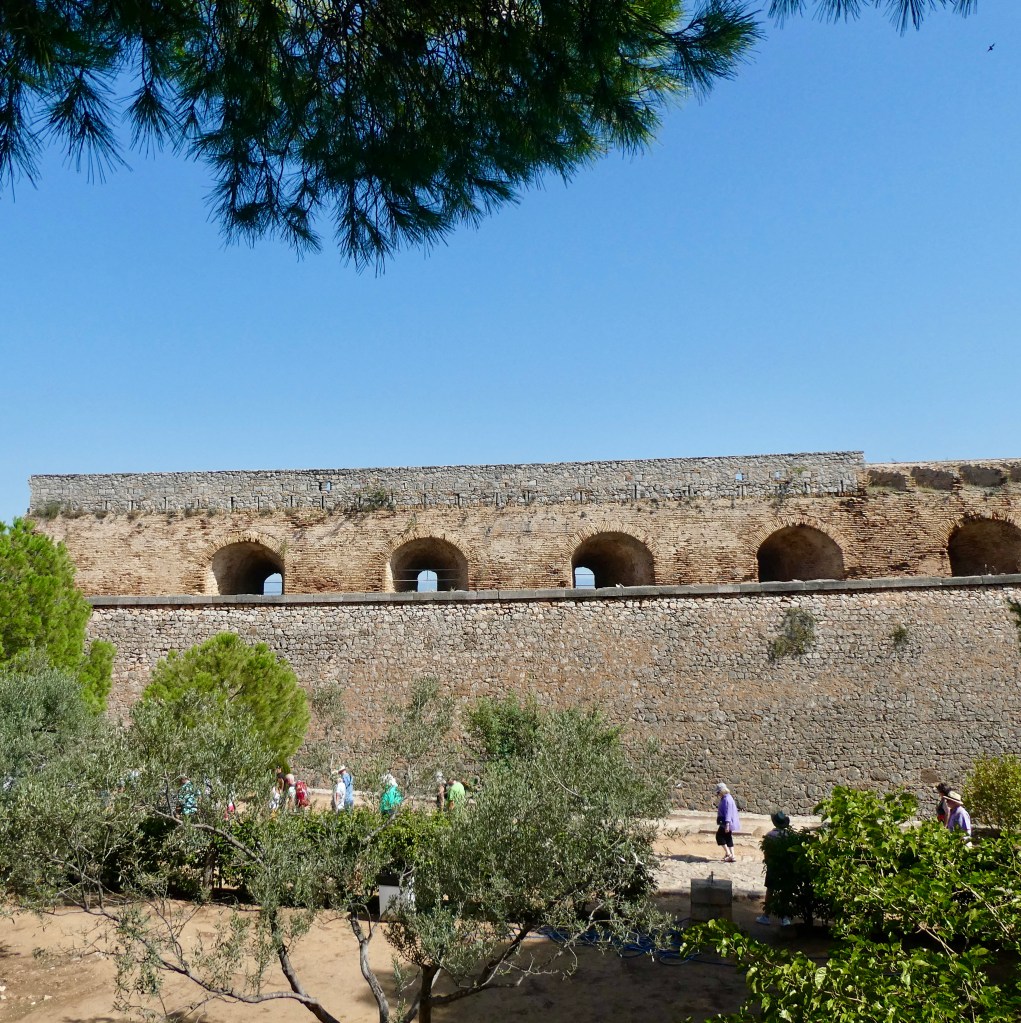
An existing structure was expanded into the current castle fortress rom 1711-1714 by the Venetians during their second occupation.

Palamidi and the surrounding area was taken over by the Ottomans in 1715 and remained under their control for more than 100 years.

In 1827 the Greek Revolutionary army took the castle from the Ottoman Empire.

The castle fortress sits 700 feet above the town of Nafplion and its harbor.

We can see our ship in the harbor.
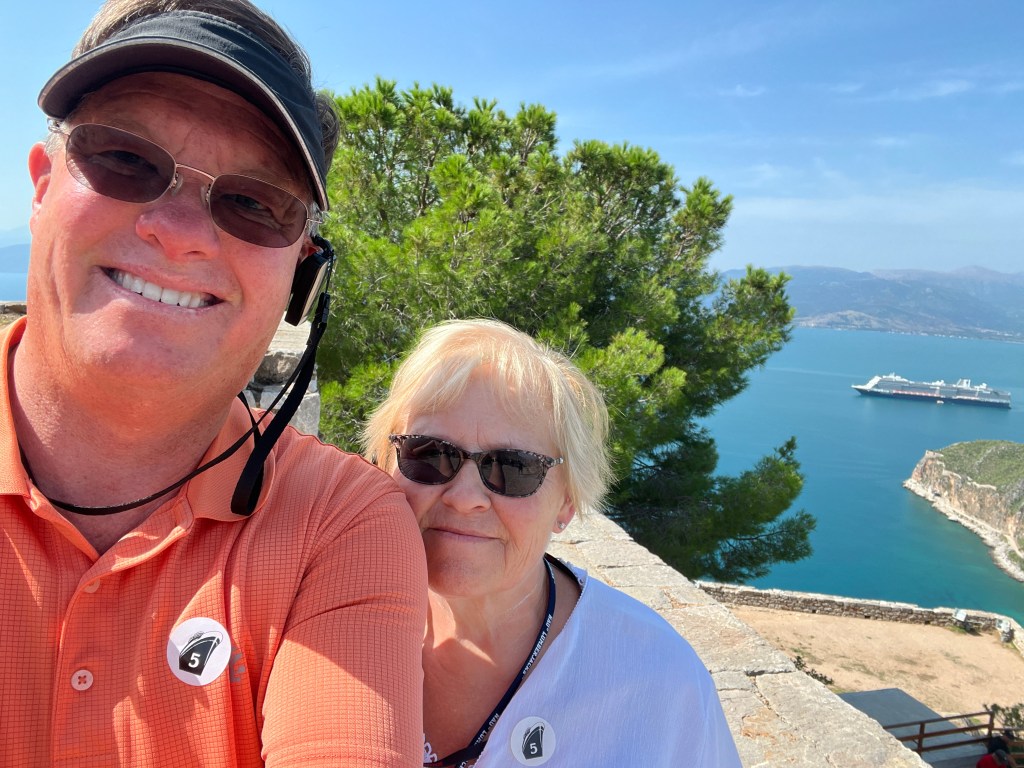
We heard various numbers for the amount of steps between the castle and the city, somewhere between 850 and 999. Although we were driven to the top, we had the option to walk down. We didn’t.
We were in Epidaurus and Palamidi on September 19, 2023.
Next up: Alexandria Egypt


 Serene Wandering