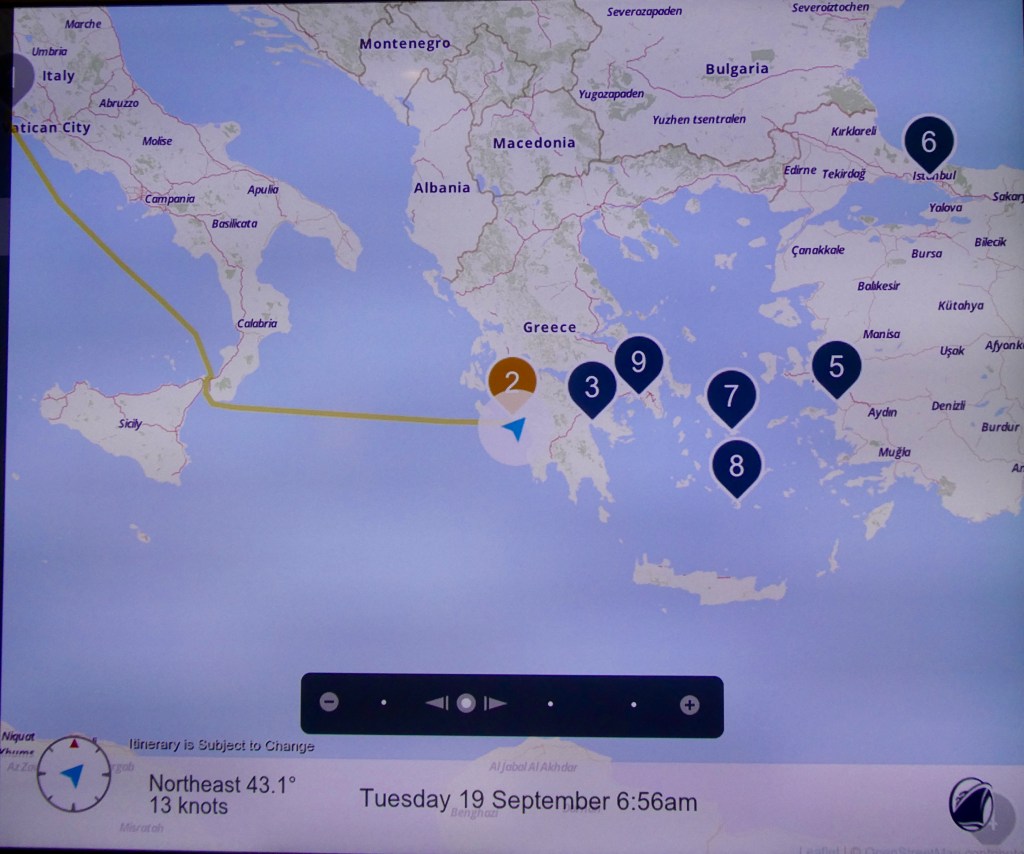
After a sea day we arrived at our first port, Olympia Greece.
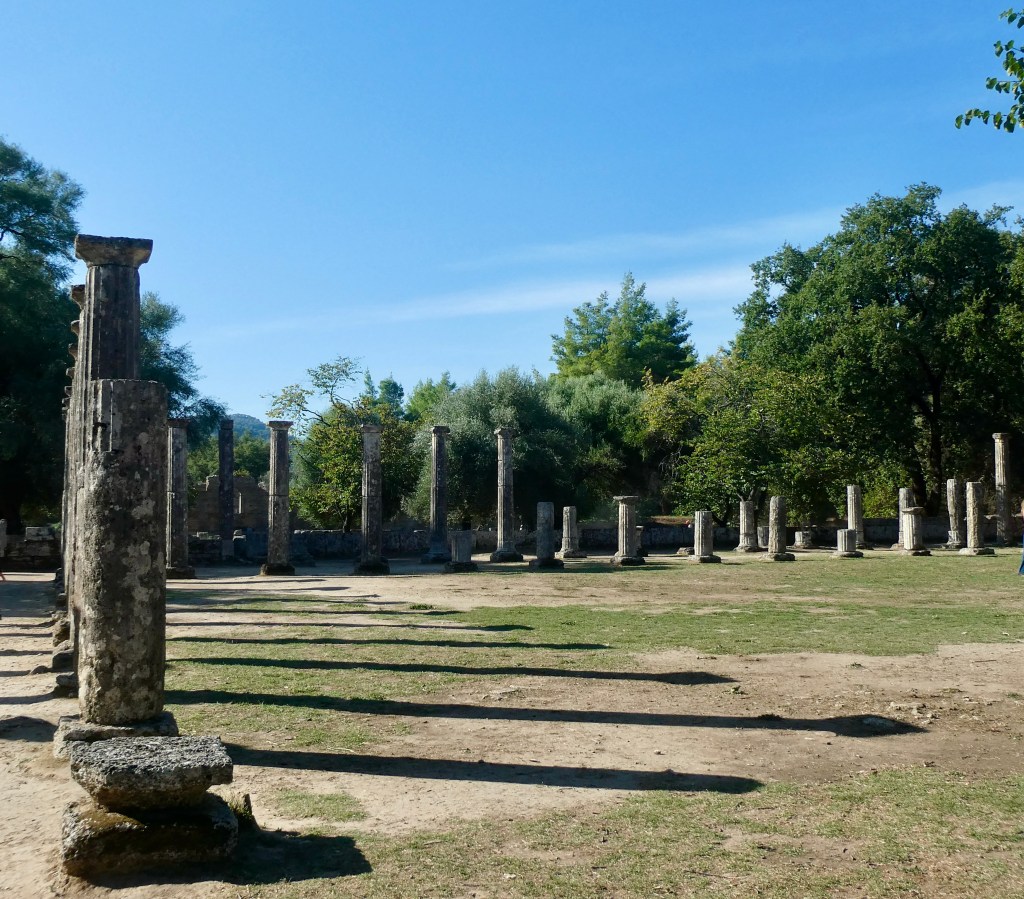
Our destination was the Ancient Olympic Grounds. The ancient games were in honor of Zeus, the father of Greek gods and goddesses. Roman mythology has similar gods, just the names are different.

This is a depiction of the Temple of Zeus measuring six by thirteen columns. The temple was one of the seven ancient wonders of the world.
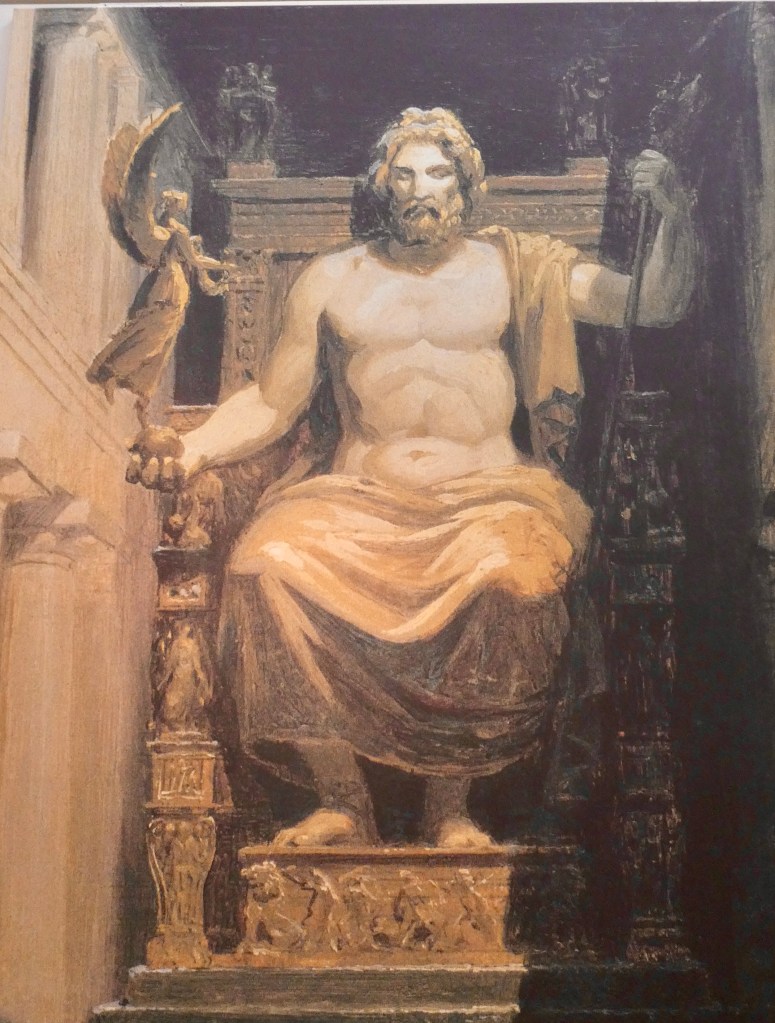
The original statue of Zeus was made of gold and ivory. It was taken to Constantinople at some point and disappeared.
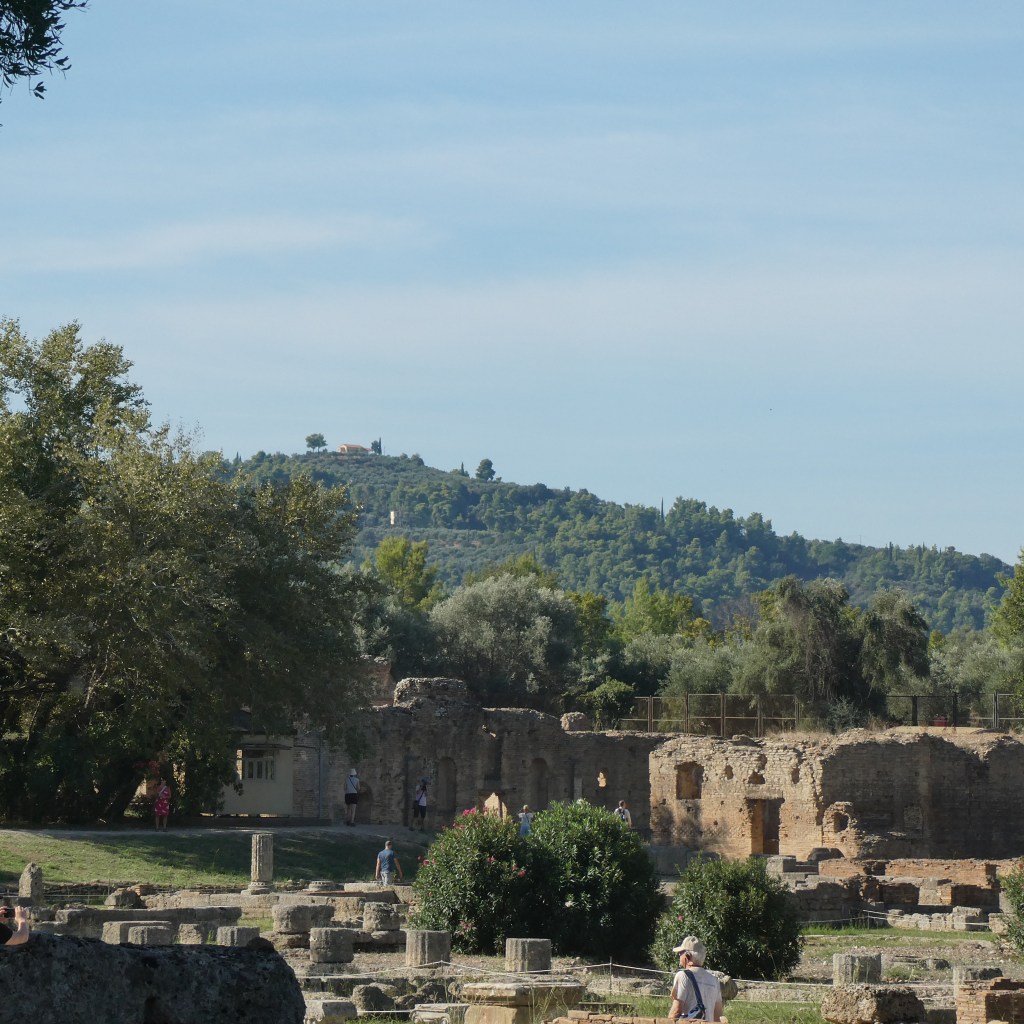
The buildings in the distance are where the statue of Zeus was made.

All Greek males were supposed to go to the Temple of Zeus once in their lifetime. These rocks are from that ancient temple. Many combined their visit with the Olympic games.
To be an Olympian, an athlete must have been male, free and a Greek citizen. He had to be in Olympia two months early to train.

The athlete trained and competed nude, covering their skin with olive oil and sand. These troughs were part of that process.

A view of ancient Olympia.

This is a picture of the stadium grounds. There would have been five or six competitors. T

The Olympic stadium was once elsewhere in Olympia. It moved to this site on land once held in honor of the god Demeter. This stand is where one woman, chosen to attend in Demeter’s honor, would watch. Any other woman in the stadium could be killed.
We heard the story of one woman who disguised herself to be able to enter and watch her son compete. She was discovered, and could have been killed, but her son’s victory saved her life.
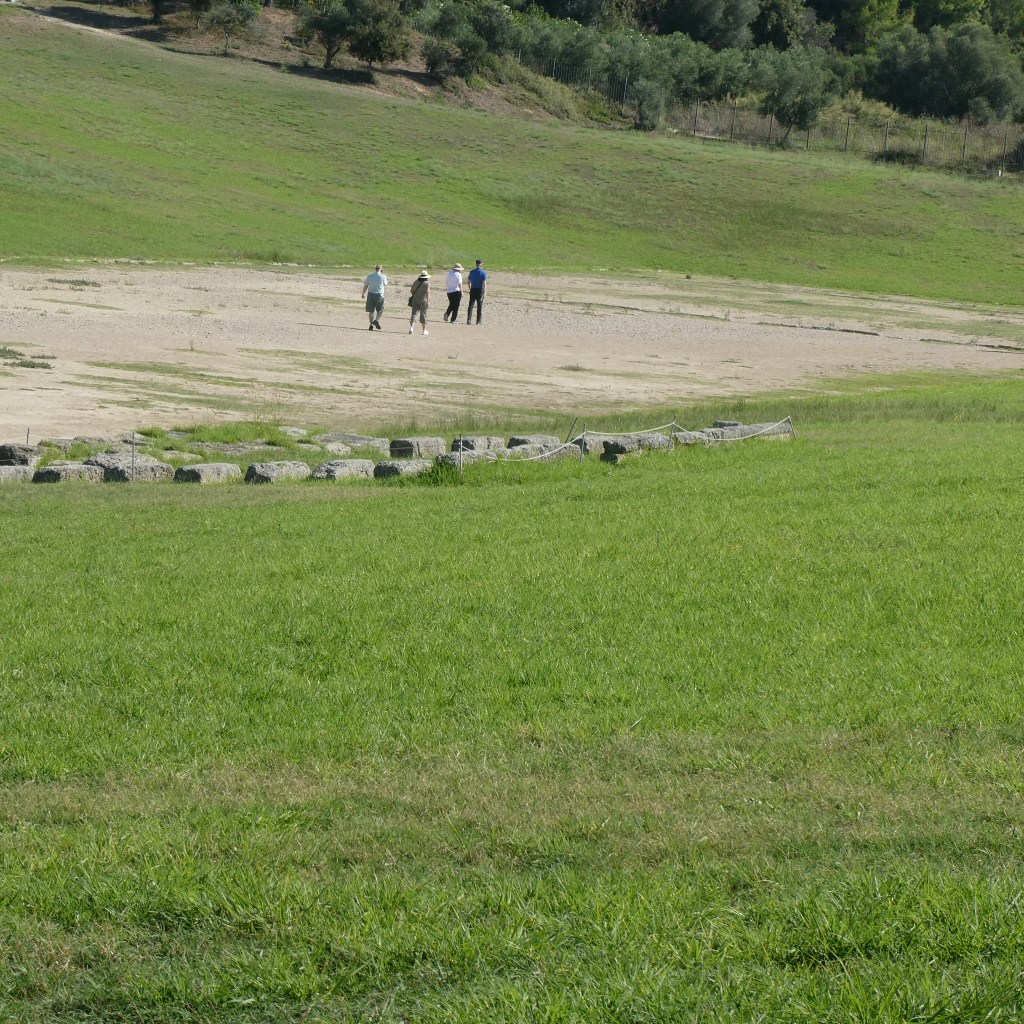
These are the blocks from where the judges watched the competition. Anyone caught cheating had to pay for a “cheater statue” to be displayed on a walk of shame with his name, his father’s name, and his town’s name.

The champion of the competition was awarded for the win on this rock. He received a wreath and an olive oil gift, but also got fame and avoided taxes.
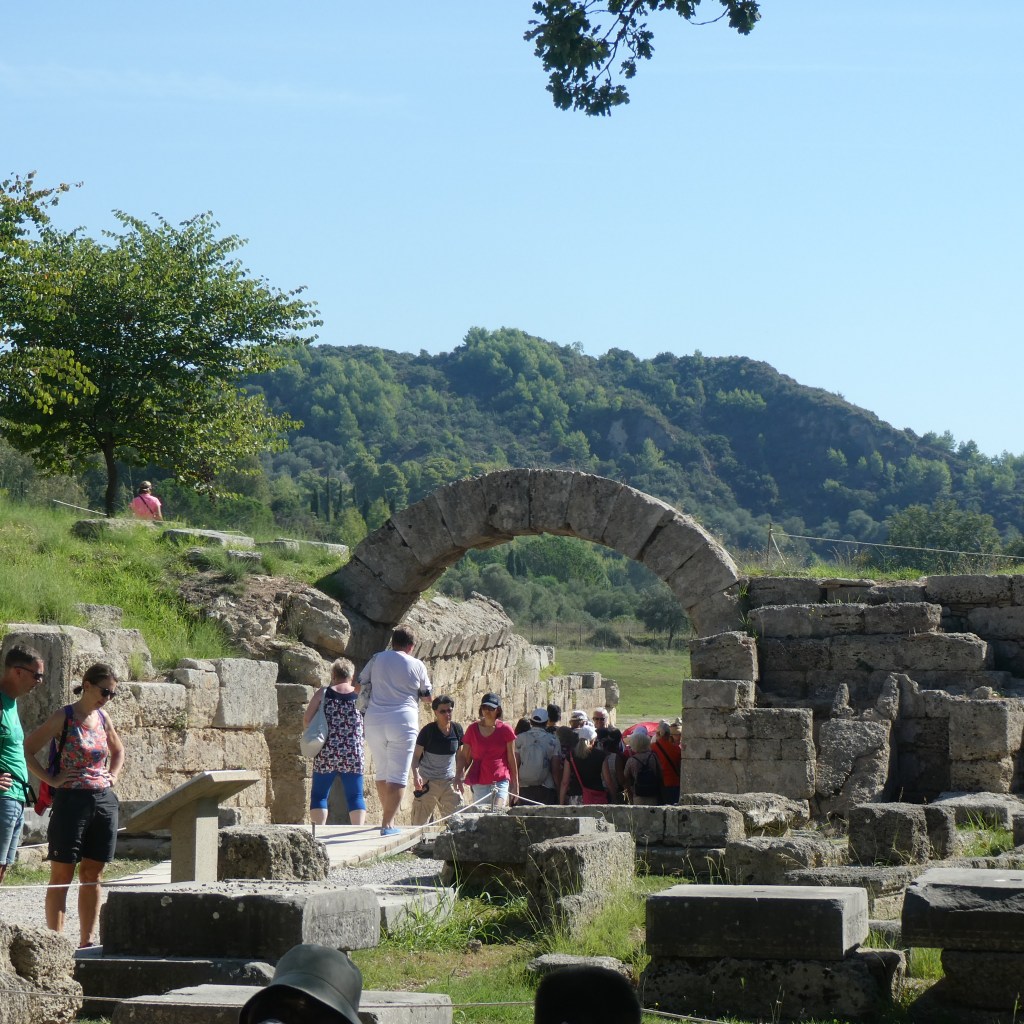
This arch leading to the competition grounds is from 4th century BC. The arch never fell.

The Olympics were celebrated here from the 766 BC to 393 AD. Then they were forbidden and the site was abandoned.
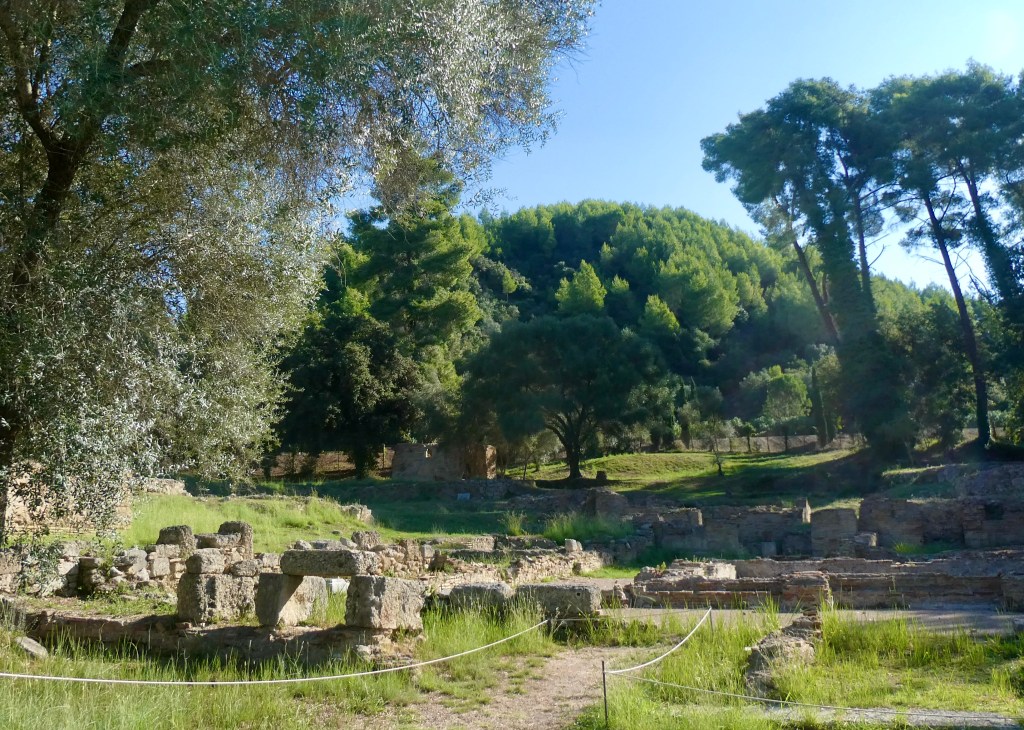
Greece is at the connecting point between European and African continental plates so earthquakes are common. This hill used to be three times higher. An earthquake collapsed the hill and debris covered the site.

German archeologists, led by Wilhelm Dorpfeld, excavated the ruins beginning in 1877.

They uncovered many artifacts, including a complete statue of Hermes, the messenger of the gods. This statue is thought to have been built in 340-330 BC. Hermes was being prepared for transfer to Rome when the earthquake happened, so was protected and remained intact.
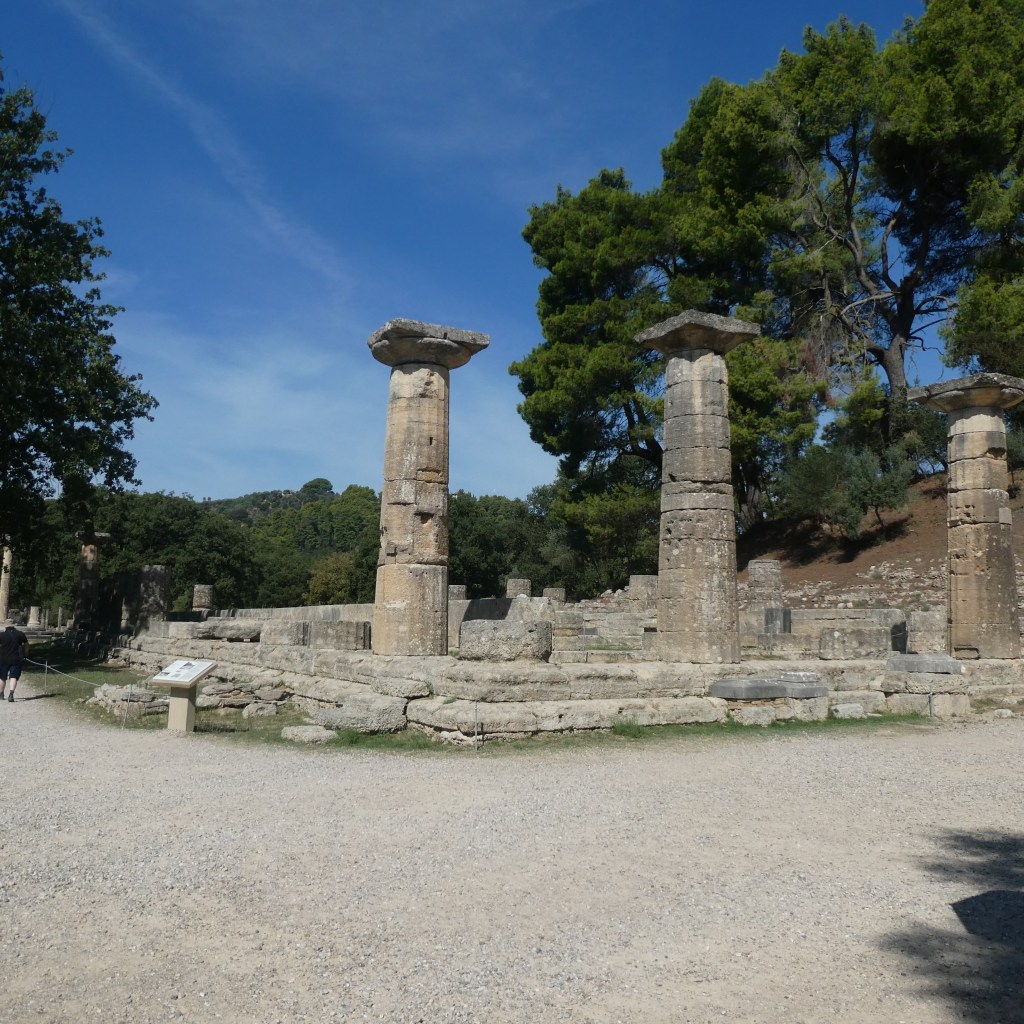
These are remains of the oldest temple on the site. It was built to honor the royal couple Hera and Zeus.
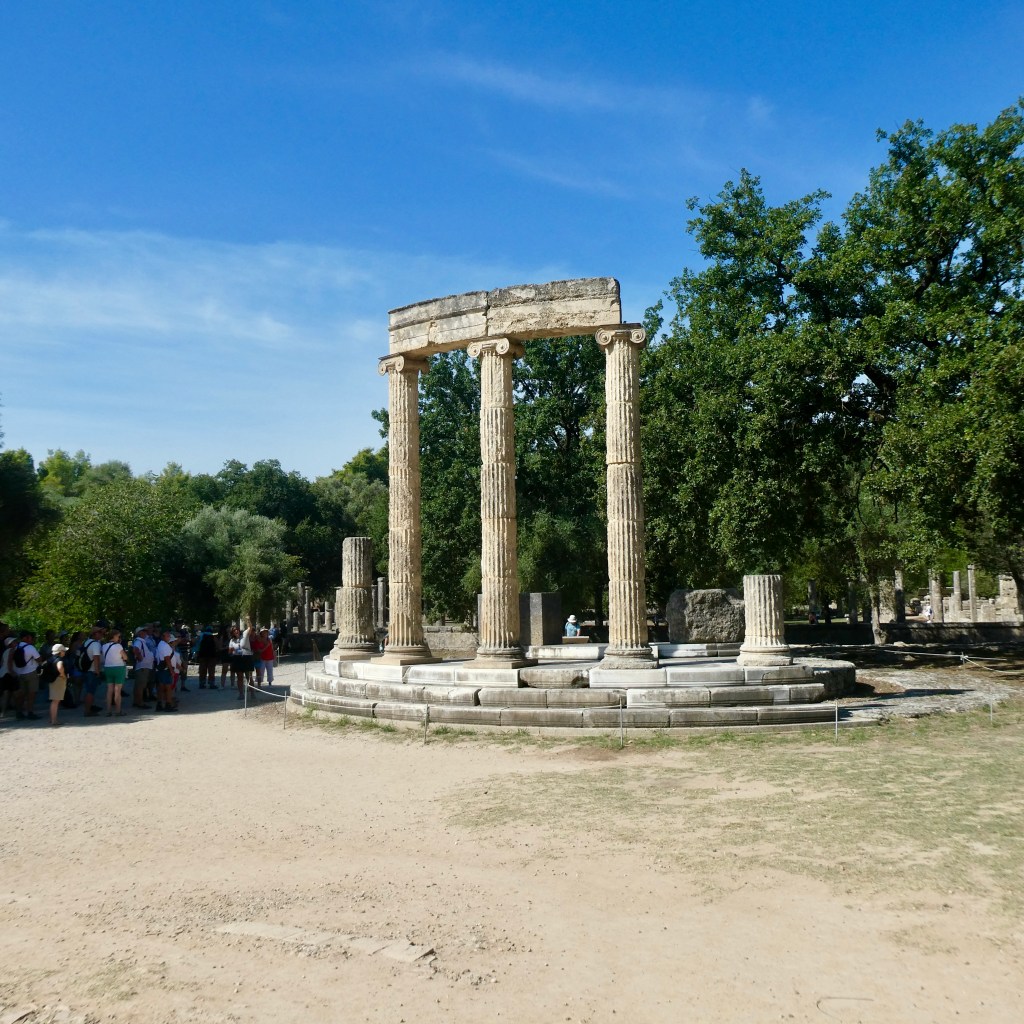
This monument is for King Philippeon, the father of Alexander the Great. The king was murdered so Alexander was the one who had it completed.
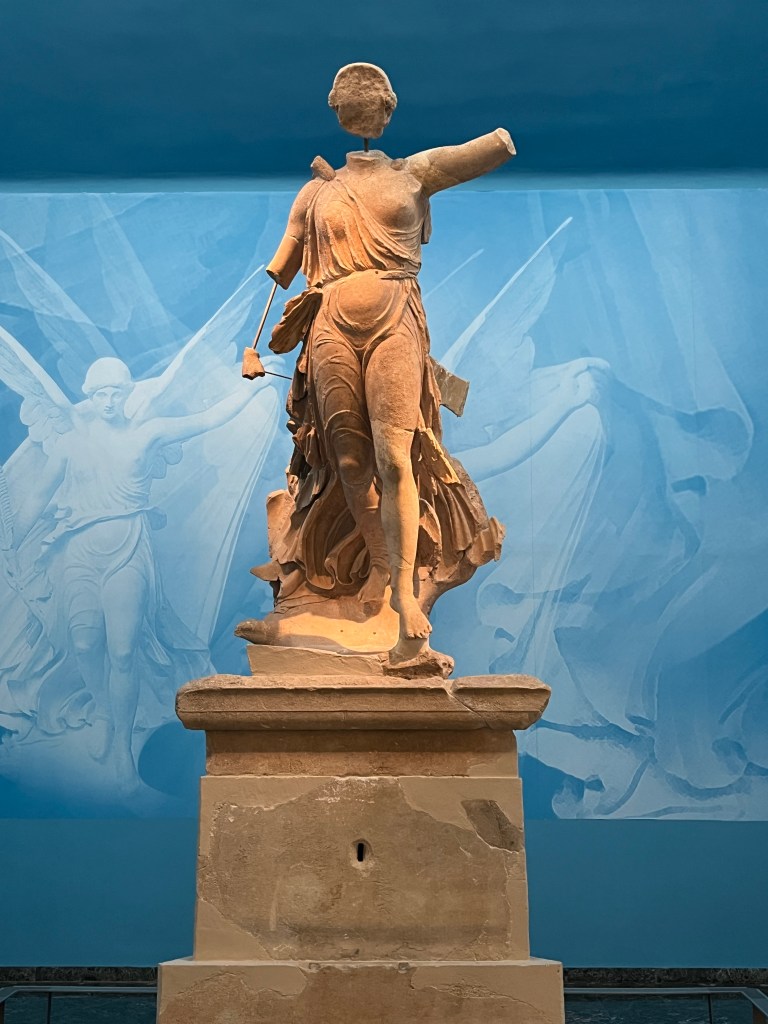
This is the Nike of Paeonios – once an offering to Zeus – from approximately 421 BC.
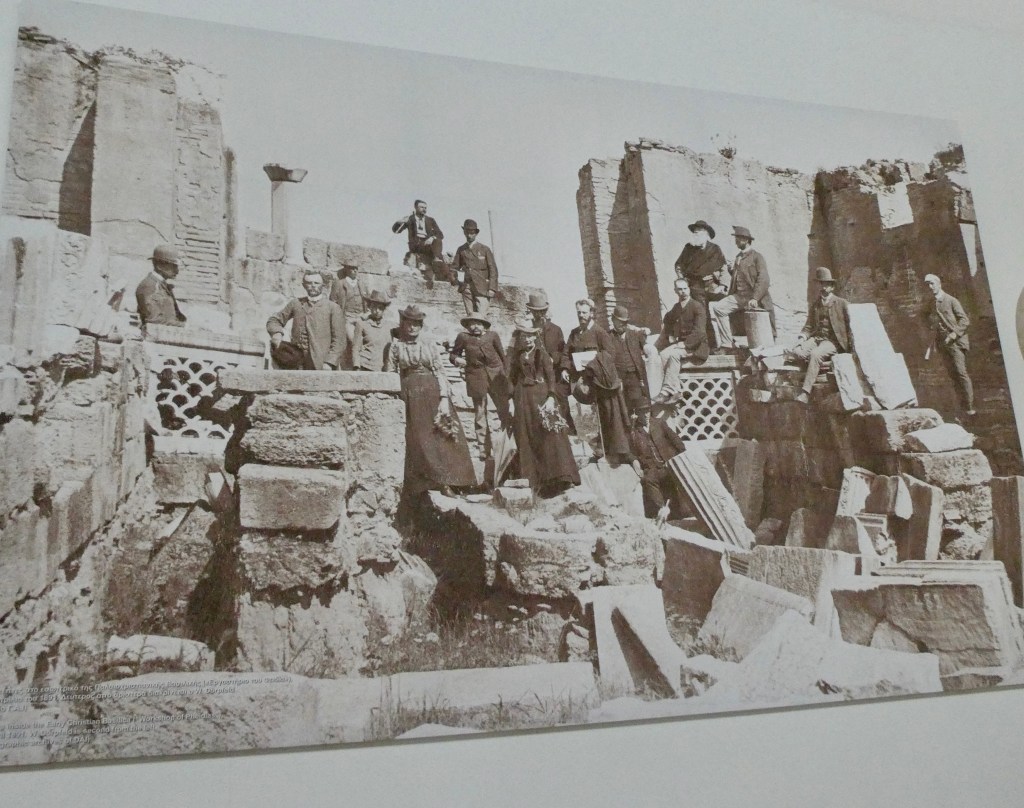
This photo is from 1891, five years after excavations began. The interest generated by the excavations contributed to a revival of the modern games in 1896.
Over 1500 years passed between the last Olympics held here and the first of the modern games held in Athens. A Frenchman, Baron Pierre de Coubertin, had the idea to begin the modern games in Paris in 1900. People from 34 countries loved the idea of starting the games but collectively decided on Athens in 1896.
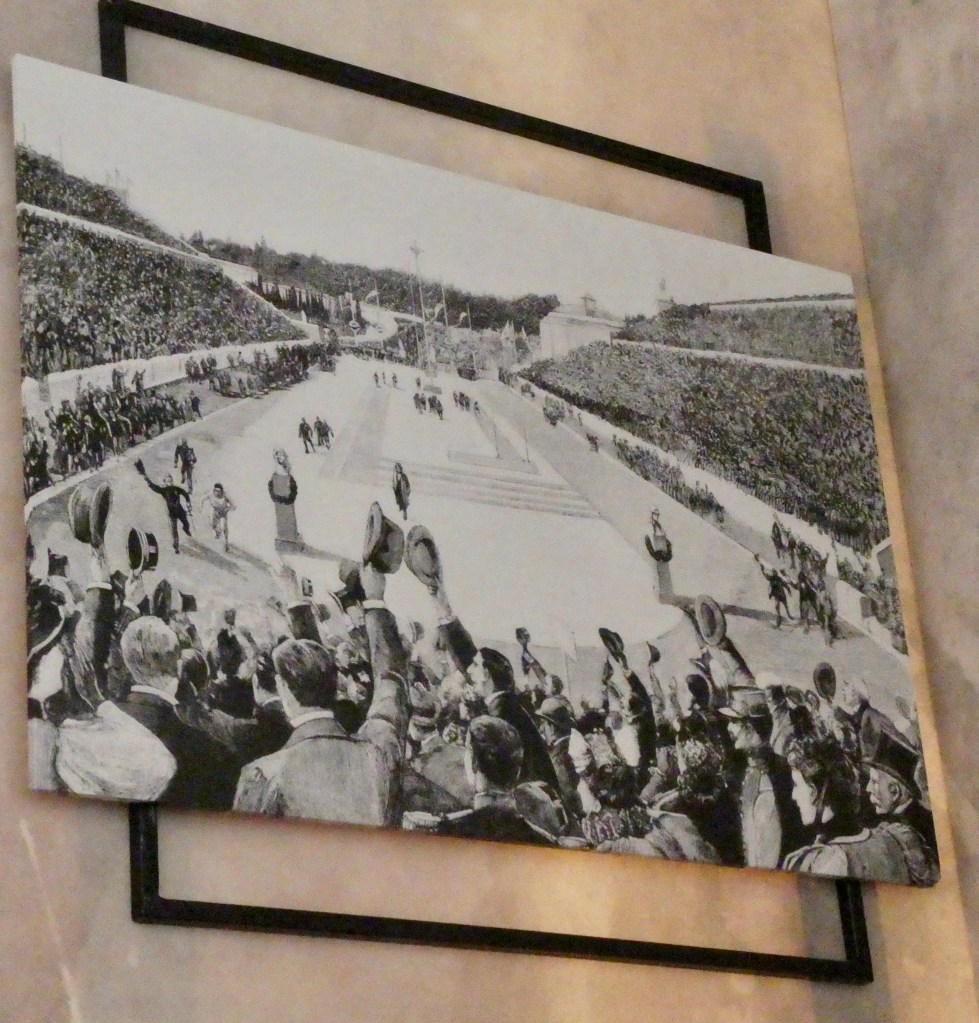
The marathon race, not part of the ancient games, began as an event in 1896 commemorating a run by Pheidippides. After a great battle in Marathon, he ran to Athens to tell of the victory. The distance was just over 26 miles, the distance of modern marathon races.
The inauguration of the Olympic Flame began in the 1928 Amsterdam Olympic Games. The first Olympic torch relay was in the 1936 Berlin Olympic Games.
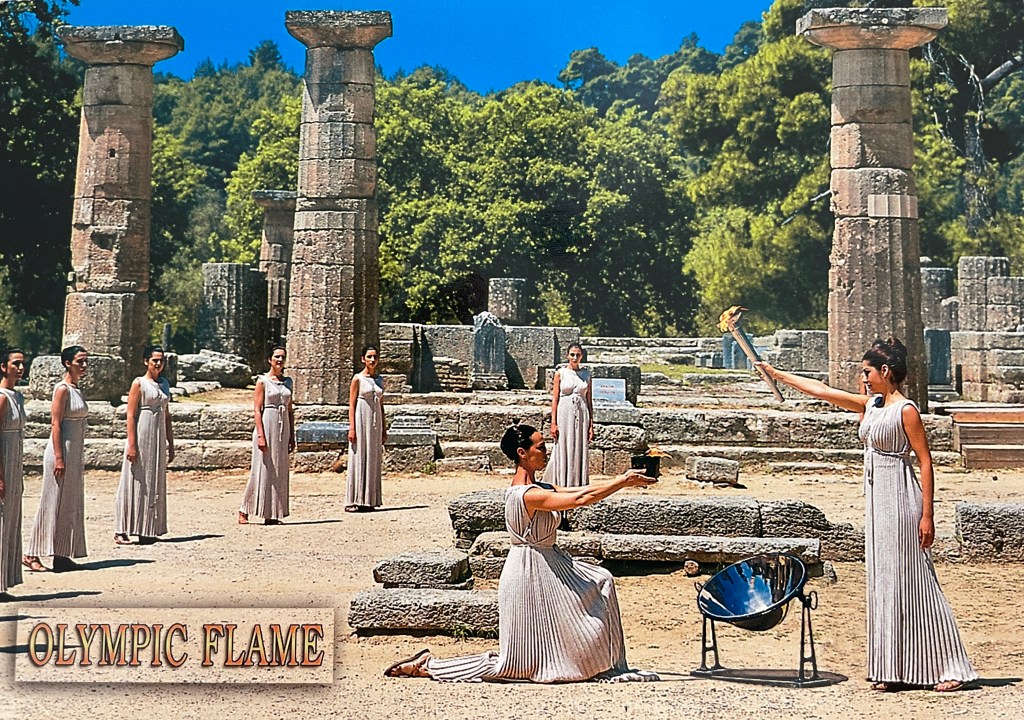
These days the torch begins in the stadium in Olympia, then goes to Athens and to the world beyond. We didn’t see this re-enactment. It is a picture of a postcard we bought.
The 2004 Olympic Games were held in Athens once again. Olympia, site of the ancient games, was included.
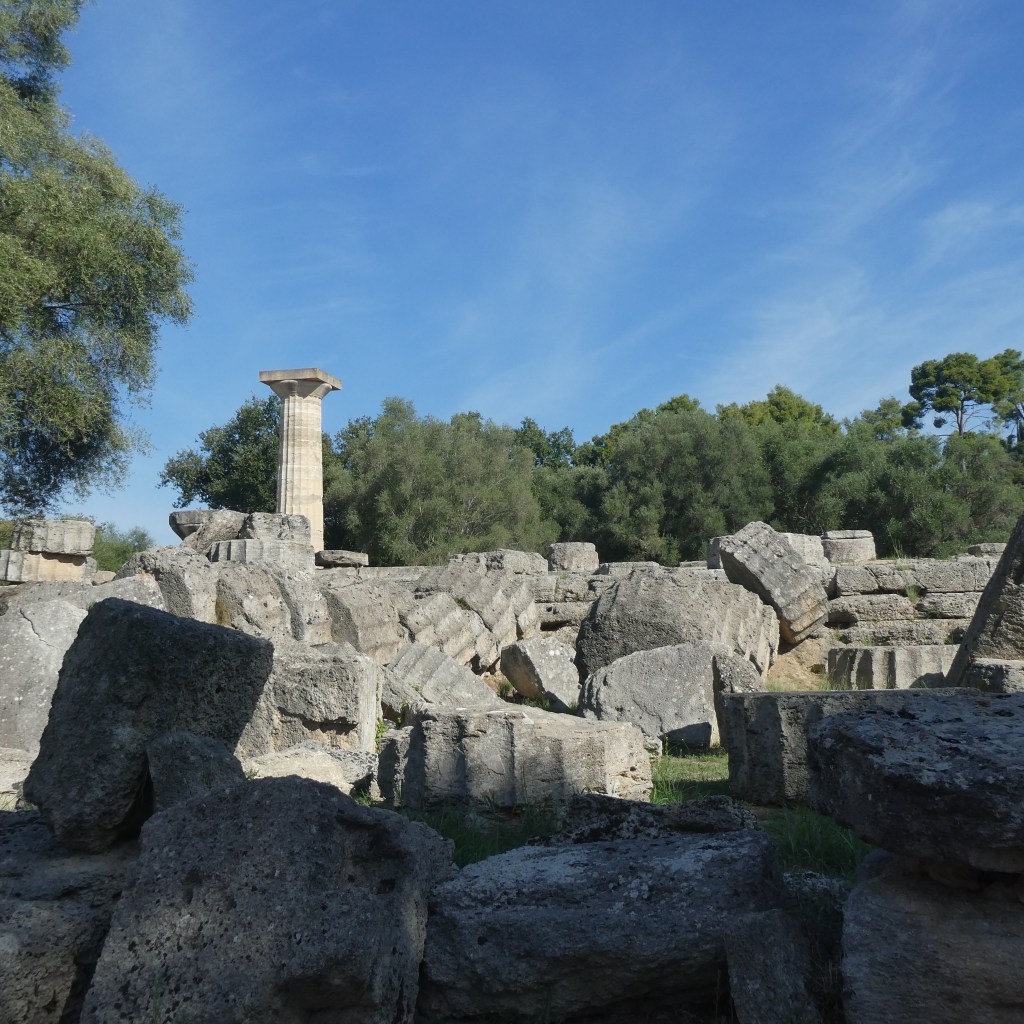
The earthquake that destroyed and covered the stadium and grounds so long ago caused all the columns on the Zeus’ Temple to fall. Organizers rebuilt one of the columns for the 2004 Olympics.

A fire burned the area in 2003. In March of 2004 the entire area was still black. Once again, a German citizen cared about the site and donated whatever was needed to make it green again.

The men’s and women’s shot-put was held in the old ancient Olympic stadium. I’m pretty sure the competitors were allowed to wear clothes!
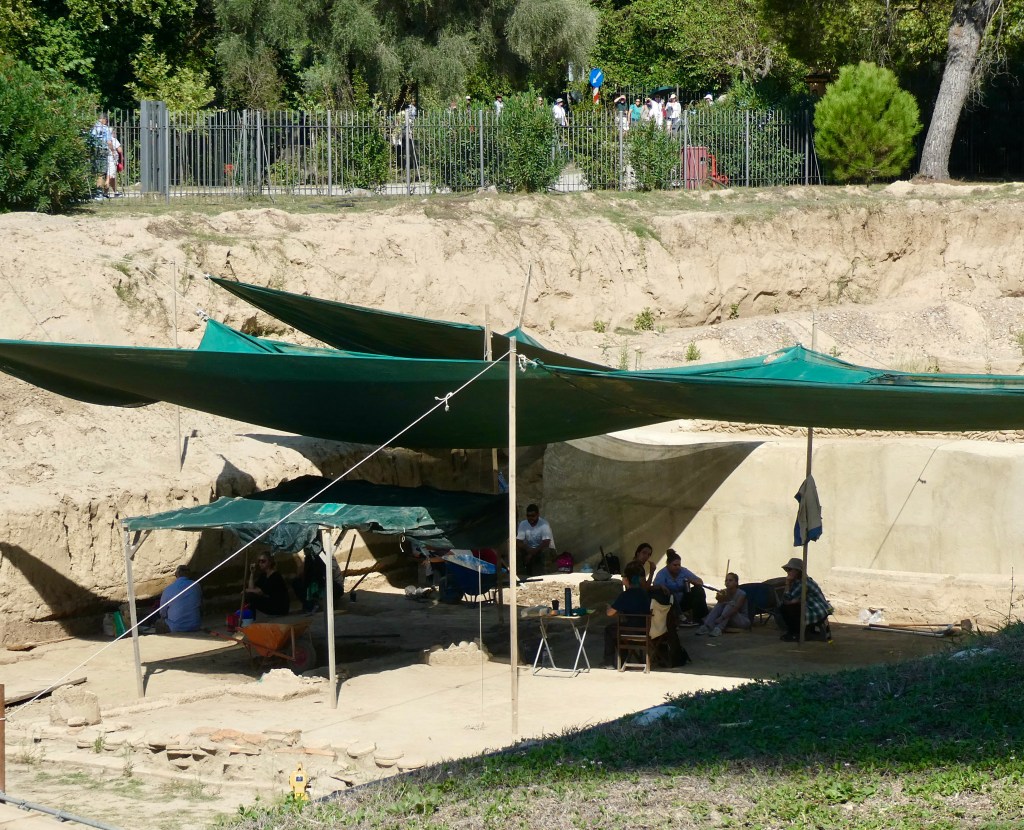
German archeologists are still in efforts to excavate the site of ancient Olympia.
Many of the photographs and artifacts shown here, and so many more, are in the Archeological Museum near Olympia and the Ancient Olympic Games, both of which we visited.
We were in Olympia, Greece on September 19, 2023
Next up: The UNESCO World Heritage Site of Epidaurus


 Serene Wandering