
The day before docking in Alexandria, Egypt, our cruise director put fear in all of us about going into Egypt. She went on and on about leaving jewelry, watches etc on board. We were told we must take our passport- but be sure not to lose it! We were told we would be highly pressured by vendors and everyone, especially women, needed to dress conservatively.
Her strategy seemed to be that if anything went wrong while we were in Egypt it wasn’t going to be Holland America’s fault! We had a shore excursion from the ship into Alexandria so we weren’t too worried. We weren’t going to be on our own.
An Egyptian family on board was not happy about the way she represented their country.
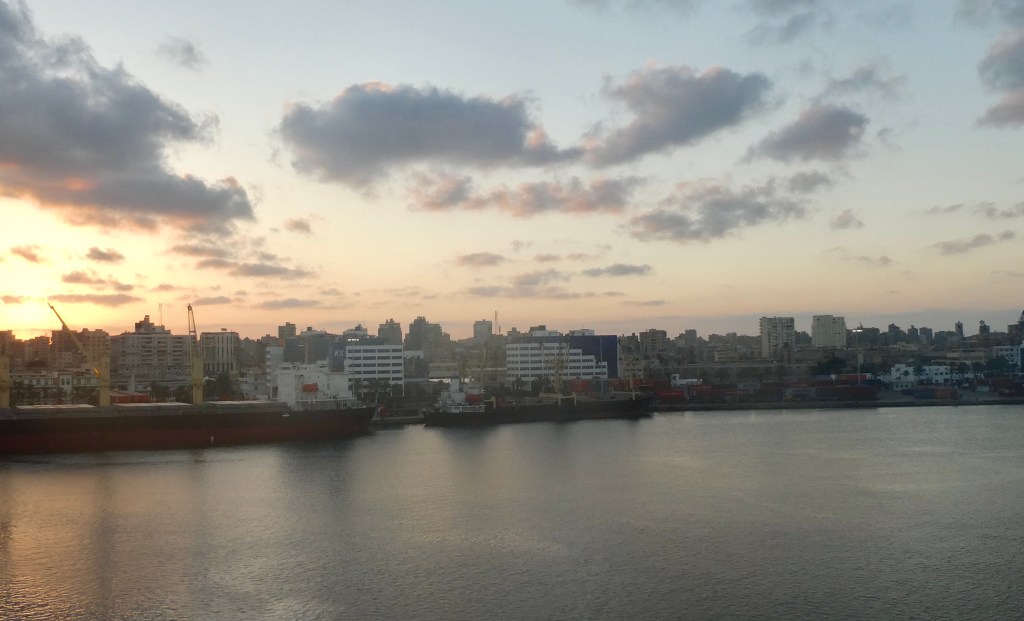
The vast majority of our shipmates left the ship before 6:00 am to visit the attractions near Cairo and Giza. For a couple of hours it seemed like there was no one else still on the ship! We had plans to tour throughout Egypt a few months later so opted to stay and visit Alexandria instead.

Alexandria is on the Nile delta in the north – marked with the number 4.
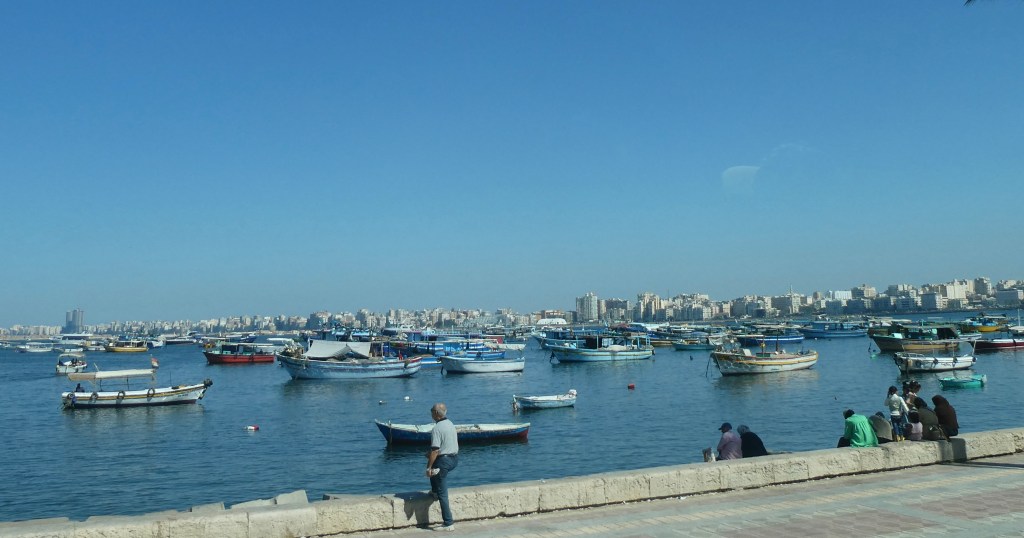
In 2000 BC the community that became Alexandria was a small fishing village. In 331 BC Alexander the Great wanted a capital city in the center of his new empire. He chose this small village and stayed for six months. He is believed to be buried in Alexandria but it is not known where.
Alexandria’s population now totals seven million people, ranking as Egypt’s second largest city. Omar Sharif is from Alexandria. Daphne du Maurier, author of Rebecca, also lived in Alexandria.

Our guide was Zaharia. She was a valiant saleswoman on the attributes of her “cosmopolitan” city.
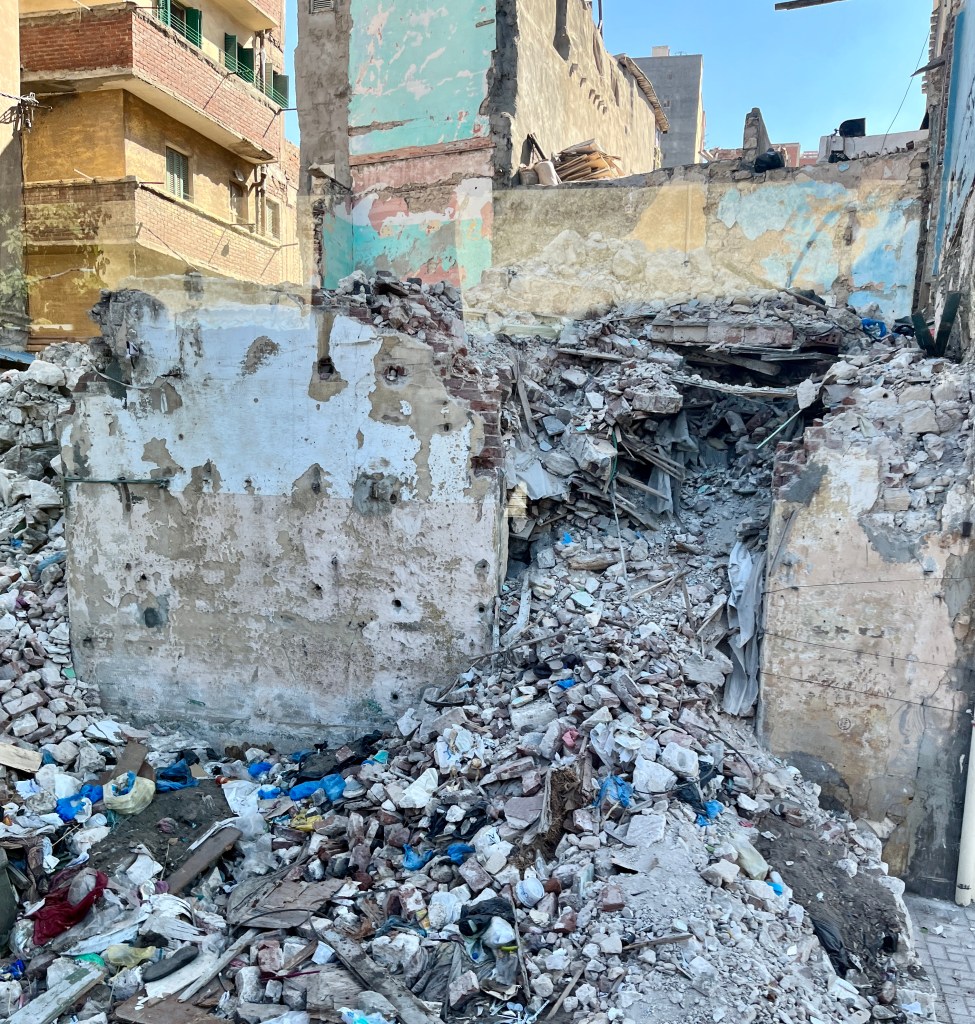
Hearing what she said and seeing what we saw didn’t always go together.

Zaharia said Alexandria is a modern Mediterranean city, taking care of and educating women. She said a woman’s head covering is more practical than religious in Alexandria – a fashion accessory that means you don’t have to fix your hair everyday! “I wear my head covered because I like it. If you told me I had to, I wouldn’t.” She also said “We speak Arabic but we are not Arab.”
Zaharia told us that all the religious prophets were in Egypt at some time. Muslim, Christian and Jewish people have, and continue to live together cooperatively here. She believes a focus on education, and sharing that cooperative history, makes people in the city more tolerant.

“There have been many, many groups that have had to leave their homelands and have been able to find a good new home in Alexandria.”
This cruise is the first time Holland America has visited Egypt since the pandemic and we were the first cruise to arrive this season. The local people were always waving and were very welcoming. Sixty-seven percent of income in Egypt is from tourism so having a welcoming attitude makes sense.
Zaharia asked us to consider, that if vendors seem aggressive, it is because they are trying to support their families in a country where the average income is very low. American dollars are a very desirable currency.

We had discreetly armed security on the bus and walking around with us. It was a very warm day and our guards wore their suit coats or vests.

We had police and military escorts.

Some of our security was not so discreet. Three busses from the ship traveled together. We never felt unsafe.
Our first destination was the Catacombs of Kom El Shoqafa. The catacombs were discovered when a donkey fell through the surface in 1892.

This photo shows where ground level was before excavation.
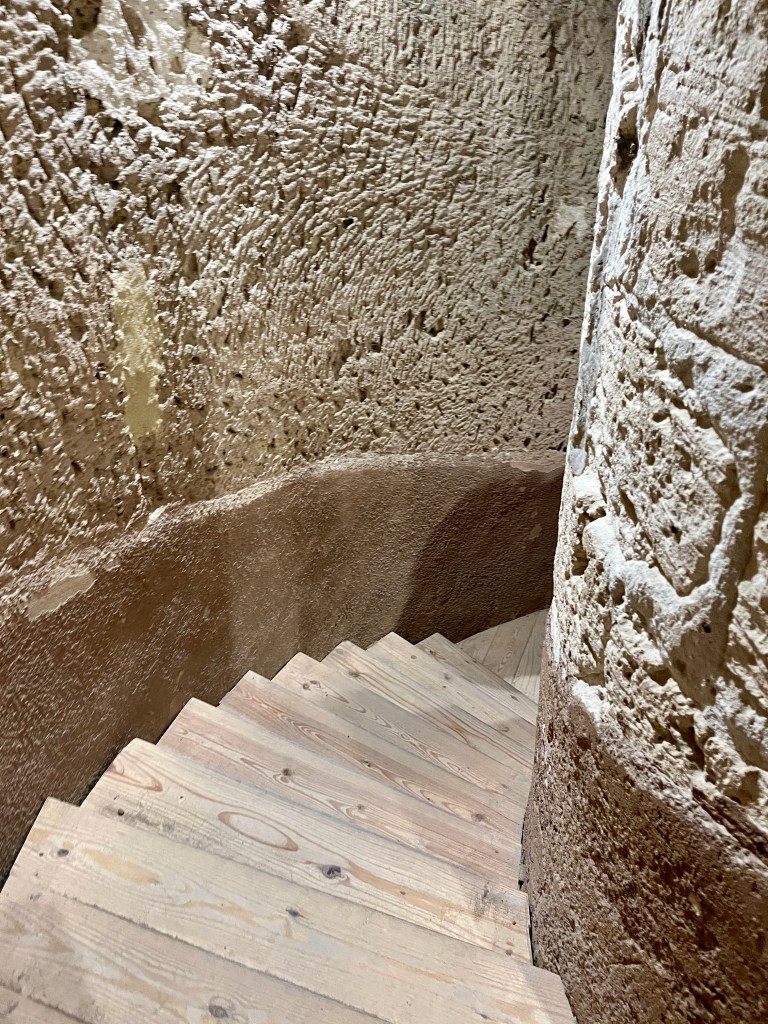
We went down 100 feet to see one of the Seven Wonders of the Middle Ages.

Any tomb in Egypt is required to be under the ground.

The catacombs are the largest Roman burial site, (not Christian), discovered in Egypt.

The catacombs consist of three tiers of tombs and chambers cut into the bedrock. It was constructed in the second century A.D. as a single-family crypt and expanded.

Much of the lower two levels were under water for many years so those bodies were destroyed. They had not been mummified.
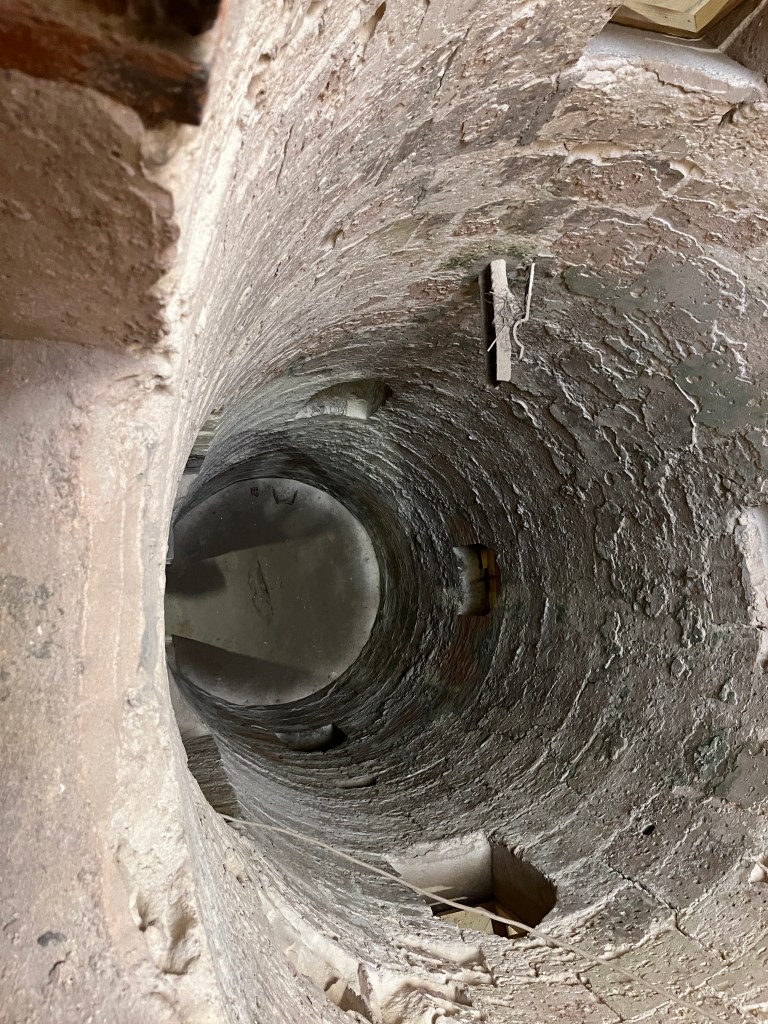
The water had to be pumped out. The openings are placing bodies at different levels – an ancient elevator of sort.

There are 300 plus extension rooms for humans and animals, some were horses, dating to the early years AD. Likely, many more will be discovered.
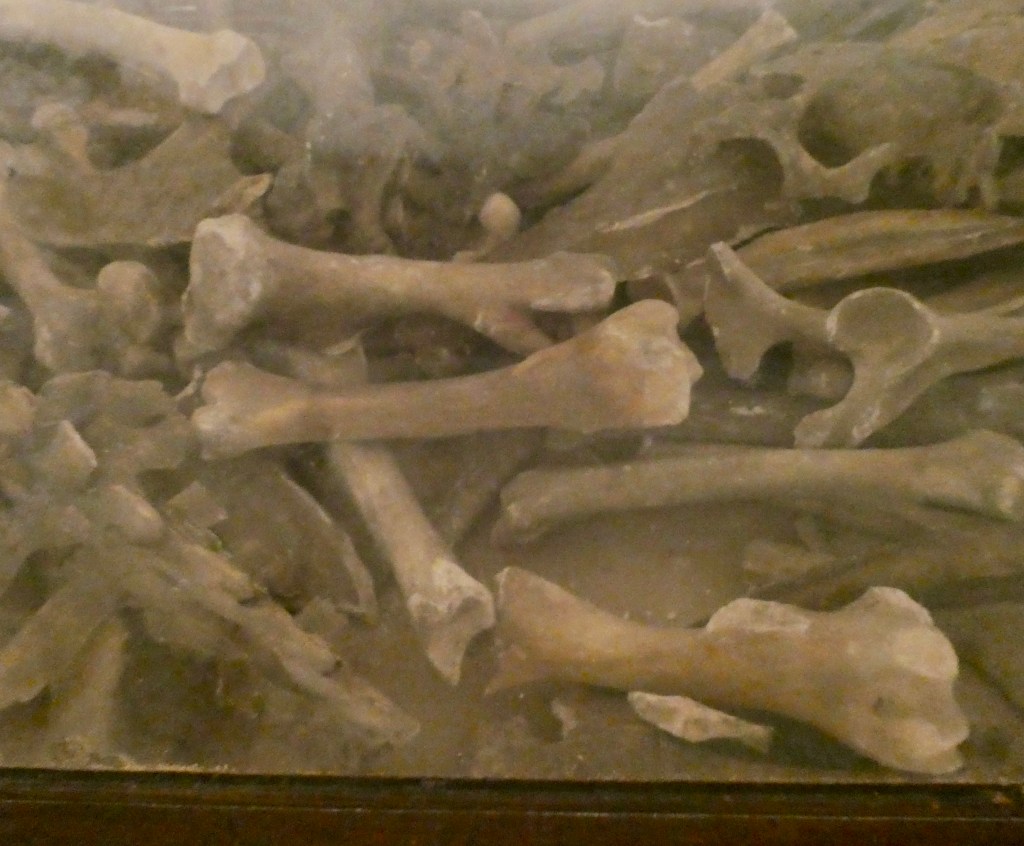
There are some bones on display but most of the items found here were moved to the National Museum.
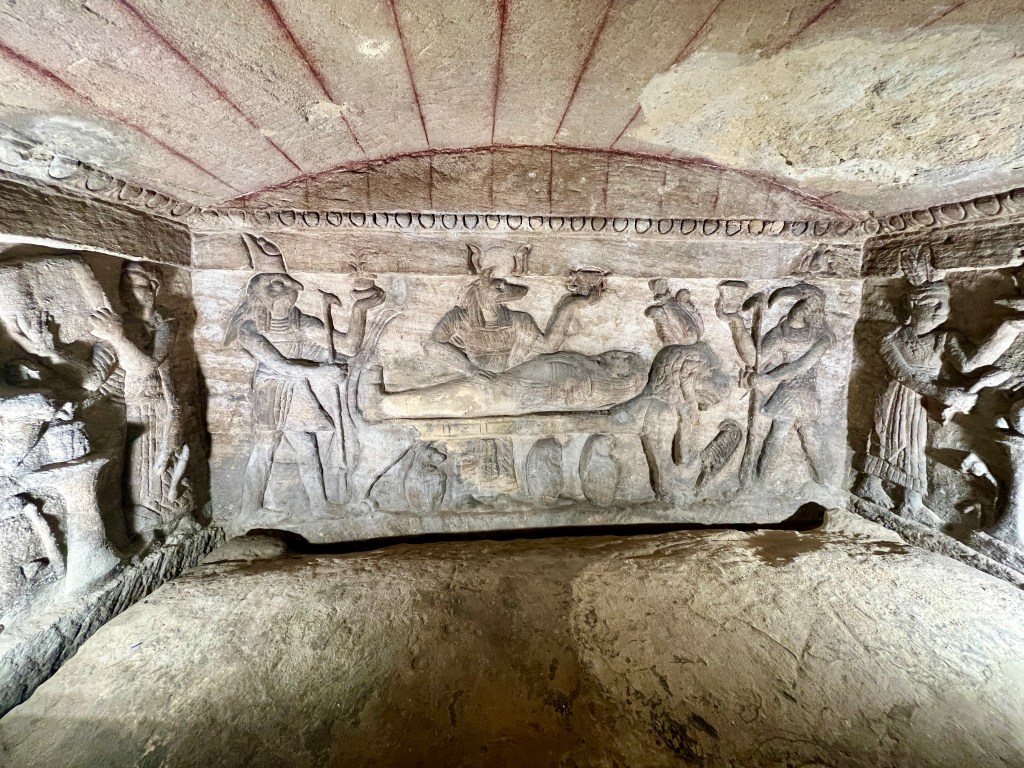
While there are Roman and Greek elements, the purpose and practice was purely Egyptian.
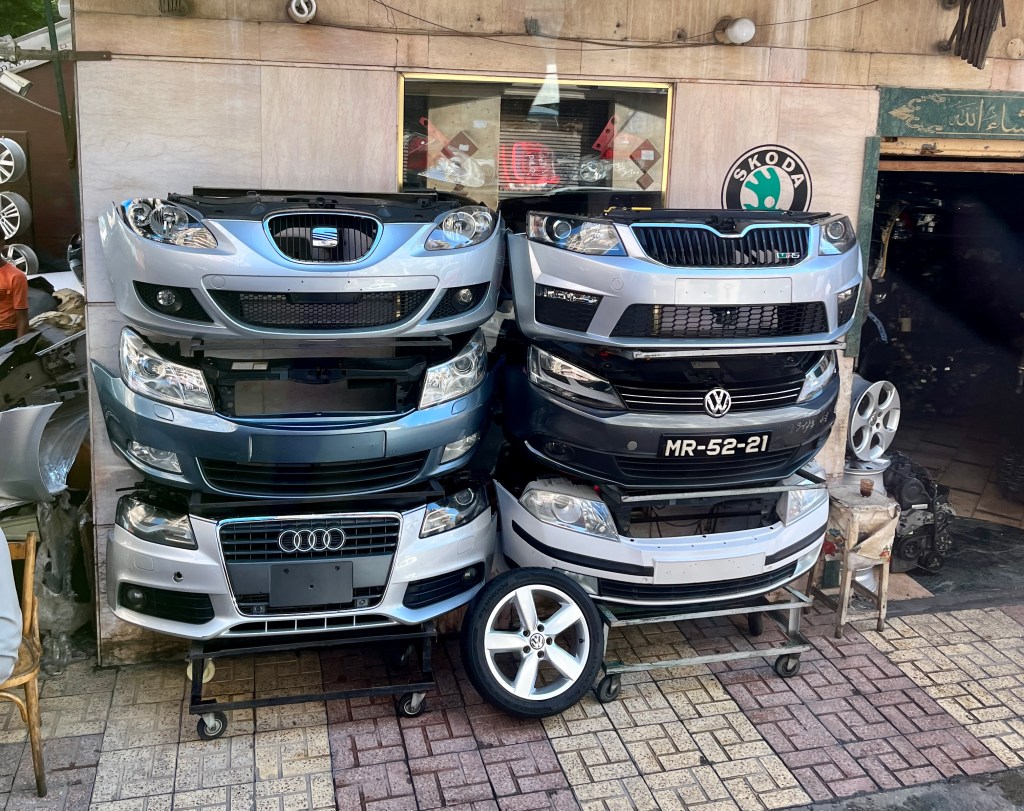
Leaving the catacombs, we drove through other parts of town enroute to our next destination. We passed a neighborhood dedicated to selling auto parts.

There was another neighborhood dedicated to selling textiles. Notice the woman waving at our tourist bus. This happened frequently.

We drove past Pompey’s Pillar at the Temple of Serapis. It is an 88 foot tall, 7 foot wide column of polished Aswan Rose granite. The temple was once one of ancient Alexandria‘s most important buildings. Despite its name, the pillar was erected to honor Diocletian in the fourth century A.D.

Our next destination was the Kom El-Dikka Roman Theater. It is the only remaining Roman amphitheater in Egypt. It was discovered in 1960 while foundation construction was underway for a new apartment building. The first item that was found was a statue of Alexander the Great.

The theater once had 13 semi-circular tiers of white marble imported from Europe. The theater contains galleries, sections of mosaic flooring, and marble seats for up to 800 spectators. Part is original and part is restored.

Also onsite are Roman Baths, and a college of humanities.

Excavation continues with money from UNESCO. Archeologists assume about 40 percent of the site has been excavated.
Before excavation, the area was once a WWII battlefield.
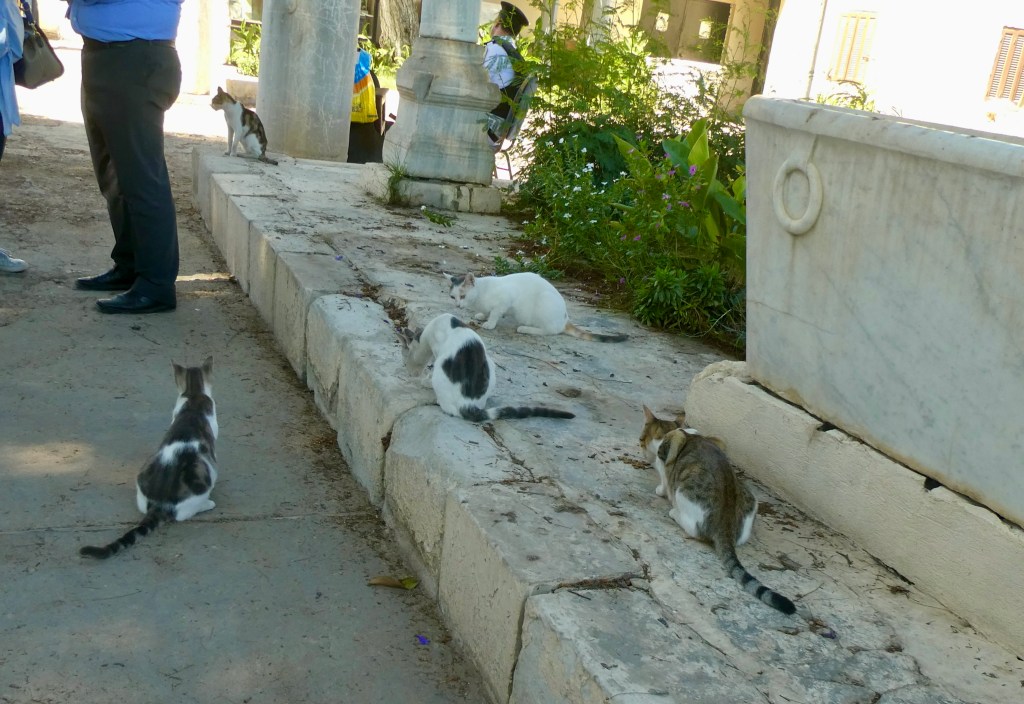
And just like in Greece, there were cats everywhere. The street cats didn’t always look well in Alexandria but these cats were healthy and friendly. We noticed tour guides giving them food they had brought in.
While riding to our next destination, Zaharia talked to us again about her city and Egypt. She said that military service is compulsory for men lasting one to three years depending on a man’s education.
Women must serve in social service work for one year. The Arab Spring in 2011 removed President Mubarak and the protests were generally about social issues.
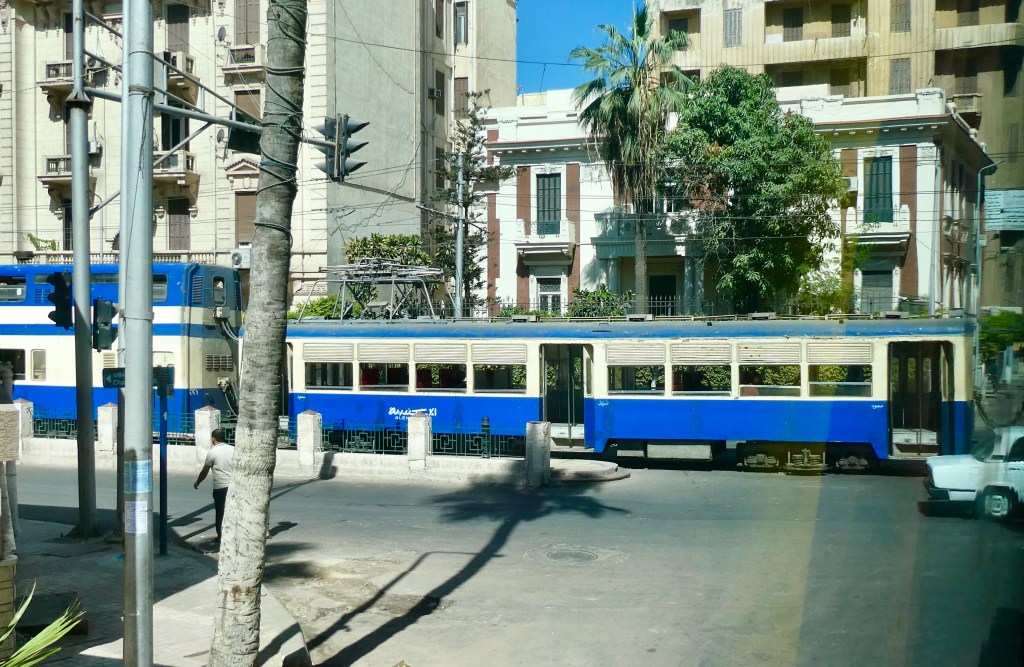
Alexandria does not have a subway system but does have a tram system. It was built by the Dutch 100 years ago and is still in use.

This Sunken City area is where remains of the old Alexandria library are underwater. The library was built in the 3rd century BC and had 700,000 volumes. Visitors to Alexandria knew to bring a volume for the library in order to be well received.
Julius Caesar was trying to attack an enemy in 48 BC and destroyed the library accidentally. Only one original manuscript remains.
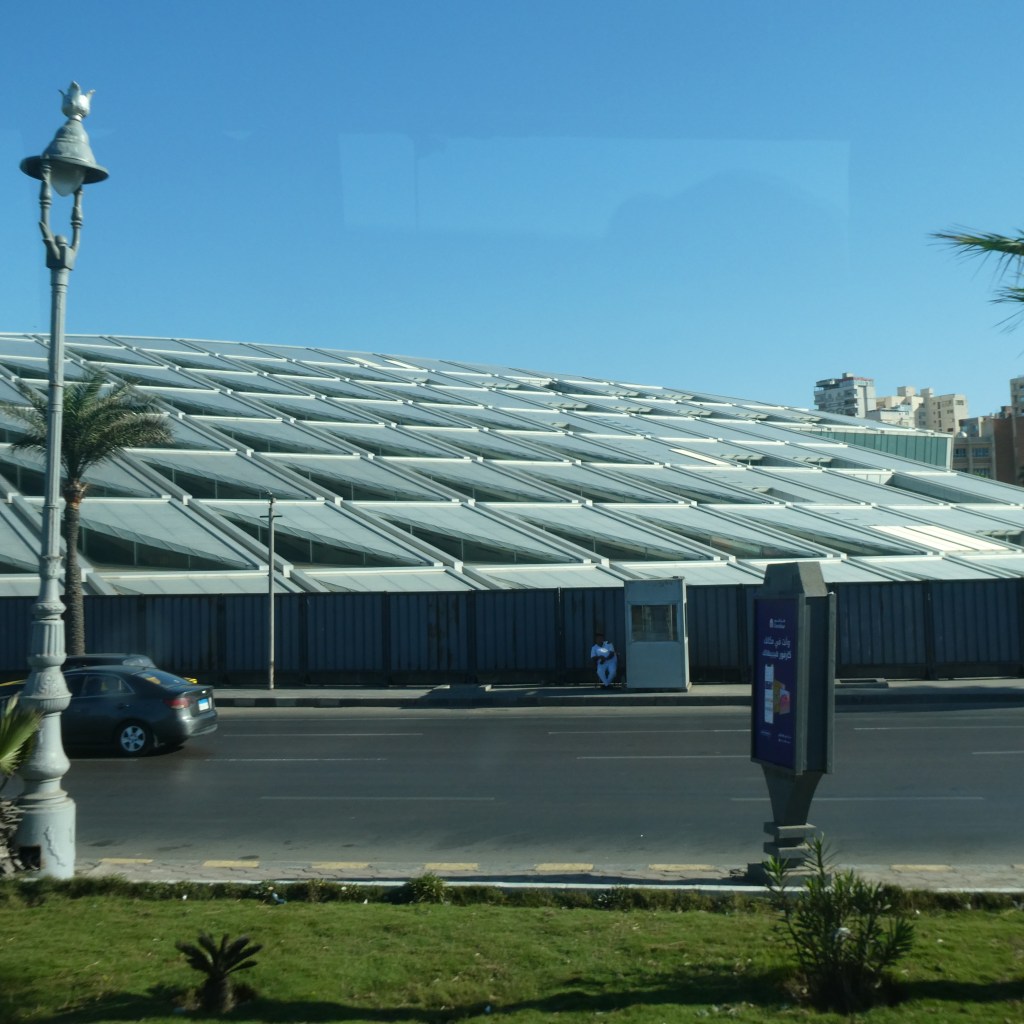
Alexandria University donated land in 1990 for a new library. While surveying they discovered remnants of the old library underneath and nearby underwater.

The new Alexandria Library is the second largest in the world by volume. (The US Library of Congress is the largest.) When the Alexandria Library reaches its capacity it will again be the largest in the world.
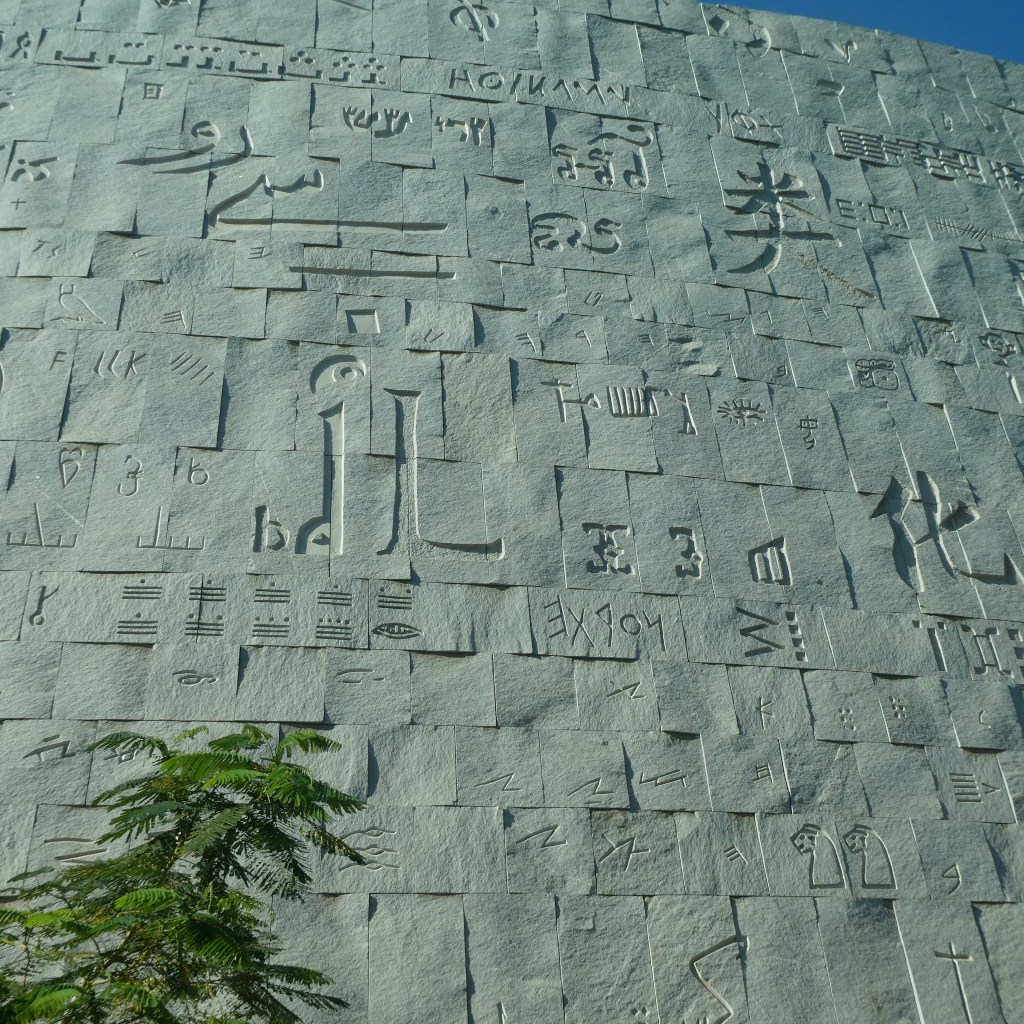
The Great Library of Alexandria was closed on Fridays – and it was a Friday.
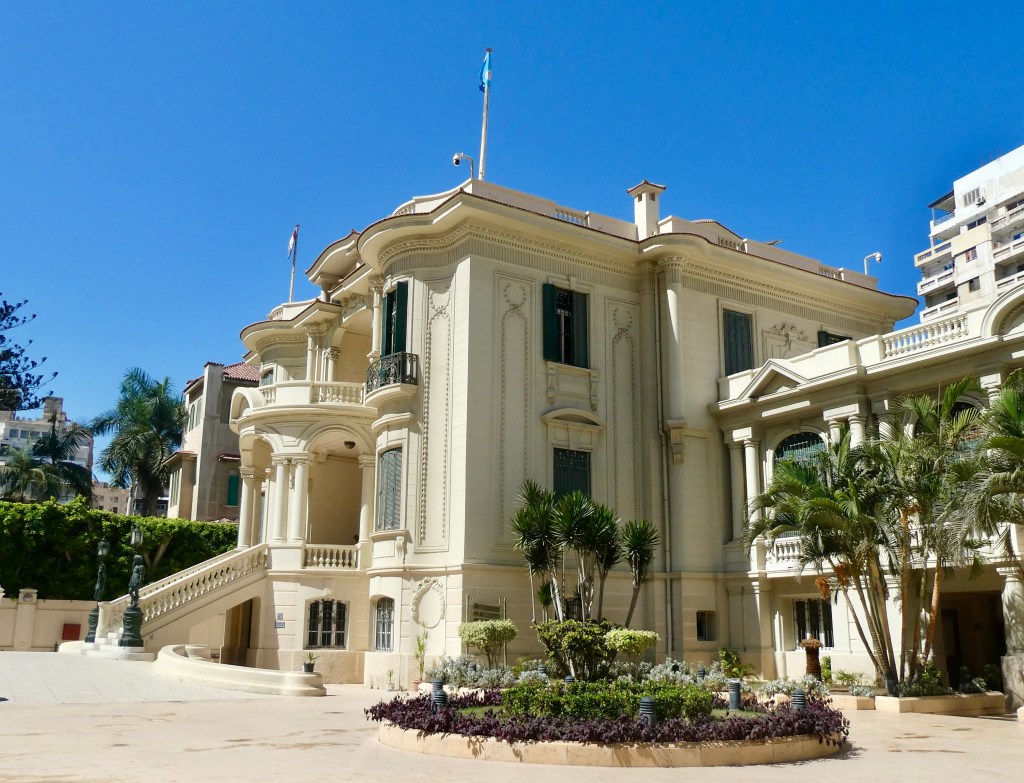
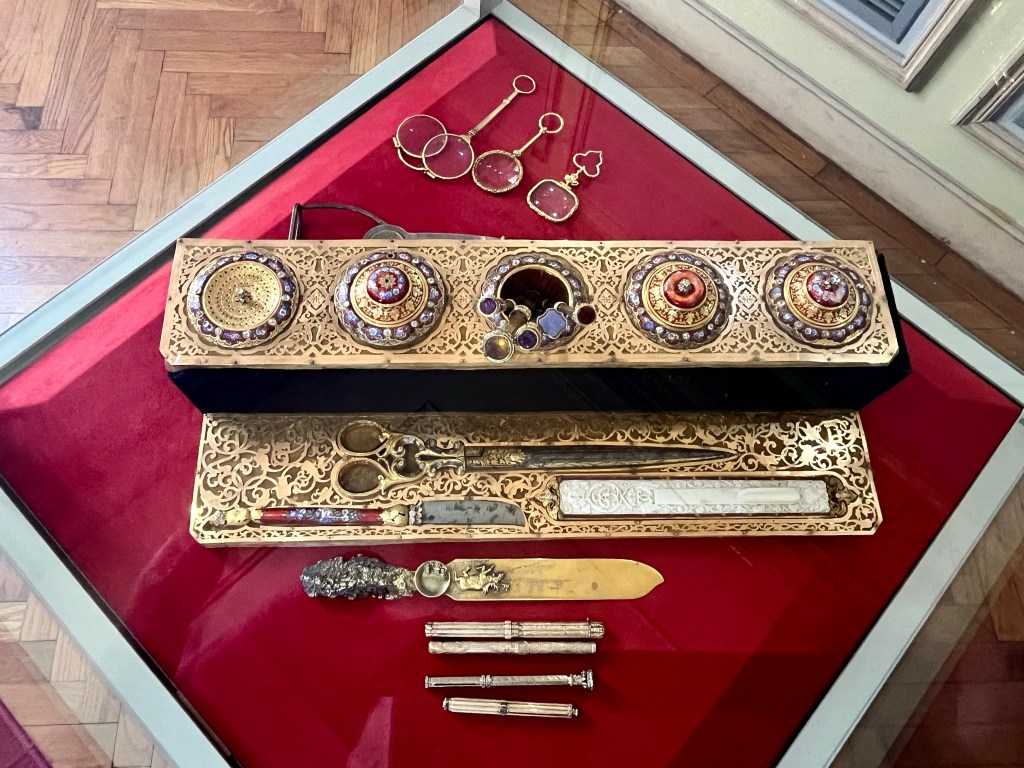
Our next destination was the Royal Jewelry Museum, housed in a former royal palace.
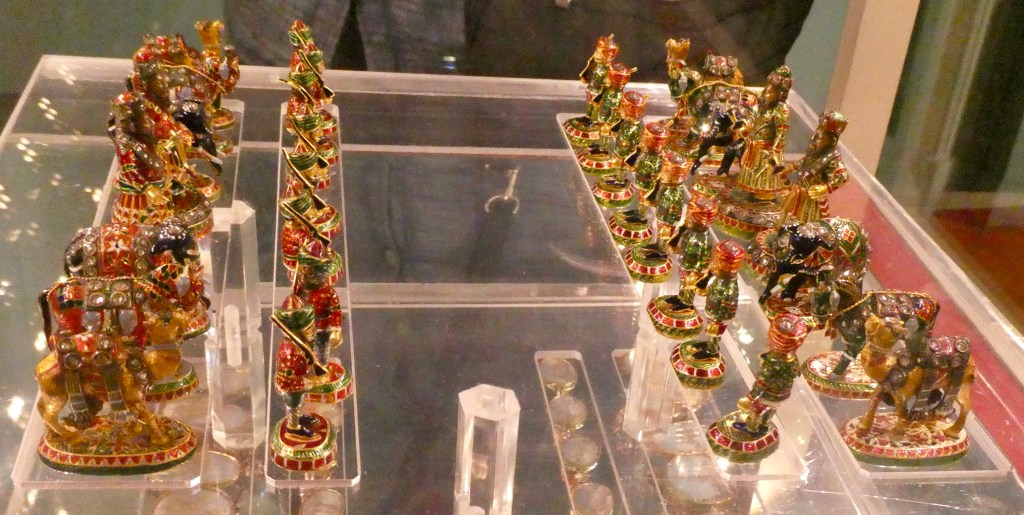
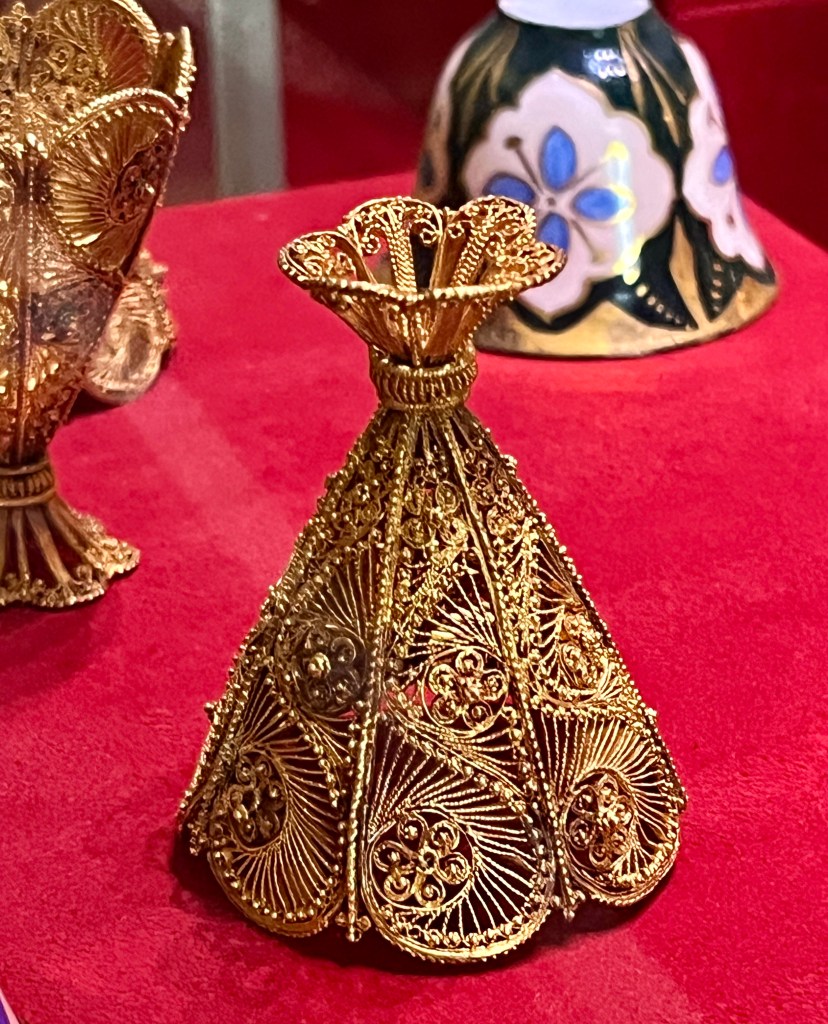
The museum has 11,000 pieces of jewelry that belonged to King Farouk and his family.
The king and his family left in 1952 with only 72 hours to prepare.
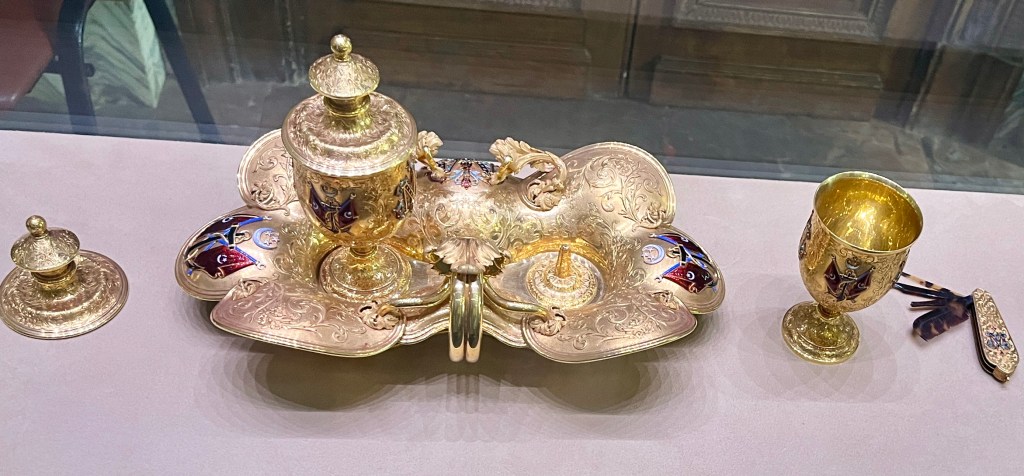
Farouk was the last monarch of Egypt, ousted after the Egyptian revolution.

The Abu Al Aubus Mursi Mosque is the largest mosque in Alexandria.

Both men and women are able to go inside. We did not have that opportunity even if that was possible for visitors.

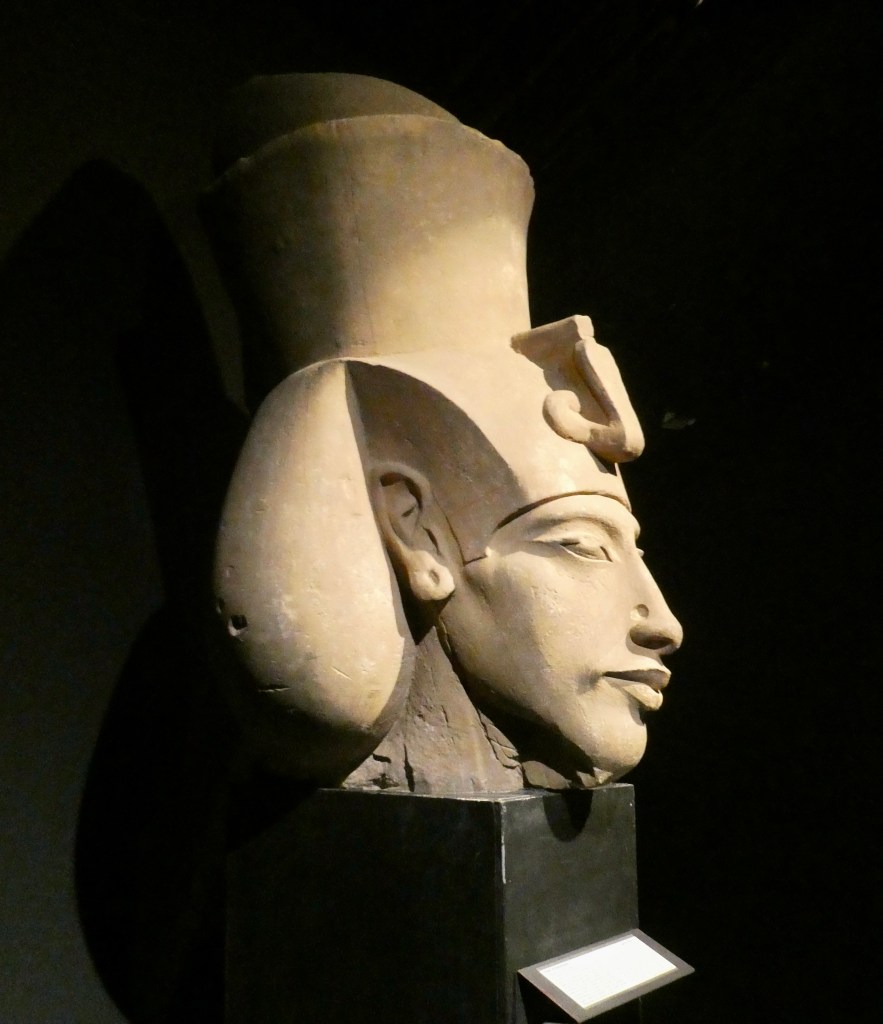
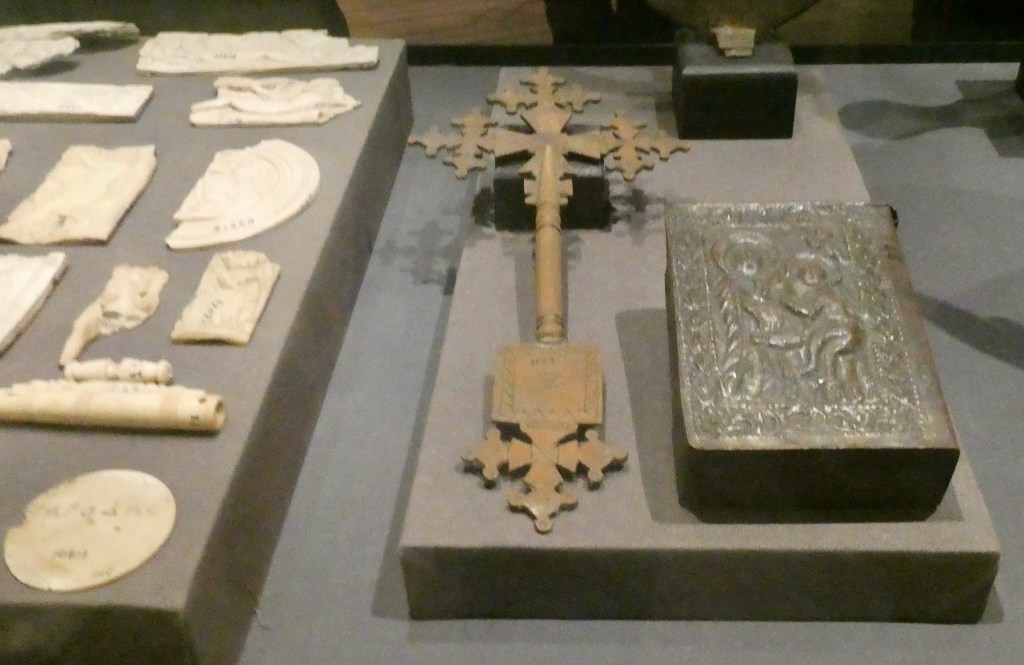
We visited the Alexandria National Museum in a building that was once owned by Omar Sharif’s uncle. It was also used as an American consulate before becoming a museum.

The collection includes thousands of items spanning from the Pharaoh era through the Greco Roman times into the modern history.
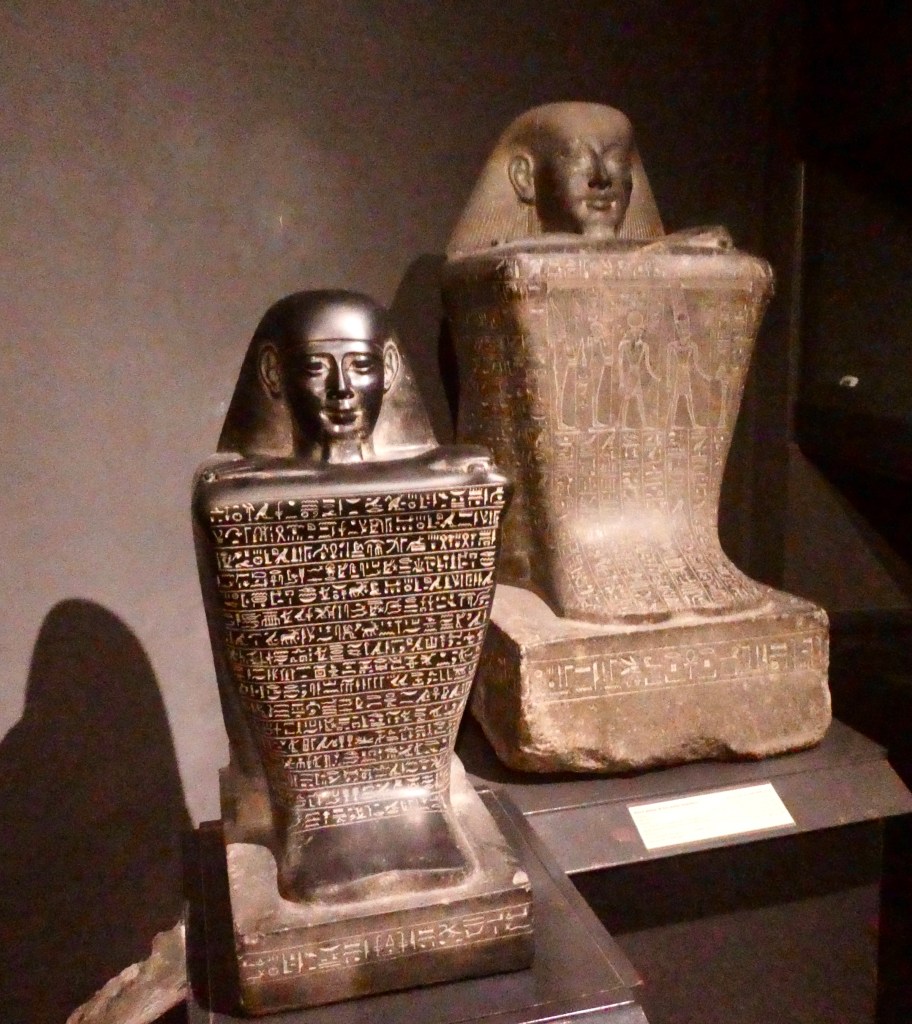
Here is a sampling of what we saw.

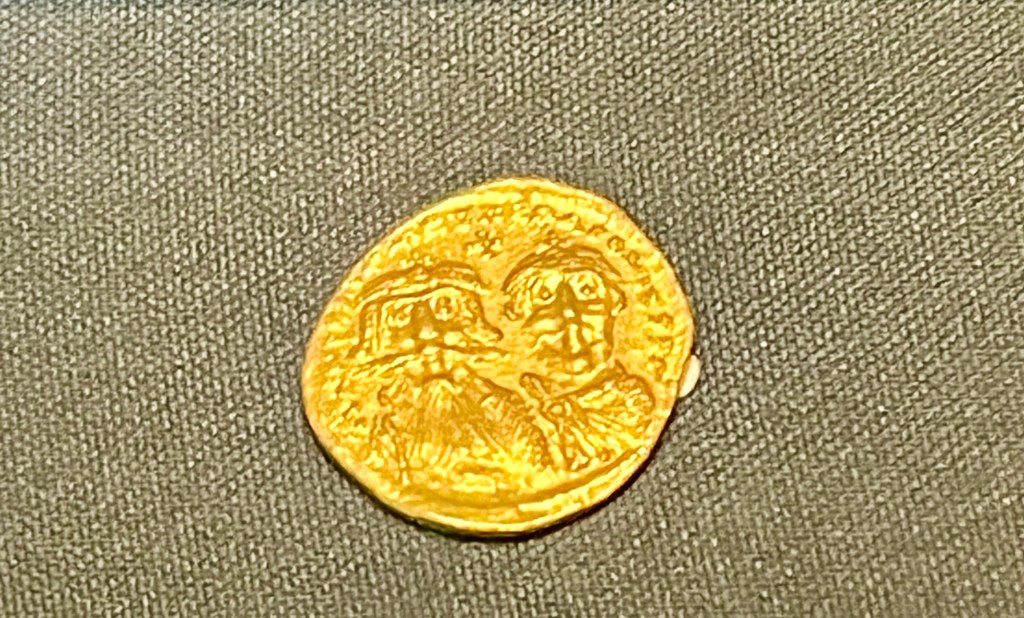
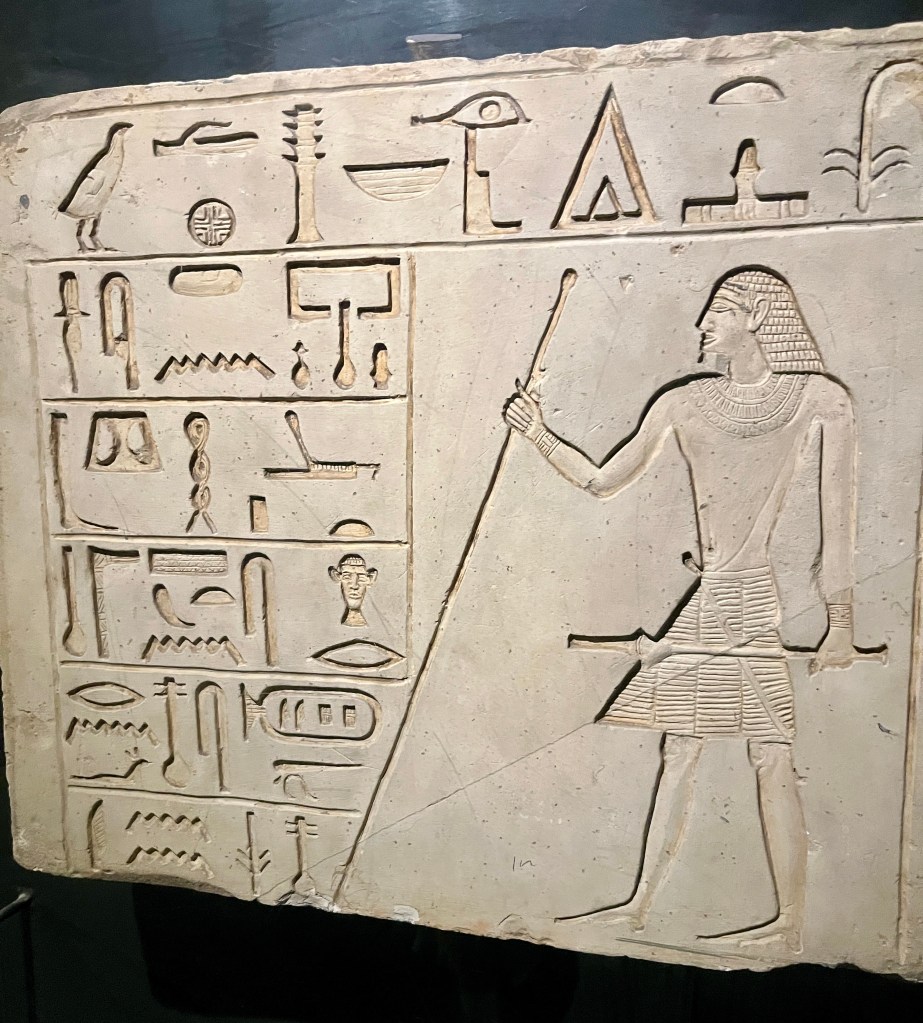

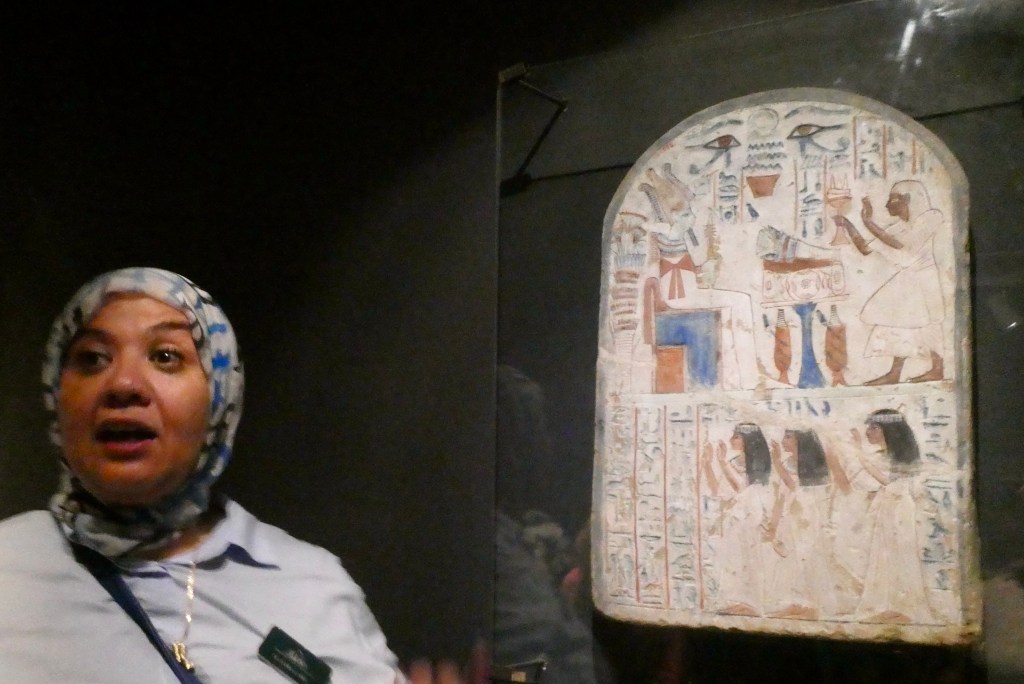
This was our guide Zaharia. She was very knowledgable at all of our Alexandria sites. She loves her city.
At the end of the day we were having a quick dinner on the Lido deck. The man who served our drinks had been to Cairo on a crew tour to see the pyramids. He had to pay a fee for his tour but we thought it was great that he and others had the opportunity to go just like passengers. Of course, he had to work his shift when he got back but still seemed very pleased to have gone. He said they will be have the opportunity for a crew tour in Kusadasi, Turkey next week and another in Jerusalem on the next cruise.
I know that was a really long post. It was a really long day, but not nearly as long for us as for those who went all the way to Cairo.
We were in Alexandria on September 22, 2023.
Next up: Kusadasi


 Serene Wandering