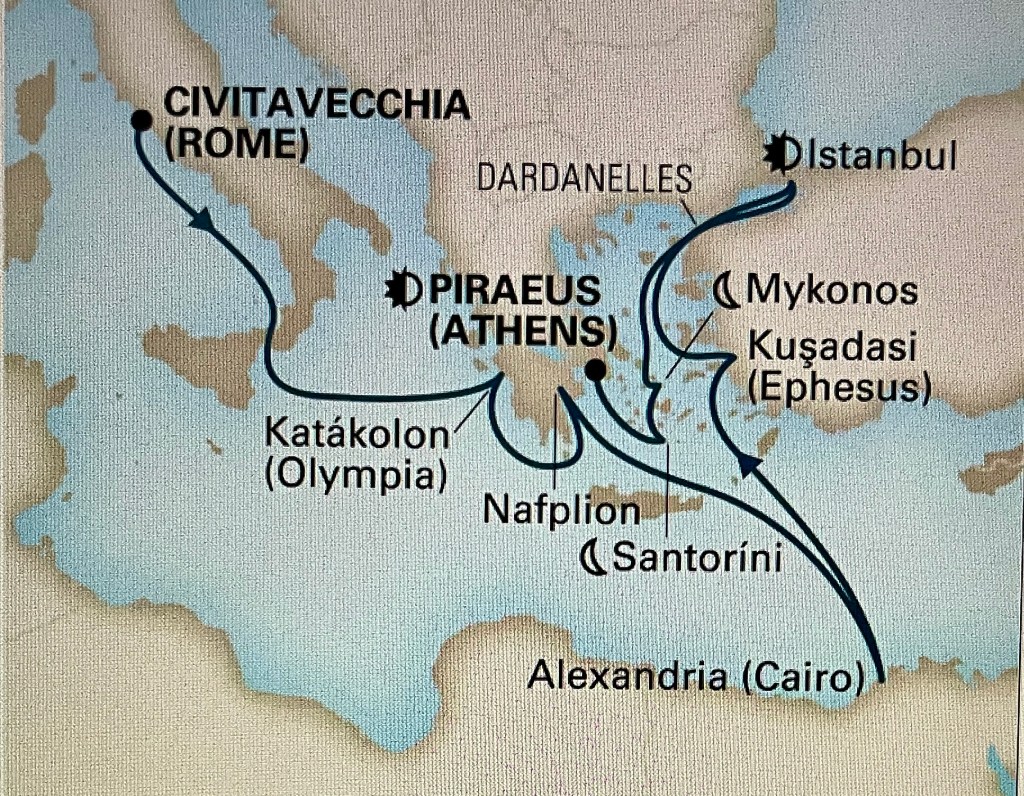
When booking this cruise I was most excited about the two ports in Turkey, Kusadasi and Istanbul.
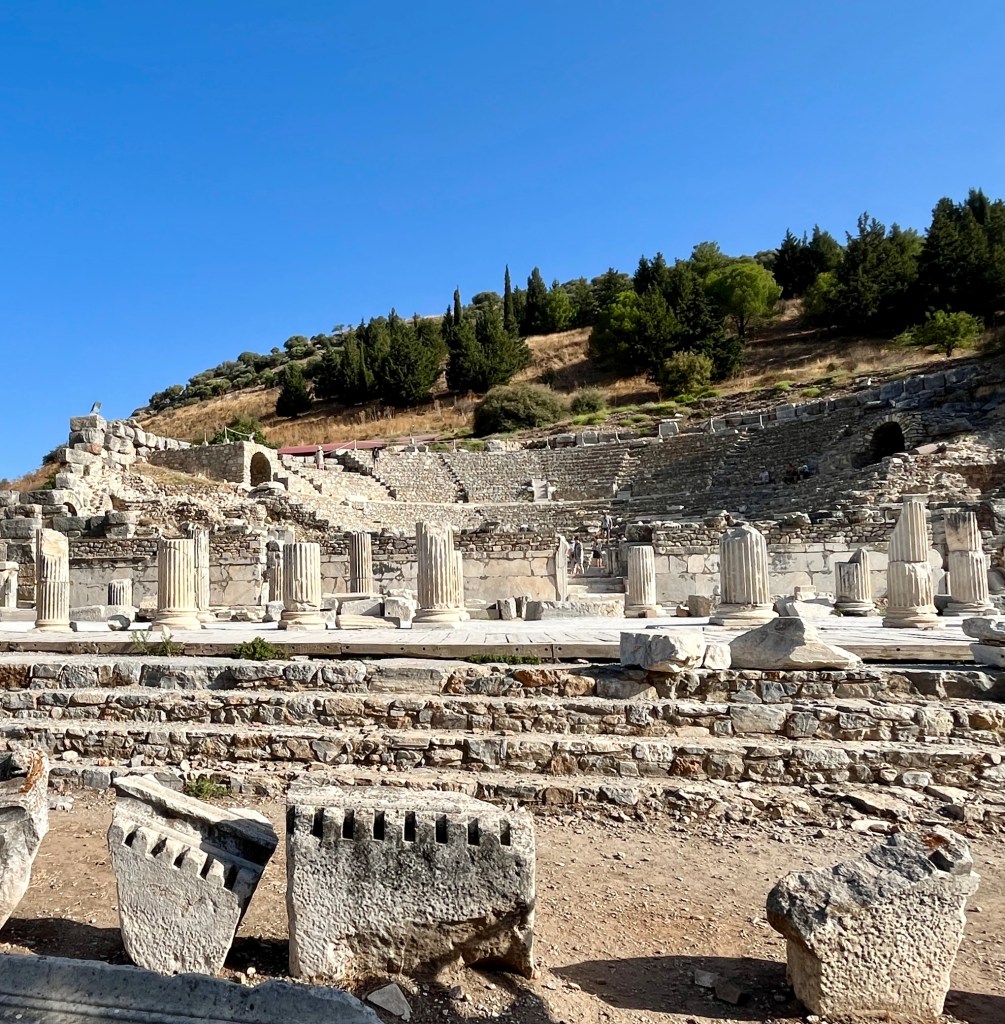
The primary point of interest near Kusadasi is ancient Ephesus, one of the best preserved archaeological sites in the world.
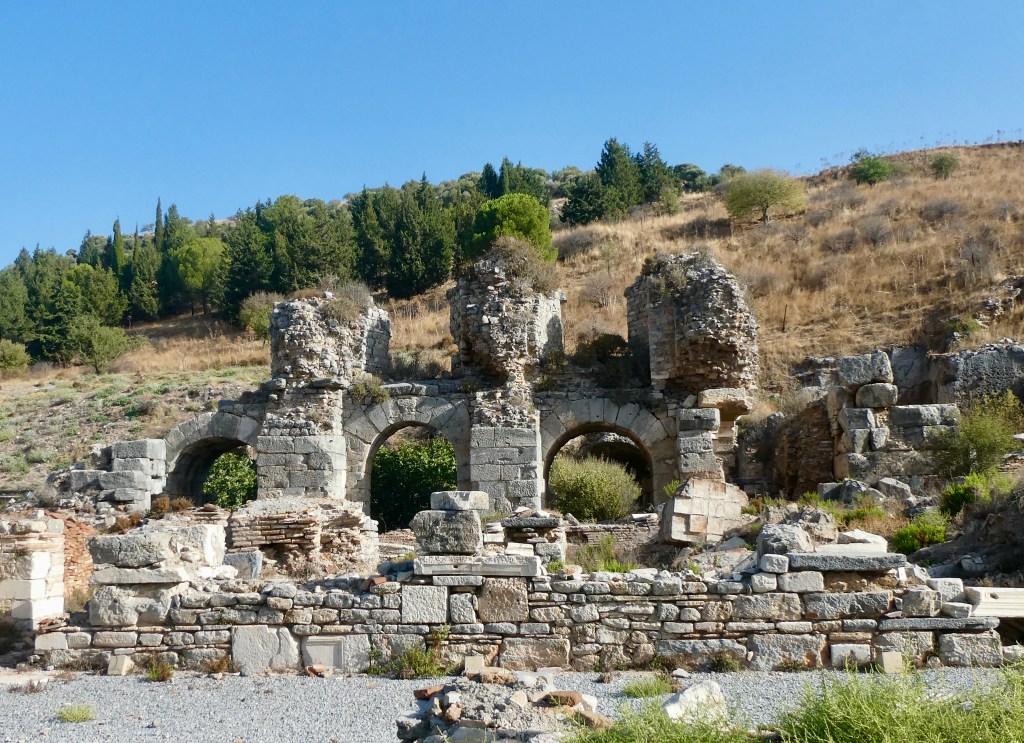
Ephesus was chosen as a city site to sit between two hills.
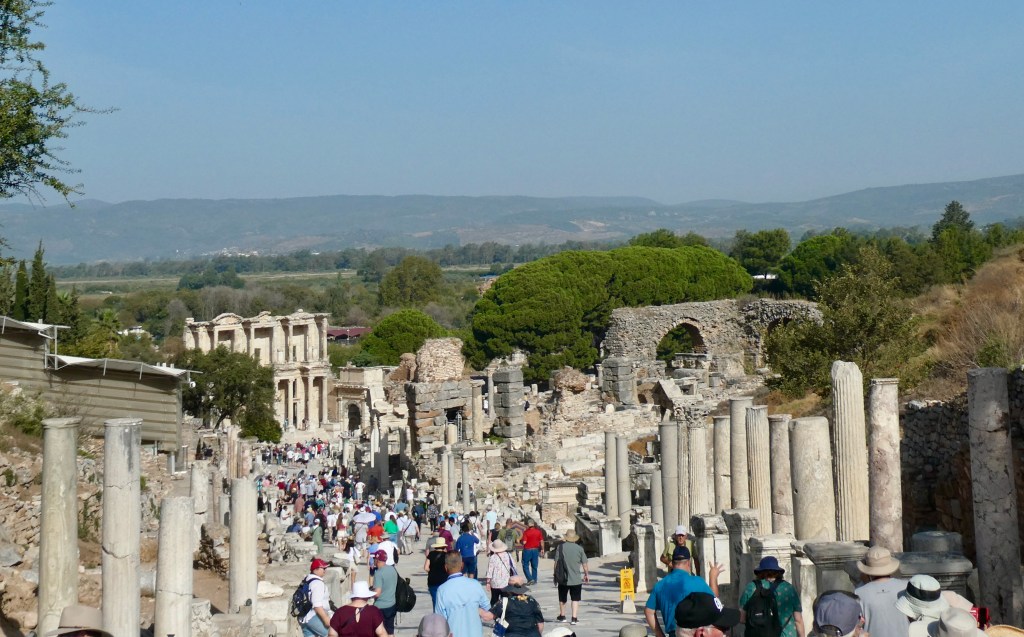
Archaeological evidence goes back to 1000 BC but the buildings in the city are generally from the 3rd century BC.
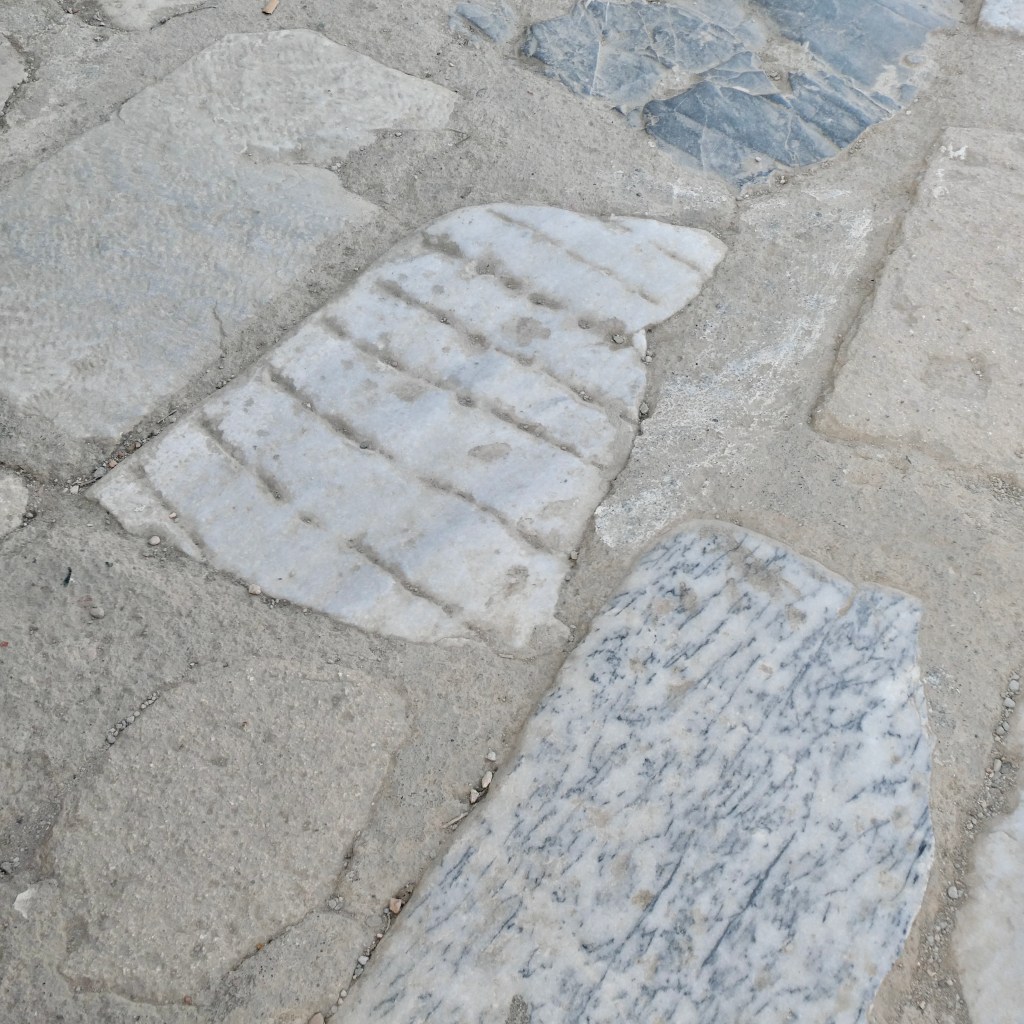
The road has an interesting combination of stones used over time. The white one has been specifically scored to reduce the possibility of slipping when wet.
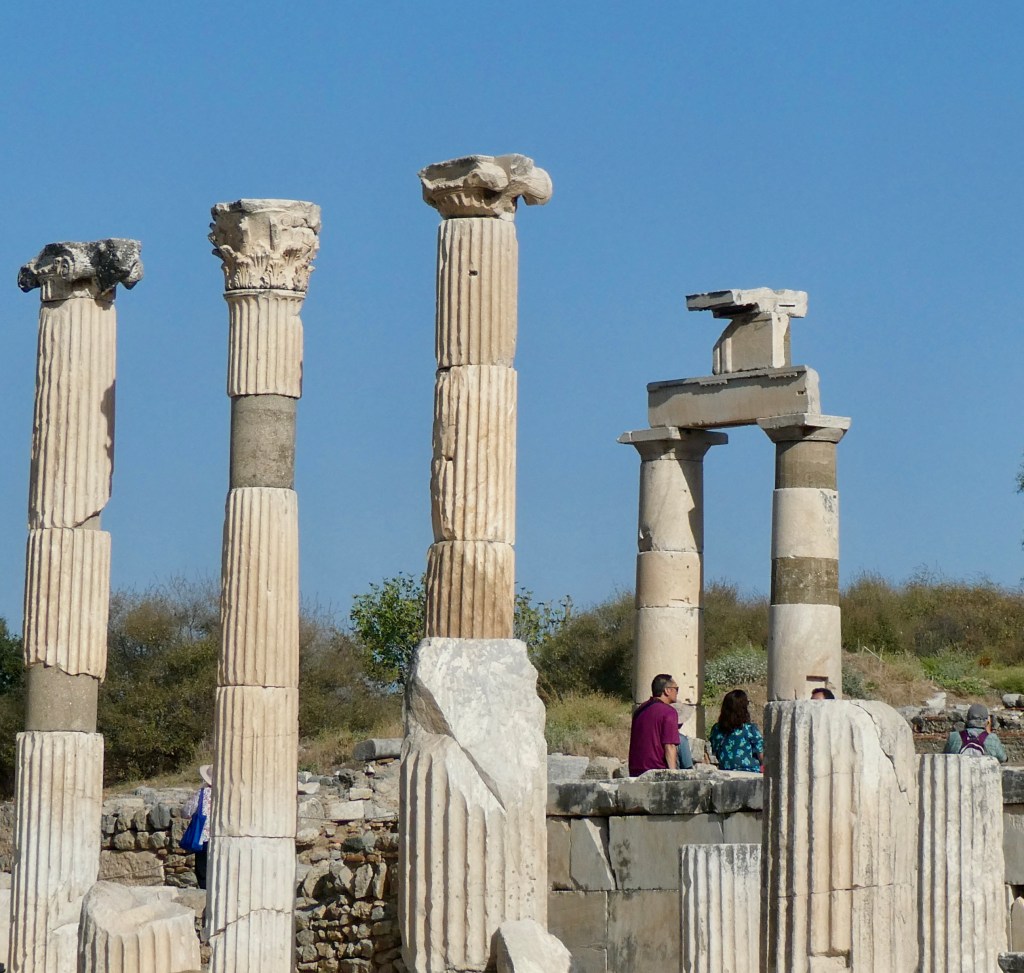
This is the oldest known building. There was once an eternal flame, helping to recognize it as a temple.
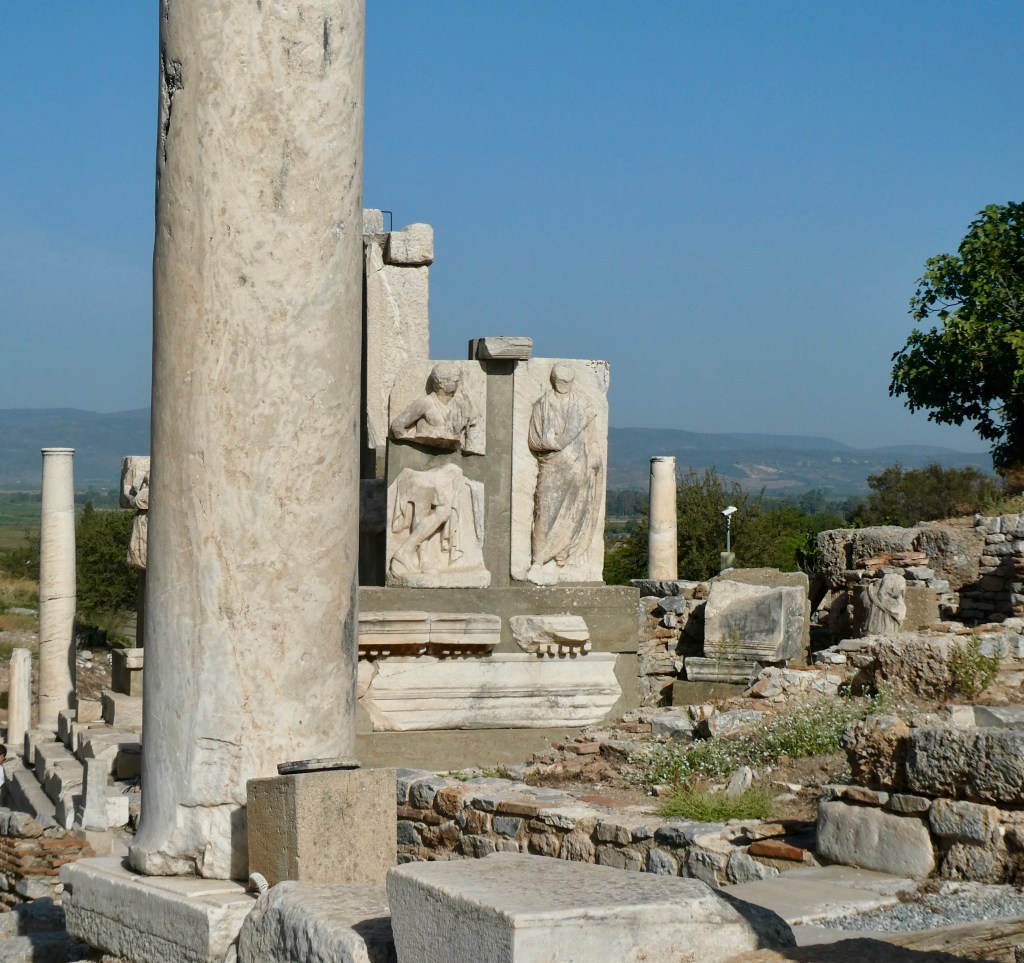
In 133 BC the city became Roman. A population of about 250,000 made it the third or fourth largest city in the Empire.

It became rich because of middleman fees in trade.

There was no natural source of water onsite so water was diverted to Ephesus. They used pipes made of lead.
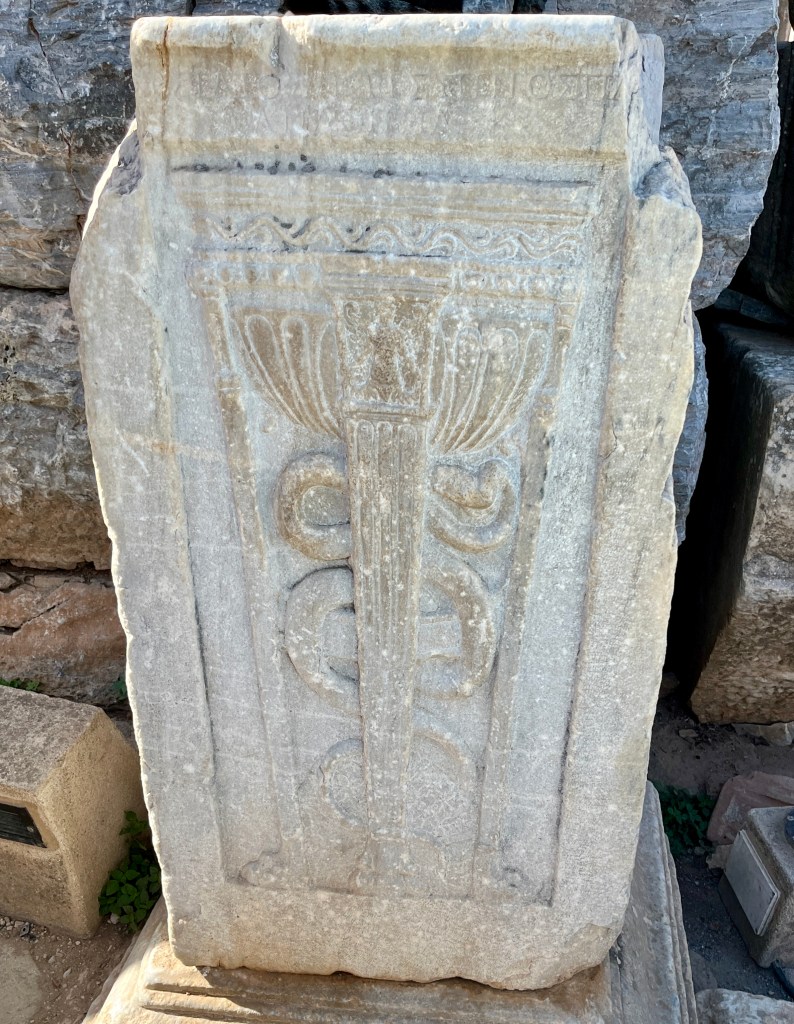
These are examples of the decorative art.


These adjacent slabs show ancient Greek and Byzantine Greek writing. (Did you see the cat? I looked at that picture 20 times before I noticed it – one of those ever-present kitties!)

This is the only original statue remaining in Ephesus. He was a doctor based on information engraved on the base platform.
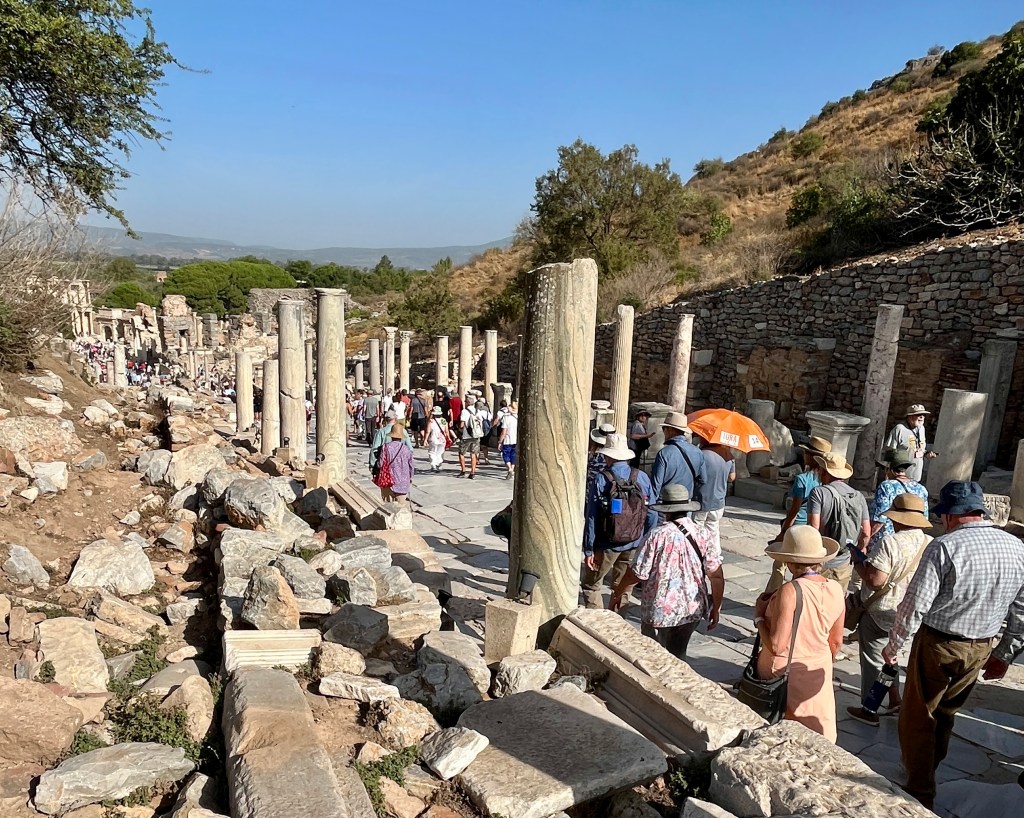
The streets were built by the wealthy and they had their statues made and displayed along the way.

The archeology rule in Ephesus is that there must be 60 percent original material to rebuild.

This is Hadrian’s temple with its Syrian arch. The temple was dedicated in 118 AD to Hadrian, Artemis and the people of Ephesus.
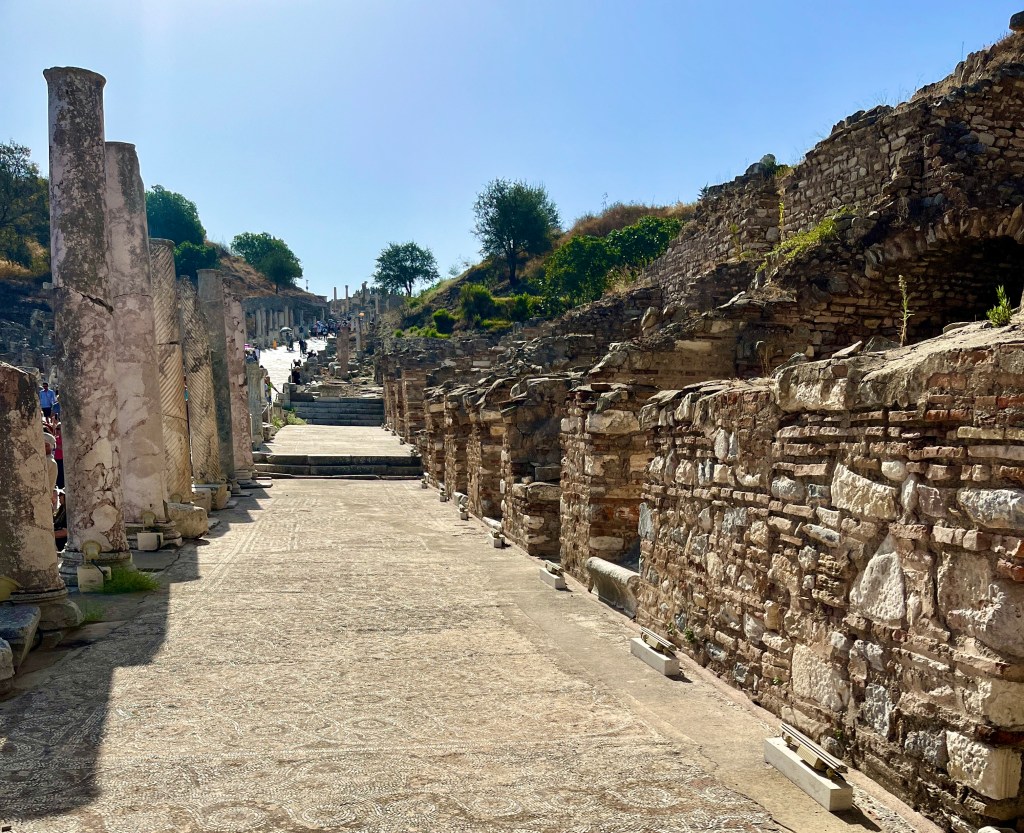
This is a sidewalk of mosaic.

There are samples of mosaic throughout the excavated buildings.
The Terrace houses were for the wealthy and important people of Ephesus. A major project has commenced to excavate seven terrace houses. The roof alone cost $11,000,000.

The first house we entered was the largest using the great room concept.

This was their water access.
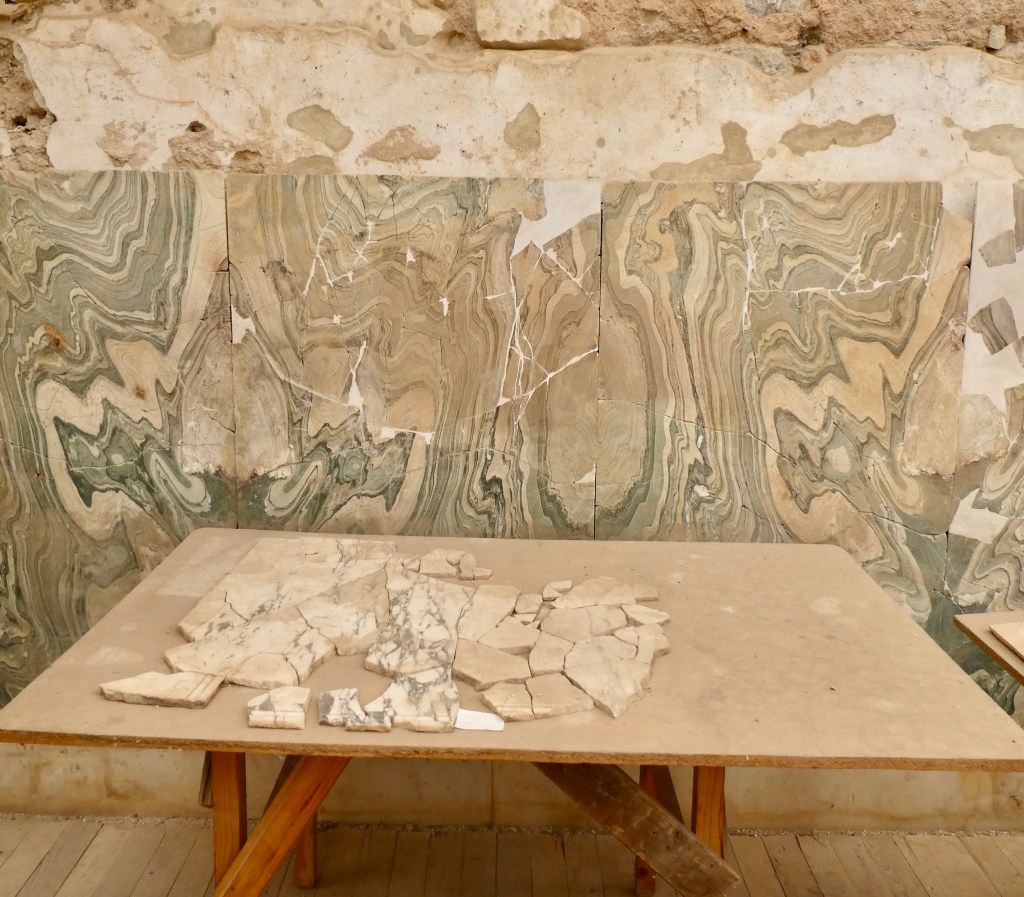
Replacing the marble on the walls is like a jigsaw puzzle.

Throughout the seven house complex there are frescoes and mosaics.


This is a Medusa mosaic. She was once a beautiful woman and not what the legend has become.

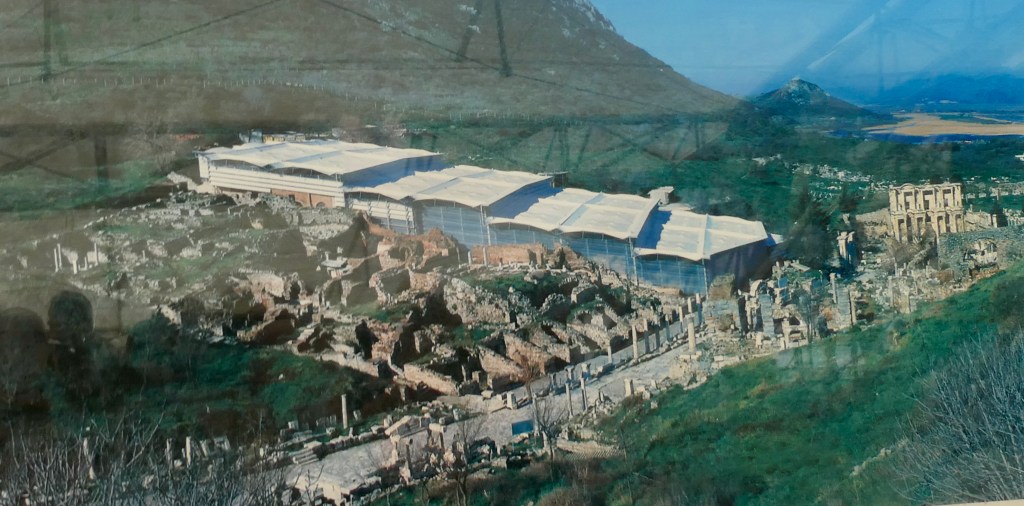
This is a photo of a photograph showing the size of the villa houses project.

The Celsus Library was originally the tomb of Roman Senator Tiberius Julius Celsus Polemaeanus. The library was built above the tomb and became the third largest in the Roman empire holding 12,000 volumes. The library and its contents were destroyed in 262 AD after an earthquake.
The facade was destroyed by an earthquake in the 10th or 11th century. Austrian archaeologists found 70 percent of the original material so rebuilt the facade of the library between 1970-1978.
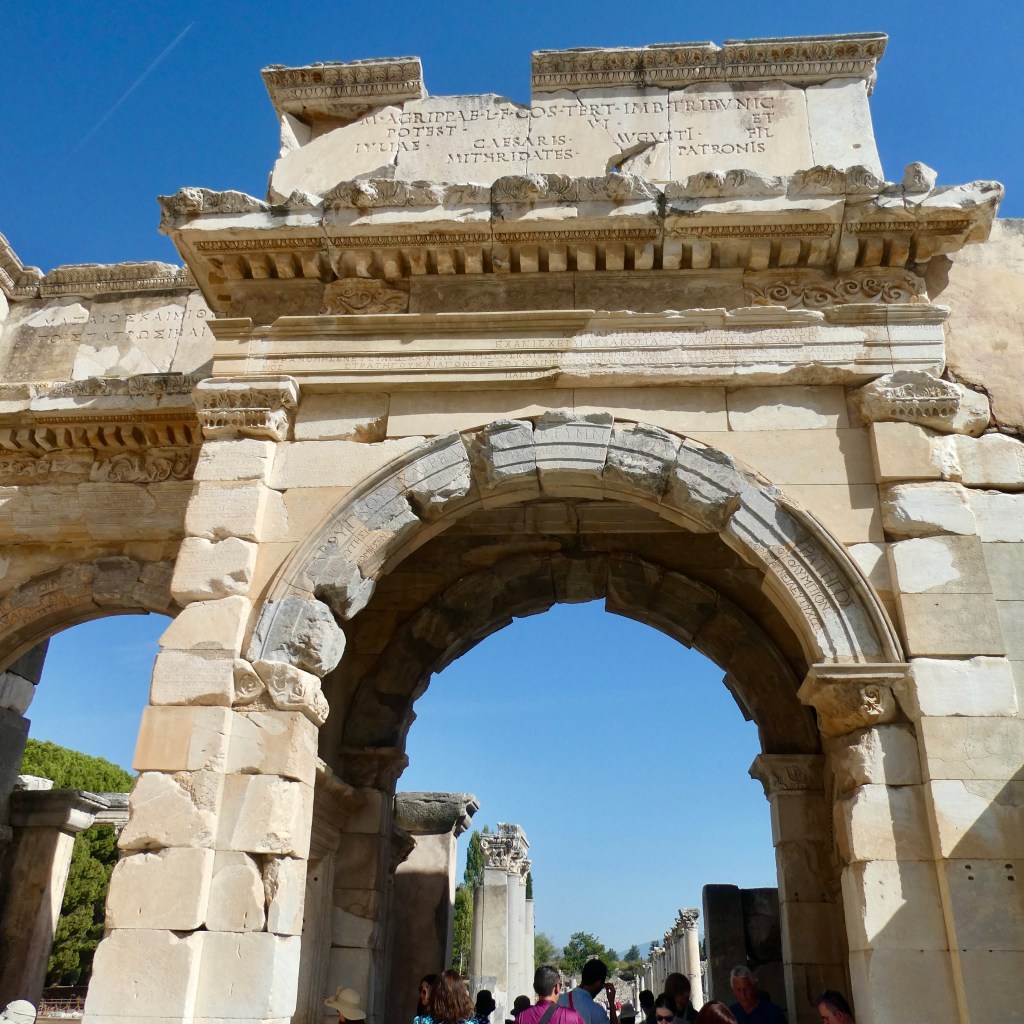
We walked through the arch into the agora.
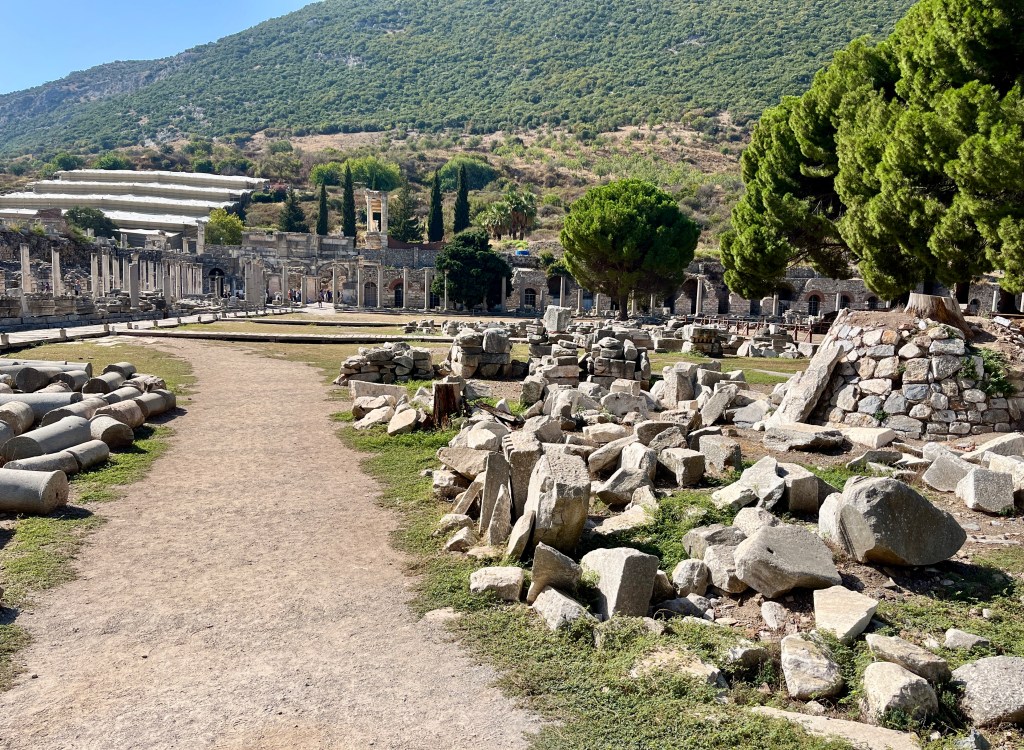
The agora was a marketplace and a space for people to socialize

It was a two story market.
The Apostle Paul came to Ephesus twice, briefly on his second missionary journey and for two to three years on his third. Acts 19 in the Bible tells of his time in Ephesus. Paul preached in the agora and in the theater. He established a school in Ephesus when he was no longer welcome in the synagogue. It is believed Paul was imprisoned here about 55-56 AD.

The origins of the great theater date from the Hellenistic period from 323 to 31 BC. It was reconstructed and expanded in the 1st century AD.

If you walk all of the levels within the theatre it totals 11 kilometers. That makes seating for 25,000.
The theater remains active for events today. Singers such as Elton John and Celine Deon have performed there.
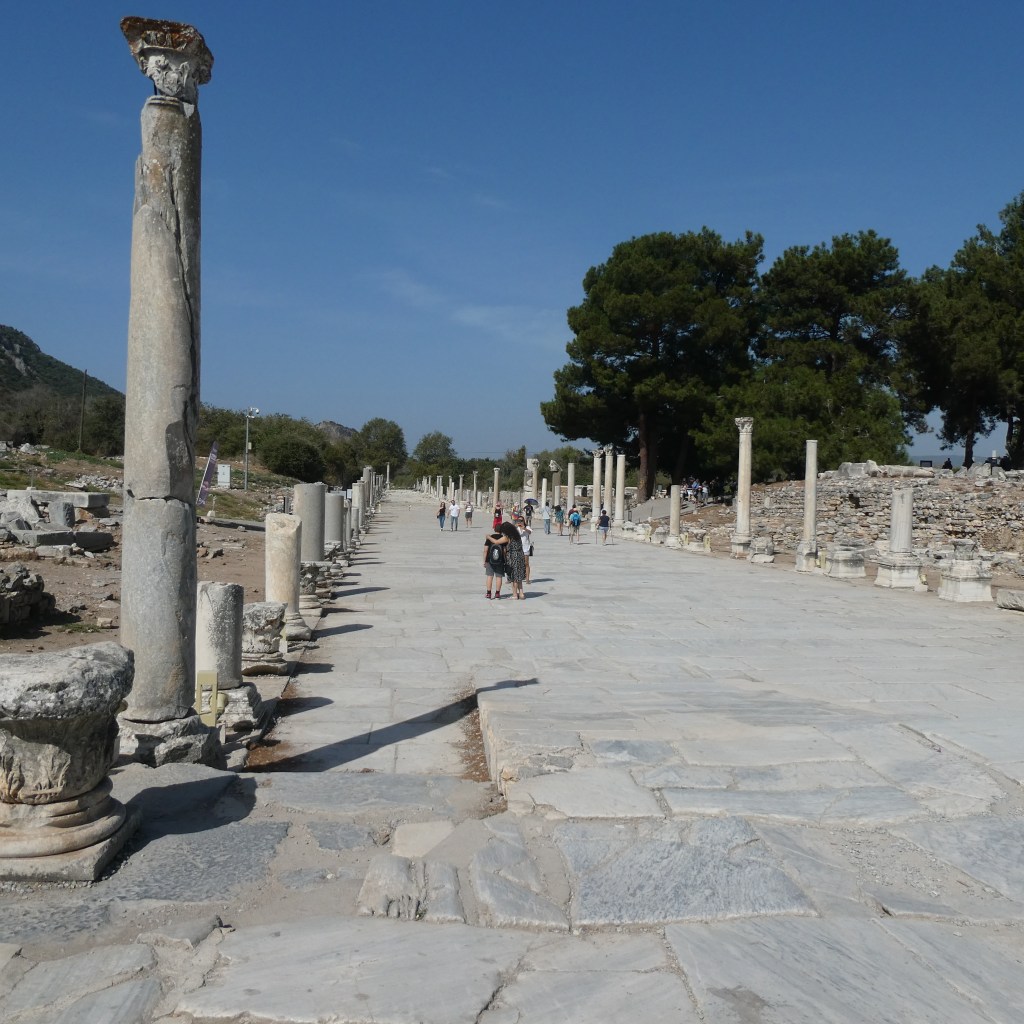
This is the city end of the 600 meter Harbor Street. Legend tells that the city fathers washed the road with wine when Cleopatra and Mark Anthony came to Ephesus from their ship in the harbor. That is supposedly the beginnings of the concept of using a red carpet for VIPs.

On the map the number 12 shows Harbor Street. The harbor eventually silted in so Ephesus was abandoned after the 6th century AD.
At the end of this post about Ephesus, I would like to thank Randy. I tweaked my back the day before our stop in Kusadasi and my ability to go to Ephesus at all was in serious doubt. As this was one of my main desires on the cruise, I loaded up on Tylenol and decided to try. Randy walked behind me, or held my hand, for hours making sure I didn’t get out of precarious balance or fall on an uneven surface. The only time he left my side (or backside) was to go get us drinks, or to go to the top of the theater to take pictures. He took a lot of the pictures in this post. Just getting through Ephesus, and taking some notes, was all I could manage.
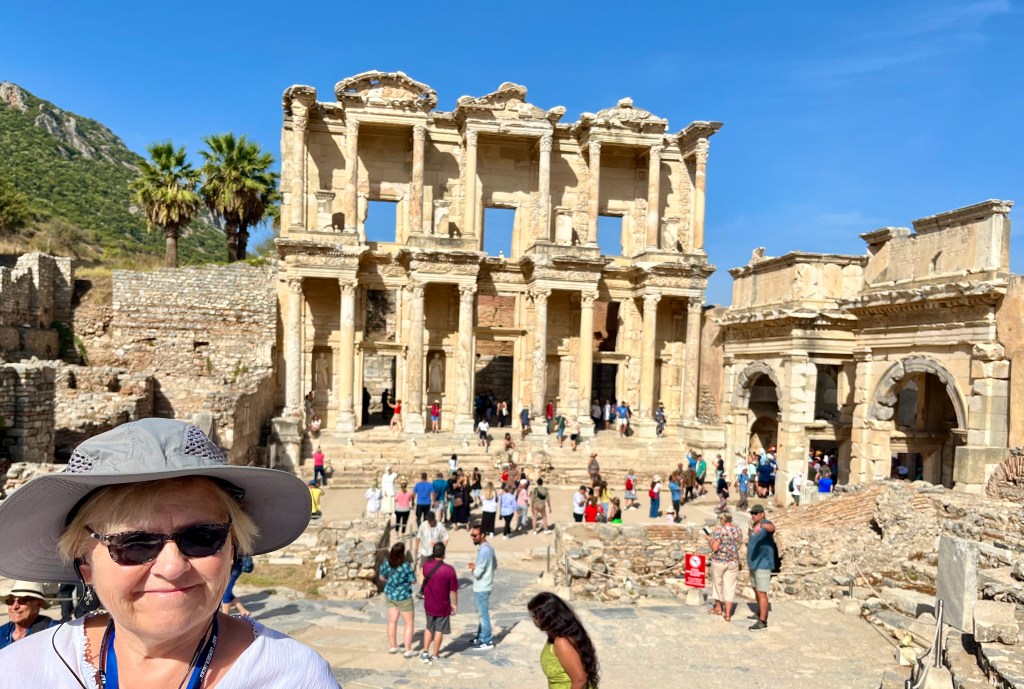
I was there! It was a successful day and I have loved writing about it and viewing it again through the lens of the camera and not the lens of my discomfort!
We were in Ephesus on September 24, 2023
Next up: The rest of Kusadasi, Turkey.


 Serene Wandering