This was our view of Kusadasi from our balcony.

From our Kusadasi tour guide we learned that Turkey has a population of 85 million. Ninety-nine percent are Muslim, but he said only 15-20 percent are serious about it.
In 1934 women got the right to vote in Turkey, before many western cultures.
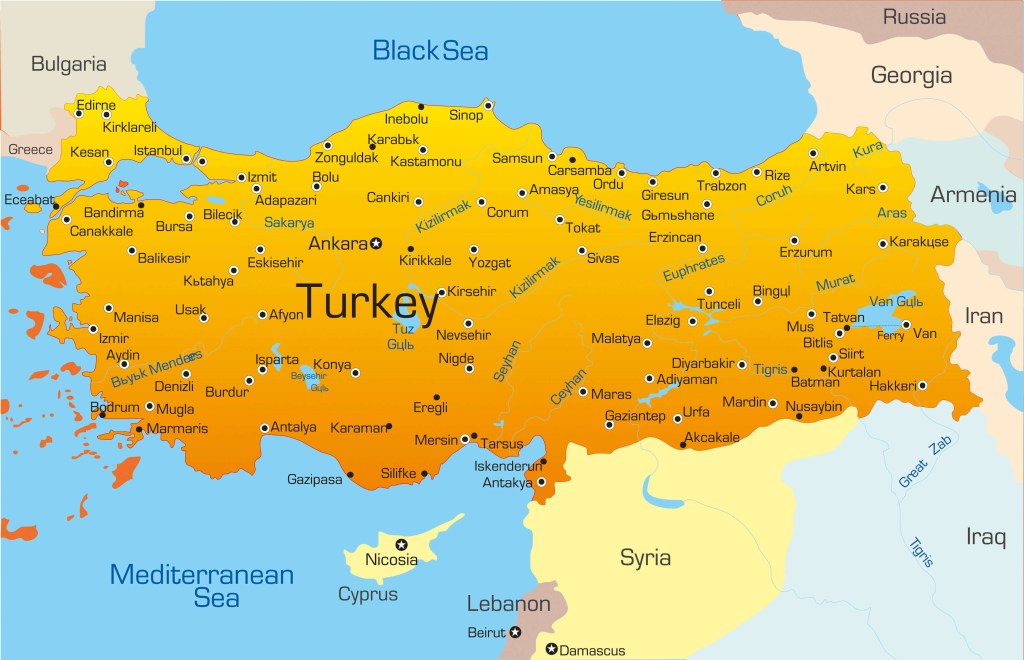
Turkey is mostly in Asia and has eight neighbors, some in the Middle East and some in Europe. These include Greece, Bulgaria, Georgia, Armenia, Azerbaijan, Iran, Iraq and Syria. (What a neighborhood….) I didn’t see Azerbaijan on this map, so looked for more information.
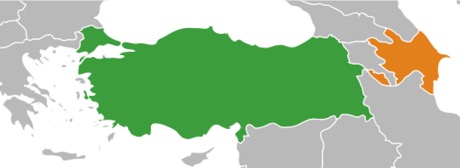
The border between Turkey (shown in green) and Azerbaijan (shown in orange) is just 11 miles long!
There is archeological evidence of inhabitants in Turkey from 10,000 BC. Mesopotamia, as this area was called in ancient days, was the most developed part of the world in 3000 BC
Our guide stated that religion started in Turkey and is second, after Israel, in biblical history. Mount Ararat is in Turkey where remnants of Noah’s Ark are believed to be. Early Christians lived in Antioch. Saul of Tarsus was born in Turkey. Later named Paul, he taught extensively in Ephesus. There is also the Virgin Mary’s house.
We began with a visit to the Virgin Mary’s house where Jesus’ mother is said to have lived the last years of her life. Jesus entrusted his mother Mary to his follower John. John came here, so she would have been here too.
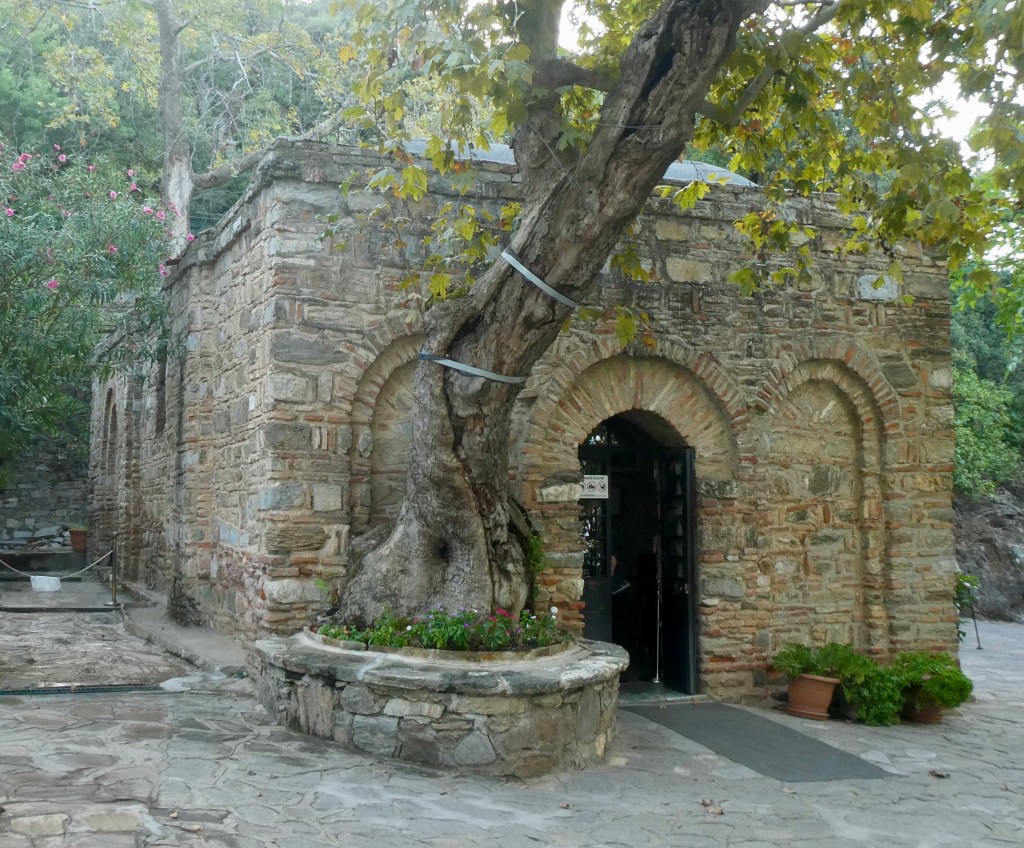
Mary’s house was probably a house church in the first century AD. Evidence exists that it was used as a church for a very long time. Making a church out of a revered person’s house was a tradition.
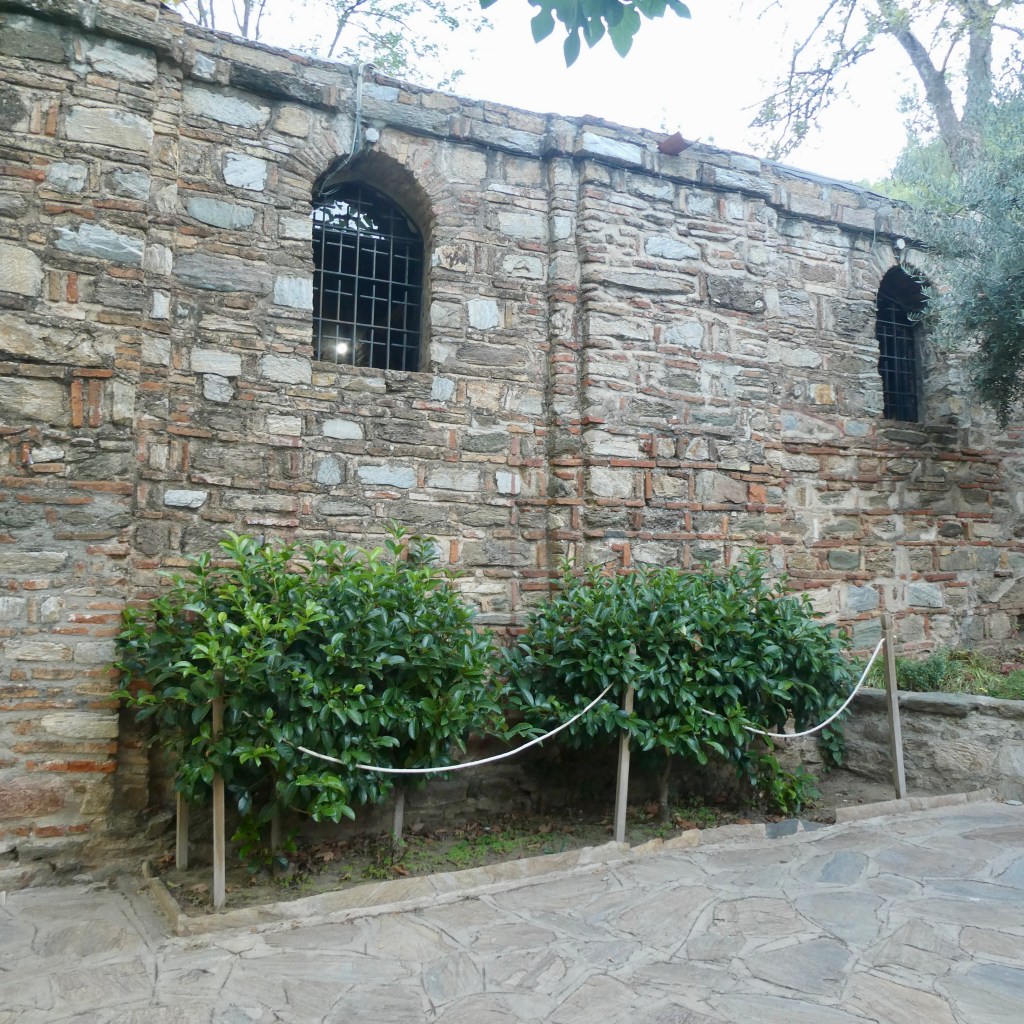
There are 31 references to Mary in the Koran, so she is important for Muslims too.
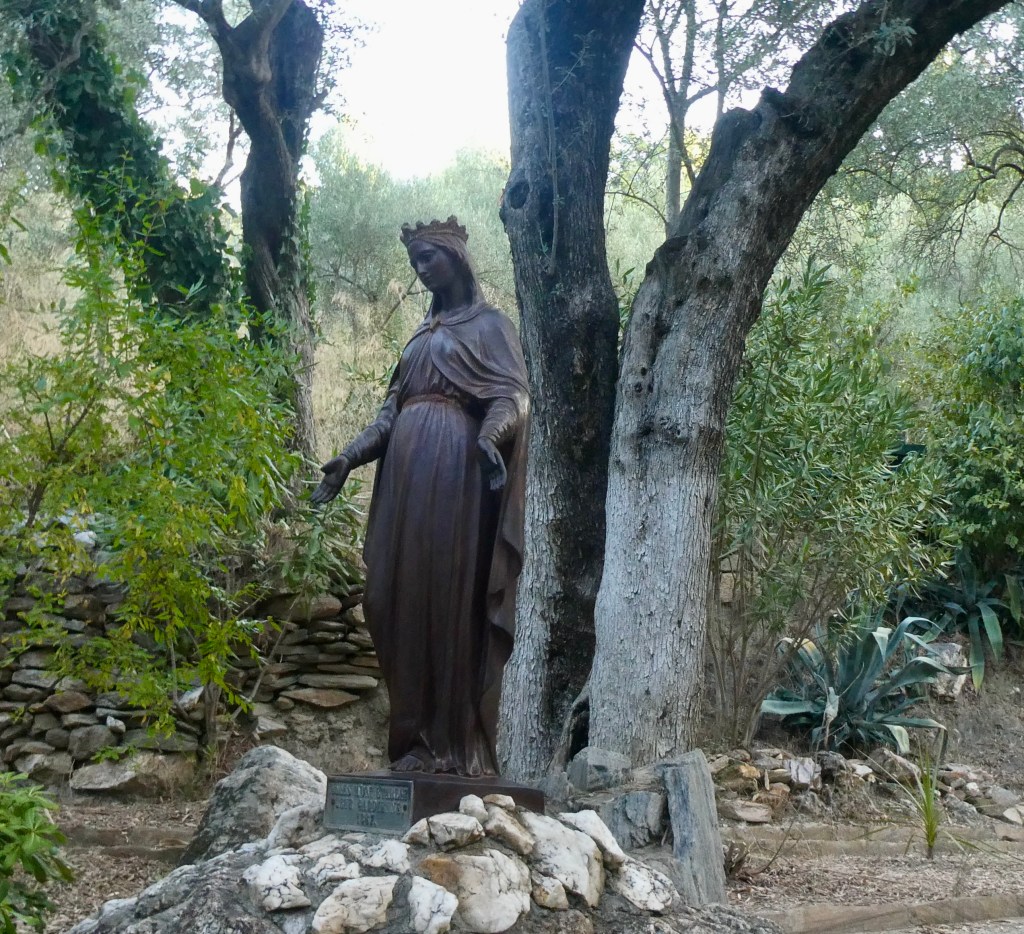
The Statue of Mary was a gift from a rich man from Lima, Ohio. He came in 1948, saw the house foundation, and believed the evidence that Mary had lived here. He had the house rebuilt in 1951.
The Virgin Mary’s House is now a Catholic shrine. It was visited by Pope Paul VI in 1967, Pope John Paul II in 1979, and Pope Benedict in 2006.
John, disciple of Jesus, spent his last years in this region near Ephesus, and died in 100 AD. A small chapel was built over his grave.
The Basilica of Saint John was built on the same site between 527-565 AD.
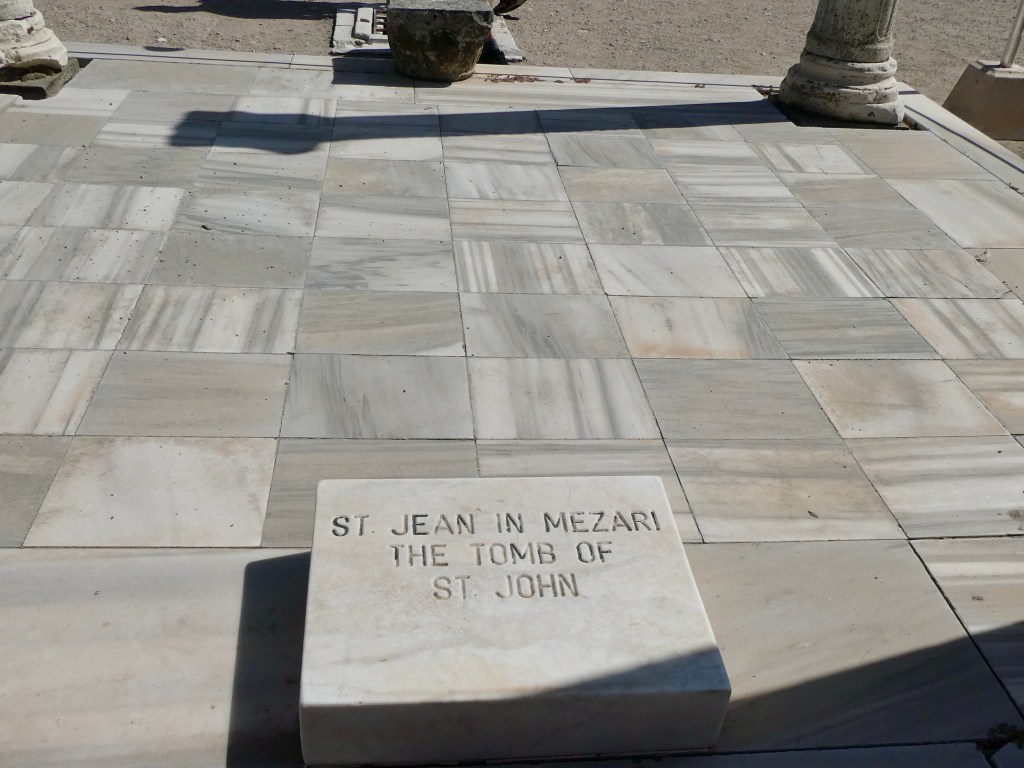
The tomb of St. John was under the central dome.

This was the baptistery.

Walls protected the basilica from attack by Arabs in the 7th – 8th centuries AD.
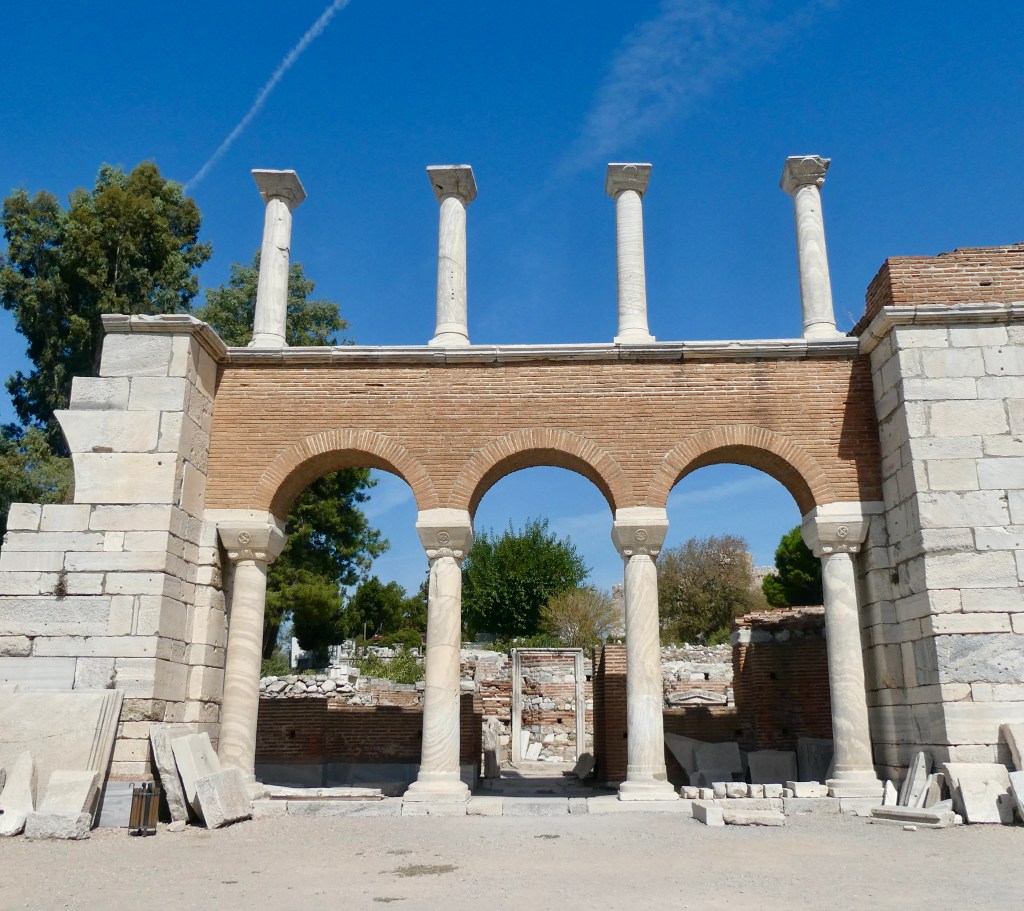
With the eventual conquest by the Turks, the basilica was used as a mosque for a brief time until it was destroyed in an earthquake in the 14th century.
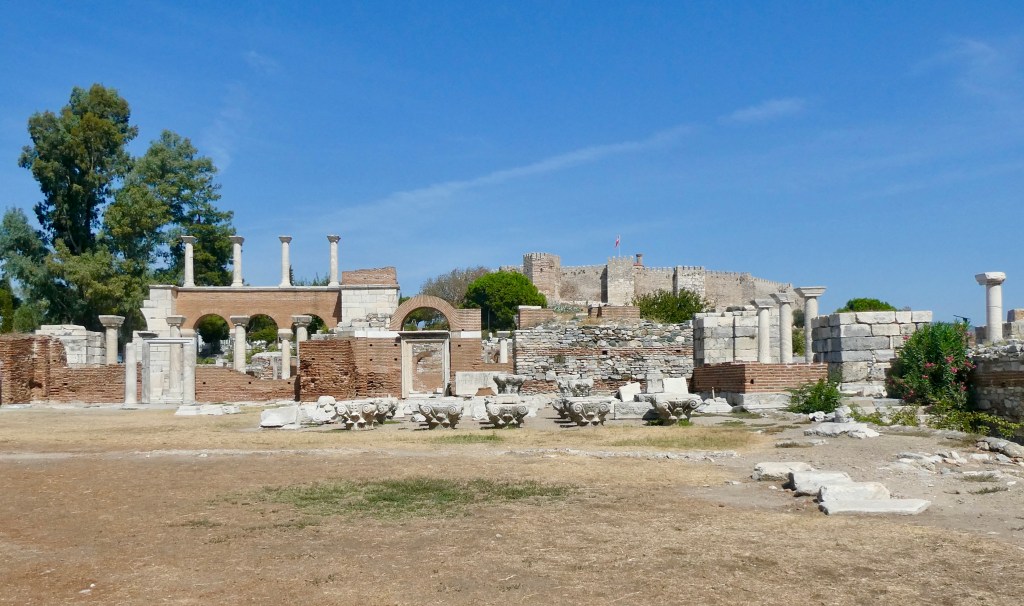
Modern excavations began in 1973.

Our tour provided a buffet lunch and folkloric show.
Our last stop of the day was to learn about, and have the opportunity to purchase, Turkish Rugs. We were offered apple tea, wine, or raki. Raki is Turkey’s version of an anise liquor – like oozo in Greece.

The proprietor told us that a rug’s value is based on how many women worked on it, for how many years, and how many knots there are per square inch.
We had the opportunity to see and walk barefoot on rugs made of wool on wool, cotton on wool and silk on wool.
The rugs we were shown ranged in cost from $450 to $87,000. The good news was that you only paid for the rug. Taxes, shipping, and any duty is paid by the Turkish government.

The rugs were beautiful. The options were endless. Special order was possible. We were thoroughly impressed but had no interest in purchasing a Turkish rug.
We were happy to see that six to eight couples on our tour seemed very interested and started engaging with all the sales associates. That made it easy to slip out.
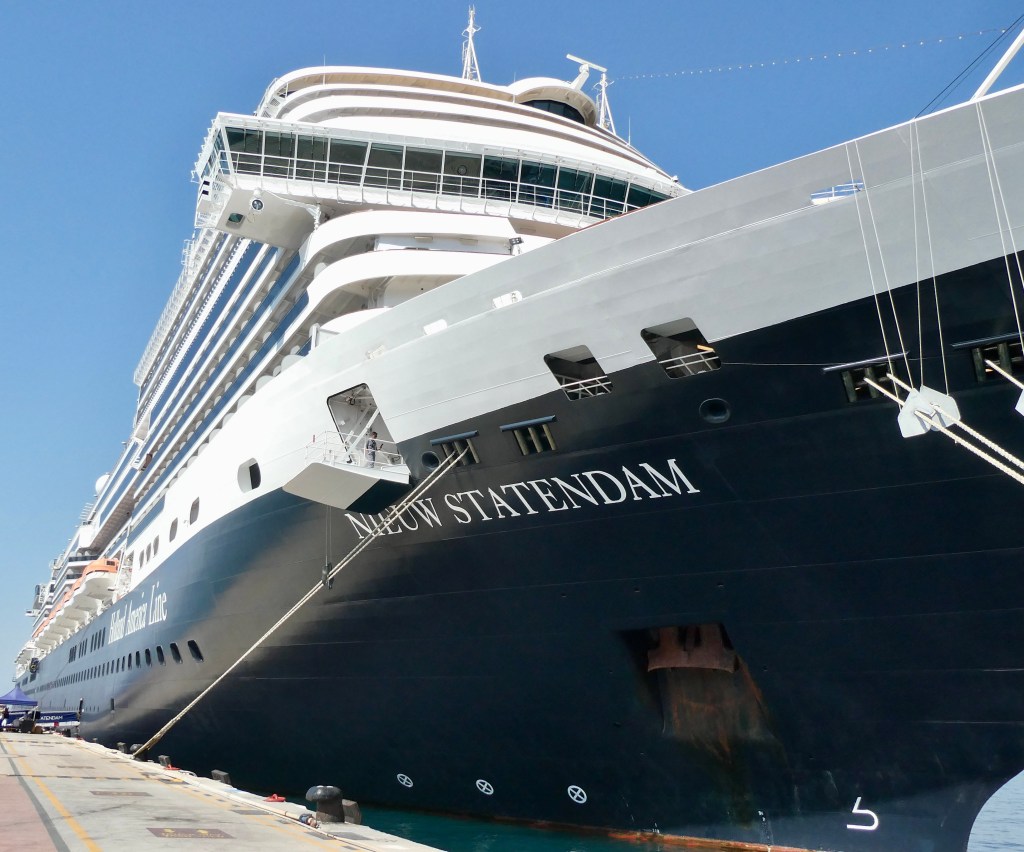
We were close to the port so we just walked back to the ship.
When we returned to our cabin we heard “Man overboard! This is not a drill.” The alert was for the port side, which is where our cabin was located. We went onto our balcony and people higher up could see that someone on the ship had thrown a life ring into the water. We saw medical personnel heading aft and a lifeboat being prepared for launch. Then all went back to normal.
We learned later that it was not someone from our ship that had gone overboard but rather it was a local man who was swimming fairly close to the ship. He was questioned by the police and presumably released. It really had nothing to do with the ship – other than we had a man overboard alert which was a new experience for us .
The next day was our last sea day of the cruise.
We went to the City on the Sea presentation.
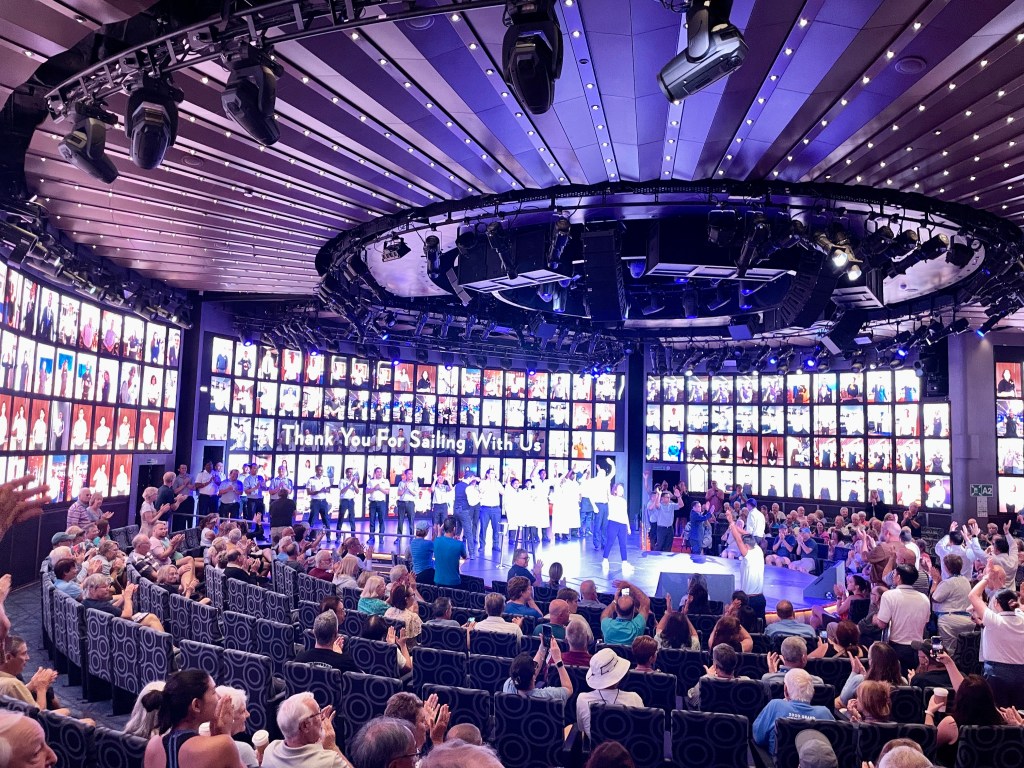
We have seen a few of these “ship operations” presentations and they are always interesting!

Then we watched the Visiting Istanbul presentation as it was our next port. It wasn’t meant to scare us like the one for Egypt had been. Maybe Istanbul isn’t as scary or maybe the cruise director got some feedback on her previous presentation.
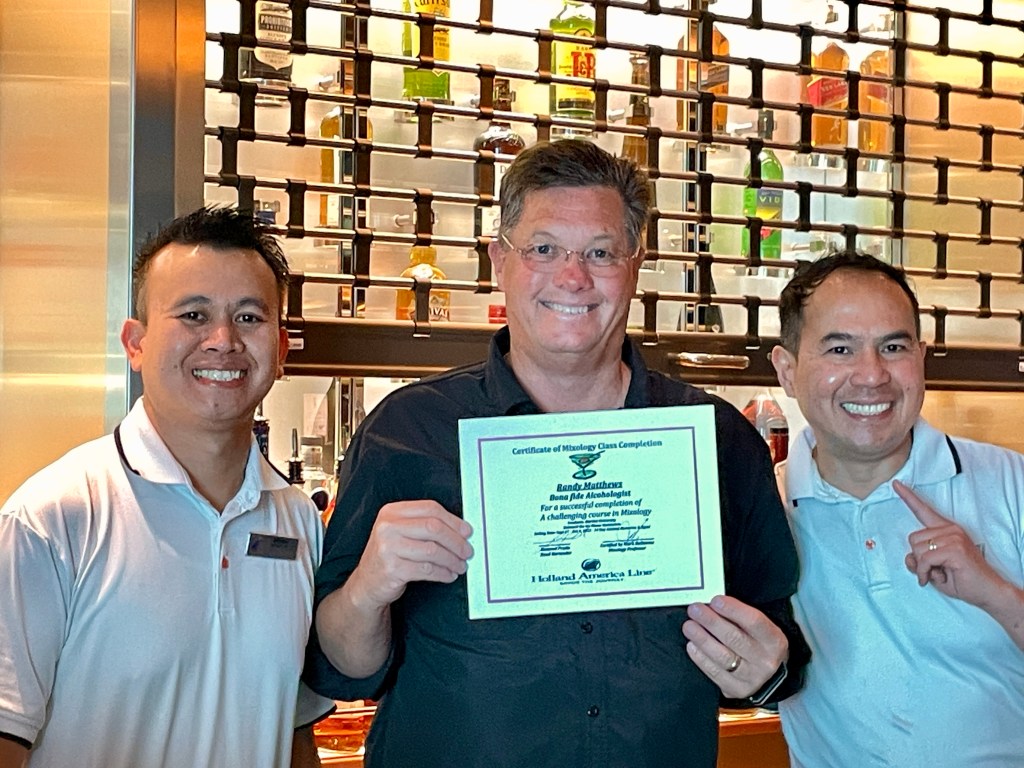
Randy went to his last Mixology class and I saw him get his Alcohologist Diploma.

He really enjoyed these classes held on sea days throughout the cruise.
While sitting in the bar we heard over the announcements that we had just gone under the 1915 Canakkale Bridge. The bridge opened in 2022 and connects Turkey’s European and Asian shores. It cost $2.8 billion and has the longest distance between its two towers, 1.25 miles, of any suspension bridge in the world.
The numbers 1915 in the name commemorate an Ottoman naval victory against the French and British during World War One

If we had known it was coming, especially if it was the “most of” or “best of” we would have gone somewhere on the ship to see the whole span! Instead, this is a picture from the CNN Travel website.

We had our last sea day on September 25, 2023. That just happened to be my birthday and when we went to dinner, the dining room staff knew. I ordered the desert on the right and then received the one on the left for my birthday. If I had known it was coming I wouldn’t have ordered the ice cream!
Next up: Istanbul


 Serene Wandering
It sounds like you had a great time. Nice to have a birthday on board and receive a complimentary dessert! Too bad you didn’t want a Turkish rug. You were certainly in the right place!