

The Acropolis is visible from almost everywhere in Athens! It is an ancient citadel above the city containing several ruins, the most famous being the Parthenon.
There is evidence that the hill was inhabited 4000 years BC. However, the significant buildings that remain were coordinated by Pericles, 495-429 BC. He was a politician and general during Athens’ golden age.
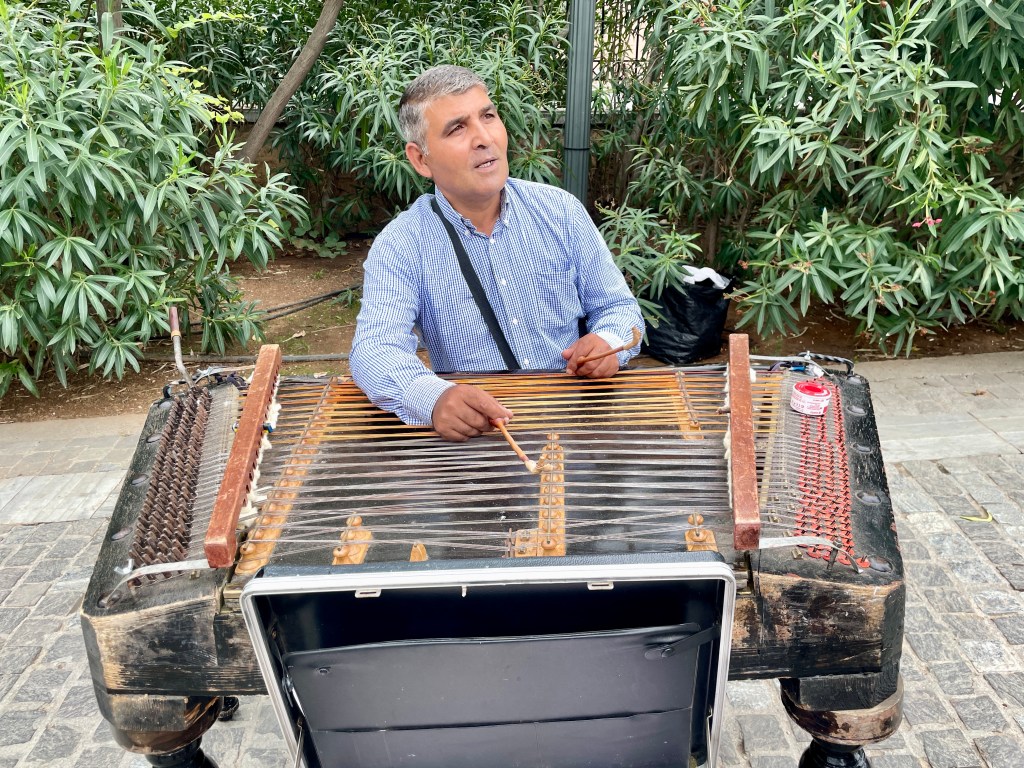
We met our guide and started the long gradual walk up the hill. Along the way we saw musicians and artists. We thought this was an interesting instrument.
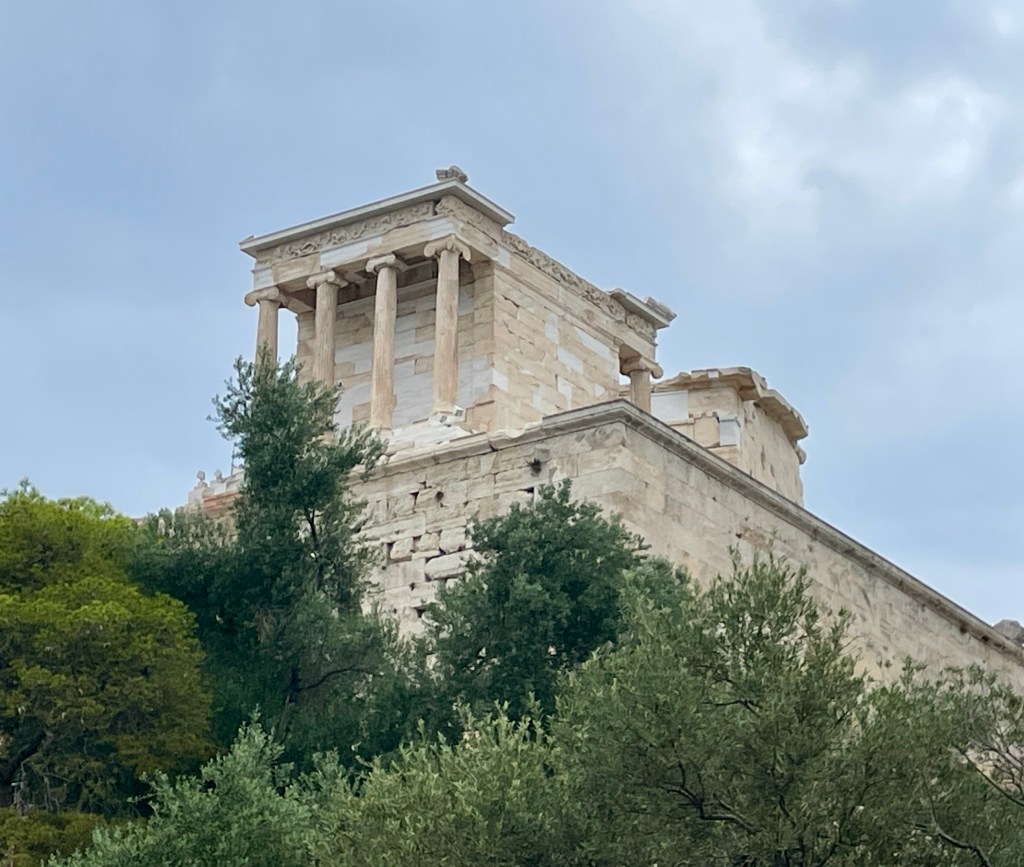
One of the first ruins we could see from closer up was the Temple of Athena Nike, built in 420 BC.

As we’ve seen before, path materials changed over time. Original materials are maintained as much as possible.
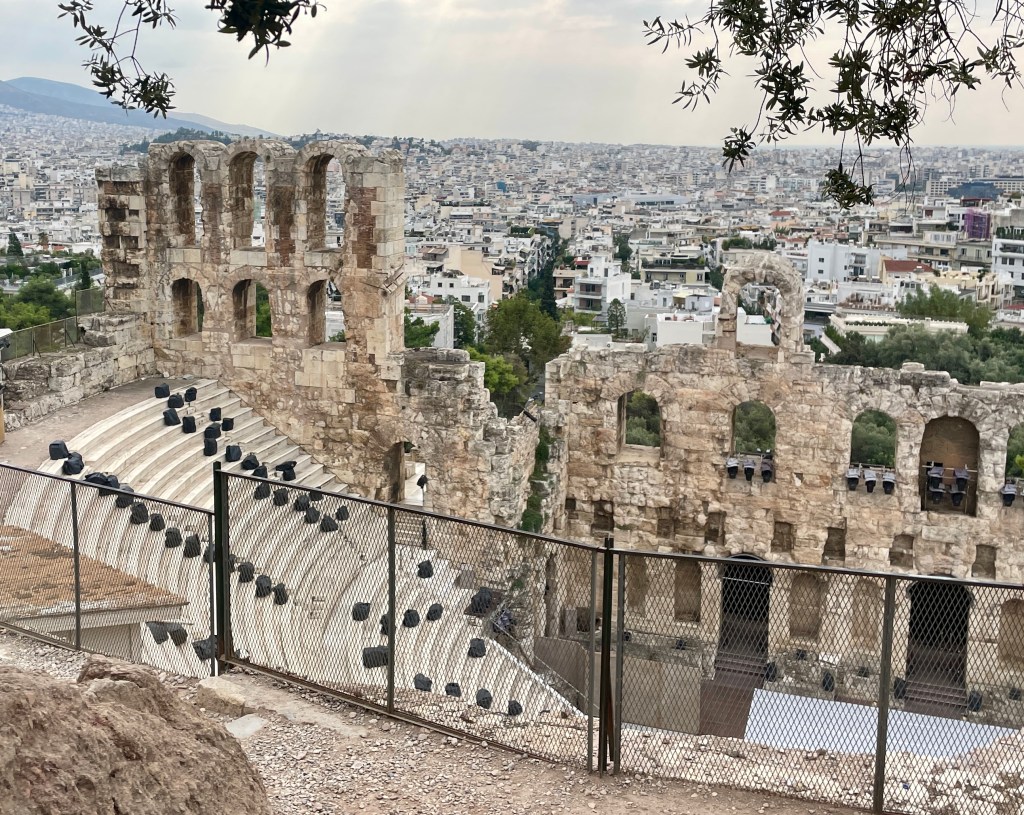
This theatre has concerts five months of the year for a wide range of artists. Seating, redone in the 1950s, is for 5000 guests.

This is the Erechtheion, built between 421-406 BC. The temple has two porches, one with large columns and the other supported by huge female figures.

Efforts to stabilize are visible on the top left.
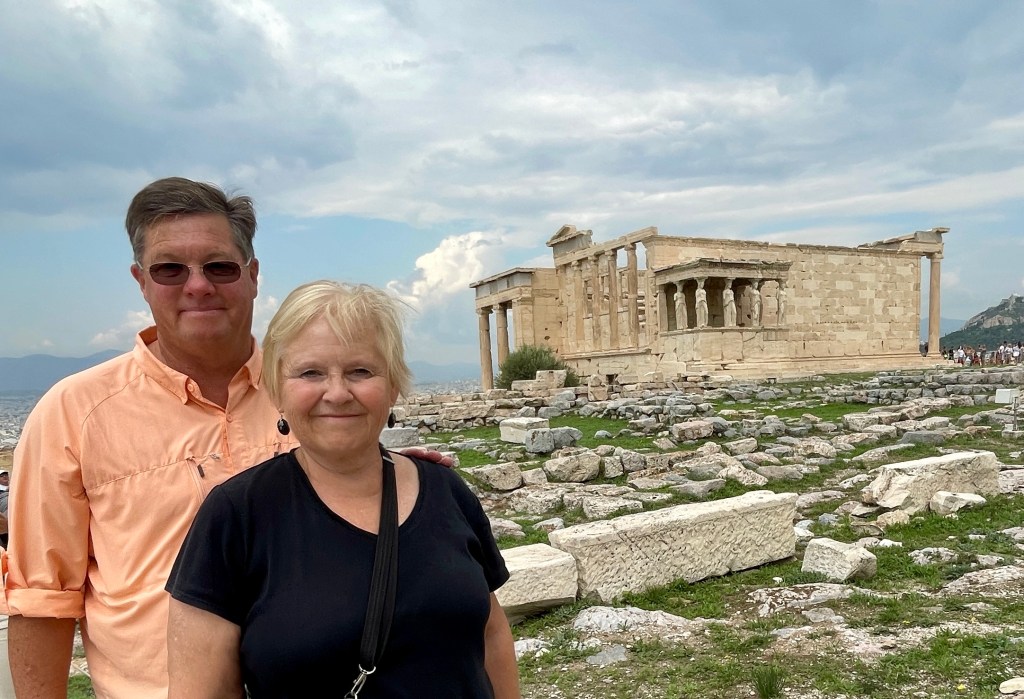
Different sections were dedicated to Athena, Poseidon and others.

Columns weren’t a solid piece.
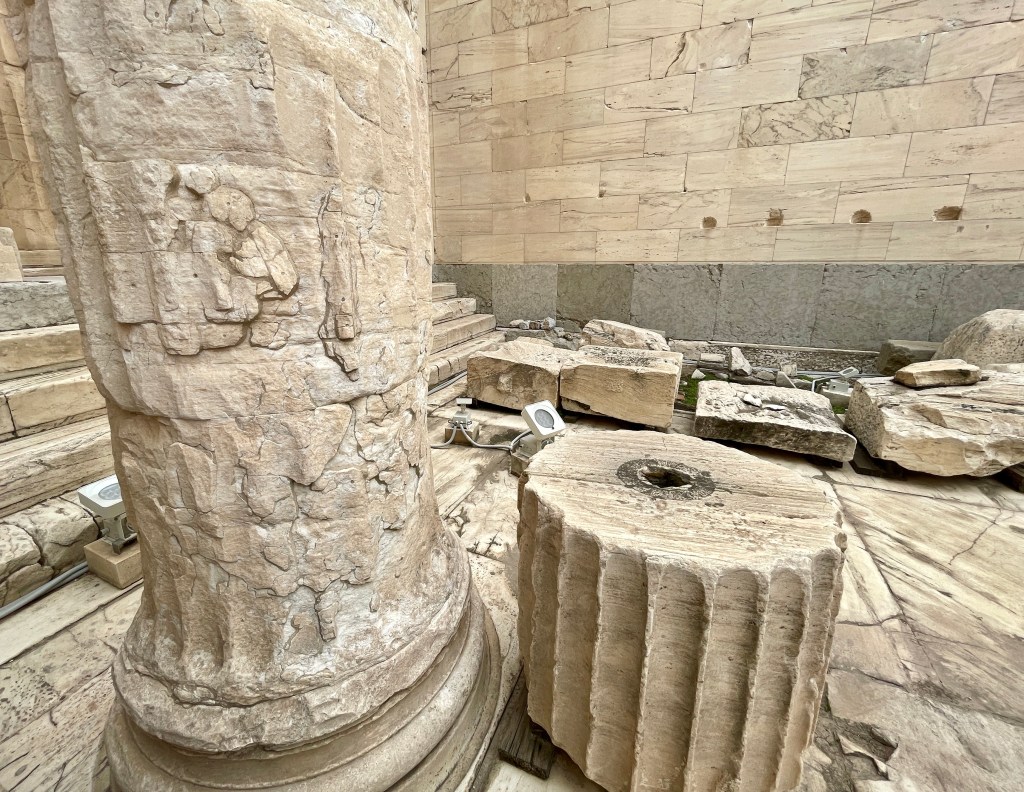
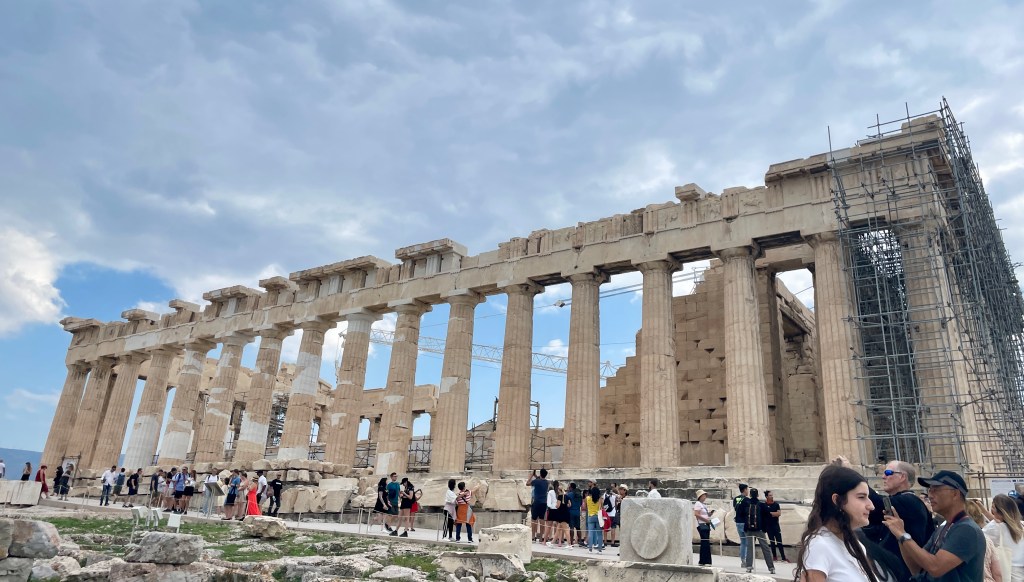
The Parthenon was built in nine years between 447-438 BC. It served as the treasury of the empire and became a christian church in the late sixth century AD.

With the Ottoman conquest in the fifteenth century, it became a mosque.
In 1687, the Parthenon and other buildings were seriously damaged during the Venetian’s siege of the Acropolis when their bombs set off munitions that were stored by the Ottomans.
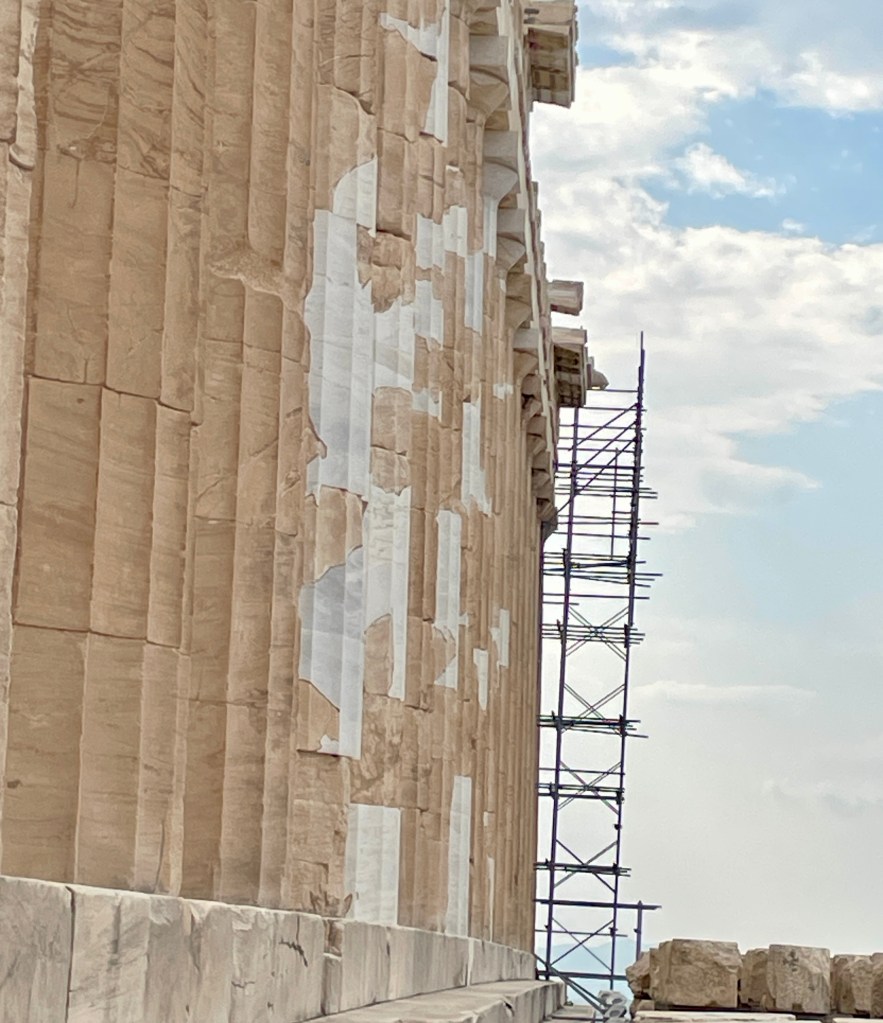
Artifacts were looted over time. The grounds of the acropolis only started being protected in the 1960s. Since 1975 there have been large scale efforts at restoration and preservation.
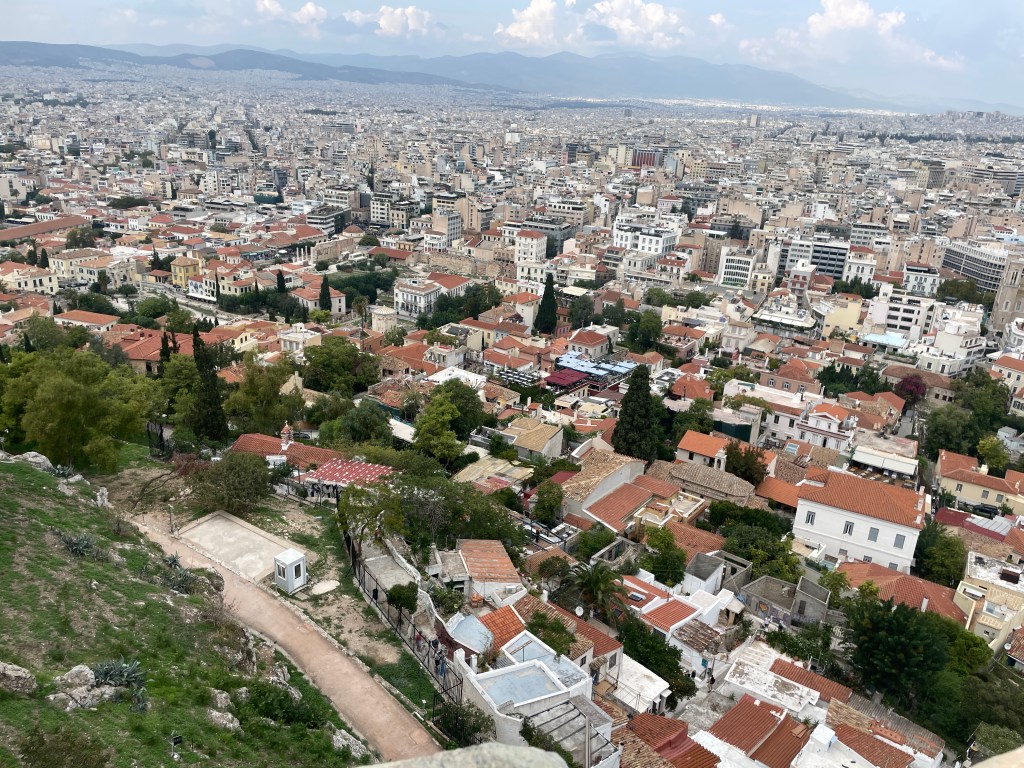
We had seen the Acropolis from Athens, and now we could see Athens from the Acropolis.
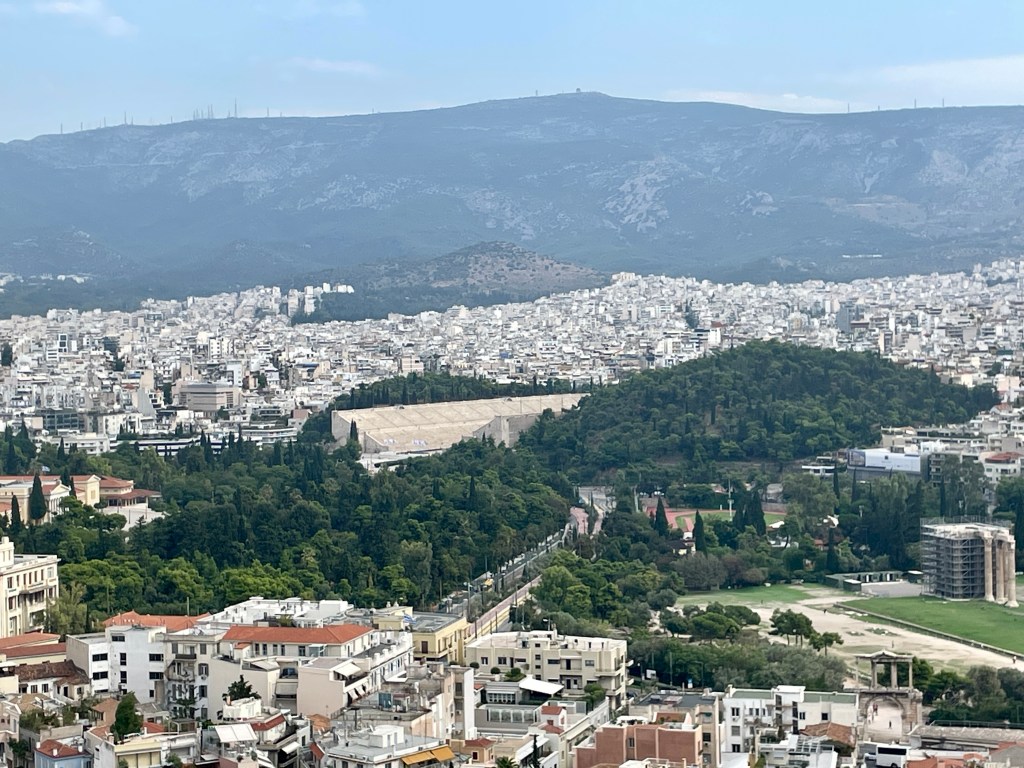


This is the oldest theater in Greece as seen from above.
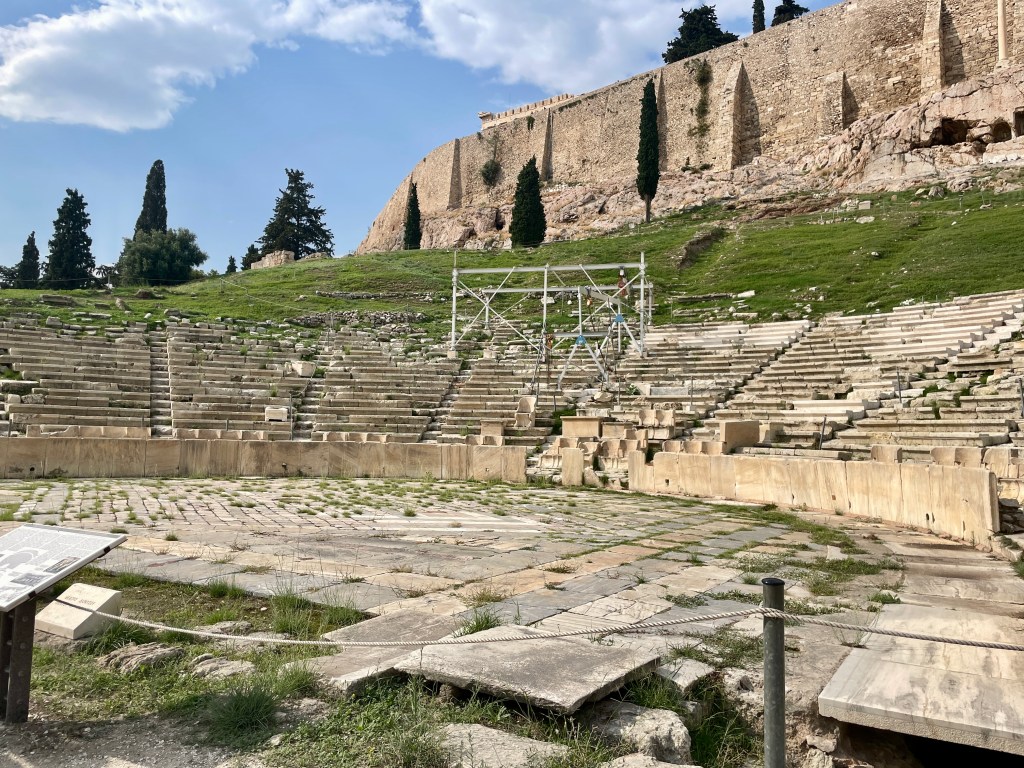
This is the same theater from below. There used to be a hospital nearby as holistic medicine was common practice in Ancient Greece. The theatre was seen as a benefit in treatment.
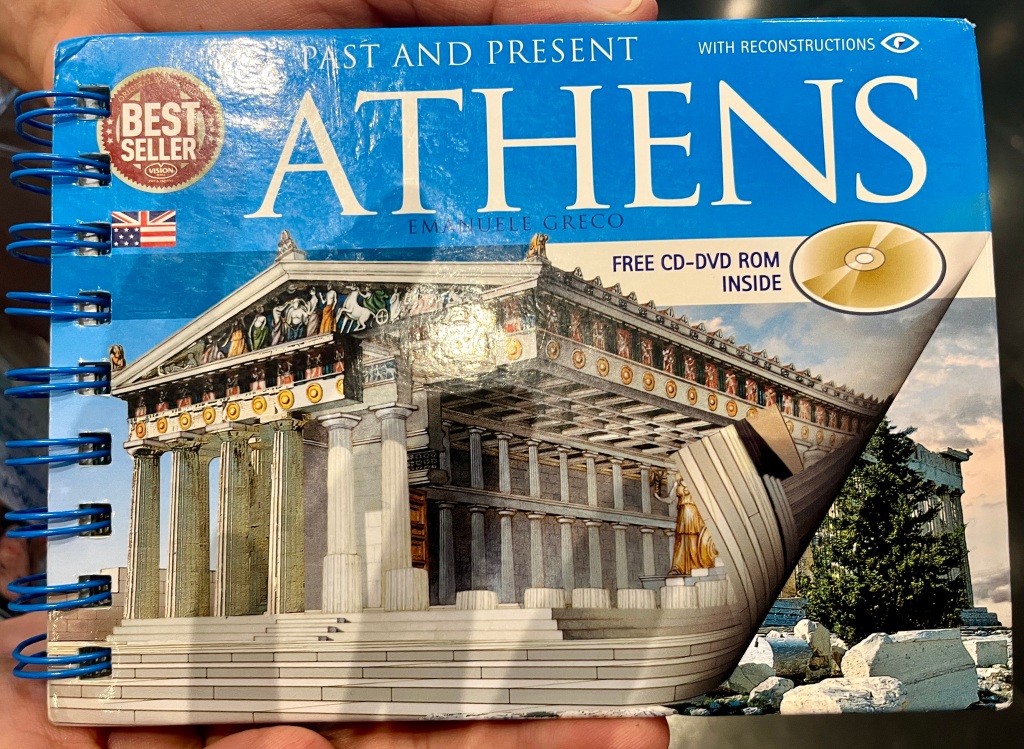
Our guide used this book during our visit around the Acropolis. It had different overlays to show the present view, and a presumed view from long ago. I considered buying one but didn’t. However, if I were to return, especially without a private guide, I would absolutely buy one!

After our visit into the ruins, our guide led us through the Acropolis Museum.
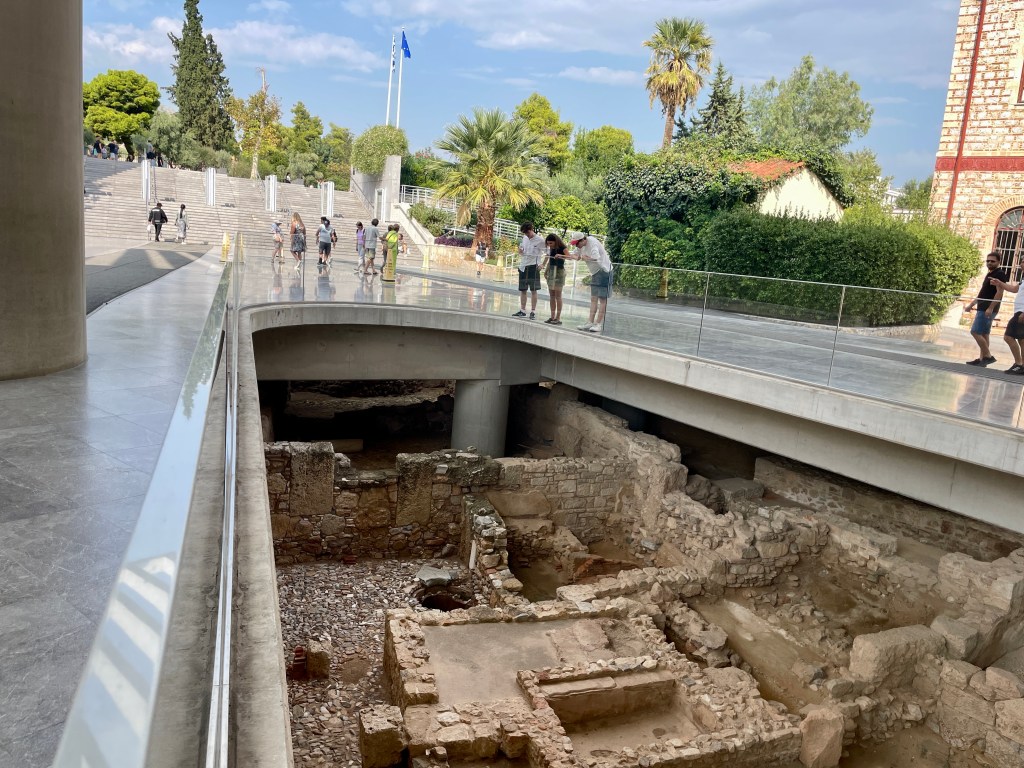
Of course they found ancient ruins while the museum was under construction and incorporated them.
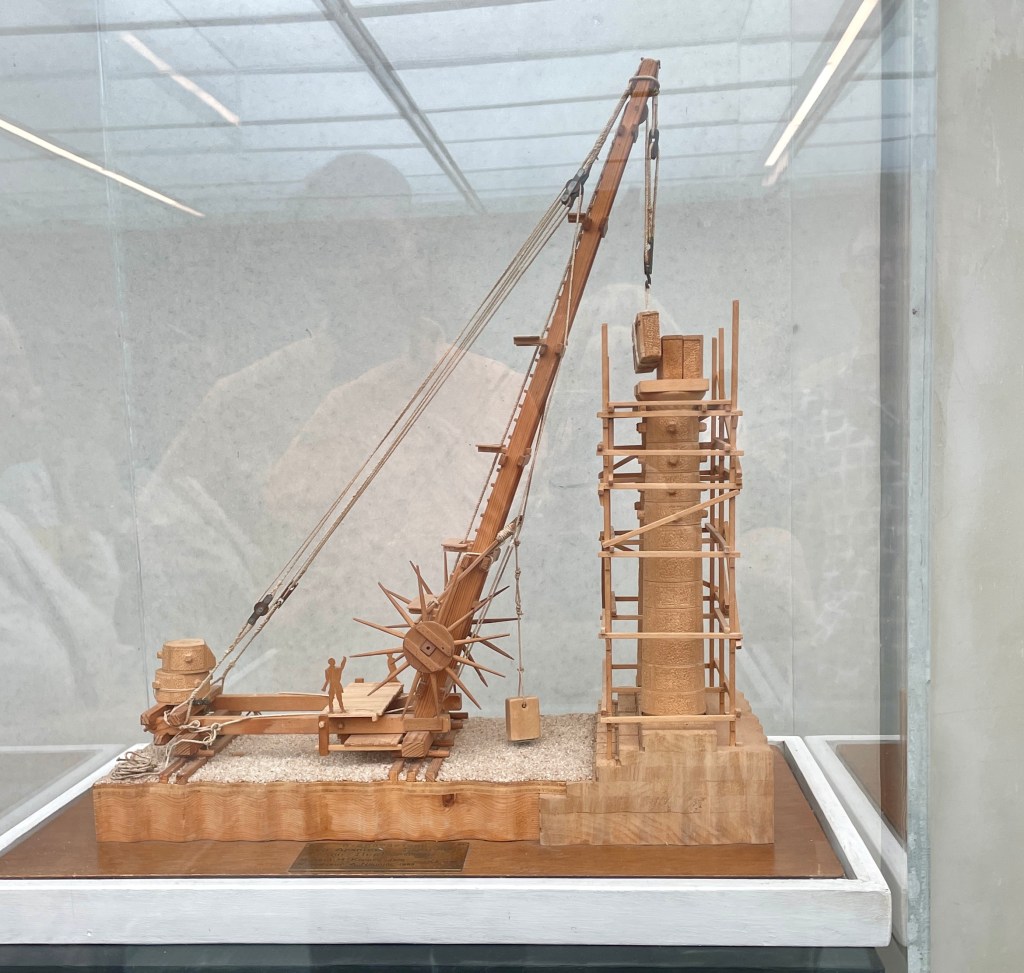
How did they move those big slabs of stone to make those huge buildings before modern cranes?
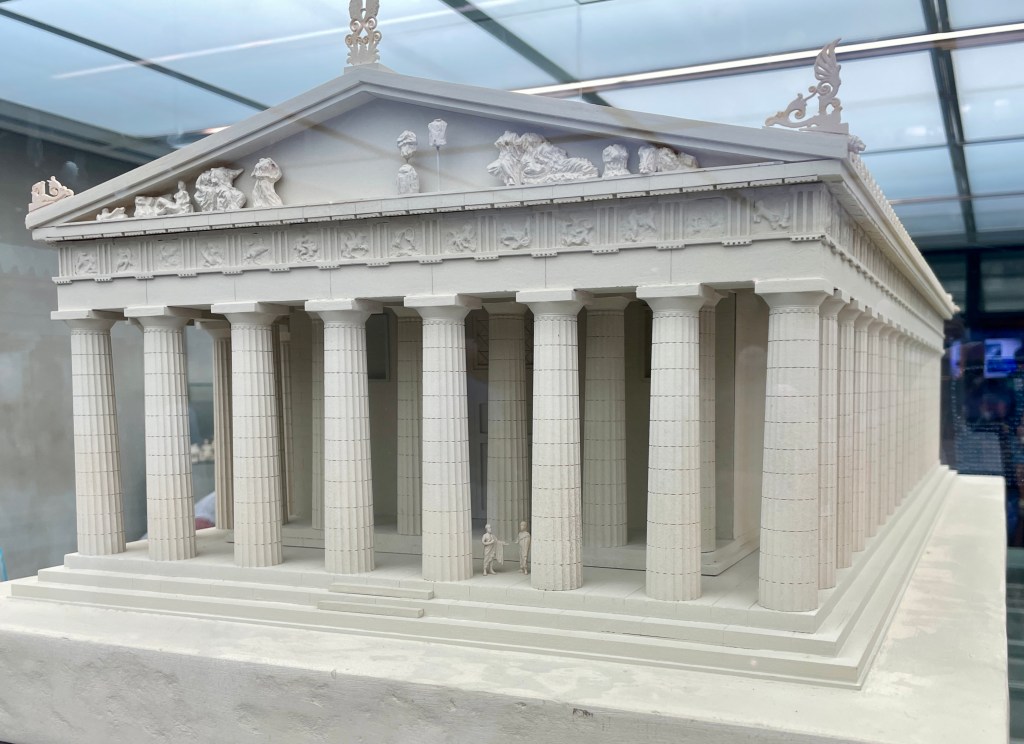
This shows some of the sculptures placed above an entrance.
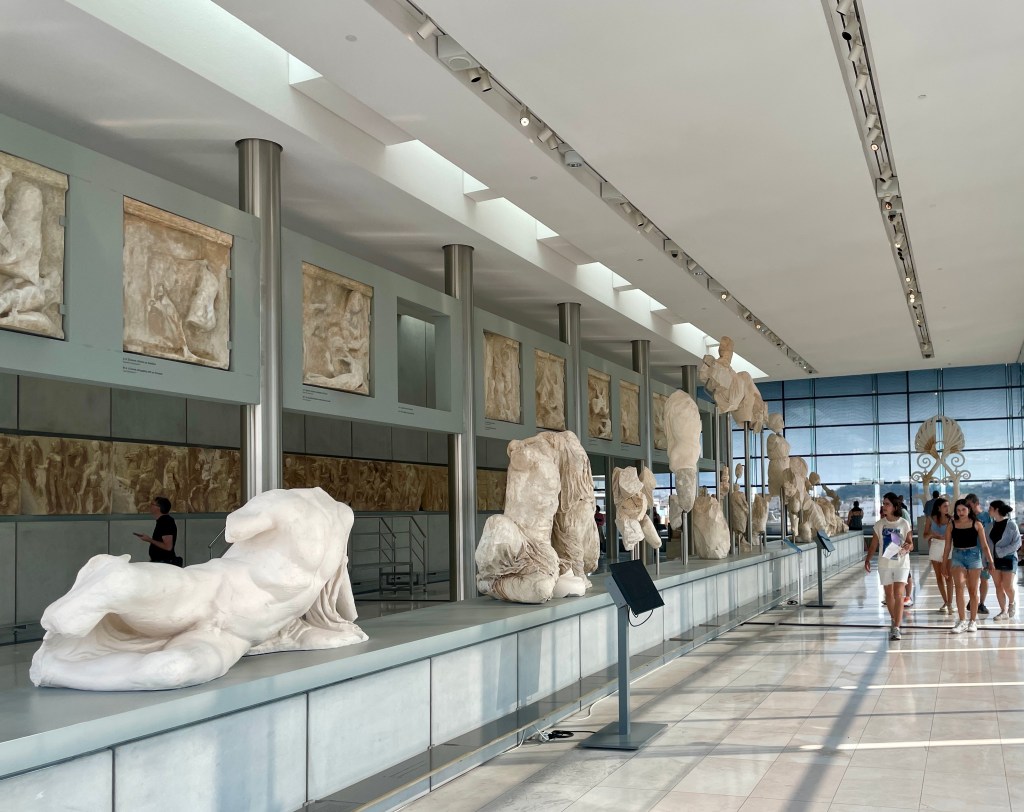
These are the pieces they have, or have recreated, and their size and placement.
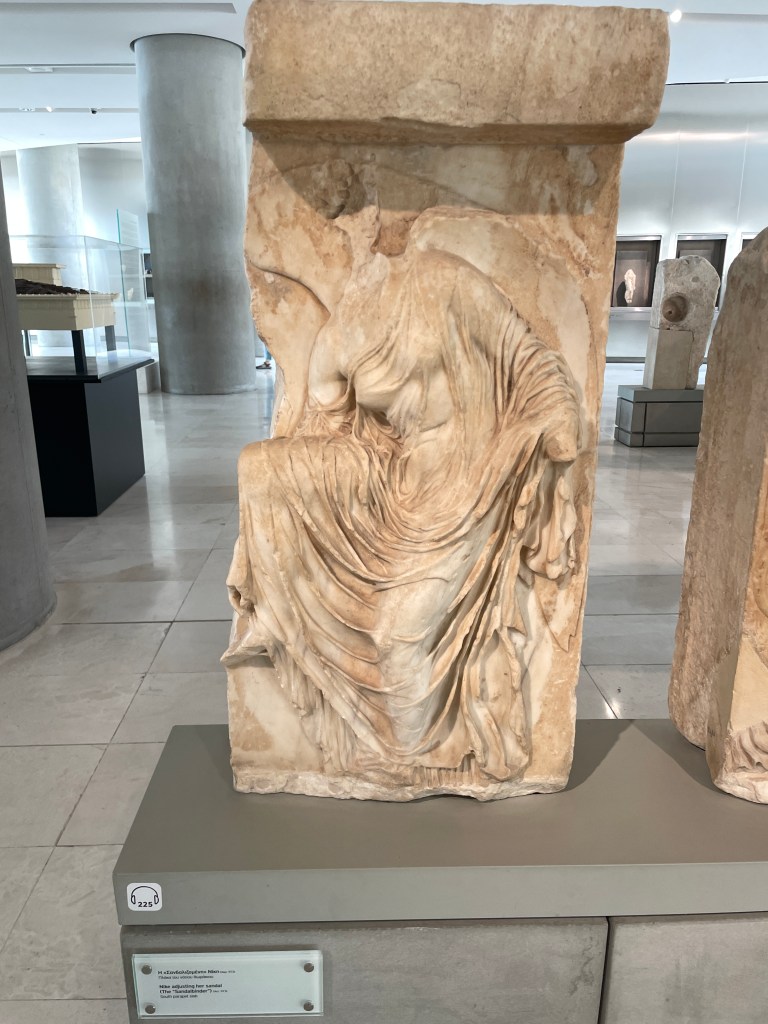
There are many original artifacts. This is a Nike.

These are five of the original women statue columns from the Erechtheion seen above. Those outside on the Acropolis are reproductions. The sixth was taken and is on display at the British Museum.
We had not been looking forward to this tour as we felt that, after Italy last year and then this trip, we were done with old things. I’m glad to say we enjoyed our tour of the Acropolis with our guide. In hind site, as far as ruins go, we went out big!
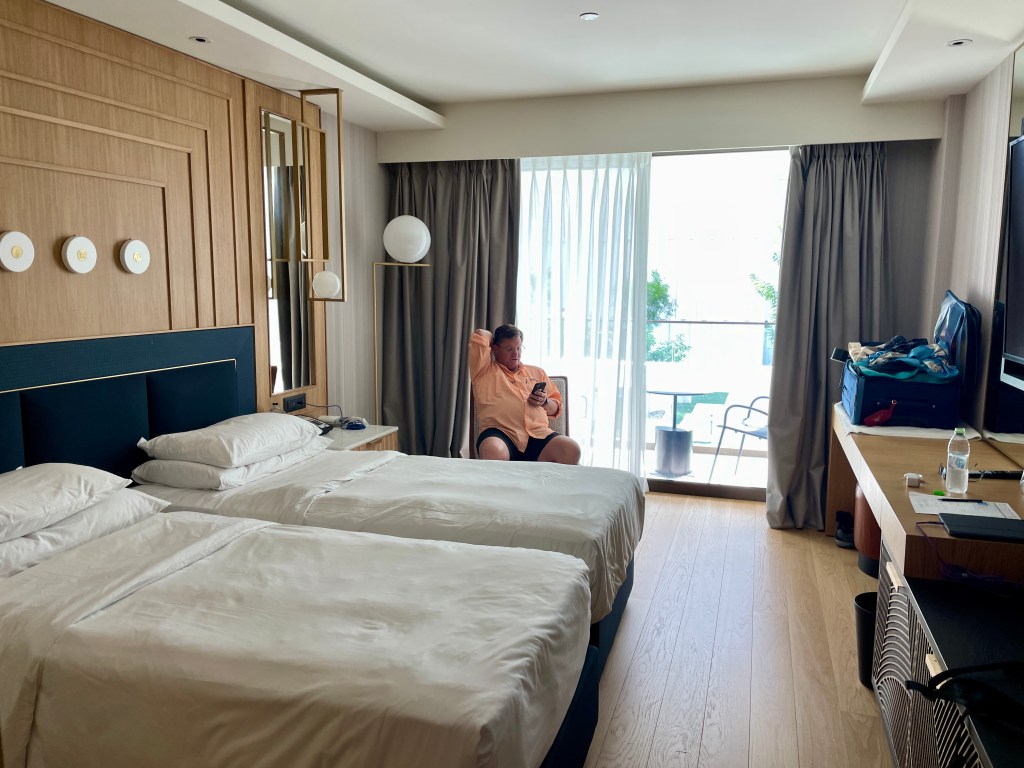
This was our room at the Grand Hyatt Athens. It looks innocuous but over the course of 48 hours we had to call about a problem with lights, a problem with the air conditioning and a problem with the safe! We took our items out of the safe early because we didn’t want to have it fail before our 4:30 am trip to the airport!
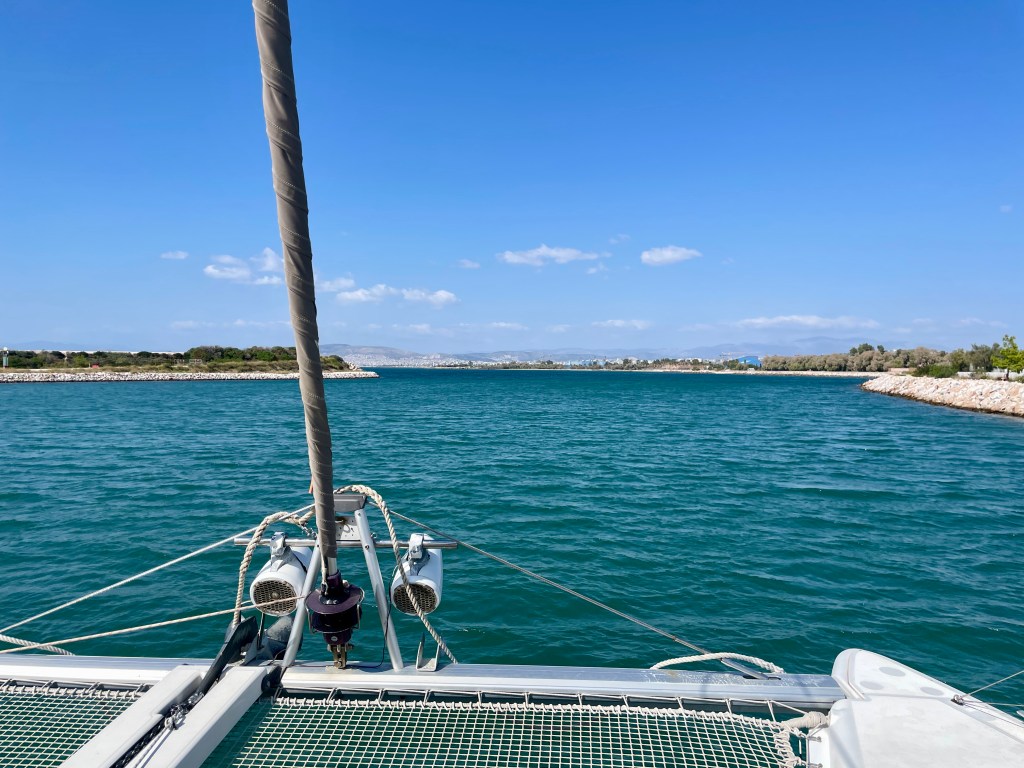
But first, we had our final activity in Greece. We enjoyed a Catamaran Sunset Cruise and dinner.
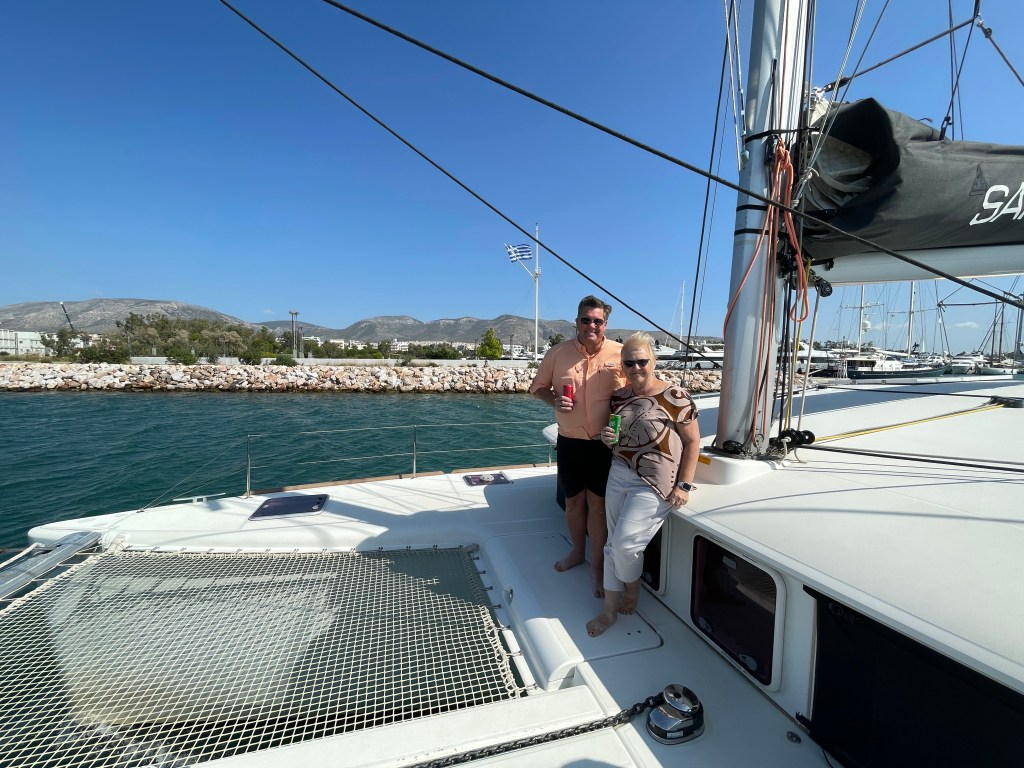
It was a wonderful ending to five weeks in Europe.
We were in Athens on October 3, 2023.
Next up: Trip post mortem. What would we do again, what would we not?


 Serene Wandering
Interesting looking instrument. Some type of Dulcimer?? Ya’ll certainly covered some ground (and sea) and saw a lot of history! I’ll be interested to see your take-aways.