The pre-purchased event for our first morning in Baltimore was a sail around Baltimore’s Inner Harbor on the Summer Wind. When we arrived we were offered a refund, to re-schedule or to go ahead in the rain. As our next days were already planned we, and one other passenger, opted to go ahead.
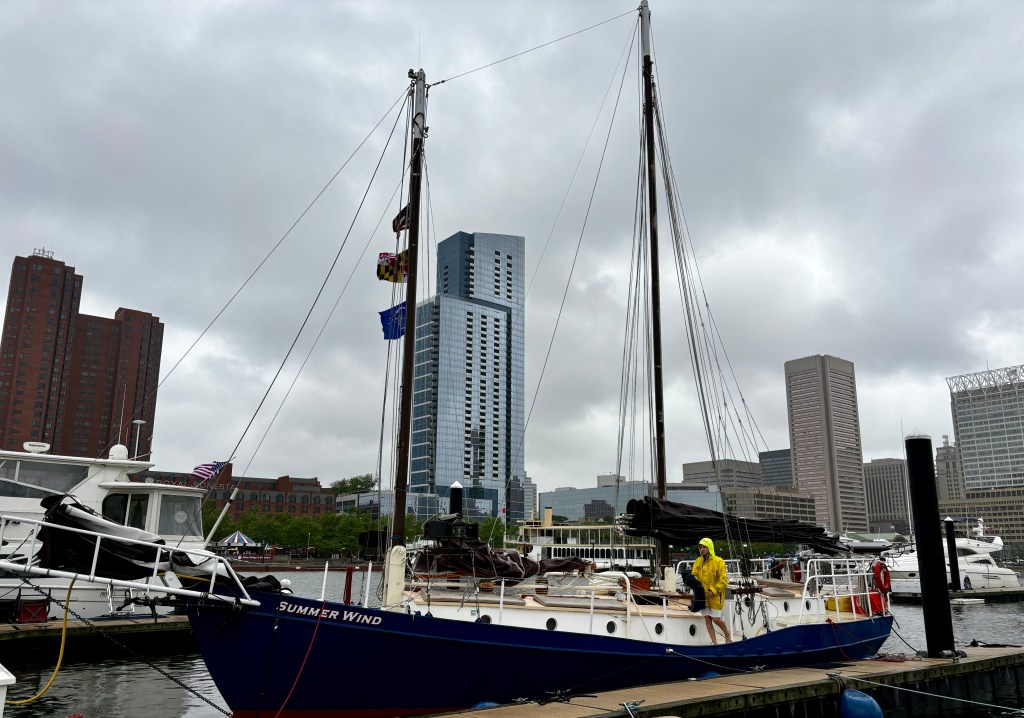
I don’t think the boat people were all that excited about it but we set out with our rain gear and ponchos.
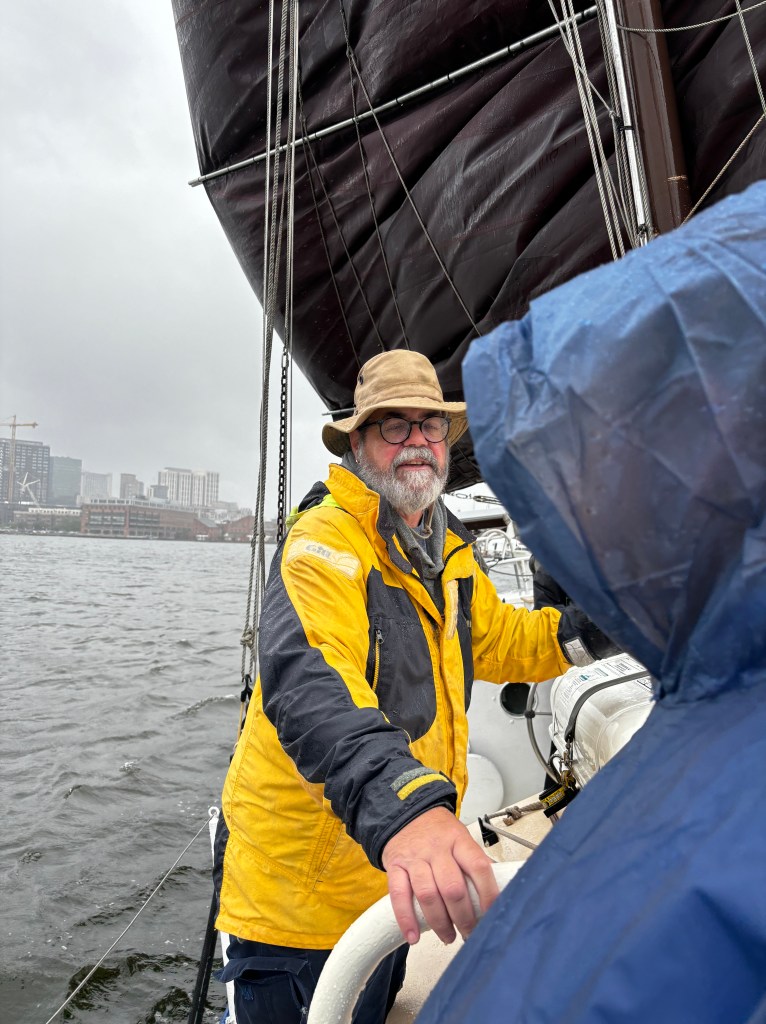
The owner of the boat was also our historian and tour guide. He had previously captained his boat as well, but now employed a female captain.
Although the single additional crew member put up Summer Wind’s sails, we motored around the harbor. If there was an intended period of time meant to only use sails, none of us were really interested in loitering in the rain.
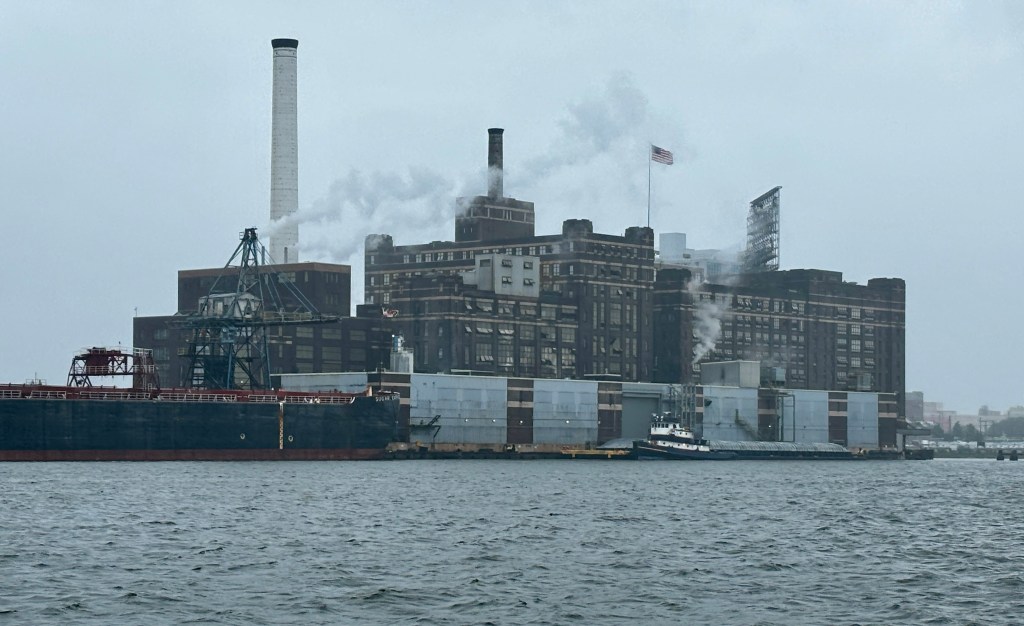
The remaining large, and dominant, factory on the inner harbor is The Domino Sugar refinery. There were once six refineries within the harbor but this is the only one that remains. This facility was built in 1921 and has undergone little change over the years. About 500 employees process 6.5 million pounds of raw cane sugar.
It is the second largest sugar refinery in the country and accounts for 14 percent of US sugar production. According to our guide, most of it goes to Hershey, Pennsylvania.
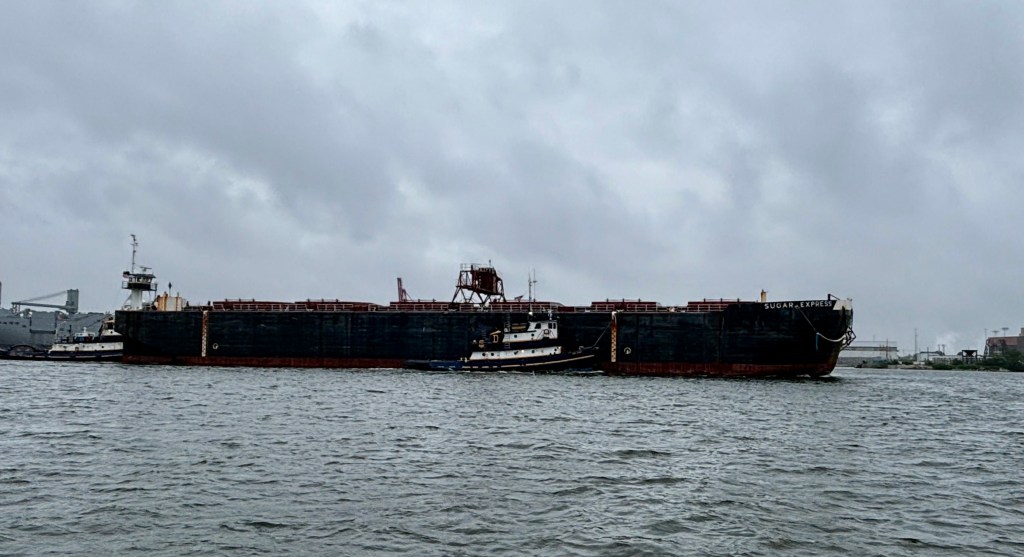
Currently, inland Florida sugar cane arrives by barge.

Larger ships had unloaded directly at the plant prior to the Frances Scott Key Bridge collapse on March 26, 2024.
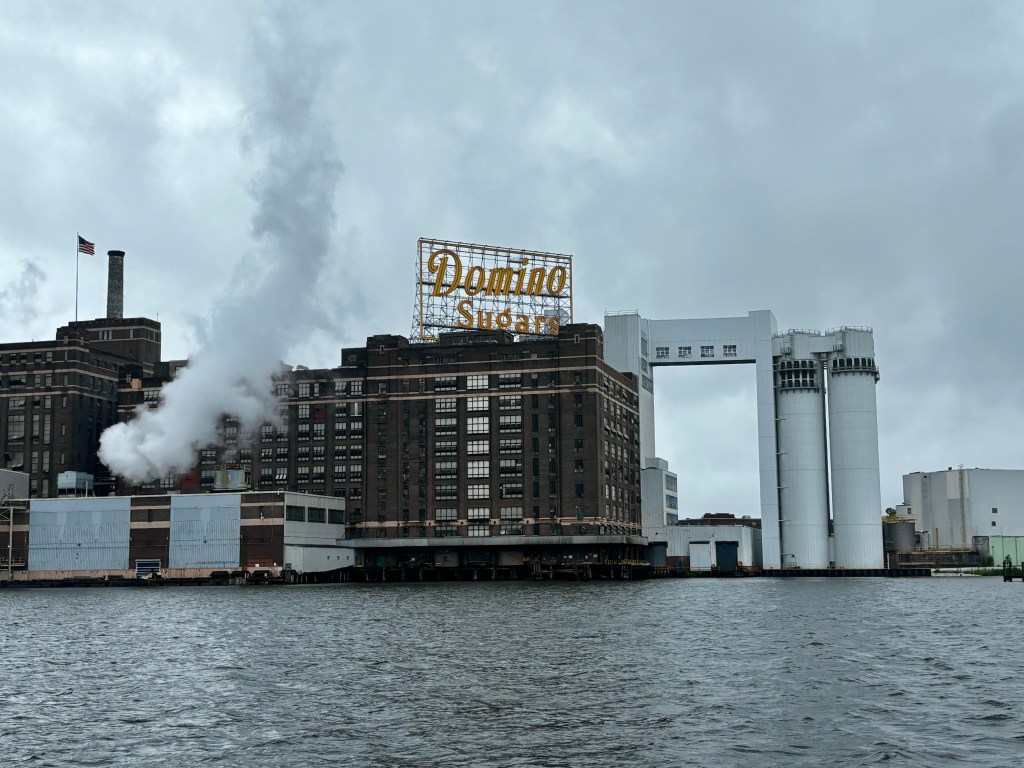
The iconic Domino sign was installed in 1951. It is so large that the dot on the “i” is six feet high.
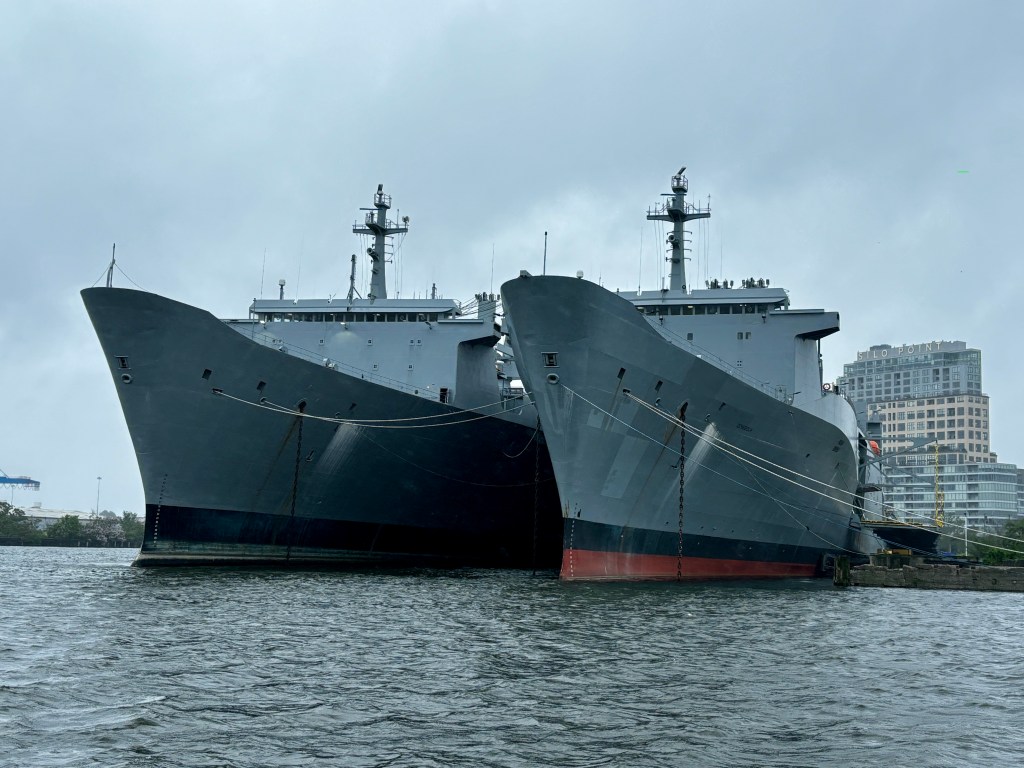
These ships are part of the U.S. Navy’s Ready Reserve Force designed to supply American troops around the world very quickly. Ships in the force are positioned at ports along the eastern and western seaboards and the Gulf of Mexico.
There are five ready reserve ships stationed in Baltimore but four have been confined in the harbor because of the bridge collapse. Fortunately, two months later, trapped ships are just now beginning to be able to leave Baltimore harbor. The target date for a new bridge is fall of 2028.
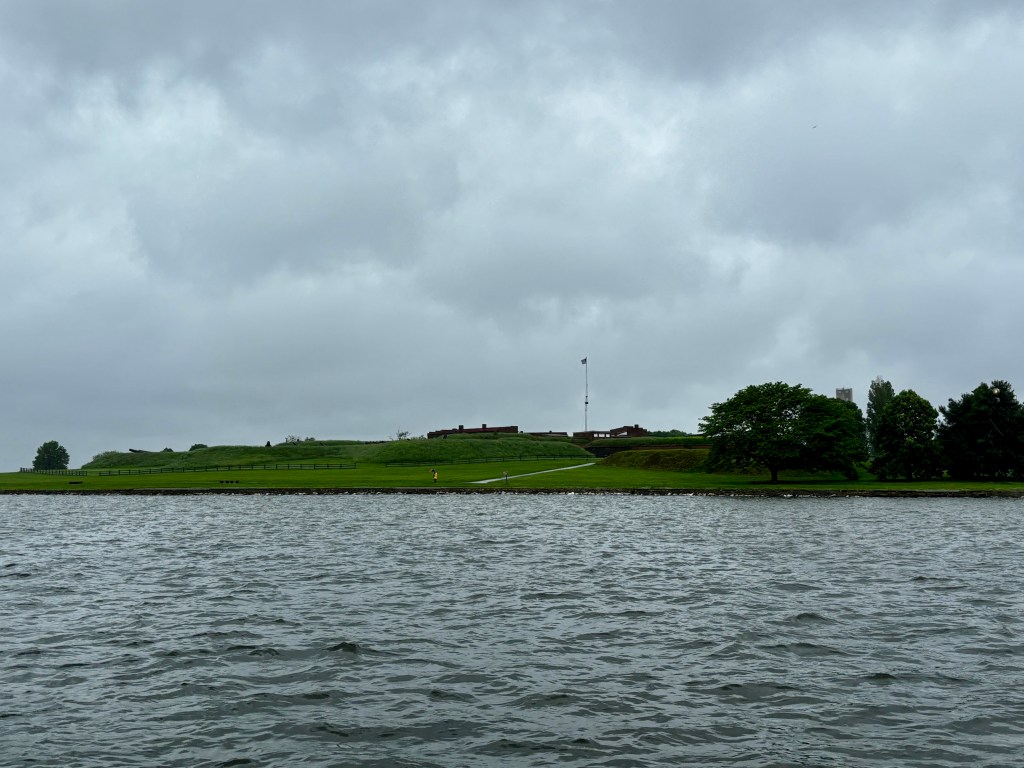
We sailed near Fort McHenry, over which the banner, with “broad stripes and white stars,” was gallantly streaming in the dawn’s early light of September 14, 1814. The defense of the fort in the Battle of Baltimore inspired Francis Scott Key to write the poem “Defense of Fort M’Henry.” The words of the poem became “The Star Spangled Banner.” The song was first used officially in 1889 by the United States Navy. It became our national anthem in 1931.
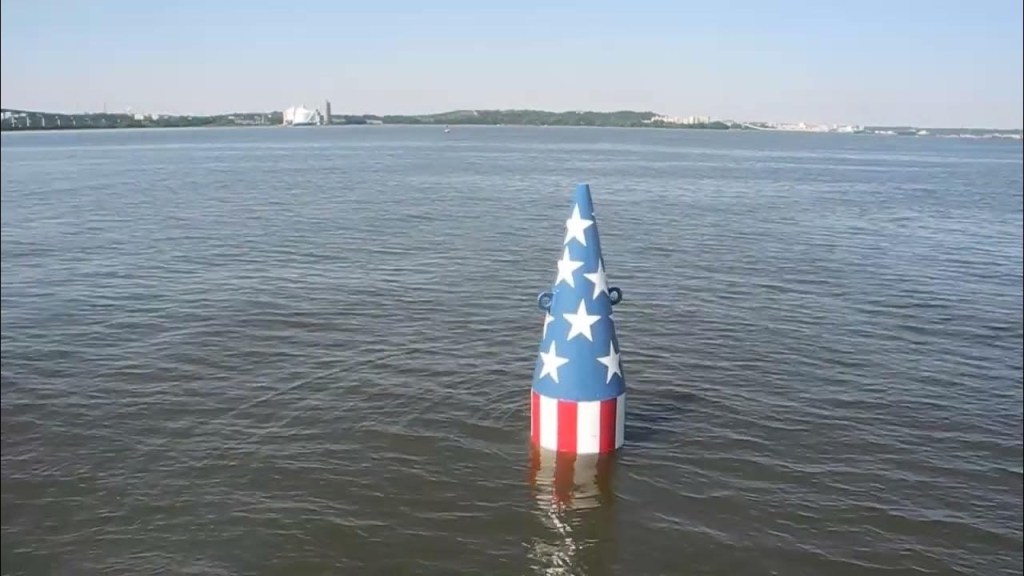
Every spring since 1980, the Coast Guard has set this historic buoy in the harbor. It is placed near the spot where Frances Scott Key observed the 1814 British bombardment of Fort McHenry. He had been detained aboard a British ship while on a diplomatic mission. The buoy is removed each year before winter. We did not see it but were told about it.
Baltimore’s Inner Harbor had been a hub of industry and transportation for more than a century. As industry declined, the harbor declined.
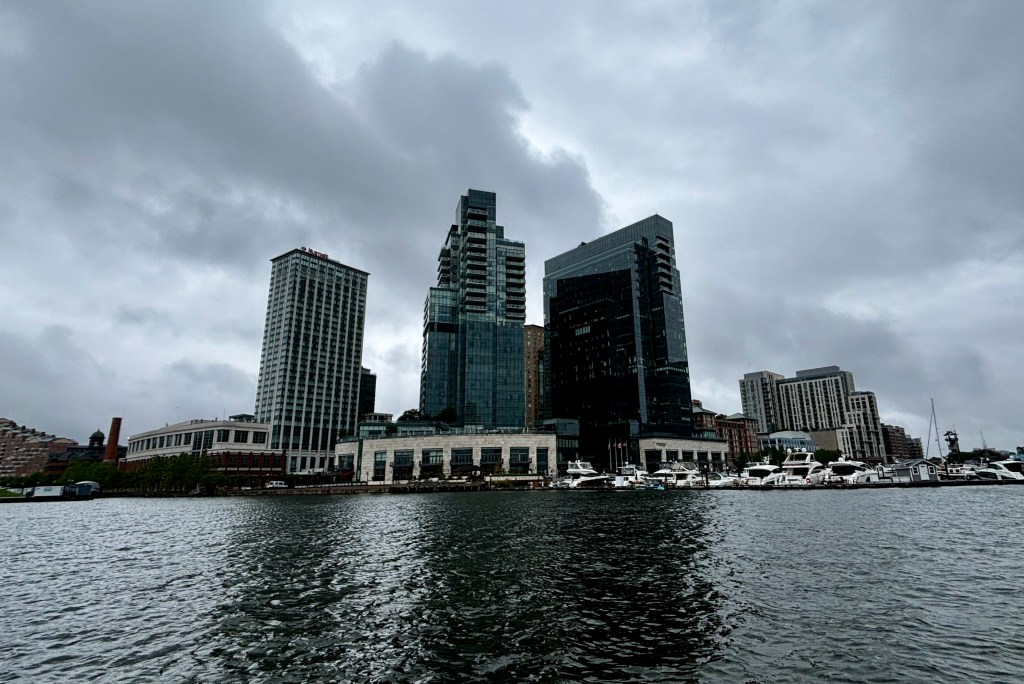
Today, the inner harbor area thrives.

William Donald Schaefer served in public office for 50 years in Baltimore and Maryland. As the mayor of Baltimore, he was a guiding force in refurbishing the inner harbor.

Under-Armor’s world headquarters are in the harbor area. Founder, Kevin Plank, did not like wearing sweaty clothes while playing football for the University of Maryland. So, he invented an alternative clothing line that wicks away sweat and dries quickly.
The investment company, T.Rowe Price, also is headquartered in Baltimore.
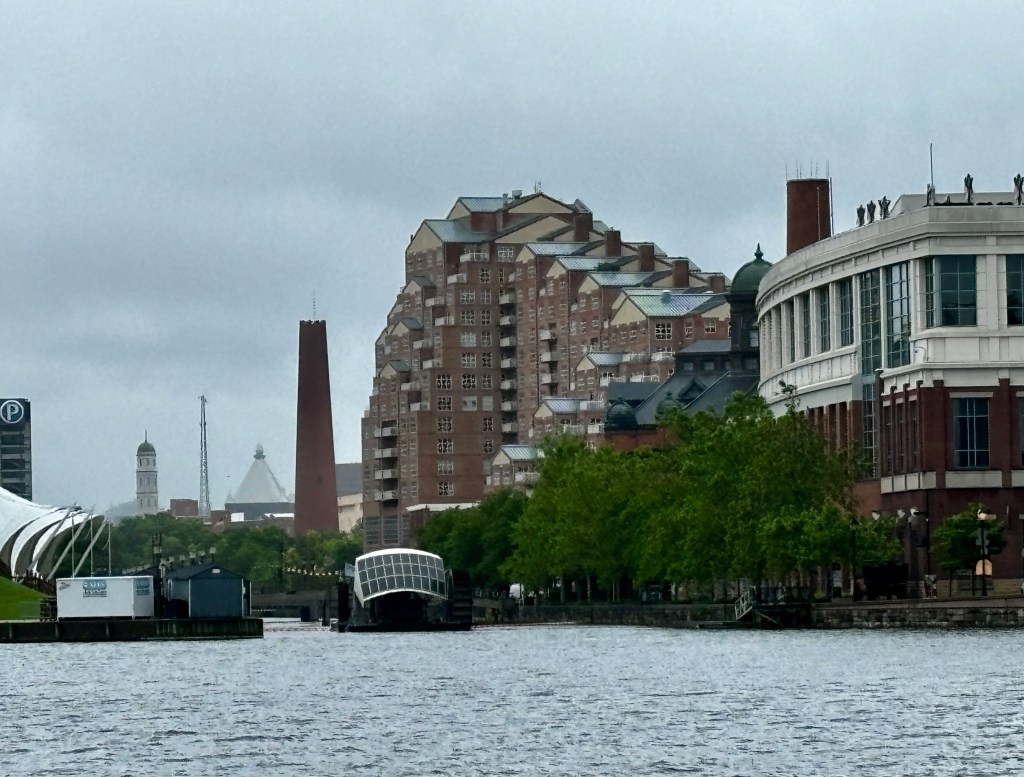
At the close of our cruise, we saw Mr. Trash Wheel. It is the vessel with the white grid at water level. The brainchild of local engineer John Kelley, it was installed in 2014. Mr. Trash is solar powered and collects trash at the mouth of the Jones Falls River as it empties into the harbor. As the wheel turns it collects all kinds of trash, 50 tons in its first year. The collected trash is stored and emptied regularly. It has been incredibly effective in removing, and keeping trash from the harbor. There is now a second iteration at another location in the inner harbor.
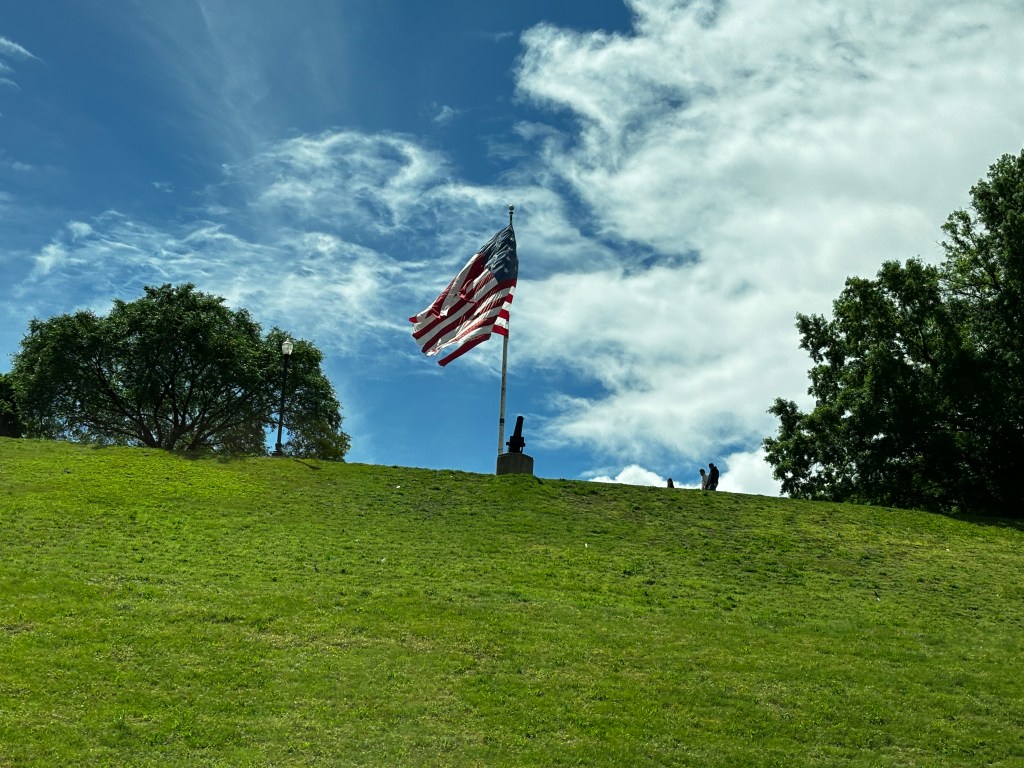
Just off the harbor we walked by Federal Hill. It was occupied by Union troops during the Civil War in a city that largely supported the confederacy. Our guide described Baltimore as the northernmost point of the confederacy and the southernmost point of the union.
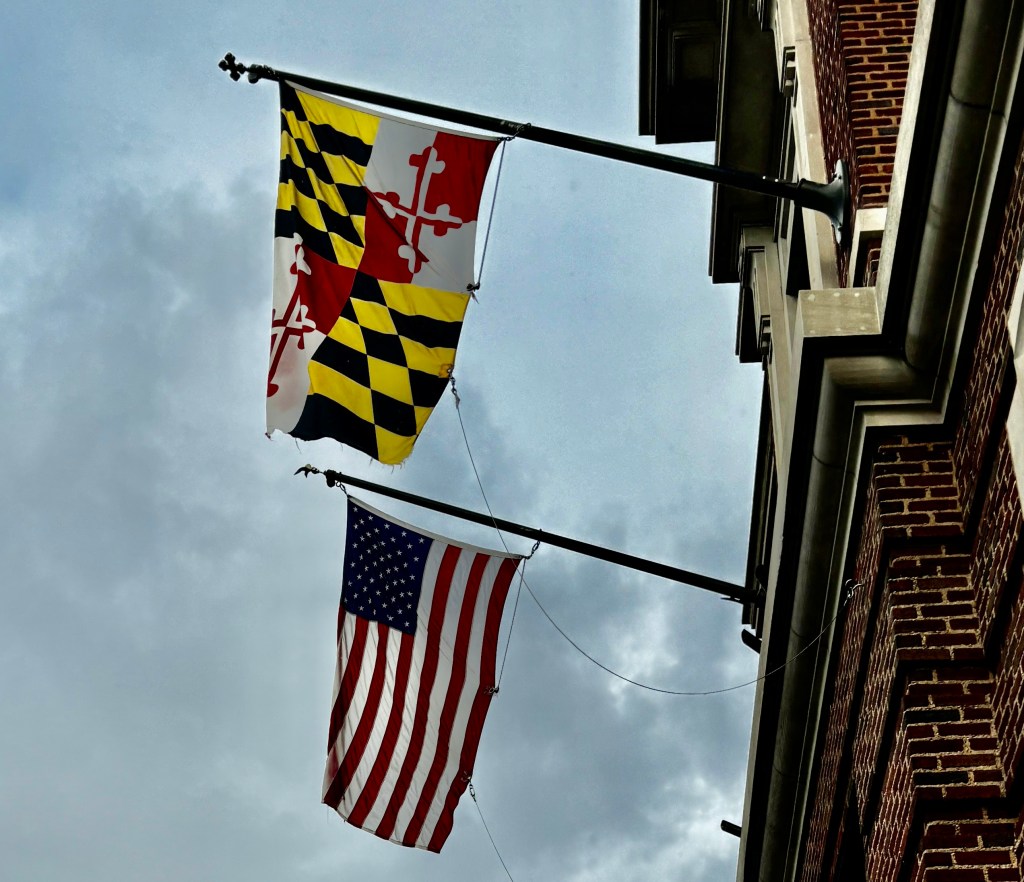
It is just an illusion of how I took the picture of the flags that the Maryland flag appears to be above the American flag. It wasn’t. However, I was interested in the Maryland flag and why it looks the way it does.
During the Civil War, Lord Baltimore’s yellow and black banner was flown in support of the union while the red and white Crossland banner was flown by pro-confederacy. The Maryland flag reflects the coming together of Marylanders after the Civil War.
Next up: The Historic Ships in Baltimore’s Inner Harbor
We were in Baltimore in May, 2024.


 Serene Wandering
It’s beautiful !
<
div dir=”ltr”>
<
blockquote type=”cite”>
Too bad about the rainy cruise. I’m surprised that they went out with only three folks. Probably didn’t make any money on that trip! I find it so interesting that they barge sugar cane all of the way up from Florida to a refinery in Baltimore. Enjoying your visit.