
This writing will combine two of the tours we took in Baltimore. The first was a Historic Baltimore tour where we saw everything – and nothing at all. We drove around in a van with a driver who was on a timer – we didn’t understand why at first. The second was a food tour – always a good time in our minds.
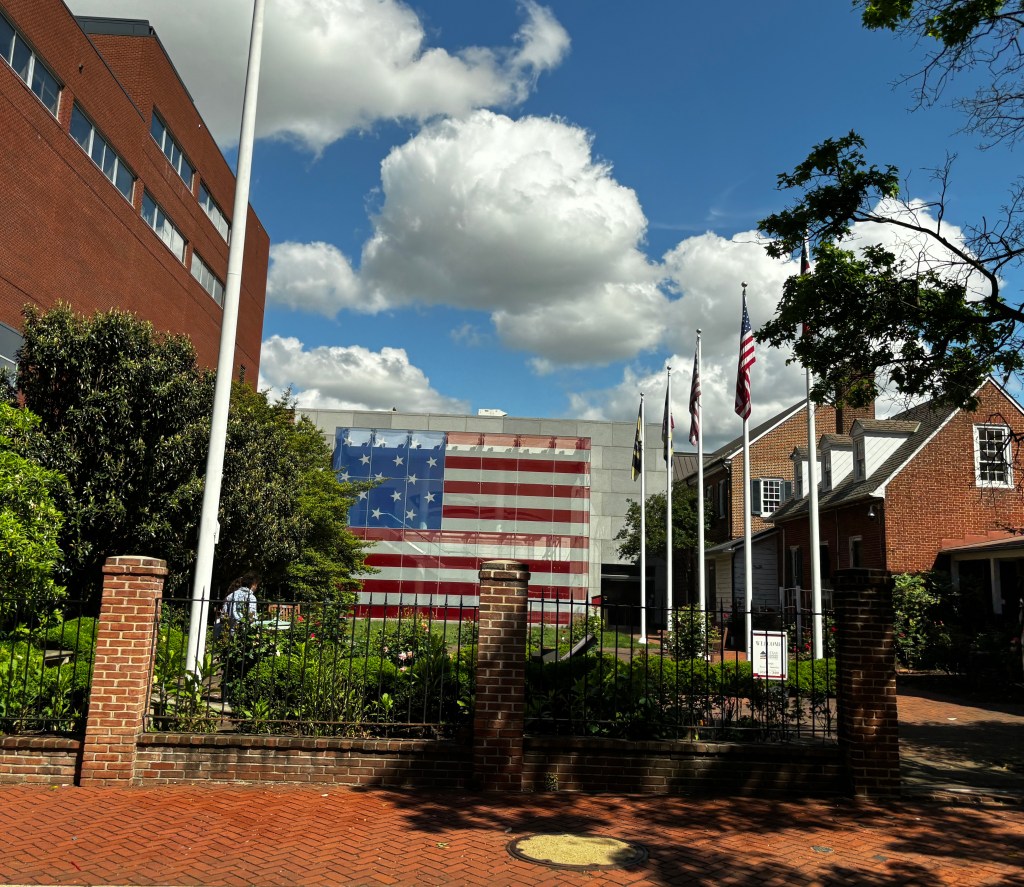
I have a few pictures taken when the target was on the side I was sitting. For example, we passed by the Flag House Museum.

We drove by the first George Washington Monument built in the US. The monument was completed in 1829. You must climb 227 steps to walk to top.
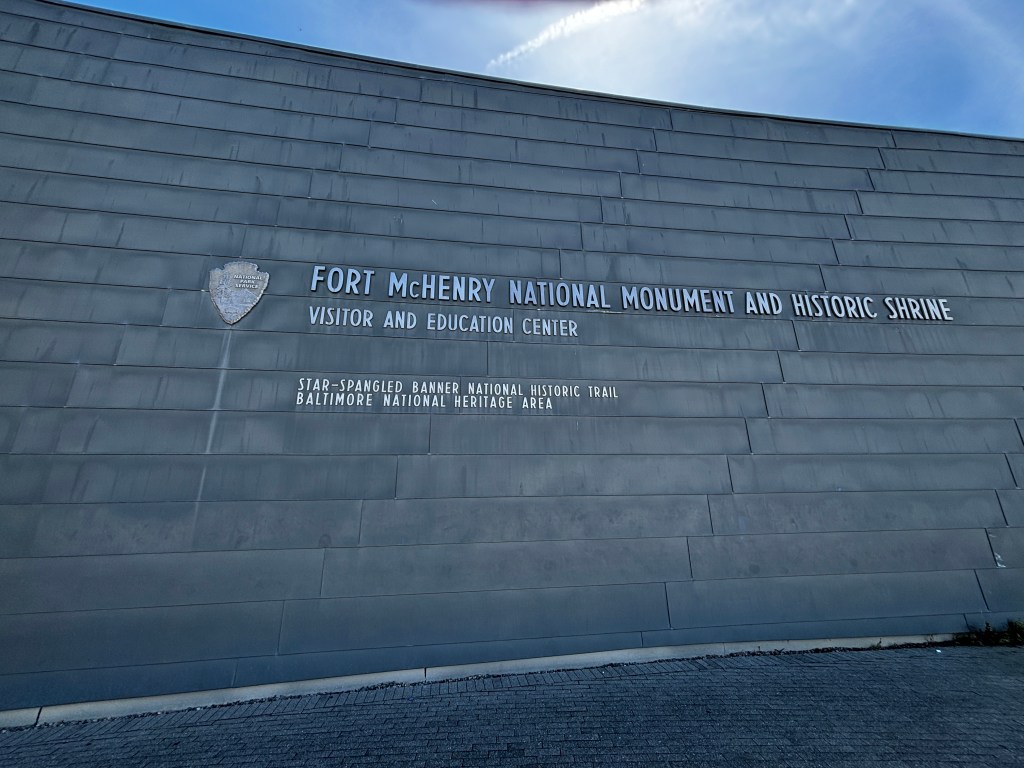
We were able to get out of the van at Fort McHenry to see most of a 20 minute informational video at the visitor center.
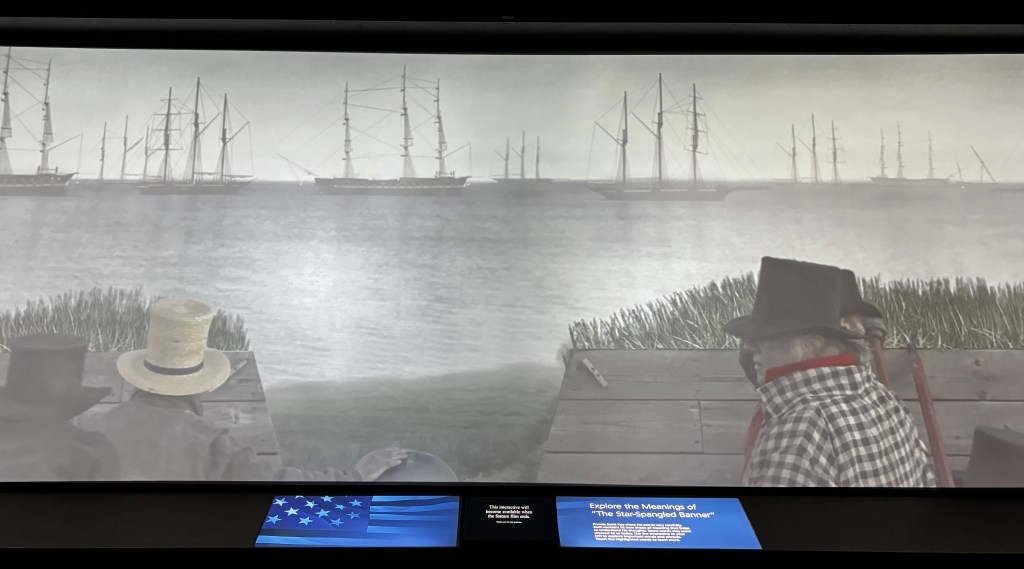
The movie was really well done so we were disappointed not to have seen the first part. The driver tried hard, but just didn’t quite get us there.
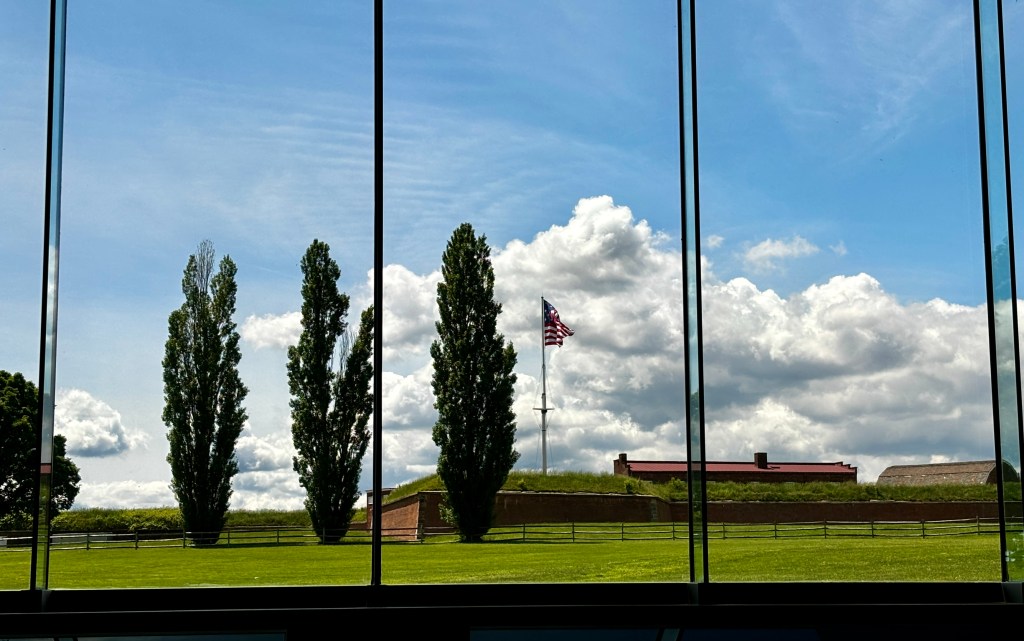
The video finished with the screen being raised to see the flag still flying over Fort McHenry. We were not allowed additional time in the visitor center or grounds. Hmmm.
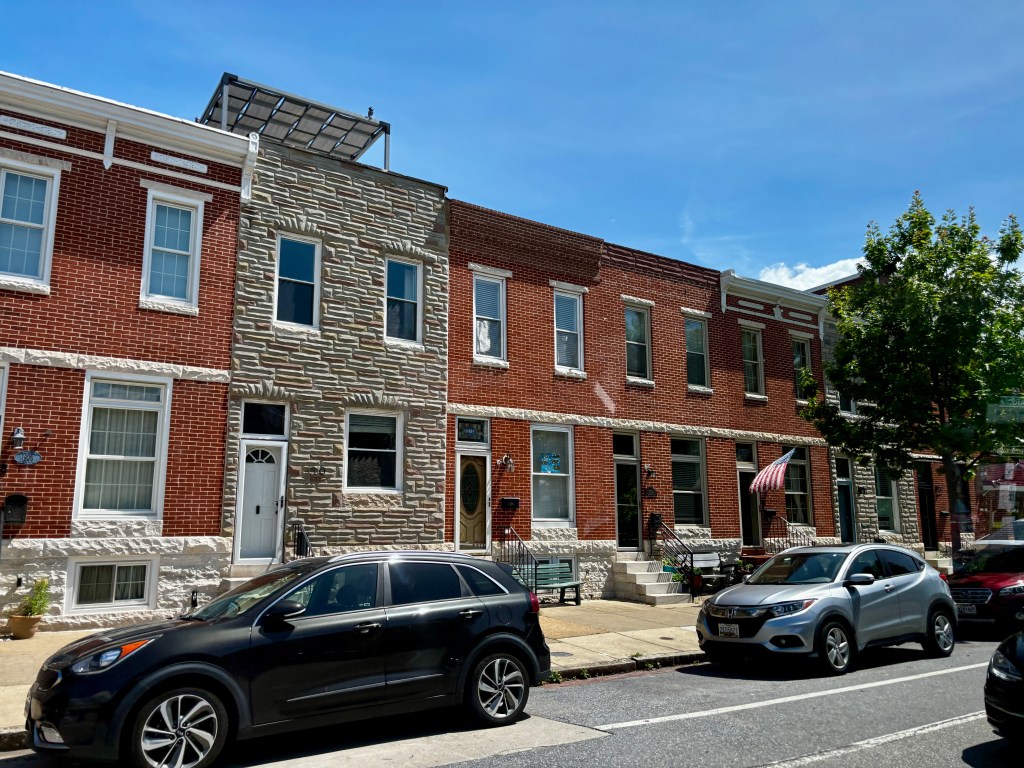
We learned that there were thousands of row houses built for the dock workers in Baltimore. Only Philadelphia has more. We were told to notice the very small doors.
Bricks were mandated for buildings in Baltimore in 1804 to reduce fire danger and because wood was needed for building ships such as the Baltimore clippers.
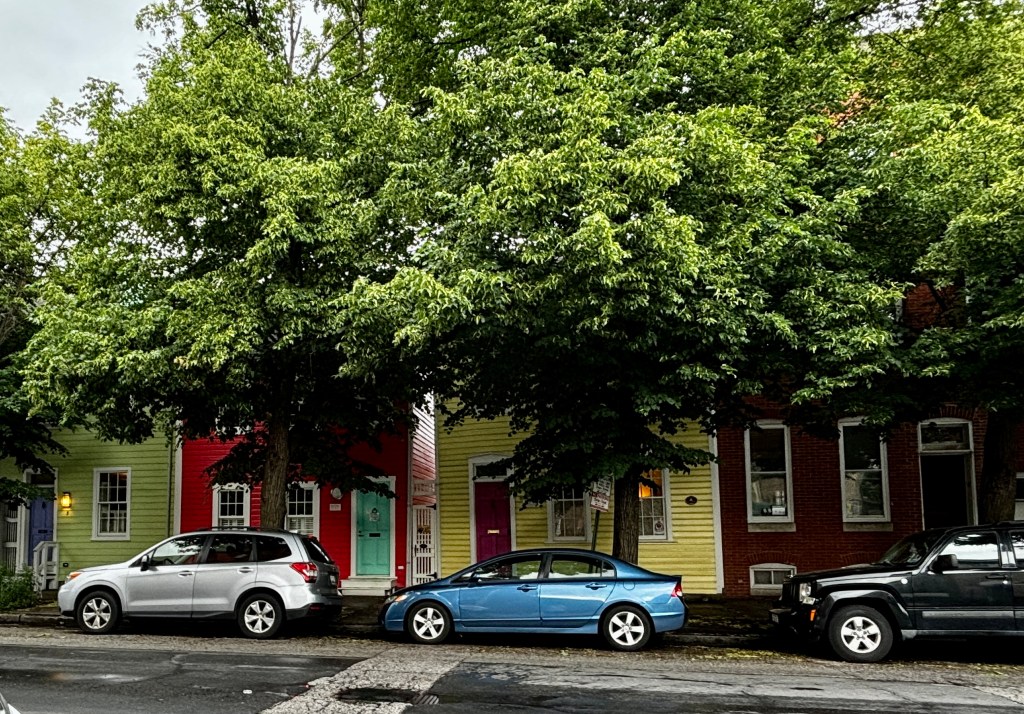
The wooden structures that remained were “grandfathered in.” After years, and subsequent fires, there are only eleven wooden structures left. Four of them are together.
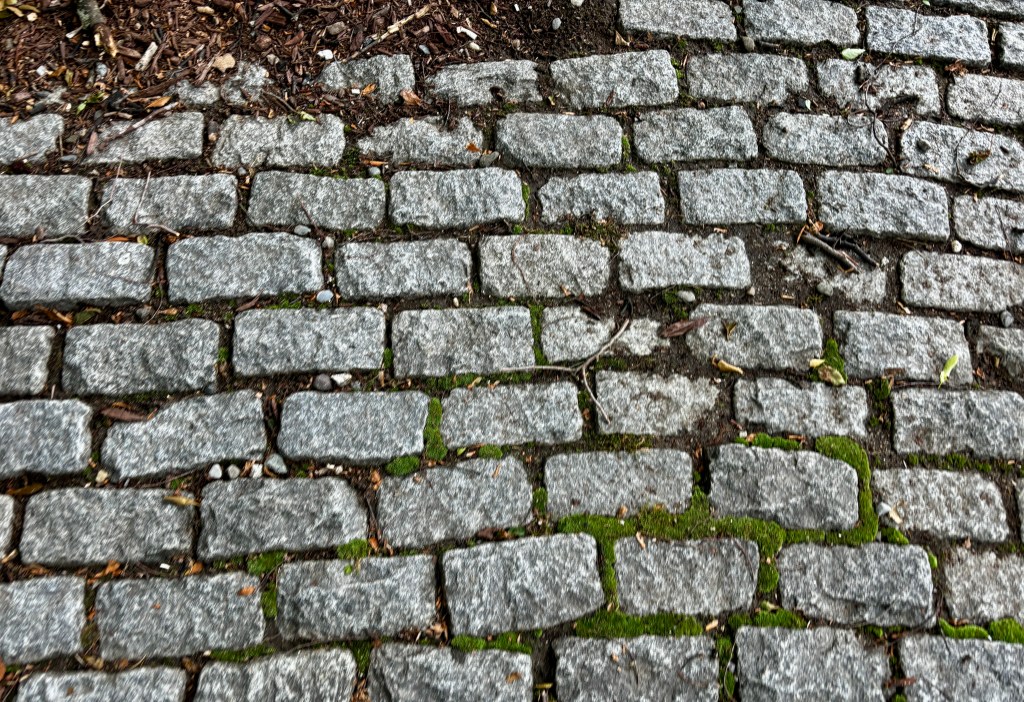
Belgium bricks were used for ballast on ships on their way back to Baltimore. They were then used to build roads in Fell’s Point. Fell’s Point is now a Baltimore neighborhood but the community is 75 years older than Baltimore.
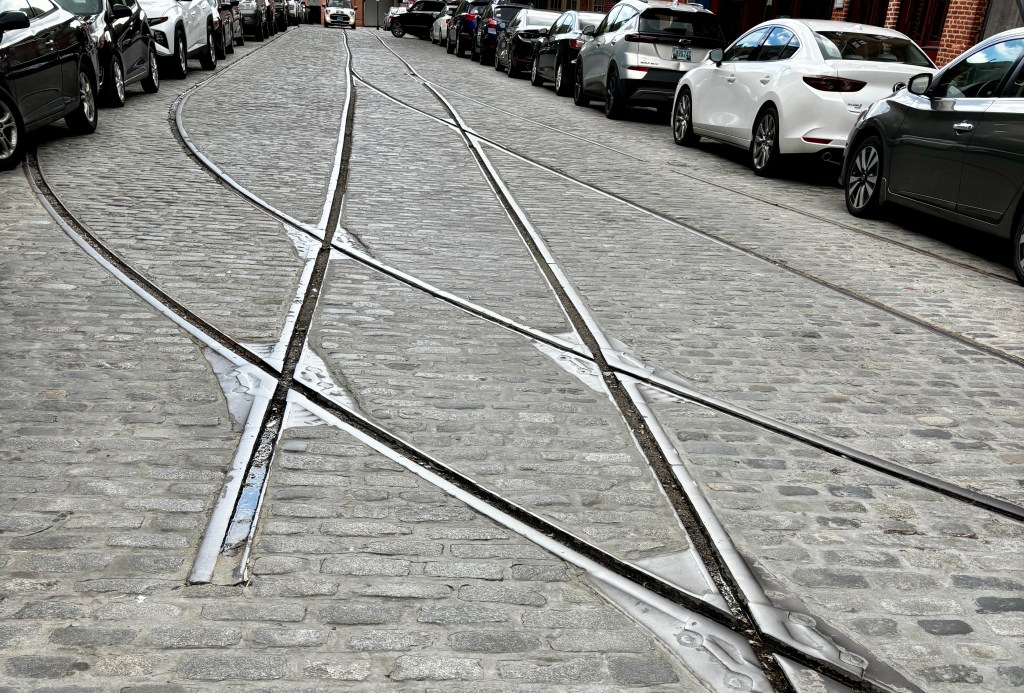
Our food tour was set in Fell’s Point – sometimes written with the apostrophe and sometimes not. We saw evidence of the old B & O Railroad tracks as we walked. That would be Baltimore & Ohio Railroad for those of you, like me, who are only familiar with B&O from Monopoly.
Our first stop was a Mexican restaurant called Chilanguas. We thought that was a little odd, but the corn tamale fritters were so good, we didn’t question anything further! (I looked for a knock off recipe after the fact but was unable to find one.) We also had Carne Asada Tacos, guacamole and chips and salsa. The meal was perfect, but still unexpected, on a Baltimore food tour.
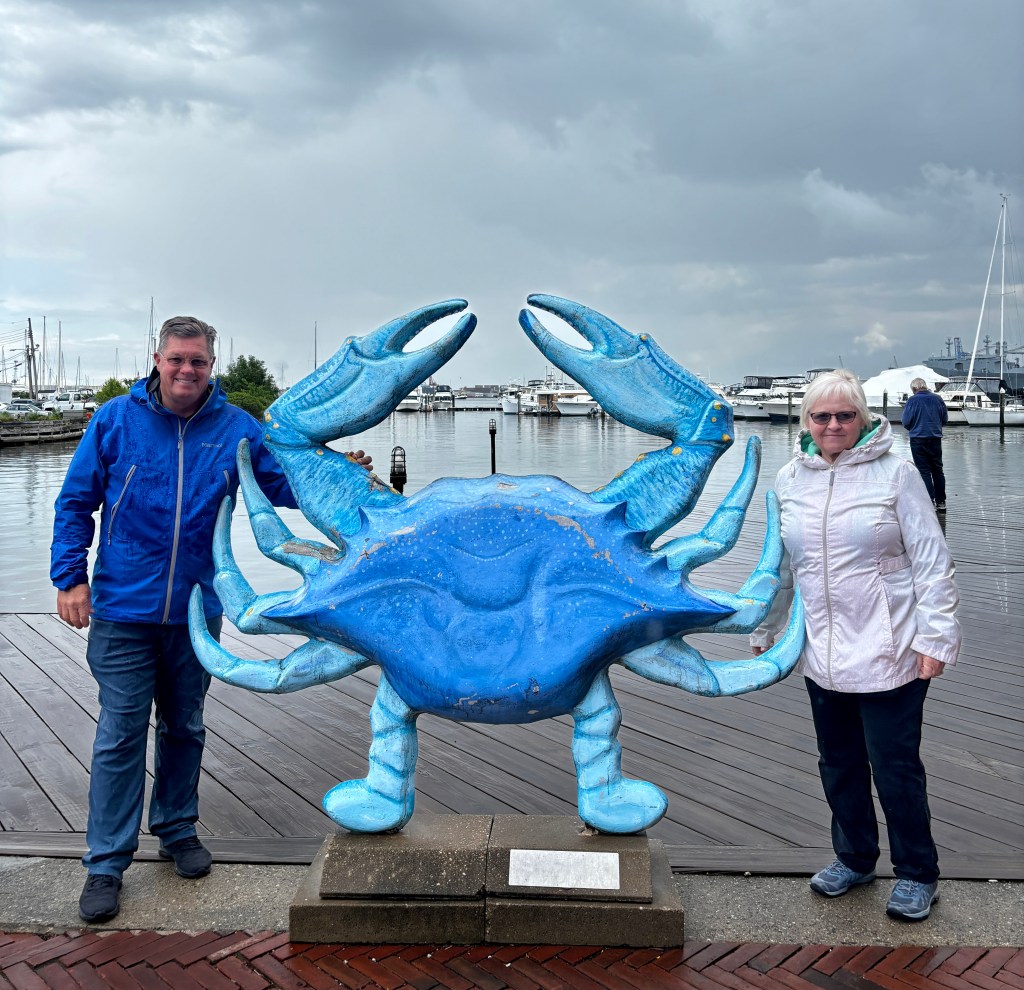
While walking to our next restaurant we had a typical Baltimore photo opportunity. Yes, it was raining again.
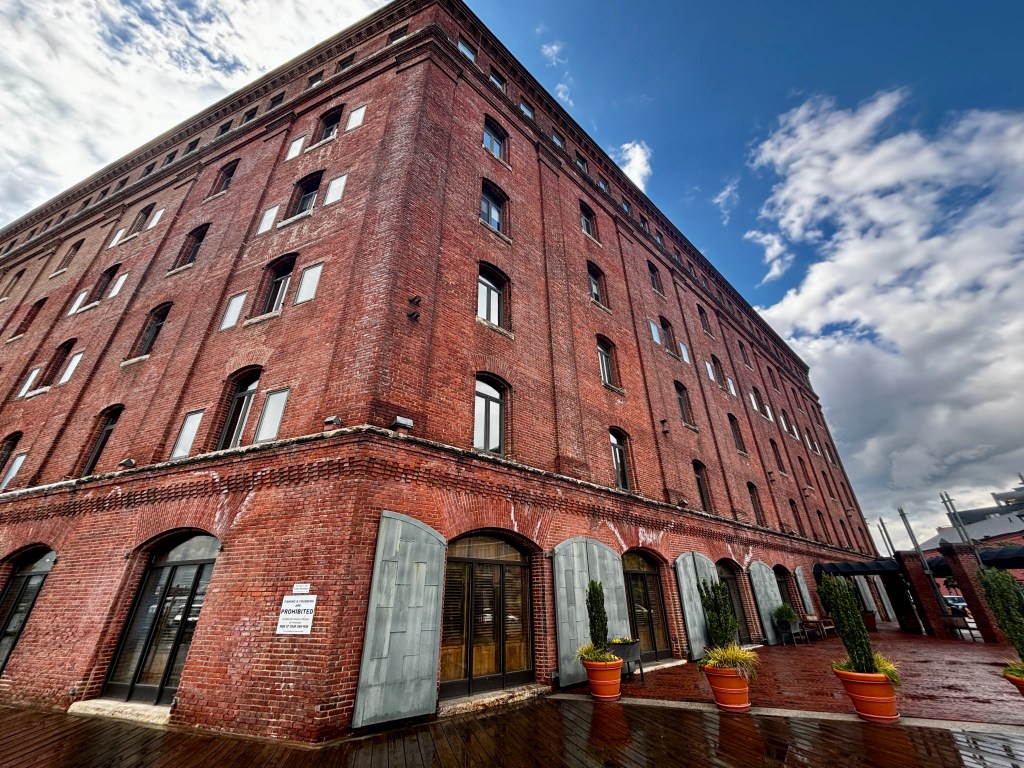
Nearby, we were told that this old tobacco warehouse was redesigned for luxury apartments. Repurposing old warehouses along the inner harbor is a common thing.
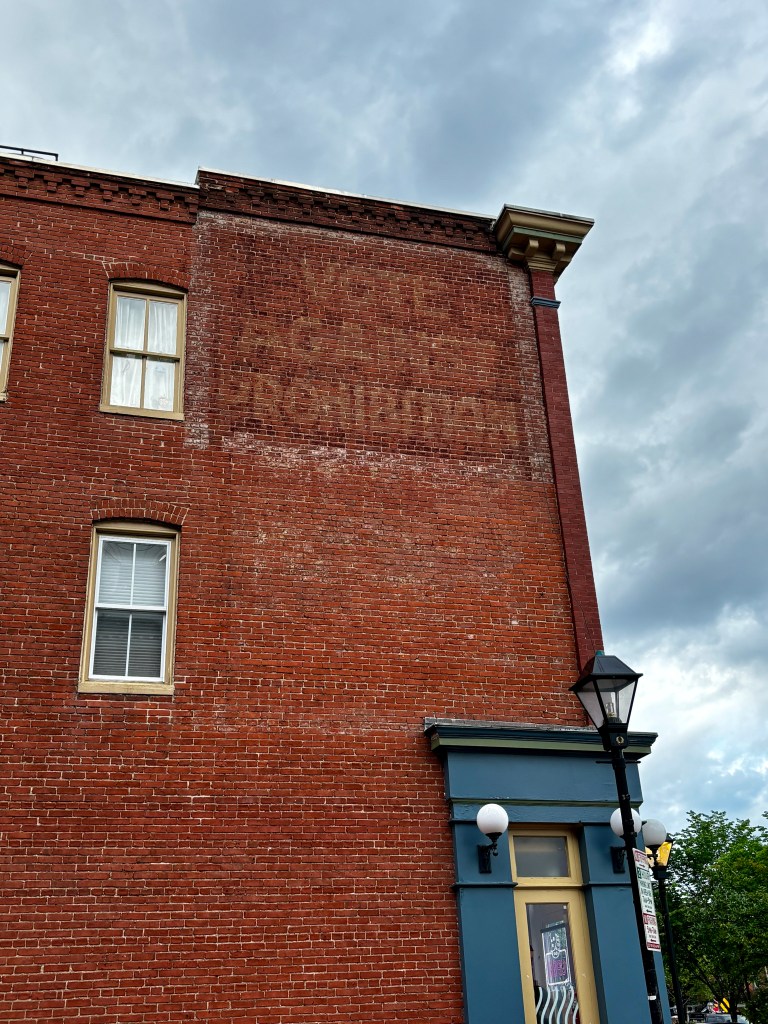
On some of the old buildings, it is possible to see the old signs “leaking” through. This one says Vote Against Prohibition. We were told that Baltimore pretty much ignored prohibition and did their own thing.

The bricks on buildings have also “woven” a bit over time. Look above the lower window on the right.
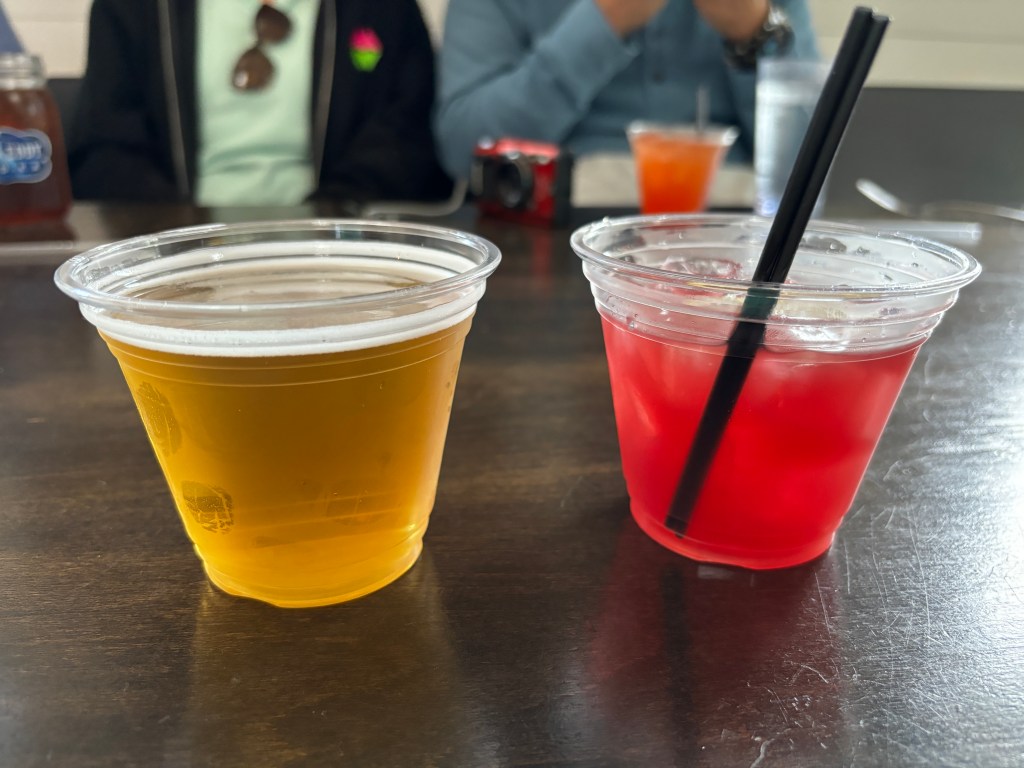
Our next restaurant was more like what we expected. We were offered a local beer or sanga-rita. Randy likes sangria and margaritas so he liked that combination. I don’t prefer either, so chose beer.
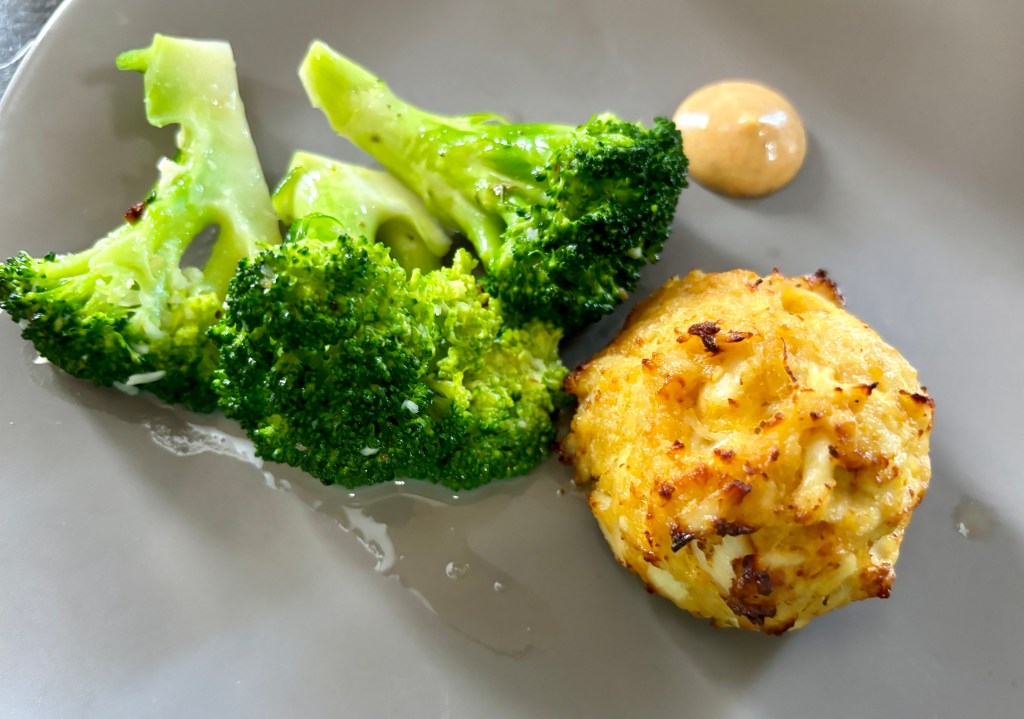
We had a small bowl of crab soup and then a crab cake with broccoli. The restaurant owner and one of our food tour compatriots discussed the merits of various types of crab and crab cake preparation. That all went way over our heads but it was interesting. This crab cake was very good.
Going upstairs and down at the restaurant we saw paintings of two “local” residents.
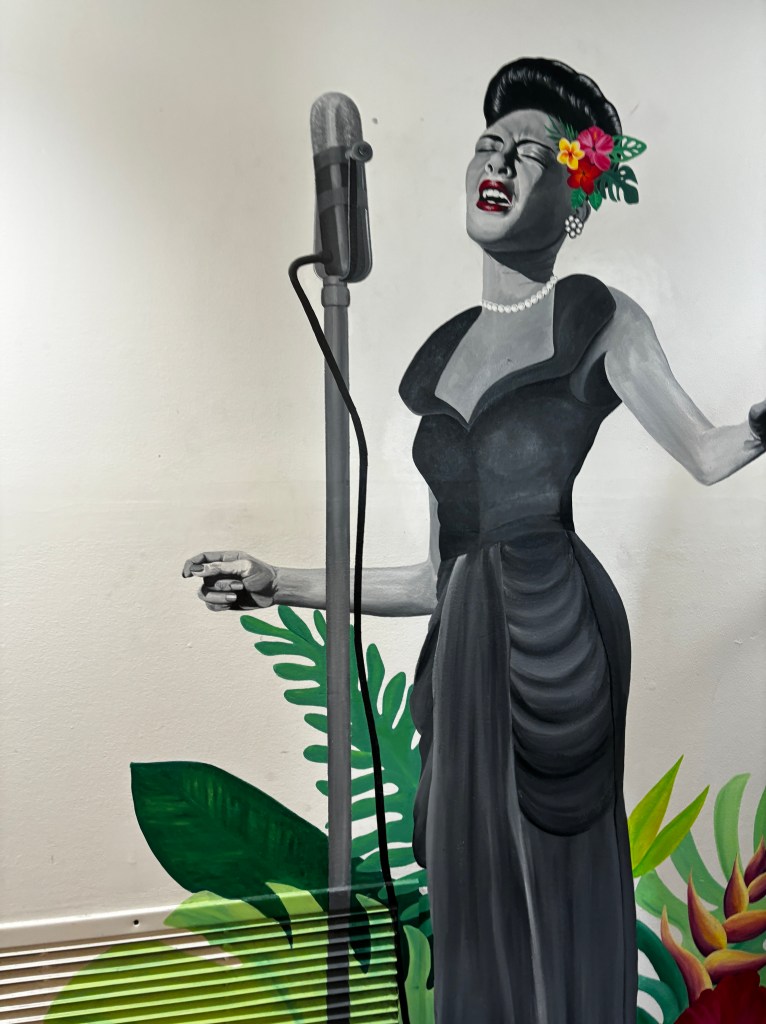
Billy Holiday spent her turbulent childhood in Baltimore partially raised by relatives and partially spending time at a Catholic reform school.
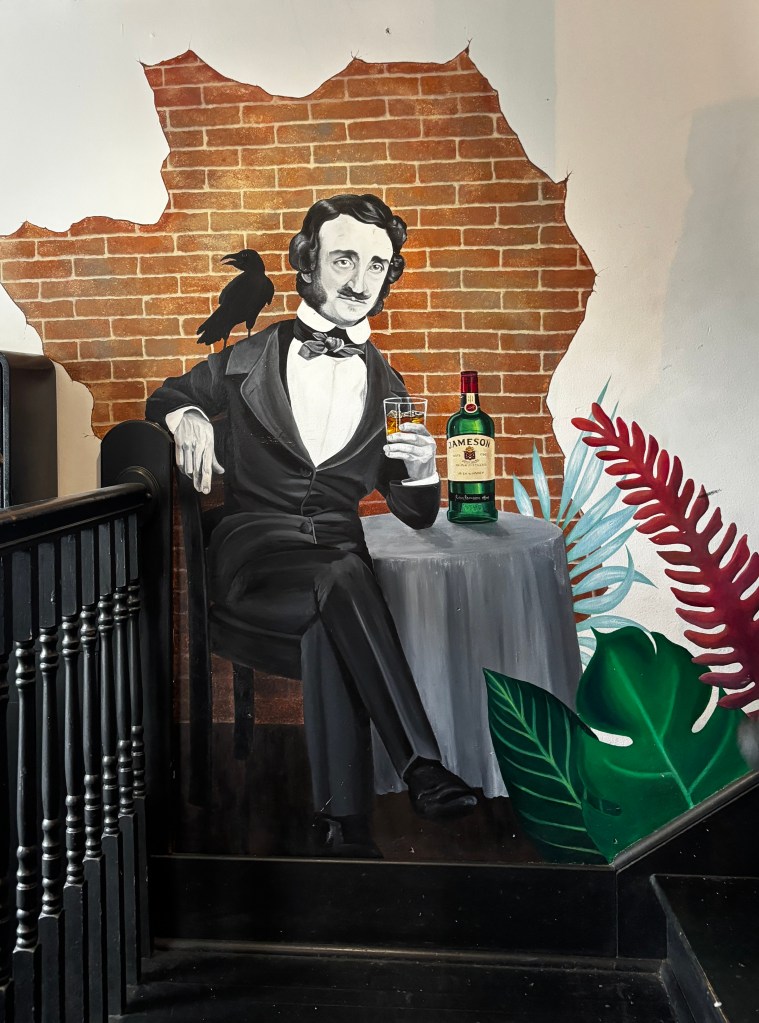
Edgar Allen Poe lived in Baltimore several times in his life. He was the first American writer who tried to support himself exclusively by his writing.
Poe earned $9 for his most successful writing, The Raven. He was on his way to becoming a household name when he went on a crusade against Henry Wadsworth Longfellow. That caused him to lose the goodwill the Raven had provided him. (The Baltimore football team is named after Poe’s The Raven.)
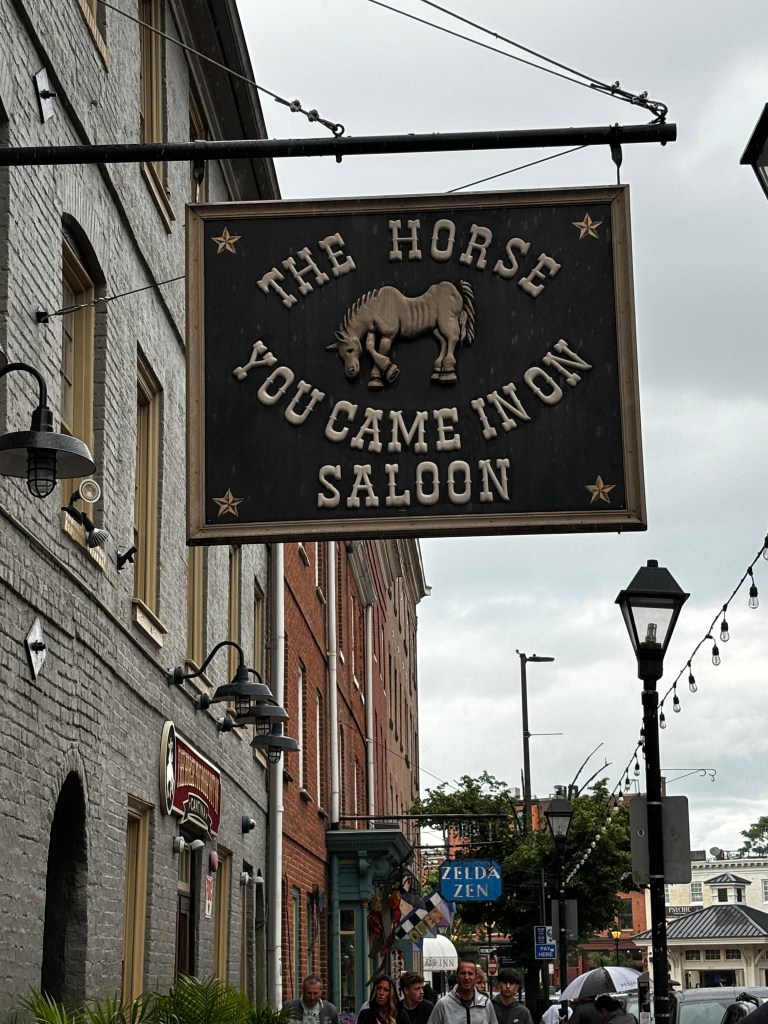
It is known that Edgar Allen Poe took his last drink at The Horse You Came in On Saloon. (In addition to Poe notoriety, it also claims to be America’s Oldest saloon, having been established in 1775.)
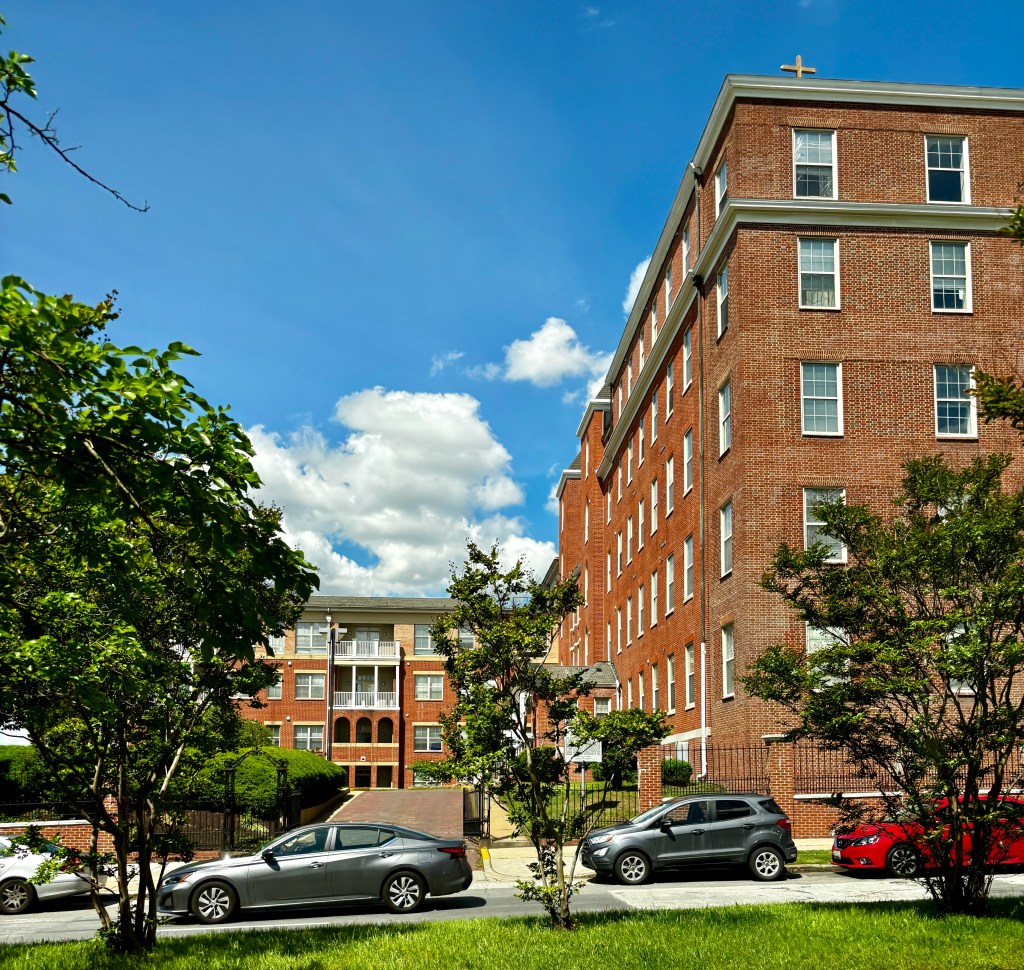
Poe was found in a gutter in Fell’s Point and died at this hospital, possibly from alcoholism or rabies.
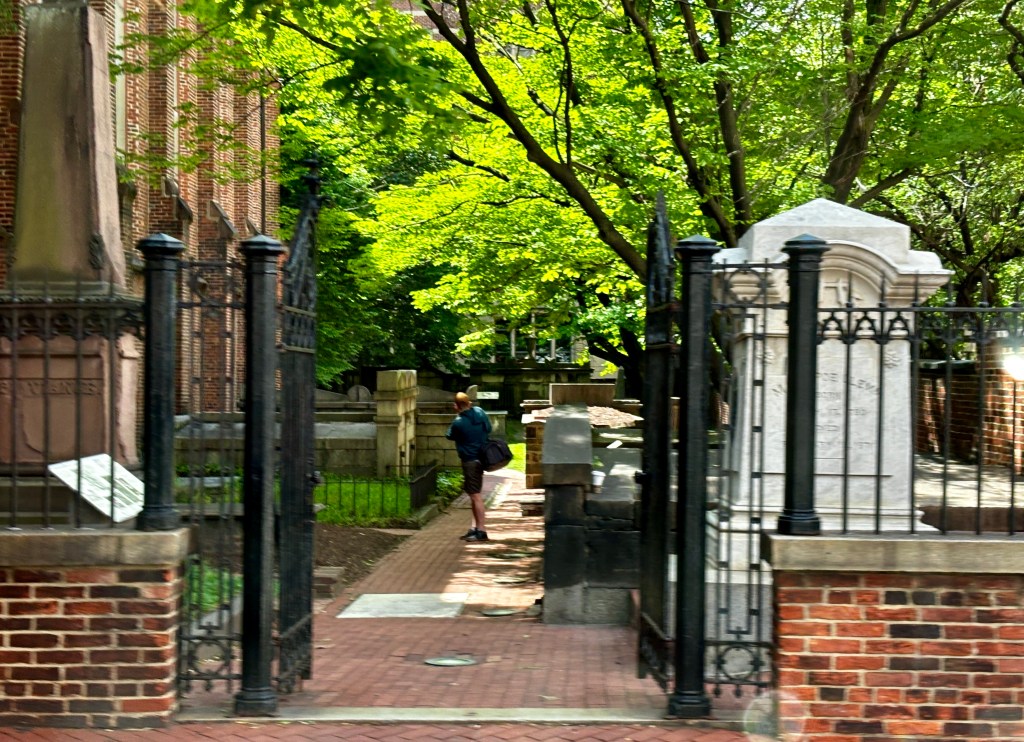
He is buried in this church graveyard – another one of those drive by photos.
The mirror in our hotel room had this quote engraved in it: “There is no beauty without some strangeness – Edgar Allen Poe”

As we walked to our next destination we stopped at the Robert Long House. Built in 1765 , it is Baltimore’s oldest surviving urban residence. It is known that Robert Long was wealthy because row houses were taxed based on street frontage. This house and garden occupied two lots.
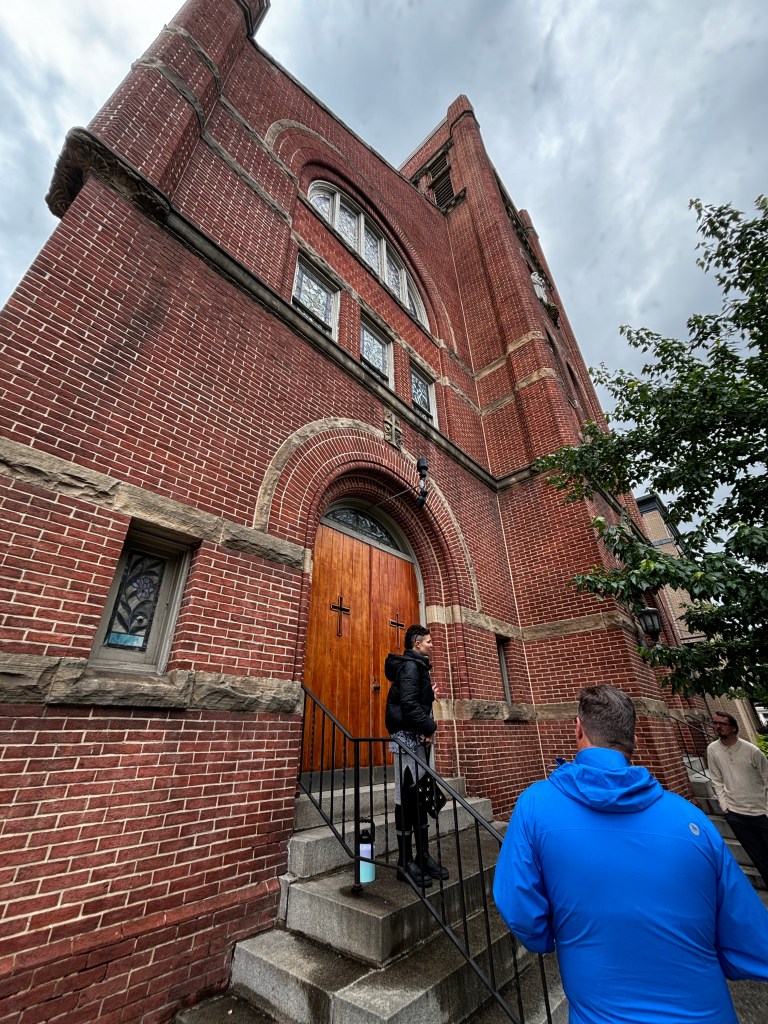
This church was built by Baltimore’s Polish community from 1880-1889. It served as a place of worship, community center and point of contact for immigrants newly arrived. It is now a physical therapy center.
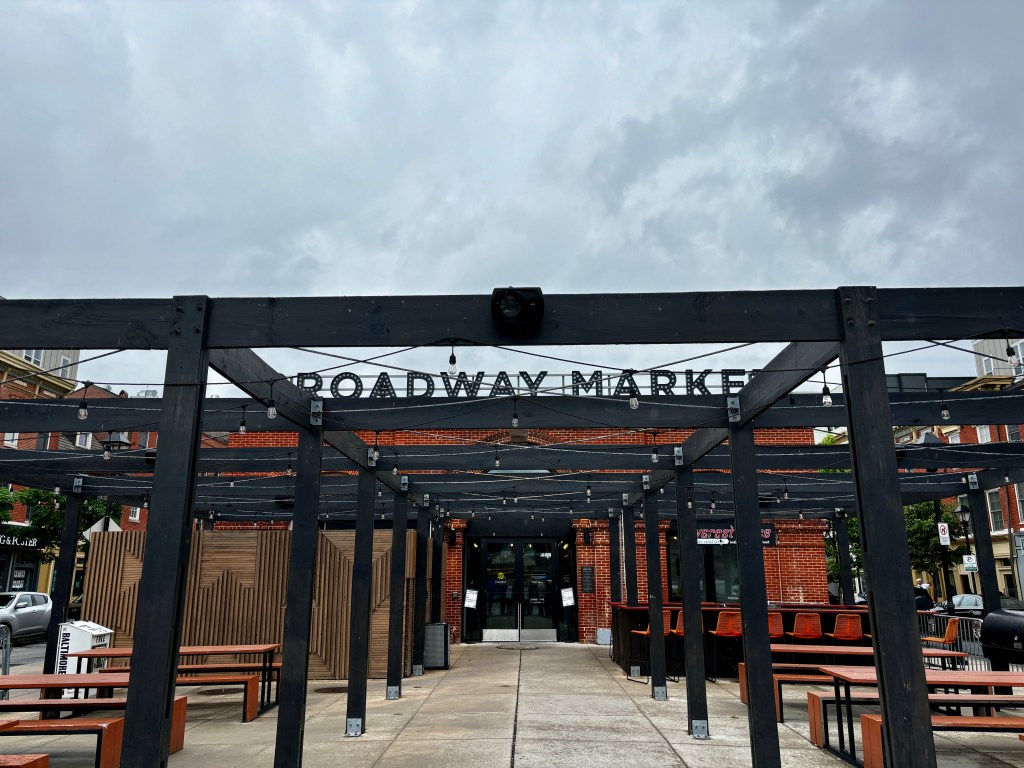
The Broadway Market once held a variety of wares sold by venders in designated spots.
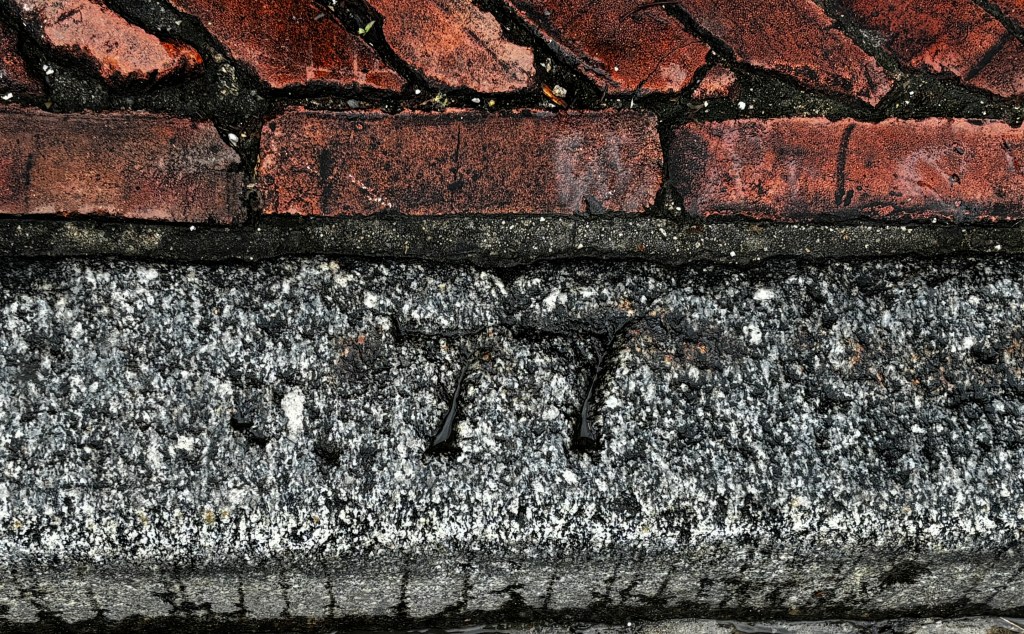
Humans were sold here as well.
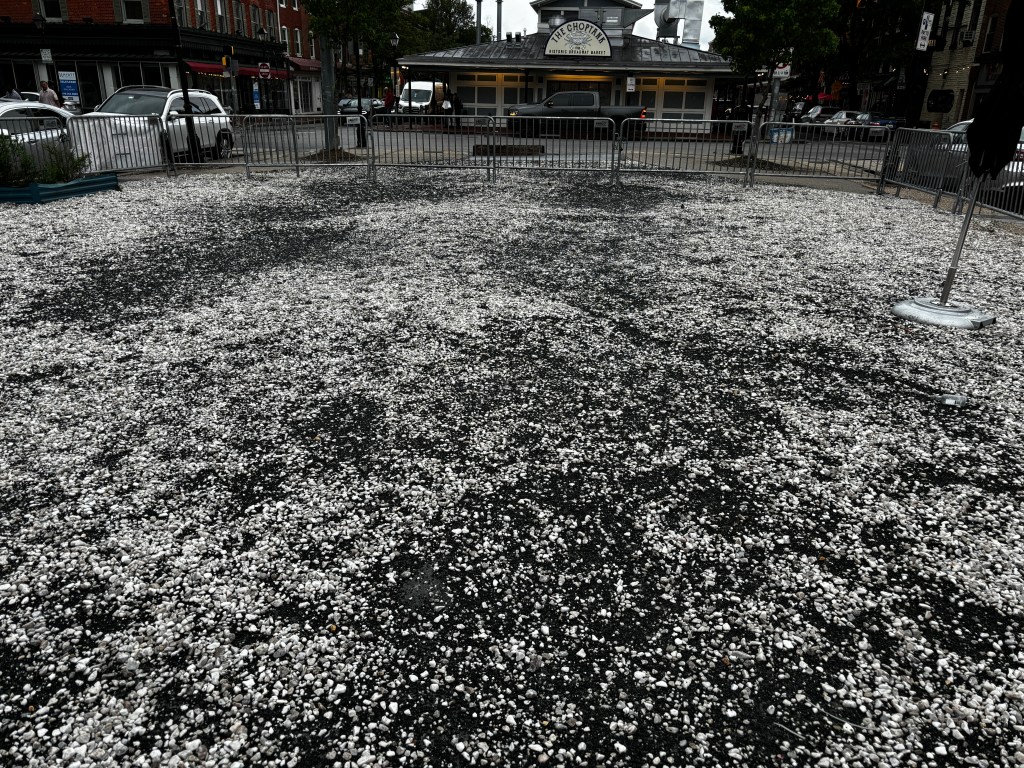
Today the space is used for restaurants, farmers’ market and crafts.
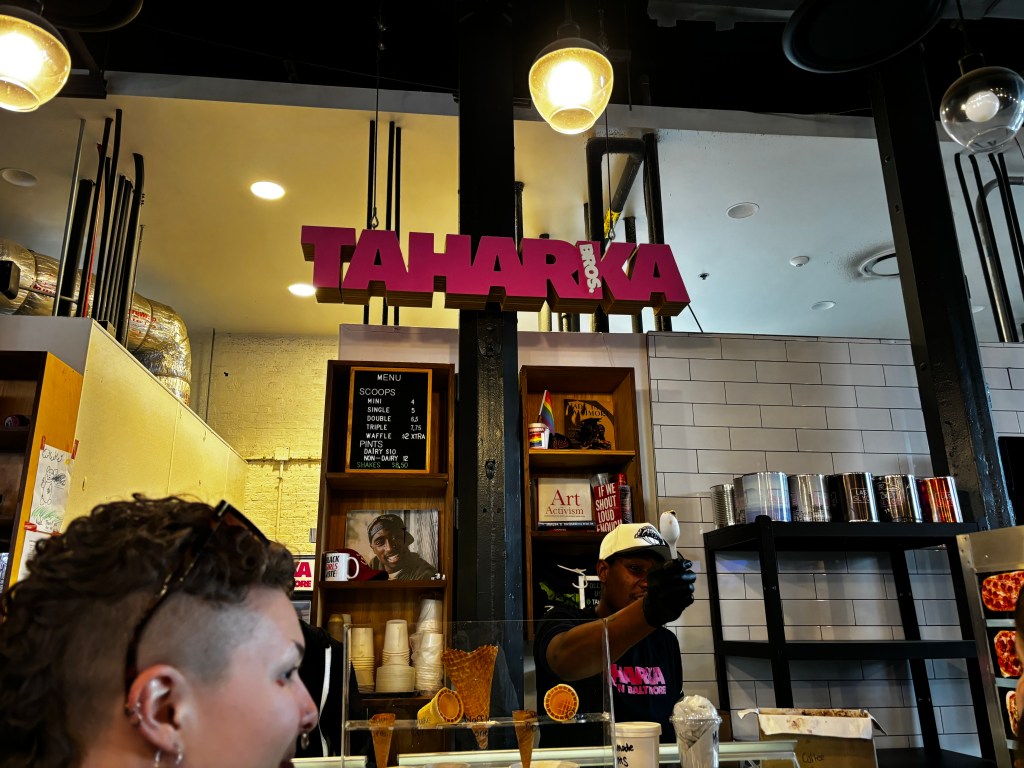
As we walked by the Taharka Brother’s booth, the women on our tour received free ice cream for Mother’s Day. The business is known for providing employment opportunities for young adults from some of Baltimore’s most troubled neighborhoods.
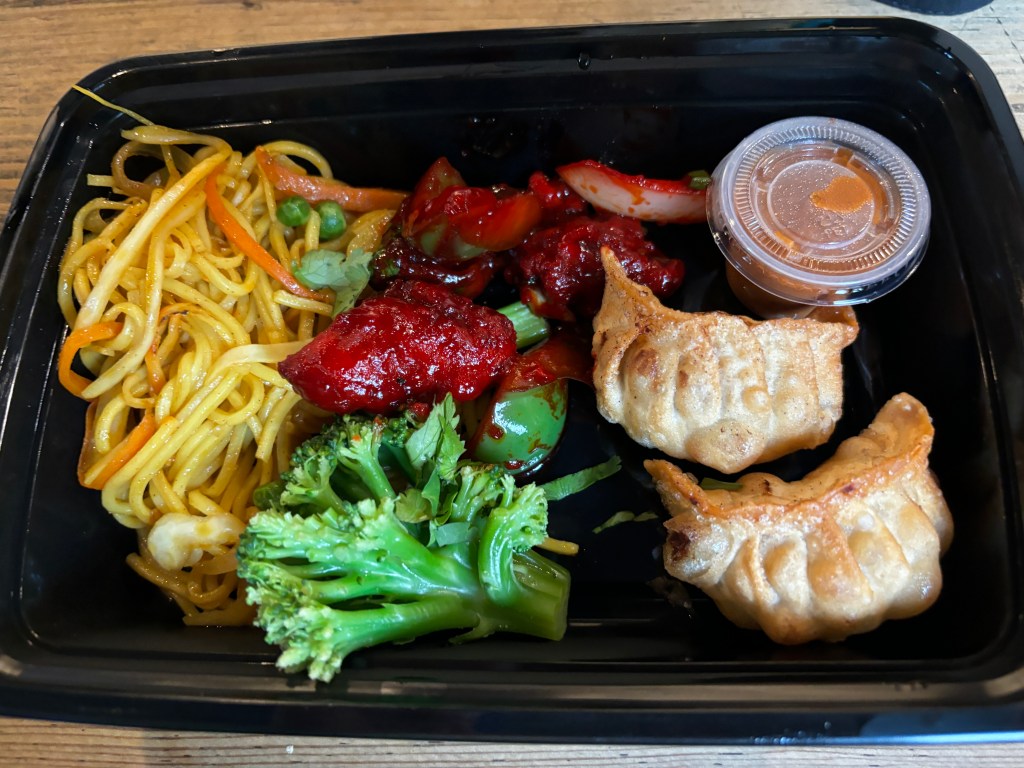
Our specific destination in the market was for Nepalese food. Our guide told us she chose Mexican and Nepalese food to represent the high number of immigrants that came to Baltimore. Different groups came in waves over the decades through Locust Point Pier.
More than 1.2 million immigrants came between 1868 and 1914. Baltimore was the third largest port of entry in the US during that time. Only New York and Boston received more.
We had one more stop on a tour. It was a pastry shop that gave us the opportunity for a hot drink and a variety of dessert bars and cookies.
On the way, our guide gave her Nepalese meal to a homeless man. We got the feeling that it wasn’t the first time. She was an interesting and inspiring young woman. In addition to leading food tours, she bartends and performs in drag. She had very recently graduated from a Baltimore university and intended to use her Spanish degree to help Spanish speaking residents access health care more reliably. Simone was memorable in the best possible ways.
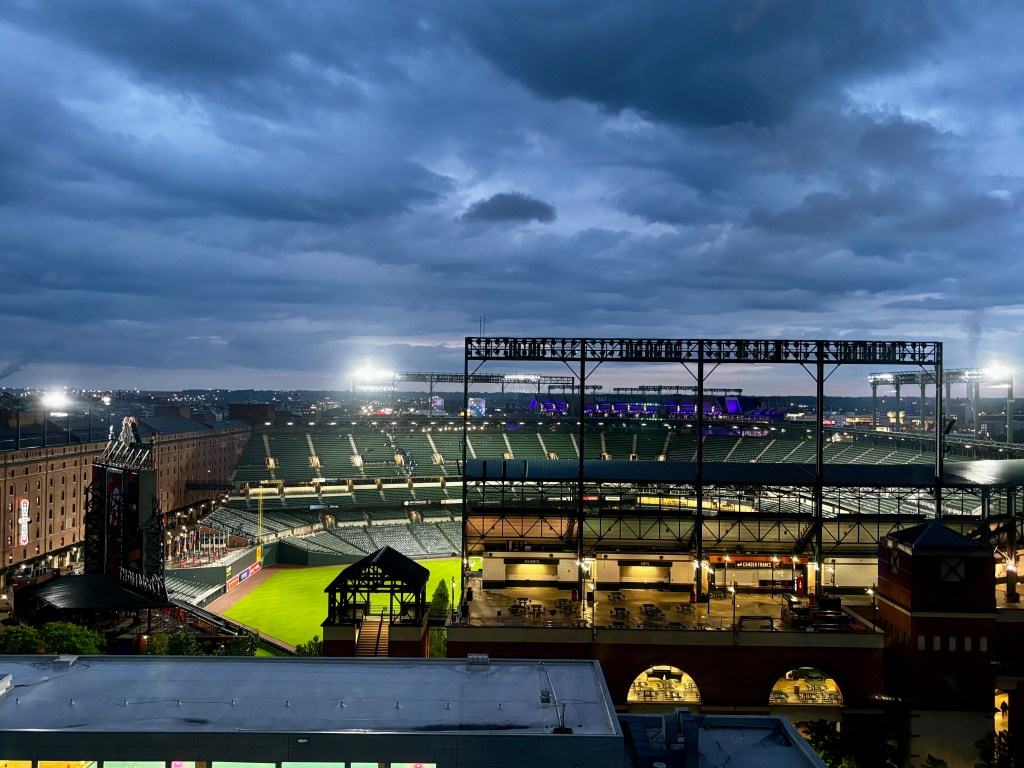
We made our way back to our hotel room and took a last look out at Camden Yards. The next day we were on to Harpers Ferry, West Virginia.
We were in Baltimore in May 2024.


 Serene Wandering