We picked up our rental car in downtown Baltimore instead of going to get it at the airport. The manager offered us a free “upgrade.” The upgrade was to a mini-van which had lots of room we didn’t need. Our rental was one-way Baltimore to Philadelphia. We thought maybe they were wanting to get the mini-van to Philadelphia, so we agreed. (This rental car info will be relevant later in our trip.)
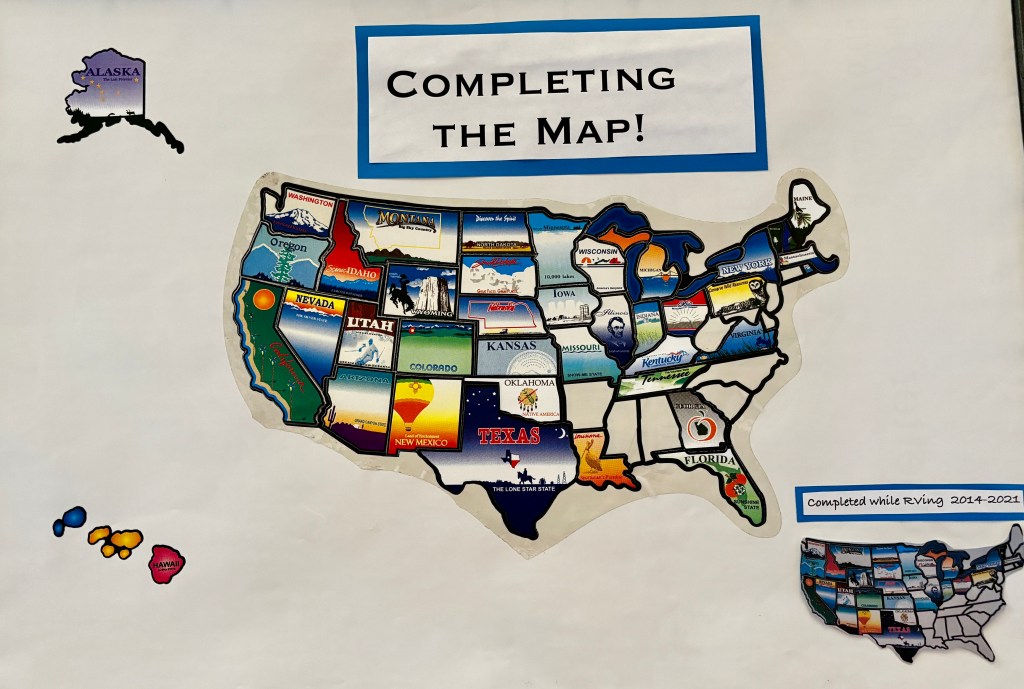
We were on our way to Harpers Ferry, situated on the eastern tip of West Virginia. (No apostrophe is correct.) West Virginia was one of the four states we were visiting to be able to place stickers on our old RV map.
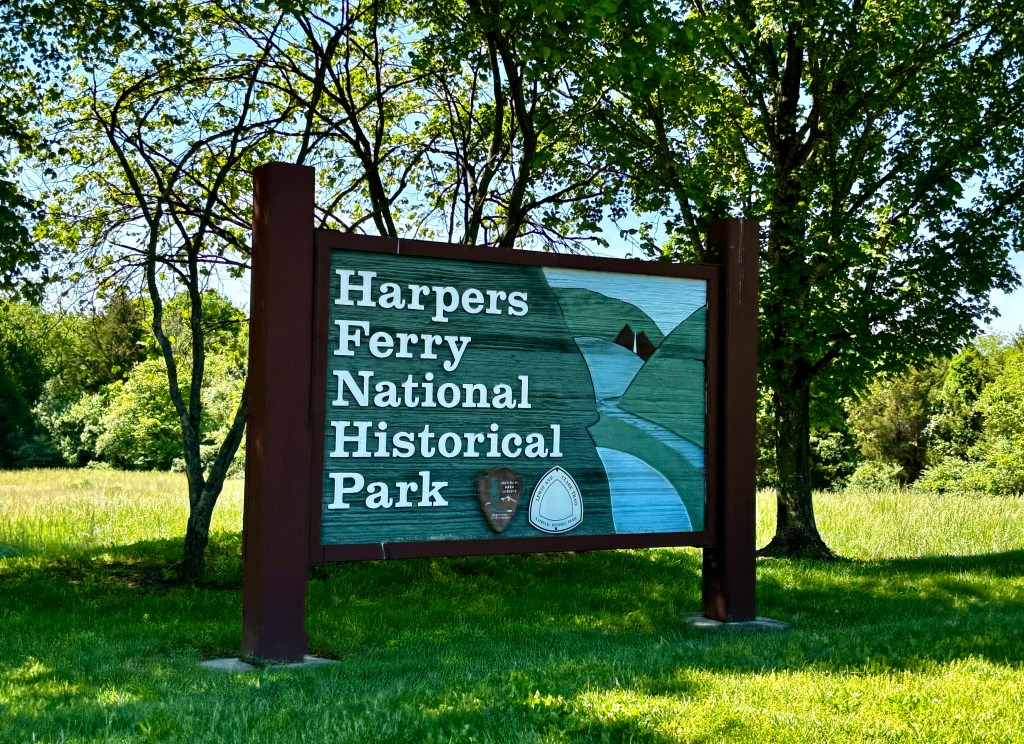
When you drive to Harpers Ferry National Historical Park, there is a visitor center above and a bus that takes you down to the town at river level.
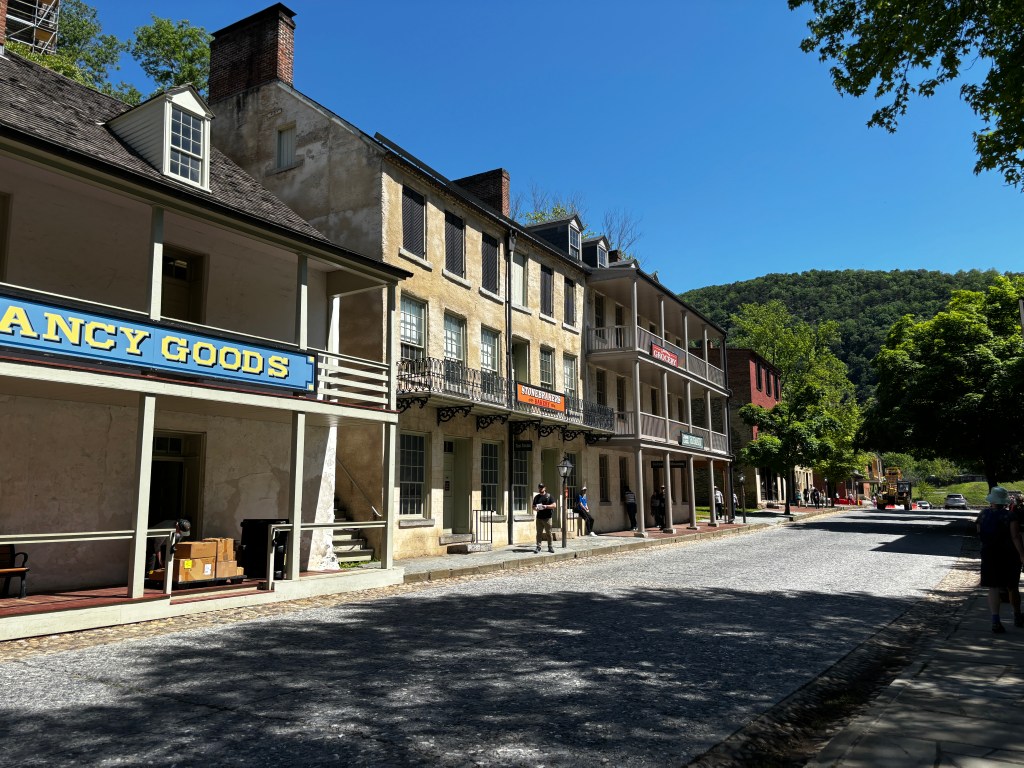
The historic park is administered by the National Park Service.
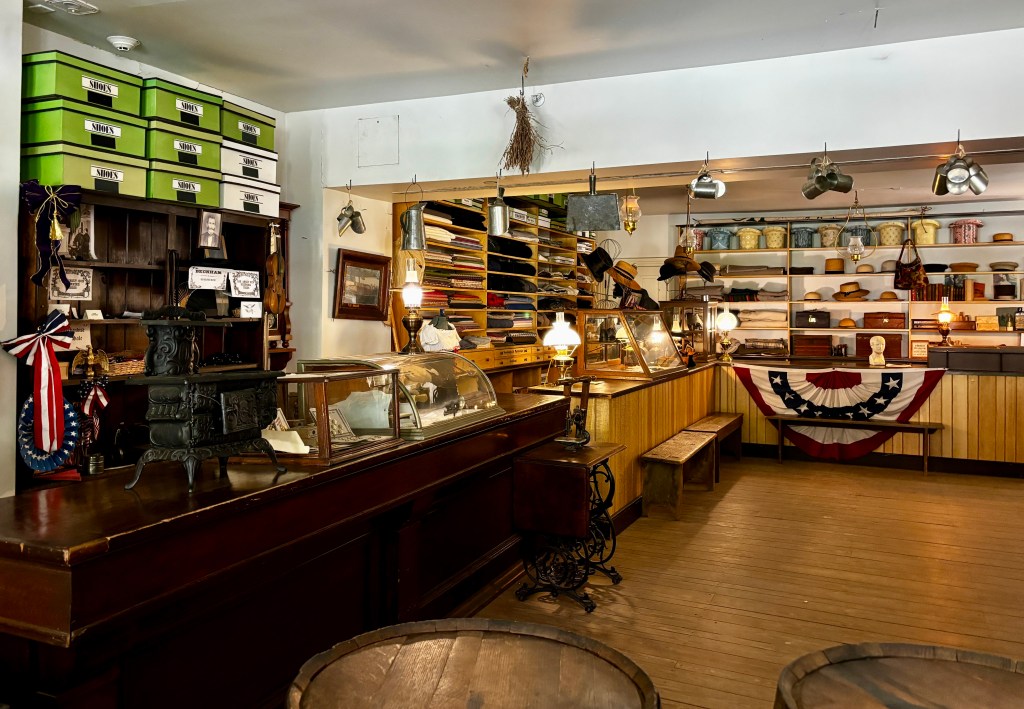
It has sites developed to show what things were like in past days. There are also restaurants, ice cream shops and a hotel catering to visitors.
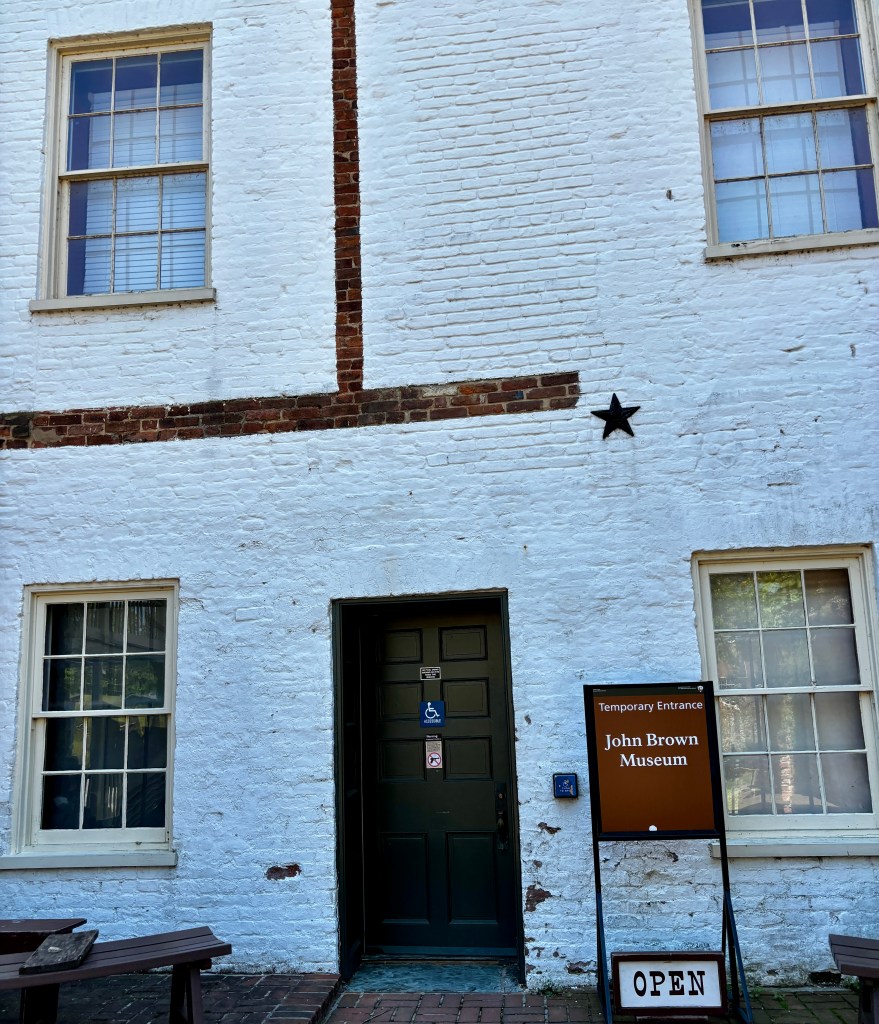
Of course, there are also buildings housing information about the history of Harpers Ferry.
We learned that Harpers Ferry was: A Town Wrought By Rivers, Ravaged by Floods, Laid Waste by War, that Rises Again and Again.

The town is formed where the Potomac River cuts through the Blue Ridge Mountains and meets the Shenandoah River. Robert Harper started a ferry across the Potomac in 1747.
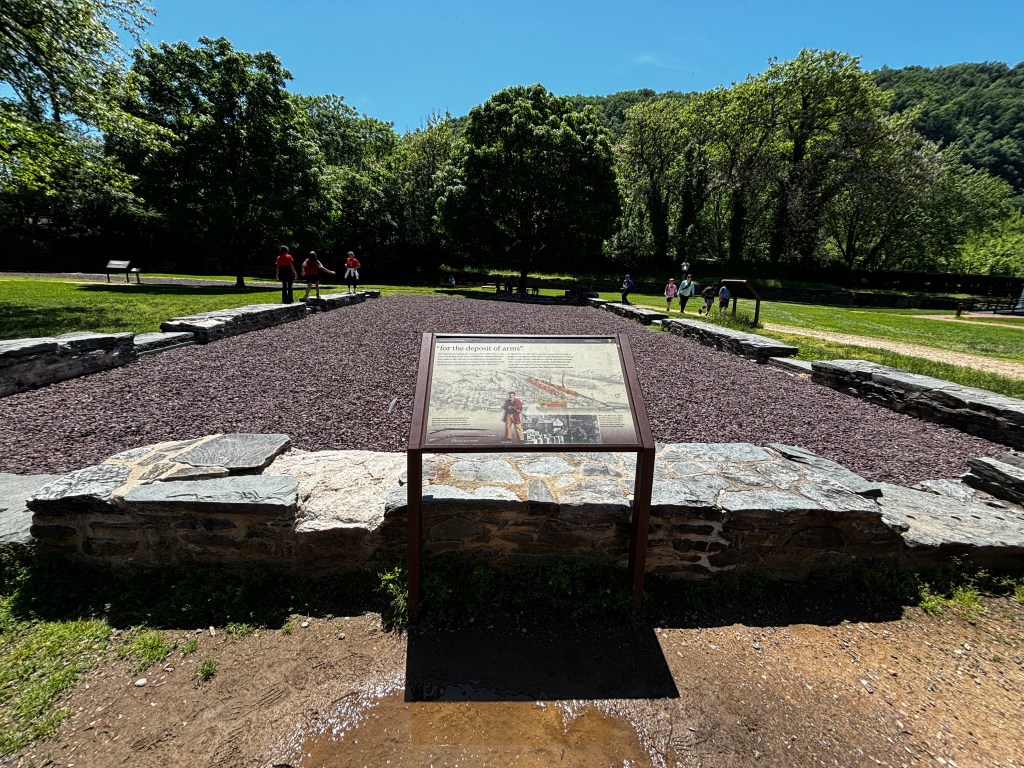
George Washington chose to build a national armory in Harpers Ferry. The picture shows the remaining foundation of a small arms depository. Additional foundation is below ground.
From the early 1800s, there were a variety of factories that helped fuel the Industrial Revolution. Innovations at Harpers Ferry included manufacturing interchangeable parts for a rifle factory. Articles for the Lewis and Clark expedition were manufactured there.
John Brown and his slave revolt is the part of the history that we knew a little about. But we knew too little! For example, neither of us knew that John Brown was a white man.
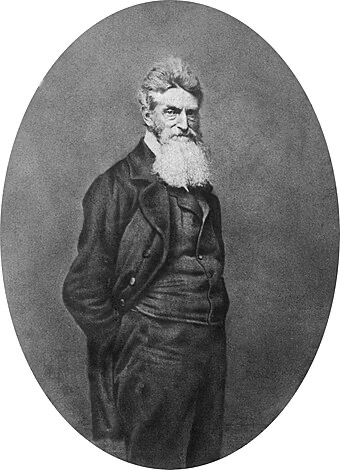
John Brown had been a prominent abolitionist leader for decades. He had strong religious convictions and believed he was an instrument of God to help stop slavery.
He believed in the “golden rule” and in the Declaration of Independence that stated “all men are created equal.” After peaceful efforts had failed to produce results, Brown grew to believe that violence was necessary.
John Brown reached national prominence in the 1850s for his radical abolitionism and for fighting, with his sons, in “Bloody Kansas.” The state level civil war centered on whether Kansas would join the Union as a slave or free state.
In 1857, the Dred Scott decision of the US Supreme Court ruled that Negros were not entitled to federal citizenship and that congress had no power to prohibit slavery. John Brown decided more drastic measures were needed.
In October 1859, Brown led a raid on the federal armory in Harpers Ferry. They occupied the armory and several other buildings. He intended to start a slave liberation movement.
Seven of his men were killed in the raid and only a few enslaved men joined in. Brown and his remaining men were captured by local militia and by federal troops under the leadership of Robert E. Lee.
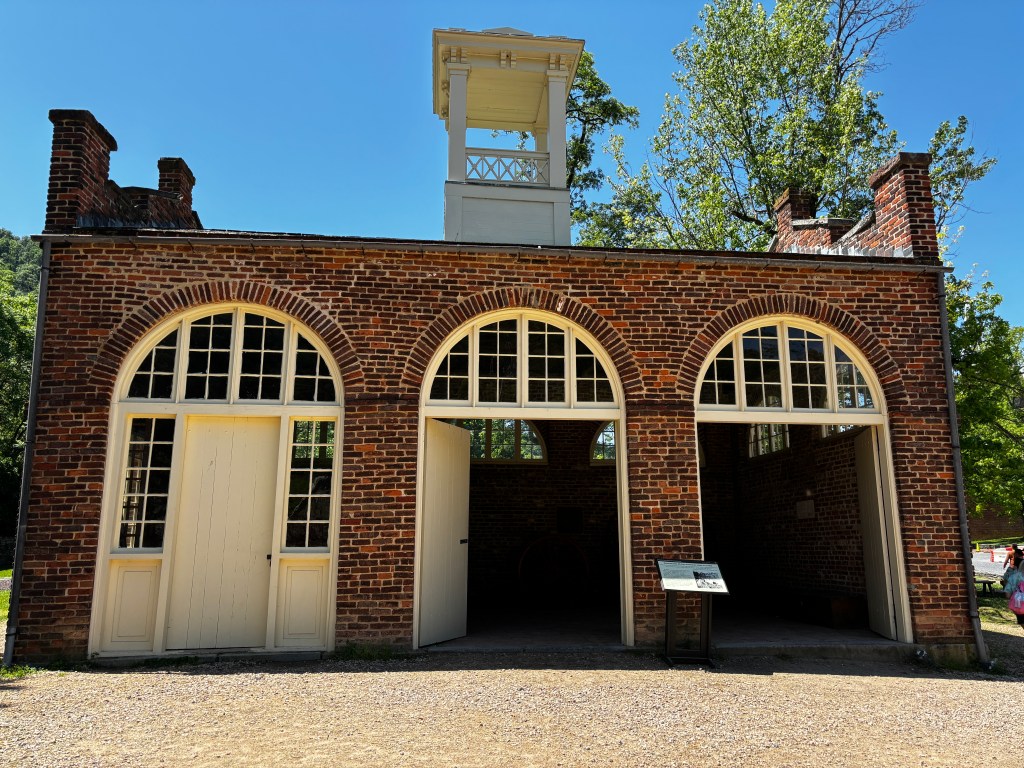
This building is John Brown’s Fort where some of the fighting took place. Brown was tried, found guilty and hanged. He was the first person executed for “treason against a US state.”
The raid, trial and execution brought national exposure and helped propel the country to Civil War over the issue of slavery.
The town of Harpers Ferry changed hands eight times during the Civil War. Mostly, it was under Union control. The United States Colored Troops marched through Harpers Ferry during the war..
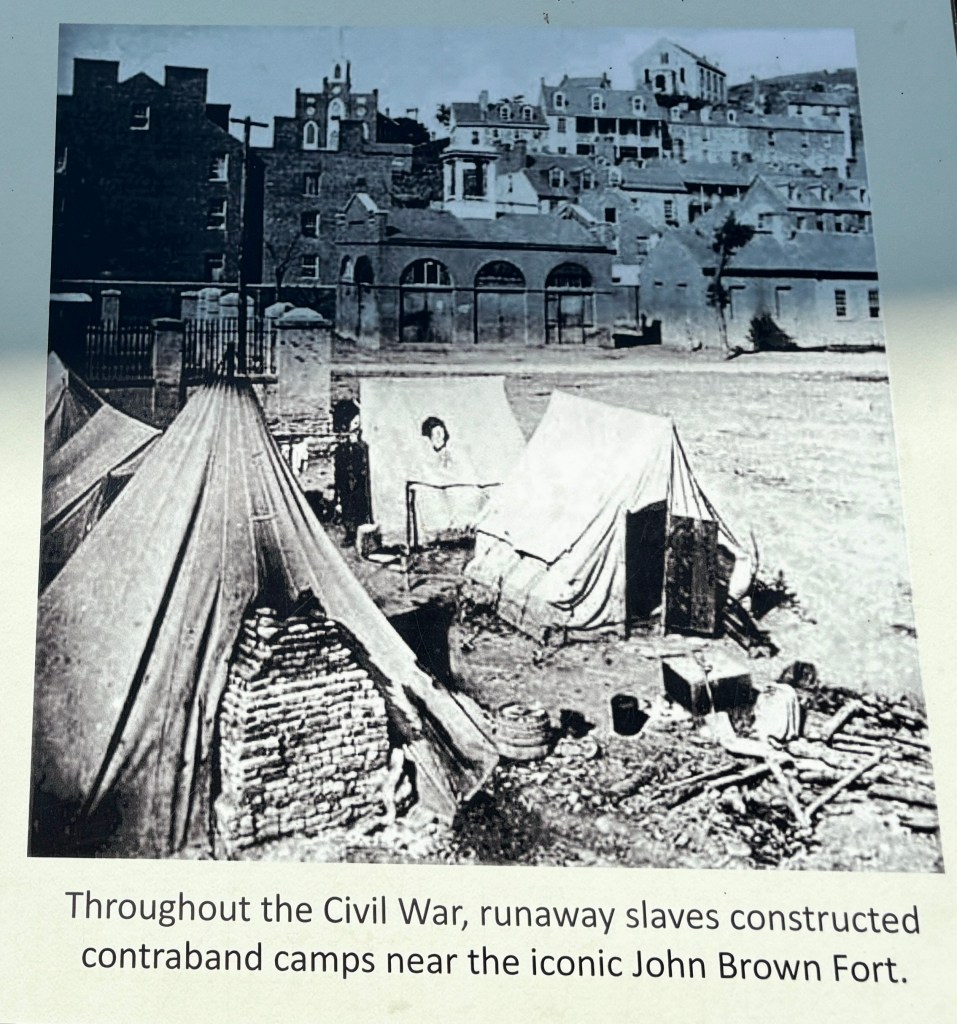
Following the war, and the ratification of the 13th Amendment, Harpers Ferry became a symbol of freedom to people formerly held in bondage.
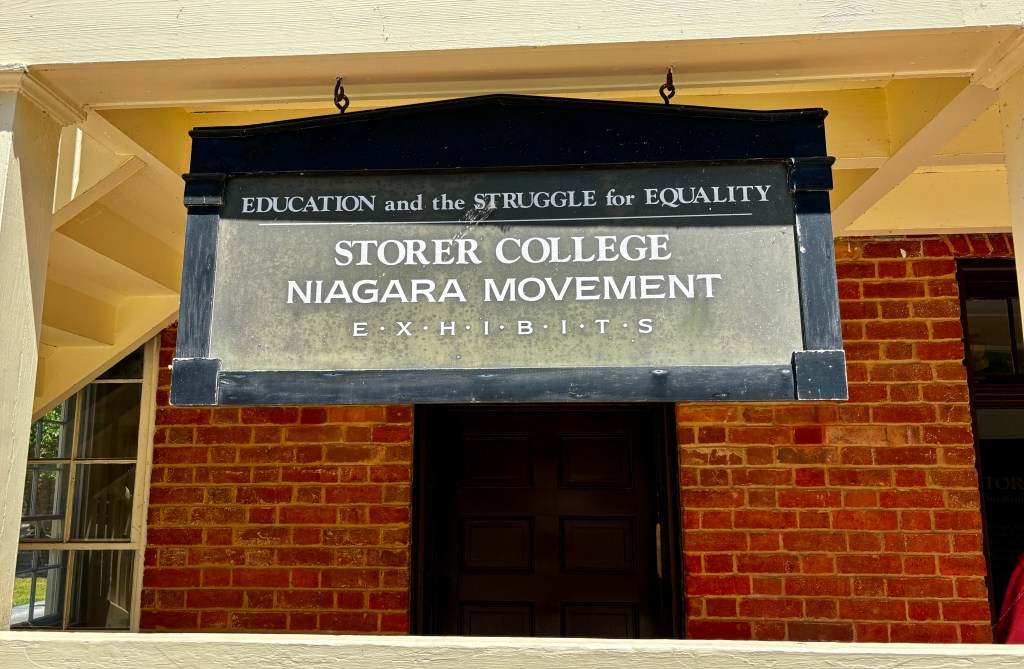
Before the war it had usually been against the law to teach an enslaved person to read. After the war, Baptist missionaries founded Storer College to educate men and women of any race.

John Storer was an abolitionist and humanitarian. He donated $10,000 to form the college.
Harpers Ferry was the chosen for the college because of the large population of African Americans nearby and the accessibility of abandoned government buildings.
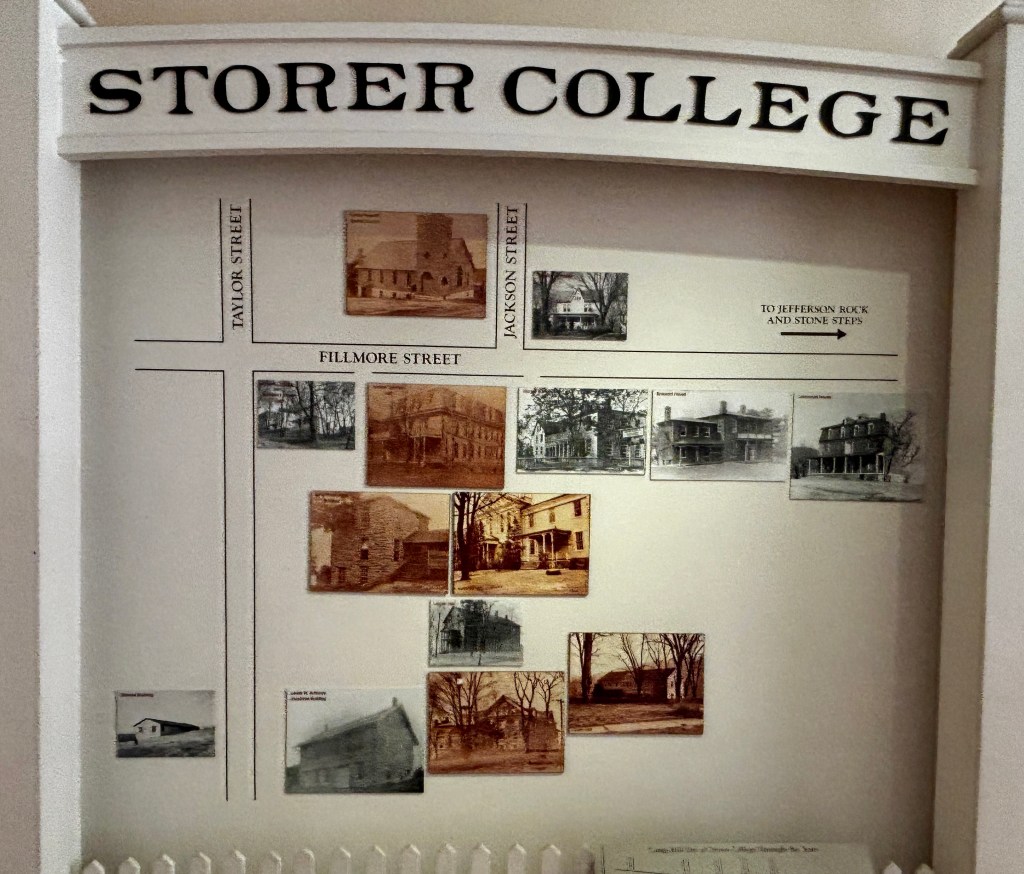
Anthony Hall became the primary building of the Storer College campus. This building was used daily but became nationally significant in the struggle for equality.
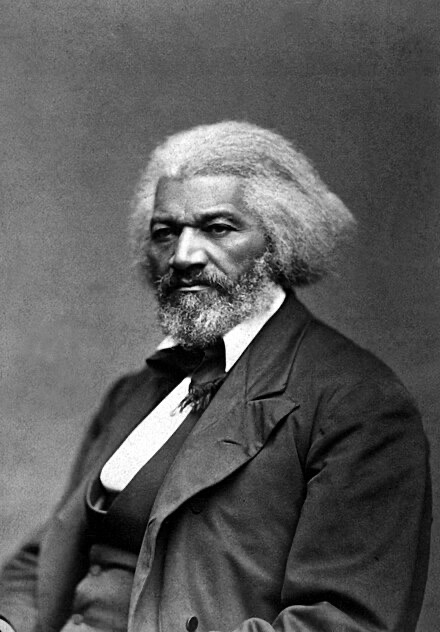
In May 1881, Frederick Douglass delivered his famous speech praising John Brown at Anthony Hall.
Twenty-five years later, Harpers Ferry hosted the Niagara Movement. It was a civil rights organization founded in 1905 by African American activists including W.E.B DuBois.
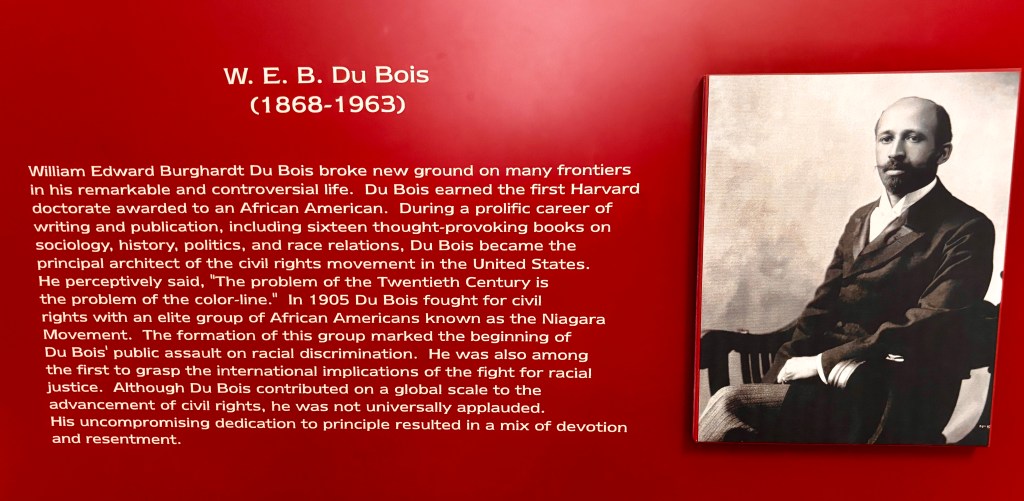
The group wanted a “mighty current” of change so developed a Niagara Falls logo and had their inaugural meetings in Niagara Falls, New York.
Their second conference, in 1906, was held in Harpers Ferry. The town was considered “holy ground” for African American’s because of the efforts by John Brown. Storer College also had the needed facilities.

The Niagara Movement was not well known, partially due to conflict with Booker T. Washington. Differing philosophies led Washington to exert his power to stifle coverage of the Niagara Movement. The Niagara Movement was the immediate predecessor of the NAACP.
We learned a lot on our half day exploration in Harpers Ferry. There were layers and layers of history in Harpers Ferry both before and after the Civil War.
Next up: We spend the afternoon at Antietam National Battlefield.
We were in Harpers Ferry in May 2024.


 Serene Wandering
So interesting and informative! Thanks!
<
div>My paternal grandmother was born