

We visited Antietam National Battlefield which consisted of driving a self guided tour around the battlefield, the visitor center and the national cemetery. There are paths to walk along the driving route but as we were there for only an afternoon, our time was mostly spent on the driving route and visitor center.
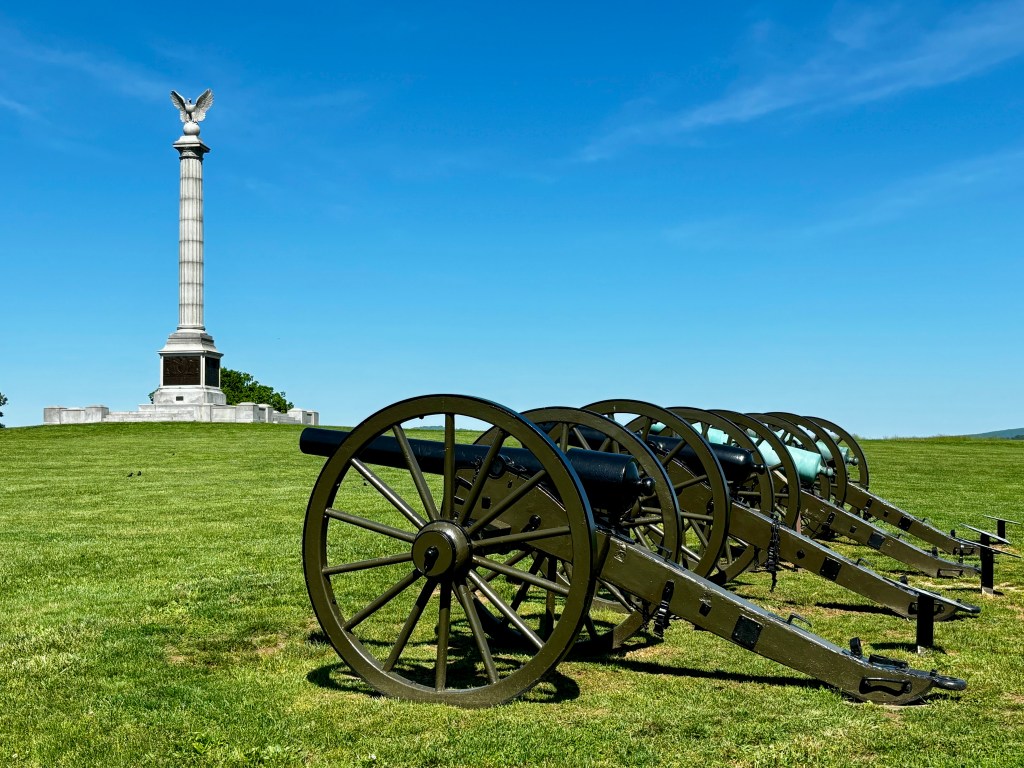
Eighteen months into the Civil War, neither side could assume victory. The confederacy, under General Robert E. Lee had been fighting well in Virginia. He decided to cross the Potomac River into Maryland in September 1862. This was his significant foray into lands occupied by the US Army. He hoped to move through Maryland into Pennsylvania.

Lee’s Maryland Campaign resulted in four battles: Harpers Ferry on September 13-15, South Mountain on September 14 and Antietam on September 17. (The fourth battle, in Shepherdstown, happened while the Confederate soldiers were in retreat after Antietam.)
A US Army soldier found a copy of Lee’s plan of operations on September 13, 1862 which allowed General McClelland to arrange his armies. Instead of returning to Virginia, Lee decided to make a stand at Sharpsburg, Maryland near Antietam Creek.
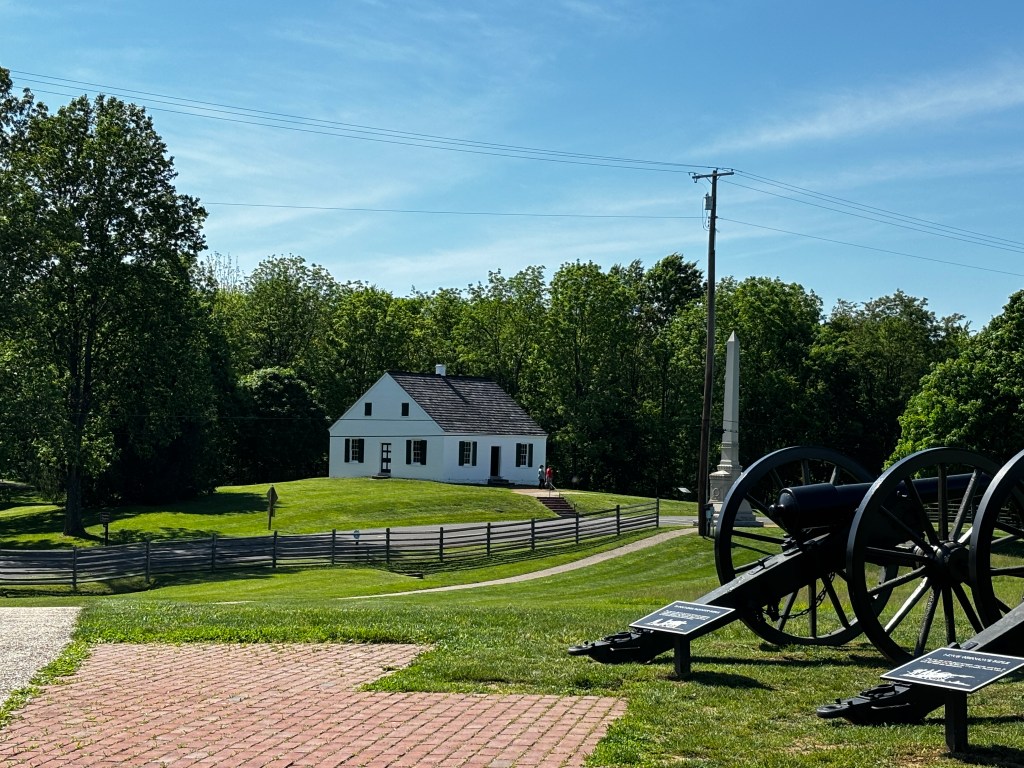
Confederate soldiers waited through the night around Dunker’s Church.
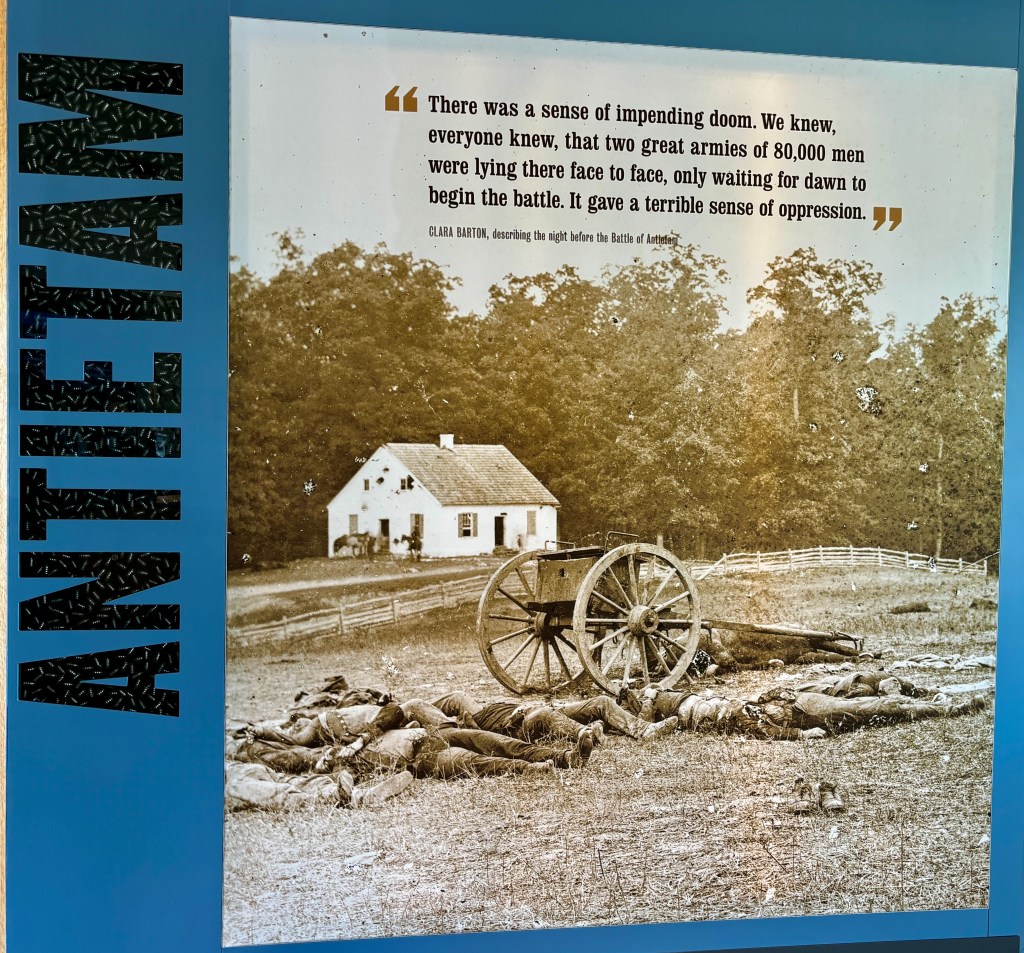
Clara Barton followed the army to battlefields to offer medical assistance.
At dawn on September, 17, 1862, US Army soldiers crossed Antietam Creek to engage Lee’s soldiers.
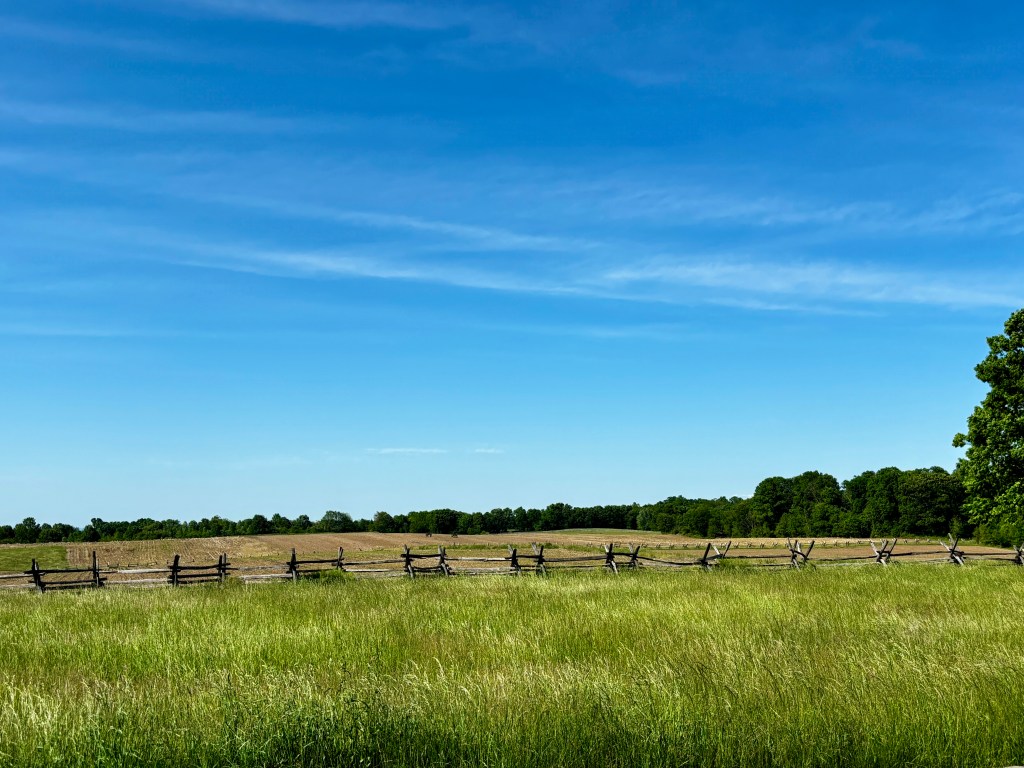
Some of the earliest and deadliest fighting took place in this cornfield. The cornfield changed hands several times throughout the day.

The fighting moved into the east and west woods. (On this day we saw only a red tail hawk in the west woods.)
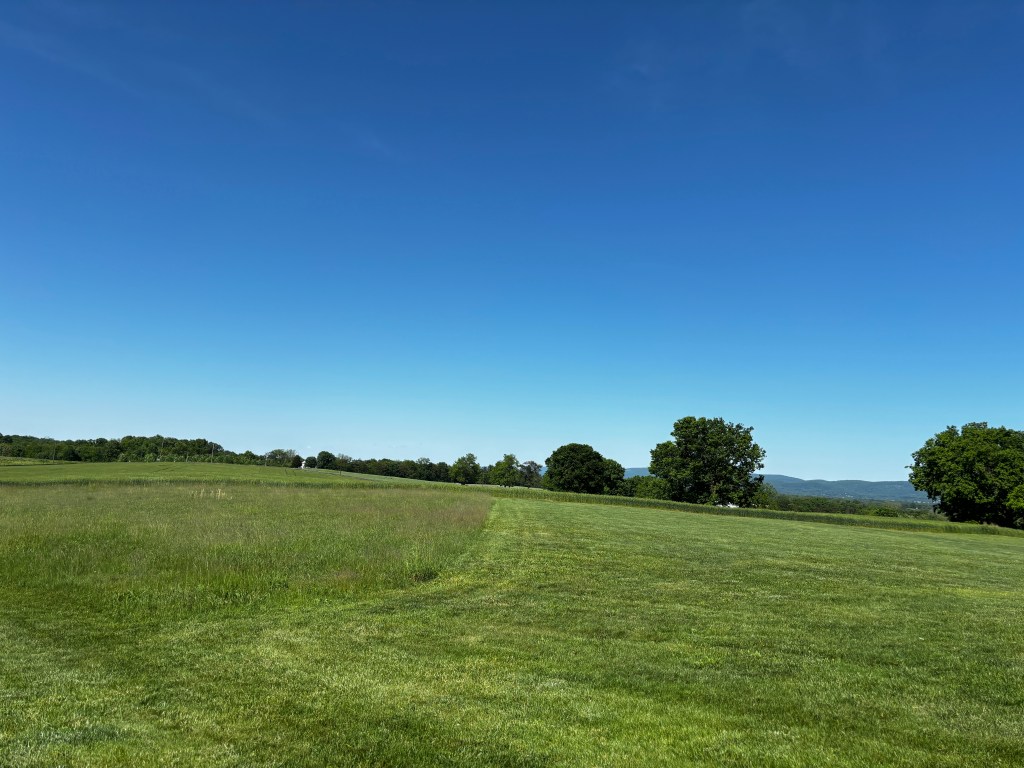
The open terrain benefited both armies as cannon fire could be set upon the opposite side.
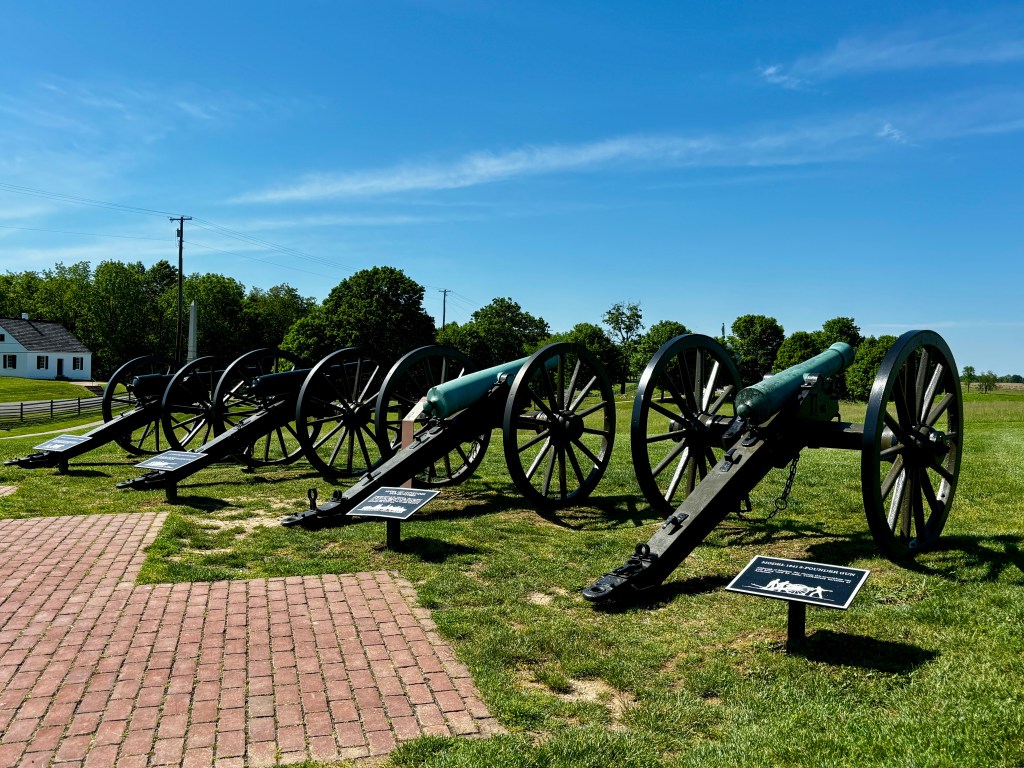
Over 500 cannon (yes, the plural form of cannon is cannon) were in operation on the battle.
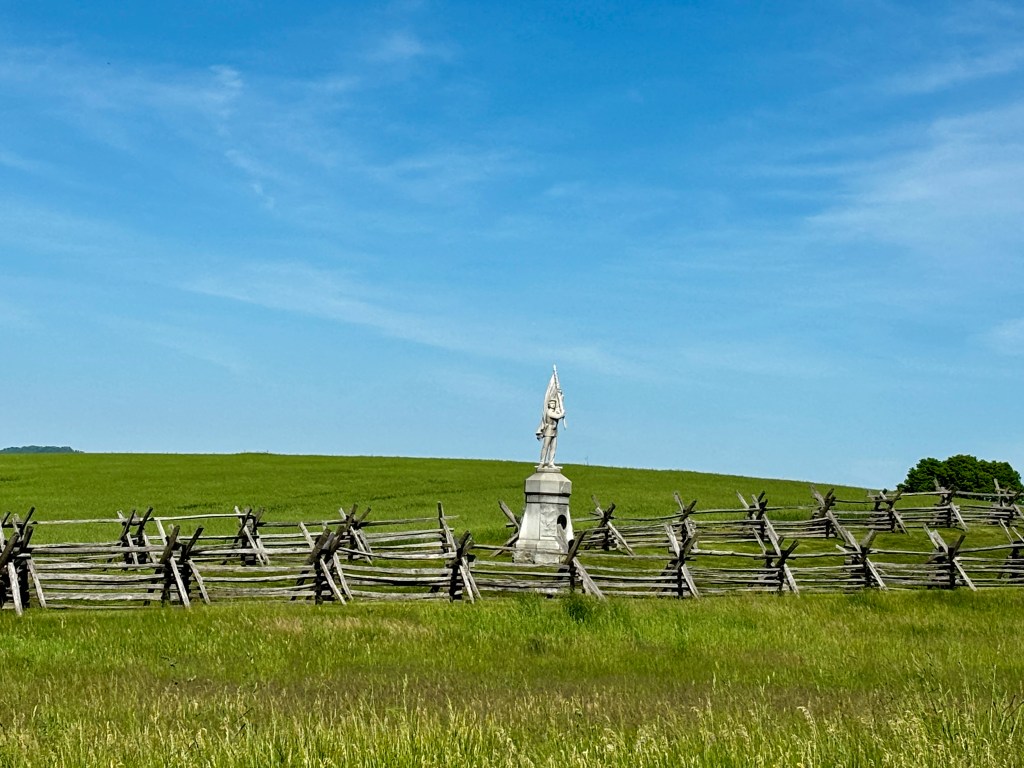
By late morning, the fighting shifted to Sunken Road, later named “Bloody Lane.” It was the scene of a three hour stalemate.
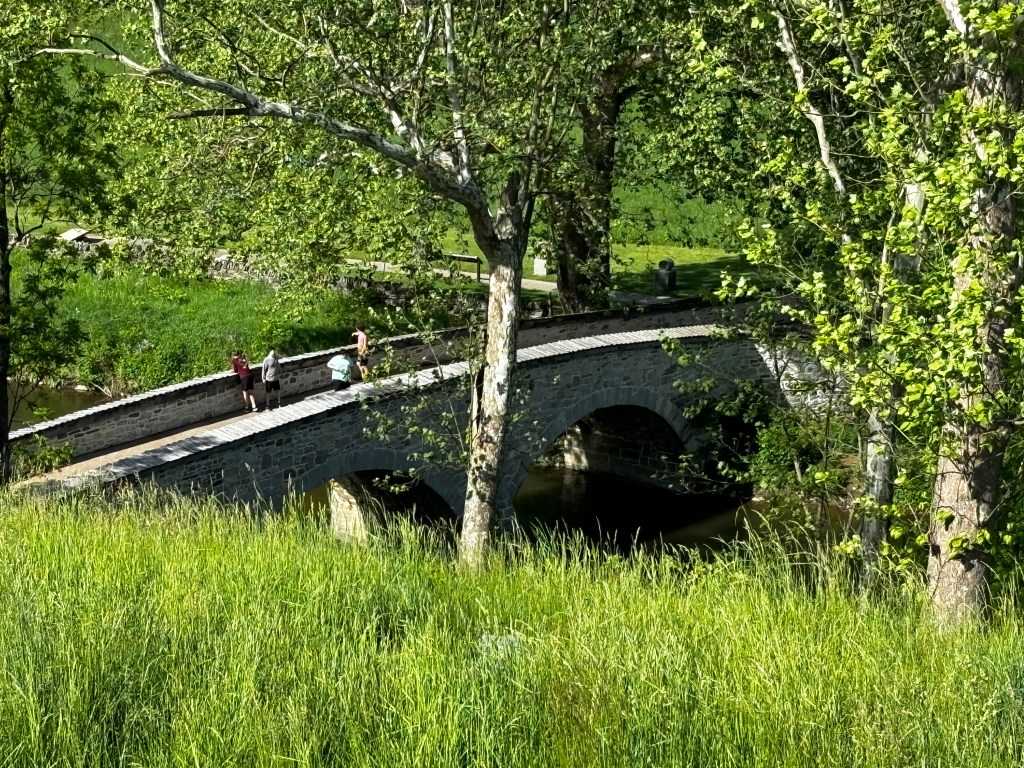
US Army General Burnside took the lower bridge and Union troops crossed Antietam Creek. This action made the confederacy retreat towards Sharpsburg.
By evening, battle lines had not changed substantially. Of the 100,000 soldiers who fought, nearly 23,000 were killed, wounded or missing.
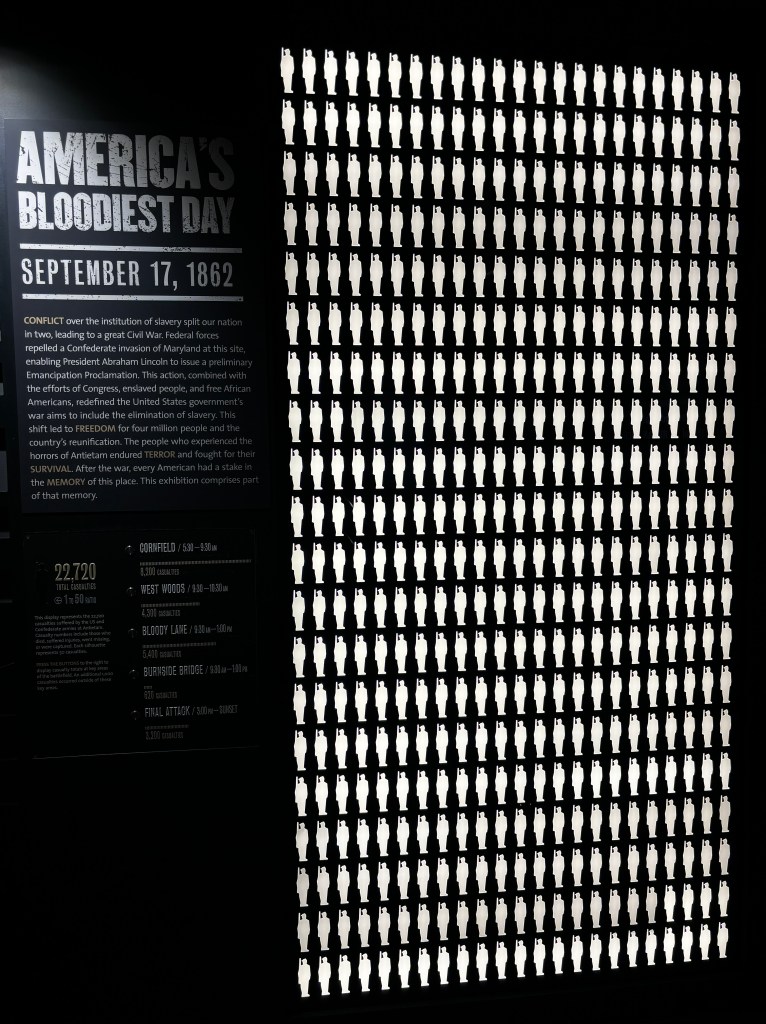
The Battle of Antietam was the single bloodiest date on American soil. Each man symbol represents 50 real men, including those who were killed, injured and missing.
On September 18, Lee retreated back into Virginia. As significant as the number of casualties were, the defeat also denied Lee a victory on northern soil.
The 1200 residents of Sharpsburg generally hid from the horrors of the battle. However, they were still left with damage to their homes and farms. They were left with bodies, artillery and ammunition in their fields.
This was the Mumma Farm. The family fled to safety prior to the battle and the house was occupied by confederate soldiers. It was burned by the confederacy to avoid federal sharpshooters using the site. That was the only act of willful destruction to the Sharpsburg community by either side.
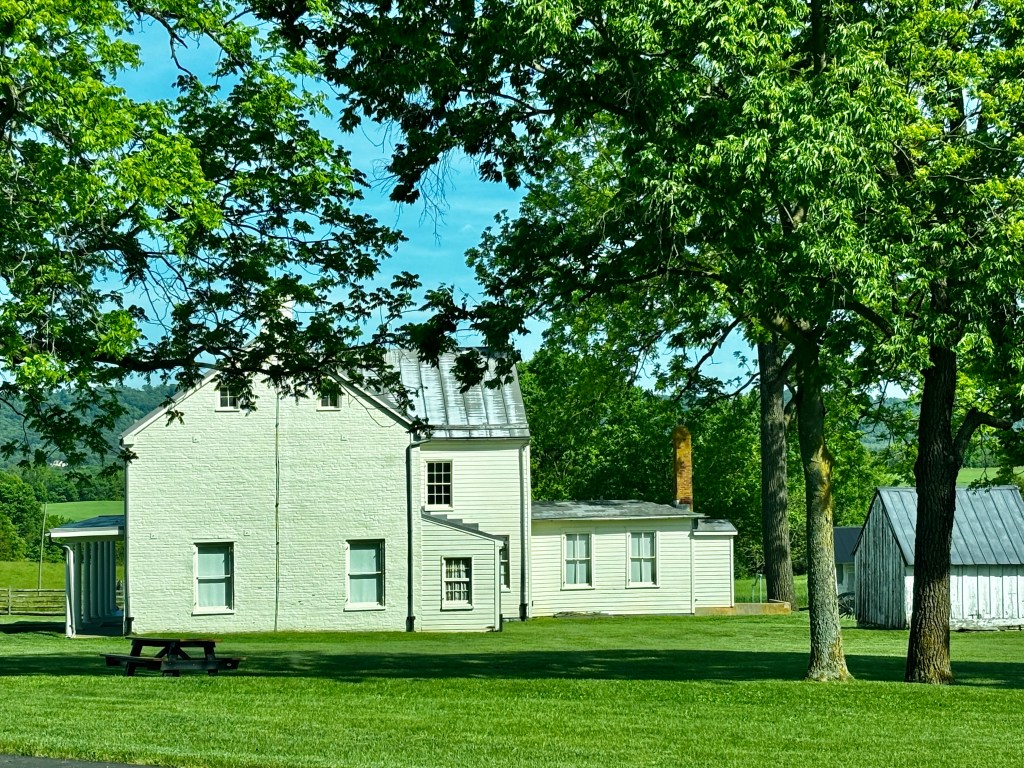
Later, when the federal government was reimbursing people for property damage, it declined to reimburse The Mumma family for their loss as it was deliberate damage by the confederacy. The family rebuilt the farm.
Five days after the Battle of Antietam, President Lincoln issued the Emancipation Proclamation, expanding the Union’s purpose from reunification to include the abolishment of slavery.
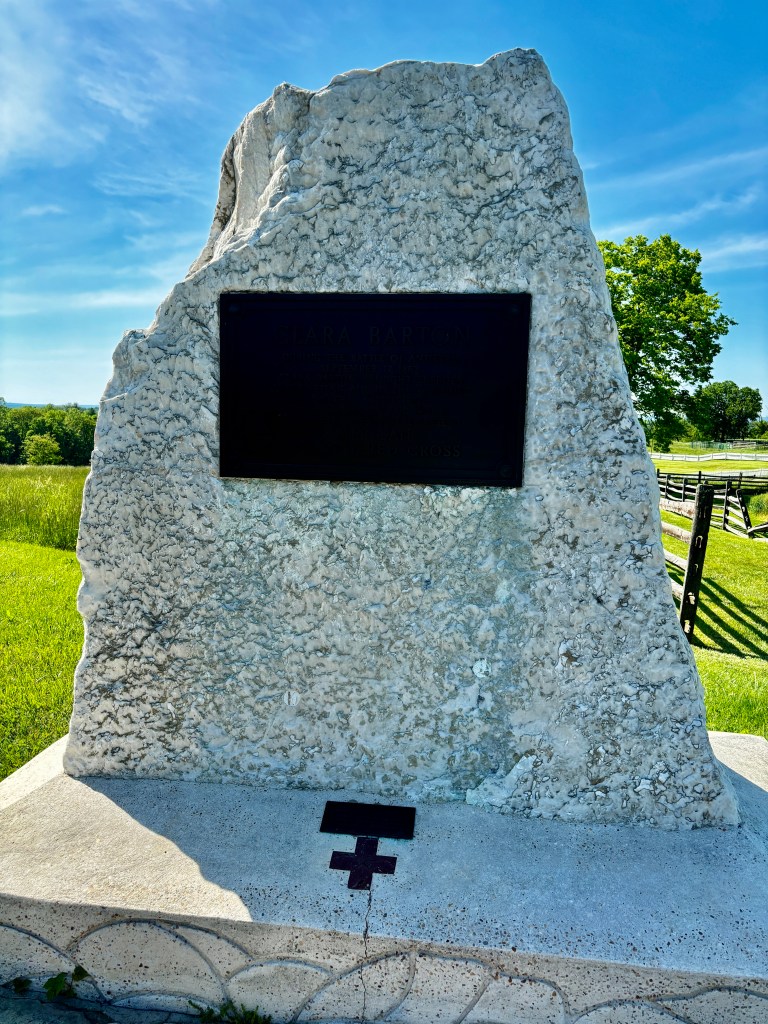
Although the writing is not visible in the picture, this monument is for Clara Barton. She, with her staff of 30, did what they could to assist the injured and dying. They were in this area for three days before moving on to the next battlefield.
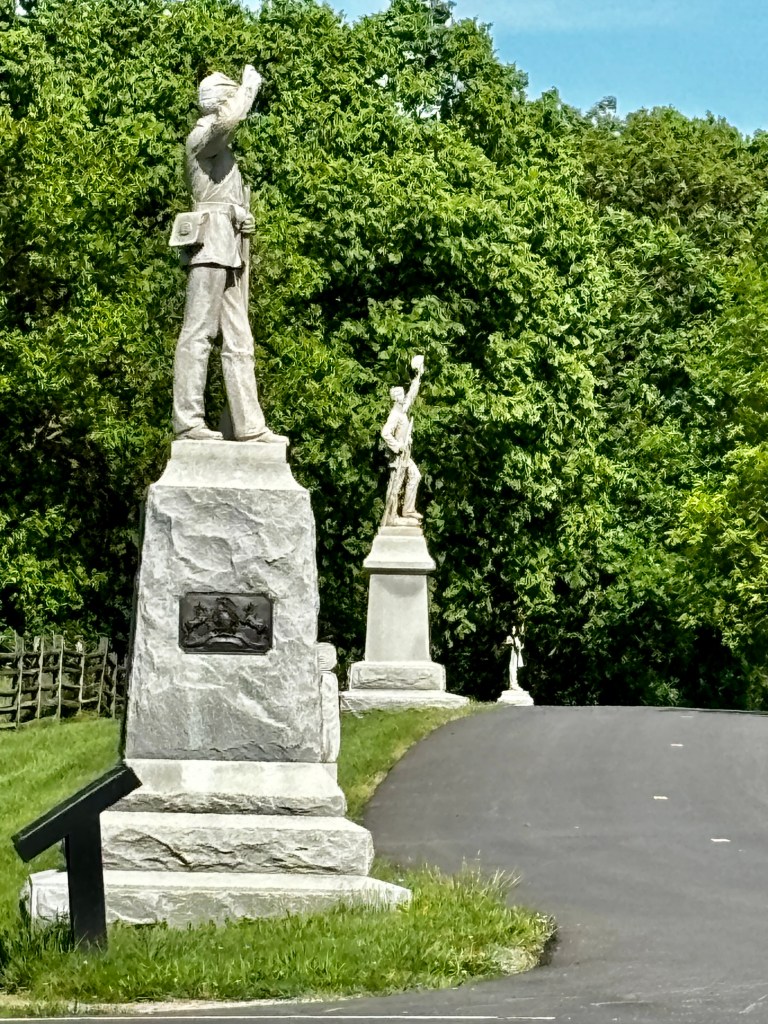
There were a number of monuments to specific people or to groups of soldiers who fought in the Battle of Antietam. Nearly all represent Union people or companies as the south did not have the funds to do so after the war.
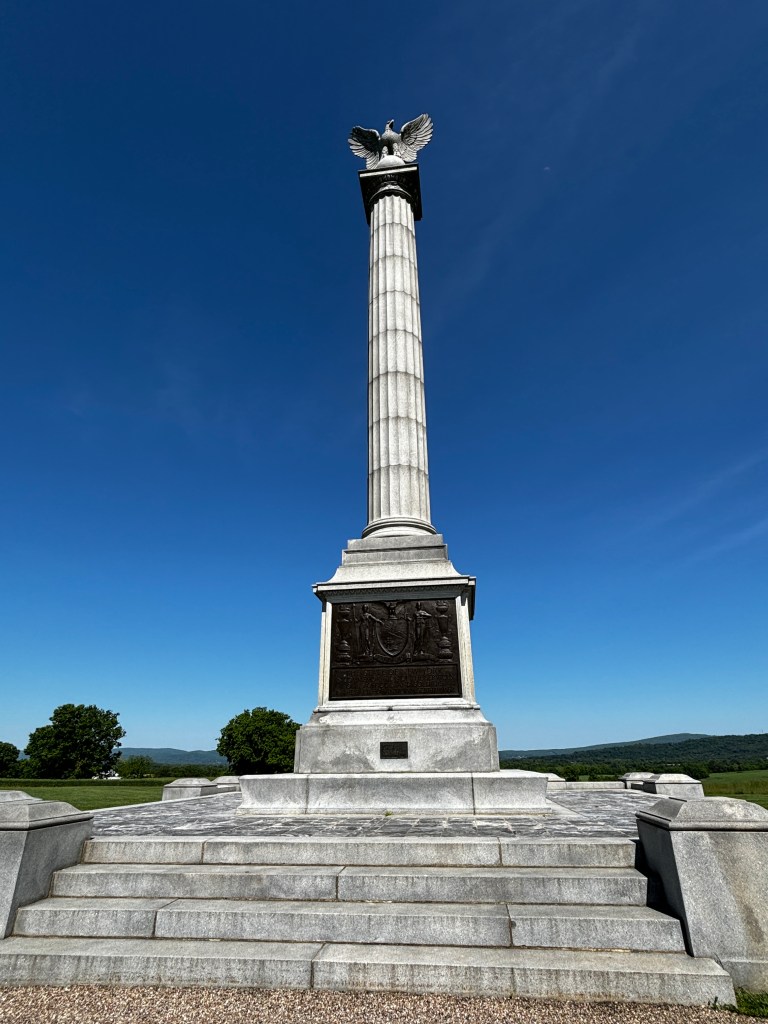
This monument is from The State of New York commemorating their soldiers.
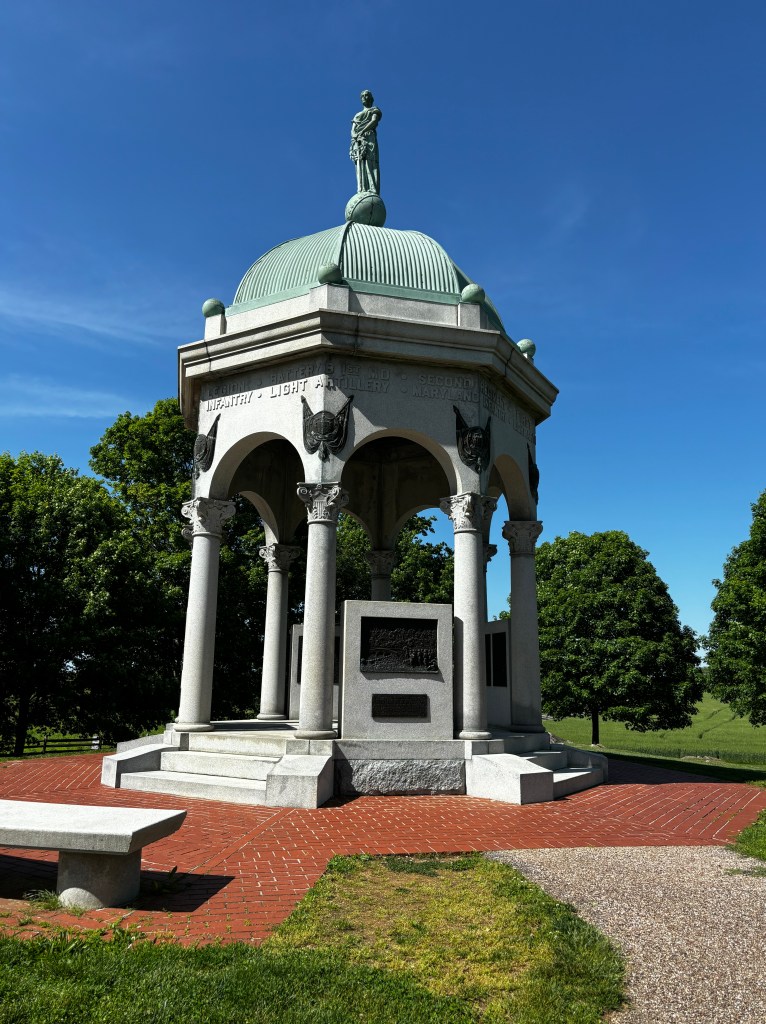
This one is to commemorate Marylanders who fought.
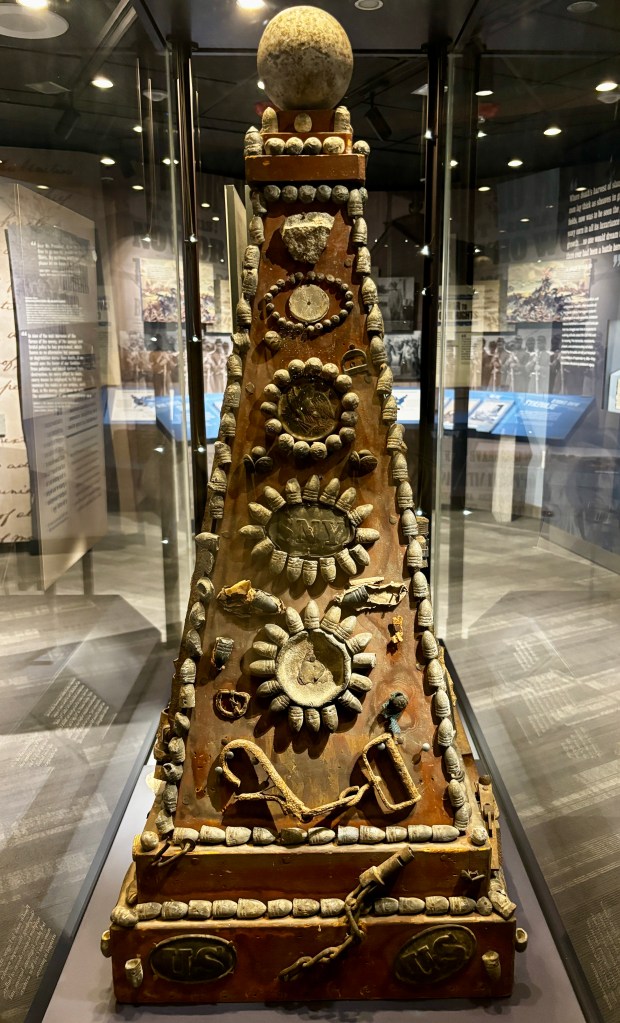
At the visitor center, we saw this sculpture made of battlefield remnants of bullets, buttons, belt plates and more. It is not known for sure who the artist was, but he is assumed to be from Sharpsburg.
The docent at the visitor center wanted us to remember three things from our visit to Antietam National Battlefield. First, that people lived in the area before and after the battle. Second, it was the single deadliest day on US soil. Finally, the results of the battle denied Lee his northern victory, ultimately denying the confederacy international recognition and support which might have altered the outcome.
The Maryland Legislature created the Antietam National Cemetery with the intention to bury both the union and confederate dead there as a sign of unification. It was the first land protected at the battlefield site.
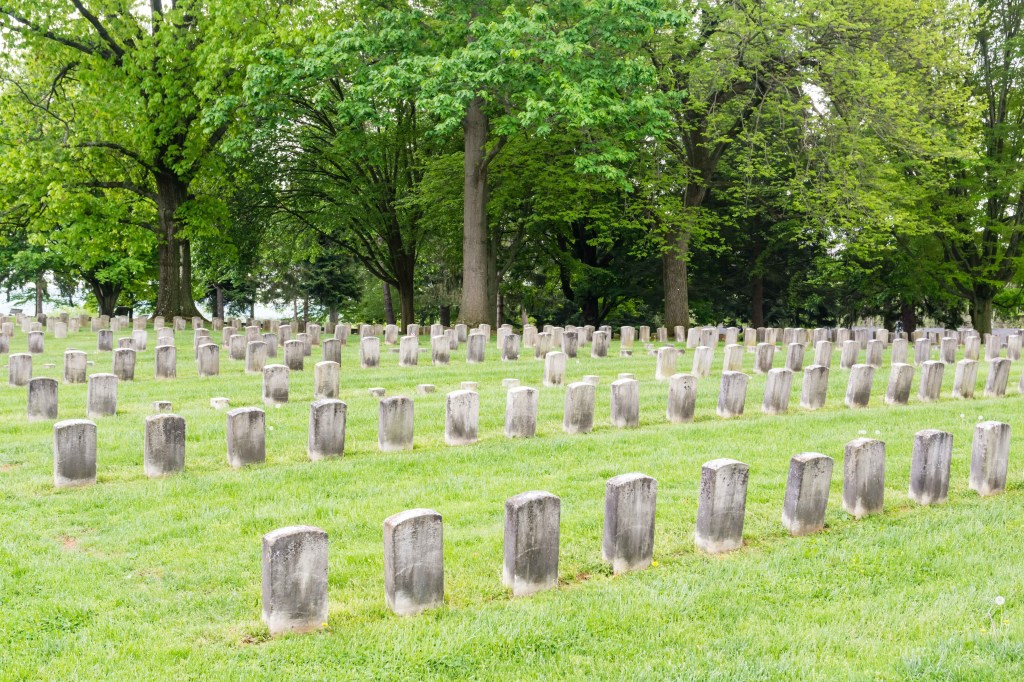
However, lasting bitterness, and the south’s inability to fund burials for their soldiers, led to it only be used for Union soldiers. Other cemeteries in the area hold confederate remains. More recently, soldiers and veterans of other warsincluding WWI and WWII, have been buried at Antietam National Cemetery. Sadly, and not surprising, African American remains were segregated.
We were at Antietam National Battlefield in May 2024.
Next Up – Harriet Tubman


 Serene Wandering