
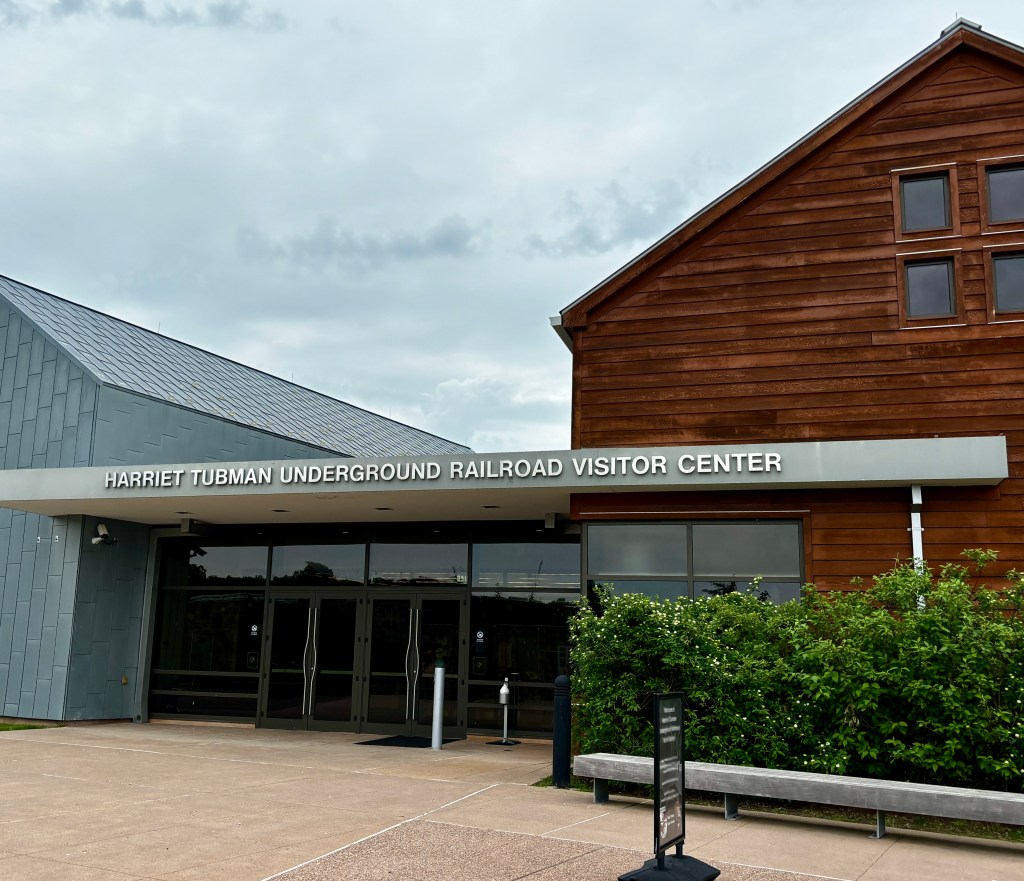
The Harriet Tubman National Historic Site is one of many commemorating her along routes of the Underground Railroad.
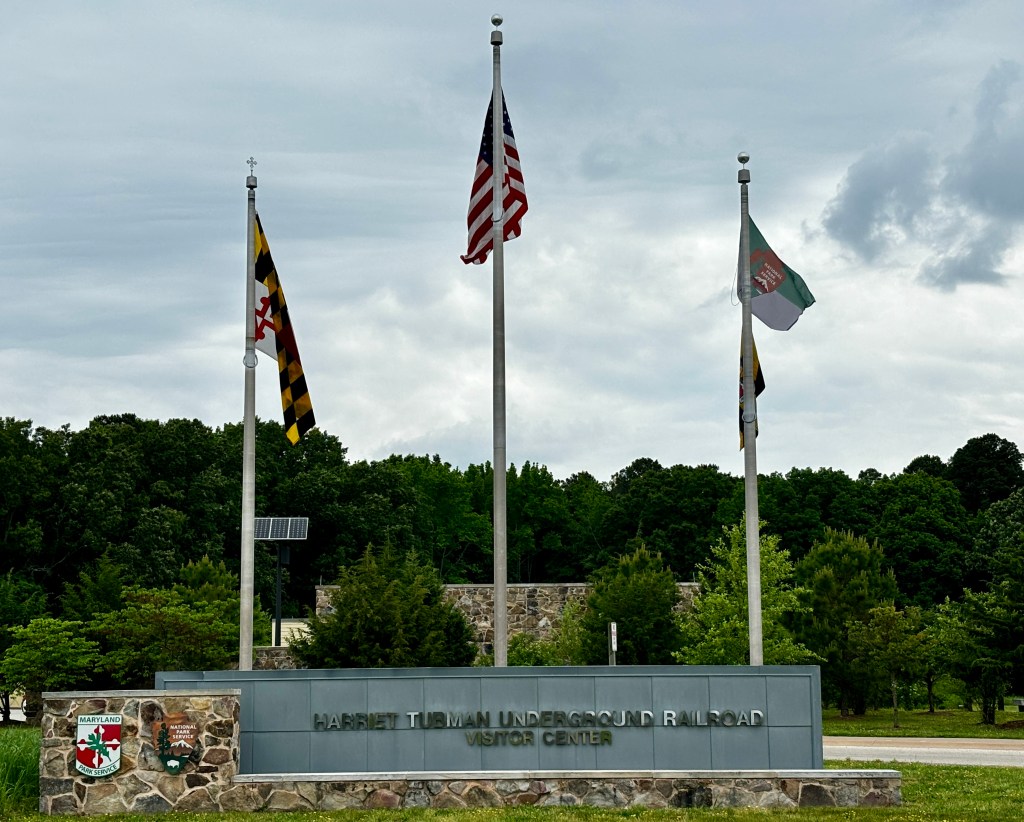
This site is a combined effort between the National Park Service and Maryland State Parks.
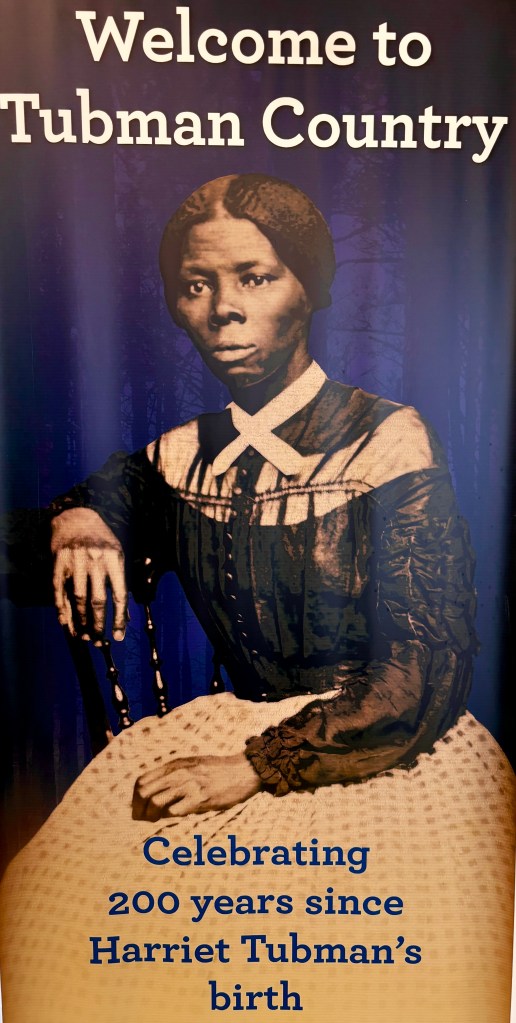
The girl who would become Harriet Tubman was born on the eastern shore of Maryland in 1822. Her childhood name was Araminta Ross. She was born of people who were enslaved, the middle of nine children.
Araminta witnessed her older sisters being sold away and was haunted by the memory. Every time a white man came to the farm, they wondered who might be next.

At age six, the man who owned her began hiring her out to others. One farmer had her hunting muskrats. She suffered beatings as a child and the scars were evident throughout her life.
As a young teen Araminta was hit in the head by an iron weight. The weight was thrown at an enslaved young man but hit her. Her skull was broken and she was still expected to do her work in the field. Araminta recovered over the next months but suffered from epilepsy and headaches throughout her life. She felt her injury opened a direct connection to God that she relied on throughout her life.
“Minty” married a free black man named John Tubman. In 1840, half of the blacks in Dorchester County, Maryland were free.
Araminta changed her name to Harriet. A short time later, learning that she was about to be sold, Harriet decided to run. She had a strong reserve, physical strength and belief that God meant her to be free.
Harriet made it to Pennsylvania. Instead of going further north and enjoying her new freedom, she chose to go back and help family members, and others, escape to freedom.
It devastated Harriet that her husband John chose to stay in Maryland. She “dropped him out of her heart” and went on.
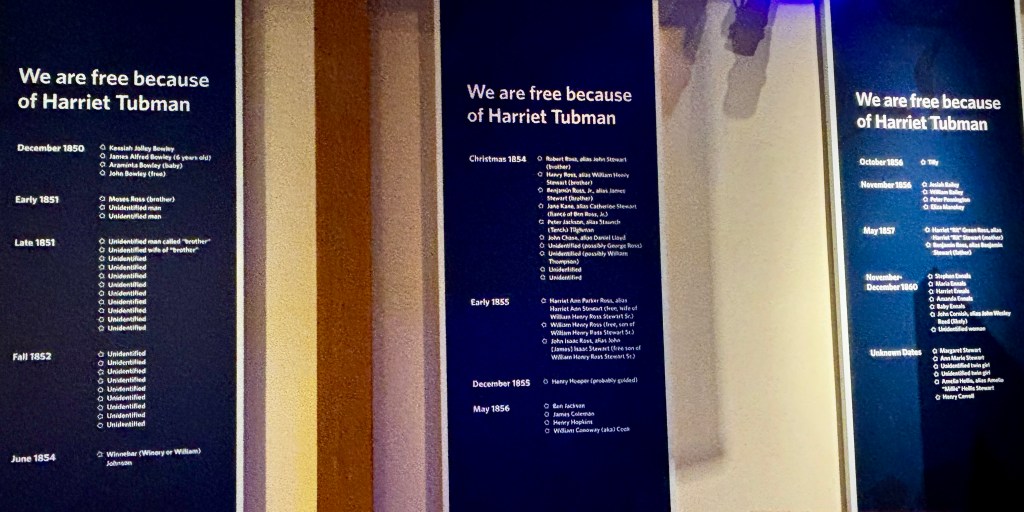
Harriet returned to Maryland at least a dozen times, over a decade, and directly rescued 70 people as a conductor along the Underground Railroad. Free blacks and sympathetic whites helped escaping enslaved people.
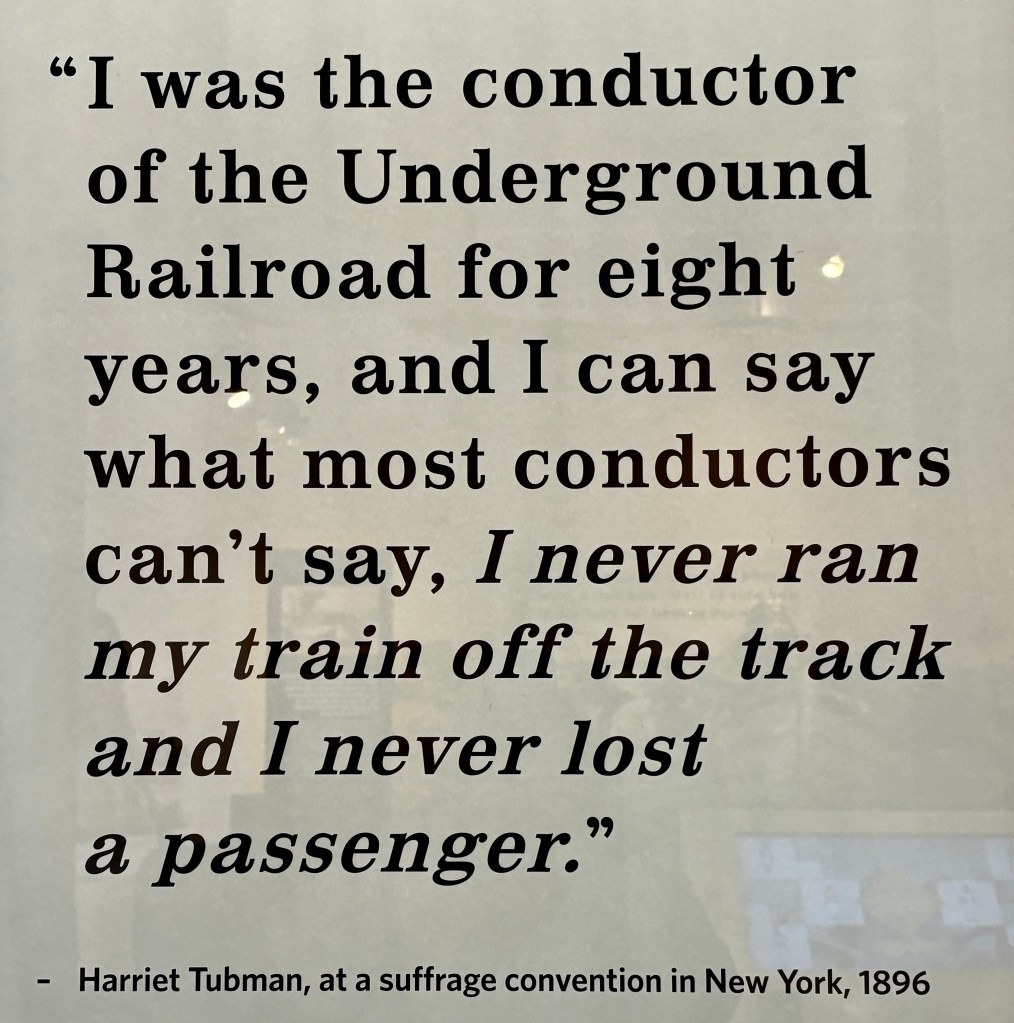
Harriet never lost a passenger on the underground railroad.
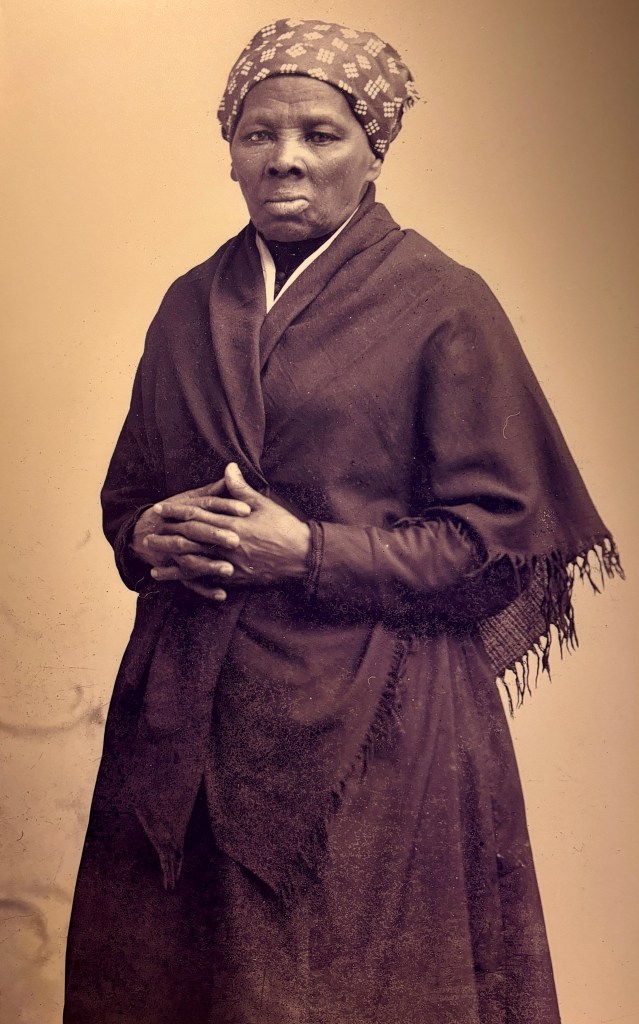
When the Civil War began, Harriet worked as a nurse, a spy, and a soldier for the Union.
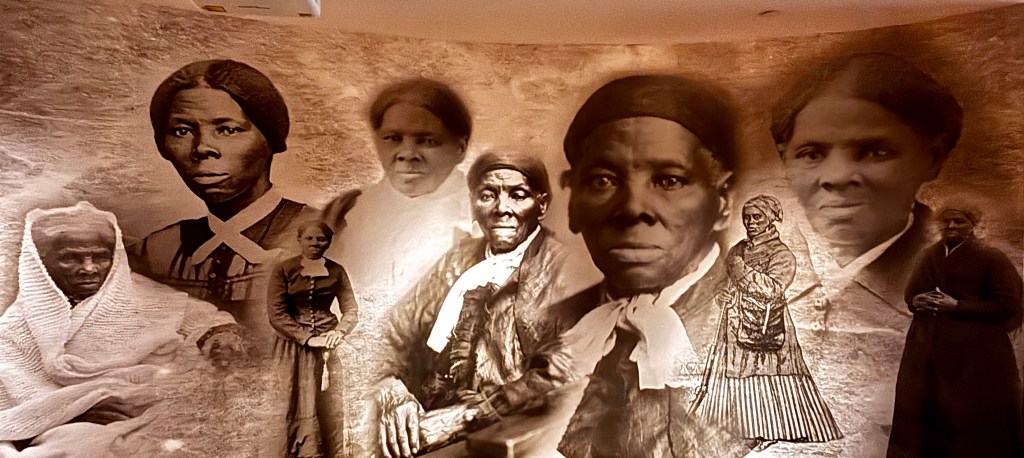
She eventually settled in New York and assisted with the Women’s suffrage movement. Harriet Tubman died at age 85 in 1913.

In 1944, the SS Harriet Tubman was launched as a Liberty Warship in WWII, the first ship named after a black woman.
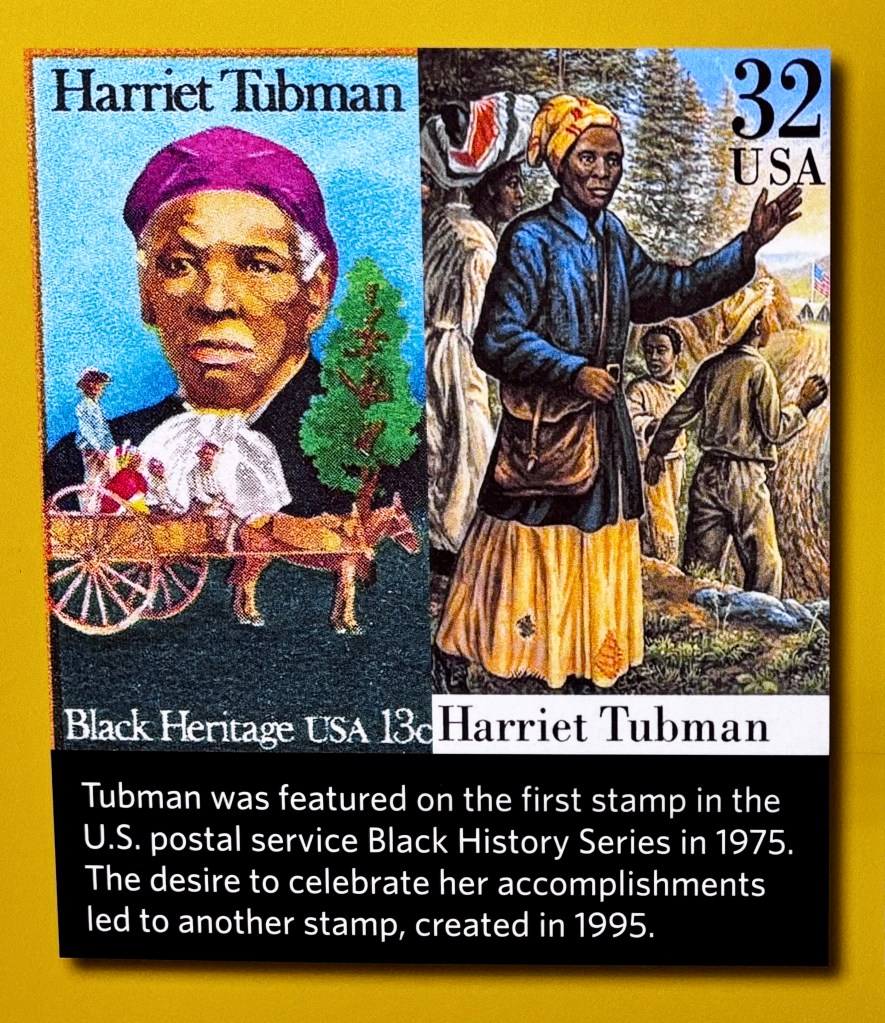
Harriet Tubman was honored with postage stamps in 1975 and 1995.
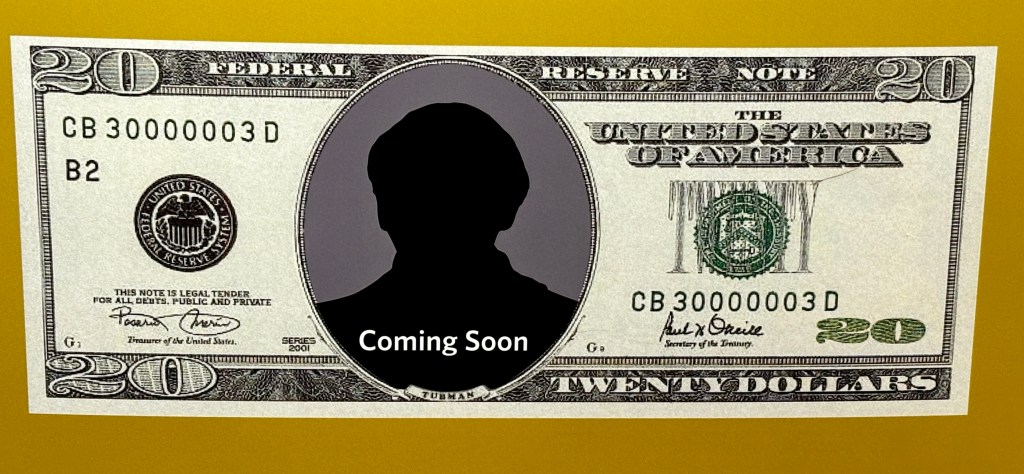
The Harriet Tubman $20 is set to be released in 2030. The US $20 bill is the most used bill in the world.
We were at the Harriet Tubman National Historic Site in May 2024.
Next Up: A childhood memory revisited


 Serene Wandering