I read a book as a child that stayed with me. I wasn’t a horse girl so I’m not sure why a book about horses made a lasting impression.
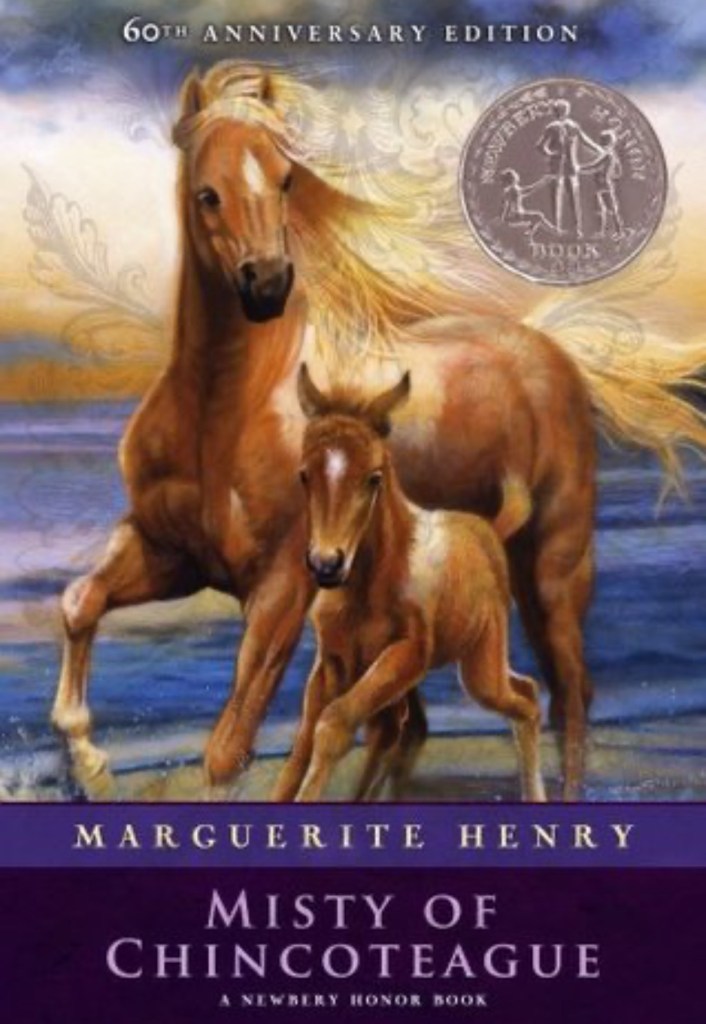
Misty of Chincoteague was written by Marguerite Henry and published in 1938. It was a Newberry Honor Winner in 1948. I probably read it around 1968. There have been 165 editions published.
Over the years, when I heard reference to the wild horses of Assateague, the memory of this book would resurface. When we decided to visit this area, seeing the wild horses on Assateague became part of the itinerary.
The origin of the horses, as explained in the book, is that horses were freed, or stranded, or marooned, on the island when a Spanish ship went down hundreds of years ago. Over time, they became wild and adapted to a harsh landscape.
The more verifiable history is that 300 years ago, settlers on the mainland placed their animals on the island to pasture. This allowed owners to avoid paying the grazing tax that would have been due if they kept their horses on the eastern shore of the mainland. (The horses roaming the island are descended from those original horses with DNA introduced from others over the centuries.) Again, over time, they became wild and adapted to a harsh landscape.

Native American’s used to visit the island known as Assateague.
In later years it had periods of tourist development that ebbed and flowed. A massive development called Ocean Beach was in the process of selling almost 6000 lots when a Great Nor’Easter hit in the spring of 1962. As only thirty lots had been built and everything in the region was leveled after the three day storm, Ocean Beach was abandoned.
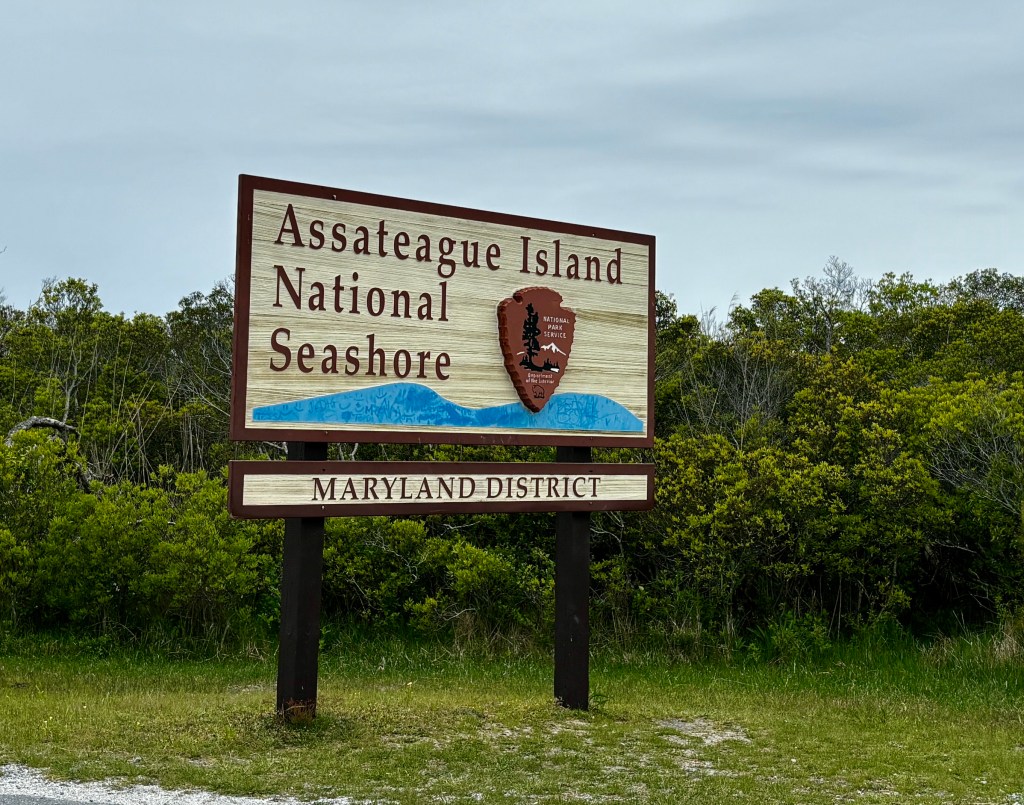
The epic storm set the stage for President Lyndon Johnson to declare Assateague Island a National Seashore in 1965.
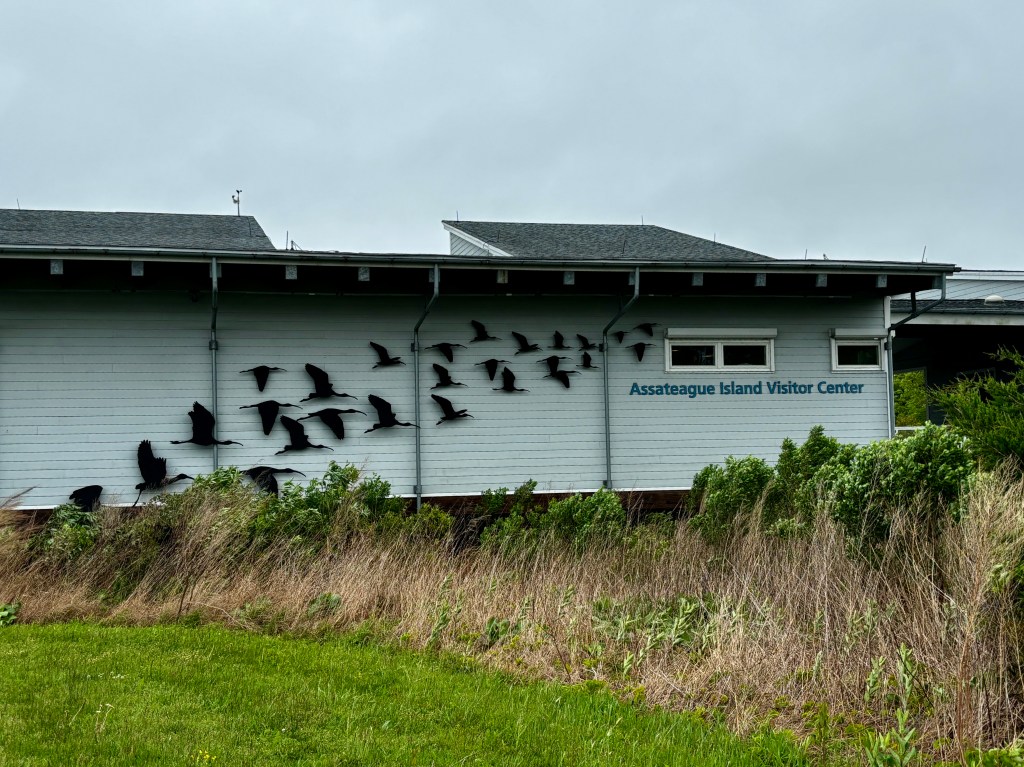
We visited the Assateague National Seashore Visitor Center.
Assateague is a 37 miles long barrier island. It is the outermost point of the eastern United States. The island is divided into the Maryland portion (Assateague) managed by the state of Maryland and the National Park Service and the southern half, managed by the state of Virginia.
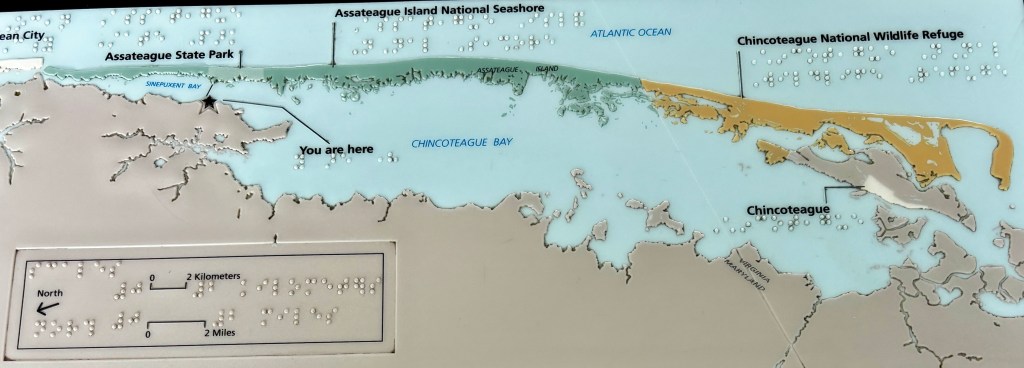
The southern horse population is owned and managed by the Chincoteague Fire Department. They have a spring roundup where water cowboys round up the horses to swim to Chincoteague for auction. This helps to manage the population and create income for the fire department. Following the sale, the adult horses are then led to swim back to the main island. The July 2024 version of the event is the 99th in history. (The pony swim and round-up is the major plot line of the book I read so many years ago.)
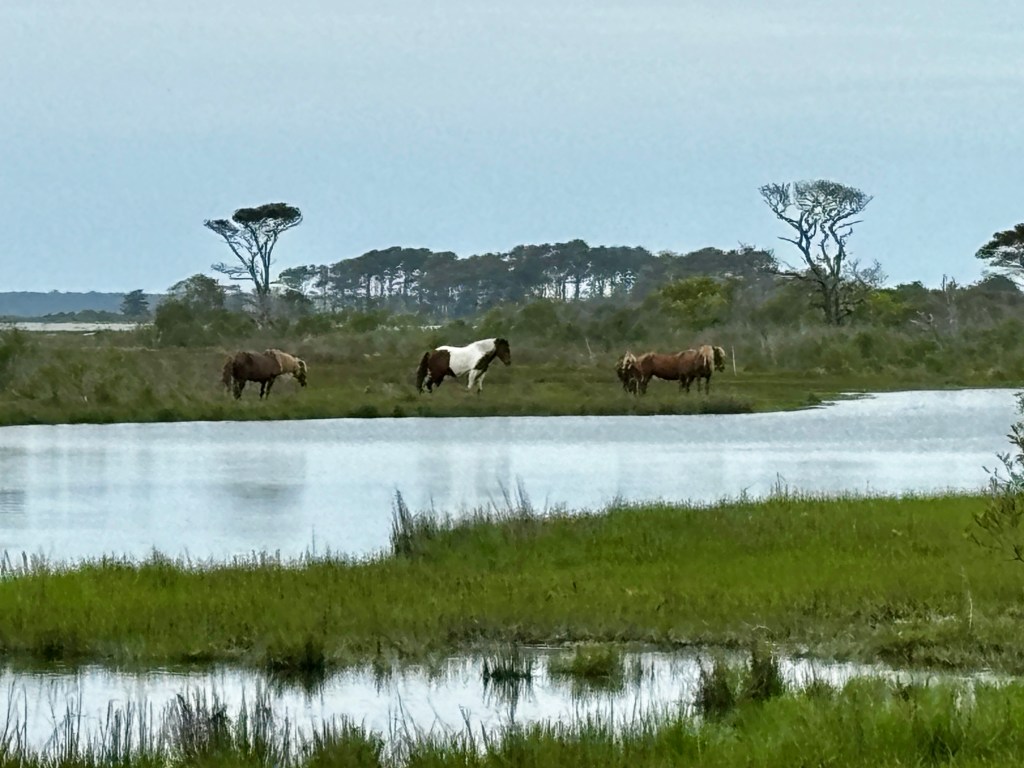
We visited the north side of the island, and saw the horses managed by the NPS. These horses are left to be wild with minimal human involvement.
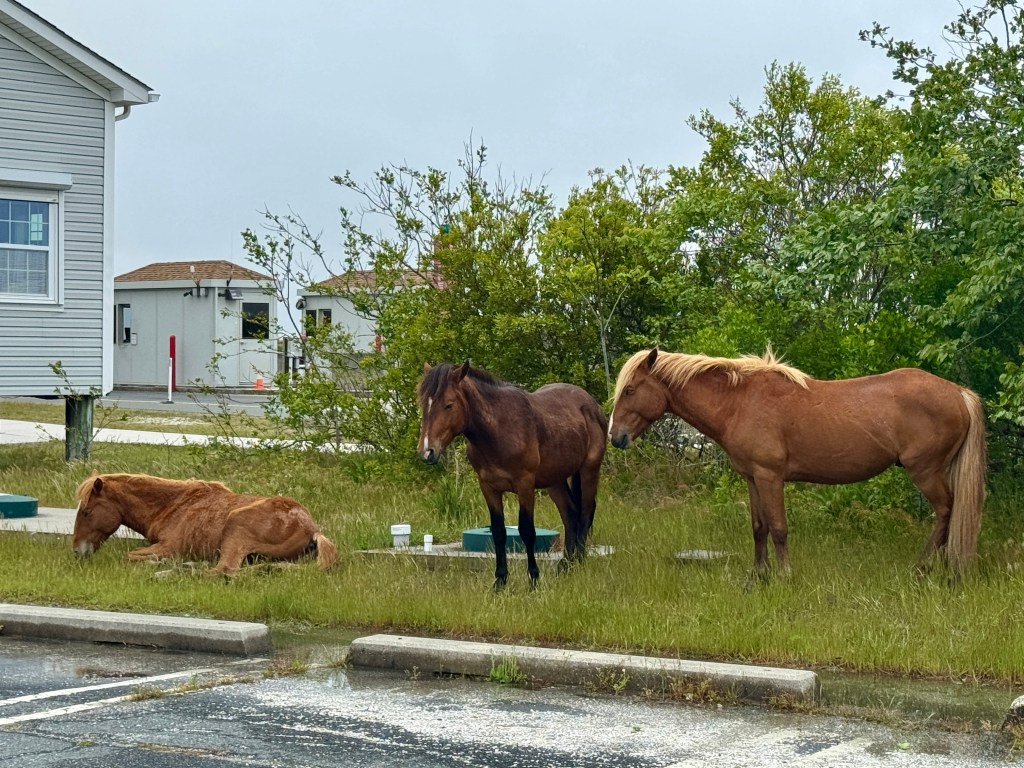
Of course, the horses can decide to come to civilization whenever they want.
The exception to human initiated involvement is to control when mares are able to be pregnant. This is done by vaccinating selected mares by rifle dart. This restricts the number of pregnancies each mare experiences. Fewer pregnancies in the herd keeps the mares healthier, the gene pool less saturated, and the herd size at a level the island can maintain.
This practice of supplying vaccines to selected mares was unproven when it was introduced more than 30 years ago but has proven very successful. The practice has been replicated in other places.
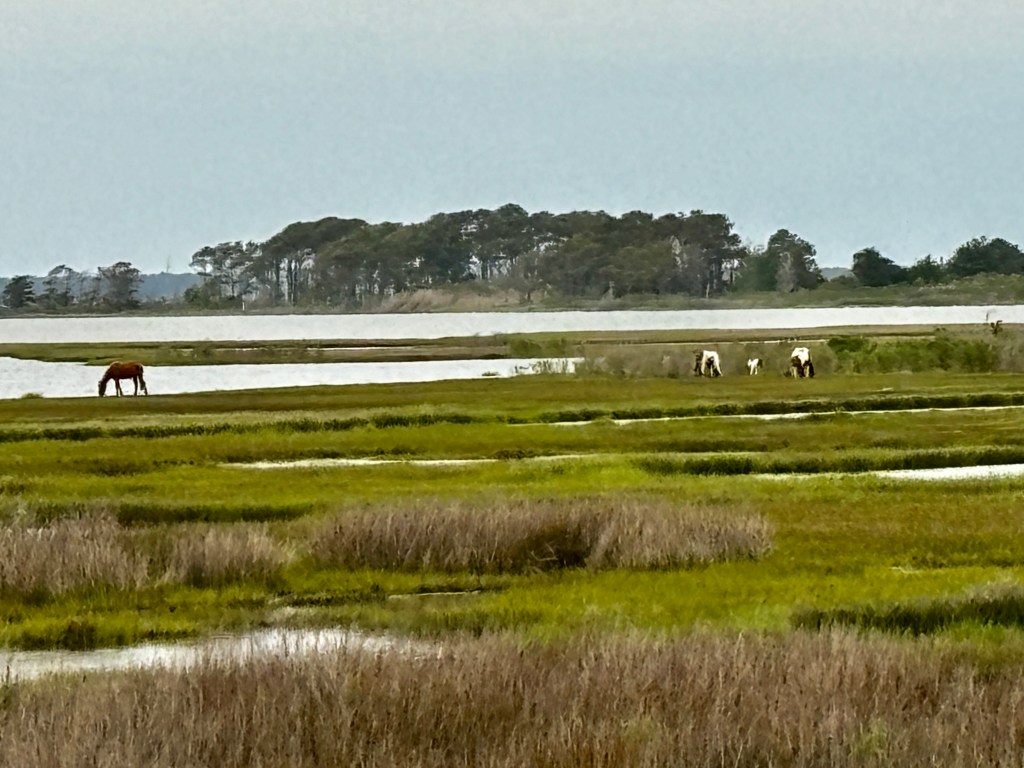
We went to Assateague twice, once in the evening and again the following morning. We saw several groups of horses each time.
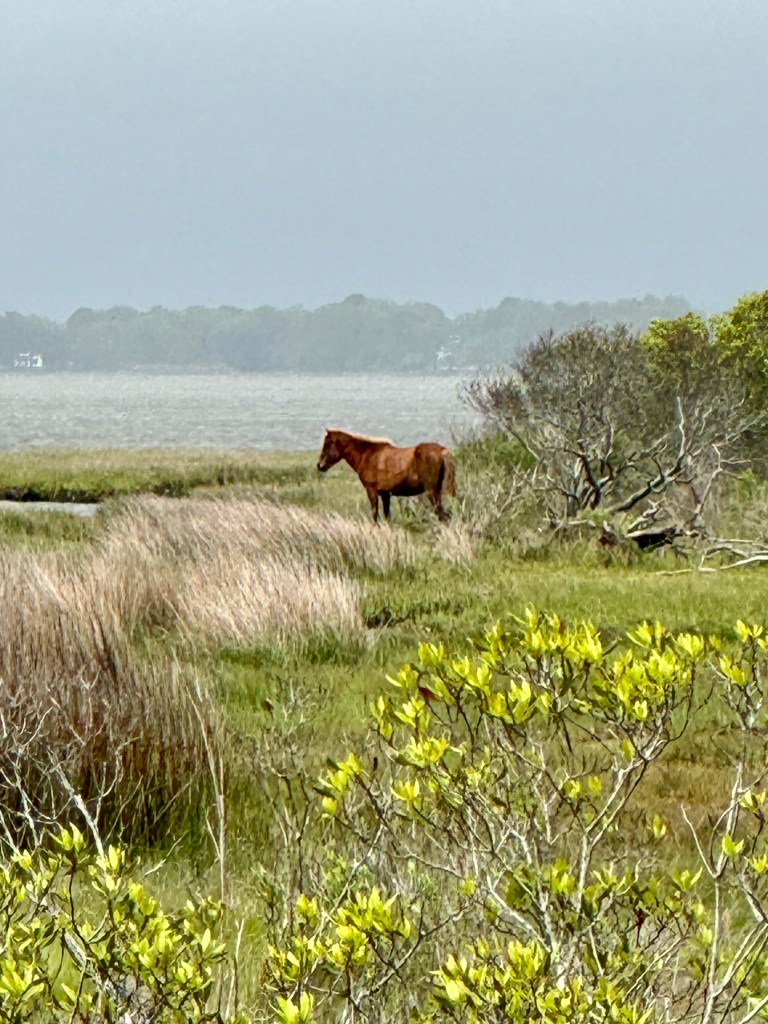
We learned that the Assateague horses appear bloated because they eat so much salty sea grass. This necessitates them drinking a lot of freshwater available in island pools.
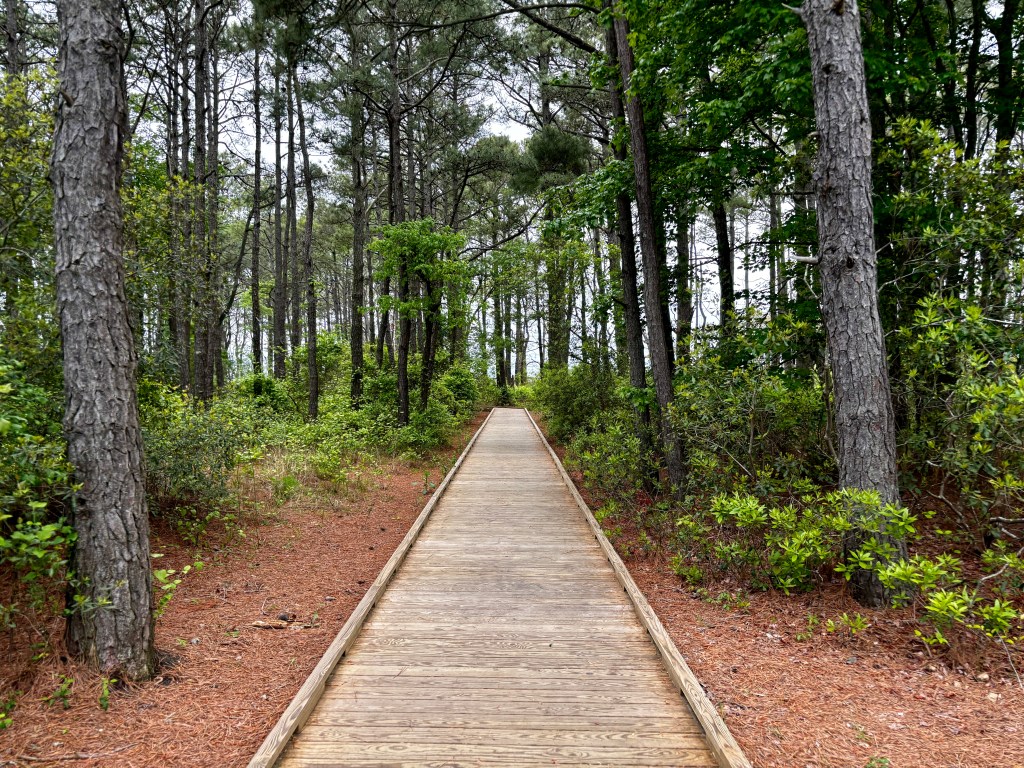
Walkways were constructed to assist in viewing.
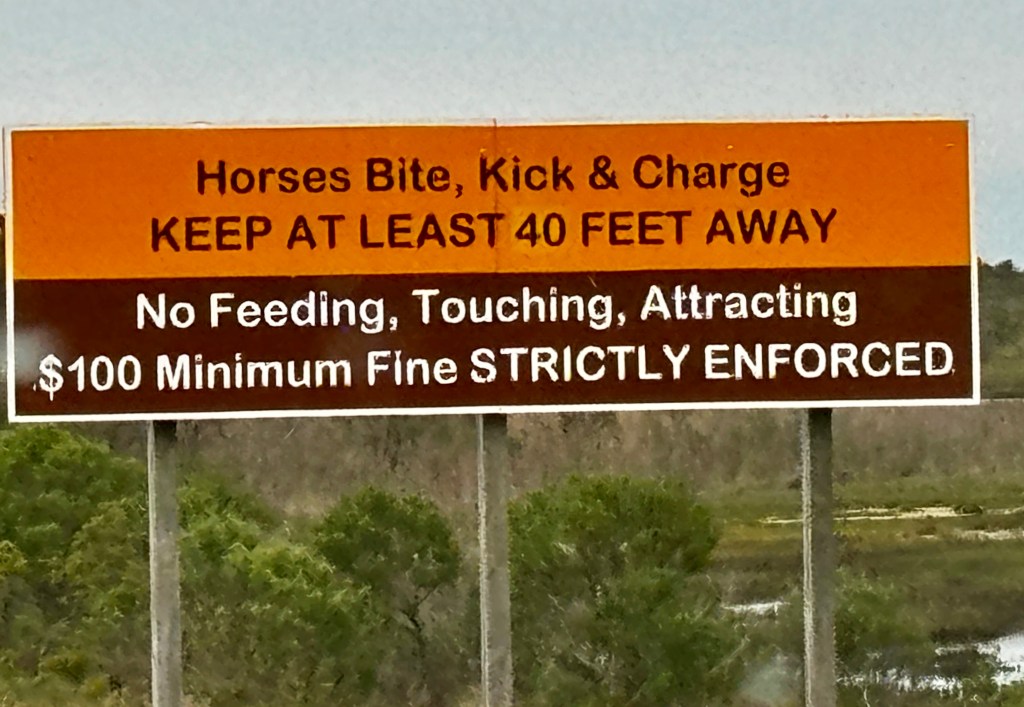
There are many signs and reminders to stay back from all wildlife, including the horses.
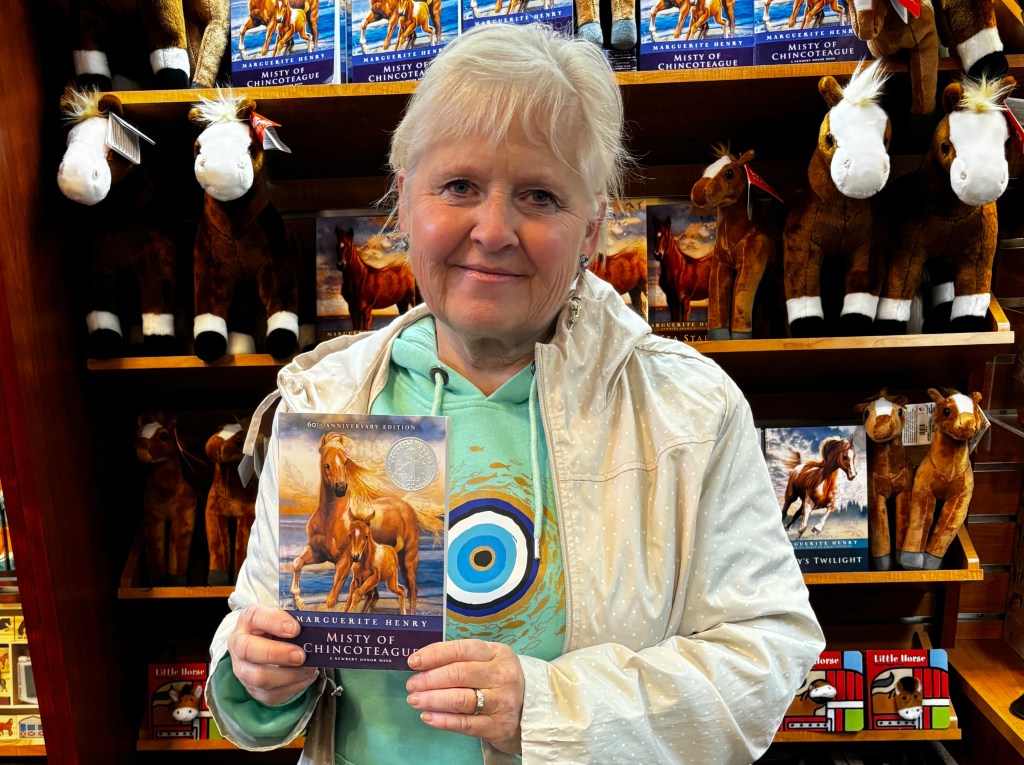
In the visitor center bookstore, they sold the 60th Anniversary Edition of the book I read so long ago. I bought it and read it again. That was coming full circle!
The visit, and re-reading the book, were both worthwhile. But, I’m still not a horse girl!
We were on Assateague in May 2024.
Next Up: Delaware – a new state for us


 Serene Wandering
Love this. We saw them too when out visiting Marcia Milleville.