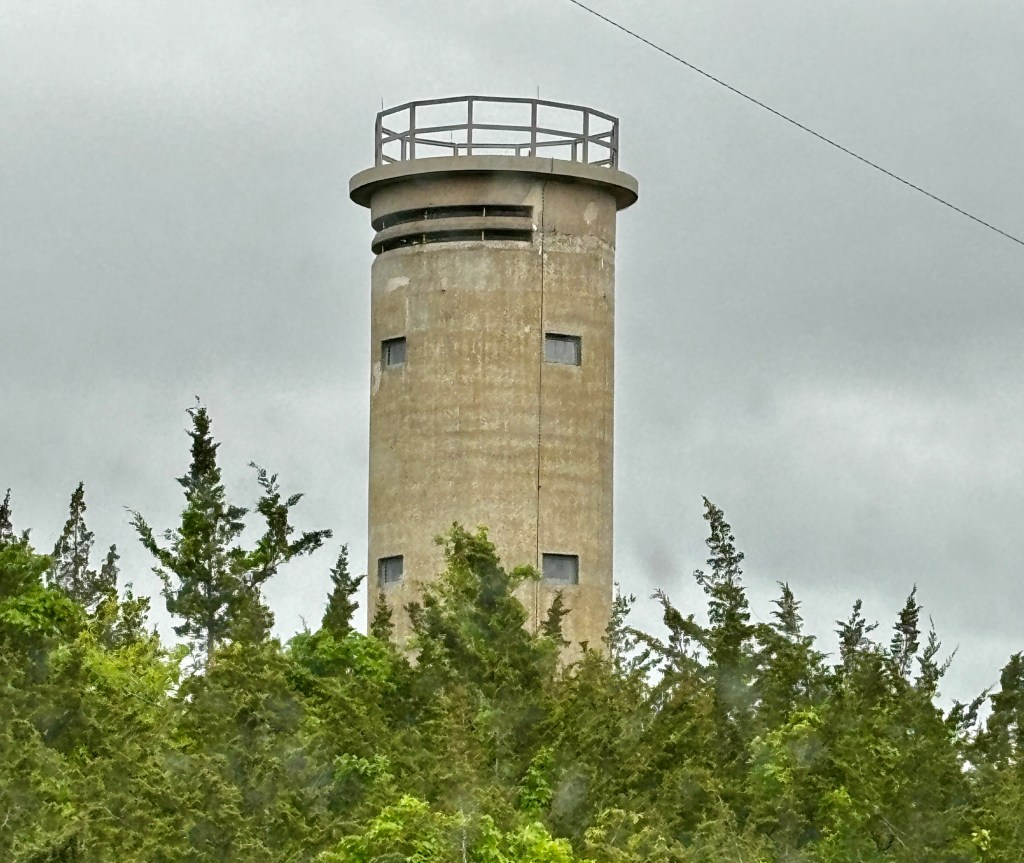
Tower operations were directed by Fort Miles and tasked with protecting the area from incursion by German ships and troops. However, they found that the real threat was from enemy submarines which destroyed hundreds of merchant ships, many within sight of land.
In the 1940s, the Navy, Army and Coast Guard all had bases near Cape May. This is Cape May’s World War II Tower. It was one of fifteen towers to monitor activities at sea to protect the Delaware Bay. This is the only tower still intact in New Jersey.
In 1942 the entire eastern seaboard was designated a military area and Cape May residents and visitors had to comply with black out measures to reduce risk.
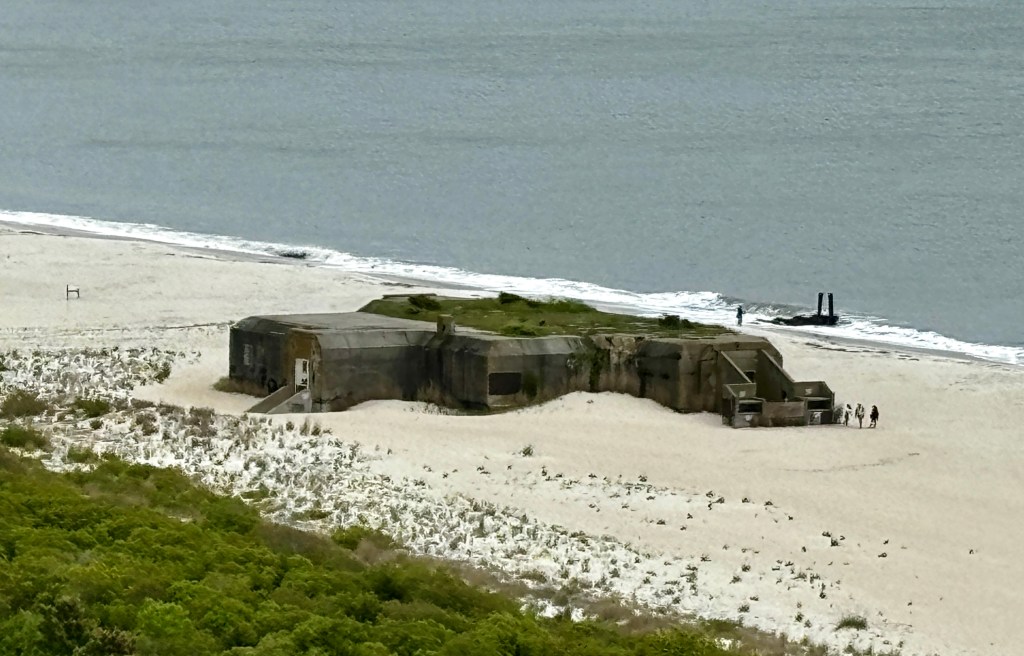
Men assigned to the tower watched the waters and provided coordinates to the battery on the beach to initiate an attack.
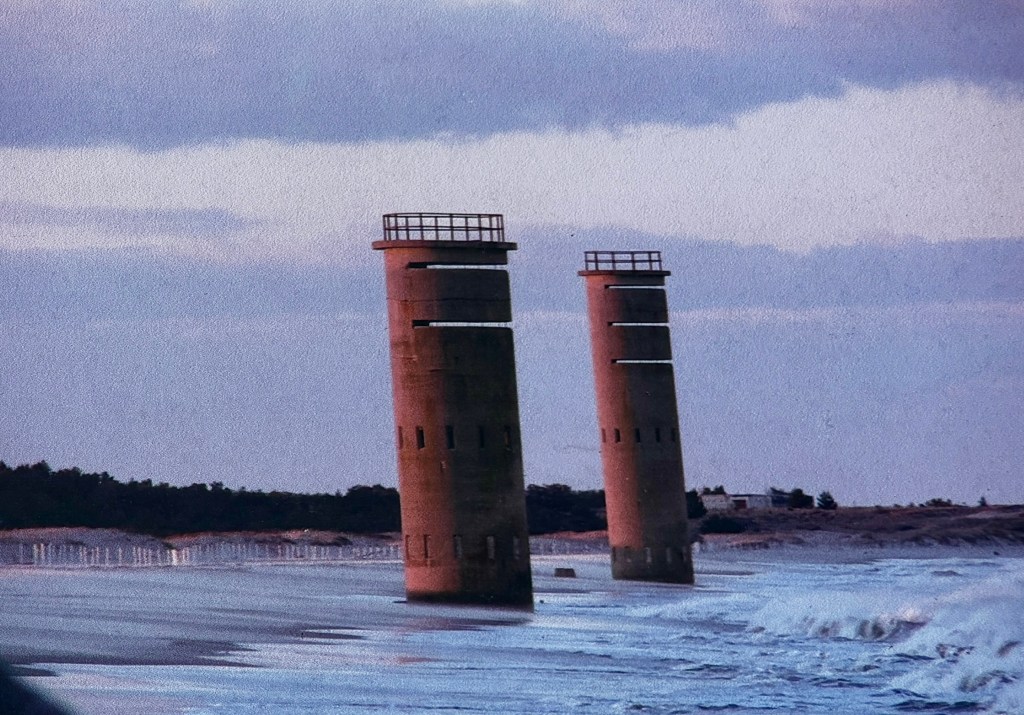
This tower had only one viewing slit at the top while some others in Delaware had two or three. Only one was deemed necessary because this tower was connected with only one battery.
In 1943, the allied effort gained ground and military efforts around the world became more offensive than defensive. The improvement in amphibious warfare rendered permanent fire towers like these less useful.
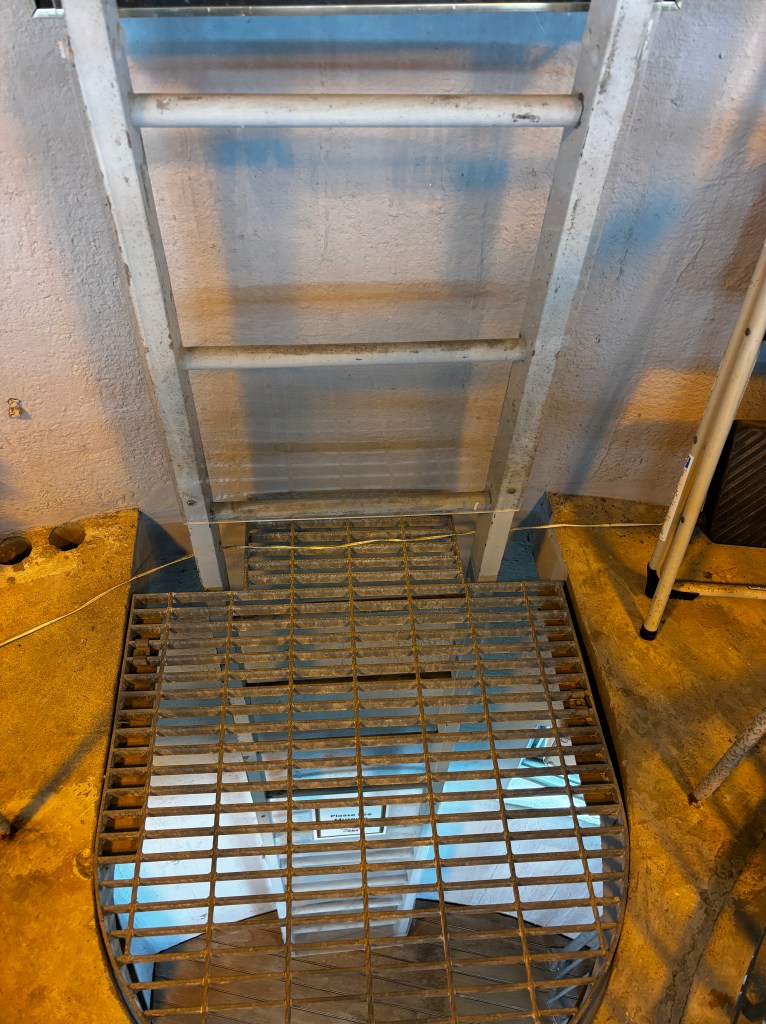
The tower walls were made of one-foot concrete poured in place. The tower is seventeen feet wide with an interior that is fifteen feet in diameter. The walls were reinforced with iron bars but almost everything else was made of wood. Metals were needed elsewhere in the war effort.
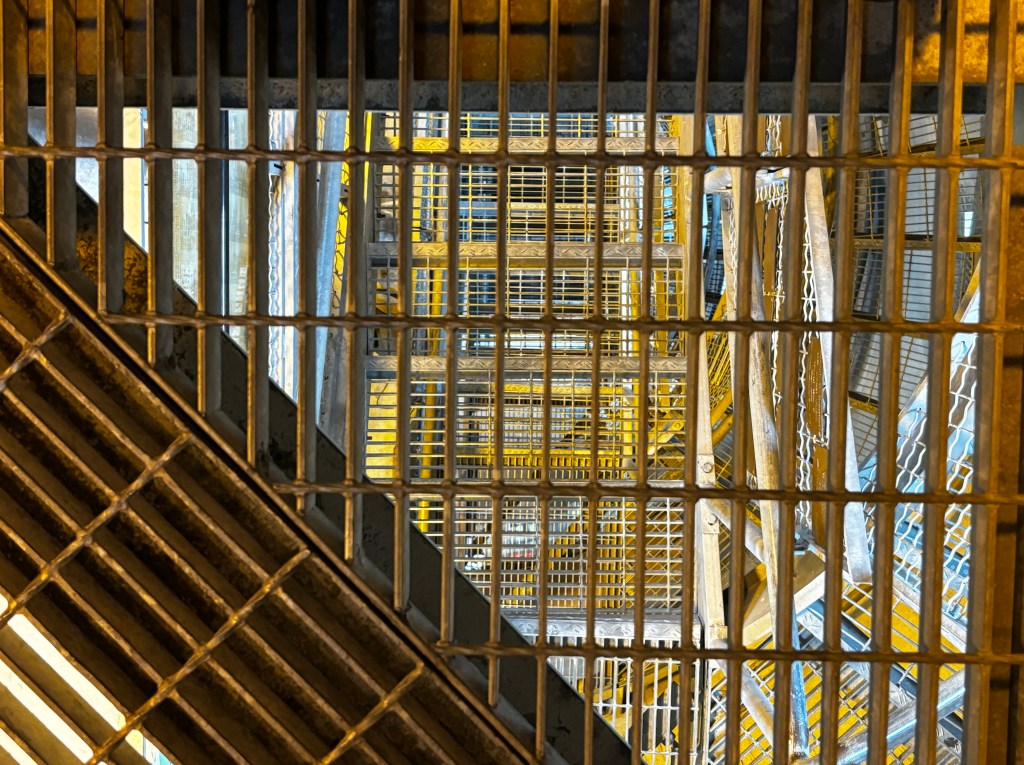
The stairs go six floors up to the scouting area.
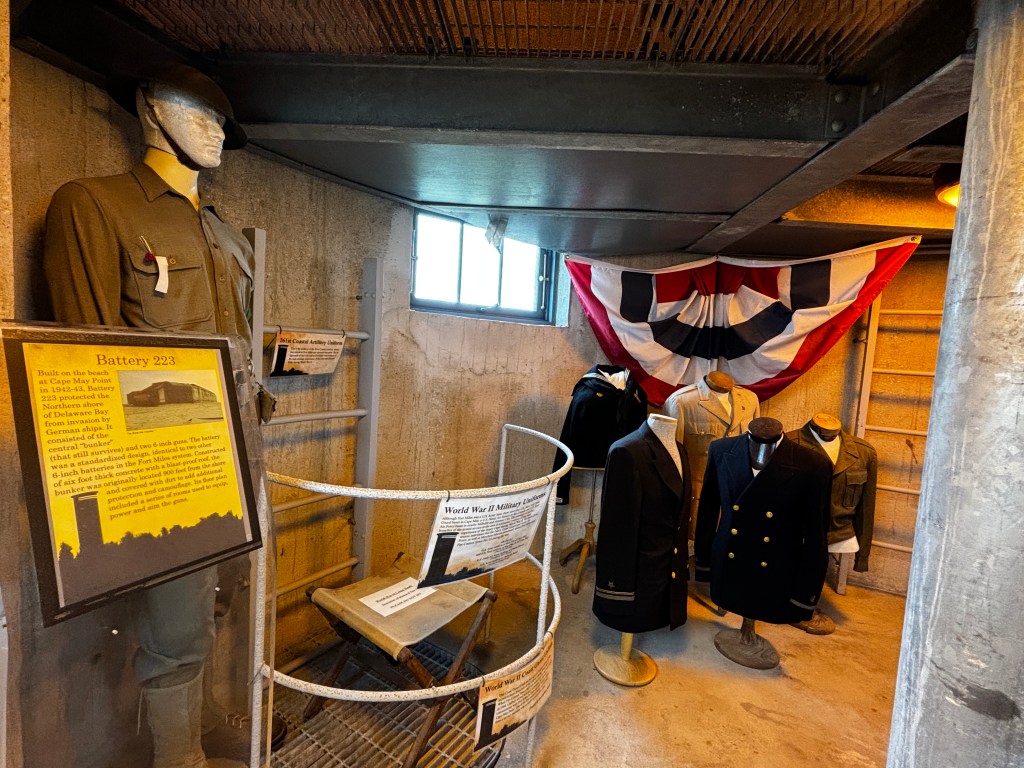
There were displays positioned on different floors.
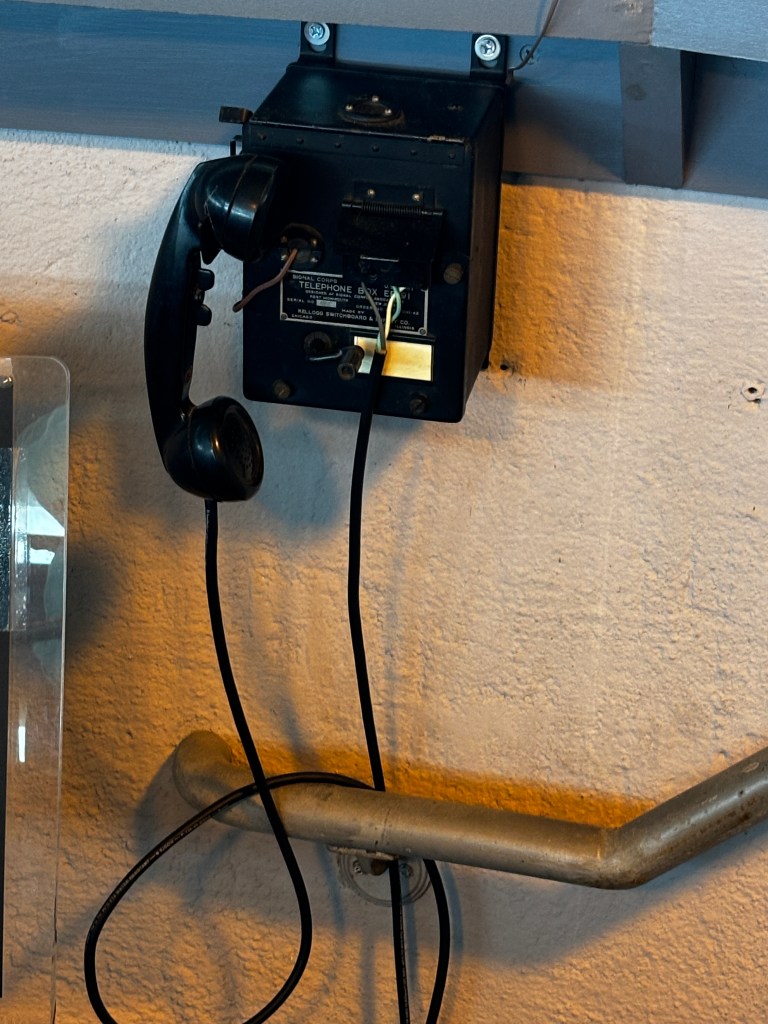
This phone was used to relay enemy coordinates down to the battery on the beach.
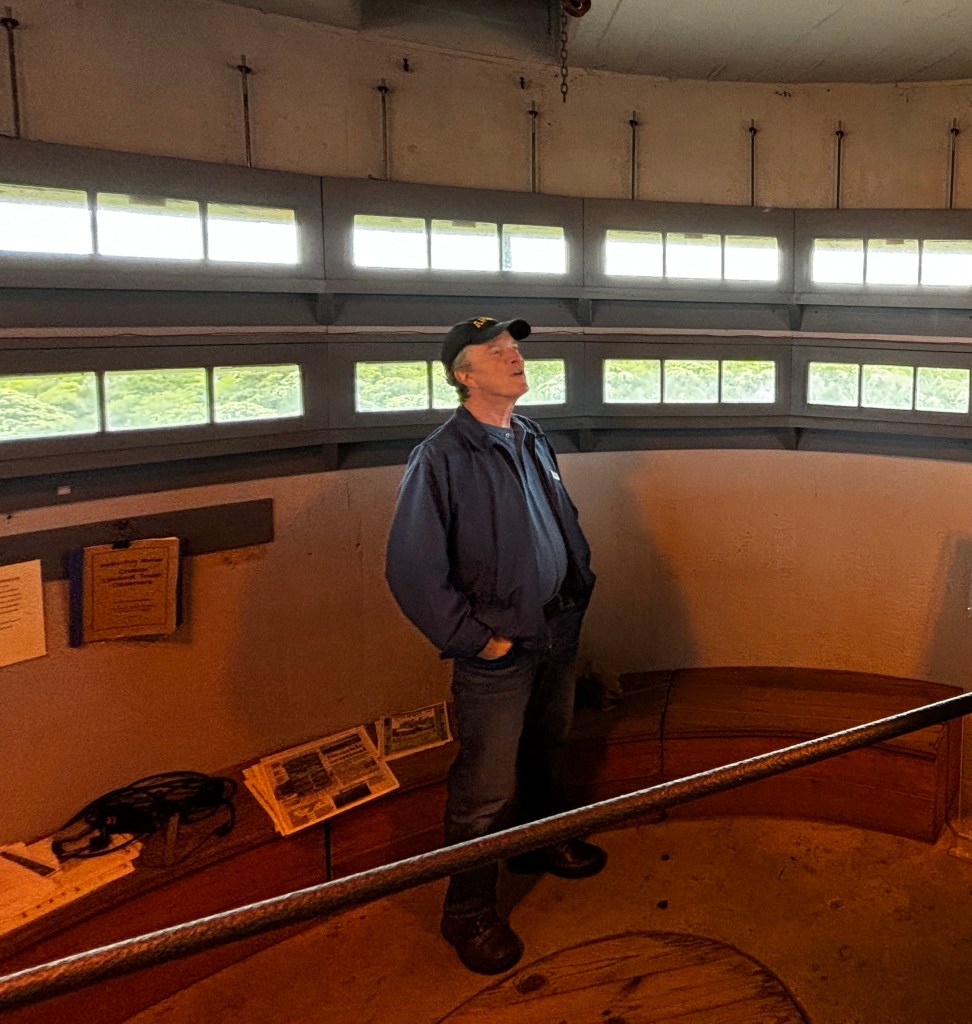
The docent at the top was very interesting with his facts and stories about the World War II tower.
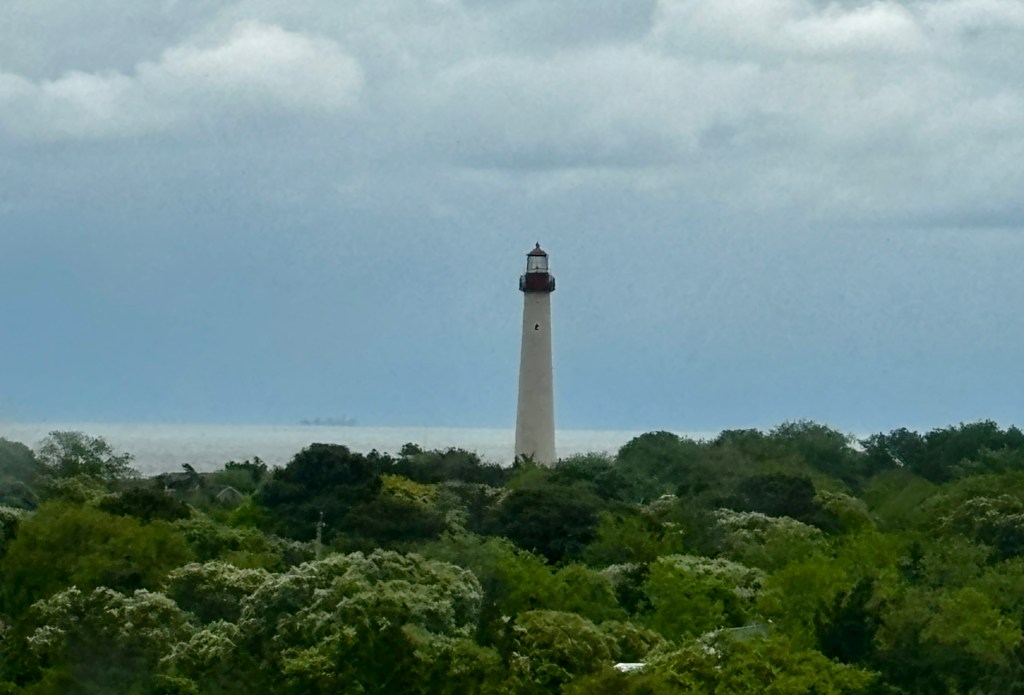
From the top, we could see our next destination – the Cape May Lighthouse.
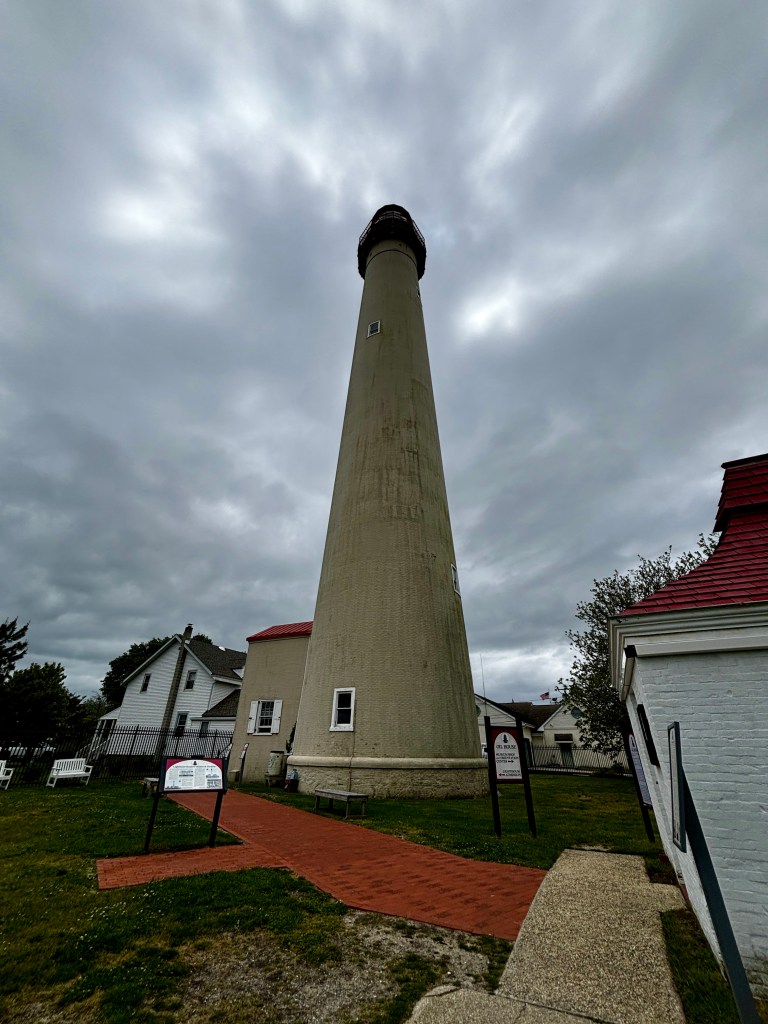
Here is a closer view of the Cape May Lighthouse. It was built in 1859 and is 157½ feet tall. This is the third lighthouse near this site. The first two, built in 1823 and 1847 were lost due to unstable shoreline and poor construction respectively.
It is one of the oldest continuously operating lighthouses in the country. It went dark during World War II, when all lighthouses did the same guarding against enemy submarines.
The cost to build the Cape May Lighthouse was $40,000. It is wider at the base than at the top.
There is an inner wall and an outer wall. The outer wall is just short of four feet thick at the base tapering to one and a half feet at the top.
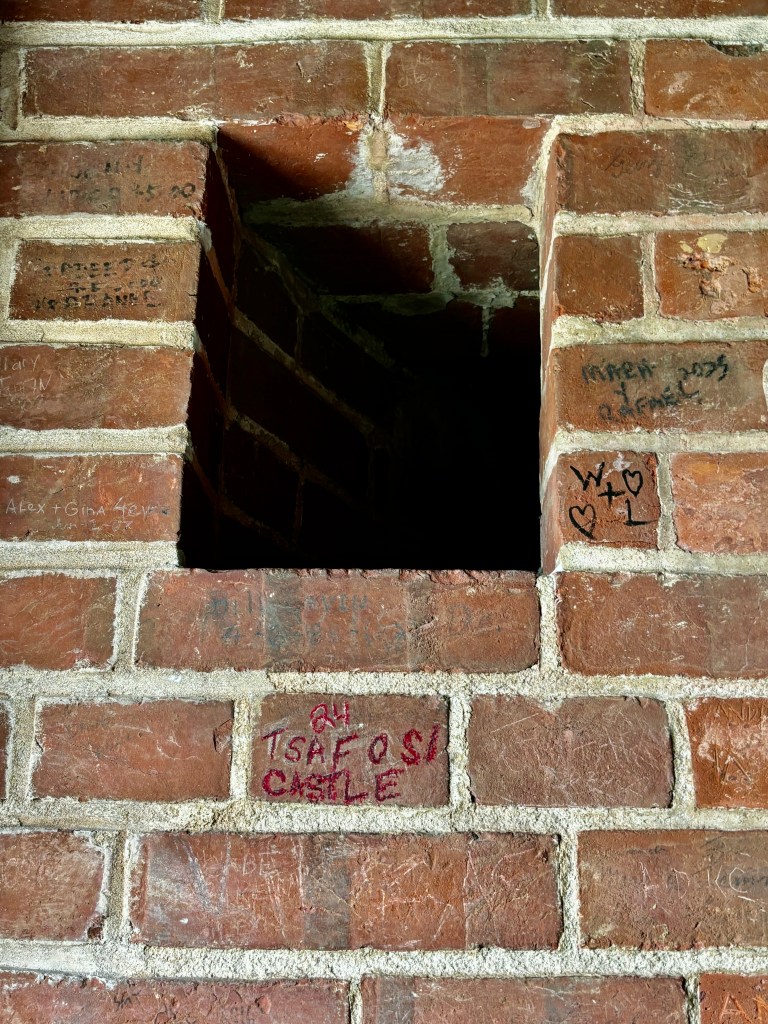
The inner wall is 8 and a half inches thick for the entire length. These openings between the two walls were placed throughout.
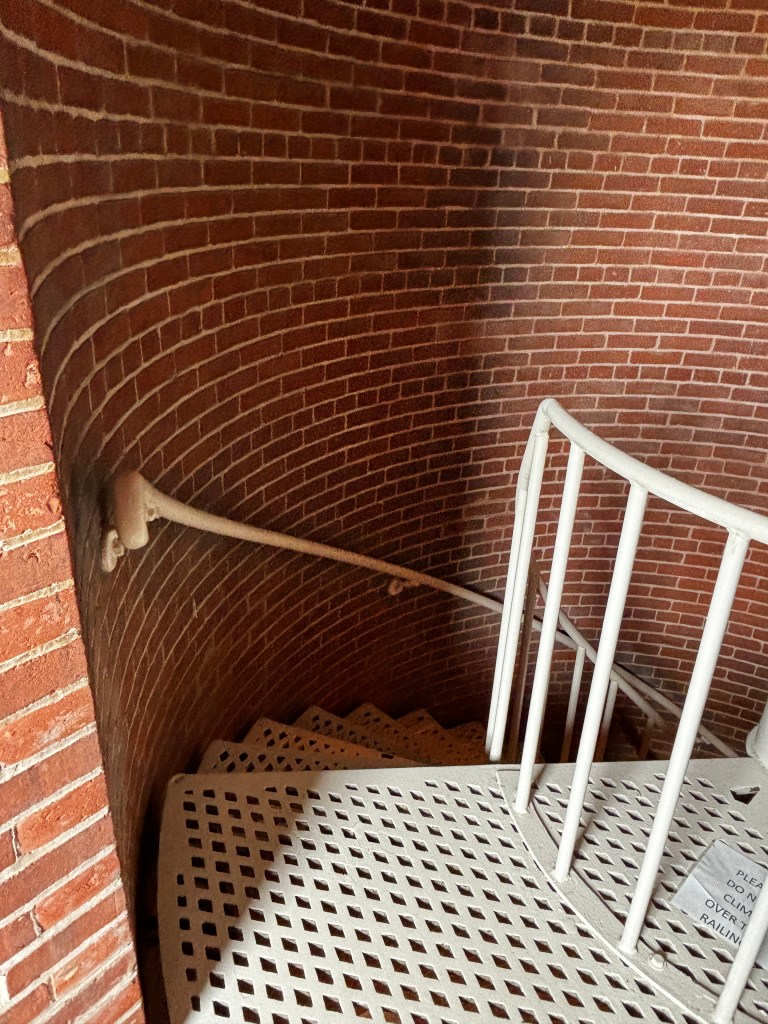
There are 199 steps and six landings. The light house operated for the first six years without any railings. The outer railings were added in 1865. (The inner railings were added in 1988 for tourists.)
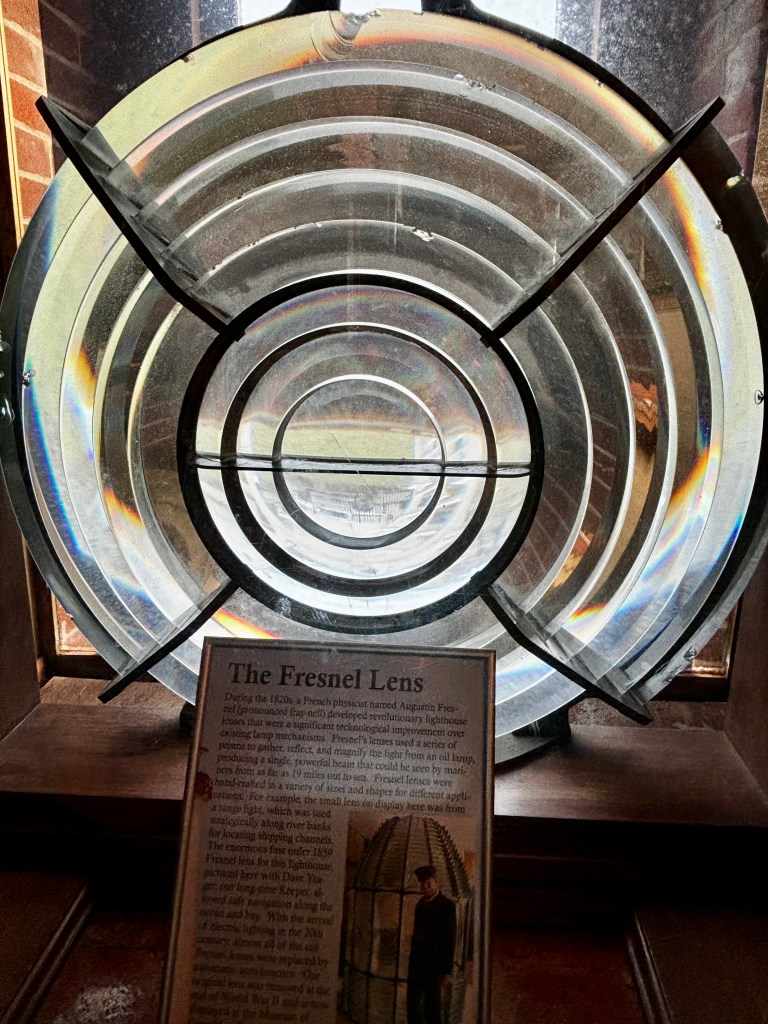
The original Fresnel lens cost $15,000 and is on display at the county museum. This is just one component of a Fresnel lens.
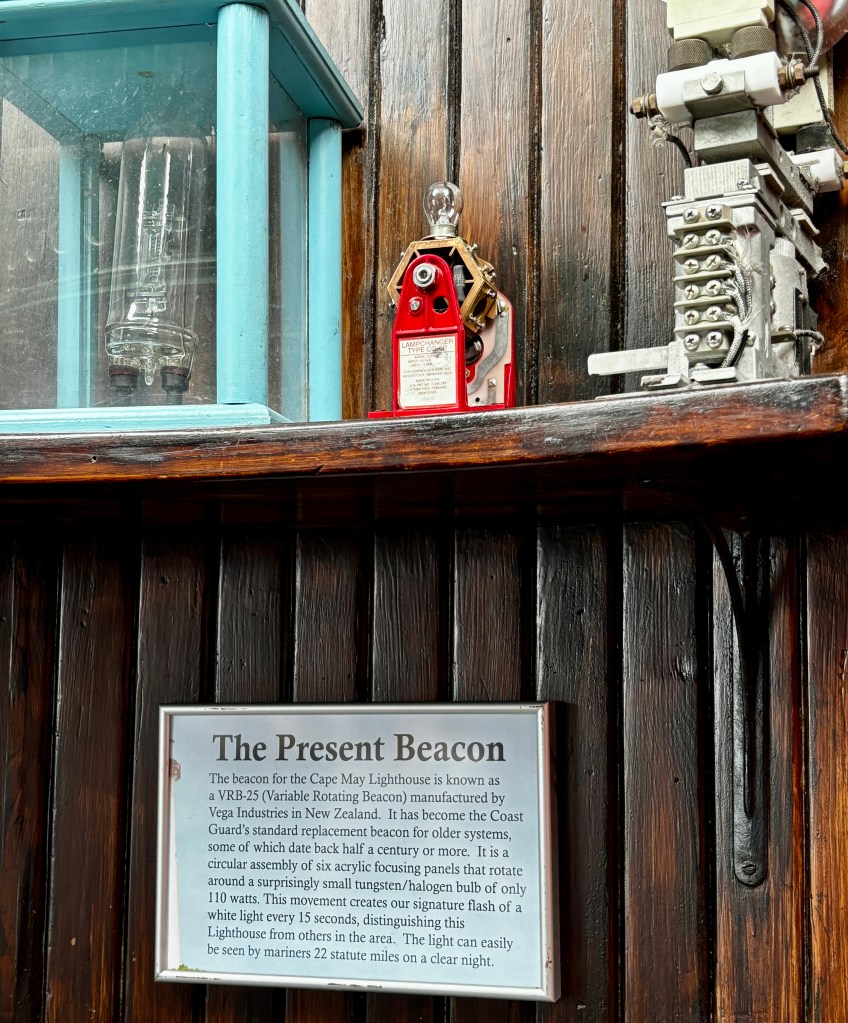
The lighthouse now uses a Visible Rotating Beacon manufactured in New Zealand and installed in 2016. This is the current industry standard.
The lighthouse generally had one keeper and two assistants. They, and their families, lived on site.
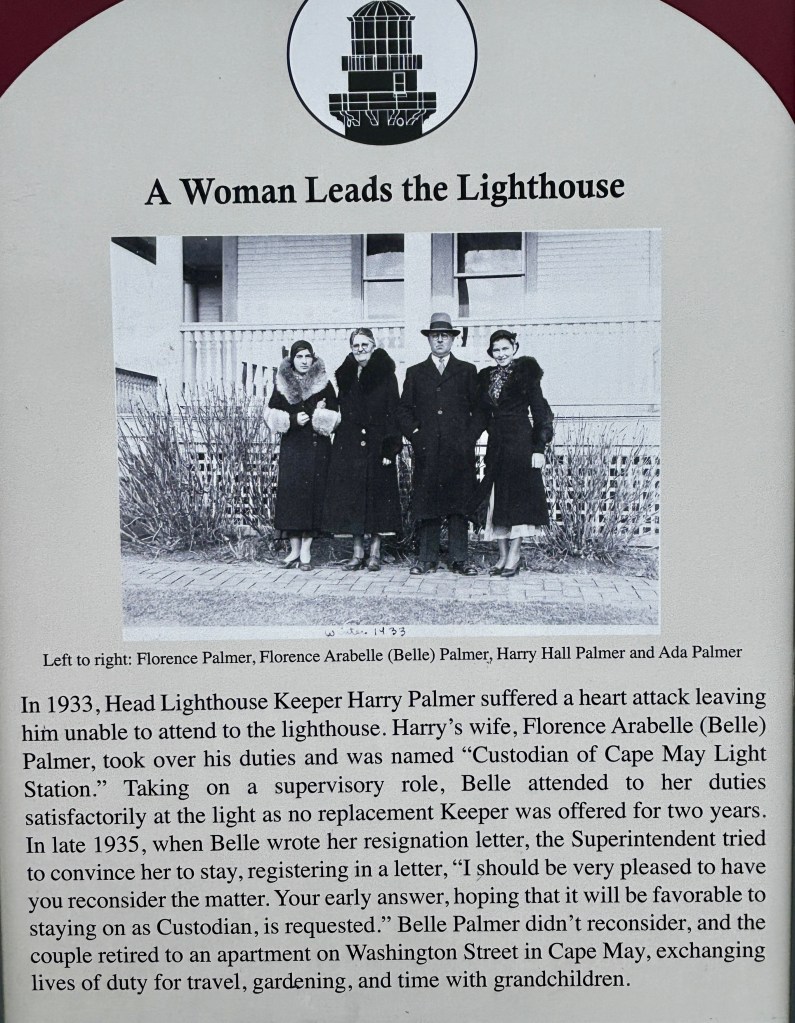
For a time, the main lighthouse keeper was a woman.
The lighthouse was automated in 1936 eliminating the need for keepers to be permanently in residence.
In 1992 the lighthouse was transferred from the Coast Guard to the State of New Jersey. Restoration and visitor operations are done by a non-profit group formed for that purpose.
On the lighthouse grounds, we also saw the Monomoy Life Saving Boat. Its era was from the late 1800s to the 1930s and was operated by US Lifesaving Service and early Coast Guard.
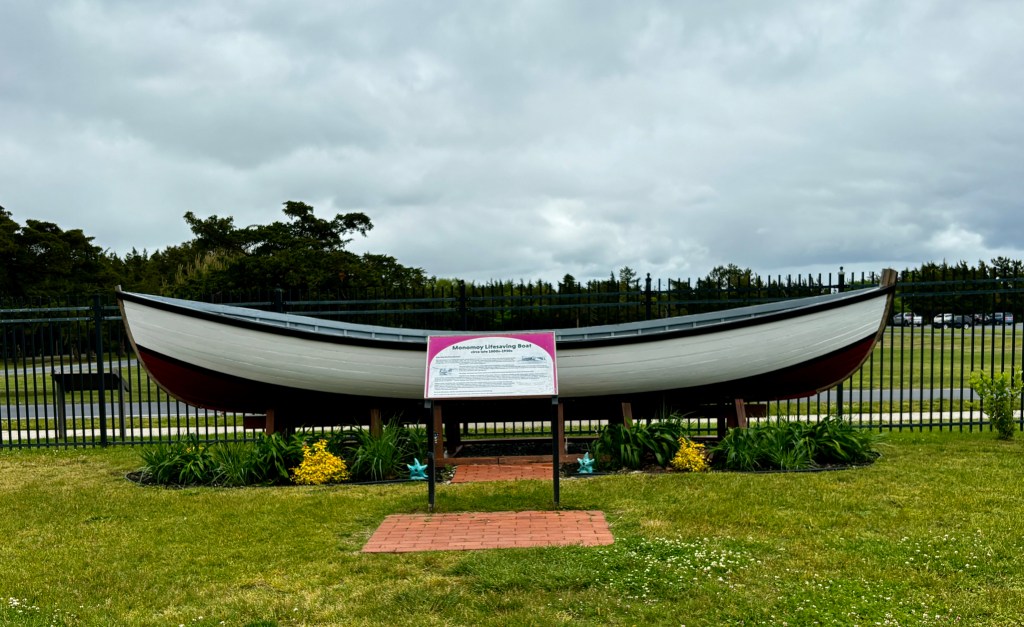
The boat is 26 feet in length from the late 1800s-1930s. The “Monomoy” Class rescue boats originated in New England and were regularly used in Cape May area Life Saving Stations. They typically weighed over 2,000 Ibs. and allowed for eight rowers to sit in four pairs side-by-side. A coxswain steered from the stern.
After all those steps up and down the tower and up and down the lighthouse, we were ready for an early dinner. We took the advice of the tower docent and went to an Italian restaurant away from the tourist areas. He had also told us there was nearby liquor store to BYOB. We had seen that advertised a few places on the eastern seaboard and it seemed very odd to us. We weren’t sure if that meant that the restaurants didn’t have their own bar service.
We found the restaurant and Randy went to buy a bottle of chianti while I went in to get a table. I was a little embarrassed to see they did offer wine on the menu. When I apologized that Randy was buying a bottle, the restaurant owner was not offended in the least. He said when people BYOB it removes his responsibility for how much a patron drinks. That was an interesting perspective.
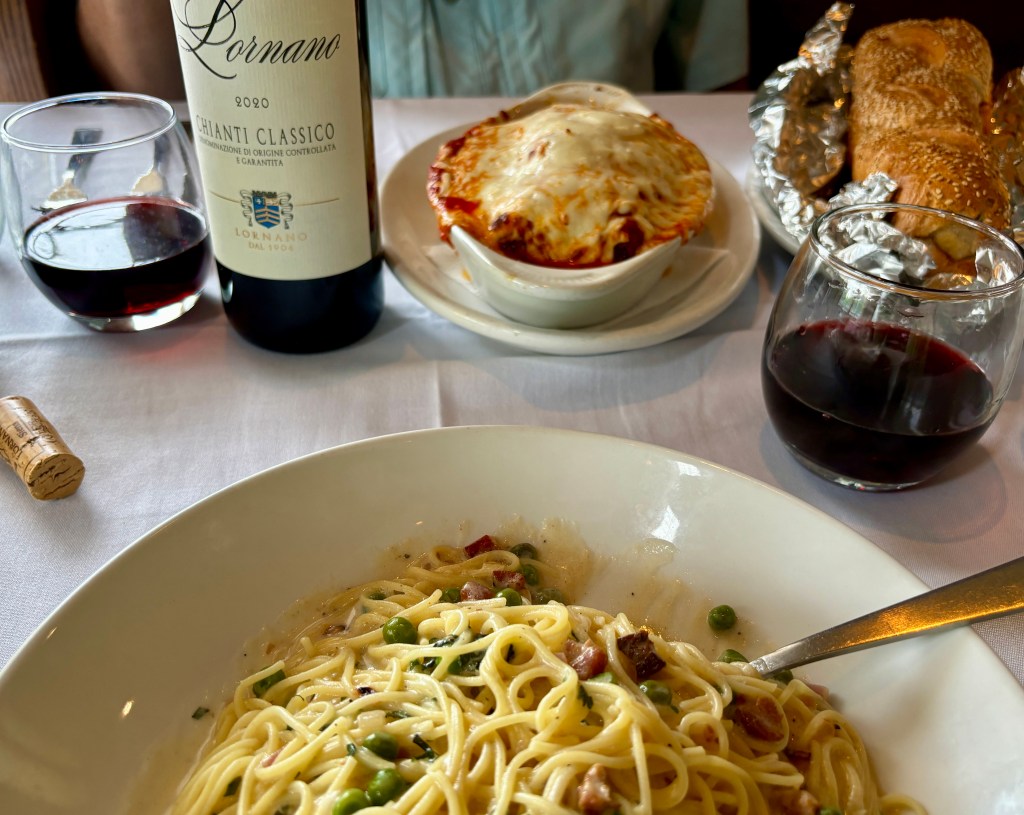
We enjoyed our bottle of chianti and our delicious dinner! The best meals we had on this trip seemed to be Italian!
We were in Cape May in May 2024.
Next Up: More Cape May, a delightful place!


 Serene Wandering
Historic Lighthouses are such interesting places. Cape May is a famous birdwatching spot due to migrations concentrating birds in the area both Spring and Fall. Sounds like a good trip!
We enjoyed Cape May very much, probably our favorite stop on the trip. I don’t remember anyone talking about birds, but perhaps on our wave and dolphin cruise. I haven’t revisited those notes since I wrote them!