We started our summer road trip in the heat! We left Phoenix at 110 degrees and traveled west into California where it was even hotter!

Fortunately, our day was uneventful and comfortable in our air-conditioned vehicle.
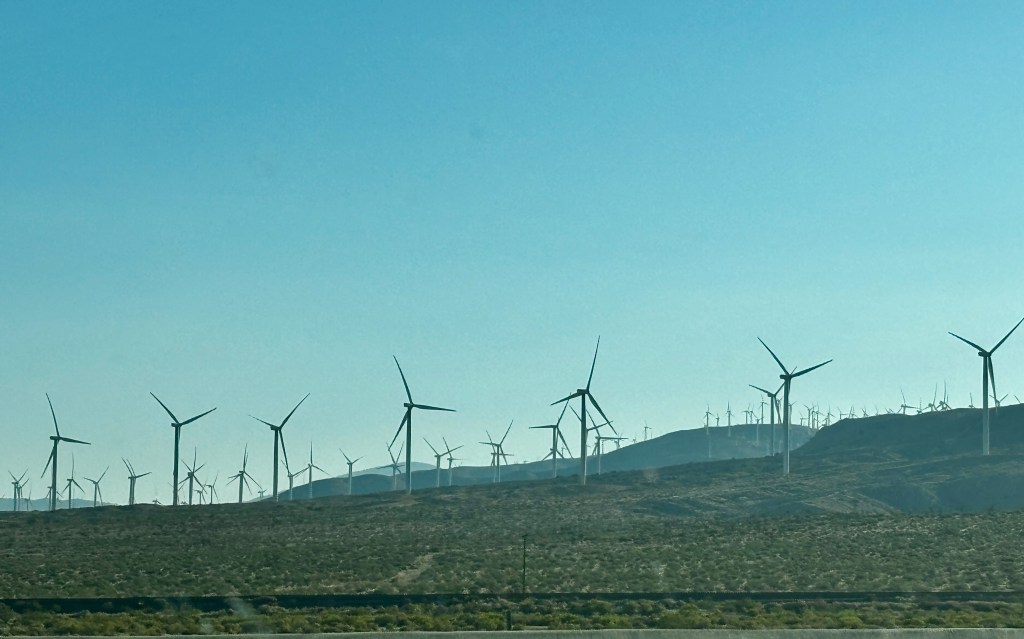
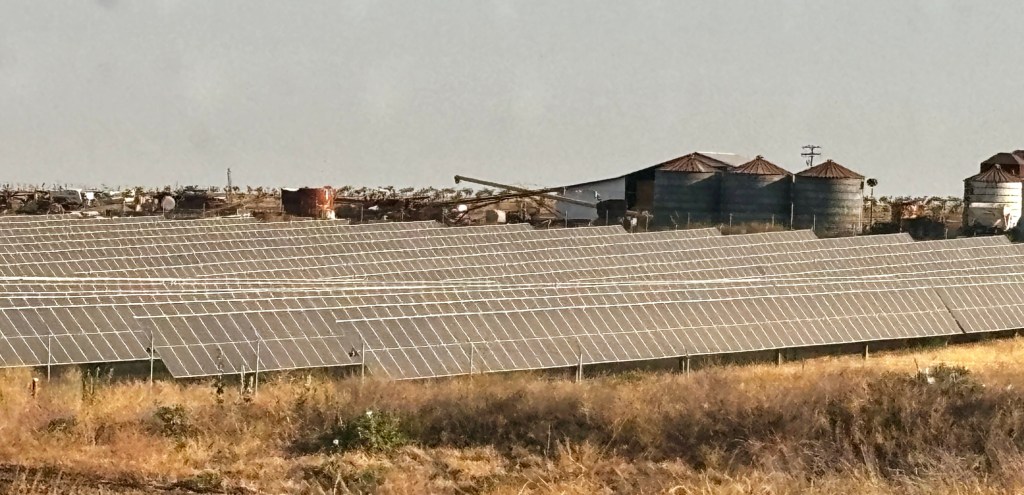
We saw wind turbines and lots of solar panels generating electricity.
There were 17 fires in California on this day, so perhaps that was the cause for the colorful sunset as we approached Bakersfield to spend the night.

North of Bakersfield we saw an EV power plant. That was not surprising so I didn’t take a picture.
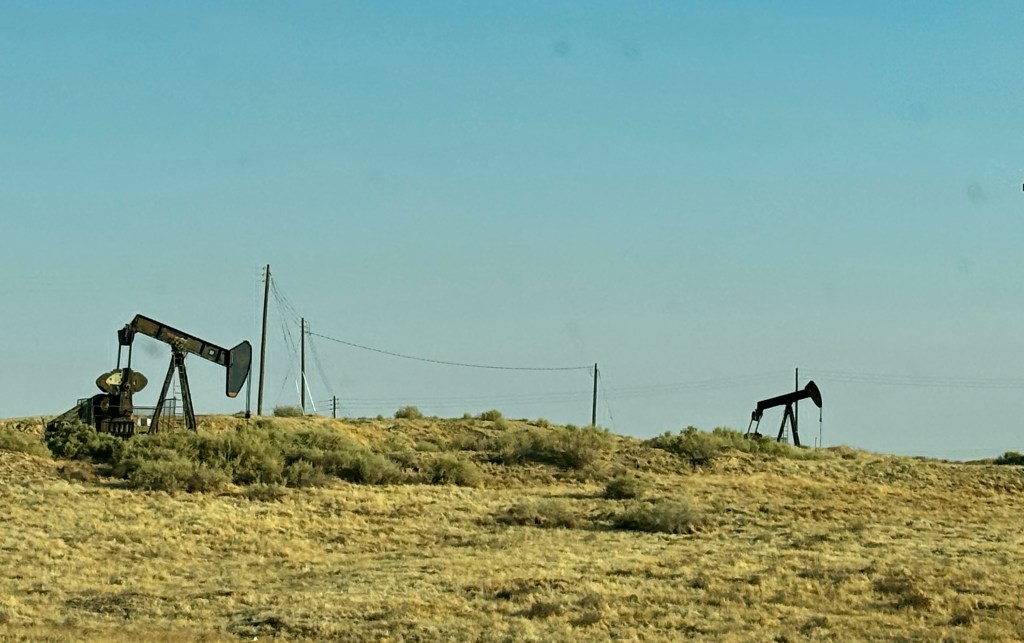
What was surprising was seeing hundreds of oil rigs. Most were still, but some were active. I hadn’t known California had substantial oil reserves. California currently produces 8.3 percent of the nation’s oil.
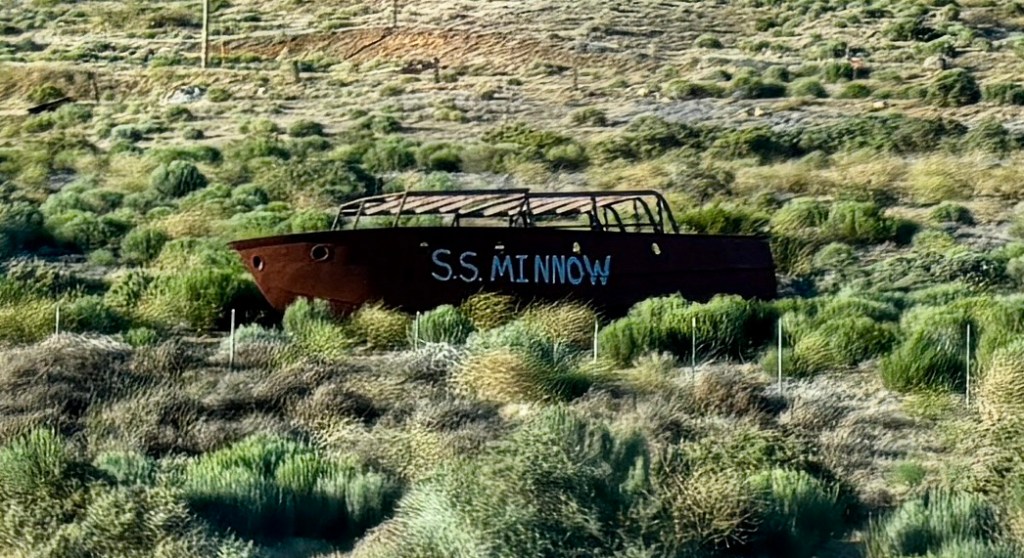
Is climate change responsible for the SS Minnow being stranded in south central California?
Our destination was Sequoia National Park. We’ve been to most of the national parks in the western US but had never visited Sequoia or nearby Kings Canyon National Park.
The park’s entrance sign, in place since 1935, has its own history. It was carved in the 1930s by George Muno who served in the Civilian Conservation Corps. The 4 by 10 foot sign was carved from a fallen sequoia tree that was about two thousand years old.
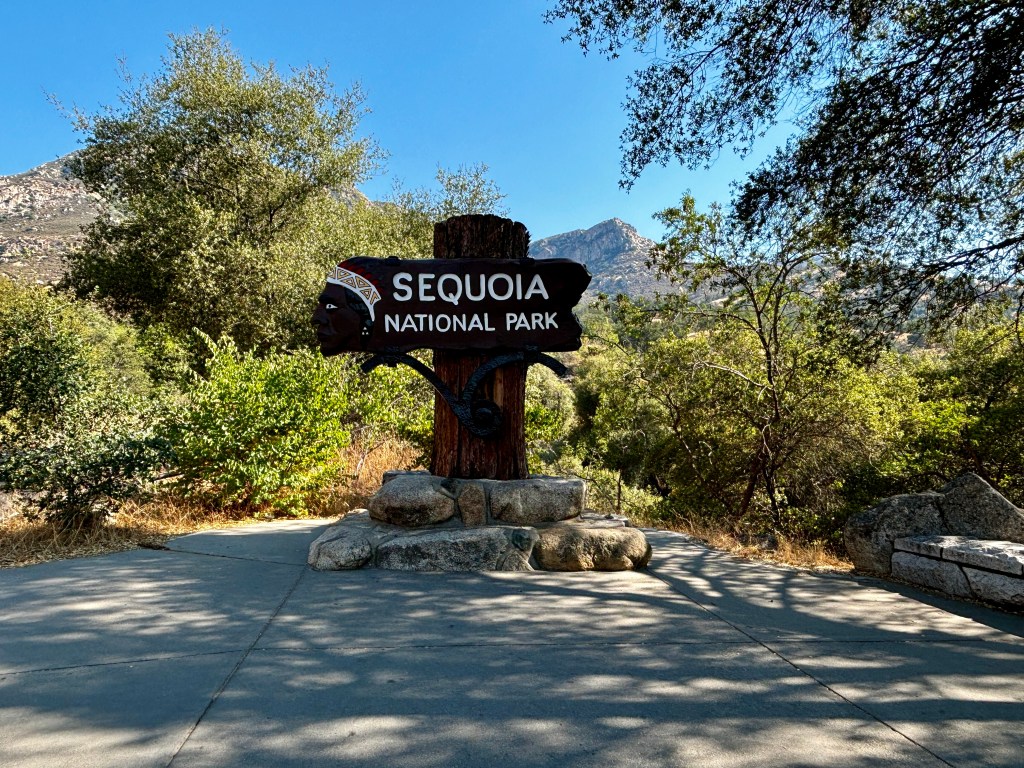
Muno’s intent was to honor Sequoyah, the Cherokee scholar who invented an alphabet for their language. Having a written form helped advance literacy. Many believe that the giant sequoia trees were named for Sequoyah.

Regardless of intent, Muno based the profile on the native man on the old “buffalo” nickel. It actually resembles a stereotype of a great plains American Indian, and not Sequoyah or the peoples who called these lands home for thousands of years.
In present day, the appropriateness of this sign is sometimes reconsidered. An article on the park website states: “National parks preserve a complex web of history, not all of it inspiring. Some symbols of our past may not interpret our nation’s past in a sensitive and respectful way.”
Sequoia was America’s second national park, after Yellowstone. Sequoia was established on September 25, 1890 as a permanent refuge for the sequoia trees. It remains the only park established to protect a plant species.
The first substantive road into the forest was completed by the US army in 1903 under the leadership of Colonel Charles Young. He was the first African American to achieve the rank of colonel.
The current road, the Generals Highway, was completed in 1926. The road is in very good shape considering weather, fire and funding. During the highway’s construction, workers saw the last grizzly known to be in California. Although a symbol of California, grizzly bears were assumed already gone in the state.
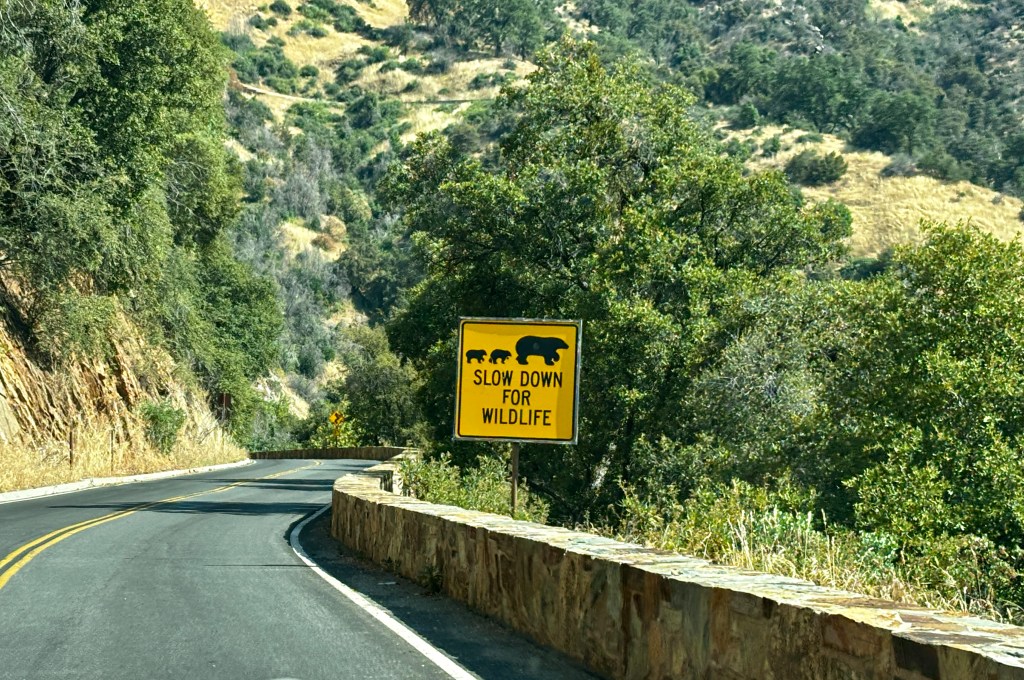
These days black bear are common and signs and notices on how to avoid them are everywhere.
As we passed through the foothills of the park, we drove through oak forests.

As we rose in elevation, the trees changed.
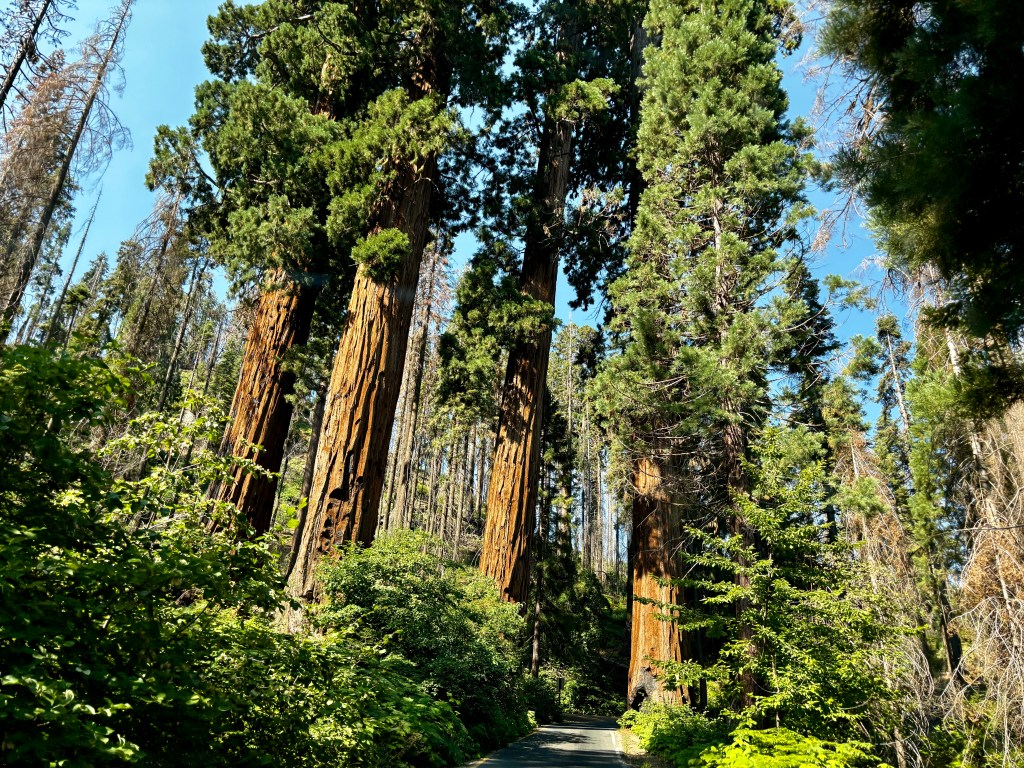
These trees are called the Four Guardsmen.
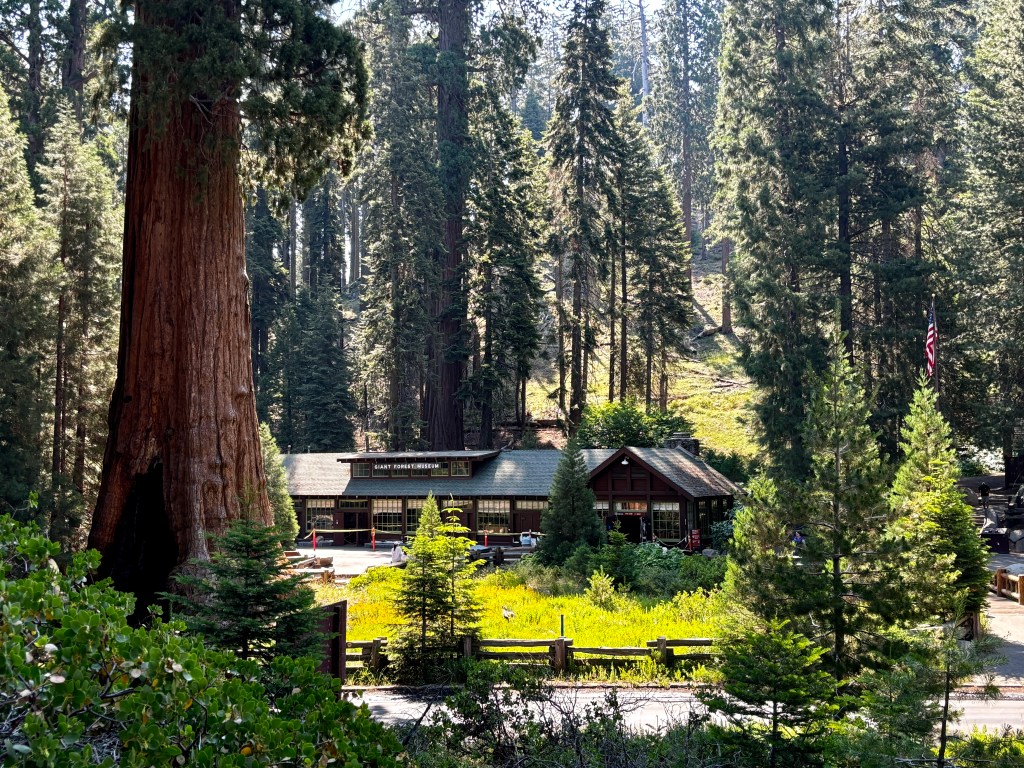
We visited the Giant Trees Museum and had an opportunity to learn about giant sequoia trees. At a very basic level we learned that sequoia are a different species than the other giant trees in California, the coast redwoods.
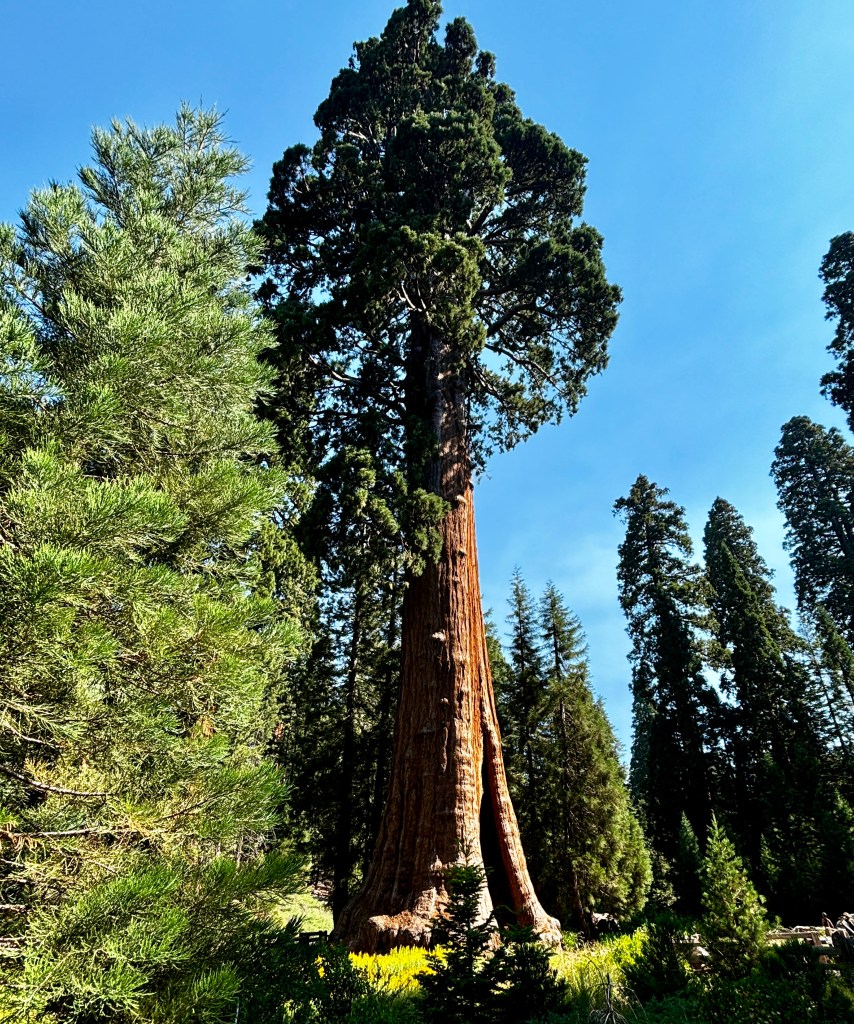
It is unclear whether sequoias have a natural lifespan. Some of the trees in the sequoia groves are thought to be 13,000 years old. When trees are tall enough to rise above the forest canopy, the top dies off. They continue to grow thicker, not higher.

Their ability to grow rapidly over many years allows for the sequoia’s very large size.

This picture shows the same museum building being used as a market with associated people, cars and engine exhaust. Across the road were 100 hotel rooms.
Over time, foresters and scientists realized that the trees needed space to thrive. There was an effort to reduce and remove encroaching civilization. Trees are sometimes protected by fencing to discourage “love rings” which are caused by thousands of people touching the tree at approximately the same height.
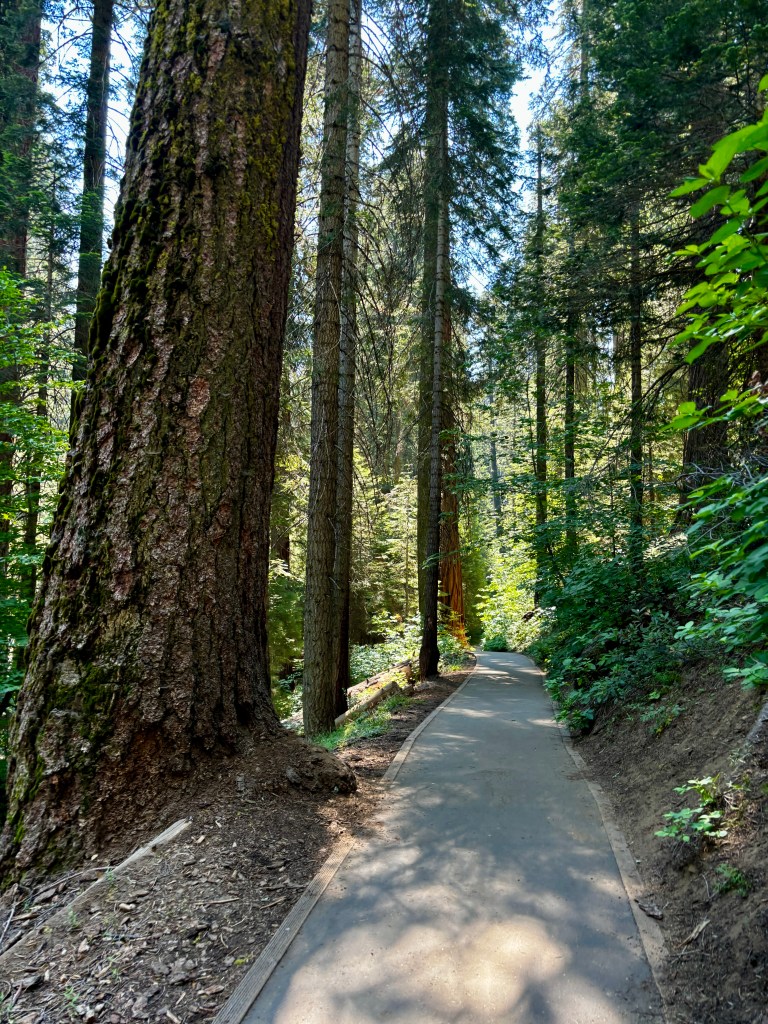
We walked the Big Trees Trail near the museum.
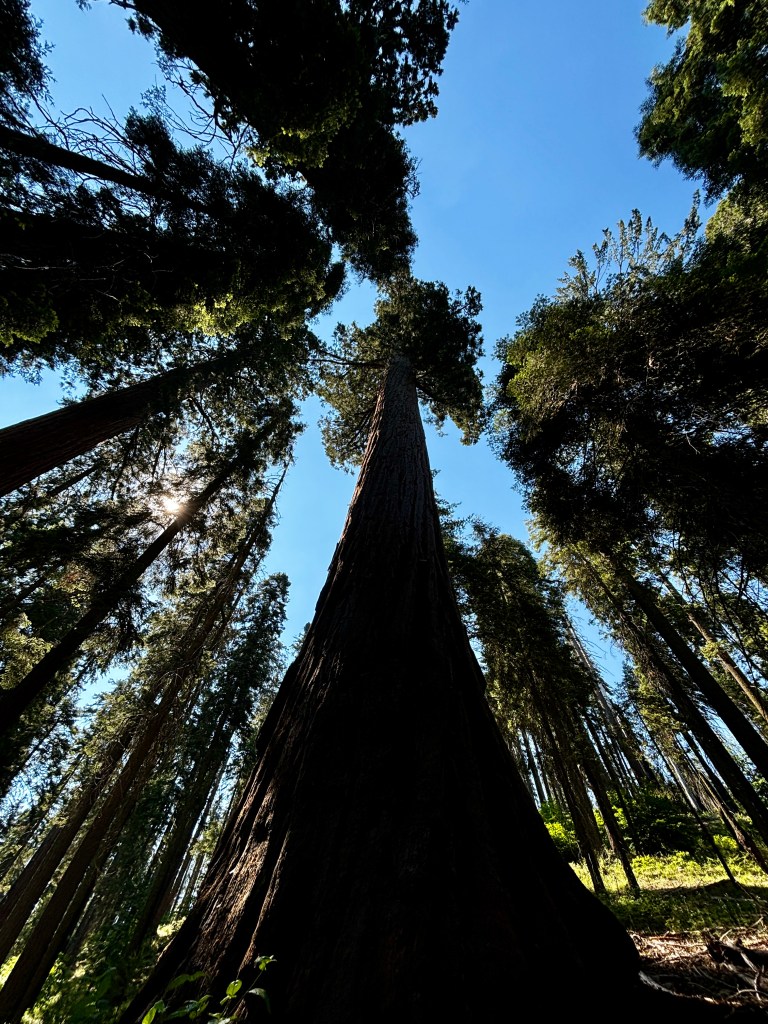
Along the way we learned that this area has characteristics that sequoia trees need, such as moist soil, an open sunny forest, a climate that doesn’t get too cold, and bare ashy ground.
The meadow’s soil is too wet for the roots due to rainwater and snow runoff collection. Although sequoia need enormous amounts of water, they collect what they need as the water drains toward the meadow.

Sequoia have a shallow root base, needing only about three feet of soil. Adjacent trees will intertwine their root system providing stabilization.

This tree likely fell when the ground became too soggy, possibly with assistance from a strong wind or shifting foundation.
As the trees grow, lower branches are lost because of the lack of sun or forest fire. Regular fires are beneficial to sequoia, creating conditions for cones to open and release their seeds. The seeds then sprout on the bare ground enhanced by ash.

Large sequoias are likely to have fire scars but survive because of thick bark with air pockets that insulate the wood. High branches keep foliage away from most fires and the bark has very little sap so is not highly flammable.

This tree fell in 1992, likely because of damaged roots interacting with soggy ground and wind. A road was cut near its base early in the 1900s likely damaging the tree’s root system.

This told the story of a ranger hearing a sequoia falling for no apparent reason reason in 1974.

Another interesting sign was nearby.

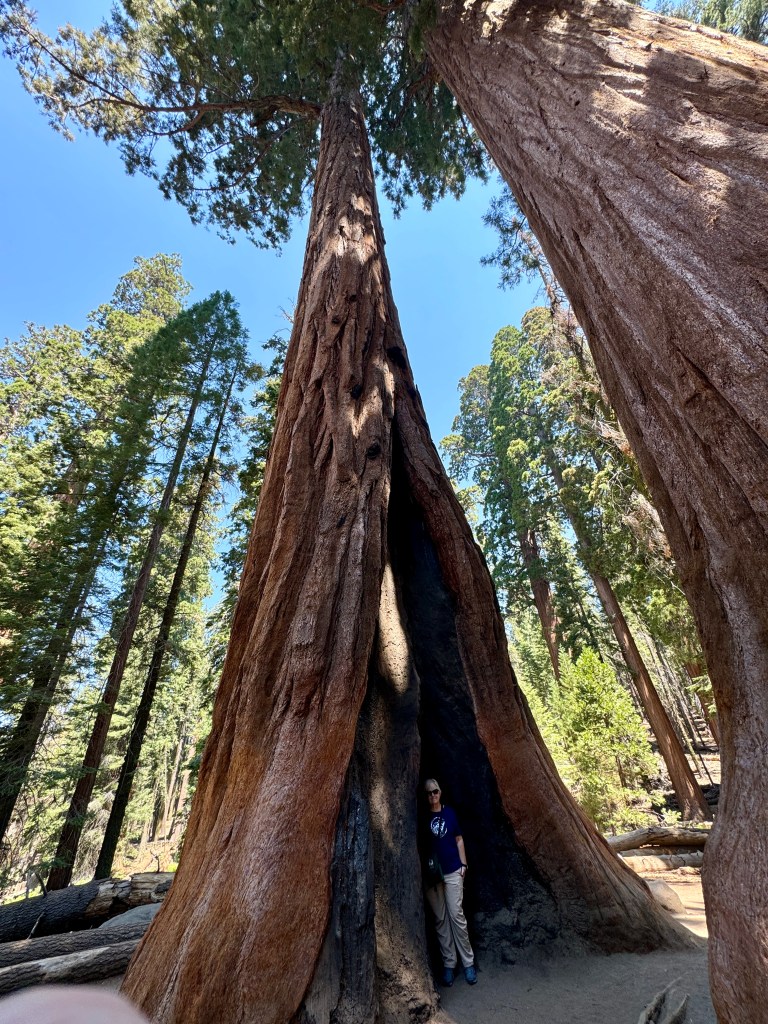
The trees made us look tiny!

Many of the tree names in Sequoia and Kings Canyon National Parks have a civil war association. This tree is called the Clara Barton tree.

The must do in Sequoia National Park is visiting the General Sherman tree – the largest tree in the world. The determination of “largest” is made when combining height, diameter and volume. The walk to the tree was on a paved path – about a half mile all down hill. Hmmm. You know what that means.
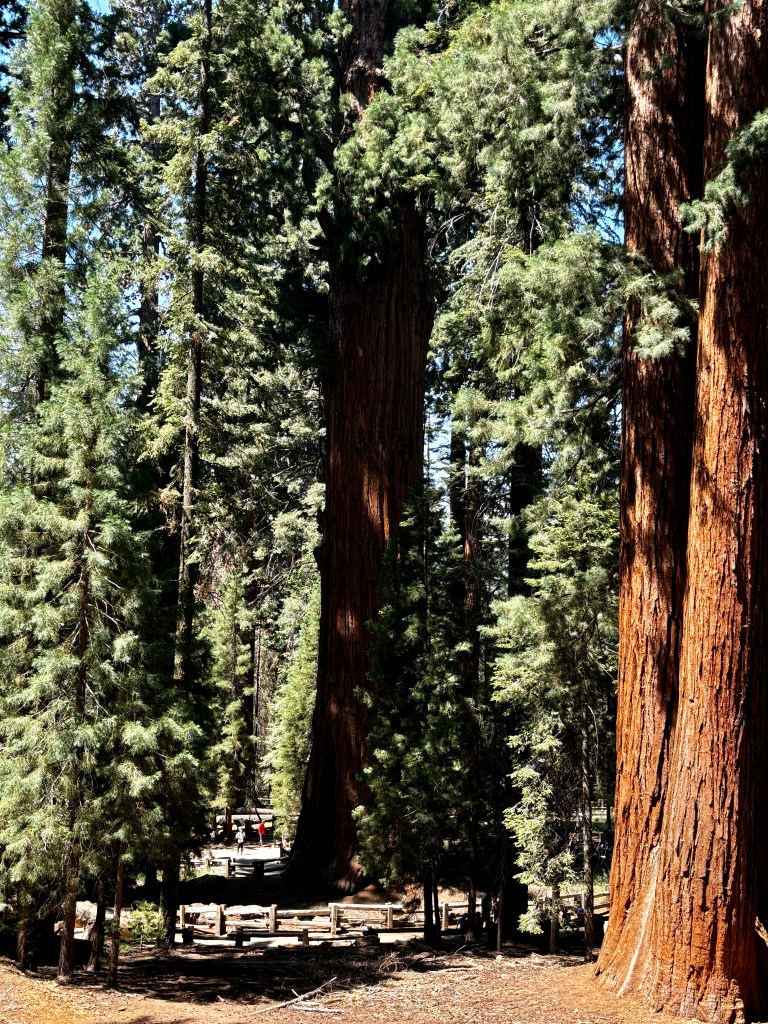
It was nigh impossible to get a picture of the whole General Sherman Tree without people in the picture!

The height of General Sherman is 275 feet. On a football field it would reach from one goal line to the opposite 9 yard line. The tallest sequoia is an unnamed tree measuring 311 feet. The tallest coast redwood is 369 feet.

General Sherman’s weight is estimate at 1385 tons – more than ten blue whales. Its diameter is 36.5 feet, wide enough to block three lanes of traffic.

To grow this high, heavy and wide, the General Sherman Tree is estimated to be 1800-2700 years old. It is not getting taller but is still increasing in girth: getting wider in diameter and increasing in volume.

This picture shows rangers using structure wrap to protect the General Sherman Tree during the KNP Complex Fire. This strategy can help a few sequoias but won’t save groves of trees. The KNP Complex Fire in 2021 did a lot of damage!
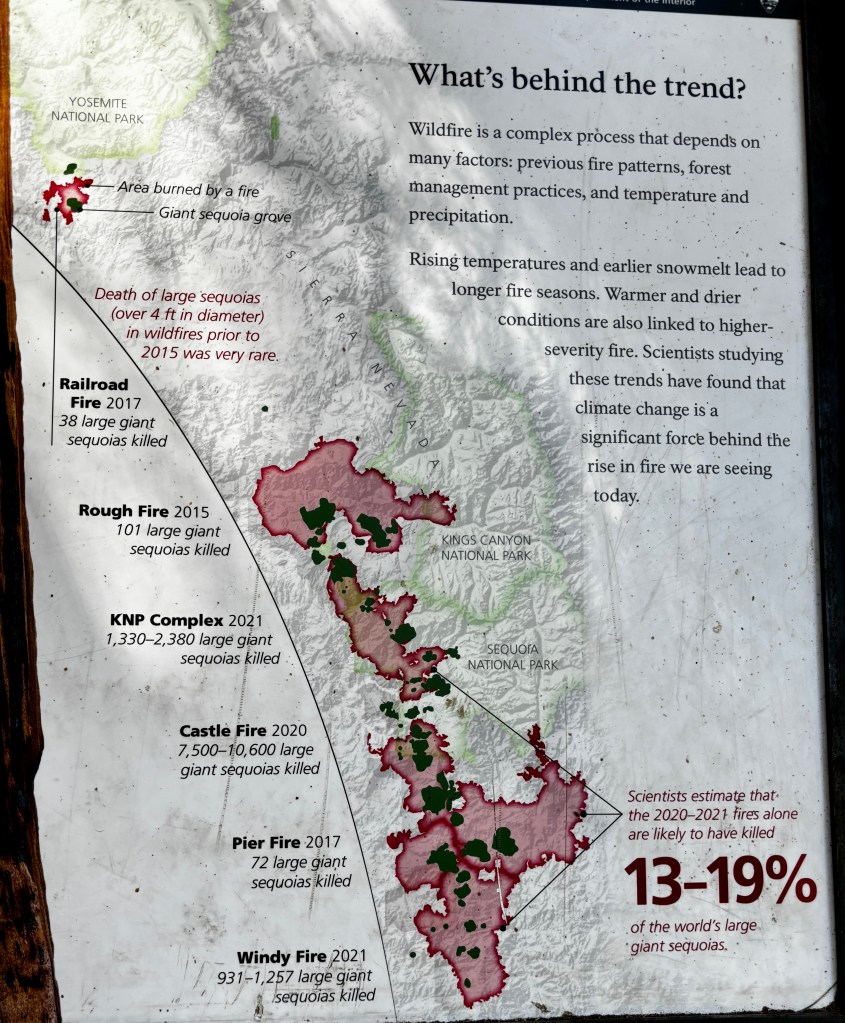
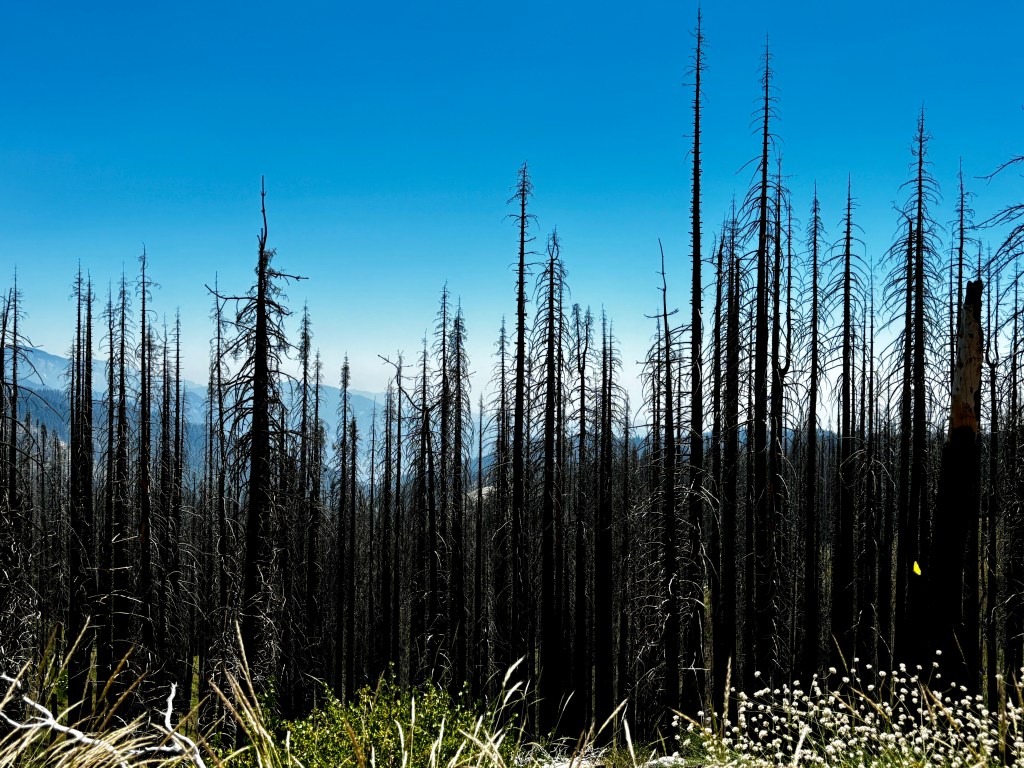
Unfortunately, sequoias are being lost at an alarming rate because of the intense fire seasons related to climate change. The entire placard is interesting but notice that 13 – 19 percent of sequoias were lost during the 2020-2021 fire seasons alone.
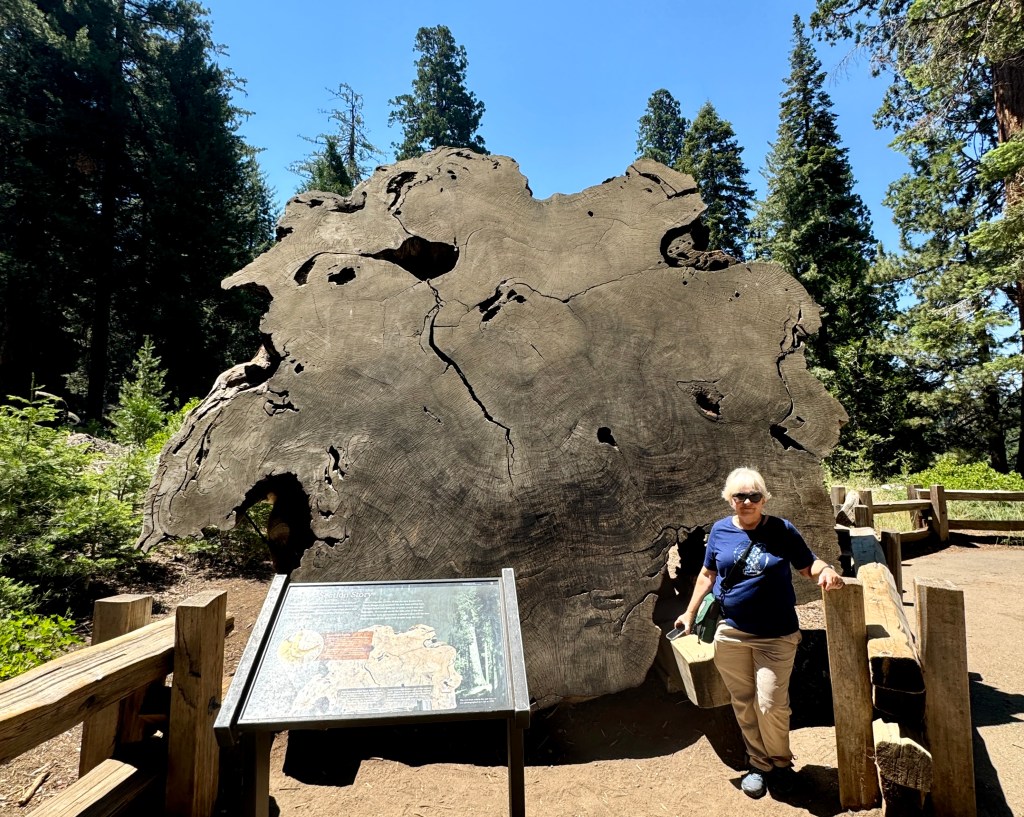
This stump section of a giant sequoia tells that the tree lived 2210 years and survived 80 fires that left scarring.

We began the trek back up the trail to the parking lot.
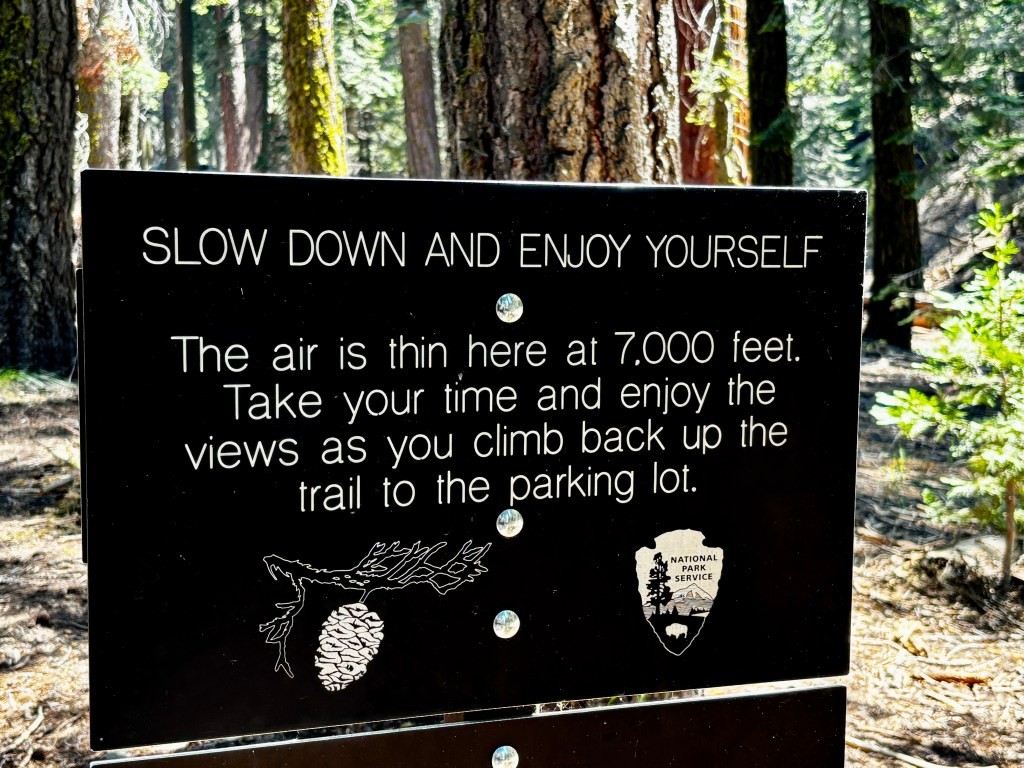
I did not enjoy it.

We had some interesting sights as we drove to our accommodations for the night.

We were spending one night at the Wuksachi Lodge within the park. Reception, the restaurant, and gift shop were in this building. Accommodations were in separate buildings near by.

The woman checking us in told us our room was on the entry level. We thought that was good since she also told us we needed to take everything that had any hint of food out of our car because of the bears. Only our room wasn’t on the entry level.
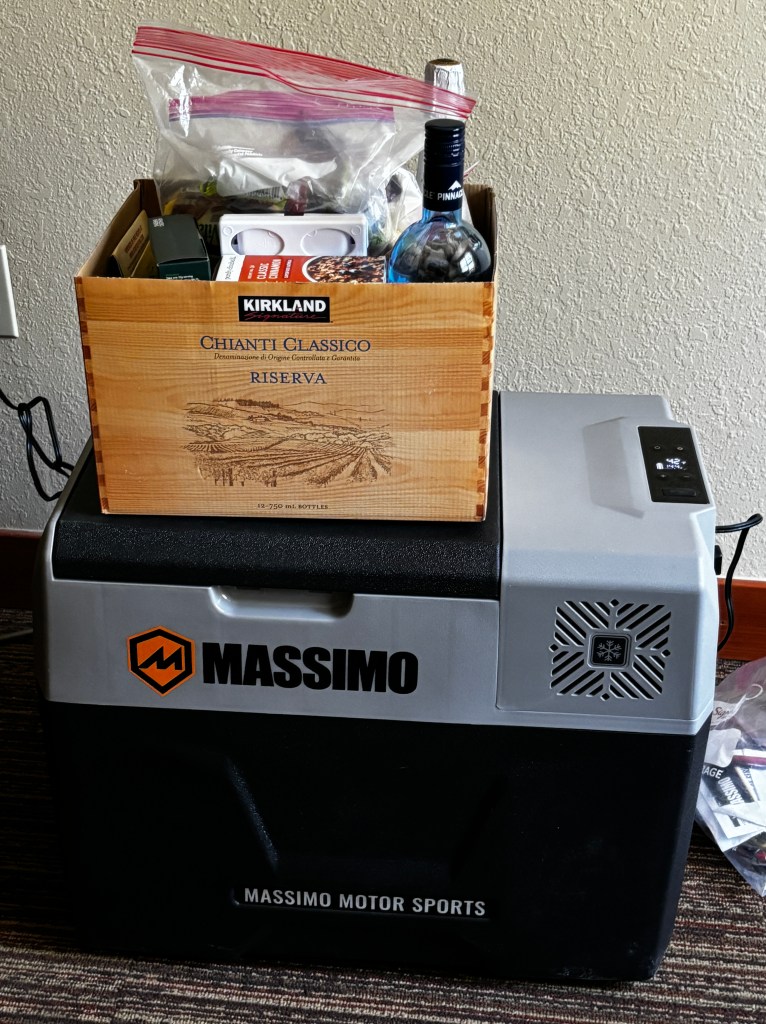
We (mostly Randy) had to lug two suitcases, our ice chest and our snack box up the stairs because there was no elevator.

Our room was a nice size but did not have air conditioning. We tried to “chill” for the rest of the afternoon.
Our dinner reservations said “business casual” so Randy put on pants even though he was skeptical. His skepticism was correct in that most people came in their regular vacation clothes. He grumbled.
We have prioritized staying in national park lodges all over the west and have thoroughly enjoyed the effort overall. Wuksachi Lodge wasn’t a net positive in the heat of the summer. Only the location was superb.
We were in Sequoia National Park in July 2024.
Next up: The General Grant Tree in Kings Canyon National Park


 Serene Wandering
Thank you for this excellent information. We have not walked into that park yet ourselves. Lady Bird Johnson forest along the Oregan trail was fabulous as well. We really enjoyed that walk. It is amazing to see how these trees survive and thrive in nature.
We are heading to the Maritimes on Thursday in the van. We planned to drive via the northern USA, however the forest fires may keep us on Hwy #3 until Creston and then drop down. Your fuel is 1/4 the cost of ours right now.
Enjoy your trip.
catie