The next day was mostly a travel day. We met our tour director, Enrique, and the two couples who were joining us on the Nazca Lines segment of the overall trip to Machu Picchu, the Amazon and the Galapagos Islands. One couple is from Toronto and the other is from Tennessee.
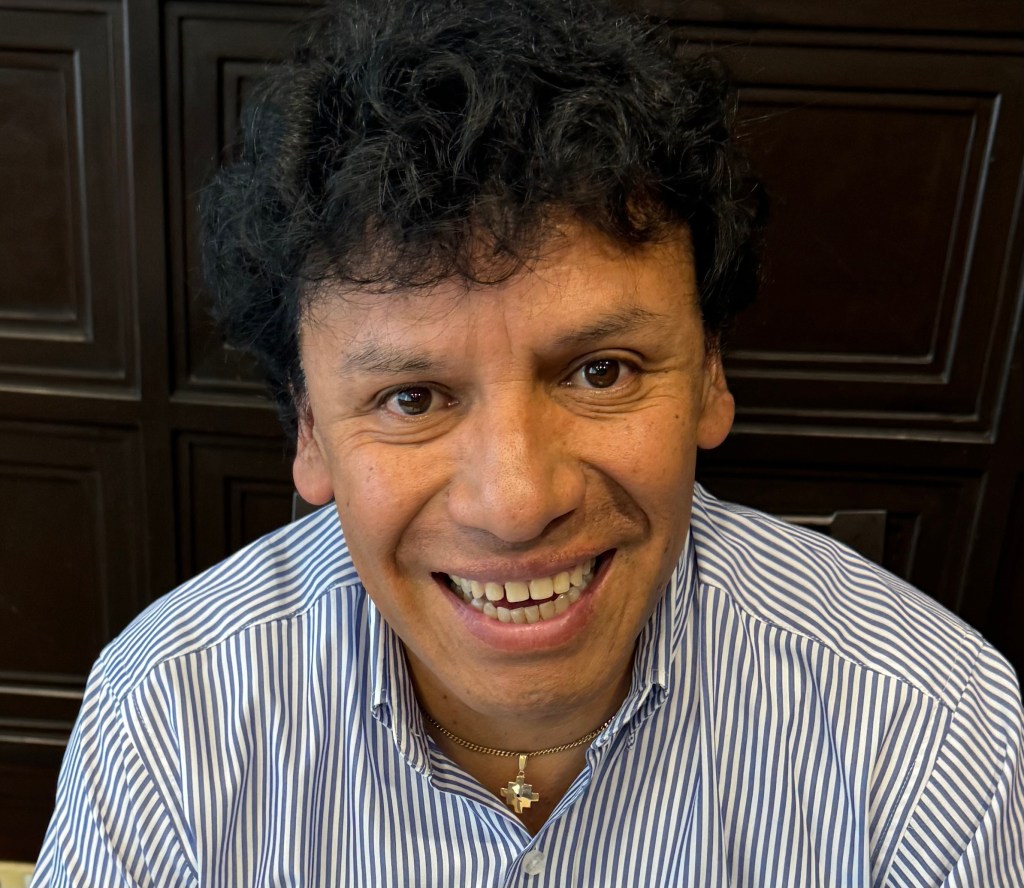
Our guide, Enrique, spoke English, Italian, German, and Spanish and two more languages that I didn’t get down. He has a degree in South American history and chose tourists over students. In his experience, tourists want the information he knows more than his students did. His English was flawless and very easy to understand.
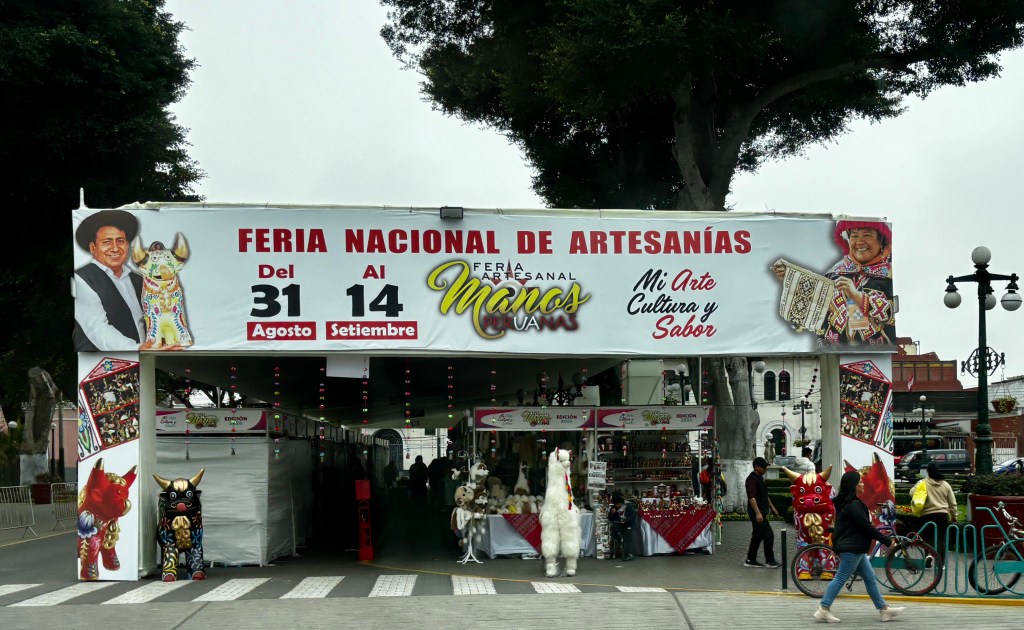
Traveling through Lima, we went through several other districts, including Baranca – the artistic area.
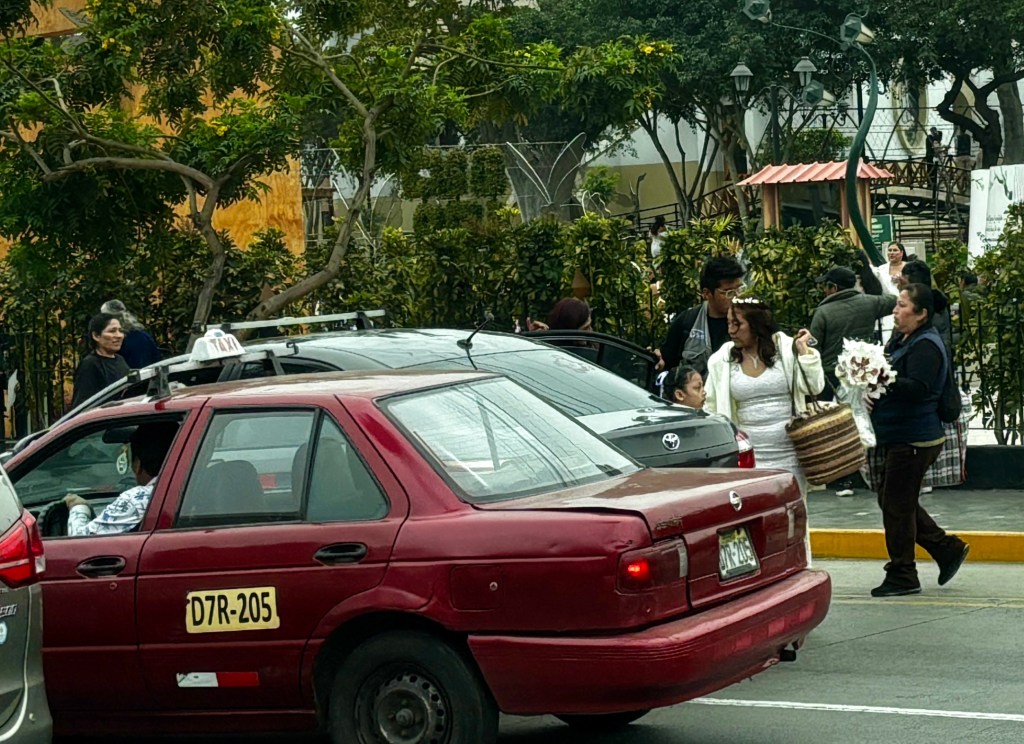
This is not a good picture but there was a gathering of 20 or so couples to be married in a combined wedding. These gatherings are organized by city hall in order for everyone to save money.
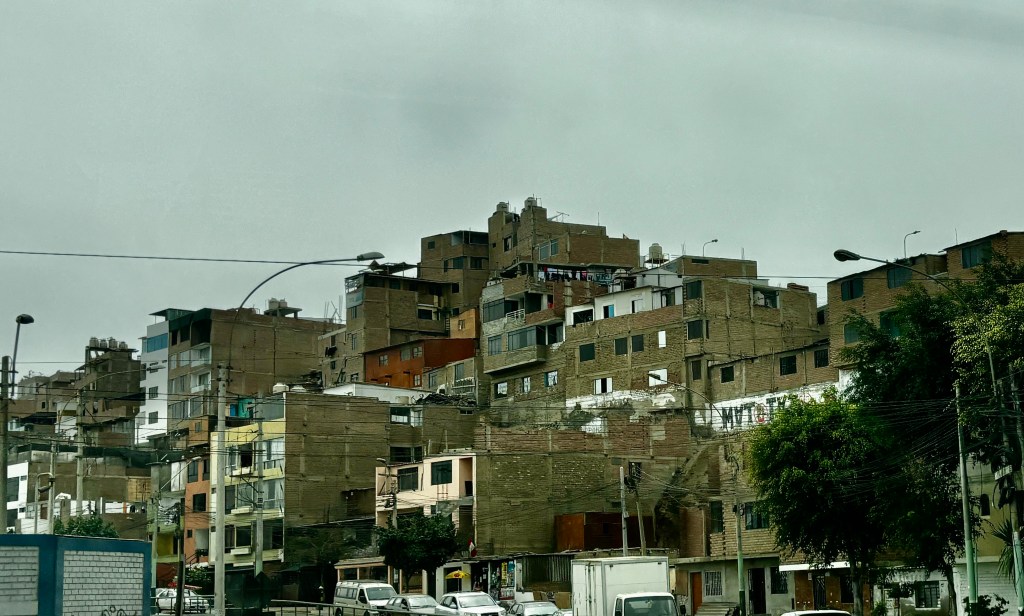
Shanty towns developed as people needed to live on land owned by the government. The law says if you live there five years, the land is yours. One million people live in shanty towns.
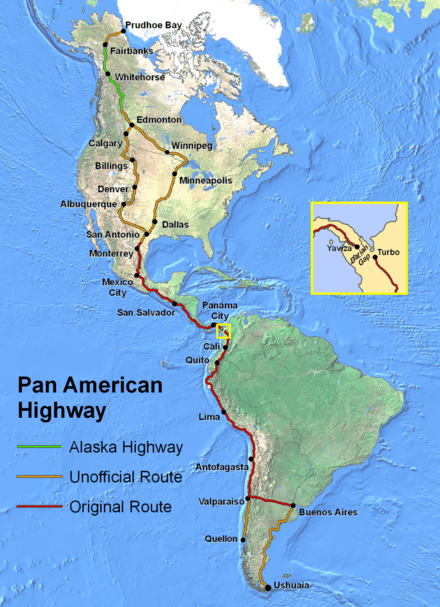
We traveled south from Lima along the PanAmerican Highway, a network of roads stretching 19,000 miles across the Americas. There is a 60 mile break at the Panama border with Columbia but otherwise the highway extends from Prudoe Bay, Alaska to Ushuaia, Argentina. Guinness World Records calls it the world’s longest motor road.
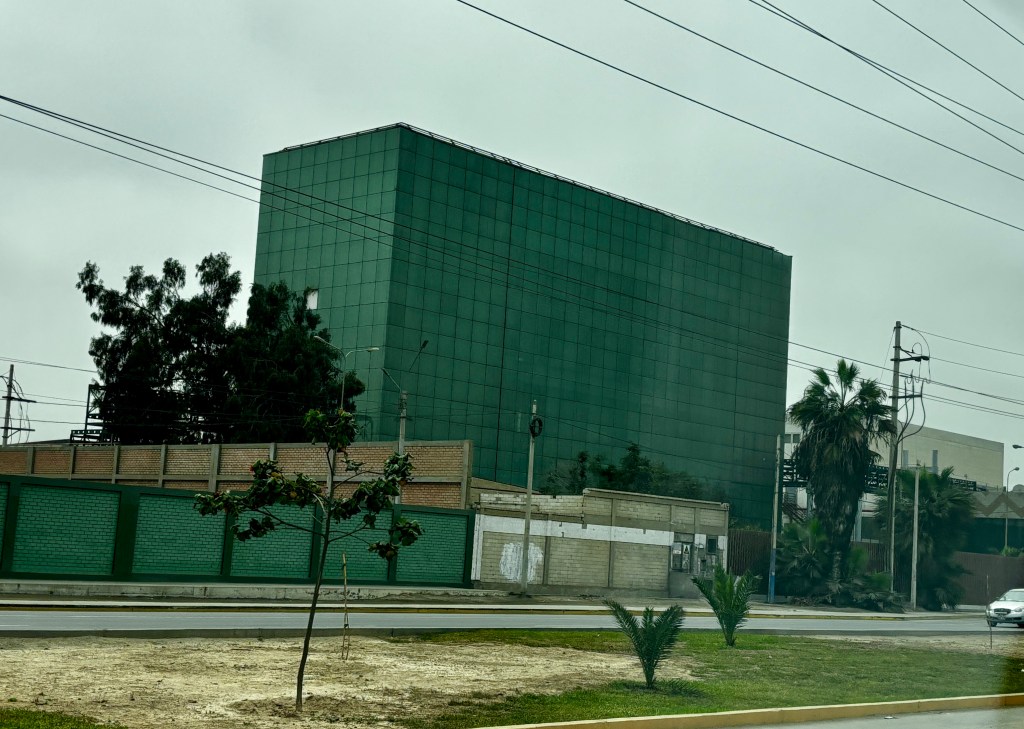
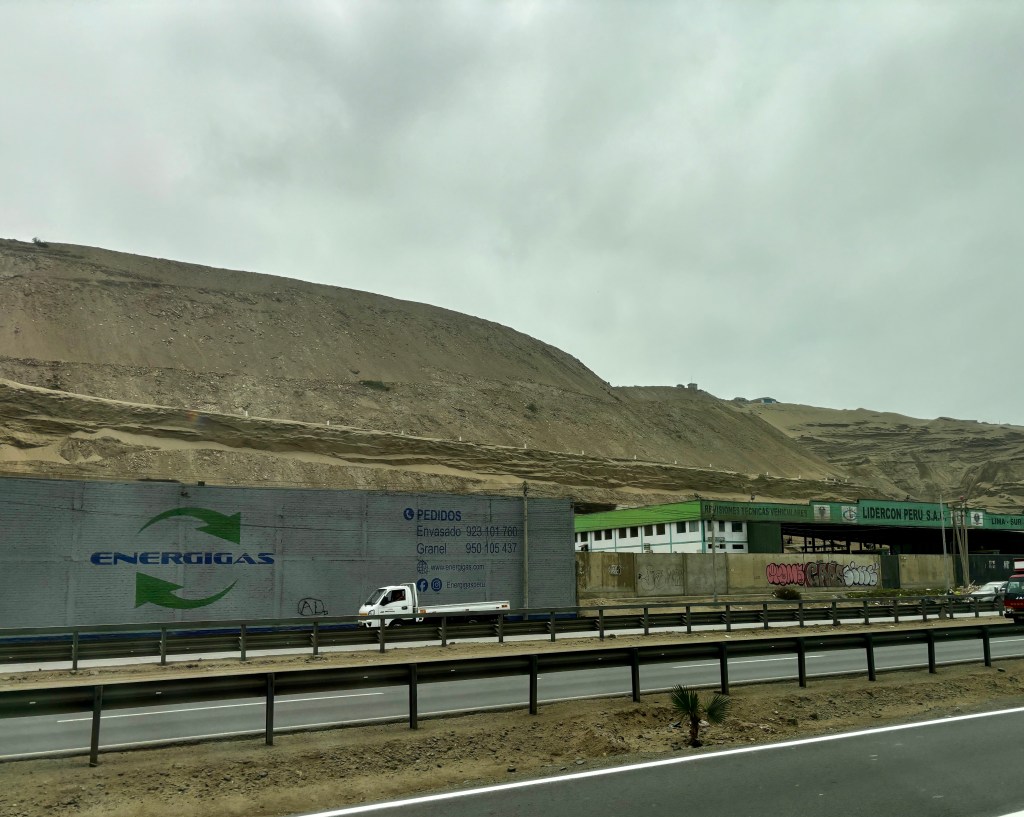
This factory was closed because it was found to be detrimental to the nearby nature reserve
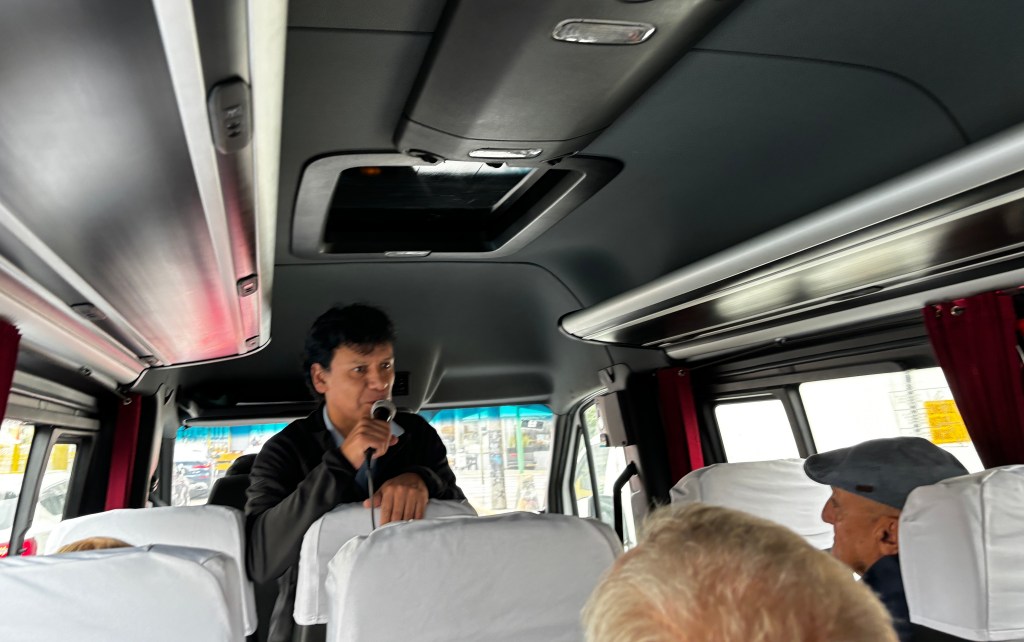
Enrique gave us information about Peru as we drove. Many of the people who live in Peru are descendants of the Incas, Spaniards, and of former slaves brought in by the Portuguese
There are three main regions in Peru. The area around Lima is fairly arid because the prevailing ocean current, Humboldt from Antarctica, is too cold to produce rain. Their water comes from Andes run off but the Andes glaciers are shrinking. The Nino current, from the Ecuador area, is warmer so there is more rain in other regions.
Five main rivers, from five countries, contribute to the Amazon. He used fingers on his hand to represent the rivers going into the main river represented by his arm.
Peru is the third largest country in South America. Brazil and Argentina are larger.
We learned that mining is 50 percent of the economy in Peru. In 2019, Peru was the 2nd largest producer in the world for copper, silver and zinc. It was third in the world for lead, 4th for tin, and the 8th largest producer of gold. Peru is now mining reserves of recently discovered lithium.
Natural gas is the second largest industry and tourism is third. There are about 5 million visitors to Peru per year. Peru exports anchovies, sea bass (marketed as Chilean sea bass), artichokes and blueberries.

While we were eating lunch, there was a state funeral being shown on the TV. Enrique told us that Alberto Fujimori has been a college president and became a “good dictator.” He made some necessary changes to the constitution to be able to fight terrorists. He was re-elected to a second term and eventually became oppressive and corrupt. Fujimori was convicted of human rights violations and spent time in prison before being released due to age and poor health. He died shortly before we arrived in Peru.
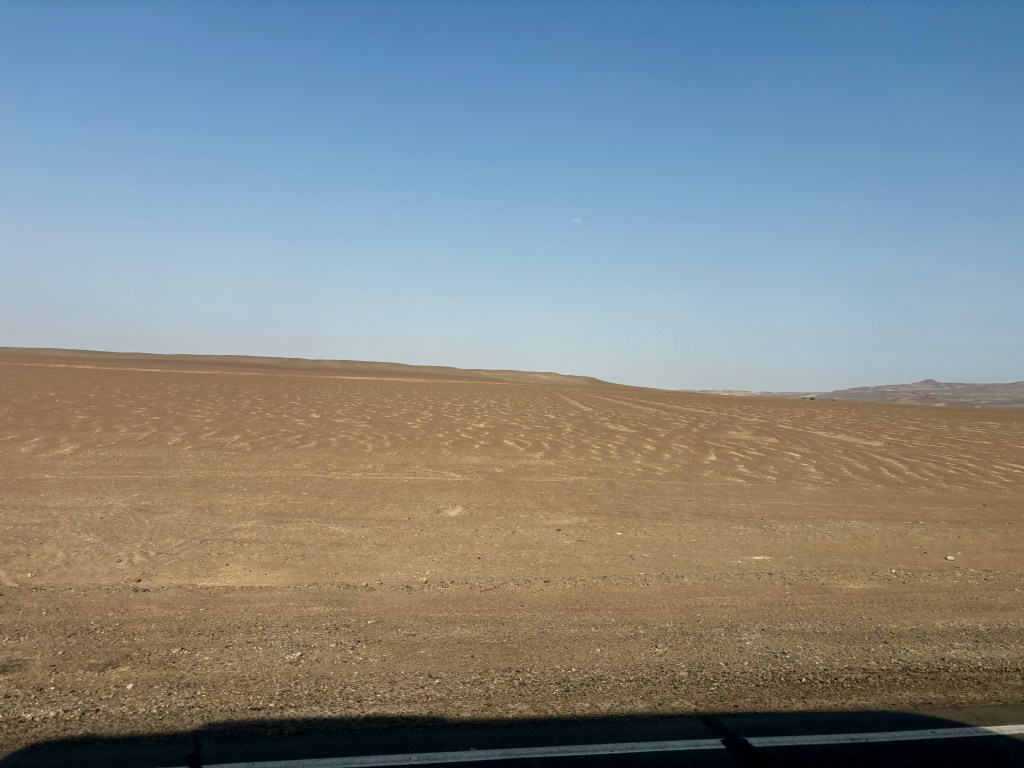
As we drove into Paracas, hours south of Lima, this was my view out the window on the inland side. The land was quite barren with signs prohibiting entry.
We made a right turn, towards the oceanfront and the world changed.

We did not expect a lovely resort in such a remote area!
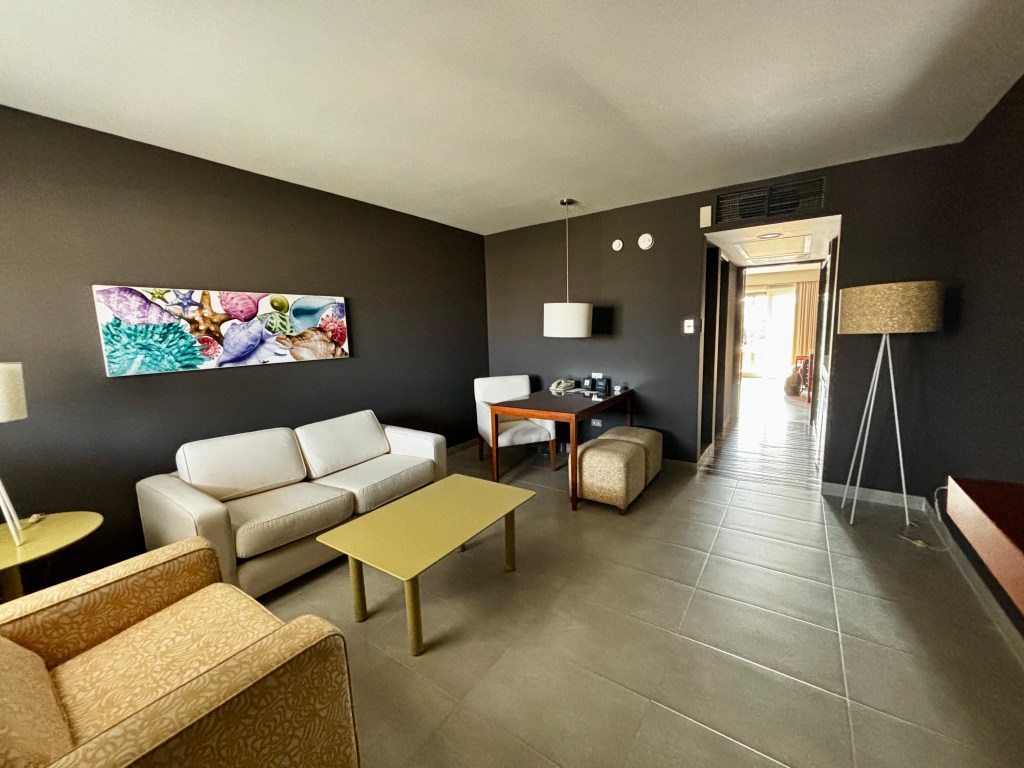

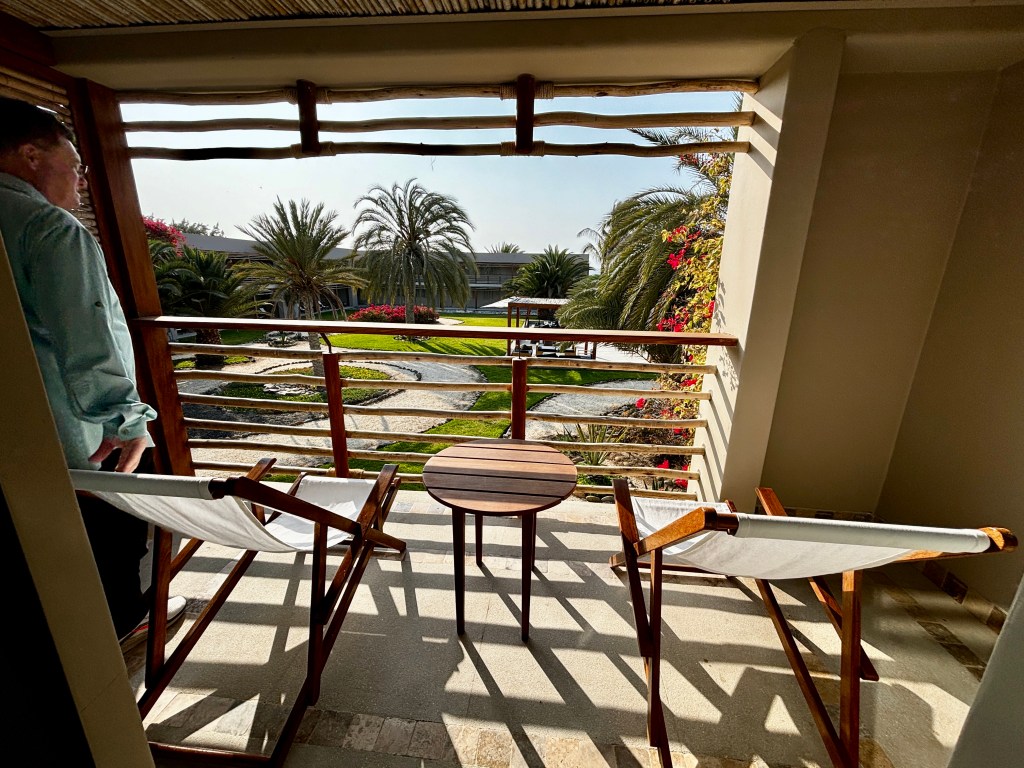
It was too bad we were only going to be there for one night.
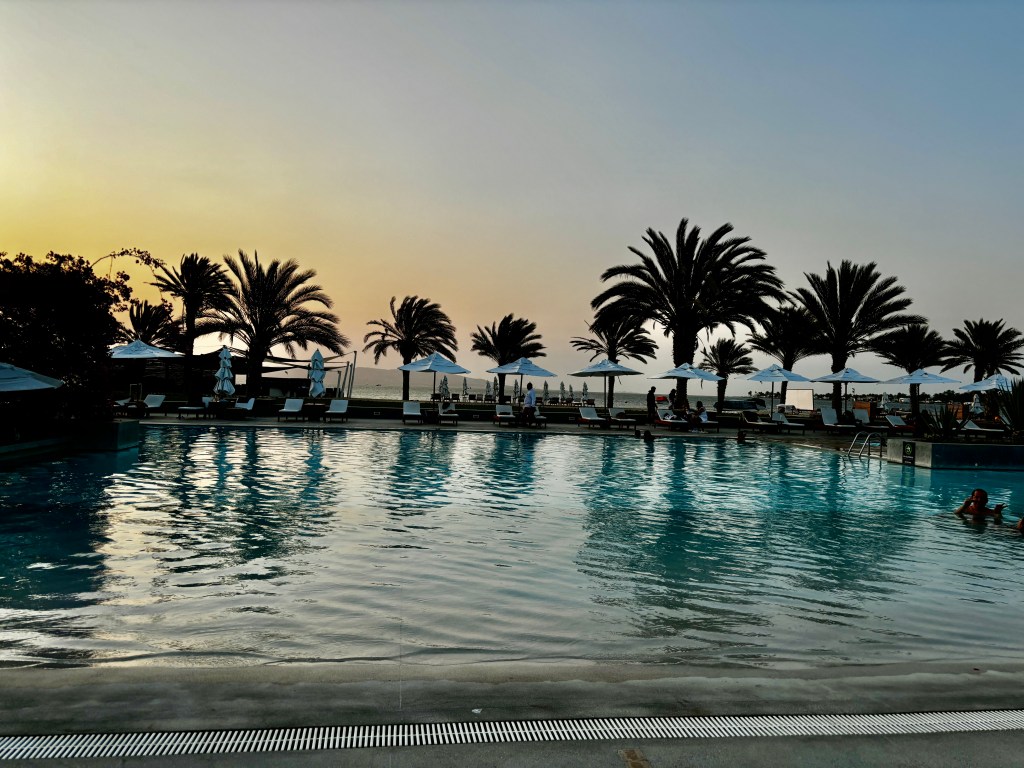
We three couples took some time to explore the resort followed by a very nice dinner. The six of us chatted easily and got to know each other better. Friendships began.
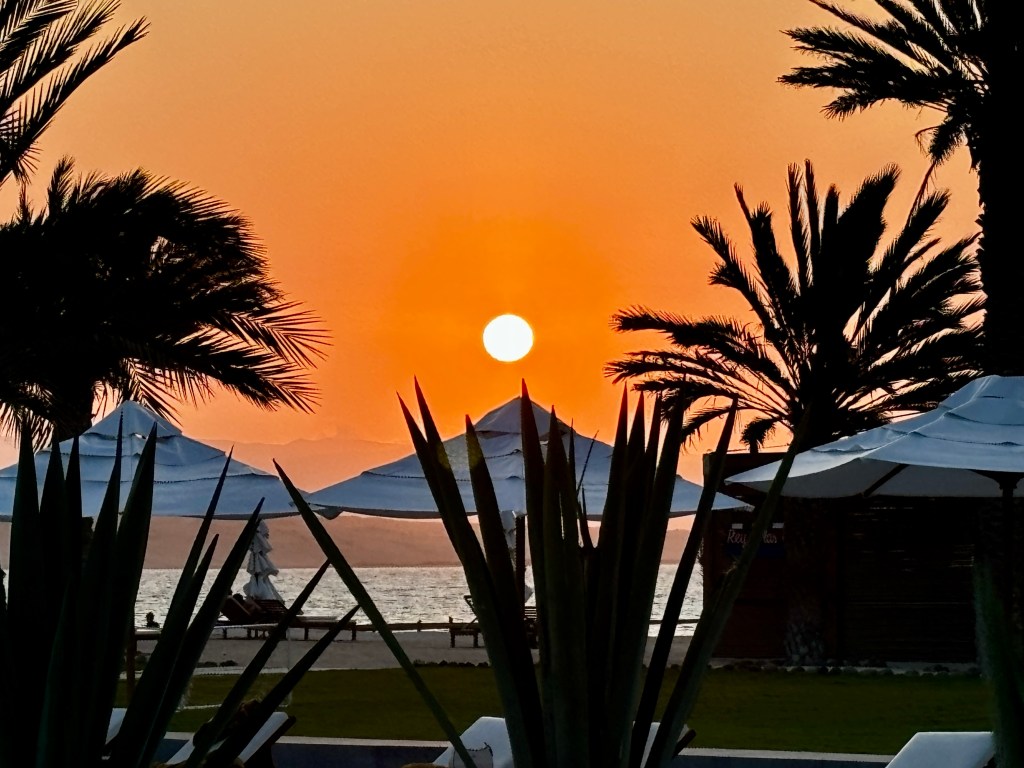
We were in Paracas, Peru on September 14, 2024.
Next Up – The flight above the Nazca Lines


 Serene Wandering