This was the morning we met the additional eighteen people who would be on the Machu Picchu and Amazon portions of our trip. Most were American couples but we also had one couple from Australia and a second couple from Canada. We were now a group of 24, or 25 if we count our tour guide, Enrique.
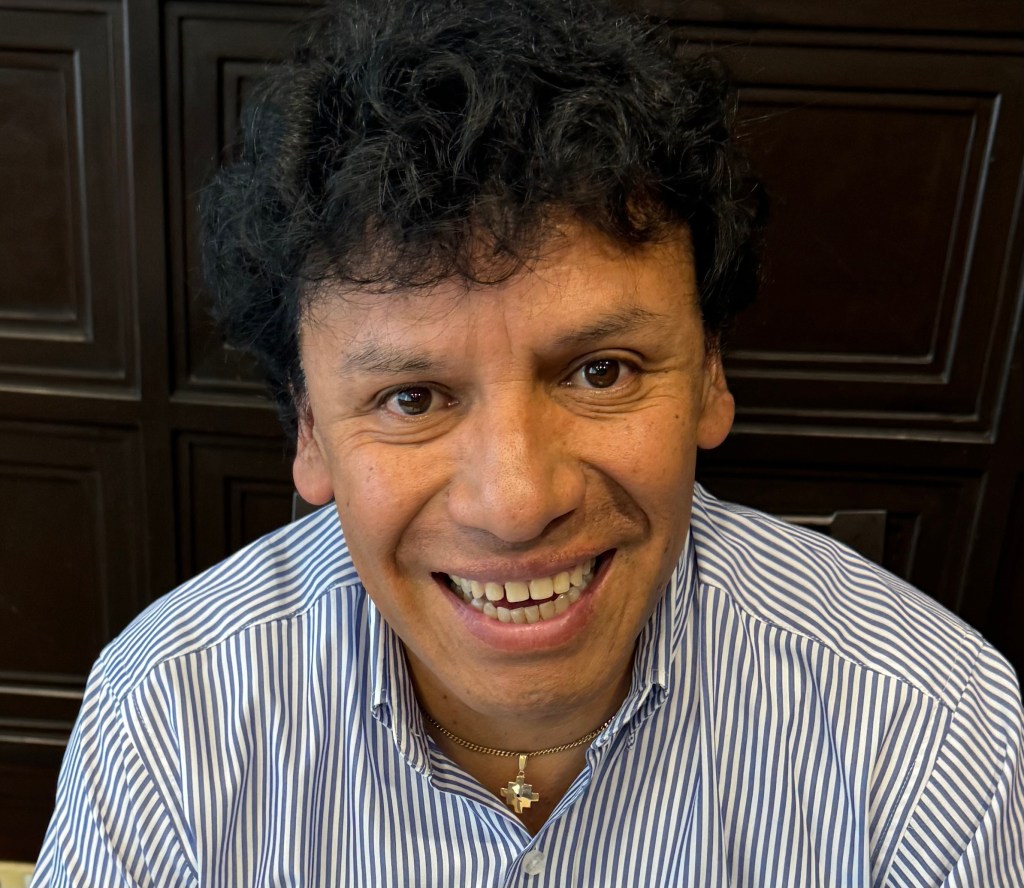
Enrique gave us the ground rules: no politics, no religion, and no soccer! He also explained his penalty point system to keep us on time. Warnings only for being late the first and second time – but the third time, the offender buys pisco sours for everyone. All was stated in good fun but we understood the assignment.
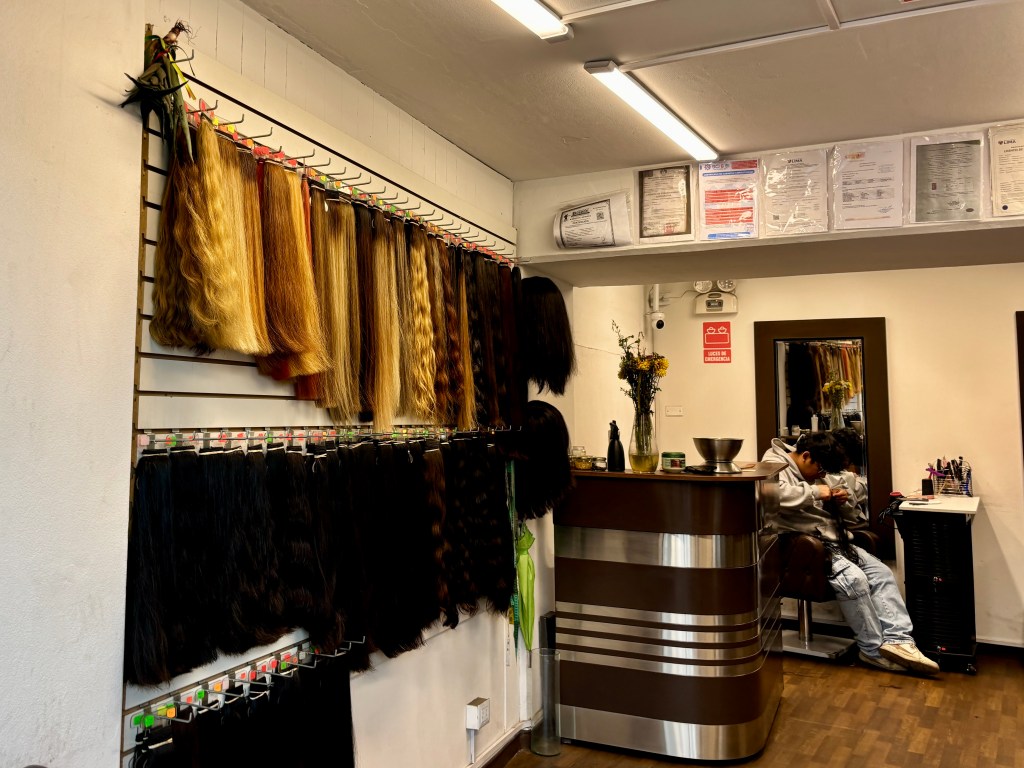
Our opportunity in the afternoon was a tour of Lima. We went by coach into the historic district. We disembarked in an area that was all about hair. There were dozens of shops selling and buying hair segments as well as people walking around with hair.
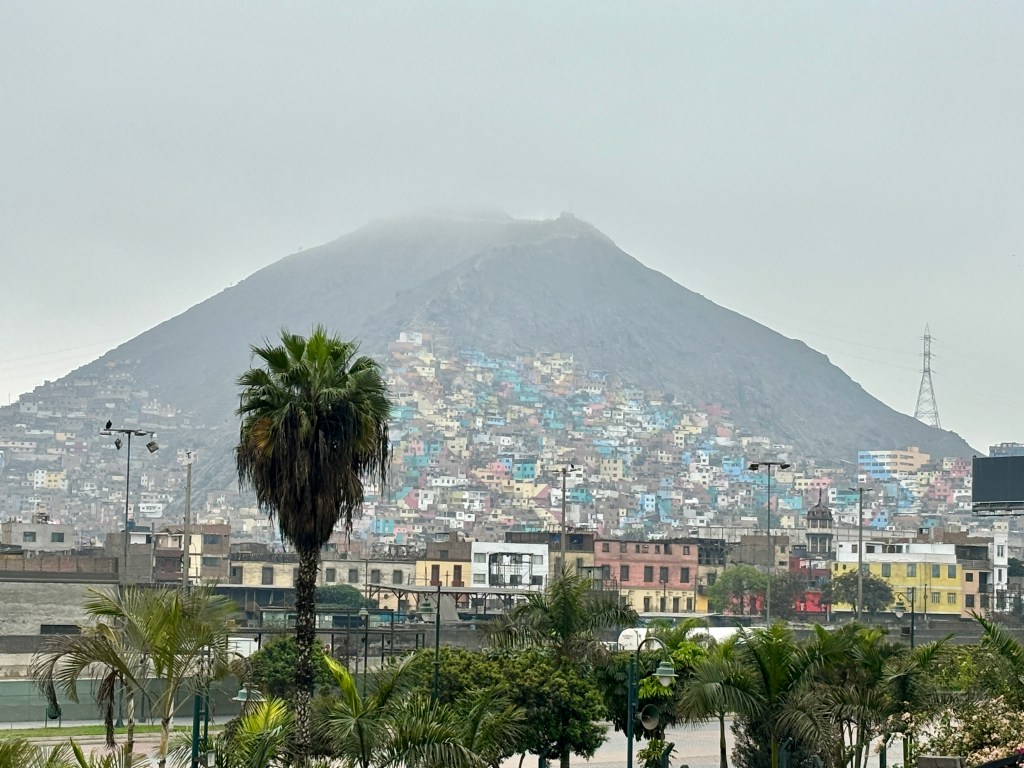
We could see another shantytown building up the hillside. Our historic district guide said the people need to live there for ten years to have ownership, where as the other area had been five years. It was not clear why the time frames were different from the one we had learned about previously.
We had an in-depth tour of the San Francisco Basilica and Convent. We found it interesting that in South America, convents are for men and monasteries are for women – the opposite of what is traditional in North America.
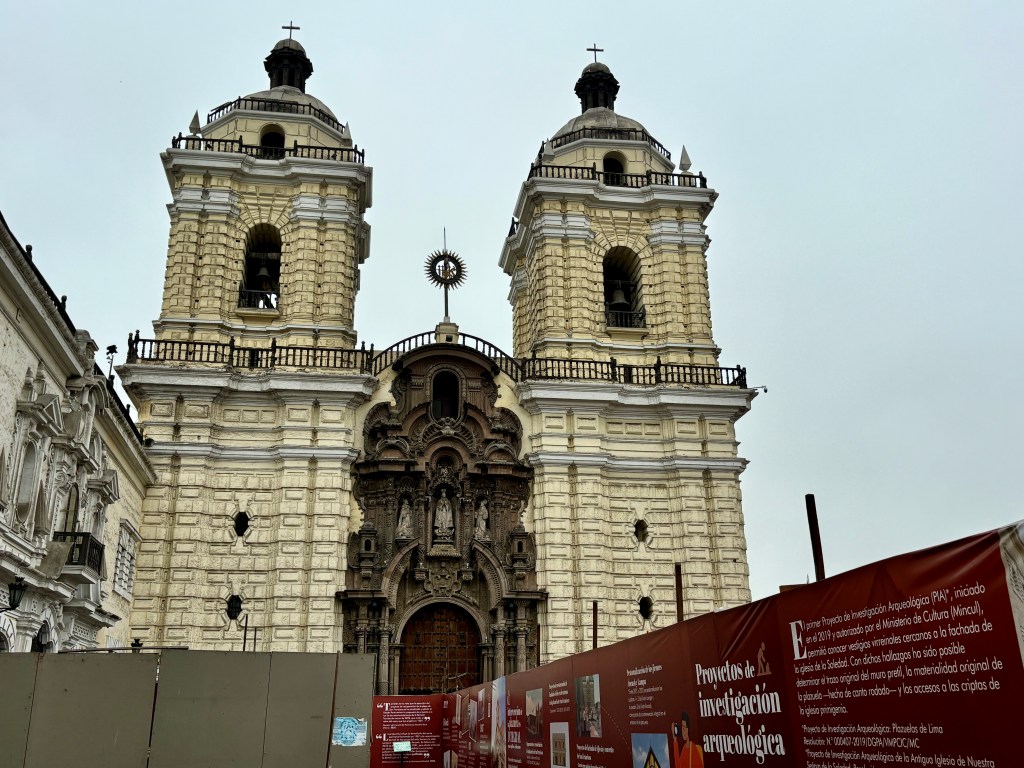
Unfortunately, there were no pictures allowed of the interior, but, of course it was beautiful. There was also a library with 25,000 volumes, many dating back to the 1600s. There were catacombs holding 70,000 individuals before that practice of internment was stopped by the government in 1810. The original church was built in the mid 1500s and then felled by an earthquake in 1655. This building’s construction began in 1672 and has been damaged and repaired after earthquakes from then to now.
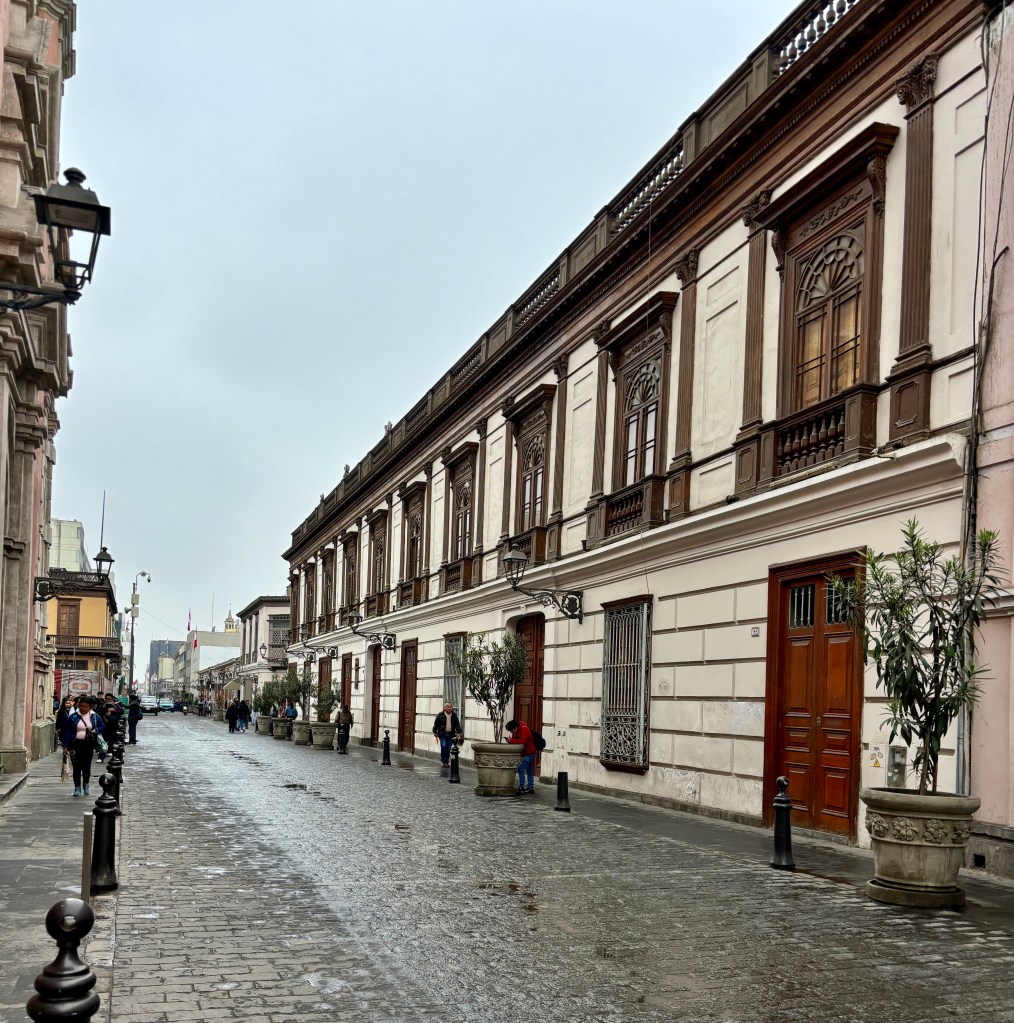
A street in the old historic district.
Our Phoenix area friends, Jo and Flynn, lived in Peru years ago when they were with the Peace Corps. They had advised us to be sure and experience three things on our trip. The first was drinking the traditional Peruvian pisco sours – we had already had several! The second was the churros. (The third recommendation is coming up later in this post.)
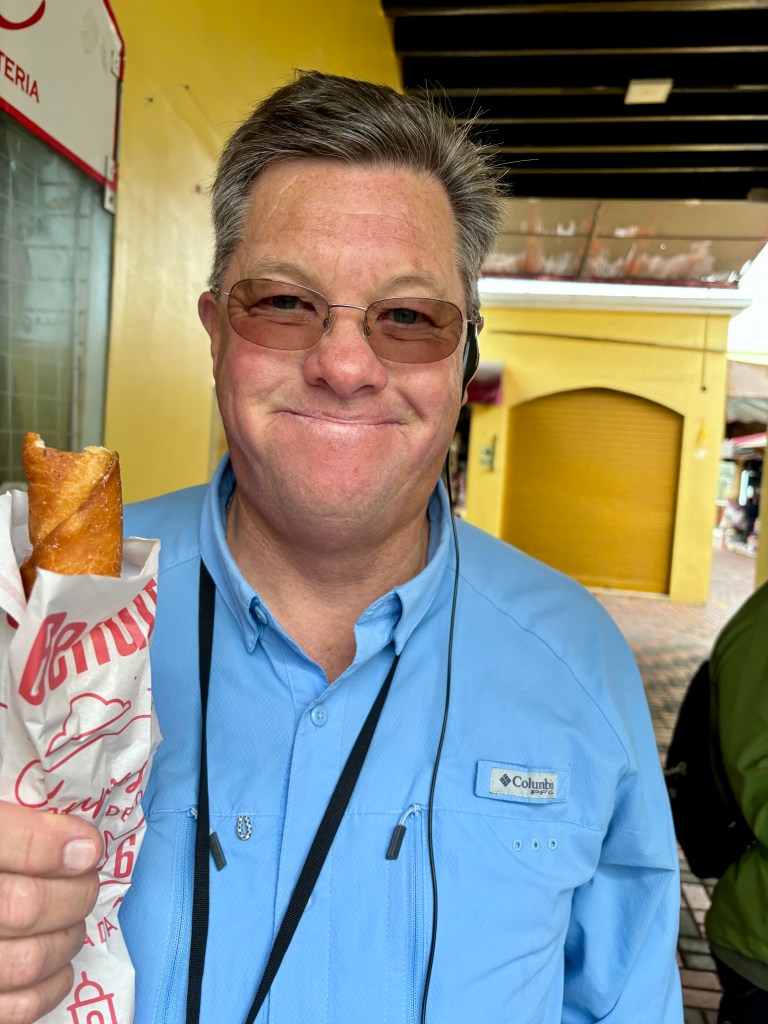
These Peruvian churros are very generous in size and warm and delicious. The most traditional version, and what we had, was caramel filled. It was really good – just like the pisco sours.
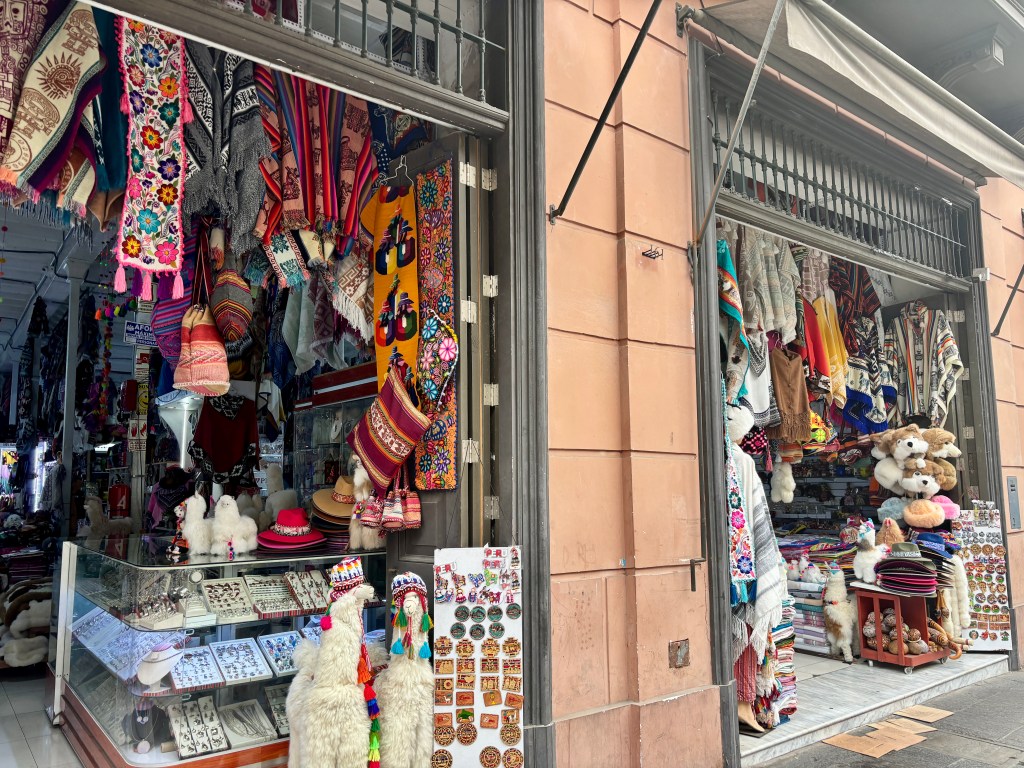
I looked at the tourist shops with a bit of longing but knew we were at the beginning of a three week trip with a lot of schlepping of bags. Restraint prevailed.
We made our way to the Plaza de Armas. The Plaza was not only the center of rule in Lima, but also from where the Spanish ruled the South American continent.
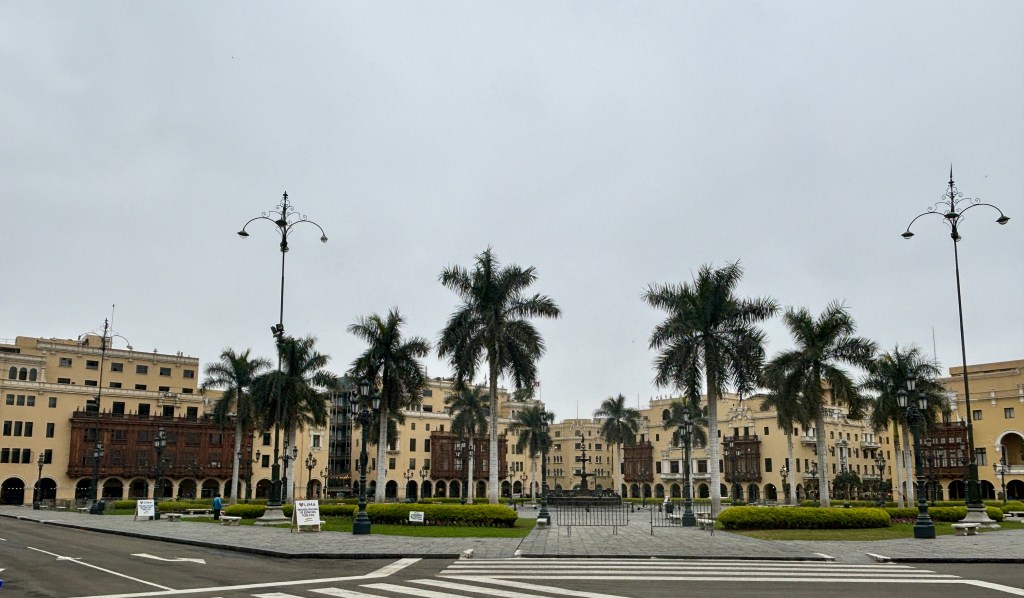
The center area was blocked off because there was a protest nearby, and there are rules about how close protesters can get to government buildings.
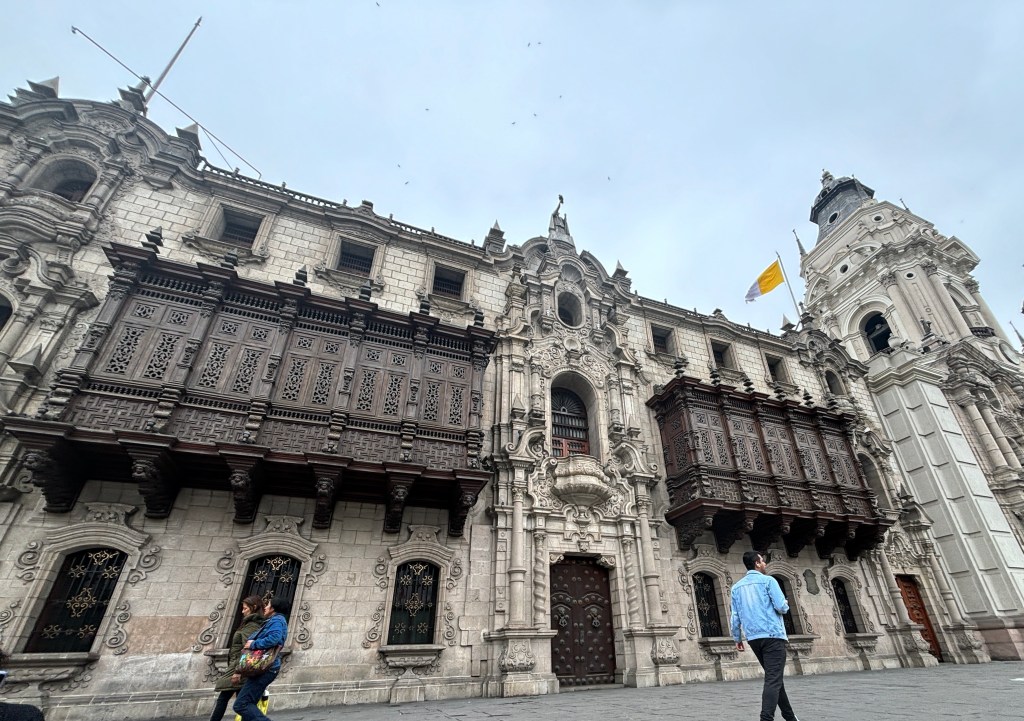
There are a number of impressive buildings around the plaza perimeter. This is the Archbishop’s Palace. Although it looks very old, it was built in 1924 and is the home of the Archbishop of Lima.
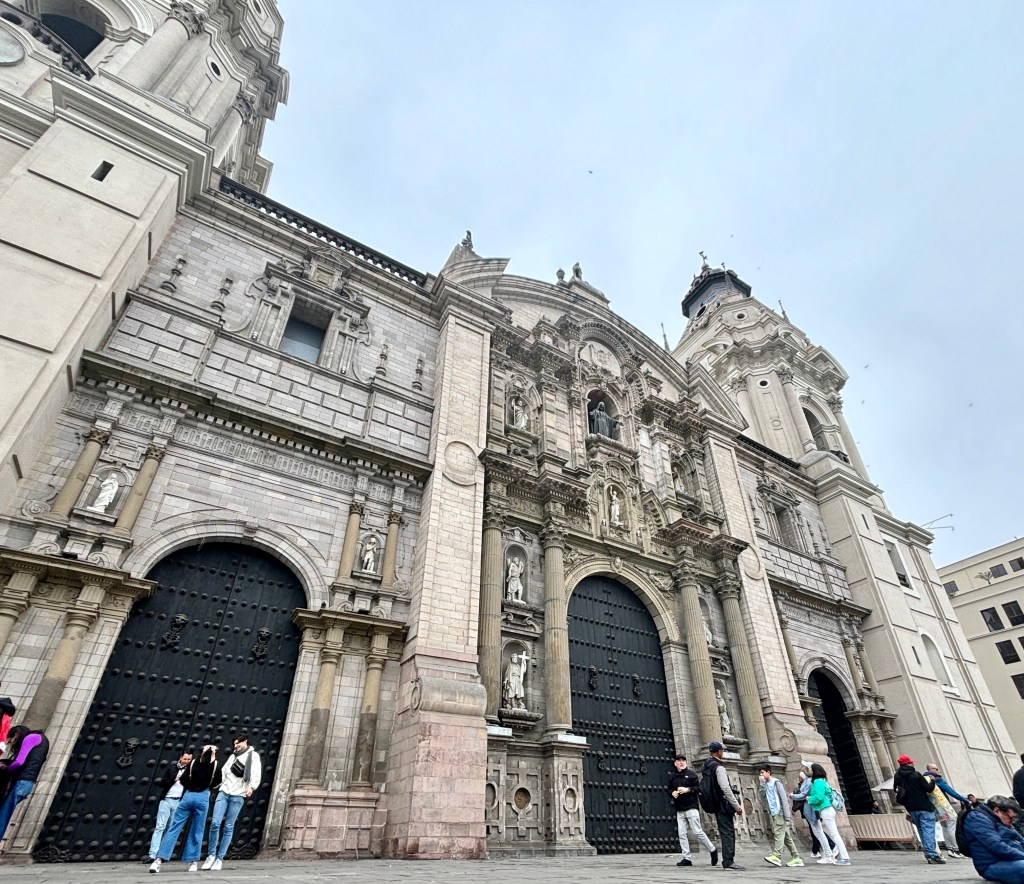
On the same block, and connected as you would expect, is the Cathedral of Lima. It was built in 1535. We did not go inside.
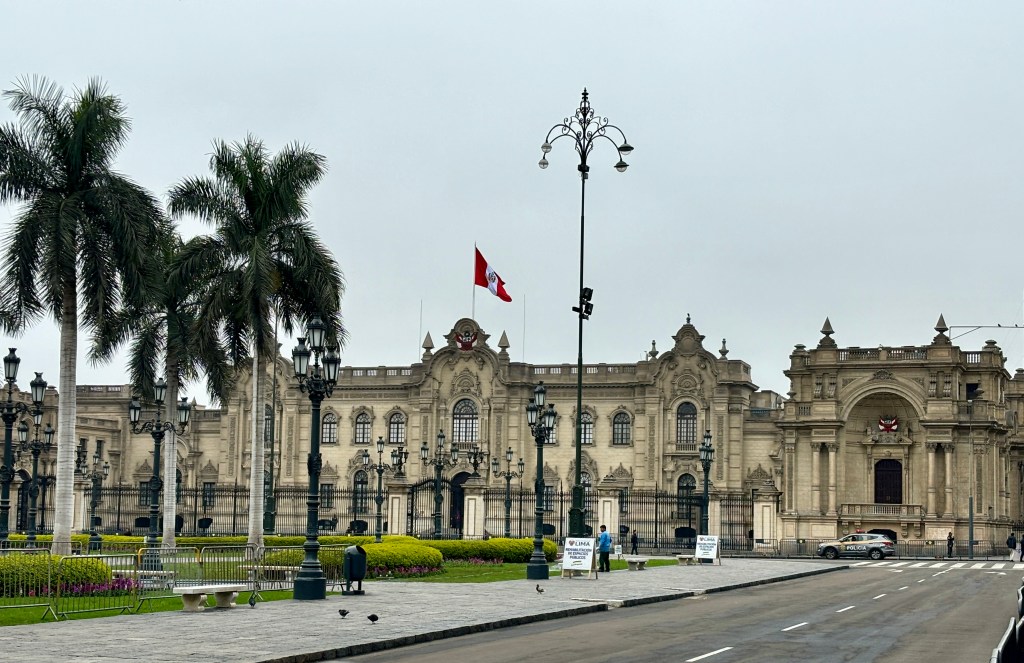
The Government Palace is the home of the executive branch of Peruvian government and the home of president. These are just a few of the interesting buildings around the plaza.
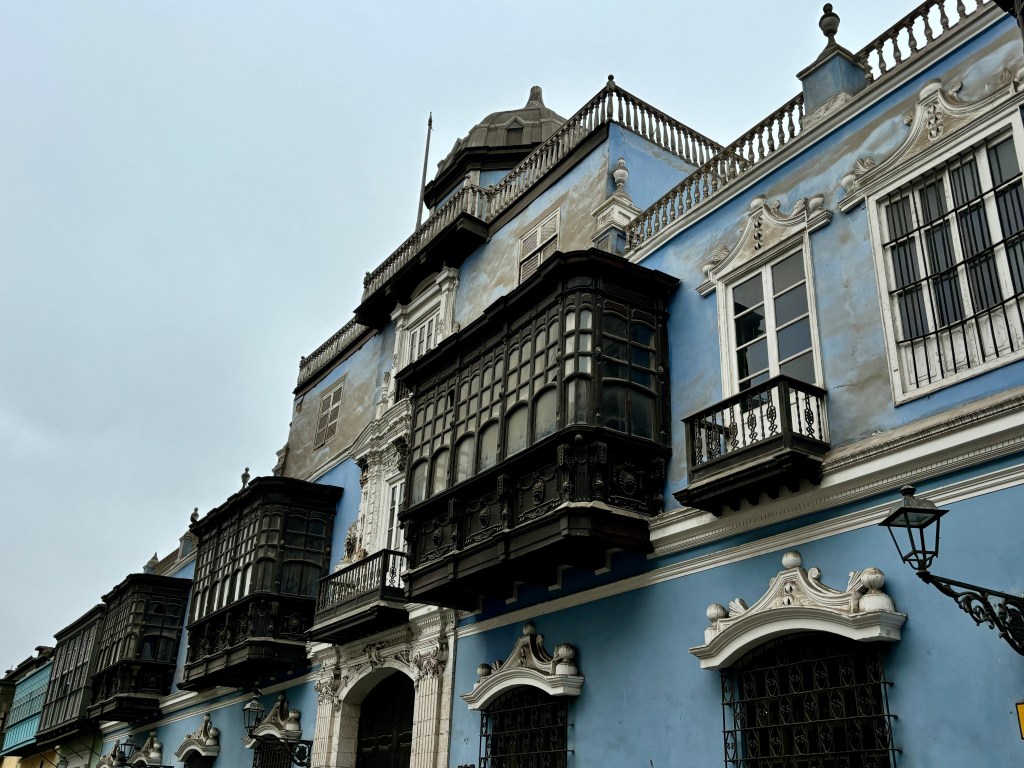
In the historic district there had been a law that no personal building could be this high. However, some rich, influential person – way back in the 1500s – managed to petition the church, or government, to get an exemption. Oh, what a surprise.
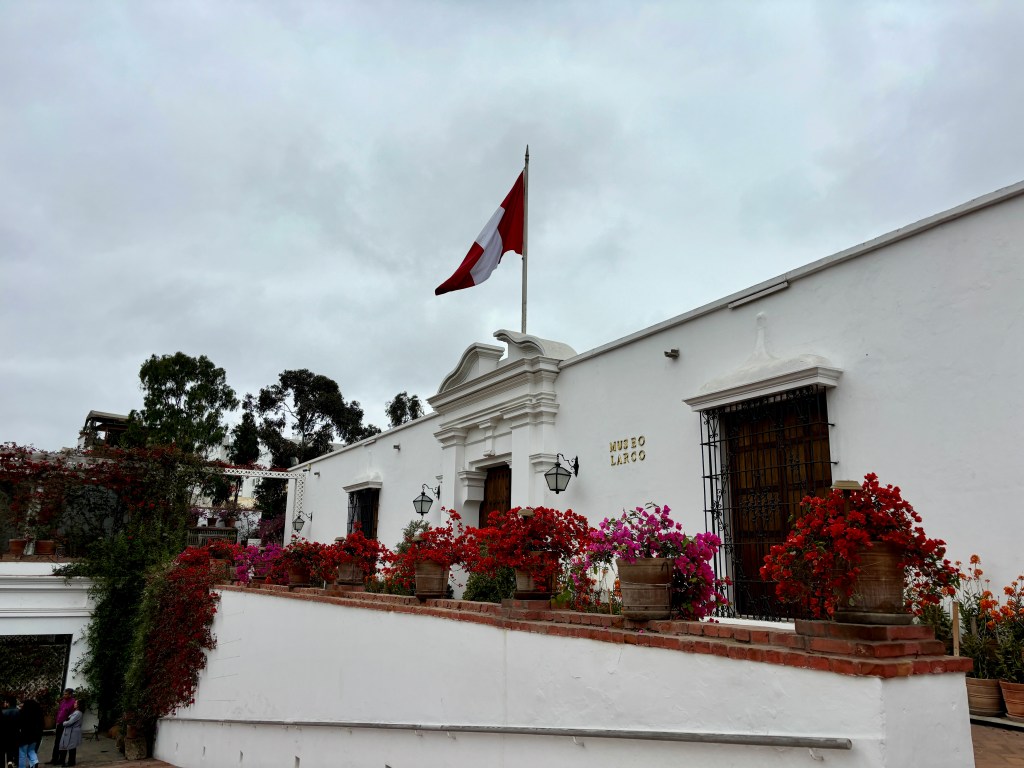
Our next destination was the Larco Herrera Museum. It holds the world’s largest private collection of pre-Columbian Peruvian Art.
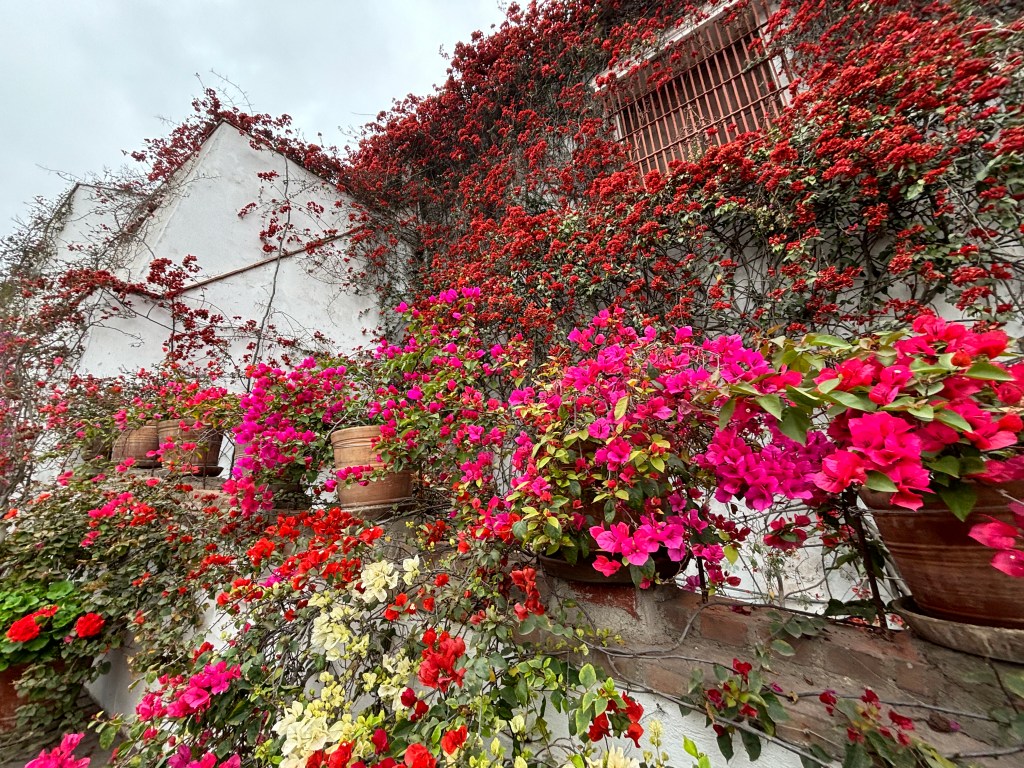
The gardens are part of the attraction.
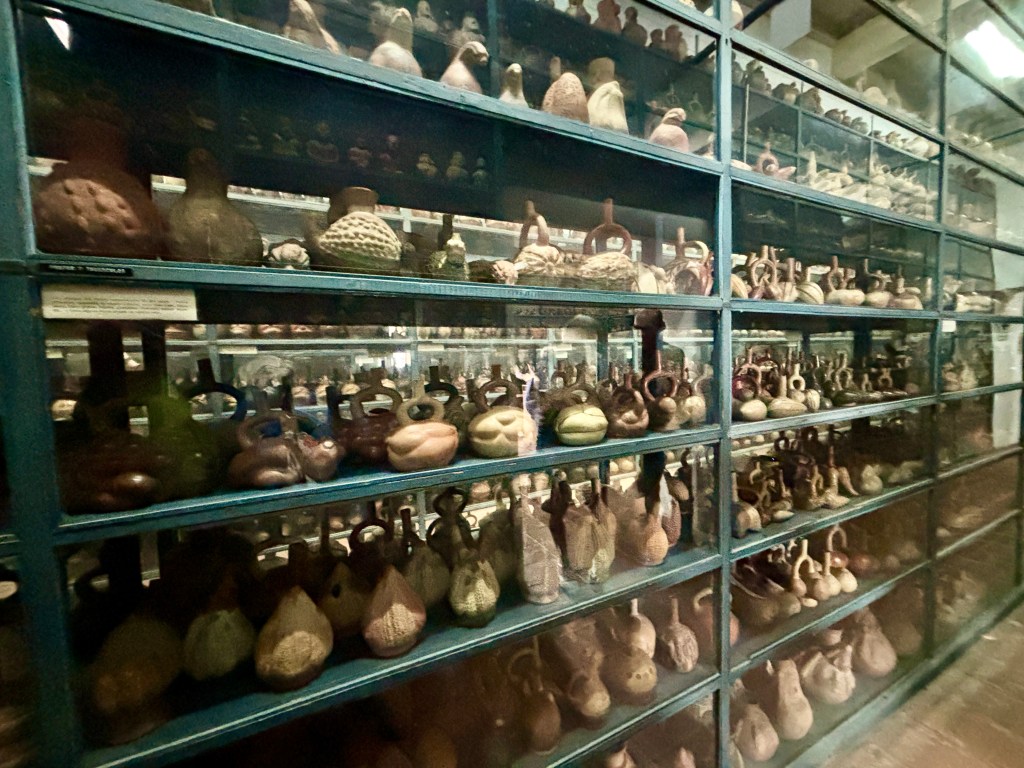
Part of why this museum is famous is because their vast storage collection is available for viewing.
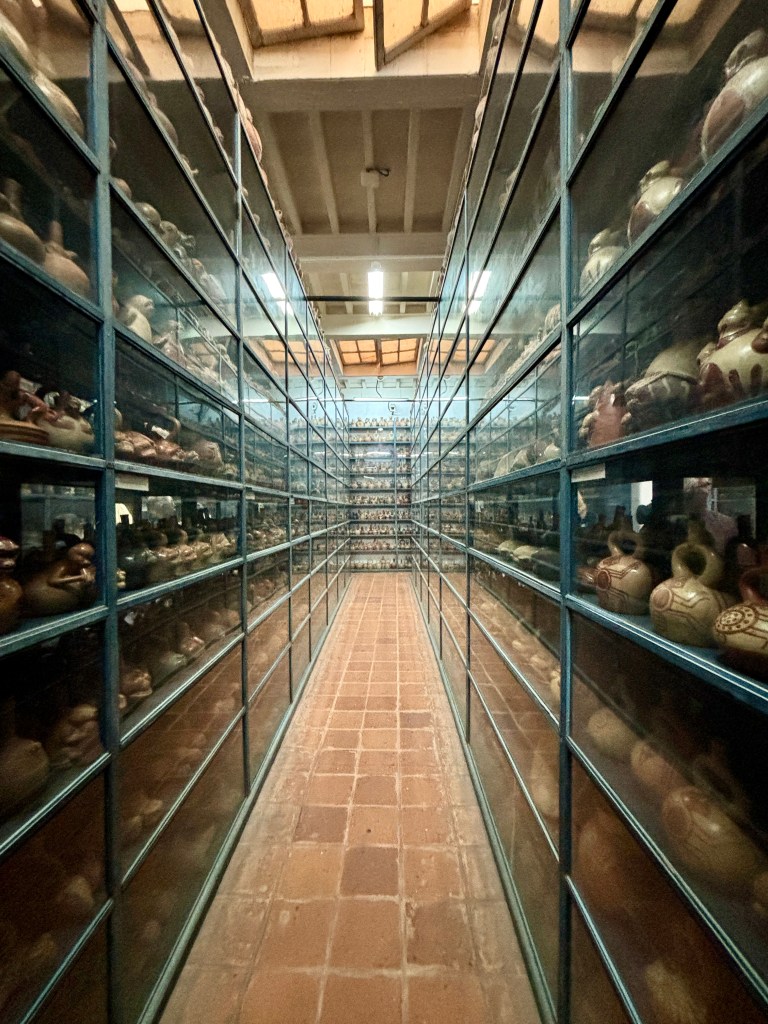
It is the only museum in Peru that allows access to “storage” and one of only a few in the world.
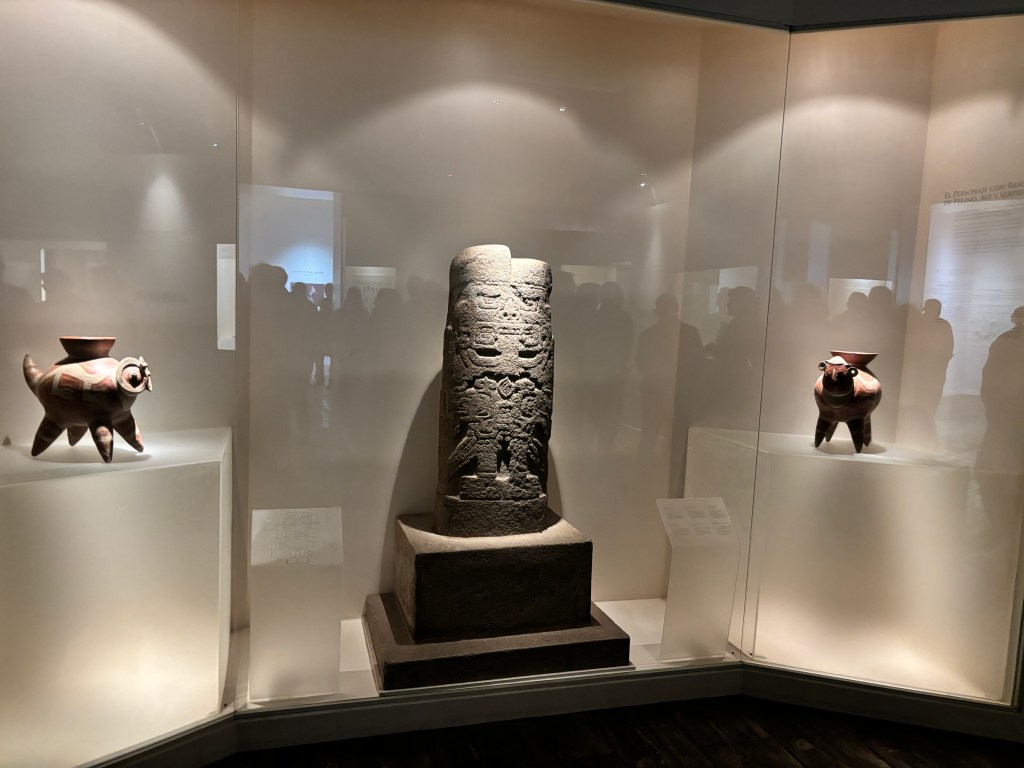
The permanent collection “takes an in-depth look at the Andean worldview and helps visitors to understand the development of pre-Columbian societies.”
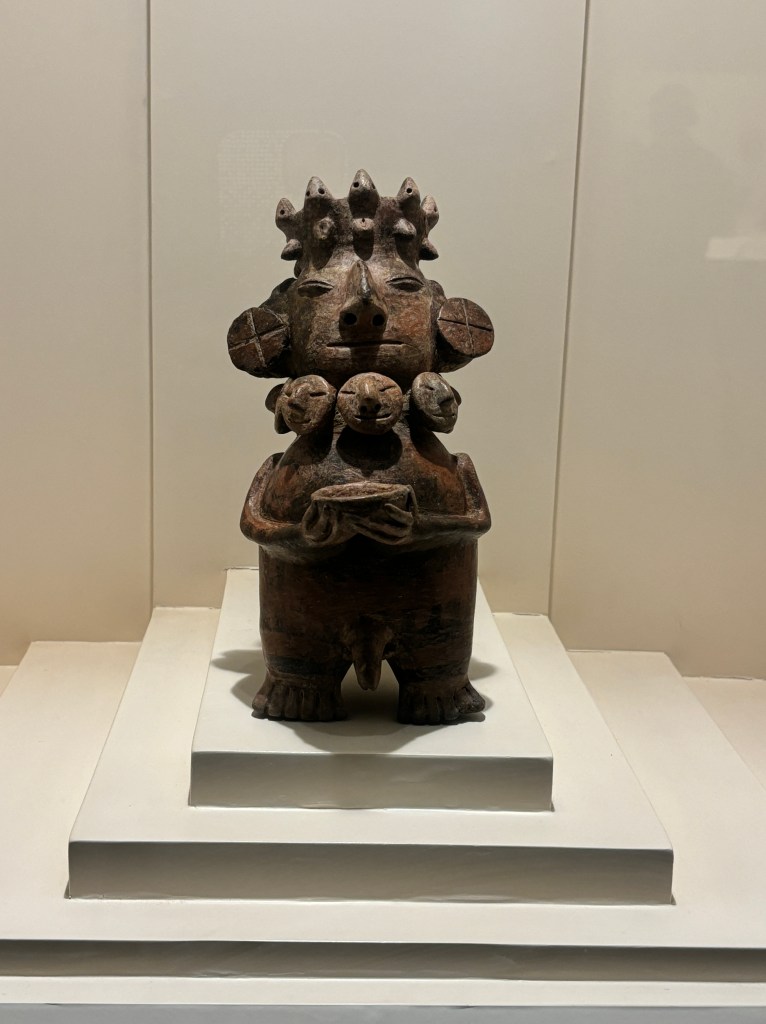
The items were very well displayed but art museums just aren’t our thing.
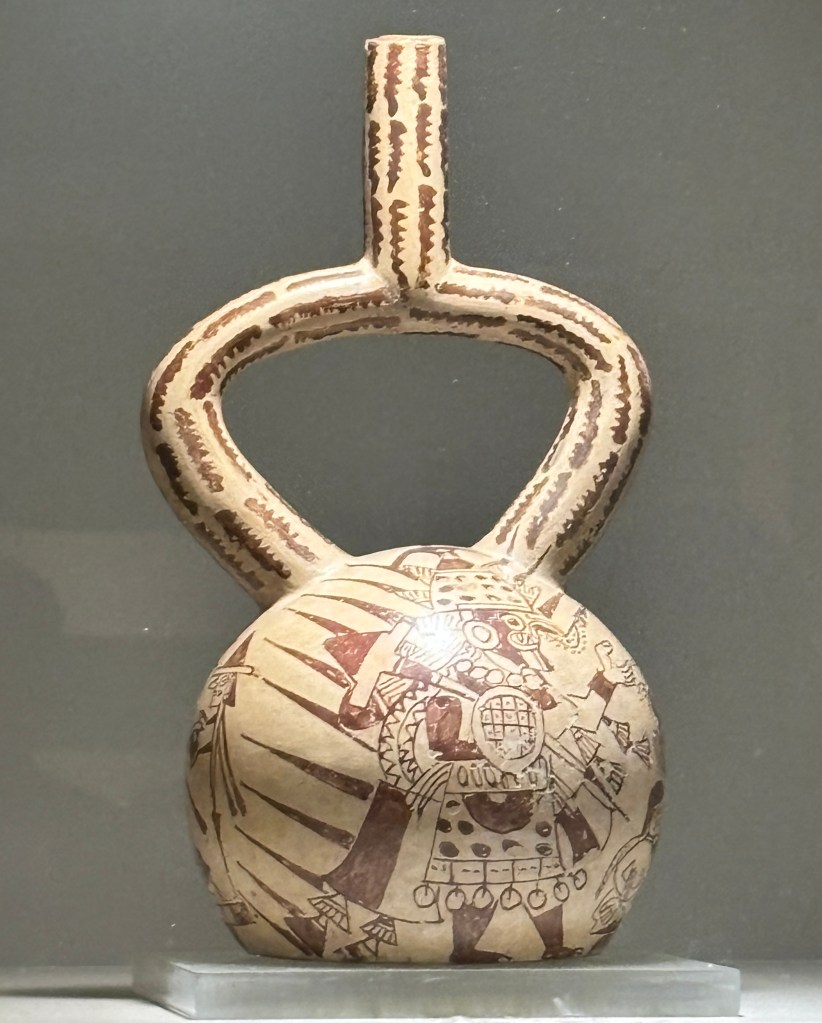
It doesn’t really matter if they are pre-Columbian, renaissance or modern. Our eyes glaze over quickly.
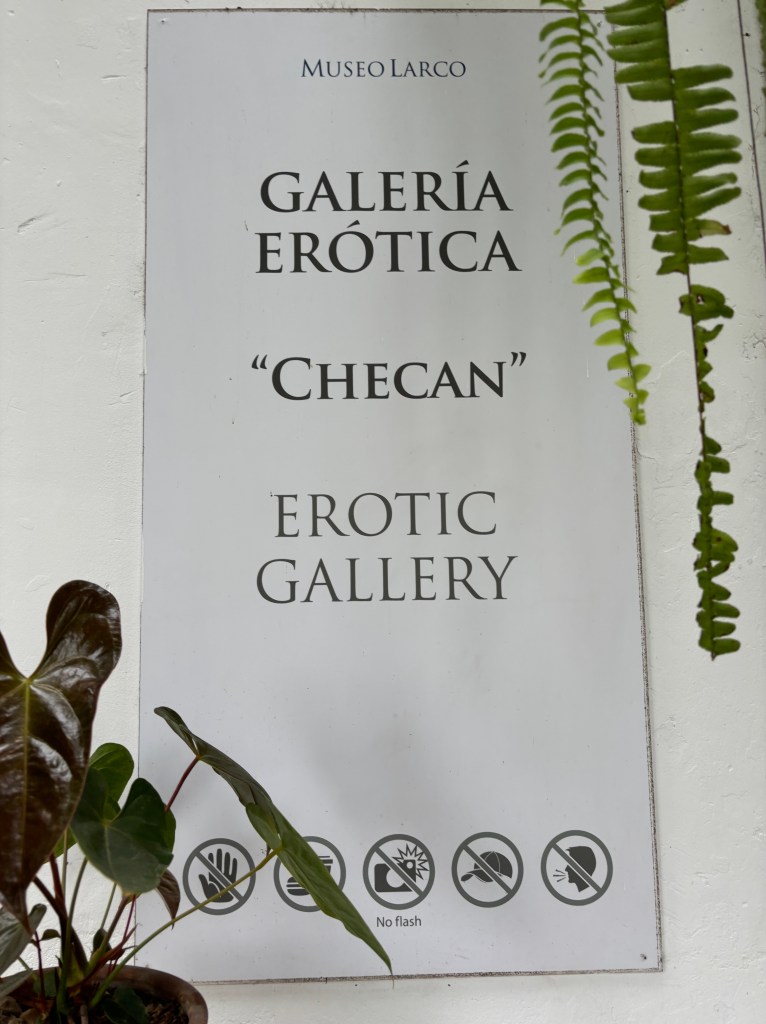
However….as we walked through the grounds, we had seen reference to the third of Jo and Flynn’s recommendations – The Erotica Museum. I had not even imagined that our overall tour would take us there and didn’t think we would arrange to go on our own so hadn’t prioritized it. But there it was, on the grounds of the Larco Museum, the Erotica Gallery.
We left the main tour to ask Enrique if the Erotica Gallery would be part of what we would see. He said no, but that we could go on our own if we wanted.
This part of the museum is a “major collection of pre-Columbian erotic art offering a different and interesting perspective on ancient Peruvian sexuality.”
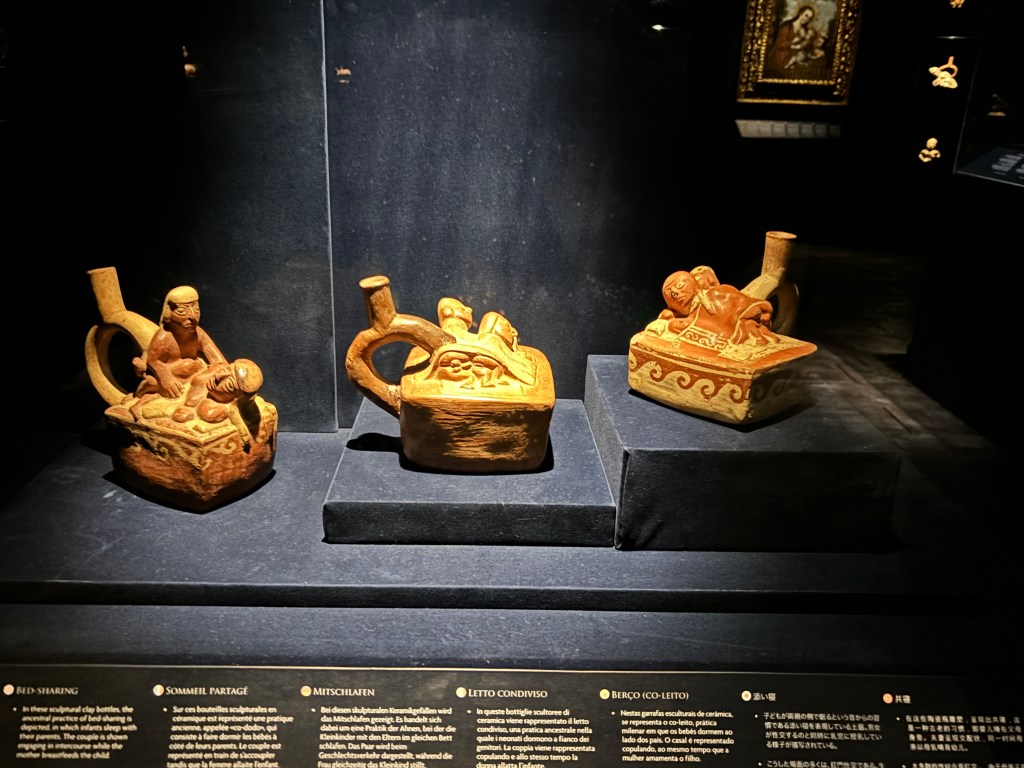
This example is pretty mild compared to most of what we saw, but it was certainly interesting. Thanks Jo and Flynn – all three recommendations accomplished and appreciated!
We made our way back to the main tour and I doubt we were even missed. The larger group hadn’t been together long enough to recognize each other, let alone know who was missing.
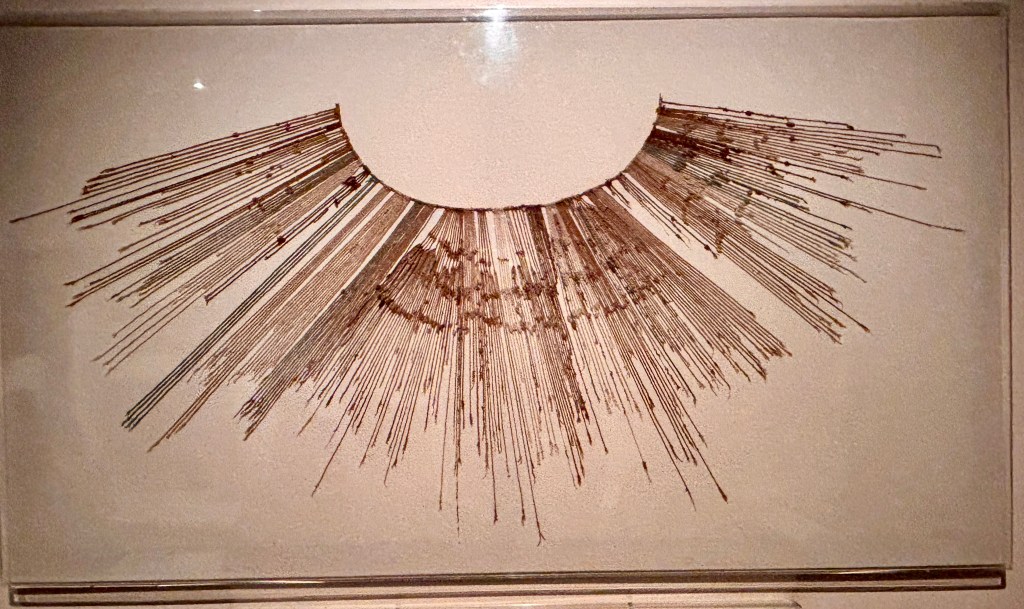
About the time we returned, the docent was talking about the quipus. Now that was interesting. This series of cords off a main cord was how the Incas recorded and kept information about anything that needed to be counted and maintained. The colors of the cords, knots and distance between the knots were all relevant information in the recording.
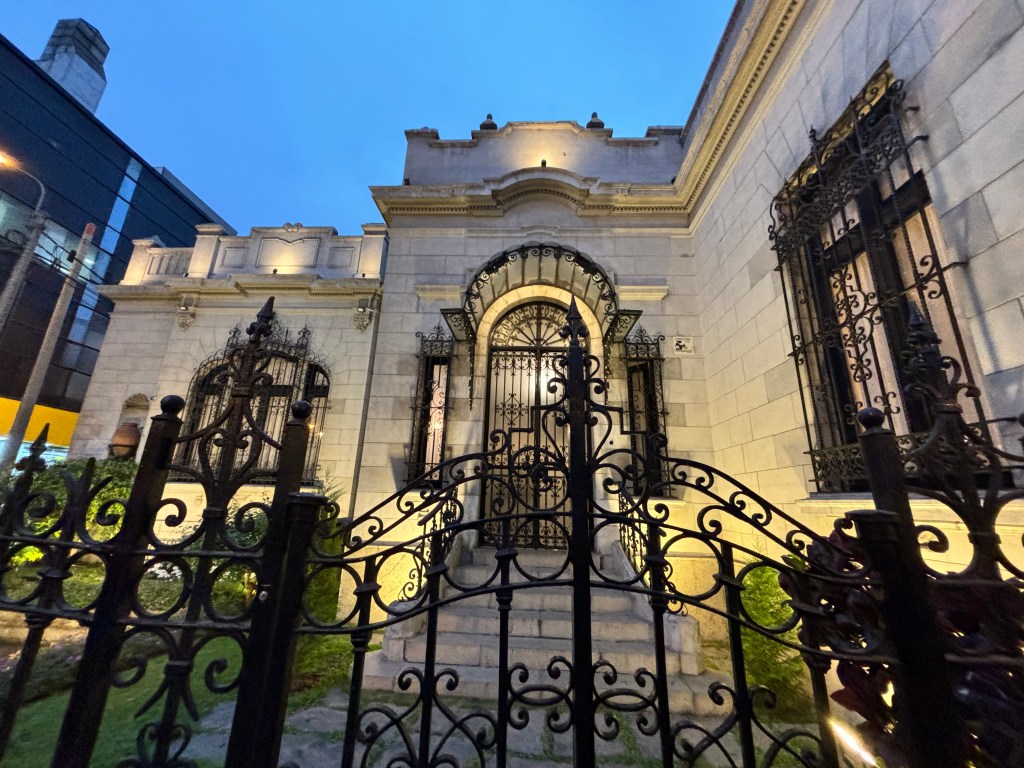
Our evening event was for dinner at a private home in Lima, The Casa Garcia Alvarado. The home was constructed in 1912 in a style from nineteenth century Spain.
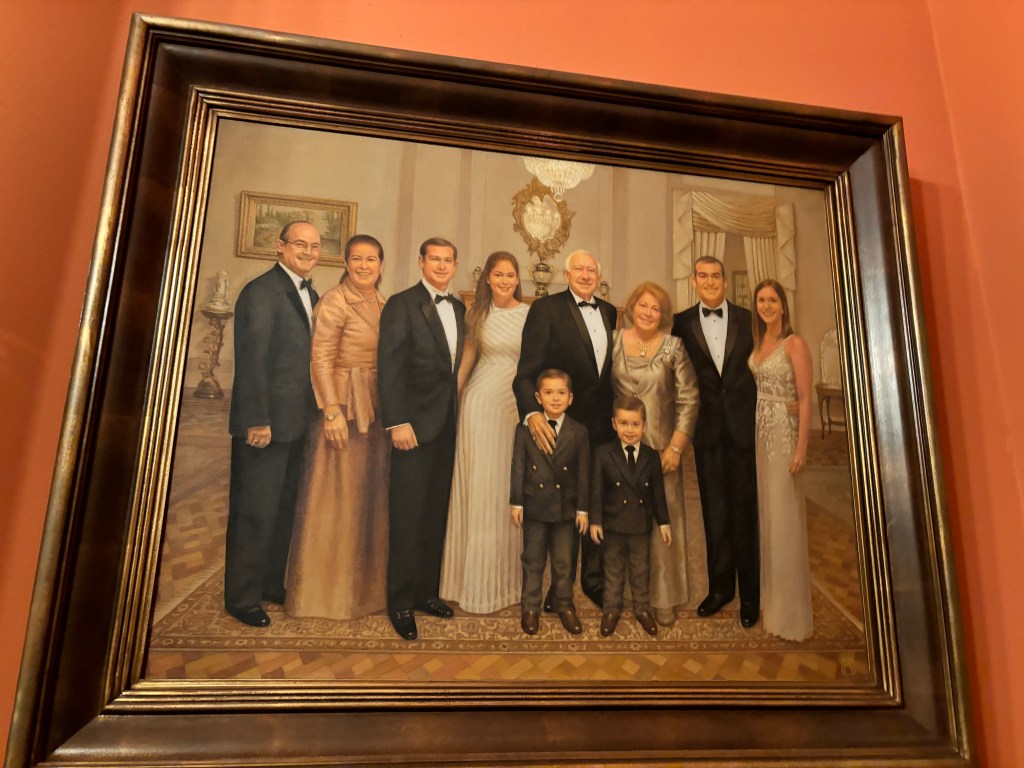
Generations of Mrs. Ana Maria Garcia Alvarado de Astudillo’s family have lived in Lima and this home. She and two of her daughter’s families make this their home still.
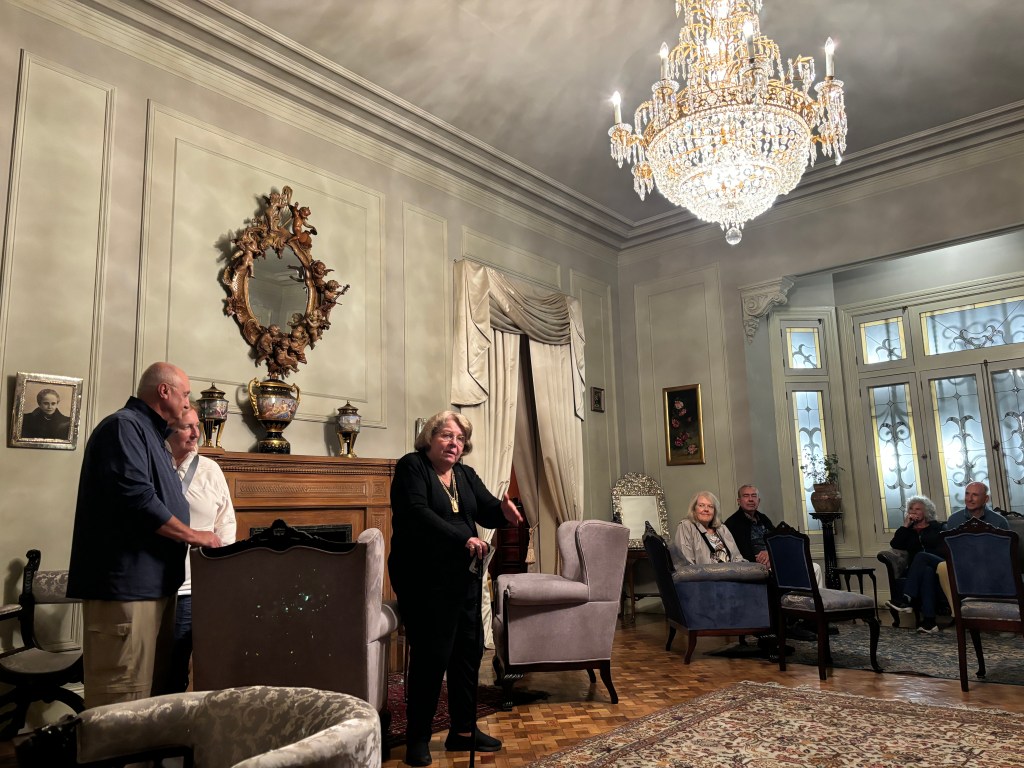
Our hostess met us in the drawing room where we were given pisco sours and a variety of hors d’oeuvres. She told us about her family and growing up in Lima.
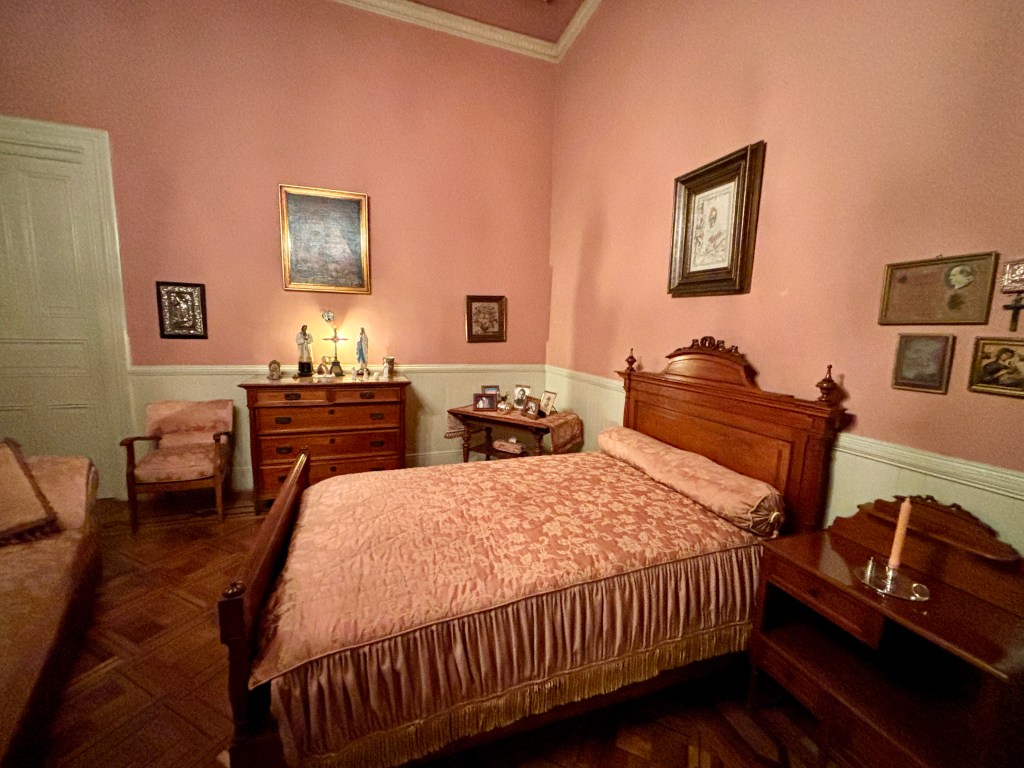
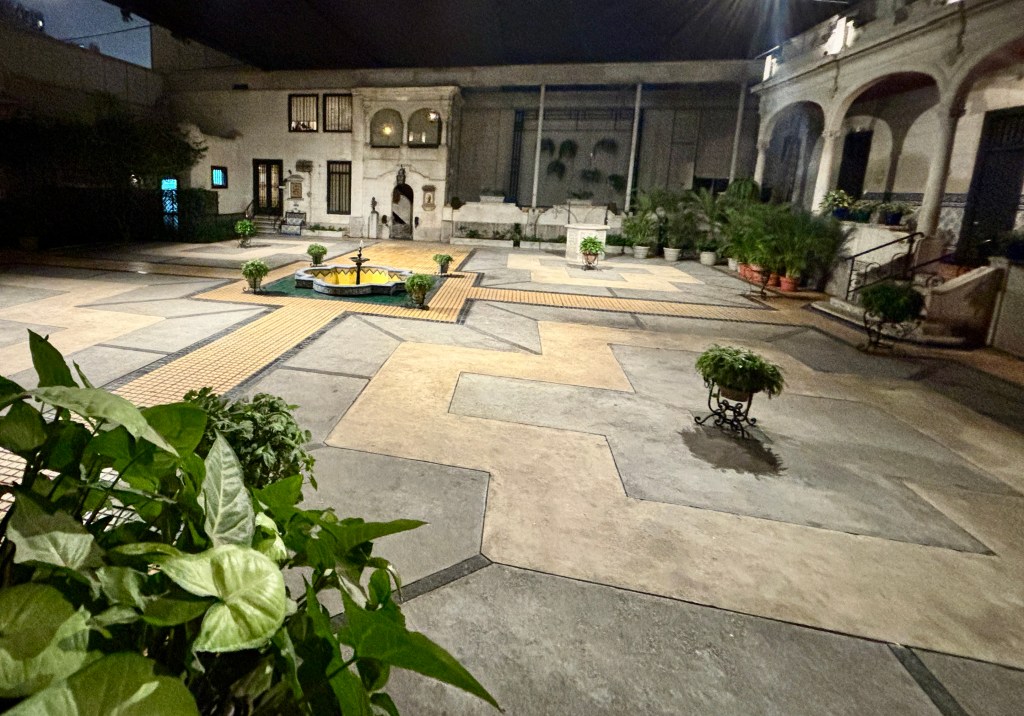
We were able to tour several rooms of the house and the courtyard.
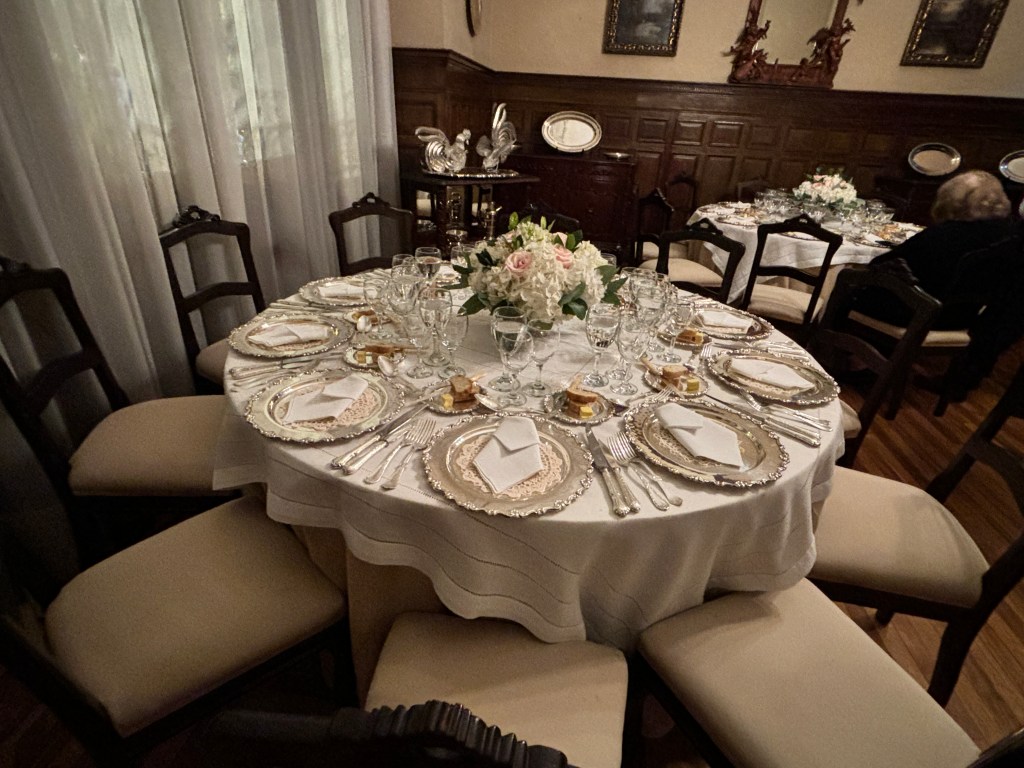
We came together in the dining room for a delicious Peruvian dinner.
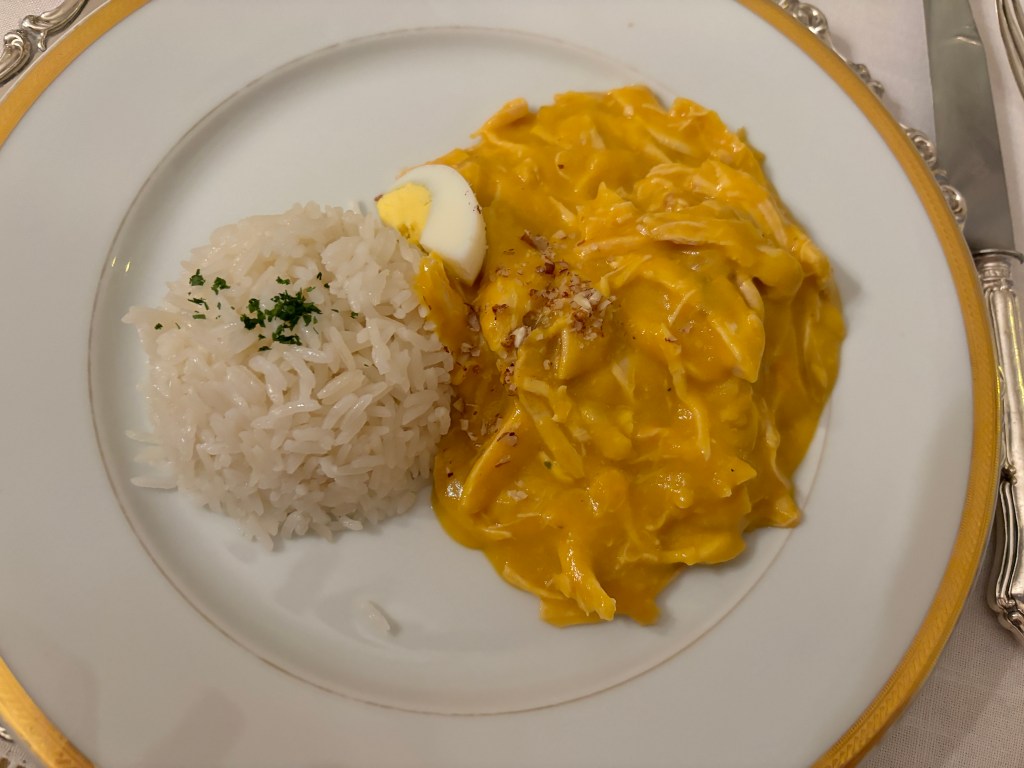
This chicken dish was beginning to be very familiar!
Our hostess spent some time at each table making the visit more personal. The casa is available for tours and private events and if you are in Lima, we’d recommend it. It was a delightful evening.
We were in Lima on September 16, 2024.
By the way, this was the day we were to start prepping for high altitudes in Cusco. The typical medication, Diamox, contains sulpha so was a no-go for me. I was to take 600 milligrams of ibuprofen three times a day instead. That sounded like stomach upset waiting to happen so I took 400 milligrams just twice. Randy experienced lip tingling after his first dose of Diamox and stopped taking it. He can’t take ibuprofen so he was stuck. We were going to the upper reaches of the Andes with just local remedies.
Next up – and up and up: Cusco


 Serene Wandering