We had breakfast at our hotel before leaving Lima. We had spent four nights there, two before the Nazca Lines excursion and two after.
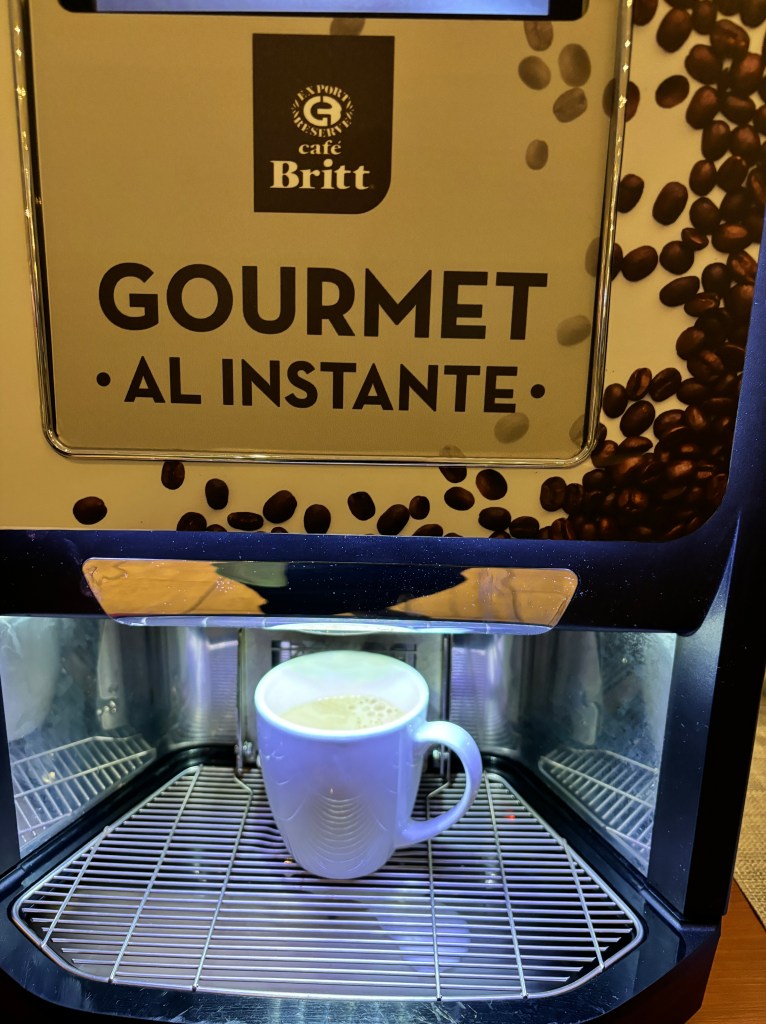
The breakfast buffet options were always good but it was surprising that there was no decaf coffee available. However, that there was delicious hot chocolate available through the coffee/cappuccino/latte machine.
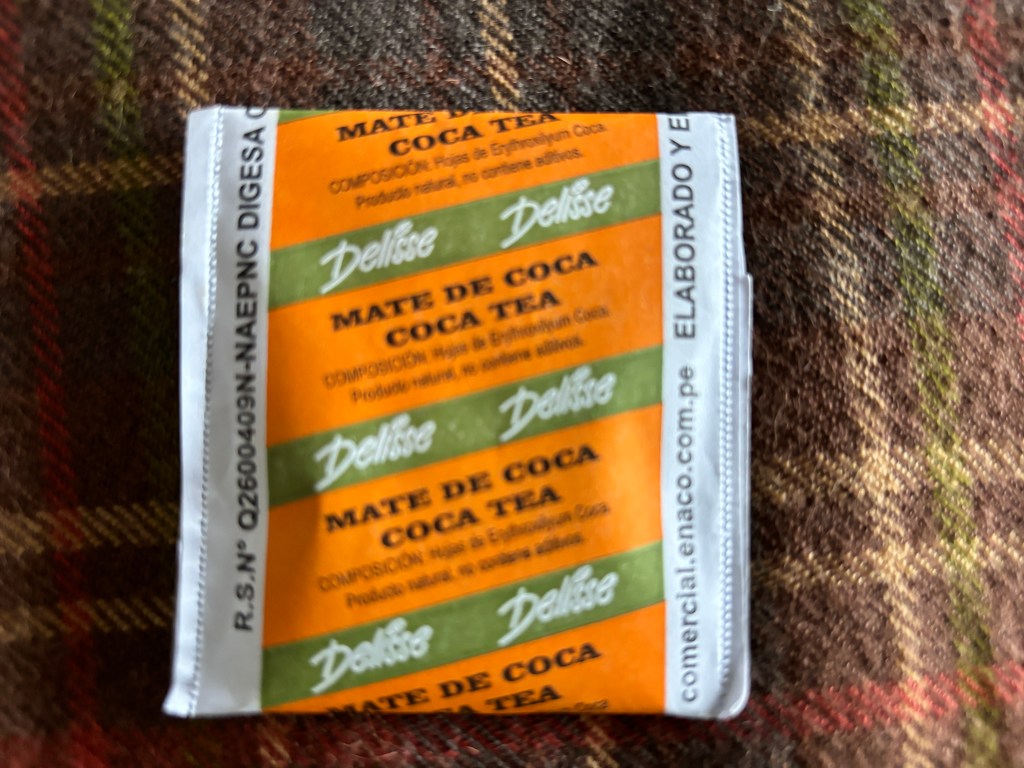
Several of us began drinking coca tea in preparation for the elevation change we would experience landing in Cusco, high up in the Andes.. The tea, in combination with over hydrating, was considered the best non-prescription preparation for warding off high altitude sickness. While in the bus, Enrique told us that tea benefits only last four hours. We were trying to be over achievers. He told us that coca leaves do not have caffeine and are produced only in Peru, Bolivia and Columbia.
Enrique told us that Quechua is the language of the Andes and the second most common language in Peru. It is spoken by 2 million people, most concentrated in the Cusco region. It is so different from other languages that Quechua was used as an alien language in Star Wars films. By tradition one is asked – How young are you? instead of how old are you? when speaking Quechua. Enrique, who speaks six languages fluently, has only moderate ability to speak Quechua.
By the way, the name of our destination in the Andes can be spelled Cusco or Cuzco. Both are correct.

The Lima airport was packed! We got through a busy, but fairly efficient security screening. The gate area was crazy packed!! As we were boarding, Enrique said there was a “senior line” but senior status in Peru is 70 years old. We all got in the queue anyway.
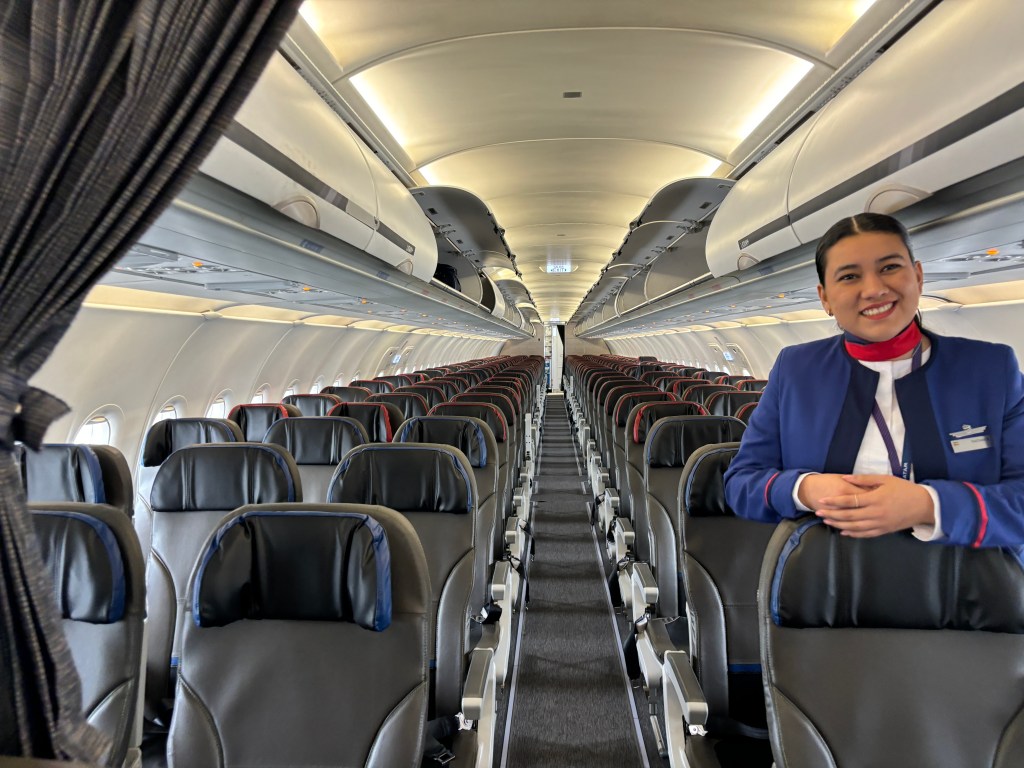
I don ‘t think I have ever before been the first passenger on a plane!
The flight had a lot of turbulence as we were preparing to land in the high altitude city of Cusco at 11,200 feet. Cusco is located 13 degrees from the equator. It has a rainy season and a sunny season but with climate change, the weather isn’t as reliable as it was previously.
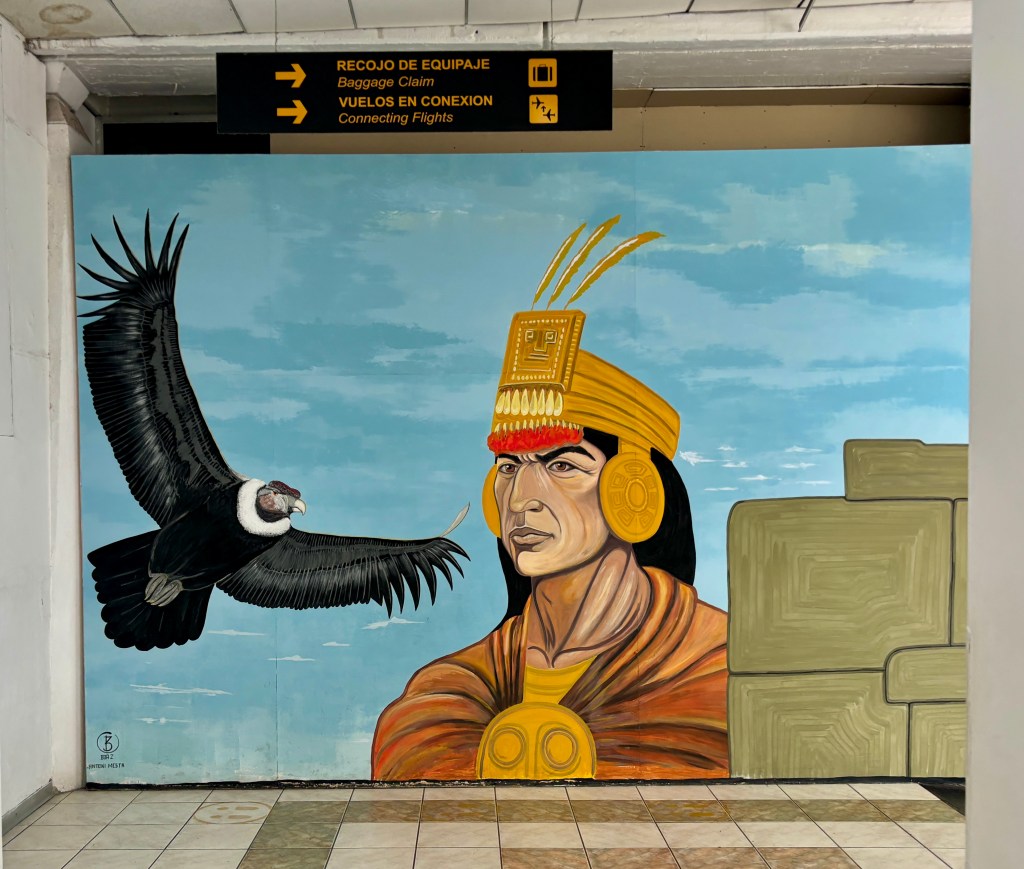
We had arrived in the ancient Home of the Inca, Cusco City!
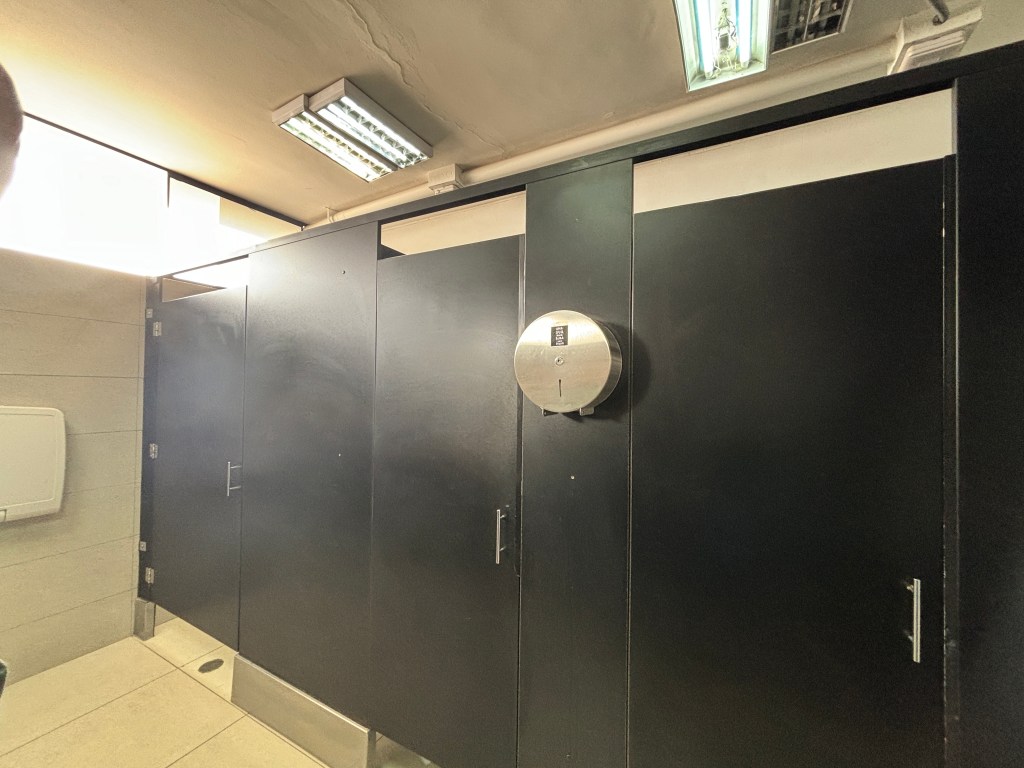
Almost everyone made a quick restroom stop since we’d been hydrating. This toilet paper roll outside the stalls was just one more iteration of the toilet tissue question in Peru. Frequently there was none, sometimes there was a charge, and this one had it outside the stalls. It is a good idea to always bring your own! The airport restroom was clean and that was not always the case. Enrique called having a clean restroom that also had toilet paper a blessing!
Enrique lived in Cusco until he was a teen. His dad was a police officer but officers were not allowed to work in the city where they lived to avoid corruption. After ten years of proving themselves, an officer could work and live at home full time. Enrique’s family never left the Cusco area so Enrique decided to embrace the travel industry as a career. He has a degree in History of Peru and South America
Cusco has a growing population because of silver and gold mining, huge natural gas reserves and tourism.
Arriving in Cusco and spending several hours at high elevation was a first step in our elevation acclimation. We peaked at a nice little resort at 12,000 feet.
We had a nice Peruvian lunch including a very delicious corn salad that I have since researched to no avail. There are several Peruvian restaurants in Phoenix and we will be sampling their corn salads at some point in the future.
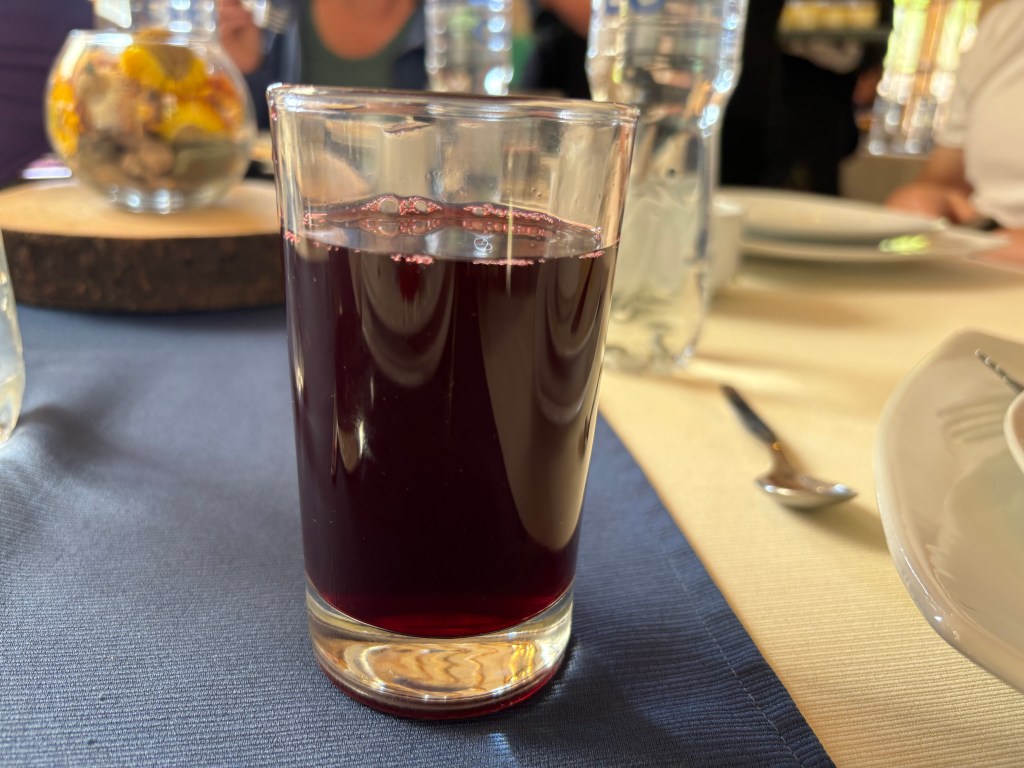
New to us was an Andean blue corn juice which was quite good. We all had another serving of coca tea as a few in our group were feeling the altitude with dizziness or light-headedness.
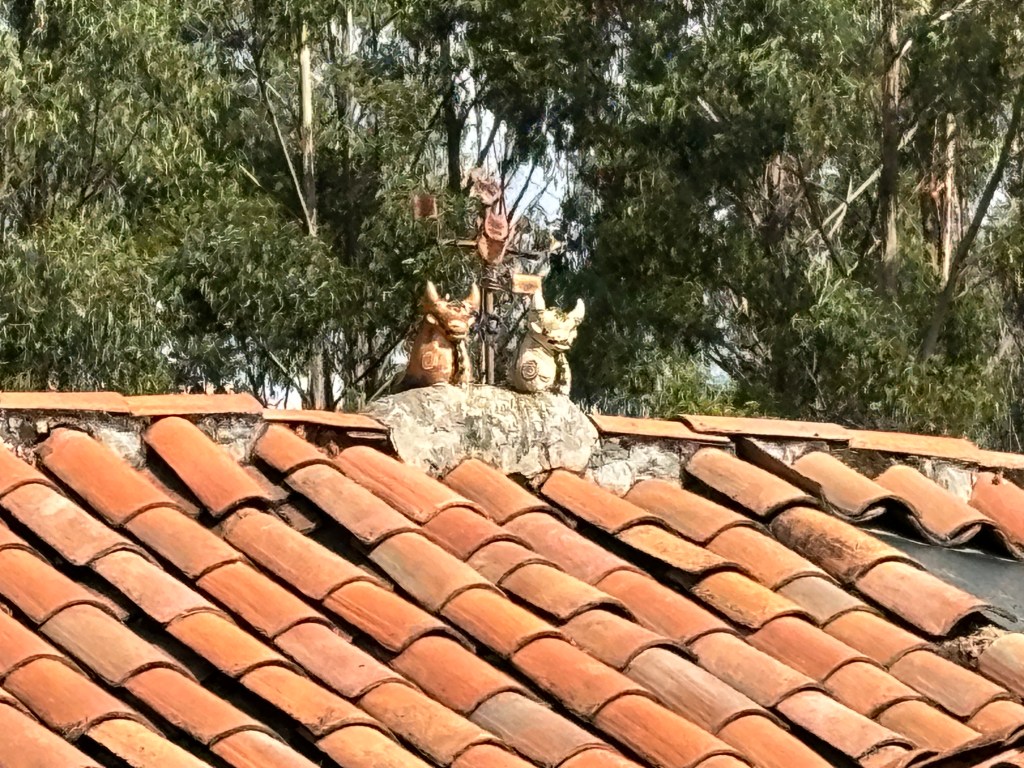
Most homes in the area seemed to have dual bulls on their roof for protection or good luck.

Our next stop was an alpaca demonstration farm and arts venue.
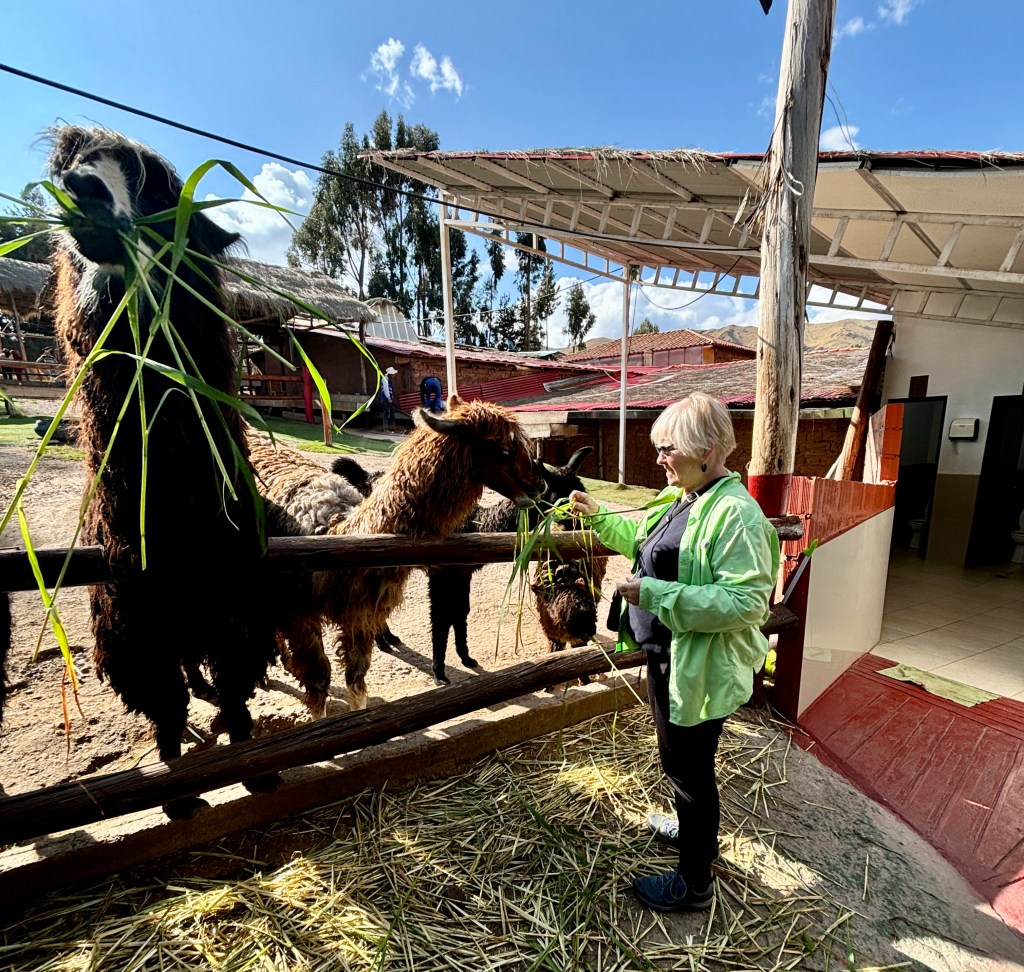
We saw and fed four types of alpaca and huacanos. This was really quite fun.
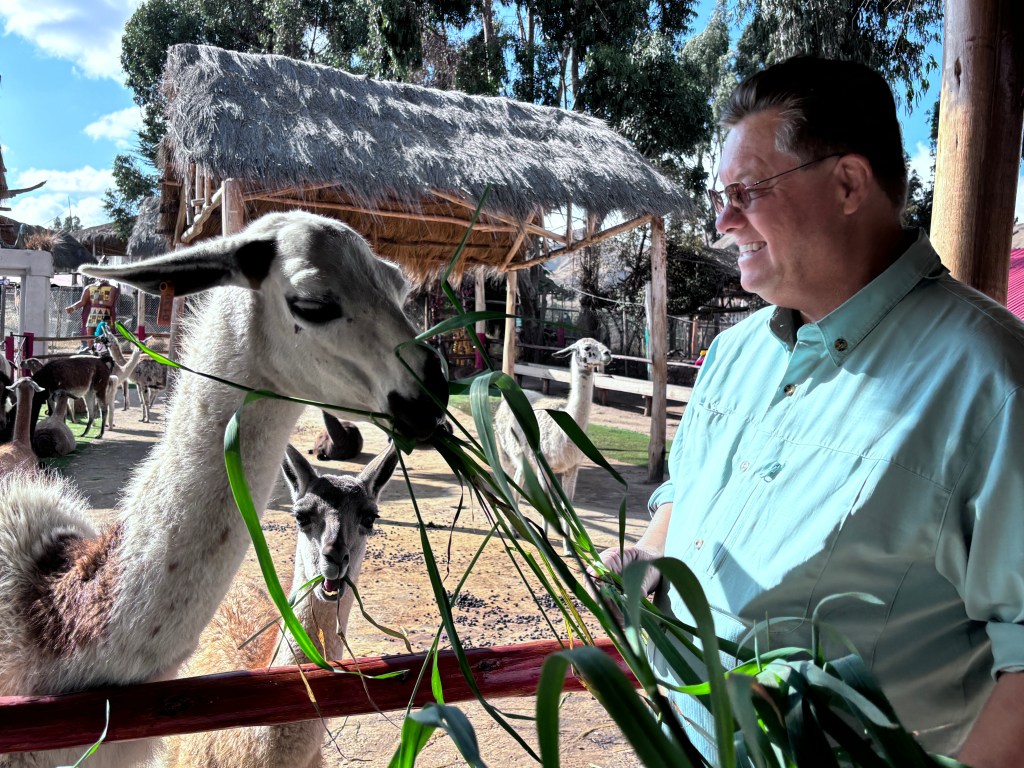
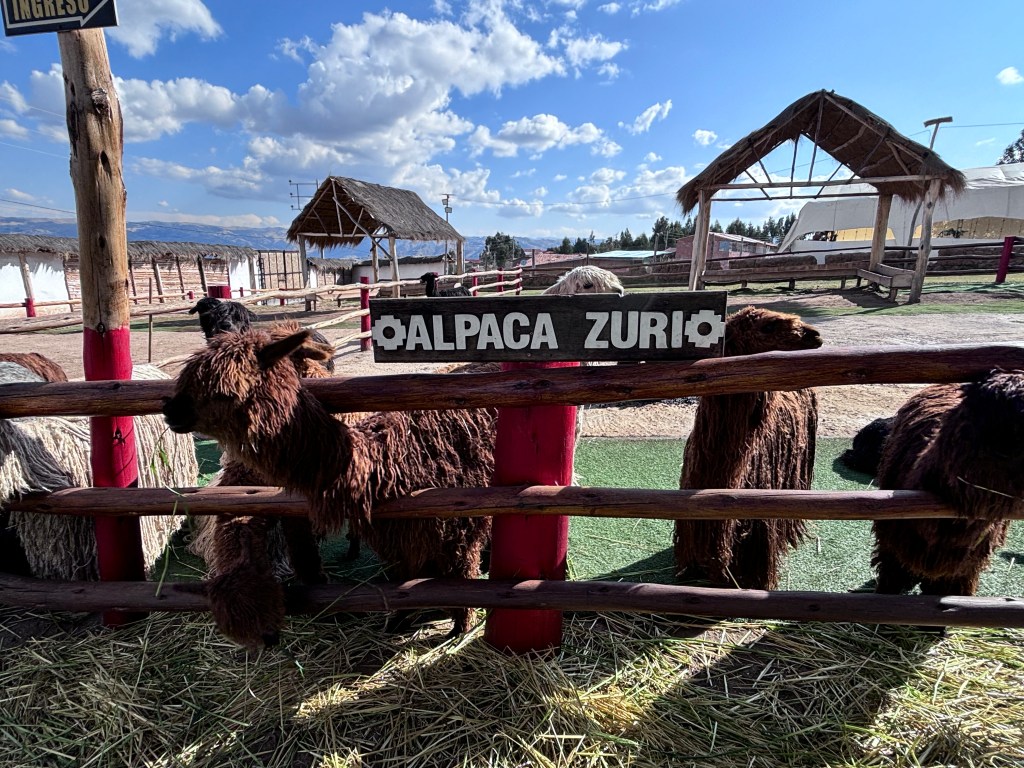
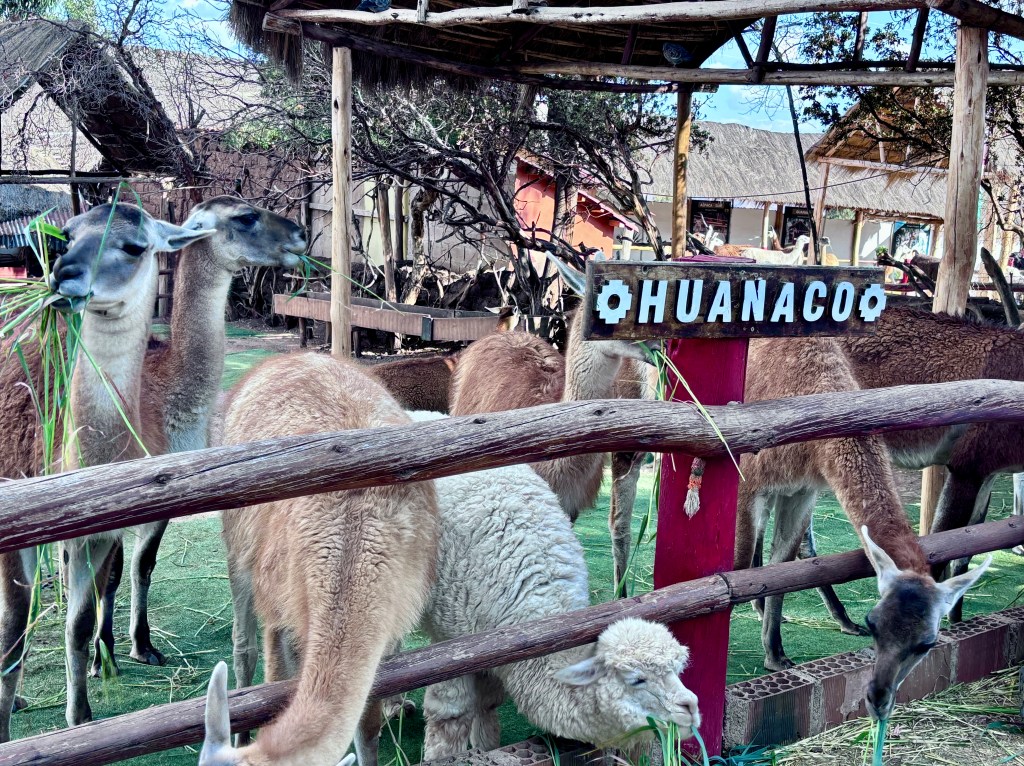
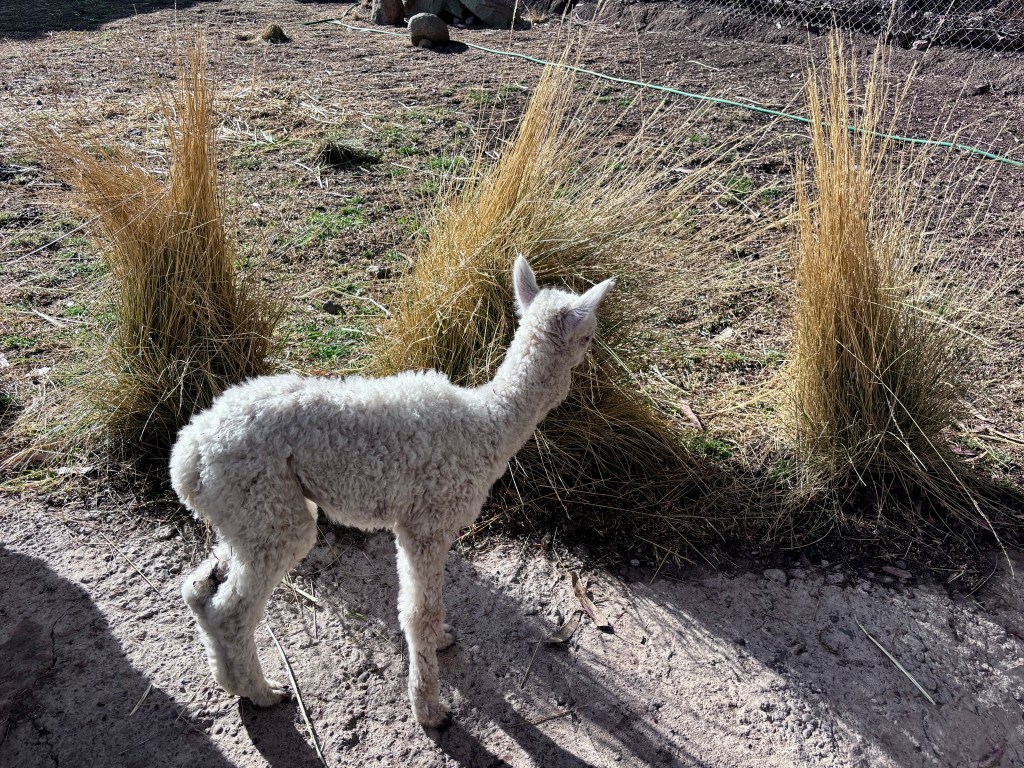
We saw babies! This one was about ten days old.
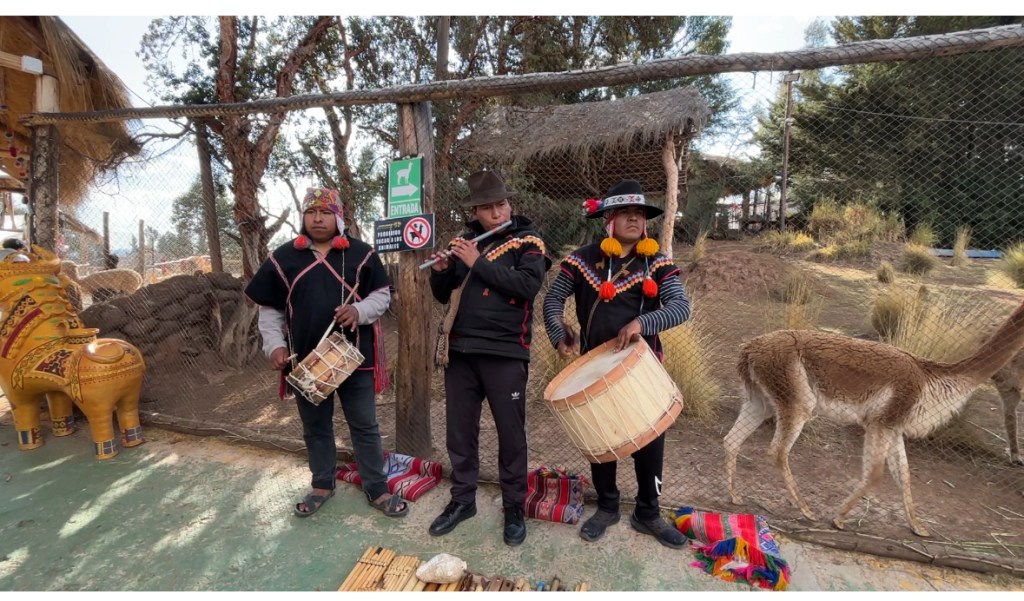
We had a brief concert.
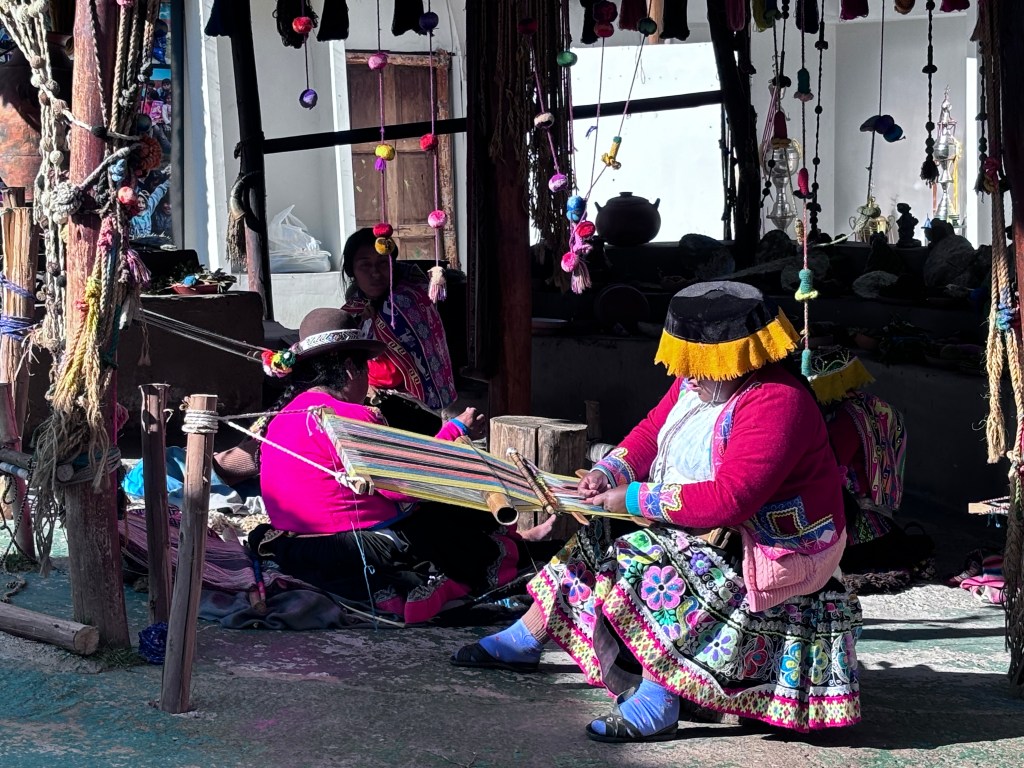
Women were showing their weaving techniques.

There was a pen for guinea pigs, a special event food in Peru. They are not pets. (We were never offered any of this delicacy on our trip, nor did we seek it out.)
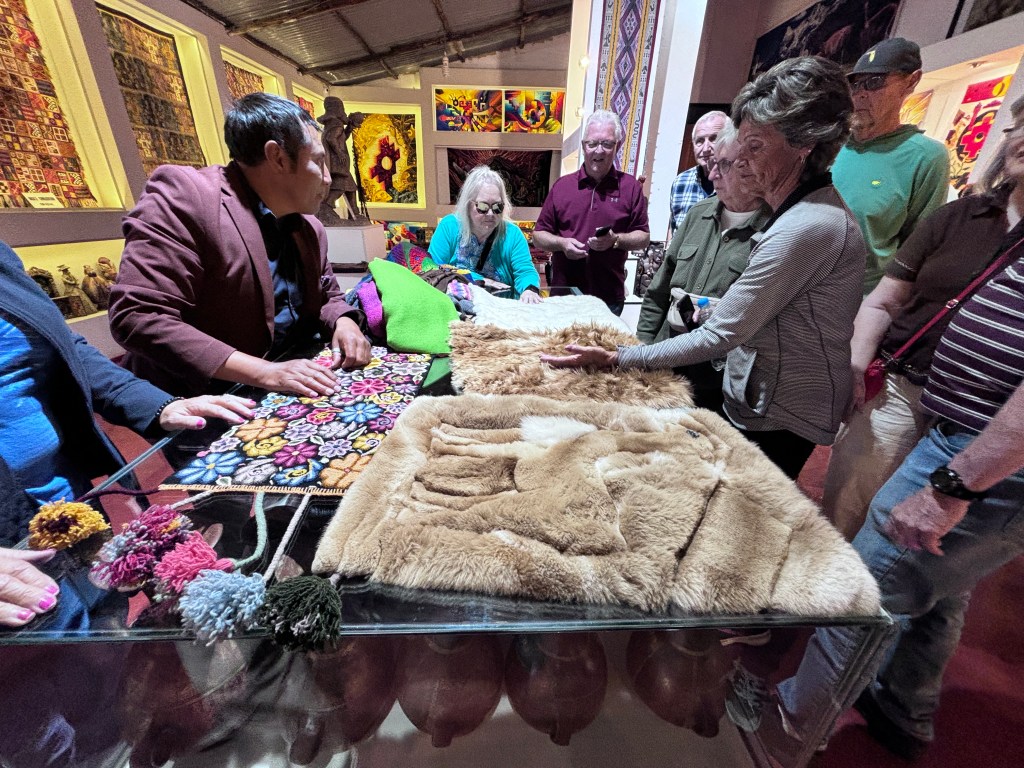
A demonstration taught us how to recognize authentic baby alpaca textiles. We enjoyed looking around for some art or craft work to remind us of this trip.
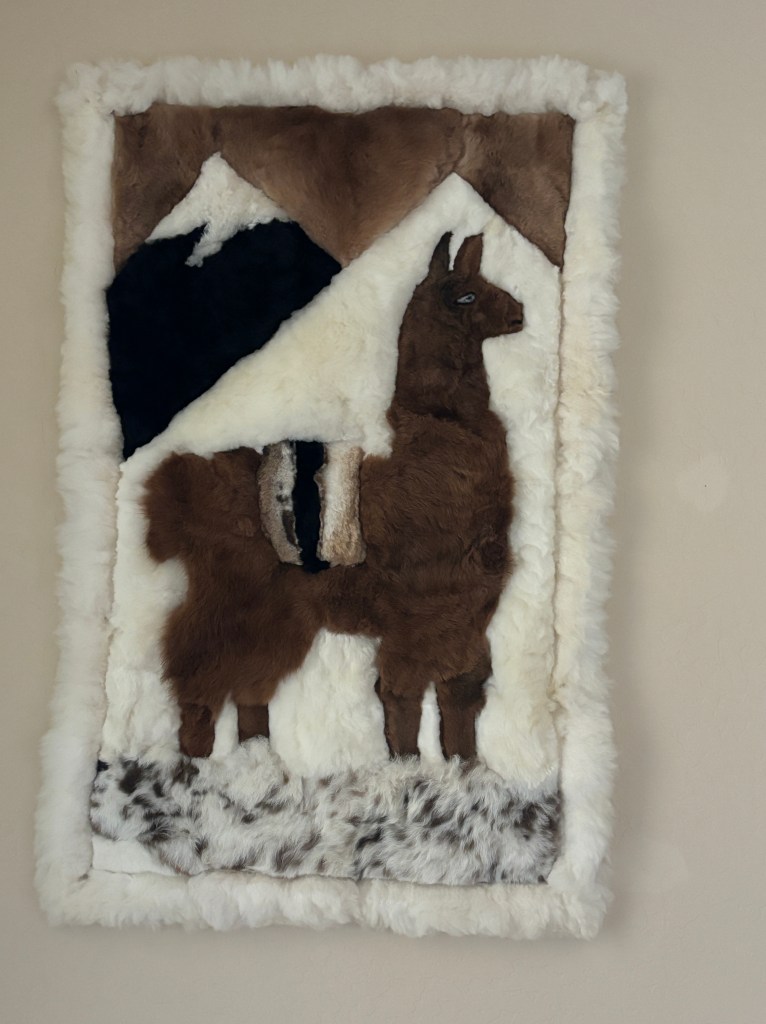
We bought this alpaca wall hanging even though we had to carry it around! It is reminiscent of our trip and of former family heirlooms or sorts. My parents lived in Panama in the early 1980 and bought family members large llama wall hangings. Only a couple are left after 40 plus years and they are in marginal condition.
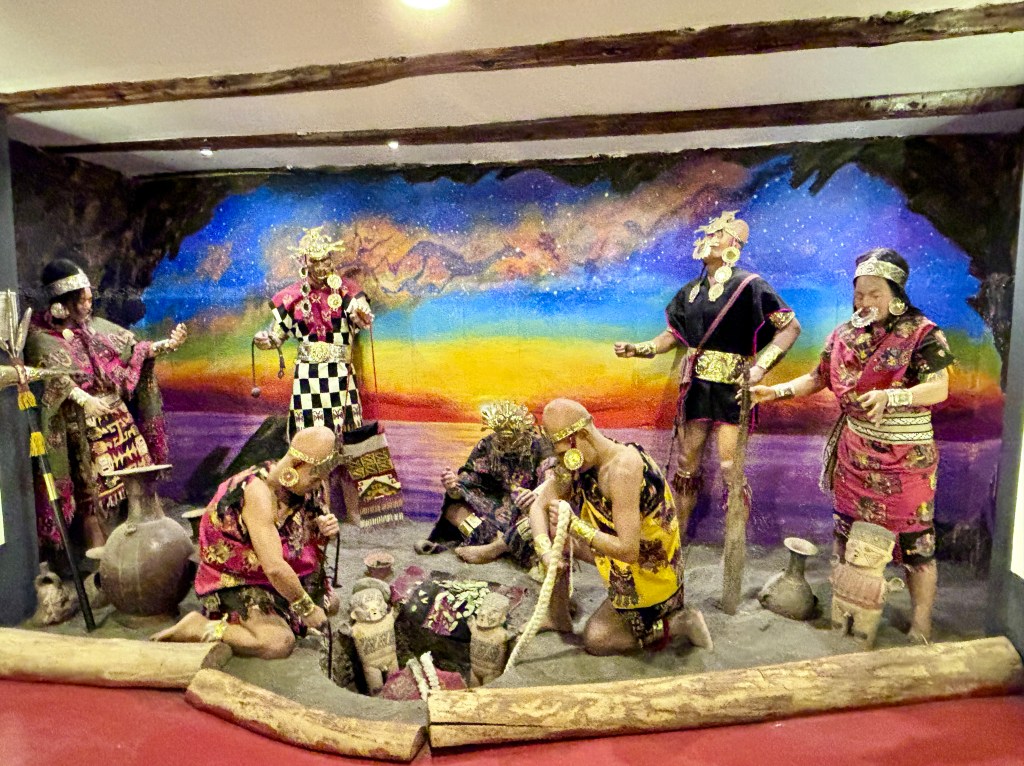
The center also had some exhibits to teach about the Inca.
We enjoyed a few more Enrique lessons on our coach ride. We learned a mantra of the Inca was “to love, to learn, to serve.” Nice.
Quinoa is grown in Peru because the climate is so consistent. White quinoa has a primary ingredient of calcium. Black quinoa has magnesium and red quinoa has iron. Although grandmothers and mothers didn’t know the specific elements, they knew a rainbow of quinoa kept their family healthy.
A cup of coca tea has more calcium than seven cups of milk. Yet, coca tea is not allowed in the US because of the possibility of homemade cocaine. Sniffing dogs are always present when flights arrive from this area and they will cue on coca leaves – even the random tea bag from a tourist in Cusco. (Some coca tea was accidentally spilled on my backpack along the way – I made sure I washed it well before we flew home.)
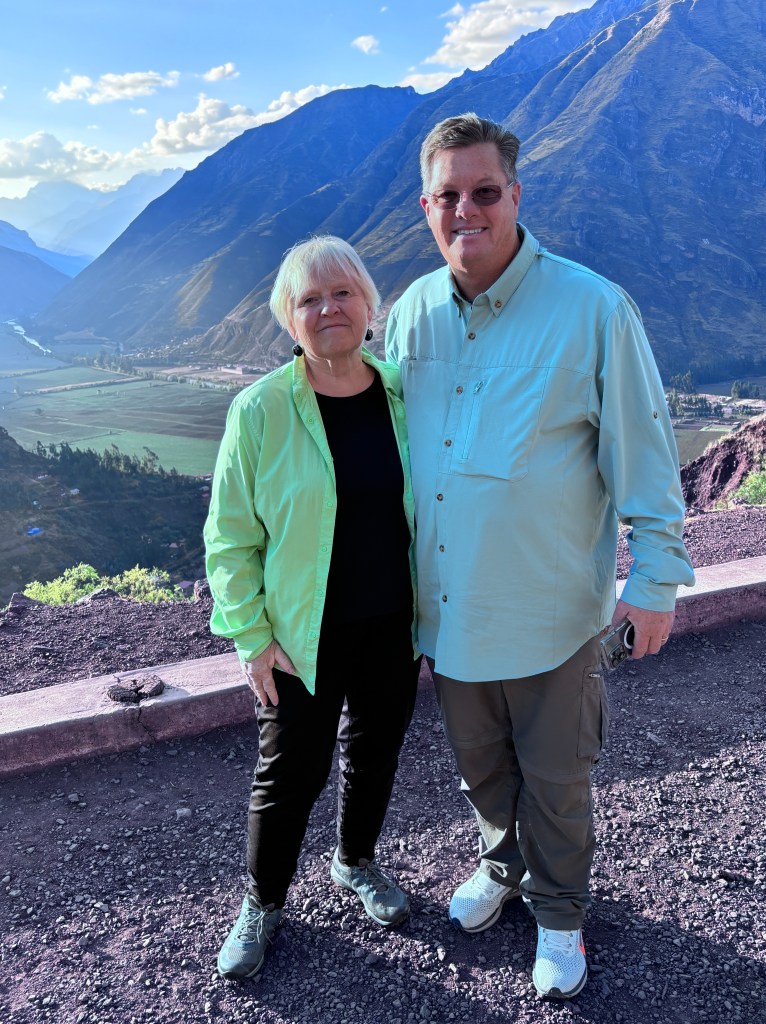
We stopped at an overlook to see the Sacred Valley, bound on one end by Cusco and on the other by Machu Picchu.

The river at the bottom is a tributary that eventually goes to the Amazon. To go by water, it would take a week and going over 183 Class V rapids. We will fly and drive instead – but first we will visit Machu Picchu and spend more time in Cusco.
The town at the bottom of the valley is Pisac. There is an Inca Archeological Complex in the vicinity but we did not visit it.
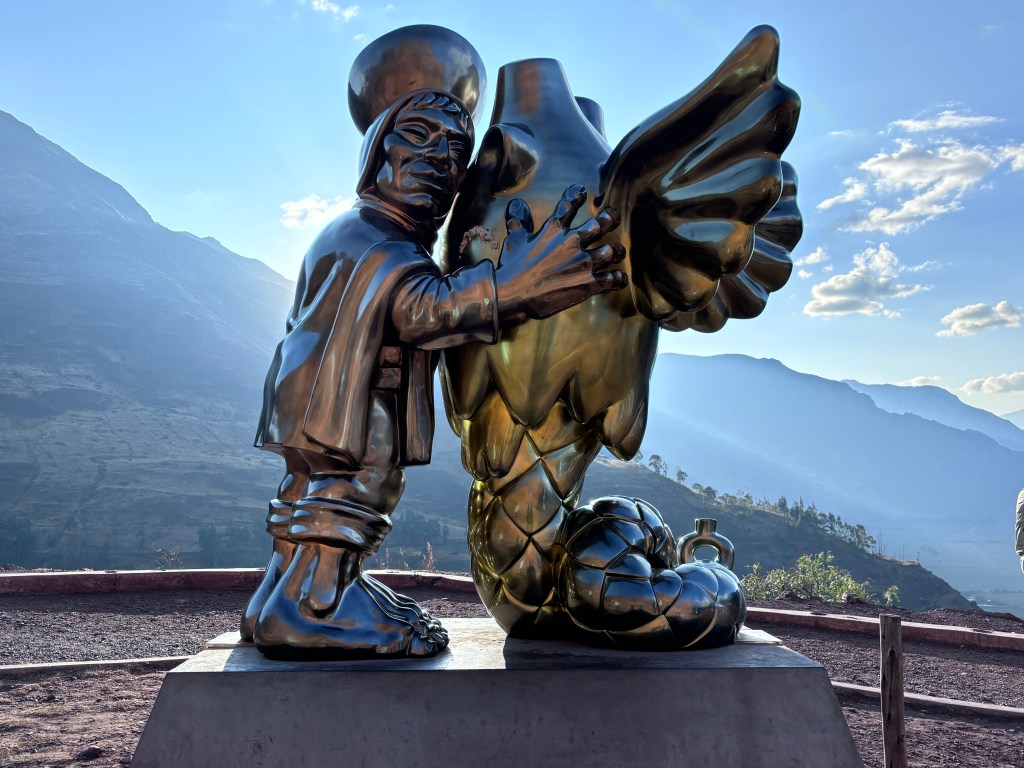
Presumably this statue is related somehow to the complex, but I did not learn its significance.

We arrived at our hotel in time for a late dinner with Andean music.
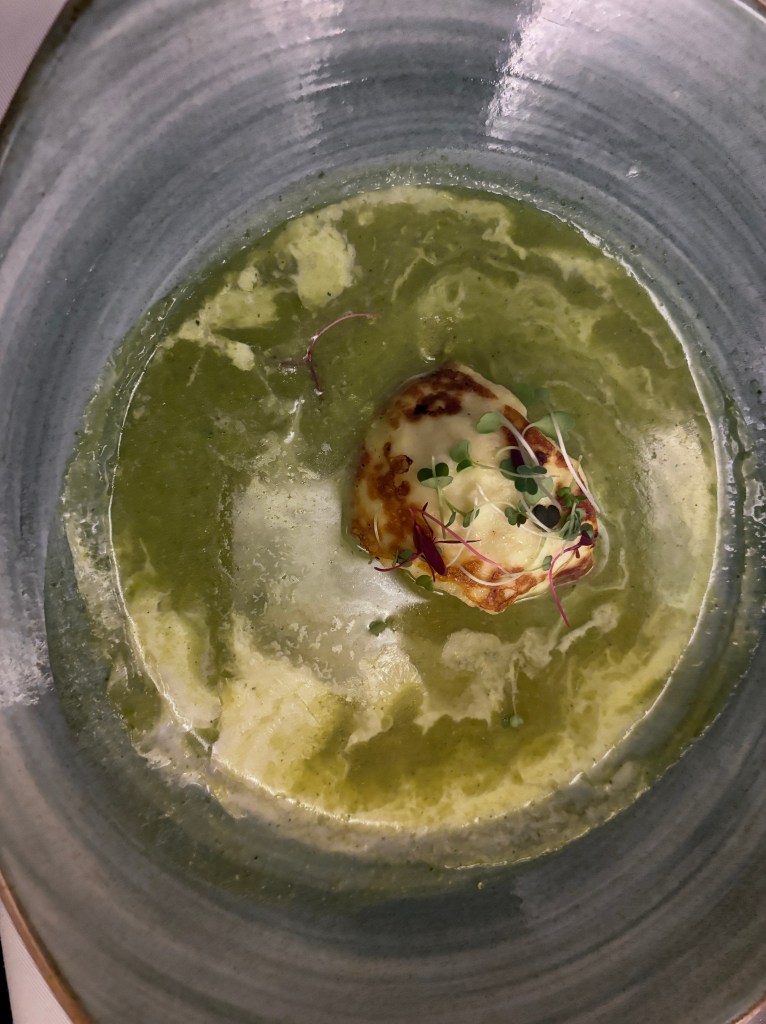
I only remember that this soup was delicious!
We were in Cusco on September 17, 2024.
Next up: Morning in the Sacred Valley


 Serene Wandering
We spent most of a night in the Lima airport waiting for a morning flight to Cusco. To say that it was uncomfortable would be an understatement!! The gates were all closed and there is little seating in the main airport area. A lots of folks waiting for next morning flights! You definitely experienced more of Cusco than we did, as we landed and headed out straight away. Lots to see apparently! We’re enjoying your blog.
After Machu Picchu, we actually spent more time in Cusco. More to come!
Gre
Fabulous trip! When I was there