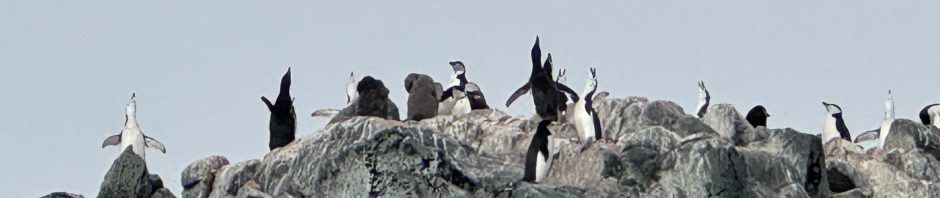

I sent this text to numerous friends and family on the morning of September 18. Of course, September 18 was also the day we went to the Inca Fortress and village that I wrote about last time – but the main event of the day was Machu Picchu.
Visiting Machu Picchu was the main reason for choosing this itinerary. The Nazca Lines, the Amazon and the Galapagos were nice add-ons but never would have taken us to Peru and Ecuador on their own.

This trip had been reserved well over a year in advance and in January of 2024 we discussed needing to get in shape for hiking Machu Picchu. Unfortunately, we didn’t do that and I spent months being concerned that I would be the “weak link” in the group tour of Machu Picchu.
At some point we learned that Machu Picchu is at 7000 feet elevation. We spend most of the summer months at 6500 feet at our mountain cabin so that seemed good preparation. When I got Covid a month before our trip, that added to my concern.
But, now it was go time and we were going. Twice! One of the benefits of this Avalon Waterways itinerary is that we got two opportunities to visit Machu Picchu That gave us a better possibility of seeing it in good weather.
We boarded the Machu Picchu Train and took our seats in the Premium Lounge.
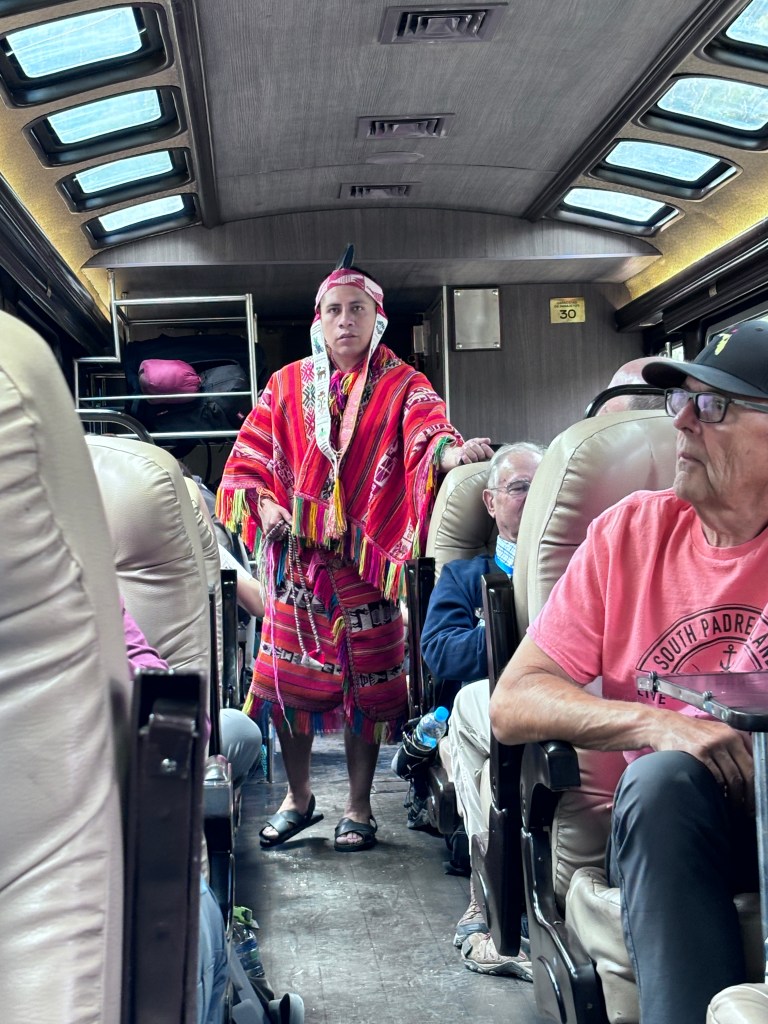
Two train employees gave us a brief program on forbidden love between an Incan princess and her suitor.
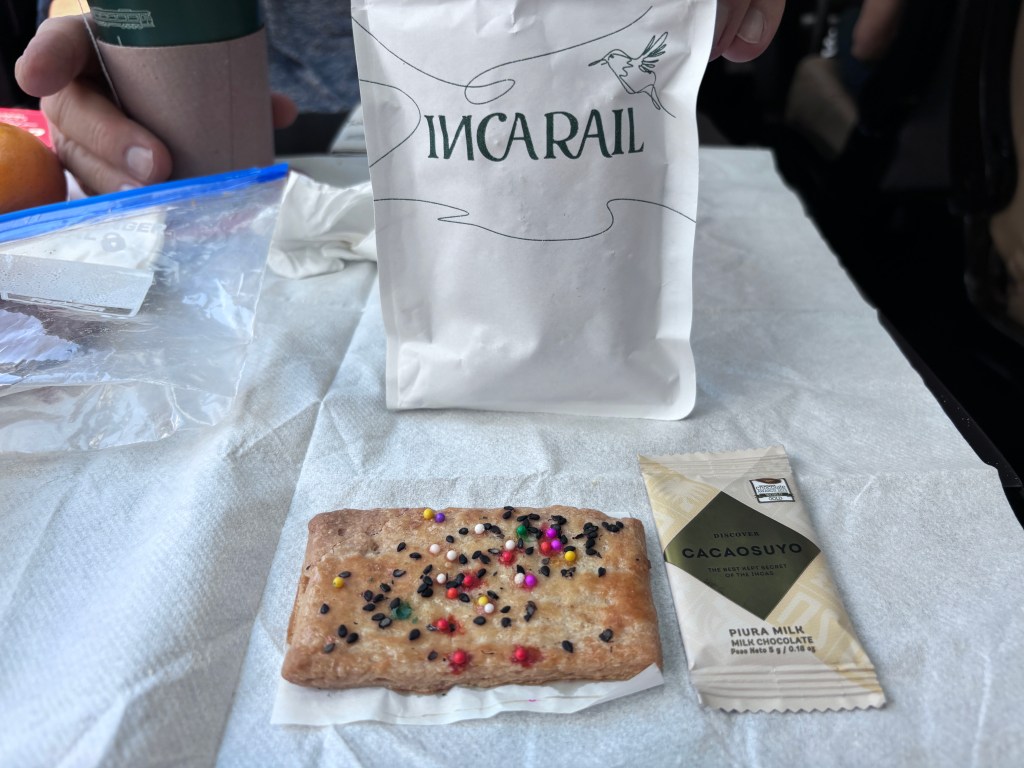
We ate our scavenged lunches from the breakfast buffet and also had a complimentary snack.
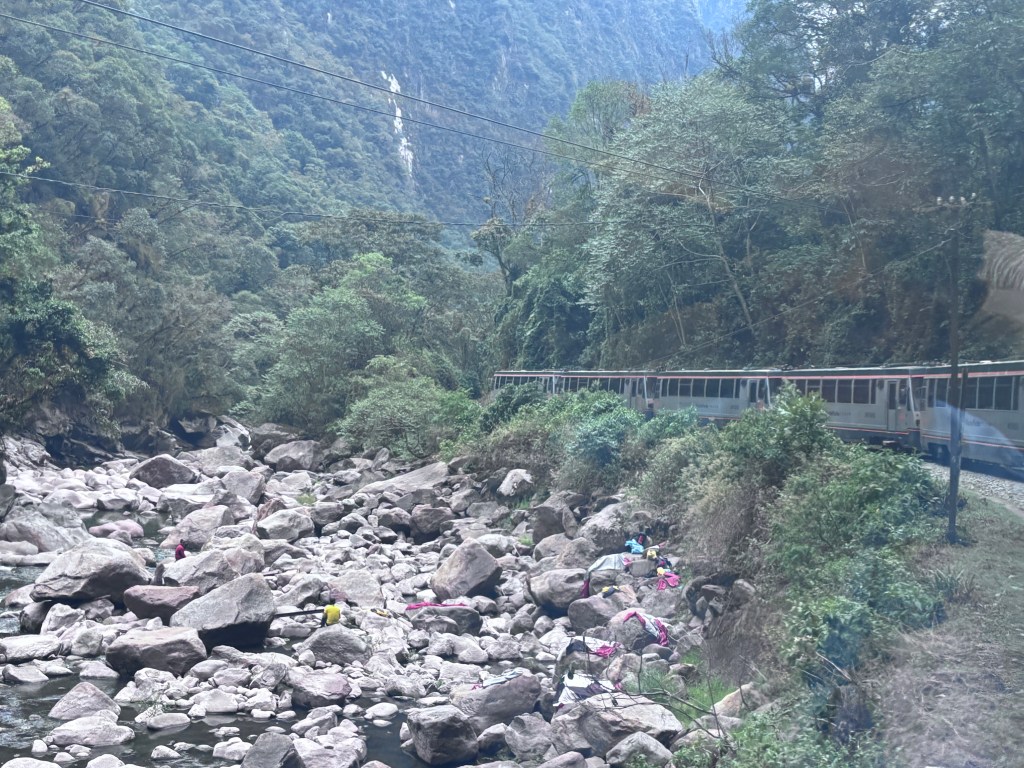
We enjoyed our 90 minute ride up the mountain.
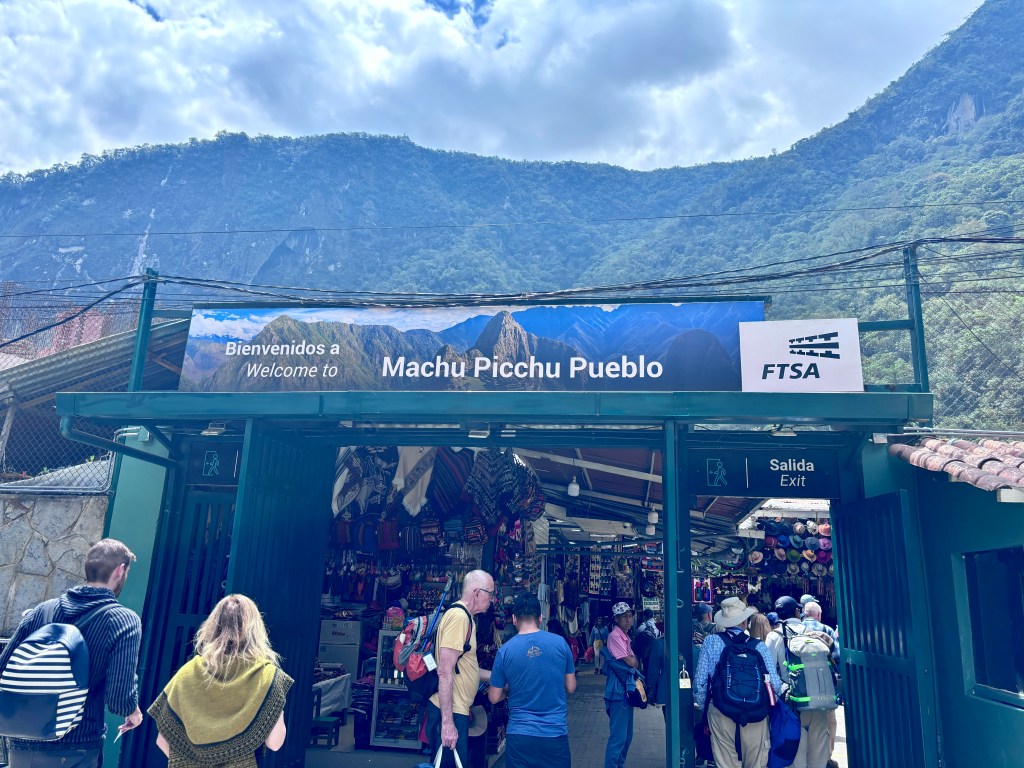
It looks like we are in the right place!
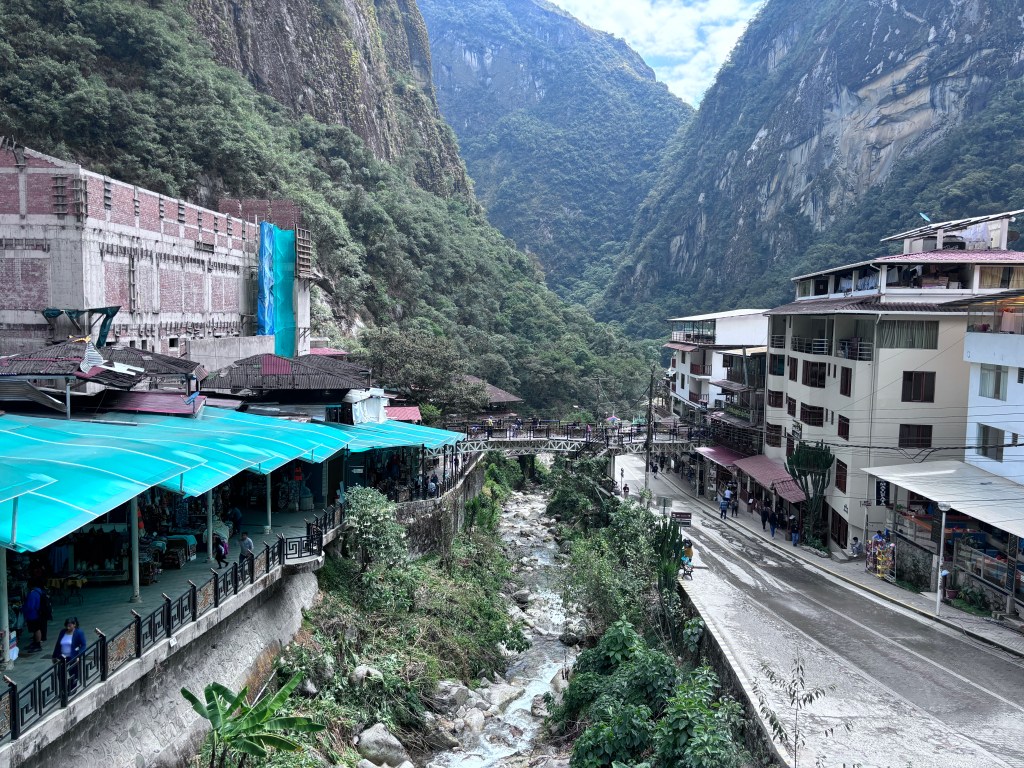
There was a nice village with hotels, restaurants and shops. Our next step was to get in a long line to ride a time ticketed bus up to the actual site.
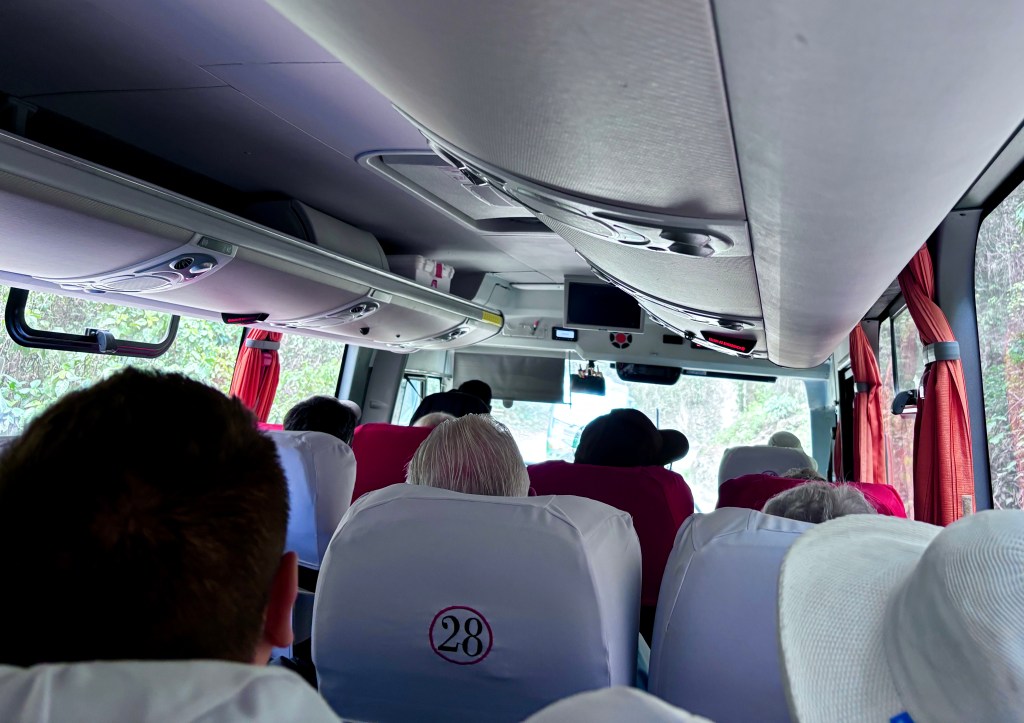
We made it through all the steps, all timed and coordinated by Enrique, to make sure we were where we needed to be, when we needed to be there. We don’t know why people try to do complicated things like this, in a different language, on their own.
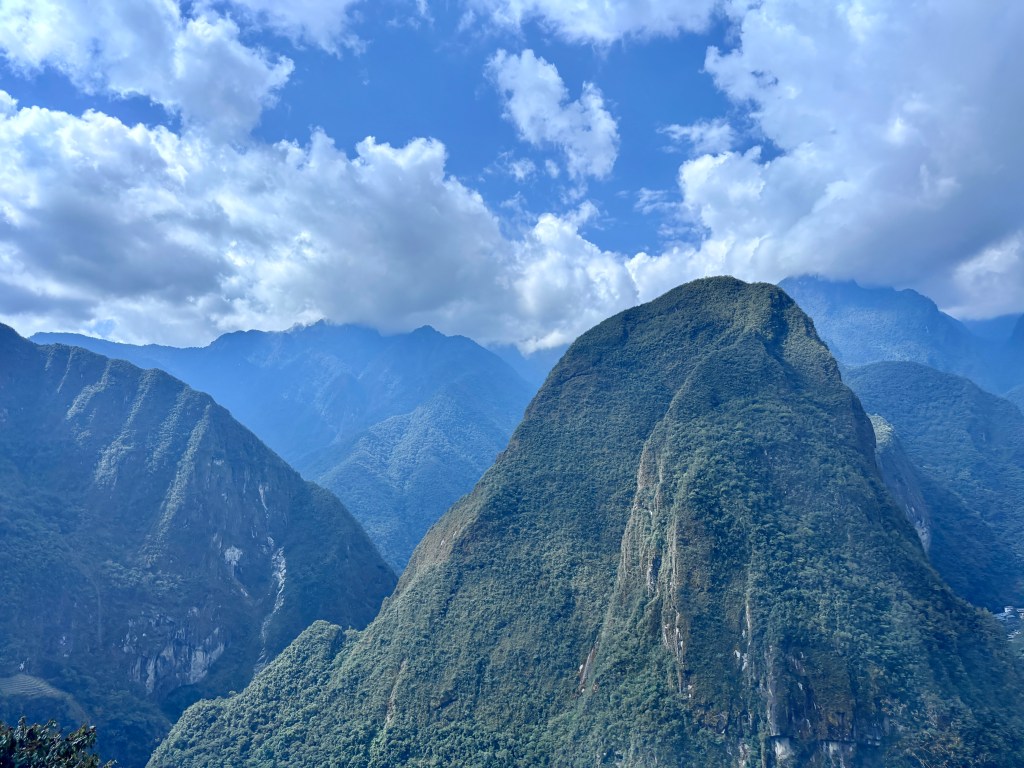
There were thirteen switchbacks on the way up the mountain.
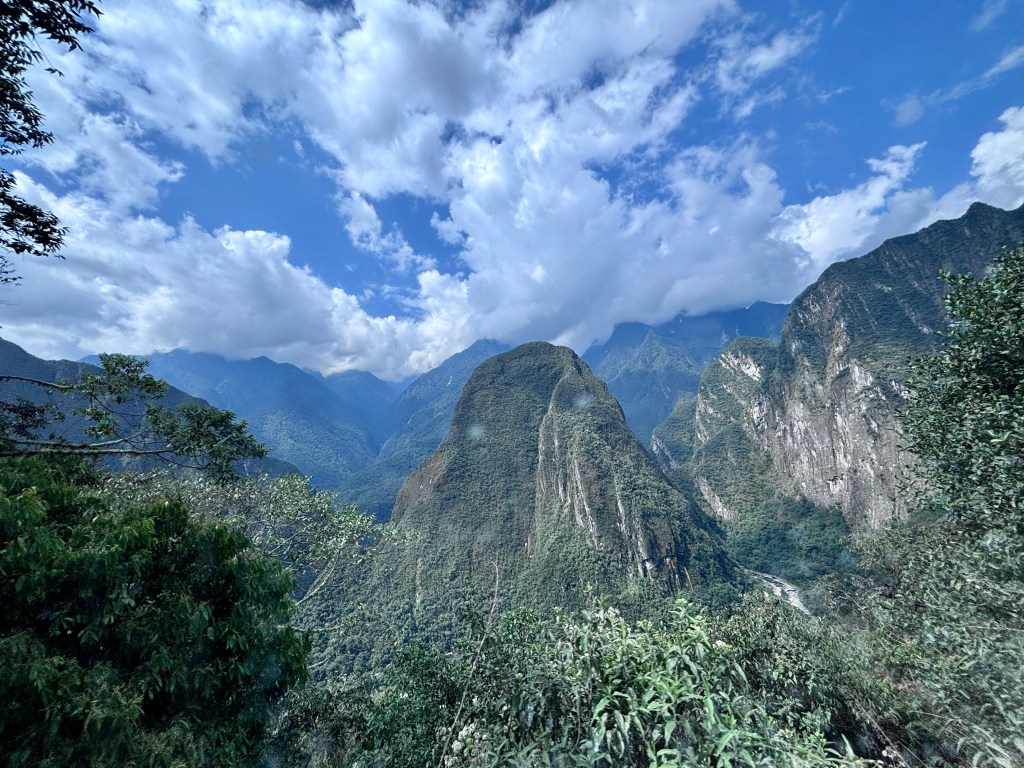
The views were stunning.
When we entered the historic site, we were given passes to a particular circuit, pre-arranged by Enrique and Amazon Waterways. There are four circuits with circuits 1 and 4 having limited access.
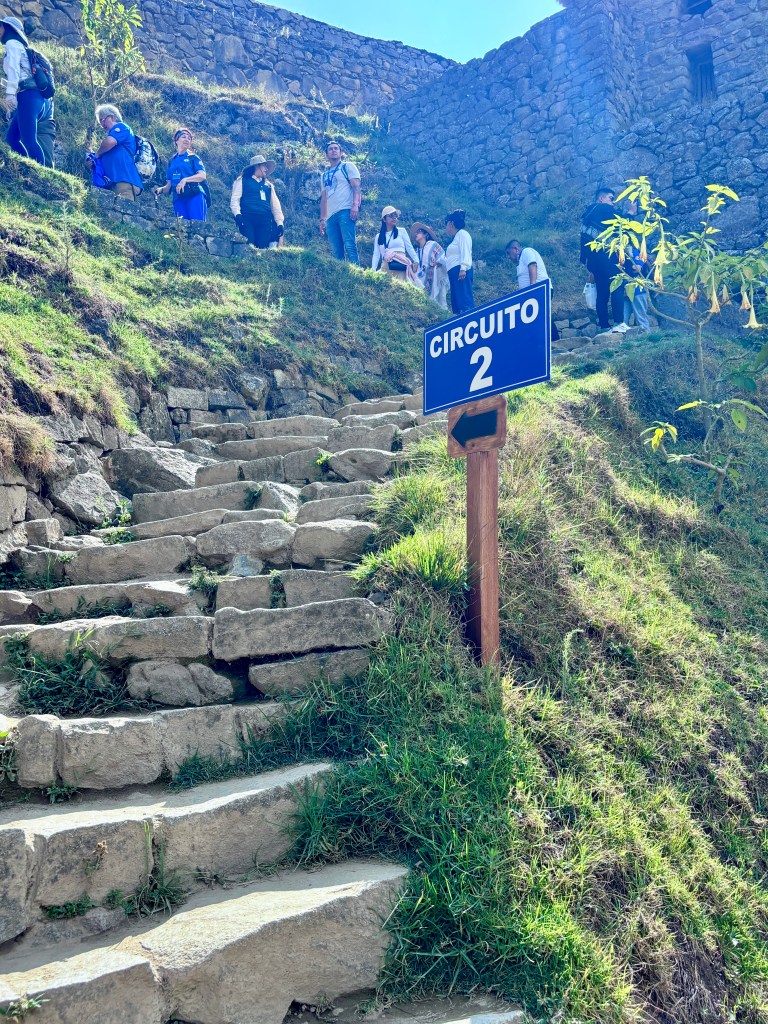
We all had route 2 entries and most of us took full advantage of the broad access that it provided. A few on our tour chose an abbreviated version of route 2, with their own guide, based on mobility concerns.

Most of us would climb steps equivalent to seven stories. We went up but it was slow in pace and no problem – so much wasted worry!!
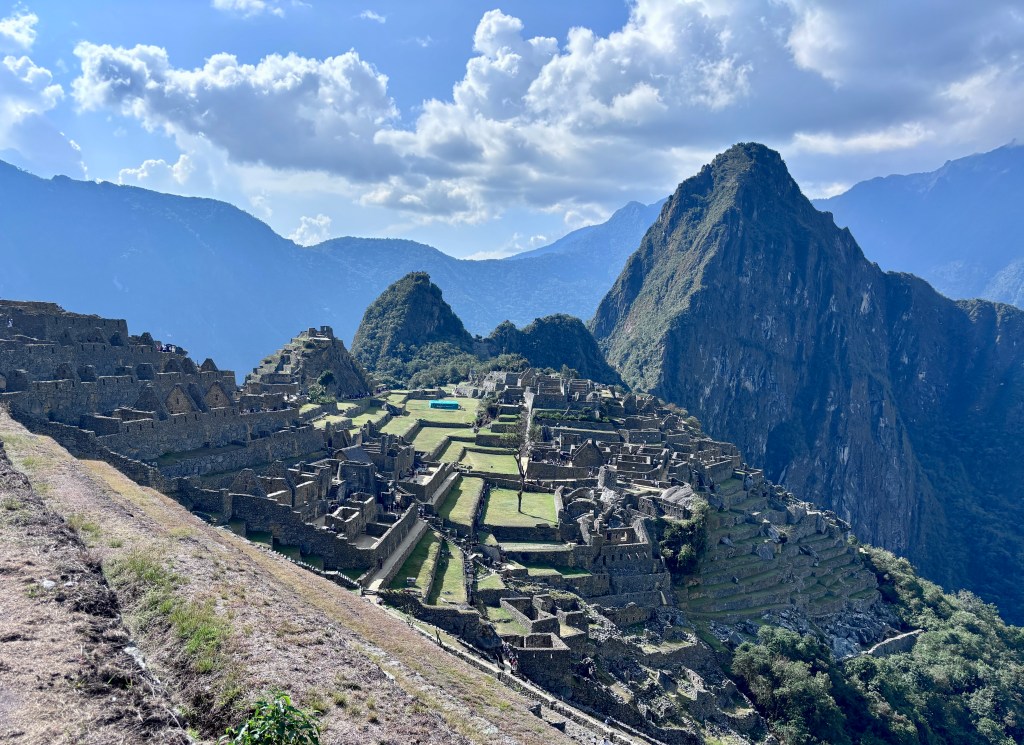
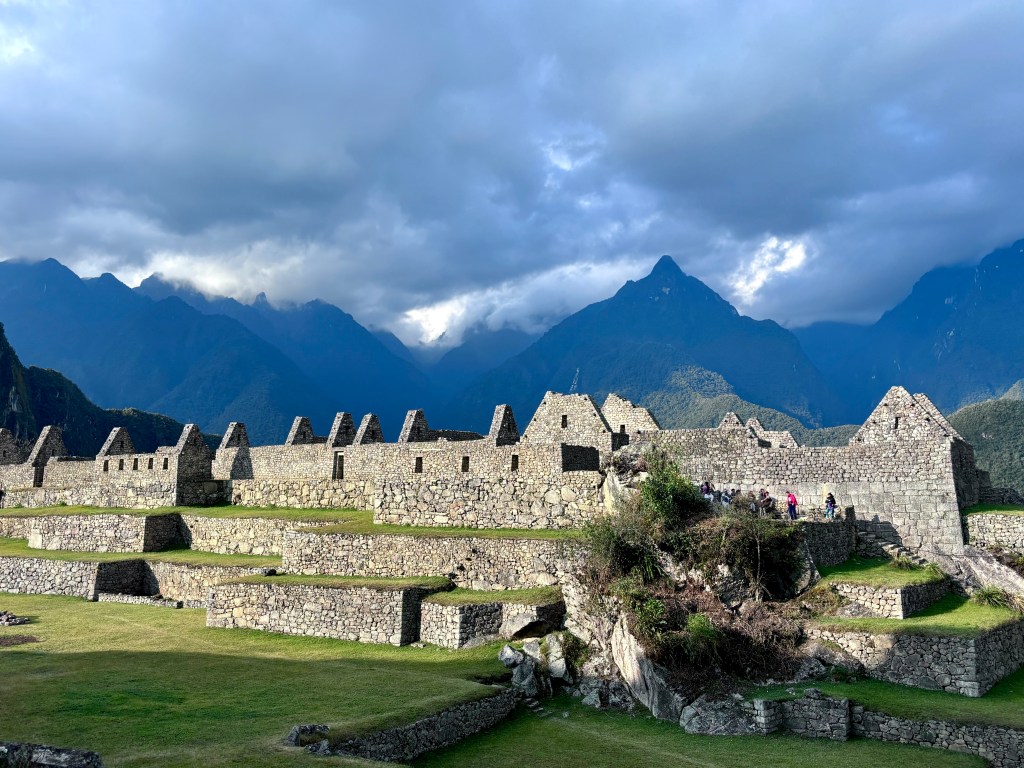
We crested and had our first view of Machu Picchu.
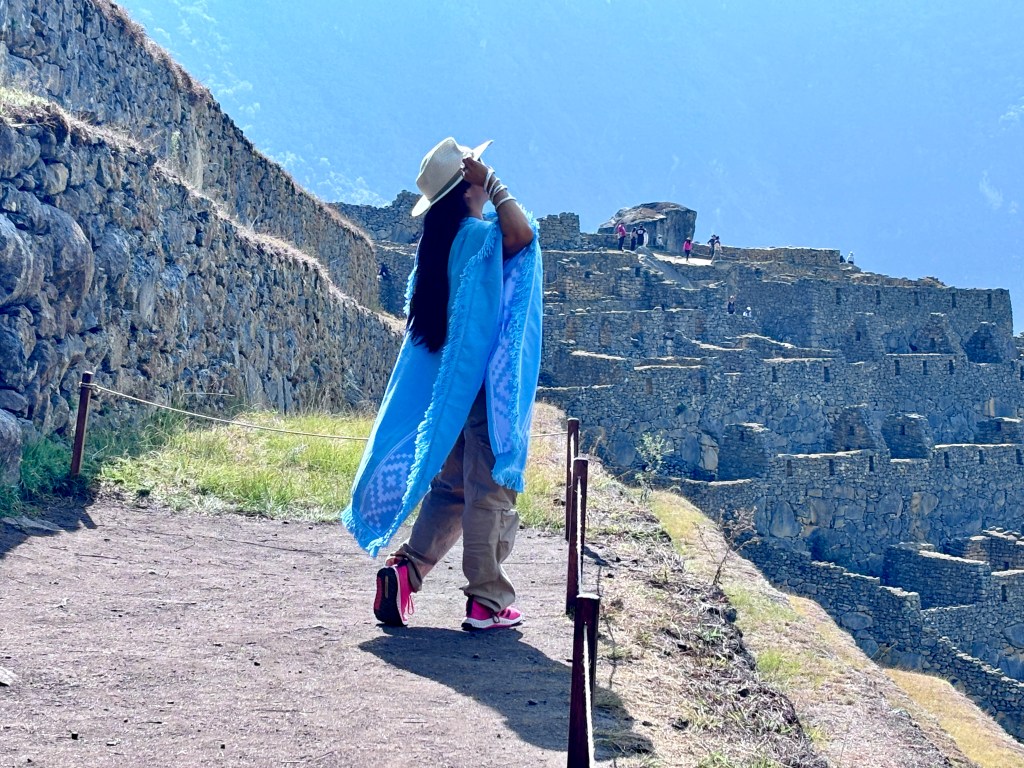
Isn’t she lovely? The amount of time we (about 30 people) spent waiting for her to have her friends get the perfect shot was a bit annoying.
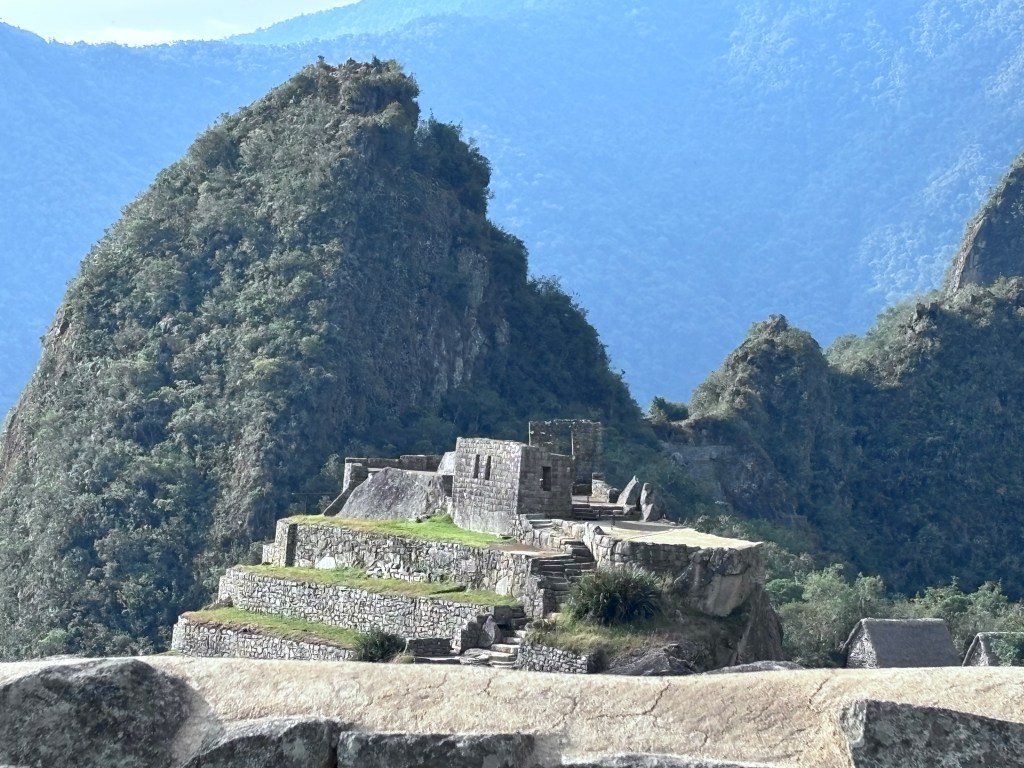
These are more of our first views!
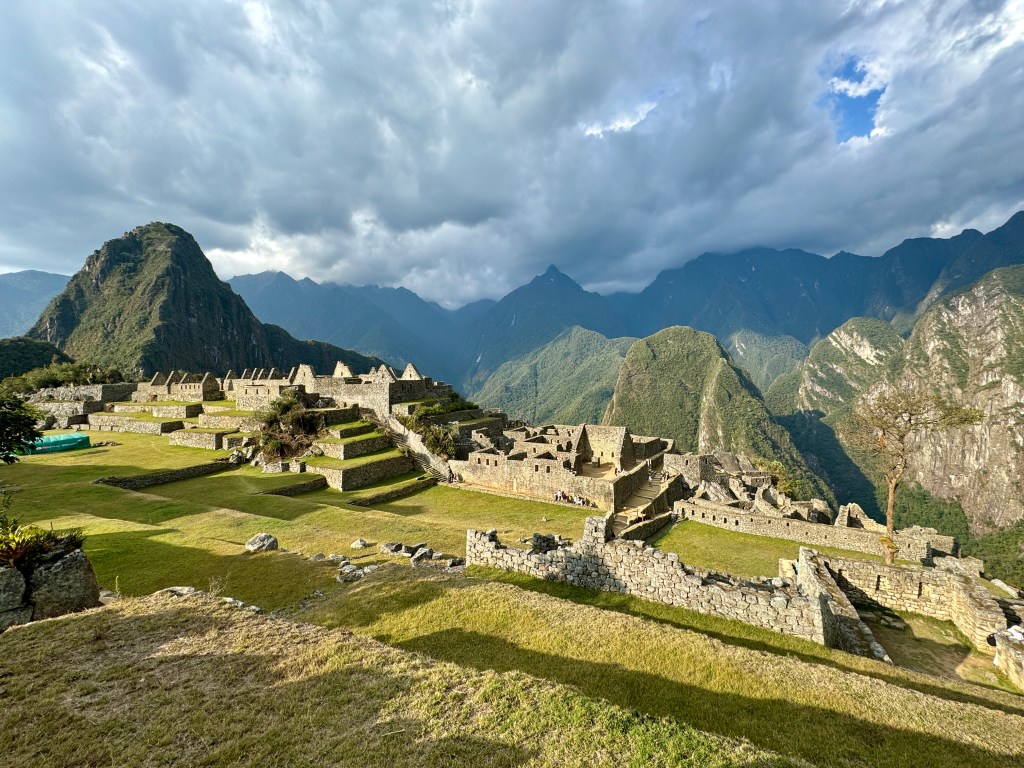
Machu Picchu was likely built in the 15th century as an estate for the Inca emperor Pachacuti. It sits on an isolated mountaintop at one end of the sacred valley, far above the waters of the Urubamba River.
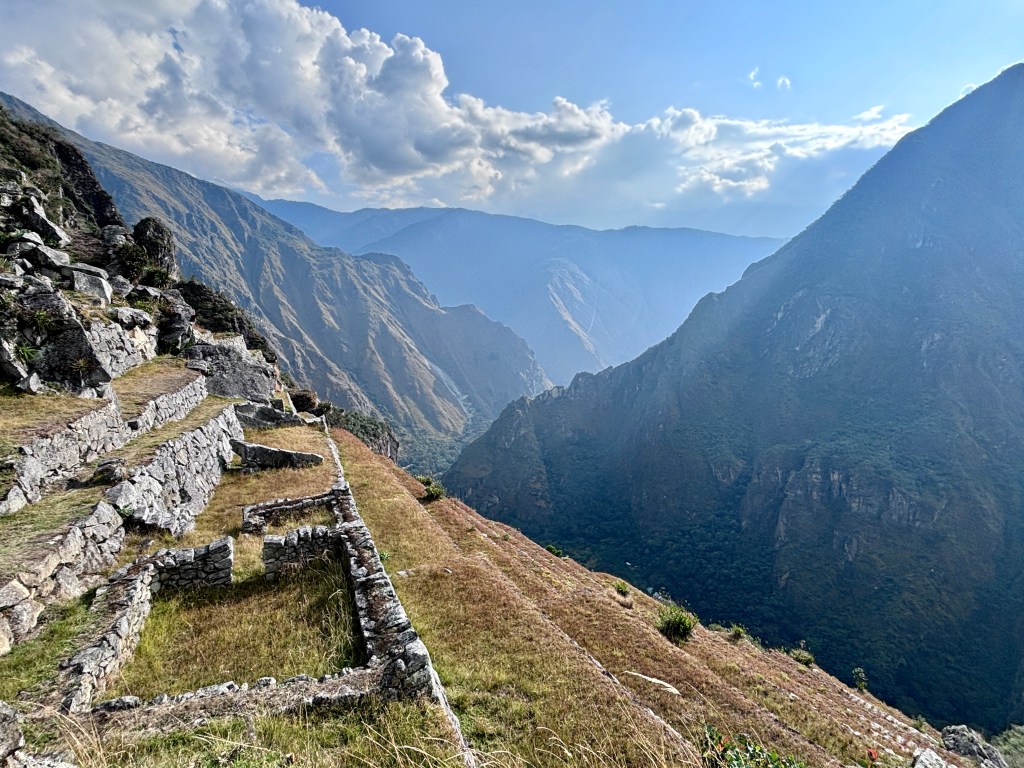
At that time, there were two entrances into the sacred valley among the mountains. One was a thatched bridge across a large ravine. The other was a footpath which became known as the Inca Trail.
Some Machu Picchu tourists (maybe purists) choose to hike four days and three nights and cover 32 miles of the Inca Trail.

Others walk the last 32 yards….that would be us! Following the last yards of the Inca Trail allowed us to access the only historic entrance into Machu Picchu.
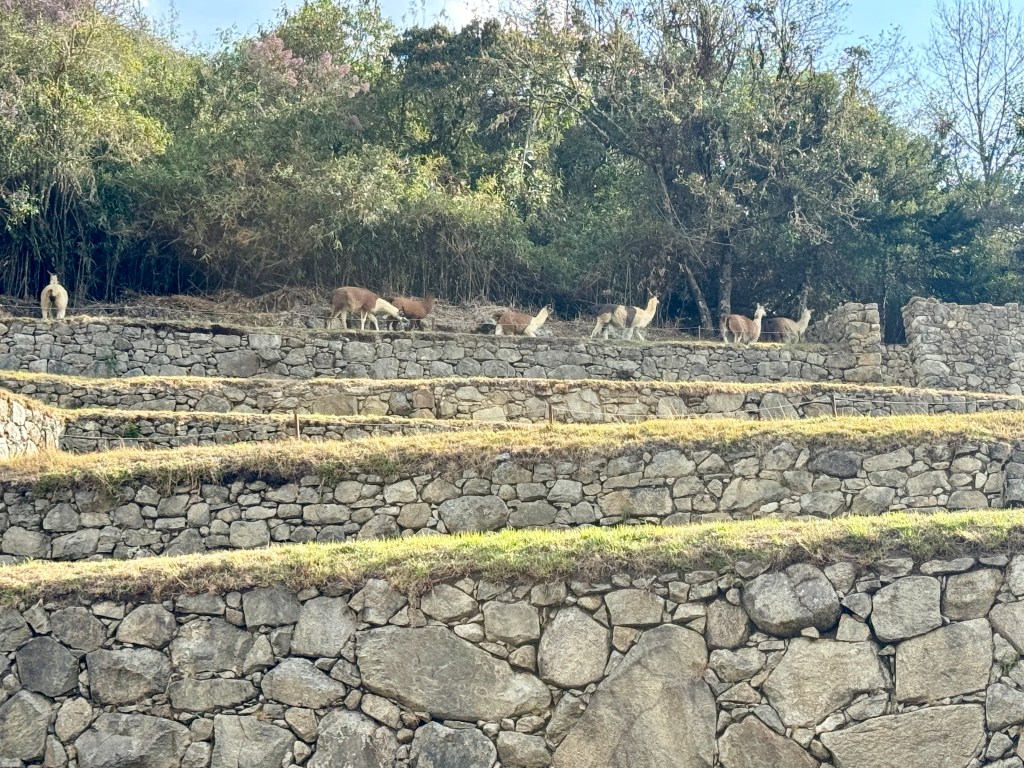
Machu Picchu rangers are trying to rehab the terrace levels. The alpaca are surely helping!
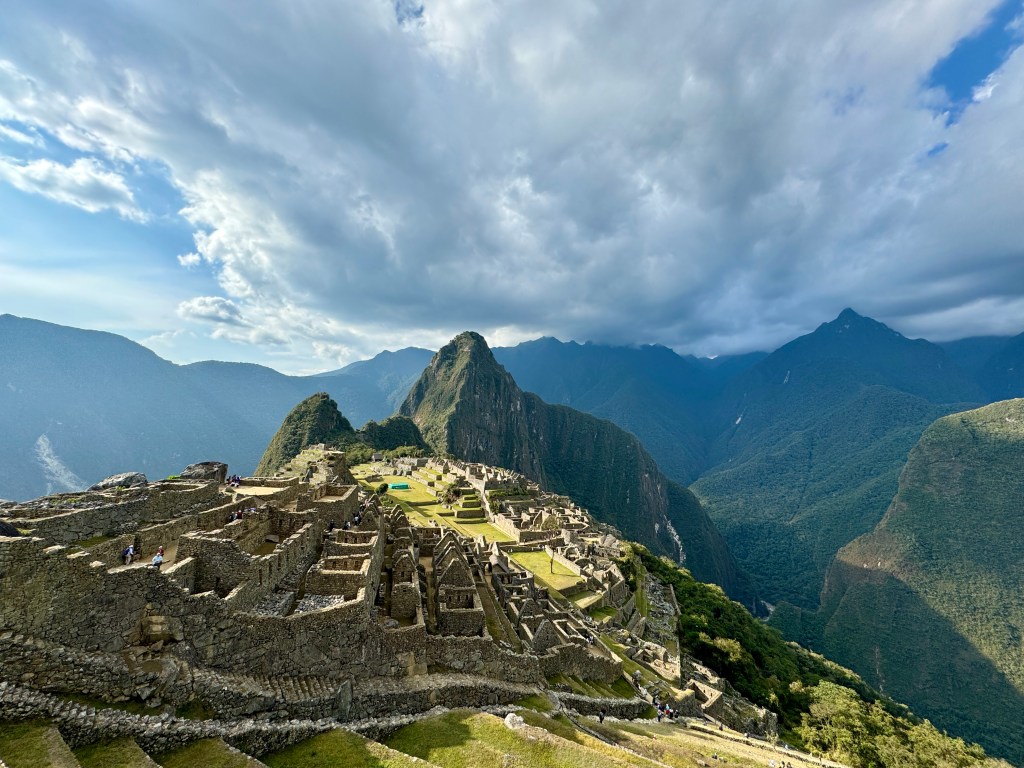
Each vista offered slightly different angles on the community that once held 1200 people.
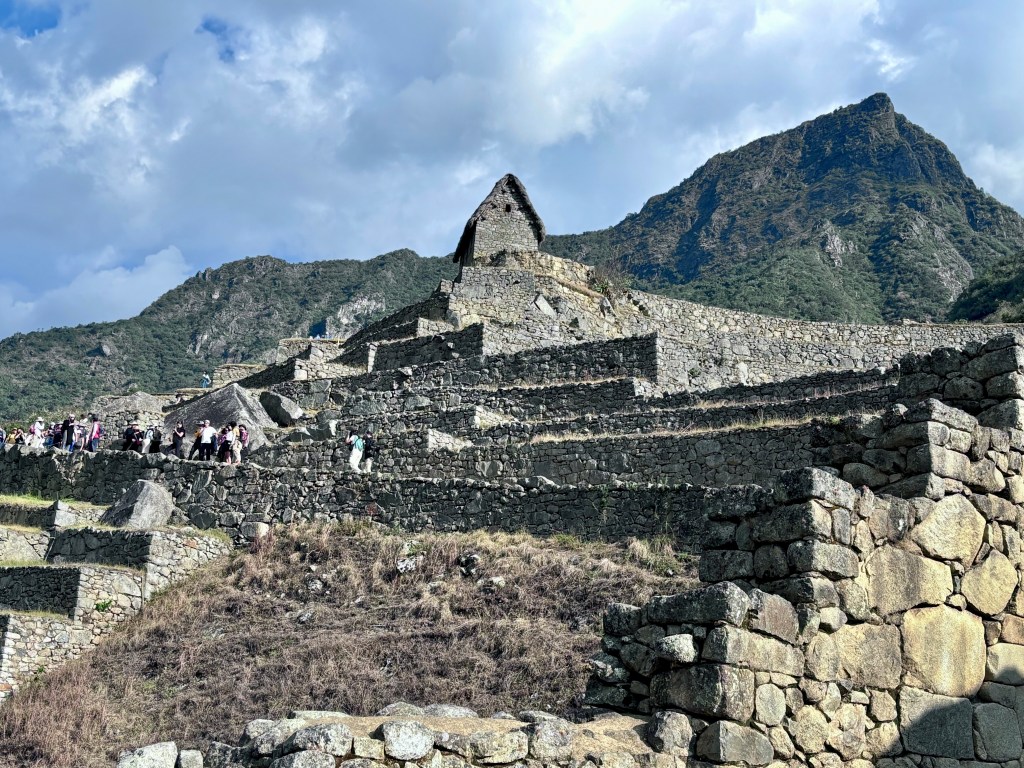
This was the communication house. People communicated with other communities using conch shells.
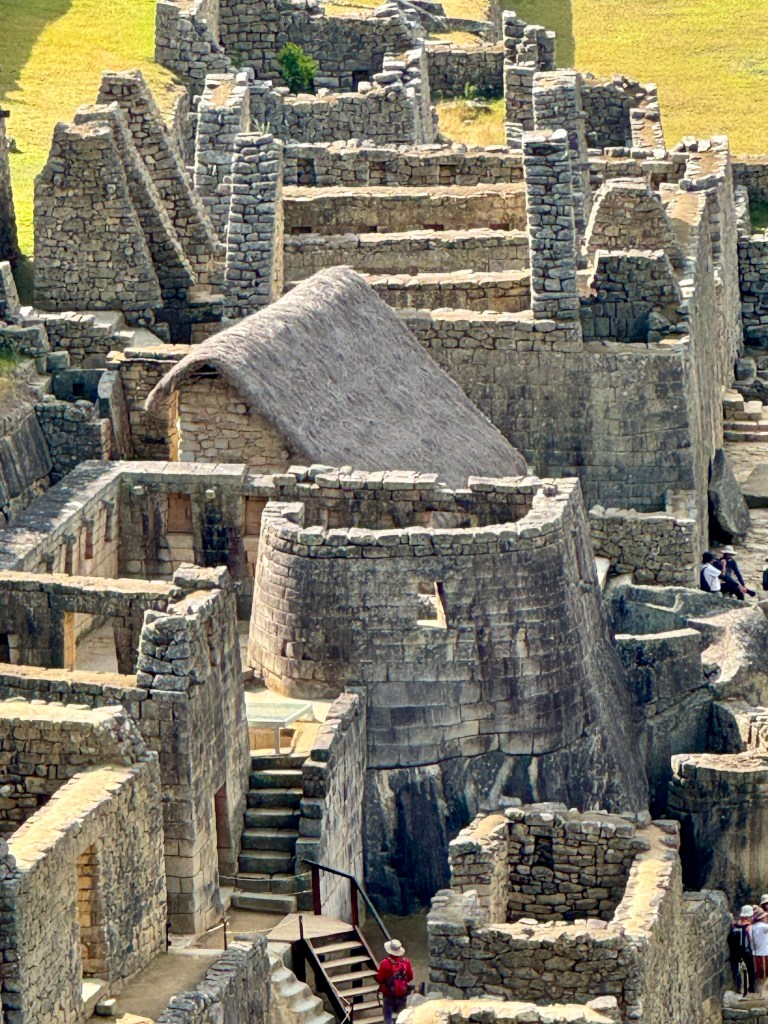
Enrique would tell us about some of what is known along the way.
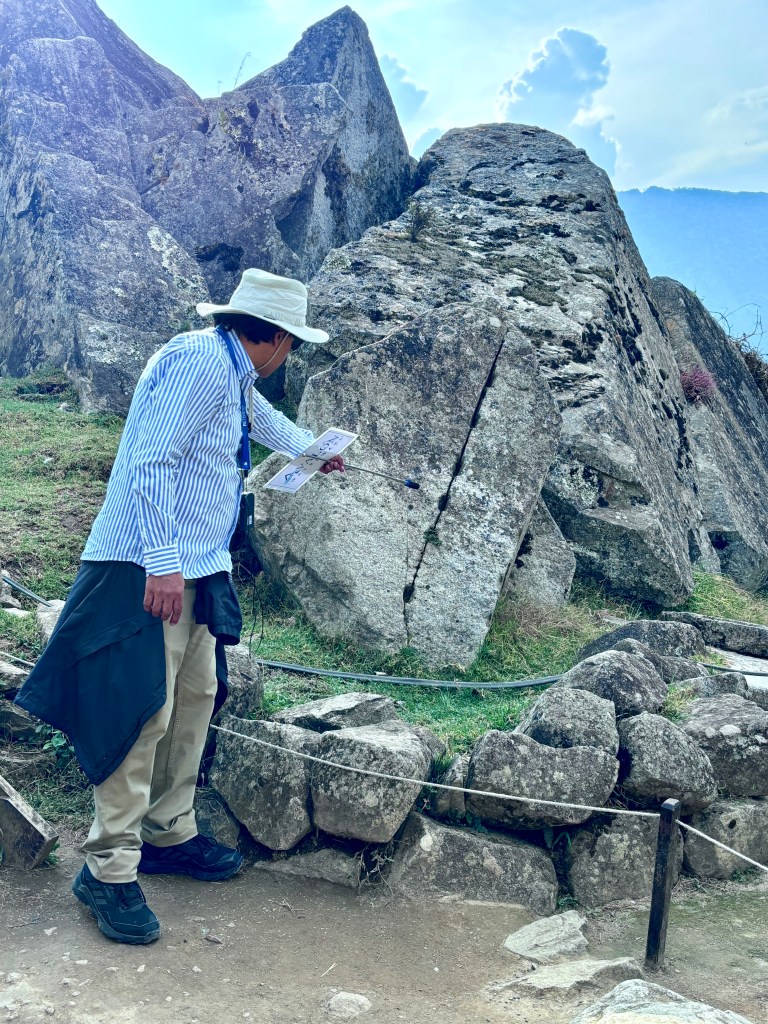
In this case, the Inca would make a series of holes in the stone using hematite and then insert pieces of wood. Over time, the wood would swell and the stone would break.
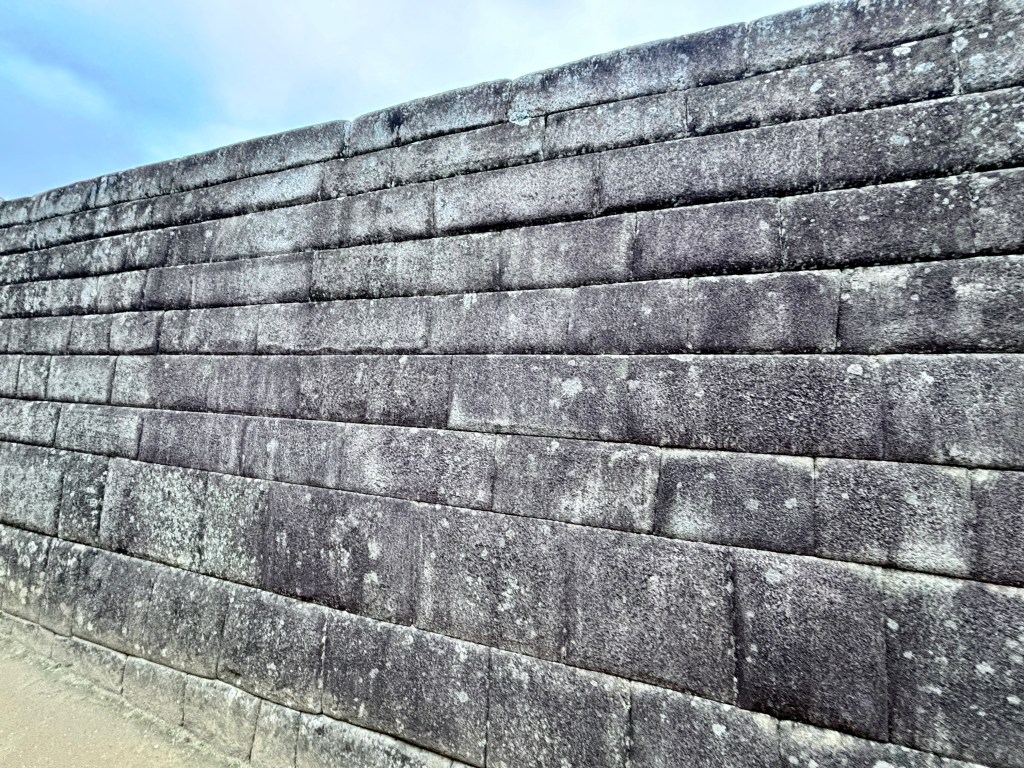
Somehow, the Inca, with their knowledge and technical ability, cut and fit stones together like this!

The temple with three windows equates to Incan philosophy: To love, To learn, To serve.

Duma Houses were for shamans to focus on their prayers.
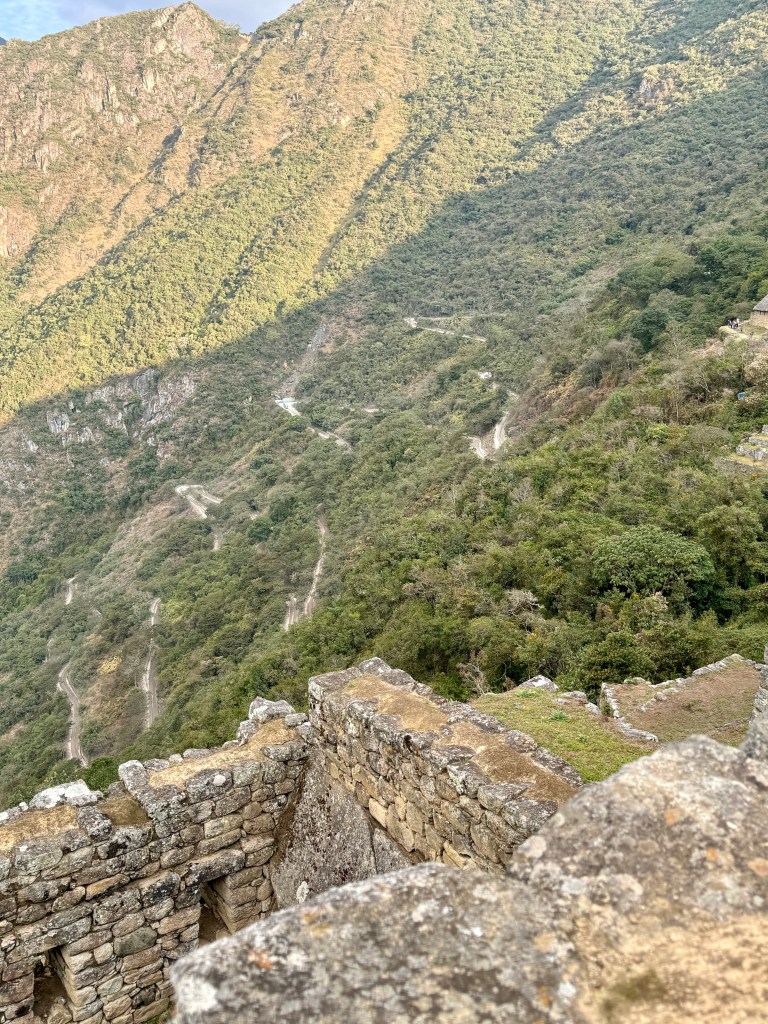
Here is a view of the switchback road we came up and would travel again on our way down. Only the park buses were allowed on this road as there were times a bus needed to delay for another bus coming around a corner.
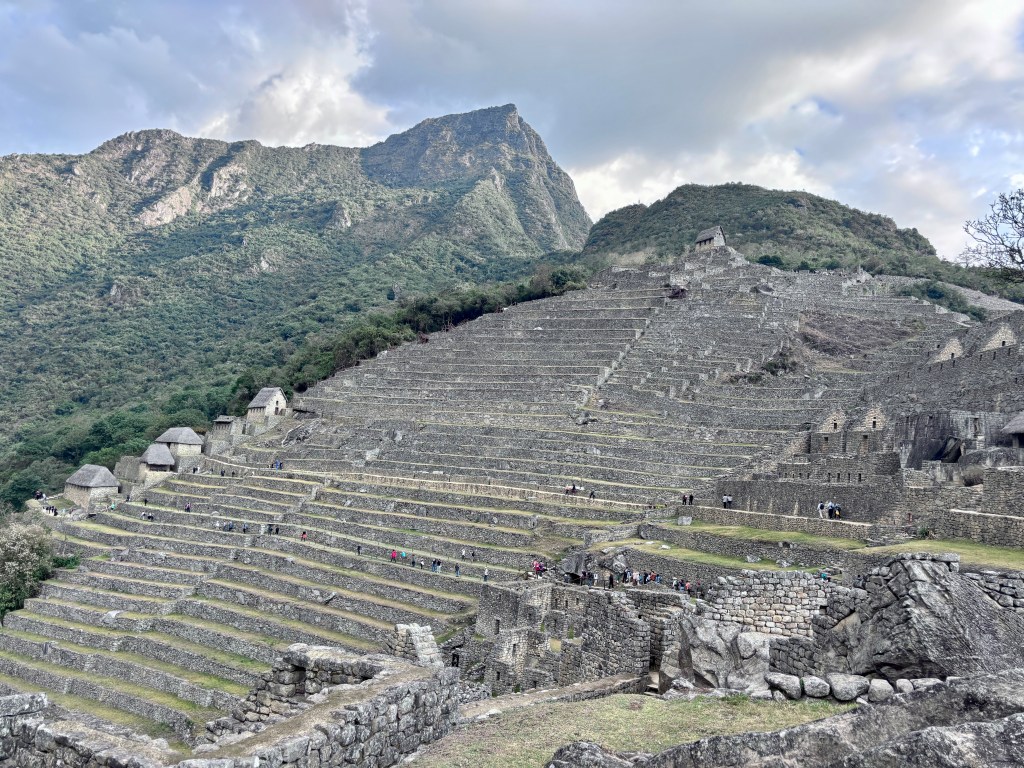
The Inca people grew crops on these terraces – primarily casaba tapioca root. They would use the Inca trail to trade for potatoes and quinoa with other groups. The terraces were outside the walled city. The houses on the left side were graineries.

This slant rock was used for winnowing quinoa.
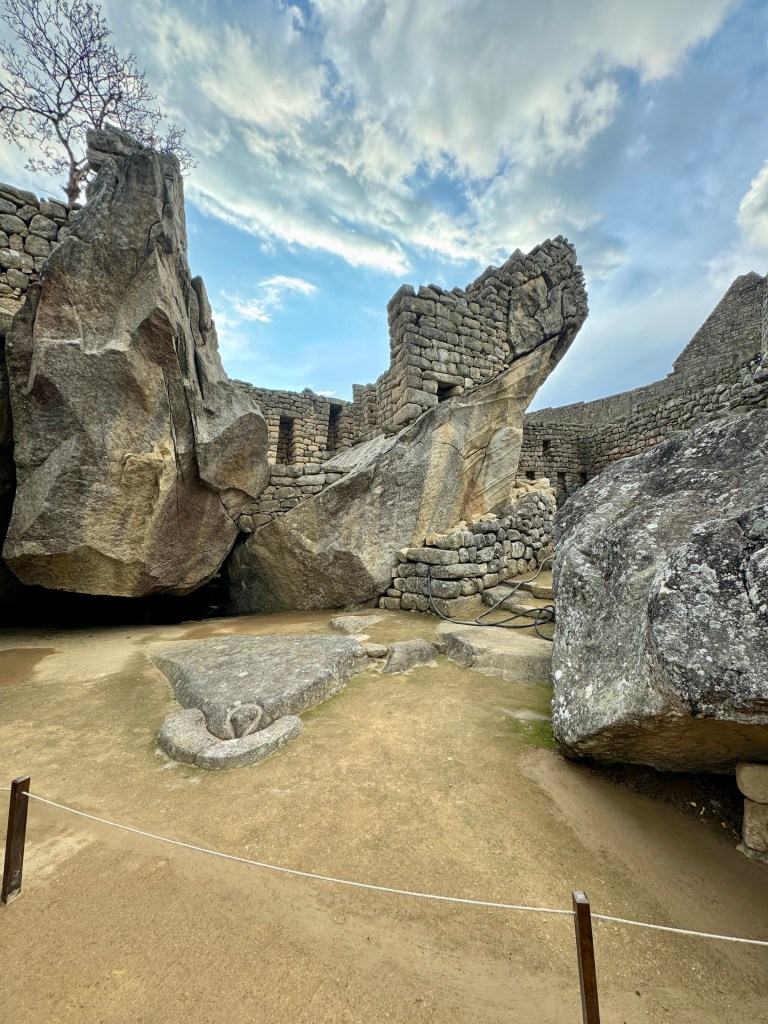
We walked through this area that was The Temple of the Condor. The rock on the ground is the condor head.
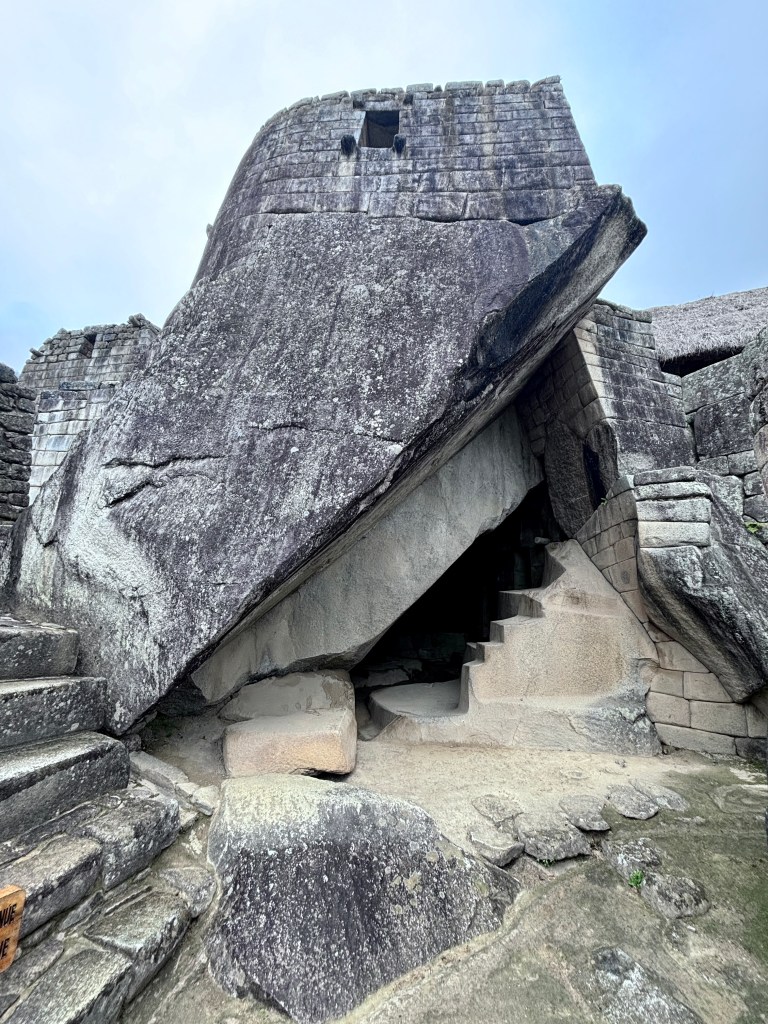
This is an interesting place!
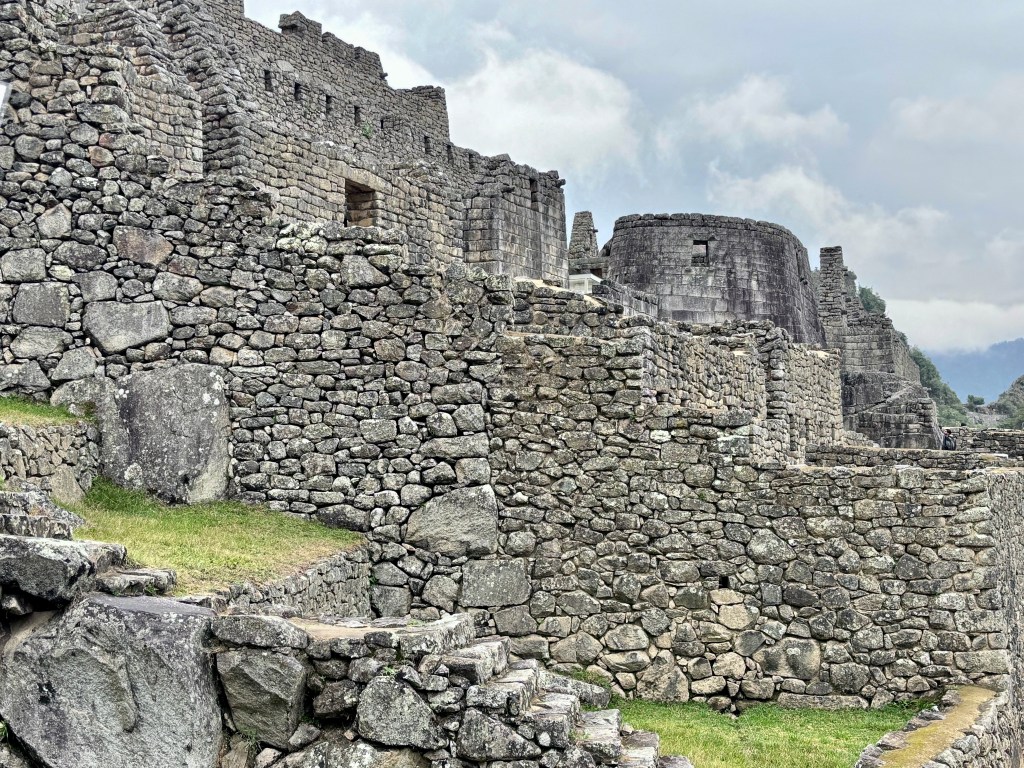
The Machu Picchu site is 40 percent original with 60 percent restored with original materials.
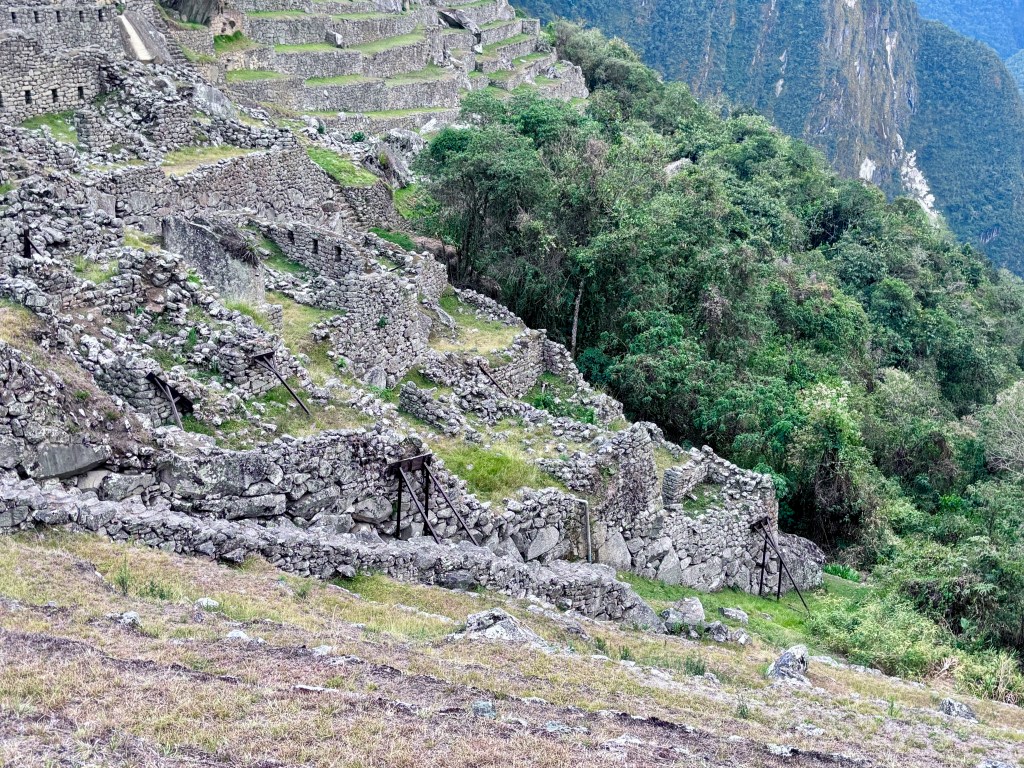
This is similar to how much of Machu Picchu looked before any restoration.
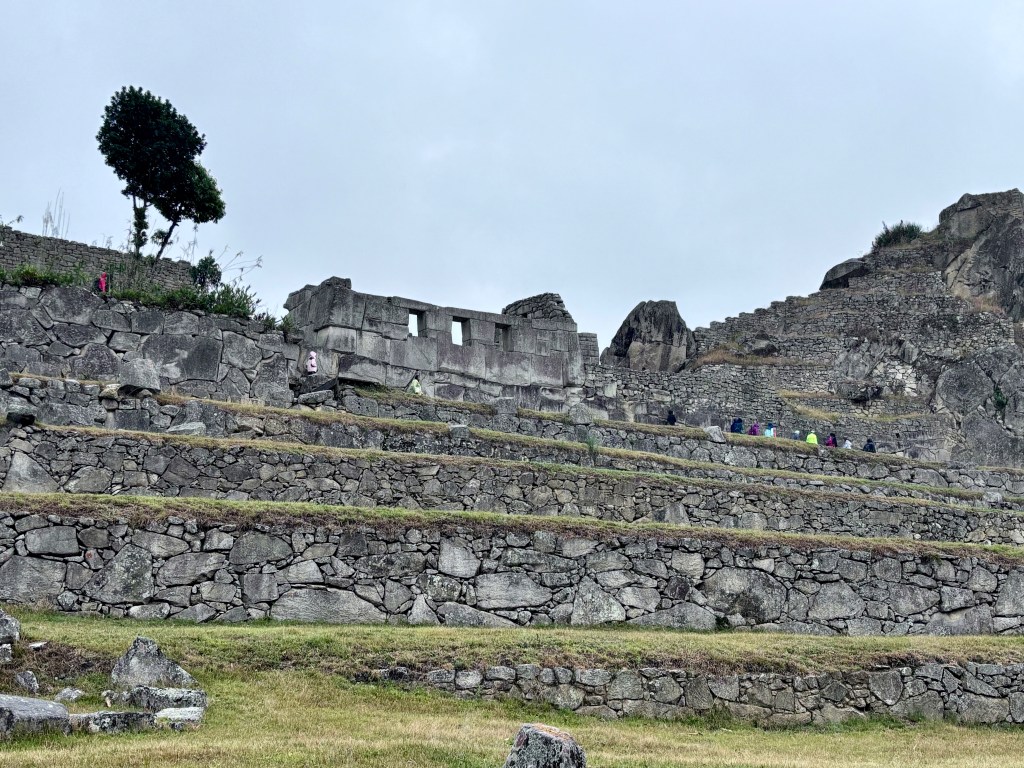
It had been a terrific day at Machu Picchu! We explored about 70 percent of the site and still had another day to come!
Enrique’s plan was if we had a clear morning the next day, we would climb back to the top to witness the sunrise over Machu Picchu. If not, we would continue to explore areas we hadn’t yet seen.
The next morning, we had a 4:30 am wake up for an early breakfast at 5:00. Once again, both our bus ride and our entry were timed. By then some of us had become aware that our bus transportation had experienced a bit of a problem a few days prior!
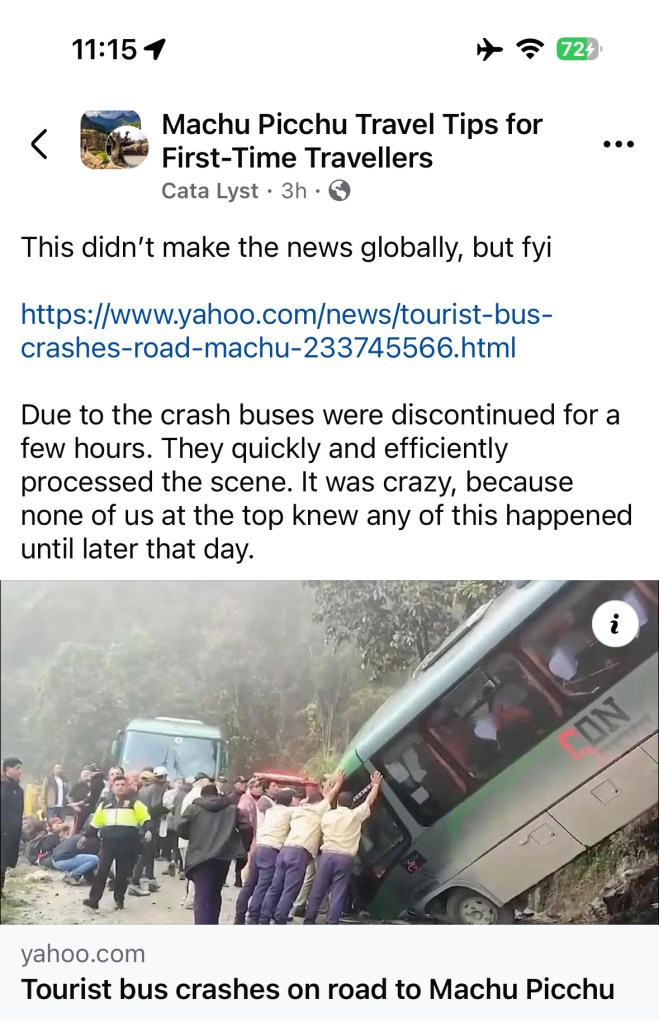
Nevertheless, we boarded our bus. By the time we got to the top of the mountain, it was already raining a little. Randy and I had brought ponchos and those who hadn’t brought one, bought one. Enrique likes to say it rains 400 days a year at Machu Picchu – every day and sometimes twice.

The areas we explored on our second day offered time for learning about families that lived their whole lives in Machu Picchu. They shared communal living spaces. Children stayed with their family until age eight, at which point they lived in age similar groups . They were considered adults at age 16.
There is still much unknown about Machu Picchu…

including the purpose for these stairs.

This is a ritual cleansing area between two temples.
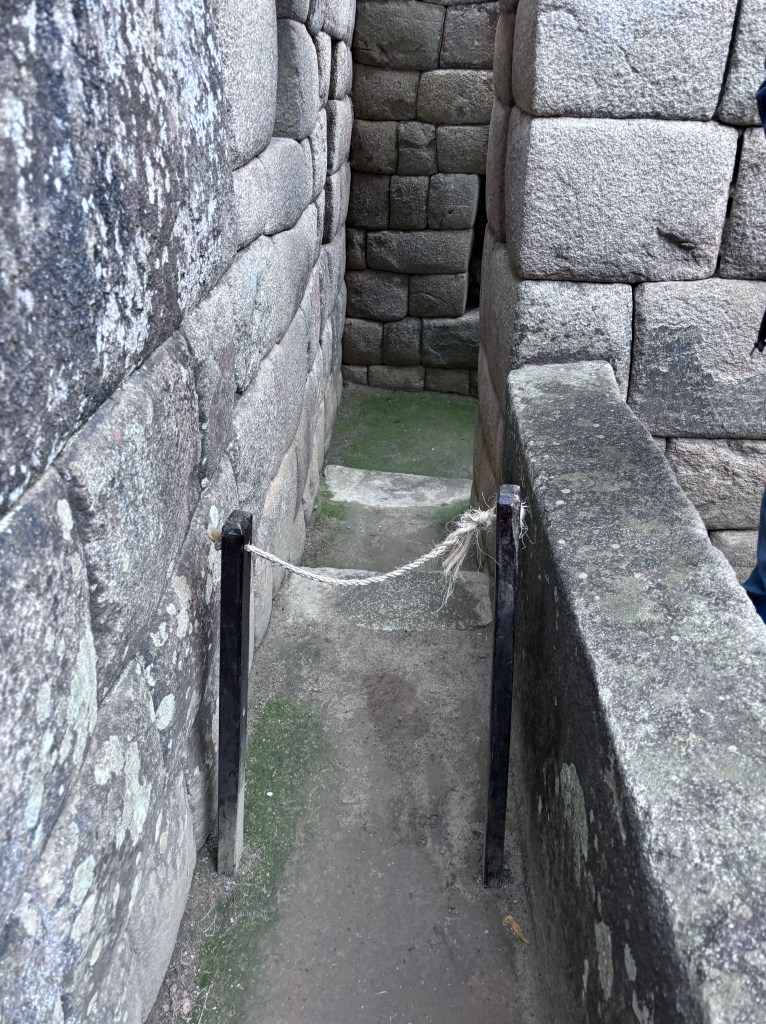
This was the only toilet found in the whole site. Most would have used a chamber pot. A minority segment of the population were vegetarian and their urine was used, medicinally, based on the Inca study of plants.

This big room was likely used for community gatherings.

The round circles on the ground are oriented north and south. As light comes through the window, the circles reflected the constellations. The pools were also used to ferment medicines.
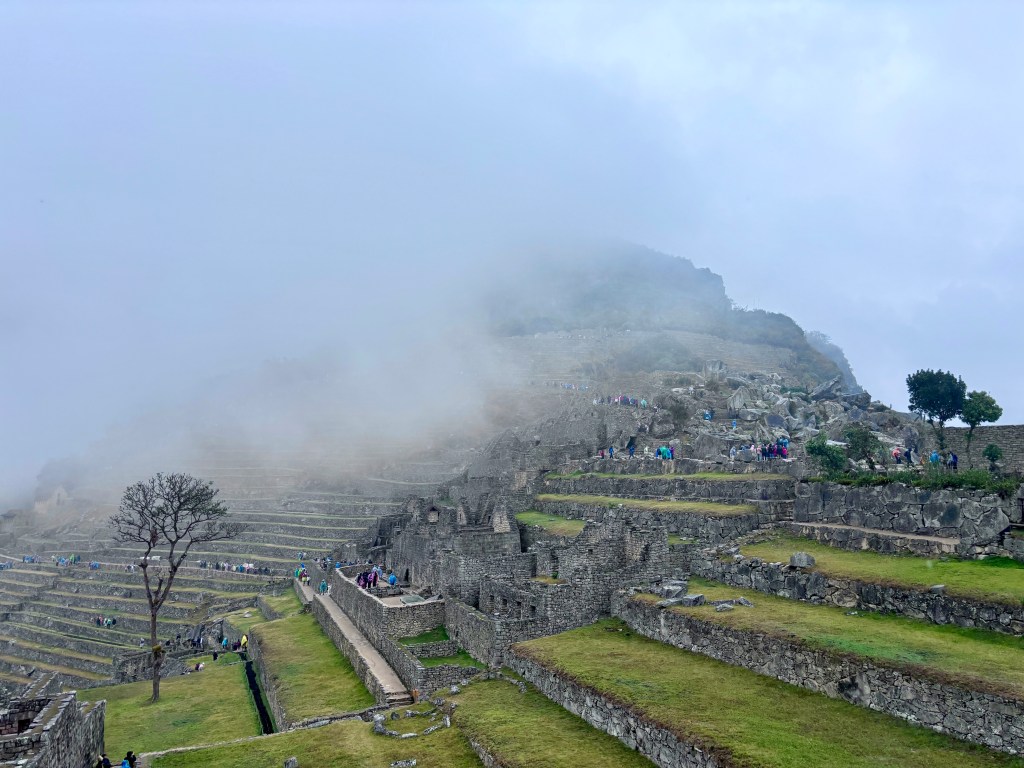
We had our lovely afternoon in Machu Picchu, and then our rainy morning. It was so nice to experience both. With rain so common (400 days a year), it is sad to think many only experience it in the rain.

Where we had a stunning view down the mountain the day before, we now could see nothing.

The archeological record suggests that the Inca built Machu Picchu in 1450 but abandoned it 100 years later, about the time of the Spanish conquest. It remained hidden because Europeans never looked for a city so far from the river.
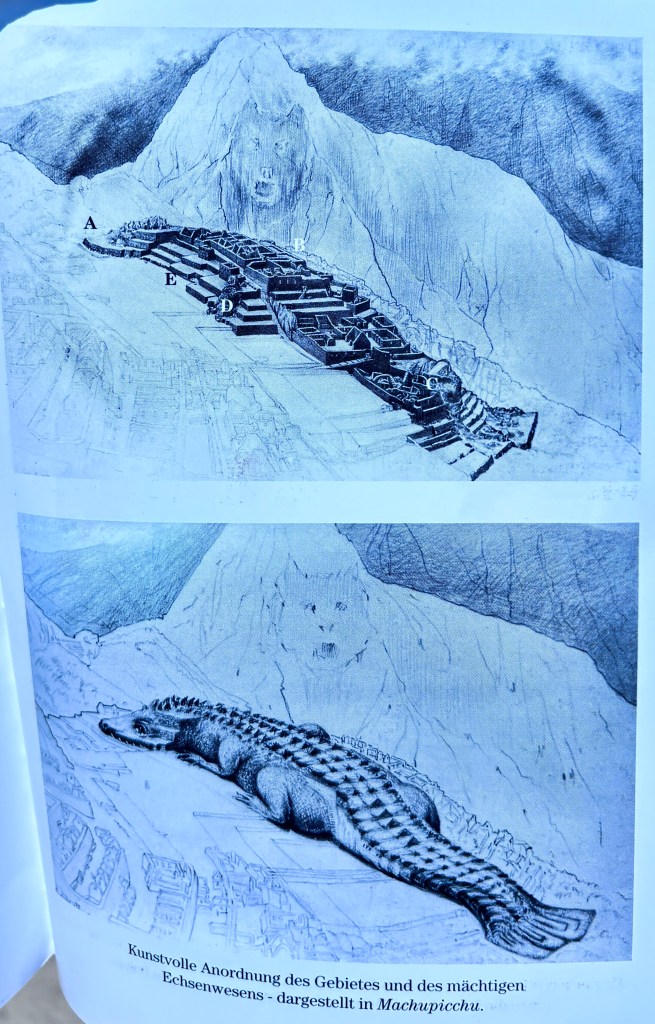
Remember when we learned that the Inca formed their cities in the shapes of their animal gods. Machu Picchu was made in an alligator shape.
Machu Picchu was introduced to the world by American Hiram Bingham, a Yale lecturer on South American History. He journeyed to Peru and was shown Machu Picchu by native Melchor Arteaga on July 24, 1911. The Incan city had been forgotten by all but those who lived in the immediate valley.
The Indiana Jones character from the Raiders of the Lost Ark series of movies is thought to have been conceived in the likeness of Hiram Bingham.
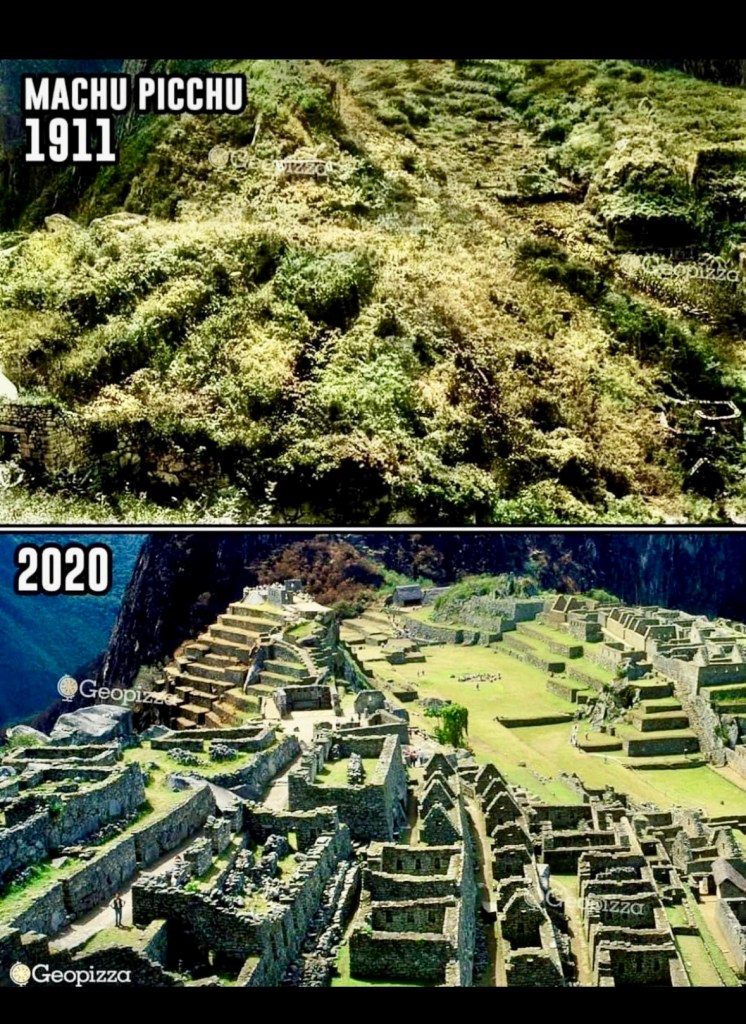
There is a picture from Facebook that shows what the site likely looked like when rediscovered and more recently. Credit to Geopizza.
Machu Picchu was declared a UNESCO World Heritage site in 1983 and voted one of the New Seven Wonders of the World in 2007.
UNESCO recommends that visitation to Machu Picchu be limited to 2500 people per day to preserve the site. The first day we were there, ticket sales were to 5750 visitors. Planning is in place that much of the site will be closed to the public within three years.
People typically mispronounce Machu Picchu. If you say Machu “pea-chew” you are saying old penis. To say the name of the ancient city correctly, you need to say Machu “peak-chew.”
We were in Machu Picchu on September 18 and 19, 2024. I had no problem at all traversing the grounds except for climbing wet steps that were very tall for someone of short stature. The irony is that the Inca were even shorter than me!
Next Up: We go back to Cusco.


 Serene Wandering
WOW
This has been quite a wonderful trip and Gord and I have always had this on our “ Dreamer’s” bucket list. With your knowledge and pictures we can now feel that we have seen the best of it. We do realize that we are missing the entire ambiance but we can imagine the mist, smells and slippery rocks you were climbing. Such an interesting place and to have been hidden overall until 1911 is also interesting.
Once again we thank you for taking the time to blog such a intricate piece of history.
Catie and Gord