
We opted to skip the first activity of the day – another jungle walk in the Amazon and stay on the Delfin III for the morning. We were guaranteed to get hot, muggy and tired in the heat and not guaranteed to see monkeys, sloths, snakes or spiders. We were happy with our choice as we stayed cool and comfortable in the lounge. It seemed as though we had the ship to ourselves with just a few remaining crew. After a while, a few more passengers wandered up to the lounge but we all seemed to be enjoying the quiet and solitude.
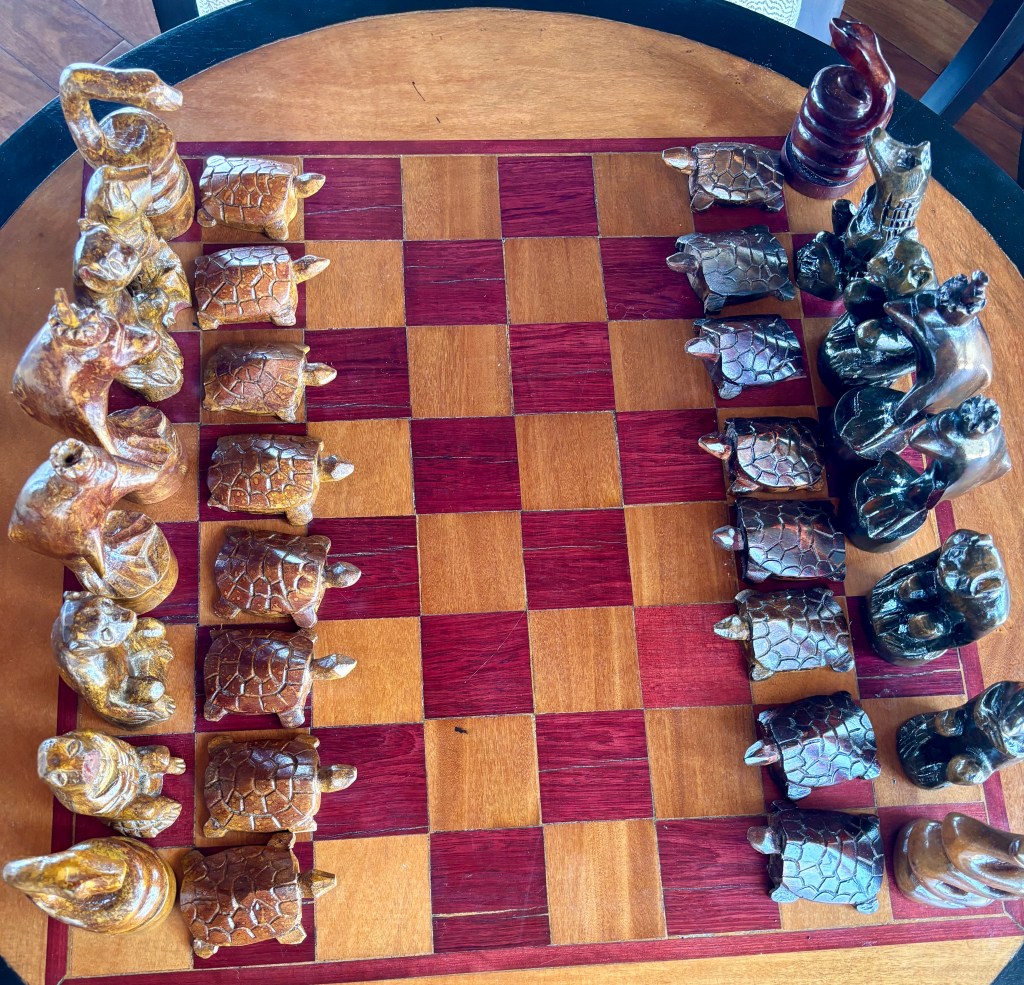
There was an Amazon themed chess board ready for play.
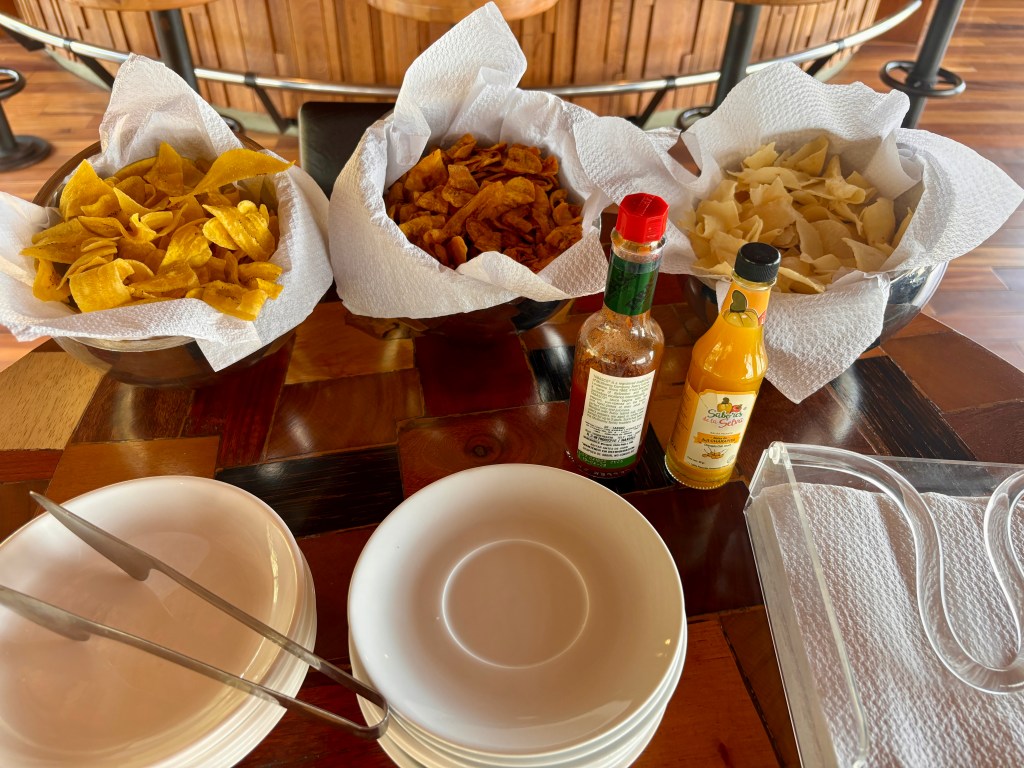
There were three types of plantain chips ready for snacking.
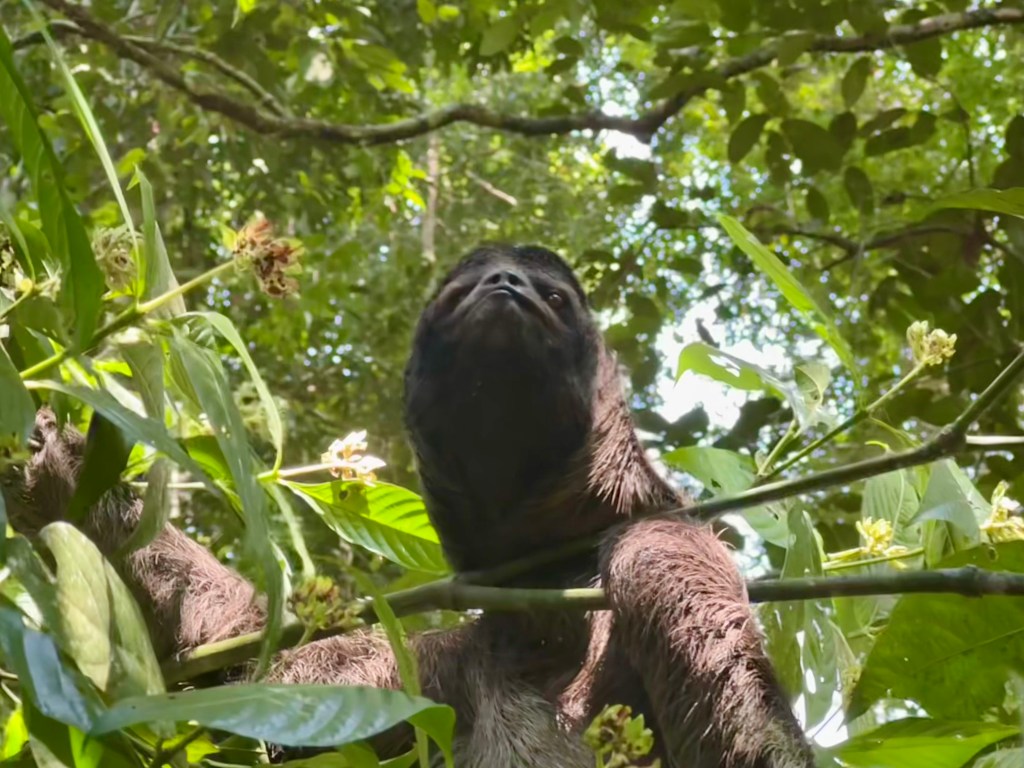
When the hikers returned, they said it had been hot and muggy but they did see a sloth and a tarantula. Someone shared their pictures of the sloth.
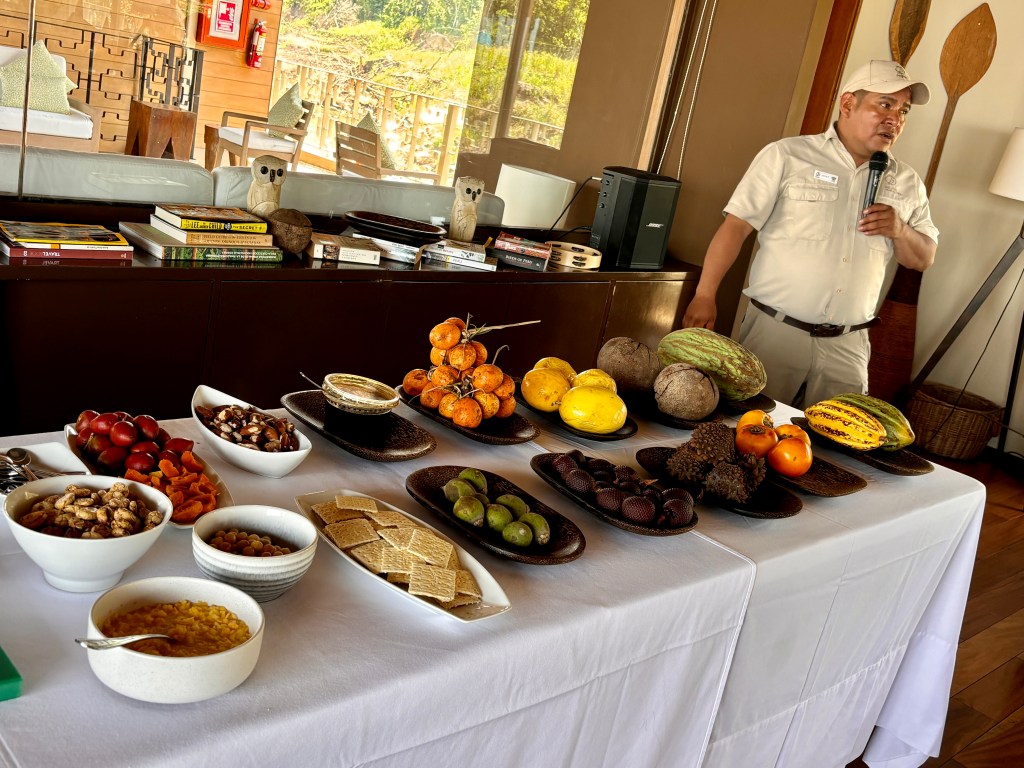
After they had a chance to clean up, the next activity was a Fruit of the Amazon presentation. There are 170 species of tropical fruits in the Amazon region!
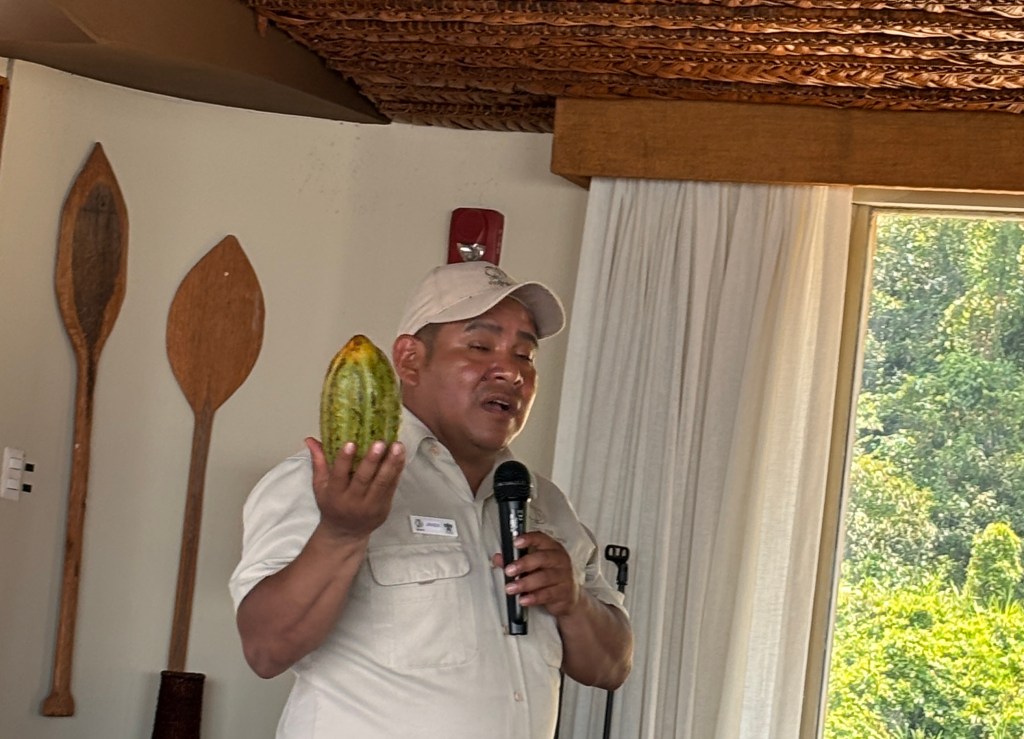
This large green fruit – macambo – is a relative of the cacao bean but evolved differently in the Amazon. The white colored pods can be roasted and have antioxidant value. The type of cacao for chocolate was developed by the Mayan culture in Mexico.
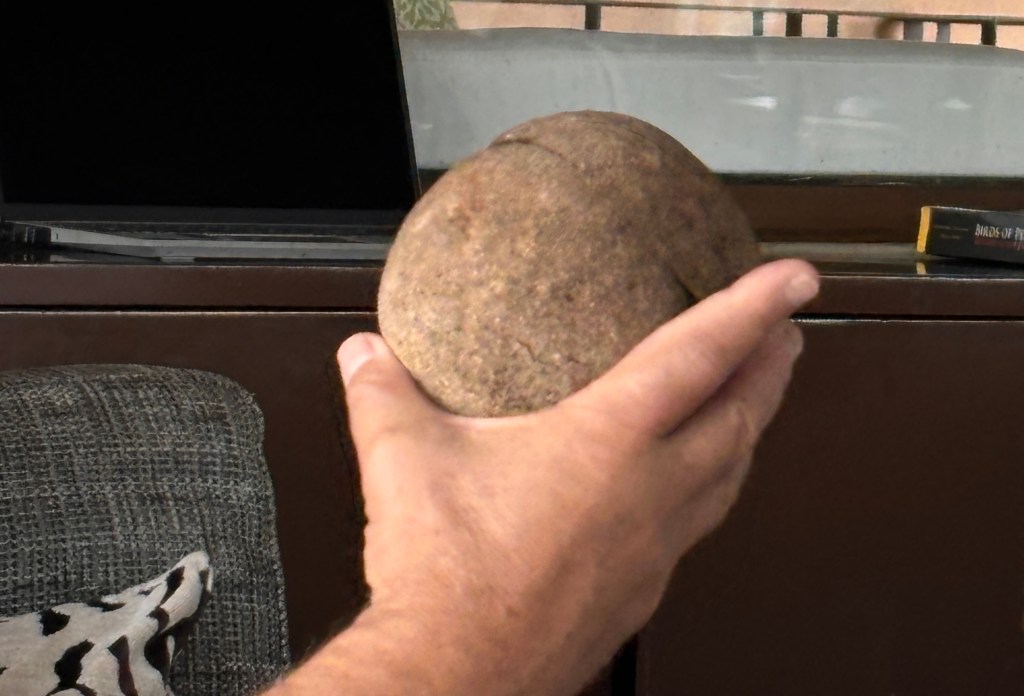
This is a Brazil Nut outer shell. Brazil nuts are mostly attributed to Brazil but they grow all along the Amazon. A native rodent, the agouti, can break the shell and uses the nut as a food source.

This is a brazil nut shell that has been cut. The nuts we are familiar with form inside this shell.
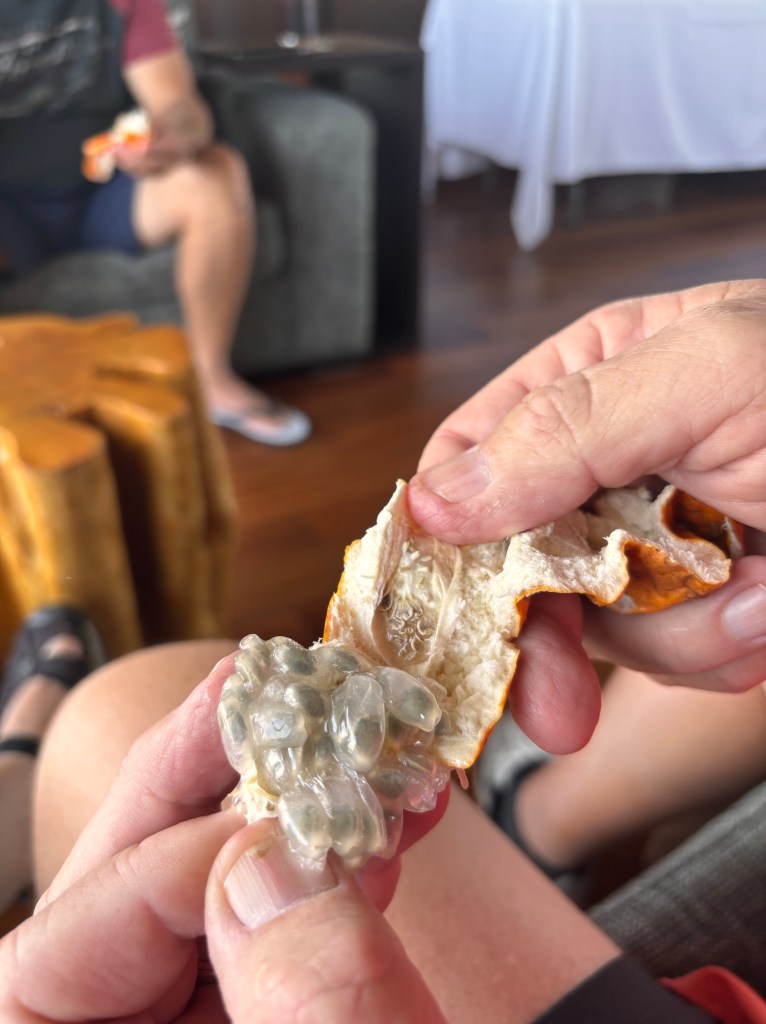
White grenadilla is a fruit in the passion fruit family. It is sweeter than the passion fruit we are used to. It has an interesting texture and neither of us cared for it.
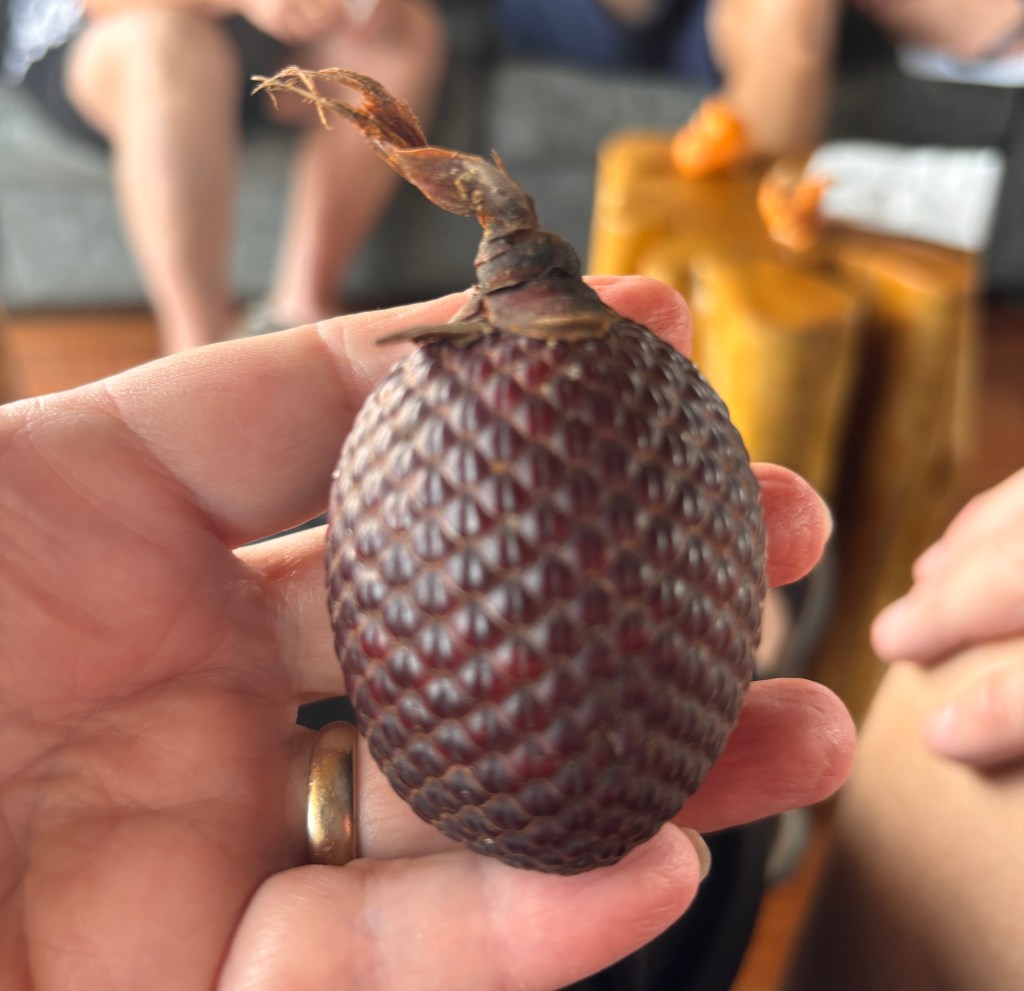
This is aguaje palm fruit. It has twenty times more vitamin A than carrots. Macaws eat them.
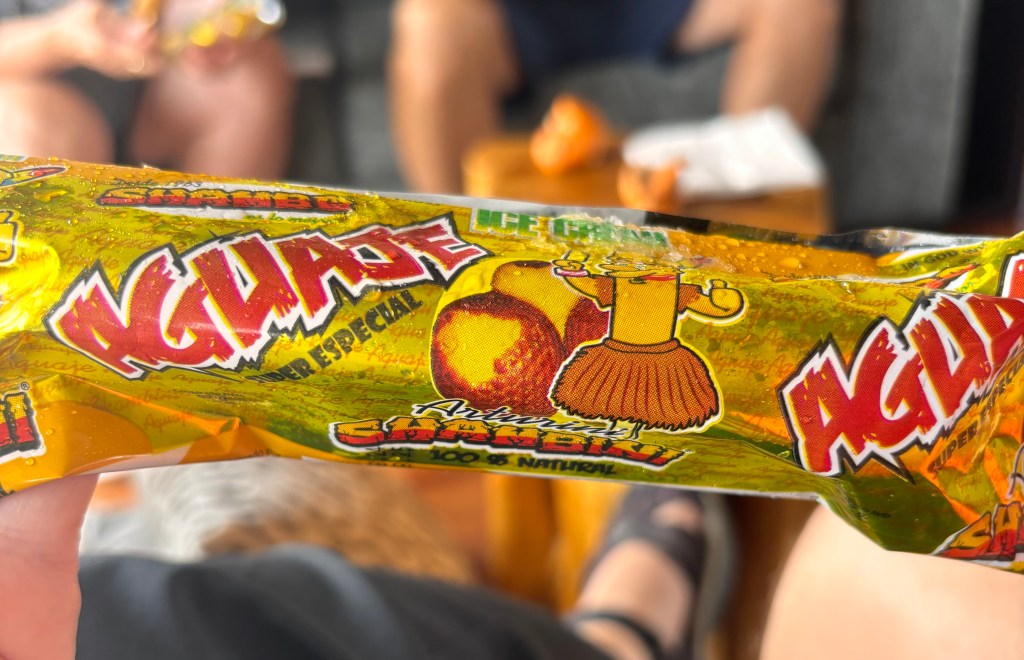
We had aguaje in popsicle form.
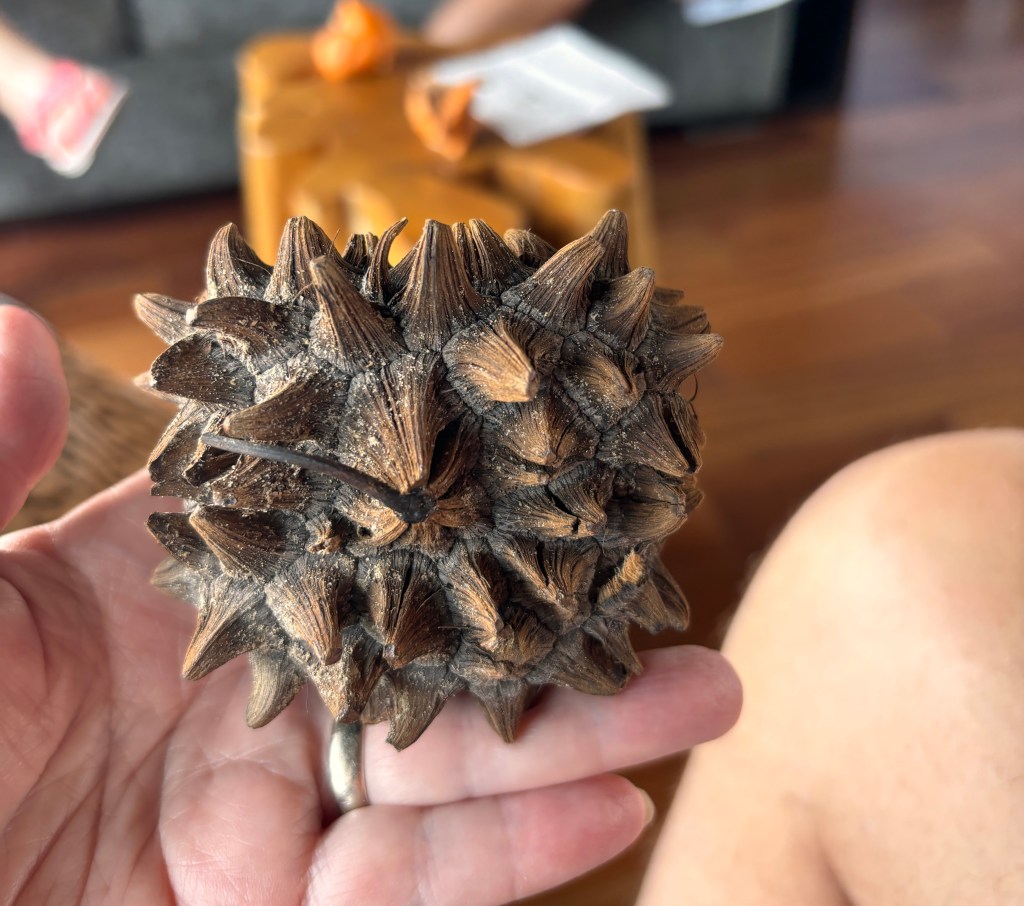
I don’t know what fruit or nut this is, but it sure looks interesting!
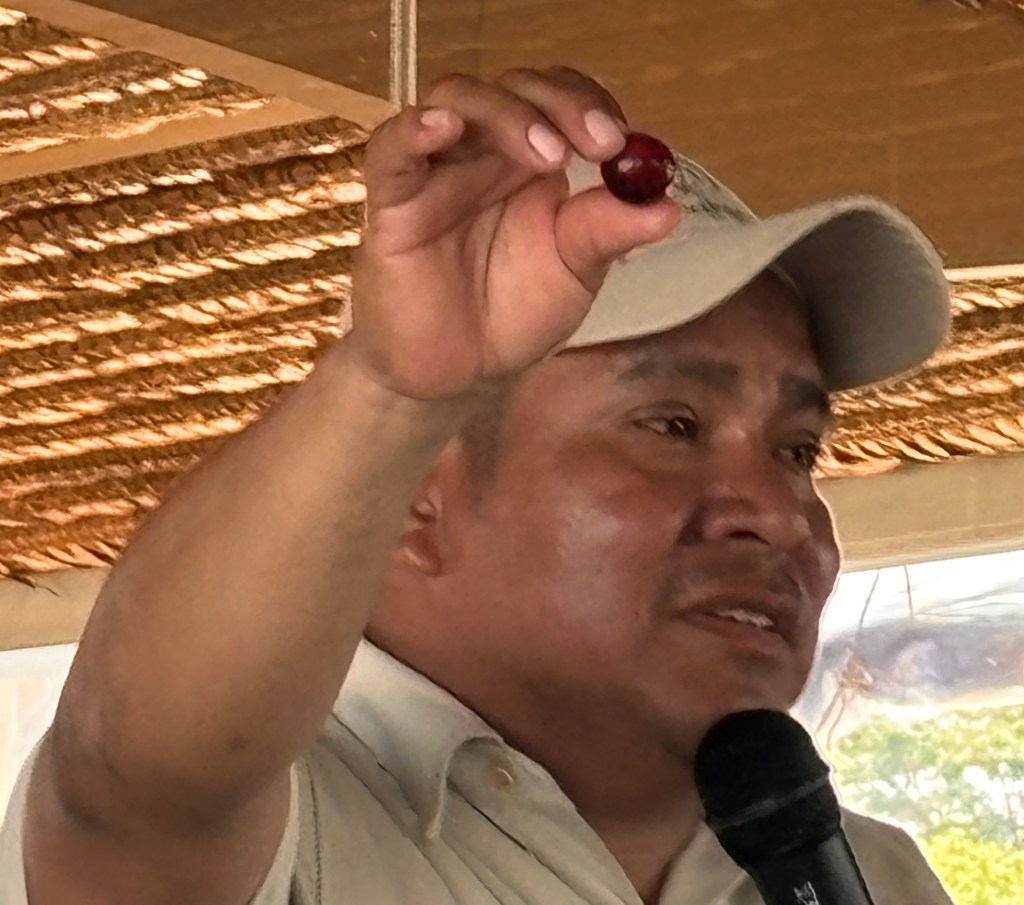
The camu-camu is good as an antioxidant and for anti-aging. It is often consumed as juice.
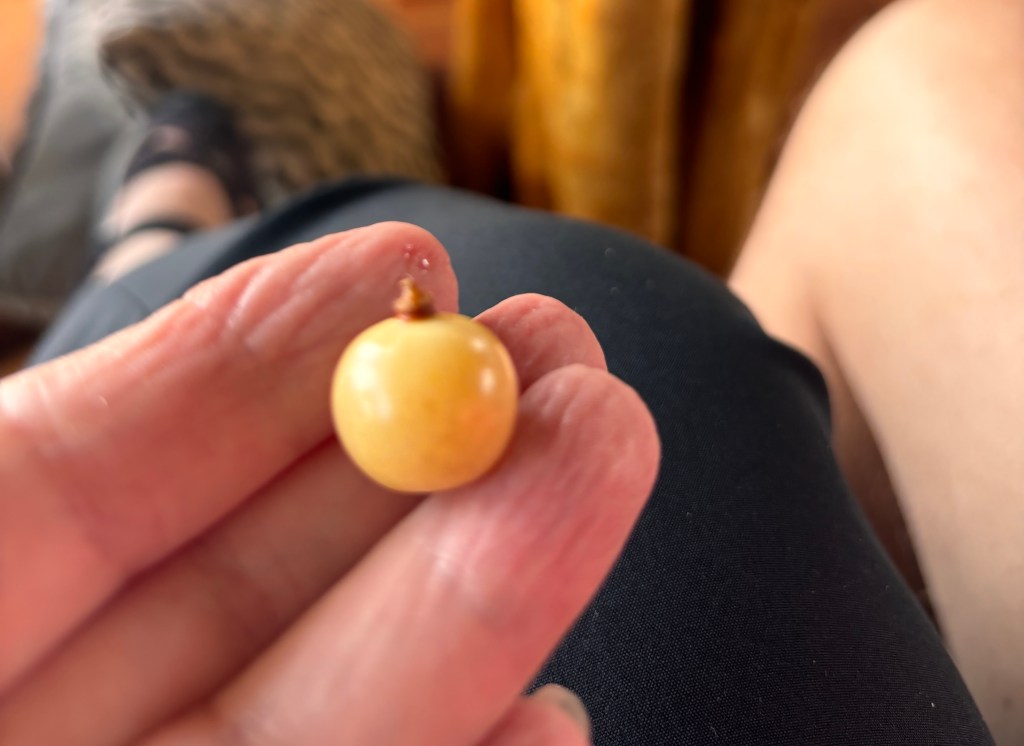
This is a type of tomatillo. Eat ten a day to reduce your cholesterol levels.
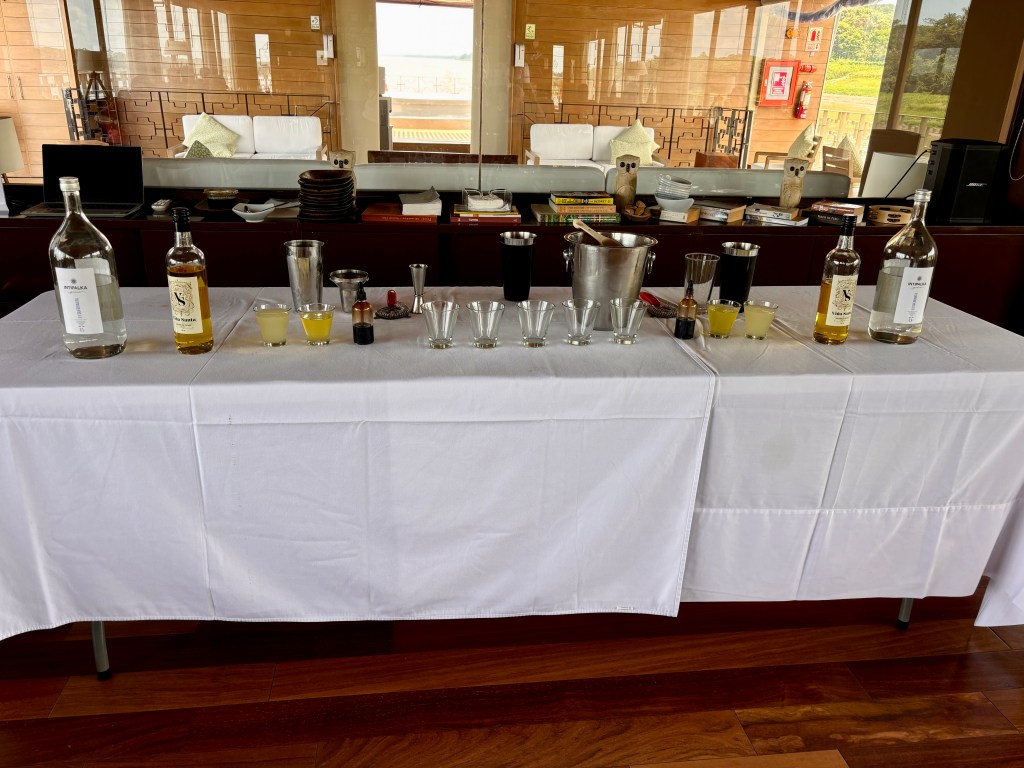
Then we had another Pisco sour demonstration with all of us participating in the shaking part. I think it was our third time learning to make the national drink!
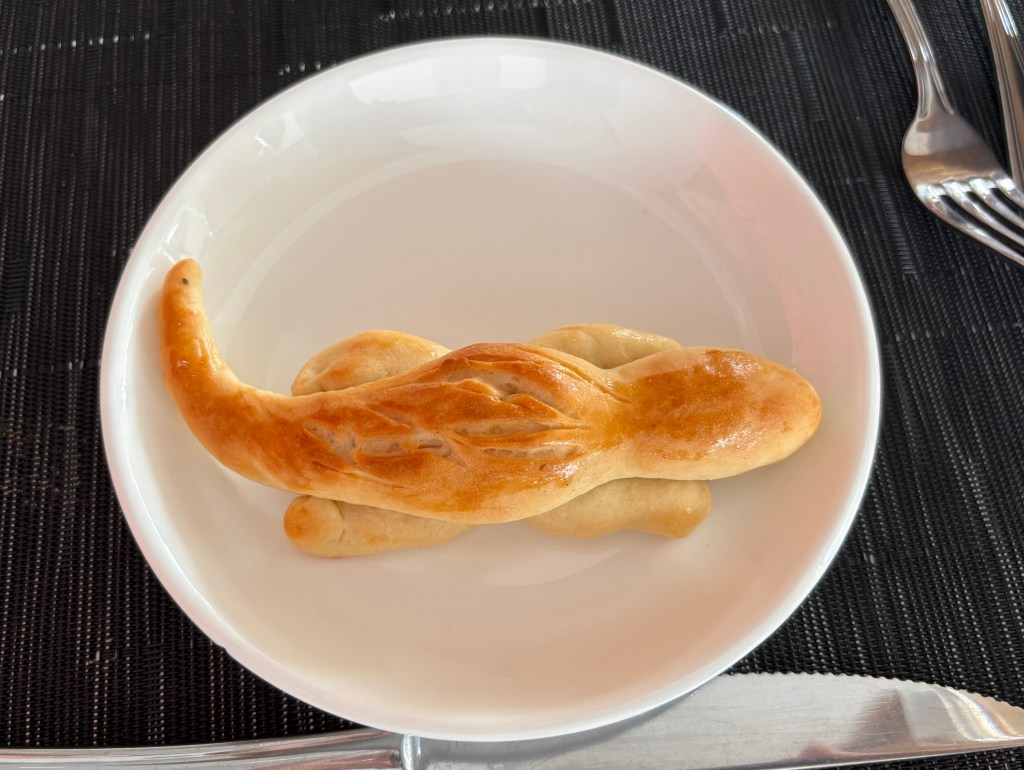
Lunch followed and included the bread art of the day.
The next activity was an excursion to an Amazon village to learn about their lifestyle. That was worth braving the heat and humidity in my opinion.
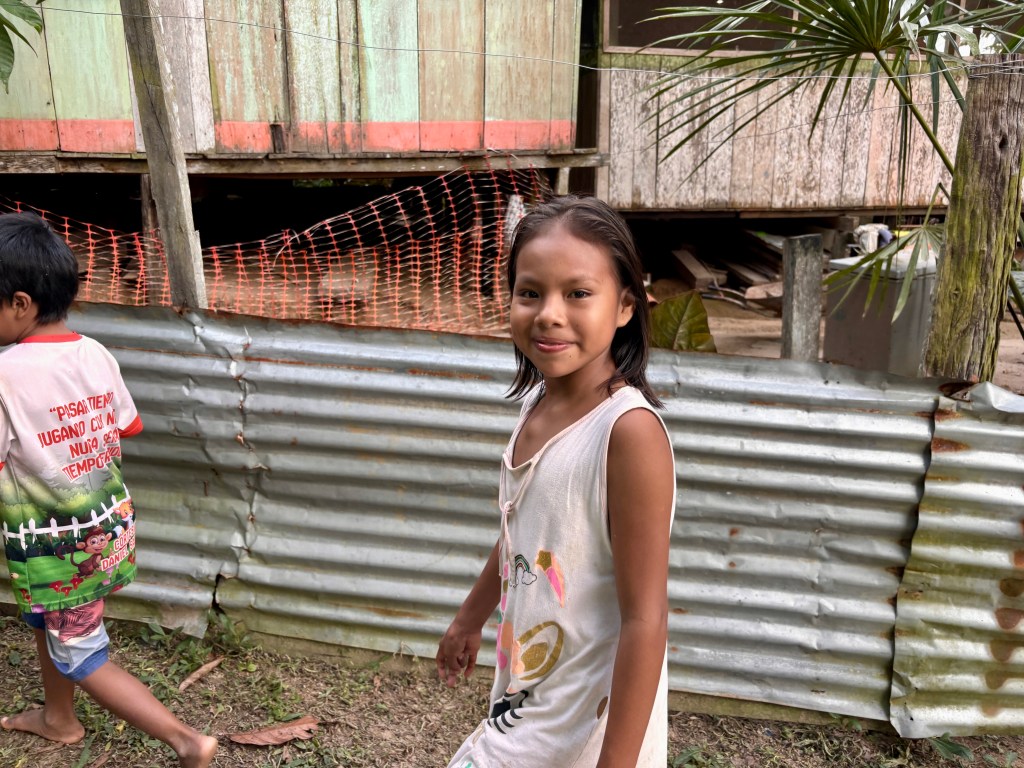
A group of kids met us at the boat dock. They are familiar with tourist visitors. Avalon suggested we bring school supplies as gifts and several of us had done so.

Our first stop was to a village kitchen where two women were preparing a meal for their families.
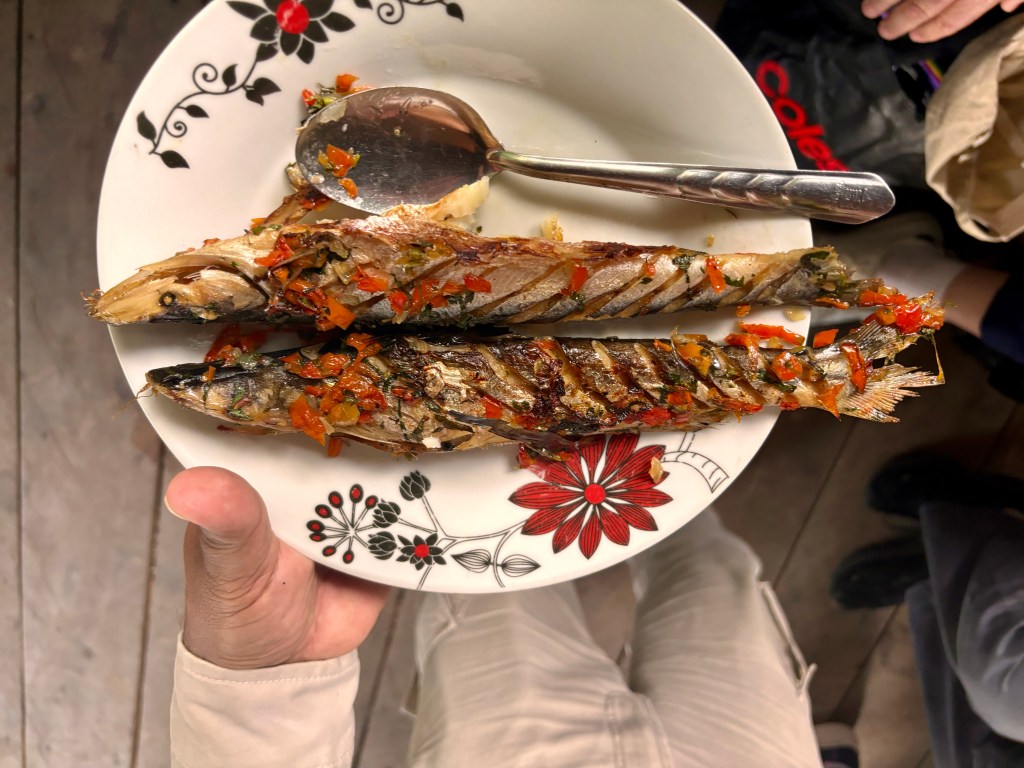
Fish, free food along the river, is always on the menu!

I do not remember what this food was but I think it had a banana base.
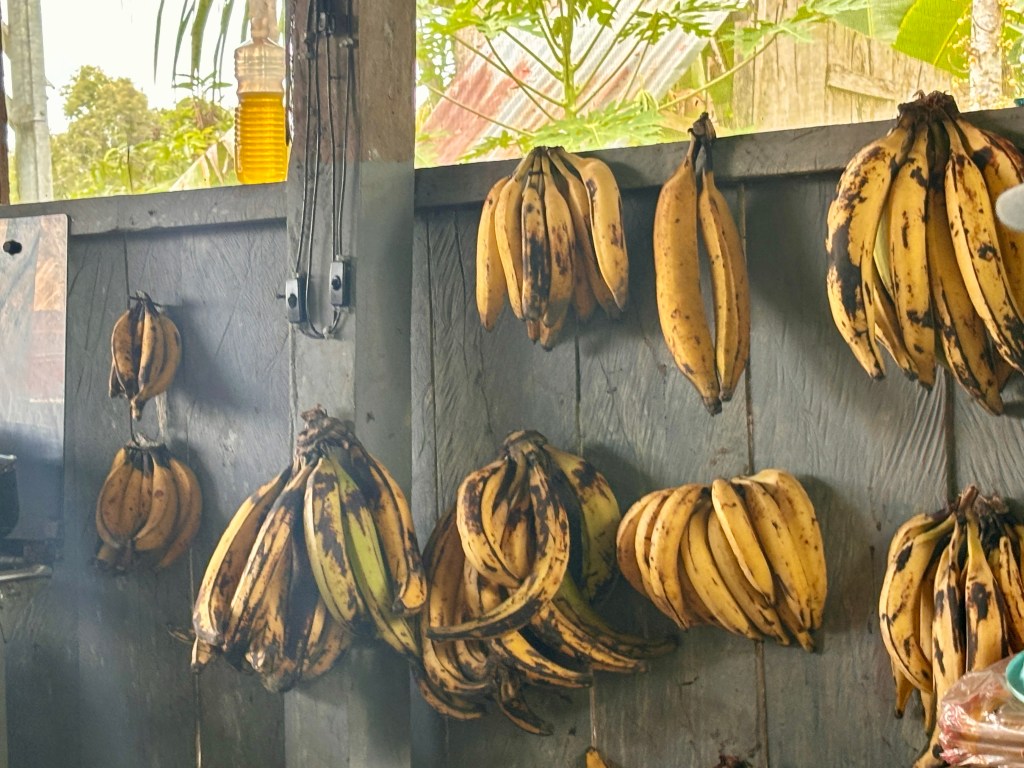
Bananas are used in every stage of ripeness with the ripest becoming juice.
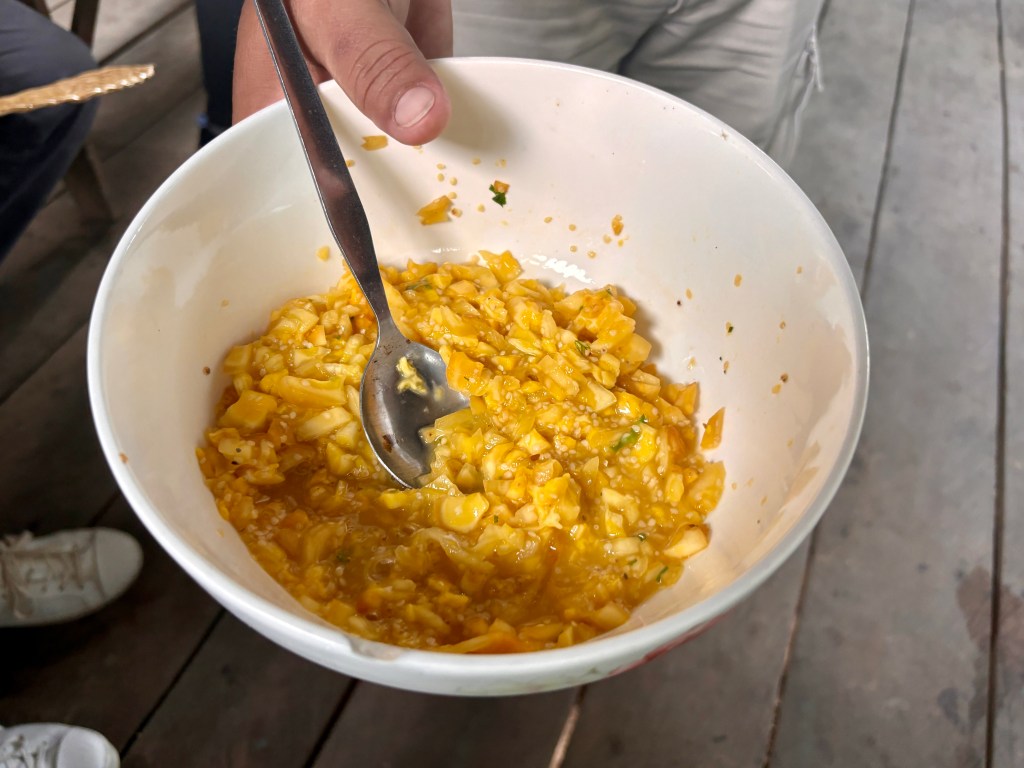
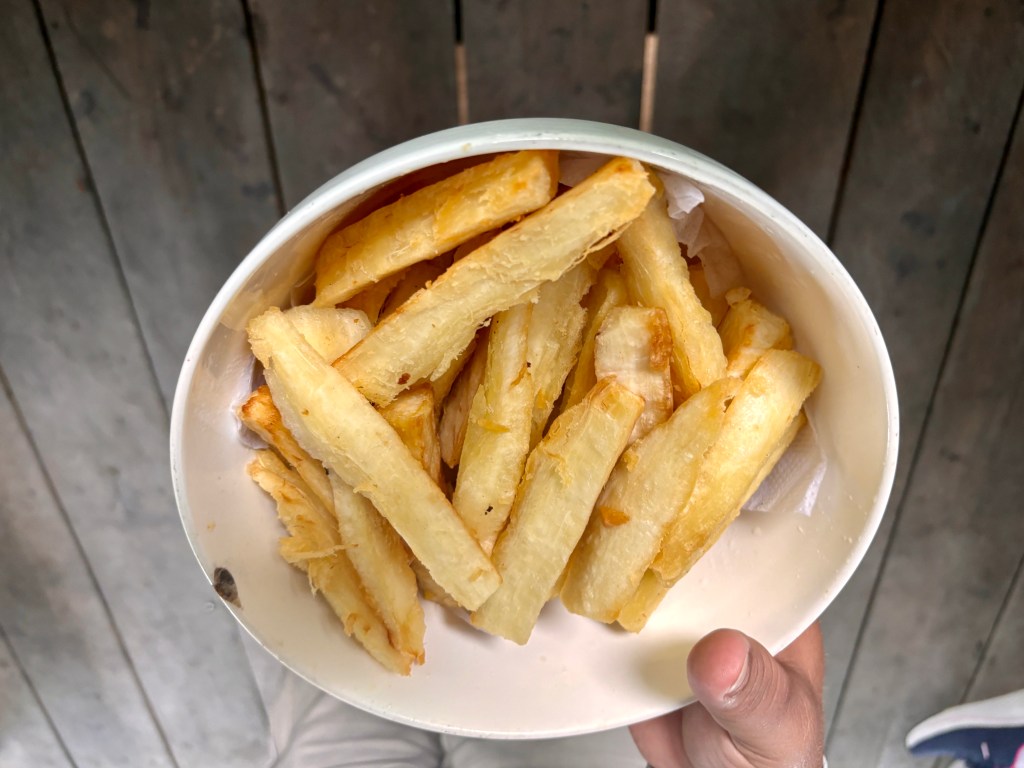
I also don’t recall these foods. The setting was intimate enough that taking notes didn’t feel appropriate.

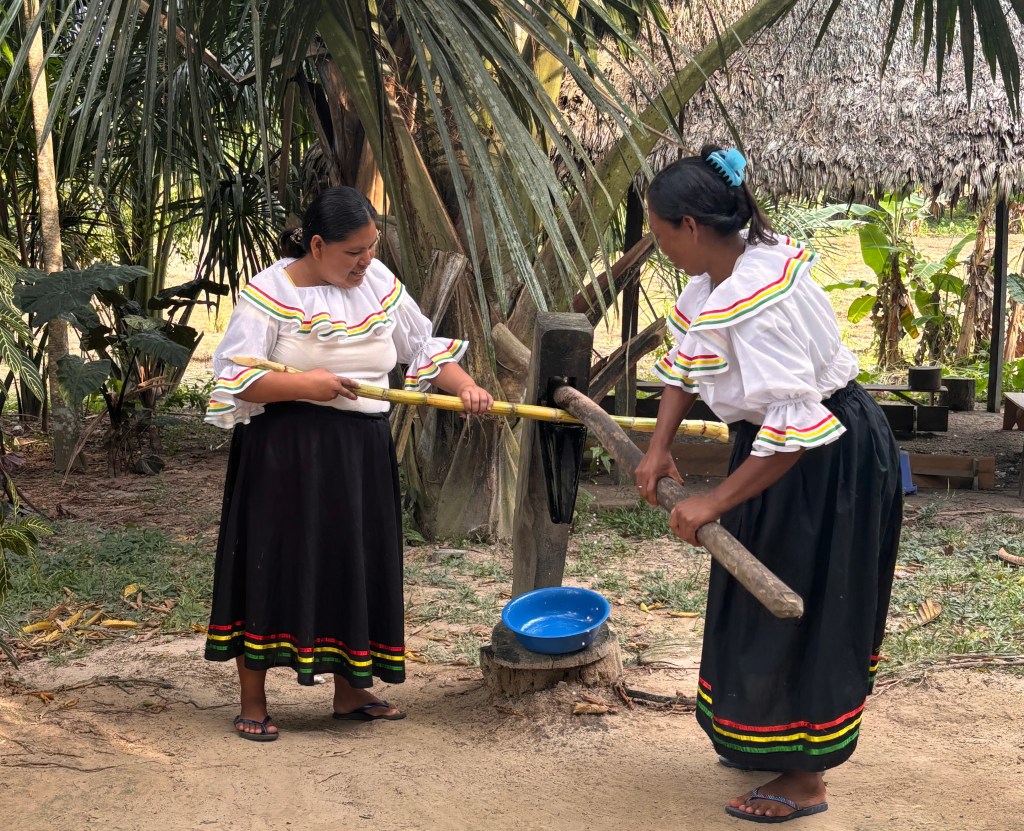
These women were demonstrating how they get juice from sugar cane.
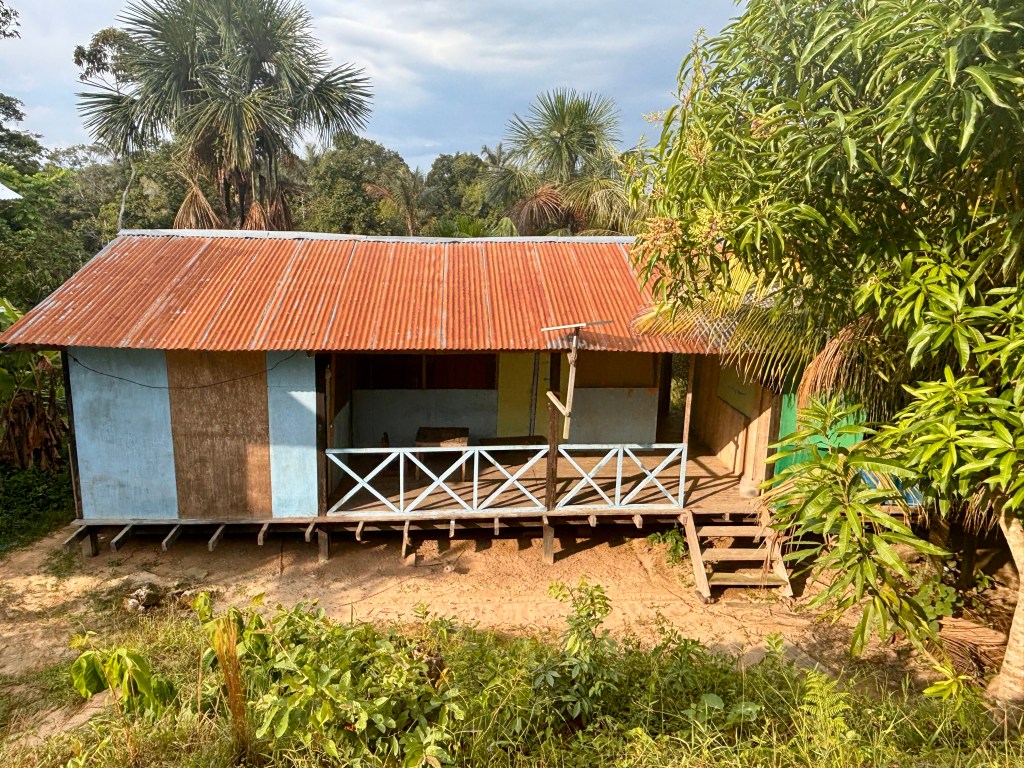
This is a typical home in the village.
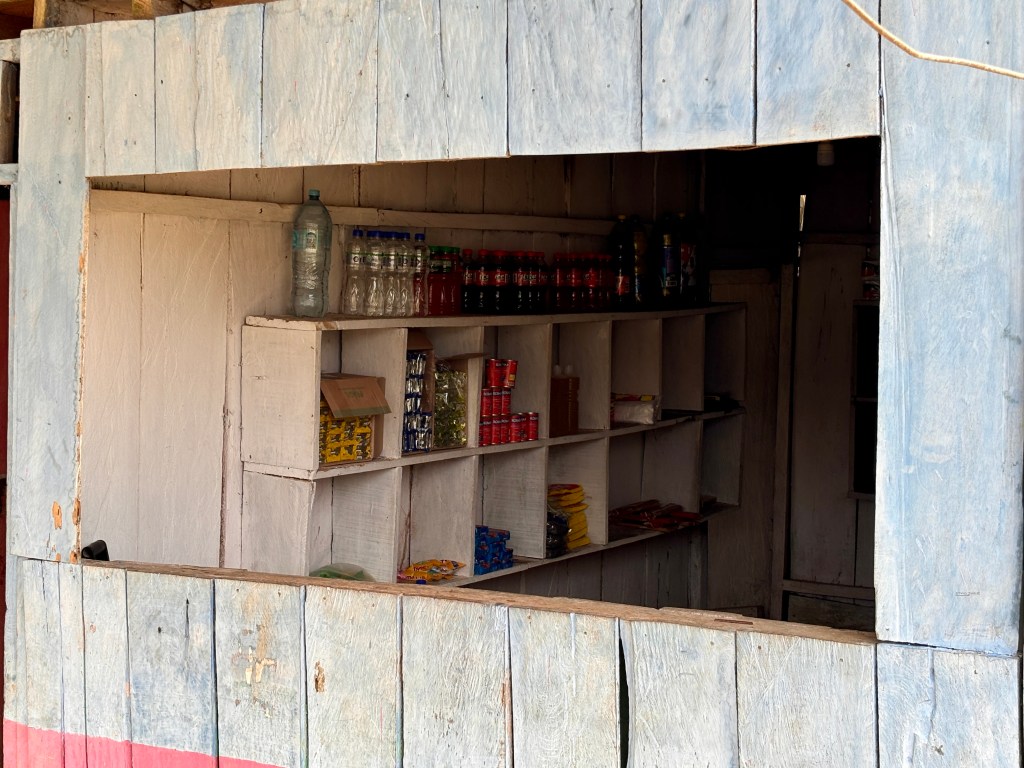
We saw this open shop but no one was minding the store.
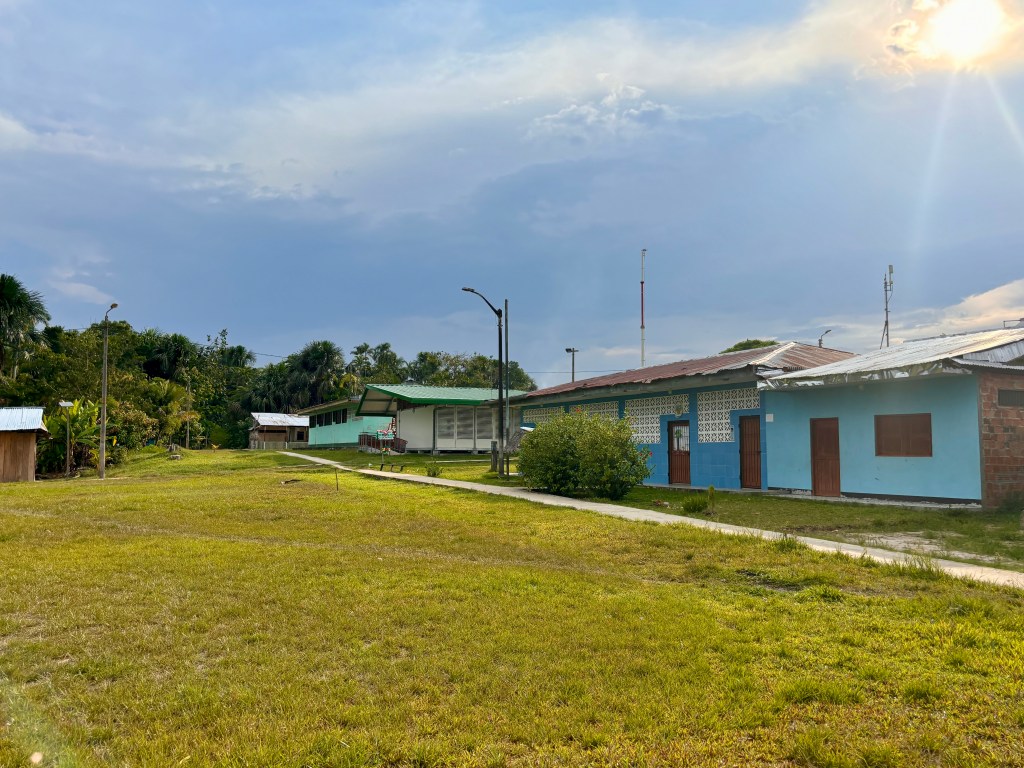
This is part of the central area in the village. Peruvian government would have paid for the infrastructure.

The government also supplied the community with a generator and Wi-Fi capability. The community has to pay for the fuel to run the generator. Typically they have electricity a few hours each week.
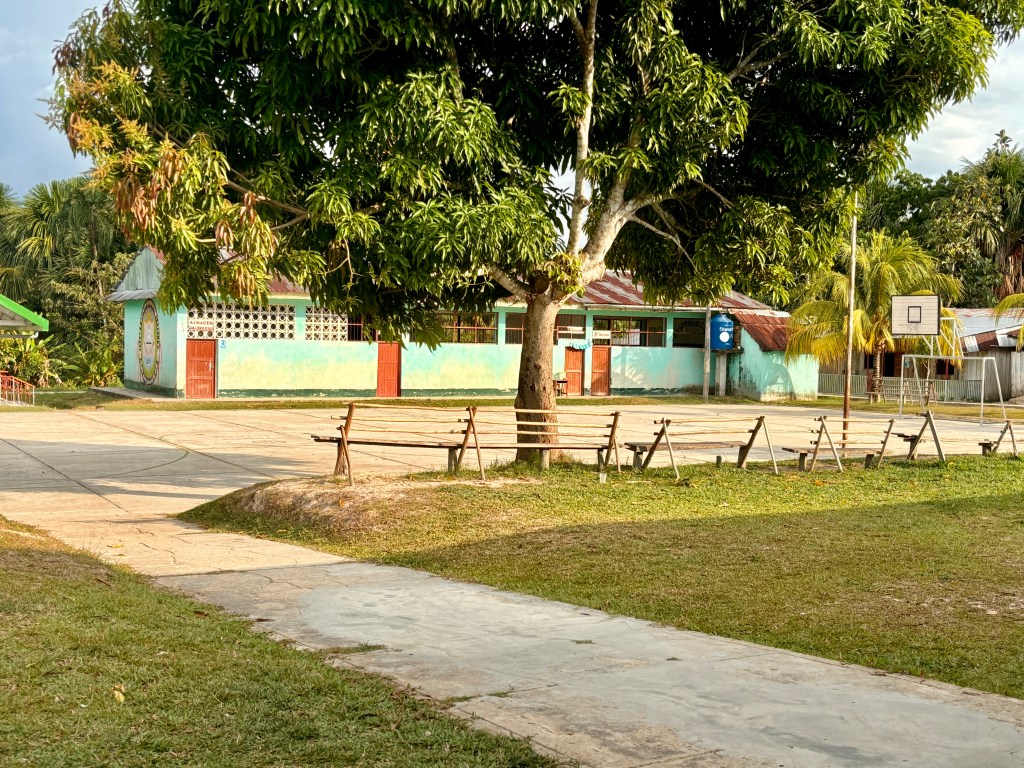
There are three school buildings generally equating to elementary, middle and high school groupings.
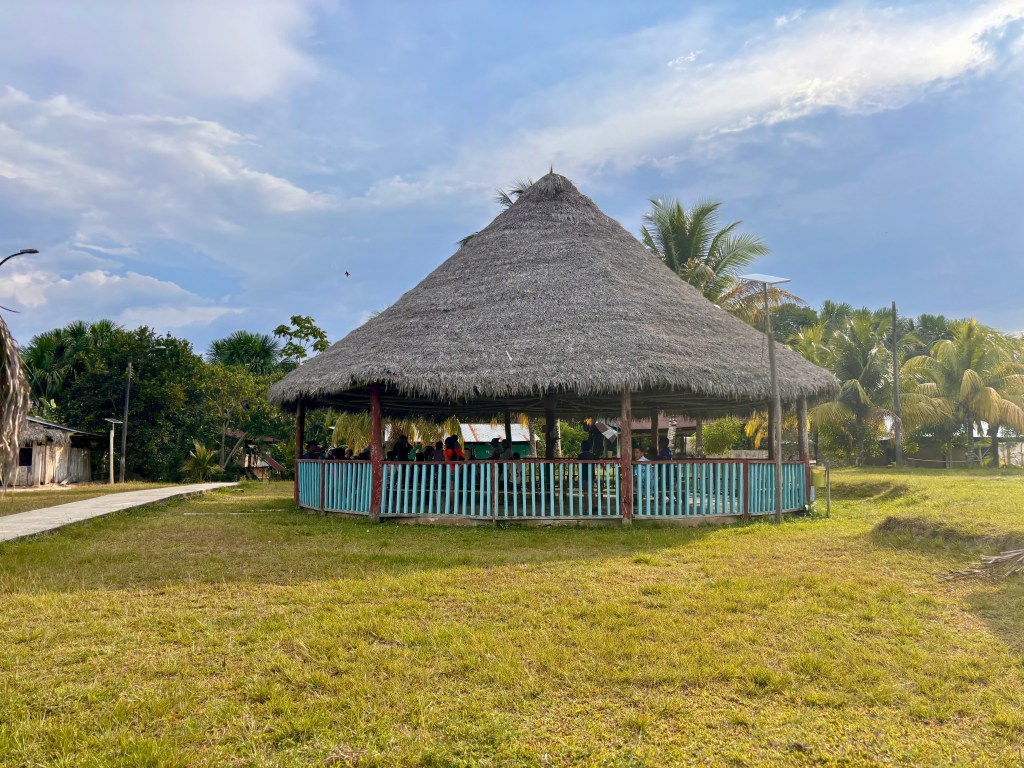
This central pavilion was our next destination.
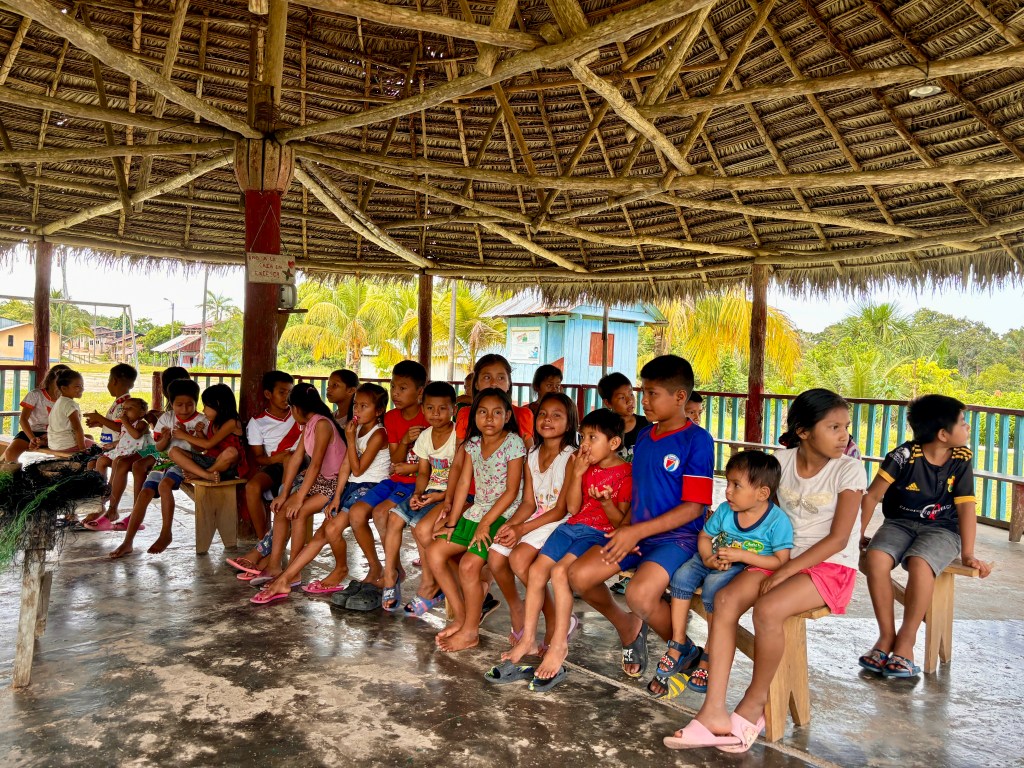
We found kids! They were remarkably well behaved while we were receiving instruction from one of their teachers.
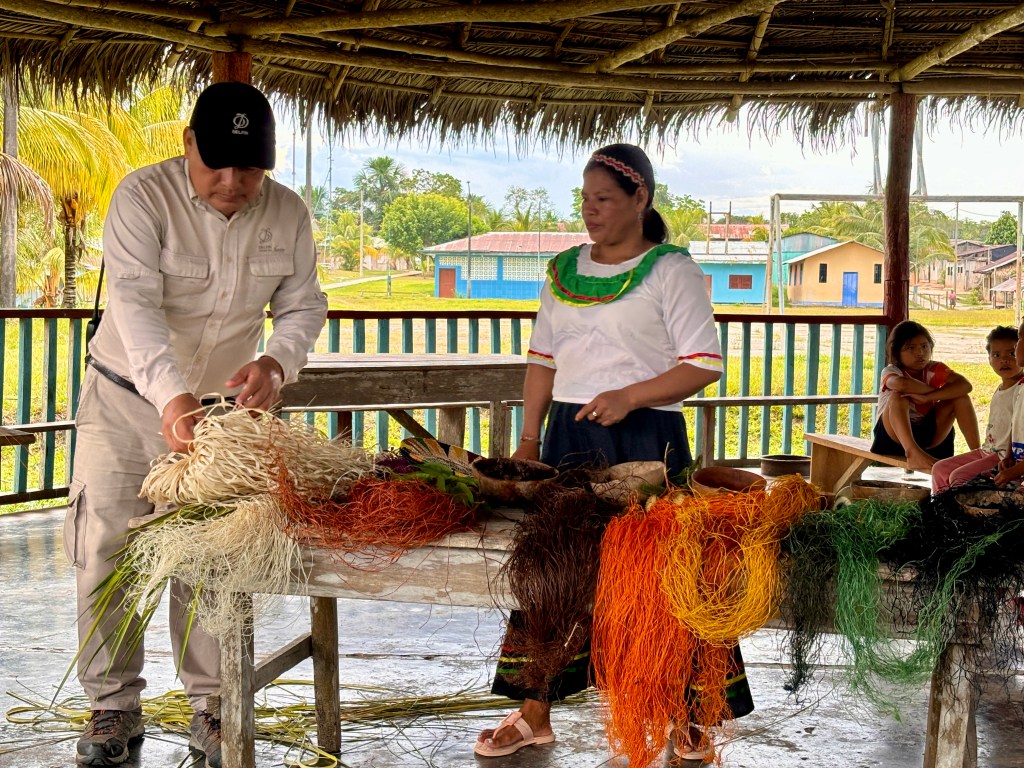
We learned about collection and drying of the fiber used for weaving.

We learned about which plants are used to achieve various colors.
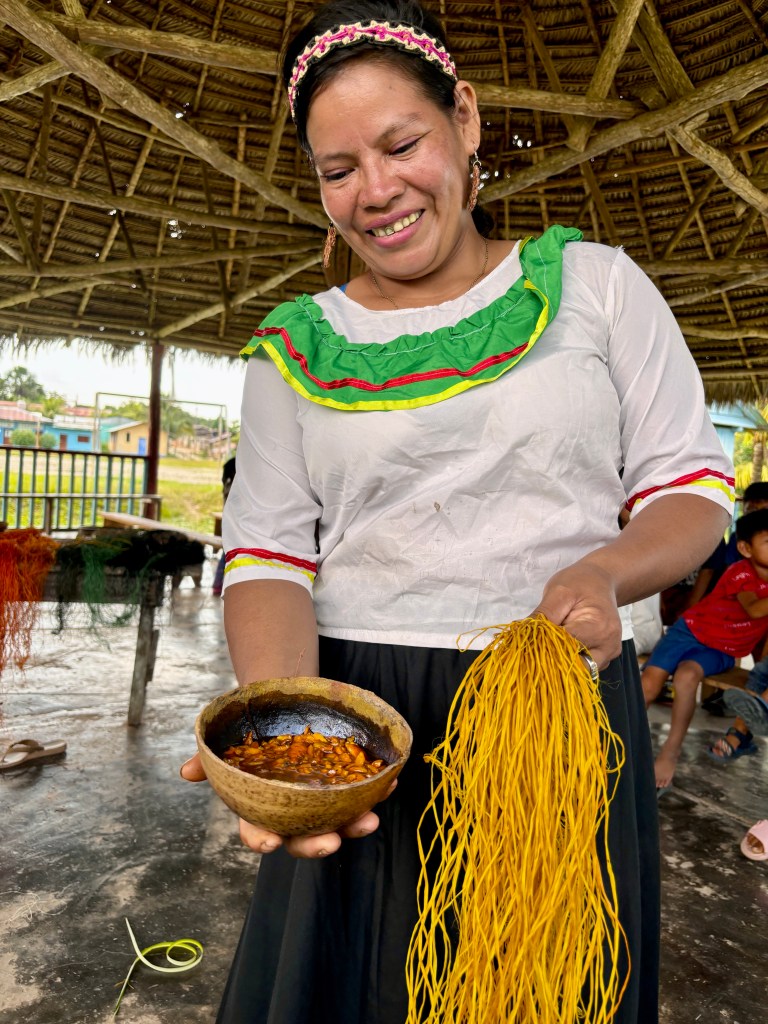
It takes her three days to weave a small basket.
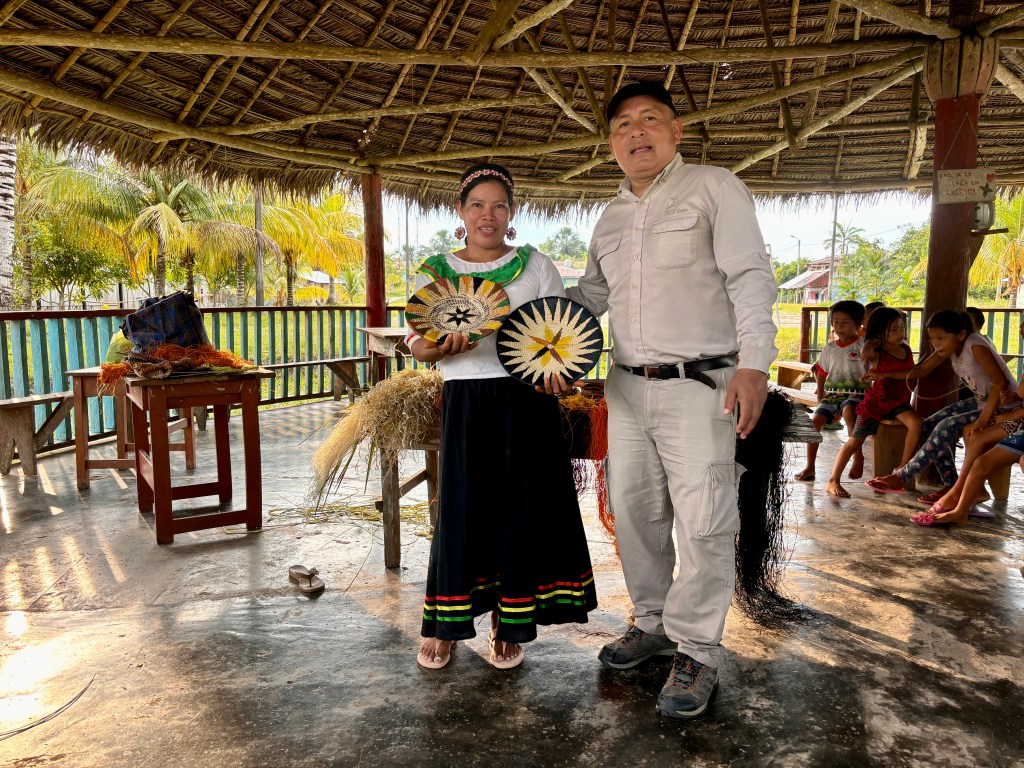
I bought the one on the right for the asking price of about $13 USD.
Obviously this village is right off the river and open to receiving tourist guests. This was not the Amazon village one might have seen in National Geographic decades ago.
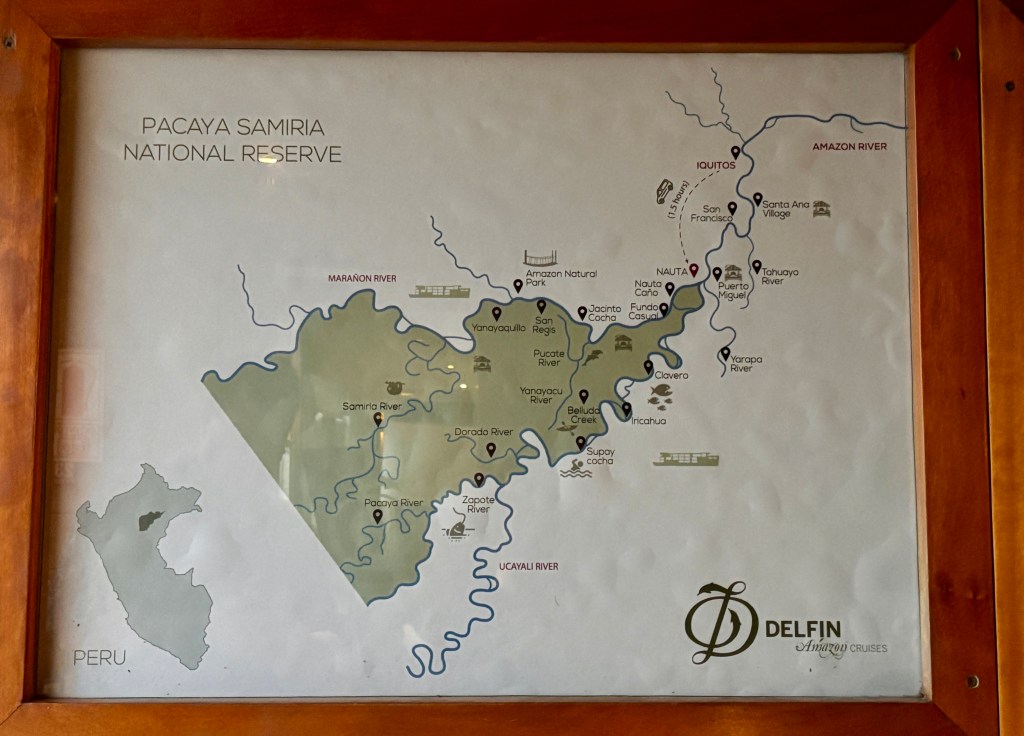
This map was posted to show us that on some of our Amazon journey we ventured into tributaries.
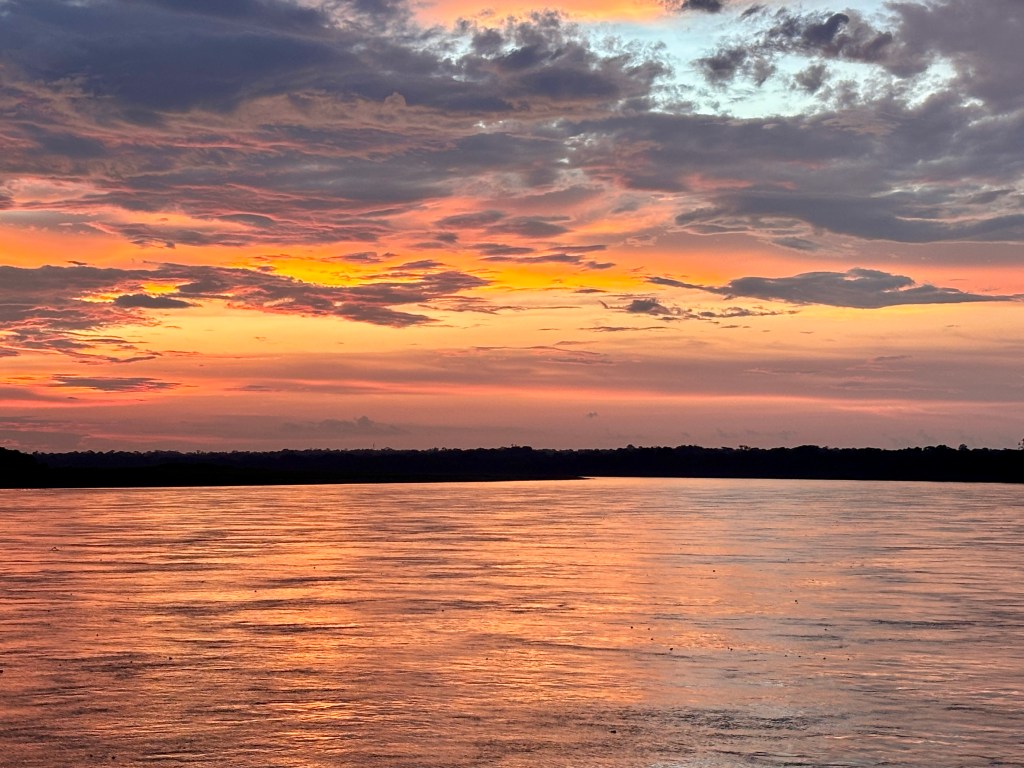
We had another beautiful sunset along the Amazon – or one of its tributaries.
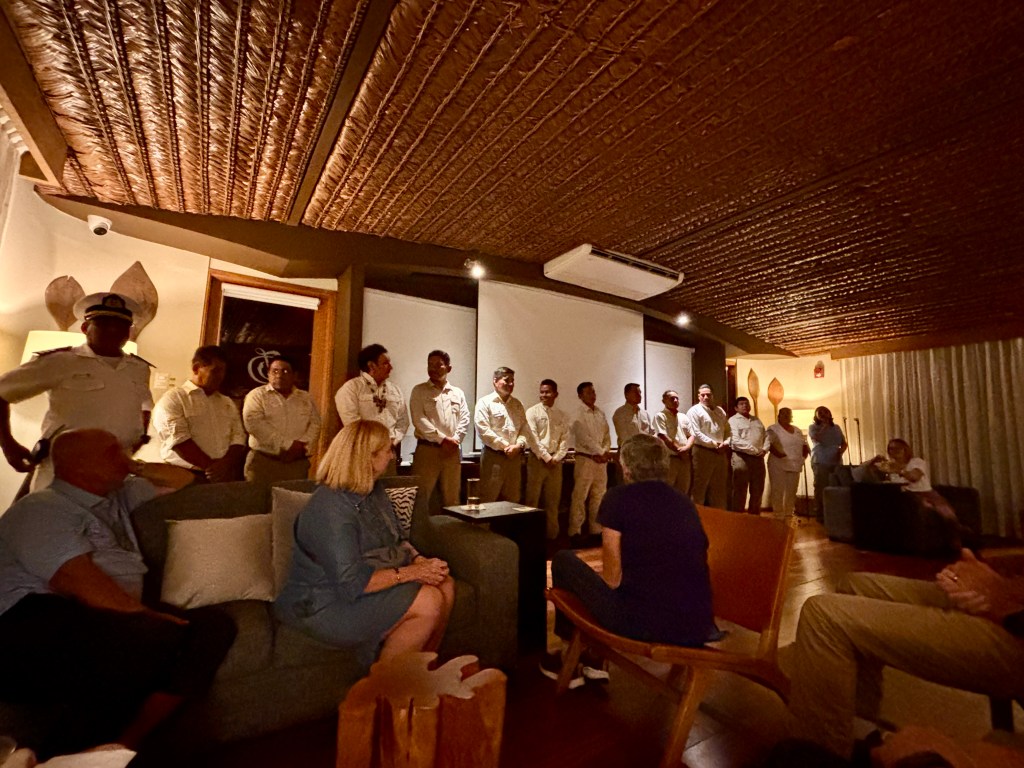
This being our last evening on board, we had a chance to see all the crew dressed up and to thank them for a job very well done.
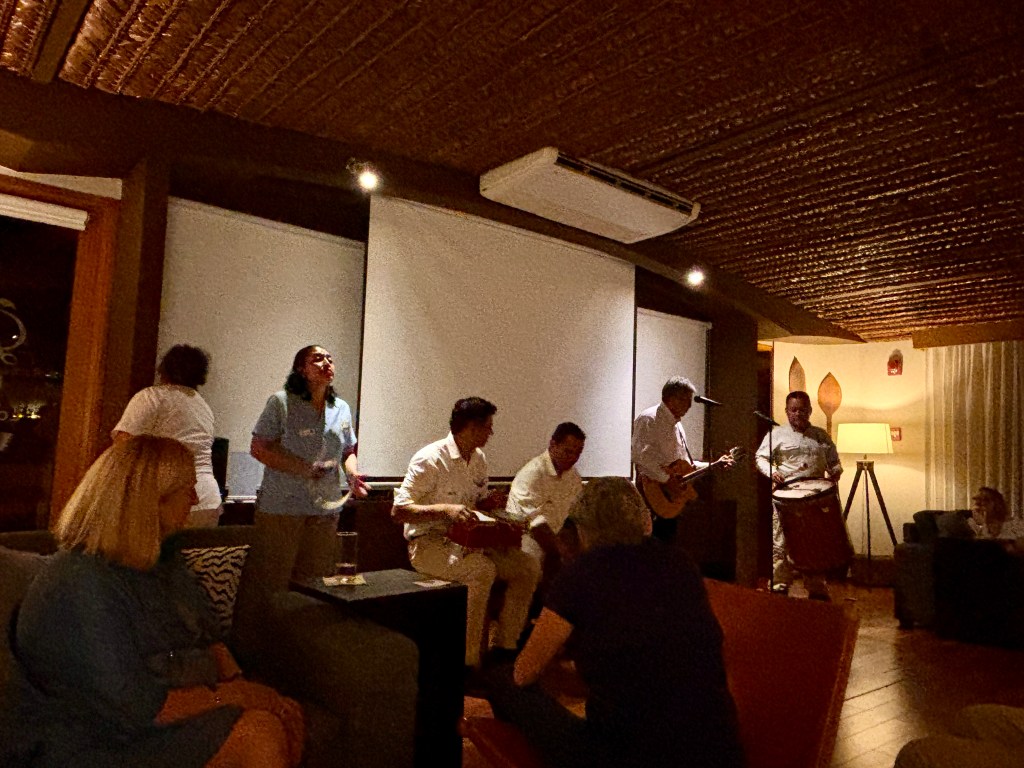
A few even gave us an American music concert!
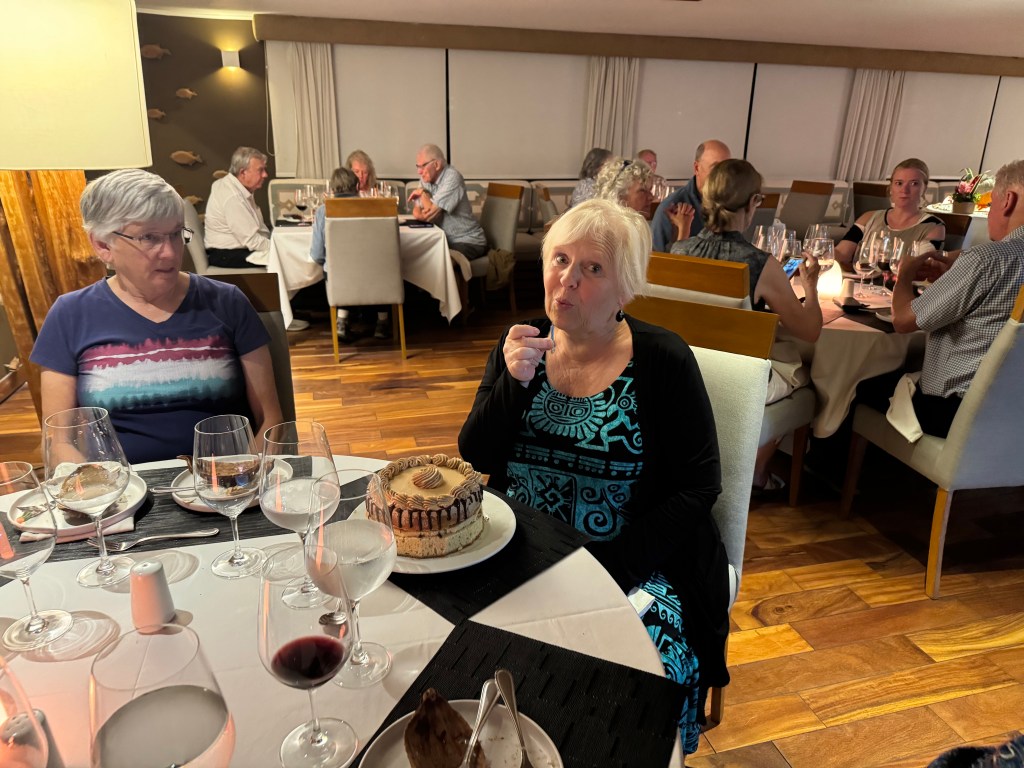
After dinner, the chef and waiters acknowledged two passengers having birthdays in a day or two after disembarking. That would be me!
We were on the Amazon on September 23, 2024.
Next Up; Sorry, not sorry, to leave the Amazon. The boat was terrific but the weather was not.


 Serene Wandering
fun fun fun! Loved seeing all the different friits