Our Ecuador guide, William, picked us up at the hotel to begin our Quito adventure. On the way, he gave us some general information.
The US dollar has been the national currency of Ecuador for 24 years. They do have some local coins but not bills. Ecuador is the only country in South America that uses US currency as their own currency. One of the things we noticed is that there seemed to be more use of US dollar coins than is common in the US.
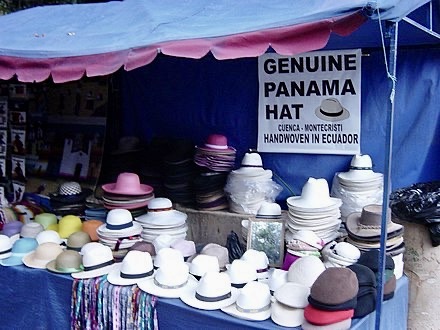
Panama hats are made in Ecuador! The straw from a variety of palm used is grown in Ecuador and the hats were noted by the Spanish conquistadors in 1562. Weaving the traditional Ecuadorian toquilla hat was added to the Unesco Intangible Cultural Heritage List in 2012. (Picture was taken from Wikipedia site.)
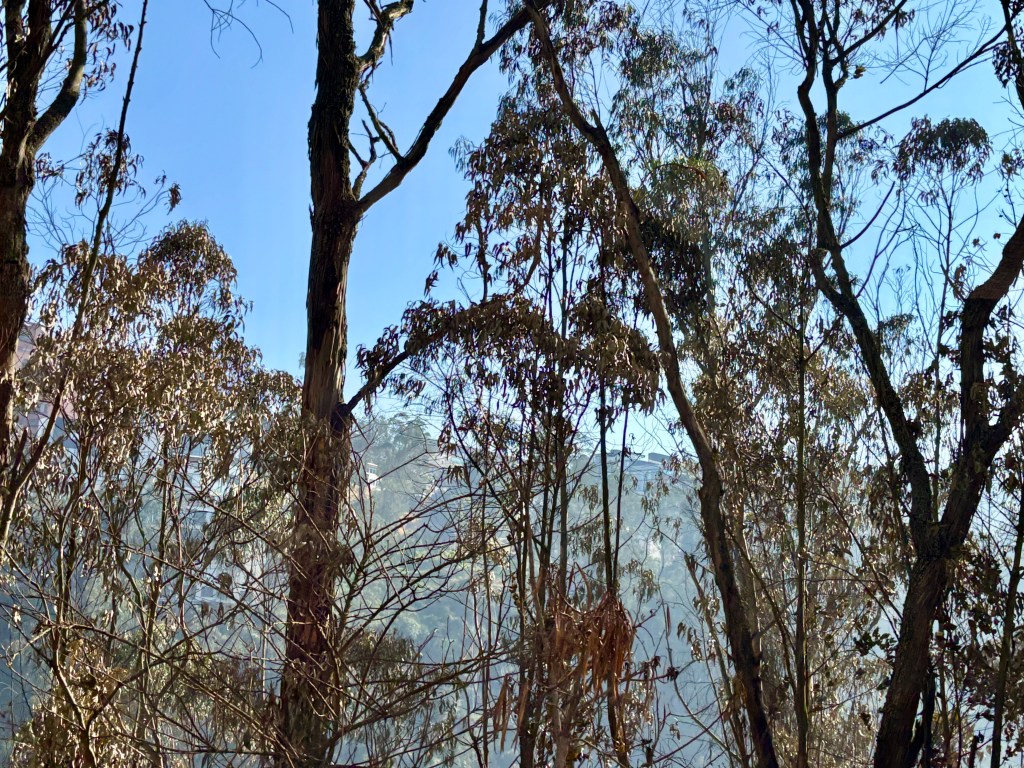
William spoke about the recent fires in Quito and that children had missed several days of school because of the smoke. Life was quite disrupted but the situation was improving. These trees were burned right off the road.
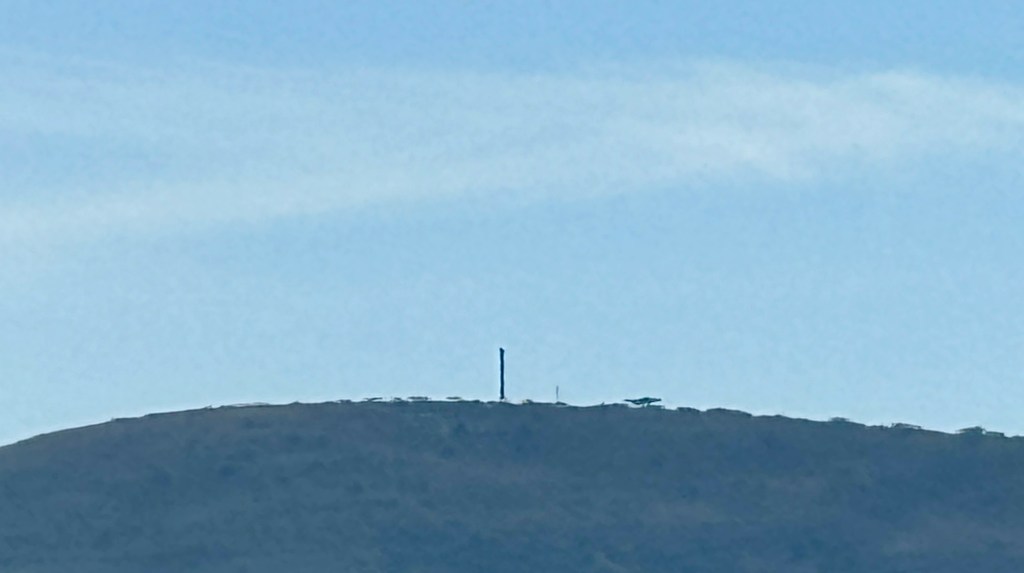
We were once again traveling on the Pan-American Highway as we journeyed. The monument on the hill was placed by the ancient people 1300 years ago and is evidence that they were knowledgable about the sun’s path on the equator.
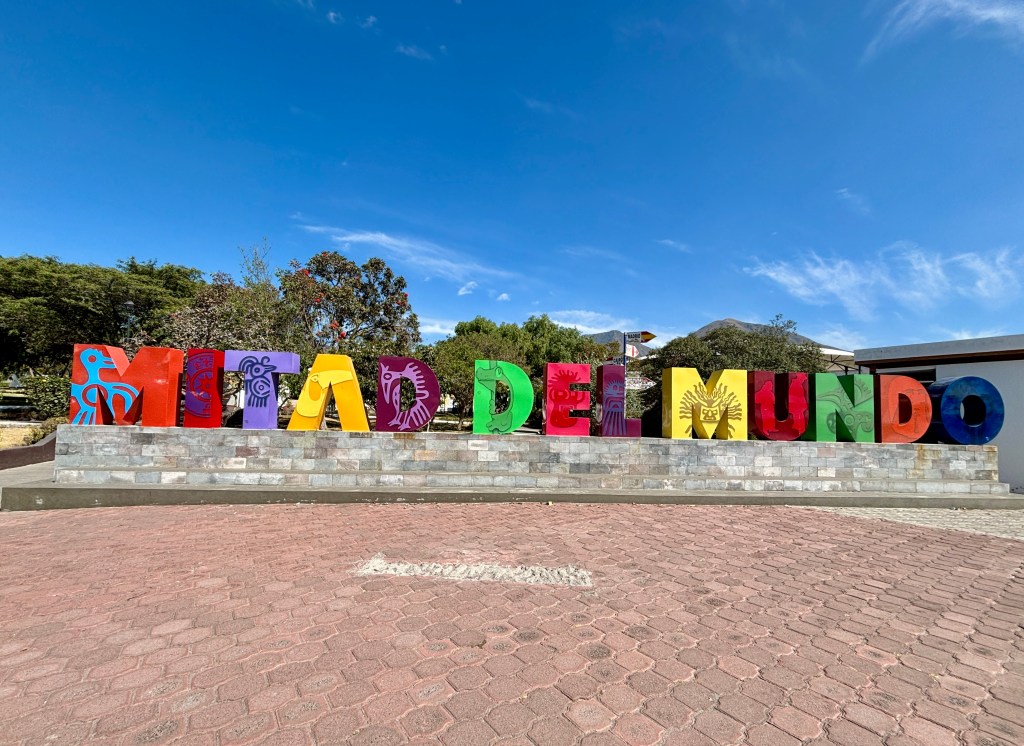
Our first stop was at Ciudad Mitad del Mundo – a monument and park celebrating the earth’s equator.

We explored exhibits on how a variety of indigenous peoples lived in the area that became Ecuador.
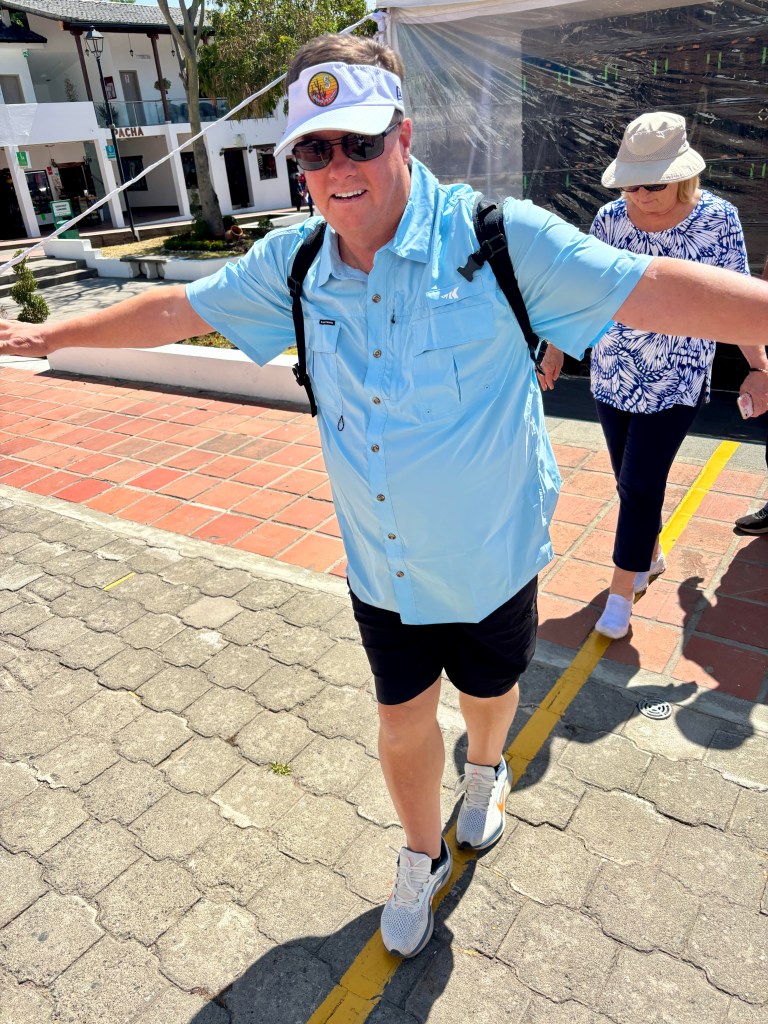
We walked the line – the equator line!
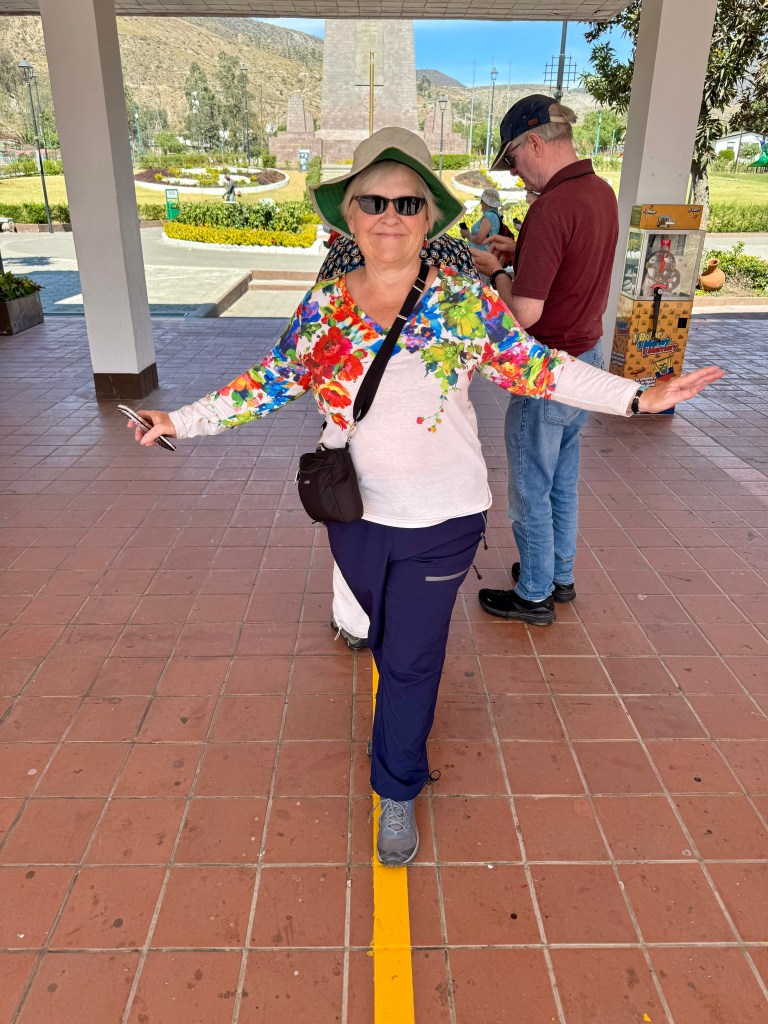
One of the things we failed to do was have a picture of straddling the line to specifically stand in the northern and southern hemispheres at the same time. Bummer!
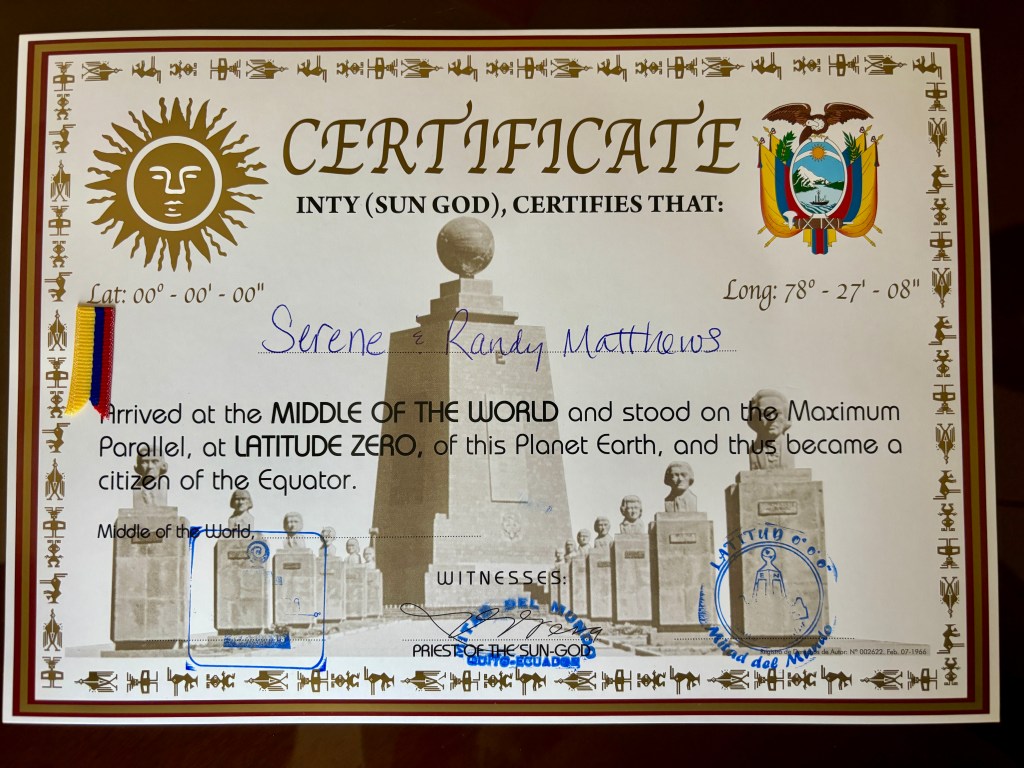
The equator goes for 24, 901 miles around the earth and goes through thirteen countries. Those are: Ecuador, Brazil, Columbia, Sāo Tomé and Principe, Gabon, Republic of the Congo, Democratic Republic of the Congo, Uganda, Kenya, Somalia, Maldives, Indonesia and Kiribati.


William told us that you lose body weight at the equator. That is caused by the centrifugal force from Earth’s rotation. We didn’t verify that with scales.
Our Ecuador tutorial continued once we were back on the bus! Ecuador is somewhat smaller than Texas and has 90 volcanoes. There are 17,000,000 inhabitants, mostly Mestizos those of Incan and Spanish mix. Less than 10 percent are indigenous, mostly they live in mountain villages. Sixty percent of Ecuadorians live in towns.
Ecuador has many ex-pat communities for those from the United States and Canada. I could see the draw, at least as it involves Quito – a city with history and culture, but which is also modern and clean. Quito also does not have the wandering dogs that were ever-present in Peru.
Ecuador’s varied ecosystems, mild weather and volcanic soil allow it to be self sufficient. Climate change and jungle deforestation may change that going forward.
William told us about the variety of businesses in Ecuador. He equated them to types of “gold” including the black gold – oil. They also have green gold – supplying 20 percent of the world’s supply of bananas. Pink gold is shrimp harvesting and sales. Gray gold is for fish, tuna, sardines and tilapia. White gold is tourism.
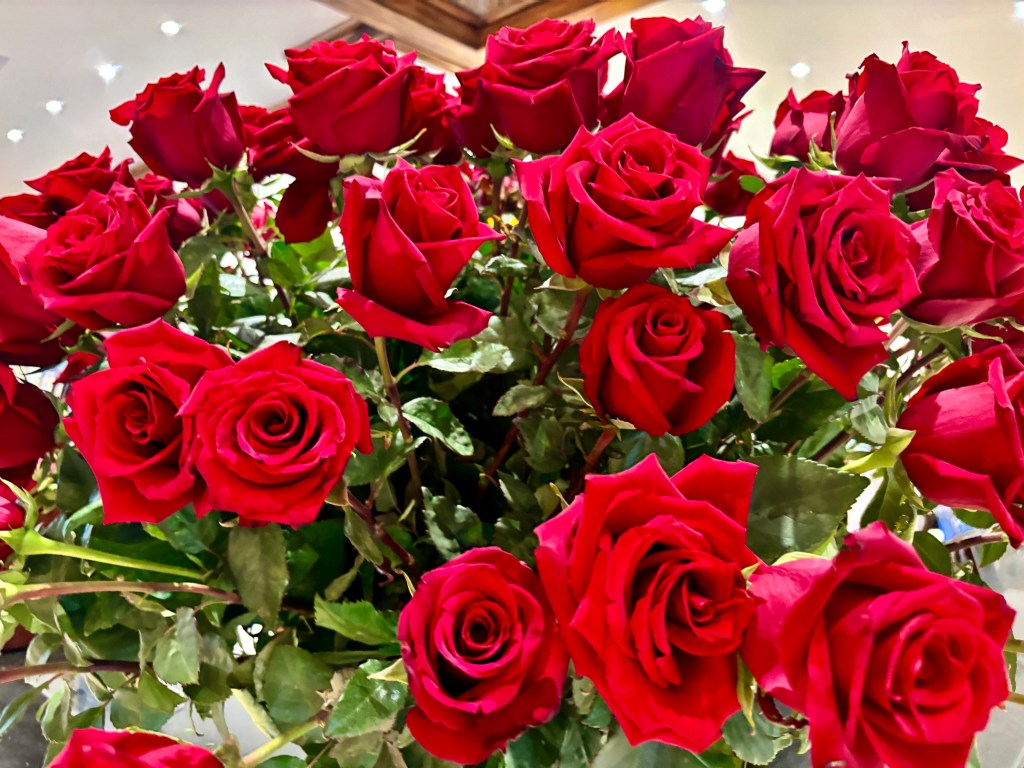
He said rainbow gold was for flowers. Ecuador is a world leader in the production of roses, exporting 50,000 every single day. There were very large arrangements in our hotel!
The last gold he spoke of, brown gold has to do with cacao beans for chocolate. Chocolate production has a 5000 year history and had to do with our next destination.
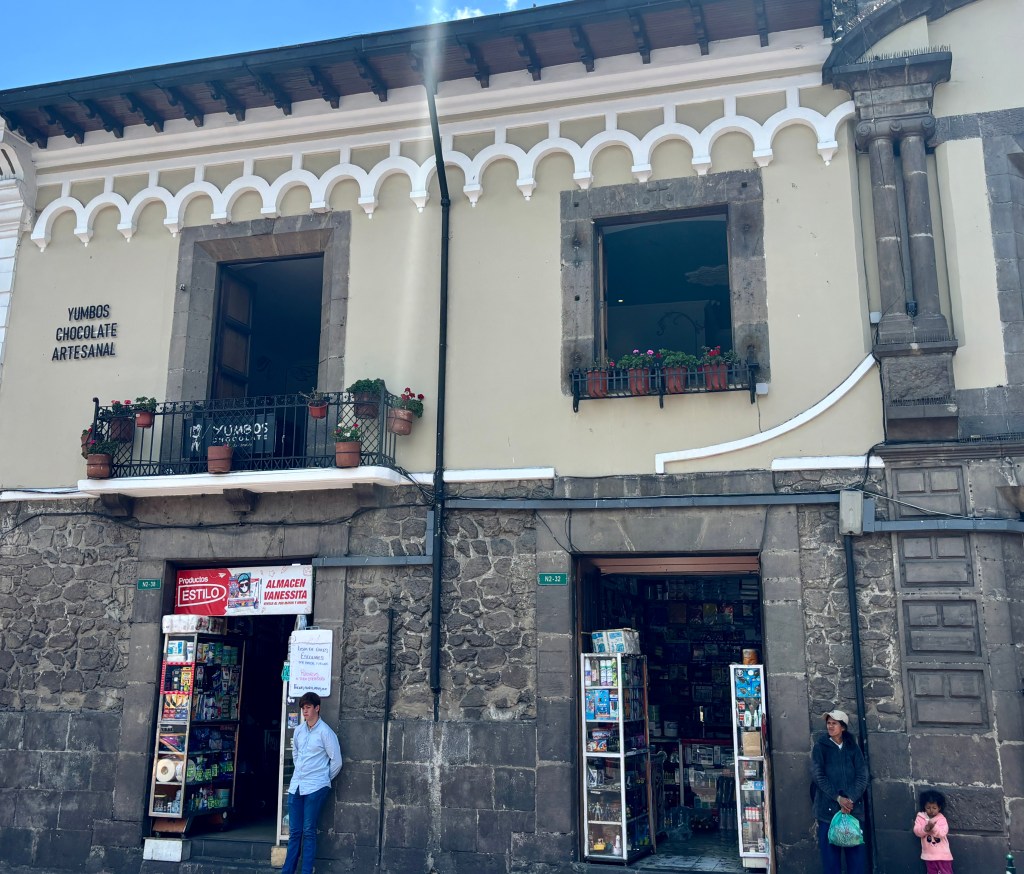
We were present for a chocolate tasting at Yumbos Chocolate Artesanal.
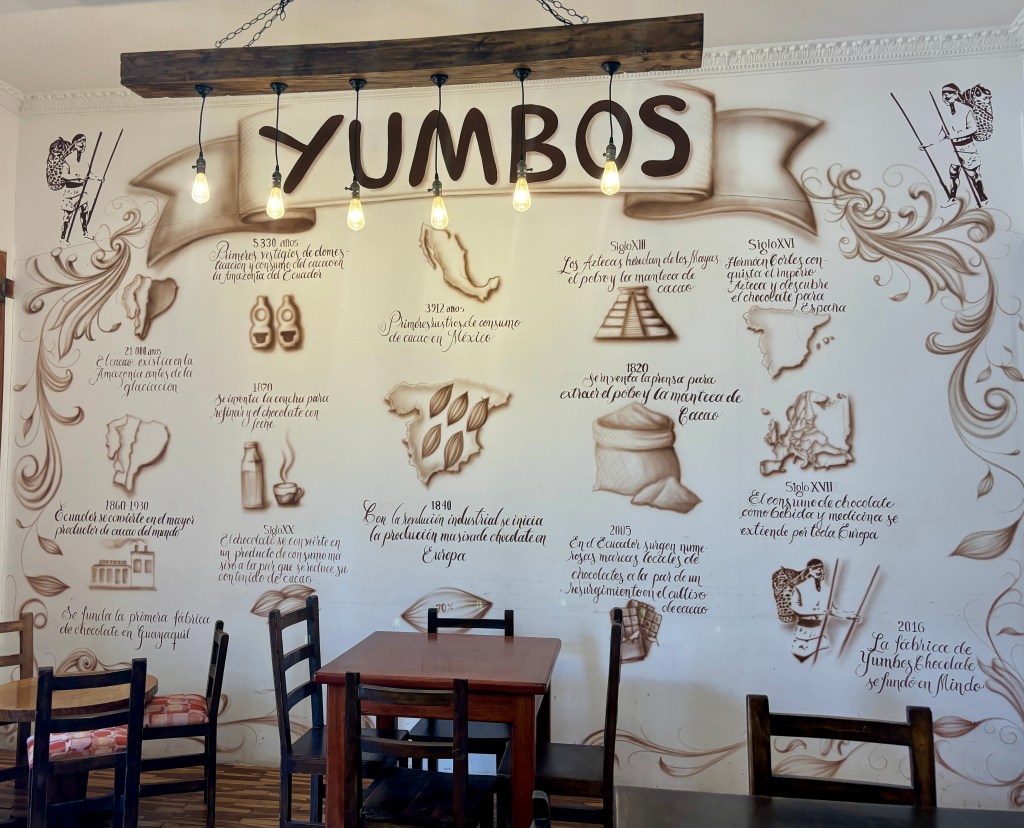
Yumbos is a boutique chocolate operation. They were awarded the Chocolate Bar Award Winner for in 2019, 2021 and 2023. It takes them 30 days to make a chocolate bar and they only make 5000 bars per month. They only sell locally because they do not have the inventory to go beyond that.
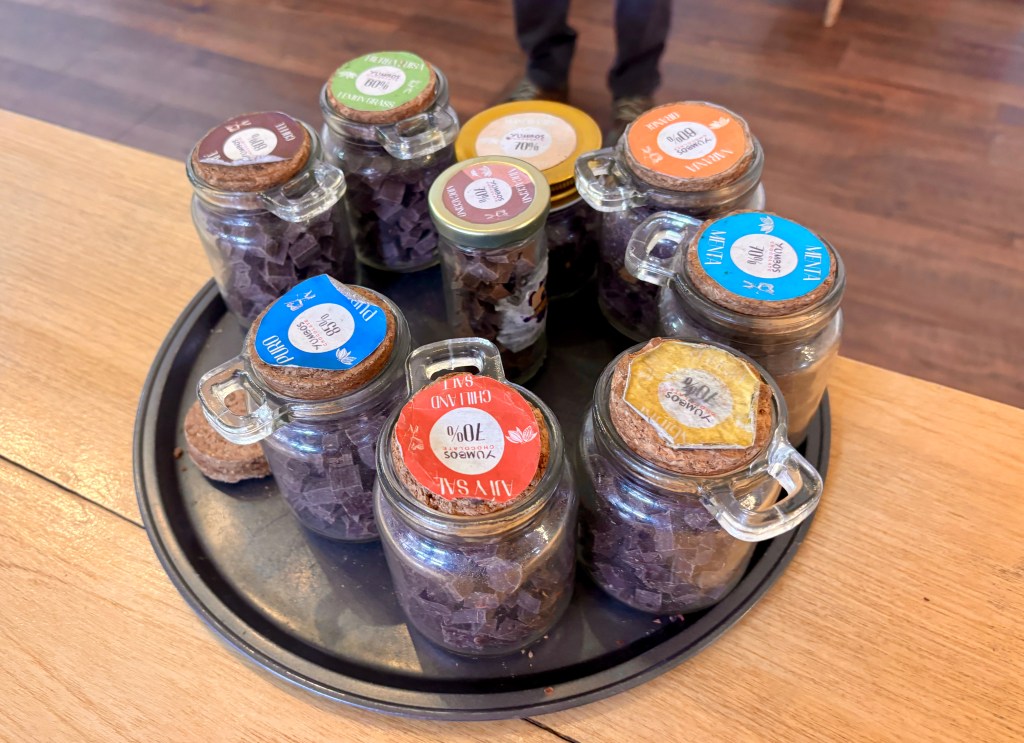
We were offered tastings of a variety of chocolates including 85 percent cacao, 60 percent with orange peel, 60 chocolate with coffee beans, chocolate with lemongrass, chocolate with chili and sea salt and chocolate with salt and mango. As delicious as most of these were, we were also offered some hot chocolate that we did not care for at all!
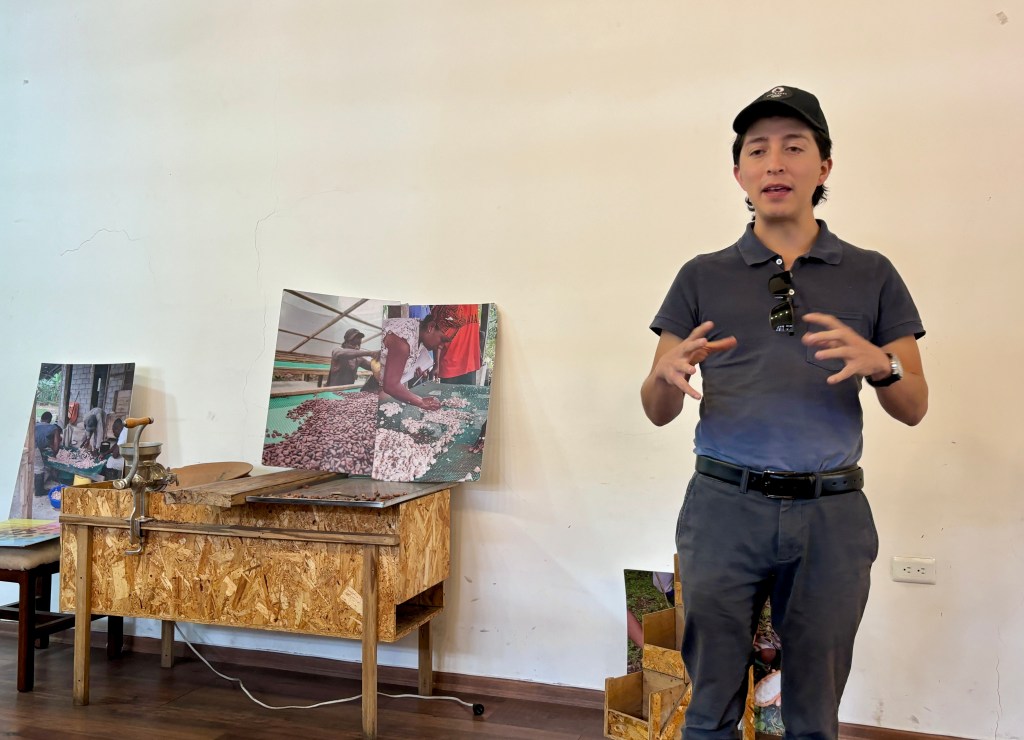
One of the things our guide talked about was the sense of taste – something I thought I knew a lot about. I taught the five senses in kindergarten for many years including breaking down the sense of taste into sweet, salty, sour and bitter. He started talking about the sense of umami! What was that?!
That required instant research before we even left the shop. Umami is a fifth taste characteristic of broths and cooked meats. Soy sauce and ripe tomatoes are also example of foods with umami characteristics. Initially proposed in 1908, umami was accepted as a fifth taste in 1985. This was primarily done because umami is recognized by a unique set of tongue receptors, not a combination of the other four.
I loved learning about umami. I was so excited that I called my former kindergarten teaching partner, Connie, right away to tell her about it.
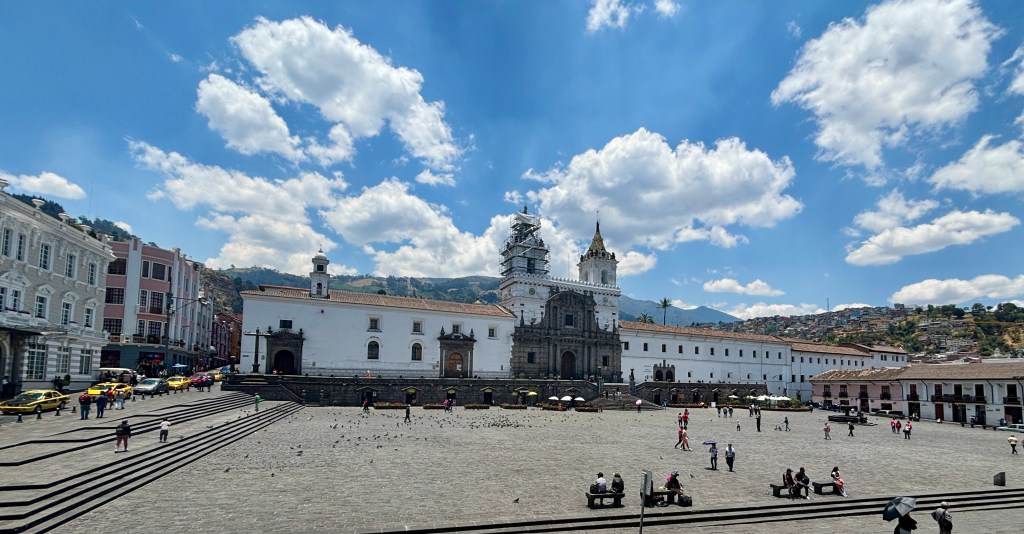
This is a picture of the Plaza de San Francisco, a public square, taken from the upstairs of Yumbos. The plaza was built upon ancient Incan ruins, including a palace that was in use from 1497-1533.

While we walked near the square and into Old Town Quito, we had a police escort. We certainly never felt at risk but imagine police presence is a deterrent. We saw numerous tourists use our police guide for information which he graciously provided.
Old town Quito has been a UNESCO site since 1978. Quito was built over the top of an Incan city by the Spaniards, beginning in 1534. They designed their city in the shape of a Latin cross emphasizing Catholic Church and government power. There were 33 churches in the area of the cross. There are some very steep roads similar to San Francisco.

One of the interesting things we saw were a series of women walking around selling ice cream, or something similar. It was interesting that the confection didn’t seem to turn into a runny mess!
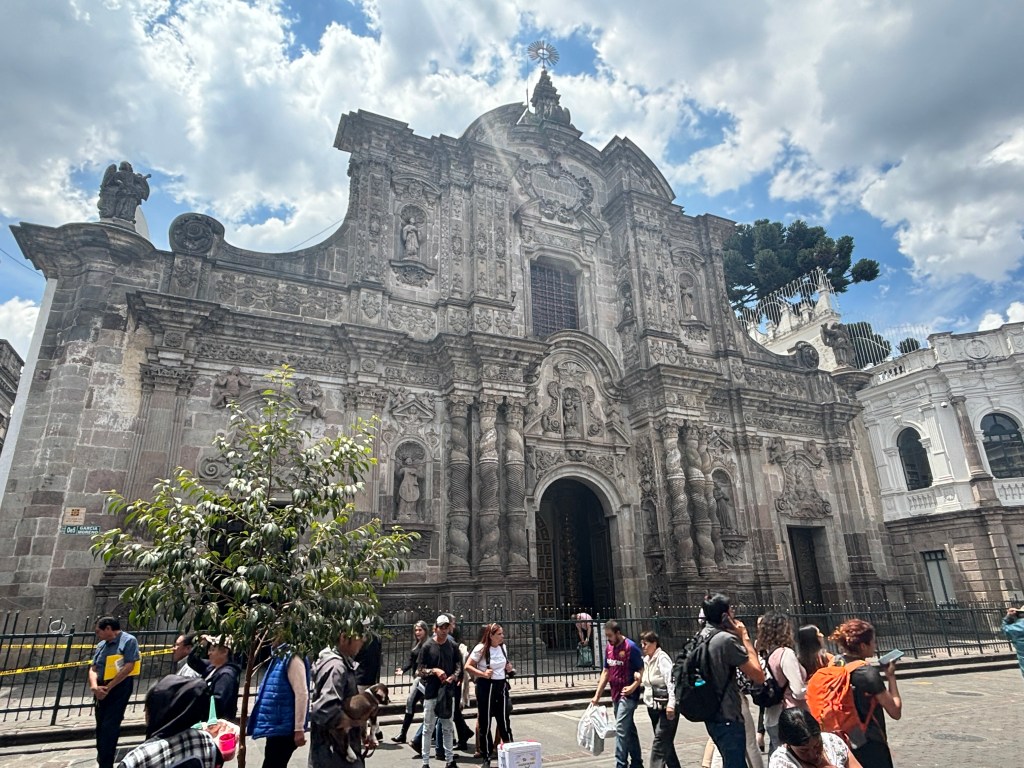
Our next destination was the Compañia Church, or more specifically Iglesia de la Compañía de Jesús. William said that 80 percent of the people in Ecuador are Catholic, but at least half aren’t active.
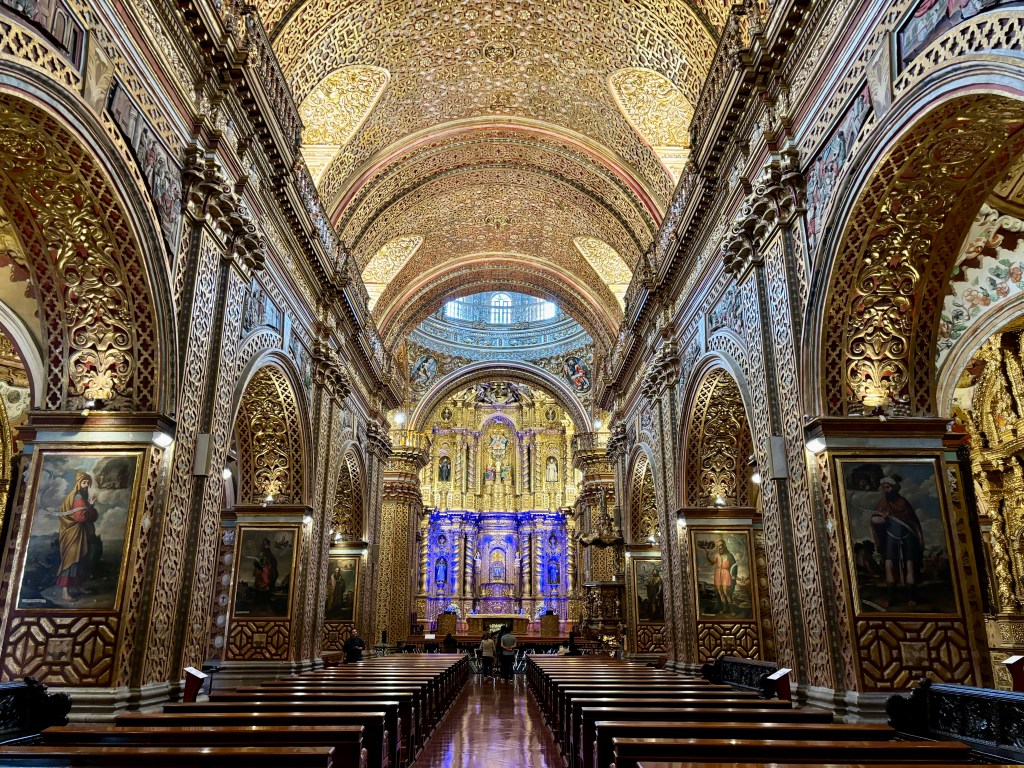
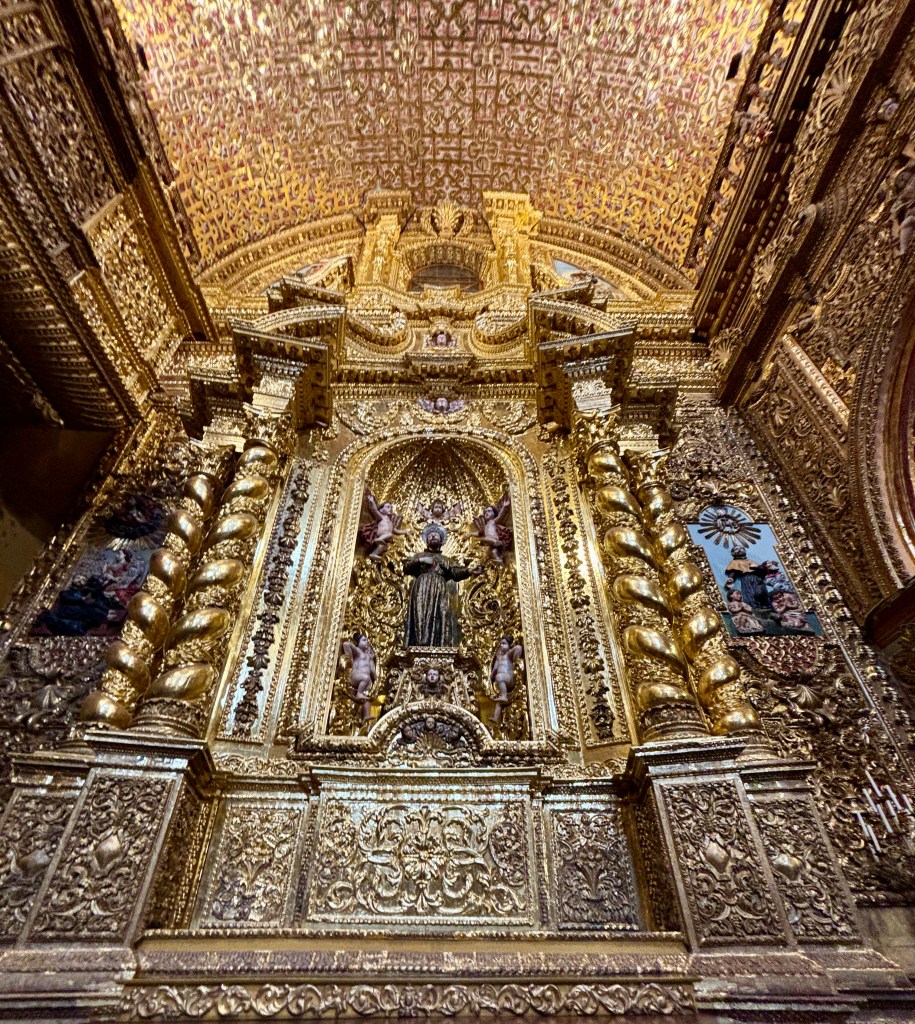
It took 160 years to complete the Compañia Church, the most ornate in Ecuador.

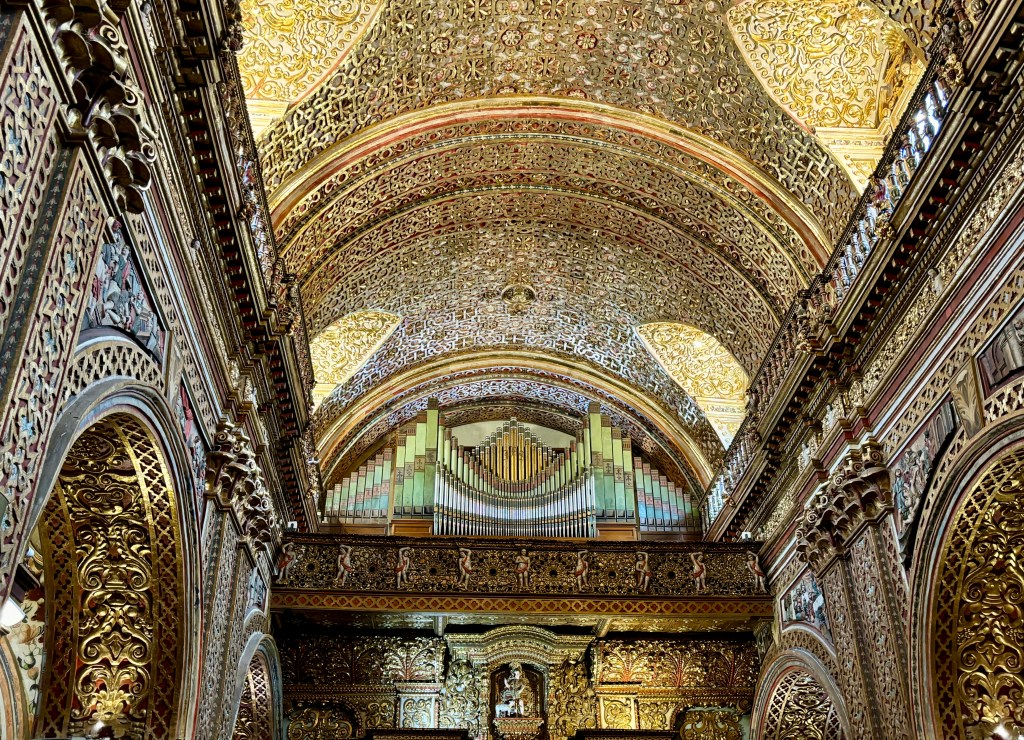
Even the back of the church, showing the organ, is beautiful.
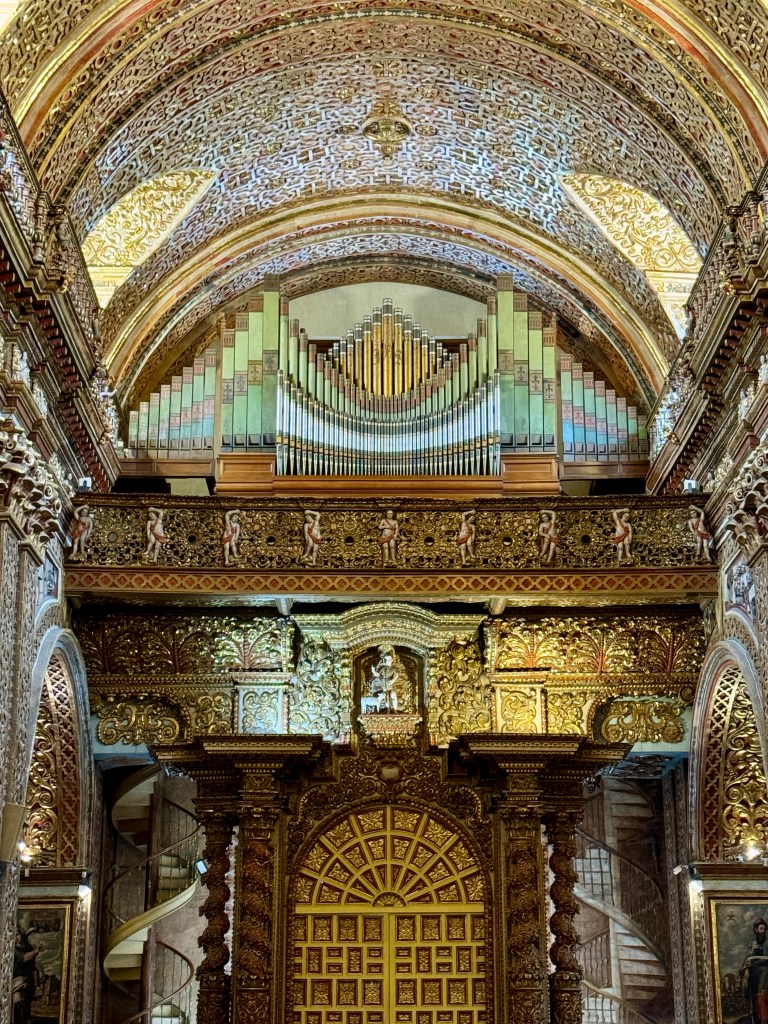
William pointed out the symmetry of the circular staircases. Only one is real, the other is painted.
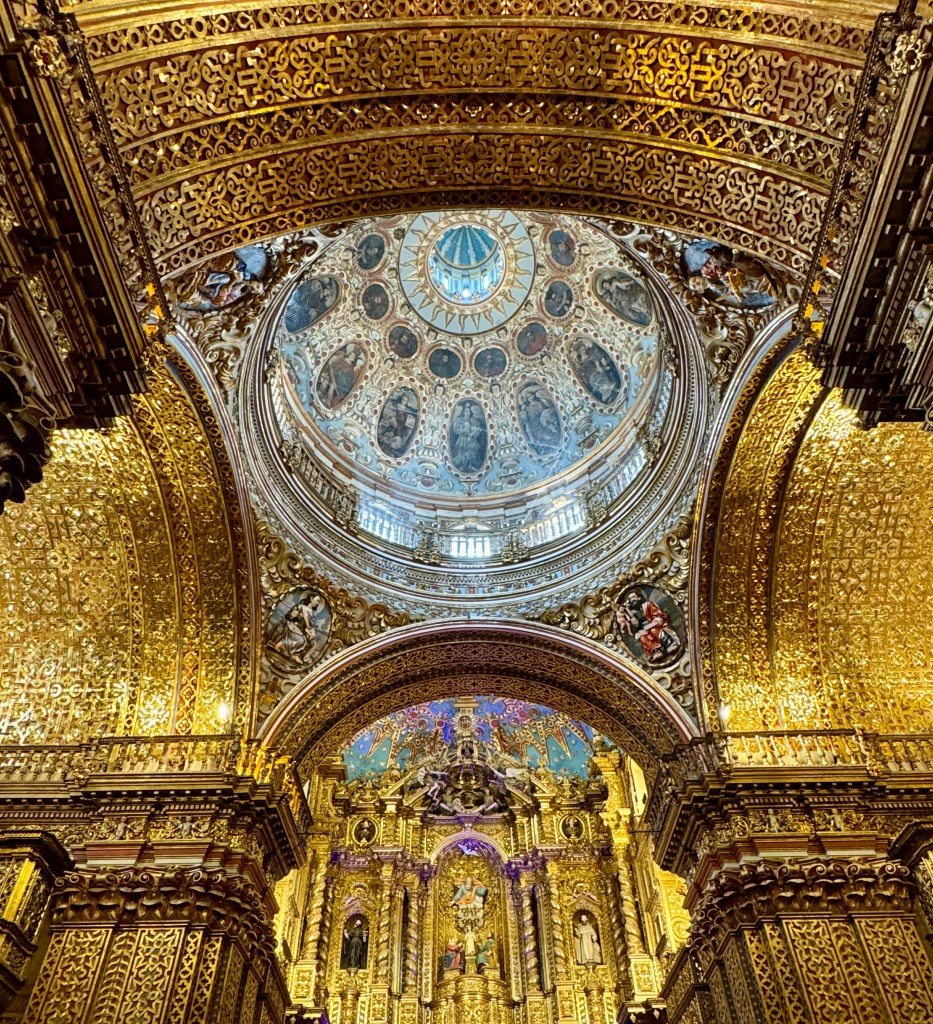
The ceiling and dome are very ornate.

This painting of Our Lady of Sorrows is the same as one from the nearby Jesuit St. Gabriel’s Academy. Thirty- six boys boarded at the school on April 20, 1906. One young boy observed the blessed virgin open and close her eyes. He alerted other boys and the teacher. The phenomenon lasted about fifteen minutes. The eye movement repeated for the students during prayer time. Church authorities eventually verified the miracle, and moved the painting. Several other observances of her eyes opening and closing have happened over time and numerous people came to faith because of it.
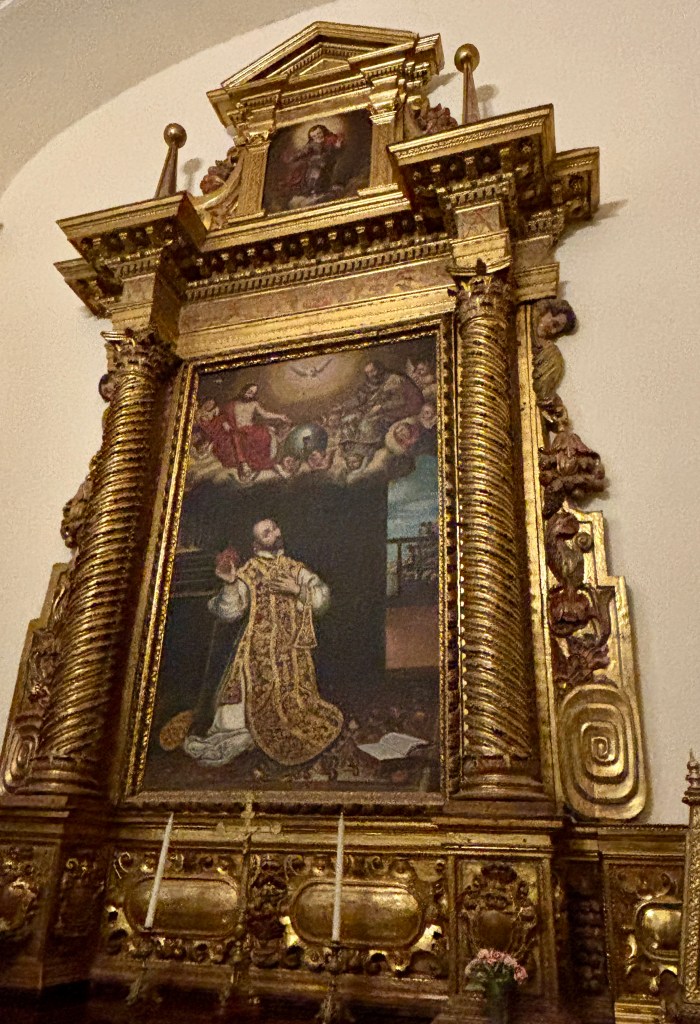
In a gallery on the property we were shown that even as the Spaniards conquered the Inca, they incorporated a bit of their culture into their art. Notice the somewhat circular rendition on the bottom right – this is an Incan design.
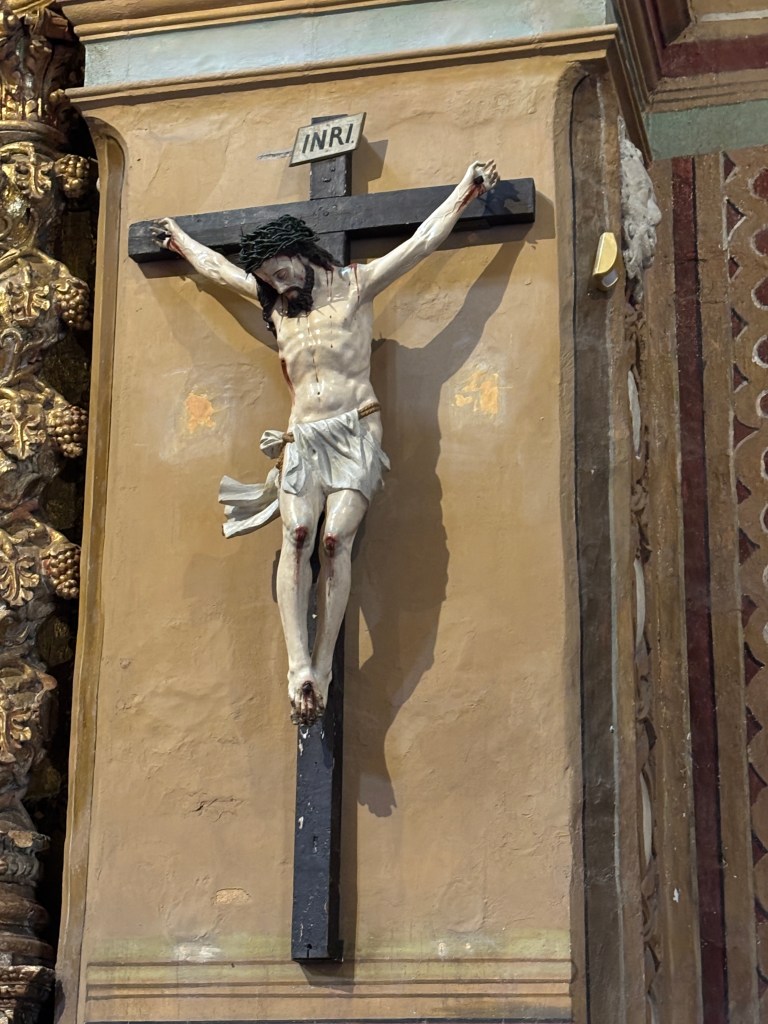
While observing this figure of Christ looking down with eyes closed, we were told that after accepting Jesus Christ, Mestizos would often display him this way with his head down and eyes open. That was perceived that he was looking down at their Mother Earth, pachu-mama. The Catholic Church forbade this, insisting that Jesus be portrayed in death looking down with his eyes closed or looking up to his father in heaven with his eyes open.
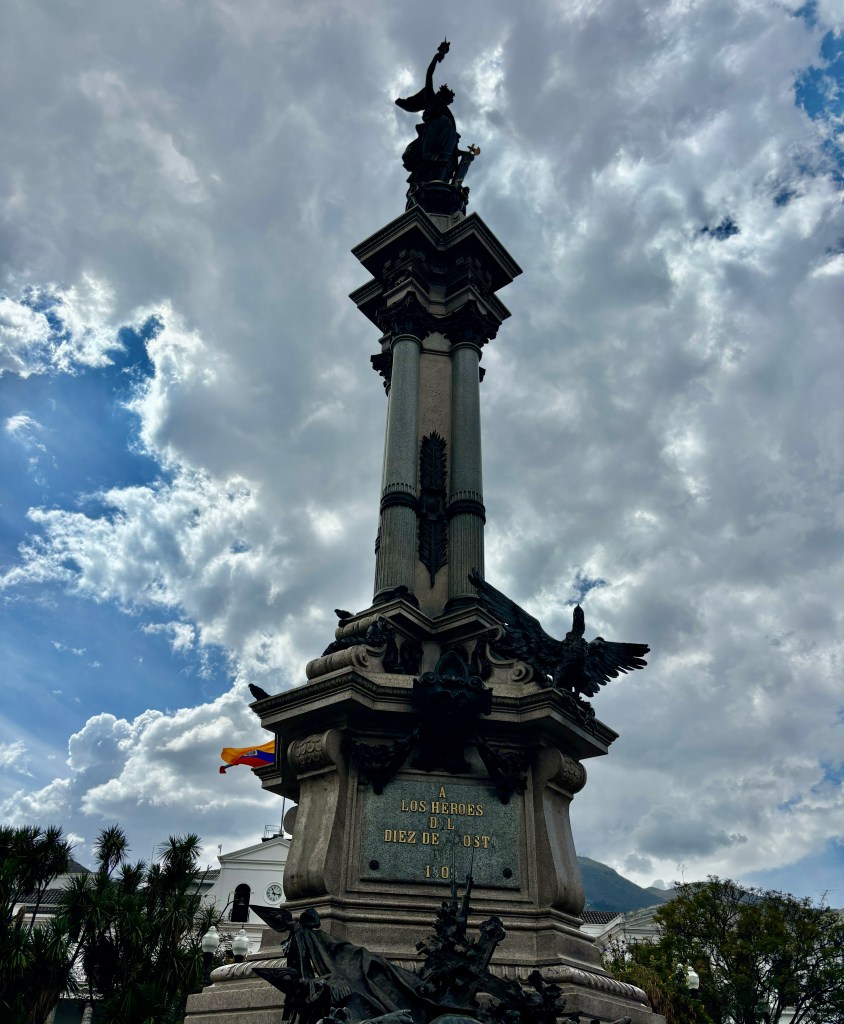
When we left the church, we walked to Independence Square.
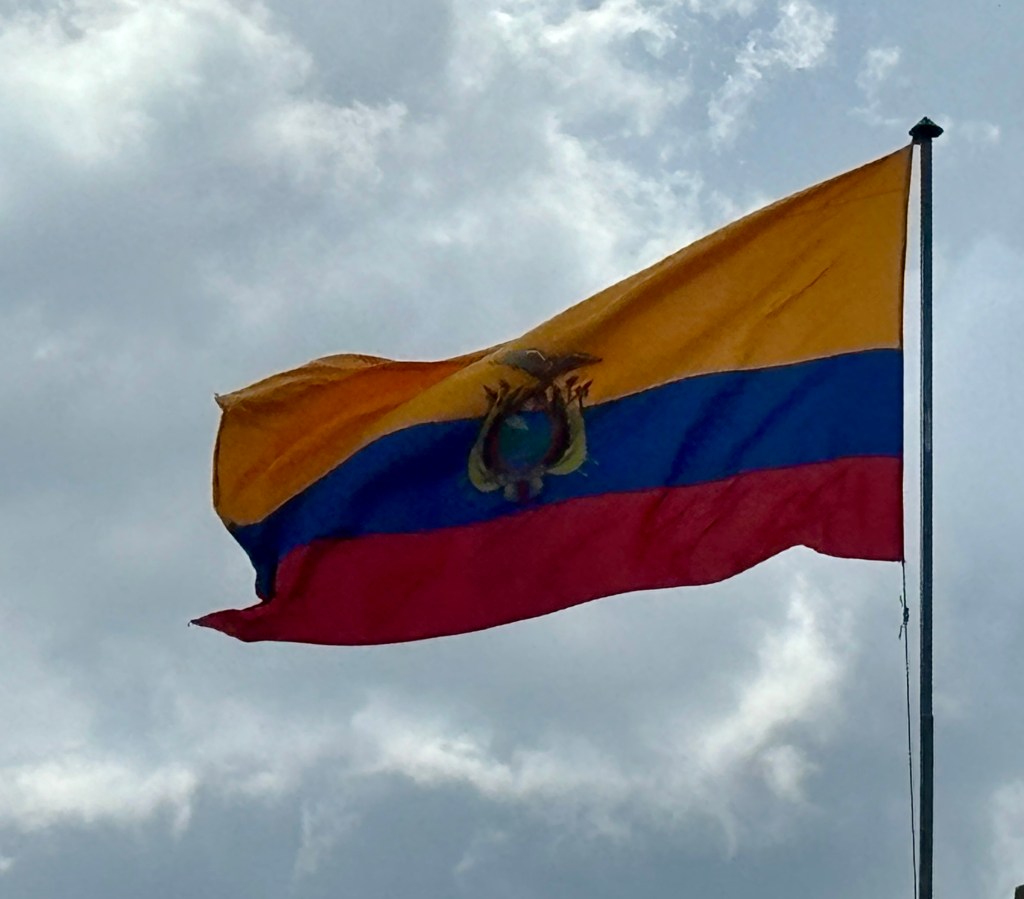
The Flag of Ecuador originated from a similar flag of the former Gran Columbia Union. Gran Colombia (1819–30) included lands roughly encompassing Colombia, Panama, Venezuela, and Ecuador.
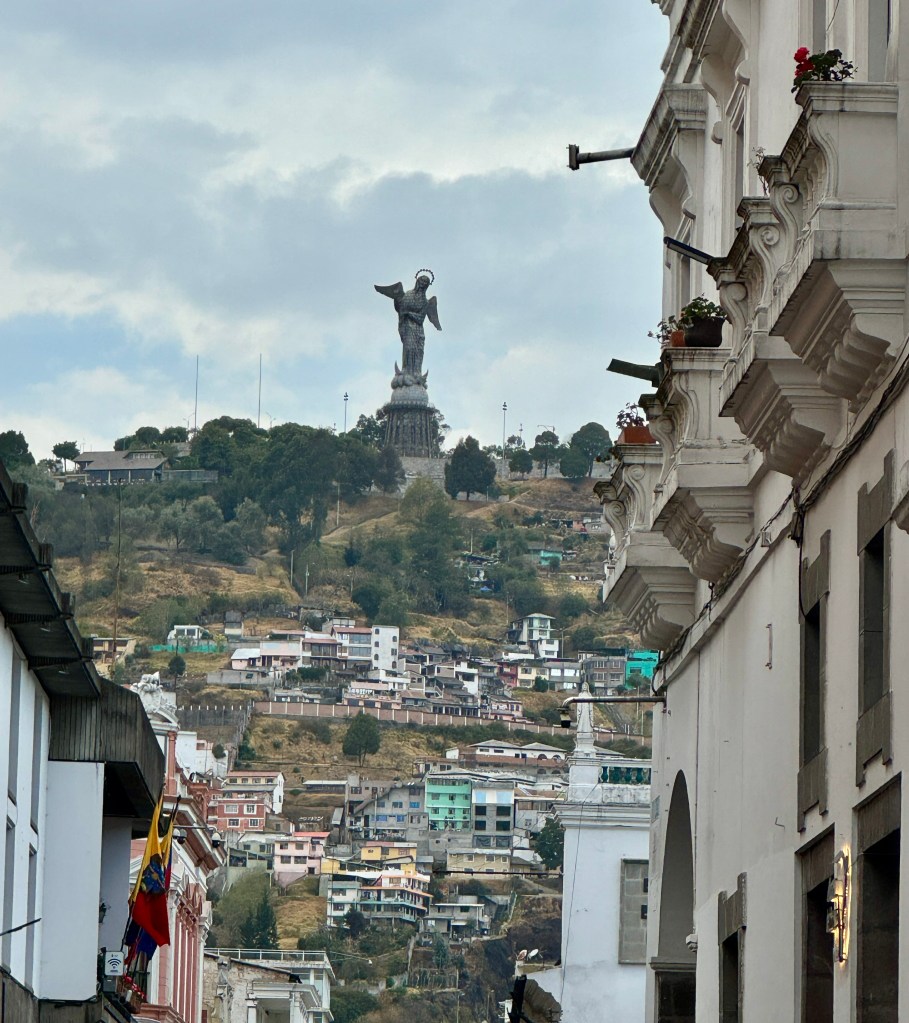
This statue of the Virgin Mary is the tallest aluminum statue in the world.
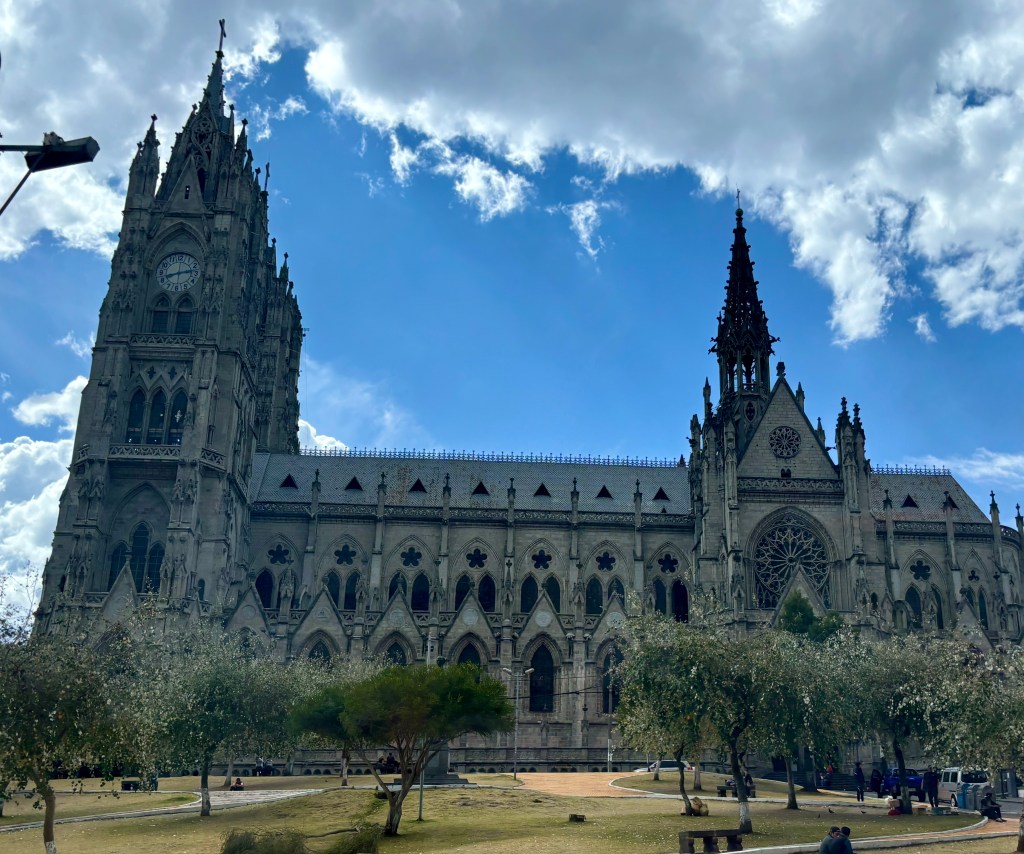
Ecuador’s National Basilica is still under construction with 10-15 percent remaining.

We had the opportunity to try a unique treat. A local liquor is inside – “mistelas de liqór”
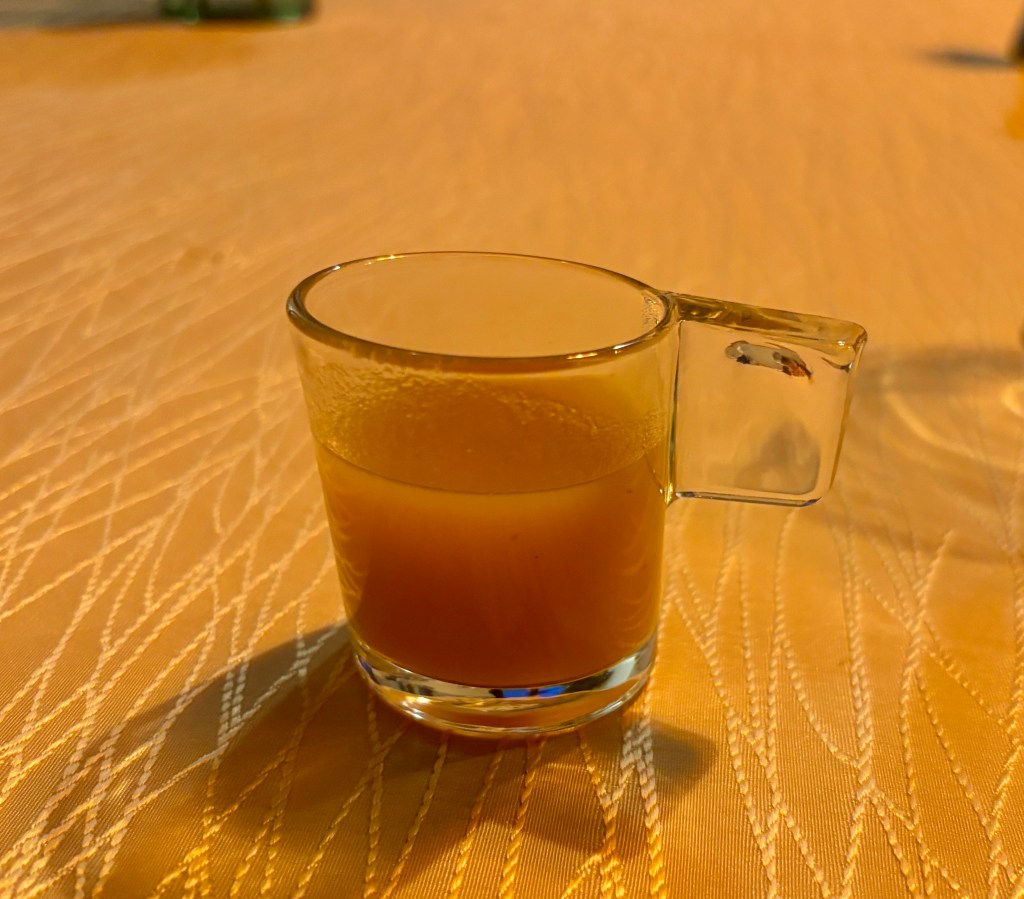
We went to a restaurant as a group and had a nice dinner that began with a traditional drink of Ecuador – cane-lasso.
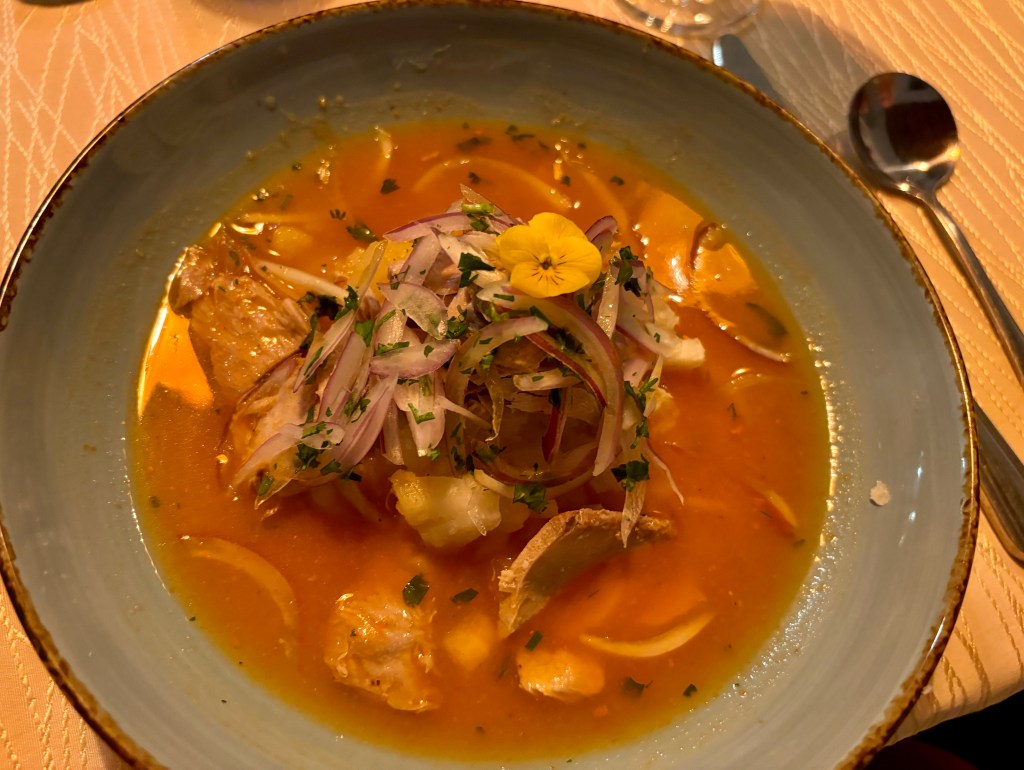
It was great to learn so many things in Quito on September 26, 2024!
Next Up: We transition to the Galapagos Islands.


 Serene Wandering