
We had an early start at the hotel in Quito. Our bags had to be out by 4:30 to allow for Galapagos bag inspections. They were looking for anything fresh or with seeds that might invade the Galapagos ecosystem.
The hotel had a modest breakfast for us in the lobby, which was nice considering that their regular breakfast service didn’t start for another 90 minutes. Avalon seems to have the ability to negotiate these things.
The Quito airport was a nice place. It was clean, with lots of shopping, and a fair amount of food options even before 7:00 am.

Most surprising was the suggestion to throw toilet paper in the toilet. For two weeks, that had been pleaded against, even in nice hotels. Sorry, if that seems like too much information but retraining habits of a lifetime are challenging!
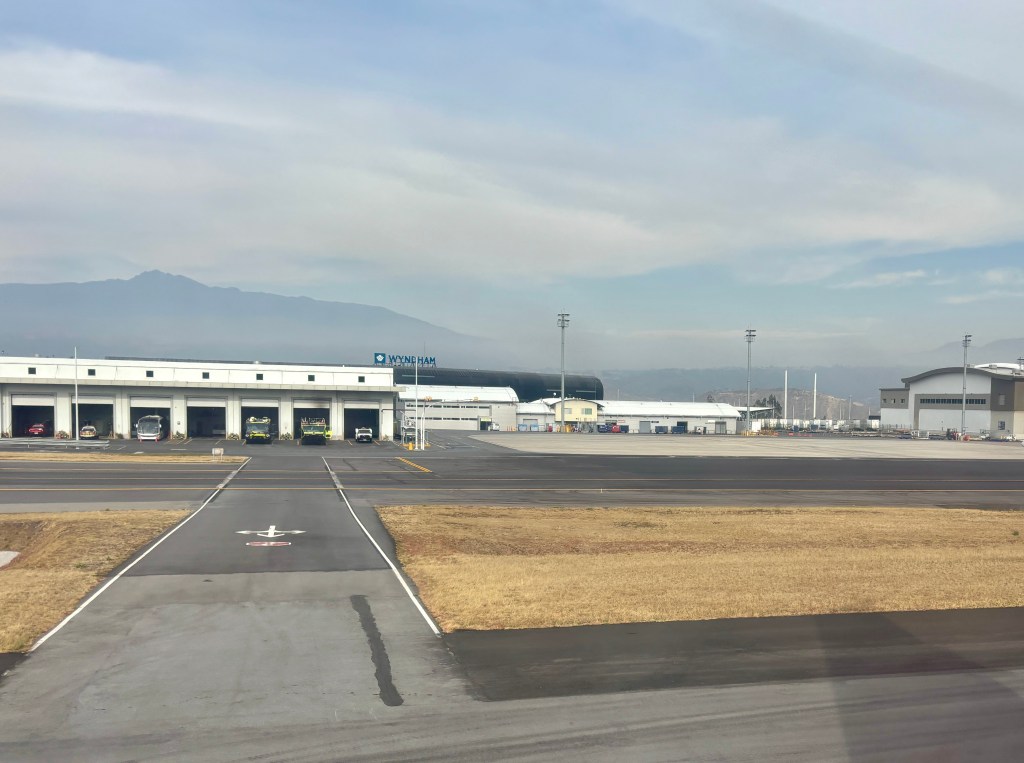
We boarded our flight on Avianca Airlines, the oldest airline in the Americas. As we were taxiing down the runway, we could see the smoke still enveloping Quito. Except for smoke in the air, and one time altering our bus route, the fires that made international news had not impacted our visit to Quito.
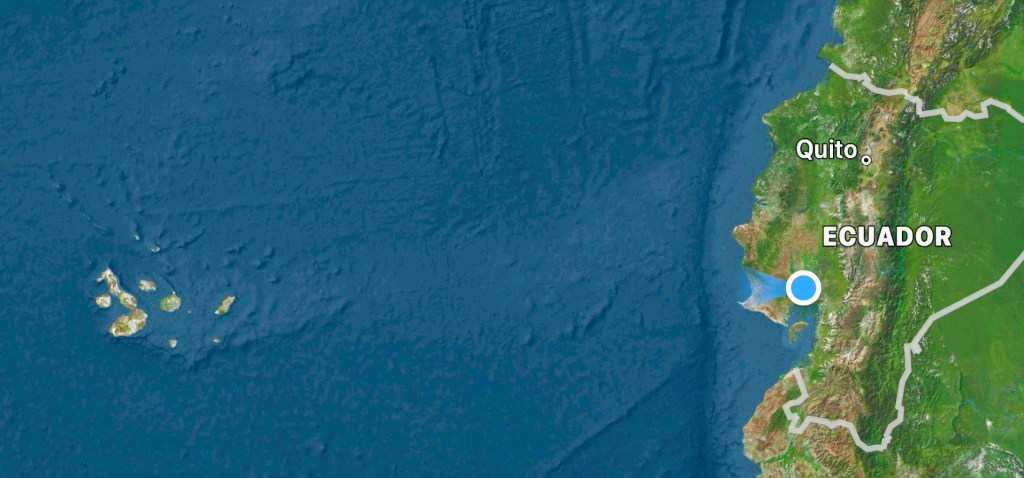
We landed in Guayaquil, south of Quito but still on the mainland. Some people got off, but we were instructed to stay on the plane and in our seats while the plane was refueled for the flight to the Galapagos Islands.
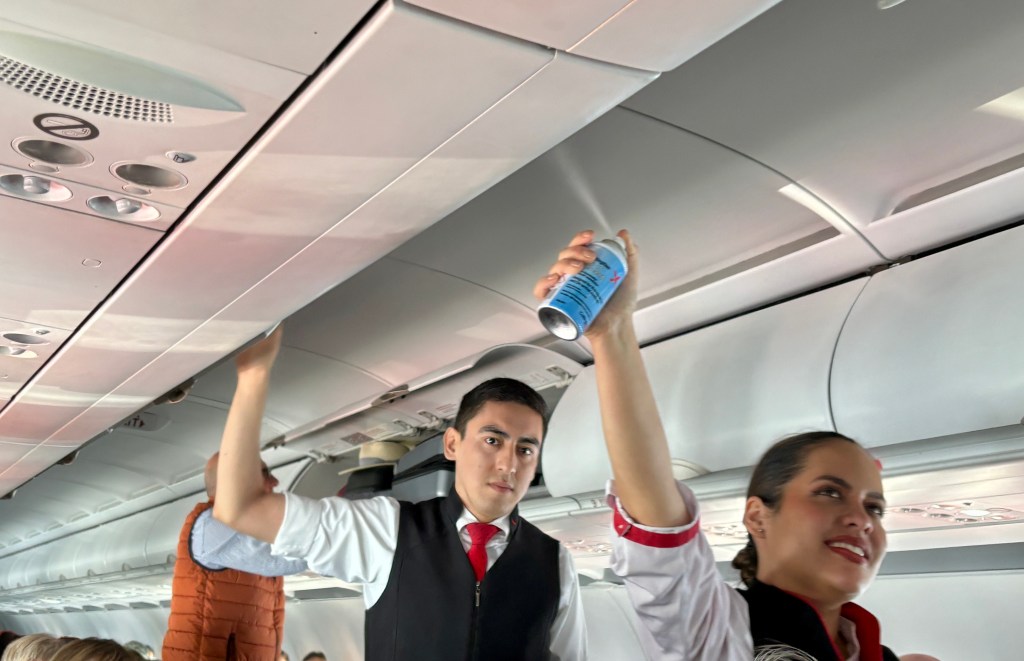
Mid-flight excitement happened when the flight attendants opened and sprayed all the overhead compartments and carryon luggage. We assume that was an extra protection against anything that might accidentally get onto the islands.
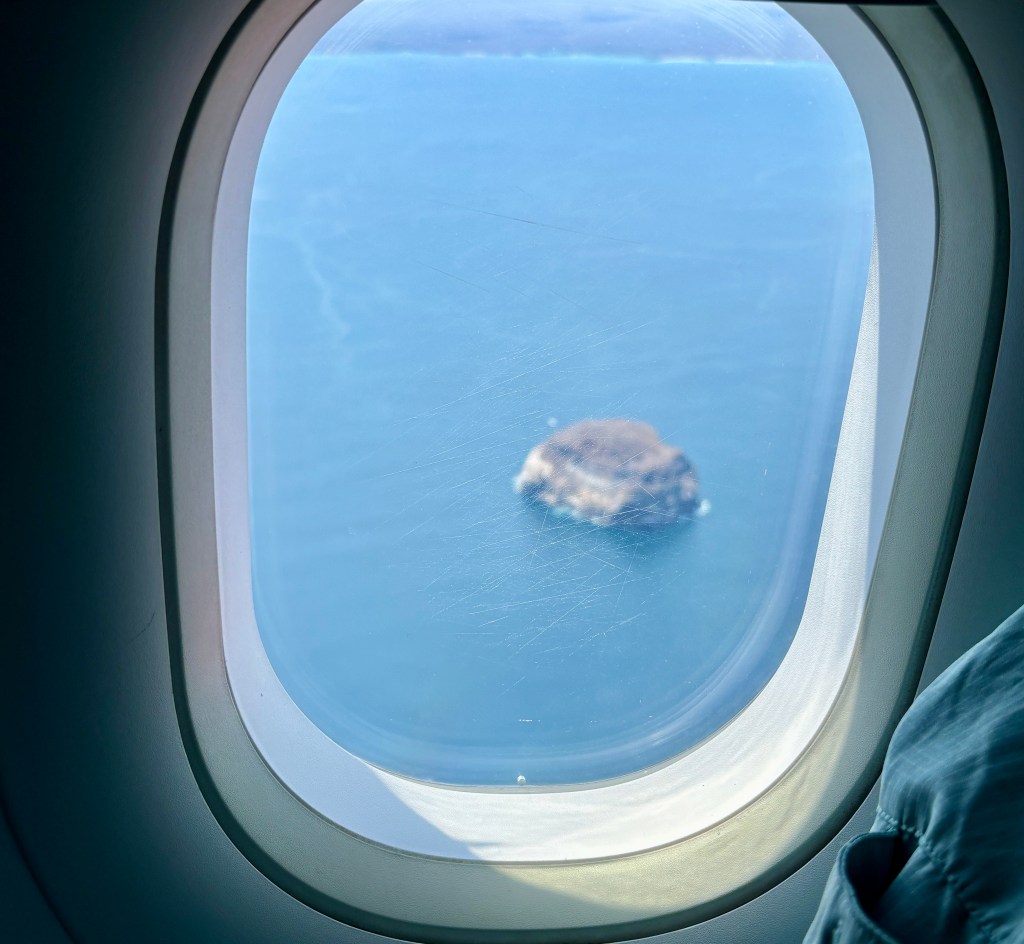
This was our first sighting of a Galapagos Island.
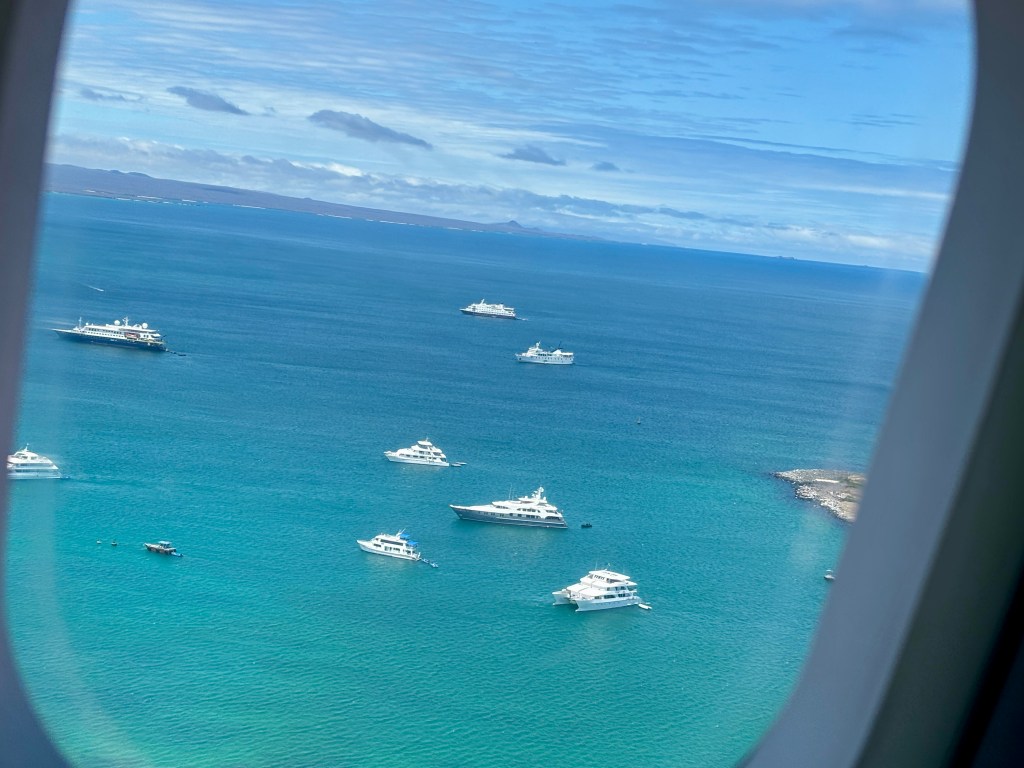
Obviously, we aren’t the only ones here!
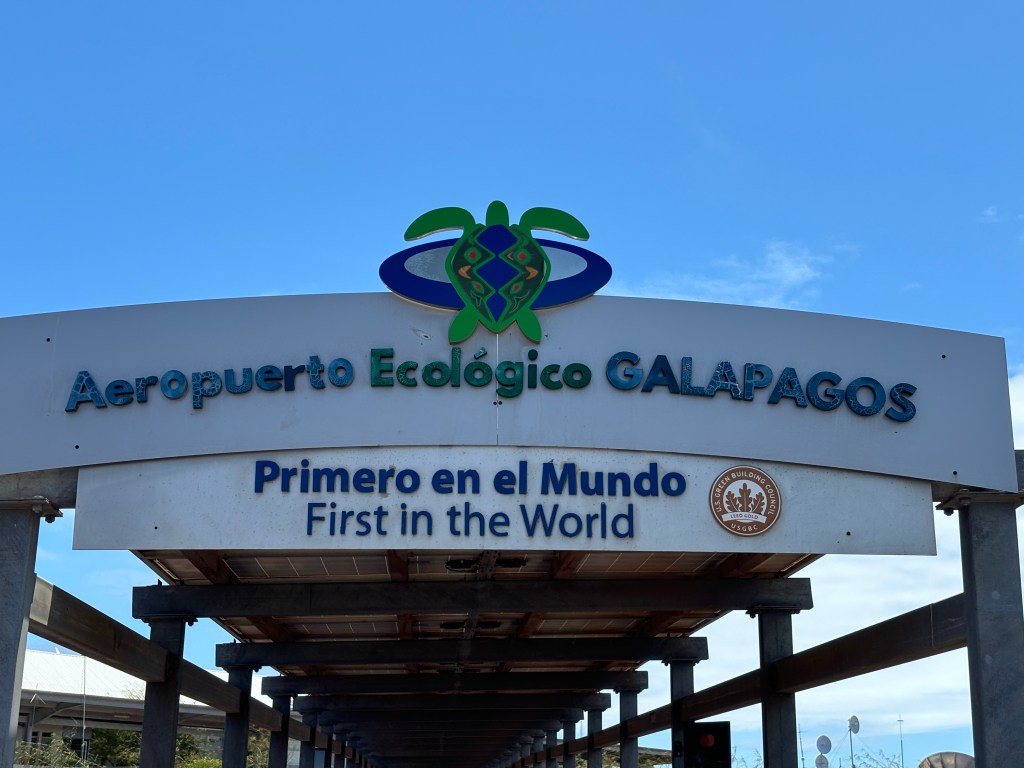
We landed on the island of Baltra and disembarked into the airport.
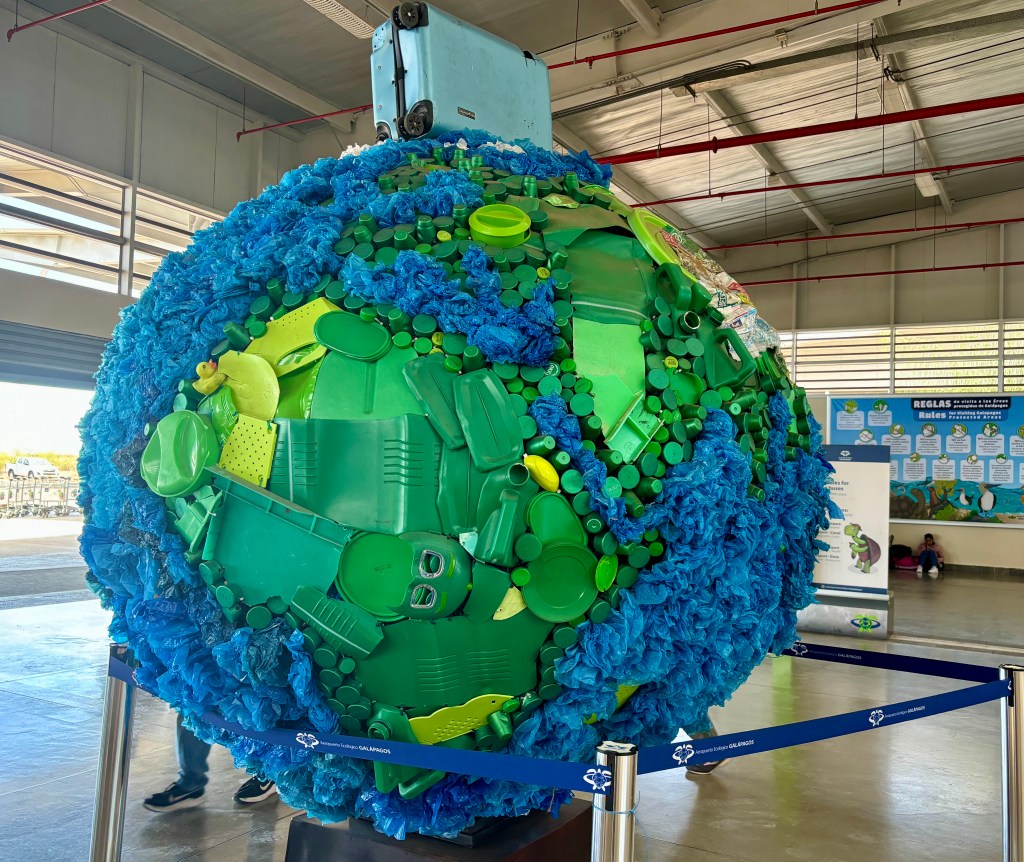
There was an earth made of items found in the sea.
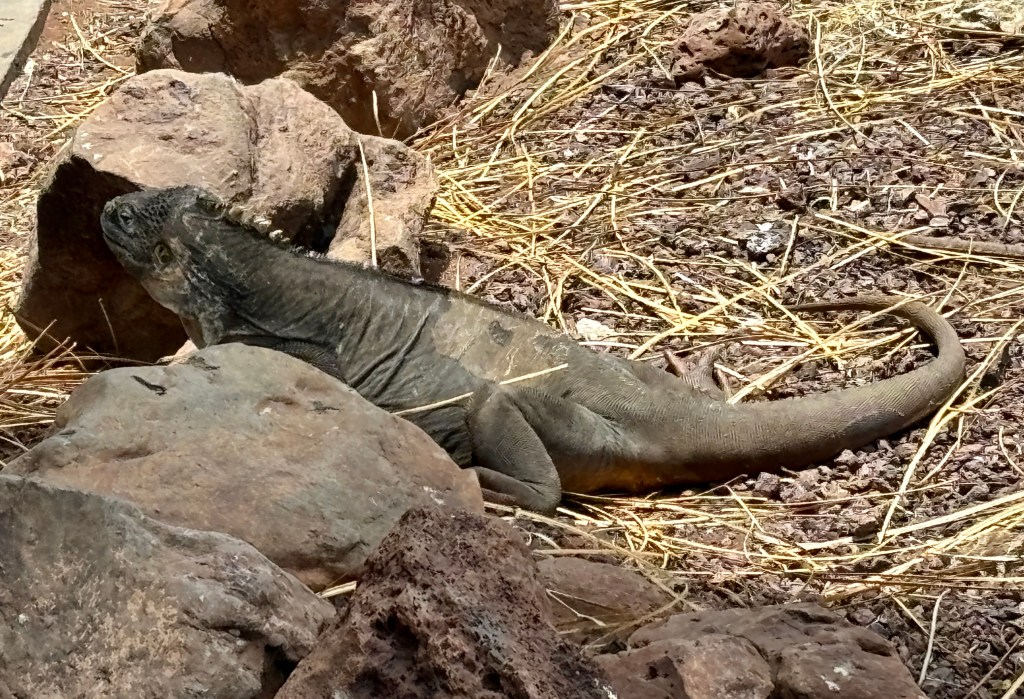
We saw a land iguana on the sidewalk and it reminded me of a BBC Planet Earth program we saw about hundreds of snakes attacking baby iguanas trying to make it across a beach. It was so awful! After seeing that, I said I never wanted to go to the Galapagos. And here we are. (I later asked our guide about that program and he said the photography angles made the snakes look much larger than they really are. I said I didn’t want to go there and he said we wouldn’t be.)
Avalon didn’t have a separate bus for us on Baltra so we boarded a city bus to go around the island to a pier.
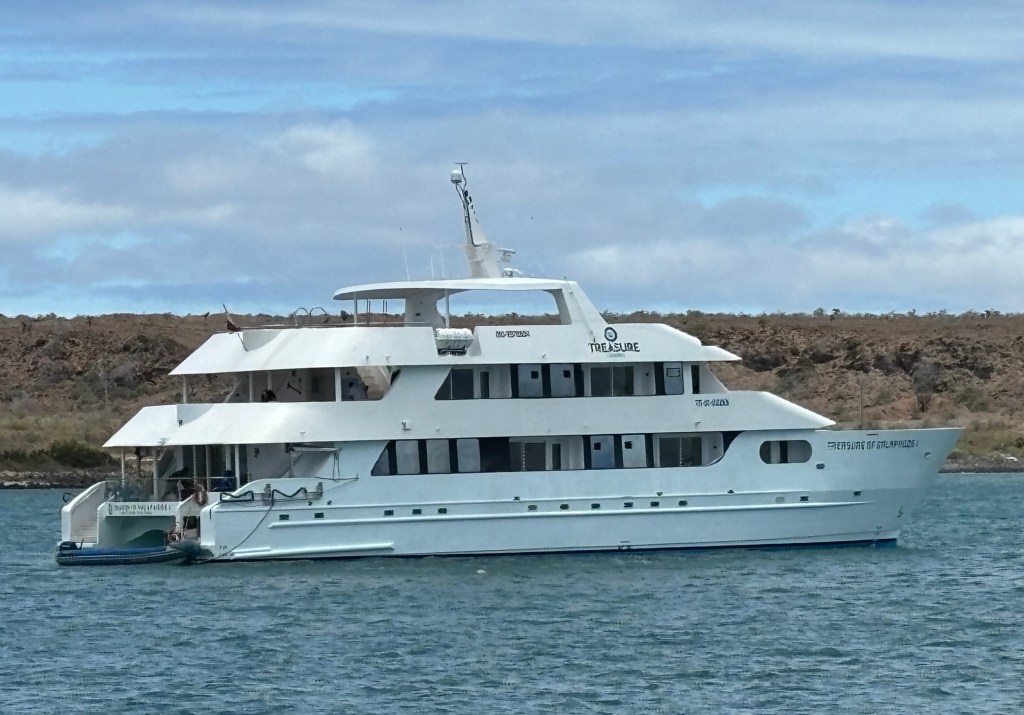
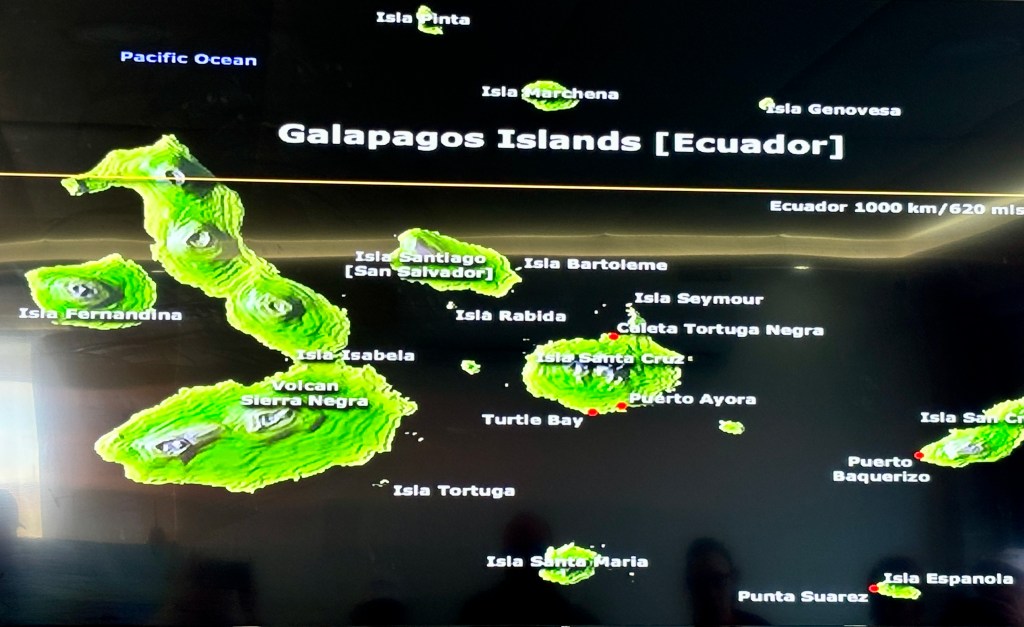
This was our first view of our home for the next four nights – the Treasure of Galapagos.
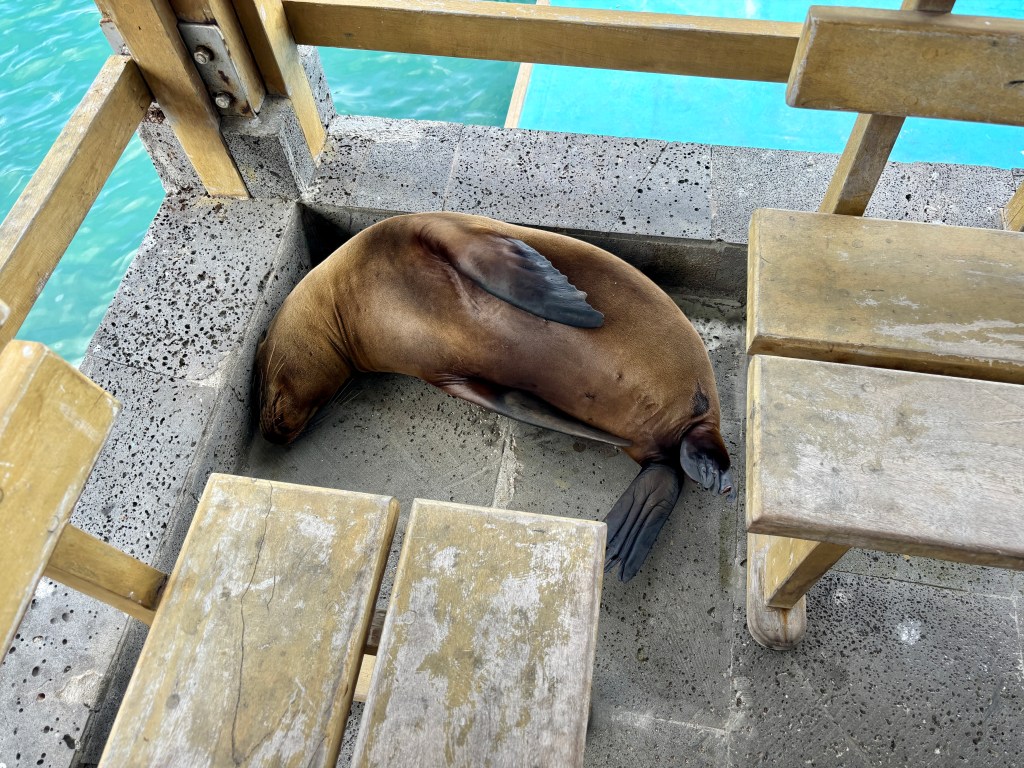
While we were waiting to transfer to the ship, this baby sea lion provided some interest. Apparently the mother drops him off at the pier while she goes hunting or visiting or having some alone time or whatever mother sea lions do. He found his own place to nap.
Fifteen passengers boarded the Treasure of Galapagos. There were twelve of us with Avalon and three others who joined for this segment. The boat’s passenger capacity is 16.

We were given Cabin 6 and it was very comfortable. An interesting thing was that there were no keys for the cabins as they could only be locked from the inside.

We had our opening orientation we met the ship’s crew and heard from our guide.
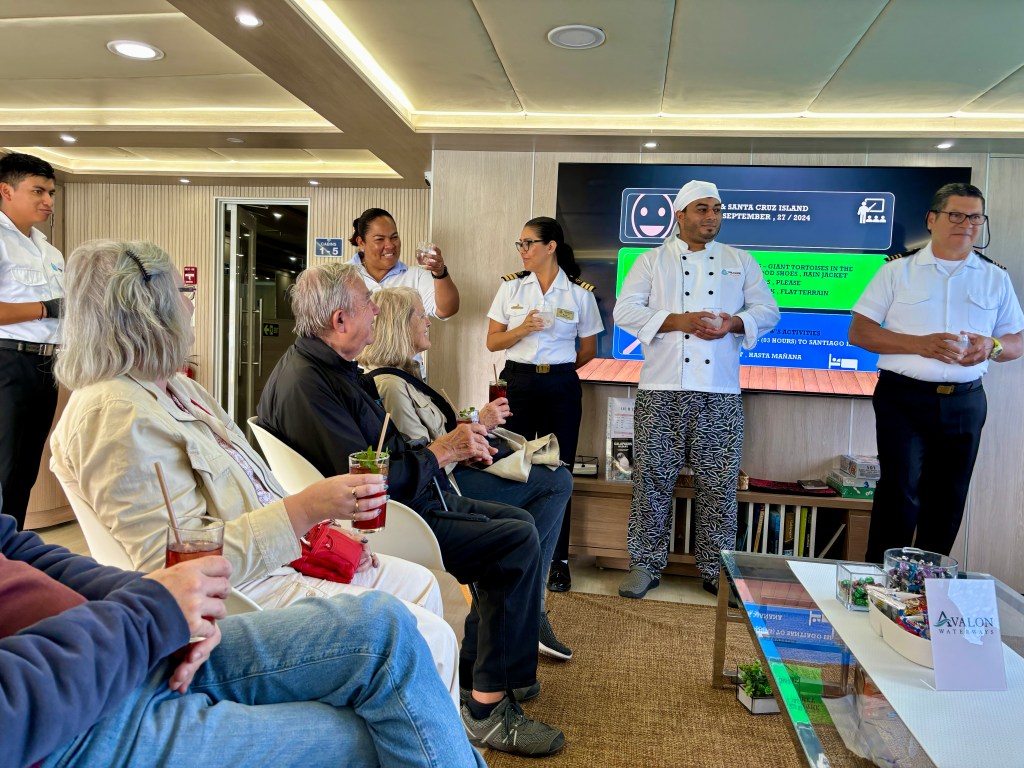

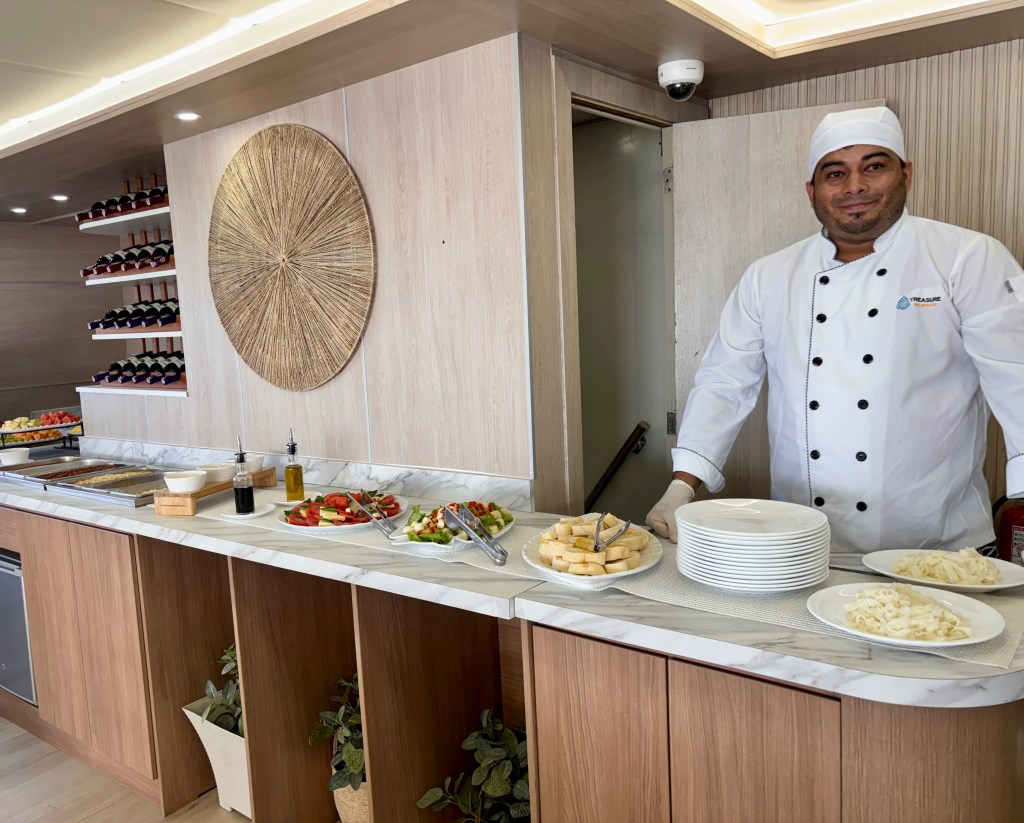
Our chef had prepared pasta for lunch with several sauce options. (This man was amazing. He did such a good job with so many challenges including those of us that don’t like fish, those who needed a gluten free diet, and one person who was allergic enough to tree nuts that it impacted what could be served to anyone,)

This was the view from our balcony.
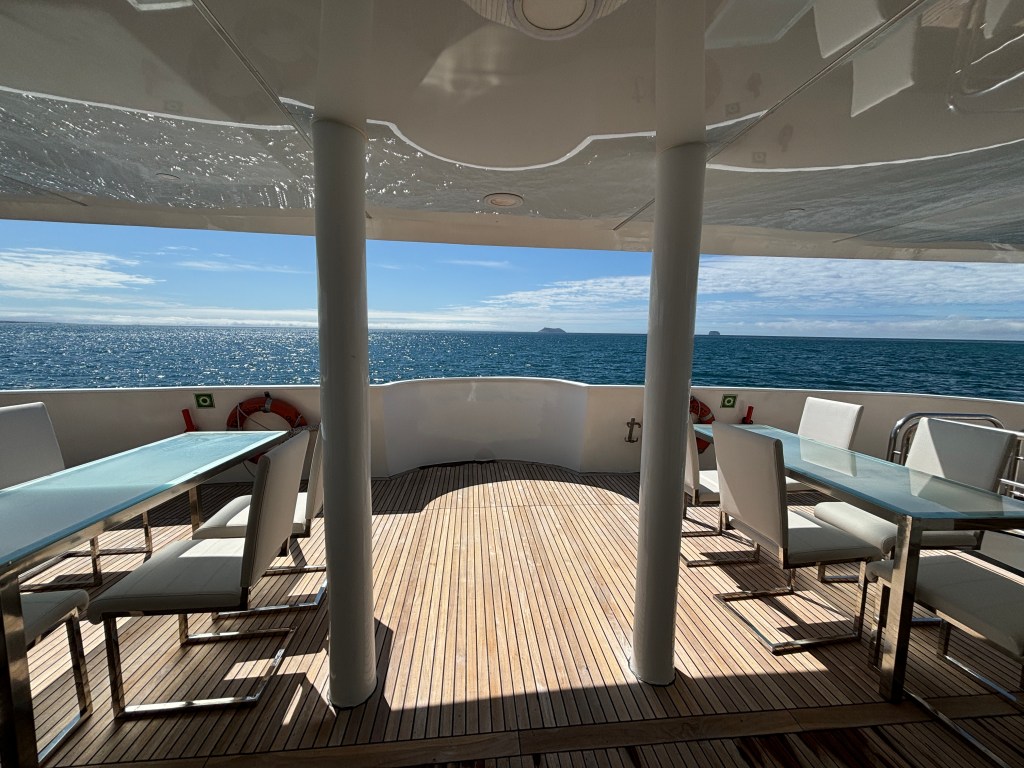
We had a brief time to explore the boat. We stopped near Santa Cruz Island and left for our first excursion.

On board our zodiacs, we saw the first of many, many sea birds and sea lions.

The sea lions hangout on the docks.
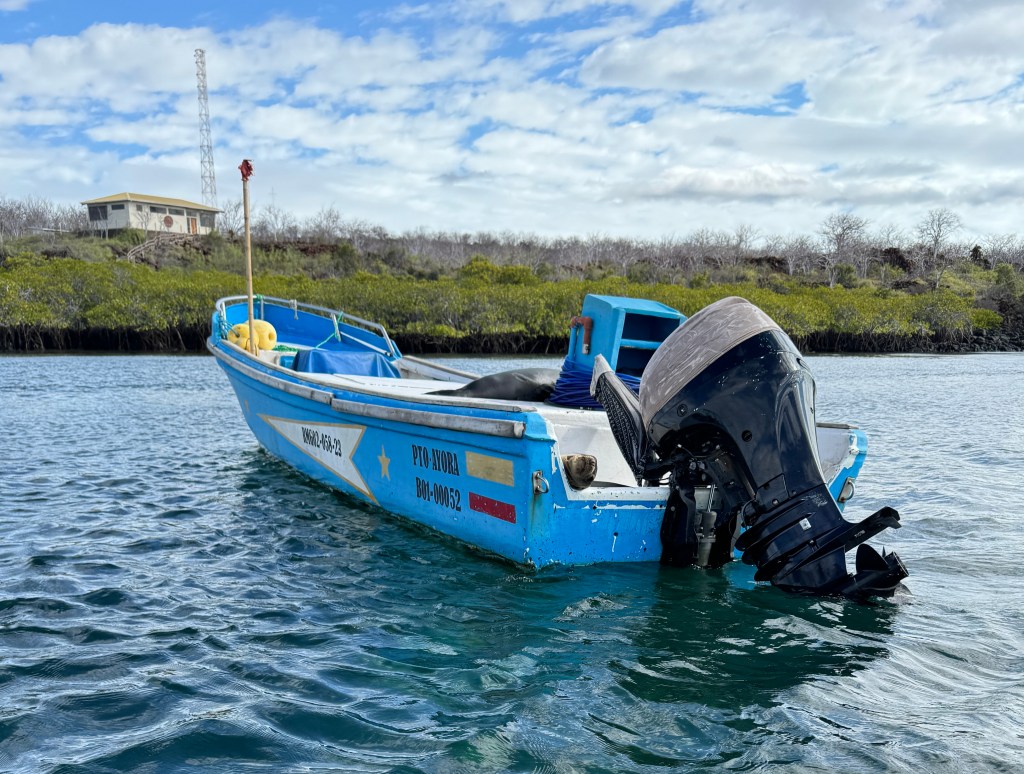
They board boats and pretty much go wherever they want!
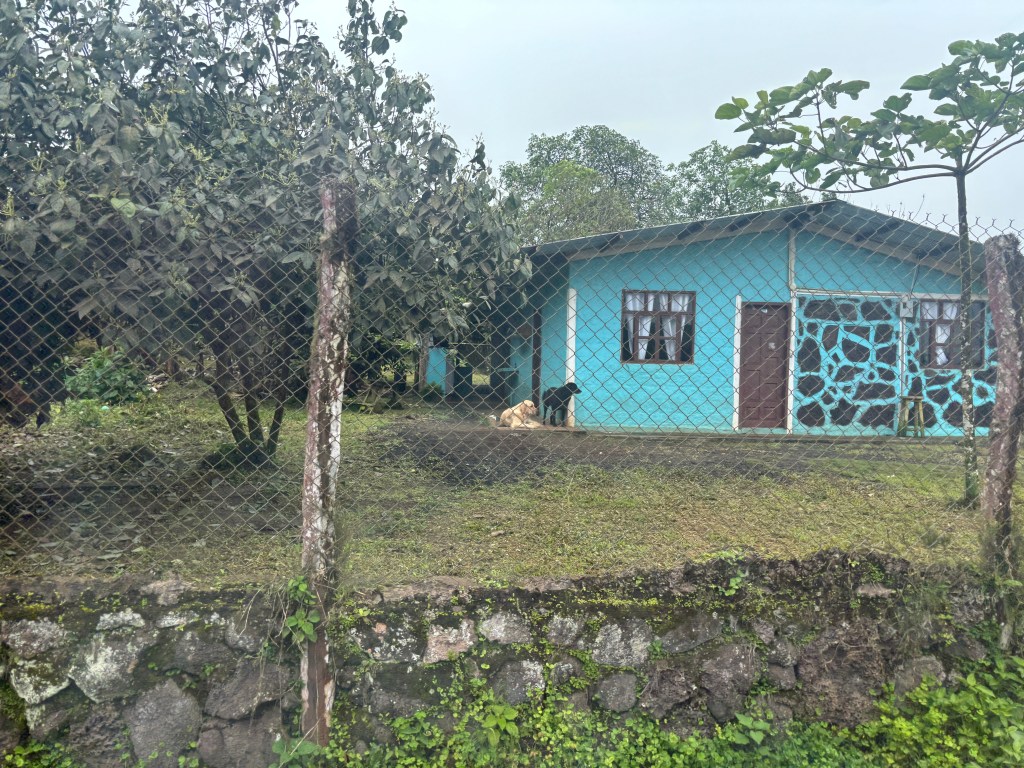
We drove across the island and I was surprised to see so many buildings and houses. About 40,000 people live throughout the Galápagos Islands. They are allowed to have pets but with strict rules and high licensing fees.
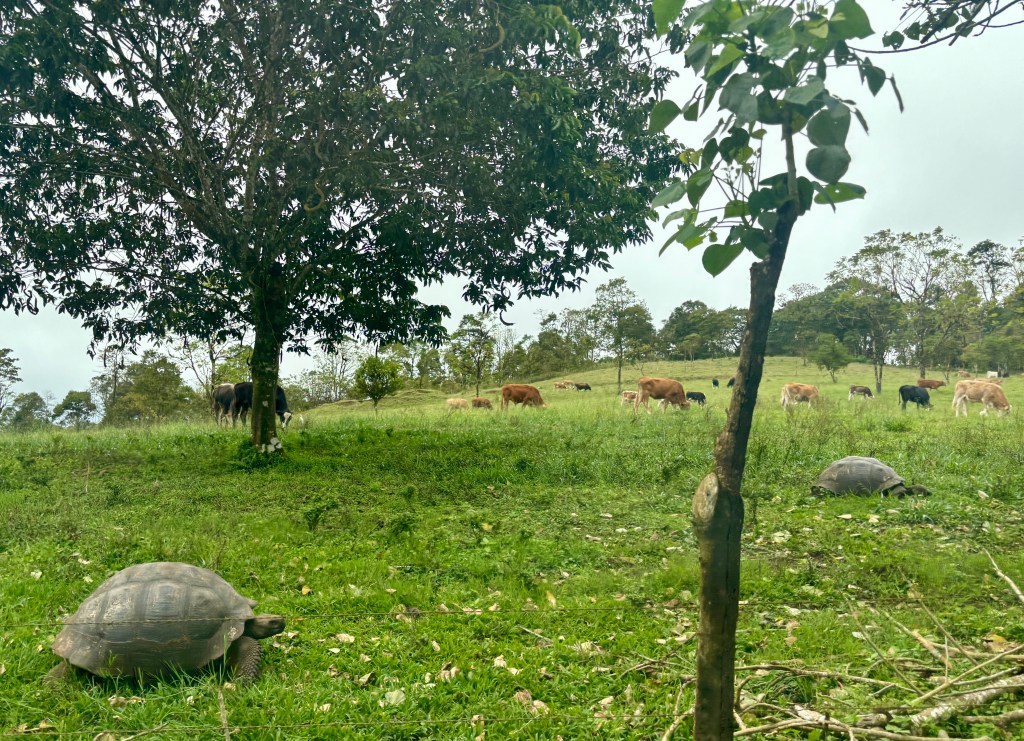
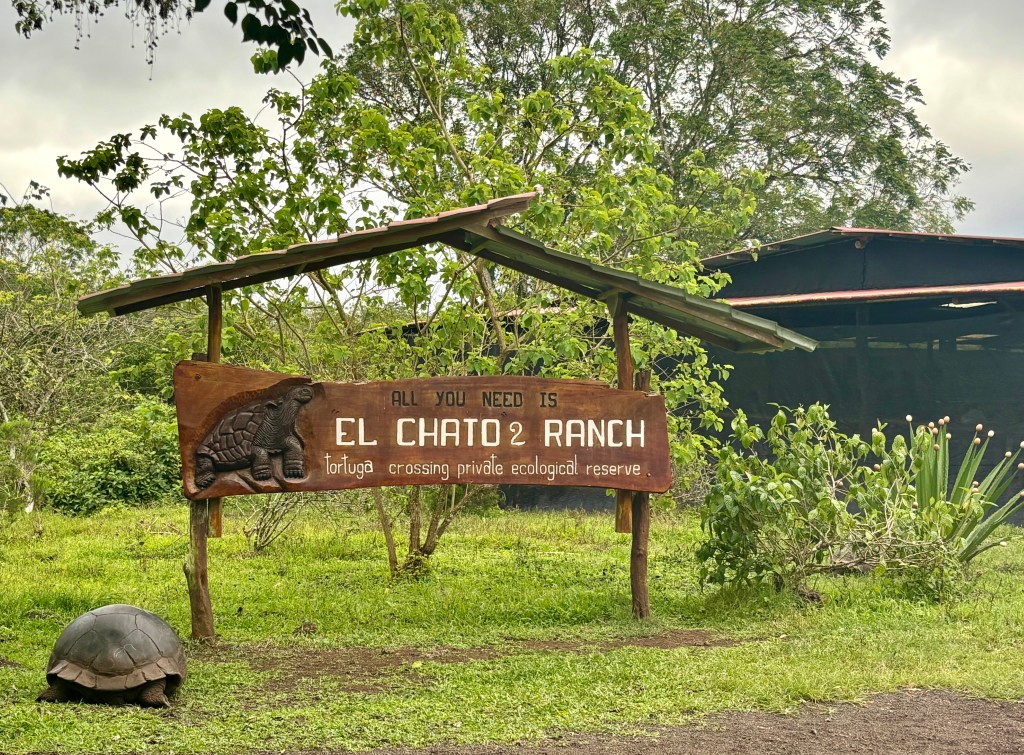
Our destination was a great tortoise reserve in the highlands. It was so much fun to see the tortoises in the fields, or the side of the road, as we approached the reserve.

Tortoises evolved over millions of years to be very large because of optimum conditions on the islands with no predators.
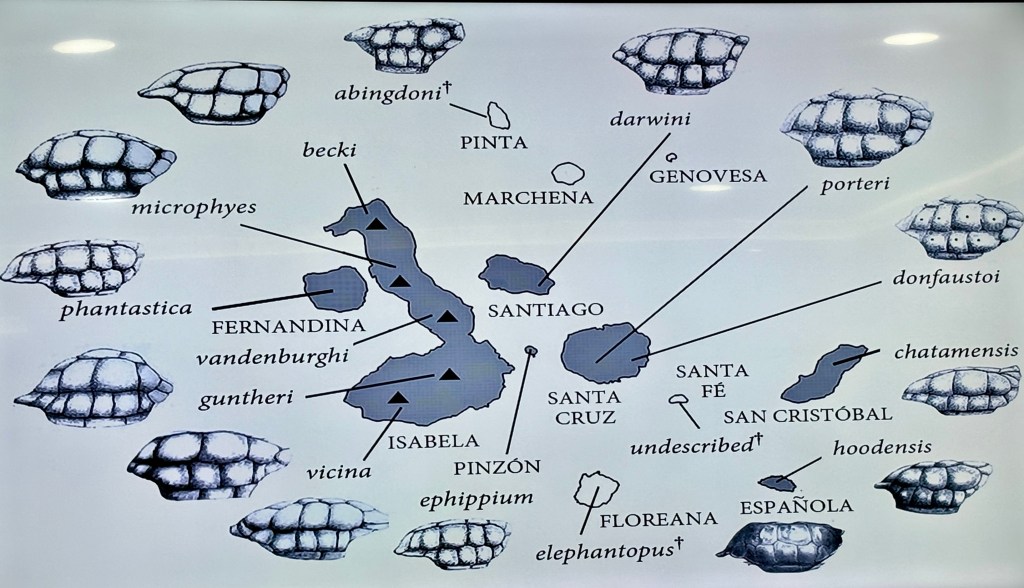
There are eleven species of tortoises throughout the Galápagos Islands totaling about 100,000 individuals. We saw the porteri species on Santa Cruz Island.
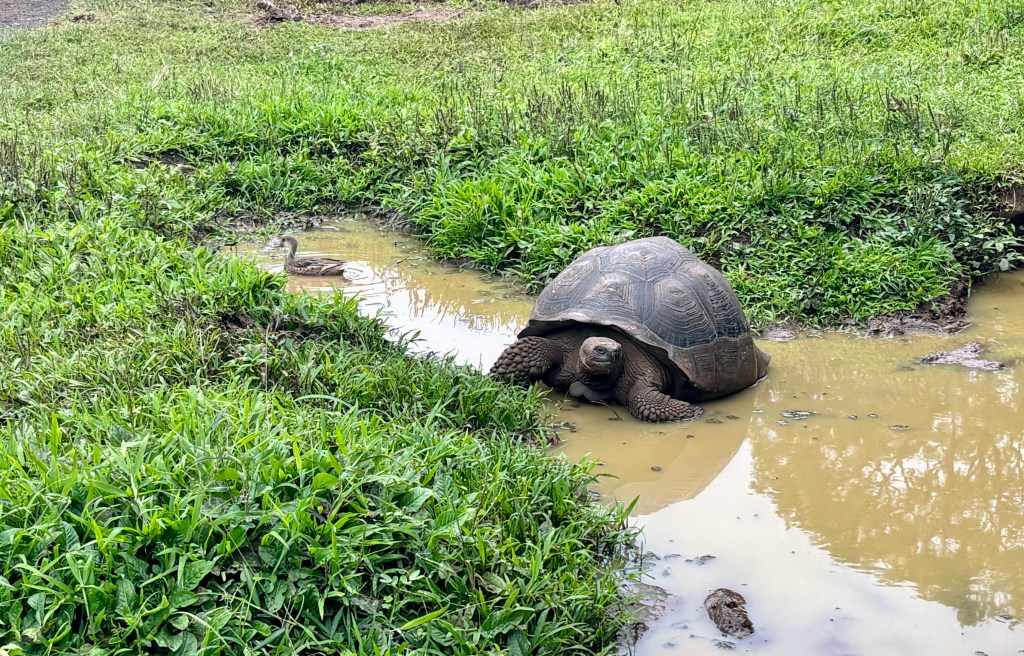
It is thought that there were 1,000,000 tortoises in the islands before humans started coming a few hundred years ago. Some tortoises were directly killed, while others were killed by species that came with humans.
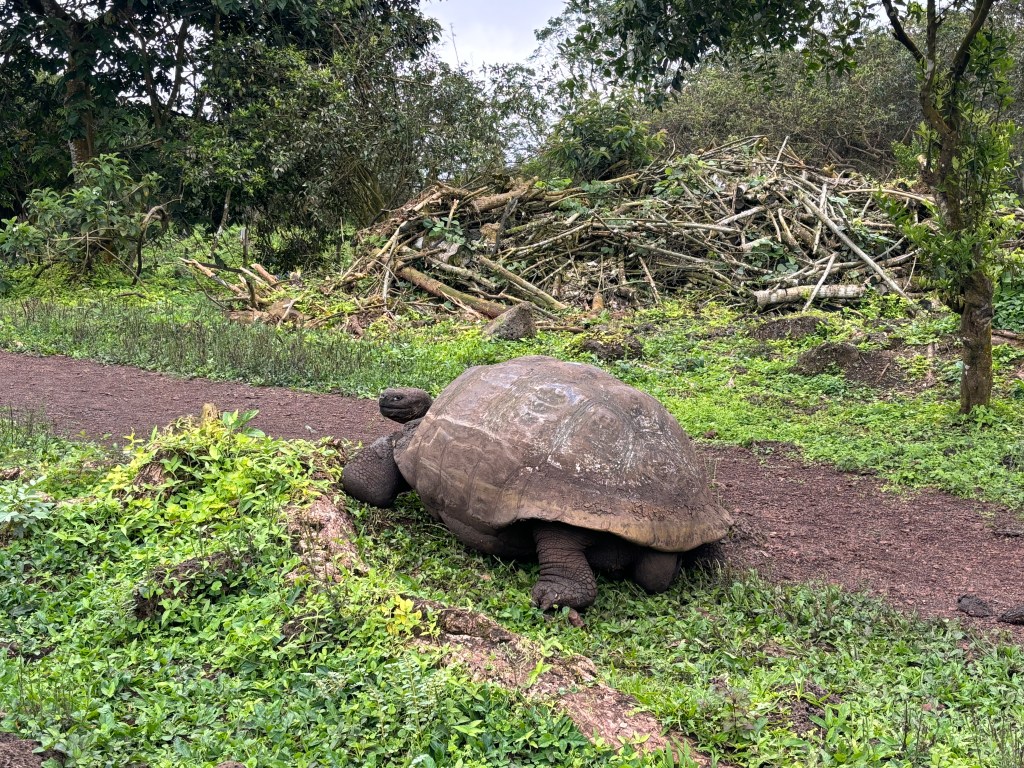
Males are always bigger. They can walk one mile a year if they have a lot of fat for energy.
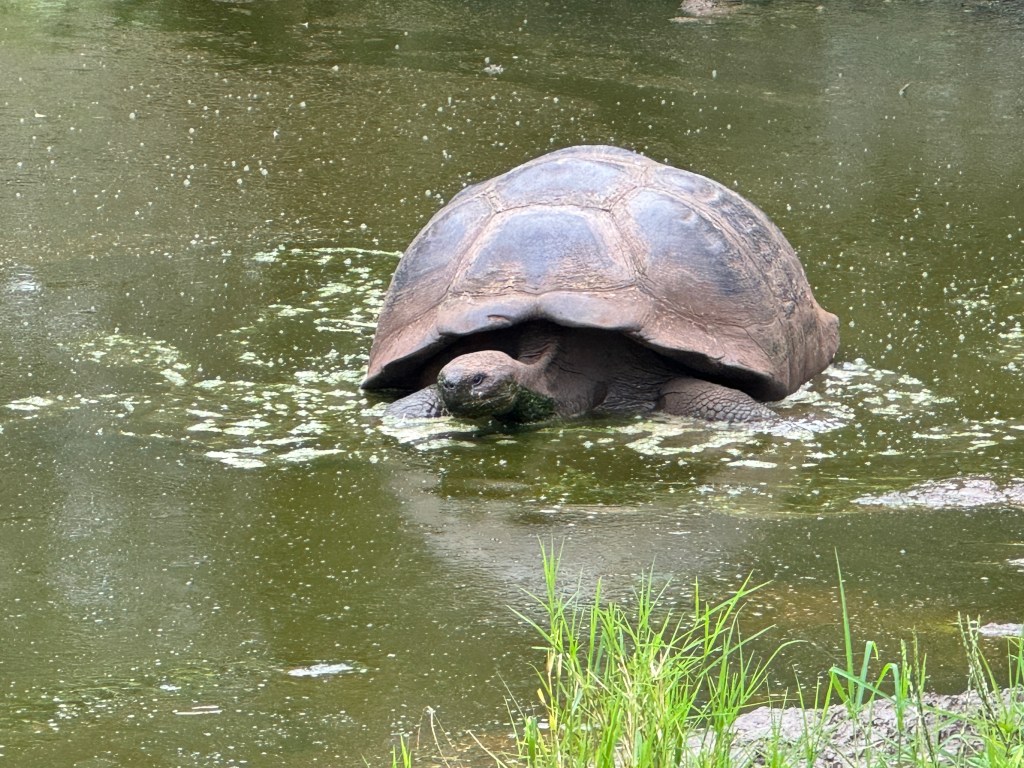
Tortoises are most active when they are warm and have collected energy from the sun.
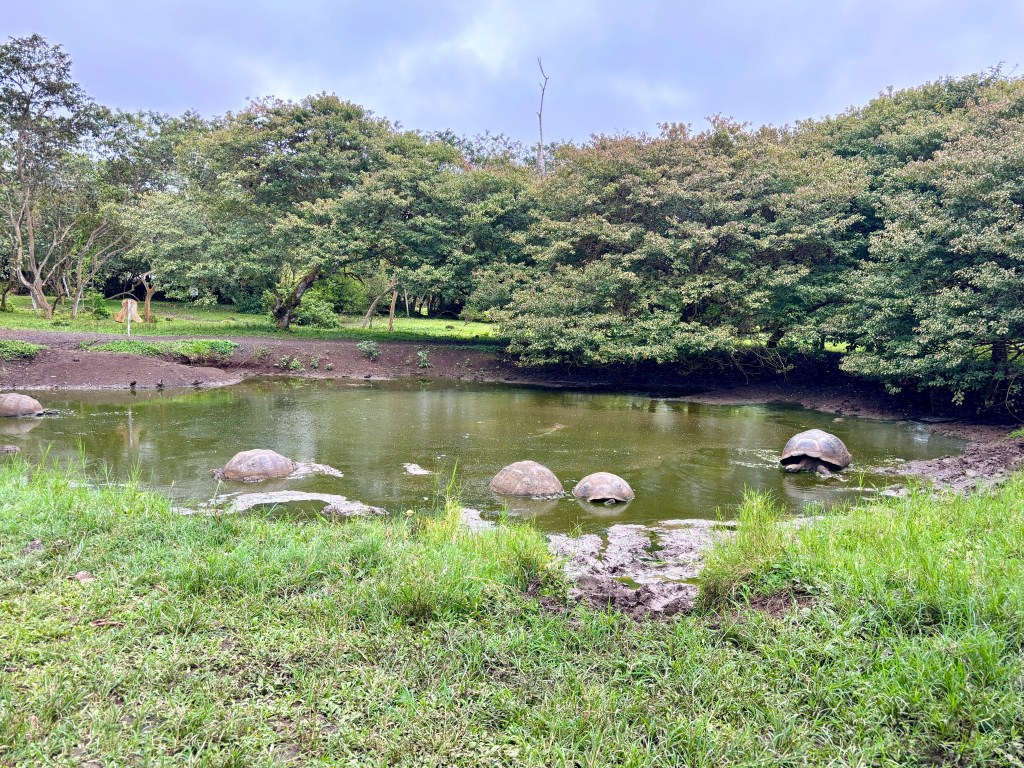
They can only see the colors green and yellow but can hear very well.
Tortoise fossils go back 250,000 years.
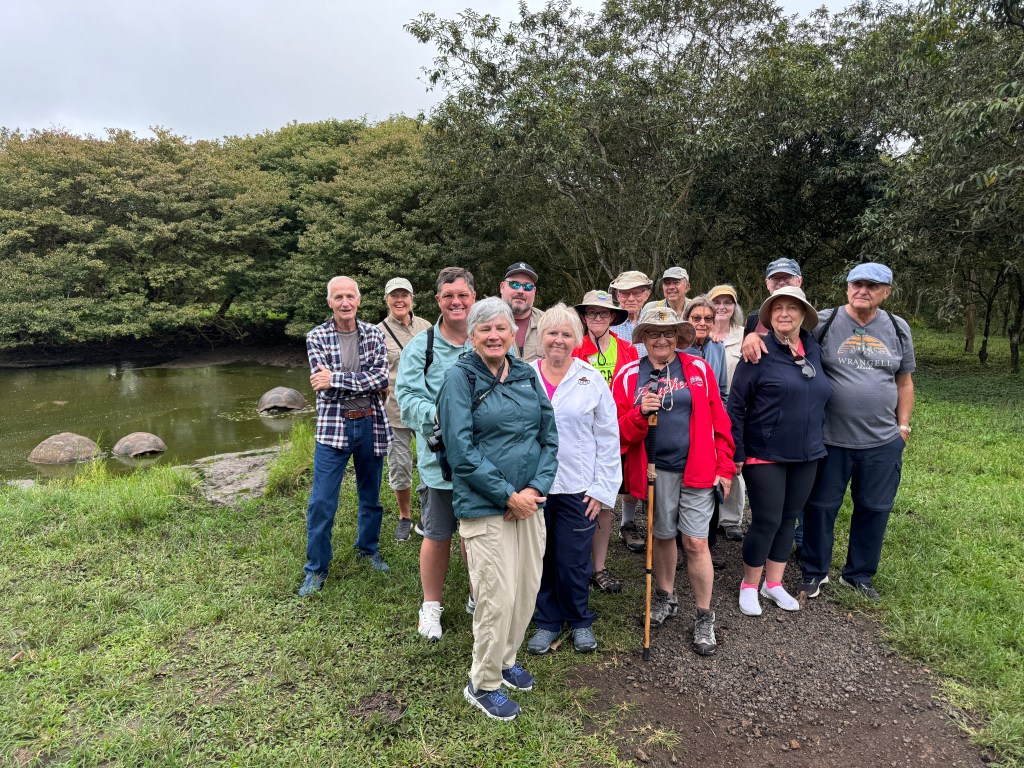
Here is our group, the passengers on the Treasure of Galapagos.
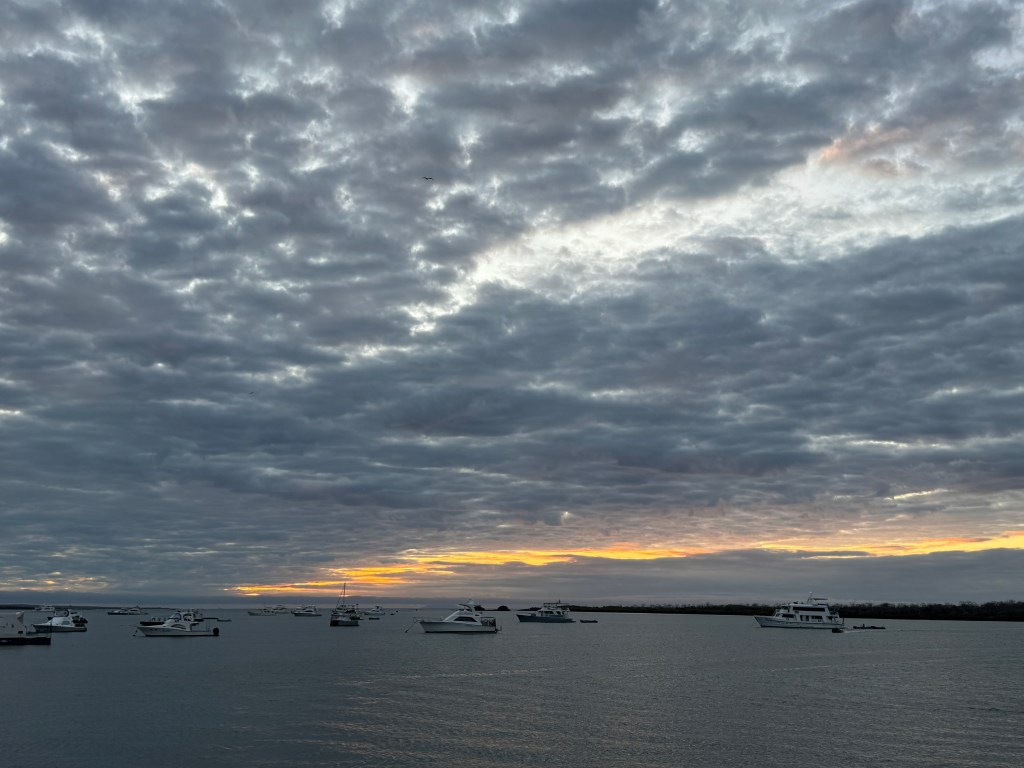
The view was lovely on our first evening aboard the Treasure of Galapagos.
We landed in the Galapagos Islands on September 27, 2024
Next Up: More Galapagos adventures.


 Serene Wandering