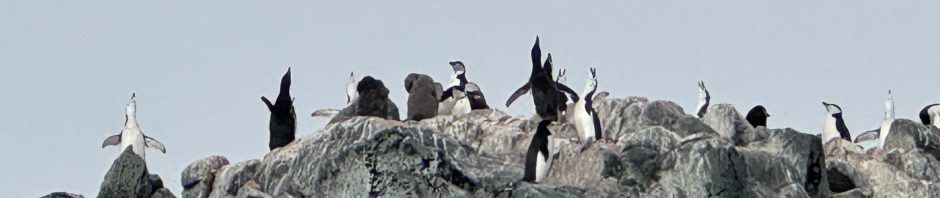

North Seymour is a small, but important, island for seabirds and those who are interested in seabirds. It is the primary destination in the Galapagos for birders.
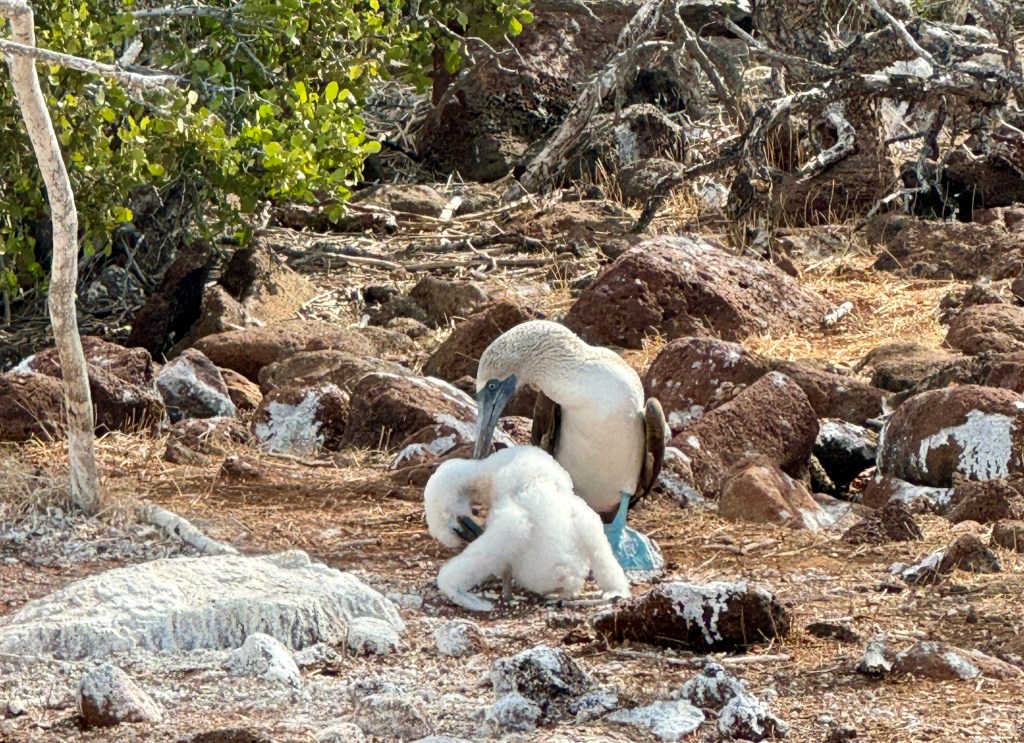
Frigates and blue footed boobies have nesting grounds on the island. This boobie mother and baby had their nest right next to the path.
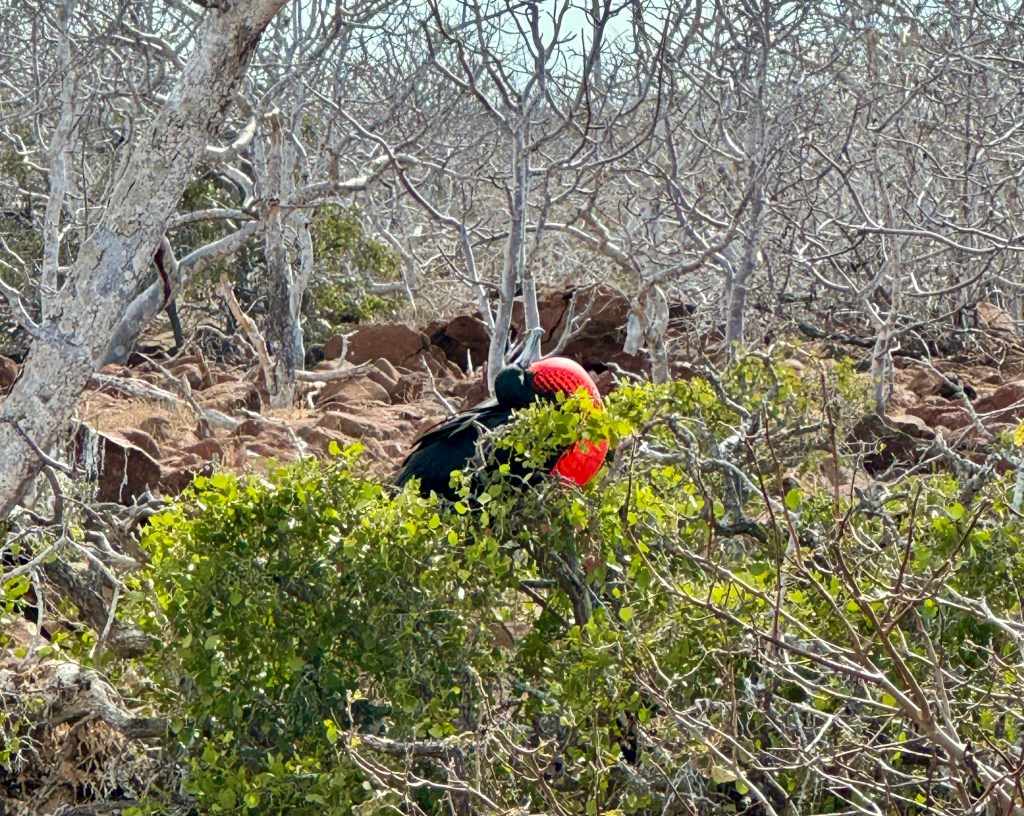
This is a male frigate with his enticing red pouch. We watched six to eight of the males trying to entice a female in the vicinity! She came down on one for 15-20 seconds and flew off again. Deed done?

This is a male and juvenile frigate. Frigates are unable to walk on the ground so they generally fly or perch in trees.

There is a large population of land iguanas on North Seymour because of abundant cactus pads and fruit for food.

An iguana’s color lightens as it ages.

This Darwin finch is getting a drink from the cactus.

Darwin finches encompass 13-18 species (number varies by research site) of nearly identical birds on the Galapagos. They vary only in beak shapes that had adapted to the type of food found on the island inhabited. Charles Darwin discussed the finches and their beak adaptation in his book The Origin of Species.

We walked into an area that was concentrated with blue footed boobies. (I love these boobies. I even got earrings that match their feet.)
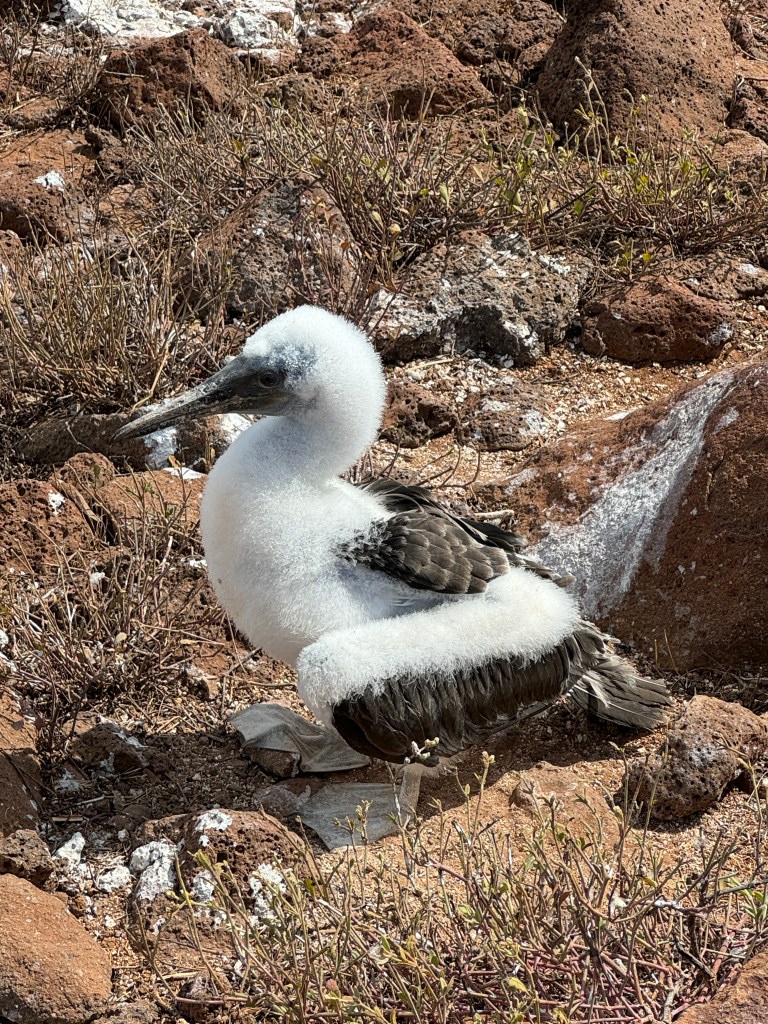
This is a juvenile blue footed boobie. The shade of blue develops with age and the depth of blue is dependent on the bird’s diet.

Boobie comes from bobo, meaning foolish. This guy actually looks a little foolish, but I like him!

As we walked towards the water we came across this bloody scene. Our guide said it was the placenta from a mother sea lion that had recently given birth.
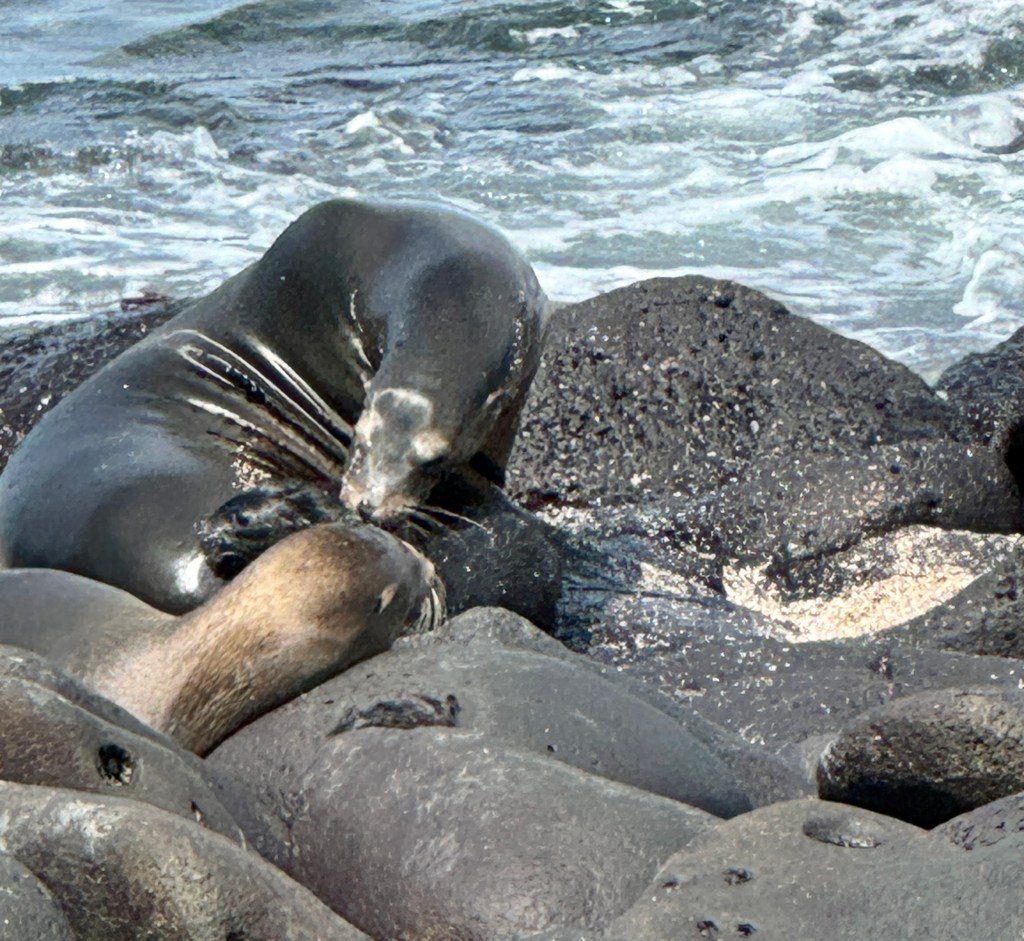
It surprised us how rough the new mother was with her hours old babe! There was a second mother (foreground) with her baby in the same area. Victor thought the other baby was a couple weeks old.
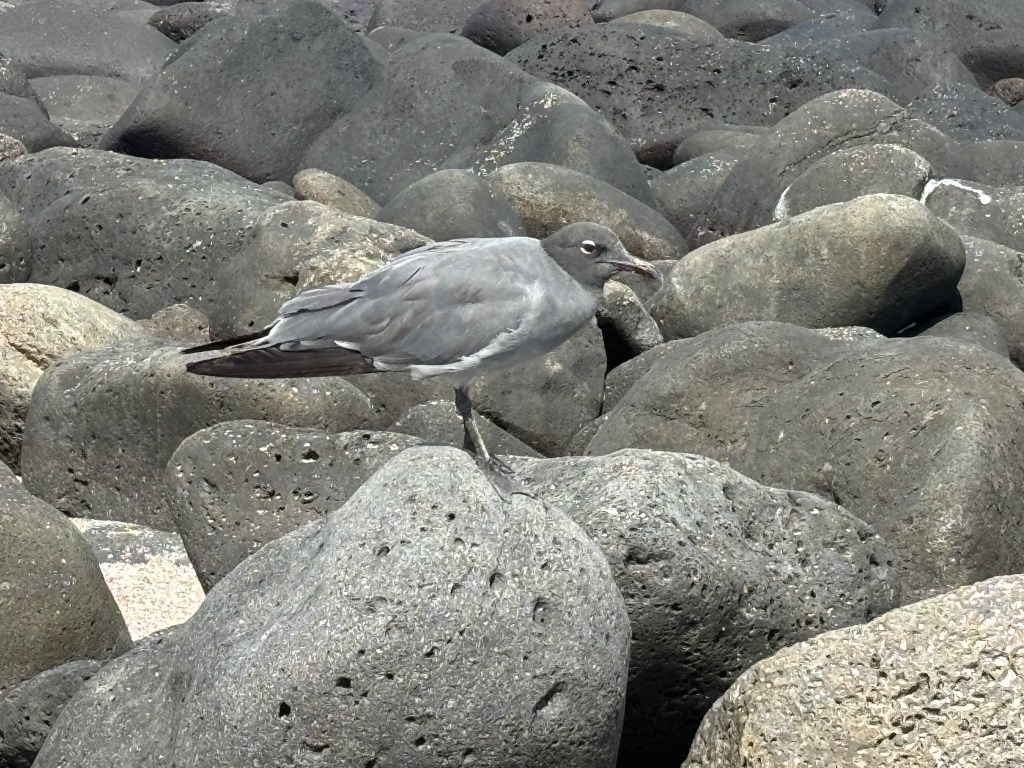
This is a Lava Seagull, endemic to the Galapagos Islands.
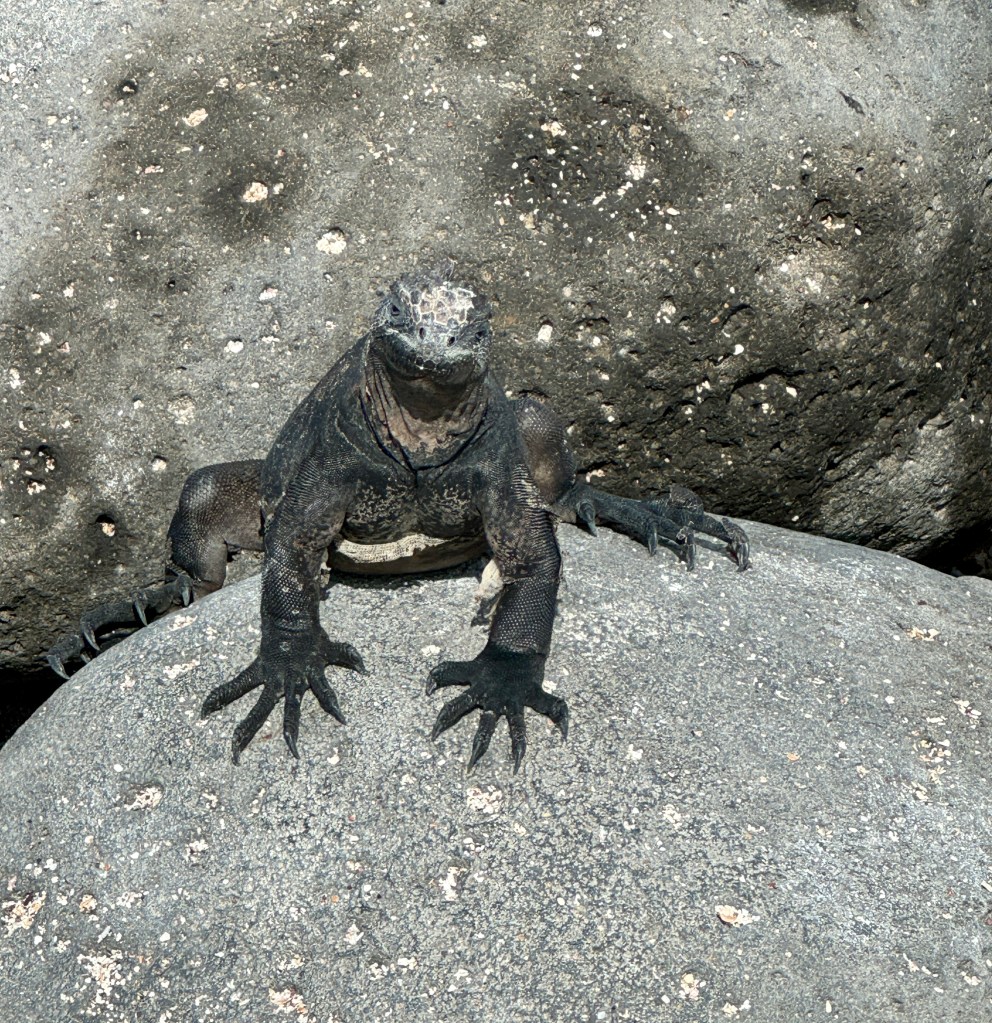
This is a marine iguana. (This is the species I saw on the BBC program I mentioned in an earlier post. However, the scene depicted of snakes going after the marine iguana babies across the beach happens on a different island.) The Galapagos Islands have land, marine and hybrid iguanas.
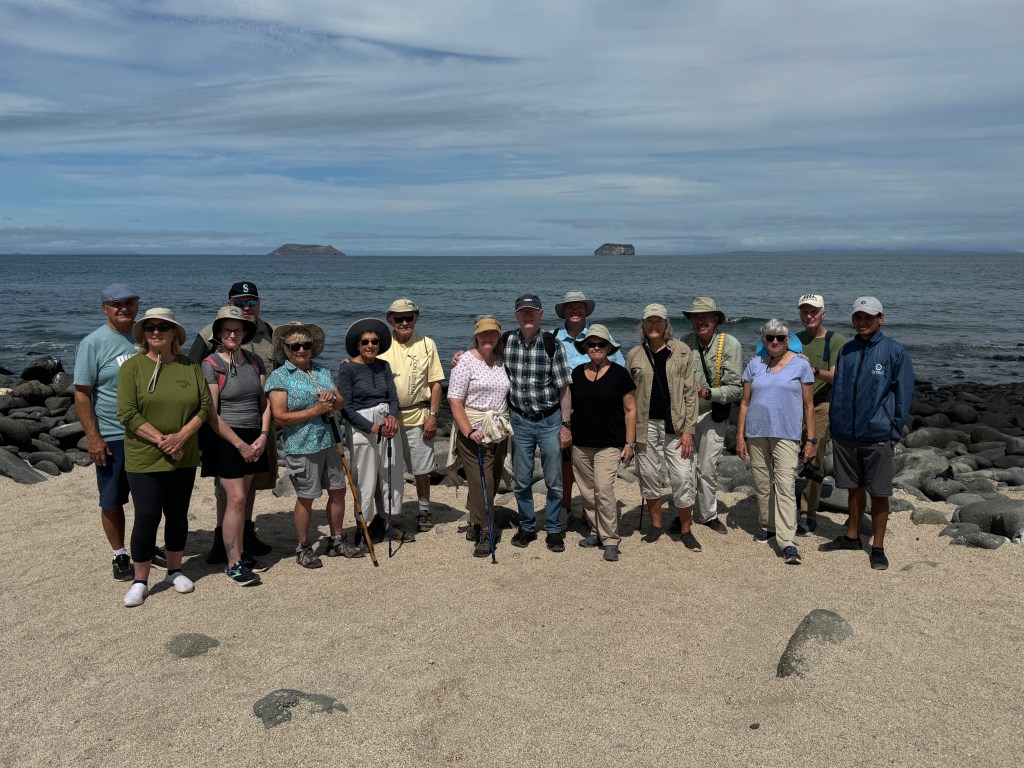
Here we are, our Avalon group, posing for a group picture on North Seymour Island in the Galapagos Islands!

We walked a ways and saw a baby sea lion, alone and still. We were concerned that we had come upon a baby dead or dying. Victor, our guide, told us numerous times that rangers let nature happen. If there is a human cause (or human introduced predator) to the injury, then they will intervene.

Fortunately, this baby perked up! Victor explained that the baby may be left alone for hours or even a few days while the mother hunts. She will then try to find her baby using their unique shared vocalizations and scents and reunite.
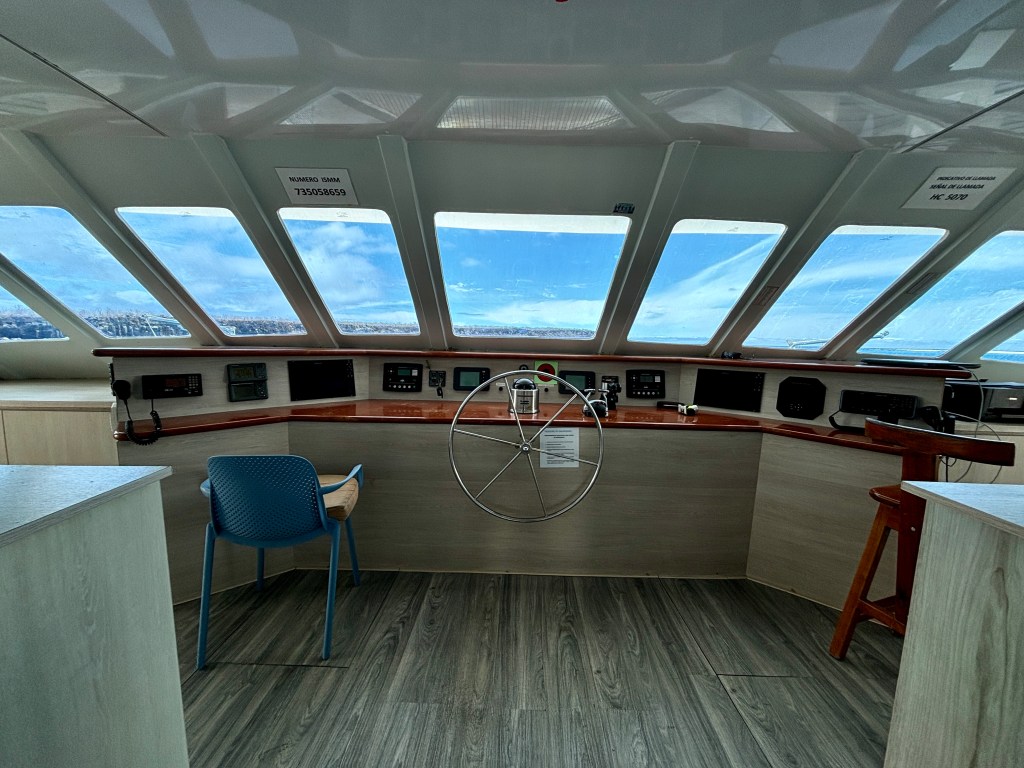
We returned to the Treasure of Galapagos and had a chance to take a picture of the bridge while the door was open and no one was inside.

Randy had another snorkeling experience while I road in the zodiac.

Later we walked on Island Plaza Sur and saw some of the local inhabitants!

After dinner, we had our evening briefing about the next day’s activities, Our boat, Treasure of Galapagos had a time slot from 6:00 to 10:00 a.m. on San Cristobal Island. Access is scheduled and limited so as not to disrupt the species and habitat too much. Breakfast was to be served at 6:00. We all retired to our cabins.
We were asleep when the alarm went off at 5:00 a.m. but that may be the only time in the long night that we were asleep! We had a very rough night traveling between Isle Plaza Sur and San Cristobal Island. No one slept as we were banged around, especially our friends in the suite in the lower level front. Our closet doors were opening and slamming shut and at some point I braced pillows and cushions in the gap to stop it. Anything not battened down was tossed all over the room. Several times we were at risk of being dumped out of bed!
Eventually the long night was finished and the next day dawned. Breakfast was eaten and our activities continued.
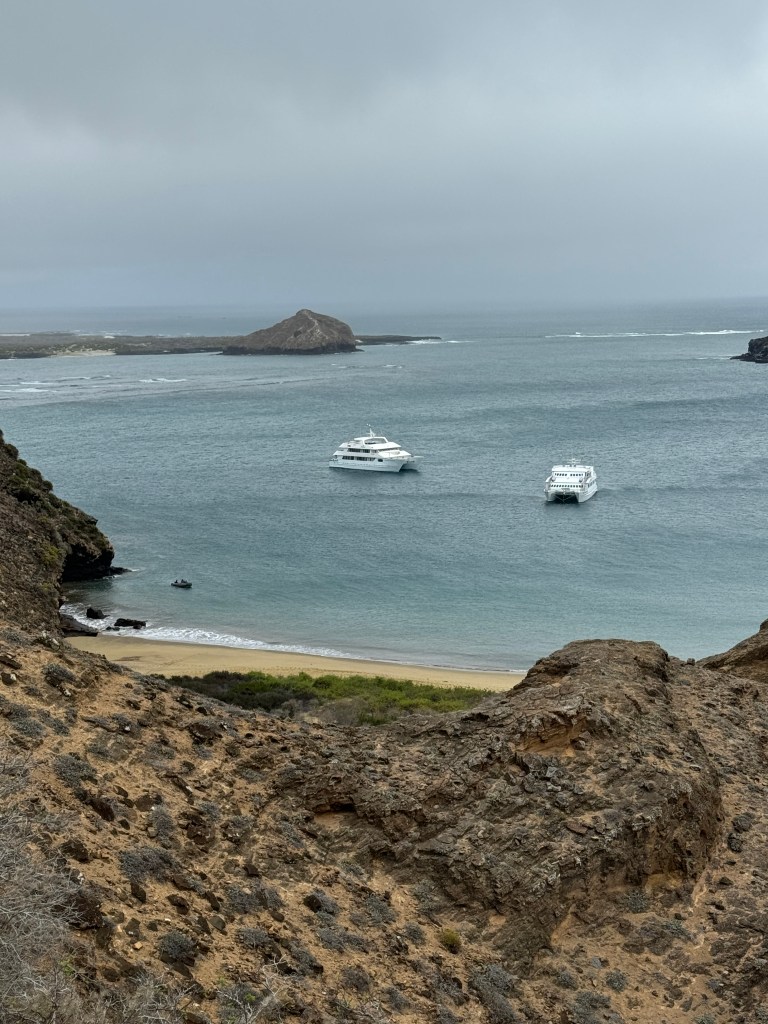
Part of the group (Randy included) left for a several hour hike.
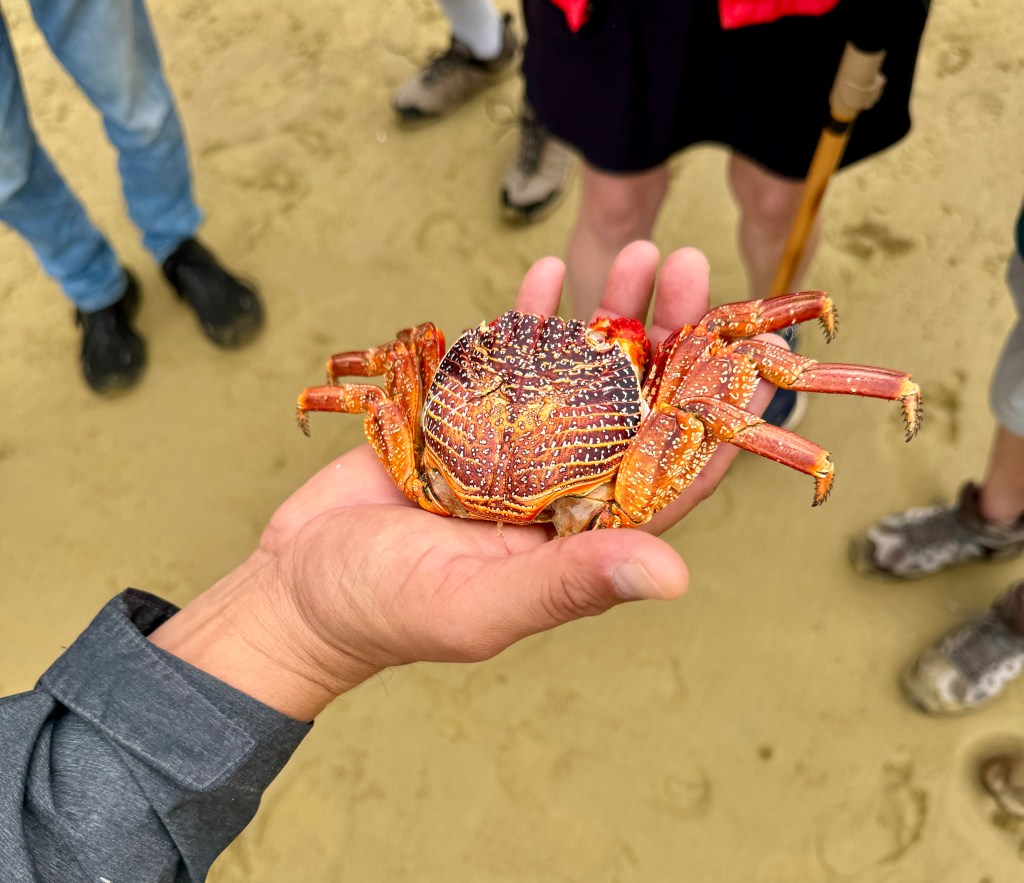
Victor explained that this crab shell was just the skeletal structure. The crab had moved on and would develop a new shell.

This goat is an example of human introduced species that have done much damage in the Galapagos Islands. They came to the islands in the 19th century for food and as pack animals. The goats compete with native species for food and habitat, disrupting the balance of life. Galapagos National Park has culled the population of goats quite dramatically but some remain.
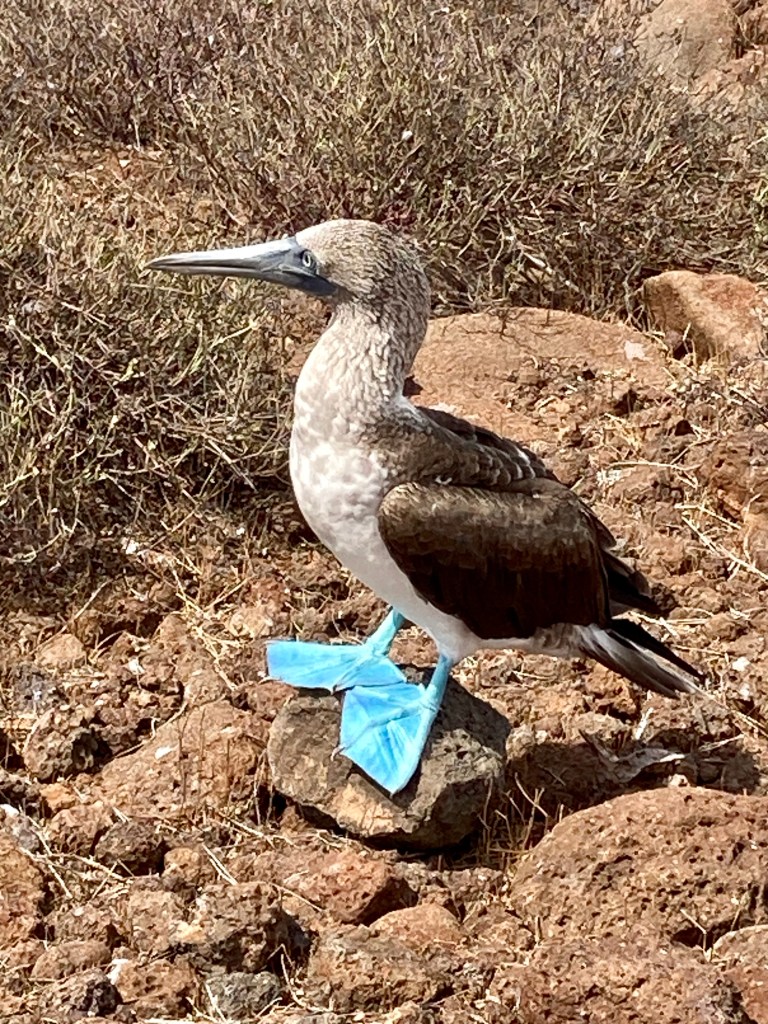
They saw more blue footed boobies.

Their nests just aren’t protected at all!
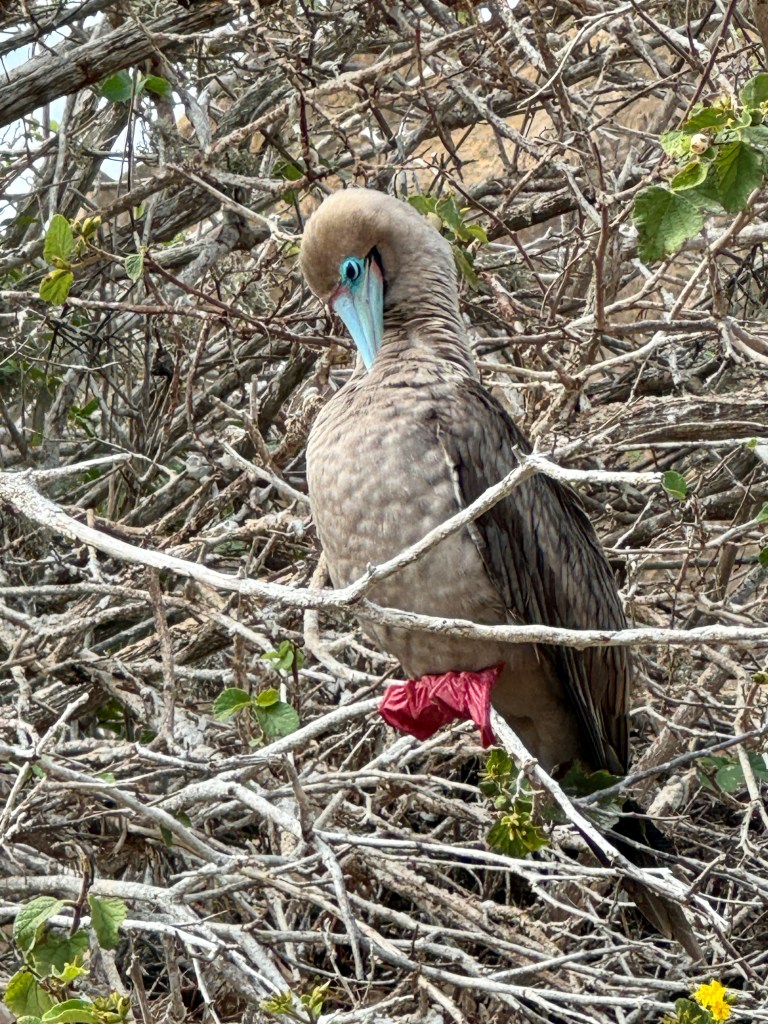
The main draw of this hike was the red footed boobies. I regret, a bit, not seeing them in person.
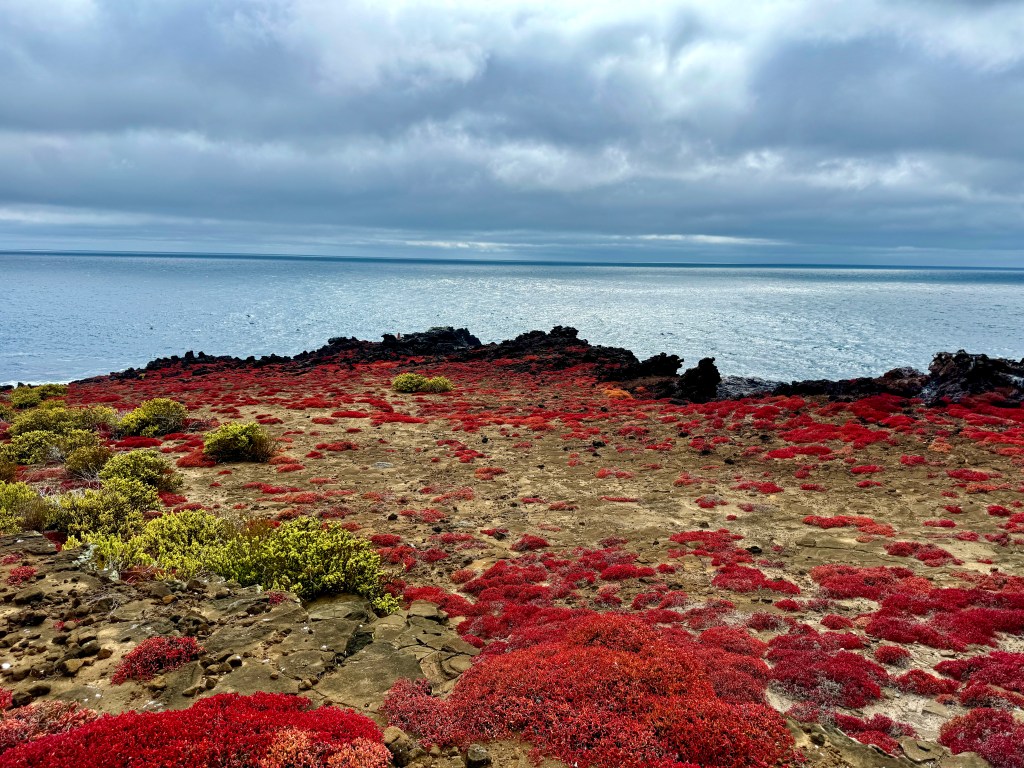
That, and maybe this view – gorgeous!

Instead of hiking, five of us went on a zodiac ride around the area. We had rain and mist and didn’t really see anything we hadn’t seen before.
After 45 minutes we returned to the boat. We had just unloaded, and put our shoes out for cleaning, when word came that dolphins were sighted. Go! Go! Go back into the zodiacs! We didn’t even put our shoes back on – just got into the zodiacs in our socks.

There were dolphins all around us and what a joy that was!

We saw many dolphins but Randy’s group saw hundreds looking down from above.
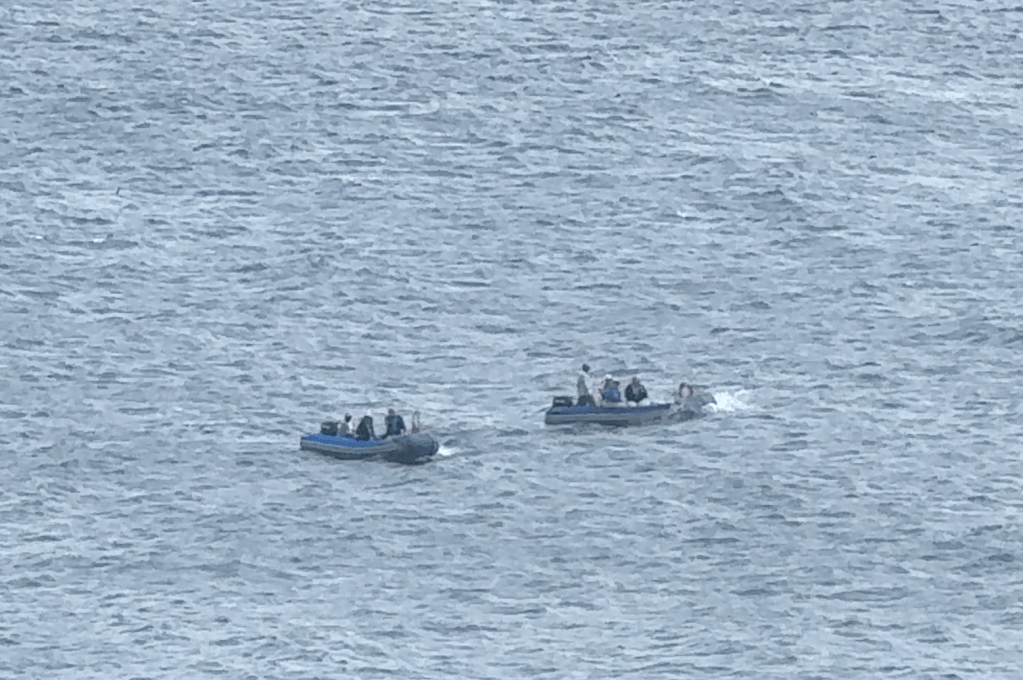
They could see us in the zodiacs too.
Too soon, the dolphins were gone and those of us in the zodiacs were back on Treasure of Galapagos. Eventually, everyone was back on board and we were underway.

Randy saw the dolphins again from our balcony and alerted the ship’s crew.
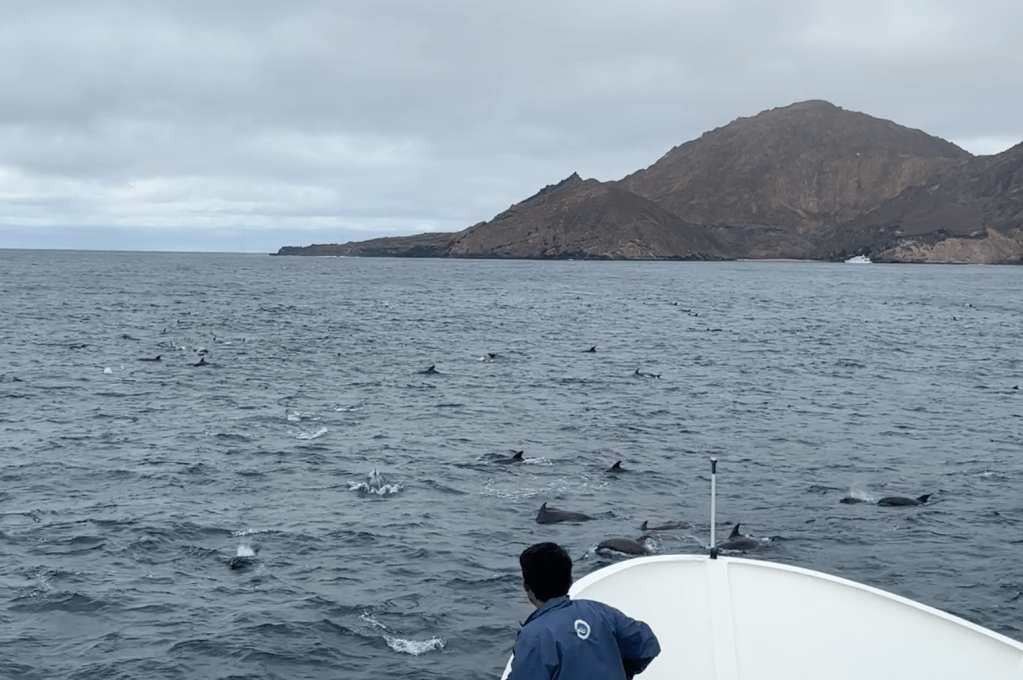
The captain diverted course so we could enjoy them again!
A while later we were alerted to whales. Our naturalist believed it was a mother and baby humpback. Humpbacks often give birth in the Galapagos area.
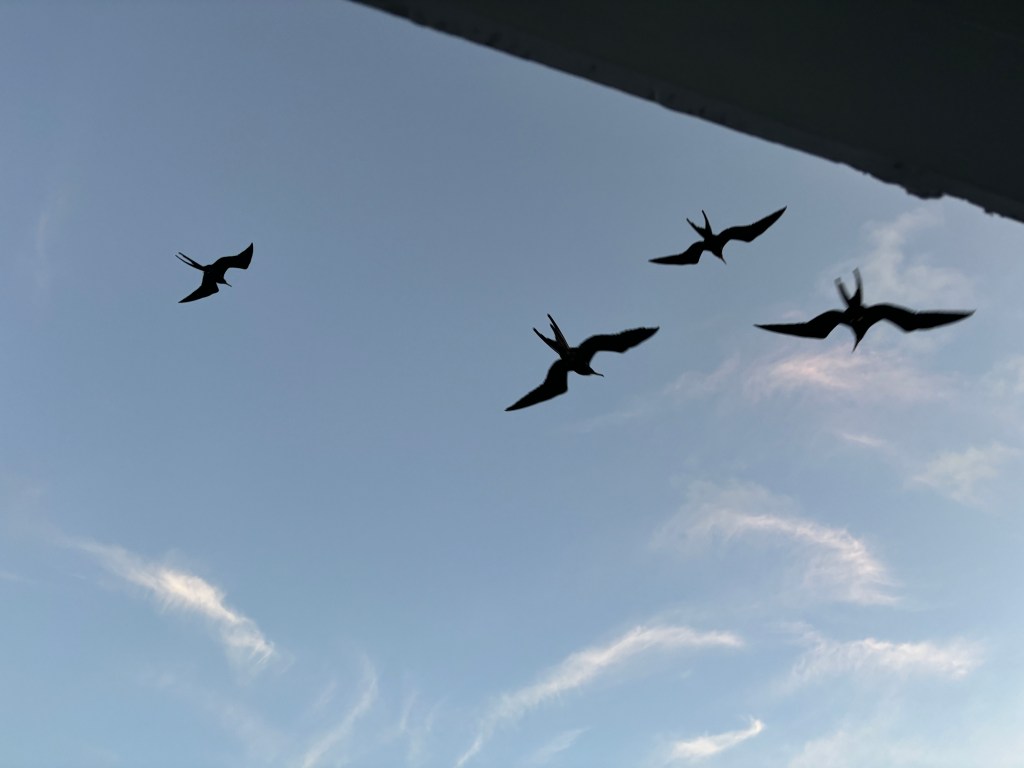
I couldn’t get a good picture of the whales, but I did catch the frigates escorting us out of the area.
We were in the Galapagos Islands on September 29 and 30, 2024
Next Up: We leave the Galapagos and head home.


 Serene Wandering