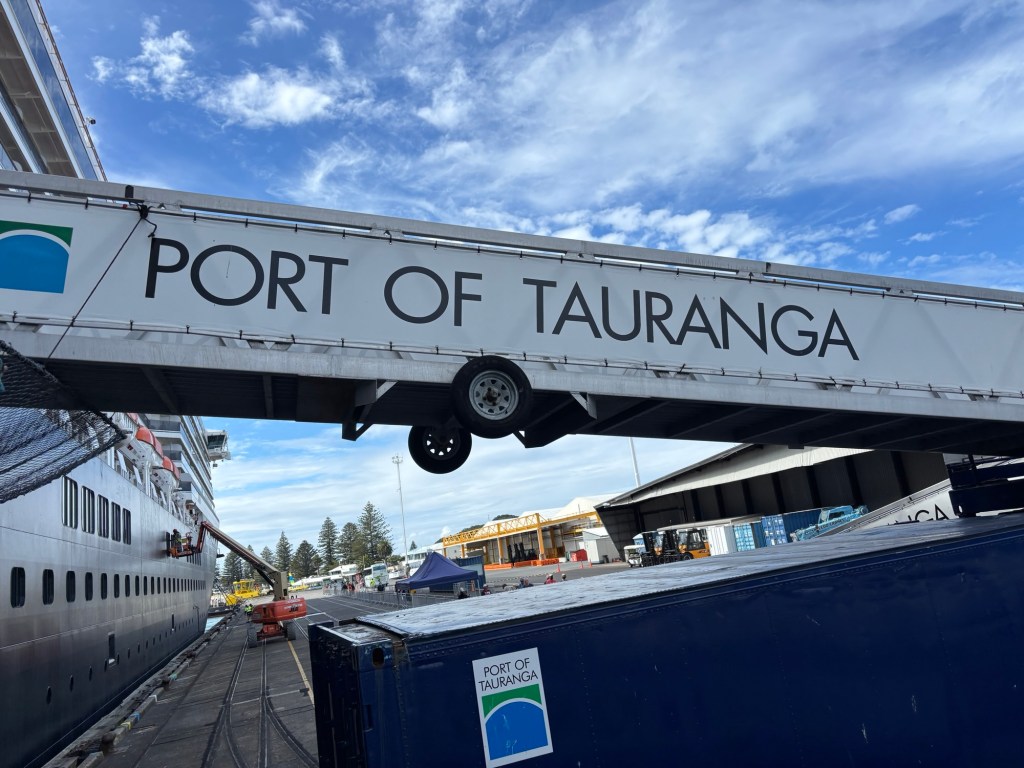
The ship arrived at our first port, Tauranga. Our shore excursion, Bay of Plenty: Rich Land, Rich Culture, was the last excursion group to leave the ship. It made for a quiet couple of hours onboard as most people had left to explore on their own or on earlier excursions.
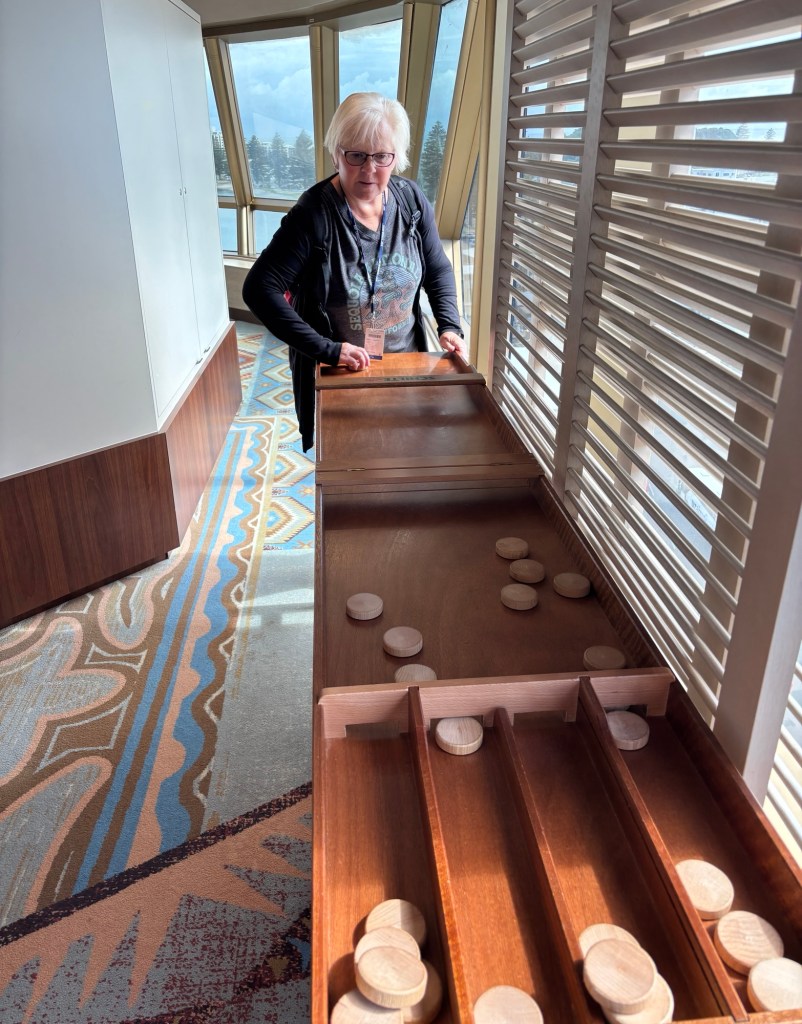
We went up to the Crow’s Nest and found an old friend! My family learned this game we called “shu-buck” from a Dutch family when we lived in Bangkok. My parents ordered a board and discs that we had for many years. Randy eventually made one for our family and we don’t remember what ultimately happened to it. On board, it is called a “sjoelen .” There was a competition on board but I didn’t participate. Was 50 plus years of experience too much of an advantage to exploit?
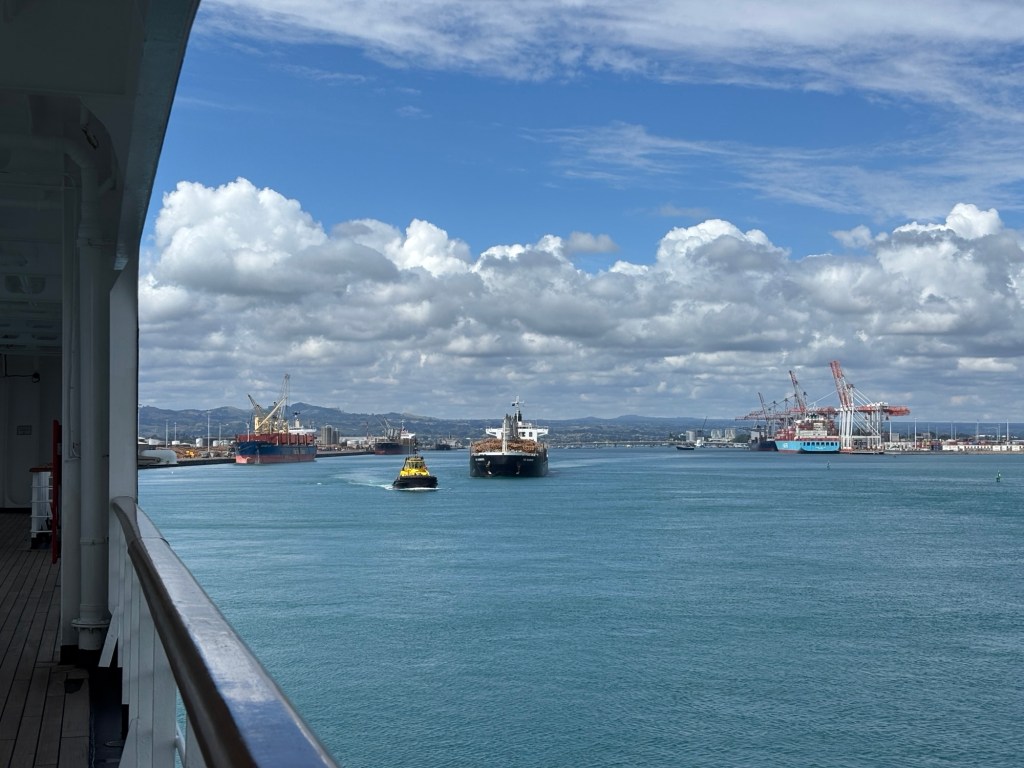
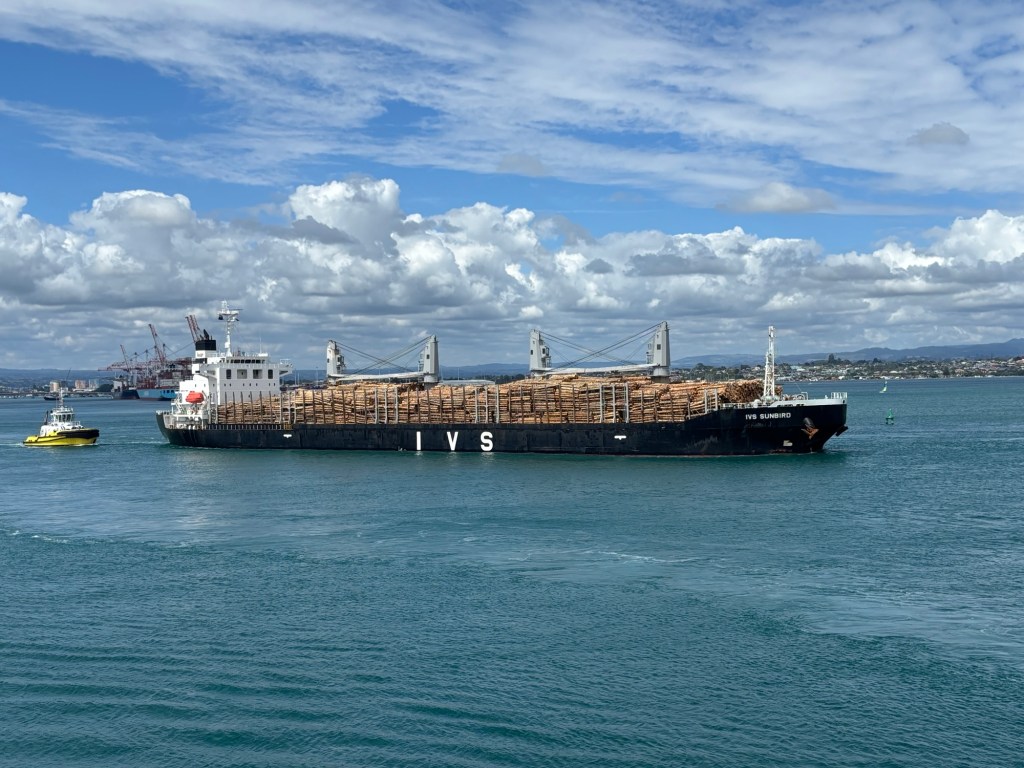
We hung out on our balcony and watched the tugs navigate this cargo ship from Singapore.
We headed to the theater to gather for our excursion. We were on time, but almost late! We now know we need to always be early!
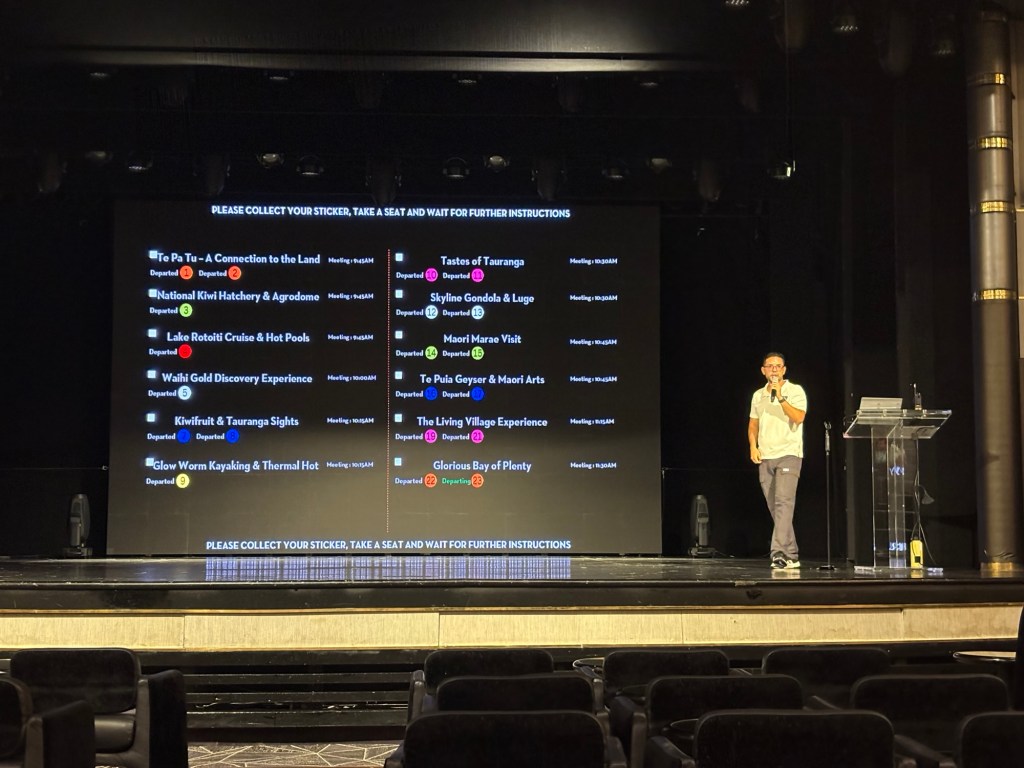
This process is sometimes poorly done, but the excursion crew on the Westerdam seems to have a good system.
Of course, we received some local history on the way to our destination. The Bay of Plenty was named by Captain Cook upon his ship being fully resupplied by the Māori.
Our guide told us that this is the largest port in New Zealand exporting timber, dairy products and 198,000,000 trays of kiwi fruit. That means BILLIONS of individual fruits.
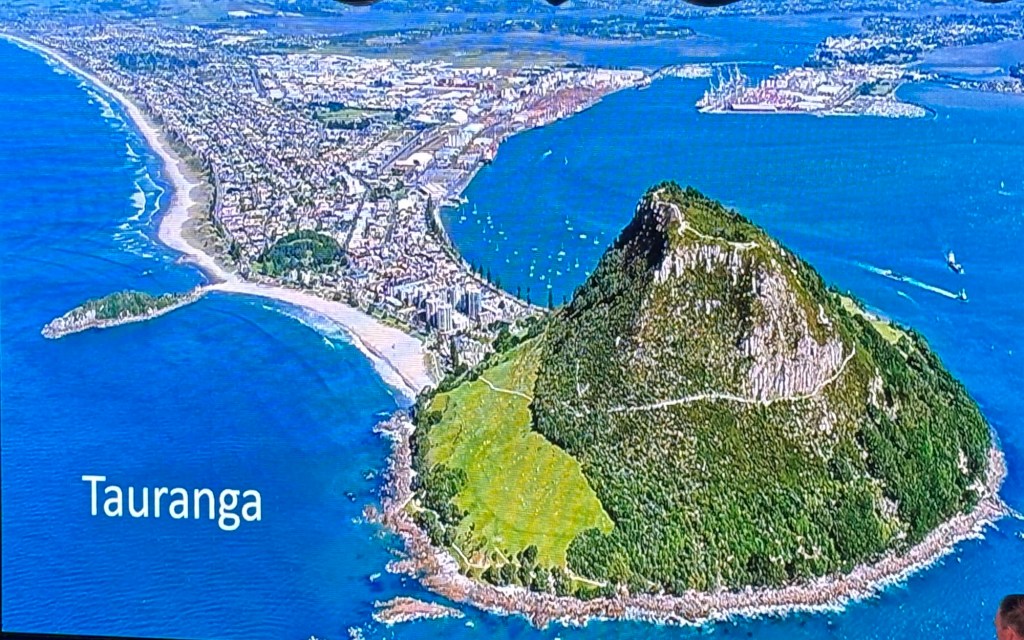
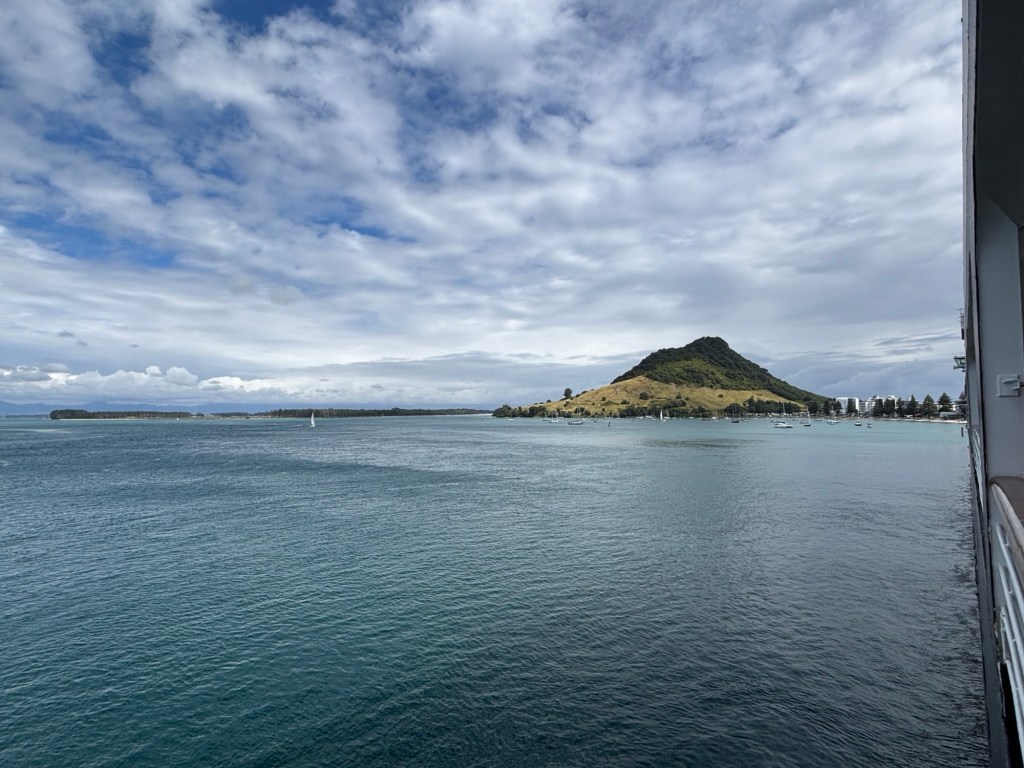
This is what The Mount looked like from the ship.
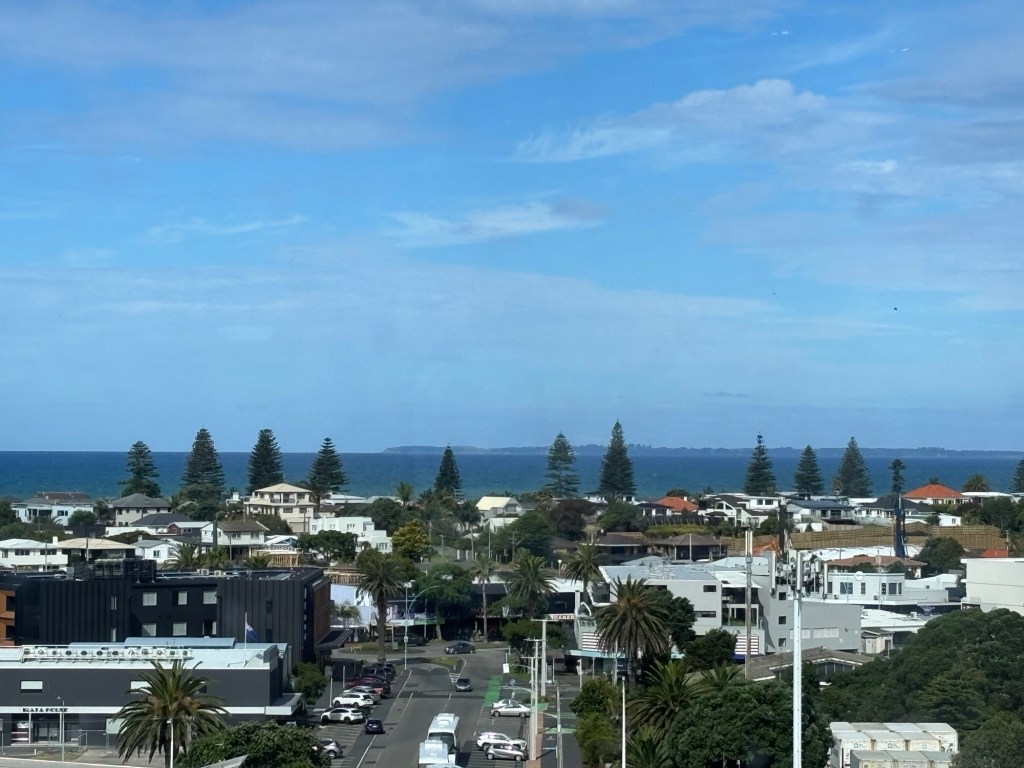
There are Norfolk pines planted along the bay. Missionaries planted them as a sentinel to tell seafarers that this was a safe place to land.
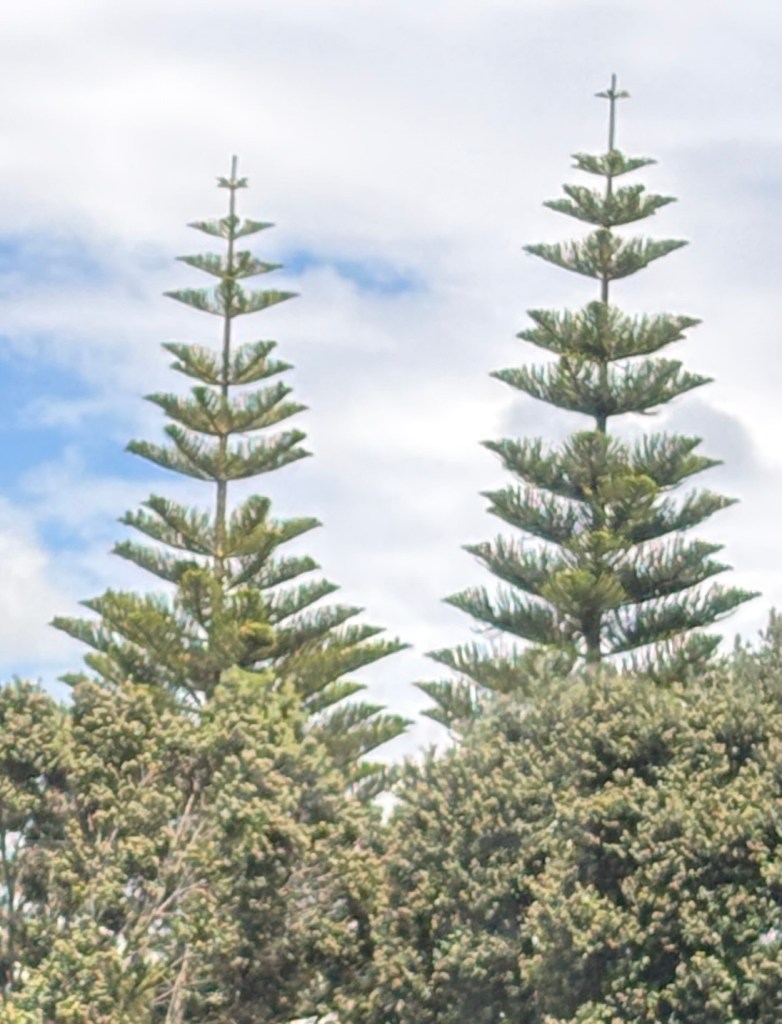
They probably also liked that new growth looks like a cross.
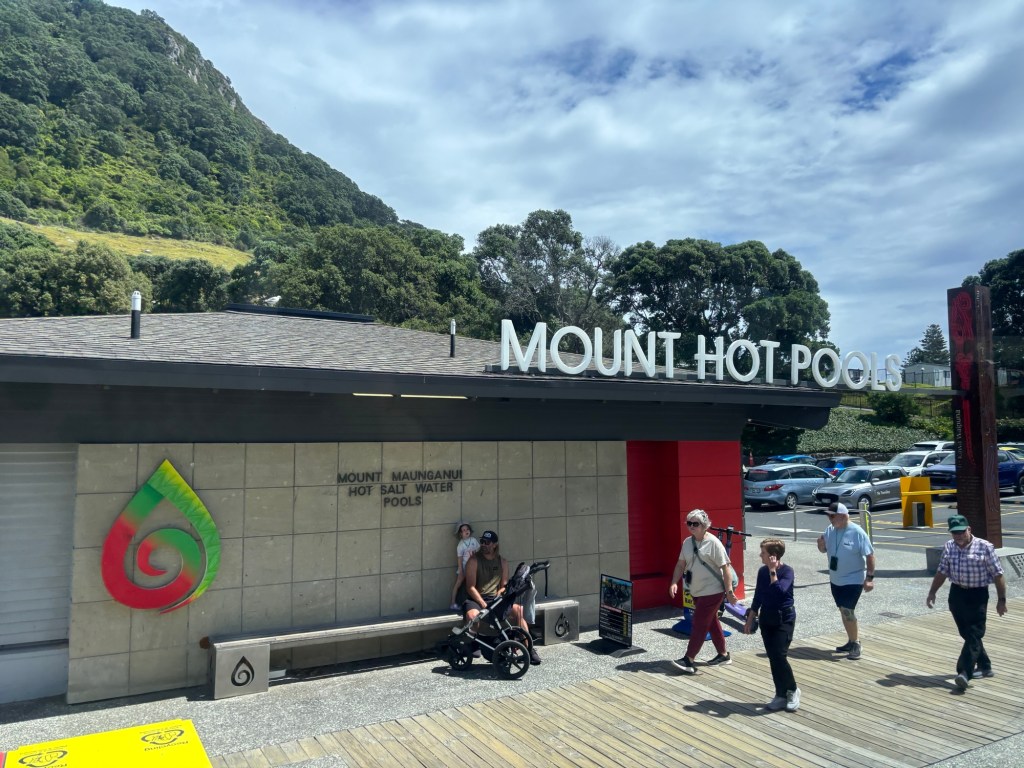
Still on the bay side, there are salt water geothermal pools.
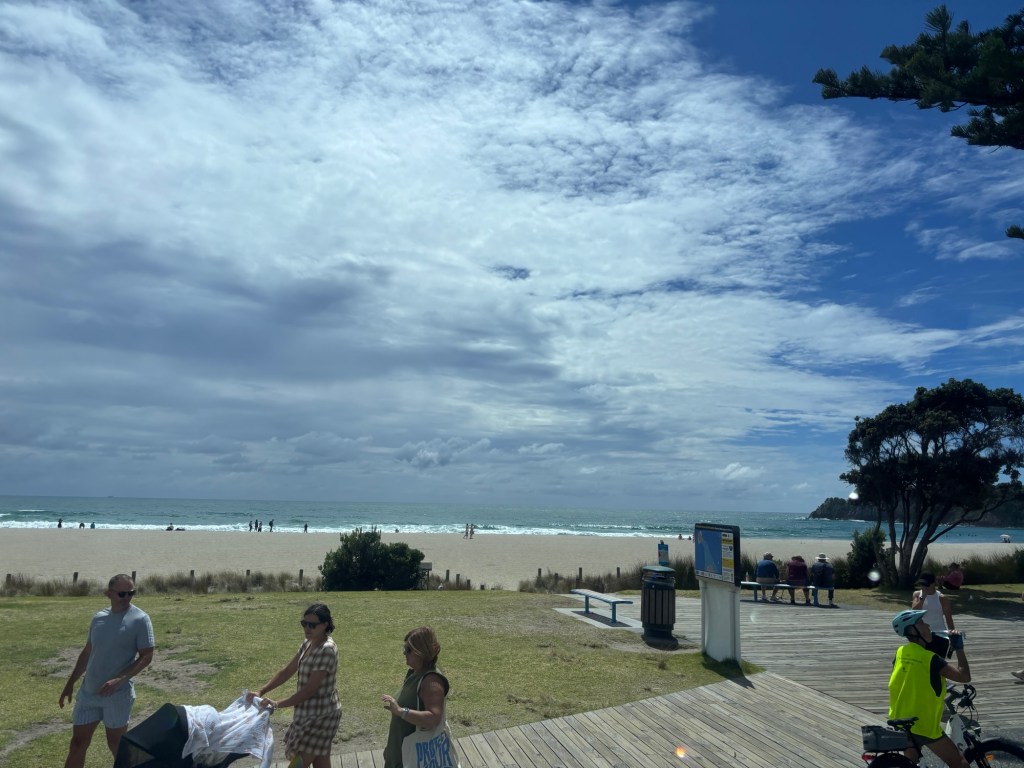
The surf beach is on the Pacific side.
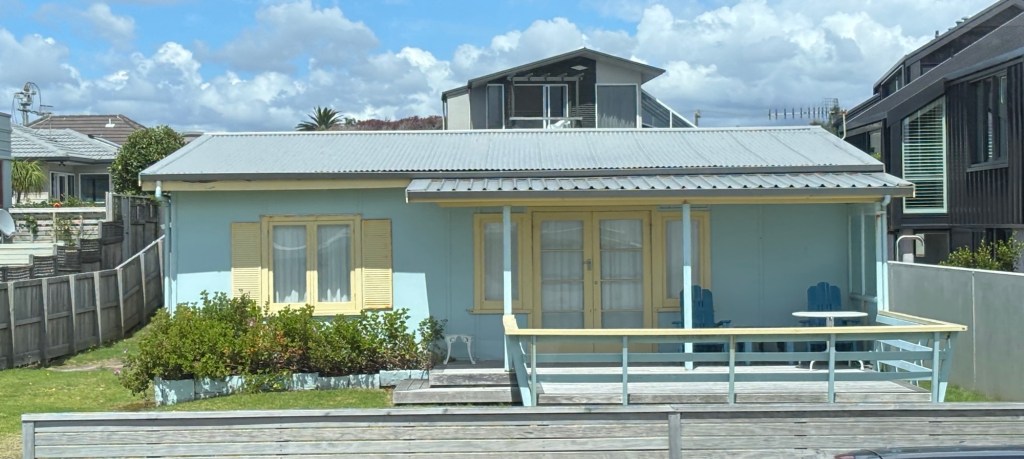
This little bungalow has heritage status and sold for $4 million NZ, roughly $2.25 million US. The outside cannot be changed.
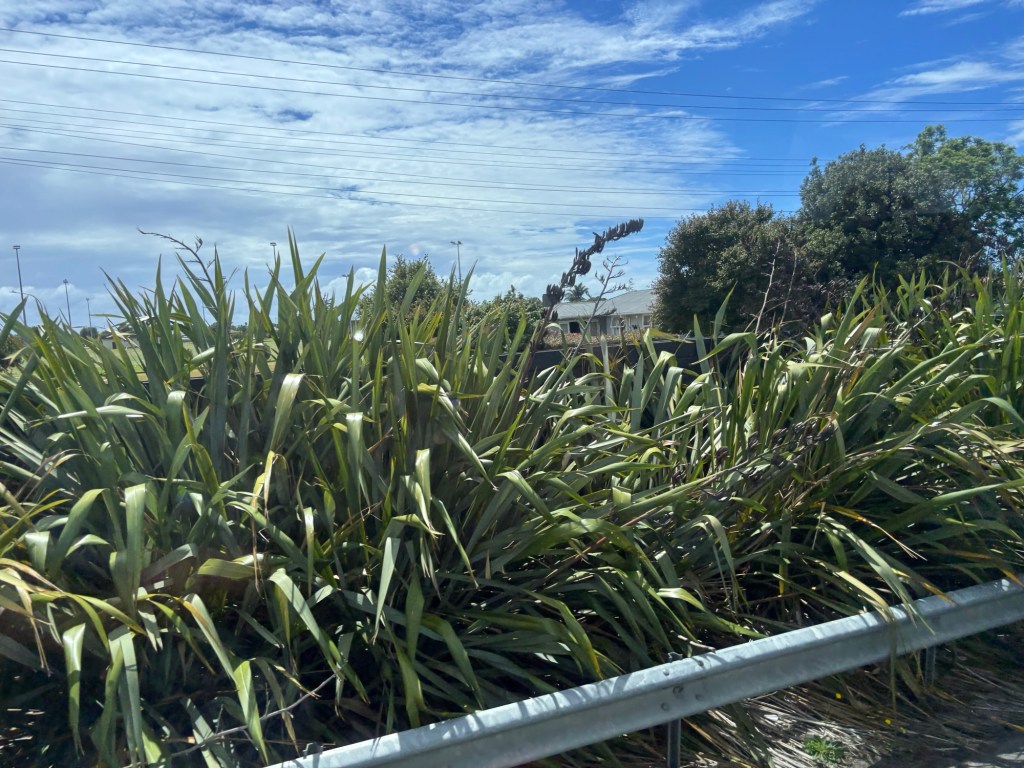
These are flax plants. Flax was brought here in the 13th century. The Māori were able to weave it into many needed products. Flax was the first product exported in the 17th and 18th centuries.
The Māori came from other Polynesian islands and brought crops that they had been growing at home. Those coming from Samoa brought taro root, those from Tonga brought the mulberry tree, those coming from the east brought the sweet potato. The sweet potato quickly became the staple diet for Māori.
Warriors had observation points on elevated terraces to see intruders approaching so they could defend the villages. Modern trench warfare grew out of this type of defense.
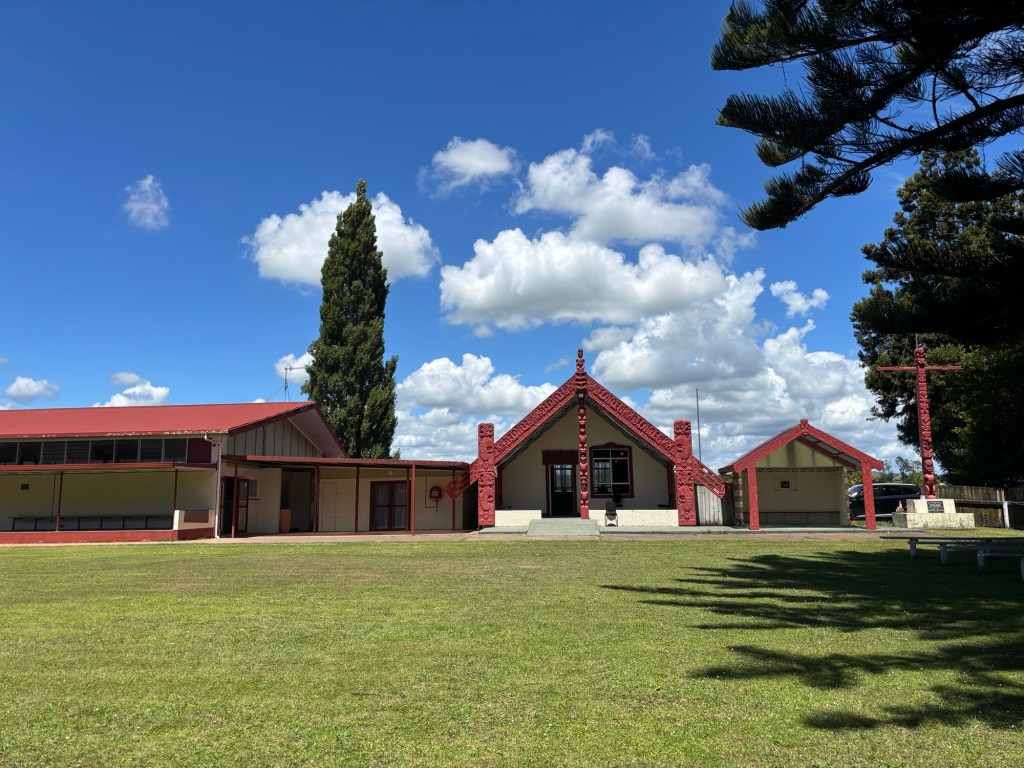
Our first destination was a Māori marae, or gathering place.
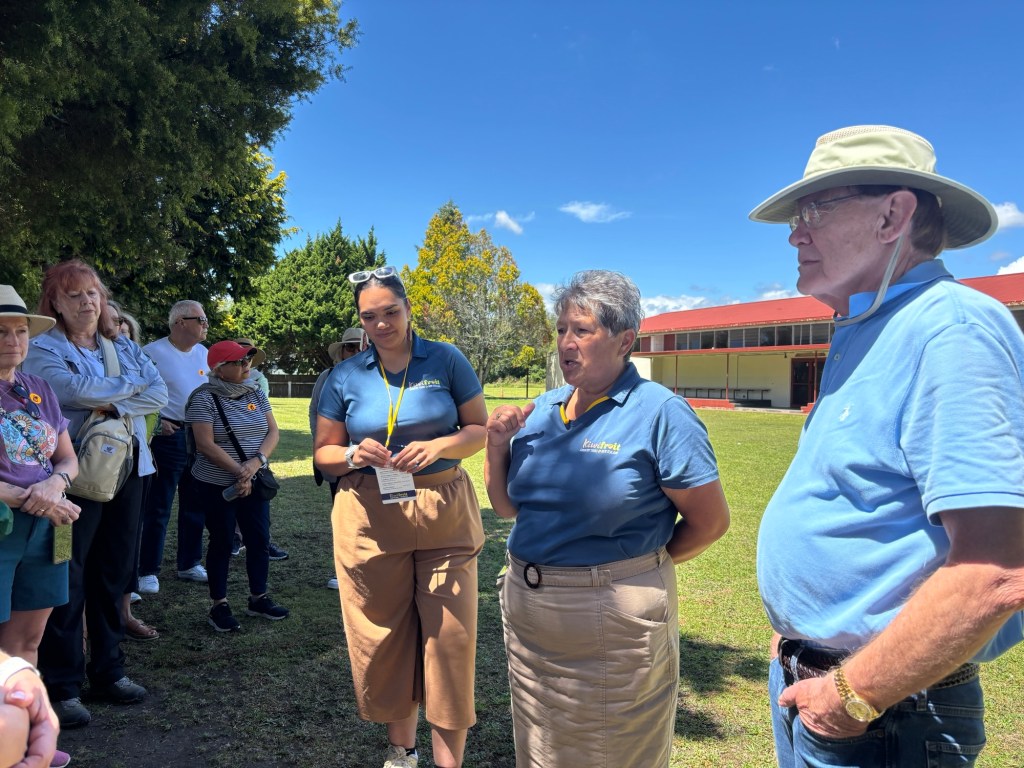
We were given instruction on how to proceed respectfully.
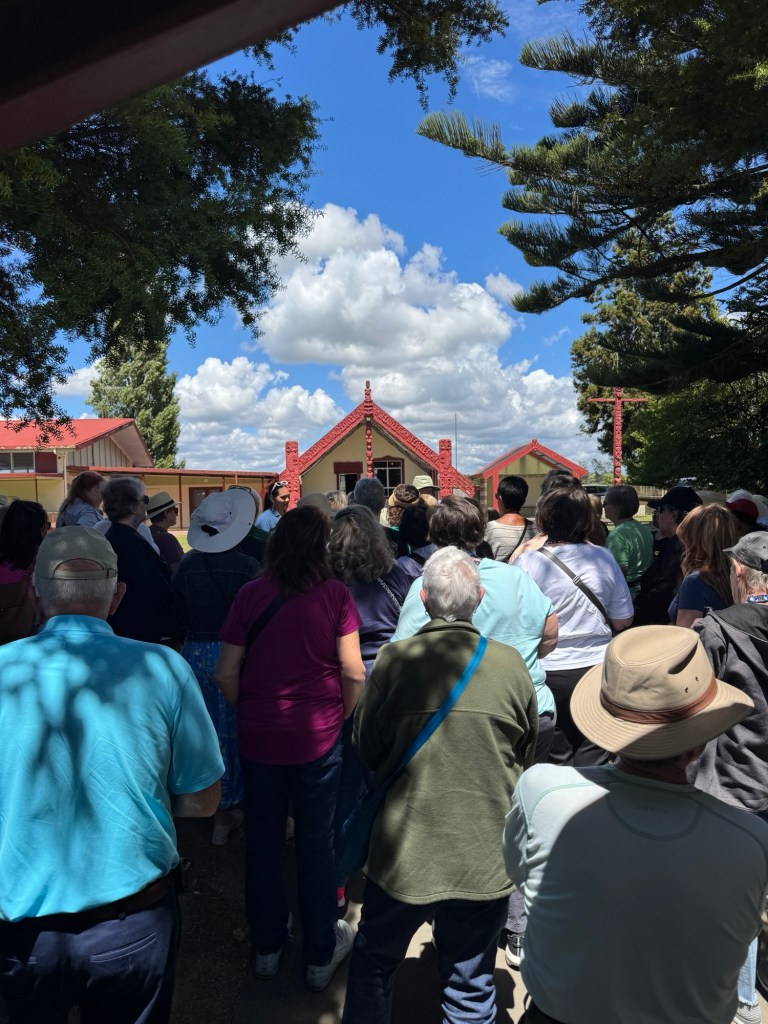
The women gathered at the front of the group right behind our “chief.” The men were around and behind to keep the women safe.
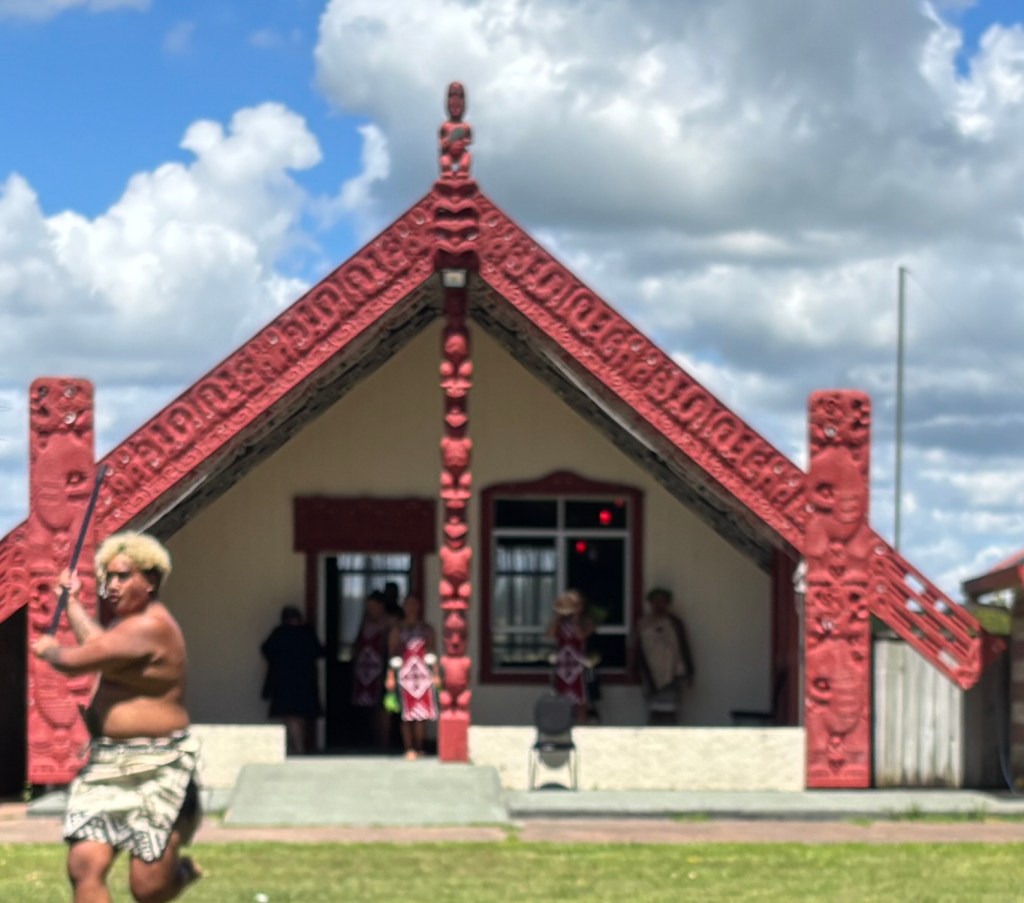
A member of the family came and challenged us as to whether we come in peace. He threw down a feather. When our “chief” picked it up, they knew we were friend, not foe.
We removed our shoes prior to entering and agreed to not take pictures inside.
They sang a song of greeting to us and we sang a song in return “You are My Sunshine.”
They told stories and entertained us with more songs and dances.
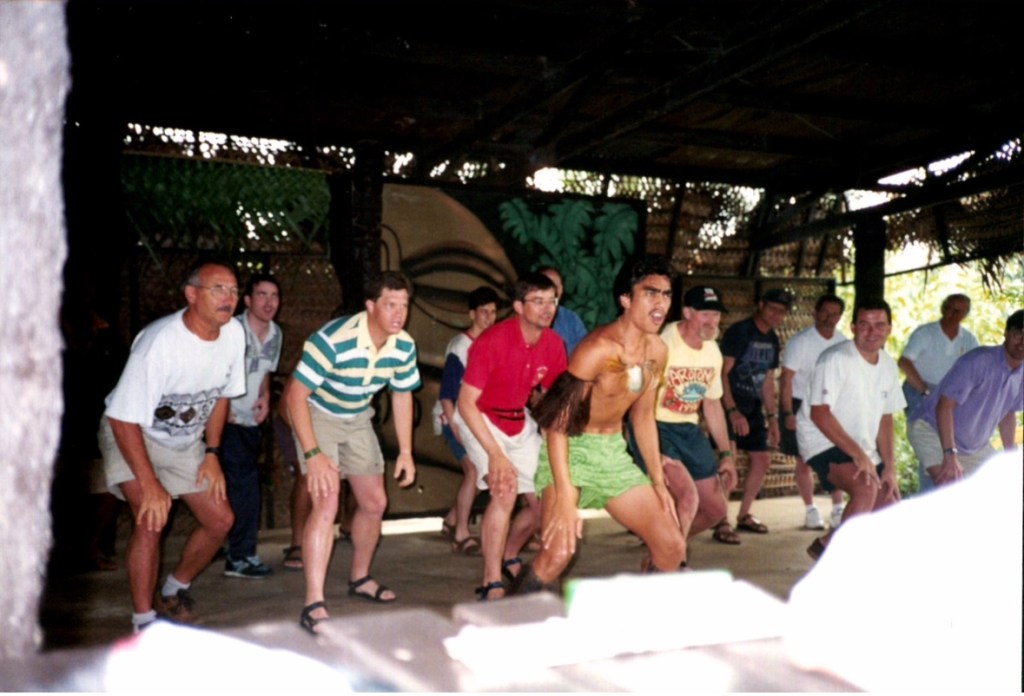
When they asked for first women and then men volunteers to learn some of the traditional dance moves, neither of us volunteered.
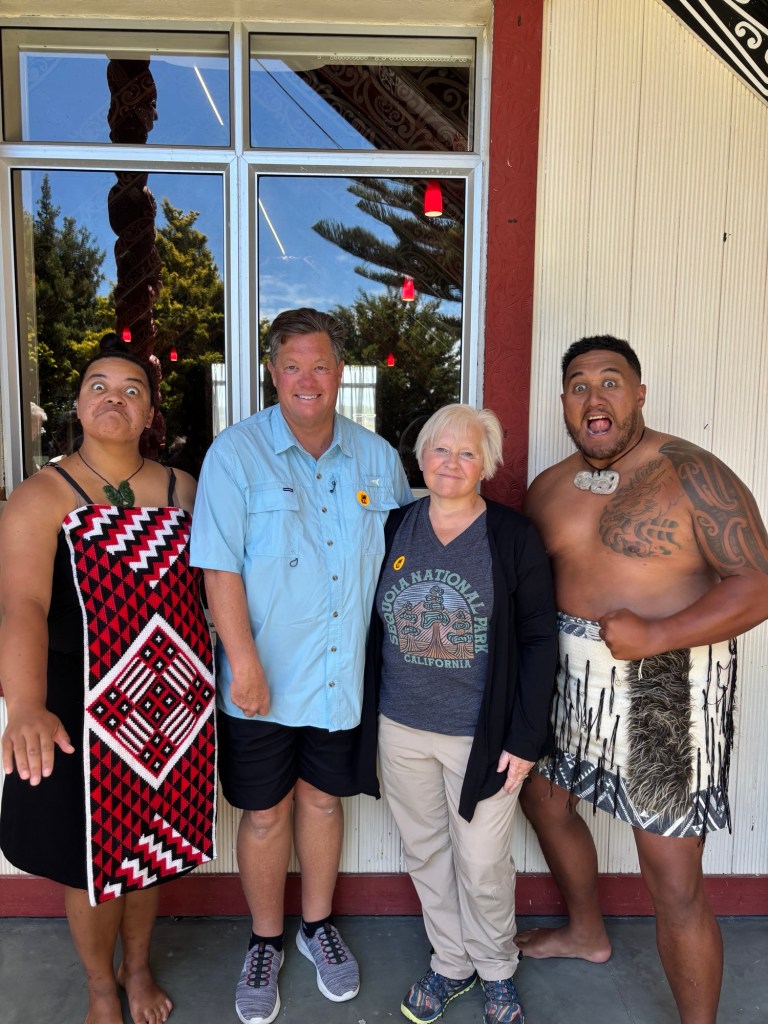
Afterwards, our Māori hosts invited us to take pictures with them.
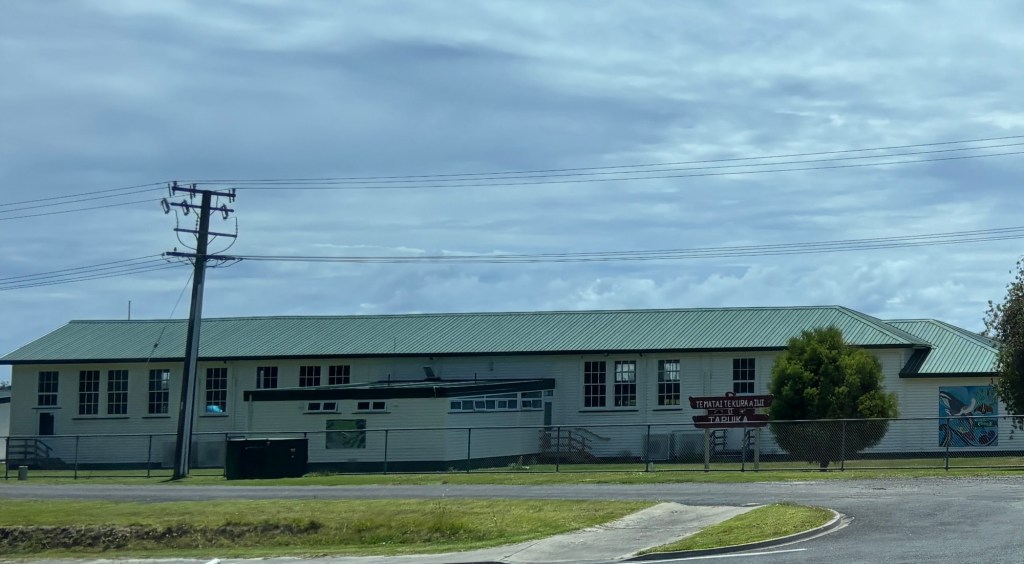
Schools in New Zealand were started by the missionaries. They banned students from speaking the Māori language. It was almost eradicated by the 1950s. Efforts were initiated to revive the language in the 1970s. Today, schools operate in both languages or bilingually from preschool through university. Both Māori and English are official languages of New Zealand.
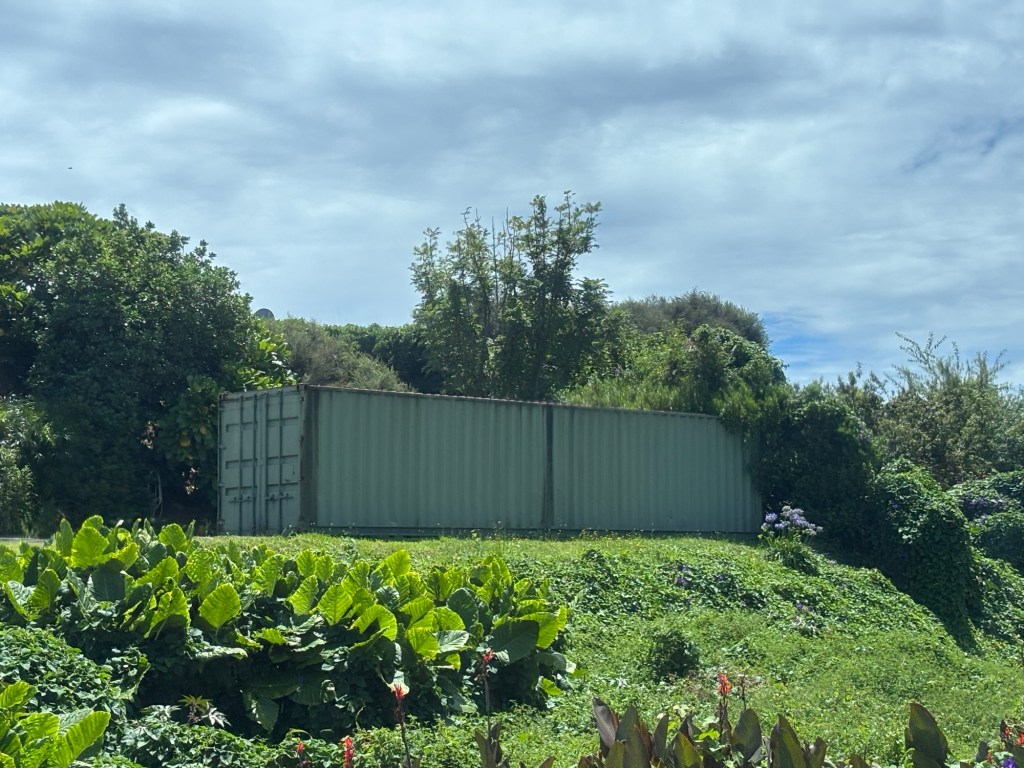
This home has incorporated cargo containers that were collateral from an oil tanker disaster in this area in 2011. Oil was on the beaches for five years.
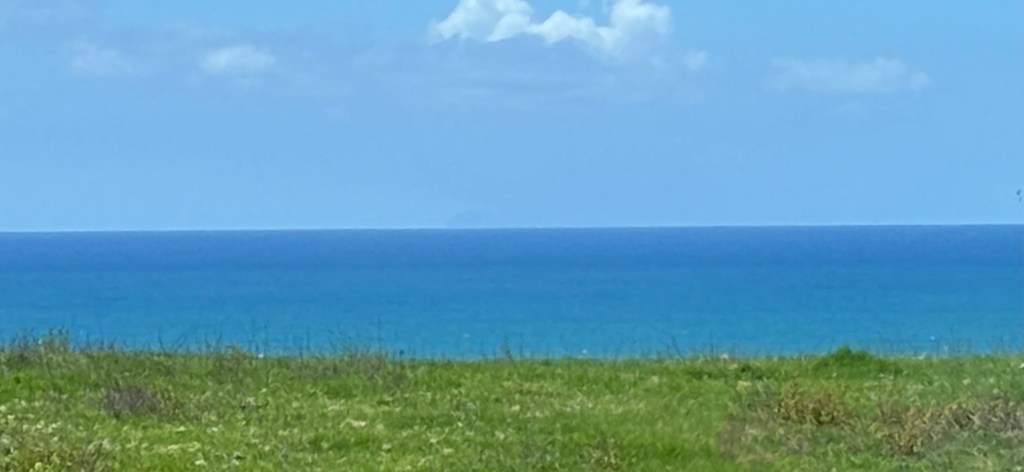
In the distance we could just barely see the island where 20 tourists and two guides died in 2019 when a volcano erupted unexpectedly on Whakaari, the White Island. There is a Netflix program about it called The Volcano: Rescue from Whakaari.
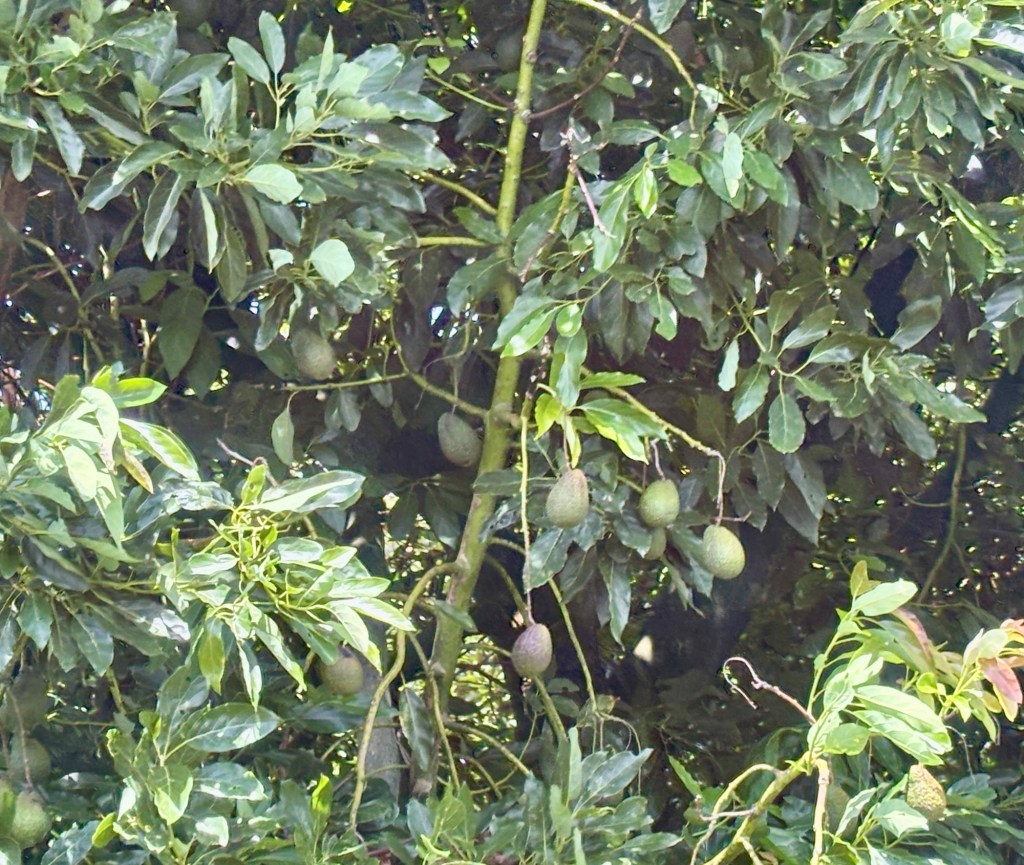
The most common crops here are kiwi fruit and avocados. Everyone seems to have one or both trees.
In the early 1900s, a teacher ate Chinese gooseberry in the Yangtze valley. She brought some back to New Zealand. Her brothers were horticulturalists and the results developed into a massive industry.
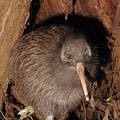
A Kiwi is the national New Zealand bird. It is flightless and elusive. A kiwi can also be New Zealander. The fruit is not kiwi, it is “kiwi fruit.”
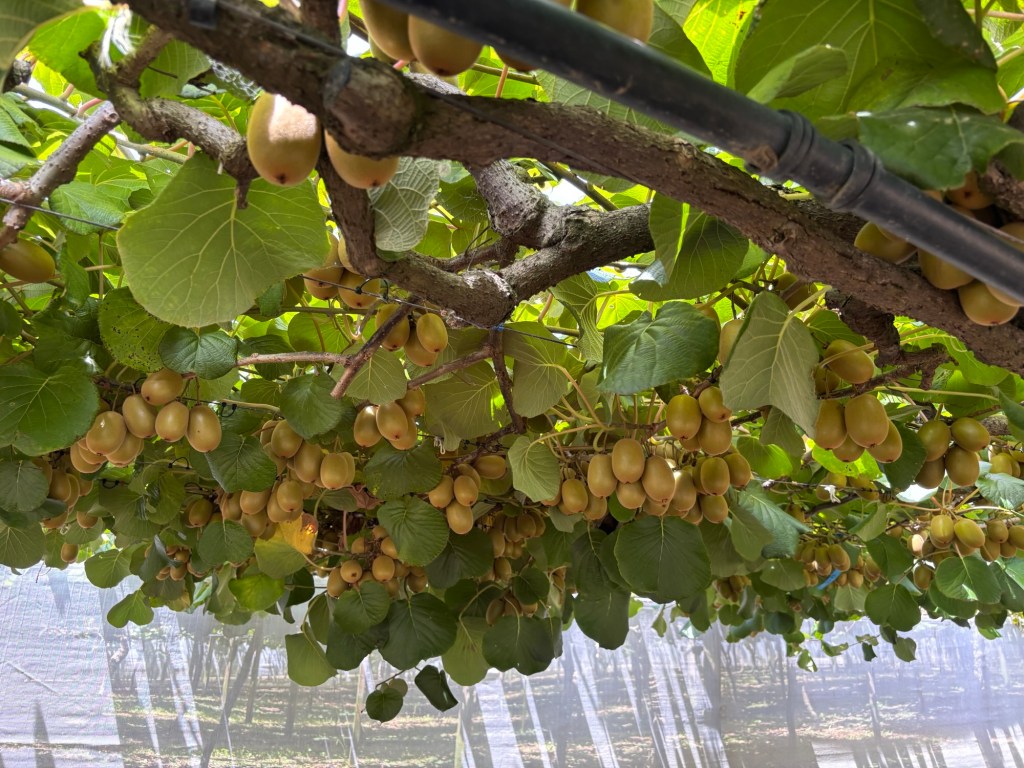
Almost all of New Zealand’s immense and world-famous kiwi fruit crop is grown in this small area. There are 2500 orchards growing billions of individual fruits that are picked one by one.
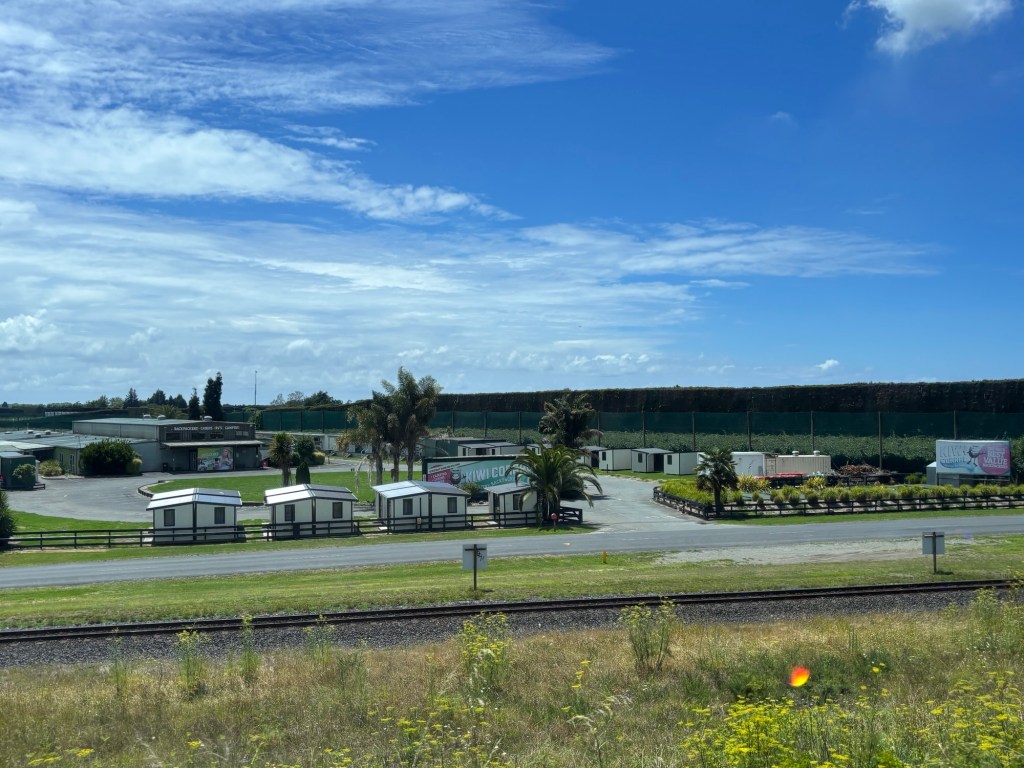
These are accommodations for harvesting workers. The fruit is picked 3-5 months a year. Harvest is 12 hours per day, six days a week. The workers generally come from Polynesian Islands and NZ has strict regulations and protections regarding their pay and accommodations. Accommodations must include high speed WiFi for them to stay in contact with their families.
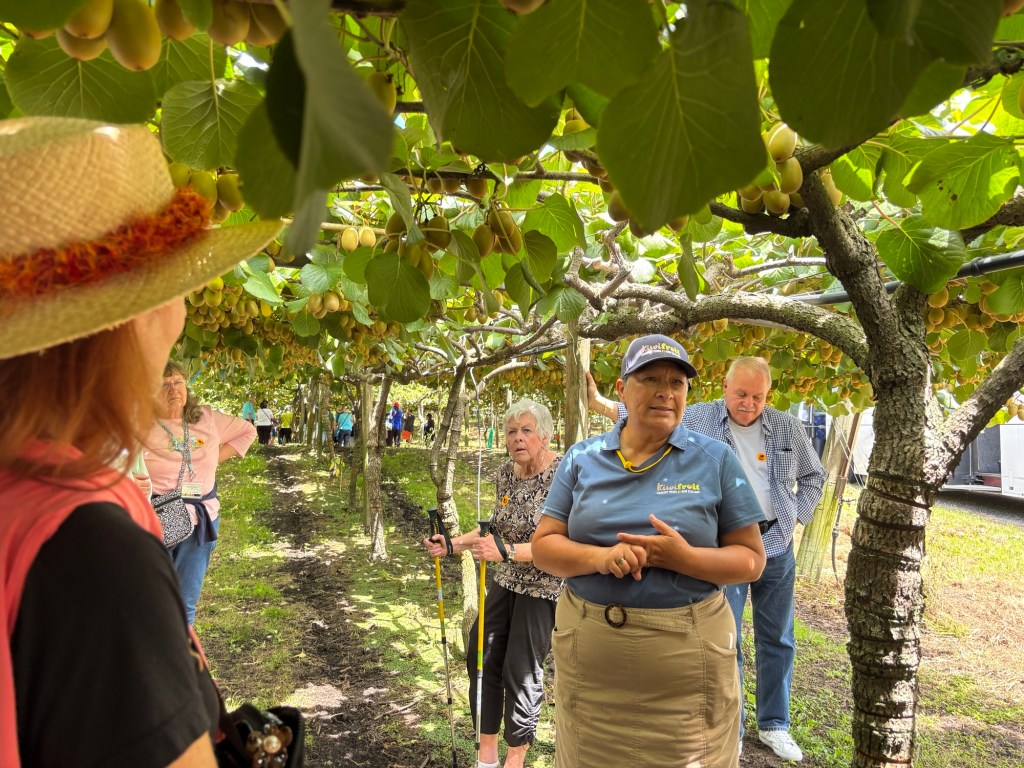
There is a very elaborate process for pollination and growth and harvest season to season. We spent thirty minutes learning about it!
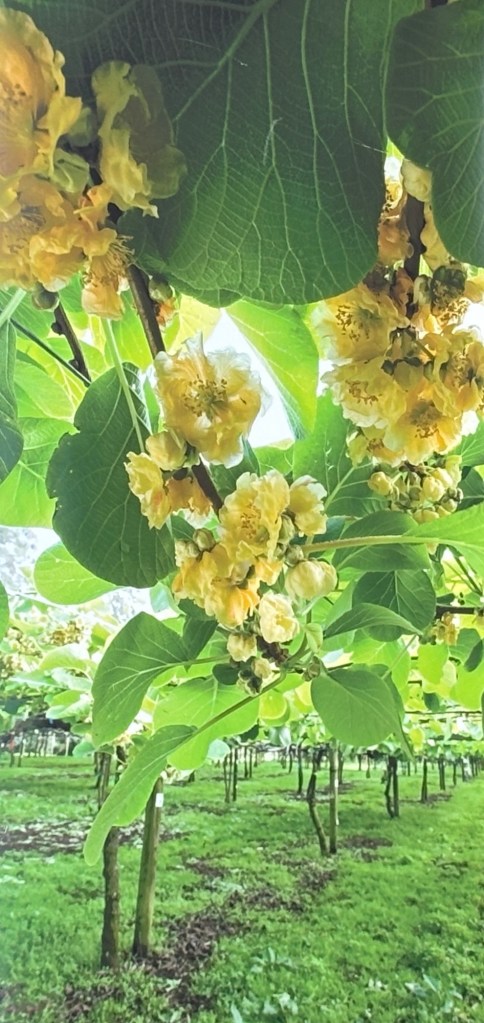
It began with how they trick bees into pollinate blossoms that have no nectar!
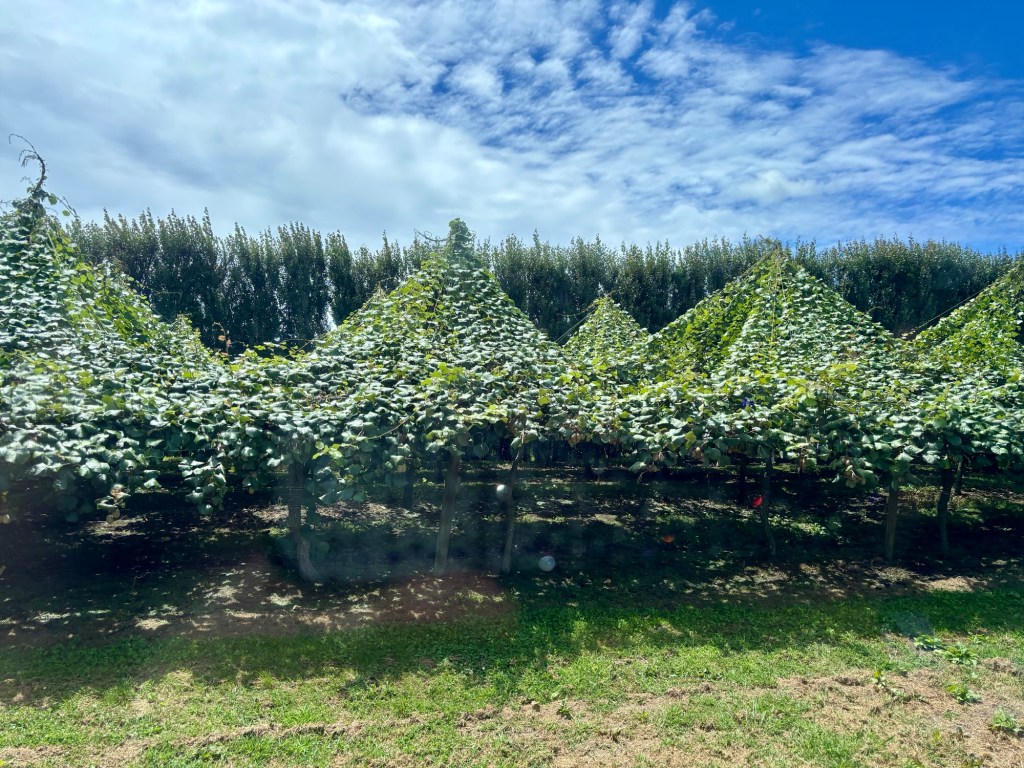
These teepees are vines that weren’t pollinated but saved for the next season. Also notice the wind breaks in the background. All of the orchards have them so the wind does not bruise the fruit and lower the grade classification.
Growers use an organic insecticide but do not have a problem with birds because the fruit is picked before it is ripe.
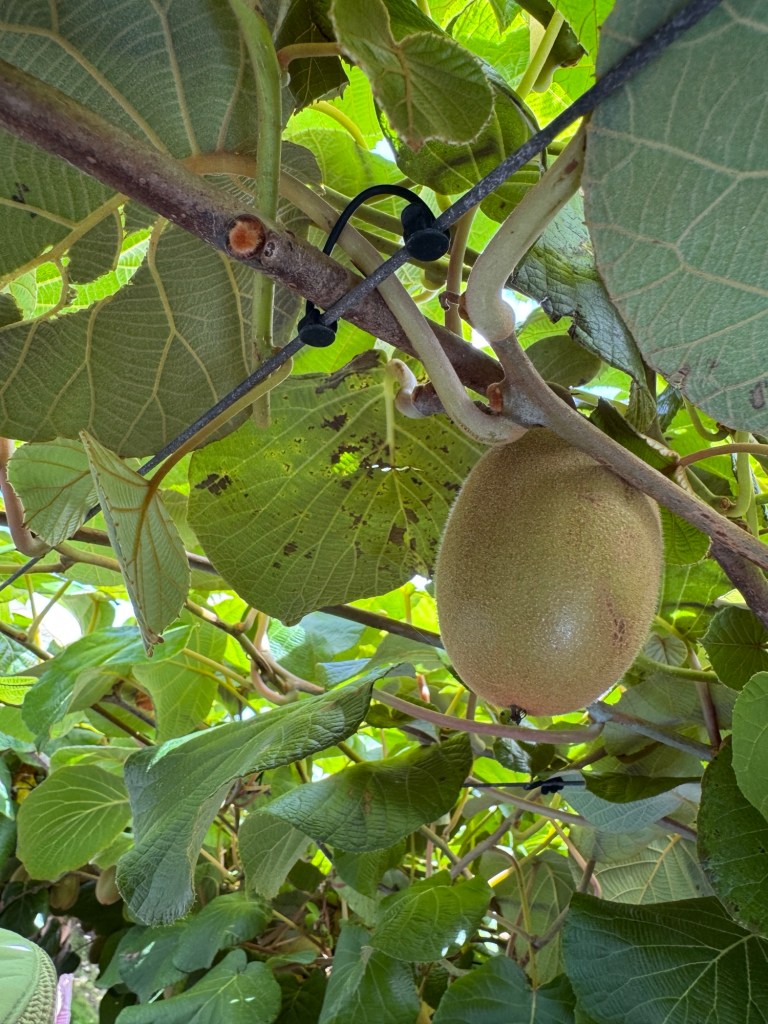
These gold kiwi are just a few weeks into their development. Even though they are already the size of what we typically see in our neighborhood grocery stores, they will double in size and be classified as Grade A. This classification level of crop primarily goes to Asia.
The fruit is picked hard (not ripe) because the market is at least six weeks to six months away. Fruit can last up to a year through processes they have developed.
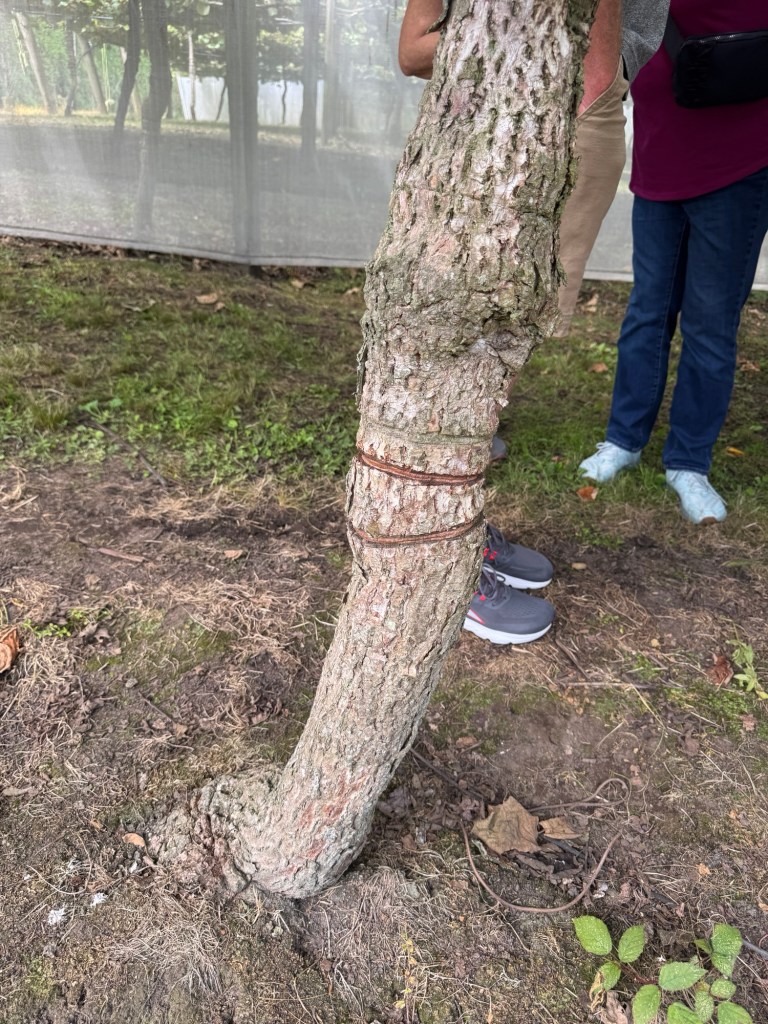
Green kiwi fruit was the primary market for decades but 80 percent of the fruit was lost by disease. They grafted vines to grow gold kiwi fruit onto still healthy green vines to create a gold fruit. That is now the primary crop with the best, again, going to Asia.
Ruby Red Kiwi is in development!
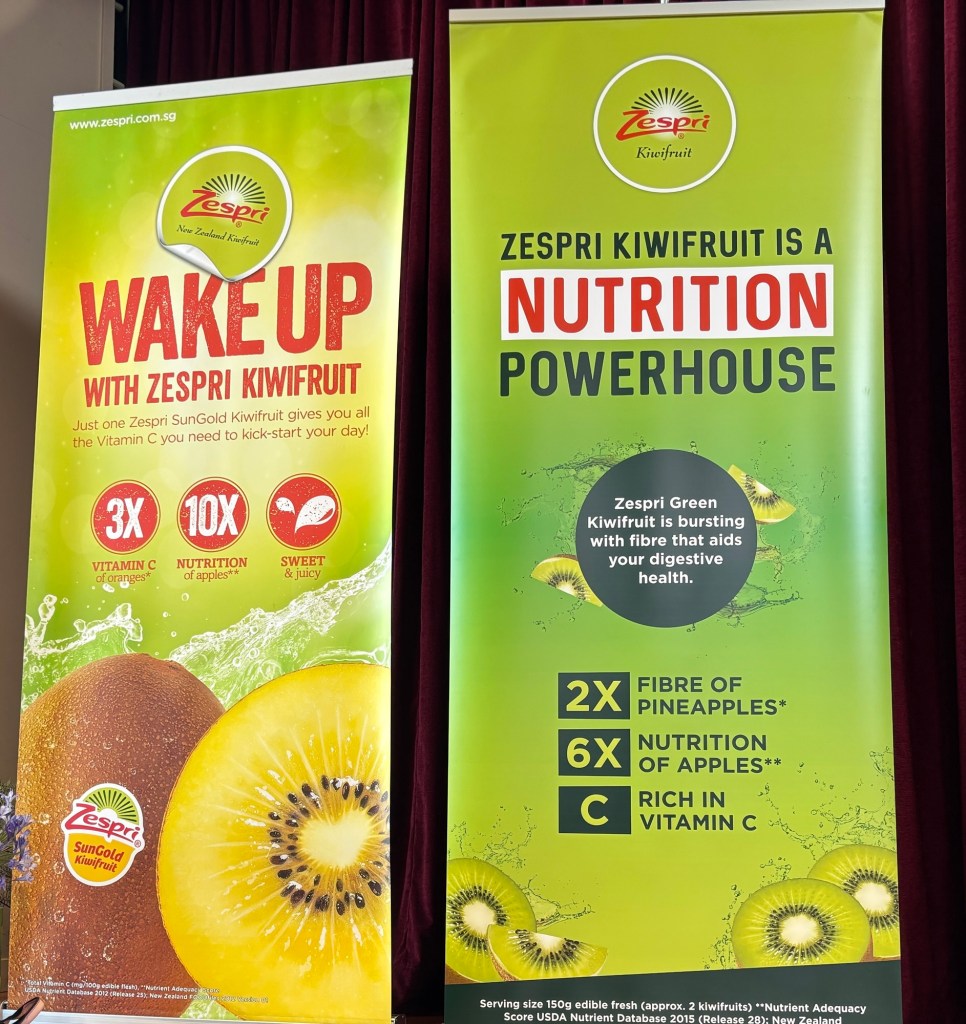
Kiwi fruit is very healthy nutritionally – we’ll have to eat more.
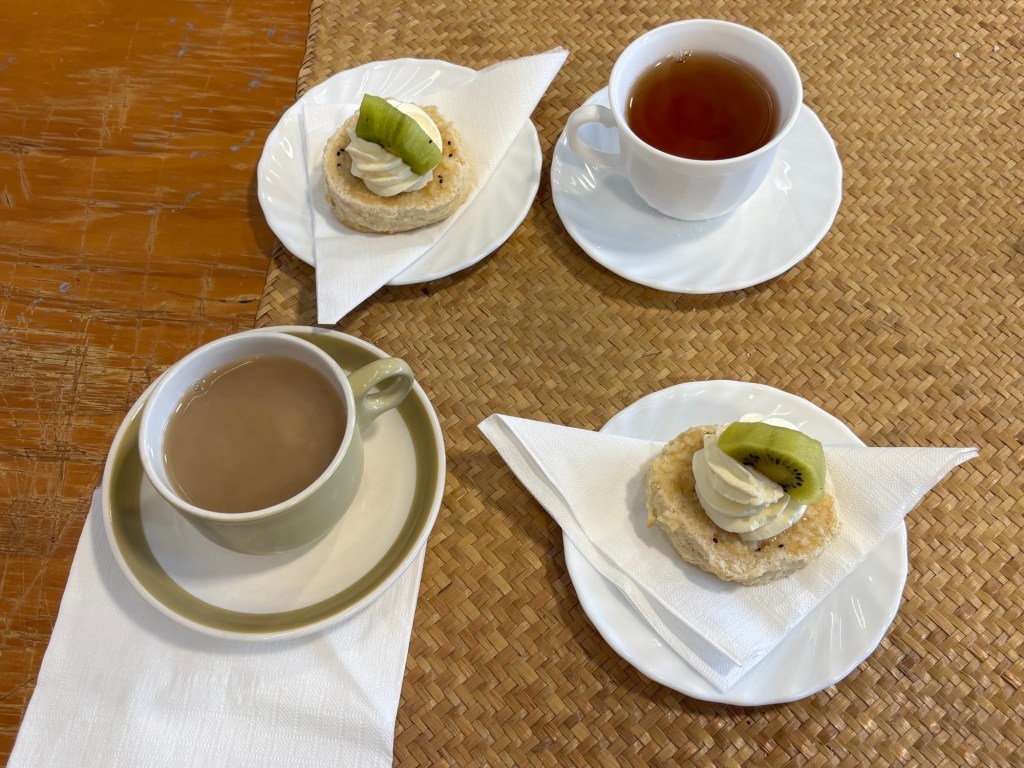
We had a nice treat with tea at a local community center. We sampled green and gold kiwi fruit! The gold was so good!
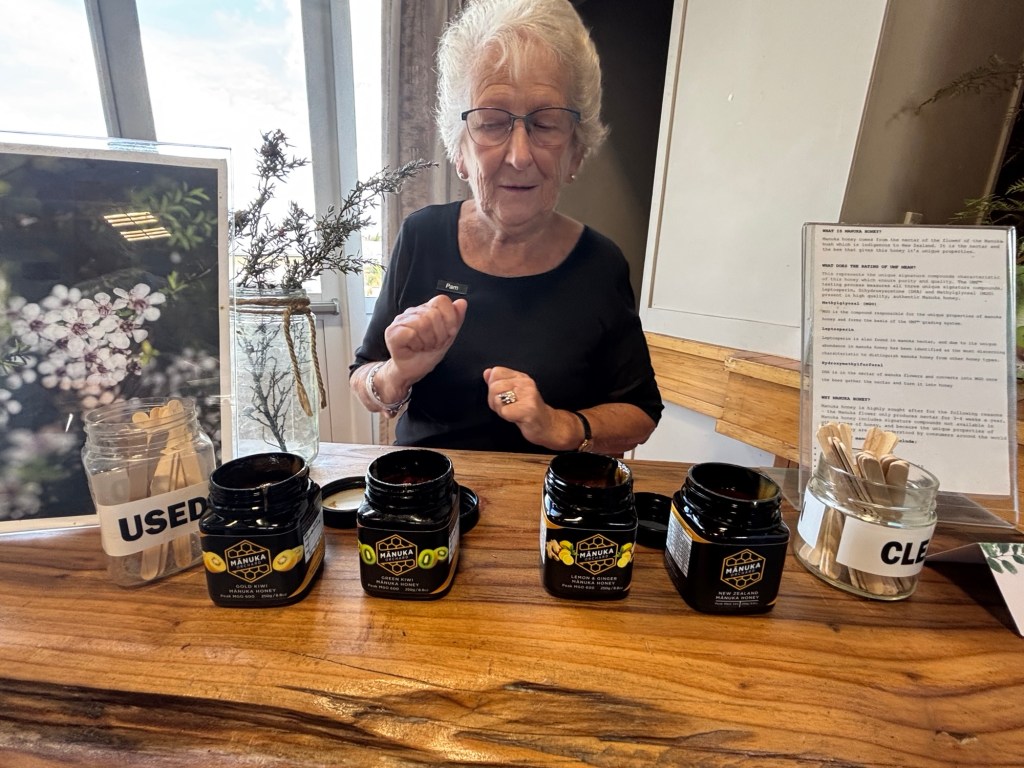
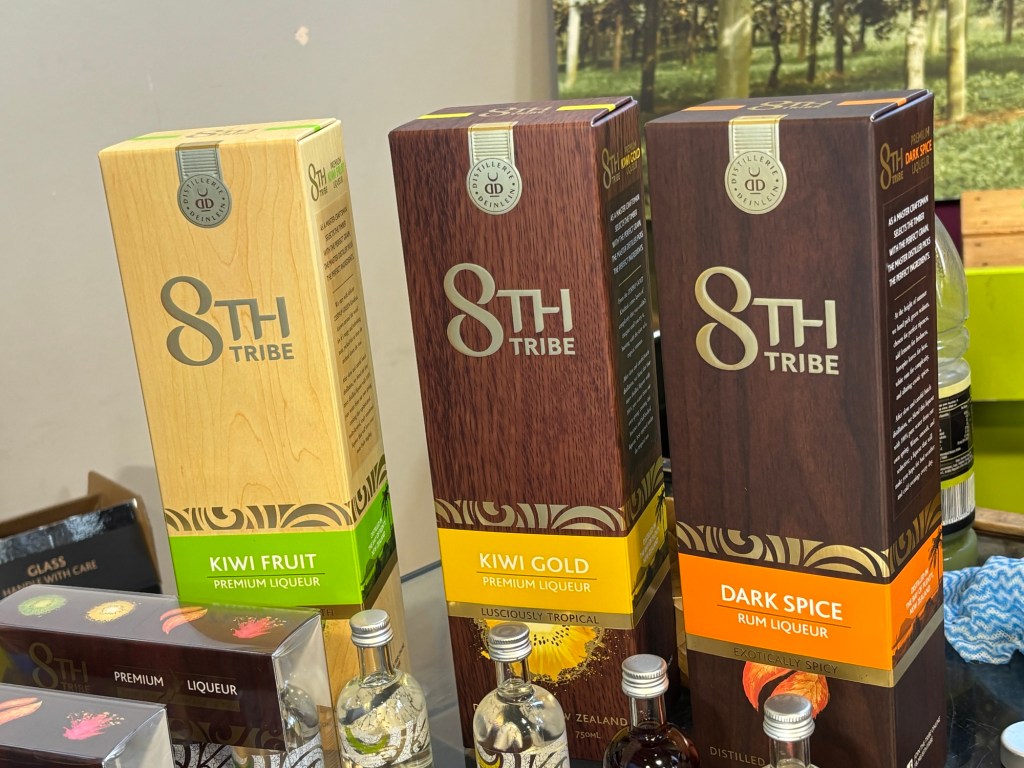
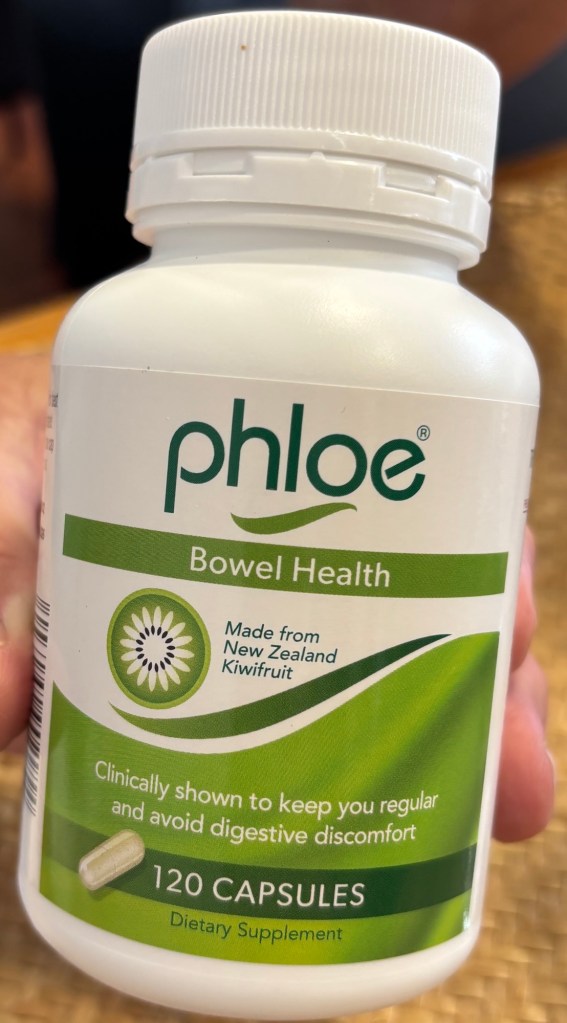
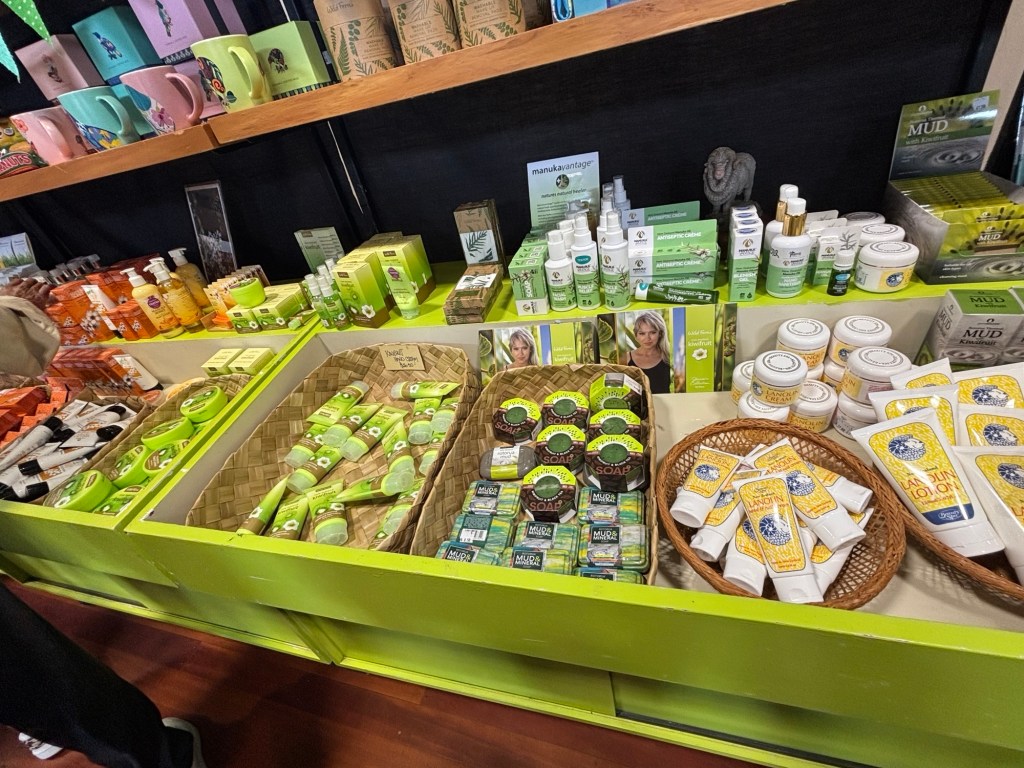
There are so many restrictions on taking products into Australia that we didn’t get any lotions or soaps or chocolate.
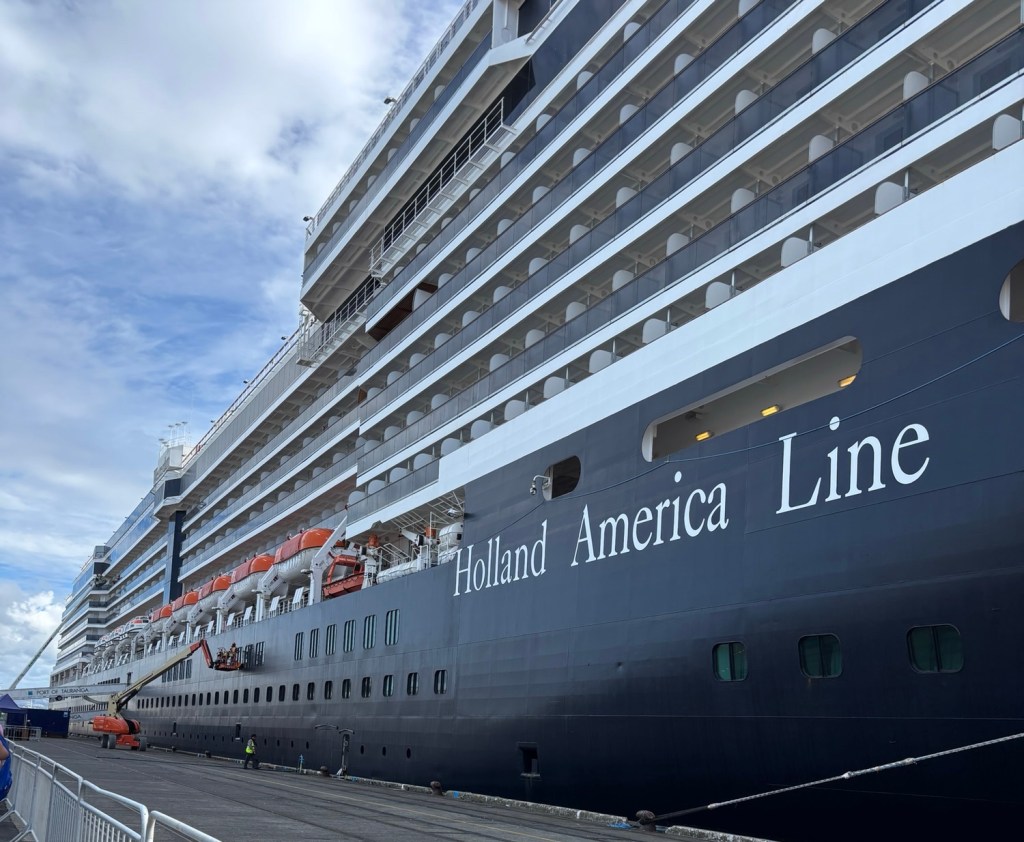
Back on board we had dinner at our favorite specialty restaurant, Canaletto.
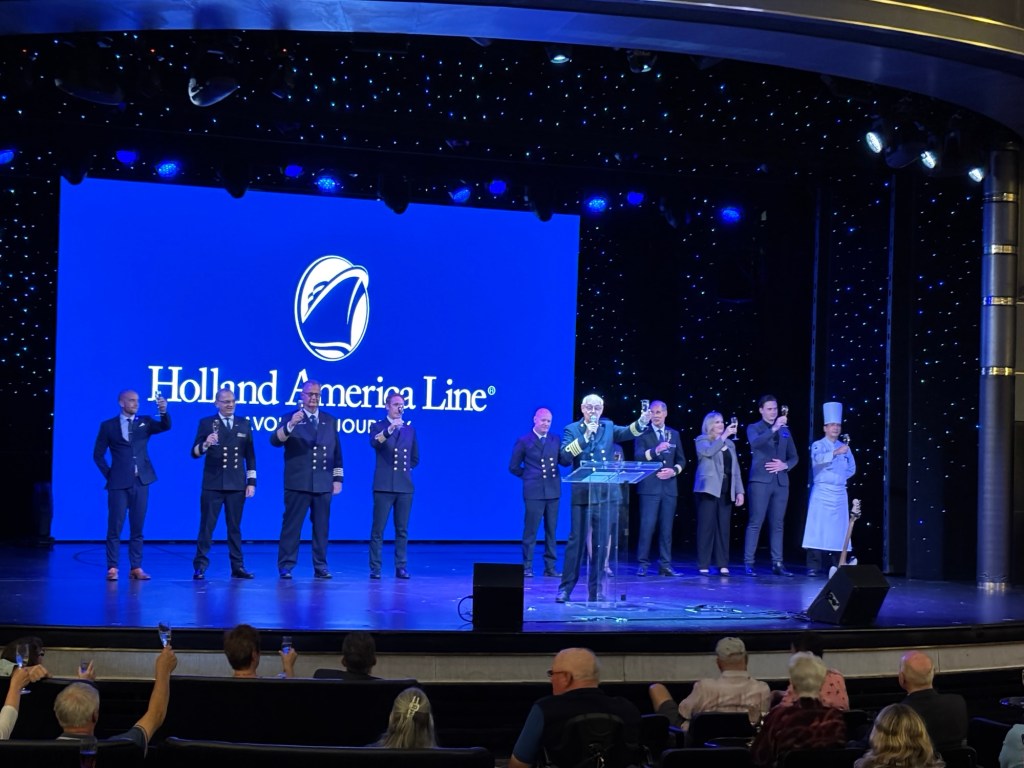
Then we went to the captain’s welcome toast. He gave us a little information that the Westerdam had her maiden voyage in 2004. The captain’s career began with Holland America in 1992. He introduced his senior officers and gave a toast to our journey.
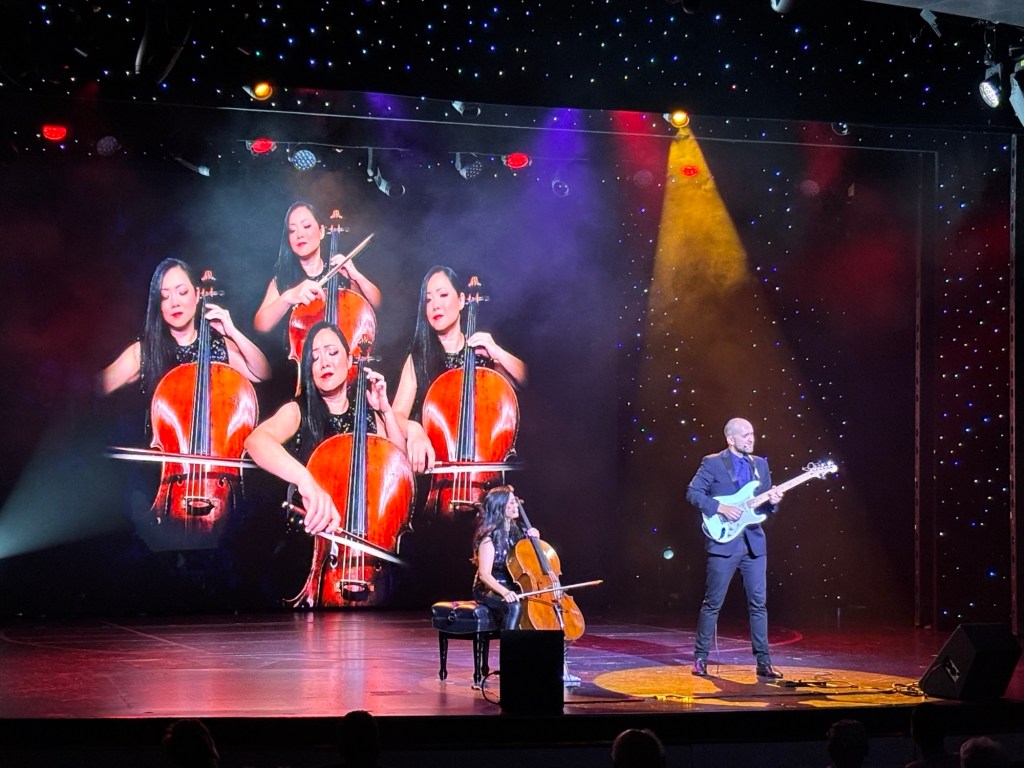
We stayed in the theater then for a wonderful show called The “Shredderz” . A woman on cello and a man on electric guitar combined classic rock and classic sounds strange, but it worked very well.
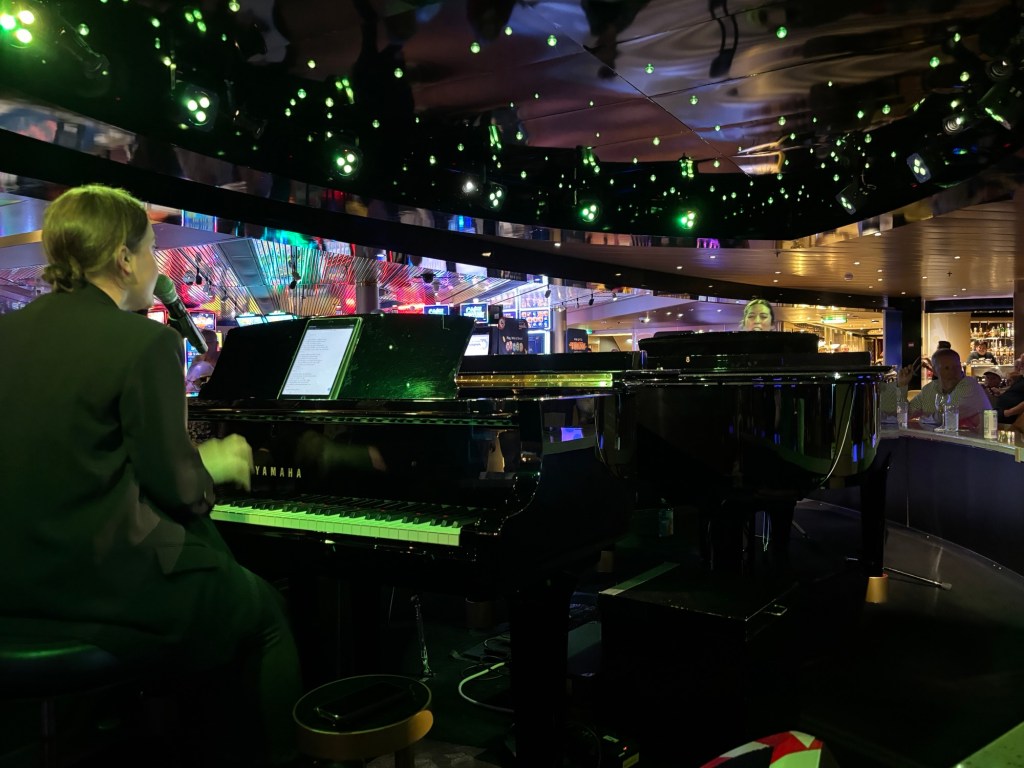
We concluded our night at Billboard Oboard. This venue is available on all Holland America ships and incorporates two piano players playing together.
It was a great day from shore excursions to dinner to shows. This is why we like cruising!
We were in Tauranga, New Zealand on January 20, 2025.


 Serene Wandering
Oh, this is so much fun. Gord and I took this exact cruise only started from Sydney and landed
I always enjoy reading about places I’ve been, or are hoping to go!
I would love to be