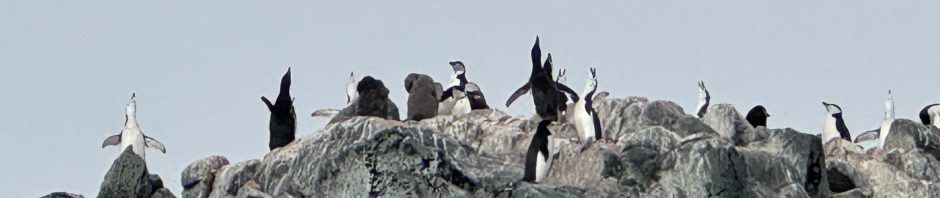
Our second full day in Sydney was a really good day. We had tours of the Sydney Opera House and a food tour called the Tastes of Sydney.
First, we learned to use the Sydney light rail. We had been told it was easy – just “tap on and tap off” with a credit card. The places we were going to were walkable but we were going to be out all day and didn’t want to feel grimy because of the humidity.

A bell-boy gave us directions to an access point right around the corner from our hotel.

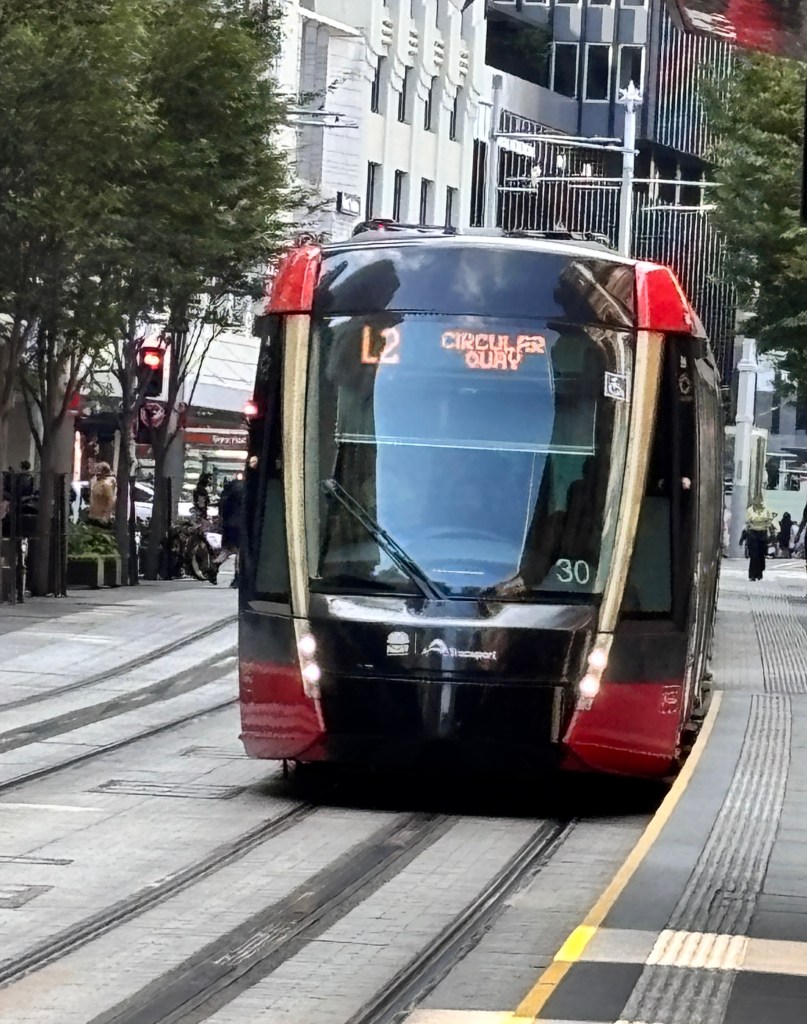
An “experienced” tourist, who was on his third day in the city, confirmed how to get on and off. We were ready! Our stop was three stops down the route. The cost in USD came through at 63 cents per person.

When we got off the light rail we saw the Coral Princess. We had seen her in Cairns earlier in the week. This ship is too large to fit under the Harbor Bridge like the Westerdam did, so had to dock in Circular Quay (pronounced key). We heard quite a bit of grumbling about the big ships because they block views.

Our morning destination was the Sydney Opera House.
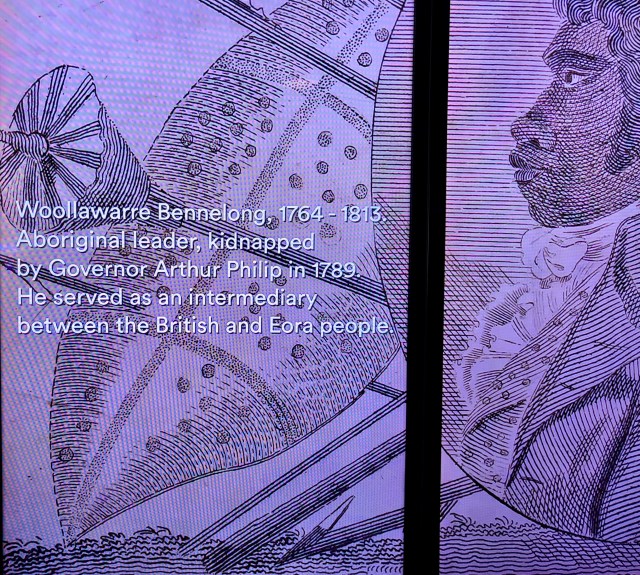
We learned that the land where the opera house sits was once occupied by the Eora people. Their ruler, Bennelong, had a complicated relationship with the British – mostly to British advantage.
The British military and government leaders built Fort Macquorie on the land the Eora had lived on. They ruled from there. The old fort was demolished at the turn to the 20th century and a tram station was built. When Sydney leaders decided they needed a world quality performing arts center, this site was chosen. They called it Bennelong Point after the Eora leader.
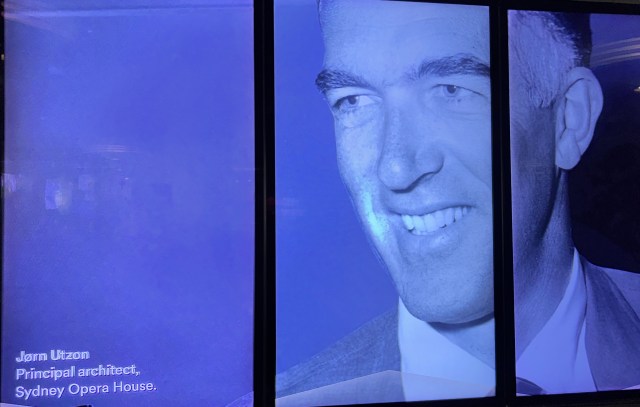
A world wide competition was held to pick the design of the opera house. There were over 2000 submissions. The design chosen was by Danish architect John Utzen. After receiving the assignment, it took him three years to determine how to construct the shells in his design. He eventually found his answer by beginning with a sphere.

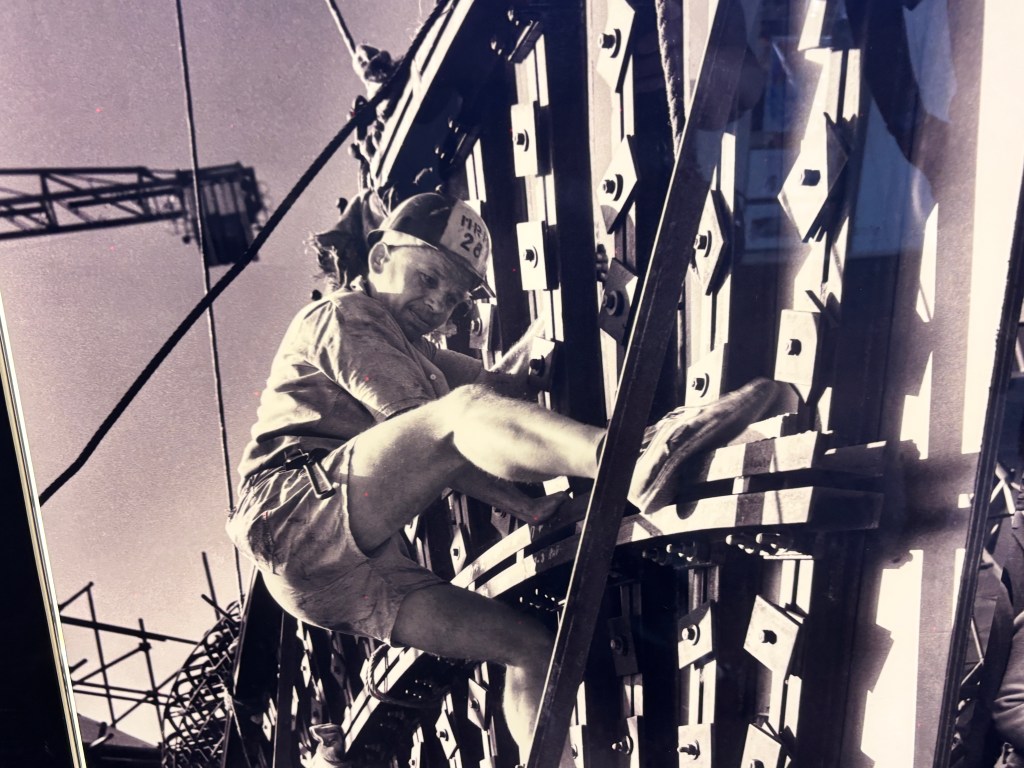
Construction began in 1959. Ten thousand men worked on the Opera House without a single death.
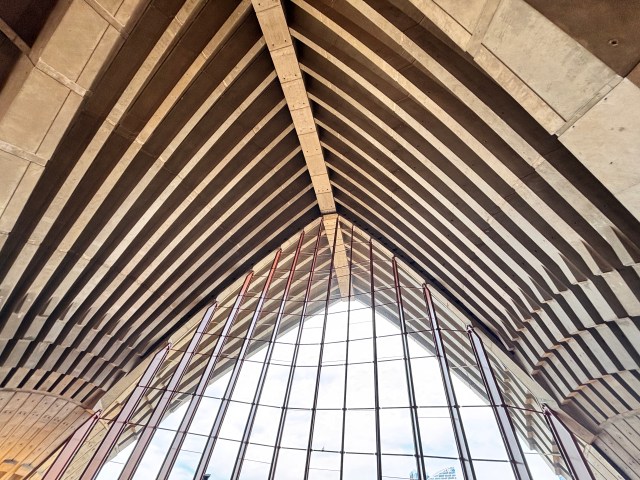
The opera house is a self supporting structure of concrete.
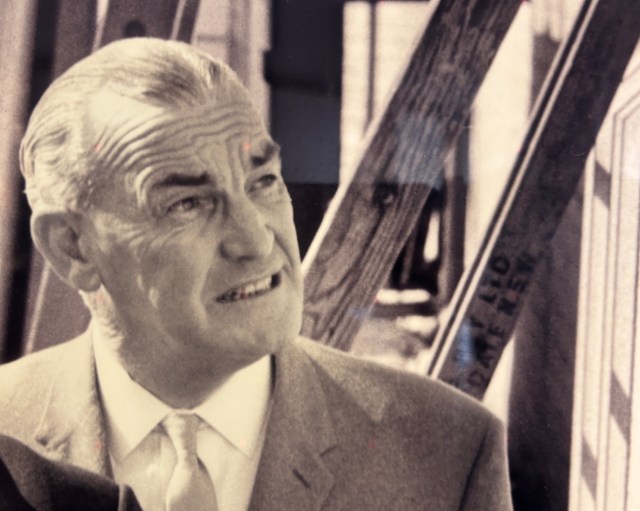
Over time, a new prime minister was chosen in Australia and he was at odds with Utzen because of significant delays. There was much angst and controversy.
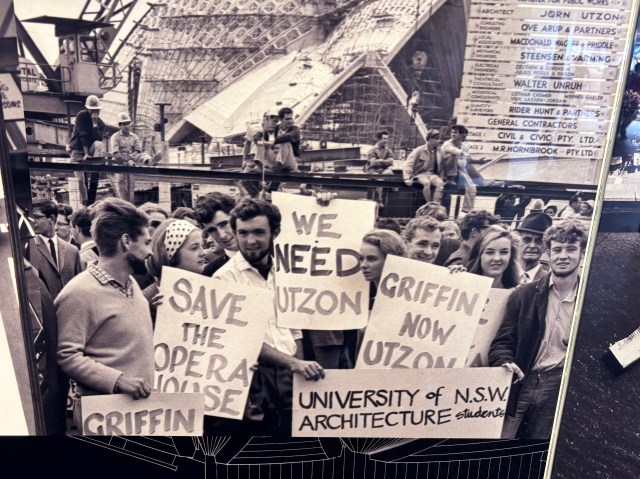
Eventually, Utzen felt he could not continue and quit the project. Sydney Opera House architect John Utzen never saw the finished building.
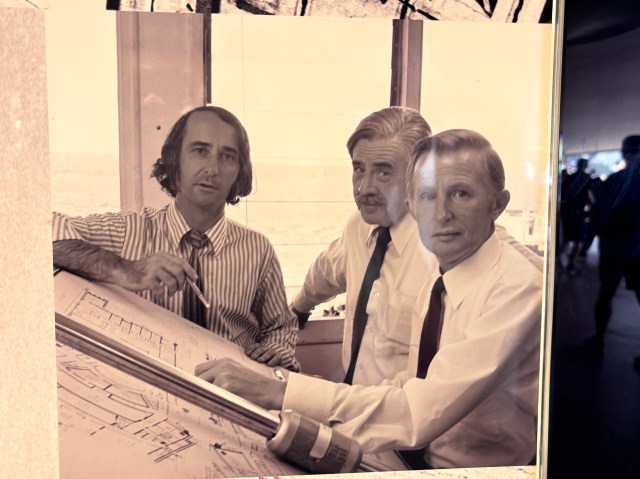
Three Australian architects, led by Peter Hall on the left, took over the job of building Sydney’s Opera House. While making some necessary changes, they did their best to stay true to Utzen’s design. One example concerned Utzen’s desire to have the lobby areas open to the harbor for breezes and views.
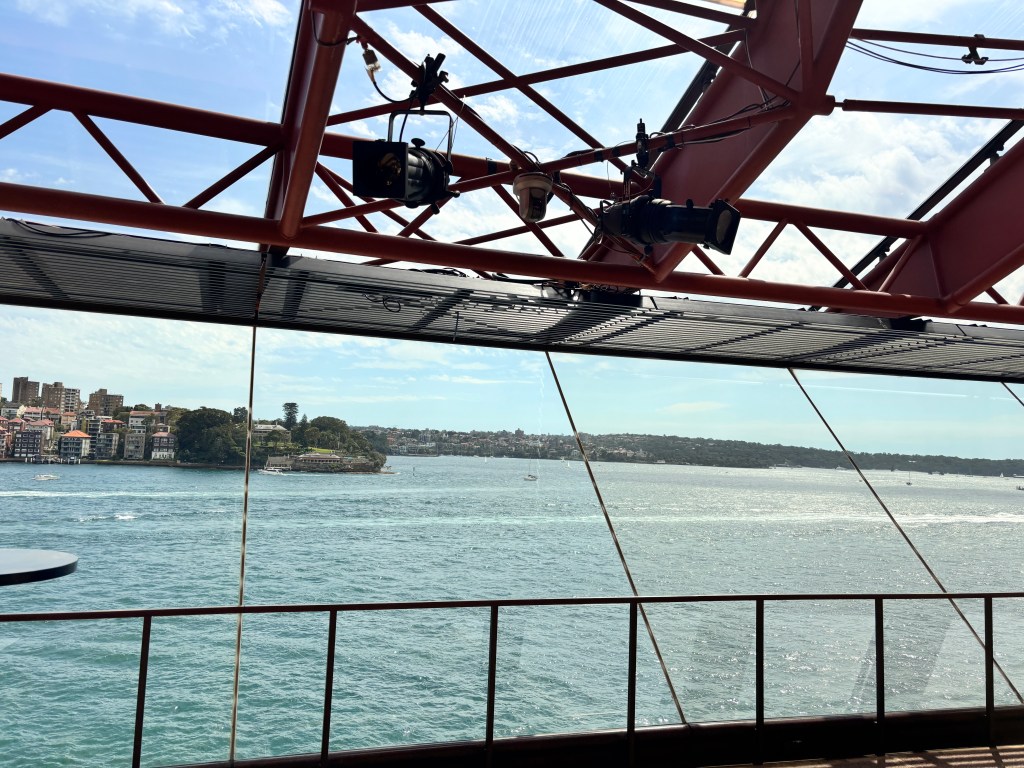

Instead of being open, glass windows were installed for the feel of the design but also to be more protected. The glass was engineered, in France, so that there are no reflections visible from the inside as one looks out towards the harbor, even at night.
The glass for the windows was one of only two types of building materials to come from outside of Australia.
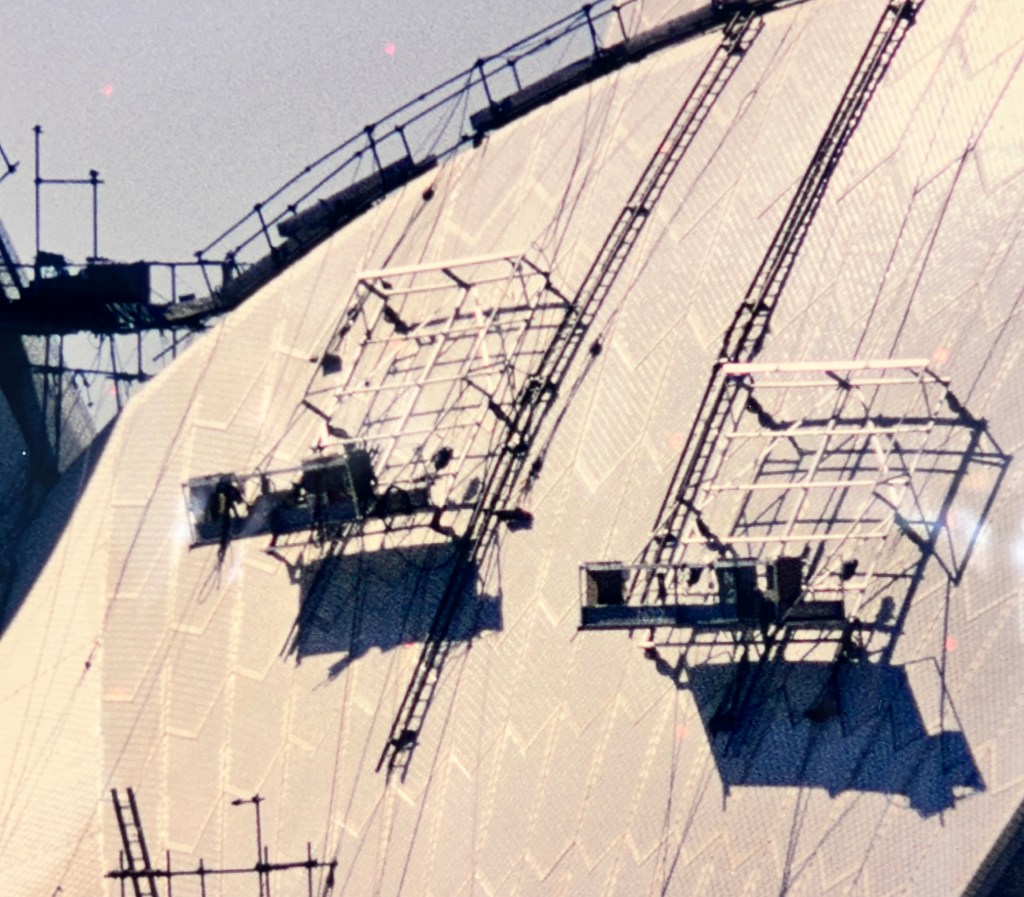
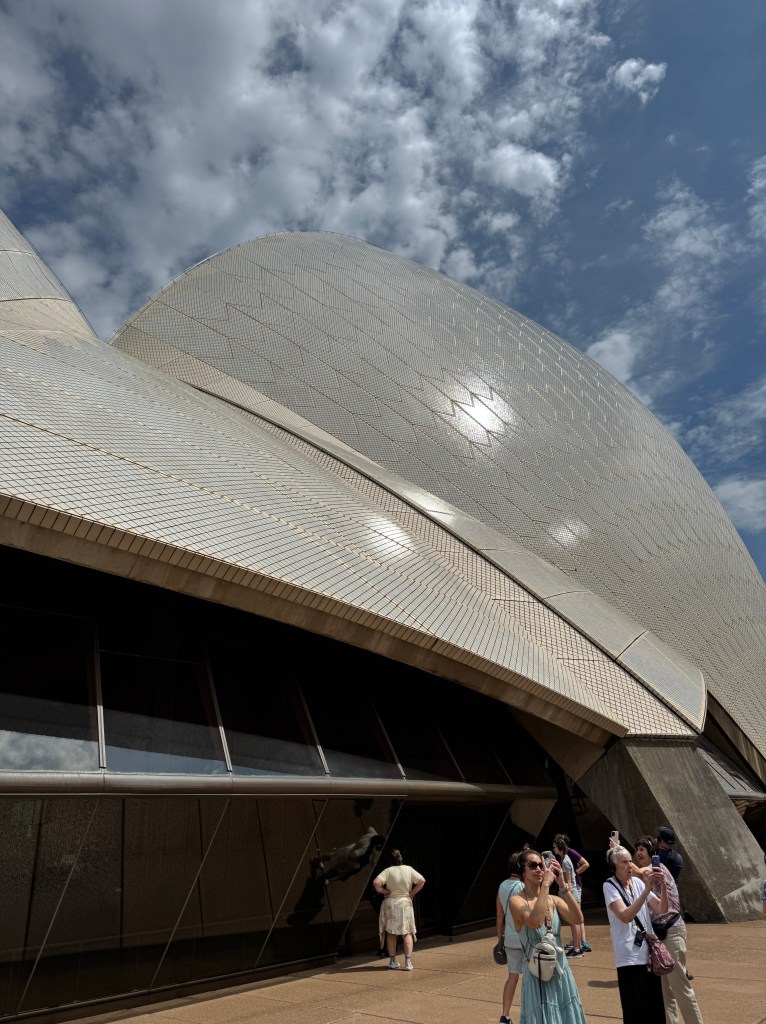
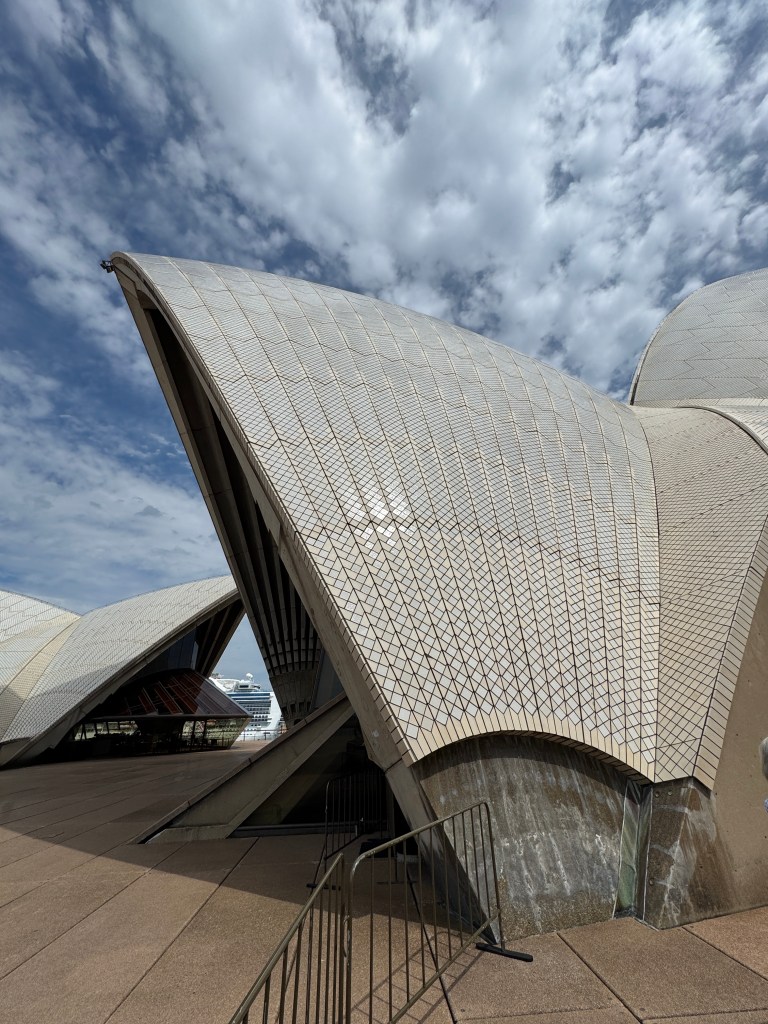
The others were 1,000,000 tiles from Sweden to cover the opera house shells. The texture on the shells helps to disperse the sun’s rays. The tiles are also self cleaning.
(The tiles are checked every five years and only five percent have ever been replaced after 56 years. Only 44 tiles were replaced during the last check.)
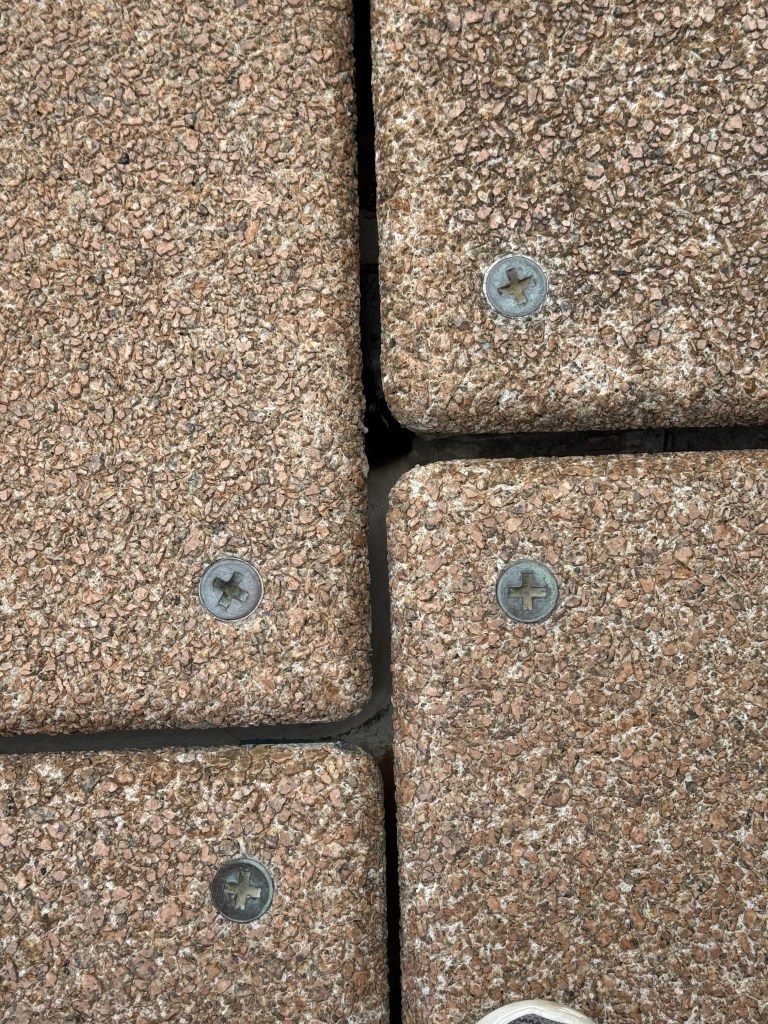
The walkways between the shells are covered in stones that are spaced to allow water to flow through the stones into an under structure water dispersement system.

Even though the shells on the Opera House appear white in photos, there are really a combination of white and off white tiles.
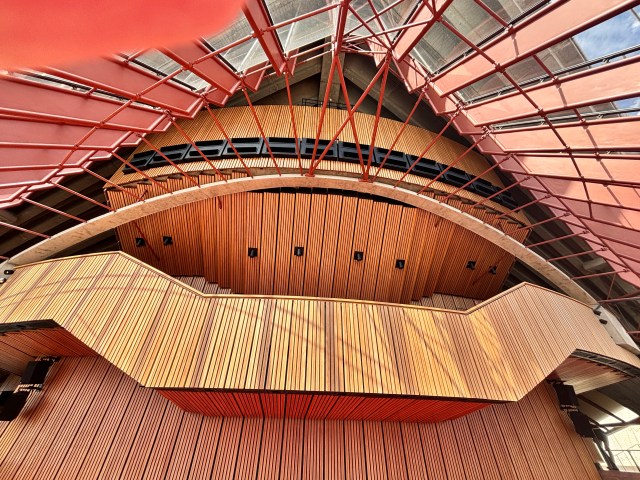
Interior work on the Opera House began in 1967. Completion took 16 years and was funded by an Australian lottery.
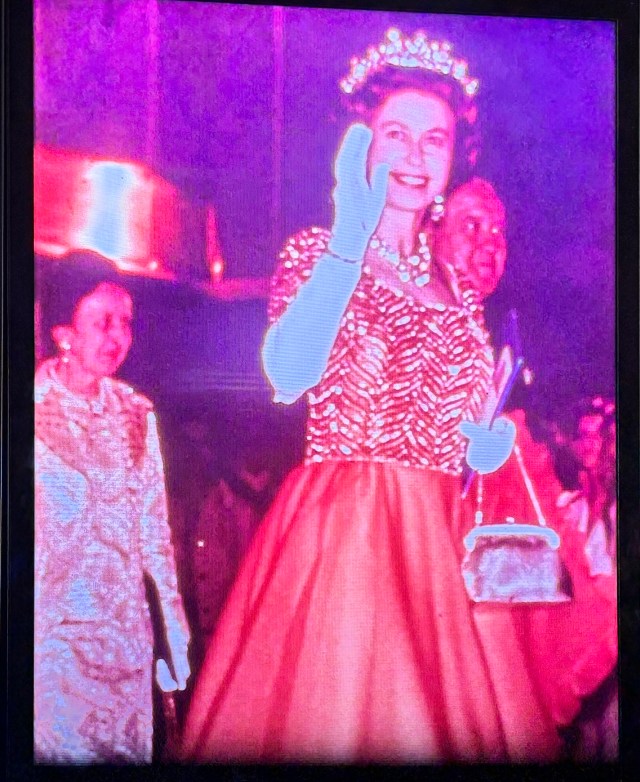
Queen Elizabeth II was present for the Opera House opening in 1973.
There are seven performance venues in the house and we went into the two largest. We could only take pictures in the largest, the Concert Hall.
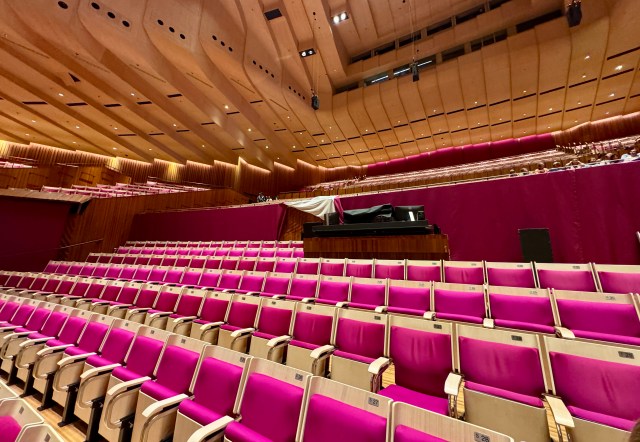
This hall seats almost 2700 people and can be used for amplified or acoustic performances.

The paddles create a false ceiling for acoustics when needed.
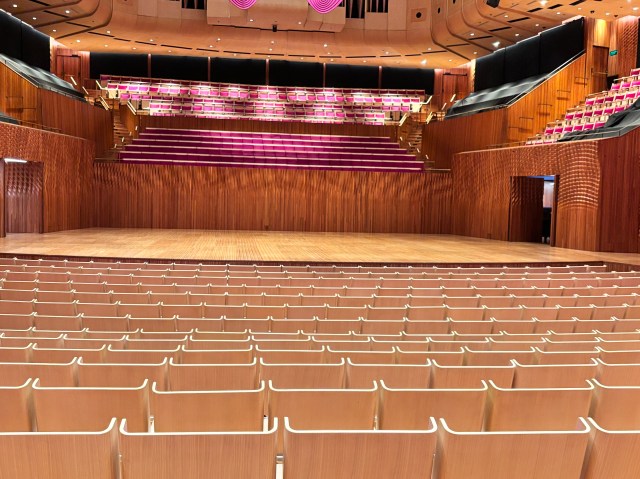
The stage can be modified with elevation as needed.

The hall holds one of the largest and most complex organs in the world with 10,000 tubes. It is played in performance about five times a year.

The Sydney Symphony Orchestra is just one of the resident groups that use this venue.
The second largest theatre, was set up for an Opera Australia performance later in the day. There is no amplification of voice or instruments in that venue. A combination of Australian hardwoods and softwoods create perfect acoustics. Because it was prepared for performance, we were not allowed to take pictures
Our guide had promised us a better ending to the Utzen architect story at the end of the tour and he delivered. In the 1990s, the Sydney Opera House attempted to re-engage with Utzen. He was, understandably, very reluctant to do so.
Eventually, Utzen and his son were hired to produce a set of guiding architectural principles that will hold indefinitely for the Opera House.
Before he died, Utzen was awarded the Pritzker award, architecture’s highest honor, for his work on the Sydney Opera House. He also lived to see it be declared a UNESCO World Heritage Site in 2007.
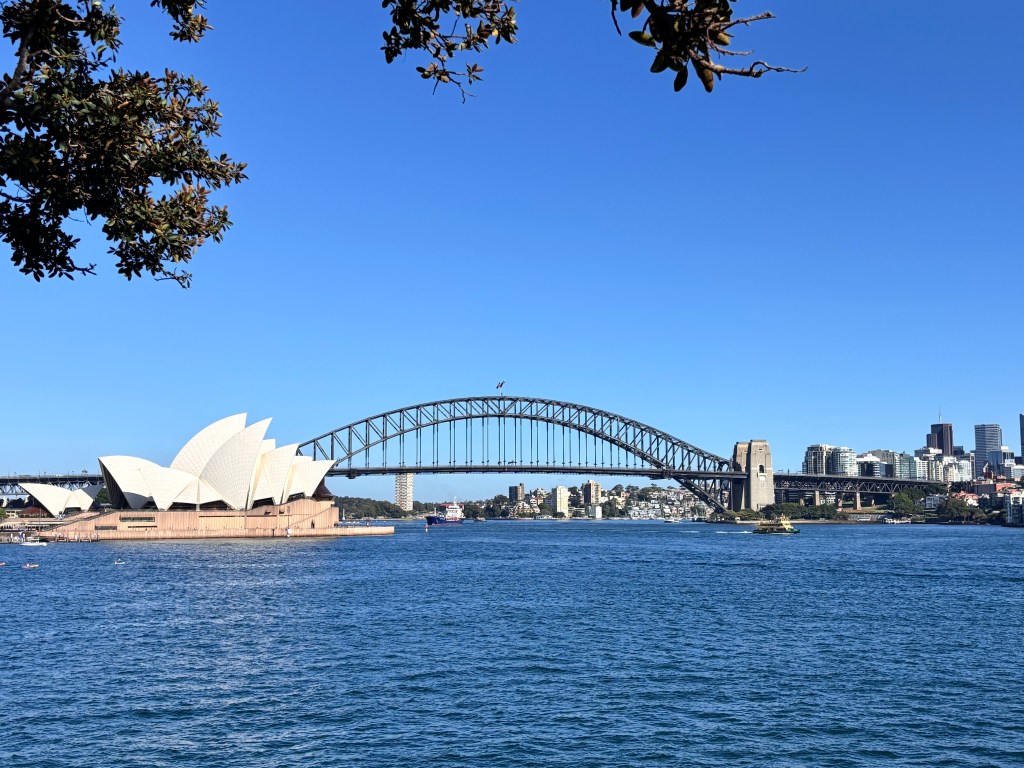
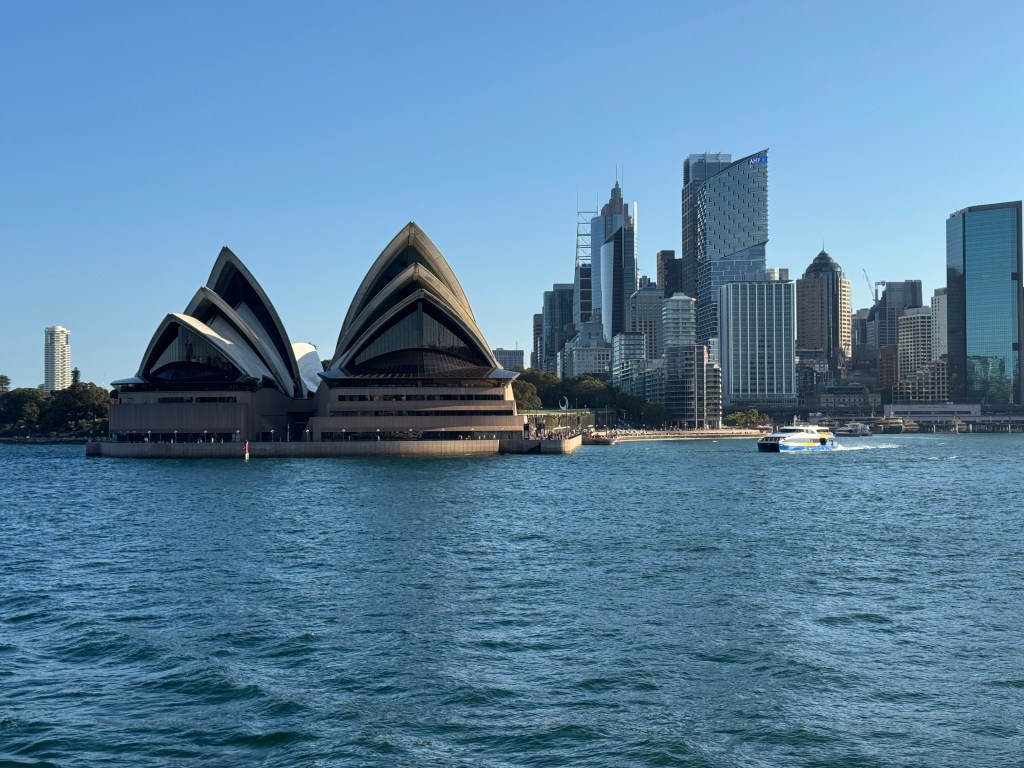
The Sydney Opera House is one of the most recognizable buildings in the world. Eleven million people visit each year between concerts and tours. It is the most visited tourist site in Australia.
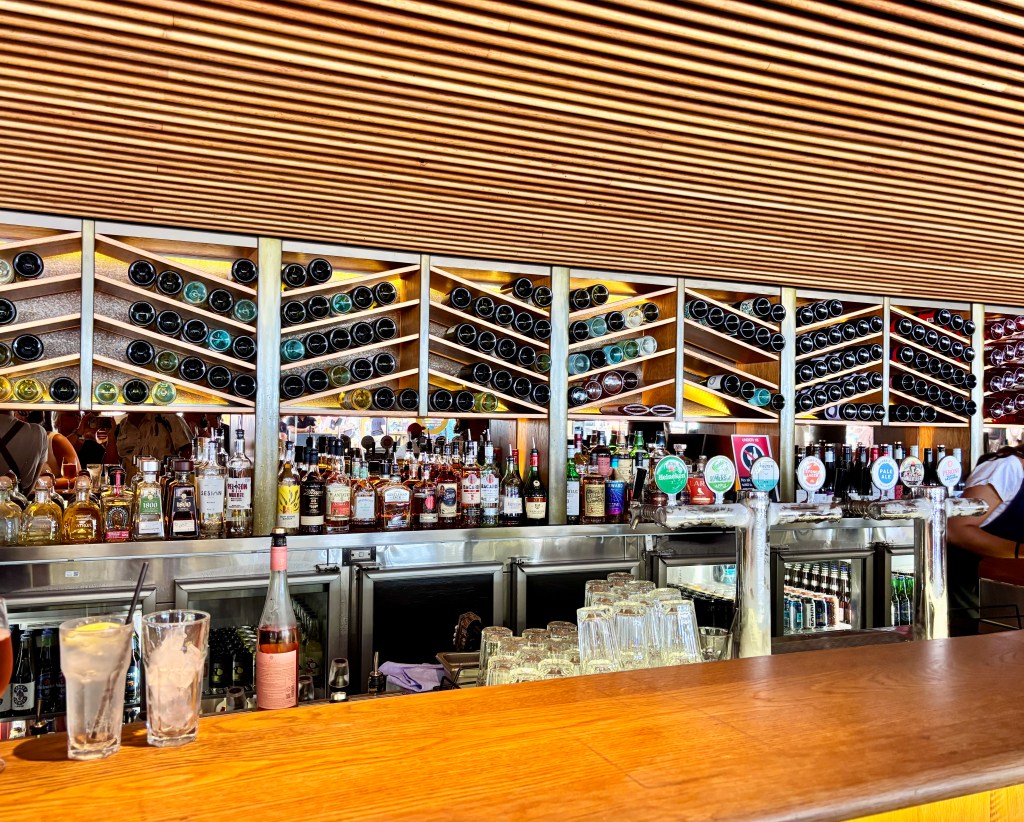

After our tour, we had drinks at the Opera Bar, a recommended activity.

We had a Henny Tea and a coconut margarita. Fortunately, Randy was willing to drink the Henny Tea. One trial sip was enough for me.
During our time at the Opera Bar, we spoke for quite awhile with a Brit who has lived in Sydney for many years. We spoke about Sydney’s high housing costs and her recent move. We spoke about Sydney’s legal prostitution and the fact that there is no controversy about it. She said there is much more controversy about the large cruise ships! Our time with her was informative and pleasant.
We got back on the light rail to get closer to the meeting point of our next activity, a food tour of Barangaroo and the Rocks.
Barangaroo is an area of Sydney named for the second wife of Bennelong from the picture shown earlier. She didn’t acquiesce to the British rulers very much and is a revered person in aboriginal history.
Our specific tour was operated by a non-profit group who has worked to help refugees, immigrants and other marginalized groups. As such, some of the restaurants we visited have been part of that supportive work.

Our first food was lobster tacos. I had mine vegetarian style with cauliflower instead of lobster. They were very good.
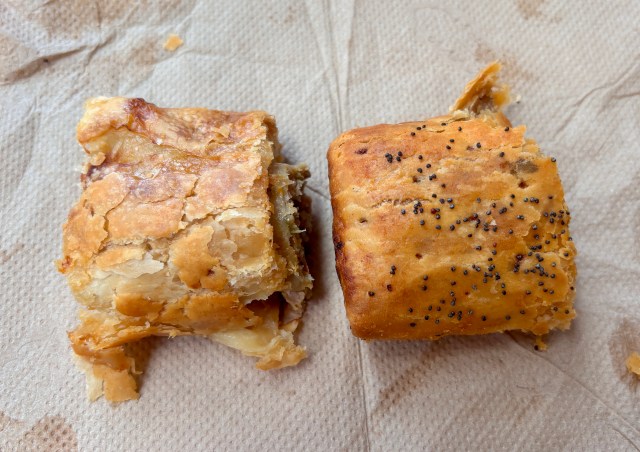
The second sampling were sausage rolls from one of Sydney’s oldest bakeries. That was followed by gelato. We ate our gelato cones without a picture.


Of course, along the way we learned more about the area we were visiting. This tunnel was built by British convicts long ago. Their hand chiseling through the tunnel is still evident.

This is a presentation about Francis Greenway, an architect that got into some trouble for shenanigans in London. He came to Australia as a convict and eventually designed many of Australia’s most important buildings.
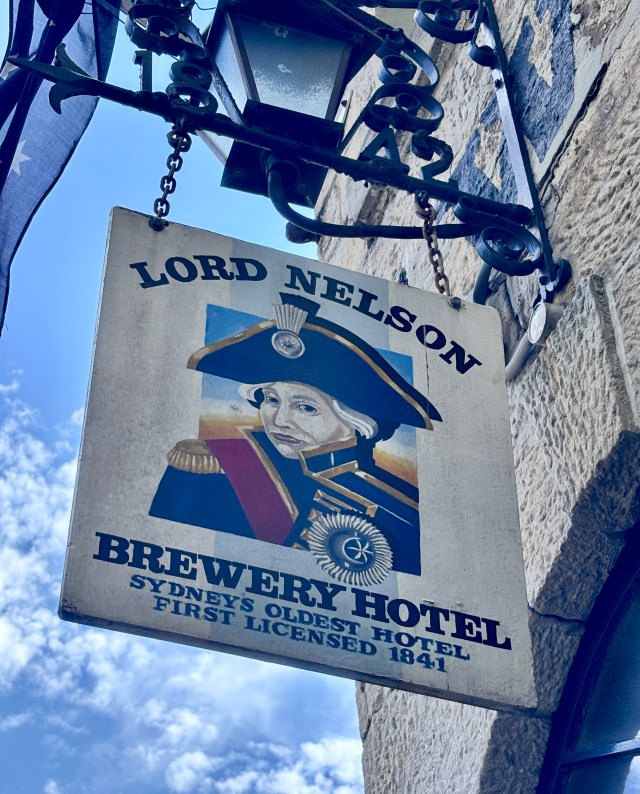
Our next stop was the Lord Nelson Brewery Hotel- one of three breweries who claim the title of the oldest in Sydney. This is the oldest continuously licensed brewery
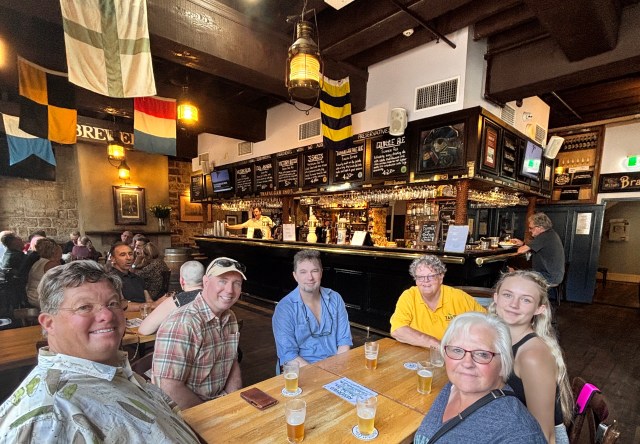
We had a very pleasant group for our tour – five Americans with a Brit turned Australian as our guide. One was an lawyer from Iowa on business. Two were a father and daughter from Florida. They were in Sydney to move her to town to begin veterinary school.
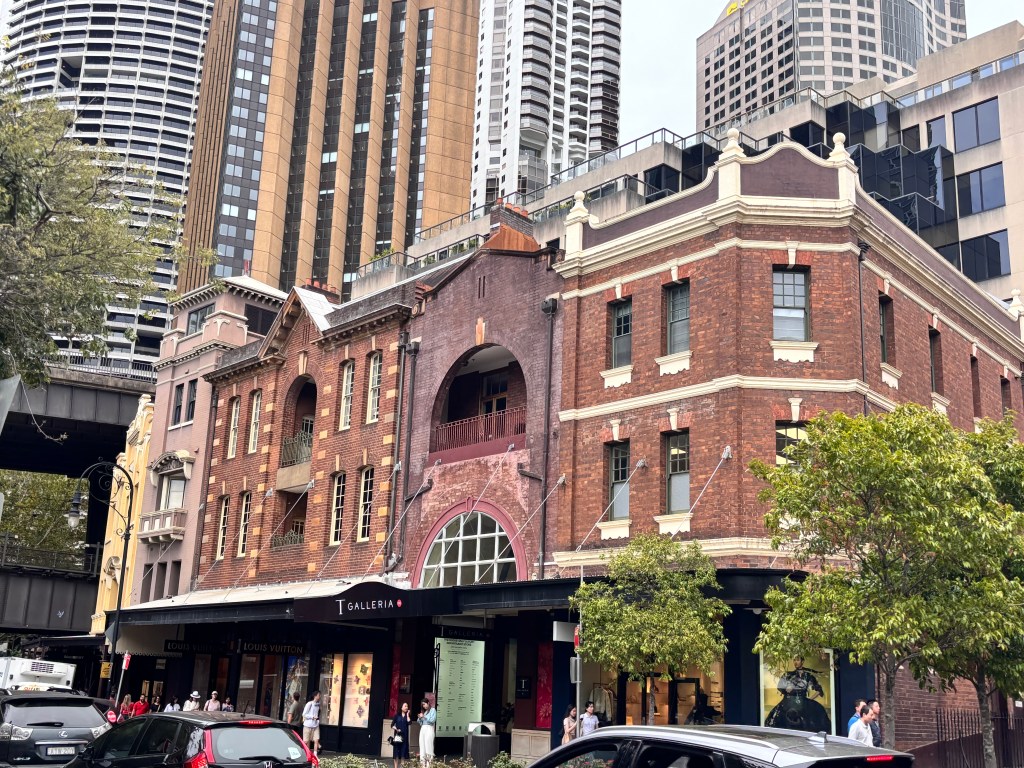

The last part of our excursion took us into The Rocks, the oldest part of Sydney.
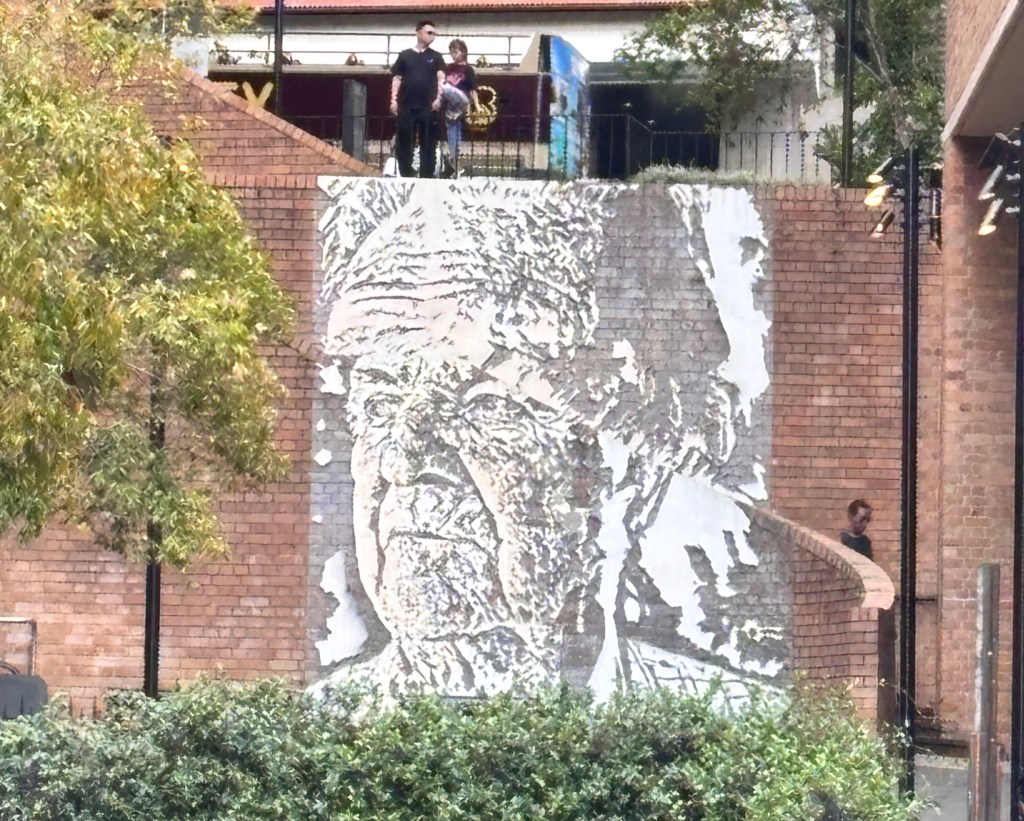
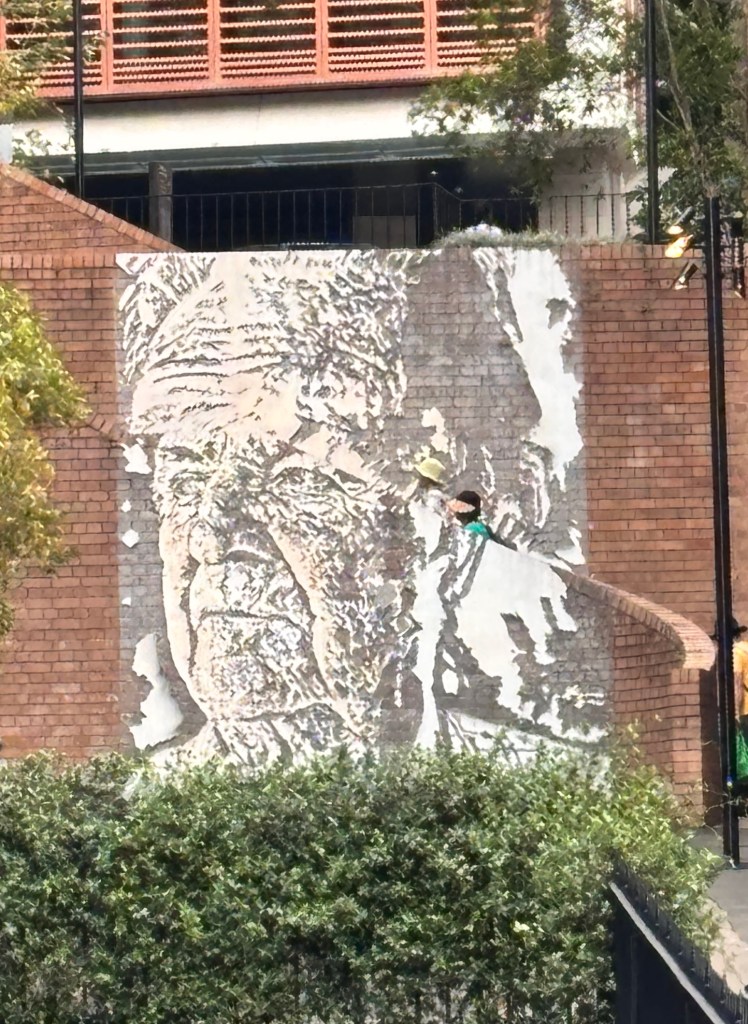
This man is Jack Mundy, a union leader who was instrumental in not letting The Rocks succumb to progress which would have taken away the past. Our guide considered him a hero. From a distance, you don’t see the stairway coming down above his forehead – unless someone is walking there!
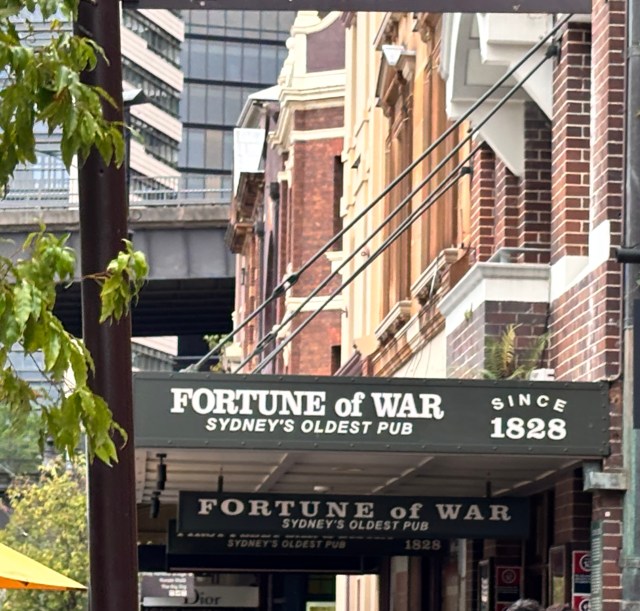
We didn’t stop at one of the other oldest pubs in Sydney, but we saw it!
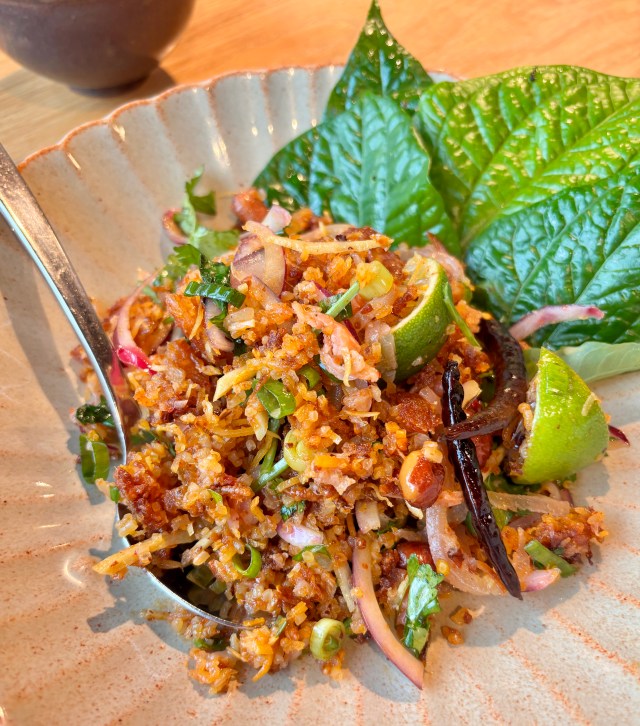
Our final stop was one of Sydney’s original Thai restaurants. Thai food is the most popular “take away” meal. We ate in the restaurant and had a new to us dish, spicy crisp rice with pork. It was really good!
It was a delightful day from start to finish!
Next Up: Our last tour, on our last day in Australia.


 Serene Wandering