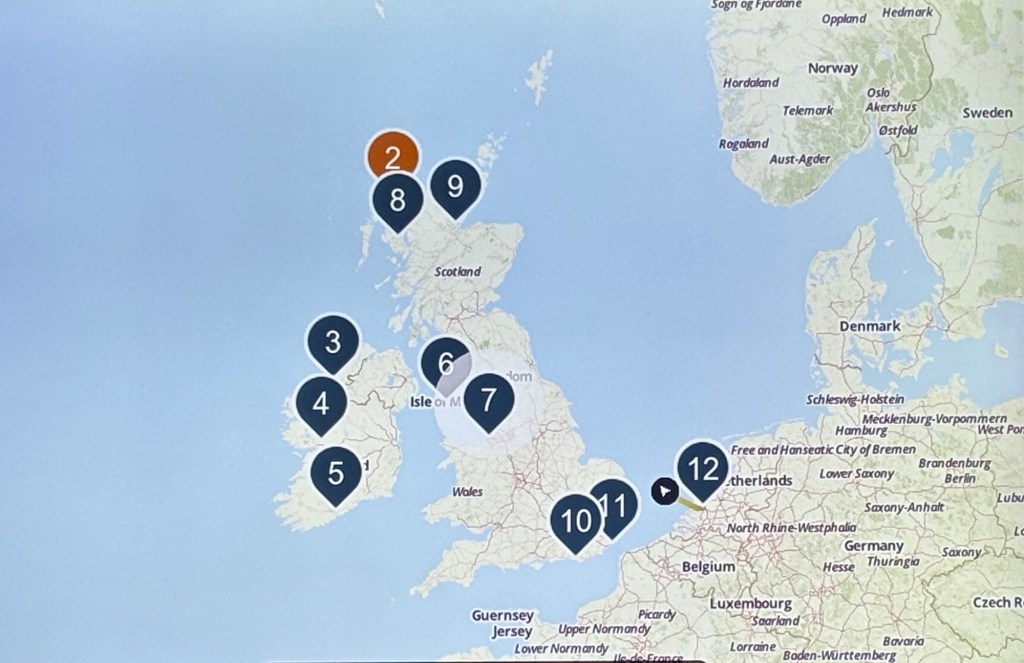
We started this cruise where we will end it, in Rotterdam, shown at #12. We had a sea day through the North Sea enroute to the Isle of Lewis, north of the Scottish mainland, depicted by #2.
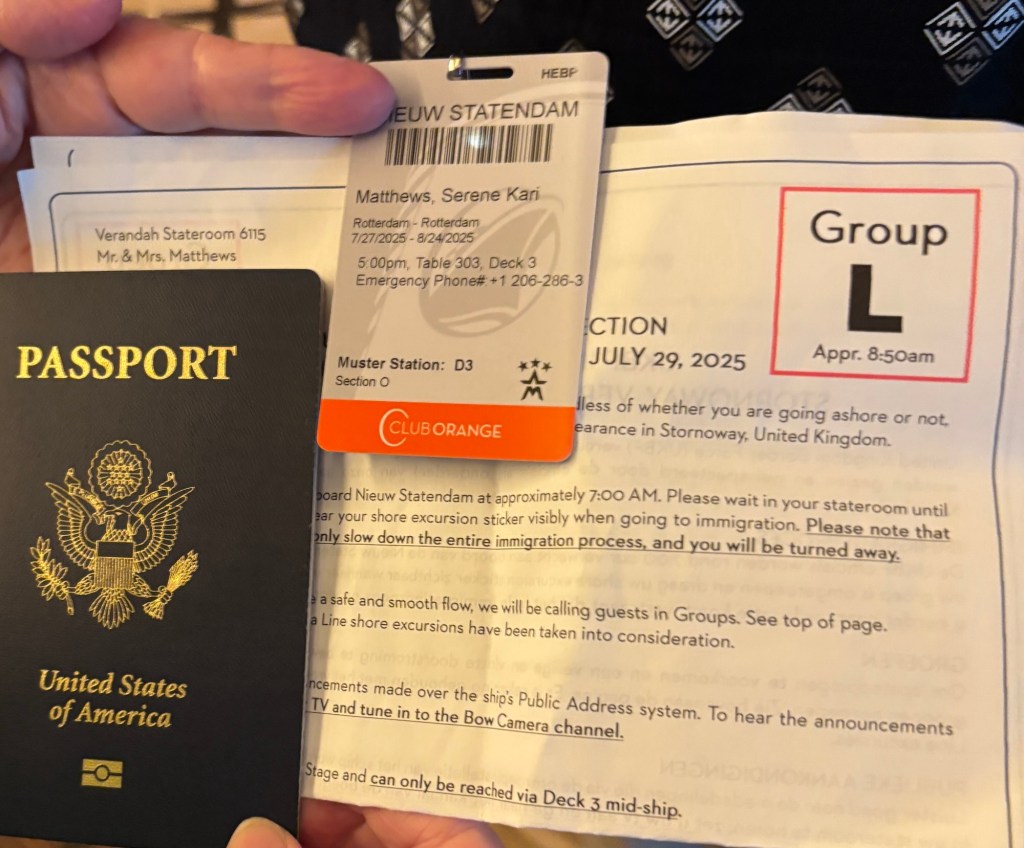
We received instructions about the immigration process for Scotland and Ireland. The process was specific and different for those holding European or non-European passports. On the day we arrived, July 29, we had to wait for our group to be called and proceed. Our group was determined by our shore excursion.
All the passengers on the ship had to meet face to face with an immigration officer, even if you did not have an excursion. Our next step was to surrender our passports to ship personnel so immigration officials could view them at any time. Our passports would be returned when we left Ireland. (I do not know if the crew had any/all of the same requirements. I assume that their passports are already held by ship personnel.)
Our ship docked at Stornaway, on the Isle of Lewis. The town has had a deep water port for only two years. That allows passengers to walk off the ship instead of “tender” from anchor. Lewis, and our destination, Harris, are in the remote Hebridean islands.
Most island residents work for the local government in services and infrastructure. Medical workers are the second largest group. Some work off shore in the oil industries. Tourism is growing but has a short season.
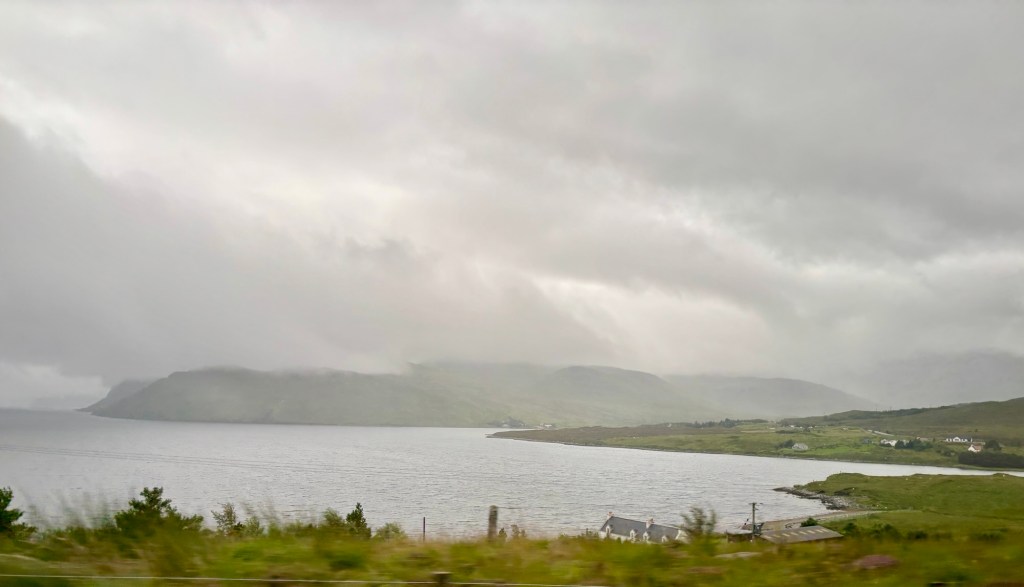
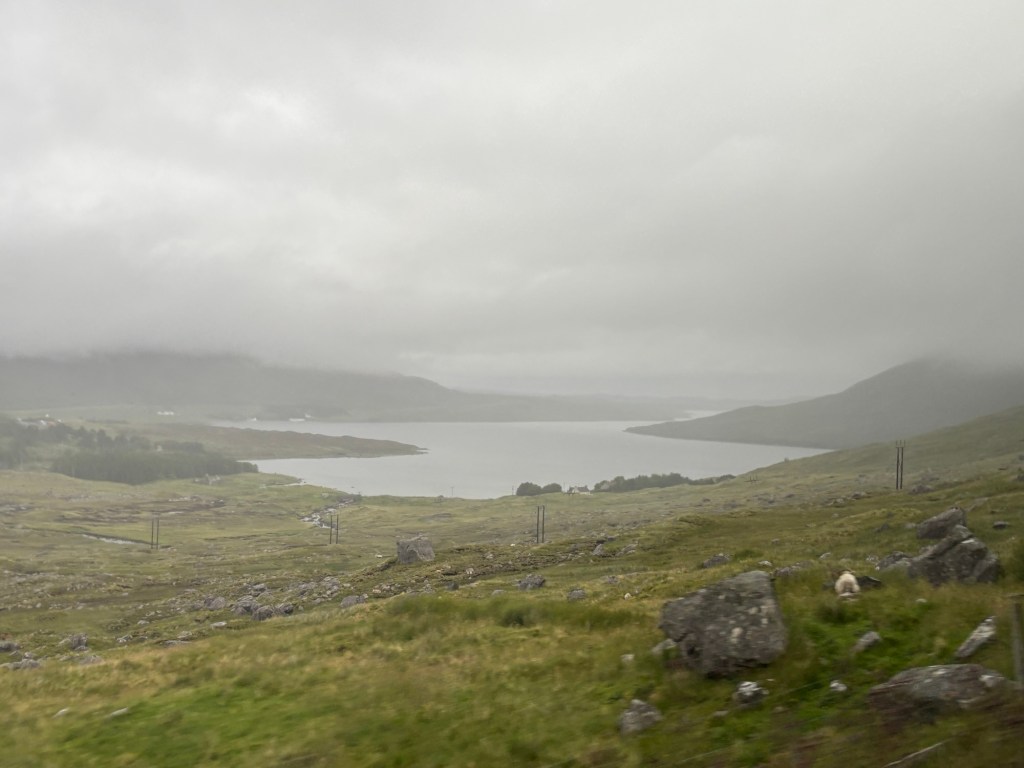
These pictures are summer in northern Scotland.
Ninety-three pieces of the famous “Lewis chess set” were found on the island in 1931. Most were purchased by the British Museum shortly thereafter. The game pieces came from at least four chess sets and other games. The pieces were probably made in Norway in the late 12th or early 13th century.

One of the three known missing pieces was found in Edinburgh during the Covid pandemic. I vaguely remember hearing about that and researching the Lewis chess set at that time. It was nice to put a place to the memory.
There may be some unclear geologic or geographic separation between the Isle of Lewis and the Isle of Harris but we never crossed a bridge or waterway. When I asked the guide about it, I was told it technically IS the same island – kind of. The bus driver from one, and the tour guide from the other, put on quite the good natured show of being from separate entities.
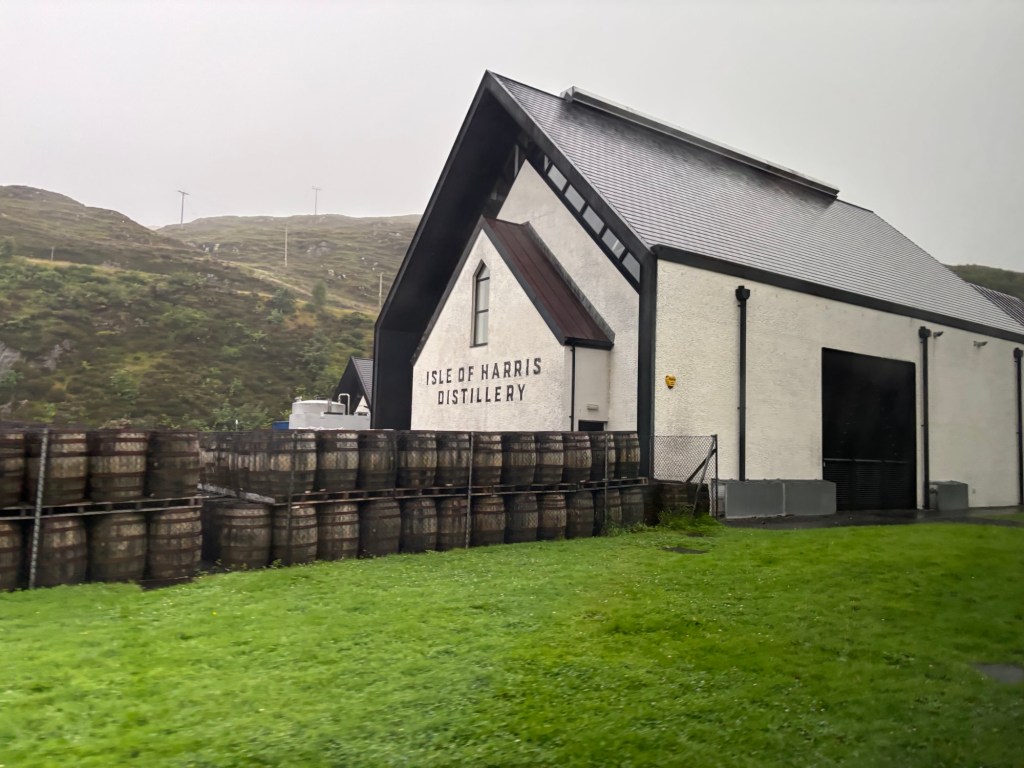
Our tour went from Lewis to Harris to visit the Isle of Harris Distillery. In a long history of illegal distilling, this distillery was the first legal one ever built on the island.
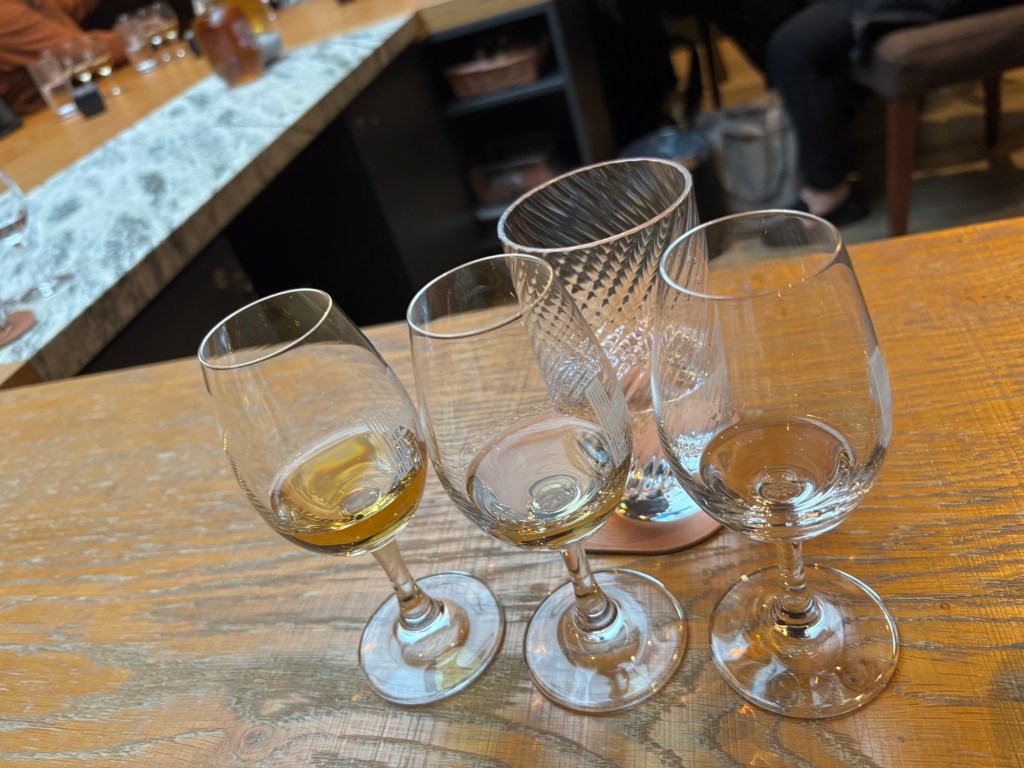
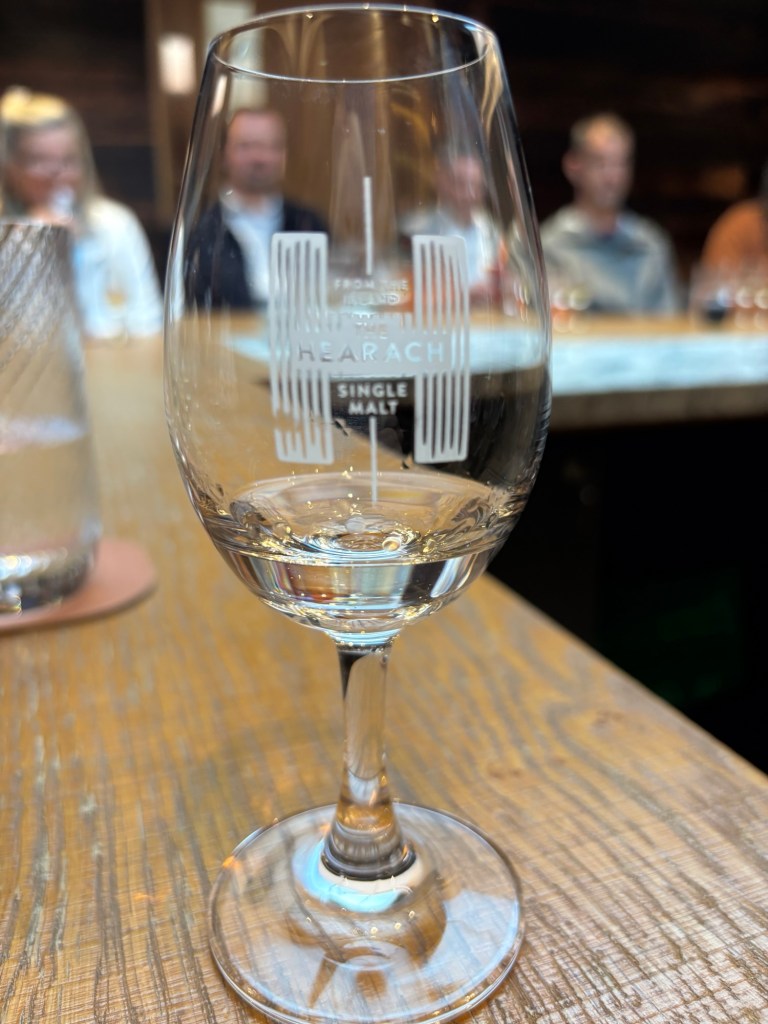
We had a tasting and behind-the-scenes tour and learned how whiskey and gin are each made.
Our first tasting was of something that was 65% alcohol. It was comparable to bad moonshine and pretty awful! Although I’m not sure, I think this was the whiskey before it was improved, processed, and aged.
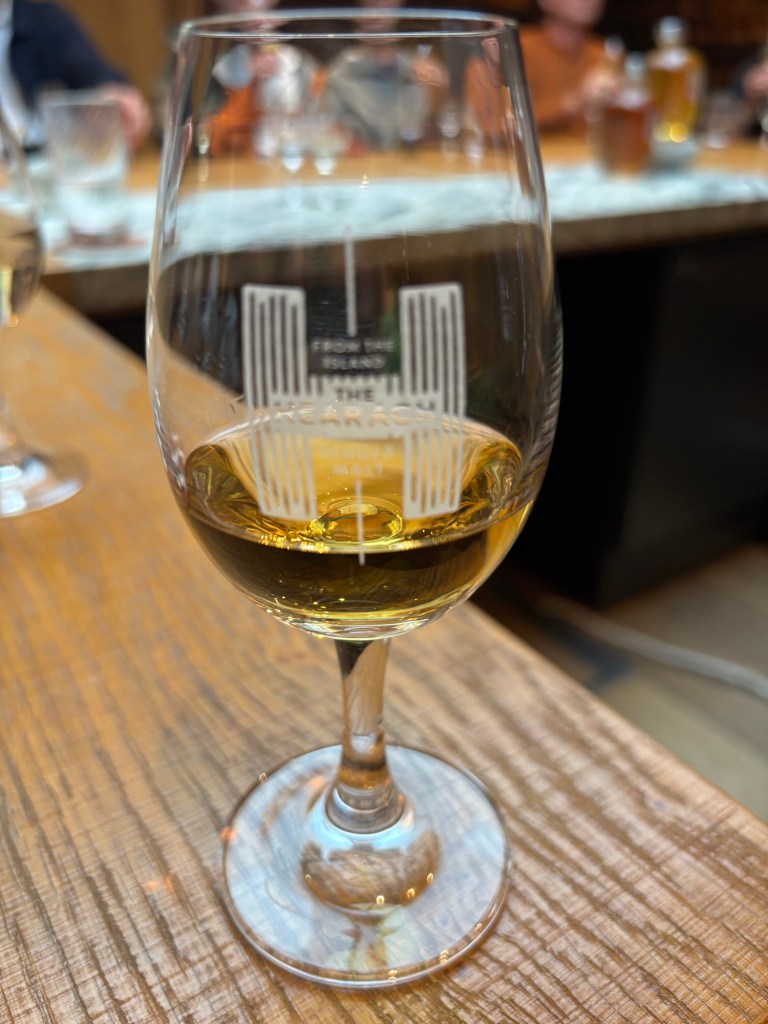
Our second and third tastings were Scotch whiskey, the two types this distillery produces. The difference in color and taste have to do with the cask, or barrel, in which the whiskey ages. It must age for a minimum of three years.

The lighter color whiskey utilizes former bourbon barrels from the United States. The barrels can be used only once for bourbon and are then sold to Scotland for whiskey.
(We were at this place on a day there were massive protests against Donald Trump being in Scotland. I wondered if this distillery will continue to have access to the barrels if Trump retaliates. Of course, all things are connected and if that happens, the distilleries in Kentucky will lose market for their used barrels.)
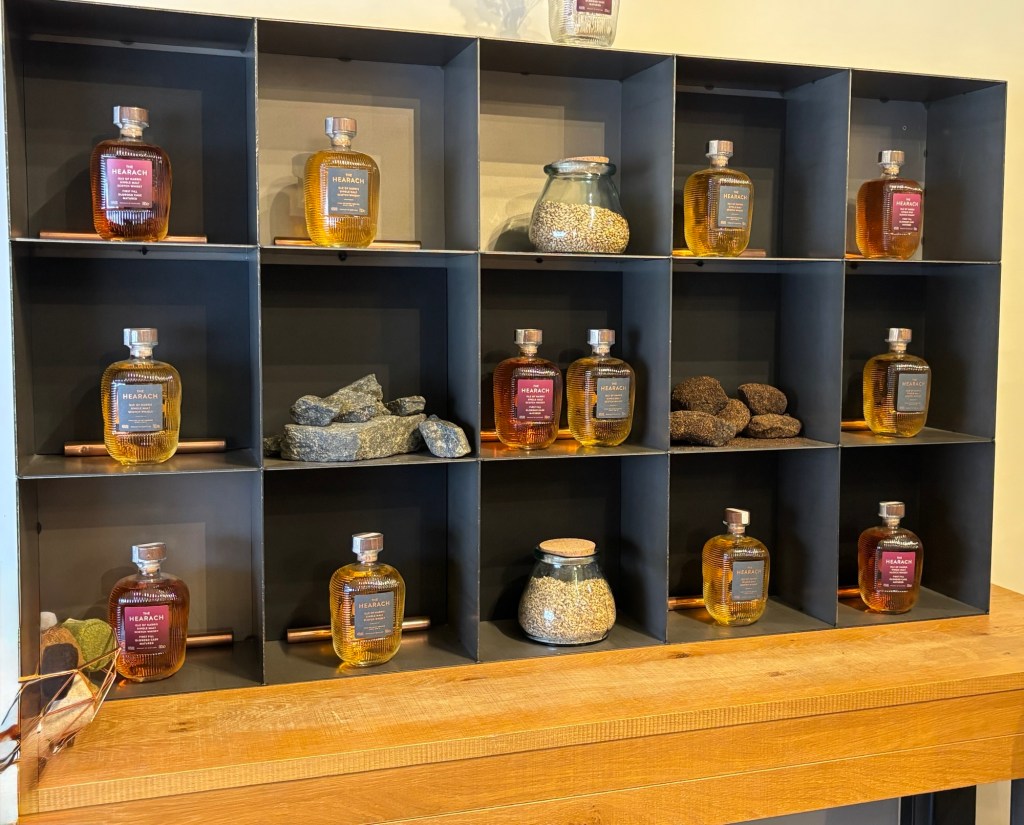
The darker colored whiskey sits for the same three years but in barrels from Spain that were last used making sherry.

We didn’t really like either whiskey, but the one from the sherry barrels was our preferred. It seemed a bit sweeter.
In Scotland, a person will add small amounts of water to fine tune the whiskey to individual taste. She had us try it and it did make a difference. They do not use ice.
The first time the cask is used for whiskey, it holds some of the flavor of either the bourbon or sherry. The second time this distillery uses the casks, the batch will have more of a whiskey base flavor. The casks are then sold again and not used in this distillery.
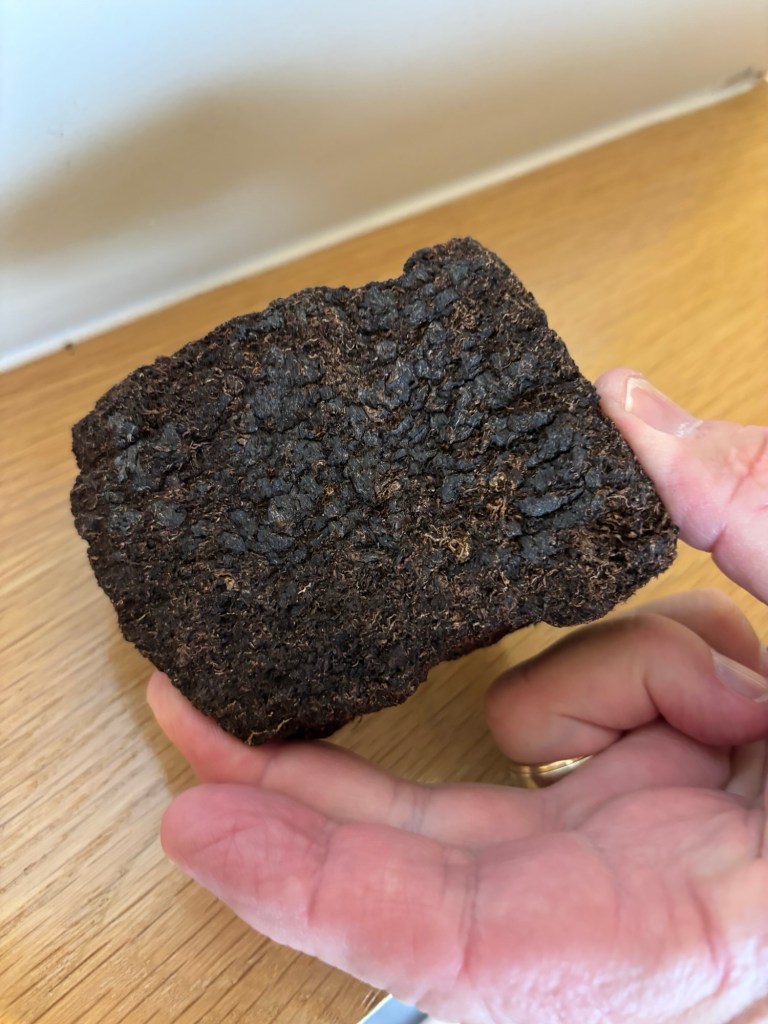
Cutting and burning peat was once a primary source of household heat in this area, but is no longer. However, peat is still used in drying hops which enhances the flavor of their whiskey.
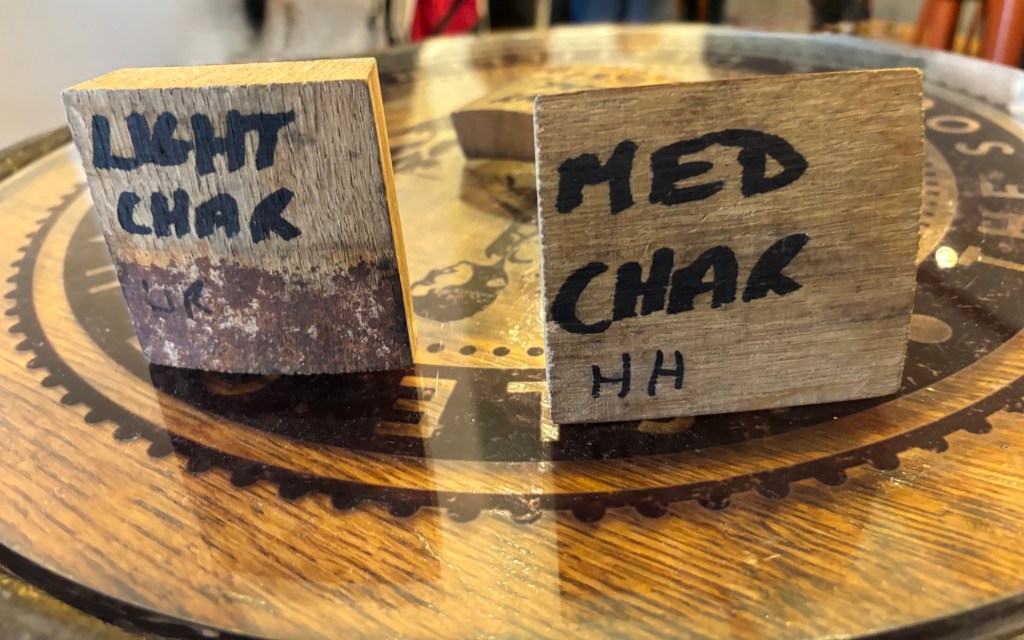
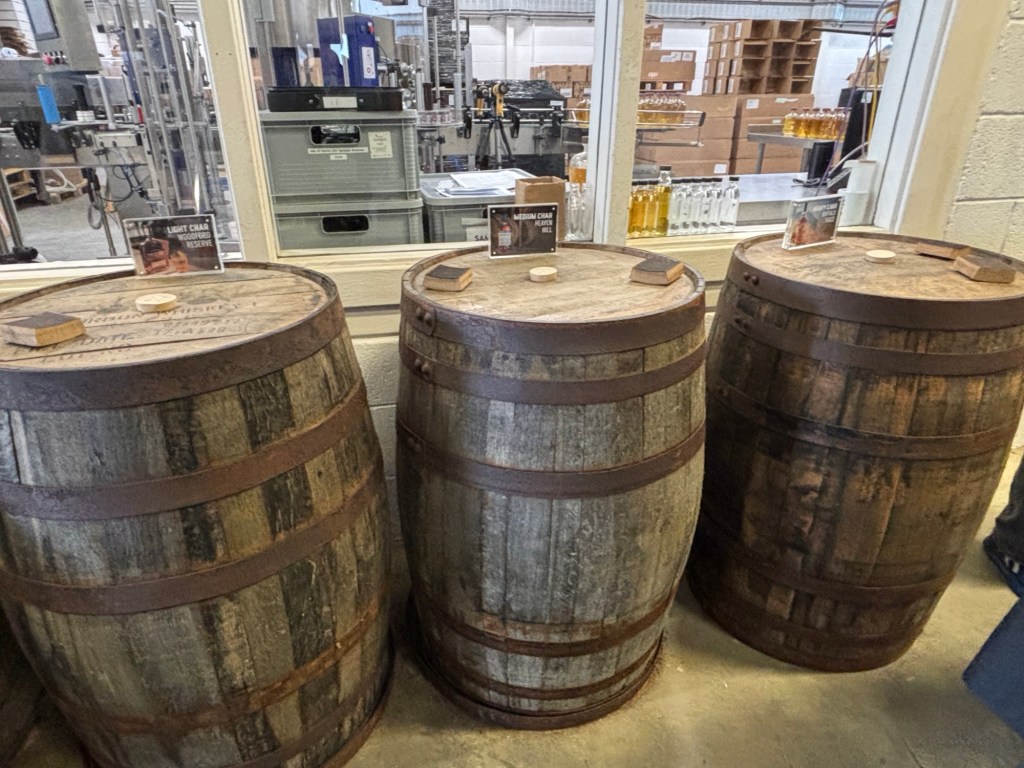
There is also a factor in whether the barrel has a light char or medium char when it was first prepared.
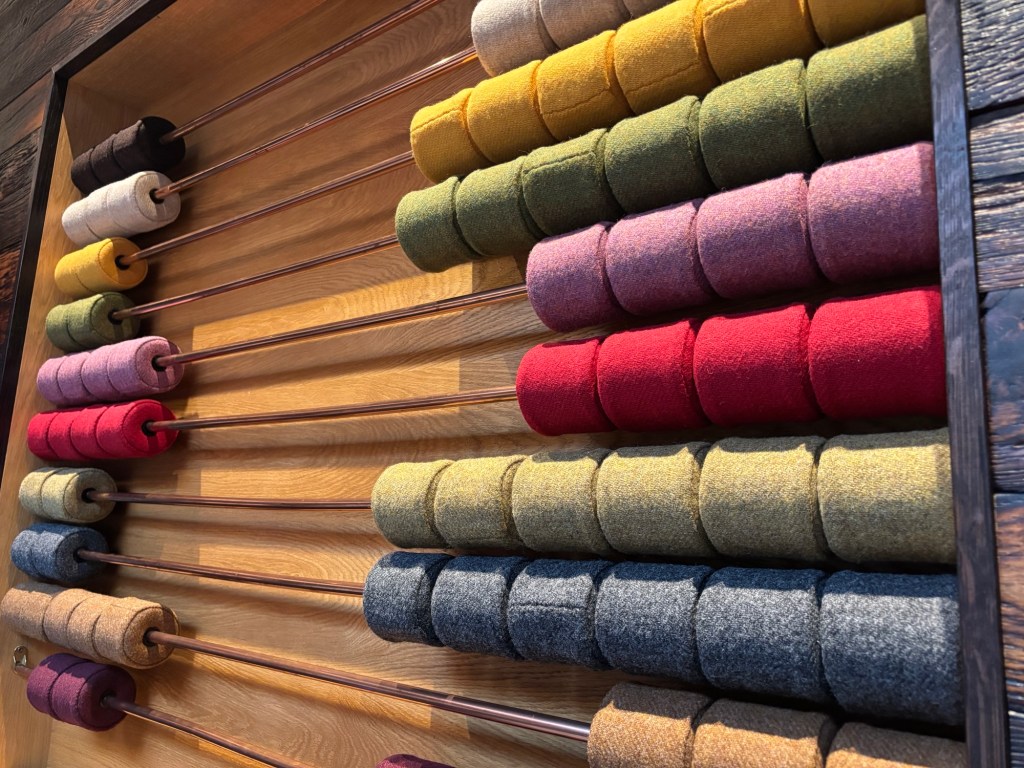
This whiskey flavor abacus allowed them to present a visual for the flavor differences between the whiskey aged in bourbon casks or sherry casks, in light char, or medium char casks, first or second use and other variables.
Our guide showed us the various steps in the process.
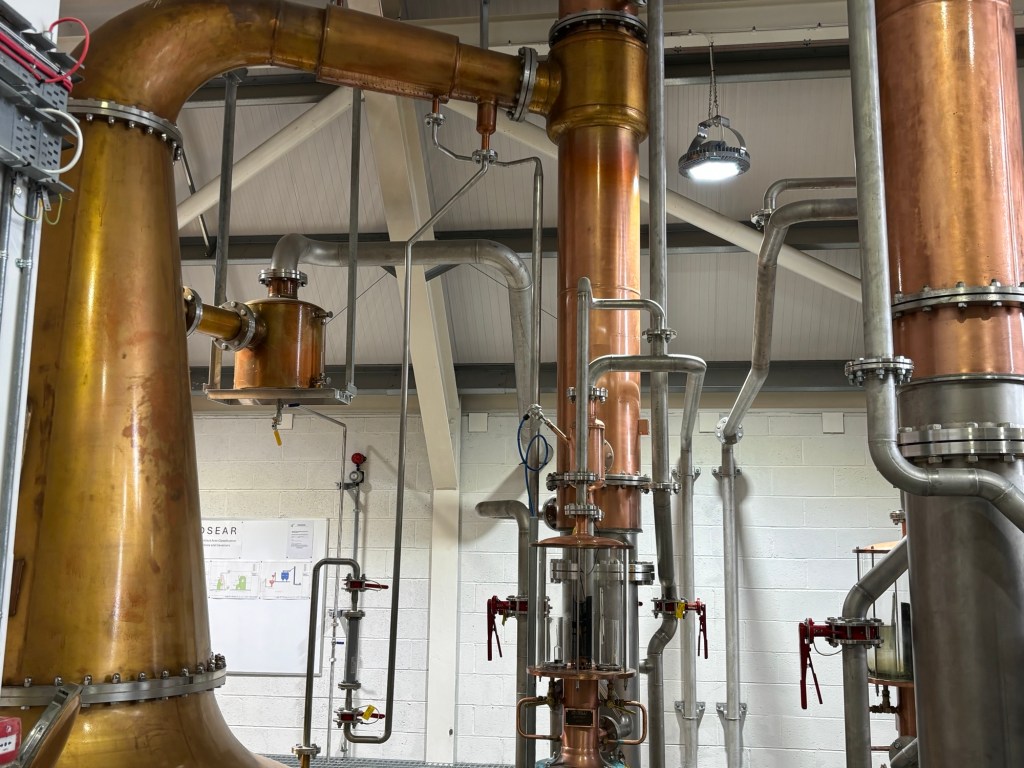
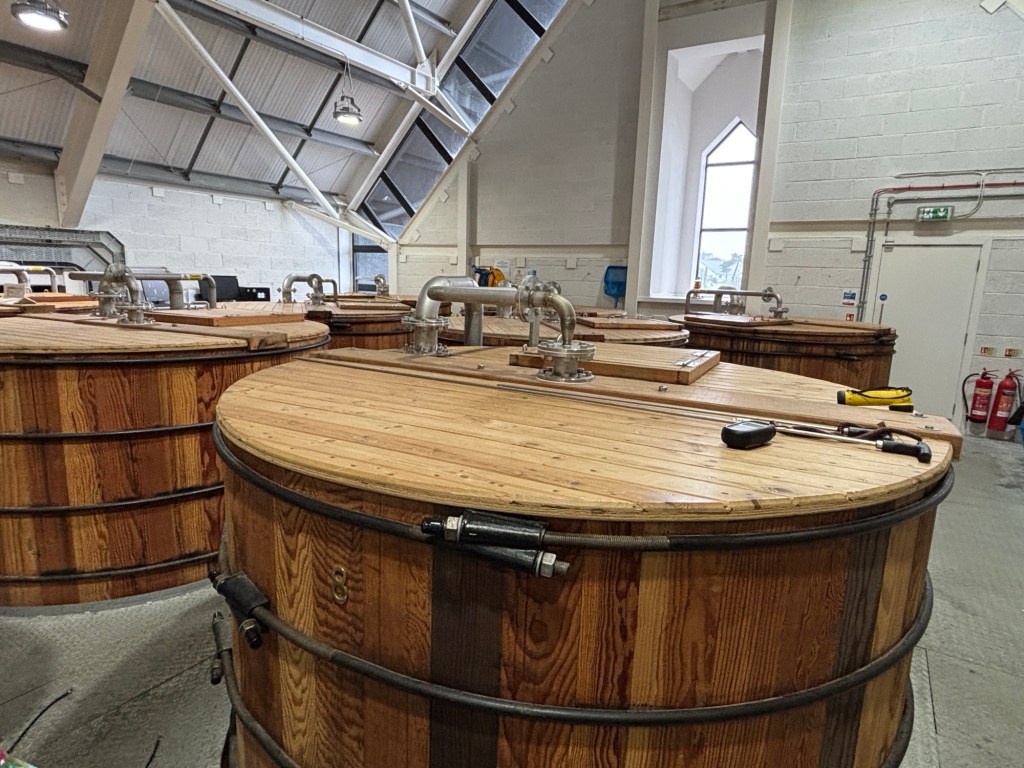
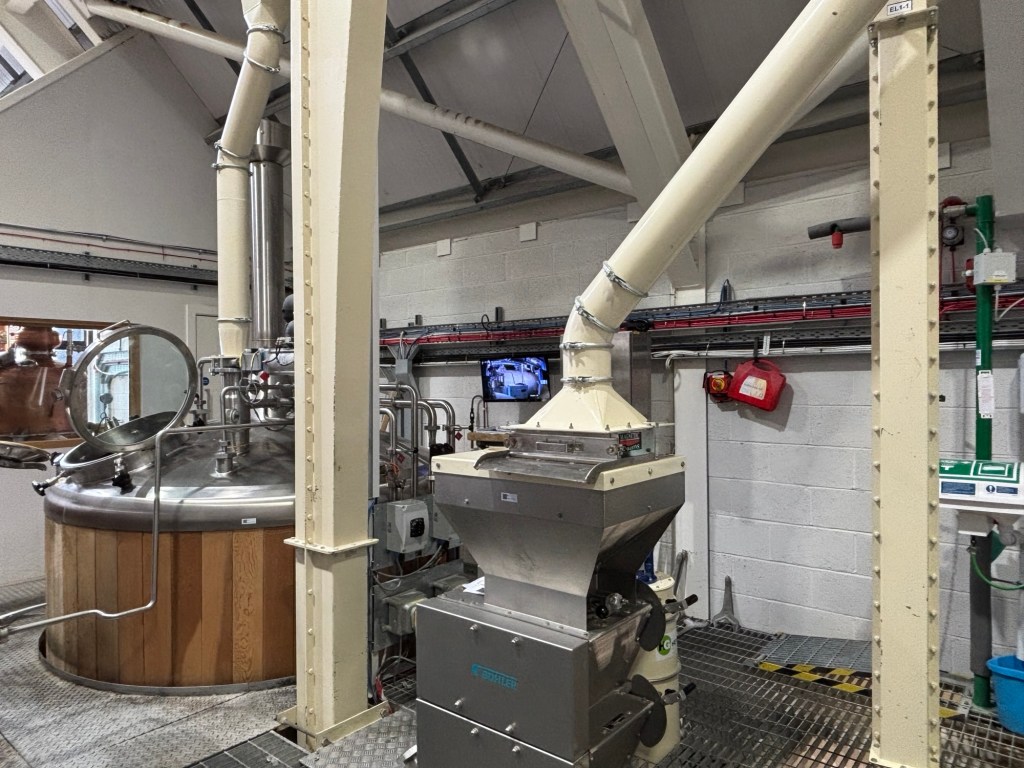
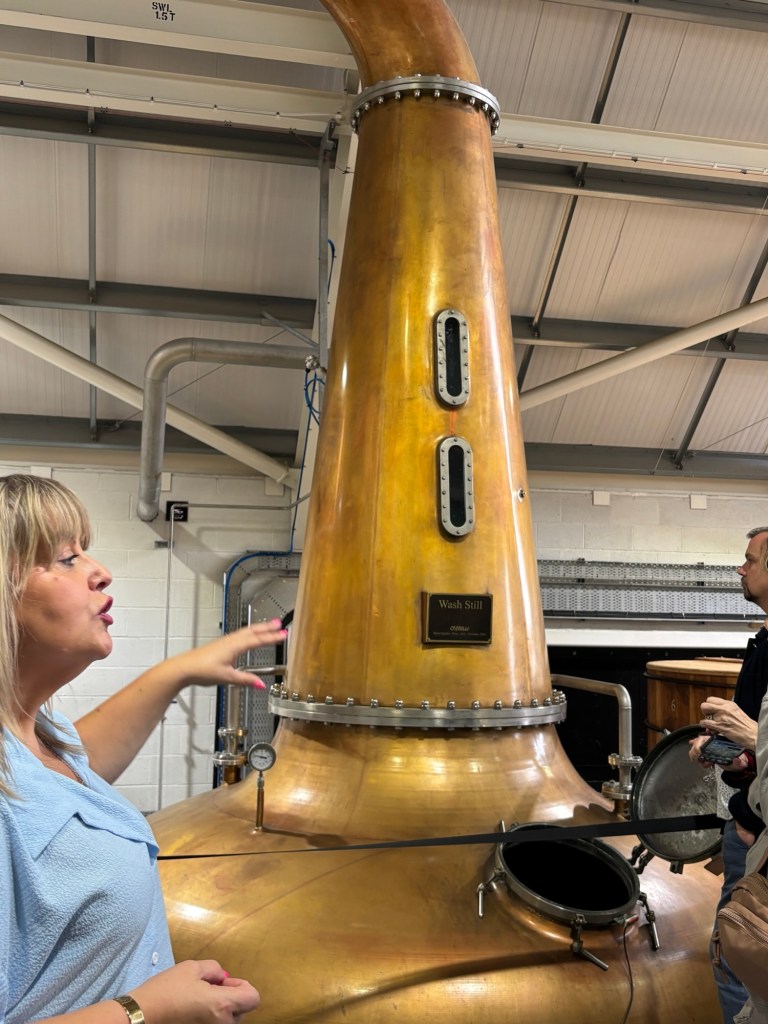
This distillery opened in 2015 but didn’t release their first whiskey until December 2023.

In the meantime, while waiting on their whiskey, they needed to stay afloat financially so began producing gin. Gin only needs to sit for 72 hours.

Local seaweed is used in making Harris gin.
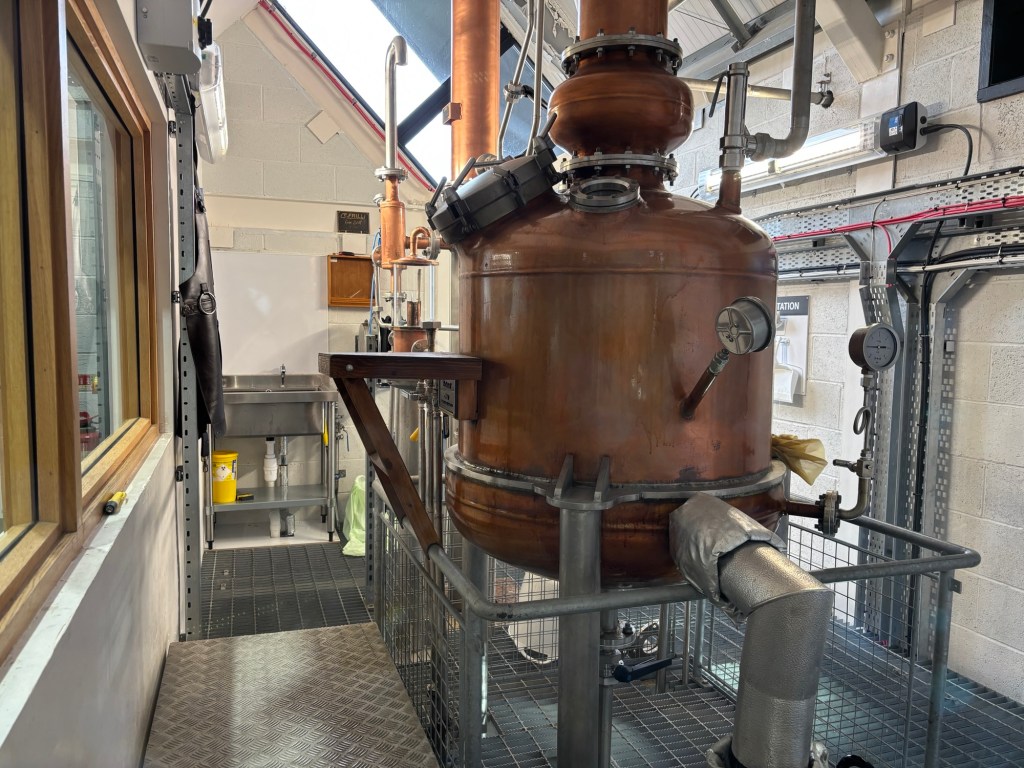
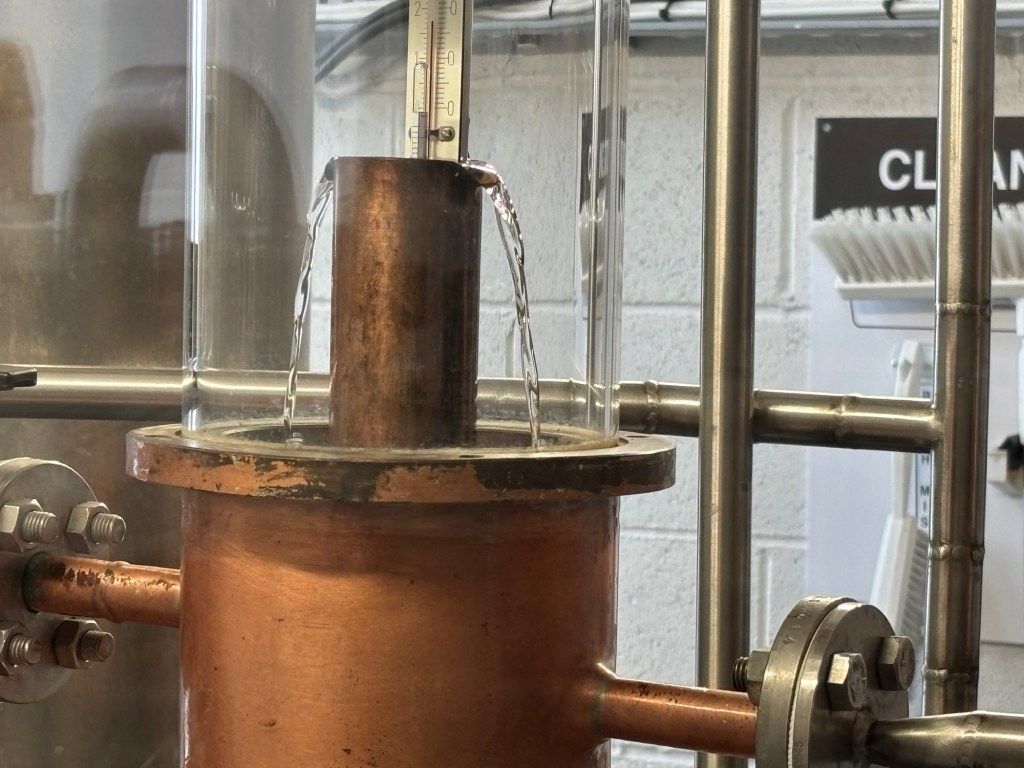
Again, we saw the machinery involved. The gin is just pouring out in the picture on the right.
Harris gin put the Isle of Harris Distillery on the world map, selling in 24 countries. Gin is the largest part of their business and is covering the company financially as whiskey consumption has declined worldwide. Whiskey is the largest export of Scotland.

To the credit of our guide, her information was fascinating- even to someone who didn’t like, know, or care about whiskey or gin.
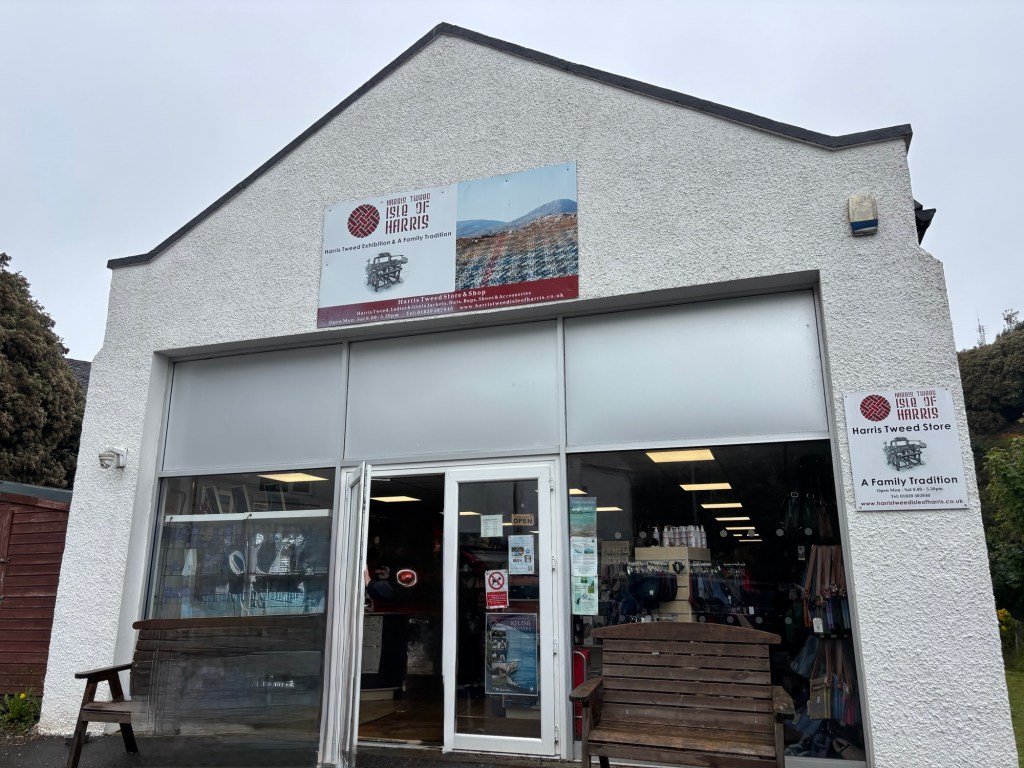
I was interested in this tour for the Harris Tweed, also a product of this island. We were supposed to spend time learning about and shopping for Harris tweed. When the distillery tour took most of our time, we only had twenty minutes to browse in the tweed shop.
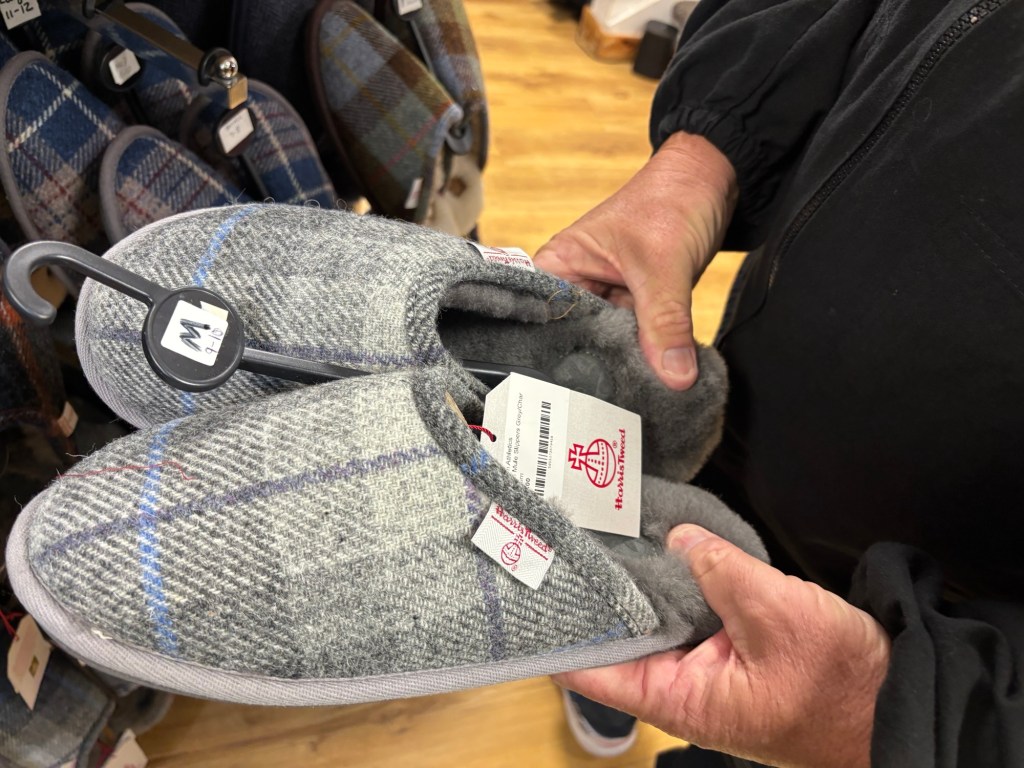
Randy bought some tweed slippers because he’d actually been thinking about a second pair. I bought a small case for my headphones. We live in the desert and already have more winter clothes than we need.
With no tour guide to explain it, I had to do my own limited research. Harris Tweed is known worldwide and originated in this small village.
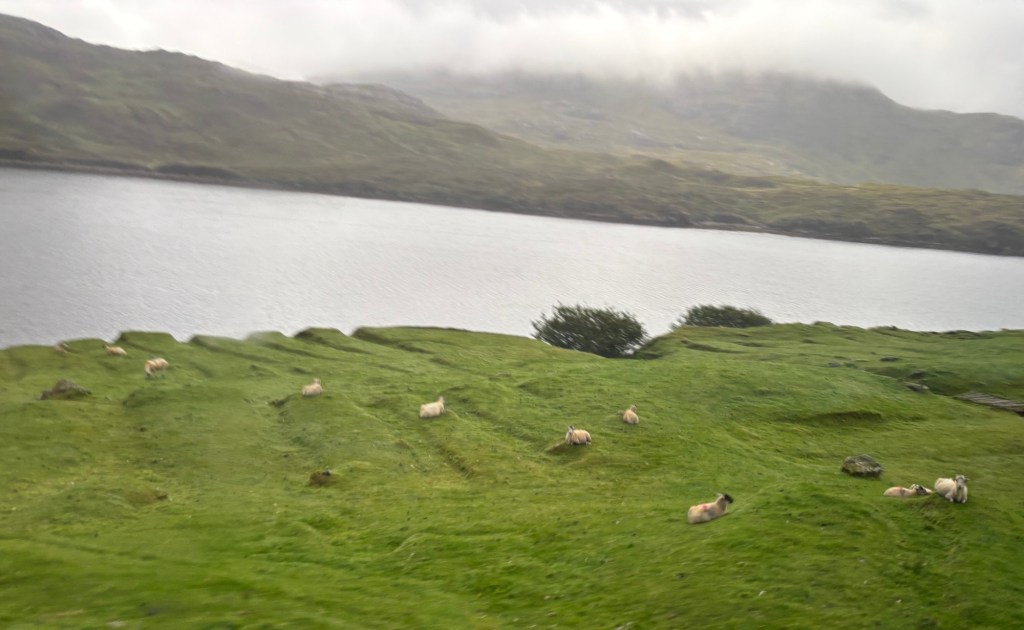
Historically, sheep were important as they could survive the harsh winters. They were kept for meat and in the summer they were sheared for wool.
Beginning in the 17th century, the local wool was made into a special cloth. In 1908, the fabric process was trademarked.

Harris Tweed is an iconic product but also an evolving industry. The desire for new products has changed the industry. Scotland is involved in producing cashmere because of the pure water. There is also growth in “smart textiles” for quick dry products and burn fabrics. The textile industry that started with tweed has changed and remained successful.Harri
In our visit to the shop, and seeing various tweeds around Scotland, we saw far more plaid than anything else.
Other random things we learned on our bus ride back to the ship:
The movie 2001 A Space Odyssey was shot on the barren landscape of eastern Harris.
Peter May wrote The Blockhouse Trilogy while on the Isle of Lewis and, in negotiations, has insisted that any future movie adaption be filmed on the island.
Up next: We go to our first port in Ireland!


 Serene Wandering
We like to take tours even if we don’t use the product. When we toured the Harley Davidson factor they went around and asked each participant what they rode. We replied “Ford F-350” and were the only ones on the tour that didn’t have a Harley! But we enjoyed seeing how they were made. Too bad you didn’t get more time in the Tweed factory. Enjoying your cruise(s)!