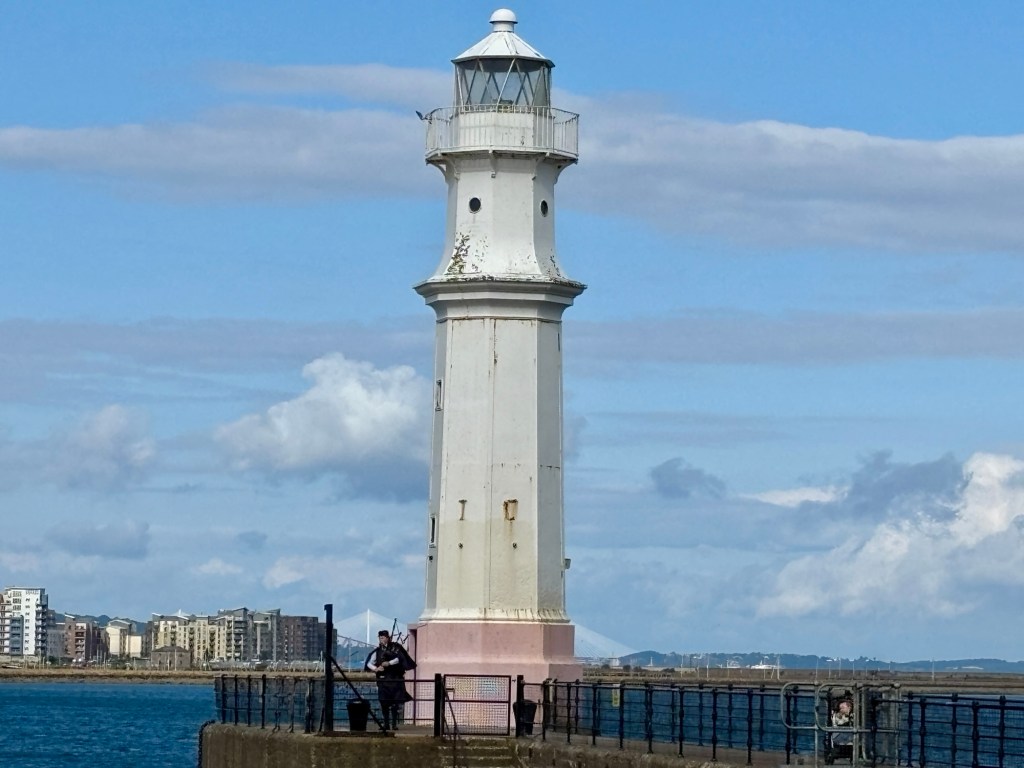
As we arrived in Edinburgh by tender on August 7, we were greeted by a lone bagpipe player.
We began our first of three tours, learning a few things as we rode on the coach to the old city.
We hadn’t been sure how to pronounce the name of Scotland’s capital city. We were told that Scottish people call it Edin-burro while English people call in Edin-berg.

Andrew Carnegie was born in Fife, now a suburb of Edinburgh. Of course, he moved to the United States and made lots of money. We knew about Carnegie funding libraries all over, but hadn’t known he donated more church organs than libraries.
King James VI of Scotland was heir to the English crown after the death of Queen Elizabeth I. Renamed King James I, he ruled over the combined Scotland and England.
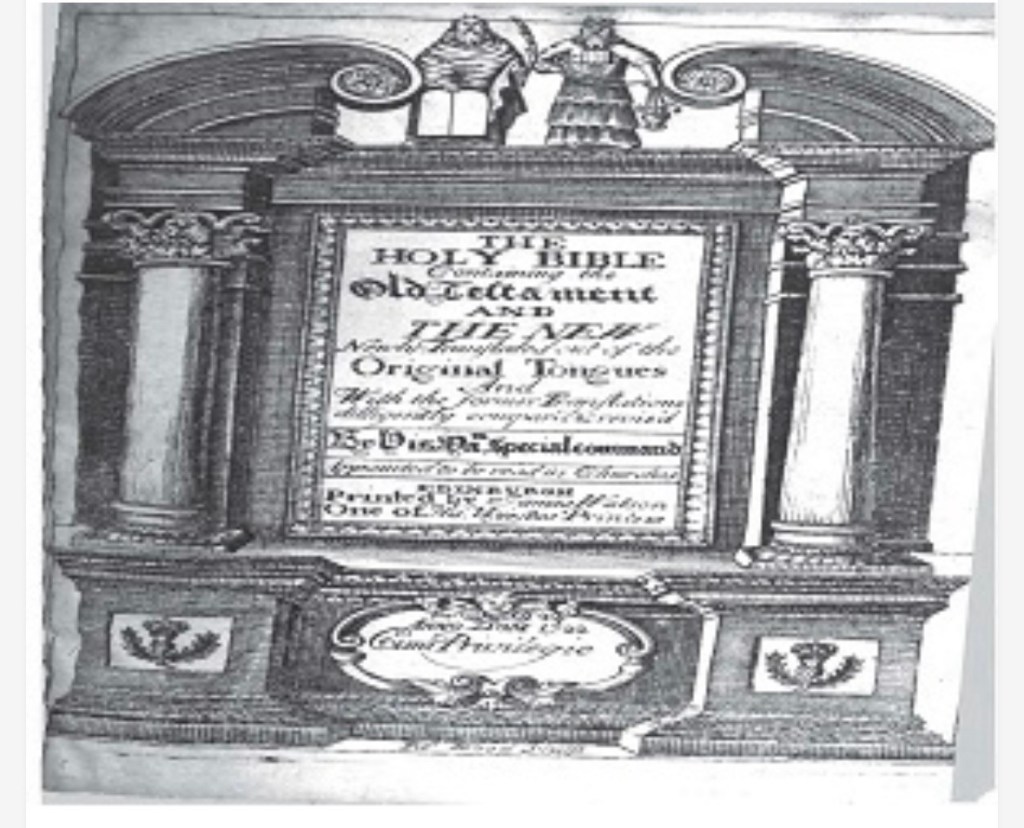
In 1603, he gathered churchmen and scholars who took seven years to write the King James Bible. The first complete King James Bible was printed in Edinburgh in 1633.

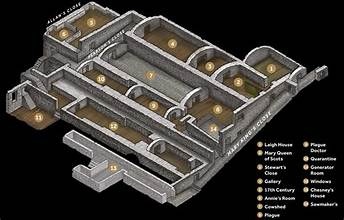
We left the coach and walked a few hundred yards to tour Mary King’s Close – a network of narrow underground alleys and abandoned houses that have been beneath the Royal Mile since the 17th century. Closes were private community streets which were locked at night. The wealthy lived in the top floors where the light could enter their homes. The poorest lived in the dark underground with livestock and open sewers. .

Unfortunately, no underground pictures were allowed beyond this point. The next few are from their website or outside the close.

During the 1600s, this area was the very heart of Edinburgh. The close was named for Mary King, 49 years after her death, a sign of how loved and respected she was. Currently, Edinburgh city offices sit above the remains of Mary King’s Close.

Plague outbreaks happened in Scotland since the 6th century, with a third of the population dying in the 1300s. In 1645, the city had two horrible bouts of plague, both pneumonic and bubonic. The crowded living conditions in the close made residents very susceptible.
Community measures, recommended by the plague doctors, were not saving the population, or themselves.
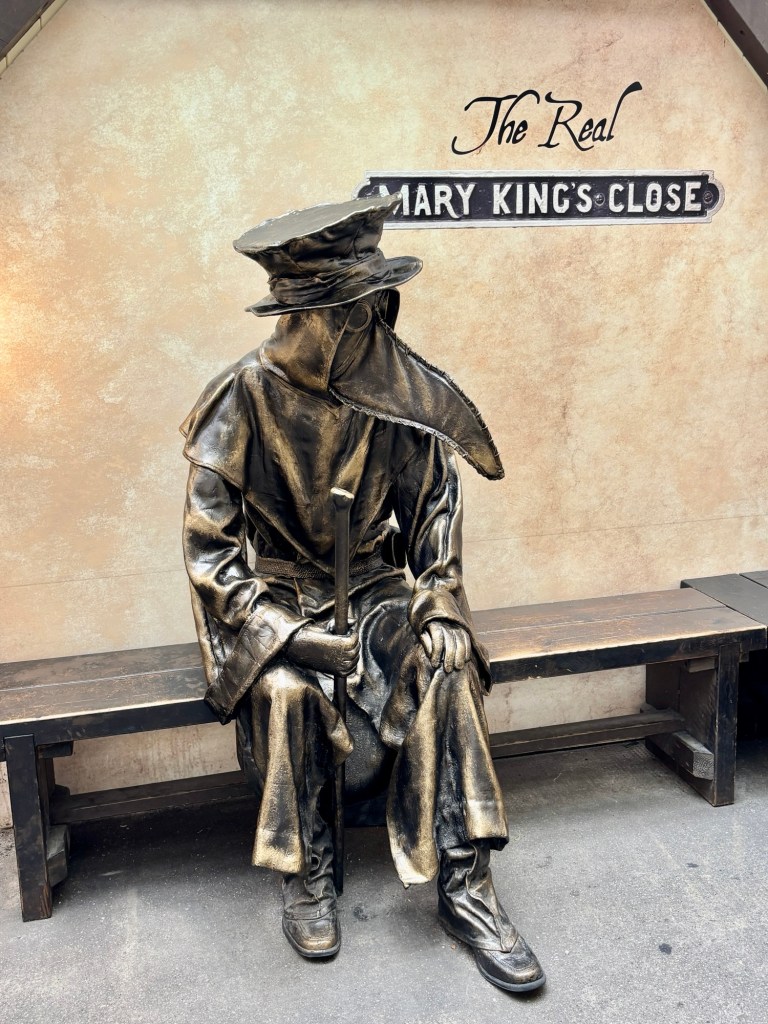
The last plague doctor did some things right, not because he understood the illness, but because he was trying to protect himself. He had his mask nose filled with spices and herbs to keep the odor out and that protected his breathing. He dressed in a full cloak sealed with beeswax and that protected him from fleas.
The people of Edinburgh also got some things right accidentally. They burned the possessions of plague victims to get the bad demons out. In reality, the smoke killed the fleas, and dispersed the rats that carried the plague.
In our exploration within the close, we went into one bedroom that is said to be the most haunted place in Edinburgh. There was once a psychic from Japan, who was disturbed by the sensations of despair in the room. She believed a young girl, Annie, was upset that she had lost her doll. The psychic brought “Annie” a Barbie doll. Supposedly, that gave Annie peace. Many others have brought Annie dolls and they are collected in her bedroom.
Our daughter, who is into all things haunted, was aware that the close was on the registry of most haunted places.
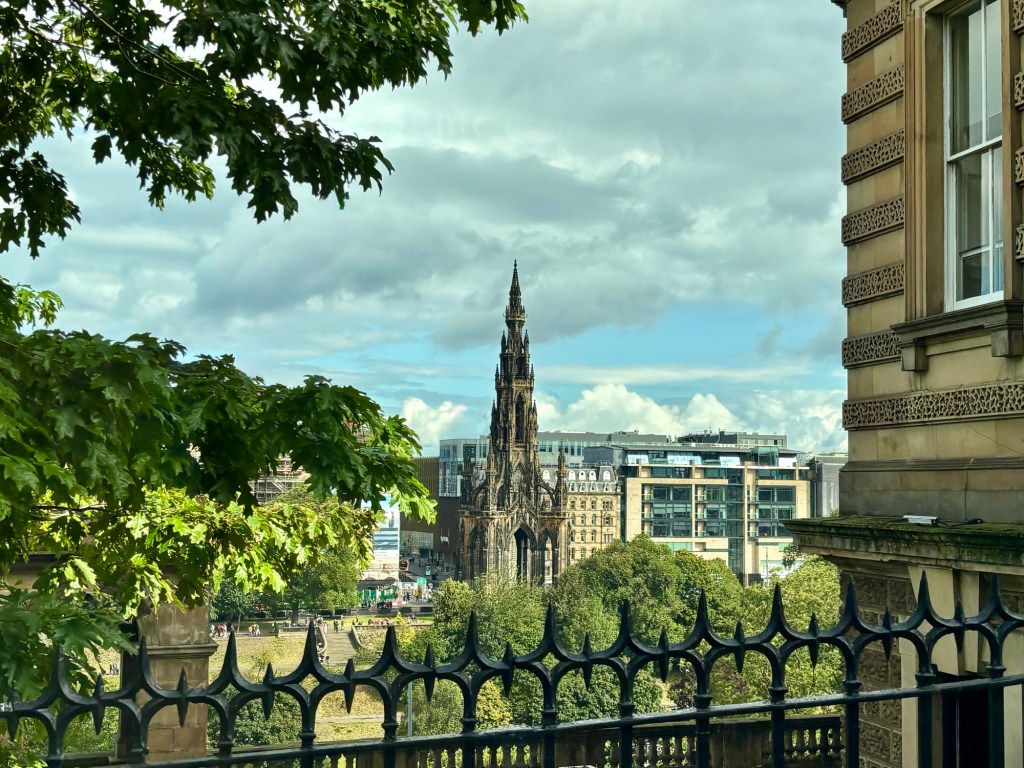
When the tour was over, we did not return to the ship. We stayed in Edinburgh because we had booked an afternoon tour of Edinburgh Castle.

We spent our time in-between tours on the Royal Mile. The Mile has Edinburgh Castle on one end and Holyrood House (residence of the British monarch) on the other. There were so many people!
We happened to be in Edinburgh during the three week Festival Fringe and Scottish Tattoo. More about the Tattoo later, but Festival Fringe is a major arts festival including thousands of acts and artists – both little known and world known.
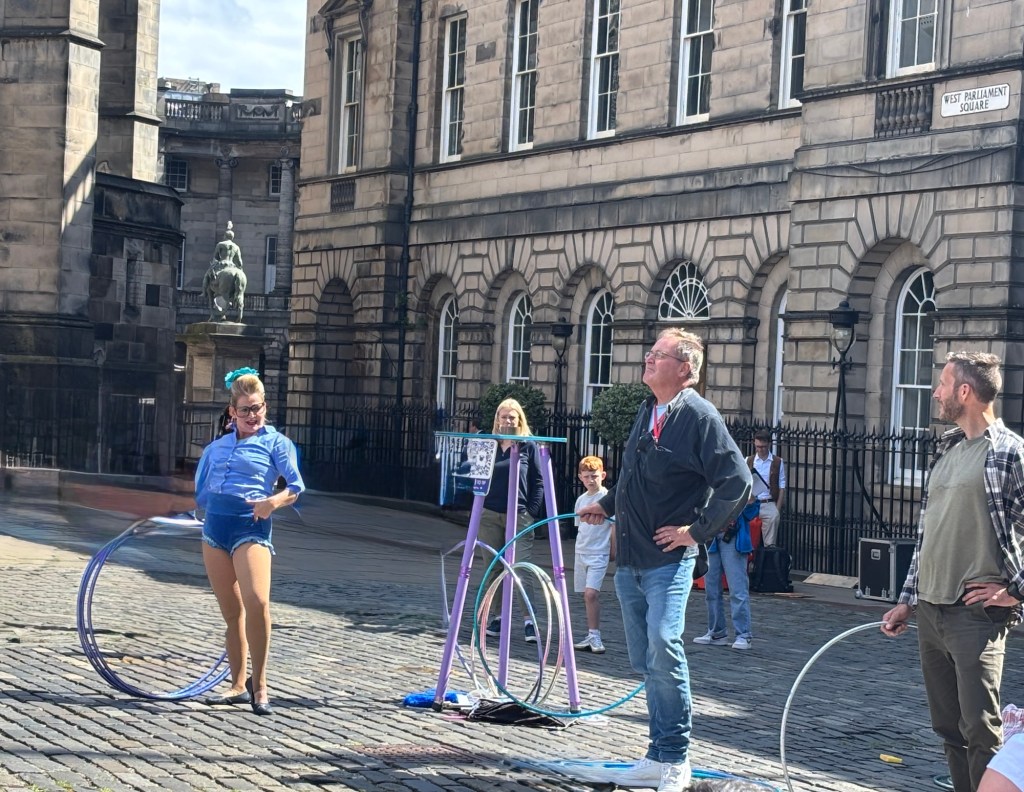
What it meant to us was a fun assortment of street performers to watch and enjoy.
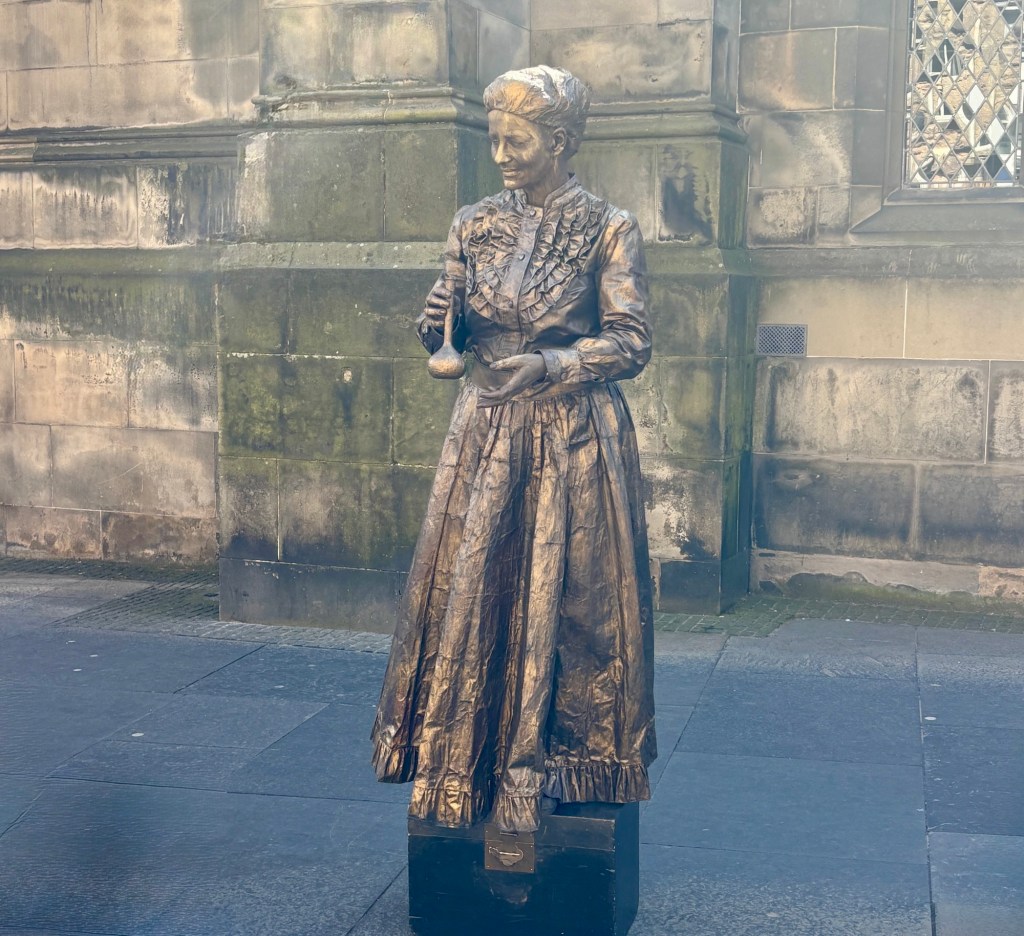


We walked by the 900 year old St. Giles Cathedral, where reformation in Scotland began.
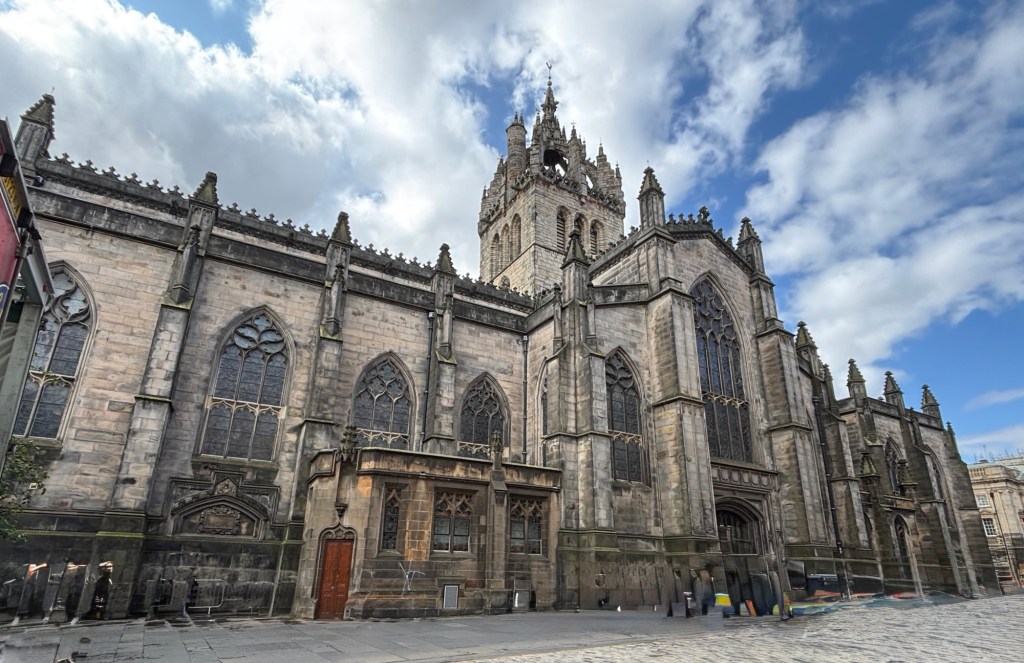

The country had a difficult transition from Catholicism to Presbyterianism. The change was officially adopted in 1560.

Along the Mile, we saw a unicorn on a spire. The unicorn is Scotland’s national animal. In Celtic mythology, the unicorn is a symbol of purity and power.
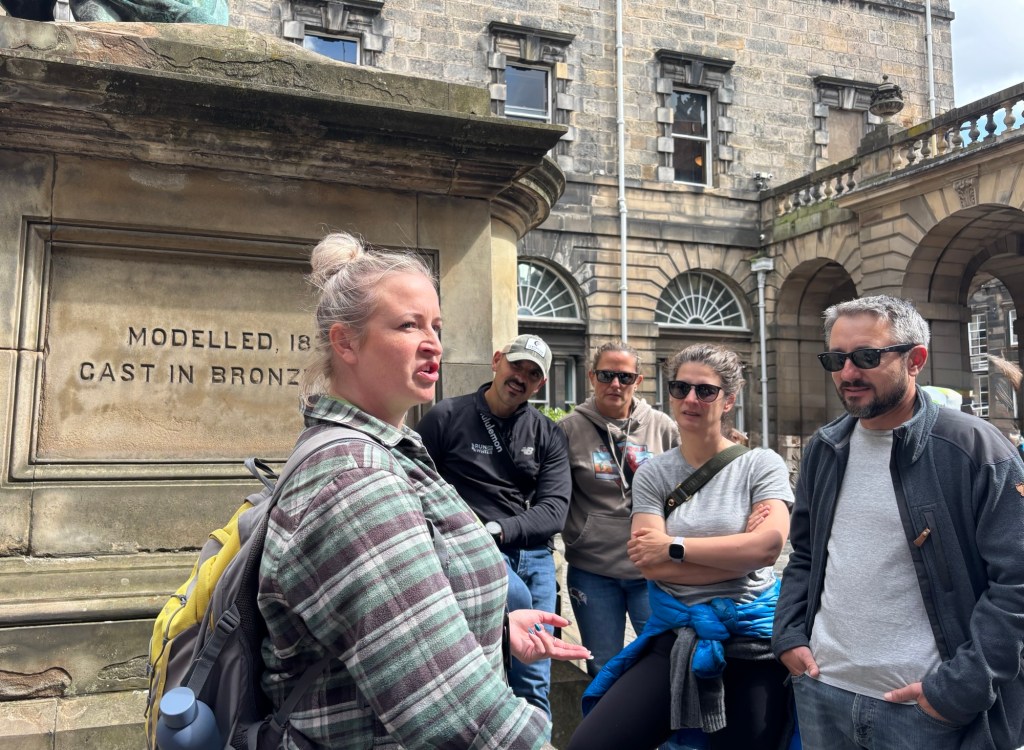
We eventually gathered for our independently booked Edinburgh Castle Tour. Our guide had a great sense of humor and was a wealth of knowledge.
One of the things she made clear was that the movie Braveheart had many inaccuracies in how it represented that era of Scottish history. The real Braveheart was Robert the Bruce, King of Scotland from 1306-1329. She said the movie was filmed in Ireland, not even in Scotland.
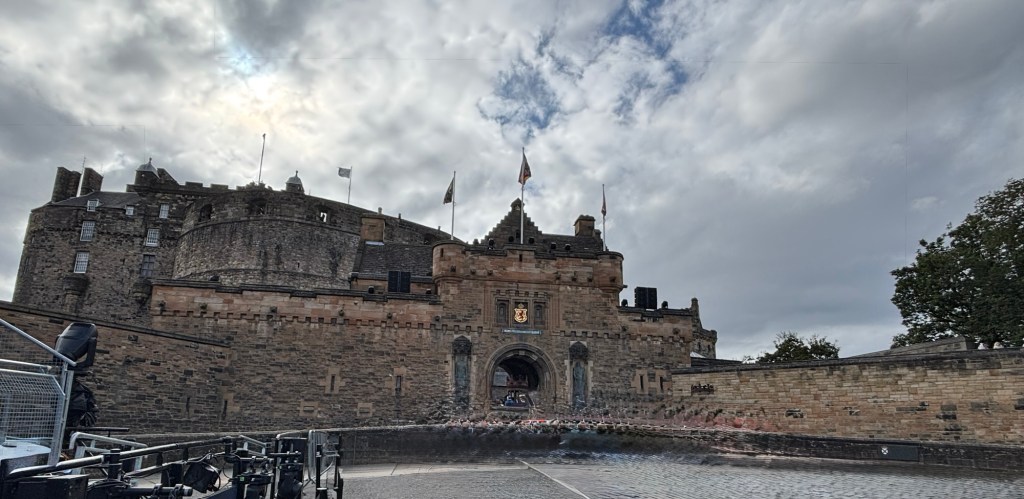
Castle rock is Britain’s longest occupied piece of land. Ancient peoples lived there from 900 BCE.
The rock is a volcanic plug rising 445 feet above the land surrounding it. The height and access from only one side helped make the site defensible. It also made water availability difficult during drought or seige.

Edinburgh Castle was the home of Scottish kings and queens for centuries. It has a wild history over its one thousand years. The castle came under attack 23 times and changed hands several times. The cylindrical walls helped deflect canon fire.
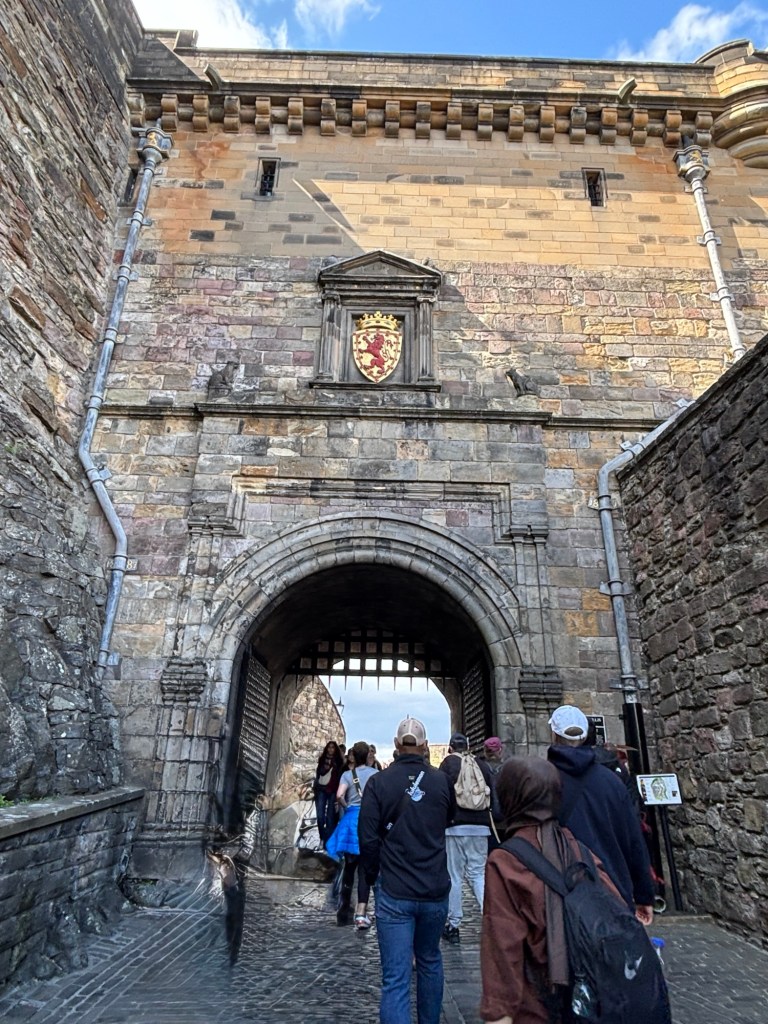
This is the shield of Scottish monarchs.
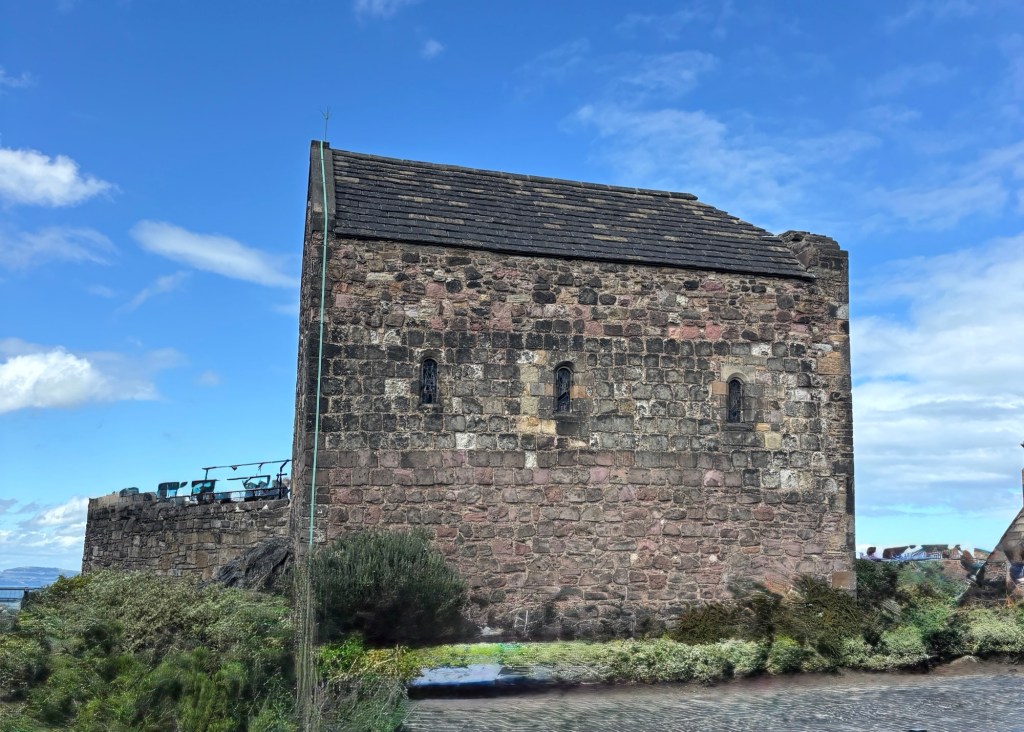
Within the castle walls, St. Margaret’s Chapel, built around 1130, is the oldest building in Edinburgh.
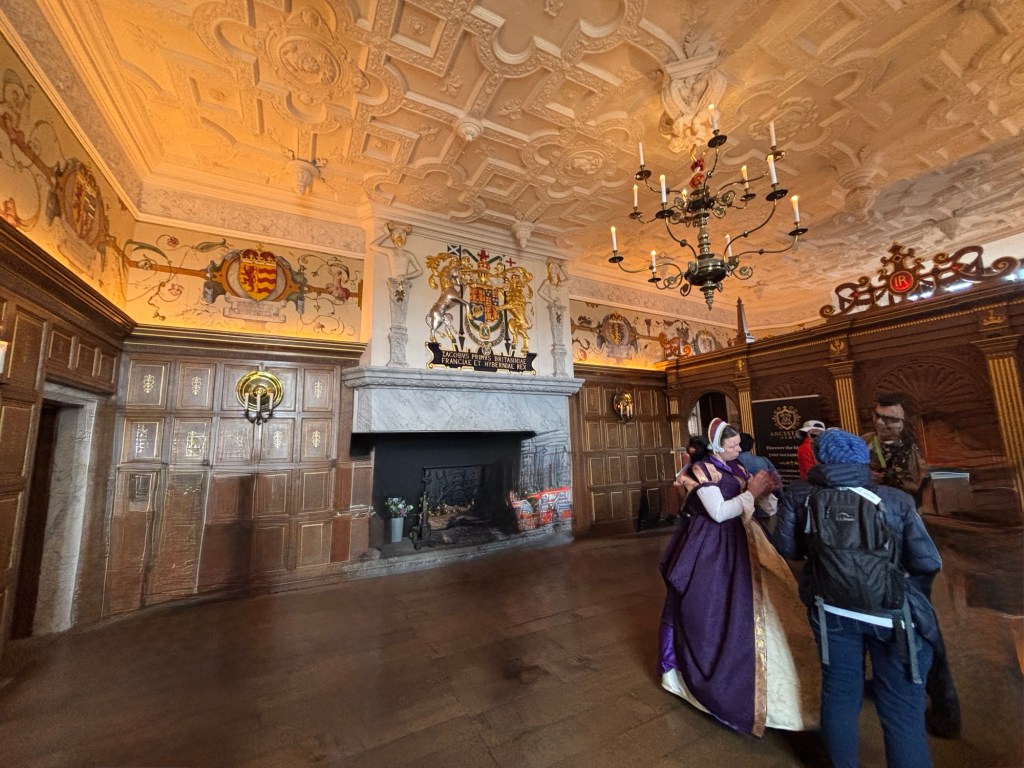
During the 15th century, Mary, Queen of Scots, gave birth to the future King James VI of Scotland in this apartment. He became James I of England and commissioned the bible mentioned earlier.
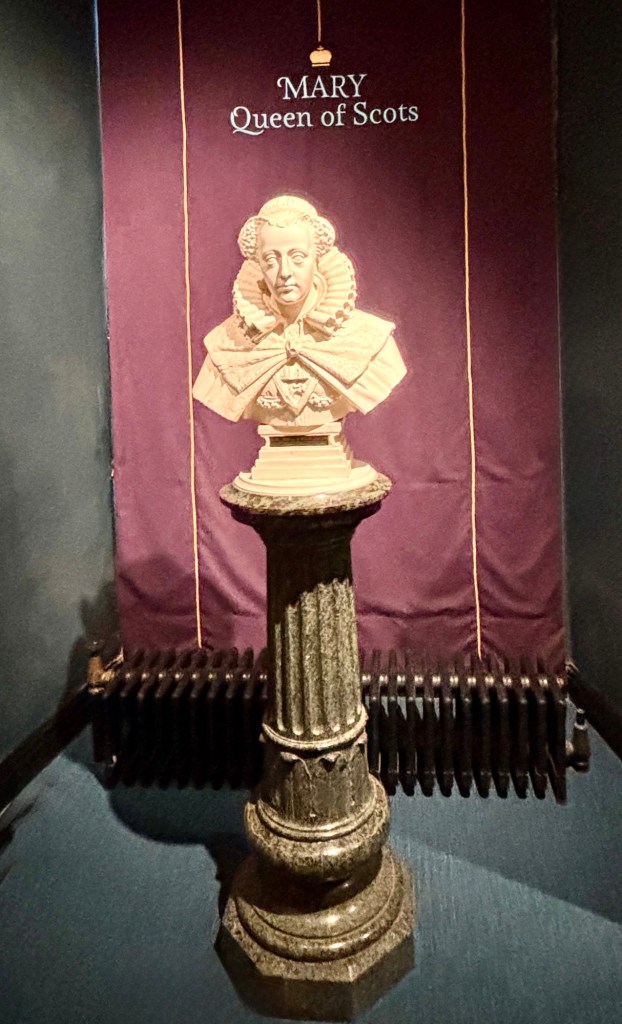
It has been over 300 years since a monarch lived inside Edinburgh Castle.
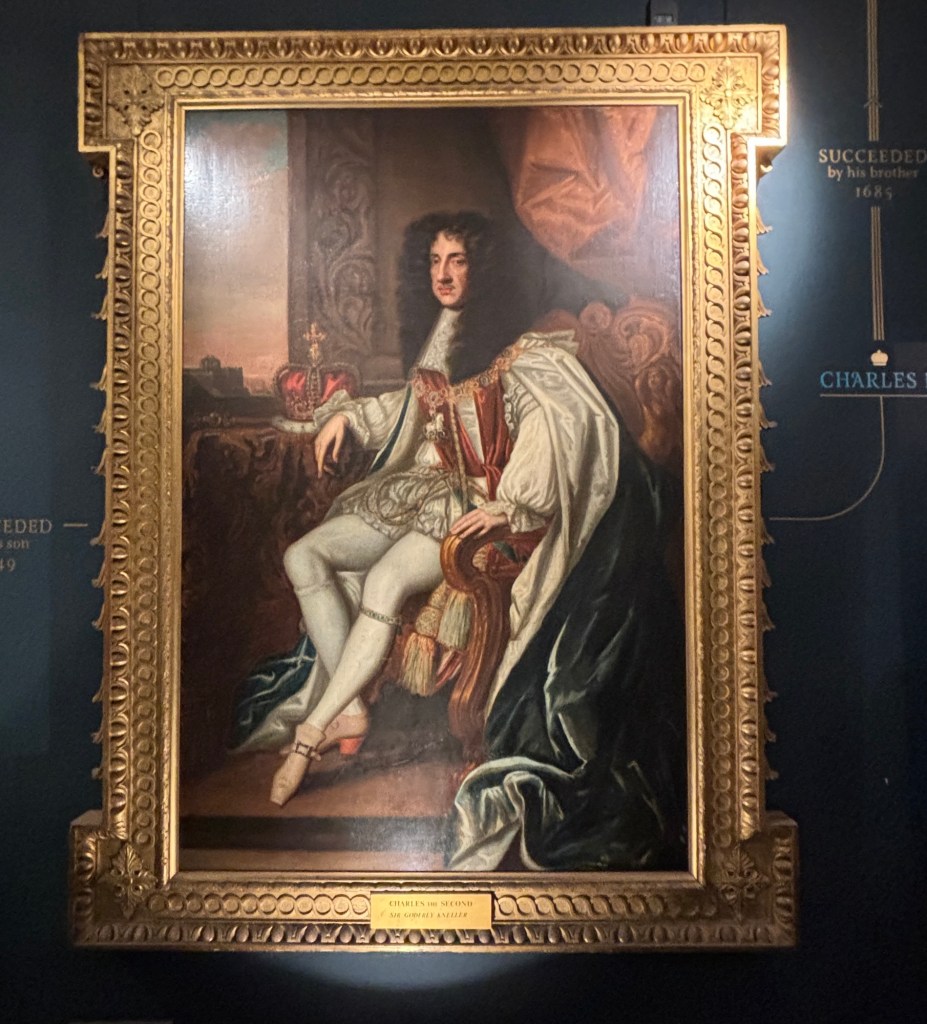
The last was King Charles II.

The gate house in front of the castle is from the 1800s. Queen Victoria arrived here and thought it needed a better entrance. In our guide’s words- “a little more curb appeal for Queen Vicki”.
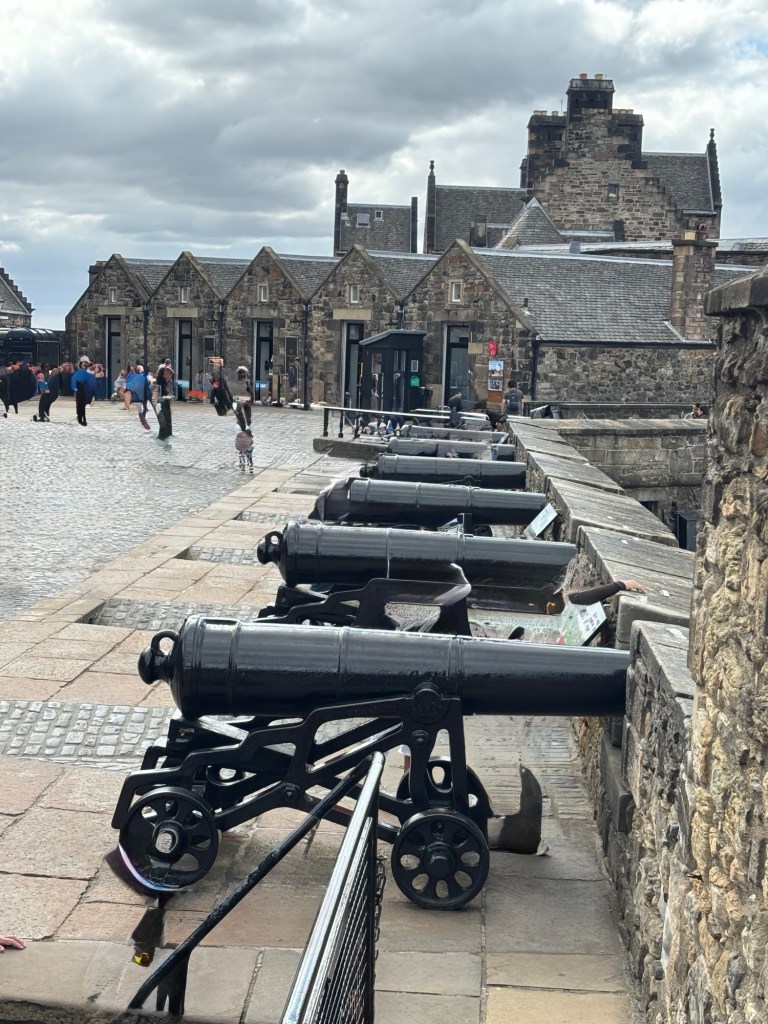
The castle cannon are really ship cannon brought here because Queen Vicki thought there should be cannons to make it look more “palacey”. Our Scottish guide was so fun, but I do think these comments diminish Queen Victoria a bit. She was a historic and accomplished monarch.
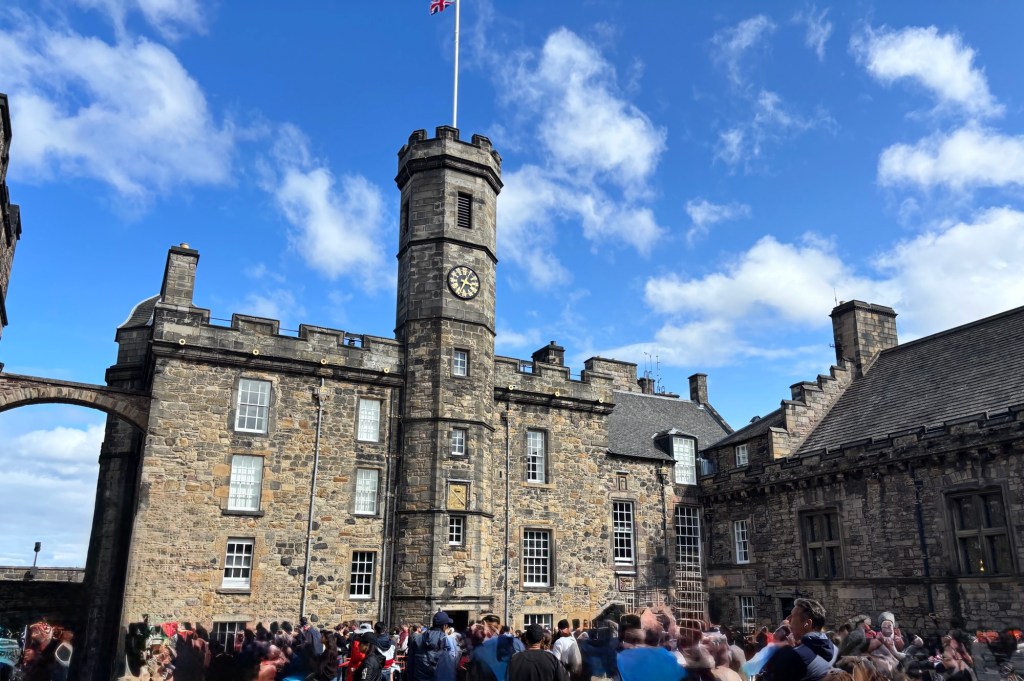
This is Castle Square, the hub of Edinburgh Castle. The Scottish Crown Jewels, the oldest in Britain, are held in this building. We didn’t take the time to wait in the long line to see them.

I removed people in this picture to get a good photographic expanse of the castle within the walls. Actually, I removed people in nearly all of the photos. This entire part of Edinburgh was very crowded during our time there.

The castle is still an active military base, as well as a major tourist attraction. This area houses the military museum.
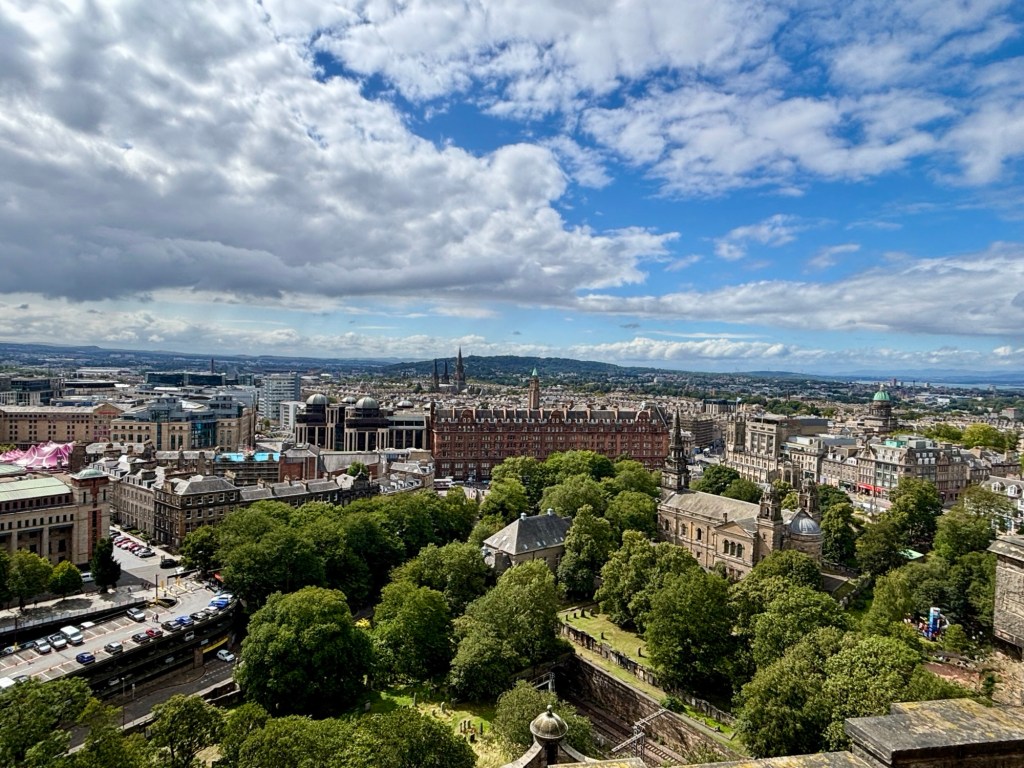
We had nice views of the city from the castle.

As we left our tour and the castle, heading back down the Royal Mile, we had a great view of one more street performer from the Festival Fringe.
We needed to get back to the pier to meet our evening tour. Our choices were walk, Uber or tram. We decided to try the tram.
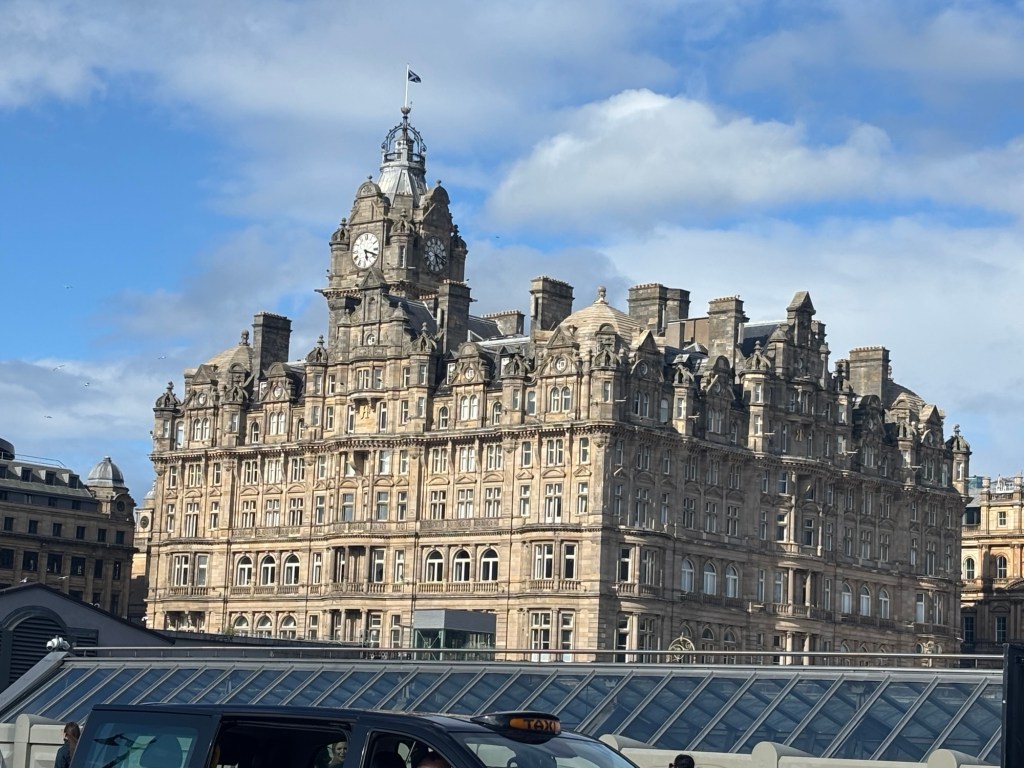
As we walked, we passed some great buildings!
It was either misinformation or misunderstanding that had us go to Waverley Station. Unfortunately for us, Waverley was the train station – not the tram station.
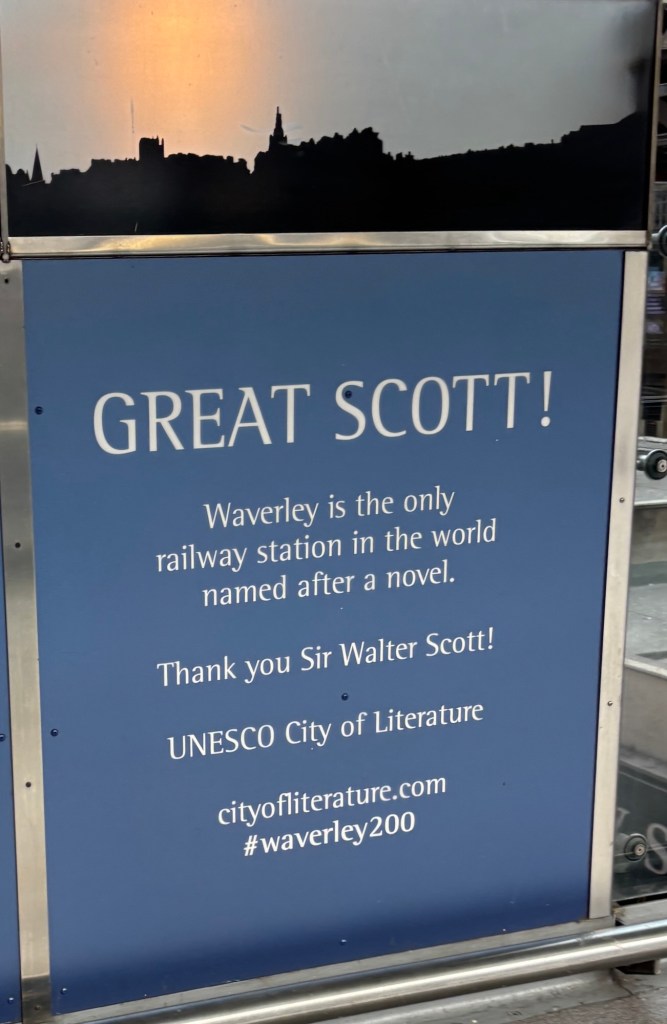
While at Waverly, we were in the only train station in the world named after literature. Sir Walter Scott, 1771-1823, wrote many Scottish and European classics. He was once the most famous writer in the world. His works include Ivanho, The Lady in the Lake and Waverly.
I’m not sure that was worth the thousands of extra steps to go to Waverly and then redirect to the tram station, but it was eventually accomplished. Observing others who seemed to know what they were doing, we finally made it back to the pier. There, we connected with Cindy and Darrell for our evening excursion.
None of us had heard of the Scottish Tattoo until a few weeks before we embarked on this trip. We received notice from Holland America that they had added shore excursions for the Tattoo. Randy and I initially dismissed the expensive additional excursion until several random people mentioned how lucky it was that we were going to be in Scotland at the time of the Tattoo. Our friends had a similar experience. In the end, we were all in.
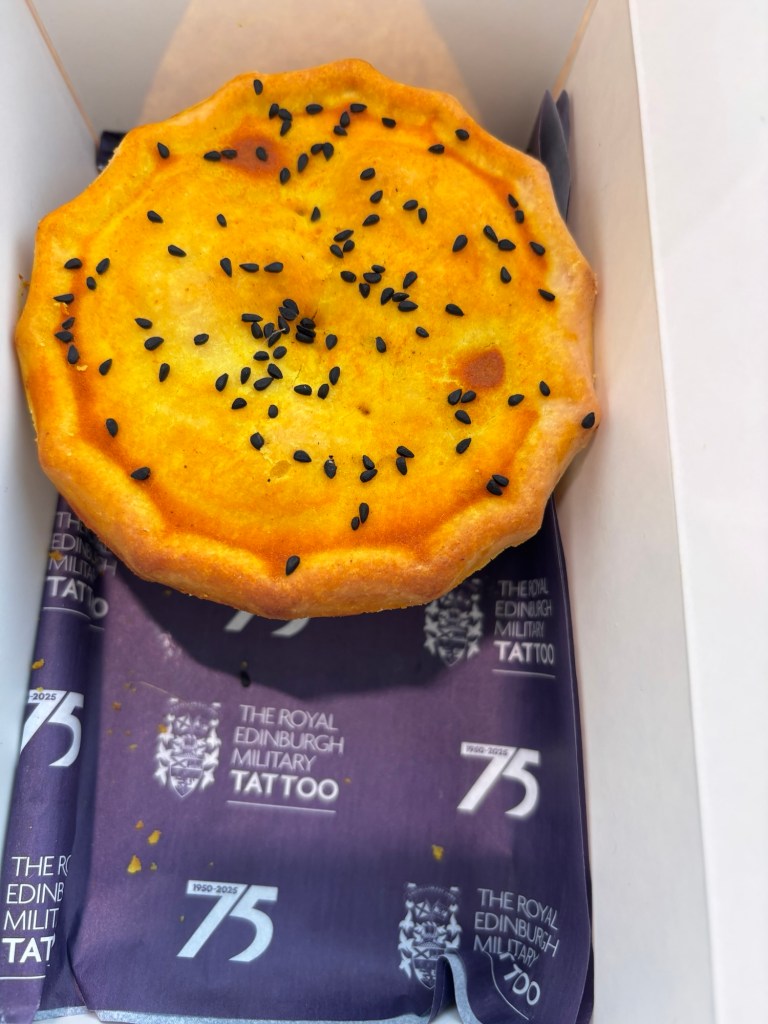
Tour busses took us back to the Royal Mile where we got in long quickly moving lines. We made our way onto the castle esplanade and, since we hadn’t eaten dinner in our need to get back to the pier, we purchased meat pies from a vendor, Randy had a steak pie and I had a vegan curry pie. Both were delicious.
A “tattoo” used to be a 30 minute drumbeat telling British soldiers to return to their quarters for the night. They needed to be in place before the drumming ceased.

In the case of the Scottish Tattoo, it is a ceremonial performance of military music, dances and drills.
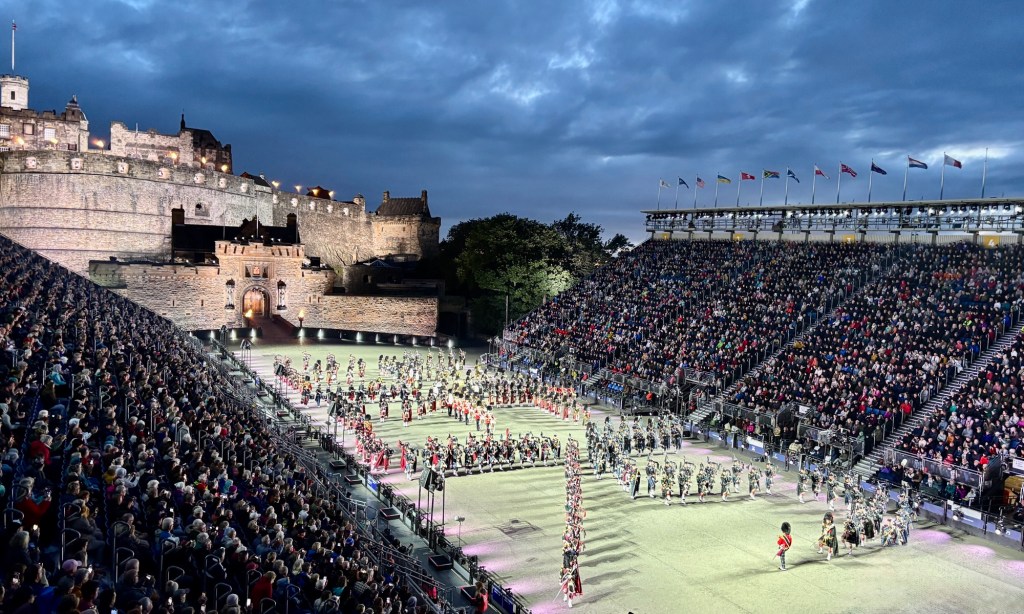
We were there for the 75th annual Tattoo with over 800 performers from all over the world.

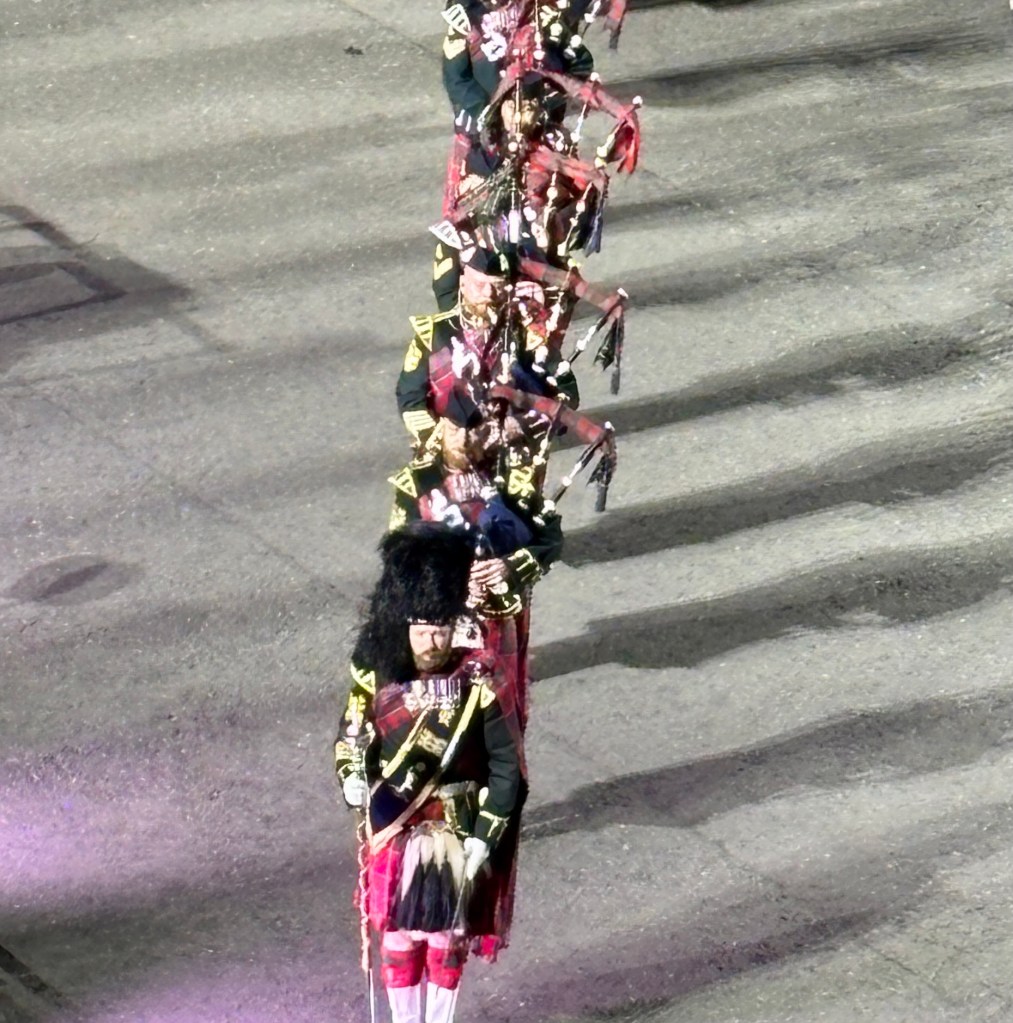

Of course the group was dominated by the home performers including the Massed Pipes and Drums.
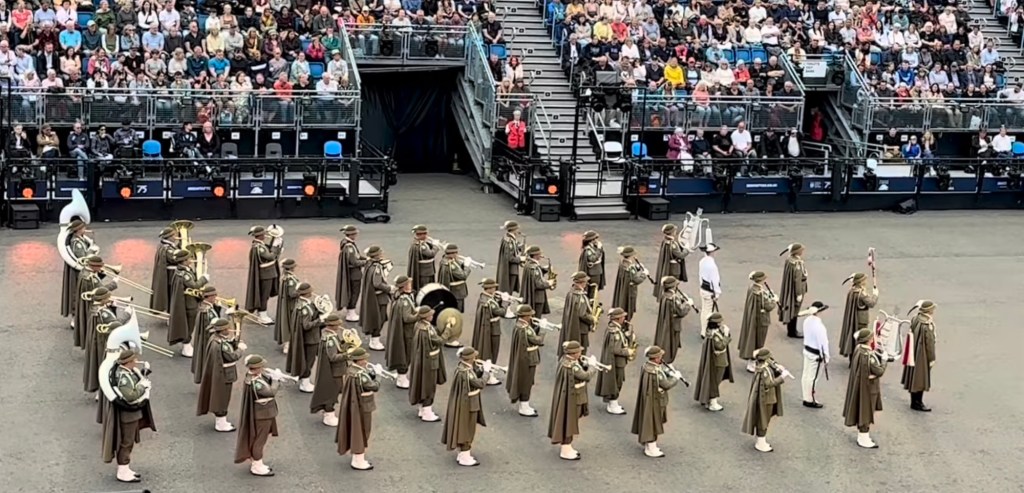
The Band of the Polish Border Guard performed.


Ukraine Naval Forces Orchestra received a warm, warm welcome.
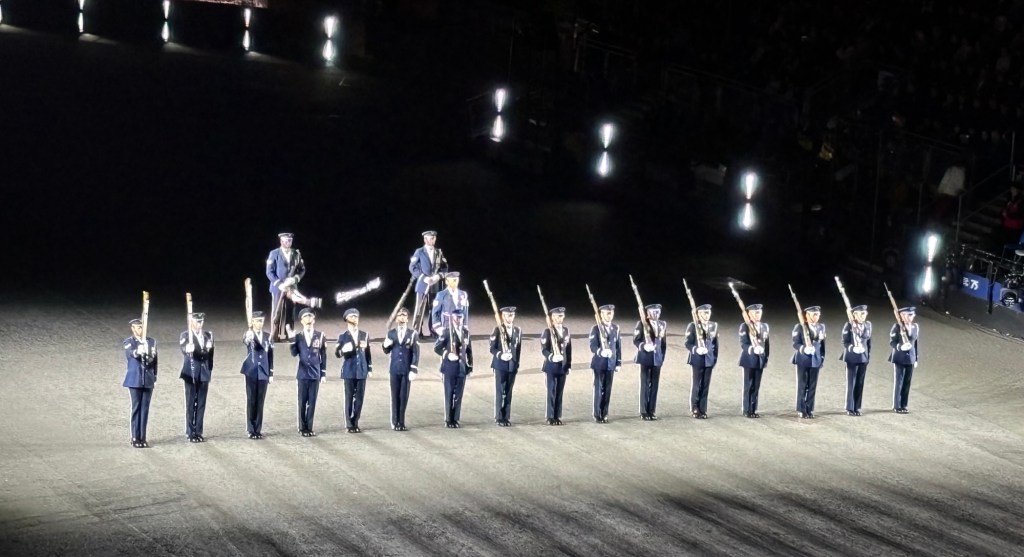

The United States Honor Guard Drill Team from the Air Force Academy was excellent.
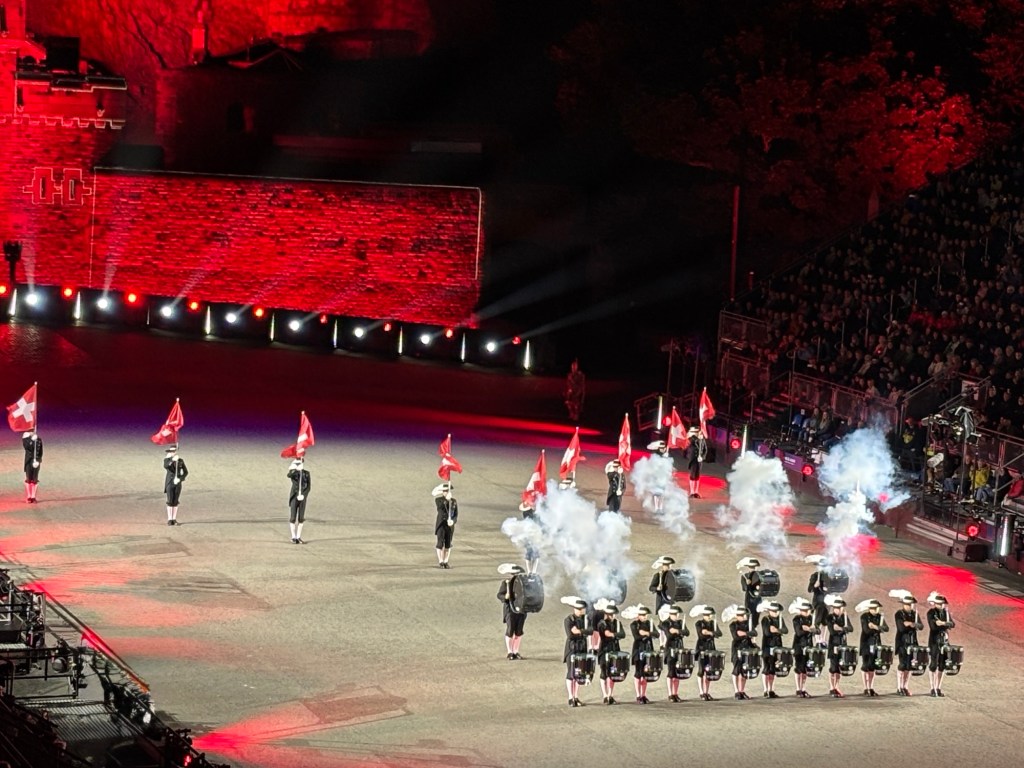
The Swiss Top Secret Drum Corps performed.

The United States Old Guard Fife and Drum Corps were also there.


For the first time ever, drones were used.
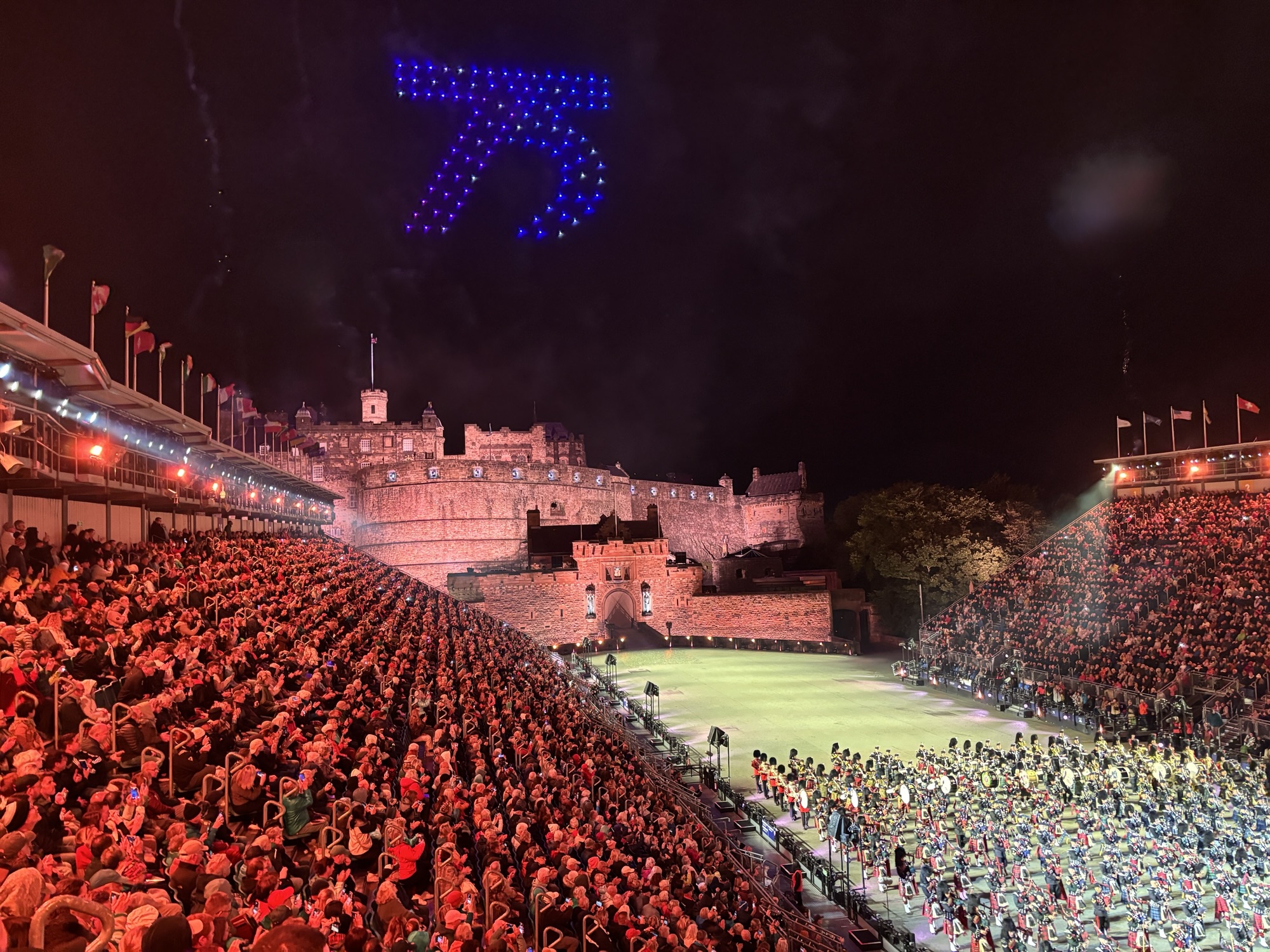
After 90 minutes, the Edinburgh Tattoo ended with a lone piper playing. The experience was amazing. Those that told us we should go were absolutely right.
At the conclusion, we had a bit of embarrassment. We from the ship, mostly Americans, were towards the top of our section and just started heading down the isles. It was only when we were stuck in the isles that we noticed a protocol happening all around the stadium. People all around us were orderly going out row by row from the bottom to the top. Ooops.
It was another example of how some countries do things better than we do. Travel and learn – it’s what we do!
The ship excursions team had designated people along our half mile (ish) route to help us navigate from the castle to the coaches. The coaches took us back to the pier, to the tenders, to the ship. All this was happening after midnight. The ship was scheduled to leave at 1:00 am but actually left closer to 2:30.
It was all good, because the next day was a Sea Day! The captain could make up the time and we could do anything, everything, or nothing at all.


 Serene Wandering
great summary — well, much more than a summary c takes me back!