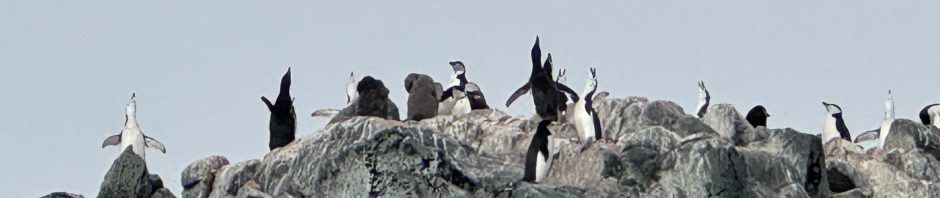
Departing for our 10 o’clock food tour, we got caught up with the last of 1500-ish people disembarking the ship in Rotterdam. That was poor planning on my part as we had to go through the same lines and try to engage the same Ubers. It was a live and learn moment. We knew there was a tram but we didn’t want to take the time to try to figure it out. In the end, we just paid the taxi fare ($41 USD equivalent) and got to our tour meeting place in time.

We were to meet under the cloud inside the Rotterdam Central train terminal. We had been to the train station a couple weeks earlier when we went to Amsterdam so it was somewhat familiar.
Our guide, Susan, said we’d start with some architecture and history as it was a Sunday morning and little was open for food yet.
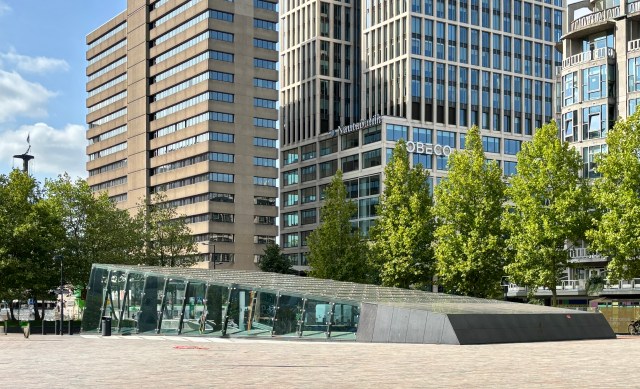
Nearby, there was an entrance to a bicycle parking garage – about 5000 bikes can be underground.
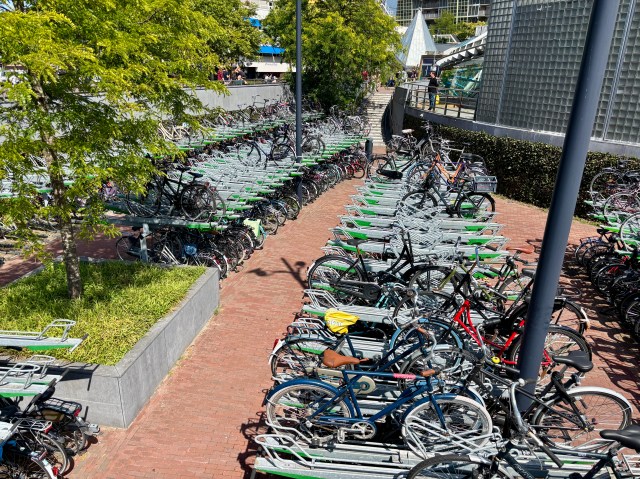
Here is a double-decker bike parking area.
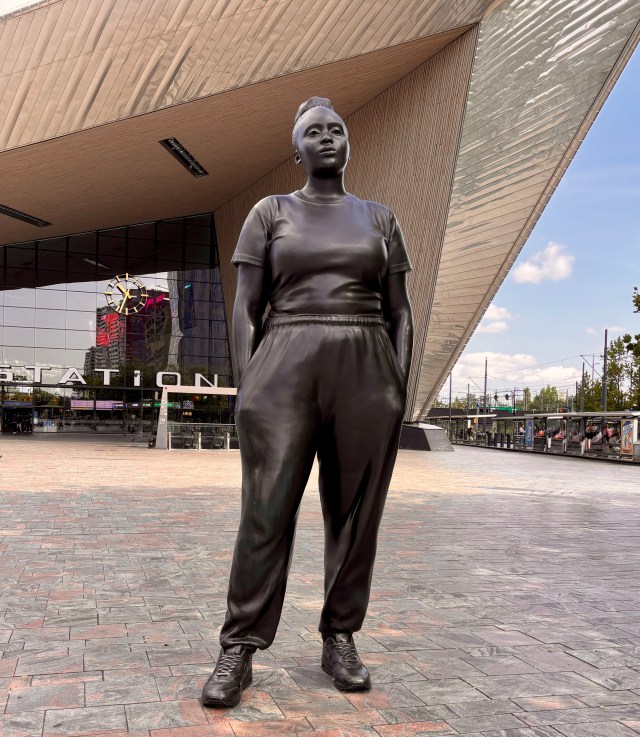
The Dutch were heavily involved in the slave trade for way too long, sending slaves to way too many places – the United States included. This statue was placed by the government as an acknowledgement and apology to the peoples and families of those taken.

This statue honors the unbroken, those in the resistance during World War II.
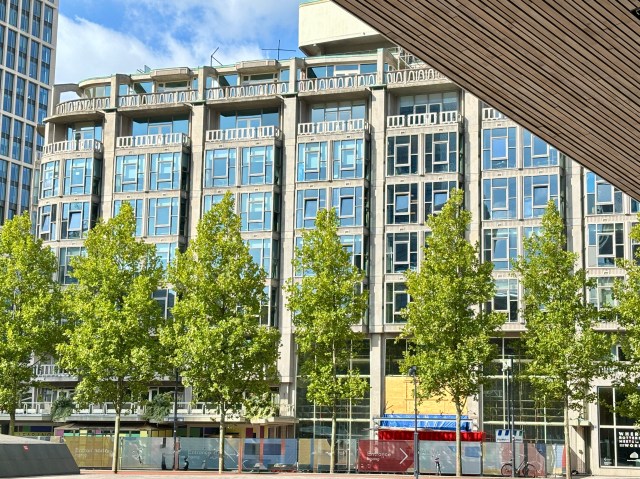
She showed us some interesting buildings! This one has some Art Deco going on.
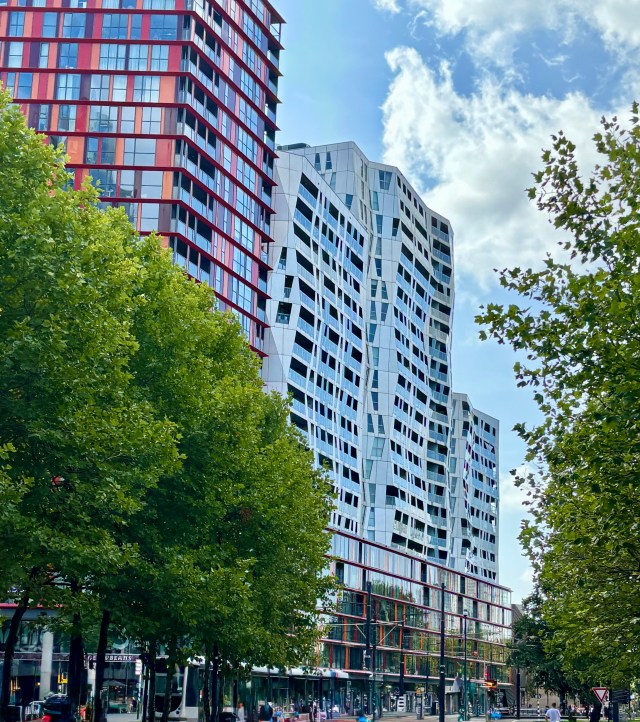
I’m not sure what this one has going on – but it certainly was interesting!

Then there were Cube Houses!

This building was the first sky-scraper in Europe. I don’t know what the criteria was in determining that.

Much of Rotterdam was carpet bombed by the Germans in World War II. This memorial shows the part of the city that was devastated by fire from the bombing. It is hard to see in the picture, but the center part, with a matte finish, represents the part that was destroyed contrasting with the portions in glossy finish that remained.
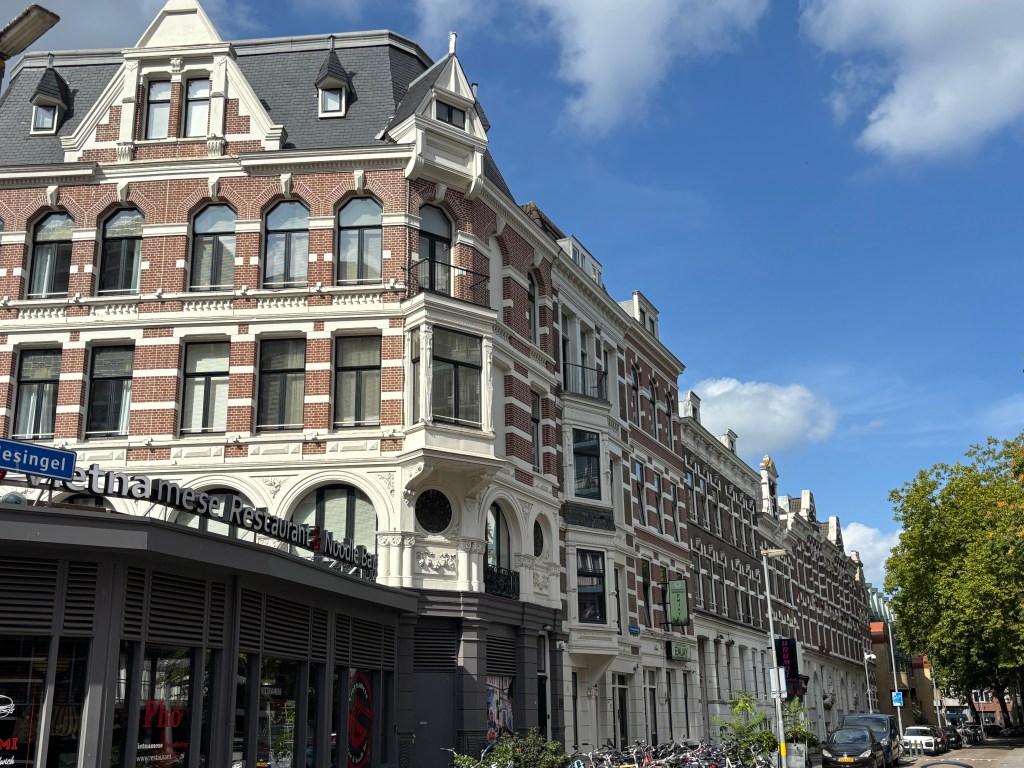
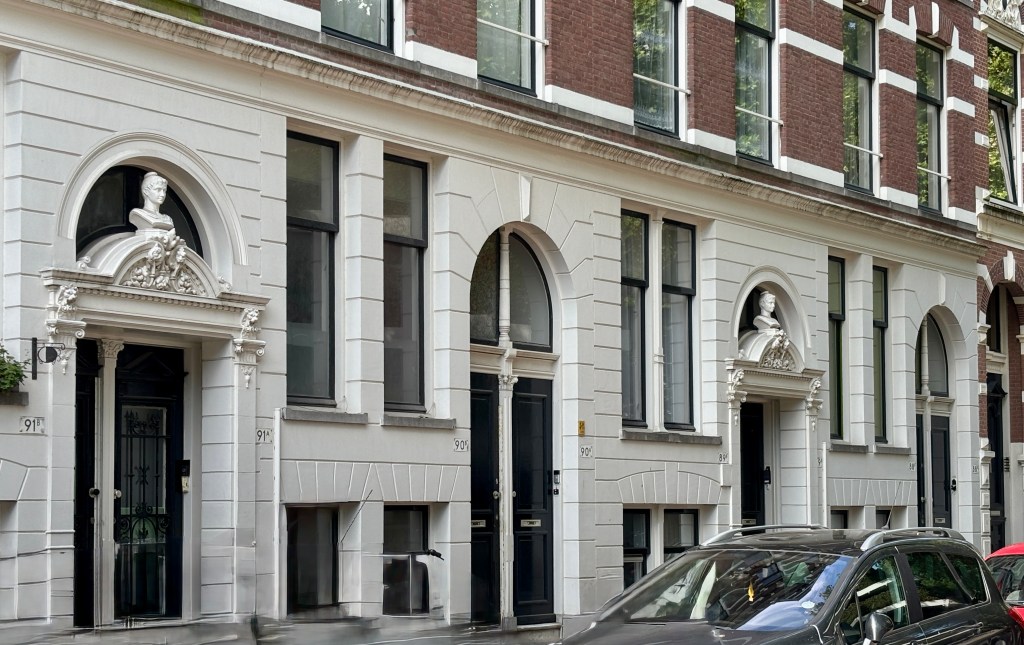
This building was rebuilt, but the women figures in front were salvaged from the rubble. Susan pointed out several buildings where they were able to use something that was salvaged.

This building, the Atlanta Hotel, randomly survived the bombing.

This plaque acknowledges the original location of a historic zoo, Diergaarde Blijdorp, which opened in 1857. It was very successful and moved to a larger location right before German bombing in 1940. The zoo was severely damaged and reopened in 1945. Currently, it participates in 70 breeding programs.

We saw several sets of stumble stones. Our guide explained two meanings of the “stumble” stones. First, the people, primarily Jews, stumbled as they were taken from their homes by the Nazis. Second, civilizations stumbled in allowing that abuse.
We were very much on philosophical par with our guide in believing in humanitarian treatment of all peoples. She said that as the Netherlands begins to constrict tolerance, she may eventually be at risk of reprisal for teaching Dutch to refugees.
Susan was a most interesting woman. She was born in Cincinnati and lived there for the first 19 years of her life. She became a nurse on a ship during Vietnam very much against her parents’ wishes. She was appalled at the treatment of veterans, specifically by the VA, after returning home. She decided she’d be happier elsewhere.
Elsewhere became the Netherlands and she’s been living here ever since. She said it wasn’t easy to learn Dutch, finish nursing school etc. but has no regrets about creating her life here and giving up US citizenship. She worked as a nurse for decades in cardiac ICU and as medical support on North Sea oil rigs.

Our guide pointed out building murals many times.
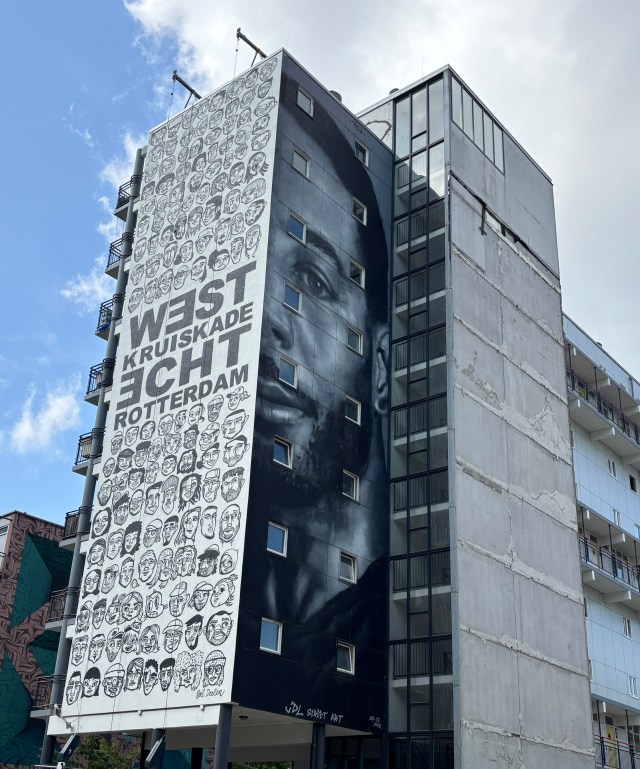
This one features a local musical artist on the right but also features local folks that are part of the neighborhood community.
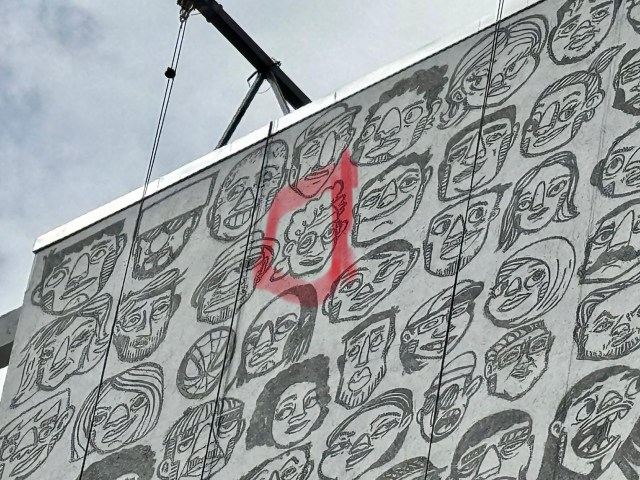
She said that she was depicted in the second row in the middle.
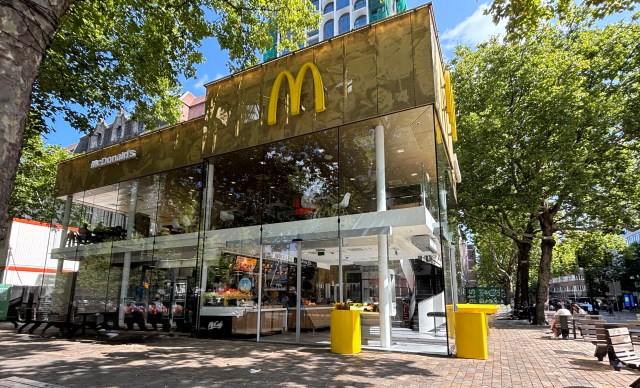
This McDonalds has been in this place since the 1950s. Its signage is now considered street art.

We saw this corner with a Starbucks and Five Guys – that could be anyplace USA instead of Rotterdam, Netherlands!
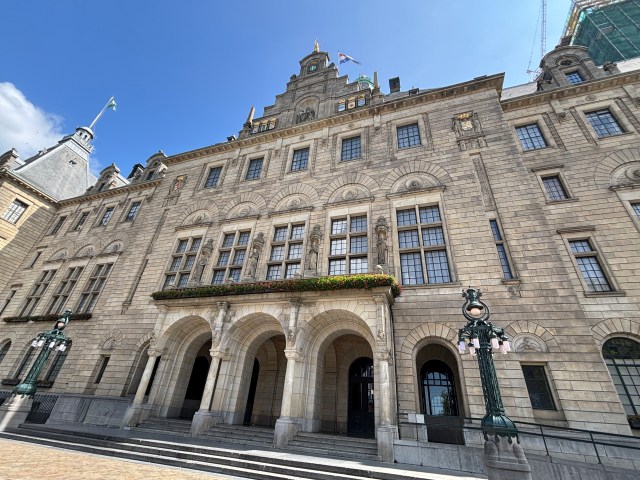
This is a municipal building. There is much symbolism with the statues and carvings and each of the coat of arms. I don’t remember details but the meanings and connections to the past were significant and well thought out.

We didn’t see many churches – not like some European cities. This one was damaged in the war. Oddly, the tower survived the bombing and the rest was re-built.

We stopped and watched a few minutes of surfing lessons in a central canal-pool with a wave machine.
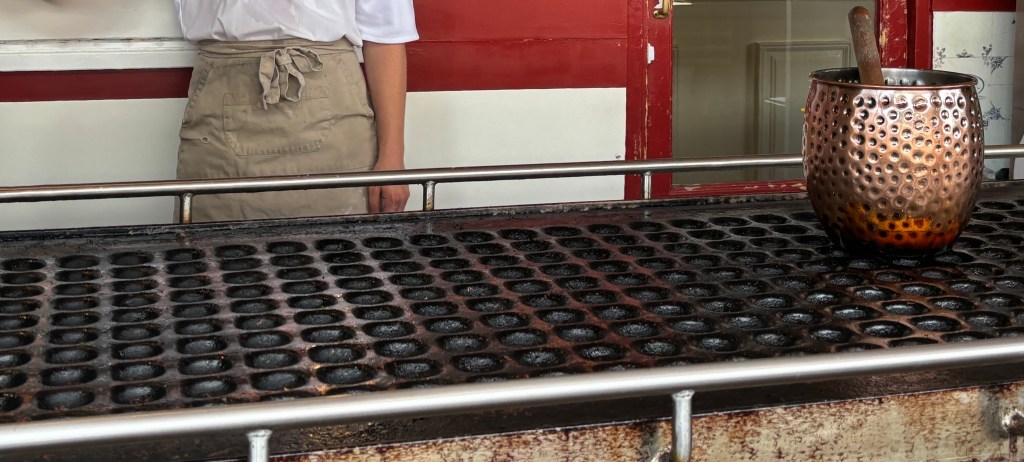

We’d had a coffee/tea stop early on, but our first food stop was for poffertjes. Oh my, they were delicious. They are little circular puffy pancakes with a little butter and a whole lot of powdered sugar. We haven’t had that much powdered sugar since Cafe du Mond in the French Quarter in New Orleans when we had beignets. The poffertjes were so good!
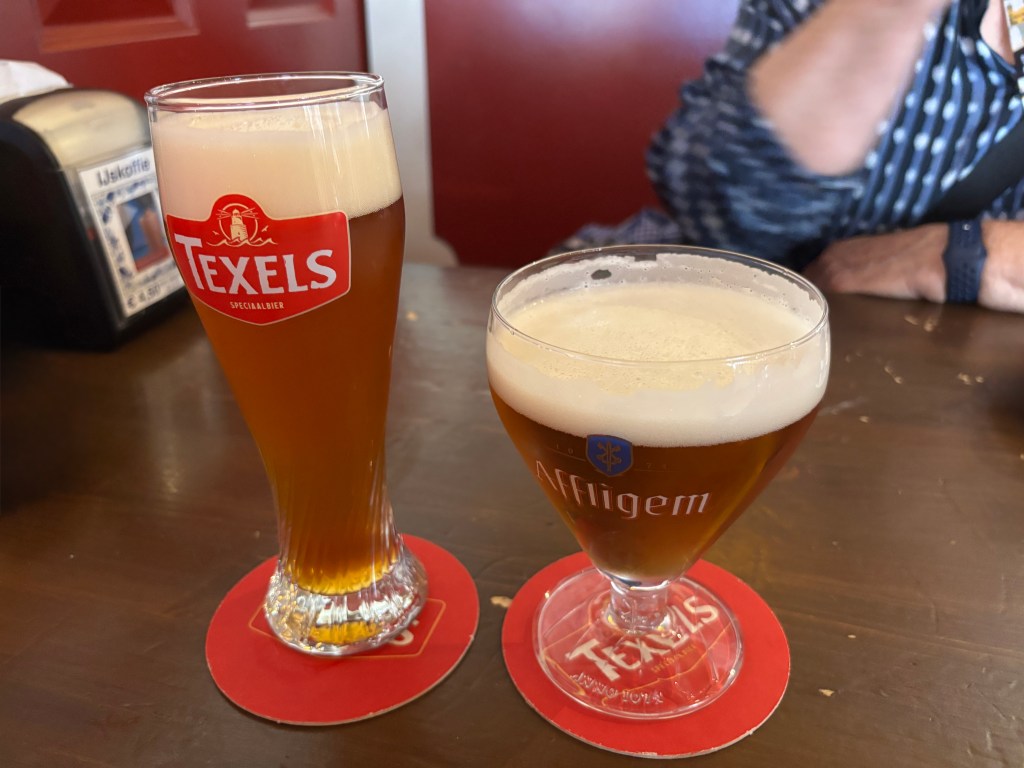
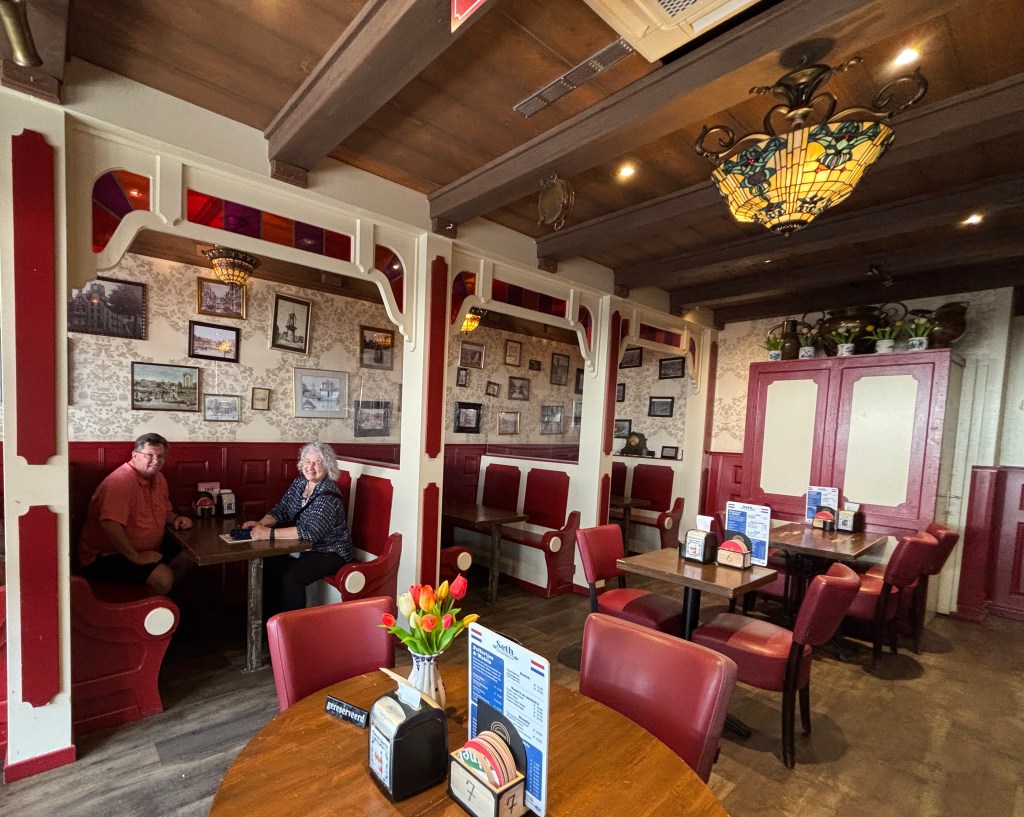
And, of course we had beer with our poffertjes! It tasted way better than it sounds! Randy had the Dutch beer, Texels. Serving it with that much foam is required. Mine was Affligem from Belgium. I rarely finish a glass of beer in a timely manner (if at all) but this one was very nice and Randy didn’t get any of it.
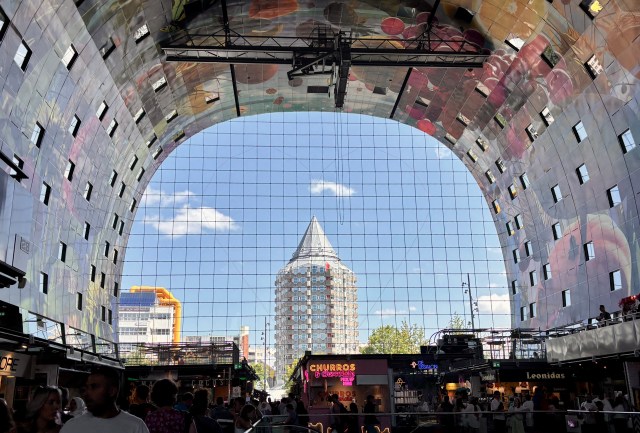
Our other food stop was in the market area. We walked into this huge building and your eye is drawn to the “pencil” building visible through the other end.

Then your eye is drawn to the beautiful roof.
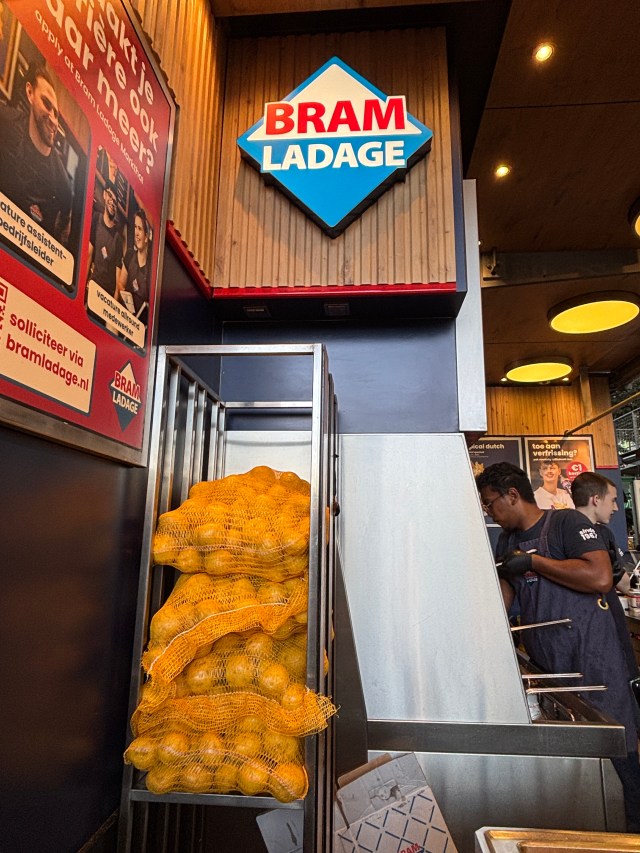
We were heading to a French fry stand with the “best French fries in Europe.” They have developed a special kind of potato for their Fries at War.
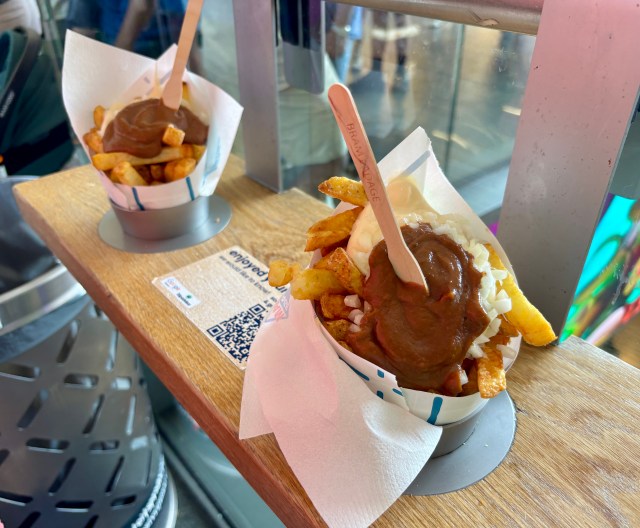
Fries at War are presented in a paper cone with a generous portion of fries as the base. The fries are topped with peanut sauce, mayonnaise and fresh onions. You eat it with a wooden fork. I know that sounds bizarre but it was delicious!! What fun!
We could have had more culinary treats but we needed to get back to the ship. Susan was very nice and rode the tram back with us to the port area since the trip involved a transfer.

Our cost was $1.78 each US equivalent – definitely less than the taxi! Susan’s fare was free because seniors ride free when registered for a transit card.
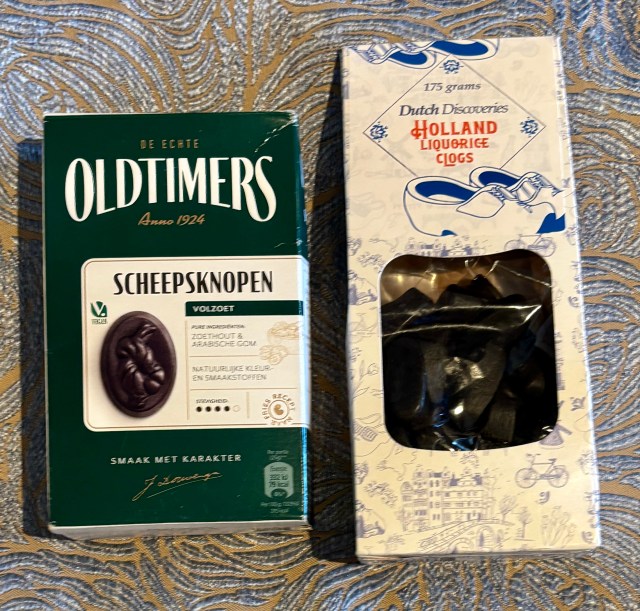
She gave us some Holland black licorice clogs. This is the second time we’ve been given this special Dutch treat by a guide. Randy dislikes black licorice so they are all mine!

I had wondered about having two food tours in communities, Amsterdam and Rotterdam, that aren’t that far apart. The fact that our second was a private tour meant that we could skip the herring and stroopwafels this time and try different things. Where the tour in Amsterdam really focused on the food, this one was just as much about architecture and street art and history. They were both so good.


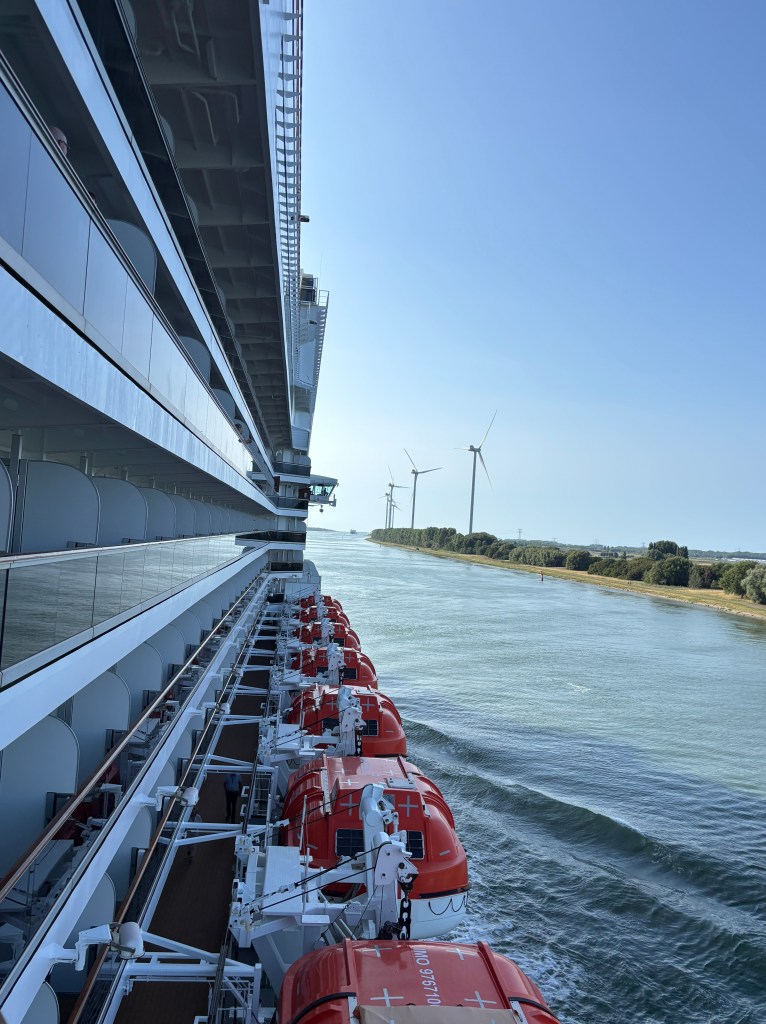
And because our eyes had been focused on architecture all day, we enjoyed these interesting buildings as we sailed through the port of Rotterdam towards the North Sea.

Next Up: Alesund, Norway


 Serene Wandering