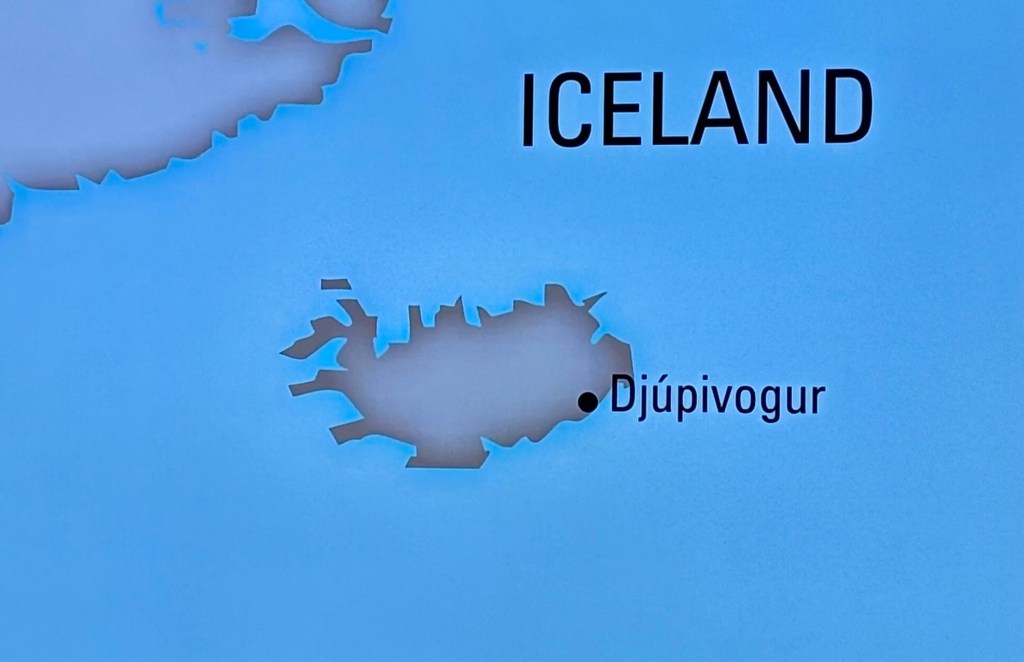

This was our first inkling of a view of Iceland!
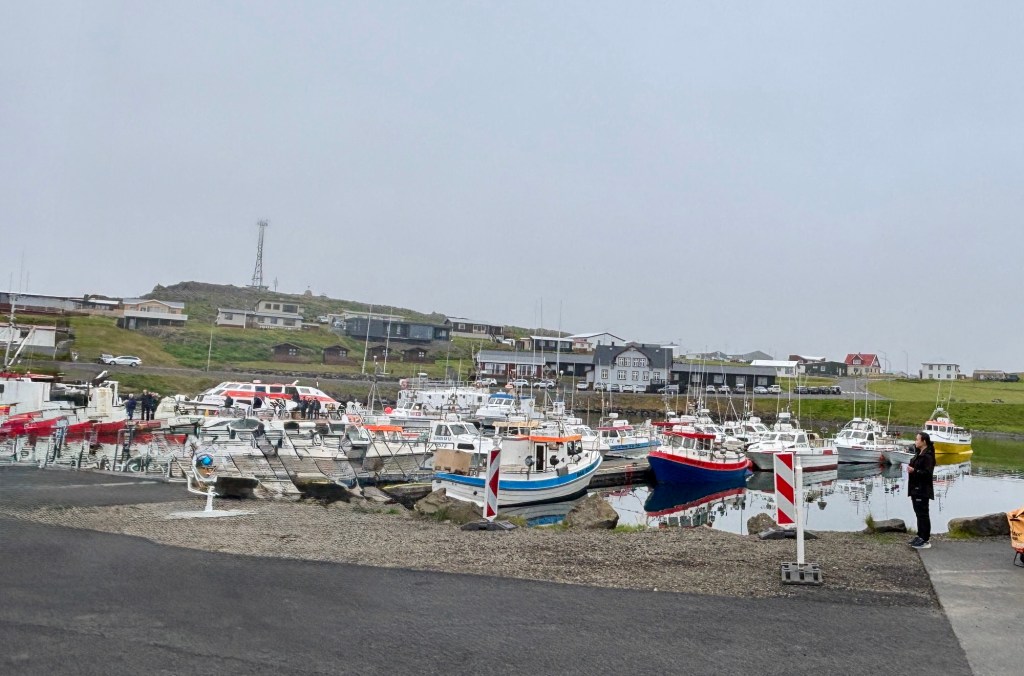
It looked a little better as we made our way onto land on August 14.
Our tour this day, our first in Iceland, was to the Valley of Waterfalls — the Fossardalur Valley.

Our driver’s name was Sigi. When I mentioned she was our second guide named Sigi, she said it was a common name. (The first was our guide in Norway who was from Iceland.)
Sigi also told us she wasn’t our guide, just the driver. Djupivore, population 500, doesn’t have the infrastructure to support cruise ship tourism. When ships arrive, area vehicles and drivers are gathered. At least in our case, the vehicle seemed new and was very clean. The vehicle did not belong to Sigi, but to a local sheep farmer.

It was the first time we’ve ever been parceled out into 16 separate vehicles on a tour!
Sigi did warm up to the activity and told us about growing up on a sheep farm. She is planning on moving to Spain for the winter and may or may not come back.
She said Iceland has no mosquitoes, and no snakes. Its largest predator is a fox.

These fences are to keep the foxes out of the seabirds’ nests.
Iceland does occasionally get a polar bear from Greenland arriving on an iceberg. They are always euthanized.
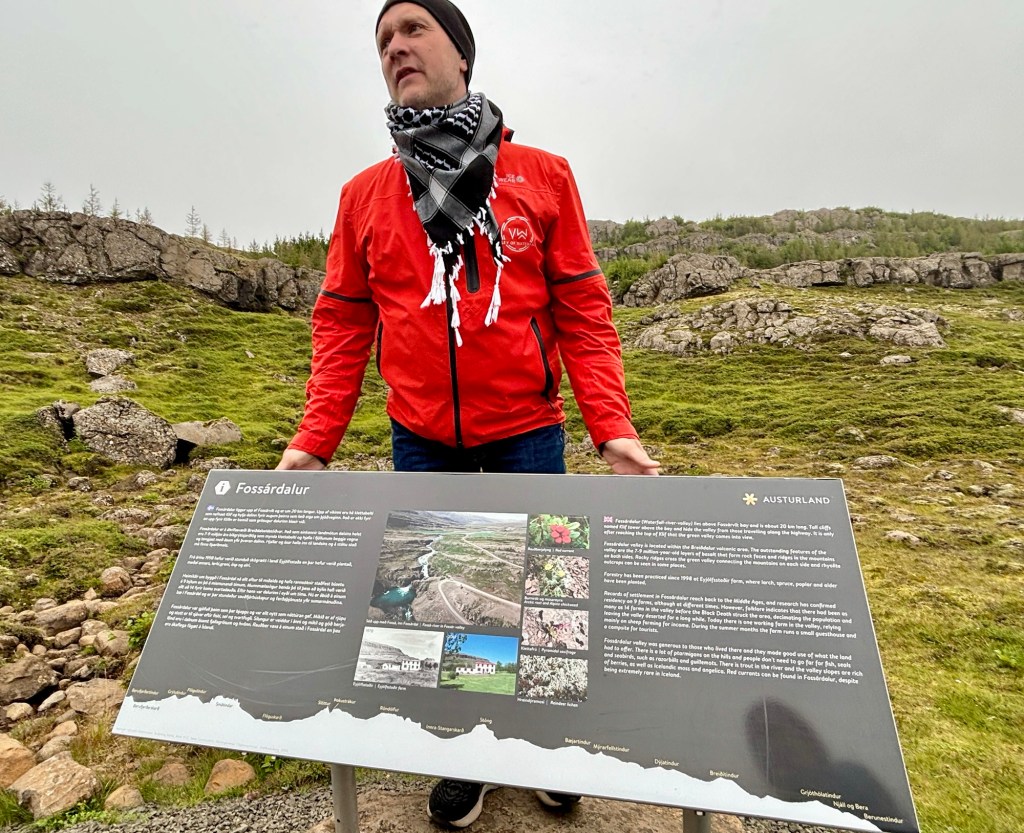
At our first stop we met our primary guide. We presume he also drove one of the vehicles. He told us a legend about horses, acting like sirens, trying to lure humans to their deaths.

We walked to a waterfall that is currently flowing only one cubic meter of water instead of the normal eight. The area is not getting as much snow in the winter as before and the lakes that feed the waterfalls are down significantly.
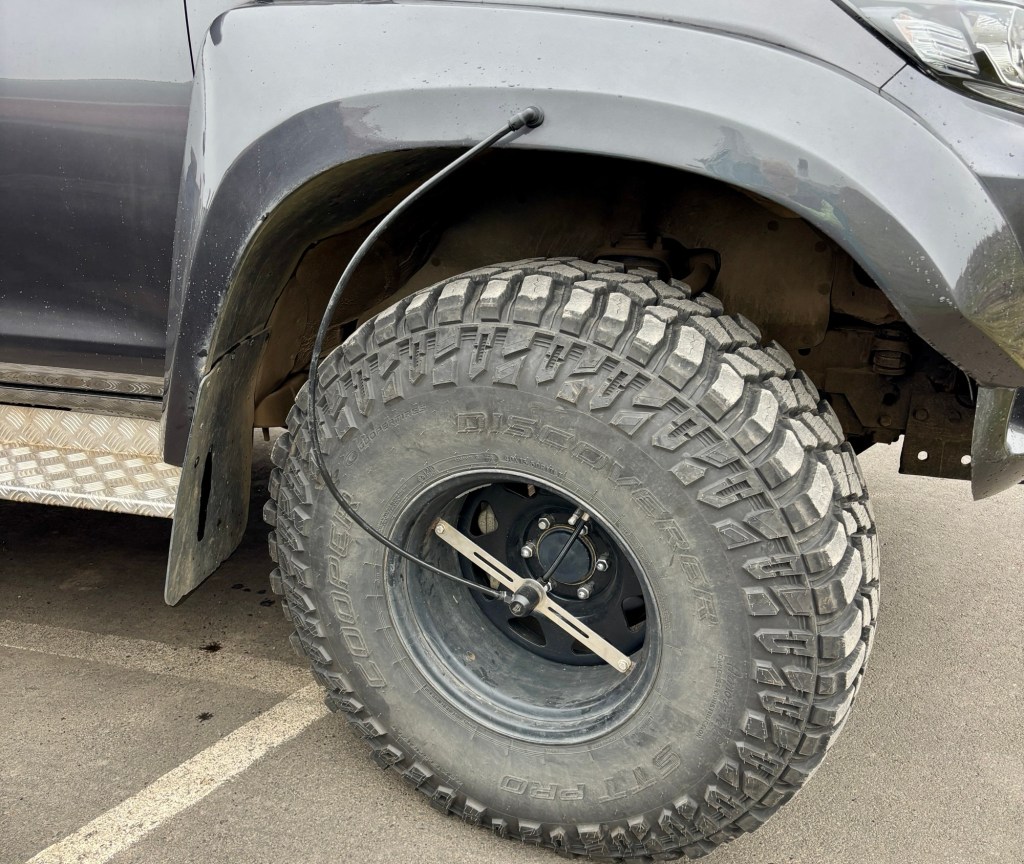
The 4 x 4 SUV that we were riding in, had separate air pumps to adjust tire inflation level for comfort.

Sigi would try to get a small stool in place for me because of the height of the vehicle and my lack of the same. Eventually we fell into a routine where I would get down on my own but she would have the stool in place for me when it was time to re-load. There were four passengers but the other three, Randy and a couple from Canada, were all taller. This was not our vehicle, but the stool being placed was the same.
There were a few vehicles that were so tall that even the men needed a substantial ladder to load up.
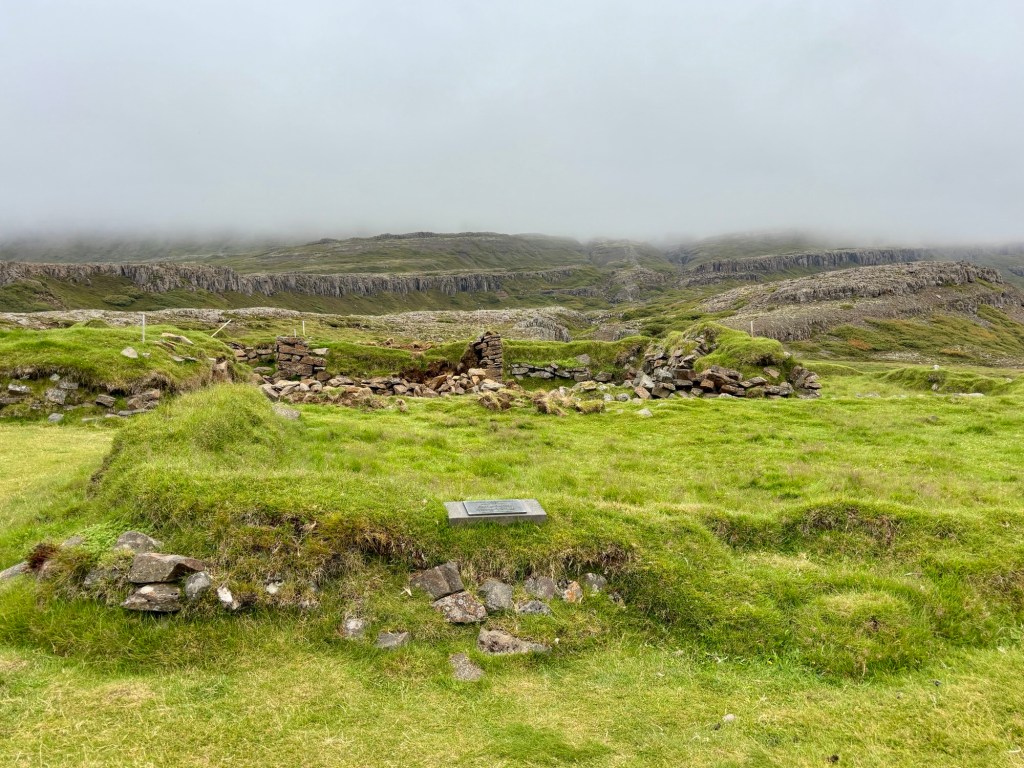
We stopped at an old homestead site that was occupied last from 1922-1944.
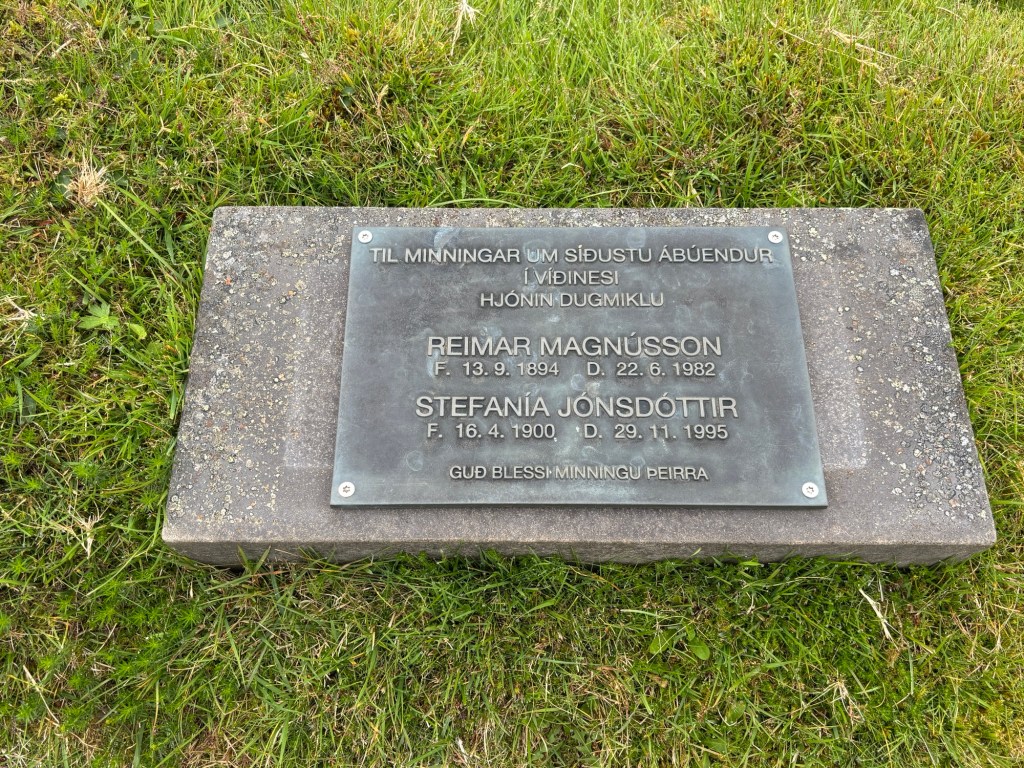
The couple that lived in this house had 17 kids in 22 years. All were single births and all survived. Of course, given the span, they didn’t all live there at the same time. Sigi’s dad was one of the 17 kids.
The family eventually moved to a different location.
Our main guide’s great, great uncle also lived in the house.
Which brought up the question of finding a husband or wife that isn’t family. The answer was a bit vague. Mostly they don’t choose a person that is too close. This topic came up in almost every stop in Iceland.
Sigi’s dad, mentioned above, was actually her foster dad. She told us when her mother was unable to care for her, the family who raised her took her in. It sounded as though it wasn’t a legality – just the community taking care of one of their own.
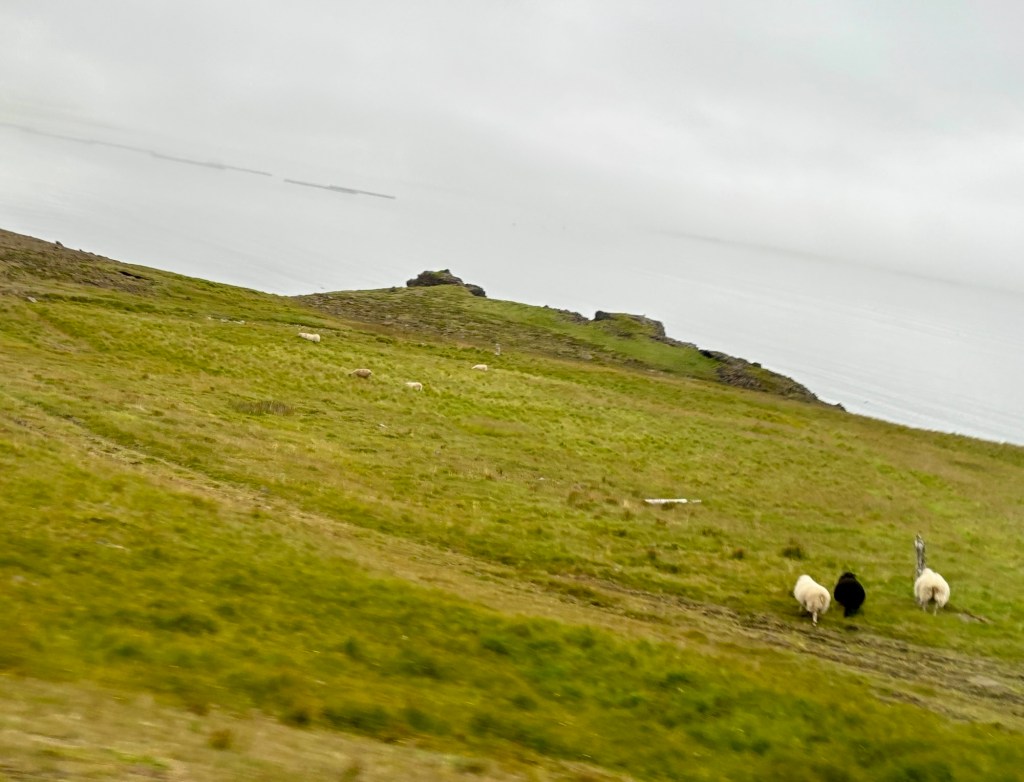
We saw a lot of sheep seemingly enjoying their time at pasture.
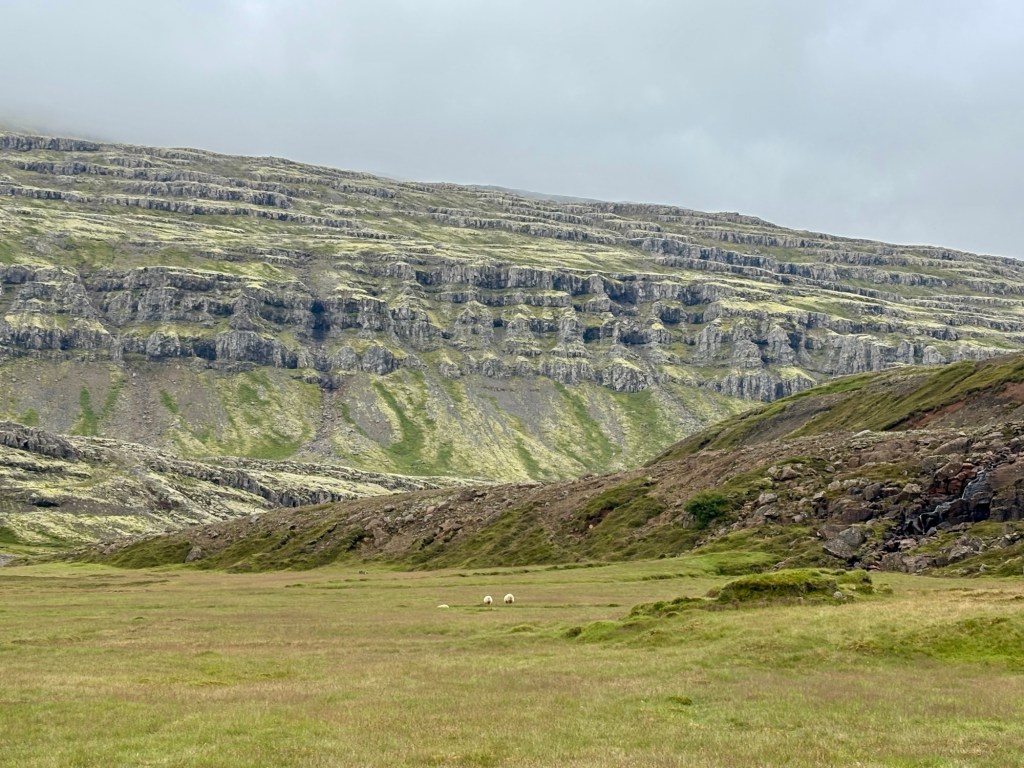
The sheep will be collected to go back down before winter. A lot of the gathering is done by groups of people walking through the hills but some people use dogs or ATVs.
Most sheep are found in the first walk. They always do a second walk but use drones to find those that were missed.

For the winter months, about 500 sheep will be kept in a barn about this size. There is no heat but the crowded conditions keep them warm.
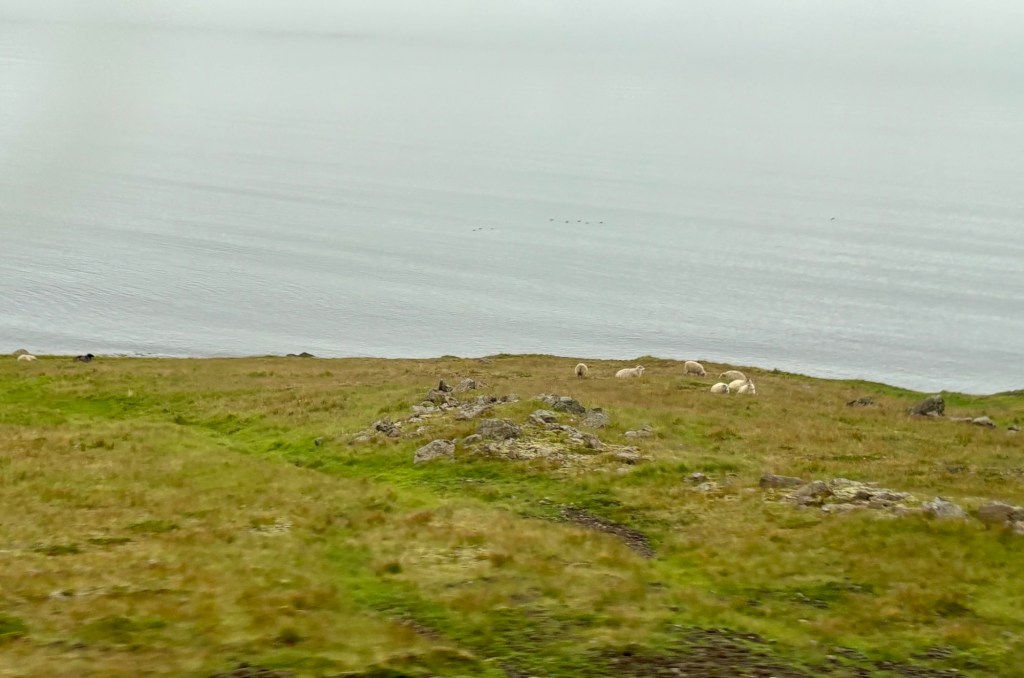
To be able to make a living from sheep, a farmer must have about 1000 head. Many have fewer and a second job.

We stopped and got a great view of the valley looking back.


Sigi and the other driver/guides pointed out berries called crown berries. We had a chance to pick and eat some as well as a few blueberries.
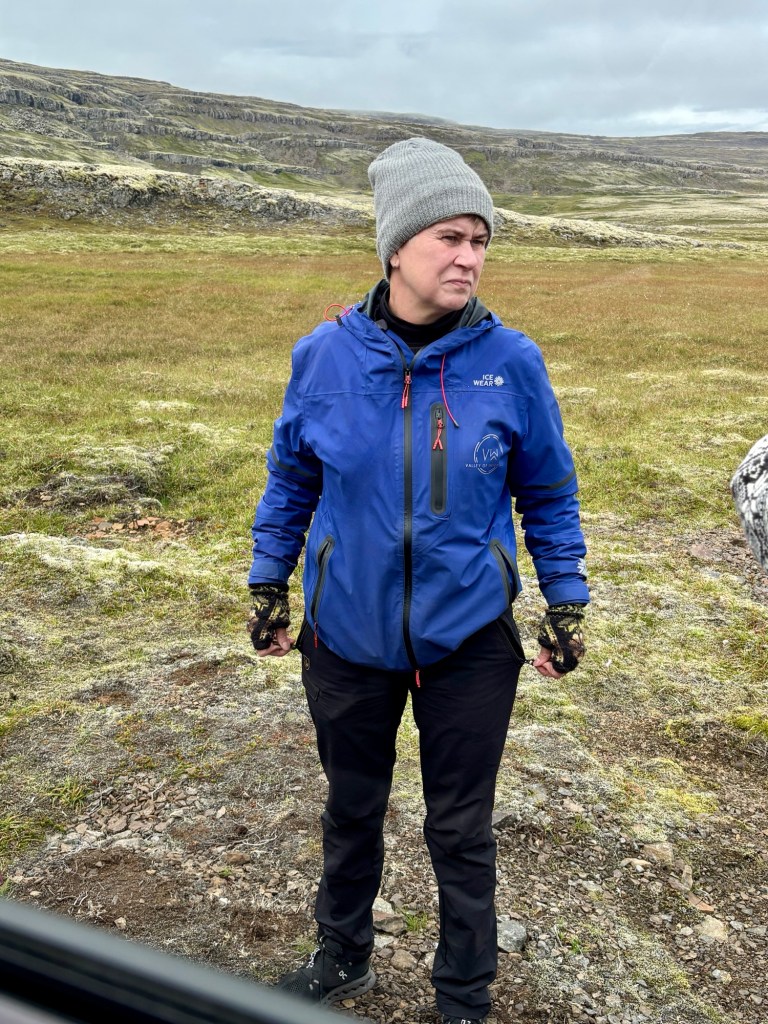
Sigi was memorable – in a good way. We had the definite impression that she would just as soon have been able to go about her life without the inconvenience of a cruise ship tour. Yet, in another example of the community taking care of one of their own, they provided assistance to the main guide who had this business but couldn’t do it on his own.
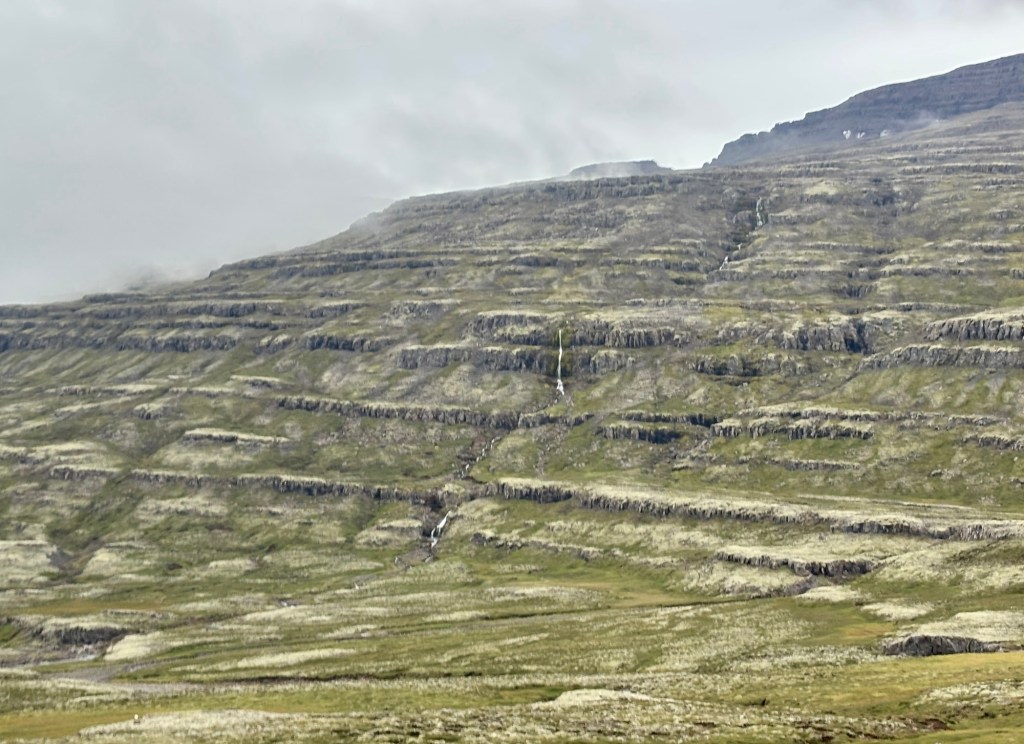
Iceland has some wide open spaces and the promised waterfalls.
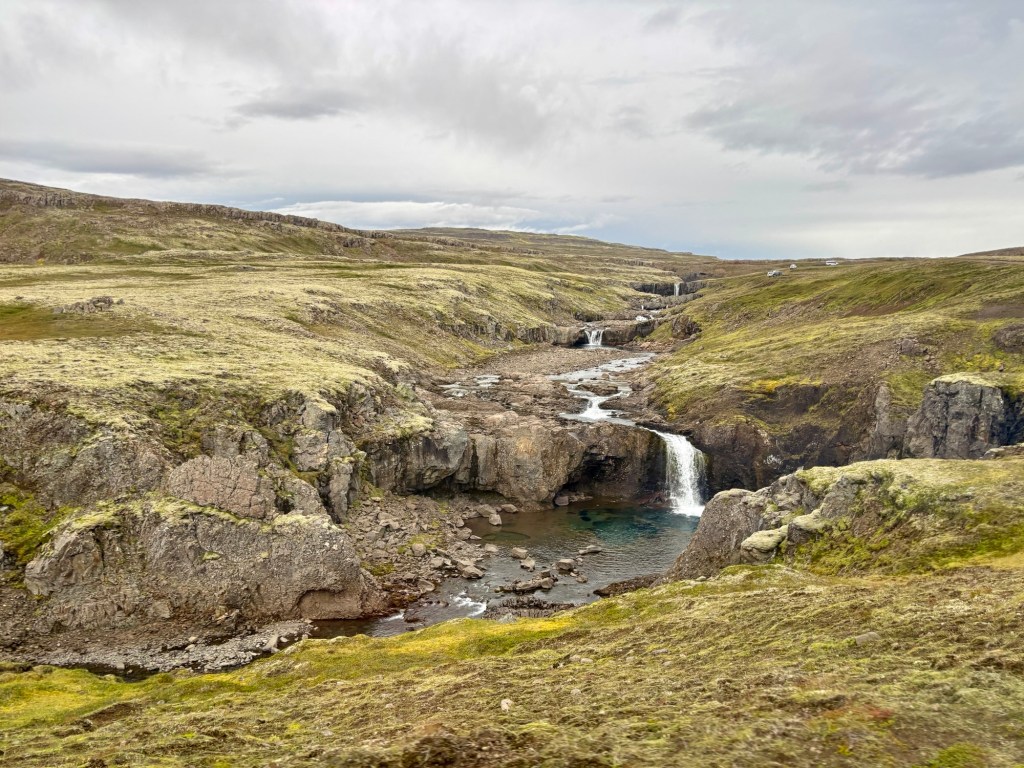

It also had a few survivors in unlikely places.

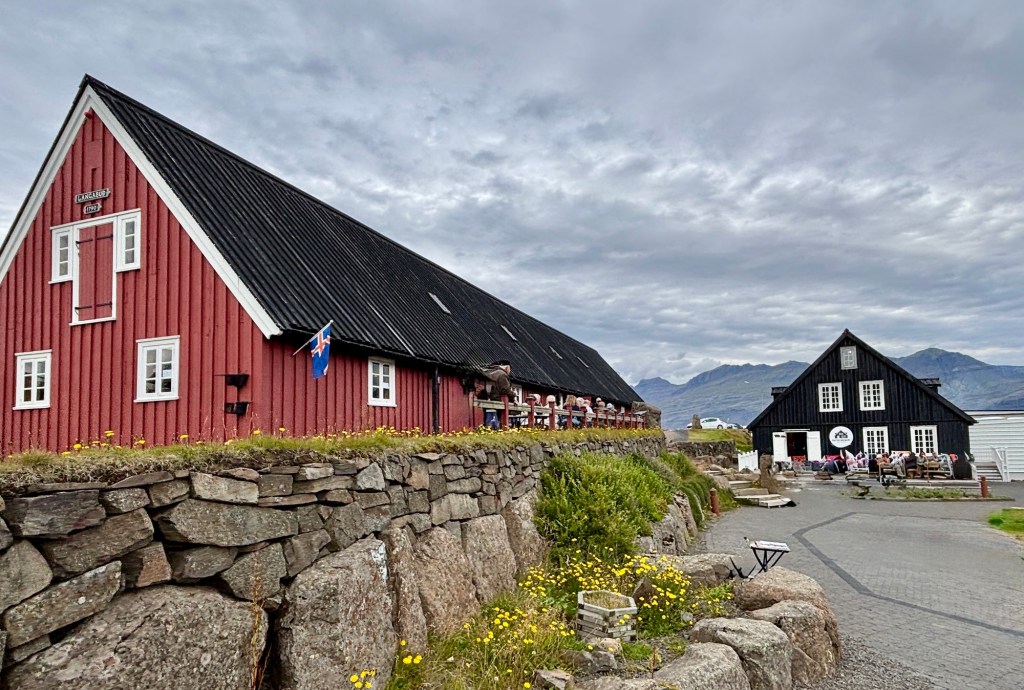
We were brought back down and the vehicles gathered for a second tour. Many of our fellow tourists, took the opportunity to visit the two commercial entities at the pier.

Enticed by this picture from our introductory talk on Djupivore aboard ship, we went in search of the Eggs of Merry Bay by Sigurõur Guốmundsson. Revealed in 2009, 34 eggs each represent one of the local birds.

The eggs are generally the same size except for this one which represents the red-throated diver, the official bird of Djupivogur.

Obviously, the lighting, positioning and enhancements of my photos don’t match the professional rendering.

This is what my original looked like before I “cleaned it up.”
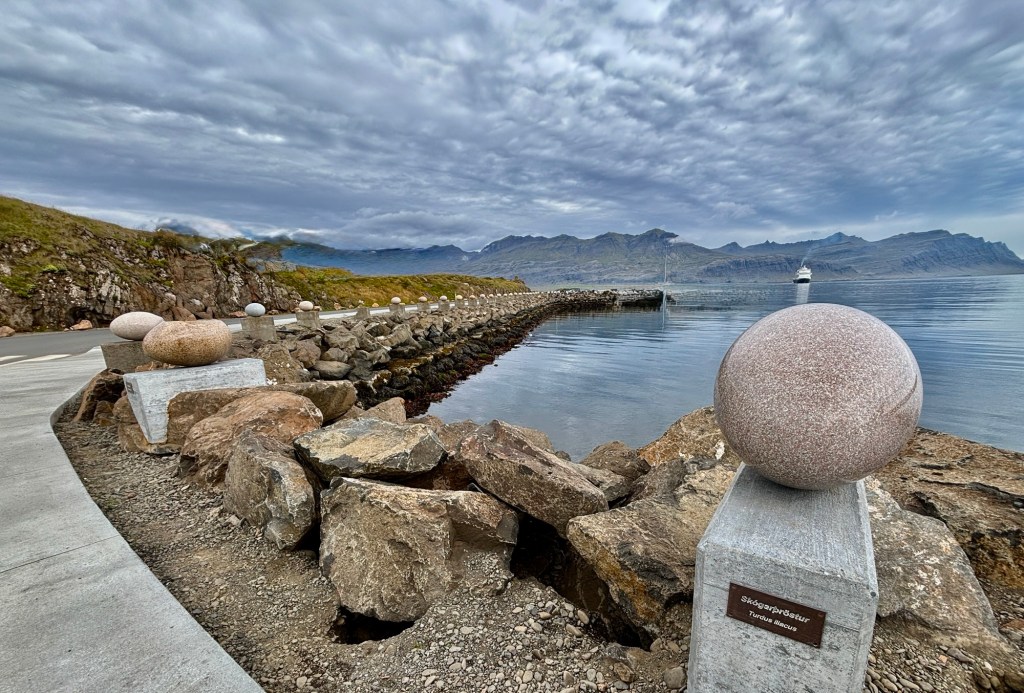
This might be my favorite, with Nieuw Statendam in the background. It was an interesting place and very much worth the 1/2 mile walk there and back.

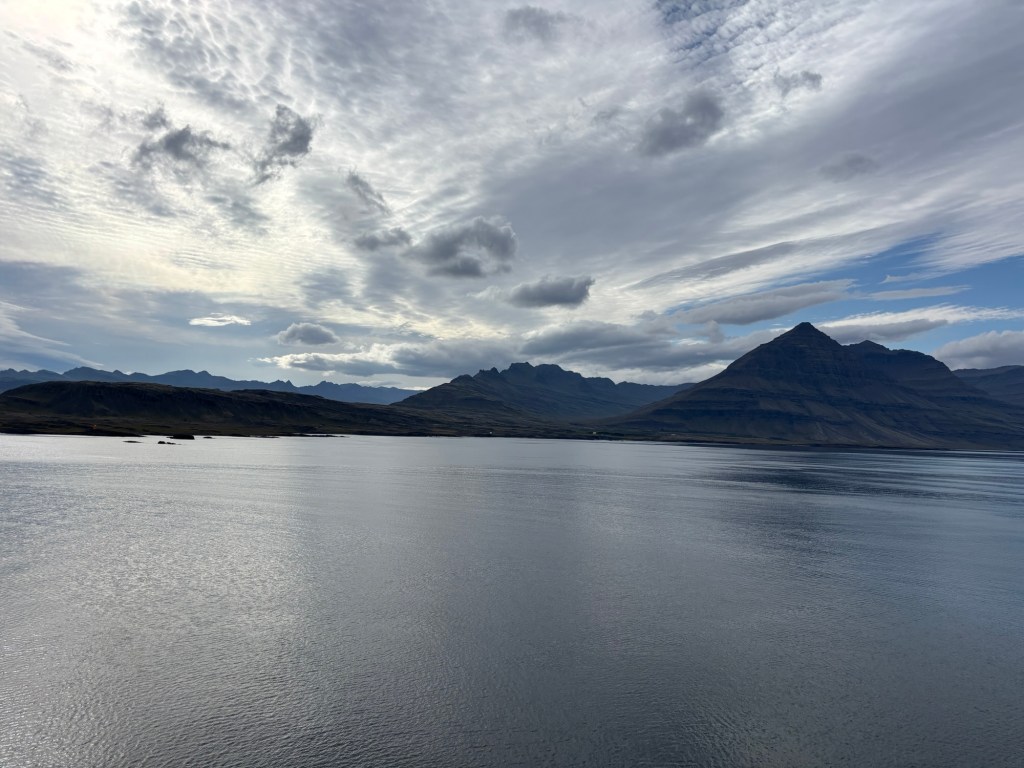
From the ship we looked back on our first stop in Iceland.

Goodbye to Djupivogur.
Next Up: Our second of five ports in Iceland, Akurerki.


 Serene Wandering