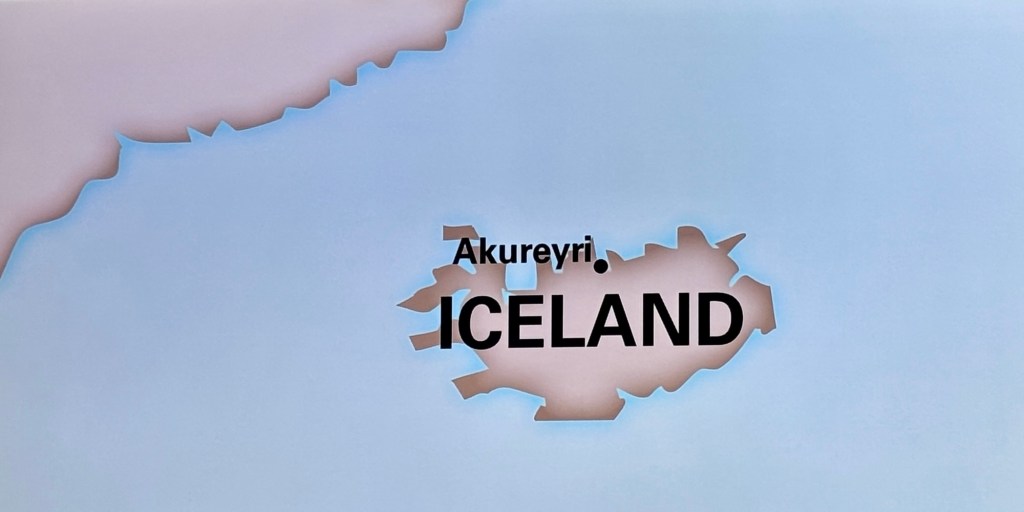
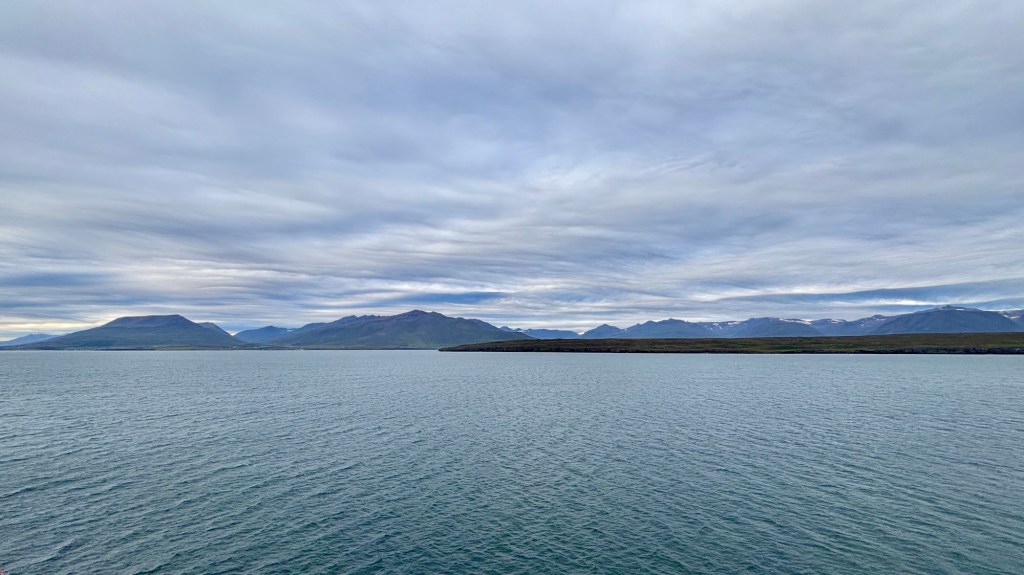
We sailed towards Akureryki on August 15. There are 20,000 residents in Akureryki, Iceland’s second largest city.
We were at breakfast when the captain announced a jumping whale on the starboard side. That is the side our cabin was on but we weren’t there.
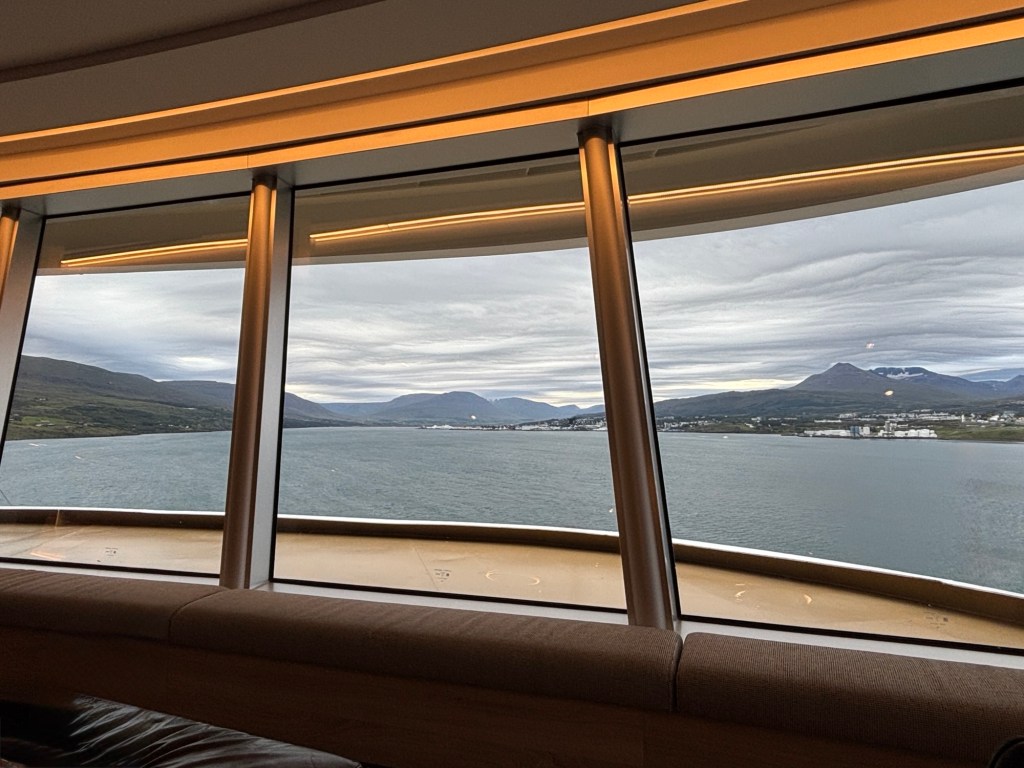
We spent an hour in the Crow’s Nest before leaving on our late morning tour.
We met our tour guide, Lila, who was wearing a tank top when we had on our winter coats. She said she was not cold because “it IS summer in Iceland.”
As always, our guide shared information as we traveled by coach. Lila told about the retiree practice of meeting at geothermal pools in the mornings for a soak and conversation. Geothermal pools are everywhere around Iceland.
Our tour involved three destinations and the first was the botanical garden. We don’t generally choose to visit gardens, but I did want to see the other two destinations, so here we were.
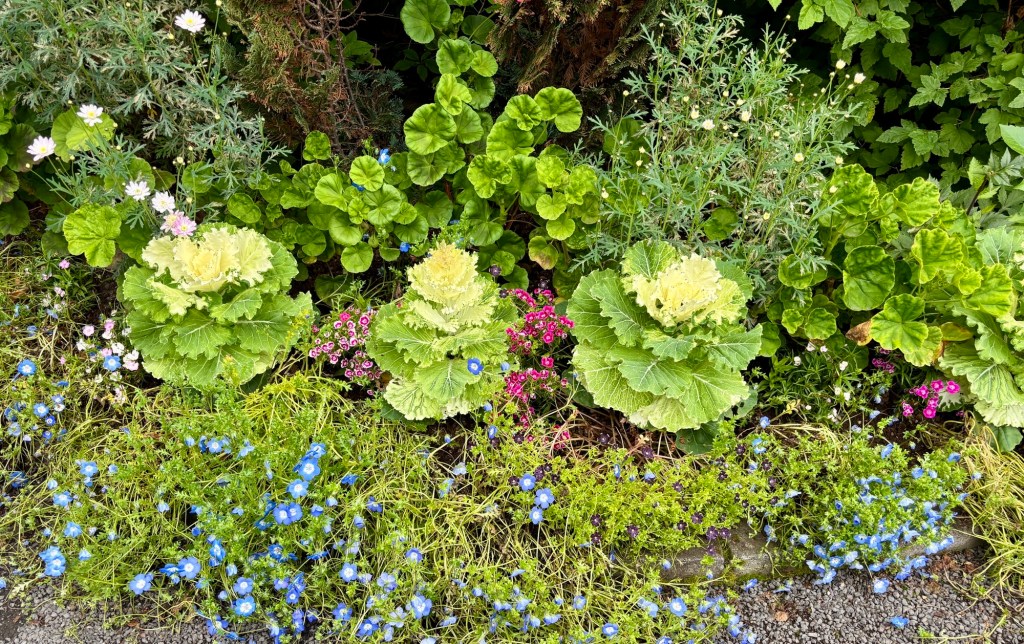
However, once arrived, even we were impressed with the work and variety of colors and plants – especially in this environment! The garden is only 53 miles from the Arctic circle, one of the most northern botanical gardens in the world.

The land was set aside in 1910 for the formation of a park and was designed by a society entirely of women. It officially opened in 1912 and was the first public park in Iceland. It transitioned into a botanical park in 1957.
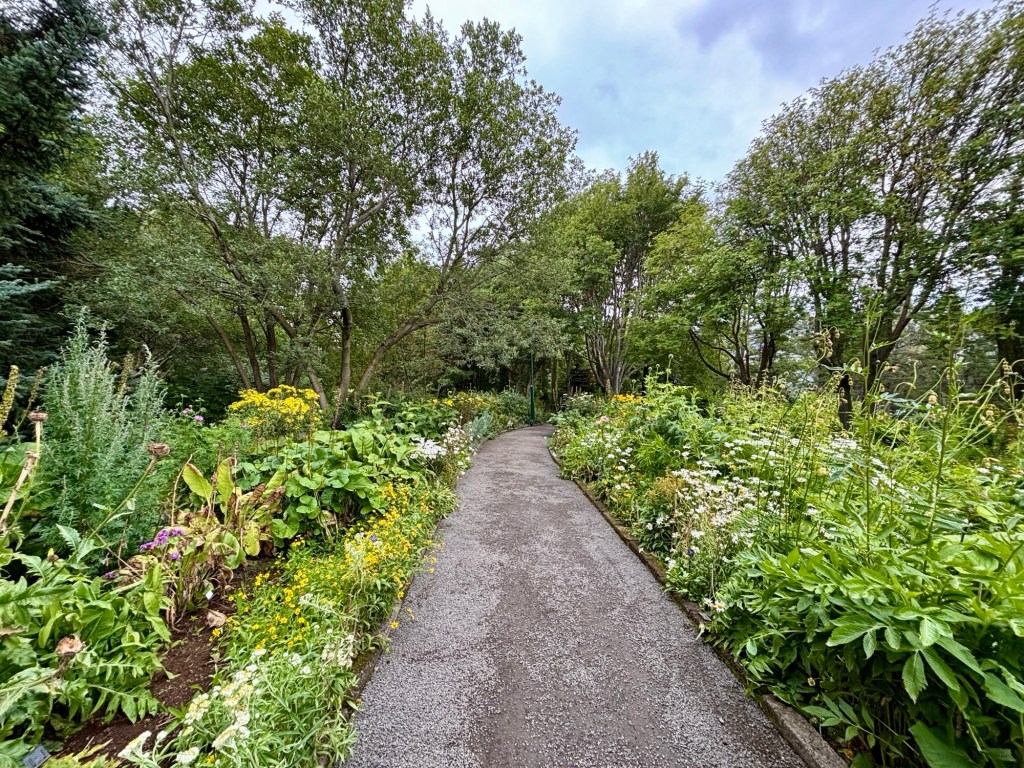
The garden features around 400 species of Icelandic plants, with more than 7000 species overall. That includes plants from arctic, temperate and high mountain areas.

As we left Akureryki, we could see Nieuw Statendam and a smaller ship nearby. The smaller ship was the Windstar Star Pride. She sails with 312 passengers compared to 2600-ish for our ship.


The farmers in this area primarily grow hay to feed the animals during the winter. There are more sheep than people, 2.5 per person.

Lila said those weren’t really hay rolls, they are marshmallows for the trolls. The black ones are licorice flavor. Trolls are a big part of Icelandic culture.
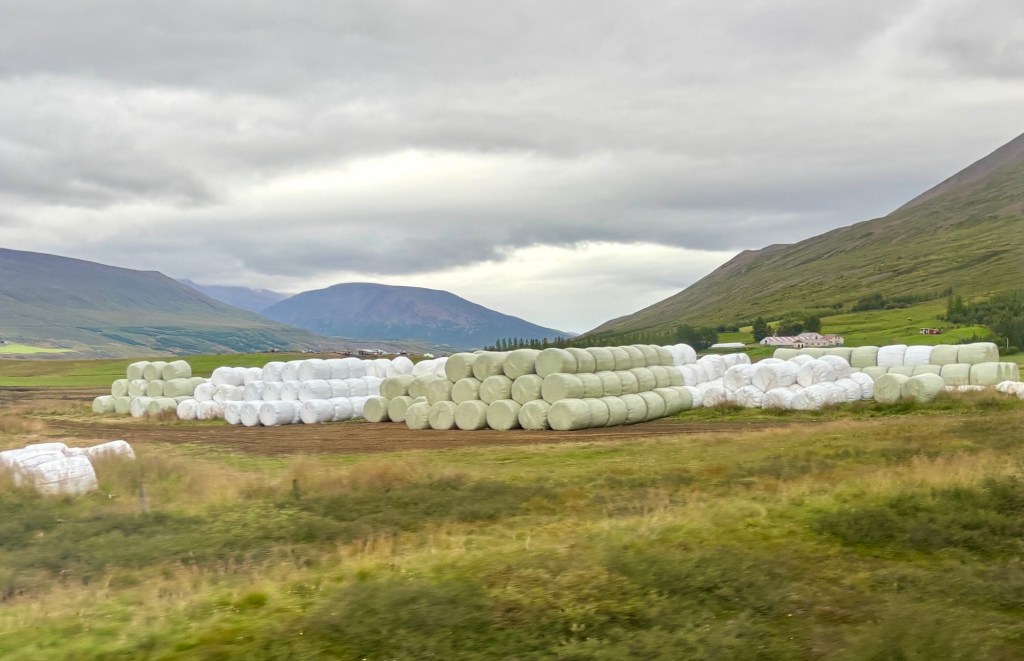
Seriously, there were a variety of colors of hay rolls. Different colors indicate donation to a particular non-profit.
Sheep are sheared twice a year and the wool is still somewhat profitable. Meat is far more profitable. The bones and horns are used in jewelry.
A few farmers will grow root vegetables like potatoes and carrots but grains do not grow there.

As we approached our next destination, we could see the Skialfandaflioi River, Iceland’s fourth longest river.

Our second, and primary destination, was Godafoss, the Waterfall of the Gods.
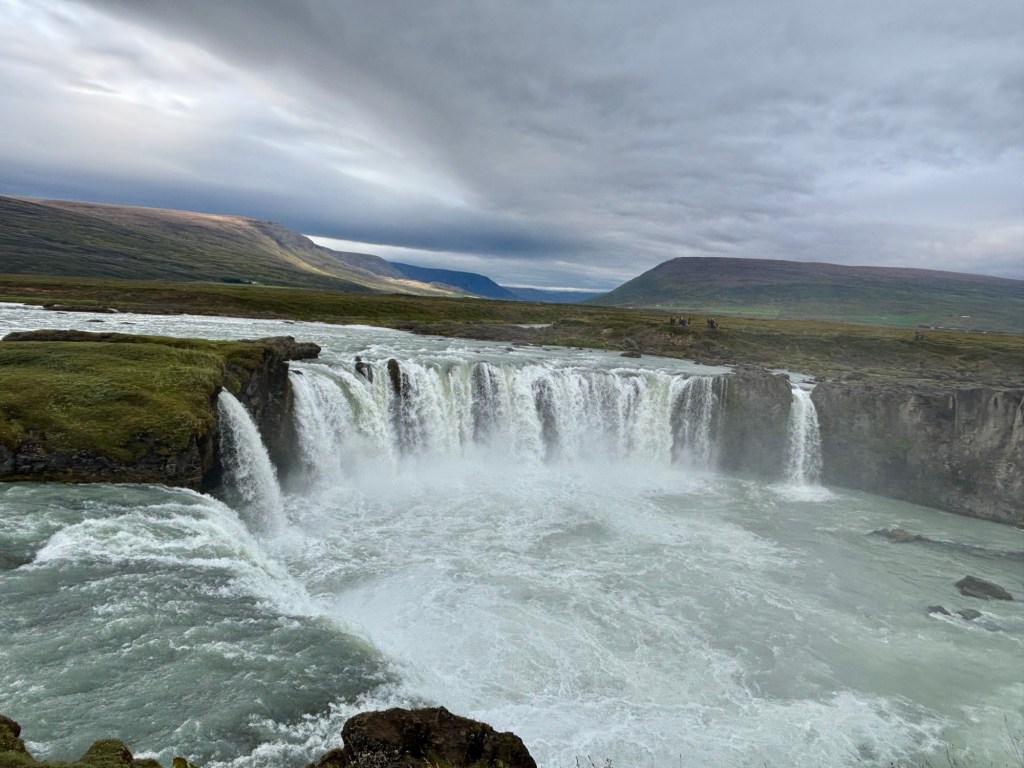
Godafoss has a nearly 40-foot drop along a curved lip that is almost 100 feet long.
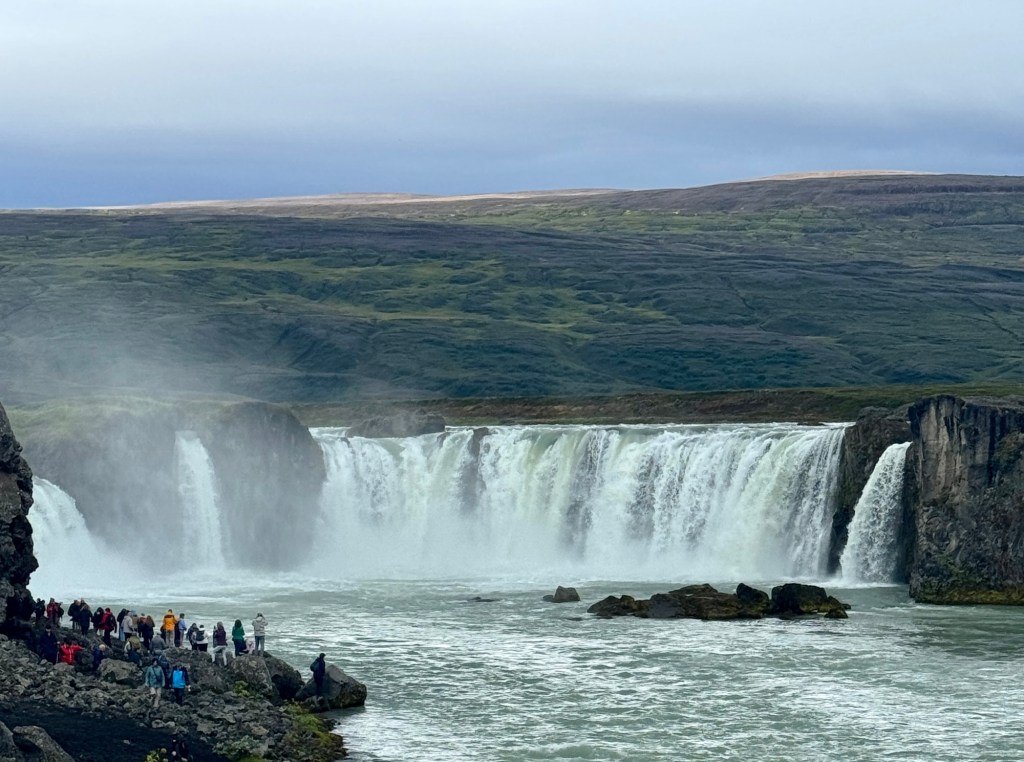
It is one of the world’s notable waterfalls.
There isn’t consistent criteria for a list the world’s “best” waterfalls. The lists would be different if determined by height, water flow, width or other selected criteria.
Our last destination of the day was Laufás, a church site and residence. This area has been a religious site from the pagans to the Catholics to the present Lutherans.
A Catholic takeover happened in 1047 and priests were leaders in the area for 500 years. The last Catholic priest in Iceland was beheaded here in 1517, as part of the transition to Lutheranism.

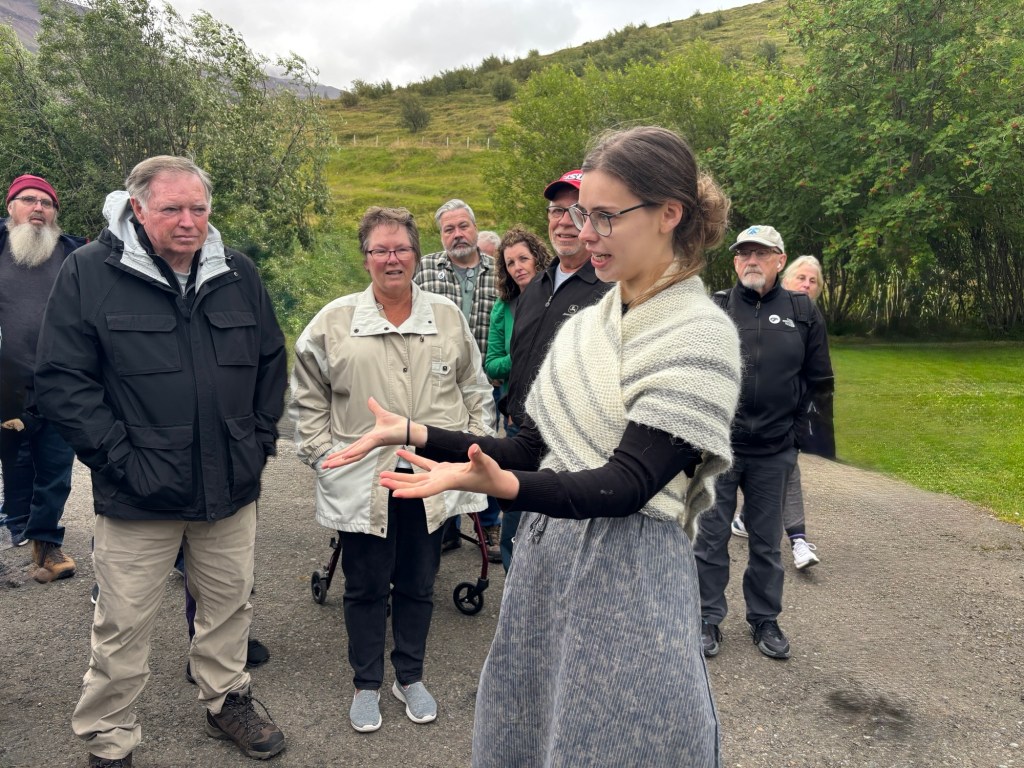
We met our local guide outside the former vicarage, now turned visitor center and gift shop. She told us a bit about the history and the residence and sent us on our way to explore. There were also a few docents inside.
This turf house was a wealthy vicarage and was built to allow for a minister with a large family and servant household. Some 20-30 people lived here at one time.

Even though this looks like five houses, it is really one interconnected building with 17 rooms.


Icelandic turf houses were the product of a challenging climate, offering better insulation as compared to buildings made of wood or stone.
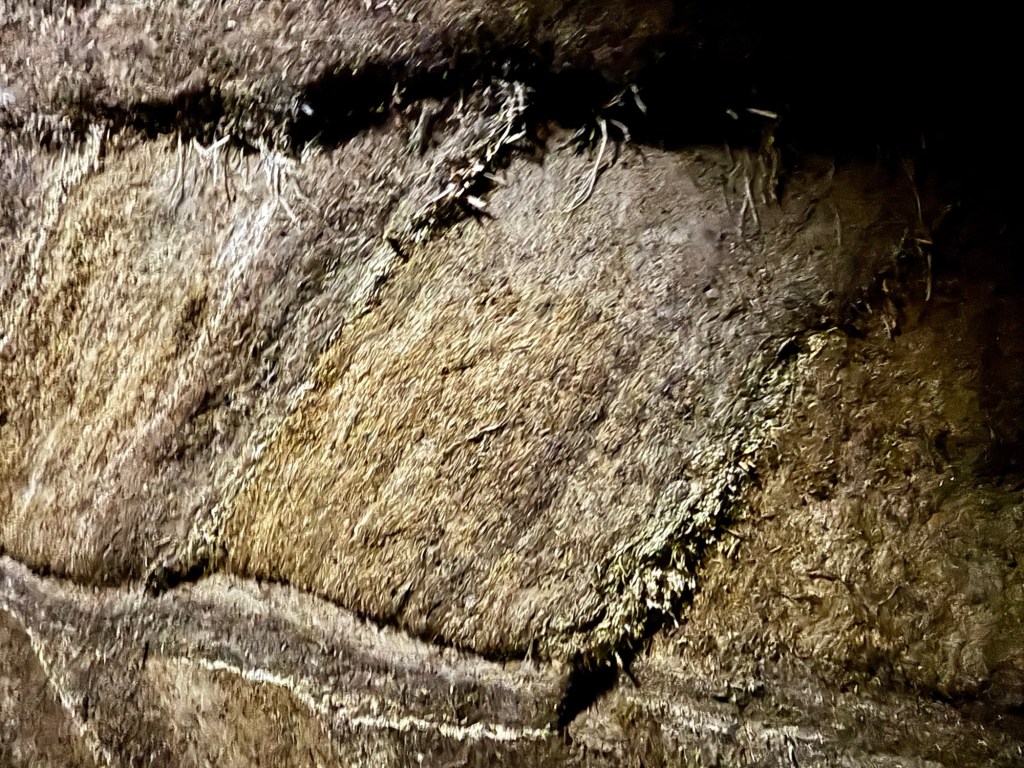


We could see some of the construction techniques.

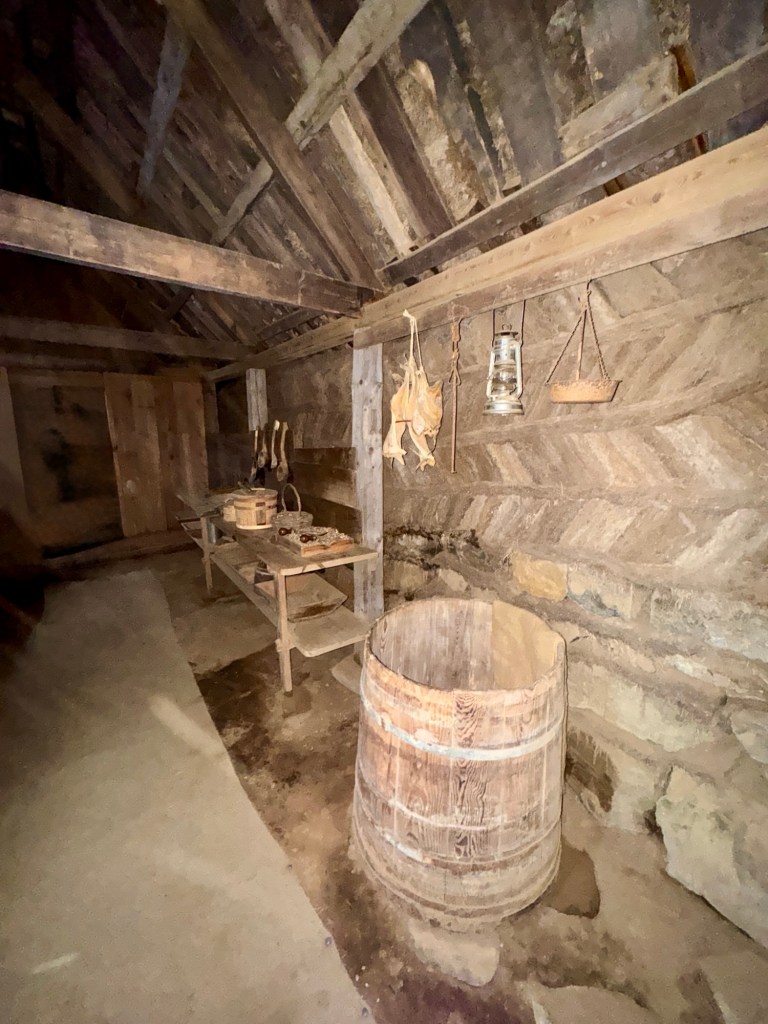
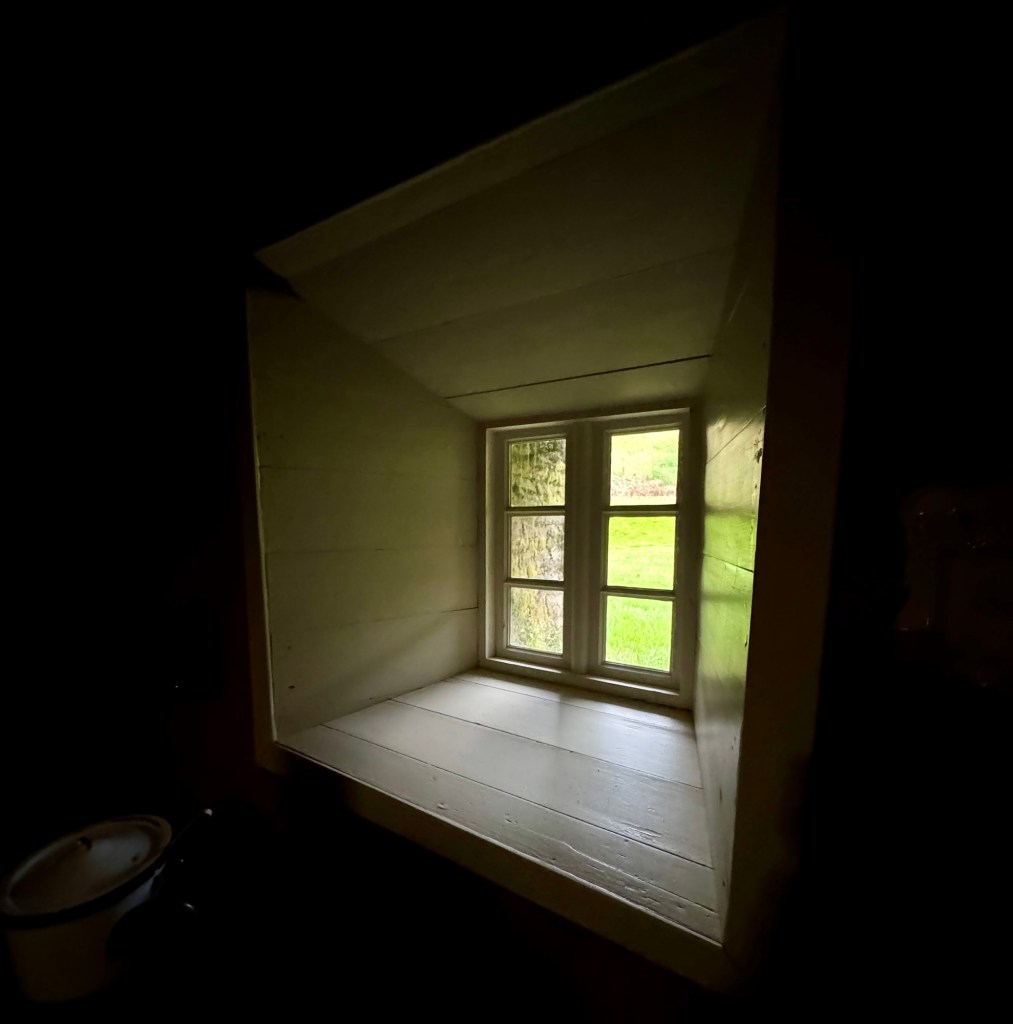

Some of the rooms were very bare and dark, probably how the work and servant areas would have looked.
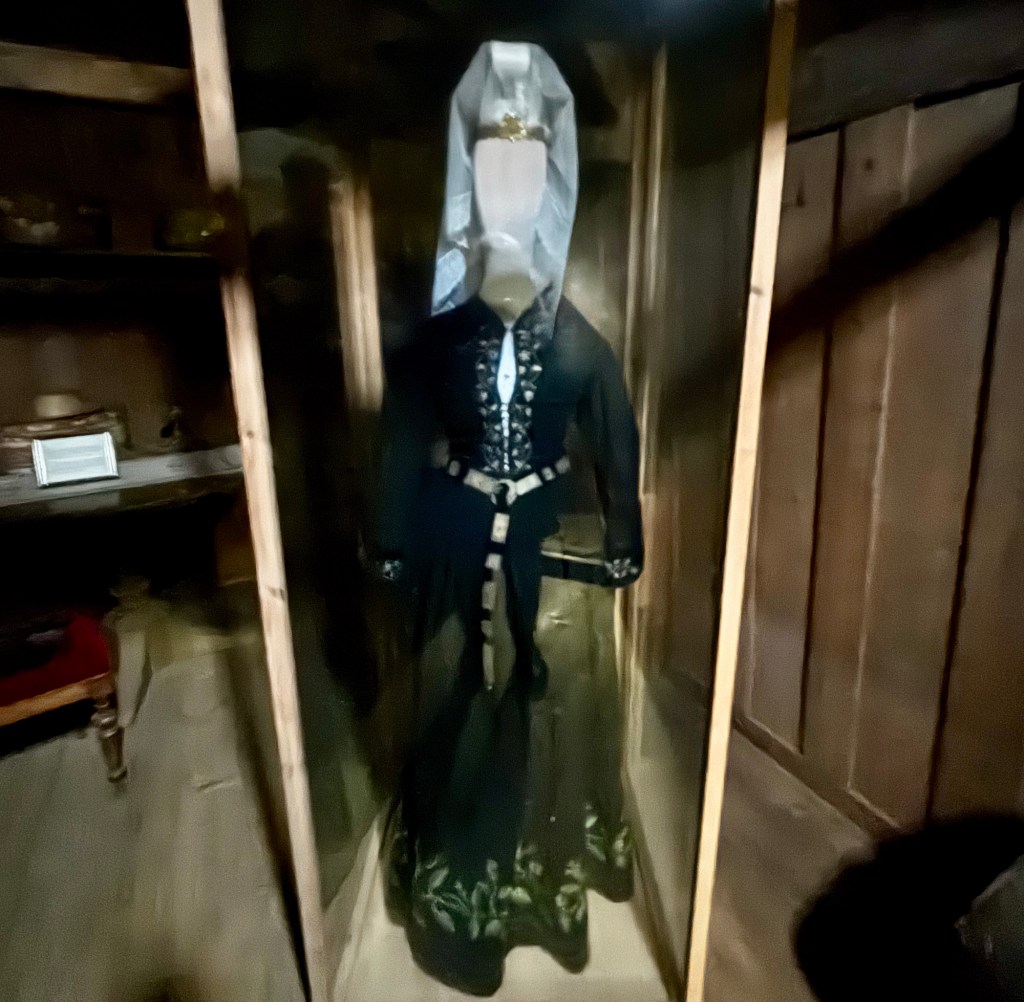
This was a traditional wedding dress, displayed in one of the darker rooms.
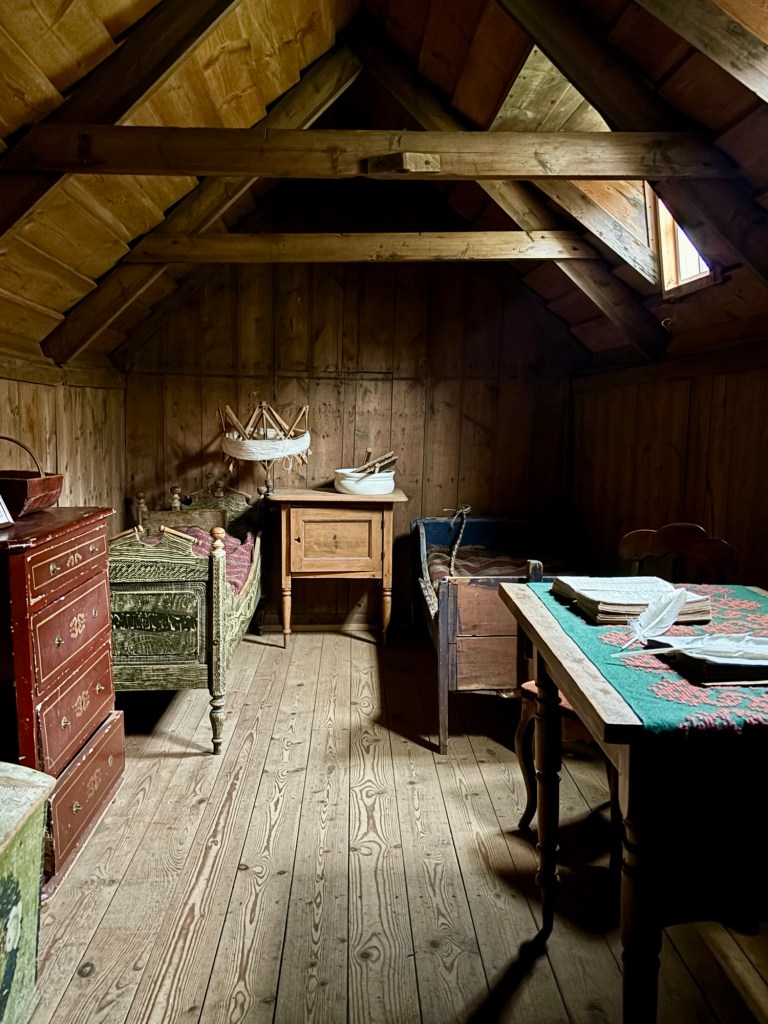

Other rooms show how the building may have looked for family residents.
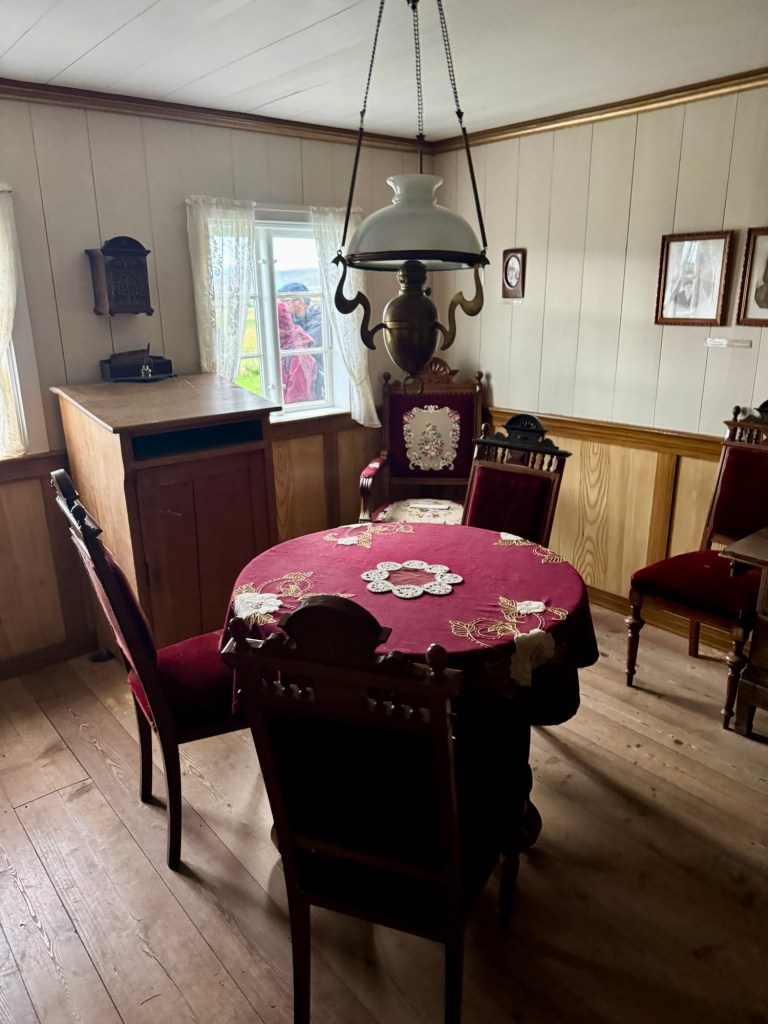
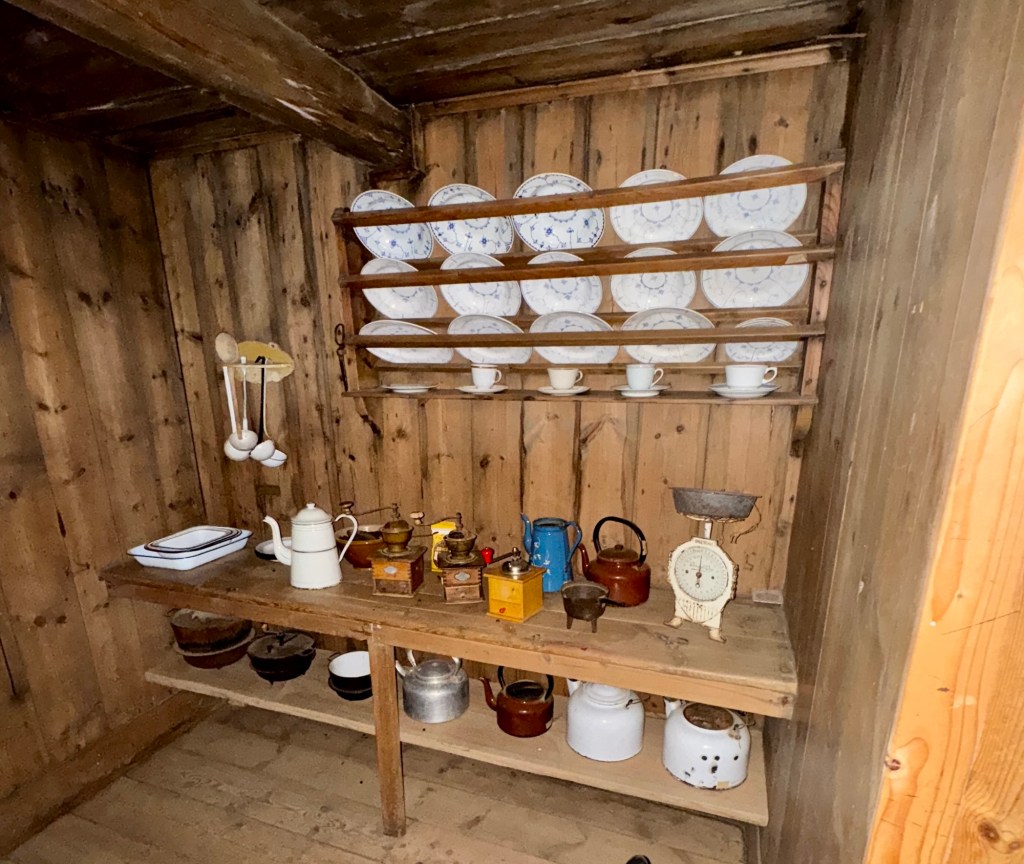
The Laufás site was rebuilt from 1866-1870 by Rev. Björn Halldórsson, who served from 1853-1882.


The Laufás turf house is now owned by the National Museum of Iceland.
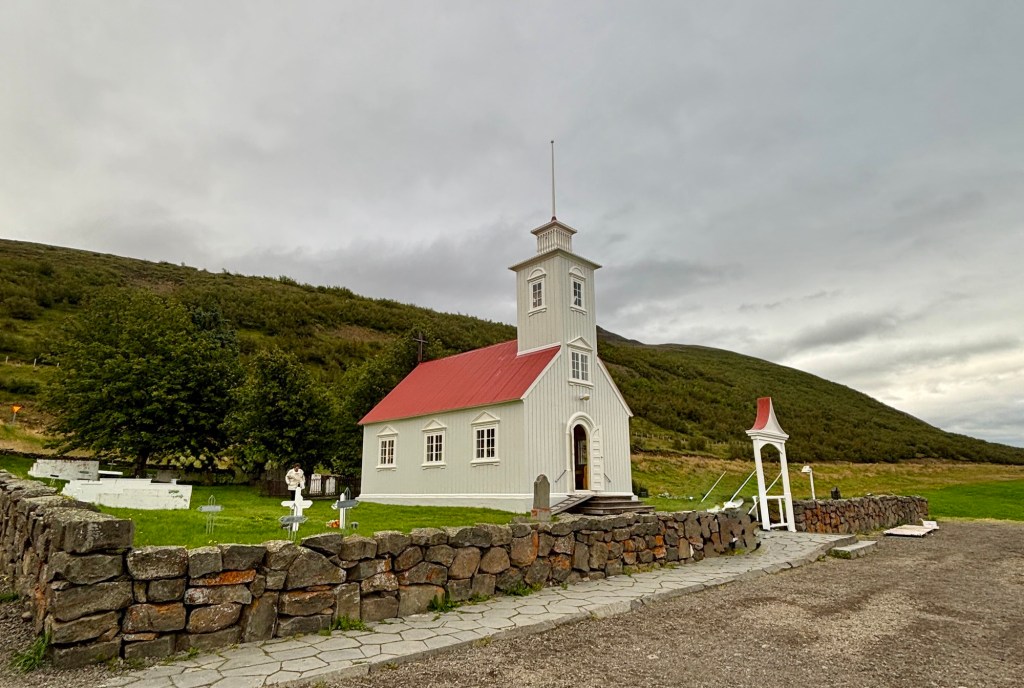

This Laufás church was built in 1865 and is still in use.
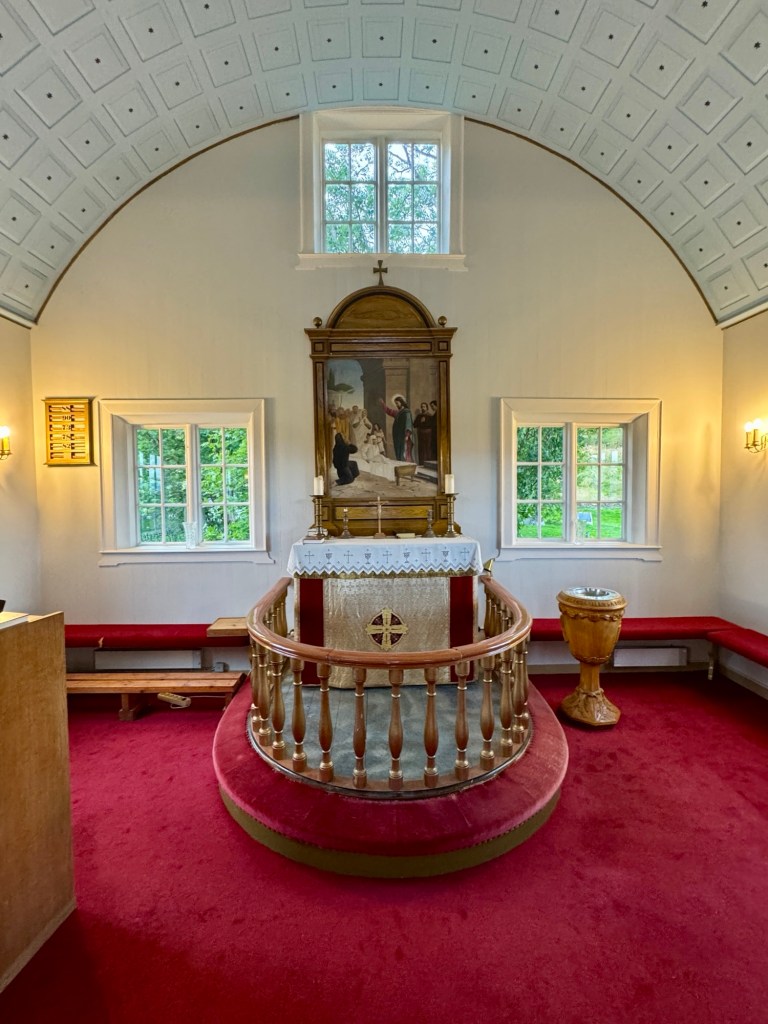

Its pulpit was built in 1698.
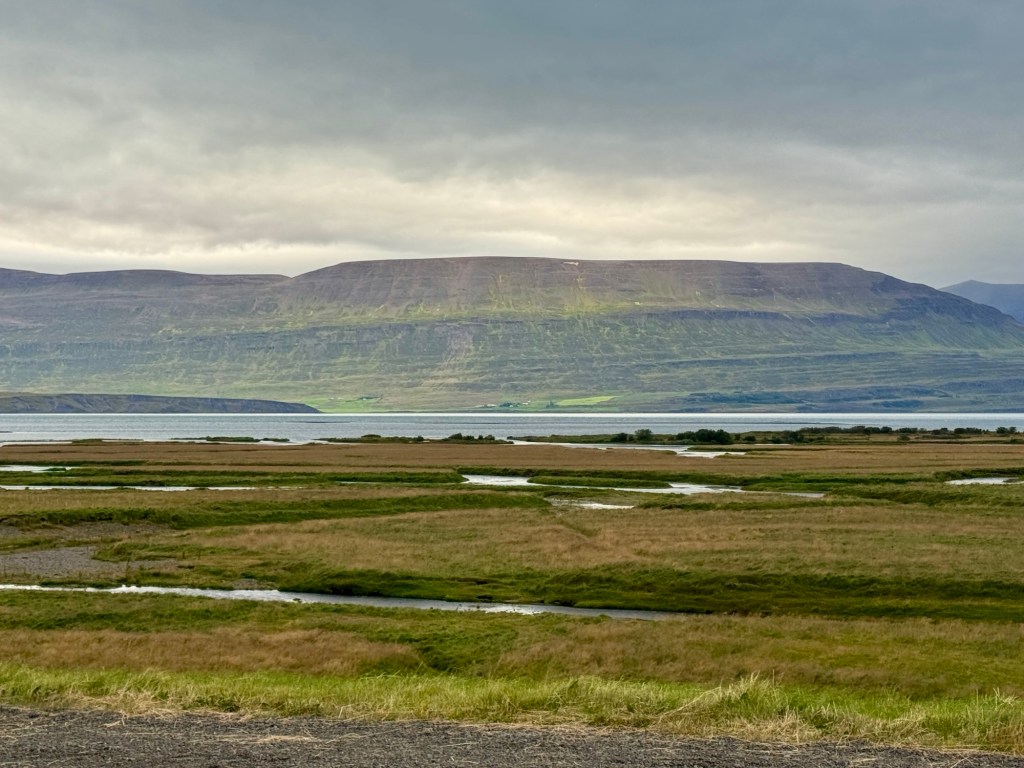
This turf house vicarage is much more elaborate than most turf houses in Iceland. The church and vicar could afford this elaborate home because 5000 eider duck nests were spread out across the marsh. The down from the eider ducks funded the church and residence.
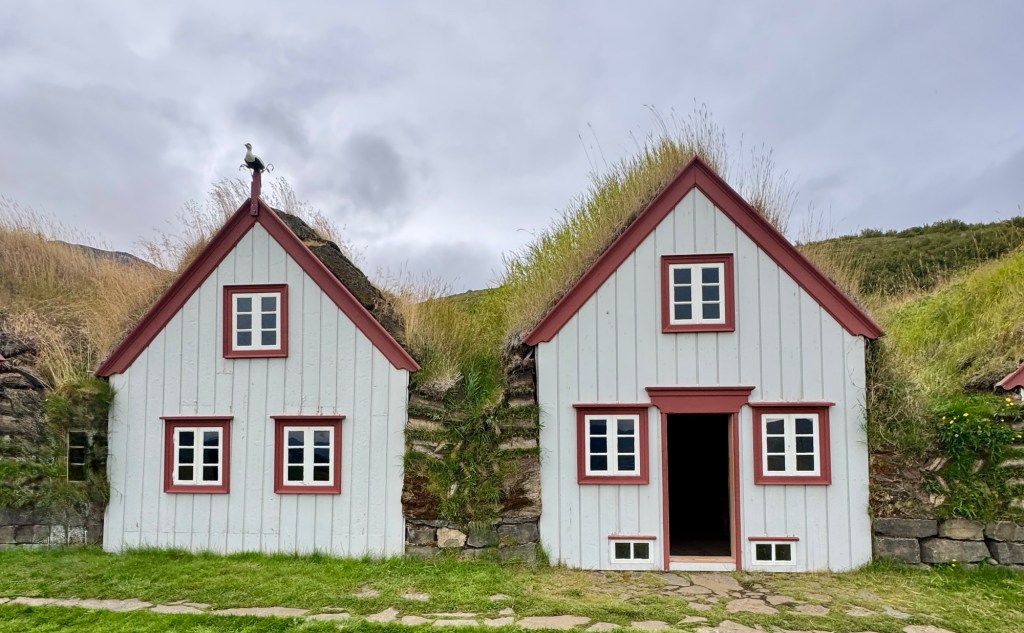
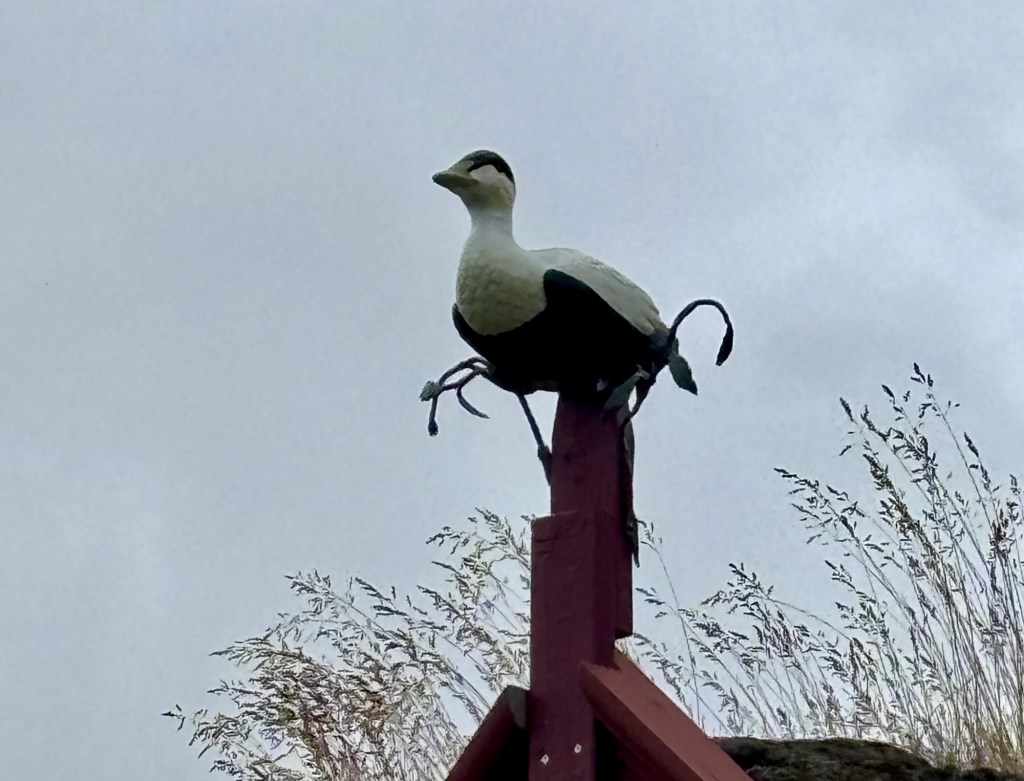
An eider duck is featured on the peak of the center of the five entrances.

Eider down is a soft and fine layer of feathers from the chest of the female. Hormonal changes cause the down feathers to loosen and the nesting female plucks the feathers to provide warmth for her eggs.

Eider down was gathered then and is still highly valued for its softness, lightness, insulation, fibre structure and compression resistance. Seventy-five percent of eider down is produced in Iceland.
Rev. Þorvarður Þormar, minister at Laufás from 1927-1959, was the last to live in the Laufás turf house. He moved into a new vicarage in 1936.
The current pastor is the thirty-third priest or pastor at Laufás since 1047. She is the third woman pastor – obviously in the Lutheran line.
The official religion of Iceland is Lutheran, but our guide said that people don’t care if your religious preferences is Lutheran, or not, or nothing at all. They also don’t care about your gender, sexual preference, vegan status, or politics. The Icelandic philosophy is do your own thing and don’t bother anyone else for doing theirs.
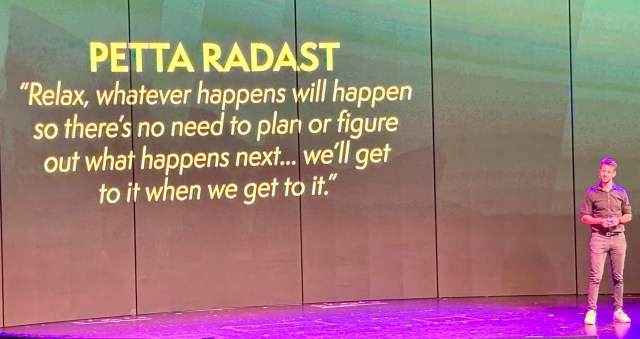
She also mentioned the Icelandic philosophy of petta radast. Our cruise director had told us about the mantra when preparing us for our visits to Iceland.
As we returned to town, our guide talked about how Icelanders are all related. They actually have an app to see just how related people are.
Lila told us local police officers don’t carry guns but they do have tasers. There is a three year training program to be a police officer in Iceland so they are very well prepared. There has been only one death incident involved police shooting EVER.
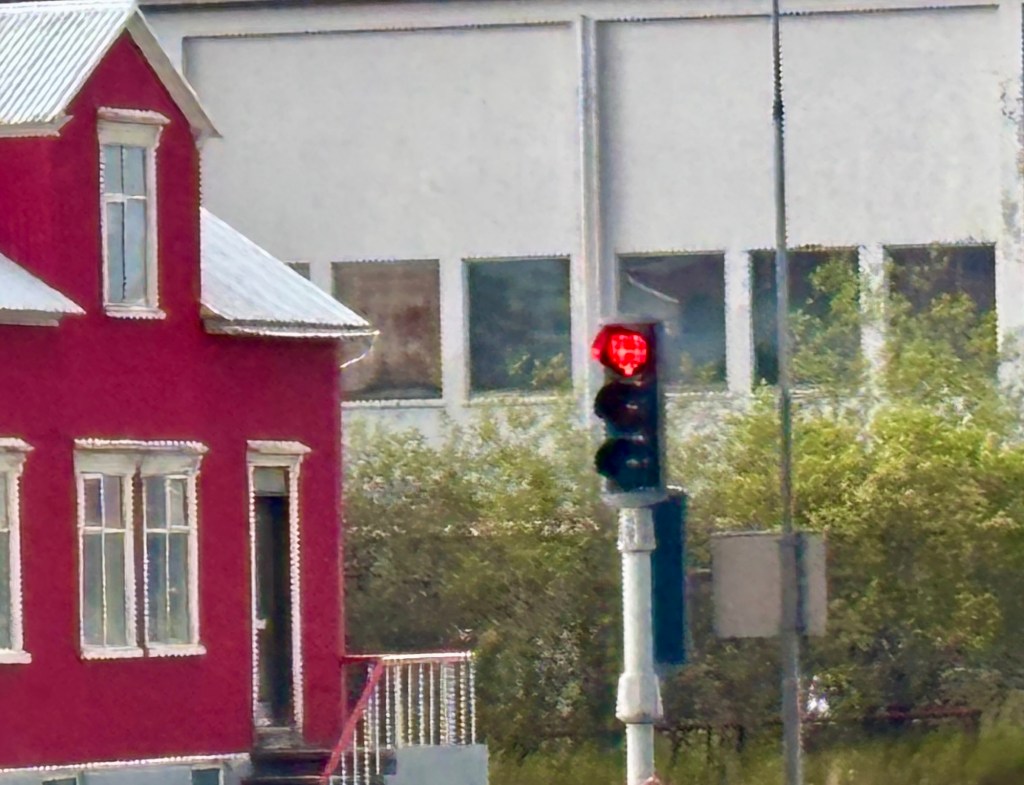
She made sure we noticed the traffic lights in Akureryki – the red lights are heart shaped!
Next Up: Our third Icelandic port –Isafjordur


 Serene Wandering