
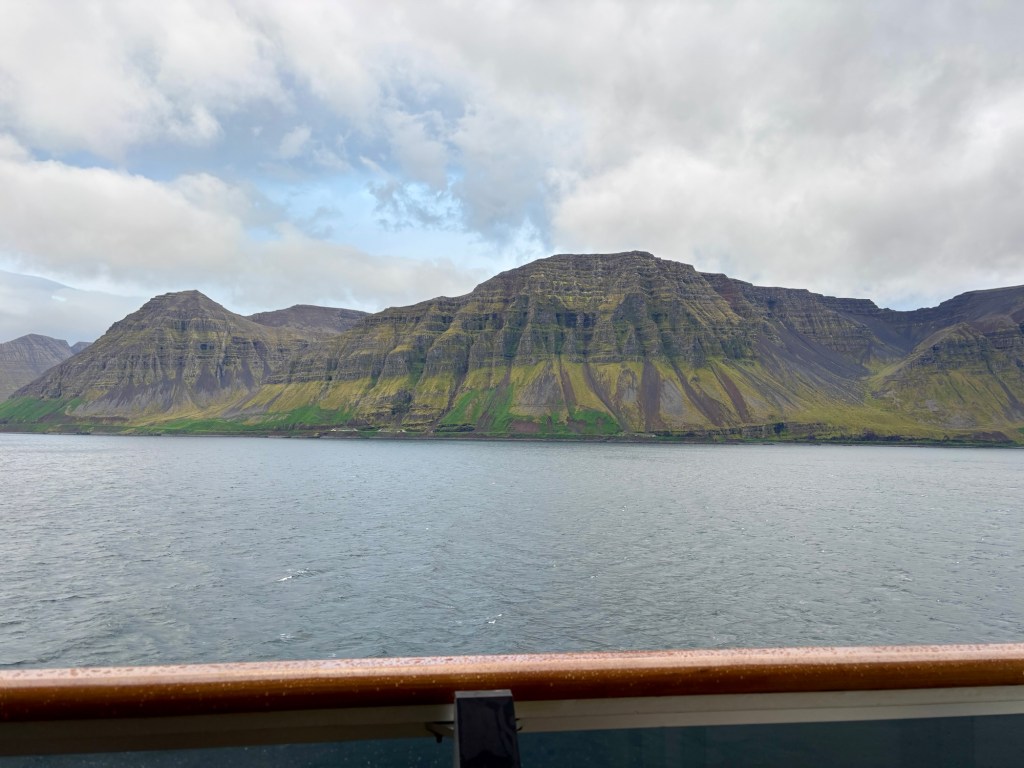
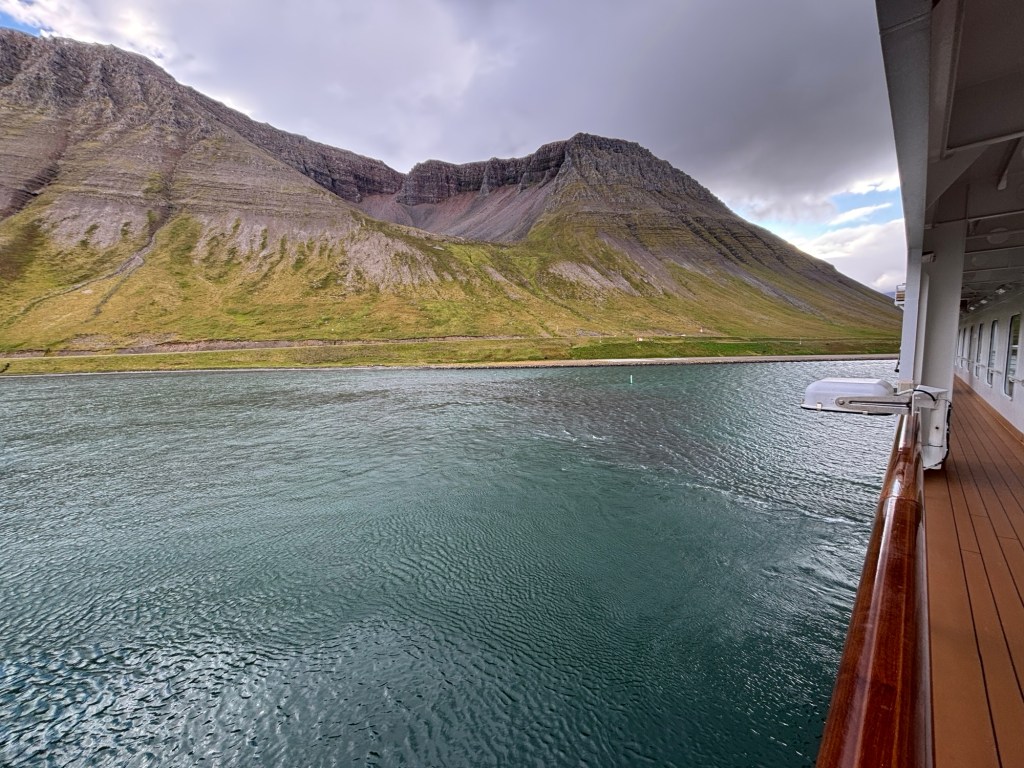
As we approached Isafjordur on August 16, we had nice views from our balcony.

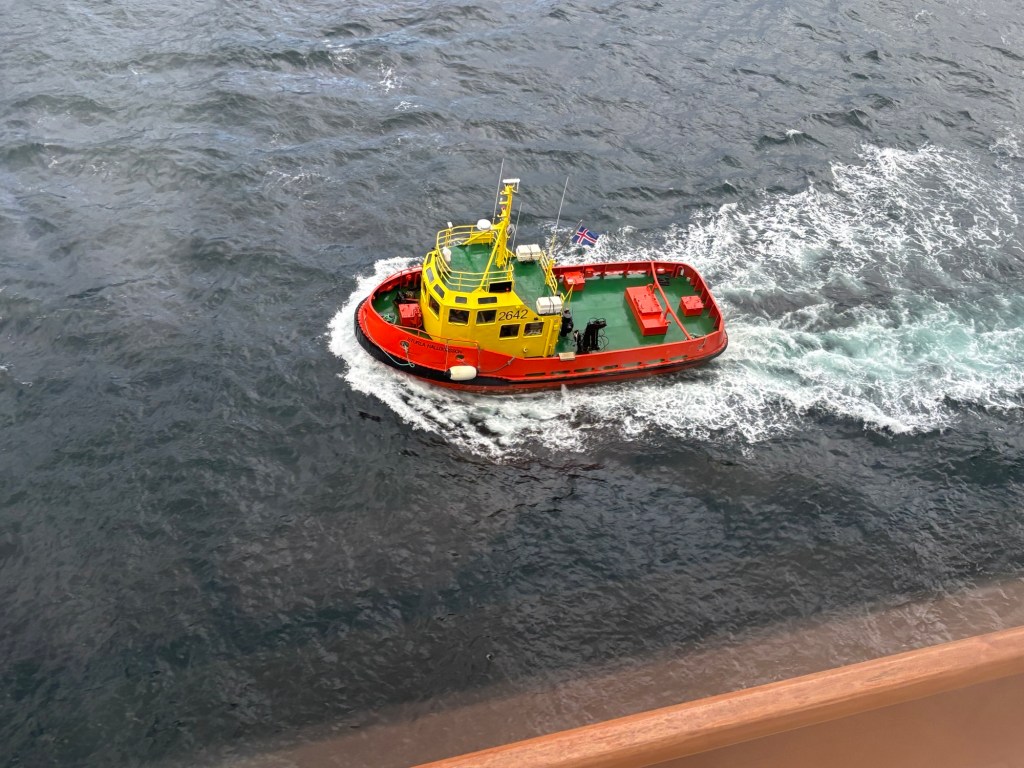
A pilot boat approached to drop off the pilot who would direct our ship into port.
We had decided, after our last fjord cruise, that it might be nice to do something different. We were on standby for a tour called “A Viking Thing” but kept our fjord cruise because it was too late to cancel.
We found out very early that all water related tours were canceled, including our fjord cruise. We felt badly for those who had booked whale watching excursions and were so disappointed to miss their chance. For us, we saw this as a potential opportunity. We spoke to the shore excursion people to see if we could wait around to see if there were any no-shows for A Viking Thing. (Unless you have an unexpected illness, we do not understand not showing for a tour. Tours from the ship are expensive, especially those in Iceland.)
Regardless of why, there were three no-shows. The shore excursion personnel tried to reach them but ultimately gave two spots to us. Our fjord cruise had been automatically refunded when it was cancelled and it took them just a few moments to charge our cabin instead.
We were off and running – almost literally – because the tour was waiting for us. A result of us being the last ones on the bus (probably people were wondering WHY we were so late), we got seats in front. Those are always saved for folks with mobility needs.

Our coach driver and guide were grandfather and grand-daughter. She spoke perfect English, with no accent. She was born in Iceland and moved to Norway as a child. Her family moved back to Iceland, but she moved to Denmark for university. All three of her resident countries stressed learning English. Thus, she speaks, Icelandic, Norwegian, Danish and perfect English.

The local harbor was beautiful.


Our guide pointed out an avalanche tunnel and fencing designed to keep Isafjordur safe, or at least safer, during the winter snows.

Very soon after leaving town, we entered the longest tunnel in Iceland at 5.5 miles. There is even an intersection within the tunnel!
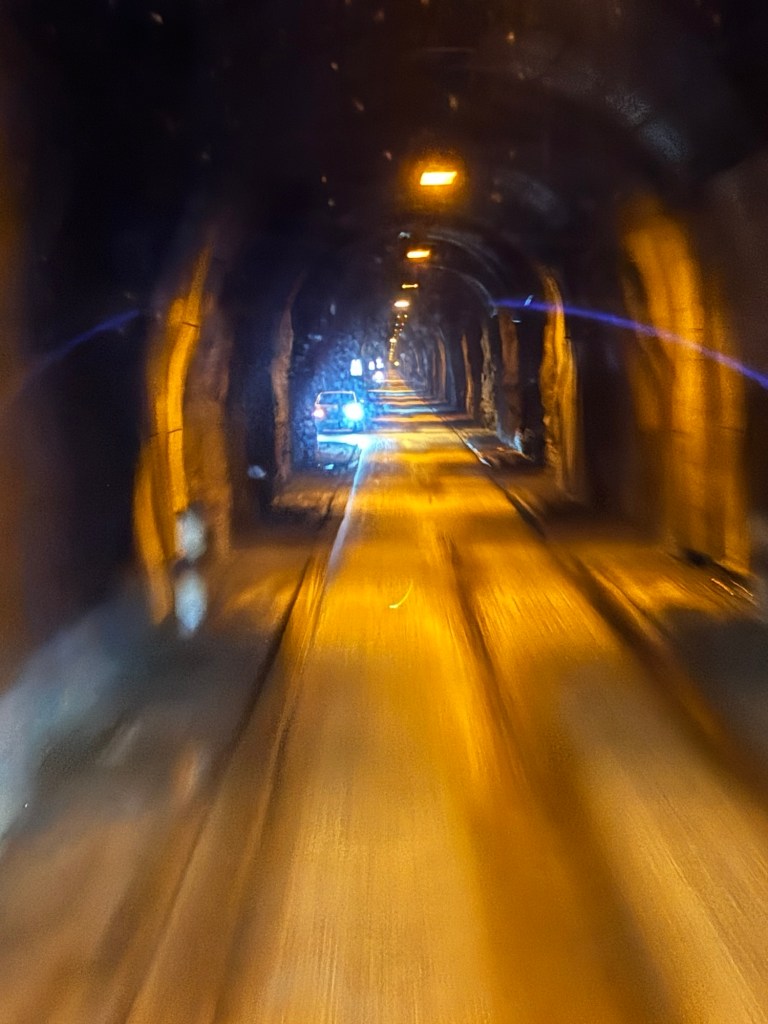
To save money, they made the roads one lane after the intersection. There are many turn outs along the lane for when vehicles meet. Cars going into Isafjordur, always have priority. Cars going out of town have to wait in the turn-outs. (For those of you examining details – this picture was taken later in the day when we had priority heading back into town.)
As always, the guide told interesting facts and tales along the way. She said her favorite tale is the Yule Lads. They are 13 troll brothers who live in the mountains and give presents to kids at Christmas. Icelandic kids put their shoes in the window and the lads give you a present if you are good, or a potato if you are not.
Trolls and elves are very much alive in Icelandic culture. Elves are thought to have a deep respect for nature and Icelanders do as well.
Volcanic eruptions created Iceland by creating mountains. Ice age glaciers flattened the mountains, and the melting glaciers formed the valleys.
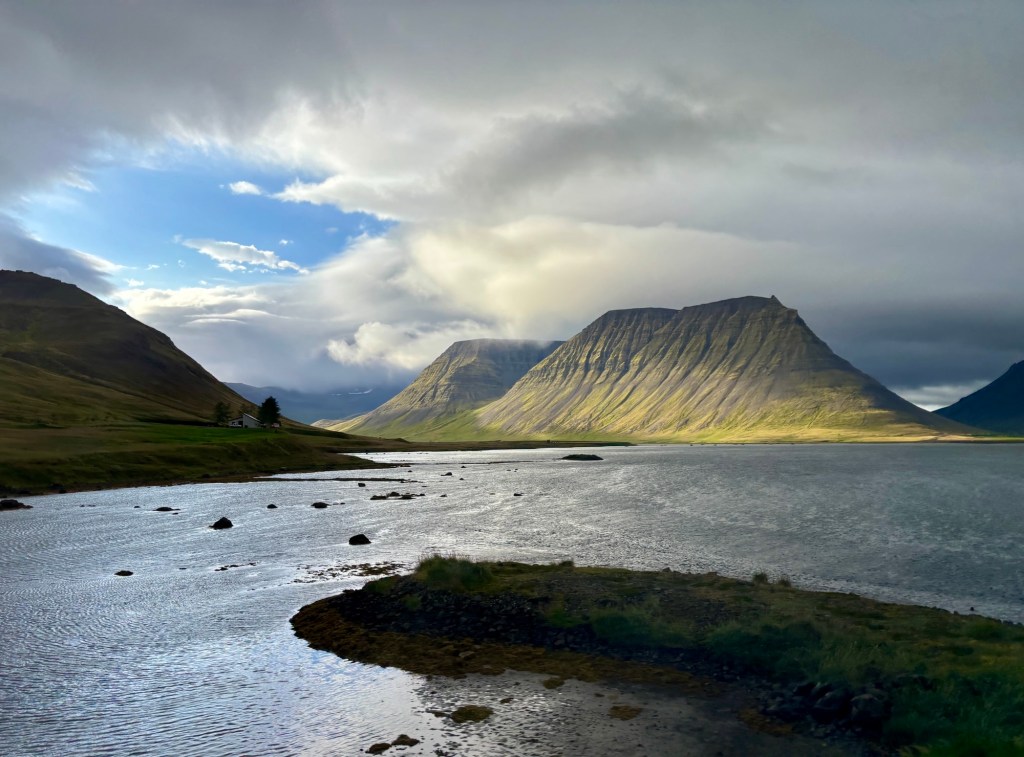
She explained that a fjord, by definition, must have mountains on both sides and have sea between them. The height of the mountains must be more than the distance between the mountains. (I have looked for years for a definition of fjord that made sense to me and this one finally did!)
When the Vikings arrived in Iceland, they used descriptors to name places or things. Isafjorder is the fjord of ice. They also sometimes named places after themselves.
Iceland was named (at least the name that stuck) by a Norwegian man who was bitter about his experience on the land. His daughter drowned on the voyage and his livestock died during the brutal winter. Even though the land is seasonally green, he named it Iceland as a warning for others to stay away. (Conversely, even though Greenland is predominately covered with snow and ice, Erik the Red named that land Greenland as an enticement to get people to settle there.)
When the Vikings arrived, twenty five percent of the land was covered with trees. Now it is one percent. There is a reforestation effort but it is hard to grow trees in this environment.
The Vikings brought sheep, horses and cows to Iceland. Prior to that, the only mammal was the arctic fox.
Icelandic sheep and horses lived and reproduced in isolation. They were not bred with other varieties. Therefore, they have some unique characteristics.
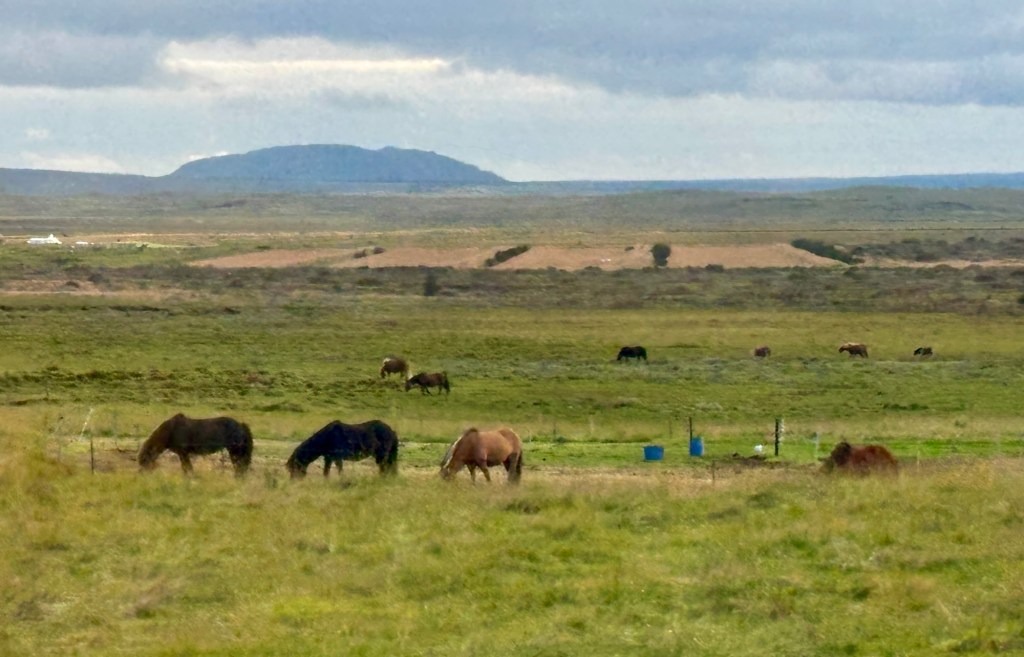
The Icelandic horse is smaller in stature, pony size, but has two extra gaits, and is called a five gait breed. Besides walk, trot and canter/gallop, the extra gaits are called tölt and flying pace.
It is against the law to bring other breeds of horses into Iceland in an effort to keep the Icelandic Horse pure.
During settlement, Viking men spoke Old Norse. They eventually brought women to Iceland from Scotland and Ireland and the women spoke Gaelic. Icelandic is similar to Old Norse, with a Gaelic twist. The languages are similar enough that Icelanders can read Old Norse.
Some believe that the Scottish and Irish women did not need to be taken to Iceland against their will. They might have been happy to go because the Viking men’s hygiene habits were much better than local men. The Vikings set aside one day per week for bathing and were the first to brush their teeth.
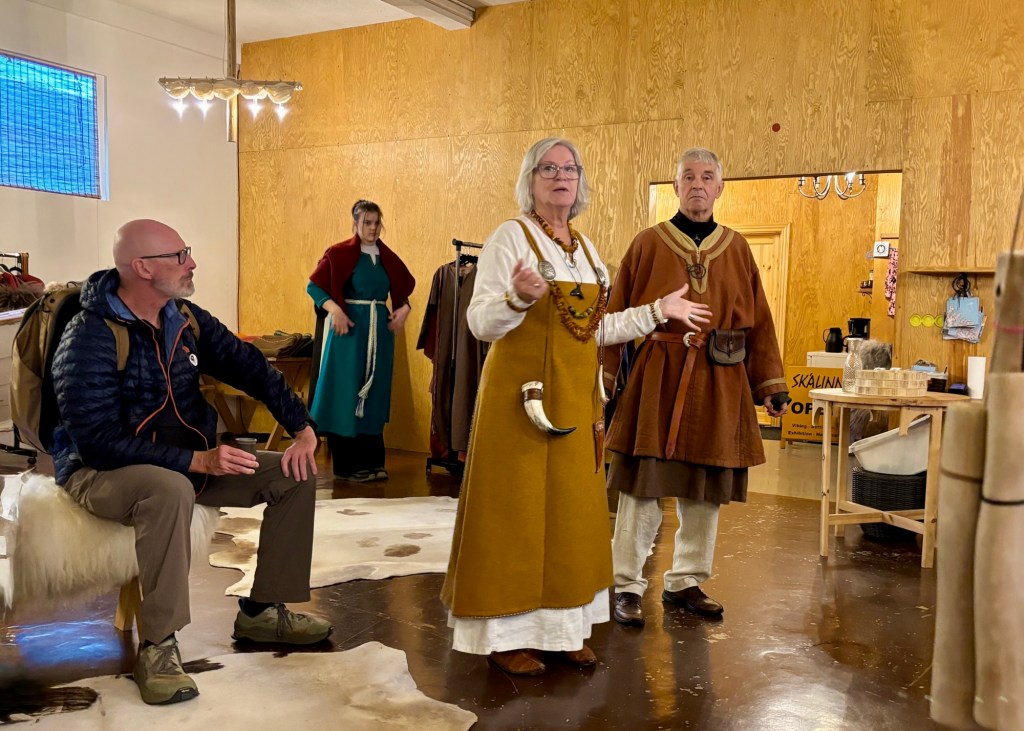
After an interesting ride, we arrived at The Viking Place and met our hosts.
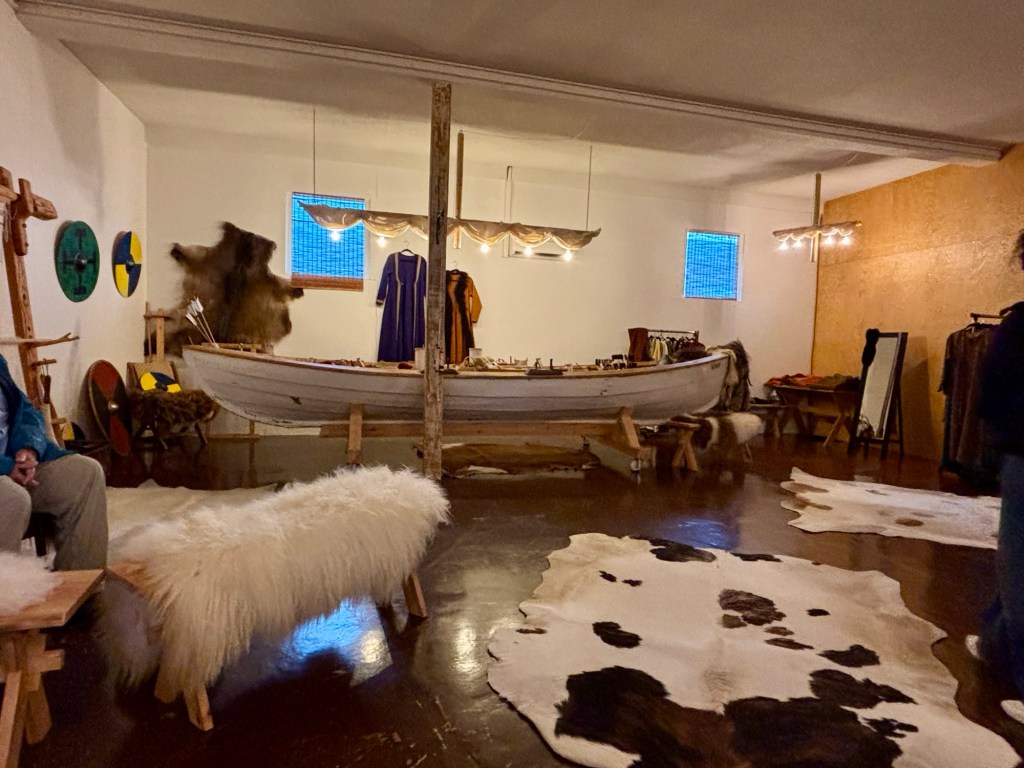
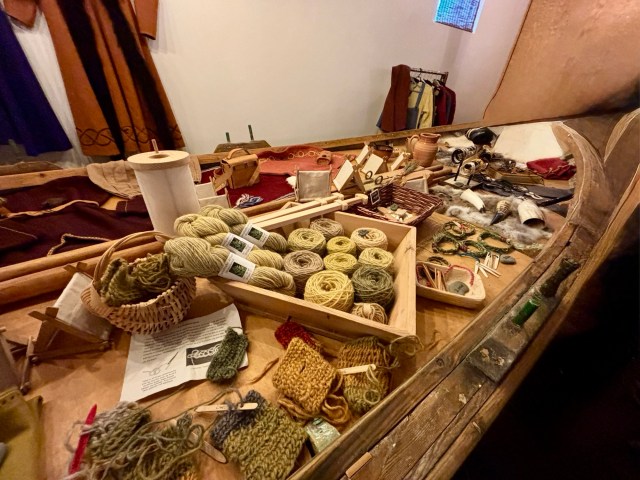
Their main room has many areas and things to explore and maybe purchase.
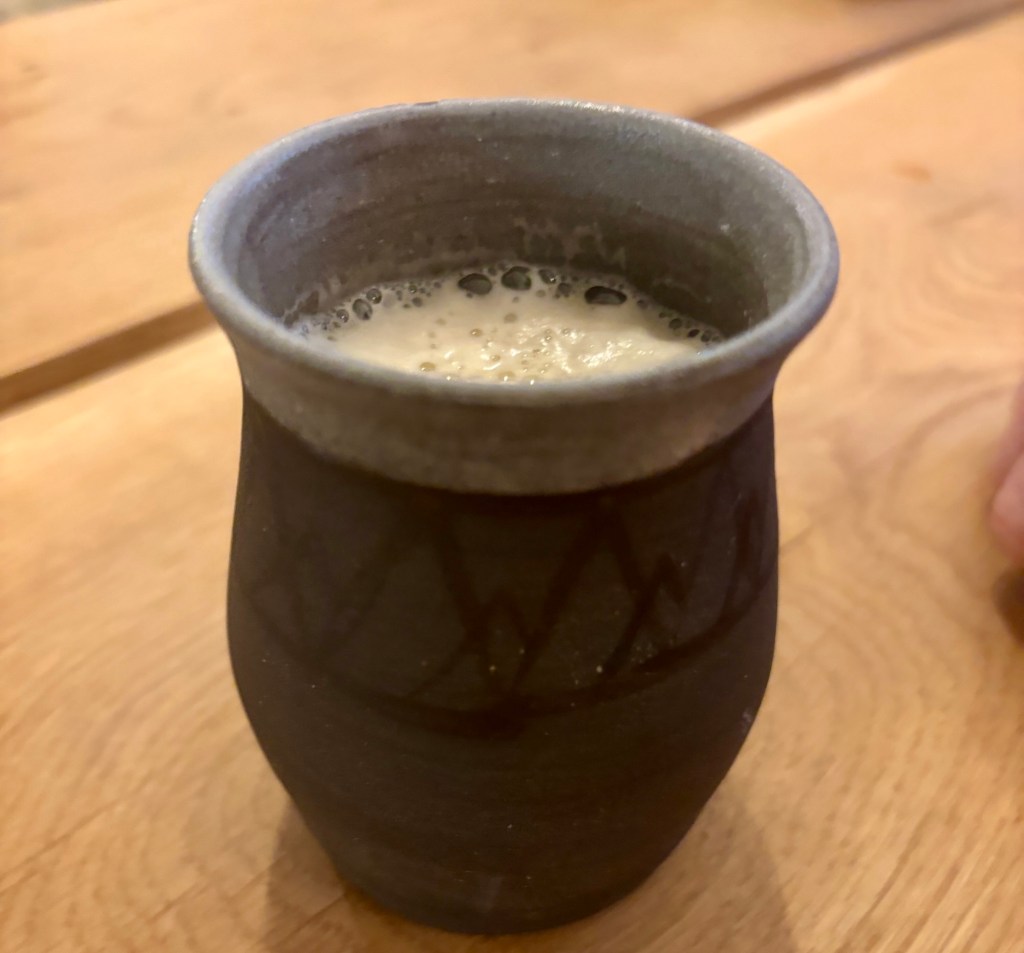
We were given a small glass of beer. It was similar to Viking beer in that it was made from sea-weed.
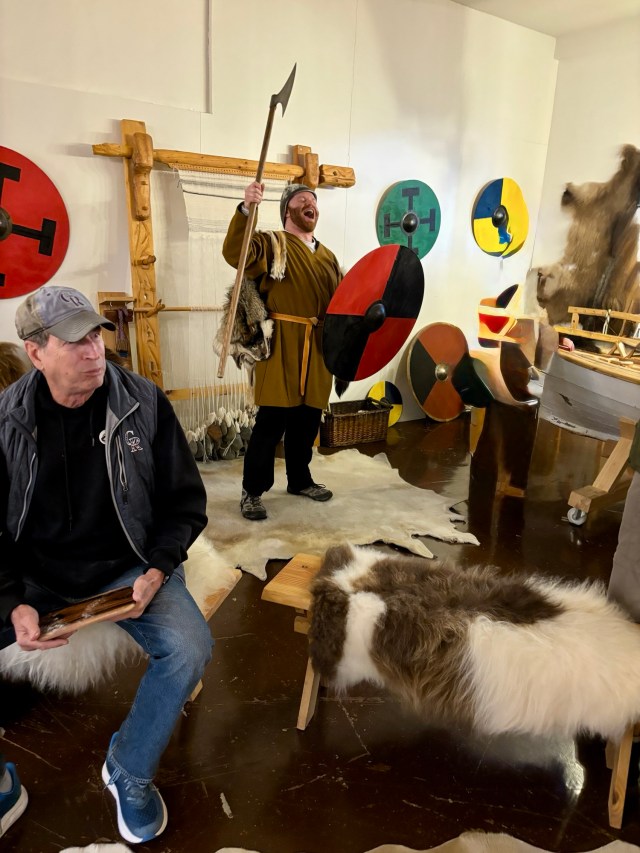
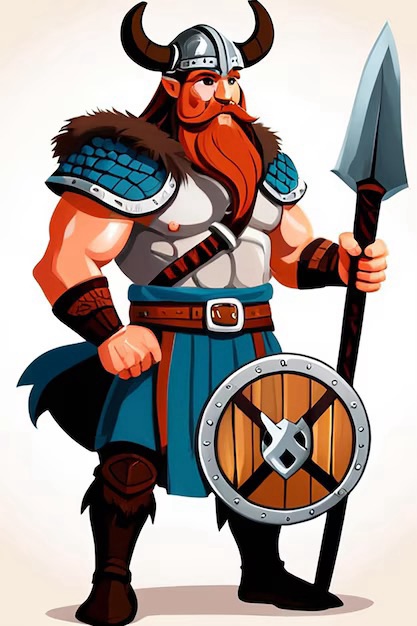
The simple Viking clothing was explained and we had the opportunity to play dress-up. The Vikings would have used horns for drinking or storing things, not as a decoration on their helmet.


We were instructed on how to roll out a small piece of flat bread and cook it over a fire.
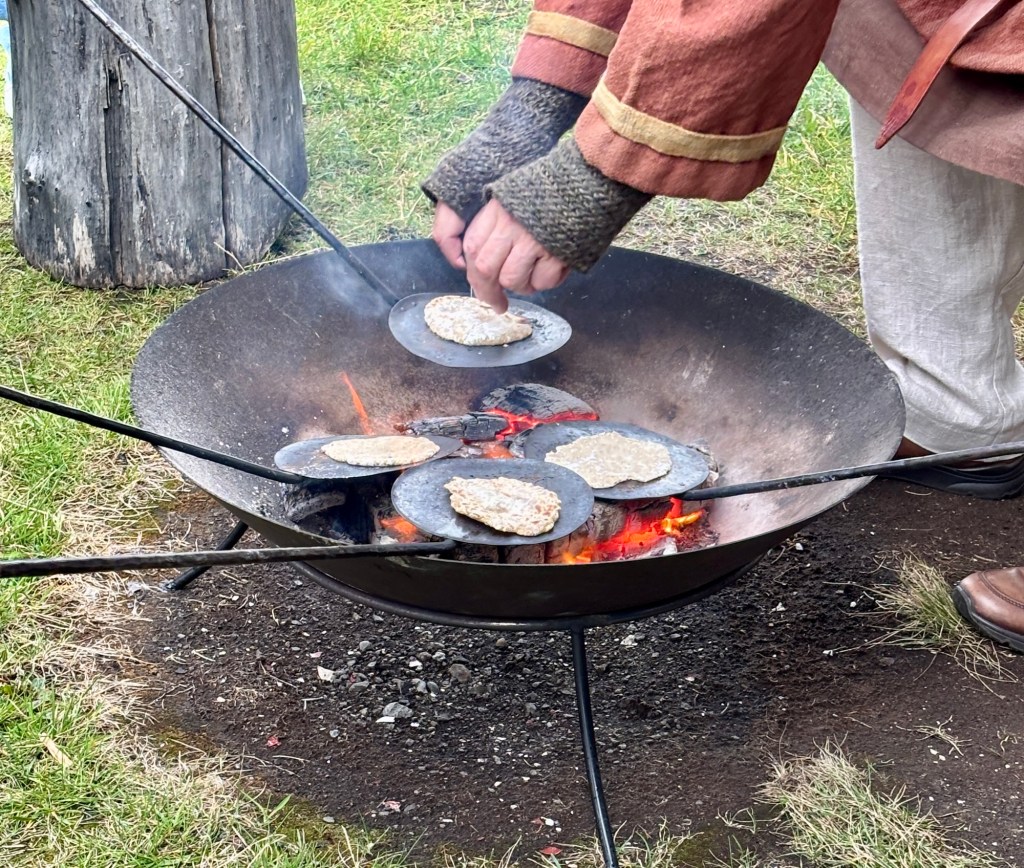

We could spread butter or brown cheese on top. It was a nice to have a warm snack. These flat bread pieces would have been a delicacy for the Vikings because the flour would have been imported. Grain crops do not grow in Iceland.
After our time at The Viking Place, we took a walking tour around the little town.
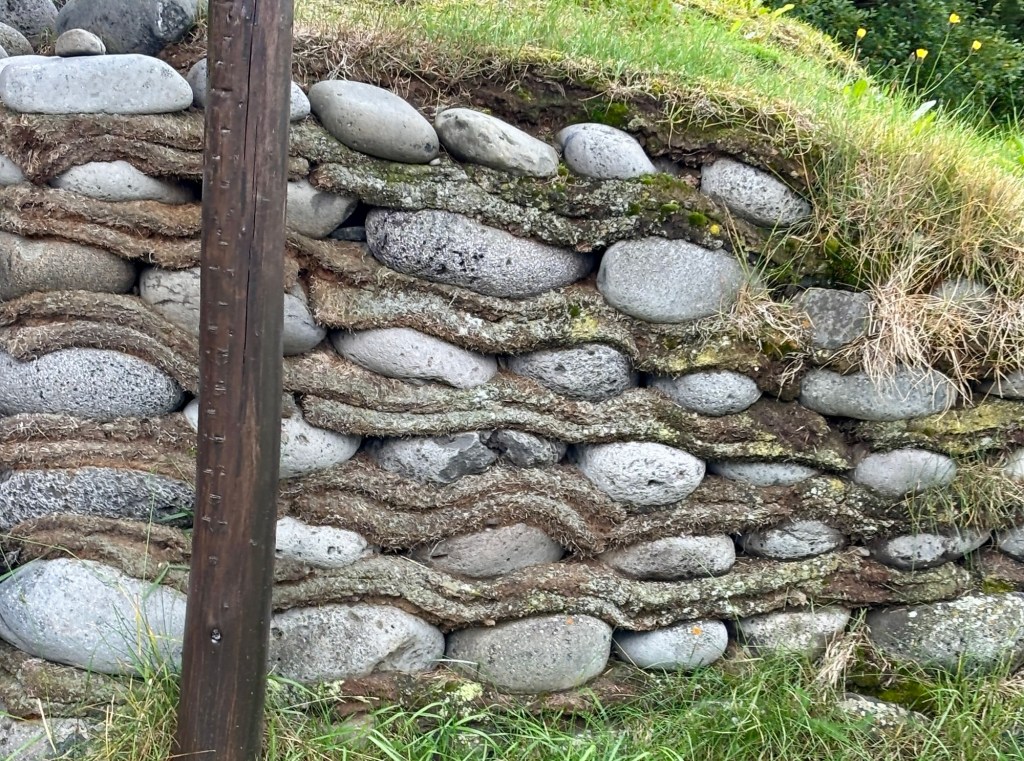
We saw this example of a building technique.

These mounds cover the ruins of ancient a gathering place for the historic local parliament. They are undisturbed after a thousand years. Icelandic culture has little money or interest in archeology.

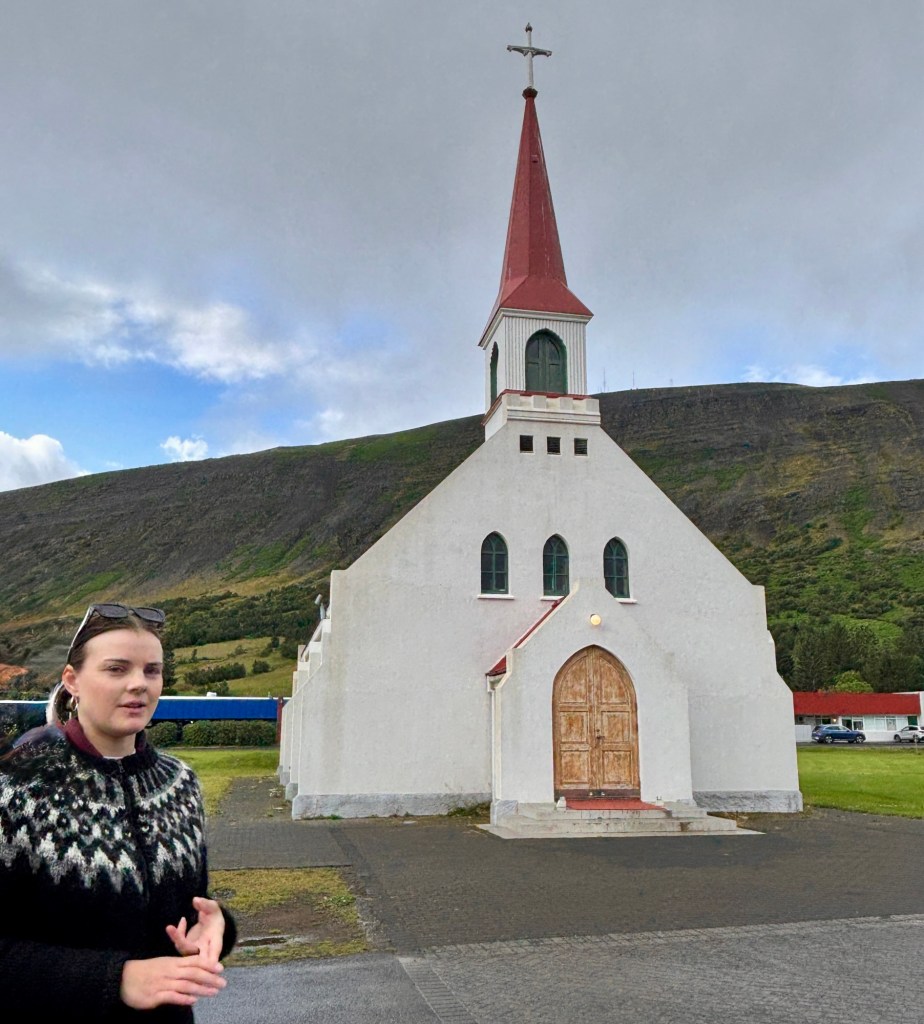
This is a typical rural church. A pastor visits and leads services once every four weeks or so.

Every town in Iceland, regardless of size, has a heated pool that residents use year round. It is a very important part in Icelandic culture, perhaps in a nod to that old Viking good hygiene.
Eating ice cream is another part of cultural and is consumed regardless of the temperature and season.
Small towns have a strong sense of community and often have a Facebook group for town and incidental communication. A sense of community is vital for getting through the long dark winter.
Storytelling is also important in Icelandic culture – again, helping get through the winter.. Ten percent of Icelanders have published a book, the highest per capita anywhere in the world.
Pepsi MAX is the most popular soft drink. There is no sugar and twice the caffeine to keep you awake during the two months of mostly darkness. The sun does rise in those two months, it just can’t be seen above the mountains. The change for more sunlight, or more darkness, is about 9 minutes per day one way or the other.

As we headed back to town, we saw a lovely rainbow over the landscape.

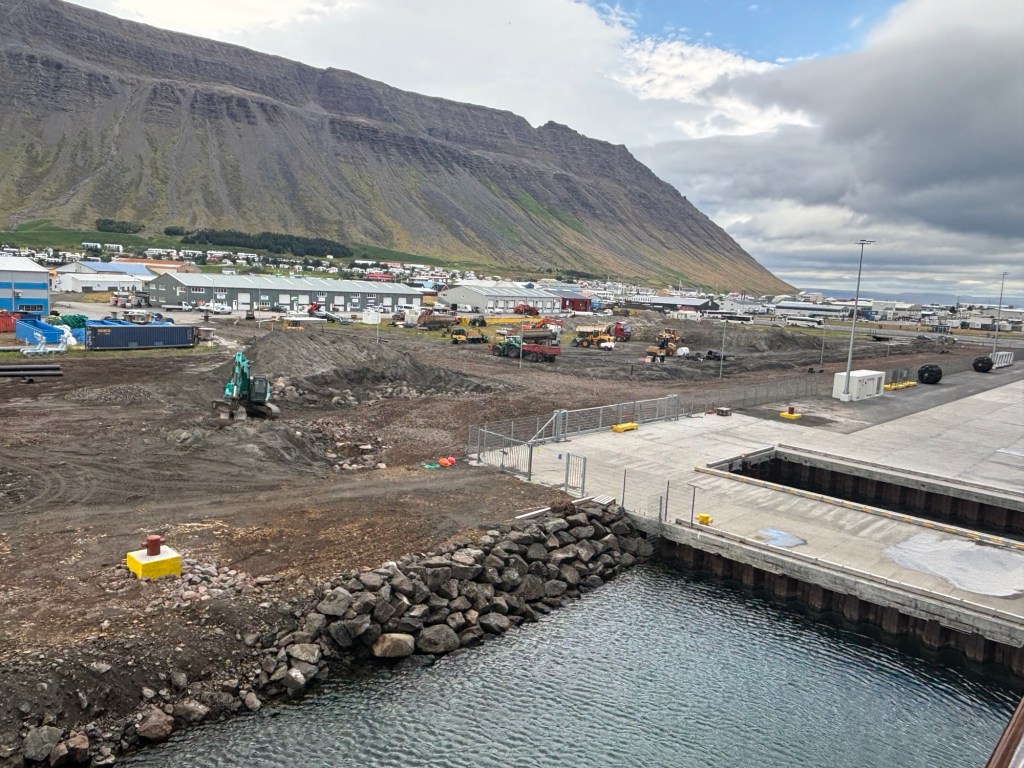
Once back on board, walking along the promenade, we had a good view of the work that is in progress to expand the port area at Isafjordur.


From our balcony on the opposite side of the ship, we saw some sheep on the “beach.” The sheep beach was right at the end of the airstrip. Our guide had told us that the mountains and the winds make flights in and out of Isafjordur very tricky. She said that only the most experienced pilots are allowed to try. Even with experienced pilots, about 40 percent of flights into Isafjordur in the winter are cancelled.

Randy spent some time watching activity in the little dip up on the side of the mountain. For a time, it seemed that there was a rescue going on. Later, he changed his mind to think there were just some workers doing some work.
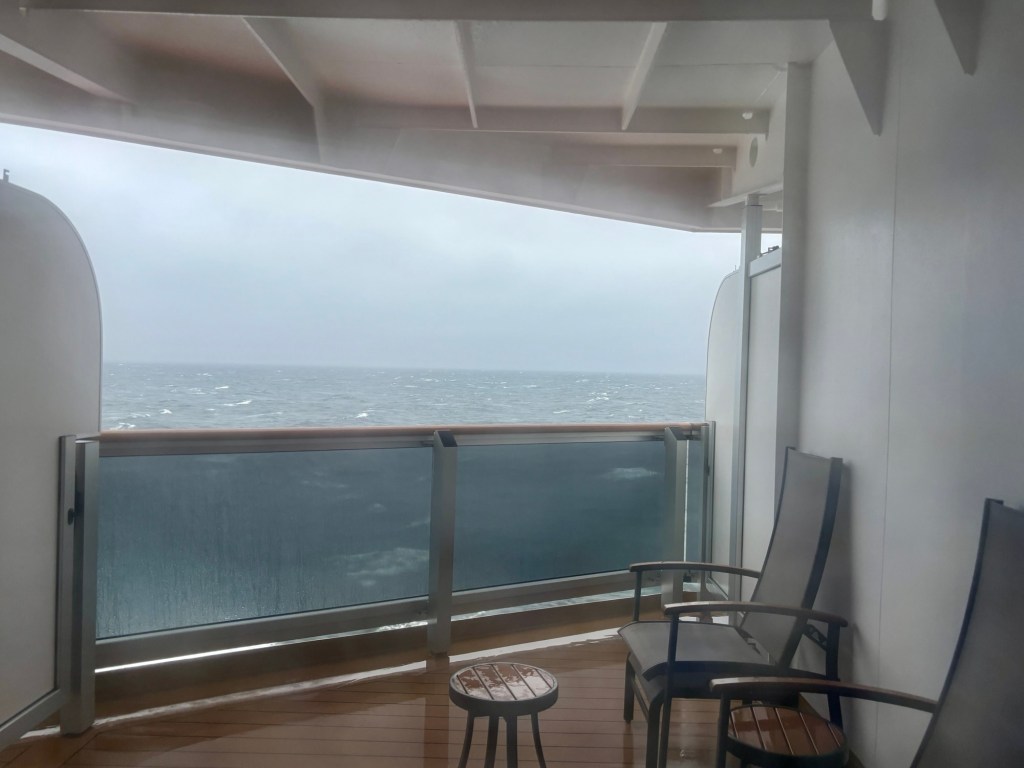
Later in the day, the weather deteriorated as expected. We were glad we had been comfortable on our tour earlier in the day.
Next Up: Reykjavik, and maybe our favorite shore excursion of all.


 Serene Wandering