
This sign indicates that the White Mountains of New Hampshire are famous for America’s worst weather! Our guide for the Mount Washington Cog Railway on October 13 said that we won! We get the experience of really bad weather!

Our train ride was scheduled to be an hour up the mountain, an hour at the summit, and an hour back down. We were told the weather at the summit was so bad, we’d likely just go up and back.
Before we left we had the opportunity to learn a bit about the World’s First Cog Railway. It was developed in 1869 with a maximum grade of 37.41 percent.

As you can see, Switzerland developed a cog railway two years later, in 1871, with a maximum grade of 25 percent. Mount Washington Cog Railway developer, Sylvester Marsh, was born nearby in 1803. He didn’t want to be a farmer. He chose a life in business, did well, and eventually thought to build a railway.

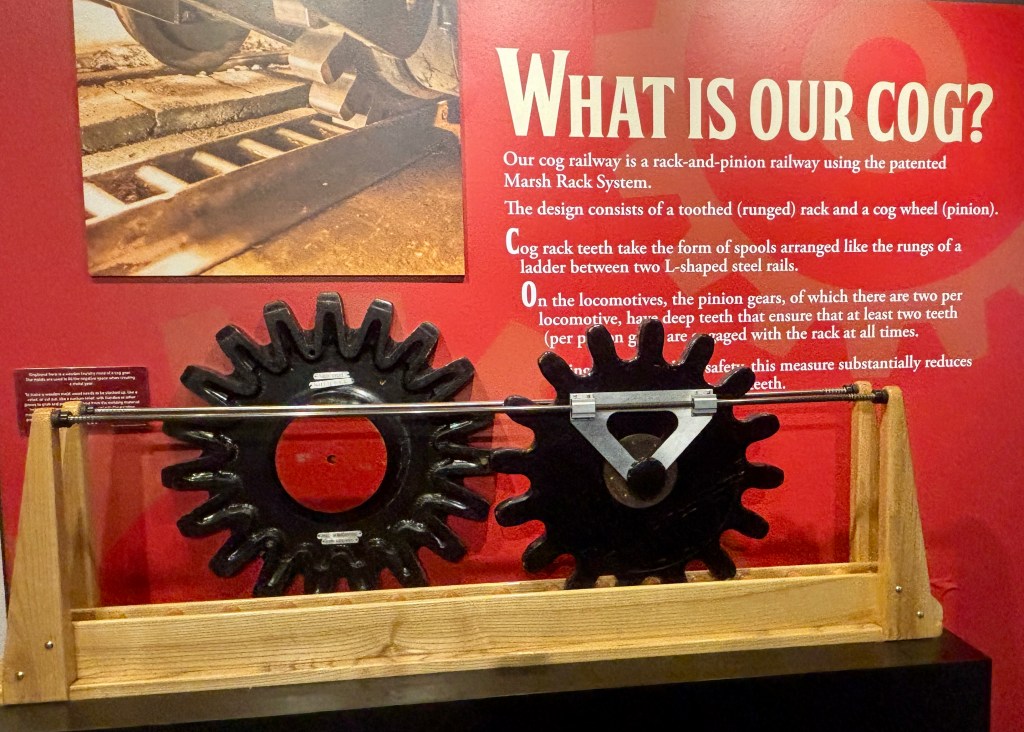
He found that the Swiss had developed a rack and pinion design which he modified.
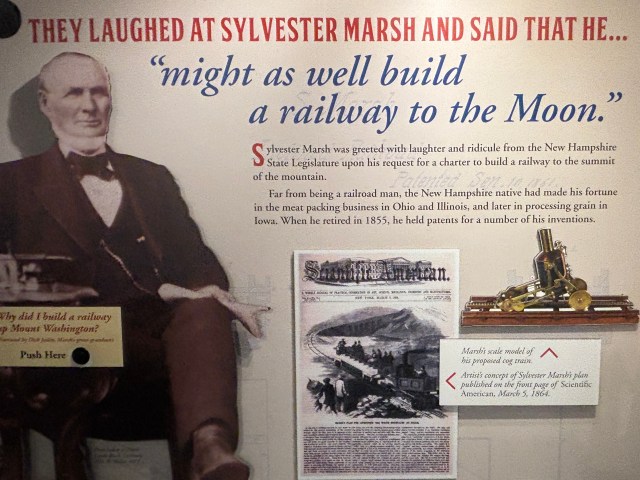
It wasn’t an easy process to get the railway built, but he accomplished it.


We boarded the train and started up the hill at 5 mph.

We weren’t up very high when we could see the trees blowing in the wind. There were a couple hikers heading up. That seemed unwise.

Four trains can be on the mountain because of switch areas. The was important on our day because the schedule was modified as trains wouldn’t spend much time at the summit.

Standing “up” was really leaning at a 30 percent grade.

We traversed four climate zones on our way up the mountain.
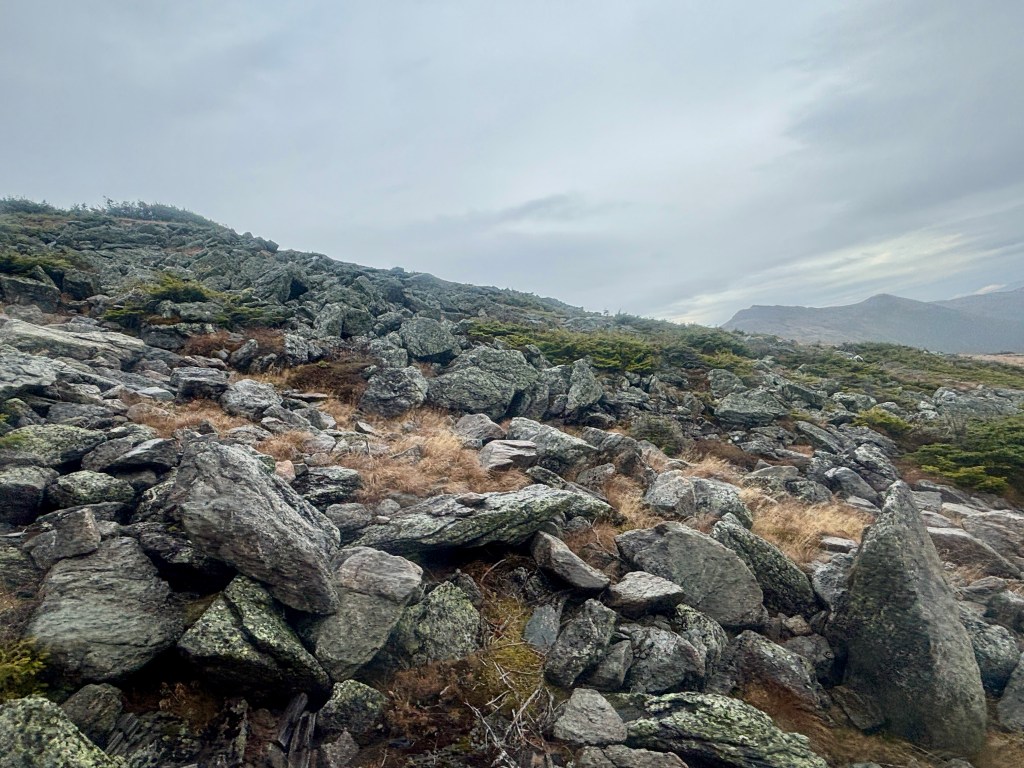

The alpine tundra zone is at the summit.

These are markers for the northern region of the Appalachian Trail.
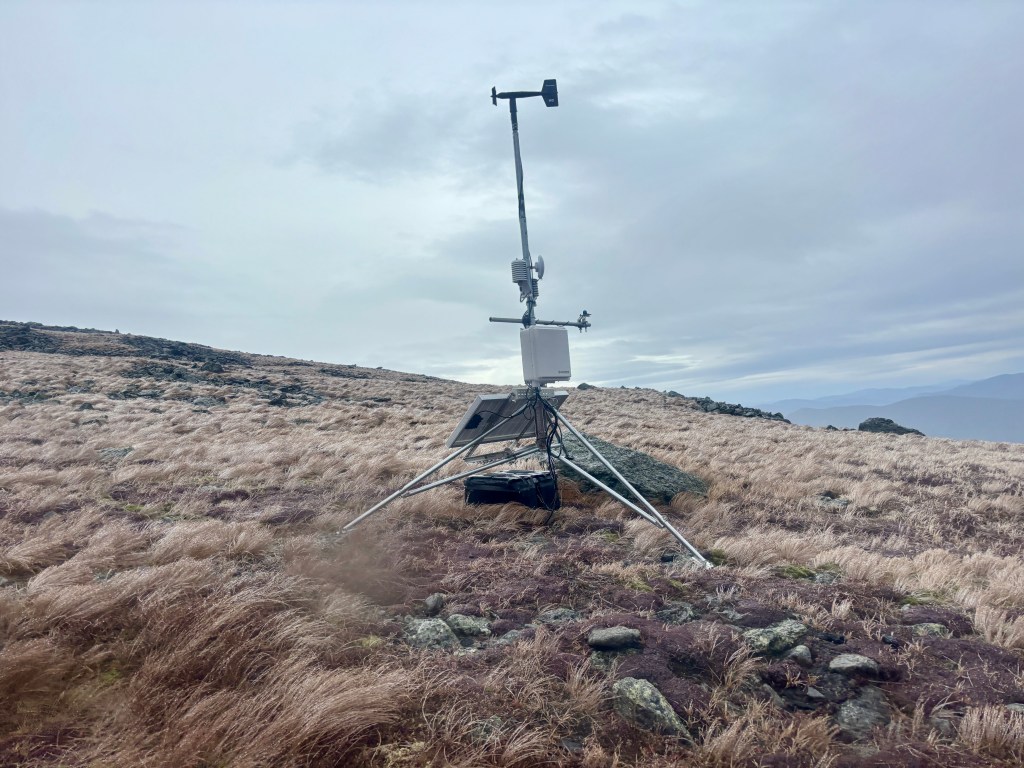

The weather station near the summit gives current information. We learned that they don’t go to the summit when there are sustained winds of 71 mph.

We approached the summit. Ahead was the first of the three trains in our time group.

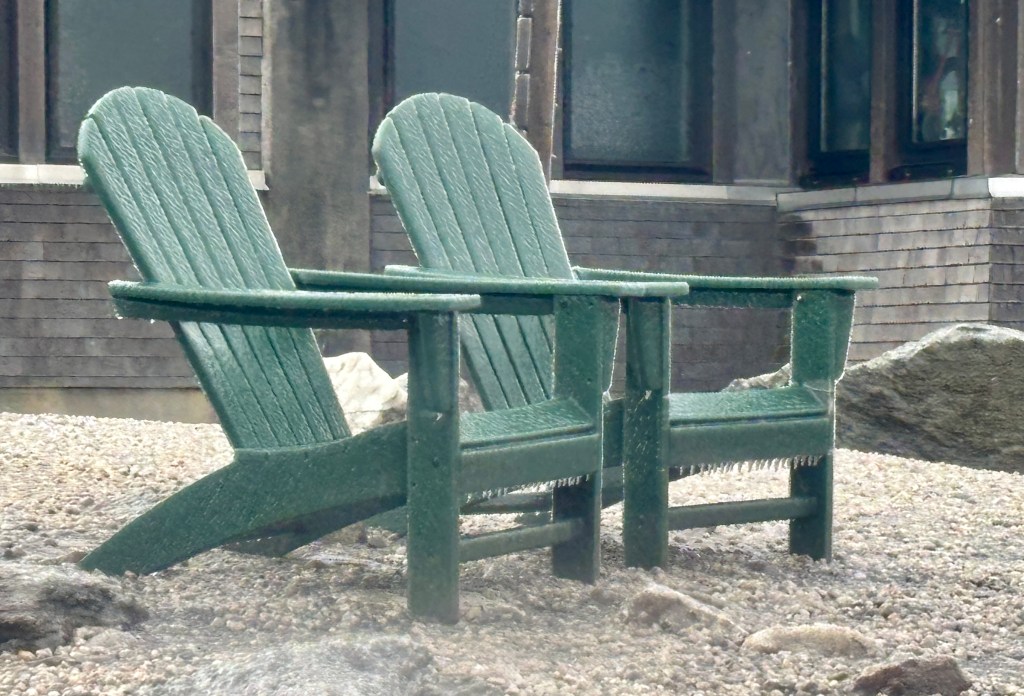

Our guide confirmed that conditions at the summit were not going to allow us to get off the train safely. The windows on the east side of the train promptly froze over because of moisture from the nor’easter.

Wind gusts blew part of the engine’s smokestack off when we arrived at the top and our guide went to retrieve it.
She told us that one of their engines has a snowblower when snow is on the tracks. The summit gets an average of 42 feet of snow. The coldest temperature ever recorded at the summit is 59 degrees below zero, -109 windchill. They don’t take passengers all the way to the summit in the winter.
While at the top, we were told there were eight hikers “desperate” for a ride down. Fortunately, the trains weren’t completely full so they were able to accommodate them. That isn’t always true so hikers go up at their own peril.
Over 160 people have died on Mount Washington over the past 200 years. It is known for being one of the world’s deadliest mountains.

We passed a memorial to Miss Lizzie Bourne, the first recorded female to die on the mountain. In September 1855, 23-year-old Lizzie set out to climb Mount Washington with her aunt, uncle and cousin. They wanted to watch the sunrise from the Tip-Top House. Stormy weather and darkness overtook them. Lizzie perished in the cold. The next morning they realized how close they had been to safety in the Tip-Top House.


We headed back down the mountain. The picture shows the third train in our time group, behind us on the way up and in the lead on the way down.

We crossed paths with this steam engine that was built in 1875. It burns coal and was the second steam engine they acquired.
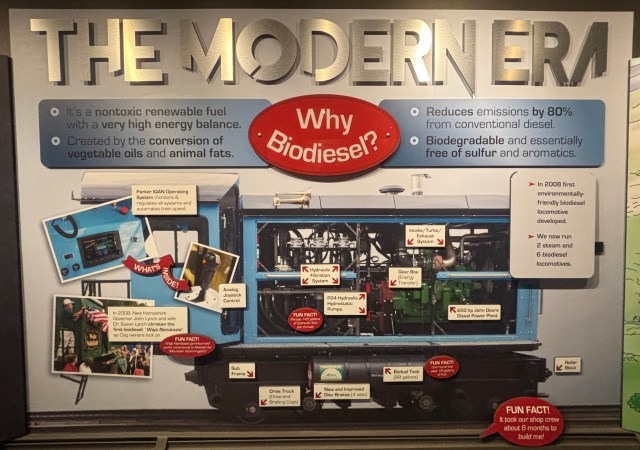
The train we were on was being pulled/pushed by a biodiesel engine. Most of their fleet is run on biodiesel due to environmental concerns.

Our guide was explaining about her safety training, specifically about how to stop the car if it becomes unhooked from the engine.
It was a very interesting train ride, even if we did miss out on time at the summit.

The leaves in the Mount Washington area of New Hampshire were past the prime season.
We had our box lunch when we returned to the lower station. Normally, we would have had it at the summit.

We made our way into Vermont!
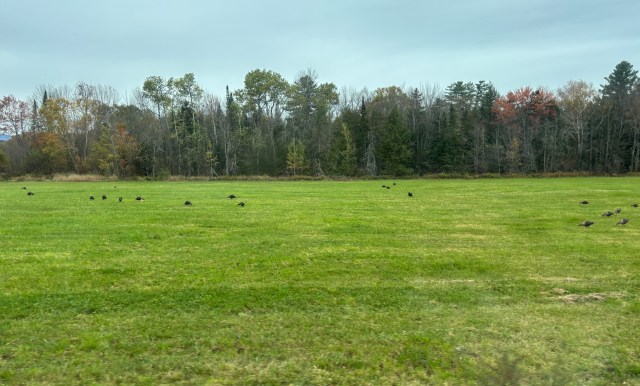
We saw wild turkeys in a field. Shortly after we saw trees with lines of tubing for gathering sap for maple syrup. Unfortunately, I didn’t get a good picture.
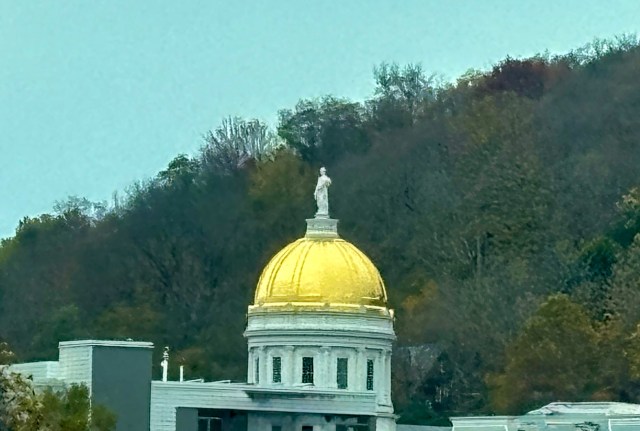
We passed the state capital in Montpellier.

We went to Ben and Jerry’s and it was very busy. We were here in July 2016 and it had been very busy but that was summer! This day was Indigenous People’s Day – so it was holiday busy.


We parked near the flavor graveyard so popped back in for a picture – with people removed. We spent more time at the graveyard in our previous visit.
The tours were sold out but we had also done that on our earlier visit so it was no problem. We were at Ben & Jerry’s for a purpose! We made our way to the gift shop to look for a shirt for Randy.

He bought this shirt last time and wanted a replacement.

We got in line for ice cream. At least 150 people were in front of us but it went quickly.

Everyone got ice cream – even labs got pup-cups 🙂
I chose my flavor easily and Randy agonized over his until the last moment.

When ordering, we saw this note. We learned on our first visit, in 2016, that Ben & Jerry had sold the company with stipulation that their company values were maintained. They both continued to be involved.
Earlier in October (2025) we heard that Jerry Greenfield quit the company, “accusing parent company Unilever of curtailing Ben & Jerry’s ability to speak out on social and political causes, which is synonymous with the brand’s identity.”


Although we prefer an unfettered Ben & Jerry’s, we still had our ice cream. I had chocolate chip cookie dough and Randy had a scoop of Cherry Garcia and another of strawberry. It’s what’s for dinner!
We made it to our hotel in time to watch game two of the American League Championship Series. It was another Mariners Win 10-3!

I got (ordered) a new shirt too!
Next up: Ticonderoga: Stardate 1312.4


 Serene Wandering