We left the futuristic past of Star Trek and went to the real past on Lake Champlain.
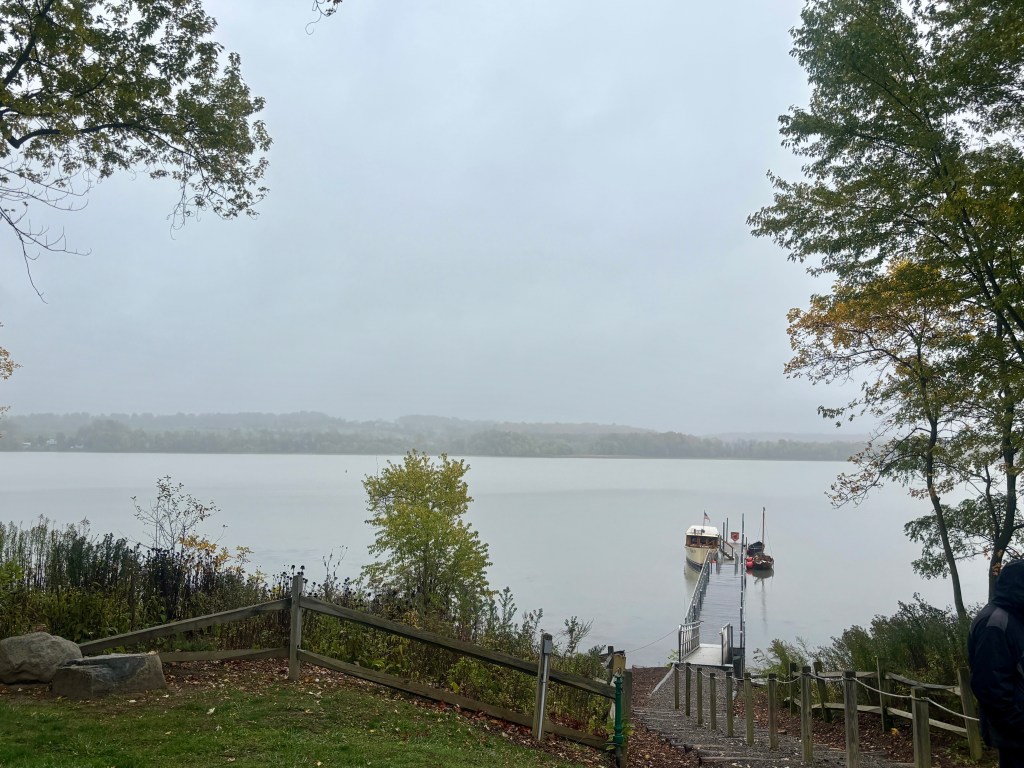
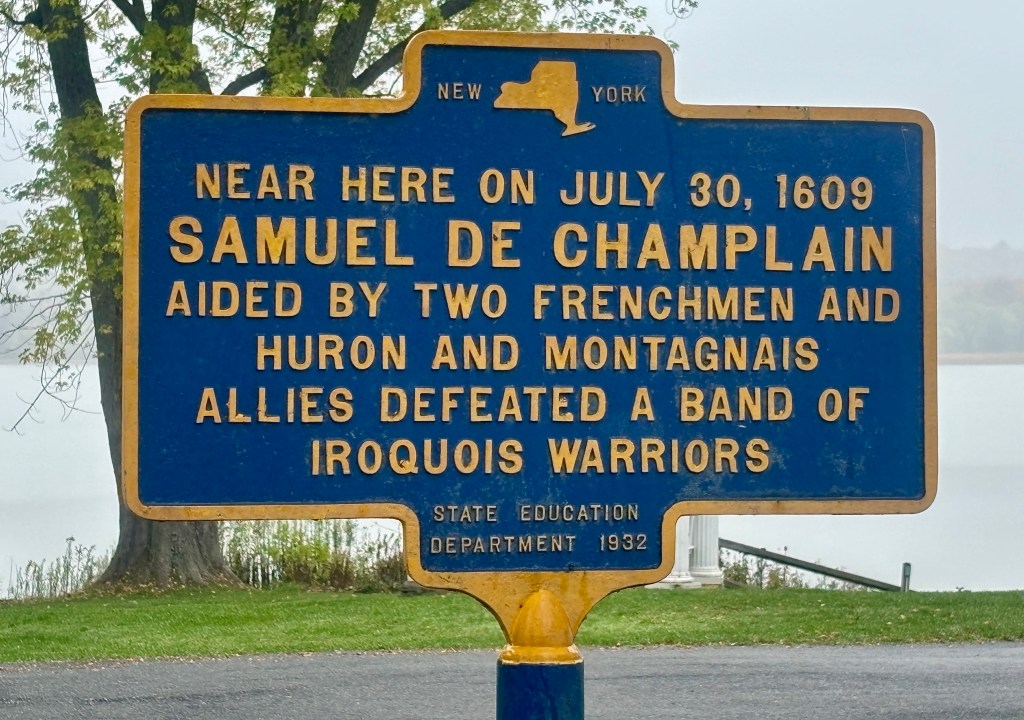
It was near here that Frenchman Samuel de Champlain arrived in 1609.

Of course, there were already indigenous people living their lives when the Europeans, be it French or English, arrived to disrupt them.

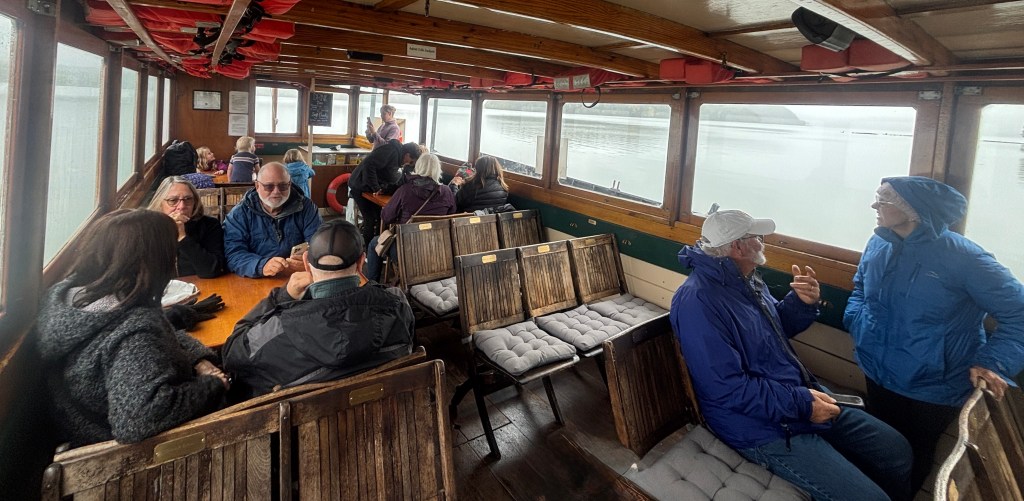
Our activity was a boat ride aboard the Carillon.

From the water we could see Fort Ticonderoga. It was also the site of the French fort Carillon commissioned in 1755. The builder was to “choose the most favorable site for entrenchments or other fortifications to prevent the British from taking Carillon.”
This fort has an interesting history. It belonged to the French and then fell to the British (and American colonists) in 1759. It was then named Fort Ticonderoga.

There were 395 warriors assisting the British in their battle with the French. The French had some indigenous groups aligned on their side as well.
Americans, no longer happy to be British subjects, captured the fort in 1775. Those included Benedict Arnold, Ethan Allen and the Green Mountain Boys.
It went back to British control under General Burgoyne in 1777. They blew up much of what was left of the fort before retreating to Canada.
The fort, first called Carillon and then Fort Ticonderoga, was ruins by 1781.

This painting of Fort Ticonderoga by John Henry Hill was made in 1878.

Area people carried off materials from the fort for building projects. It is local belief that this house was built with old fort resources. Private ownership has not allowed for testing verification.
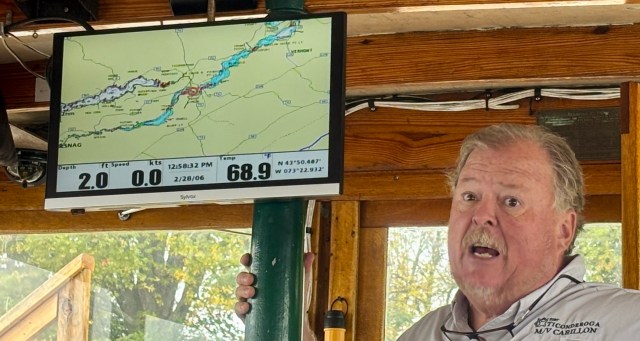
Our boat captain did a great job of explaining the geography of the area around Lake Champlain and nearby Lake George. The British once rowed up Lake George, portaged across the seven mile separation, and entered Lake Champlain for battle.

He also showed us some sonar pictures of what was underneath the surface. This picture shows caissons for a bridge that the Americans tried to build during their occupation of the fort from 1775-77. It was intended to bridge from Vermont to Fort Ticonderoga. They didn’t get it done before the British took back the fort.

The site was purchased in 1820 by William Ferris Pell when little remained. However, the old fort was interesting because of its part in early American history.

Members of the Pell family began reconstructing Fort Ticonderoga in 1909. They chose to approximate 1759 when it was a British Fort.

The venture was one of the first historical reconstructions in the United States.

The fort has operated as a non-profit museum ever since. (If it was a national historic site we wouldn’t have been able to visit as it would have been closed due to the government shutdown.)


We learned some interesting things there.

This was the site of the first American offensive victory of the American Revolution. It happened without battle or bloodshed and 42 British prisoners were taken.


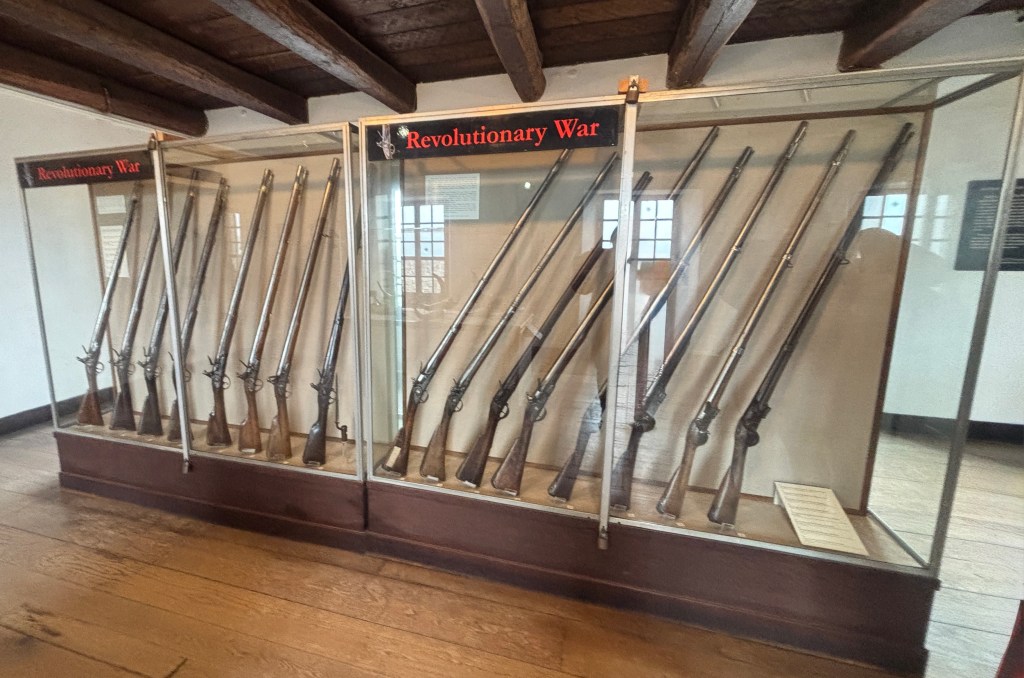
The largest private military collection in the country is the collection at Fort Ticonderoga.

There was this interesting display about how the troops were fed and what were in their rations. Notice that they were required to cook communally and definitely not fry their food or they would be punished.

It was also interesting that Lieutenants got two times the regular rations increasing by rank until it was six times the rations for a Colonel. Excuse me…who is doing the physical work here!

We also learned about various ships that were named Ticonderoga, the first being a two masted vessel used to fight against the British in 1814. It is shown in the picture on the middle left.
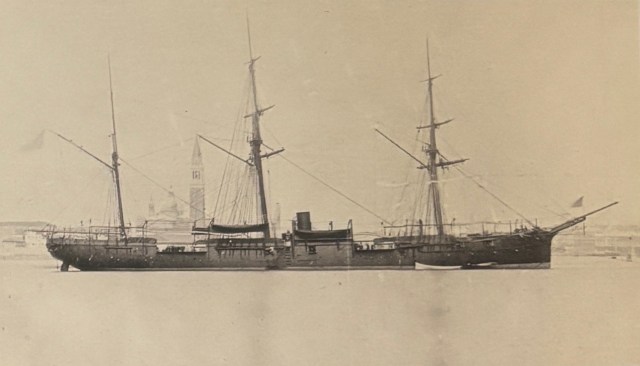
The second Ticonderoga was built during the Civil War in New York. After the war, the ship served in European, African, and South American waters. She circumnavigated the globe, over 36,000 miles, in 1878 to develop commercial relationships across the world.

The third Ticonderoga became a US Navy vessel when it was seized by US Customs Officials in 1917. She was originally a German freighter named Kamilla Rickmers. She made three voyages across the Atlantic successfully transporting horses, vehicles, troops, and other supplies to France. In the fall of 1918, she was attacked by a German submarine. After a two hour battle, Ticonderoga was done. Only 24 crew, out of 237, survived.

The fourth Ticonderoga was an aircraft carrier in 1944. She was launched by Stephanie Pell, the grand-daughter of Stephen and Sarah Pell who founded the Fort Ticonderoga Museum. She was also the great-great-great-granddaughter of William Ferris Pell who bought the site in 1820.

In 1983, the US Navy guided missile cruiser USS Ticonderoga was launched. She was the first cruiser designed to track and engage multiple enemy targets through radar and computers.

As we left the fort, we saw that restoration work continues.

We drove through the now lovely battle grounds. There were a number of hikes designated and several historical markers.
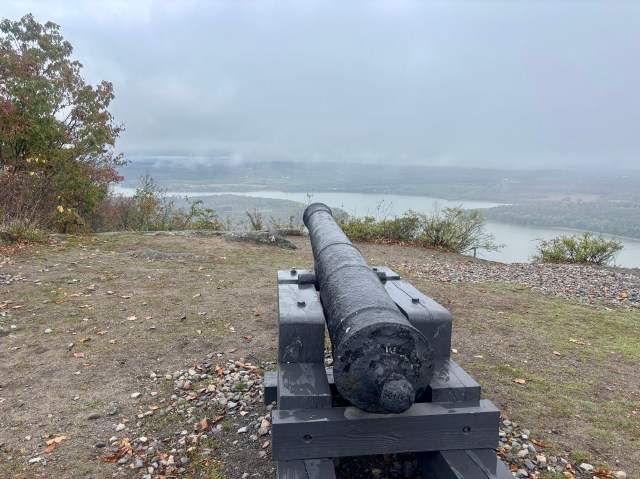
We went to Mount Defiance and it was clear why this was a strategic point for battle. Fort Ticonderoga sits on the promontory on the left. The lands at the bottom are New York. Across the lake is Vermont.
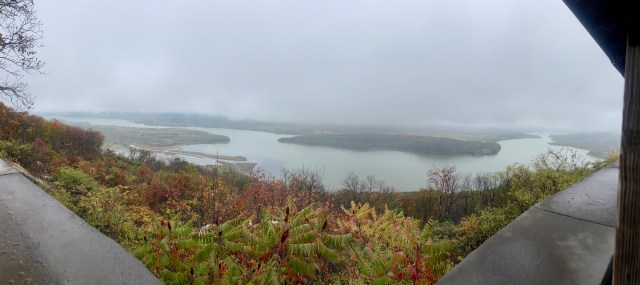
I spent some time playing with my phone trying to get a panoramic shot of Lake Champlain from Mount Defiance. I was happy with my effort.

Then I walked a few paces and saw this one!
Next Up: We go to Fort William Henry on Lake George.


 Serene Wandering
Oh, Bob would have loved th