On October 16, we left Lake George enroute to Cooperstown, New York. Our plan was to go to Saratoga National Historical Park on the way. Having visited Fort Ticonderoga and Fort William Henry, we were in the early American history mindset.
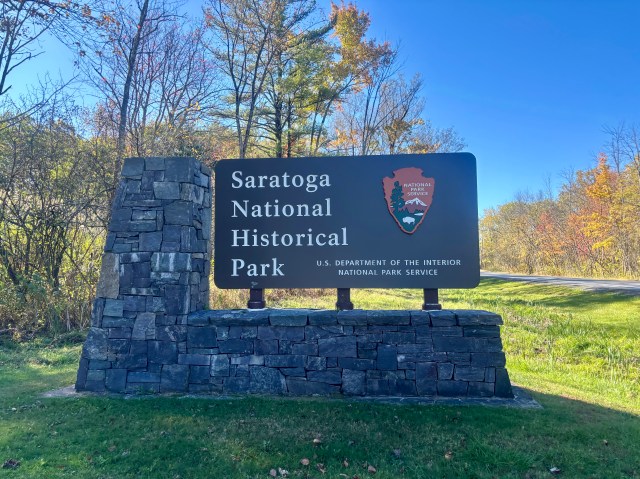
Saratoga was where large British and American forces met in 1777. Information from the National Park website states: “After two intense battles, an eight-mile retreat, and a three-day siege, British General John Burgoyne surrendered his entire force. This first ever surrender of a British Army is one of the pivotal moments in determining the outcome of the Revolutionary War.” It was the victory that tipped France into recognizing the fledgling country and assist with funds and force against the British, their long time foes.
With the government shutdown, we knew the Visitor Center and Schuyler Home would be closed but I believed the Tour Road of the battlefield might be open. I downloaded the audio tour on the National Park Service app in preparation.

Alas, all was closed.
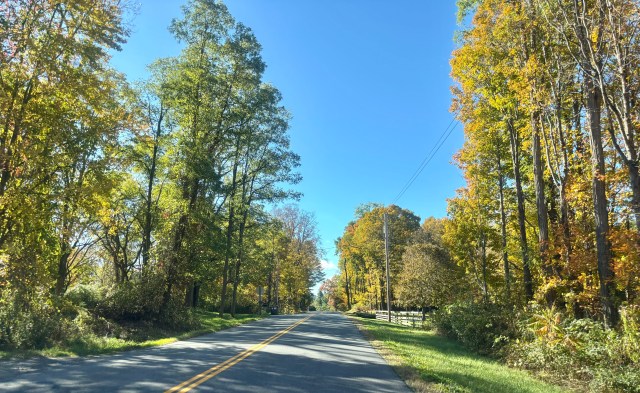
However, our drive to and from Saratoga was lovely along county roads rich with colorful leaves.
As we passed through Schenectady, it appeared that General Electric had some significant history here.

Sure enough! The General Electric Research Laboratory was the first industrial research facility in the US. Established in 1900, most of the early technological breakthroughs happened here. The campus was declared a National Historic Landmark in 1975 and is still home to GE Global Research.
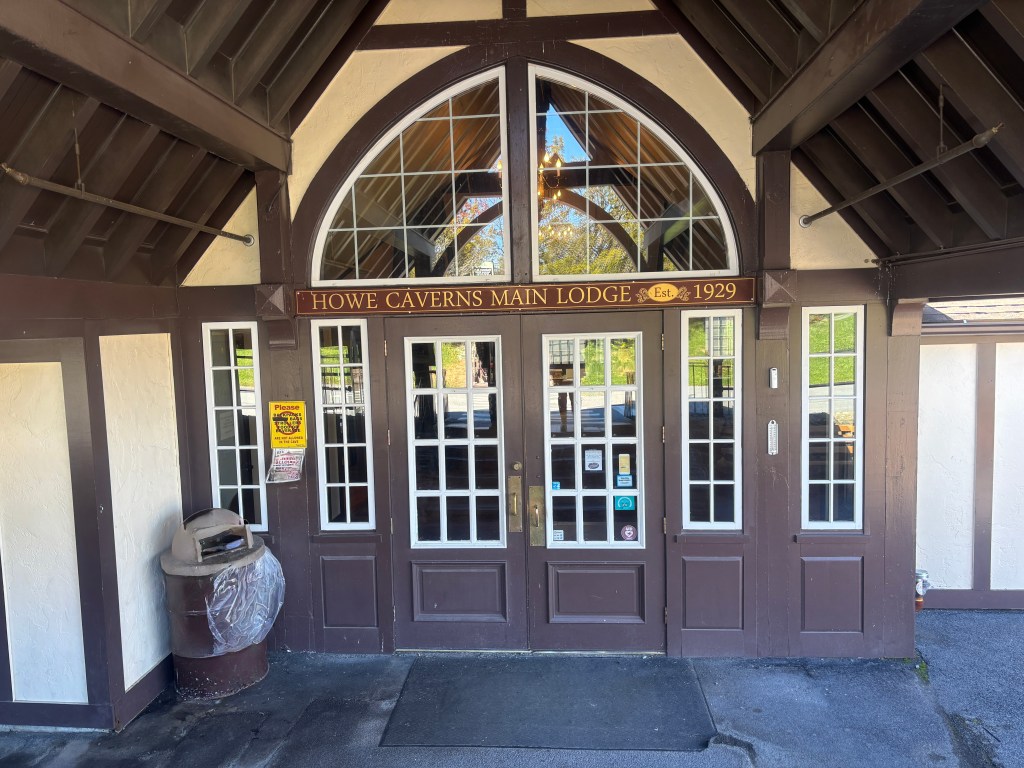

Because Saratoga wasn’t available, we went to Howe Caverns. This was a recommendation from our friend, Mark, who heard we were going to travel in this area. He remembered visiting Howe Caverns when he was a kid.

We began with a multi-media history of the caverns and their development for tourism.
There is inconsistent information as to whether the indigenous peoples in the area explored the cave or knew about it and stayed away due to superstition. There is also mention of a white man hiding from the Indians just inside the cave in the 1770s.

In more current history, farmer Lester Howe, noticed his cows were attracted to a particular area on his neighbor’s land. He discovered cool air coming from underground in May, 1842. He and his neighbor explored the cave, going a little farther each time. Howe eventually bought the land from Henry Wetzel for $100 with intent to develop tours.
When Howe’s Cave opened for tours in 1843, it was the country’s third commercial cave venture. Howe charged 50 cents for an 8-10 hour tour climbing through the mud with torches. Box lunches were provided.
Our tour was much more civilized! We took an elevator down 156 feet.
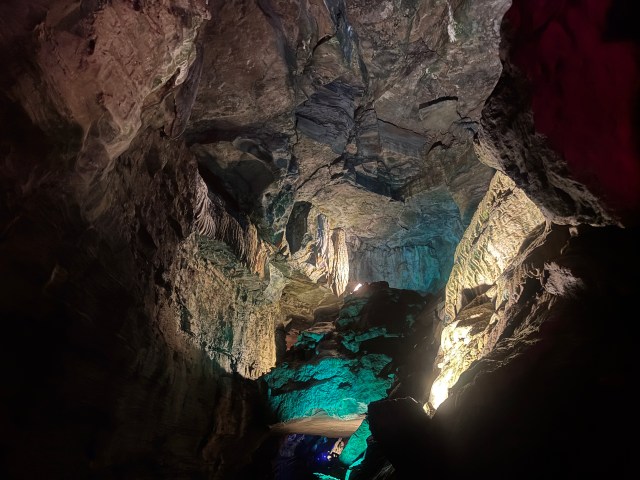
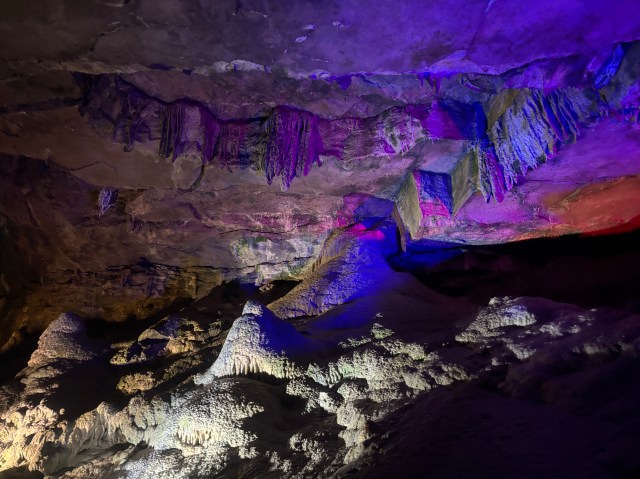

We saw a site they call the Chinese Pagoda.

These had fallen over time and were moved for easy viewing. We could also touch these because they were no longer growing.

This is called Titan’s Temple.

Our guide called this a snake flow – and it sure looked like a snake from some angles.
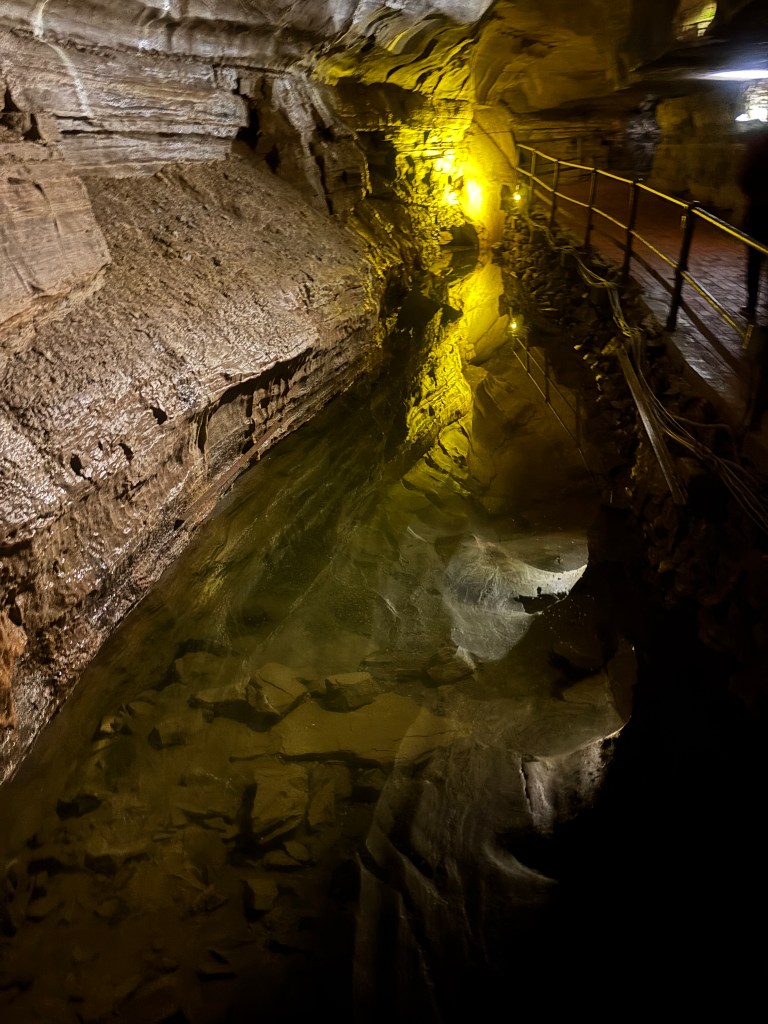

There is water in the river bed along the path but is too clear to be seen!


We went to the Mysterious Lake of Venus for our boat ride.

On the way back towards the cave entrance, we saw the Bridal Altar.
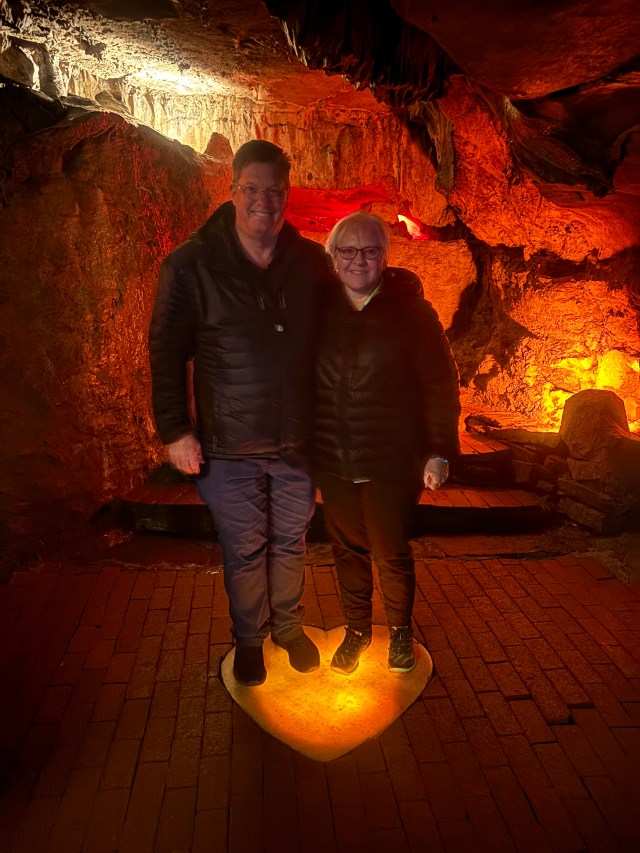
There have been 749 recorded weddings at Bridal Altar.


We went through an area called Winding Way. It was like a slot canyon – underground!
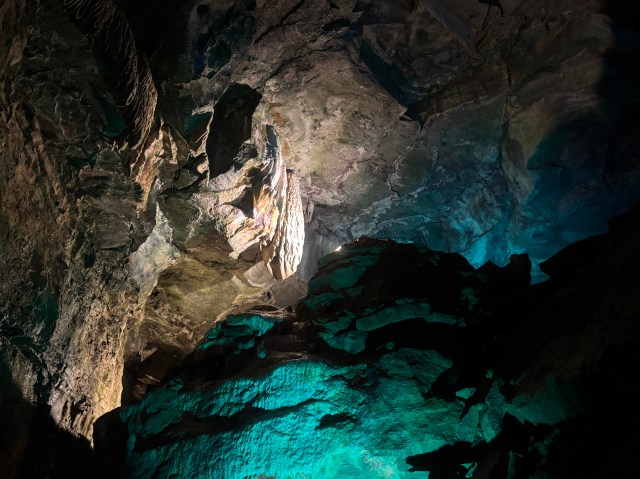
Howe Cave went through periods of attention (enter a railroad and hotel) and lack of attention when Lester Howe relinquished ownership. The caves were closed and then damaged by a nearby quarry.

The successful commercial re-opening and development of Howe Caverns happened between the years of 1927-1929, coordinated by John Mosner of Syracuse and Walter H. Sagendorf of Saranac Lake. The company they founded improved the visitor experience.

It was during this period that the elevator was installed at a cost of $100,000 per foot. Path installation used 88,000 bricks, laid over 30 years, from the 1930s to 1960s.

We really enjoyed our trek through Howe Caverns.
Next Up: Cooperstown!


 Serene Wandering