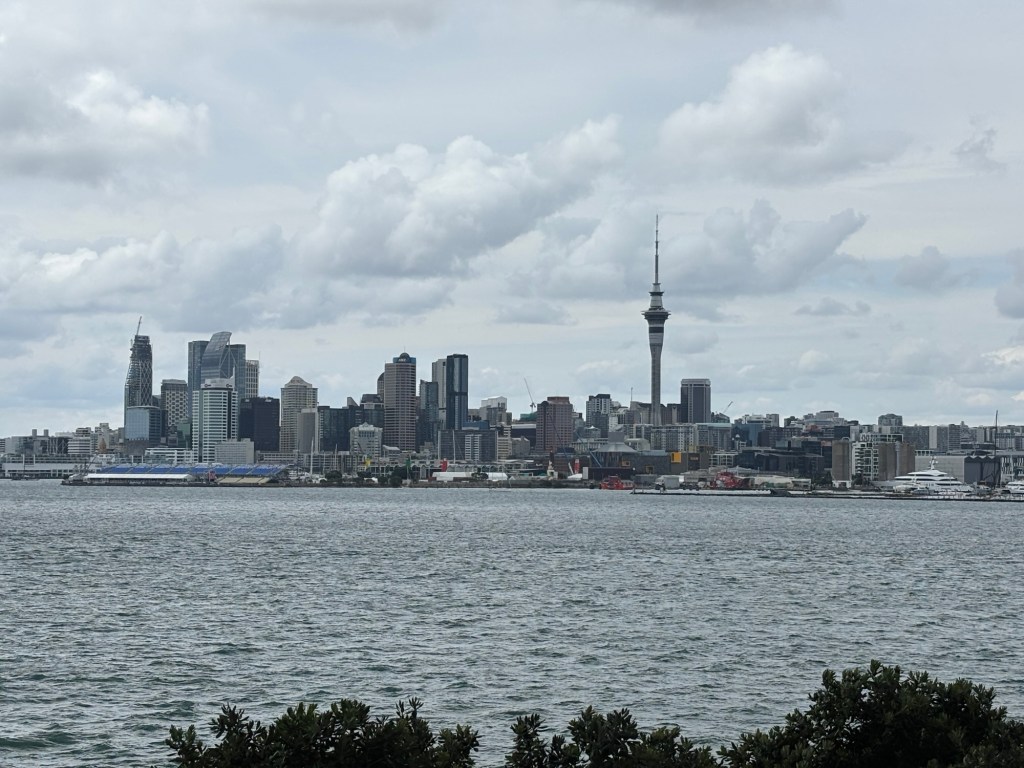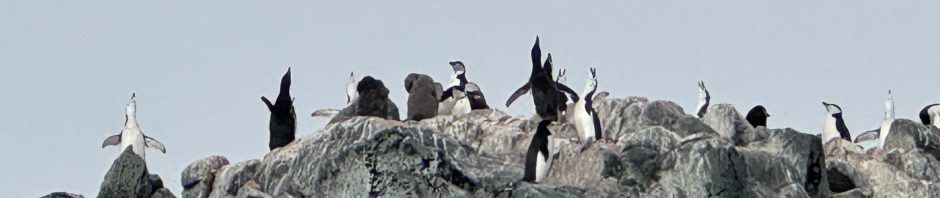
New Zealand Cruise: Albatross, Fur Seals and Penguins

We were in Dunedin on January 25, 2025.

“Oh my, what a shock.”  That is what Randy said when he looked out our windows and saw logs, thousands of them, again.  We learned this species of pine originated in California where it takes 200 years to mature.   The species was brought to New Zealand where a different environment and modifications allow the pine to mature in 25 years.  These timbers are sent to Asia.  Much of it will be made into particle boards – some returning to New Zealand.

This is our last port in New Zealand.  Then we have a few sea days and begin the Australia portion of the cruise.

We had room service for breakfast today, something we rarely do. Today it seemed appropriate since we were time crunched for the dining room and had pretty much sworn off the Lido buffet for this trip.

Our excursion was the Albatross Cruise and Natures Wonders.  It held the possibility of seeing albatross, seals, sea lions and penguins.  And a boat ride! And an eight wheel drive all terrain vehicle! 

After a very short bus ride from the port, we boarded the Albatross Express.  We were told the catamaran has Euro-Six engines for lowest emissions. It is also equipped with impellers, not propellers, to protect the wildlife.

We were required to stay below as we left the harbor.  I had moments of discomfort as I remembered a similar situation near Cozumel, Mexico.  That had been my first ever experience of claustrophobia and I do my best to avoid similar situations.  Fortunately this was just a few minutes.

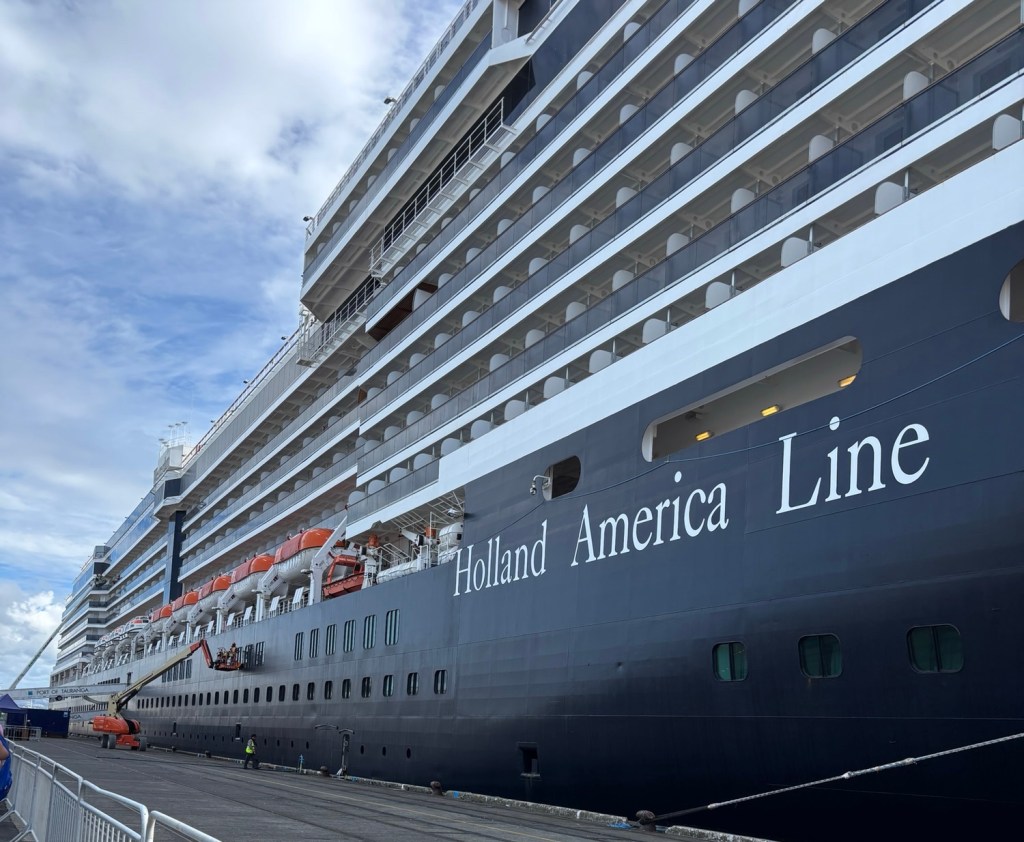
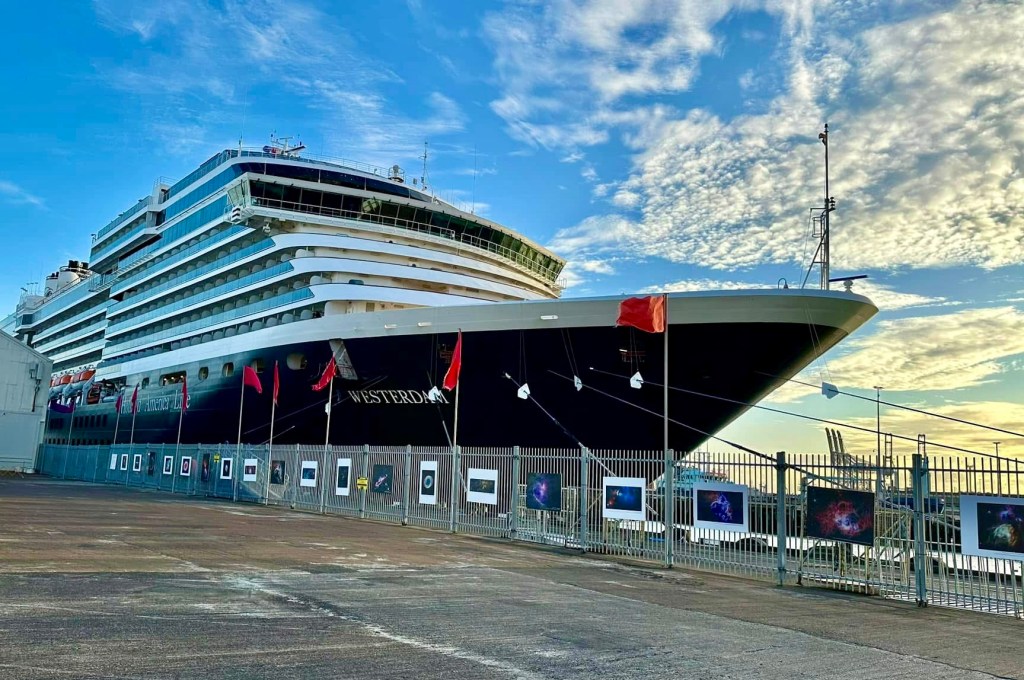
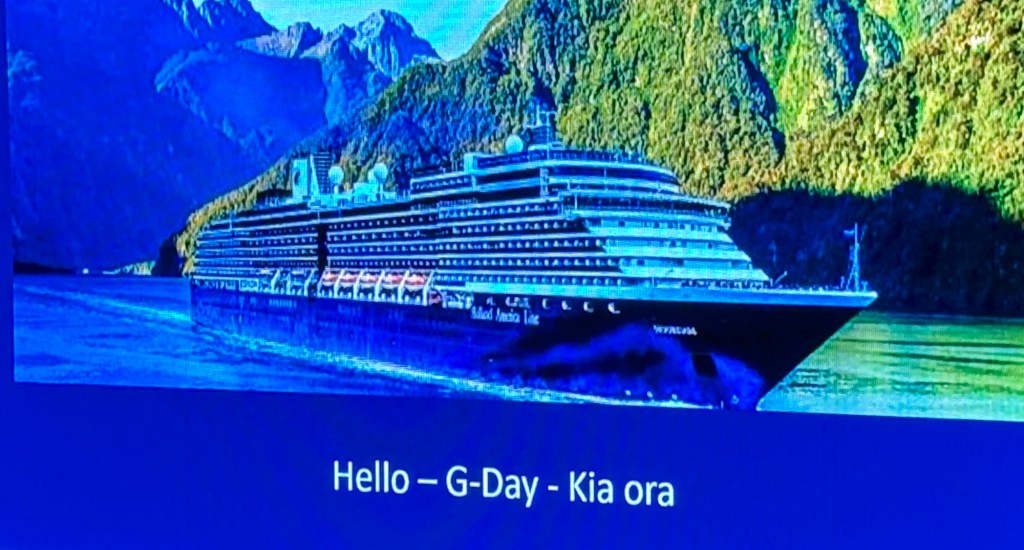
We passed our ship, the Westerdam.

Our guide asked if anyone from North America knew the term “red right returning?” Randy did, and explained it.  Our guide said that North Americans are the only ones who do it that way in the world and that everyone else uses green on the right return.  We were glad to hear about that because when we’d been watching the Singapore cargo ship a few days ago, we recognized that he was operating on a whole different set of rules than we understood. 

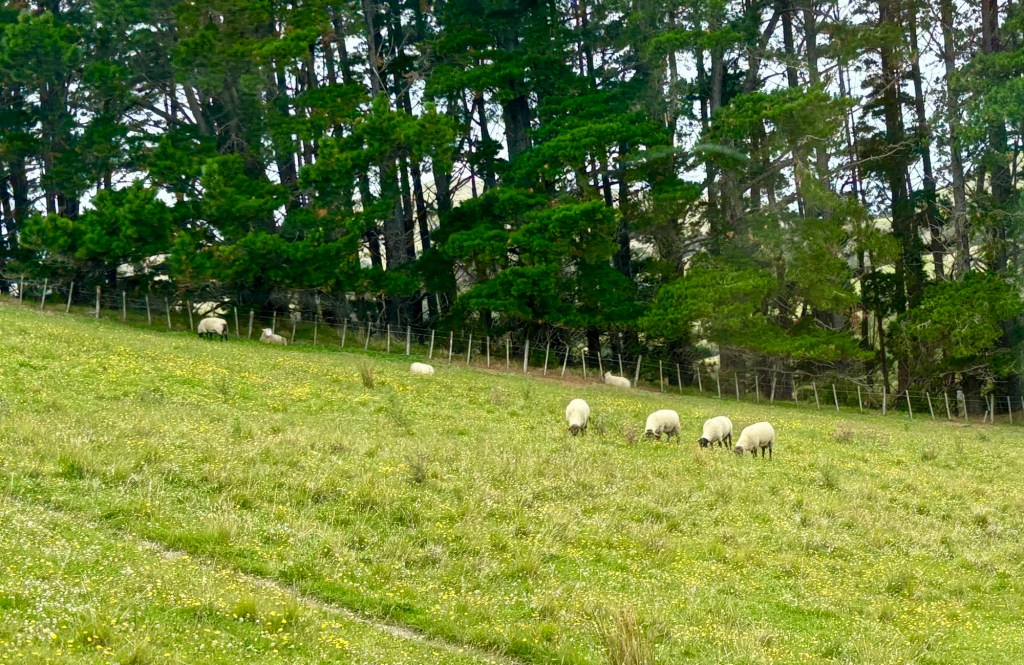
When looking along the hillside, we saw these vertical lines of trees going up the hill in several places.  We were told that it was likely a natural barrier to keep the sheep and cattle at home.

As we sailed out of the Otago Harbor,  our guide explained that Captain Cook discovered that Polynesian people occupied the largest area known at the time.  

That area was a generally a triangle formed by Hawaii (1), New Zealand (2) to Easter Island/Rapa Nui.  On this map Samoa is (4) and Tahiti is (5).  Fiji is excluded on the western side.

New Zealand was the latest large land mass to be “discovered” other than Antarctica.

We boarded busses to go to a private farm.  We got into an Argo, an eight wheel all terrain vehicle.

We passed a World War II bunker.  The bunkers were built all along the east coast of New Zealand to protect against the Japanese, but were never used. 

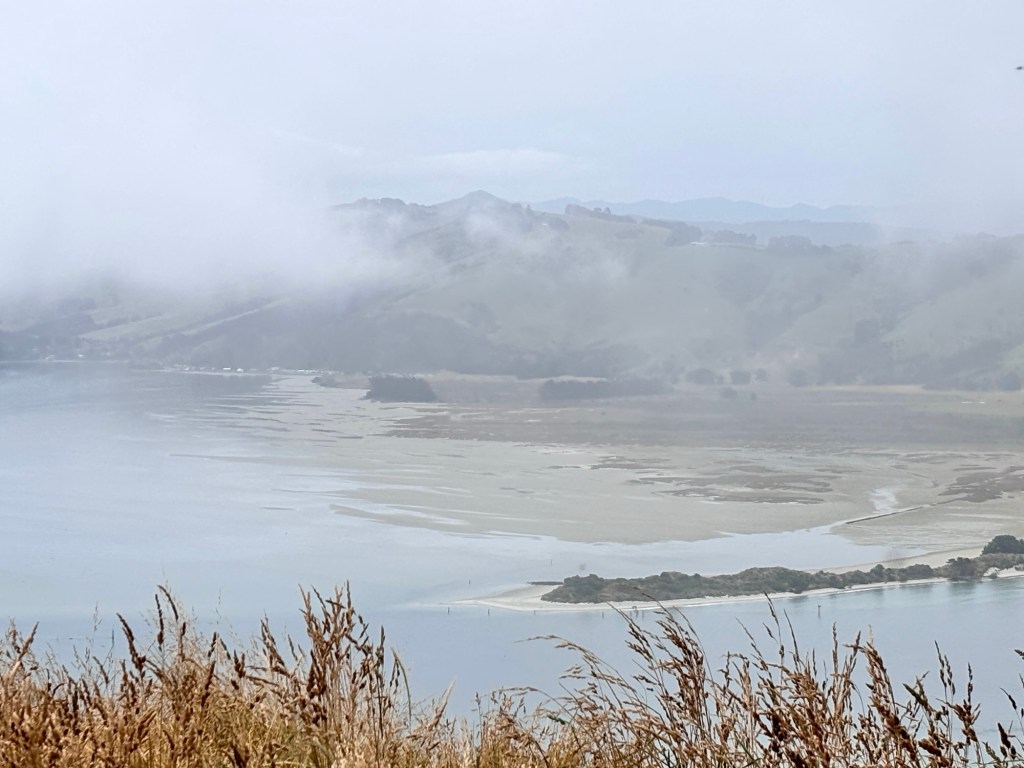
We had nice views at the top but the fog was rolling in!

We came back down and had a chance to watch some New Zealand Fur Seals. This area of rocks is home for the mothers and babies. 


We saw some very young ones!

We saw babies nursing.

Some were in the grass above the rocks.  These were the smart seals!

The babies will be here about six months at which point they will go out to sea with their mothers.  They will continue to live in this general vicinity, but not this specific cove.

We also saw the nastiest looking kelp.  It looked like something out of a horror movie.  We were told it can grow up to a meter a day and has no commercial use.  That seems like a missed opportunity!

This young seal seemed very interested in all the people.  I wonder if this curiosity will be to his benefit or detriment.

We walked a bit to see this sandy beach.  The owners of Nature Wonders are keeping this beach only for the wildlife. 

We could see a few sea lions in repose on the beach.

The real prize is to see a yellow-eyed penguin on the beach.  We didn’t, but learned they are the third largest penguin in the world and have this area as one of their remaining habitats.  There are not very many of these penguins left and will likely be extinct in 15 years.

We were able to see the other native penguin, the Blue Penguin.

Natures Wonders has set up a series of doors where the penguins can be peeked in on.  The penguins access a natural burrow on the opposite side and create a nest or den.  They can be observed by peeking in the doorway.

Different burrows are utilized different years as the penguins choose. We were able to see three in use.

The first door opened to a parent penguin (unknown whether it was mother or father) and two five day old chicks.  We only saw one of the chicks and didn’t want to stay too long to see the other.
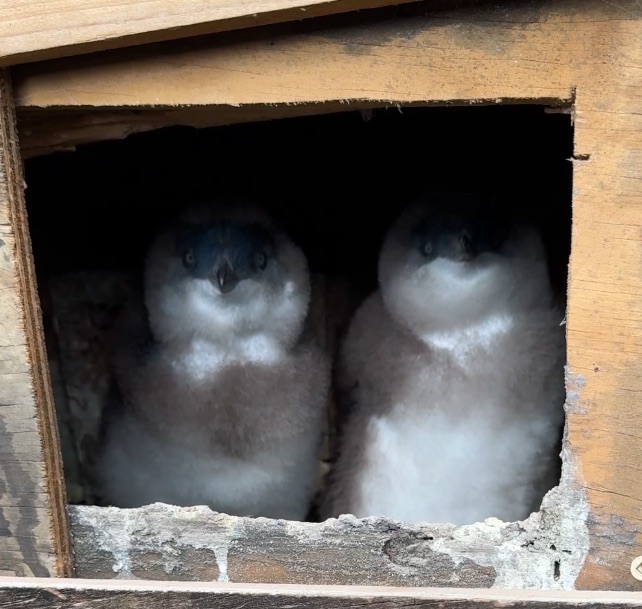
In the second opening, we saw two 9 week old siblings. They were very fluffy and cute – much cuter than the picture shows.  They will be gone soon, no longer needing to be fed when they learn to eat fish on their own.
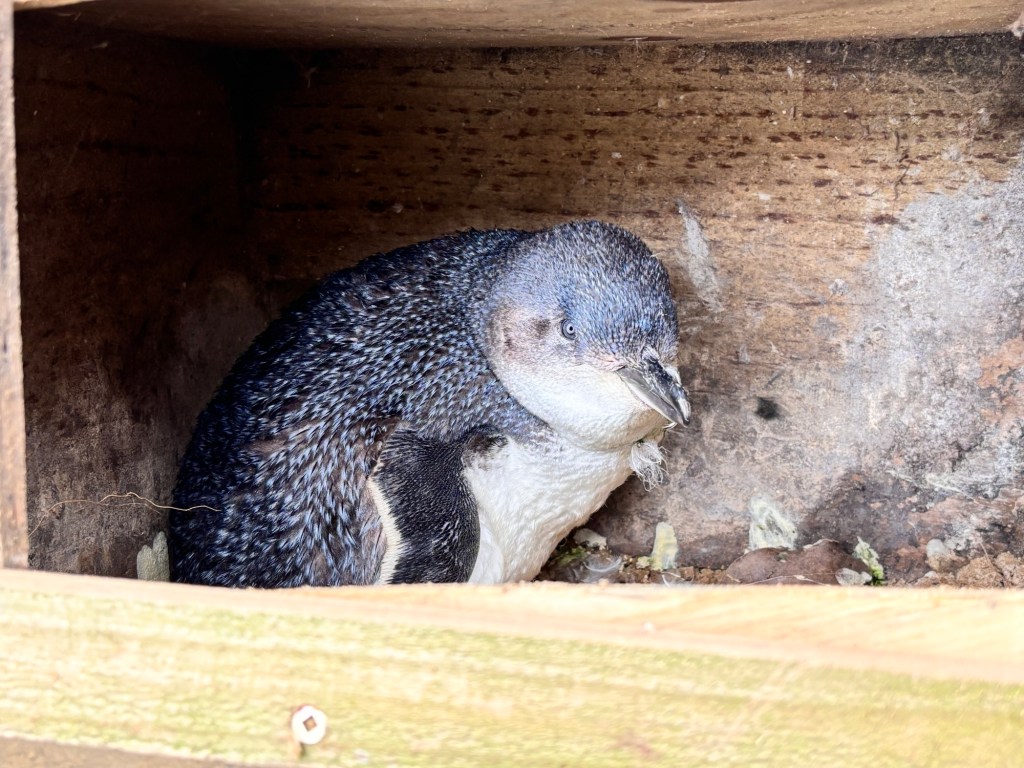
The third box held an adult that was molting. 

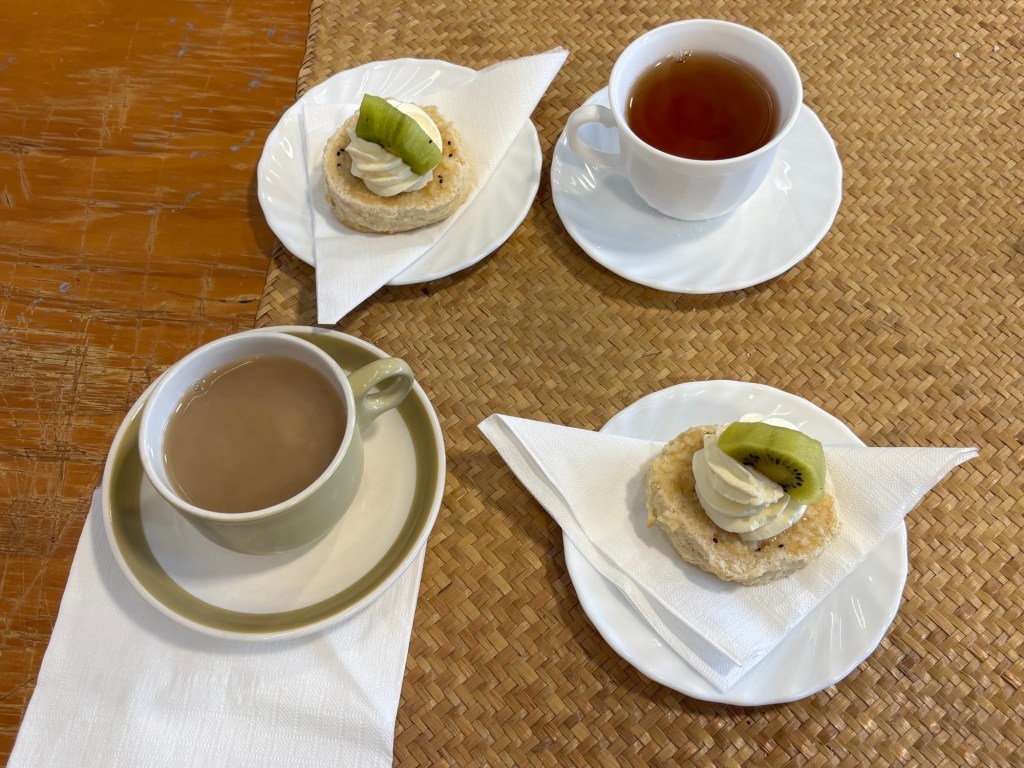
We returned to the reception center and had a hot mug of tea and a scone.
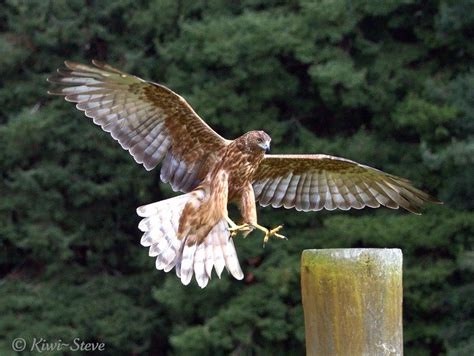
On the way back down we saw a Harrier Hawk.   I was on the wrong side of the bus so this is a stock photo.  We were told that this type of hawk is New Zealand’s only raptor.  They eat mostly rabbits.  

Seeing these hay rolls reminded me of something we’d been told a few days ago.  Someone in New Zealand invented a biodegradable hay roll cover.  The hay rolls just stay in the fields.  Eventually, the cows (sheep?) are brought to the hay roll to feed eliminating the need to transport the hay roll.  Makes sense to me.

It was time to re-board the Albatross catamaran.  It had begun to rain but we knew we wanted to be up top, regardless.

We passed the Tamara Head lighthouse. It was built in 1864 and is still operating.

We were told that a species of albatross nests towards the top of this point.  Our guide said that our best result here would be to see a white head peak up above the grass as they were nesting.  There was not very much wind and they prefer to fly when it is windy.

Just when we were feeling disappointed, we began to see albatross in the water.

Supposedly, we saw three different species!   We were rocking and rolling so much that even taking pictures occasionally was precarious enough.  I didn’t attempt to take any notes.

I do remember that our guide said that none of the three species of albatross will go onto land – even though it is close. They come here from thousands of kilometers away for feeding.  It’s an easy run to the grocery harbor!

It reminded us of when we saw and learned of the albatross on Kauai.  Those albatross parents would fly all the way to Alaska on their feed run.  See that post at Kauai: A Rainy Island and Albatross.  They really are very interesting birds.

On the way back towards  the ship.  Randy talked with our skipper, who is also the ranch owner who owns pretty much the whole peninsula where we spent the morning.

Perry explained and demonstrated the light system for boats coming into the harbor.  If you are coming straight in the light is white (as this photo shows in the middle right). If you are slightly to left or right of straight in, the light will be red or green.  

We saw penguins in the water.  I didn’t hear, or remember, which kind.  They were quite small and would disappear and then pop up again 20 meters away.

Perry and Randy had quite a conversation.  Perry said that it was soon going to be time to start shearing on the farm.  He has about 2500 sheep and he, his son-in-law, and the dogs would do it themselves.  In season, Perry has sheared 300 sheep a day for many years.

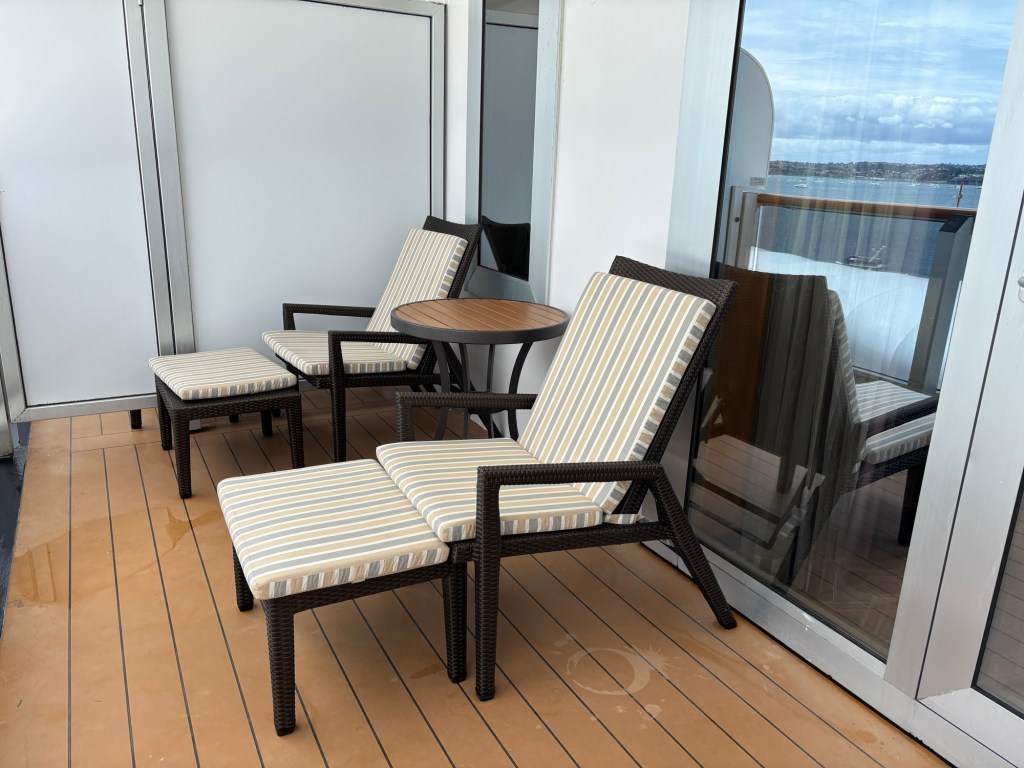
Back on board Westerdam, we were feeling fondly about our first trip to New Zealand.  We sat on our balcony and watched people come and go.


A couple of gulls came to visit on our balcony, but I only got one to pose for a picture.

Randy noticed that our Holland America Navigator App said the temperature was -34 F and -36 C.  We had our jackets on but it wasn’t that cold (and the conversion doesn’t compute either).

After dinner, we returned to our balcony to look for the albatross. We had been told that we’d see them as the ship left.

We had a different view of the WWII bunkers. We saw six or seven along our way.

First of all, we had a much better view of the albatross that were nesting when we were on the sixth deck of a cruise ship than we had from water level.

We stood on our balcony and spotted albatross, seals and lots of penguins!  So cool!

We ended our night at the Rolling Stone Lounge. I got a picture before the dance floor filled.

Next up: Sailing Fiordland National Park Sea Day
Posted in Uncategorized | Leave a comment

New Zealand Cruise: Christchurch

We were in Christchurch on January 24, 2025.

Because we almost always choose to be on the water when we can, our excursion today was jet boating on the Waimakariri River. 
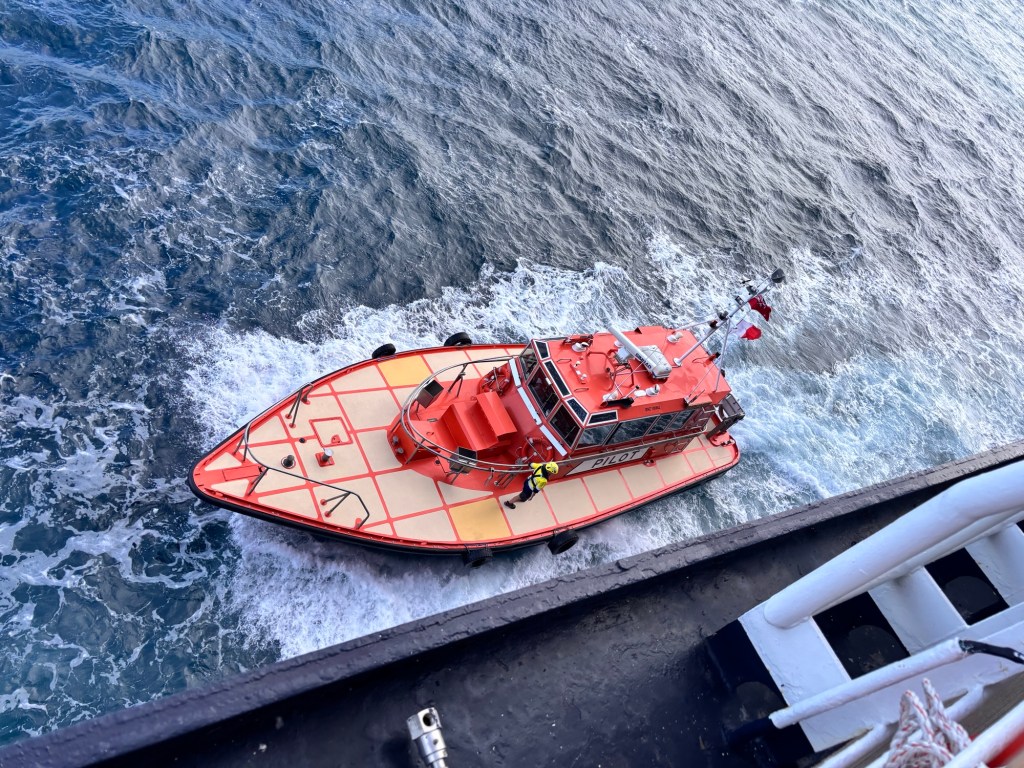
The river flows 94 miles from the Southern Alps to the Pacific Ocean.

We  traveled about 45 minutes from the pier to the river.  We passed through Christchurch, the largest city on the South Island.

The area has Māori origins from way back.  More recently, British pilgrims from Canterbury arrived in 1850.  The pilgrims were in four ships sponsored by the Church of England.  Christchurch became a city by royal charter in July 1856 and is the oldest established city in New Zealand.
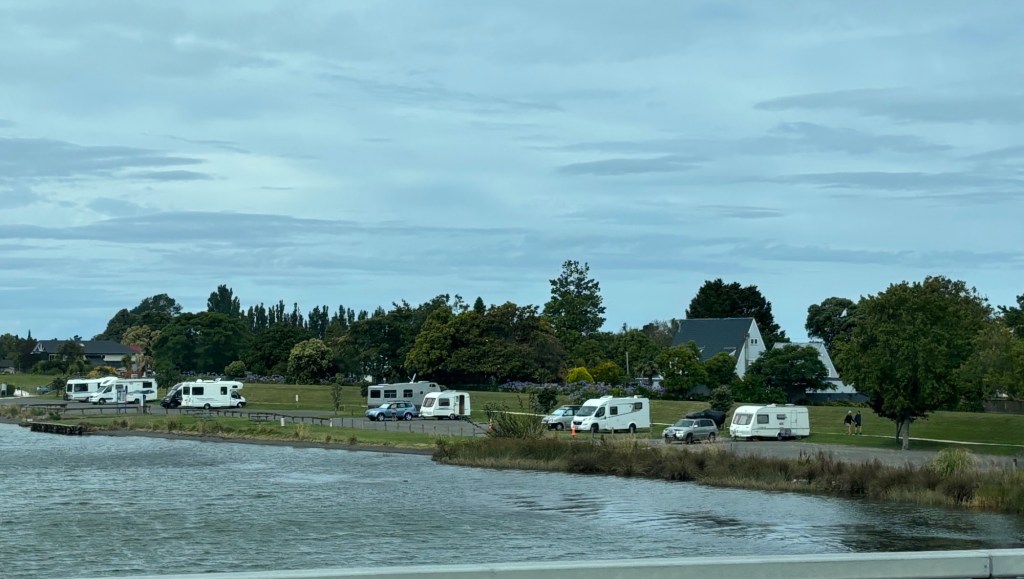
Where North America has states and provinces, New Zealand has regions. Christchurch is in the Canterbury region – again harkening back to its British roots.

There were substantial earthquakes in Christchurch in 2010 and 2011.  The severest (magnitude from 7.1) struck on September 4, 2010, and a large, destructive aftershock (magnitude 6.3) occurred on February 22, 2011.  There were many other lesser aftershocks.

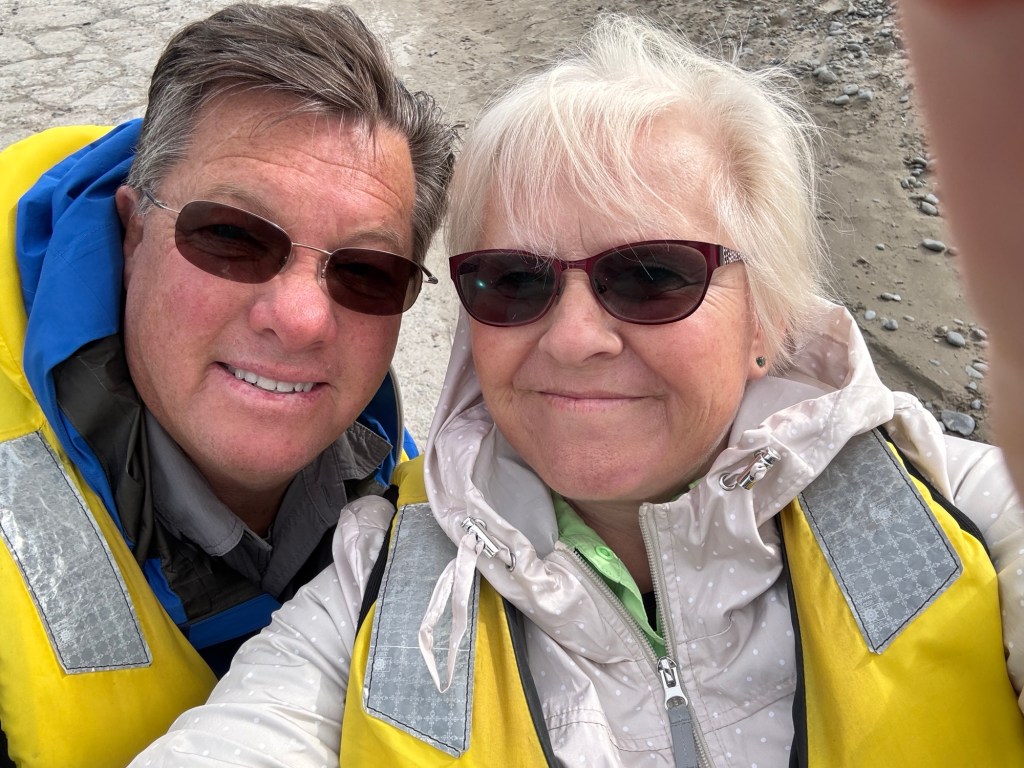
Our jet boat guide divided us into two groups.  Here we are, ready for fun!

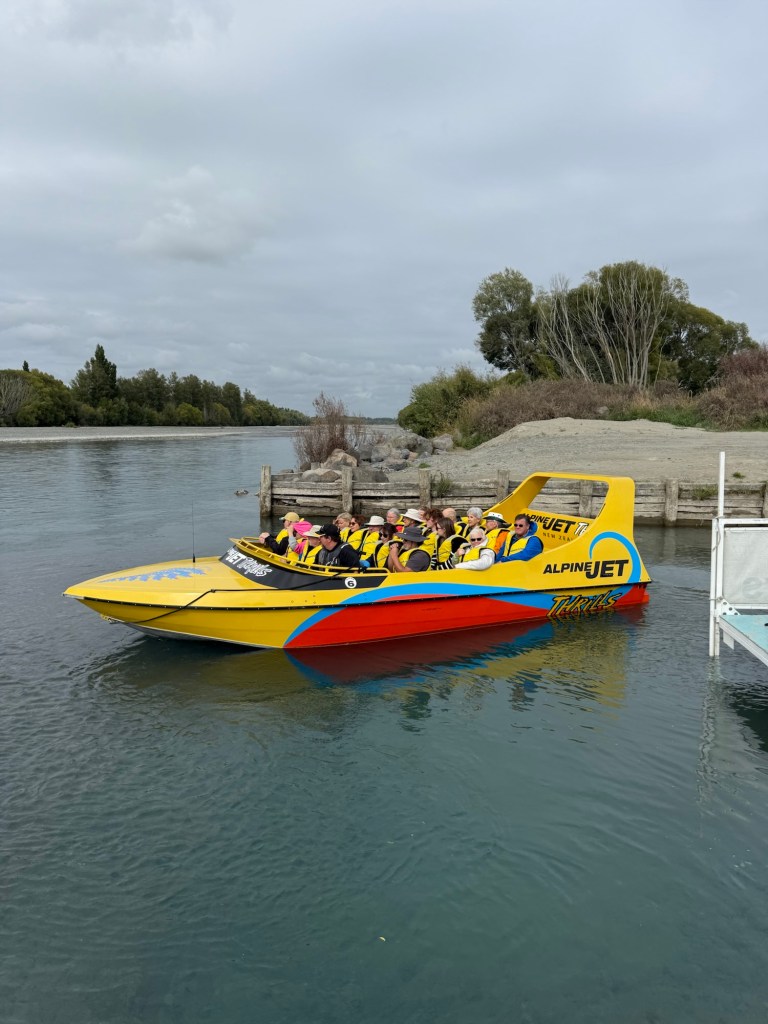
At the last minute, they moved us to the first group which meant we both got a side seat!  Randy is in the back in a blue jacket, I am right in front of him.

We did a couple turns to know what to expect!

Heading down the river!

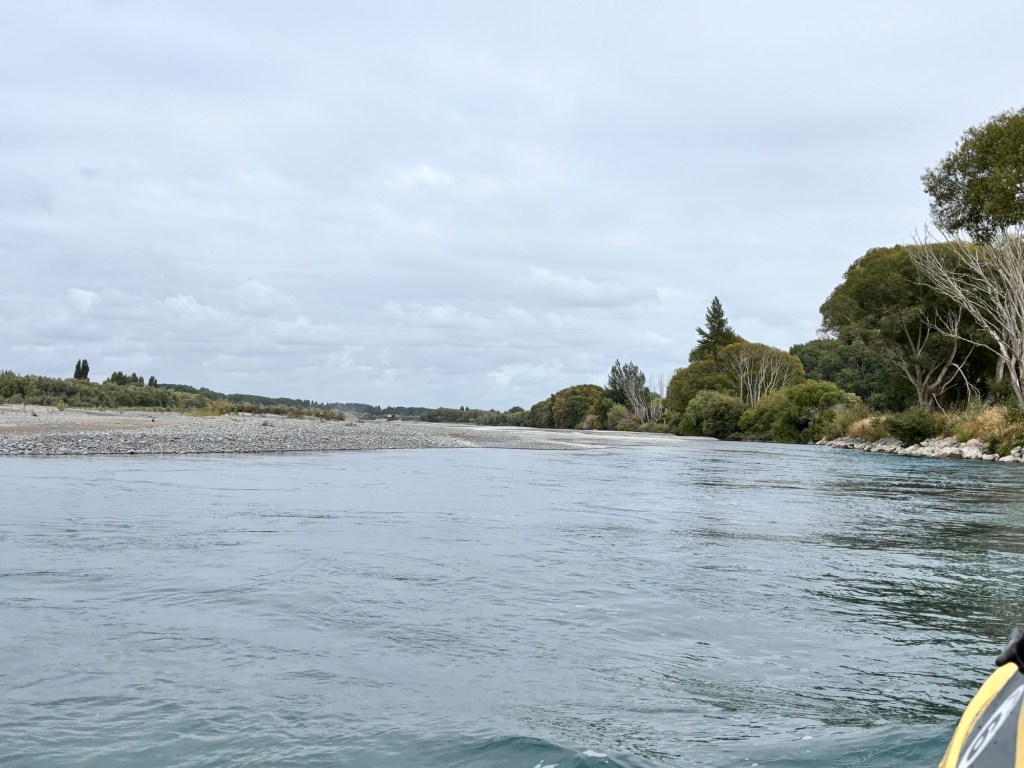
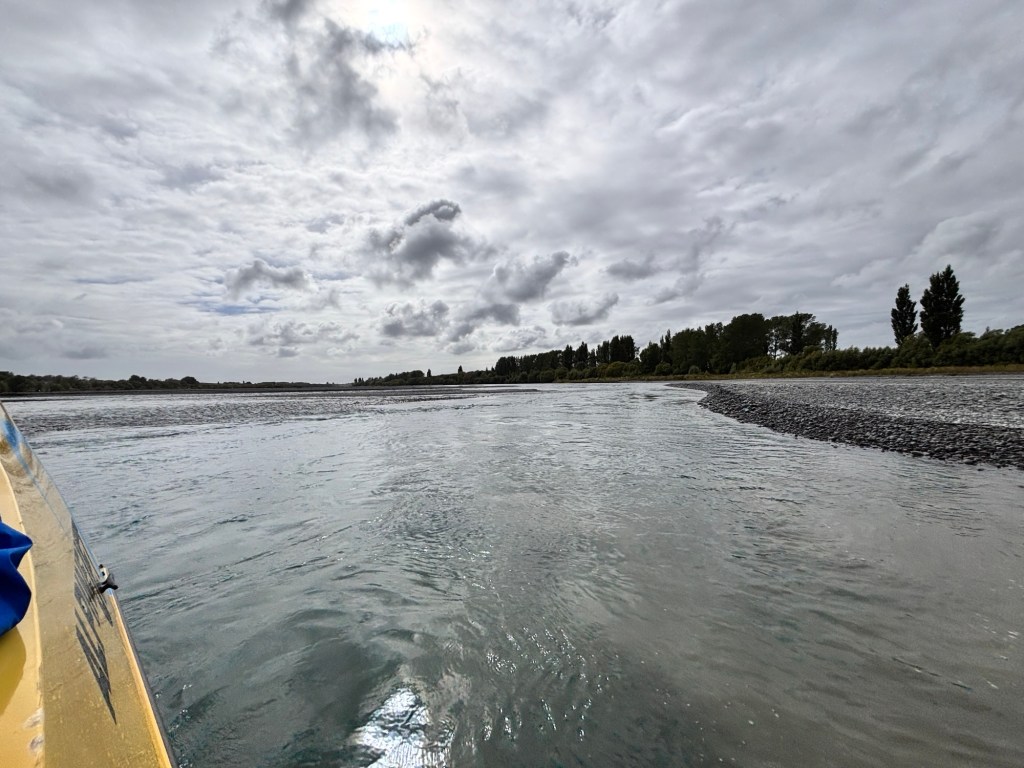
The view down the shallow river.

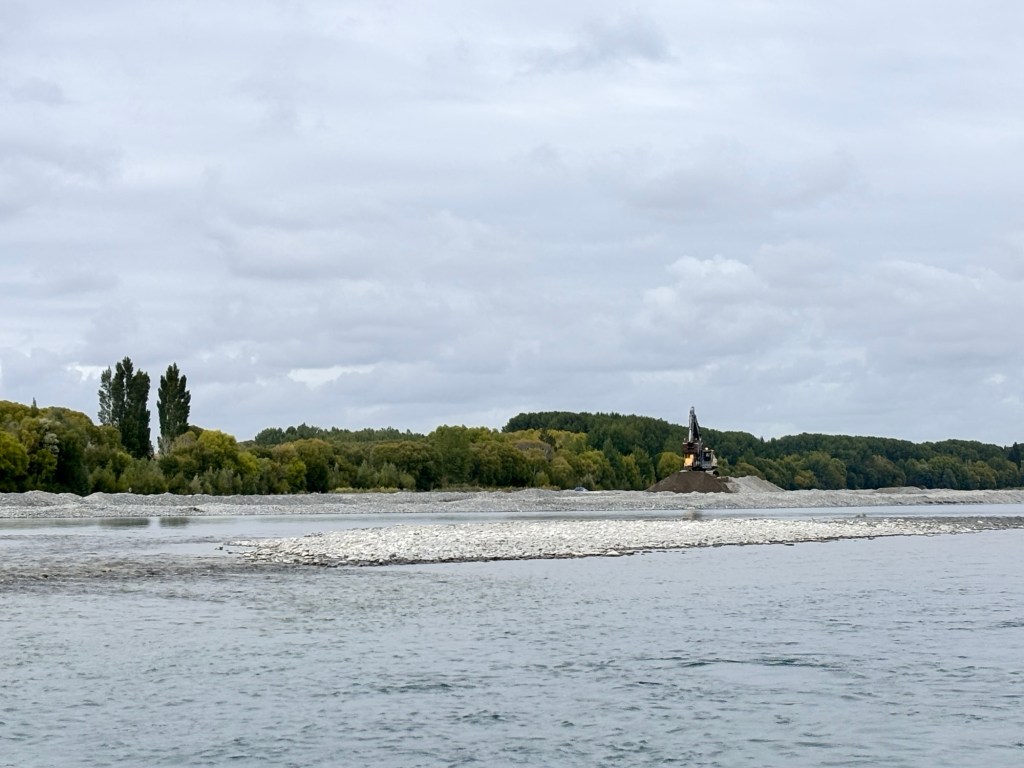
This machinery is to pick up rocks that have broken up as they catapulted down the river.  The rocks will be used by the company to make concrete.  It is a win-win because the river would eventually back up the rock removal and the company gets free resources.

We were on a Hamilton jet boat with no prop and no rudder.  Because it is missing prop and rudder, the boat is able to scoot along in only 3-4 inches of water.  It has two engines pumping water through an intake system that allows for 500 horsepower.

The day we went, there was about 35-36 cubic meters of water per second going down to the Pacific Ocean.  When accommodating rainfall or snow melt, the regular flow is 1000 cubic meters per second.

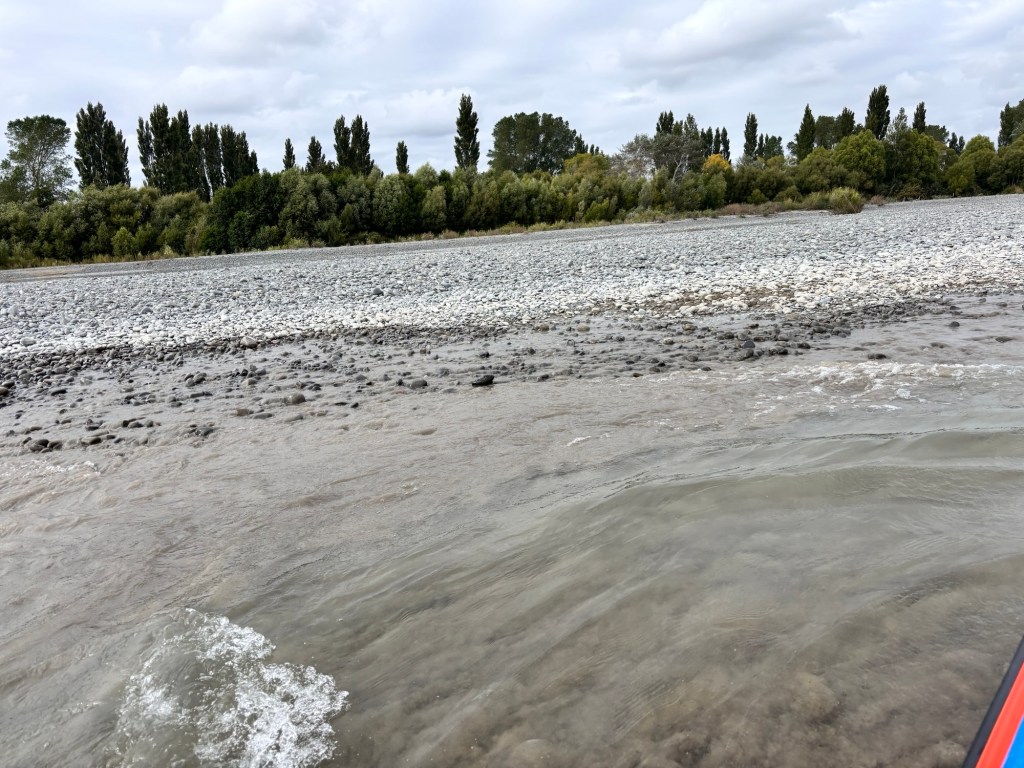
We boated on a braided river, a wide riverbed with small streams criss crossing. 

We’ve seen rivers of this type before but the term was new to us.

And our ride was complete – completely fun!

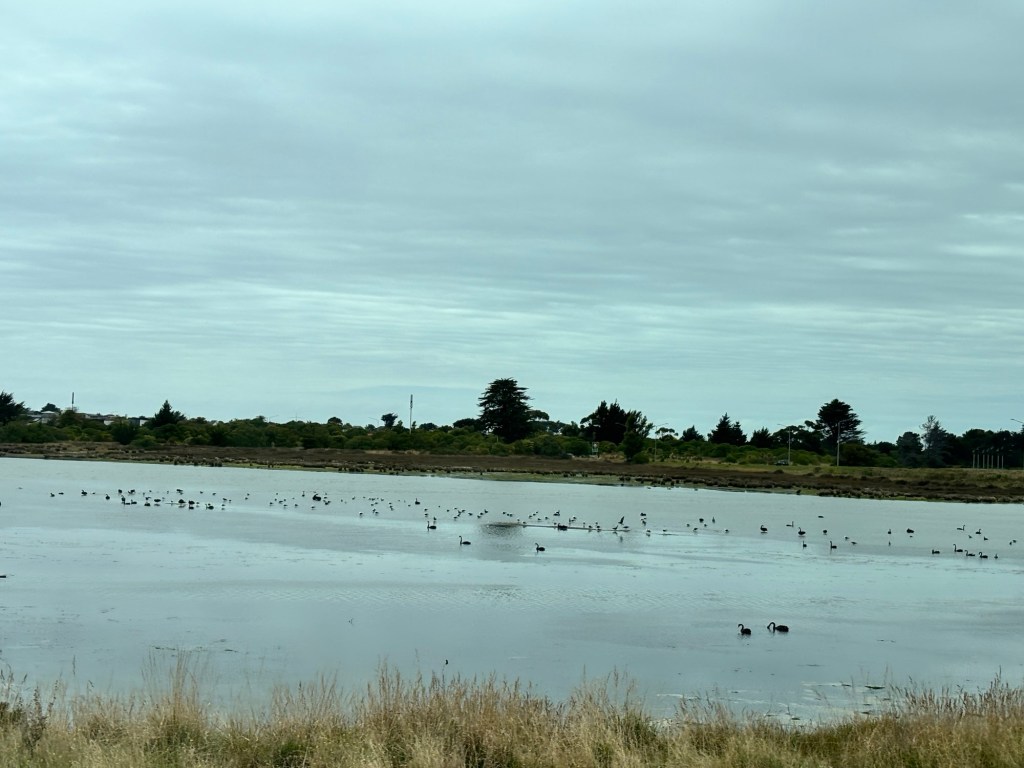
On the way back, we saw black swans on the River Avon.

The rest of our day on board was pretty chill.  It was nice to have some down time on the balcony.

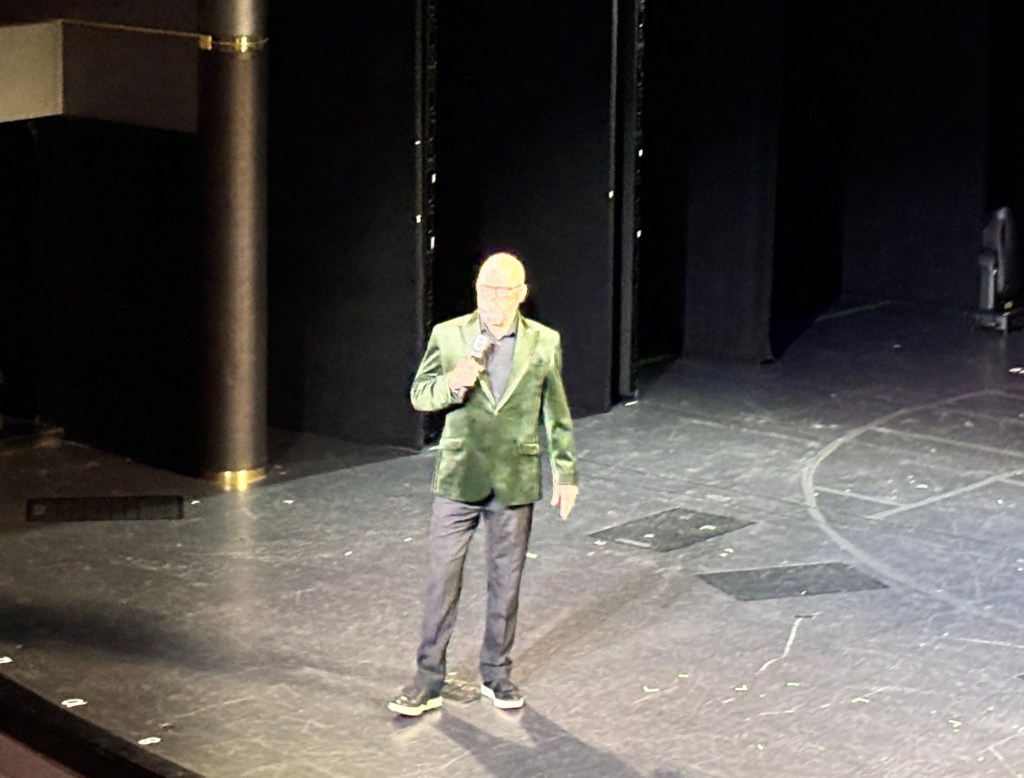
We did go to a comedian Paul Adams’ show in the evening.  We hadn’t gone to his first show on board but heard good things. He was clean funny.

Next Up:  A wild, wildlife day!

Posted in Uncategorized | 1 Comment

New Zealand Cruise: Marlborough Flyer

We were in Picton on January 23, 2025.

We went to breakfast and saw and heard the announcements about bio security for both New Zealand and Australia.  We hear or see reminders 10 times a day. Good for them for protecting their home lands but we’ve tuned them out by now.  

We intended to walk around the promenade deck, but found it blocked on both the port and starboard sides.


We gave up and I went to the crows nest and got a mocha and chocolate croissant.

We came out onto a deck at the bow and looked out at Marlborough Sound.


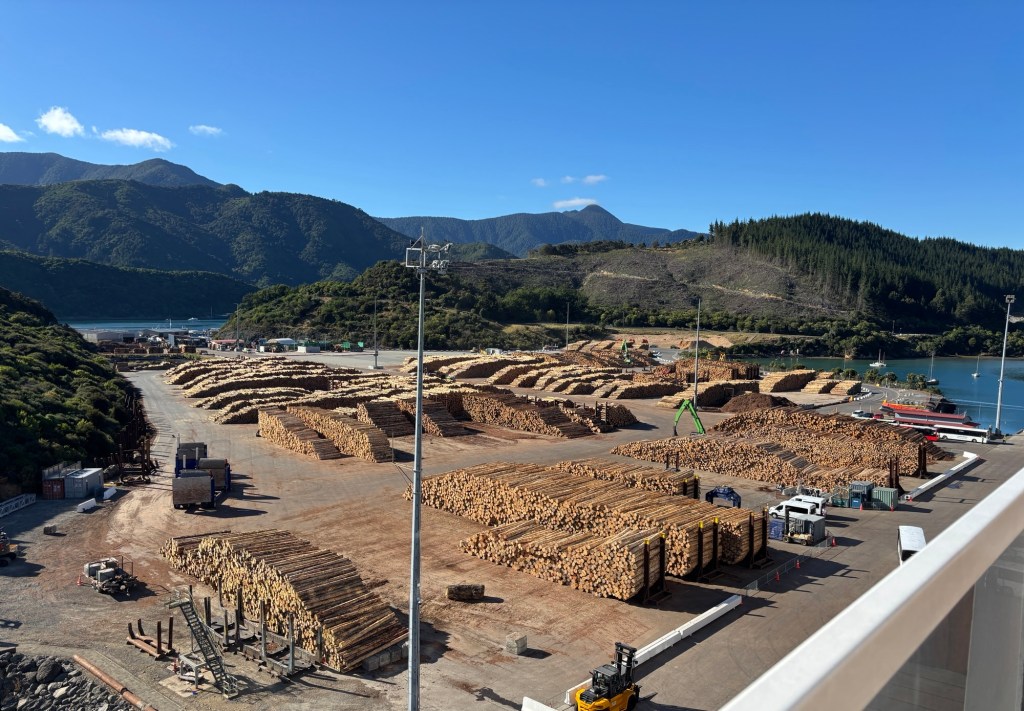
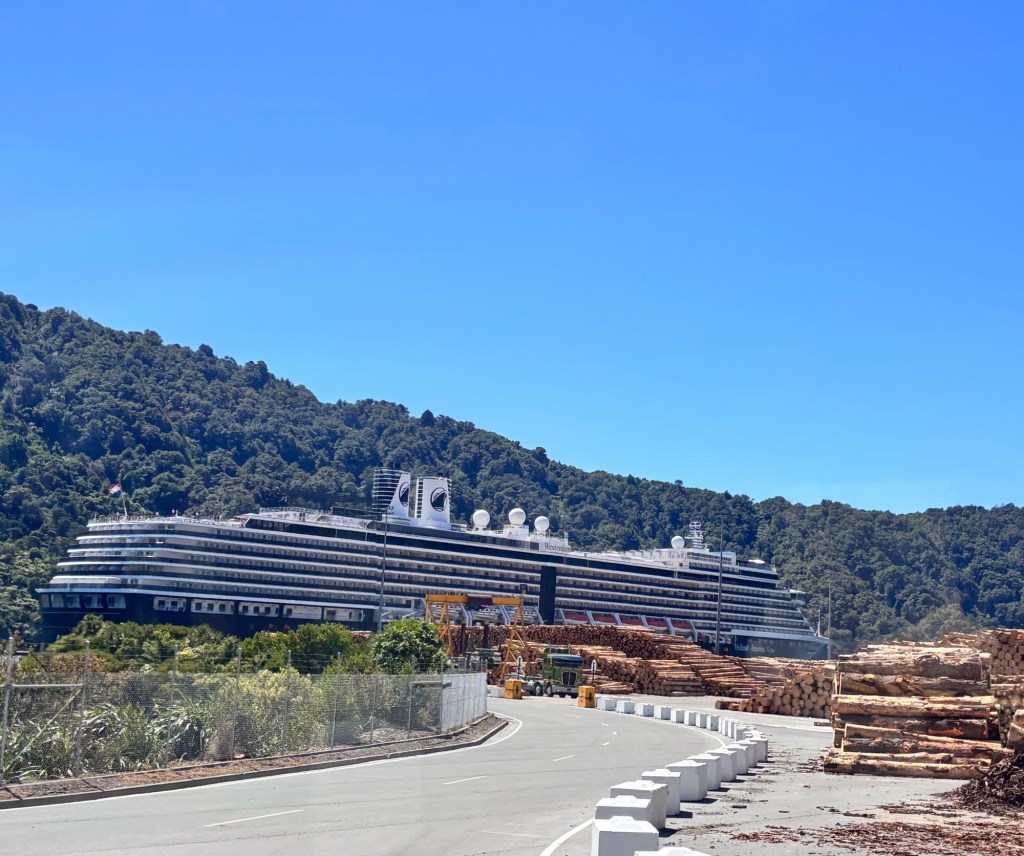
Once again, we are docked where they are storing timber for loading. We have seen this so many times that I’m surprised there are any trees left in New Zealand!  Most of the timber goes to China and the primary species exported is Radiata pine.


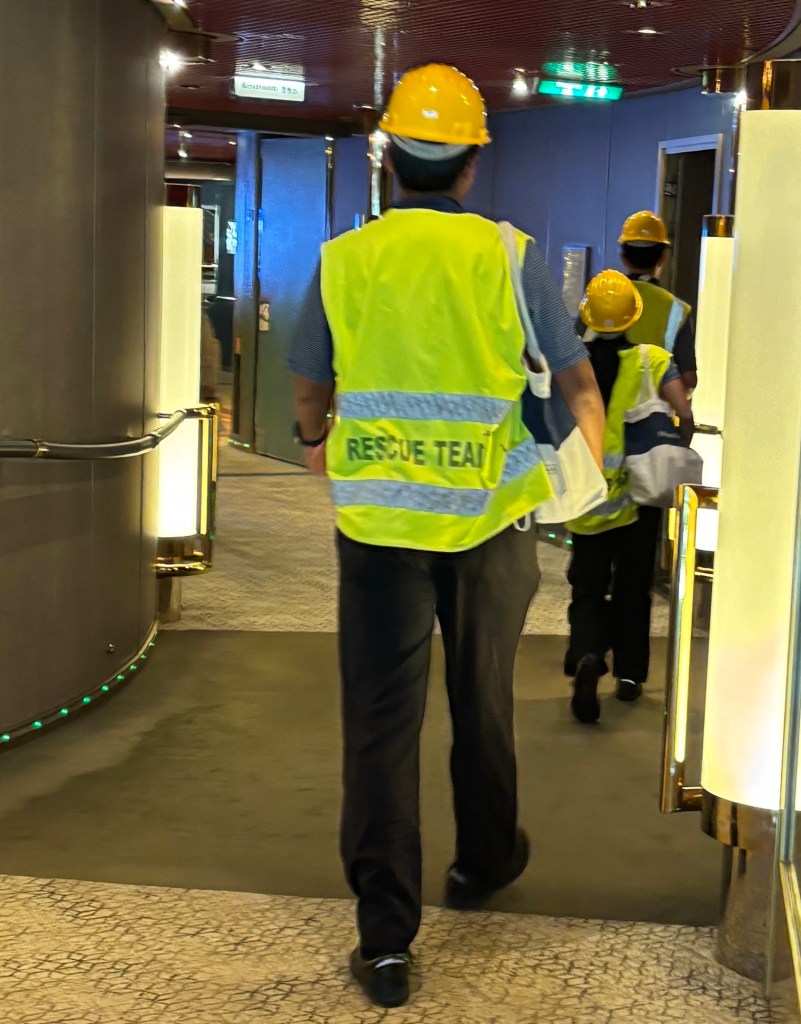
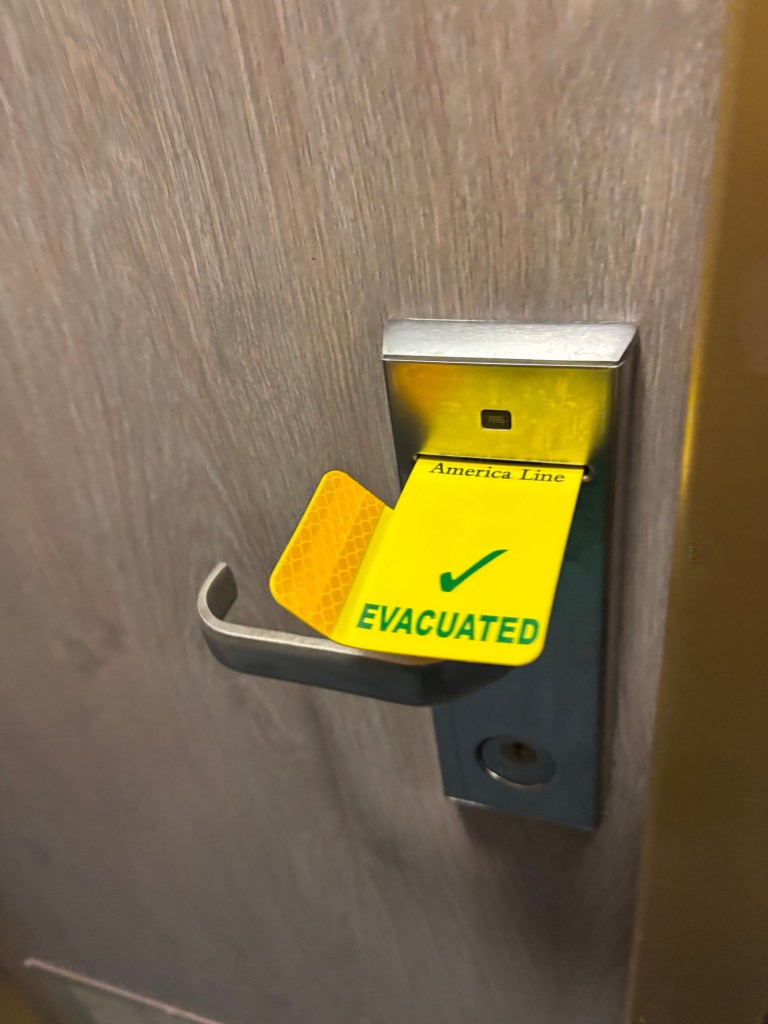
A crew safety drill began as we were preparing to leave on our shore excursion. 

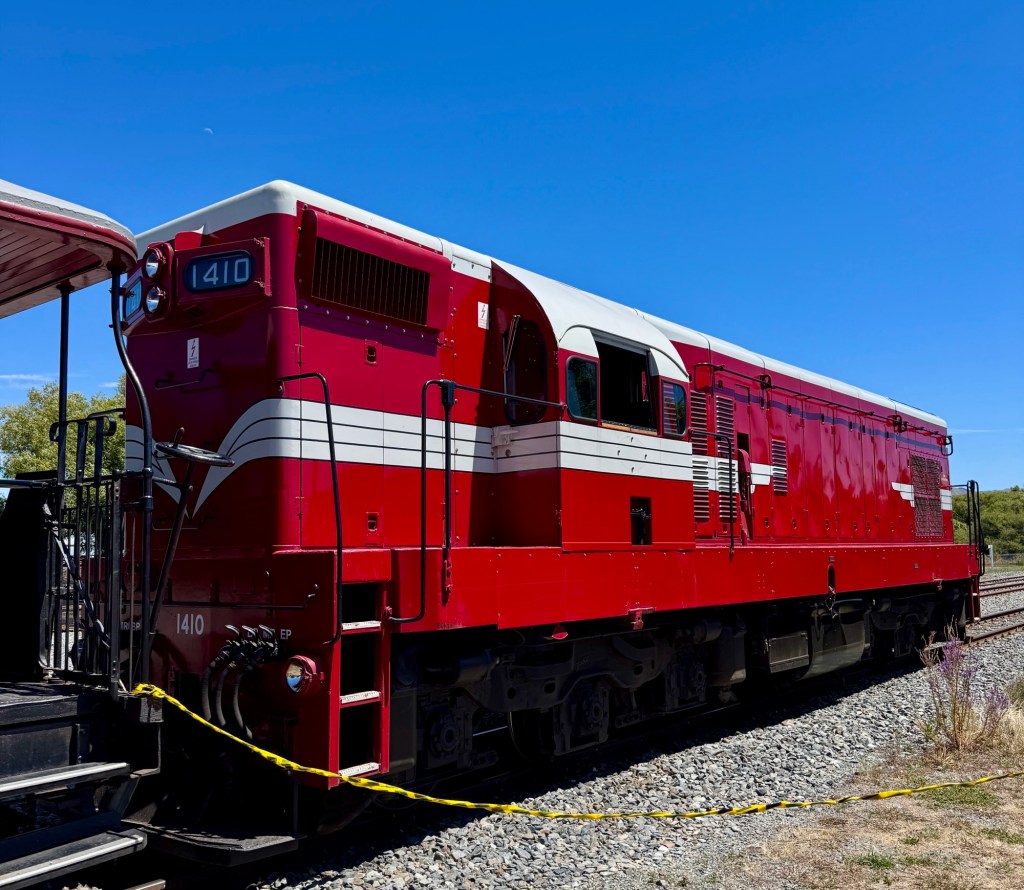
Our activity today was to ride the Marlborough Flyer. It is a heritage train powered by a 1950s locomotive. 


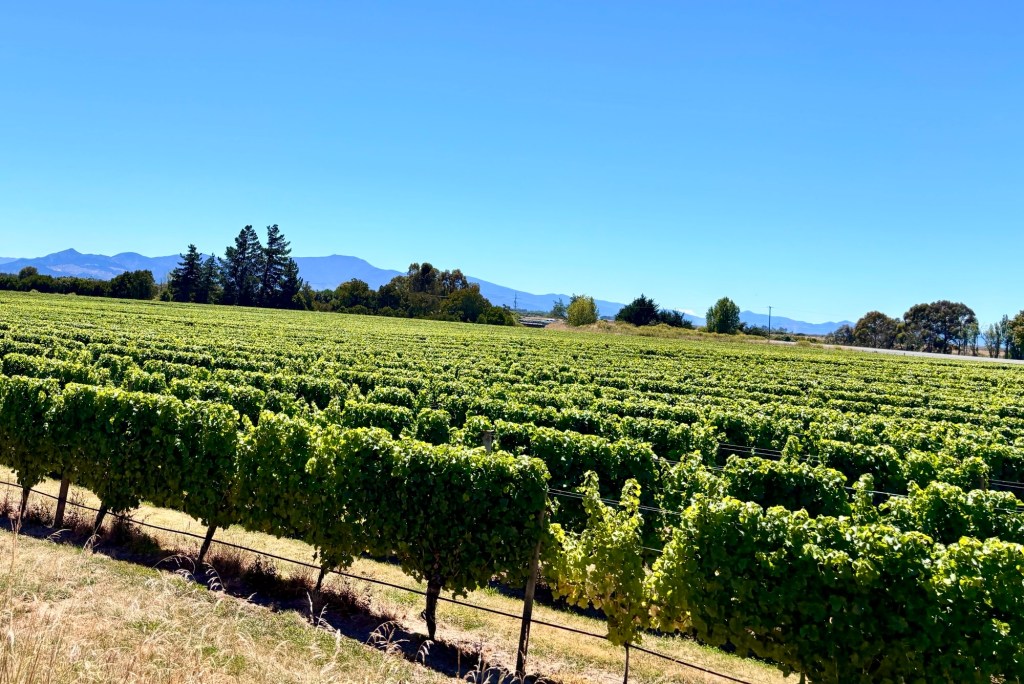
We passed through vineyards, some planted in the 1870s. 

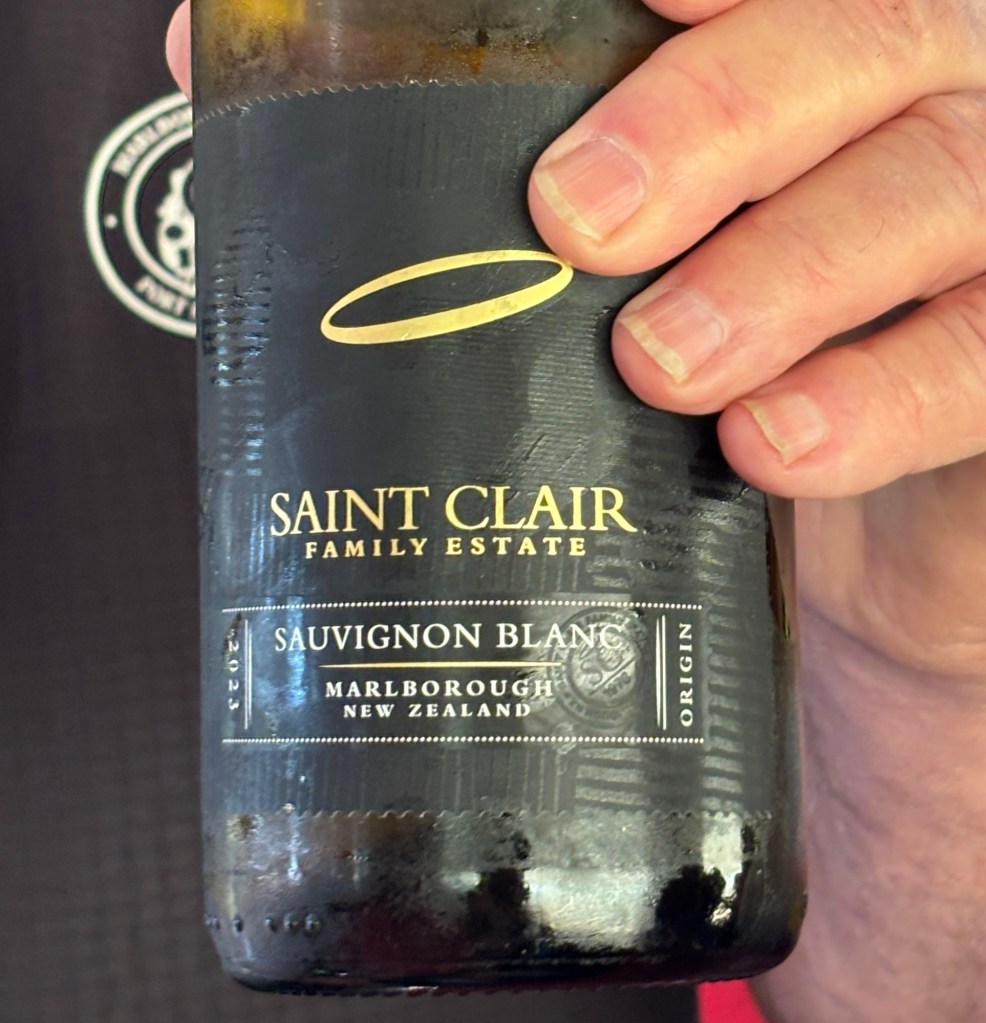
The Marlborough area produces 80 percent of New Zealand wines across 150 wineries.  They are mostly Sauvignon Blanc.

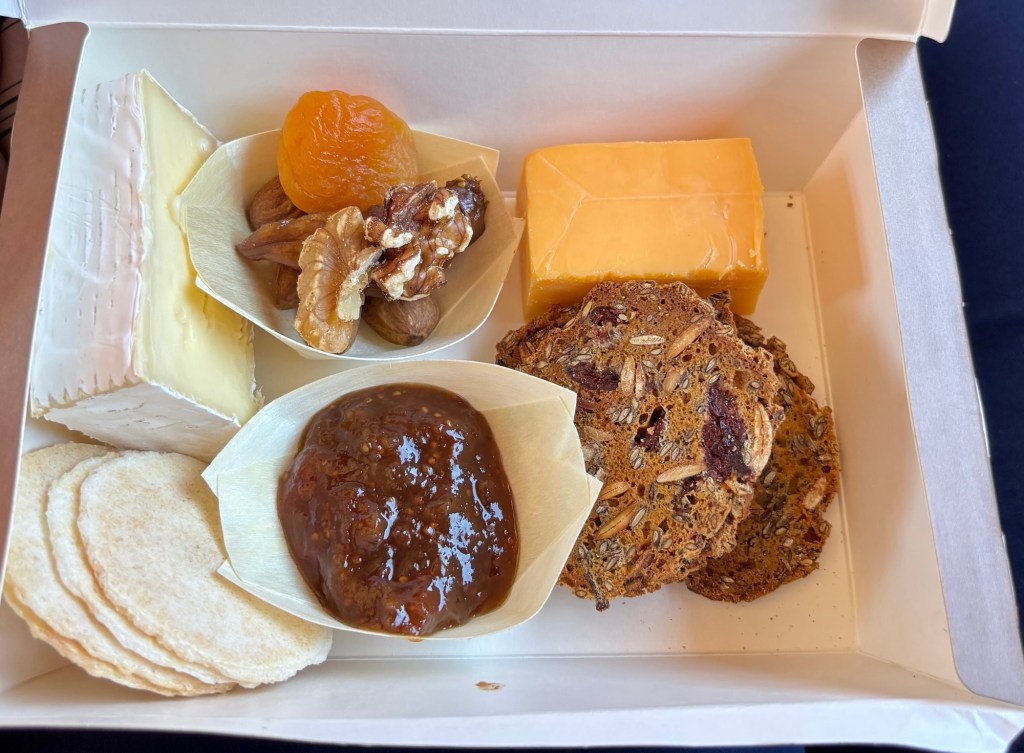
We had free samples of a local white but had to pay for our glasses of red. We purchased a cheese board to snack on.

This train transported two future Kings of England, the prince of Wales in 1920 the Duke and Duchess of York in 1927.  Looking forward, we didn’t see William, Prince of Wales or Prince George.

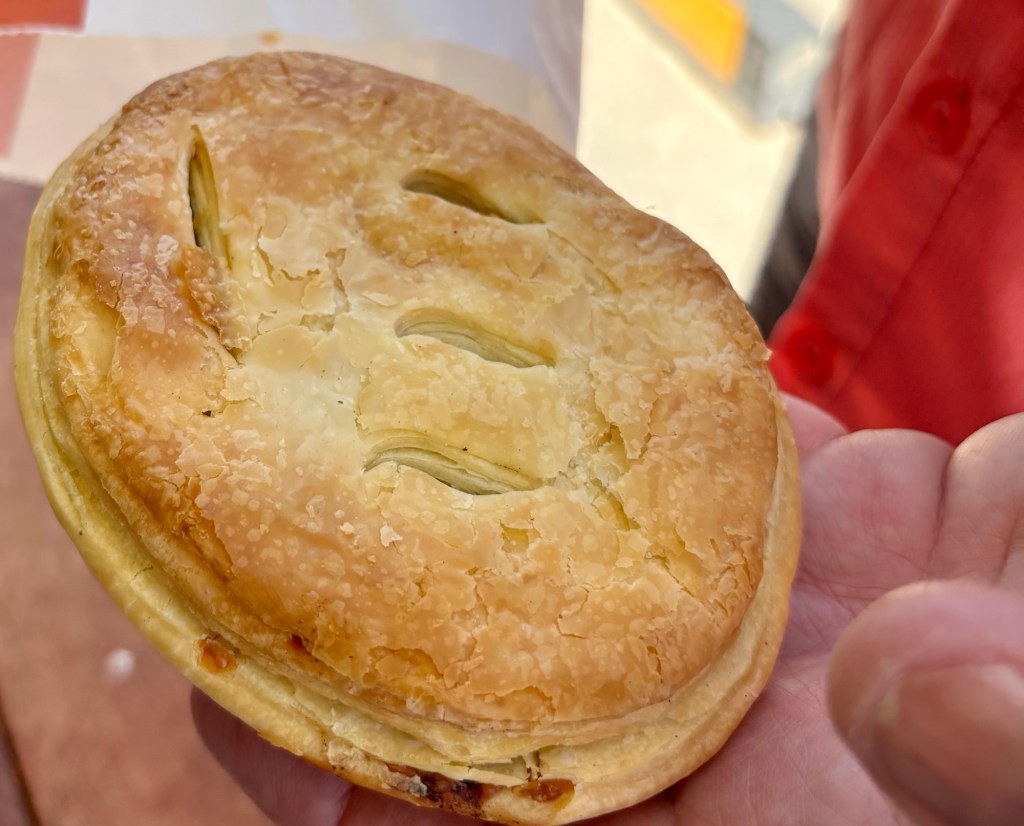
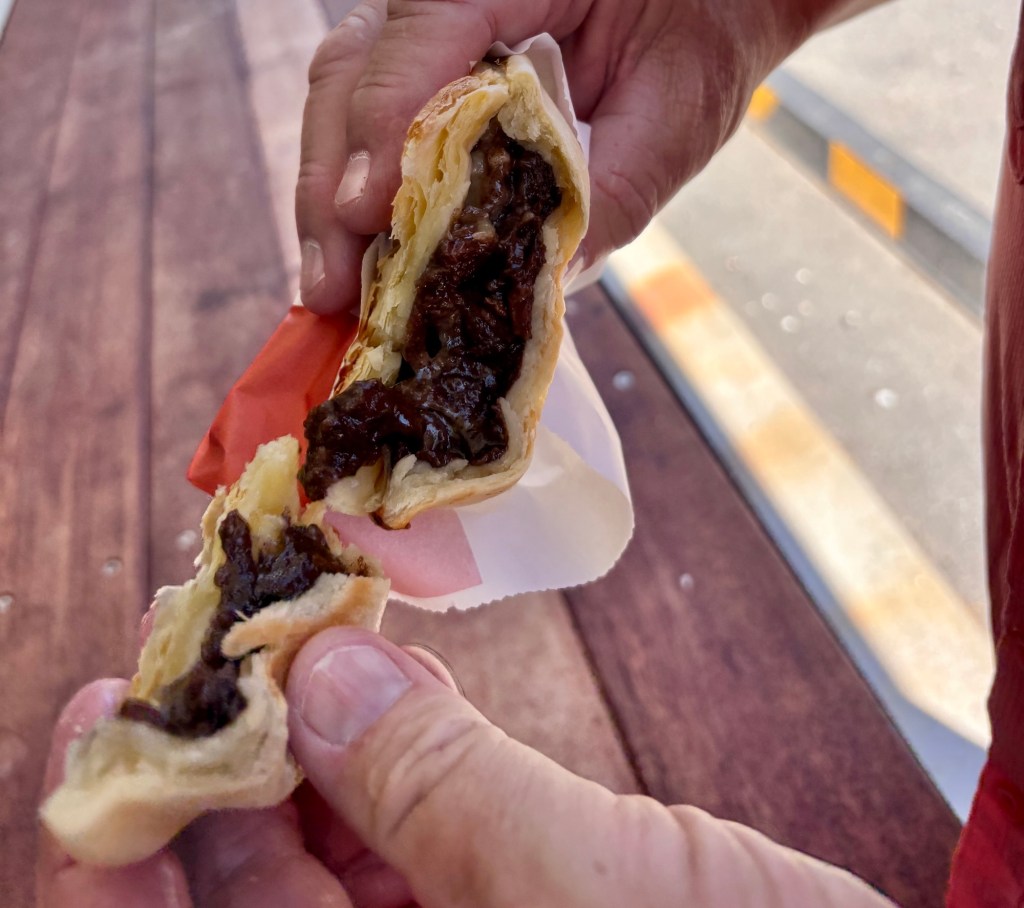
Our ride was about two hours before we stopped in Blenheim and took advantage of the opportunity to get another New Zealand meat pie. We chose steak, cheese and bacon.

It is similar to an empanada in our world, but seems to be baked not fried.

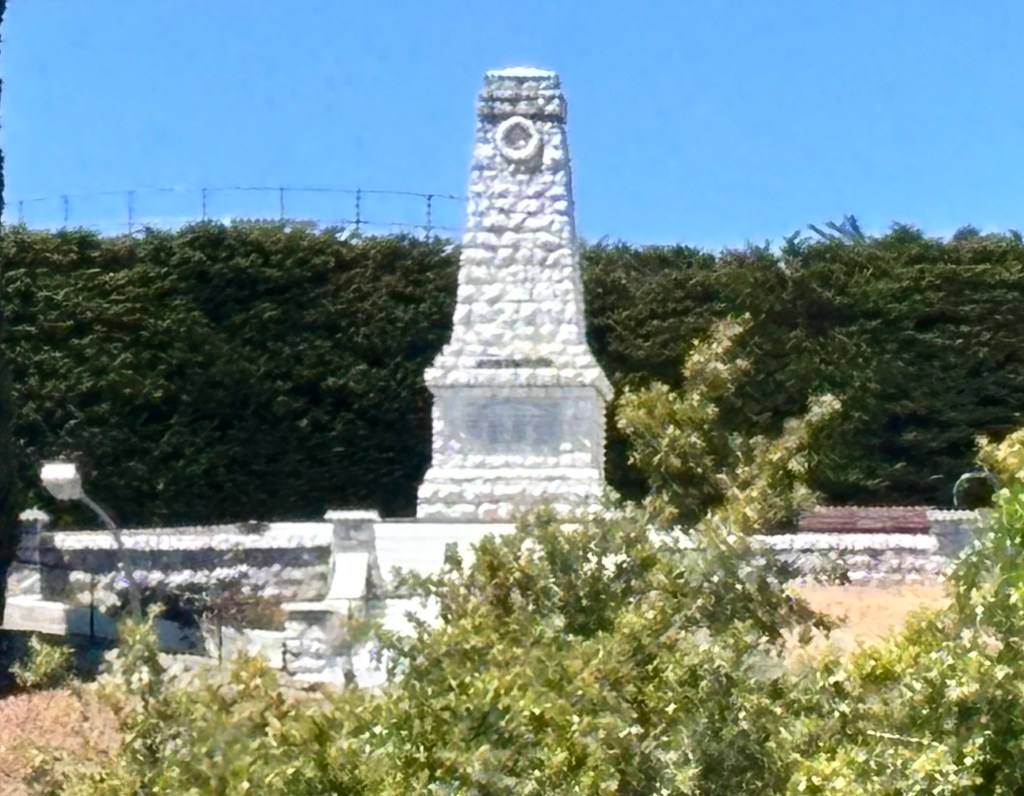
We saw this memorial on the hill. Blenheim’s 16-metre-high clock tower was completed in 1928.  It is the Marlborough region’s principal memorial to locals who died in World War I.

The train cars were made between 1911 and 1914. The engine was made in Canada.

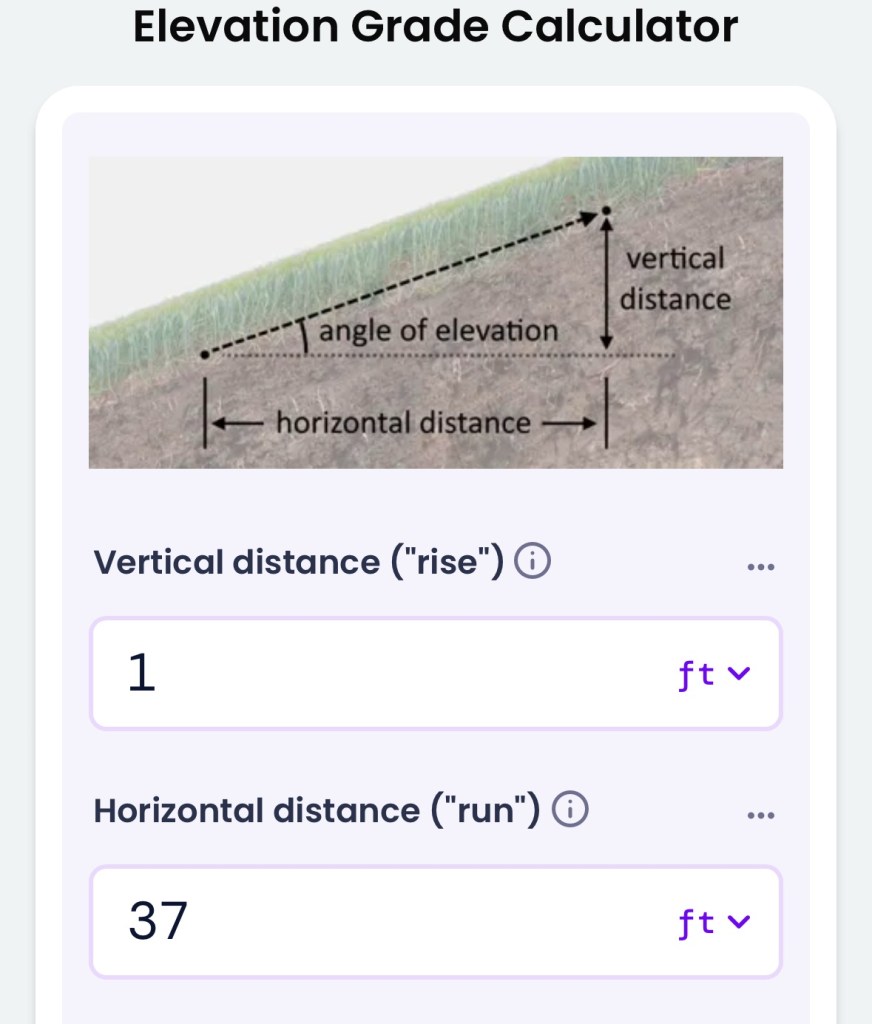
On this journey we went up and down one of the steepest gradients in the New Zealand at one and 37. It goes up one foot over 37 feet.

It didn’t seem steep compared to the trains we’ve been on in Colorado.  In fact, we missed noticing it at all on the way up so tried to pay attention going down.

We were above sea level and heard the braking but did not have a sense of steep incline. 

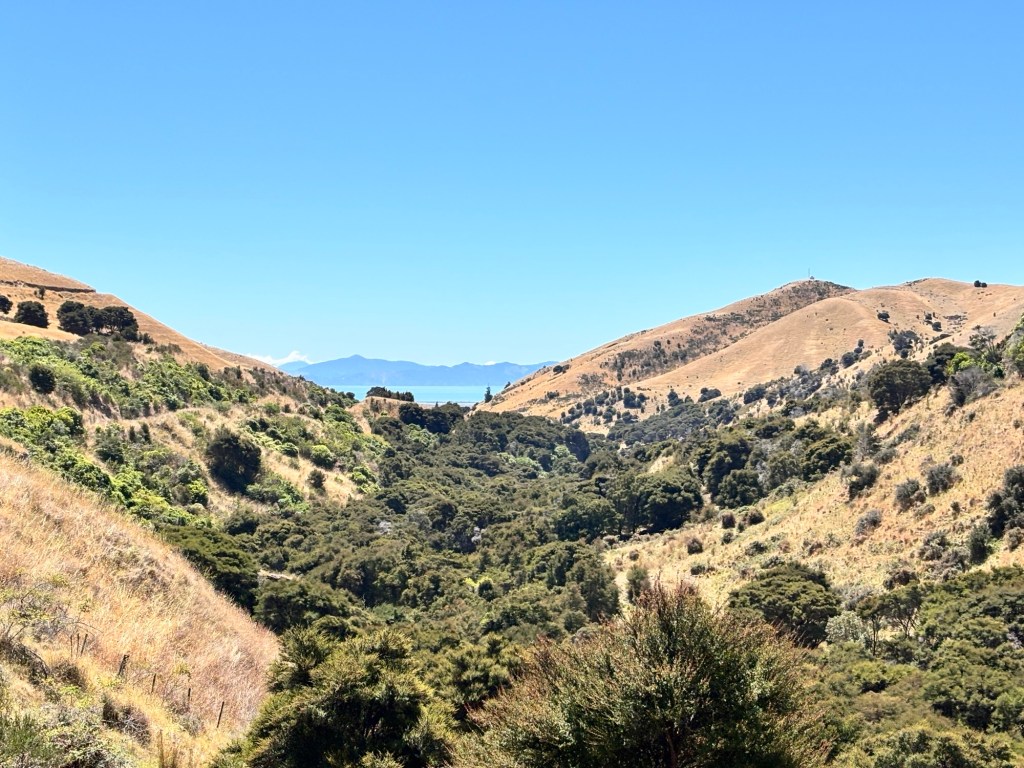
We crossed through the wetlands, home of an abundance of birds, game, fish, and unique vegetation. 

The wetlands are being restored to the benefit of the bar-tailed godwit.  This bird has the longest migration in the world from summers in Alaska to winters in New Zealand.

A male bar-tailed godwit was tracked while completing the 7500 mile journey.  He flew non stop for 11 days reaching a speed of 55 mph!

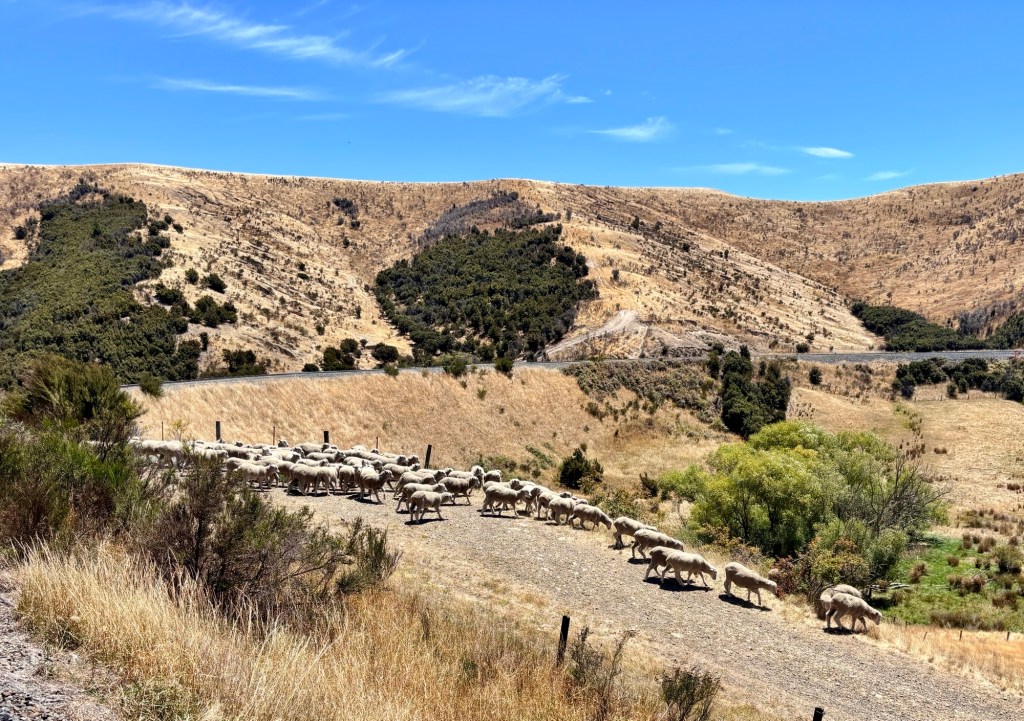
So many sheep!

So many vineyards! 

There is our ship, hiding behind the logs!

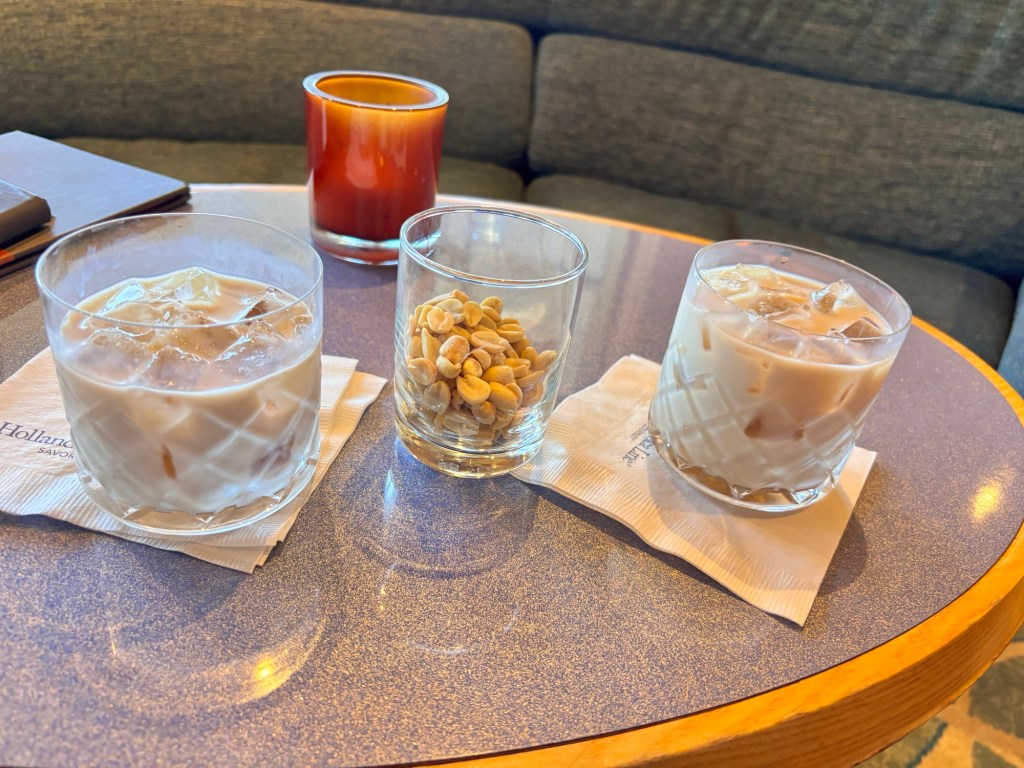
We went for drinks and, once again, no Bailey’s so no chocolate martinis.  The beverage team is out of Bailey’s ship wide. I tried to ask if they usually have Bailey’s or if it just isn’t standard practice to stock it in the South Pacific.The answer was that it is usually available and the bar waiter didn’t know why they were out. 

White Russians today!

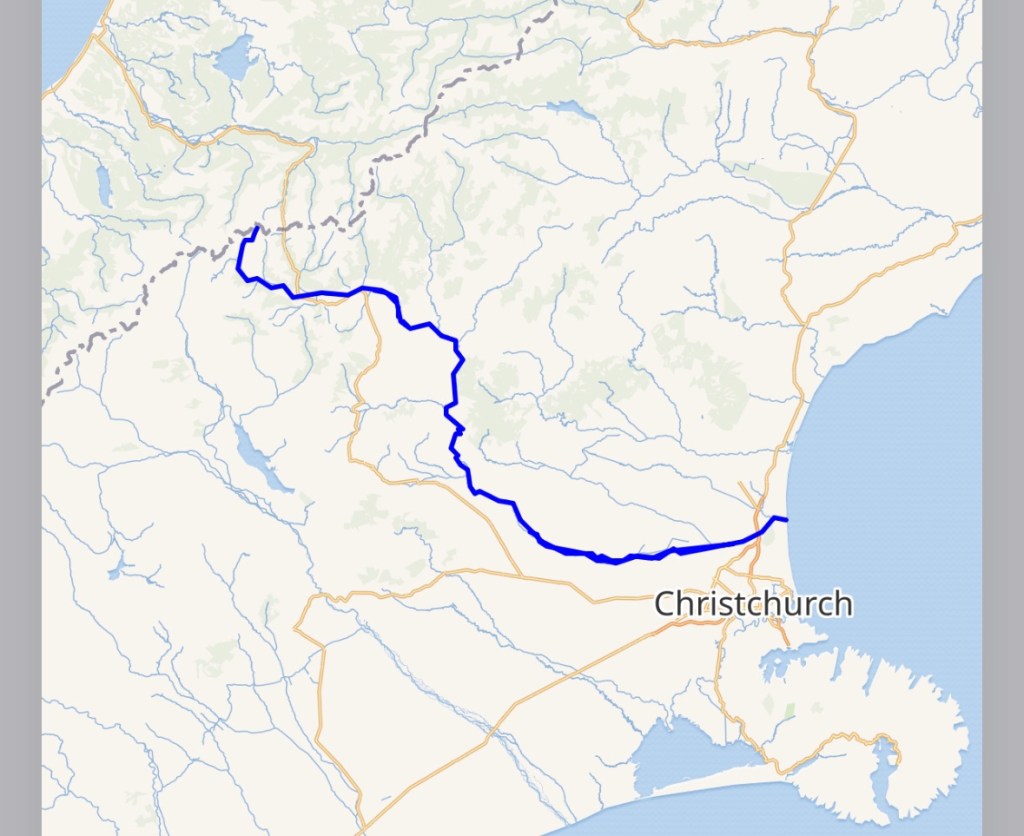
Usually, the process of transferring a pilot between the pilot boat and the ship is relatively straightforward. We’ve seen it take just moments many times. We watched for several minutes as this transfer was made quite difficult because of wave action. It was eventually accomplished.

After dinner we wandered into the gift shop aboard the ship.  Randy jokingly asked if they had any Baileys.  The clerk said “the ship” had just come and bought the last eight bottles from their stock!  Some people are having chocolate martinis tonight!

Next Up: Jet Boating!

Posted in Uncategorized | Leave a comment

New Zealand Cruise: Sheep Dogs!!

We were in Wellington, New Zealand on January 22, 2025.

Our day began with Randy walking around the promenade deck while I worked on the blog.  We needed to upgrade my Internet package from one device to four because the pictures I was taking with my phone weren’t getting to my iPad efficiently where I wanted them for the blog. 

Randy came in and said he had seen whales, or what we thought were whales given the visible blow, so we headed to our balcony.  He said other photographers were looking for albatross. 

The blows happened too quickly to get a photograph, but here’s a nice photograph of the ocean from our balcony.

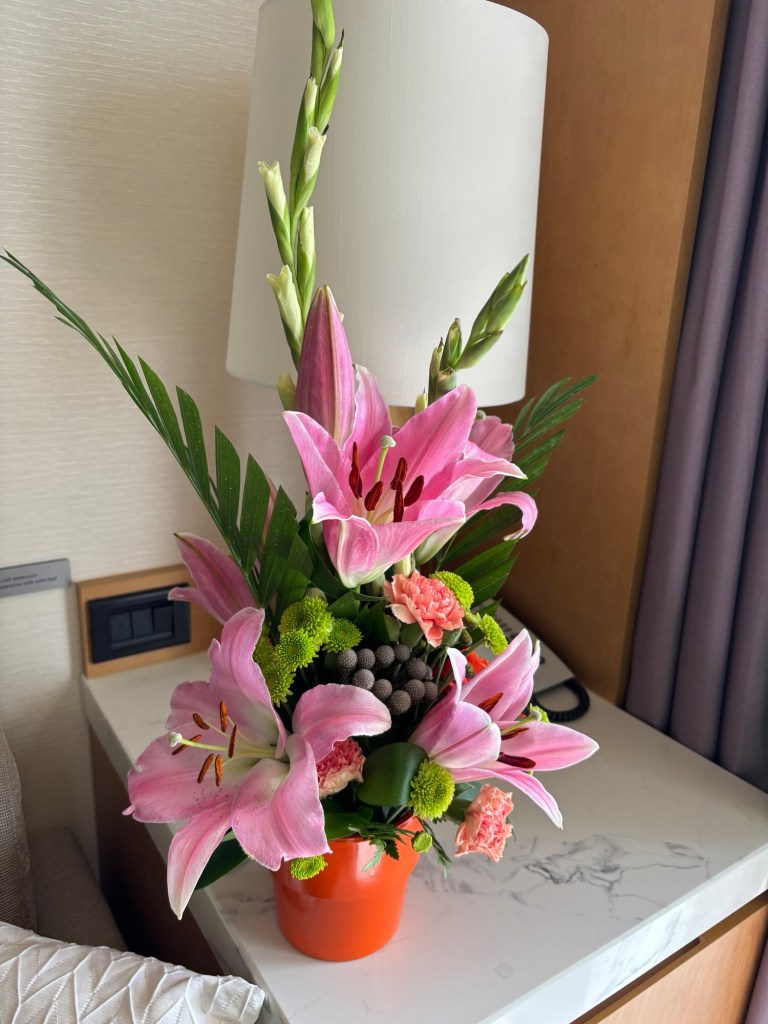
The flowers from our travel agent are beautiful and smell great every time we walk in our cabin!

Soon, we were docking in Wellington.

Our excursion for the day was The Storm Coast. 

We drove along Wellington Harbor, reportedly one of the finest natural harbors in the world.  Unfortunately I had chosen seats on the wrong side of the bus.  Our driver told us there have been many shipwrecks along the storm coast but evidence above the water has disappeared.

We stopped for a view of the Pencarrow Head Lighthouse (the one above), placed to protect boats as they enter the entrance to stormy Wellington Harbor.  The lighthouse was constructed in 1859 and was the first permanent lighthouse in New Zealand. It was constructed from sections of iron that were shipped from England. Its first keeper, Mary Bennett, was the first and only female lighthouse keeper in New Zealand. The light was decommissioned in 1935 when it was replaced by the lighthouse below that still operates.

This is the entrance up to Pencarrow Lodge.

Our visit began with tea, something we are getting quite used to.  We are usually touring during the day so tea is substituting for our midday meal.

At some point we had been told to try a meat pie and here was an opportunity at morning tea!

We had some free time to explore the area around the lodge. Somebody ready to take up shearing?

The sheep that were gathered for our demonstration have a nice view!

Our host began telling us about his farm and their life. Sheep have been farmed in the area since the mid 1800s.

In 1981, there were 70 million sheep in NZ. There are under 30 million now.  It seems like we see sheep everywhere even if there are ONLY 30 million of them. 

Pencarrow Station is one of the earliest-settled sheep and cattle farms in the Wellington area.  This rendition began in 1990 with tours beginning in 1998.  

At that time the Pencarrow Station’s current owner was on another very large farm owned by his family. He started shearing at 12,  At 15, he sheared 300 sheep in one day.  He said that never happened again. 

He bought the station two years ago and runs it with his wife, and two daughters,  and a “bit of hired help.”  They run sheep and beef on 1000 hectares.  (A hectare is approximately 2.5 acres.)

This owner embraces science for soil and feed decisions.  

Brass, 5, has a big bark and the sheep can hear him from quite a distance, causing them to gather.  He was also loving any attention he could get!

Spade is mixed partial border collie.  He’s nine and he is the silent leader.  He moves the sheep where directed.

Most farmers train their own dogs.   This owner uses a dog whistle that really extends the range in which he and the dogs can work.

He has four dogs that run in two teams.  Usually, a farmer has a young dog learning from the older ones. He had nine dogs at one time.

These sheep are Romney.  The breed originated in the UK, but has been in New Zealand for 150 years.   They have a 150 percent lambing rate per year.

Brass has spoken and the sheep are gathered.

Now it is up to Spade to get them in the pen!

We had a shearing demonstration. He won’t shear if it is too cold as it takes the sheep a week to acclimate to having less wool.

This owner shears at 6-8 month intervals.  Shearing only once a year makes it harder for the sheep to recover, statistically reducing herd survival. 

This amount of wool is worth $2.50 but costs $5 to shear and process. Meat is currently more profitable than wool. 

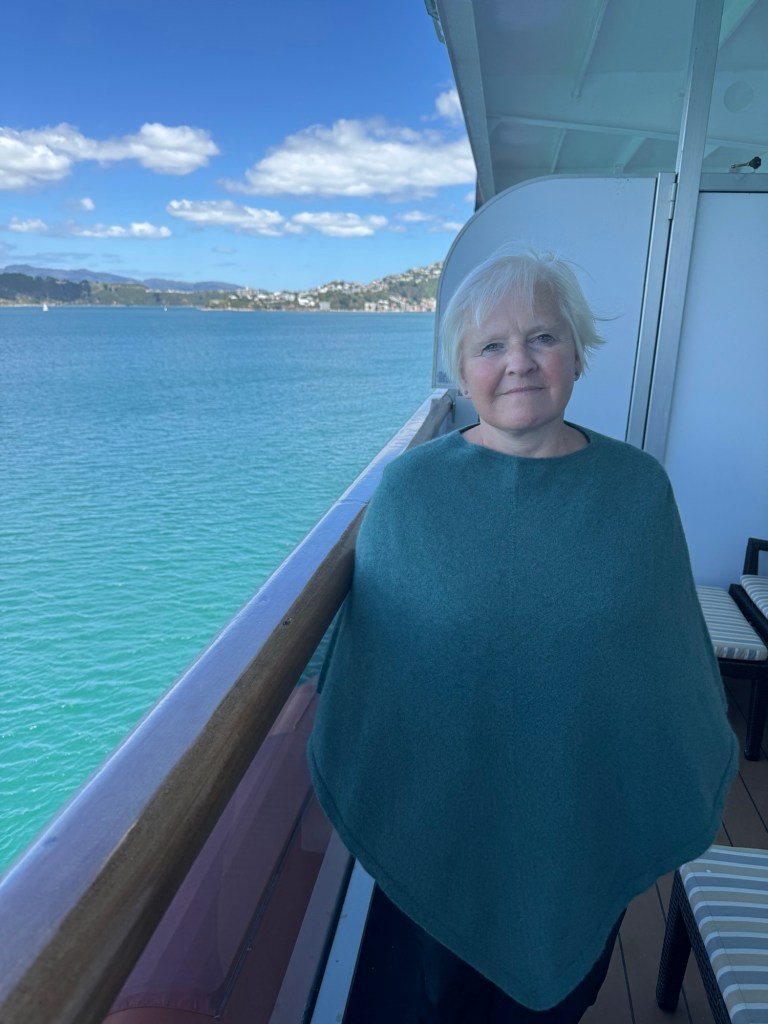
All that economics made me glad I bought a New Zealand garment there made from wool and possum!

We had the good (harbor) side of the bus on the way back.

We saw this concrete block jutting out into the water.  We presume it was for loading and unloading sheep or cattle.

We saw ferries likely going from Wellington to Picton.  Wellington is the southernmost city on the north island while Picton is the northern most city on the south Island – a distance of about 40 miles.

Picton is the next port on our cruise.

We continued our day with drinks in the Gallery Bar – all by ourselves.

This is my espresso martini and Randy’s rum and coke.  Randy initially ordered a chocolate martini but they didn’t have any Bailey’s.  That’s the second time on this trip. Bailey’s must be a northern hemisphere staple, not southern.

We walked a bit through the ship and enjoyed some of the art.

We strolled around the promenade deck a few times before dinner. 

Good evening from the Westerdam!

Next Up: Picton and a train ride

Posted in Uncategorized | 1 Comment

New Zealand Cruise: Napier

We were in Napier on January 21, 2025.

As we woke up, our ship was heading to Napier, NZ.  Residents in Napier are the first in the world to see the sunrise given the international dateline.

We are on board the Westerdam, a new ship to us. This class of ship is smaller than the previous Holland America ships we have sailed.  For a couple of days we’ve been thinking that we miss the Dutch Café, the 180 degree screen in the main stage, and the New York Deli. Yet, we’re settling into this smaller ship.  

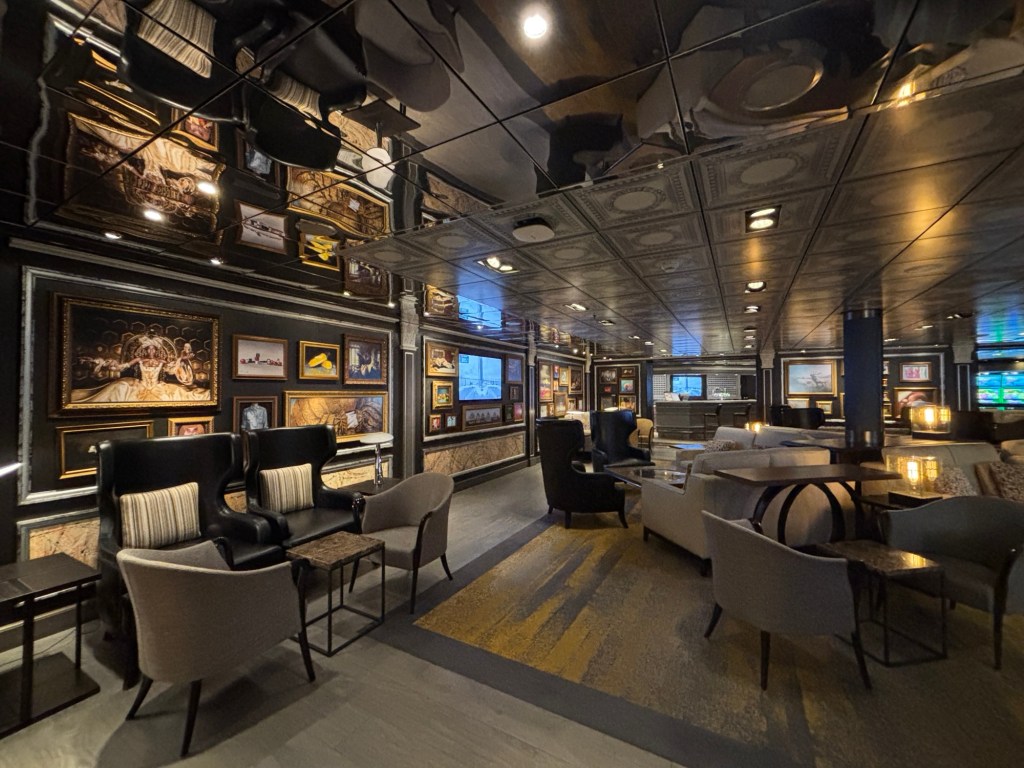
This is the lovely Gallery Bar.  There are paintings in every possible space.

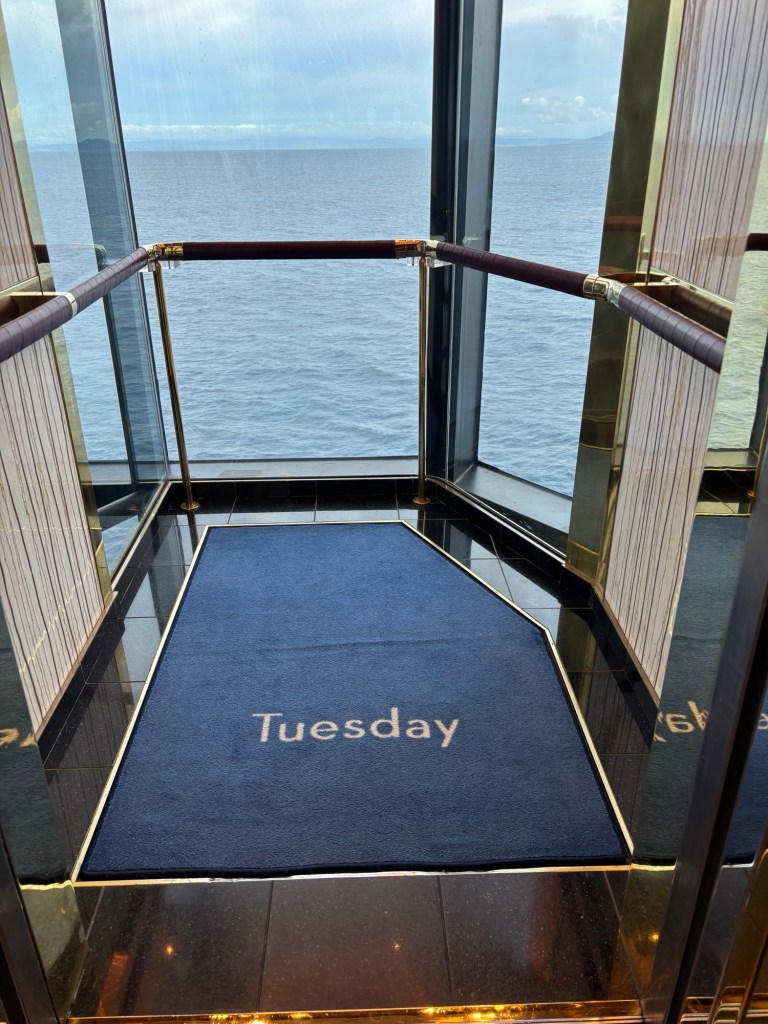
The Westerdam also has these great elevators on the port and starboard   sides allowing for very nice views of the port or the sea. There are two elevators on each side of the ship, which are steps away from our cabin. For some unknown reason everyone gravitates to the main central elevators, that take a long time to arrive and are often full. We have found the four outside elevators are fast and appear to be less used. We exclusively use these now. The larger ships do not have these elevators.

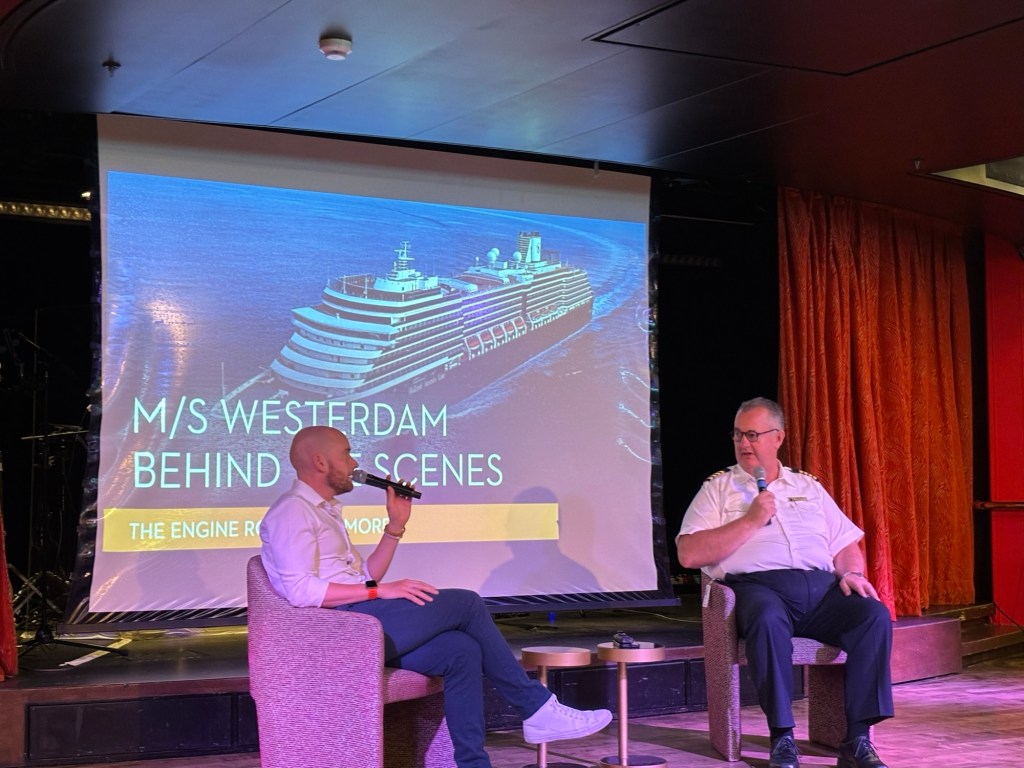
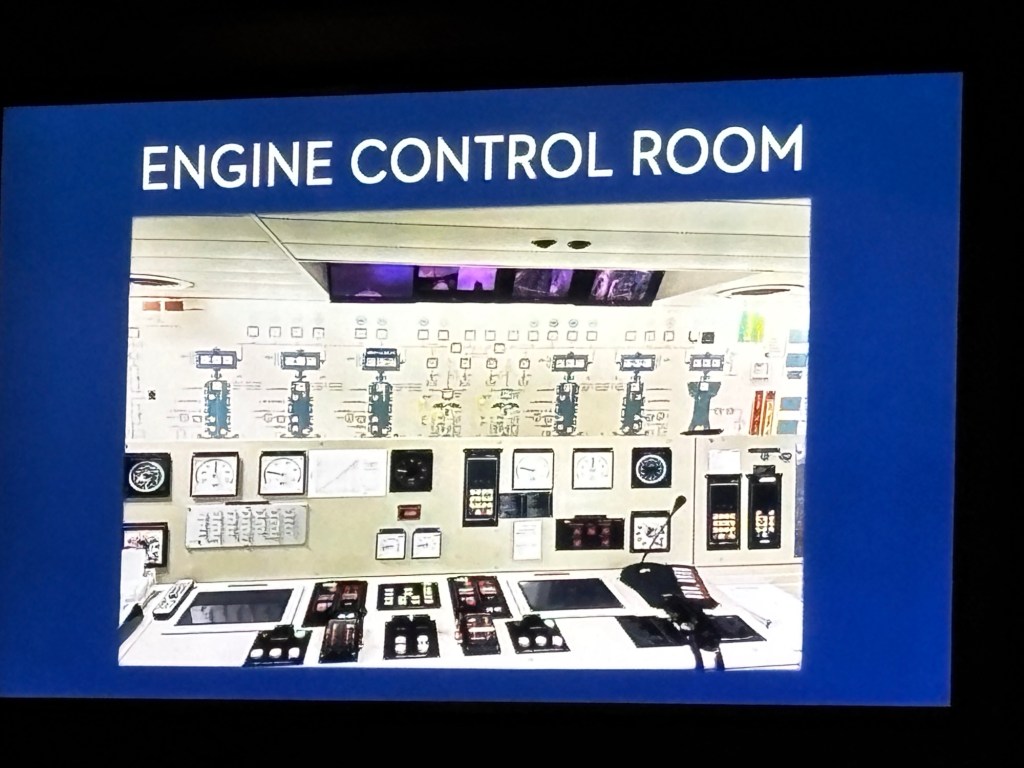
Our first activity of the day was a Cruise Director Talk with the Chief Engineer. We have seen him around the ship in coveralls checking lifeboats and other safety equipment to keep his “hands on the ship equipment”. It was satisfying to see a senior officer doing this work.

They talked azipods and stabilizers, engines, and desalination. 

There were two statements that I understood and remember. Sewage treatment is so effective that the results can be released in Alaskan waters.

There is a Zero Overboard policy for waste disposal.  There is extensive recycling and the money earned goes into a crew fund. (They are the ones doing the work!)

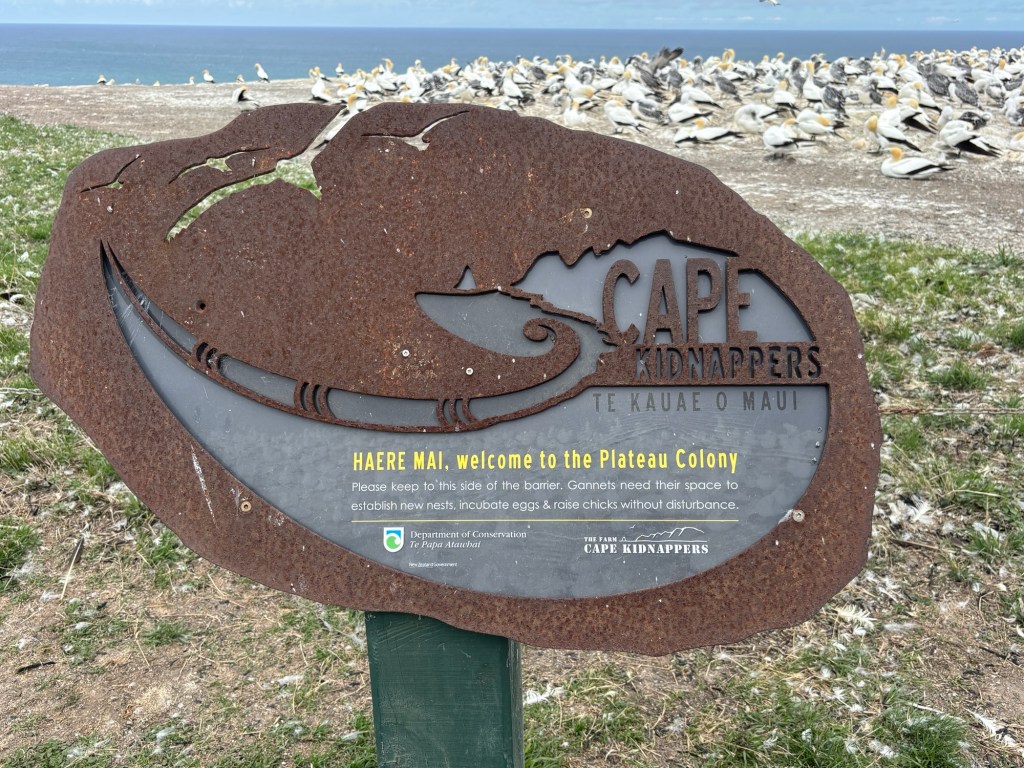
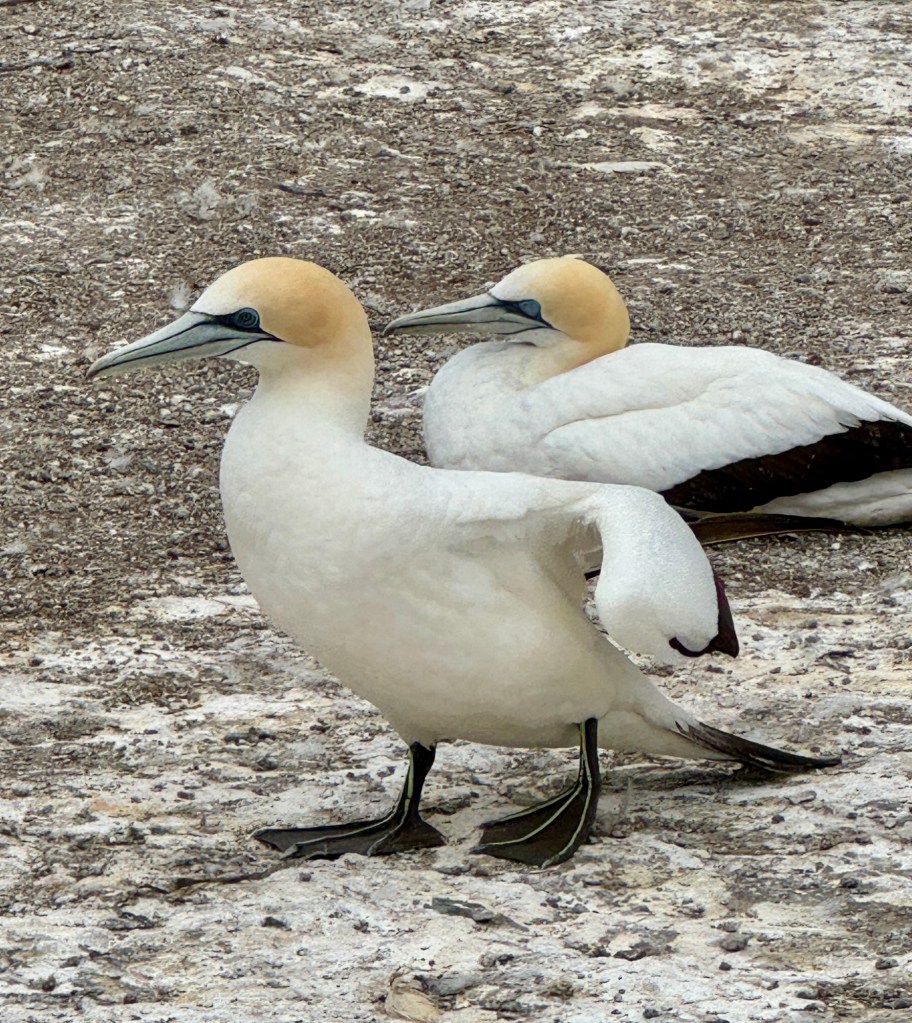
Our excursion for today was to Cape Kidnappers Station to see a gannet colony, one of the largest on the mainland in the southern hemisphere.

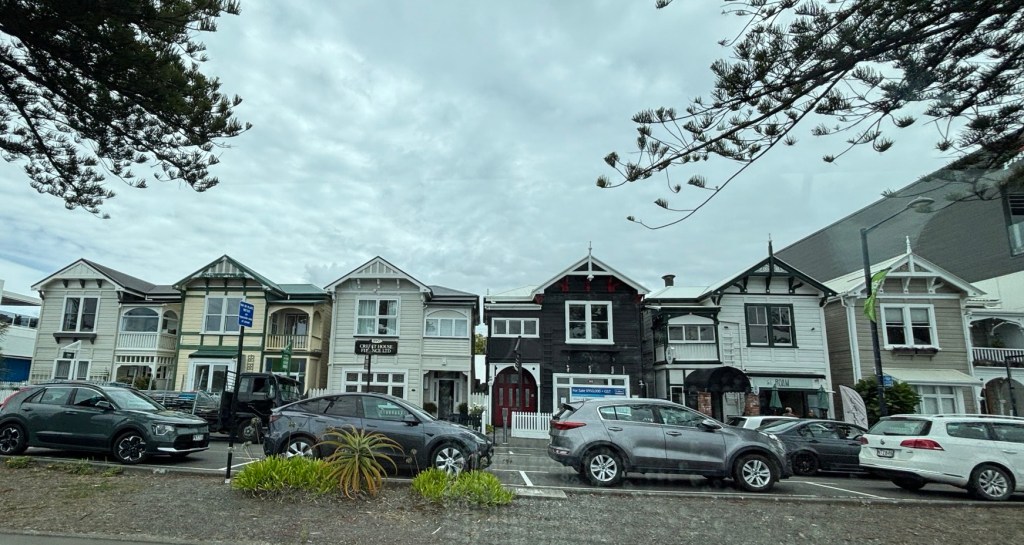
On the way we saw the six sisters houses that were built by a wealthy doctor with six daughters.

As we neared our destination, we learned this land was once part of a ranch that began in 1859.  The initial owner purchased 13,500 acres from the New Zealand government.  Within two years, he had cleared enough bush to run 8000 merino sheep.

By 1900 the owner had broken up the farm into five 2500 acre stations. Those were sold off.

We visited one of them, Cape Kidnappers.  It is still an active farm. It also has a golf course and lodge for the ultra wealthy. 

The farm operates with 2000 head of sheep and about 500 cattle. 

Supplying beef is a major export of New Zealand.  At least the cattle here live a nice life before their demise.

With the owner of an adjacent station, they have created a sanctuary for native species.

They have installed specialty fencing which have been very effective at keeping out pests and vermin.  They are designed so that it falls back towards an animal trying to climb it.

There are also numerous traps around to get anything the fence hasn’t stopped. They rarely catch anything anymore.  

All this is to benefit the flightless kiwi (national bird) and other native species.

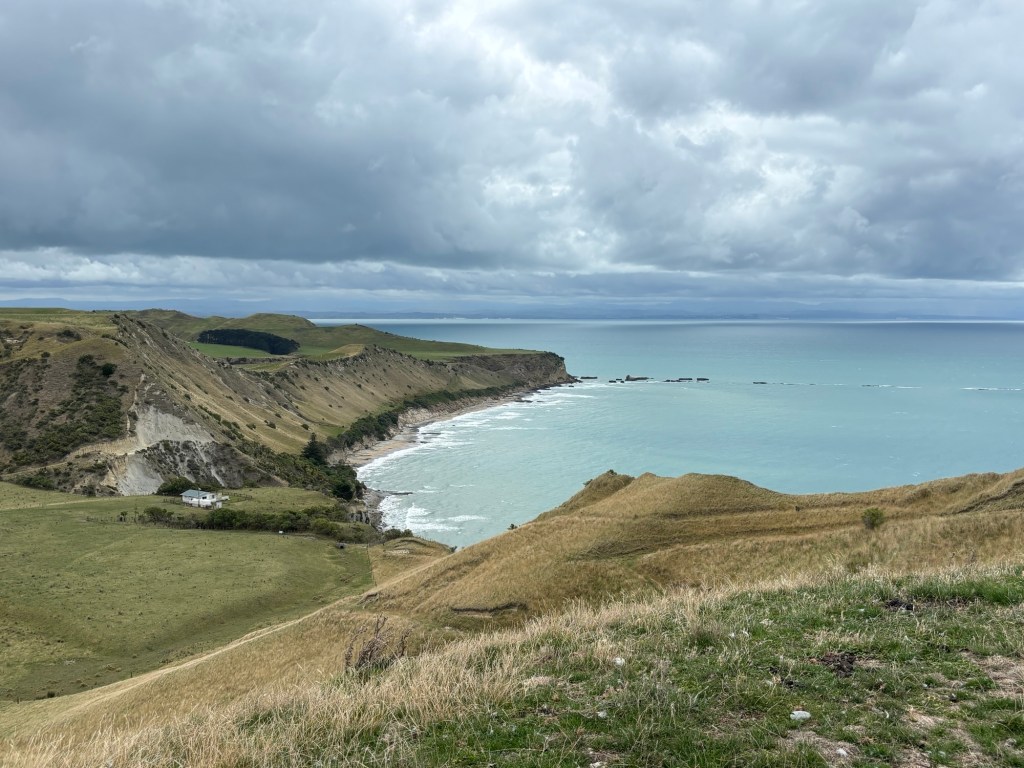
Again, the scenery was stunning.

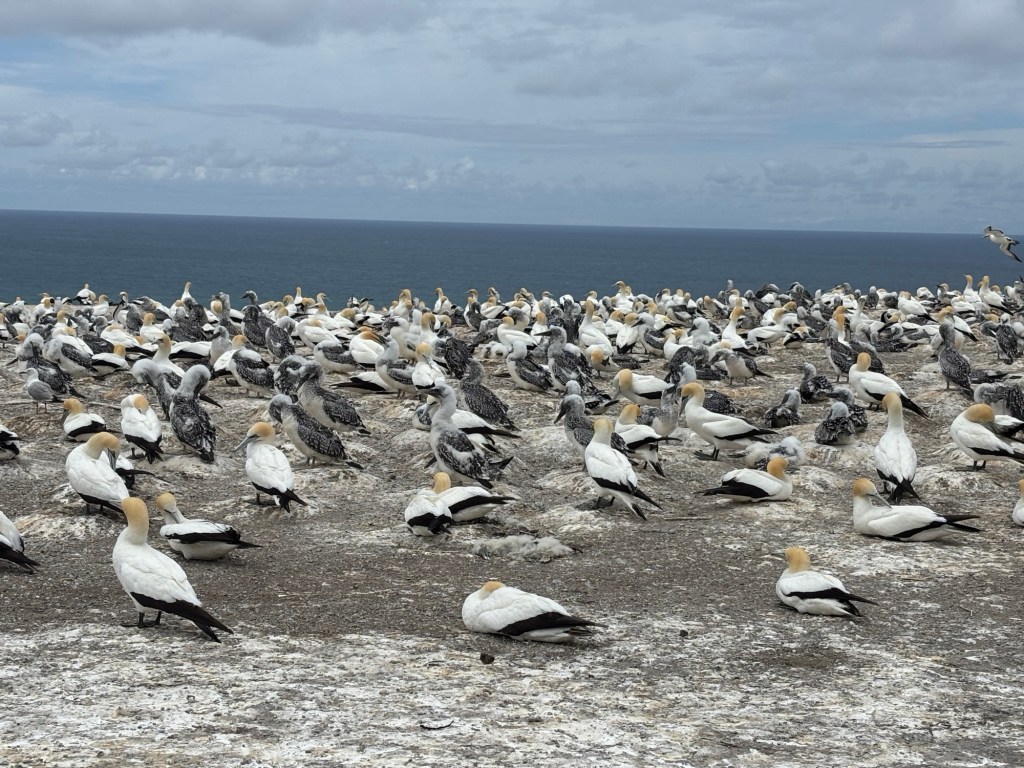
We were also stunned when we got our first view of the gannet plateau colony.

We were also stunned when we got our first sniff. Whew! That was really stinky!

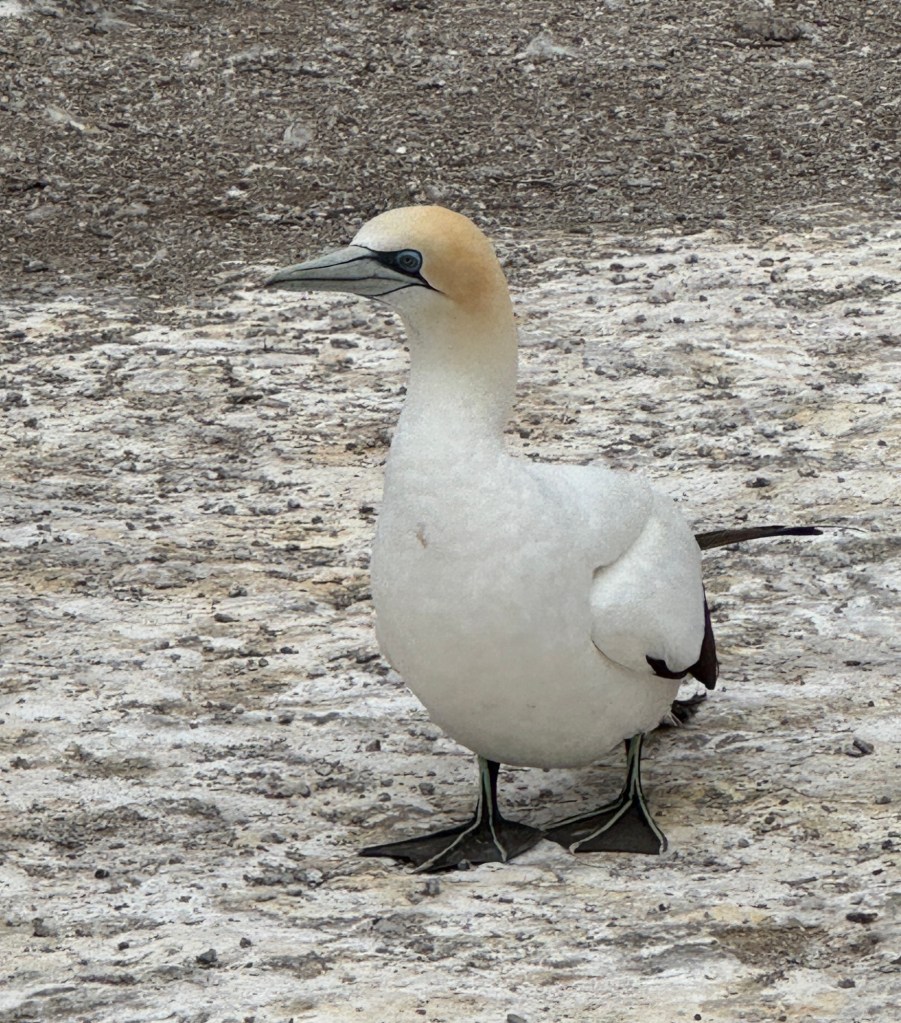
Gannets live in Australia and New Zealand. Four colonies live on Cape Kidnappers totaling about 20,000 birds.

This colony is the largest on mainland New Zealand and an estimated 10,000 birds live on this plateau.  Gannets have been nesting here since the 1870s and have not been impacted one way or another by the sanctuary.  The adult gannets arrive in July and engage in courtship and nest building.  After raising their chick, they’ll leave in April. Gannets eat raw fish, specifically herring, anchovies and squid.

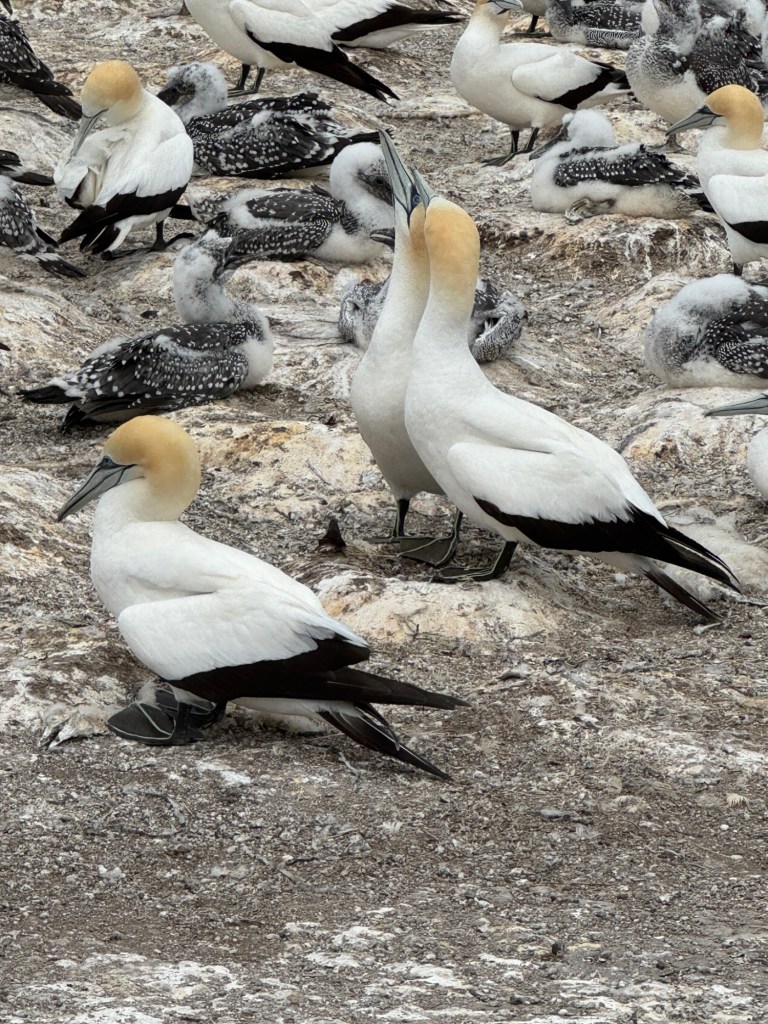
The pair in the middle were doing some intimate neck dance.

According to our guides, male and female gannets have no difference in appearance.  It was mentioned that if an adult brings seaweed back to a chick, it is likely a male doing that.

They share both incubation duties and the responsibility for rearing the chick.


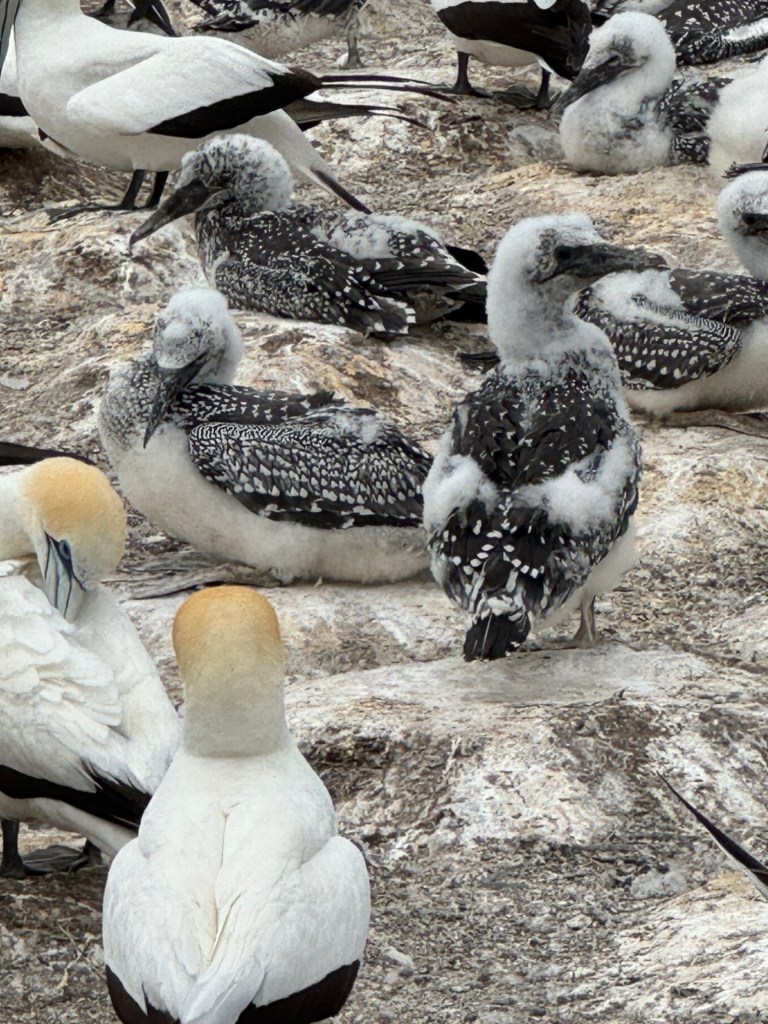
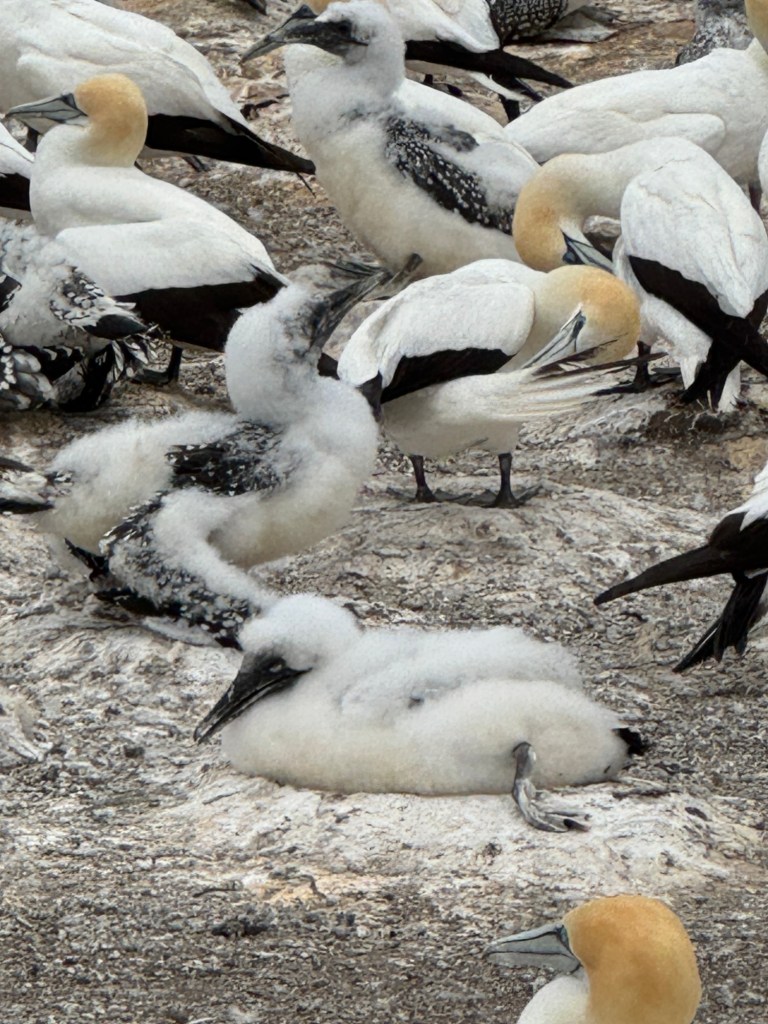
A chick will live at this colony for about 15 – 16 weeks. In that time, its appearance will change dramatically from a black naked bird to a white fluffy chick. By three months of age it becomes gray and speckled.

The parents feed them to 50 times their birth weight. The chicks are fed on demand but that is generally at dawn and dusk.

In the colony, each little hill is a property. Randy observed a young one starting to wander off, and the gannets around it made sure it went back on its little mound.

The chicks leave in March.  Their very first flight is all the way to Australia, non stop. The trip will take them 4-7 days.

If they survive the trip and their early years, the gannet will return here to find a mate.  They generally mate for life.


A gannet typically lives 20-24 years but may live up to 33 years.

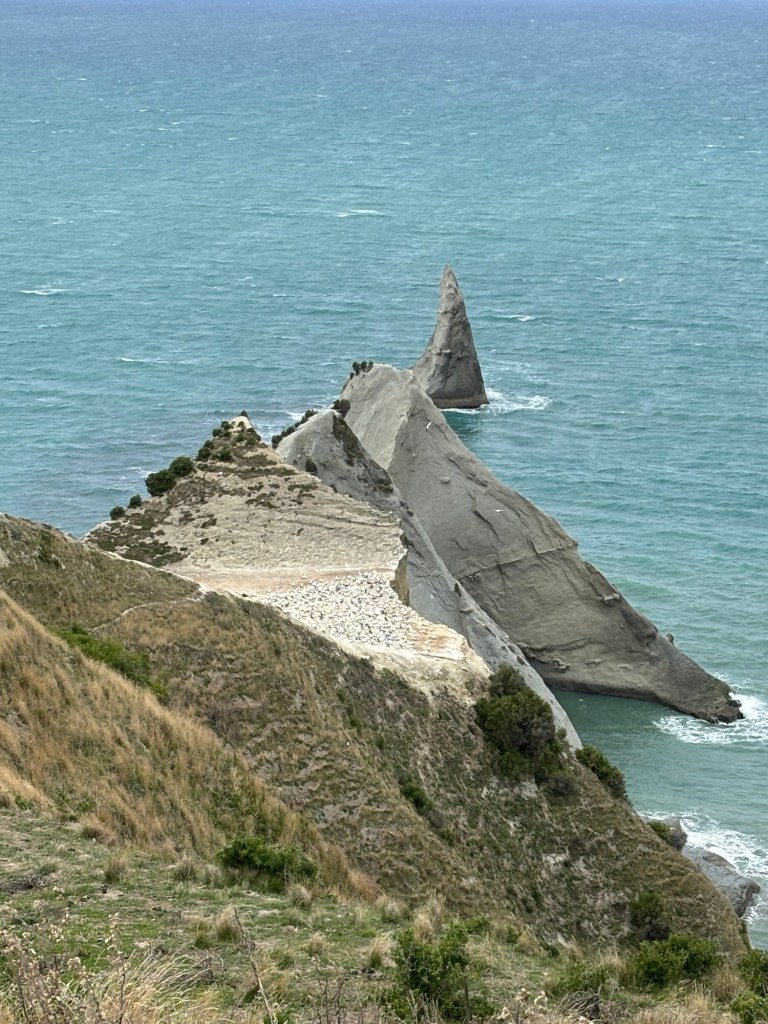
There are about 5000 gannet on another colony closer to sea level.  The sandstone formation, The Shard, is behind.

The government started the Cape Kidnapper’s lighthouse in 1897, but it wasn’t a high priority. A light beacon was finally installed in 1963.


On the way back to the ship we saw some Freedom Camping sites along the beach. You are able to camp at a Freedom site for free for three days before having to move on.

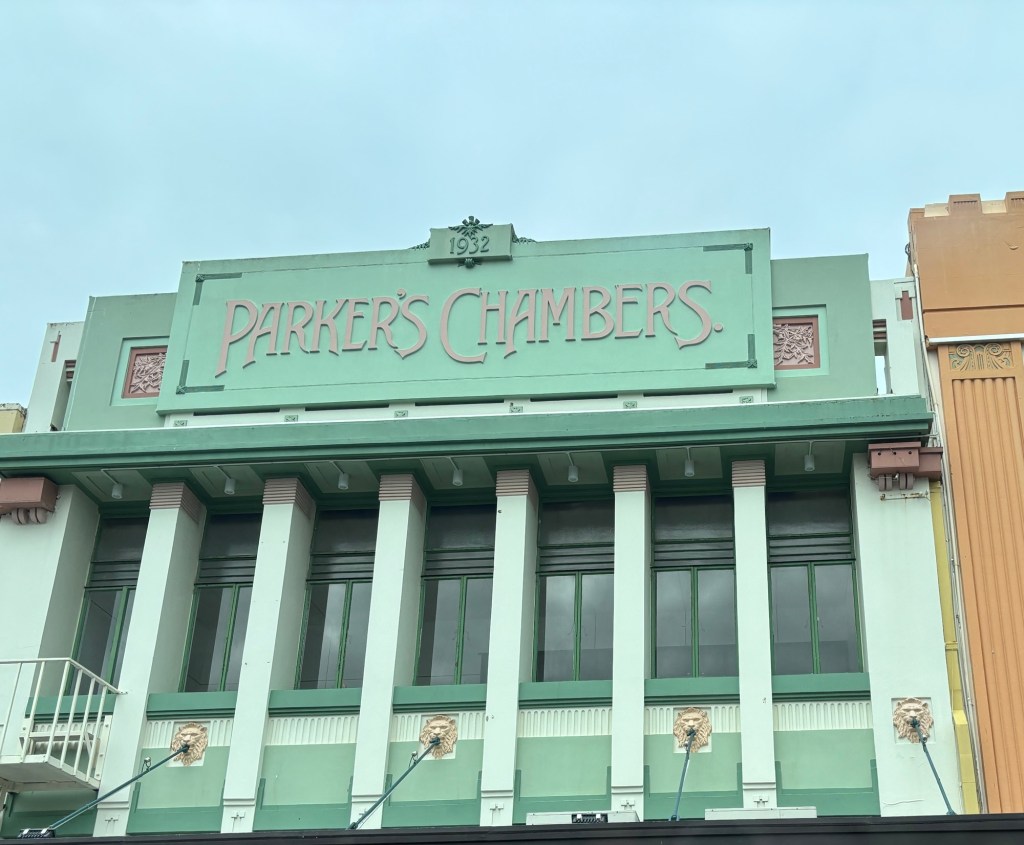
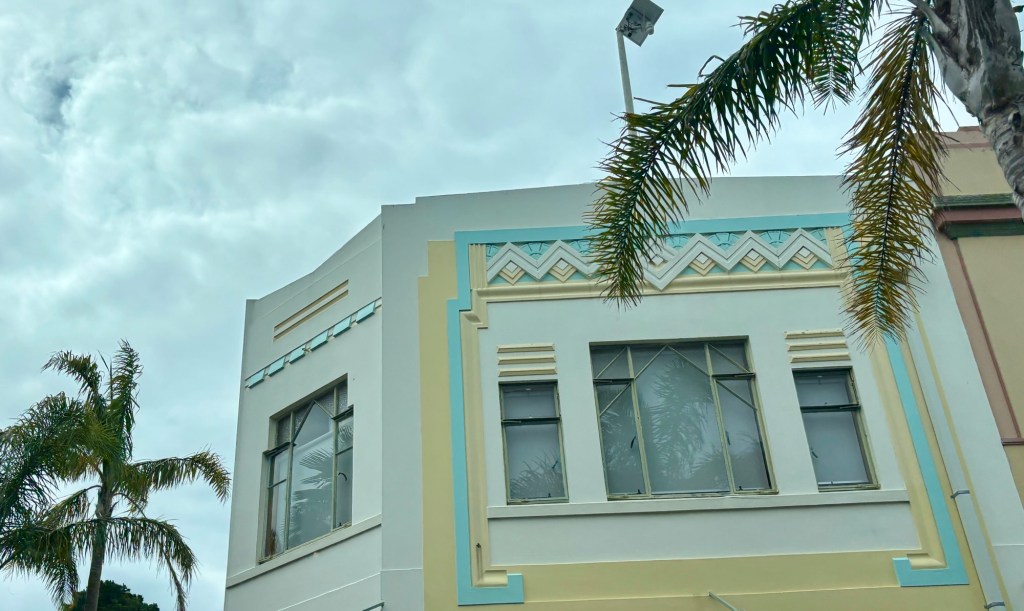
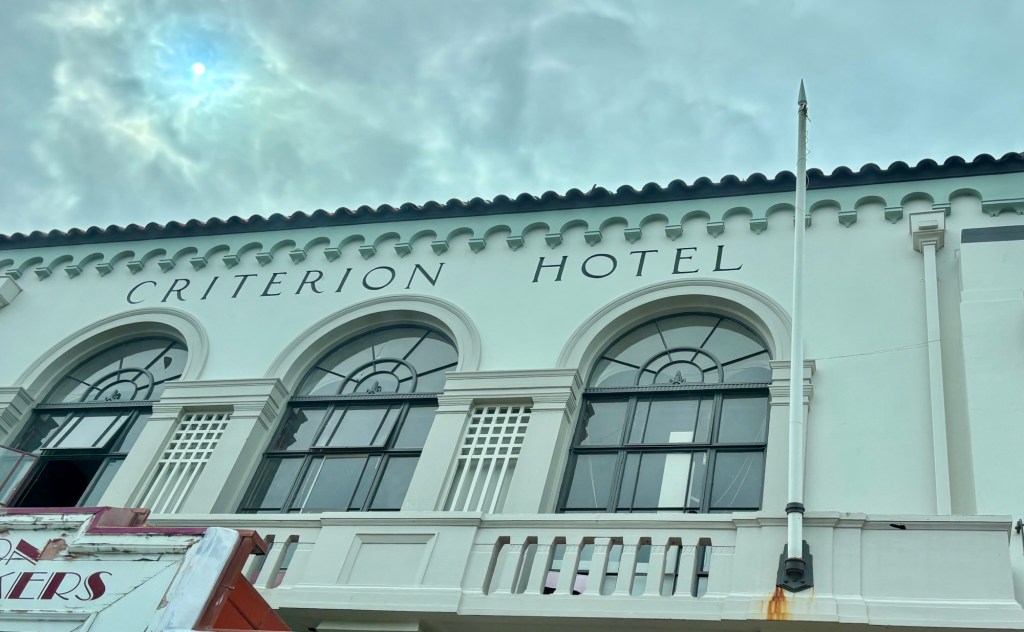
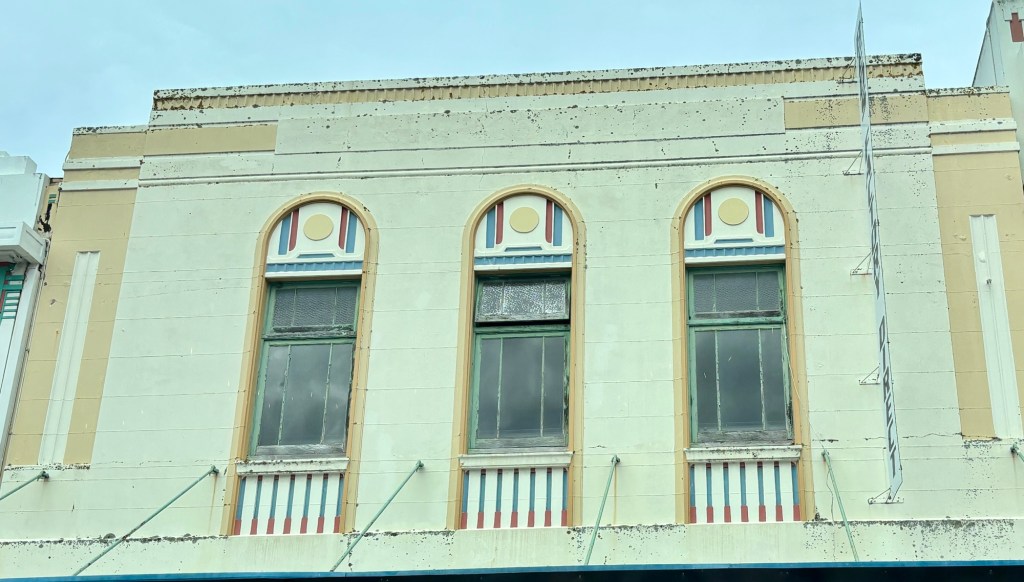
In 1931 there was an earthquake that destroyed almost all of Napier.  British insurance companies refused to provide payment because it was “an act of God.”  The town was rebuilt, using an art deco style.  

As we returned to port, we had to show our ship card and a government issued ID. That seems to be a NZ thing and not something we usually experience.

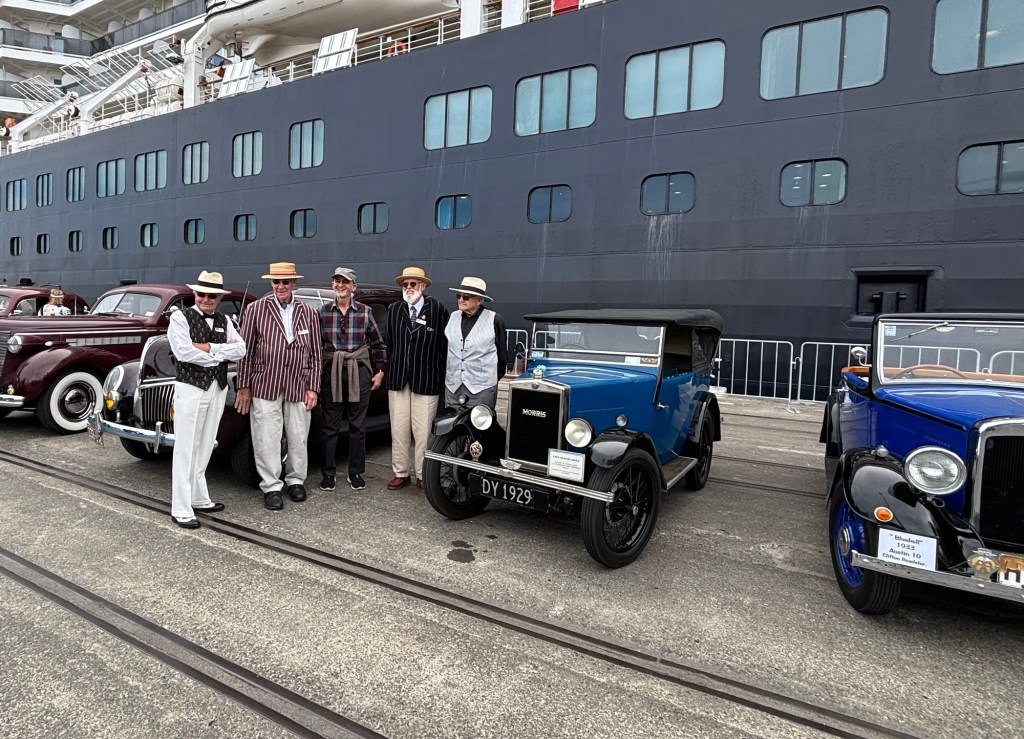
As we approached the ship we were able to see some vintage cars with men dressed in period clothing for our enjoyment.

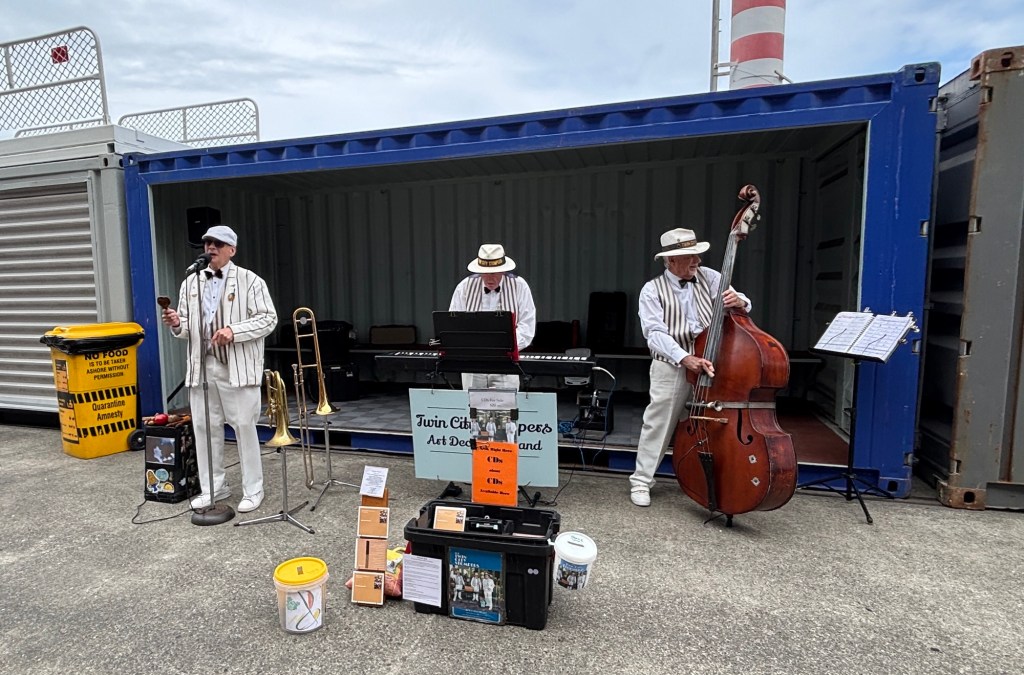
We were also serenaded by a local musical group! Thank you Napier!

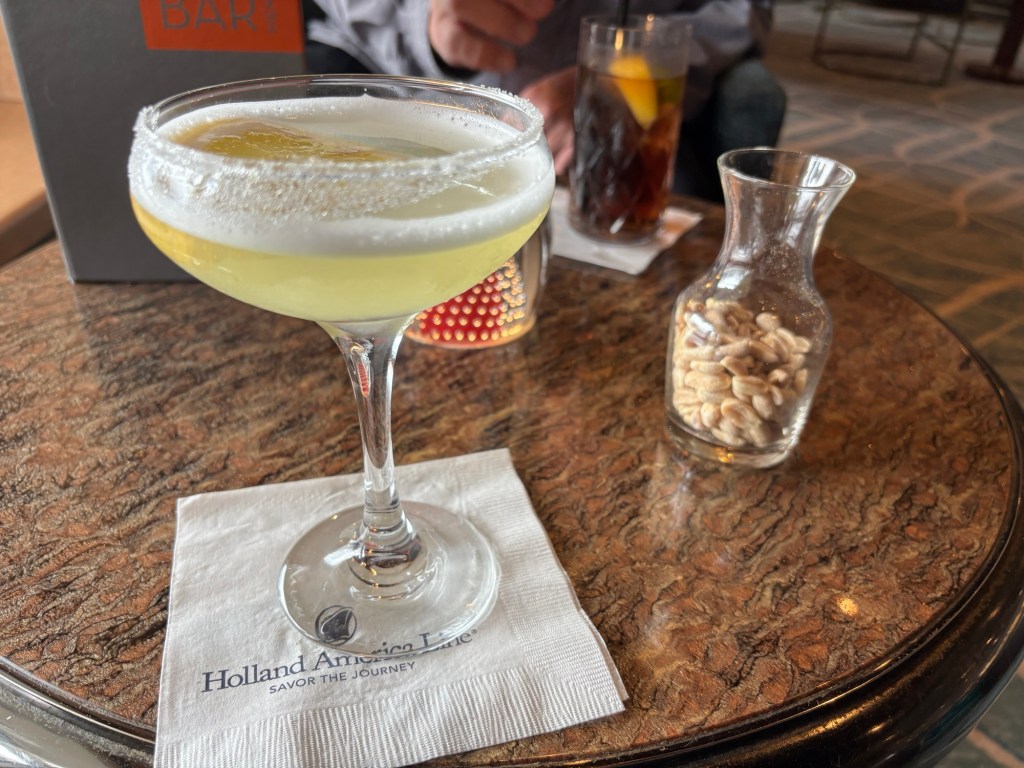
We had pre-dinner drinks and music in the ocean bar.

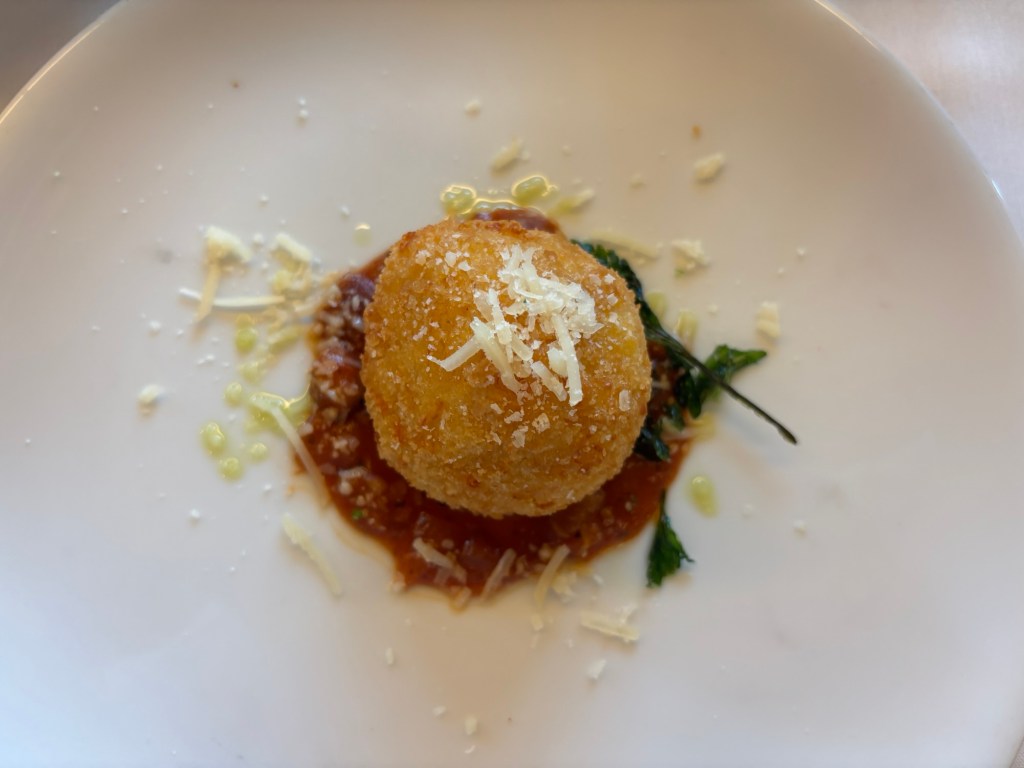
Then dinner!  We had arancini as a starter.  We didn’t even know of arancini before we went to Italy a couple years ago.   We love traveling!

Next up: Wellington and sheep dogs!

Posted in Uncategorized | 1 Comment

New Zealand Cruise: Tauranga

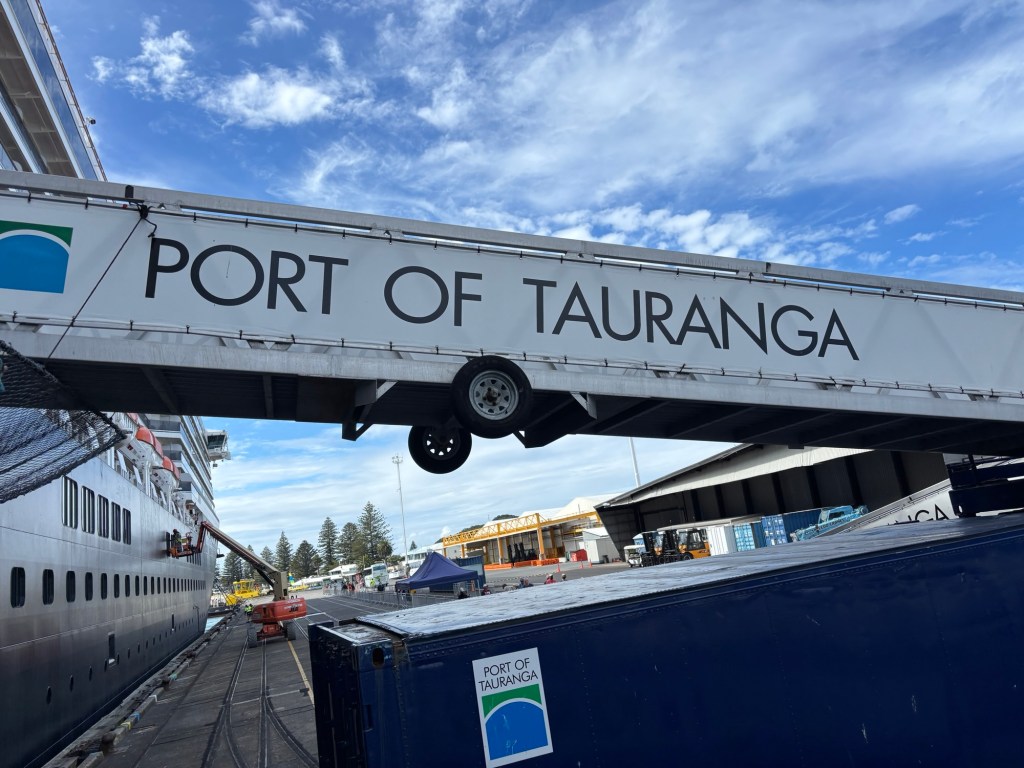
The ship arrived at our first port, Tauranga. Our shore excursion, Bay of Plenty: Rich Land, Rich Culture, was the last excursion group to leave the ship.  It made for a quiet couple of hours onboard as most people had left to explore on their own or on earlier excursions.

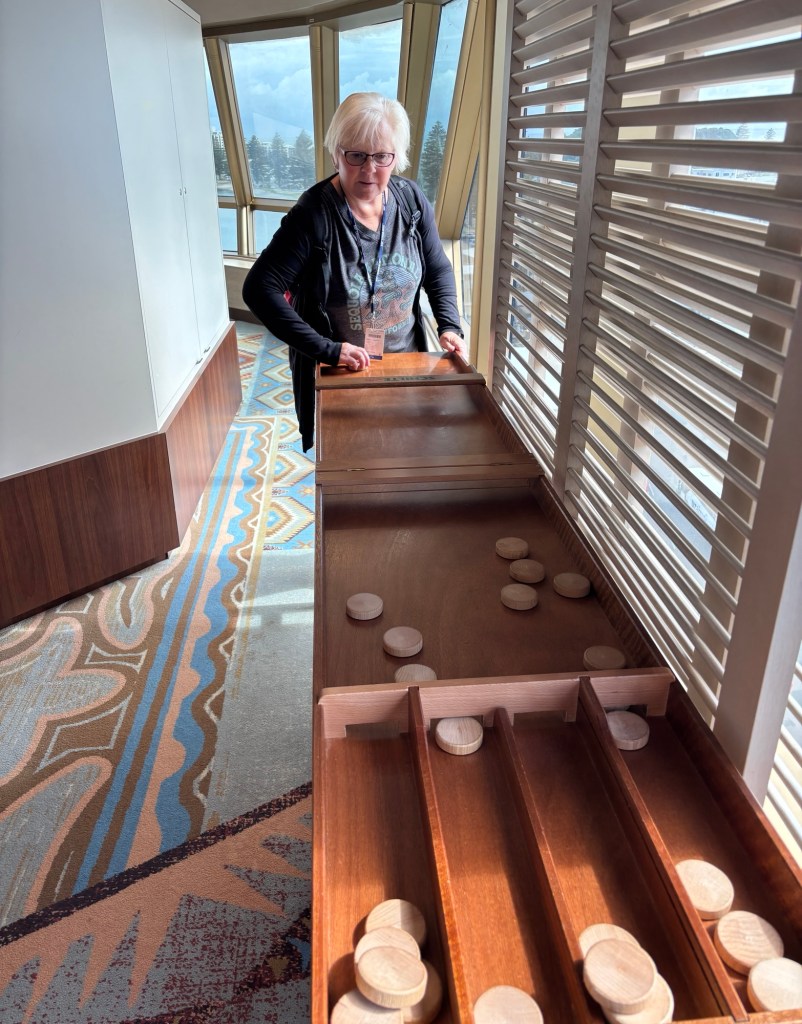
We went up to the Crow’s Nest and found an old friend!  My family learned this game we called “shu-buck” from a Dutch family when we lived in Bangkok.  My parents ordered a board and discs that we had for many years.  Randy eventually made one for our family and we don’t remember what ultimately happened to it.  On board, it is called a “sjoelen .”  There was a competition on board but I didn’t participate.  Was 50 plus years of experience too much of an advantage to exploit?

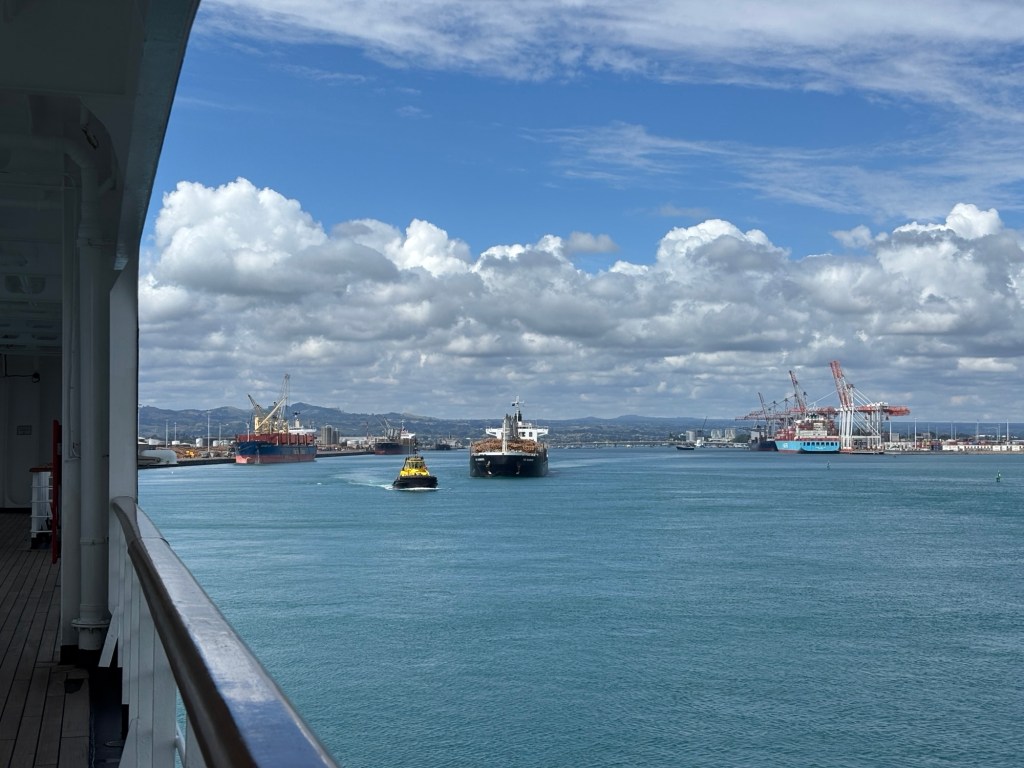
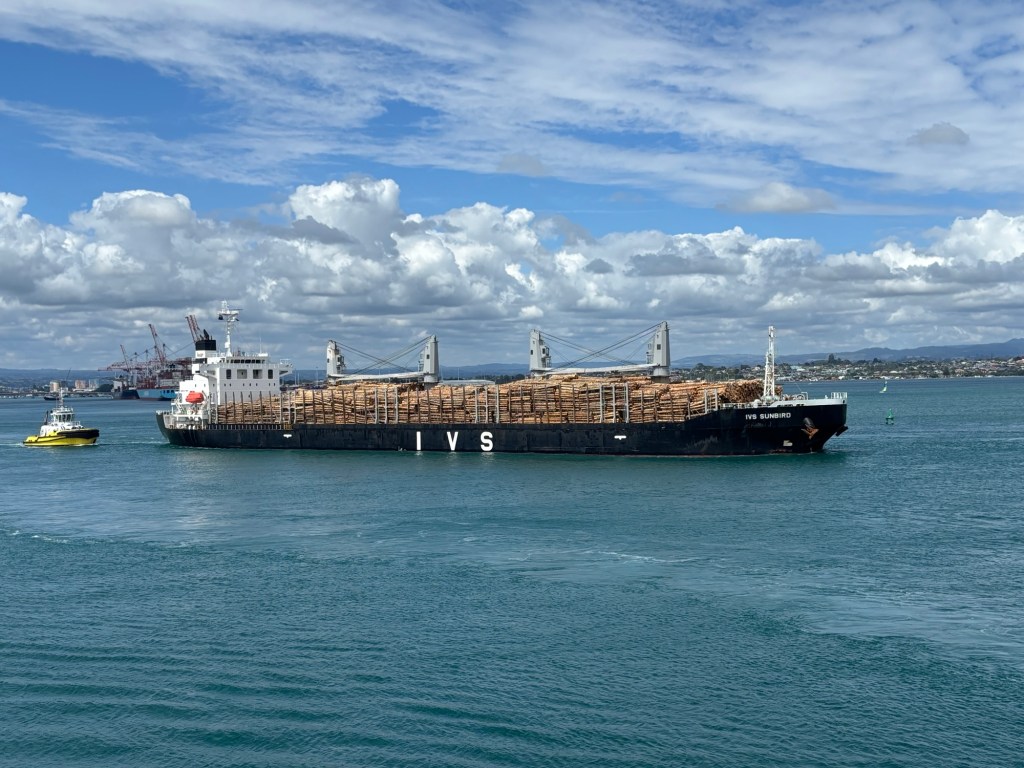
We hung out on our balcony and watched the tugs navigate this cargo ship from Singapore.

It was carrying a whole lot of former trees!

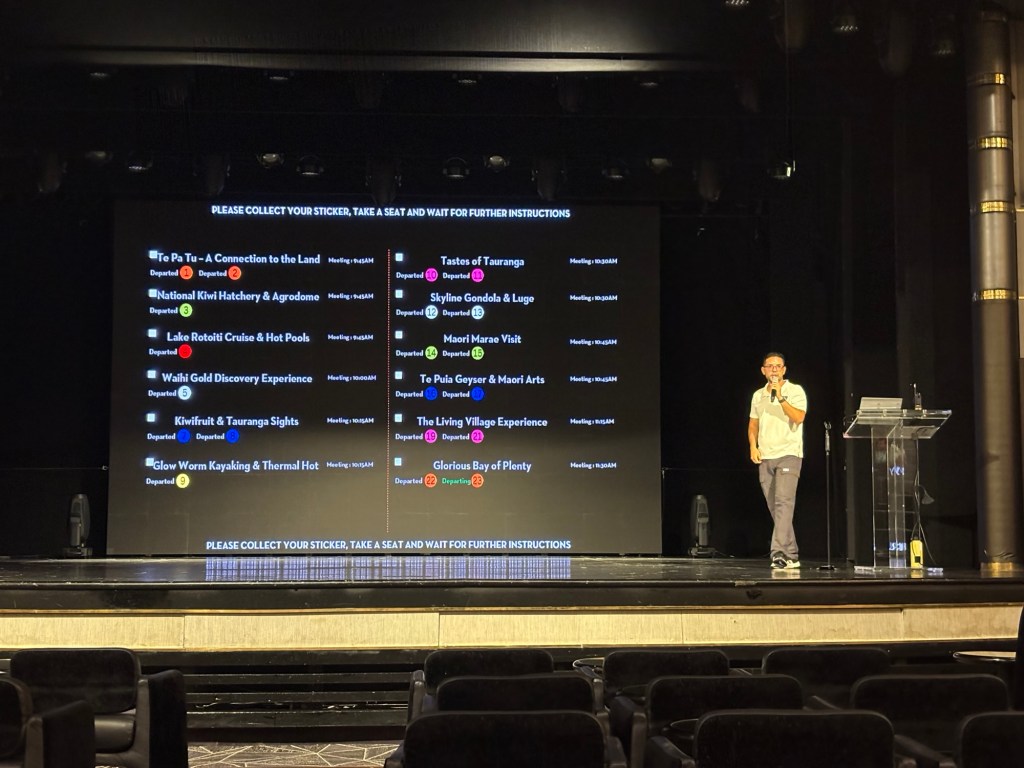
We headed to the theater to gather for our excursion.  We were on time, but almost late!  We now know we need to always be early!

This process is sometimes poorly done, but the excursion crew on the Westerdam seems to have a good system.

Of course, we received some local history on the way to our destination. The Bay of Plenty was named by Captain Cook upon his ship being fully resupplied by the Māori. 

Our guide told us that this is the largest port in New Zealand exporting timber, dairy products and 198,000,000 trays of kiwi fruit.  That means BILLIONS of individual fruits.

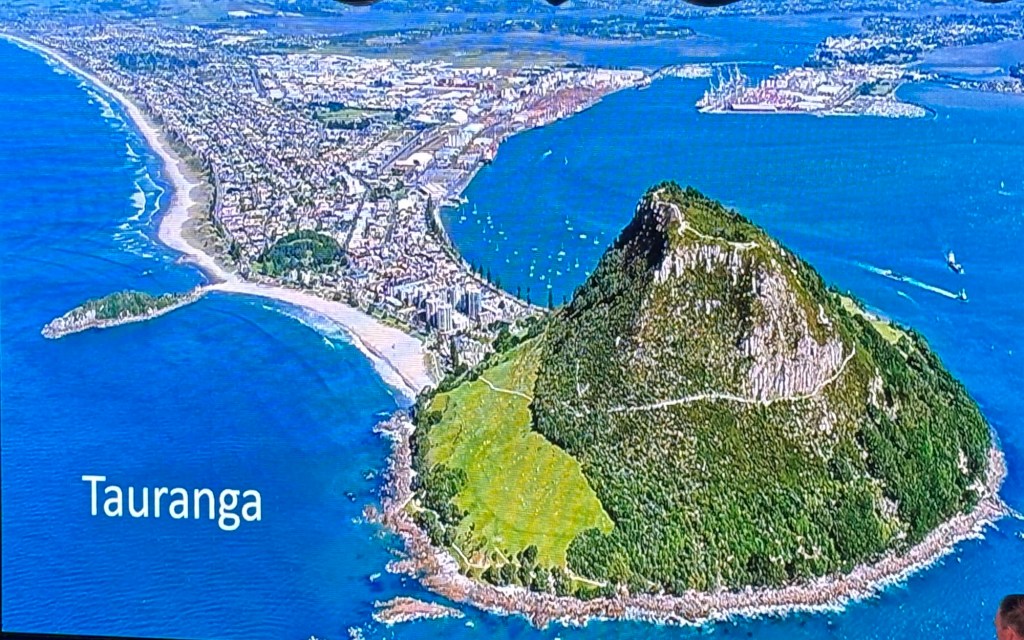
On board we had learned about The Mount. It is possible to walk around or over it. We were touring instead.

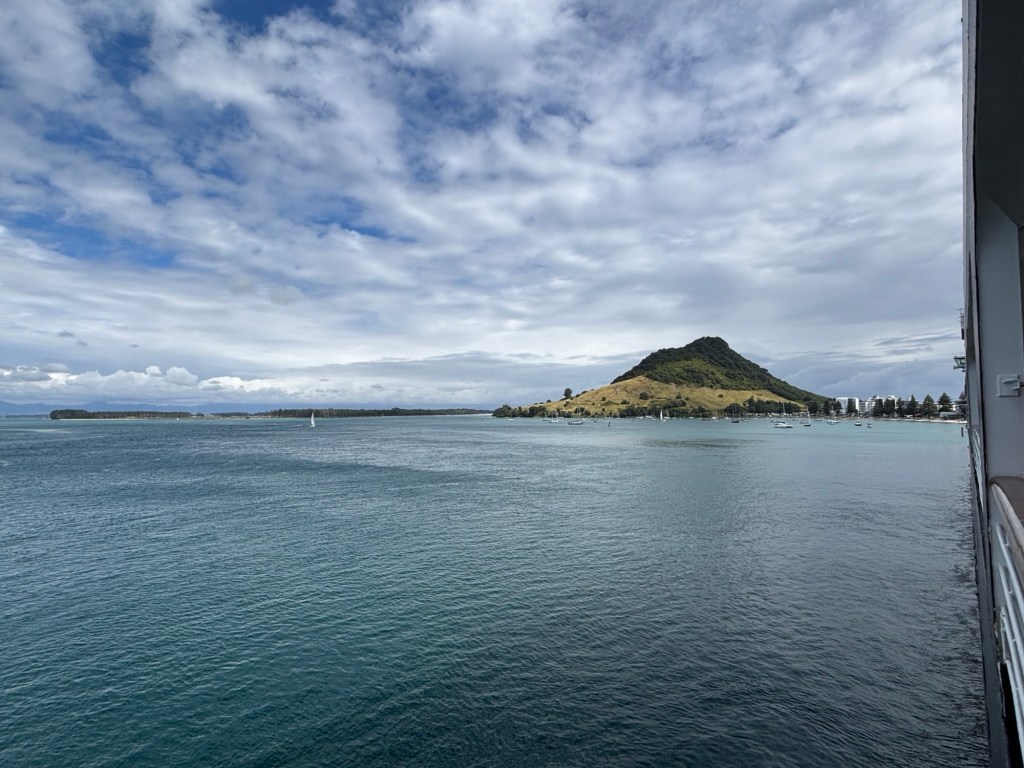
This is what The Mount looked like from the ship.

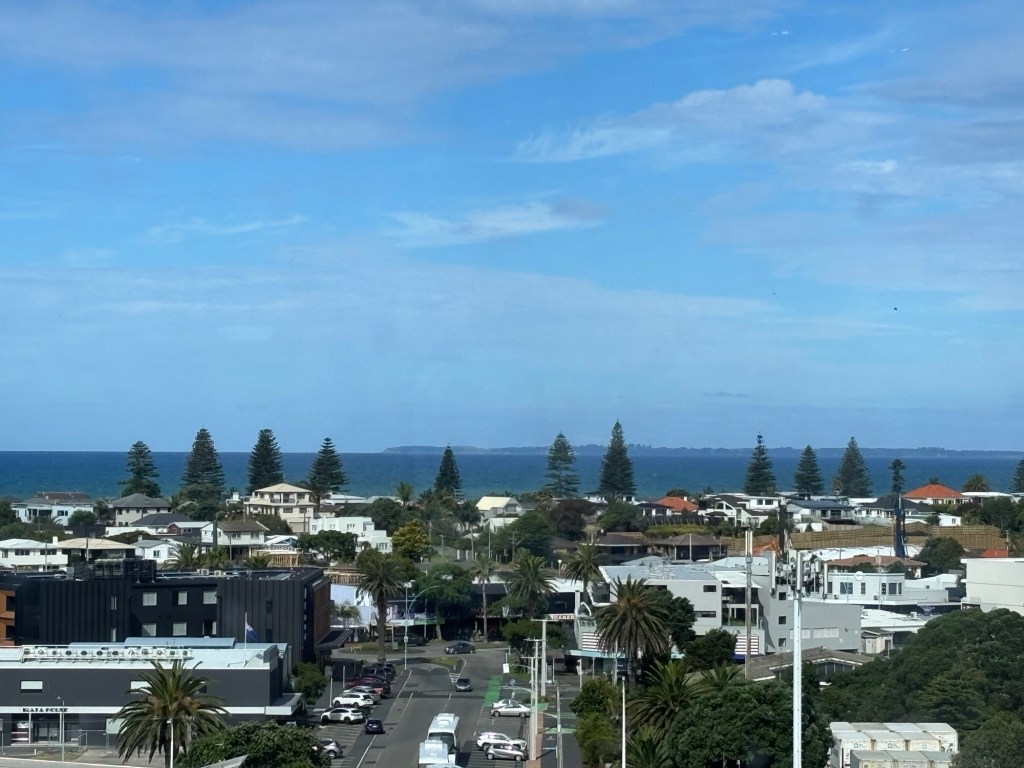
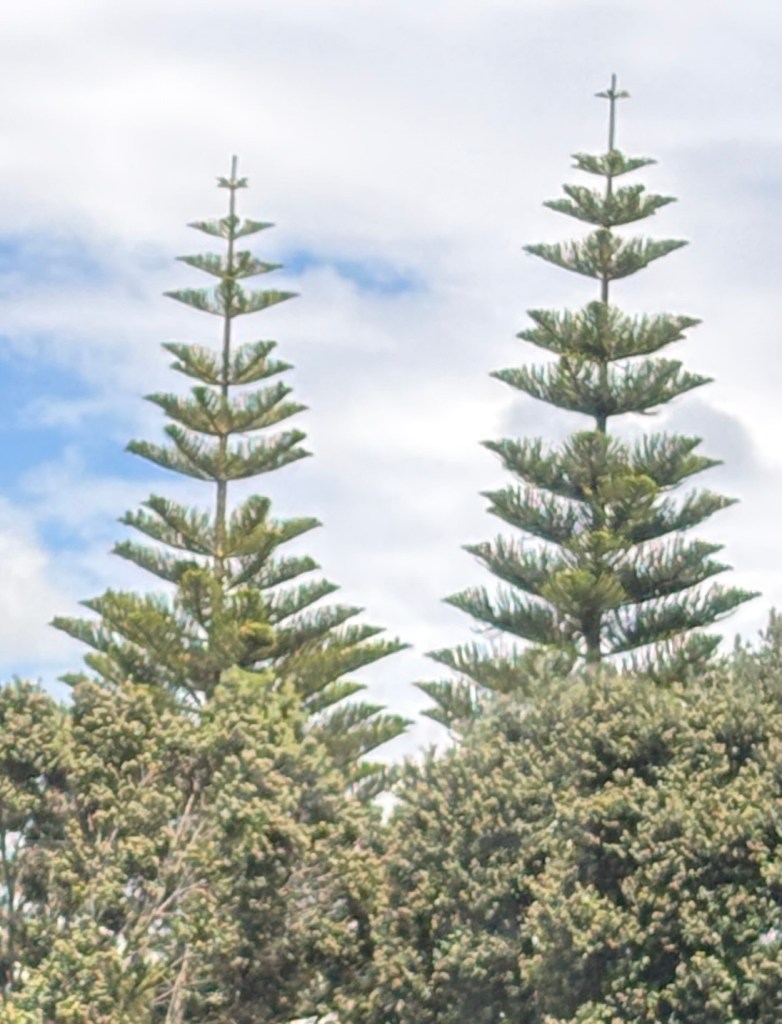
There are Norfolk pines planted along the bay.  Missionaries planted them as a sentinel to tell seafarers that this was a safe place to land. 

They probably also liked that new growth looks like a cross.

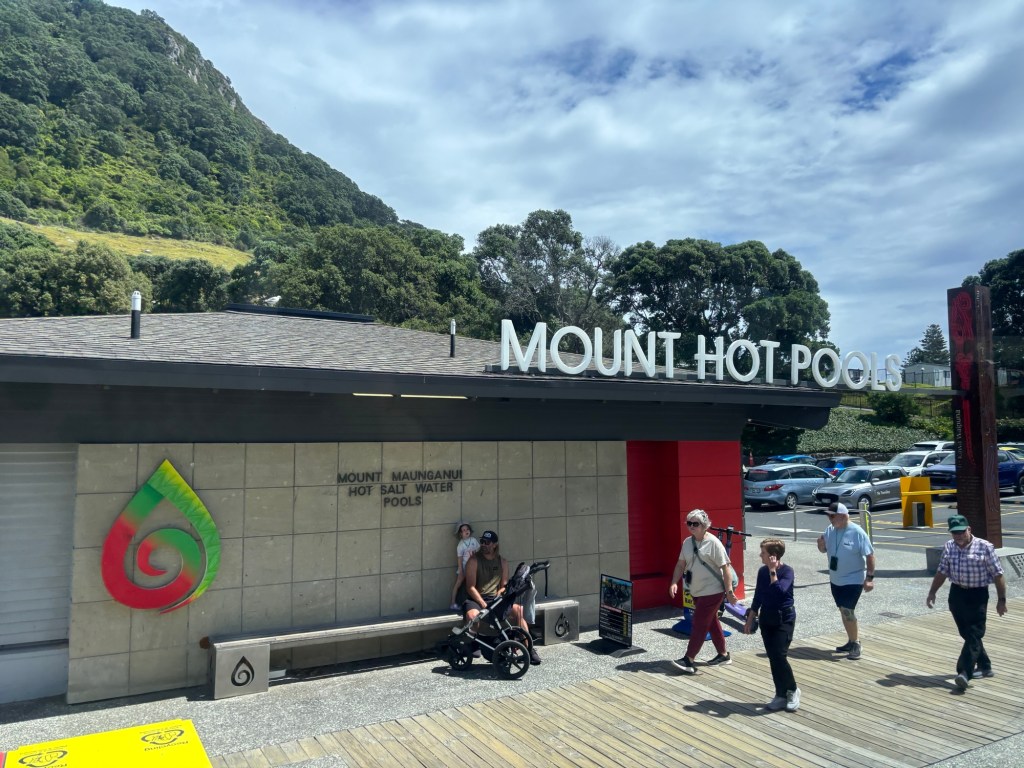
Still on the bay side, there are salt water geothermal pools.

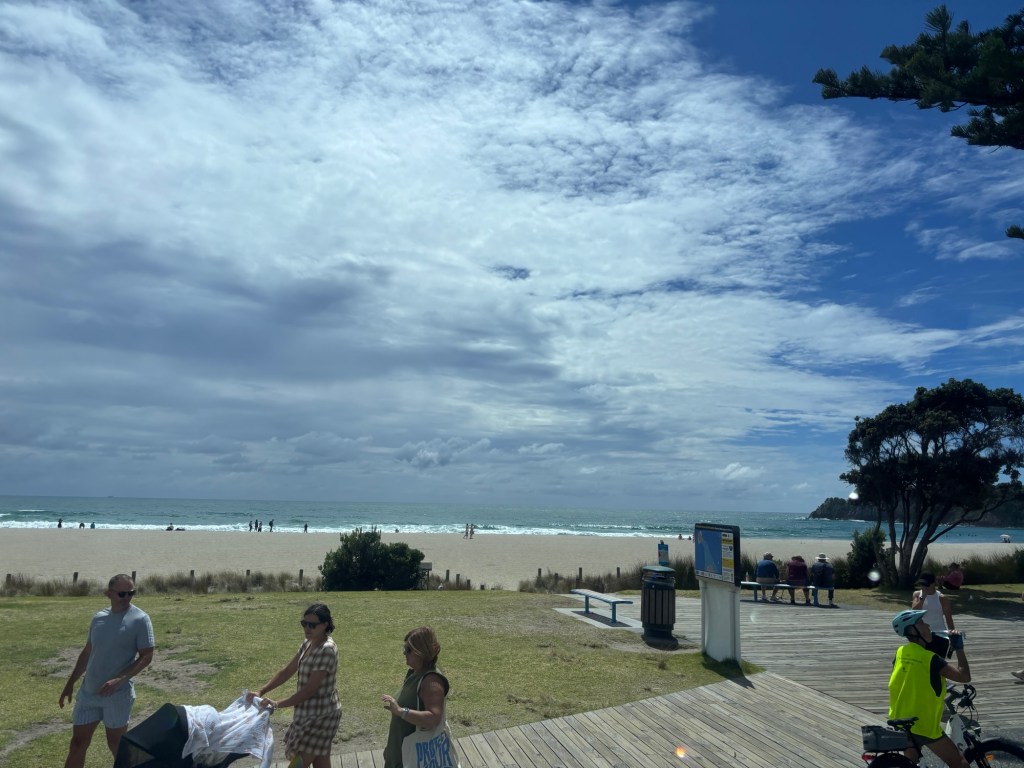
The surf beach is on the Pacific side.

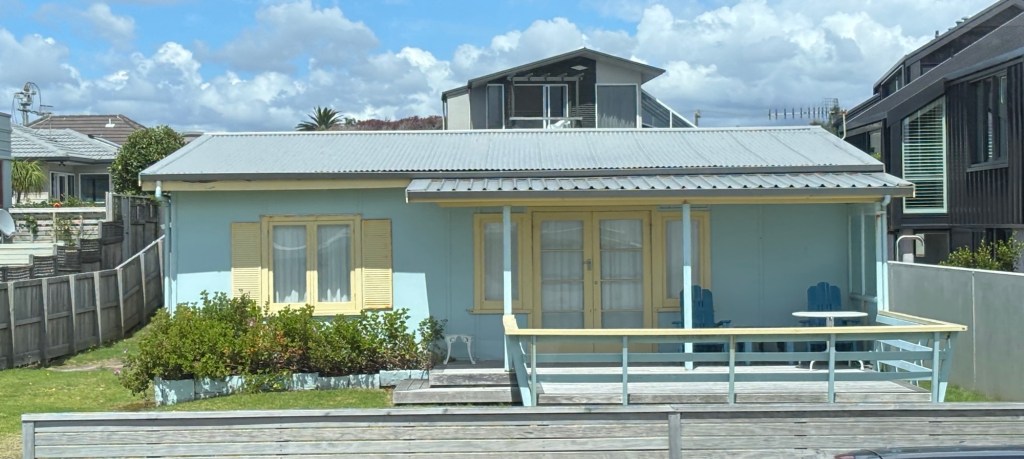
This little bungalow has heritage status and sold for $4 million NZ, roughly $2.25 million US.  The outside cannot be changed.

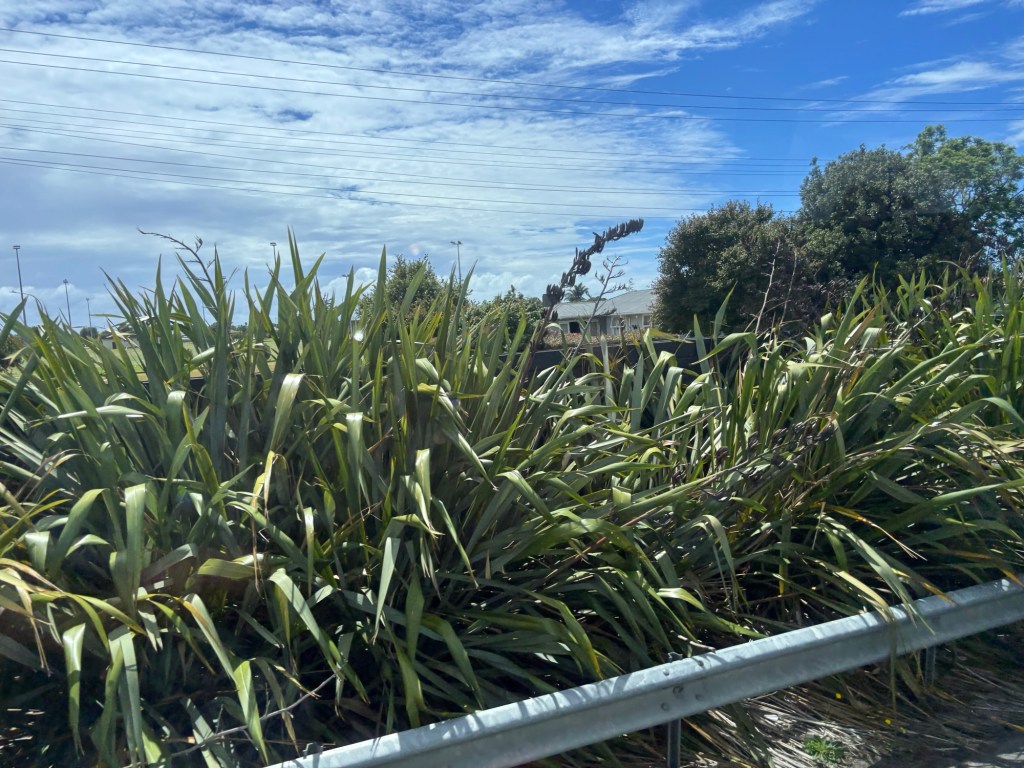
These are flax plants.  Flax was brought here in the 13th century.  The Māori were able to weave it into many needed products.  Flax was the first product exported in the 17th and 18th centuries.

The Māori came from other Polynesian islands and brought crops that they had been growing at home.   Those coming from Samoa brought taro root, those from Tonga brought the mulberry tree,  those coming from the east brought the sweet potato.  The sweet potato quickly became the staple diet for Māori.

Warriors had observation points on elevated terraces to see intruders approaching so they could defend the villages. Modern trench warfare grew out of this type of defense.

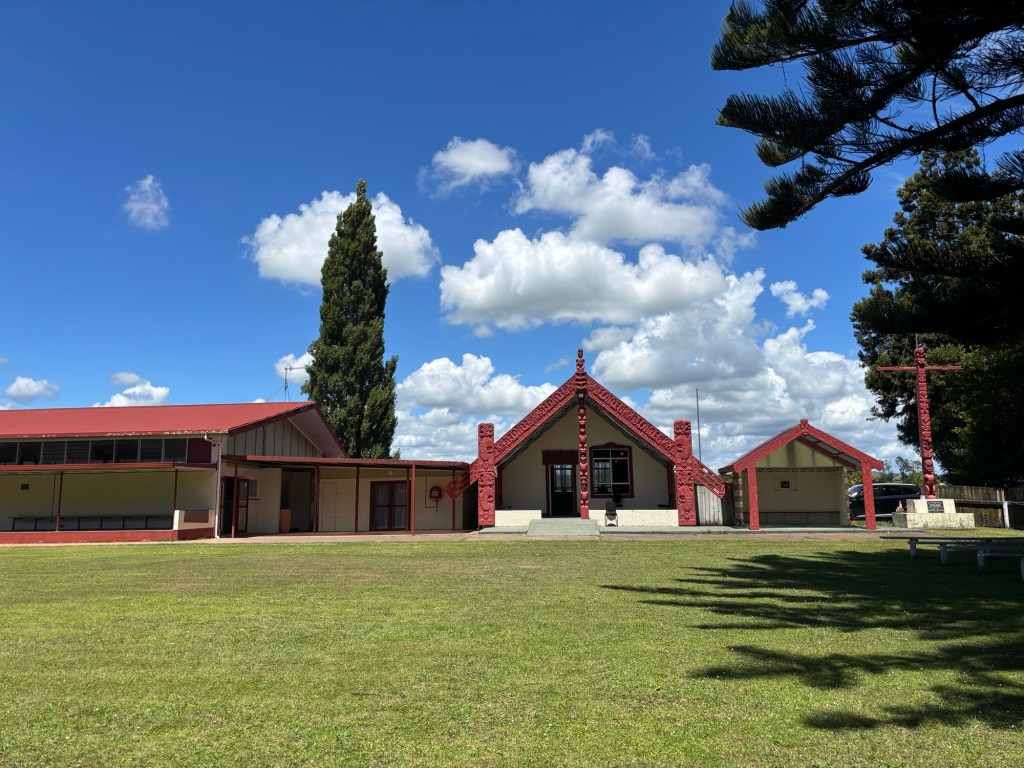
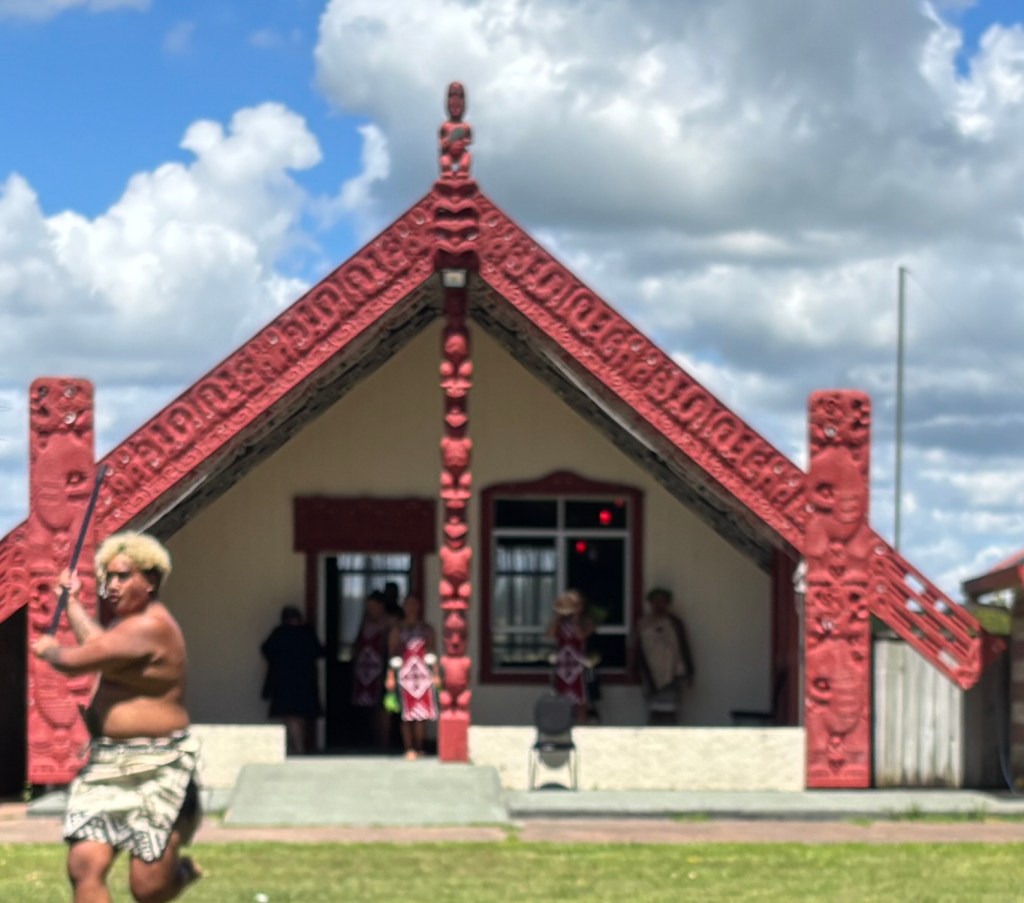
Our first destination was a Māori marae, or gathering place.

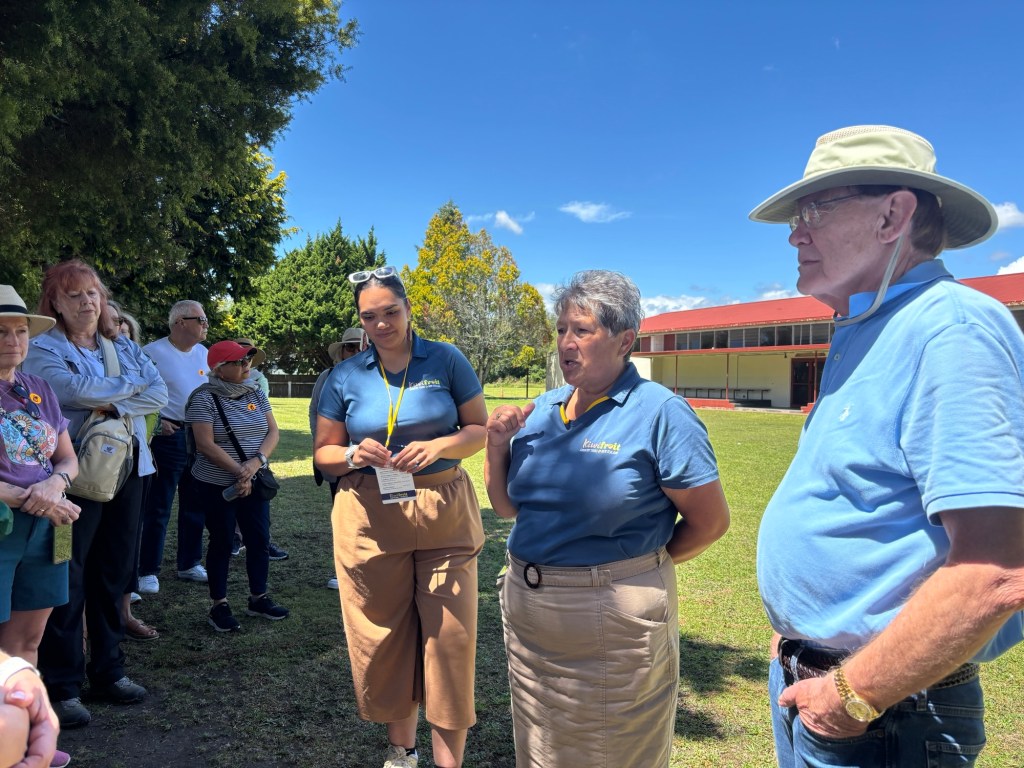
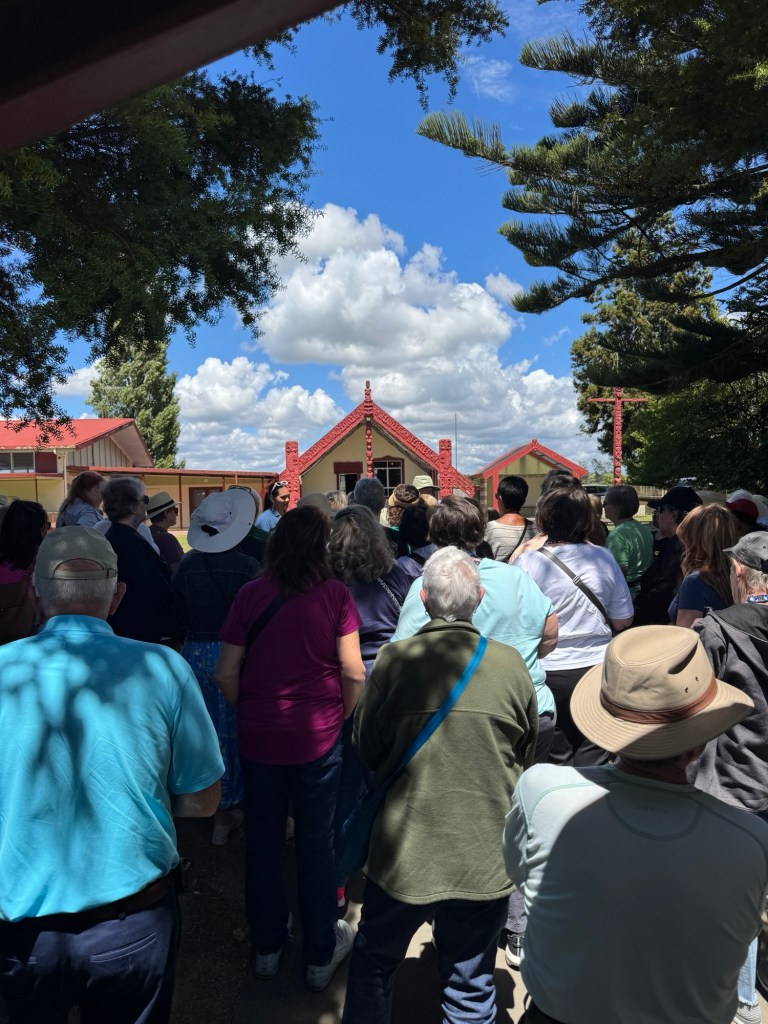
We were given instruction on how to proceed respectfully.  

The women gathered at the front of the group right behind our “chief.”  The men were around and behind to keep the women safe.  

A member of the family came and challenged us as to whether we come in peace.  He threw down a feather.  When our “chief” picked it up, they knew we were friend, not foe.

We removed our shoes prior to entering and agreed to not take pictures inside.

They sang a song of greeting to us and we sang a song in return “You are My Sunshine.”

They told stories and entertained us with more songs and dances. 

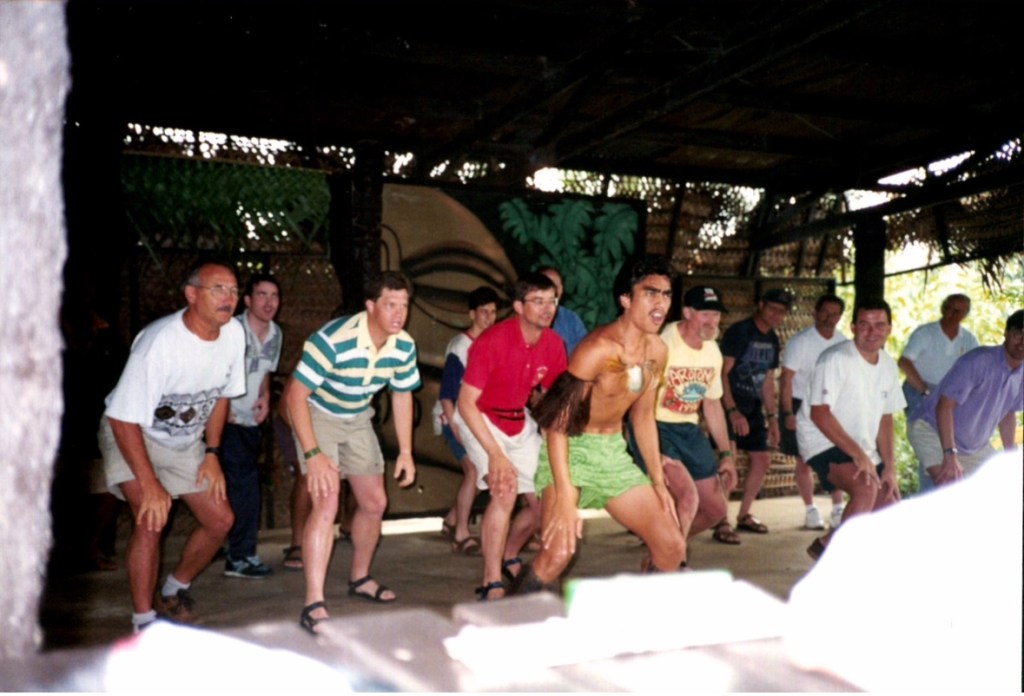
When they asked for first women and then men volunteers to learn some of the traditional dance moves, neither of us volunteered.  

However, I do remember Randy doing this once upon a time!

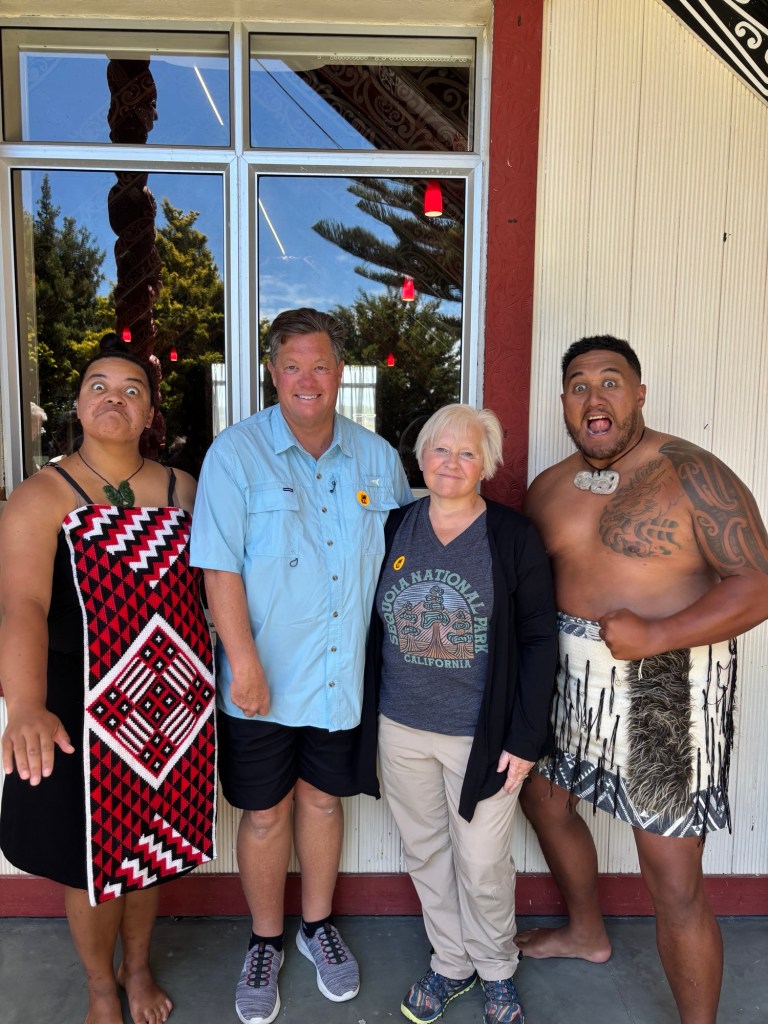
Afterwards, our Māori hosts invited us to take pictures with them.

Schools in New Zealand were started by the missionaries.  They banned students from speaking the Māori language.  It was almost eradicated by the 1950s.  Efforts were initiated to revive the language in the 1970s.  Today, schools operate in both languages or bilingually from preschool through university.  Both Māori and English are official languages of New Zealand.

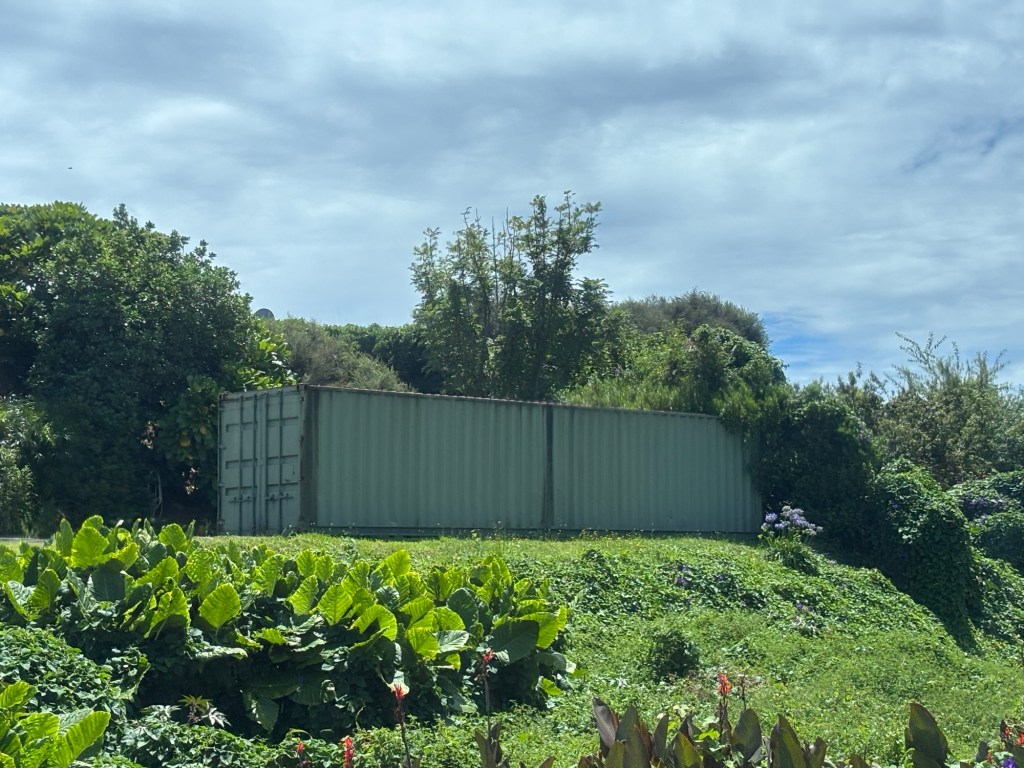
This home has incorporated cargo containers that were collateral from an oil tanker disaster in this area in 2011.  Oil was on the beaches for five years.  

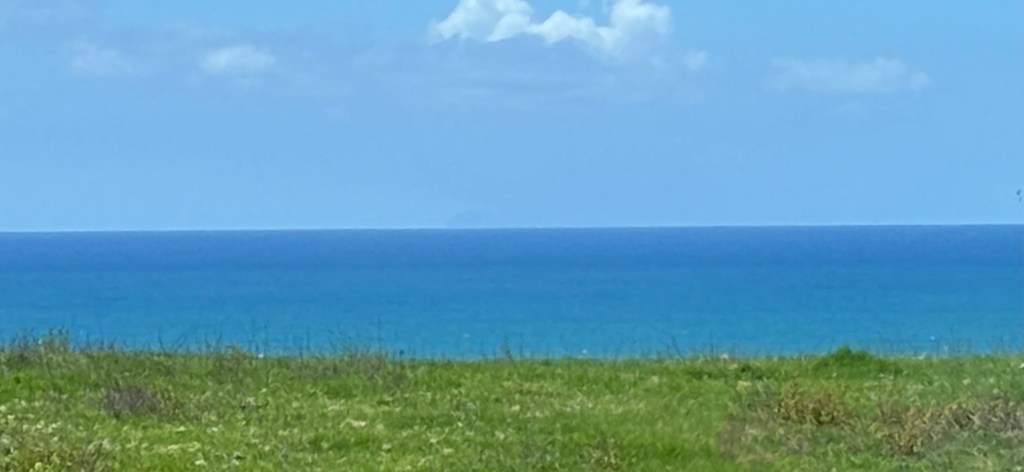
In the distance we could just barely see the island where 20 tourists and two guides died in 2019 when a volcano erupted unexpectedly on Whakaari, the White Island.  There is a Netflix program about it called The Volcano: Rescue from Whakaari.

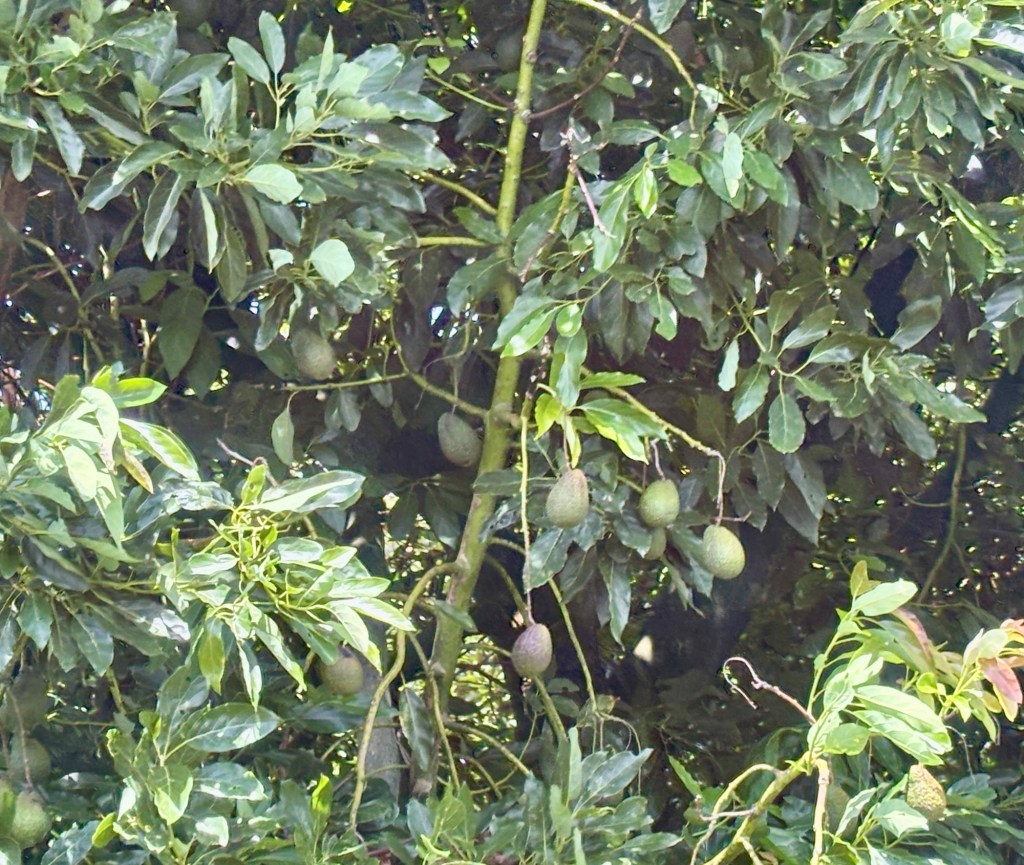
Avocados

The most common crops here are kiwi fruit and avocados.  Everyone seems to have one or both trees.

In the early 1900s,  a teacher ate Chinese gooseberry in the Yangtze valley.  She brought some back to New Zealand.  Her brothers were horticulturalists and the results developed into a massive industry.

A Kiwi is the national New Zealand bird. It is flightless and elusive.  A kiwi can also be New Zealander.  The fruit is not kiwi, it is “kiwi fruit.”

Almost all of New Zealand’s immense and world-famous kiwi fruit crop is grown in this small area.  There are 2500 orchards growing billions of individual fruits that are picked one by one.

These are accommodations for harvesting workers.  The fruit is picked 3-5 months a year.  Harvest is 12 hours per day, six days a week. The workers generally come from Polynesian Islands and NZ has strict regulations and protections regarding their pay and accommodations.  Accommodations must include high speed WiFi for them to stay in contact with their families.  

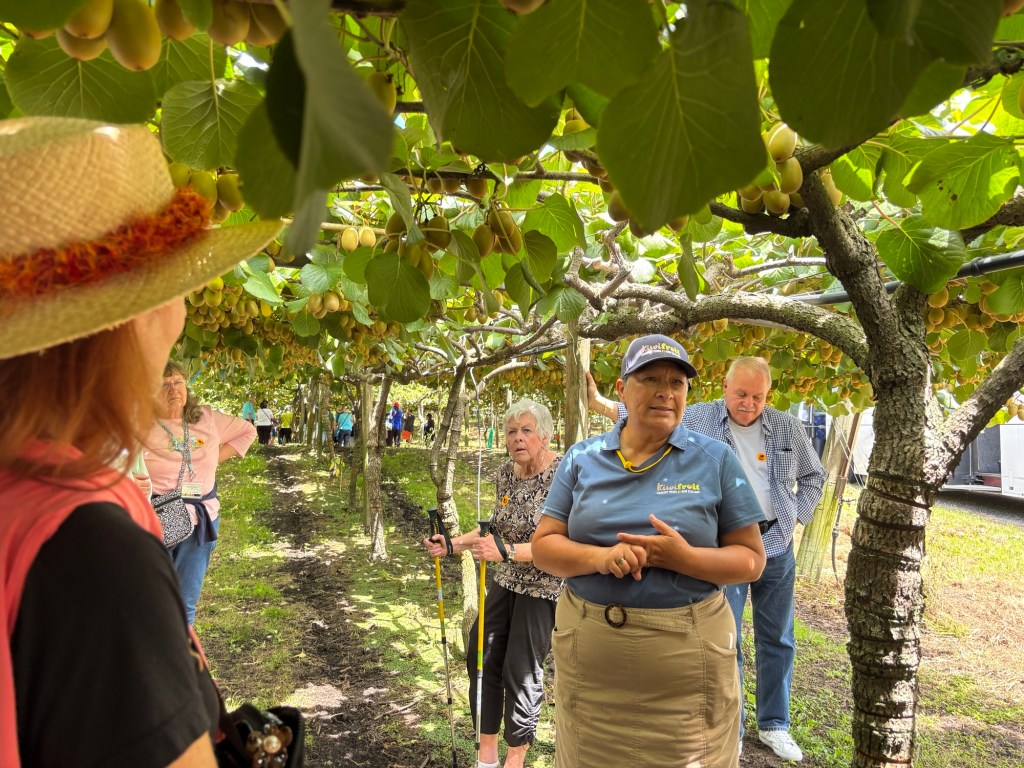
There is a very elaborate process for pollination and growth and harvest season to season.  We spent thirty minutes learning about it!

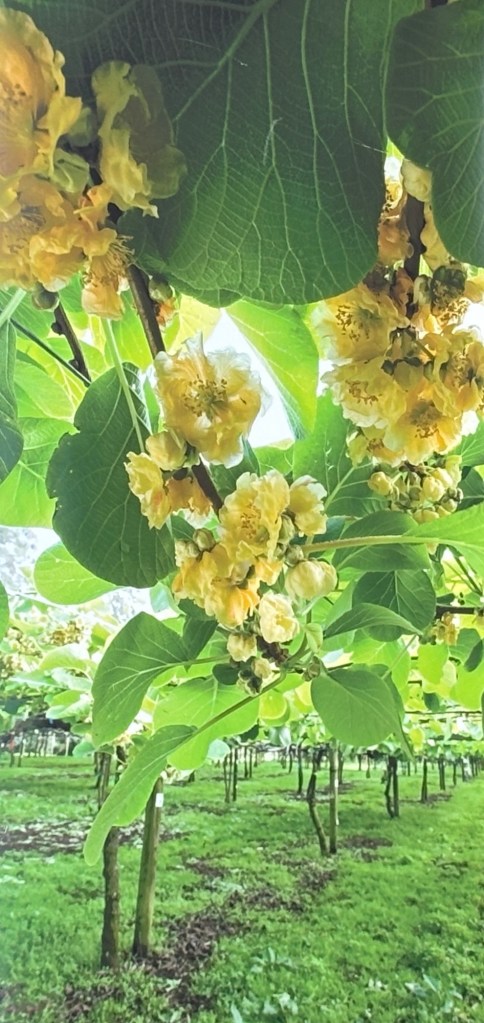
It began with how they trick bees into pollinate blossoms that have no nectar!

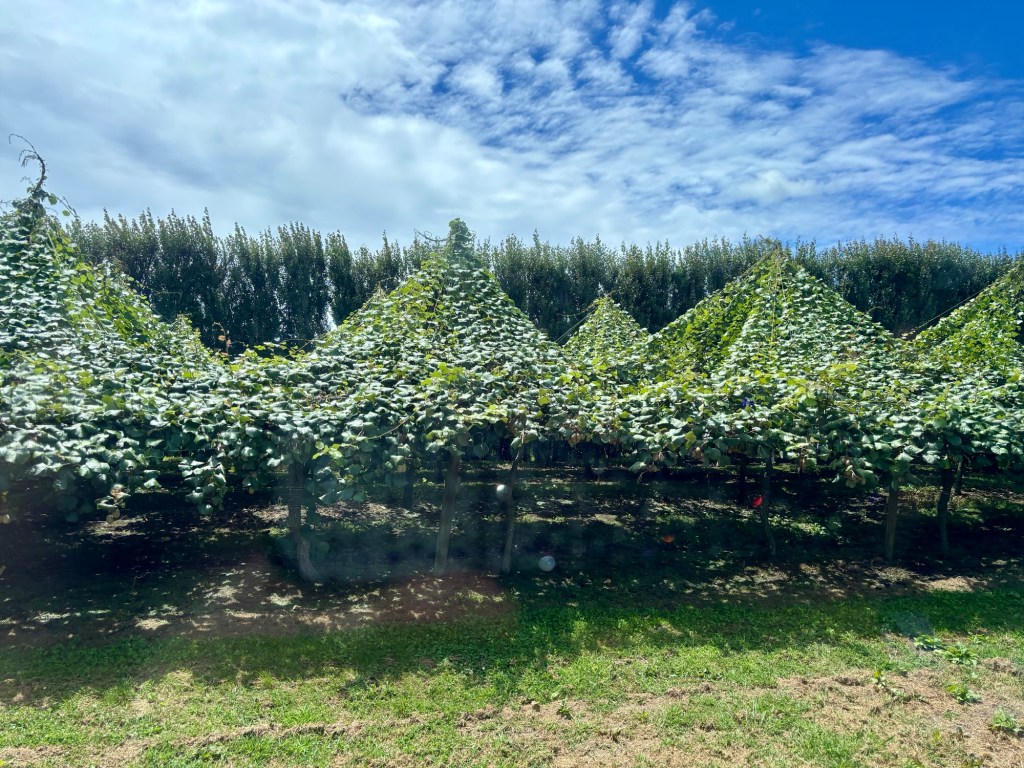
These teepees are vines that weren’t pollinated but saved for the next season.  Also notice the wind breaks in the background. All of the orchards have them so the wind does not bruise the fruit and lower the grade classification.

Growers use an organic insecticide but do not have a problem with birds because the fruit is picked before it is ripe.

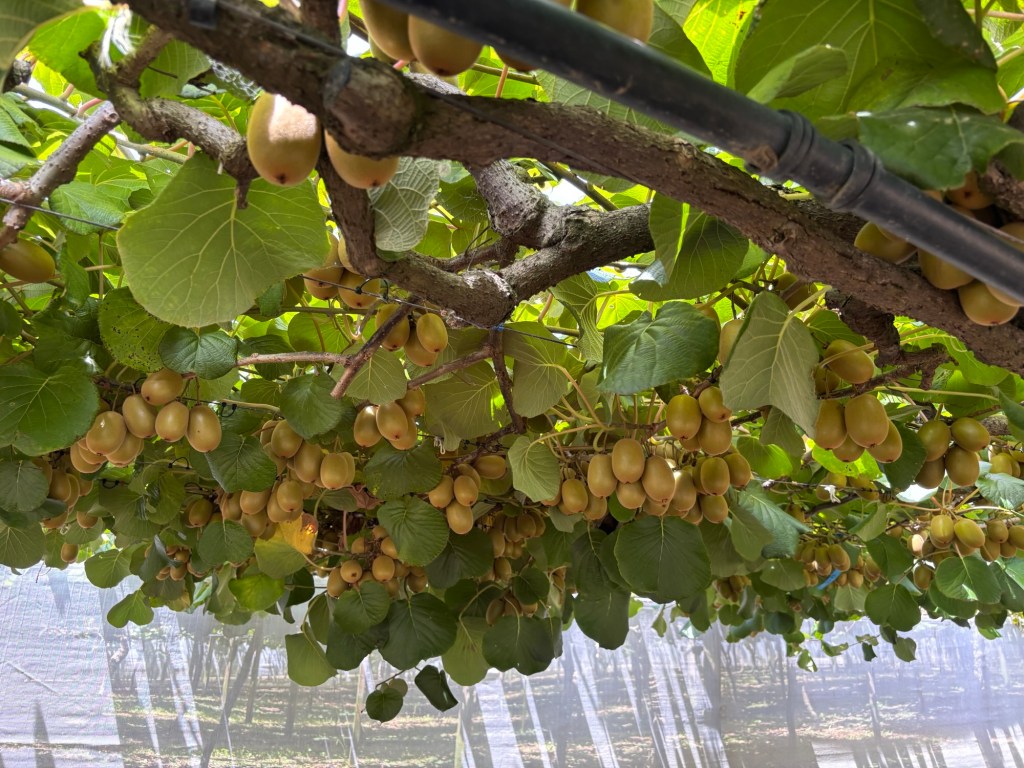
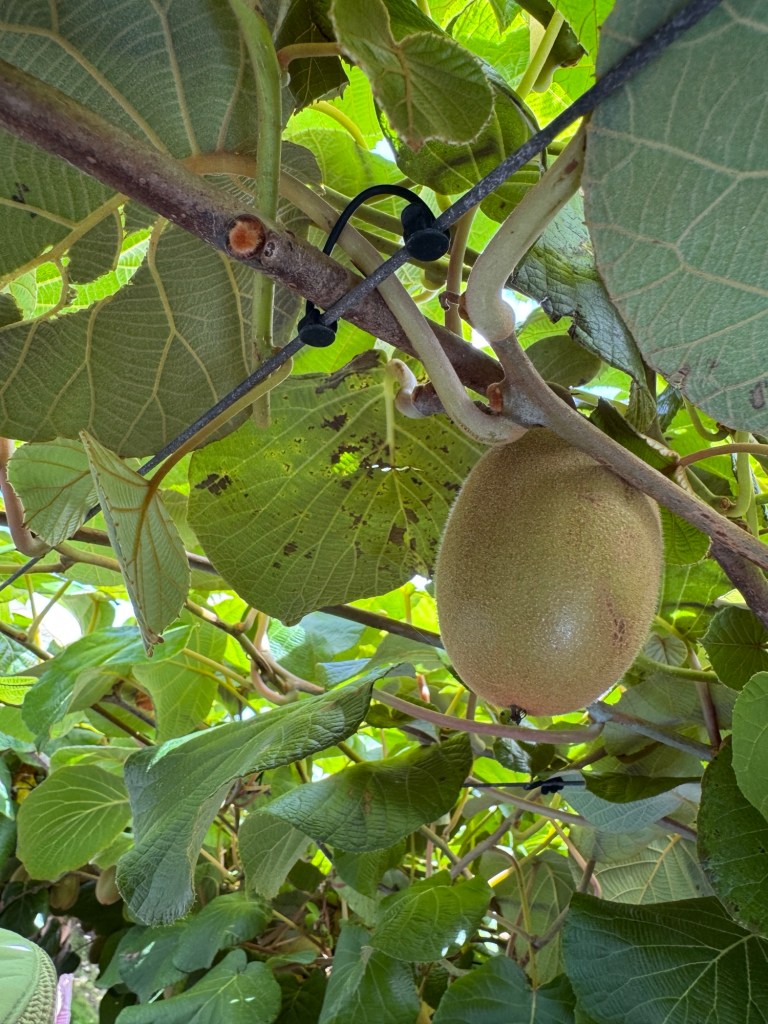
These gold kiwi are just a few weeks into their development.  Even though they are already the size of what we typically see in our neighborhood grocery stores, they will double in size and be classified as Grade A.  This classification level of crop primarily goes to Asia.

The fruit is picked hard (not ripe) because the market is at least six weeks to six months away.  Fruit can last up to a year through processes they have developed.

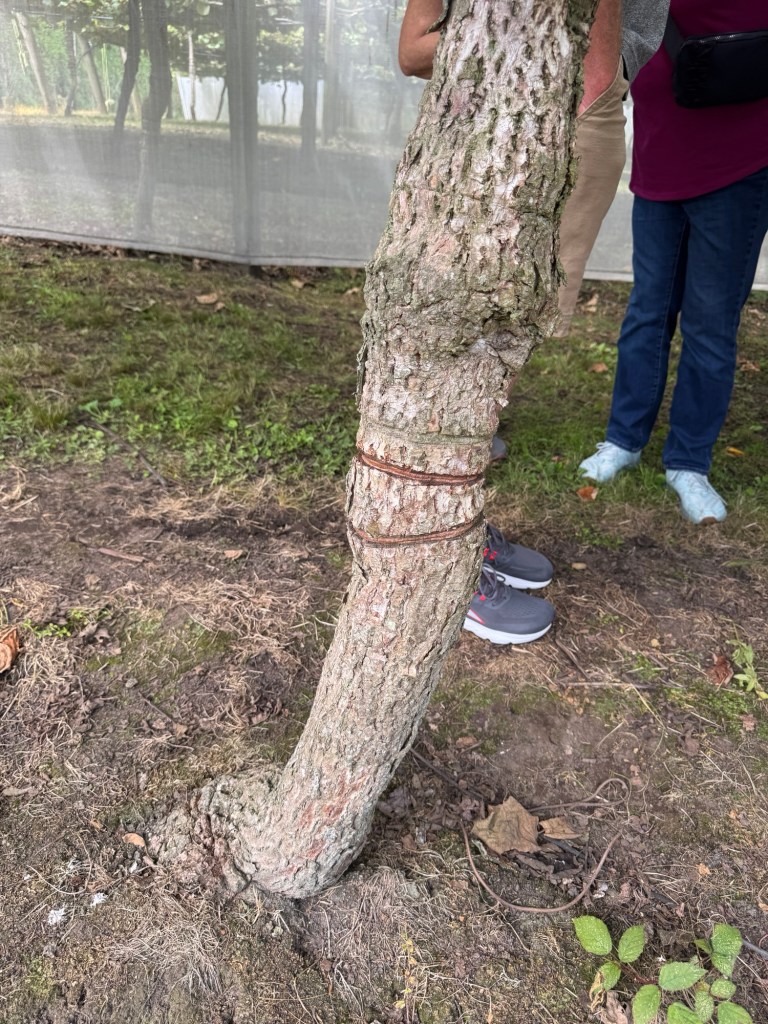
They do some kind of strapping to get an extra dose of sweetness inside.

Green kiwi fruit was the primary market for decades but 80 percent of the fruit was lost by disease.  They grafted vines to grow gold kiwi fruit onto still healthy green vines to create a gold fruit.  That is now the primary crop with the best, again, going to Asia.

Ruby Red Kiwi is in development!

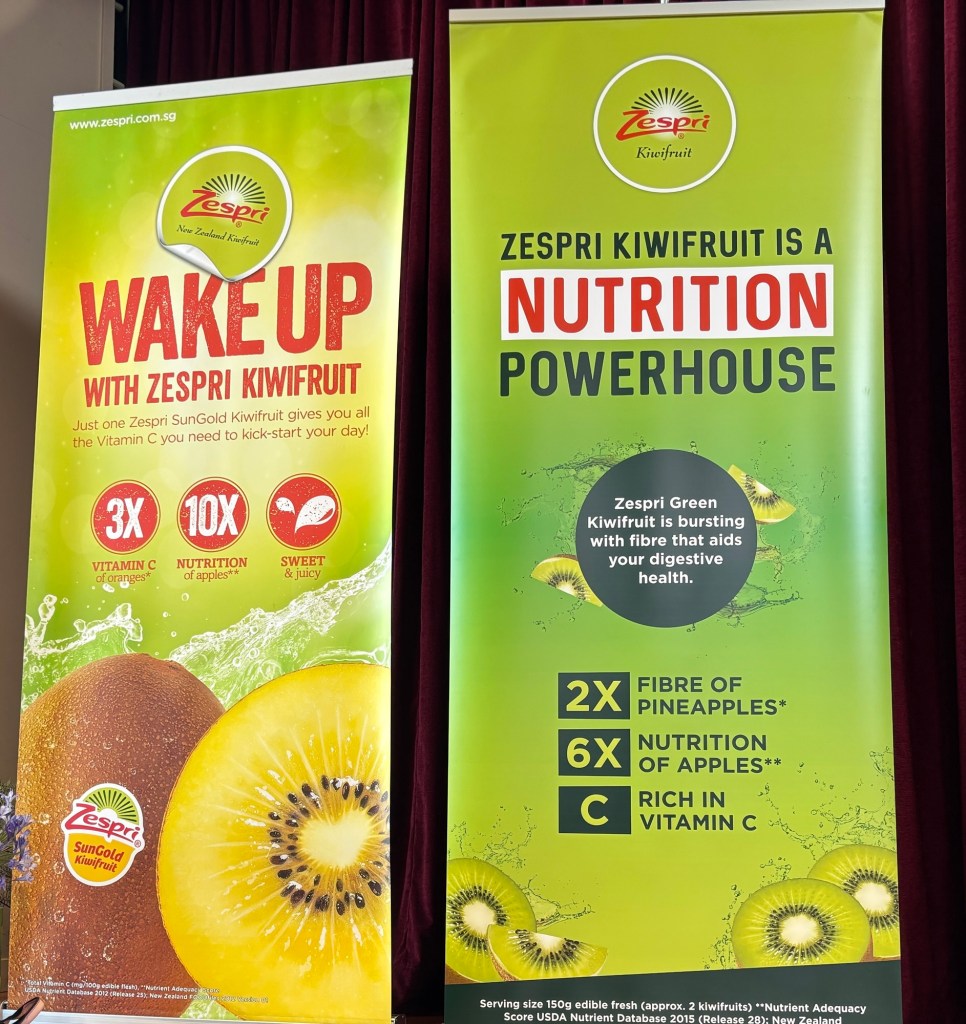
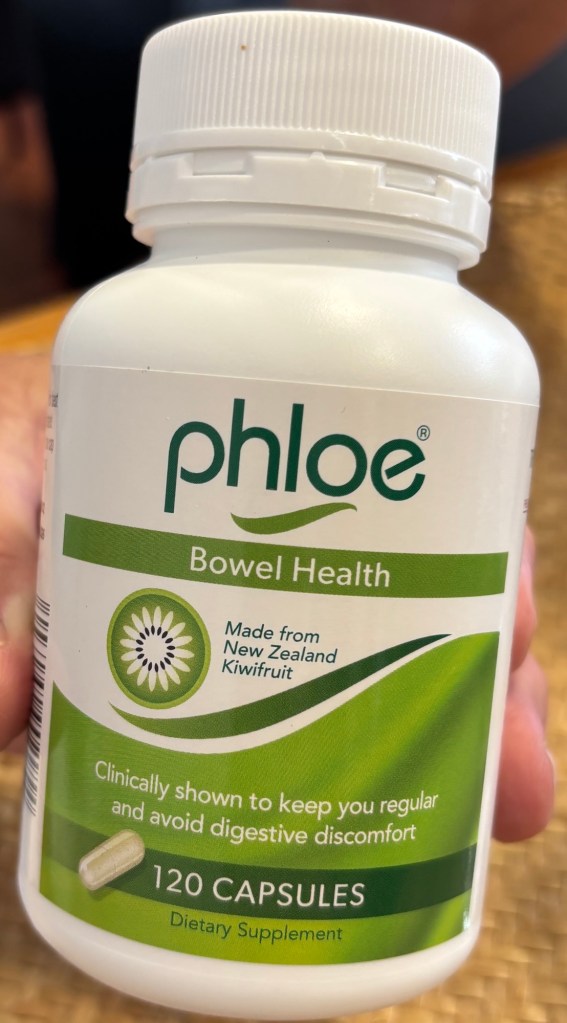
Kiwi fruit is very healthy nutritionally – we’ll have to eat more.

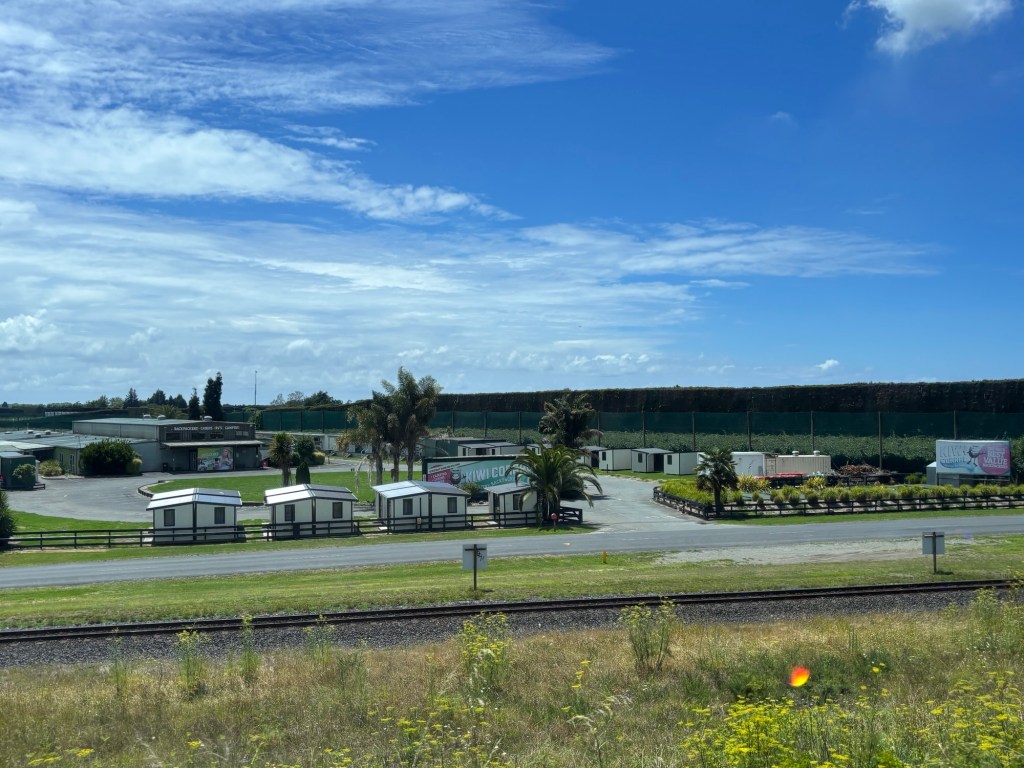
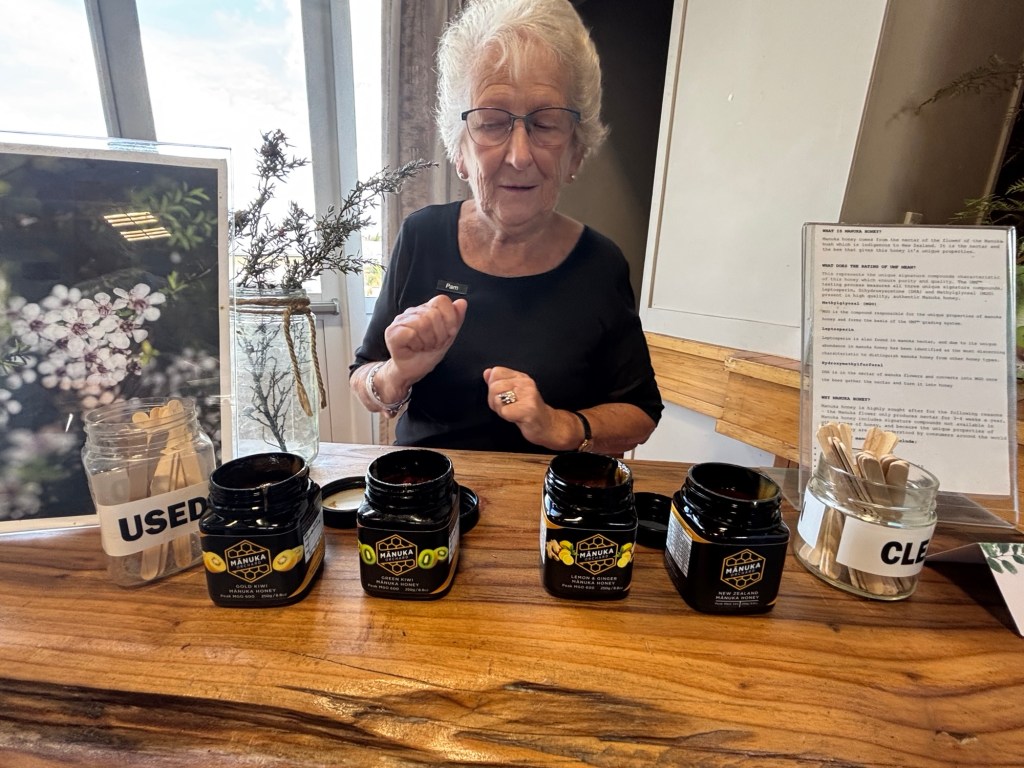
We had a nice treat with tea at a local community center. We sampled green and gold kiwi fruit! The gold was so good!

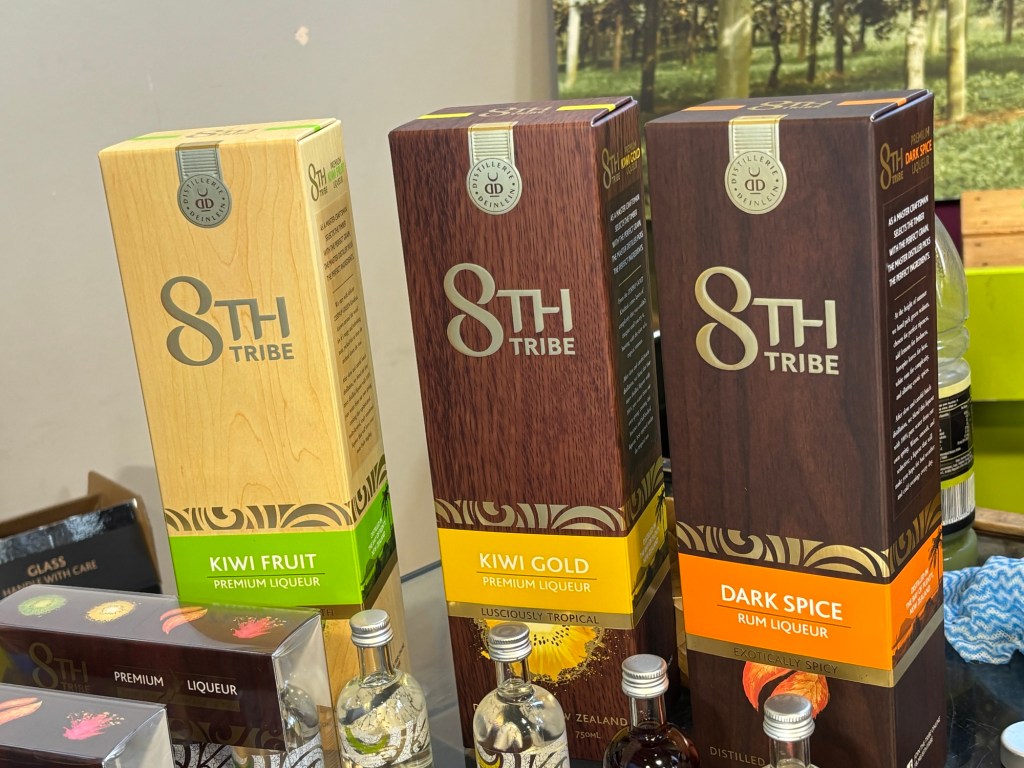
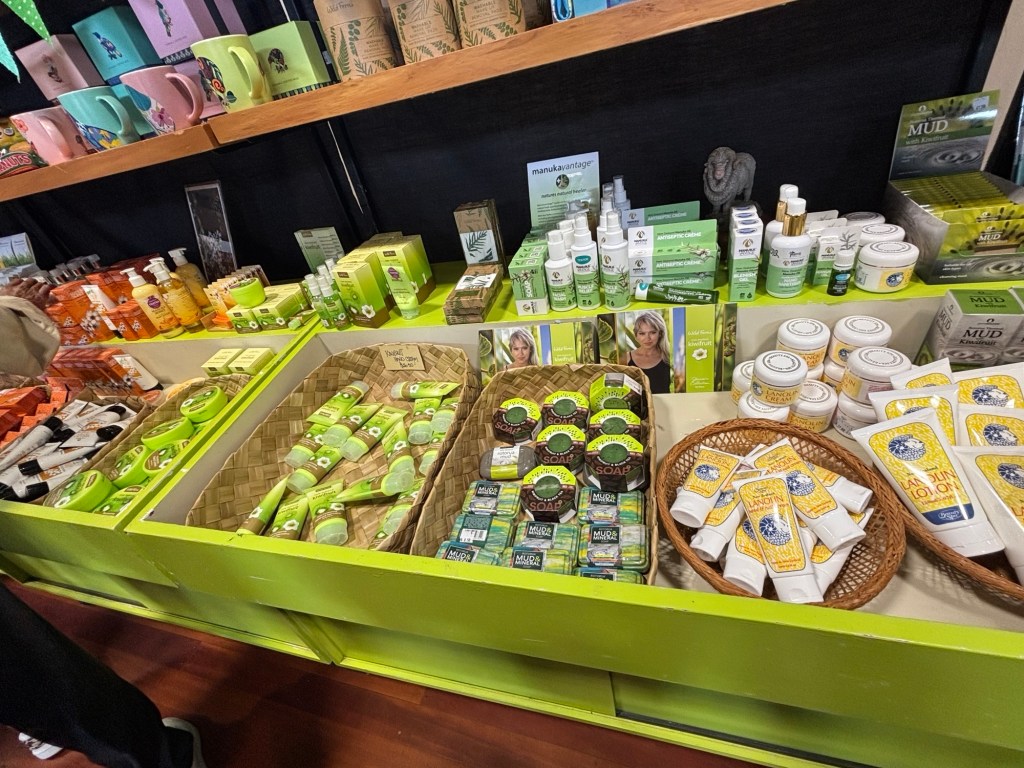
There are so many restrictions on taking products into Australia that we didn’t get any lotions or soaps or chocolate.

Back on board we had dinner at our favorite specialty restaurant, Canaletto.

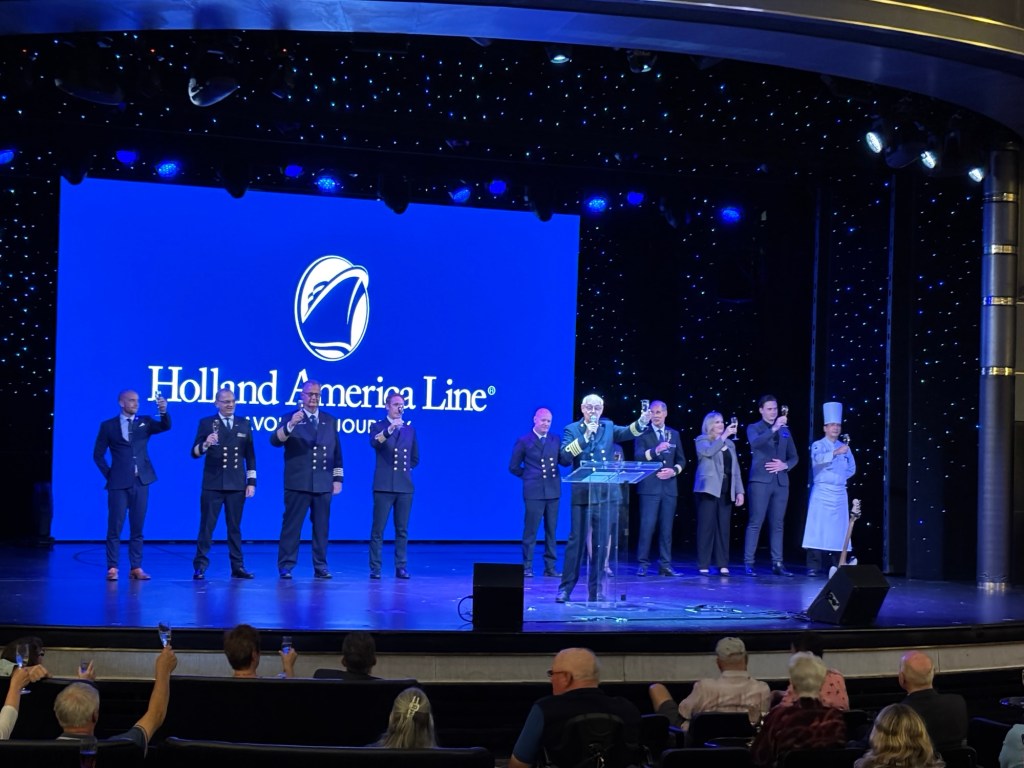
Then we went to the captain’s welcome toast.  He gave us a little information that the Westerdam had her maiden voyage in 2004. The captain’s career began with Holland America in 1992. He introduced his senior officers and gave a toast to our journey.

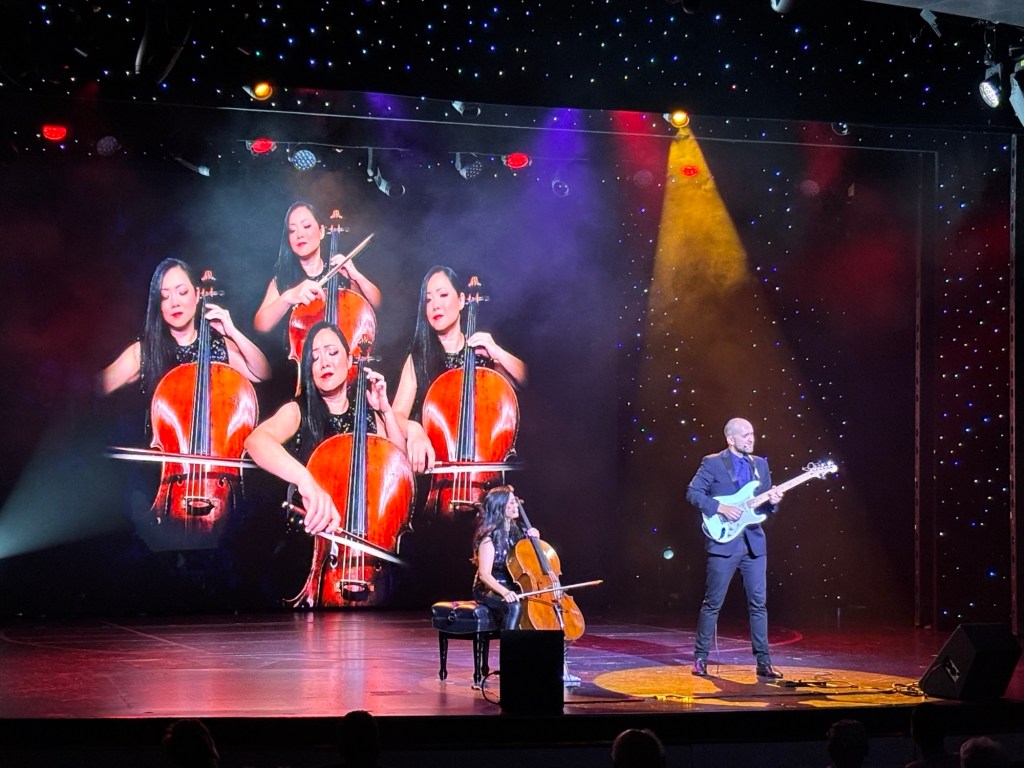
We stayed in the theater then for a wonderful show called The “Shredderz” .  A woman on cello and a man on electric guitar combined classic rock and classic sounds strange, but it worked very well.

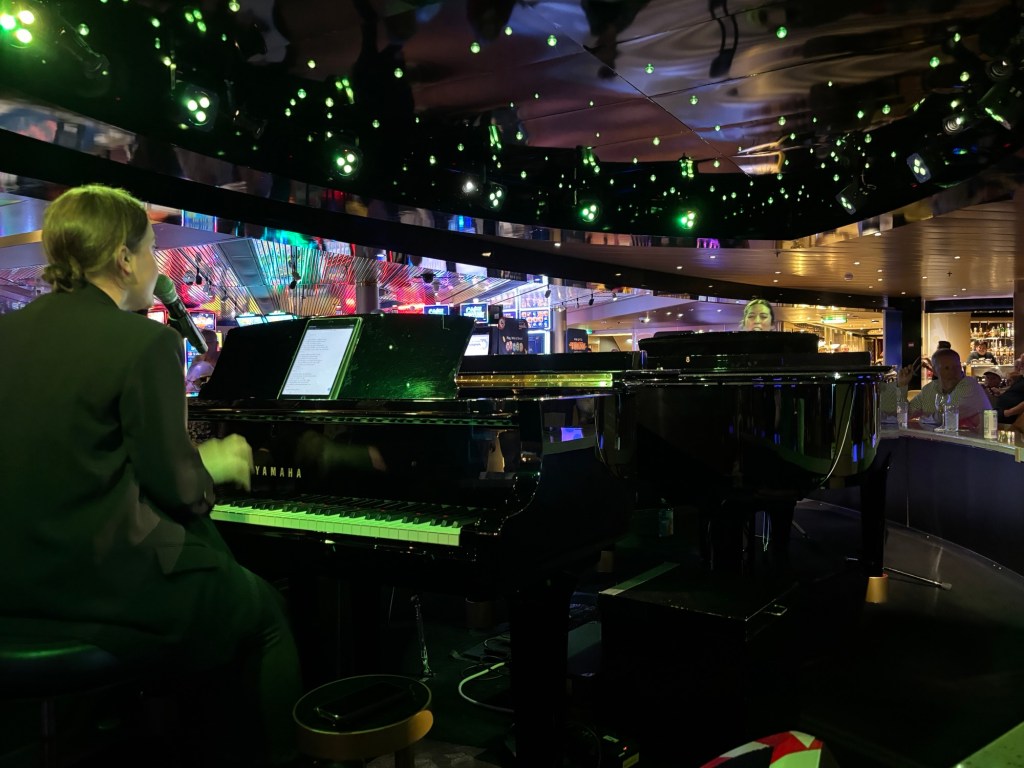
We concluded our night at Billboard Oboard.  This venue is available on all Holland America ships and incorporates two piano players playing together.

It was a great day from shore excursions to dinner to shows. This is why we like cruising!

We were in Tauranga, New Zealand on January 20, 2025.

Posted in Uncategorized | 3 Comments

Aukland: Boarding Westerdam


We were given late checkout at the hotel so had a relaxing morning.  We weren’t very far from the pier, a 10-15 minute walk that we had done several times, but we opted for a taxi given our luggage. 

Queen’s Wharf has two cruise ship terminals.  Cruise ships have been coming to Aukland for 14 years.

The process of checking in on the Westerdam took about 45 minutes. We  were always moving so it went quickly.

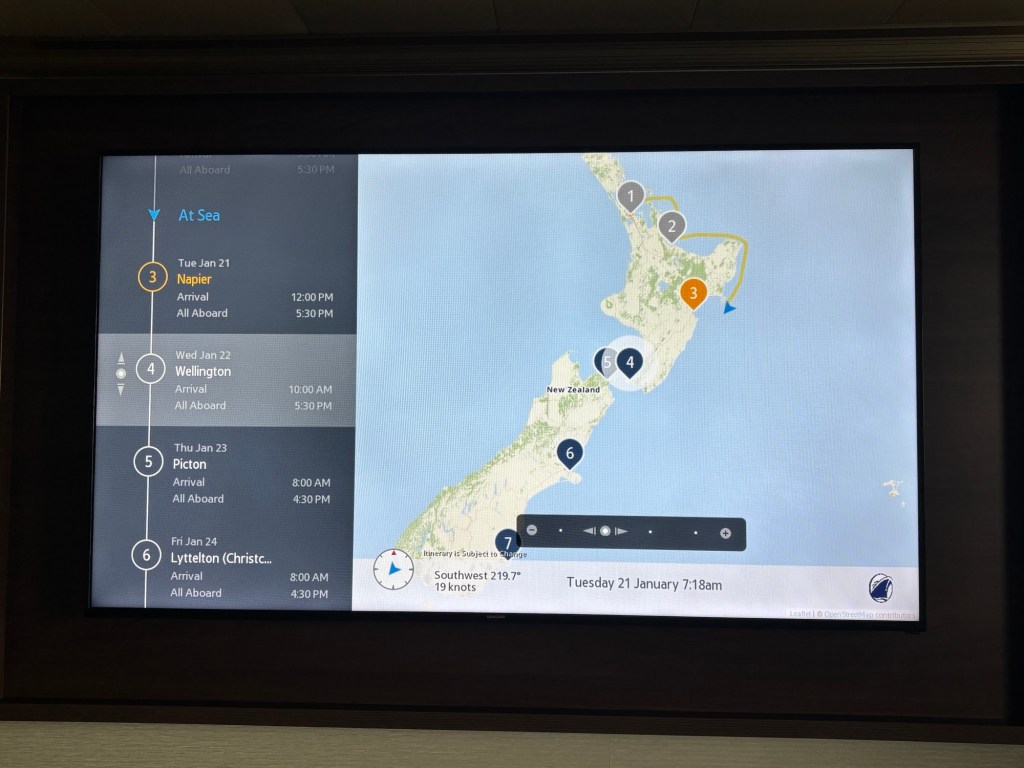
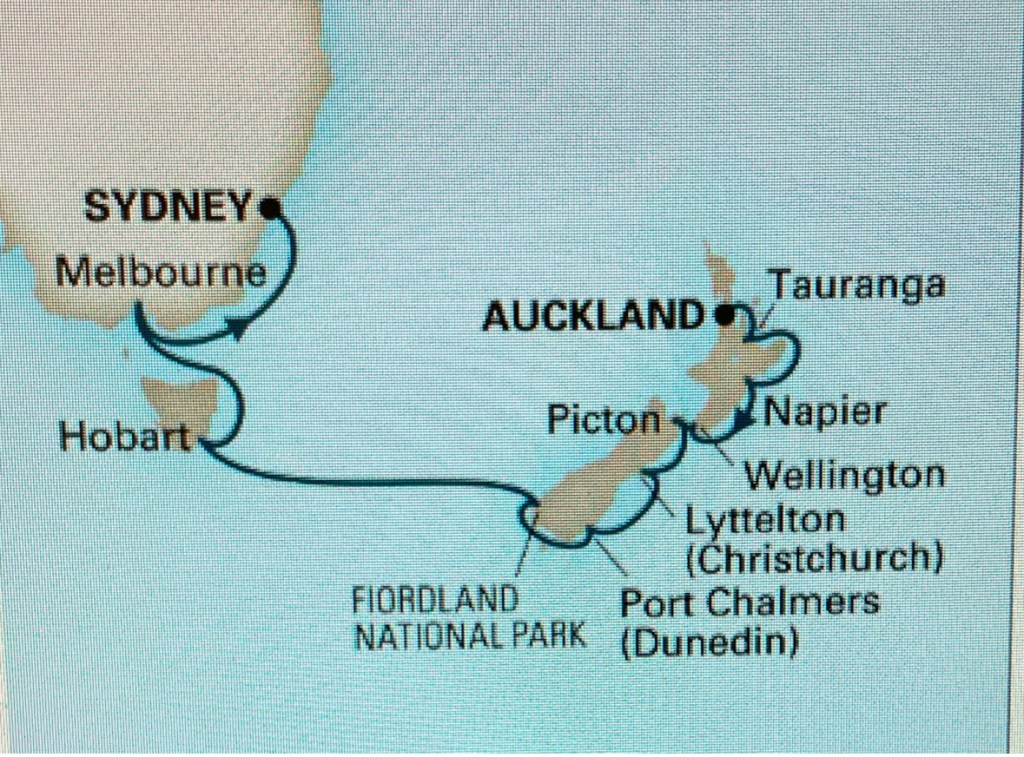
This is our cruise itinerary – mostly New Zealand, and three ports in Australia.

We found our cabin and our key cards. Randy was pleased that he finally had some status as we were Mr. and Mrs. R. Matthews.  Because I do all the travel planning, status accounts are almost always in my name. He’s always “complaining” that he doesn’t exist!  He’s just a kept man on our travels!

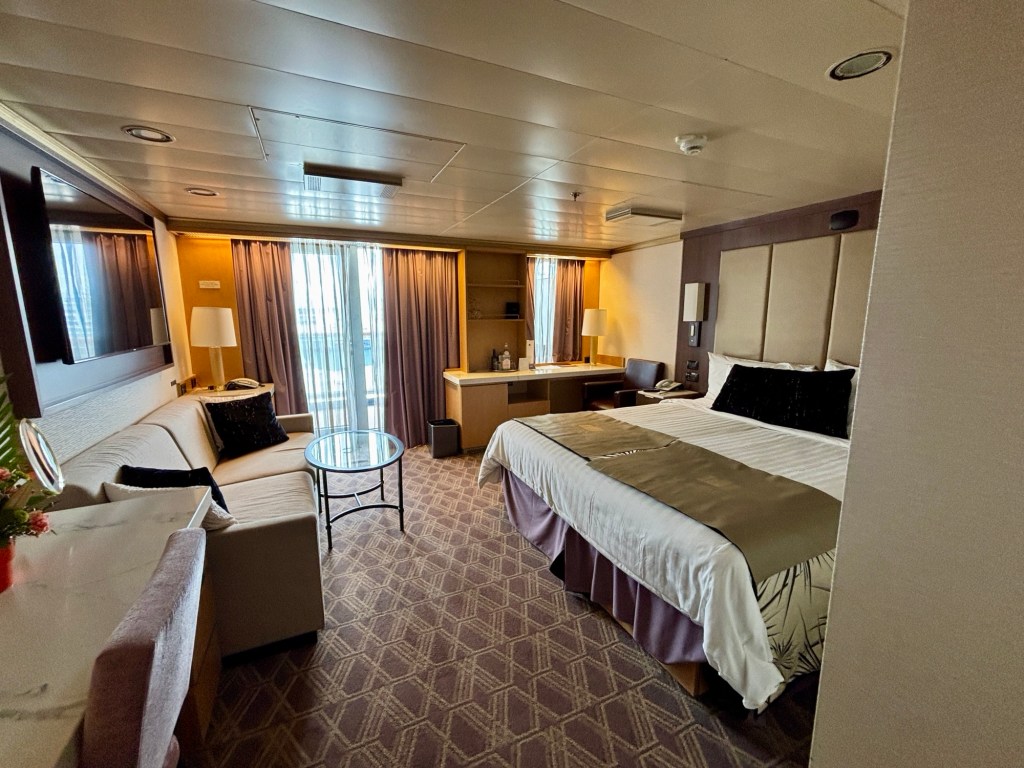
This was our first view of our signature suite, a new cabin category for us. 

We had lovely flowers from our travel agent.

We watched the safety video and then the end of the Chiefs-Texans football game.

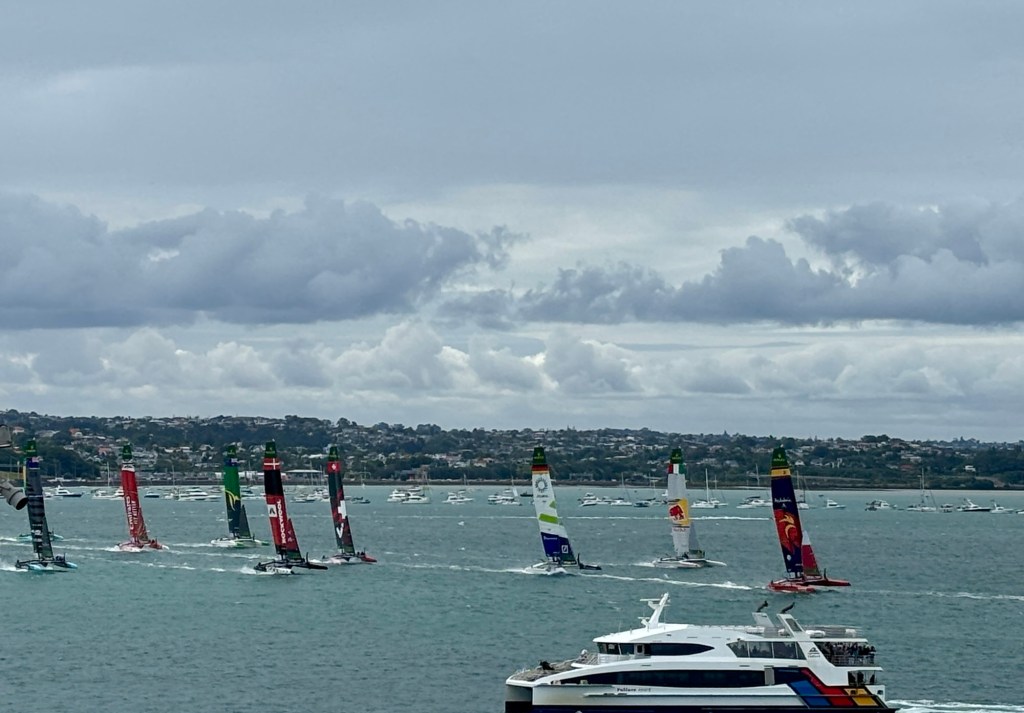
We were able to watch some of the Sail Grand Prix from our balcony. We had seen a lot about it during our stay in Auckland but were out of the city on Saturday.  On Sunday morning, we were more focused on getting on the ship. It was a nice surprise to see a little of the racing and what all the fuss was about.

And if you don’t know, because we certainly didn’t know, Sail GP is an international sailing competition featuring high-performance F 50 foiling Catamarans. 

We completed our last required event for embarking, to find our muster station for lifeboat evacuation in case of emergency. 

Next up was the Mariners’  Reception for loyal Holland America cruisers with status. We barely qualify, but we do!  We sat with a couple from Florida we had met in line to embark.

Because this smaller class of Holland ship is new to us, we spent some time finding our way around. 

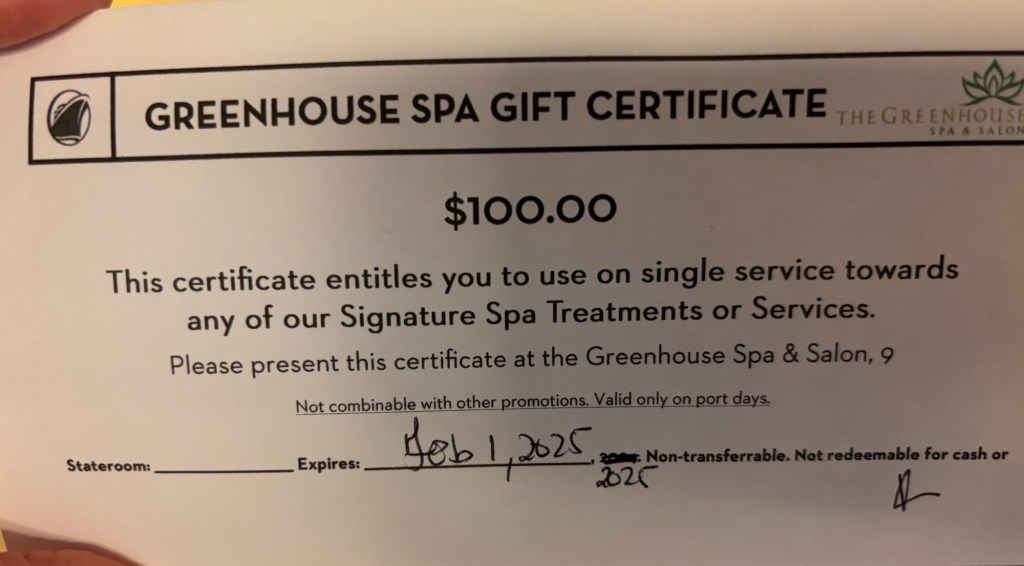
We went to the spa for a tour and signed up for the raffle.  I won $100! Of course, given the inflated prices on a cruise, my $100 discount makes it about the same as Phoenix prices.  I’m all in!!

We opted to pay $119 for unlimited laundry on this cruise.  As we’d already been away from home for a week, we sent off our first bag of clothes for cleaning.

We went to dinner in the main dining room and then to the theater for a talk about our next few ports.

Most of that information will come out as we reach those ports, but he told us a few general items of note. 

The footwear people in the US call flip flops are called jangles in NZ.  Those same sandles are called thongs in Australia.  (I actually grew up in the Pacific Northwest calling them thongs.)

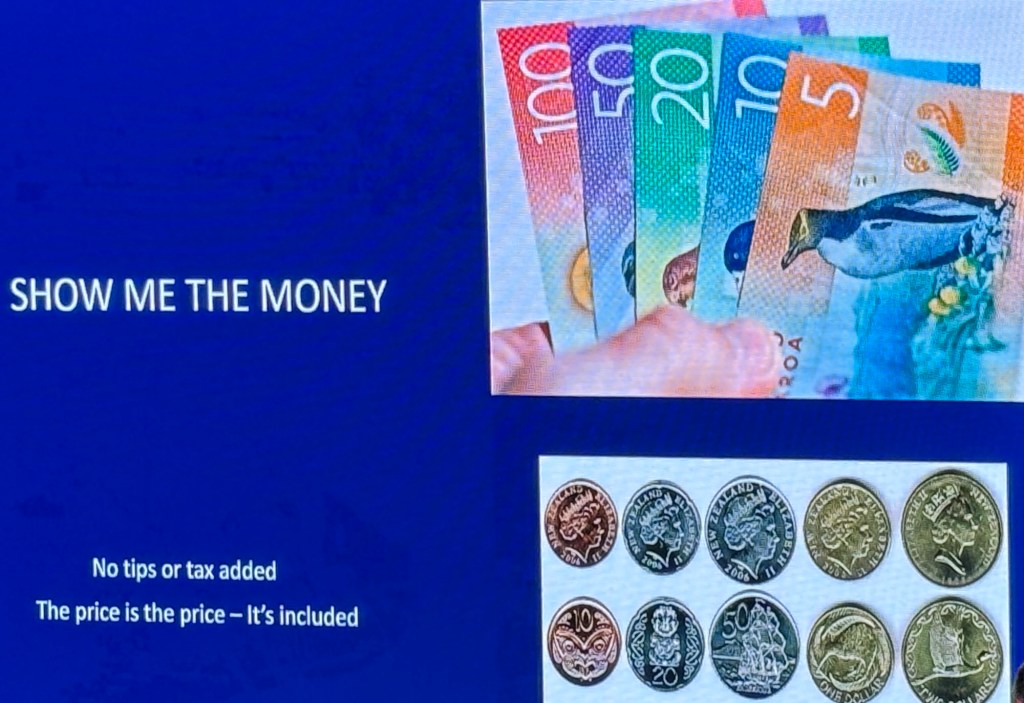
New Zealand money is very colorful and durable.  They have done away with 1$ bills, nickels and pennies.

New Zealand is generally cashless with almost everyone using cards.  There is no expectation for tipping as workers are paid a livable wage.

Instead of 911 for emergency, NZ uses 111.

The longest place name in the world is in New Zealand. There are 85 characters!  The presenter didn’t want to attempt the pronunciation so he played a recording narrated by his sister!

We boarded the Westerdam on January 18 2025.

Next Up: Tauranga

Posted in Uncategorized | 1 Comment

New Zealand: Waitomo Caves and Hobbiton

On our way to Waitomo Caves and Hobbiton, our guide told us more about New Zealand.

Although New Zealand is made of 600 islands, there are just two main ones: the North Island and the South Island.  Aukland is on the north island. 

The city is very long and narrow positioned between the Pacific Ocean and Tasman Sea.  Aukland has the most coastline of any city in the world. 

The total population of New Zealand is 5.2 million on a land mass about the size of Japan.  Aukland was the nation’s second capital between 1842 and 1865 (now Wellington). One third of the population of New Zealand lives in Aukland.

New Zealand is a democracy holding elections every three years. Their former prime minister, Jacinda Ardern, became quite famous for her very aggressive, and successful, approach to fighting the COVID pandemic.

Power in New Zealand is generated by hydro and wind. This is the last operating coal plant. It is due to be decommissioned soon.  Coal is imported from Indonesia.  Fuel is imported from Singapore. 

There are no snakes or crocodiles in New Zealand but they do have mosquitoes so it isn’t perfect.

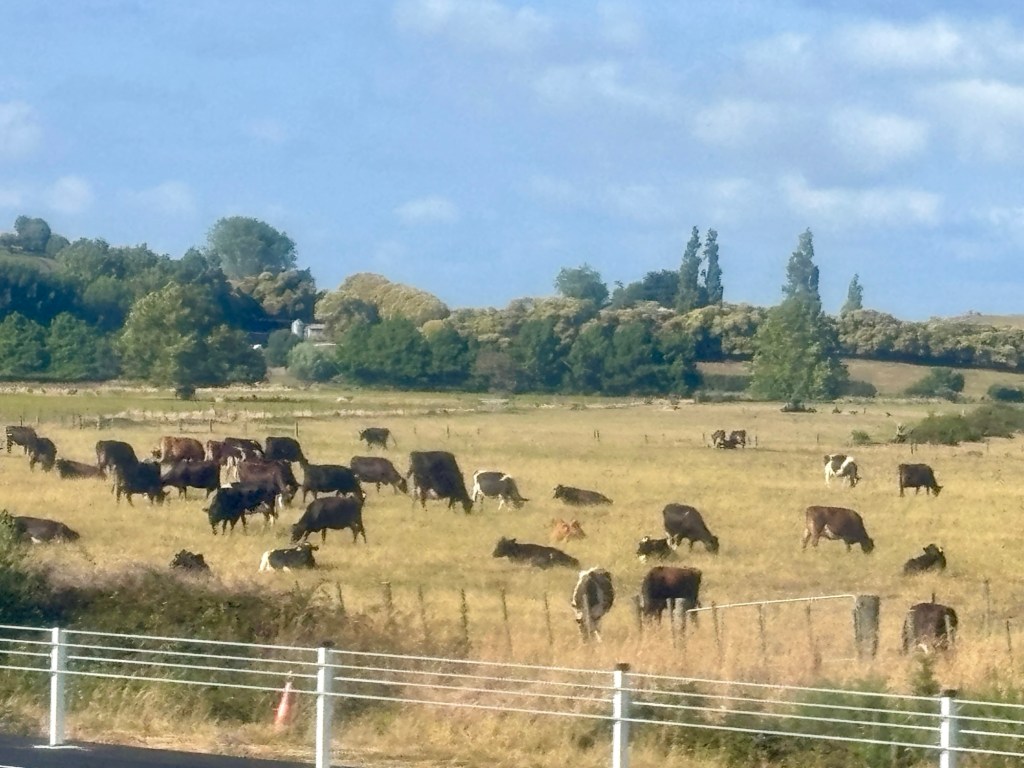
New Zealand’s largest industry is dairy farming.  They export product to 170 countries around the world.

Tourism was the largest industry before COVID with 3.5 million annual visitors.  Now it is the second largest industry, but coming back.

We arrived at our first of two primary destinations, Waitomo Caves.

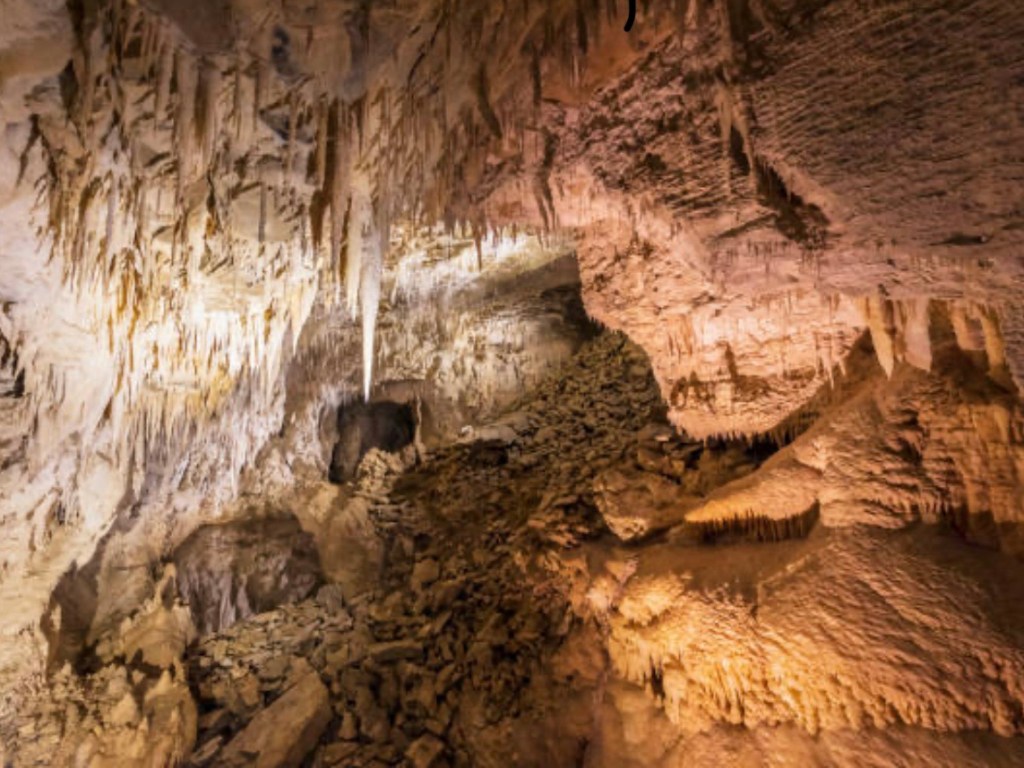
Waitamo means water caves. These sandstone caves were formed over millions of years.

We saw the beautiful rooms and formations such as stalagmites, stalactites, pillars and columns.

On our way down to the river still running through the cave, we learned about its more recent history.

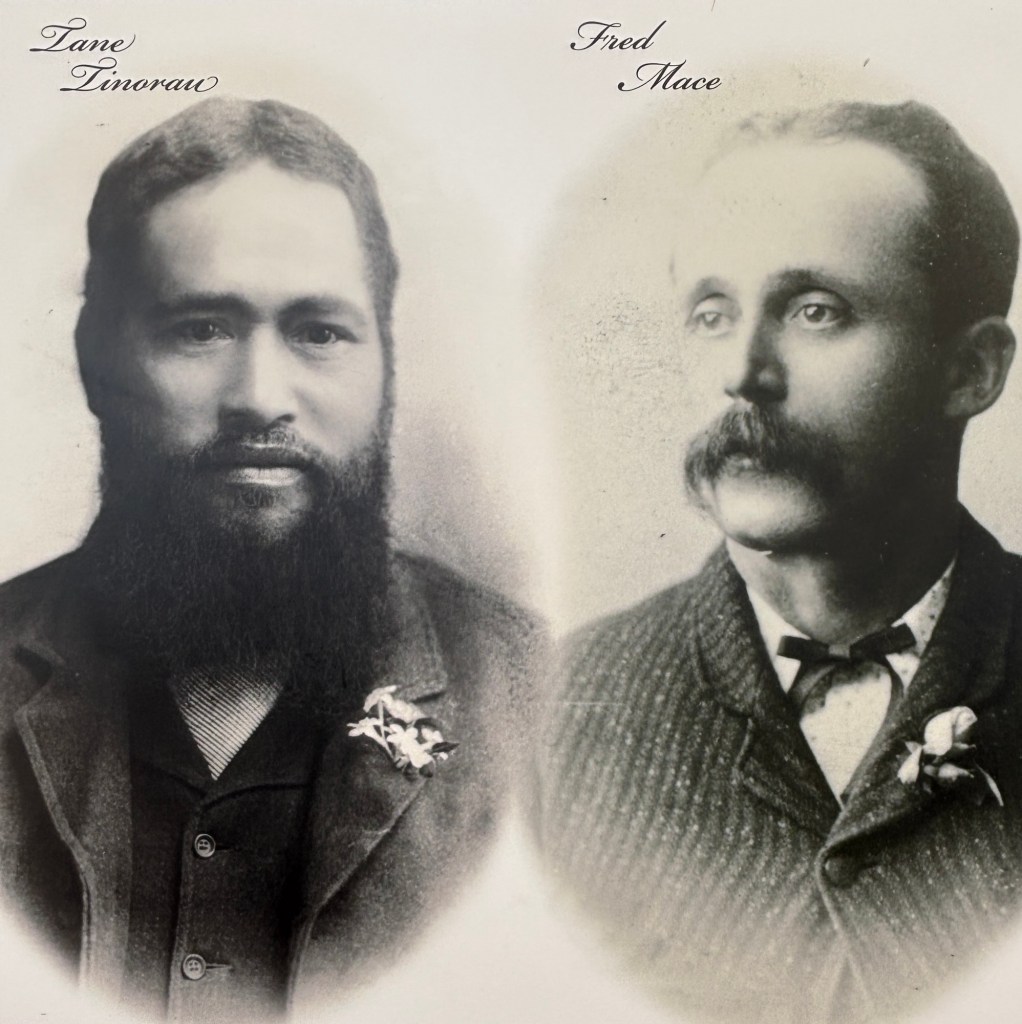
Local Māori knew about the caves but they had never been fully explored. Chief Tane Tinorau and English surveyor Fred Mace did so in 1887.

They experienced the multitudes of glowworms lighting up the ceiling of the cave.

Each worm has an attachment that gathers their food.

In 1889, the caves opened to tourists.

The government took over the cave in 1906 but it was returned to Māori descendants to operate in 1989.

Two floods have impacted the cave and temporarily reduced the number of glow worms.

Picture taking was not allowed in the cave so these are internet stock photos or pictures I took of post cards I bought in the gift store.

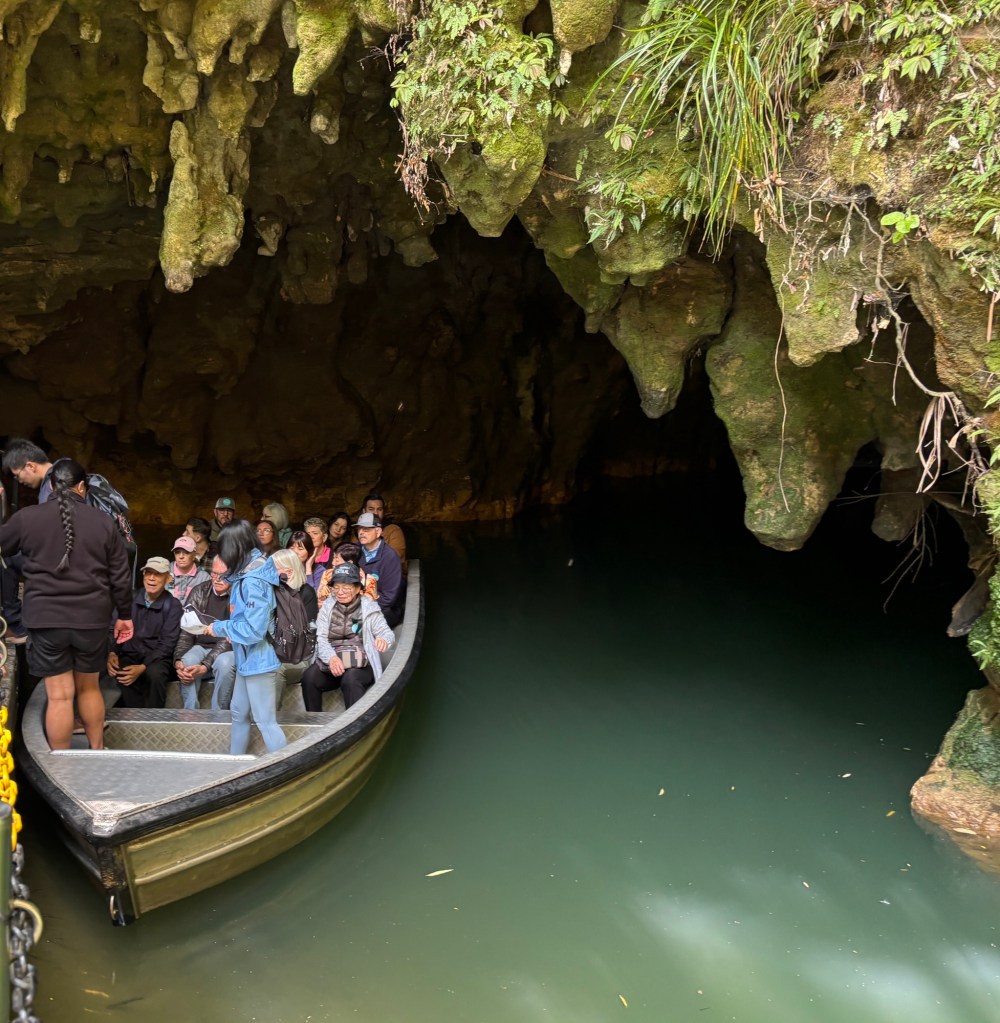
This was our boat coming out of the cave. We had been sitting in the bow and were the first off. This is the natural entrance.

This experience was magical and reminded us of the bioluminescent bay in Puerto Rico.

Our day continued with a very nice box lunch and the marginal experience of eating it on the coach.

Our next destination was Hobbiton, the movie set used in the Hobbit and Lord of the Ring movies. 

Prior to leaving on this big adventure to New Zealand, we watched the first Hobbit movie.  I intended to watch all three but didn’t enjoy the first enough to spend more time on it.  Randy watched the entire Hobbit trilogy.  He had already seen Lord of the Rings years ago so he filled in the general story line for me.

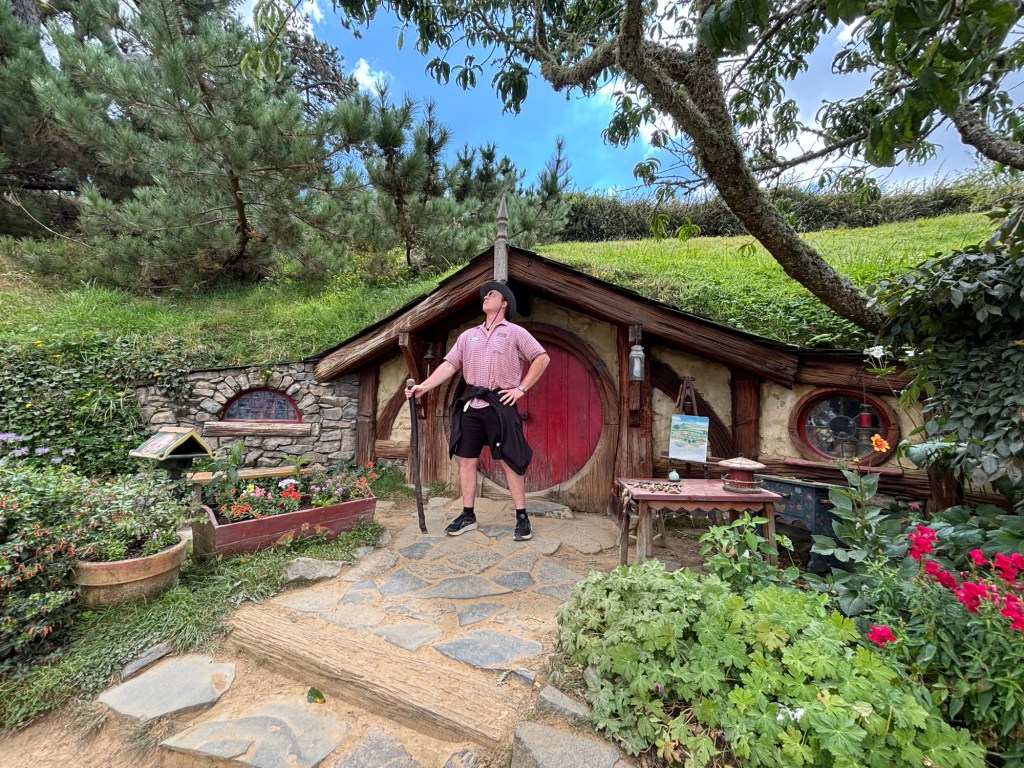
We met up with Gandolf right away!

Hobbiton is a popular place,  with 2500 visitors each day.  It is among the top five tourist attractions in New Zealand. 

Nathaniel, employed by Hobbiton, came aboard our coach and gave us some history of the movie set.

In 1998, location scouts for the Lord of the Ring movies were looking for rolling hills, a lake and a large tree.  They found what they were looking for on the Alexander family’s 1200 acre sheep (13,000) and cattle (500) farm.

“The Shire,” home to the Hobbits, would be built on 120 acres leased from the family.

The New Zealand Army helped build the road into the shire site and several soldiers were rewarded with roles as extras (Orcs).

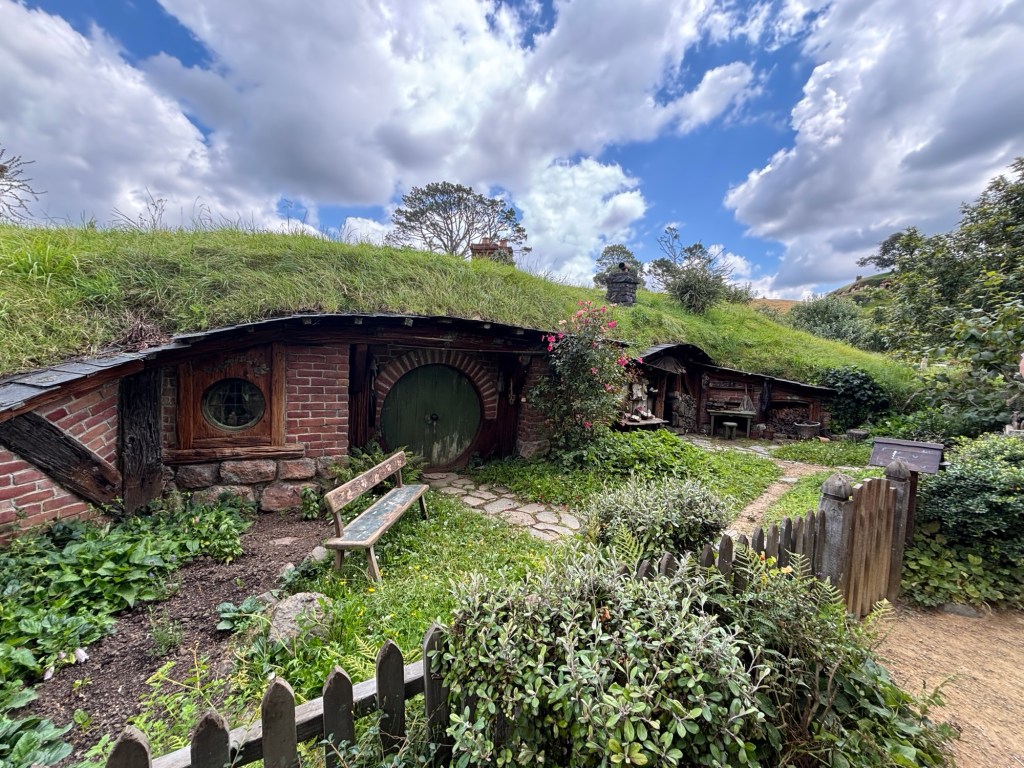
Thirty-nine temporary Hobbit Holes were created for the Lord of the Ring movies. 

“The Shire” was later reconstructed with more robust materials beginning in 2009. That process took two years!  The set was used for only 12 days of filming in 2011 for the Hobbit trilogy. The work, time and artistry on any given aspect, may only have seconds of film life in the movie.

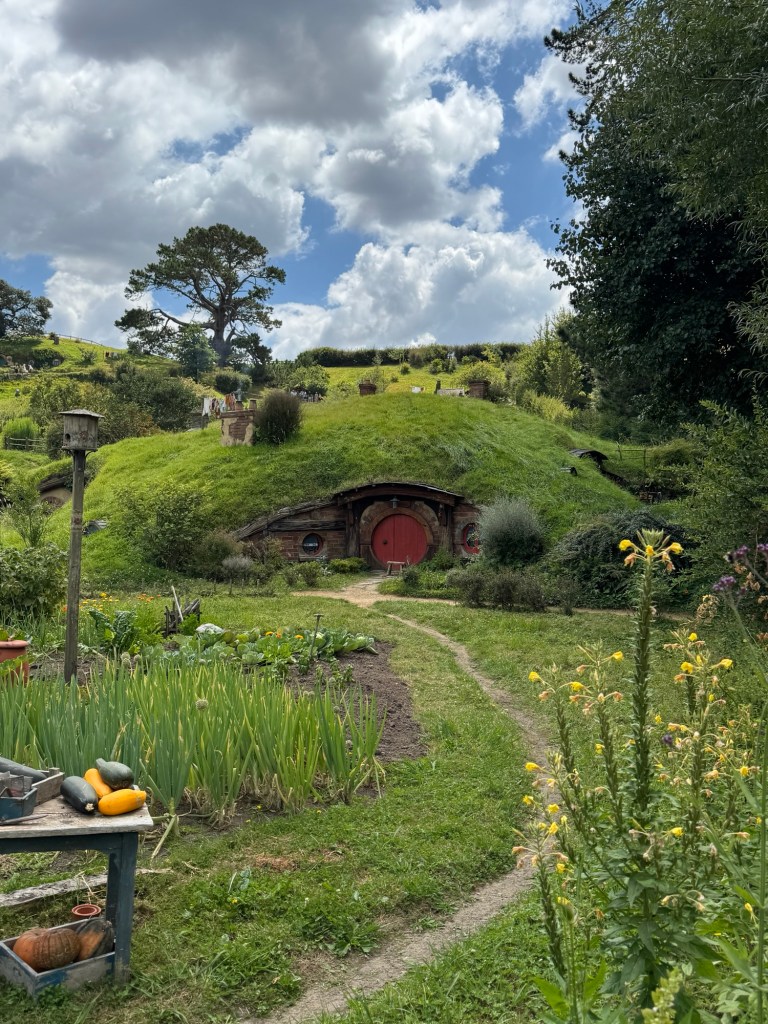
Two artificial trees were constructed with leaves sewn on the branches, including this one above Bilbo Baggins’ Hobbit Hole. The director was not happy with the color of leaves so art students were acquired to paint 200,000 leaves before filming began.

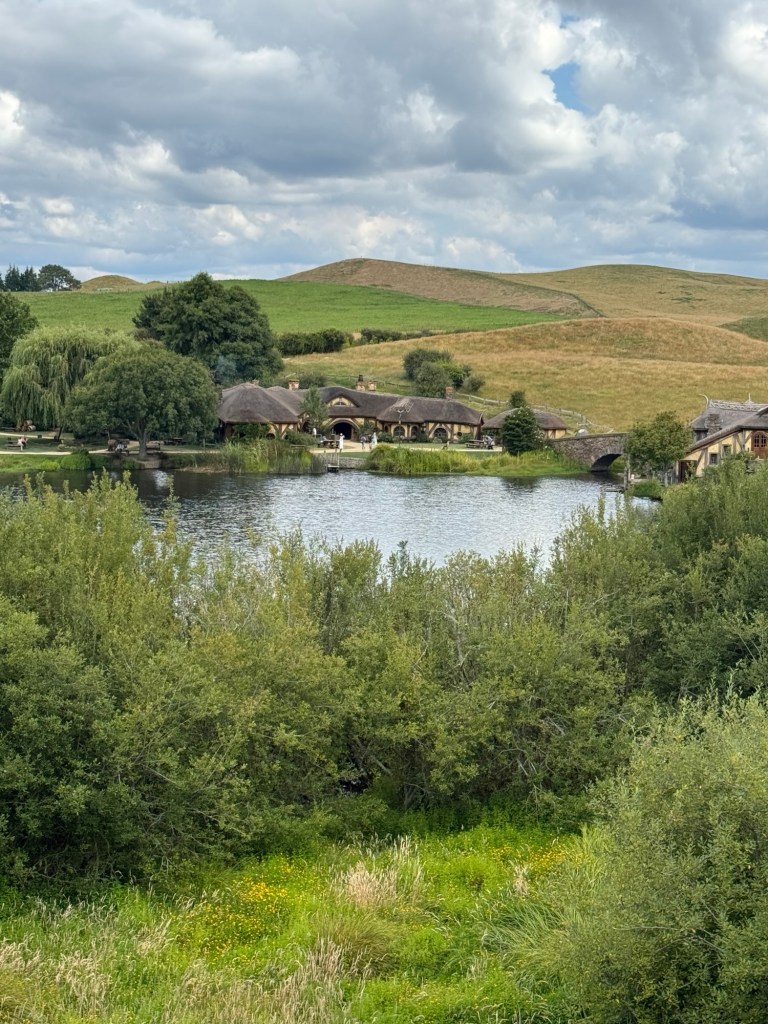
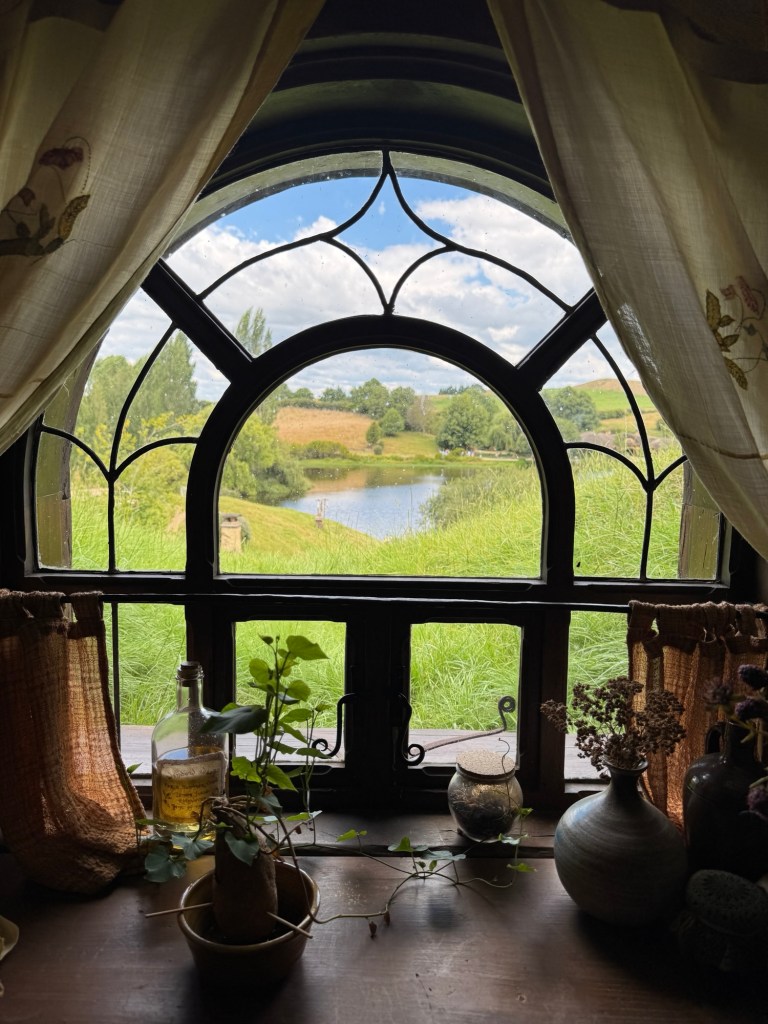
The landscaping and settings are so detailed!

Remember those 13,000 sheep the family owned?  The director thought another breed looked like they belonged in “The Shire” and he had a different breed imported from the south Island of New Zealand.

We had a completely enjoyable hour with Nathaniel walking around “The Shire” and hearing stories about the various cottages.

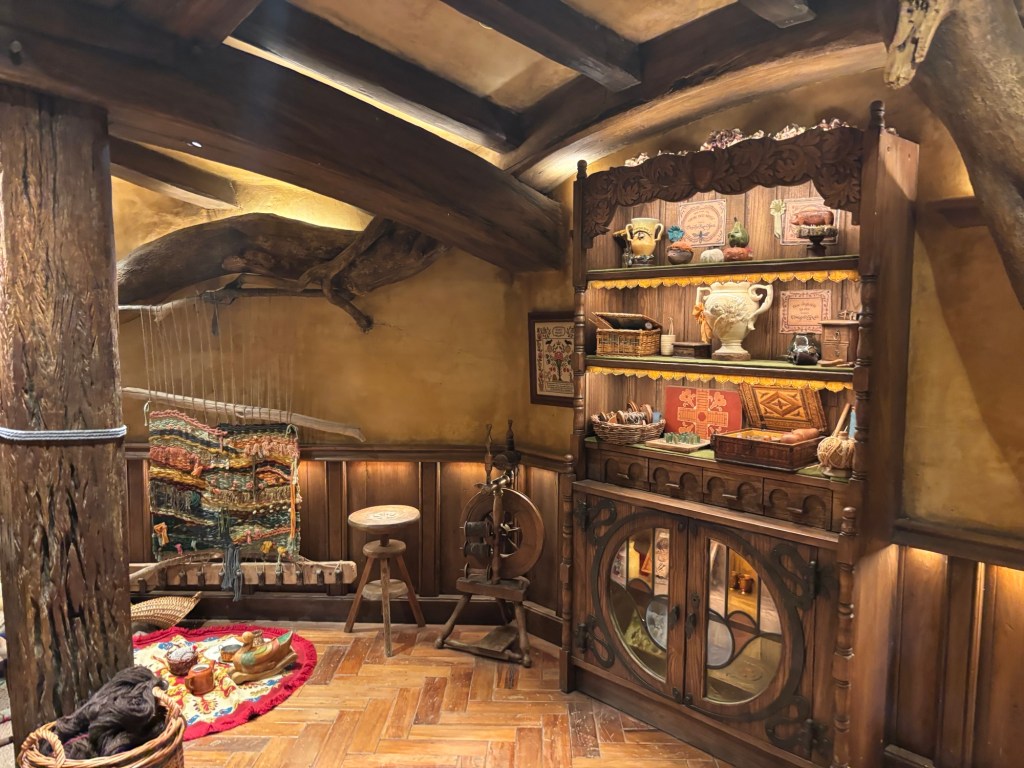
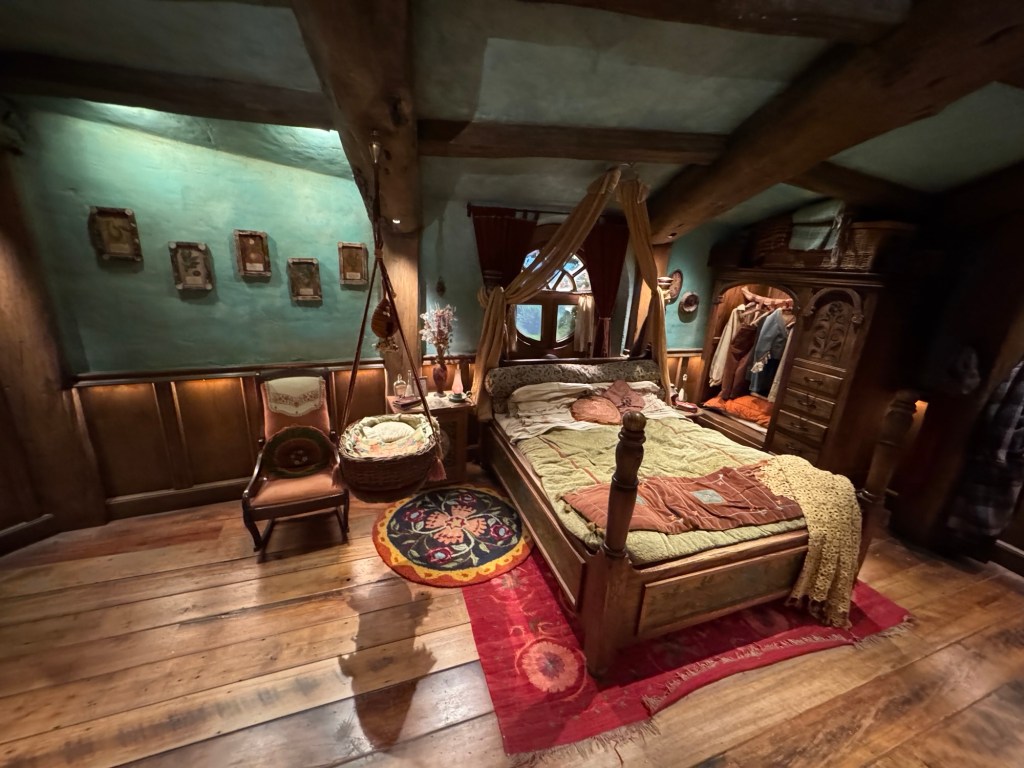
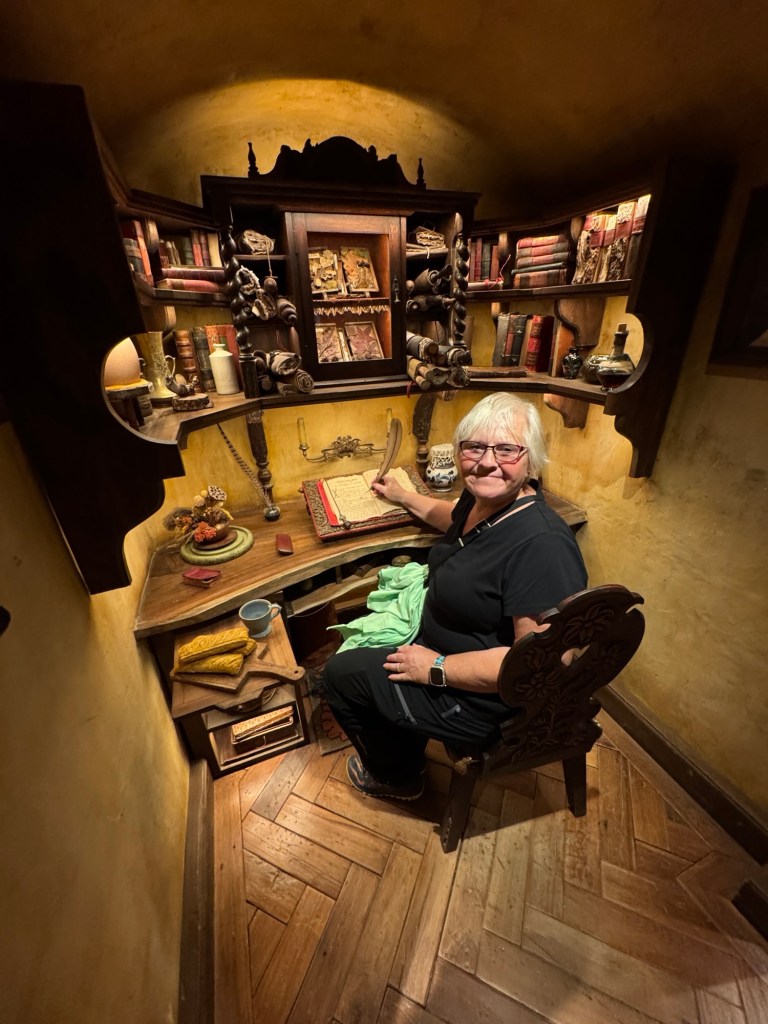
We were able to go inside a Hobbit Hole and see the level of detail used on the inside sets.  

The interior scenes were actually filmed at a studio in Wellington and re-created here as part of the Hobbiton experience.

We finished off Hobbiton with a visit to The Green Dragon Tavern. A complimentary beverage is part of the experience. We opted for amber ale and apple cider.

The Alexander family still owns the land and one son still runs the farm and lives in the family home.  The Alexander’s also own the company running Hobbiton.

Our visit to Hobbton was completely delightful. I am now inspired to watch the last half hour of the final Hobbit movie as Bilbo Baggins returns from his adventure.

Me, writing the blog!

PS.  Randy and I were just fascinated, and a bit saddened, to watch these two young women.  We first noticed them as the one meticulously fixed her makeup while in line to go into the dark Waitomo Caves. I believe they were Japanese so have no idea if she is famous or maybe just wants to be.  The second woman was always taking her picture – so many times!!  I hope they were employer and employee because if they were friends, there was a definite imbalance in the relationship.

We were at the Waitamo Caves and Hobbiton on January 18, 2025.

Next up: We board Westerdam for our cruise!

Posted in Uncategorized | 2 Comments

Aukland: City Tour

We woke to our first full day in Auckland with my Apple Watch bouncing back-and-forth between Thursday, January 16 and Friday, January 17.  I left it to sort itself out and it eventually did.

One of the things that always makes us laugh as we travel internationally is the trouble we have figuring out new to us shower fixtures. This was my time to be stumped and Randy’s to figure it out.


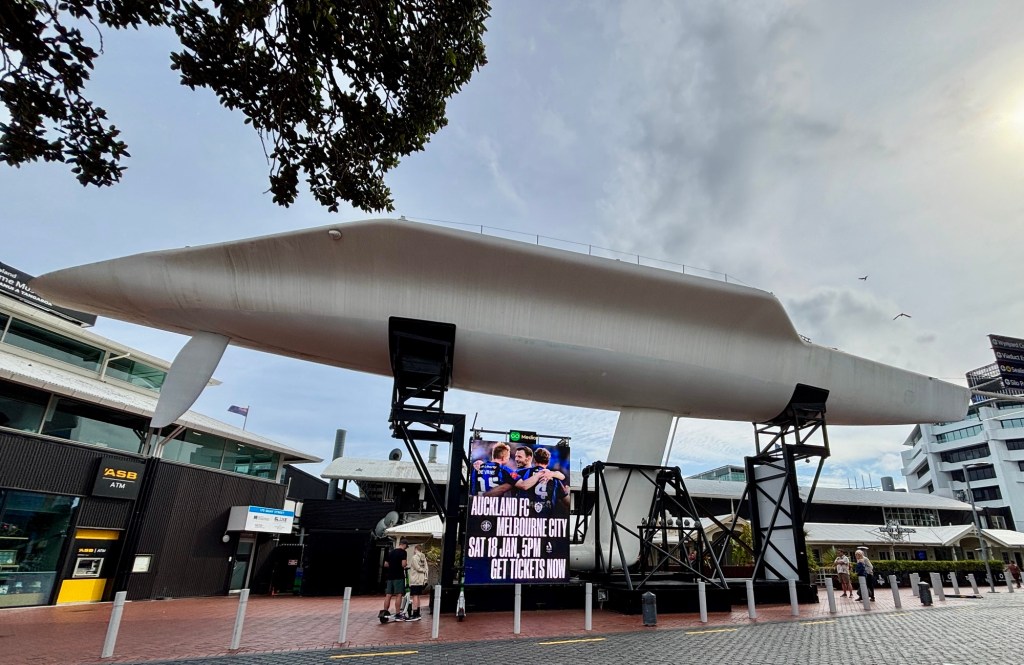
While walking to our Aukland City Tour meeting point, we passed the hull for KZ1.  It sailed against America 1 in the America’s Cup race in 1988.  Unfortunately, that America’s Cup competition ended with court battles and hard feelings. 

Our guide told us that the Māori arrived about 1350. There were only plants, insects and birds.  Many of the birds were flightless. 

The Māori were a structured, warrior based people, adept at defending their lands.  In 1642 a Dutch explorer, Able Tasmin, was the first European to find the islands.  He named it New Zealand.   The Māori ran the Dutch off.

In 1779,  Captain James Cook came to New Zealand.  The Māori greeted his expedition.  He claimed the area for the British Empire.  

There was beneficial trade for a time but the Māori had no concept of land ownership so there was eventual conflict.  

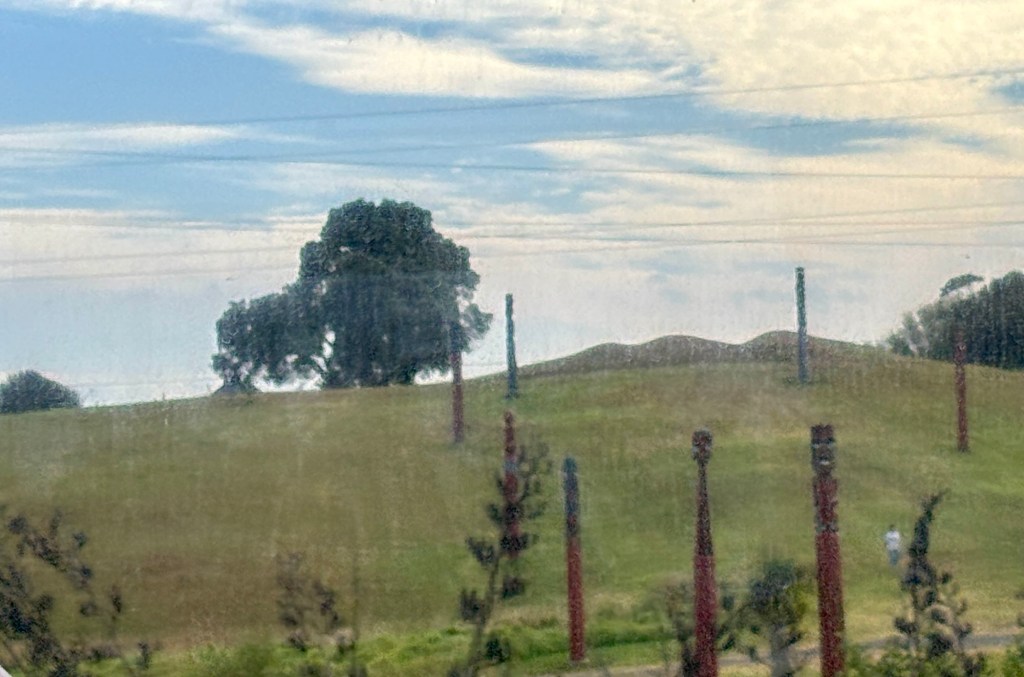
A lot of the fighting occurred in a region south of Aukland.  These Māori totems sit on some of those lands.

A treaty was signed and is still controversial today as the Māori control less than one percent of the lands they once fully occupied.

The colonization of New Zealand was seen as a bit of a bait and switch.  If the colonists survived a three and a half month journey, they found mostly dense forests.  The “English” cows and sheep did poorly on the native grasslands in New Zealand.  

The English introduced possums, from Australia, to develop a fur trade.  There are now 90 million possums in New Zealand and they are considered pests.  Merino wool is a mix of possum fur and wool.

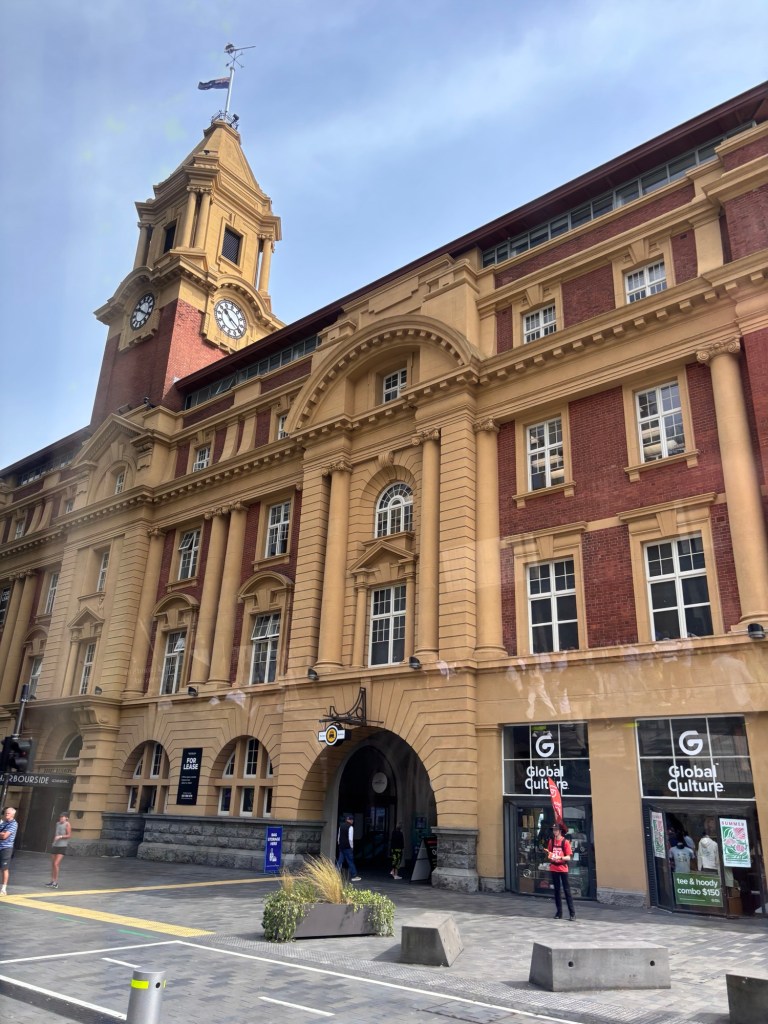
Aukland’s Ferry Building was built to service the Royal British Navy.

Much of the early architecture in Aukland is Victorian.  Eighty percent of houses are made of wood, primarily using the native Kauri trees.  (The Kauri tree is the second slowest growing tree in the world after California redwood.)

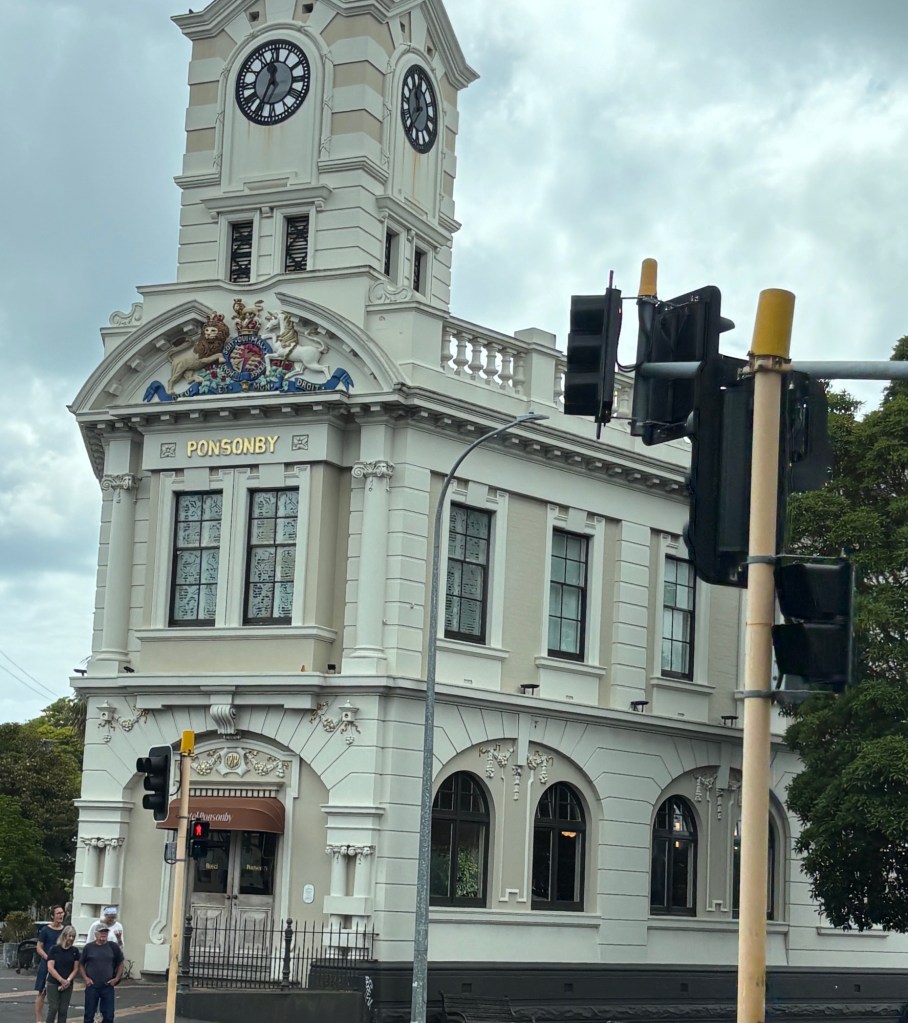
The Poncenby post office came into service just after the turn of the 20th century. We were told that the building was involved in the first conviction using fingerprint technology in the British Empire, if not the world.  When I looked for details, I couldn’t find any so that may or may not be factual. 

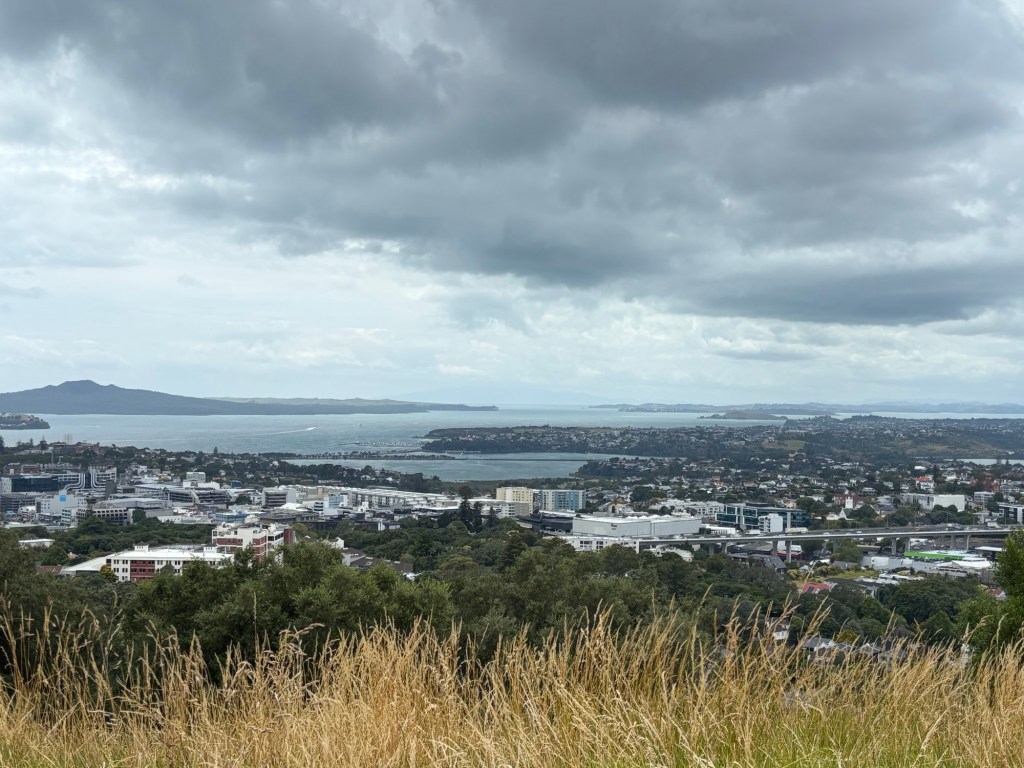
We walked up Mount Eden to see views of the city from the top of one of 53 former volcanic sites around Aukland.

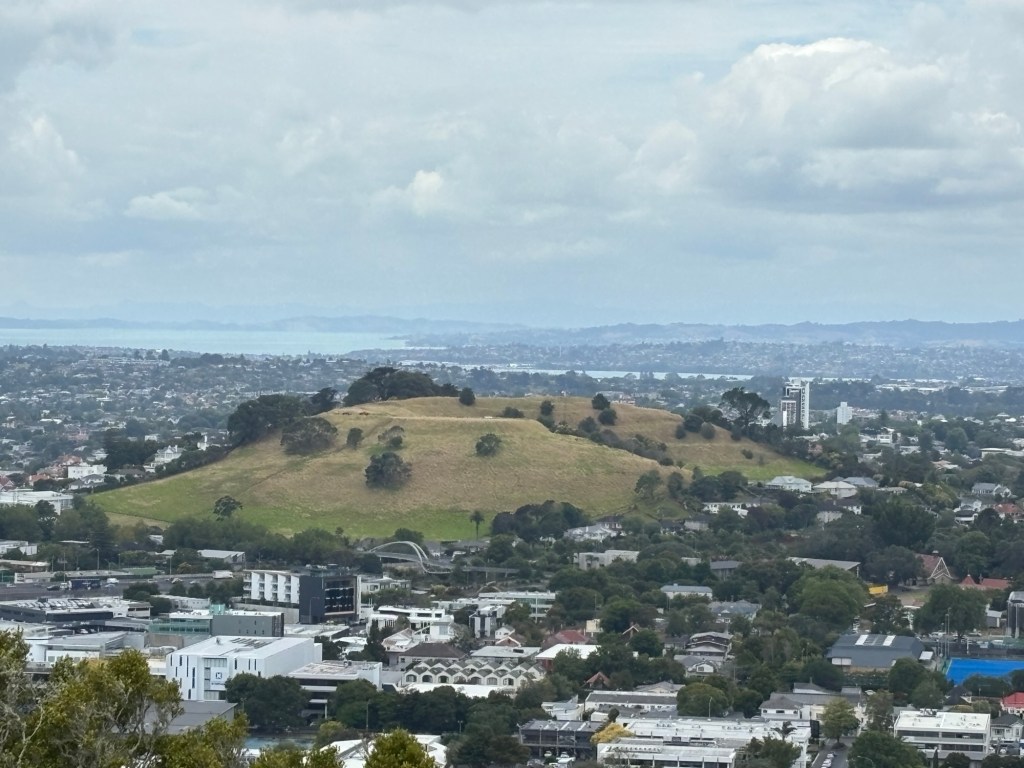
Another of the 53 off in the distance.

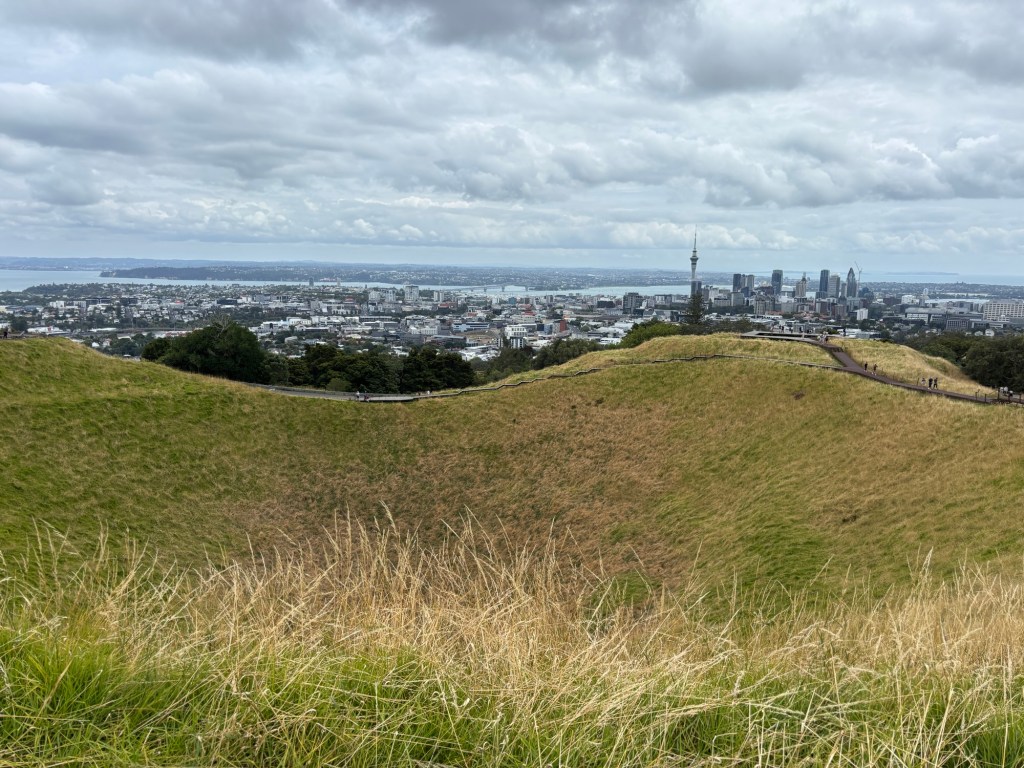
This crater was formed 28,000 years ago.  

This is the youngest volcano at 700 years. It last erupted 250 years ago.

As we walked on the board walk, people walking the opposite way would graciously cross over.  It finally occurred to us that we should be walking on the left side, matching the way traffic operates.  

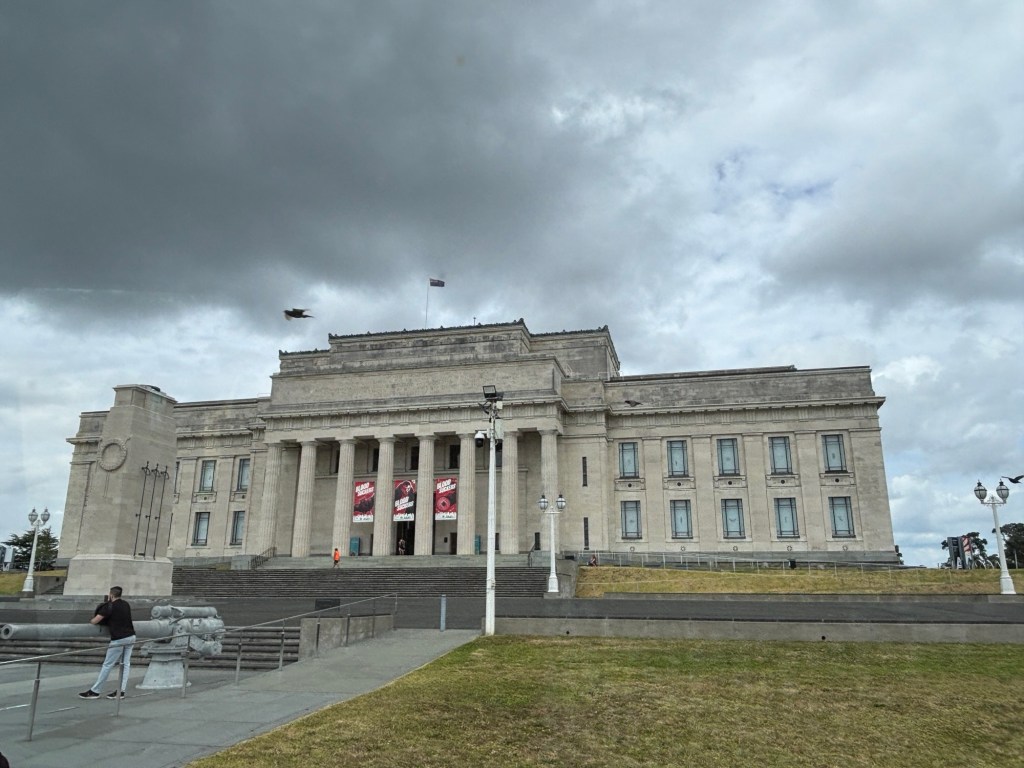
We drove by the Aukland War Museum.  The various alcoves were dedicated to war campaigns.  

Our guide said Gallipoli was the most significant.  It was a ten month campaign during 1915-16 in the Middle East campaign of World War I.

We went to Achilles Point and saw a memorial there.  It is named after the HMNZS Achilles which defeated a German battleship in the South Pacific in 1939.

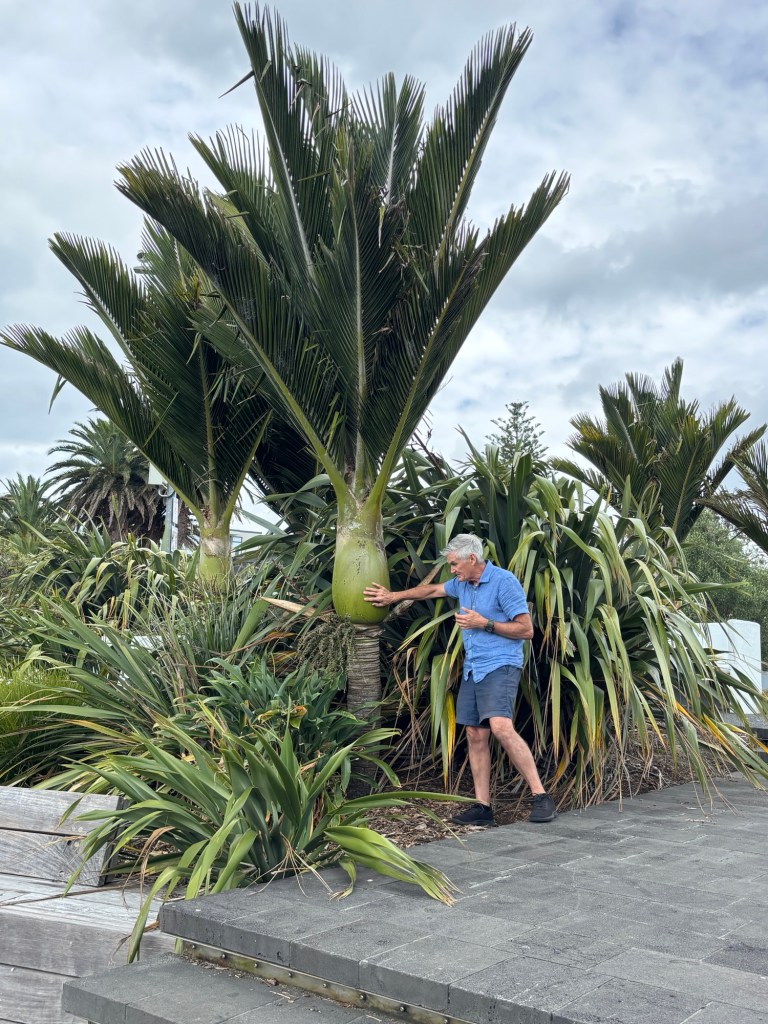
Our guide is standing by a Nikau Palm. It is one of the smallest palm trees and the only one endemic to New Zealand. 

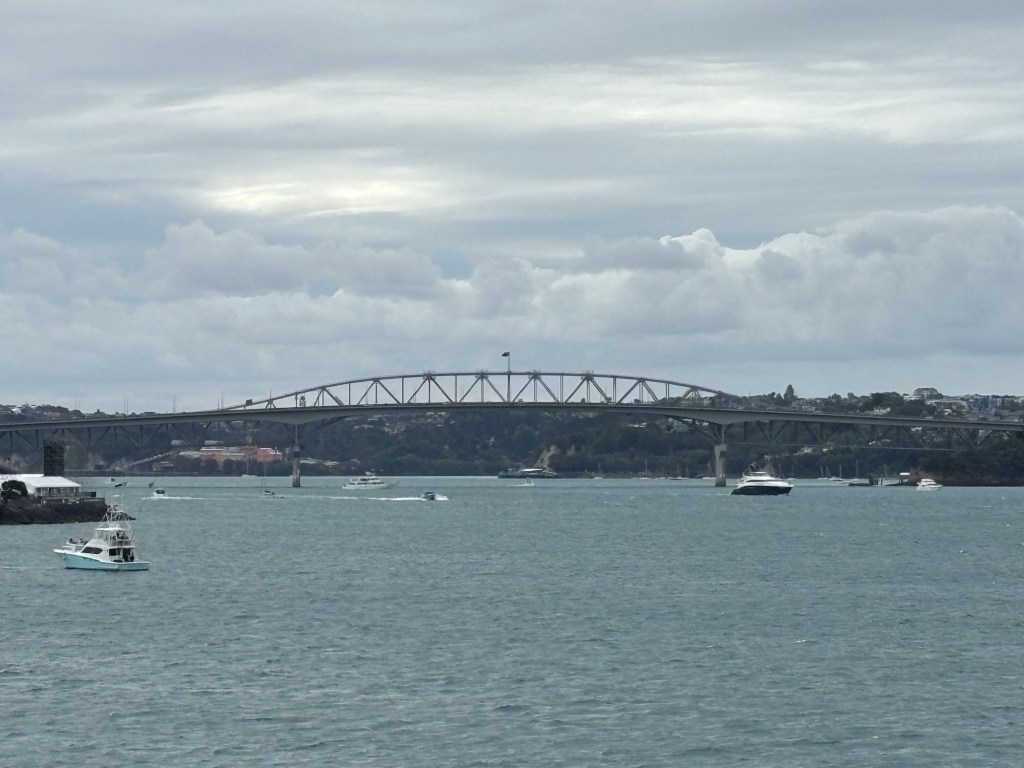
The Harbor Bridge was originally built in 1959 but was soon deemed not large enough to meet the needs of Aukland.  

Ten years later a Japanese company figured out how to weld and clip extra lanes onto each side.

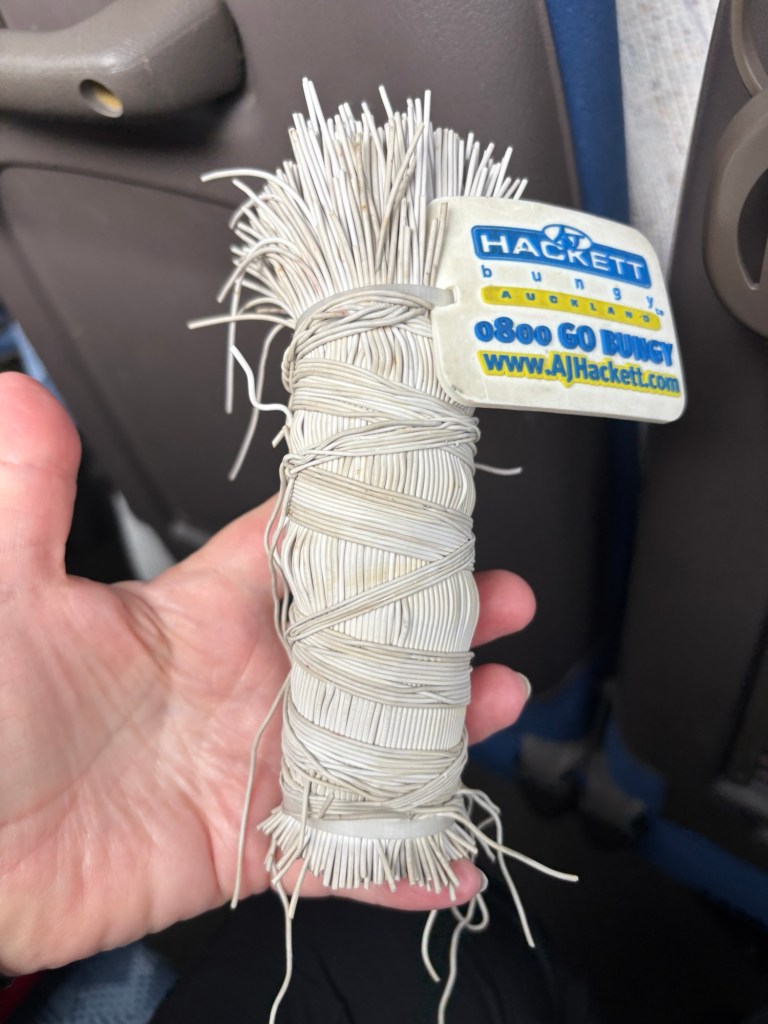
We saw bungee jumpers in action under the open arch on the left side. After jumping they are hauled back up to the bridge.

After 400 jumps the bungee line is replaced.

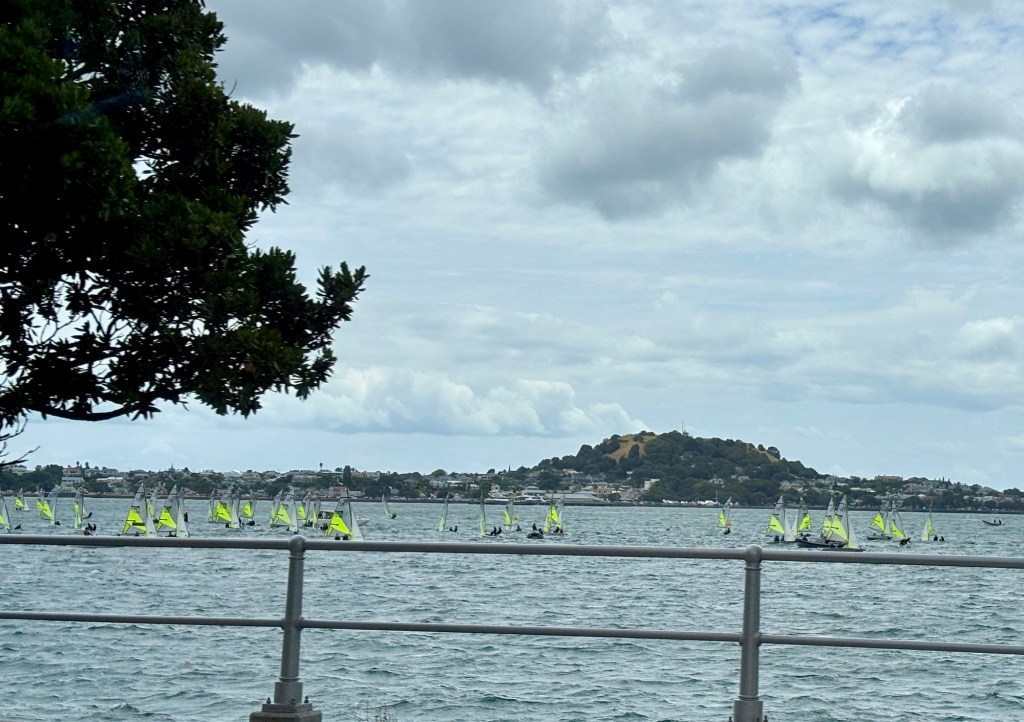
This is physical education for high school students in Aukland.  It is a very water based society where nearly everyone owns a boat.

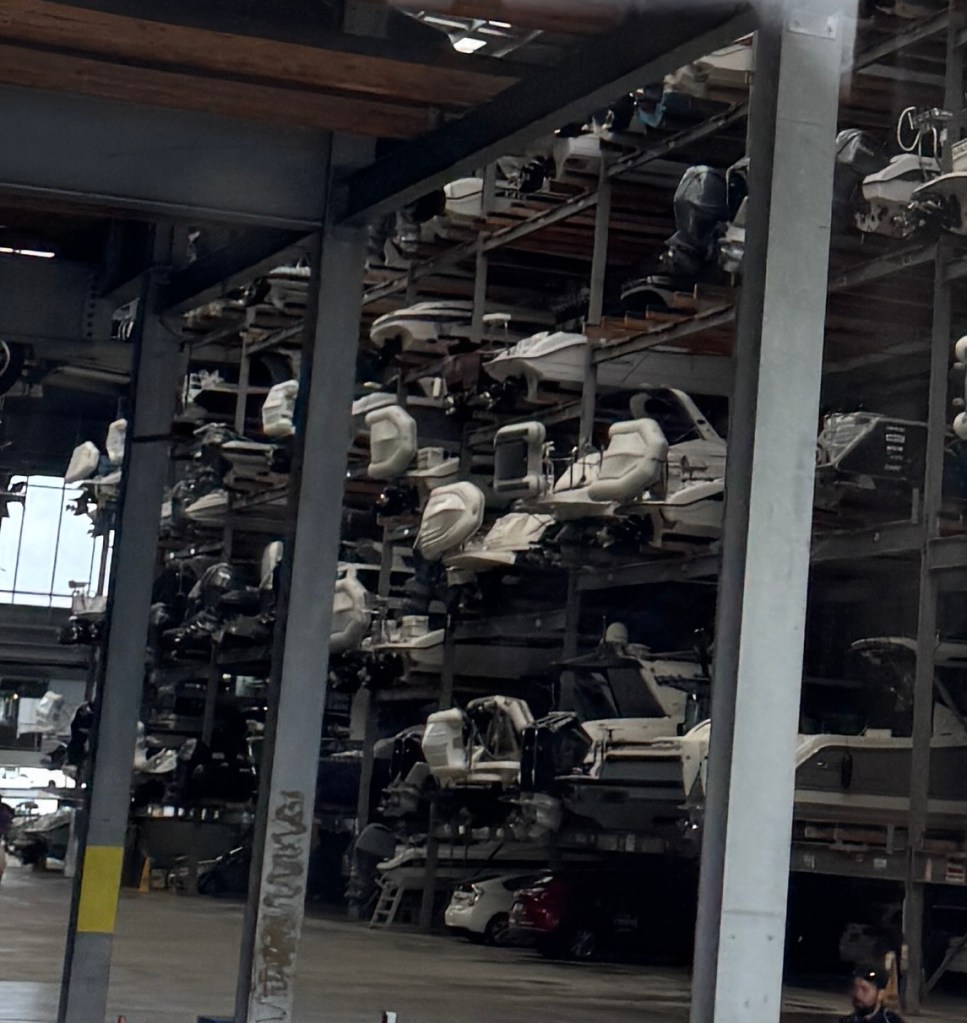
This is boat storage!

The Aukland Sky Tower became a point of reference for us as our hotel was nearby.  Although going to the top for viewing or dinner is a local attraction, we didn’t get to it before leaving Aukland.  It is the second tallest structure in the southern hemisphere behind a tower in Jakarta, Indonesia.

Australia is New Zealand’s nearest neighbor but it still over 1300 miles away.  Sometimes, New Zealand is called “The Lonely Place” because of isolation.

Posted in Uncategorized | 1 Comment

Aukland:  January 15 and/or 16

Our passports got stamped in and out of Tahiti. That doesn’t always happen since everything is computerized.

We boarded another 787 Dreamliner for our 5 hour flight to Aukland that would cross the international date line.  Tahiti is 23 hours behind Aukland, but only five hours away.

Our route was just over 2500 miles.

Air Tahiti Nui has the best safety video!  I watched it mostly on our flight to Tahiti and really watched it on the flight to Aukland.  It is available on YouTube at YouTubehttps://m.youtube.com › watchAir Tahiti Nui Safety Video – English – YouTube. Imagine that – A recommended airline safety video!

Once we were airborne, we were served breakfast.  Randy watched movies.  I listened to podcasts and randomly watched the update screen. Notice the altitude on the bottom left! That is pretty precise.

We passed the Cook Islands.  Our family took a trip there with my parents in the 1990’s.   It was on my father’s bucket list to see the southern cross, the southern hemisphere’s answer to the big dipper. We also had a wonderful excursion to Aitutaki, also shown on the map, that we still talk about.

Our flight towards Aukland was uneventful.  That’s a good thing when you are going thousands of miles across the Pacific Ocean.  Note to self – I prefer flights in which I stay awake during daylight hours instead of “sleeping” during night time hours.

We can see New Zealand from the plane!

After we landed, and as we were taxiing to the gate, I turned my phone off airplane mode and the time was 2:48 on Wednesday January 15.  

One minute later, after my phone oriented, it was 1:59 on Thursday January 16th!  We lost a whole day in moments!!  

We had participation streaks for a couple of activities and one of Randy’s was broken at 760 days! Bummer.

Before leaving the plane we saw a video about declaring contraband foods or facing the consequences.  They also expect you to declare if you have been hiking because of what may be on your shoes or equipment.  Right away we acknowledged an open bag of cashews and pistachio nuts but they were acceptable.  

We passed several more reminders to declare items or have consequences.   We finally passed “the last opportunity.” They take protecting their country in this way very seriously.

We walked through a Māori carved arch towards immigration and baggage claim and began a multi step customs and immigration process.  The first was to insert our passport into a machine and have a picture taken, all automated.  Then we had to visit an officer where we were once again asked about what food items we might have to declare.

We gathered our luggage and it was scanned. Then we were free to find our driver.  He was right there waiting for us.


Walking to his car, we passed a statue of Jean Batten,  an aviator from New Zealand with several record-breaking flights.  These were records for any aviator, not just a woman’s record.  Her records include being the first aviator to fly solo from England to New Zealand.  She did it in 1936, yet, she was denied the opportunity to serve in any flying capacity during World War II.

Our ride to the hotel was very pleasant and our check-in went smoothly.


The hotel is ultra modern!

Our evening plans were for a Harbor Dinner Cruise.  We expected a yacht or trawler type boat.  

Instead there were two sailboats, the Courageous and the Defiance.

On board the Courageous, we joined guests from Vienna, Bulgaria, Japan, Australia, South Korea, and Canada.   We were the only ones from the US.  That doesn’t happen very often, maybe never before.

We had drinks, canapés, a main dish and dessert while we sailed in the harbor.

This is Aukland’s first electric tugboat, Sparky. Over 2000 batteries provide adequate power to direct this small cruise ship.

We generally tracked with the sister boat, Defiance.

The Spirit of New Zealand was built in 1986 to teach New Zealand’s youth about sailing and their heritage.  It operates year round on journeys with students 16-18 operating as crew trainees.

Randy drove the boat!  The captain let everyone who wanted a turn have one.

This is New Zealand’s only naval post.  The navy has seven boats that operate more like the US coast guard.  It is primarily focused on search and rescue. There recently lost a ship, an eighth of their navy, when it was grounded on a reef and sank due to the captain’s error. 

The Chelsea Sugar Factory has been in business since the mid 1800s processing raw sugar cane from Fiji and Australia.  The orange color was the only paint they had enough of when it was originally painted.  Now it is tradition.

There were many views of the Aukland skyline on this side of the harbor. The bridge below extends the city to the opposite shore.

We had a perfect evening for sailing.

The Viaduct Harbor and Marina was once a small fishing harbor.  Now there are many gorgeous yachts and many restaurants.  This harbor area was imagined and funded after New Zealand’s America’s Cup victory in the 1990s.  

As we walked into the hotel at the end of the day, we thought how strange it was that we woke up Wednesday morning and are going to bed Thursday evening. 

We arrived in Aukland on January 15 and/or 16, 2025.

Next up:  January 17th!

Posted in Uncategorized | 1 Comment