Doing It All on the Peruvian Amazon

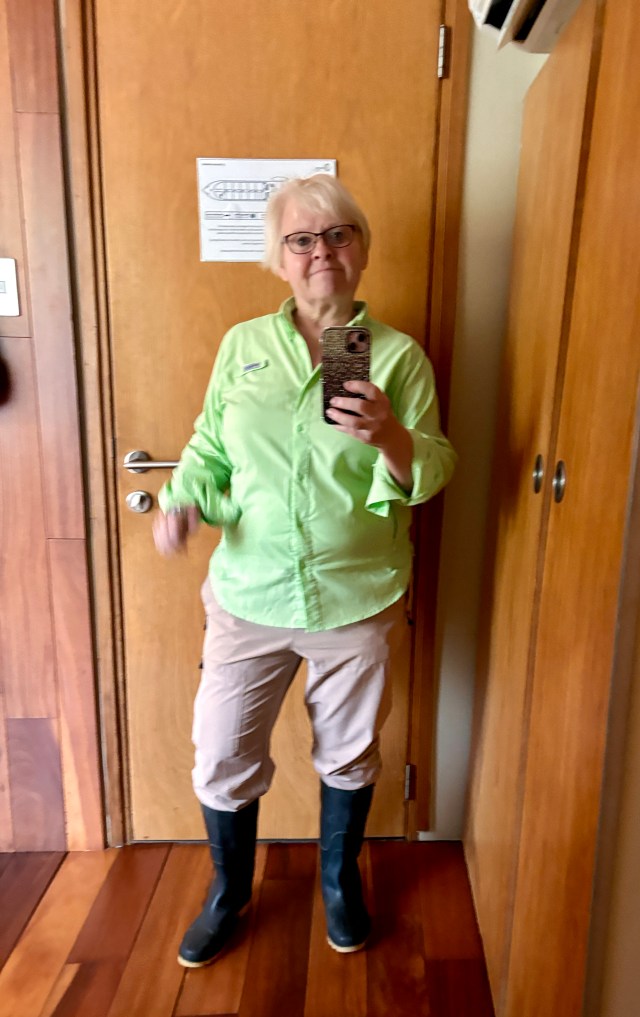
We had a 5:30 AM alarm 6:30 breakfast and then we were fitted with rubber boots.  
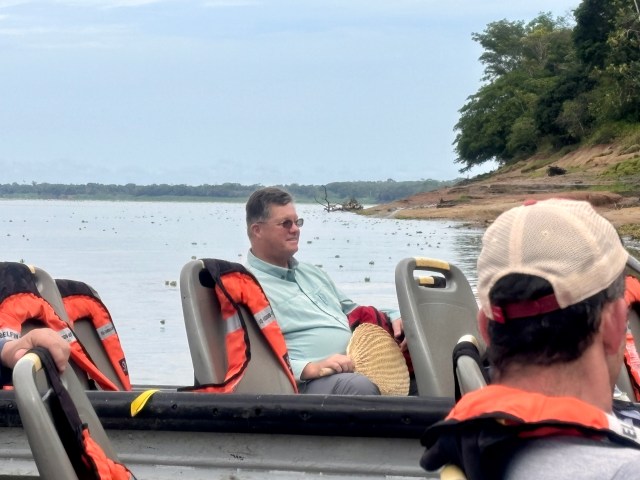
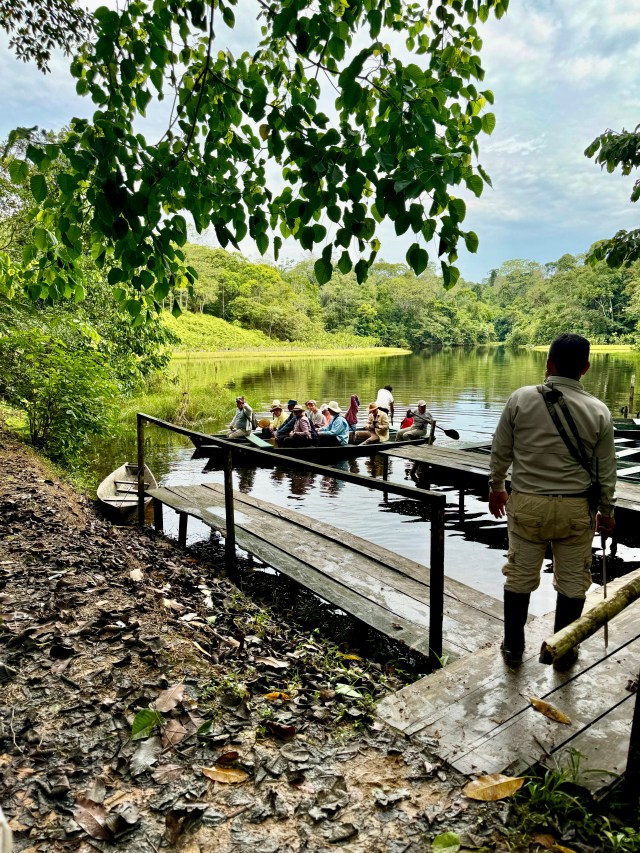
Then we embarked on a fifteen minute skiff ride to meet a local shaman.
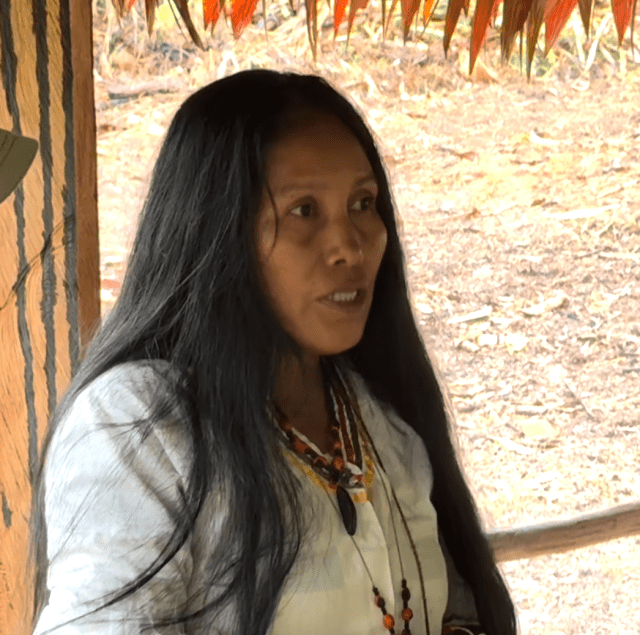
Karola is a Shaman.  She was selected at age 14 at an Ayahuasca ceremony.  She led a very restricted lifestyle and diet during her 8 years of training by her shaman grandfather. 

Ayahuasca is a psychoactive drink beverage, traditionally used by South American shaman and indigenous cultures.  It is used for spiritual ceremonies and healings.   The ceremony has gained popularity for people outside the Amazon area to experience as a cleansing or mystic event.  The drink is also used recreationally for its hallucinogenic properties by some North Americans and Europeans. 
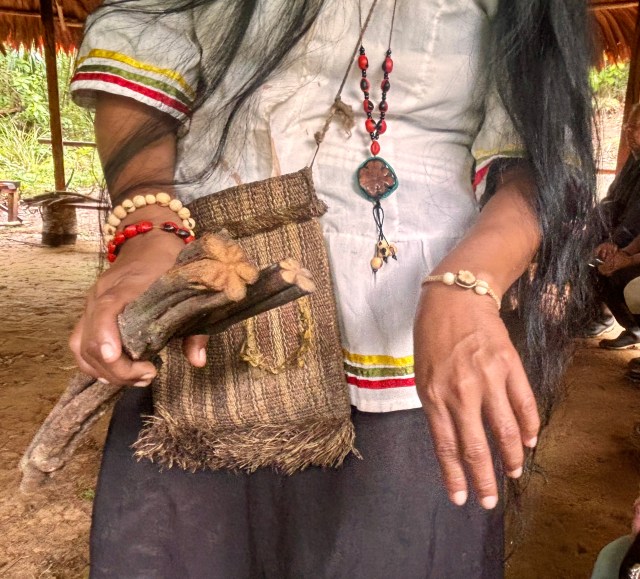
Karola is showing us the root of the plant by the same name. She also has a bracelet and a necklace containing a flat piece of the root.  

She also demonstrated the opening minutes of a traditional Ayahuasca ceremony.
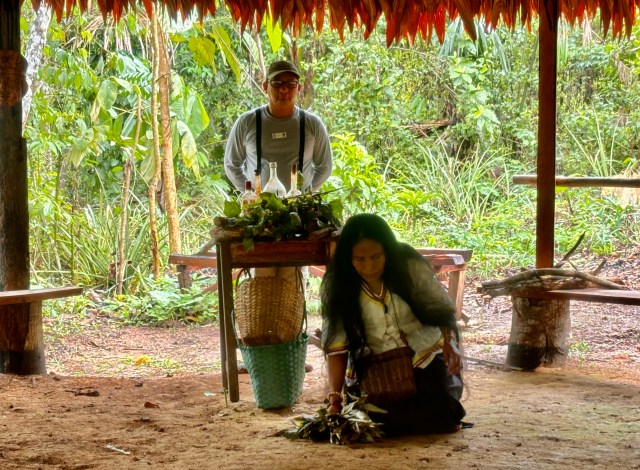
As shaman, Karola uses plants to take care of nine villages in her region.  She travels to her patients if they can’t come to her.  Karola does not charge for her services but is often gifted back something grown or made by her patients.  She treated villagers during the Covid 19 crisis and none of them died.  

We were told 60 percent of all medicines originate with plants from the tropics.  
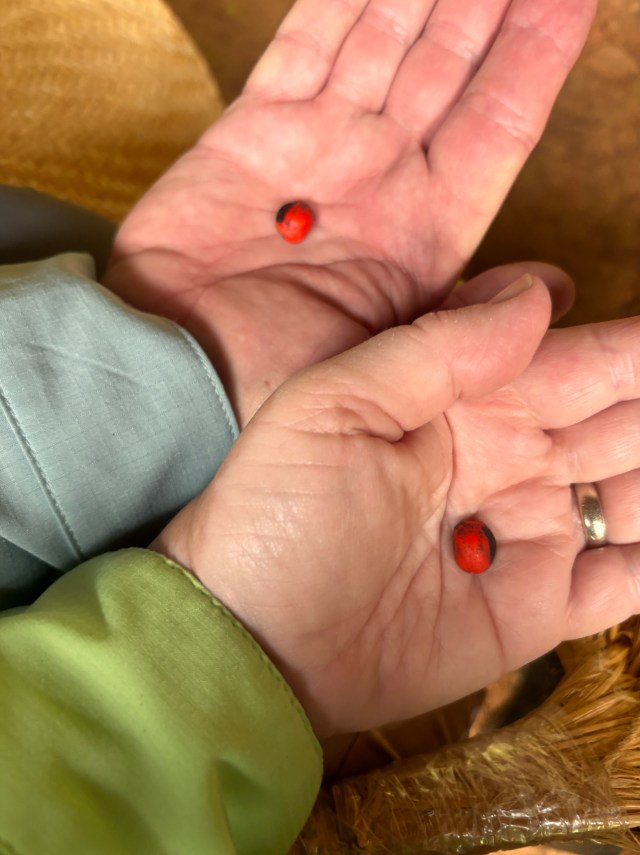
Karola is also a wife, mother of three, and co-laborer on their family farm.  She gave us each a lucky bean for good energy. 

We had all climbed up a muddy bank to reach the ceremonial shelter.  This route had a few steps and railings. We were told the upcoming jungle walk would be two muddy, hilly miles without supports.  

After being given the option to do the jungle walk or not Randy and I made different choices. Can you guess how?!  The only thing I can say in my defense is that more people opted to go back then to go forward on the jungle walk.
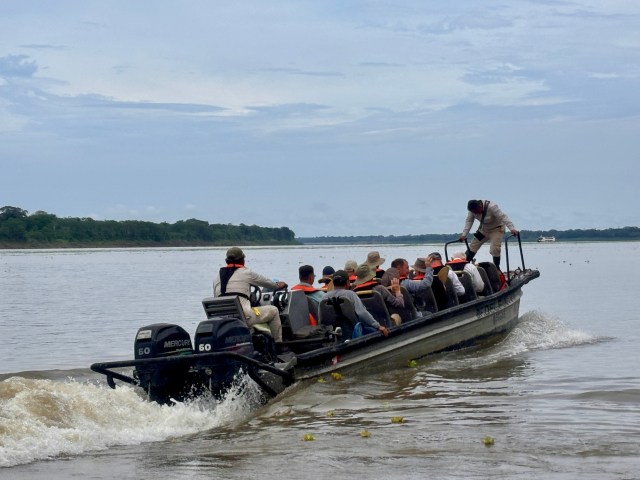
Will we see them again?

Instead of going right back to the ship, we enjoyed a skiff tour along the Amazon.  I was very happy with my choice!  They gave us water, Coke or Inca Cola, a very sweet local carbonated drink that tastes like bubble-gum.
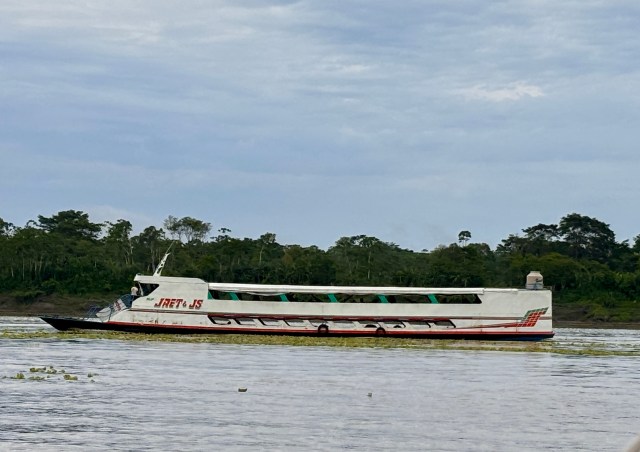
This boat is a water taxi for locals.
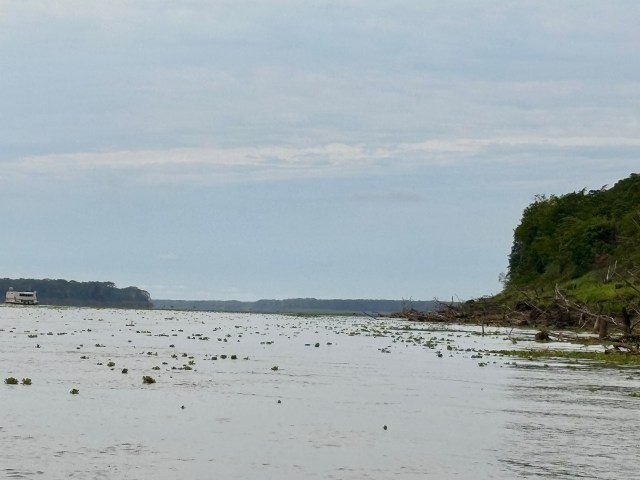
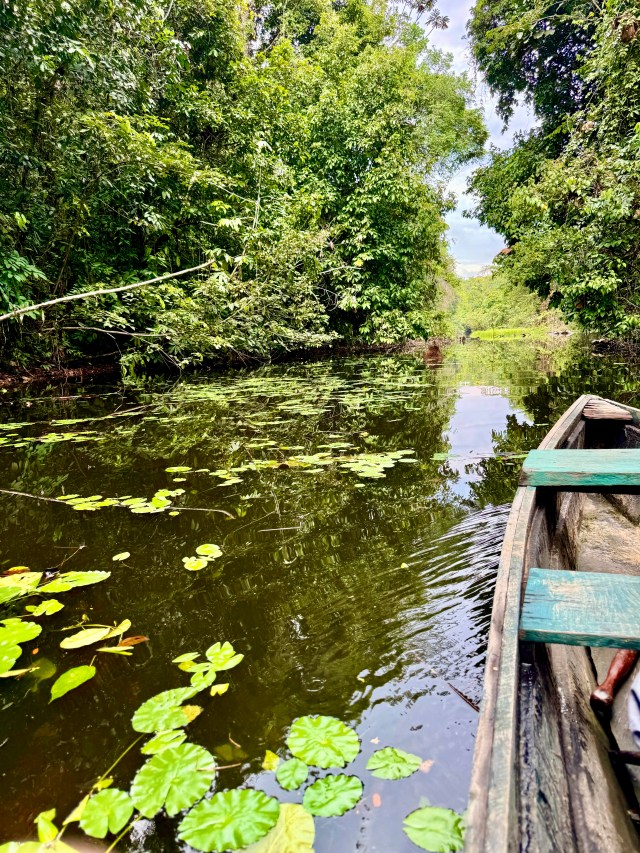
This is water lettuce.  It is a main food source for manatees.

Rice is planted and harvested cooperatively.  The plants get water from humidity.  It is harvested in November before the area’s flooding season begins.  The flooding brings silt full of nutrients.
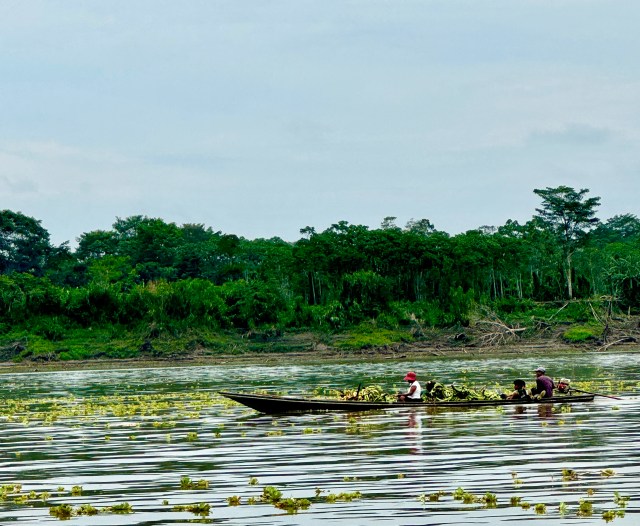
Papaya, bananas and beans are also grown.  When harvested, the villagers take food to town to trade for salt, fishing line and machetes. 
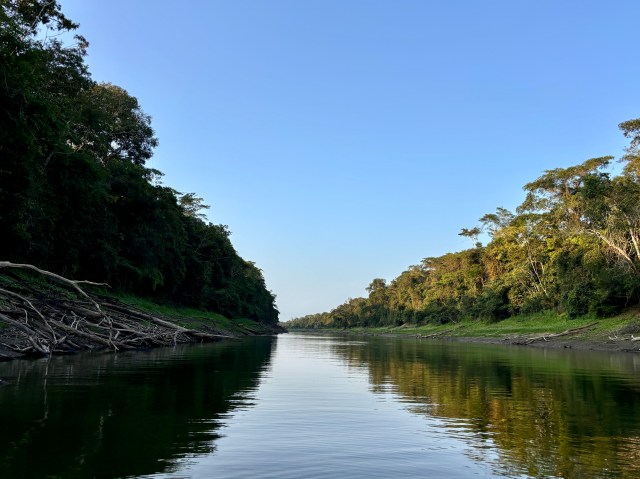
The river’s source is snowmelt from the Peruvian Andes.  In this area it is generally about 6-10 feet deep at this time of year.  Ships have to look for the slightly deeper channels.
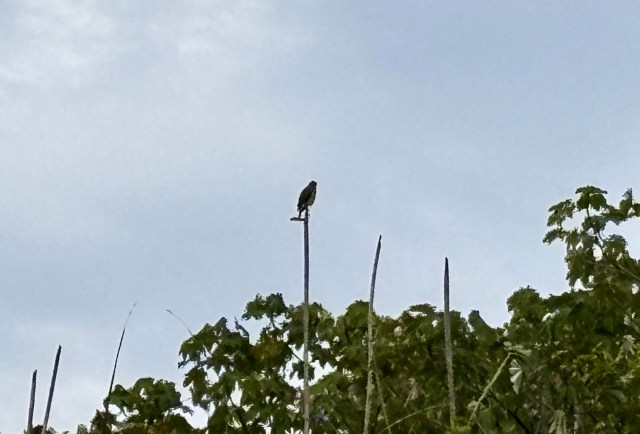
This is a Road-side Hawk, even though right now it is river-side.
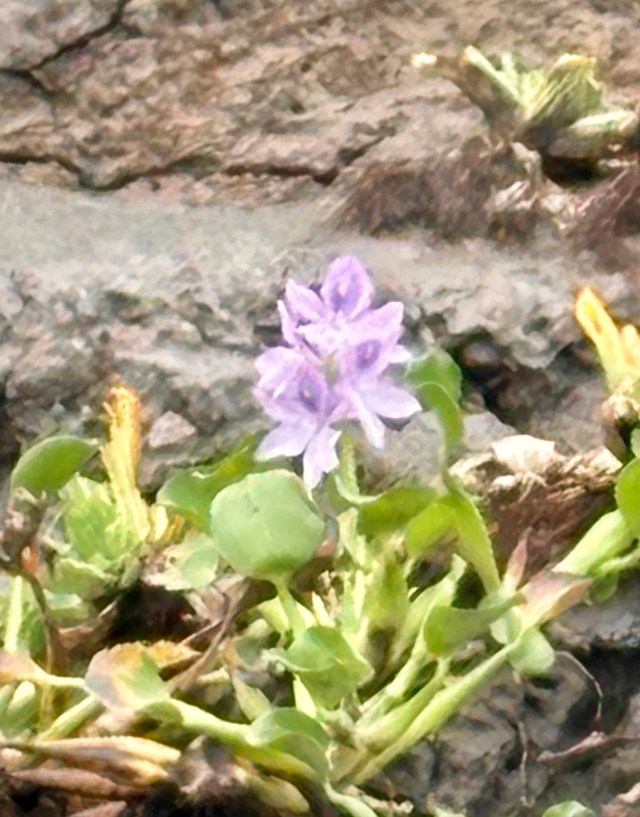
Water hyacinth, like the water lettuce,  is generally a floating vegetation.  

The fisherman is using an old refrigerator or freezer to store fish.

Our group made it back to the Delfin III. The ship’s crew had a system to remove our boots before stepping aboard.  They cleaned them before we would need them again – and keep the ship clean!

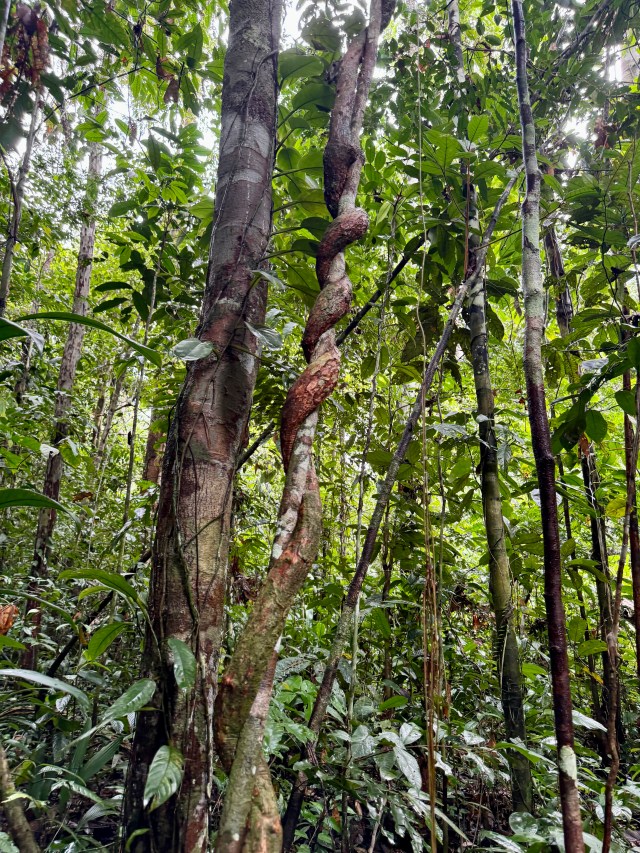
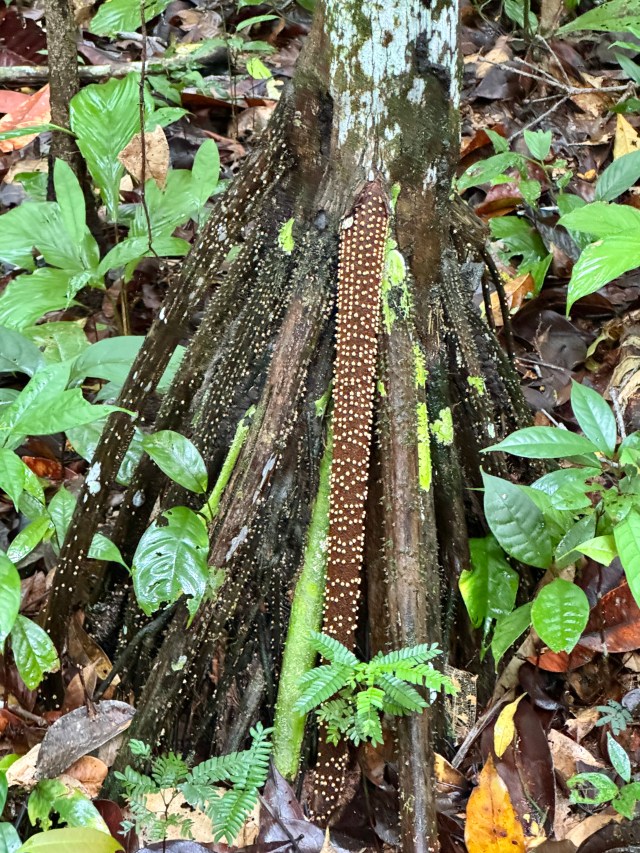
Randy enjoyed his hike in the jungle but he was towards the back so didn’t hear all the commentary.
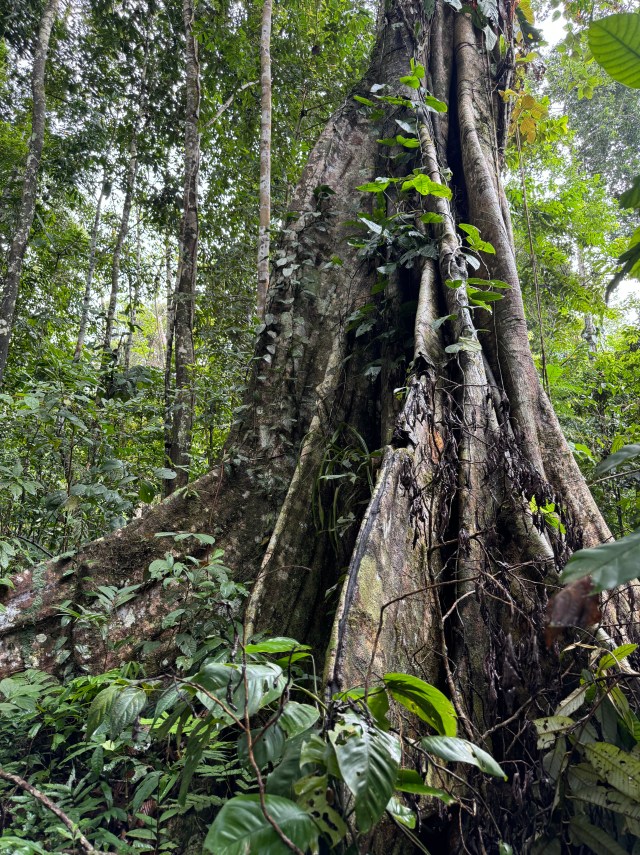
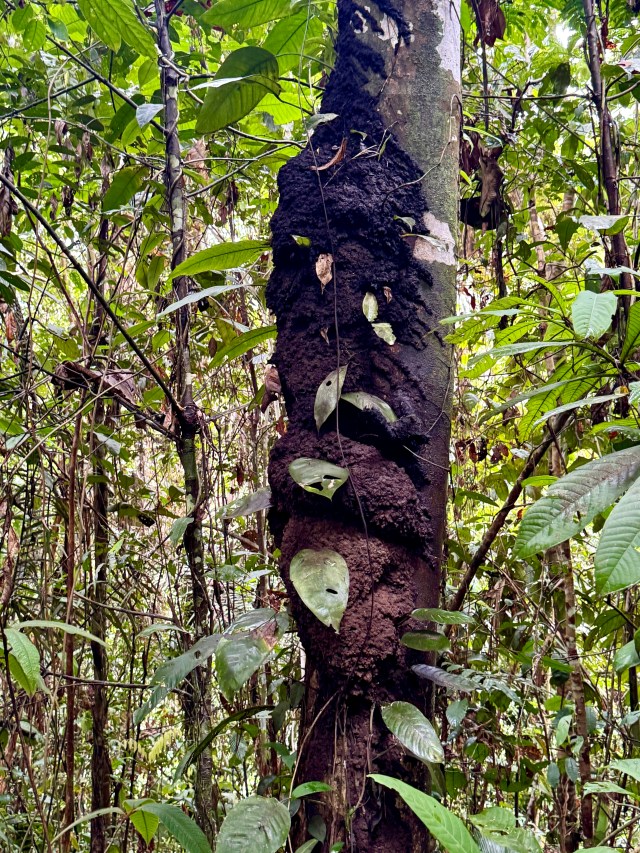
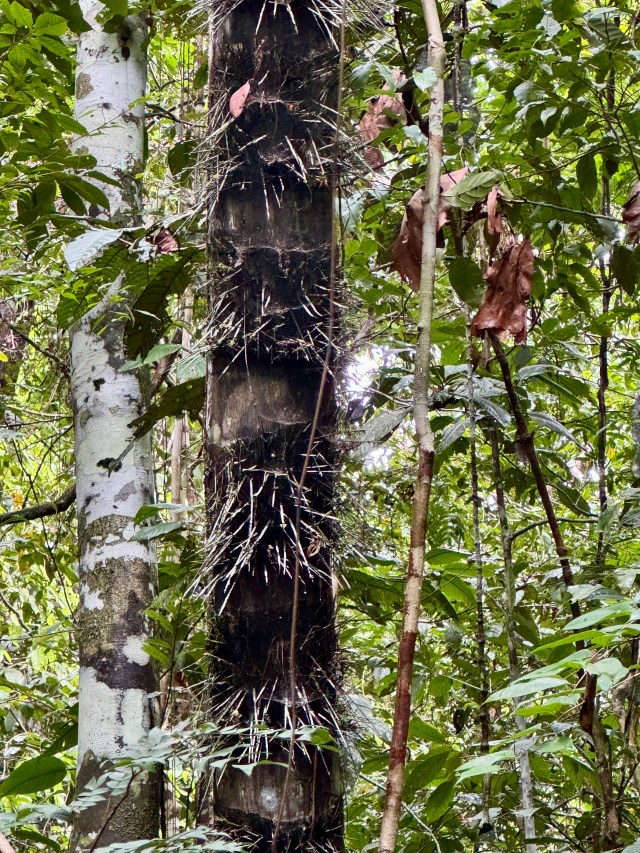
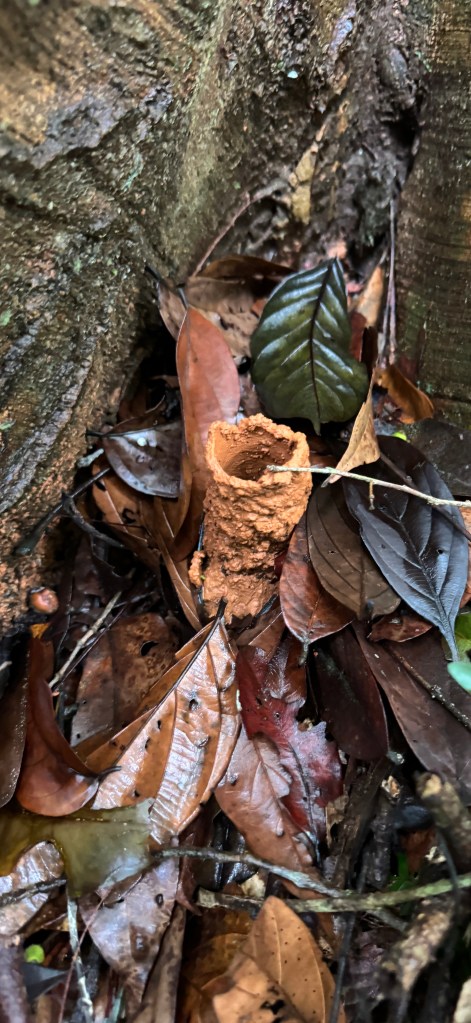
He got some interesting pictures, even if we don’t know what they are about!
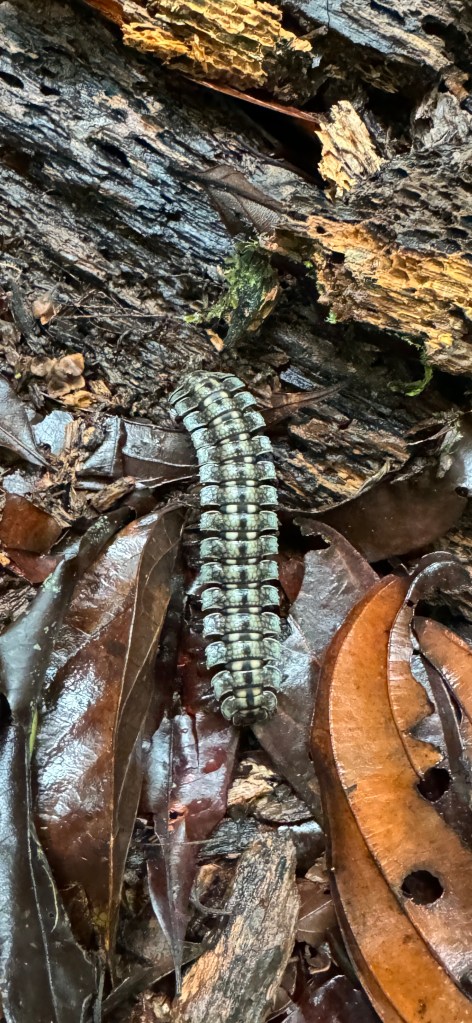
His guide was showing them the rubber on the rubber tree.  Randy brought a small piece back for me to see.
They made it back to the Delfin III hot, dirty, tired but alive.
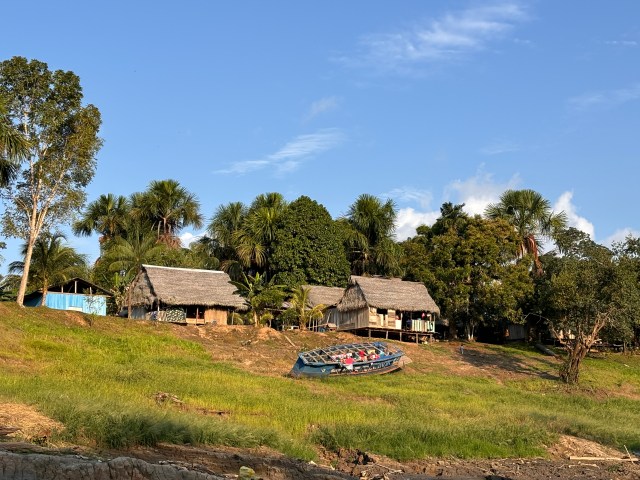
After lunch we went back on another skiff ride. About one hundred people live in this community along the Amazon.
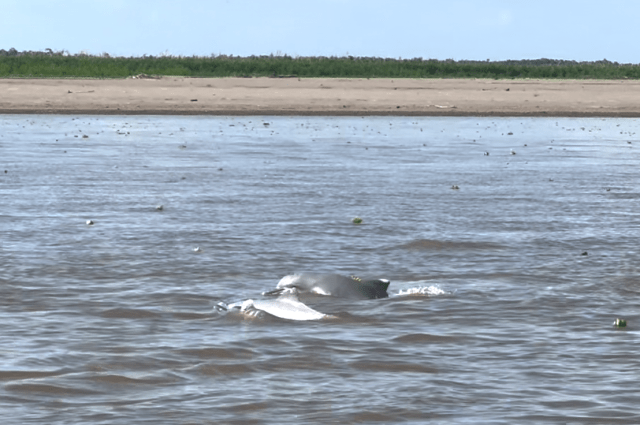
We saw some gray and pink dolphins but none of them gave us an opportunity for very good pictures. The pink dolphins we saw were not like the pictures I’d seen before the trip. These were more of a light gray with a bit of pink.
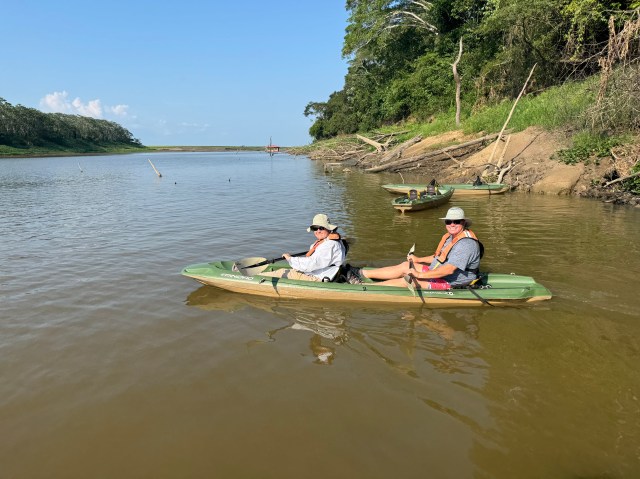
Next we were kayaking on the Amazon!
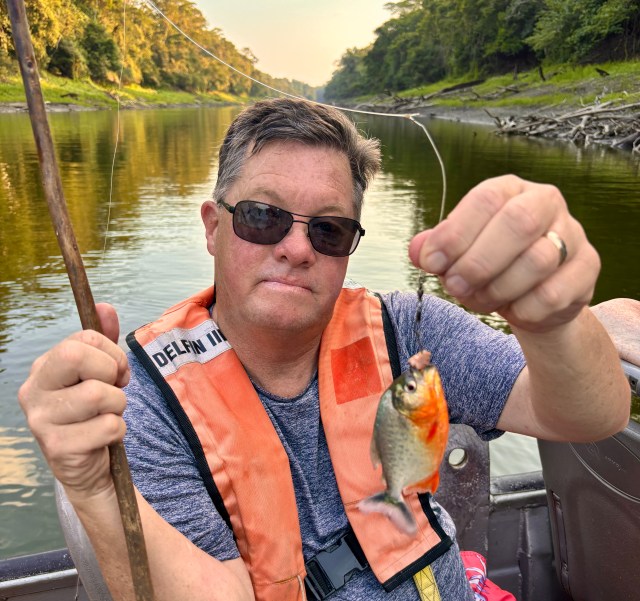
And the fun never stops!  Next up was fishing for red belly piranha!
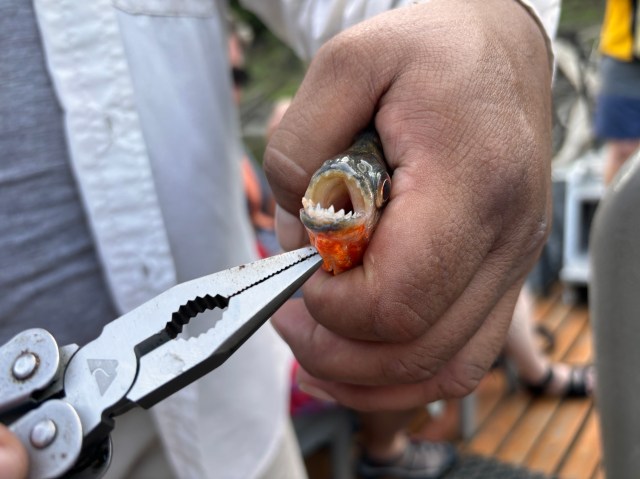
The piranha were small and our guide was kept very busy taking them off the hook for those who were fishing! Everyone was catch and release!
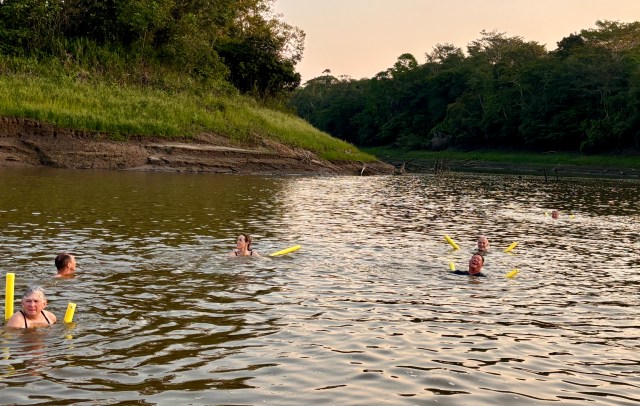
Then we went a ways up or down the river and some chose to go swimming in the Amazon!
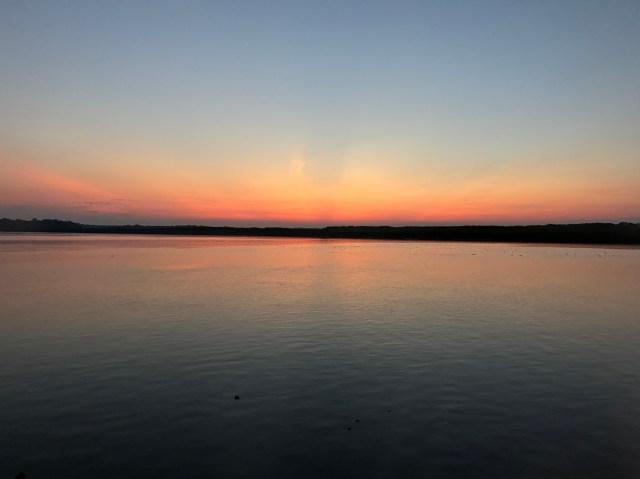
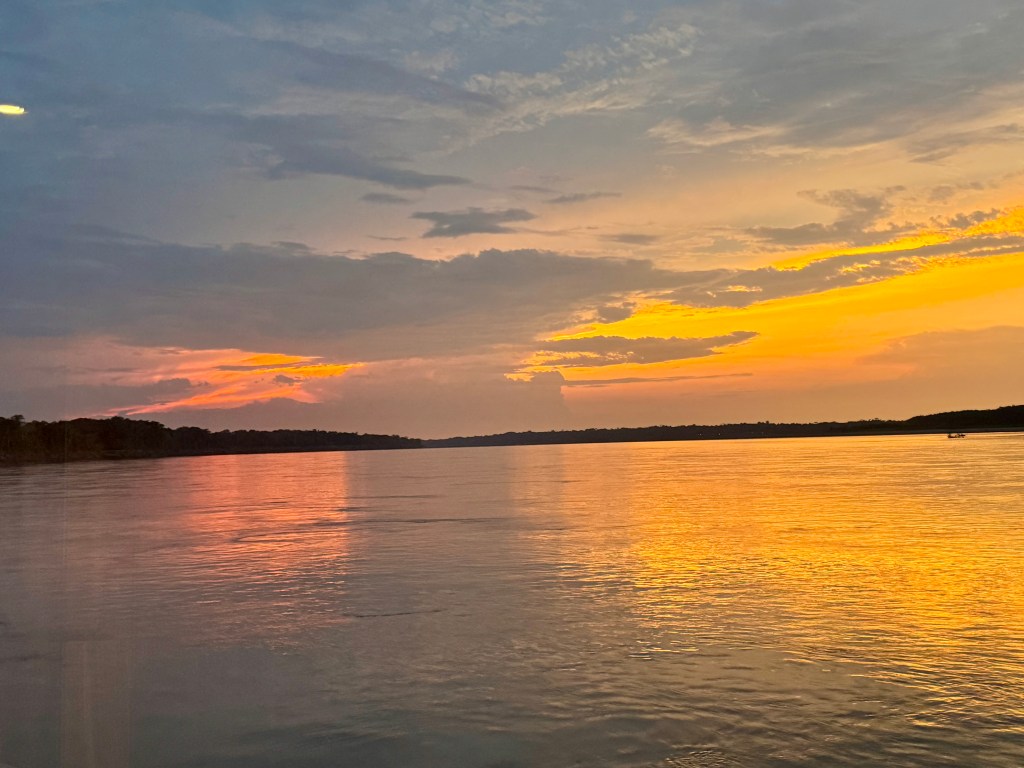
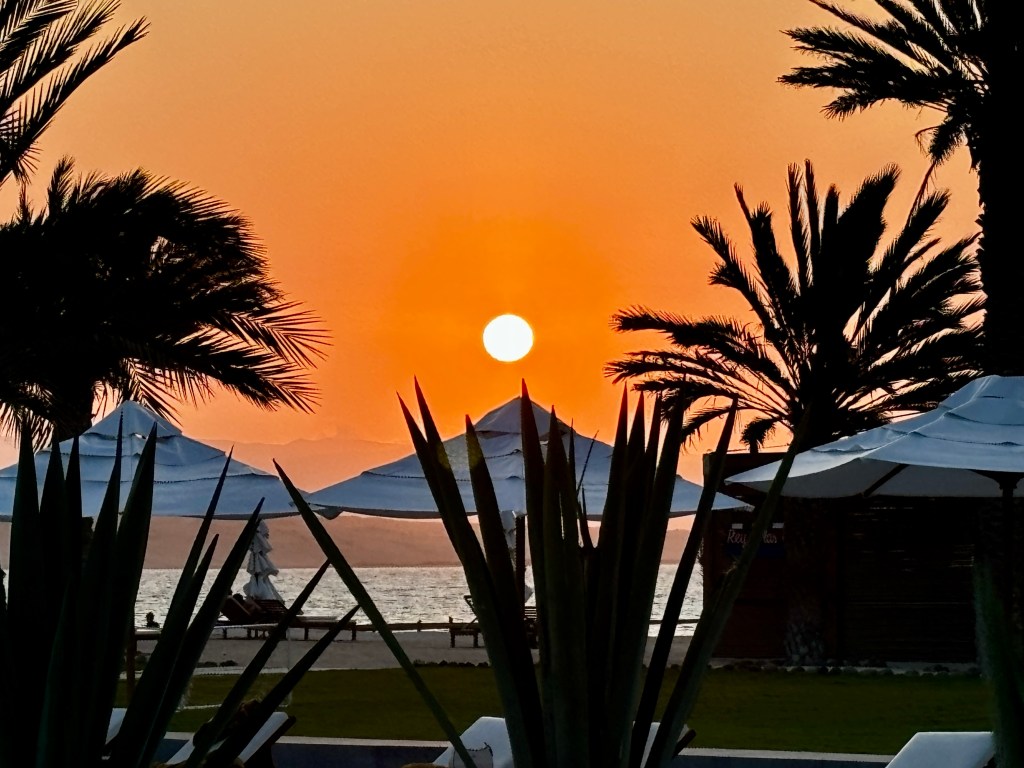
After that busy day, it was back to the Delfin III to clean up.  We had a nice sunset before dinner.

Remember when I said the food presentation was amazing on the Delfin III.  This was the first course of our dinner.

We were busy on the Amazon on September 22, 2024.

Next Up: More Amazon
Posted in Uncategorized | 2 Comments

Embarking on the Peruvian Amazon

The day, that would end on the Amazon, started early in Cusco with a 3:30 alarm, a 4:30 breakfast and a 5:15 departure to the airport.  Enrique had gone to the airport the night before to get boarding passes and luggage tags so all we needed to do on arrival was check our bags.

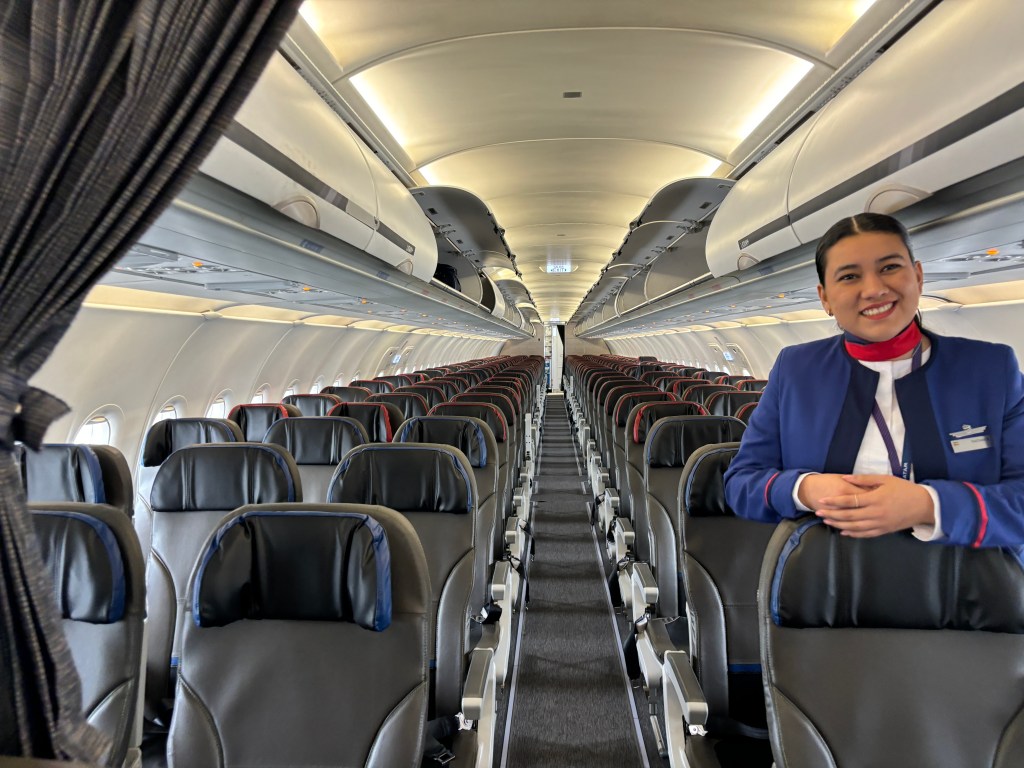
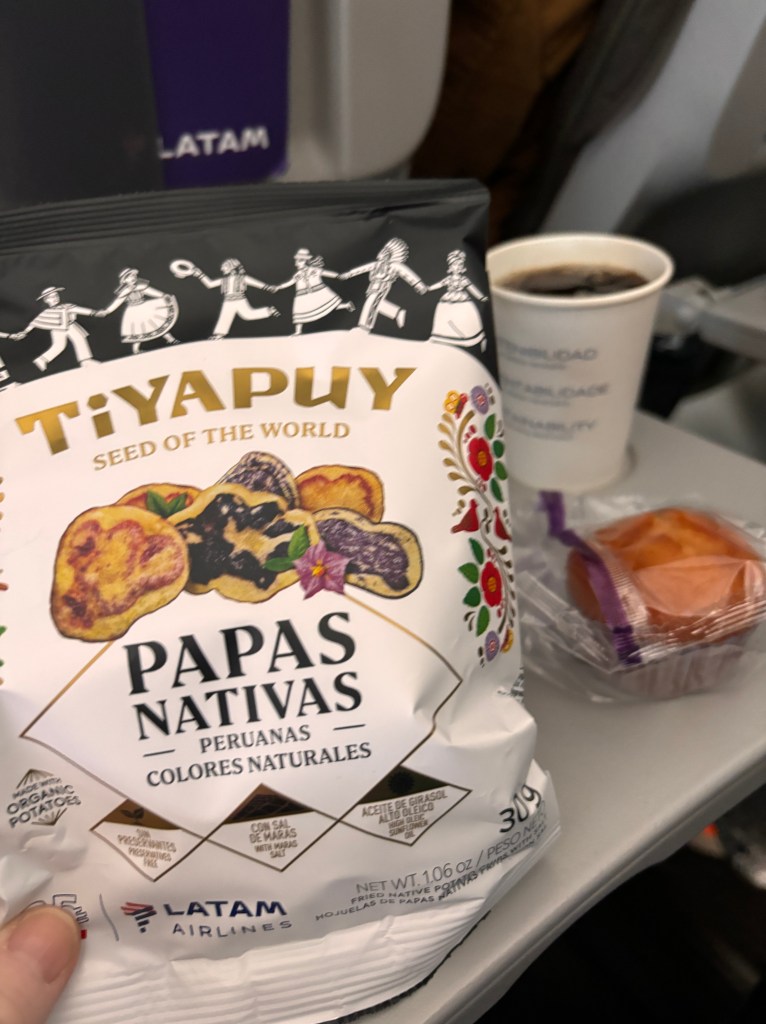
We had an unexpected upgrade to premium economy seats which meant a little more leg-room, no one in the middle seat, and better snacks. 

The specialty potato chips were quite good and we bought them several times after this introduction.

And in a happy result, the man who was ill in our travel group, felt much better after we landed in Lima.  That “seemed” to confirm the high altitude sickness assumption. 

Many of us had experienced minor symptoms with the high altitude. For most, it was just being aware of breathing as opposed to never thinking about it.  In a personal experience, I was trying to share a contact on my phone – something I have done dozens, if not hundreds, of times.  For some (altitude?) reason, the process was not computing.  It took a little longer, but I did get it accomplished.

Our second flight of the day was from Lima to Iquitos, Peru.

We had a choice in the Lima airport from a variety of American eateries. Our friend, Jocelyn, and I chose Starbucks to get the advertised pumpkin spice lattes.  Despite the advertisement, there was no pumpkin spice.  Habib and Randy got coffee and donuts at Dunkin’. 

When we landed in Iquitos, it was 92 degrees and humid!!  Ugh!  Iquitos is four degrees south of the equator. Iquitos has a population of about 500,000. Tourism is the largest business. 

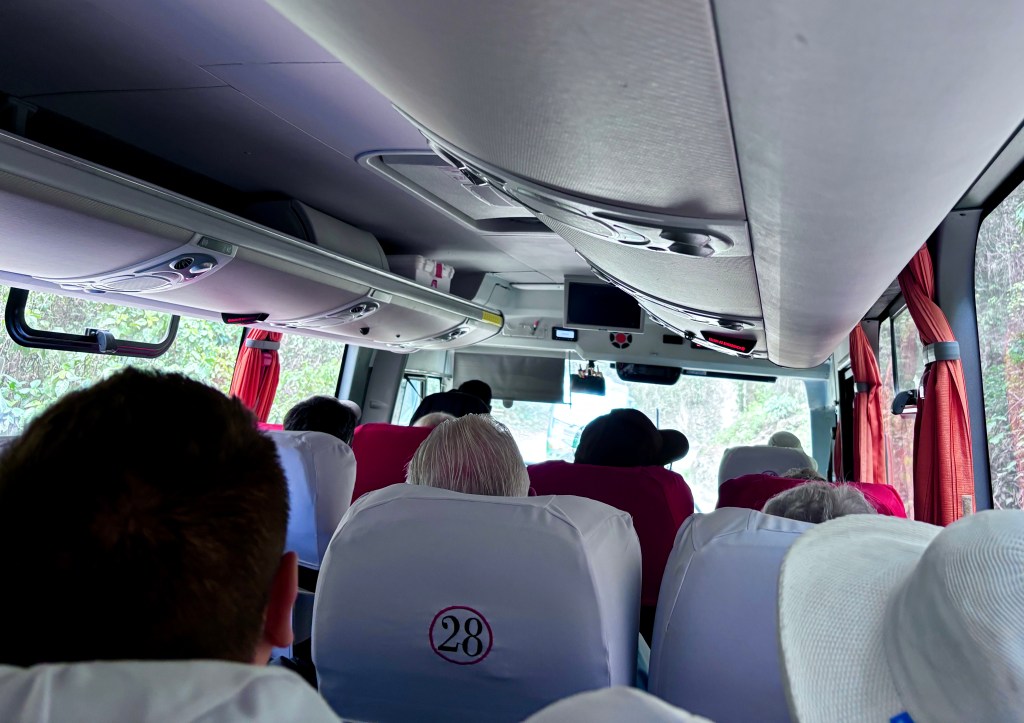
Our next leg was a bus ride from Iquitos to Nauta, a community right on the Amazon River.  As we boarded, a woman handed us clove scented wash clothes.  That was delightful!! Our Avalon group was combined with 12 additional travelers so we were now a community of 36.

They gave each of us an ice cold water bottle (to keep) with ice cold water and a very nice boxed lunch..

This was our first view of our home for the next THREE nights – the Delfin III.  

We had a short skiff ride out to the ship.

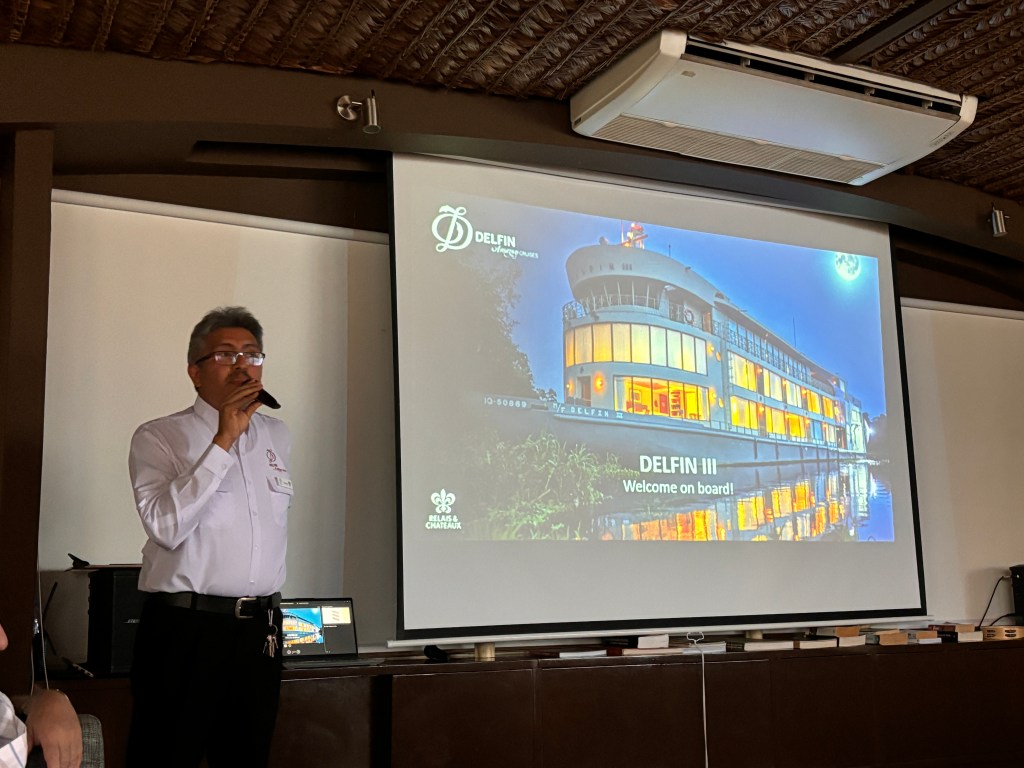
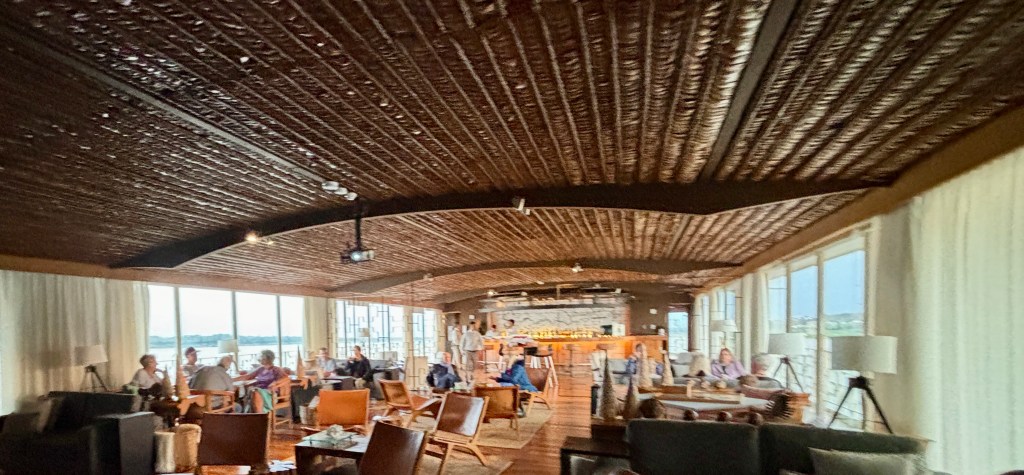
We began in the lounge with an orientation and muster explanation.  We were then set free to, explore, find our cabins and unpack a bit before dinner.

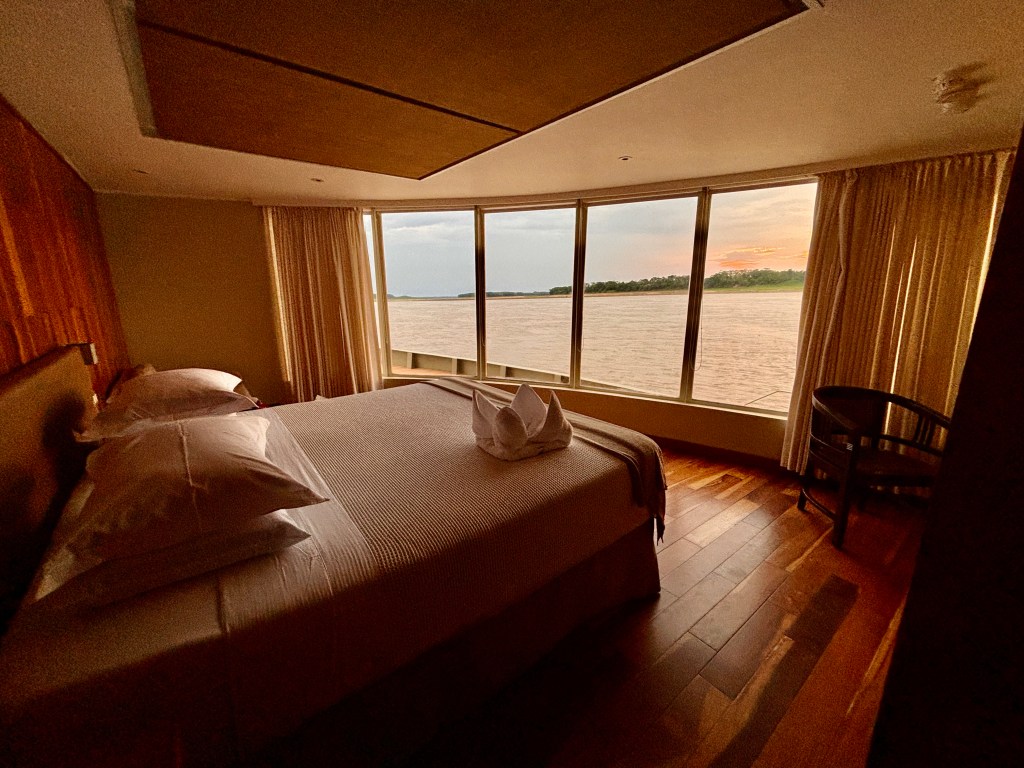
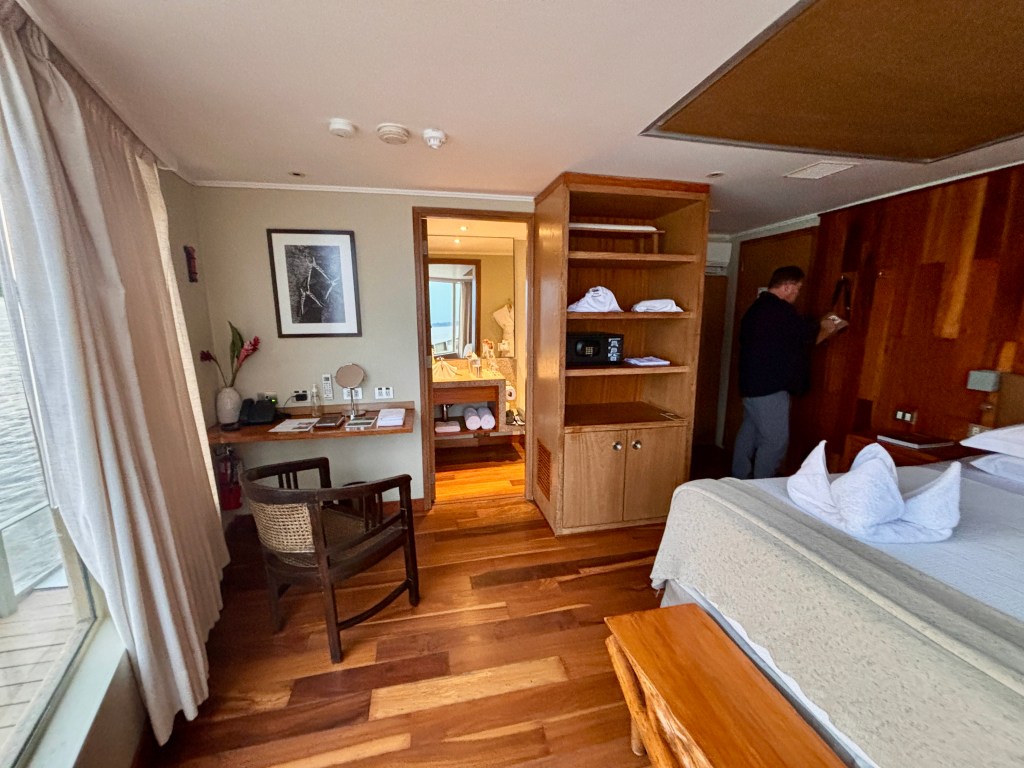
Of course, we went to find our cabin first!

Then we explored the ship.

We enjoyed an Amazon sunset from the Delfin III

During our first dinner, we learned the food was going to be very good and the food presentation was top notch!

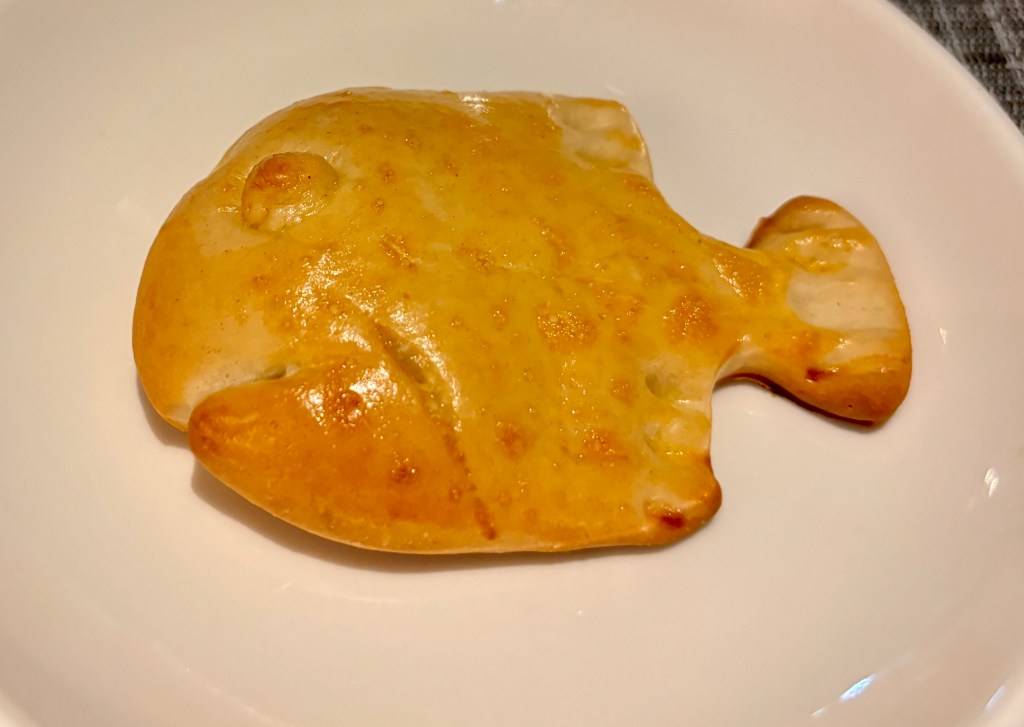
At every meal the bread was special. This was our first hint.

We gathered once more for our “next day” talk.   It was clear we were going to have another very early start and would be kept very busy if we were willing to do it all.

After an early morning, two bus rides and two plane rides, I opted to stay on the ship during the nighttime jungle skiff ride.

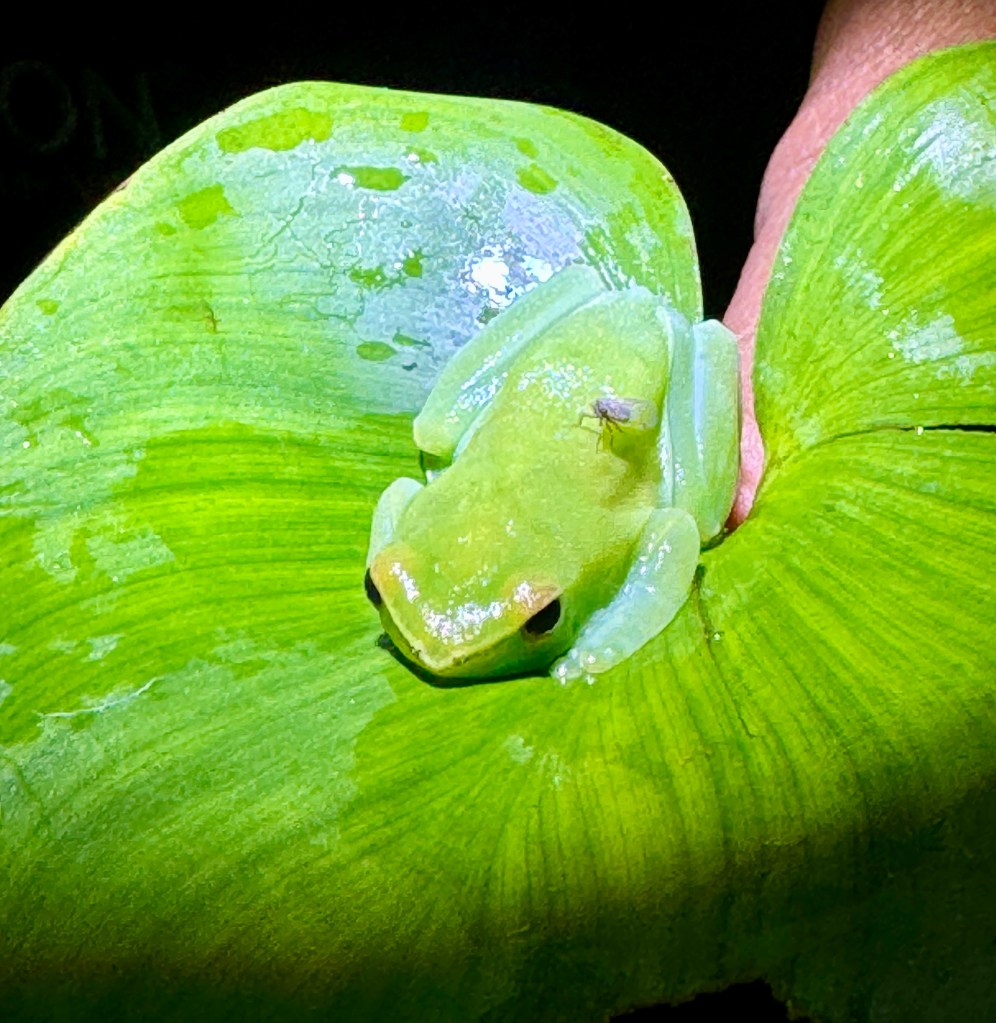
Randy went and took these frog pictures to show me part of what I missed.

We boarded the Delfin III on September 21, 2024.

Next Up:  We meet a Shaman along the Peruvian Amazon.

Posted in Uncategorized | 1 Comment

Peru: Cuzco Again!

The central courtyard of our hotel had a few women selling their items and one of them brought this adorable baby alpaca!  It made us all smile.

We learned this morning that one of our younger, and fit, men had become ill.  We assumed altitude sickness as we were once again above 11,000 feet.

The rest of us embarked on a tour of Cusco with Enrique.  This historic square (that was more like a triangle) has original walls that were built in the 1300s and 1400s by the Inca,  and the 1500s by the Spanish.

Santa Domingo Monestery is on the site of the most important Incan temple – Koricancha – The Temple of the Sun.  The Spanish tore Koricancha down and built the very first church in the Americas, Santa Domingo.

The Convent of Santo Domingo del Cuzco was founded in 1534. The Catholic church was built over the Inca Temple, as if to demonstrate the destruction and annulment of the Inca faith.

Notice the smaller door on the lower right hand side of the larger door.

This wall is part of the adjacent Inca Temple of the Moon. The stone walls are fit together so tightly they are earthquake proof.   An artificial intelligence assessment says these walls could not be built by the Inca with the tools they had – yet they did.

We traveled above the city.  The Inca formed their capital, Cusco, in the shape of the Puma.   The Inca lived and ruled here for 300 years.  Some believe that their conquest of the area was generally peaceful because people wanted to be part of the Inca civilization.

The Inca were eventually conquered by the Spanish.  People of mixed Inca and Spanish heritage are considered mestizo.  There are people  in Peru, who are still about 70% Incan.  That is because some population groups escaped into the mountains when the Spanish came.  Some remained hidden for 200 years.   As time passed, they came out and intermarried.  Their population became less DNA pure Incan.  Our guide, Enrico says he is about 40 percent Incan. 

Cristo Blanco was a gift from Arabic Palestinians in 1945 who sought refuge in Cusco after WWII. It is similar in likeness to Christ the Redeemer in Brazil but smaller.

Our next stop was to largest Incan structure.  It was named Saqsaywaman by the Spaniards.  The pronunciation sounds a little like “sexy woman.”

The complex, begun in approximately 1350, would have required the work of 25,000 men including architects, astronomers, engineers, stonecutters and stone transporters. 

The stones are placed in the shape of a zig zag, making some call it the Temple to the Lightning Bolt.  

Many of the stones weigh 150 to 200 tons. How did they get here from two miles away?  The local vicinity did not have these stones.

This square shaped section is unusual in the complex.

Like most places, the old wasn’t always valued.  Approximately 40 percent of the rocks in the complex were removed and used elsewhere in Cusco.

These stones are remains of the last glacier erosion.  This area was used as an altar.

Where there is visible damage to the stones, the damage happened in a battle between the Inca and the Spaniards. 

The Massachusetts Institute of Technology did ultrasounds on the rocks of Saqsaywaman.  There is not any cement between the stones, but they could not determine how the Inca accomplished their stone cutting and placement.

Archeology and academia has found and studied skeletons found in the vicinity.  Those are of a species that shares 25 percent homosapian DNA.   These are not the same as the skeletons with the elongated skulls discovered near Nazca that share 30 percent DNA.  So, are there two extra species in Peru?

Enrique spoke about energy vortexes in a fourth dimension.  In Peru, the energy vortex is thought to occur here and in Machu Picchu.  (In Arizona, Sedona is thought to also have this energy vortex.)   He raised the questions about whether there was another species that built this place.  Did the Inca try to emulate this site later in those known to absolutely be Incan?

Our next stop was the Basilica Cathedral of Cusco. Unfortunately, once again there were no pictures allowed.

It took 100 years for the Catholic Church to build Cusco’s cathedral but the Inca didn’t accept their Jesus.  Over time the priests began to introduce the Virgin Mary.  The Inca loved and accept her because they were used to worshipping Pachamama, mother earth.

Enrique told us that religion in Inca traditions always involved decorated skirts.  This tradition has transferred to providing a garment for Jesus. There is a multi-year wait for the privilege of providing the skirt for the Black Jesus.

Enrique’s extended family provided a skirt for Black Jesus in 1990. At that very time, a cousin was healed of polio. The family received a certificate of miracle from Pope John Paul II.

Black Jesus, thought to be more similar in appearance to the local Incan, mestizo, population was created in 1620.  It was brought out of the church in 1650 and is credited with stopping continued tremors from a devastating earth quake that killed over 5000 people. Black Jesus is credited with stopping a plague in the  next century.  A procession of Black Jesus around the city of Cusco still happens annually.

One of my favorite memories of our visit to the Basilica Cathedral of Cusco is a painting of The Last Supper.  The painting was represented or our entrance ticket and this is a photo of that ticket.

In a very large painting, Jesus and his disciples are eating guinea pig at The Last Supper.  Although some were offended by the rendition, it makes perfect sense because guinea pig is considered a delicacy.  They were eating important food at an important meal.

After our tours, a group of us went to Paddy’s, the highest elevation Irish Pub in the World. Sounds like a must do, doesn’t it?

We shared the best Shepherd’s Pie we have ever had!

Later in the evening, I saw  this group of four dogs wandering the streets. We have seen so many unattended dogs – over a hundred – all over Peru. .  This has been difficult for dog lovers to see but they all seemed to be in good shape, many with collars and/or blanket wraps.  Our guide said almost all have homes.  They enjoy their days out and about and return home in the evening.  I’m not completely sure this is true – but it sounds nice and made us feel better about seeing so many dogs!

We were in Cusco on September 20, 2024

Next Up: We journey to the Peruvian Amazon

Posted in Uncategorized | 1 Comment

Peru: Machu Picchu to Cusco to Malaria

Returning to our hotel near Machu Picchu,  we had the opportunity to watch demonstrations on how to make pisco sours and ceviche.

Pisco is the national drink of Peru.  It is a type of brandy and must be made in one of five Peruvian cities to be “official.”

The pisco sour recipe is: 3 oz of pisco, 1 oz simple syrup, 1 egg white, 1 oz lime juice. Pour over ice cubes and shake for one minute. Add drops of bitters 

We also had a cooking demonstration for ceviche – a  classic dish in Peru.  As there is no chance I will ever make a raw fish dish, I didn’t write down the recipe!  Randy can order it in a restaurant if it sounds good to him!

We both tried the ceviche and it was good, but I am still not planning to ever make it.

We had lunch at the hotel before leaving.  I asked about the butter because, each time we had been served butter, it tasted very different than I expected.  I was wondering if it was made from a different milk source.  The difference was that they added passion fruit.  To me, and our friend Annie, it tasted so horrible that we talked about that butter for the rest of the trip!

We had a return train ride down the mountain.  It was so loud that it was the low point of the entire trip for several of us.  It was was loud because it is a train and most people were joyfully chatting over other people chatting about our time in Machu Picchu. Oh, and the adjacent car had a private band playing. I don’t tolerate loud anything very well – says the former kindergarten teacher!   Randy loaned me his noise canceling earbuds to diminish as much as possible.  Our friend Gary put in ear plugs for the duration. I will follow his example going forward and always carry ear plugs with me!  

The train ride was followed by a much quieter bus ride back to Cusco.

Our accommodation in Cusco was a historic hotel. The Palacio Del Inka  was built by the Inca and occupied over time by Incan and Spanish aristocracy.   The hotel offered a tour which I intended to take, but in the end, didn’t work out.

At this point, we had to decide if we were going to begin taking our medication to prevent malaria infection when we were in the Amazon.  Protocol is to to take the pills before, during and after potential exposure.

Over the course of the last few days, whether people were going to take malaria meds or not had come up in numerous conversations. The retired pharmacist in our group had opted not to take them. It seemed it was split about 50-50.  Enrique said that was typical.

Randy and I had watched a Nova presentation on malaria as part of our trip preparation.  We learned: 

Malaria, bourn by mosquitos, is the biggest killer of humanity.  There are 2090 species of mosquitos but much fewer transmit malaria.  It was once considered a tropical disease but is now world wide.  

The American Revolution was impacted by malaria and eight US presidents had malaria including George Washington. 

The use of DDT destroyed mosquito populations, and in 1951 the US was declared malaria free.

Malaria became a poor country, po0r people’s disease.  There are 200,000,000 cases world wide each year with 600,000 deaths annually.   Eighty percent of the deaths are children under five.

Bed netting treated with insecticide is the most used tool to avoid malaria, but that strategy is losing effectiveness.

An effective vaccine has been elusive and 142 attempts have been made.  Malaria is a very complex parasite. 

The University of Oxford – a premier institution for developing vaccines including Covid 19, has spent 13 years working on a vaccine called R-21. Its intention is to promote antibodies attacking malaria parasites.

Most vaccines in the world are made in Pune, India. An Indian family business took Oxford’s vaccine into trial status giving it to children in Africa. It showed  77 percent efficacy. In 2022, the vaccine went into large scale trials, with 500,000 children,  and the results are promising.

Since the medical recommendation we received was to take the medication, we did, for a while.

We took our malaria pill on September 19, 2024.

Next Up: Our day in Cusco

Posted in Uncategorized | Leave a comment

Peru: It’s Machu Picchu Day!

I sent this text to numerous friends and family on the morning of September 18.  Of course, September 18 was also the day we went to the Inca Fortress and village that I wrote about last time – but the main event of the day was Machu Picchu.

Visiting Machu Picchu was the main reason for choosing this itinerary.  The Nazca Lines, the Amazon and the Galapagos were nice add-ons but never would have taken us to Peru and Ecuador on their own.

This trip had been reserved well over a year in advance and in January of 2024 we discussed needing to get in shape for hiking Machu Picchu.  Unfortunately, we didn’t do that and I spent months being concerned that I would be the “weak link” in the group tour of Machu Picchu.

At some point we learned that Machu Picchu is at 7000 feet elevation. We spend most of the summer months at 6500 feet at our mountain cabin so that seemed good preparation. When I got Covid a month before our trip, that added to my concern.

But, now it was go time and we were going.  Twice!  One of the benefits of this Avalon Waterways itinerary is that we got two opportunities to visit Machu Picchu  That gave us a better possibility of seeing it in good weather.

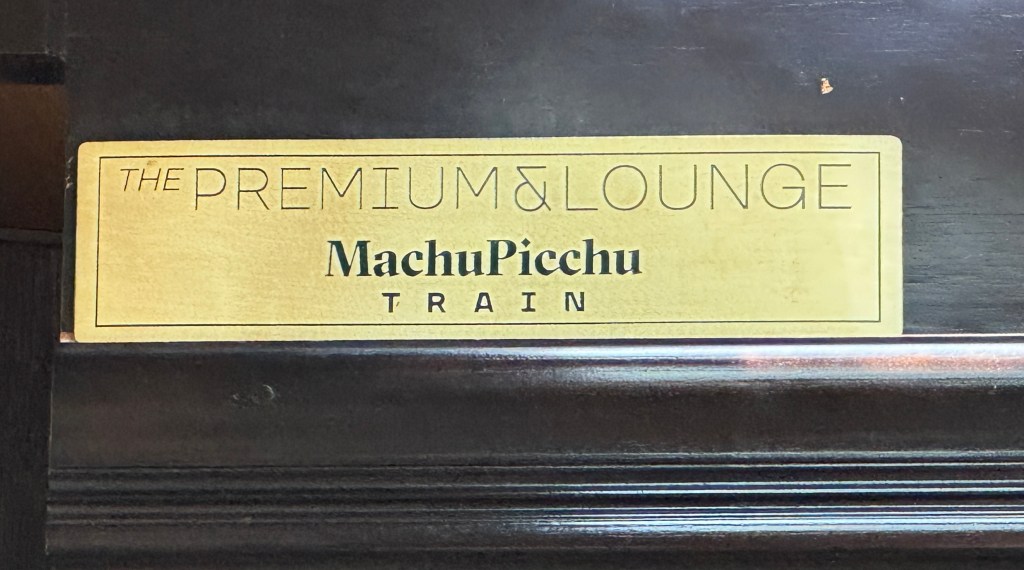
We boarded the Machu Picchu Train and took our seats in the Premium Lounge.  

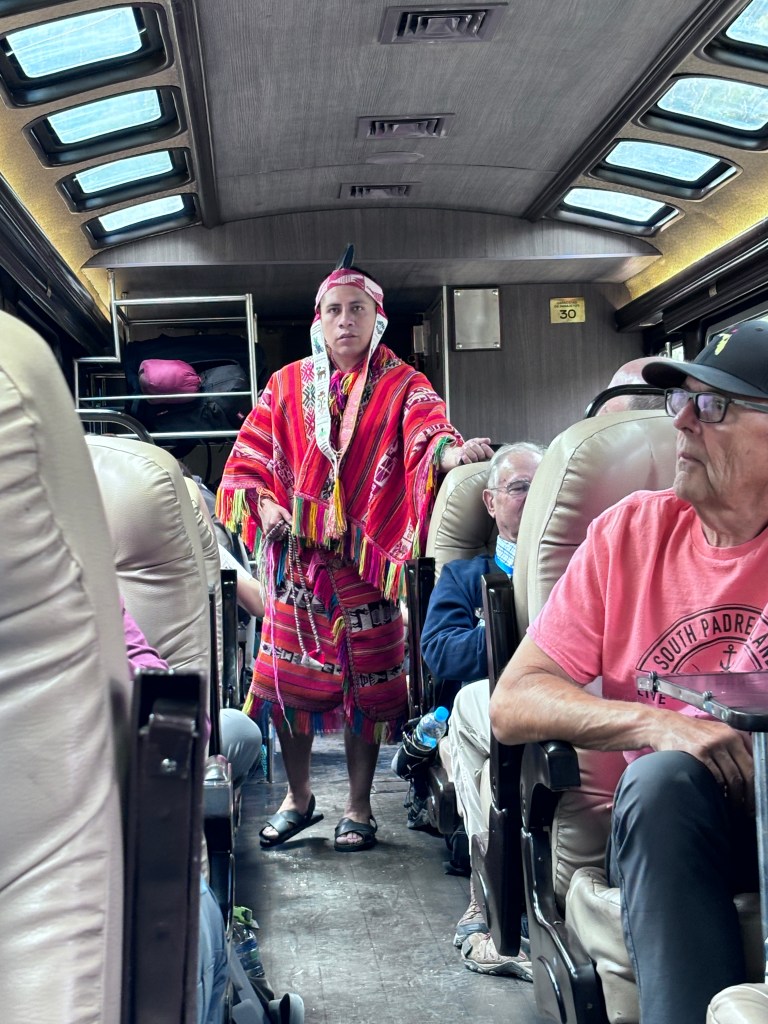
Two train employees gave us a brief program on forbidden love between an Incan princess and her suitor.

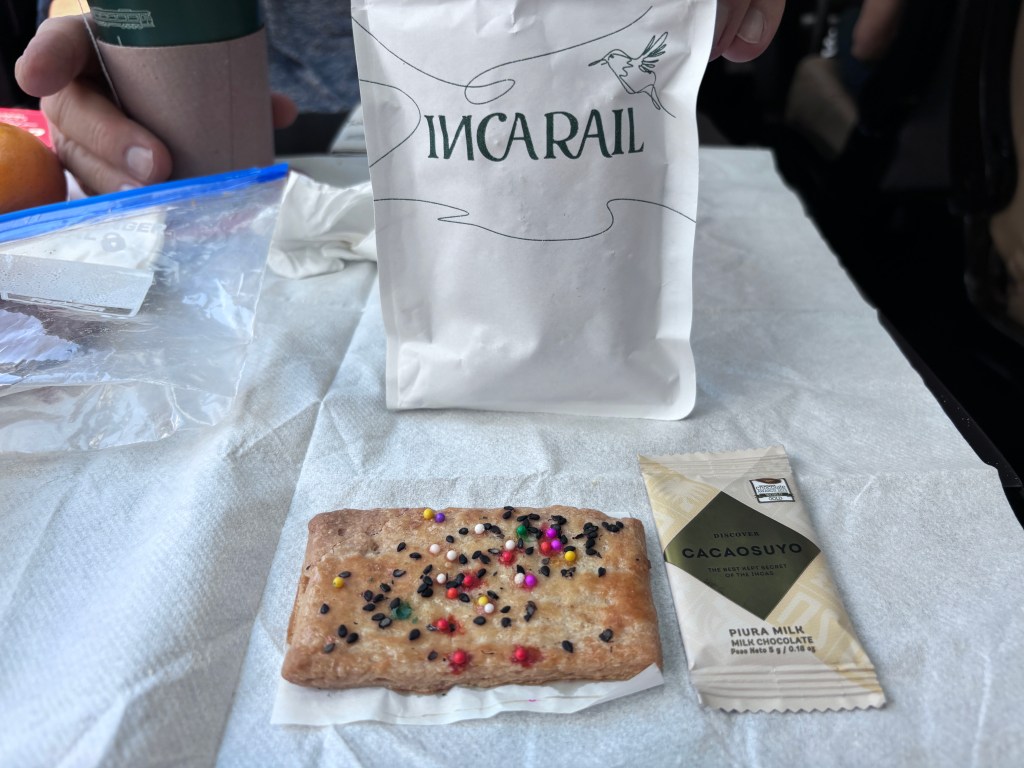
We ate our scavenged lunches from the breakfast buffet and also had a complimentary snack.  

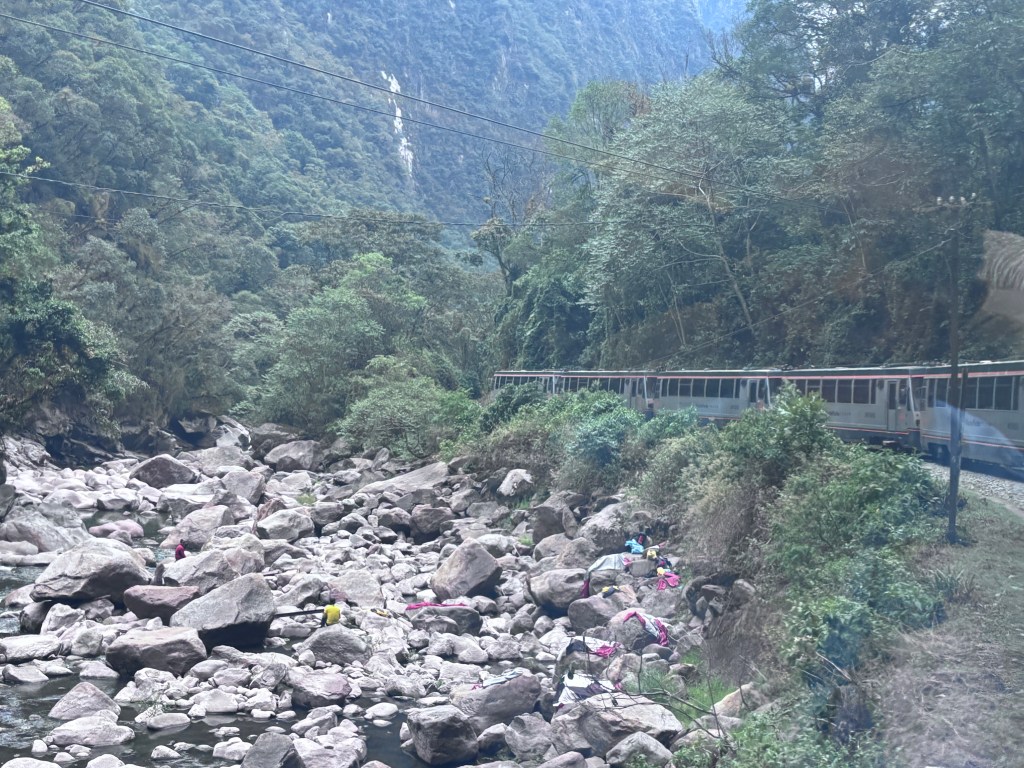
We enjoyed our 90 minute ride up the mountain.

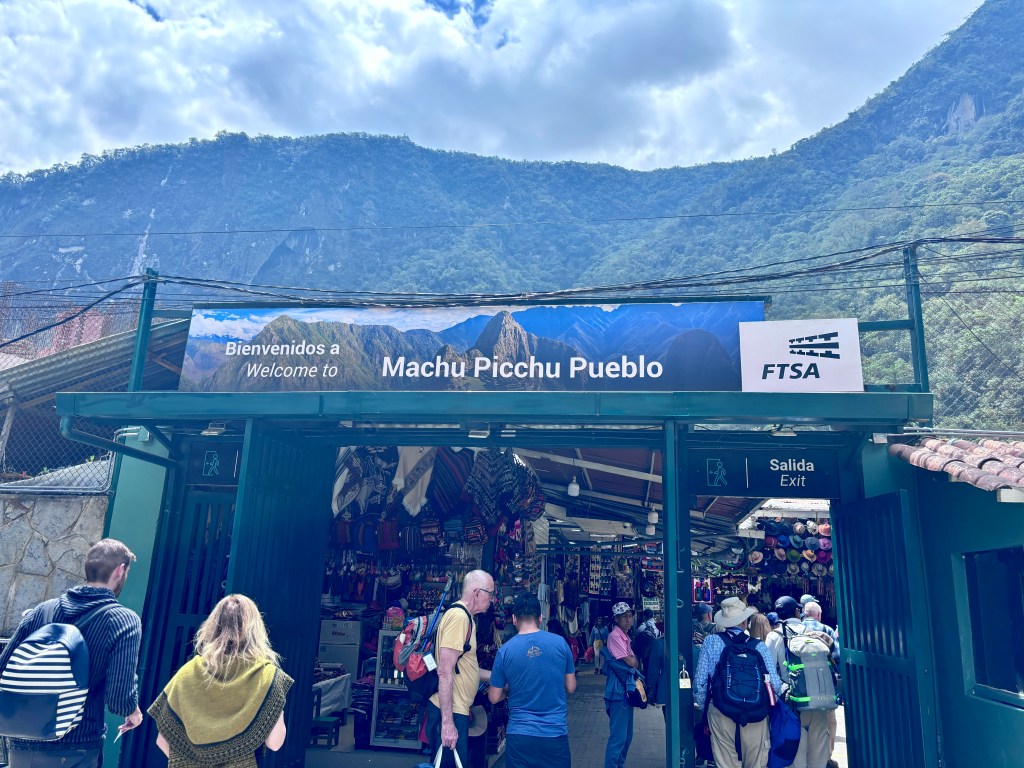
It looks like we are in the right place!

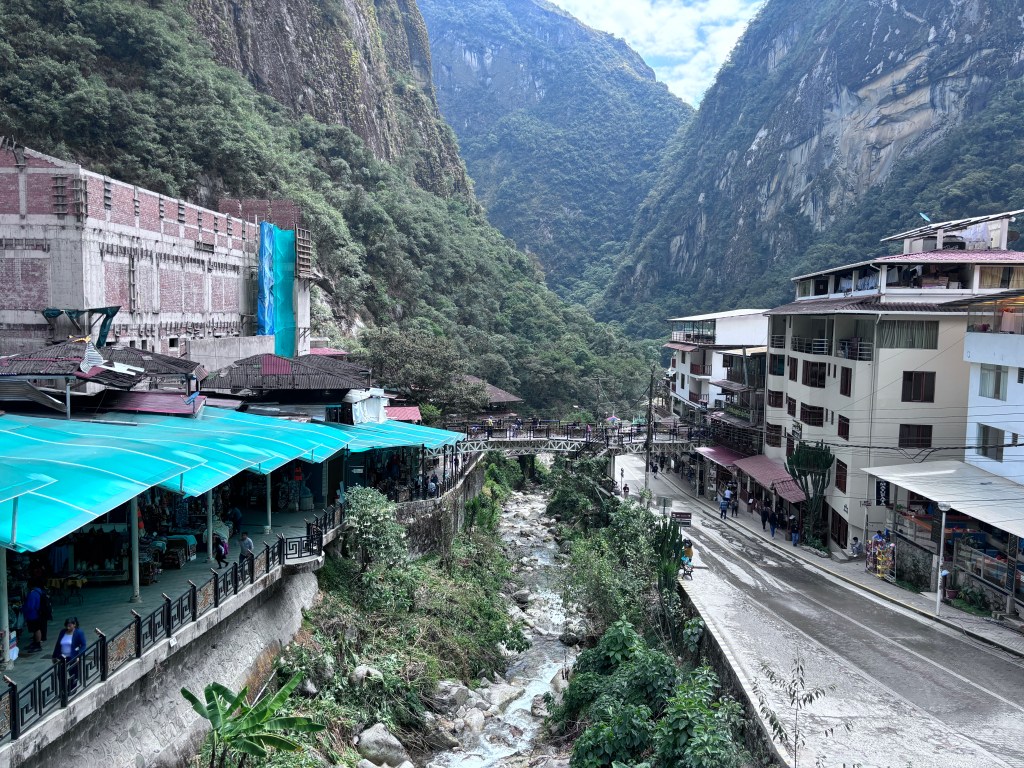
There was a nice village with hotels, restaurants and shops.  Our next step was to get in a long line to ride a time ticketed bus up to the actual site.

We made it through all the steps, all timed and coordinated by Enrique, to make sure we were where we needed to be, when we needed to be there.  We don’t know why people try to do complicated things like this, in a different language, on their own.

There were thirteen switchbacks on the way up the mountain. 

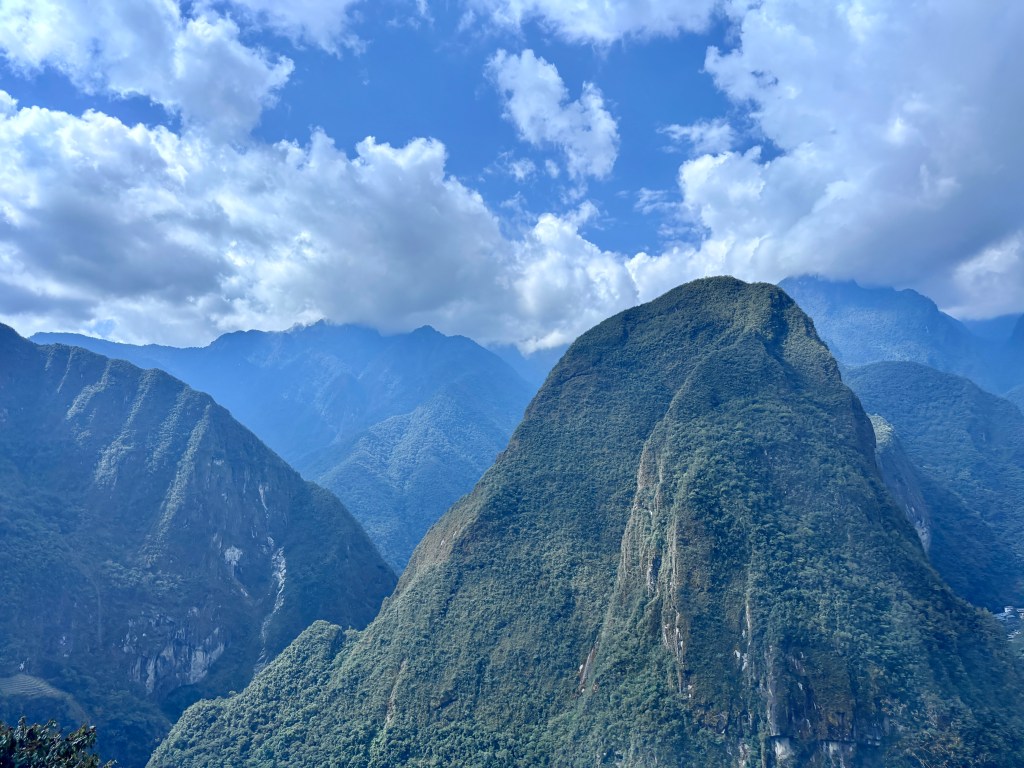
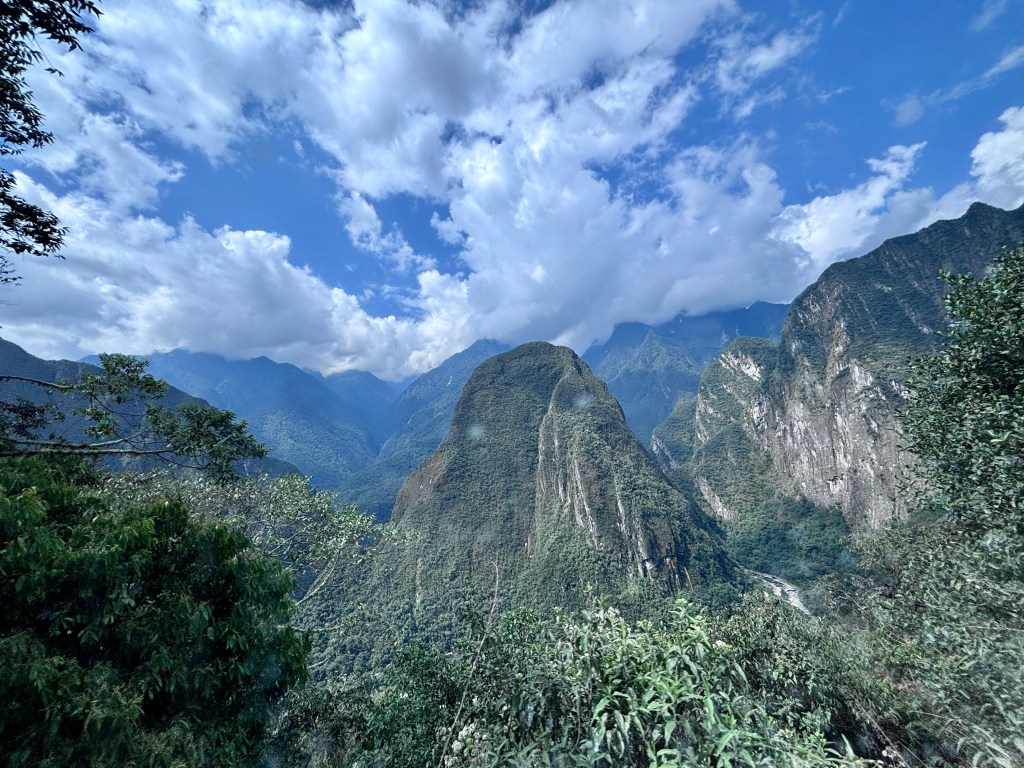
The views were stunning.

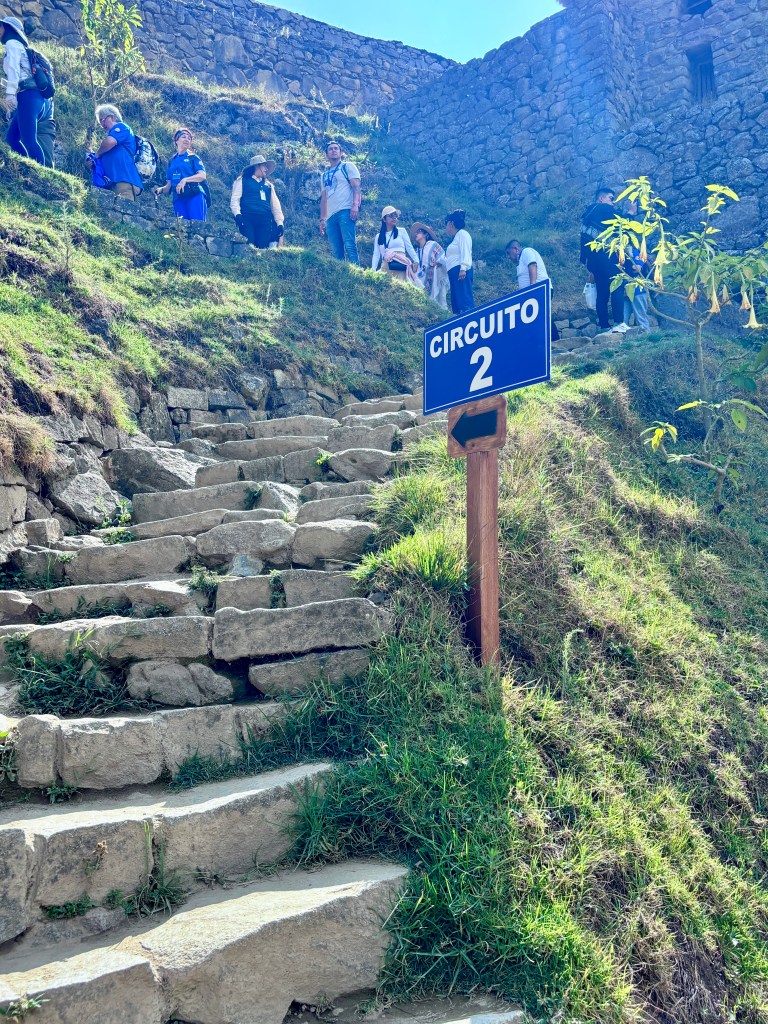
When we entered the historic site, we were given passes to a particular circuit, pre-arranged by Enrique and Amazon Waterways.  There are four circuits with circuits 1 and 4 having limited access.

We all had route 2 entries and most of us took full advantage of the broad access that it provided. A few on our tour chose an abbreviated version of route 2, with their own guide, based on mobility concerns. 

Most of us would climb steps equivalent to seven stories. We went up but it was slow in pace and no problem – so much wasted worry!!

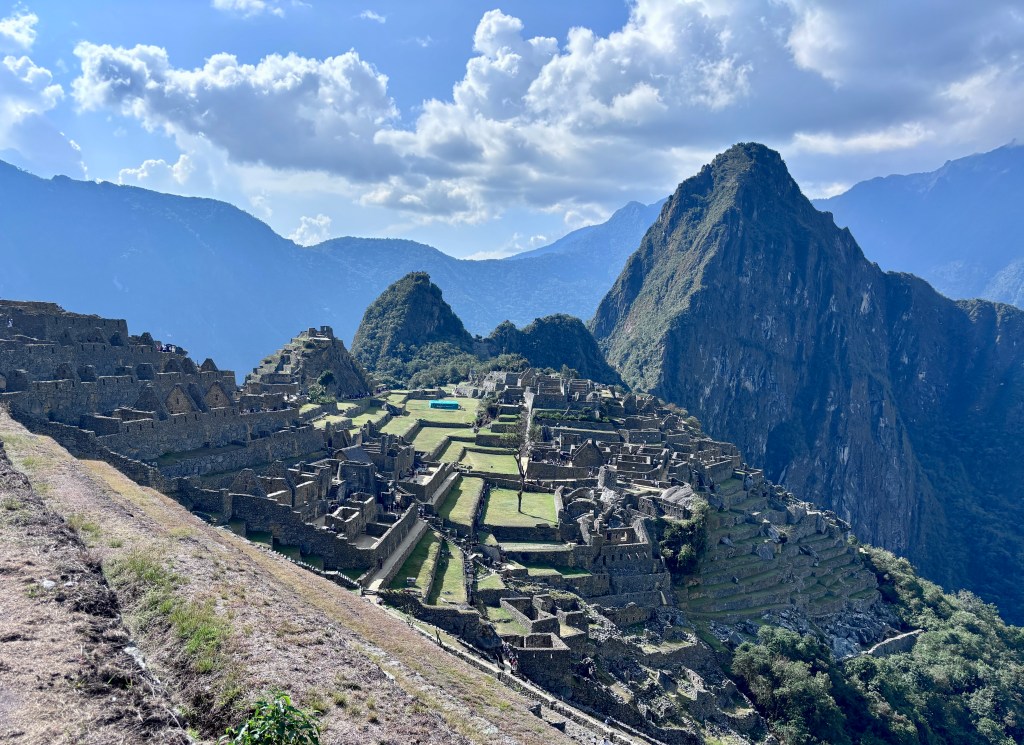
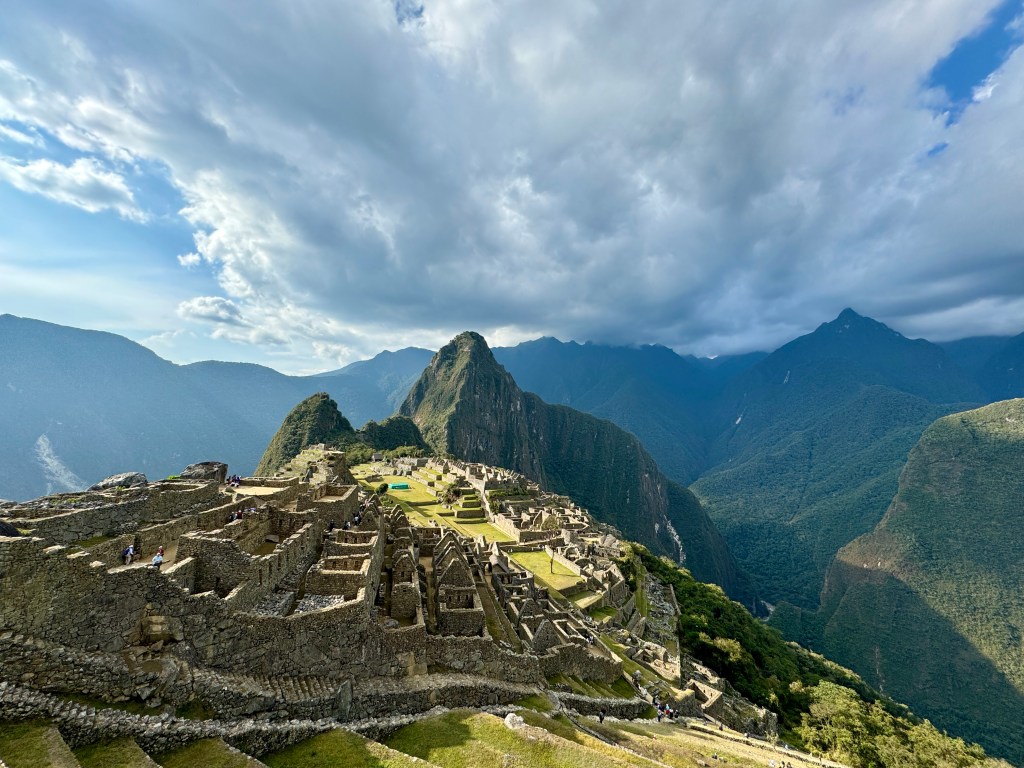
We crested and had our first view of Machu Picchu.

Isn’t she lovely?  The amount of time we (about 30 people)  spent waiting for her to have her friends get the perfect shot was a bit annoying. 

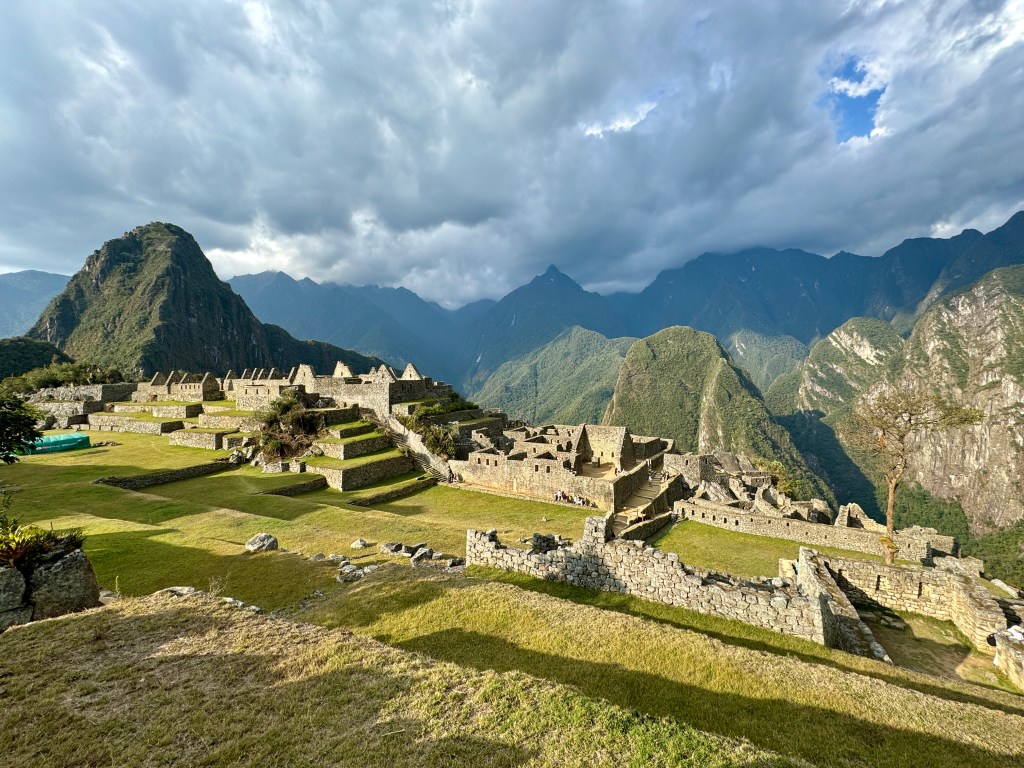
These are more of our first views!

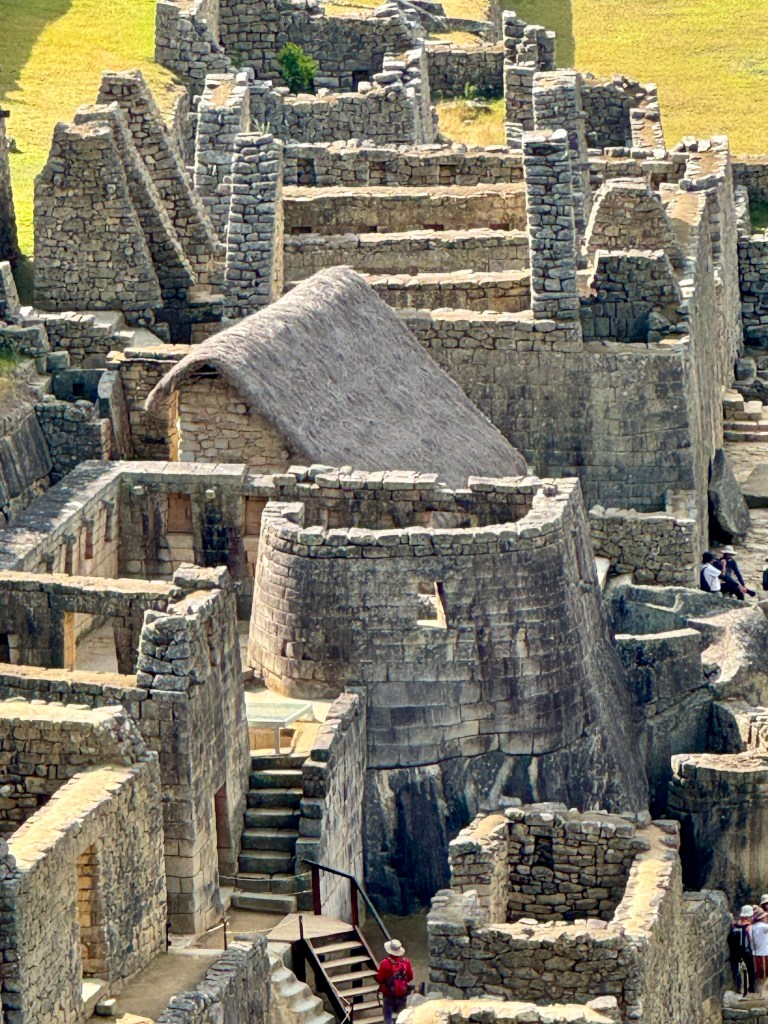
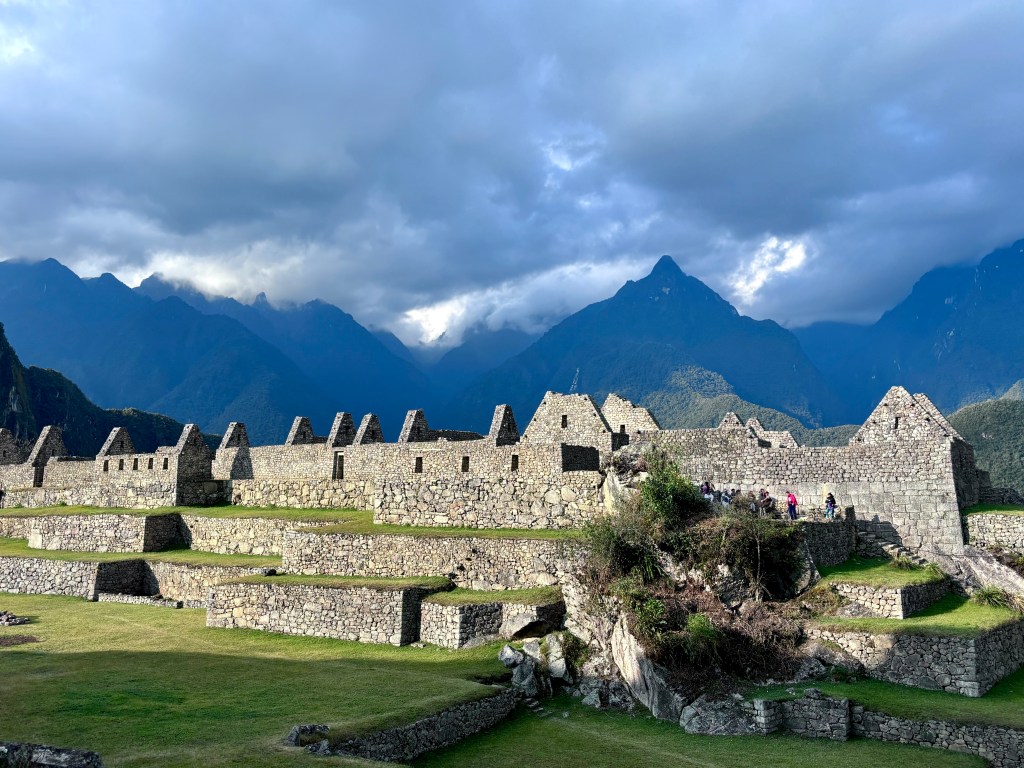
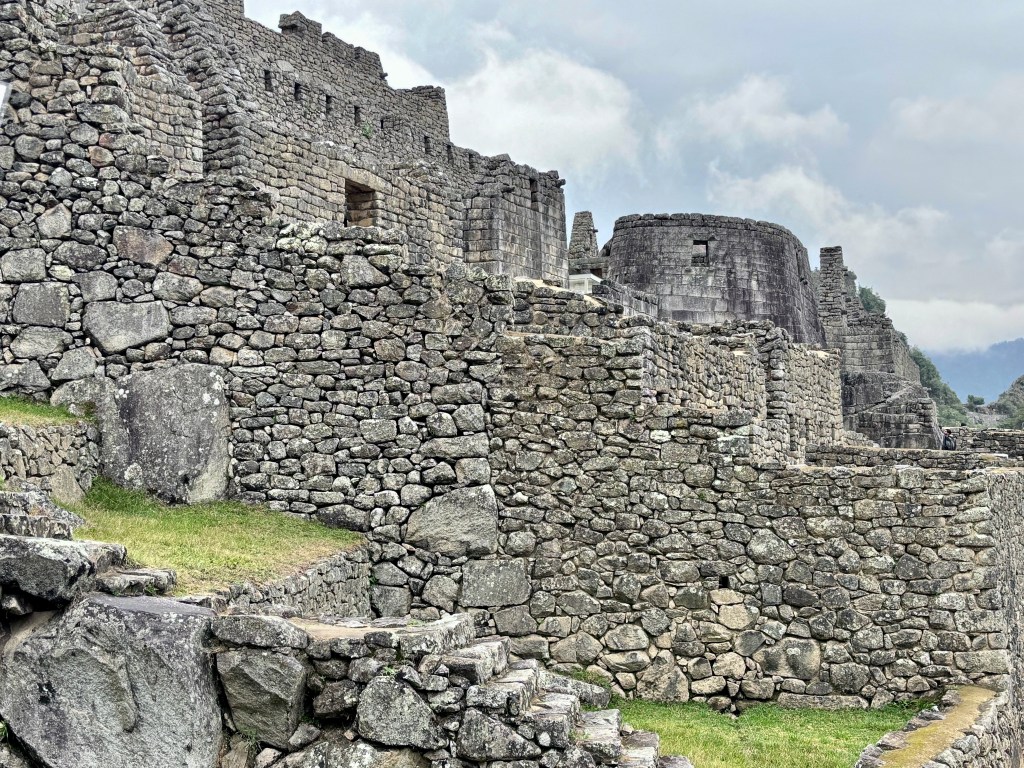
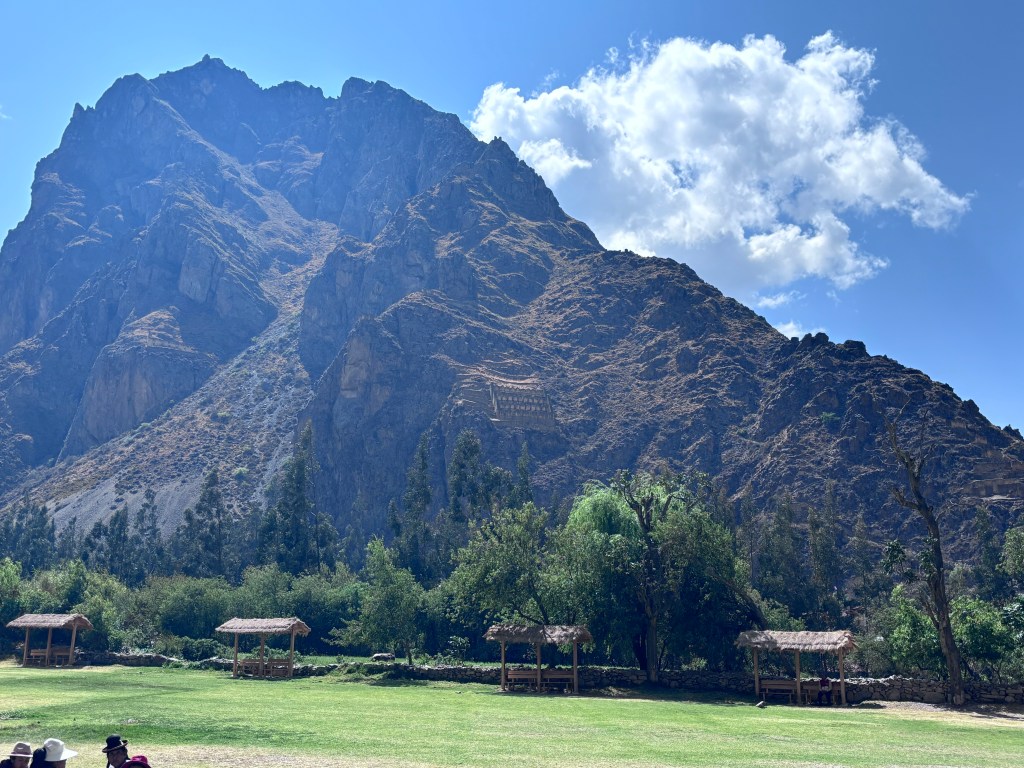
Machu Picchu was likely built in the 15th century as an estate for the Inca emperor Pachacuti. It sits on an isolated mountaintop at one end of the sacred valley, far above the waters of the Urubamba River.

At that time, there were two entrances into the sacred valley among the mountains. One was a thatched bridge across a large ravine.  The other was a footpath which became known as the Inca Trail. 

Some Machu Picchu tourists (maybe purists) choose to hike four days and three nights and cover 32 miles of the Inca Trail. 

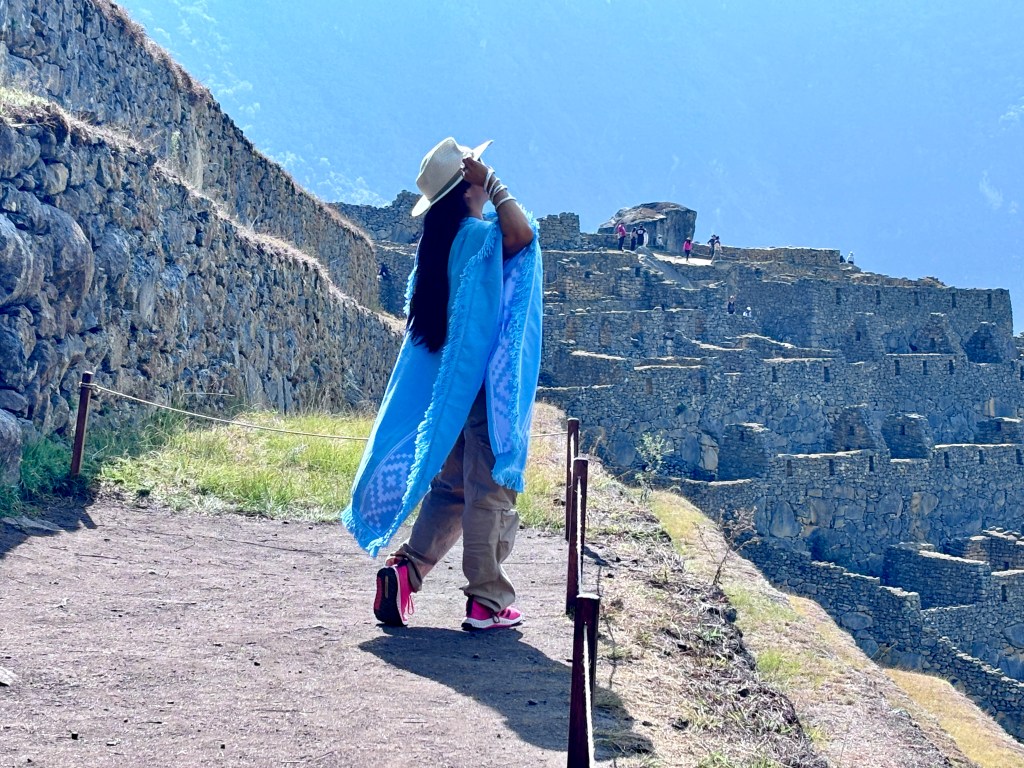
Others walk the last 32 yards….that would be us!  Following the last yards of the Inca Trail allowed us to access the only historic entrance into Machu Picchu. 

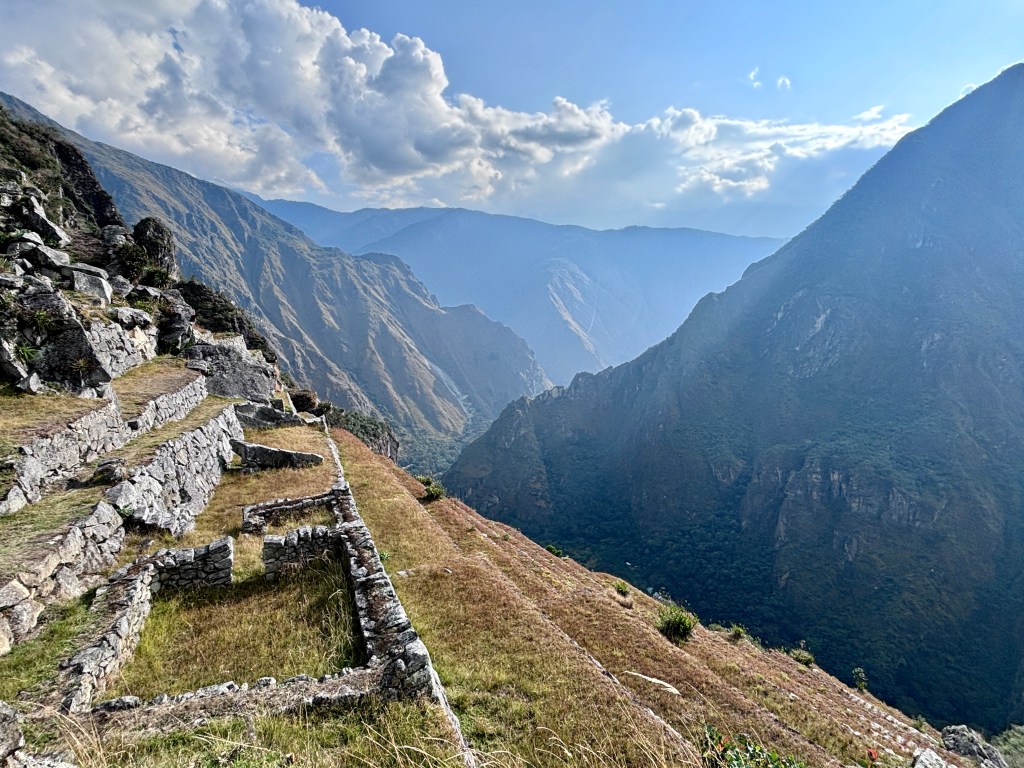
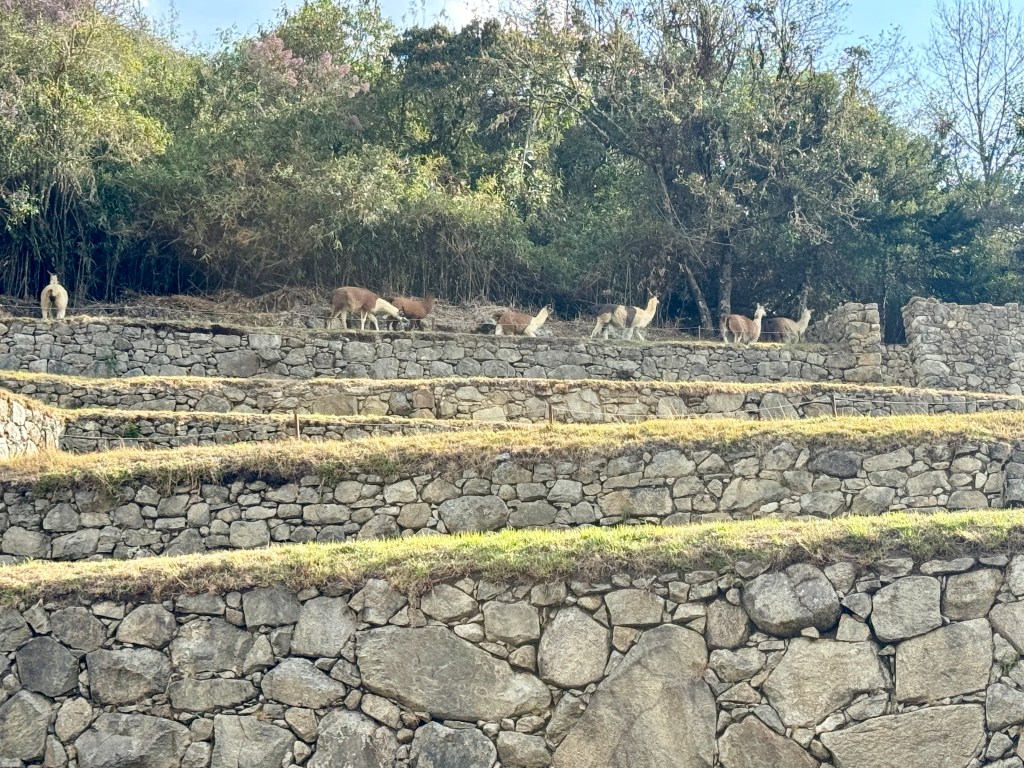
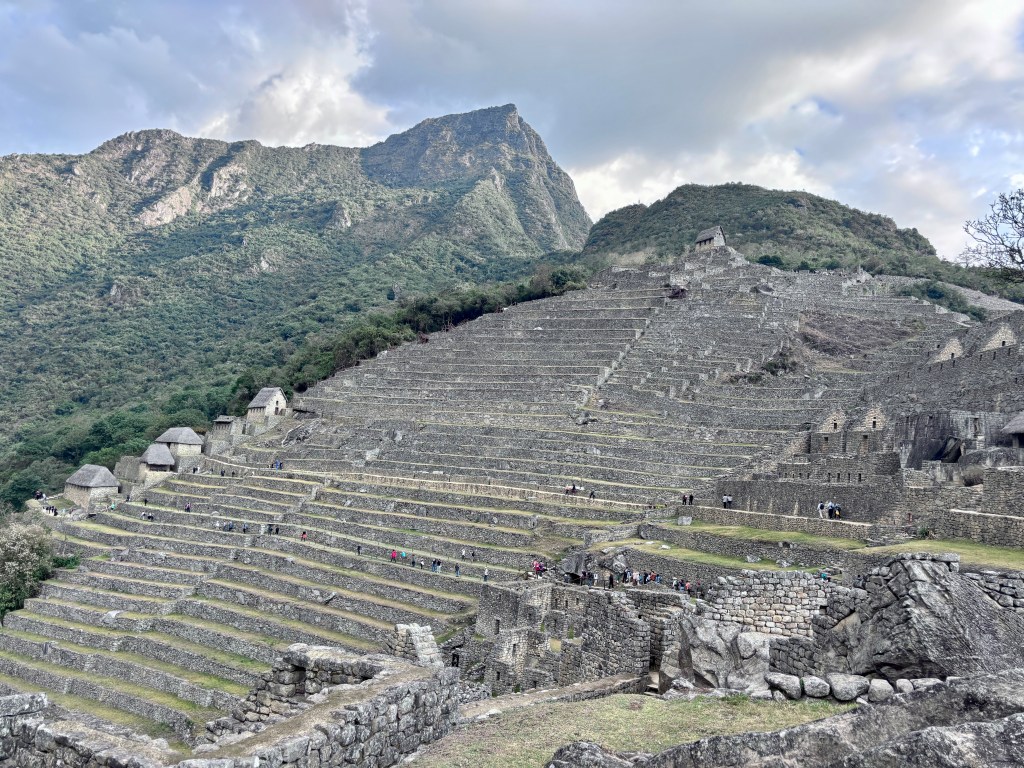
Machu Picchu rangers are trying to rehab the terrace levels.  The alpaca are surely helping!

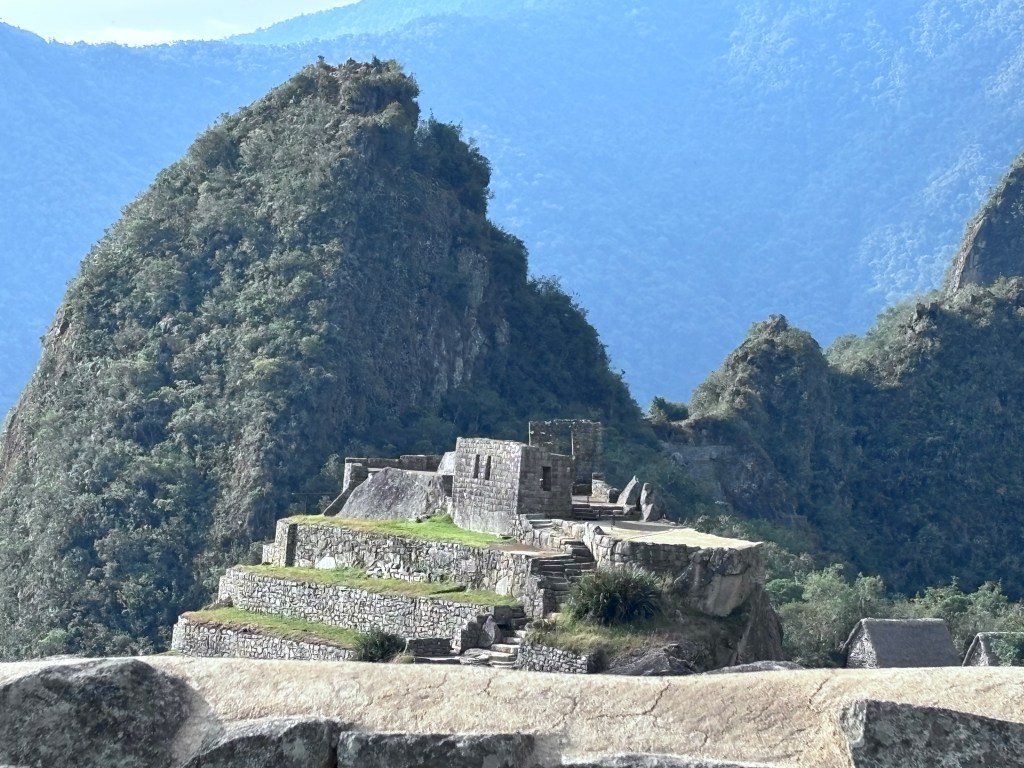
Each vista offered slightly different angles on the community that once held 1200 people.

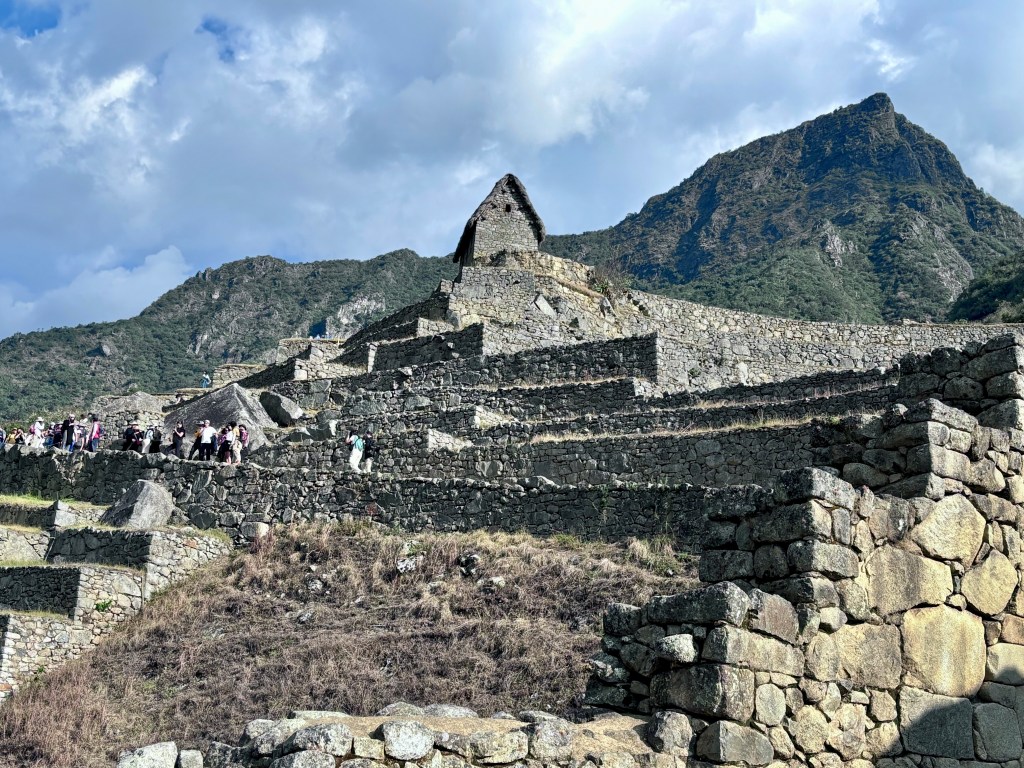
This was the communication house.  People communicated with other communities using conch shells.

Enrique would tell us about some of what is known along the way. 

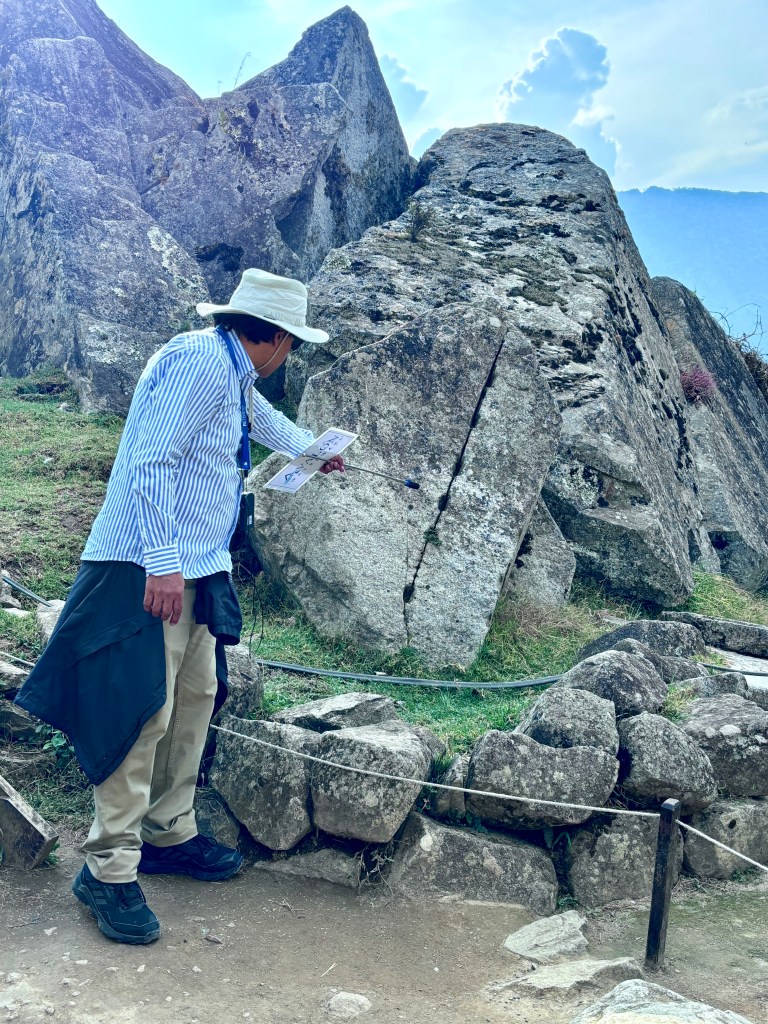
In this case, the Inca would make a series of holes in the stone using hematite and then insert pieces of wood. Over time, the wood would swell and the stone would break.

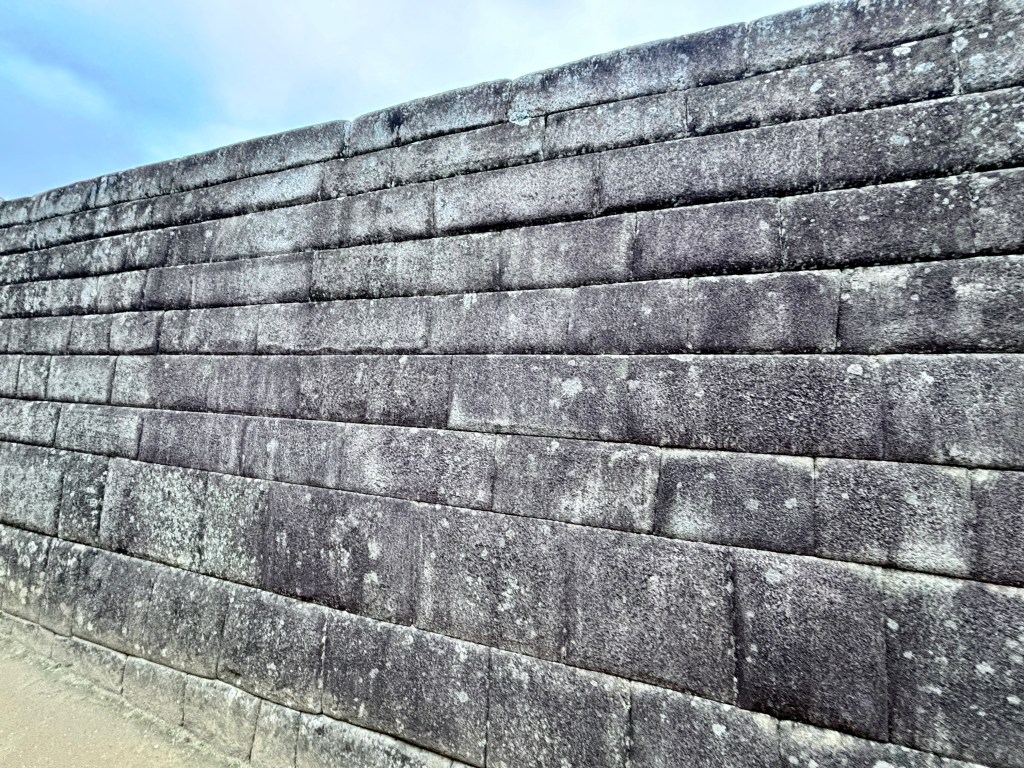
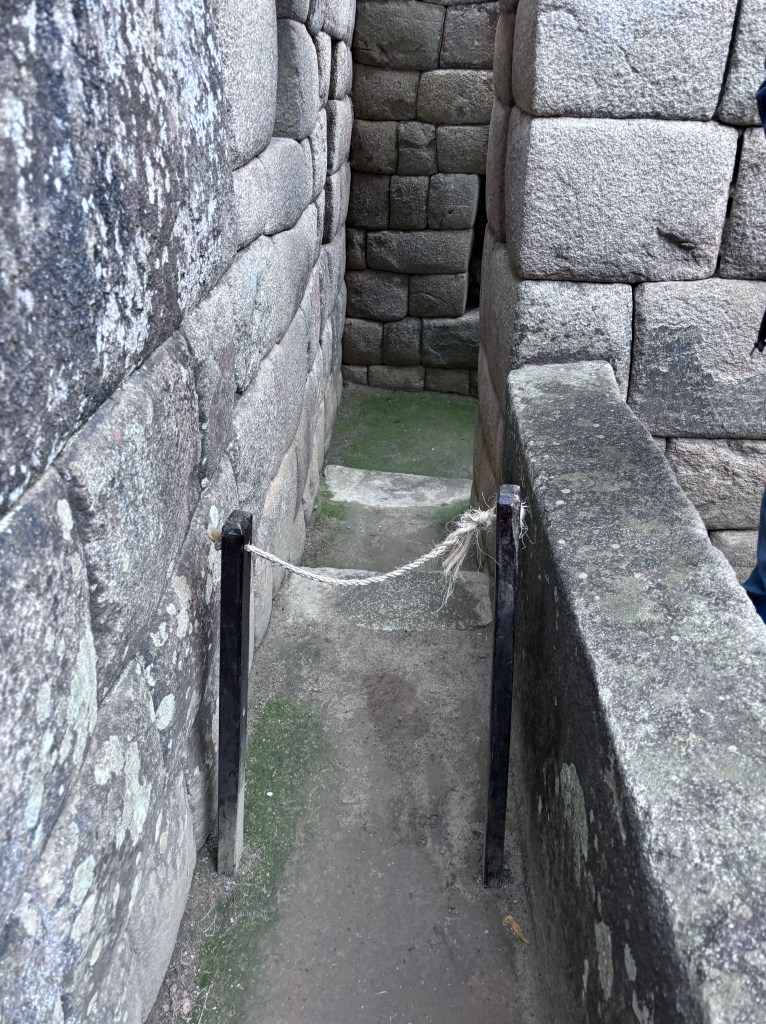
Somehow, the Inca, with their knowledge and technical ability, cut and fit stones together like this!

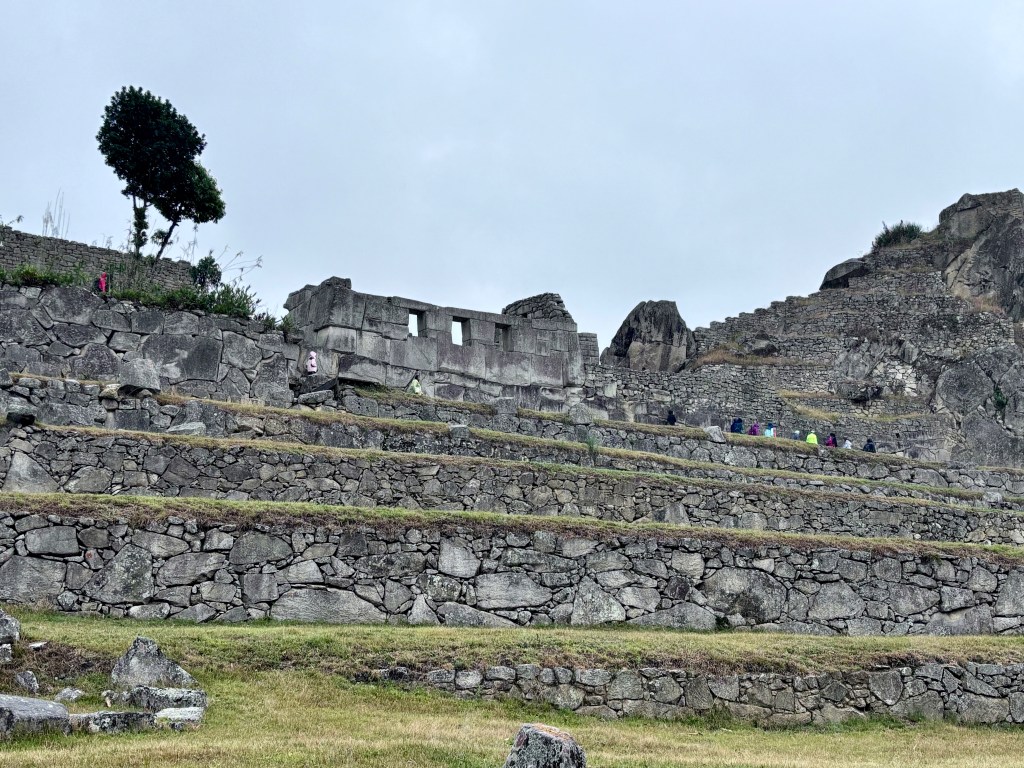
The temple with three windows equates to Incan philosophy:  To love, To learn, To serve.

Duma Houses were for shamans to focus on their prayers.

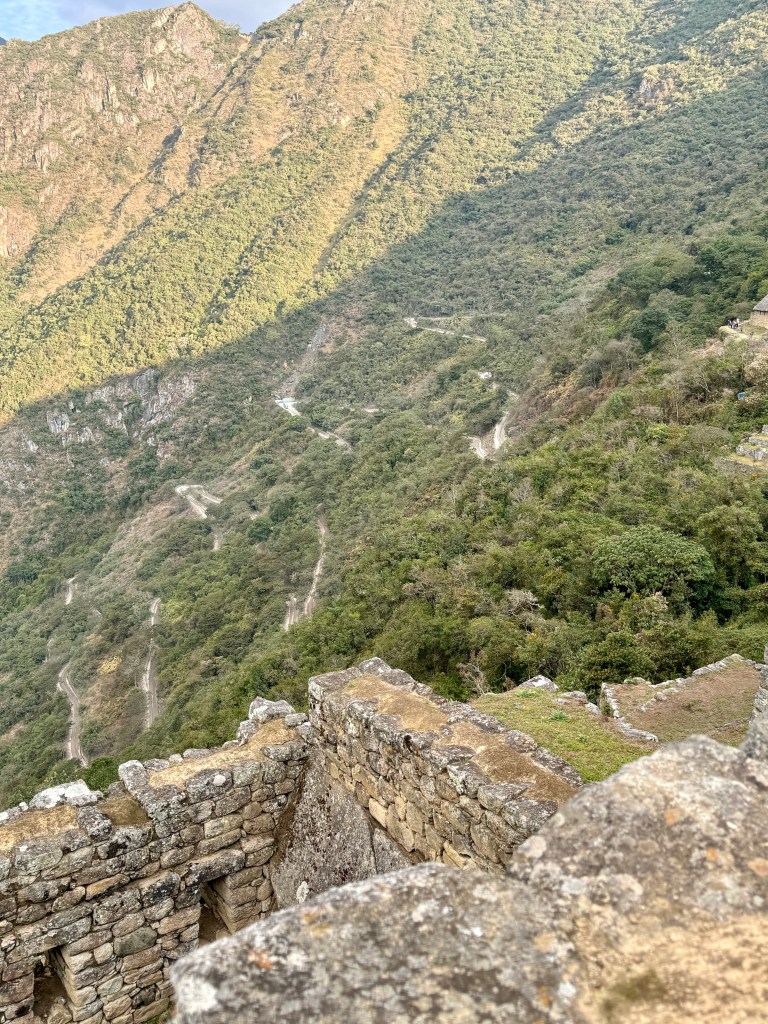
Here is a view of the switchback road we came up and would travel again on our way down. Only the park buses were allowed on this road as there were times a bus needed to delay for another bus coming around a corner.

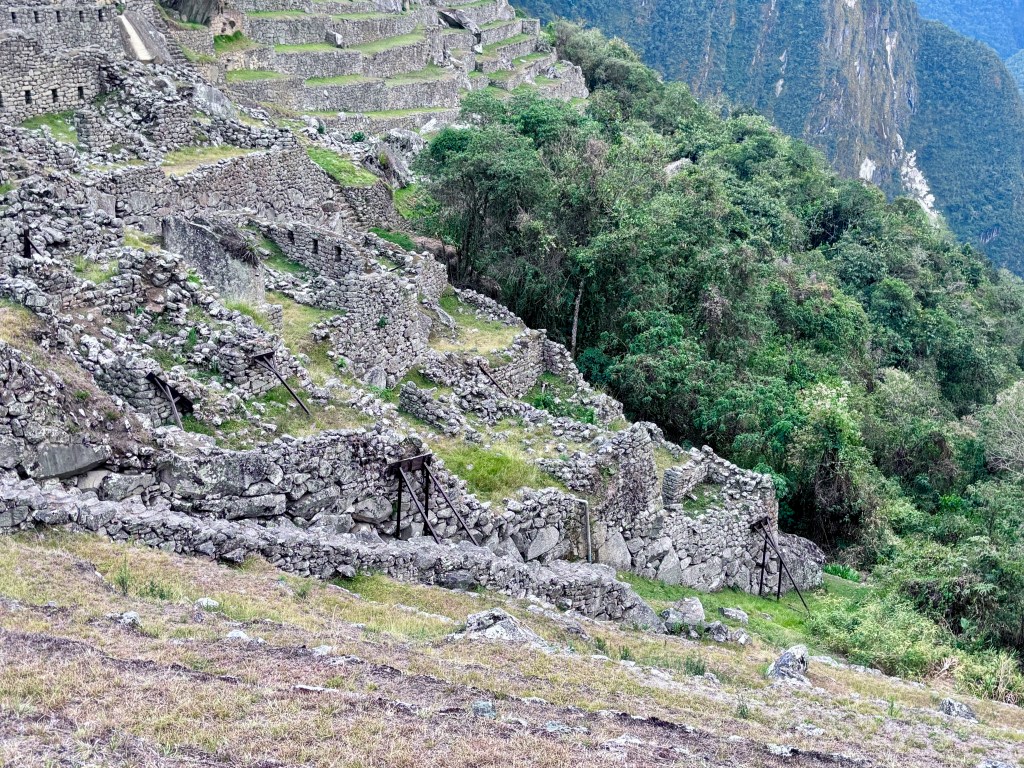
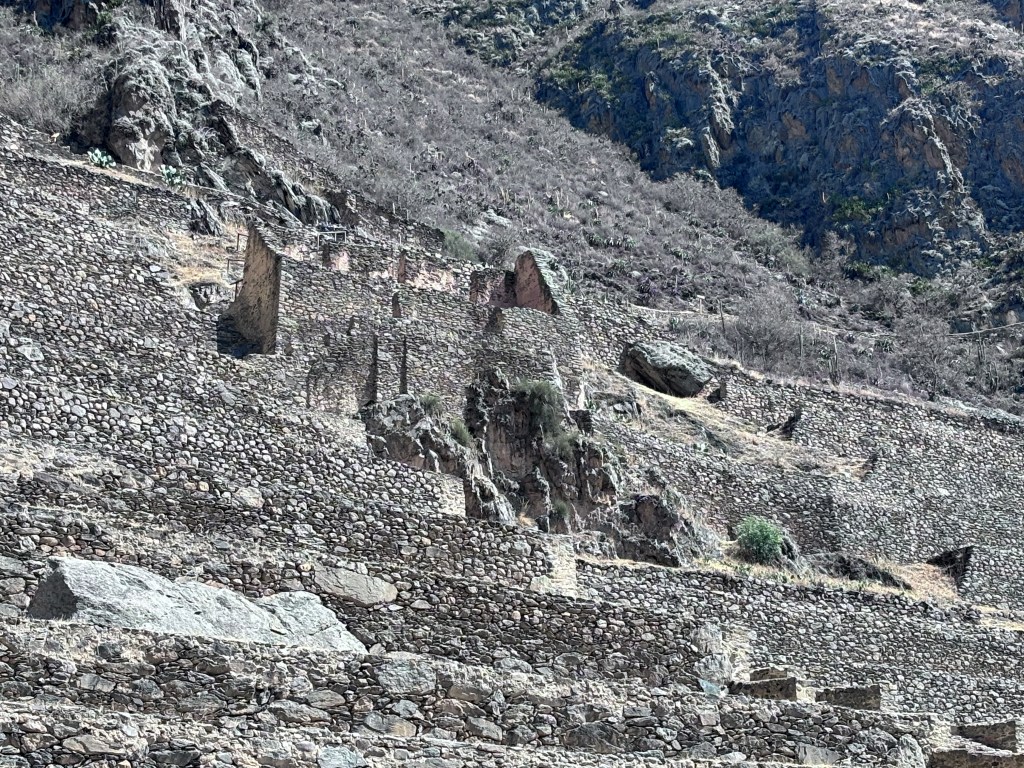
The Inca people grew crops on these terraces – primarily casaba tapioca root. They would use the Inca trail to trade for potatoes and quinoa with other groups.  The terraces were outside the walled city.  The houses on the left side were graineries.

This slant rock was used for winnowing quinoa. 

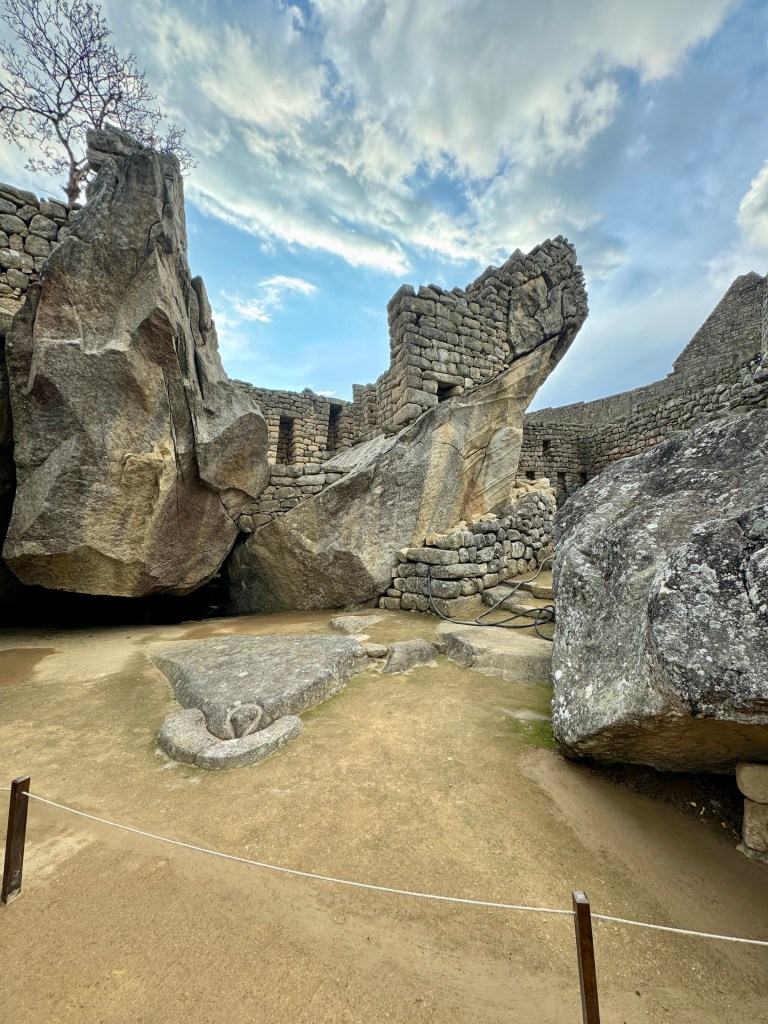
We walked through this area that was The Temple of the Condor.  The rock on the ground is the condor head.

This is an interesting place!

The Machu Picchu site is 40 percent original with 60 percent restored with original materials. 

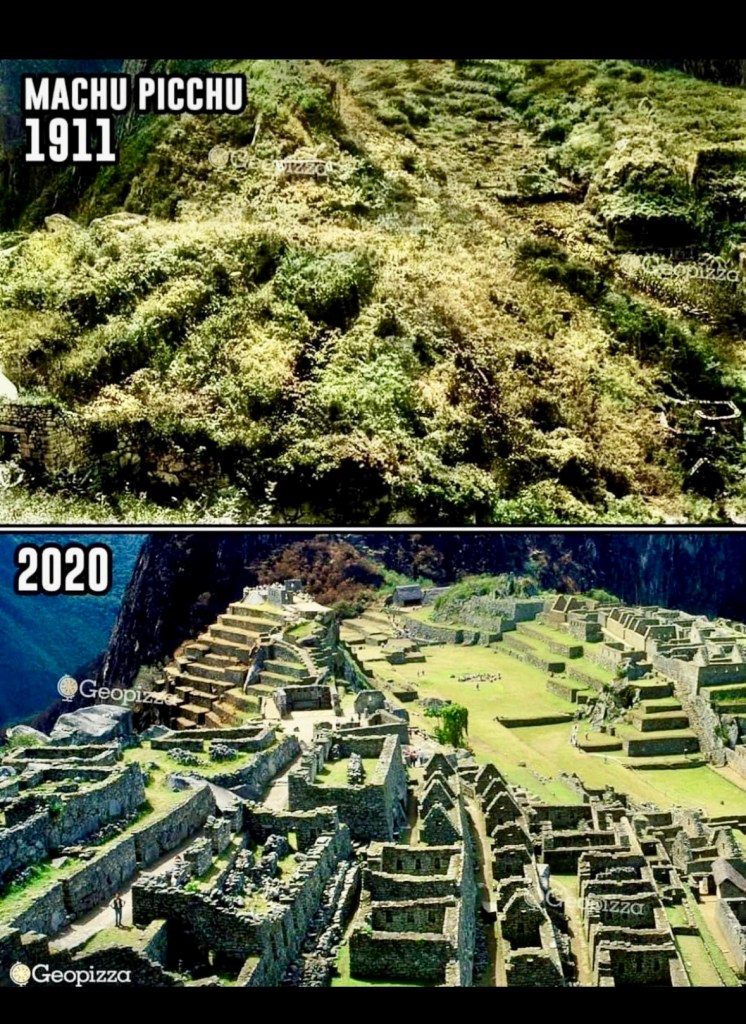
This is similar to how much of Machu Picchu looked before any restoration.

It had been a terrific day at Machu Picchu! We explored about 70 percent of the site and still had another day to come!

Enrique’s plan was if we had a clear morning the next day, we would climb back to the top to witness the sunrise over Machu Picchu. If not, we would continue to explore areas we hadn’t yet seen. 

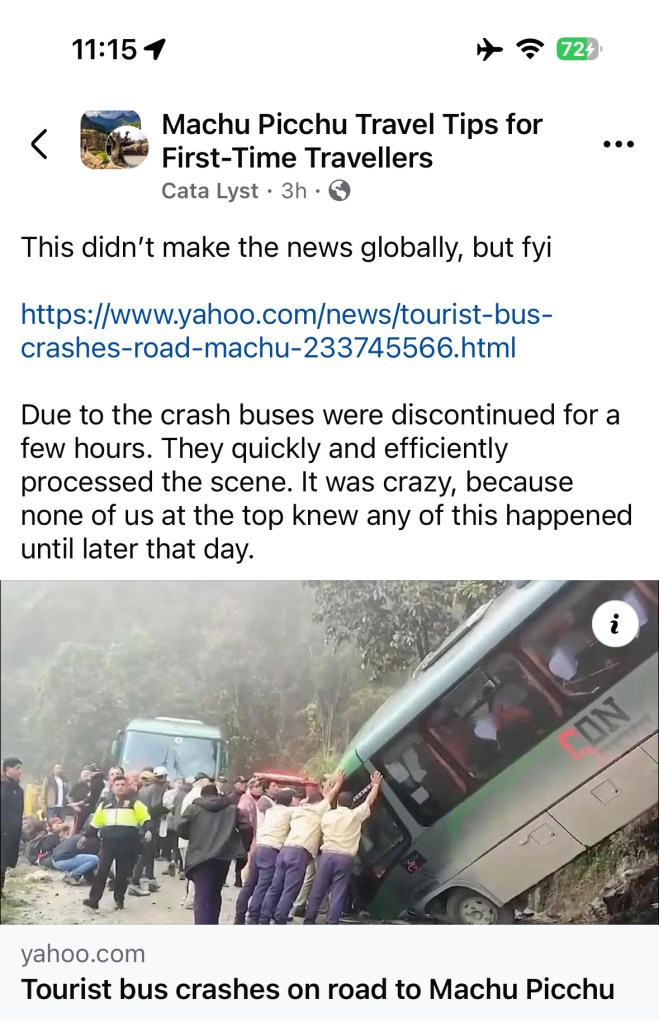
The next morning, we had a 4:30 am wake up for an early breakfast at 5:00.  Once again, both our bus ride and our entry were timed. By then some of us had become aware that our bus transportation had experienced a bit of a problem a few days prior! 

Nevertheless, we boarded our bus. By the time we got to the top of the mountain,  it was already raining a little. Randy and I had brought ponchos and those who hadn’t brought one, bought one. Enrique likes to say it rains 400 days a year at Machu Picchu – every day and sometimes twice.

The areas we explored on our second day offered time for learning about families that lived their whole lives in Machu Picchu.  They shared communal living spaces. Children stayed with their family until age eight, at which point they lived in age similar groups . They were considered adults at age 16. 

There is still much unknown about Machu Picchu…

including the purpose for these stairs.

This is a ritual cleansing area between two temples.

This was the only toilet found in the whole site.  Most would have used a chamber pot. A minority segment of the population were vegetarian and their urine was used, medicinally, based on the Inca study of plants.

This big room was likely used for community gatherings. 

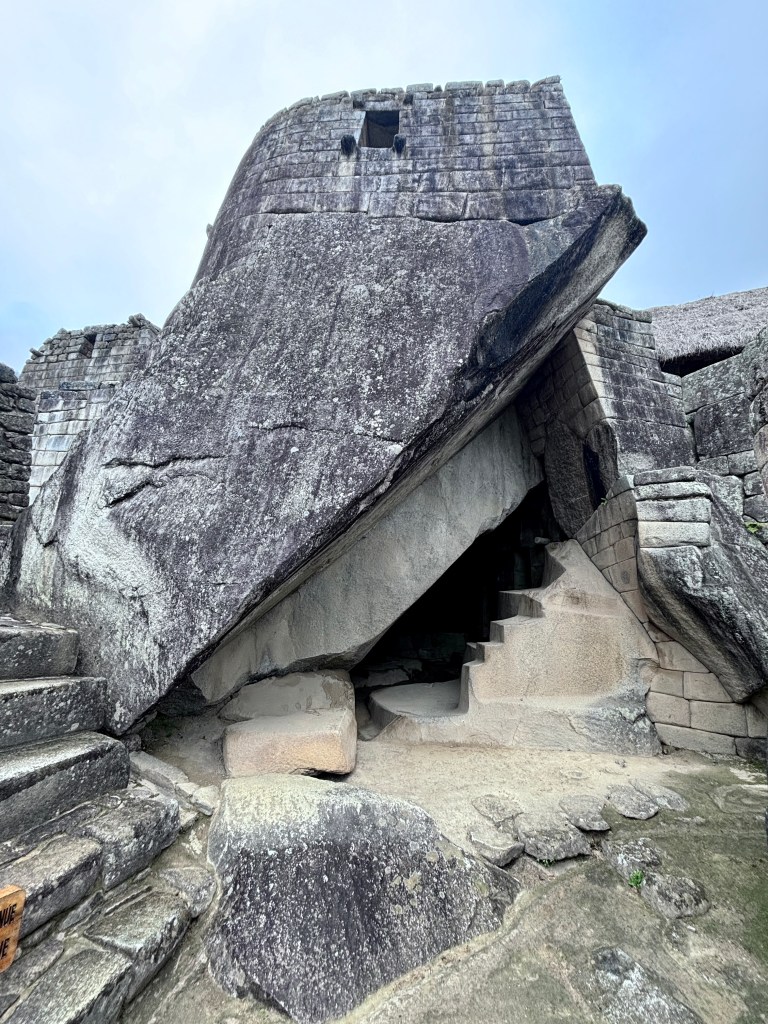
The round circles on the ground are oriented north and south.  As light comes through the window, the circles reflected the constellations.   The pools were also used to ferment medicines.

We had our lovely afternoon in Machu Picchu, and then our rainy morning. It was so nice to experience both. With rain so common (400 days a year), it is sad to think many only experience it in the rain.

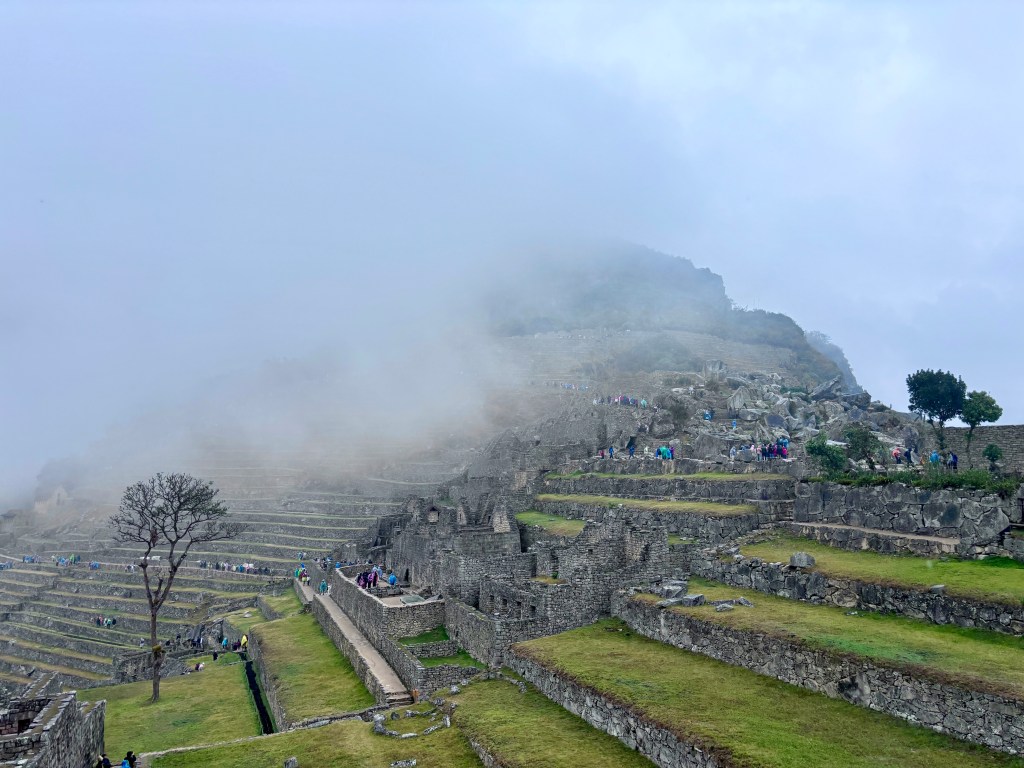
Where we had a stunning view down the mountain the day before, we now could see nothing.

The archeological record suggests that the Inca built Machu Picchu in 1450 but abandoned it 100 years later, about the time of the Spanish conquest.  It remained hidden because Europeans never looked for a city so far from the river.

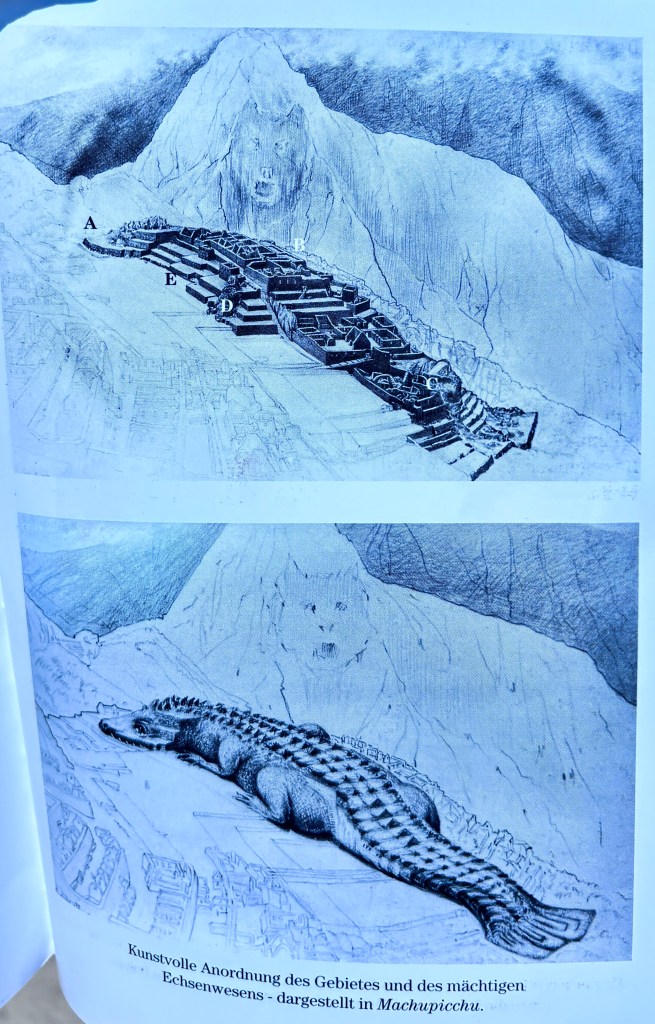
Remember when we learned that the Inca formed their cities in the shapes of their animal gods.  Machu Picchu was made in an alligator shape.

Machu Picchu was introduced to the world by American Hiram Bingham, a Yale lecturer on South American History.  He journeyed to Peru and was shown Machu Picchu by native Melchor Arteaga on July 24, 1911.  The Incan city had been forgotten by all but those who lived in the immediate valley.  

The Indiana Jones character from the Raiders of the Lost Ark series of movies is thought to have been conceived in the likeness of Hiram Bingham.

Screenshot

There is a picture from Facebook that shows what the site likely looked like when rediscovered and more recently. Credit to Geopizza.

Machu Picchu was declared a UNESCO World Heritage site in 1983 and voted one of the New Seven Wonders of the World in 2007.

UNESCO recommends that visitation to Machu Picchu be limited to 2500 people per day to preserve the site.  The first day we were there, ticket sales were to 5750 visitors.   Planning is in place that much of the site will be closed to the public within three years.

People typically mispronounce Machu Picchu.   If you say Machu “pea-chew” you are saying old penis.  To say the name of the ancient city correctly, you need to say Machu “peak-chew.”

We were in Machu Picchu on September 18 and 19, 2024. I had no problem at all traversing the grounds except for climbing wet steps that were very tall for someone of short stature. The irony is that the Inca were even shorter than me!

Next Up: We go back to Cusco.

Posted in Uncategorized | 1 Comment

Peru:  Morning in the Sacred Valley

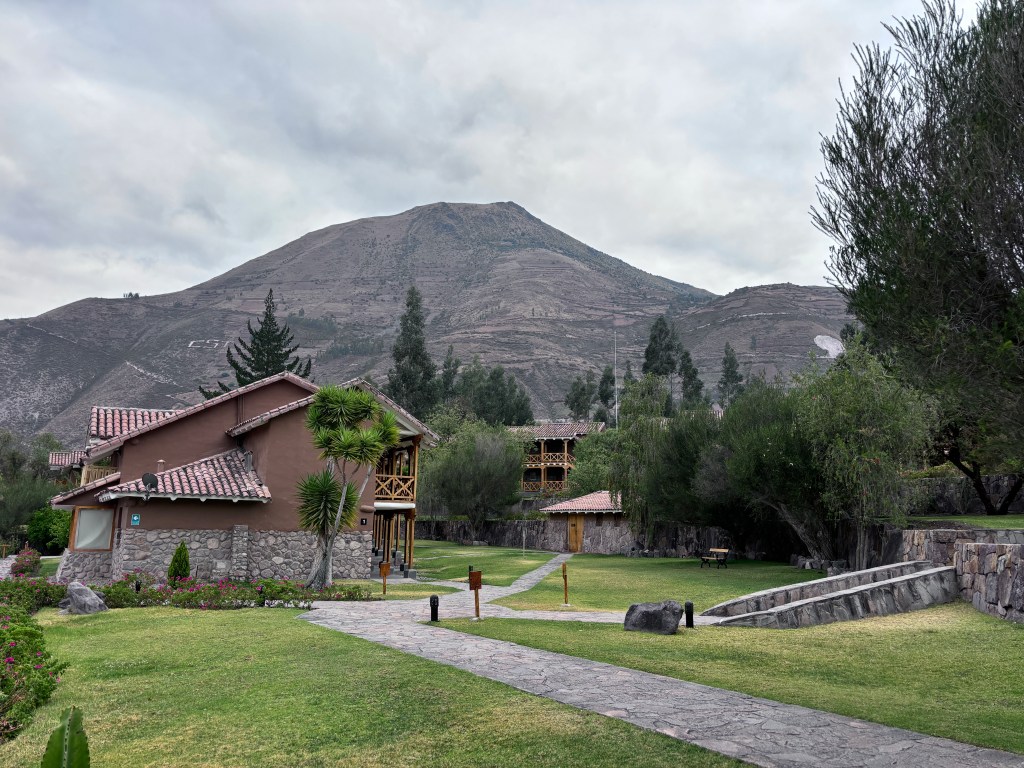
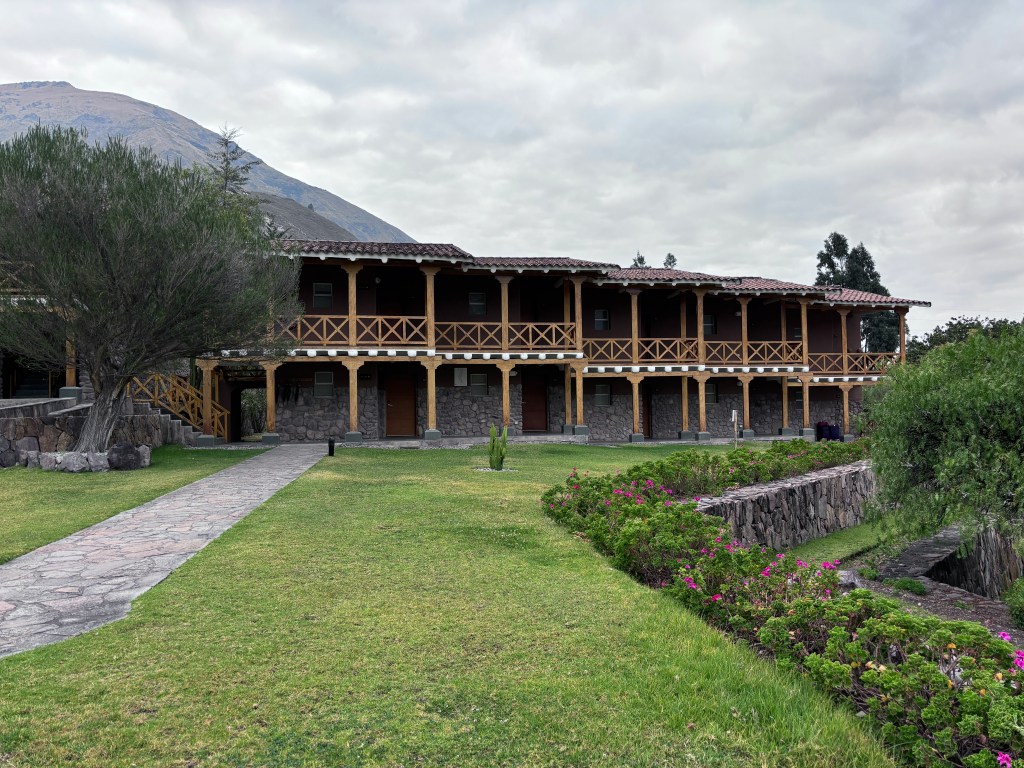
We had arrived at our resort in the Sacred Valley after dark so didn’t have a chance to see how nice the grounds were. 

This was the second time we’ve stayed at a very, very nice resort in a seemingly isolated portion of Peru.

We also needed to divide our belongings into one bag that would be with us for our afternoon adventure in Machu Picchu, a few things that will go on the train for overnight at a hotel near the site, and the bulk of our belongings that we won’t see again until after our second visit to Machu Picchu.  This was quite a complicated task and I’m not sure we could blame altitude fog for the confusion.  Eventually, we and everyone else in our group, figured something out and had our luggage sorted into the appropriate piles.

We had breakfast at the hotel but were also tasked with making or gathering something for lunch from the hotel’s breakfast buffet.  We had time constraints with our travel and there would not be time to stop for a proper lunch.

Soon after we left the resort, we ran into road construction that had started before it was supposed to.  Our bus driver and tour director had to do some negotiating so we could leave and meet our other well timed itinerary.

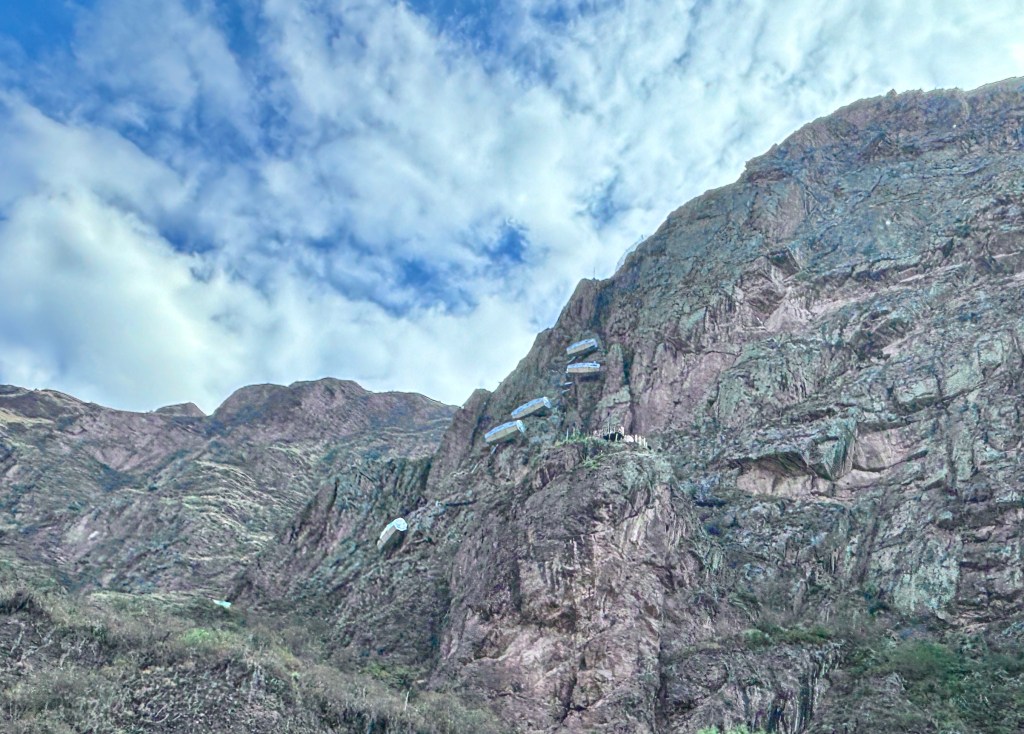
We passed the Sky Lodge Adventure Suites hanging off the side of the mountain!   Here are a few phrases I took from their website:   a once-in-a-lifetime chance to sleep in a completely transparent, hanging bedroom capsule over 1,000 feet above the valley floor,  not for the faint of heart, you must first either climb 1,312 feet to the top of Via Ferrata, or hike an intrepid trail through zip-lines, each suite comes complete with four beds, a dinning area and a private bathroom.  Packages includes breakfast & gourmet dinner with wine.  Even Randy said no thanks.

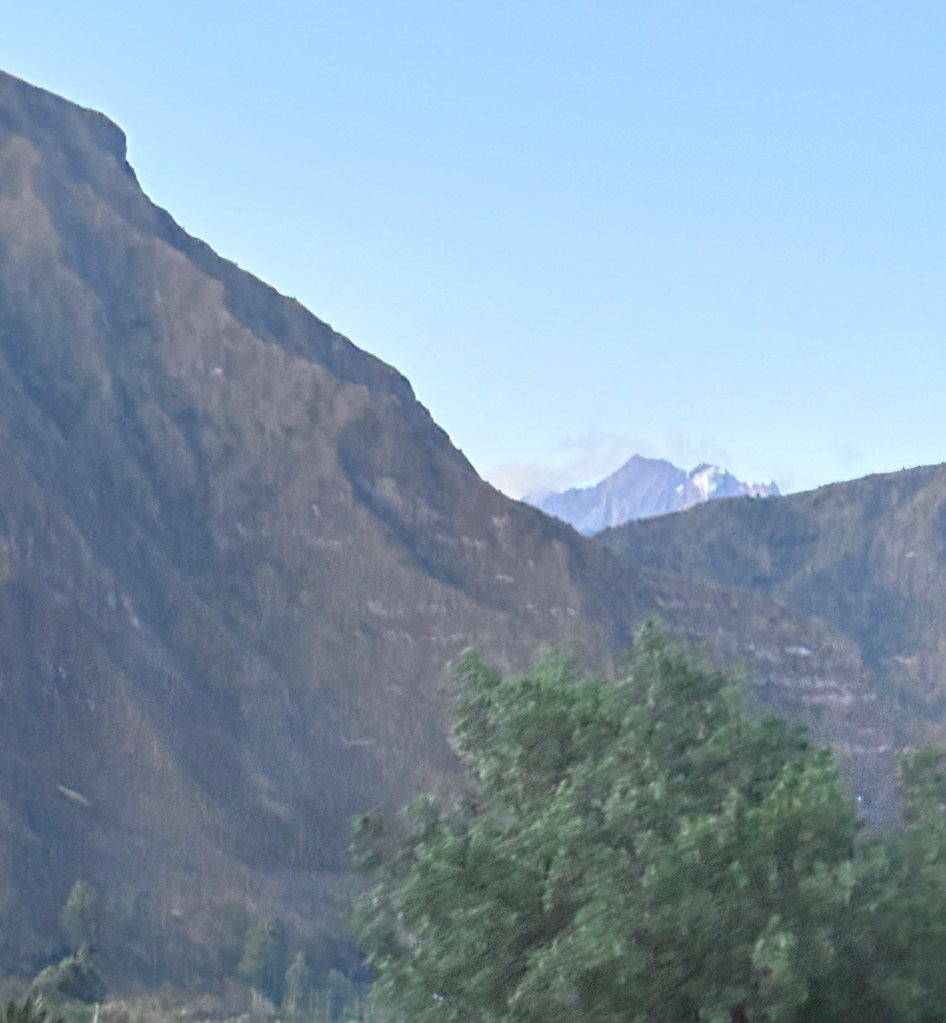
We also saw a bit of the last glacier in the Andes, the only one remaining in the equatorial zone.

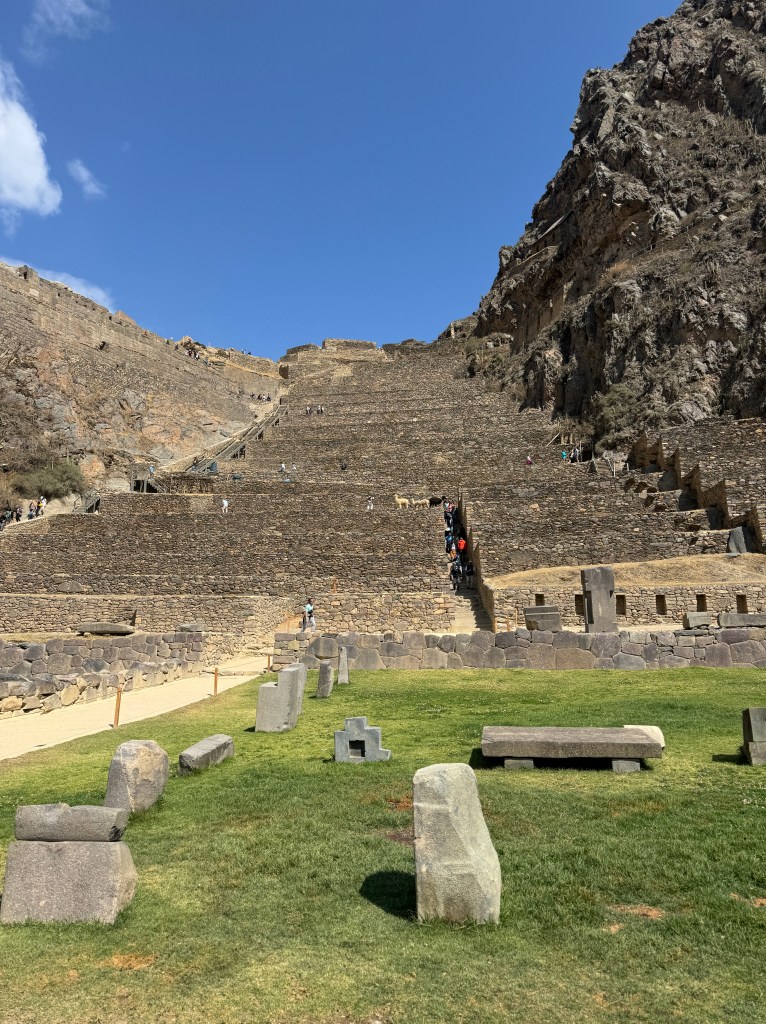
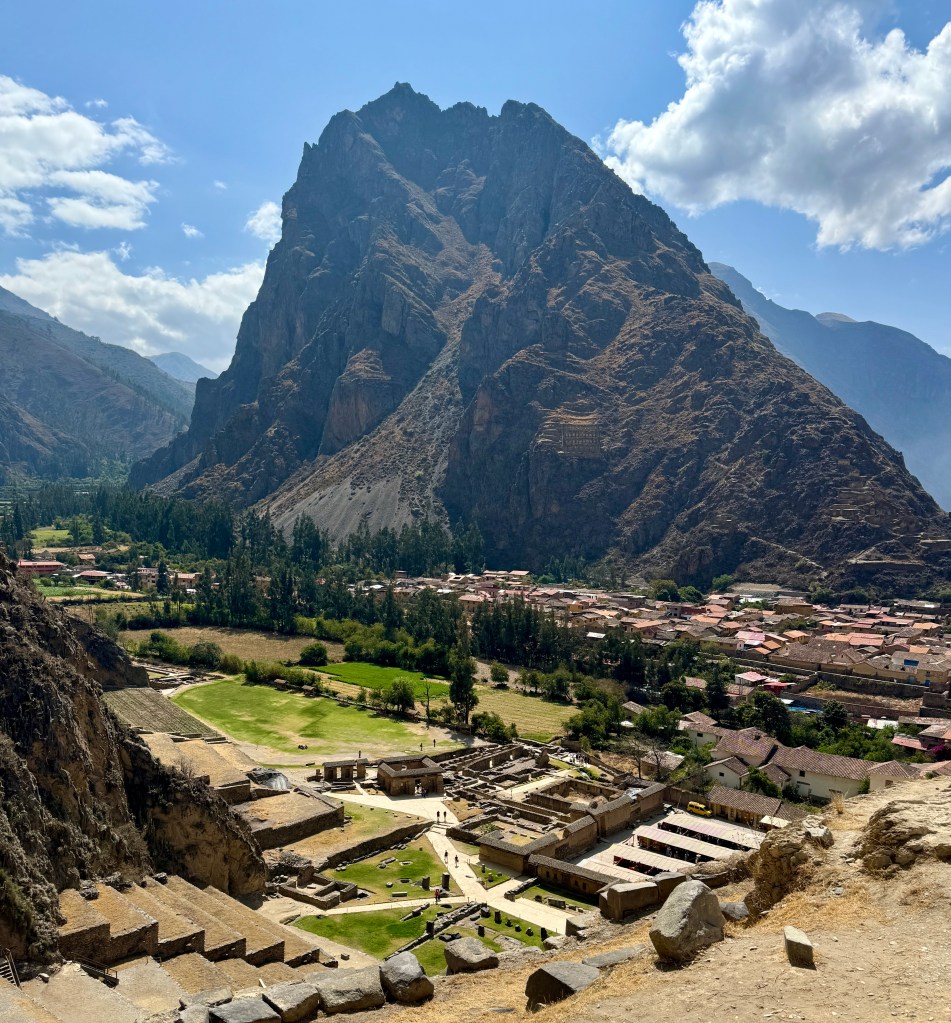
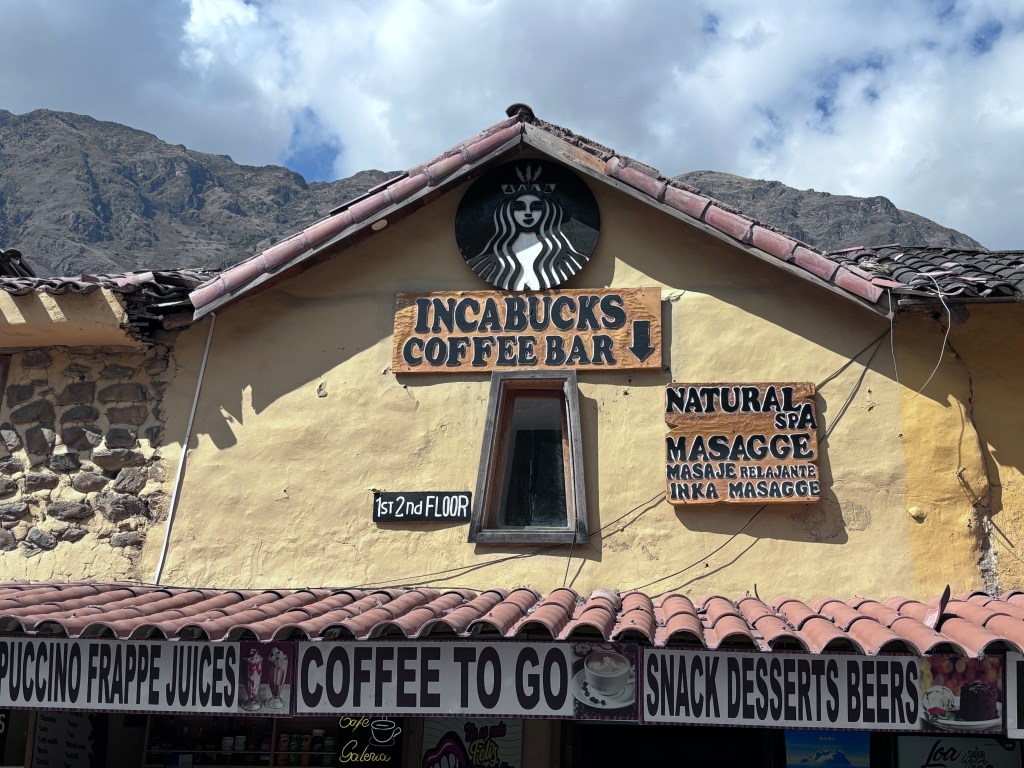
We arrived at the the adobe village of Ollantaytambo. I missed out on buying coffee at the Incabucks.  Next time we’re in the neighborhood, I’m stopping!

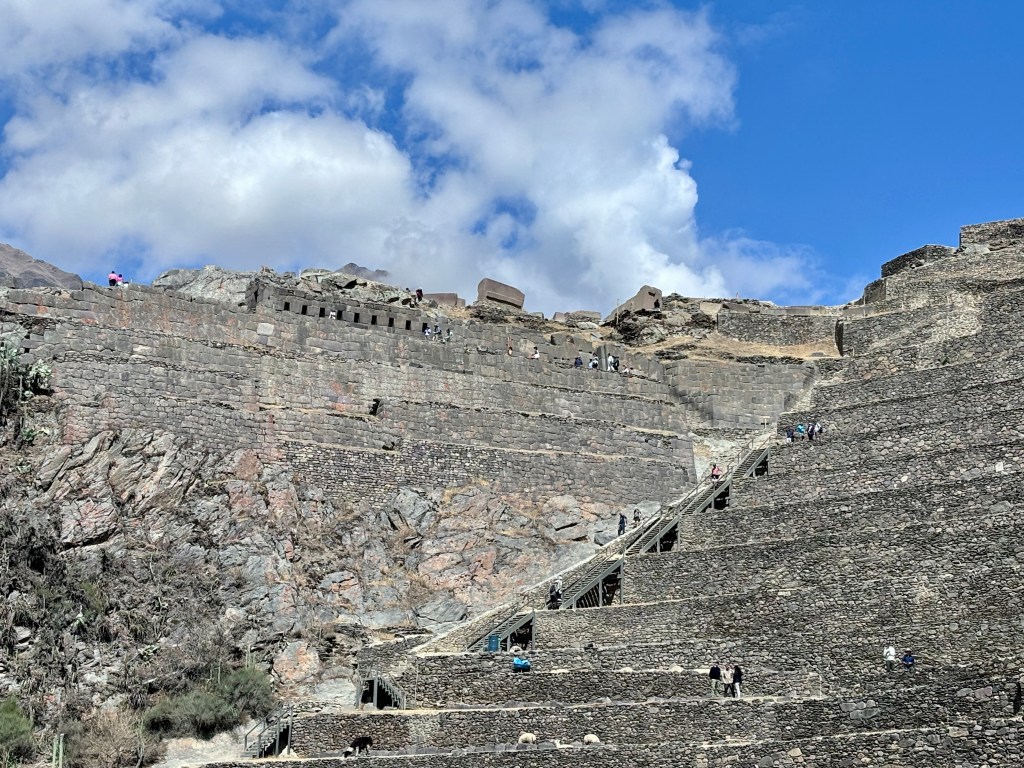
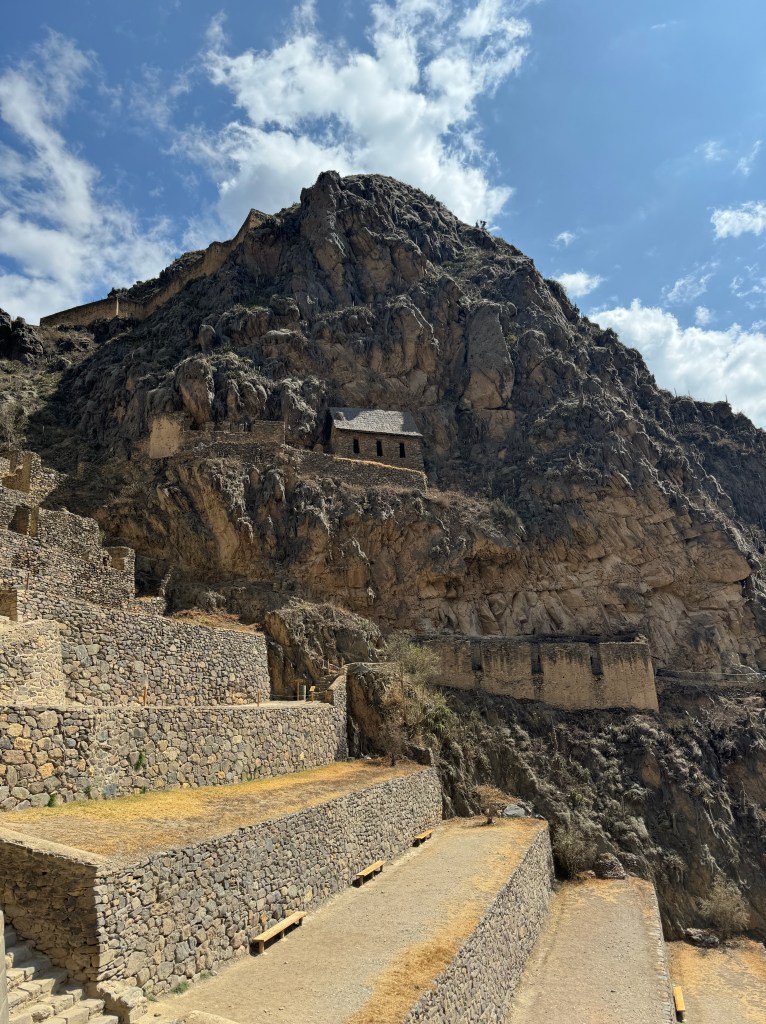
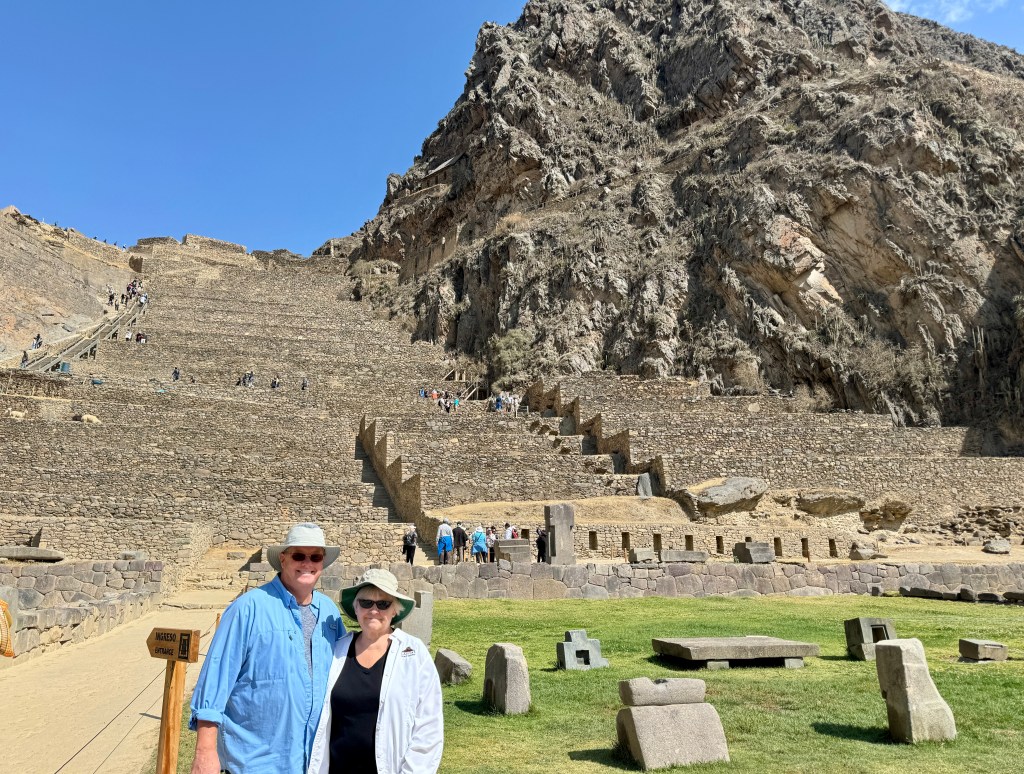
Our destination was the ruins of an Inca fortress.  We were told that we could choose to walk to the top, or hear the tour but there wasn’t time to both.  Randy and I decided to divide and conquer and both get what we prefer! 

This is the way Randy went up….

He took a picture of these three alpaca on the way up!

These are some additional pictures of Randy’s trek up to the high point of the Incan Temple of the Sun. 

In Peruvian history, the Inca beat the Spaniards three times.  However, in Spanish history, they only acknowledge one loss –  that being here at the Temple of the Sun in Ollantaytambo.

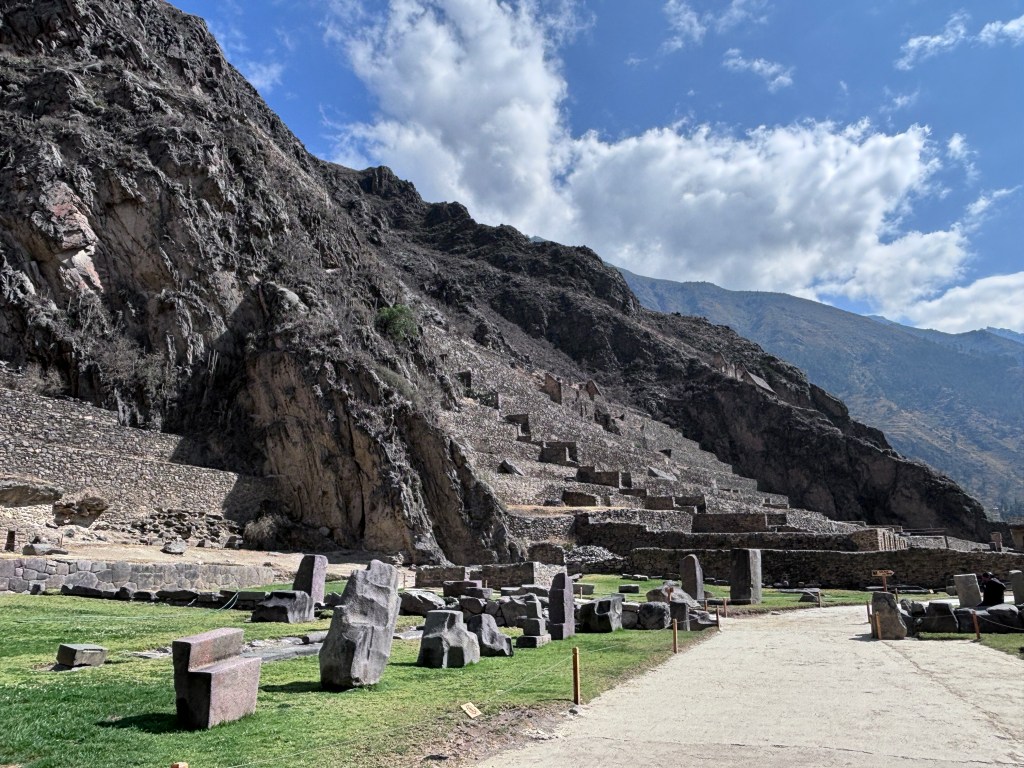
This is the tour route….the way these rocks were placed involves the summer solstice

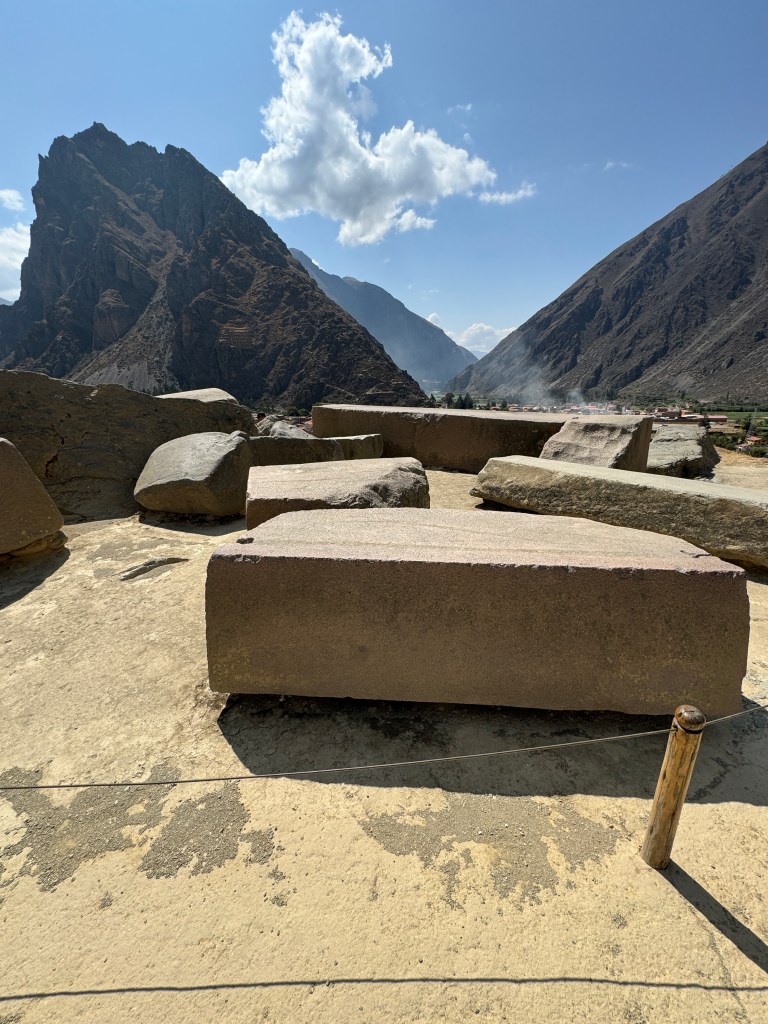
These stones weigh 90-100 tons.  How??

And how did they cut these stones to fit the way they do?  That mystery remains.

The Inca made their cities in the shapes of their gods. This fortress was made in the shape of a llama. 

The small house is the male sex organ of the God llama while the second house is the female sex organs of the God llama.  I don’t know what their more practical uses were.

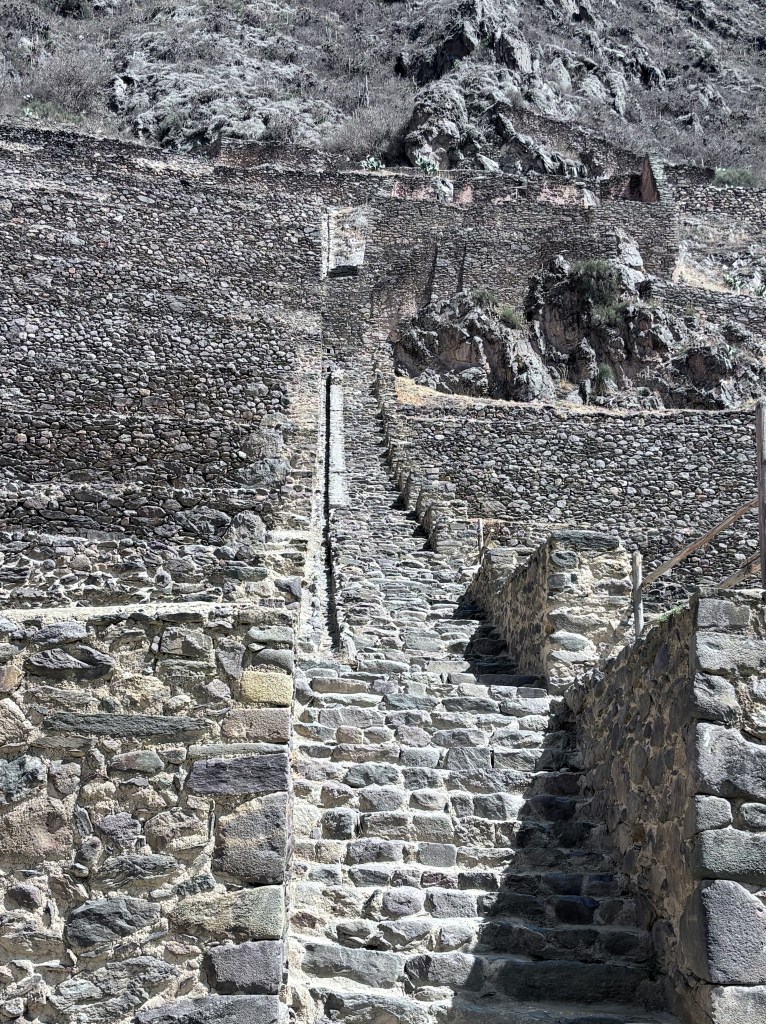
This is an Inca water canal next to the stairs.  The water can be diverted to provide irrigated water to the terrace.   Using irrigation for one cycle and rain for another the Inca were able to plant two crops a year.

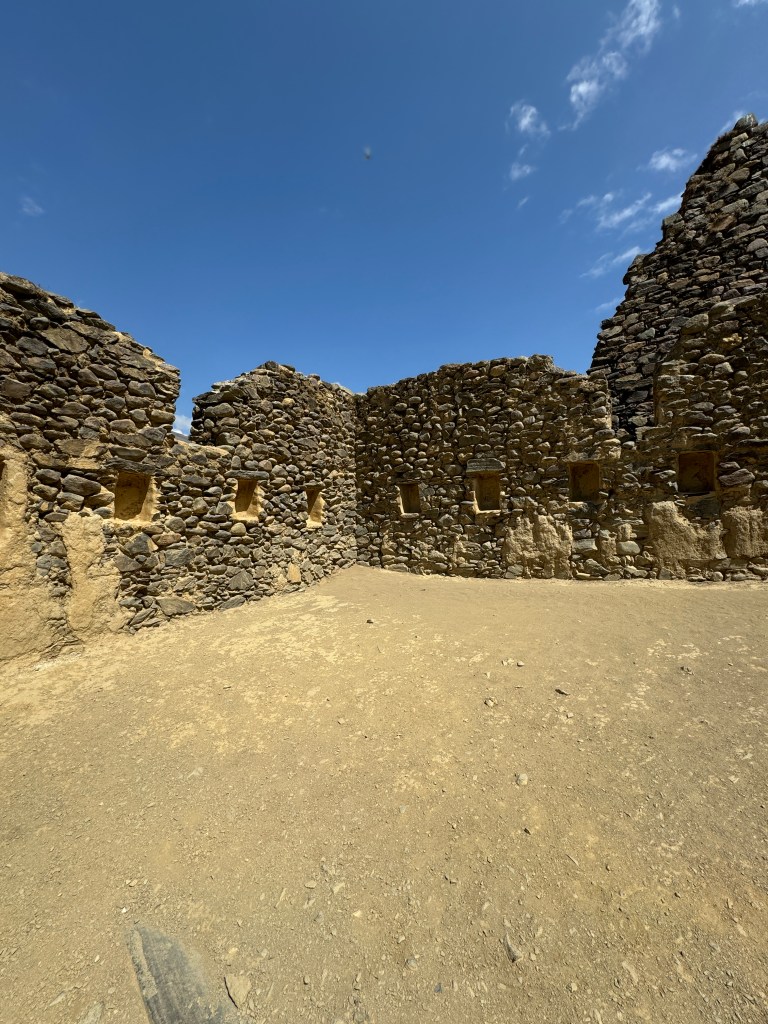
In general, walls that were conducted with this type of construction were less important than those with fitted stones.

This water temple was constructed for prayers of gratitude.  It is positioned so that the window allows the winter solstice light to come through.

The house on the side of the mountain, gets the morning light and is positioned to dehydrate foods. 

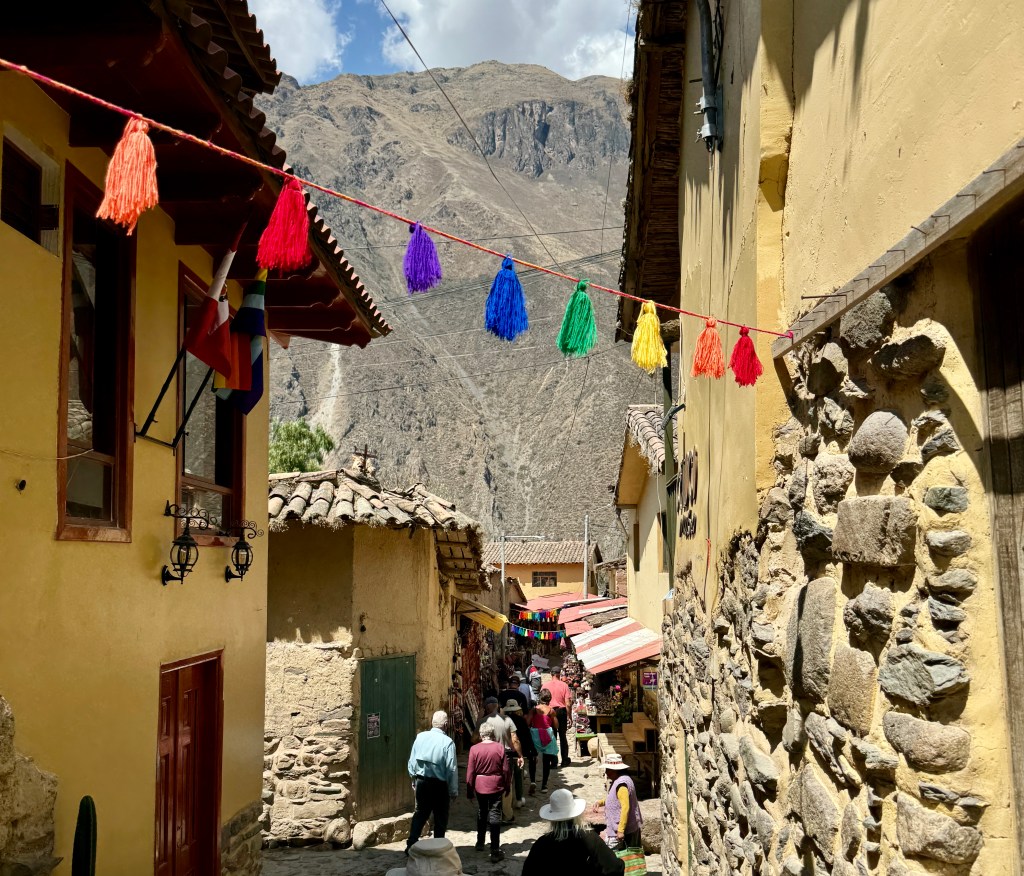
We left the ruins and headed back through the village.  I wanted to buy some of these colorful tassels but never did because I had no idea what I would do with them after I owned them.

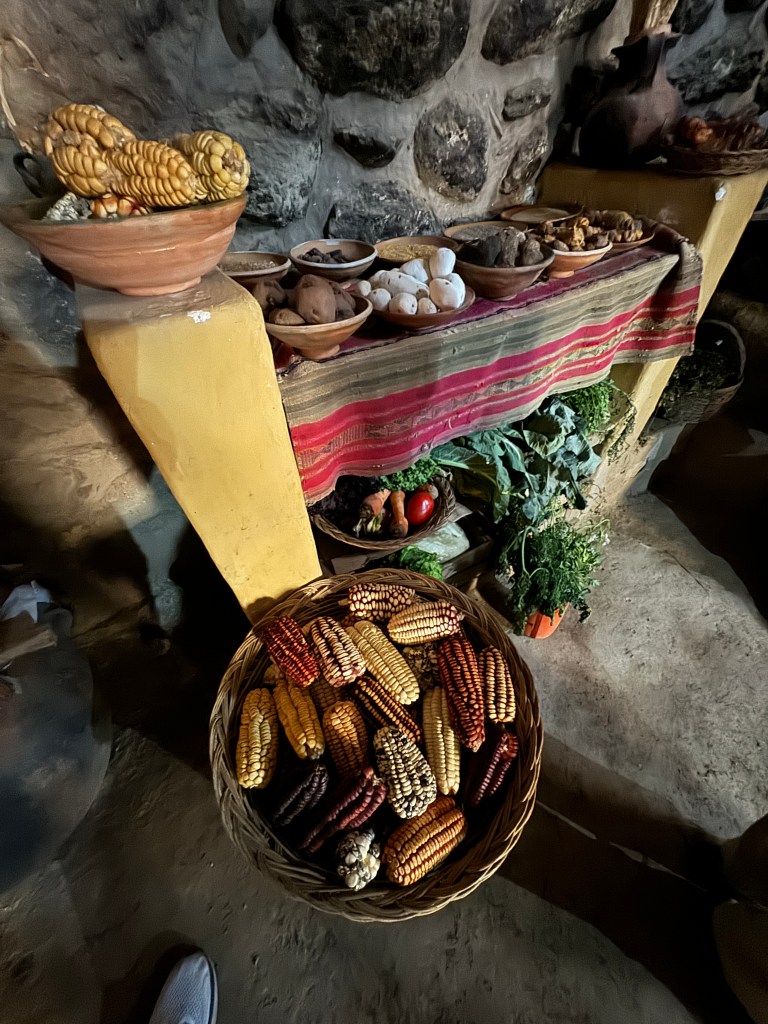
We were headed to Rosa’s house, a woman of Incan descent.

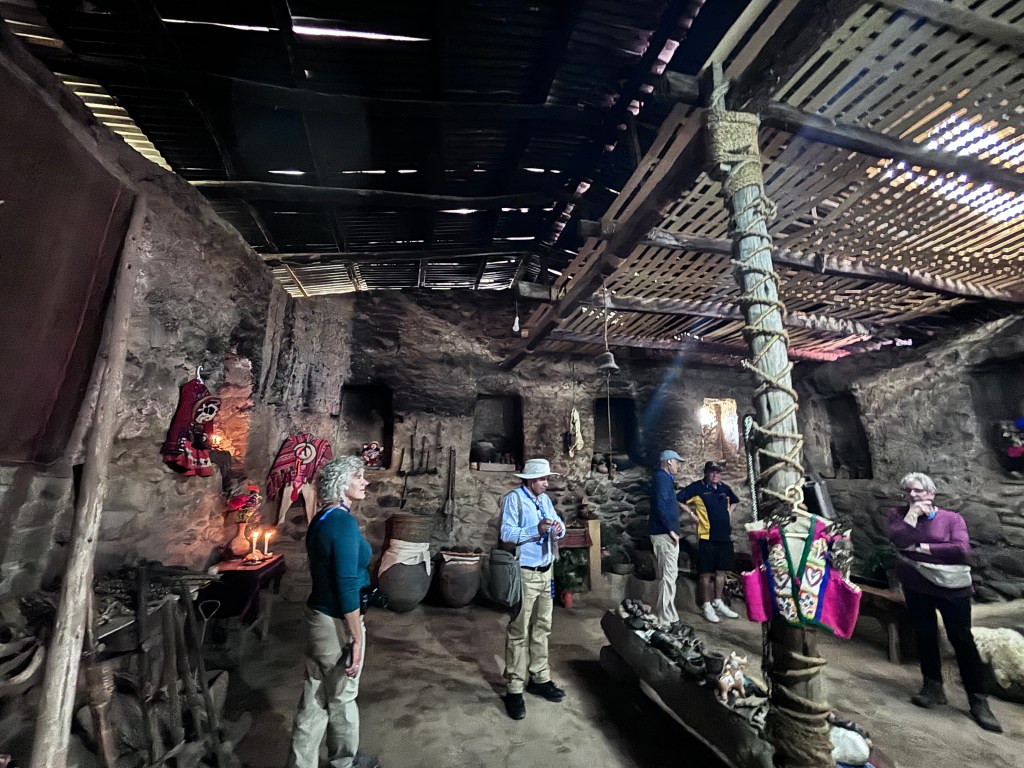
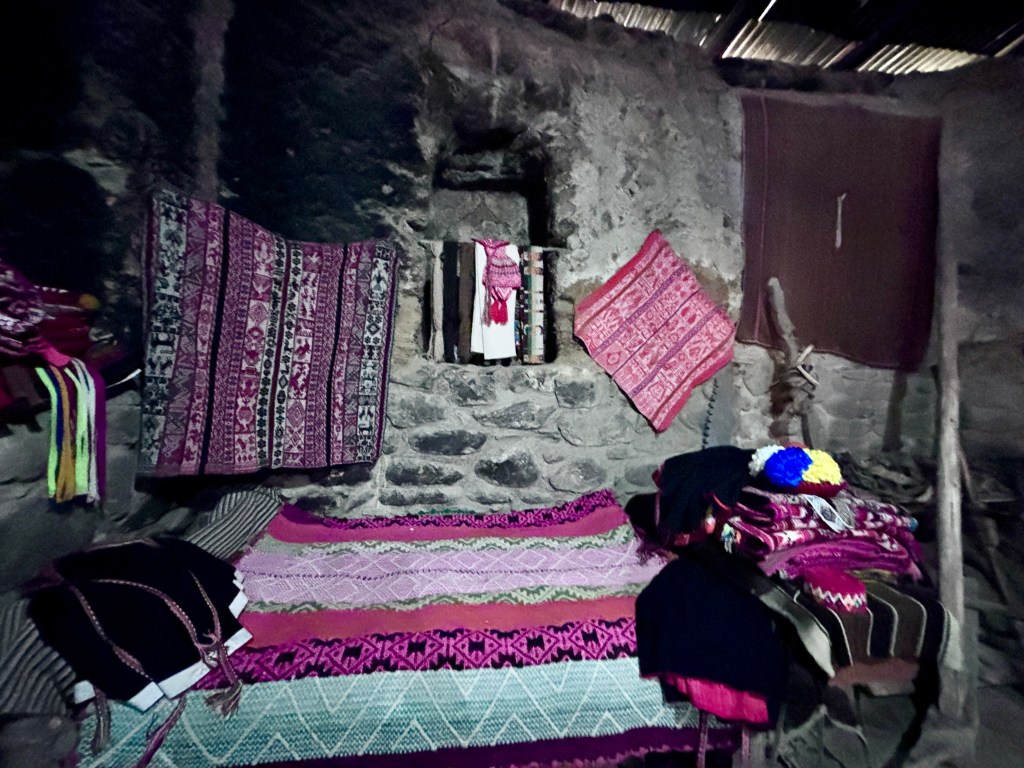
She lives in a 500 year old Inca house that has a new roof.

These are husband and wife shawls over the bed.

In Inca tradition, the youngest child stays to take care of parents and inherits the home. In the Incan culture, there were not mid-wives, designated men served that role.

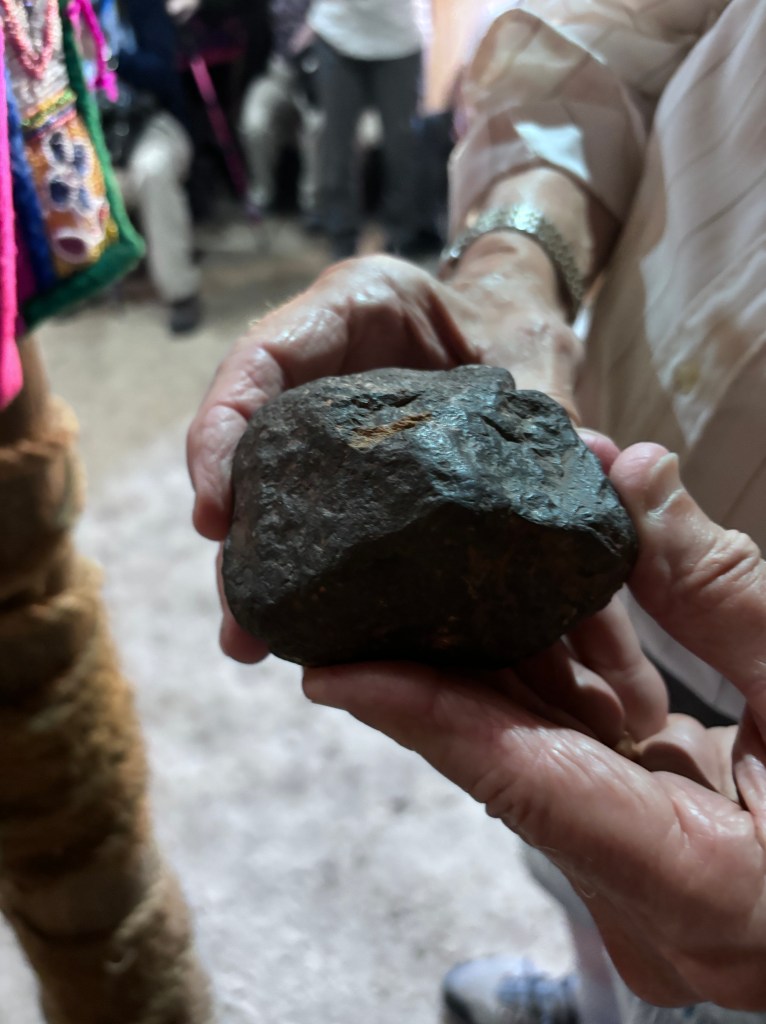
This stone is hematite from a meteor – strong enough to cut granite.

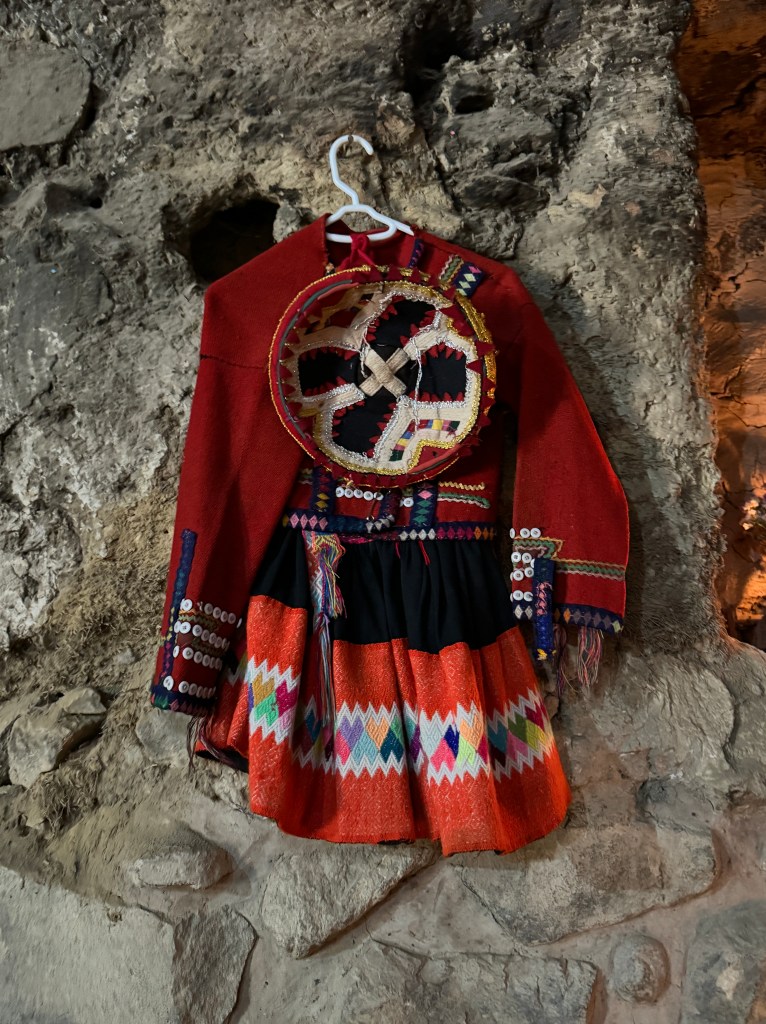
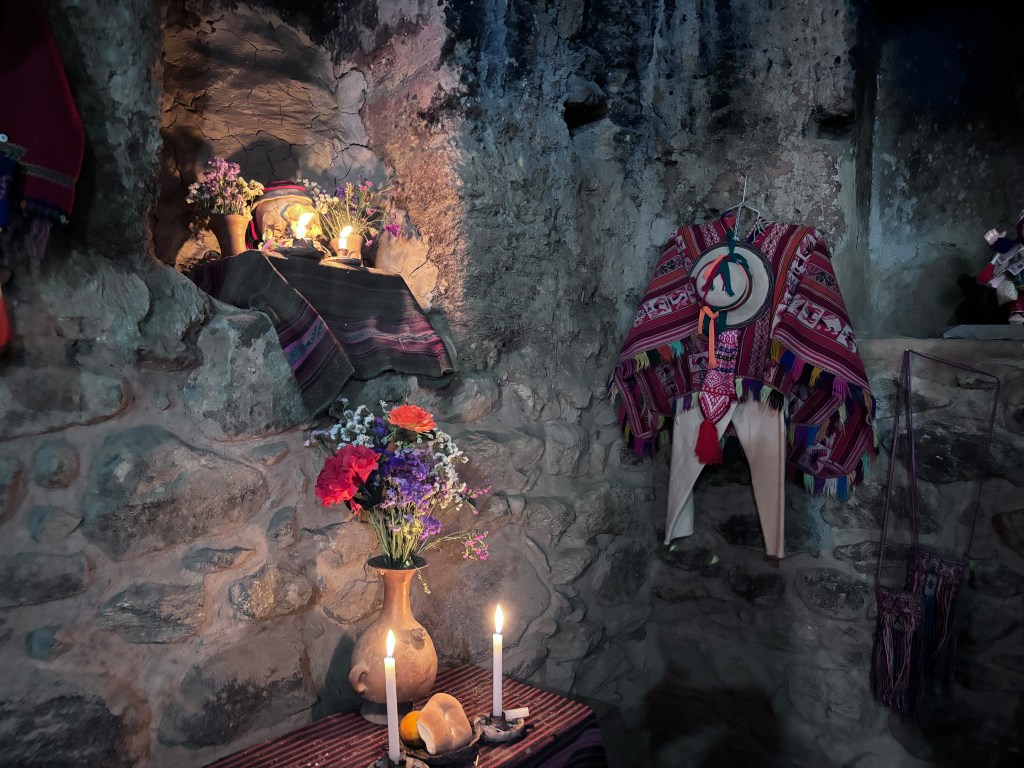
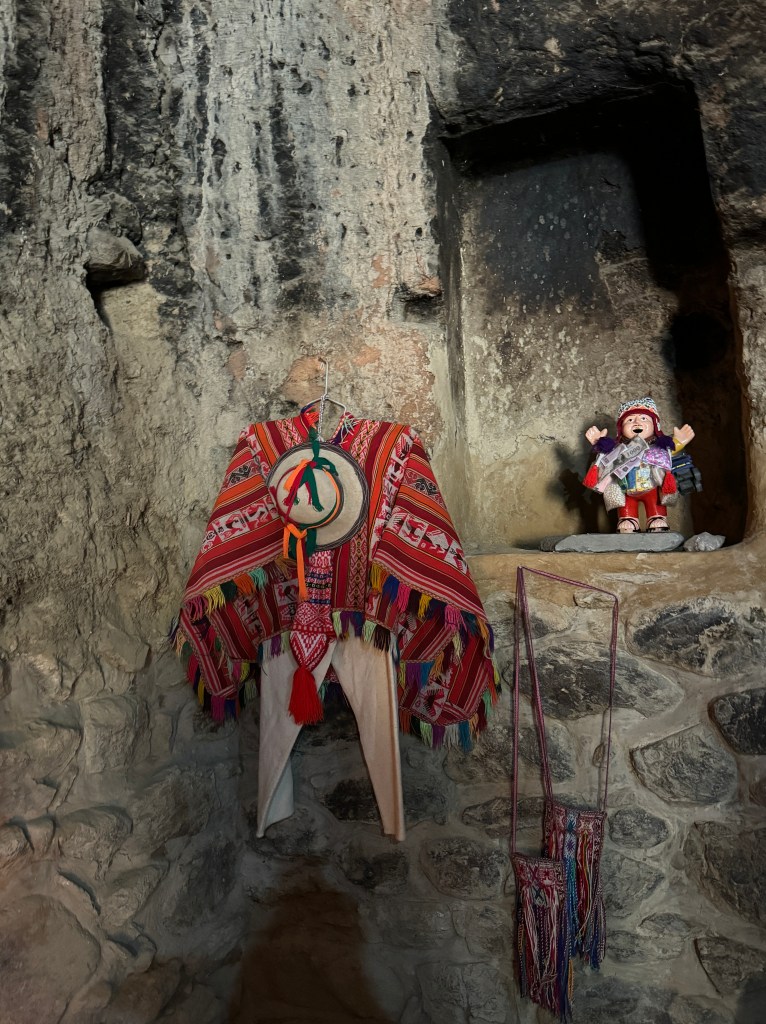
Rosa had a variety of religious or spiritual traditions represented in her home. 

She, like many, Inca did not feel the need to choose one over another.

In Inca tradition, prosperity is not measured by housing, it is measured by your friends and community.

We were in Ollantaytambo and Rosa’s home on September 18, 2024.  

Next up:  It’s Machu Picchu afternoon!

Posted in Uncategorized | 1 Comment

Enrique’s Hometown – Cusco City

We had breakfast at our hotel before leaving Lima.  We had spent four nights there, two before the Nazca Lines excursion and two after.

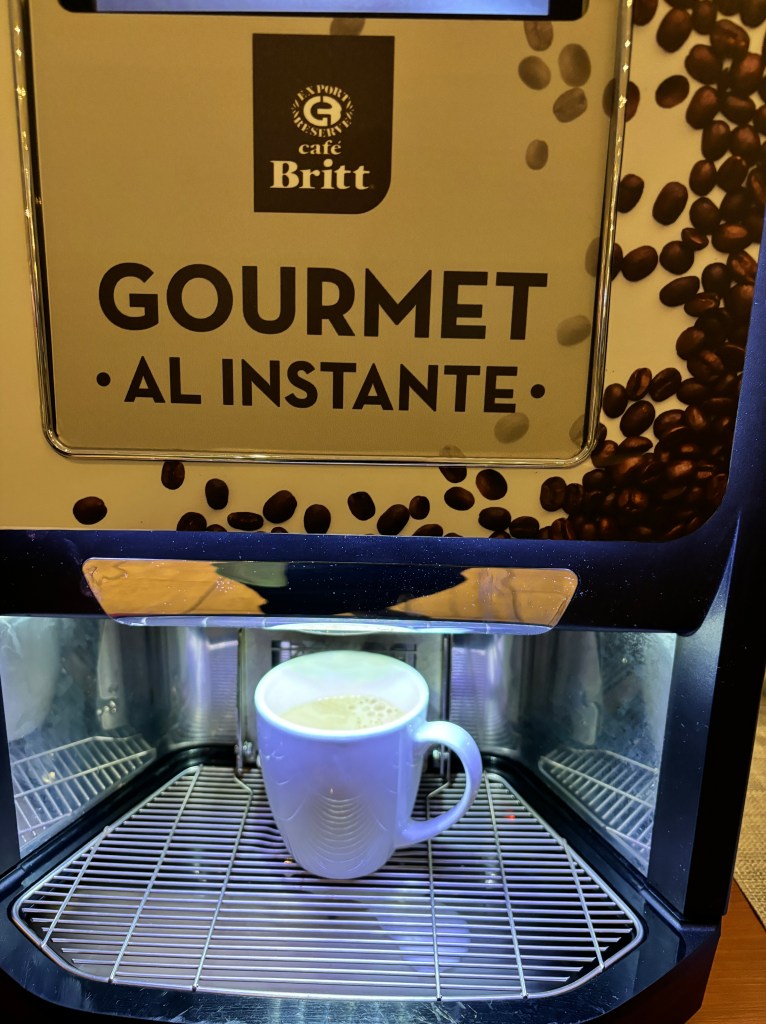
The breakfast buffet options were always good but it was surprising that there was no decaf coffee available. However, that there was delicious hot chocolate available through the coffee/cappuccino/latte machine.

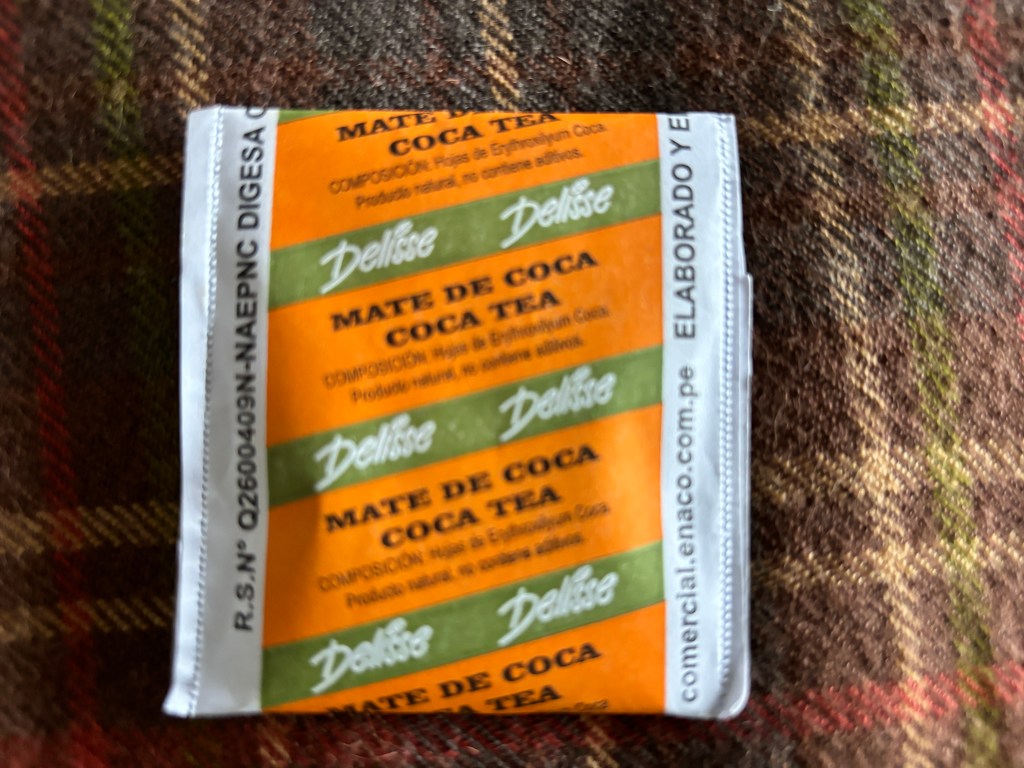
Several of us began drinking coca tea in preparation for the elevation change we would experience landing in Cusco, high up in the Andes..  The tea, in combination with over hydrating, was considered the best non-prescription preparation for warding off high altitude sickness. While in the bus, Enrique told us that tea benefits only last four hours.  We were trying to be over achievers. He told us that coca leaves do not have caffeine and are produced only in Peru, Bolivia and Columbia. 

Enrique told us that Quechua is the language of the Andes and the second most common language in Peru. It is spoken by 2 million people, most concentrated in the Cusco region. It is so different from other languages that Quechua was used as an alien language in Star Wars films.  By tradition one is asked – How young are you? instead of how old are you? when speaking Quechua. Enrique, who speaks six languages fluently, has only moderate ability to speak Quechua.

By the way, the name of our destination in the Andes can be spelled Cusco or Cuzco. Both are correct.

The Lima airport was packed! We got through a busy, but fairly efficient security screening.  The gate area was crazy packed!!  As we were boarding, Enrique said there was a “senior line” but senior status in Peru is 70 years old.  We all got in the queue anyway.

I don ‘t think I have ever before been the first passenger on a plane!

The flight had a lot of turbulence as we were preparing to land in the high altitude city of Cusco at 11,200 feet. Cusco is located 13 degrees from the equator.  It has a rainy season and a sunny season but with climate change, the weather isn’t as reliable as it was previously. 

We had arrived in the ancient Home of the Inca, Cusco City!

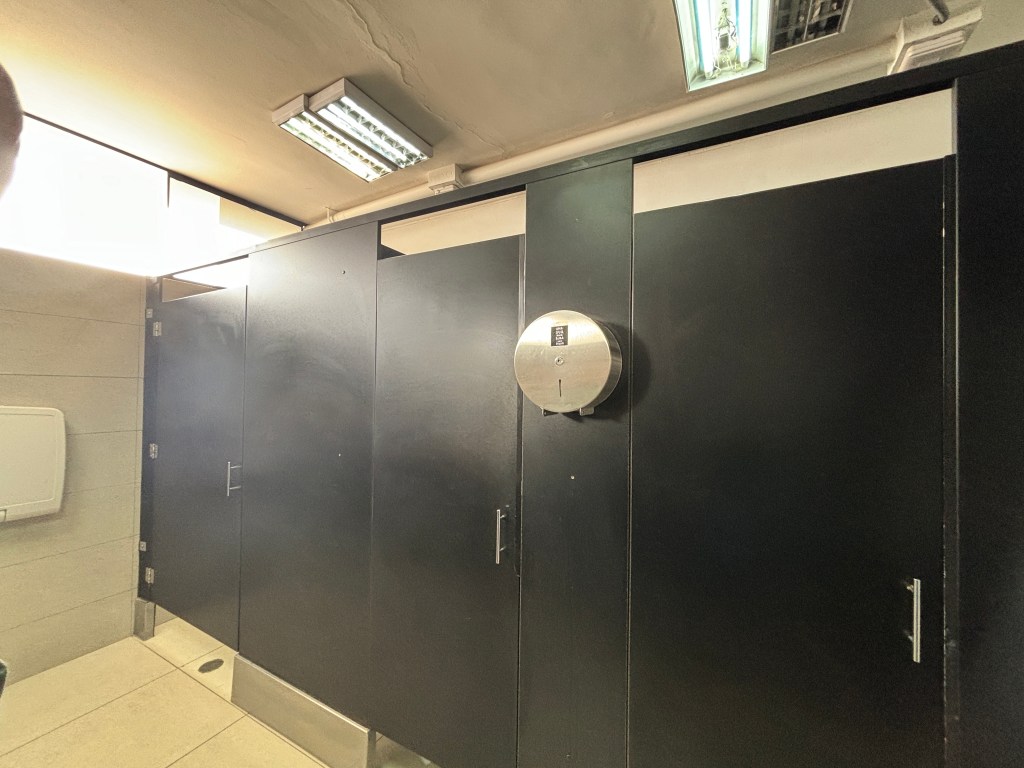
Almost everyone made a quick restroom stop since we’d been hydrating.  This toilet paper roll outside the stalls was just one more iteration of the toilet tissue question in Peru.  Frequently there was none, sometimes there was a charge, and this one had it outside the stalls.  It is a good idea to always bring your own! The airport restroom was clean and that was not always the case. Enrique called having a clean restroom that also had toilet paper a blessing!

Enrique lived in Cusco until he was a teen.  His dad was a police officer but officers were not allowed to work in the city where they lived to avoid corruption.  After ten years of proving themselves, an officer could work and live at home full time.   Enrique’s family never left the Cusco area so Enrique decided to embrace the travel industry as a career.  He has a degree in History of Peru and South America 

Cusco has a growing population because of silver and gold mining, huge natural gas reserves and tourism.  

Arriving in Cusco and spending several hours at high elevation was a first step in our elevation acclimation. We peaked at a nice little resort at 12,000 feet.  

We had a nice Peruvian lunch including a very delicious corn salad that I have since researched to no avail. There are several Peruvian restaurants in Phoenix and we will be sampling their corn salads at some point in the future.

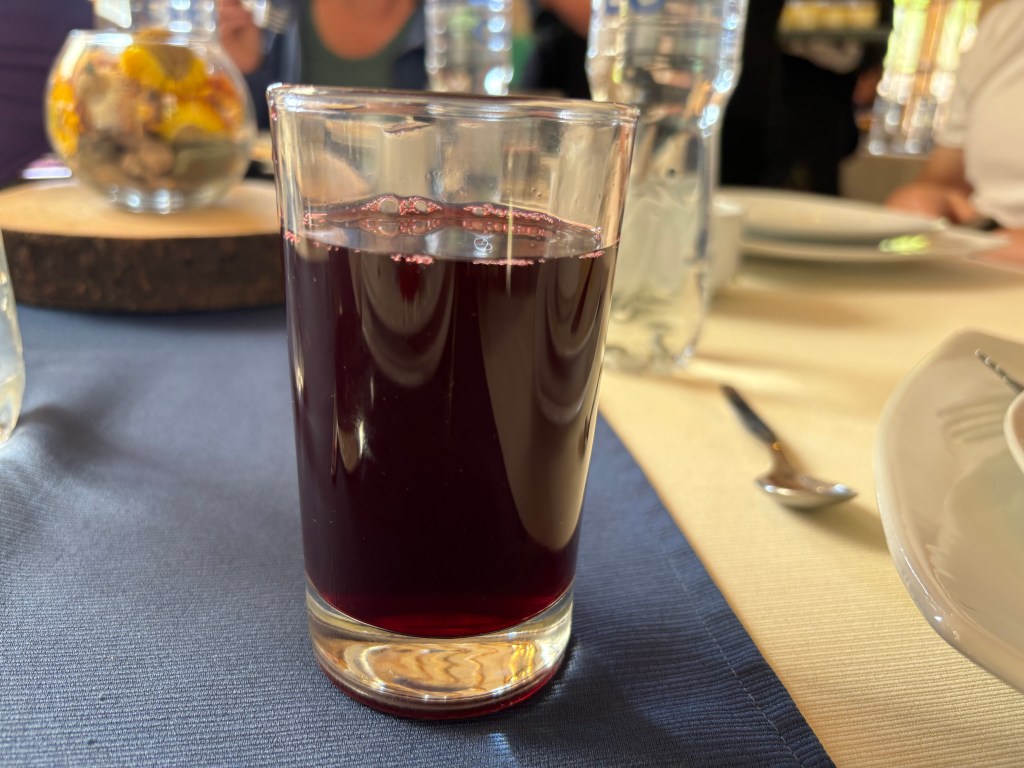
New to us was an Andean blue corn juice which was quite good.  We all had another serving of coca tea as a few in our group were feeling the altitude with dizziness or light-headedness.

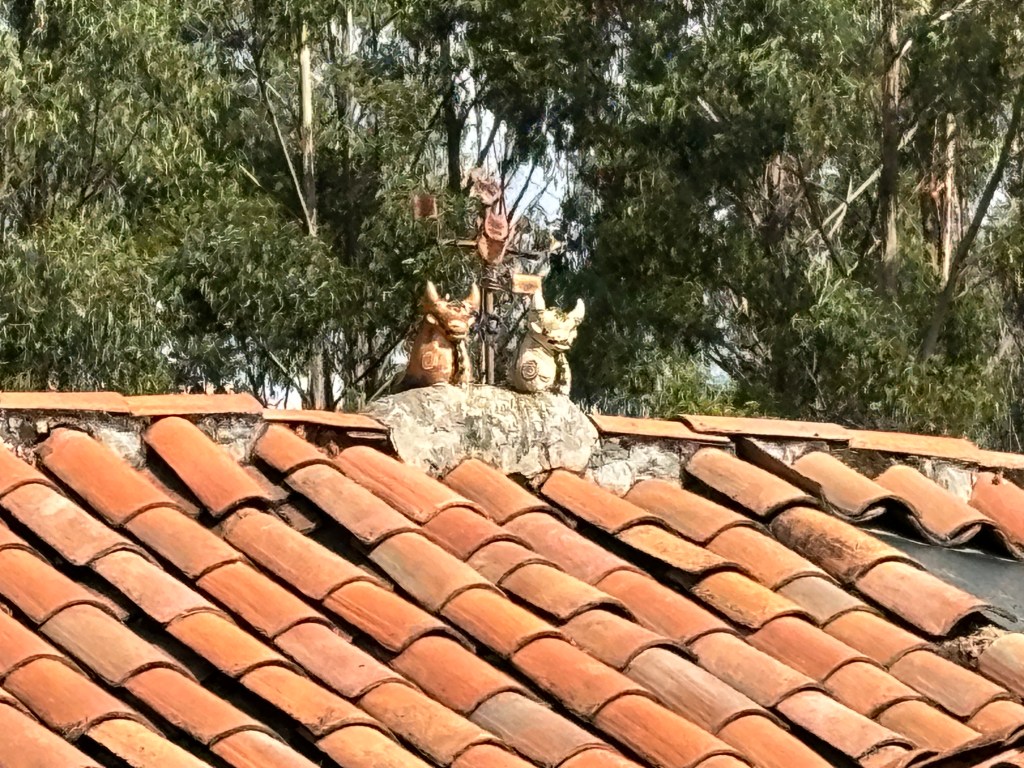
Most homes in the area seemed to have dual bulls on their roof for protection or good luck.

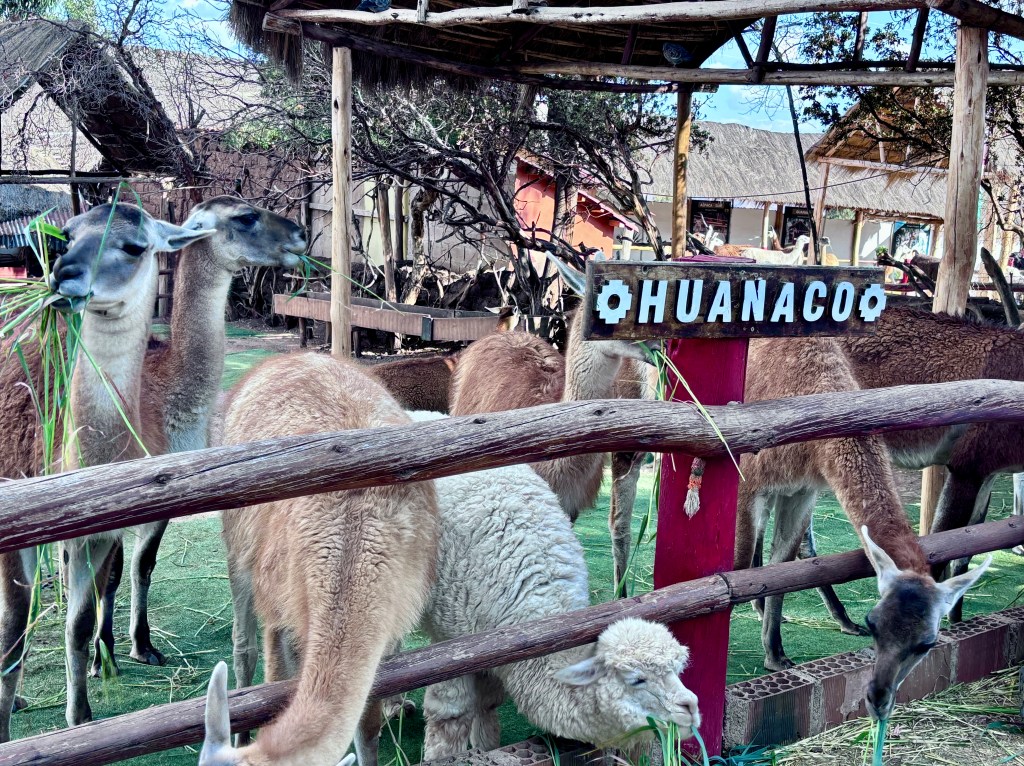
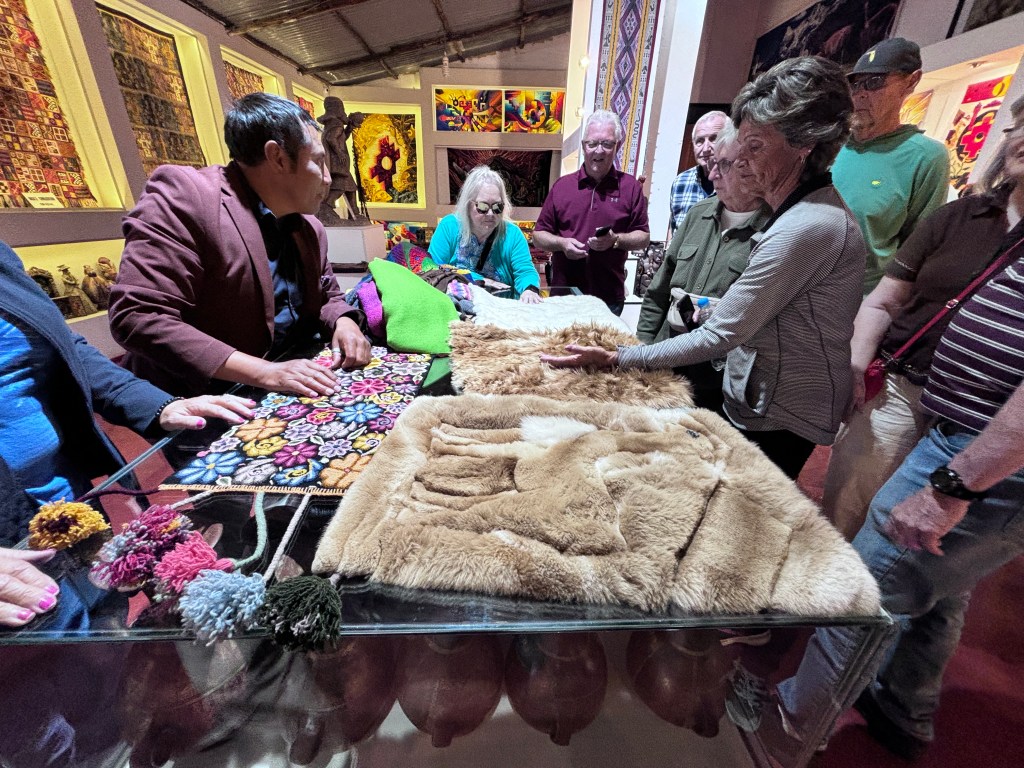
Our next stop was an alpaca demonstration farm and arts venue. 

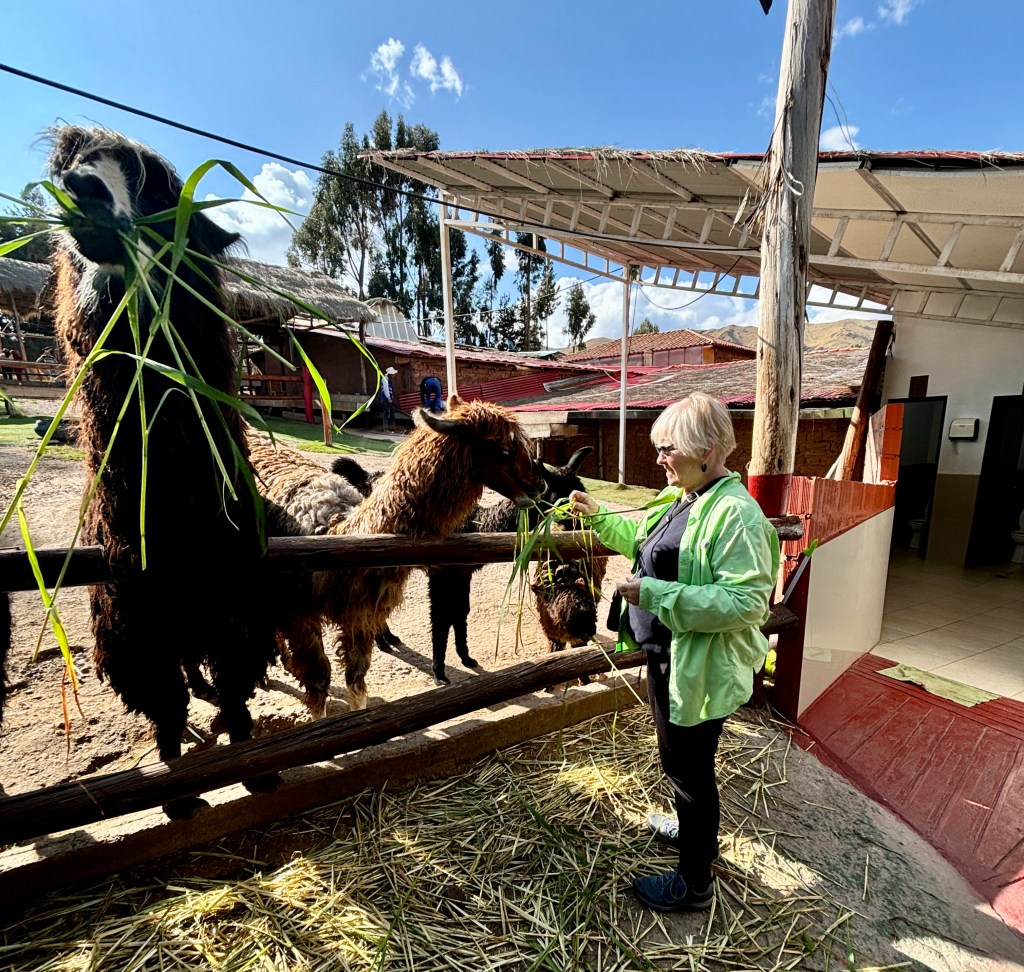
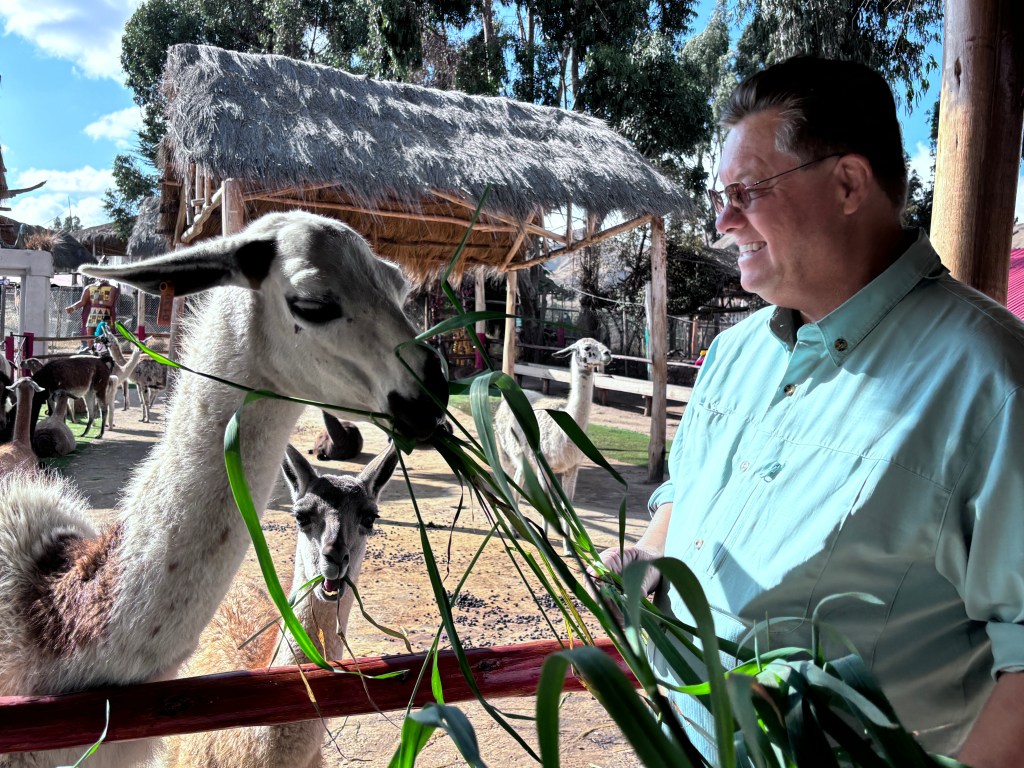
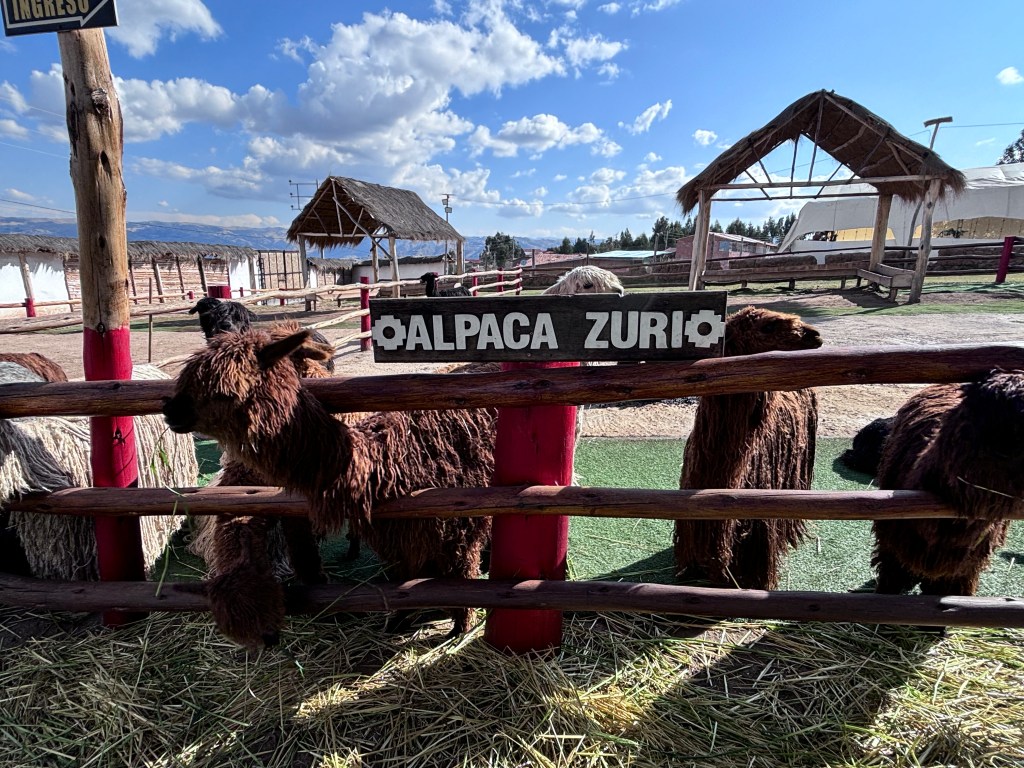
We saw and fed four types of alpaca and huacanos. This was really quite fun.

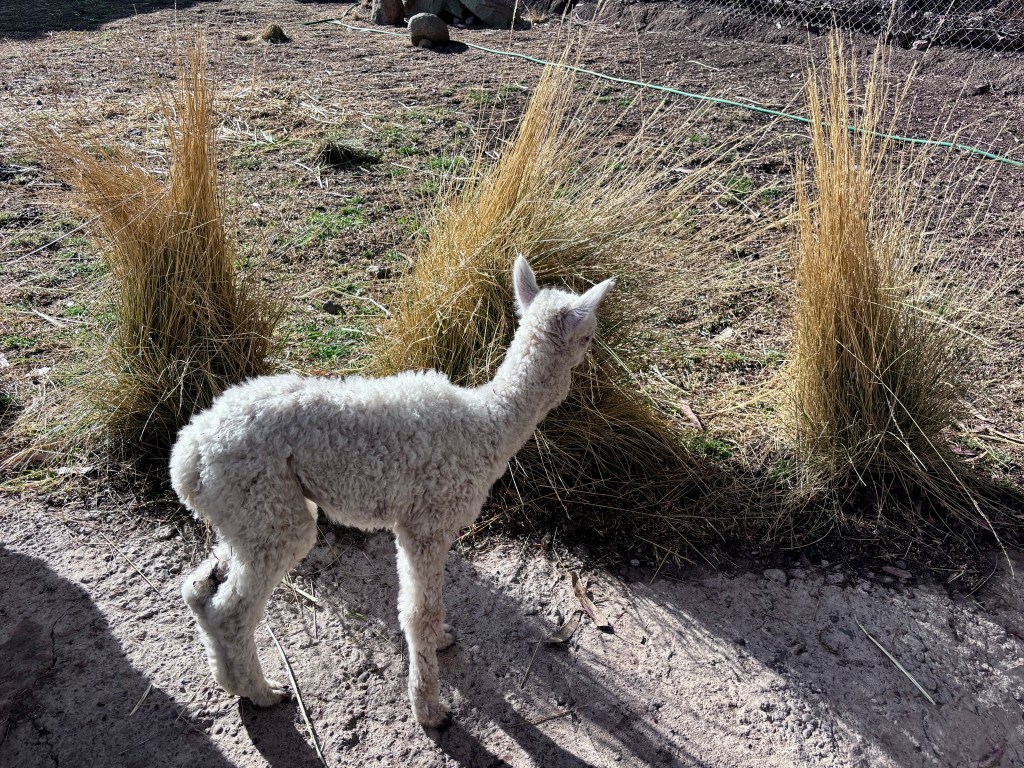
We saw babies!  This one was about ten days old.

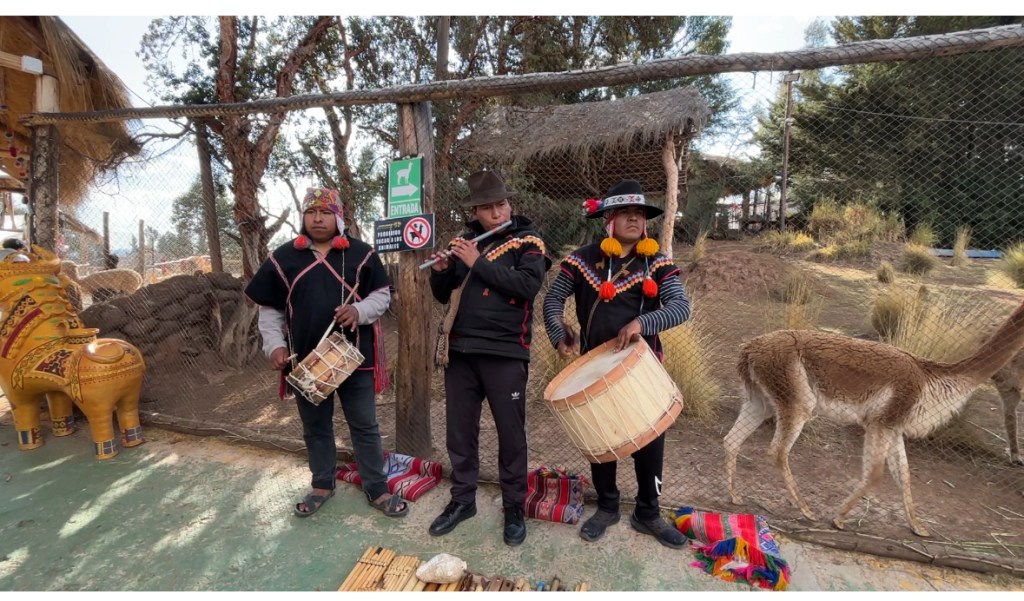
We had a brief concert.

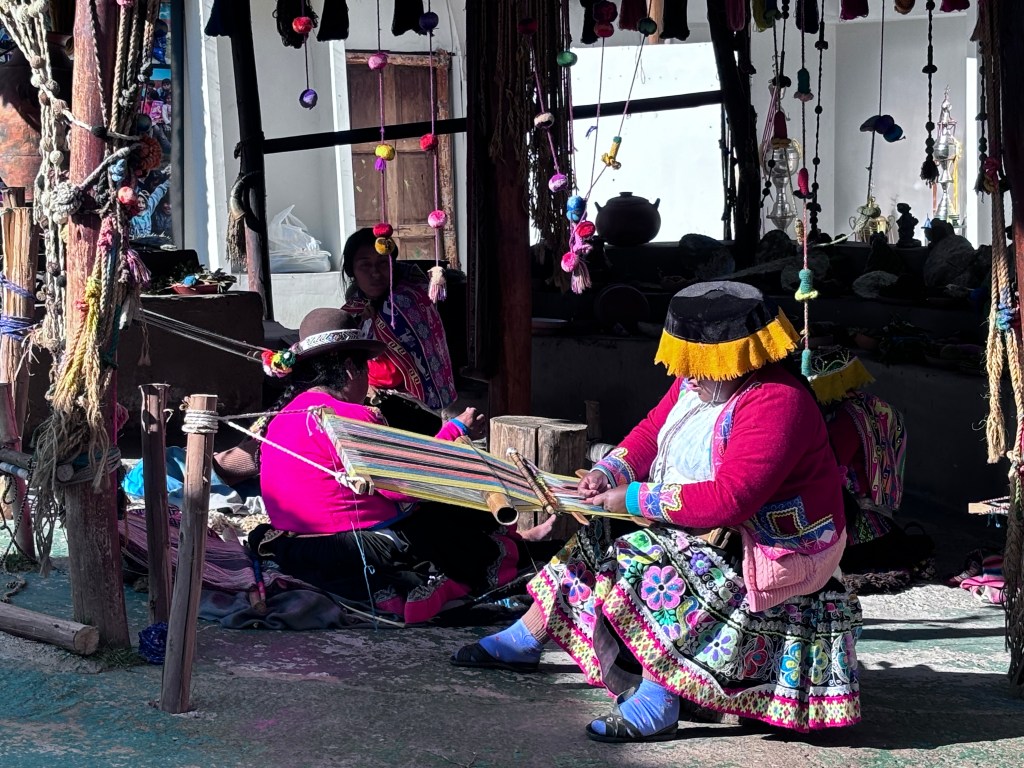
Women were showing their weaving techniques.

There was a pen for guinea pigs, a special event food in Peru. They are not pets.  (We were never offered any of this delicacy on our trip, nor did we seek it out.)

A demonstration taught us how to recognize authentic baby alpaca textiles. We enjoyed looking around for some art or craft work to remind us of this trip. 

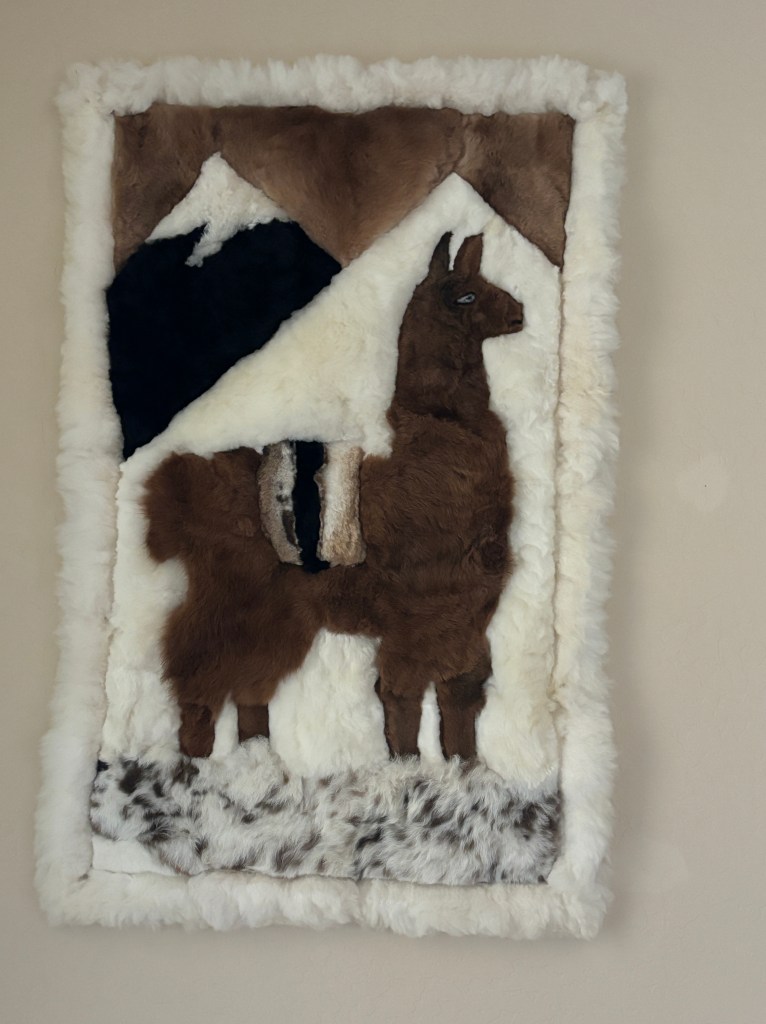
We bought this alpaca wall hanging even though we had to carry it around! It is reminiscent of our trip and of former family heirlooms or sorts.  My parents lived in Panama in the early 1980 and bought family members large llama wall hangings.  Only a couple are left after 40 plus years and they are in marginal condition.  

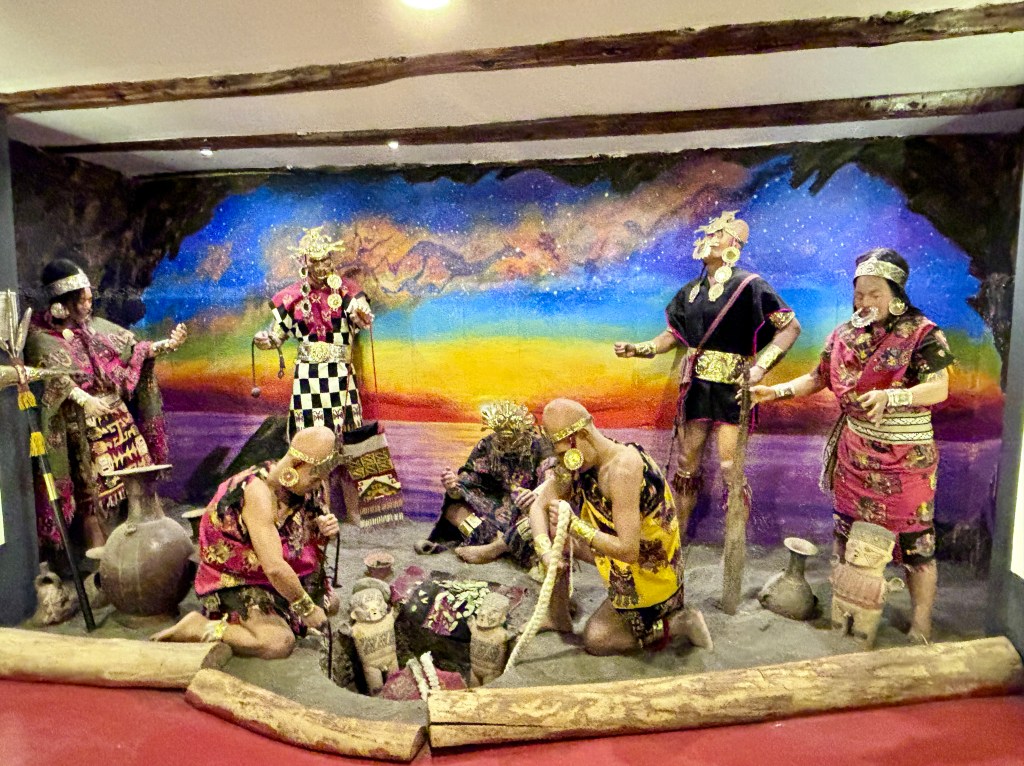
The center also had some exhibits to teach about the Inca.

We enjoyed a few more Enrique lessons on our coach ride. We learned a mantra of the Inca was “to love, to learn, to serve.”  Nice.

Quinoa is grown in Peru because the climate is so consistent.  White quinoa has a primary ingredient of calcium.  Black quinoa has magnesium and red quinoa has iron.  Although grandmothers and mothers  didn’t know the specific elements, they knew a rainbow of quinoa kept their family healthy.

A cup of coca tea has more calcium than seven cups of milk.  Yet, coca tea is not allowed in the US because of the possibility of homemade cocaine. Sniffing dogs are always present when flights arrive from this area and they will cue on coca leaves – even the random tea bag from a tourist in Cusco.  (Some coca tea was accidentally spilled on my backpack along the way – I made sure I washed it well before we flew home.)

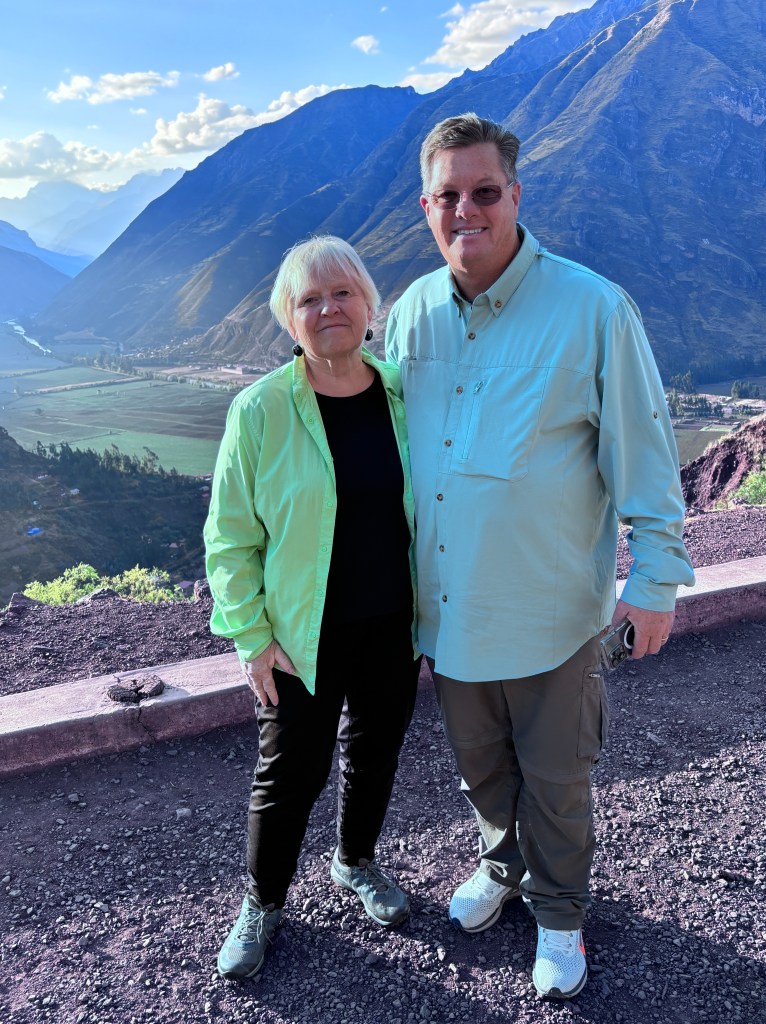
We stopped at an overlook to see the Sacred Valley, bound on one end by Cusco and on the other by Machu Picchu.

The river at the bottom is a tributary that eventually goes to the Amazon.  To go by water, it would take a week and going over 183 Class V rapids.  We will fly and drive instead – but first we will visit Machu Picchu and spend more time in Cusco. 

The town at the bottom of the valley is Pisac. There is an Inca Archeological Complex in the vicinity but we did not visit it.

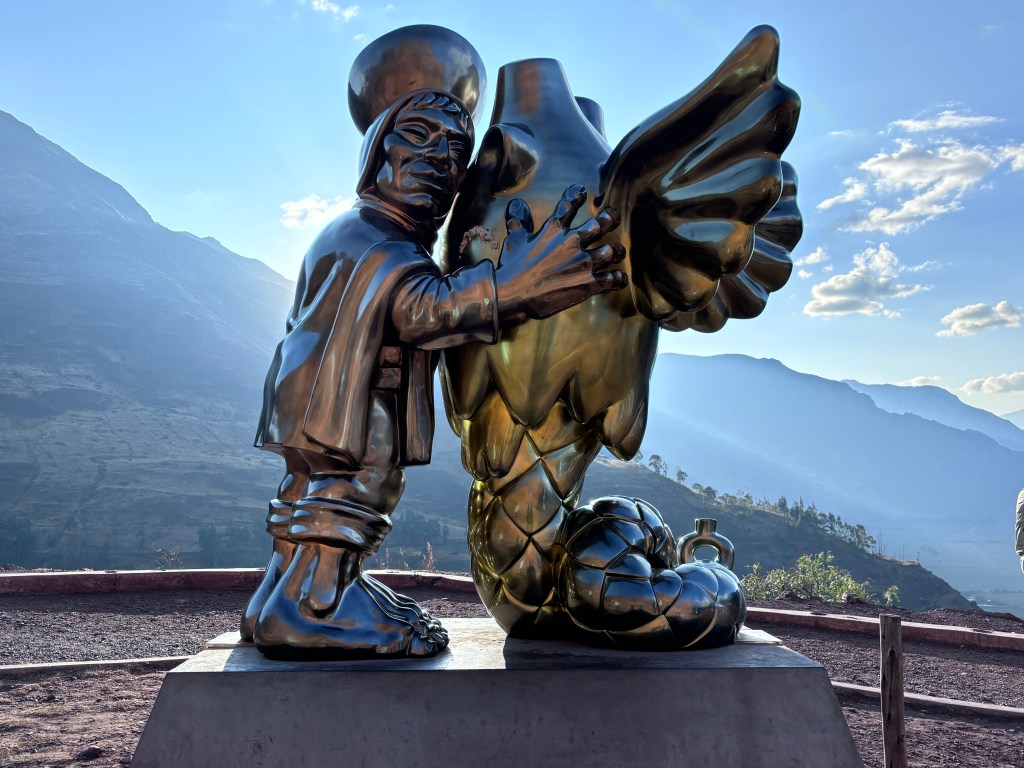
Presumably this statue is related somehow to the complex, but I did not learn its significance.

We arrived at our hotel in time for a late dinner with Andean music.

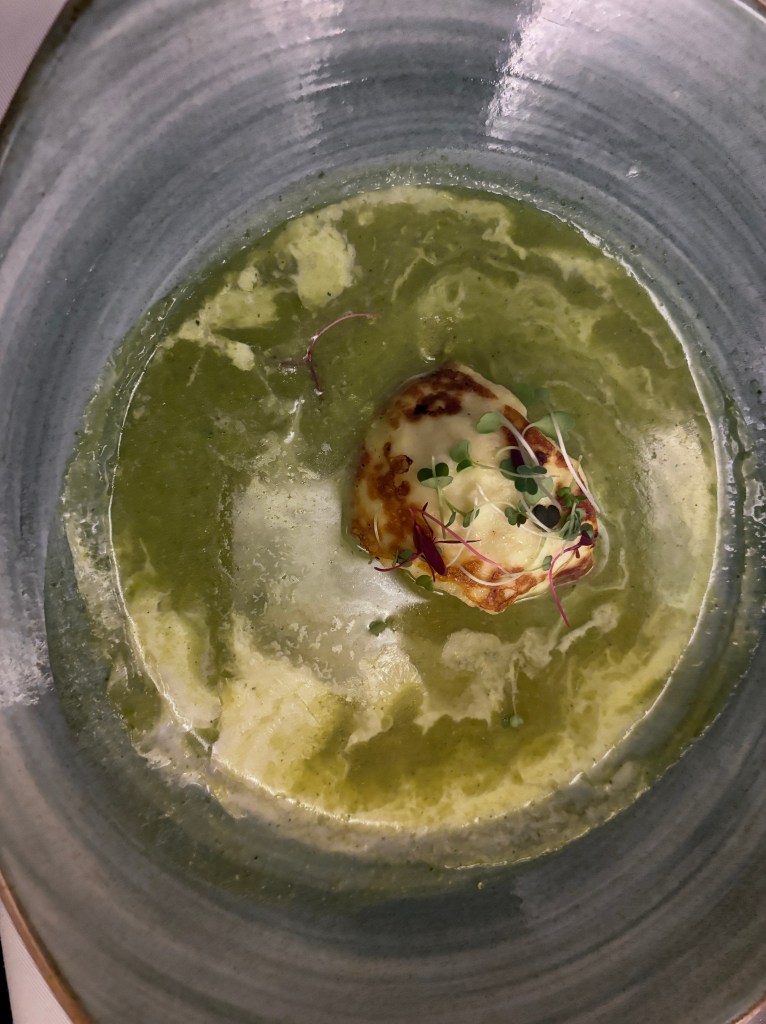
I only remember that this soup was delicious!

We were in Cusco on September 17, 2024.

Next up: Morning in the Sacred Valley

Posted in Uncategorized | 4 Comments

Peru: A Small Bit of Lima

This was the morning we met the additional eighteen people who would be on the Machu Picchu and Amazon portions of our trip.  Most were American couples but we also had one couple from Australia and a second couple from Canada.   We were now a group of 24, or 25 if we count our tour guide, Enrique.

Enrique gave us the ground rules:  no politics, no religion, and no soccer!  He also explained his penalty point system to keep us on time.  Warnings only for being late the first and second time – but the third time, the offender buys pisco sours for everyone.  All was stated in good fun but we understood the assignment.

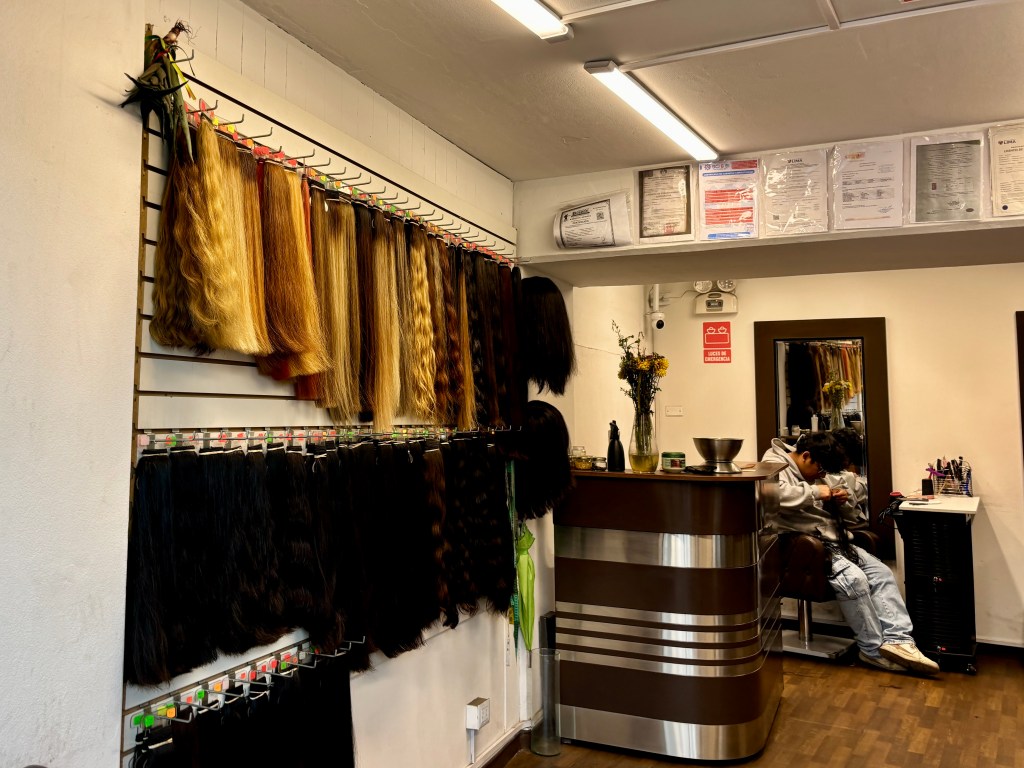
Our opportunity in the afternoon was a tour of Lima.  We went by coach into the historic district.  We disembarked in an area that was all about hair.   There were dozens of shops selling and buying hair segments as well as people walking around with hair.  

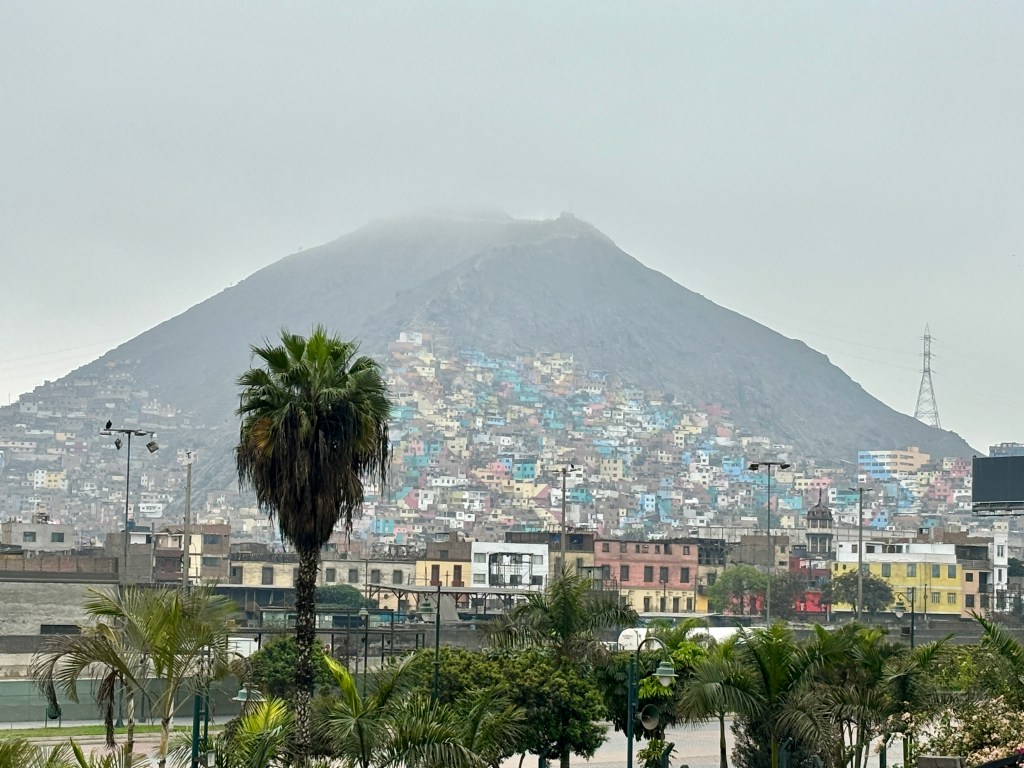
We could see another shantytown building up the hillside.  Our historic district guide said the people need to live there for ten years to have ownership, where as the other area had been five years.  It was not clear why the time frames were different from the one we had learned about previously.

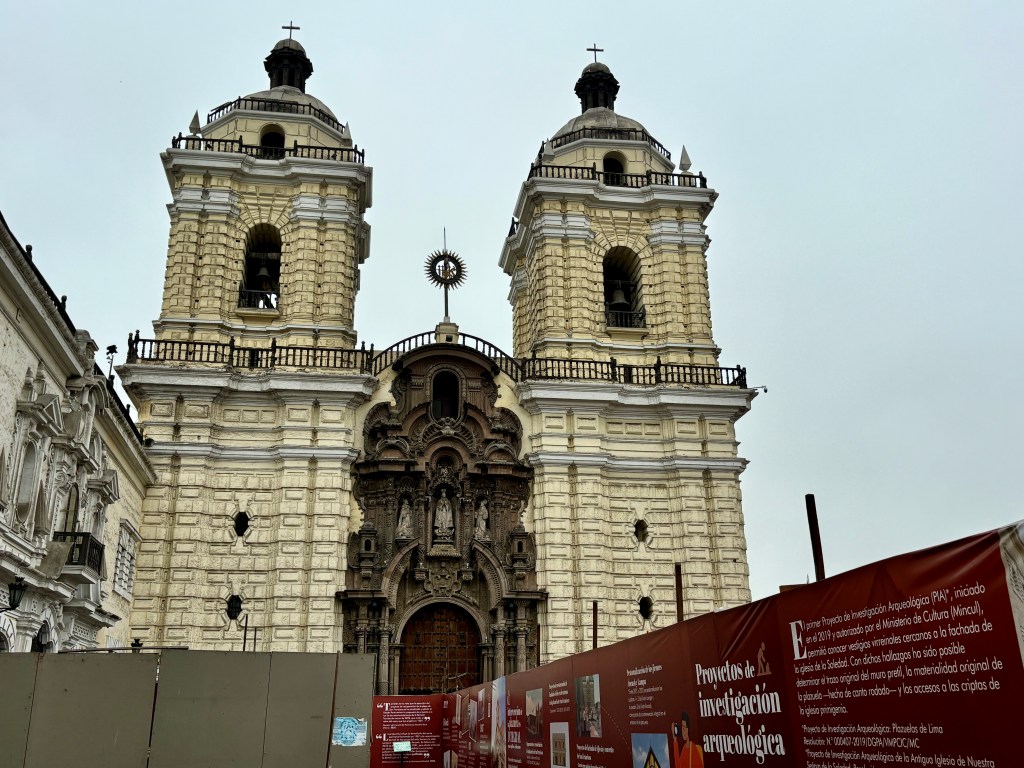
We had an in-depth tour of the San Francisco Basilica and Convent.  We found it interesting that in South America, convents are for men and monasteries are for women – the opposite of what is traditional in North America. 

Unfortunately, there were no pictures allowed of the interior, but, of course it was beautiful.  There was also a library with 25,000 volumes, many dating back to the 1600s.   There were catacombs holding 70,000 individuals before that practice of internment was stopped by the government in 1810. The original church was built in the mid 1500s and then felled by an earthquake in 1655.   This building’s construction began in 1672 and has been damaged and repaired after earthquakes from then to now.

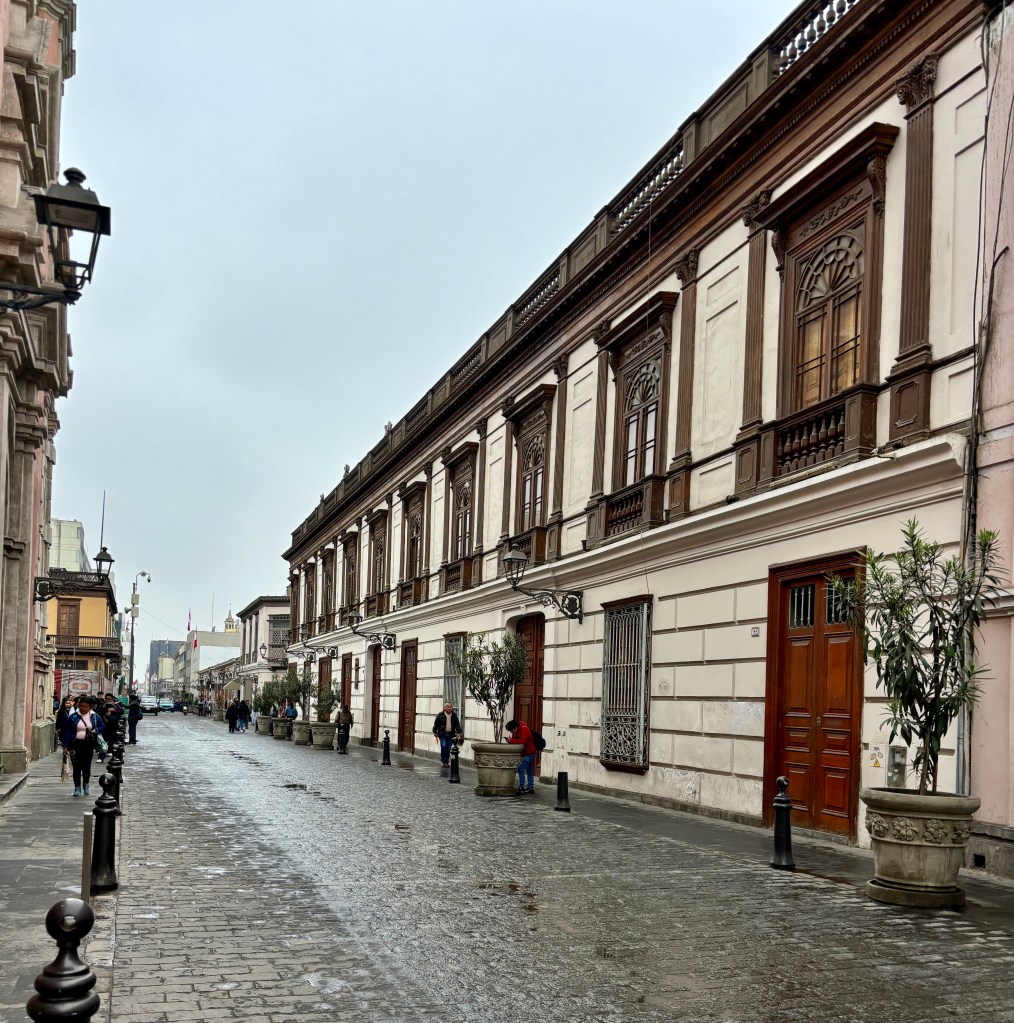
A street in the old historic district.

Our Phoenix area friends, Jo and Flynn, lived in Peru years ago when they were with the Peace Corps.  They had advised us to be sure and experience three things on our trip.  The first was drinking the traditional Peruvian pisco sours – we had already had several!  The second was the churros.  (The third recommendation is coming up later in this post.)

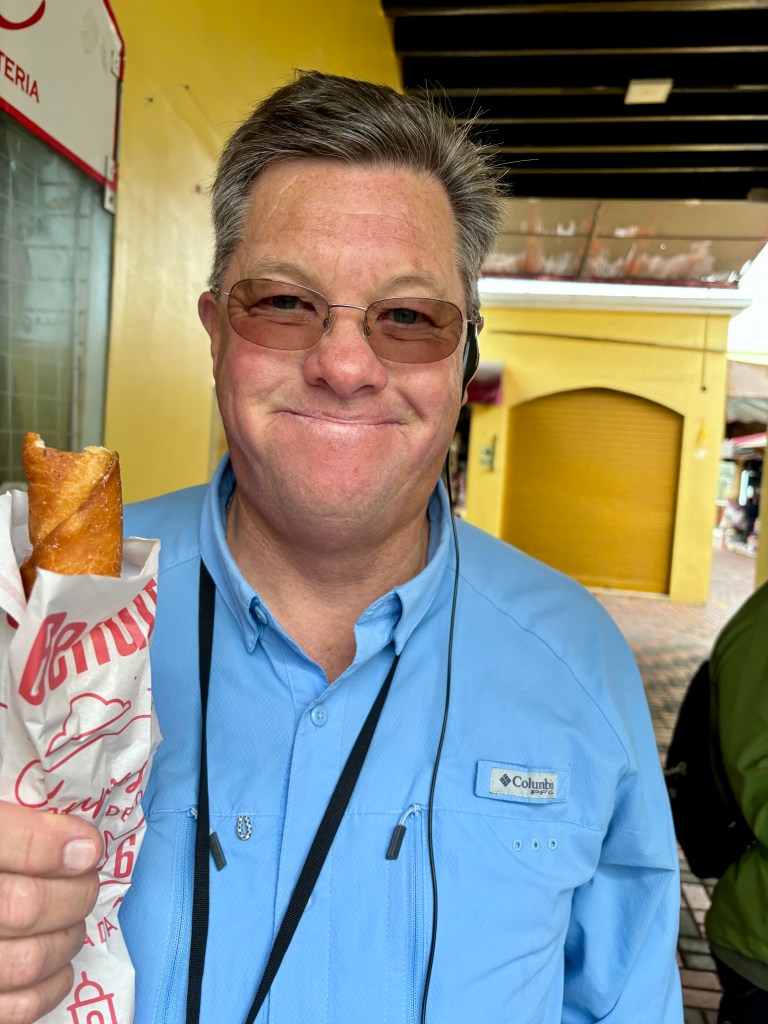
These Peruvian churros are very generous in size and warm and delicious.  The most traditional version,  and what we had, was caramel filled.  It was really good – just like the pisco sours.

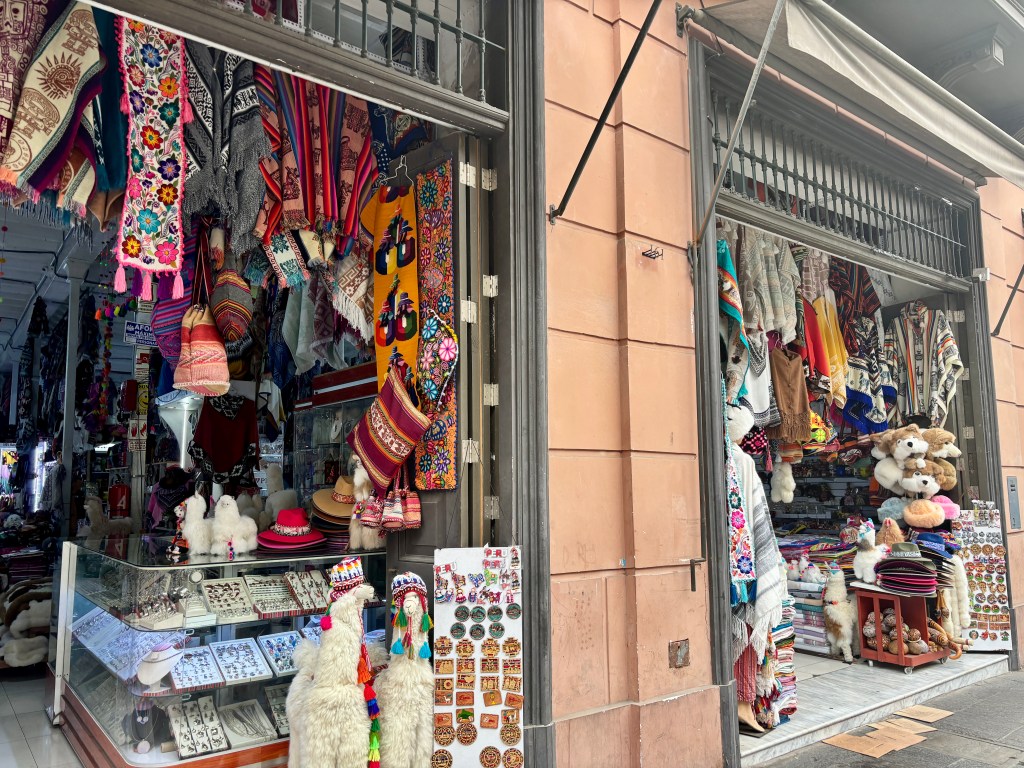
I looked at the tourist shops with a bit of longing but knew we were at the beginning of a three week trip with a lot of schlepping of bags.  Restraint prevailed.

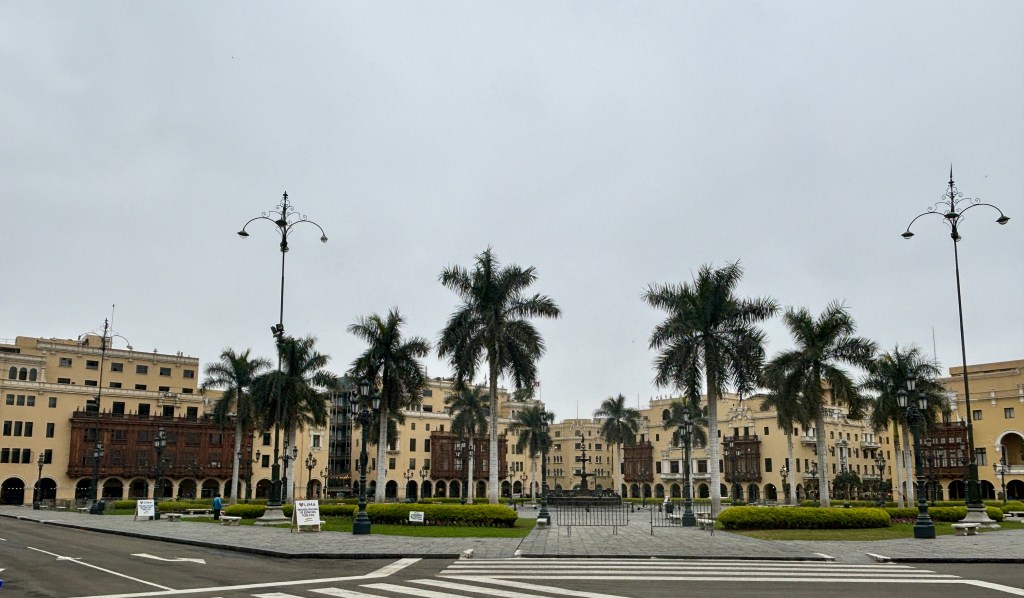
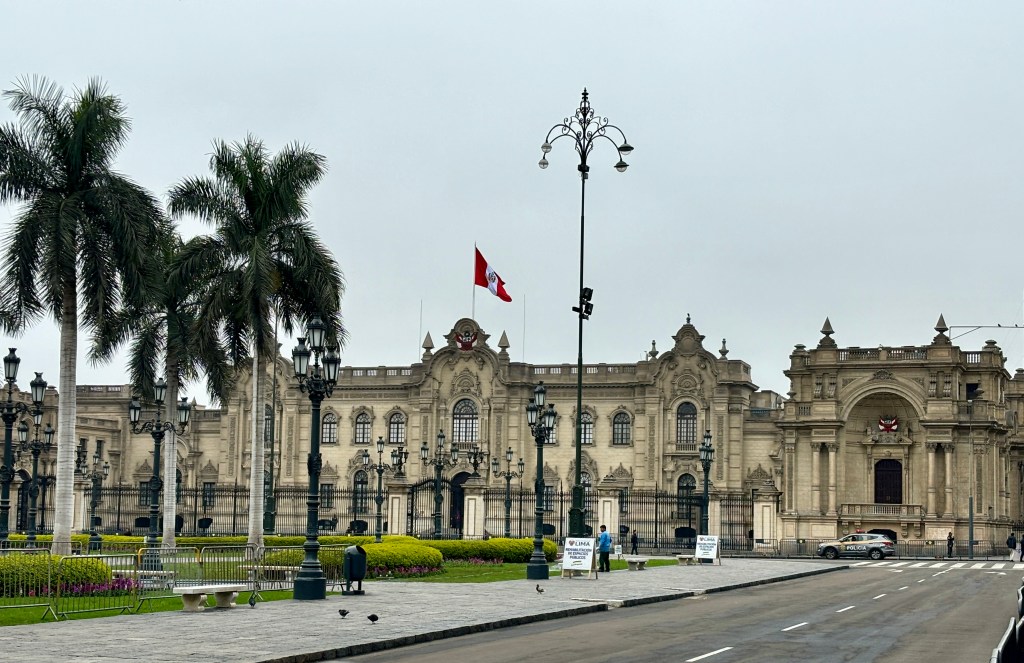
We made our way to the Plaza de Armas.   The Plaza was not only the center of rule in Lima, but also from where the Spanish ruled the South American continent.

The center area was blocked off because there was a protest nearby, and there are rules about how close protesters can get to government buildings.

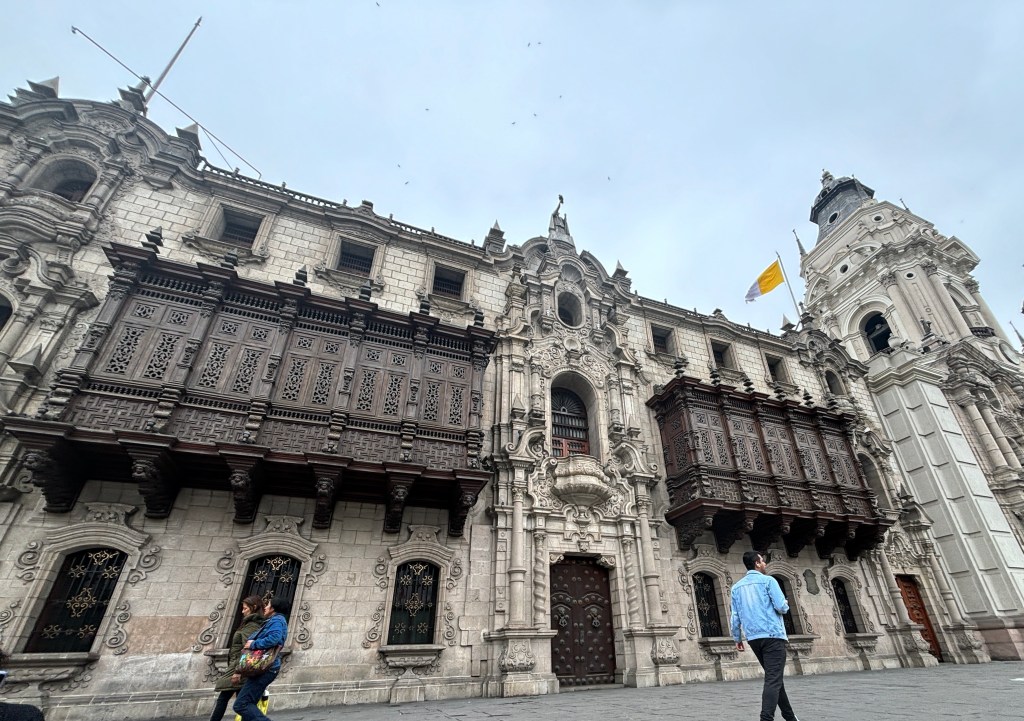
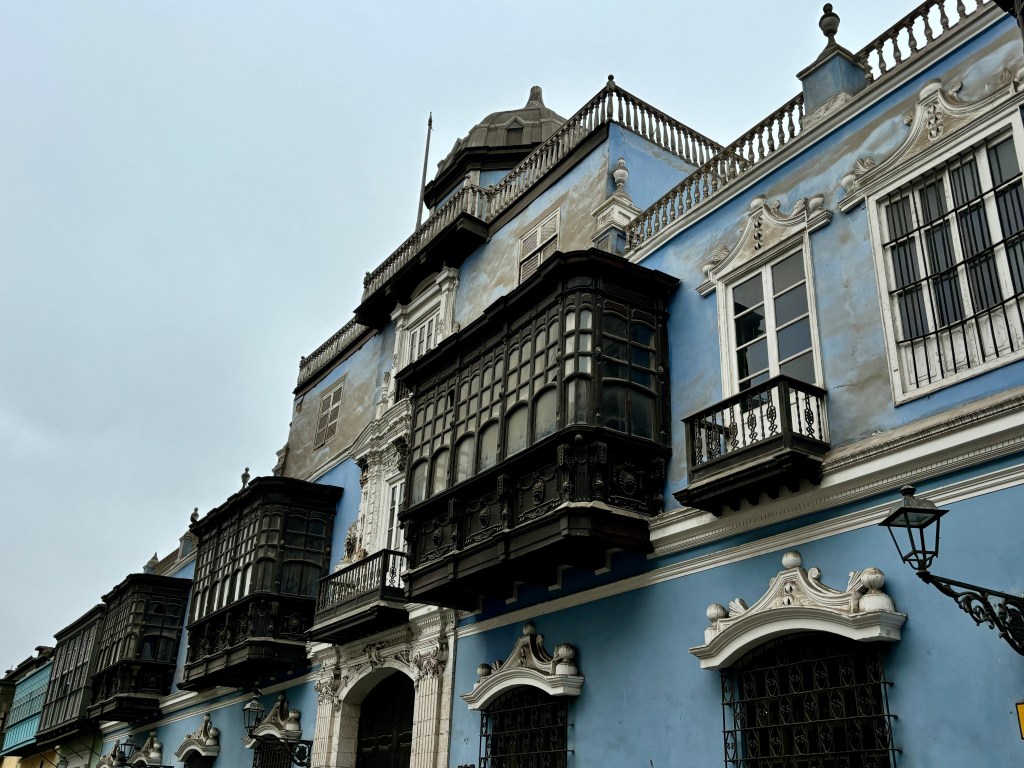
There are a number of impressive buildings around the plaza perimeter.  This is the Archbishop’s Palace.  Although it looks very old, it was built in 1924 and is the home of the Archbishop of Lima.

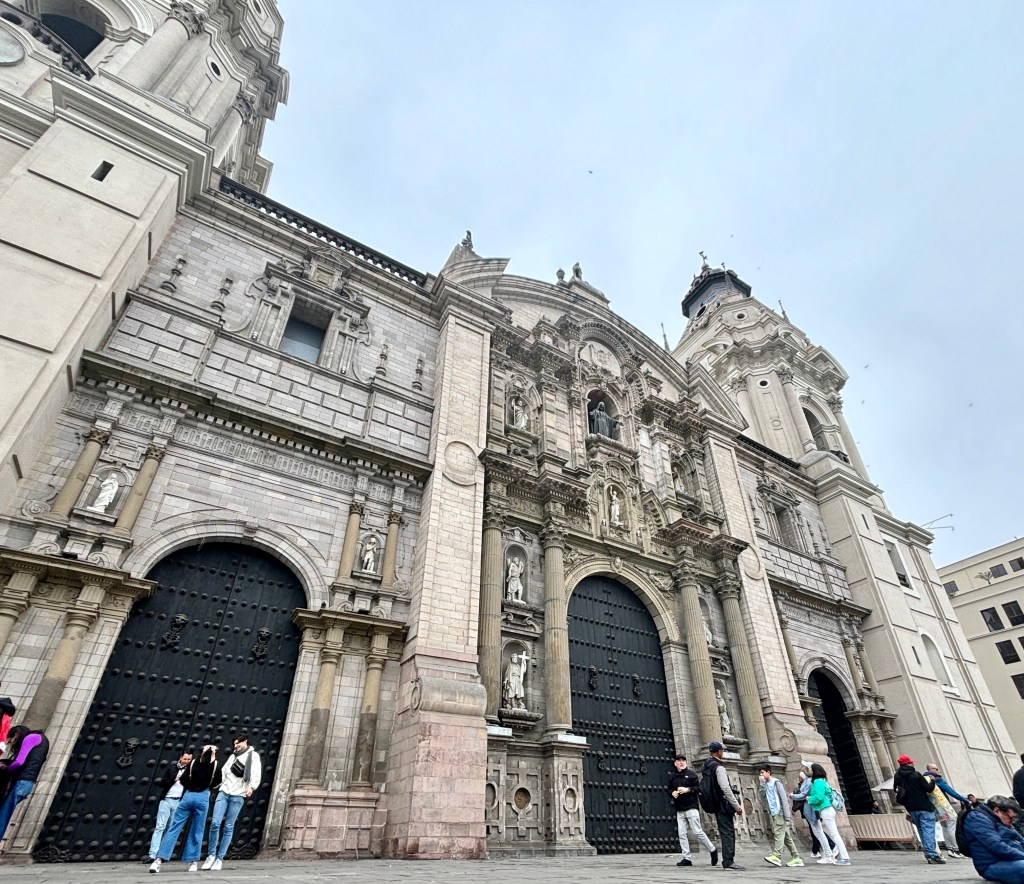
On the same block, and connected as you would expect, is the Cathedral of Lima. It was built in 1535.  We did not go inside.

The Government Palace is the home of the executive branch of Peruvian government and the home of president.   These are just a few of the interesting buildings around the plaza.

In the historic district there had been a law that no personal building could be this high.  However, some rich, influential person – way back in the 1500s – managed to petition the church, or government, to get an exemption.  Oh, what a surprise. 

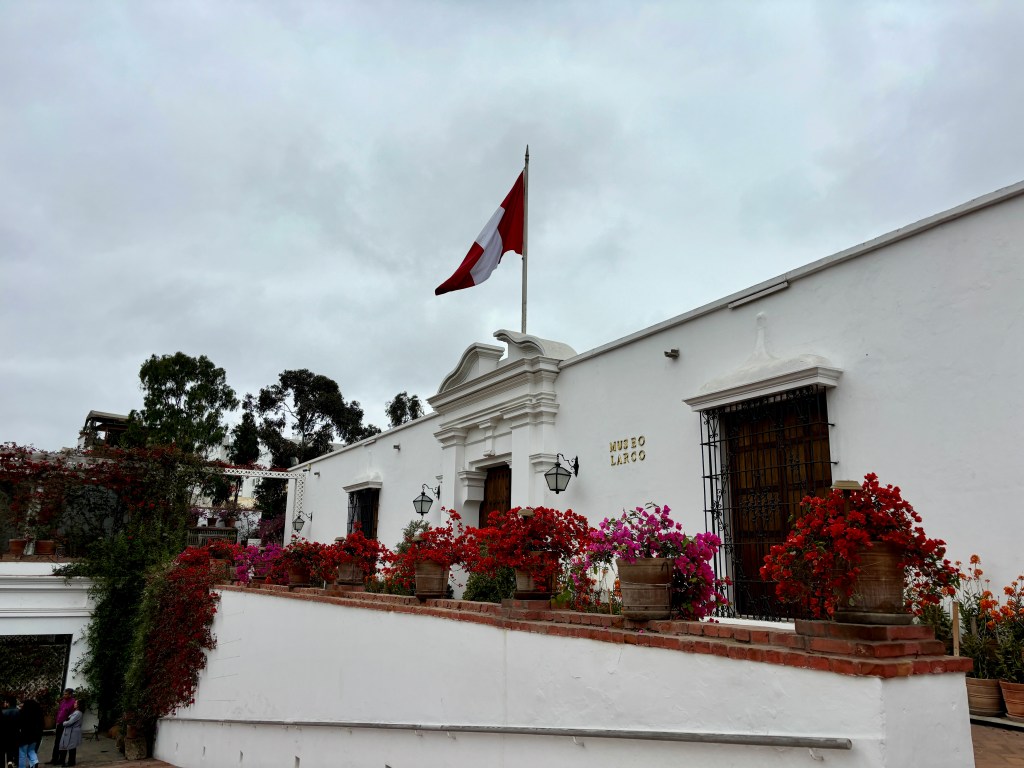
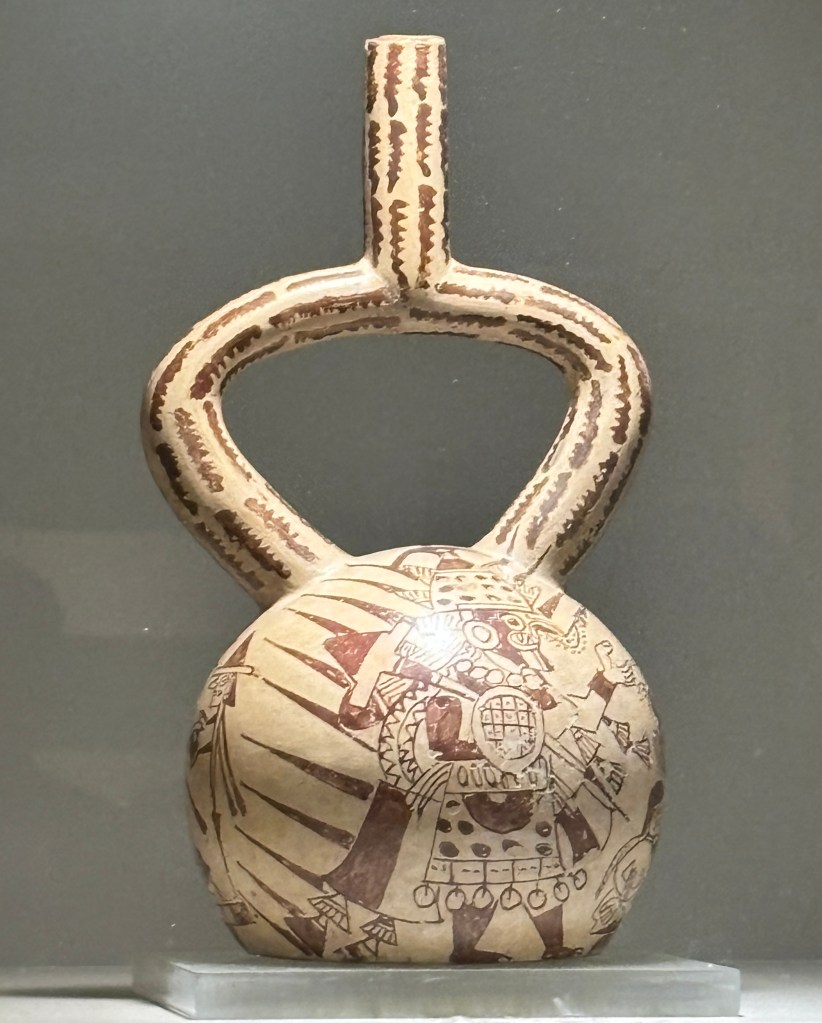
Our next destination was the Larco Herrera Museum.  It holds the world’s largest private collection of pre-Columbian Peruvian Art.

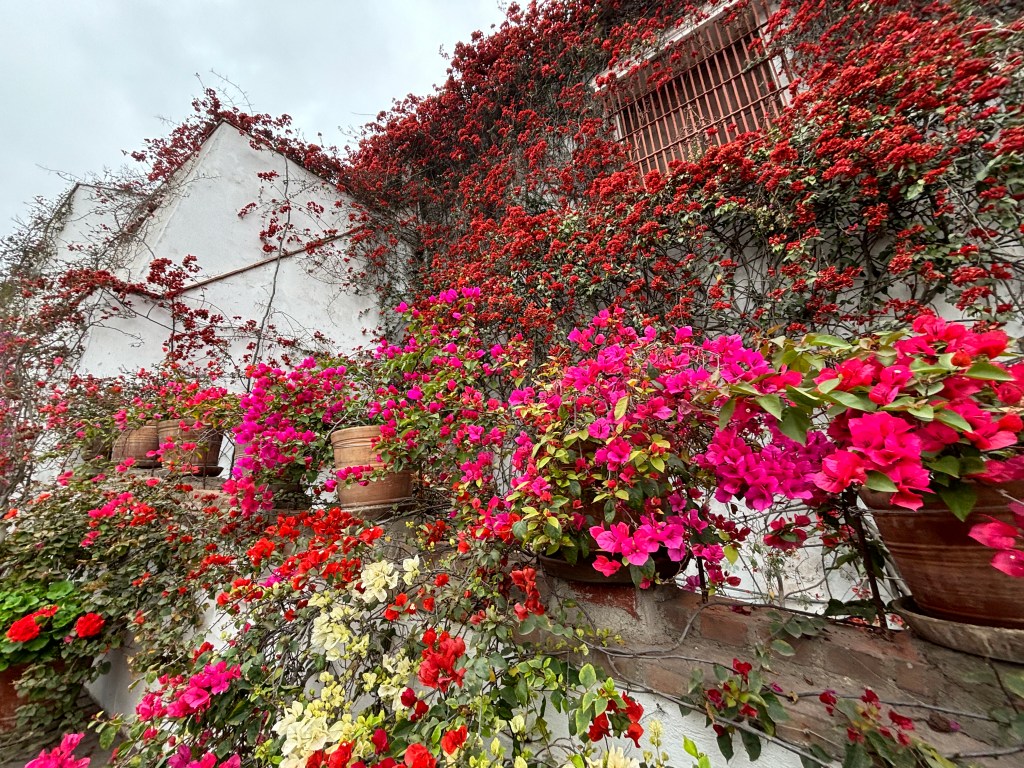
The gardens are part of the attraction.

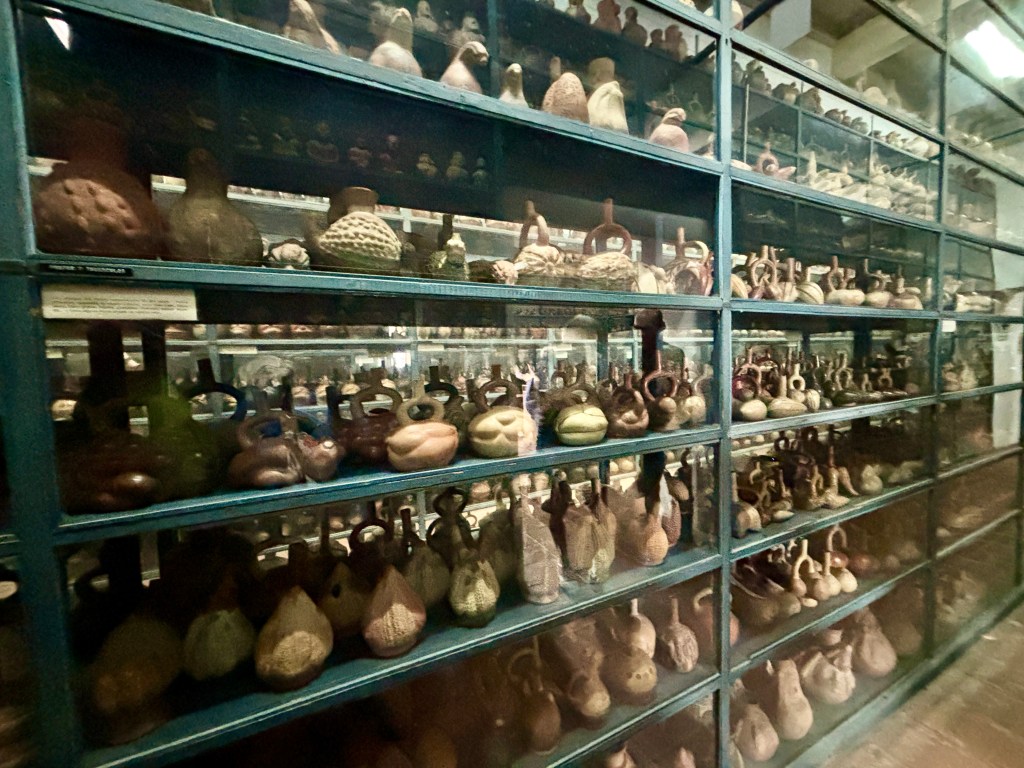
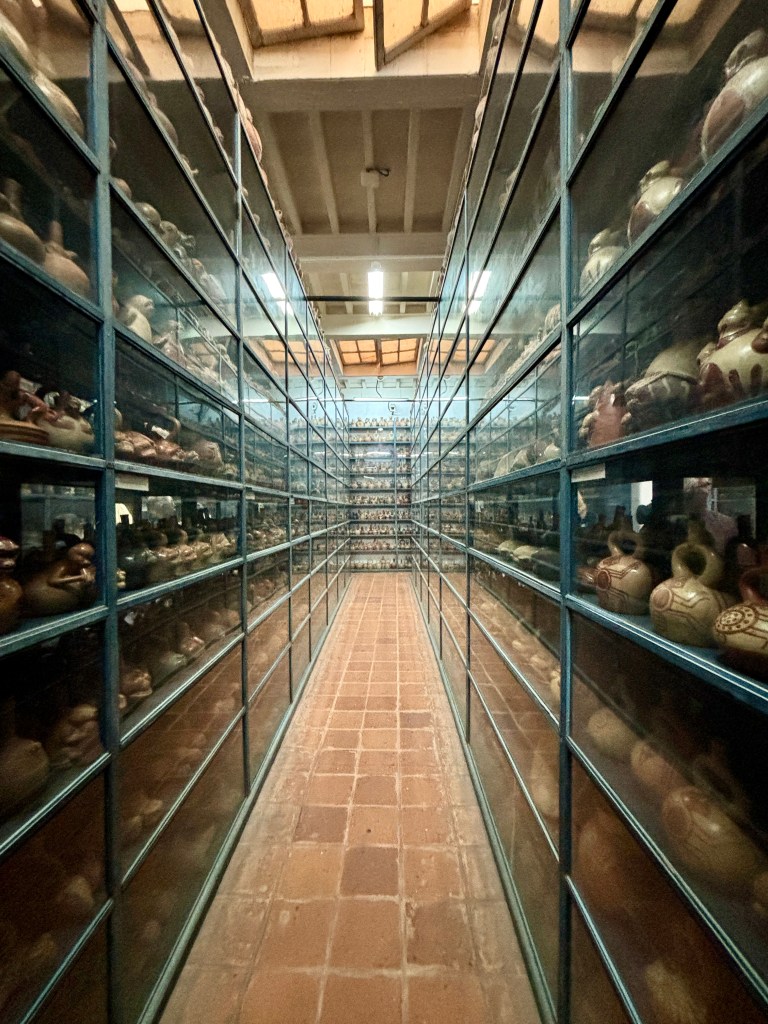
Part of why this museum is famous is because their vast storage collection is available for viewing.  

It is the only museum in Peru that allows access to “storage” and one of only a few in the world.

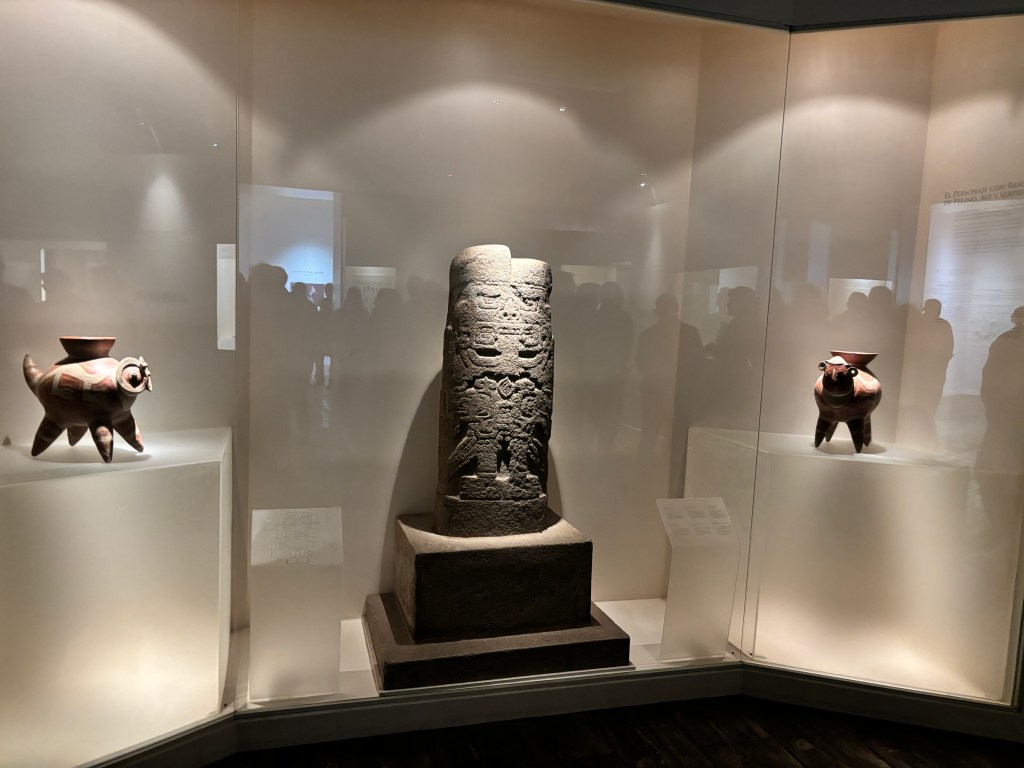
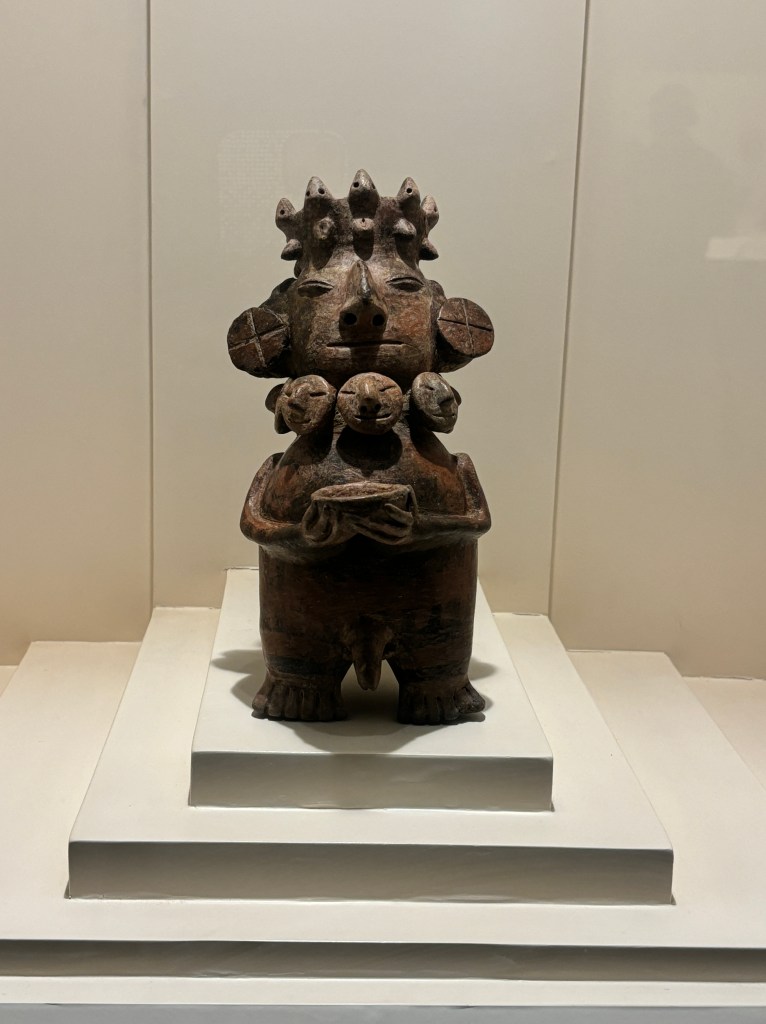
The permanent collection “takes an in-depth look at the Andean worldview and helps visitors to understand the development of pre-Columbian societies.”

The items were very well displayed but art museums just aren’t our thing. 

It doesn’t really matter if they are pre-Columbian, renaissance or modern.  Our eyes glaze over quickly.

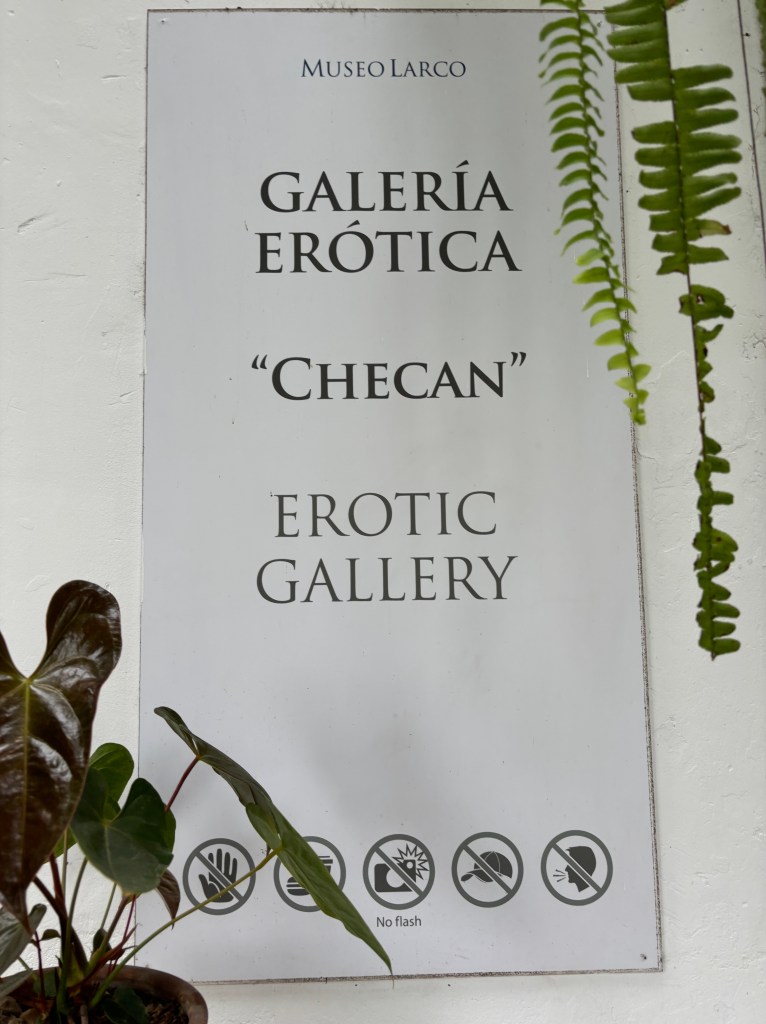
However….as we walked through the grounds, we had seen reference to the third of Jo and Flynn’s recommendations – The Erotica Museum.   I had not even imagined that our overall tour would take us there and didn’t think we would arrange to go on our own so hadn’t prioritized it.  But there it was, on the grounds of the Larco Museum, the Erotica Gallery.

We left the main tour to ask Enrique if the Erotica Gallery would be part of what we would see.  He said no, but that we could go on our own if we wanted.

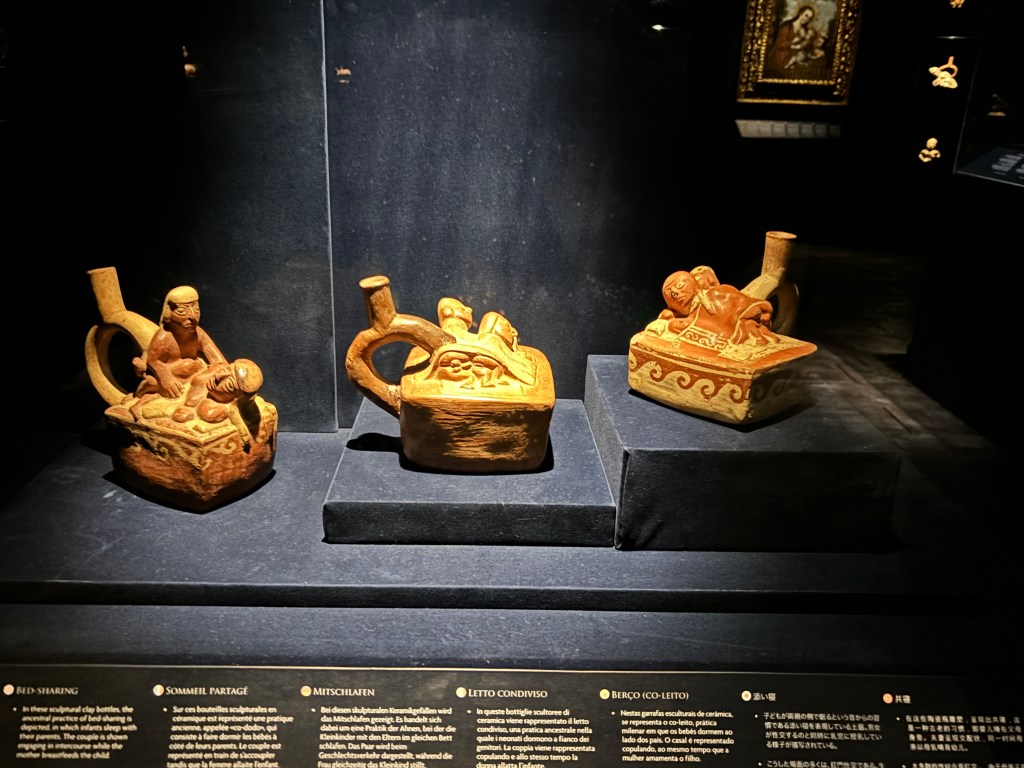
This part of the museum is a “major collection of pre-Columbian erotic art offering a different and interesting perspective on ancient Peruvian sexuality.”

This example is pretty mild compared to most of what we saw, but it was certainly interesting.  Thanks Jo and Flynn – all three recommendations accomplished and appreciated!

We made our way back to the main tour and I doubt we were even missed.  The larger group hadn’t been together long enough to recognize each other, let alone know who was missing.

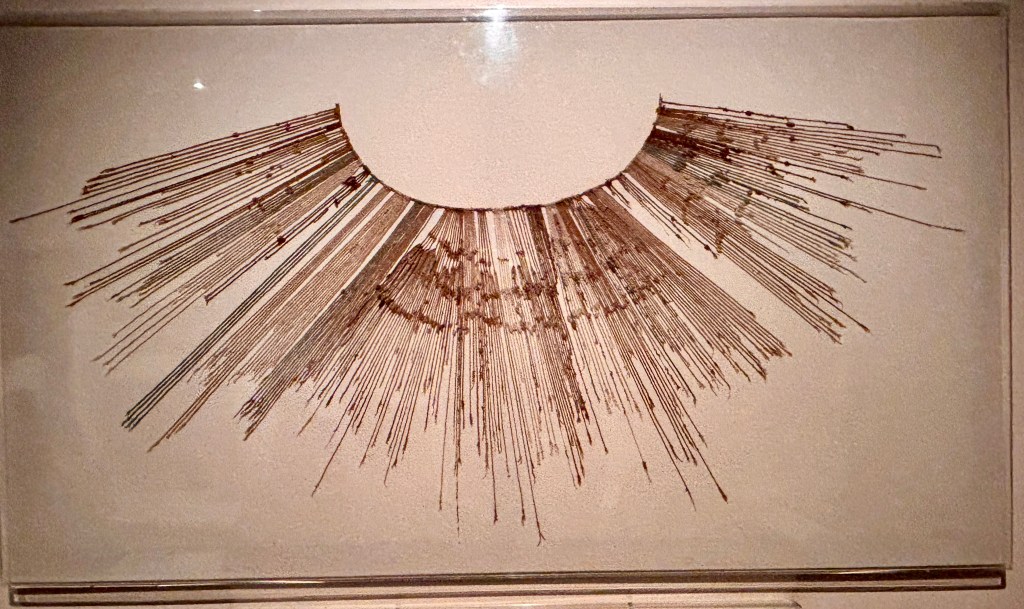
About the time we returned, the docent was talking about the quipus.  Now that was interesting. This series of cords off a main cord was how the Incas recorded and kept information about anything that needed to be counted and maintained.   The colors of the cords, knots and distance between the knots were all relevant information in the recording.  

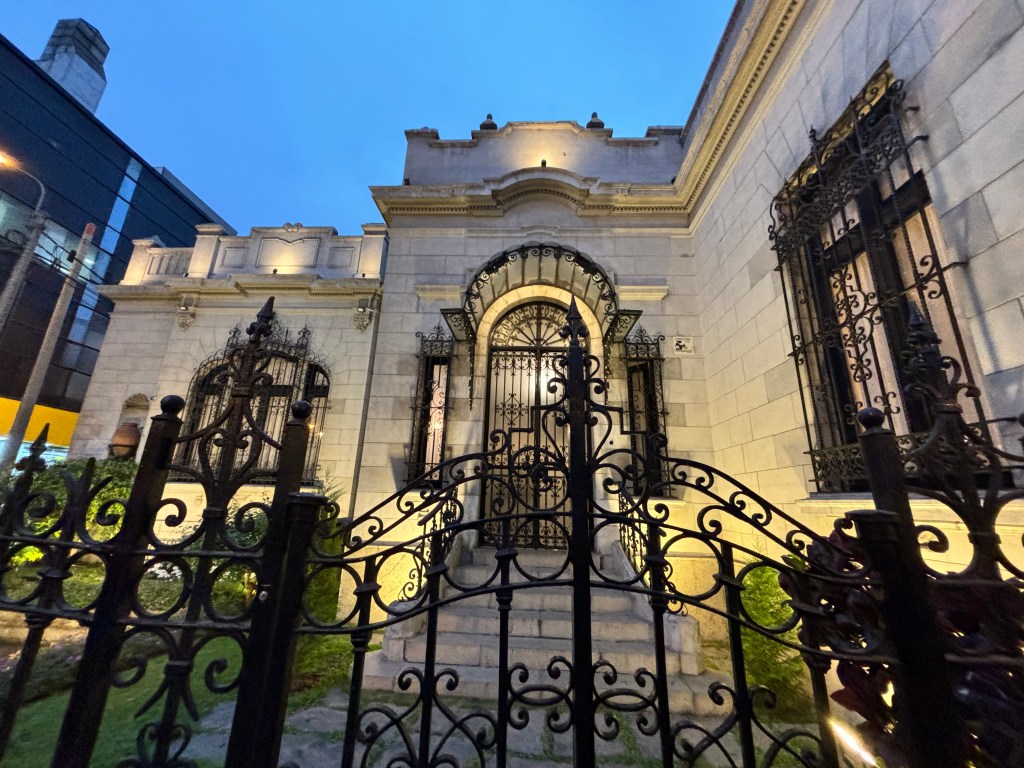
Our evening event was for dinner at a private home in Lima, The Casa Garcia Alvarado.  The home was constructed in 1912 in a style from nineteenth century Spain. 

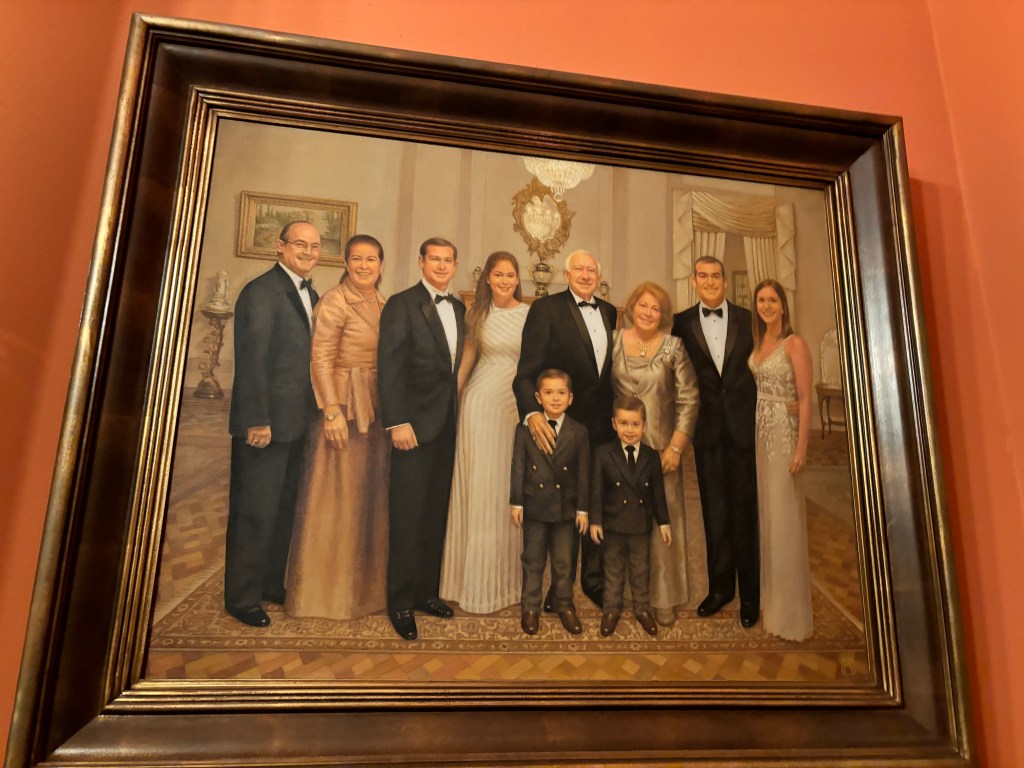
Generations of Mrs. Ana Maria Garcia Alvarado de Astudillo’s family have lived in Lima and this home.  She and two of her daughter’s families make this their home still.

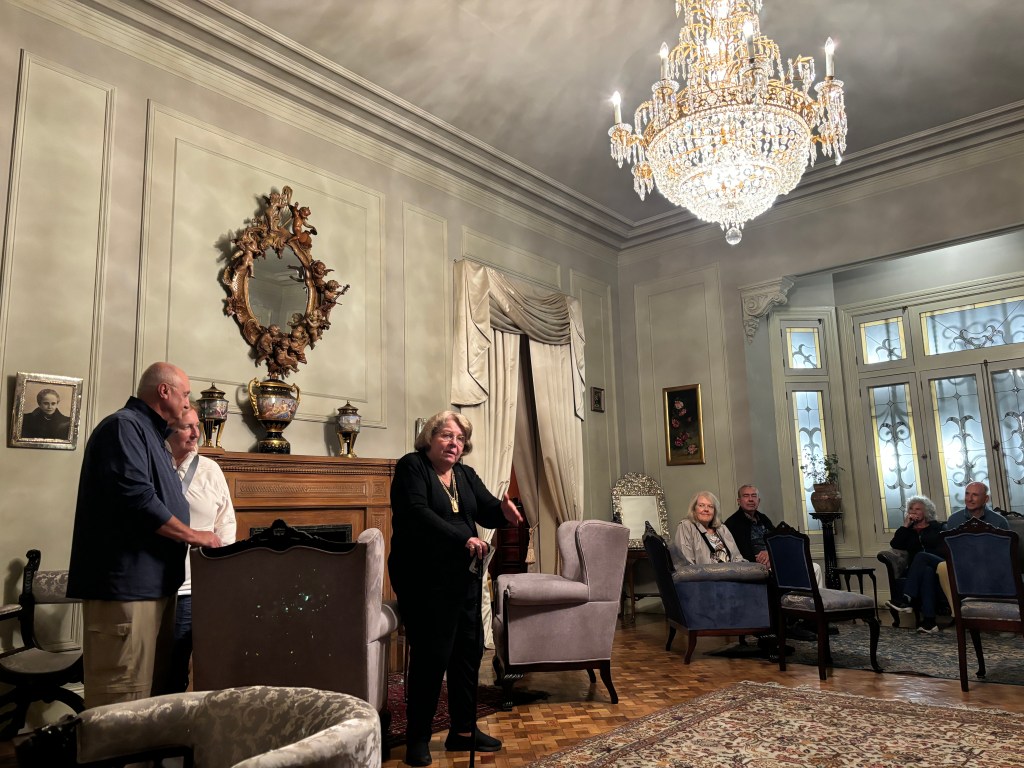
Our hostess met us in the drawing room where we were given pisco sours and a variety of hors d’oeuvres.    She told us about her family and growing up in Lima.

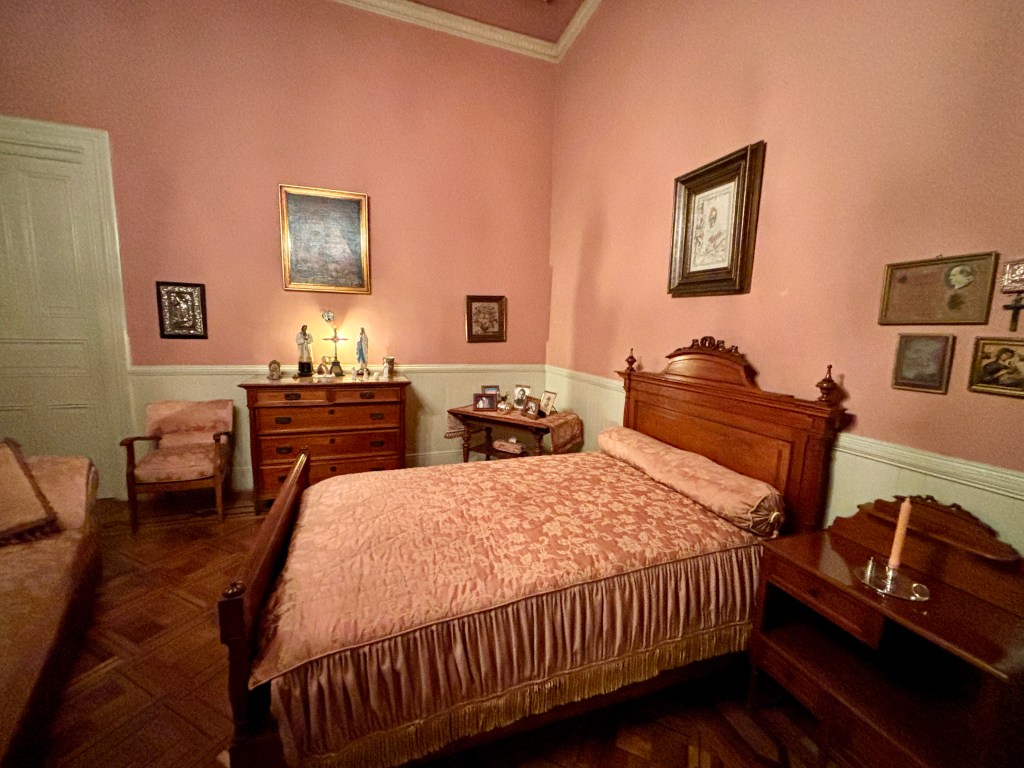
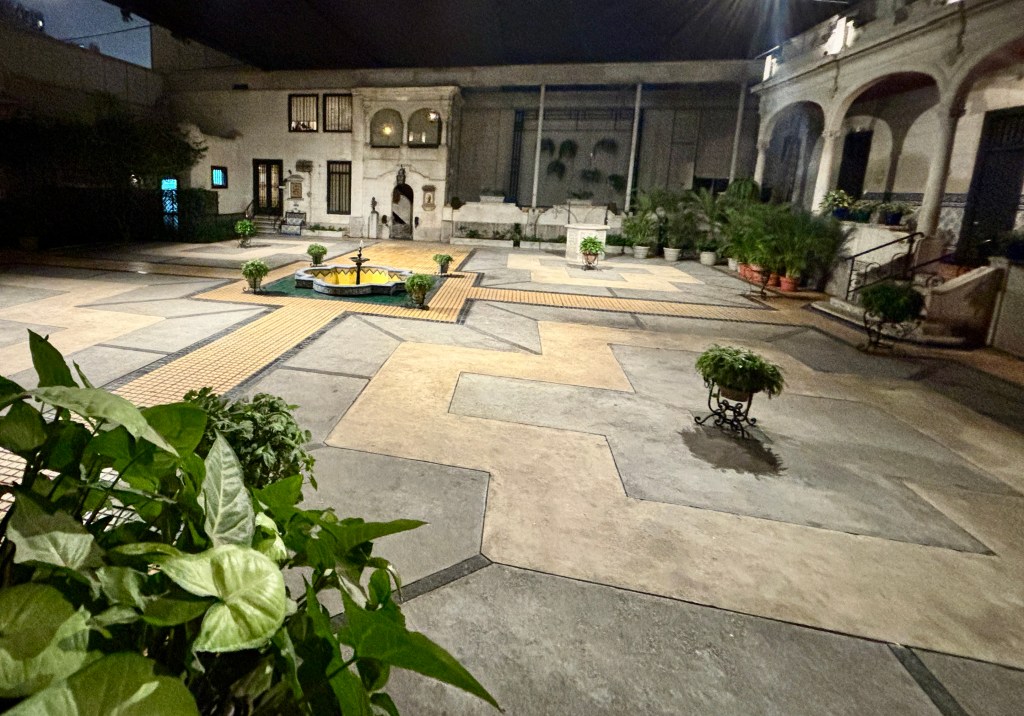
We were able to tour several rooms of the house and the courtyard.

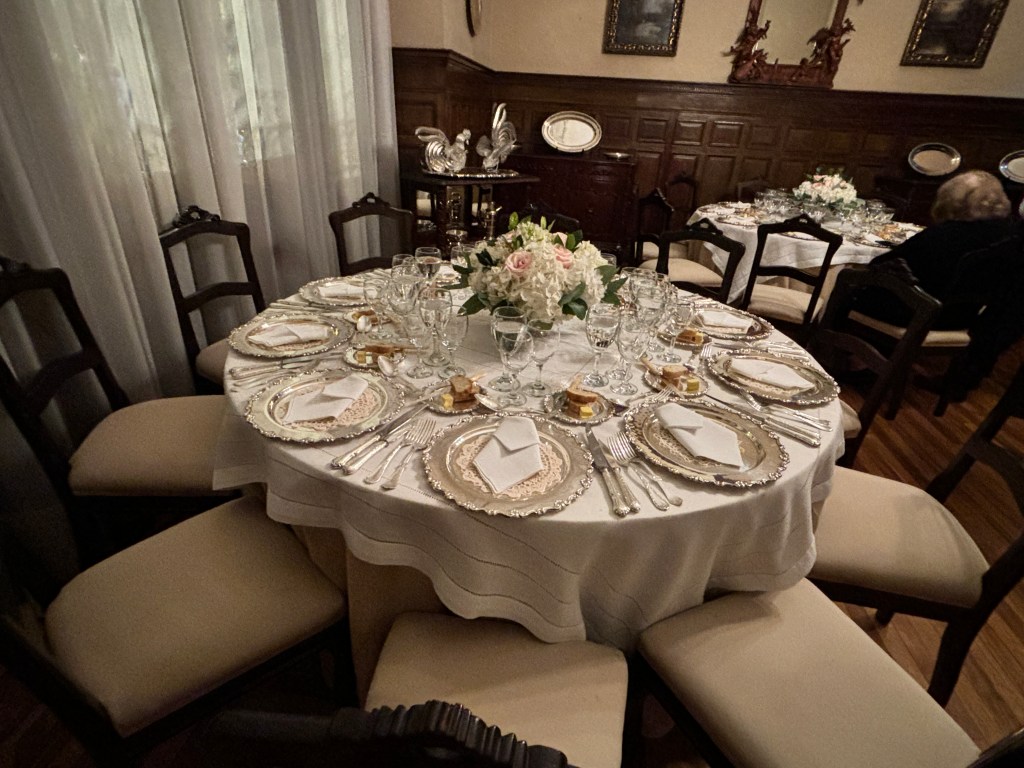
We came together in the dining room for a delicious Peruvian dinner.

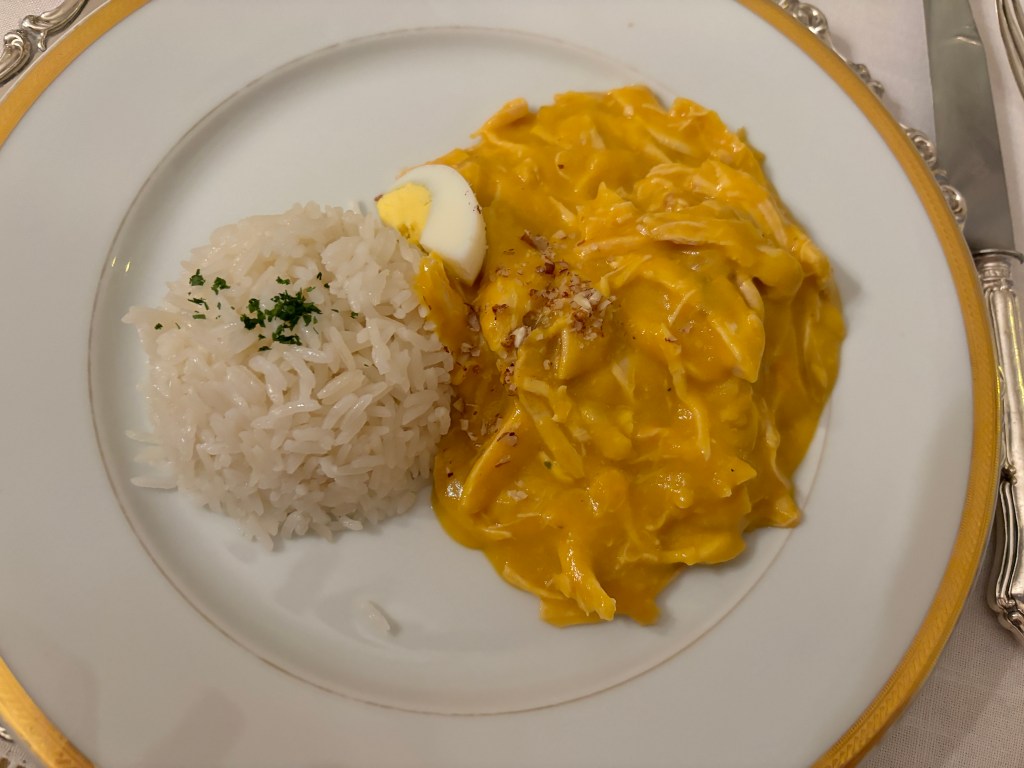
This chicken dish was beginning to be very familiar!

Our hostess spent some time at each table making the visit more personal.   The casa is available for tours and private events and if you are in Lima, we’d recommend it.  It was a delightful evening.

We were in Lima on September 16, 2024.

By the way, this was the day we were to start prepping for high altitudes in Cusco.  The typical medication, Diamox, contains sulpha so was a no-go for me.  I was to take 600 milligrams of ibuprofen three times a day instead.  That sounded like stomach upset waiting to happen so I took 400 milligrams just twice. Randy experienced lip tingling after his first dose of Diamox and stopped taking it.  He can’t take ibuprofen so he was stuck. We were going to the upper reaches of the Andes with just local remedies.

Next up – and up and up:  Cusco

Posted in Uncategorized | Leave a comment

Peru: Peruvian Galapagos and the Nazca Lines 

We had an early alarm as breakfast was at 6:15 and everyone, with everything, needed to be in the lobby by 7:30.  This was the day to see the Nazca Lines and have a boat ride to the Ballestas Islands, sometimes called the Peruvian Galapagos.

In our case, the boat ride was first.   

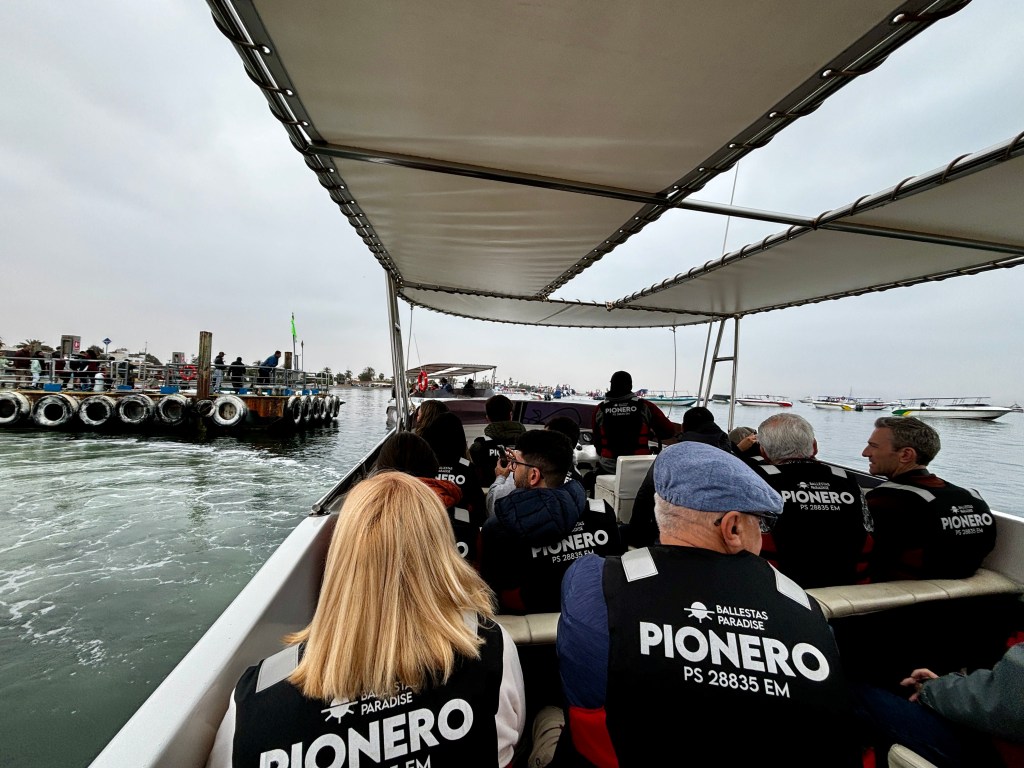
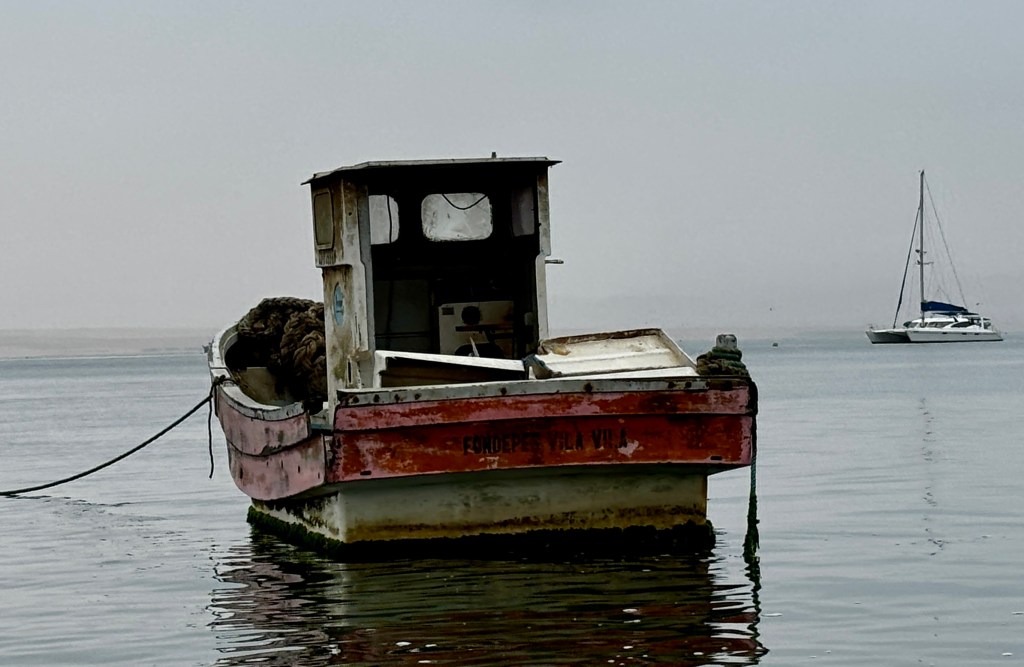
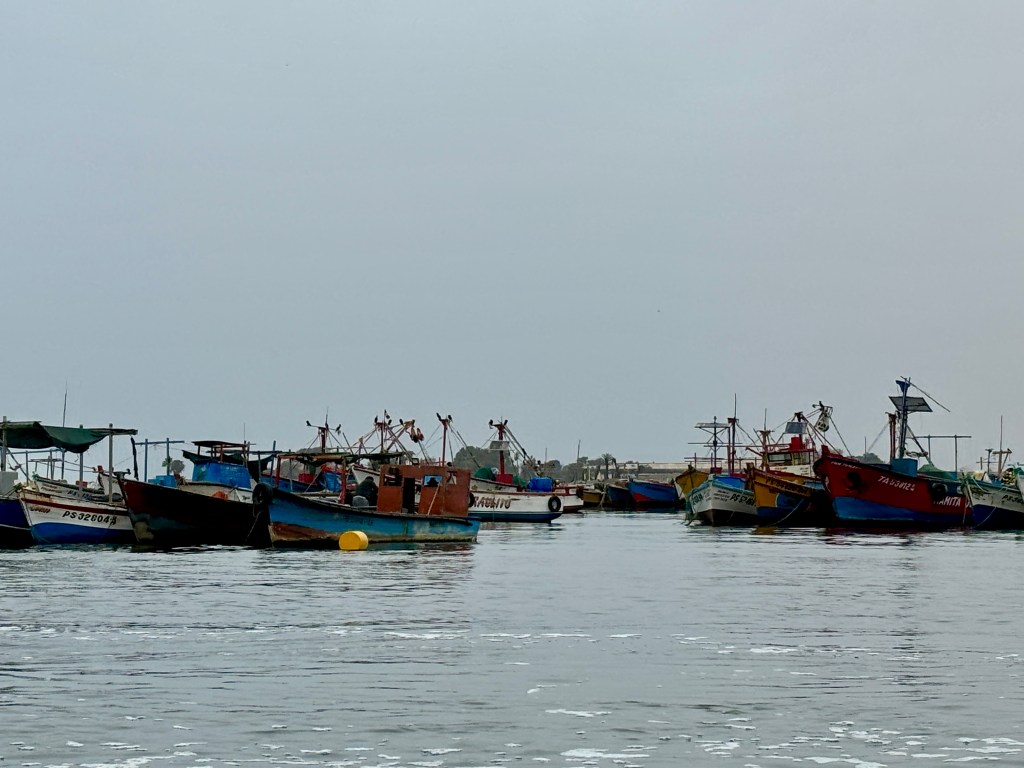
There were a variety of boats in the Bay of Paracas.

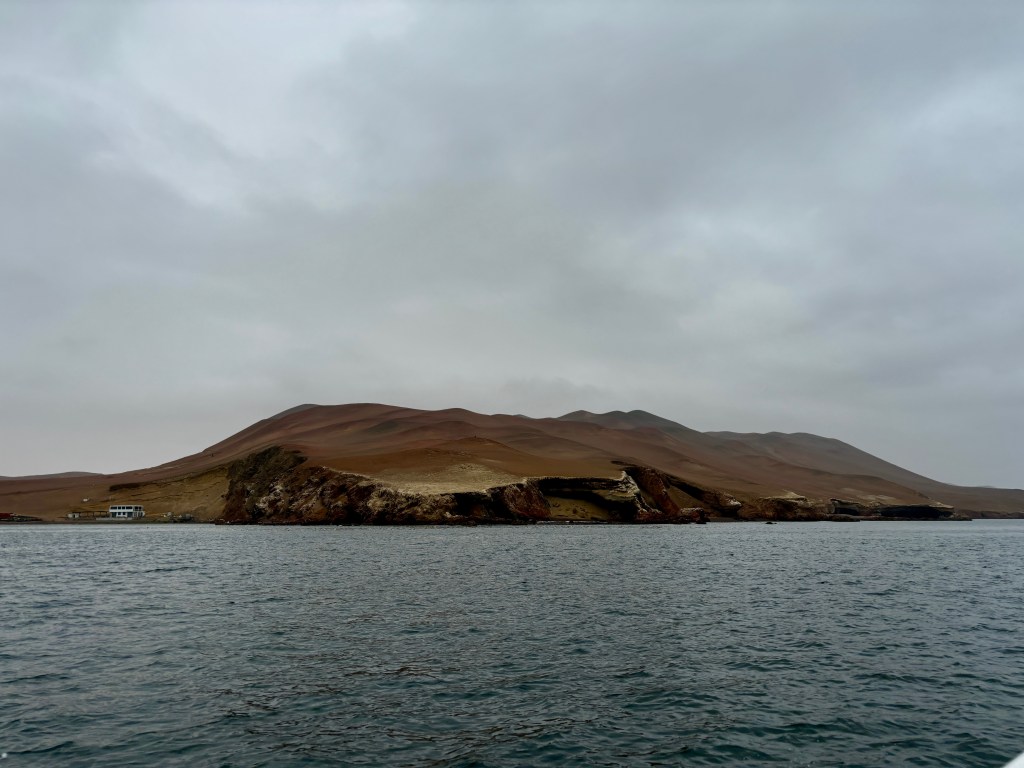
We approached our first highlight.

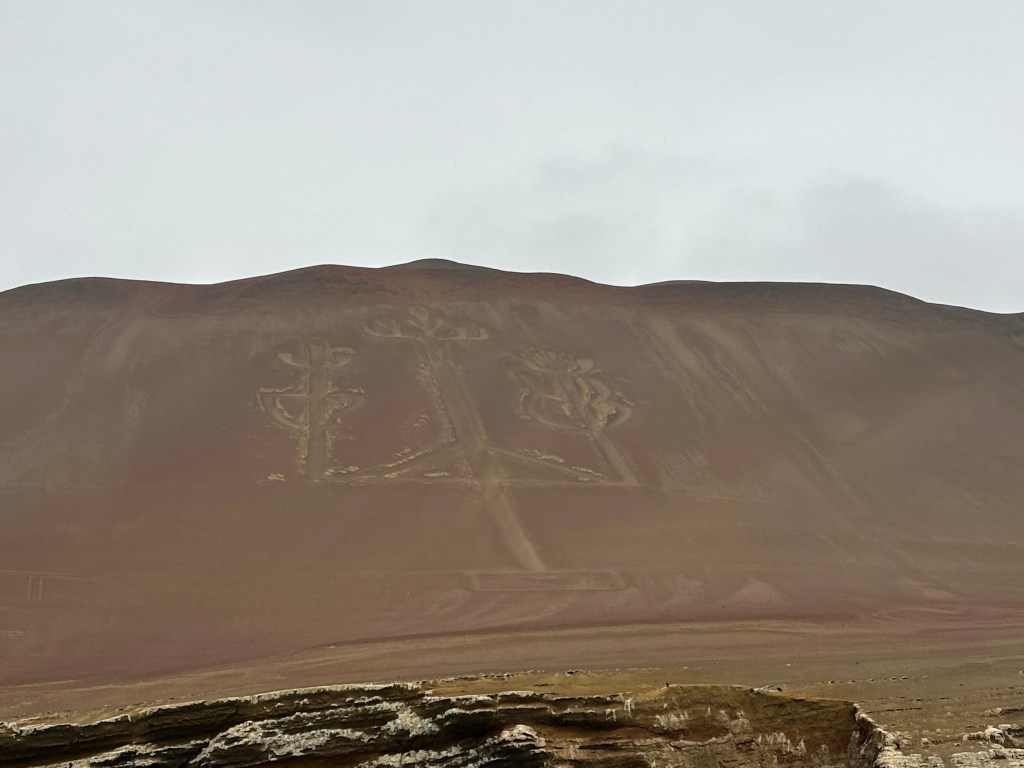
On our ride, we saw the Candelabra Lines. The area the lines cover is 170 x 54 meters.  This etching is called a geoglyph and it is the only one in this area.  There are more than 20 theories as to the origin, but no one really knows how, who or why.

This area of Peru has very little rain so the Candelabra Lines have remained.

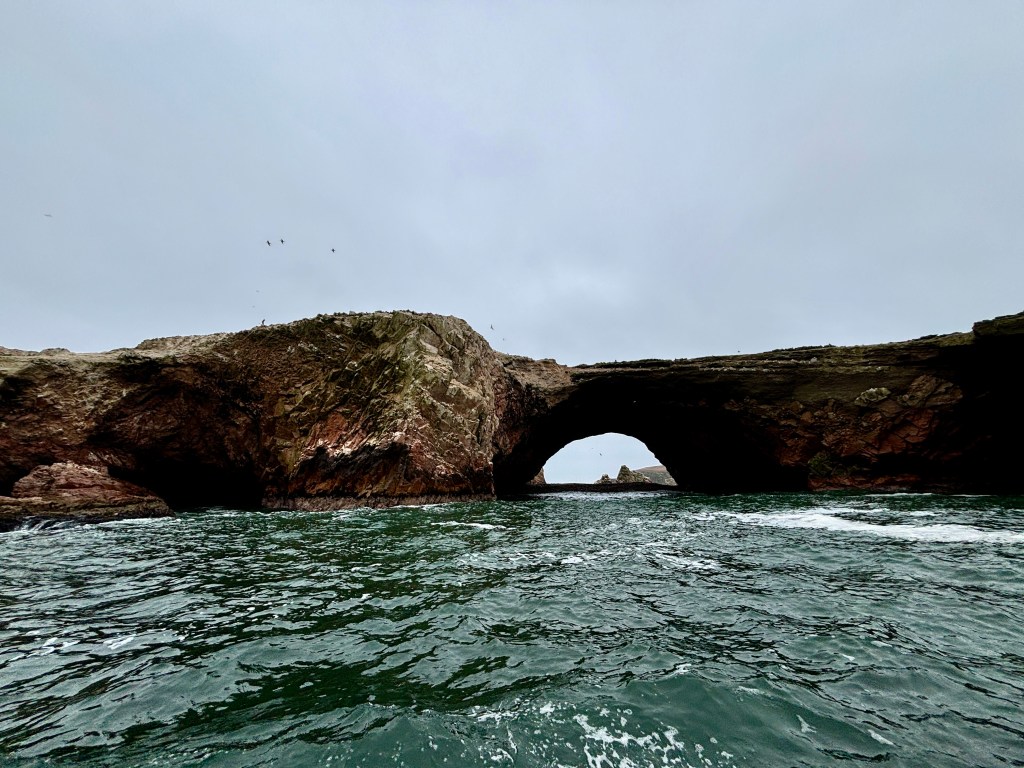
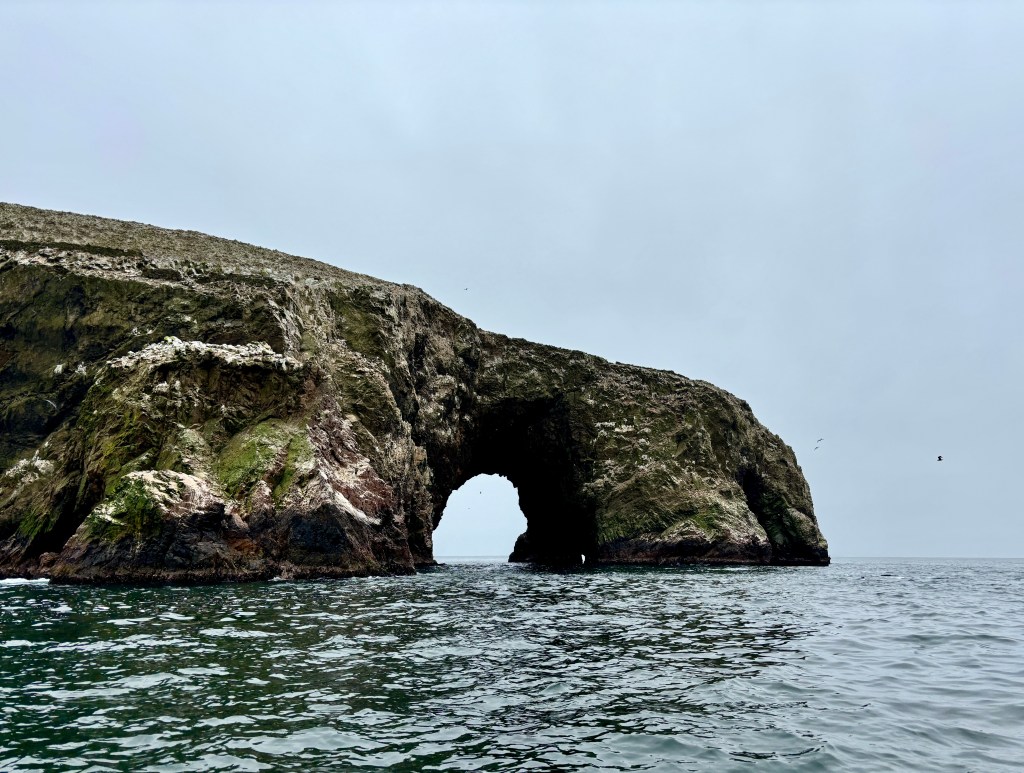
The Ballestas Islands have been protected by the government of Peru since 2009.

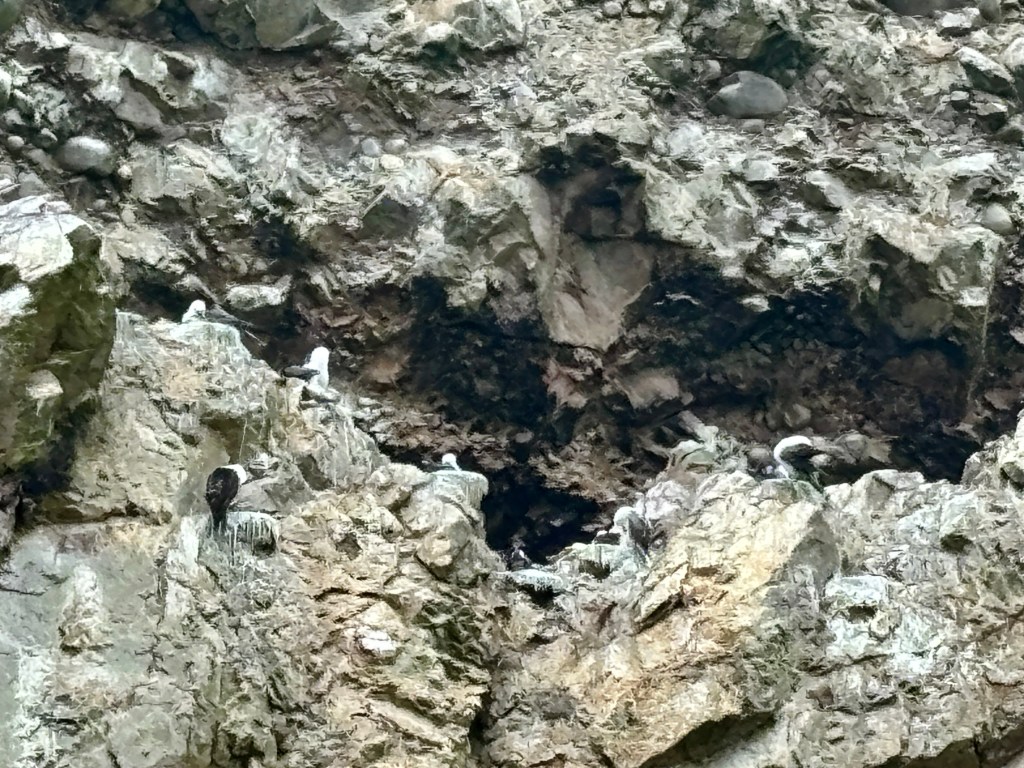
This was our very first penguin sighting – Humboldt penguins.  They live up to twenty years.

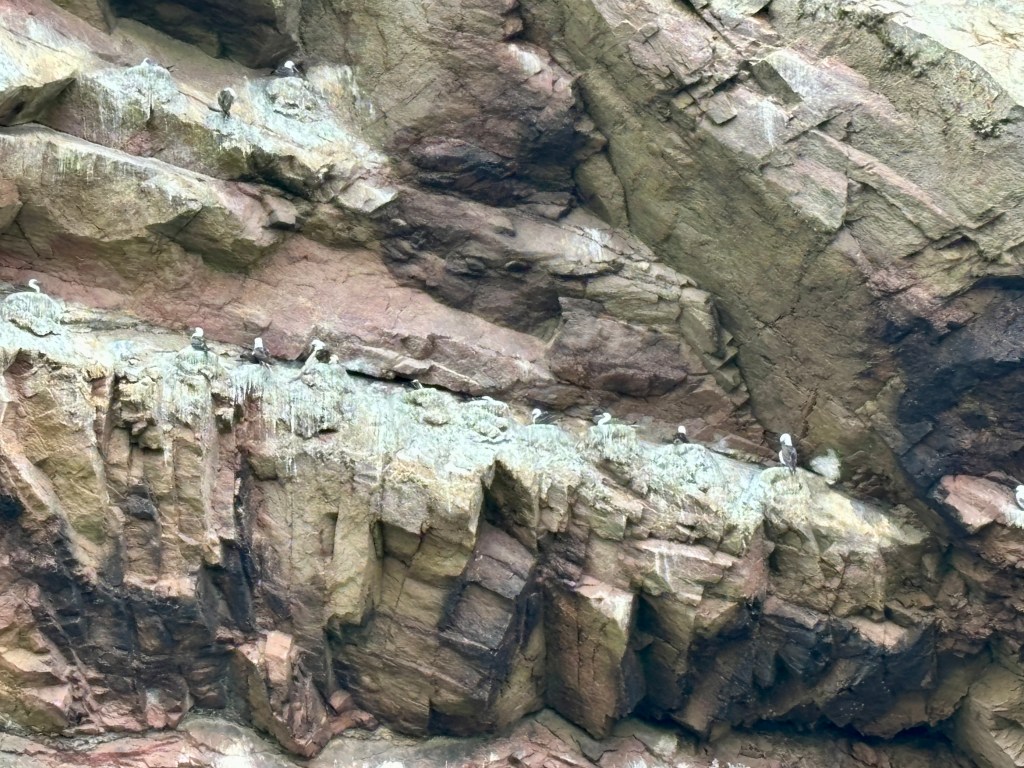
There are a lot of sea birds on the islands including terns, gulls and pelicans.  

There are also Peruvian boobies, different than Galapagos boobies because Peruvian boobies are monogamous, choosing a lifetime mate.

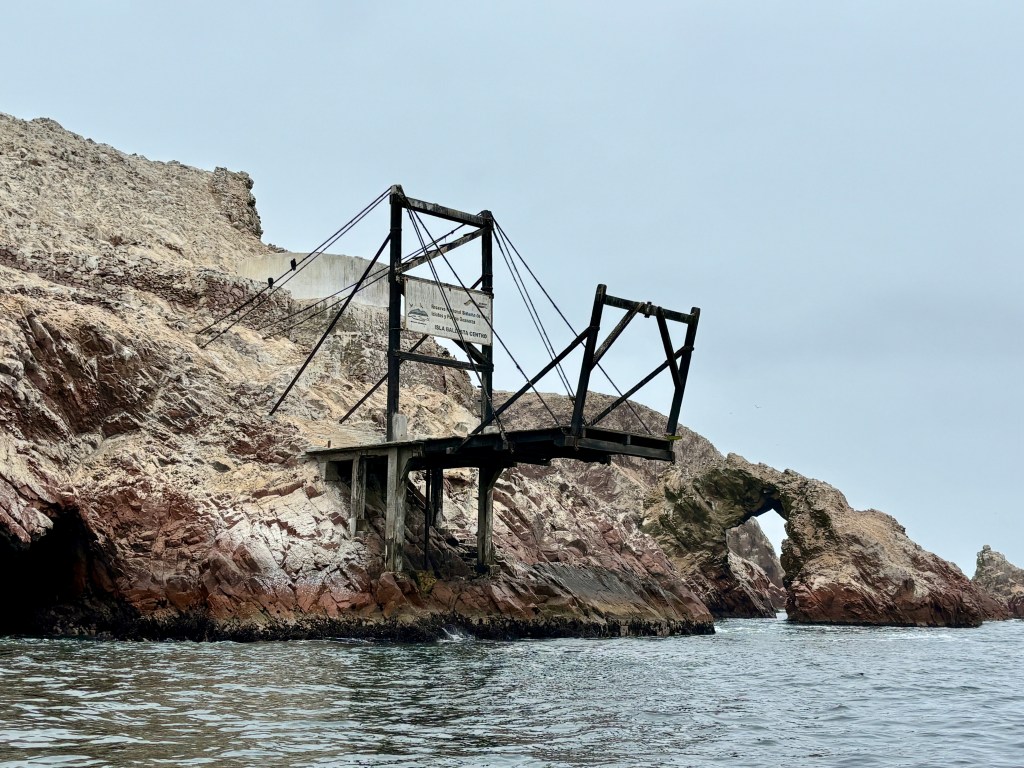
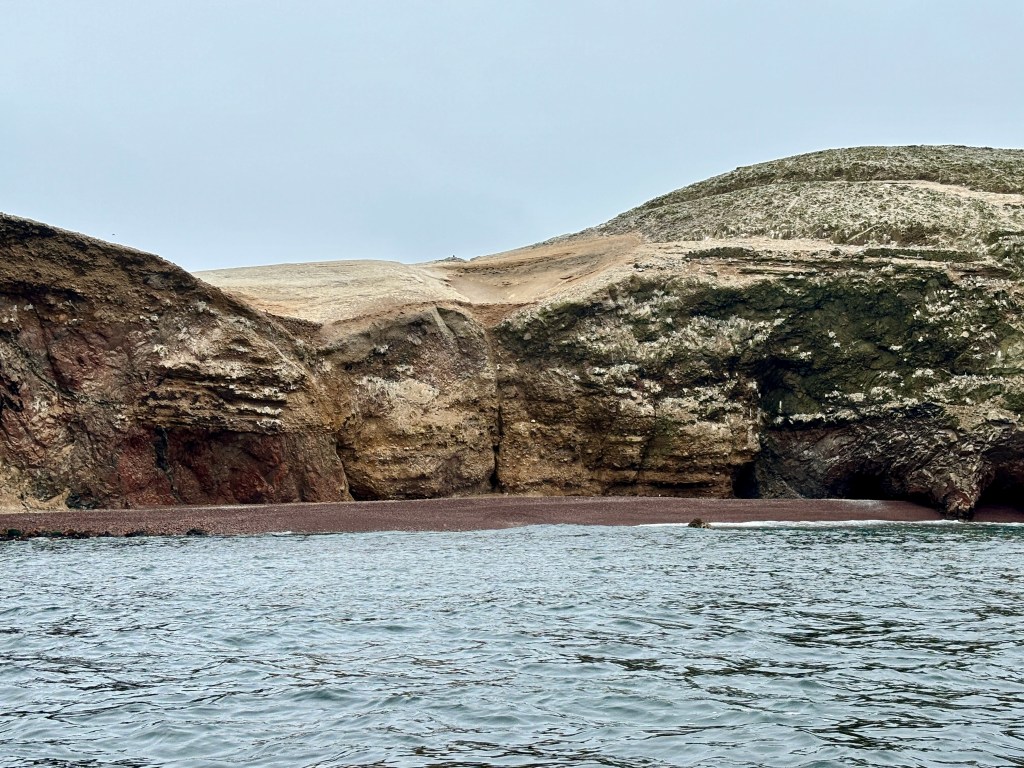
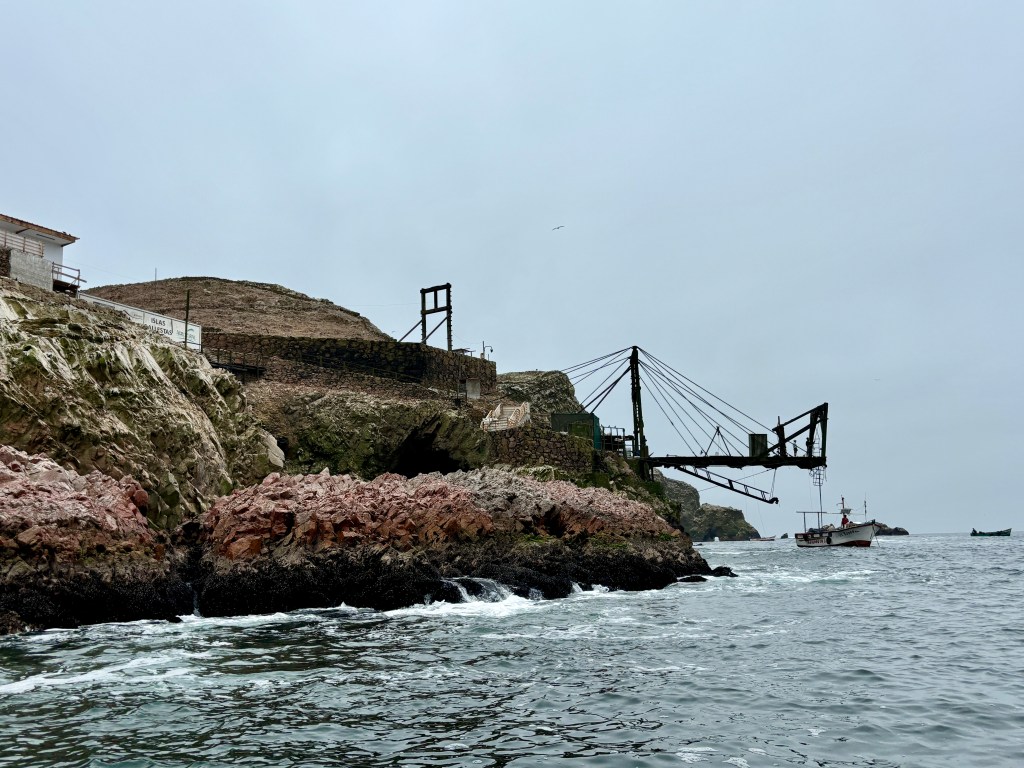
A lot of seabirds means a lot of guano on these and other islands off Peru. The guano once reached depths of 200 feet. Guano has often been used as a fertilizer and was a valuable commodity from the mid-1800s to the early 1900s. This infrastructure is from when guano was actively mined on the islands.  Mining damaged the ecosystem so is now limited and regulated.

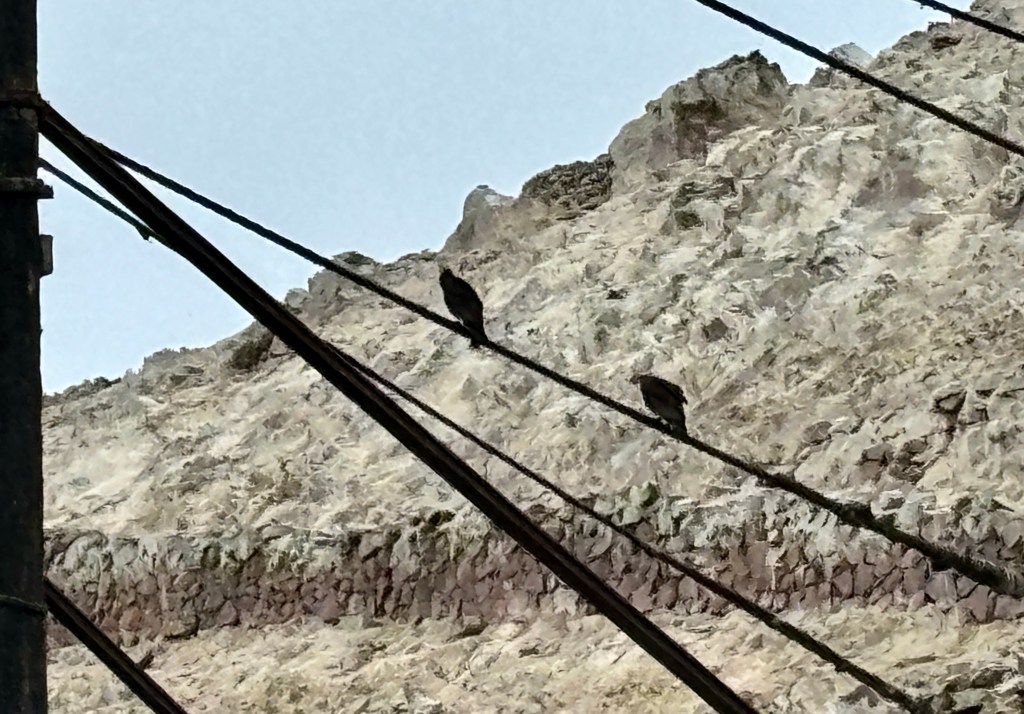
Turkey vultures provide clean up for animals and birds that die on the island. 

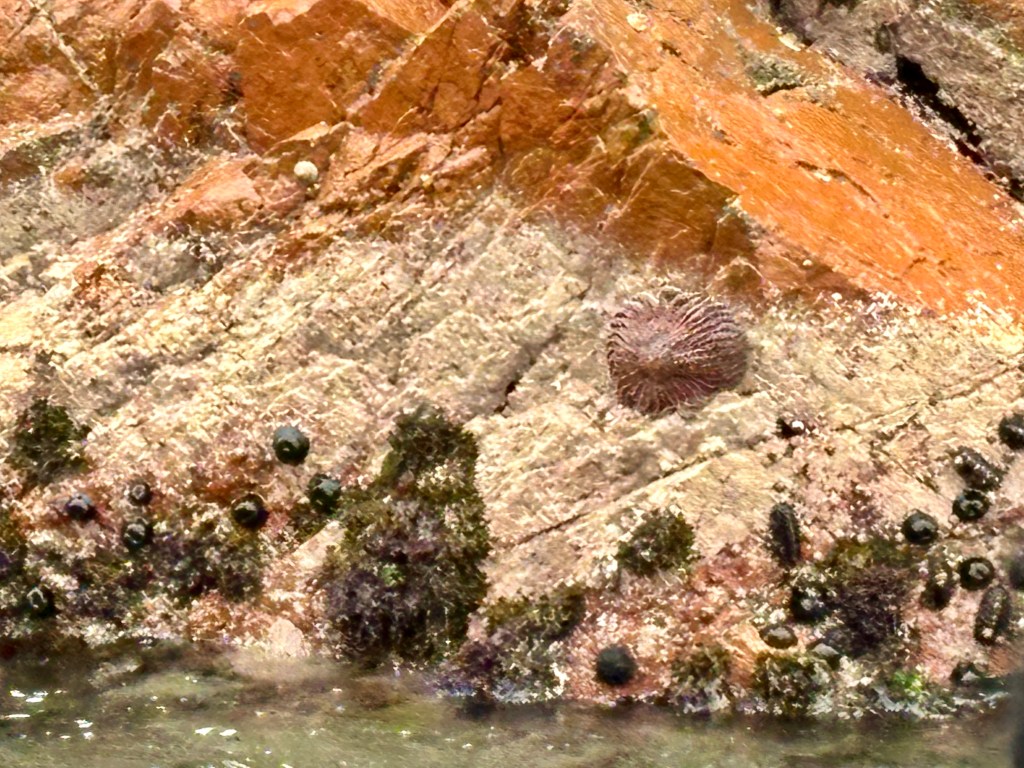
We saw several variety of starfish.

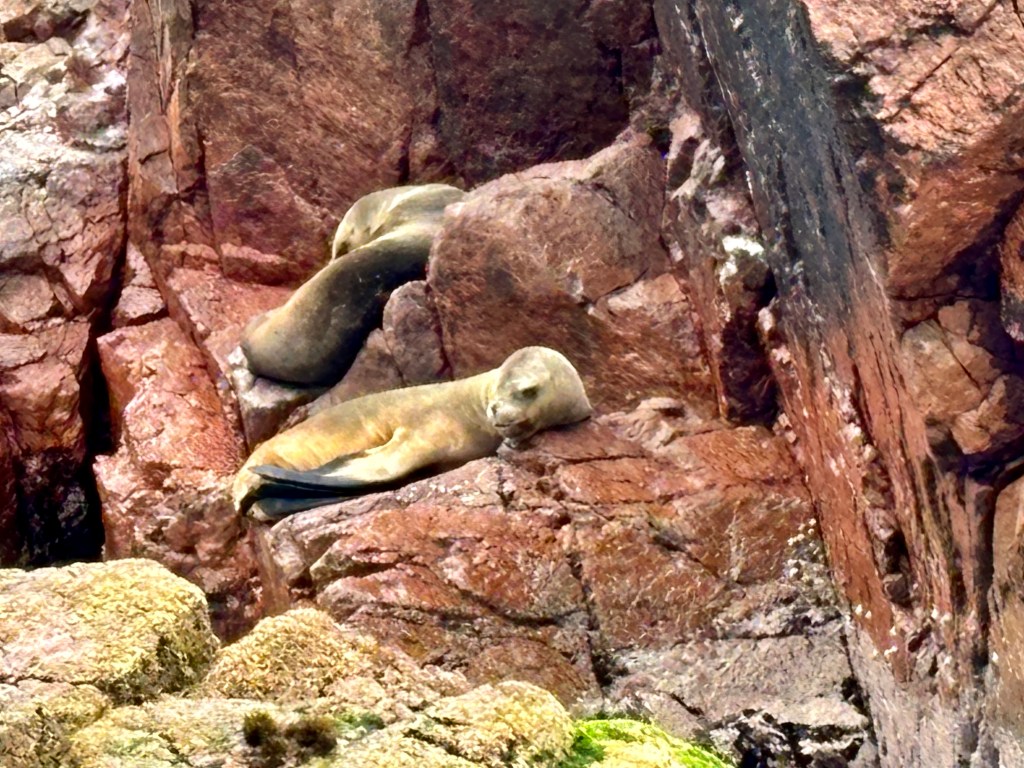
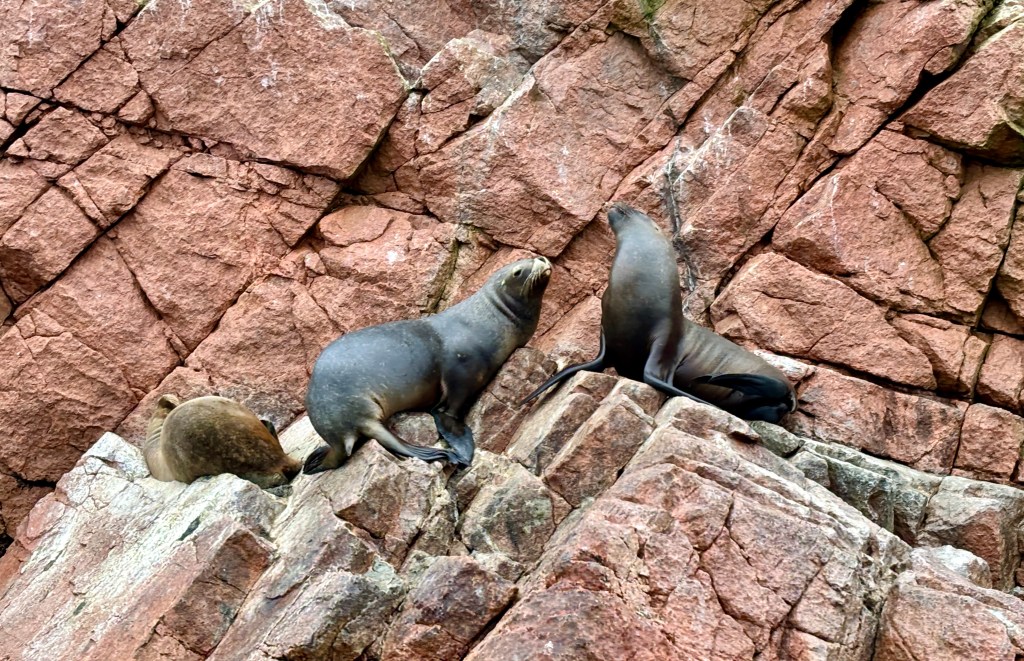
Then the South American Sea Lions and South American seals stole the show.  

They can sleep 18 hours a day

This is Sea Lion Maternity beach from January to March.  We were there in September. Gestation is almost one year.

This infrastructure is for the people who live on the Ballestras Islands to protect the animals and environment.

We hadn’t really given much thought to this portion of our tour but it turned out to be delightful!

We returned to Paracas harbor.

The main event of our day was to fly over the Nazca Lines.  These geoglyphs lie in the Ina desert between the Andes and the Pacific Ocean approximately 300 miles south of Lima.  The Nazca and Paracas peoples once lived in this region but it is unclear how and why they might have made line drawings that can be viewed only from the air.

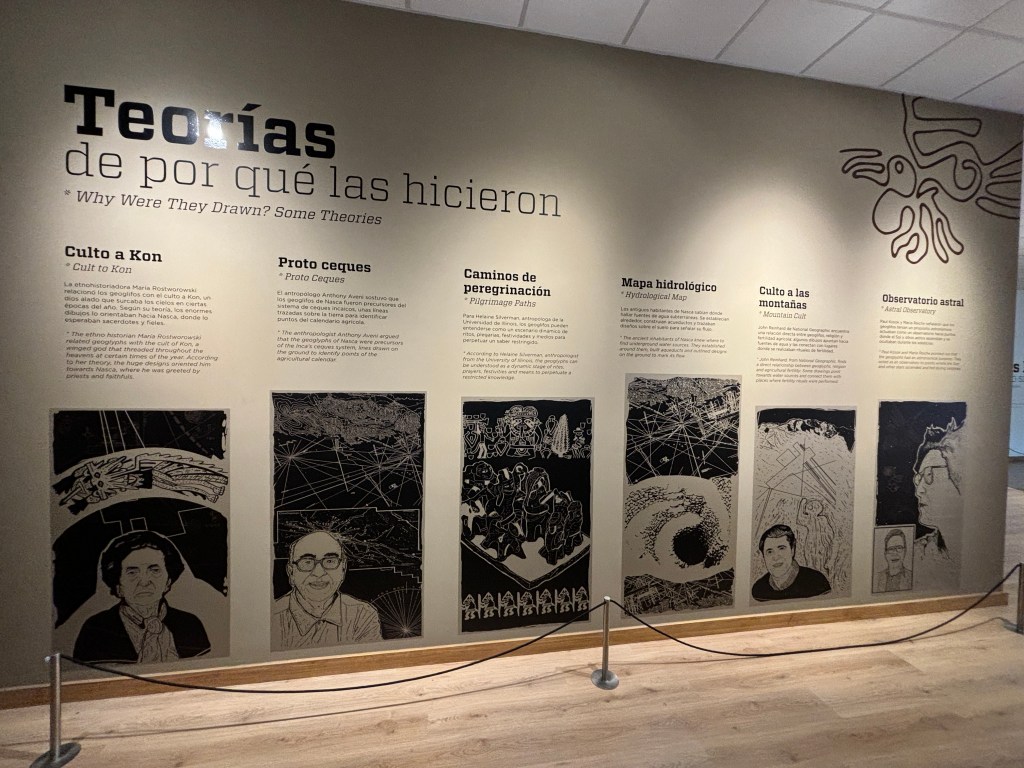
A museum within the airport gave us some background information and touched on some of the many theories about the how and why of the Nazca Lines.  Most deal with representations of their clans, or hydrology, or spirituality or some combination thereof.

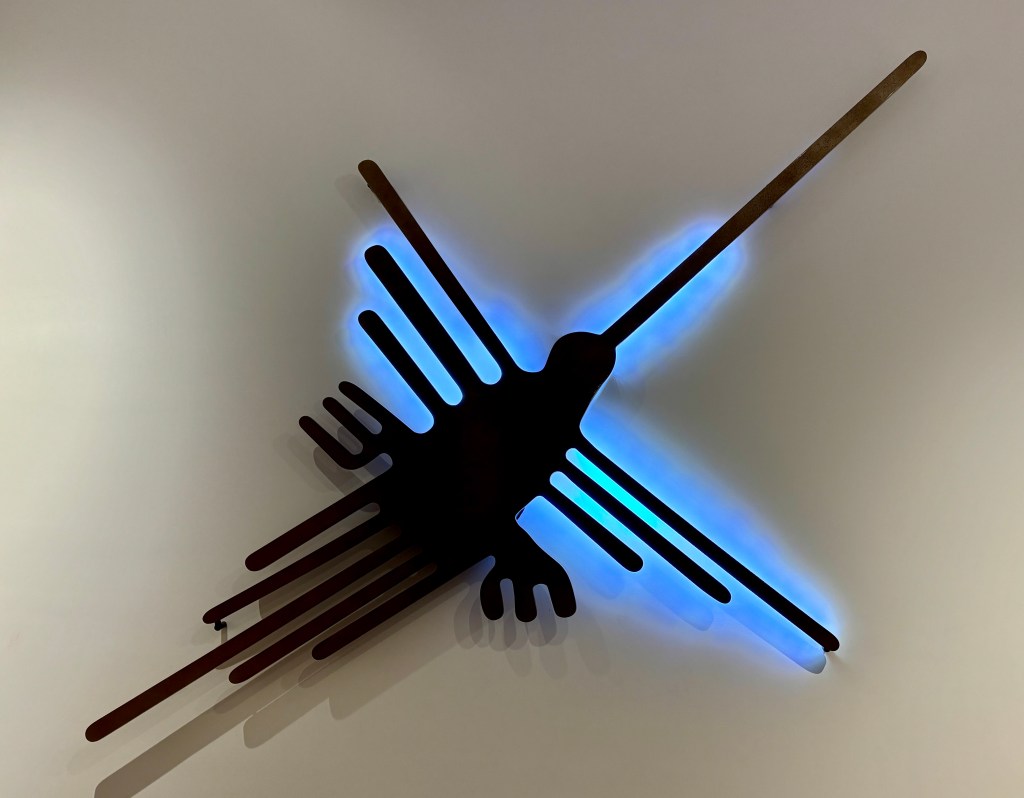
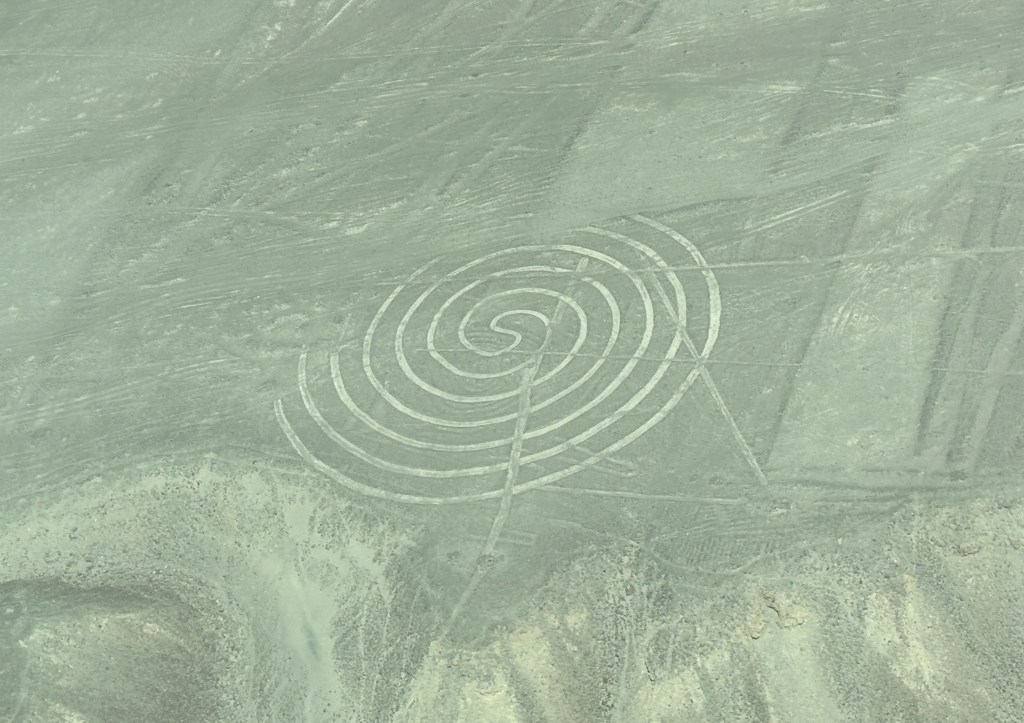
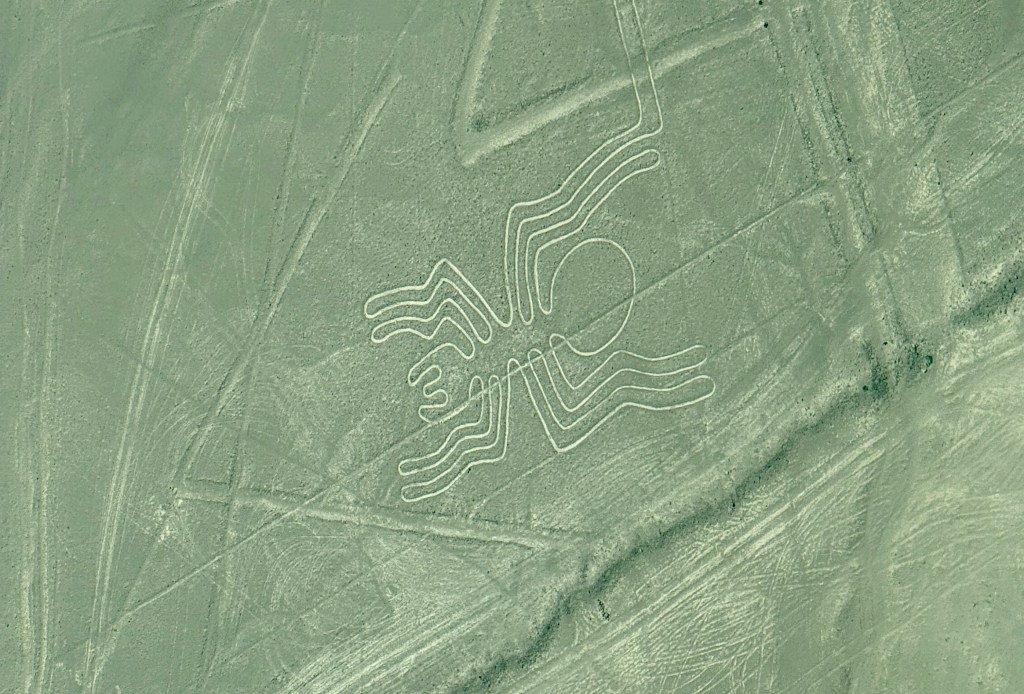
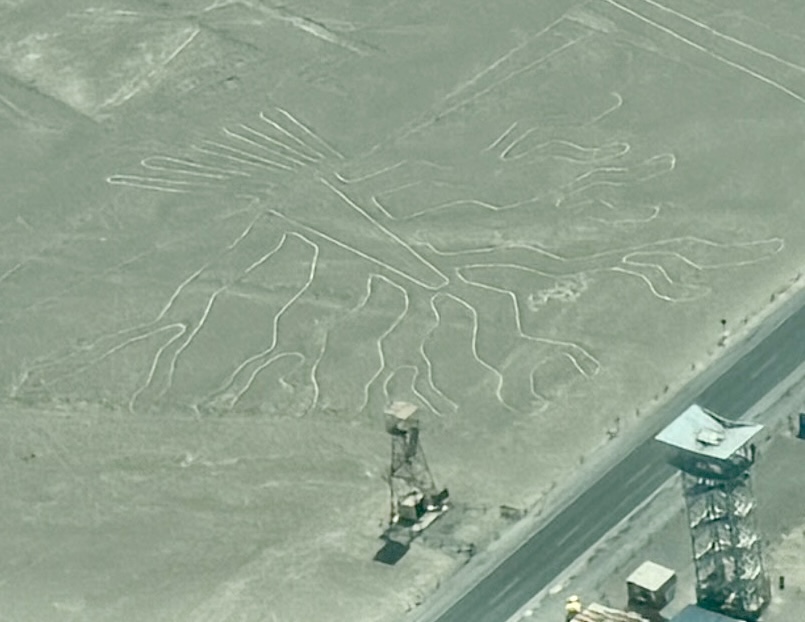
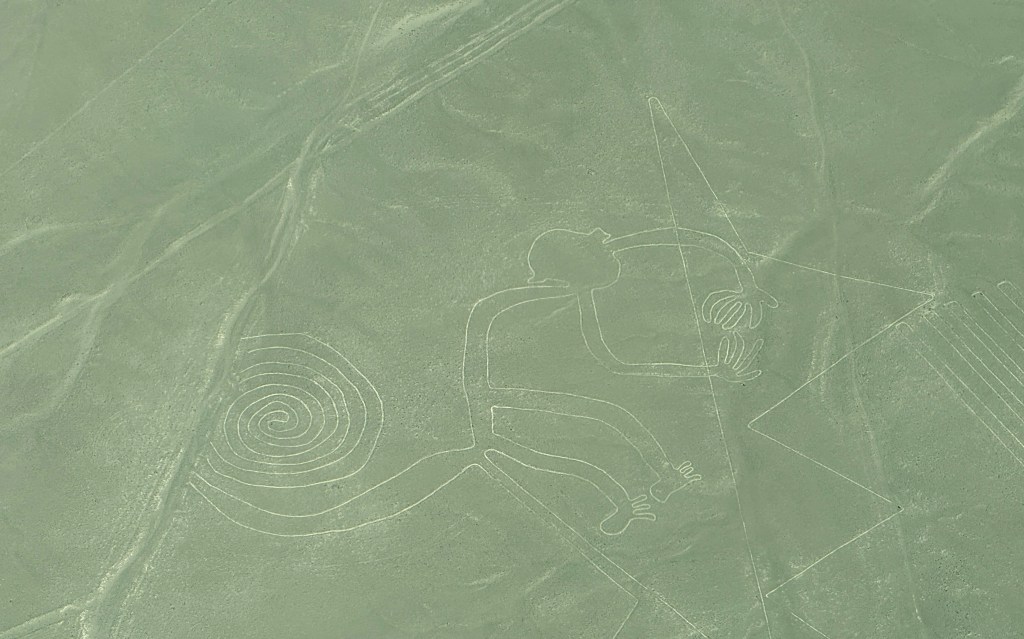
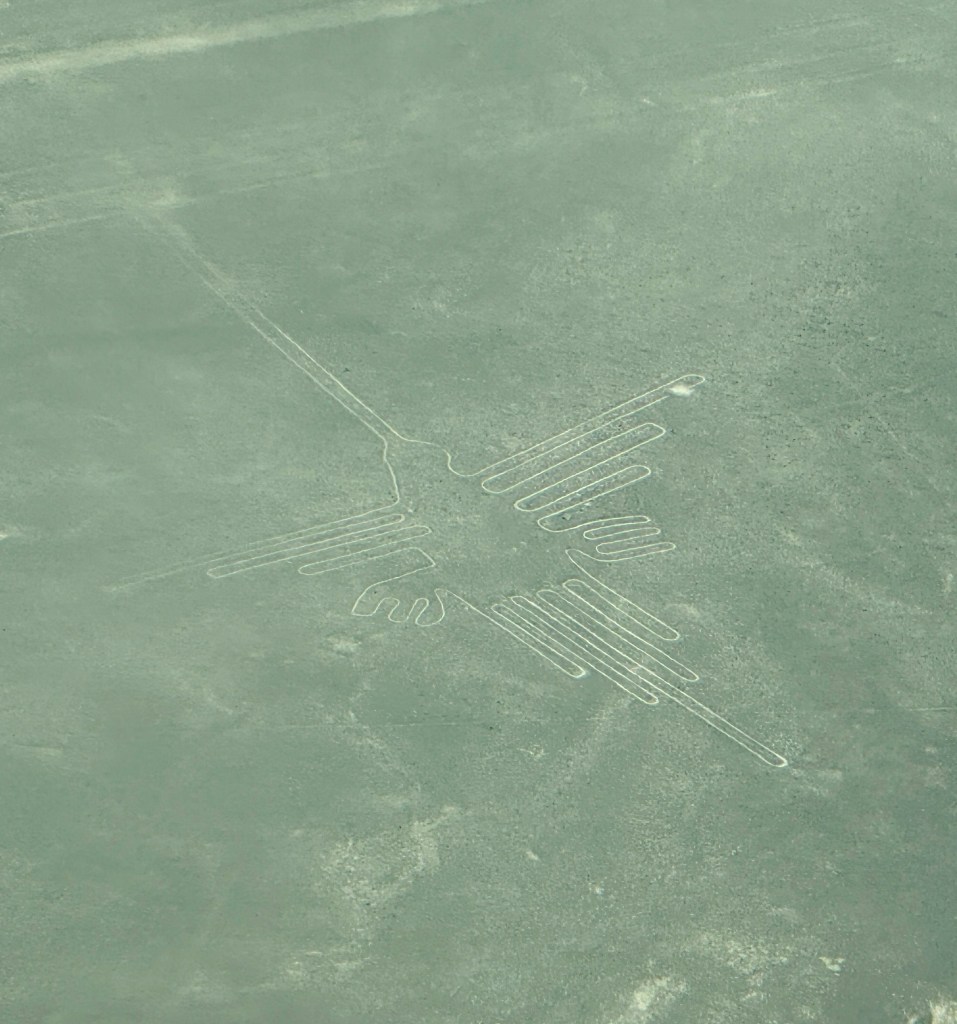
The animals and figures represented are recognizable today, including the most famous, the hummingbird.

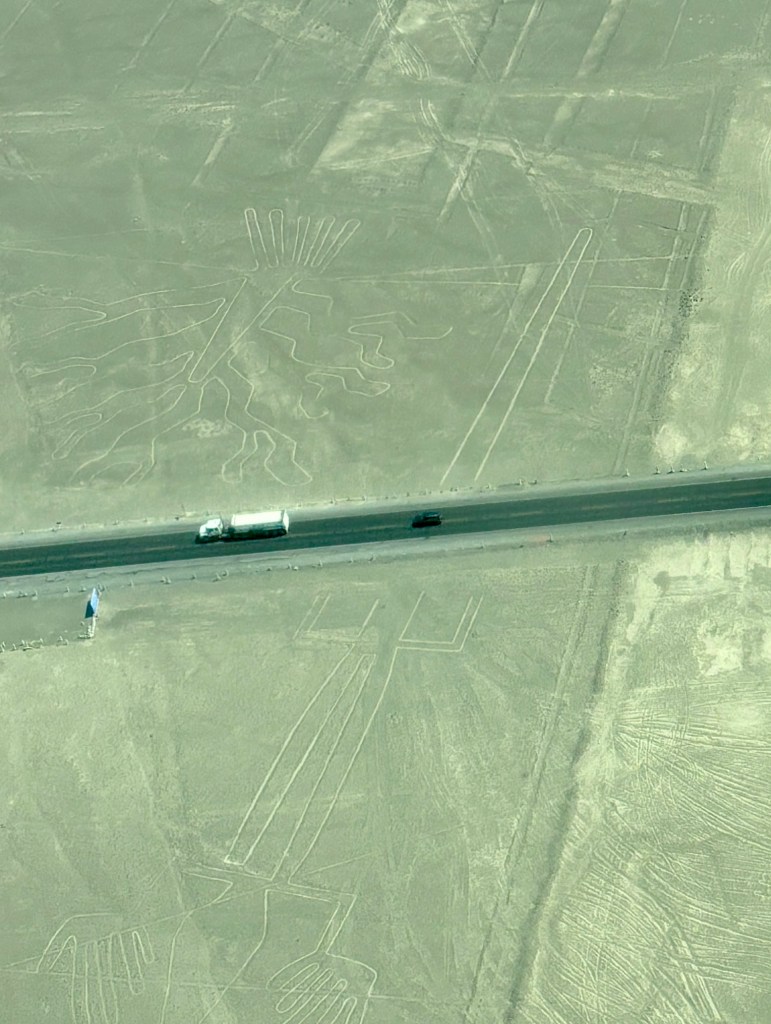
The Nazca lines were discovered on the ground when workers were building part of the PanAm highway in the 1920s.  That section damaged part of the lizard’s leg.

The Nazca Lines are thought to be about 2000 years old and were named a Unesco World Heritage Site.

There is speculation that the lines were drawn by space aliens and numerous books have been written with that theory as a base.  The Peruvian government does not embrace that theory.

Enrique told us of another academic finding that the Peruvian government is not wanting to embrace. Archeologists have found skulls in the area that correlate only 30 percent with the area’s homosapeans. Is this another possibility for the creators of the Nazca Lines?

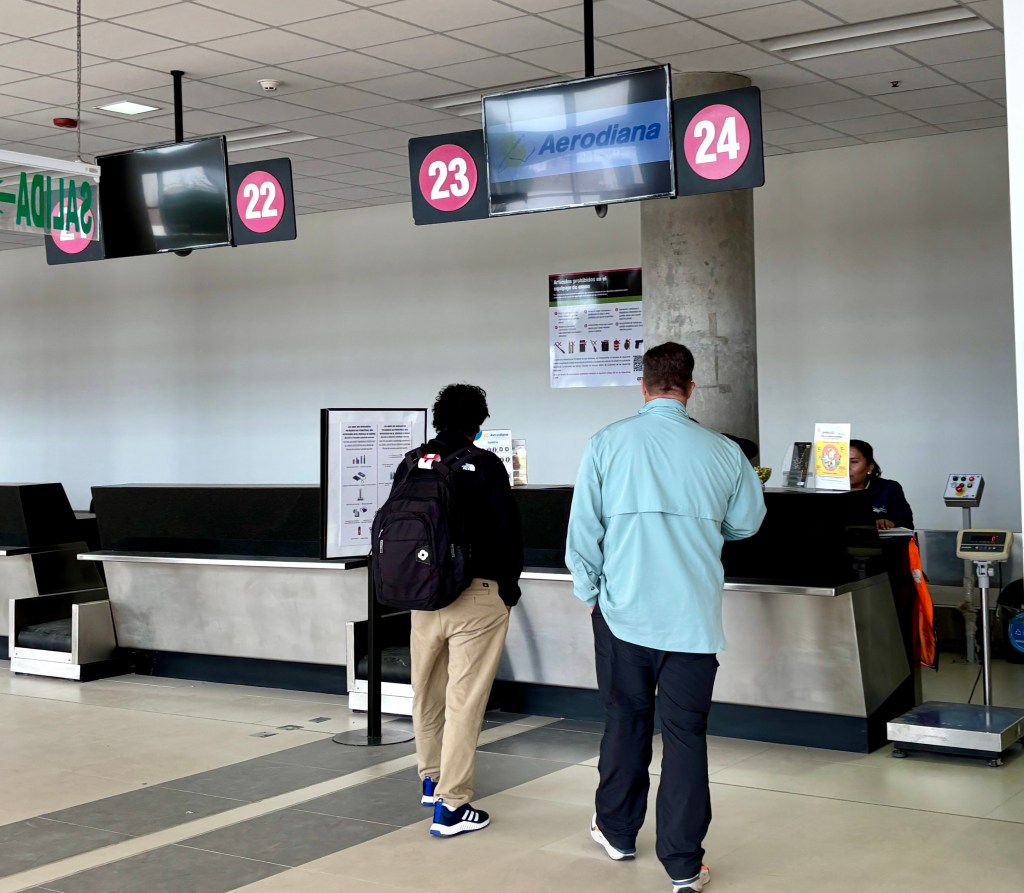
It was time to go see them for ourselves. We had to weigh in and were assigned seats.  Notice the scale to the right….

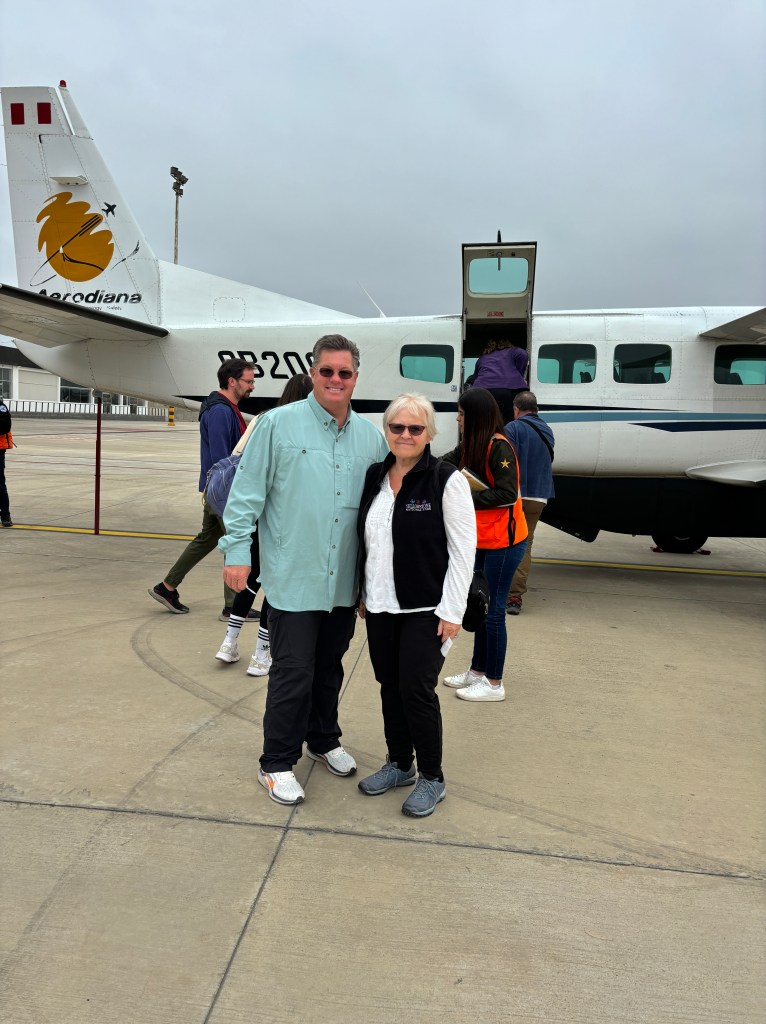
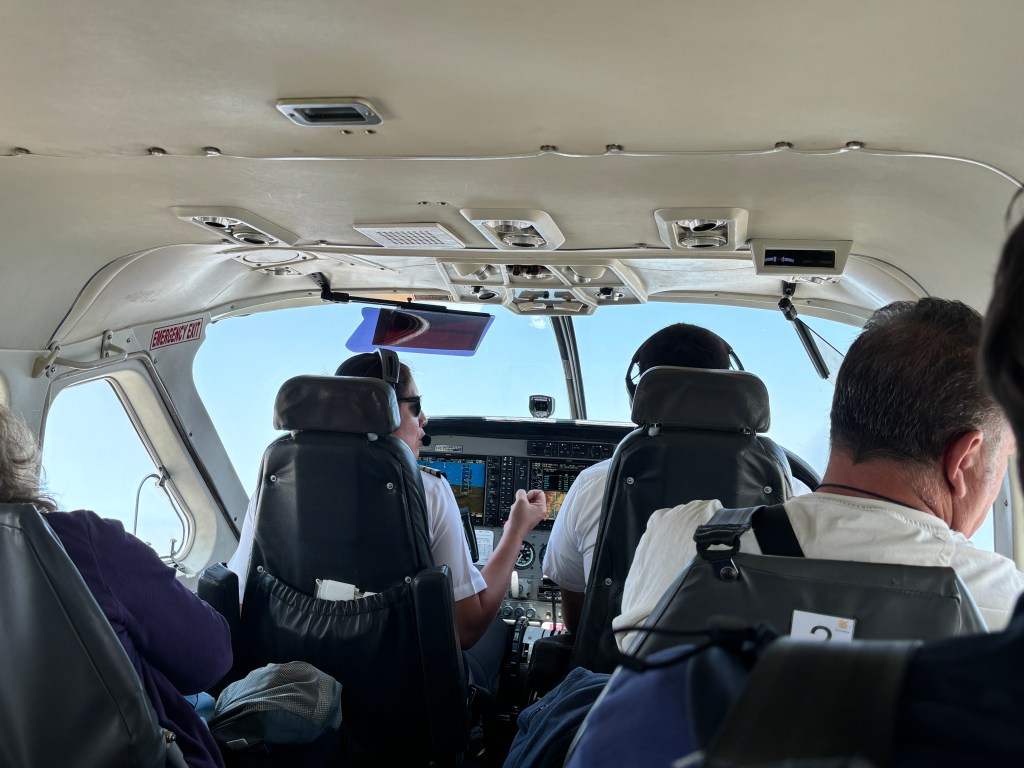
We were in a Cessna Grand Caravan 208B – a 12 seater plane.  Everyone  had a window seat and couples were across from each other.

There were the six of us from our tour together along with six others.

We had a female pilot.  She, and her male co-pilot, offered commentary but with the noise, and the accent, it was not terribly helpful.

Our two hour flight had about 30 minutes of travel to the site before and after with the middle hour being above the lines.  The pilot performed bends and turns to give people on both sides of the plane the opportunity to see the shapes.

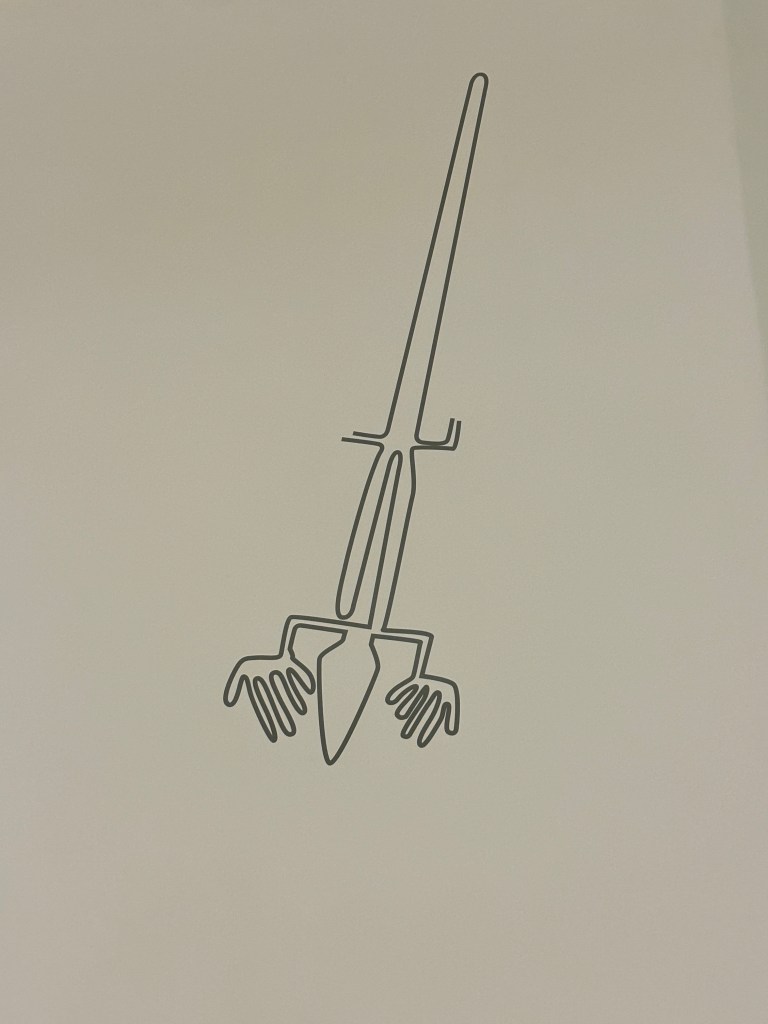
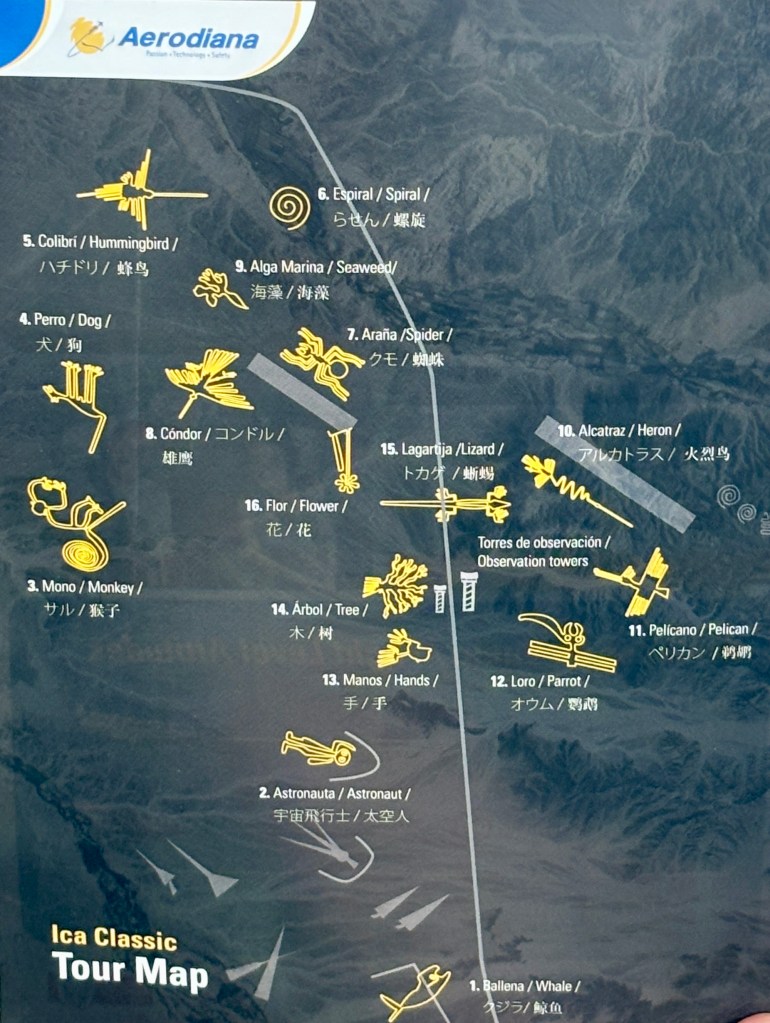
We found this chart in the seat back at the end of our flight and only wished we had seen it at the beginning.

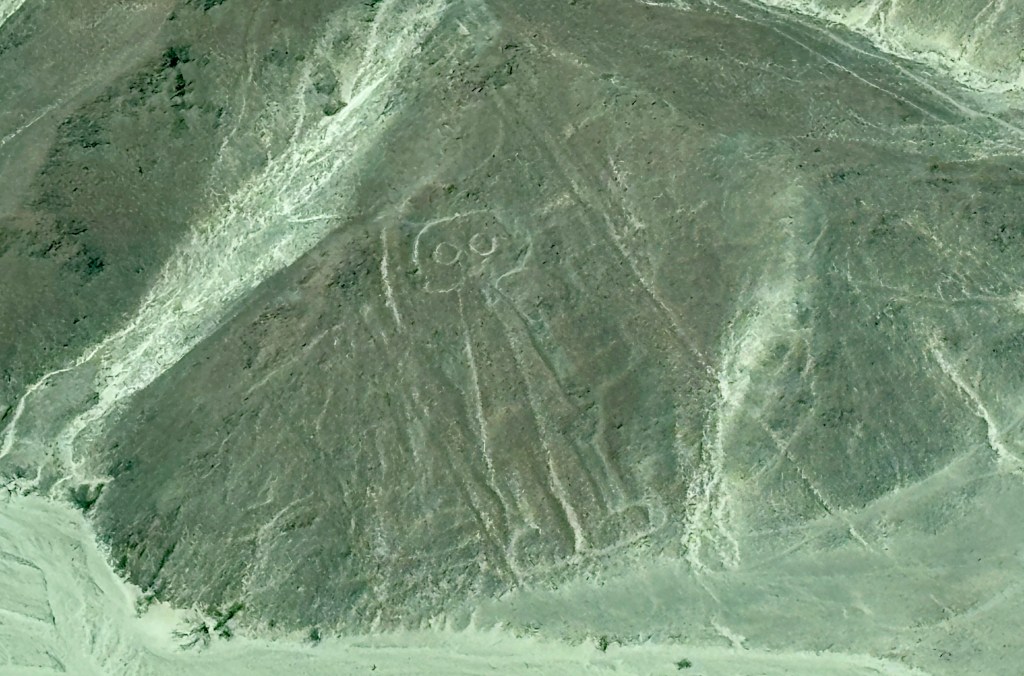
This was the first line figure we saw from above. It was formed on the side of a hill.

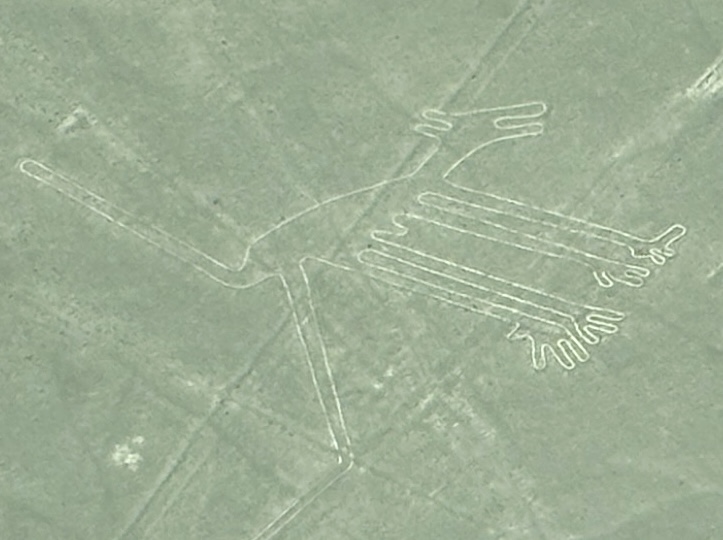
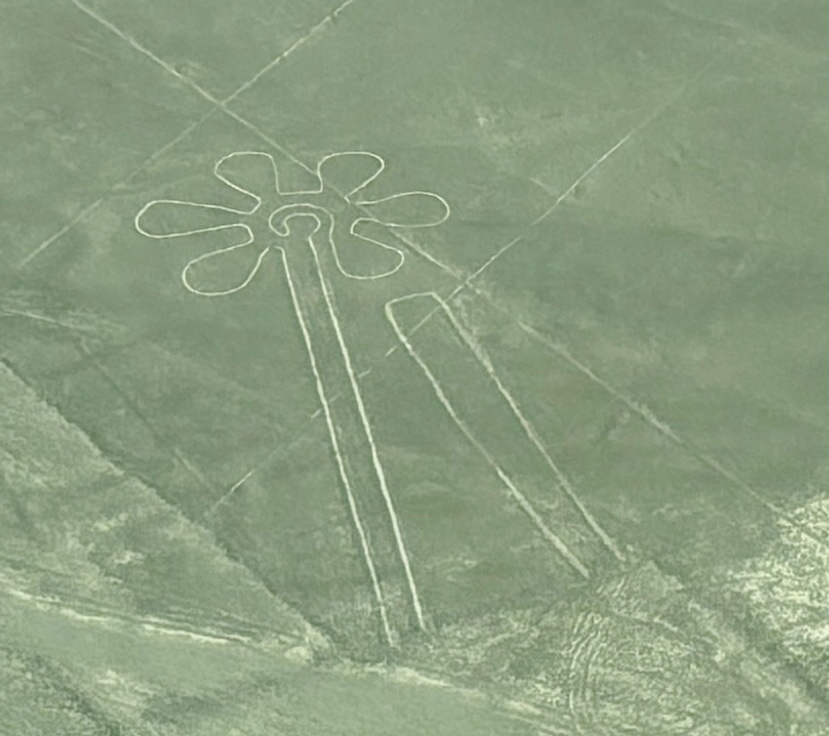
The lines and figures were easy enough to see when you knew where to look.  

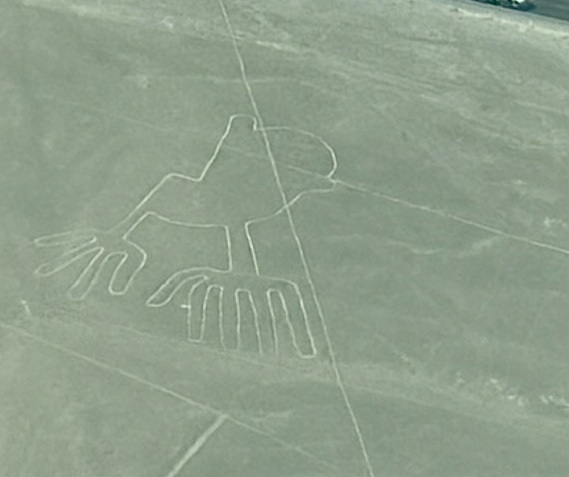
These pictures, however, are enhanced.  That changes the background from real life brown to green, making them much easier to see. 

The famous hummingbird from above!

Some designs are quite elaborate.

This picture shows how the Pan American highway went right through the lizard leg lines.

During our flight several people, including one of our own, became quite ill.  It was not a flight for those inclined to motion sickness.    Fortunately, we both did fine.  

At the end of an interesting day, those of us dubbed the “Nazca Six,” with Enrique, enjoyed a meal on our way back to Lima.

We saw the Nazca Lines on September 14, 2024.

Next Up:  We meet the rest of our group!

Posted in Uncategorized | 3 Comments

Peru: Lima to Paracas

The next day was mostly a travel day.  We met our tour director, Enrique, and the two couples who were joining us on the Nazca Lines segment of the overall trip to Machu Picchu, the Amazon and the Galapagos Islands.   One couple is from Toronto and the other is from Tennessee.  
Our guide, Enrique, spoke English, Italian, German, and Spanish and two more languages that I didn’t get down.  He has a degree in South American history and chose tourists over students.  In his experience, tourists want the information he knows more than his students did. His English was flawless and very easy to understand.
Traveling through Lima, we went through several other districts, including Baranca – the artistic area. 

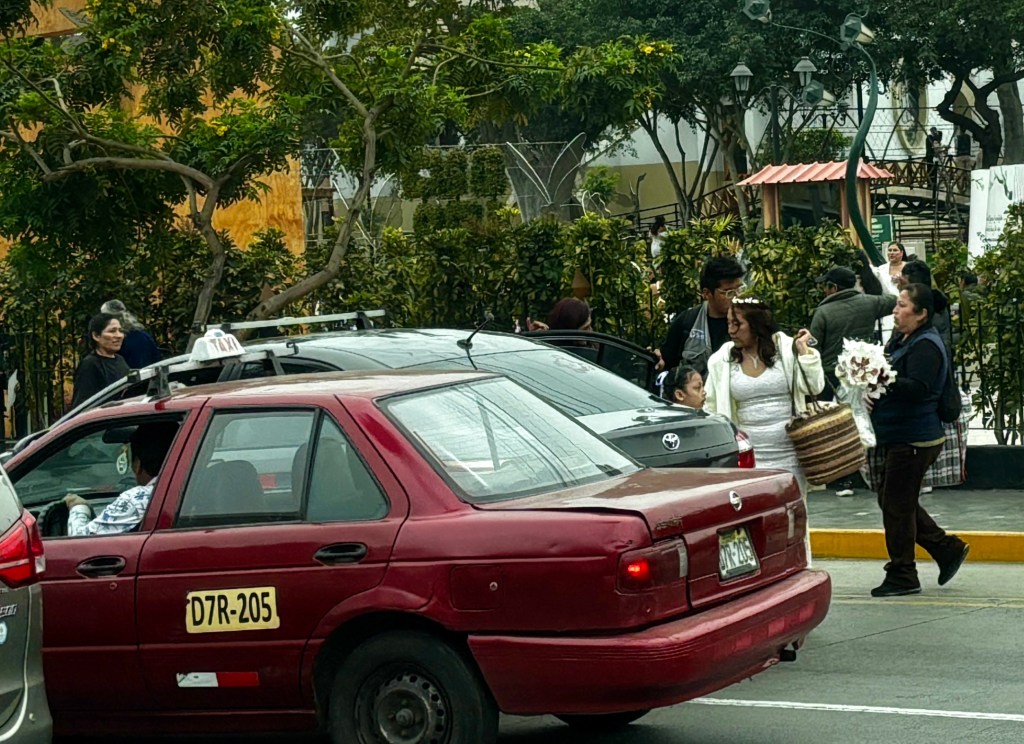
This is not a good picture but there was a gathering of 20 or so couples to be married in a combined wedding.  These gatherings are organized by city hall in order for everyone to save money.

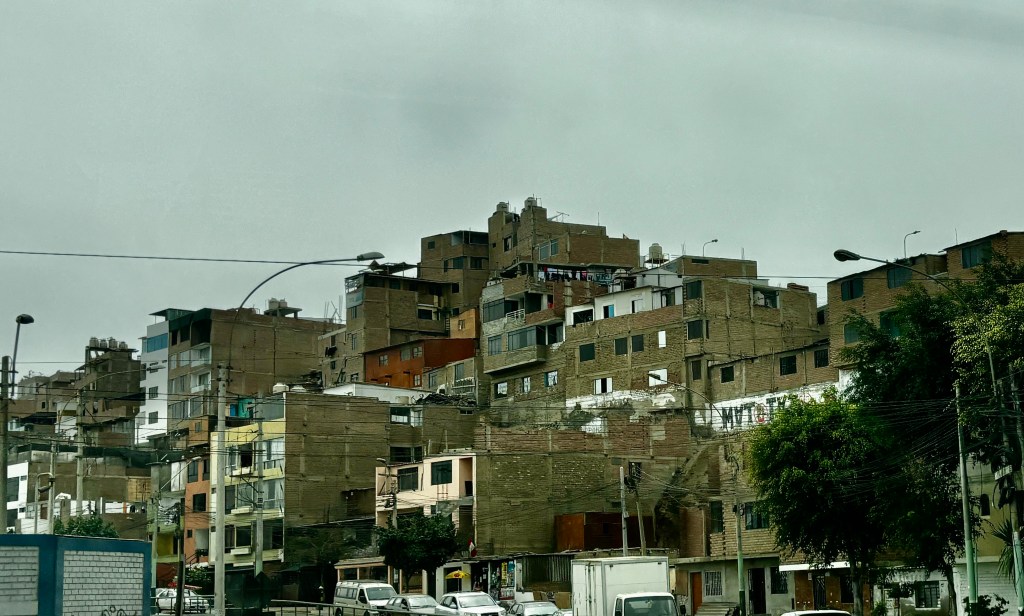
Shanty towns developed as people needed to live on land owned by the government.  The law says if you live there five years, the land is yours.  One million people live in shanty towns.

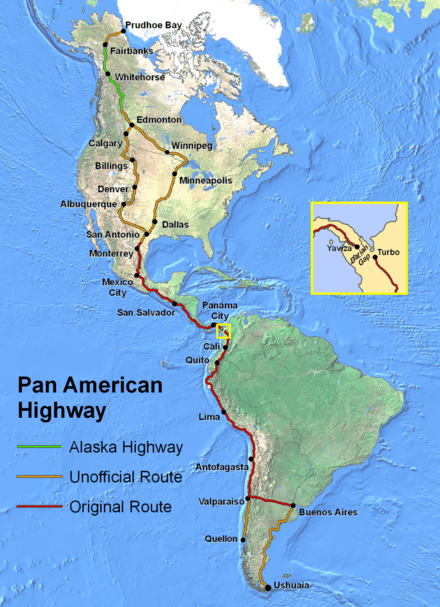
We traveled south from Lima along the PanAmerican Highway, a network of roads stretching 19,000 miles across the Americas.  There is a 60 mile break at the Panama border with Columbia but otherwise the highway extends from Prudoe Bay, Alaska to Ushuaia, Argentina.  Guinness World Records calls it the world’s longest motor road. 

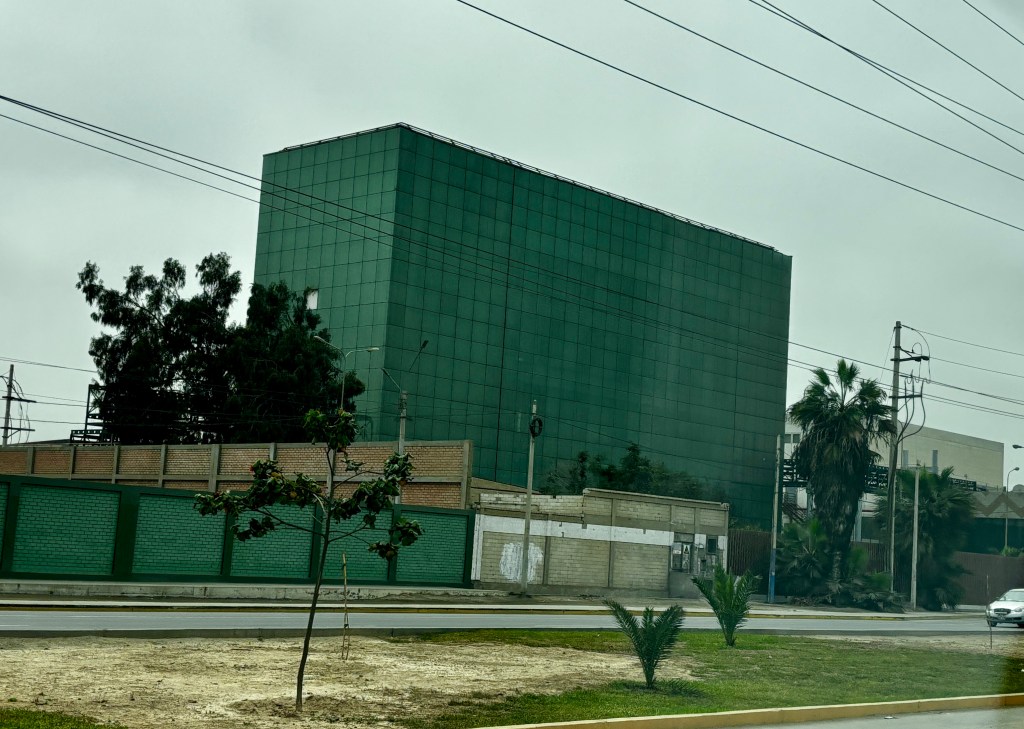
This factory was closed because it was found to be detrimental to the nearby nature reserve

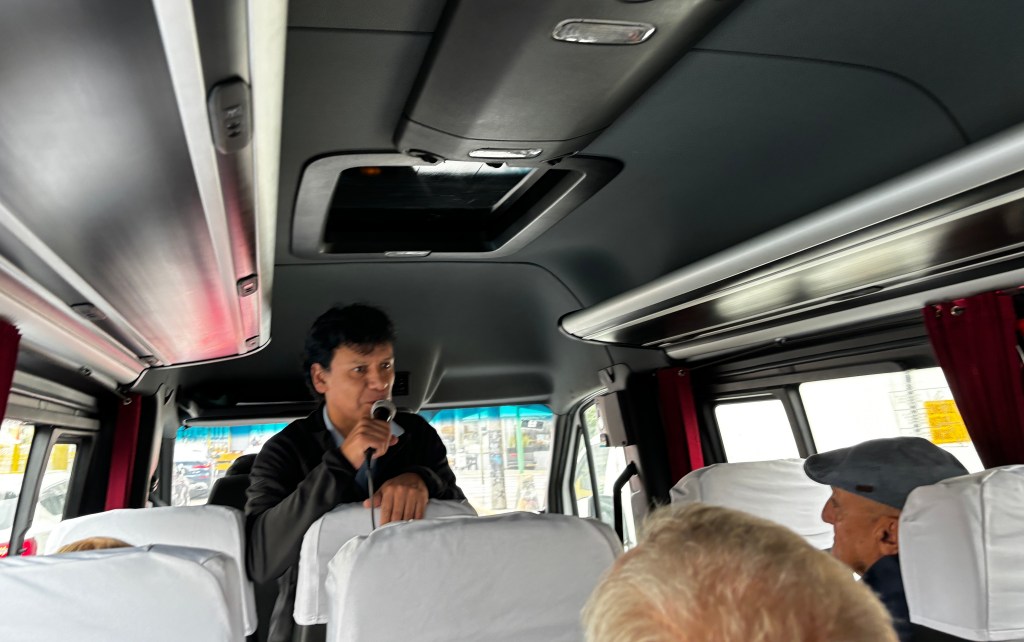
Enrique gave us information about Peru as we drove.  Many of the people who live in Peru are descendants of the Incas, Spaniards, and of former slaves brought in by the Portuguese

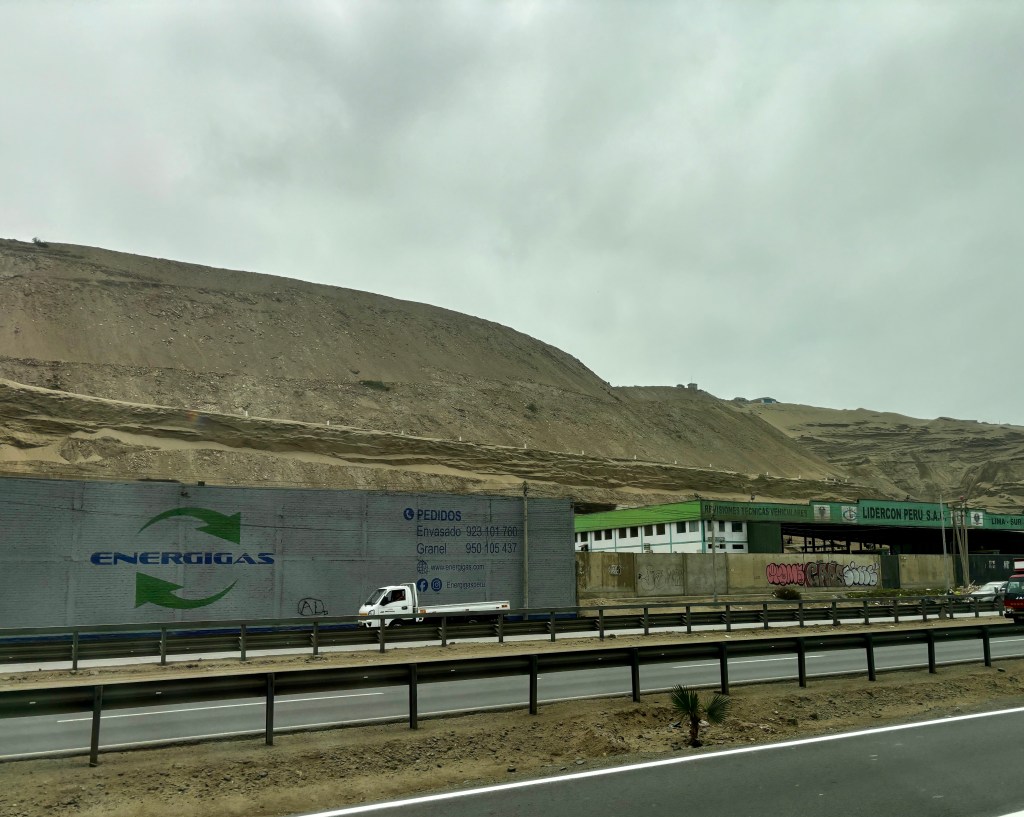
There are three main regions in Peru. The area around Lima is fairly arid because the prevailing ocean current, Humboldt from Antarctica, is too cold to produce rain.  Their water comes from Andes run off but the Andes glaciers are shrinking. The Nino current, from the Ecuador area, is warmer so there is more rain in other regions.

Five main rivers, from five countries, contribute to the Amazon.  He used fingers on his hand to represent the rivers going into the main river represented by his arm.

Peru is the third largest country in South America.  Brazil and Argentina are larger.

We learned that mining is 50 percent of the economy in Peru.  In 2019,  Peru was the 2nd largest producer in the world for copper, silver and zinc.  It was third in the world for lead, 4th for tin,  and the 8th largest producer of gold.   Peru is now mining reserves of recently discovered lithium.

Natural gas is the second largest industry and tourism is third.  There are about 5 million visitors to Peru per year. Peru exports anchovies, sea bass (marketed as Chilean sea bass), artichokes and blueberries.

While we were eating lunch, there was a state funeral being shown on the TV.  Enrique told us that Alberto Fujimori has been a college president and became a “good dictator.”   He made some necessary changes to the constitution to be able to fight terrorists.  He was re-elected to a second  term and eventually became oppressive and corrupt.   Fujimori was convicted of human rights violations and spent time in prison before being released due to age and poor health.  He died shortly before we arrived in Peru.

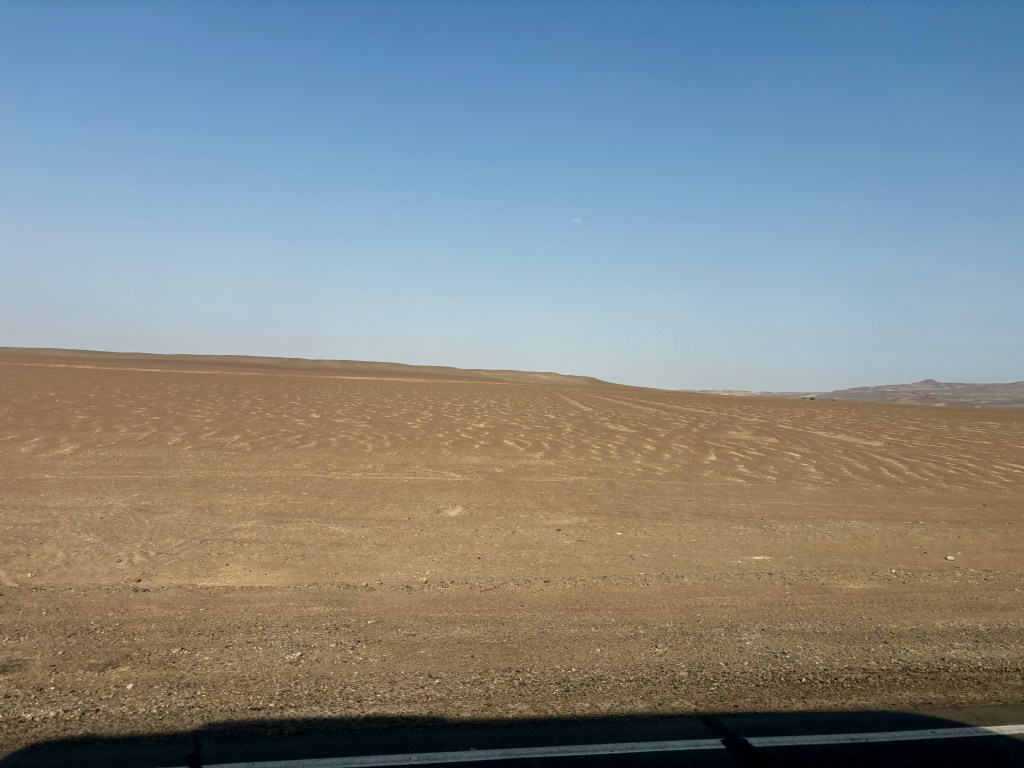
As we drove into Paracas, hours south of Lima, this was my view out the window on the inland side. The land was quite barren with signs prohibiting entry.  

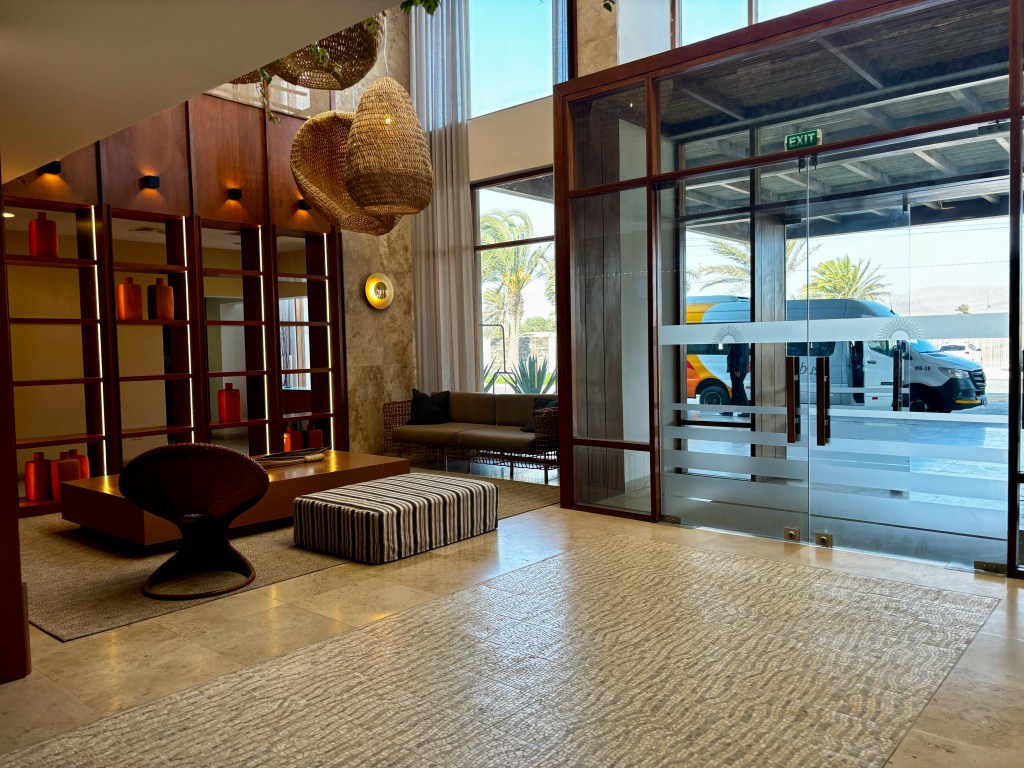
We made a right turn, towards the oceanfront and the world changed.

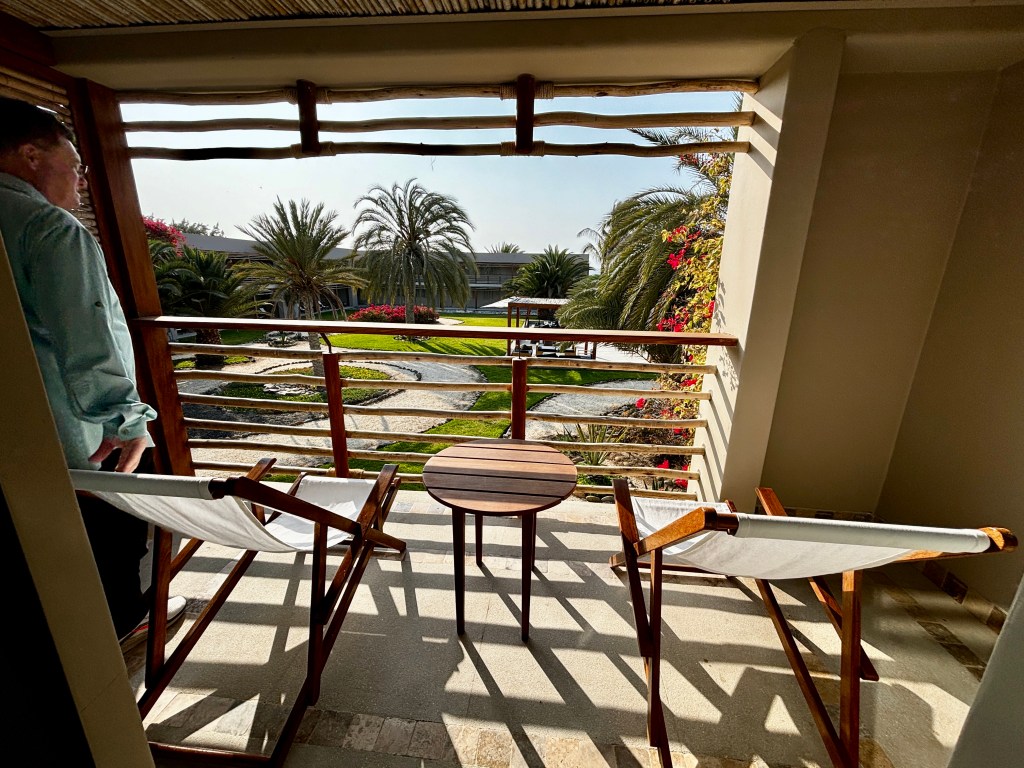
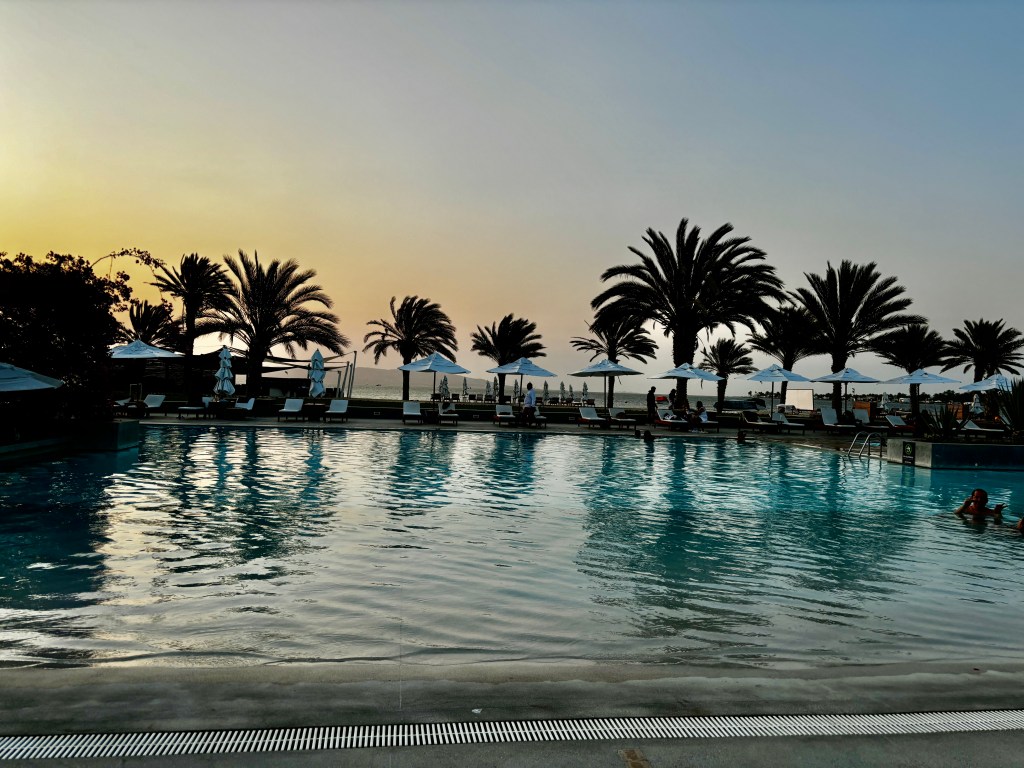
We did not expect a lovely resort in such a remote area! 

It was too bad we were only going to be there for one night.

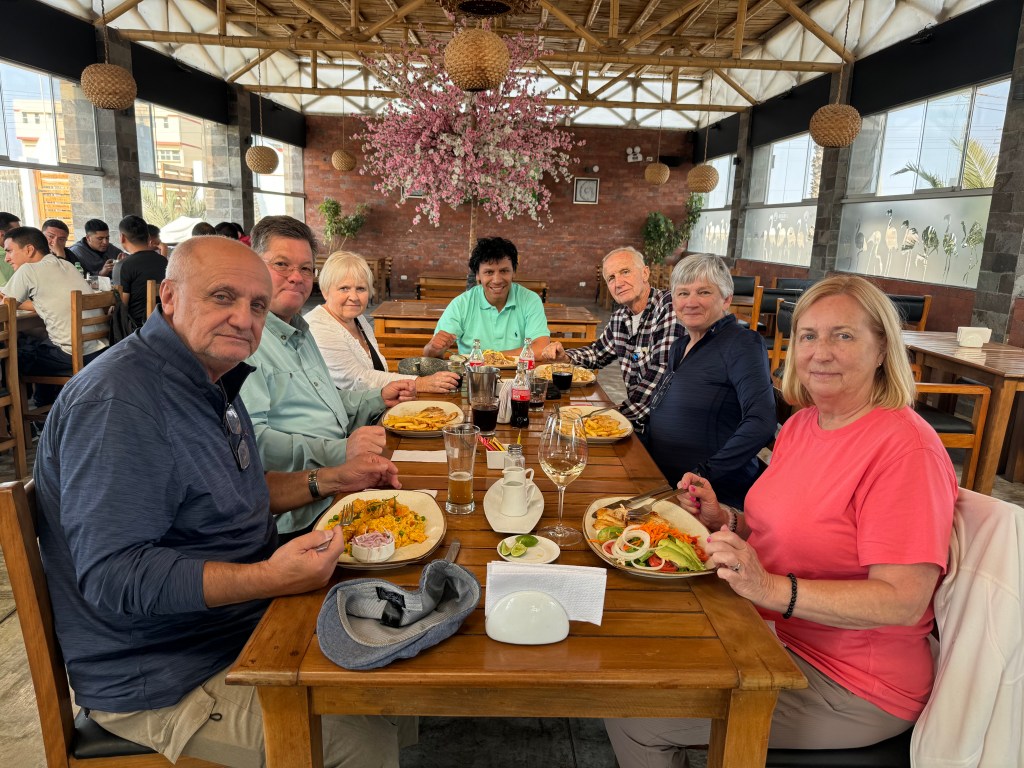
We three couples took some time to explore the resort followed by a very nice dinner.  The six of us chatted easily and got to know each other better. Friendships began.

We were in Paracas, Peru on September 14, 2024.

Next Up – The flight above the Nazca Lines

Posted in Uncategorized | Leave a comment