
Henry Ford and two of his friends, Charles Lindberg and Thomas Edison, were fairly vocal about their anti-semitism. We knew that before we experienced the commemoration of Henry Ford in Detroit and Dearborn. Our Detroit Architecture Tour guide mentioned the fact briefly but then we heard nothing about it again until our final experience in Greenfield Village.
We were told that the Ford family and Ford Motor Company went to great effort to erase, or at least diminish, that part of Ford’s legacy. It was suggested that places like The Henry Ford Museum and Greenfield Village were part of those efforts.
It is unclear if legacy rehabilitation was of concern to Henry Ford when he established the Edison Institute School System in 1929. Later it became the K-12 Greenfield School where Dearborn students (25 per grade) could spread out and learn about history in the same buildings where history happened. Students could also learn about inventors, inventions and the spirit of innovation in the same spaces in which the spirit thrived.
One of the docents we spoke with at Greenfield Village was one of those students, selected by lottery, to attend Greenfield School. He spoke about what a great experience and education he received. There was no charge to his family for him to attend Greenfield School.
We spent most of our village time in the area called Porches and Parlors. There are 26 historic homes, most are original and moved to the village. A few are replicas built with great authenticity. We were told that when Henry Ford had a building moved, it was taken apart carefully and everything saved. Even plaster pieces and mortar were saved to be ground and reused.
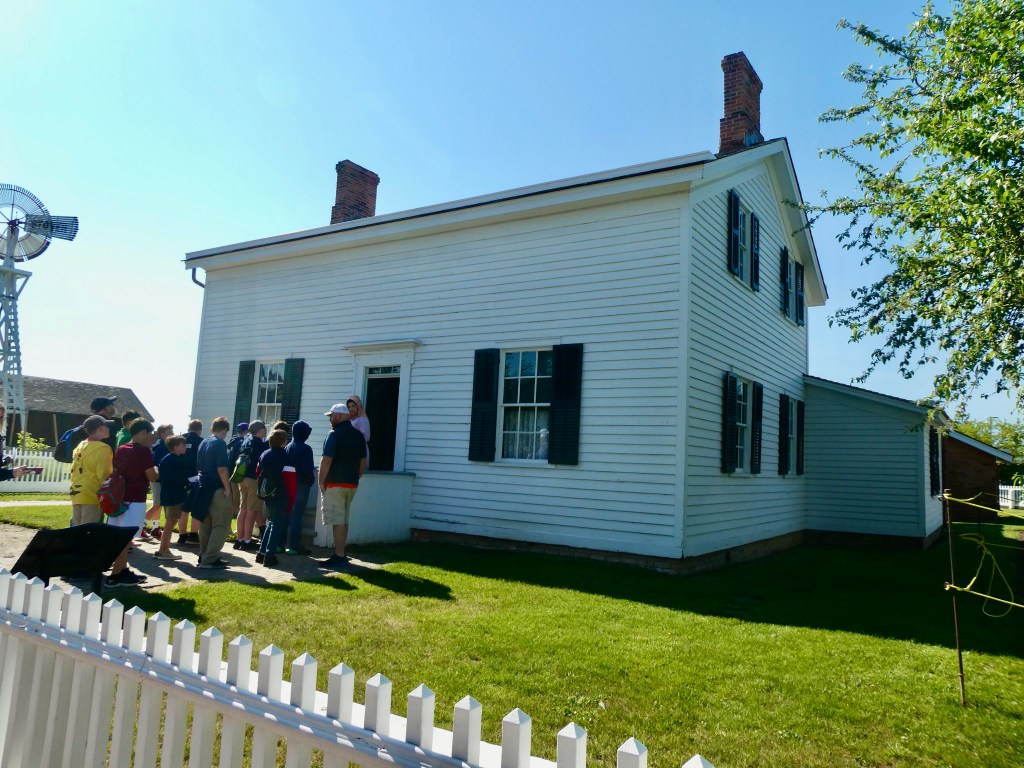
Henry Ford was born and raised in this farmhouse, originally located a few miles away from Greenfield Village. At 16 years of age, Henry left the family farm and went to Detroit to work as a machinist.
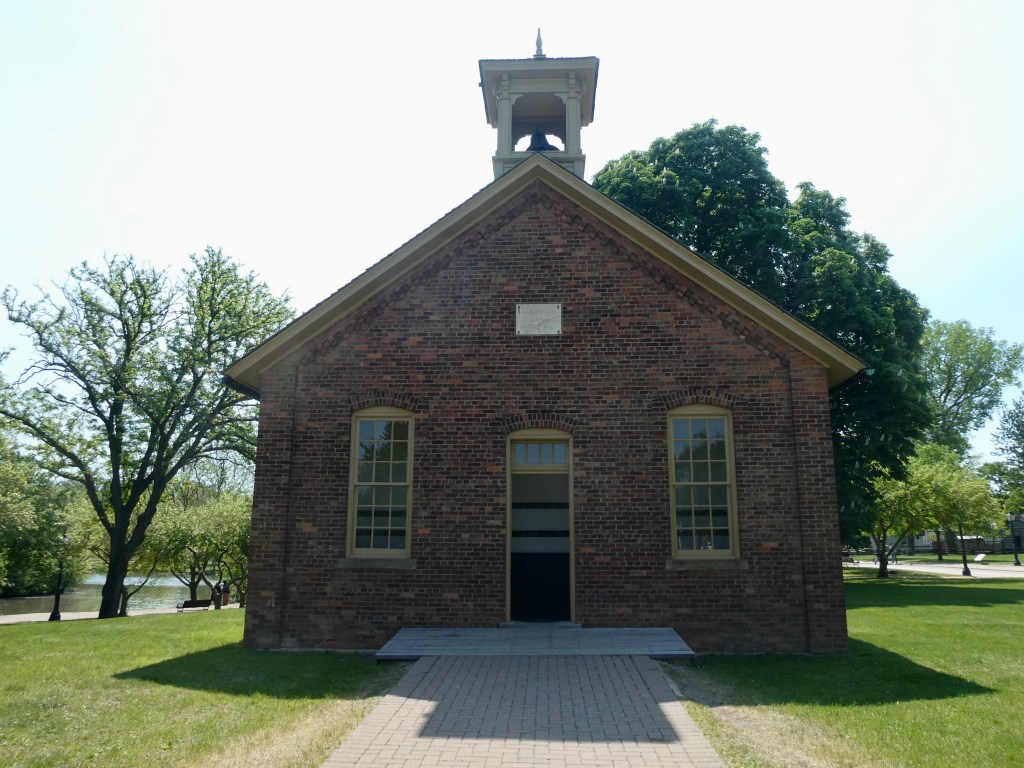
Henry Ford attended the Scotch Settlement School from age eight to eleven. It was built in 1861 in Dearborn, Michigan. He later restored the building and brought it to Greenfield Village to use as the first classroom for his experimental Edison Institute School System.
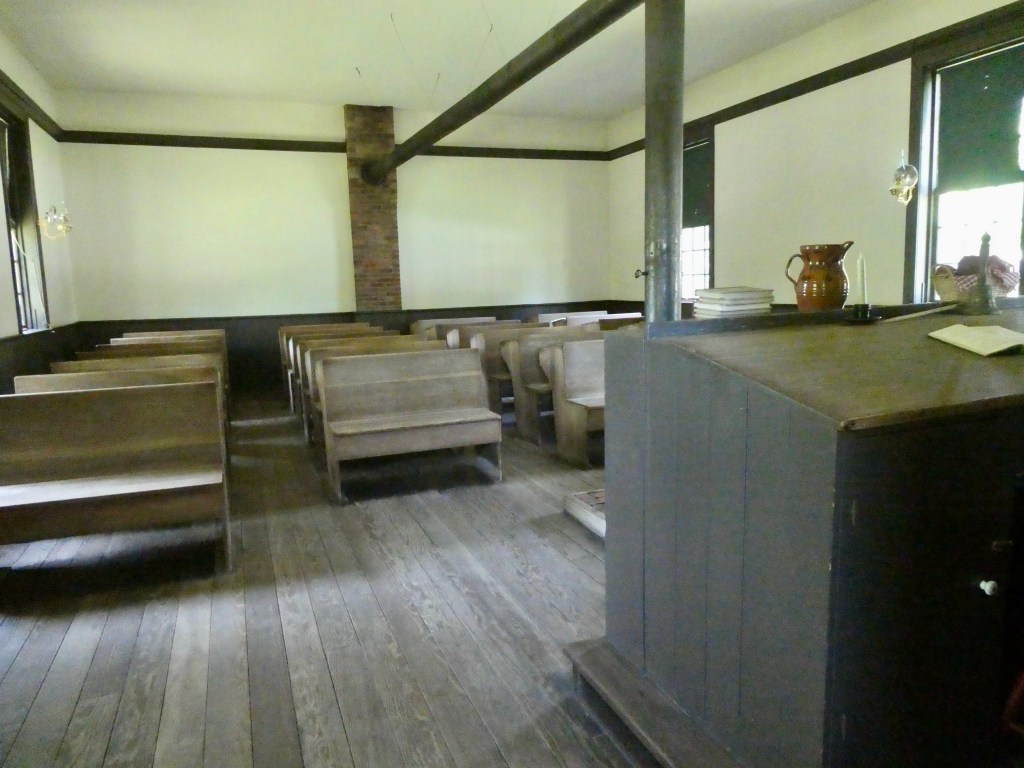
At the October 1929 dedication of Greenfield Village, Henry Ford sat at a desk in the same place in the classroom where he sat as a boy. He carved his initials into the replica desk, just as he had done many years before.

H. J. Heinz products were first developed in this house built in Sharpsburg, Pennsylvania in 1854. As a young man in the 1860s, H. J. Heinz spent much of his time in the basement making and bottling horseradish. He sold horseradish to people in his hometown and soon began making pickles, sauerkraut and later ketchup. He eventually moved operations to nearby Pittsburgh.
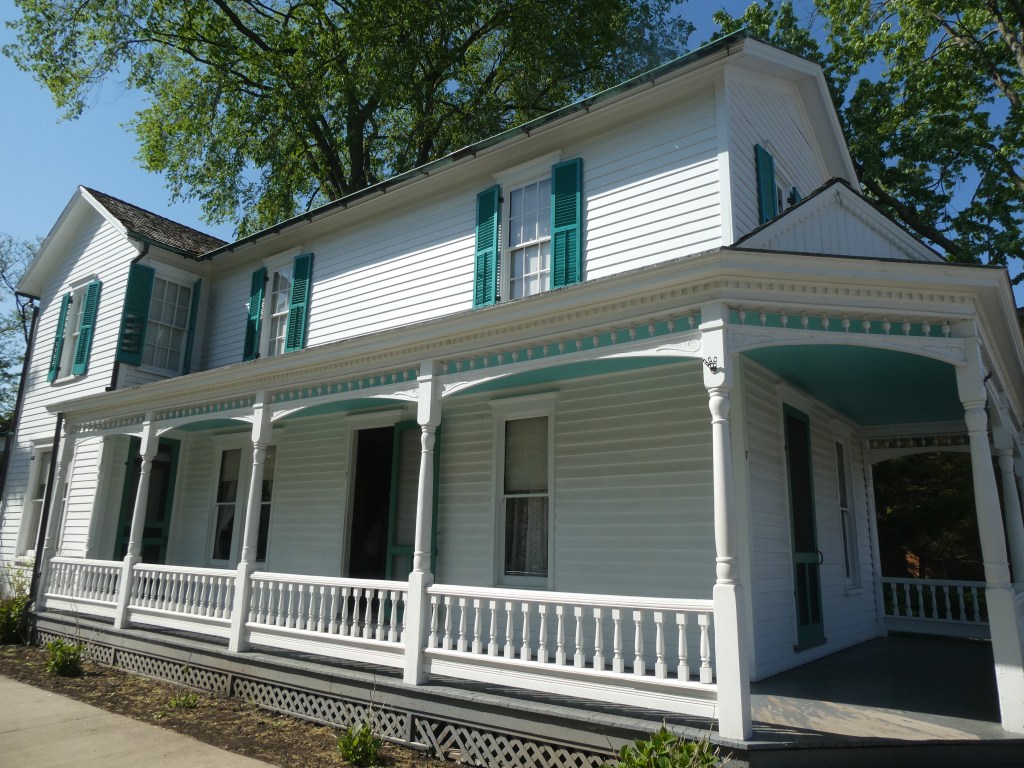
Wilbur and Orville Wright lived in this home while they developed their successful powered airplane. Their father and mother encouraged the boys, and their younger sister Katharine, to be intellectually curious. The home was built in 1870 in Dayton, Ohio.

Noah and Rebecca Webster lived in this house in New Haven, Connecticut.
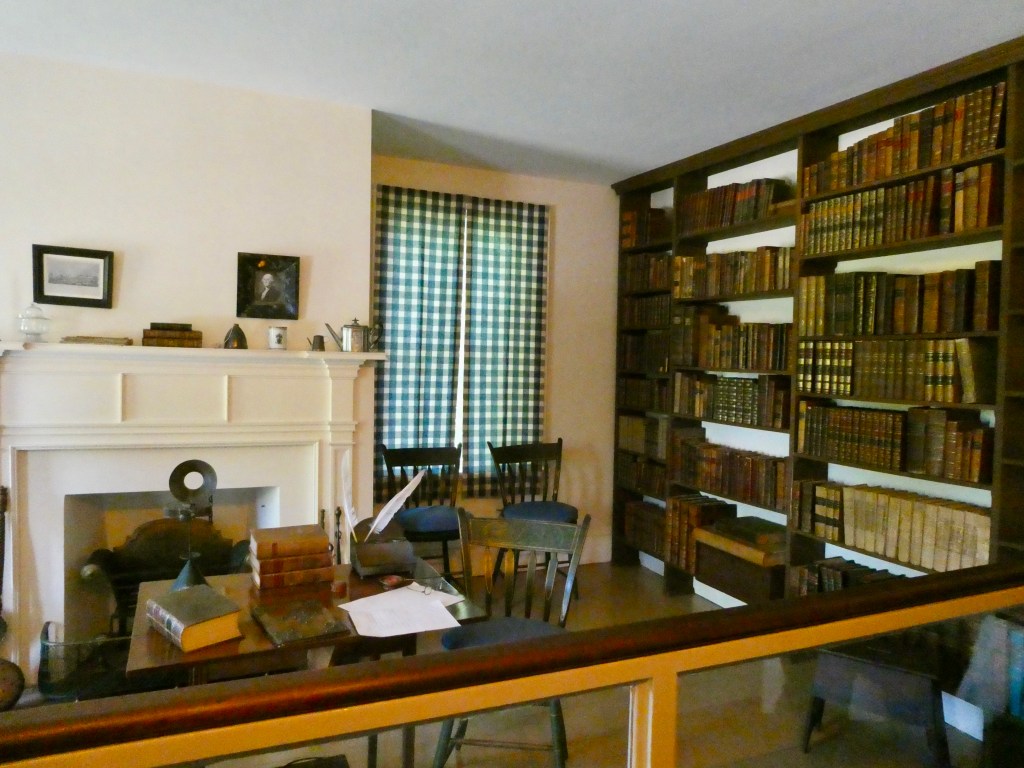
From this home he published his famous American Dictionary of the English Language in 1828. Webster’s dictionary aimed to capture distinctively American words and spellings for the first time.
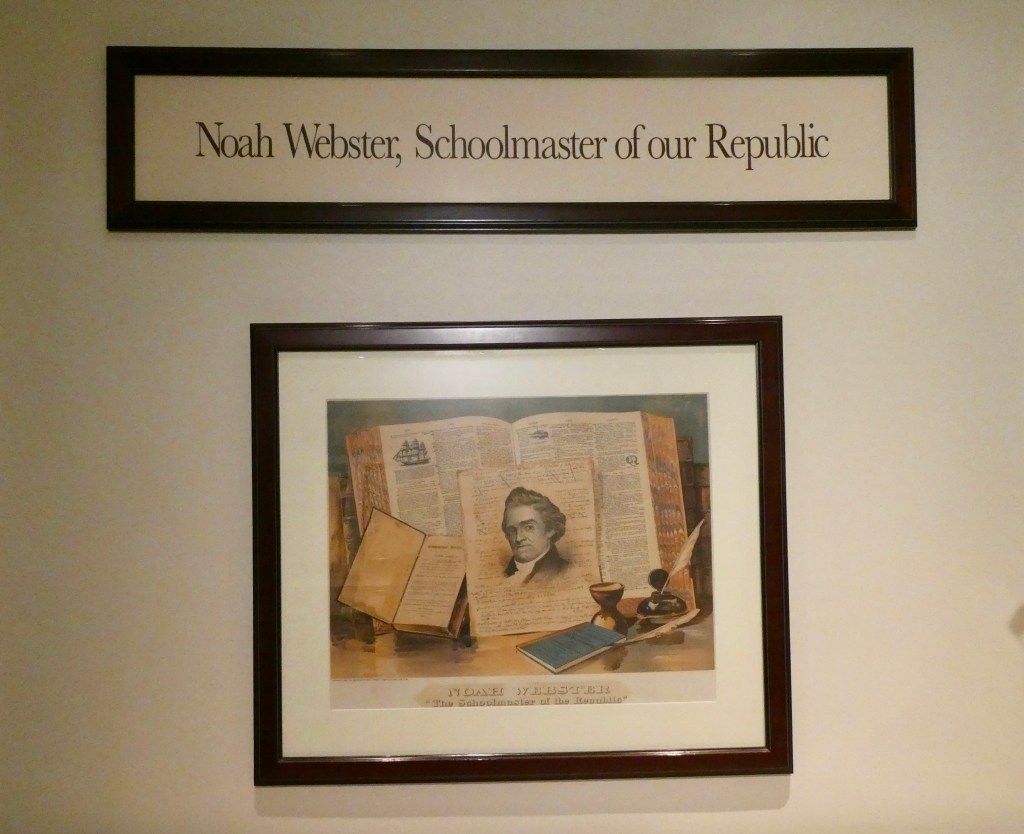
And while he was considered “Schoolmaster of our Republic” he also believed that all “should be educated a little, but not to rise above their station.” Hmmm.

This house was built in 1835 in Ann Arbor, Michigan. One of its many residents was poet Robert Frost in the 1920s.

The Giddings House was built about 1750 in Exeter, New Hampshire. It was owned by the family when they were active West Indies traders. Their business was impacted significantly by the American Revolution.

Not all buildings in Greenfield Village are from this continent. The Cotswold Cottage, built in the early 1600s was moved from Gloucestershire, England.
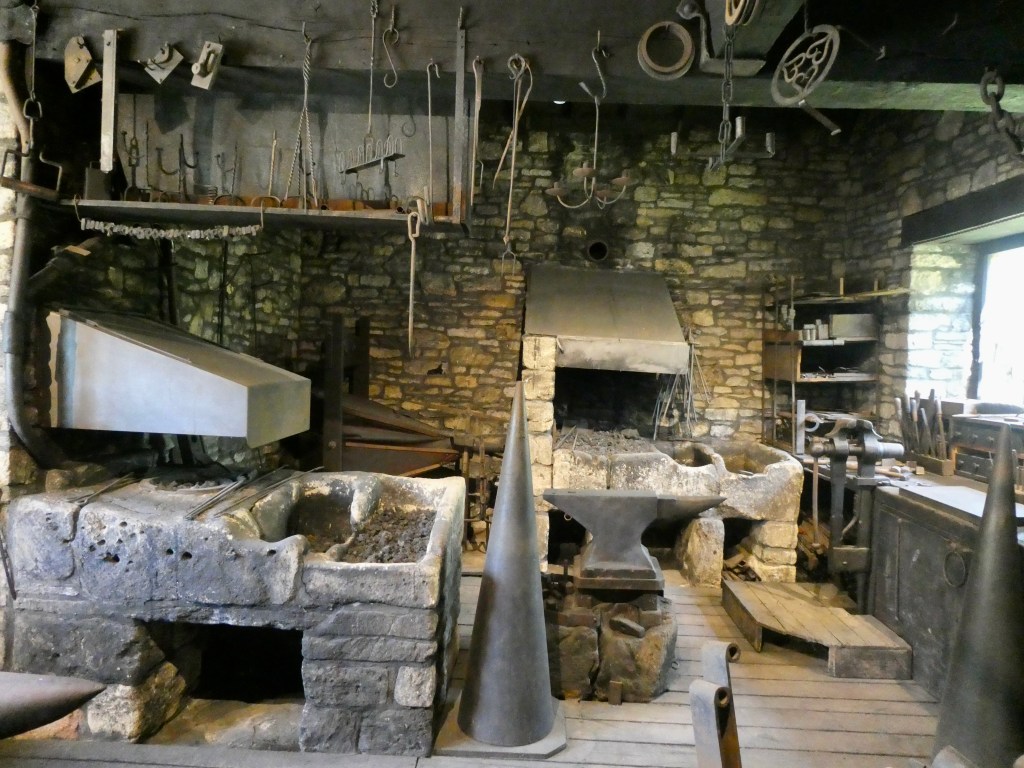
Families who lived in this home may have been farmers and stone masons.
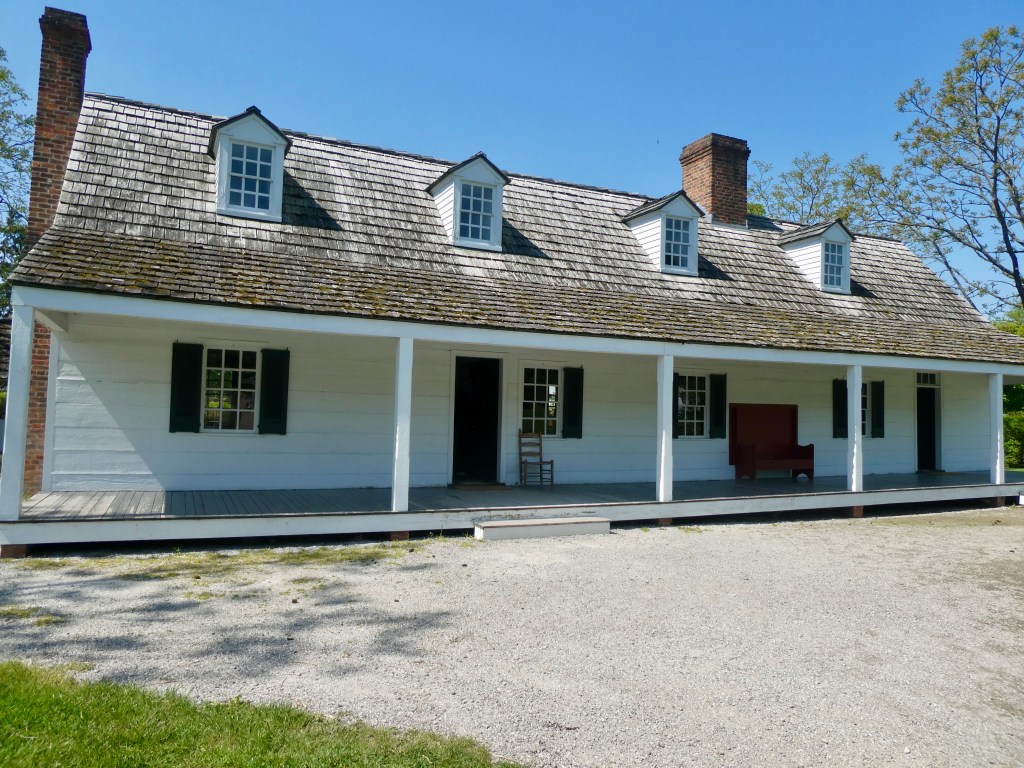
The Susquehanna Plantation was built up between 1826 and 1836 in St. Mary’s County, Maryland. By 1860, Henry and Elizabeth Carroll owned 75 enslaved men, women, and children. The Carrolls were among the elite of the area, a lifestyle made possible by those who were enslaved..
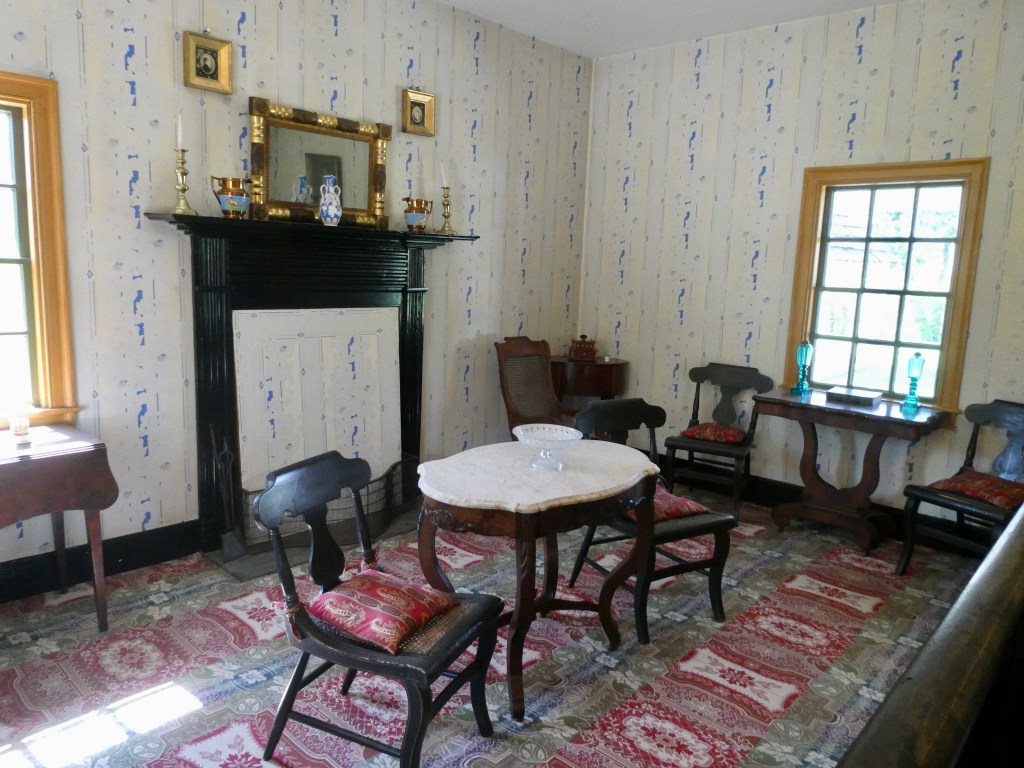
Slaves from the plantation likely supported the Union during the Civil War. Some probably served in the US Colored Troops or worked as prison guards at the large prison camp for Confederate prisoners built nearby Susquehanna in 1863.
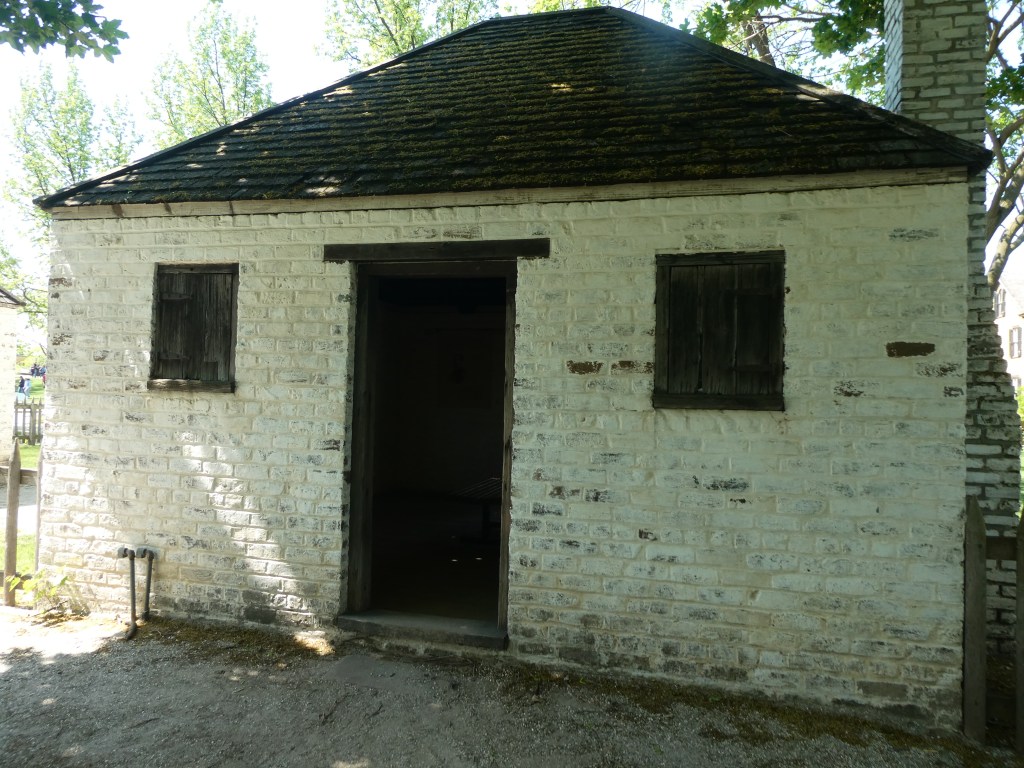
This was one of 52 slave quarters on the Hermitage Plantation near Savannah, Georgia.
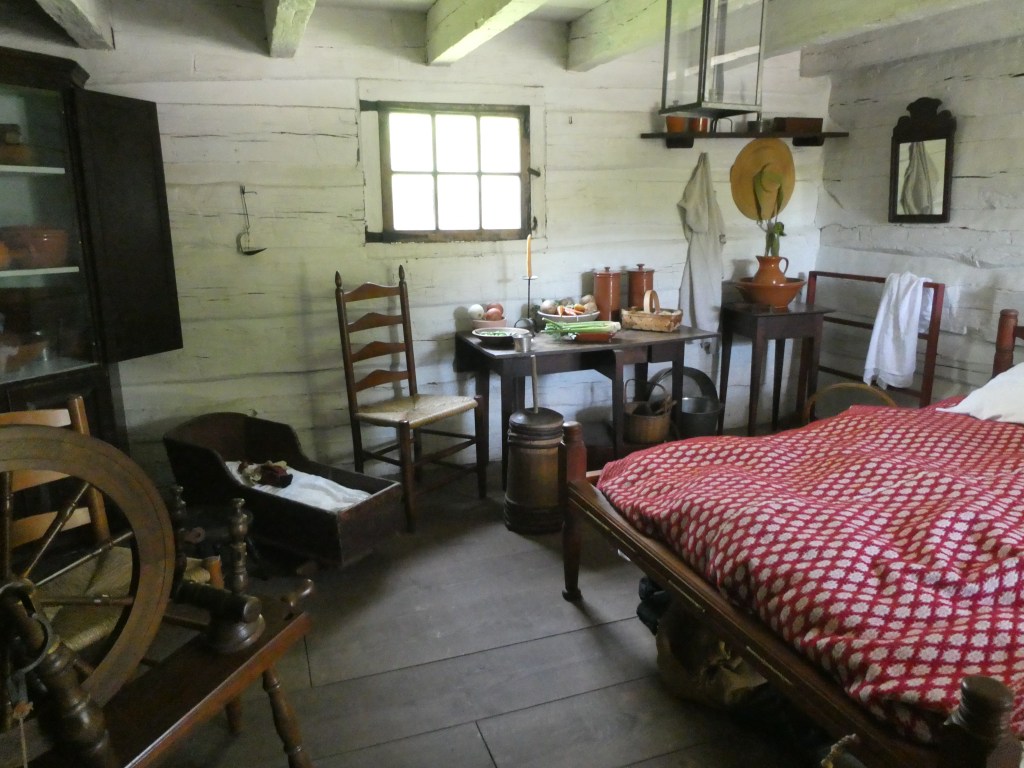
There were 201 enslaved persons on the plantation manufacturing rice barrels, cast iron products and lumber. Bricks were also made on the plantation and that is why these slave quarters were made of brick.
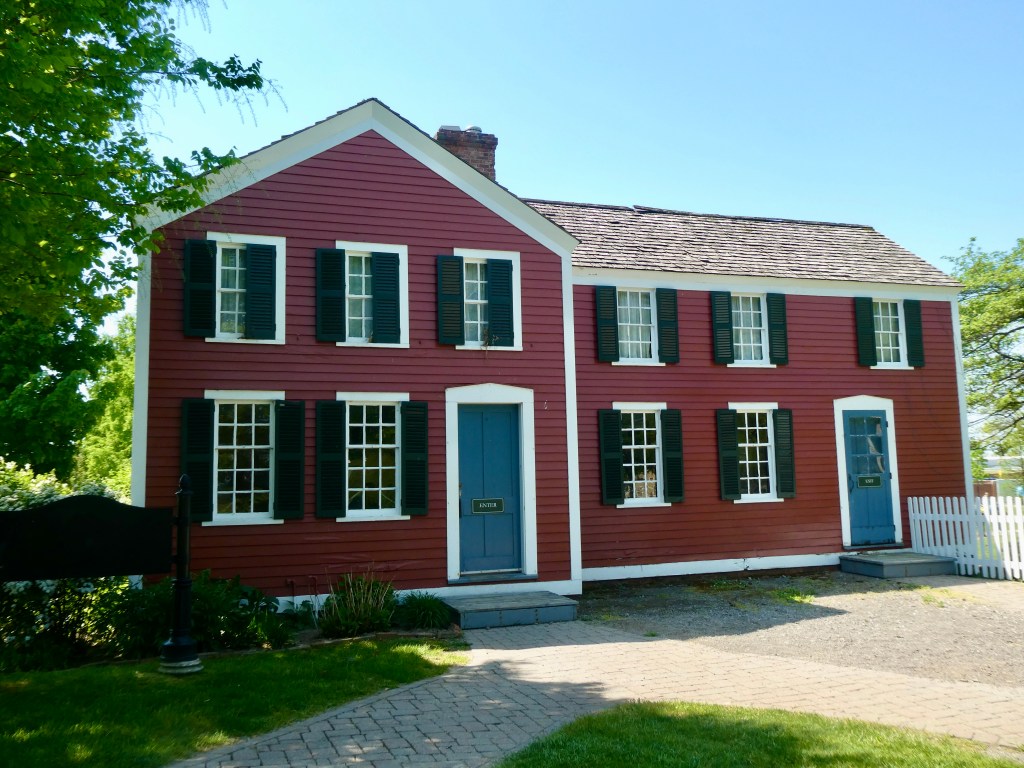
This home is where Luther Burbank was born in 1849. He was an American plant breeder and naturalist. His experiments led him to develop the Russet Burbank potato – popularly known as the Idaho potato- which would become the world’s most cultivated potato.

William Holmes McGuffey was born in the year 1800 in this small log home in western Pennsylvania. By the late 1800s, McGuffey’s Readers were the most widely circulated textbooks in the United States.
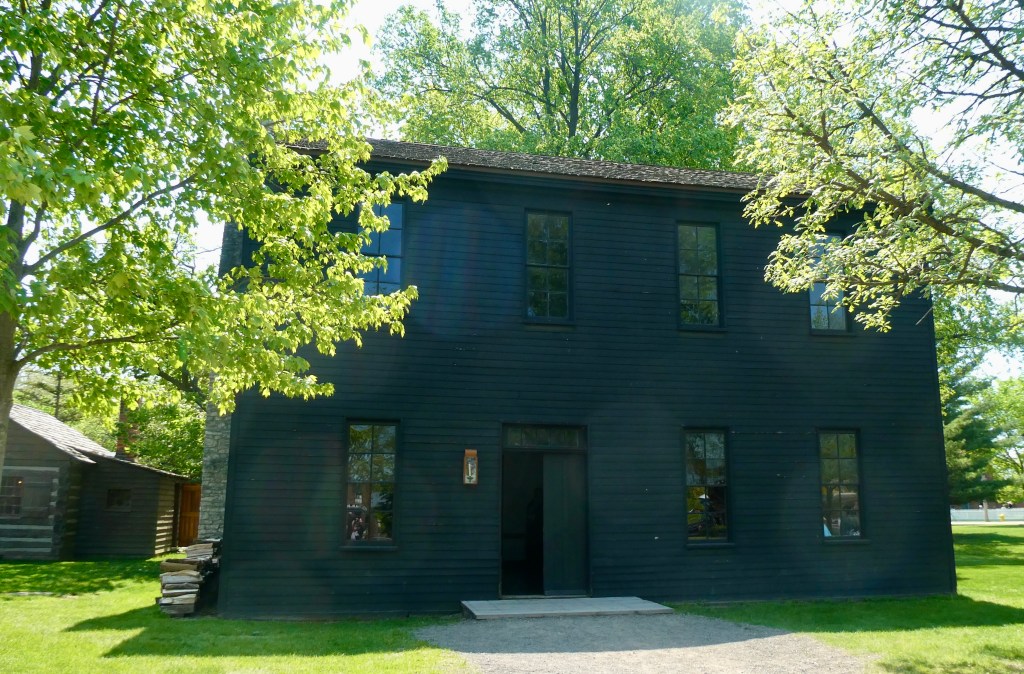
This is the Logan County Court House, build in 1840 in Postville, (now Lincoln), Illinois.
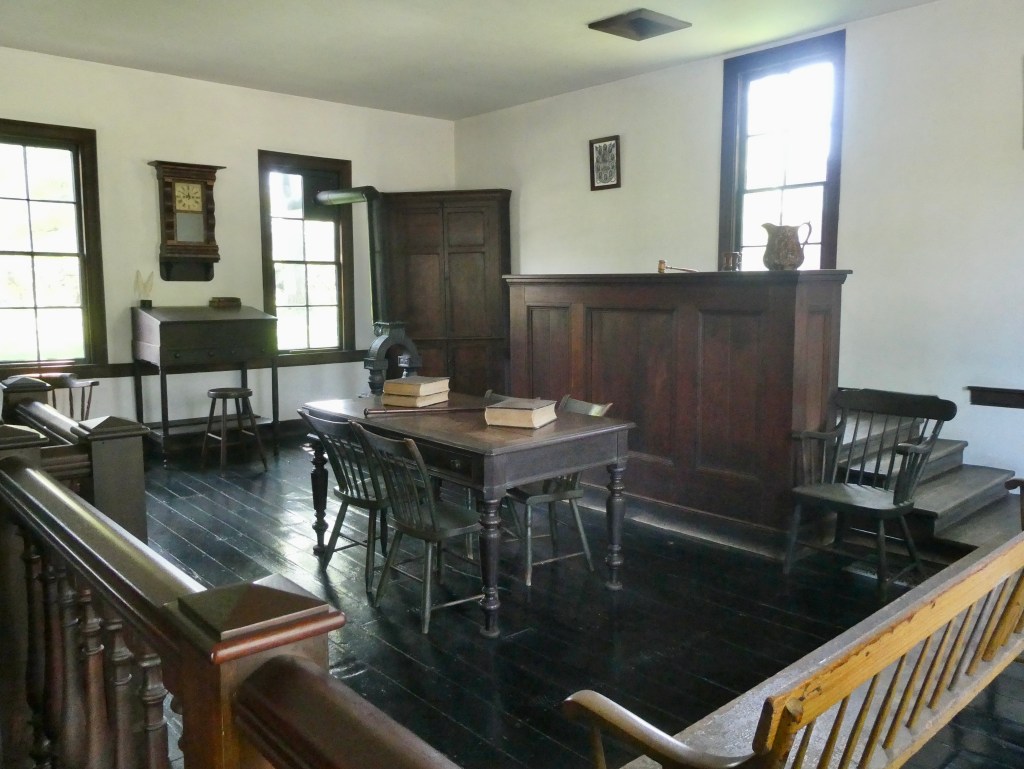
Abraham Lincoln practiced law here between 1840 and 1847. He was a traveling lawyer working mostly on neighbor disputes, contracts and debts.

The section of Greenfield Village, dedicated to the work of Thomas Edison, featured his Menlo Park Complex. Unlike many buildings in Greenfield Village, these are not originals that were moved. Structural components of the original New Jersey complex were incorporated in the rebuild in 1929 in Greenfield Village.
In 1876, Thomas Edison set a goal to have one major invention every six months and one minor invention every 10 days. He did very well towards that goal.
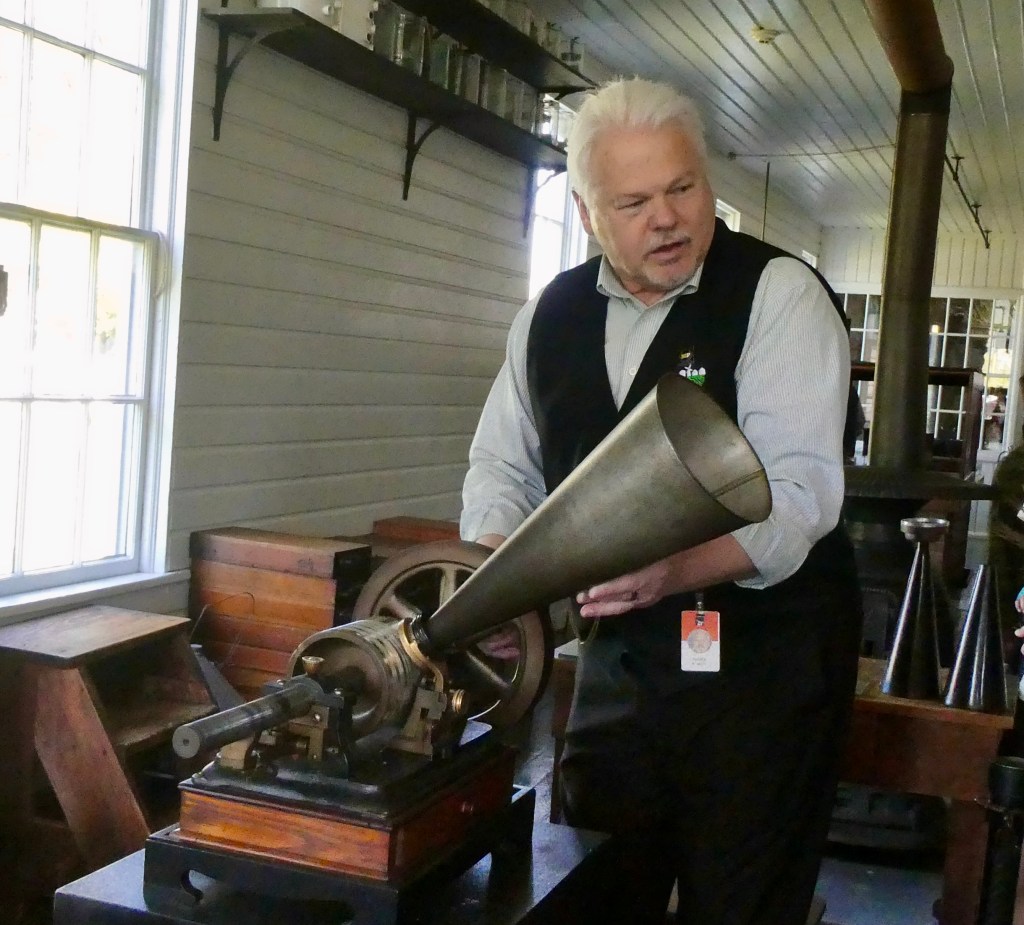
Menlo Park Laboratory was where Thomas Edison’s electric lighting system was created as well as the first phonograph.
Machinists were highly skilled independent craftsmen and were critical to industrial change in the 1800s,
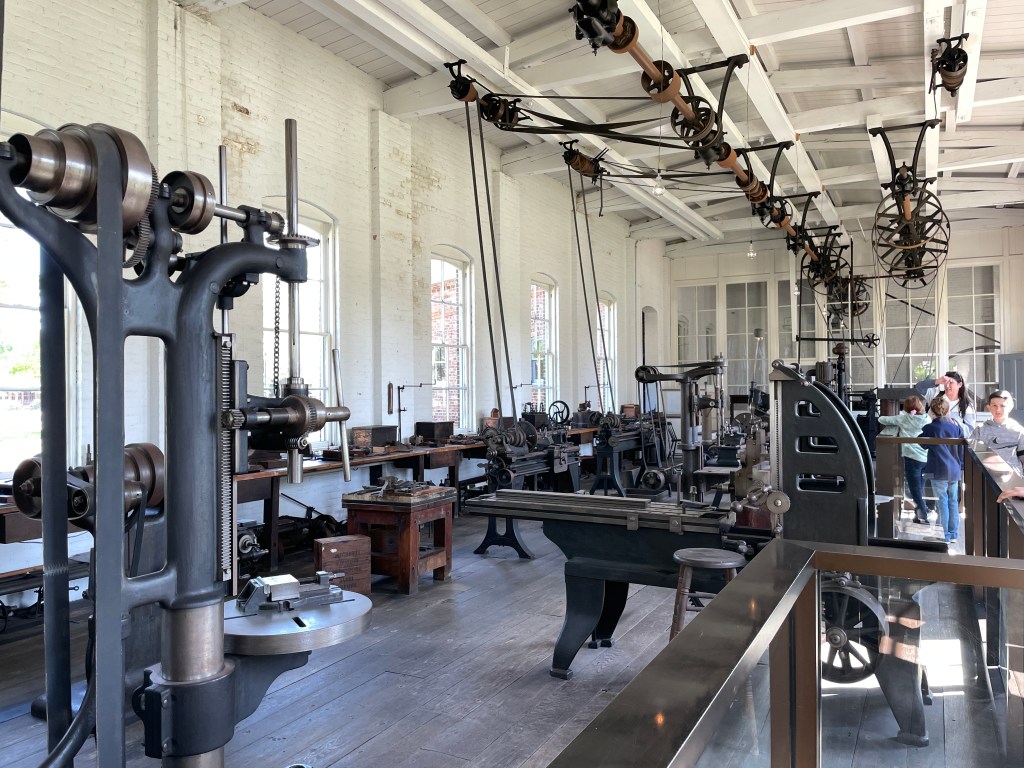
This is a replica building of Edison’s machine shop and the world’s first central power station used for his experiments and electrical lighting demonstrations in 1879 and 1880.
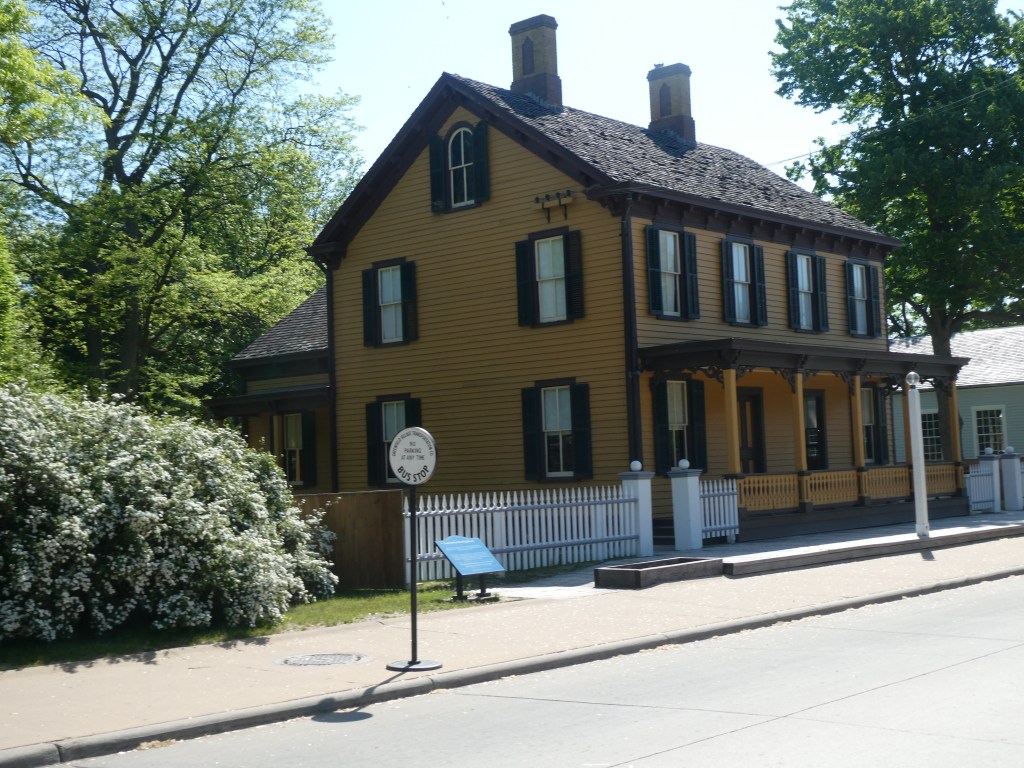
Unmarried male workers from Thomas Edison’s Menlo Park Laboratory lived in Sarah Jordan’s boarding house. The boarding house was one of the first homes ever to be wired for electrical light.
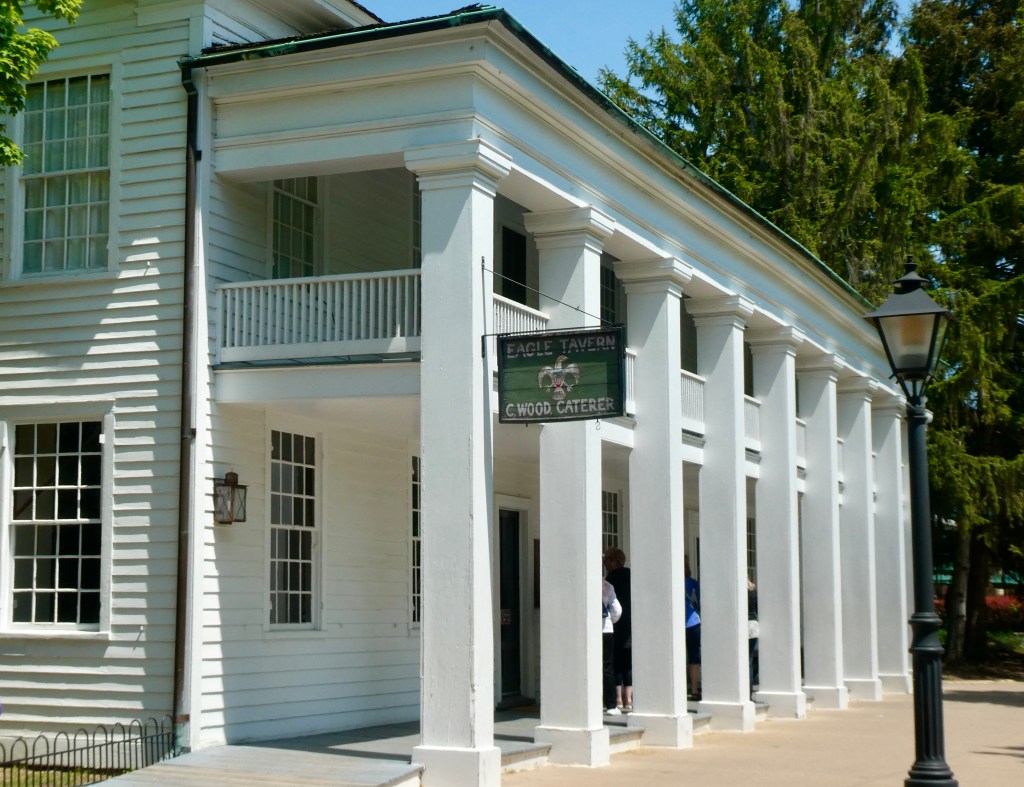
After exploring, we enjoyed lunch at the Eagle Tavern, built in 1831-32 in Clinton Michigan.
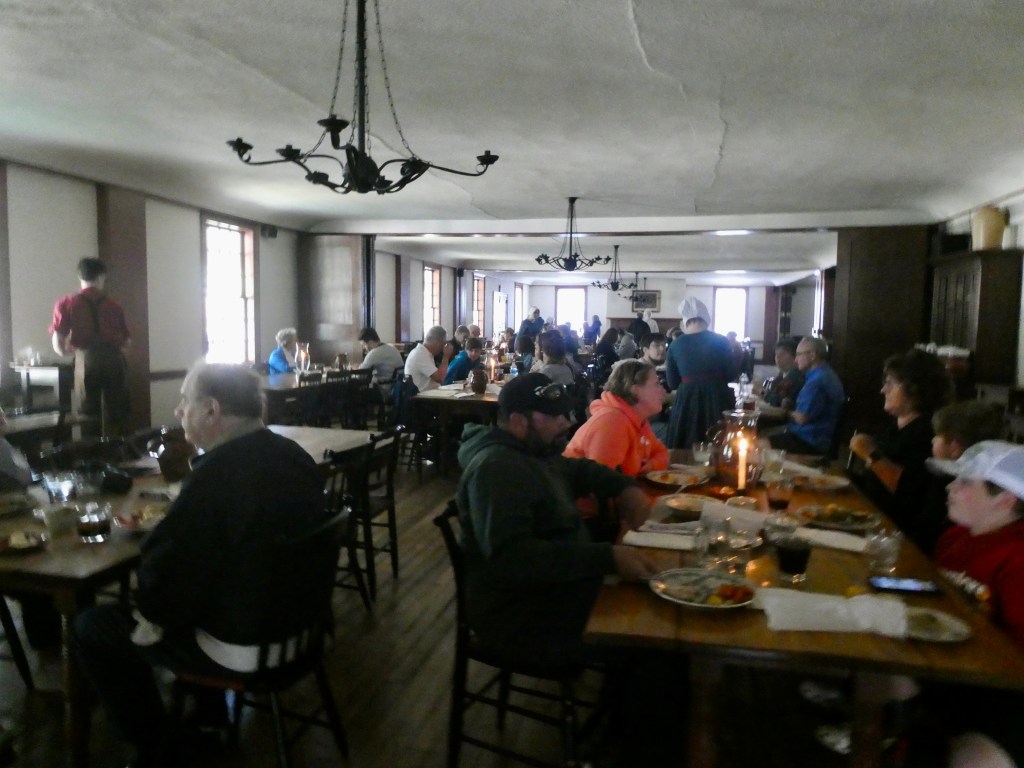
All people, regardless of social class, came together in taverns.

As we recall, our food was quite good. The mixed drinks, surely authentic to the era, were not to our taste.

There was an opportunity to ride around Greenfield Village in period vehicles but we never did.
We also could have explored sections of Greenfield Village devoted to Working Farms, Liberty Craftworks and Railroad Junction. As we had visited similar living museums elsewhere, we did not dedicate our time there. Greenfield Village is very large covering 90 acres!

Henry Ford’s work in Greenfield Village was dedicated a National Landmark in 1987.


 Serene Wandering
That’s Beautiful!! 😊❤️
Sent from my iPhone
<
div dir=”ltr”>
<
blockquote type=”cite”>
We got to this museum after lunch on our final day, and barely had enough time to take the Rouge Factory Tour. It looks like we missed an awful lot. Maybe next time… Thanks for all the great info.