
Leaving Prague, we traveled by bus to Nuremberg where we would board the Viking Alsvin after our tour.
While on the bus, we learned there is “free travel” between the Czech Republic and Germany, as there is through most of Europe. The autobahn has no speed limits for passenger cars but does have limits for trucks and busses.
Germany has the largest population in the EU with 84.5 million. That includes 1.2 million Ukrainian refugees. Germany is about one quarter the population of the US in an area the size of Montana so Germany is densely populated.
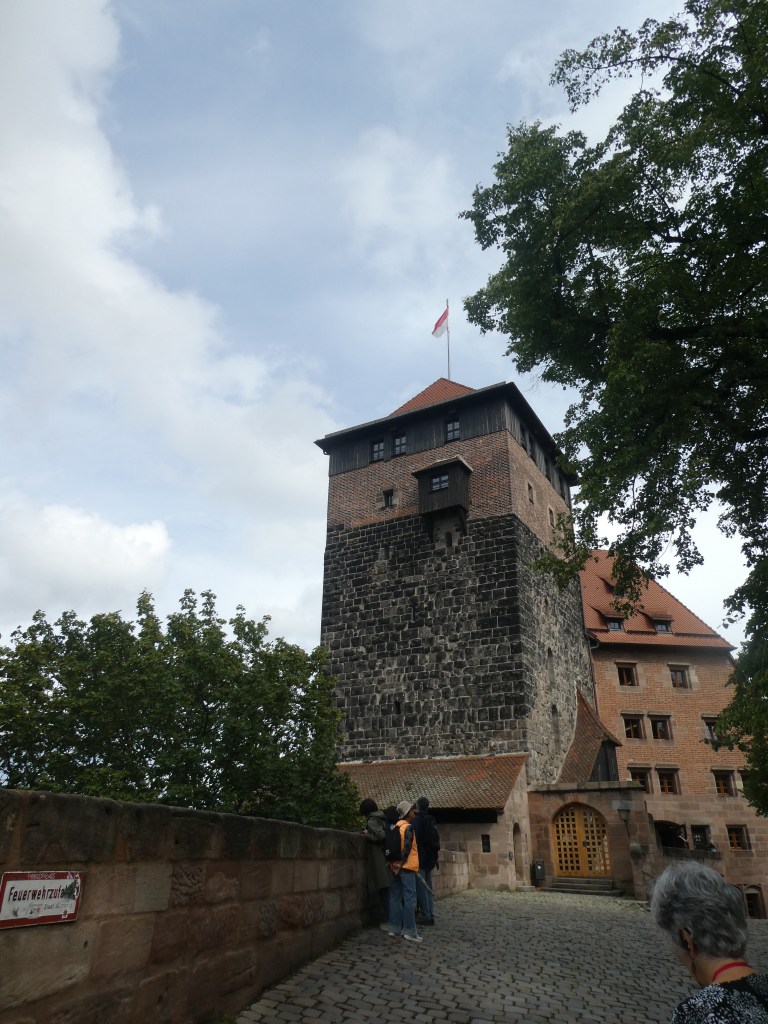
Looking back, Nuremberg was first mentioned in imperial documents in the year 1050. This five corner tower dates from that era.
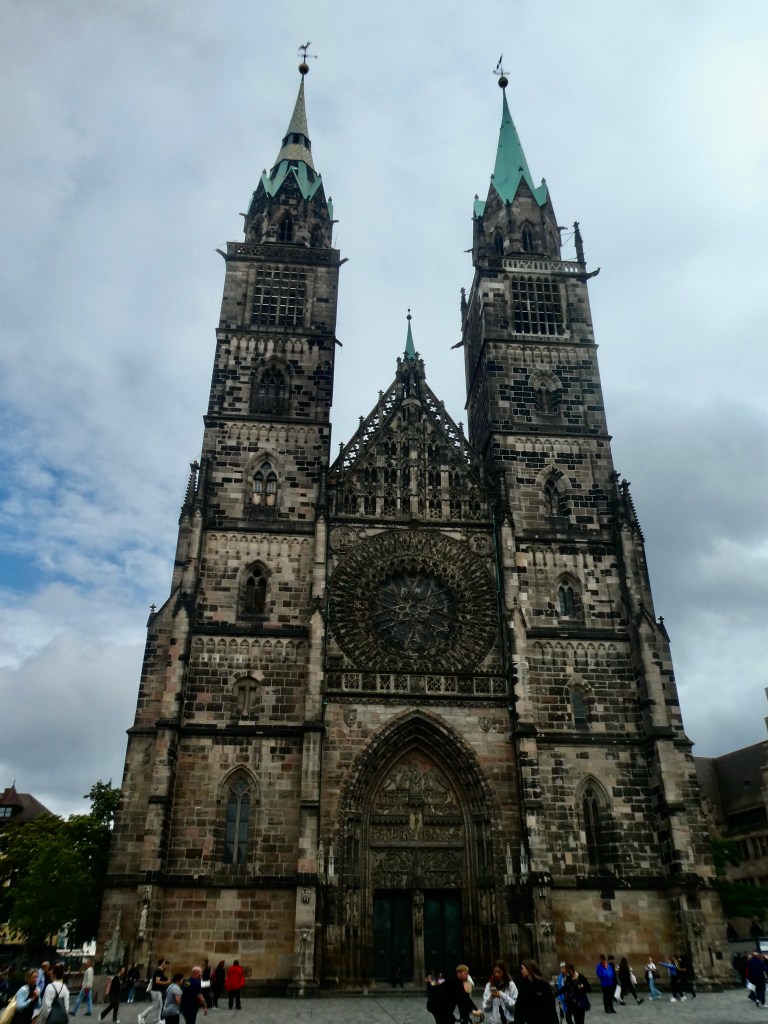
The location was at the center of 14 Trans-European trading routes. Nuremberg became a free and independent city in 1219.
The route we traveled was the same as a road developed by King Charles IV in the 14th century called the Golden Road. He traveled from Prague to Nuremberg 52 times during his reign and each trip took 14 days one way. There were also the hazards of wild animals and robbers. King Charles acquired properties along the route by war, marriage and purchase in order to have a string of safe houses. Travelers paid a road tax to travel on the Golden Road.

The Prague to Nuremberg imperial road ended at this tower. (It was also used as an air raid shelter during WWII.)

When Christopher Columbus discovered new worlds, trade routes changed so the city went into decline.
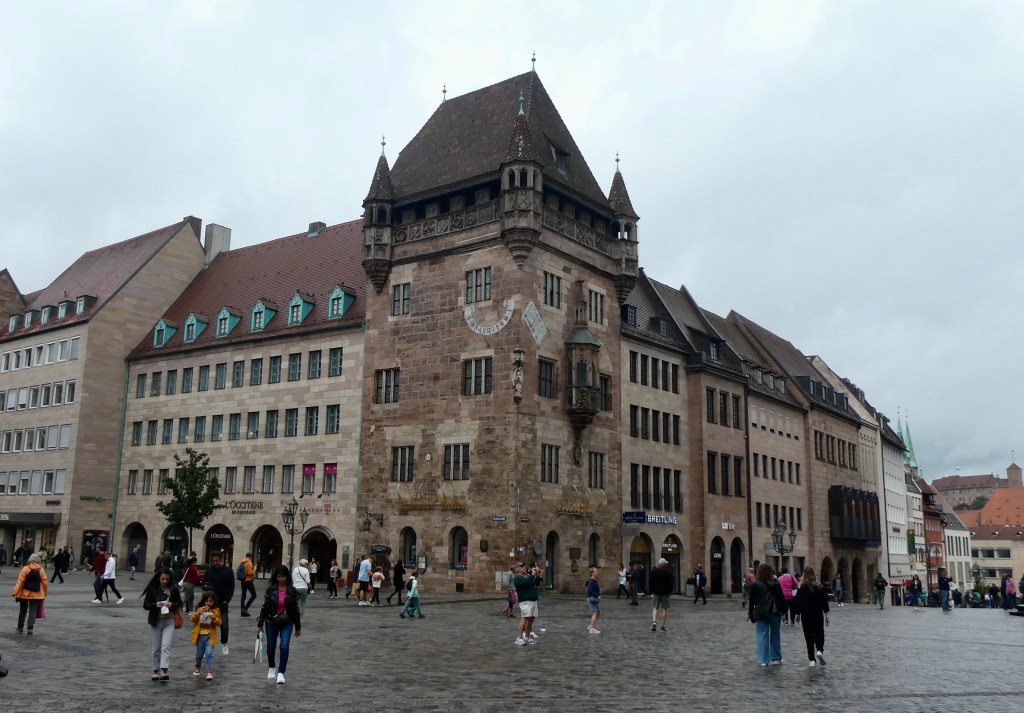
1835 the first train in Germany was developed in Nuremberg marking the beginning of their Industrial Revolution. Manufacturing brought people and some growth back to the city.
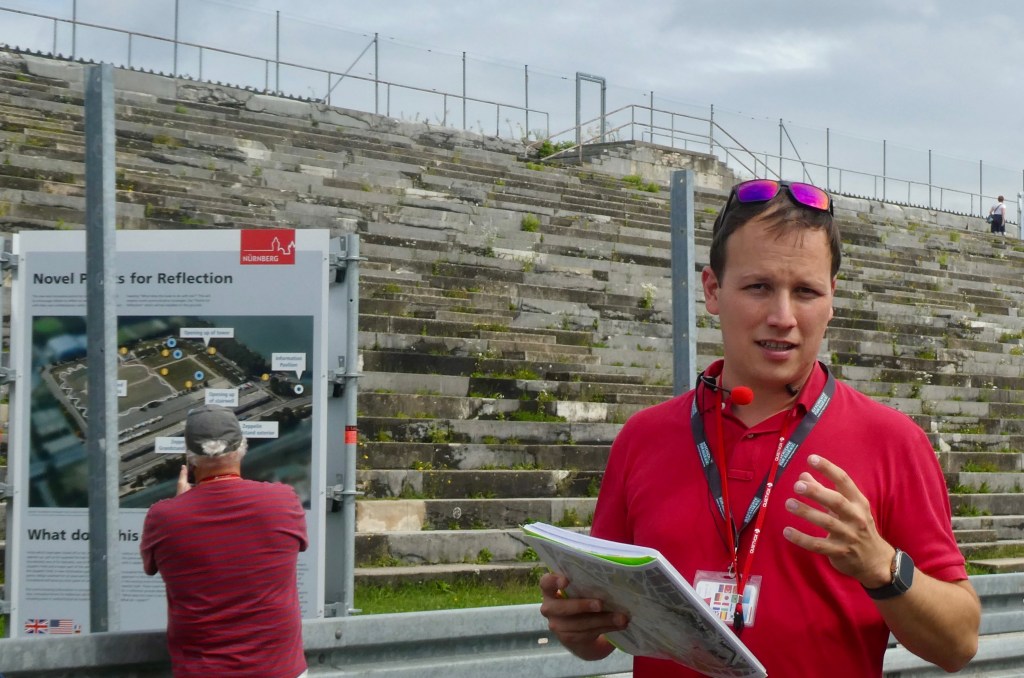
We were fortunate to have a great guide who told us about the history, the parade grounds and the work Germany is doing to keep it from ever happening there again.
The Nazis took control of Nuremberg and their most important propaganda activities took place here between 1933 and 1938. Nuremberg had been important in their Empire for 1000 years, and the Nazis chose Nuremberg specifically because of the propaganda importance. They wanted to usher in a new emperor in Hitler.
The Feuhrer made decisions about everything including the Zeppelin Field parade ground.

These parade grounds were proposed to be 16 square miles but were not finished before the war. Still, it was four times the size of Central park.
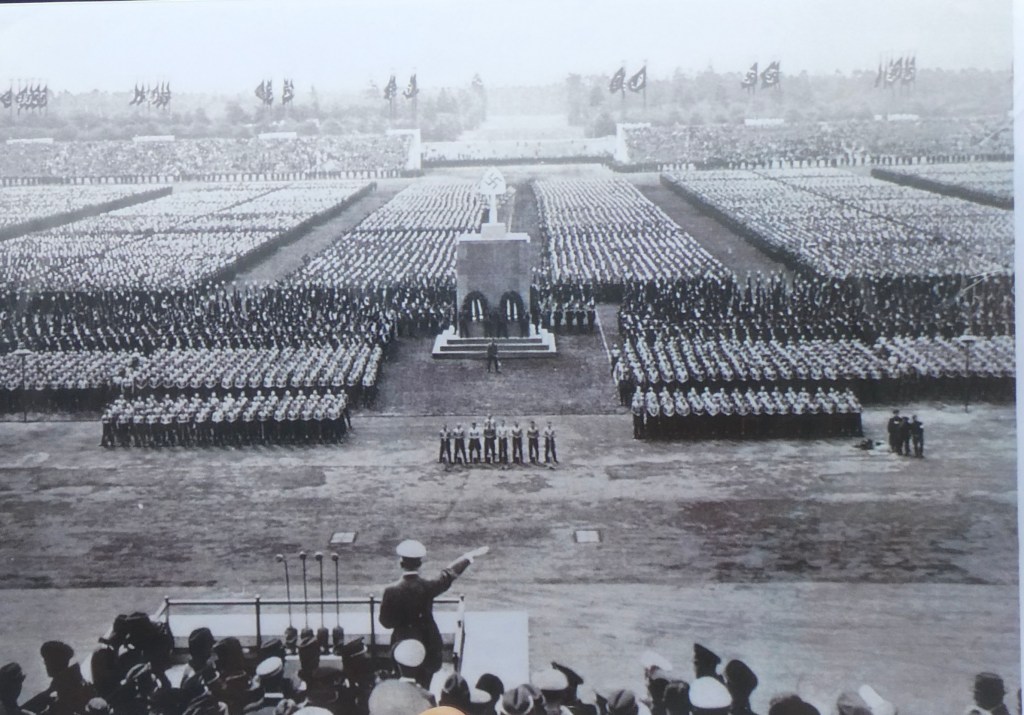
Rallies had 500,000 spectators and up to 700,000 participants. The activities were designed to be spectacular to draw people in. There were mock battles using current weapons. Events lasted between 4 and 8 days and consisted mostly of speeches and personnel parades.
Germany invaded Poland in 1939 and the war was on.
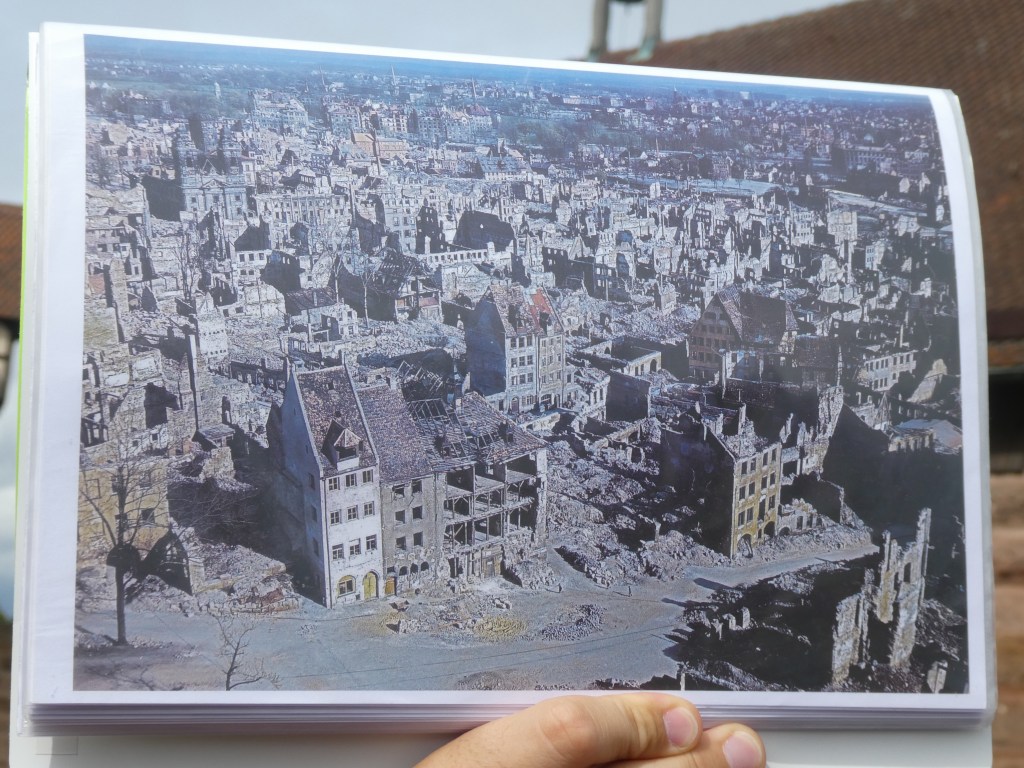
At the end of the war, damage was so extensive in Nuremberg that 91 percent of the city was reduced to rubble. If you’ve seen pictures, they are probably from Nuremberg.

In comparing the pictures you can see the light colored house survived WWII bombing. Much of the city was rebuilt (mostly by the American government) with the same medieval footprint as the old city.
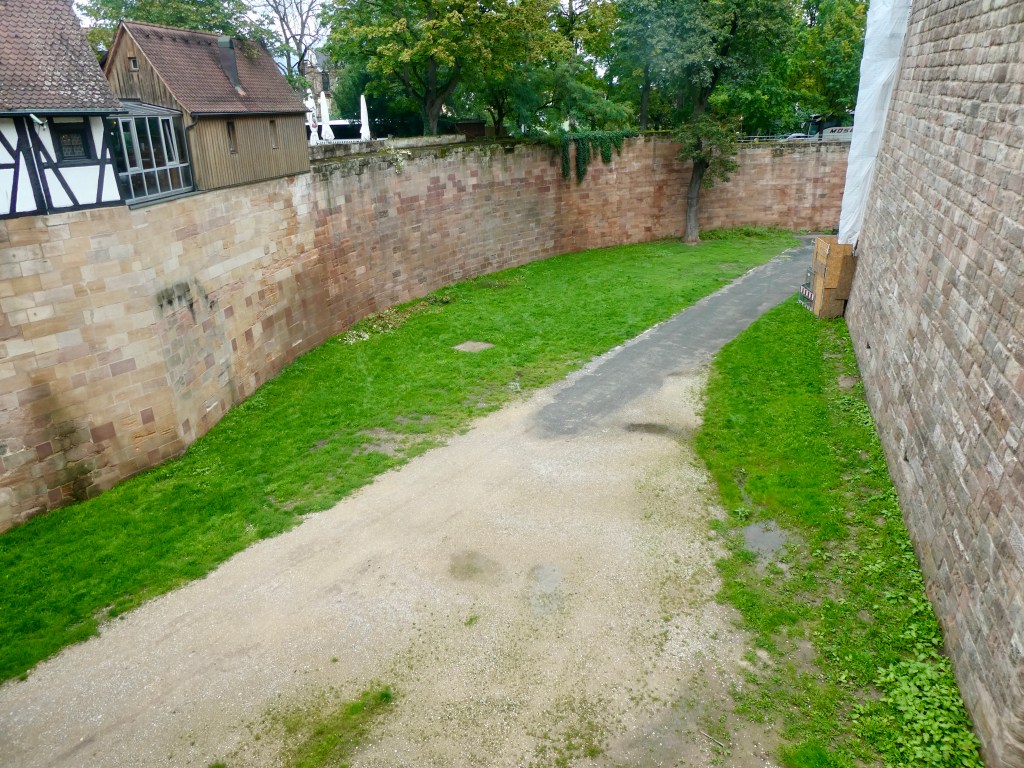
This is part of the old city wall of the medieval Nuremberg castle. These walls are 80 percent original because sandstone doesn’t burn.

Throughout its thousand year history, the city of Nuremberg was never conquered until 1945 when the Americans did so from the air.

Medieval defenses included murder holes. They would drop burning hot sewage upon invaders as a defense mechanism.
After the war It seemed logical that the Americans would want the War Trials held in Nuremberg for propaganda purposes but that really wasn’t the case.

The Grand Hotel was where lawyers for Nuremberg trials stayed.

The proximity of a courthouse and adjacent prison was unique here. As no one was sure how the local populace would accept their former leaders being put on trial it was beneficial to have them close.

There was also the possibility of assassination if distances needed to be traveled. Instead, they could use the walkway between buildings.
This was termed the Palace of Justice in 1945. British and Russian governments were discussing assassinating Nazis for war crimes but exiled governments (like Norway) did not want retaliation to look like the Nazis would have done.
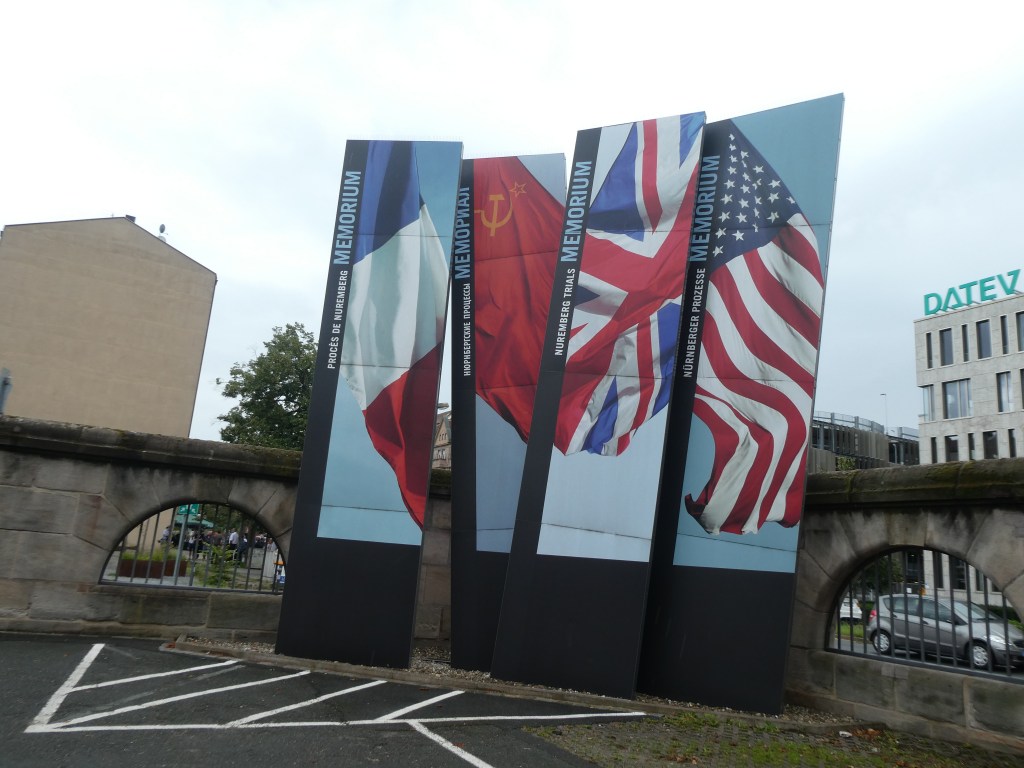
The United States, France, Britain and Russia agreed on four charges and the goal was to be done in three months.
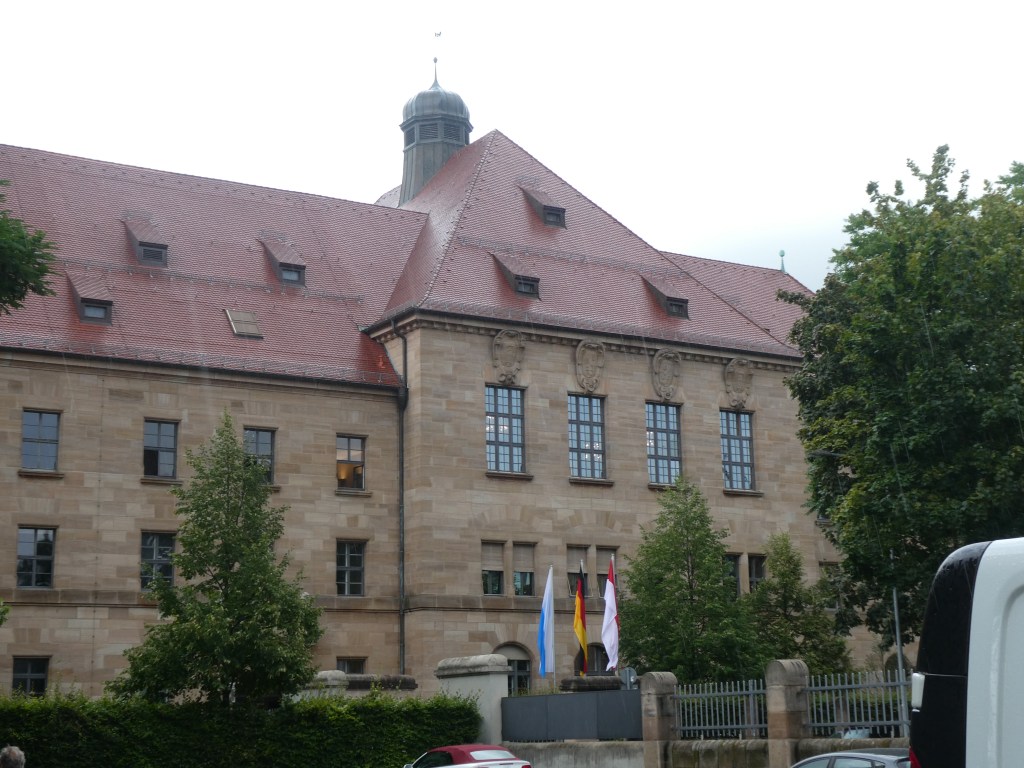
The Americans wanted the largest courtroom. Court room 6000 was the largest but it was still expanded. It is the room behind these four windows.
Journalists in attendance were Walter Cronkite, John Steinbeck and Ernest Hemingway.
Prosecutors had a wealth of evidence and only one percent of files and evidence was used. The trials lasted 11 months instead of three.
The most important defendants, who were still alive, were tried first. There were 22 sentences against 21 defendants with 12 death sentences. The convicted were executed and cremated so there were no graves. Trials resulted in seven prison sentences between seven and ten years. There were three acquittals.
Stalin wasn’t happy with these real trials. He was used to show trials with predetermined results.
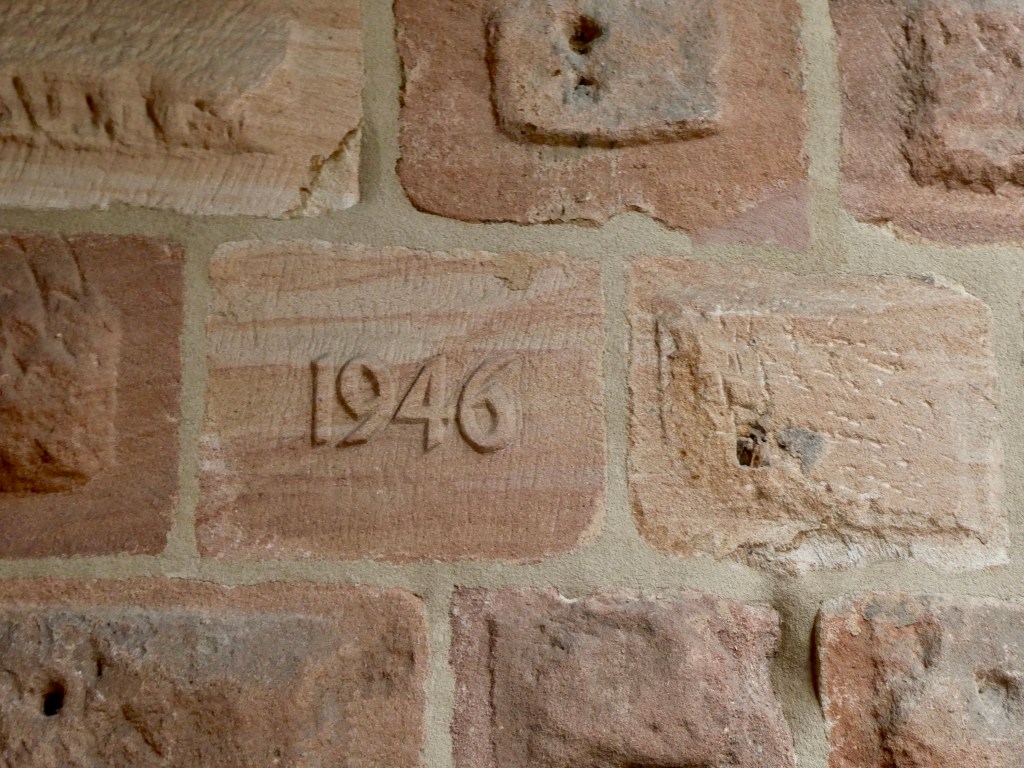
The Americans held 12 more trials in Nuremberg with 177 defendants. There were 34 additional death sentences. These 13 trials are considered the beginnings of international justice. Other countries conducted additional trials on their own.
Part of what happened when the Nazis were in power was that the people weren’t required to think anymore. They just followed the party line. After the war, in the 1950s and 1960s, the Germans tried to ignore their past.
From 1970 to the present, they have decided to confront and teach their history.

More and more education centers are being built to support that effort.
One million German school children come to Nuremberg every year to learn about Nazi propaganda.
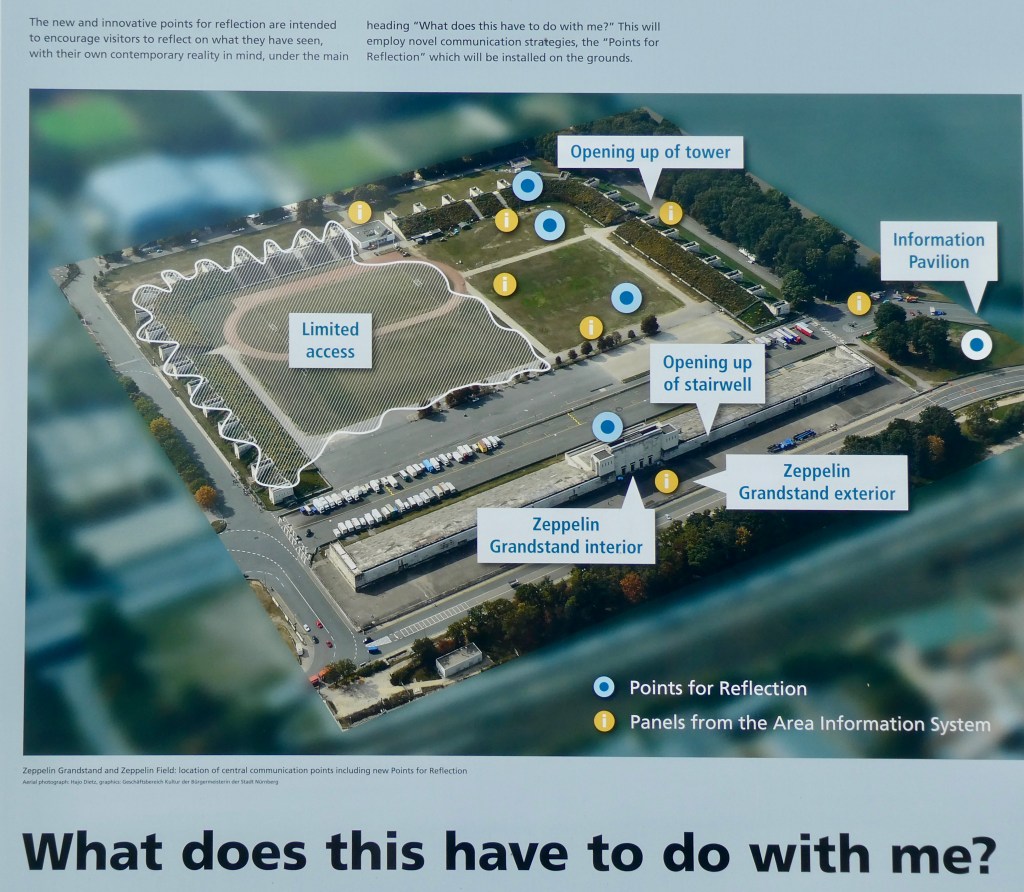
Eighth graders are required to visit a relevant Nazi site and experience first sources so the history can’t be whitewashed. The goal is to limit future support of extremists.
I appreciated learning these karma things:
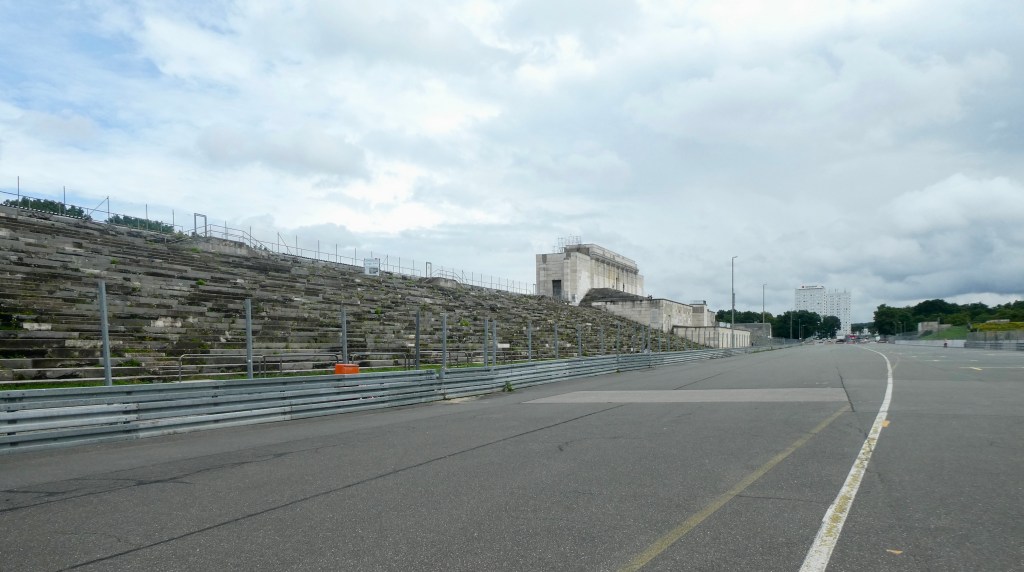
American soldiers paraded on the Zeppelin grounds after World War II. Bob Dylan performed on those same grounds with Eric Clapton in 1978 – Dylan was Jewish.

This red brick building was built for Nazi barracks but never used. Following WWII, American service members stayed there for decades. Now it is a government building for Immigration and Refugees. That seems a perfect answer for a former nazi building!
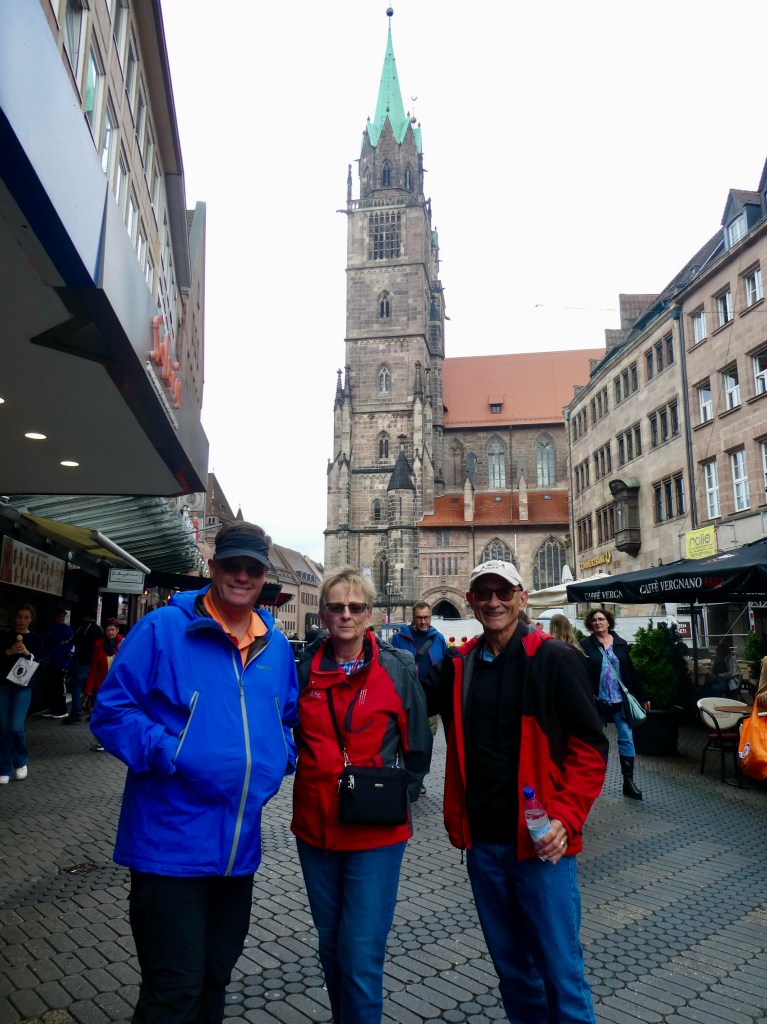
We were very impressed with our first stop in Germany.

The rebuilt city is lovely, but most impressive is their willingness to confront their past and try to learn from it to prevent it from being their future.

We learned that Nuremberg is famous for gingerbread made without ginger. I like really spicy gingerbread and neither of these worked for me.
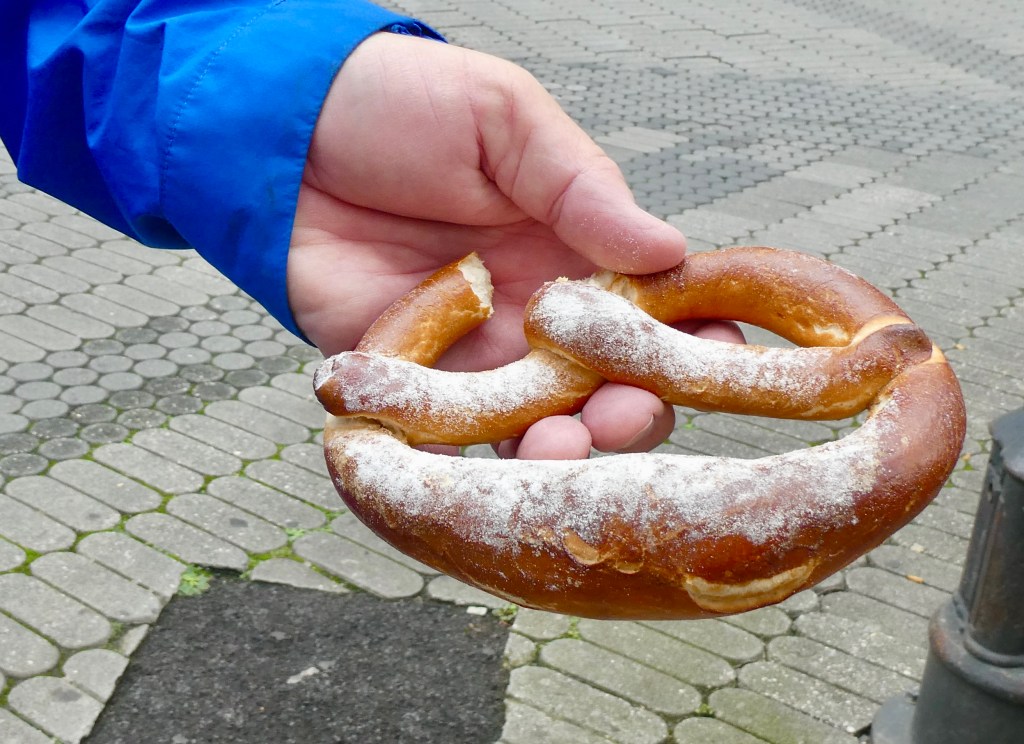
Randy had looked forward to trying an authentic German pretzel! This one was purchased from a vendor cart but had been made earlier in the day and was cold and tough. Disappointment!

They also make a specific kind of sausage, supposedly the oldest recipe in the world. They produce seven million links per day. Nuremberg also has their own Red Beer. This type is bottom fermenting with a roasting temperature of 100 degrees Celsius. Temperature determines beer color.

We arrived at the port and boarded the Viking Alsvin.

We found our cabin.
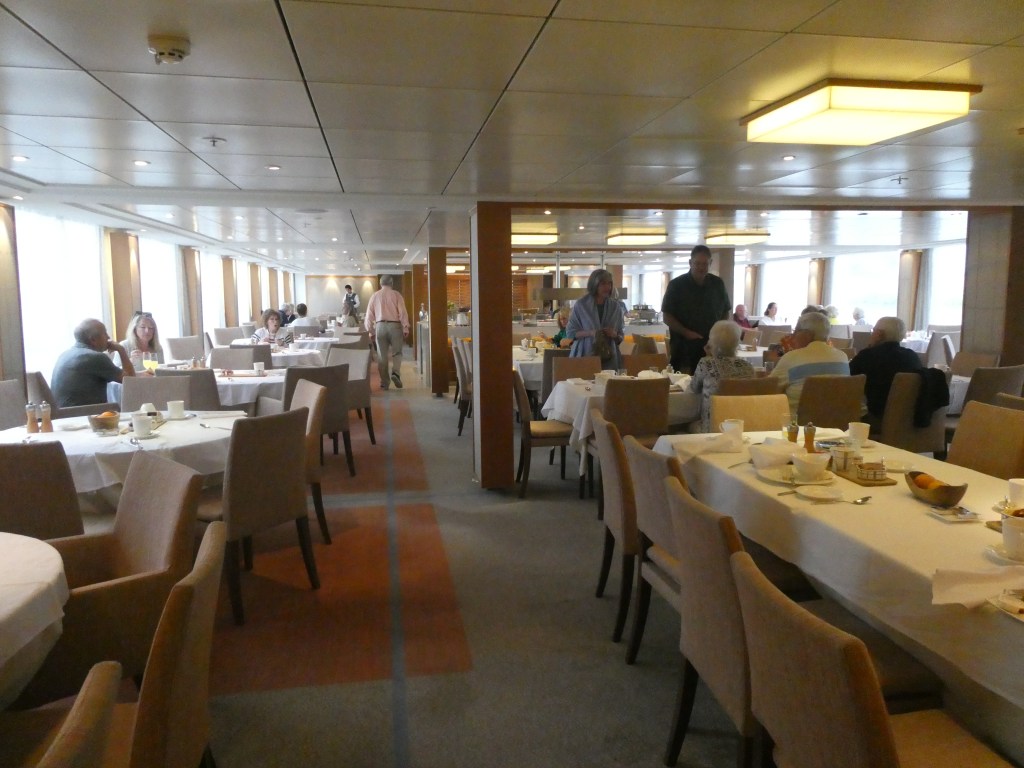
And the dining room where we would eat all our meals.
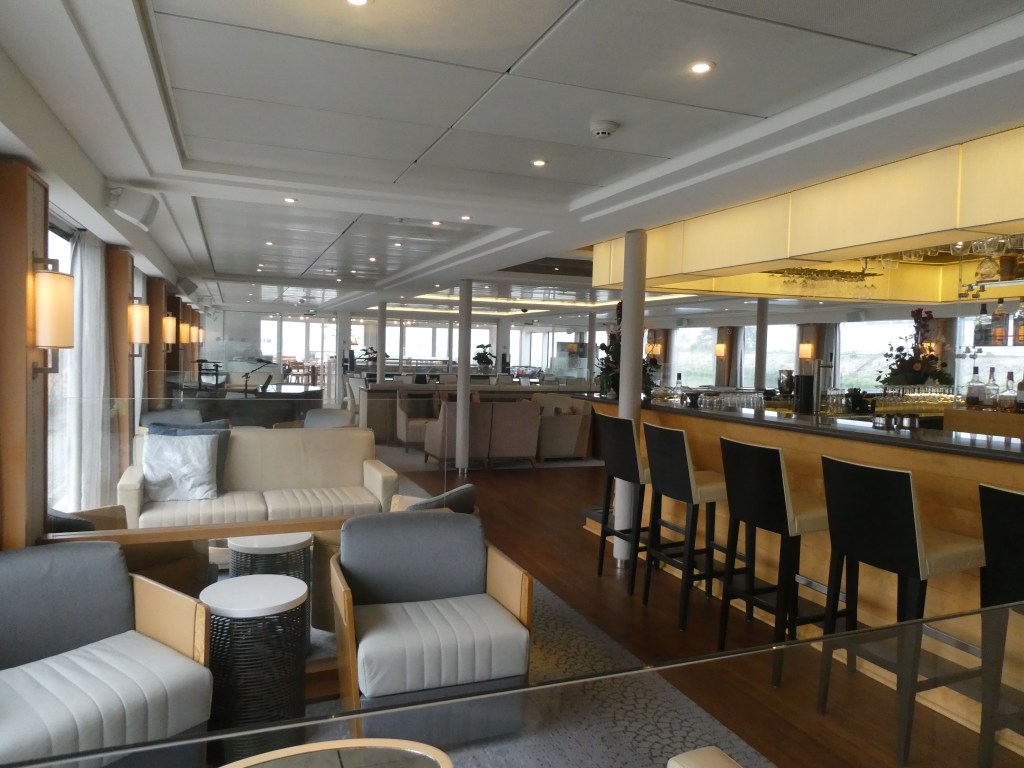
We found the lounge where everything else happens.

Depending on bridges and weather, we sometimes had access to the open deck above.
Next up: Bamberg and the First Locks


 Serene Wandering
Thanks for sharing! Very interesting!
Sent from my iPhone
<
div dir=”ltr”>
<
blockquote type=”cite”>