
We had an early alarm as breakfast was at 6:15 and everyone, with everything, needed to be in the lobby by 7:30. This was the day to see the Nazca Lines and have a boat ride to the Ballestas Islands, sometimes called the Peruvian Galapagos.
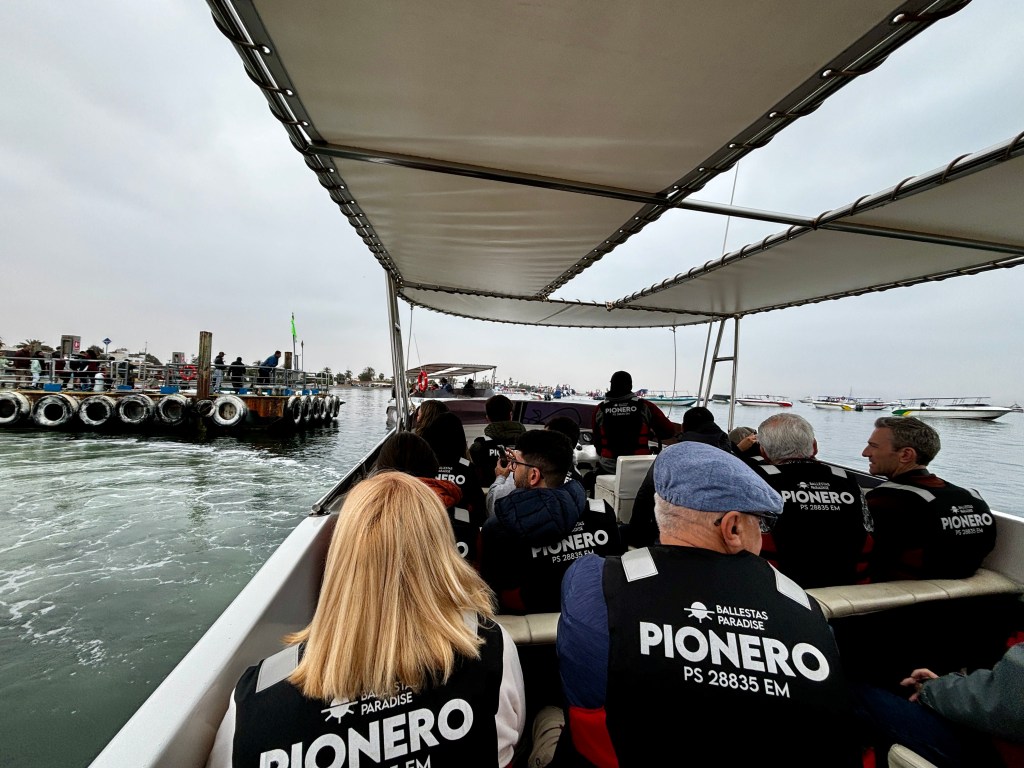
In our case, the boat ride was first.
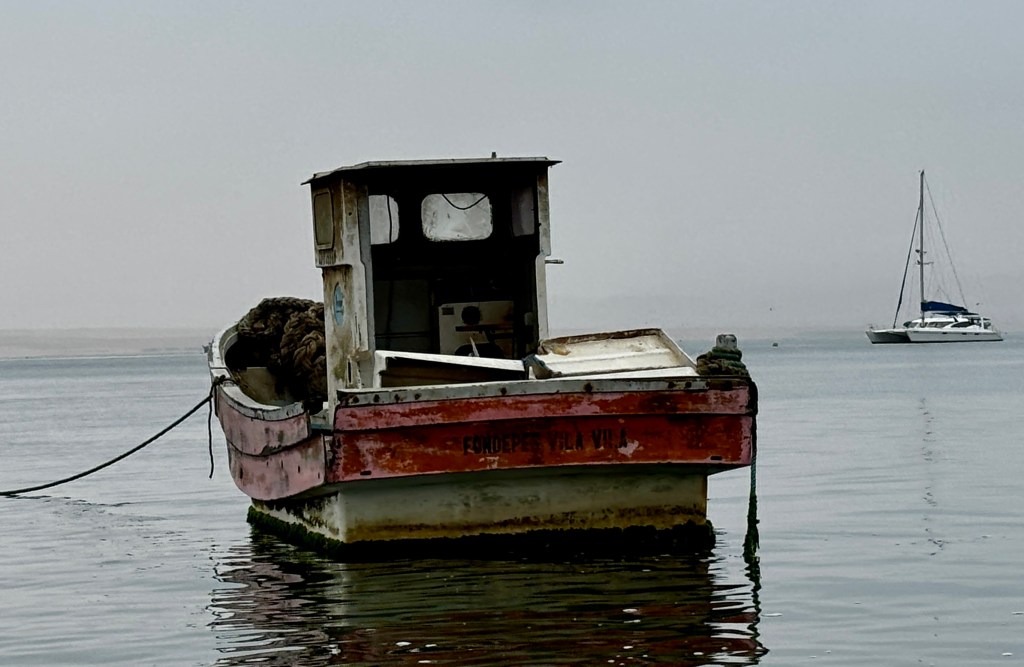
There were a variety of boats in the Bay of Paracas.
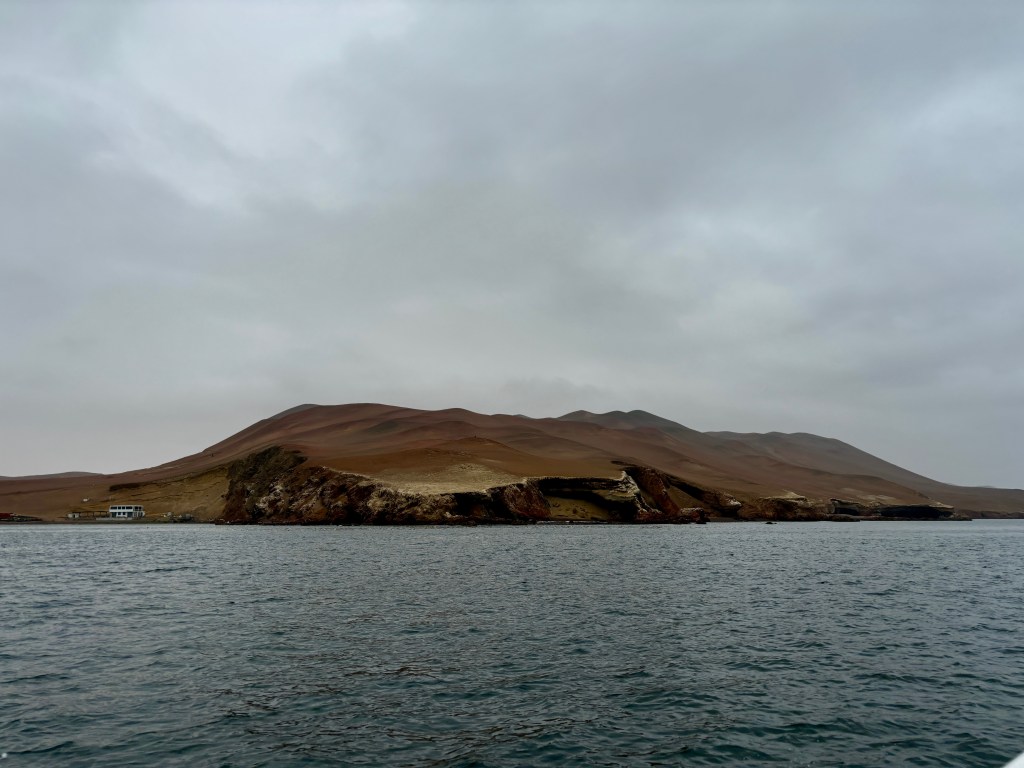
We approached our first highlight.
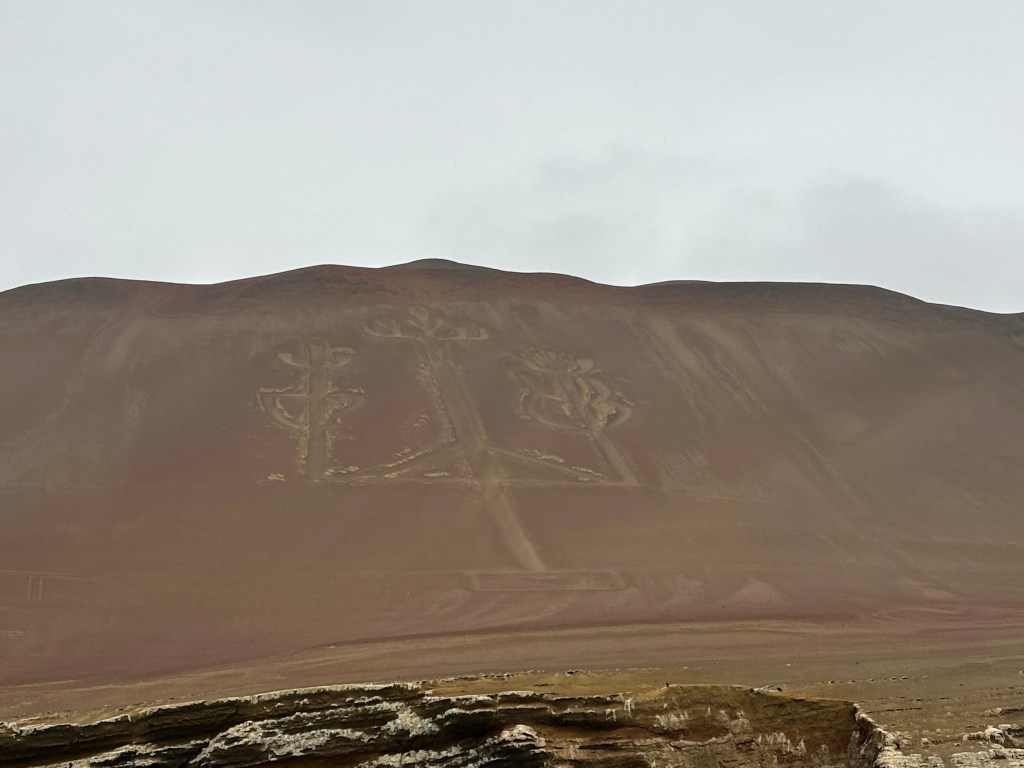
On our ride, we saw the Candelabra Lines. The area the lines cover is 170 x 54 meters. This etching is called a geoglyph and it is the only one in this area. There are more than 20 theories as to the origin, but no one really knows how, who or why.
This area of Peru has very little rain so the Candelabra Lines have remained.
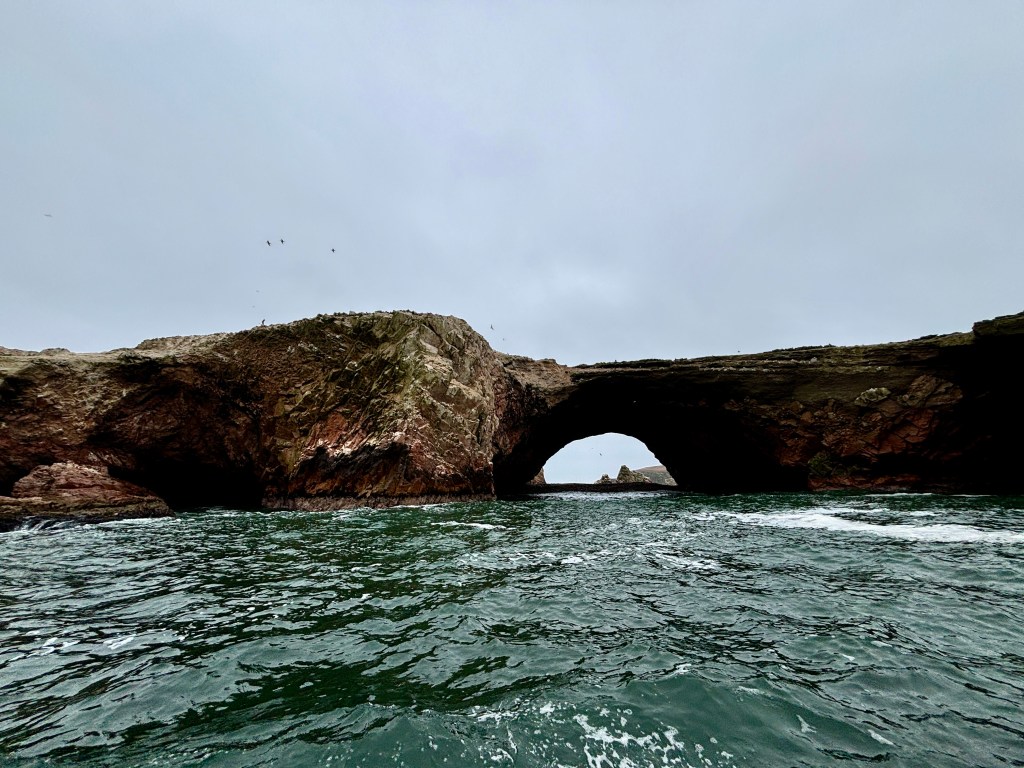
The Ballestas Islands have been protected by the government of Peru since 2009.

This was our very first penguin sighting – Humboldt penguins. They live up to twenty years.
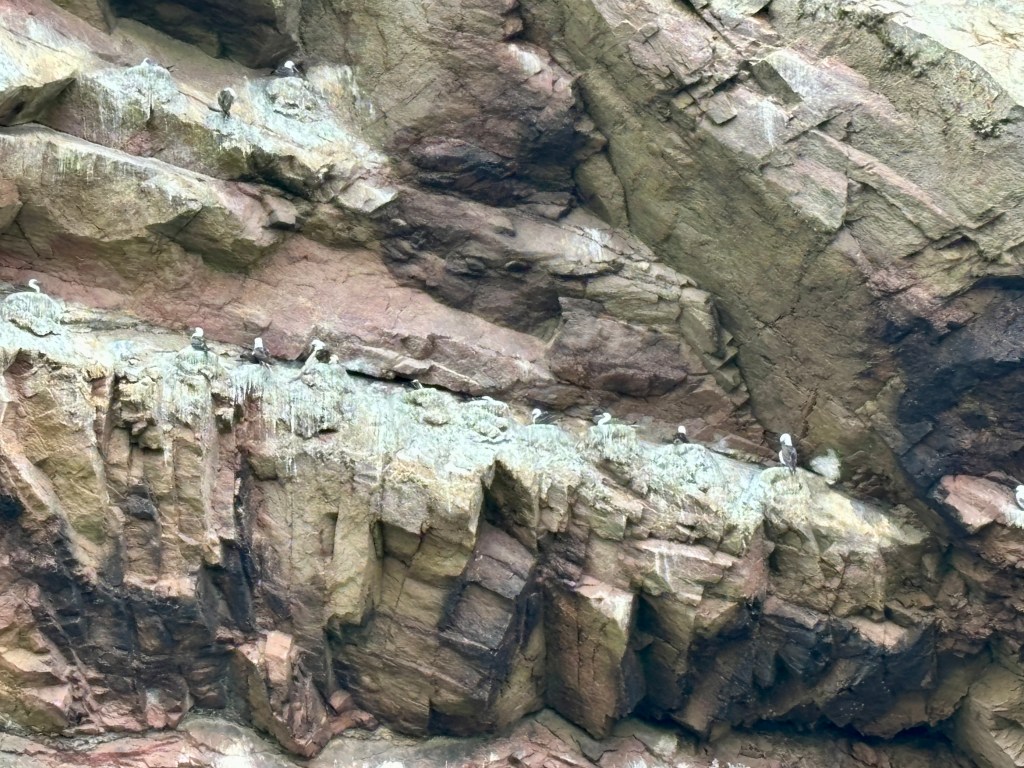
There are a lot of sea birds on the islands including terns, gulls and pelicans.
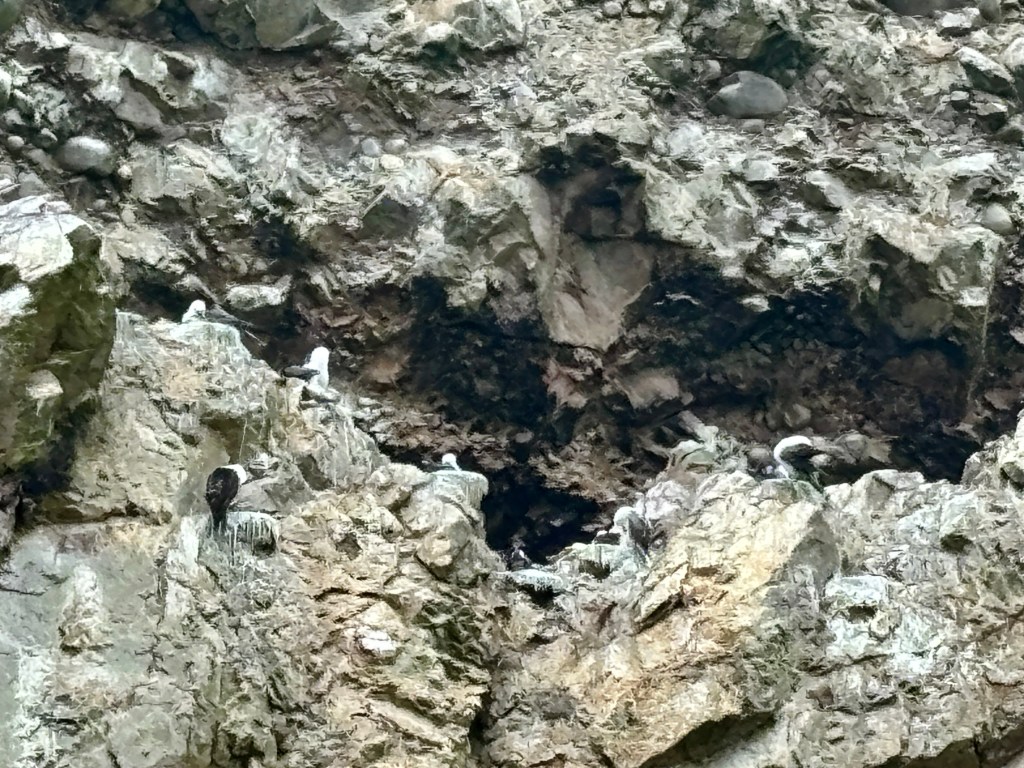
There are also Peruvian boobies, different than Galapagos boobies because Peruvian boobies are monogamous, choosing a lifetime mate.
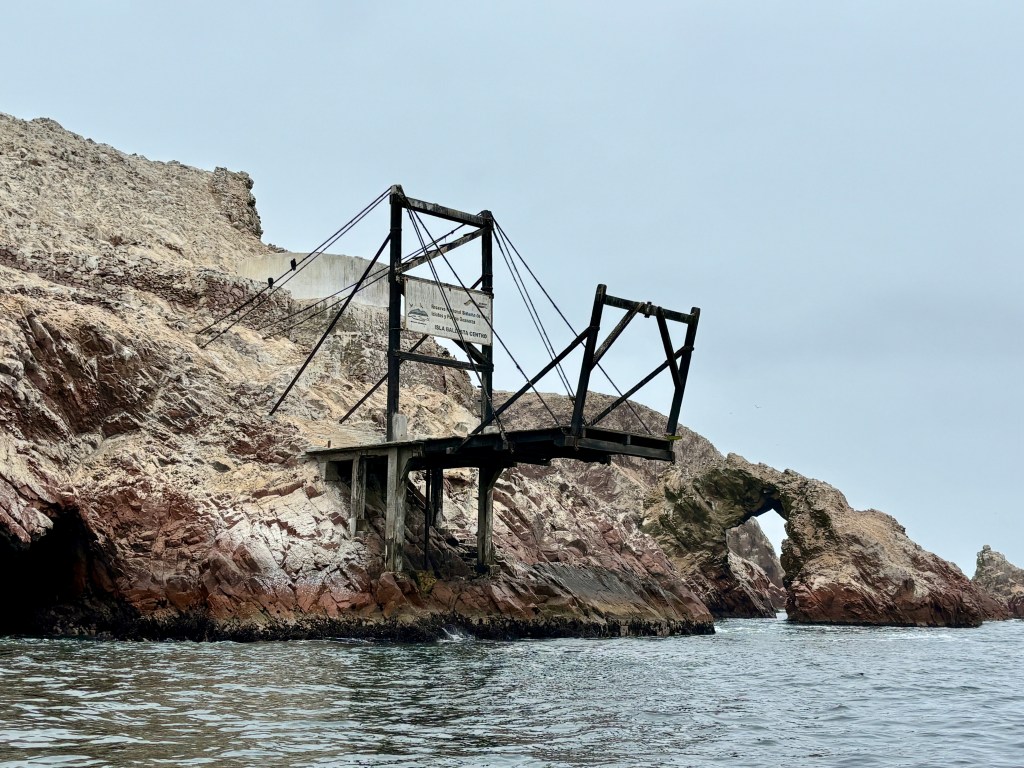
A lot of seabirds means a lot of guano on these and other islands off Peru. The guano once reached depths of 200 feet. Guano has often been used as a fertilizer and was a valuable commodity from the mid-1800s to the early 1900s. This infrastructure is from when guano was actively mined on the islands. Mining damaged the ecosystem so is now limited and regulated.
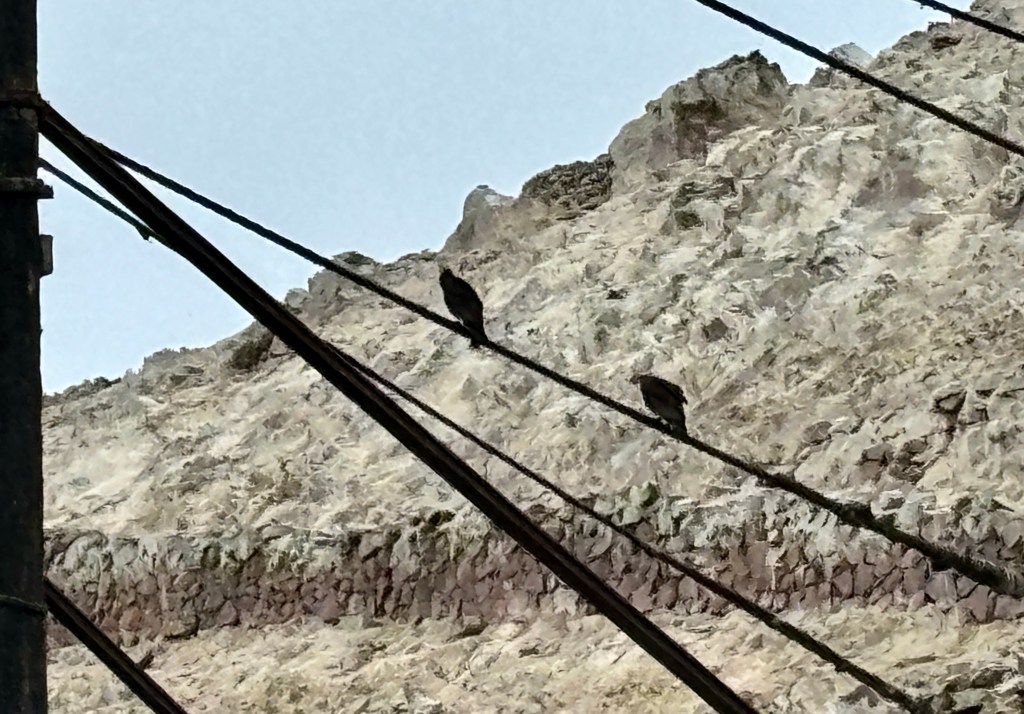
Turkey vultures provide clean up for animals and birds that die on the island.

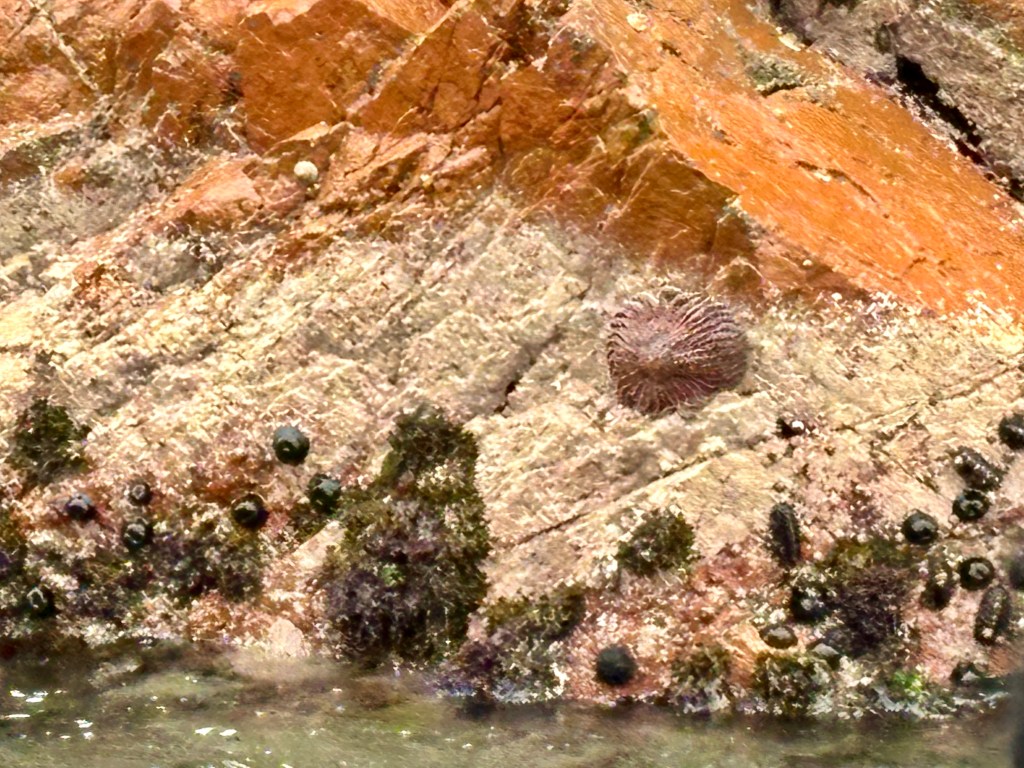
We saw several variety of starfish.
Then the South American Sea Lions and South American seals stole the show.
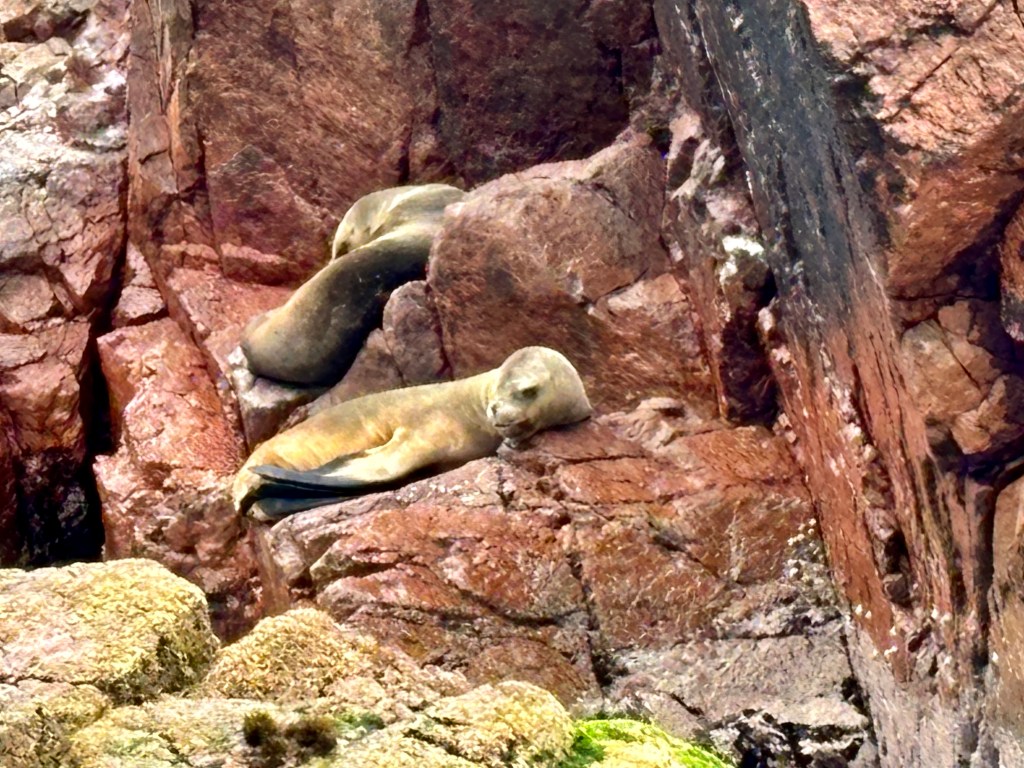
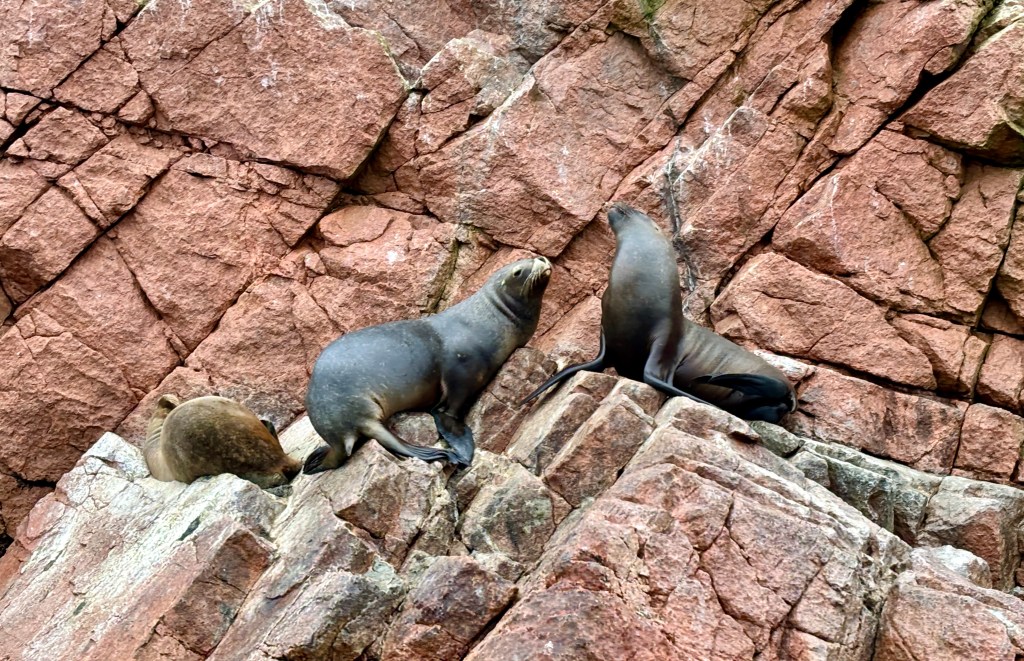

They can sleep 18 hours a day
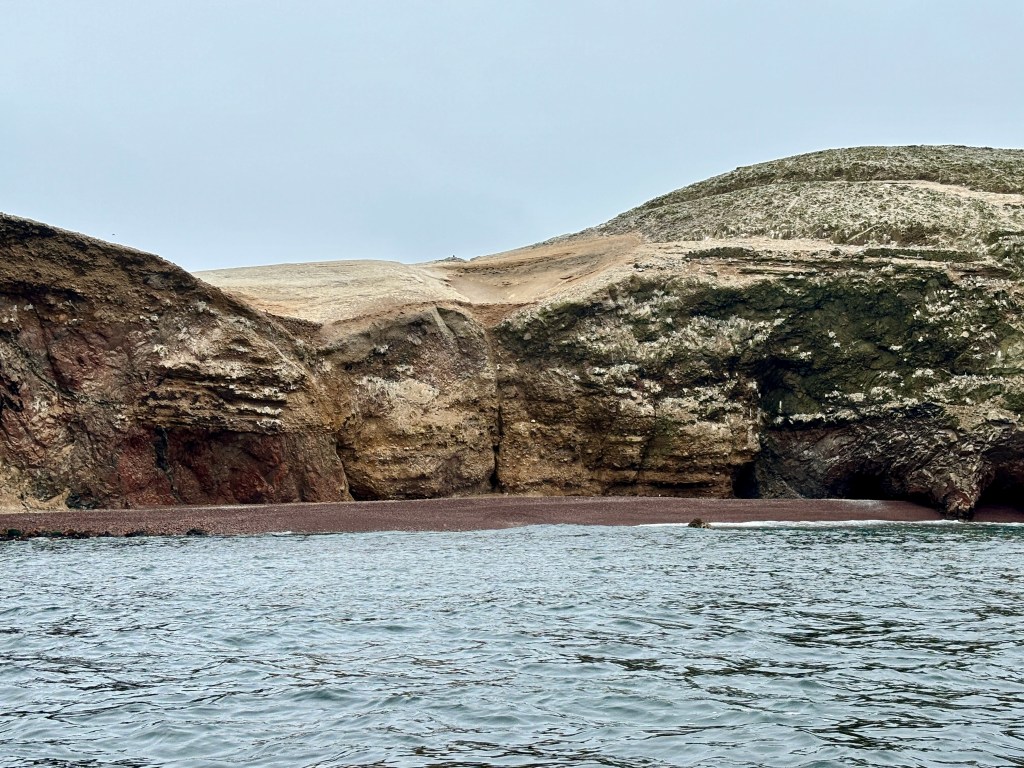
This is Sea Lion Maternity beach from January to March. We were there in September. Gestation is almost one year.
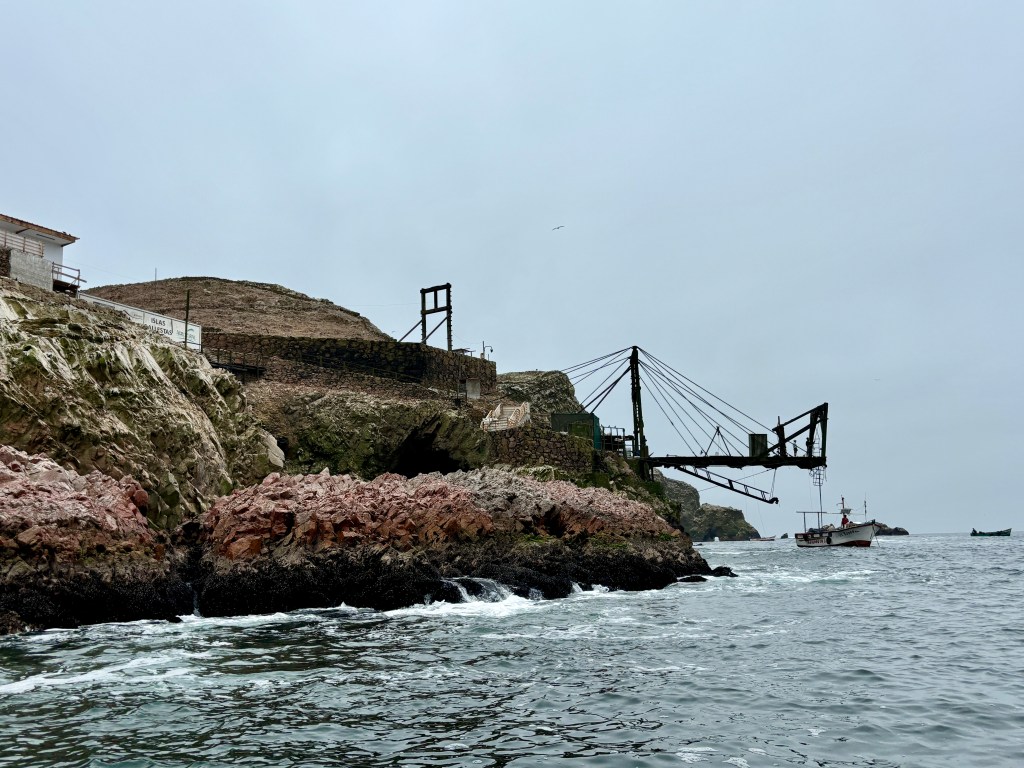
This infrastructure is for the people who live on the Ballestras Islands to protect the animals and environment.
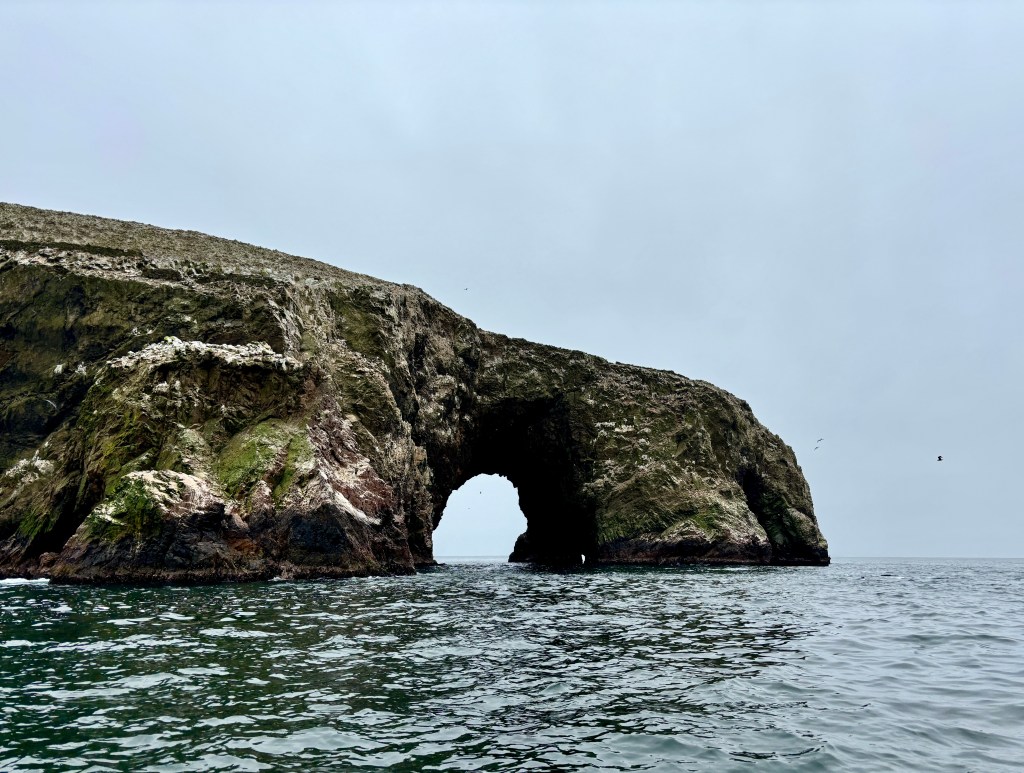
We hadn’t really given much thought to this portion of our tour but it turned out to be delightful!
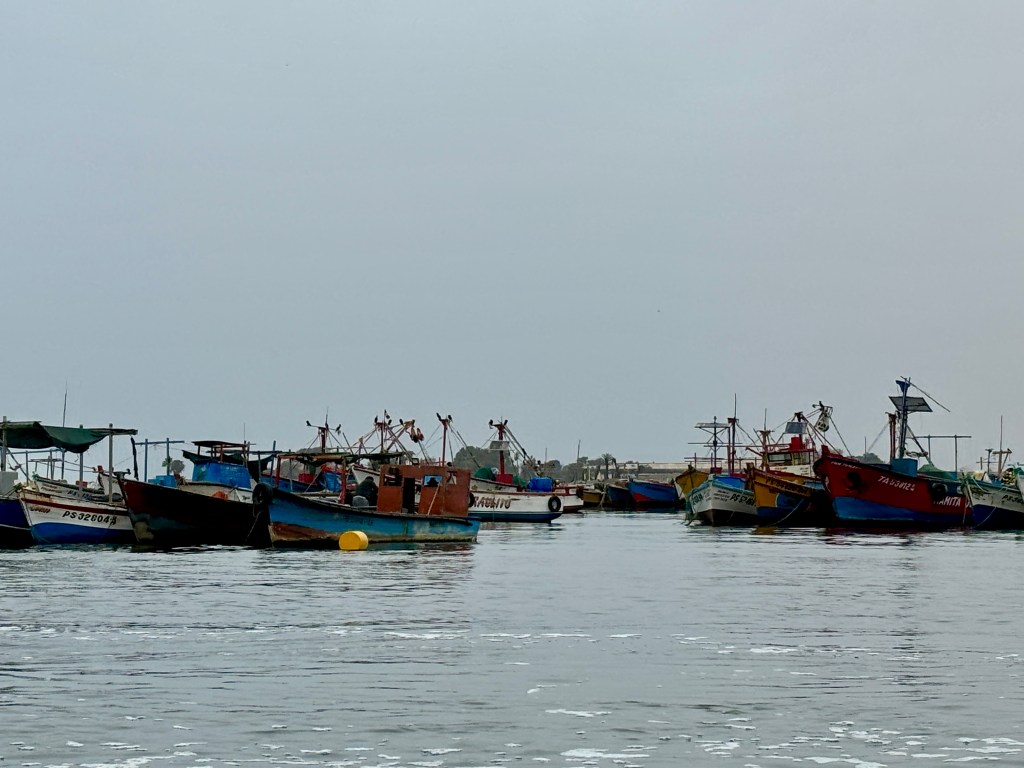
We returned to Paracas harbor.
The main event of our day was to fly over the Nazca Lines. These geoglyphs lie in the Ina desert between the Andes and the Pacific Ocean approximately 300 miles south of Lima. The Nazca and Paracas peoples once lived in this region but it is unclear how and why they might have made line drawings that can be viewed only from the air.
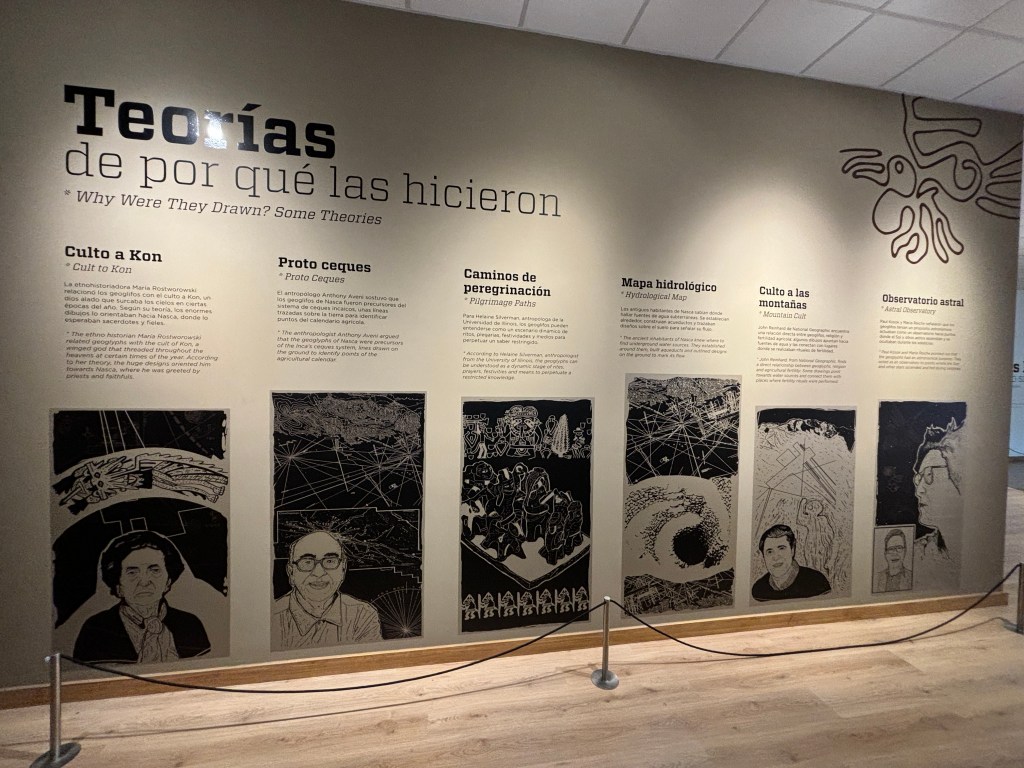
A museum within the airport gave us some background information and touched on some of the many theories about the how and why of the Nazca Lines. Most deal with representations of their clans, or hydrology, or spirituality or some combination thereof.
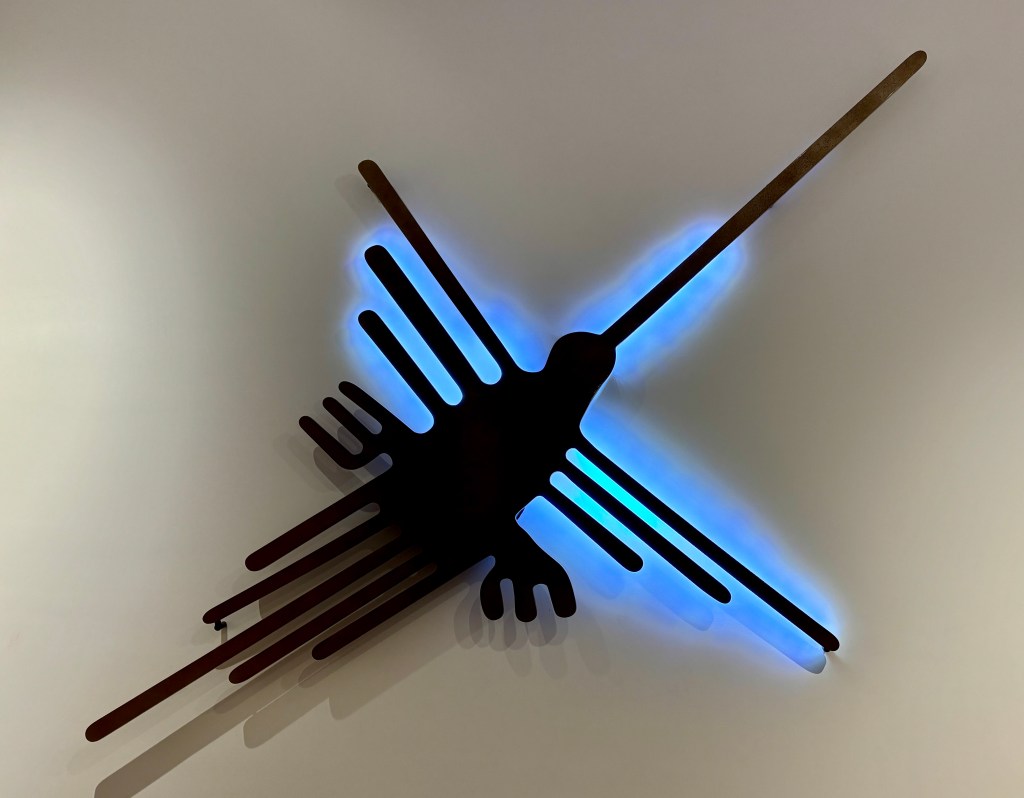
The animals and figures represented are recognizable today, including the most famous, the hummingbird.
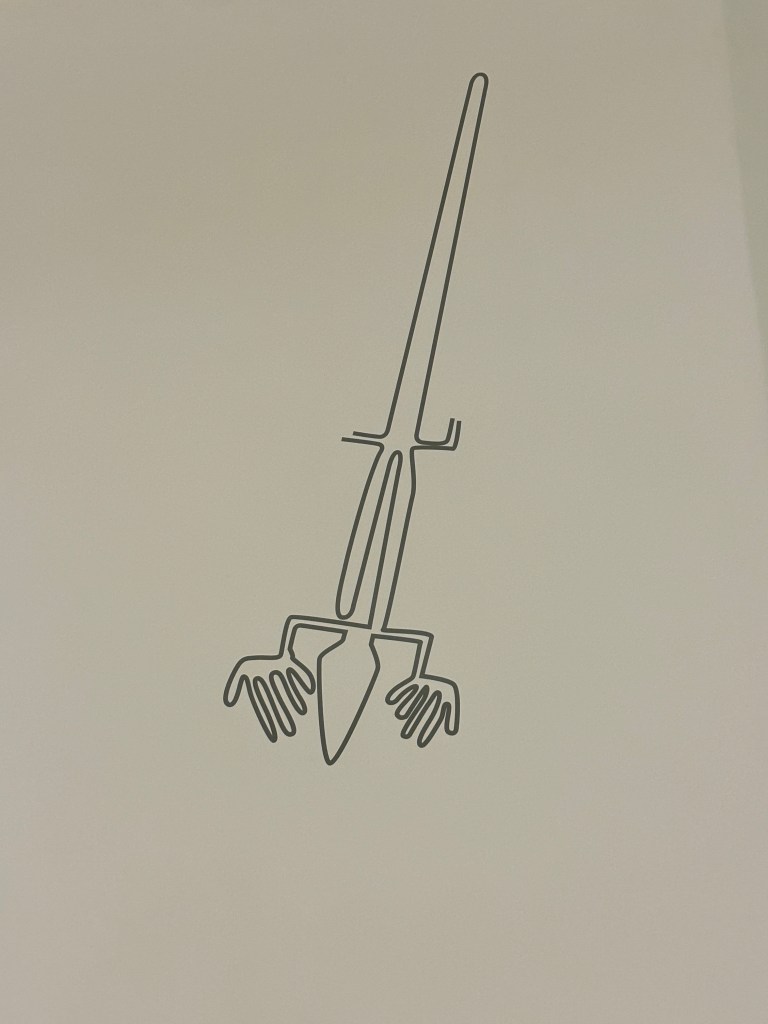
The Nazca lines were discovered on the ground when workers were building part of the PanAm highway in the 1920s. That section damaged part of the lizard’s leg.
The Nazca Lines are thought to be about 2000 years old and were named a Unesco World Heritage Site.
There is speculation that the lines were drawn by space aliens and numerous books have been written with that theory as a base. The Peruvian government does not embrace that theory.

Enrique told us of another academic finding that the Peruvian government is not wanting to embrace. Archeologists have found skulls in the area that correlate only 30 percent with the area’s homosapeans. Is this another possibility for the creators of the Nazca Lines?
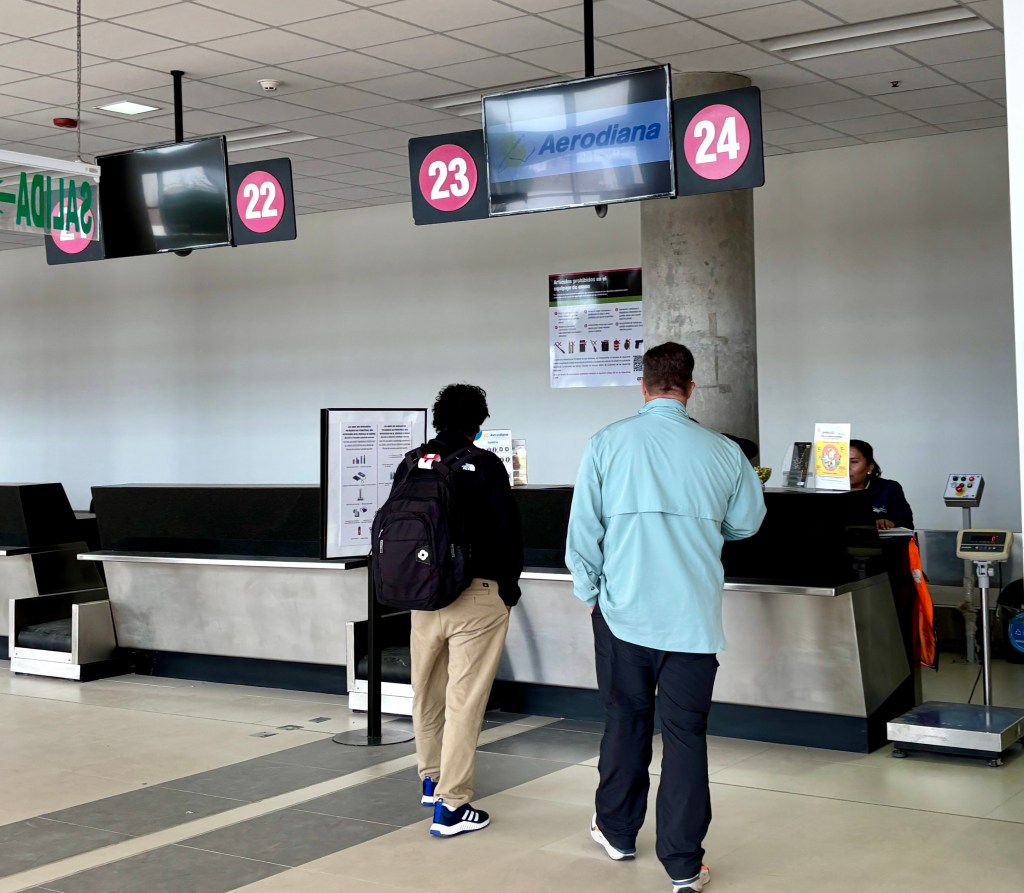
It was time to go see them for ourselves. We had to weigh in and were assigned seats. Notice the scale to the right….

We were in a Cessna Grand Caravan 208B – a 12 seater plane. Everyone had a window seat and couples were across from each other.
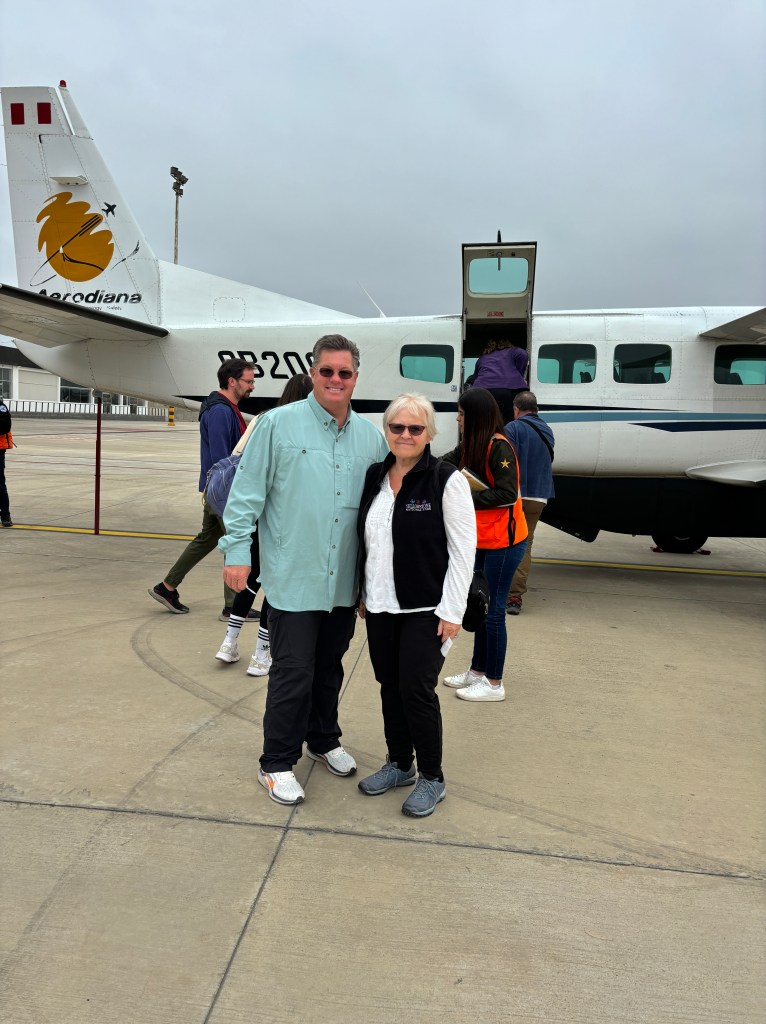
There were the six of us from our tour together along with six others.
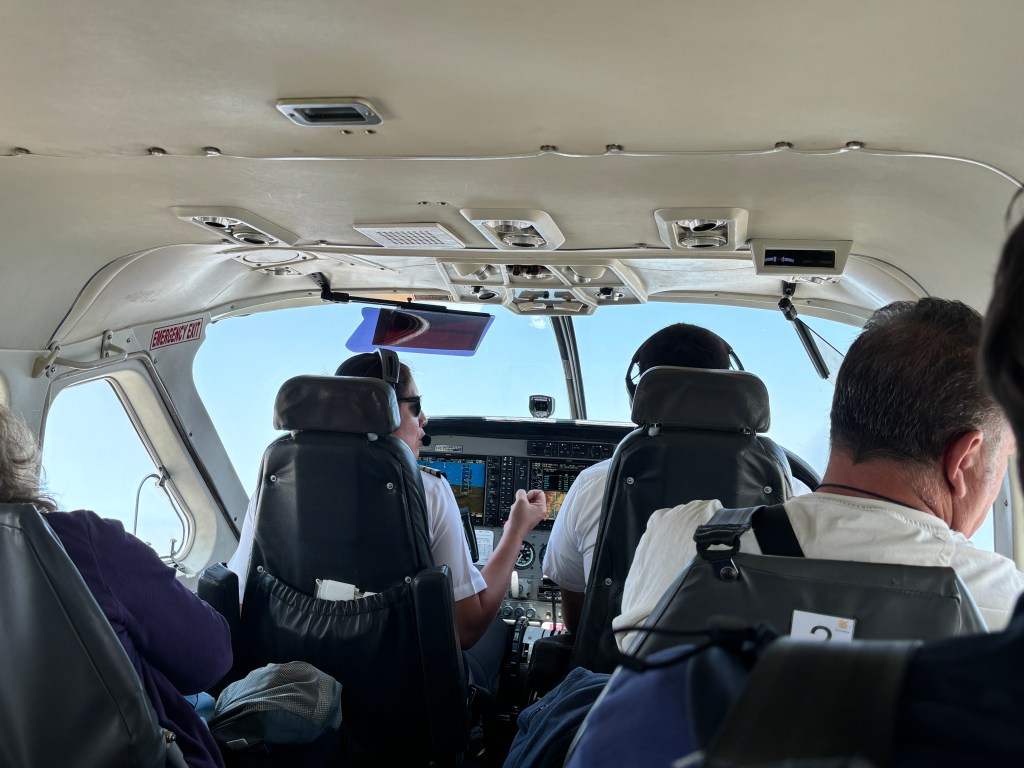
We had a female pilot. She, and her male co-pilot, offered commentary but with the noise, and the accent, it was not terribly helpful.
Our two hour flight had about 30 minutes of travel to the site before and after with the middle hour being above the lines. The pilot performed bends and turns to give people on both sides of the plane the opportunity to see the shapes.
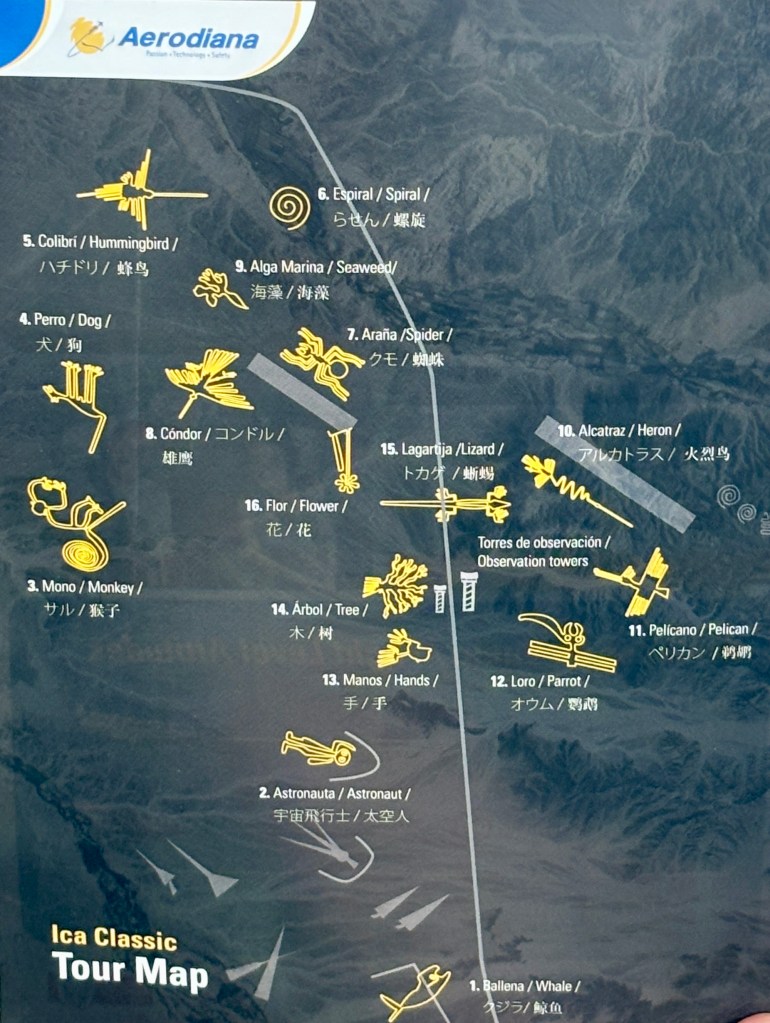
We found this chart in the seat back at the end of our flight and only wished we had seen it at the beginning.
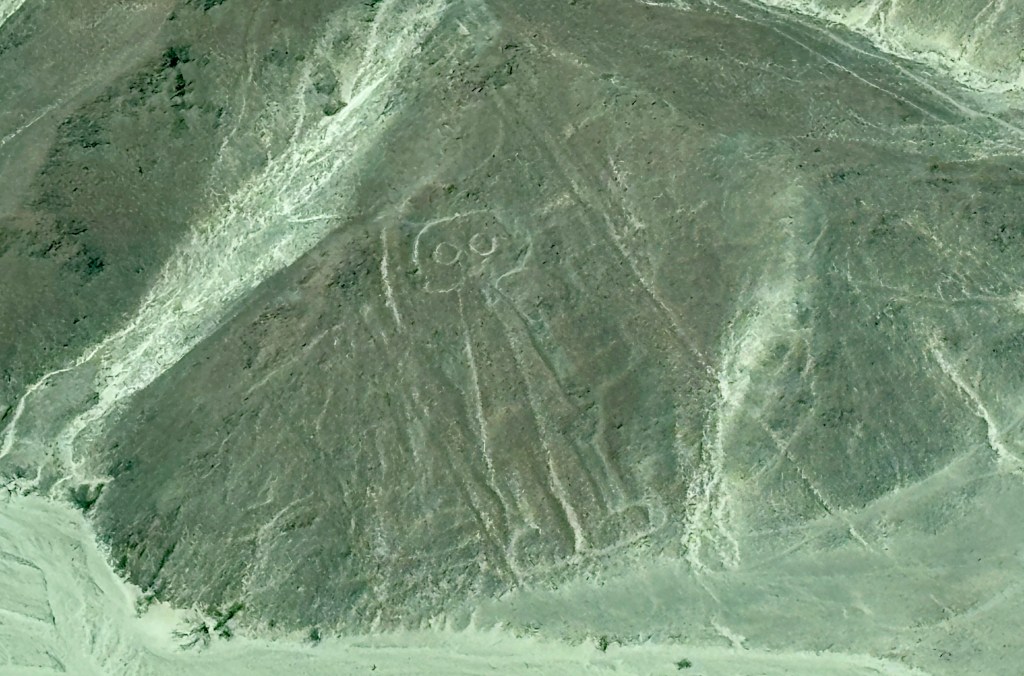
This was the first line figure we saw from above. It was formed on the side of a hill.

The lines and figures were easy enough to see when you knew where to look.
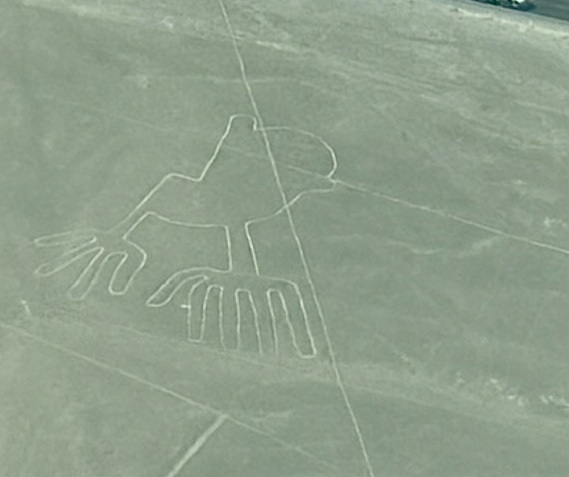
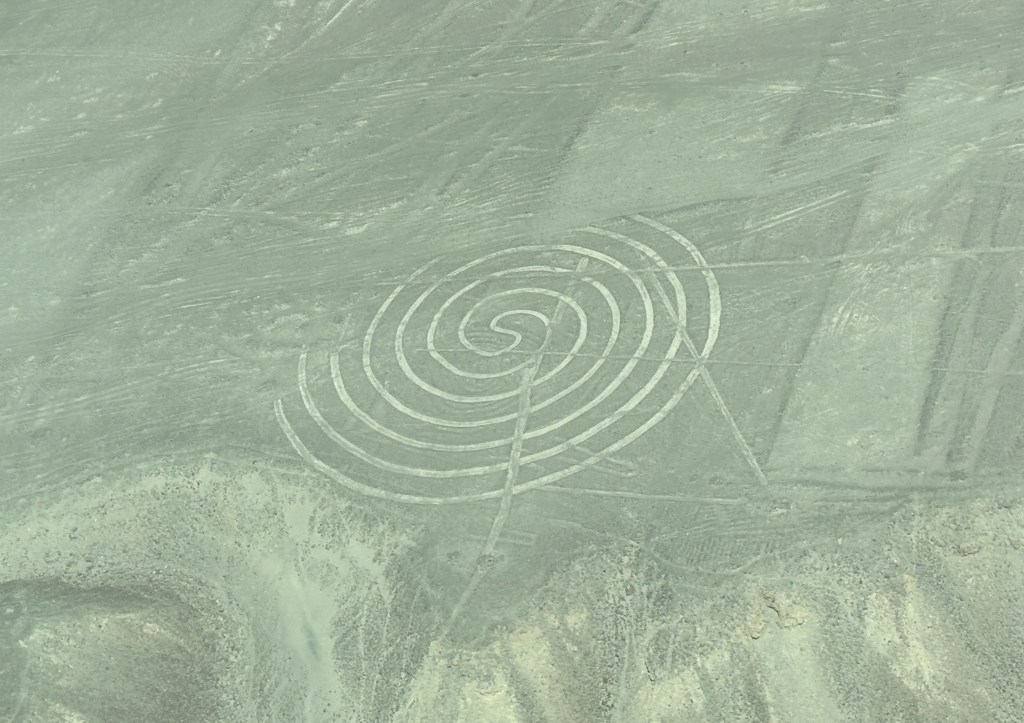
These pictures, however, are enhanced. That changes the background from real life brown to green, making them much easier to see.
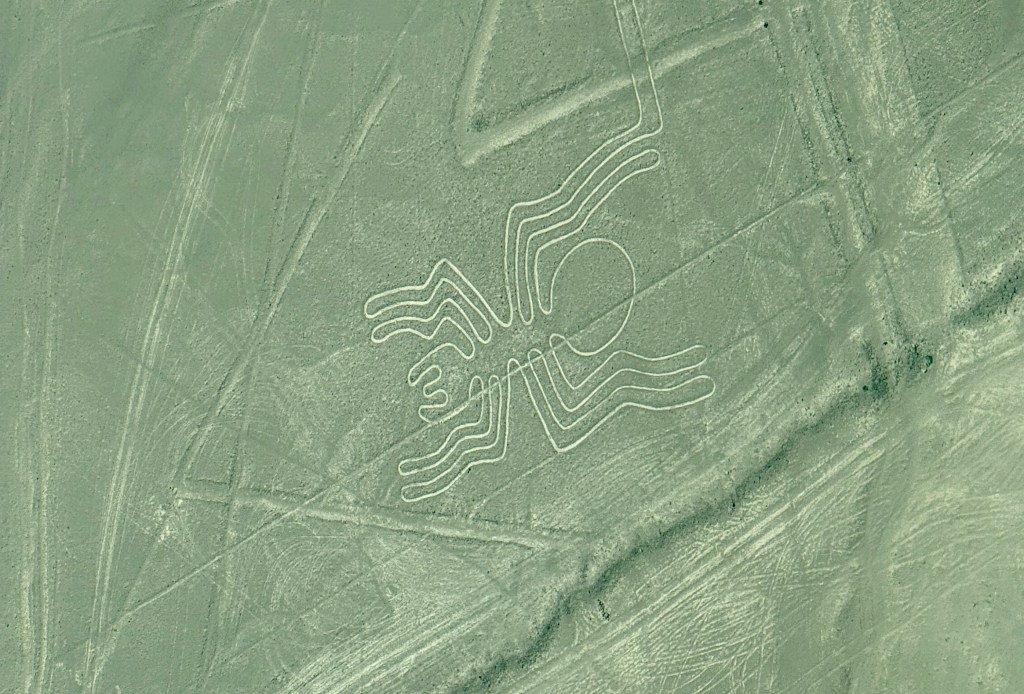
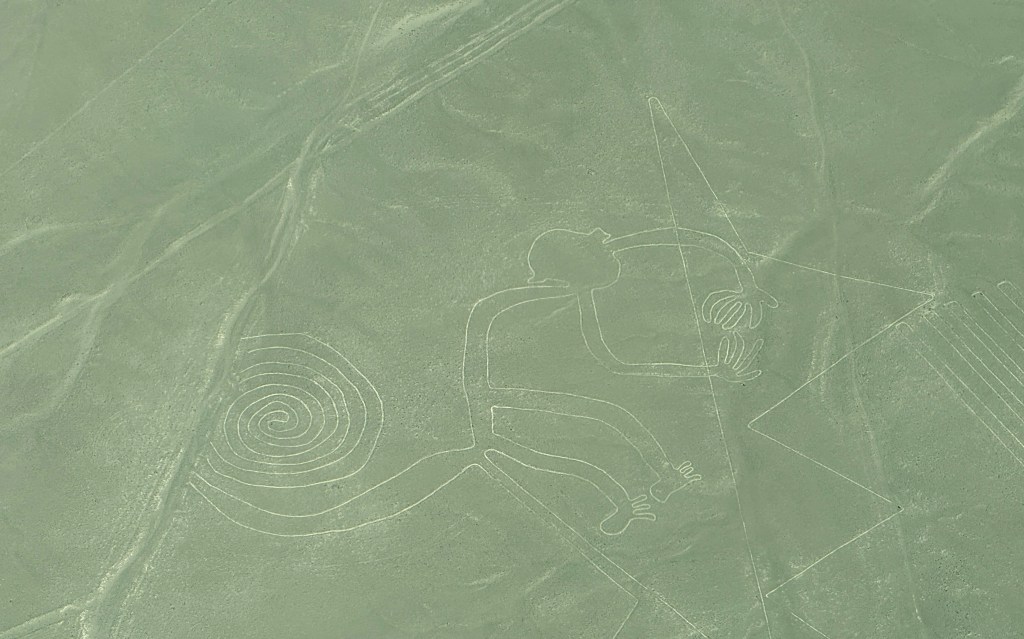
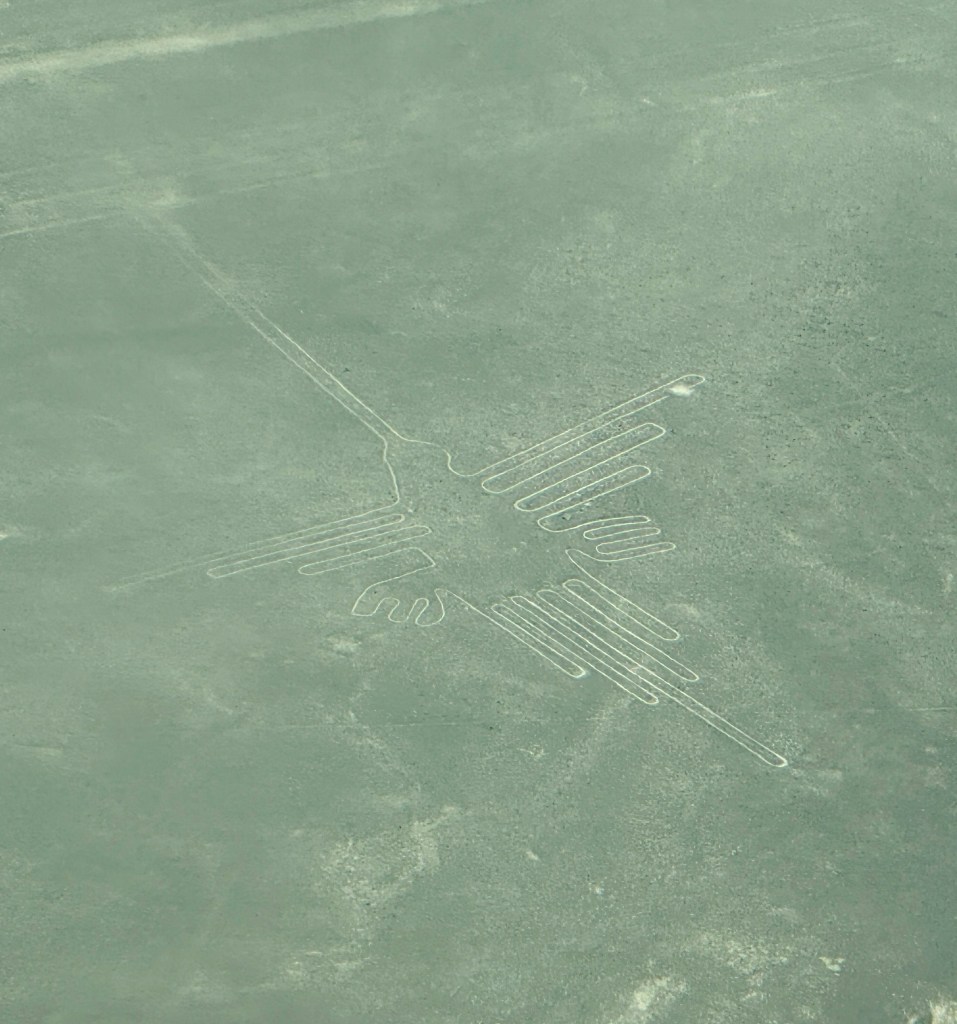
The famous hummingbird from above!
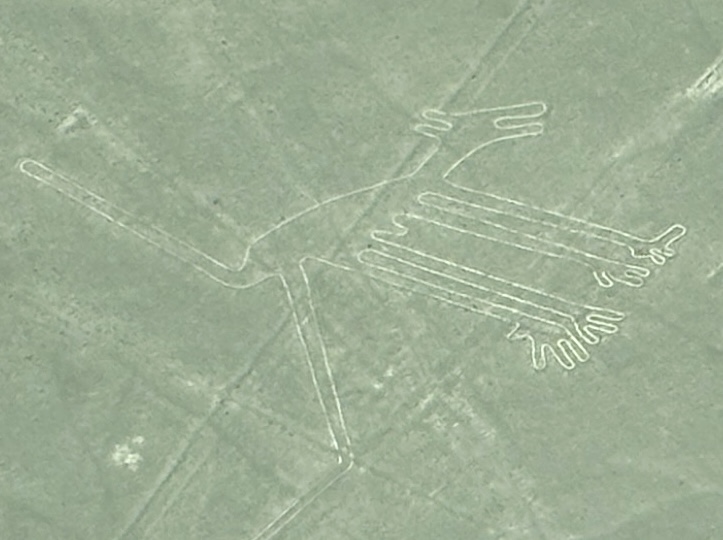
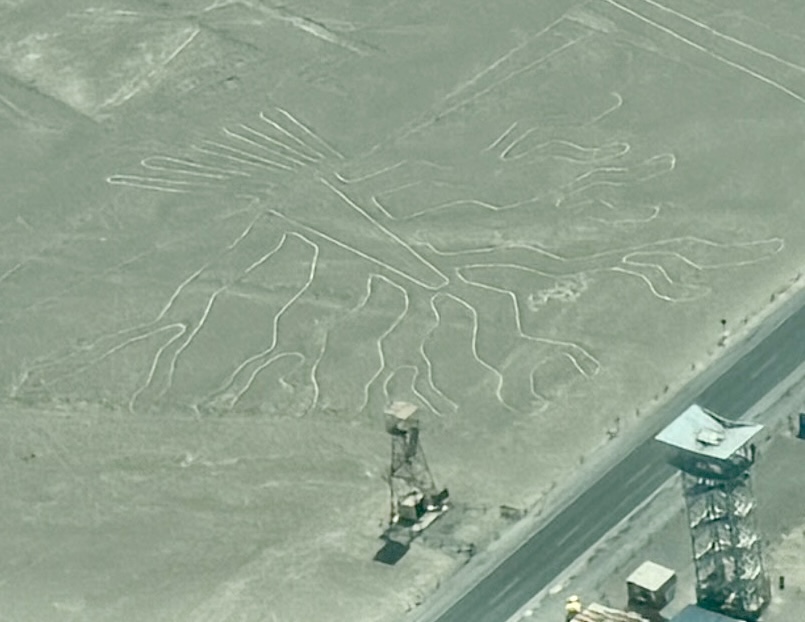
Some designs are quite elaborate.
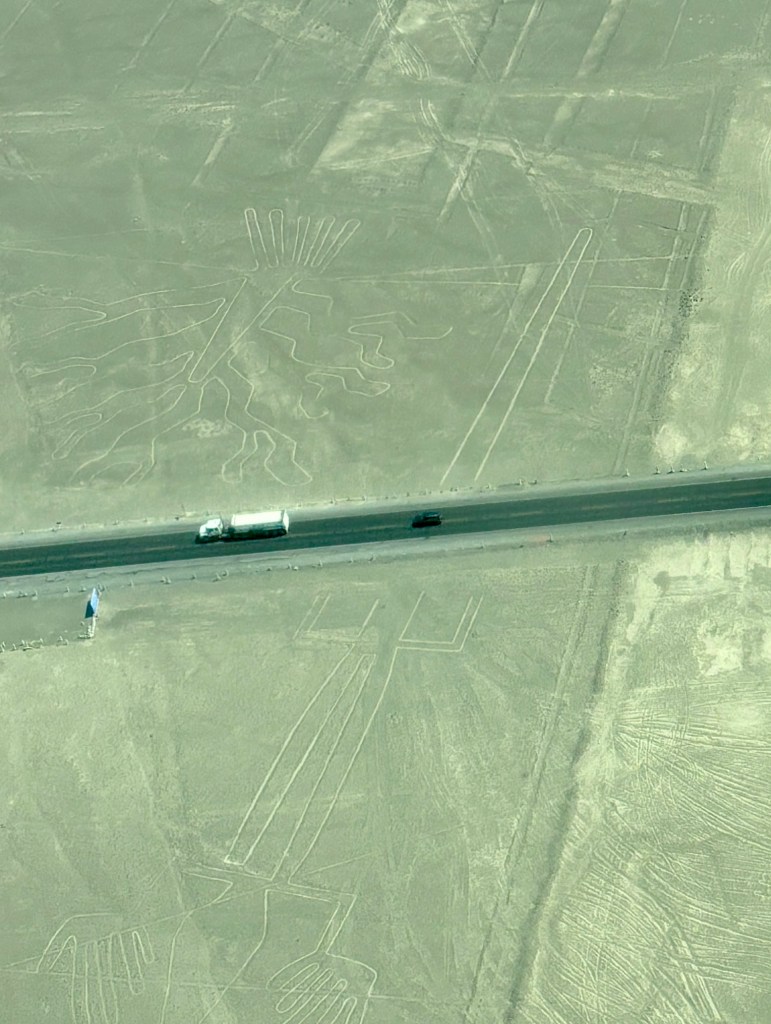
This picture shows how the Pan American highway went right through the lizard leg lines.
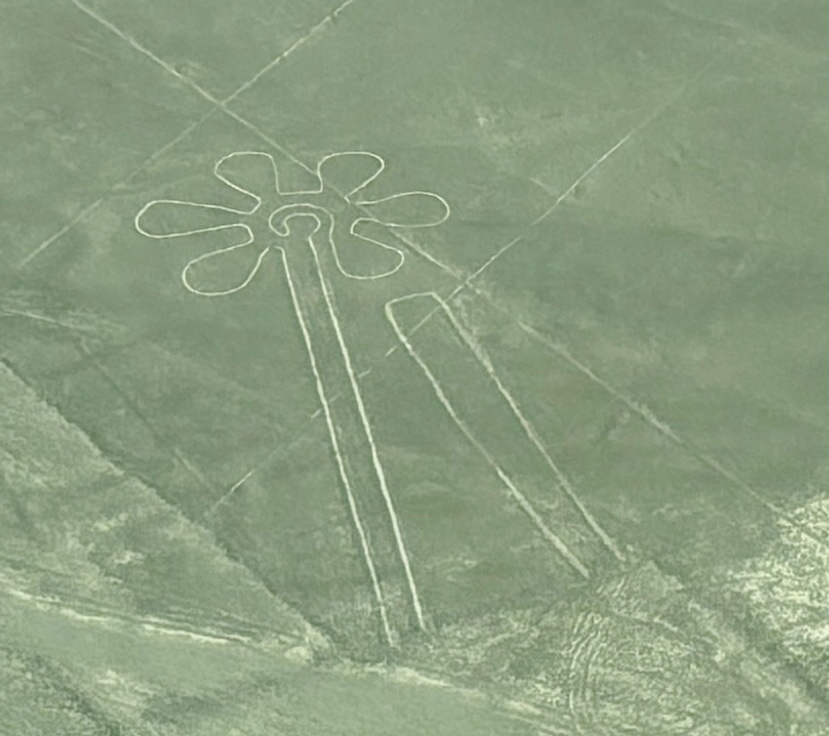
During our flight several people, including one of our own, became quite ill. It was not a flight for those inclined to motion sickness. Fortunately, we both did fine.

At the end of an interesting day, those of us dubbed the “Nazca Six,” with Enrique, enjoyed a meal on our way back to Lima.
We saw the Nazca Lines on September 14, 2024.
Next Up: We meet the rest of our group!


 Serene Wandering
Wow! Wh
Your boat trip sounds great from a nature watching standpoint! I’d never heard of the Nazca Lines before, and they certainly are mysterious. I particularly like the space alien angle on them!
Once again we thank you for your pictures and explanations. Such a wonderful trip and I would love to fly over those inscriptions but the flight would not thrill me to much.
looking forward to the rest of “ our” trip.
Hugs