
We were in Napier on January 21, 2025.
As we woke up, our ship was heading to Napier, NZ. Residents in Napier are the first in the world to see the sunrise given the international dateline.
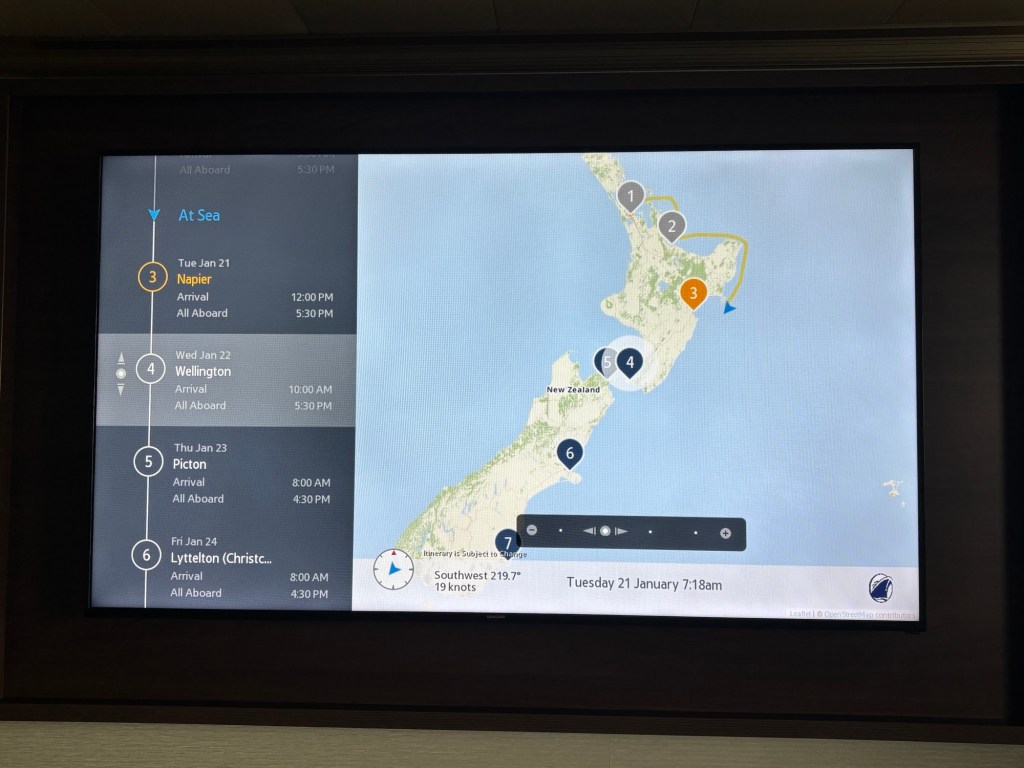
We are on board the Westerdam, a new ship to us. This class of ship is smaller than the previous Holland America ships we have sailed. For a couple of days we’ve been thinking that we miss the Dutch Café, the 180 degree screen in the main stage, and the New York Deli. Yet, we’re settling into this smaller ship.
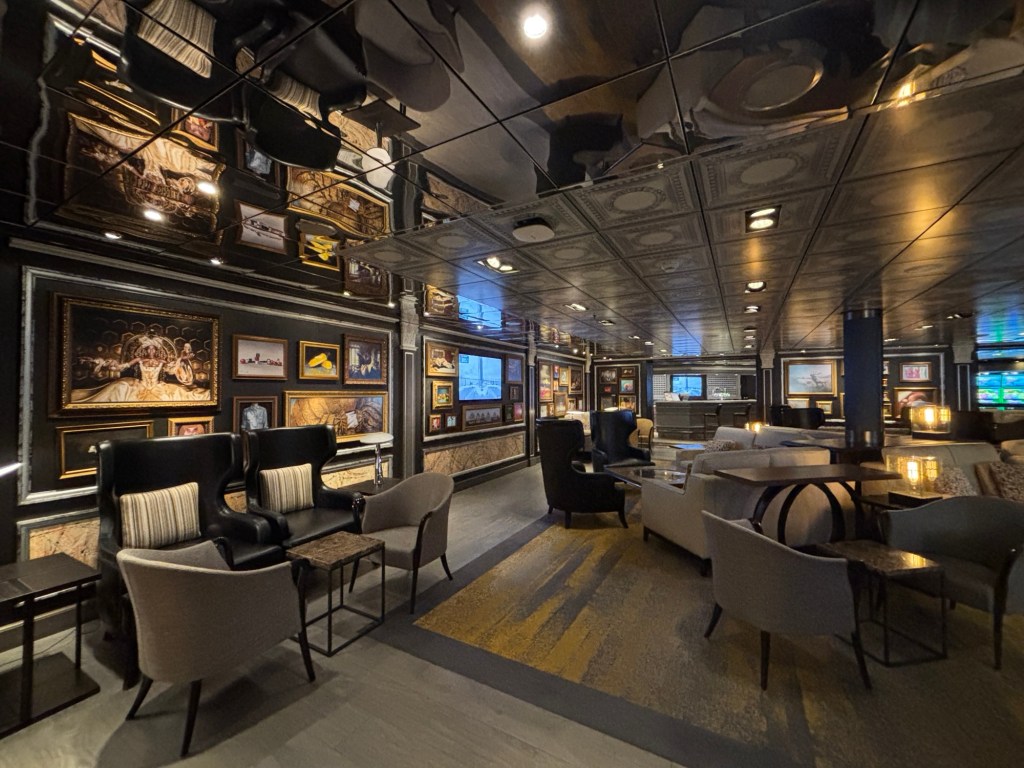
This is the lovely Gallery Bar. There are paintings in every possible space.
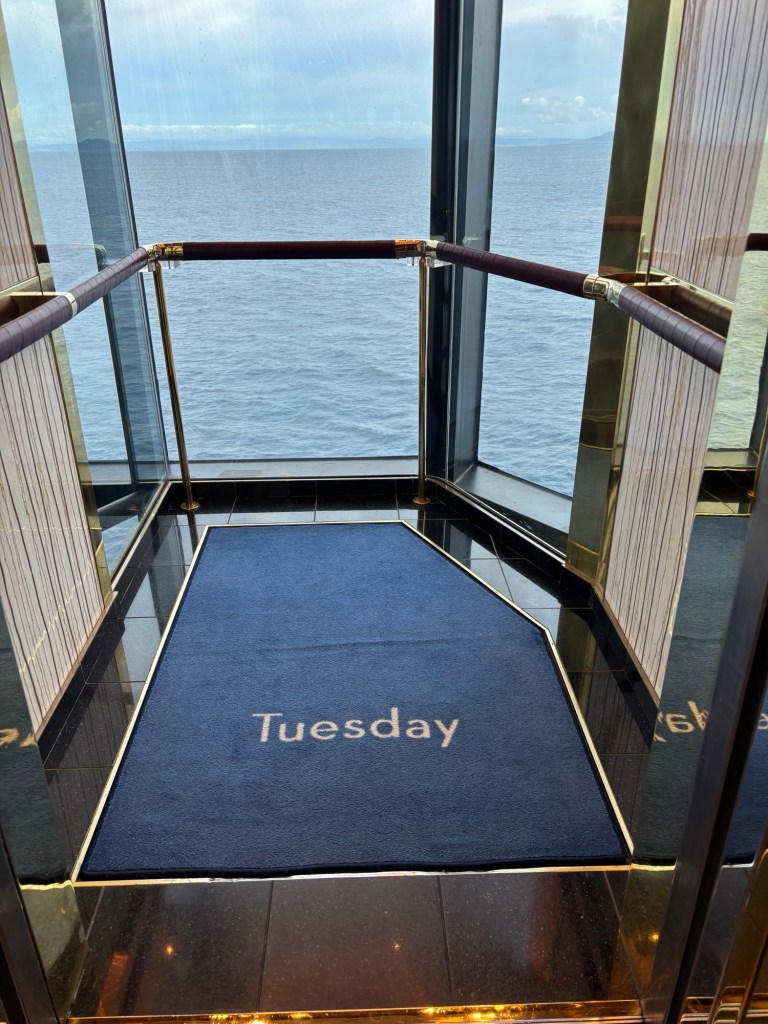
The Westerdam also has these great elevators on the port and starboard sides allowing for very nice views of the port or the sea. There are two elevators on each side of the ship, which are steps away from our cabin. For some unknown reason everyone gravitates to the main central elevators, that take a long time to arrive and are often full. We have found the four outside elevators are fast and appear to be less used. We exclusively use these now. The larger ships do not have these elevators.
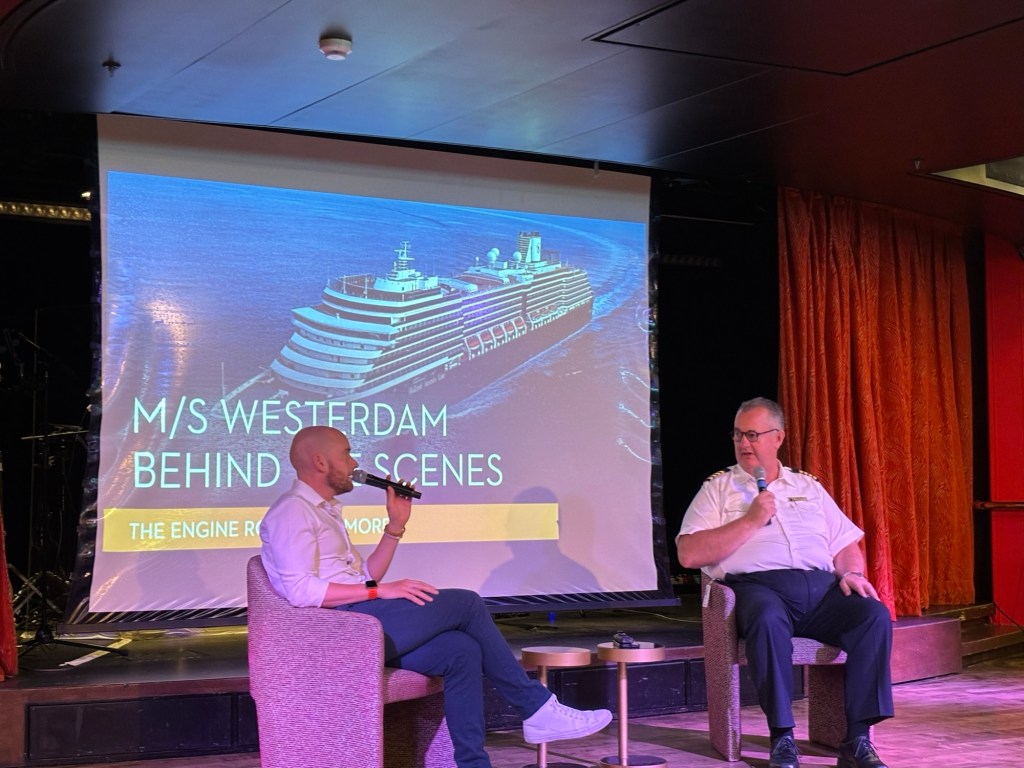
Our first activity of the day was a Cruise Director Talk with the Chief Engineer. We have seen him around the ship in coveralls checking lifeboats and other safety equipment to keep his “hands on the ship equipment”. It was satisfying to see a senior officer doing this work.
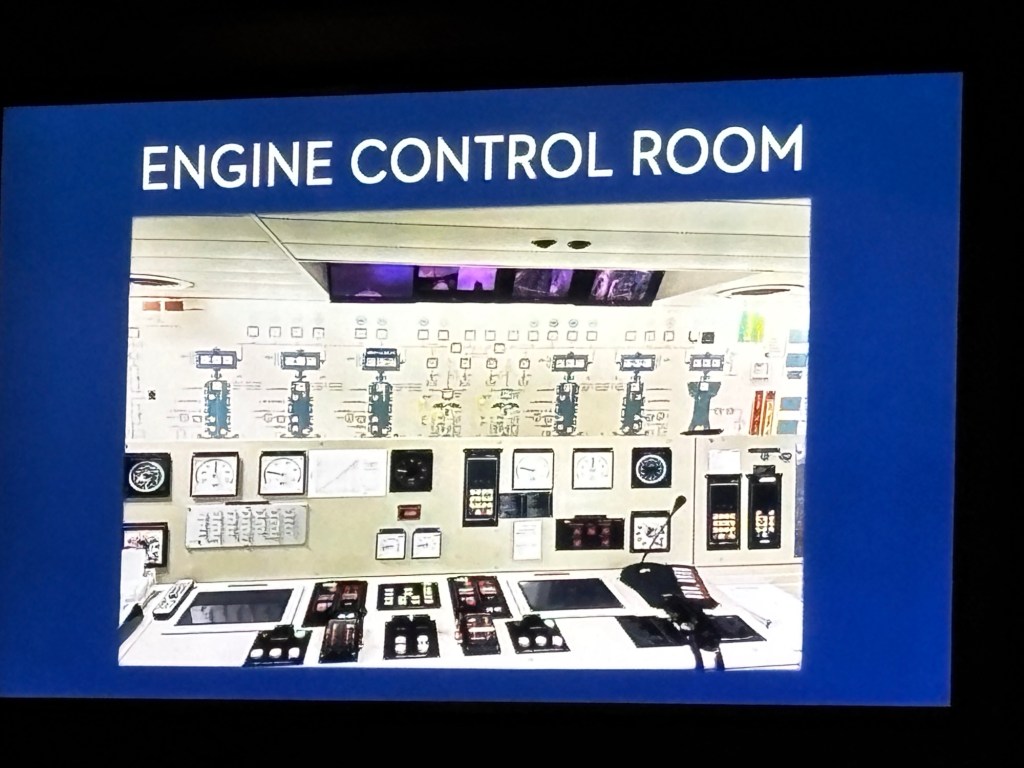
They talked azipods and stabilizers, engines, and desalination.
There were two statements that I understood and remember. Sewage treatment is so effective that the results can be released in Alaskan waters.
There is a Zero Overboard policy for waste disposal. There is extensive recycling and the money earned goes into a crew fund. (They are the ones doing the work!)
Our excursion for today was to Cape Kidnappers Station to see a gannet colony, one of the largest on the mainland in the southern hemisphere.
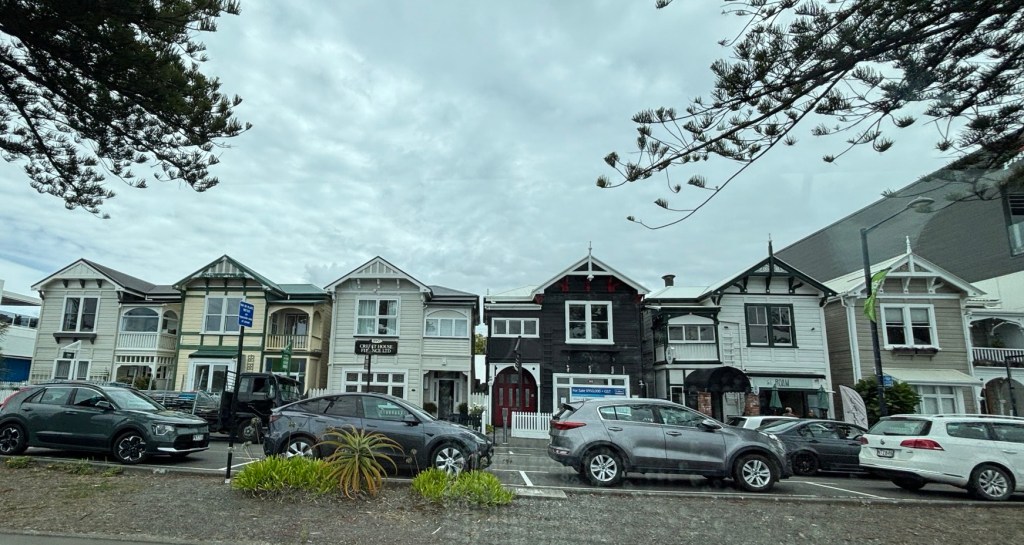
On the way we saw the six sisters houses that were built by a wealthy doctor with six daughters.

As we neared our destination, we learned this land was once part of a ranch that began in 1859. The initial owner purchased 13,500 acres from the New Zealand government. Within two years, he had cleared enough bush to run 8000 merino sheep.
By 1900 the owner had broken up the farm into five 2500 acre stations. Those were sold off.
We visited one of them, Cape Kidnappers. It is still an active farm. It also has a golf course and lodge for the ultra wealthy.
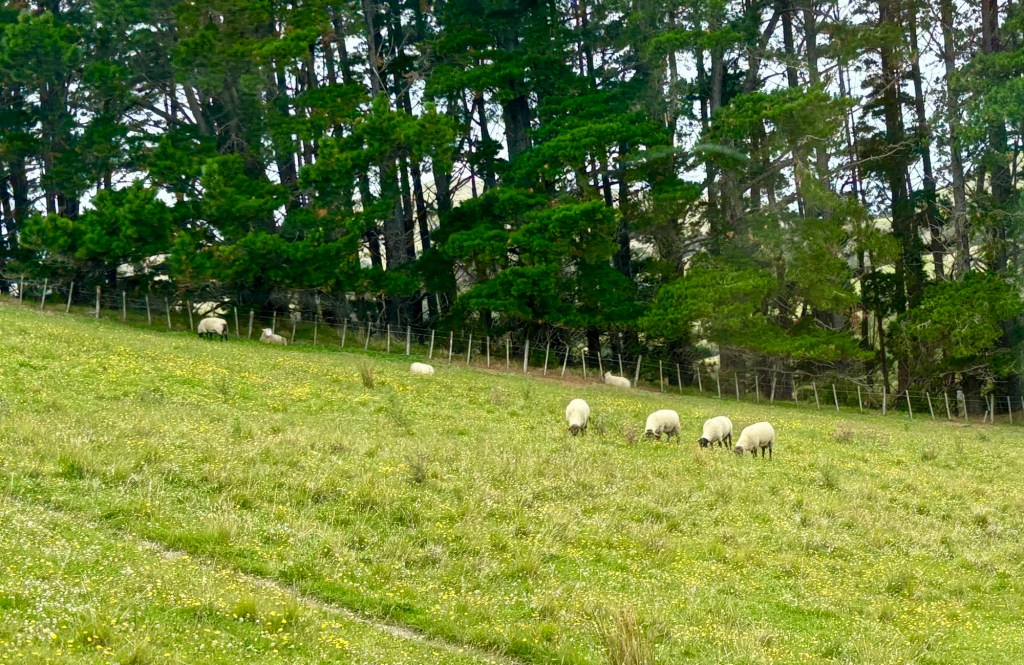
The farm operates with 2000 head of sheep and about 500 cattle.

Supplying beef is a major export of New Zealand. At least the cattle here live a nice life before their demise.
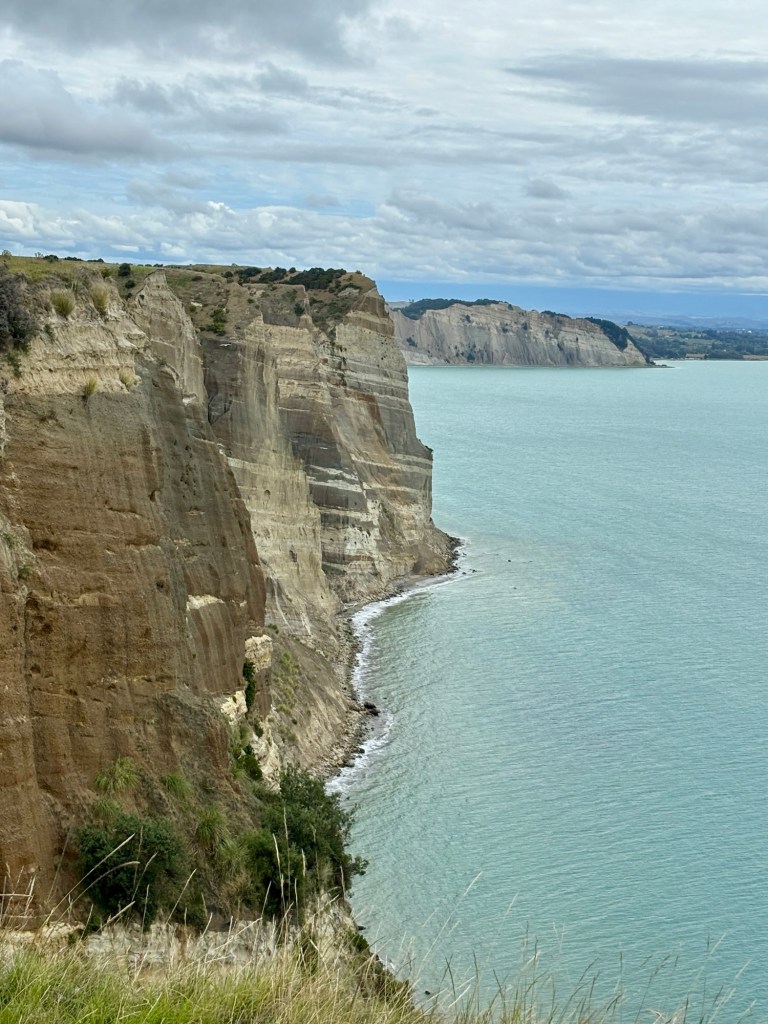
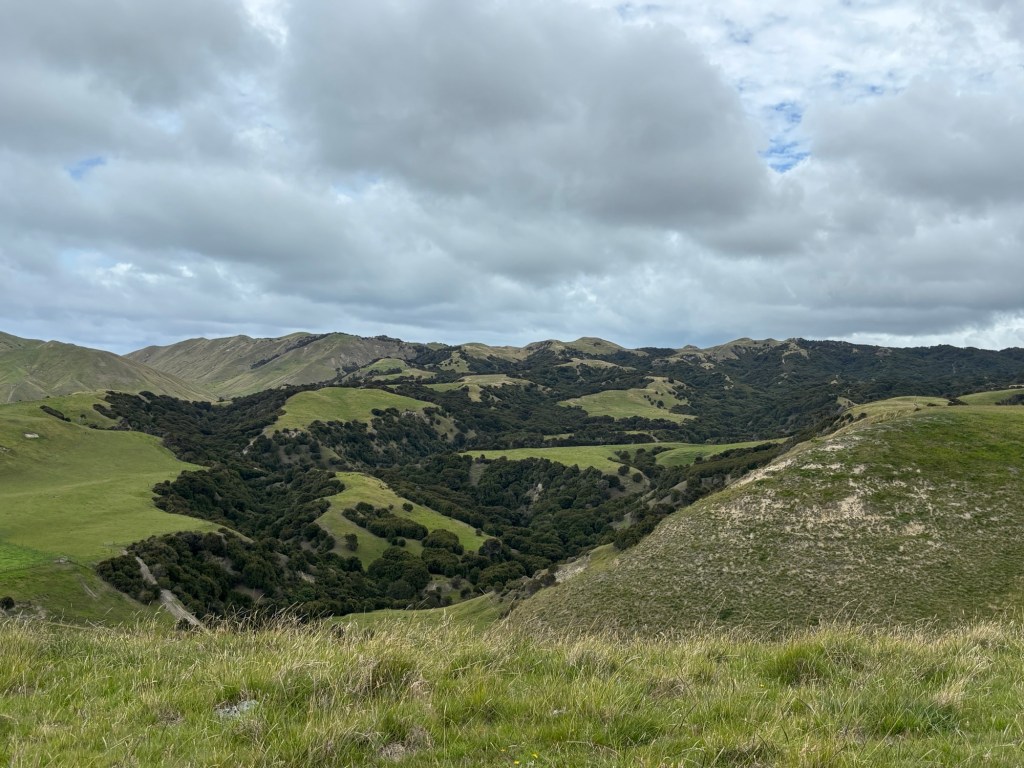
With the owner of an adjacent station, they have created a sanctuary for native species.
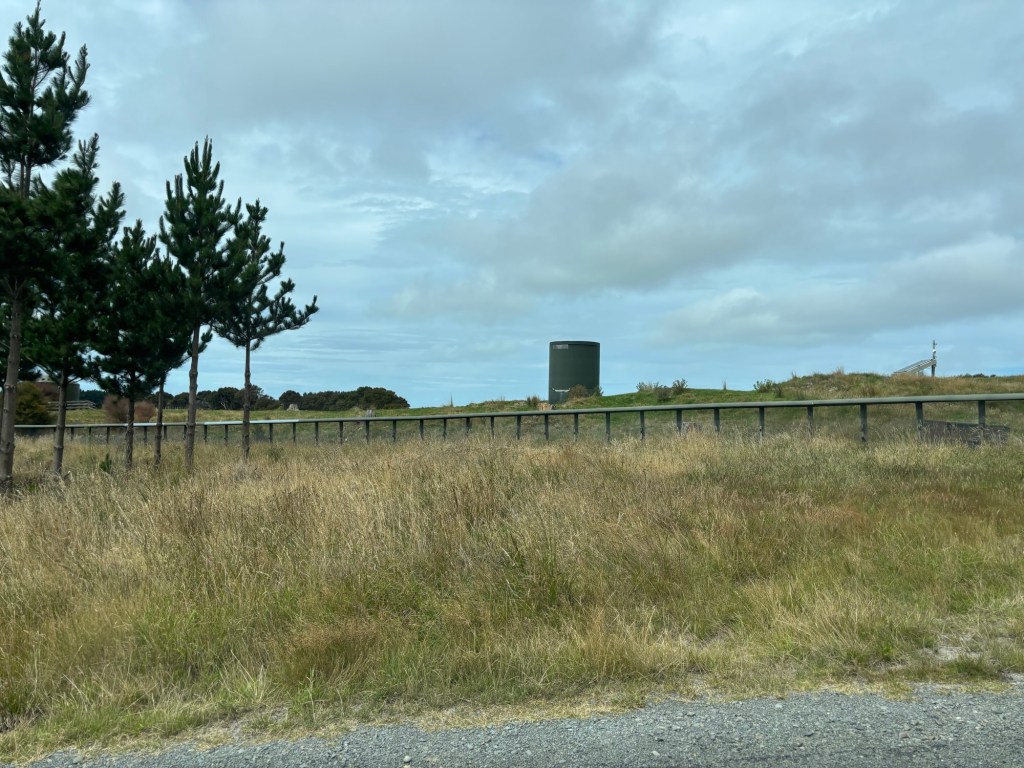
They have installed specialty fencing which have been very effective at keeping out pests and vermin. They are designed so that it falls back towards an animal trying to climb it.

There are also numerous traps around to get anything the fence hasn’t stopped. They rarely catch anything anymore.
All this is to benefit the flightless kiwi (national bird) and other native species.
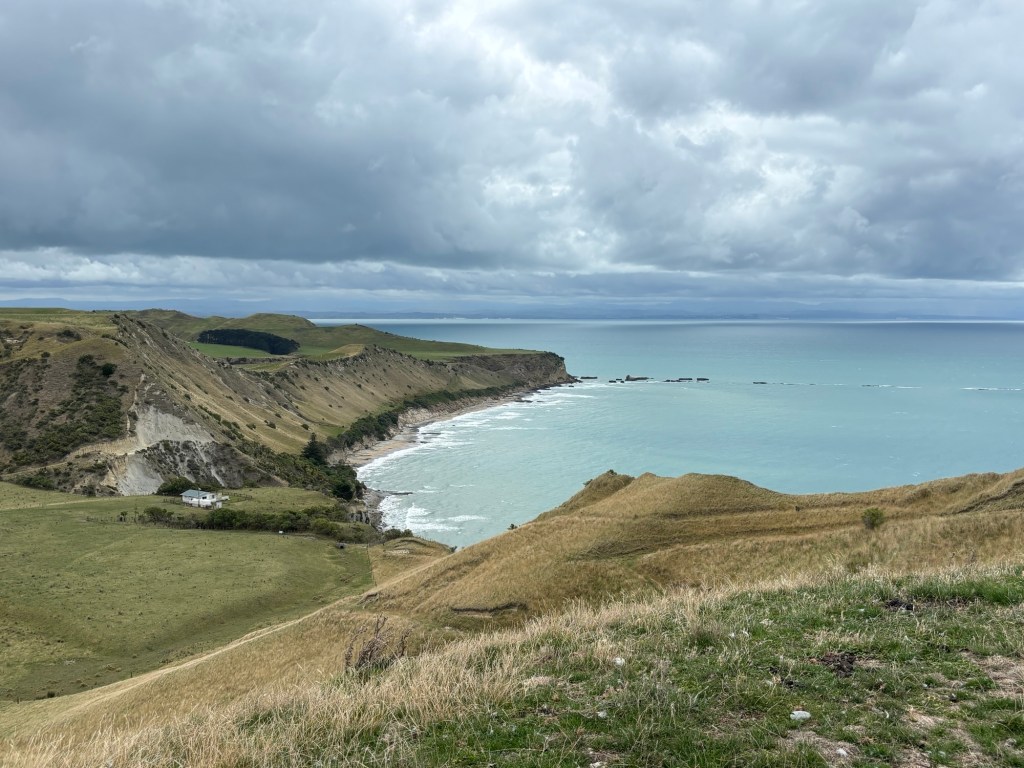
Again, the scenery was stunning.
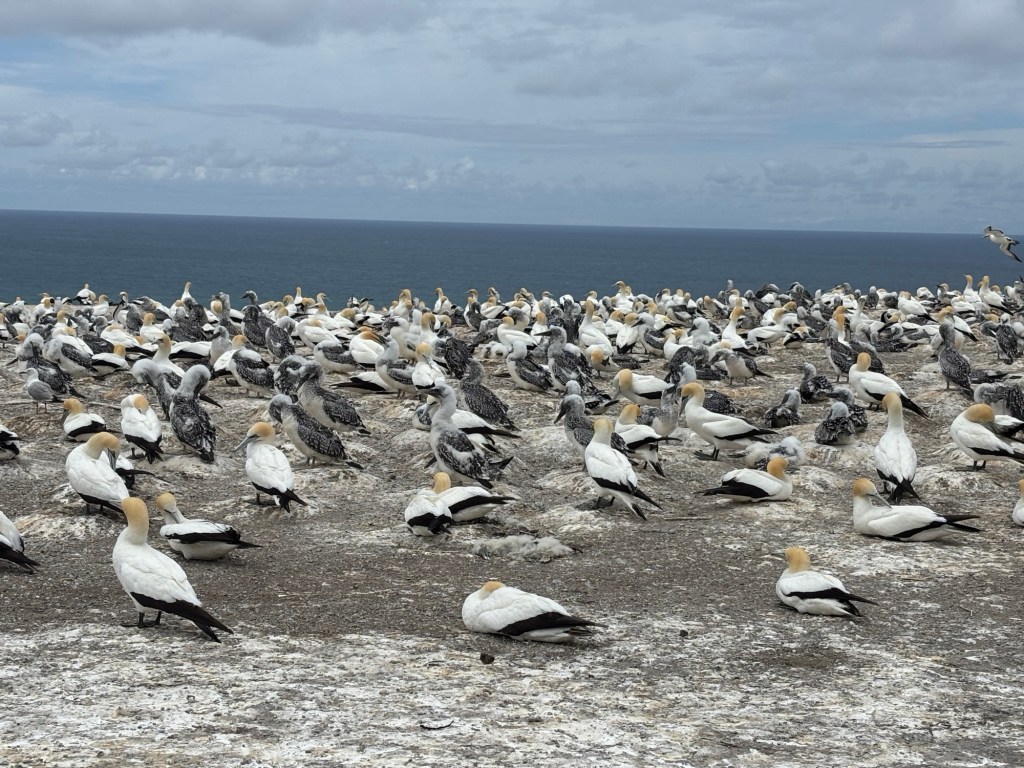
We were also stunned when we got our first view of the gannet plateau colony.

We were also stunned when we got our first sniff. Whew! That was really stinky!
Gannets live in Australia and New Zealand. Four colonies live on Cape Kidnappers totaling about 20,000 birds.
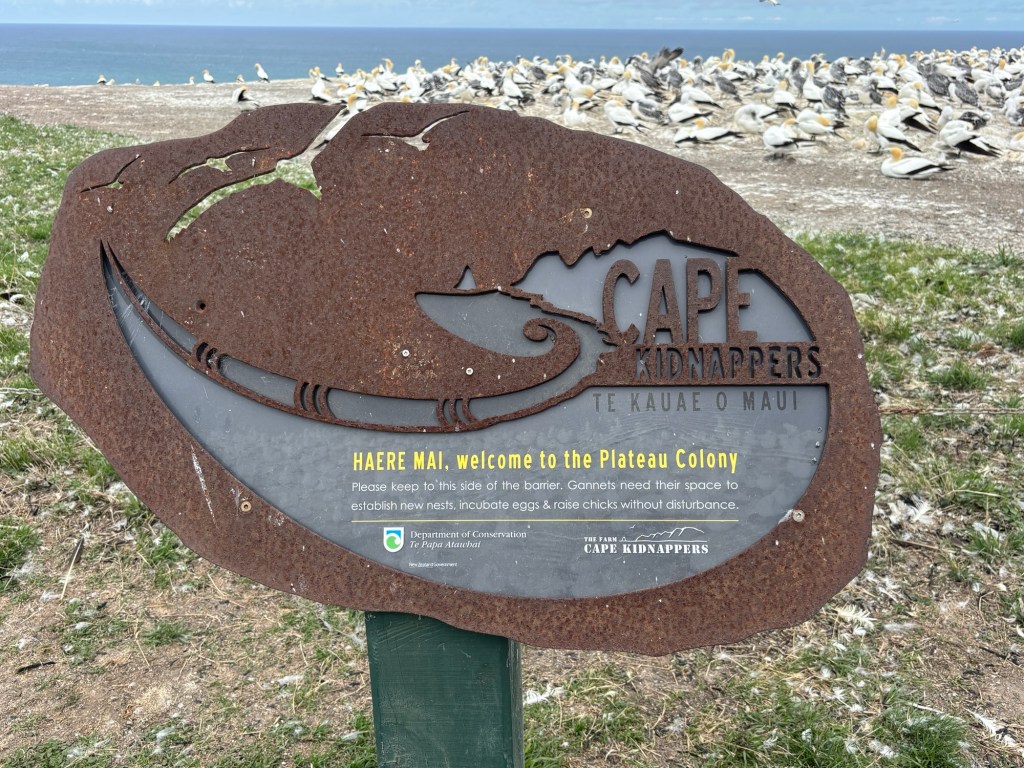
This colony is the largest on mainland New Zealand and an estimated 10,000 birds live on this plateau. Gannets have been nesting here since the 1870s and have not been impacted one way or another by the sanctuary. The adult gannets arrive in July and engage in courtship and nest building. After raising their chick, they’ll leave in April. Gannets eat raw fish, specifically herring, anchovies and squid.
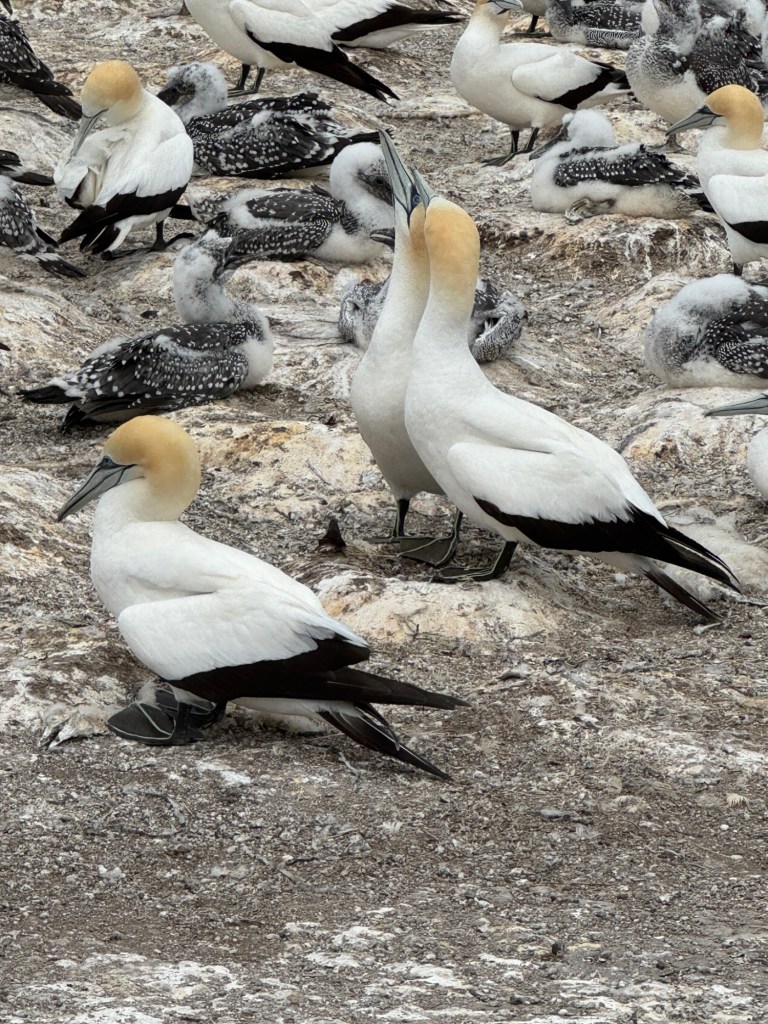
According to our guides, male and female gannets have no difference in appearance. It was mentioned that if an adult brings seaweed back to a chick, it is likely a male doing that.
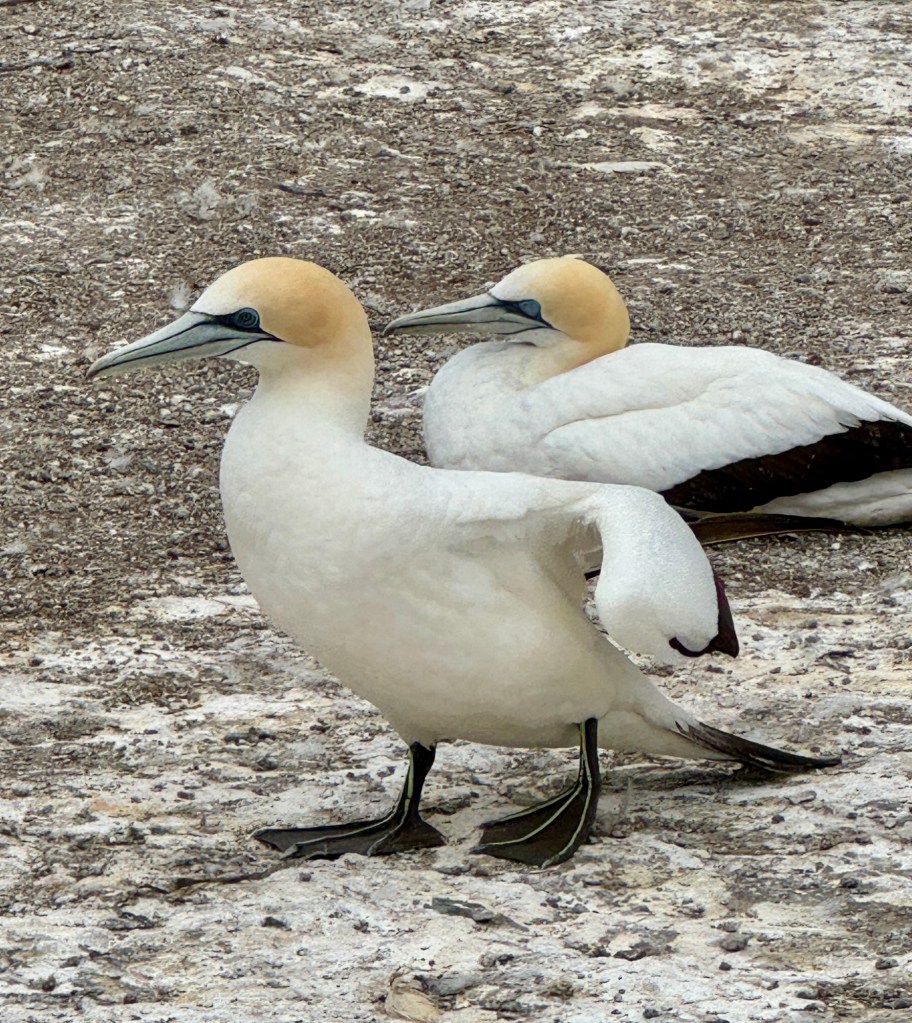
They share both incubation duties and the responsibility for rearing the chick.
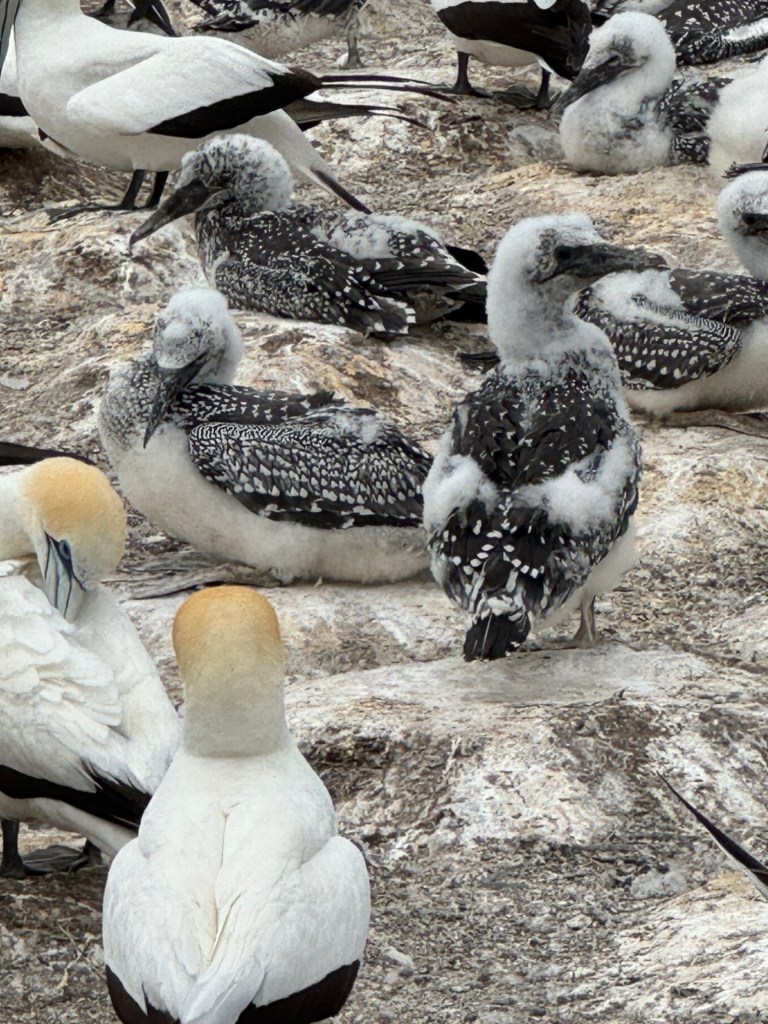
A chick will live at this colony for about 15 – 16 weeks. In that time, its appearance will change dramatically from a black naked bird to a white fluffy chick. By three months of age it becomes gray and speckled.
The parents feed them to 50 times their birth weight. The chicks are fed on demand but that is generally at dawn and dusk.
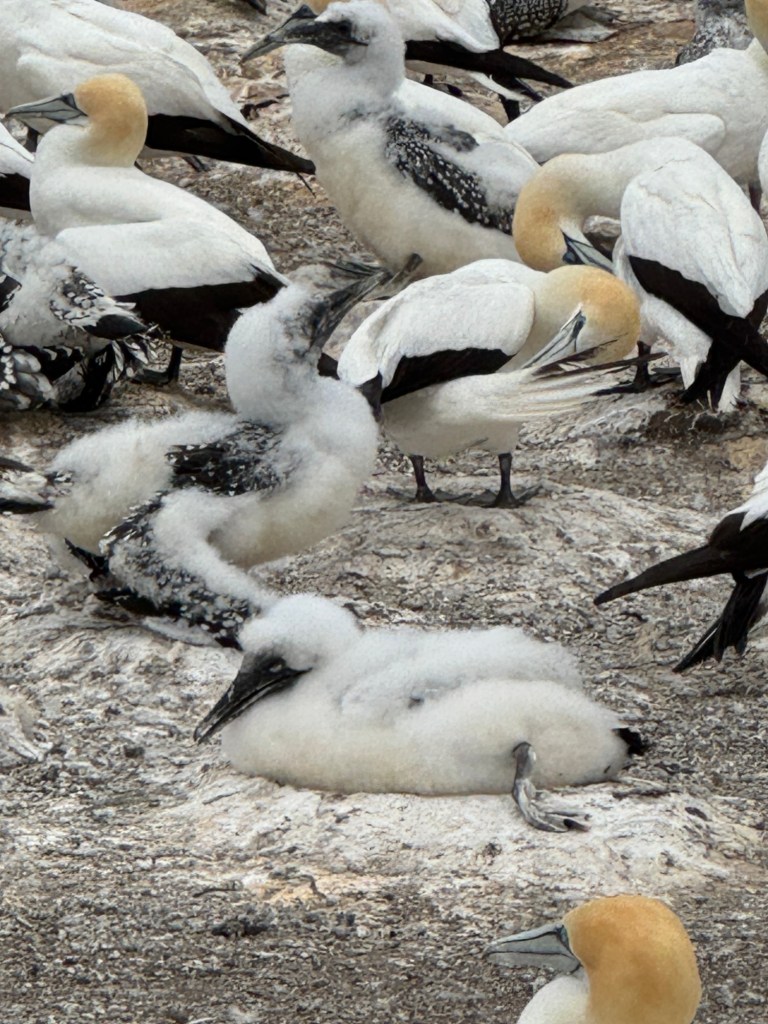
In the colony, each little hill is a property. Randy observed a young one starting to wander off, and the gannets around it made sure it went back on its little mound.
The chicks leave in March. Their very first flight is all the way to Australia, non stop. The trip will take them 4-7 days.
If they survive the trip and their early years, the gannet will return here to find a mate. They generally mate for life.
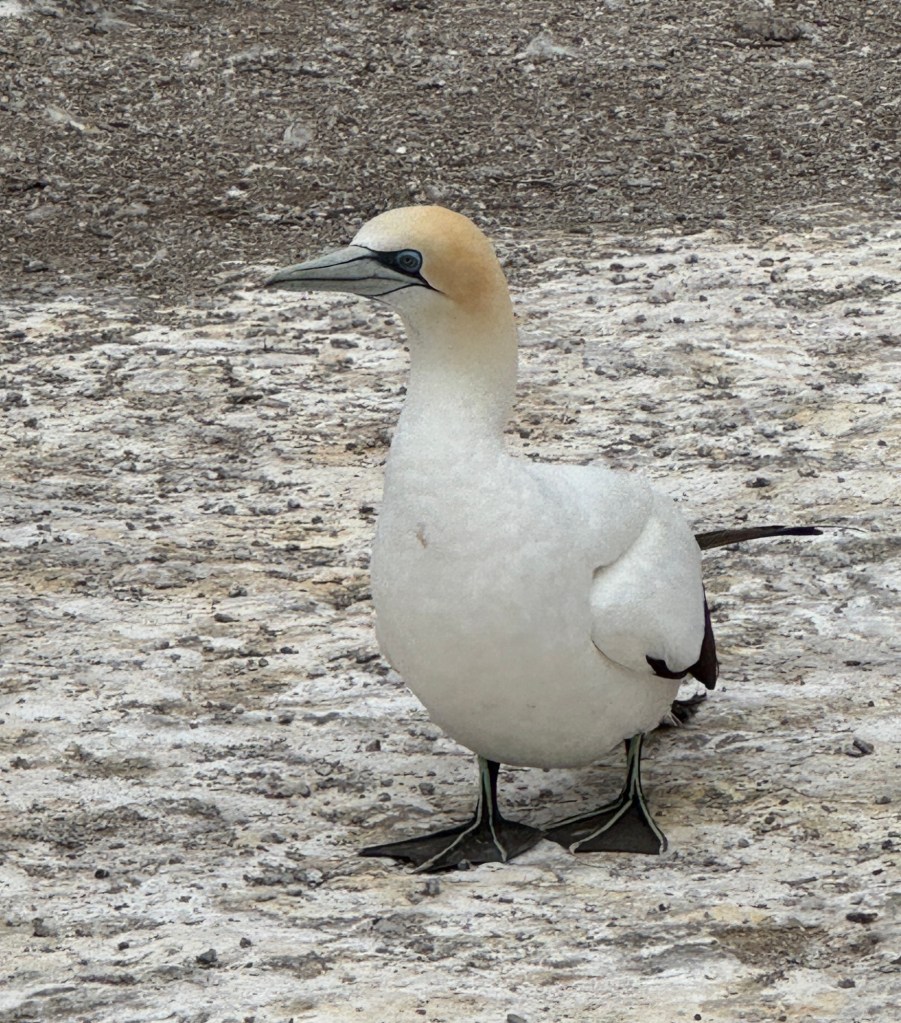
A gannet typically lives 20-24 years but may live up to 33 years.
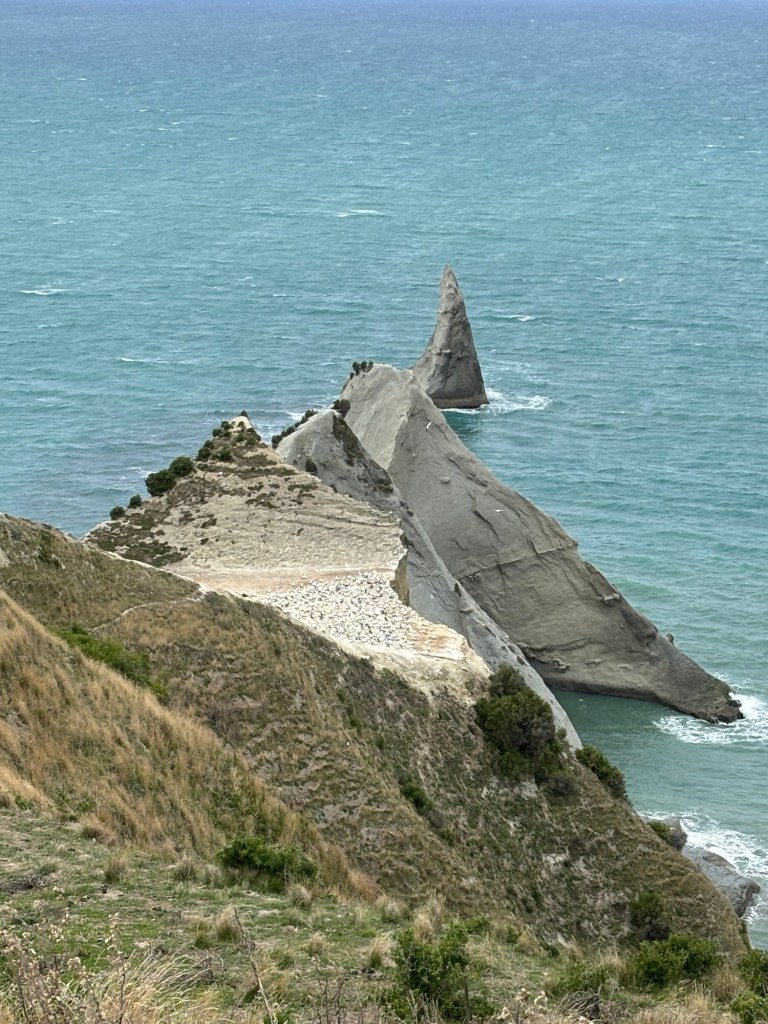
There are about 5000 gannet on another colony closer to sea level. The sandstone formation, The Shard, is behind.

The government started the Cape Kidnapper’s lighthouse in 1897, but it wasn’t a high priority. A light beacon was finally installed in 1963.
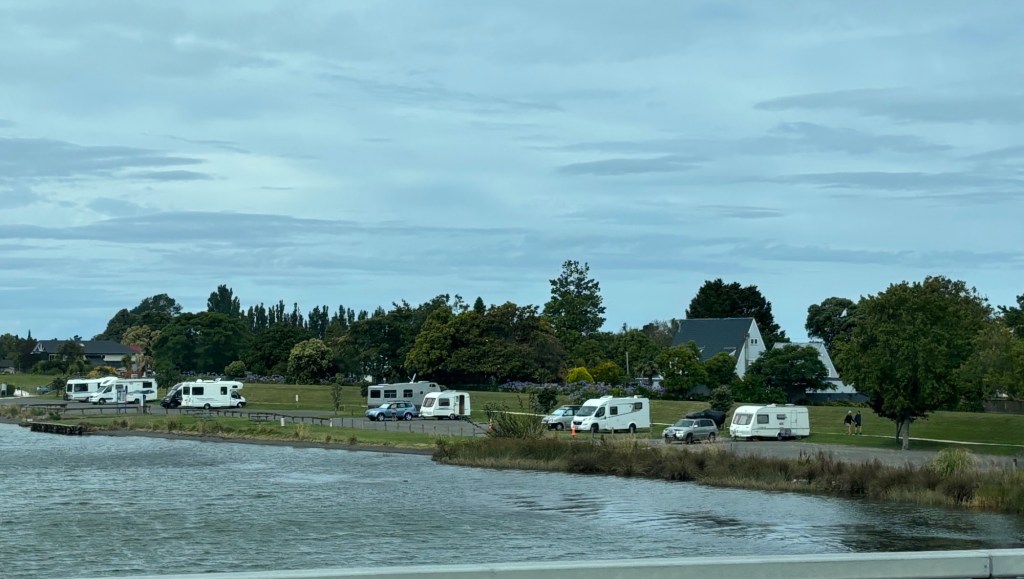
On the way back to the ship we saw some Freedom Camping sites along the beach. You are able to camp at a Freedom site for free for three days before having to move on.
In 1931 there was an earthquake that destroyed almost all of Napier. British insurance companies refused to provide payment because it was “an act of God.” The town was rebuilt, using an art deco style.
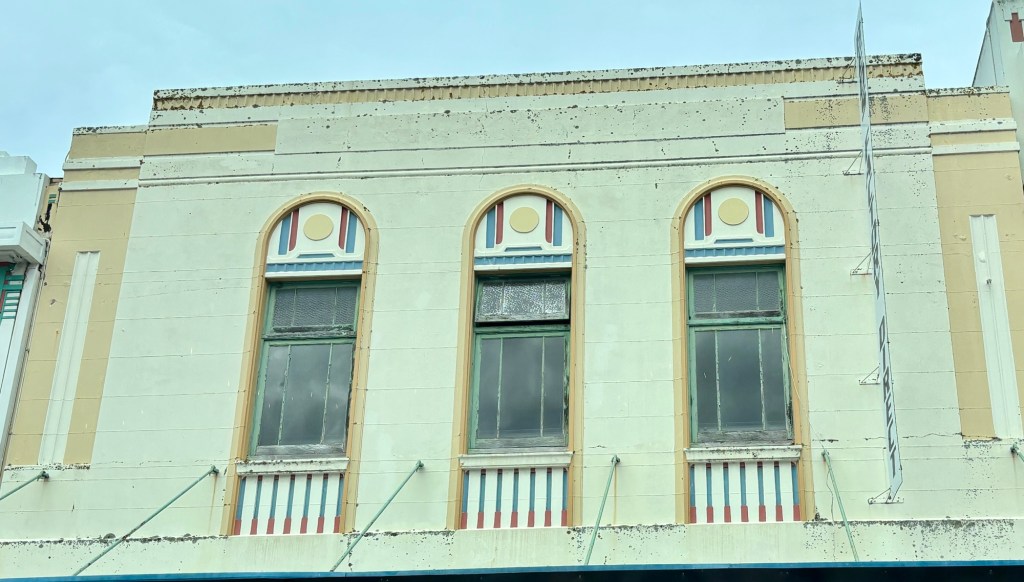
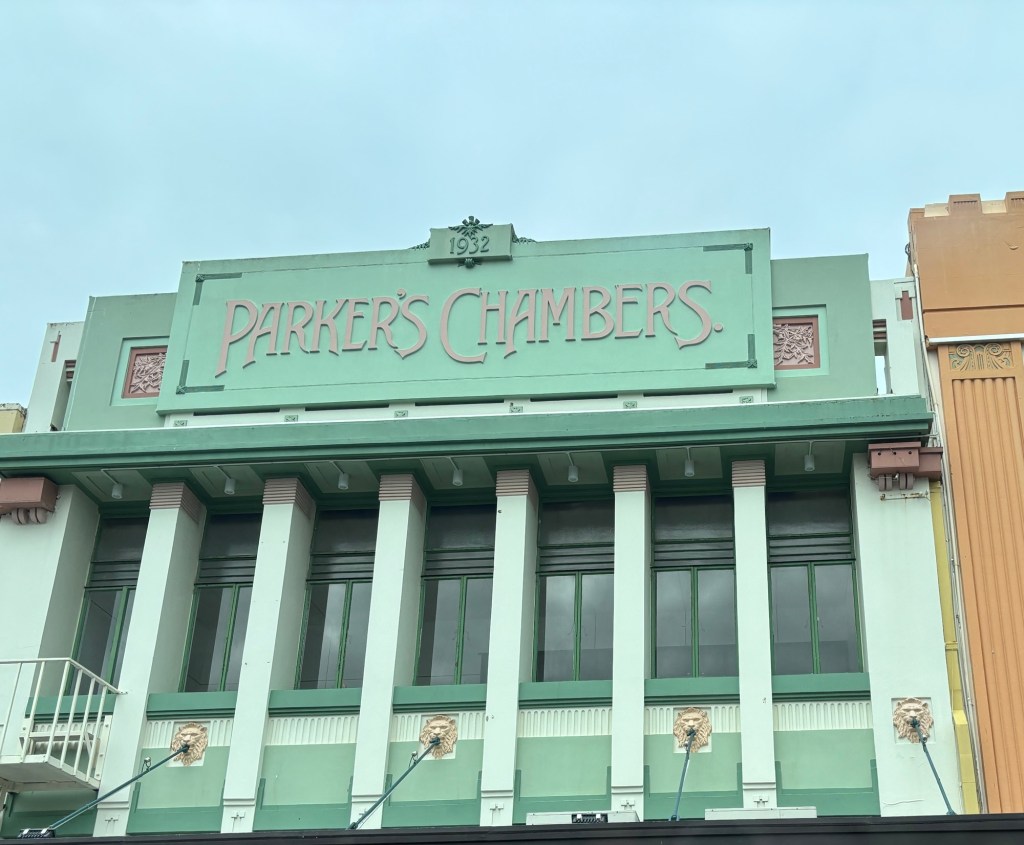
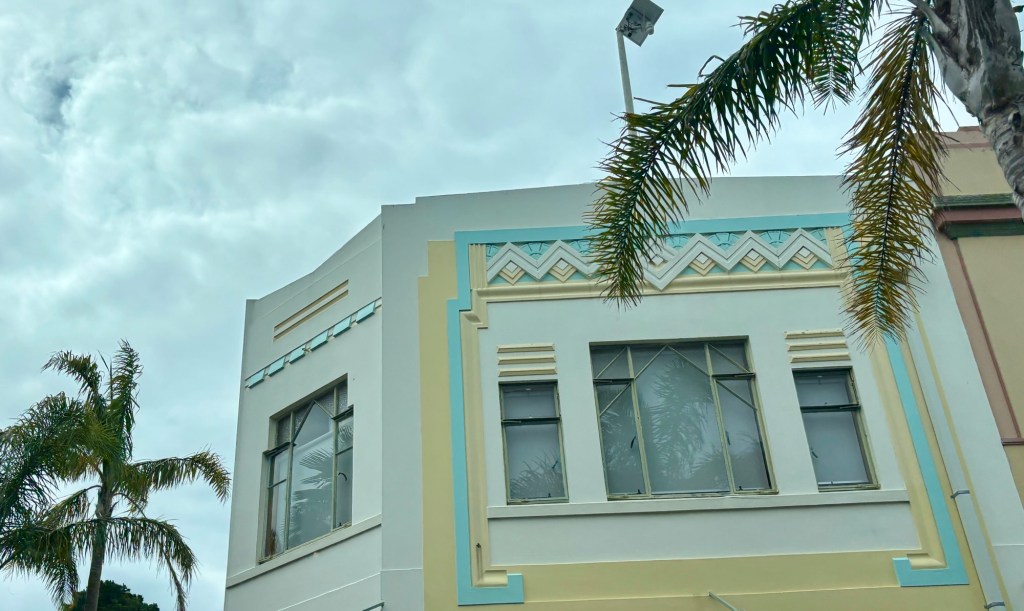
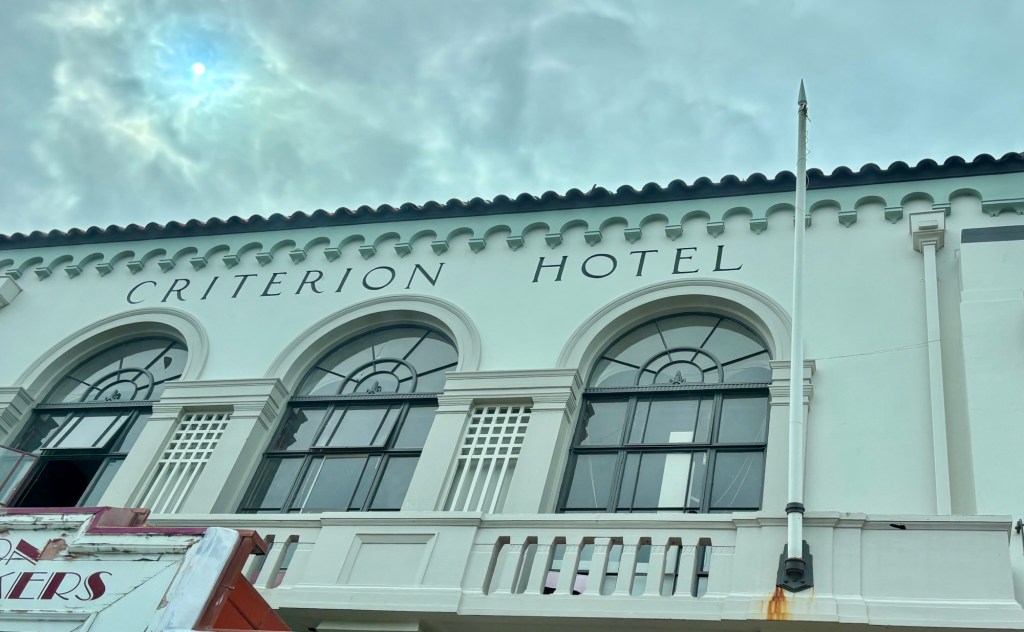
As we returned to port, we had to show our ship card and a government issued ID. That seems to be a NZ thing and not something we usually experience.
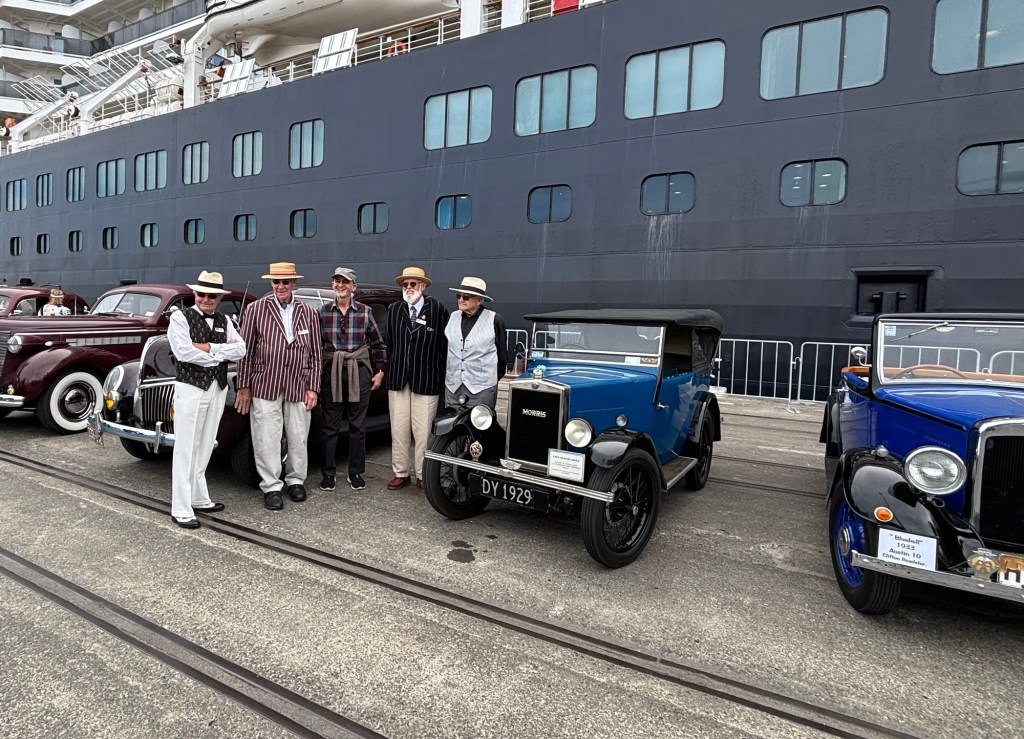
As we approached the ship we were able to see some vintage cars with men dressed in period clothing for our enjoyment.
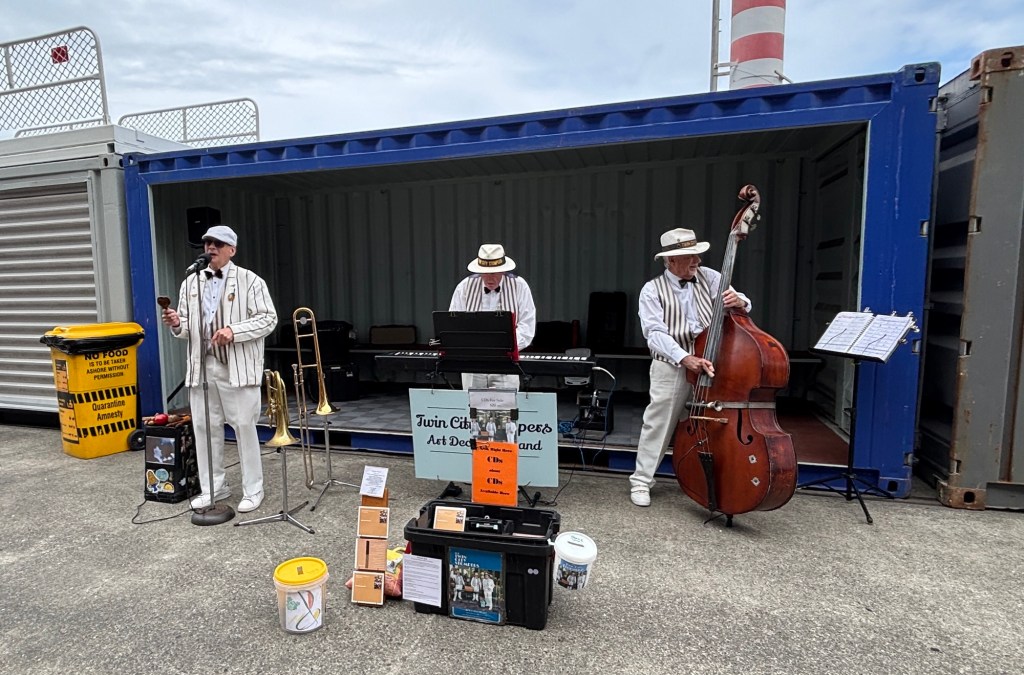
We were also serenaded by a local musical group! Thank you Napier!
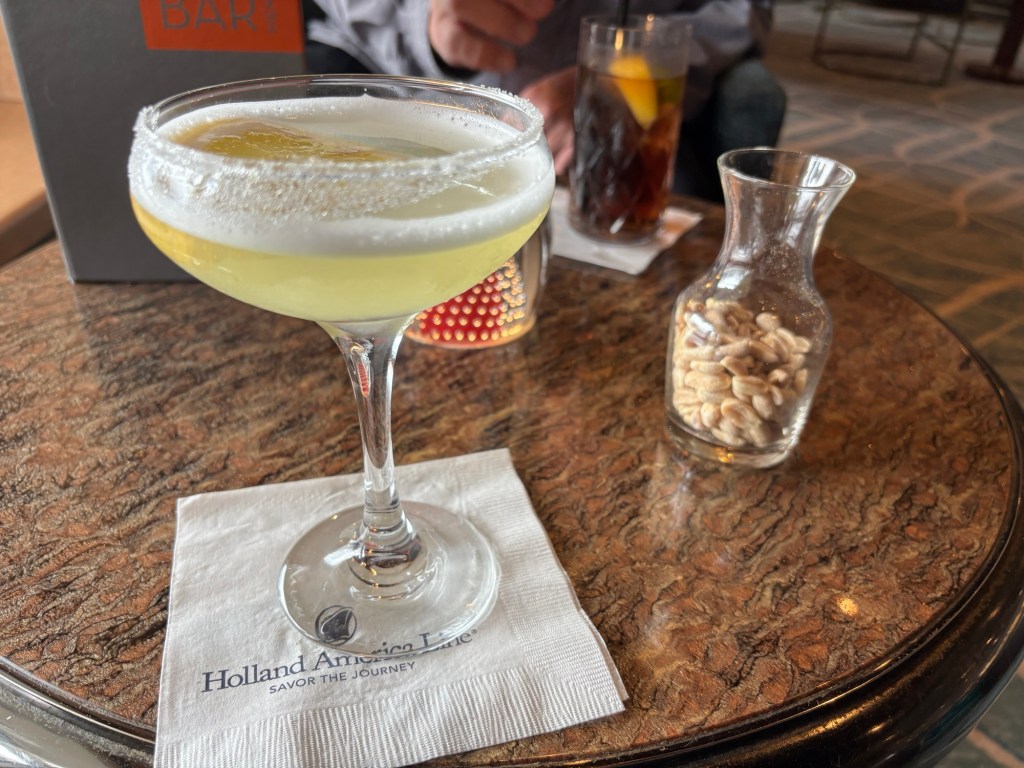
We had pre-dinner drinks and music in the ocean bar.
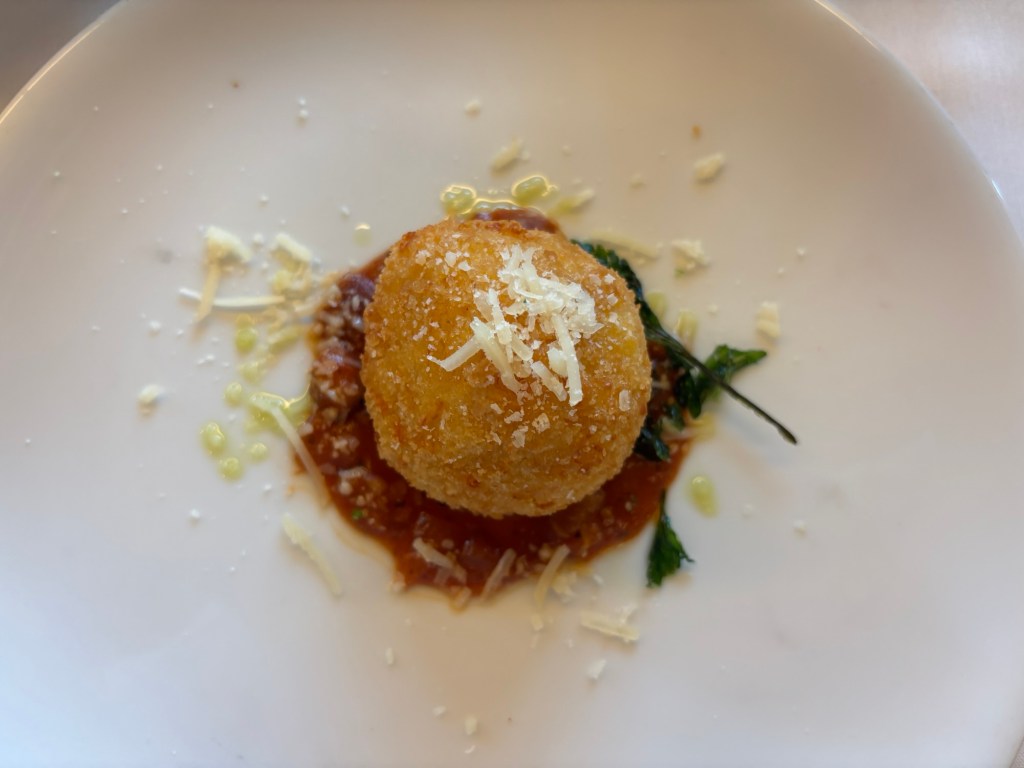
Then dinner! We had arancini as a starter. We didn’t even know of arancini before we went to Italy a couple years ago. We love traveling!
Next up: Wellington and sheep dogs!


 Serene Wandering
The Gannet’s are beautiful birds.
Hope you get to see a Kiwi!