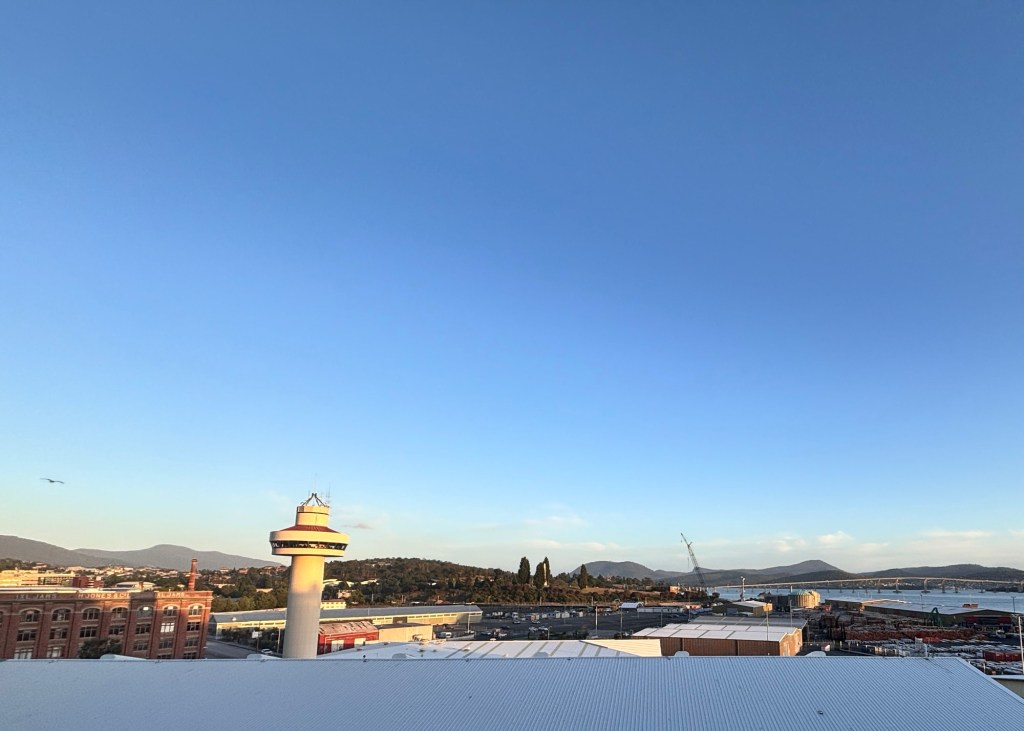
We arrived in Hobart Tasmania, our first port in Australia. From our balcony, we had our first views of the city. We could see some timber at this port, but not as much as in New Zealand!
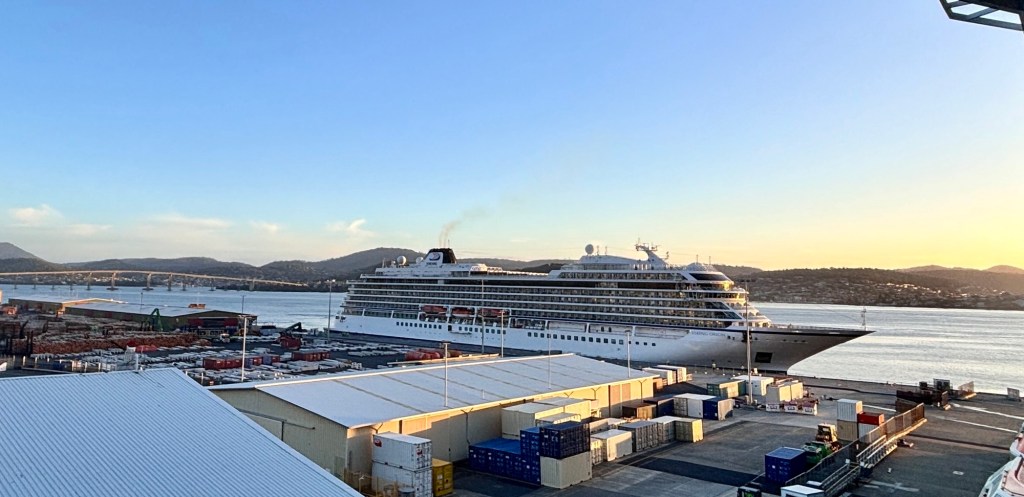
We can see the Viking Orion that came in just after us. We always enjoy seeing what other ships are about.

The sea days were very nice, but we had a full day excursion planned highlighted by a trip to Bonorong Wildlife Sanctuary. The sanctuary had been highlighted in our port talk.
But first, there was official Australia stuff to take care of.
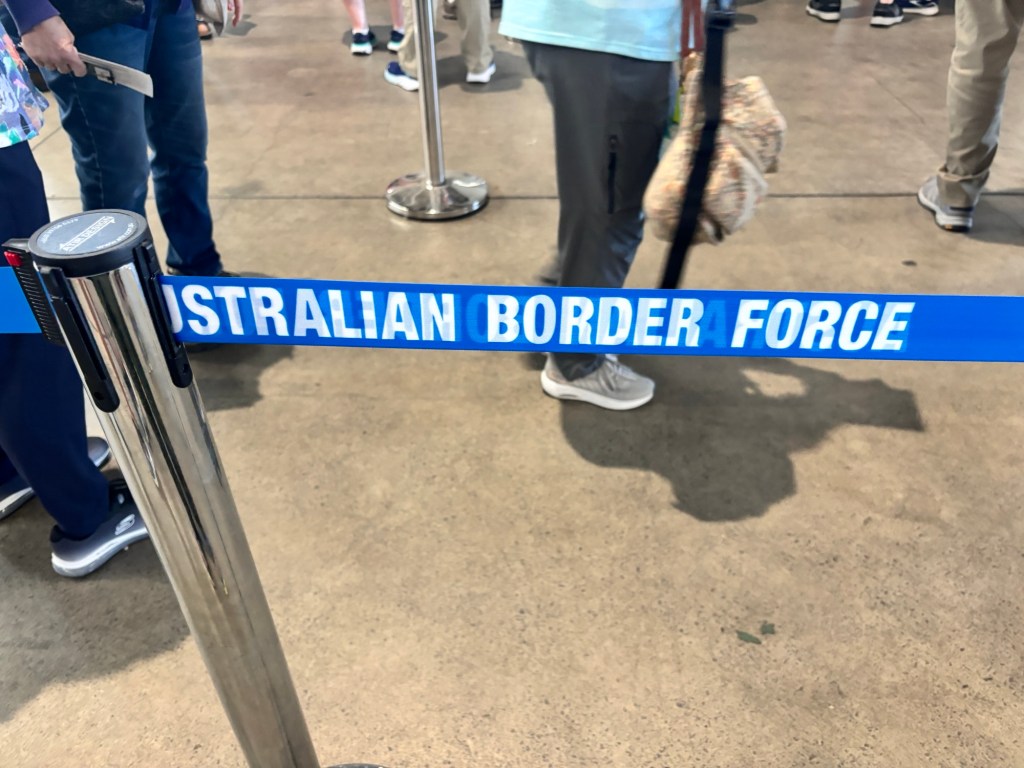
Everyone on the ship, all 1900 passengers, had to go into the customs terminal, show our passports and our completed declaration form. Australia has even stricter bio-security measures than New Zealand and it is taken very seriously.


We had purchased a paua shell in New Zealand and didn’t know if it would be allowed. We declared the shell, with the expectation that we might have to surrender it.
Shore excursion groups were gathered and taken through the process. Passengers without excursions filled in before and after. No one was allowed to reboard the ship until everyone had gone through the process.
We went through Australian security and still didn’t know what will happen. We declared the shell and were told they’ll take care of it when we disembark in Sydney.
So, on with the tour. Our guide gave us some information as we traveled to Bonorong.
The island of Tasmania is shaped like an inverted triangle, and is roughly 150 miles south of the mainland. It is the seventh largest island in the world.
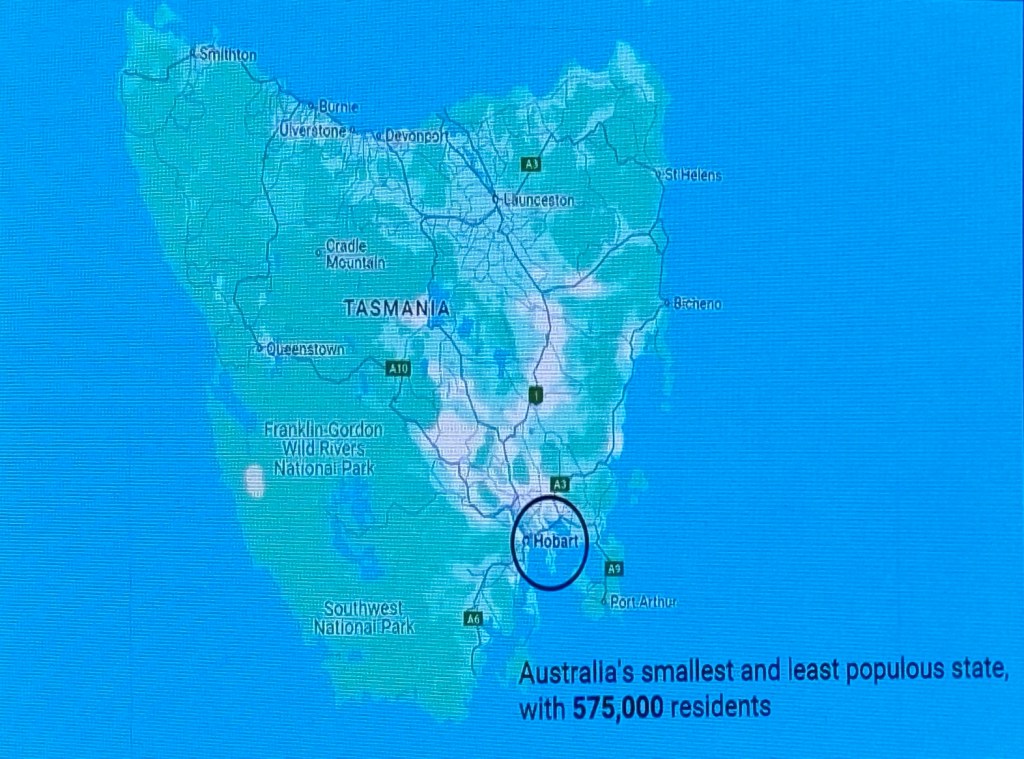
There is nothing between Tasmania and Antarctica to the south or between Tasmania and Argentina to the west. As a result, they have some of the world’s cleanest air.
Dutchman Able Tasman was there in the 1600s. In the late 1600s, Tasmania was identified as an island. The French were in and out.
Tasmania was established in 1804 as a military outpost by the British. From 1804-1856 Britain sent lots of folks as convicts, some imprisoned for very minor offenses. After four to seven years, some were given a small land grant. Military, free settlers, and convict settlers are all part of Tasmanian and Australian history.
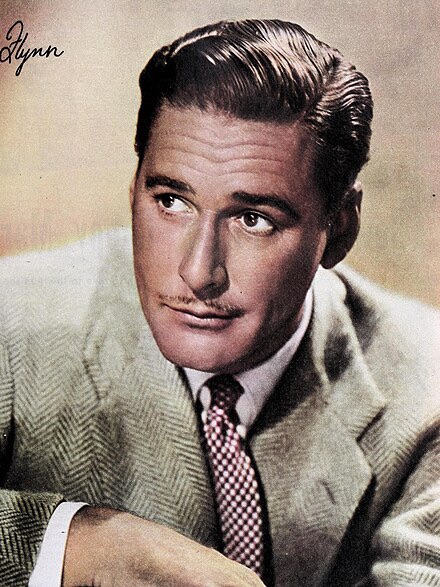
Errol Flynn was born in Hobart. Tasmania. He was expelled from all of the high schools in town so his father sent him to England to finish school. He came back to Tasmania briefly before heading to Hollywood.
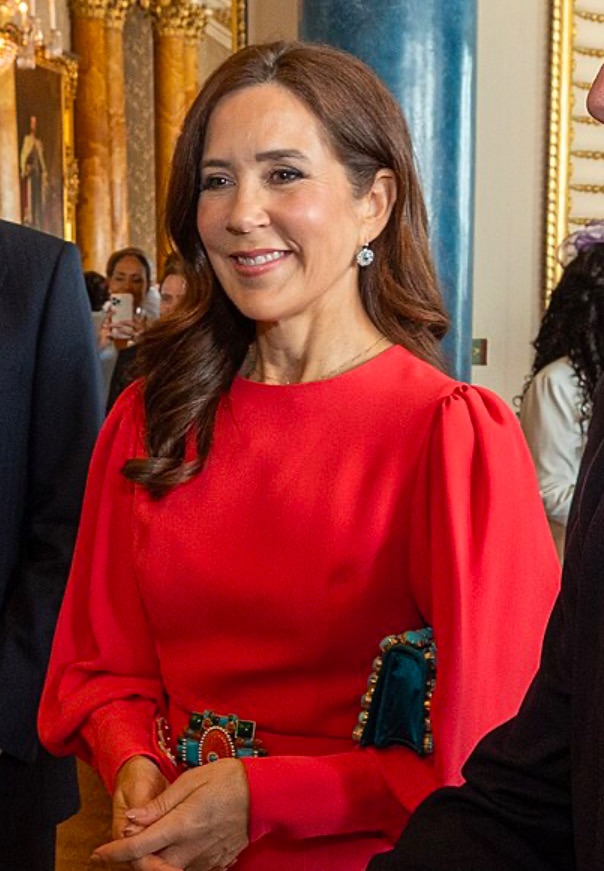
Queen Mary of Denmark was born and raised in Tasmania. She met Crown Prince Frederik, now King Frederik X, at a pub during the Sydney Olympics in 2004.
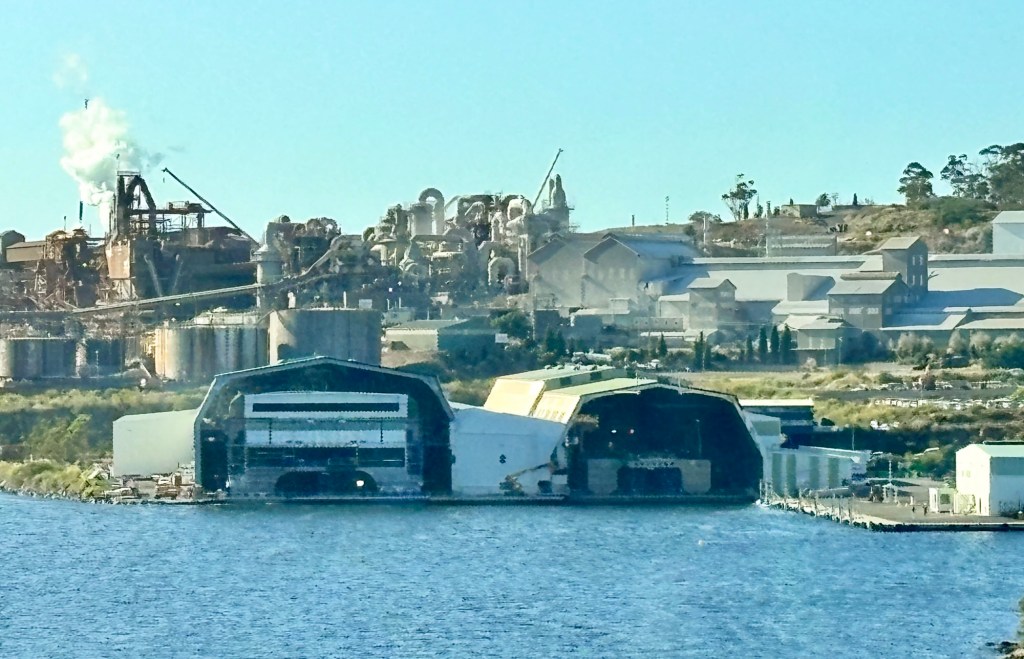
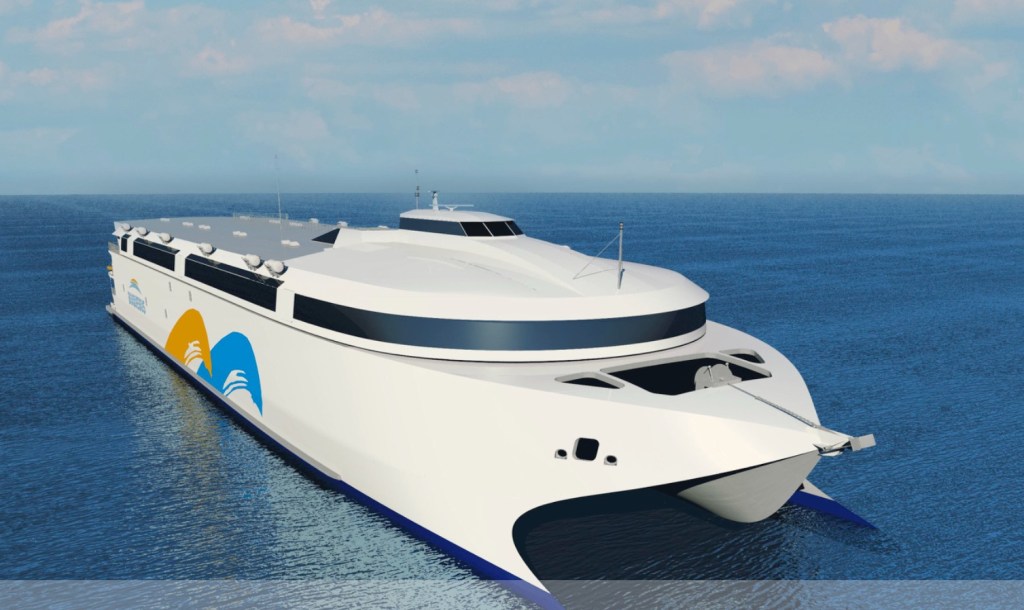
The shelters on the left house INCAT Tasmania. They make high speed ferries that are used all around the world. The picture on the right is a picture of the one they are currently working on. Hull 96, the first all electric ferry, will be heading to South America to move people and vehicles between Buenos Aires, Argentina and Uruguay.
Sheep and cattle are also dominate industries in Tasmania. There is a plethora of mining as well.
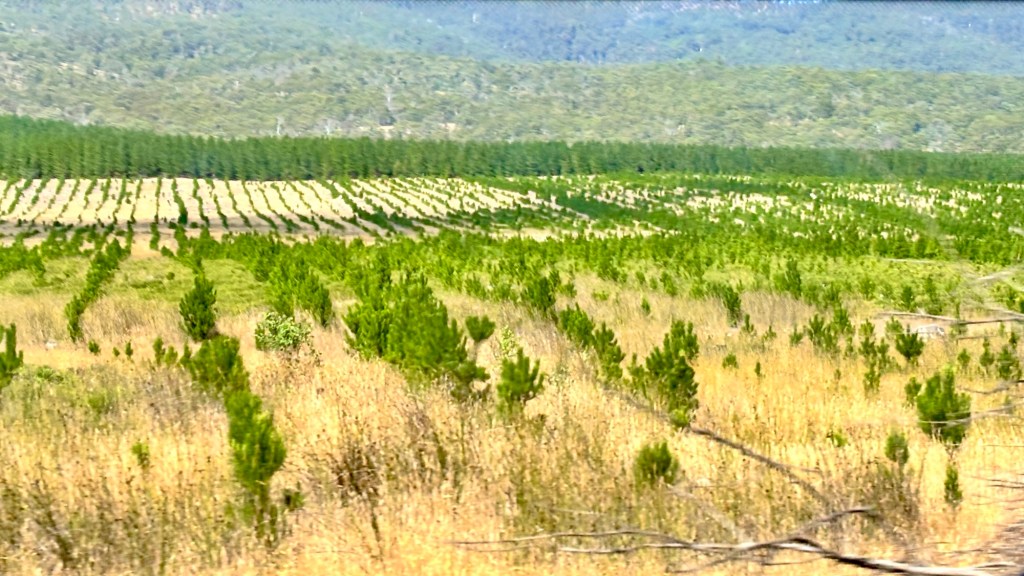
Of course there is a timber industry. Tasmania has a policy of one tree cut down, three trees planted.
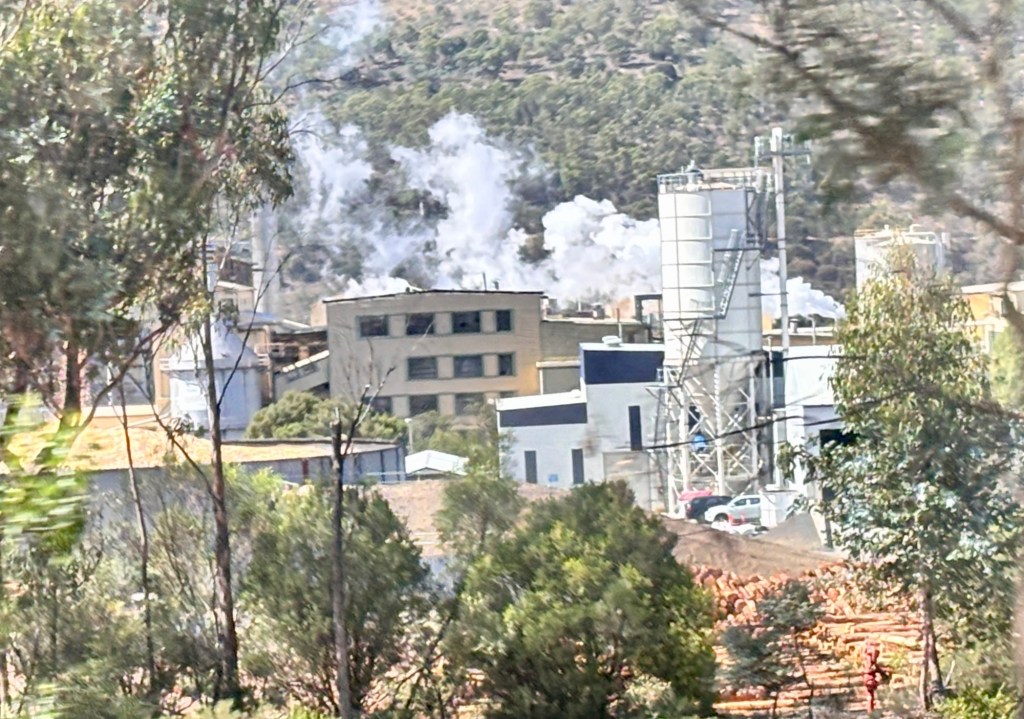
This processing mill creates all the newsprint for all of the newspapers in Australia.
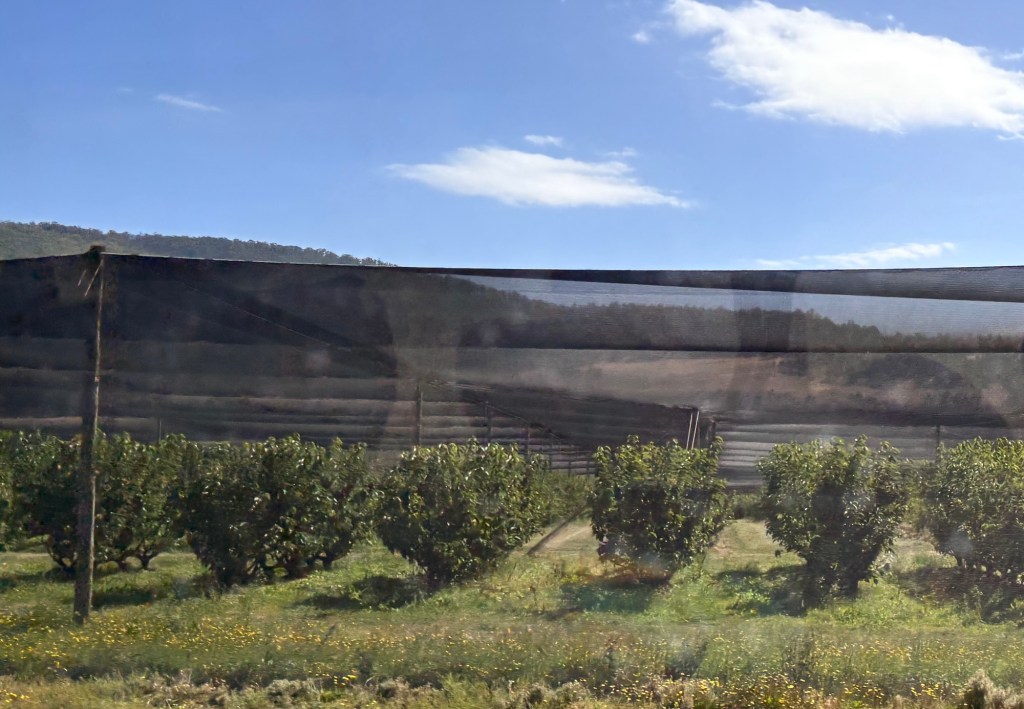
The cherry industry is worth $80 million dollars of cherries sent to Asia. The netting protects the cherries from birds and we saw a lot of them.

Growing hops is yet another agricultural industry. Part of the product is sent to Germany.
Tasmania has both the oldest hotel, and the oldest brewery in Australia. It also has the oldest casino and golf course. That course is the second oldest in the world after Saint Andrews in Scotland.
We arrived at Bonorong Wildlife Sanctuary. It is privately owned and takes care of animals that have been injured and/or need care.
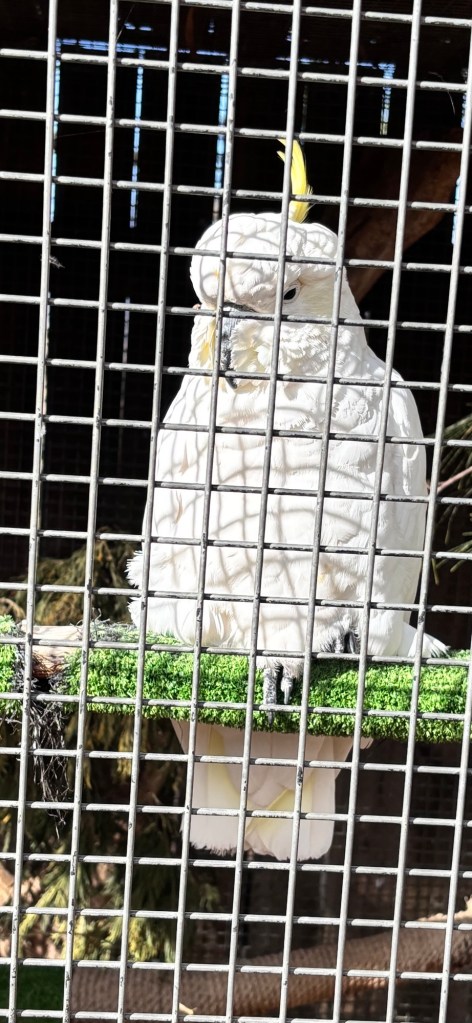
Fred is a 112 year old sulphur-crested cockatoo. He outlived two families before being donated to Bonorong. He speaks, but we didn’t hear him.
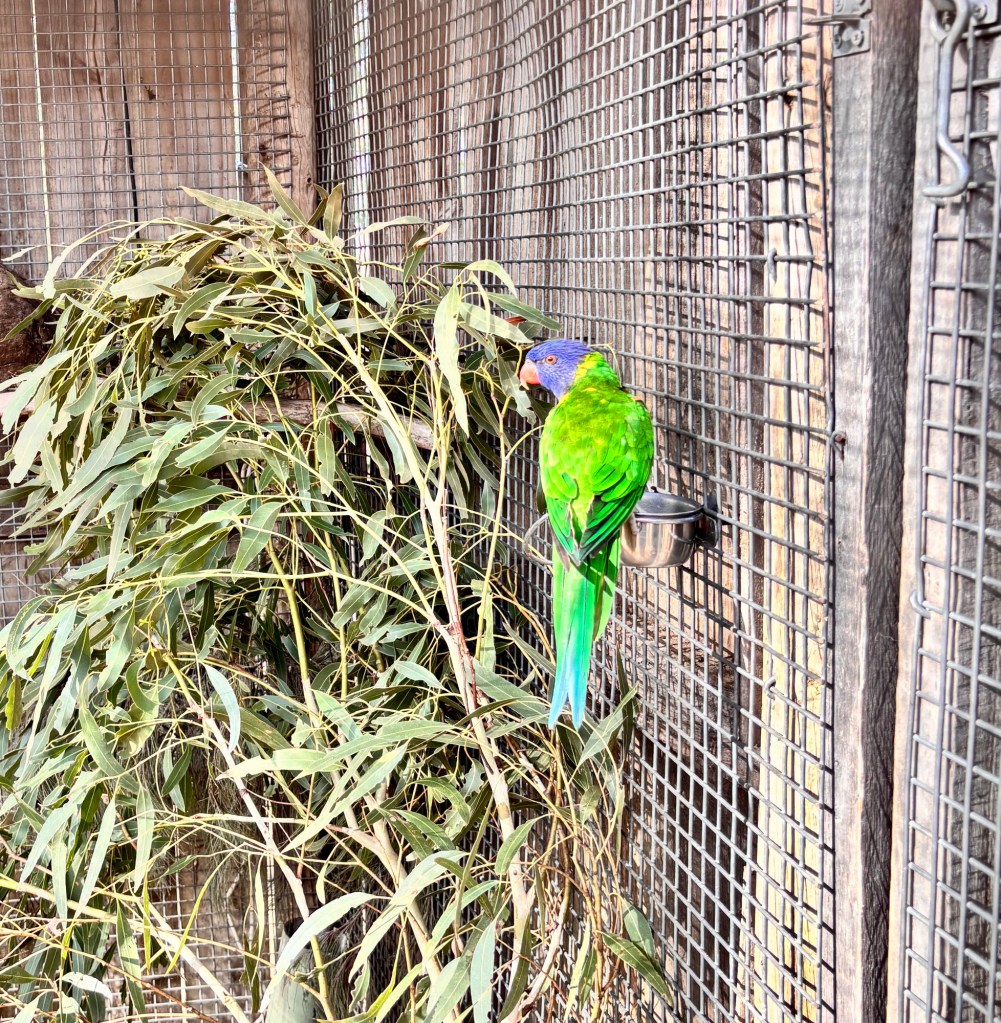
We saw rainbow lorikeet.
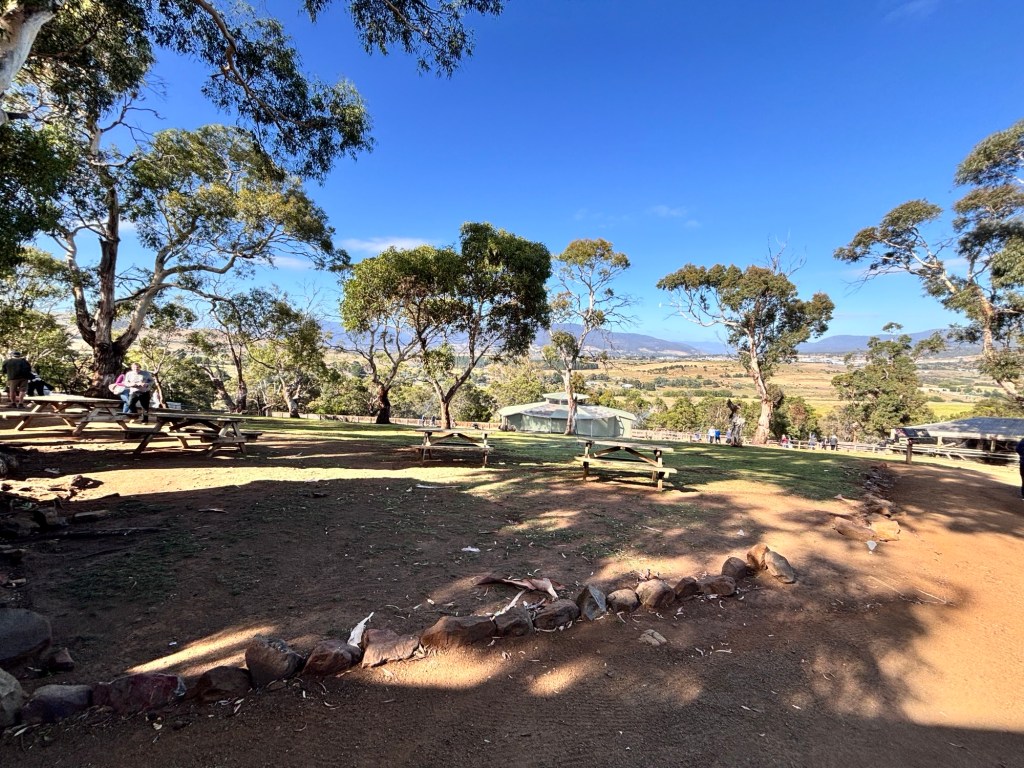
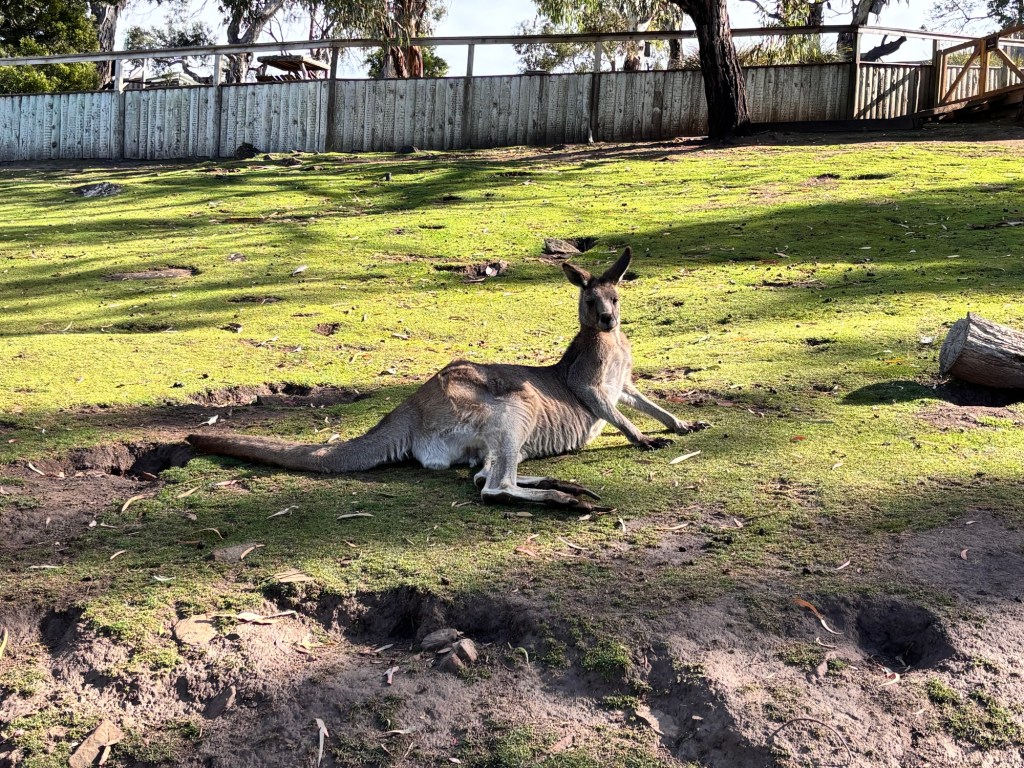
These are the grounds where the kangaroo roam. They are free to engage with people or retreat to areas where people don’t go.
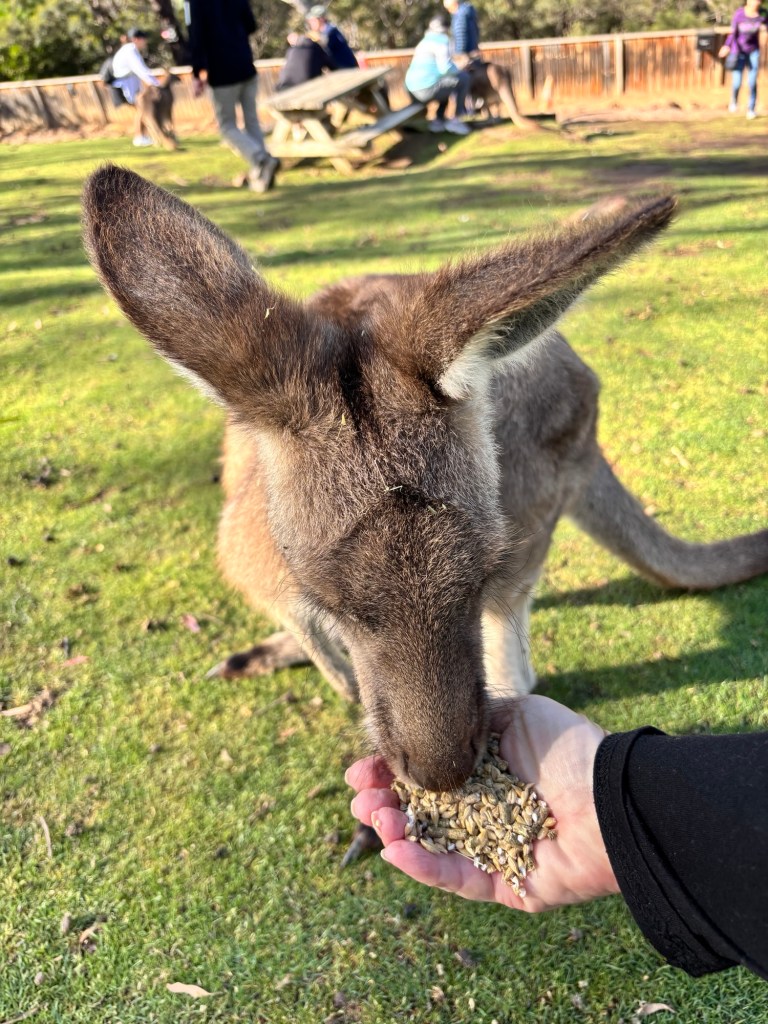
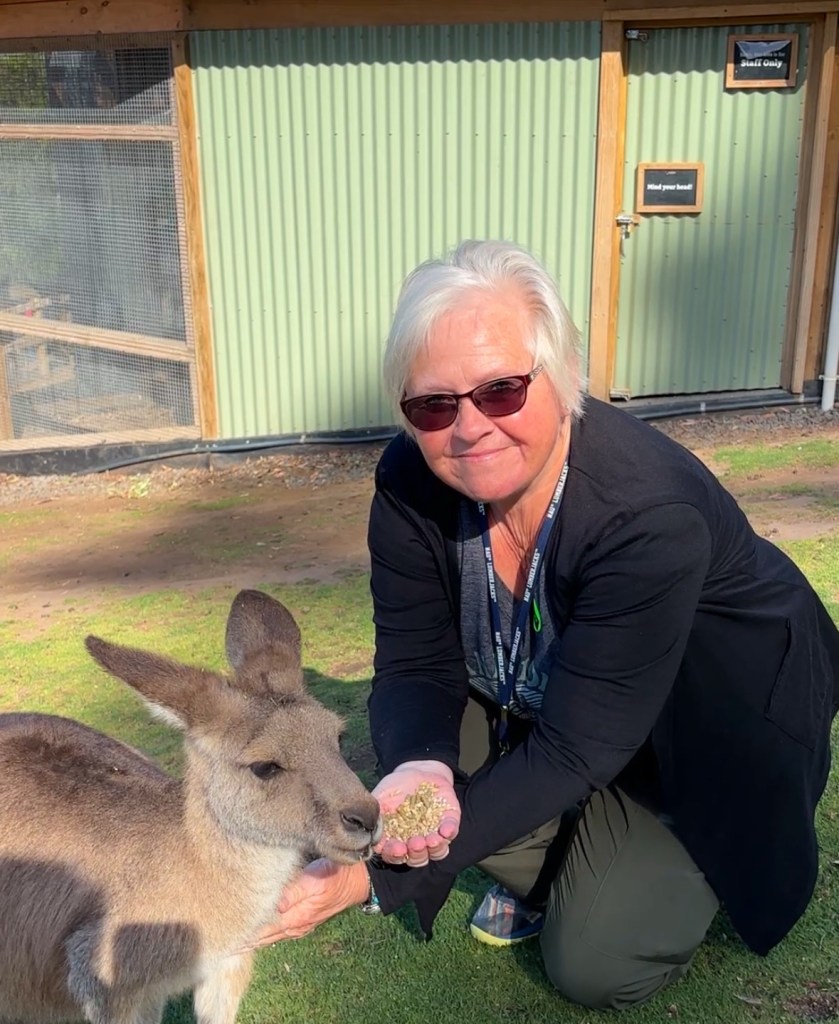
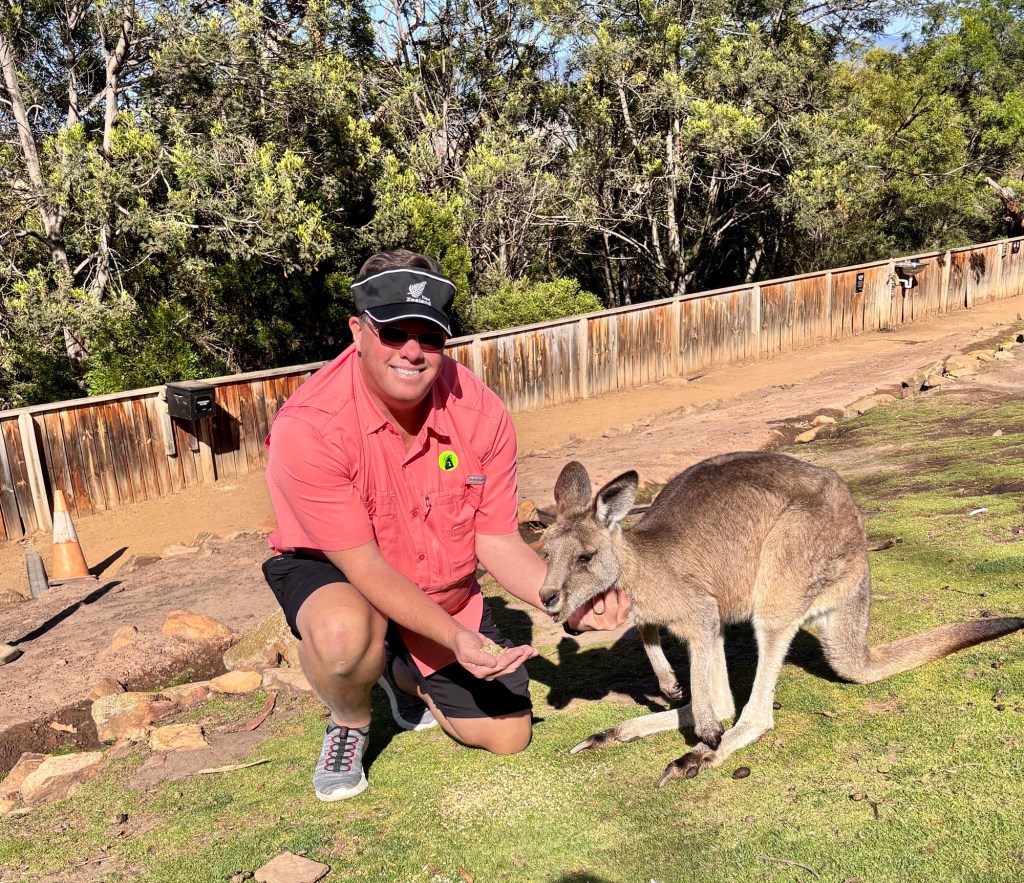
We found that most of the kangaroos had already eaten their fill, but there were a few.
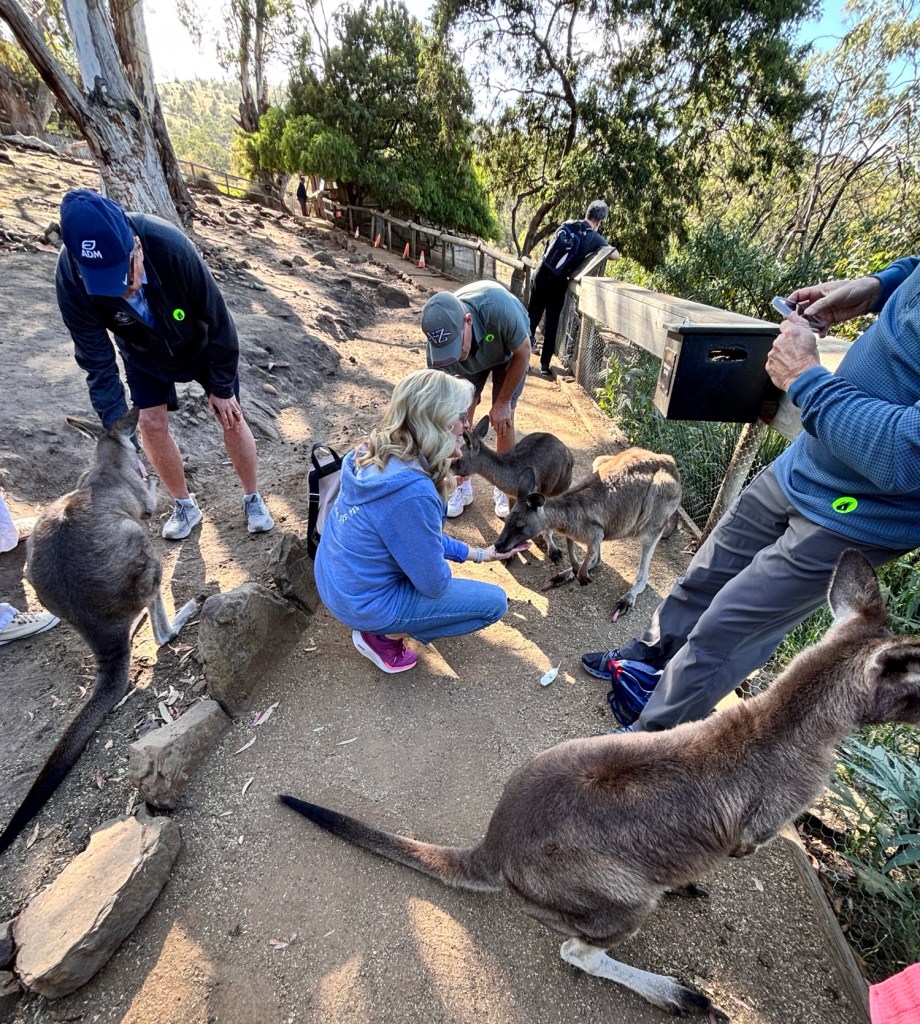
We came upon this group just hanging out by a complimentary feed box.
We were told to pet them in their chest area.

We saw a few Tasmanian Devils. They are marsupials and have a pouch. However, they aren’t much like kangaroos!
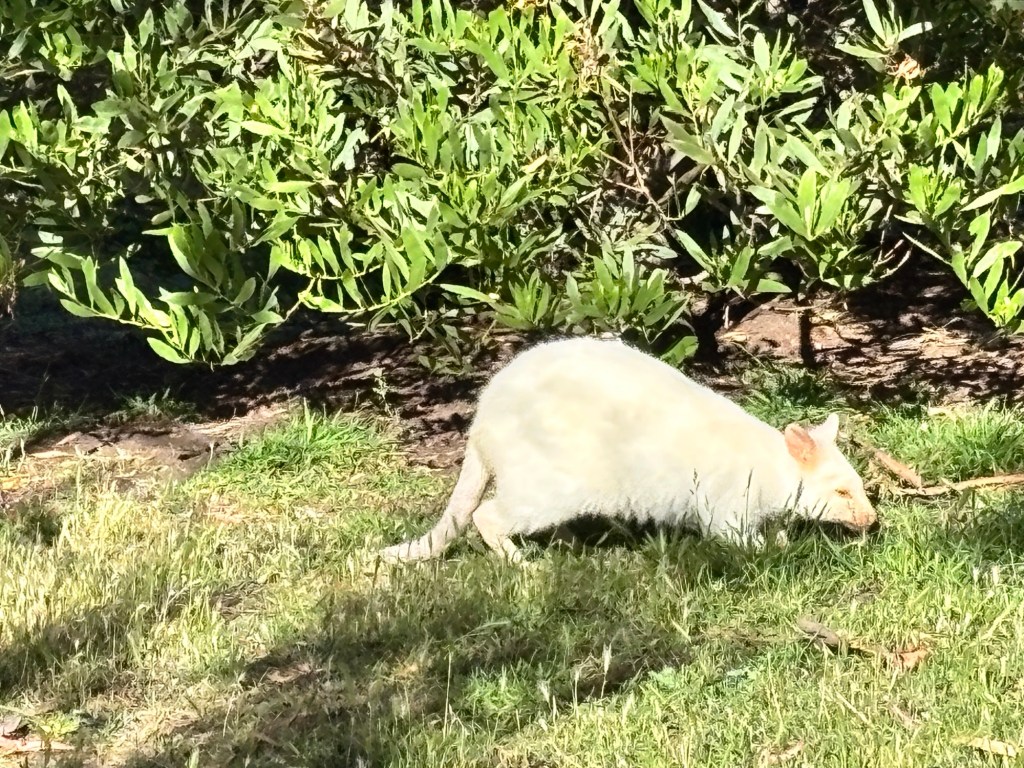
This is an albino padmelon. He was found as a tiny joey after his mother was killed by a car. Because of his albinism, he had no opportunity to make it on his own in the big world, so is a permanent resident of Bonorong.
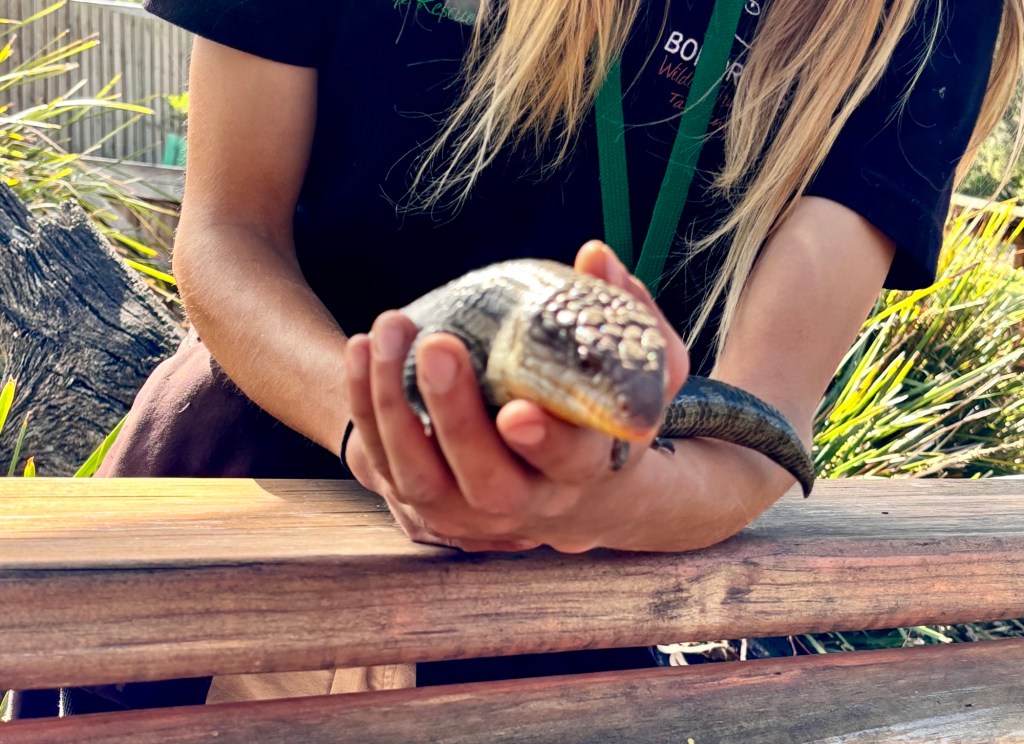
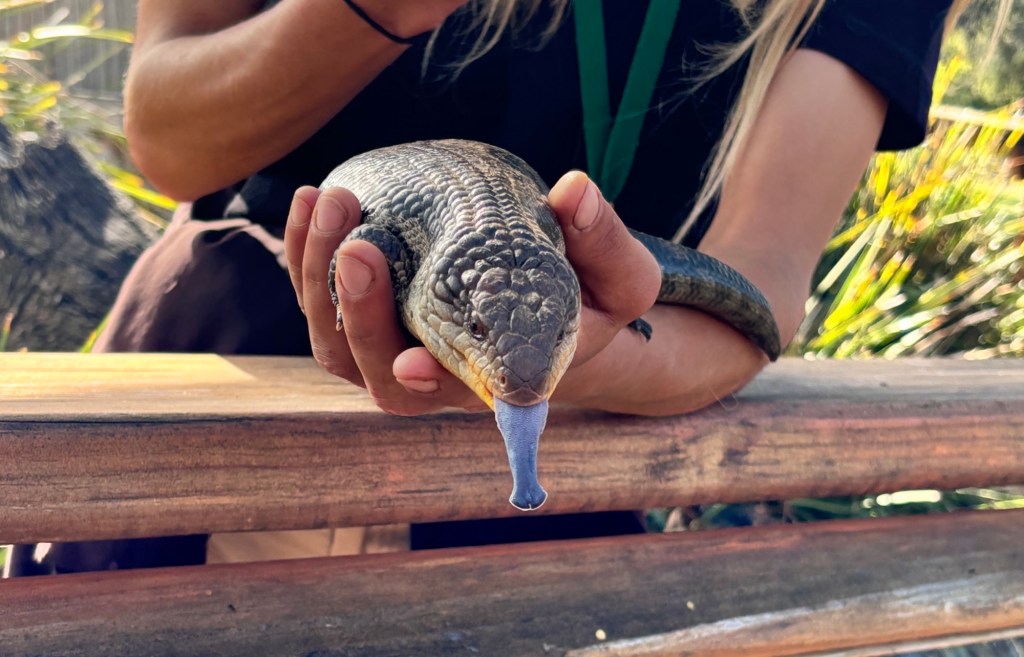
This is a blotched blue-tongued lizard. He was cool!

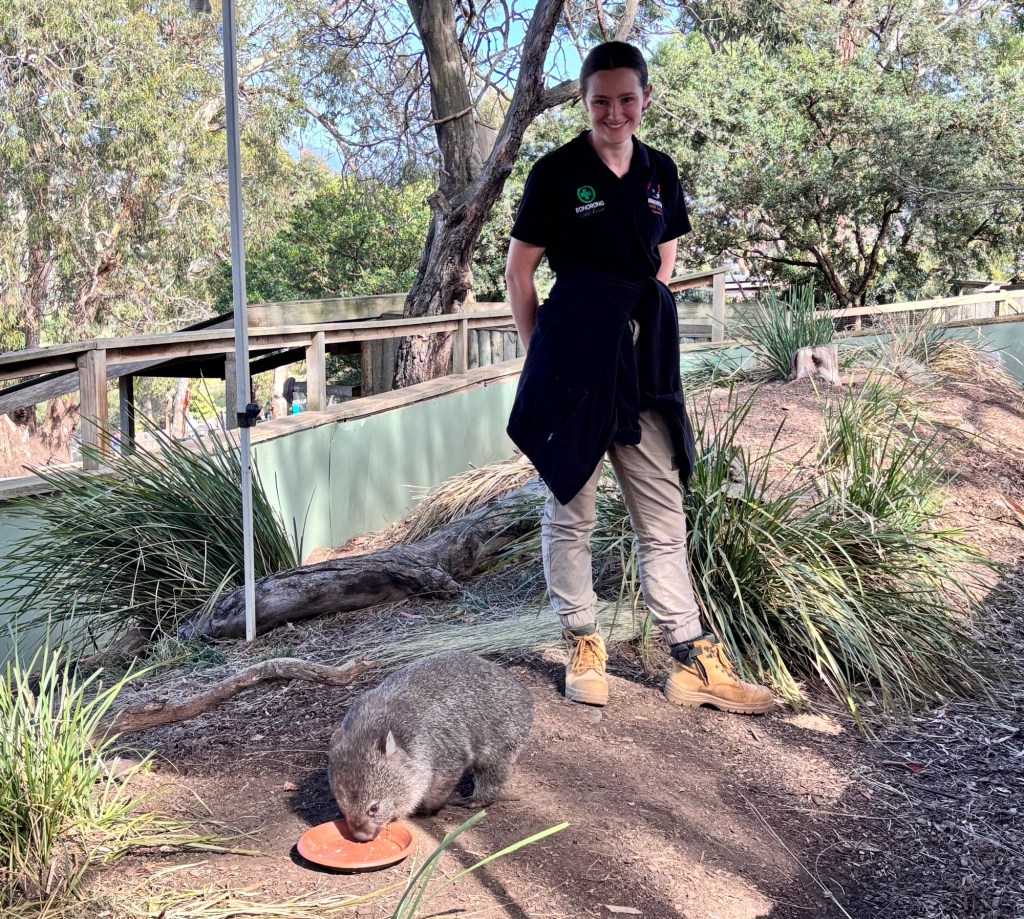
We saw a wombat who was rescued by a passerby when its mother was hit by a car. This seemed to be a common theme at the sanctuary.
Bonorong provided us firsts in many ways. It was clean and interesting and well done. One of my very few regrets on this trip is that I didn’t buy a sweatshirt from Bonorong to support their efforts. I wonder if they ship to the US…
Next, we went to Mt. Field National Park, a UNESCO World Heritage Site.
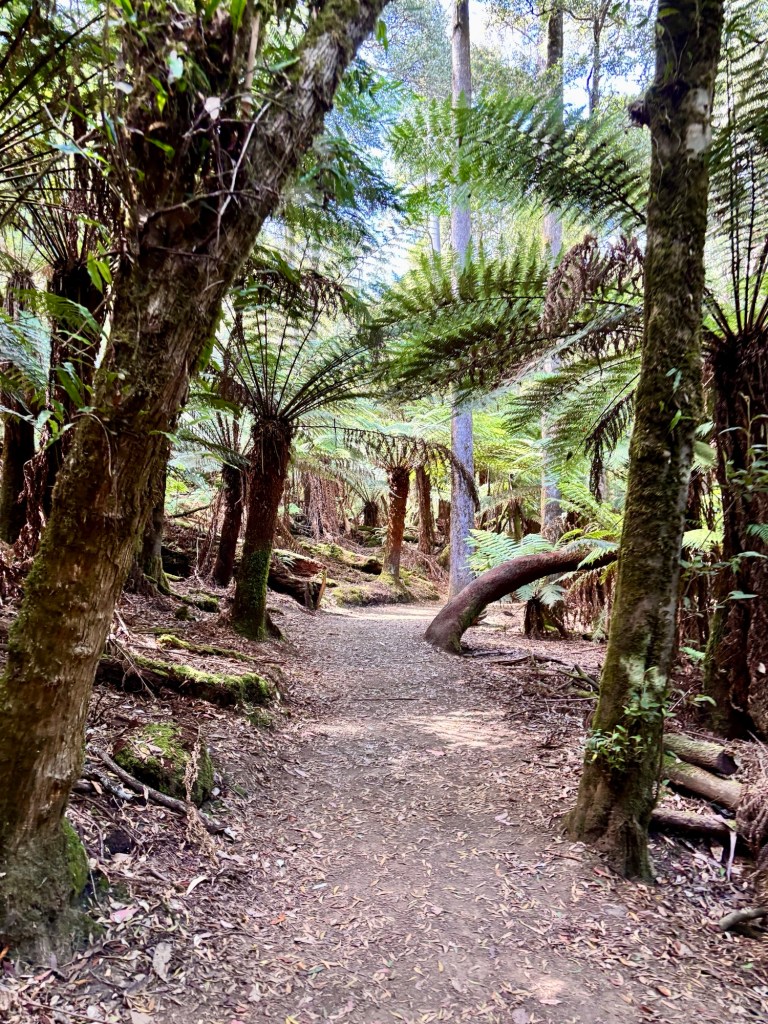
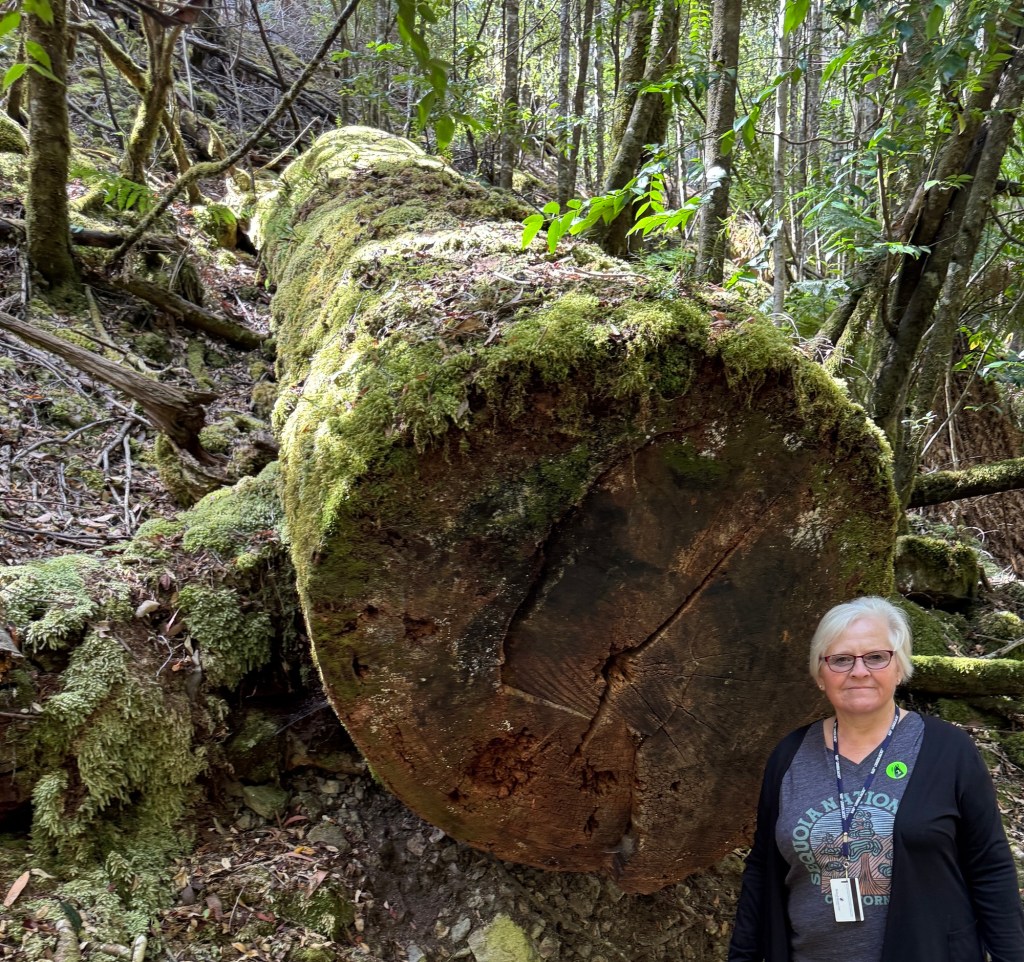
We enjoyed a 20-minute walk through the woods – quite different from walking the Promenade Deck.
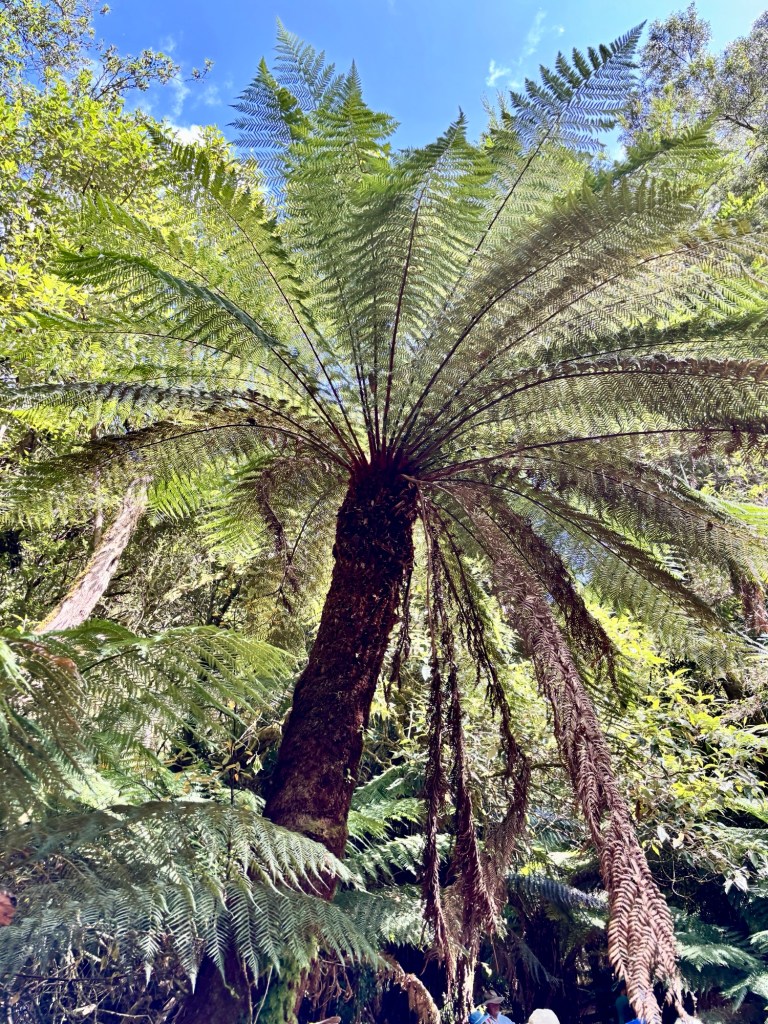
There were two kinds of trees of interest- the first was Vegetable Lamb, a manfern.
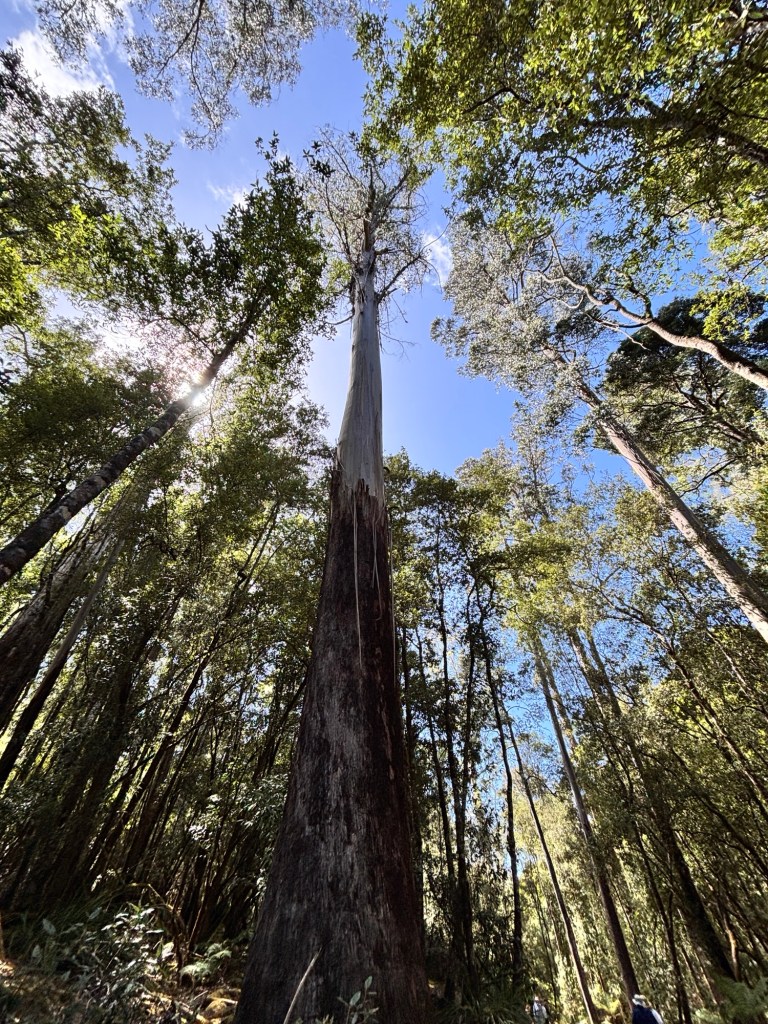
The second are Eucalyptus Regnans, the tallest flowering trees in the world. They can also be called mountain ash and are among the world’s tallest hardwood trees.
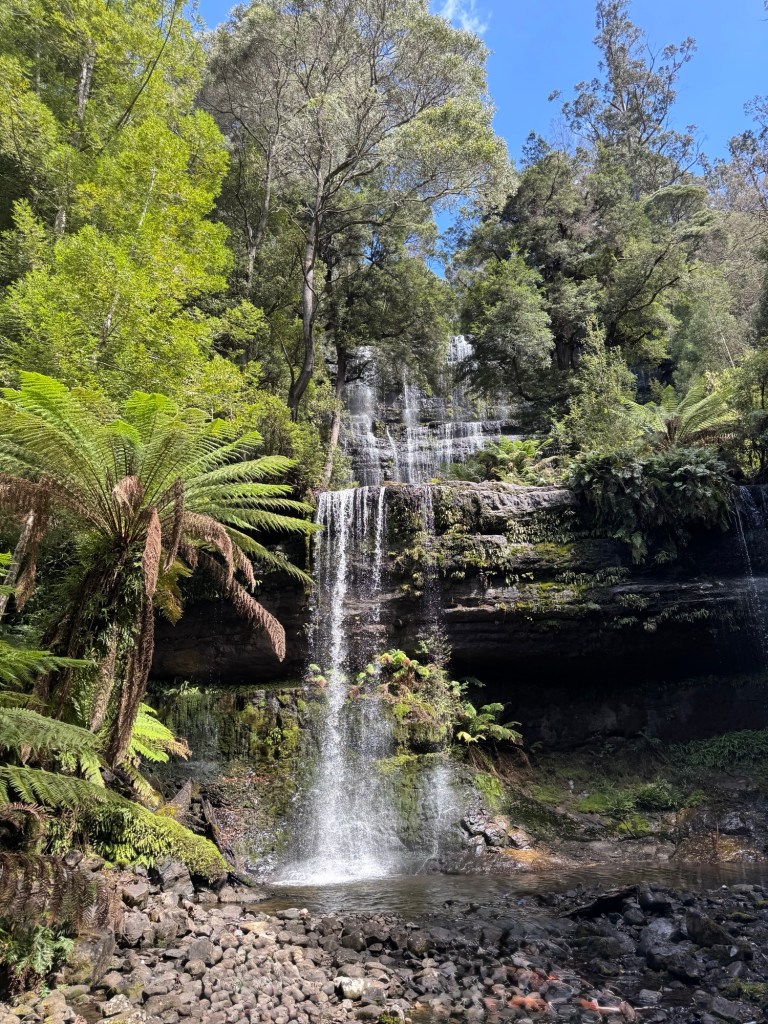
We arrived at the very nice Russell Falls, probably at about 20 percent capacity flow. The falls were protected by the government in 1885.
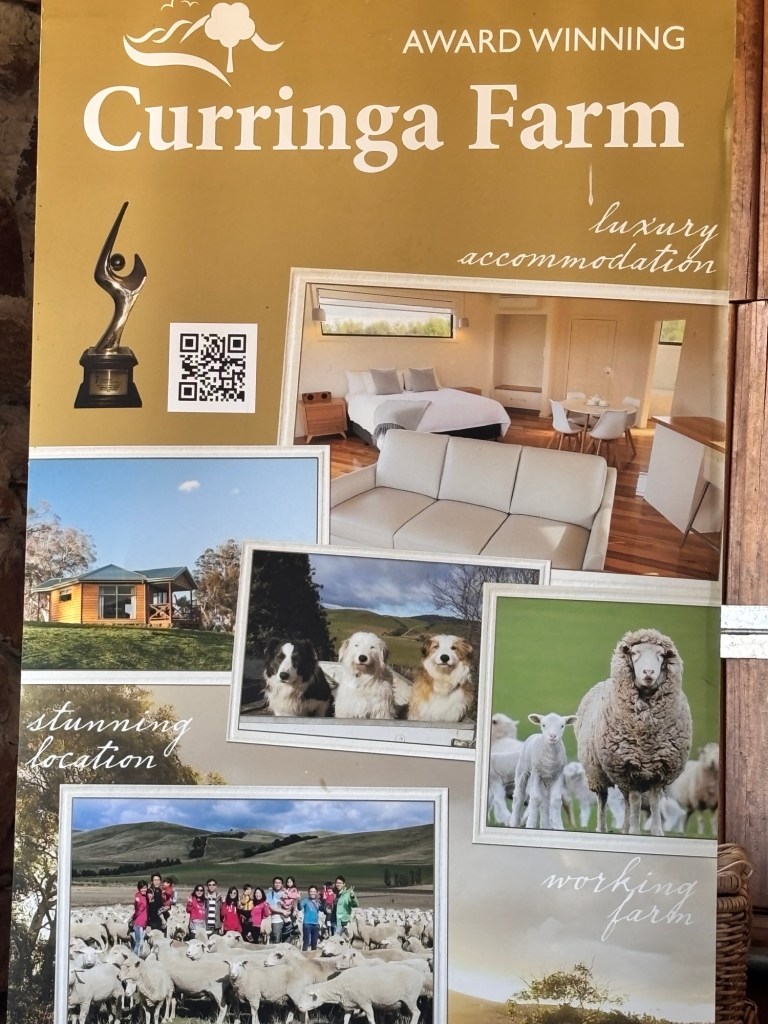
We visited Curringa Farm. Sixth-generation farmers Tim and Jane Parsons, run an operation that is 1/3 sheep, 1/3 crops, and 1/3 tourist.
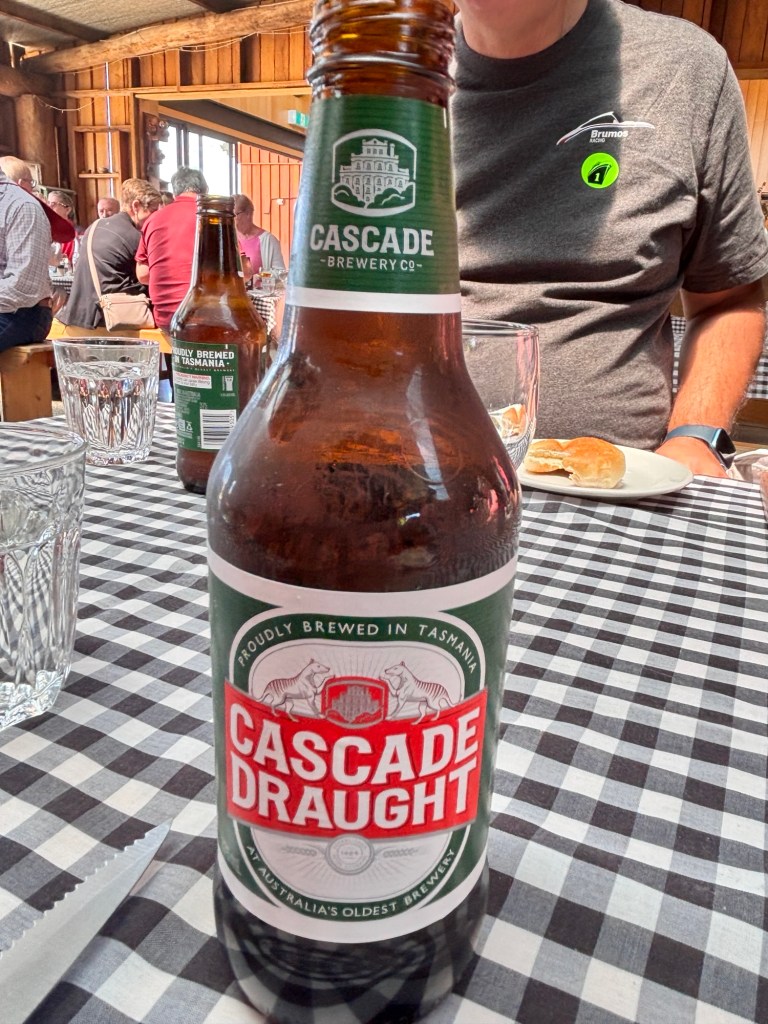
Obviously, we were the tourist component! They offered wine and beer – the beer being from Cascade Brewery, the oldest in Tasmania.
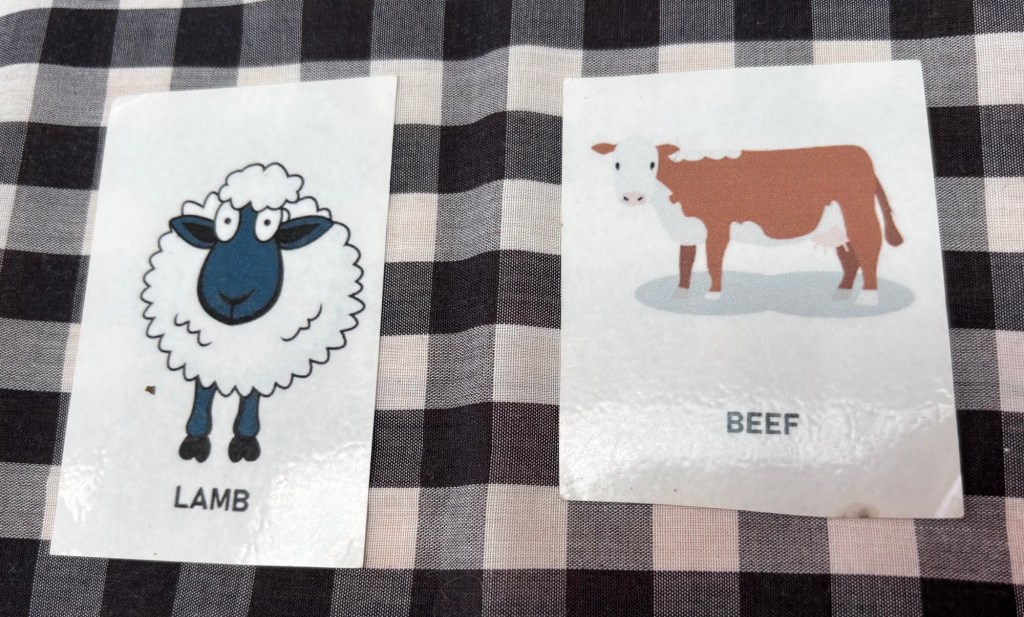
We were randomly given lamb or beef tickets. Both meats were wood fired.
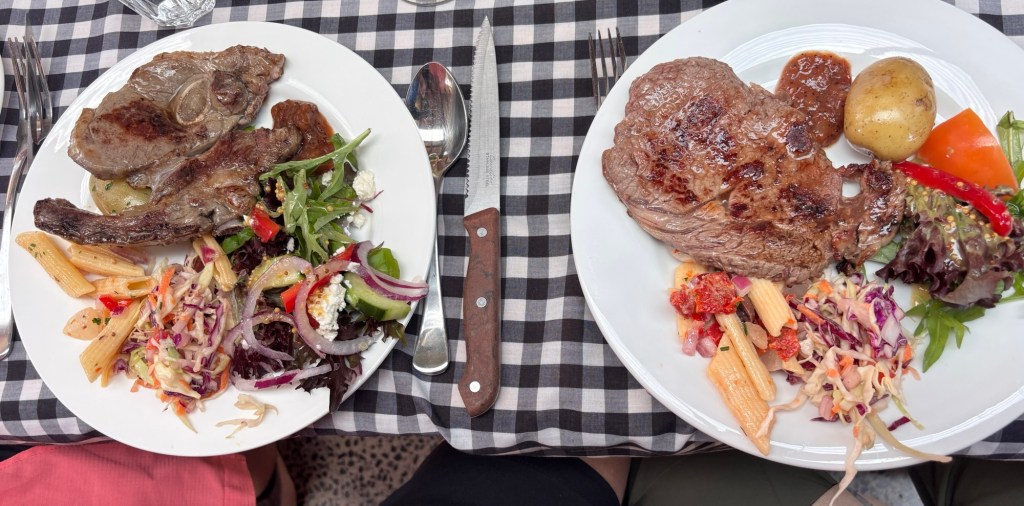
The lunch was quite nice. Randy had lamb and I had beef. Of course, we shared and we both preferred the beef. That is probably just because it is what we are used to.
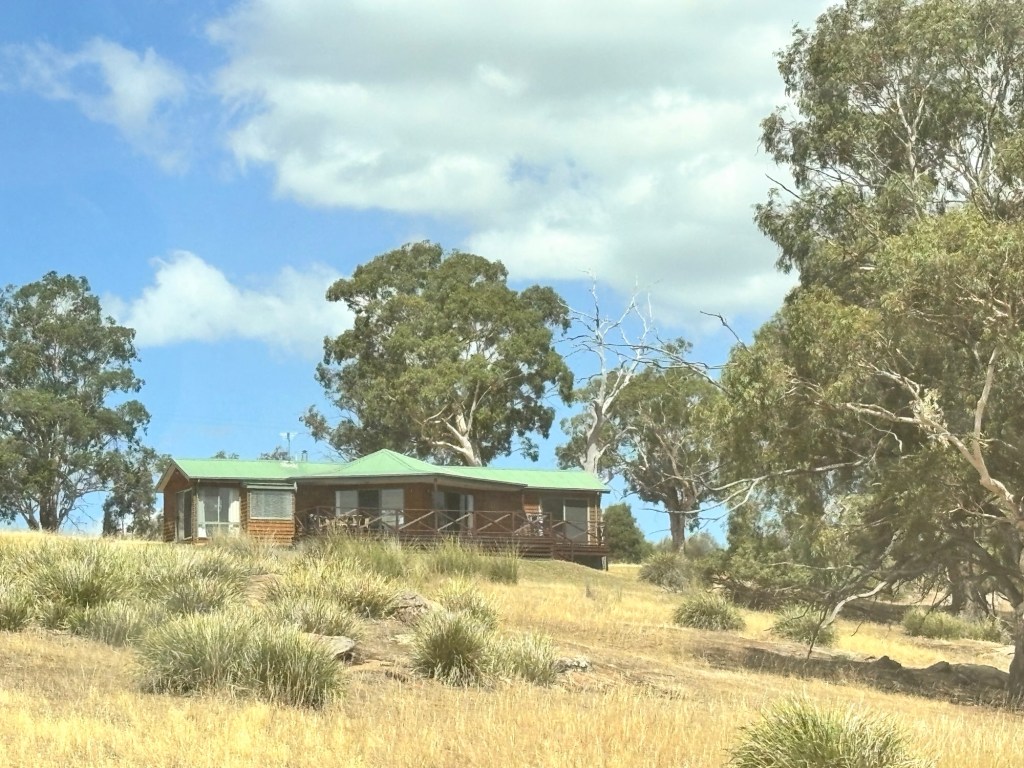
There are eleven accommodations ranging from studio to farmhouse available for rent.
In the crops portion of the business, they grow a variety, including opium poppies for pharmaceuticals. Tasmania grows 50-60 percent of the world’s legal opium poppies, and is the only place in the southern hemisphere allowed to do so.
Other crops are primarily grown for seed production and export. These typically include carrots, cabbage and onions. The food product is mostly left in the ground for the sheep to eat.
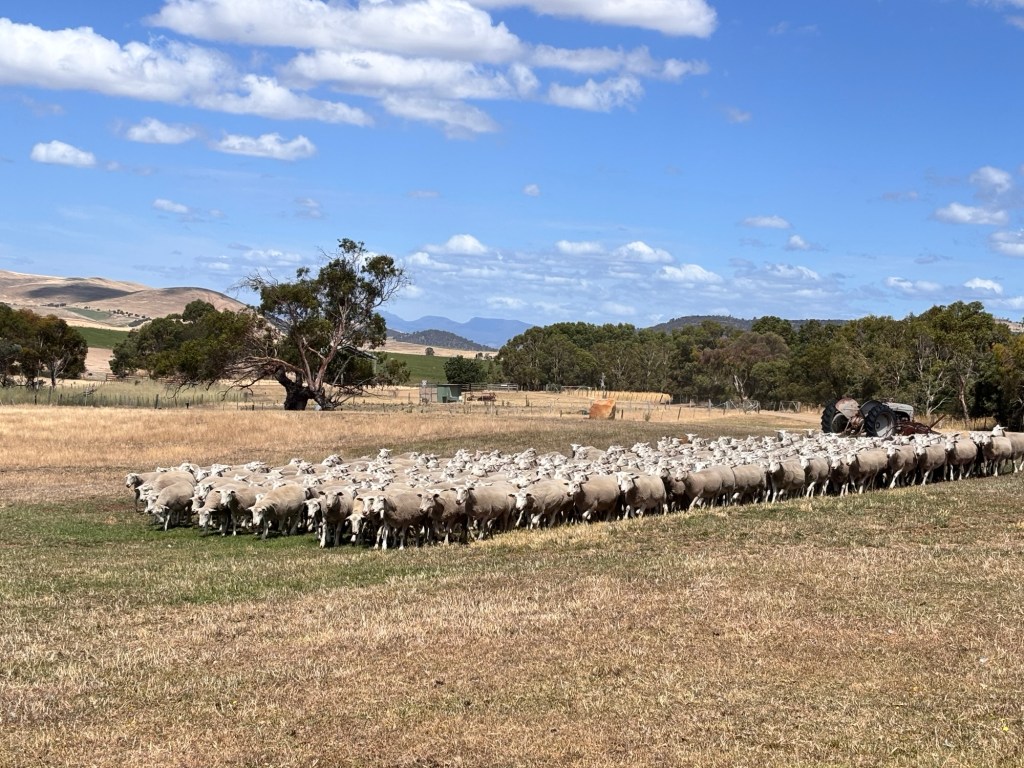
And speaking of sheep, when the farm is at full capacity, they run 3,000 sheep. Their focus is lamb meat production. There are only 27 males on the farm, giving each about 50 ewes.

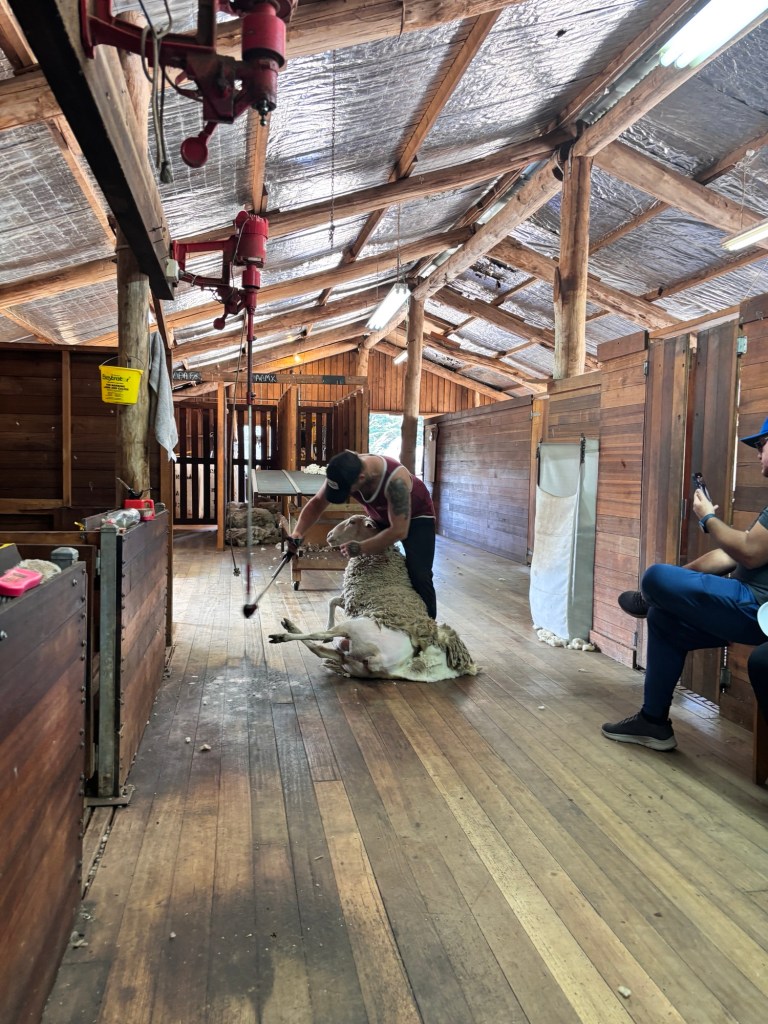
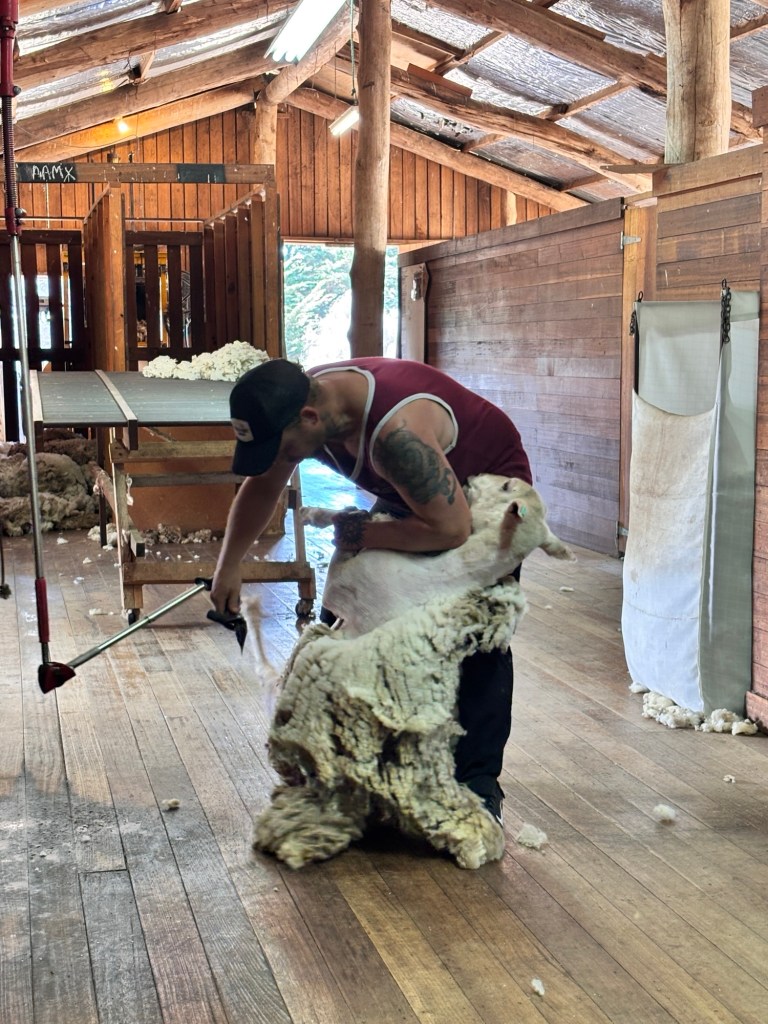
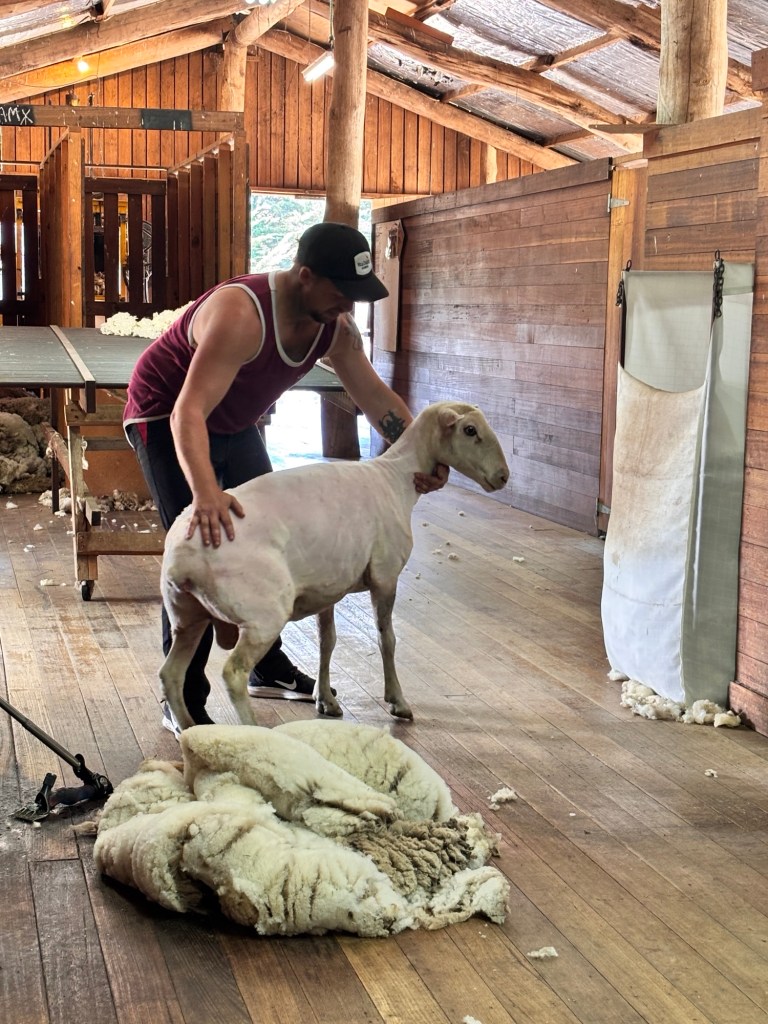
They shear their ewes once per year. It costs the farm $4.30 per shear and they receive about $2.00 per sheep wool. The sheep shearers come back about six months later for face and back end touch ups. This helps with birthing.
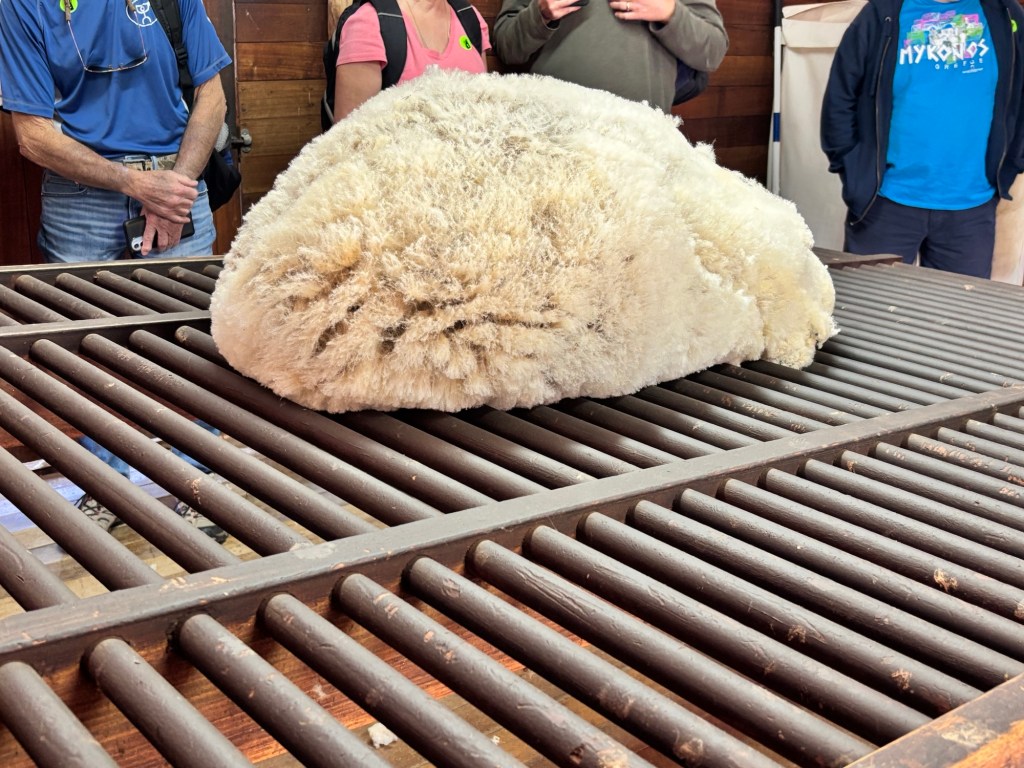
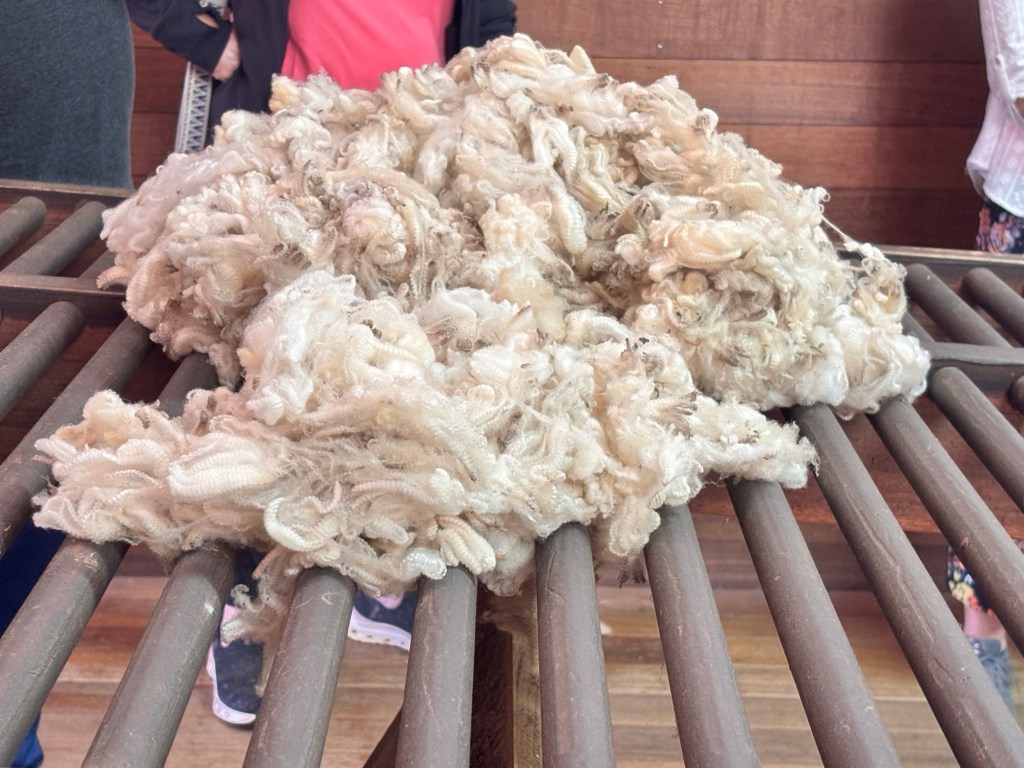
This sheep’s wool (on the left) is used for products that won’t touch the skin. The loose wool on the right is Merino, designed for use for clothing. We were able to feel the difference.
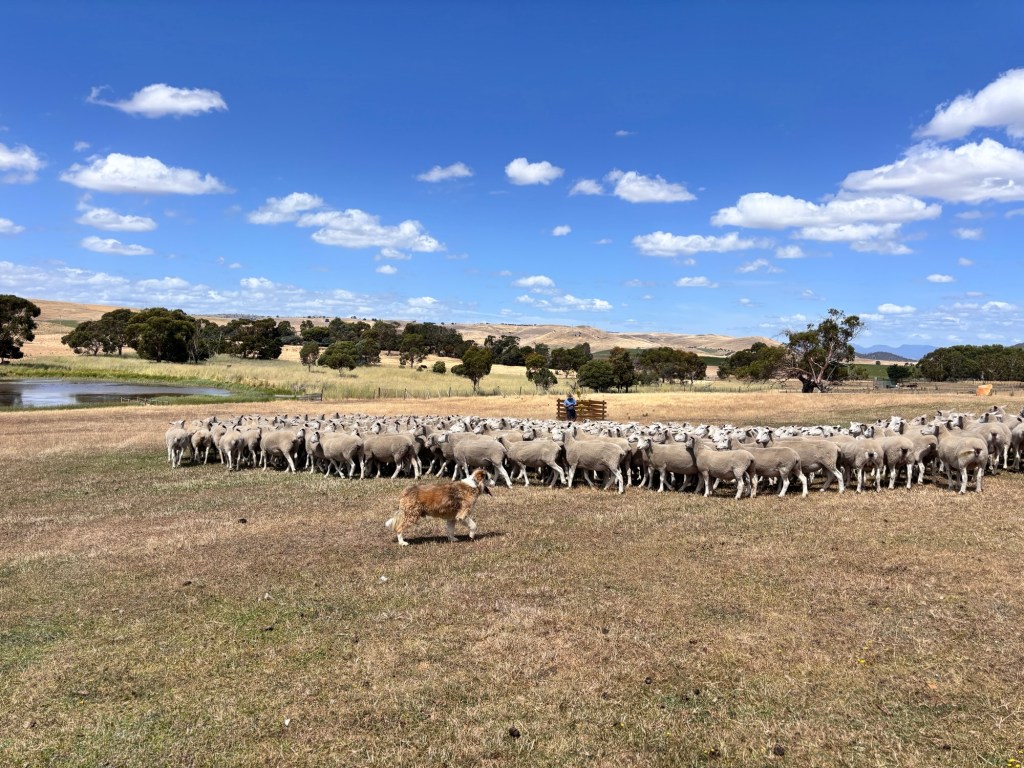
The sheep on Curringa Farm are Suffix. The strength of the breed is reproduction. During the last trimester, the ewes are fed grain.
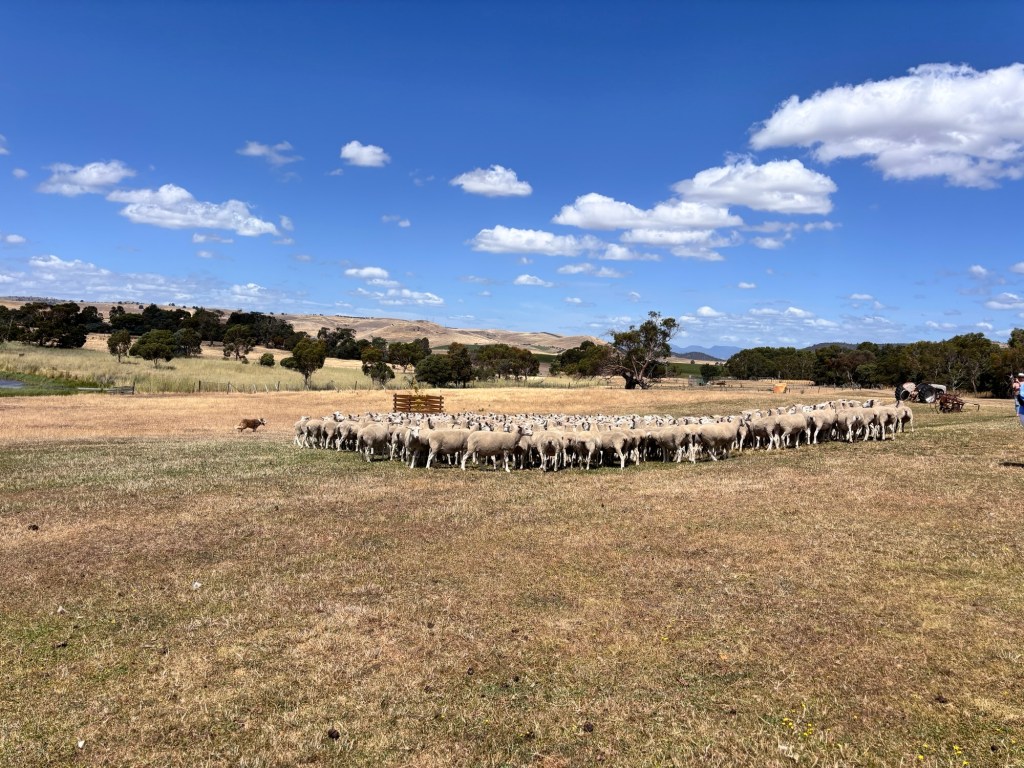
The ewes live here six to seven years and then become mutton.
There was a very matter of fact approach to the lives of lambs and ewes. That was a little difficult for me who wants to make every animal (except snakes) a pet. The vibe felt different than the New Zealand sheep farmer we’d met earlier.
They did seem to value their dogs!
We saw three dogs. They are Smithfield breed, a type of English Sheep Dog. Two of the dogs are very experienced and we got to watch a demonstration.
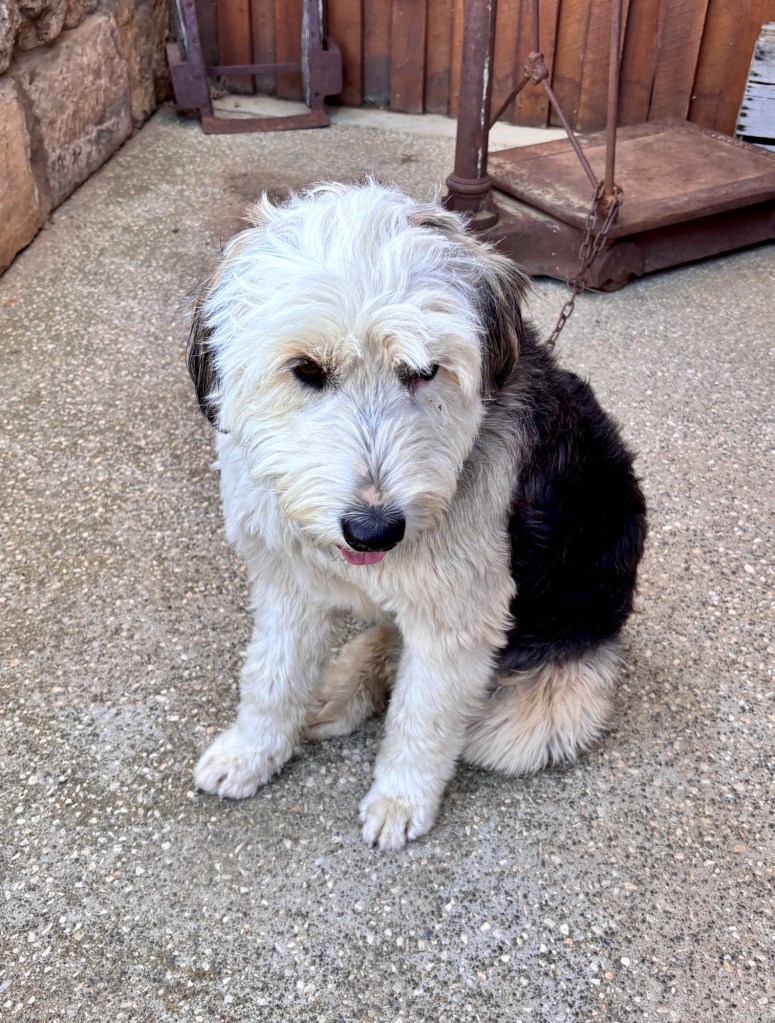
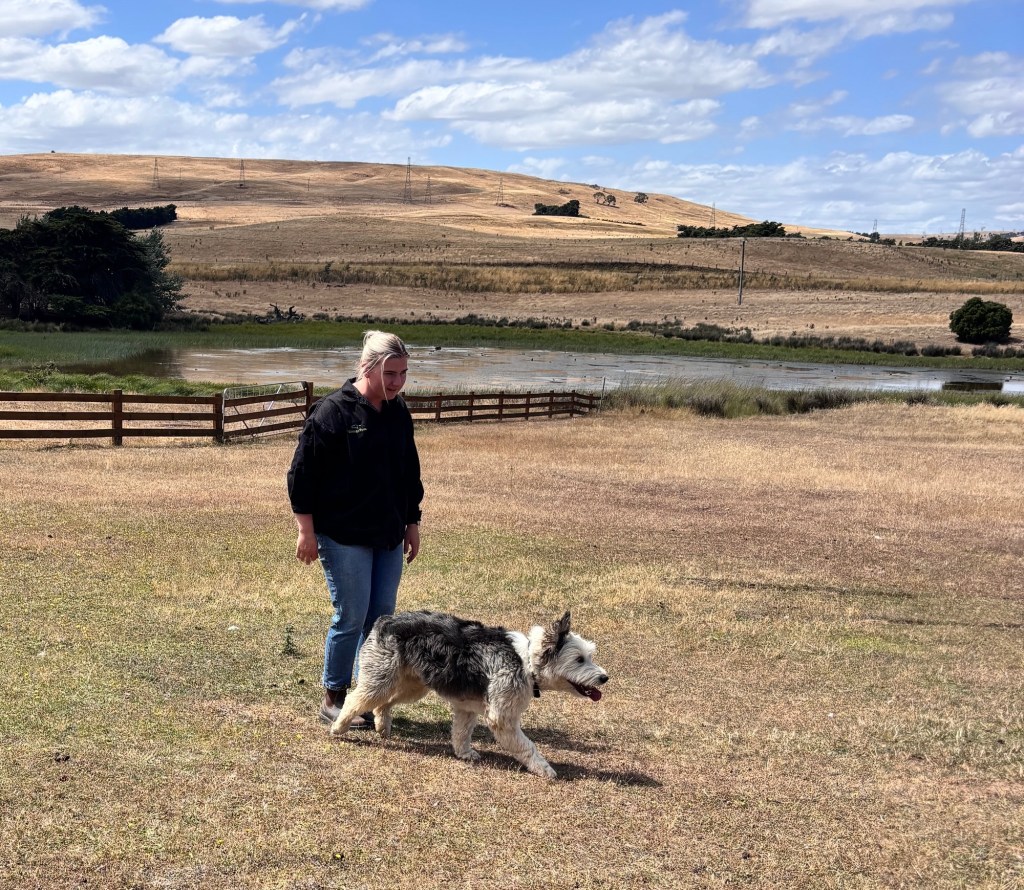
Lucky is a year and a half old and in training.
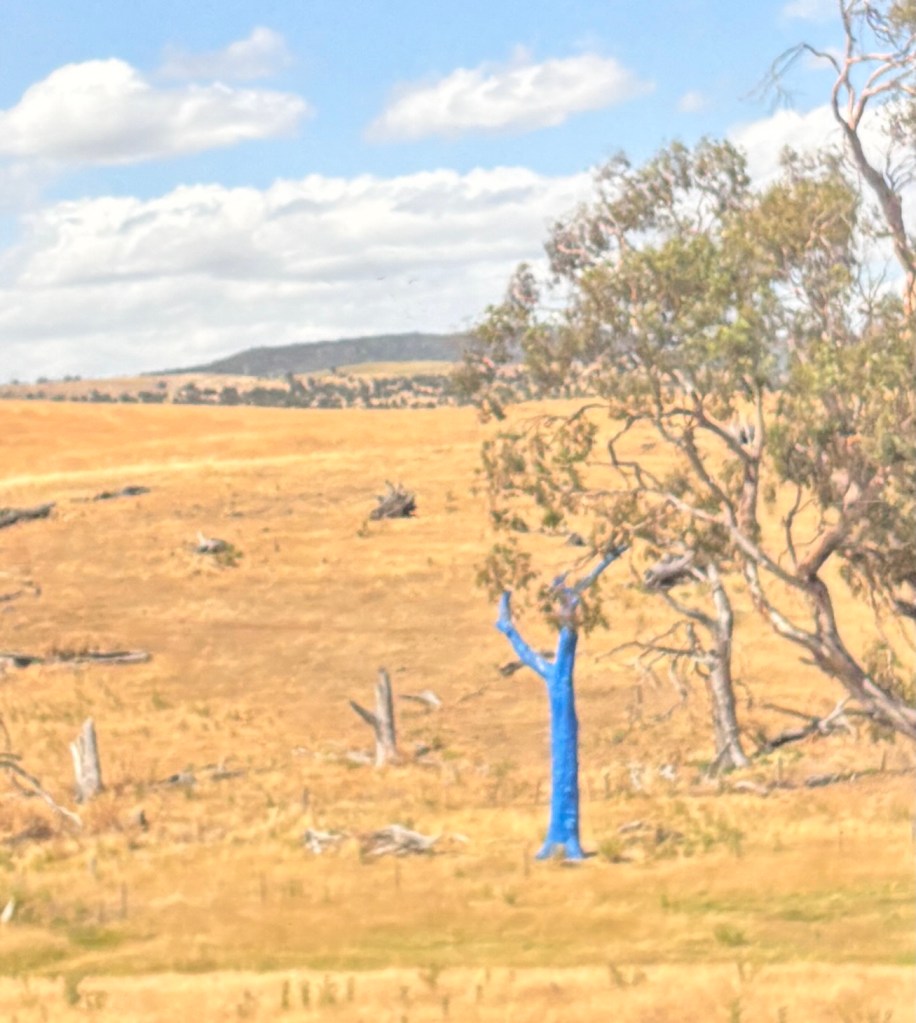
On the way back to the ship, our guide pointed out this blue tree. It was painted by a group called Rural Alive and Well. These trees are a symbol of their efforts towards suicide awareness and prevention. Unfortunately, suicide in rural Tasmania are higher than other areas.
Our tour was 25 minutes late getting back for the “all aboard” time on the ship. The crew were literally rolling up the gangway after us. Thirteen minutes after we stepped on board, the Westerdam sailed. If you book your shore excursion through the ship, they will wait. If you book it another way, they may not.
Next Up: Another sea day!


 Serene Wandering
I thought the meal tickets were funny. Which would you rather eat – this happy little lamb with the cute face, or a cow?
The dogs must have been pretty amazing to get the sheep in a perfect rectangle. We’ve seen working dogs a couple of times. They are fun to watch.
I would have been having a panic attack getting back to the ship that late. Even if they are supposed to wait for you.
It looks like a fun day.