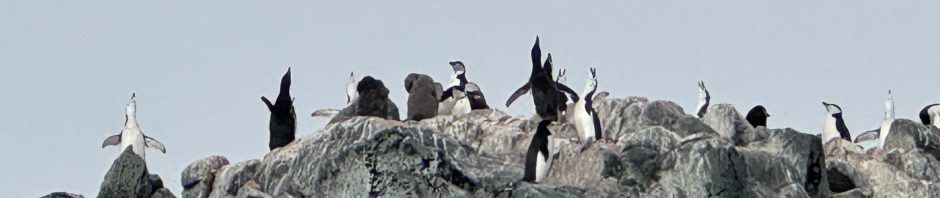
We were in Melbourne on January 31, 2025.
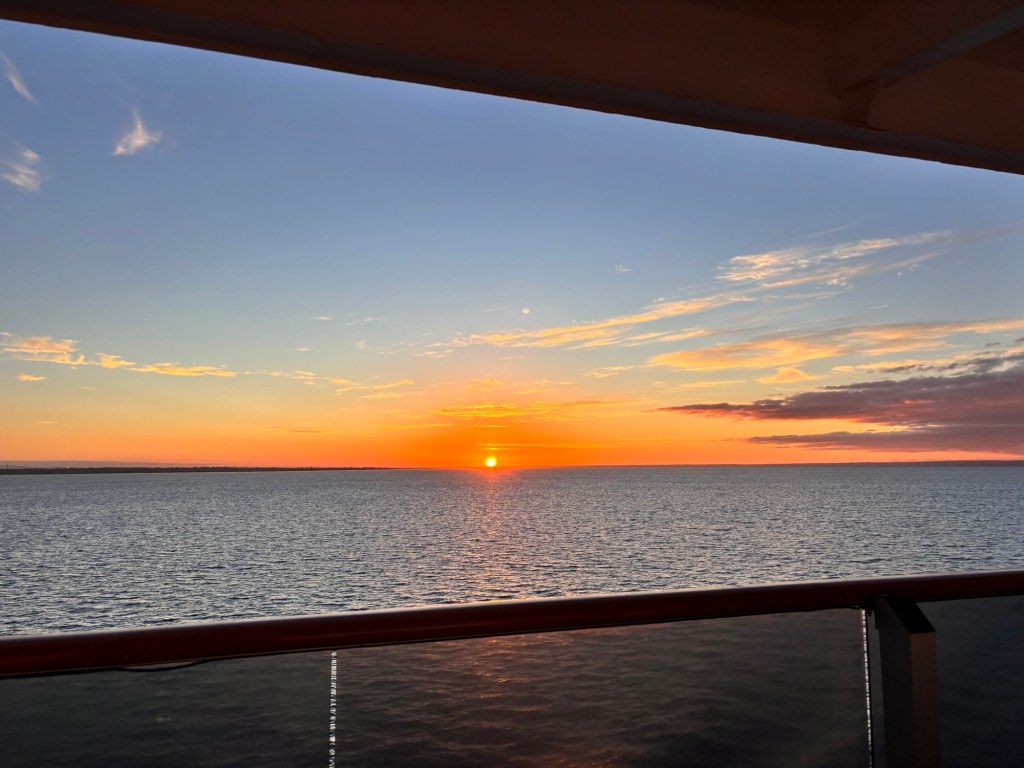
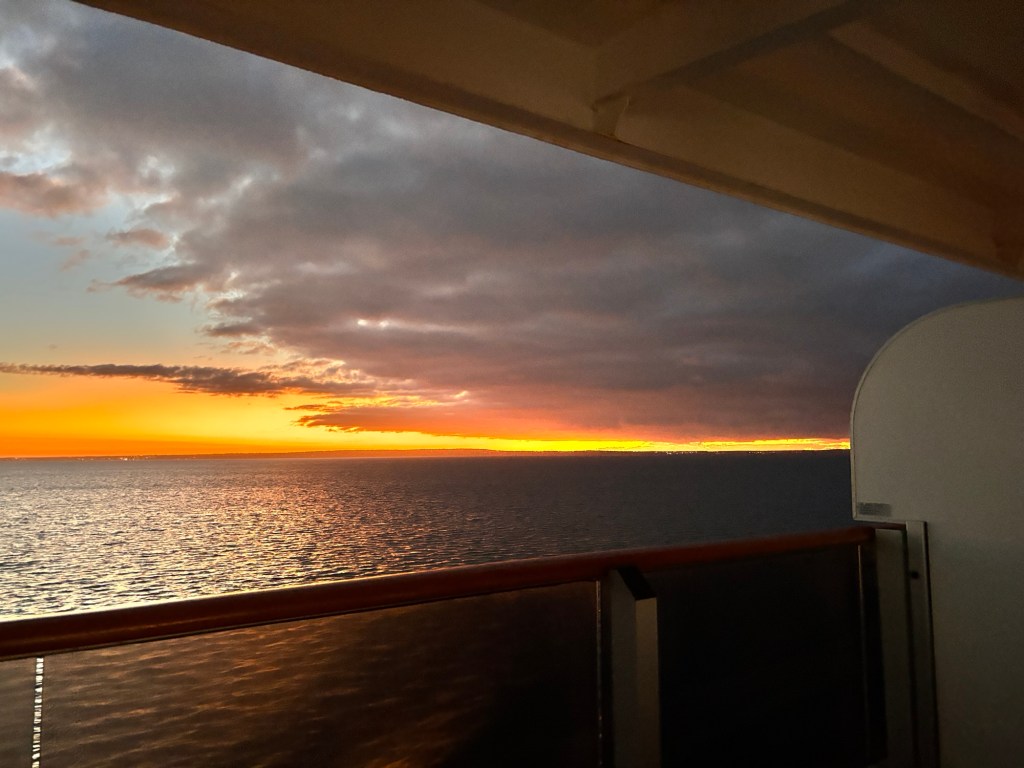
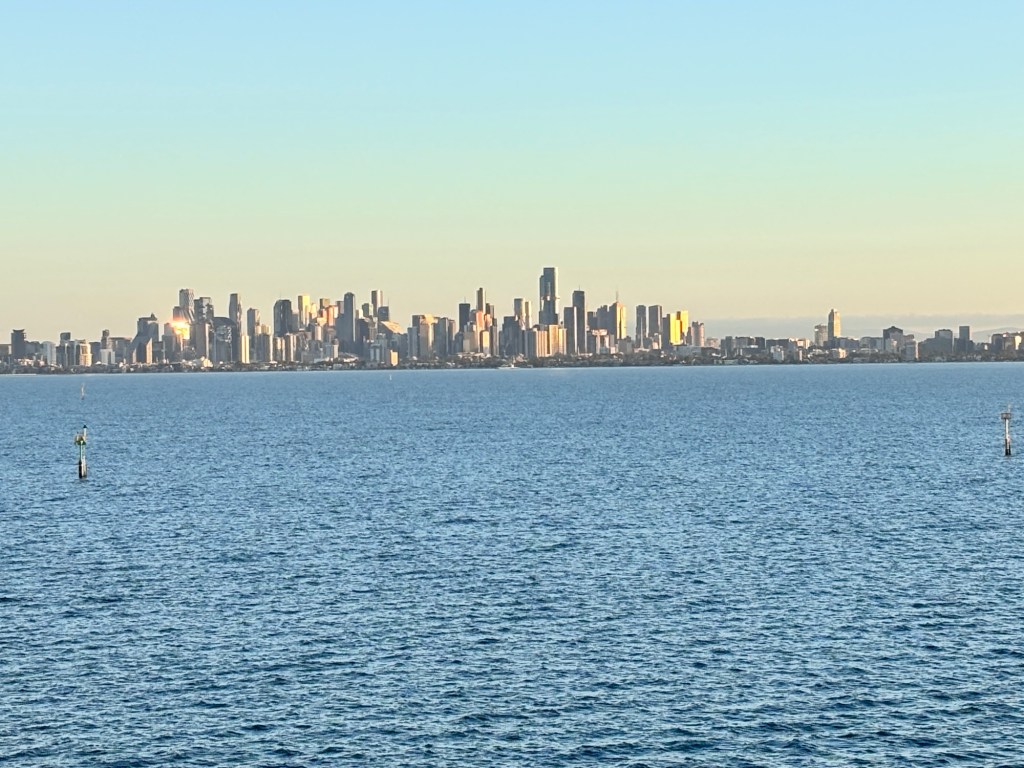
We woke up to very nice sunrise as we came into the harbor for our visit to Melbourne.
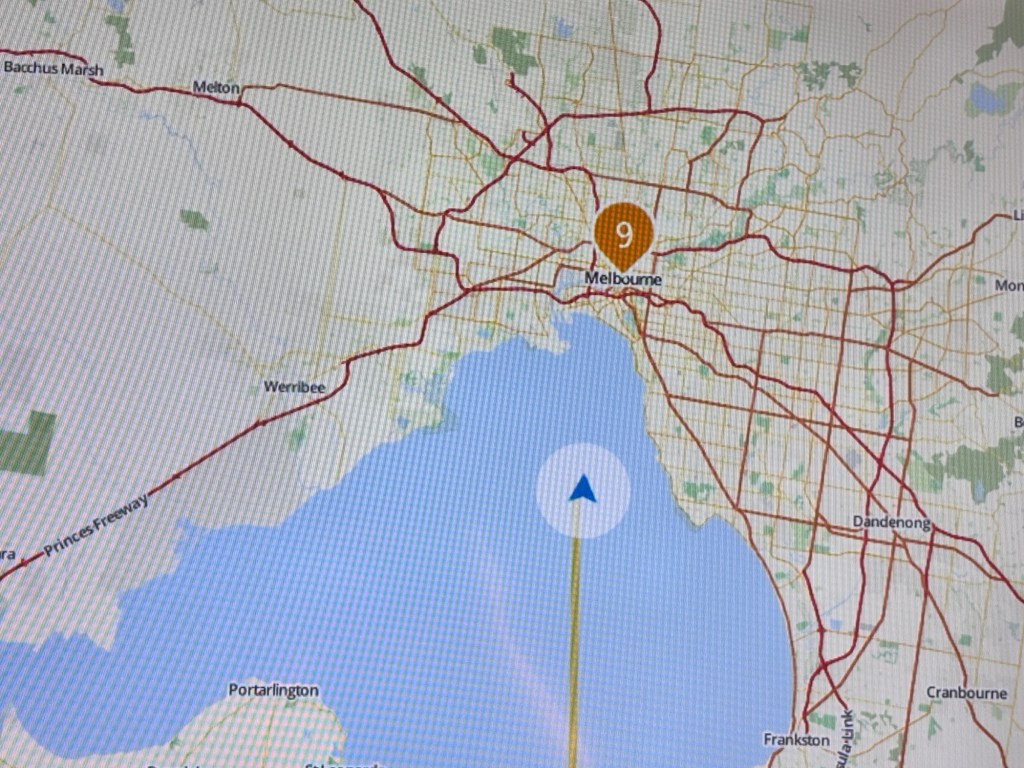
We had ordered some Vegemite to have on our toast with our room service breakfast.

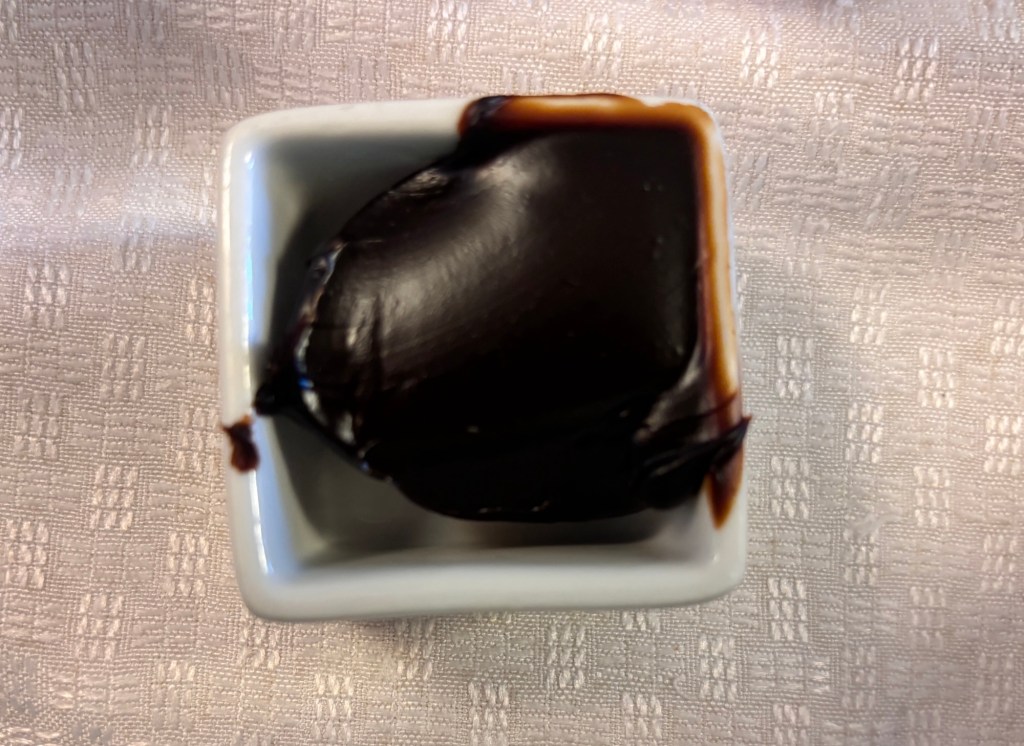
We both agreed it was disgusting! Think beef bullion paste in texture, tasting a little like yeast, its main ingredient.
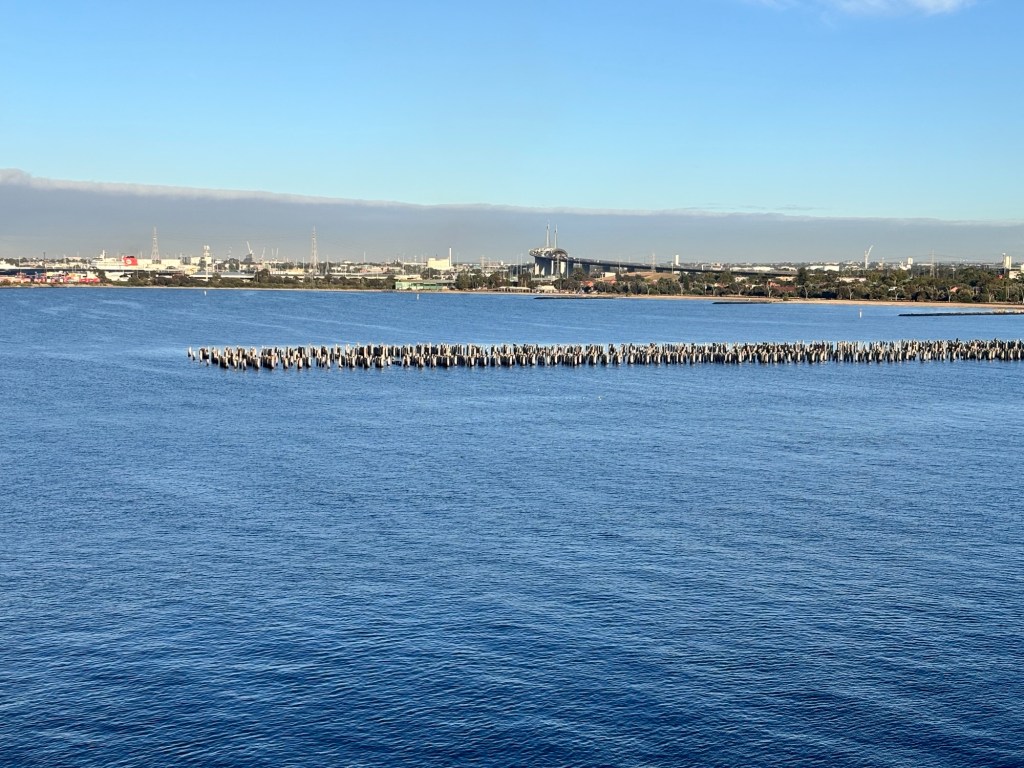
Looking out our balcony we saw these pilings from Melbourne’s historic wharf. These pilings are popular for artistic photographs given the right time of day and some sky drama. We didn’t have either.
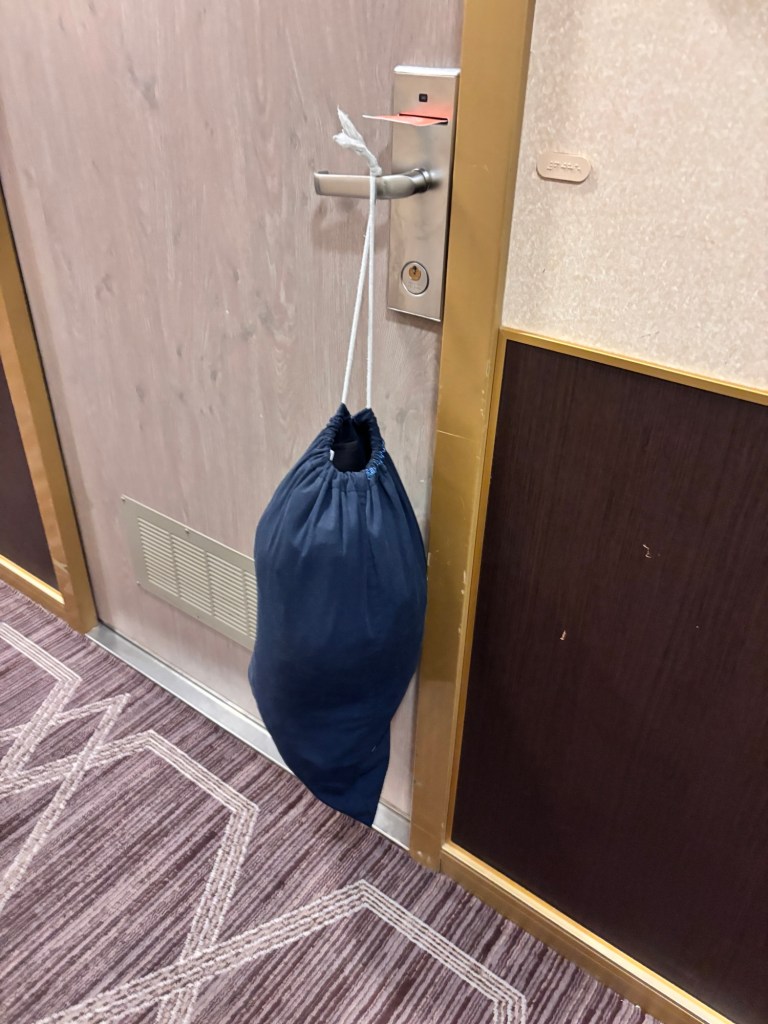
We put out our last bag of laundry. The unlimited laundry service was worth every bit of the $119 charge against our on board credit. I’m guessing we sent out eight bags. They do a great job and, months later, it makes you smile to see the little tags left on your clothes.
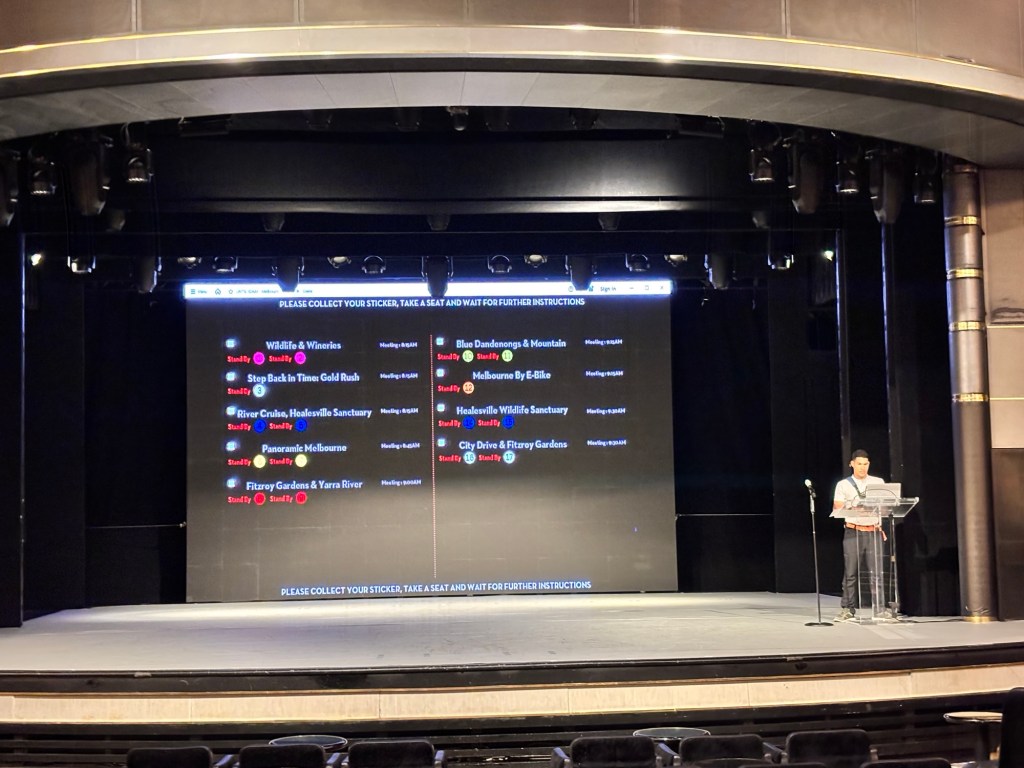
We left on our last shore excursion of the cruise – Wildlife and Wineries. That sounded like a nice way to go out! The picture shows the big board of shore excursion debarkation. The Westerdam crew did this better than any other ship we’ve been on.
On the way to the wildlife, we got commentary from the tour guide.
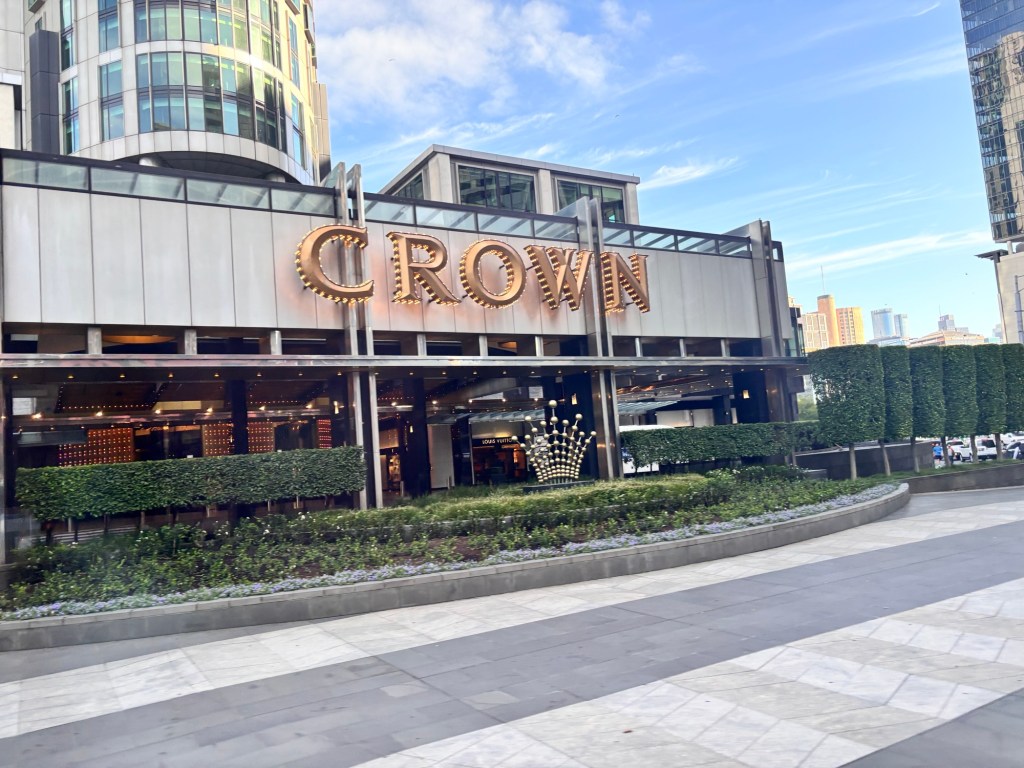
The Crown Casino is the largest in the southern hemisphere, covering three city blocks.

As we went by this pretty building, we learned that Melbourne has been named the world’s most livable city for the last eight years. People from 150 countries have made Melbourne home. The second largest Greek speaking community (after Athens) is here.
Both Australia and New Zealand celebrate their diversity, a thought that makes us very sad given that the opposite is happening in the United States.
Melbourne is known internationally for its coffee culture and for very large (1 meter wing span) fruit bats.
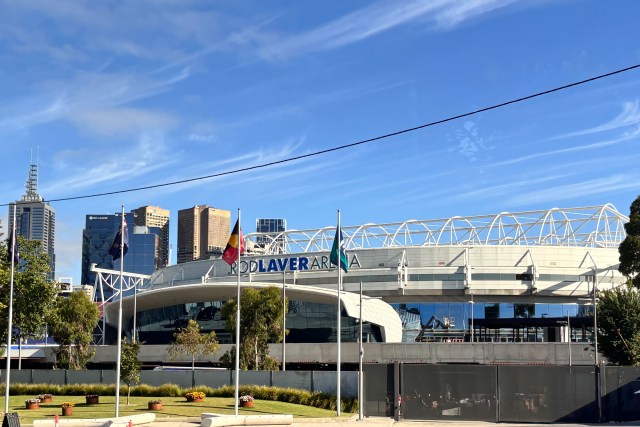
We passed Rod Laver Arena, home of the Australian Open. We watched parts of matches during the evenings at the hotel in Aukland and then on the ship. We wouldn’t have watched them in Arizona, given the time difference, but we were in the vicinity so we did. We also had the opportunity to watch cricket on the TV which is not understandable! Even the Australians joke that they won’t even try to explain how you can play a match for five days and still not have a winner.
The Clifton Hill Shot Tower was built in 1882 and stands 78 meters (256 feet) high. It held the title of Australia’s tallest structure until 1930. It is said to be the world’s tallest shot tower, and on the Victorian Heritage Register.
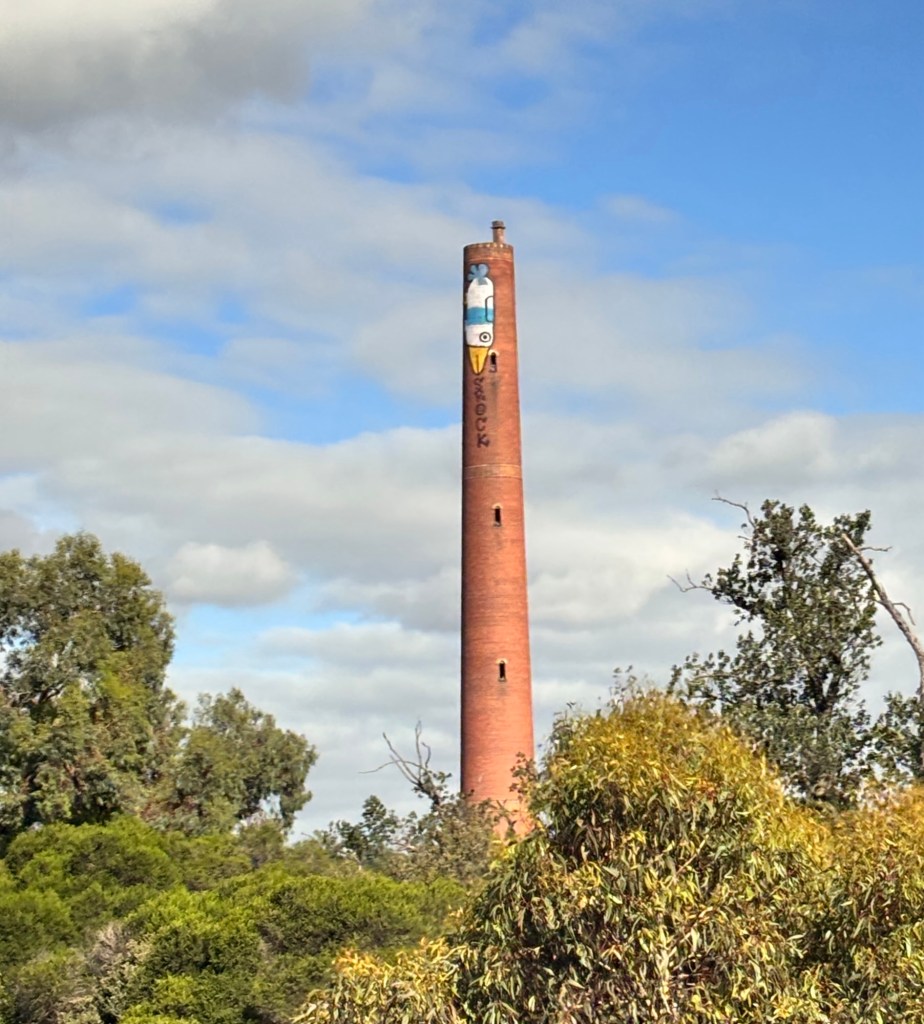
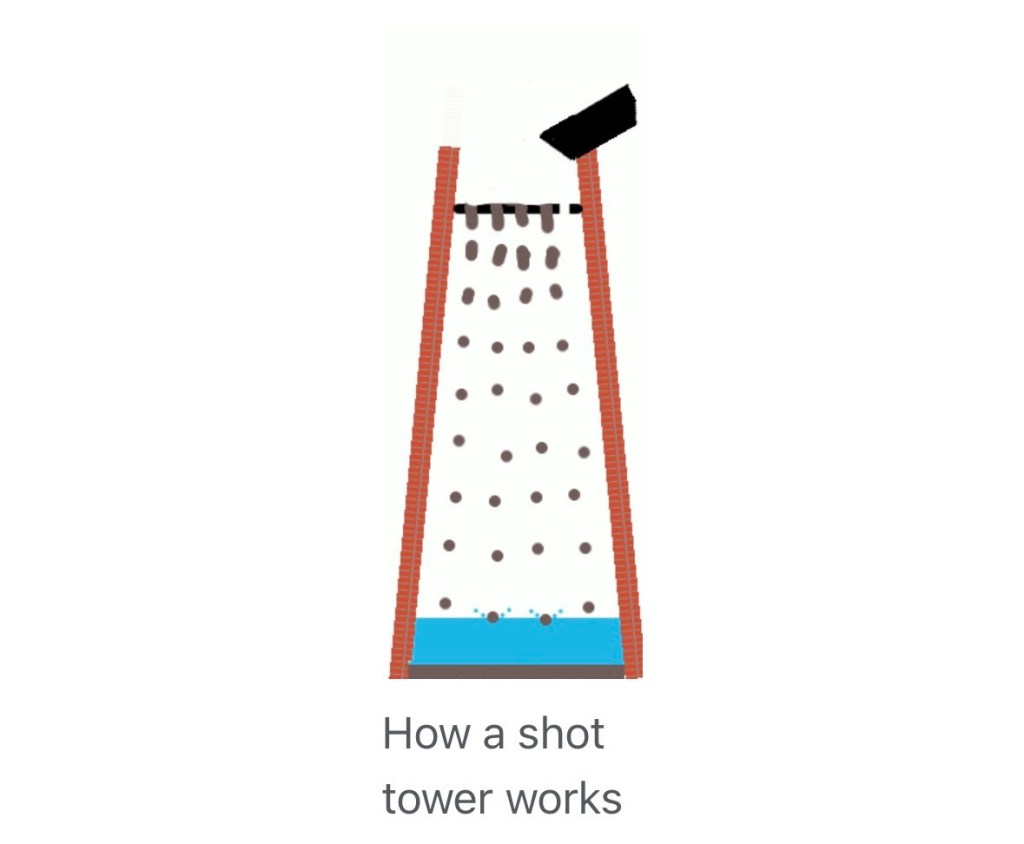
And because I had no idea what a shot tower was, I looked it up. A shot tower is for producing small diameter balls by free falling molten lead caught in a water basin.
We passed Dame Nellie Melba Memorial Park.
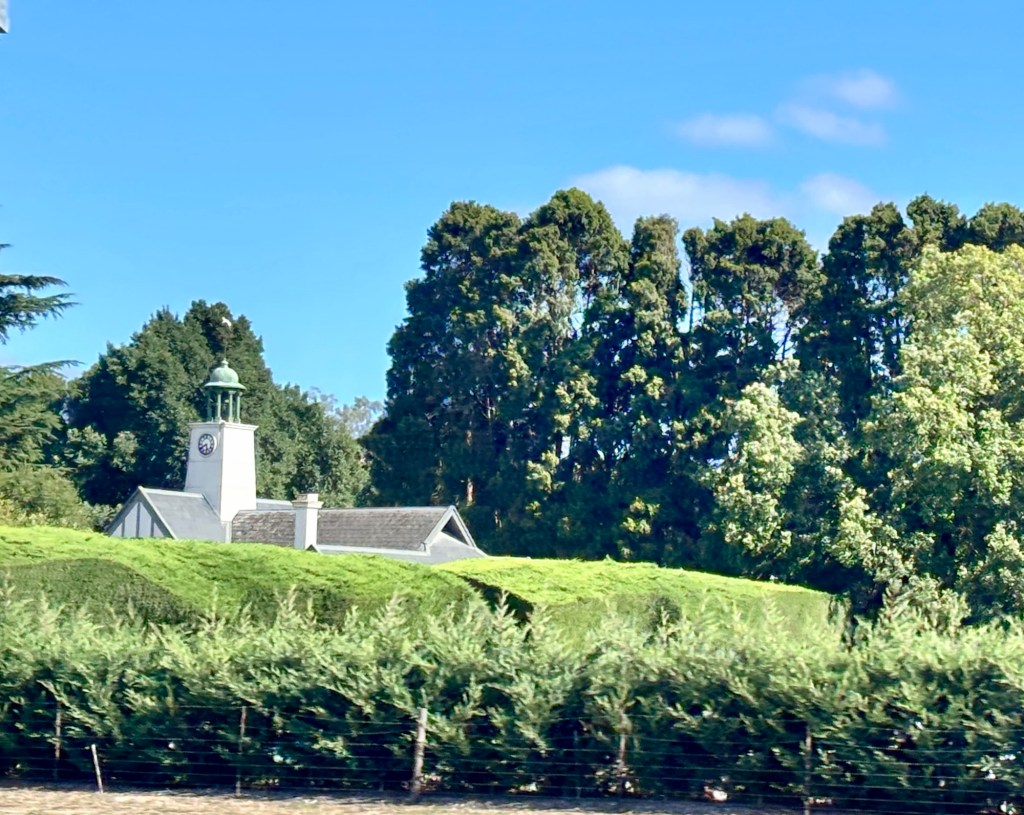
Dame Nellie Melba, 1861-1931, was a world famous Australian soprano who sang opera all over the world.
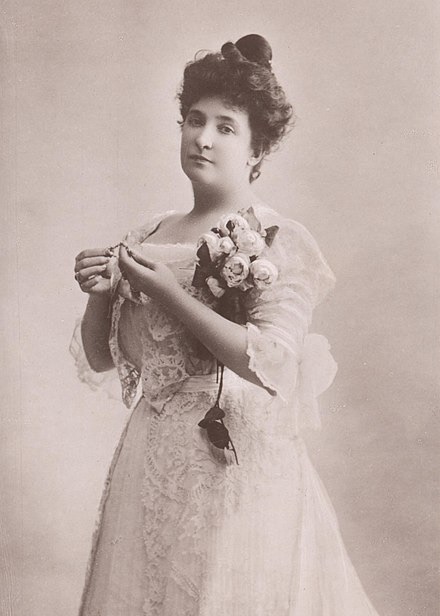
She took the name Melba from her home town, Melbourne. Melba toast was created for her by her personal chef.
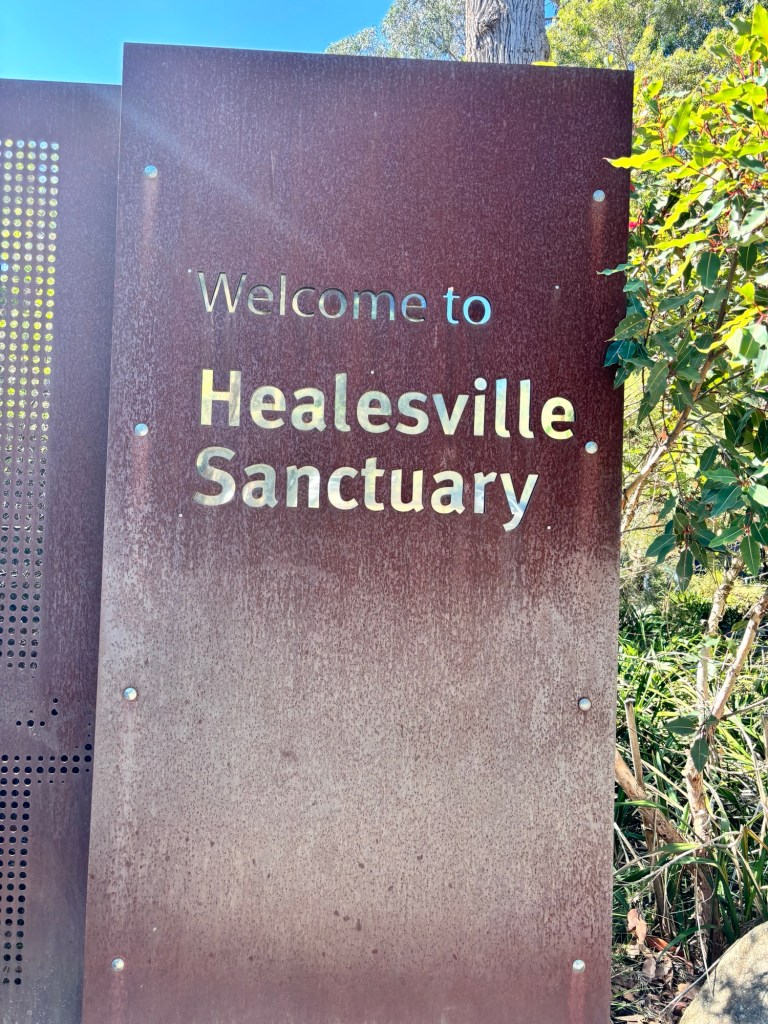
Our first stop of the day was at Healesville Wildlife Sanctuary.
It is one of four unique zoos in the “state” of Victoria. This facility is for breeding and helping endangered species.
We had an hour and 40 minutes on our own to wander. That seemed like a long time, until it wasn’t!
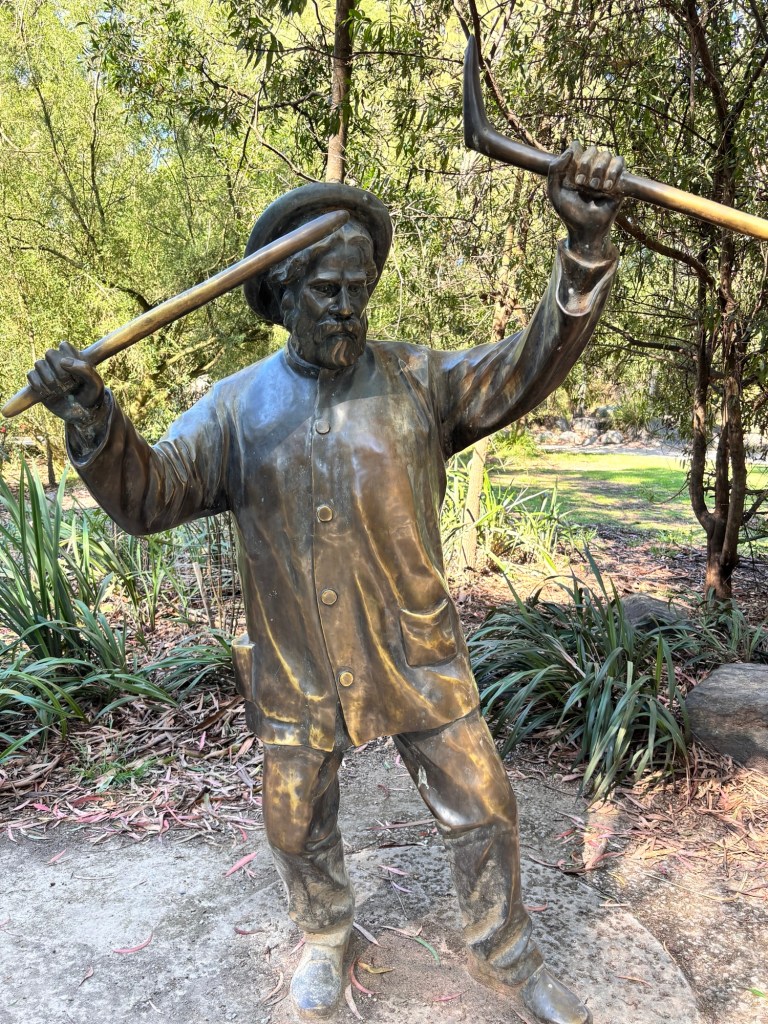
This was Barak, Aboriginal leader of the Wurundjeri people.
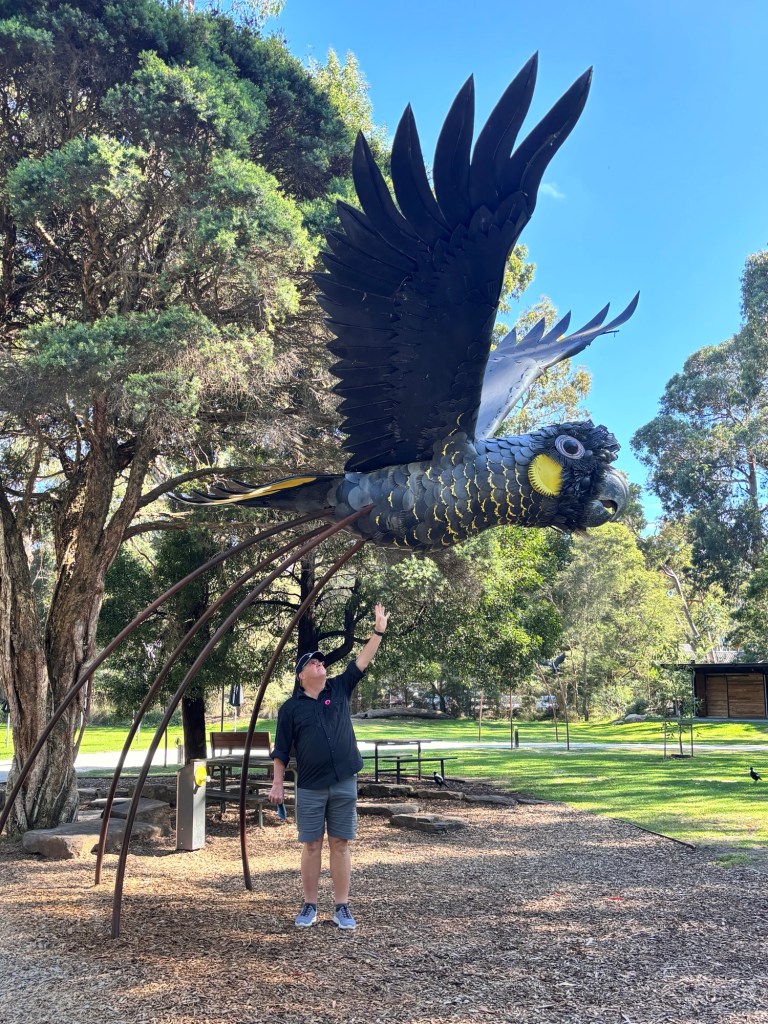
I don’t know what this was, but it was taller than Randy.
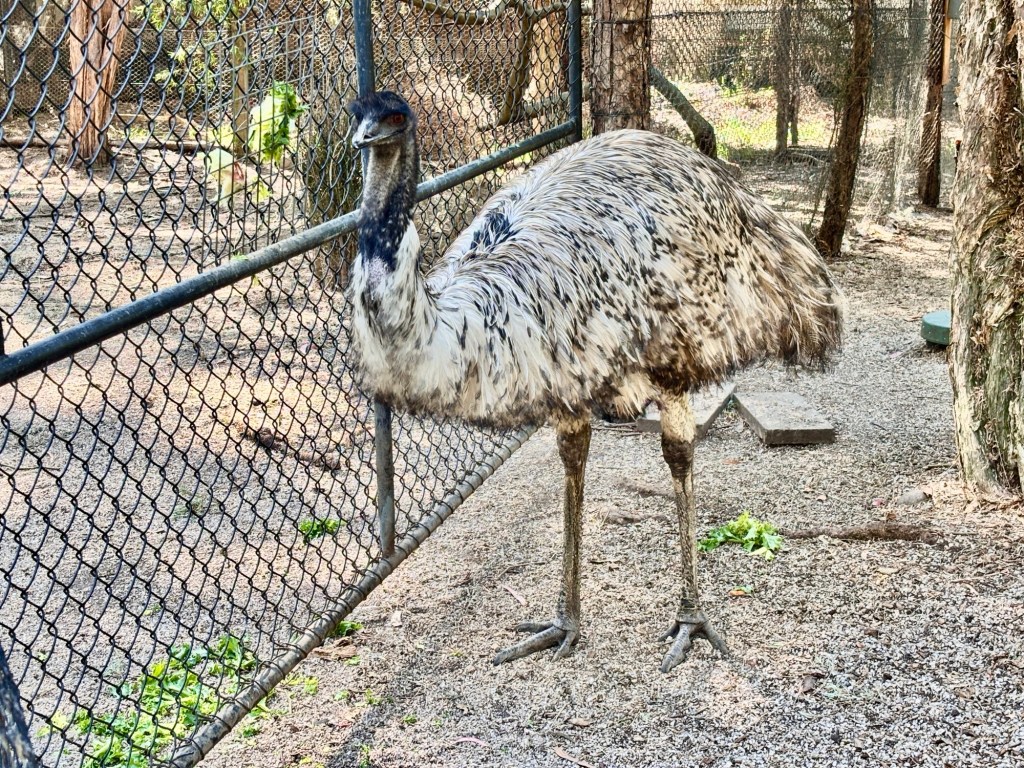
The first resident we saw was an emu.
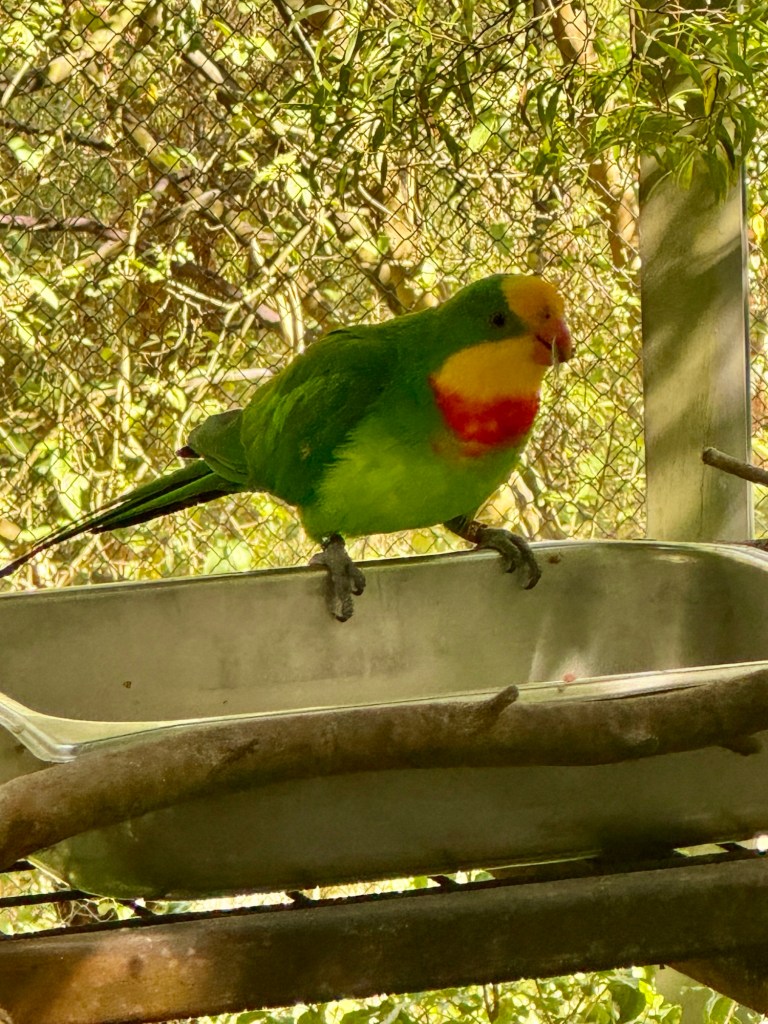
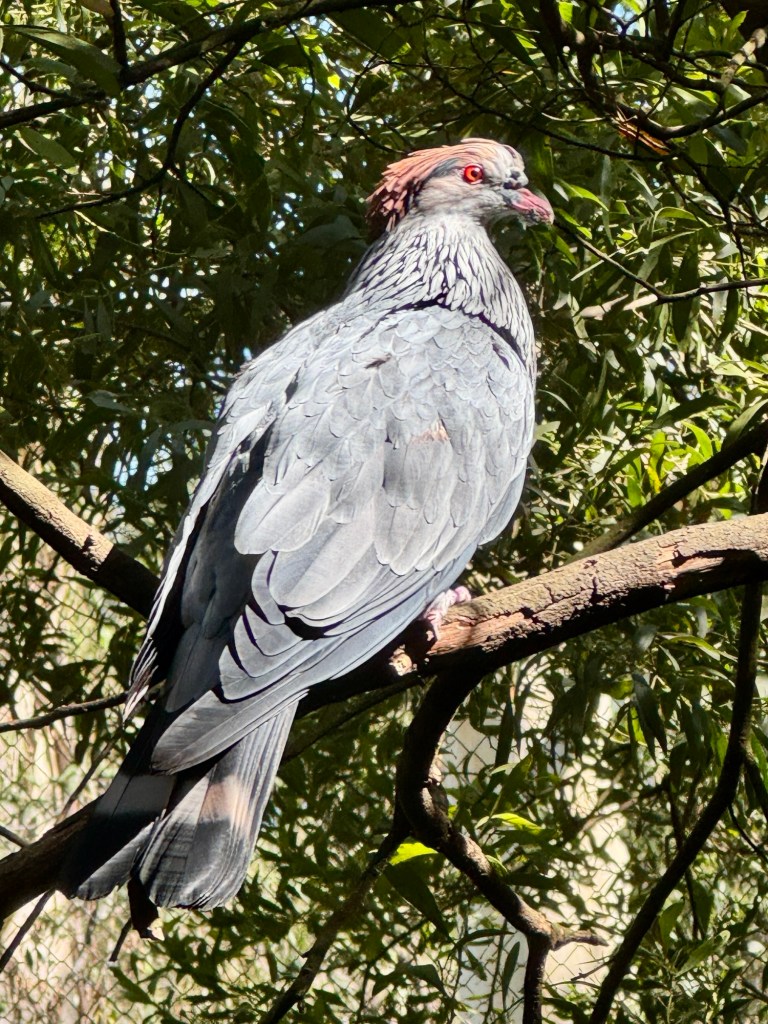
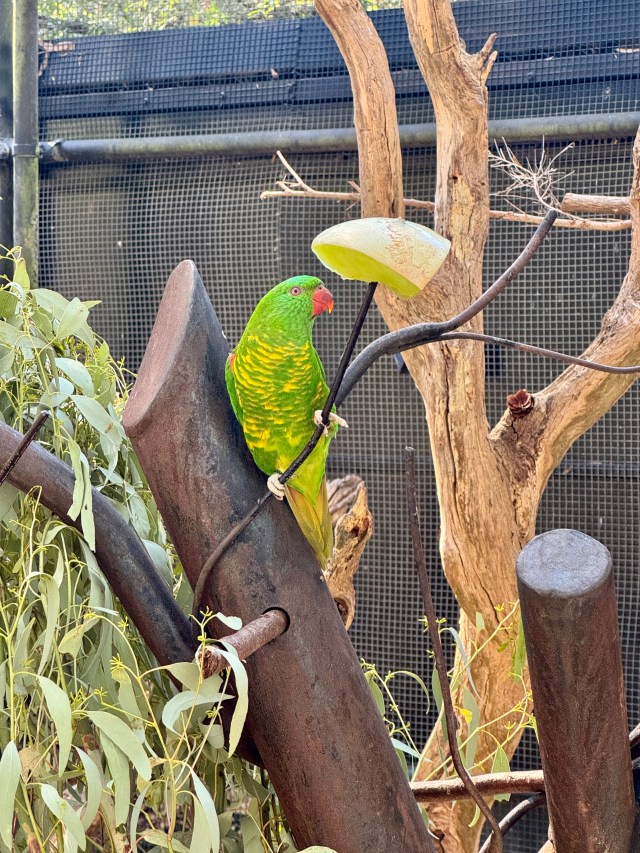
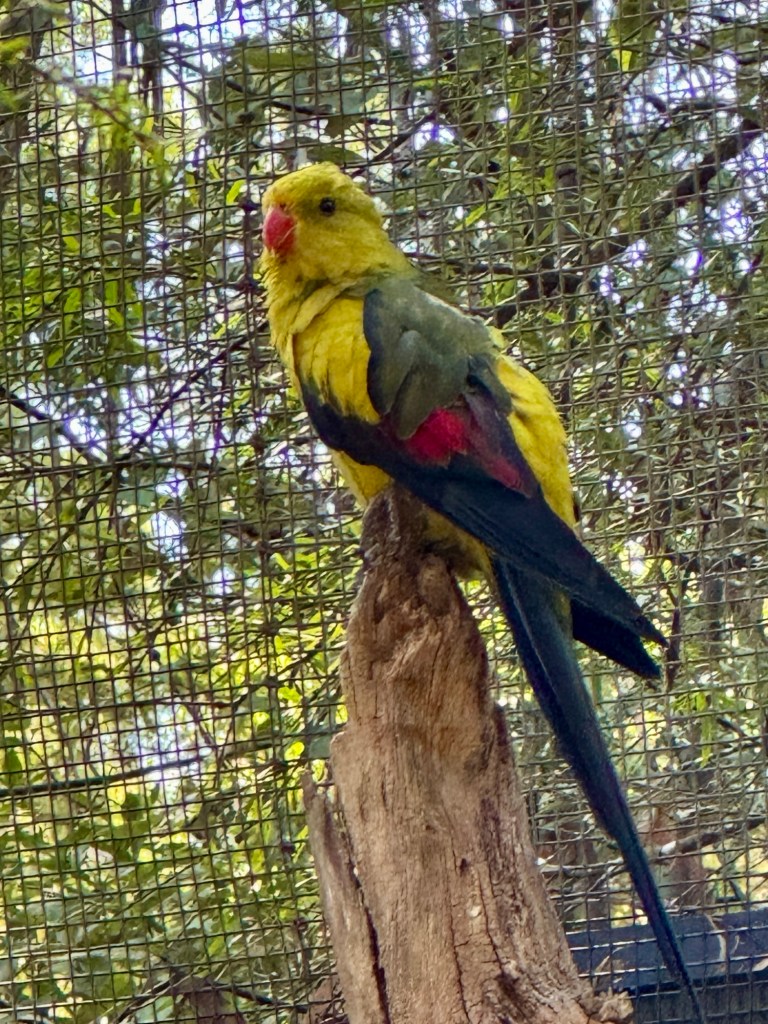
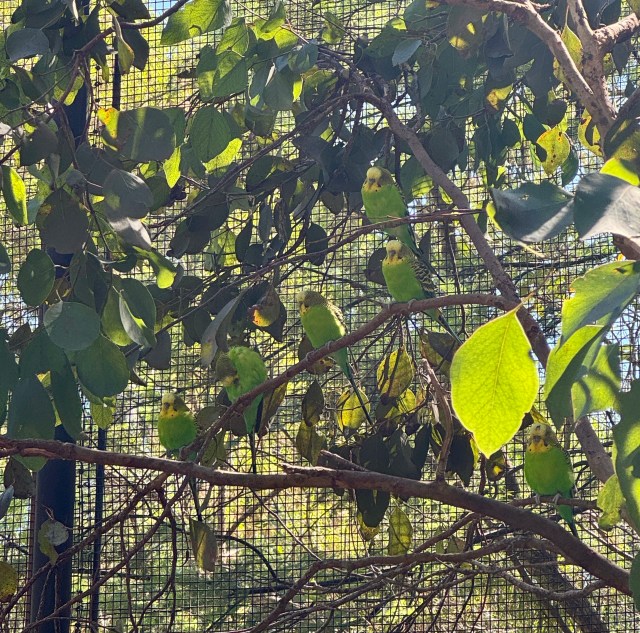
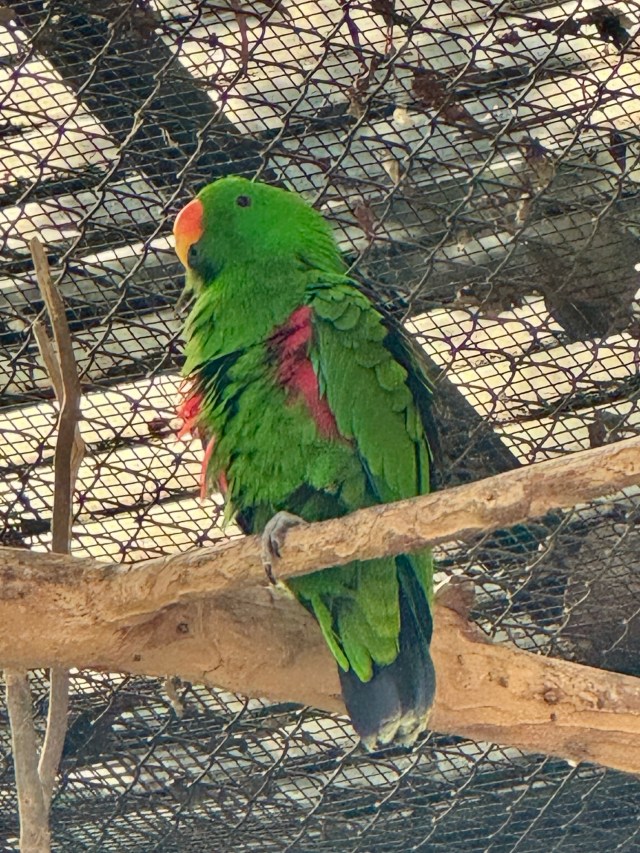
We saw a whole variety of birds!
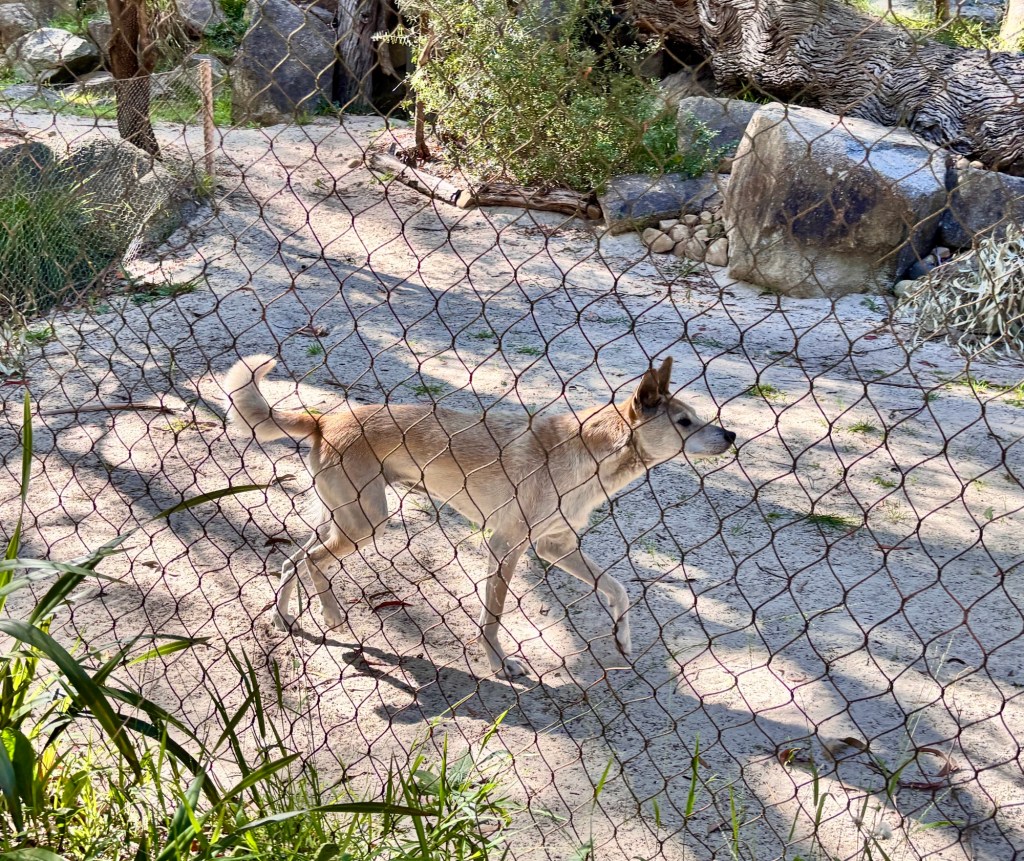
We went to the dingo pen and saw one roaming around.
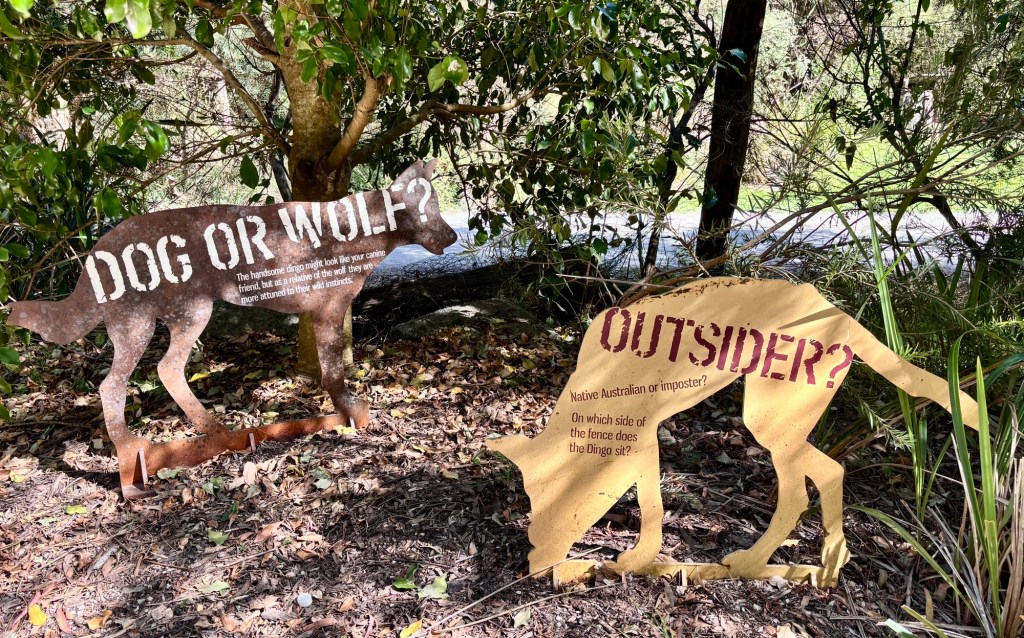
Dingo ancestors came with Asian seafarers over 5000 years ago.
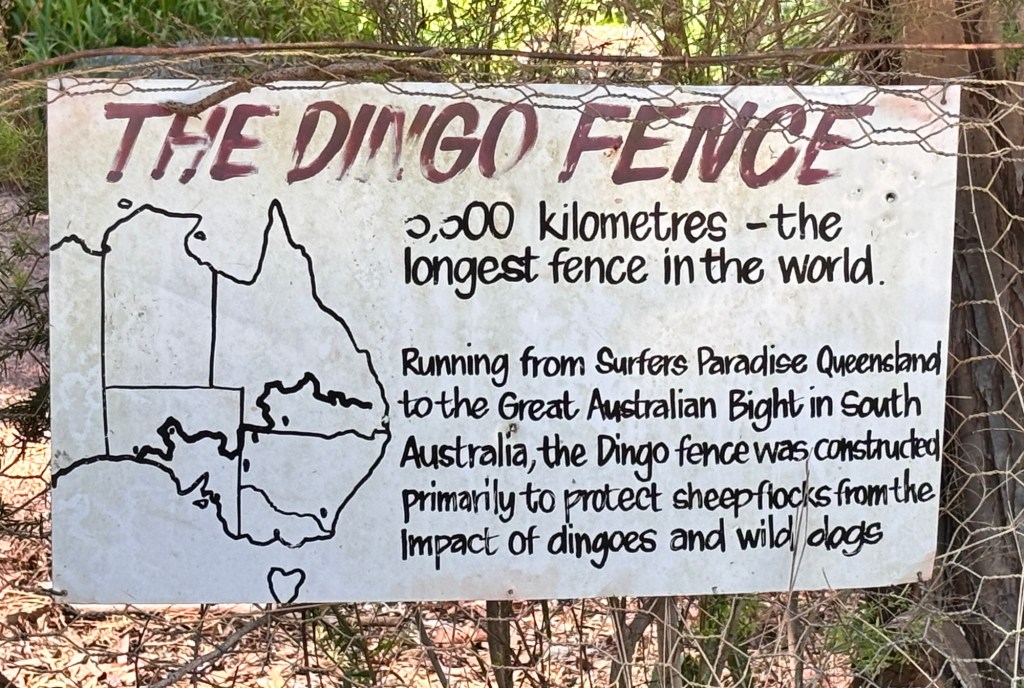
More interesting, we saw reference to the Dingo Fence. It stretches across thousands of kilometers. The fence was built in the early 1900’s to keep dingoes out of the southeast part of the continent where sheep and cattle were grazing.
At 5,614 kilometers, it is the world’s longest fence and one of the longest structures in the world. Until 1980, the fence was 8,614 kilometers (5352 miles) long, but was then shortened to 5,614 kilometers (3488 miles).

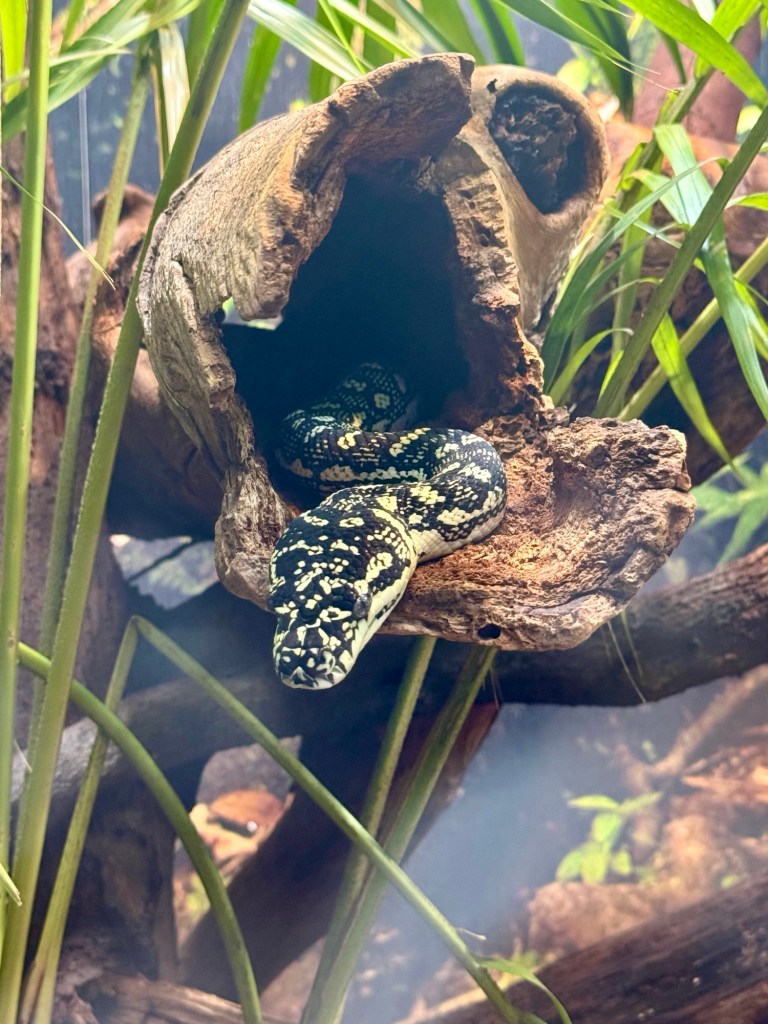

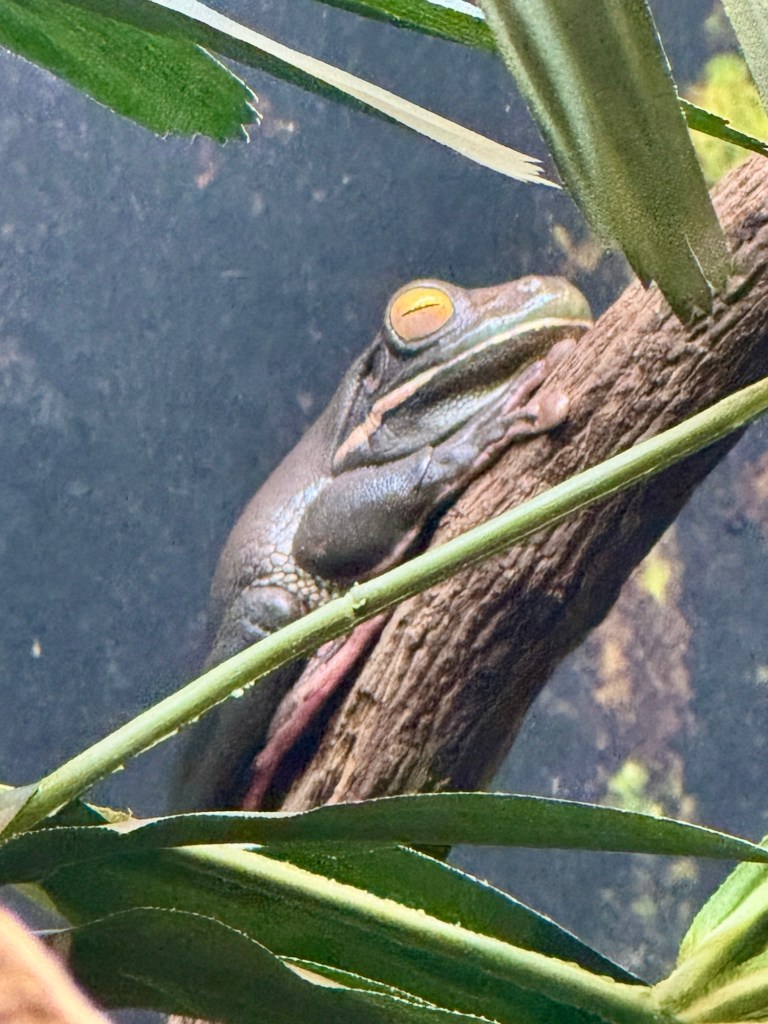
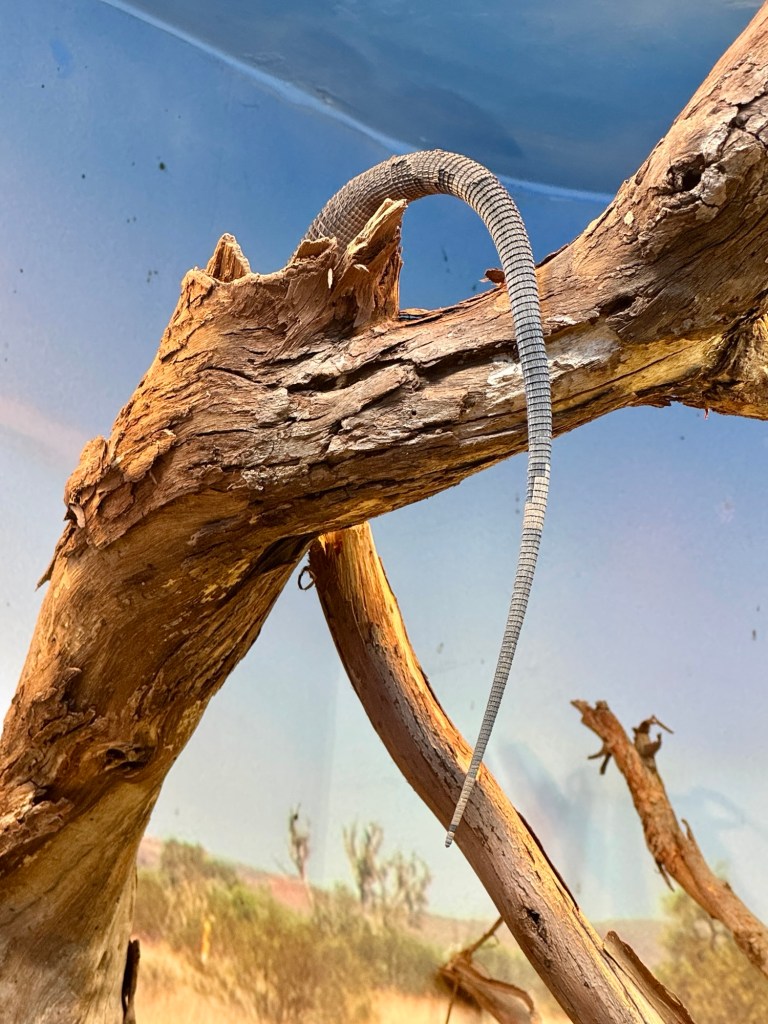
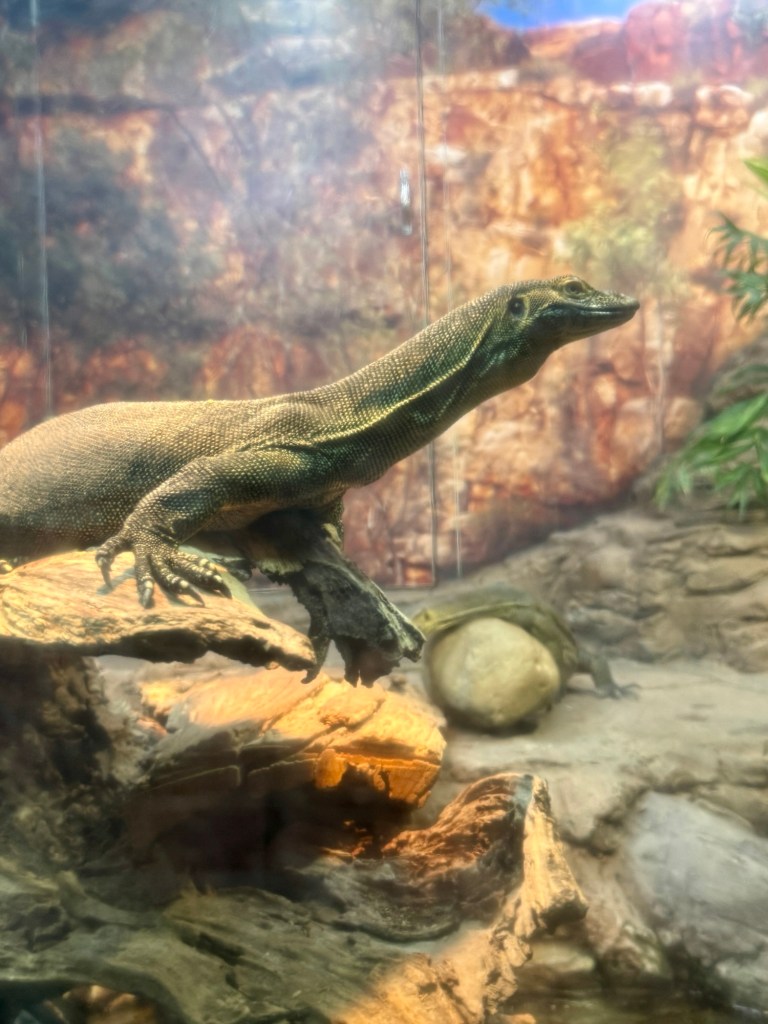
Then we went to the reptiles and amphibians area – not my favorite!
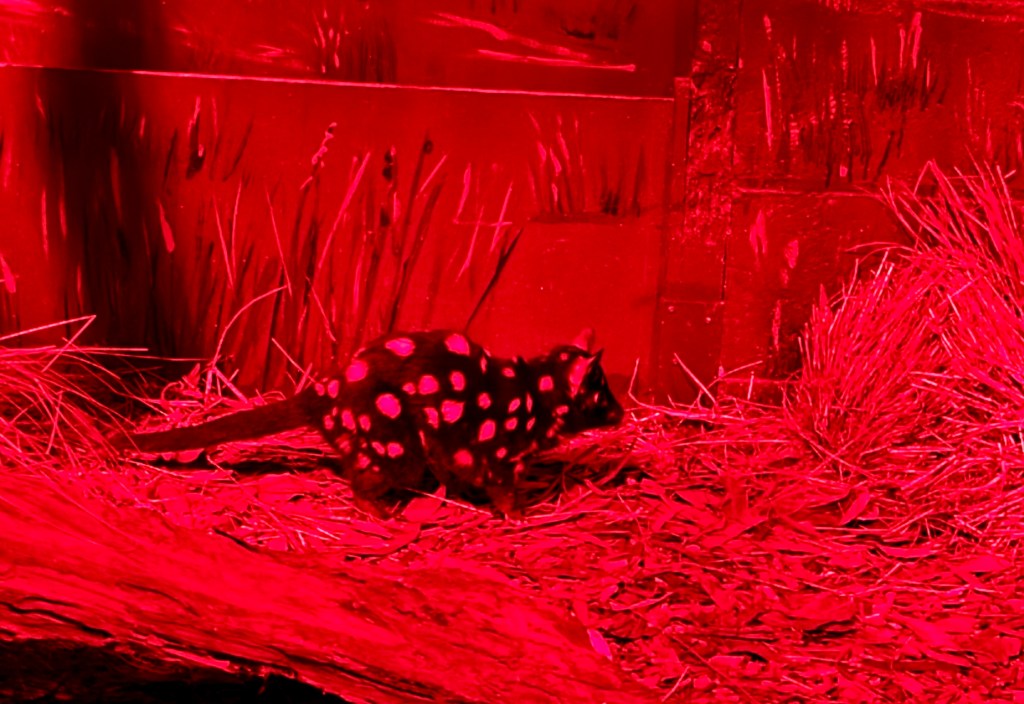
We went into the nocturnal section and saw an Eastern Quoll. It is extinct on mainland Australia, and now only found in Tasmania.
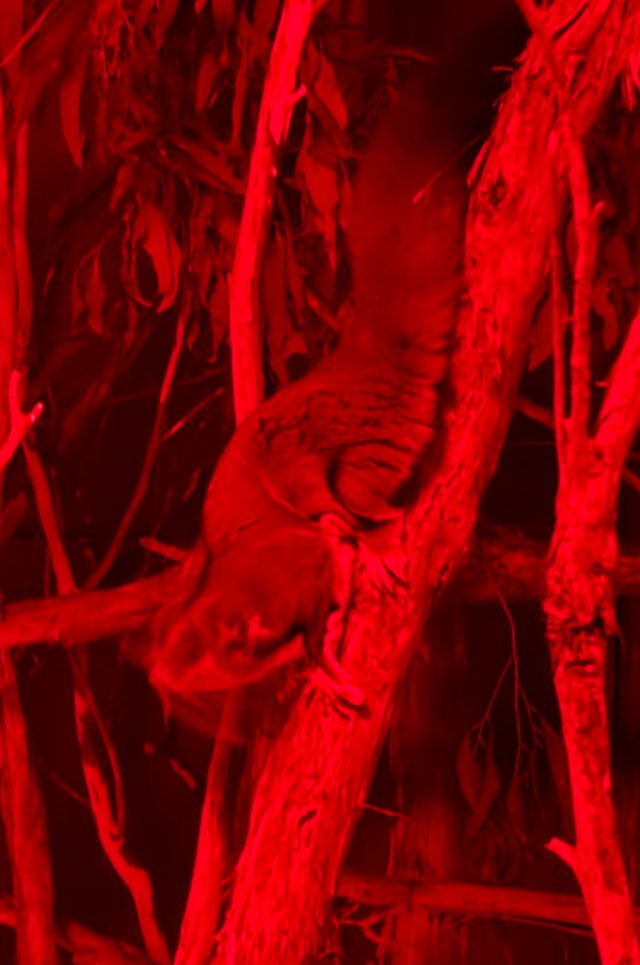
We saw a sugar slider. They can glide up to 50 meters between trees!
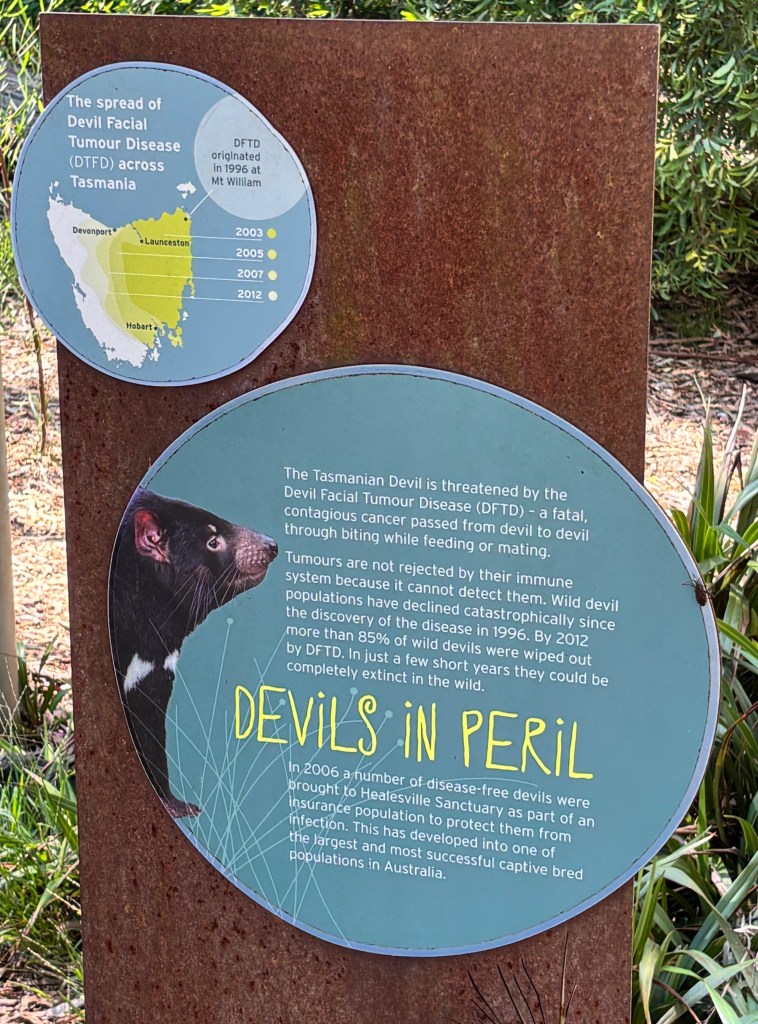
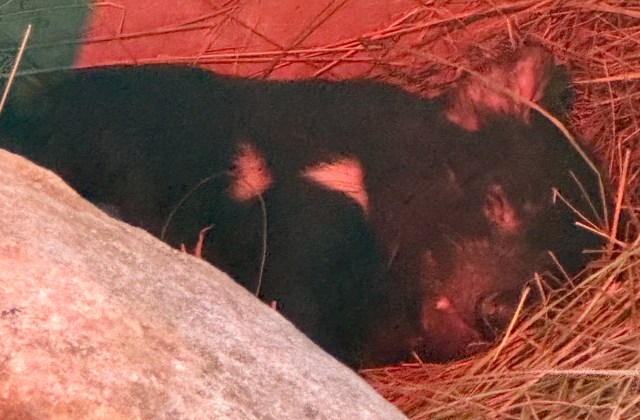
We went to the Tasmanian Devil exhibit and learned that a face tumor disease decimated the population beginning in 1996. This facility has worked to rebuild the species since 2006.
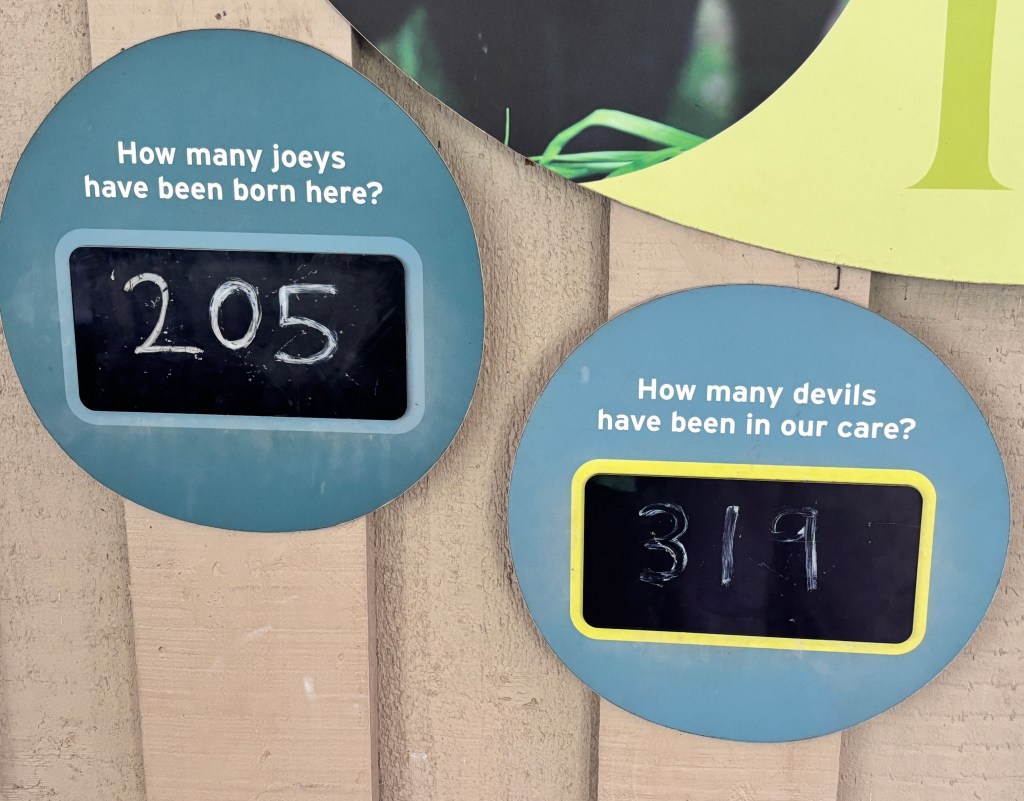
We were having a grand time until we realized we hadn’t seen any wallabies, platypuses, kangaroos or koala – and had 30 minutes left.

We were surprised to see Ben & Jerry’s on the premises, but no time for ice cream!
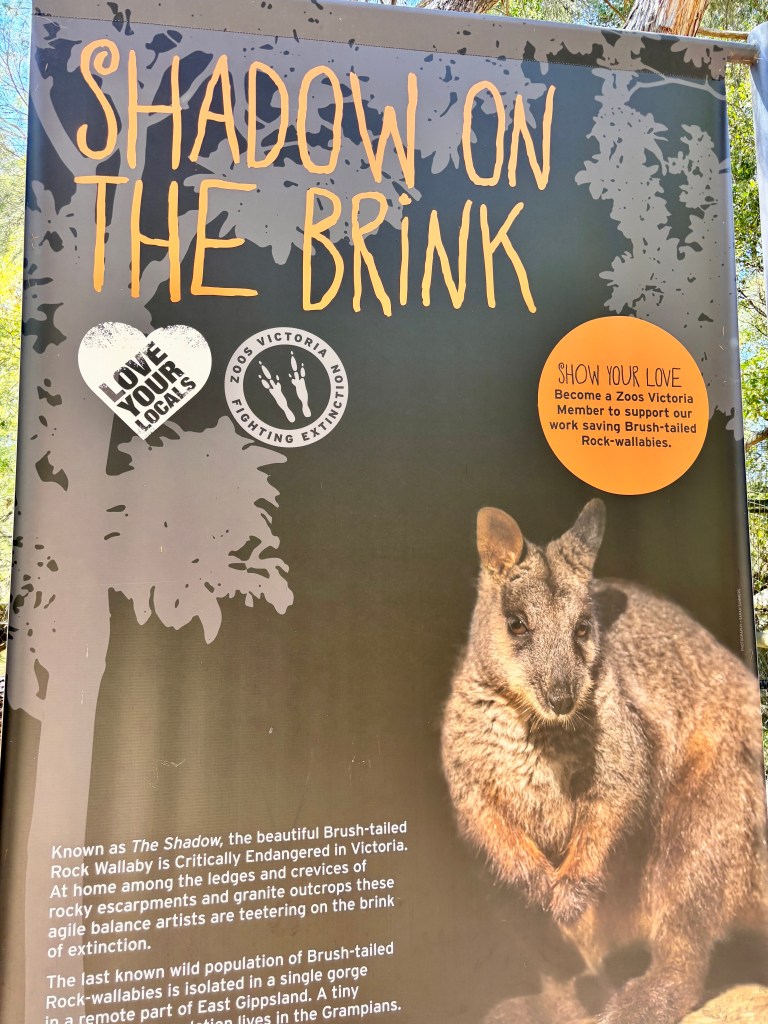
We found the wallaby complex but only saw one that slipped around the corner of a building.
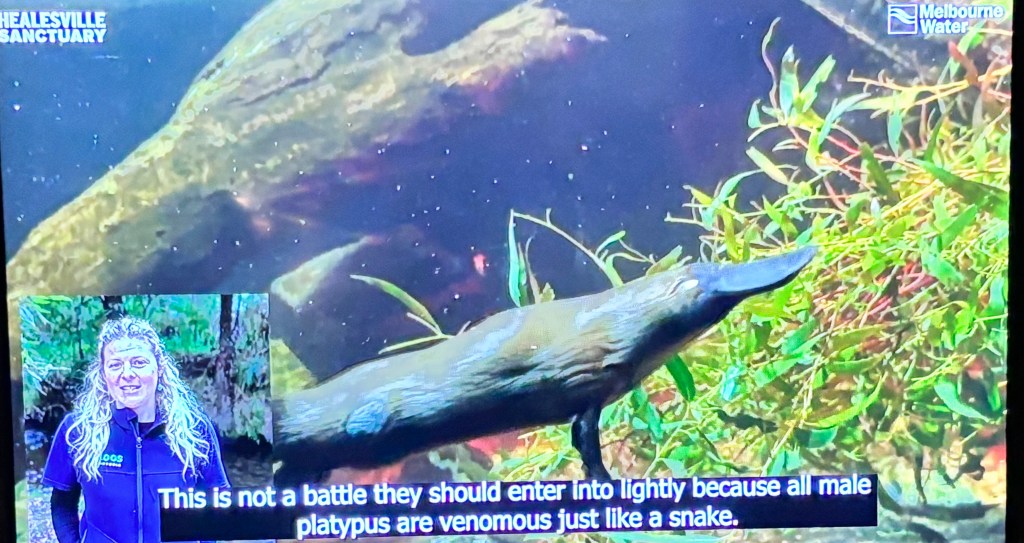
The platypus we “saw” was more of a “disturbance” in the water. This picture was taken from a video that was showing.
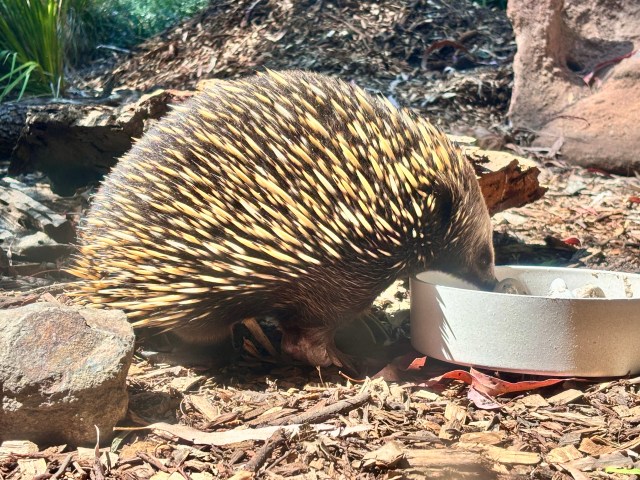
We saw an echidna. It is sometimes known as spiny anteater.
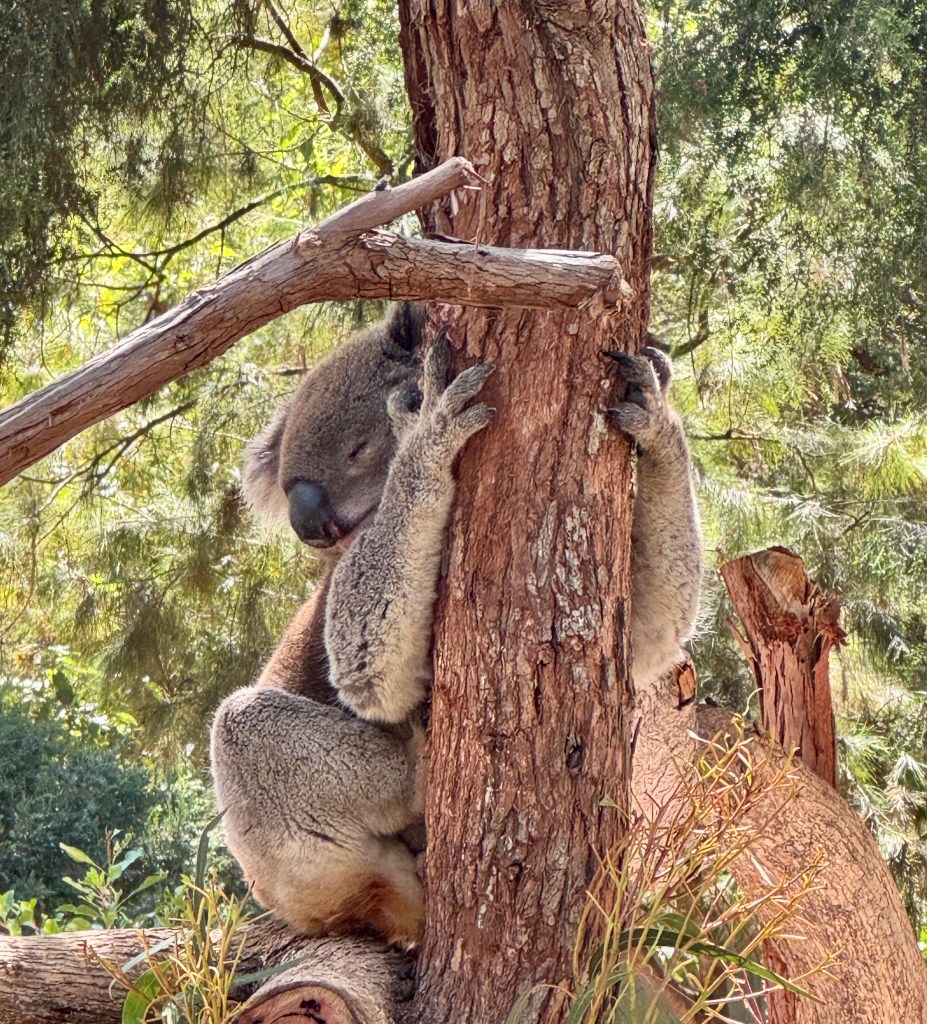
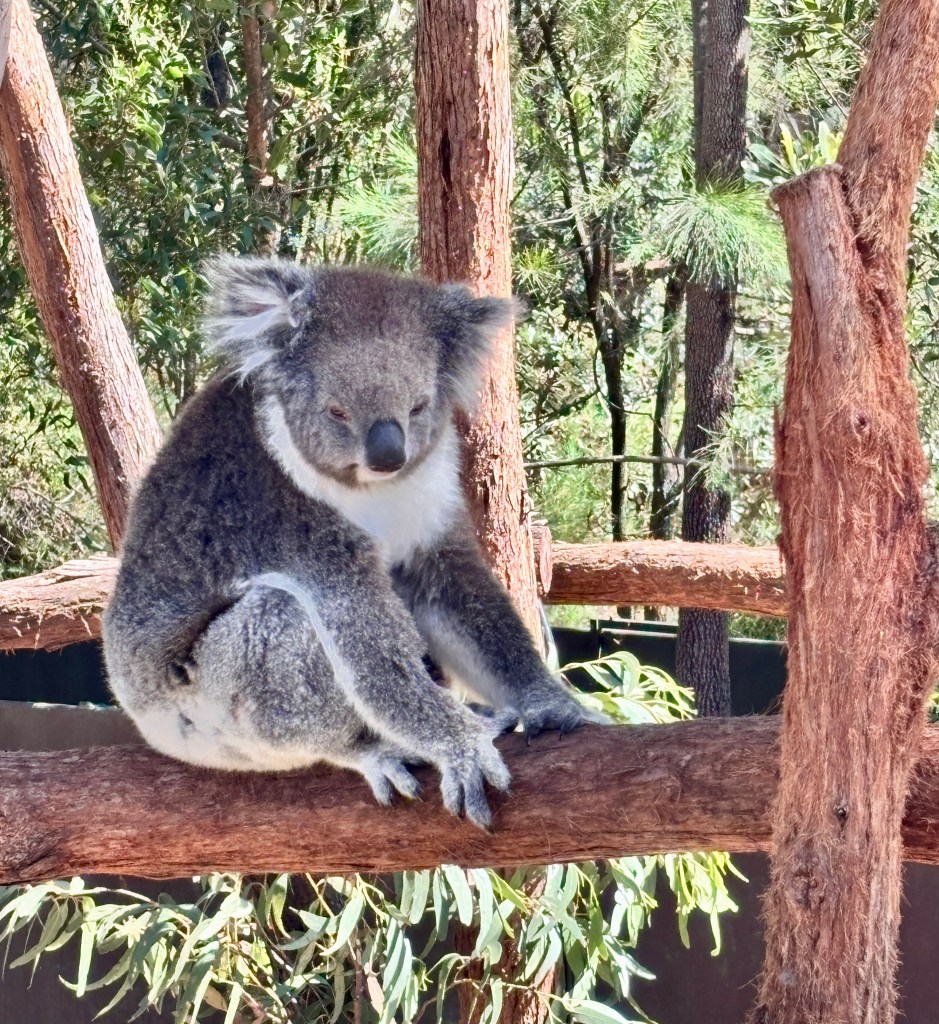
We finally made it to the koala. In the first five or six enclosures, we could see the koala, but they were resting, face hidden. Finally, we saw one that didn’t mind us seeing his face!
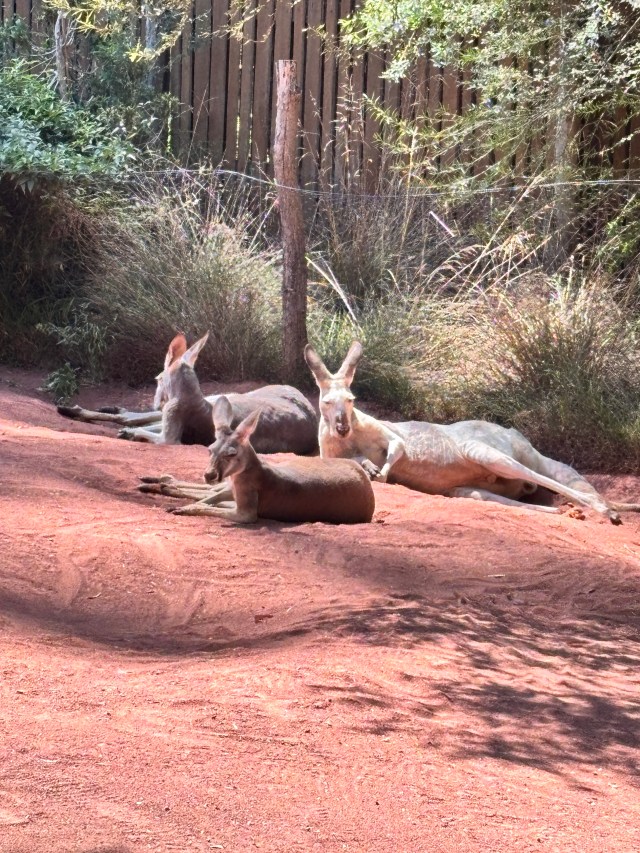
We had decided to forgo the kangaroos since we’d seen and fed them in Hobart – but we came upon them. They were chilling, and not too interested in us.
After a short bus ride, we began the Winery port of our tour – at Rochford Winery.
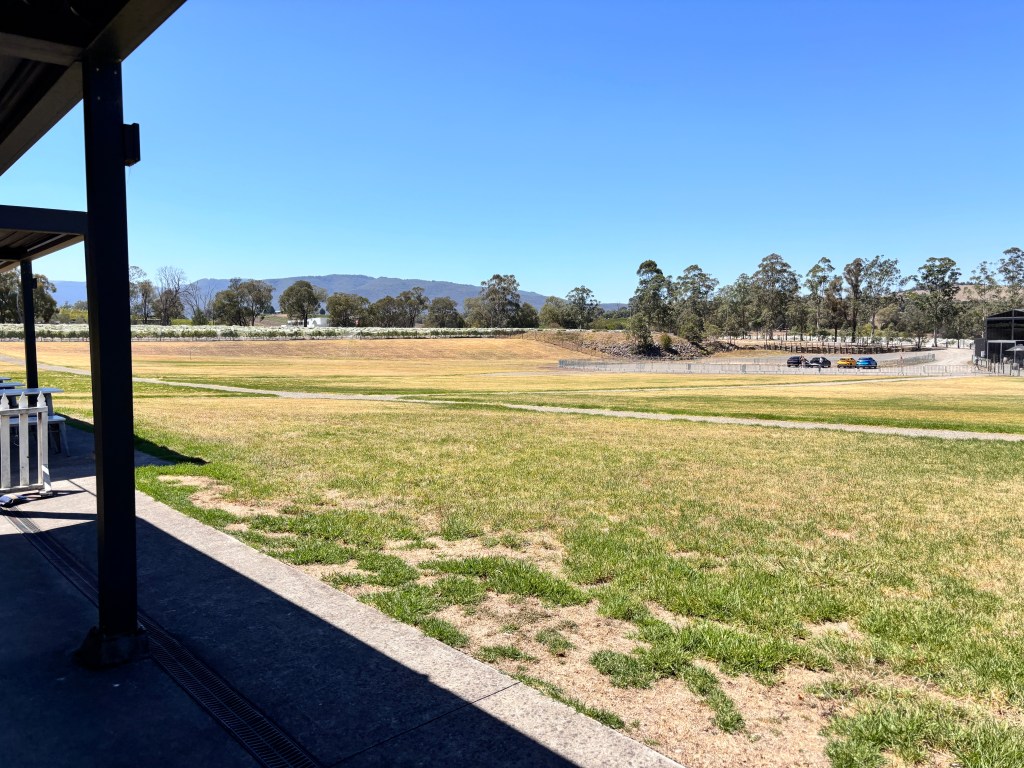
They have major concerts on “the green”, including stars like Elton John and Alisha Keyes.

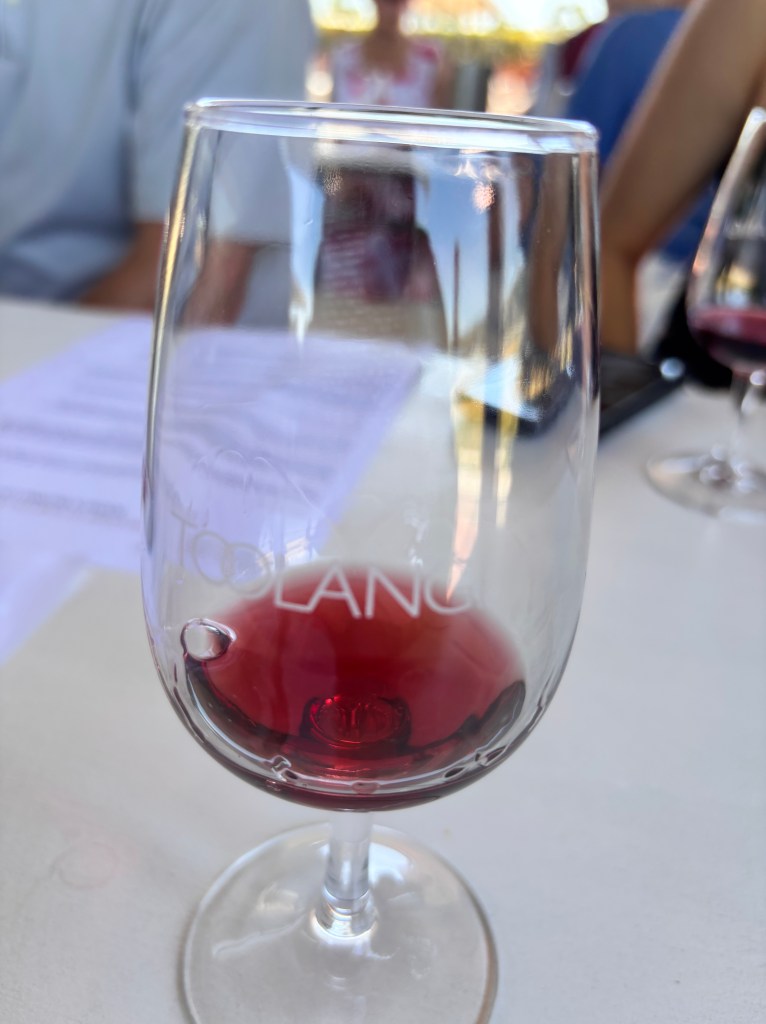
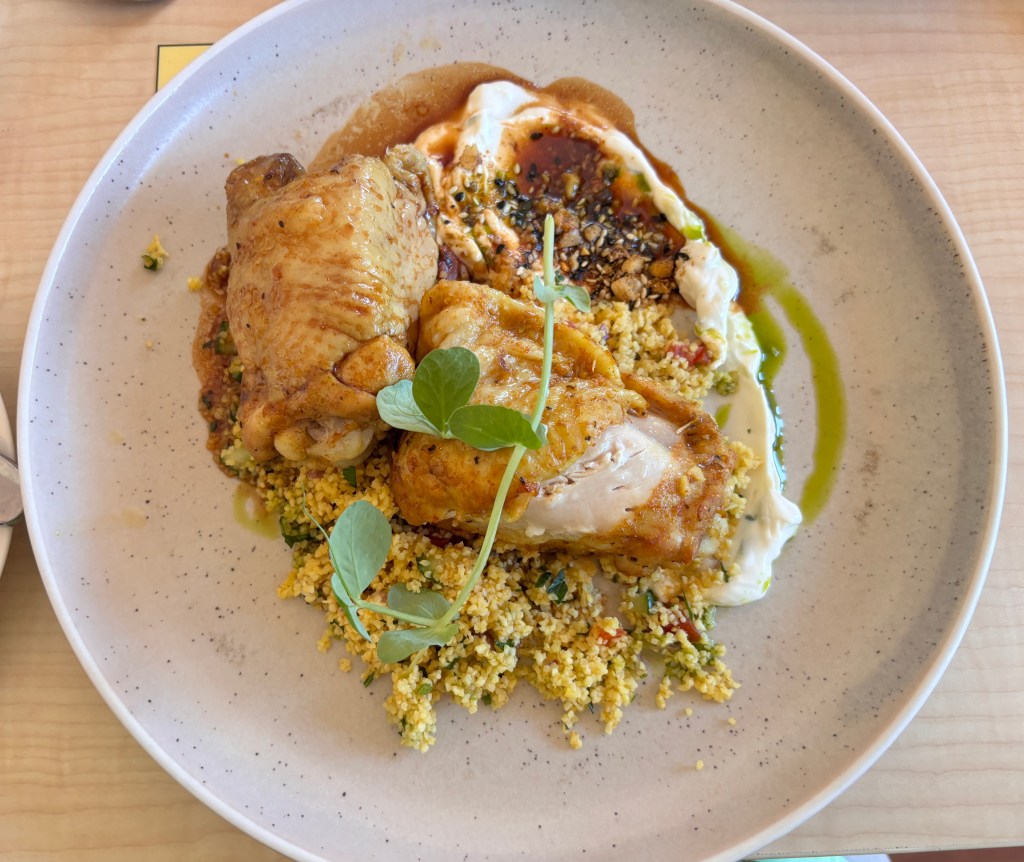
We had a number of tastings, and a nice lunch.
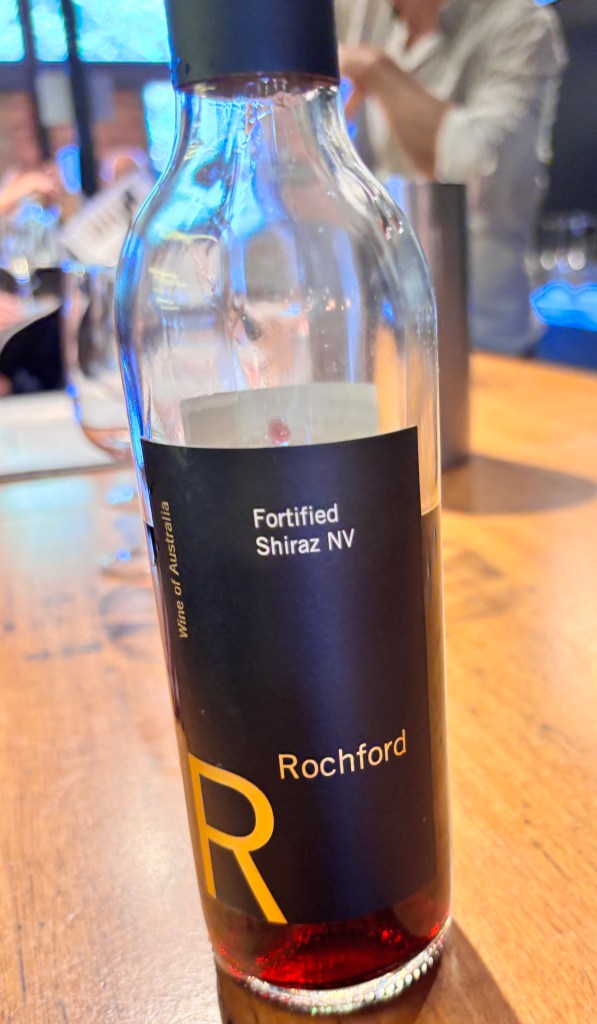
The final tasting, Fortified Shiraz, was our favorite. It was like port. Usually there is a $20 corkage fee to bring wine on board. That is waived for wine purchased on tours. We still didn’t buy. Our time remaining on the cruise was short and our package included drinks.
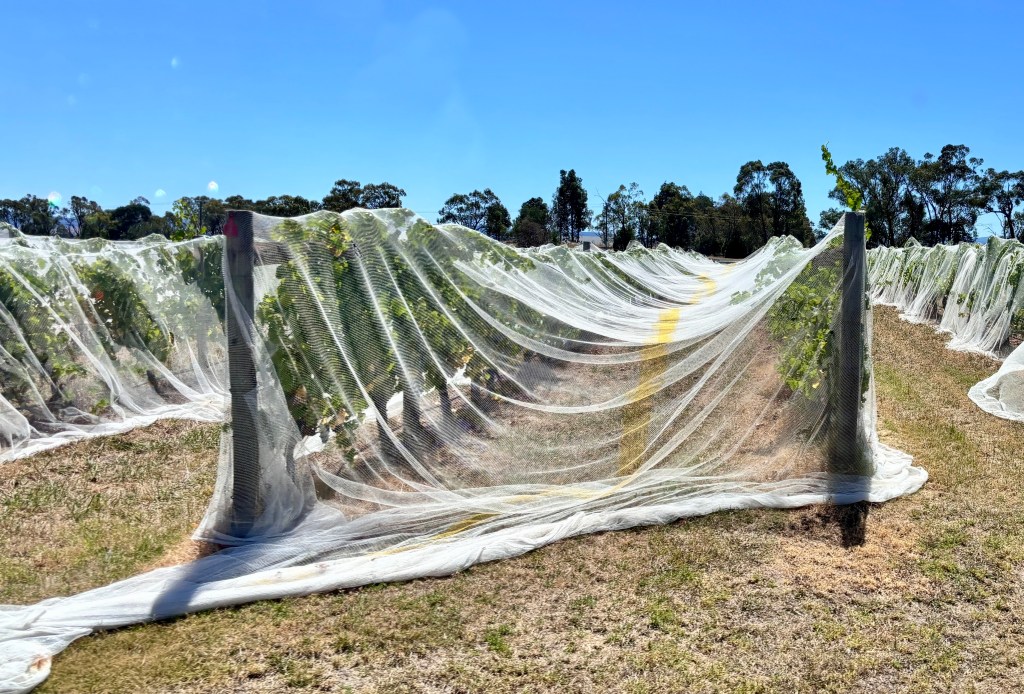
The nets covered the vines to keep the birds off as the grapes ripen.
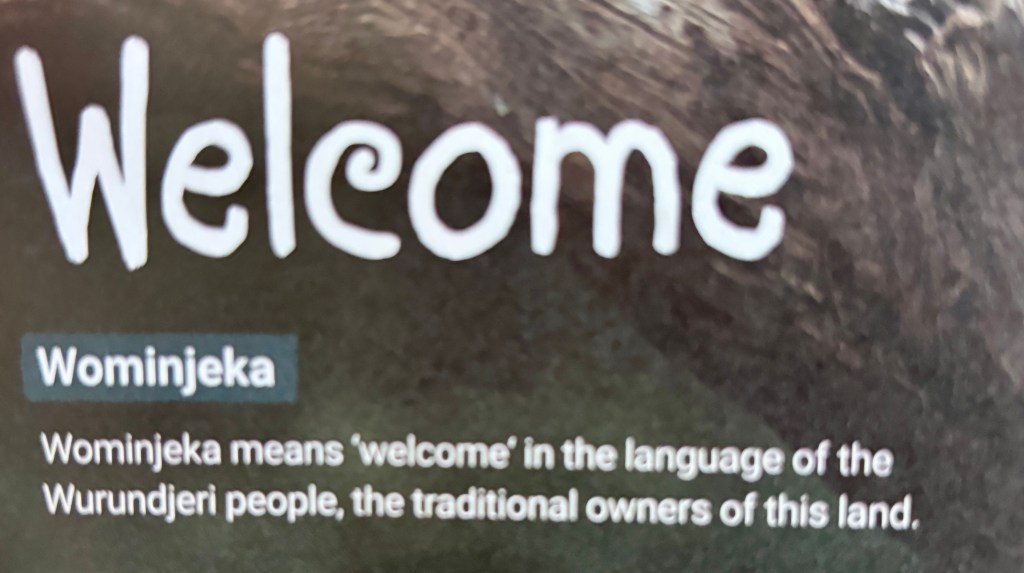
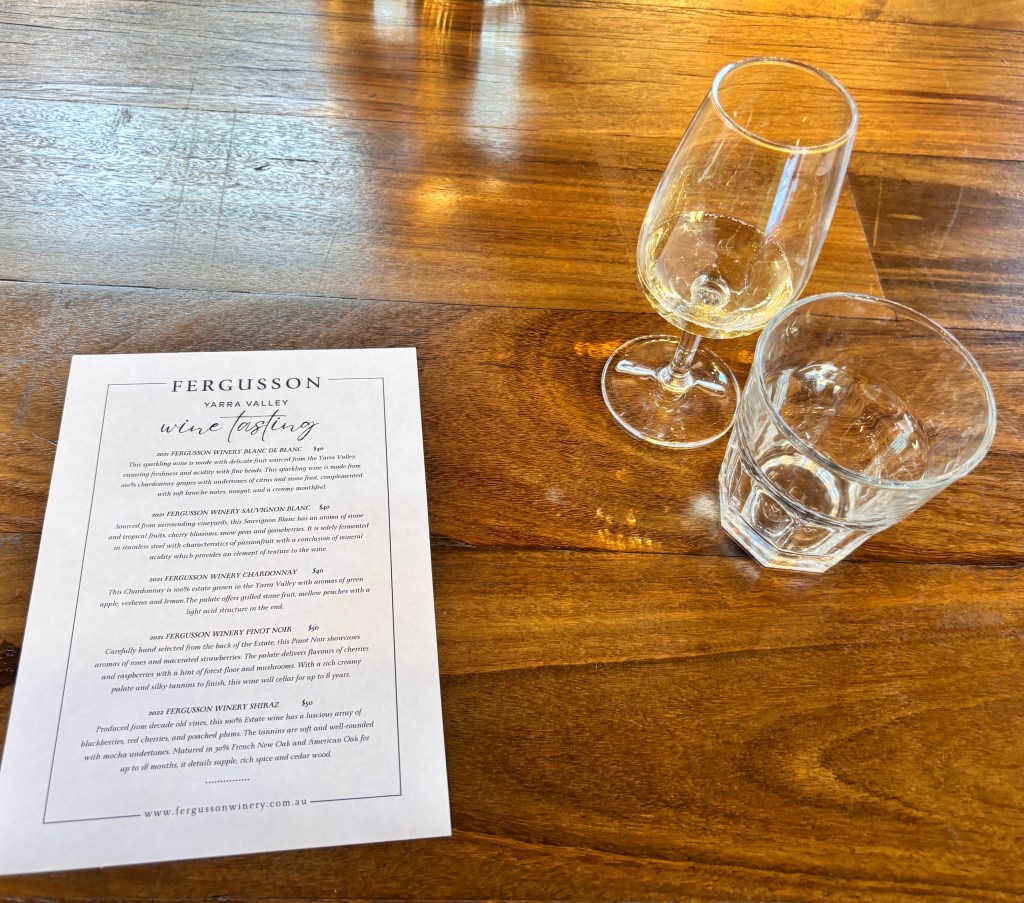
I wasn’t in need (or want) of anymore wine but we stopped at Ferguson Winery anyway.
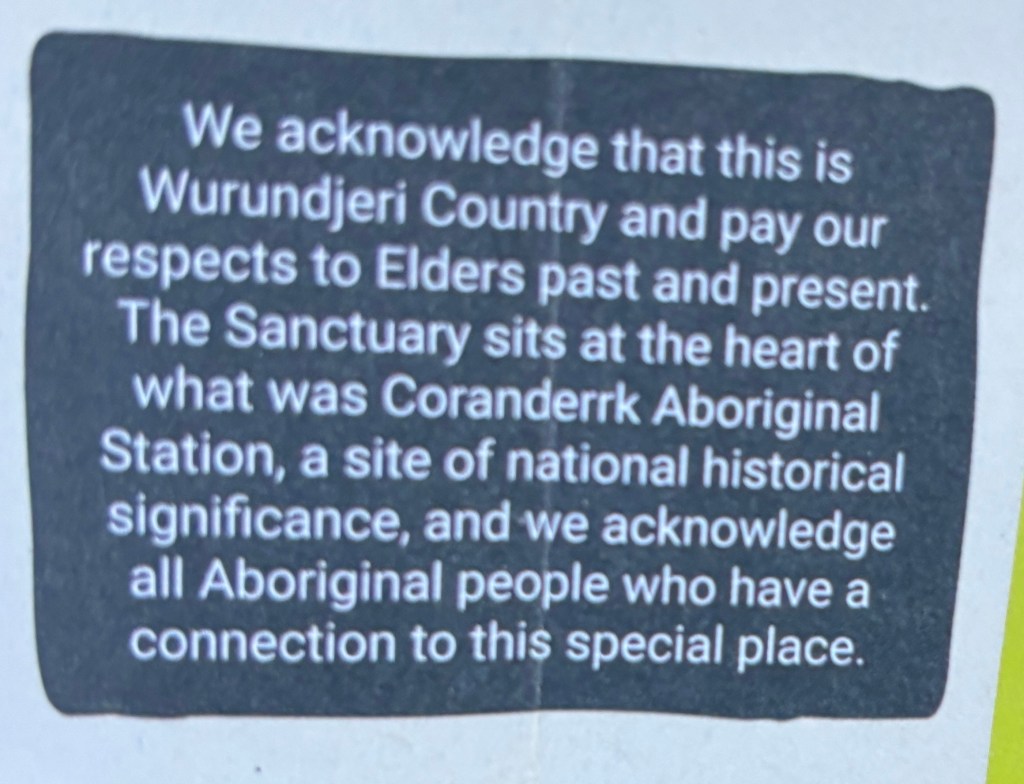
As the hostess began, she acknowledged the elders who were on this land in the past, present and emerging. We have heard that sentiment expressed repeatedly. Our visit was at the end of a good, but long, day and I don’t think we appreciated this winery as much as we might have under other circumstances.
Our guide had hoped to take a different route back so we could see wild kangaroos in the hills. Unfortunately, the time was gone and we had to go the less “roo” route. The driver said that kangaroos are sometimes hit by cars, similar to hitting deer in the US.
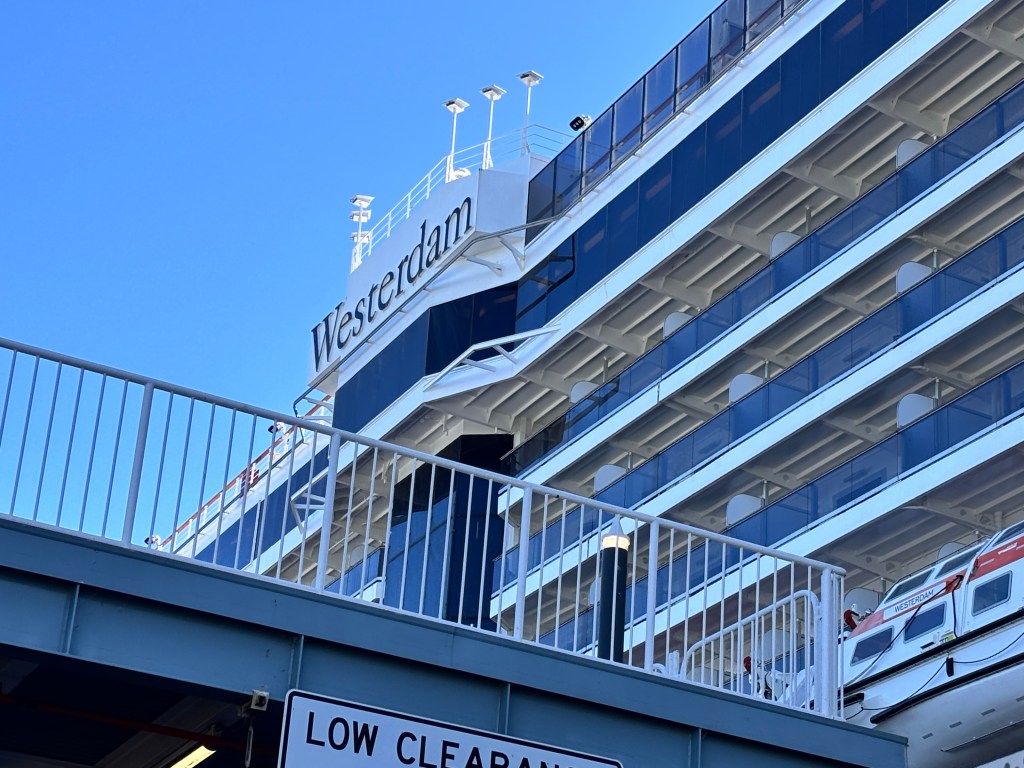
For the second time in a row, our tour got us back after “all aboard.” We weren’t terribly concerned because they had to wait. Our tour guide was a bit anxious because they get “dinged” for getting us back late.
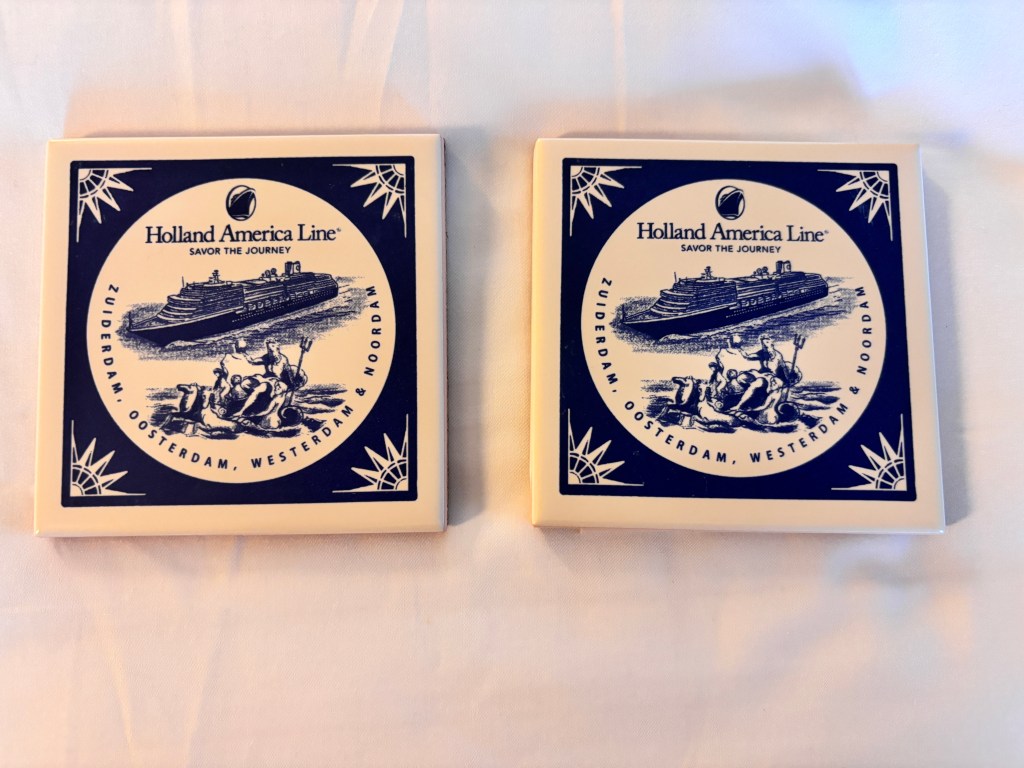
When we returned to our cabin, we received our Mariner Society tiles from Holland America. They have given passengers Netherland’s Delft tiles since the 1930s. We have quite a collection of them. I will do something with them someday.
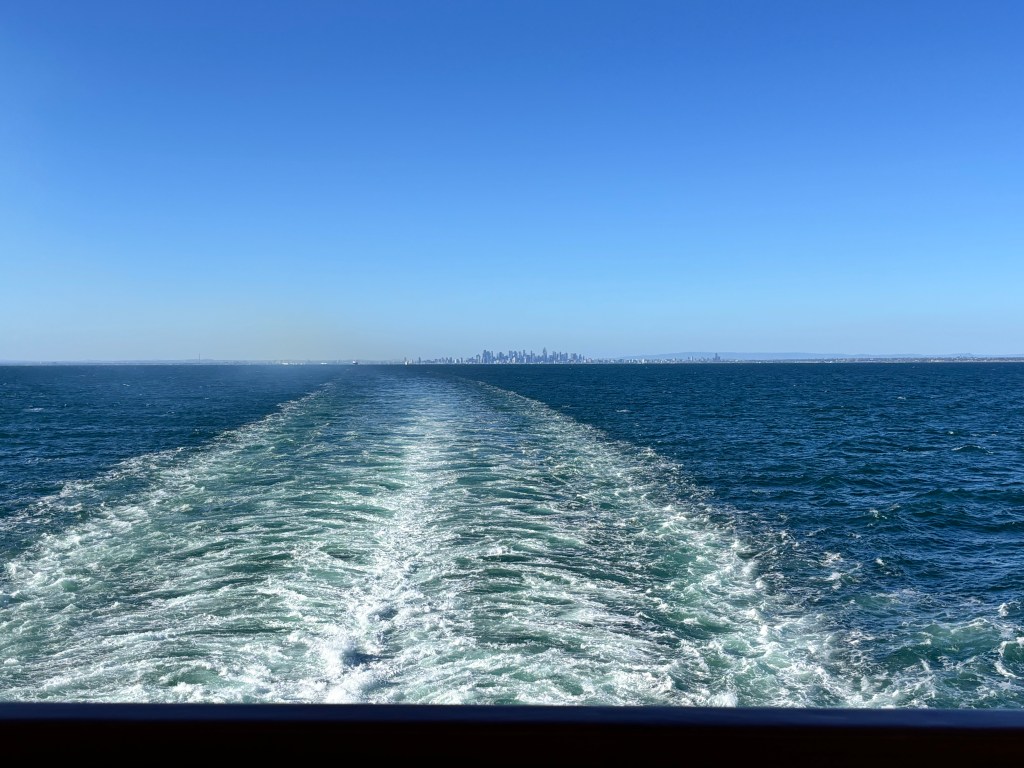
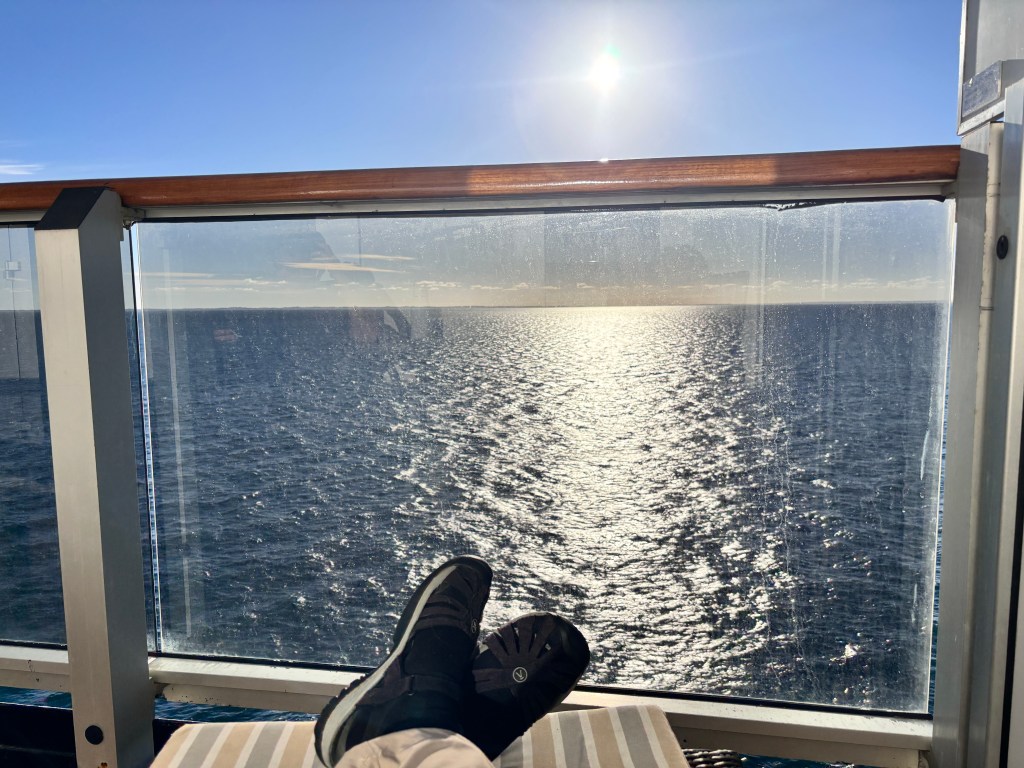

Leaving Melbourne, it took us several hours to sail across Port Phillip Bay.
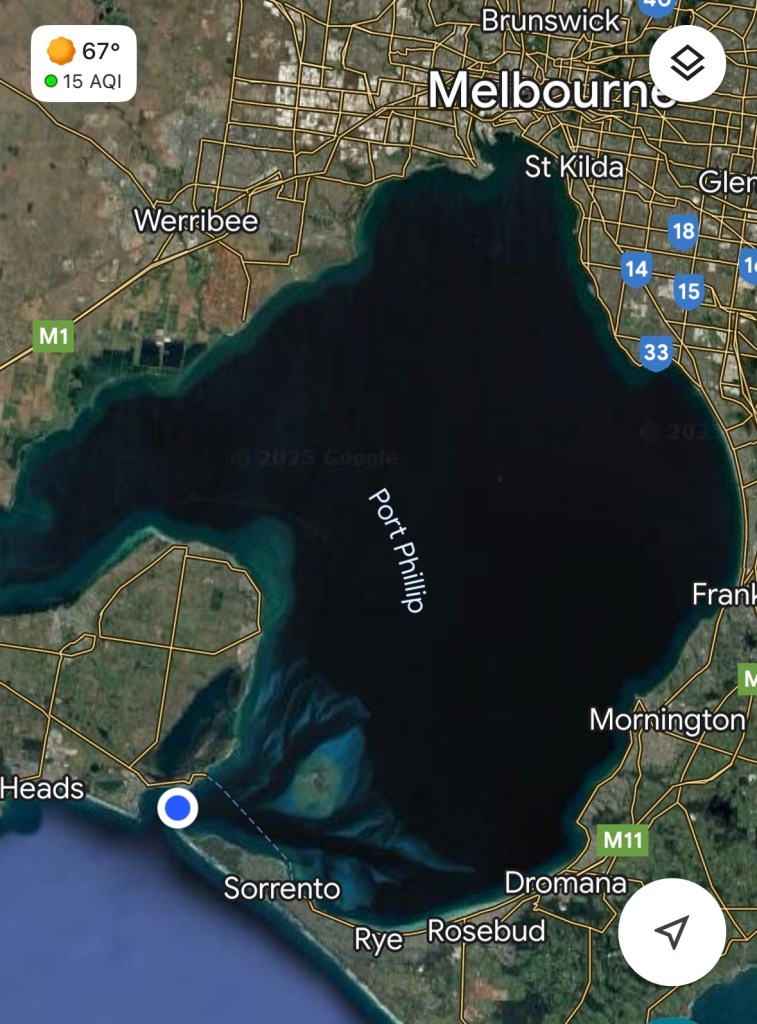
Geographically, the bay covers 750 square miles. The shore stretches roughly 164 miles around. Most of the bay is navigable, although it is extremely shallow for its size — the deepest portion is only 79 feet and half the bay is shallower than 26 ft deep.
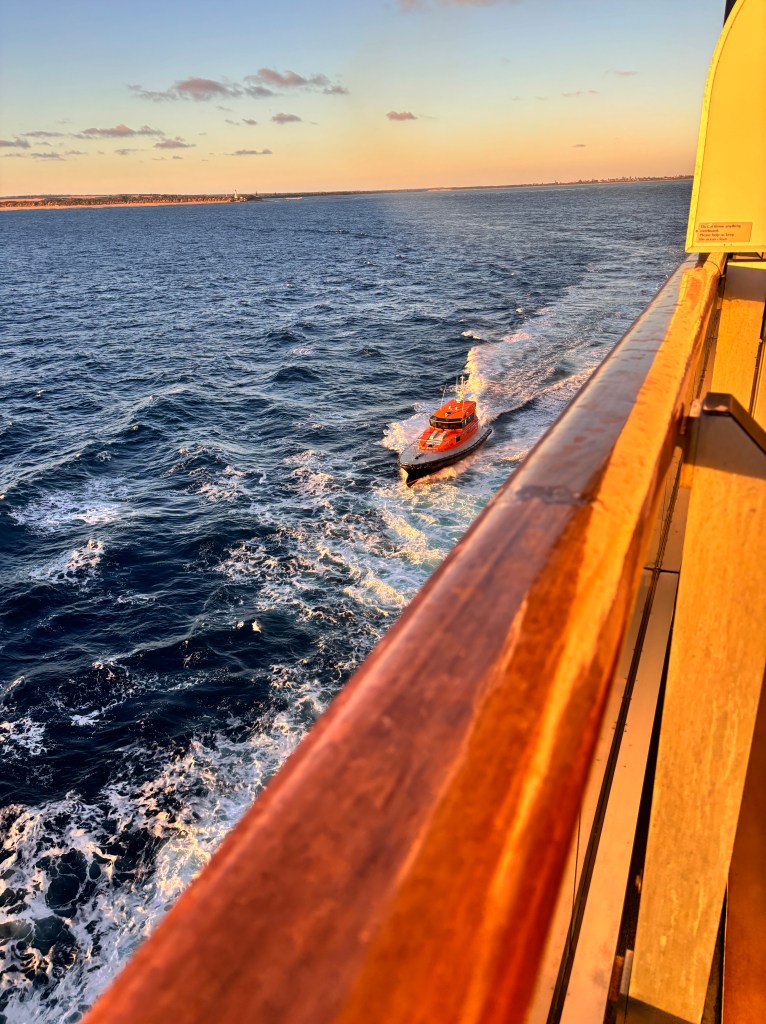
The pilot left us and we said goodbye and goodnight to Melbourne.
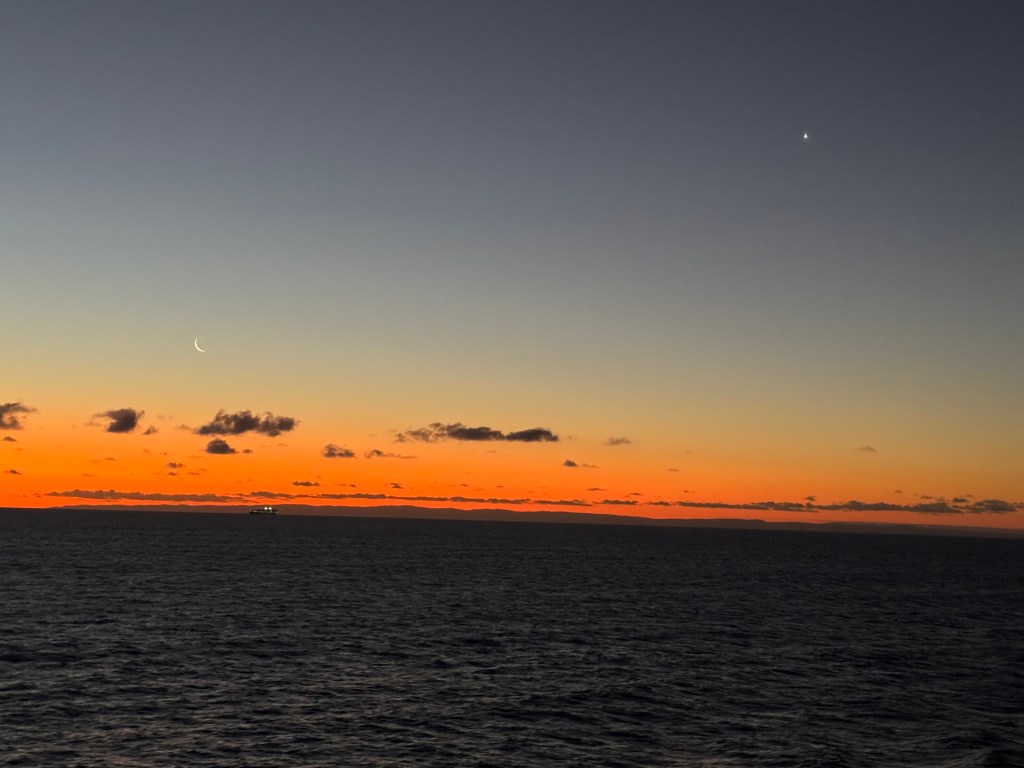
Next up: Our last sea day


 Serene Wandering
I’ve pretty much only ever heard of Vegemite from the Men at Work song “Down Under”. It doesn’t sound very pleasant at all, but it’s supposed to be good for you, correct? I think that I’ll take your word regarding the taste and pass!