
We were still in Amsterdam on July 25th. We had a food tour scheduled in the afternoon after our Anne Frank House morning.
We met our guide, Roman, and our fellow food tourists. Roman was amazing in how he instantly knew everyone’s name. He does two tours almost every day so it isn’t like he could study them.
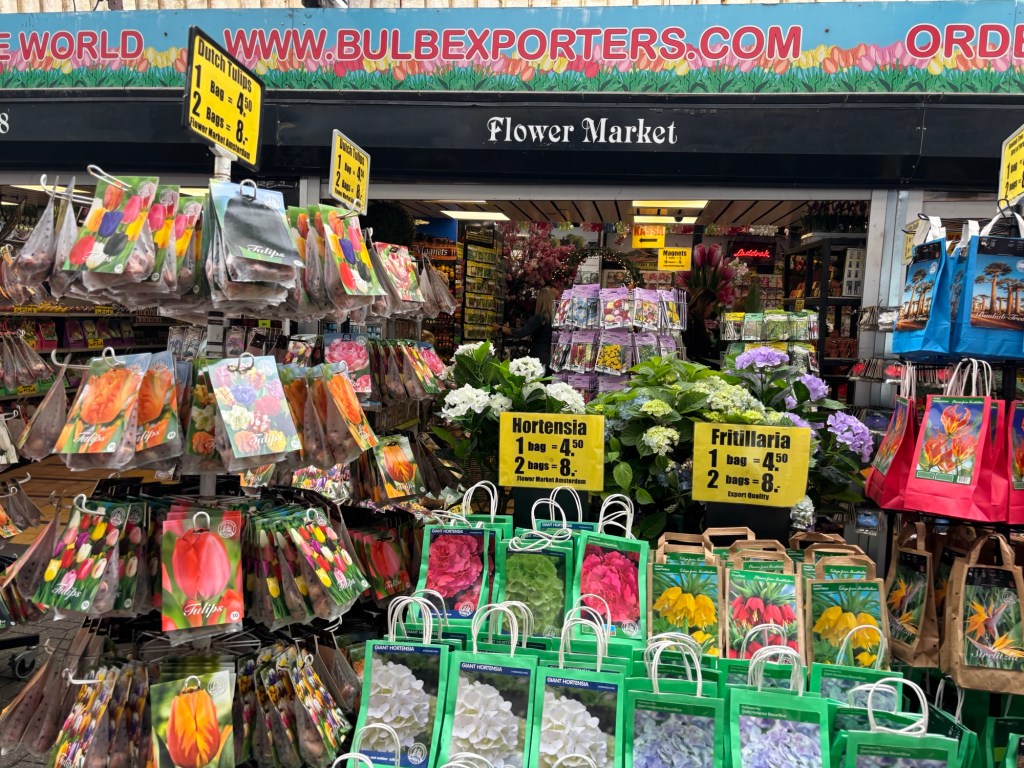
Roman began by taking us to a flower market that opened in 1871. It is open everyday. The Dutch originally acquired tulips from Istanbul and currently send out two billion tulips a year. The growing season is March to May.
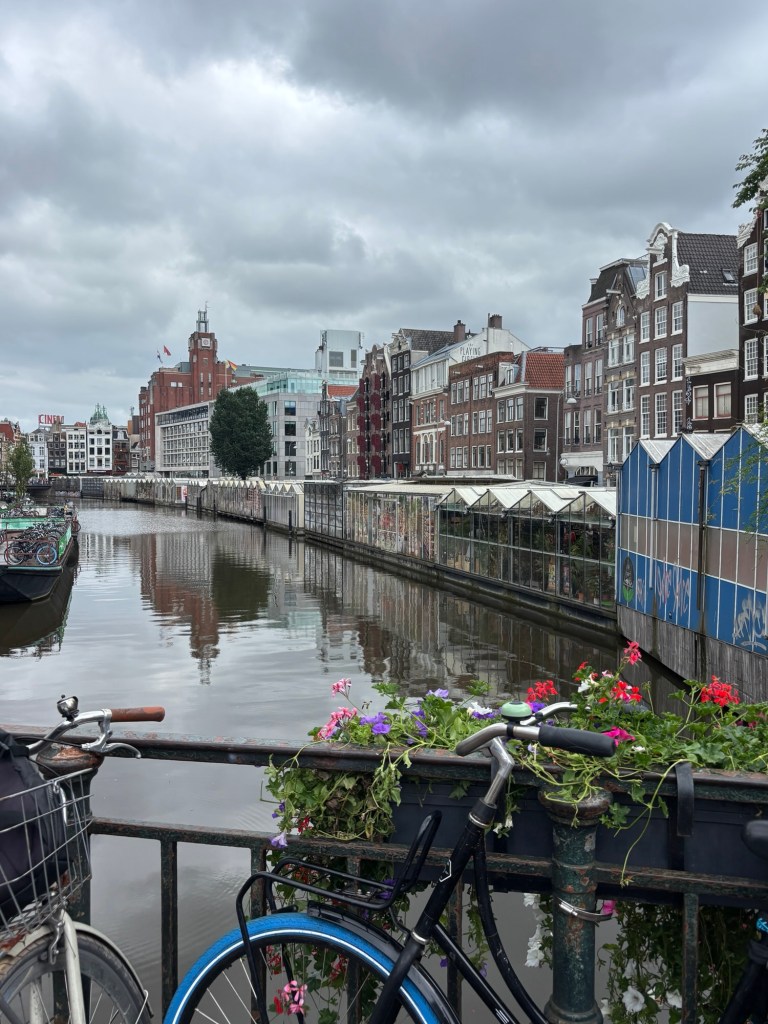
It wasn’t until we got to the back side that he showed us the flower market is really floating on the canal.
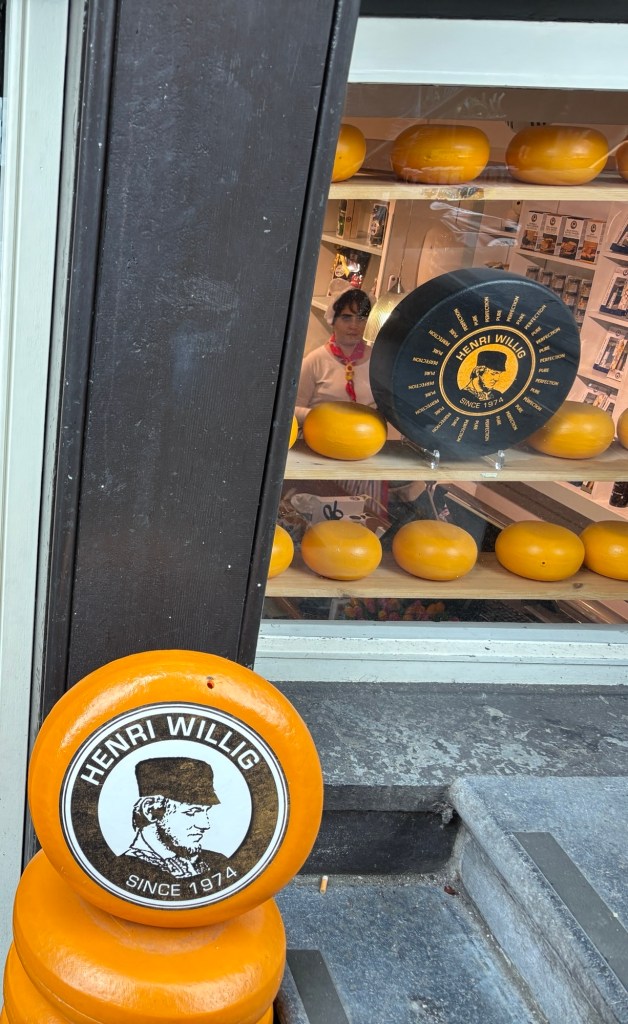
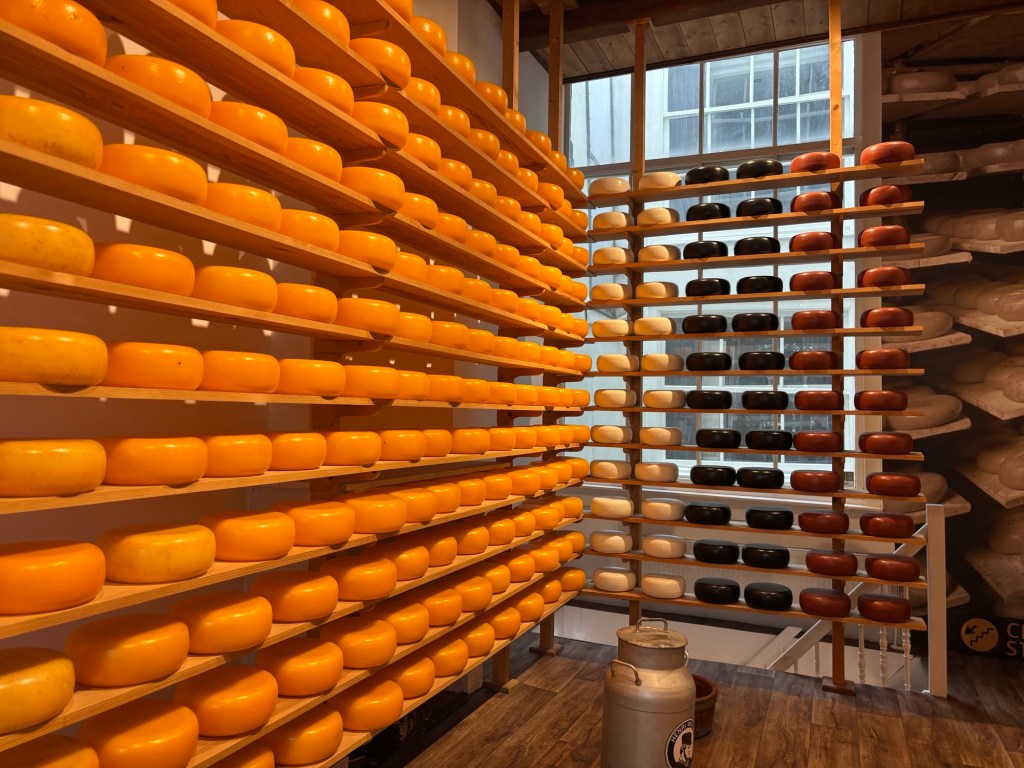
We stopped for Gouda cheese, which is aged beteeen two weeks and two years. Each Dutch person eats about 34 lbs of Gouda cheese a year. Edam is also a local cheese.
We started by watching a video about this dairy farmer’s ways. His philosophy is that happy cows make the best milk and the best cheese. His cows can be outside in the pasture or they can be reclining on soft hay in the covered area. They can be milked or not as they feel the need. The video showed how the cows walk themselves to an automatic milker. We all loved this farmer.
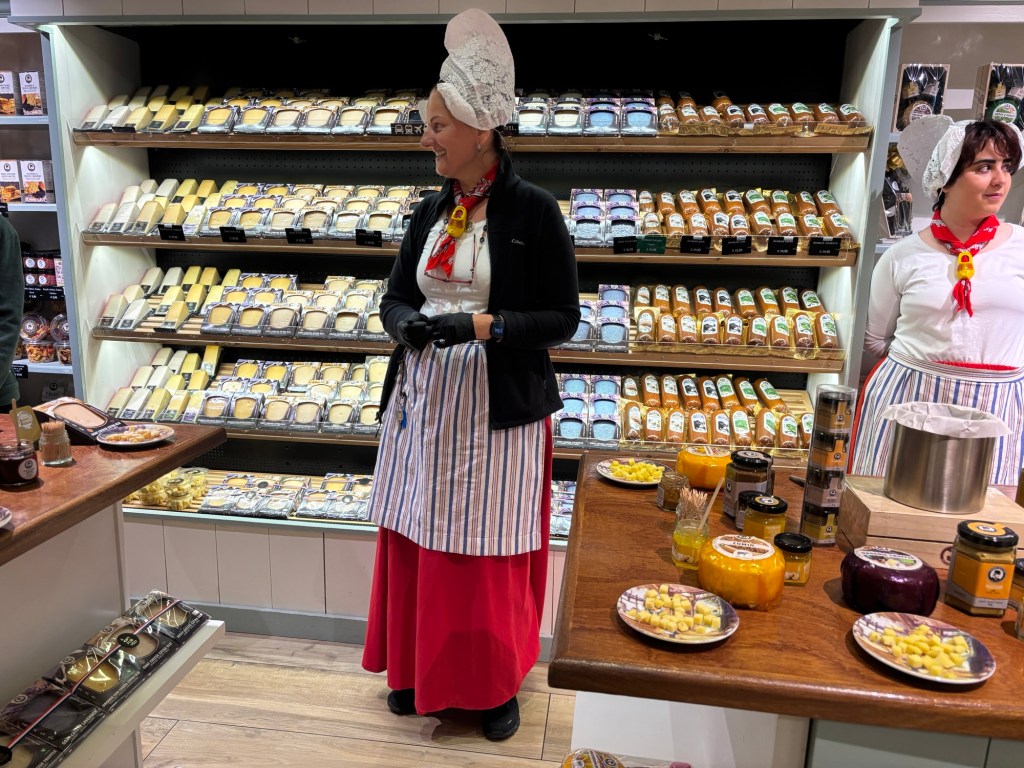
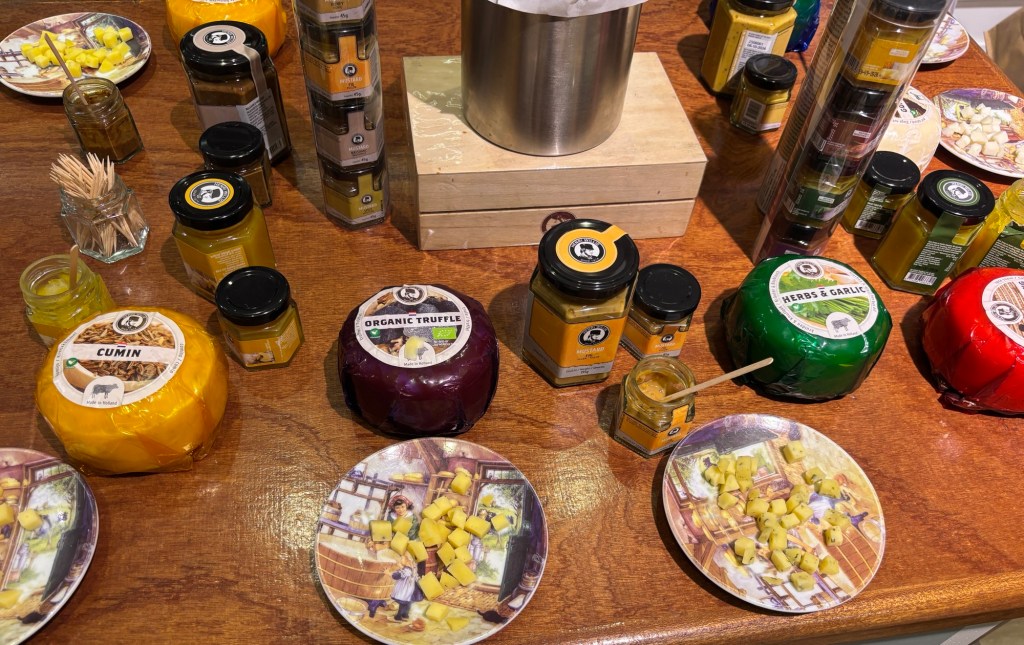
The cows did make delicious cheese. We were able to sample about 20 kinds of cow, sheep and goat cheese.


My favorites were the “goat cheese extra old” and “rosemary and thyme.”
Randy said he liked them all. Several in our group bought cheese but we were in a hotel without a refrigerator heading to a cruise ship.
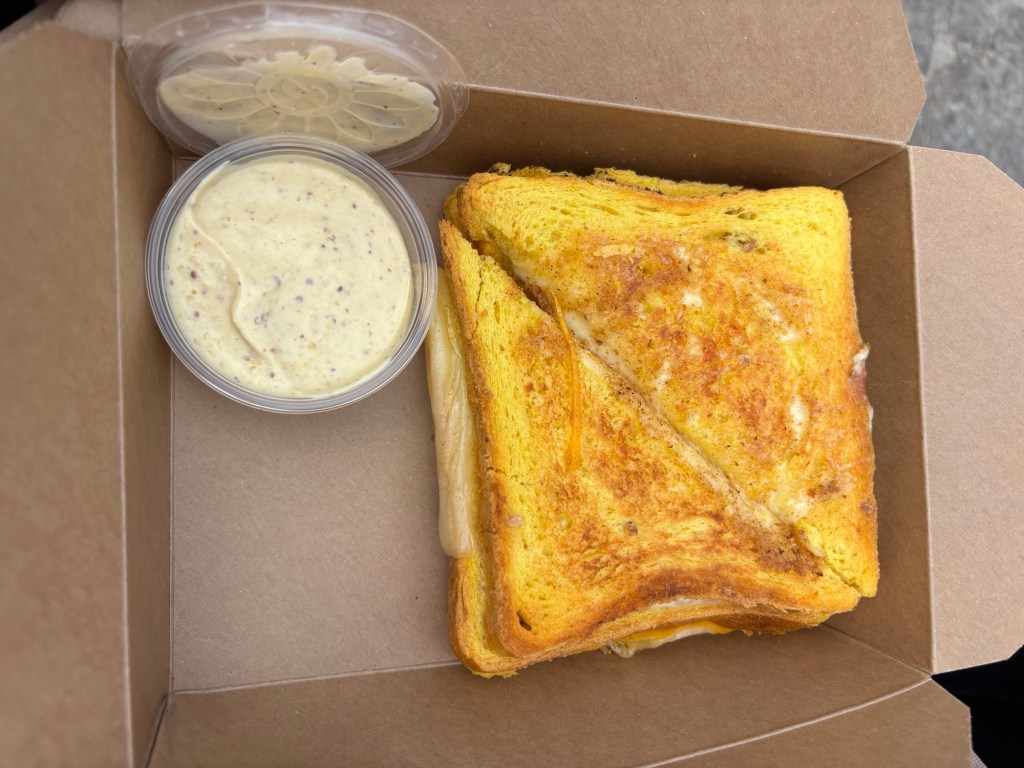
Our next stop was for take away grilled cheese sandwiches made with edam, gouda and cheddar cheeses. The dip had a mayonnaise base.
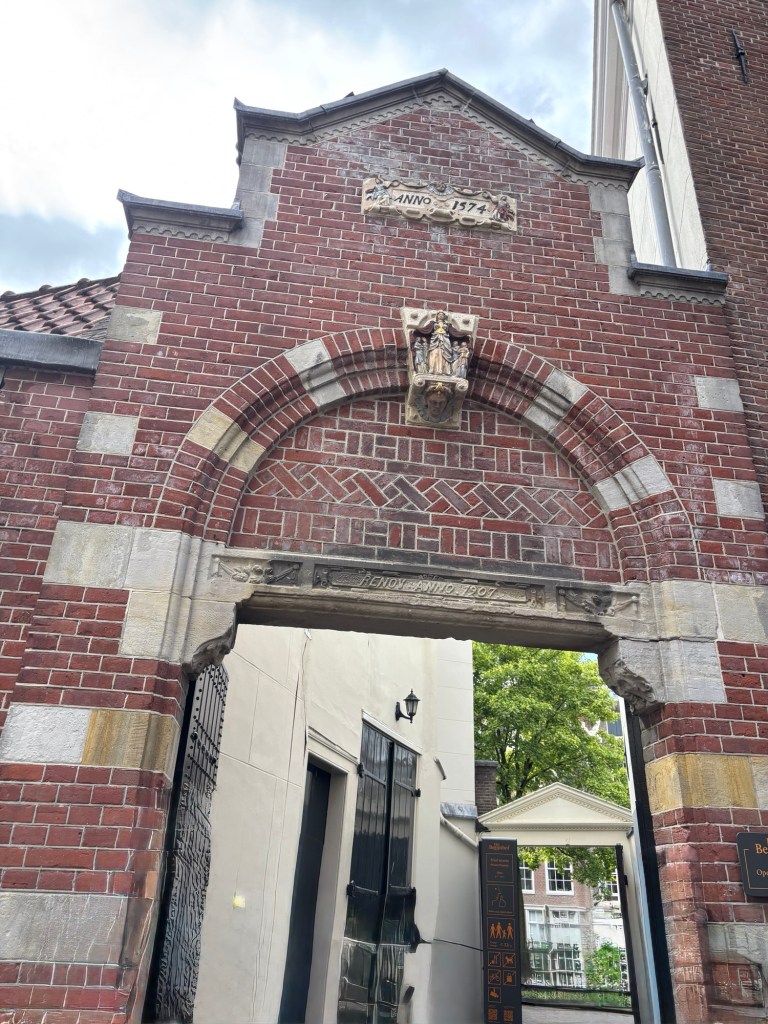
We walked a bit and came to a unique part of the city. There are 105 women who live in this protected community of apartments. It is designed to give childless, unmarried women, 35 and older, with limited income, a safe community.
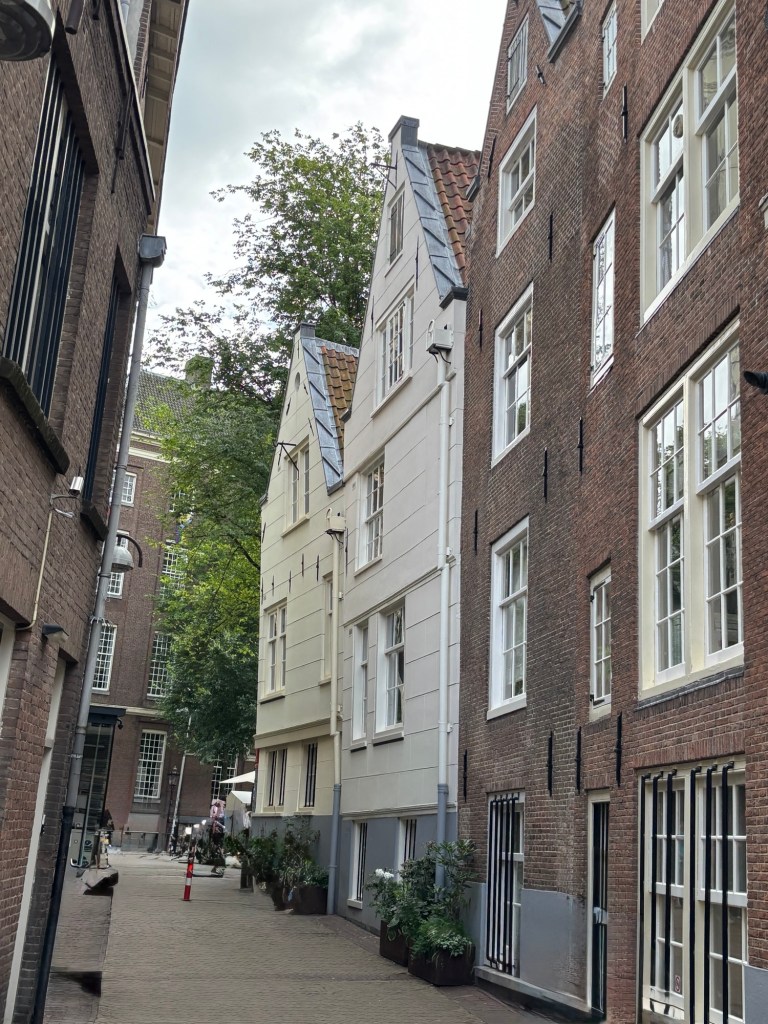
There used to be more of these communities around Amsterdam, some run by the church, and later by the city. Visitors may access the public courtyard during specific hours.
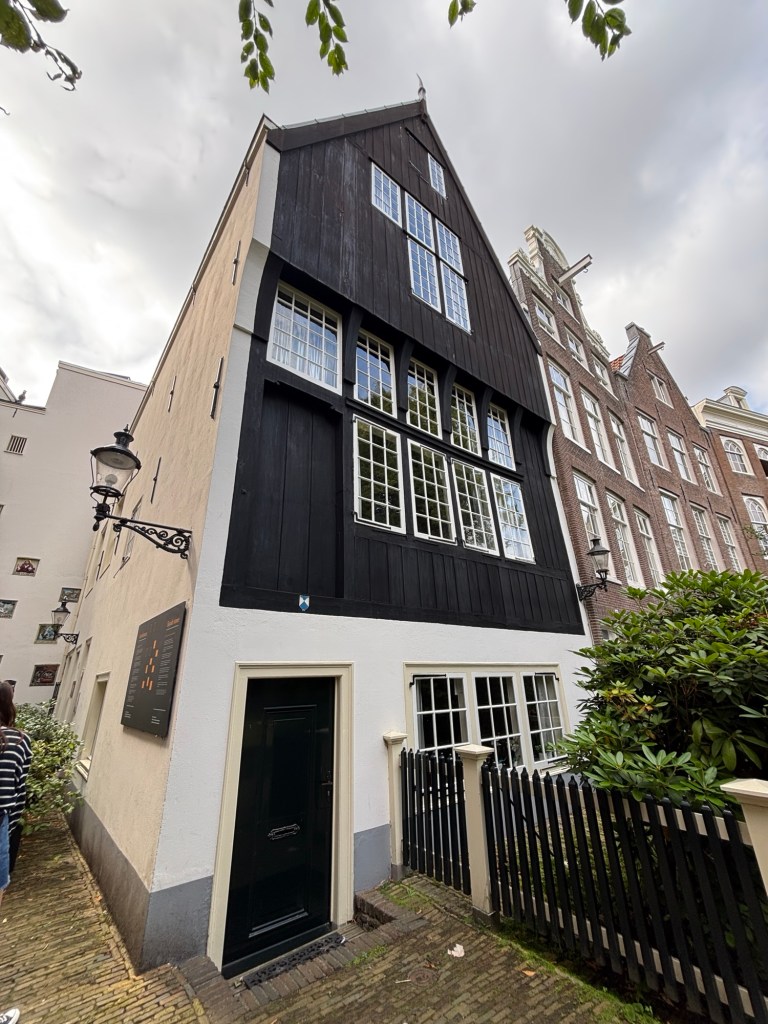
The last wooden house in Amsterdam is here. It is over 600 years old. Many houses in Amsterdam were once built of wood, but repeated fires initiated a required change in materials.
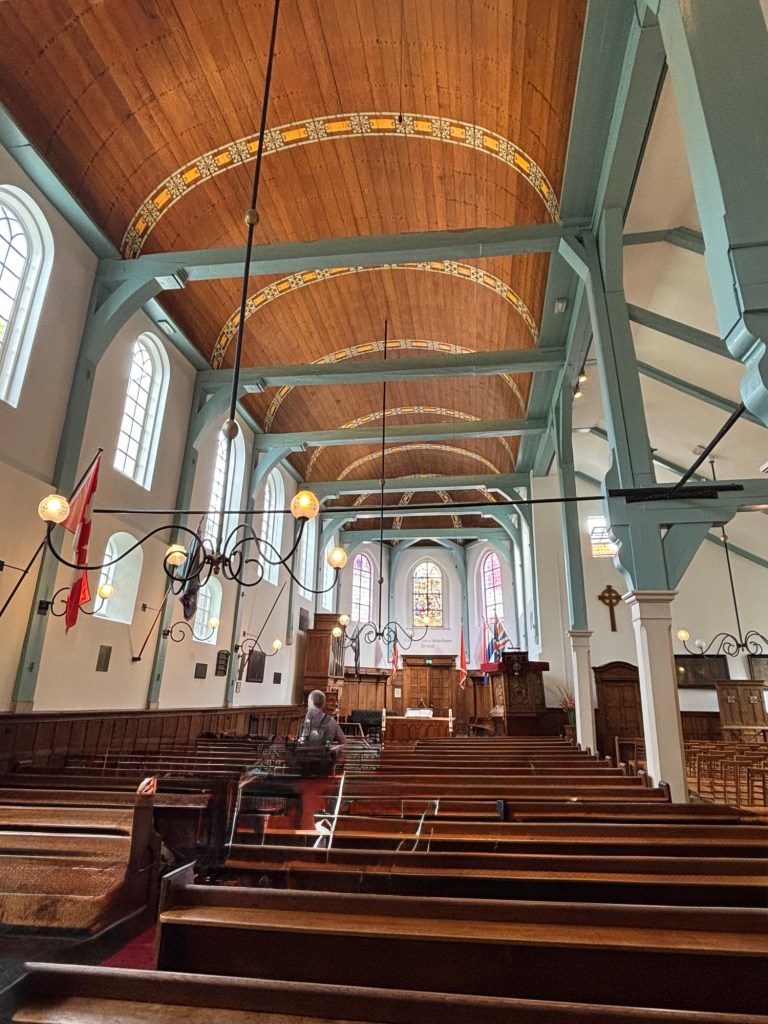
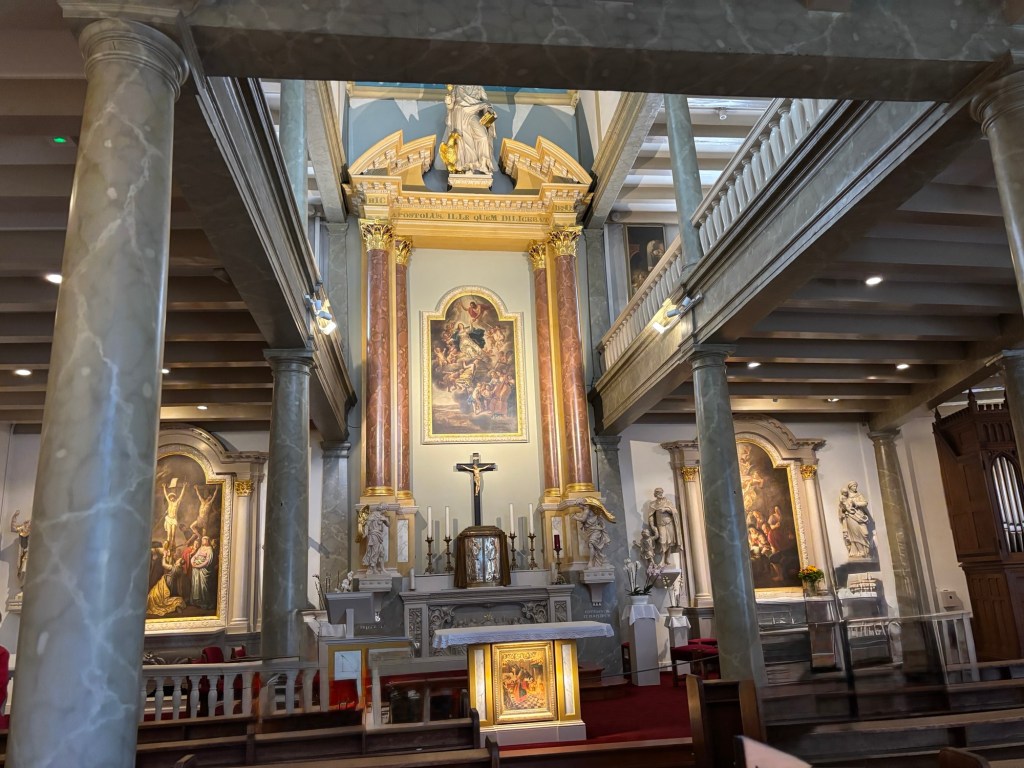
Directly across from each other are Protestant and Catholic Churches. Both are active and allow participation from outside the women’s community.
The Netherlands was ruled by Spain for many years and was, thereby, Catholic. When it became independent, the country became protestant. In tolerance, they allowed some Spanish Catholic churches if they were “hidden”
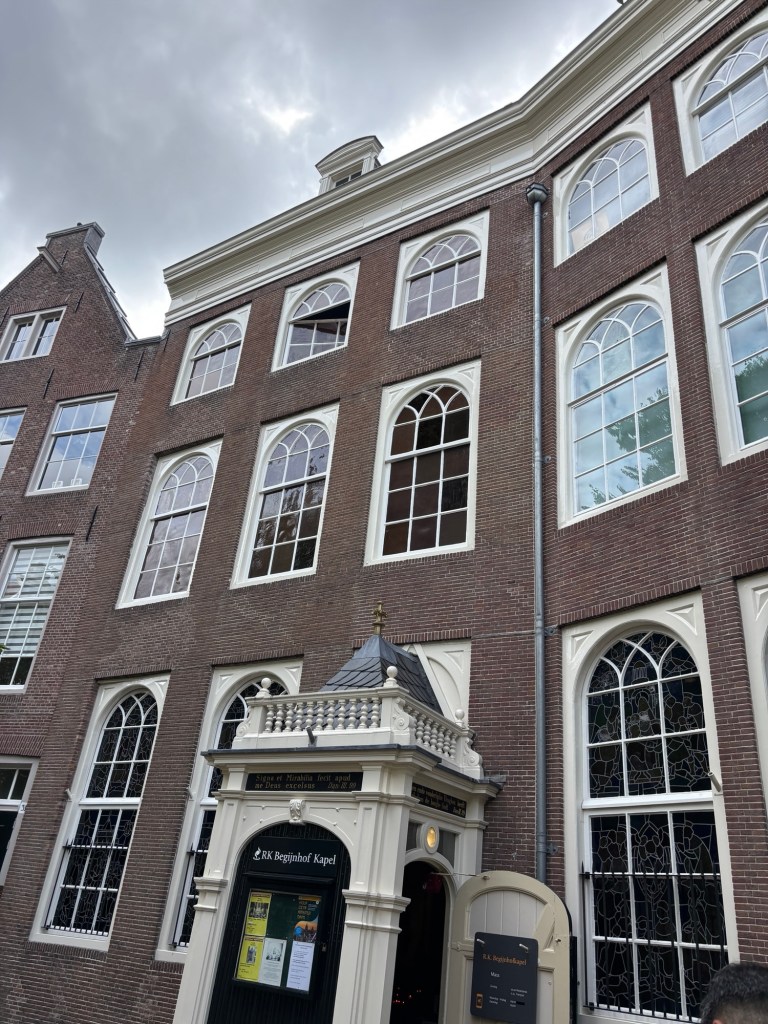
This Catholic Church was one of them. There is nothing denoting a church from the outside construction.
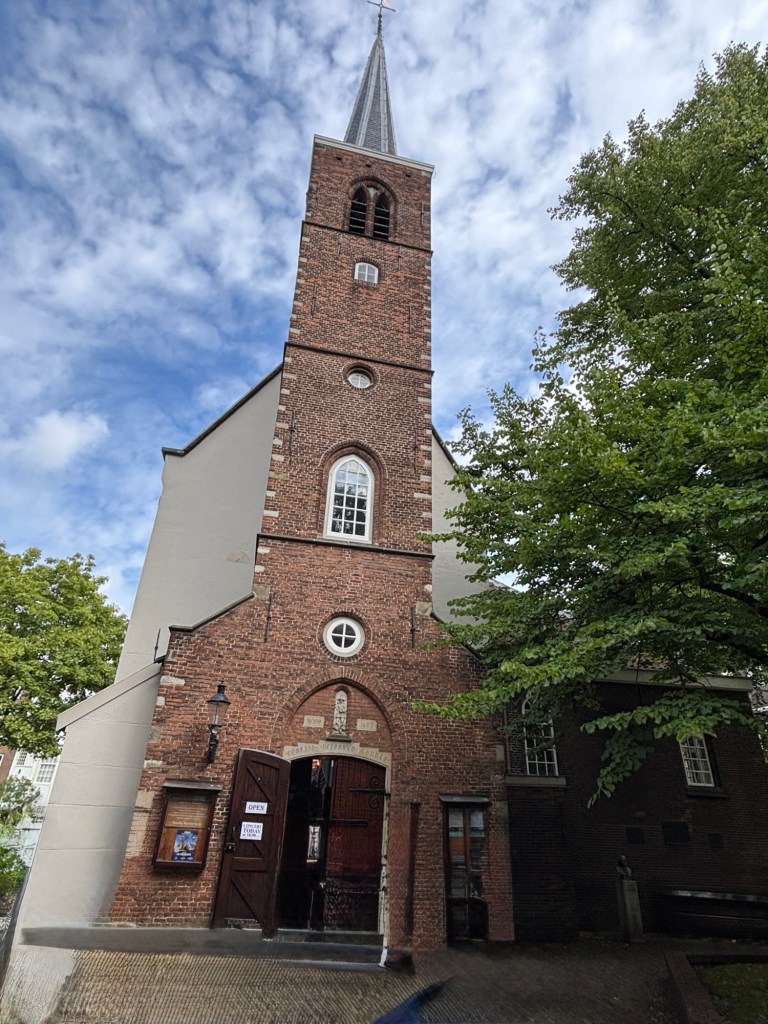
When the Dutch became protestant, they became Calvinists. Calvinists didn’t allow themselves pleasure in food. As a remaining characteristic in Dutch culture, food preparation and eating is done as efficiently as possible.

Thus, our next food stop was for take away fish.
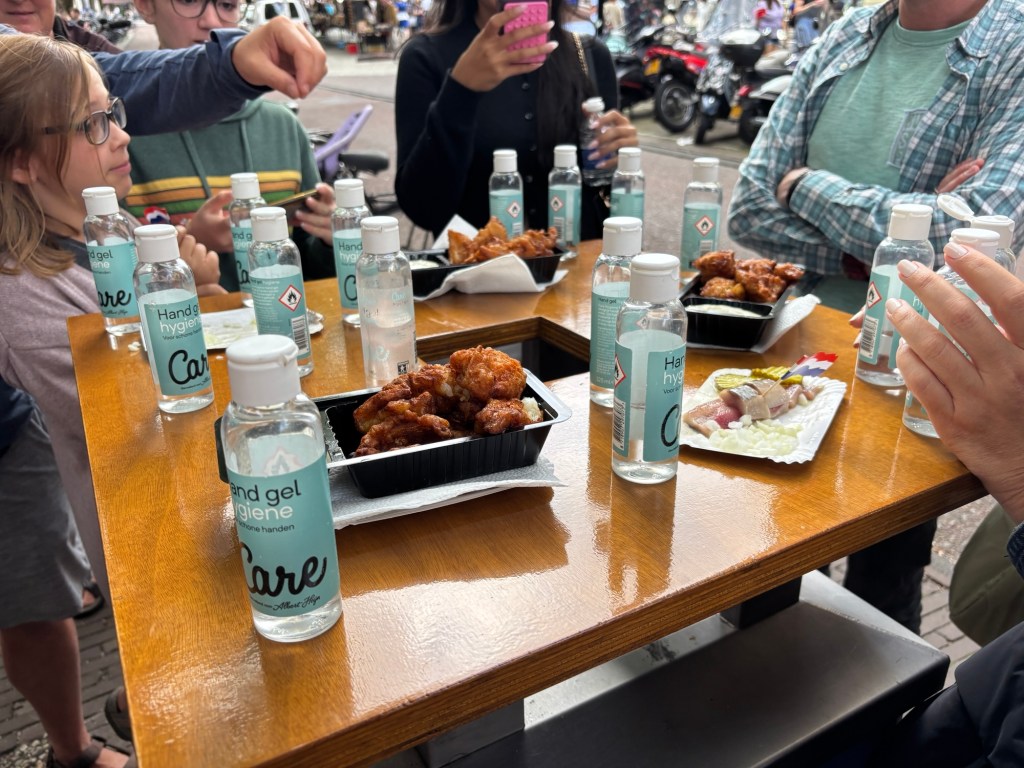
Our group circled around and ate from the top of a trash can! Roman did clean it off and gave us hand sanitizer. It was kind of strange, but it worked.
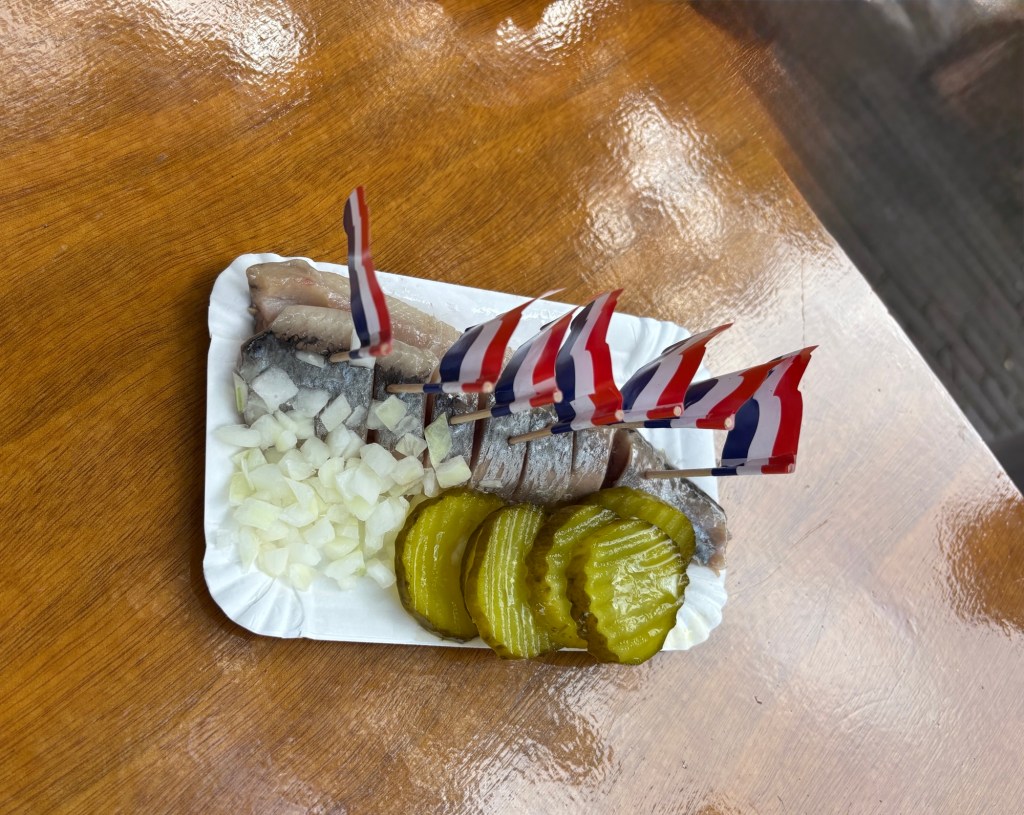
Our first “course” was herring with pickle and onion. I try to be a good sport in these settings and eat a little of everything – even things I think I’ll hate. I didn’t hate the herring – but the dominate taste was the pickle so that helped.
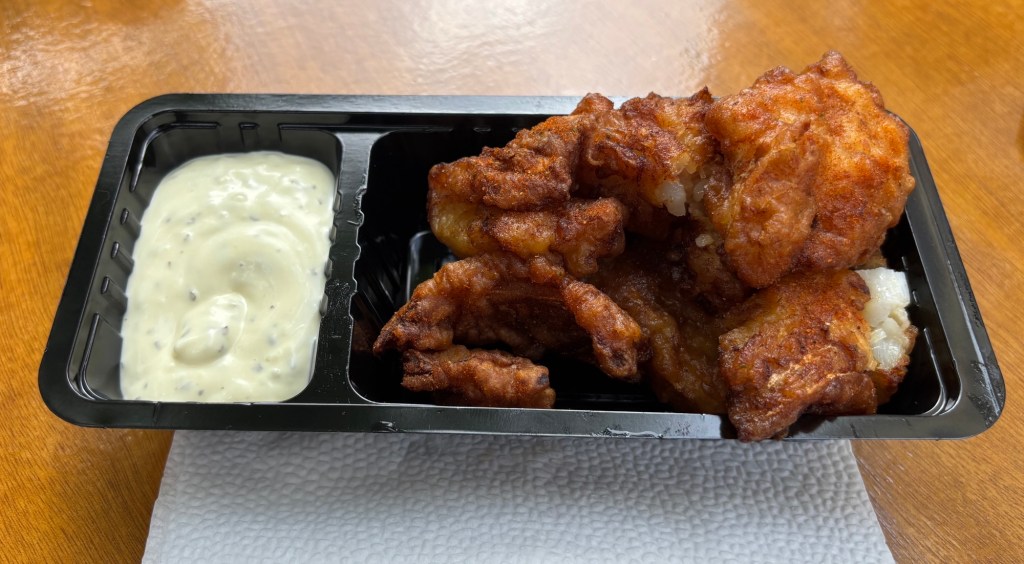
The second sampling was kibbeling, or fried cod. It tasted just like any fried fish to me, but Randy liked it.
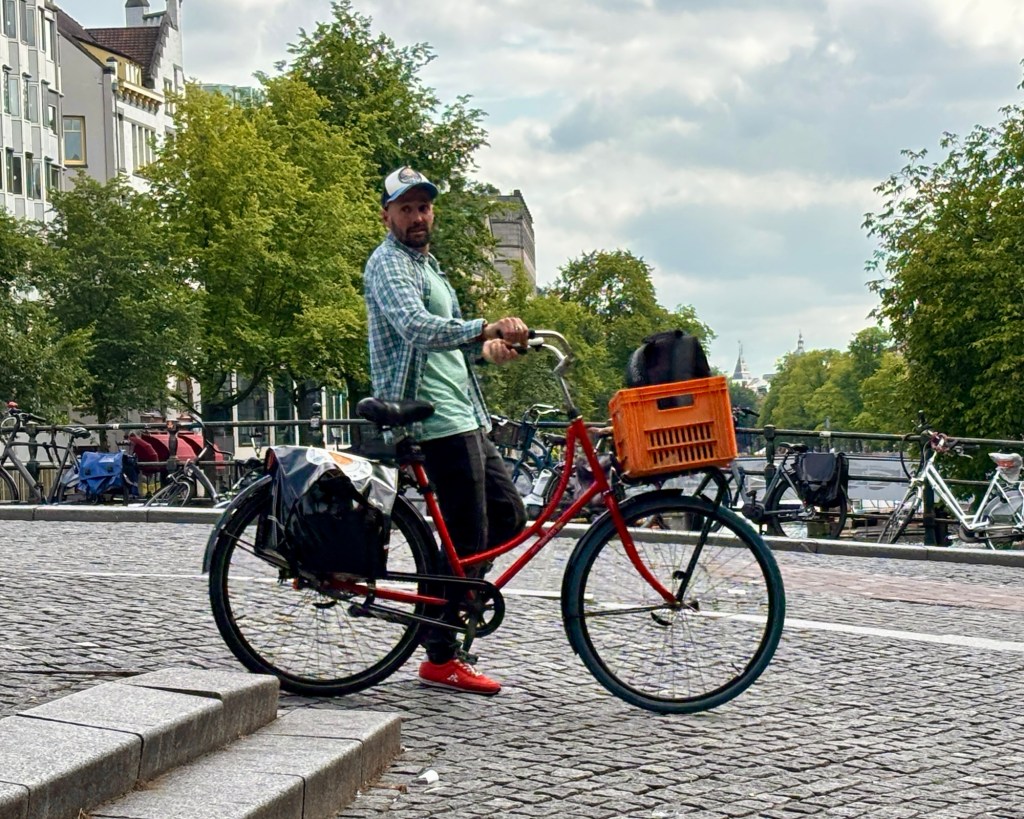
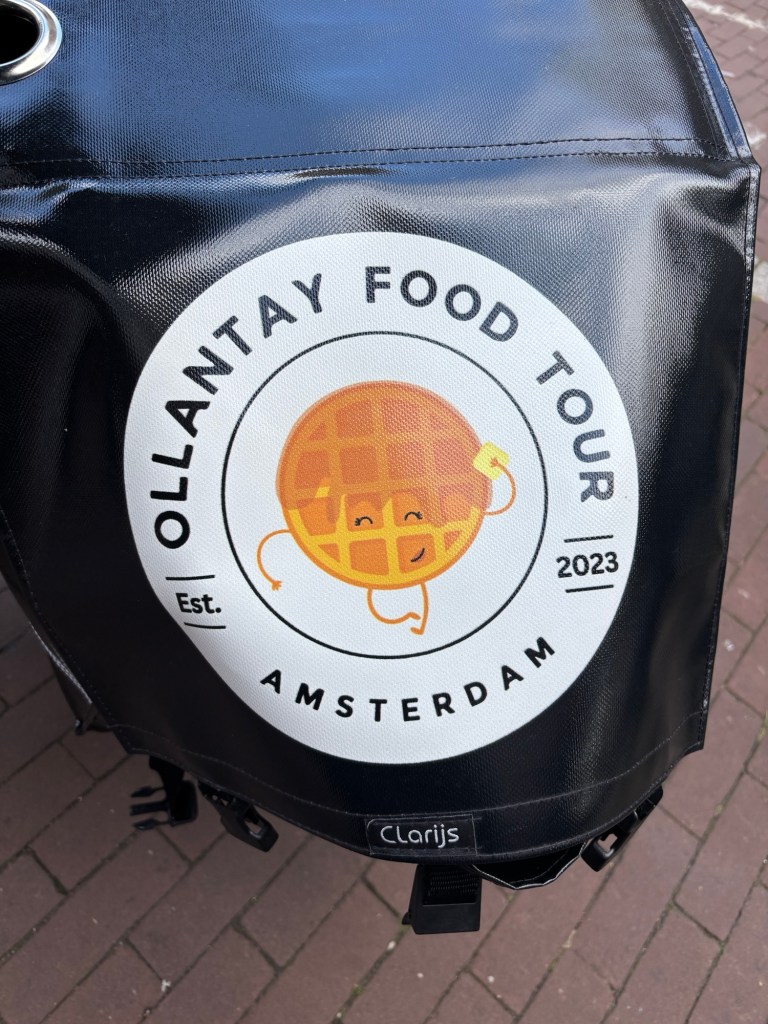
Roman continued to push around his bike as we walked from place to place. He had some things for us in his packs. His bike is a rental for €19 per month. The rental price for tourists is €15 a day. The rental shop will fix anything that needs to be repaired and replace it if it gets stolen as long as he can prove it was locked. Proof is having the key, removable only if the bike is locked.
Roman stressed repeatedly that Amsterdam is very safe BUT over 500,000 bikes are stolen every year. He said it’s a national craze.
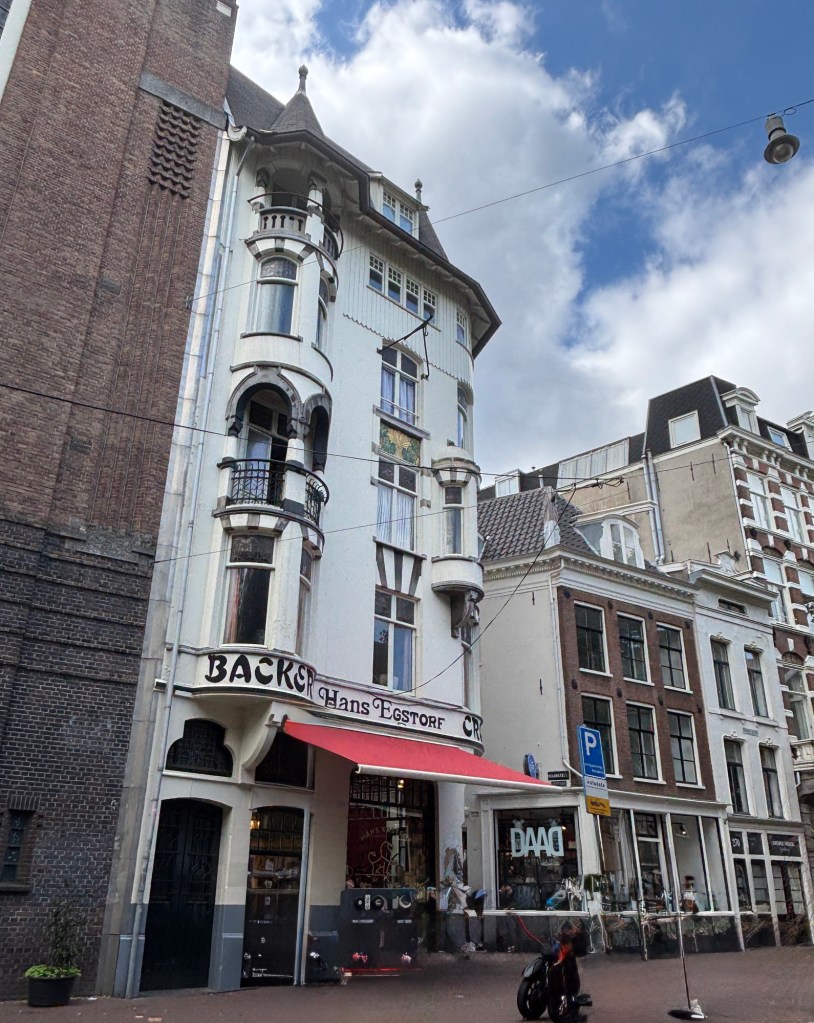
Hans Egstorf is the oldest bakery in Amsterdam. We stopped for stroopwafels.
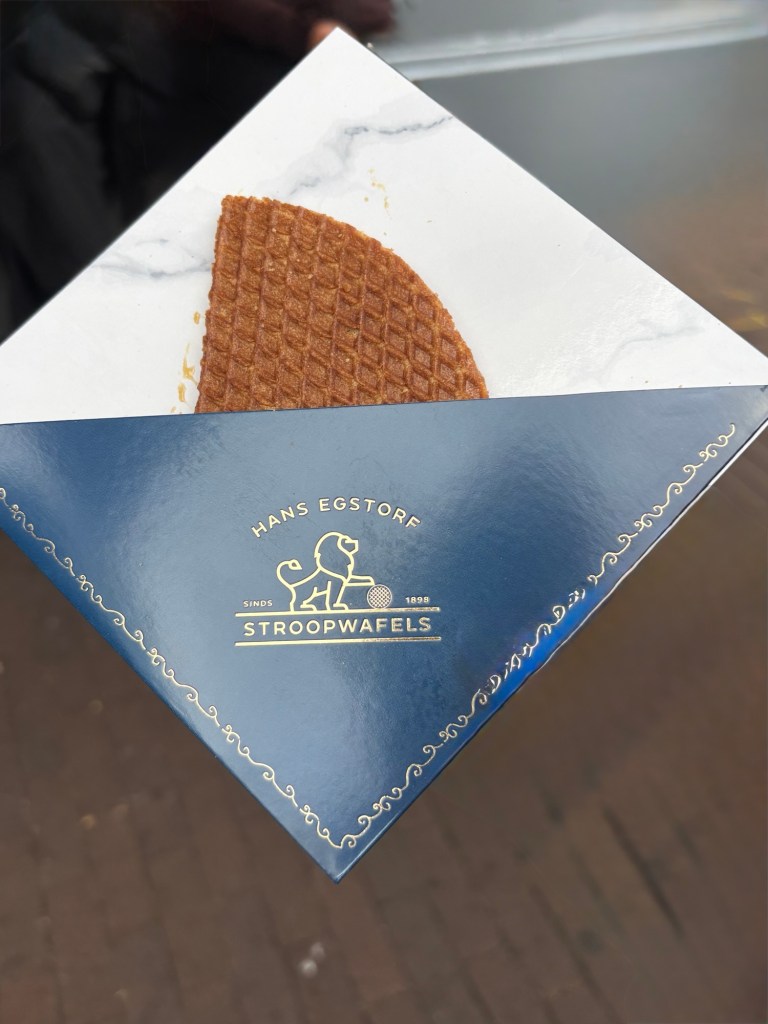
We have had the crisp, packaged version before but not ones hot out of the waffle iron. They had a ginger/clove taste with caramel flavoring in the middle.
Food tours are interesting, not just for the food, but for the quirky things you learn.
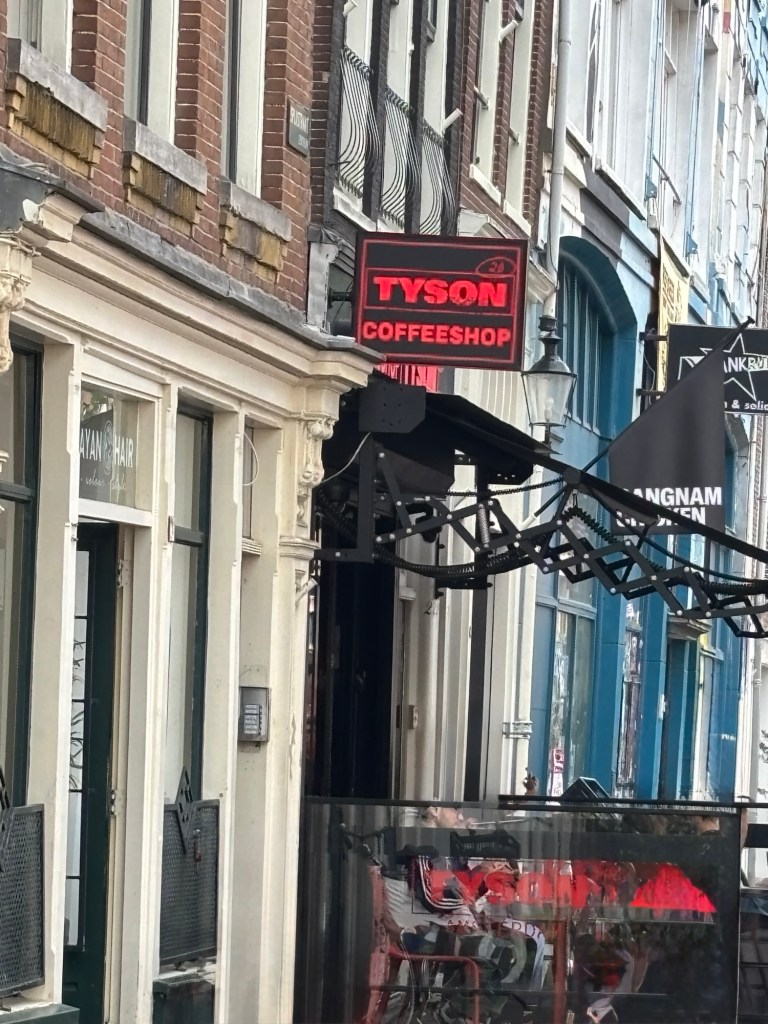
A coffeehouse sells canabis, not coffee. This one is owned by Mike Tyson. If you really want coffee, go to a cafe.
We had gone to a cafe to get coffee right after arriving in Amsterdam that morning. Mostly, we wanted to get change from a 50 Euro bill. The proprietor said she couldn’t make change so early in the day but explained how people get change in Amsterdam. She directed us to a nearby grocery store to buy a small item. She said to use a checkout machine that would take cash to get the change back. I’m sure it was comical for others to see how confused we were because there were no directions in English. The young man behind us, who wanted to use the machine, helped us.
And the most fun story we heard – The Netherlands gained independence from Spain and became the first republic in Europe in the 1630s. However, the Dutch eventually chose monarchy and were ruled by descendants of conquering hero William the Orange. According to the legend, farmers crossbred carrots to give them an orange color to honor their monarch. The orange carrot color grew in popularity, spread around the world, and became the dominant color.
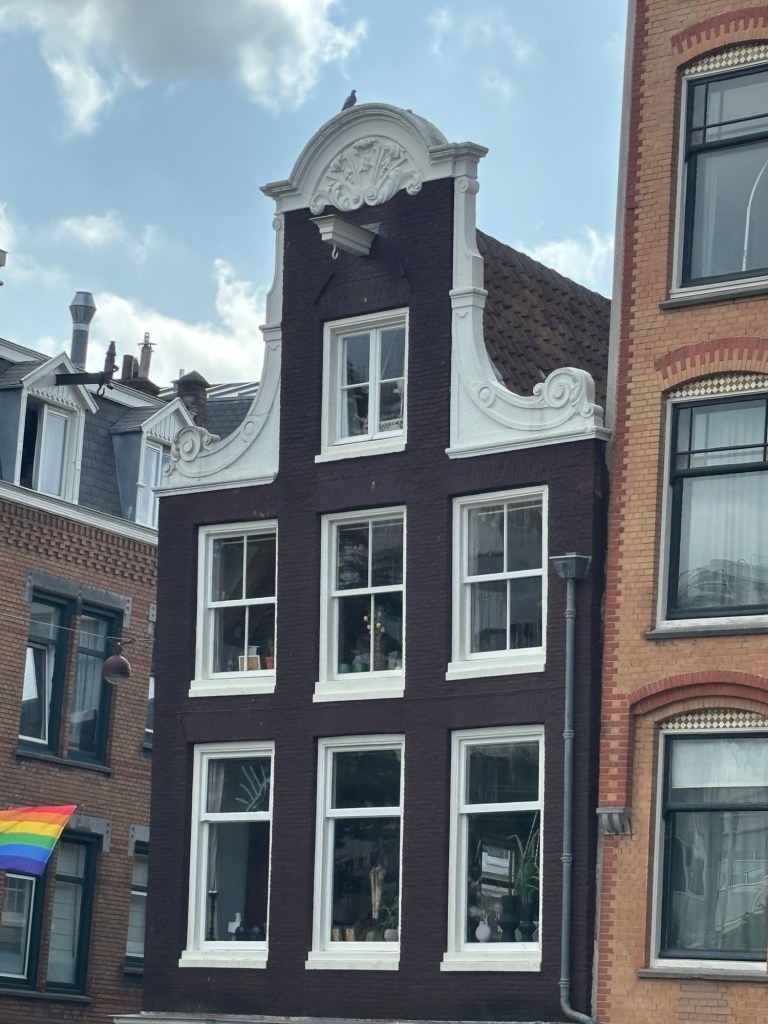
Most houses in Amsterdam lean forward with a hook near the roof. This allows for packages and furniture to be hoisted up. The stairs within the houses are usually far too narrow.
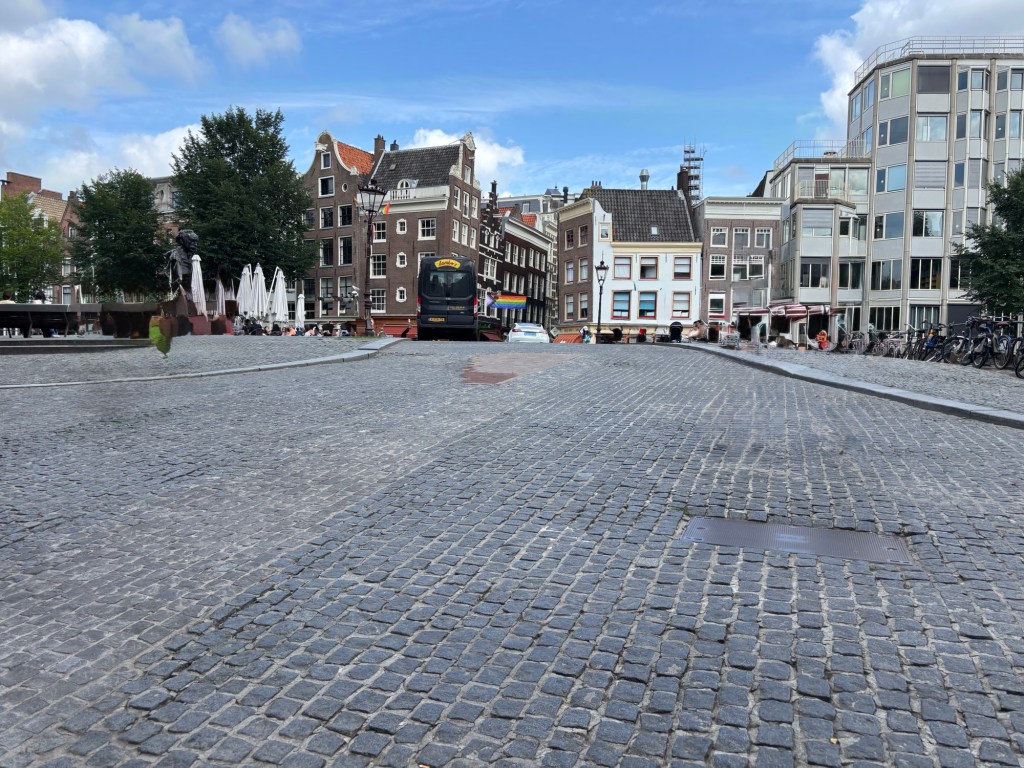
Our food tour group crossed the largest canal bridge in Amsterdam. The bridge had many people on it but I have learned how to edit them out. Amsterdam was plenty crowded that day – just not in my pictures.
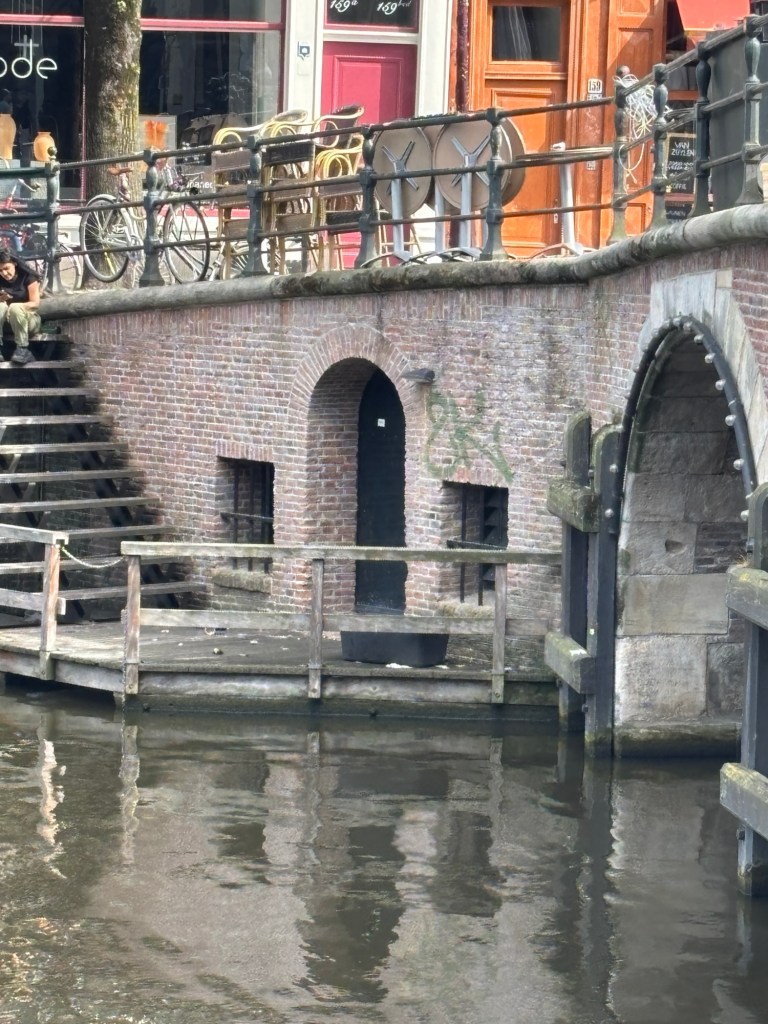
The bridge used to have prison cells underneath it and one enclosure is still visible.
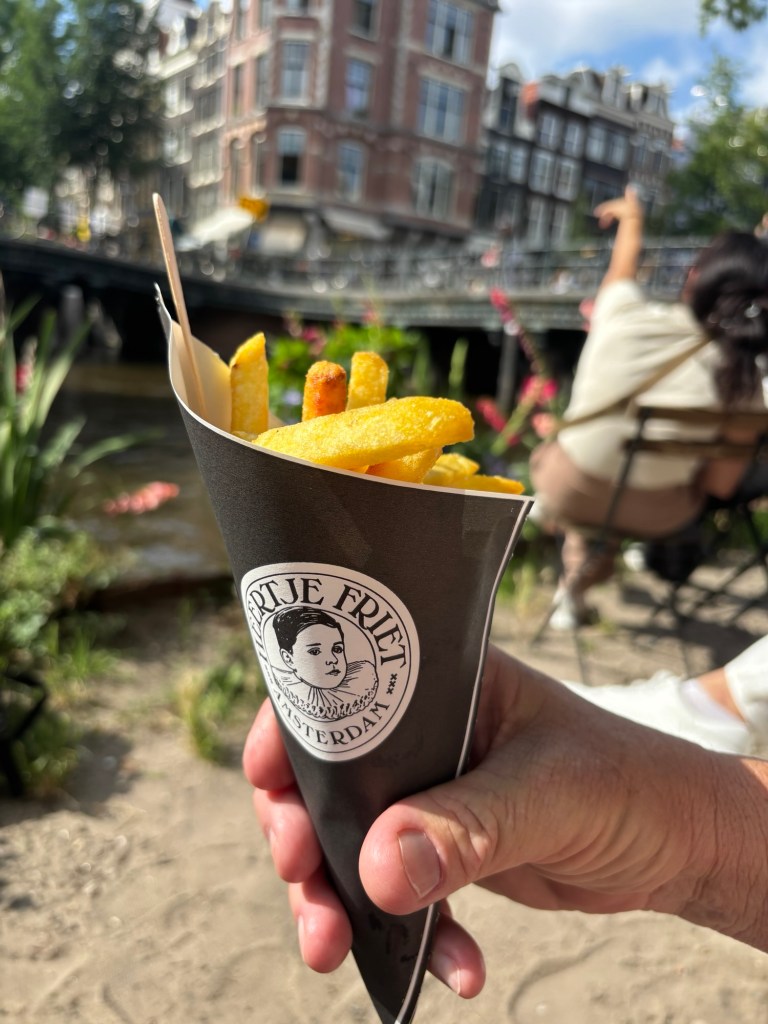
Our next course, again as take away, was french fries with a mayo curry sauce.
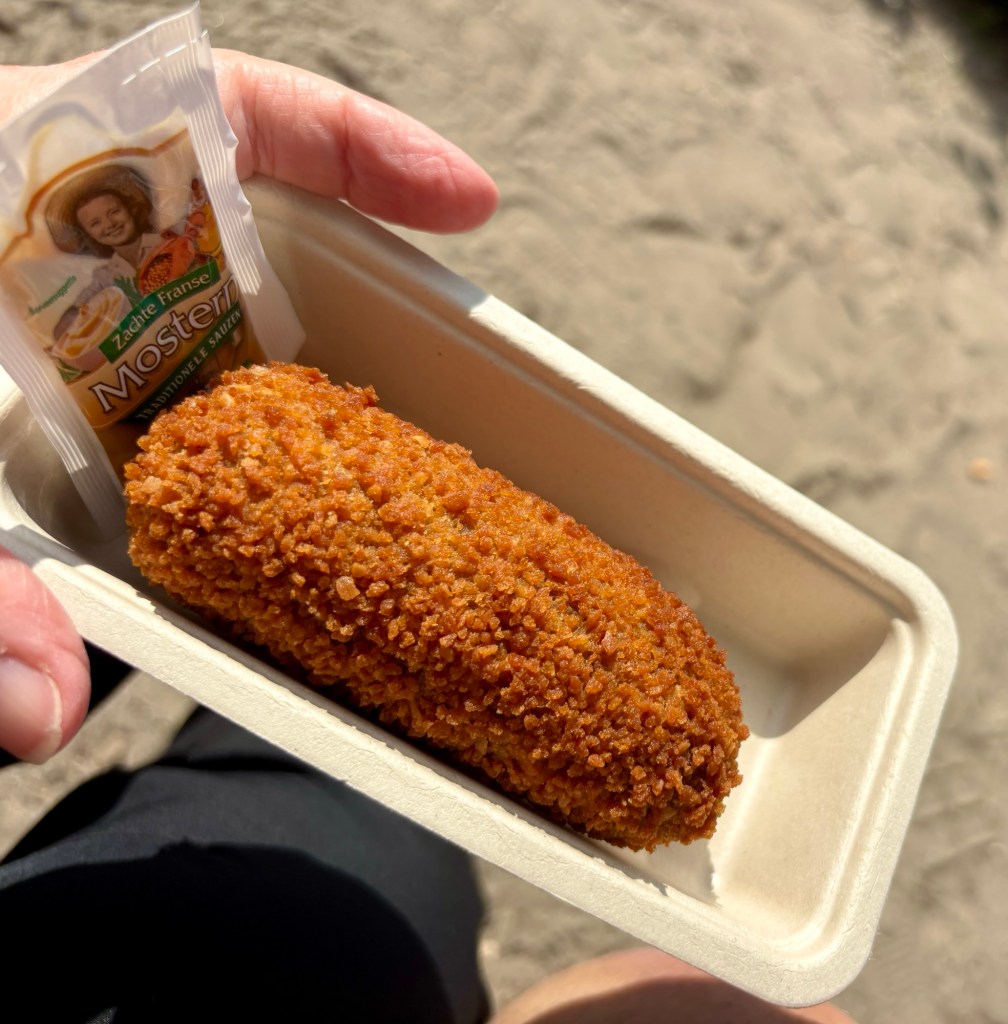
Then we had a kroketten, or beef filled croquette. It was pretty good.
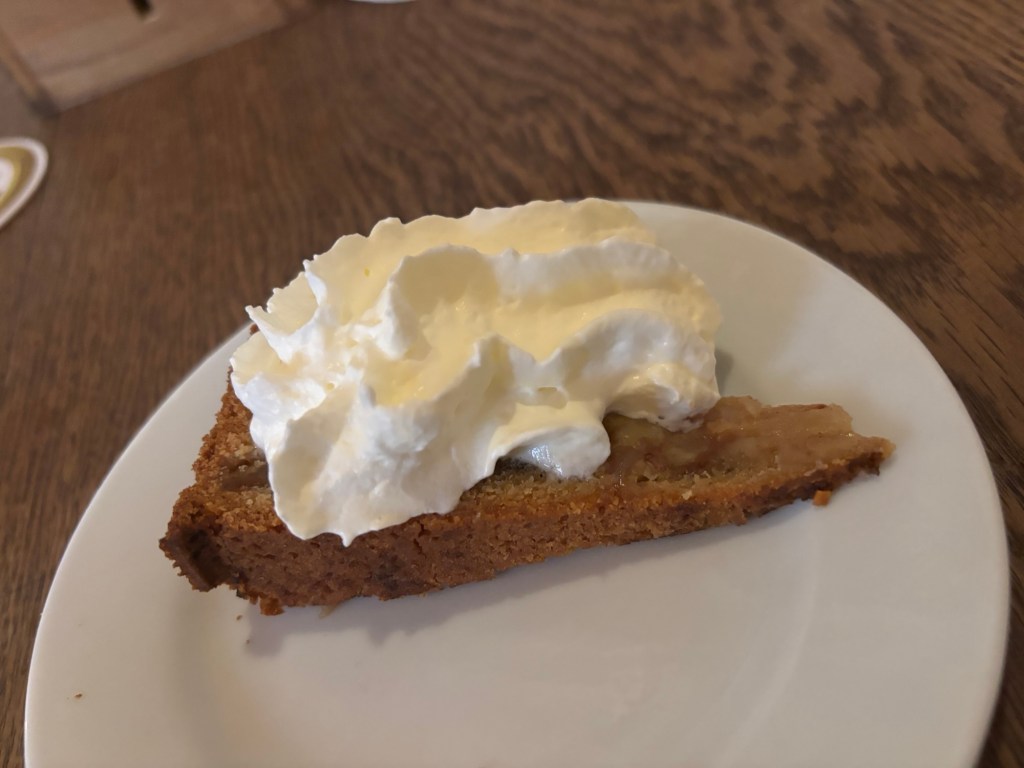
The only time we sat in a restaurant during our three hour tour was for our final course – Dutch apple pie! We had Dutch beer with it!
Food in the Netherlands is generally simple, frequently fried, and quick to prepare and eat, usually while standing. There just isn’t a foodie culture here. The food tour though, was still a blast!
Next up: We learn about something that really is part of the Netherlands culture – windmills.


 Serene Wandering
I’ve been to Amsterdam